



Nick Nelson
-
Posts
8,327 -
Joined
-
Last visited
-
Days Won
56
Content Type
Profiles
News
Minnesota Twins Videos
2026 Minnesota Twins Top Prospects Ranking
2022 Minnesota Twins Draft Picks
Minnesota Twins Free Agent & Trade Rumors, Notes, & Tidbits
Guides & Resources
2023 Minnesota Twins Draft Picks
The Minnesota Twins Players Project
2024 Minnesota Twins Draft Picks
2025 Minnesota Twins Draft Pick Tracker
2026 Minnesota Twins Draft Tracker: Picks & Bonuses
Forums
Blogs
Events
Store
Downloads
Gallery
Everything posted by Nick Nelson
-
The Show Must Go On: First Place! (Barely)
Nick Nelson replied to Nick Nelson's topic in Twins Daily Front Page News
Option 1: Press "Like This" on this comment (or voice your support below) if you want us to use our first-round draft pick on an older collegiate player with the potential to make a faster impact (but likely with a lower ceiling). -
The Show Must Go On: First Place! (Barely)
Nick Nelson posted a topic in Twins Daily Front Page News
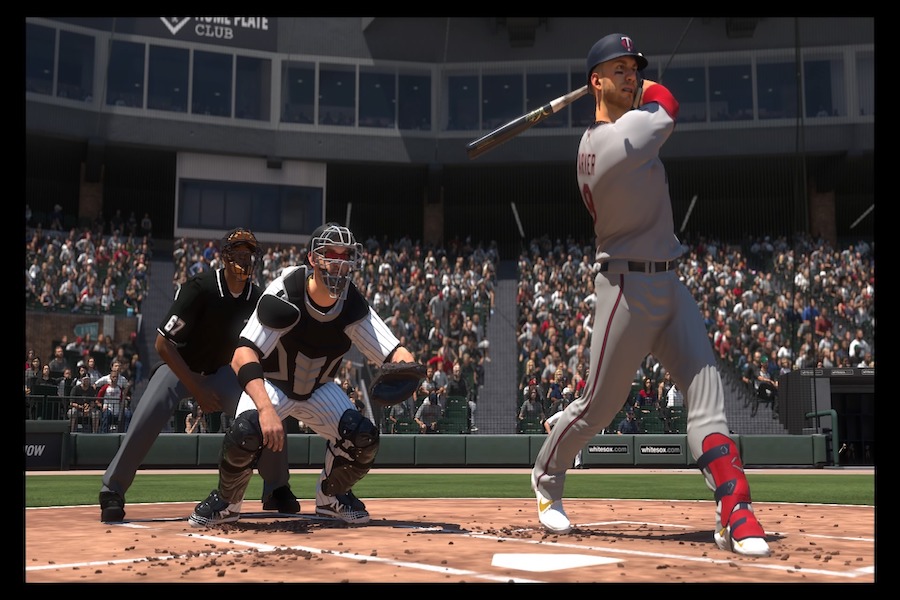
In our interactive simulated season, the 2020 Minnesota Twins have pulled into a tie for first place heading into June, but there appears to be a heated three-way battle developing in the Central. Meanwhile, the MLB Draft is upon us, and I need your help.To get caught up on what we're doing here, you can check out the introductory post in the series for an explanation of the premise and setup. But the quick version is this: We're playing a progressive simulated Twins season on MLB The Show 20 on PS4, and y'all are helping guide the ship. In each installment I'll update you on what's happened since the last, and put at least one key decision up for vote. Date In Game: 6/1 Team Record: 34-26 Leading OPS: Miguel Sano (.966 in 195 AB) Leading ERA (SP): Jake Odorizzi (2.30 in 82.0 IP) Leading ERA (RP): Taylor Rogers (1.55 in 29.0 IP) LATEST RESULTS (4-6) Gm 51 vs CWS: L 2-1 (Odorizzi 7 IP, 1 ER, 9 K, L) Gm 52 vs CWS: L 6-3 (Maeda 5 IP, 3 ER, L) Gm 53 vs CWS: L 10-2 (Bailey 4.1 IP, 5 ER, L) Gm 54 vs CWS: W 4-3 (Rosario walk-off 2-R double) Gm 55 @ NYY: L 9-1 (Berrios 5 IP, 4 ER, L) Gm 56 @ NYY: L 3-2 (Rogers 0.2 IP, 1 ER, L) Gm 57 @ NYY: W 10-5 (Sano 3-5, HR, 3 RBI) Gm 58 @ CWS: W 8-1 (Garver 4-5, 2 HR, 4 RBI) Gm 59 @ CWS: L 5-3 (Balazovic 6 IP, 5 ER, L) Gm 60 @ CWS: W 7-4 (Garver 2-5, 2 RBI) AL CENTRAL STANDINGS Download attachment: alcstandings6120.jpeg THE RUNDOWN Our Twins have pulled into a tie with Cleveland for first place, but it's not because we played all that well. Instead, the Indians have run into a deep slump; they've lost 12 out of their last 13, including an 11-game losing streak (!) that completely offsets their 11-0 start to the season. For our part, we've endured some struggles, but a 4-6 run over the past 10 games was enough to pull us even with the Indians, who led the division by five games at the end of April. Meanwhile, the White Sox are starting to emerge as factors in the race, only two games behind the deadlocked leaders. Chicago certainly made a statement in the early part of our latest batch of sims, taking the first three games in a four-game set and nearly completing a sweep before Eddie Rosario salvaged victory from the jaws of defeat with a two-run walk-off single in the bottom of the 14th. That was the team's only win in a six-game span, as the Twins headed next to the Bronx, with expected results. New York won the first contest in a 9-1 laugher, then walked off the typically reliable Taylor Rogers in Game 2. Luckily the Twins were able to again avoid a sweep, taking the finale 10-5, and they carried that momentum to Chicago with a 2-1 series victory that keeps the charging White Sox at bay (for now). Jordan Balazovic, who was voted into the rotation last time around, is still looking for his first win after two starts but he has certainly given cause for intrigue. In his first MLB start against the White Sox, he tossed six innings of two-run ball, helping Minnesota avoid a four-game sweep. His next turn, against that same Chicago team on the road, didn't go as smoothly as he allowed five earned runs over six frames. However, he struck out 10 batters with only one walk, giving him a 15-to-2 K/BB ratio in 12 innings over his first two turns in the rotation. Download attachment: balazovicpitching.jpeg Now that we've reached June, the MLB Draft is approaching, just two days away in our sim. I'll solicit some advice shortly, but first, let's run through the roster's hot and cold players. WHO'S HOT In his latest two starts, Jake Odorizzi allowed three earned runs in 14 innings with 17 strikeouts. He now leads the American League in ERA, with his 2.30 mark edging Mike Minor's 2.35. Odo has been absolutely sensational, continuing to lead the rotation as Kenta Maeda comes back to Earth a bit (allowed 8 ER in 11 IP and took his first L during latest stretch) and Jose Berrios navigates an unspectacular first half (5-4 with a 4.34 ERA on the season). In the bullpen, Tyler Duffey has clearly emerged as the top option behind Taylor Rogers. After allowing zero runs in 5 1/3 innings across four appearances, Duffey now holds a 1.67 ERA on the season to go along with a 27-to-11 K/BB and 1.26 WHIP through 27 innings. Offensively, Mitch Garver continues to come on in a big way, with his .953 OPS now ranking second on the team behind Sano. Garver was an absolute force in the latest series at Chicago, going 6-for-10 with two homers, two doubles and six RBIs in his two starts. WHO'S NOT The once-potent offense has cooled considerably, scoring three or fewer runs in six of the past 10 games. The biggest culprit in the unit's drop-off is pretty clearly Nelson Cruz, whose slump (mentioned last time) has snowballed. In the past 10 games he went 3-for-32 (.094) with no homers, and he's been leaving all sorts of runners on base. Thanks to his outstanding start Cruz still has a respectable overall line (.268/.352/.460) and he's tied for second on the team in RBIs with 39, but one wonders if the veteran DH – who turns 40 in exactly one month – is starting to show signs of age. We'll stick with him in prime lineup spots for now and hope the cold spell gives way in June. DECISION TIME: SETTING A DRAFT STRATEGY As mentioned, the 2020 MLB Draft is coming up this week. We have no idea who'll be available when the Twins select 27th overall; right now the 27th-ranked player on our scouting board is a 20-year-old center fielder out of Illinois named Brett Bollinger (that's Brett, not Rhett). My plan is to generally take a "best player available" approach with our first pick, but I wanted to get your input on a high-level direction: Given the choice, should we opt for a younger high school player with bigger upside but a lengthier path to the majors, or a college player who might be able to help more quickly? Vote your preference in the comments section. I'll be back with a full report on whichever player we select in the next installment. COMING UP 6/1: vs TB 6/2: vs TB 6/3: vs TB 6/4: vs LAA 6/5: vs LAA 6/6: vs LAA 6/7: vs LAA 6/9: @ BAL 6/10: @ BAL 6/11: @ BAL PREVIOUS INSTALLMENTS Part 1: We Can Build This Thing Together (0-0) Part 2: 10 Games In, 6 Games Back (4-6) Part 3: Roaring Back (11-9) Part 4: Over the Hill (17-13) Part 5: Checking In at the Quarter Point (23-17) Part 6: Rising Power (30-20) MORE FROM TWINS DAILY — Latest Twins coverage from our writers — Recent Twins discussion in our forums — Follow Twins Daily via Twitter, Facebook or email Click here to view the article -
 To get caught up on what we're doing here, you can check out the introductory post in the series for an explanation of the premise and setup. But the quick version is this: We're playing a progressive simulated Twins season on MLB The Show 20 on PS4, and y'all are helping guide the ship. In each installment I'll update you on what's happened since the last, and put at least one key decision up for vote. Date In Game: 6/1 Team Record: 34-26 Leading OPS: Miguel Sano (.966 in 195 AB) Leading ERA (SP): Jake Odorizzi (2.30 in 82.0 IP) Leading ERA (RP): Taylor Rogers (1.55 in 29.0 IP) LATEST RESULTS (4-6) Gm 51 vs CWS: L 2-1 (Odorizzi 7 IP, 1 ER, 9 K, L) Gm 52 vs CWS: L 6-3 (Maeda 5 IP, 3 ER, L) Gm 53 vs CWS: L 10-2 (Bailey 4.1 IP, 5 ER, L) Gm 54 vs CWS: W 4-3 (Rosario walk-off 2-R double) Gm 55 @ NYY: L 9-1 (Berrios 5 IP, 4 ER, L) Gm 56 @ NYY: L 3-2 (Rogers 0.2 IP, 1 ER, L) Gm 57 @ NYY: W 10-5 (Sano 3-5, HR, 3 RBI) Gm 58 @ CWS: W 8-1 (Garver 4-5, 2 HR, 4 RBI) Gm 59 @ CWS: L 5-3 (Balazovic 6 IP, 5 ER, L) Gm 60 @ CWS: W 7-4 (Garver 2-5, 2 RBI) AL CENTRAL STANDINGS THE RUNDOWN Our Twins have pulled into a tie with Cleveland for first place, but it's not because we played all that well. Instead, the Indians have run into a deep slump; they've lost 12 out of their last 13, including an 11-game losing streak (!) that completely offsets their 11-0 start to the season. For our part, we've endured some struggles, but a 4-6 run over the past 10 games was enough to pull us even with the Indians, who led the division by five games at the end of April. Meanwhile, the White Sox are starting to emerge as factors in the race, only two games behind the deadlocked leaders. Chicago certainly made a statement in the early part of our latest batch of sims, taking the first three games in a four-game set and nearly completing a sweep before Eddie Rosario salvaged victory from the jaws of defeat with a two-run walk-off single in the bottom of the 14th. That was the team's only win in a six-game span, as the Twins headed next to the Bronx, with expected results. New York won the first contest in a 9-1 laugher, then walked off the typically reliable Taylor Rogers in Game 2. Luckily the Twins were able to again avoid a sweep, taking the finale 10-5, and they carried that momentum to Chicago with a 2-1 series victory that keeps the charging White Sox at bay (for now). Jordan Balazovic, who was voted into the rotation last time around, is still looking for his first win after two starts but he has certainly given cause for intrigue. In his first MLB start against the White Sox, he tossed six innings of two-run ball, helping Minnesota avoid a four-game sweep. His next turn, against that same Chicago team on the road, didn't go as smoothly as he allowed five earned runs over six frames. However, he struck out 10 batters with only one walk, giving him a 15-to-2 K/BB ratio in 12 innings over his first two turns in the rotation. Now that we've reached June, the MLB Draft is approaching, just two days away in our sim. I'll solicit some advice shortly, but first, let's run through the roster's hot and cold players. WHO'S HOT In his latest two starts, Jake Odorizzi allowed three earned runs in 14 innings with 17 strikeouts. He now leads the American League in ERA, with his 2.30 mark edging Mike Minor's 2.35. Odo has been absolutely sensational, continuing to lead the rotation as Kenta Maeda comes back to Earth a bit (allowed 8 ER in 11 IP and took his first L during latest stretch) and Jose Berrios navigates an unspectacular first half (5-4 with a 4.34 ERA on the season). In the bullpen, Tyler Duffey has clearly emerged as the top option behind Taylor Rogers. After allowing zero runs in 5 1/3 innings across four appearances, Duffey now holds a 1.67 ERA on the season to go along with a 27-to-11 K/BB and 1.26 WHIP through 27 innings. Offensively, Mitch Garver continues to come on in a big way, with his .953 OPS now ranking second on the team behind Sano. Garver was an absolute force in the latest series at Chicago, going 6-for-10 with two homers, two doubles and six RBIs in his two starts. WHO'S NOT The once-potent offense has cooled considerably, scoring three or fewer runs in six of the past 10 games. The biggest culprit in the unit's drop-off is pretty clearly Nelson Cruz, whose slump (mentioned last time) has snowballed. In the past 10 games he went 3-for-32 (.094) with no homers, and he's been leaving all sorts of runners on base. Thanks to his outstanding start Cruz still has a respectable overall line (.268/.352/.460) and he's tied for second on the team in RBIs with 39, but one wonders if the veteran DH – who turns 40 in exactly one month – is starting to show signs of age. We'll stick with him in prime lineup spots for now and hope the cold spell gives way in June. DECISION TIME: SETTING A DRAFT STRATEGY As mentioned, the 2020 MLB Draft is coming up this week. We have no idea who'll be available when the Twins select 27th overall; right now the 27th-ranked player on our scouting board is a 20-year-old center fielder out of Illinois named Brett Bollinger (that's Brett, not Rhett). My plan is to generally take a "best player available" approach with our first pick, but I wanted to get your input on a high-level direction: Given the choice, should we opt for a younger high school player with bigger upside but a lengthier path to the majors, or a college player who might be able to help more quickly? Vote your preference in the comments section. I'll be back with a full report on whichever player we select in the next installment. COMING UP 6/1: vs TB 6/2: vs TB 6/3: vs TB 6/4: vs LAA 6/5: vs LAA 6/6: vs LAA 6/7: vs LAA 6/9: @ BAL 6/10: @ BAL 6/11: @ BAL PREVIOUS INSTALLMENTS Part 1: We Can Build This Thing Together (0-0) Part 2: 10 Games In, 6 Games Back (4-6) Part 3: Roaring Back (11-9) Part 4: Over the Hill (17-13) Part 5: Checking In at the Quarter Point (23-17) Part 6: Rising Power (30-20) MORE FROM TWINS DAILY — Latest Twins coverage from our writers — Recent Twins discussion in our forums — Follow Twins Daily via Twitter, Facebook or email
 -
Twins Daily Writers: Get to Know 'Em!
Nick Nelson replied to Nick Nelson's topic in Twins Daily Front Page News
Thank you for suggesting it! I meant to give you credit in the article, but I'll do it here. Hat tip to you sir. -
I initially started putting this article together in mid-February, with plans of running it in the lead-up to Opening Day. The idea was to acquaint everyone with the many new-and-old contributors who would be helping us narrate this historic 2020 season on Twins Daily.That was then. And to be honest, circling back on this piece is something I've been procrastinating about and dreading. To dive back in brings directly to mind the fierce baseball enthusiasm I felt while initially putting it together, and how that enthusiasm wisped away soon after. The first draft of this introduction discussed the long, slow grind leading up to this point – eight years of coverage at Twins Daily, mostly of bad teams with low payrolls and lower expectations. At times it was tough to find any outside folks interested in writing about the team, and that really bummed us out. This site was imagined as a platform for elevating fresh, varied voices. All of us founders loved to write, but even more so, we loved to read. Here in 2020, much had changed: Minnesota was charging into spring training with an elite roster and legitimate World Series aspirations. On top of that, our site had assembled its deepest, sharpest, and most talented group of regular front-page writers in its history. For me, the idea of supplementing this hugely exciting season with all the clever, outside the box, nerdy, hilarious, insightful content this group was bound to deliver felt too good to be true. Turns out, I guess it was. Thinking about all these factors in combination really drives home the added layer of sadness baked into the timing of this indefinite societal shutdown. But you know what? Baseball will be back. Up until then, and beyond, Twins Daily's writers will keep writing. They've already shown that, with a bevy of interesting and enlightening articles that keep us entertained amid challenging times and help scratch the baseball itch. Here is a small sampling of my favorites: Twins Hitters, the Pitchers They Crush, and Beer in the MorningI Ate Like the Minnesota Twins For a DayBuilding Dr. Taylor-stein's Twins MonsterDoes Warming Up with a Heavy Bat in the On-Deck Circle Actually Improve Swing Velocity?Will Michael Pineda Catch a Break in 2020?How Would the Twins Fare in the Grapefruit League South?Twins Greatest One Hit WondersWithout further ado, I'll open the floor for some of the names you have seen, and will see, most frequently on our front page (sans owners and head editor) to introduce themselves. Do keep in mind that these questions were asked before we knew the MLB season would not proceed as planned. But if you're like me, you will find some escape in learning why these passionate baseball fans love the game, and their favorite team. TWINS DAILY WRITERS: GET TO KNOW 'EM Cody Christie Hailing From: West Fargo, ND Twitter: @NoDakTwinsFan Must-Read Stories: Johan Santana's Cooperstown Case Part 1, Part 2, Part 3 Why do you love baseball? I love the history of the game and the fact that it can be passed down through generations. What's your favorite Twins memory? Bringing my son to his first Twins game this last summer was amazing. Before that, it was going to Game 162 in 2006 with my dad. Joe Mauer won his first batting title and the Twins stormed the field after winning the division. What can readers expect to be your pet topic(s) this season? Most likely, it will be prospect-related posts but I love the Hall of Fame and it might be time to start building up Mauer's case for the Hall. Ted Schwerzler Hailing From: Andover, MN Twitter: @tlschwerz Must-Read Story: Making a Mega Deal for the Twins Why do you love baseball? Baseball has long been a passion of mine because of the ability to tie so many different avenues of enjoyment into a single source. I played the game into my freshman year of college, and while my journey stopped there from competition, the desire to stay connected never left. Being able to analyze and break something down to such a granular level, while also appreciating what happens at the surface, is a consumption of time I genuinely enjoy as well. There's something romantic about baseball and how it ties together historical feats, current excellence, and the drama of what may happen next. What's your favorite Twins memory? This is tougher than I imagine in large part because I feel like I appreciate the sport and Twins as a whole. Rather than a specific event, I think the journey that writing about the organization has taken me on would be my answer. I've developed relationships with so many great people that cover the game, play it professionally, and simply enjoy following it solely through exploring something that became a hobby. I had no writing background and never intended for this to be a creative outlet, but it's a journey I wouldn't trade for anything, and one that has been sparked entirely because of a passion for Twins baseball. What can readers expect to be your pet topic(s) this season? 2020 should be a blast on the diamond for the Twins. I expect to write plenty about Max Kepler (and a hopeful next step). Mitch Garver and Jose Berrios will remain two of my consistent subjects, and I'll look forward to adding in a consistent mix of the ever-expanding tools Baseball Savant is providing us. Cooper Carlson Hailing From: Northern Minnesota ("You’ve probably never heard of the city I live in, but it’s in the iron range area.") Twitter: @Carlson_MnTwins Must-Read Story: The Twins Are Going to Be Great, and They Know It Why do you love baseball? My dad is the main reason I fell in love with baseball. He got me involved and was my little league coach for the first few years. Without him it is unlikely that I ever get into sports as much as I have. He also got me interested in the Twins. Unfortunately I started watching in the 2010 playoffs and I somehow stuck with an awful decade of Twins baseball. What's your favorite Twins memory? It’s hard to choose between the Brian Dozier walk-off grand slam I saw, the Ryan Doumit walk-off triple, or 2019 Opening Day against Cleveland. Instead I’ll have to go with when I was walking up the stairs at Progressive Field as a 15-year-old and a drunk Indians fan stuck both middle fingers in my face. Good times. What can readers expect to be your pet topic(s) this season? It varies a lot. I like to take the topic a lot of people are talking about that week and branch off of it in a way that no one has seen yet. It’s also my first full season of writing so I’m not sure what to expect quite yet. I’m the youngest writer currently at Twins Daily (I think) at just 18 years old. I co-host a Twins podcast with someone you’ll often see me arguing with on Twitter, Matthew Braun. I also occasionally write for Twinkie Town, the SB Nation Twins site. I look forward to interacting with everyone in 2020! Andrew Thares Hailing From: New Orleans, LA Twitter: @AndrewThares Must-Read Story: It’s Time to Start Trusting Tyler Duffey in High Leverage Situations (Presciently written last June) Why do you love baseball? I really just love all aspects of the game of baseball. I loved playing it as a kid and all the way up through college. I love the strategy that goes into seemingly every pitch of the game. I also love how it brings together my two favorite things in life, sports and numbers. It has provided me the opportunity to travel around the country going to all the different ballparks, and getting to experience so much of what this great country has to offer outside of rural South Dakota, where I grew up. But most importantly, it has been there for me through all the ups and downs in life, and it will continue to be into the future. What's your favorite Twins memory? My favorite Twins memory has got to be the Alexi Casilla walk-off hit to clinch the 2009 AL Central title in Game 163. What can readers expect to be your pet topic(s) this season? As we near the MLB Draft in June, look for me to start ramping up the coverage before, during and after. Patrick Wozniak Hailing From: Amnatcharoen, Thailand ("I originally came here as a U.S. Peace Corps Volunteer from 2004 – 2006 and then moved back with my wife, son, and then soon-to-be-born daughter in 2012. My parents live in Minneapolis, so whenever I come back to visit that’s where I stay.") Twitter: N/A Must-Read Story: Starting Pitching Plan B: Snatching Lottery Tickets in Bulk Why do you love baseball? I’ve always loved baseball, but as I have gotten older it’s become the only sport I really follow. As someone who prefers reading books to watching TV or movies, to me, baseball in depth and pace feels more a book than movie (which would be football, I guess). I’ve also always loved the statistical nature of baseball and the expansion and new stats give me even more to love. What's your favorite Twins memory? Seeing a Beloit Snappers playoff game back in 2012 was really fun. I had really gotten into following prospects in the year prior, and it was really exciting to see guys like Miguel Sano, Eddie Rosario, and Kennys Vargas. Sano had a monster game and dreaming on what he would become and seeing it come into fruition has been great. It seems like as a whole Twins fans really got more into prospects as the MLB team struggled all those years and there’s really nothing better than seeing those prospects become the core of a really successful Twins team. What can readers expect to be your pet topic(s) this season? No set plans, I enjoy everything from prospects to the MLB team. I usually enjoy following up a thought or question that I have by researching on sites like Baseball Savant, FanGraphs, Baseball Reference, and Brooks Baseball and turning that into an article. This gives me a chance to share what I’ve learned and more importantly a justification for wasting so much time! Nash Walker Hailing From: Columbia, MO Twitter: @Nashwalker9 Must-Read Story: Twins Need to Make a Splash With the Rain Man: Sign Josh Donaldson (Six weeks before they signed him) Why do you love baseball? I love baseball’s consistency and ability to sooth. There’s nothing I’d rather do than sit and watch a (Twins) baseball game. I also love the battle between a batter and pitcher. What's your favorite Twins memory? My favorite Twins memory was game 163 at the Metrodome in 2009. I was there with my dad and sister and I’ll never forget watching Joe Mauer sprint around the warning track with the AL Central pennant. What can readers expect to be your pet topic(s) this season? I have a wide-range approach with Twins topics. Readers can be certain that I’ll be passionate about my work. I really enjoy focusing on individual players and their impact on the Twins. I can’t wait for the season and I’m very grateful to have an audience at Twins Daily. Go Twinks baby! Matthew Taylor Hailing From: Eden Prairie, MN Twitter: @MatthewTaylorMN Must-Read Story: Choose Your Own Path: Three Ways for the Minnesota Twins to Use Their Remaining $35MM Why do you love baseball? What I love most about baseball is that there is no clock. Baseball moves at its own pace. In football, the opposing team can take a knee to run out the clock, in basketball you have to intentionally foul the other team in order to get the basketball back, but in baseball your fate is always in your hands. Every game is always within reach. What's your favorite Twins memory? Game 163 vs. the Detroit Tigers in 2009. I was a junior in high school for this game and was allowed to leave school early to head down to the Metrodome to see the game with two of my best friends. We had nosebleed seats out in the upper deck of center field, but just wanted to be there and be a part of the atmosphere. After the Twins went down 3-0 early in the game, my shield went up and figured this would end like too many Twins games of the past had ended when my hopes got up. As the game continued on, though, the Twins continued to fight and fight and push to extra innings. After Carlos Gomez crossed the plate to win the game in the 12th inning I never cheered harder in my entire life or hugged as many strangers as I did in that moment. It was truly a great day, and getting to go back to school the next day in my Joe Mauer jersey and tell all of my friends about the game was just the best. What can readers expect to be your pet topic(s) this season? The Minnesota Twins bullpen! I have already written and tweeted about the Twins bullpen countless times this offseason, and with the success that I am expecting the bullpen to have in 2020, you can expect PLENTY more bullpen talk from me over the next 8 months. Twins Daily is frequented by really smart readers who really know baseball. I always try to angle my stories in a way that invites my readers to participate in my story and share their thoughts and knowledge in a way that fosters further conversation and makes me a smarter baseball fan and a better writer. I think the "Choose Your Own Path" story is a good example of how I do that with my writing. Matt Lenz (He says can call him Lenzy to differentiate from the 500 other Matts and Matthews) Hailing From: Crystal, MN Twitter: @Lenzy2108 Must-Read Story: Q&A with Clyde "The Guide" Doepner, Twins Curator Why do you love baseball? As a kid, I loved baseball because of movies like The Sandlot, Rookie of the Year, and Little Big League. As I got older, my love for baseball grew as I started to understand the game more and the relationships it helped me form with my friends. I was never great at baseball but I always loved how every position takes a slightly different skill and understanding of the game. In most sports you are limited to one or two positions, but in baseball even professionals can be asked to play multiple positions and to understand your job at each position. Think about this: runner on 2nd, with less than two down and the hitter gets a base hit. Every position has a different job and those jobs change depending on where the ball is hit. Oh, your left fielder just booted the ball? Time to adjust on the fly and everybody's job has changed again. As I tell the kids I coach, if you think baseball is a lazy man's game then you aren't playing it right. Every player should move on every play. Is it time to play some ball yet? What's your favorite Twins memory? I was only three years, one day old on game 1 of the 1991 World Series so a little too young to remember any of that. By far and away, sitting above the baggy in right field for game 163 in 2009 is my favorite Twins memory. What can readers expect to be your pet topic(s) this season? As a math teacher and baseball coach by trade, I like to think my pieces have a good balance of analytics and the "eye test." I often enjoy looking into why players are having unexpected slumps or successes and if it's something that needs to be fixed or can be sustained. Matthew Trueblood Hailing From: Blaine, MN Twitter: @MATrueblood Must-Read Story: Josh Donaldson, Bringer of Rings Why do you love baseball? I love that it’s every day. I love the history and the historicity of it. I love the numbers (old ones and new ones). I love the talk, talking the game with my dad while it played on the radio on car rides, talking through the hot stove over burgers in the dead of winter, talking about who needs to tweak their curveball grip and who just needs to find more confidence and who will simply never have a sufficient spin rate to throw a good breaking ball, talking about the strange way the third baseman positioned himself before that key single through the left side. The game gives us endless, boundless, limitless stuff about which to talk, and I, a profoundly socially anxious person, love it for that. What's your favorite Twins memory? Game 163, 2009. That might just be the best baseball game of the century. What can readers expect to be your pet topic(s) this season? Pitching... probably. John brought me in because he believed I had a bunch of good deep dives on Twins pitchers in me, and so far, I’ve mostly rewarded him with yammering about hitters and defense. I see the whole field, but my favorite thing to write is a multilayered breakdown of a pitcher who’s made (or is making, or needs to make) complex adjustments, and I expect there will be several such stories to tell throughout the season. Rena Wang Hailing From: Minneapolis, MN Twitter: @renabanena Must-Read Story: Here Comes the Boom(stick): 6 New Food Recs for Target Field Why do you love baseball? Baseball is the only sport where the fastest, strongest, or the tallest man may not win. It’s a perfect mixture of numbers, strategy, and adrenaline. It’s unpredictable and spontaneous. What's your favorite Twins memory? My favorite Twins memory is Joe Mauer’s final game. What can readers expect to be your pet topic(s) this season? I tend to stray from pet topics because I find that what interests me about the Twins and baseball is dynamic and ever-changing. I’m always a big fan of the unexpected and niche. This might just be a fancy way of saying that I have a short attention span. Jeremy Nygaard Hailing From: Woodville, WI Twitter: @jeremynygaard Must-Read Story: Scouting with Sean Johnson (From within the first year of the site's life! Jeremy's an OG.) Why do you love baseball? I've always been into statistics. I remember running to get the newspaper to look at box scores before I could even read. Numbers have always been appealing and baseball is full of them. If I would have known who Bill James was back then, I would have read more of his stuff and less Boxcar Children in Elementary School. What's your favorite Twins memory? Game 163 was my most enjoyable moment as a Twins fan in attendance, but living through the Kirby years, being just old enough to remember 1991 and holding the flag on the field with my dad before the All-Star Game are all up there. What can readers expect to be your pet topic(s) this season? I like to focus on the little-known roster rules, payroll, the business side of baseball, the minor leagues and the draft. I miss being as involved as I used to be with the draft, but don't have time to take that back on currently. I'll never say never though. Thiéres Rabelo Hailing From: Brazil ("Born and raised by a family of Italian and Portuguese roots. I majored in Journalism nearly six years ago, but I’ve been working as an English and Italian teacher since my last year in university. During college, I spent one semester in 2013 taking an exchange program in the U.S., studying at the University of New Mexico (go Lobos!), in Albuquerque. Oh, and I’m a rugby player too.") Twitter: @TwinsBrasil Must-Read Story: Could the Twins Be the New 2015 Royals? Why do you love baseball? As a Brazilian, baseball is not a “natural” sport. I mean, the majority of Brazilians don’t even know it exists. Seriously. But I grew up playing basketball (I was 6’0’’ at age 12), so it would’ve been impossible to not start to enjoy the NBA as a teenager. I learned English, at first, by reading about my team (the Indiana Pacers) daily. So, eventually, because of my love for the NBA, I became interested in other American sports. I started out by trying to get into American football and I even started playing it here for some months in 2008. Then, I chose the Vikings to root for, because the state of Minnesota reminded me a lot of my own state here, called Minas Gerais. Later that same year, I got to watch one of the games of the World Series and it was love at first sight. Phillies fans waving their white handkerchiefs in Philadelphia gave me goosebumps. I picked up on the rules of the game during that series and I became crazy about it. I think what I love most about baseball is how traditional it is. The more I study about the history of the game, the more I love it. It’s so romantic! Since it hasn’t been around my life for long, like I mentioned before, I guess I have the love you Americans have for it as kids. After all, I’m like a ten-year old still discovering the game. What's your favorite Twins memory? Unlike many of you, I got the chance to choose what teams to root for in American sports. Because I had chosen the Vikings back in ‘08, it was natural for me to pick the Twins too, for my first actual season following baseball, the following year. Lucky for me. that was a hell of a team. Joe Mauer became, right then, my biggest sports hero, not only because he was the best in the game that year, but also because his connection with Minnesota. By that time, I had already adopted Minnesota as my emotional American home. I even emailed the University of Minnesota inquiring about how to apply for a scholarship, to play American football (I was a beast DE, would’ve made it to the NFL!). So, because I was blessed enough to watch one of the most talented Twins teams in recent years, no other game brings me better memories than game 163 that year. What can readers expect to be your pet topic(s) this season? Game recaps are my thing. Ever since I started considering journalism as a career back in high school, telling stories of games have always been my absolute favorite thing to do, in every one of the five sports I’ve had the opportunity to write about. Nate Palmer Hailing From: Sparta, WI Twitter: @palmern2Twins Must-Read Story: 5 Songs That Should Be Added to the Target Field Playlist for New Twins Slugger Josh Donaldson Why do you love baseball? What I love about baseball is that it is truly a team game. Unlike so many other sports, one star player cannot alone elevate a team to playoff or World Series status. That means there is such an organizational process that goes into building a good and competitive team. That also means that lots of unknown guys get a chance to play the game each year which is always fun and exciting. There also just isn’t anything much better than sitting in a baseball stadium on a great summer day enjoying beverages and food and conversations with those next to you! What's your favorite Twins memory? This is an impossible question. I will go with the 2006 season. It was the summer after my freshman year of college and I had a gig that gave me some extra funds than I normally do so I was able to attend the most games in person I ever have in a summer. Including Matt Garza’s MLB debut, even though that is a start that isn’t much worth remembering. My wife voted for this one: What can readers expect to be your pet topic(s) this season? If Rosario does well it will be how fun he is to watch, but if he falters it will be a rooting for Jake Cave to play more. If Rosario and I had a Facebook relationship status it clearly would stand as “It’s Complicated” as of the moment. Steve Lein Hailing From: Chaska, MN Twitter: @HangingSL Must-Read Story: Color Me, and Joe Mauer, Impressed Why do you love baseball? I grew up in the perfect time period to be a Twins fan, as they won the World Series twice before I turned ten years old. All the while there was Kirby Puckett leading the team and displaying his enthusiasm and fun for the game. It was hard not to fall in love with it. It also helped that my organized teams were really good growing up. There’s only one season from when I started until finishing my final year of Legion ball that my team wasn’t hoisting the league trophy. I’ll never forgive Charlie Ruud (all-time winningest St. Paul Saints pitcher) for ending my teams best run at a Legion State Championship bid. Our pitcher one-hit his team, but he one-hit ours as well and they were able to limp across a run to knock us out of the tournament. Best pitched game I ever was a part of. What's your favorite Twins memory? I have so many, but if I’m forced to pick one, I’d have to say being in the stands for game 163 when Alexi Casilla brought home Carlos Gomez to put the Twins in the playoffs. There was a pair of Tigers fans at the end of our row above the baggy, and though they had been talking smack all game, none of us felt the need to say anything to them when that happened. Our celebration and the dejection on their faces was enough. What can readers expect to be your pet topic(s) this season? Even though the expectation with the Twins is to win a Central Division title again and hopefully get over that wild card (or Yankees) hump, I’m really looking forward to following the minors again. Minnesota has really built a strong pipeline and a lot of those guys near the top of it are now knocking on the MLB door. The Twins are locked in with veterans up and down their roster, but I want to find out who will be this year's Luis Arraez and provide a jolt to the team as the season goes along (and you’ll see an article along those lines from me soon
-
 That was then. And to be honest, circling back on this piece is something I've been procrastinating about and dreading. To dive back in brings directly to mind the fierce baseball enthusiasm I felt while initially putting it together, and how that enthusiasm wisped away soon after. The first draft of this introduction discussed the long, slow grind leading up to this point – eight years of coverage at Twins Daily, mostly of bad teams with low payrolls and lower expectations. At times it was tough to find any outside folks interested in writing about the team, and that really bummed us out. This site was imagined as a platform for elevating fresh, varied voices. All of us founders loved to write, but even more so, we loved to read. Here in 2020, much had changed: Minnesota was charging into spring training with an elite roster and legitimate World Series aspirations. On top of that, our site had assembled its deepest, sharpest, and most talented group of regular front-page writers in its history. For me, the idea of supplementing this hugely exciting season with all the clever, outside the box, nerdy, hilarious, insightful content this group was bound to deliver felt too good to be true. Turns out, I guess it was. Thinking about all these factors in combination really drives home the added layer of sadness baked into the timing of this indefinite societal shutdown. But you know what? Baseball will be back. Up until then, and beyond, Twins Daily's writers will keep writing. They've already shown that, with a bevy of interesting and enlightening articles that keep us entertained amid challenging times and help scratch the baseball itch. Here is a small sampling of my favorites: Twins Hitters, the Pitchers They Crush, and Beer in the Morning I Ate Like the Minnesota Twins For a Day Building Dr. Taylor-stein's Twins Monster Does Warming Up with a Heavy Bat in the On-Deck Circle Actually Improve Swing Velocity? Will Michael Pineda Catch a Break in 2020? How Would the Twins Fare in the Grapefruit League South? Twins Greatest One Hit Wonders Without further ado, I'll open the floor for some of the names you have seen, and will see, most frequently on our front page (sans owners and head editor) to introduce themselves. Do keep in mind that these questions were asked before we knew the MLB season would not proceed as planned. But if you're like me, you will find some escape in learning why these passionate baseball fans love the game, and their favorite team. TWINS DAILY WRITERS: GET TO KNOW 'EM Cody Christie Hailing From: West Fargo, ND Twitter: @NoDakTwinsFan Must-Read Stories: Johan Santana's Cooperstown Case Part 1, Part 2, Part 3 Why do you love baseball? I love the history of the game and the fact that it can be passed down through generations. What's your favorite Twins memory? Bringing my son to his first Twins game this last summer was amazing. Before that, it was going to Game 162 in 2006 with my dad. Joe Mauer won his first batting title and the Twins stormed the field after winning the division. What can readers expect to be your pet topic(s) this season? Most likely, it will be prospect-related posts but I love the Hall of Fame and it might be time to start building up Mauer's case for the Hall. Ted Schwerzler Hailing From: Andover, MN Twitter: @tlschwerz Must-Read Story: Making a Mega Deal for the Twins Why do you love baseball? Baseball has long been a passion of mine because of the ability to tie so many different avenues of enjoyment into a single source. I played the game into my freshman year of college, and while my journey stopped there from competition, the desire to stay connected never left. Being able to analyze and break something down to such a granular level, while also appreciating what happens at the surface, is a consumption of time I genuinely enjoy as well. There's something romantic about baseball and how it ties together historical feats, current excellence, and the drama of what may happen next. What's your favorite Twins memory? This is tougher than I imagine in large part because I feel like I appreciate the sport and Twins as a whole. Rather than a specific event, I think the journey that writing about the organization has taken me on would be my answer. I've developed relationships with so many great people that cover the game, play it professionally, and simply enjoy following it solely through exploring something that became a hobby. I had no writing background and never intended for this to be a creative outlet, but it's a journey I wouldn't trade for anything, and one that has been sparked entirely because of a passion for Twins baseball. What can readers expect to be your pet topic(s) this season? 2020 should be a blast on the diamond for the Twins. I expect to write plenty about Max Kepler (and a hopeful next step). Mitch Garver and Jose Berrios will remain two of my consistent subjects, and I'll look forward to adding in a consistent mix of the ever-expanding tools Baseball Savant is providing us. Cooper Carlson Hailing From: Northern Minnesota ("You’ve probably never heard of the city I live in, but it’s in the iron range area.") Twitter: @Carlson_MnTwins Must-Read Story: The Twins Are Going to Be Great, and They Know It Why do you love baseball? My dad is the main reason I fell in love with baseball. He got me involved and was my little league coach for the first few years. Without him it is unlikely that I ever get into sports as much as I have. He also got me interested in the Twins. Unfortunately I started watching in the 2010 playoffs and I somehow stuck with an awful decade of Twins baseball. What's your favorite Twins memory? It’s hard to choose between the Brian Dozier walk-off grand slam I saw, the Ryan Doumit walk-off triple, or 2019 Opening Day against Cleveland. Instead I’ll have to go with when I was walking up the stairs at Progressive Field as a 15-year-old and a drunk Indians fan stuck both middle fingers in my face. Good times. What can readers expect to be your pet topic(s) this season? It varies a lot. I like to take the topic a lot of people are talking about that week and branch off of it in a way that no one has seen yet. It’s also my first full season of writing so I’m not sure what to expect quite yet. I’m the youngest writer currently at Twins Daily (I think) at just 18 years old. I co-host a Twins podcast with someone you’ll often see me arguing with on Twitter, Matthew Braun. I also occasionally write for Twinkie Town, the SB Nation Twins site. I look forward to interacting with everyone in 2020! Andrew Thares Hailing From: New Orleans, LA Twitter: @AndrewThares Must-Read Story: It’s Time to Start Trusting Tyler Duffey in High Leverage Situations (Presciently written last June) Why do you love baseball? I really just love all aspects of the game of baseball. I loved playing it as a kid and all the way up through college. I love the strategy that goes into seemingly every pitch of the game. I also love how it brings together my two favorite things in life, sports and numbers. It has provided me the opportunity to travel around the country going to all the different ballparks, and getting to experience so much of what this great country has to offer outside of rural South Dakota, where I grew up. But most importantly, it has been there for me through all the ups and downs in life, and it will continue to be into the future. What's your favorite Twins memory? My favorite Twins memory has got to be the Alexi Casilla walk-off hit to clinch the 2009 AL Central title in Game 163. What can readers expect to be your pet topic(s) this season? As we near the MLB Draft in June, look for me to start ramping up the coverage before, during and after. Patrick Wozniak Hailing From: Amnatcharoen, Thailand ("I originally came here as a U.S. Peace Corps Volunteer from 2004 – 2006 and then moved back with my wife, son, and then soon-to-be-born daughter in 2012. My parents live in Minneapolis, so whenever I come back to visit that’s where I stay.") Twitter: N/A Must-Read Story: Starting Pitching Plan B: Snatching Lottery Tickets in Bulk Why do you love baseball? I’ve always loved baseball, but as I have gotten older it’s become the only sport I really follow. As someone who prefers reading books to watching TV or movies, to me, baseball in depth and pace feels more a book than movie (which would be football, I guess). I’ve also always loved the statistical nature of baseball and the expansion and new stats give me even more to love. What's your favorite Twins memory? Seeing a Beloit Snappers playoff game back in 2012 was really fun. I had really gotten into following prospects in the year prior, and it was really exciting to see guys like Miguel Sano, Eddie Rosario, and Kennys Vargas. Sano had a monster game and dreaming on what he would become and seeing it come into fruition has been great. It seems like as a whole Twins fans really got more into prospects as the MLB team struggled all those years and there’s really nothing better than seeing those prospects become the core of a really successful Twins team. What can readers expect to be your pet topic(s) this season? No set plans, I enjoy everything from prospects to the MLB team. I usually enjoy following up a thought or question that I have by researching on sites like Baseball Savant, FanGraphs, Baseball Reference, and Brooks Baseball and turning that into an article. This gives me a chance to share what I’ve learned and more importantly a justification for wasting so much time! Nash Walker Hailing From: Columbia, MO Twitter: @Nashwalker9 Must-Read Story: Twins Need to Make a Splash With the Rain Man: Sign Josh Donaldson (Six weeks before they signed him) Why do you love baseball? I love baseball’s consistency and ability to sooth. There’s nothing I’d rather do than sit and watch a (Twins) baseball game. I also love the battle between a batter and pitcher. What's your favorite Twins memory? My favorite Twins memory was game 163 at the Metrodome in 2009. I was there with my dad and sister and I’ll never forget watching Joe Mauer sprint around the warning track with the AL Central pennant. What can readers expect to be your pet topic(s) this season? I have a wide-range approach with Twins topics. Readers can be certain that I’ll be passionate about my work. I really enjoy focusing on individual players and their impact on the Twins. I can’t wait for the season and I’m very grateful to have an audience at Twins Daily. Go Twinks baby! Matthew Taylor Hailing From: Eden Prairie, MN Twitter: @MatthewTaylorMN Must-Read Story: Choose Your Own Path: Three Ways for the Minnesota Twins to Use Their Remaining $35MM Why do you love baseball? What I love most about baseball is that there is no clock. Baseball moves at its own pace. In football, the opposing team can take a knee to run out the clock, in basketball you have to intentionally foul the other team in order to get the basketball back, but in baseball your fate is always in your hands. Every game is always within reach. What's your favorite Twins memory? Game 163 vs. the Detroit Tigers in 2009. I was a junior in high school for this game and was allowed to leave school early to head down to the Metrodome to see the game with two of my best friends. We had nosebleed seats out in the upper deck of center field, but just wanted to be there and be a part of the atmosphere. After the Twins went down 3-0 early in the game, my shield went up and figured this would end like too many Twins games of the past had ended when my hopes got up. As the game continued on, though, the Twins continued to fight and fight and push to extra innings. After Carlos Gomez crossed the plate to win the game in the 12th inning I never cheered harder in my entire life or hugged as many strangers as I did in that moment. It was truly a great day, and getting to go back to school the next day in my Joe Mauer jersey and tell all of my friends about the game was just the best. What can readers expect to be your pet topic(s) this season? The Minnesota Twins bullpen! I have already written and tweeted about the Twins bullpen countless times this offseason, and with the success that I am expecting the bullpen to have in 2020, you can expect PLENTY more bullpen talk from me over the next 8 months. Twins Daily is frequented by really smart readers who really know baseball. I always try to angle my stories in a way that invites my readers to participate in my story and share their thoughts and knowledge in a way that fosters further conversation and makes me a smarter baseball fan and a better writer. I think the "Choose Your Own Path" story is a good example of how I do that with my writing. Matt Lenz (He says can call him Lenzy to differentiate from the 500 other Matts and Matthews) Hailing From: Crystal, MN Twitter: @Lenzy2108 Must-Read Story: Q&A with Clyde "The Guide" Doepner, Twins Curator Why do you love baseball? As a kid, I loved baseball because of movies like The Sandlot, Rookie of the Year, and Little Big League. As I got older, my love for baseball grew as I started to understand the game more and the relationships it helped me form with my friends. I was never great at baseball but I always loved how every position takes a slightly different skill and understanding of the game. In most sports you are limited to one or two positions, but in baseball even professionals can be asked to play multiple positions and to understand your job at each position. Think about this: runner on 2nd, with less than two down and the hitter gets a base hit. Every position has a different job and those jobs change depending on where the ball is hit. Oh, your left fielder just booted the ball? Time to adjust on the fly and everybody's job has changed again. As I tell the kids I coach, if you think baseball is a lazy man's game then you aren't playing it right. Every player should move on every play. Is it time to play some ball yet? What's your favorite Twins memory? I was only three years, one day old on game 1 of the 1991 World Series so a little too young to remember any of that. By far and away, sitting above the baggy in right field for game 163 in 2009 is my favorite Twins memory. What can readers expect to be your pet topic(s) this season? As a math teacher and baseball coach by trade, I like to think my pieces have a good balance of analytics and the "eye test." I often enjoy looking into why players are having unexpected slumps or successes and if it's something that needs to be fixed or can be sustained. Matthew Trueblood Hailing From: Blaine, MN Twitter: @MATrueblood Must-Read Story: Josh Donaldson, Bringer of Rings Why do you love baseball? I love that it’s every day. I love the history and the historicity of it. I love the numbers (old ones and new ones). I love the talk, talking the game with my dad while it played on the radio on car rides, talking through the hot stove over burgers in the dead of winter, talking about who needs to tweak their curveball grip and who just needs to find more confidence and who will simply never have a sufficient spin rate to throw a good breaking ball, talking about the strange way the third baseman positioned himself before that key single through the left side. The game gives us endless, boundless, limitless stuff about which to talk, and I, a profoundly socially anxious person, love it for that. What's your favorite Twins memory? Game 163, 2009. That might just be the best baseball game of the century. What can readers expect to be your pet topic(s) this season? Pitching... probably. John brought me in because he believed I had a bunch of good deep dives on Twins pitchers in me, and so far, I’ve mostly rewarded him with yammering about hitters and defense. I see the whole field, but my favorite thing to write is a multilayered breakdown of a pitcher who’s made (or is making, or needs to make) complex adjustments, and I expect there will be several such stories to tell throughout the season. Rena Wang Hailing From: Minneapolis, MN Twitter: @renabanena Must-Read Story: Here Comes the Boom(stick): 6 New Food Recs for Target Field Why do you love baseball? Baseball is the only sport where the fastest, strongest, or the tallest man may not win. It’s a perfect mixture of numbers, strategy, and adrenaline. It’s unpredictable and spontaneous. What's your favorite Twins memory? My favorite Twins memory is Joe Mauer’s final game. What can readers expect to be your pet topic(s) this season? I tend to stray from pet topics because I find that what interests me about the Twins and baseball is dynamic and ever-changing. I’m always a big fan of the unexpected and niche. This might just be a fancy way of saying that I have a short attention span. Jeremy Nygaard Hailing From: Woodville, WI Twitter: @jeremynygaard Must-Read Story: Scouting with Sean Johnson (From within the first year of the site's life! Jeremy's an OG.) Why do you love baseball? I've always been into statistics. I remember running to get the newspaper to look at box scores before I could even read. Numbers have always been appealing and baseball is full of them. If I would have known who Bill James was back then, I would have read more of his stuff and less Boxcar Children in Elementary School. What's your favorite Twins memory? Game 163 was my most enjoyable moment as a Twins fan in attendance, but living through the Kirby years, being just old enough to remember 1991 and holding the flag on the field with my dad before the All-Star Game are all up there. What can readers expect to be your pet topic(s) this season? I like to focus on the little-known roster rules, payroll, the business side of baseball, the minor leagues and the draft. I miss being as involved as I used to be with the draft, but don't have time to take that back on currently. I'll never say never though. Thiéres Rabelo Hailing From: Brazil ("Born and raised by a family of Italian and Portuguese roots. I majored in Journalism nearly six years ago, but I’ve been working as an English and Italian teacher since my last year in university. During college, I spent one semester in 2013 taking an exchange program in the U.S., studying at the University of New Mexico (go Lobos!), in Albuquerque. Oh, and I’m a rugby player too.") Twitter: @TwinsBrasil Must-Read Story: Could the Twins Be the New 2015 Royals? Why do you love baseball? As a Brazilian, baseball is not a “natural” sport. I mean, the majority of Brazilians don’t even know it exists. Seriously. But I grew up playing basketball (I was 6’0’’ at age 12), so it would’ve been impossible to not start to enjoy the NBA as a teenager. I learned English, at first, by reading about my team (the Indiana Pacers) daily. So, eventually, because of my love for the NBA, I became interested in other American sports. I started out by trying to get into American football and I even started playing it here for some months in 2008. Then, I chose the Vikings to root for, because the state of Minnesota reminded me a lot of my own state here, called Minas Gerais. Later that same year, I got to watch one of the games of the World Series and it was love at first sight. Phillies fans waving their white handkerchiefs in Philadelphia gave me goosebumps. I picked up on the rules of the game during that series and I became crazy about it. I think what I love most about baseball is how traditional it is. The more I study about the history of the game, the more I love it. It’s so romantic! Since it hasn’t been around my life for long, like I mentioned before, I guess I have the love you Americans have for it as kids. After all, I’m like a ten-year old still discovering the game. What's your favorite Twins memory? Unlike many of you, I got the chance to choose what teams to root for in American sports. Because I had chosen the Vikings back in ‘08, it was natural for me to pick the Twins too, for my first actual season following baseball, the following year. Lucky for me. that was a hell of a team. Joe Mauer became, right then, my biggest sports hero, not only because he was the best in the game that year, but also because his connection with Minnesota. By that time, I had already adopted Minnesota as my emotional American home. I even emailed the University of Minnesota inquiring about how to apply for a scholarship, to play American football (I was a beast DE, would’ve made it to the NFL!). So, because I was blessed enough to watch one of the most talented Twins teams in recent years, no other game brings me better memories than game 163 that year. What can readers expect to be your pet topic(s) this season? Game recaps are my thing. Ever since I started considering journalism as a career back in high school, telling stories of games have always been my absolute favorite thing to do, in every one of the five sports I’ve had the opportunity to write about. Nate Palmer Hailing From: Sparta, WI Twitter: @palmern2Twins Must-Read Story: 5 Songs That Should Be Added to the Target Field Playlist for New Twins Slugger Josh Donaldson Why do you love baseball? What I love about baseball is that it is truly a team game. Unlike so many other sports, one star player cannot alone elevate a team to playoff or World Series status. That means there is such an organizational process that goes into building a good and competitive team. That also means that lots of unknown guys get a chance to play the game each year which is always fun and exciting. There also just isn’t anything much better than sitting in a baseball stadium on a great summer day enjoying beverages and food and conversations with those next to you! What's your favorite Twins memory? This is an impossible question. I will go with the 2006 season. It was the summer after my freshman year of college and I had a gig that gave me some extra funds than I normally do so I was able to attend the most games in person I ever have in a summer. Including Matt Garza’s MLB debut, even though that is a start that isn’t much worth remembering. My wife voted for this one: What can readers expect to be your pet topic(s) this season? If Rosario does well it will be how fun he is to watch, but if he falters it will be a rooting for Jake Cave to play more. If Rosario and I had a Facebook relationship status it clearly would stand as “It’s Complicated” as of the moment. Steve Lein Hailing From: Chaska, MN Twitter: @HangingSL Must-Read Story: Color Me, and Joe Mauer, Impressed Why do you love baseball? I grew up in the perfect time period to be a Twins fan, as they won the World Series twice before I turned ten years old. All the while there was Kirby Puckett leading the team and displaying his enthusiasm and fun for the game. It was hard not to fall in love with it. It also helped that my organized teams were really good growing up. There’s only one season from when I started until finishing my final year of Legion ball that my team wasn’t hoisting the league trophy. I’ll never forgive Charlie Ruud (all-time winningest St. Paul Saints pitcher) for ending my teams best run at a Legion State Championship bid. Our pitcher one-hit his team, but he one-hit ours as well and they were able to limp across a run to knock us out of the tournament. Best pitched game I ever was a part of. What's your favorite Twins memory? I have so many, but if I’m forced to pick one, I’d have to say being in the stands for game 163 when Alexi Casilla brought home Carlos Gomez to put the Twins in the playoffs. There was a pair of Tigers fans at the end of our row above the baggy, and though they had been talking smack all game, none of us felt the need to say anything to them when that happened. Our celebration and the dejection on their faces was enough. What can readers expect to be your pet topic(s) this season? Even though the expectation with the Twins is to win a Central Division title again and hopefully get over that wild card (or Yankees) hump, I’m really looking forward to following the minors again. Minnesota has really built a strong pipeline and a lot of those guys near the top of it are now knocking on the MLB door. The Twins are locked in with veterans up and down their roster, but I want to find out who will be this year's Luis Arraez and provide a jolt to the team as the season goes along (and you’ll see an article along those lines from me soon
 -
The Show Must Go On: Rising Power
Nick Nelson replied to Nick Nelson's topic in Twins Daily Front Page News
Unfortunately Duran is now in AA after a performance-based bump from Rochester. But there are some intriguing reinforcements at AAA. Pineda has a 3.57 ERA there. Thorpe is at 3.76. And don't look now, but Rich Hill is at 2-0 with a 2.70 ERA in two starts since accepting his demotion... -
You're Going To Love Watching Baseball This Year
Nick Nelson replied to John Bonnes's topic in Twins Daily Front Page News
I wish I could get on board with this line of thinking. But for me, it starts and ends here: MLB and the players can influence the timeline, but not control it. This is bigger than baseball, and bigger than money, no matter how much they want their football fields of cash. -
The Show Must Go On: Rising Power
Nick Nelson replied to Nick Nelson's topic in Twins Daily Front Page News
Option 2: Press "Like This" on this comment (or voice your support below) if you want to stick with Randy Dobnak in the rotation and Jordan Balazovic in the bullpen. -
The Show Must Go On: Rising Power
Nick Nelson replied to Nick Nelson's topic in Twins Daily Front Page News
Option 1: Press "Like This" on this comment (or voice your support below) if you want to promote Jordan Balazovic into the rotation while moving Randy Dobnak back into the long relief role where he had more success. -
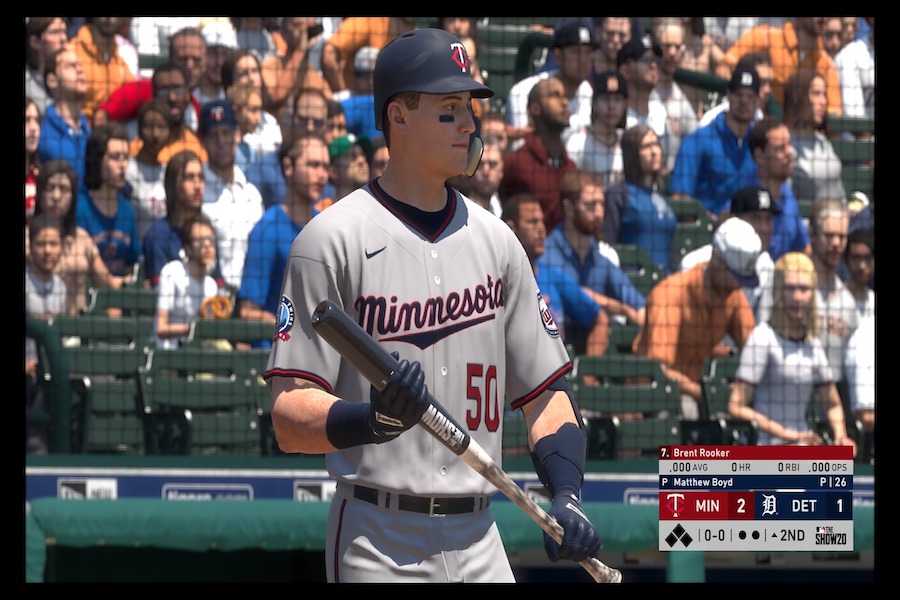
In our ongoing interactive simulated Twins 2020 season, another strong 10-game run puts the squad within striking distance of first place, while the MLB draft approaches and a rookie slugger enters the fold. Read on for updates and open-ended decisions you can help dictate.To get caught up on what we're doing here, you can check out the introductory post in the series for an explanation of the premise and setup. But the quick version is this: We're playing a progressive simulated Twins season on MLB The Show 20 on PS4, and y'all are helping guide the ship. In each installment I'll update you on what's happened since the last, and put at least one key decision up for vote. Date In Game: 5/21/20 Team Record: 30-20 Leading OPS: Miguel Sano (1.001 in 159 AB) Leading ERA (SP): Kenta Maeda (2.37 in 60.2 IP) Leading ERA (RP): Taylor Rogers (1.46 in 23.2 IP) LATEST RESULTS (7-3) Gm 41 @ DET: W 5-2 (Odorizzi 8.1 IP, 1 ER, W) Gm 42 @ DET: W 5-4 (Rooker 3-for-4) Gm 43 @ DET: W 9-4 (Astudillo 2-for-5, 3 RBI) Gm 44 @ DET: L 2-1 (Dobnak 5 IP, 1 ER) Gm 45 @ CLE: L 4-2 (Sano 3-for-6) Gm 46 @ CLE: W 3-2 (Odorizzi 6 IP, 1 ER, W) Gm 47 @ CLE: W 6-3 (Garver 4-for-5, 3 RBI) Gm 48 vs BAL: W 6-5 (Polanco walk-off 2-R single) Gm 49 vs BAL: L 10-7 (Garver 2 HR, 4 RBI) Gm 50 vs BAL: W 6-4 (Kepler, Rosario, Astudillo HR) AL CENTRAL STANDINGS Download attachment: alcstandings521.jpeg THE RUNDOWN Our last update shared numbers at the season's one-quarter milestone, and laid out three options for roster upgrades. Here are the vote tallies as I counted 'em: Replace Randy Dobnak with Jordan Balazovic as fifth starter (8 votes)Replace Jimmy Kerrigan with Brent Rooker on the bench (12 votes)Replace Devin Smeltzer with Fernando Romero in the bullpen (13 votes)There was enough support for the latter two that I chose to move forward with both. Dobnak hung onto his fifth starter spot. For now. A very nice 10-game stretch ensued for our Twins, who are really coming into their own as they now sit 10 games above .500, suddenly withing 2.5 of Cleveland for first place. Our latest slate featured some riveting extra-inning affairs, a thrilling comeback, and an impressive rookie debut. Here's a quick rundown. In Detroit we took three of four on the backing of some strong pitching and quality hitting. Rooker made his first big-league start in the second game, batting seventh and playing left. He went 3-for-4 with a double in the debut. Download attachment: rookerswing.jpeg All in all, Rooker is slashing .235/.316/.353 with a pair of doubles through his first 19 plate appearances as a Twin. In the series finale against Detroit, Dobnak reaffirmed the decision to stick with him in the rotation, tossing five innings of one-run ball, but the Twins offense was shut down by Daniel Norris in a 2-1 loss. Then, it was off to Cleveland for the biggest series of the season yet. Things opened up in dramatic fashion. Jose Berrios and Mike Clevinger dueled, then turned it over to the relievers, who kept the stalemate going. A 2-2 tie carried into extra innings, where the two teams traded zeroes until Zack Littell yielded a two-run walk-off homer to Carlos Santana in the bottom of the 13th. Fortunately, our Twins battled back to win games two and three, making up key ground in the standings. Then it was back home to face the Orioles. In the first game of this series, the Twins fell behind 4-2 when Homer Bailey coughed up four runs in the fifth. Jordan Balazovic took over and kept the game in hand with one run allowed over 4 1/3 frames. Entering the bottom of the ninth down 5-2, our Twins needed some magic. Here's the game log from that half inning: [LHP Paul Fry replaces RHP Michael Givens for BAL]Miguel Sano reaches 1B on error by 3B Renato Nunez.Eddie Rosario walks, Sano to 2B.Nelson Cruz strikes out swinging.Marwin Gonzalez singles to left. Sano to 3B, Rosario to 2B.Max Kepler singles to left. Sano and Rosario score, Gonzalez to 2B.[LHP Tanner Scott replaces LHP Paul Fry for BAL][Mitch Garver pinch-hits for Brent Rooker]Mitch Garver walks. Gonzalez to 3B, Kepler to 2B.Byron Buxton grounds into fielder's choice, Gonzalez out at home. Kepler to 3B, Garver to 2B.[Jorge Polanco pinch-hits for Luis Arraez]Jorge Polanco singles to right. Kepler and Garver score.Hip-hip, Jorge! It was Polanco's second walk-off hit of the season, and in a pinch-hit appearance with two outs to seal a big comeback, no less. Gotta love it. Unfortunately Minnesota couldn't ride its momentum in the next game, where Dobak (3 IP, 5 ER) was outperformed by ... groan ... Kohl Stewart, who picked up his first win of the season, moving to 1-7 with five innings of one-run ball. But the Twins came back to finish this latest stretch with a win behind Berrios, keyed by Kepler's three-run homer. As we head into the final 10 days of May, we're within two weeks of the MLB draft. I've mostly got scouting on autopilot in the game, but will check in with y'all to gather some thoughts in the next installment as we get ready to recruit some new (fictional) young talent into the system. WHO'S HOT Jorge Polanco of course had the big knock and he has generally been playing very well, with his slash line up to .290/.381/.414 on the year. Mitch Garver was red-hot in this 10-game stretch, going 11-for-26 (.423) with three homers and nine RBIs. Luis Arraez collected 10 hits to push his season average up to .321, which ranks eighth-best in the American League. His .428 OBP ranks fifth. Eddie Rosario drove in eight more runs; his 37 RBIs are fourth-most in the AL. Meanwhile, Jake Odorizzi (2 ER in 14 1/3 IP over 2 starts) and Kenta Maeda (2 ER in 11 IP over 2 starts) continue to do their things. Here's the current AL leaderboard for ERA: Download attachment: era_leaderboard_521.jpeg In the bullpen, Tyler Clippard (1.69 ERA), Tyler Duffey (1.99) and Taylor Rogers (1.46) continue to lead the charge for a mostly effective unit. WHO'S NOT Nelson Cruz has run into a cool spell, batting just .186 over his past 10 games, although he did chip in a couple more homers. Josh Donaldson too has hit a skid, batting .195 in nine starts and dropping his season OPS by nearly 50 points. It says something that our offense can still perform, and the team can still win three straight series, with these two linchpins in the lineup lagging. Homer Bailey gave up eight earned runs in his 9 2/3 innings, raising his ERA to 5.44, but he does have a 5-1 record thanks to his run support. Randy Dobnak has yet to complete more than five innings, and has gotten there only once in four starts. DECISION TIME: DETERMINING BALAZOVIC'S ROLE We chose not to swap in Balazovic for Dobnak as fifth starter last week, but there was clear support for the idea and I think it's worth revisiting. Dobnak allowed six earned runs over eight innings in his latest two starts. The success he was enjoying as a reliever has evaporated since the switch to starting. Balazovic made only one relief appearance, but it was his best of the season: 4 1/3 innings, one run, five strikeouts, one walk. His strong work in relief of a short Bailey set the stage for a dramatic comeback win. As we've mentioned, Balazovic's morale is currently dragging down his player rating because he feels miscast in his role. Should we swap the two? Vote in the comments section. COMING UP 5/21: vs CWS 5/22: vs CWS 5/23: vs CWS 5/24: vs CWS 5/26: @ NYY 5/27: @ NYY 5/28: @ NYY 5/29: @ CWS 5/30: @ CWS 5/31: @ CWS 6/1: @ CWS PREVIOUS INSTALLMENTS Part 1: We Can Build This Thing Together (0-0) Part 2: 10 Games In, 6 Games Back (4-6) Part 3: Roaring Back (11-9) Part 4: Over the Hill (17-13) Part 5: Checking In at the Quarter Point (23-17) MORE FROM TWINS DAILY — Latest Twins coverage from our writers — Recent Twins discussion in our forums — Follow Twins Daily via Twitter, Facebook or email Click here to view the article
-
 To get caught up on what we're doing here, you can check out the introductory post in the series for an explanation of the premise and setup. But the quick version is this: We're playing a progressive simulated Twins season on MLB The Show 20 on PS4, and y'all are helping guide the ship. In each installment I'll update you on what's happened since the last, and put at least one key decision up for vote. Date In Game: 5/21/20 Team Record: 30-20 Leading OPS: Miguel Sano (1.001 in 159 AB) Leading ERA (SP): Kenta Maeda (2.37 in 60.2 IP) Leading ERA (RP): Taylor Rogers (1.46 in 23.2 IP) LATEST RESULTS (7-3) Gm 41 @ DET: W 5-2 (Odorizzi 8.1 IP, 1 ER, W) Gm 42 @ DET: W 5-4 (Rooker 3-for-4) Gm 43 @ DET: W 9-4 (Astudillo 2-for-5, 3 RBI) Gm 44 @ DET: L 2-1 (Dobnak 5 IP, 1 ER) Gm 45 @ CLE: L 4-2 (Sano 3-for-6) Gm 46 @ CLE: W 3-2 (Odorizzi 6 IP, 1 ER, W) Gm 47 @ CLE: W 6-3 (Garver 4-for-5, 3 RBI) Gm 48 vs BAL: W 6-5 (Polanco walk-off 2-R single) Gm 49 vs BAL: L 10-7 (Garver 2 HR, 4 RBI) Gm 50 vs BAL: W 6-4 (Kepler, Rosario, Astudillo HR) AL CENTRAL STANDINGS THE RUNDOWN Our last update shared numbers at the season's one-quarter milestone, and laid out three options for roster upgrades. Here are the vote tallies as I counted 'em: Replace Randy Dobnak with Jordan Balazovic as fifth starter (8 votes) Replace Jimmy Kerrigan with Brent Rooker on the bench (12 votes) Replace Devin Smeltzer with Fernando Romero in the bullpen (13 votes) There was enough support for the latter two that I chose to move forward with both. Dobnak hung onto his fifth starter spot. For now. A very nice 10-game stretch ensued for our Twins, who are really coming into their own as they now sit 10 games above .500, suddenly withing 2.5 of Cleveland for first place. Our latest slate featured some riveting extra-inning affairs, a thrilling comeback, and an impressive rookie debut. Here's a quick rundown. In Detroit we took three of four on the backing of some strong pitching and quality hitting. Rooker made his first big-league start in the second game, batting seventh and playing left. He went 3-for-4 with a double in the debut. All in all, Rooker is slashing .235/.316/.353 with a pair of doubles through his first 19 plate appearances as a Twin. In the series finale against Detroit, Dobnak reaffirmed the decision to stick with him in the rotation, tossing five innings of one-run ball, but the Twins offense was shut down by Daniel Norris in a 2-1 loss. Then, it was off to Cleveland for the biggest series of the season yet. Things opened up in dramatic fashion. Jose Berrios and Mike Clevinger dueled, then turned it over to the relievers, who kept the stalemate going. A 2-2 tie carried into extra innings, where the two teams traded zeroes until Zack Littell yielded a two-run walk-off homer to Carlos Santana in the bottom of the 13th. Fortunately, our Twins battled back to win games two and three, making up key ground in the standings. Then it was back home to face the Orioles. In the first game of this series, the Twins fell behind 4-2 when Homer Bailey coughed up four runs in the fifth. Jordan Balazovic took over and kept the game in hand with one run allowed over 4 1/3 frames. Entering the bottom of the ninth down 5-2, our Twins needed some magic. Here's the game log from that half inning: [LHP Paul Fry replaces RHP Michael Givens for BAL] Miguel Sano reaches 1B on error by 3B Renato Nunez. Eddie Rosario walks, Sano to 2B. Nelson Cruz strikes out swinging. Marwin Gonzalez singles to left. Sano to 3B, Rosario to 2B. Max Kepler singles to left. Sano and Rosario score, Gonzalez to 2B. [LHP Tanner Scott replaces LHP Paul Fry for BAL] [Mitch Garver pinch-hits for Brent Rooker] Mitch Garver walks. Gonzalez to 3B, Kepler to 2B. Byron Buxton grounds into fielder's choice, Gonzalez out at home. Kepler to 3B, Garver to 2B. [Jorge Polanco pinch-hits for Luis Arraez] Jorge Polanco singles to right. Kepler and Garver score. Hip-hip, Jorge! It was Polanco's second walk-off hit of the season, and in a pinch-hit appearance with two outs to seal a big comeback, no less. Gotta love it. Unfortunately Minnesota couldn't ride its momentum in the next game, where Dobak (3 IP, 5 ER) was outperformed by ... groan ... Kohl Stewart, who picked up his first win of the season, moving to 1-7 with five innings of one-run ball. But the Twins came back to finish this latest stretch with a win behind Berrios, keyed by Kepler's three-run homer. As we head into the final 10 days of May, we're within two weeks of the MLB draft. I've mostly got scouting on autopilot in the game, but will check in with y'all to gather some thoughts in the next installment as we get ready to recruit some new (fictional) young talent into the system. WHO'S HOT Jorge Polanco of course had the big knock and he has generally been playing very well, with his slash line up to .290/.381/.414 on the year. Mitch Garver was red-hot in this 10-game stretch, going 11-for-26 (.423) with three homers and nine RBIs. Luis Arraez collected 10 hits to push his season average up to .321, which ranks eighth-best in the American League. His .428 OBP ranks fifth. Eddie Rosario drove in eight more runs; his 37 RBIs are fourth-most in the AL. Meanwhile, Jake Odorizzi (2 ER in 14 1/3 IP over 2 starts) and Kenta Maeda (2 ER in 11 IP over 2 starts) continue to do their things. Here's the current AL leaderboard for ERA: In the bullpen, Tyler Clippard (1.69 ERA), Tyler Duffey (1.99) and Taylor Rogers (1.46) continue to lead the charge for a mostly effective unit. WHO'S NOT Nelson Cruz has run into a cool spell, batting just .186 over his past 10 games, although he did chip in a couple more homers. Josh Donaldson too has hit a skid, batting .195 in nine starts and dropping his season OPS by nearly 50 points. It says something that our offense can still perform, and the team can still win three straight series, with these two linchpins in the lineup lagging. Homer Bailey gave up eight earned runs in his 9 2/3 innings, raising his ERA to 5.44, but he does have a 5-1 record thanks to his run support. Randy Dobnak has yet to complete more than five innings, and has gotten there only once in four starts. DECISION TIME: DETERMINING BALAZOVIC'S ROLE We chose not to swap in Balazovic for Dobnak as fifth starter last week, but there was clear support for the idea and I think it's worth revisiting. Dobnak allowed six earned runs over eight innings in his latest two starts. The success he was enjoying as a reliever has evaporated since the switch to starting. Balazovic made only one relief appearance, but it was his best of the season: 4 1/3 innings, one run, five strikeouts, one walk. His strong work in relief of a short Bailey set the stage for a dramatic comeback win. As we've mentioned, Balazovic's morale is currently dragging down his player rating because he feels miscast in his role. Should we swap the two? Vote in the comments section. COMING UP 5/21: vs CWS 5/22: vs CWS 5/23: vs CWS 5/24: vs CWS 5/26: @ NYY 5/27: @ NYY 5/28: @ NYY 5/29: @ CWS 5/30: @ CWS 5/31: @ CWS 6/1: @ CWS PREVIOUS INSTALLMENTS Part 1: We Can Build This Thing Together (0-0) Part 2: 10 Games In, 6 Games Back (4-6) Part 3: Roaring Back (11-9) Part 4: Over the Hill (17-13) Part 5: Checking In at the Quarter Point (23-17) MORE FROM TWINS DAILY — Latest Twins coverage from our writers — Recent Twins discussion in our forums — Follow Twins Daily via Twitter, Facebook or email
 -
The fans are not really my primary concern. What about the players who will have their career legacies and future earnings dictated by what happens in this sideshow? What happens when a pitcher catches the virus in the clubhouse and has to miss several weeks while getting well and quarantining, or gets hurt because he's thrown completely out of the routine that has constituted his entire life in baseball, and then has his future value impacted by it? The example of the empty-stadium game in Baltimore, and how players reacted to it, is very pertinent in my mind. Players hated it. Eaton later attributed his team's loss to the weird environment.
-
I very much hope you're right
-
If Major League Baseball is going to have any kind of season in 2020, it needs to be a novelty exhibition. Trying to put anything meaningful on the record makes no sense and is likely infeasible. This is a hard truth, but one we sadly must come to grips with it.Staring down the incomprehensible collective profit loss that a cancelled season would entail, MLB and its Players Association have been hard at work trying to hammer out a salvage scenario. The latest reported example would call for a radical realignment of league structure, based on spring training site geography, and would have Minnesota playing in a "Grapefruit League South" division with Tampa, Atlanta, Boston, and Baltimore. The sheer logistical hurdles of making something like this happen, in a way that ensures player and public safety, are monumental. Stephanie Apstein's recent writeup for Sports Illustrated, Bursting the Bubble: Why Sports Aren't Coming Back Soon, spells it all out in sobering terms. She spoke with top scientific experts and arrived at a grim conclusion. The bottom line: Many of these ideas sound good in theory, but when you really think through the litany of practical implications, it's almost impossible to envision any of them working. From my view, the only way for something to actually materialize, as currently discussed, would be a broad public movement toward laxening protective measures. Or, for extreme exceptions to be made specifically for Major League Baseball. Given the economic and financial factors at play, neither of these things is out of the question. Personally, I don't see it. But let's say one of them gives. Or, a plan is architected that covers every contingency, and gains approval from public health authorities and all parties involved. One really must ask themself: If manufacturing a season requires warping the league's very fabric, and forcing players to perform (with future earnings on the line!) under these incredibly awkward circumstances, while unavoidably creating public safety concerns ... is it really worthwhile? Some fans will say, sure. I get it, and I've certainly had my own internal debates. I'm as desperate for the return of baseball as anyone, I assure you. But then I start thinking about the actual act of watching games played in empty spring training stadiums, against faux division rivals, in a condensed and warped season schedule. Players hitting home runs and silently rounding the bases, before returning to the plate where they're unable to high-five in celebration. I think about the notion of these results – and whatever champion is crowned – having legitimacy in the historical record of the game. Not just that, but many players having their careers completely altered and upended by the process. To date, there has been one major-league game played before a completely empty stadium. It was in Baltimore on April 29th, 2015, amidst a tumultuous time for the city. Earlier that month, Freddie Gray died while under police detainment, sparking riots and unrest that consumed all security and police resources required to run a traditional pro sporting event. Dan Hayes, the current Twins beat writer for The Athletic who covered the visiting White Sox back then, tweeted the other day: "I was at that game as a reporter. It was awkward. Players will not want to play in that environment. You hear everything." While the current situation is obviously very different in nature, this reflective quote from former Sox outfielder Adam Eaton (via Chicago Tribune) about participating in the game rings now with a very acute relevance: "There was a lot of weight on your heart because of what was going on in the city ... I guarantee everybody in this clubhouse at the time and over there was like, 'We have to play this game, but at the same time, there are bigger struggles going on, and baseball is not the biggest focus.' … It was a very, very weird feeling." It's true that MLB now has the advantage of being able to plan and build for this type of setup, but clearly there are "very, very weird" dynamics in place as a global health crisis ravages the world and death counts escalate. I'm sure many people reading this disagree on fundamental premise – either because the prevailing science and projections regarding COVID-19 are overblown, or because the need to return to a societal norm outweighs the unchecked impact of the virus. I'm not saying either of those viewpoints is wrong. I don't know. Plenty of major-leaguers, eager to get back to playing and earning paychecks, lean that way, no doubt. But not all of them do. And more pertinently, not all are keen on uprooting their lives, separating from their families, and subjecting their career legacies to this strange scenario in the name of making more money. Many of the game's biggest stars (and consequentially its most financially secure) are in that group, I'd wager. Without the stars, it doesn't work. In fact, without virtually EVERYONE, it doesn't work. And that's where the practicality eludes me. Anyone participating would need to to opt in; this isn't like a typical MLBPA decision where members must follow the will of consensus and leadership. There are explicit dangers and substantive sacrifices involved. What happens when (not if) the first player – like, say, Brewers starter Brett Anderson, who tweeted "It begins and ends right here" of the clause that requires indefinite separation from families – takes a hardline stance? Dominoes will fall. In a recent article for ESPN, reporters asked a wide variety of players around the league for their input on these proposals, and to a man, nearly everyone expressed strong skepticism if not blatant opposition. A few samplings: "When I think about being isolated for four to five months without being able to see my family, I don't think that would go through at all, personally.""Honestly, my reaction would be I'm not OK with being separated from my family in the middle of a pandemic.""You get into these certain scenarios just to play, and then at the end of the day, is it worth it?""Are you gonna put people at risk just so you can be kings of the sports world for a couple of months?""It just seems like a lot of stuff. I mean, I love the game, but you're changing it too much. Everyone is trying to make money.""I think it's an absurd proposal. If that's literally what it's going to take to start the season, then I don't see how it's happening."It seems clear that portrayals of robust union support for the avenues being discussed are overstated, as affirmed by one union source in a story on NBC News, who said, "We listened. But the idea that we had embraced that plan is totally inaccurate." Perhaps universal participation is not required to proceed with one of these proposals, but again, the idea of playing meaningful games with missing pieces becomes highly problematic. Is it really an MLB season if there's no Mike Trout? What if one team has a disproportionate number of players withdraw? How is it fair to them or their fans to weigh these results and outcomes as legitimate? Taking everything into account, I'll close by circling back to my introductory contention, which hopefully offers a glimmer of optimism: "If Major League Baseball is going to have any kind of season in 2020, it needs to be a novelty exhibition." While I see no path to conducting a season of record, the Florida/Arizona sideshow ideas become far more plausible if we treat them like a World Baseball Classic style exhibition tournament. Players can individually opt in (and maybe almost all of them will!), but with the understanding that this unique season, and their performances within, will not be imprinted in Major League Baseball's rich historical tapestry. The lessened need to adhere to the sport's stringent procedures, along with fewer participants reducing the scale, makes such a proposition far more viable in my eyes. Still a stretch, for the reasons covered in Apstein's piece for SI, but more viable. If you ask me, that's now where we should be setting our sights as hopeful fans, yearning for baseball's beautiful distraction. I take zero pleasure in saying so, but the notion of a 2020 MLB season worthy of adding to the official record is already off the table. Click here to view the article
-
It's Time to Give Up the Ghost of a 2020 MLB Season of Record
Nick Nelson posted an article in Twins
 Staring down the incomprehensible collective profit loss that a cancelled season would entail, MLB and its Players Association have been hard at work trying to hammer out a salvage scenario. The latest reported example would call for a radical realignment of league structure, based on spring training site geography, and would have Minnesota playing in a "Grapefruit League South" division with Tampa, Atlanta, Boston, and Baltimore. The sheer logistical hurdles of making something like this happen, in a way that ensures player and public safety, are monumental. Stephanie Apstein's recent writeup for Sports Illustrated, Bursting the Bubble: Why Sports Aren't Coming Back Soon, spells it all out in sobering terms. She spoke with top scientific experts and arrived at a grim conclusion. The bottom line: Many of these ideas sound good in theory, but when you really think through the litany of practical implications, it's almost impossible to envision any of them working. From my view, the only way for something to actually materialize, as currently discussed, would be a broad public movement toward laxening protective measures. Or, for extreme exceptions to be made specifically for Major League Baseball. Given the economic and financial factors at play, neither of these things is out of the question. Personally, I don't see it. But let's say one of them gives. Or, a plan is architected that covers every contingency, and gains approval from public health authorities and all parties involved. One really must ask themself: If manufacturing a season requires warping the league's very fabric, and forcing players to perform (with future earnings on the line!) under these incredibly awkward circumstances, while unavoidably creating public safety concerns ... is it really worthwhile? Some fans will say, sure. I get it, and I've certainly had my own internal debates. I'm as desperate for the return of baseball as anyone, I assure you. But then I start thinking about the actual act of watching games played in empty spring training stadiums, against faux division rivals, in a condensed and warped season schedule. Players hitting home runs and silently rounding the bases, before returning to the plate where they're unable to high-five in celebration. I think about the notion of these results – and whatever champion is crowned – having legitimacy in the historical record of the game. Not just that, but many players having their careers completely altered and upended by the process. To date, there has been one major-league game played before a completely empty stadium. It was in Baltimore on April 29th, 2015, amidst a tumultuous time for the city. Earlier that month, Freddie Gray died while under police detainment, sparking riots and unrest that consumed all security and police resources required to run a traditional pro sporting event. Dan Hayes, the current Twins beat writer for The Athletic who covered the visiting White Sox back then, tweeted the other day: "I was at that game as a reporter. It was awkward. Players will not want to play in that environment. You hear everything." While the current situation is obviously very different in nature, this reflective quote from former Sox outfielder Adam Eaton (via Chicago Tribune) about participating in the game rings now with a very acute relevance: "There was a lot of weight on your heart because of what was going on in the city ... I guarantee everybody in this clubhouse at the time and over there was like, 'We have to play this game, but at the same time, there are bigger struggles going on, and baseball is not the biggest focus.' … It was a very, very weird feeling." It's true that MLB now has the advantage of being able to plan and build for this type of setup, but clearly there are "very, very weird" dynamics in place as a global health crisis ravages the world and death counts escalate. I'm sure many people reading this disagree on fundamental premise – either because the prevailing science and projections regarding COVID-19 are overblown, or because the need to return to a societal norm outweighs the unchecked impact of the virus. I'm not saying either of those viewpoints is wrong. I don't know. Plenty of major-leaguers, eager to get back to playing and earning paychecks, lean that way, no doubt. But not all of them do. And more pertinently, not all are keen on uprooting their lives, separating from their families, and subjecting their career legacies to this strange scenario in the name of making more money. Many of the game's biggest stars (and consequentially its most financially secure) are in that group, I'd wager. Without the stars, it doesn't work. In fact, without virtually EVERYONE, it doesn't work. And that's where the practicality eludes me. Anyone participating would need to to opt in; this isn't like a typical MLBPA decision where members must follow the will of consensus and leadership. There are explicit dangers and substantive sacrifices involved. What happens when (not if) the first player – like, say, Brewers starter Brett Anderson, who tweeted "It begins and ends right here" of the clause that requires indefinite separation from families – takes a hardline stance? Dominoes will fall. In a recent article for ESPN, reporters asked a wide variety of players around the league for their input on these proposals, and to a man, nearly everyone expressed strong skepticism if not blatant opposition. A few samplings: "When I think about being isolated for four to five months without being able to see my family, I don't think that would go through at all, personally." "Honestly, my reaction would be I'm not OK with being separated from my family in the middle of a pandemic." "You get into these certain scenarios just to play, and then at the end of the day, is it worth it?" "Are you gonna put people at risk just so you can be kings of the sports world for a couple of months?" "It just seems like a lot of stuff. I mean, I love the game, but you're changing it too much. Everyone is trying to make money." "I think it's an absurd proposal. If that's literally what it's going to take to start the season, then I don't see how it's happening." It seems clear that portrayals of robust union support for the avenues being discussed are overstated, as affirmed by one union source in a story on NBC News, who said, "We listened. But the idea that we had embraced that plan is totally inaccurate." Perhaps universal participation is not required to proceed with one of these proposals, but again, the idea of playing meaningful games with missing pieces becomes highly problematic. Is it really an MLB season if there's no Mike Trout? What if one team has a disproportionate number of players withdraw? How is it fair to them or their fans to weigh these results and outcomes as legitimate? Taking everything into account, I'll close by circling back to my introductory contention, which hopefully offers a glimmer of optimism: "If Major League Baseball is going to have any kind of season in 2020, it needs to be a novelty exhibition." While I see no path to conducting a season of record, the Florida/Arizona sideshow ideas become far more plausible if we treat them like a World Baseball Classic style exhibition tournament. Players can individually opt in (and maybe almost all of them will!), but with the understanding that this unique season, and their performances within, will not be imprinted in Major League Baseball's rich historical tapestry. The lessened need to adhere to the sport's stringent procedures, along with fewer participants reducing the scale, makes such a proposition far more viable in my eyes. Still a stretch, for the reasons covered in Apstein's piece for SI, but more viable. If you ask me, that's now where we should be setting our sights as hopeful fans, yearning for baseball's beautiful distraction. I take zero pleasure in saying so, but the notion of a 2020 MLB season worthy of adding to the official record is already off the table.
 -
The more they talk about warping the very fabric of the league to try and manufacture a season, the more I wonder if a season's worth having at all
-
Twins 2020 Position Analysis: Relief Pitcher
Nick Nelson replied to Nick Nelson's topic in Twins Daily Front Page News
I'm almost positive Romero has a fourth option. No one's giving up on Duran as a starter. He was simply mentioned as one of the only arms in the system with a feasible chance of replacing what Graterol brought.- 11 replies
-
- 1
-

-
- taylor rogers
- trevor may
- (and 1 more)
-
Last year when I previewed this unit, a lack of proven depth was the overarching story. Today, we'll be unpacking a 180-degree turnaround. The emergence of Minnesota's bullpen as a top-tier group was one of the 2019 season's most astonishing, and promising, developments.Projected Bullpen: Taylor Rogers, Tyler Duffey, Trevor May, Tyler Clippard, Sergio Romo, Zach Littell, Matt Wisler, Cody Stashak Depth: Fernando Romero, Sean Poppen, Danny Coulombe, Ryan Garton, Blaine Hardy, Cory Gearrin, Caleb Thielbar Prospects: Edwar Colina, Dakota Chalmers, Jake Reed THE GOOD September 14th was perhaps the most memorable day of the 2019 season. On this date, the Twins swept a doubleheader in Cleveland, effectively putting the division on ice. While Miguel Sano's splashy grand slam dominated the highlight reels, there's no question who was the star of this show: Minnesota's blossoming bullpen. The games were "started" by Devin Smeltzer and Lewis Thorpe, and featured a total of nine different pitchers deployed by Rocco Baldelli. Smeltzer and Thorpe combined with Zack Littell, Tyler Duffey, Sergio Romo, Taylor Rogers, Cody Stashak, Brusdar Graterol and Trevor May to hold Cleveland to five runs on 13 hits in 18 innings. The seven pitchers who appeared as relievers totaled 14 strikeouts and zero walks. This immaculate collective performance epitomized the bullpen's brilliant second half. Even with top deadline addition Sam Dyson completely fizzling, the Twins relief corps ranked third among MLB teams in fWAR after July 31st, trailing only the Yankees and Rays. While the closer Rogers continued to excel, he was surrounded by strong performers, with May, Duffey, Romo, and Littell all contributing in major ways. Meanwhile, Stashak and Graterol joined the fray as impact rookies. Graterol won't return, but everyone else will, along with waiver gamble Matt Wisler and free agent acquisition Tyler Clippard, whose reverse splits make him the weapon Baldelli needs against southpaws. Minnesota is about seven-deep with quality big-league relievers, and that's before you account for long-relief options such as Thorpe and Smeltzer, or ready-to-go reinforcements such as Sean Poppen and Fernando Romero. Even with the inherent volatility of MLB bullpens, and the inevitability of at least a few injuries, this relief unit is poised to be one of the American League's finest. THE BAD Graterol is a big loss. While he was the least established among this entire crop, he undoubtedly offered the most upside, which was set to be unleashed after the team's acknowledgement he was slated for a relief role in 2020. The Twins bolstered their rotation by trading the young flamethrower for Kenta Maeda, but there's a clear trade-off in bullpen caliber. By no means were the Twins counting on Graterol to be an essential fixture in this year's bullpen, but that was the beauty of his presence: a total bonus and a wild-card, with serious "ace in the hole" potential in this season and many to come. It may not be felt as strongly since we were only beginning to acclimate ourselves to the idea of him as a long-term relief pitcher, but make no mistake: Graterol's absence creates a spacious void in the bullpen's outlook going forward. The Twins will have to hope a rebounding Romero or an emerging Jhoan Duran can fill it in some way. Ultimately, the most evident weakness in Minnesota's bullpen is a lack of established track records beyond Rogers. As good as May, Duffey, and Littell were last year, none had a substantive history of MLB relief success prior. Wisler is still searching for his first above-average season in the majors. Signing Clippard and Romo helps in this regard, of course, but they are middle relief types. The Twins are counting heavily on May and Duffey to repeat their dominant performances from 2019. There's no specific reason to think either one won't but... relievers are relievers. THE BOTTOM LINE Bullpen is undoubtedly a differentiating asset for the Twins heading into 2020, as they've retained all the top performers in a unit that progressively emerged last year as one of the league's best and deepest. Rogers ranks among the position's elite, and is surrounded by a couple setup men who could easily join the closer in this distinction. Reliable options abound for Baldelli, who shouldn't find himself running short on trusted relievers barring an abundance of injuries and setbacks. Twins 2020 Position Analysis: Catcher Twins 2020 Position Analysis: First Base Twins 2020 Position Analysis: Second Base Twins 2020 Position Analysis: Third Base Twins 2020 Position Analysis: Shortstop Twins 2020 Position Analysis: Left Field Twins 2020 Position Analysis: Center Field Twins 2020 Position Analysis: Right Field Twins 2020 Position Analysis: Designated Hitter Twins 2020 Position Analysis: Starting Pitcher MORE FROM TWINS DAILY — Latest Twins coverage from our writers — Recent Twins discussion in our forums — Follow Twins Daily via Twitter, Facebook or email Click here to view the article
-
 Projected Bullpen: Taylor Rogers, Tyler Duffey, Trevor May, Tyler Clippard, Sergio Romo, Zach Littell, Matt Wisler, Cody Stashak Depth: Fernando Romero, Sean Poppen, Danny Coulombe, Ryan Garton, Blaine Hardy, Cory Gearrin, Caleb Thielbar Prospects: Edwar Colina, Dakota Chalmers, Jake Reed THE GOOD September 14th was perhaps the most memorable day of the 2019 season. On this date, the Twins swept a doubleheader in Cleveland, effectively putting the division on ice. While Miguel Sano's splashy grand slam dominated the highlight reels, there's no question who was the star of this show: Minnesota's blossoming bullpen. The games were "started" by Devin Smeltzer and Lewis Thorpe, and featured a total of nine different pitchers deployed by Rocco Baldelli. Smeltzer and Thorpe combined with Zack Littell, Tyler Duffey, Sergio Romo, Taylor Rogers, Cody Stashak, Brusdar Graterol and Trevor May to hold Cleveland to five runs on 13 hits in 18 innings. The seven pitchers who appeared as relievers totaled 14 strikeouts and zero walks. This immaculate collective performance epitomized the bullpen's brilliant second half. Even with top deadline addition Sam Dyson completely fizzling, the Twins relief corps ranked third among MLB teams in fWAR after July 31st, trailing only the Yankees and Rays. While the closer Rogers continued to excel, he was surrounded by strong performers, with May, Duffey, Romo, and Littell all contributing in major ways. Meanwhile, Stashak and Graterol joined the fray as impact rookies. Graterol won't return, but everyone else will, along with waiver gamble Matt Wisler and free agent acquisition Tyler Clippard, whose reverse splits make him the weapon Baldelli needs against southpaws. Minnesota is about seven-deep with quality big-league relievers, and that's before you account for long-relief options such as Thorpe and Smeltzer, or ready-to-go reinforcements such as Sean Poppen and Fernando Romero. Even with the inherent volatility of MLB bullpens, and the inevitability of at least a few injuries, this relief unit is poised to be one of the American League's finest. THE BAD Graterol is a big loss. While he was the least established among this entire crop, he undoubtedly offered the most upside, which was set to be unleashed after the team's acknowledgement he was slated for a relief role in 2020. The Twins bolstered their rotation by trading the young flamethrower for Kenta Maeda, but there's a clear trade-off in bullpen caliber. By no means were the Twins counting on Graterol to be an essential fixture in this year's bullpen, but that was the beauty of his presence: a total bonus and a wild-card, with serious "ace in the hole" potential in this season and many to come. It may not be felt as strongly since we were only beginning to acclimate ourselves to the idea of him as a long-term relief pitcher, but make no mistake: Graterol's absence creates a spacious void in the bullpen's outlook going forward. The Twins will have to hope a rebounding Romero or an emerging Jhoan Duran can fill it in some way. Ultimately, the most evident weakness in Minnesota's bullpen is a lack of established track records beyond Rogers. As good as May, Duffey, and Littell were last year, none had a substantive history of MLB relief success prior. Wisler is still searching for his first above-average season in the majors. Signing Clippard and Romo helps in this regard, of course, but they are middle relief types. The Twins are counting heavily on May and Duffey to repeat their dominant performances from 2019. There's no specific reason to think either one won't but... relievers are relievers. THE BOTTOM LINE Bullpen is undoubtedly a differentiating asset for the Twins heading into 2020, as they've retained all the top performers in a unit that progressively emerged last year as one of the league's best and deepest. Rogers ranks among the position's elite, and is surrounded by a couple setup men who could easily join the closer in this distinction. Reliable options abound for Baldelli, who shouldn't find himself running short on trusted relievers barring an abundance of injuries and setbacks. Twins 2020 Position Analysis: Catcher Twins 2020 Position Analysis: First Base Twins 2020 Position Analysis: Second Base Twins 2020 Position Analysis: Third Base Twins 2020 Position Analysis: Shortstop Twins 2020 Position Analysis: Left Field Twins 2020 Position Analysis: Center Field Twins 2020 Position Analysis: Right Field Twins 2020 Position Analysis: Designated Hitter Twins 2020 Position Analysis: Starting Pitcher MORE FROM TWINS DAILY — Latest Twins coverage from our writers — Recent Twins discussion in our forums — Follow Twins Daily via Twitter, Facebook or email
 -
Option 3: Press "Like This" on this comment if you want us to call up Fernando Romero and his big heater for the MLB bullpen.
- 8 replies
-
- 12
-
-
Option 2: Press "Like This" on this comment if you want us to call up Brent Rooker from Triple-A, so his potent and MLB-ready bat can factor into the big-league team's fortunes.
- 8 replies
-
- 12
-
-
Option 1: Press "Like This" on this comment if you want us to move Jordan Balazovic into the rotation with hopes of jumpstarting his game, and providing some stability in the fifth spot.
-
With 40 games in the books, we're almost exactly one-fourth of the way through our interactive simulated 2020 Twins season. Let's zoom out to take a look at how everyone's performing, and where we can improve as we try to chase down the world-beating Cleveland Indians in the standings.To get caught up on what we're doing here, you can check out the introductory post in the series for an explanation of the premise and setup. But the quick version is this: We're playing a progressive simulated Twins season on MLB The Show 20 on PS4, and y'all are helping guide the ship. In each installment I'll update you on what's happened since the last, and put at least one key decision up for vote. Date In Game: 5/11/20 Team Record: 23-17 Leading OPS: Miguel Sano (1.023 in 127 AB) Leading ERA (SP): Kenta Maeda (2.54 in 49.2 IP) Leading ERA (RP): Taylor Rogers (1.47 in 18.1 IP) LATEST RESULTS Gm 31 @ LAD: W 6-2 (Donaldson HR, 3 RBI) Gm 32 @ LAA: W 5-2 (Maeda 8 IP, 0 ER, W) Gm 33 @ LAA: W 8-1 (Bailey 6.1 IP, 1 ER, W) Gm 34 @ LAA: L 6-5 (Dobnak 2.2 IP, 4 ER) Gm 35 vs SF: W 8-7 (Kepler 4-for-5, 2 HR, 3 RBI) Gm 36 vs SF: W 2-1 (Odorizzi 8 IP, 1 ER) Gm 37 vs SF: L 4-2 (Cruz 4-for-4, HR) Gm 38 vs KC: L 15-2 (Bailey 2.2 IP, 6 ER) Gm 39 vs KC: L 9-4 (Dobnak 4.2 IP, 8 R, 4 ER) Gm 40 vs KC: W 4-3 (Berrios 7 IP, 2 ER, W) AL CENTRAL STANDINGS Download attachment: alcstandings51120.jpeg THE RUNDOWN Last time, commenters overwhelmingly voted for Randy Dobnak as the choice to replace Rich Hill as fifth starter, so we made it happen. Runner-up Devin Smeltzer was called up to fill Dobnak's long relief role in the bullpen. To his credit, Hill took the news of being DFA'ed quite well. After passing through waivers, he in fact accepted an assignment to the minors. At 40, the man is keeping his dream alive and you've gotta respect it. Should he turn things around in Rochester, he could factor as a late-inning reinforcement for the rotation. With about 25% of our season in the books, we're six games above .500 but still trailing the Indians by 5 1/2 in the Central. Cleveland's solid play since an 11-0 start to the season is keeping them well ahead of the pack with MLB's best record (30-13). On our end, the most noteworthy storyline is our team's impeccable run of good health; we've not used the Injured List once through six weeks. Personally, I credit the manager's routine of steady rest and careful pitcher workload management. But that's just me. At this milestone juncture of the season, it felt fitting to give everyone a big-picture view of how the roster's faring. Here the numbers so far for our starting lineup: Max Kepler, RF: 161 PA, .317/.379/.510, 6 HR, 21 RBI, 32 RJosh Donaldson, 3B: 181 PA, .294/.376/.550, 12 HR, 30 RBI, 27 RNelson Cruz, DH: 169 PA, .322/.391/.530, 8 HR, 31 RBI, 18 REddie Rosario, LF: 157 PA, .290/.325/.510, 7 HR, 29 RBI, 22 RMiguel Sano, 1B: 153 PA, .315/.425/.598, 10 HR, 29 RBI, 18 RJorge Polanco, SS: 156 PA, .274/.372/.407, 4 HR, 12 RBI, 19 RMitch Garver: C: 118 PA, .263/.398/.453, 5 HR, 12 RBI, 15 RLuis Arraez, 2B: 133 PA, .307/.406/.500, 4 HR, 19 RBI, 22 RByron Buxton, CF: 134 PA, .193/.260/.235, 0 HR, 6 RBI, 11 RAnd the bench...Marwin Gonzalez, UTIL: 87 PA, .269/.345/.487, 5 HR, 11 RBI, 10 RAlex Avila, C: 60 PA, .269/.367/.596, 4 HR, 9 RBI, 7 RWillians Astudillo, C: 47 PA, .256/.304/.279, 0 HR, 2 RBI, 5 RJimmy Kerrigan, OF: 25 PA, .130/.200/.217, 0 HR, 0 RBI, 2 RHere are the numbers for our rotation, including the newly added Dobnak...Jose Berrios: 52.2 IP, 4-3, 4.61 ERA, 1.44 WHIP, 37-to-22 K/BBJake Odorizzi: 53.2 IP, 4-3, 2.68 ERA, 1.06 WHIP, 54-to-15 K/BBKenta Maeda: 49.2 IP, 5-0, 2.54 ERA, 1.23 WHIP, 48-to-29 K/BBHomer Bailey: 40.0 IP, 4-1, 4.95 ERA, 1.50 WHIP, 33-to-17 K/BBRandy Dobnak: 23.2 IP, 1-1, 4.18 ERA, 1.56 WHIP, 10-to-11 K/BBAnd the bullpen, listed basically in order of the leverage hierarchy I've been using...Taylor Rogers: 18.1 IP, 1.47 ERA, 0.87 WHIP, 16-to-3 K/BB, 10/11 SVTyler Duffey: 17.0 IP, 2.12 ERA, 1.29 WHIP, 20-to-9 K/BBTrevor May: 16.1 IP, 3.31 ERA, 1.59 WHIP, 20-to-8 K/BBTyler Clippard: 17.0 IP, 2.12 ERA, 1.24 WHIP, 13-to-10 K/BBSergio Romo: 14.1 IP, 4.40 ERA, 1.12 WHIP, 13-to-3 K/BBZack Littell: 14.0 IP, 2.57 ERA, 1.43 WHIP, 9-to-4 K/BBJordan Balazovic: 19.1 IP, 8.84 ERA, 2.17 WHIP, 18-to-7 K/BBDevin Smeltzer: 5.1 IP, 8.44 ERA, 2.81 WHIP, 1-to-5 K/BBI'll share a few general notes and thoughts, then we'll dissect some decisions that lie ahead of us as we look to gear up for key stretches in the schedule. Much like last year, offensive dominance has come in a holistic fashion. Everyone in the lineup (save Buxton) has been very good, and the team ranks second in the majors in runs scored (213), but no individual player's been out-of-this world. As such, the Twins aren't leading All-Star voting at any position position. (Miguel Sano and Max Kepler have the third-most votes at first base and right field.) May Day? More like Maeda Day. On May 1st, I ran into my most controversial decision of the season. Kenta Maeda was through eight innings against the Angels with zero hits allowed. He had, however, issued six walks and run up a fairly high pitch count, with this stamina teetering on the brink of depletion. Rather than strain our best starter in pursuit of the no-hitter, I turned to the bullpen with a 5-0 lead. Zack Littell gave up a couple runs before Taylor Rogers came in for a cheapy one-out save. Maeda's been a steady force atop the rotation with his 5-0 record and 2.54 ERA. (If you're curious, Brusdar Graterol has a 7.33 ERA in the rotation for the Dodgers' Triple-A affiliate.) My favorite game of this set: Maeda's no-no flirtation was a fun one, of course, but four days later we came out on top of an 11-inning thriller against the Giants with a Target Field walk-off. A game log snapshot of the ending is below, and I'm presenting it mainly just to pat myself on the back for a great pinch-running decision. (Kepler was on the bench due to a planned rest day.) Download attachment: gamewinnerlog.jpeg Dobnak's transition to the rotation has been rocky. His first start came in Anaheim against the Angels, and things didn't go well. A first-inning homer by Mike Trout set the tone in a tough outing that lasted only 2 2/3 frames, with the Halos scoring four times on six hits and a walk. Zero strikeouts. Dobnak's next turn at home against the Royals didn't go swimmingly either (4.2 IP, 8 R, 4 ER), although a costly Marwin Gonzalez error hurt him, as evidenced by half of the runs charged against him being unearned. Dobnak has allowed eight earned runs in 7 1/3 innings as a starter after allowing three in 16 1/3 innings as a long reliever. Incredible performances in the American League. It won't likely come as a surprise that the league-pacing Indians have two familiar contenders in the MVP race – Jose Ramirez has a 1.168 OPS and Francisco Lindor is scantly behind him at 1.055. But the talk of the league through early May, without question, is Boston's J.D. Martinez, who is unconscionably slashing .363/.414/.819 with 19 home runs and 46 RBIs through 39 games. Those totals put him on pace to finish with 77 homers and 186 RBIs. Martinez is either gonna cool down at some point or re-write the modern record books. The two Martinezes and Lindor have their teams (Cleveland and Boston) in first place, with the two best records in the AL. How can our Twins get to this level? Time for some tweaking. DECISION TIME: HOW CAN WE GET BETTER? We've been playing pretty well, but need to keep pushing hard in order to close the gap against Cleveland. While there are no glaring needs necessarily demanding our immediate attention, I see a few different opportunities to proactively shake things up and address some trouble spots. I'm gonna let you guys choose where we take action. Here are three ideas. Option #1: Move Jordan Balazovic into the starting rotation This probably seems counterintuitive and perhaps even moronic on the surface. Balazovic is struggling as a long reliever in the bullpen, with a ghastly 8.84 ERA and 2.17 WHIP in 19 1/3 innings. However, I will submit he's pitched than the numbers show. He has a higher overall rating (74) than Dobnak (73) or Homer Bailey (73). And here's the thing, that rating could theoretically be a lot higher. MLB The Show 20's Franchise Mode has a player morale system, which actually has a meaningful impact on outcomes. The idea is that if a player is unhappy, he'll play worse. Balazovic has the lowest morale on the team, and it's dragging down his overall rating by a whopping five points, from 79 to 74. This is partially because he's getting crushed, and partially because he's not in his desired role. Download attachment: balavovicmorale.jpeg What if we give him a shot in the rotation and see if it gets things moving in the right direction? Production could hardly be worse than we've received from Hill or Dobnak in that spot, and Balazovic offers more achievable upside than anyone else in this mix. I'll admit, though, it's a hasty plug-pull on Dobnak. Option #2: Call up Brent Rooker to replace Jimmy Kerrigan Kerrigan's a reasonably functional bench piece, but he hasn't been any kind of difference-maker in a month seeing being called up. If we want to swap him out, we could aim a little higher. In 25 games at Rochester, Rooker is hitting .282/.384/.565 with a team-leading six home runs for the Red Wings. Download attachment: rochesterleaders.jpeg My thinking is that we can rotate Rooker through left field semi-frequently, with Rosario going to right and Kepler to center. Buxton still hasn't been able to get anything going at the plate, so a reduction in playing time is as warranted as the opportunity for Rooker. Option #3: Call up Fernando Romero for the bullpen Remember him? He's pitching well through 12 appearances (one start) at Triple-A, with a 3.45 ERA and 29-to-8 K/BB ratio through 28 2/3 innings. His high stamina rating (75) would make him a nice fit as replacement for Devin Smeltzer, who's been a complete mess since joining the big-league bullpen (5 BB, 1 K in 5.1 IP). Download attachment: romeroprofile.jpeg Decisions loom large, with a series in Cleveland coming up on the next road trip and no off days in the next two weeks. What should we do? Sound off in the comments to voice your preference. Feel free to vote multiple times on this one if you're so inclined, since they're non-exclusive. COMING UP 5/11: @ DET 5/12: @ DET 5/13: @ DET 5/14: @ DET 5/15: @ CLE 5/16: @ CLE 5/17: @ CLE 5/18: vs BAL 5/19: vs BAL 5/20: vs BAL PREVIOUS INSTALLMENTS Part 1: We Can Build This Thing Together (0-0) Part 2: 10 Games In, 6 Games Back (4-6) Part 3: Roaring Back (11-9) Part 4: Over the Hill (17-13) MORE FROM TWINS DAILY — Latest Twins coverage from our writers — Recent Twins discussion in our forums — Follow Twins Daily via Twitter, Facebook or email Click here to view the article
-
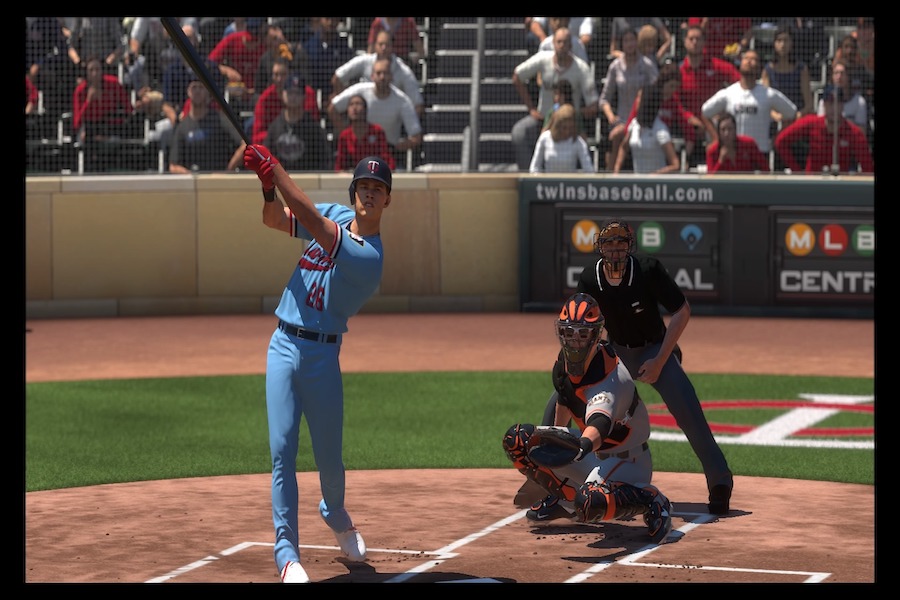 To get caught up on what we're doing here, you can check out the introductory post in the series for an explanation of the premise and setup. But the quick version is this: We're playing a progressive simulated Twins season on MLB The Show 20 on PS4, and y'all are helping guide the ship. In each installment I'll update you on what's happened since the last, and put at least one key decision up for vote. Date In Game: 5/11/20 Team Record: 23-17 Leading OPS: Miguel Sano (1.023 in 127 AB) Leading ERA (SP): Kenta Maeda (2.54 in 49.2 IP) Leading ERA (RP): Taylor Rogers (1.47 in 18.1 IP) LATEST RESULTS Gm 31 @ LAD: W 6-2 (Donaldson HR, 3 RBI) Gm 32 @ LAA: W 5-2 (Maeda 8 IP, 0 ER, W) Gm 33 @ LAA: W 8-1 (Bailey 6.1 IP, 1 ER, W) Gm 34 @ LAA: L 6-5 (Dobnak 2.2 IP, 4 ER) Gm 35 vs SF: W 8-7 (Kepler 4-for-5, 2 HR, 3 RBI) Gm 36 vs SF: W 2-1 (Odorizzi 8 IP, 1 ER) Gm 37 vs SF: L 4-2 (Cruz 4-for-4, HR) Gm 38 vs KC: L 15-2 (Bailey 2.2 IP, 6 ER) Gm 39 vs KC: L 9-4 (Dobnak 4.2 IP, 8 R, 4 ER) Gm 40 vs KC: W 4-3 (Berrios 7 IP, 2 ER, W) AL CENTRAL STANDINGS THE RUNDOWN Last time, commenters overwhelmingly voted for Randy Dobnak as the choice to replace Rich Hill as fifth starter, so we made it happen. Runner-up Devin Smeltzer was called up to fill Dobnak's long relief role in the bullpen. To his credit, Hill took the news of being DFA'ed quite well. After passing through waivers, he in fact accepted an assignment to the minors. At 40, the man is keeping his dream alive and you've gotta respect it. Should he turn things around in Rochester, he could factor as a late-inning reinforcement for the rotation. With about 25% of our season in the books, we're six games above .500 but still trailing the Indians by 5 1/2 in the Central. Cleveland's solid play since an 11-0 start to the season is keeping them well ahead of the pack with MLB's best record (30-13). On our end, the most noteworthy storyline is our team's impeccable run of good health; we've not used the Injured List once through six weeks. Personally, I credit the manager's routine of steady rest and careful pitcher workload management. But that's just me. At this milestone juncture of the season, it felt fitting to give everyone a big-picture view of how the roster's faring. Here the numbers so far for our starting lineup: Max Kepler, RF: 161 PA, .317/.379/.510, 6 HR, 21 RBI, 32 R Josh Donaldson, 3B: 181 PA, .294/.376/.550, 12 HR, 30 RBI, 27 R Nelson Cruz, DH: 169 PA, .322/.391/.530, 8 HR, 31 RBI, 18 R Eddie Rosario, LF: 157 PA, .290/.325/.510, 7 HR, 29 RBI, 22 R Miguel Sano, 1B: 153 PA, .315/.425/.598, 10 HR, 29 RBI, 18 R Jorge Polanco, SS: 156 PA, .274/.372/.407, 4 HR, 12 RBI, 19 R Mitch Garver: C: 118 PA, .263/.398/.453, 5 HR, 12 RBI, 15 R Luis Arraez, 2B: 133 PA, .307/.406/.500, 4 HR, 19 RBI, 22 R Byron Buxton, CF: 134 PA, .193/.260/.235, 0 HR, 6 RBI, 11 R And the bench... Marwin Gonzalez, UTIL: 87 PA, .269/.345/.487, 5 HR, 11 RBI, 10 R Alex Avila, C: 60 PA, .269/.367/.596, 4 HR, 9 RBI, 7 R Willians Astudillo, C: 47 PA, .256/.304/.279, 0 HR, 2 RBI, 5 R Jimmy Kerrigan, OF: 25 PA, .130/.200/.217, 0 HR, 0 RBI, 2 R Here are the numbers for our rotation, including the newly added Dobnak... Jose Berrios: 52.2 IP, 4-3, 4.61 ERA, 1.44 WHIP, 37-to-22 K/BB Jake Odorizzi: 53.2 IP, 4-3, 2.68 ERA, 1.06 WHIP, 54-to-15 K/BB Kenta Maeda: 49.2 IP, 5-0, 2.54 ERA, 1.23 WHIP, 48-to-29 K/BB Homer Bailey: 40.0 IP, 4-1, 4.95 ERA, 1.50 WHIP, 33-to-17 K/BB Randy Dobnak: 23.2 IP, 1-1, 4.18 ERA, 1.56 WHIP, 10-to-11 K/BB And the bullpen, listed basically in order of the leverage hierarchy I've been using... Taylor Rogers: 18.1 IP, 1.47 ERA, 0.87 WHIP, 16-to-3 K/BB, 10/11 SV Tyler Duffey: 17.0 IP, 2.12 ERA, 1.29 WHIP, 20-to-9 K/BB Trevor May: 16.1 IP, 3.31 ERA, 1.59 WHIP, 20-to-8 K/BB Tyler Clippard: 17.0 IP, 2.12 ERA, 1.24 WHIP, 13-to-10 K/BB Sergio Romo: 14.1 IP, 4.40 ERA, 1.12 WHIP, 13-to-3 K/BB Zack Littell: 14.0 IP, 2.57 ERA, 1.43 WHIP, 9-to-4 K/BB Jordan Balazovic: 19.1 IP, 8.84 ERA, 2.17 WHIP, 18-to-7 K/BB Devin Smeltzer: 5.1 IP, 8.44 ERA, 2.81 WHIP, 1-to-5 K/BB I'll share a few general notes and thoughts, then we'll dissect some decisions that lie ahead of us as we look to gear up for key stretches in the schedule. Much like last year, offensive dominance has come in a holistic fashion. Everyone in the lineup (save Buxton) has been very good, and the team ranks second in the majors in runs scored (213), but no individual player's been out-of-this world. As such, the Twins aren't leading All-Star voting at any position position. (Miguel Sano and Max Kepler have the third-most votes at first base and right field.) May Day? More like Maeda Day. On May 1st, I ran into my most controversial decision of the season. Kenta Maeda was through eight innings against the Angels with zero hits allowed. He had, however, issued six walks and run up a fairly high pitch count, with this stamina teetering on the brink of depletion. Rather than strain our best starter in pursuit of the no-hitter, I turned to the bullpen with a 5-0 lead. Zack Littell gave up a couple runs before Taylor Rogers came in for a cheapy one-out save. Maeda's been a steady force atop the rotation with his 5-0 record and 2.54 ERA. (If you're curious, Brusdar Graterol has a 7.33 ERA in the rotation for the Dodgers' Triple-A affiliate.) My favorite game of this set: Maeda's no-no flirtation was a fun one, of course, but four days later we came out on top of an 11-inning thriller against the Giants with a Target Field walk-off. A game log snapshot of the ending is below, and I'm presenting it mainly just to pat myself on the back for a great pinch-running decision. (Kepler was on the bench due to a planned rest day.) Dobnak's transition to the rotation has been rocky. His first start came in Anaheim against the Angels, and things didn't go well. A first-inning homer by Mike Trout set the tone in a tough outing that lasted only 2 2/3 frames, with the Halos scoring four times on six hits and a walk. Zero strikeouts. Dobnak's next turn at home against the Royals didn't go swimmingly either (4.2 IP, 8 R, 4 ER), although a costly Marwin Gonzalez error hurt him, as evidenced by half of the runs charged against him being unearned. Dobnak has allowed eight earned runs in 7 1/3 innings as a starter after allowing three in 16 1/3 innings as a long reliever. Incredible performances in the American League. It won't likely come as a surprise that the league-pacing Indians have two familiar contenders in the MVP race – Jose Ramirez has a 1.168 OPS and Francisco Lindor is scantly behind him at 1.055. But the talk of the league through early May, without question, is Boston's J.D. Martinez, who is unconscionably slashing .363/.414/.819 with 19 home runs and 46 RBIs through 39 games. Those totals put him on pace to finish with 77 homers and 186 RBIs. Martinez is either gonna cool down at some point or re-write the modern record books. The two Martinezes and Lindor have their teams (Cleveland and Boston) in first place, with the two best records in the AL. How can our Twins get to this level? Time for some tweaking. DECISION TIME: HOW CAN WE GET BETTER? We've been playing pretty well, but need to keep pushing hard in order to close the gap against Cleveland. While there are no glaring needs necessarily demanding our immediate attention, I see a few different opportunities to proactively shake things up and address some trouble spots. I'm gonna let you guys choose where we take action. Here are three ideas. Option #1: Move Jordan Balazovic into the starting rotation This probably seems counterintuitive and perhaps even moronic on the surface. Balazovic is struggling as a long reliever in the bullpen, with a ghastly 8.84 ERA and 2.17 WHIP in 19 1/3 innings. However, I will submit he's pitched than the numbers show. He has a higher overall rating (74) than Dobnak (73) or Homer Bailey (73). And here's the thing, that rating could theoretically be a lot higher. MLB The Show 20's Franchise Mode has a player morale system, which actually has a meaningful impact on outcomes. The idea is that if a player is unhappy, he'll play worse. Balazovic has the lowest morale on the team, and it's dragging down his overall rating by a whopping five points, from 79 to 74. This is partially because he's getting crushed, and partially because he's not in his desired role. What if we give him a shot in the rotation and see if it gets things moving in the right direction? Production could hardly be worse than we've received from Hill or Dobnak in that spot, and Balazovic offers more achievable upside than anyone else in this mix. I'll admit, though, it's a hasty plug-pull on Dobnak. Option #2: Call up Brent Rooker to replace Jimmy Kerrigan Kerrigan's a reasonably functional bench piece, but he hasn't been any kind of difference-maker in a month seeing being called up. If we want to swap him out, we could aim a little higher. In 25 games at Rochester, Rooker is hitting .282/.384/.565 with a team-leading six home runs for the Red Wings. My thinking is that we can rotate Rooker through left field semi-frequently, with Rosario going to right and Kepler to center. Buxton still hasn't been able to get anything going at the plate, so a reduction in playing time is as warranted as the opportunity for Rooker. Option #3: Call up Fernando Romero for the bullpen Remember him? He's pitching well through 12 appearances (one start) at Triple-A, with a 3.45 ERA and 29-to-8 K/BB ratio through 28 2/3 innings. His high stamina rating (75) would make him a nice fit as replacement for Devin Smeltzer, who's been a complete mess since joining the big-league bullpen (5 BB, 1 K in 5.1 IP). Decisions loom large, with a series in Cleveland coming up on the next road trip and no off days in the next two weeks. What should we do? Sound off in the comments to voice your preference. Feel free to vote multiple times on this one if you're so inclined, since they're non-exclusive. COMING UP 5/11: @ DET 5/12: @ DET 5/13: @ DET 5/14: @ DET 5/15: @ CLE 5/16: @ CLE 5/17: @ CLE 5/18: vs BAL 5/19: vs BAL 5/20: vs BAL PREVIOUS INSTALLMENTS Part 1: We Can Build This Thing Together (0-0) Part 2: 10 Games In, 6 Games Back (4-6) Part 3: Roaring Back (11-9) Part 4: Over the Hill (17-13) MORE FROM TWINS DAILY — Latest Twins coverage from our writers — Recent Twins discussion in our forums — Follow Twins Daily via Twitter, Facebook or email
