



Nick Nelson
-
Posts
8,327 -
Joined
-
Last visited
-
Days Won
56
Content Type
Profiles
News
Minnesota Twins Videos
2026 Minnesota Twins Top Prospects Ranking
2022 Minnesota Twins Draft Picks
Minnesota Twins Free Agent & Trade Rumors, Notes, & Tidbits
Guides & Resources
2023 Minnesota Twins Draft Picks
The Minnesota Twins Players Project
2024 Minnesota Twins Draft Picks
2025 Minnesota Twins Draft Pick Tracker
2026 Minnesota Twins Draft Tracker: Picks & Bonuses
Forums
Blogs
Events
Store
Downloads
Gallery
Everything posted by Nick Nelson
-
Get Ready for a 60-Game Sprint, Twins Fans
Nick Nelson replied to Nick Nelson's topic in Twins Daily Front Page News
I'll be honest, I've been battling this same inner conflict myself. As much as I love baseball, I recognize it's no more than a sports exhibition and I personally find all the poetic waxing about how it'll "reunite the country" or whatever to be silly. But, players aren't taking these risks "to enable a farce." They're doing it to advance their careers and provide for their families. And while one might say most of 'em can afford to take a year off (some really can't), there are so many more people beyond players whose livelihoods are dependent on this game. So, I don't begrudge you for feeling as you do, but that's something I've been weighing in my own mind. -
Get Ready for a 60-Game Sprint, Twins Fans
Nick Nelson replied to Nick Nelson's topic in Twins Daily Front Page News
Correct me if I'm wrong, but expanded playoffs are not in the plans right now, yea? That was part of a proposed deal that players and owners couldn't reach agreement on. Which is not to say they couldn't still agree to implement it between now and the season, but right now I think we're looking at the standard 10-team format. -
Get Ready for a 60-Game Sprint, Twins Fans
Nick Nelson replied to Nick Nelson's topic in Twins Daily Front Page News
Dang this is a good point. Odorizzi after the team's first 60 games (12 starts): 8-2, 1.96 ERA, 0.96 WHIP. He probably woulda won the thing. -
Get Ready for a 60-Game Sprint, Twins Fans
Nick Nelson posted a topic in Twins Daily Front Page News
In 2006, after 60 games, the Minnesota Twins were 27-33. They were fourth in the division, and 10 1/2 games out of first place. Under the parameters of the planned 2020 season, they'd have been dead in the water.Of course, as we now know, that '06 team ended up with 96 wins, the second-highest total (behind 2019) of any Twins team since the 1970s. Over the next 60 games, those pesky piranhas went 43-17, moving from seven games under .500 to 20 above. Given our recency bias as fans, it can be easy to fall back on the image of this current Twins club as an impervious regular-season team that will weather any circumstance and emerge on top. It's a valid perception, really. The 2019 Twins were amazingly consistent and slump-proof. Their longest losing streaks of the season were four games (once) and three games (once). It was the second winningest team in franchise history – a charmed season the likes of which we rarely see. Realistically, we can't expect things to go quite so smoothly again, even though the group is mostly intact (and even bolstered). While the 2006 team is obviously an opposite extreme in terms of variance, it's a more conventional example. Ups and downs are inherent to this game. It is extremely common for teams to overperform or underperform in a two-month sample. In fact, it's more or less expected. And 60 games is a helluva short season. In '06, Tony Batista was still the Twins third baseman after 60 games and Juan Castro was still their shortstop. Meanwhile, you can basically triangulate the turning point in Justin Morneau's MVP campaign to Minnesota's 60th game, against Baltimore, where he homered twice and drove in five. Before that day he'd hit .235/.295/.444; from then on he'd go .364/.414/.616. For a variety of reasons, the 2020 Twins figure to be much less volatile than that scrappy bunch from 14 years ago, in part because they're much more soundly built, and not featuring the likes of Batista, Castro, and Rondell White as planned Opening Day starters. But there's no assurance that injuries or poor performance wouldn't have manifested in the early part of a full schedule, and now that reality looms extra large, should the season proceed as the league intends it to. For a more pertinent example as it relates to this year's team, let's look at Mitch Garver in 2019. There was one 60-game stretch for the Twins (5/11-7/19) where he started only 23 times, and made 121 plate appearances, missing three weeks in the middle with an ankle sprain on top of the ample rest he saw as part of the team's strategy. Garver's production when on the field during this stretch (.250/.331/.528, 8 HR, 34-to-10 K/BB, 0.8 fWAR) was solid but certainly paled in comparison to his season in full. This goes to illustrate how one single injury, and typical rest patterns, can significantly reduce the impact of key players over such a sample. But it also brings to mind an interesting question about how managerial philosophies might differ in this proposed 60-game mad dash. Rocco Baldelli and the Twins were quite purposeful about how limiting Garver's work behind the plate in 2019, and they clearly expressed their intent to do the same in 2020. But with far fewer games (all heightened in importance), and reduced concern about preserving players like Garver late into a marathon season, will the Twins soften on this stance? The concentrated nature of the schedule will also need to be taken into account. It's one of many subjects that will be interesting to ponder, as we now (finally) have the ability to discuss a defined plan and timeline for returning to play. There are plenty of other matters to work through before that can actually happen, but as things stand, Major League Baseball and its players appear united in their commitment to making this strange, shortened sprint of a season happen. The Minnesota Twins, with their abundant depth, flexible talent, and cutting-edge management, are well poised to dominate such a format, with results that could harken back to that 2006 club upon hitting its stride. Should it all come together as hoped, we can't wait to experience all the unprecedented twists and turns of this wild ride along with you. MORE FROM TWINS DAILY — Latest Twins coverage from our writers — Recent Twins discussion in our forums — Follow Twins Daily via Twitter, Facebook or email Click here to view the article -
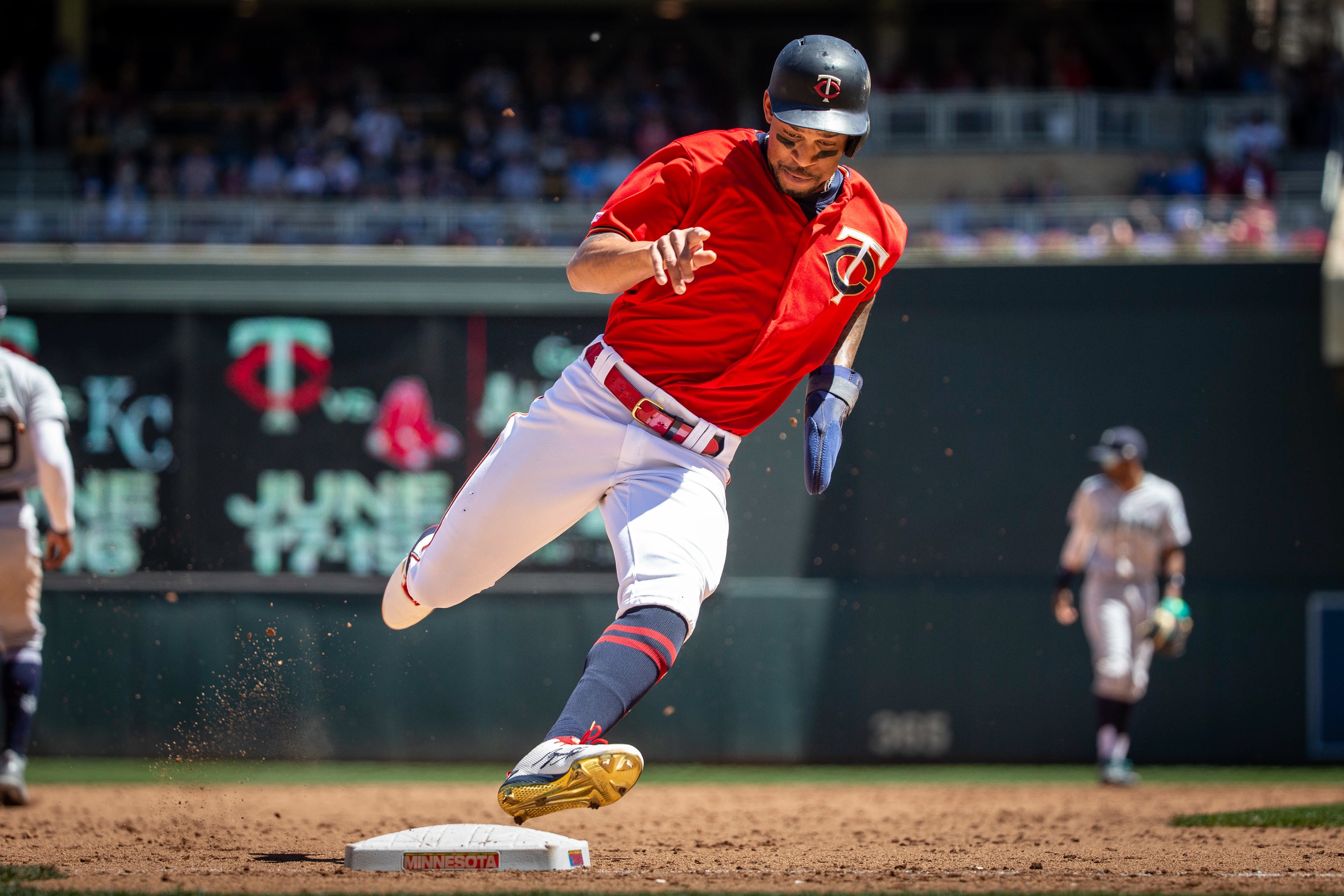 Of course, as we now know, that '06 team ended up with 96 wins, the second-highest total (behind 2019) of any Twins team since the 1970s. Over the next 60 games, those pesky piranhas went 43-17, moving from seven games under .500 to 20 above. Given our recency bias as fans, it can be easy to fall back on the image of this current Twins club as an impervious regular-season team that will weather any circumstance and emerge on top. It's a valid perception, really. The 2019 Twins were amazingly consistent and slump-proof. Their longest losing streaks of the season were four games (once) and three games (once). https://twitter.com/AaronGleeman/status/1275230024203829248 It was the second winningest team in franchise history – a charmed season the likes of which we rarely see. Realistically, we can't expect things to go quite so smoothly again, even though the group is mostly intact (and even bolstered). While the 2006 team is obviously an opposite extreme in terms of variance, it's a more conventional example. Ups and downs are inherent to this game. It is extremely common for teams to overperform or underperform in a two-month sample. In fact, it's more or less expected. And 60 games is a helluva short season. In '06, Tony Batista was still the Twins third baseman after 60 games and Juan Castro was still their shortstop. Meanwhile, you can basically triangulate the turning point in Justin Morneau's MVP campaign to Minnesota's 60th game, against Baltimore, where he homered twice and drove in five. Before that day he'd hit .235/.295/.444; from then on he'd go .364/.414/.616. For a variety of reasons, the 2020 Twins figure to be much less volatile than that scrappy bunch from 14 years ago, in part because they're much more soundly built, and not featuring the likes of Batista, Castro, and Rondell White as planned Opening Day starters. But there's no assurance that injuries or poor performance wouldn't have manifested in the early part of a full schedule, and now that reality looms extra large, should the season proceed as the league intends it to. For a more pertinent example as it relates to this year's team, let's look at Mitch Garver in 2019. There was one 60-game stretch for the Twins (5/11-7/19) where he started only 23 times, and made 121 plate appearances, missing three weeks in the middle with an ankle sprain on top of the ample rest he saw as part of the team's strategy. Garver's production when on the field during this stretch (.250/.331/.528, 8 HR, 34-to-10 K/BB, 0.8 fWAR) was solid but certainly paled in comparison to his season in full. This goes to illustrate how one single injury, and typical rest patterns, can significantly reduce the impact of key players over such a sample. But it also brings to mind an interesting question about how managerial philosophies might differ in this proposed 60-game mad dash. Rocco Baldelli and the Twins were quite purposeful about how limiting Garver's work behind the plate in 2019, and they clearly expressed their intent to do the same in 2020. But with far fewer games (all heightened in importance), and reduced concern about preserving players like Garver late into a marathon season, will the Twins soften on this stance? The concentrated nature of the schedule will also need to be taken into account. It's one of many subjects that will be interesting to ponder, as we now (finally) have the ability to discuss a defined plan and timeline for returning to play. There are plenty of other matters to work through before that can actually happen, but as things stand, Major League Baseball and its players appear united in their commitment to making this strange, shortened sprint of a season happen. The Minnesota Twins, with their abundant depth, flexible talent, and cutting-edge management, are well poised to dominate such a format, with results that could harken back to that 2006 club upon hitting its stride. Should it all come together as hoped, we can't wait to experience all the unprecedented twists and turns of this wild ride along with you. MORE FROM TWINS DAILY — Latest Twins coverage from our writers — Recent Twins discussion in our forums — Follow Twins Daily via Twitter, Facebook or email
 -
The Show Must Go On: Down to the Wire
Nick Nelson replied to Nick Nelson's topic in Twins Daily Front Page News
Option 3: Press "Like This" on this comment (or voice your support below) if you want us to run with Alex Kirilloff as our regular LF in the final week. -
The Show Must Go On: Down to the Wire
Nick Nelson replied to Nick Nelson's topic in Twins Daily Front Page News
Option 2: Press "Like This" on this comment (or voice your support below) if you want us to run with Marwin Gonzalez as our regular LF in the final week. -
The Show Must Go On: Down to the Wire
Nick Nelson replied to Nick Nelson's topic in Twins Daily Front Page News
Option 1: Press "Like This" on this comment (or voice your support below) if you want us to adhere to our current plan for LF in the final week: a rotation led by Jake Cave. -
Six games left to go. The American League Central (and a fallback wild-card berth) hanging in the balance. Jose Berrios taking the team on his shoulders. Read on to for the final regular-season entry – for better or worse – in our interactive 2020 Twins simulation.To get caught up on what we're doing here, you can check out the introductory post in the series for an explanation of the premise and setup. But the quick version is this: We're playing a progressive simulated Twins season on MLB The Show 20 on PS4, and y'all are helping guide the ship. In each installment I'll update you on what's happened since the last, and put at least one key decision up for vote. Date In Game: 9/22 Team Record: 90-66 Leading OPS: Luis Arraez (.917 in 506 AB) Leading ERA (SP): Alex Wood (2.72 in 168.2 IP) Leading ERA (RP): Tyler Duffey (1.78 in 65.2 IP) LATEST RESULTS (6-4) Gm 148 @ DET: L 5-4 (Snell 5 IP, 4 ER) Gm 149 @ DET: W 11-0 (Berrios CG SO, 10 K, 1 BB) Gm 150 @ DET: W 11-1 (Donaldson 4-6, HR, 3 RBI) Gm 151 vs TEX: W 4-0 (Maeda 6 IP, 0 R, W) Gm 152 vs TEX: W 6-3 (Bullpen 4 IP, 0 H, 0 BB, 6 K) Gm 153 vs TEX: L 4-0 (Garver & Sano 0-8) Gm 154 vs DET: W 1-0 (Berrios 8 IP, 0 R, W) Gm 155 vs DET: L 3-1 (Kepler 1-2, HR, 2 BB) Gm 156 vs DET: W 4-1 (Maeda 6 IP, 0 R, W) AL CENTRAL STANDINGS Download attachment: alcstandings922.jpeg THE RUNDOWN I have good news and bad news. The good news is that I've simulated nine games since our last installment – going through a trio of three-game series – and our Twins went 6-3, taking two out of three in each set. The bad news is that Cleveland went 8-3 over the same timespan, moving a half-game ahead in the AL Central standings with less than a week remaining. We're even with the Indians in the loss column, so we do control our own fate. A good final road trip ought to put us over the top. And even if we come up short in the Central, Minnesota does hold the No. 1 wild-card spot. Houston, leading for the second one, is a game ahead of Boston and Tampa, so the Twins are three games clear of being outside the postseason picture. It'd seemingly take a pretty brutal final week for us to miss out entirely, but ... I'm counting no chickens yet. Download attachment: alwcstandings922.jpeg Let's quickly recap the events of the past 10 days and then break down this critical final stretch. When we left off last time, we'd taken two of three from the Indians in Cleveland, claiming a narrow lead in the division. Then we headed to Detroit, where we lost the opener 5-4 in 14 innings. The Twins managed to turn 18 hits into just four runs in that game, which was disappointing, but they bounced back quickly in an 11-0 blowout victory the following day. The offense launched four homers (including two from Jake Cave) behind Jose Berrios' complete-game shutout. Berrios allowed five hits (four singles) and one walk with 10 strikeouts in picking up his 18th win. In the series finale, our lineup scored 11 runs once again, while riding another brilliant effort from the starter – this time Jake Odorizzi (7.1 IP, 3 H, 1 ER, 1 BB, 7 K). In the next series, our rotation continued to roll at home against Texas, with Kenta Maeda tossing six scoreless innings in a 4-0 victory. The next day, we won 6-3 to extend our winning streak to four games, this time with the bullpen stepping up. Alex Wood allowed three runs over five innings, then stepped aside as Trevor May, Sergio Romo and Taylor Rogers combined for four perfect frames, striking out six. We were unable to complete the sweep, however, as the bats came up silent against Mike Minor in a 4-0 loss to wrap the series. Next up: a final rematch with the Tigers at home. The offense once again struggled in the series opener, mustering just one run on Alex Avila's solo homer, but that was all Berrios needed. He fired eight shutout innings while allowing a walk and three singles. Rogers closed it out. We dropped the second game 3-1, setting up a rubber match against a familiar foe: Download attachment: nelsonvmaeda.jpeg For a third time this season, our Twins faced Tigers starter Nick Nelson, and for a third time we beat him, once again knocking him out of the game early (3.1 IP, 6 H, 4 ER, 5 BB, 2 K). I'm starting to think the 24-year-old right-hander (who is a fringy prospect in the Yankees system in real life) might not have a very bright major-league future, although he does have an 80-grade name. We won 4-1, with Maeda tossing six more scoreless innings and Josh Donaldson contributing a pair of RBIs. So now, here we are, with six games left to go. This is our remaining slate, all on the road: 9/22 @ SD: Alex Wood (7-6, 2.72) vs. Zach Davies (7-12 (3.32)9/23 @ SD: Blake Snell (12-10, 3.95) vs. Chris Paddack (5-6, 3.29)9/24 @ SD: Jose Berrios (19-5, 2.96) vs. Dinelson Lamet (5-7, 5.08)9/25 @ KC: Jake Odorizzi (14-10, 3.73) vs. Mike Montgomery (5-7, 4.99)9/26 @ KC: Kenta Maeda (17-8, 3.39 ERA) vs. Jakob Junis (4-17, 5.57)9/27 @ KC: Alex Wood (7-6, 2.72) vs. Danny Duffy (7-15, 5.62)Seemingly a pretty favorable setup to close out the schedule. The Padres (78-78) are mediocre and Royals (59-97) downright terrible. We don't face a single starter with a winning record the rest of the way. But like I said, I'm not taking anything for granted, especially with Cleveland also enjoying a soft finishing stretch (two more at White Sox, then three at home vs. Toronto). WHO'S HOT Berrios missed the All-Star Game for the first time in three years, thanks to a good-not-great first half. But, flipping the script on his typical tendency, he has been absolutely on fire in the second half. The spectacular output over his past two starts (17 IP, 0 R, 8 H, 16 K, 2 BB) adds to an amazing run – in 12 turns since the All-Star break, Berrios has gone 8-0 with a 2.28 ERA and 70-to-19 K/BB ratio over 90 2/3 innings. He has completed at least seven innings in nine of those starts, and at least eight in six of them. At the break, Berrios was 11-5 with a 3.44 ERA. He is now 19-5 with a 2.96 ERA, angling for win No. 20 in his final start and vying with Chris Sale (17-5, 2.96) and Justin Verlander (19-7, 3.23) for the AL Cy Young. Download attachment: cyyoungrace.jpeg Kenta Maeda, who did make the All-Star Game, hasn't been quite as stellar as Berrios in the second half but he has solidified his status as an outstanding No. 2 behind the ace. Maeda too was lights-out in the latest batch, hurling 12 scoreless innings in two starts to improve his record to 17-8 and lower his ERA to 3.39. Maeda leads the Twins in strikeouts (211). Pitching is leading the way for us down the stretch but the offense is doing its part – albeit it while showing some inconsistency. We scored 36 runs over the first five games in the latest slate, then totaled just six in the last four. But those explosive outbursts were nice to see, fueled in part by Donaldson, who provided plenty of power in these past nine games with two homers, four doubles, and six RBIs. The big free agent pickup has made a major impact, leading the team in games played (145), plate appearances (677) and WAR (4.3) while trailing Miguel Sano by one in home runs (35) and RBIs (98). With 94 walks, Donaldson ranks third in the AL behind Yordan Alvarez (111) and Xander Bogaerts (100). WHO'S NOT While the rotation has mostly been a steady force, the weakest link is the biggest name we added at the deadline to strengthen it. In his first start of the latest sims, against Detroit, Snell gave up four earned runs over five innings, allowing five hits and three walks with just two strikeouts. The lefty went up against Texas at home in his next turn, and was again very ordinary: 6 IP, 7 H, 3 ER, 2 BB, 7 K. Those were two of the three games we lost. Snell has the highest ERA in our rotation (3.95) and while he has shown the ability to dominate at times, he hasn't been remotely consistent since we added him. It's gonna be interesting to determine where he'll fit into a potential playoff rotation, but that's a discussion for another day (we hope). After opening his MLB career by going 2-for-19, Alex Kirilloff showed some improvement by going 4-for-11 while getting a few more starts, but he's still looking for his first MLB extra-base hit. Kirilloff has been rotating through a left field mix that has not been terribly productive since the Eddie Rosario trade. Maybe that's worth discussing as we size up this final week of games. DECISION TIME: MAKING A PLAN FOR LEFT FIELD It feels like our lineup is going to be the differentiator in this last sprint (and in the playoffs, if we get there). The rotation and bullpen have been doing their parts consistently. When we score, we win; in September, we're 8-2 when scoring four or more runs, but 3-5 when scoring three or fewer. Stretches like the recent one where we scored two runs over three games are tough to endure. The lineup is mostly locked in, but there's one position unsettled – LF – and our gameplan there could make a big difference in these last six games on the road. My approach has generally been to mix and match on any given day, based on the match-up and who's rested. Jake Cave gets most the starts, with Brent Rooker and Alex Kirilloff getting occasional nods, along with Marwin Gonzalez here and there. These are their respective numbers on the season, and in the most recent nine-game stretch: Jake Cave: 165 PA, .301/.368/.486, 7 HR, 19 RBI (L9: 7-for-21, 2 HR, 6 RBI)Marwin Gonzalez: 343 PA, .292/.353/.497, 16 HR, 46 RBI (L9: 5-for-15, HR, 3 RBI)Brent Rooker: 146 PA, .250/.315/.409, 4 HR, 14 RBI (L9: 2-for-6, 1 RBI)Alex Kirilloff: 31 PA, .200/.225/.200, 0 HR, 1 RBI (L9: 4-11, 1 RBI)With four right-handed starters and two lefties remaining on the docket, it might make sense to stick with our current plan of relying mostly on Cave, while subbing in Rooker or Gonzalez against the lefties. The thing that makes me nervous about Cave, in spite of his strong production, is his strikeout rate, which is highest of the four at 28%. Since I don't anticipating resting regulars much during this final week, we could roll with Gonzalez as our regular left fielder. He brings the advantage of switch-hitting, and he's an experienced vet who's been one of our better hitters in the second half. I'm not sure how else he'll see much action in these last six games, if not in left. Finally, if we really wanted to get wild and crazy, we could run with Kirilloff as the regular and see if he takes off. With the season on the line, who should we turn to? You can voice your opinion in the comments. PREVIOUS INSTALLMENTS Part 1: We Can Build This Thing Together (0-0) Part 2: 10 Games In, 6 Games Back (4-6) Part 3: Roaring Back (11-9) Part 4: Over the Hill (17-13) Part 5: Checking In at the Quarter Point (23-17) Part 6: Rising Power (30-20) Part 7: First Place! (Barely) (34-26) Part 8: Drafting and Dropping (38-32) Part 9: Cruz Control (45-35) Part 10: Pulling Ahead (52-38) Part 11: Bashing into the All-Star Break (58-40) Part 12: Deadline Decisions (62-46) Part 13: Inauspicious Debuts (66-52) Part 14: Treading Water as the Clock Ticks (71-57) Part 15: Stretch Race & September Call-Ups (78-59) Part 16: Dancing for the Division (84-63) MORE FROM TWINS DAILY — Latest Twins coverage from our writers — Recent Twins discussion in our forums — Follow Twins Daily via Twitter, Facebook or email Click here to view the article
-
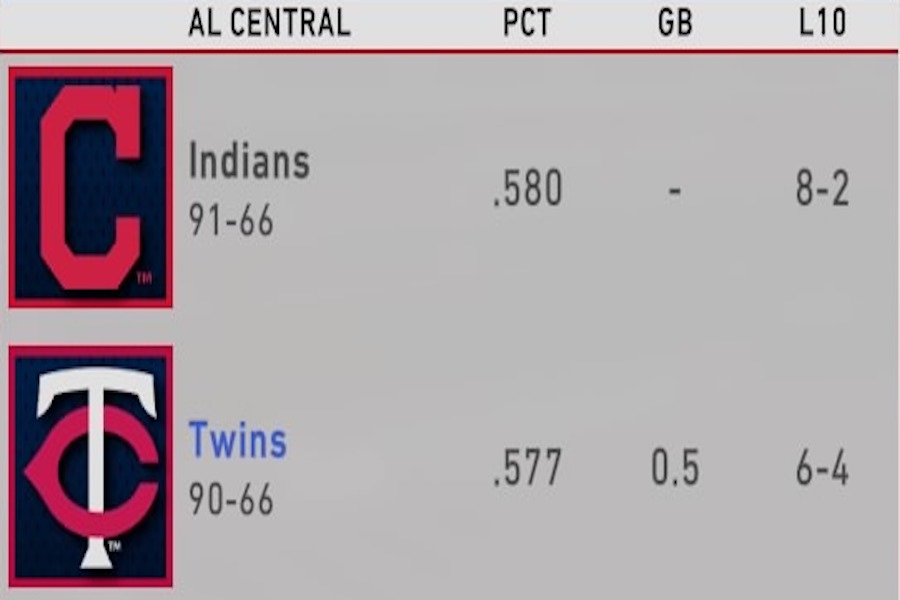 To get caught up on what we're doing here, you can check out the introductory post in the series for an explanation of the premise and setup. But the quick version is this: We're playing a progressive simulated Twins season on MLB The Show 20 on PS4, and y'all are helping guide the ship. In each installment I'll update you on what's happened since the last, and put at least one key decision up for vote. Date In Game: 9/22 Team Record: 90-66 Leading OPS: Luis Arraez (.917 in 506 AB) Leading ERA (SP): Alex Wood (2.72 in 168.2 IP) Leading ERA (RP): Tyler Duffey (1.78 in 65.2 IP) LATEST RESULTS (6-4) Gm 148 @ DET: L 5-4 (Snell 5 IP, 4 ER) Gm 149 @ DET: W 11-0 (Berrios CG SO, 10 K, 1 BB) Gm 150 @ DET: W 11-1 (Donaldson 4-6, HR, 3 RBI) Gm 151 vs TEX: W 4-0 (Maeda 6 IP, 0 R, W) Gm 152 vs TEX: W 6-3 (Bullpen 4 IP, 0 H, 0 BB, 6 K) Gm 153 vs TEX: L 4-0 (Garver & Sano 0-8) Gm 154 vs DET: W 1-0 (Berrios 8 IP, 0 R, W) Gm 155 vs DET: L 3-1 (Kepler 1-2, HR, 2 BB) Gm 156 vs DET: W 4-1 (Maeda 6 IP, 0 R, W) AL CENTRAL STANDINGS THE RUNDOWN I have good news and bad news. The good news is that I've simulated nine games since our last installment – going through a trio of three-game series – and our Twins went 6-3, taking two out of three in each set. The bad news is that Cleveland went 8-3 over the same timespan, moving a half-game ahead in the AL Central standings with less than a week remaining. We're even with the Indians in the loss column, so we do control our own fate. A good final road trip ought to put us over the top. And even if we come up short in the Central, Minnesota does hold the No. 1 wild-card spot. Houston, leading for the second one, is a game ahead of Boston and Tampa, so the Twins are three games clear of being outside the postseason picture. It'd seemingly take a pretty brutal final week for us to miss out entirely, but ... I'm counting no chickens yet. Let's quickly recap the events of the past 10 days and then break down this critical final stretch. When we left off last time, we'd taken two of three from the Indians in Cleveland, claiming a narrow lead in the division. Then we headed to Detroit, where we lost the opener 5-4 in 14 innings. The Twins managed to turn 18 hits into just four runs in that game, which was disappointing, but they bounced back quickly in an 11-0 blowout victory the following day. The offense launched four homers (including two from Jake Cave) behind Jose Berrios' complete-game shutout. Berrios allowed five hits (four singles) and one walk with 10 strikeouts in picking up his 18th win. In the series finale, our lineup scored 11 runs once again, while riding another brilliant effort from the starter – this time Jake Odorizzi (7.1 IP, 3 H, 1 ER, 1 BB, 7 K). In the next series, our rotation continued to roll at home against Texas, with Kenta Maeda tossing six scoreless innings in a 4-0 victory. The next day, we won 6-3 to extend our winning streak to four games, this time with the bullpen stepping up. Alex Wood allowed three runs over five innings, then stepped aside as Trevor May, Sergio Romo and Taylor Rogers combined for four perfect frames, striking out six. We were unable to complete the sweep, however, as the bats came up silent against Mike Minor in a 4-0 loss to wrap the series. Next up: a final rematch with the Tigers at home. The offense once again struggled in the series opener, mustering just one run on Alex Avila's solo homer, but that was all Berrios needed. He fired eight shutout innings while allowing a walk and three singles. Rogers closed it out. We dropped the second game 3-1, setting up a rubber match against a familiar foe: For a third time this season, our Twins faced Tigers starter Nick Nelson, and for a third time we beat him, once again knocking him out of the game early (3.1 IP, 6 H, 4 ER, 5 BB, 2 K). I'm starting to think the 24-year-old right-hander (who is a fringy prospect in the Yankees system in real life) might not have a very bright major-league future, although he does have an 80-grade name. We won 4-1, with Maeda tossing six more scoreless innings and Josh Donaldson contributing a pair of RBIs. So now, here we are, with six games left to go. This is our remaining slate, all on the road: 9/22 @ SD: Alex Wood (7-6, 2.72) vs. Zach Davies (7-12 (3.32) 9/23 @ SD: Blake Snell (12-10, 3.95) vs. Chris Paddack (5-6, 3.29) 9/24 @ SD: Jose Berrios (19-5, 2.96) vs. Dinelson Lamet (5-7, 5.08) 9/25 @ KC: Jake Odorizzi (14-10, 3.73) vs. Mike Montgomery (5-7, 4.99) 9/26 @ KC: Kenta Maeda (17-8, 3.39 ERA) vs. Jakob Junis (4-17, 5.57) 9/27 @ KC: Alex Wood (7-6, 2.72) vs. Danny Duffy (7-15, 5.62) Seemingly a pretty favorable setup to close out the schedule. The Padres (78-78) are mediocre and Royals (59-97) downright terrible. We don't face a single starter with a winning record the rest of the way. But like I said, I'm not taking anything for granted, especially with Cleveland also enjoying a soft finishing stretch (two more at White Sox, then three at home vs. Toronto). WHO'S HOT Berrios missed the All-Star Game for the first time in three years, thanks to a good-not-great first half. But, flipping the script on his typical tendency, he has been absolutely on fire in the second half. The spectacular output over his past two starts (17 IP, 0 R, 8 H, 16 K, 2 BB) adds to an amazing run – in 12 turns since the All-Star break, Berrios has gone 8-0 with a 2.28 ERA and 70-to-19 K/BB ratio over 90 2/3 innings. He has completed at least seven innings in nine of those starts, and at least eight in six of them. At the break, Berrios was 11-5 with a 3.44 ERA. He is now 19-5 with a 2.96 ERA, angling for win No. 20 in his final start and vying with Chris Sale (17-5, 2.96) and Justin Verlander (19-7, 3.23) for the AL Cy Young. Kenta Maeda, who did make the All-Star Game, hasn't been quite as stellar as Berrios in the second half but he has solidified his status as an outstanding No. 2 behind the ace. Maeda too was lights-out in the latest batch, hurling 12 scoreless innings in two starts to improve his record to 17-8 and lower his ERA to 3.39. Maeda leads the Twins in strikeouts (211). Pitching is leading the way for us down the stretch but the offense is doing its part – albeit it while showing some inconsistency. We scored 36 runs over the first five games in the latest slate, then totaled just six in the last four. But those explosive outbursts were nice to see, fueled in part by Donaldson, who provided plenty of power in these past nine games with two homers, four doubles, and six RBIs. The big free agent pickup has made a major impact, leading the team in games played (145), plate appearances (677) and WAR (4.3) while trailing Miguel Sano by one in home runs (35) and RBIs (98). With 94 walks, Donaldson ranks third in the AL behind Yordan Alvarez (111) and Xander Bogaerts (100). WHO'S NOT While the rotation has mostly been a steady force, the weakest link is the biggest name we added at the deadline to strengthen it. In his first start of the latest sims, against Detroit, Snell gave up four earned runs over five innings, allowing five hits and three walks with just two strikeouts. The lefty went up against Texas at home in his next turn, and was again very ordinary: 6 IP, 7 H, 3 ER, 2 BB, 7 K. Those were two of the three games we lost. Snell has the highest ERA in our rotation (3.95) and while he has shown the ability to dominate at times, he hasn't been remotely consistent since we added him. It's gonna be interesting to determine where he'll fit into a potential playoff rotation, but that's a discussion for another day (we hope). After opening his MLB career by going 2-for-19, Alex Kirilloff showed some improvement by going 4-for-11 while getting a few more starts, but he's still looking for his first MLB extra-base hit. Kirilloff has been rotating through a left field mix that has not been terribly productive since the Eddie Rosario trade. Maybe that's worth discussing as we size up this final week of games. DECISION TIME: MAKING A PLAN FOR LEFT FIELD It feels like our lineup is going to be the differentiator in this last sprint (and in the playoffs, if we get there). The rotation and bullpen have been doing their parts consistently. When we score, we win; in September, we're 8-2 when scoring four or more runs, but 3-5 when scoring three or fewer. Stretches like the recent one where we scored two runs over three games are tough to endure. The lineup is mostly locked in, but there's one position unsettled – LF – and our gameplan there could make a big difference in these last six games on the road. My approach has generally been to mix and match on any given day, based on the match-up and who's rested. Jake Cave gets most the starts, with Brent Rooker and Alex Kirilloff getting occasional nods, along with Marwin Gonzalez here and there. These are their respective numbers on the season, and in the most recent nine-game stretch: Jake Cave: 165 PA, .301/.368/.486, 7 HR, 19 RBI (L9: 7-for-21, 2 HR, 6 RBI) Marwin Gonzalez: 343 PA, .292/.353/.497, 16 HR, 46 RBI (L9: 5-for-15, HR, 3 RBI) Brent Rooker: 146 PA, .250/.315/.409, 4 HR, 14 RBI (L9: 2-for-6, 1 RBI) Alex Kirilloff: 31 PA, .200/.225/.200, 0 HR, 1 RBI (L9: 4-11, 1 RBI) With four right-handed starters and two lefties remaining on the docket, it might make sense to stick with our current plan of relying mostly on Cave, while subbing in Rooker or Gonzalez against the lefties. The thing that makes me nervous about Cave, in spite of his strong production, is his strikeout rate, which is highest of the four at 28%. Since I don't anticipating resting regulars much during this final week, we could roll with Gonzalez as our regular left fielder. He brings the advantage of switch-hitting, and he's an experienced vet who's been one of our better hitters in the second half. I'm not sure how else he'll see much action in these last six games, if not in left. Finally, if we really wanted to get wild and crazy, we could run with Kirilloff as the regular and see if he takes off. With the season on the line, who should we turn to? You can voice your opinion in the comments. PREVIOUS INSTALLMENTS Part 1: We Can Build This Thing Together (0-0) Part 2: 10 Games In, 6 Games Back (4-6) Part 3: Roaring Back (11-9) Part 4: Over the Hill (17-13) Part 5: Checking In at the Quarter Point (23-17) Part 6: Rising Power (30-20) Part 7: First Place! (Barely) (34-26) Part 8: Drafting and Dropping (38-32) Part 9: Cruz Control (45-35) Part 10: Pulling Ahead (52-38) Part 11: Bashing into the All-Star Break (58-40) Part 12: Deadline Decisions (62-46) Part 13: Inauspicious Debuts (66-52) Part 14: Treading Water as the Clock Ticks (71-57) Part 15: Stretch Race & September Call-Ups (78-59) Part 16: Dancing for the Division (84-63) MORE FROM TWINS DAILY — Latest Twins coverage from our writers — Recent Twins discussion in our forums — Follow Twins Daily via Twitter, Facebook or email
 -
The Show Must Go On: Dancing for the Division
Nick Nelson replied to Nick Nelson's topic in Twins Daily Front Page News
True. I think the game actually has a pretty accurate take on him -- he's not a super physically gifted player (speed, defense, power) but he's got a few transcendent attributes and his full package is far greater than the sum of its parts. -
There's No Baseball, But the Twins Are Winning
Nick Nelson replied to Nick Nelson's topic in Twins Daily Front Page News
I can't claim to know a ton about the specifics but my understanding is yes to the first question. There's some information here. Sounds like housing and supporting affected local businesses will be key focuses. -
The Show Must Go On: Dancing for the Division
Nick Nelson replied to Nick Nelson's topic in Twins Daily Front Page News
Option 2: Press "Like This" on this comment (or voice your support below) if you want us to use the upcoming off day to skip Jake Odorrizzi's start and set up Jose Berrios to potentially get an extra start in the season's final game. -
The Show Must Go On: Dancing for the Division
Nick Nelson replied to Nick Nelson's topic in Twins Daily Front Page News
Option 1: Press "Like This" on this comment (or voice your support below) if you want us to stick with the current plan and have each rotation member make 3 starts in the season's remaining 15 games.- 7 replies
-
- 12
-

-
With only a couple weeks left to go, our Twins have taken a razor-thin lead in the AL Central and are looking to hold on for dear life. Alex Kirilloff has arrived, Rich Hill is back, and it's time to set up our rotation for the final stretch of the season. (And playoffs?)To get caught up on what we're doing here, you can check out the introductory post in the series for an explanation of the premise and setup. But the quick version is this: We're playing a progressive simulated Twins season on MLB The Show 20 on PS4, and y'all are helping guide the ship. In each installment I'll update you on what's happened since the last, and put at least one key decision up for vote. Date In Game: 9/11 Team Record: 84-63 Leading OPS: Luis Arraez (.938 in 472 AB) Leading ERA (SP): Alex Wood (2.64 in 163.2 IP) Leading ERA (RP): Tyler Duffey (1.87 in 62.2 IP) LATEST RESULTS (6-4) Gm 138 vs CLE: W 4-2 (Snell 6.2 IP, 2 R, 0 ER, 11 K) Gm 139 vs CLE: L 6-3 (Clippard 1.2 IP, 3 ER, L) Gm 140 vs CLE: W 3-2 (Bullpen: 4 IP, 0 R, 6 K, 0 BB) Gm 141 vs CLE: W 8-6 (Arraez 3-5, HR, 3 RBI) Gm 142 vs CWS: W 7-4 (Arraez 2-5, HR, 4 RBI) Gm 143 vs CWS: L 3-0 (Polanco/Sano/Donaldson: 0-12, 5 K) Gm 144 vs CWS: L 4-1 (Romo 0.2 IP, 3 ER, L) Gm 145 @ CLE: W 3-1 (Odorizzi 6.2 IP, 0 ER, W) Gm 146 @ CLE: W 7-5 (Arraez 2-4, 3 RBI) Gm 147 @ CLE: L 8-3 (Wood 5 IP, 4 ER, L) AL CENTRAL STANDINGS Download attachment: alcstandings911.jpeg THE RUNDOWN In the most critical 10-game stretch of our season thus far, we played the Cleveland Indians seven times and took five of them. As a result, we've gone from a half-game behind in the division to a half-game up, with 15 contests remaining on the schedule. But we are far from out of the woods. Here's what happened since we last checked in: On the final day of August, Blake Snell took the hill to open a crucial four-game home series against Cleveland. And he delivered exactly the kind of performance we hoped for when trading a big haul for him one month earlier: 6.2 IP, 2 R (0 ER), 11 K, 1 BB. The offense's four-run second inning, keyed by Jorge Polanco's two-run single, was all we needed in a 4-2 win. Then the calendar flipped, so we selected these September call-ups, which were voted upon last week by overwhelming consensus: Recalled Rich Hill, LHPPromoted Alex Kirilloff, OF Download attachment: hillstats.jpeg When laying out the options last time, it turns out I overstated the downside of calling up these players, both of whom needed to be added to the 40-man roster. I sorta forgot we had a couple openings left already after our deadline dealings. So those two were brought into the fold with no displacements. Kirilloff debuted the next day, starting in left field and going 0-for-2 with a pair of strikeouts. He followed by going 2-for-4 in the series finale. In that game, Hill made his return with a relief appearance, but looked much more like the guy who was sent down in May with a 9.78 ERA than the guy who'd posted a 2.58 ERA in Triple-A since. Brought in to pitch the eighth with an 8-3 lead, Hill gave up three runs on two hits and two walks while recording only two outs. This narrowed our lead and forced us to use Taylor Rogers in the ninth, though we secured a win to take the series three games to one. Now leading the Central, we opened a series against the White Sox. In Game 1, we headed into the bottom of the ninth trailing 4-3, but rallied against Aaron Bummer to come back and win on Marwin Gonzalez's walk-off three-run homer. Unfortunately the lineup came out flat for the rest of the series, scoring just one run in two games, both losses. Now back in second place, it was off to Cleveland for another showdown. In a 3-1 series-opening win, Jake Odorizzi allowed only two hits over 6 2/3 scoreless innings, combining with Clippard, Duffey and Rogers to shut down the Indians. Luis Arraez led the charge with three RBIs in a 7-5 Game 2 victory, pushing us up by a game and a half on Cleveland. But we couldn't quite pull off the sweep, dropping the finale 8-3 with Alex Wood and Hill giving up four runs apiece. That leaves us with a very thin lead in the division, and without much of a fallback; Cleveland leads the wild-card standings currently, but they're effectively tied with Boston and Tampa, and two other teams are within a couple games. Download attachment: wcstandings911.jpeg There will be no breathing room, so we need to keep winning as we head to Detroit. WHO'S HOT Arraez isn't quite hanging with the American League's premier sluggers (J.D. Martinez, Eloy Jimenez, Mike Trout) in the MVP voting, but he deserves to be in the conversation. After another stellar stretch, in which he went 13-for-36 (.361) with three doubles, two homers, a triple and 10 RBIs in eight starts, Arraez is slashing .345/.436/.502 with 13 home runs, 75 RBIs, and 78 runs scored. He's drawn more walks (70) than strikeouts (67) and ranks second behind Mike Trout in batting average and OBP. What a leadoff man. Download attachment: battingleaders911.jpeg I've mentioned this before, but it bears reiterating: Arraez's attributes are actually not outstanding in the video game – his 76 overall rating is 16th on the Twins roster. But clearly, MLB The Show 20 recognizes his scrappy over-achieving brilliance, and that's fun. In the rotation, it's been nice to see Snell settle into a groove and ward off an initial wave of buyer's remorse. His second start of the latest slate (6 IP, 3 ER) wasn't quite as good as his first (6.2 IP, 0 ER) but he did pile up 12 strikeouts, for a total of 23 in 12 2/3 innings. He's got an 11.0 K/9 rate on the season. As our deadline centerpiece finds his stride, the true star of the rotation continues to be Jose Berrios, an absolute workhorse. He's still in search of that elusive 18th win, but doing all he can to earn it. In his first turn against Cleveland he went nine innings, allowing three runs, but the Twins eventually lost in the 12th. Berrios' second start saw him toss eight innings of one-run ball with 10 strikeouts and one walk, but again Minnesota lost in extras. He's been working efficiently, piling up zeroes, and keeping his pitch counts in check, so Berrios is really giving me no reason to pull him in these games. He currently ranks third among American League starters in innings pitched (201.1), trailing only Chris Sale and Justin Verlander. Download attachment: berriosonmoound.jpeg The back end of the bullpen has been absolutely essential in helping us win consistently tight ballgames. Taylor Rogers picked up saves in all six of our wins during the past stretch, and is now 39-for-44 on the year. But while the closer was our bullpen's lone All-Star, it's pretty clear who is its brightest star: Tyler Duffey, now rocking a 1.87 ERA and 1.02 WHIP on the season after four more scoreless appearances in the latest slate. WHO'S NOT It's a bummer to see Rich Hill come back with such a thud after excelling for a few months at Rochester. He did deliver a solid long relief appearance in one of the losses to Chicago, following Snell with three shutout innings, but Hill sandwiched that outing with complete clunkers, coughing up seven earned runs on seven hits and three walks while recording just six outs. I'm not sure he has enough time left to regain trust in time for the postseason. Fellow September call-up Alex Kirilloff has gotten his MLB career off to a rough start, with just two singles to show for his first 19 plate appearances. But we'll keep running him out. Only four strikeouts. DECISION TIME: SKIP A START TO MAXIMIZE BERRIOS? We have 15 games remaining, and we're back at the top of our rotation with Snell, Berrios and Maeda scheduled to start our next three in Detroit. Given the layout of our remaining schedule, we COULD hypothetically skip Odorizzi's upcoming start, and set up our ace Berrios to get an extra turn in the final game of the season. (We could also use this method to get Snell an extra start, but to me Berrios is the clear choice.) Current Plan: 9/11 @ DET: Snell 9/12 @ DET: Berrios 9/13 @ DET: Maeda 9/14 OFF 9/15 vs TEX: Odorizzi 9/16 vs TEX: Wood 9/17 vs TEX: Snell 9/18 vs DET: Berrios 9/19 vs DET: Maeda 9/20 vs DET: Odorizzi 9/21 OFF 9/22 @ SD: Wood 9/23 @ SD: Snell 9/24 @ SD: Berrios 9/25 @ KC: Maeda 9/26 @ KC: Odorizzi 9/27 @ KC: Wood Altered Plan: 9/11 @ DET: Snell 9/12 @ DET: Berrios 9/13 @ DET: Maeda 9/14 OFF 9/15 vs TEX: Wood 9/16 vs TEX: Snell 9/17 vs TEX: Berrios 9/18 vs DET: Maeda 9/19 vs DET: Odorizzi 9/20 vs DET: Wood 9/21 OFF 9/22 @ SD: Berrios 9/23 @ SD: Snell 9/24 @ SD: Maeda 9/25 @ KC: Odorizzi 9/26 @ KC: Wood 9/27 @ KC: Berrios That final game at Kansas City could prove decisive given how close the race is. This plan also would give Berrios a better shot at reaching 20 wins, if you're into that sorta thing. The downside is that it would mean tacking more innings onto his already huge total, and would likely make him unavailable for Game 1 of the ALDS or a wild-card match. (Of course, if the season is clinched by then, we can just throw a bullpen game, or give Pineda or Hill the nod, and Berrios will be extra-rested.) Another consideration is that that while Odorizzi – who'd be losing a start at Berrios' expense – has been our "worst" starter per ERA, he's hardly been bad (13-9, 3.86 ERA, 1.33 WHIP). It's one of our last decisions in this 2020 season and it could be a significant one. Feel free to weigh in with your thoughts in the comments. PREVIOUS INSTALLMENTS Part 1: We Can Build This Thing Together (0-0) Part 2: 10 Games In, 6 Games Back (4-6) Part 3: Roaring Back (11-9) Part 4: Over the Hill (17-13) Part 5: Checking In at the Quarter Point (23-17) Part 6: Rising Power (30-20) Part 7: First Place! (Barely) (34-26) Part 8: Drafting and Dropping (38-32) Part 9: Cruz Control (45-35) Part 10: Pulling Ahead (52-38) Part 11: Bashing into the All-Star Break (58-40) Part 12: Deadline Decisions (62-46) Part 13: Inauspicious Debuts (66-52) Part 14: Treading Water as the Clock Ticks (71-57) Part 15: Stretch Race & September Call-Ups (78-59) MORE FROM TWINS DAILY — Latest Twins coverage from our writers — Recent Twins discussion in our forums — Follow Twins Daily via Twitter, Facebook or email Click here to view the article
-
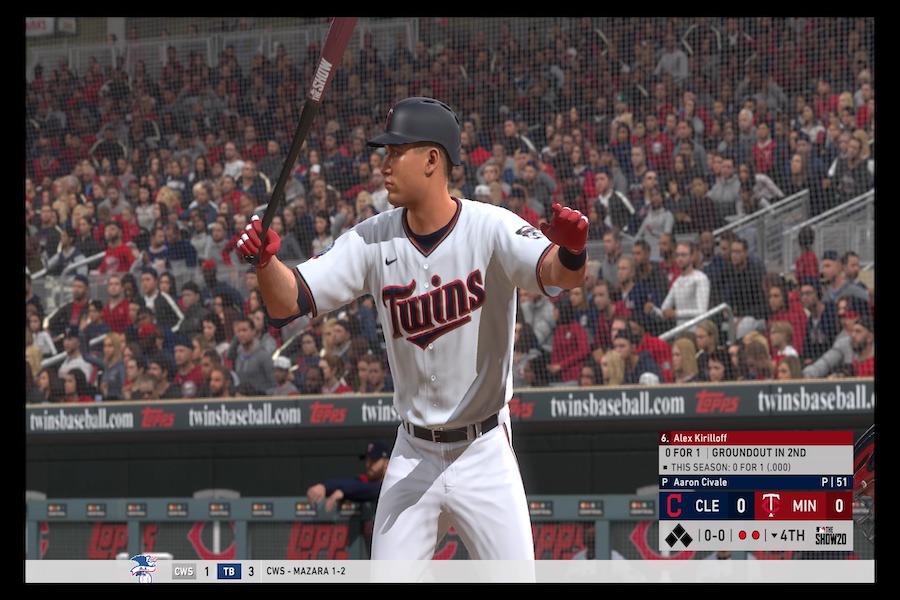 To get caught up on what we're doing here, you can check out the introductory post in the series for an explanation of the premise and setup. But the quick version is this: We're playing a progressive simulated Twins season on MLB The Show 20 on PS4, and y'all are helping guide the ship. In each installment I'll update you on what's happened since the last, and put at least one key decision up for vote. Date In Game: 9/11 Team Record: 84-63 Leading OPS: Luis Arraez (.938 in 472 AB) Leading ERA (SP): Alex Wood (2.64 in 163.2 IP) Leading ERA (RP): Tyler Duffey (1.87 in 62.2 IP) LATEST RESULTS (6-4) Gm 138 vs CLE: W 4-2 (Snell 6.2 IP, 2 R, 0 ER, 11 K) Gm 139 vs CLE: L 6-3 (Clippard 1.2 IP, 3 ER, L) Gm 140 vs CLE: W 3-2 (Bullpen: 4 IP, 0 R, 6 K, 0 BB) Gm 141 vs CLE: W 8-6 (Arraez 3-5, HR, 3 RBI) Gm 142 vs CWS: W 7-4 (Arraez 2-5, HR, 4 RBI) Gm 143 vs CWS: L 3-0 (Polanco/Sano/Donaldson: 0-12, 5 K) Gm 144 vs CWS: L 4-1 (Romo 0.2 IP, 3 ER, L) Gm 145 @ CLE: W 3-1 (Odorizzi 6.2 IP, 0 ER, W) Gm 146 @ CLE: W 7-5 (Arraez 2-4, 3 RBI) Gm 147 @ CLE: L 8-3 (Wood 5 IP, 4 ER, L) AL CENTRAL STANDINGS THE RUNDOWN In the most critical 10-game stretch of our season thus far, we played the Cleveland Indians seven times and took five of them. As a result, we've gone from a half-game behind in the division to a half-game up, with 15 contests remaining on the schedule. But we are far from out of the woods. Here's what happened since we last checked in: On the final day of August, Blake Snell took the hill to open a crucial four-game home series against Cleveland. And he delivered exactly the kind of performance we hoped for when trading a big haul for him one month earlier: 6.2 IP, 2 R (0 ER), 11 K, 1 BB. The offense's four-run second inning, keyed by Jorge Polanco's two-run single, was all we needed in a 4-2 win. Then the calendar flipped, so we selected these September call-ups, which were voted upon last week by overwhelming consensus: Recalled Rich Hill, LHP Promoted Alex Kirilloff, OF When laying out the options last time, it turns out I overstated the downside of calling up these players, both of whom needed to be added to the 40-man roster. I sorta forgot we had a couple openings left already after our deadline dealings. So those two were brought into the fold with no displacements. Kirilloff debuted the next day, starting in left field and going 0-for-2 with a pair of strikeouts. He followed by going 2-for-4 in the series finale. In that game, Hill made his return with a relief appearance, but looked much more like the guy who was sent down in May with a 9.78 ERA than the guy who'd posted a 2.58 ERA in Triple-A since. Brought in to pitch the eighth with an 8-3 lead, Hill gave up three runs on two hits and two walks while recording only two outs. This narrowed our lead and forced us to use Taylor Rogers in the ninth, though we secured a win to take the series three games to one. Now leading the Central, we opened a series against the White Sox. In Game 1, we headed into the bottom of the ninth trailing 4-3, but rallied against Aaron Bummer to come back and win on Marwin Gonzalez's walk-off three-run homer. Unfortunately the lineup came out flat for the rest of the series, scoring just one run in two games, both losses. Now back in second place, it was off to Cleveland for another showdown. In a 3-1 series-opening win, Jake Odorizzi allowed only two hits over 6 2/3 scoreless innings, combining with Clippard, Duffey and Rogers to shut down the Indians. Luis Arraez led the charge with three RBIs in a 7-5 Game 2 victory, pushing us up by a game and a half on Cleveland. But we couldn't quite pull off the sweep, dropping the finale 8-3 with Alex Wood and Hill giving up four runs apiece. That leaves us with a very thin lead in the division, and without much of a fallback; Cleveland leads the wild-card standings currently, but they're effectively tied with Boston and Tampa, and two other teams are within a couple games. There will be no breathing room, so we need to keep winning as we head to Detroit. WHO'S HOT Arraez isn't quite hanging with the American League's premier sluggers (J.D. Martinez, Eloy Jimenez, Mike Trout) in the MVP voting, but he deserves to be in the conversation. After another stellar stretch, in which he went 13-for-36 (.361) with three doubles, two homers, a triple and 10 RBIs in eight starts, Arraez is slashing .345/.436/.502 with 13 home runs, 75 RBIs, and 78 runs scored. He's drawn more walks (70) than strikeouts (67) and ranks second behind Mike Trout in batting average and OBP. What a leadoff man. I've mentioned this before, but it bears reiterating: Arraez's attributes are actually not outstanding in the video game – his 76 overall rating is 16th on the Twins roster. But clearly, MLB The Show 20 recognizes his scrappy over-achieving brilliance, and that's fun. In the rotation, it's been nice to see Snell settle into a groove and ward off an initial wave of buyer's remorse. His second start of the latest slate (6 IP, 3 ER) wasn't quite as good as his first (6.2 IP, 0 ER) but he did pile up 12 strikeouts, for a total of 23 in 12 2/3 innings. He's got an 11.0 K/9 rate on the season. As our deadline centerpiece finds his stride, the true star of the rotation continues to be Jose Berrios, an absolute workhorse. He's still in search of that elusive 18th win, but doing all he can to earn it. In his first turn against Cleveland he went nine innings, allowing three runs, but the Twins eventually lost in the 12th. Berrios' second start saw him toss eight innings of one-run ball with 10 strikeouts and one walk, but again Minnesota lost in extras. He's been working efficiently, piling up zeroes, and keeping his pitch counts in check, so Berrios is really giving me no reason to pull him in these games. He currently ranks third among American League starters in innings pitched (201.1), trailing only Chris Sale and Justin Verlander. The back end of the bullpen has been absolutely essential in helping us win consistently tight ballgames. Taylor Rogers picked up saves in all six of our wins during the past stretch, and is now 39-for-44 on the year. But while the closer was our bullpen's lone All-Star, it's pretty clear who is its brightest star: Tyler Duffey, now rocking a 1.87 ERA and 1.02 WHIP on the season after four more scoreless appearances in the latest slate. WHO'S NOT It's a bummer to see Rich Hill come back with such a thud after excelling for a few months at Rochester. He did deliver a solid long relief appearance in one of the losses to Chicago, following Snell with three shutout innings, but Hill sandwiched that outing with complete clunkers, coughing up seven earned runs on seven hits and three walks while recording just six outs. I'm not sure he has enough time left to regain trust in time for the postseason. Fellow September call-up Alex Kirilloff has gotten his MLB career off to a rough start, with just two singles to show for his first 19 plate appearances. But we'll keep running him out. Only four strikeouts. DECISION TIME: SKIP A START TO MAXIMIZE BERRIOS? We have 15 games remaining, and we're back at the top of our rotation with Snell, Berrios and Maeda scheduled to start our next three in Detroit. Given the layout of our remaining schedule, we COULD hypothetically skip Odorizzi's upcoming start, and set up our ace Berrios to get an extra turn in the final game of the season. (We could also use this method to get Snell an extra start, but to me Berrios is the clear choice.) Current Plan: 9/11 @ DET: Snell 9/12 @ DET: Berrios 9/13 @ DET: Maeda 9/14 OFF 9/15 vs TEX: Odorizzi 9/16 vs TEX: Wood 9/17 vs TEX: Snell 9/18 vs DET: Berrios 9/19 vs DET: Maeda 9/20 vs DET: Odorizzi 9/21 OFF 9/22 @ SD: Wood 9/23 @ SD: Snell 9/24 @ SD: Berrios 9/25 @ KC: Maeda 9/26 @ KC: Odorizzi 9/27 @ KC: WoodAltered Plan: 9/11 @ DET: Snell 9/12 @ DET: Berrios 9/13 @ DET: Maeda 9/14 OFF 9/15 vs TEX: Wood 9/16 vs TEX: Snell 9/17 vs TEX: Berrios 9/18 vs DET: Maeda 9/19 vs DET: Odorizzi 9/20 vs DET: Wood 9/21 OFF 9/22 @ SD: Berrios 9/23 @ SD: Snell 9/24 @ SD: Maeda 9/25 @ KC: Odorizzi 9/26 @ KC: Wood 9/27 @ KC: BerriosThat final game at Kansas City could prove decisive given how close the race is. This plan also would give Berrios a better shot at reaching 20 wins, if you're into that sorta thing. The downside is that it would mean tacking more innings onto his already huge total, and would likely make him unavailable for Game 1 of the ALDS or a wild-card match. (Of course, if the season is clinched by then, we can just throw a bullpen game, or give Pineda or Hill the nod, and Berrios will be extra-rested.) Another consideration is that that while Odorizzi – who'd be losing a start at Berrios' expense – has been our "worst" starter per ERA, he's hardly been bad (13-9, 3.86 ERA, 1.33 WHIP). It's one of our last decisions in this 2020 season and it could be a significant one. Feel free to weigh in with your thoughts in the comments. PREVIOUS INSTALLMENTS Part 1: We Can Build This Thing Together (0-0) Part 2: 10 Games In, 6 Games Back (4-6) Part 3: Roaring Back (11-9) Part 4: Over the Hill (17-13) Part 5: Checking In at the Quarter Point (23-17) Part 6: Rising Power (30-20) Part 7: First Place! (Barely) (34-26) Part 8: Drafting and Dropping (38-32) Part 9: Cruz Control (45-35) Part 10: Pulling Ahead (52-38) Part 11: Bashing into the All-Star Break (58-40) Part 12: Deadline Decisions (62-46) Part 13: Inauspicious Debuts (66-52) Part 14: Treading Water as the Clock Ticks (71-57) Part 15: Stretch Race & September Call-Ups (78-59) MORE FROM TWINS DAILY — Latest Twins coverage from our writers — Recent Twins discussion in our forums — Follow Twins Daily via Twitter, Facebook or email
 -
What a year it's been, huh? In spite of my endless enthusiasm for it, baseball has been mostly distant from my mind over the past few months. Despite that, my favorite team is stepping up and making me proud.A couple weeks back I wrote about what I felt was a moment of missed opportunity for a Twins player. While I think it's important to acknowledge and reflect upon these moments, it is all the more critical to recognize signs of progress, and to celebrate leaders who rise to the occasion. The Minnesota Twins, as an organization, are making me exceedingly proud. On this site, we spent the past four weeks looking back at every Twins season since 2000. (The last installment published over the weekend, and you can find links within to all past entries.) In running through this two-decade span, one comes to clearly see the profound change that has taken place. At the start of 2000, the Twins were a soft-tossing small ball outfit with the lowest payroll in baseball, facing possible contraction. By the end of 2019, they were the greatest slugging team in history, with a staff full of hard-throwing strikeout pitchers. In 2020 they were set to follow with a record payroll. The growth and progress of this organization is evident to see, and that goes beyond baseball. Nate Palmer wrote a story here recently about offensive comments made by former Twins owner Calvin Griffith in 1978, and the friction they caused with Rod Carew. Pretty brutal and indefensible stuff from Griffith. It would be nice if we could chalk his attitude up as the vestige of a less enlightened bygone time, and to an extent we can, but it's naive to think the systemically ingrained issue of racism has disappeared in this or any other organization. That is why I'm so heartened by the direction the Twins franchise has moved under current ownership, with 2016's complete overhaul – which involved bringing in outsiders to modernize the entire baseball ops department – serving as an inflection point of sorts. For decades, the Twins had developed a culture that was fiercely loyal, but stiflingly insular. A complete reinvention was needed, and it came. Minnesota's advancement is reflected in these remarks from Torii Hunter and LaTroy Hawkins, during a recent roundtable conversation for The Athletic: Hunter: We had a situation, LaTroy and I in our organization — no names. But we had a situation where players were getting called the n-word or being told, “Turn your kind of music down.” Different things like that. And now we’re in that front office. We said, “Hey, do something about it.” And we went to (chief baseball officer) Derek Falvey right away. Bam! Derek Falvey did something about it. That’s what we need. Derek Falvey got the information, didn’t cover it up. He got (this guy) out of there because we can’t do that. It’s time for change. That’s why I have so much respect for Derek Falvey, for listening to LaTroy and I, listening to some of the players on the team, that voiced their opinion about what this guy was saying to them, their problem, their complaint. That’s what it’s going to take. Hawkins: You’ve got to talk about Thad also, Torii (general manager Thad Levine). He went to the high school “Remember the Titans” was about (the movie, released in 2000, was based on the true story of an African American coach and his attempt to integrate a high school football team in Alexandria, Va.). He understands social injustice and wanting everybody to be comfortable in their workplace. When Falvey and Levine came aboard, they pitched themselves on communication, transparency and respect. The perspectives shared by Hawkins and Hunter, who both started as players with the Twins in the mid-90s, speak to an evolution this new leadership helped facilitate. I can't pretend to know how the Twins as an entity, or their most visible faces, would've reacted to an unprecedented crisis-within-a-crisis like we now face, but I do know that I am endlessly impressed by their current handling of this turbulence and tragedy. The Twins were one of the first MLB teams to commit to paying minor-leaguers throughout the lost season. This helped build toward a momentum that eventually nudged the misguided Oakland Athletics into following suit. Doing the right thing sets an example. As matters devolved in Minneapolis, Twins manager Rocco Baldelli was quick to speak out about the injustice of George Floyd's murder, and all that led up to it. An infrequent tweeter, Baldelli was also not shy in later following with what should be a completely uncontroversial statement: Black Lives Matter. Words matter. Actions matter more. And that's why I find myself so grateful to the Minnesota Twins and their ownership for the step they took last week: The Pohlad family has pledged $25 million to the cause of rebuilding our broken community and pursuing racial justice. At a time where the 2020 MLB season is in doubt due to frustrating monetary disputes, it is incredibly refreshing to see this purpose-driven generosity on display toward a city in need from our hometown baseball club, and those behind it. Some might argue it's a small gesture in the grand financial scheme. Sure. So is paying minor-leaguers their tiny slice of the pie. But to the people benefitting, these actions mean a lot. And for those stepping up, it is by no means obligatory, nor conventionally expected. These are important and significant statements, magnified through the platform held by the Pohlad family and Twins in Minnesota. Doing the right thing sets an example. MORE FROM TWINS DAILY — Latest Twins coverage from our writers — Recent Twins discussion in our forums — Follow Twins Daily via Twitter, Facebook or email Click here to view the article
-
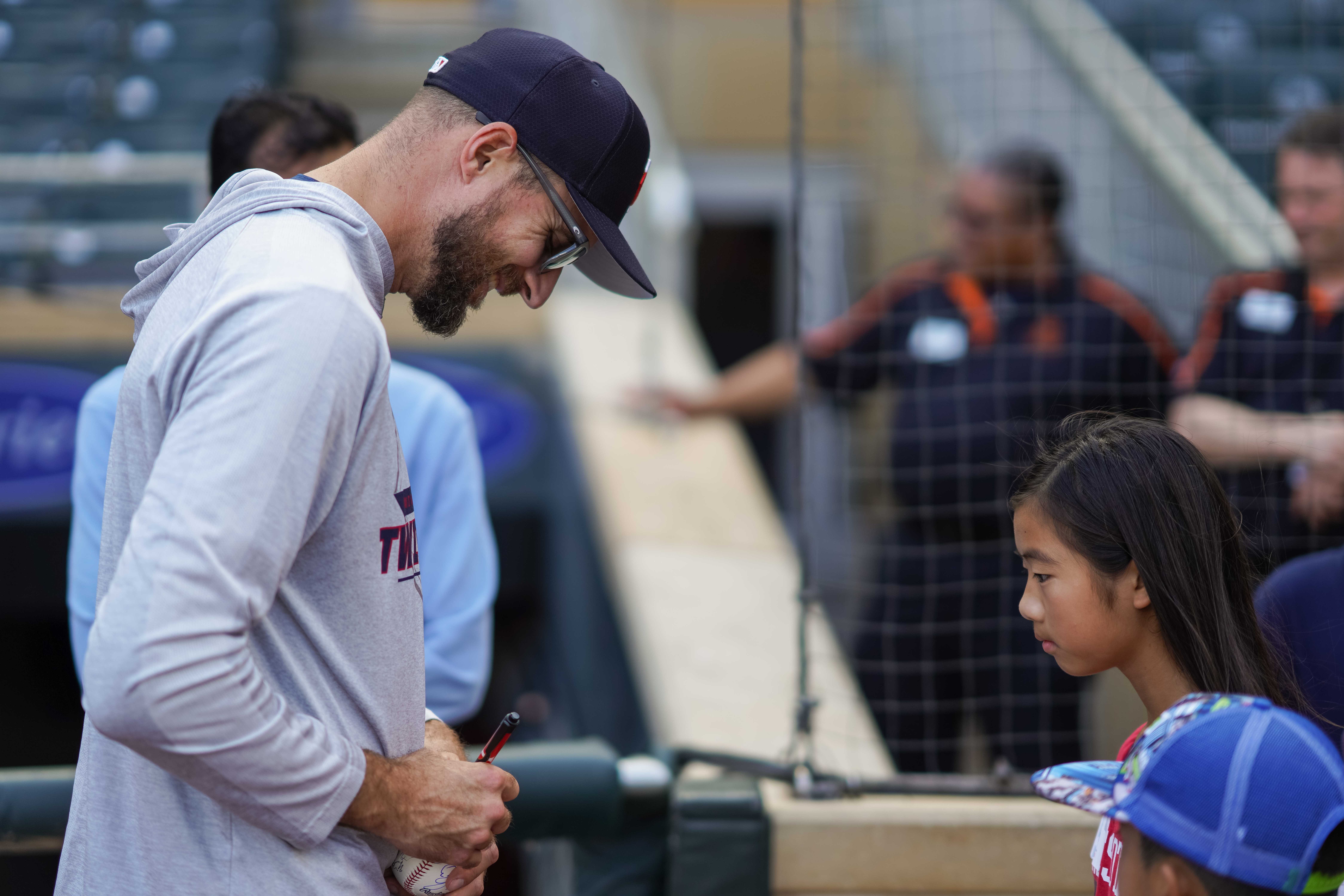 A couple weeks back I wrote about what I felt was a moment of missed opportunity for a Twins player. While I think it's important to acknowledge and reflect upon these moments, it is all the more critical to recognize signs of progress, and to celebrate leaders who rise to the occasion. The Minnesota Twins, as an organization, are making me exceedingly proud. On this site, we spent the past four weeks looking back at every Twins season since 2000. (The last installment published over the weekend, and you can find links within to all past entries.) In running through this two-decade span, one comes to clearly see the profound change that has taken place. At the start of 2000, the Twins were a soft-tossing small ball outfit with the lowest payroll in baseball, facing possible contraction. By the end of 2019, they were the greatest slugging team in history, with a staff full of hard-throwing strikeout pitchers. In 2020 they were set to follow with a record payroll. The growth and progress of this organization is evident to see, and that goes beyond baseball. Nate Palmer wrote a story here recently about offensive comments made by former Twins owner Calvin Griffith in 1978, and the friction they caused with Rod Carew. Pretty brutal and indefensible stuff from Griffith. It would be nice if we could chalk his attitude up as the vestige of a less enlightened bygone time, and to an extent we can, but it's naive to think the systemically ingrained issue of racism has disappeared in this or any other organization. That is why I'm so heartened by the direction the Twins franchise has moved under current ownership, with 2016's complete overhaul – which involved bringing in outsiders to modernize the entire baseball ops department – serving as an inflection point of sorts. For decades, the Twins had developed a culture that was fiercely loyal, but stiflingly insular. A complete reinvention was needed, and it came. Minnesota's advancement is reflected in these remarks from Torii Hunter and LaTroy Hawkins, during a recent roundtable conversation for The Athletic: Hunter: We had a situation, LaTroy and I in our organization — no names. But we had a situation where players were getting called the n-word or being told, “Turn your kind of music down.” Different things like that. And now we’re in that front office. We said, “Hey, do something about it.” And we went to (chief baseball officer) Derek Falvey right away. Bam! Derek Falvey did something about it. That’s what we need. Derek Falvey got the information, didn’t cover it up. He got (this guy) out of there because we can’t do that. It’s time for change. That’s why I have so much respect for Derek Falvey, for listening to LaTroy and I, listening to some of the players on the team, that voiced their opinion about what this guy was saying to them, their problem, their complaint. That’s what it’s going to take. Hawkins: You’ve got to talk about Thad also, Torii (general manager Thad Levine). He went to the high school “Remember the Titans” was about (the movie, released in 2000, was based on the true story of an African American coach and his attempt to integrate a high school football team in Alexandria, Va.). He understands social injustice and wanting everybody to be comfortable in their workplace. When Falvey and Levine came aboard, they pitched themselves on communication, transparency and respect. The perspectives shared by Hawkins and Hunter, who both started as players with the Twins in the mid-90s, speak to an evolution this new leadership helped facilitate. I can't pretend to know how the Twins as an entity, or their most visible faces, would've reacted to an unprecedented crisis-within-a-crisis like we now face, but I do know that I am endlessly impressed by their current handling of this turbulence and tragedy. The Twins were one of the first MLB teams to commit to paying minor-leaguers throughout the lost season. This helped build toward a momentum that eventually nudged the misguided Oakland Athletics into following suit. Doing the right thing sets an example. As matters devolved in Minneapolis, Twins manager Rocco Baldelli was quick to speak out about the injustice of George Floyd's murder, and all that led up to it. An infrequent tweeter, Baldelli was also not shy in later following with what should be a completely uncontroversial statement: Black Lives Matter. https://twitter.com/roccodbaldelli/status/1265519568321228800 https://twitter.com/roccodbaldelli/status/1270399505519828992 A day later, the Twins were broadcasting that same message to 650,000 followers and fans, with Falvey standing front-and-center. https://twitter.com/Twins/status/1270878892987990016 Words matter. Actions matter more. And that's why I find myself so grateful to the Minnesota Twins and their ownership for the step they took last week: The Pohlad family has pledged $25 million to the cause of rebuilding our broken community and pursuing racial justice. At a time where the 2020 MLB season is in doubt due to frustrating monetary disputes, it is incredibly refreshing to see this purpose-driven generosity on display toward a city in need from our hometown baseball club, and those behind it. Some might argue it's a small gesture in the grand financial scheme. Sure. So is paying minor-leaguers their tiny slice of the pie. But to the people benefitting, these actions mean a lot. And for those stepping up, it is by no means obligatory, nor conventionally expected. These are important and significant statements, magnified through the platform held by the Pohlad family and Twins in Minnesota. Doing the right thing sets an example. MORE FROM TWINS DAILY — Latest Twins coverage from our writers — Recent Twins discussion in our forums — Follow Twins Daily via Twitter, Facebook or email
 -
False start, setback, hiccup ... Whatever you want to call it, the 2018 season disrupted the newly installed front office's plan, which had begun to unfold the year before, and would come fully to fruition the year after. Lessons were learned and moves were made in 2018 that would contribute to the coming payoff.We're running a 20-part series in which we look back at each Minnesota Twins season of the 2000s. A rotation of different writers will highlight key moments, unearth forgotten details, and share nostalgic tales from the past two decades leading up to the present. This installment covers the 2018 season. Team Record: 78-84 Finish: 2nd Place in AL Central All-Star: José Berríos (SP) Awards: N/A Playoffs: N/A Season Overview By all appearances, the rebuild under Derek Falvey and Thad Levine was proceeding ahead of schedule. In their first year running the organization, Minnesota exceeded all expectations on the way to snapping a long postseason drought. Now, there was a sense of unfinished business, with many long-tenured players and franchise fixtures reaching the ends of their contracts. The front office acted accordingly, bolstering the bullpen with veteran righty Addison Reed, recipient of the largest free agent contract for a relief pitcher ($16.75 million) in Twins history. The additions of starter Lance Lynn and power hitter Logan Morrison late in the offseason contributed to a feeling of energy and urgency as cornerstones like Brian Dozier, Ervin Santana and Joe Mauer returned, all facing down the open market at year's end. But as these veterans all faded and fizzled to varying degrees, it became clear: They were no longer the future, or even the present. The beating heart of the Twins now resided with its next generation of talent, and unfortunately, much went amiss on this front: During spring training, the Twins announced that shortstop Jorge Polanco, whose August surge in 2017 helped propel the team back into contention, had tested positive for PEDs, and would miss the first 80 games.After having a titanium rod surgically inserted in his leg during the offseason, Miguel Sanó never looked right, with conditioning and performance issues reaching a nexus in mid-June when he was sent to Single-A for a full reset.Byron Buxton endured the most trying and frustrating season of his entire pro baseball career, which is really saying something. Migraines, a broken toe, wrist soreness that wouldn't go away ... and a whole lot of struggling, as the 24-year-old tried to push himself through physical ailments in his diminished state. As he rehabbed in the minors late in the season, the front office elected not to recall him in September, bringing a bitter note into the offseason.Max Kepler stayed healthy, but stagnated after a promising age-24 campaign, posting nearly identical numbers across the board. As a completely average offensive right fielder (20 HR, 58 RBI, .727 OPS) with a good glove, Kepler was showing himself to be more role player than building block.Getting his first extended look after a brief MLB debut in 2017, Mitch Garver was solid offensively as the backup catcher, slashing .268/.335/.414 with seven homers in 102 games, but his defense drew heavy criticism. And as a 27-year-old rookie, it wasn't clear he had much room for growth.With each of these players (except maybe Garver), the transformative potential was plainly evident. But for various reasons, they weren't quite ready to unlock it. The dropoff is most succinctly encapsulated by this stat: In 2017, Dozier, Buxton, Mauer, Sanó and Santana combined to produce 16.1 fWAR; in 2018, all five players returned, and combined for 1.3 fWAR. A lack of impact from these five, as well as newcomers like Lynn, Morrison and Reed, left the Twins with little chance to mount a threat against an unspectacular Indians team (Cleveland's 91 wins won the Central, but were fewer than either wild-card team). This wasted some truly strong efforts from players like Eddie Rosario, Eduardo Escobar and the blossoming José Berríos, who represented the Twins at the All-Star Game. At the trade deadline, Minnesota's front office once again went into sell mode, this time with less vacillation and less uproar. Escobar was dealt to Arizona. Dozier went to the Dodgers. Lynn was unloaded to the Yankees. Ryan Pressly, finally reaching his pinnacle after a long journey in the Twins bullpen, was shipped to Houston. By making these deals, which netted several quality prospects, Minnesota made the best of a down year. And even in the absence of a competitive race, fans still got their unforgettable moment down the stretch. Playing in the final year of his historic contract, Mauer's future was an open question that loomed over the entire season. As his performance backslid – he finished with a .729 OPS, tied with 2011 for second-lowest of his career – and concussion symptoms flared up again, optimism waned that the 35-year-old would continue his career. While he didn't officially reveal his intentions until November, the writing was on the wall during an emotional final game of the season, in which Mauer donned catcher's gear and received a pitch for one last time. His exit would be accompanied by that of another local baseball legend: Paul Molitor was dismissed as manager two days after Mauer's touching send-off. With Dozier, Mauer, and Molitor gone, there really was a sense that Falvey and Levine were sweeping out the final remnants of the old guard. Team MVP: Eddie Rosario (LF) Other Contenders: Max Kepler (RF), José Berríos (SP), Kyle Gibson (SP), Eduardo Escobar (3B) As I wrote at Twins Daily when naming him our choice for team MVP after the 2018 season, Rosario's "nod is well earned even if it says more about the surrounding nucleus than him." His 3.4 fWAR was a new career-high, but the lowest team-leading mark in three years. At times during the summer, Rosario was the only source of offense and energy for an offense that frequently slumped. Through exactly half the schedule's games (81), he was slashing .312/.352/.564 with 18 home runs, 23 doubles, and 52 RBIs. He fell off in the latter part of the season, as Minnesota marched toward a distant second-place finish, posting a .659 OPS after the start of August and missing most of September due to a quad injury. Still, Rosario set new career-highs in both fWAR and bWAR, finishing with the team lead in homers (24), RBIs (77), runs (87), and steals (8). 3 Most Pivotal Games April 26nd: Lost @ New York Yankees, 4-3 The Twins had just suffered a painful sweep in Tampa and were now in danger of another one at Yankee Stadium. Riding a six-game losing streak that had dropped them out of first place and below .500, Minnesota was simply trying to escape New York with a win. It looked like they actually might do so for a change. Thanks to a tremendous start from Kyle Gibson, the Twins entered the bottom of the ninth with a 3-1 lead. An error, a single, and a three-run homer from Gary Sanchez were all it took to bury Fernando Rodney and the Twins, extending an astonishing run of futility against the Bronx Bombers. July 15th: Won vs. Tampa Bay Rays, 11-7 The Twins had won eight of 10 heading into the final game before the All-Star break, gaining 4 1/2 games on the first-place Indians in the process. In this series finale against the Rays at Target Field, Trevor Hildenberger blew a one-run save in the top of the ninth and the game went to extras. In the bottom of the 10th, Dozier delivered a walk-off grand slam, putting an exclamation point on the end of a disappointing first half for the team and himself. August 6th: Lost @ Cleveland Indians, 10-0 Heading into Cleveland in early August, the Twins were essentially making their last stand. Trailing in the standings by nine games, and sitting six below the .500 mark, Minnesota's hopes were thin, but a sweep against the front-runners could make things interesting. That notion evaporated quickly, as the Twins suffered a 10-0 drubbing in the series opener. Trevor Bauer dominated with 11 strikeouts over six scoreless frames, and Cleveland's bullpen was perfect over the final three. The Twins managed three hits. After this loss they were never again at single digits in the GB column. Unforgettable Highlights Berríos Shines in Native Puerto Rico With Santana unavailable due a finger injury, Berríos would've been a natural fit for his first Opening Day start, but Molitor opted for Jake Odorizzi in order to put Berríos in line for a bigger honor: facing the rival Cleveland Indians in his homeland of Puerto Rico on April 18th. The young right-hander rose to the occasion, tossing seven scoreless innings and lowering his ERA to 1.63 through four starts on the season. He was headed toward another big accomplishment in July: his first All-Star appearance. Rosario Goes Three-and-Out In early June, the division was still up for grabs, and Rosario was at the height of his slugging prowess. In the last of a four-game set, Minnesota was aiming to take the series from Cleveland and move within 3 1/2 games of first place. It was a ho-hum day for the Twins offense against Mike Clevinger and the Indians bullpen ... everyone except Eddie, that is. In one of the decade's best individual offensive performances, Rosario homered three times, all of them putting the Twins ahead, including the last: a walk-off two-run shot in the bottom of the ninth. Much like when he homered on his first major-league pitch at Target Field three years earlier, Rosario's family was in attendance and looking on. Hello Again, and Goodbye In their highest-scoring game of the season on August 16th, the Twins scored 15 runs, and eight of them came against Tigers starter Francisco Liriano, who was ousted after 1 2/3 innings after a two-run homer by Sanó. By now Liriano was a far cry from the dominant phenom who surfaced with the Twins in 2006, but to his credit, he was still holding down a big-league rotation spot 12 years later at age 34. In addition to reuniting the Twins with a former rotation staple, this game also marked the end of the line for another one: Santana gave up seven earned runs over four innings in the final start of his Twins career. Mauer Crouches One Last Time Before Walking Away It's my pick for the best moment in the first 10 years at Target Field: In the top of the ninth in Minnesota's last game of the 2018 season, Mauer emerged from the dugout in catcher's gear, slowly making his way out to the field as thunderous applause rained down from appreciative fans. This all but confirmed Mauer's intention to retire, ending a career that – much like his M&M counterpart – will always be cherished, but also always subject to endless "What if" discussions. At the very least, his sendoff cleared up this question: What if you pulled off an absolutely perfect farewell for a beloved franchise fixture in the most touching way imaginable? One Detail You Probably Forgot The 2018 Twins used 34 pitchers, second-most in franchise history (surpassed only by 2017 team). This included four different position players – Garver, Chris Gimenez, Willians Astudillo, Ryan LaMarre – appearing on the mound, reflecting a broader trend. Fifteen different pitchers threw more innings for Minnesota than Santana, who was the staff's sturdy workhorse a year prior. Fun Fact By losing 12 games on walk-offs (including the aforementioned crusher at Yankee Stadium), the 2018 Twins tied a franchise record and came within one of the MLB record. I'm not sure if this qualifies as fun but it sure is a fact. ~~~ Previous Installments: The 2000 SeasonThe 2001 SeasonThe 2002 SeasonThe 2003 SeasonThe 2004 SeasonThe 2005 SeasonThe 2006 SeasonThe 2007 SeasonThe 2008 SeasonThe 2009 SeasonThe 2010 SeasonThe 2011 SeasonThe 2012 SeasonThe 2013 SeasonThe 2014 SeasonThe 2015 SeasonThe 2016 SeasonThe 2017 Season Click here to view the article
-
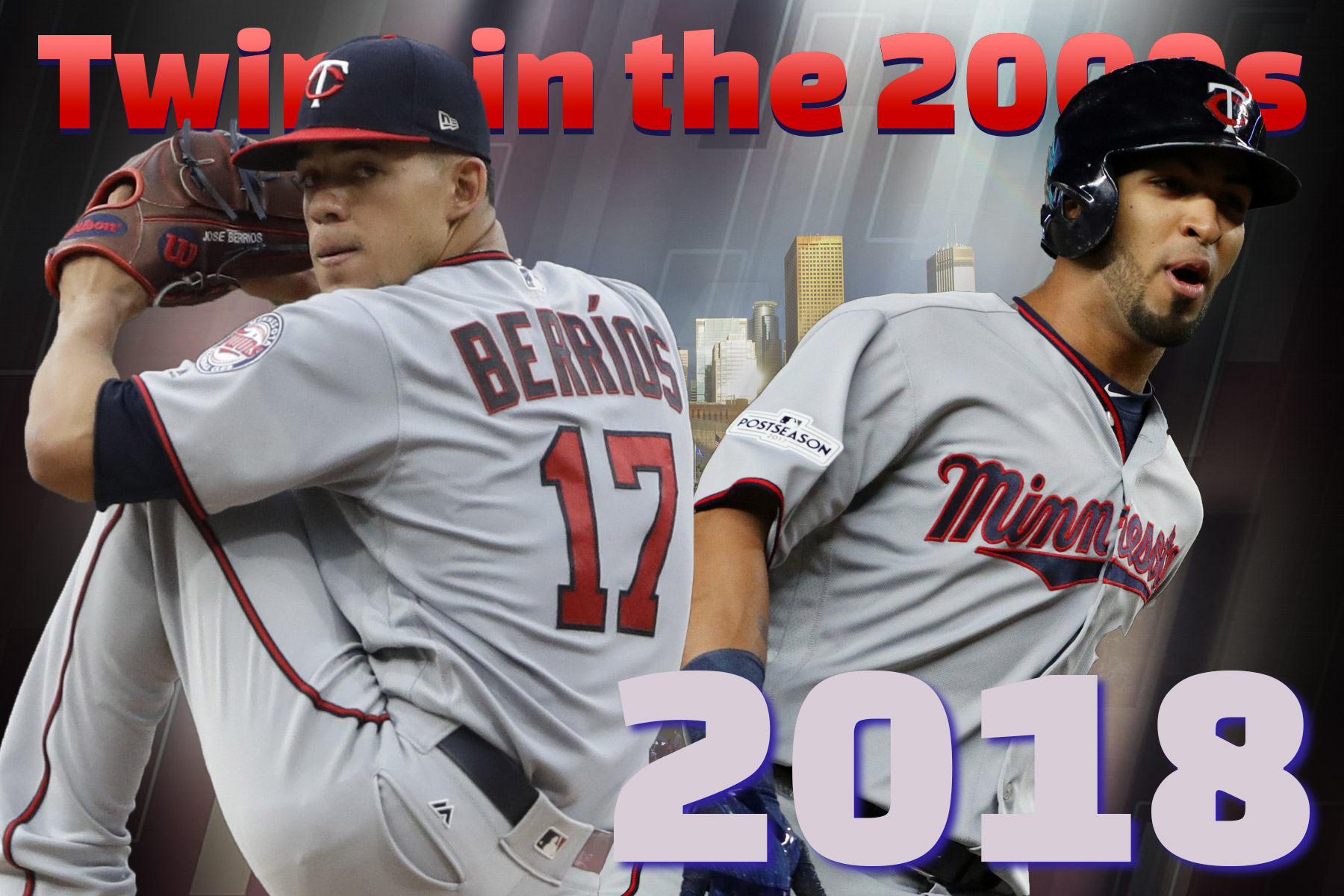 We're running a 20-part series in which we look back at each Minnesota Twins season of the 2000s. A rotation of different writers will highlight key moments, unearth forgotten details, and share nostalgic tales from the past two decades leading up to the present. This installment covers the 2018 season. Team Record: 78-84 Finish: 2nd Place in AL Central All-Star: José Berríos (SP) Awards: N/A Playoffs: N/A Season Overview By all appearances, the rebuild under Derek Falvey and Thad Levine was proceeding ahead of schedule. In their first year running the organization, Minnesota exceeded all expectations on the way to snapping a long postseason drought. Now, there was a sense of unfinished business, with many long-tenured players and franchise fixtures reaching the ends of their contracts. The front office acted accordingly, bolstering the bullpen with veteran righty Addison Reed, recipient of the largest free agent contract for a relief pitcher ($16.75 million) in Twins history. The additions of starter Lance Lynn and power hitter Logan Morrison late in the offseason contributed to a feeling of energy and urgency as cornerstones like Brian Dozier, Ervin Santana and Joe Mauer returned, all facing down the open market at year's end. But as these veterans all faded and fizzled to varying degrees, it became clear: They were no longer the future, or even the present. The beating heart of the Twins now resided with its next generation of talent, and unfortunately, much went amiss on this front: During spring training, the Twins announced that shortstop Jorge Polanco, whose August surge in 2017 helped propel the team back into contention, had tested positive for PEDs, and would miss the first 80 games. After having a titanium rod surgically inserted in his leg during the offseason, Miguel Sanó never looked right, with conditioning and performance issues reaching a nexus in mid-June when he was sent to Single-A for a full reset. Byron Buxton endured the most trying and frustrating season of his entire pro baseball career, which is really saying something. Migraines, a broken toe, wrist soreness that wouldn't go away ... and a whole lot of struggling, as the 24-year-old tried to push himself through physical ailments in his diminished state. As he rehabbed in the minors late in the season, the front office elected not to recall him in September, bringing a bitter note into the offseason. Max Kepler stayed healthy, but stagnated after a promising age-24 campaign, posting nearly identical numbers across the board. As a completely average offensive right fielder (20 HR, 58 RBI, .727 OPS) with a good glove, Kepler was showing himself to be more role player than building block. Getting his first extended look after a brief MLB debut in 2017, Mitch Garver was solid offensively as the backup catcher, slashing .268/.335/.414 with seven homers in 102 games, but his defense drew heavy criticism. And as a 27-year-old rookie, it wasn't clear he had much room for growth. With each of these players (except maybe Garver), the transformative potential was plainly evident. But for various reasons, they weren't quite ready to unlock it. The dropoff is most succinctly encapsulated by this stat: In 2017, Dozier, Buxton, Mauer, Sanó and Santana combined to produce 16.1 fWAR; in 2018, all five players returned, and combined for 1.3 fWAR. A lack of impact from these five, as well as newcomers like Lynn, Morrison and Reed, left the Twins with little chance to mount a threat against an unspectacular Indians team (Cleveland's 91 wins won the Central, but were fewer than either wild-card team). This wasted some truly strong efforts from players like Eddie Rosario, Eduardo Escobar and the blossoming José Berríos, who represented the Twins at the All-Star Game. At the trade deadline, Minnesota's front office once again went into sell mode, this time with less vacillation and less uproar. Escobar was dealt to Arizona. Dozier went to the Dodgers. Lynn was unloaded to the Yankees. Ryan Pressly, finally reaching his pinnacle after a long journey in the Twins bullpen, was shipped to Houston. By making these deals, which netted several quality prospects, Minnesota made the best of a down year. And even in the absence of a competitive race, fans still got their unforgettable moment down the stretch. Playing in the final year of his historic contract, Mauer's future was an open question that loomed over the entire season. As his performance backslid – he finished with a .729 OPS, tied with 2011 for second-lowest of his career – and concussion symptoms flared up again, optimism waned that the 35-year-old would continue his career. While he didn't officially reveal his intentions until November, the writing was on the wall during an emotional final game of the season, in which Mauer donned catcher's gear and received a pitch for one last time. His exit would be accompanied by that of another local baseball legend: Paul Molitor was dismissed as manager two days after Mauer's touching send-off. With Dozier, Mauer, and Molitor gone, there really was a sense that Falvey and Levine were sweeping out the final remnants of the old guard. Team MVP: Eddie Rosario (LF) Other Contenders: Max Kepler (RF), José Berríos (SP), Kyle Gibson (SP), Eduardo Escobar (3B) As I wrote at Twins Daily when naming him our choice for team MVP after the 2018 season, Rosario's "nod is well earned even if it says more about the surrounding nucleus than him." His 3.4 fWAR was a new career-high, but the lowest team-leading mark in three years. At times during the summer, Rosario was the only source of offense and energy for an offense that frequently slumped. Through exactly half the schedule's games (81), he was slashing .312/.352/.564 with 18 home runs, 23 doubles, and 52 RBIs. He fell off in the latter part of the season, as Minnesota marched toward a distant second-place finish, posting a .659 OPS after the start of August and missing most of September due to a quad injury. Still, Rosario set new career-highs in both fWAR and bWAR, finishing with the team lead in homers (24), RBIs (77), runs (87), and steals (8). 3 Most Pivotal Games April 26nd: Lost @ New York Yankees, 4-3 The Twins had just suffered a painful sweep in Tampa and were now in danger of another one at Yankee Stadium. Riding a six-game losing streak that had dropped them out of first place and below .500, Minnesota was simply trying to escape New York with a win. It looked like they actually might do so for a change. Thanks to a tremendous start from Kyle Gibson, the Twins entered the bottom of the ninth with a 3-1 lead. An error, a single, and a three-run homer from Gary Sanchez were all it took to bury Fernando Rodney and the Twins, extending an astonishing run of futility against the Bronx Bombers. July 15th: Won vs. Tampa Bay Rays, 11-7 The Twins had won eight of 10 heading into the final game before the All-Star break, gaining 4 1/2 games on the first-place Indians in the process. In this series finale against the Rays at Target Field, Trevor Hildenberger blew a one-run save in the top of the ninth and the game went to extras. In the bottom of the 10th, Dozier delivered a walk-off grand slam, putting an exclamation point on the end of a disappointing first half for the team and himself. August 6th: Lost @ Cleveland Indians, 10-0 Heading into Cleveland in early August, the Twins were essentially making their last stand. Trailing in the standings by nine games, and sitting six below the .500 mark, Minnesota's hopes were thin, but a sweep against the front-runners could make things interesting. That notion evaporated quickly, as the Twins suffered a 10-0 drubbing in the series opener. Trevor Bauer dominated with 11 strikeouts over six scoreless frames, and Cleveland's bullpen was perfect over the final three. The Twins managed three hits. After this loss they were never again at single digits in the GB column. Unforgettable Highlights Berríos Shines in Native Puerto Rico With Santana unavailable due a finger injury, Berríos would've been a natural fit for his first Opening Day start, but Molitor opted for Jake Odorizzi in order to put Berríos in line for a bigger honor: facing the rival Cleveland Indians in his homeland of Puerto Rico on April 18th. The young right-hander rose to the occasion, tossing seven scoreless innings and lowering his ERA to 1.63 through four starts on the season. He was headed toward another big accomplishment in July: his first All-Star appearance. Rosario Goes Three-and-Out In early June, the division was still up for grabs, and Rosario was at the height of his slugging prowess. In the last of a four-game set, Minnesota was aiming to take the series from Cleveland and move within 3 1/2 games of first place. It was a ho-hum day for the Twins offense against Mike Clevinger and the Indians bullpen ... everyone except Eddie, that is. In one of the decade's best individual offensive performances, Rosario homered three times, all of them putting the Twins ahead, including the last: a walk-off two-run shot in the bottom of the ninth. Much like when he homered on his first major-league pitch at Target Field three years earlier, Rosario's family was in attendance and looking on. Hello Again, and Goodbye In their highest-scoring game of the season on August 16th, the Twins scored 15 runs, and eight of them came against Tigers starter Francisco Liriano, who was ousted after 1 2/3 innings after a two-run homer by Sanó. By now Liriano was a far cry from the dominant phenom who surfaced with the Twins in 2006, but to his credit, he was still holding down a big-league rotation spot 12 years later at age 34. In addition to reuniting the Twins with a former rotation staple, this game also marked the end of the line for another one: Santana gave up seven earned runs over four innings in the final start of his Twins career. Mauer Crouches One Last Time Before Walking Away It's my pick for the best moment in the first 10 years at Target Field: In the top of the ninth in Minnesota's last game of the 2018 season, Mauer emerged from the dugout in catcher's gear, slowly making his way out to the field as thunderous applause rained down from appreciative fans. This all but confirmed Mauer's intention to retire, ending a career that – much like his M&M counterpart – will always be cherished, but also always subject to endless "What if" discussions. At the very least, his sendoff cleared up this question: What if you pulled off an absolutely perfect farewell for a beloved franchise fixture in the most touching way imaginable? One Detail You Probably Forgot The 2018 Twins used 34 pitchers, second-most in franchise history (surpassed only by 2017 team). This included four different position players – Garver, Chris Gimenez, Willians Astudillo, Ryan LaMarre – appearing on the mound, reflecting a broader trend. Fifteen different pitchers threw more innings for Minnesota than Santana, who was the staff's sturdy workhorse a year prior. Fun Fact By losing 12 games on walk-offs (including the aforementioned crusher at Yankee Stadium), the 2018 Twins tied a franchise record and came within one of the MLB record. I'm not sure if this qualifies as fun but it sure is a fact. ~~~ Previous Installments: The 2000 Season The 2001 Season The 2002 Season The 2003 Season The 2004 Season The 2005 Season The 2006 Season The 2007 Season The 2008 Season The 2009 Season The 2010 Season The 2011 Season The 2012 Season The 2013 Season The 2014 Season The 2015 Season The 2016 Season The 2017 Season
 -
Twins in the 2000s: The 2017 Season
Nick Nelson replied to AJ Condon's topic in Twins Daily Front Page News
Dozier getting pissed off and flipping into overdrive after the deadline will always be my best memory of him as a Twin. Talk about putting your money where your mouth is. -
Honestly, of all the rule changes going into place I hadn't thought about this one too much. But going through our virtual exercise here really makes me realize how limiting it is.
-
Option 3: Press "Like This" on this comment (or voice your support below) if you want us to call up LHP Rich Hill and OF Alex Kirilloff, adding our best pitcher and hitter from Rochester, with paths for both to make meaningful impacts. (Both would need to be added to the 40-man.)
- 8 replies
-
- 13
-
-
Option 2: Press "Like This" on this comment (or voice your support below) if you want us to call up SS Royce Lewis and RHP Jhoan Duran, giving these exciting talents a chance to contribute even though their numbers might not quite show they are ready. (Both would need to be added to the 40-man.)
-
Option 1: Press "Like This" on this comment (or voice your support below) if you want us to call up RHP Matt Wisler and utilityman Ehire Adrianza, providing experienced depth on the bench and in the bullpen for the final month.
