



Nick Nelson
-
Posts
8,327 -
Joined
-
Last visited
-
Days Won
56
Content Type
Profiles
News
Minnesota Twins Videos
2026 Minnesota Twins Top Prospects Ranking
2022 Minnesota Twins Draft Picks
Minnesota Twins Free Agent & Trade Rumors, Notes, & Tidbits
Guides & Resources
2023 Minnesota Twins Draft Picks
The Minnesota Twins Players Project
2024 Minnesota Twins Draft Picks
2025 Minnesota Twins Draft Pick Tracker
2026 Minnesota Twins Draft Tracker: Picks & Bonuses
Forums
Blogs
Events
Store
Downloads
Gallery
Everything posted by Nick Nelson
-
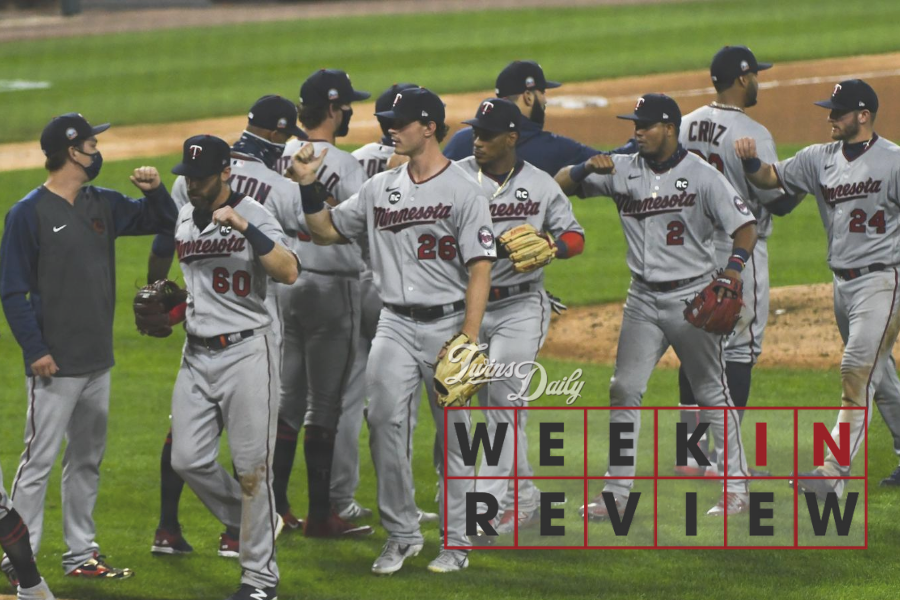 Weekly Snapshot: Fri, 7/24 through Sun, 7/26 *** Record Last Week: 2-1 (Overall: 2-1) Run Differential Last Week: +10 (Overall: +10) Standing: Tied for 1st Place in AL Central Bomba Counter: 7 (On Pace for 140) Not everything went to plan for Minnesota in the opening series. Jake Odorizzi was originally expected to start for the Twins in Chicago, and then Rich Hill was, but both pitchers ended up getting pushed back. Byron Buxton missed all three games as his sprained foot heals, though it sounds like there's optimism he'll be out there for the first homestand. Even though they weren't quite at full strength, the Twins still looked plenty strong at Guaranteed Rate Field, taking two of three from the White Sox to kick off their quest for a second straight division title. HIGHLIGHTS The Bomba Squad wasted no time getting back to business, with Max Kepler launching a home run on the first pitch of the season from Lucas Giolito. It sparked a 10-run, 11-hit barrage in Minnesota's 10-5 Opening Day victory over the Sox. Kepler homered again in his next at-bat, and has gone 0-for-12 since. Baseball. Leading the charge in a tremendous series for the Twins was Nelson Cruz, who had himself a hell of a weekend at Guaranteed Rate Field: 7-for-13, three home runs, two doubles, 10 RBIs. If the ageless wonder can stay healthy for the full 60-game sprint, this offense's upside feels almost limitless. https://twitter.com/Twins/status/1287505761749409797 While Cruz is a bona fide superstar, the offense's depth and length are what makes it truly special. We saw these strengths come into play already during the first series. Luis Arráez, who batted ninth and seventh in the two games he started, went 4-for-8, delivering a key two-run single in the opener. Jake Cave, who stepped in to make two starts with Buxton unavailable, also had a big two-run hit in the opener, and launched a first-inning grand slam on Sunday that set the tone in 14-2 a laugher. The White Sox pitching staff has already experienced what plenty of others are going to: Facing this relentless Twins lineup is a daunting and draining task. Sunday's 14-run explosion provided plenty of breathing room for Kenta Maeda in his Twins debut, and for his part, the right-hander made things look easy. While Cruz controlled the offense, Maeda went on cruise control, coasting through five innings of two-run ball with six strikeouts, one walk, and four hits. https://twitter.com/TFTwins/status/1287458818423754754 He was one of several players to make their first appearances as Twins over the weekend, and for the most part, all made good first impressions. Tyler Clippard pitched a scoreless frame on Friday night, combining with Trevor May, Tyler Duffey and Cody Stashak for five innings of shutout ball from the bullpen. Offseason waiver pickup Matt Wisler is the only Twins pitcher with two appearances thus far, and he's looked filthy: 2.1 IP, two hits, six strikeouts, and 13 swinging strikes on 63 pitches (20.6% whiff rate). The bullpen overall has piled up 19 strikeouts through its first 13 innings of work. And Taylor Rogers hasn't pitched yet. When they come to Target Field to open a two-game series against the Cardinals on Tuesday, the Twins will carry a well-stocked and well-rested relief corps. LOWLIGHTS Not everyone on the Twins saw their season get off to such a smooth start, in large part because Chicago's lineup showed its prowess. They gave José Berríos plenty of trouble on Opening Day, touching him up for five runs on seven hits over four innings. Berríos got just one strikeout and seven swinging strikes on 75 pitches. There didn't seem to be anything wrong with him physically – in fact, his velocity was noticeably up, with his fastball sitting comfortably in the mid-90s touching 97 several times, but the command just wasn't quite there. https://twitter.com/jeffwzimmerman/status/1287002032927375360 It could be construed as a sign that Berríos might've been a little TOO amped up for this highly anticipated start. The righty sacrificed spin for heat and it didn't seem to benefit him as Chicago hitters were on a number of his pitches. He's in line to open a crucial early-season series against Cleveland on Thursday, so hopefully adjustments are made. Count Zack Littell and Devin Smeltzer among other Twins pitchers who didn't have much fun against the Chicago lineup. Saturday's contest spun out of control under their watch. Littell entered in the fifth inning of a one-run game, and allowed home runs to three of the seven batters he faced, with four earned runs coming across in total. In a 60-game season, Littell's implosion will make it extremely tough for him to get his ERA (currently 36.00) to a good place before the finish line. Then again, it bears noting that last year he allowed eight earned runs in 4 1/3 innings in his second appearance for the Twins, then posted a 0.88 ERA the rest of the way. After Cruz brought the game back within reach on his three-run homer, Smeltzer came in and promptly pushed it back out of reach. In two innings the left-hander allowed five runs on six hits, including two more homers. Smeltzer's outing wasn't quite as bad as it looks on paper – his reworked breaking ball showed some promise, and five of his six outs came on strikeouts – but he looks very much like a work in progress. In such a short season, it can be tough to rely on someone like that. While the offense is mostly clicking out of the gates, Miguel Sanó is still searching for his first hit of the season. He was behind in Spring Training 2.0 after reporting late due to a positive COVID test, and the rust was evident on Friday and Saturday as he went 0-for-8 with four strikeouts. The quality of at-bats has not been good. Sanó got the day off on Sunday but will surely be out there for the home opener. Fellow corner infielder Josh Donaldson was mostly quiet in his first series as a Twin, going just 1-for-10 with an infield single representing the extent of his damage. But on the bright side, he drew four walks, showing the value he can bring beyond slugging, and the Twins scored 27 runs even without getting much of anything from him. Imagine when he heats up. TRENDING STORYLINE When will Odorizzi pitch? His first turn through the rotation is being skipped due to back soreness. He'll face live hitters within the next couple days, and it sounds like the Twins will assess his timeline based on how that goes. https://twitter.com/DanHayesMLB/status/1287437187902996481 The team has never signaled much concern regarding Odorizzi's status. If things go well in the BP session, he could conceivably start the first game against Cleveland on Thursday, though it's more likely he'd go sometime during the weekend. Then again, as Cody Pirkl wrote here recently, we are wise not to downplay this reportedly "minor" issue because back injuries can be very tricky for pitchers and Odorizzi has a history with them. The 2019 All-Star is a critical piece for this rotation. We'll be keeping a close eye on his health updates. LOOKING AHEAD Two more Twins debuts are on tap in the home-opening series against St. Louis, with Homer Bailey and Hill slated to start for Minnesota. It'll be interesting to see how they fare against Paul Goldschmidt and a pretty good Cards team. Then, the top presumptive challengers in the division come to town, with Cleveland coming for four games. It's tough to overstate the magnitude of this home series for the Twins. A sweep either way would be a seismic development in the division race. This series will feature pennant-race-intensity baseball, played a week into the season before an empty stadium. Gonna be weird. TUESDAY, 7/28: CARDINALS @ TWINS – RHP Homer Bailey v. RHP Carlos Martinez WEDNESDAY, 7/29: CARDINALS @ TWINS – LHP Rich Hill v. RHP Miles Mikolas THURSDAY, 7/30: INDIANS @ TWINS FRIDAY, 7/31: INDIANS @ TWINS SATURDAY, 8/1: INDIANS @ TWINS SUNDAY, 8/2: INDIANS @ TWINS Catch Up On Twins Daily Game Recaps Game 1 | MIN 10, CHW 5: Kepler Blasts 2 Bombas, Twins Outlast White Sox Game 2 | CHW 10, MIN 3: White Sox Hit 5 Homers Off Twins Bullpen Game 3 | MIN 14, CHW 2: Lineup Flexes Early to Aid Maeda in Victorious Twins Debut MORE FROM TWINS DAILY — Latest Twins coverage from our writers — Recent Twins discussion in our forums — Follow Twins Daily via Twitter, Facebook or email
 -
Swinging Sixty: Minnesota Twins 2020 Season Preview
Nick Nelson replied to Nick Nelson's topic in Twins Daily Front Page News
I'd heard rumblings of this too, but according to MLB's website it's a simple seeded bracket, with #1 seed playing #8 seed. I feel like if there was gonna be a dynamic like that in place it'd need to be established before the season started, no? -
On day one of the first iteration of spring training, reigning Manager of the Year Rocco Baldelli set clear expectations and aspirations for his team: World Series. Five months later, as the Twins gear up for a season nothing like the one they expected to play, their goal hasn't changed. The path to a championship just looks different.Read on to find everything you need to know as we get this abbreviated season started, including roster breakdowns, schedule analysis, opponent intel, and predictions. 60 GAMES IN 66 DAYS: A CENTRALIZED SPRINT Rather than facing 20 teams in 162 games spread across six months, the revised schedule will see Minnesota facing nine teams over 60 games in a span of eight weeks. A regionalized format, designed to minimize travel, has them playing 40 games against AL Central opponents, with the remaining 20 coming against teams from the NL Central. Notably, the schedule includes only six total off days, and two of them come in the final week. The Twins have just one day off lined up in the entire month of August, and from July 28th through September 2nd they'll play 36 games in 37 days. Whew. READ: A Closer Look at the Twins' 2020 Schedule As Matthew Taylor wrote in the article above, "The way that the schedules shook out for the 2020 season is about the best scenario that the Minnesota Twins could have asked for." They receive an even heavier dosage of their own relatively weak division, and swap out an interleague schedule that would've had them facing the Dodgers, Rockies, Diamondbacks, Padres, Giants and Brewers for one that has them facing the Cubs, Cardinals, Reds, Pirates and Brewers. No more Astros, Yankees, Rays or A's in the regular season. With that said, this thing still won't be a walk in the park. READ: The 3 Scariest Stretches on the Twins 2020 Schedule HEAVY DOSE OF DIVISION FOES Baseball's unbalanced schedule always yields a disproportionate number of intra-division matchups, but this year the dynamic is magnified. Forty of Minnesota's 60 games are against AL Central opponents, with each division rival accounting for 16.7% of the schedule. READ: Breaking Down the Twins' 9 Opponents As mentioned above, that's good news in the sense that Detroit and Kansas City were both 100-loss teams last year and carry lackluster outlooks into the new campaign. But the Twins will now face heightened pressure to perform against their two primary challengers, Cleveland and Chicago, and in such small samples the tables can tilt quickly. Over the past week I've broken down each of the four AL Central teams, examining strengths, weaknesses, and X factors: Central Intelligence 2.0 Cleveland IndiansChicago White SoxKansas City RoyalsDetroit TigersGREAT EXPECTATIONS The Twins are not alone in their belief that they have what it takes to win it all. MLB.com's Mike Petriello grouped them with just two other teams – Yankees and Dodgers – in the "Title or Bust" tier of his team rankings. Meanwhile, Peter Abraham of the Boston Globe is one prominent scribe picking the Twins to win it all in his 2020 season predictions, citing their "strong sense of purpose" under Baldelli's leadership. Any credible power ranking would have to place Minnesota among at least the top five MLB teams heading in. They won 101 games last year, upgraded significantly during the offseason, and have the softest schedule in baseball. READ: The Case Stands: Twins Enter Summer Camp as AL's Top Team STRONG AND DEEP AT EVERY POSITION This. Team. Is. Good. The 2020 Twins are incredibly balanced and deep, without a single blatant weak spot in the lineup or, really, on the pitching staff. Derek Falvey and Thad Levine have built a remarkably sturdy club that is prepared for the inevitable setbacks and bad breaks that will come along in an MLB season of any length. READ: Minnesota Twins Opening Day Roster During the original version of spring training, five years ago back in February and March, I ran through each positional unit in-depth. For the most part, all of the analysis still applies. You can find each entry below: Position Analysis: Catcher - Mitch Garver looks to solidify his case as an elite two-way catcher while joined by a platoon-friendly backup in veteran Alex Avila.Position Analysis: First Base - Miguel Sano must prove his defensive chops at a new position, but there's little question his bat is up to the task.Position Analysis: Second Base - After a sensational rookie season, what does Luis Arraez have in store for an encore?Position Analysis: Third Base - The biggest free agent signing in franchise history upgrades an already-dominant offense, but his stellar glove might make the biggest impact.Position Analysis: Shortstop - As ever, defense is a concern for Jorge Polanco. Can he shore up his glovework while continuing to hit?Position Analysis: Left Field - The stakes are high for Eddie Rosario, coming off an unspectacular season with prospects starting to press from behind.Twins 2020 Position Analysis: Center Field - Can Byron Buxton stay healthy? That seems to be his only barrier to stardom, but it's a wall he keeps running into.Position Analysis: Right Field - Max Kepler was arguably the team's MVP in 2019 and he's primed for another big year. Should he need to spend time in CF, ample depth is in place.Position Analysis: Designated Hitter - Nelson Cruz is simply the best DH in the game, and one of the best hitters period. At age 40 with a balky wrist, all he needs to do is hold up.Position Analysis: Starting Pitcher - Despite failing to land a bona fide ace, the Twins are sneaky good on the rotation front, boasting upside and depth.Position Analysis: Relief Pitcher - A mix of reliable vets and emerging young fireballers positions this unit to dominate the late innings.THE NEW GUYS: BRINGING EXPERIENCE AND EXCELLENCE Twins fans will be acclimating to some new faces this season, with several significant acquisitions coming aboard via free agency and trade. The commonality that strikes me with these newcomers – aside from all being quality, strategically-savvy additions – is their experience on the big stage. Josh Donaldson, 3B – 2015 AL MVP, 150 career postseason PAs (.769 OPS)Kenta Maeda, SP – 24 postseason appearances (7 in World Series), 3.31 ERARich Hill, SP – 53 postseason innings (12 starts), 3.06 ERA (1.80 in 2 WS starts)Tyler Clippard, RP – 14 postseason appearances (4.26 ERA)Alex Avila, C – 124 postseason plate appearances (.488 OPS)Homer Bailey, SP – 9 postseason innings (1.00 ERA)Avila hasn't had much success and Bailey has only made one playoff start, all the back in 2012, but neither of those role players is likely to figure into Minnesota's postseason plans much. The other four, meanwhile, seem like they were targeted with October very much in mind. I didn't include Sergio Romo since he's technically not a newcomer, but he's a three-time World Series champion so he very much falls in the same category. If you could pick out one clear discernible flaw in last year's Twins team, which won 101 games in the regular season while basically avoiding any slumps, it was that lack of big-game experience, which showed through when they fell flat in the ALDS. That has been addressed in a pretty direct way. SEARCHING FOR AN ACE One thing that has not been actively addressed for Minnesota is the lack of a true proven ace atop the rotation. And as we talk about the club's championship prospects, it's a legitimate shortcoming for critics to point out. Without question, the Twins do not have a starter who's established himself on the level of their top two rivals in the division (Cleveland's Mike Clevinger & Chicago's Lucas Giolito), nor their top two rivals in the American League (New York's Gerrit Cole & Houston's Justin Verlander). However, what they do have is five starters who are capable of pitching like an ace in a 60-game season, which constitutes a dozen starts. In fact, each of them more or less showed they could do it over 12-start stretches last season: Jake Odorizzi: March 30 through June 2 64.1 IP, 8-2, 1.96 ERA, 70-21 K/BBJose Berrios: May 21 - July 3178 IP, 4-3, 2.31 ERA, 1.08 WHIP, 73-19 K/BBRich Hill: April 28 - June 19 (10 starts)53 IP, 4-1, 2.55 ERA, 1.11 WHIP, 61-12 K/BBKenta Maeda: April 16 - July 668 IP, 4-3, 3.18 ERA, 0.92 WHIP, 69-18 K/BBHomer Bailey: July 17 - September 2471.1 IP, 6-2, 3.28 ERA, 1.08 WHIP, 66-12 K/BBA couple caveats: Hill's sample was only 10 starts because that's how many turns he took before landing on the shelf in June; Bailey's timespan actually covers the 13 starts after he was traded to Oakland, but I subtracted his second turn with the A's because it was an outlier (2 IP, 9 ER) pitched in Houston. I don't think I need to elaborate on why I find that result reasonable to exclude. Oh, and for good measure, let's throw in Michael Pineda's final 12 starts for the Twins last year: 70.1 IP, 7-2, 3.20 ERA, 78-14 K/BB. Granted, he won't be available for most of the 60-game sprint, but he should be back in time for the playoffs. READ: Will Jake Odorizzi Be Minnesota's Ace in 2020? The bottom line is that this rotation is deep on quality, which fuels consistency through the regular season, and they absolutely have studs capable of stepping up in the playoffs. There are multiple members of this starting corps who could very plausibly win the Cy Young simply by getting on a roll, especially in light of the relatively weak offenses Minnesota will routinely face. READ: How Jose Berrios Used Video To Regain Confidence BOLD TWINS 2020 PREDICTIONS The Twins will be the American League's No. 1 seed at the end of the regular season. I don't know if they're better than New York or Houston (they're certainly at the same level), but the Twins will face a much easier schedule, and are entering the season less burdened by injuries and baggage. Home field advantage, here we come. Nelson Cruz will hit 25 home runs. When he arrived in camp, Miguel Sano proclaimed that he intends to hit 30 home runs this season. I wouldn't put it past him. But that's a bit of a lofty target, and I actually like his teammate Cruz to most astound us with his barrage of bombas. The veteran DH has looked simply incredible throughout camp after drilling 41 bombs in 120 games last year. Twenty-five homers in 60 games would extrapolate to 68 over a full schedule. The Twins will allow the fewest runs in the AL. For all the talk about the offense (rightfully so), I believe this pitching staff will surprise – in part because they are sneaky good and in larger part because they'll so rarely face high-caliber lineups. Of Minnesota's 60 games, only three come against a team that ranked in the top half of the majors in runs scored last year. (The Cubs were 10th.) Josh Donaldson will disappoint offensively. He's traditionally a bit of a slow starter (.848 career first-half OPS, .914 second-half). This trend was on display last year, where after 60 games he had a .787 OPS and just eight home runs. Now, he's acclimating to a new team under strange circumstances, and he won't have much time to find a groove. With that said, disappointing production by Donaldson's standards is still very solid, and he'll be an asset overall thanks to his glove. A Twins starter will win 10 games. And thus, very possibly the Cy Young. This a byproduct of the effectiveness I expect to see from the Twins rotation, and the backing of an elite offense. Berrios would be my top candidate, but honestly I could basically see any of the five doing it. What are your bold predictions? How many games will the Twins win? How far can they go? Share your thoughts in the comments section as we count down the hours until first pitch. MORE FROM TWINS DAILY — Latest Twins coverage from our writers — Recent Twins discussion in our forums — Follow Twins Daily via Twitter, Facebook or email Click here to view the article
-
 Read on to find everything you need to know as we get this abbreviated season started, including roster breakdowns, schedule analysis, opponent intel, and predictions. 60 GAMES IN 66 DAYS: A CENTRALIZED SPRINT Rather than facing 20 teams in 162 games spread across six months, the revised schedule will see Minnesota facing nine teams over 60 games in a span of eight weeks. A regionalized format, designed to minimize travel, has them playing 40 games against AL Central opponents, with the remaining 20 coming against teams from the NL Central. https://twitter.com/Twins/status/1280274932593819649 Notably, the schedule includes only six total off days, and two of them come in the final week. The Twins have just one day off lined up in the entire month of August, and from July 28th through September 2nd they'll play 36 games in 37 days. Whew. READ: A Closer Look at the Twins' 2020 Schedule As Matthew Taylor wrote in the article above, "The way that the schedules shook out for the 2020 season is about the best scenario that the Minnesota Twins could have asked for." They receive an even heavier dosage of their own relatively weak division, and swap out an interleague schedule that would've had them facing the Dodgers, Rockies, Diamondbacks, Padres, Giants and Brewers for one that has them facing the Cubs, Cardinals, Reds, Pirates and Brewers. No more Astros, Yankees, Rays or A's in the regular season. With that said, this thing still won't be a walk in the park. READ: The 3 Scariest Stretches on the Twins 2020 Schedule HEAVY DOSE OF DIVISION FOES Baseball's unbalanced schedule always yields a disproportionate number of intra-division matchups, but this year the dynamic is magnified. Forty of Minnesota's 60 games are against AL Central opponents, with each division rival accounting for 16.7% of the schedule. READ: Breaking Down the Twins' 9 Opponents As mentioned above, that's good news in the sense that Detroit and Kansas City were both 100-loss teams last year and carry lackluster outlooks into the new campaign. But the Twins will now face heightened pressure to perform against their two primary challengers, Cleveland and Chicago, and in such small samples the tables can tilt quickly. Over the past week I've broken down each of the four AL Central teams, examining strengths, weaknesses, and X factors: Central Intelligence 2.0 Cleveland Indians Chicago White Sox Kansas City Royals Detroit Tigers GREAT EXPECTATIONS The Twins are not alone in their belief that they have what it takes to win it all. MLB.com's Mike Petriello grouped them with just two other teams – Yankees and Dodgers – in the "Title or Bust" tier of his team rankings. Meanwhile, Peter Abraham of the Boston Globe is one prominent scribe picking the Twins to win it all in his 2020 season predictions, citing their "strong sense of purpose" under Baldelli's leadership. Any credible power ranking would have to place Minnesota among at least the top five MLB teams heading in. They won 101 games last year, upgraded significantly during the offseason, and have the softest schedule in baseball. READ: The Case Stands: Twins Enter Summer Camp as AL's Top Team STRONG AND DEEP AT EVERY POSITION This. Team. Is. Good. The 2020 Twins are incredibly balanced and deep, without a single blatant weak spot in the lineup or, really, on the pitching staff. Derek Falvey and Thad Levine have built a remarkably sturdy club that is prepared for the inevitable setbacks and bad breaks that will come along in an MLB season of any length. READ: Minnesota Twins Opening Day Roster During the original version of spring training, five years ago back in February and March, I ran through each positional unit in-depth. For the most part, all of the analysis still applies. You can find each entry below: Position Analysis: Catcher - Mitch Garver looks to solidify his case as an elite two-way catcher while joined by a platoon-friendly backup in veteran Alex Avila. Position Analysis: First Base - Miguel Sano must prove his defensive chops at a new position, but there's little question his bat is up to the task. Position Analysis: Second Base - After a sensational rookie season, what does Luis Arraez have in store for an encore? Position Analysis: Third Base - The biggest free agent signing in franchise history upgrades an already-dominant offense, but his stellar glove might make the biggest impact. Position Analysis: Shortstop - As ever, defense is a concern for Jorge Polanco. Can he shore up his glovework while continuing to hit? Position Analysis: Left Field - The stakes are high for Eddie Rosario, coming off an unspectacular season with prospects starting to press from behind. Twins 2020 Position Analysis: Center Field - Can Byron Buxton stay healthy? That seems to be his only barrier to stardom, but it's a wall he keeps running into. Position Analysis: Right Field - Max Kepler was arguably the team's MVP in 2019 and he's primed for another big year. Should he need to spend time in CF, ample depth is in place. Position Analysis: Designated Hitter - Nelson Cruz is simply the best DH in the game, and one of the best hitters period. At age 40 with a balky wrist, all he needs to do is hold up. Position Analysis: Starting Pitcher - Despite failing to land a bona fide ace, the Twins are sneaky good on the rotation front, boasting upside and depth. Position Analysis: Relief Pitcher - A mix of reliable vets and emerging young fireballers positions this unit to dominate the late innings. THE NEW GUYS: BRINGING EXPERIENCE AND EXCELLENCE Twins fans will be acclimating to some new faces this season, with several significant acquisitions coming aboard via free agency and trade. The commonality that strikes me with these newcomers – aside from all being quality, strategically-savvy additions – is their experience on the big stage. Josh Donaldson, 3B – 2015 AL MVP, 150 career postseason PAs (.769 OPS) Kenta Maeda, SP – 24 postseason appearances (7 in World Series), 3.31 ERA Rich Hill, SP – 53 postseason innings (12 starts), 3.06 ERA (1.80 in 2 WS starts) Tyler Clippard, RP – 14 postseason appearances (4.26 ERA) Alex Avila, C – 124 postseason plate appearances (.488 OPS) Homer Bailey, SP – 9 postseason innings (1.00 ERA) Avila hasn't had much success and Bailey has only made one playoff start, all the back in 2012, but neither of those role players is likely to figure into Minnesota's postseason plans much. The other four, meanwhile, seem like they were targeted with October very much in mind. I didn't include Sergio Romo since he's technically not a newcomer, but he's a three-time World Series champion so he very much falls in the same category. If you could pick out one clear discernible flaw in last year's Twins team, which won 101 games in the regular season while basically avoiding any slumps, it was that lack of big-game experience, which showed through when they fell flat in the ALDS. That has been addressed in a pretty direct way. SEARCHING FOR AN ACE One thing that has not been actively addressed for Minnesota is the lack of a true proven ace atop the rotation. And as we talk about the club's championship prospects, it's a legitimate shortcoming for critics to point out. Without question, the Twins do not have a starter who's established himself on the level of their top two rivals in the division (Cleveland's Mike Clevinger & Chicago's Lucas Giolito), nor their top two rivals in the American League (New York's Gerrit Cole & Houston's Justin Verlander). However, what they do have is five starters who are capable of pitching like an ace in a 60-game season, which constitutes a dozen starts. In fact, each of them more or less showed they could do it over 12-start stretches last season: Jake Odorizzi: March 30 through June 2 64.1 IP, 8-2, 1.96 ERA, 70-21 K/BB Jose Berrios: May 21 - July 31 78 IP, 4-3, 2.31 ERA, 1.08 WHIP, 73-19 K/BB Rich Hill: April 28 - June 19 (10 starts) 53 IP, 4-1, 2.55 ERA, 1.11 WHIP, 61-12 K/BB Kenta Maeda: April 16 - July 6 68 IP, 4-3, 3.18 ERA, 0.92 WHIP, 69-18 K/BB Homer Bailey: July 17 - September 24 71.1 IP, 6-2, 3.28 ERA, 1.08 WHIP, 66-12 K/BB A couple caveats: Hill's sample was only 10 starts because that's how many turns he took before landing on the shelf in June; Bailey's timespan actually covers the 13 starts after he was traded to Oakland, but I subtracted his second turn with the A's because it was an outlier (2 IP, 9 ER) pitched in Houston. I don't think I need to elaborate on why I find that result reasonable to exclude. Oh, and for good measure, let's throw in Michael Pineda's final 12 starts for the Twins last year: 70.1 IP, 7-2, 3.20 ERA, 78-14 K/BB. Granted, he won't be available for most of the 60-game sprint, but he should be back in time for the playoffs. READ: Will Jake Odorizzi Be Minnesota's Ace in 2020? The bottom line is that this rotation is deep on quality, which fuels consistency through the regular season, and they absolutely have studs capable of stepping up in the playoffs. There are multiple members of this starting corps who could very plausibly win the Cy Young simply by getting on a roll, especially in light of the relatively weak offenses Minnesota will routinely face. READ: How Jose Berrios Used Video To Regain Confidence BOLD TWINS 2020 PREDICTIONS The Twins will be the American League's No. 1 seed at the end of the regular season. I don't know if they're better than New York or Houston (they're certainly at the same level), but the Twins will face a much easier schedule, and are entering the season less burdened by injuries and baggage. Home field advantage, here we come. Nelson Cruz will hit 25 home runs. When he arrived in camp, Miguel Sano proclaimed that he intends to hit 30 home runs this season. I wouldn't put it past him. But that's a bit of a lofty target, and I actually like his teammate Cruz to most astound us with his barrage of bombas. The veteran DH has looked simply incredible throughout camp after drilling 41 bombs in 120 games last year. Twenty-five homers in 60 games would extrapolate to 68 over a full schedule. The Twins will allow the fewest runs in the AL. For all the talk about the offense (rightfully so), I believe this pitching staff will surprise – in part because they are sneaky good and in larger part because they'll so rarely face high-caliber lineups. Of Minnesota's 60 games, only three come against a team that ranked in the top half of the majors in runs scored last year. (The Cubs were 10th.) Josh Donaldson will disappoint offensively. He's traditionally a bit of a slow starter (.848 career first-half OPS, .914 second-half). This trend was on display last year, where after 60 games he had a .787 OPS and just eight home runs. Now, he's acclimating to a new team under strange circumstances, and he won't have much time to find a groove. With that said, disappointing production by Donaldson's standards is still very solid, and he'll be an asset overall thanks to his glove. A Twins starter will win 10 games. And thus, very possibly the Cy Young. This a byproduct of the effectiveness I expect to see from the Twins rotation, and the backing of an elite offense. Berrios would be my top candidate, but honestly I could basically see any of the five doing it. What are your bold predictions? How many games will the Twins win? How far can they go? Share your thoughts in the comments section as we count down the hours until first pitch. MORE FROM TWINS DAILY — Latest Twins coverage from our writers — Recent Twins discussion in our forums — Follow Twins Daily via Twitter, Facebook or email
 -
Okay? The dearth of Black players in the game was directly discussed in the panel last night, and has been addressed by the commissioner as something he'd like to change. It's not some novel point from me. It's also secondary to the main focus here, which is diversifying front offices and personnel.
-
I know they recorded it. I haven't seen it posted online anywhere as of yet but will be sure to share here if I do.
-
Boy, if you think being categorized by race for a period of two months is getting old, you should talk to someone about the experience of being Black in America for their entire life. Might open your eyes. I'm not trying to be snarky (ok maybe a little) but in all honesty please try to step outside of your own personal worldview and understand why this topic matters, and why the Twins are placing such a major focus on it. (To answer your question about why it matters that 85% of baseball fans are white ... changing this equation is critical to the game's future. Viewership is dropping and new fan pipelines are needed. America is becoming more diverse and baseball needs to follow suit if it is to maintain popularity long-term. Here's a good read.)
-
Lance, I thought this was very obvious but apparently not: the panel was about bringing more Black diversity to baseball, specifically. And there's also a much larger conversation going on in our country about Black inequality, stemming from events that took place in our own city. So that's what we're talking about. Make sense? First of all it was Levine, not Falvey. Second of all, that's a lazy strawman. The Twins have never in history hired a minority for a manager or GM role. MLB front offices in general are disproportionately white. This doesn't strike you as problematic? Even if white people do tend to be the best person applying for the job, why is that happening? How can we create more diversity in the qualified candidate pool? That's the topic here. There is zero need to get defensive about it.
-
13% of Americans are Black, so no. Incidentally, that was the percentage of Black MLB players at the turn of the century, and today it has dropped almost to half that. It's a bad trend.
-
Baseball has a problem. It's not new, and it's not a secret. Lacking diversity throughout the game manifests in numerous ways, but the underrepresentation of African-Americans is a plainly evident one. In their continuing efforts to acknowledge and address this issue, the Minnesota Twins held their first Front Office Diversity Roundtable via Zoom on Tuesday night.A few years back, Jay Caspian Kang wrote about the "unbearable whiteness of baseball" for New York Times Magazine, noting among other things that just over 8% of major-league players were Black at the time. That number has since dropped even further – in 2019, Black players comprised just 7.7% of MLB rosters. This troubling disparity is reflected in the managerial ranks (there are only two African-American managers in MLB) and especially in front office leadership (there have been five African-American general managers in baseball history). It's no coincidence, then, that the disparity also reflects in the sport's audience – a 2014 study found that 9% of pro baseball's television viewership was Black, compared to 83% white. Why is baseball failing to resonate with, recruit, and elevate African-Americans? It's a complicated and largely theoretical question that I won't delve into here. What's important now is to alter this imbalance, and bring more racial equality to the game's demographics. The simplest step in that direction is to highlight Black people currently succeeding in professional baseball roles, let them share their stories, and encourage others to follow in their footsteps. On Tuesday, the Twins did just that. Noah Croom, General Counsel & Partner for Beautiful Game LLC, curated a panel that featured four members of Minnesota's front office operation: Sean Johnson - Director, Amateur ScoutingDeron Johnson - Senior Advisor, ScoutingNavery Moore - Fellow, Pro ScoutingJosh Ruffin - Analyst in Advanced ScoutingTwins general manager Thad Levine kicked off the discussion with a firm statement before going off-screen to follow as a viewer: "It is our belief that the hiring practice of Major League Baseball and the Minnesota Twins has been flawed." He cited complacency as a primary cause, hinting at a similar sentiment to the one shared recently by a fellow white male executive, Theo Epstein of the Chicago Cubs. "I've hired a Black scouting director, [and] farm director in the past, but the majority of people that I've hired, if I'm being honest, have similar backgrounds as me and look a lot like me," Epstein said on a conference call last month. "That's something I need to ask myself why. I need to question my own assumptions, my own attitudes. I need to find a way to be better." The Twins have their own ignominious history on this front. Former owner Calvin Griffith, who brought the team to Minnesota in the 1960s, made horribly racist remarks in 1978 that have echoed through the decades. The Twins are one of only three MLB teams that has never hired a minority to be a manager or general manager. During a conversation earlier this summer with The Athletic, Torii Hunter shared a story about an unnamed member of the Twins organization calling players the n-word. But history is just that. As we turn focus to the present, the organization's commitment to condemning racism and promoting equality is now on the leading edge, and I personally couldn't be prouder. The person referenced by Hunter was promptly jettisoned by Derek Falvey. The statue for Calvin Griffith that once stood outside Target Field has come down. The Pohlad family committed $25 million to racial justice causes in the aftermath of George Floyd's murder. And while I can't speak to the relative prevalence of Black employees in Minnesota's front office, I can say that four very bright ones stepped up during the diversity roundtable to speak thoughtfully about this critical subject. Panelists answered questions from Croom on a variety of topics, ranging from their paths to their current positions, to the value of mentorship, to the reasons for a lack of Black athletes entering the sport, and much more. In efforts to create more interest and opportunity for underrepresented minorities, the Twins announced they have launched a Diversity Mentorship Program, through which individuals from these groups can engage Twins employees during office hours for career advice, project feedback, résumé tips and more. Signing up is easy; just click on the link and fill out a quick form. At one point in the roundtable, Croom asked whether panelists felt that the Floyd tragedy, and the resulting rise in awareness and attention directed toward systemic racism throughout our society, might serve as a tipping point as baseball seeks to turn around its age-old problem. Deron Johnson admitted that it's hard to judge at this moment, due to widespread hiring freezes stemming from the pandemic, but expressed genuine optimism. “This is a time where people can get into the game, or at least get their names out there. I do believe that.” Sean Johnson, who credited Deron (not related) as a mentor that helped pave his way, followed by voicing agreement. "Hopefully this is the moment we need to put us in a place where we put an end to all this stuff." Amen, Sean. (During the event, the Twins announced an upcoming second installment of the Front Office Diversity Roundtable series, which will feature women in the organization. Stay tuned for details, as we'll be sure to share them here.) A WORD FROM TWINS DAILY Diversity and inclusion have been weighing heavily on our minds here lately, with many ownership discussions taking place. Twins Daily is run by five white men, and it's not lost on us that an overwhelming majority of our site's writers and readers fall into the same category. While this can be partially attributed to the aforementioned overall demographics of baseball, to crutch on that as an excuse is a cop-out. We know it. We're not running away from it. Bringing more diversity to our site's community will be an emphatic focus going forward. When more voices, viewpoints, and backgrounds are represented, we all benefit. I can't say at this moment what exactly our efforts will look like, but one simple thing you can expect is a lessened tolerance for any language deemed hateful, intolerant, or non-inclusive – even if it might be presented in an ostensibly "respectful" manner. Our commitment to letting everyone speak their minds remains firm, but it is of the utmost importance to us that everyone who arrives at Twins Daily feels comfortable and welcome. We expect every single one of you to hold us accountable and help us along the way on this path forward to a better Minnesota. Thank you as always for visiting, engaging, and supporting. We can't wait to enjoy this wild and wacky 2020 season with all of you, and hopefully plenty of newcomers to the community. Click here to view the article
-
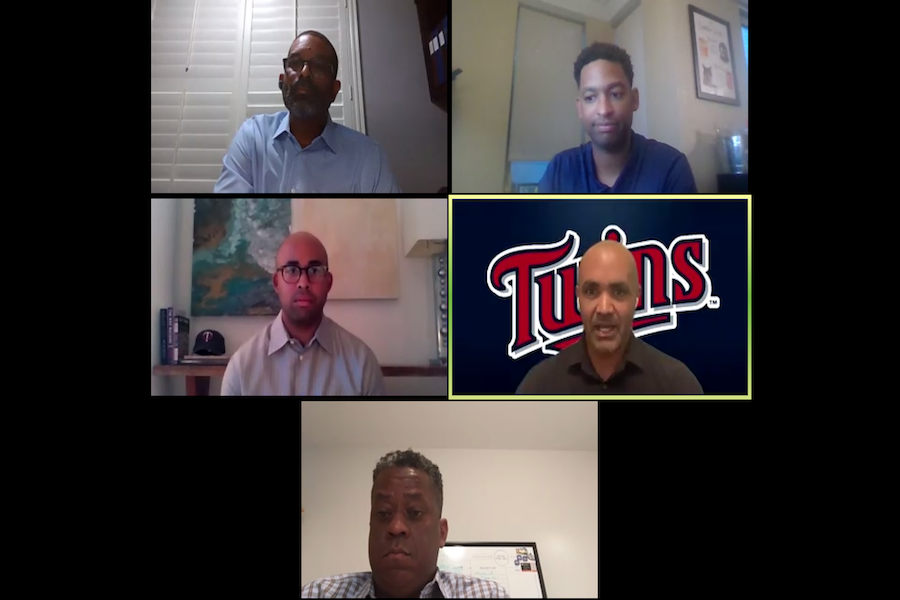 A few years back, Jay Caspian Kang wrote about the "unbearable whiteness of baseball" for New York Times Magazine, noting among other things that just over 8% of major-league players were Black at the time. That number has since dropped even further – in 2019, Black players comprised just 7.7% of MLB rosters. This troubling disparity is reflected in the managerial ranks (there are only two African-American managers in MLB) and especially in front office leadership (there have been five African-American general managers in baseball history). It's no coincidence, then, that the disparity also reflects in the sport's audience – a 2014 study found that 9% of pro baseball's television viewership was Black, compared to 83% white. Why is baseball failing to resonate with, recruit, and elevate African-Americans? It's a complicated and largely theoretical question that I won't delve into here. What's important now is to alter this imbalance, and bring more racial equality to the game's demographics. The simplest step in that direction is to highlight Black people currently succeeding in professional baseball roles, let them share their stories, and encourage others to follow in their footsteps. On Tuesday, the Twins did just that. Noah Croom, General Counsel & Partner for Beautiful Game LLC, curated a panel that featured four members of Minnesota's front office operation: Sean Johnson - Director, Amateur Scouting Deron Johnson - Senior Advisor, Scouting Navery Moore - Fellow, Pro Scouting Josh Ruffin - Analyst in Advanced Scouting Twins general manager Thad Levine kicked off the discussion with a firm statement before going off-screen to follow as a viewer: "It is our belief that the hiring practice of Major League Baseball and the Minnesota Twins has been flawed." He cited complacency as a primary cause, hinting at a similar sentiment to the one shared recently by a fellow white male executive, Theo Epstein of the Chicago Cubs. "I've hired a Black scouting director, [and] farm director in the past, but the majority of people that I've hired, if I'm being honest, have similar backgrounds as me and look a lot like me," Epstein said on a conference call last month. "That's something I need to ask myself why. I need to question my own assumptions, my own attitudes. I need to find a way to be better." The Twins have their own ignominious history on this front. Former owner Calvin Griffith, who brought the team to Minnesota in the 1960s, made horribly racist remarks in 1978 that have echoed through the decades. The Twins are one of only three MLB teams that has never hired a minority to be a manager or general manager. During a conversation earlier this summer with The Athletic, Torii Hunter shared a story about an unnamed member of the Twins organization calling players the n-word. But history is just that. As we turn focus to the present, the organization's commitment to condemning racism and promoting equality is now on the leading edge, and I personally couldn't be prouder. The person referenced by Hunter was promptly jettisoned by Derek Falvey. The statue for Calvin Griffith that once stood outside Target Field has come down. The Pohlad family committed $25 million to racial justice causes in the aftermath of George Floyd's murder. And while I can't speak to the relative prevalence of Black employees in Minnesota's front office, I can say that four very bright ones stepped up during the diversity roundtable to speak thoughtfully about this critical subject. Panelists answered questions from Croom on a variety of topics, ranging from their paths to their current positions, to the value of mentorship, to the reasons for a lack of Black athletes entering the sport, and much more. In efforts to create more interest and opportunity for underrepresented minorities, the Twins announced they have launched a Diversity Mentorship Program, through which individuals from these groups can engage Twins employees during office hours for career advice, project feedback, résumé tips and more. Signing up is easy; just click on the link and fill out a quick form. At one point in the roundtable, Croom asked whether panelists felt that the Floyd tragedy, and the resulting rise in awareness and attention directed toward systemic racism throughout our society, might serve as a tipping point as baseball seeks to turn around its age-old problem. Deron Johnson admitted that it's hard to judge at this moment, due to widespread hiring freezes stemming from the pandemic, but expressed genuine optimism. “This is a time where people can get into the game, or at least get their names out there. I do believe that.” Sean Johnson, who credited Deron (not related) as a mentor that helped pave his way, followed by voicing agreement. "Hopefully this is the moment we need to put us in a place where we put an end to all this stuff." Amen, Sean. (During the event, the Twins announced an upcoming second installment of the Front Office Diversity Roundtable series, which will feature women in the organization. Stay tuned for details, as we'll be sure to share them here.) A WORD FROM TWINS DAILY Diversity and inclusion have been weighing heavily on our minds here lately, with many ownership discussions taking place. Twins Daily is run by five white men, and it's not lost on us that an overwhelming majority of our site's writers and readers fall into the same category. While this can be partially attributed to the aforementioned overall demographics of baseball, to crutch on that as an excuse is a cop-out. We know it. We're not running away from it. Bringing more diversity to our site's community will be an emphatic focus going forward. When more voices, viewpoints, and backgrounds are represented, we all benefit. I can't say at this moment what exactly our efforts will look like, but one simple thing you can expect is a lessened tolerance for any language deemed hateful, intolerant, or non-inclusive – even if it might be presented in an ostensibly "respectful" manner. Our commitment to letting everyone speak their minds remains firm, but it is of the utmost importance to us that everyone who arrives at Twins Daily feels comfortable and welcome. We expect every single one of you to hold us accountable and help us along the way on this path forward to a better Minnesota. Thank you as always for visiting, engaging, and supporting. We can't wait to enjoy this wild and wacky 2020 season with all of you, and hopefully plenty of newcomers to the community.
 -
The Cleveland Indians reigned over the AL Central for three straight years before the Twins came and took it from them in 2019. Now Cleveland is looking to reclaim the throne. They've got plenty of firepower to challenge for the title, even if GM Mike Chernoff's offseason (unlike Minnesota's) wasn't entirely reflective of an all-in contender. CLEVELAND INDIANS AT A GLANCE 2019 Record: 93-69, 2nd Place 2019 fWAR Leader (Offense): Francisco Lindor - 4.4 2019 fWAR Leader (Pitching): Shane Bieber, RHP - 5.6 Key Offseason Additions: Cesar Hernandez (2B), Delino DeShields Jr. (OF), Domingo Santana (OF), Emmanuel Clase (RP) Key Offseason Losses: Jason Kipnis (2B), Corey Kluber (SP), Nick Goody (RP), Tyler Clippard (RP) 2020 Over/Under: 32.5 Wins TEAM OVERVIEW The Indians traded away Trevor Bauer at the 2019 deadline and then dealt Corey Kluber after the season, subtracting two premier right-handed power pitchers from their routinely outstanding rotation mix. Of course, with Kluber missing almost all of last year and Bauer unspectacular before the trade, Cleveland still allowed the third-fewest runs in the league. Clearly neither hurler was essential to the team's success – albeit a level of success that left them on the outside looking in when the postseason came around. This year, the Indians need to show they can keep churning out stellar pitching performances from their remaining group while also trying to do enough offensively to keep pace with the high-flying division favorites. STRENGTHS The combination of Mike Clevinger and Shane Bieber atop the rotation is beyond formidable. No two ways about it. Bieber ranked fifth among AL starters in fWAR last year, and the only reason Clevinger wasn't right up there with him is because he missed most of the first half with a back strain. Upon returning from his injury in late June, Clevinger pitched as well as he ever has, posting a 2.71 ERA and 12.1 K/9 ratio in 126 frames. Among AL starters who threw 100 or more innings, only Gerrit Cole and Justin Verlander had a better ERA. Those two along with Chris Sale and Blake Snell were the only ones with a higher K-rate. Having his name mentioned alongside these ones tells you all you need to know: Clevinger is Cy Young caliber. And while the Twins get to avoid all those other aces in the regular season, they'll see Clevinger multiple times. He's going to give their lineup fits – last year he held the historically explosive Minnesota offense to seven total runs over four starts – and he's gonna shred inferior clubs like KC and Detroit to pieces. Same goes for Bieber, though it's fair to wonder if he can back up the brilliance of his breakout campaign. Even with Bauer and Kluber gone, Cleveland has plenty of starting depth behind Clevinger and Bieber, because they're simply a pitching development powerhouse. Zach Plesac, Aaron Civale, and Adam Plutko all showed positive signs last year, and veteran Carlos Carrasco is seemingly back at full strength after a scary run-in with leukemia. The bullpen should still be an asset. Offensively, the Indians feature a pair of perennial MVP candidates in Francisco Lindor and Jose Ramirez. First baseman Carlos Santana is tremendous, quietly coming off a career year. And as a result of last summer's Bauer trade, Cleveland has a 25-year-old slugger with monstrous power potential at DH in Franmil Reyes. WEAKNESSES Even with those quality pieces in place, Cleveland's offense is suspect. They don't have a bad lineup per se, it just doesn't stack up against the league's premier units. Last year the Indians scored 170 fewer runs than the Twins; put another way, they scored almost 20% fewer runs than the Twins. While the Cleveland infield is undeniably excellent – manned by Ramirez, Lindor, Santana, and newly acquired second baseman Cesar Hernandez – the outfield could be pretty bad. Expected starters are Oscar Mercado, Tyler Naquin, and Domingo Santana or Delino DeShields. All posted a sub-800 OPS last year. At DH, Reyes' big upside remains more theoretical than proven at this point. Even if their stars shine on offense, Cleveland will need to ride the pitching staff to a division championship. And while there's little reason to doubt their rotation, the once-overpowering bullpen could easily take a step backward. Chaska native Brad Hand remains the steady ... hand ... at closer, and he's been in three straight All-Star Games, but his 5.40 ERA after the break last year was ominous. It seemingly contributed to Chernoff targeting Emmanuel Clase – a fireballing 22-year-old prize acquired in the Kluber trade – as Hand's eventual replacement in the ninth. But Clase won't play a role for Cleveland in 2020, after being hit with an 80-game PED suspension. Tyler Clippard has joined the enemy. Nick Goody and Dan Otero are among other former fixtures now departed, and while Oliver Perez is back, he turns 39 next month. For relief innings, Cleveland will be leaning on the likes of Nick Wittgren, Adam Cimber, Hunter Wood, and James Hoyt. Not exactly your established household names. WILD CARD I'm tempted to go with James Karinchak. He's one of the better pure relief pitching prospects in the game, having racked up 82 strikeouts in 37 2/3 innings between Double-A and Triple-A. You read that right. Karinchak has averaged 16.4 K/9 in three minor-league seasons. Just silly. But the Indians are likely going to be good at preventing runs with or without him. That's not really in question. So I'll venture a little further off the beaten path with my pick for Cleveland's biggest X factor: Bradley Zimmer. The former first-round draft pick has struggled to find his footing in the major leagues, to say the least. Last year represents the depth of his despair: He missed nearly the entire campaign due to injury, and went 0-for-13 in his extremely brief time with Cleveland, finishing his age-26 season with a .071 OPS. In total he's got a .230/.293/.359 slash line through 460 plate appearances in parts of three MLB seasons. But make no mistake: Zimmer is a talent. He was the 21st overall draft pick out of college in 2014, and was rated by MLB.com as the game's 19th-best prospect when first called up in 2017. It's been a tough go for the outfielder thus far, but he's still only 27, and by now Twins fans know better than to count out a heralded young player who is set back by early struggles and injuries in the big leagues. He doesn't figure to be a regular for Cleveland out of the gates, but if Zimmer catches on and turns the corner, he could provide a critical boost for the Cleveland offense. In starting to make his case, Zimmer homered twice off Clevinger in an intrasquad match last week. MORE FROM TWINS DAILY — Latest Twins coverage from our writers — Recent Twins discussion in our forums — Follow Twins Daily via Twitter, Facebook or email Click here to view the article
-
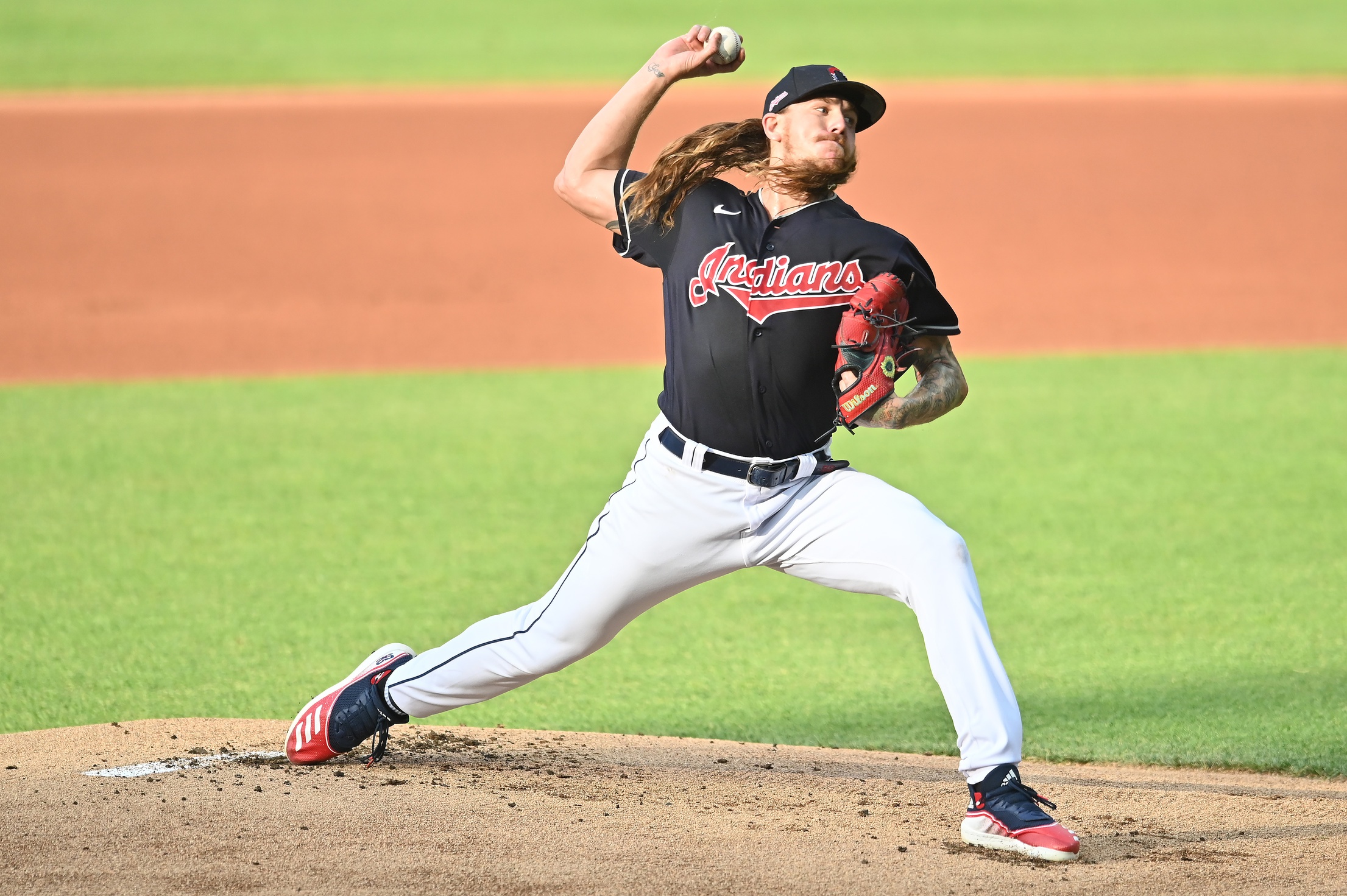 CLEVELAND INDIANS AT A GLANCE 2019 Record: 93-69, 2nd Place 2019 fWAR Leader (Offense): Francisco Lindor - 4.4 2019 fWAR Leader (Pitching): Shane Bieber, RHP - 5.6 Key Offseason Additions: Cesar Hernandez (2B), Delino DeShields Jr. (OF), Domingo Santana (OF), Emmanuel Clase (RP) Key Offseason Losses: Jason Kipnis (2B), Corey Kluber (SP), Nick Goody (RP), Tyler Clippard (RP) 2020 Over/Under: 32.5 Wins TEAM OVERVIEW The Indians traded away Trevor Bauer at the 2019 deadline and then dealt Corey Kluber after the season, subtracting two premier right-handed power pitchers from their routinely outstanding rotation mix. Of course, with Kluber missing almost all of last year and Bauer unspectacular before the trade, Cleveland still allowed the third-fewest runs in the league. Clearly neither hurler was essential to the team's success – albeit a level of success that left them on the outside looking in when the postseason came around. This year, the Indians need to show they can keep churning out stellar pitching performances from their remaining group while also trying to do enough offensively to keep pace with the high-flying division favorites. STRENGTHS The combination of Mike Clevinger and Shane Bieber atop the rotation is beyond formidable. No two ways about it. Bieber ranked fifth among AL starters in fWAR last year, and the only reason Clevinger wasn't right up there with him is because he missed most of the first half with a back strain. Upon returning from his injury in late June, Clevinger pitched as well as he ever has, posting a 2.71 ERA and 12.1 K/9 ratio in 126 frames. Among AL starters who threw 100 or more innings, only Gerrit Cole and Justin Verlander had a better ERA. Those two along with Chris Sale and Blake Snell were the only ones with a higher K-rate. Having his name mentioned alongside these ones tells you all you need to know: Clevinger is Cy Young caliber. And while the Twins get to avoid all those other aces in the regular season, they'll see Clevinger multiple times. He's going to give their lineup fits – last year he held the historically explosive Minnesota offense to seven total runs over four starts – and he's gonna shred inferior clubs like KC and Detroit to pieces. Same goes for Bieber, though it's fair to wonder if he can back up the brilliance of his breakout campaign. Even with Bauer and Kluber gone, Cleveland has plenty of starting depth behind Clevinger and Bieber, because they're simply a pitching development powerhouse. Zach Plesac, Aaron Civale, and Adam Plutko all showed positive signs last year, and veteran Carlos Carrasco is seemingly back at full strength after a scary run-in with leukemia. The bullpen should still be an asset. Offensively, the Indians feature a pair of perennial MVP candidates in Francisco Lindor and Jose Ramirez. First baseman Carlos Santana is tremendous, quietly coming off a career year. And as a result of last summer's Bauer trade, Cleveland has a 25-year-old slugger with monstrous power potential at DH in Franmil Reyes. WEAKNESSES Even with those quality pieces in place, Cleveland's offense is suspect. They don't have a bad lineup per se, it just doesn't stack up against the league's premier units. Last year the Indians scored 170 fewer runs than the Twins; put another way, they scored almost 20% fewer runs than the Twins. While the Cleveland infield is undeniably excellent – manned by Ramirez, Lindor, Santana, and newly acquired second baseman Cesar Hernandez – the outfield could be pretty bad. Expected starters are Oscar Mercado, Tyler Naquin, and Domingo Santana or Delino DeShields. All posted a sub-800 OPS last year. At DH, Reyes' big upside remains more theoretical than proven at this point. Even if their stars shine on offense, Cleveland will need to ride the pitching staff to a division championship. And while there's little reason to doubt their rotation, the once-overpowering bullpen could easily take a step backward. Chaska native Brad Hand remains the steady ... hand ... at closer, and he's been in three straight All-Star Games, but his 5.40 ERA after the break last year was ominous. It seemingly contributed to Chernoff targeting Emmanuel Clase – a fireballing 22-year-old prize acquired in the Kluber trade – as Hand's eventual replacement in the ninth. But Clase won't play a role for Cleveland in 2020, after being hit with an 80-game PED suspension. Tyler Clippard has joined the enemy. Nick Goody and Dan Otero are among other former fixtures now departed, and while Oliver Perez is back, he turns 39 next month. For relief innings, Cleveland will be leaning on the likes of Nick Wittgren, Adam Cimber, Hunter Wood, and James Hoyt. Not exactly your established household names. WILD CARD I'm tempted to go with James Karinchak. He's one of the better pure relief pitching prospects in the game, having racked up 82 strikeouts in 37 2/3 innings between Double-A and Triple-A. You read that right. Karinchak has averaged 16.4 K/9 in three minor-league seasons. Just silly. But the Indians are likely going to be good at preventing runs with or without him. That's not really in question. So I'll venture a little further off the beaten path with my pick for Cleveland's biggest X factor: Bradley Zimmer. The former first-round draft pick has struggled to find his footing in the major leagues, to say the least. Last year represents the depth of his despair: He missed nearly the entire campaign due to injury, and went 0-for-13 in his extremely brief time with Cleveland, finishing his age-26 season with a .071 OPS. In total he's got a .230/.293/.359 slash line through 460 plate appearances in parts of three MLB seasons. But make no mistake: Zimmer is a talent. He was the 21st overall draft pick out of college in 2014, and was rated by MLB.com as the game's 19th-best prospect when first called up in 2017. It's been a tough go for the outfielder thus far, but he's still only 27, and by now Twins fans know better than to count out a heralded young player who is set back by early struggles and injuries in the big leagues. He doesn't figure to be a regular for Cleveland out of the gates, but if Zimmer catches on and turns the corner, he could provide a critical boost for the Cleveland offense. In starting to make his case, Zimmer homered twice off Clevinger in an intrasquad match last week. MORE FROM TWINS DAILY — Latest Twins coverage from our writers — Recent Twins discussion in our forums — Follow Twins Daily via Twitter, Facebook or email
 -
A rising core loaded with top-end talent was augmented dramatically over the winter by general manager Rick Hahn. The White Sox are shaping up to be Minnesota's staunchest division rival in the coming years, and may well represent the most dangerous threat to overtake the Central this year. A road-heavy 10-game season series against Chicago will kick off on Friday at Guaranteed Rate Field. CHICAGO WHITE SOX AT A GLANCE 2019 Record: 72-89, 3rd Place 2019 fWAR Leader (Offense): Yoan Moncada - 5.7 2019 fWAR Leader (Pitching): Lucas Giolito - 5.1 Key Offseason Additions: Yasmani Grandal ©, Dallas Keuchel (SP), Gio Gonzalez (SP), Edwin Encanacion (DH), Nomar Mazara (OF), Steve Cishek (RP) Key Offseason Losses: Ivan Nova (SP) Yolmer Sanchez (2B), Wellington Castillo ©, Ryan Cordell (OF) 2020 Over/Under: 31.5 Wins TEAM OVERVIEW Even before Hahn's offseason shopping spree, the White Sox were in line to welcome some new impact talent in 2020, with multiple top prospects set to enter the fold. Heading up that list is center fielder Luis Robert, ranked by MLB.com as the third-best prospect in baseball after spending a big chunk of 2019 at Triple-A. He's expected to be out there on Friday for his MLB debut. Likely to join him in the White Sox lineup, although maybe not from the start, is second baseman Nick Madrigal, ranked 40th on MLB's Top 100 list. The disciplined speedster was the fourth overall draft pick two years ago, and has reached Triple-A. It's only a matter of time before he's leading off for the Sox. These two electrifying youths, along with numerous free agent additions, will help elevate a club on the verge of seeing its rebuild pay off. STRENGTHS Without accounting for all the new talent entering the fold, Chicago already had arguably the best position player and best pitcher in the division. Third baseman Yoan Moncada's 5.7 fWAR was higher than any other AL Central player in 2019 (despite playing just 132 games). Lucas Giolito was an All-Star who finished sixth in the Cy Young balloting. He might not be quite at the level of a Mike Clevinger or Shane Bieber, but Giolito showed last year he's a legitimate ace, and the Twins will have to tangle with him right out of the gate. The big problem in 2019 was that Chicago's standouts – Giolito, Moncada, batting champ Tim Anderson – were weighed down by a bunch of laggards. To illustrate, the Sox produced 23.3 total fWAR, and 14.3 of it came from those three. The stars of the squad figure to get considerably more help in 2020. Yasmani Grandal is himself a star-caliber addition at catcher. New DH Edwin Encarnacion has slugged 32-plus homers in eight straight seasons, and he joins newly-extended Jose Abreu to give Chicago two dangerous righty power bats in the middle of the order. Dallas Keuchel and Gio Gonzalez are no rotation-fronters, but they add quality veteran depth to a unit that last year had no above-average performers other than Giolito. Nomar Mazara is a sneaky good addition in the outfield. Another low-key impact signing by Chicago was Steve Cishek, the ultra-reliable righty who joins closer Alex Colome and setup man in Aaron Bummer in a bullpen that can hold its own in the late innings. Combining all of these free agency additions with the expected arrivals of top prospects like Robert and Madrigal puts the Sox in position to make a massive leap forward in 2020, helping explain why their over/under for wins in the shortened season is just one behind the Cleveland Indians, who won 21 more contests last year. WEAKNESSES As Twins fans are well aware, free agents don't always work out and top prospects don't always hit the ground running. As good as Robert may be, there's no guarantee he'll be an immediate difference-maker for Chicago, and the same goes for Madrigal. Moncada himself is a fine example of baseball's steep learning curve at the highest level – he was rated as the second-best prospect in the game when he arrived in the big leagues at age 2016, but it wasn't until three years later that he truly emerged. Another of the organization's premier prospects will not be helping them this year: hard-throwing righty Michael Kopech, pegged by MLB.com as the game's No. 20 prospect, who chose to opt out of the 2020 campaign. Like Moncada and Giolito, Kopech was acquired during the team's burn-it-down firesale in 2016. After missing 2019 due to Tommy John surgery, he appeared ready to return this year at age 24 and unleash his triple-digit heat in a White Sox rotation that could've sorely used it. The loss of his potential impact is a hit for Chicago's short-term chances, because starting pitching looks to be their sticking point. Even with some big-name veterans added to the mix, there's still a sizable drop-off after Giolito, and the back of the rotation is short on proven performers. WILD CARD As mentioned, it's very possible that Luis Robert will hit some speedbumps as he acclimates to the majors. In fact, that should be expected, particularly given the plate discipline struggles he experienced in the minors last year. But ... if he catches on right away? Robert was one of the most highly-touted international prospects to come along in some time when Chicago signed him out of Cuba for $26 million in 2017. He's a strong defender in center, and offers a rare combination of speed and power. Last season as a 21-year-old he mashed 32 homers and stole 36 bases in 122 games between three minor-league levels. This is an electrifying talent with the potential to change games nightly, kinda like the former top prospect now manning center field for the Twins. Of course, Byron Buxton is a perfect example of how it can take a while to click. But that's not the case for everyone. If Robert has a smooth transition to the majors, look out. MORE FROM TWINS DAILY — Latest Twins coverage from our writers — Recent Twins discussion in our forums — Follow Twins Daily via Twitter, Facebook or email Click here to view the article
-
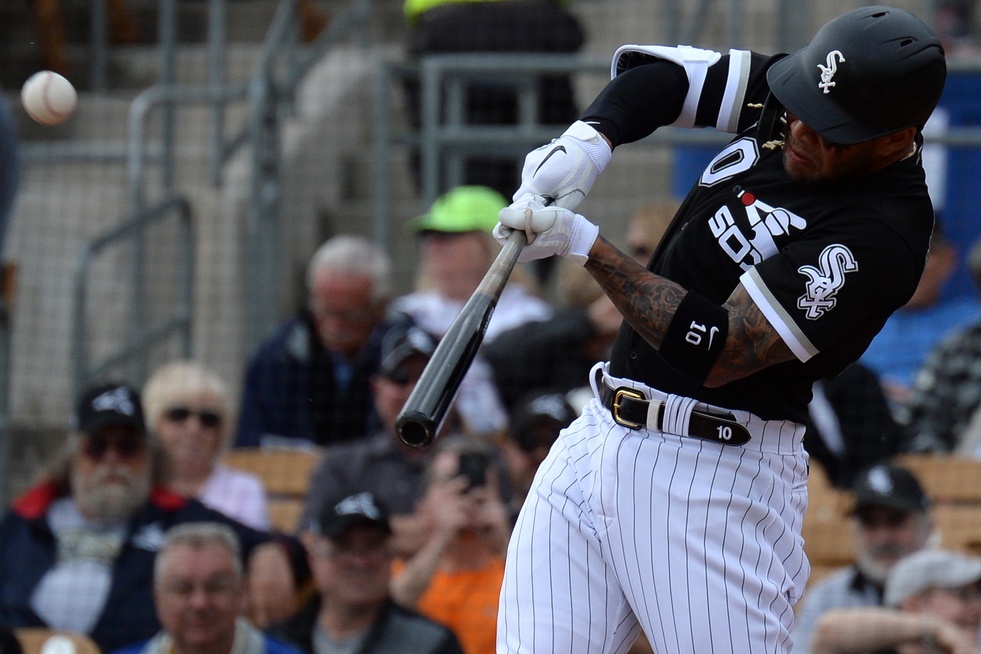 CHICAGO WHITE SOX AT A GLANCE 2019 Record: 72-89, 3rd Place 2019 fWAR Leader (Offense): Yoan Moncada - 5.7 2019 fWAR Leader (Pitching): Lucas Giolito - 5.1 Key Offseason Additions: Yasmani Grandal ©, Dallas Keuchel (SP), Gio Gonzalez (SP), Edwin Encanacion (DH), Nomar Mazara (OF), Steve Cishek (RP) Key Offseason Losses: Ivan Nova (SP) Yolmer Sanchez (2B), Wellington Castillo ©, Ryan Cordell (OF) 2020 Over/Under: 31.5 Wins TEAM OVERVIEW Even before Hahn's offseason shopping spree, the White Sox were in line to welcome some new impact talent in 2020, with multiple top prospects set to enter the fold. Heading up that list is center fielder Luis Robert, ranked by MLB.com as the third-best prospect in baseball after spending a big chunk of 2019 at Triple-A. He's expected to be out there on Friday for his MLB debut. Likely to join him in the White Sox lineup, although maybe not from the start, is second baseman Nick Madrigal, ranked 40th on MLB's Top 100 list. The disciplined speedster was the fourth overall draft pick two years ago, and has reached Triple-A. It's only a matter of time before he's leading off for the Sox. These two electrifying youths, along with numerous free agent additions, will help elevate a club on the verge of seeing its rebuild pay off. STRENGTHS Without accounting for all the new talent entering the fold, Chicago already had arguably the best position player and best pitcher in the division. Third baseman Yoan Moncada's 5.7 fWAR was higher than any other AL Central player in 2019 (despite playing just 132 games). Lucas Giolito was an All-Star who finished sixth in the Cy Young balloting. He might not be quite at the level of a Mike Clevinger or Shane Bieber, but Giolito showed last year he's a legitimate ace, and the Twins will have to tangle with him right out of the gate. The big problem in 2019 was that Chicago's standouts – Giolito, Moncada, batting champ Tim Anderson – were weighed down by a bunch of laggards. To illustrate, the Sox produced 23.3 total fWAR, and 14.3 of it came from those three. The stars of the squad figure to get considerably more help in 2020. Yasmani Grandal is himself a star-caliber addition at catcher. New DH Edwin Encarnacion has slugged 32-plus homers in eight straight seasons, and he joins newly-extended Jose Abreu to give Chicago two dangerous righty power bats in the middle of the order. Dallas Keuchel and Gio Gonzalez are no rotation-fronters, but they add quality veteran depth to a unit that last year had no above-average performers other than Giolito. Nomar Mazara is a sneaky good addition in the outfield. Another low-key impact signing by Chicago was Steve Cishek, the ultra-reliable righty who joins closer Alex Colome and setup man in Aaron Bummer in a bullpen that can hold its own in the late innings. Combining all of these free agency additions with the expected arrivals of top prospects like Robert and Madrigal puts the Sox in position to make a massive leap forward in 2020, helping explain why their over/under for wins in the shortened season is just one behind the Cleveland Indians, who won 21 more contests last year. WEAKNESSES As Twins fans are well aware, free agents don't always work out and top prospects don't always hit the ground running. As good as Robert may be, there's no guarantee he'll be an immediate difference-maker for Chicago, and the same goes for Madrigal. Moncada himself is a fine example of baseball's steep learning curve at the highest level – he was rated as the second-best prospect in the game when he arrived in the big leagues at age 2016, but it wasn't until three years later that he truly emerged. Another of the organization's premier prospects will not be helping them this year: hard-throwing righty Michael Kopech, pegged by MLB.com as the game's No. 20 prospect, who chose to opt out of the 2020 campaign. Like Moncada and Giolito, Kopech was acquired during the team's burn-it-down firesale in 2016. After missing 2019 due to Tommy John surgery, he appeared ready to return this year at age 24 and unleash his triple-digit heat in a White Sox rotation that could've sorely used it. The loss of his potential impact is a hit for Chicago's short-term chances, because starting pitching looks to be their sticking point. Even with some big-name veterans added to the mix, there's still a sizable drop-off after Giolito, and the back of the rotation is short on proven performers. WILD CARD As mentioned, it's very possible that Luis Robert will hit some speedbumps as he acclimates to the majors. In fact, that should be expected, particularly given the plate discipline struggles he experienced in the minors last year. But ... if he catches on right away? Robert was one of the most highly-touted international prospects to come along in some time when Chicago signed him out of Cuba for $26 million in 2017. He's a strong defender in center, and offers a rare combination of speed and power. Last season as a 21-year-old he mashed 32 homers and stole 36 bases in 122 games between three minor-league levels. This is an electrifying talent with the potential to change games nightly, kinda like the former top prospect now manning center field for the Twins. Of course, Byron Buxton is a perfect example of how it can take a while to click. But that's not the case for everyone. If Robert has a smooth transition to the majors, look out. MORE FROM TWINS DAILY — Latest Twins coverage from our writers — Recent Twins discussion in our forums — Follow Twins Daily via Twitter, Facebook or email
 -
Central Intelligence 2.0: Kansas City Royals
Nick Nelson replied to Nick Nelson's topic in Twins Daily Front Page News
Could not agree more. Road-tripping down to KC for a Twins/Royals series, beer and BBQ has become an annual summer tradition and one that I'll miss dearly this year. -
The Twins will face each Central opponent 10 times in their coming 60-game sprint, so success against these familiar foes is critical. Fortunately the Royals – like the Tigers – are coming off a brutal 100-loss season. With that said, Kansas City does figure to offer a bit more resistance than Detroit, thanks to some legit high-end talent. KANSAS CITY ROYALS AT A GLANCE 2019 Record: 59-103, 4th Place 2019 fWAR Leader (Offense): Jorge Soler, OF - 3.6 2019 fWAR Leader (Pitching): Brad Keller, RHP - 2.2 Key Offseason Additions: Maikel Franco (3B), Trevor Rosenthal (RP) Key Offseason Losses: Cheslor Cuthbert (1B/3B), Jorge Bonifacio (OF) 2020 Over/Under: 25.0 TEAM OVERVIEW The Royals are a pretty top-heavy team, which could benefit them in the shortened format. Their offense is led by Jorge Soler, who blasted a league-leading 48 home runs with 117 RBIs in a breakout 2019. They're getting back one of baseball's best catchers in Salvador Perez, who missed last year due to Tommy John surgery. They've got some players. Just not enough players. General manager Dayton Moore did essentially nothing to upgrade a 103-loss team, other than adding another undisciplined slugger in Maikel Franco. Still, the plucky Royals could be pesky. STRENGTHS Perez is an undisciplined slugger in his own right, but also an elite defender and perennial All-Star. His return makes a big difference for a team that is not without its standouts, such as: Whit Merrifield, arguably the most underrated player in baseball. He was an All-Star in 2019, slashing .302/.348/.463 while playing five different positions. He has led the American League in hits two years running, led in triples last year, and led in steals in 2018 and 2017. Merrifield is a speedy bat-handling ironman who deserves far more notoriety.JORGE. SOLER. Like Merrifield, it seems we don't talk about this guy enough. That's the sad reality of playing for an irrelevant Royals team, I suppose. Soler had more home runs and RBIs last year than anyone on the Bomba Squad, and he posted a 1.076 OPS with 25 dingers after the All-Star break. He's the type of transcendent slugging talent that could do something wild like hit 30 jacks in 60 games.Hunter Dozier, who tied Merrifield for the league lead with 10 triples in 2019. The third baseman posted a Moustaka-esque .279/.348/.522 with 26 homers and 84 RBIs.Adalberto Mondesi, who tied Merrifield AND Dozier for the league lead with 10 triples in 2019 (no joke) and is entering his age 24 season. He's a former top prospect and he's crazy athletic, having slashed .263/.291/.424 with 43 steals last year, but his plate discipline has held him back thus far.The Royals are an interesting club. They had the AL's third-lowest team OBP in 2019 but the second-most steals. They aren't a power-hitting team generally, but they have the league's best power hitter. They're gonna be a thorny opponent. WEAKNESSES Maybe not that thorny though. The fact remains: even with Soler launching 48 bombs and a bunch of other scrappy dudes running wild, the Royals lost 103 games, which equates to the "Total System Failure" fiasco for Minnesota in 2016. Their rotation is weak, led by starters in Danny Duffy and Brad Keller who would maybe be competing for the Twins' fifth spot. Alex Gordon is basically a post-prime Joe Mauer presence at this point. The bullpen is flimsy. Worst of all, the Royals have an utterly mediocre farm system, and only three of their top ten prospects are above Single-A, none above Double-A. While Detroit has elite pitching prospects in the offing, Kansas City has no cavalry en route, and their rebuild has all the makings of a painful and extended one. So while the ROyals look like a better team than the Tigers at this moment, it's very possible that won't be the case by season's end. One has to wonder if they will try to cash in on Soler's high value at some point soon, with free agency just two years away. WILD CARD Speed. Kansas City's penchant for running makes them disruptive. (Think "piranhas.") They stole 117 bases in 2019 and they did so with a pretty strong 75% success rate. (The Twins stole a league-low 25 with a 53% success rate.) The Royals were also second among AL teams in triples with 40 – that'll happen when you've got three guys tied for the league lead. Now, the Royals do have a new manager in Mike Matheny, and there's no guarantee he'll exhibit the same aggressiveness as Ned Yost did. But given all the guys on this roster who can fly, and how difficult it's gonna be for them to score runs generally, I'd wager we see plenty of steals, hit-and-runs, and attempts to take extra bases. That puts pressure on opponents, even those with clear talent superiority. It could ruffle the Twins' feathers. MORE FROM TWINS DAILY — Latest Twins coverage from our writers — Recent Twins discussion in our forums — Follow Twins Daily via Twitter, Facebook or email Click here to view the article
-
 KANSAS CITY ROYALS AT A GLANCE 2019 Record: 59-103, 4th Place 2019 fWAR Leader (Offense): Jorge Soler, OF - 3.6 2019 fWAR Leader (Pitching): Brad Keller, RHP - 2.2 Key Offseason Additions: Maikel Franco (3B), Trevor Rosenthal (RP) Key Offseason Losses: Cheslor Cuthbert (1B/3B), Jorge Bonifacio (OF) 2020 Over/Under: 25.0 TEAM OVERVIEW The Royals are a pretty top-heavy team, which could benefit them in the shortened format. Their offense is led by Jorge Soler, who blasted a league-leading 48 home runs with 117 RBIs in a breakout 2019. They're getting back one of baseball's best catchers in Salvador Perez, who missed last year due to Tommy John surgery. They've got some players. Just not enough players. General manager Dayton Moore did essentially nothing to upgrade a 103-loss team, other than adding another undisciplined slugger in Maikel Franco. Still, the plucky Royals could be pesky. STRENGTHS Perez is an undisciplined slugger in his own right, but also an elite defender and perennial All-Star. His return makes a big difference for a team that is not without its standouts, such as: Whit Merrifield, arguably the most underrated player in baseball. He was an All-Star in 2019, slashing .302/.348/.463 while playing five different positions. He has led the American League in hits two years running, led in triples last year, and led in steals in 2018 and 2017. Merrifield is a speedy bat-handling ironman who deserves far more notoriety. JORGE. SOLER. Like Merrifield, it seems we don't talk about this guy enough. That's the sad reality of playing for an irrelevant Royals team, I suppose. Soler had more home runs and RBIs last year than anyone on the Bomba Squad, and he posted a 1.076 OPS with 25 dingers after the All-Star break. He's the type of transcendent slugging talent that could do something wild like hit 30 jacks in 60 games. Hunter Dozier, who tied Merrifield for the league lead with 10 triples in 2019. The third baseman posted a Moustaka-esque .279/.348/.522 with 26 homers and 84 RBIs. Adalberto Mondesi, who tied Merrifield AND Dozier for the league lead with 10 triples in 2019 (no joke) and is entering his age 24 season. He's a former top prospect and he's crazy athletic, having slashed .263/.291/.424 with 43 steals last year, but his plate discipline has held him back thus far. The Royals are an interesting club. They had the AL's third-lowest team OBP in 2019 but the second-most steals. They aren't a power-hitting team generally, but they have the league's best power hitter. They're gonna be a thorny opponent. WEAKNESSES Maybe not that thorny though. The fact remains: even with Soler launching 48 bombs and a bunch of other scrappy dudes running wild, the Royals lost 103 games, which equates to the "Total System Failure" fiasco for Minnesota in 2016. Their rotation is weak, led by starters in Danny Duffy and Brad Keller who would maybe be competing for the Twins' fifth spot. Alex Gordon is basically a post-prime Joe Mauer presence at this point. The bullpen is flimsy. Worst of all, the Royals have an utterly mediocre farm system, and only three of their top ten prospects are above Single-A, none above Double-A. While Detroit has elite pitching prospects in the offing, Kansas City has no cavalry en route, and their rebuild has all the makings of a painful and extended one. So while the ROyals look like a better team than the Tigers at this moment, it's very possible that won't be the case by season's end. One has to wonder if they will try to cash in on Soler's high value at some point soon, with free agency just two years away. WILD CARD Speed. Kansas City's penchant for running makes them disruptive. (Think "piranhas.") They stole 117 bases in 2019 and they did so with a pretty strong 75% success rate. (The Twins stole a league-low 25 with a 53% success rate.) The Royals were also second among AL teams in triples with 40 – that'll happen when you've got three guys tied for the league lead. Now, the Royals do have a new manager in Mike Matheny, and there's no guarantee he'll exhibit the same aggressiveness as Ned Yost did. But given all the guys on this roster who can fly, and how difficult it's gonna be for them to score runs generally, I'd wager we see plenty of steals, hit-and-runs, and attempts to take extra bases. That puts pressure on opponents, even those with clear talent superiority. It could ruffle the Twins' feathers. MORE FROM TWINS DAILY — Latest Twins coverage from our writers — Recent Twins discussion in our forums — Follow Twins Daily via Twitter, Facebook or email
 -
In a shortened 60-game season, each AL Central opponent will account for nearly 20% of the Twins' schedule. As such, I thought it'd make sense to take a closer look at each division rival as we count down to Opening Day 2.0. We kick things off with a breakdown of the Tigers. DETROIT TIGERS AT A GLANCE 2019 Record: 47-114, 5th Place 2019 fWAR Leader (Offense): Niko Goodrum, UTIL - 1.9 2019 fWAR Leader (Pitching): Matthew Boyd, LHP - 3.3 Key Offseason Additions: C.J. Cron (1B), Jonathan Schoop (2B), Ivan Nova (SP), Austin Romine © Key Offseason Losses: Blaine Hardy (RP), John Hicks ©, Daniel Stump (RP) 2020 Over/Under: 22.0 TEAM OVERVIEW It's fair to think of the 2020 Detroit Tigers as the "Twins Rejects." They are led by manager Ron Gardenhire, fired by the Twins in 2014 after four straight 90-loss seasons. (He has now run that streak to six straight in Detroit.) Their most valuable position player last year, per fWAR, was Niko Goodrum – a middling prospect with the Twins before they let him go in 2017. He's now joined in the lineup by C.J. Cron and Jonathan Schoop, crowded out of the picture in Minnesota by better players and now probably the two best hitters in Detroit's lineup. Says a lot, doesn't it? STRENGTHS You have to look pretty hard to find them. This is a blatantly bad team that was likely on its way to another 100-loss season. That said, they do figure to be a bit better than last year. Cron and Schoop are clear upgrades, bringing legitimate pop to a lineup that was led by Brandon Dixon's 15 homers a year ago. Another bright spot for Detroit is that Michael Fulmer, who missed all of last year with Tommy John surgery and was expected to miss the start of 2020, should now be ready to go from the jump. The 2016 AL Rookie of the Year could pair with Matthew Boyd to give Detroit's rotation a decent 1-2 punch. WEAKNESSES Even with Boyd and Fulmer healthy, it's a bad pitching staff. They allowed 915 runs last year, more than any AL team sans Baltimore, and their biggest offseason move to address the unit was signing Ivan Nova off the scrap heap. The arms won't get much help from the gloves behind them; Detroit rated as one of the league's worst defensive teams last year, although Schoop and Cron should improve them modestly. I expect this to be one of the worst-hitting, worst-pitching and worst-fielding teams in baseball. The Twins went 14-5 against the Tigers last year, and playing to the same level against Detroit would yield a 7-3 record in their 10 matchups. WILD CARD The Tigers do have a pair of top pitching prospects who could potentially make a difference for their rotation in 2020. Casey Mize was the No. 1 overall draft pick in 2018, and has since developed into one of the game's premier young pitchers, ranking as MLB.com's No. 7 prospect coming into the season. He's 23 and had a successful run at Double-A last season, so it's not unthinkable he could be up sometime in August to ruffle feathers. Keep an eye out also for Matt Manning, a 6-foot-6 righty who is neck-and-neck with Mize for top prospect status in the system. He spent all of last year in Double-A. If these two get called up and catch on quick they can give the powerful Twins lineup some problems. MORE FROM TWINS DAILY — Latest Twins coverage from our writers — Recent Twins discussion in our forums — Follow Twins Daily via Twitter, Facebook or email Click here to view the article
-
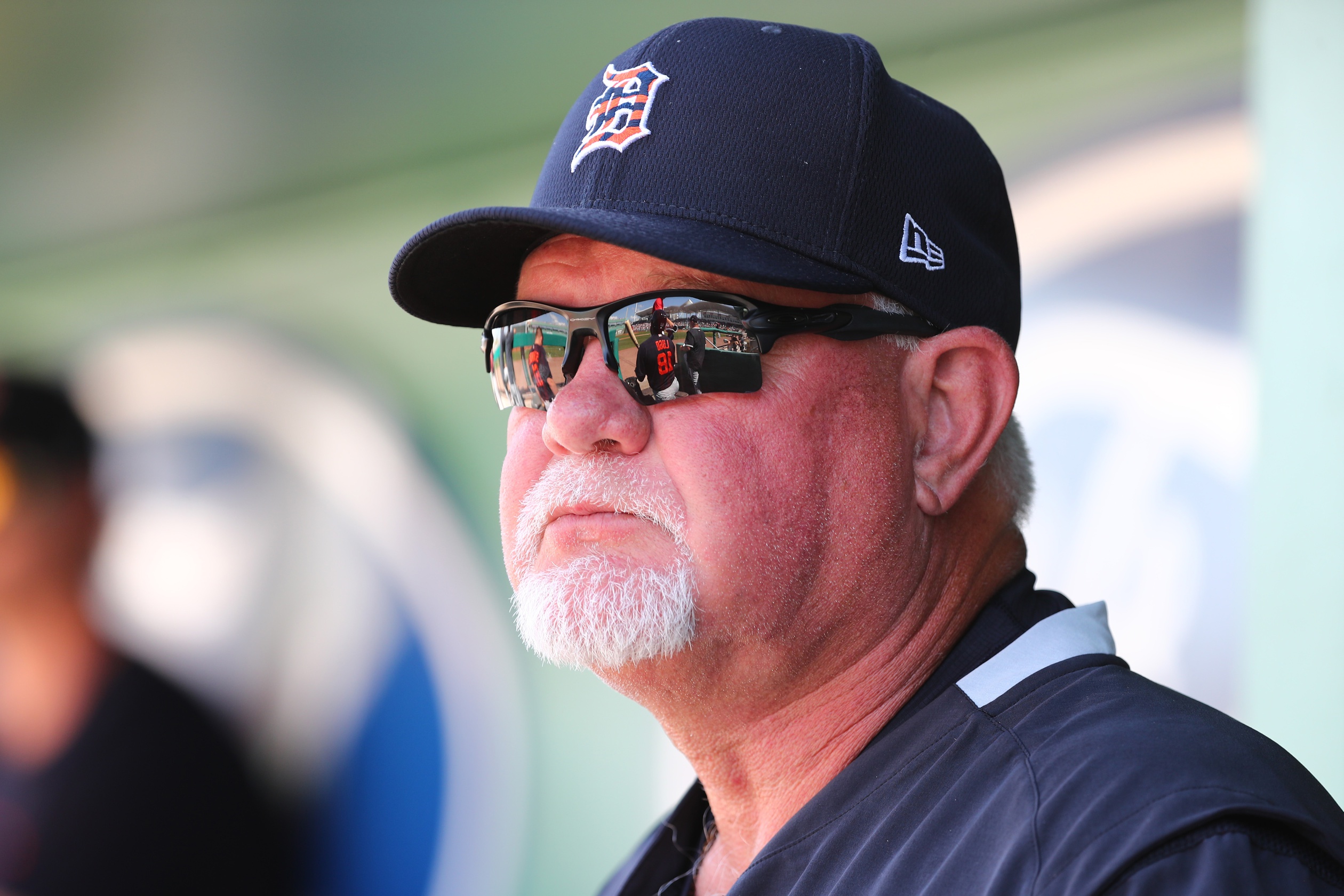 DETROIT TIGERS AT A GLANCE 2019 Record: 47-114, 5th Place 2019 fWAR Leader (Offense): Niko Goodrum, UTIL - 1.9 2019 fWAR Leader (Pitching): Matthew Boyd, LHP - 3.3 Key Offseason Additions: C.J. Cron (1B), Jonathan Schoop (2B), Ivan Nova (SP), Austin Romine © Key Offseason Losses: Blaine Hardy (RP), John Hicks ©, Daniel Stump (RP) 2020 Over/Under: 22.0 TEAM OVERVIEW It's fair to think of the 2020 Detroit Tigers as the "Twins Rejects." They are led by manager Ron Gardenhire, fired by the Twins in 2014 after four straight 90-loss seasons. (He has now run that streak to six straight in Detroit.) Their most valuable position player last year, per fWAR, was Niko Goodrum – a middling prospect with the Twins before they let him go in 2017. He's now joined in the lineup by C.J. Cron and Jonathan Schoop, crowded out of the picture in Minnesota by better players and now probably the two best hitters in Detroit's lineup. Says a lot, doesn't it? STRENGTHS You have to look pretty hard to find them. This is a blatantly bad team that was likely on its way to another 100-loss season. That said, they do figure to be a bit better than last year. Cron and Schoop are clear upgrades, bringing legitimate pop to a lineup that was led by Brandon Dixon's 15 homers a year ago. Another bright spot for Detroit is that Michael Fulmer, who missed all of last year with Tommy John surgery and was expected to miss the start of 2020, should now be ready to go from the jump. The 2016 AL Rookie of the Year could pair with Matthew Boyd to give Detroit's rotation a decent 1-2 punch. WEAKNESSES Even with Boyd and Fulmer healthy, it's a bad pitching staff. They allowed 915 runs last year, more than any AL team sans Baltimore, and their biggest offseason move to address the unit was signing Ivan Nova off the scrap heap. The arms won't get much help from the gloves behind them; Detroit rated as one of the league's worst defensive teams last year, although Schoop and Cron should improve them modestly. I expect this to be one of the worst-hitting, worst-pitching and worst-fielding teams in baseball. The Twins went 14-5 against the Tigers last year, and playing to the same level against Detroit would yield a 7-3 record in their 10 matchups. WILD CARD The Tigers do have a pair of top pitching prospects who could potentially make a difference for their rotation in 2020. Casey Mize was the No. 1 overall draft pick in 2018, and has since developed into one of the game's premier young pitchers, ranking as MLB.com's No. 7 prospect coming into the season. He's 23 and had a successful run at Double-A last season, so it's not unthinkable he could be up sometime in August to ruffle feathers. Keep an eye out also for Matt Manning, a 6-foot-6 righty who is neck-and-neck with Mize for top prospect status in the system. He spent all of last year in Double-A. If these two get called up and catch on quick they can give the powerful Twins lineup some problems. MORE FROM TWINS DAILY — Latest Twins coverage from our writers — Recent Twins discussion in our forums — Follow Twins Daily via Twitter, Facebook or email
 -
The Show Must Go On: Simulated 2020 Season Recap
Nick Nelson replied to Nick Nelson's topic in Twins Daily Front Page News
His final numbers for the season were: .281/.332/.489, 27 HR, 94 RBI. (Not including his 3-HR showing in the ALDS.) Pretty typical Rosie campaign. Bout 5 minutes. Basically I just sim every AB in rapid-fire succession from a managerial dashboard screen. Although for a few of the bigger games (i.e. 163) I actually watched the whole sim play out, which takes more like 45 mins. -
With the baseball season delayed, we spent the past few months simulating it – in its originally imagined form – on MLB the Show 20, to see how things might've gone for the Twins. Happily, we won the AL Central. Sadly, we lost in the ALDS (again). Let's wrap this thing up by taking a look at the final postseason outcomes and reflecting on takeaways from our simulated Twins results.To get caught up on what we're doing here, you can check out the introductory post in the series for an explanation of the premise and setup. But the quick version is this: We played a progressive simulated Twins season on MLB The Show 20 on PS4, and y'all helped guide the ship. PLAYOFF RESULTS Although the Twins beat Cleveland in a walk-off Game 163 thriller, it was the Indians who got the last laugh. After edging into the ALDS with a Wild Card Game win against Boston, Cleveland swept the Angels and advanced to face Tampa in the ALCS. (The Rays, of course, had knocked out our Twins 3-1 in the other ALDS matchup.) Cleveland won the ALCS in six games and moved onto the World Series, where they faced off against Washington, after the Nats topped LA in an NLCS repeat from 2019. In seven games, the Cleveland Indians defeated the Washington Nationals to become 2020 (virtual) World Series champs. Download attachment: playoffbracketfinal.jpeg Francisco Lindor was named World Series MVP after batting .348 in the seven games. Domingo Santana was the top overall performer in Cleveland's postseason run, batting .375 with four homers and 11 RBIs. Here are some of the other award-winners from the simulated 2020 season: AL MVP: J.D. Martinez, BOS (.299/.381/.590, 48 HR, 127 RBI) NL MVP: Ronald Acuña Jr., ATL (.294/.367/.607, 44 HR, 123 RBI) AL Cy Young: Chris Sale, BOS (18-5, 2.90 ERA, 283 K) NL Cy Young: Patrick Corbin, WAS (18-9, 3.65 ERA, 237 K) AL Batting Title: Mike Trout, LAA (.347) NL Batting Title: Wilson Ramos, NYM (.332) AL Reliever of the Year: Nick Goody, TEX (44 saves, 0.58 ERA) NL Reliever of the Year: Sean Doolittle, WAS (53 saves, 2.02 ERA) AL Rookie of the Year: Anderson Miller – OF, KC (.265/.309/.464, 14 HR, 58 RBI) NL Rookie of the Year: Dom Thompson-Williams – OF, MIL (.215/.261/.391, 10 HR, 33 RBI) AL Gold Gloves P - Hector Velasquez, BOSC - Jason Castro, LAA1B - Ji-Man Choi, TB2B - Ramon Urias, BAL3B - Hanser Alberto, BALSS - Elvis Andrus, TEXLF - Andrew Benintendi, BOSCF - Kevin Kiermaier, TBRF - Aaron Judge, NYYNL Gold GlovesP - Kyle Hendricks, CHCC - Kurt Suzuki, WAS1B - Freddie Freeman, ATL2B - Kolton Wong, STL3B - Nolan Arenado, COLSS - Miguel Rojas, MIALF - David Peralta, ARICF - Bryan Reynolds, PITRF - Bryce Harper, PHIAs to why the Red Sox did so well in the award voting despite finishing second in the AL East, and as to why those two mediocre rookie seasons were deemed award-worthy, I do not know. I'm simply relaying the info here. On that note, let's run through the final results for our simulated Twins. TWINS RESULTS Starting Lineup Luis Arraez, 2B: .331/.419/.483, 14 HR, 78 RBIJorge Polanco, SS: .270/.352/.437, 18 HR, 64 RBIMitch Garver, C: .266/.362/.444, 20 HR, 46 RBIMiguel Sano, 1B: .254/.359/.485, 36 HR, 100 RBIJosh Donaldson, 3B: .259/.369/.475, 35 HR, 98 RBIMax Kepler, RF: .285/.379/.464, 21 HR, 82 RBINelson Cruz, DH: .267/.342/.473, 28 HR, 99 RBIMarwin Gonzalez, LF: .281/.342/.480, 17 HR, 48 RBIByron Buxton, CF: .222/.294/.327, 6 HR, 26 RBIBench Alex Avila, C: .245/.338/.480, 12 HR, 31 RBIWillians Astudillo, C/UTIL: .291/.326/.384, 3 HR, 19 RBIJake Cave, OF, .295/.366/.468, 7 HR, 20 RBIBrent Rooker, OF: .248/.313/.406, 4 HR, 14 RBIRotation Jose Berrios: 224.2 IP, 20-5, 2.96 ERA, 1.17 WHIP, 7.2 K/9, 2.6 BB/9Blake Snell: 185 IP, 12-10, 3.75 ERA, 1.37 WHIP, 10.7 K/9, 3.6 BB/9Kenta Maeda: 188.1 IP, 18-8, 3.39 ERA, 1.30 WHIP, 10.2 K/9, 4.0 BB/9Jake Odorizzi: 192 IP, 15-10, 3.66 ERA, 1.28 WHIP, 8.5 K/9, 3.5 BB/9Alex Wood: 178.2 IP, 8-7, 2.77 ERA, 1.22 WHIP, 7.5 K/9, 2.5 BB/9Michael Pineda: 45.2 IP, 4-2, 3.35 ERA, 1.31 WHIP, 5.0 K/9, 2.2 BB/9Homer Bailey: 111 IP, 10-6, 5.43 ERA, 1.49 WHIP, 6.8 K/9, 3.8 BB.9Rich Hill: 25 IP, 1-2, 10.44 ERA, 2.12 WHIP, 9.7 K/9, 6.5 BB/9Randy Dobnak: 49.1 IP, 4.38 ERA, 1.42 WHIP, 5.5 K/9, 2.7 BB/9Bullpen Taylor Rogers: 71.2, 43 SV (6 BS), 2.51 ERA, 1.13 WHIP, 9.4 K/9, 1.5 BB/9Tyler Duffey: 69.2 IP, 1.94 ERA, 1.09 WHIP, 10.3 K/9, 3.4 BB/9Trevor May: 64.2 IP, 3.06 ERA, 1.45 WHIP, 11.7 K/9, 5.2 BB/9Tyler Clippard: 66.1 IP, 2.71 ERA, 1.31 WHIP, 8.1 K/9, 4.1 BB/9Sergio Romo: 60 IP, 4.13 ERA, 1.54 WHIP, 9.3 K/9, 4.0 BB/9Fernando Romero: 53.2 IP, 3.35 ERA, 1.40 WHIP, 6.0 K/9, 4.7 BB/9Zack Littell: 46. IP, 4.44 ERA, 1.56 WHIP, 6.4 K/9, 2.9 BB/9Cody Stashak: 9.2 IP, 8.38 ERA, 1.76 WHIP, 4.7 BB/9, 1.9 BB/9Devin Smeltzer: 5.1 IP, 8.44 ERA, 2.81 WHIP, 1.7 K/9, 8.4 BB/9INTERESTING TAKEAWAYS FROM OUR TWINS SIM Our Twins used the Injured List zero times all season. This obviously is unrealistic and pretty glitchy. I'm not sure why it happened – there definitely are injuries in the game, and other teams had plenty – but it's not the worst bug in this case. Who wants to deal with the unpleasantness of injuries in a virtual season, while a health pandemic has wiped out all actual baseball? And besides, I think this exaggerated outcome does speak to a true strength of the Twins: they were (and are) quite healthy heading into the 2020 season, with a number of prime-aged athletes and a sophisticated medical/training operation. Luis Arraez finished second in the AL in batting average (.331) and on-base percentage (.419). Arraez trailed only Mike Trout in both categories. He also batted .556 (10-for-18) in the ALDS. Arraez was just sensational in this simulation, leading the Twins in OPS. However ... Arraez and Jorge Polanco combined to commit 39 errors. Polanco's 20 were not all that stunning (he committed 22 in 2019) but the 19 from Arraez at second base were brutal. Miguel Sano had 13 errors, and was the only other player in double-digits. This highlights one of the rare foreseeable shortcomings on the 2020 Twins roster: infield defense. Josh Donaldson finished third in the AL in walks with 100. He trailed only Houston's Yordan Alvarez (112) and Boston's Xander Bogaerts (105). Although his overall production – .844 OPS, 35 HR, 98 RBI – was a bit light by his standards, Donaldson definitely delivered on this front, matching his 2019 total. Tyler Duffey was ridiculous. You can see the final numbers above, but here are a couple other things to consider. First of all, he gave up only three home runs all year, in 57 appearances. And secondly, he allowed one-third of his runs for the season in a single outing: in August where he was charged with five earned runs while recording one out against Houston. (I suspected shady tactics by the opposing Astros.) Subtract that appearance, and he had a 1.30 ERA in 69 1/3 innings. This game believes in Duffey, and so do I. Byron Buxton had a tough year at the plate. His was really the only disappointing outcome from all the simulated results. Buxton never found a rhythm offensively and batted just .222 with a 115-to-40 K/BB ratio in 511 plate appearances. On the bright side, he ranked second in the AL with 35 steals. Incidentally, I happen to think the real Buxton can be the Twins' most valuable player in this 60-game sprint. FINAL THOUGHTS Above all, I just wanna give major props to the team behind MLB The Show and its latest release. Clearly a lot of effort and thoughtfulness went into creating realistic player attributes and game dynamics, which is reflected in the (mostly) plausible outcomes in our sim. I also wanna express my sincere gratitude to everyone who voted, commented, and engaged with this series. I wasn't too jazzed about contributing another simulation to the void, but felt like infusing an interactive aspect might make it more fun for me and everyone else – if people interacted. So many of you did, and it made this series a nice little routine diversion over the past few months. With that said, I'm excited by the prospect of watching real baseball again. So if things proceed as planned and the 60-game season goes on without (catastrophic) incident, I probably won't be returning to this simulated team. If those plans go awry, however? I hope y'all are down to join me in navigating the offseason and building a champ in 2021. PREVIOUS INSTALLMENTS Part 1: We Can Build This Thing Together (0-0) Part 2: 10 Games In, 6 Games Back (4-6) Part 3: Roaring Back (11-9) Part 4: Over the Hill (17-13) Part 5: Checking In at the Quarter Point (23-17) Part 6: Rising Power (30-20) Part 7: First Place! (Barely) (34-26) Part 8: Drafting and Dropping (38-32) Part 9: Cruz Control (45-35) Part 10: Pulling Ahead (52-38) Part 11: Bashing into the All-Star Break (58-40) Part 12: Deadline Decisions (62-46) Part 13: Inauspicious Debuts (66-52) Part 14: Treading Water as the Clock Ticks (71-57) Part 15: Stretch Race & September Call-Ups (78-59) Part 16: Dancing for the Division (84-63) Part 17: Down to the Wire (90-66) Part 18: Game 163 (94-68) Part 19: Twins Walk Off Game 163 (95-68) Part 20: ALDS Preview – Twins vs. Rays Part 21: Eliminated MORE FROM TWINS DAILY — Latest Twins coverage from our writers — Recent Twins discussion in our forums — Follow Twins Daily via Twitter, Facebook or email Click here to view the article
-
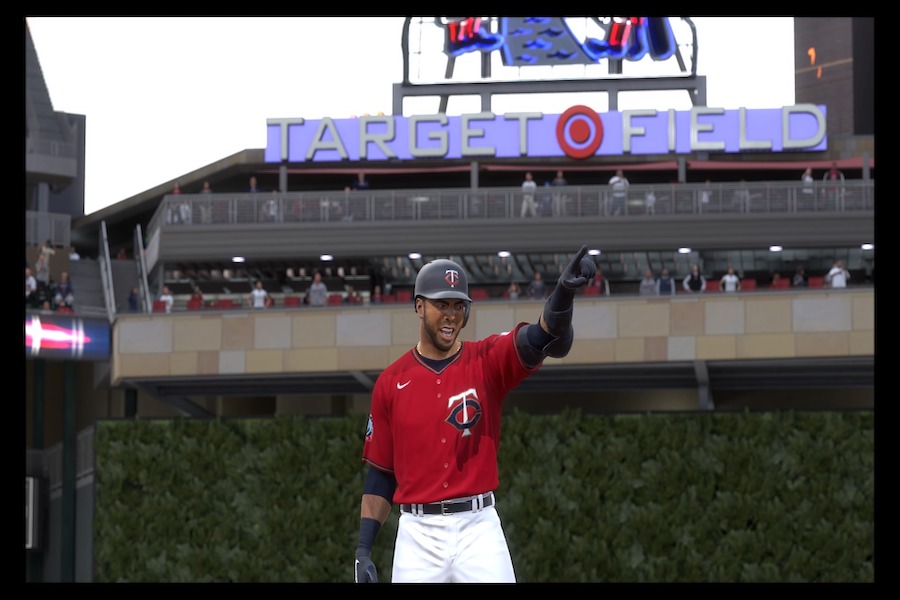 To get caught up on what we're doing here, you can check out the introductory post in the series for an explanation of the premise and setup. But the quick version is this: We played a progressive simulated Twins season on MLB The Show 20 on PS4, and y'all helped guide the ship. PLAYOFF RESULTS Although the Twins beat Cleveland in a walk-off Game 163 thriller, it was the Indians who got the last laugh. After edging into the ALDS with a Wild Card Game win against Boston, Cleveland swept the Angels and advanced to face Tampa in the ALCS. (The Rays, of course, had knocked out our Twins 3-1 in the other ALDS matchup.) Cleveland won the ALCS in six games and moved onto the World Series, where they faced off against Washington, after the Nats topped LA in an NLCS repeat from 2019. In seven games, the Cleveland Indians defeated the Washington Nationals to become 2020 (virtual) World Series champs. Francisco Lindor was named World Series MVP after batting .348 in the seven games. Domingo Santana was the top overall performer in Cleveland's postseason run, batting .375 with four homers and 11 RBIs. Here are some of the other award-winners from the simulated 2020 season: AL MVP: J.D. Martinez, BOS (.299/.381/.590, 48 HR, 127 RBI) NL MVP: Ronald Acuña Jr., ATL (.294/.367/.607, 44 HR, 123 RBI) AL Cy Young: Chris Sale, BOS (18-5, 2.90 ERA, 283 K) NL Cy Young: Patrick Corbin, WAS (18-9, 3.65 ERA, 237 K) AL Batting Title: Mike Trout, LAA (.347) NL Batting Title: Wilson Ramos, NYM (.332) AL Reliever of the Year: Nick Goody, TEX (44 saves, 0.58 ERA) NL Reliever of the Year: Sean Doolittle, WAS (53 saves, 2.02 ERA) AL Rookie of the Year: Anderson Miller – OF, KC (.265/.309/.464, 14 HR, 58 RBI) NL Rookie of the Year: Dom Thompson-Williams – OF, MIL (.215/.261/.391, 10 HR, 33 RBI) AL Gold Gloves P - Hector Velasquez, BOS C - Jason Castro, LAA 1B - Ji-Man Choi, TB 2B - Ramon Urias, BAL 3B - Hanser Alberto, BAL SS - Elvis Andrus, TEX LF - Andrew Benintendi, BOS CF - Kevin Kiermaier, TB RF - Aaron Judge, NYY NL Gold Gloves P - Kyle Hendricks, CHC C - Kurt Suzuki, WAS 1B - Freddie Freeman, ATL 2B - Kolton Wong, STL 3B - Nolan Arenado, COL SS - Miguel Rojas, MIA LF - David Peralta, ARI CF - Bryan Reynolds, PIT RF - Bryce Harper, PHI As to why the Red Sox did so well in the award voting despite finishing second in the AL East, and as to why those two mediocre rookie seasons were deemed award-worthy, I do not know. I'm simply relaying the info here. On that note, let's run through the final results for our simulated Twins. TWINS RESULTS Starting Lineup Luis Arraez, 2B: .331/.419/.483, 14 HR, 78 RBI Jorge Polanco, SS: .270/.352/.437, 18 HR, 64 RBI Mitch Garver, C: .266/.362/.444, 20 HR, 46 RBI Miguel Sano, 1B: .254/.359/.485, 36 HR, 100 RBI Josh Donaldson, 3B: .259/.369/.475, 35 HR, 98 RBI Max Kepler, RF: .285/.379/.464, 21 HR, 82 RBI Nelson Cruz, DH: .267/.342/.473, 28 HR, 99 RBI Marwin Gonzalez, LF: .281/.342/.480, 17 HR, 48 RBI Byron Buxton, CF: .222/.294/.327, 6 HR, 26 RBI Bench Alex Avila, C: .245/.338/.480, 12 HR, 31 RBI Willians Astudillo, C/UTIL: .291/.326/.384, 3 HR, 19 RBI Jake Cave, OF, .295/.366/.468, 7 HR, 20 RBI Brent Rooker, OF: .248/.313/.406, 4 HR, 14 RBI Rotation Jose Berrios: 224.2 IP, 20-5, 2.96 ERA, 1.17 WHIP, 7.2 K/9, 2.6 BB/9 Blake Snell: 185 IP, 12-10, 3.75 ERA, 1.37 WHIP, 10.7 K/9, 3.6 BB/9 Kenta Maeda: 188.1 IP, 18-8, 3.39 ERA, 1.30 WHIP, 10.2 K/9, 4.0 BB/9 Jake Odorizzi: 192 IP, 15-10, 3.66 ERA, 1.28 WHIP, 8.5 K/9, 3.5 BB/9 Alex Wood: 178.2 IP, 8-7, 2.77 ERA, 1.22 WHIP, 7.5 K/9, 2.5 BB/9 Michael Pineda: 45.2 IP, 4-2, 3.35 ERA, 1.31 WHIP, 5.0 K/9, 2.2 BB/9 Homer Bailey: 111 IP, 10-6, 5.43 ERA, 1.49 WHIP, 6.8 K/9, 3.8 BB.9 Rich Hill: 25 IP, 1-2, 10.44 ERA, 2.12 WHIP, 9.7 K/9, 6.5 BB/9 Randy Dobnak: 49.1 IP, 4.38 ERA, 1.42 WHIP, 5.5 K/9, 2.7 BB/9 Bullpen Taylor Rogers: 71.2, 43 SV (6 BS), 2.51 ERA, 1.13 WHIP, 9.4 K/9, 1.5 BB/9 Tyler Duffey: 69.2 IP, 1.94 ERA, 1.09 WHIP, 10.3 K/9, 3.4 BB/9 Trevor May: 64.2 IP, 3.06 ERA, 1.45 WHIP, 11.7 K/9, 5.2 BB/9 Tyler Clippard: 66.1 IP, 2.71 ERA, 1.31 WHIP, 8.1 K/9, 4.1 BB/9 Sergio Romo: 60 IP, 4.13 ERA, 1.54 WHIP, 9.3 K/9, 4.0 BB/9 Fernando Romero: 53.2 IP, 3.35 ERA, 1.40 WHIP, 6.0 K/9, 4.7 BB/9 Zack Littell: 46. IP, 4.44 ERA, 1.56 WHIP, 6.4 K/9, 2.9 BB/9 Cody Stashak: 9.2 IP, 8.38 ERA, 1.76 WHIP, 4.7 BB/9, 1.9 BB/9 Devin Smeltzer: 5.1 IP, 8.44 ERA, 2.81 WHIP, 1.7 K/9, 8.4 BB/9 INTERESTING TAKEAWAYS FROM OUR TWINS SIM Our Twins used the Injured List zero times all season. This obviously is unrealistic and pretty glitchy. I'm not sure why it happened – there definitely are injuries in the game, and other teams had plenty – but it's not the worst bug in this case. Who wants to deal with the unpleasantness of injuries in a virtual season, while a health pandemic has wiped out all actual baseball? And besides, I think this exaggerated outcome does speak to a true strength of the Twins: they were (and are) quite healthy heading into the 2020 season, with a number of prime-aged athletes and a sophisticated medical/training operation. Luis Arraez finished second in the AL in batting average (.331) and on-base percentage (.419). Arraez trailed only Mike Trout in both categories. He also batted .556 (10-for-18) in the ALDS. Arraez was just sensational in this simulation, leading the Twins in OPS. However ... Arraez and Jorge Polanco combined to commit 39 errors. Polanco's 20 were not all that stunning (he committed 22 in 2019) but the 19 from Arraez at second base were brutal. Miguel Sano had 13 errors, and was the only other player in double-digits. This highlights one of the rare foreseeable shortcomings on the 2020 Twins roster: infield defense. Josh Donaldson finished third in the AL in walks with 100. He trailed only Houston's Yordan Alvarez (112) and Boston's Xander Bogaerts (105). Although his overall production – .844 OPS, 35 HR, 98 RBI – was a bit light by his standards, Donaldson definitely delivered on this front, matching his 2019 total. Tyler Duffey was ridiculous. You can see the final numbers above, but here are a couple other things to consider. First of all, he gave up only three home runs all year, in 57 appearances. And secondly, he allowed one-third of his runs for the season in a single outing: in August where he was charged with five earned runs while recording one out against Houston. (I suspected shady tactics by the opposing Astros.) Subtract that appearance, and he had a 1.30 ERA in 69 1/3 innings. This game believes in Duffey, and so do I. Byron Buxton had a tough year at the plate. His was really the only disappointing outcome from all the simulated results. Buxton never found a rhythm offensively and batted just .222 with a 115-to-40 K/BB ratio in 511 plate appearances. On the bright side, he ranked second in the AL with 35 steals. Incidentally, I happen to think the real Buxton can be the Twins' most valuable player in this 60-game sprint. FINAL THOUGHTS Above all, I just wanna give major props to the team behind MLB The Show and its latest release. Clearly a lot of effort and thoughtfulness went into creating realistic player attributes and game dynamics, which is reflected in the (mostly) plausible outcomes in our sim. I also wanna express my sincere gratitude to everyone who voted, commented, and engaged with this series. I wasn't too jazzed about contributing another simulation to the void, but felt like infusing an interactive aspect might make it more fun for me and everyone else – if people interacted. So many of you did, and it made this series a nice little routine diversion over the past few months. With that said, I'm excited by the prospect of watching real baseball again. So if things proceed as planned and the 60-game season goes on without (catastrophic) incident, I probably won't be returning to this simulated team. If those plans go awry, however? I hope y'all are down to join me in navigating the offseason and building a champ in 2021. PREVIOUS INSTALLMENTS Part 1: We Can Build This Thing Together (0-0) Part 2: 10 Games In, 6 Games Back (4-6) Part 3: Roaring Back (11-9) Part 4: Over the Hill (17-13) Part 5: Checking In at the Quarter Point (23-17) Part 6: Rising Power (30-20) Part 7: First Place! (Barely) (34-26) Part 8: Drafting and Dropping (38-32) Part 9: Cruz Control (45-35) Part 10: Pulling Ahead (52-38) Part 11: Bashing into the All-Star Break (58-40) Part 12: Deadline Decisions (62-46) Part 13: Inauspicious Debuts (66-52) Part 14: Treading Water as the Clock Ticks (71-57) Part 15: Stretch Race & September Call-Ups (78-59) Part 16: Dancing for the Division (84-63) Part 17: Down to the Wire (90-66) Part 18: Game 163 (94-68) Part 19: Twins Walk Off Game 163 (95-68) Part 20: ALDS Preview – Twins vs. Rays Part 21: Eliminated MORE FROM TWINS DAILY — Latest Twins coverage from our writers — Recent Twins discussion in our forums — Follow Twins Daily via Twitter, Facebook or email
 -
In a 60-game season, where each game essentially counts as a series, slumps will be devastating. While the Twins have the softest schedule in baseball, there are still a few spots that loom as potential traps.As I size up the coming two-month sprint through the AL and NL Central divisions, three particular stretches stand out to me as challenges that could make a very good Twins team sweat. July 24th through August 2nd 3 games @ CWS2 games vs. STL4 games vs. CLERight out of the gates, the Twins will feel some heat. I happen to believe the White Sox will be a sneaky riser in the shortened format, and would bet on them winning more games than Cleveland. Minnesota opens in Chicago, then comes home to face the defending NL Central champion Cardinals, followed by a Cleveland team that's plenty formidable. Four games. Huge spot. A slow start in this shortened format will put a team behind the eight-ball, creating immediate stressful pressure. If the Twins go 3-6 in this opening stretch, they'll be digging themselves a fairly deep hole, especially since some of the losses are coming against their primary division rivals. August 18th through 26th 3 games vs. MIL3 games @ KC3 games @ CLEThe Brewers reached the postseason as a wild-card last year, led by one of baseball's best players in Christian Yelich. Milwaukee is at least the third-best opponent on the Twins' schedule, and this will be their second meeting between the two in a week. Following is a trip to Kaufmann, where wins cannot be taken for granted. (Minnesota's 2019 regular season ended with a walk-off loss in Kansas City.) Then it's off to Cleveland, for the only road series of the year against the Indians. September 8th through 20th 2 games @ STL3 games vs. CLE4 games @ CWS3 games @ CHCThis right here. This is the gauntlet. Here in September, the Twins make their first trips to Busch Stadium and Wrigley, and by now the big-market home teams will be very comfortable in their own digs. (As much as can be expected, anyway.) This stretch also includes Minnesota's final head-to-head chance against Cleveland, and another trip to Guaranteed Rate, where young talent could be starting to gel. Twelve games in 13 days on the tail end of an intense sprint. Even if the Twins play quite well, the reality is that it's gonna be almost impossible for them to build up a comfortable first-place buffer in the 43 games leading up to these ones. One way or another, urgency will accompany this tricky, travel-filled segment of the schedule. On the bright side, a nice reprieve awaits on the other end: Minnesota gets two off days in the final week, along with five home games against Detroit and Cincinnati. Hopefully the Twins will be in good enough shape by then to rest some regulars and set themselves up for the postseason. But with the 30 games in the three stretches of strong headwinds above representing half of their "soft" schedule, getting into that position will be no breeze. MORE FROM TWINS DAILY — Latest Twins coverage from our writers — Recent Twins discussion in our forums — Follow Twins Daily via Twitter, Facebook or email Click here to view the article
-
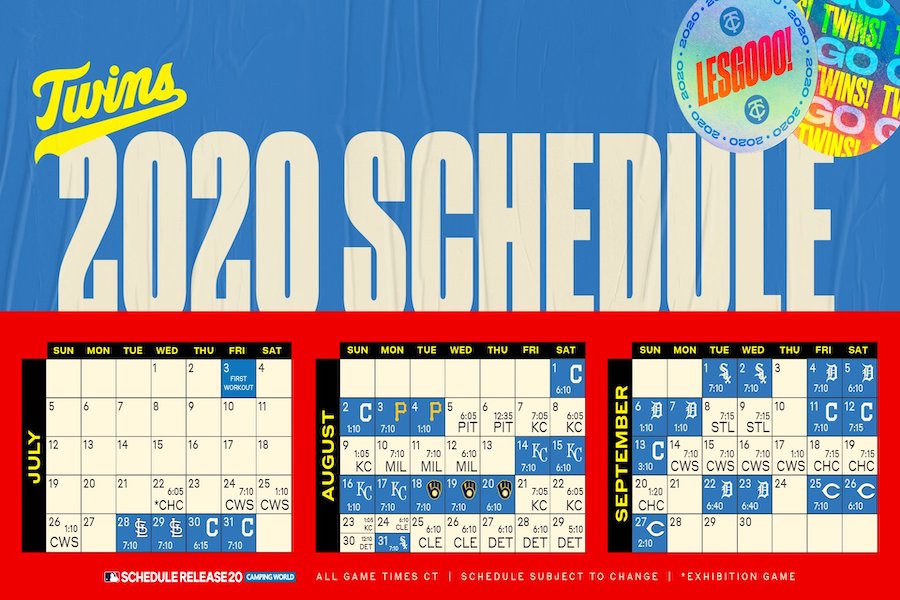 As I size up the coming two-month sprint through the AL and NL Central divisions, three particular stretches stand out to me as challenges that could make a very good Twins team sweat. July 24th through August 2nd 3 games @ CWS 2 games vs. STL 4 games vs. CLE Right out of the gates, the Twins will feel some heat. I happen to believe the White Sox will be a sneaky riser in the shortened format, and would bet on them winning more games than Cleveland. Minnesota opens in Chicago, then comes home to face the defending NL Central champion Cardinals, followed by a Cleveland team that's plenty formidable. Four games. Huge spot. A slow start in this shortened format will put a team behind the eight-ball, creating immediate stressful pressure. If the Twins go 3-6 in this opening stretch, they'll be digging themselves a fairly deep hole, especially since some of the losses are coming against their primary division rivals. August 18th through 26th 3 games vs. MIL 3 games @ KC 3 games @ CLE The Brewers reached the postseason as a wild-card last year, led by one of baseball's best players in Christian Yelich. Milwaukee is at least the third-best opponent on the Twins' schedule, and this will be their second meeting between the two in a week. Following is a trip to Kaufmann, where wins cannot be taken for granted. (Minnesota's 2019 regular season ended with a walk-off loss in Kansas City.) Then it's off to Cleveland, for the only road series of the year against the Indians. September 8th through 20th 2 games @ STL 3 games vs. CLE 4 games @ CWS 3 games @ CHC This right here. This is the gauntlet. Here in September, the Twins make their first trips to Busch Stadium and Wrigley, and by now the big-market home teams will be very comfortable in their own digs. (As much as can be expected, anyway.) This stretch also includes Minnesota's final head-to-head chance against Cleveland, and another trip to Guaranteed Rate, where young talent could be starting to gel. Twelve games in 13 days on the tail end of an intense sprint. Even if the Twins play quite well, the reality is that it's gonna be almost impossible for them to build up a comfortable first-place buffer in the 43 games leading up to these ones. One way or another, urgency will accompany this tricky, travel-filled segment of the schedule. On the bright side, a nice reprieve awaits on the other end: Minnesota gets two off days in the final week, along with five home games against Detroit and Cincinnati. Hopefully the Twins will be in good enough shape by then to rest some regulars and set themselves up for the postseason. But with the 30 games in the three stretches of strong headwinds above representing half of their "soft" schedule, getting into that position will be no breeze. MORE FROM TWINS DAILY — Latest Twins coverage from our writers — Recent Twins discussion in our forums — Follow Twins Daily via Twitter, Facebook or email



