



Nick Nelson
-
Posts
8,327 -
Joined
-
Last visited
-
Days Won
56
Content Type
Profiles
News
Minnesota Twins Videos
2026 Minnesota Twins Top Prospects Ranking
2022 Minnesota Twins Draft Picks
Minnesota Twins Free Agent & Trade Rumors, Notes, & Tidbits
Guides & Resources
2023 Minnesota Twins Draft Picks
The Minnesota Twins Players Project
2024 Minnesota Twins Draft Picks
2025 Minnesota Twins Draft Pick Tracker
2026 Minnesota Twins Draft Tracker: Picks & Bonuses
Forums
Blogs
Events
Store
Downloads
Gallery
Everything posted by Nick Nelson
-
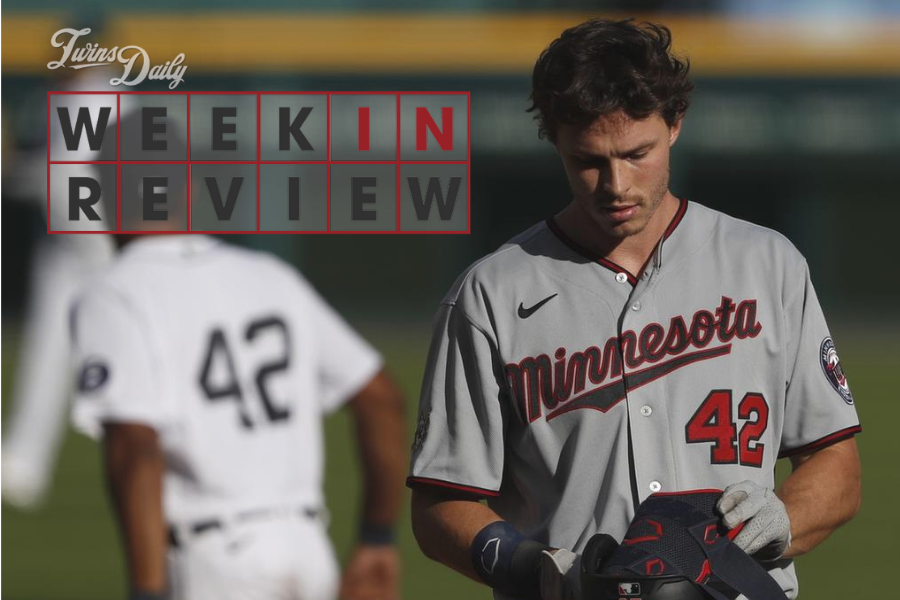 Weekly Snapshot: Mon, 8/24 through Sun, 8/30 *** Record Last Week: 1-5 (Overall: 20-15) Run Differential Last Week: -13 (Overall: +27) Standing: 3rd Place in AL Central (1.5 GB) Bomba Counter: 47 (Pace: 81) This 2020 season has been shortened and repeatedly shaken by events taking place outside of the baseball world. Last week became another example, with the Twins joining several other major-league teams in choosing to postpone a game in protest of the nation's enduring social injustice issues. I think our Friday post from RandBalls Stu succinctly and powerfully summarized the significance and palpable takeaway behind a statement such as this. It certainly wasn't the motivator, but taking Thursday night off in Detroit had the benefit of giving Minnesota's roster some rest in the middle of this grueling stretch of the schedule, and Friday's doubleheader rainout extended the break. Any extra bit of time off helps as the beleaguered Twins try to get healthy and move back toward full strength. In this case it sure seemed to help Max Kepler, who raised alarms when he exited Wednesday's game after fouling a ball of his foot. Not only was he back in the lineup for both games on Saturday, but he even started the first one in center. Unfortunately, while the respite may have been good for Kepler's health, it didn't seem to help the team at large as they put forth an utterly lackluster showing in Detroit, suffering an embarrassing sweep as their offense fell further into the pits of despair. The injury carousel kept spinning as Eddie Rosario was forced out of Saturday's nightcap, with his left ankle starting to bark. This is troubling as it's the same ankle that hampered him last season and – by his own admission – sapped his performance, especially on the defensive side. Rosario did come back to make a late pinch-hitting appearance on Sunday, which is somewhat relieving. In a bit of potentially positive news, there seems to be some optimism that Josh Donaldson is nearing a return, with Rocco Baldelli hinting that the third baseman could be activated during the team's upcoming homestand. To say the lineup could use his presence would be putting it very mildly. Let's run back the past week's developments, which weren't ALL bad. HIGHLIGHTS After starring in the previous week, Kenta Maeda got this past one off to a (short-lived) good start with five innings of one-run ball against the Indians, paving way for Minnesota's lone victory in Cleveland. The bullpen backed him up nicely in a 3-2 victory, with Caleb Thielbar, Trevor May, Sergio Romo and Taylor Rogers combining to allow one run over four innings. On Tuesday, Rich Hill backed up Maeda's strong start in the series opener, allowing one run over five innings himself. Hill looked rough in the first frame, missing his spots and giving up a bunch of hard contact, but then settled in to cruise through the next four, handing a 2-1 lead to the bullpen. It was a hugely encouraging rebound for the veteran following his rocky return from IL six days earlier. Outside of Maeda and Hill, the Twins' best starter over the past week was ... Matt Wisler? He served as opener once again in the back half of Saturday's doubleheader, and as usual he got the job done. It wasn't as clean as some of this past performances – he gave up three walks and a hit over 1 ⅔ innings – but Wisler once again kept the opponent off the board to set a bullpen game in the right direction. The offseason waiver pickup has been nothing short of sensational through the first half of his first season with the Twins. Through 16 ⅔ innings he has a 1.15 ERA and 19-to-10 K/BB ratio with just eight hits allowed. He has recorded more than three outs in every appearance since his first. In a bullpen that's had some ups and downs, and been asked to cover a whole lot of innings, Wisler's value can hardly be overstated. Minnesota's plan of fully ramping up his slider usage has paid off brilliantly. He's throwing the pitch 80% of the time and it's holding opponents to a .133 average and .200 slugging percentage, with a 37.8% whiff rate. In terms of both limiting contact, and limiting the loudness of that contact, he's elite. Nelson Cruz hit three more home runs and continues to be the sole source of consistent output on this offense. He finished the week tied for the MLB lead with 13 long balls and is having a special season at age 40. If only Cruz was getting any kind of support from those around him. LOWLIGHTS It's getting tougher and tougher to be patient with this lineup, which failed to score more than three runs in any of the past week's six games. Coming up fairly quiet against Cleveland and its world-class pitching staff is one thing, but the following flat effort over the weekend against Detroit was flat-out flabbergasting. The Twins' first game of the series, coming off two days rest with a heavily favorable pitching match-up, was perhaps their most vexing loss of the entire season thus far. Tigers started Matthew Boyd entered the game with an 0-4 record, 8.48 ERA and 1.74 WHIP. Opponents had slashed .317/.380/.610 with eight homers against the embattled left-hander. Seemingly a perfect opportunity for the Bomba Squad to get right. Instead, they simply helped Boyd get right as he mowed through their lineup three times, holding Minnesota to one earned run over six innings with six strikeouts, no walks, and four hits allowed. It was Boyd's best start this year and the worst performance yet from the Twins, who were dominated on both ends in an 8-2 laugher, getting outhit 16-to-4 over seven innings. The offense's continued inability to get going is growing into a bigger problem as the pitching staff starts to show some warts. Randy Dobnak's career-worst outing against Detroit sealed their fate in Saturday's series-opening blowout loss. In the nightcap, Tyler Duffey's first real hiccup of the season proved crippling as a two-run homer from Miguel Cabrera buried the Twins 4-2. On Sunday, Maeda had the gall to allow three runs over six innings, and that was of course enough to get tagged with a loss. Earlier in the week, on Tuesday, Jorge Alcala's spectacular rookie season hit a pothole when he coughed up three runs in the sixth inning, turning a 2-1 lead into a 4-2 loss. The following night it was Romo who turned into a pumpkin, yielding three runs to Cleveland in the eighth to shatter a tie. It's too soon to be gravely concerned about the Twins bullpen, but seeing regression catch up there while the underperforming offense fails to balance out in the opposite direction is taking a toll. Among the culprits: The Twins are getting nothing from the catcher position, which was such a huge strength in 2019. The past week saw Alex Avila go 1-for-9 with six strikeouts. Ryan Jeffers is still looking for his first walk or extra-base hit as a big-leaguer. Pressed into everyday duty, Marwin Gonzalez is not delivering. He went 3-for-19 with three singles and eight strikeouts in six games, always while batting near the heart of the order. Rosario was 3-for-17, with a double representing his only XBH. After notching six home runs in his first 17 games, he's gone deep once in 17 games since. Luis Arráez finished 4-for-18 with one double, zero walks, one run scored, and one RBI. It's the same story here as with many others: no patience or power to support an empty (and altogether underwhelming) batting average. Jorge Polanco went 5-for-20, and sports a sub-par .702 OPS even after homering on Sunday. His inability to square the ball up and drive it with any kind of authority is almost completely negating the value of his ability to put it in play and avoid strikeouts: I haven't yet even mentioned any of the fringy backups being funneled playing time as a result of regulars being sidelined. And yes, it's true that Jake Cave (3-for-12), LaMonte Wade Jr. (1-for-10), Ildemaro Vargas (0-for-4) and Ehire Adrianza (2-for-7) have failed to help the cause much. But focusing on them obscures the ultimate reality, which is that this offense won't simply be fixed by Donaldson, Byron Buxton or Mitch Garver re-entering the fold. The Twins need the guys in those bullets above to snap out of their funks, because right now this just isn't a very impressive team. Since opening the season 10-2, the Twins have gone 10-13. They are 5-8 against the Royals and Tigers. Conversely, the White Sox – who leapfrogged Minnesota in the standings over the weekend – are 11-2 against those clubs. If you can't take advantage of the Central's soft underbelly, you're not going to win the division. Plain and simple. So far the Twins have come up woefully short in this department. TRENDING STORYLINE Donaldson's possible return will certainly be a key narrative in the coming days, but in the immediate picture, all attention is on the trade deadline, suddenly here on Monday. Reports suggest that the Twins are showing interest in frontline starting pitching, including a couple of ace-types from the AL West: Dylan Bundy of the Angels and old "friend" Lance Lynn of the Rangers. Interestingly, the White Sox have been tied to both those pitchers, as well as Cleveland's Mike Clevinger, who appears somewhat likely to move tomorrow. That would qualify as good news in a sense, as the Indians would be losing a key weapon for any potential postseason match-up, but of course, adding Clevinger to a Sox rotation already fronted by Lucas Giolito would make Minnesota's other chief division rival all the more dangerous. Whether or not they make a trade for a starting pitcher, the Twins will get some rotation help in the coming week with Michael Pineda's suspension reaching an end. He's scheduled to make his season debut on Tuesday against Dallas Keuchel and the White Sox. LOOKING AHEAD The Twins return home with their tails between their legs, but on the bright side, they are 12-3 at Target Field this year. They'll have their work cut out for them in the first half of the week. Coming off a dominant no-hitter in his last outing, Giolito will toe the rubber in Monday's series opener as Hill tries to build upon his solid results from the past week. Pineda's return on Tuesday will be key, both for Minnesota's chances of winning the series and their outlook for the rest of the season and playoffs. If the Clevinger-to-Chicago rumors come to fruition, we could very well be looking at a second matchup between Jose Berríos and Mr. Sunshine within a week's time on Wednesday. A four-game set against Detroit at Target Field next weekend (with the Tigers lining up as "home team" in Friday's nightcap) will offer the Twins a chance for some much-needed redemption. MONDAY, 8/31: WHITE SOX @ TWINS – RHP Lucas Giolito v. LHP Rich Hill TUESDAY, 9/1: WHITE SOX @ TWINS – LHP Dallas Keuchel v. RHP Michael Pineda WEDNESDAY, 9/2: WHITE SOX @ TWINS – RHP Reynaldo Lopez v. RHP Jose Berrios FRIDAY, 9/4 (G1): TIGERS @ TWINS – LHP Matthew Boyd v. RHP Randy Dobnak FRIDAY, 9/4 (G2): TIGERS @ TWINS – TBD v. LHP Tarik Skubal SATURDAY, 9/5: TIGERS @ TWINS – RHP Casey Mize v. RHP Kenta Maeda SUNDAY, 9/6: TIGERS @ TWINS – RHP Spencer Turnbull v. LHP Rich Hill Catch Up On Twins Daily Game Recaps Game 30 | MIN 3, CLE 2: Bullpen Bends, Does Not Break Game 31 | CLE 4, MIN 2: Cleveland Counterpunch Game 32 | CLE 6, MIN 3: Cleveland Gets To Romo, Takes Series Game 34 | DET 8, MIN 2 Game 35 | DET 4, MIN, 2 Game 36 | DET 3, MIN 2: This Is Not What You Want MORE FROM TWINS DAILY — Latest Twins coverage from our writers — Recent Twins discussion in our forums — Follow Twins Daily via Twitter, Facebook or email
 -

Week in Review: Riding the Roller Coaster
Nick Nelson replied to Nick Nelson's topic in Twins Daily Front Page News
Regarding the 40-man: I'm not totally positive, but I believe Nick Gordon is on the restricted list as he's been battling COVID. (For multiple months it sounds like, which is scary and concerning.) Regarding Arraez's knee: You're correct. He missed almost the entire 2017 season with a torn ACL. I dunno if that's at all related to what is going on now but it's something to keep in imnd. -
It was a wild week for the Minnesota Twins, filled with invigorating highs, painful lows, and injury woes. One starting pitcher flirted with a no-no, as others were more of a no-go. The offense showed more glimpses, driven mainly by the Sanó show. (Yes, this is a rhyming roller coaster.) By the end of the ride, the Twins found themselves in first place still, with a critical series in Cleveland on deck. Weekly Snapshot: Mon, 8/17 through Sun, 8/23 *** Record Last Week: 5-2 (Overall: 19-10) Run Differential Last Week: +5 (Overall: +40) Standing: 1st Place in AL Central (1.5 GA) Bomba Counter: 42 (Pace: 90) It was not a great week healthwise for the Twins. Rich Hill returned from his hiatus on Wednesday but looked sluggish, allowing four earned runs on four hits and two walks in just 2⅔ innings. Homer Bailey was moved to the 45-day Injured List, confirming that his return is nowhere near. Jake Odorizzi took a line drive off the ribs in Friday's loss, and later in the same game Zack Littell exited with elbow soreness. Both landed on IL, replaced by relievers Sean Poppen and Danny Coulombe. Late in Sunday's game, Tyler Clippard took a line drive off his pitching arm, and while initial imaging came back negative, Rocco Baldelli said of Clippard after the game, "I can’t imagine he’s going to be throwing a baseball anytime in the very near future." So it'd be no surprise to see another reinforcement called in. Given the offense's continued struggles to find a rhythm, losses in the lineup loom even larger than the litany of injuries plaguing the pitching staff. Luis Arráez started just two games as he continues to battle knee soreness, but the team has bigger concerns. After Wednesday's game, Byron Buxton and Mitch Garver both landed on the Injured List, subtracting two right-handed bats from a unit that has been oddly ineffective against southpaws. There are silver linings with these two key cogs going on the shelf. Buxton has reportedly been bothered for some time by his surgically repaired shoulder, not to mention the foot he sprained during Summer Camp. And while there's been no indication that Garver was hampered by the intercostal muscles that left him wincing after a swing in Wednesday's game ... it would make a lot of sense, given his inexplicably extreme lack of production. A spell of rest may well do them both some good. And their departures create opportunities for deserving players in Ryan Jeffers and LaMonte Wade Jr., who shuttled over from the alternate site in St. Paul. Jeffers was put quickly to work, appearing in all four games since his call-up and starting three of them. Wade Jr. got his first start of the season on Sunday and went 2-for-4 with a double. HIGHLIGHTS The week started with ageless wonder Nelson Cruz once again leaving us in awe, notching his second two-homer game of the season in 4-1 victory over Kansas City. It was merely an appetizer. The following night, Kenta Maeda was pure magic. Taking his dominant start with the Twins to new levels, Maeda carried a no-hitter into the ninth inning against Milwaukee before giving up a weakly-hit single to Eric Sogard and exiting with a career-high 115 pitches. Along the way, Maeda set a franchise record by striking out eight consecutive hitters. He finished with 12 strikeouts and 21 whiffs in eight-plus innings. In this absolute gem, Maeda posted a Game Score of 86, which stands as the highest by a Twins starter since Jose Berríos put up the same number on Opening Day of 2018, with a three-hit shutout against the Orioles. Ranking seventh among major-league starters in fWAR, Maeda has embodied the ace label thus far by any definition. But speaking of Berríos, it was nice to see the rotation's presumed frontman finally look the part on Thursday, breaking off six shutout innings with nine strikeouts and only one hit allowed against Milwaukee. This big step forward for Berríos, combined with the continued excellence of Maeda and consistent quality from Randy Dobnak, makes the rotation's setbacks a bit easier to stomach. With all that being said, the most encouraging development over the past week from my view is Miguel Sanó's explosion at the plate. Last time in this space we pointed to his improving plate discipline as a hugely positive sign, even if the production wasn't quite showing up yet. "As he starts making more contact, Sanó is going to do immense damage." Since then, Sanó has done DAMAGE. (Literally.) Starting all seven games over the past week, the first baseman went 12-for-26 (.462) with eight doubles, five RBIs, and an atom bomb in KC that might've actually left a dent in the wall of Kauffman Stadium's Hall of Fame Museum: He's crushing the meatballs and finally starting to make things happen with those offerings that aren't straight in his wheelhouse. It is almost as noteworthy to me that Sanó reached out and made solid contact on two pitches away and outside the zone in his first two ABs Sunday – resulting in a double and single – as his obliterating a mistake from Brady Singer on Saturday. To provide a sense of closure and cosmic balance, Cruz ended the week as he began it: homering off the Royals. This one, an eighth-inning solo shot off a 100-MPH fastball from Trevor Rosenthal, delivered crucial insurance in an eventual 5-4 victory. LOWLIGHTS The lineup as a whole is definitely starting to come on – they scored seven runs as many times last week (twice) as in the previous three weeks – but it's still been pretty choppy sailing for the bats. Ehire Adrianza, pushed into semi-regular duty with the all the attrition, hasn't risen to the occasion. He went 2-for-14 last week and is at .186/.271/.209 on the season. Newcomer Ildemaro Vargas has quickly established himself as a more intriguing option for the same role, so one wonders how secure Adrianza's roster spot will be as injured players begin returning the fold. Max Kepler went just 4-for-22 (.182) although he did draw six walks to keep the OBP pumping. He hasn't been bad by any means, but his power has conspicuously diminished; since homering his first two at-bats of the season, Kepler has a .379 slugging percentage. He's also 2-for-27 (.074) with a .272 OPS against lefties, so he's been a major contributor to the team-wide deficiency on this front. Seeing a big uptick in playing time with Buxton on the shelf, Jake Cave isn't bringing a lot of juice. He delivered an empty 5-for-18 with five singles last week, and is hitting .150/.227/.175 with one RBI in 44 PAs since a good opening weekend in Chicago. It's hard to see Cave finding much success with his utter lack of discipline at the plate – he struck out six times with no walks last week, and has a 20-to-2 ratio on the season. In this regard, Wade Jr. offers a big upgrade, so I'll be curious to see whether the balance of playing time shifts in the days ahead. Like the offense, the pitching staff experienced some rough patches to go along with the shining moments. Taylor Rogers swiftly sucked the energy out of Maeda's gem on Tuesday, coughing up three runs (one charged to Maeda) while blowing the save and forcing extra innings. Since opening his season with four scoreless appearances, Rogers has allowed six earned runs on 13 hits in 6⅓ innings, blowing two of five save chances and flirting with disaster in Sunday's successful conversion. As I wrote a few days ago, the left-hander had developed a reputation as one of the most reliable high-leverage relievers in baseball, but actually has a negative Win Probability Added since last year's All-Star break. This begs the question: Where should he sit in the current bullpen pecking order? Almost certainly not at the top. On the other end of the bullpen leverage spectrum, exploitable soft spots have begun to surface. Lewis Thorpe punched his ticket off the roster on Wednesday with a brutal outing: 4 IP, 6 H, 4 ER, 3 BB, 3 K, 2 HR. He has looked rough basically from the jump this season. So has Littell, who inflated his ERA to 9.95 while allowing another home run on Thursday before landing on IL with elbow inflammation. With a key reliever still sidelined in Cody Stashak, and alternate-siters like Poppen and Coulombe now occupying spots, the bullpen will be pressed to keep getting the job done as the grind of a 21-games-in-20-days stretch marches on. Ten straight days of games still remain in the gauntlet, with six coming against Minnesota's top challengers in the AL Central. TRENDING STORYLINE The trade deadline is now just a week away, coming up on Monday the 31st. The Hot Stove started to heat up over the weekend with Philadelphia pulling the trigger on a deal to acquire Red Sox closer Brandon Workman. Will the Twins be active in these next eight days as they set themselves up for the stretch run and postseason? It seems unlikely that Derek Falvey and Thad Levine will give up any big-ticket prospects for a rented difference-maker in this abbreviated season. A playoff berth is all but assured, and it's clear that the Twins' best hope for a high-impact infusion is simply getting their own banged-up players back at full capacity. With that said, it wouldn't surprise me to see a lower-level or move or two as the team looks to navigate the final month at diminished strength. The move to acquire Vargas has already paid dividends, with the utility infielder playing a fairly significant role since coming from Arizona. Another pickup like that might make sense, depending on how things unfold over the next week. Of course, on the day of the trade deadline, Michael Pineda is eligible to return from his suspension, which will factor into the rotation's needs. LOOKING AHEAD The Twins will open this coming week with a monumental series against the Indians, representing the only visit to Cleveland this season. It's a key opportunity for Terry Francona's club, trailing Minnesota by just a game and a half in the standings. Shane Bieber looms in Game 2. From there, the Twins will head to Detroit to FINALLY see the division's weakest team. After facing them zero times in the first 32 games, Minnesota will get Ron Gardenhire and the Tigers 10 times in the final 28, accounting for roughly one-third of their remaining schedule. Theoretically this should be a very beneficial thing, but it requires capitalizing on the opportunity. The Twins will have their first chance in next weekend's four-game set. MONDAY, 8/24: TWINS @ INDIANS – RHP Kenta Maeda v. RHP Aaron Civale TUESDAY, 8/25: TWINS @ INDIANS – LHP Rich Hill v. RHP Shane Bieber WEDNESDAY, 8/26: TWINS @ INDIANS – RHP Jose Berrios v. RHP Adam Plutko THURSDAY, 8/27: TWINS @ TIGERS – RHP Randy Dobnak v. LHP Matthew Boyd FRIDAY, 8/28: TWINS @ TIGERS – TBD v. LHP Tarik Skubal SATURDAY, 8/29: TWINS @ TIGERS – RHP Kenta Maeda v. RHP Casey Mize SUNDAY, 8/30: TWINS @ TIGERS – LHP Rich Hill v. RHP Spencer Turnbull Catch Up On Twins Daily Game Recaps Game 23 | MIN 4, KCR 1: Nelson Cruz Continues to Defy LogicGame 24 | MIN 4, MIL 3: Kenta Maeda Carries No-No Into 9th Inning; Twins Win In ExtrasGame 25 | MIL 9, MIN 3: Hill Follows Maeda's Gem With a ClunkerGame 26 | MIN 7, MIL 1: It's a Blessed Jose Berríos Day!Game 27 | KC 7, MIN 2: Royal PainGame 28 | MIN 7, KC 2: Rosario, Sano Power Twins Win in KCGame 29 | MIN 5, KC 4 : Bullpen Steps Up AgainMORE FROM TWINS DAILY— Latest Twins coverage from our writers — Recent Twins discussion in our forums — Follow Twins Daily via Twitter, Facebook or email Click here to view the article
-
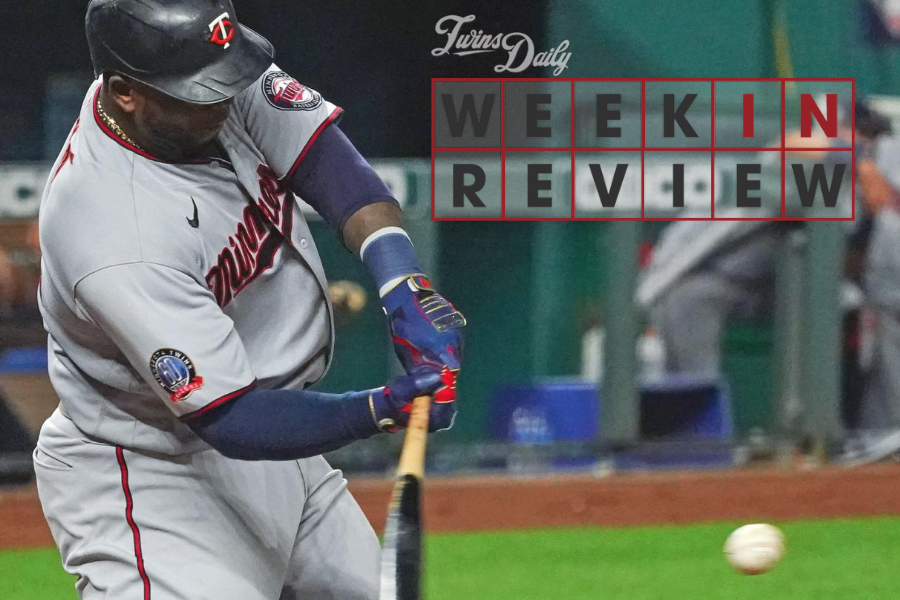 Weekly Snapshot: Mon, 8/17 through Sun, 8/23 *** Record Last Week: 5-2 (Overall: 19-10) Run Differential Last Week: +5 (Overall: +40) Standing: 1st Place in AL Central (1.5 GA) Bomba Counter: 42 (Pace: 90) It was not a great week healthwise for the Twins. Rich Hill returned from his hiatus on Wednesday but looked sluggish, allowing four earned runs on four hits and two walks in just 2⅔ innings. Homer Bailey was moved to the 45-day Injured List, confirming that his return is nowhere near. Jake Odorizzi took a line drive off the ribs in Friday's loss, and later in the same game Zack Littell exited with elbow soreness. Both landed on IL, replaced by relievers Sean Poppen and Danny Coulombe. Late in Sunday's game, Tyler Clippard took a line drive off his pitching arm, and while initial imaging came back negative, Rocco Baldelli said of Clippard after the game, "I can’t imagine he’s going to be throwing a baseball anytime in the very near future." So it'd be no surprise to see another reinforcement called in. Given the offense's continued struggles to find a rhythm, losses in the lineup loom even larger than the litany of injuries plaguing the pitching staff. Luis Arráez started just two games as he continues to battle knee soreness, but the team has bigger concerns. After Wednesday's game, Byron Buxton and Mitch Garver both landed on the Injured List, subtracting two right-handed bats from a unit that has been oddly ineffective against southpaws. There are silver linings with these two key cogs going on the shelf. Buxton has reportedly been bothered for some time by his surgically repaired shoulder, not to mention the foot he sprained during Summer Camp. And while there's been no indication that Garver was hampered by the intercostal muscles that left him wincing after a swing in Wednesday's game ... it would make a lot of sense, given his inexplicably extreme lack of production. A spell of rest may well do them both some good. And their departures create opportunities for deserving players in Ryan Jeffers and LaMonte Wade Jr., who shuttled over from the alternate site in St. Paul. Jeffers was put quickly to work, appearing in all four games since his call-up and starting three of them. Wade Jr. got his first start of the season on Sunday and went 2-for-4 with a double. HIGHLIGHTS The week started with ageless wonder Nelson Cruz once again leaving us in awe, notching his second two-homer game of the season in 4-1 victory over Kansas City. It was merely an appetizer. The following night, Kenta Maeda was pure magic. Taking his dominant start with the Twins to new levels, Maeda carried a no-hitter into the ninth inning against Milwaukee before giving up a weakly-hit single to Eric Sogard and exiting with a career-high 115 pitches. Along the way, Maeda set a franchise record by striking out eight consecutive hitters. He finished with 12 strikeouts and 21 whiffs in eight-plus innings. In this absolute gem, Maeda posted a Game Score of 86, which stands as the highest by a Twins starter since Jose Berríos put up the same number on Opening Day of 2018, with a three-hit shutout against the Orioles. Ranking seventh among major-league starters in fWAR, Maeda has embodied the ace label thus far by any definition. But speaking of Berríos, it was nice to see the rotation's presumed frontman finally look the part on Thursday, breaking off six shutout innings with nine strikeouts and only one hit allowed against Milwaukee. This big step forward for Berríos, combined with the continued excellence of Maeda and consistent quality from Randy Dobnak, makes the rotation's setbacks a bit easier to stomach. With all that being said, the most encouraging development over the past week from my view is Miguel Sanó's explosion at the plate. Last time in this space we pointed to his improving plate discipline as a hugely positive sign, even if the production wasn't quite showing up yet. "As he starts making more contact, Sanó is going to do immense damage." Since then, Sanó has done DAMAGE. (Literally.) Starting all seven games over the past week, the first baseman went 12-for-26 (.462) with eight doubles, five RBIs, and an atom bomb in KC that might've actually left a dent in the wall of Kauffman Stadium's Hall of Fame Museum: https://twitter.com/Twins/status/1297534058616905728 https://twitter.com/CoryProvus/status/1297331194808459264 At 115.8 MPH, it was the hardest hit ball of Sanó's career, the second-hardest hit home run by a Twins player in the Statcast era (c. 2015), and the highest exit velocity posted by a Twins hitter this year. Sanó dominates that list: https://twitter.com/NickNelsonMN/status/1297330079861743616 He's crushing the meatballs and finally starting to make things happen with those offerings that aren't straight in his wheelhouse. It is almost as noteworthy to me that Sanó reached out and made solid contact on two pitches away and outside the zone in his first two ABs Sunday – resulting in a double and single – as his obliterating a mistake from Brady Singer on Saturday. To provide a sense of closure and cosmic balance, Cruz ended the week as he began it: homering off the Royals. This one, an eighth-inning solo shot off a 100-MPH fastball from Trevor Rosenthal, delivered crucial insurance in an eventual 5-4 victory. LOWLIGHTS The lineup as a whole is definitely starting to come on – they scored seven runs as many times last week (twice) as in the previous three weeks – but it's still been pretty choppy sailing for the bats. Ehire Adrianza, pushed into semi-regular duty with the all the attrition, hasn't risen to the occasion. He went 2-for-14 last week and is at .186/.271/.209 on the season. Newcomer Ildemaro Vargas has quickly established himself as a more intriguing option for the same role, so one wonders how secure Adrianza's roster spot will be as injured players begin returning the fold. Max Kepler went just 4-for-22 (.182) although he did draw six walks to keep the OBP pumping. He hasn't been bad by any means, but his power has conspicuously diminished; since homering his first two at-bats of the season, Kepler has a .379 slugging percentage. He's also 2-for-27 (.074) with a .272 OPS against lefties, so he's been a major contributor to the team-wide deficiency on this front. Seeing a big uptick in playing time with Buxton on the shelf, Jake Cave isn't bringing a lot of juice. He delivered an empty 5-for-18 with five singles last week, and is hitting .150/.227/.175 with one RBI in 44 PAs since a good opening weekend in Chicago. It's hard to see Cave finding much success with his utter lack of discipline at the plate – he struck out six times with no walks last week, and has a 20-to-2 ratio on the season. In this regard, Wade Jr. offers a big upgrade, so I'll be curious to see whether the balance of playing time shifts in the days ahead. Like the offense, the pitching staff experienced some rough patches to go along with the shining moments. Taylor Rogers swiftly sucked the energy out of Maeda's gem on Tuesday, coughing up three runs (one charged to Maeda) while blowing the save and forcing extra innings. Since opening his season with four scoreless appearances, Rogers has allowed six earned runs on 13 hits in 6⅓ innings, blowing two of five save chances and flirting with disaster in Sunday's successful conversion. As I wrote a few days ago, the left-hander had developed a reputation as one of the most reliable high-leverage relievers in baseball, but actually has a negative Win Probability Added since last year's All-Star break. This begs the question: Where should he sit in the current bullpen pecking order? Almost certainly not at the top. On the other end of the bullpen leverage spectrum, exploitable soft spots have begun to surface. Lewis Thorpe punched his ticket off the roster on Wednesday with a brutal outing: 4 IP, 6 H, 4 ER, 3 BB, 3 K, 2 HR. He has looked rough basically from the jump this season. So has Littell, who inflated his ERA to 9.95 while allowing another home run on Thursday before landing on IL with elbow inflammation. With a key reliever still sidelined in Cody Stashak, and alternate-siters like Poppen and Coulombe now occupying spots, the bullpen will be pressed to keep getting the job done as the grind of a 21-games-in-20-days stretch marches on. Ten straight days of games still remain in the gauntlet, with six coming against Minnesota's top challengers in the AL Central. TRENDING STORYLINE The trade deadline is now just a week away, coming up on Monday the 31st. The Hot Stove started to heat up over the weekend with Philadelphia pulling the trigger on a deal to acquire Red Sox closer Brandon Workman. Will the Twins be active in these next eight days as they set themselves up for the stretch run and postseason? It seems unlikely that Derek Falvey and Thad Levine will give up any big-ticket prospects for a rented difference-maker in this abbreviated season. A playoff berth is all but assured, and it's clear that the Twins' best hope for a high-impact infusion is simply getting their own banged-up players back at full capacity. With that said, it wouldn't surprise me to see a lower-level or move or two as the team looks to navigate the final month at diminished strength. The move to acquire Vargas has already paid dividends, with the utility infielder playing a fairly significant role since coming from Arizona. Another pickup like that might make sense, depending on how things unfold over the next week. Of course, on the day of the trade deadline, Michael Pineda is eligible to return from his suspension, which will factor into the rotation's needs. LOOKING AHEAD The Twins will open this coming week with a monumental series against the Indians, representing the only visit to Cleveland this season. It's a key opportunity for Terry Francona's club, trailing Minnesota by just a game and a half in the standings. Shane Bieber looms in Game 2. From there, the Twins will head to Detroit to FINALLY see the division's weakest team. After facing them zero times in the first 32 games, Minnesota will get Ron Gardenhire and the Tigers 10 times in the final 28, accounting for roughly one-third of their remaining schedule. Theoretically this should be a very beneficial thing, but it requires capitalizing on the opportunity. The Twins will have their first chance in next weekend's four-game set. MONDAY, 8/24: TWINS @ INDIANS – RHP Kenta Maeda v. RHP Aaron Civale TUESDAY, 8/25: TWINS @ INDIANS – LHP Rich Hill v. RHP Shane Bieber WEDNESDAY, 8/26: TWINS @ INDIANS – RHP Jose Berrios v. RHP Adam Plutko THURSDAY, 8/27: TWINS @ TIGERS – RHP Randy Dobnak v. LHP Matthew Boyd FRIDAY, 8/28: TWINS @ TIGERS – TBD v. LHP Tarik Skubal SATURDAY, 8/29: TWINS @ TIGERS – RHP Kenta Maeda v. RHP Casey Mize SUNDAY, 8/30: TWINS @ TIGERS – LHP Rich Hill v. RHP Spencer Turnbull Catch Up On Twins Daily Game Recaps Game 23 | MIN 4, KCR 1: Nelson Cruz Continues to Defy Logic Game 24 | MIN 4, MIL 3: Kenta Maeda Carries No-No Into 9th Inning; Twins Win In Extras Game 25 | MIL 9, MIN 3: Hill Follows Maeda's Gem With a Clunker Game 26 | MIN 7, MIL 1: It's a Blessed Jose Berríos Day! Game 27 | KC 7, MIN 2: Royal Pain Game 28 | MIN 7, KC 2: Rosario, Sano Power Twins Win in KC Game 29 | MIN 5, KC 4 : Bullpen Steps Up Again MORE FROM TWINS DAILY — Latest Twins coverage from our writers — Recent Twins discussion in our forums — Follow Twins Daily via Twitter, Facebook or email
 -
On Opening Day last year, Jose Berríos pitched 7 2/3 shutout innings against Cleveland before giving way to Taylor Rogers, who notched the final four outs in perfect fashion to slam the door on a 2-0 victory. It was a fitting start in another season where Berríos would be the rotation's frontman and Rogers would anchor the bullpen. This year has been a very different story for the two. What gives?When the All-Star Game rolled around last summer, Berríos was there representing the Twins, thanks to his 3.00 ERA and 1.11 WHIP through 18 starts. The closer Rogers easily could have joined Minnesota's No. 1 starter on the All-Star roster with his 1.82 ERA and 2.84 Win Probability Added, which ranked fifth among MLB relievers. Since the 2019 All-Star break, Berríos has a 4.93 ERA and 1.44 WHIP in 19 starts. Rogers has a 3.96 ERA with six homers allowed and a negative WPA (-0.18) in 38 2/3 innings. It's been strange and saddening to watch these former stalwarts stall out and show their warts. Both are great stories who've earned their way into the hearts of Twins fans – Berríos a scrappy spark plug known for his heart and relentless work ethic, Rogers a washed-out starter who reinvented himself as an elite bullpen arm. They were rightfully viewed coming into this season as the entrenched leaders on a staff poised for championship contention, but both have come up noticeably short during the first month of action. Whatever is afflicting these hurlers, the symptoms are similar. They're getting hit, hard. A look at their batted-ball profiles shows a clear shift away from soft/medium contact and toward harder contact. Berríos First Half 2019 – Soft: 21.0% | Medium: 43.7% | Hard: 35.3% Since Then – Soft: 15.4% | Medium: 44.2% | Hard: 40.4% Rogers First Half 2019 – Soft: 18.4% | Medium: 52.0% | Hard; 29.6% Since Then – Soft: 22.0% | Medium: 43.0% | Hard: 35.0% Last year, batters barreled up 6.5% of offering from Berríos, this year it's up to 12.3%. Rogers is up from 6.4% to 11.1%. What is at the root of these struggles? In neither case has there been a significant drop-off in velocity or stuff. Quite the opposite in Berríos' case; he's up a couple ticks of MPH across the board (perhaps to his detriment). Physically, these guys both seem okay, and whatever issues they're going through look to be correctable. Rogers in particular has been overtly a victim of bad luck, paper-cut to death by bleeders and bloopers in a couple of his rough outings. His 2.29 FIP and 2.36 xFIP, compared to a 4.82 ERA, serve as evidence. I can't say I'm especially worried about the long-term outlook for either of these pitchers. They're 26 and 29 years old, both healthy. The performance dips are ultimately covering small samples in contrast to their impressive bodies of work in years preceding, and neither has lost the ability to reach the mid-90s or miss bats. The real takeaway for me here is that even with the incumbent ringleaders on the Twins' pitching staff this year both dragging down rather than lifting up their respective units, this team is still shutting down opposing offenses consistently. Entering play Wednesday, Minnesota ranked second in the AL, behind Cleveland, in ERA and runs allowed. That speaks to the admirable job this front office has done in proactively adding talent to supplement Berríos and Rogers, as well as the coaching staff in developing pieces around him. The emergence of Randy Dobnak and Tyler Duffey during the same period as those two have slid, for instance, has provided a stark counterbalance – not to mention the additions of Kenta Maeda and Sergio Romo. The Twins now have a variety of "ace" candidates for both the rotation and bullpen, relieving pressure on Berríos and Rogers while also allowing the Twins to be patient as the duo seeks to find their grooves once again. With that said, it'd sure be nice to see the lapsed leaders of this pitching staff could emphatically reclaim their titles, and soon. I miss watching them dominate, and I know I'm not alone. MORE FROM TWINS DAILY — Latest Twins coverage from our writers — Recent Twins discussion in our forums — Follow Twins Daily via Twitter, Facebook or email Click here to view the article
-
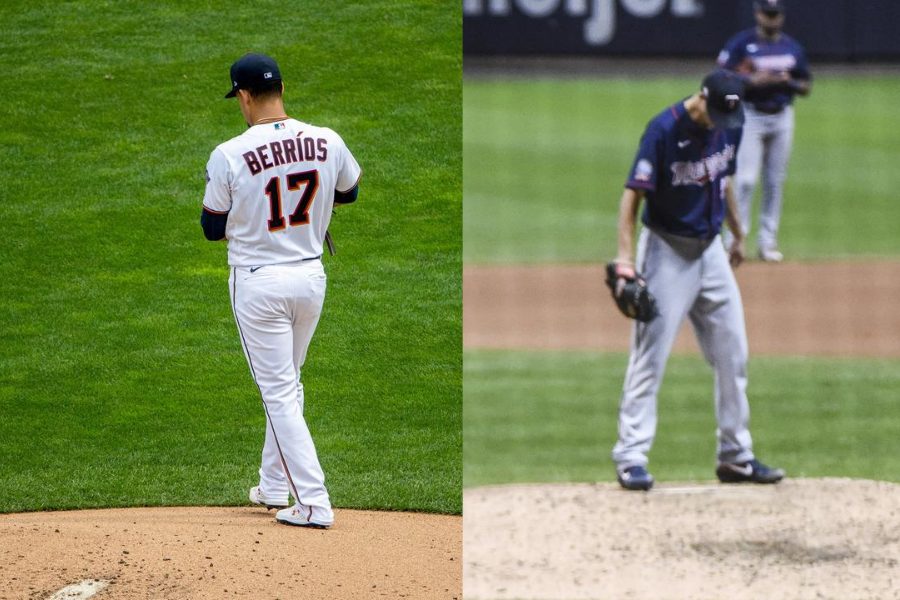 When the All-Star Game rolled around last summer, Berríos was there representing the Twins, thanks to his 3.00 ERA and 1.11 WHIP through 18 starts. The closer Rogers easily could have joined Minnesota's No. 1 starter on the All-Star roster with his 1.82 ERA and 2.84 Win Probability Added, which ranked fifth among MLB relievers. Since the 2019 All-Star break, Berríos has a 4.93 ERA and 1.44 WHIP in 19 starts. Rogers has a 3.96 ERA with six homers allowed and a negative WPA (-0.18) in 38 2/3 innings. It's been strange and saddening to watch these former stalwarts stall out and show their warts. Both are great stories who've earned their way into the hearts of Twins fans – Berríos a scrappy spark plug known for his heart and relentless work ethic, Rogers a washed-out starter who reinvented himself as an elite bullpen arm. They were rightfully viewed coming into this season as the entrenched leaders on a staff poised for championship contention, but both have come up noticeably short during the first month of action. Whatever is afflicting these hurlers, the symptoms are similar. They're getting hit, hard. A look at their batted-ball profiles shows a clear shift away from soft/medium contact and toward harder contact. Berríos First Half 2019 – Soft: 21.0% | Medium: 43.7% | Hard: 35.3% Since Then – Soft: 15.4% | Medium: 44.2% | Hard: 40.4% Rogers First Half 2019 – Soft: 18.4% | Medium: 52.0% | Hard; 29.6% Since Then – Soft: 22.0% | Medium: 43.0% | Hard: 35.0% Last year, batters barreled up 6.5% of offering from Berríos, this year it's up to 12.3%. Rogers is up from 6.4% to 11.1%. What is at the root of these struggles? In neither case has there been a significant drop-off in velocity or stuff. Quite the opposite in Berríos' case; he's up a couple ticks of MPH across the board (perhaps to his detriment). Physically, these guys both seem okay, and whatever issues they're going through look to be correctable. Rogers in particular has been overtly a victim of bad luck, paper-cut to death by bleeders and bloopers in a couple of his rough outings. His 2.29 FIP and 2.36 xFIP, compared to a 4.82 ERA, serve as evidence. I can't say I'm especially worried about the long-term outlook for either of these pitchers. They're 26 and 29 years old, both healthy. The performance dips are ultimately covering small samples in contrast to their impressive bodies of work in years preceding, and neither has lost the ability to reach the mid-90s or miss bats. The real takeaway for me here is that even with the incumbent ringleaders on the Twins' pitching staff this year both dragging down rather than lifting up their respective units, this team is still shutting down opposing offenses consistently. Entering play Wednesday, Minnesota ranked second in the AL, behind Cleveland, in ERA and runs allowed. That speaks to the admirable job this front office has done in proactively adding talent to supplement Berríos and Rogers, as well as the coaching staff in developing pieces around him. The emergence of Randy Dobnak and Tyler Duffey during the same period as those two have slid, for instance, has provided a stark counterbalance – not to mention the additions of Kenta Maeda and Sergio Romo. The Twins now have a variety of "ace" candidates for both the rotation and bullpen, relieving pressure on Berríos and Rogers while also allowing the Twins to be patient as the duo seeks to find their grooves once again. With that said, it'd sure be nice to see the lapsed leaders of this pitching staff could emphatically reclaim their titles, and soon. I miss watching them dominate, and I know I'm not alone. MORE FROM TWINS DAILY — Latest Twins coverage from our writers — Recent Twins discussion in our forums — Follow Twins Daily via Twitter, Facebook or email
 -
No denying that's been the case thus far. Last year Sano batted .299 and slugged .729 against fastballs, with a 26.7% whiff rate. This year his whiff rate on FBs is up to 46.3%. So he has either fundamentally lost the ability to hit them at age 27 for some reason, or his timing is off and he's still catching up because he had a shortened training camp. Which do you think is more likely?
- 9 replies
-
- 1
-

-
- byron buxton
- miguel sano
- (and 2 more)
-
In their third full week of action, the Minnesota Twins went 4-2, with four of their six games decided by a final score of ... 4-2. While the offense is still waiting to click, several key hitters are finding their rhythms, and pitching continues to shine, with one starter building his case for Rookie of the Year and maybe even the Cy Young. Weekly Snapshot: Mon, 8/10 through Sun, 8/16 *** Record Last Week: 4-2 (Overall: 14-8) Run Differential Last Week: +12 (Overall: +35) Standing: 1st Place in AL Central (1.0 GA) Bomba Counter: 35 (Pace: 95) Following a week of tough injury news, the Twins had smoother sailing over the past week. Cody Stashak went on the Injured List due to lower back inflammation, but his departure was offset by the return of Zack Littell, who tossed a scoreless inning in his return to action on Saturday. Meanwhile, Rich Hill had a successful throwing session at the St. Paul site on Friday, and there's optimism he'll be able to step back into the rotation in the coming week. Homer Bailey's timeline is less concrete, but he's at least back to playing catch. As for Josh Donaldson ... no return in sight. Last week's Trending Storyline in this column pertained to the search for added infield depth, with Donaldon's absence looking to be an extended one. We floated names of some prospects at the alternate training site, but the problem with that route was always going to be bringing in a completely green rookie who's never faced MLB pitching, and hasn't even been able to play competitive games in the minors this season. So the Twins took a different route. They traded cash considerations to Arizona for Ildemaro Vargas, a versatile defender with considerable big-league experience who has – importantly – been facing MLB pitching already this year (albeit with a .340 OPS in 21 plate appearances). Righty reliever Cory Gearrin was designated for assignment to make room on the 40-man roster for Vargas, who made his debut as a pinch-runner and third baseman on Sunday. A winning week preserves Minnesota's spot atop the AL Central standings (though Cleveland is nipping at their heels), and their plus-35 run differential is tied with the Yankees for tops in the American League. Here's a look back at bright spots and areas of concern from the past week. HIGHLIGHTS As several key hitters stumbled out of the gates, the reassuring mantra went like this: It's early, pitchers are always ahead of hitters in spring training, and no one got a full ramp-up to this abbreviated season. That line of thinking has been supported by the noticeable drop-off in offensive output across the board in the early weeks. Now, with one-third of the season in the books, it looks like two of Minnesota's most critical lineup fixtures are catching up. Byron Buxton had begun to simmer the previous week, when he homered in three straight games, and his hot bat carried forward as he notched a pair of three-hit games in Milwaukee, including a two-homer outburst on Wednesday. Even with an 0-for-9 showing against Kansas City over the weekend, Buxton sports a .790 OPS, and is slugging .703 in his past 10 games. After perpetually getting under the ball in the early going, Buxton is connecting now with much more authority and regularity. Even his outs over the past week tended to be well-struck deep drives tracked down by outfielders (karma?). It would be nice to see a little more discipline – he still has only one walk in 59 plate appearances – but aggressiveness is paying off for Buxton, and the raw power is emerging. LOWLIGHTS The weakest link in this steady rotation is ... not exactly the one we expected. Last year, through five starts, José Berríos was 3-1 with a 2.97 ERA, and holding opponents to a .666 OPS. This year has been quite a different tale. Another rough outing against the the Royals on Saturday (4 IP, 4 ER) dropped Berríos to 1-3 record with a 5.92 ERA through his first five starts of 2020. Opponents are rocking an .854 OPS. In a nightcap loss against Kansas City, the right-hander's issues were all too familiar. His velocity and pitch movement were certainly there, indicating no physical limitations, but his command wavered as he seemed to alternate between missing the zone entirely and leaving hittable pitchers out over the plate. His previously infallible ability to limit hard contact has gone amiss here in 2020: Download attachment: berriosstatcastcomps.png Berríos' margin for error has unfortunately been pretty thin. The Twins have dropped three of his last four starts, scoring two or fewer runs in each of the losses. It'll be hard to feel great about this team's postseason outlook if Berríos can't start to turn things around, but then, it'll be hard to feel confident in their chances with anyone on the mound if the offense can't find some consistent juice. The 12-run explosion against Milwaukee on Wednesday was nice to see, but this remains a feast-or-famine unit, which scored four or fewer in all five other games, and has pushed across more than six in a contest only twice since the opening series. The absence of Donaldson hurts, but the bigger problem is that this lineup rarely seems to have multiple players locked in simultaneously, or for a sustained period. Buxton couldn't buy a hit over the weekend after his big series in Milwaukee. Sanó, despite his positive signs, still hasn't become a difference-maker for the offense yet. Max Kepler was 1-for-16 on the week before his crucial two-run homer on Sunday. Mitch Garver has driven in one run since Opening Day. We keep waiting for this vaunted offense to awaken and start punishing opponents in accordance with their statement from the opening weekend, but it's still not happening. TRENDING STORYLINE The Twins don't have another scheduled day off until September 3rd – more than two weeks from now. Factor in Saturday's double-header, and that's a stretch of 20 games in 19 days. It'll be interesting to see how Rocco Baldelli handled his regulars during this gauntlet, which includes potentially key series against Cleveland and Chicago. More rest? Less? Reinforcements called in to aid the cause? (Willians Astudillo?) Even more so, I'm curious to see how the pitching staff is managed. It'd be unsurprising to see the "revolving door" strategy from last year implemented for the last spot or two in the bullpen, with relievers being swapped out for a fresh arm immediately after taxing appearances. Which players from the alternate training site could we see enter the fold? Sean Poppen, who was 29th man for Saturday's double-header, is a good bet. Could we see debuts from exciting prospects like Jhoan Duran, Dakota Chalmers, or even Edwar Colina (who'd need to be added to the 40-man roster)? It sure seems plausible. LOOKING AHEAD The slate for this coming week looks very familiar, as the Twins run out a string of 17 straight games against the Brewers and Royals. First, Minnesota wraps its four-game home series against Kansas City, then welcomes Milwaukee to Target Field before heading back to Kauffman for the last time. If you're tired of seeing this pesky Royals club, which has gone 4-2 against the Twins through six contests, the good news is that we'll be finished with them after this week. Keep an eye on that "TBD" for the Twins on Wednesday, when Hill could very well jump back into the rotation. MONDAY, 8/17: ROYALS @ TWINS – LHP Kris Bubic v. RHP Matt Wisler TUESDAY, 8/18: BREWERS @ TWINS – RHP Corbin Burnes v. RHP Kenta Maeda WEDNESDAY, 8/19: BREWERS @ TWINS – LHP Brett Anderson v. TBD THURSDAY, 8/20: BREWERS @ TWINS – RHP Brandon Woodruff v. RHP Jake Odorizzi FRIDAY, 8/21: TWINS @ ROYALS – RHP Jose Berrios v. LHP Danny Duffy SATURDAY, 8/22: TWINS @ ROYALS – RHP Randy Dobnak v. RHP Brady Singer SUNDAY, 8/23: TWINS @ ROYALS – RHP Kenta Maeda v. LHP Kris Bubic Catch Up On Twins Daily Game Recaps Game 17 | MIN 4, MIL 2: The Randy and Rosie Show Game 18 | MIL 6, MIN 4: Another Loss for Rogers, Additional Missed Opportunities for Offense Game 19 | MIN 12, MIL 2: Byron Buxton Blasts 2 More Home Runs in Blowout of Brewers Game 20 | MIN 4, KCR 2 Game 21 | KCR 4, MIN 2 Game 22 | MIN 4, KCR 2: Pitching, Defense and Overall Execution Shine in Twins Victory MORE FROM TWINS DAILY — Latest Twins coverage from our writers — Recent Twins discussion in our forums — Follow Twins Daily via Twitter, Facebook or email Click here to view the article
-
 Weekly Snapshot: Mon, 8/10 through Sun, 8/16 *** Record Last Week: 4-2 (Overall: 14-8) Run Differential Last Week: +12 (Overall: +35) Standing: 1st Place in AL Central (1.0 GA) Bomba Counter: 35 (Pace: 95) Following a week of tough injury news, the Twins had smoother sailing over the past week. Cody Stashak went on the Injured List due to lower back inflammation, but his departure was offset by the return of Zack Littell, who tossed a scoreless inning in his return to action on Saturday. Meanwhile, Rich Hill had a successful throwing session at the St. Paul site on Friday, and there's optimism he'll be able to step back into the rotation in the coming week. Homer Bailey's timeline is less concrete, but he's at least back to playing catch. As for Josh Donaldson ... no return in sight. Last week's Trending Storyline in this column pertained to the search for added infield depth, with Donaldon's absence looking to be an extended one. We floated names of some prospects at the alternate training site, but the problem with that route was always going to be bringing in a completely green rookie who's never faced MLB pitching, and hasn't even been able to play competitive games in the minors this season. So the Twins took a different route. They traded cash considerations to Arizona for Ildemaro Vargas, a versatile defender with considerable big-league experience who has – importantly – been facing MLB pitching already this year (albeit with a .340 OPS in 21 plate appearances). Righty reliever Cory Gearrin was designated for assignment to make room on the 40-man roster for Vargas, who made his debut as a pinch-runner and third baseman on Sunday. A winning week preserves Minnesota's spot atop the AL Central standings (though Cleveland is nipping at their heels), and their plus-35 run differential is tied with the Yankees for tops in the American League. Here's a look back at bright spots and areas of concern from the past week. HIGHLIGHTS As several key hitters stumbled out of the gates, the reassuring mantra went like this: It's early, pitchers are always ahead of hitters in spring training, and no one got a full ramp-up to this abbreviated season. That line of thinking has been supported by the noticeable drop-off in offensive output across the board in the early weeks. Now, with one-third of the season in the books, it looks like two of Minnesota's most critical lineup fixtures are catching up. Byron Buxton had begun to simmer the previous week, when he homered in three straight games, and his hot bat carried forward as he notched a pair of three-hit games in Milwaukee, including a two-homer outburst on Wednesday. Even with an 0-for-9 showing against Kansas City over the weekend, Buxton sports a .790 OPS, and is slugging .703 in his past 10 games. After perpetually getting under the ball in the early going, Buxton is connecting now with much more authority and regularity. Even his outs over the past week tended to be well-struck deep drives tracked down by outfielders (karma?). It would be nice to see a little more discipline – he still has only one walk in 59 plate appearances – but aggressiveness is paying off for Buxton, and the raw power is emerging. https://twitter.com/Nashwalker9/status/1293937003789156355 Then, we have Miguel Sanó. In contrast to Buxton, it is the improving plate approach that stands out here more than the production. Sanó had only three hits in the last week (including one absolute mammoth home run at Miller Park, see below) but the massive strides in plate discipline are enormously encouraging. https://twitter.com/Twins/status/1293700933835272197 In his 47 plate appearances prior to last Monday, Sanó had drawn one non-intentional walk, compared to 23 strikeouts. In six games since, he's drawn six non-intentional walks compared to eight strikeouts in 18 plate appearances. That's just a night-and-day difference and one that bodes extremely well, even if the first baseman is still having a helluva time making consistent contact. He continues to strike out in nearly half his plate appearances, but here's the caveat worth zeroing in on: When Sanó makes contact, he's barreling up at a higher percentage than any other player in baseball. He ranks fourth in average exit velocity. I feel confident in saying his career-high 18.9% whiff rate is going to come down. The fact that he's suddenly drawing tons of walks indicates he's laying off more bad pitches, which is a key step in that direction. As he starts making more contact, Sanó is going to do immense damage. That'll be appreciated by a pitching staff that continues to carry the load without a ton of support. Randy Dobnak keeps on making do; the team is averaging just 4 R/G when he starts, and yet he has managed to pick up wins in four straight. He rattled off two more victories last week, allowing three runs over 10 1/3 innings. Opponents are batting .178 against Minnesota's unlikely ace through five starts, and his 1.46 ERA ranks as the fifth-best in baseball. He's gotta be viewed as the clear front-runner for AL Rookie of the Year at this point, and a leading candidate for the Cy Young alongside the likes of Lance Lynn (3-0, 1.11) and Shane Bieber (4-0, 1.30). What a story. He and the rest of the Twins' stand-out staff, which allowed just three runs per game on average over the past week, are getting plenty of help from a defense that's been stunningly effective so far. Buxton has been fantastic as usual in center field, and made a number of nice plays over the past week, but he wasn't alone. Check out this sampling of stellar efforts from Eddie Rosario, Marwin González, and the double-play duo of Jorge Polanco and Luis Arráez: https://twitter.com/Twins/status/1295086070489546754 https://twitter.com/fsnorth/status/1294765635289976840 https://twitter.com/TFTwins/status/1295091067155550209 LOWLIGHTS The weakest link in this steady rotation is ... not exactly the one we expected. Last year, through five starts, José Berríos was 3-1 with a 2.97 ERA, and holding opponents to a .666 OPS. This year has been quite a different tale. Another rough outing against the the Royals on Saturday (4 IP, 4 ER) dropped Berríos to 1-3 record with a 5.92 ERA through his first five starts of 2020. Opponents are rocking an .854 OPS. In a nightcap loss against Kansas City, the right-hander's issues were all too familiar. His velocity and pitch movement were certainly there, indicating no physical limitations, but his command wavered as he seemed to alternate between missing the zone entirely and leaving hittable pitchers out over the plate. His previously infallible ability to limit hard contact has gone amiss here in 2020: Berríos' margin for error has unfortunately been pretty thin. The Twins have dropped three of his last four starts, scoring two or fewer runs in each of the losses. It'll be hard to feel great about this team's postseason outlook if Berríos can't start to turn things around, but then, it'll be hard to feel confident in their chances with anyone on the mound if the offense can't find some consistent juice. The 12-run explosion against Milwaukee on Wednesday was nice to see, but this remains a feast-or-famine unit, which scored four or fewer in all five other games, and has pushed across more than six in a contest only twice since the opening series. The absence of Donaldson hurts, but the bigger problem is that this lineup rarely seems to have multiple players locked in simultaneously, or for a sustained period. Buxton couldn't buy a hit over the weekend after his big series in Milwaukee. Sanó, despite his positive signs, still hasn't become a difference-maker for the offense yet. Max Kepler was 1-for-16 on the week before his crucial two-run homer on Sunday. Mitch Garver has driven in one run since Opening Day. We keep waiting for this vaunted offense to awaken and start punishing opponents in accordance with their statement from the opening weekend, but it's still not happening. TRENDING STORYLINE The Twins don't have another scheduled day off until September 3rd – more than two weeks from now. Factor in Saturday's double-header, and that's a stretch of 20 games in 19 days. It'll be interesting to see how Rocco Baldelli handled his regulars during this gauntlet, which includes potentially key series against Cleveland and Chicago. More rest? Less? Reinforcements called in to aid the cause? (Willians Astudillo?) Even more so, I'm curious to see how the pitching staff is managed. It'd be unsurprising to see the "revolving door" strategy from last year implemented for the last spot or two in the bullpen, with relievers being swapped out for a fresh arm immediately after taxing appearances. Which players from the alternate training site could we see enter the fold? Sean Poppen, who was 29th man for Saturday's double-header, is a good bet. Could we see debuts from exciting prospects like Jhoan Duran, Dakota Chalmers, or even Edwar Colina (who'd need to be added to the 40-man roster)? It sure seems plausible. LOOKING AHEAD The slate for this coming week looks very familiar, as the Twins run out a string of 17 straight games against the Brewers and Royals. First, Minnesota wraps its four-game home series against Kansas City, then welcomes Milwaukee to Target Field before heading back to Kauffman for the last time. If you're tired of seeing this pesky Royals club, which has gone 4-2 against the Twins through six contests, the good news is that we'll be finished with them after this week. Keep an eye on that "TBD" for the Twins on Wednesday, when Hill could very well jump back into the rotation. MONDAY, 8/17: ROYALS @ TWINS – LHP Kris Bubic v. RHP Matt Wisler TUESDAY, 8/18: BREWERS @ TWINS – RHP Corbin Burnes v. RHP Kenta Maeda WEDNESDAY, 8/19: BREWERS @ TWINS – LHP Brett Anderson v. TBD THURSDAY, 8/20: BREWERS @ TWINS – RHP Brandon Woodruff v. RHP Jake Odorizzi FRIDAY, 8/21: TWINS @ ROYALS – RHP Jose Berrios v. LHP Danny Duffy SATURDAY, 8/22: TWINS @ ROYALS – RHP Randy Dobnak v. RHP Brady Singer SUNDAY, 8/23: TWINS @ ROYALS – RHP Kenta Maeda v. LHP Kris Bubic Catch Up On Twins Daily Game Recaps Game 17 | MIN 4, MIL 2: The Randy and Rosie Show Game 18 | MIL 6, MIN 4: Another Loss for Rogers, Additional Missed Opportunities for Offense Game 19 | MIN 12, MIL 2: Byron Buxton Blasts 2 More Home Runs in Blowout of Brewers Game 20 | MIN 4, KCR 2 Game 21 | KCR 4, MIN 2 Game 22 | MIN 4, KCR 2: Pitching, Defense and Overall Execution Shine in Twins Victory MORE FROM TWINS DAILY — Latest Twins coverage from our writers — Recent Twins discussion in our forums — Follow Twins Daily via Twitter, Facebook or email
 -
Tyler Duffey: The Bullpen Ace that Almost Got Away
Nick Nelson replied to Nick Nelson's topic in Twins Daily Front Page News
I knew it was something along those lines. Thanks for the reminder! -
By May of 2019, Tyler Duffey had just about reached the end of the line in Minnesota. Optioned to the minors for a 10th time since his initial call-up in 2015, the right-hander had to be looking forward to a fresh start. Thankfully, unlike the two other best relief pitchers in baseball – both former Twins – he didn't need one to turn the corner.The flurry of moves Duffey endured over a three-day span last year must have had his head spinning. I don't recall the exact circumstances around his being recalled, optioned, and recalled again on consecutive days, and I don't recall if he actually traveled back and forth to Rochester. I hope not. Download attachment: duffeymoves.JPG While this roster maneuvering may have been extreme, it was hardly unfamiliar ground for Duffey, who'd grown accustomed to shuttling back and forth between the majors and Triple-A. Following his 10th such turnaround, the 28-year-old seemed to be firmly placing himself in the "Quad-A player" category: Good enough to excel at the highest level of the minors, where he'd posted a 2.90 ERA in 2018 (59 IP), but not good enough for the bigs, where his ERA was 7.20 in 25 innings. I can think of two former Twins pitchers who were once deemed Quad-A players. And incidentally, they now surround Duffey on the list of top-performing MLB relief pitchers since the 2019 trade deadline, according fWAR: 1. Liam Hendriks, OAK - 1.7 2. Tyler Duffey, MIN - 1.5 3. Nick Anderson, TB - 1.4 Granted, it's a bit of a selective endpoint, and fWAR is hardly the be-all end-all measure of relief effectiveness, but I think it's fair to categorize these as the three top bullpen arms in the game based on recent results. Hendriks, of course, reached the majors for the Twins as a fringey starting pitching prospect in 2011. He made 30 appearances for the Twins (28 starts) over three seasons with a 6.06 ERA before moving on. It took another five years for him to emerge as an elite closer in Oakland, at in 2019, at age 30. Anderson followed a different path to stardom, and while he too was borne out of the Twins' organization, his sadly never even passed through Minnesota. (Not professionally, anyway.) The Brainerd, MN native was signed out of an independent league by the Twins in 2015. He performed extremely well in their system, with a 2.25 ERA and 11.4 K/9 rate over four seasons, but for whatever reason, never got a look in the majors – not even in the late stages of a lost 2018 that saw them cycling through various spare arms. (Anderson had put up an 88-to-19 K/BB ratio in 60 innings that year as Duffey's teammate at Rochester.) After that season, the Twins traded Anderson to the Marlins for a bag of peanuts. In 2019, Miami gave the hard-throwing righty a shot and he was an immediate sensation, striking out 69 hitters over 43 2/3 innings with a 3.92 ERA before being deal to Tampa at the deadline. Since that point, as we referenced earlier, he's been the third-best (or so) relief pitcher in baseball. The point here is not to relitigate the past or blame the Twins for misjudging their own talent. There's no way they could've stuck with Hendriks through a half-decade of struggle and mediocrity. And while they certainly should've given Anderson a look in 2018, who's to say it would've made any difference? Even a strong performance in a smattering of appearances wasn't going to entrench him. Keep in mind that Oliver Drake posted a 2.21 ERA in 19 appearances for the Twins around that time, and was let go afterward. (Drake, as it happens, has also since caught on as a pretty good reliever for the Rays. Another "Quad-A" guy.) The bottom line is that evaluating bullpen arms is a fickle endeavor. And the Twins could have so easily gotten it wrong with Duffey. What if that 10th time being optioned to the minors was for good? What if they gave up on him and decided to move on? They didn't. Duffey was recalled the next day, and hasn't looked back. Since then, he has a 2.31 ERA and 82-to-12 K/BB with 41 hits allowed in 58 1/3 innings. And since the start of last August, he's been utterly ridiculous: 0.65 ERA, with 31 scoreless appearances out of 32. In 2020, he's been very nearly perfect. The Twins might've let a couple of MLB's relievers get away. But right now the one they kept looks like the very best, and he's surrounded by plenty of other high-end contributors in a bullpen that's been supercharged over the past 16 months. MORE FROM TWINS DAILY — Latest Twins coverage from our writers — Recent Twins discussion in our forums — Follow Twins Daily via Twitter, Facebook or email Click here to view the article
-
 The flurry of moves Duffey endured over a three-day span last year must have had his head spinning. I don't recall the exact circumstances around his being recalled, optioned, and recalled again on consecutive days, and I don't recall if he actually traveled back and forth to Rochester. I hope not. While this roster maneuvering may have been extreme, it was hardly unfamiliar ground for Duffey, who'd grown accustomed to shuttling back and forth between the majors and Triple-A. Following his 10th such turnaround, the 28-year-old seemed to be firmly placing himself in the "Quad-A player" category: Good enough to excel at the highest level of the minors, where he'd posted a 2.90 ERA in 2018 (59 IP), but not good enough for the bigs, where his ERA was 7.20 in 25 innings. I can think of two former Twins pitchers who were once deemed Quad-A players. And incidentally, they now surround Duffey on the list of top-performing MLB relief pitchers since the 2019 trade deadline, according fWAR: 1. Liam Hendriks, OAK - 1.7 2. Tyler Duffey, MIN - 1.5 3. Nick Anderson, TB - 1.4Granted, it's a bit of a selective endpoint, and fWAR is hardly the be-all end-all measure of relief effectiveness, but I think it's fair to categorize these as the three top bullpen arms in the game based on recent results. Hendriks, of course, reached the majors for the Twins as a fringey starting pitching prospect in 2011. He made 30 appearances for the Twins (28 starts) over three seasons with a 6.06 ERA before moving on. It took another five years for him to emerge as an elite closer in Oakland, at in 2019, at age 30. Anderson followed a different path to stardom, and while he too was borne out of the Twins' organization, his sadly never even passed through Minnesota. (Not professionally, anyway.) The Brainerd, MN native was signed out of an independent league by the Twins in 2015. He performed extremely well in their system, with a 2.25 ERA and 11.4 K/9 rate over four seasons, but for whatever reason, never got a look in the majors – not even in the late stages of a lost 2018 that saw them cycling through various spare arms. (Anderson had put up an 88-to-19 K/BB ratio in 60 innings that year as Duffey's teammate at Rochester.) After that season, the Twins traded Anderson to the Marlins for a bag of peanuts. In 2019, Miami gave the hard-throwing righty a shot and he was an immediate sensation, striking out 69 hitters over 43 2/3 innings with a 3.92 ERA before being deal to Tampa at the deadline. Since that point, as we referenced earlier, he's been the third-best (or so) relief pitcher in baseball. The point here is not to relitigate the past or blame the Twins for misjudging their own talent. There's no way they could've stuck with Hendriks through a half-decade of struggle and mediocrity. And while they certainly should've given Anderson a look in 2018, who's to say it would've made any difference? Even a strong performance in a smattering of appearances wasn't going to entrench him. Keep in mind that Oliver Drake posted a 2.21 ERA in 19 appearances for the Twins around that time, and was let go afterward. (Drake, as it happens, has also since caught on as a pretty good reliever for the Rays. Another "Quad-A" guy.) The bottom line is that evaluating bullpen arms is a fickle endeavor. And the Twins could have so easily gotten it wrong with Duffey. What if that 10th time being optioned to the minors was for good? What if they gave up on him and decided to move on? They didn't. Duffey was recalled the next day, and hasn't looked back. Since then, he has a 2.31 ERA and 82-to-12 K/BB with 41 hits allowed in 58 1/3 innings. And since the start of last August, he's been utterly ridiculous: 0.65 ERA, with 31 scoreless appearances out of 32. In 2020, he's been very nearly perfect. The Twins might've let a couple of MLB's relievers get away. But right now the one they kept looks like the very best, and he's surrounded by plenty of other high-end contributors in a bullpen that's been supercharged over the past 16 months. https://twitter.com/NickNelsonMN/status/1293356639777705984 MORE FROM TWINS DAILY — Latest Twins coverage from our writers — Recent Twins discussion in our forums — Follow Twins Daily via Twitter, Facebook or email
 -
After racing to a 10-2 start, the Minnesota Twins hit a speed bump against what should've been an exploitable soft spot in the schedule. A six-game winning streak gave way to a four-game losing streak as the team is suddenly overcome by sleepy and punchless performances. Weekly Snapshot: Mon, 8/3 through Sun, 8/9 *** Record Last Week: 3-4 (Overall: 10-6) Run Differential Last Week: +1 (Overall: +23) Standing: 1st Place in AL Central (0.5 GA) Bomba Counter: 25 (Pace: 94) Everything seemed to take a turn for the Twins on Thursday afternoon in Pittsburgh. With a two-run lead in the eighth inning, they appeared to be headed toward a seventh straight win. But the Pirates rallied to manufacture three runs against Sergio Romo and Taylor Rogers, despite not hitting anything especially hard. Rogers ended up getting walked off on a two-run ground ball single, and the Twins haven't won since. Making matters worse is the rash of negative injury news to emerge over the course of the week. Homer Bailey and Rich Hill were both placed on the Injured List, with fairly ominous issues. Bailey is bothered by right biceps tendinitis and, as of Saturday, had yet to resume throwing. Hill's injury seems more minor, as he's traveling with the team and going through his throwing progressions, but it's unsettling to hear about a 40-year-old experiencing shoulder fatigue after his first start of the season.On Friday the Twins announced that Josh Donaldson, who hadn't played for a week, was being placed on the Injured List retroactive to August 4th, meaning he'll miss most of next week at least. I had written on Thursday night about Donaldson's cursed (and blessed) massive calves, which have given him plenty of trouble in the past.On the bright side, Jake Odorizzi was activated to take Donaldson's place on the active roster, and made his season debut on Saturday. He looked okay, allowing two runs over three innings, but what's most important is that he's healthy and back in this depleted rotation. HIGHLIGHTS With the offense still looking to find its rhythm, pitching continues to steal the show. Granted, the Twins faced a soft slate of opponents over the past week, but their arms still deserve plenty of credit for taking care of business. With the exception of Saturday's lapse, it was another strong week for the pitchers, most notably: Randy Dobnak, who delivered yet another sterling performance with six scoreless innings against Pittsburgh on Wednesday. His ERA sits at 0.60 after three starts.Kenta Maeda, who made one make mistake the following day – a three-run homer – but was otherwise outstanding in delivering another quality start.Jorge Alcala, who joined the bullpen just ahead of the week and made three appearances, totaling five innings. He allowed two earned runs on three hits and struck out eight while walking only one. That last stat is most encouraging – if Alcala can keep his 99 MPH heater and hard slider in the zone, he's going be a difference-maker for the bullpen.Tyler Duffey, who pitched only once but extended his remarkable early-season run with a scoreless frame. On the season, Duffey has faced 16 batters and retired 15 of them – 10 on strikeouts. Very nearly perfect. It's interesting, though, that Alcala threw as many innings this past week as Duffey has all season, and that reflects a broader trend: Rocco Baldelli has seemed more inclined to use his lower-tier relief arms than his top dogs, even when his better options are well-rested. Trying to save as many bullets as possible for later? With Garver and Sanó both failing to click, the lineup's right-handed power threat is severely diminished, which might help explain why the teams is slugging just .339 off southpaws. Last year they had a collective .521 slugging percentage against lefties. Count Luis Arráez as another expected spark plug who's been fizzling of late. Since opening the season on a five-game hitting streak, he's gone just 3-for-25, including 3-for-16 over the past week while missing a couple games due to knee soreness. His plate approach is still just fine – he drew four walks with only one strikeout – but the results aren't there right now for the scrappy second baseman, who basically hit non-stop as a rookie. While the pitching staff has mostly been quite good, an overt outlier is Lewis Thorpe. He got the starting nod against Pittsburgh on Monday and was quite shaky, allowing three earned runs on six hits and four walks over four innings. His second appearance of the week came in relief, as Thorpe came in after Odorizzi's exit on Saturday night, and it was even more brutal: He was charged with three runs on three hits – including a home run allowed to light-hitting second baseman Nicky Lopez – while failing to record an out. This year's version of Thorpe looks very little like the intriguing whiff machine we saw last year; his velocity is now down, his command has been poor, and batters aren't getting fooled as evidenced by a 7.4% swinging strike rate. He frankly doesn't look like a very palatable option right now. One wonders if the Twins would consider swapping in a higher-upside arm like Jhoan Duran from the alternative training site to see if it provides a jolt. TRENDING STORYLINE Speaking of reinforcements, the offense could maybe use some right now. The current 18-to-12 ratio of pitchers to position players is quite lopsided, and a lot of key relievers just aren't getting much work. Perhaps that's by design, to an extent, but there have to be downsides to it in terms of maintaining sharpness. Travis Blankenhorn stands out as a sensible short-term add, given that he can play both infield positions (third and second) where the Twins have players banged up. If the team concludes that Donaldson will be out for a prolonged time, might they consider something a little more drastic? Like, say, shifting Sanó back across the diamond to third and using someone like Alex Kirilloff or Brent Rooker at first? Or even sliding a Jorge Polanco or Arráez to third and giving Royce Lewis a look? Of course, there's also a beloved guy by the name of Willians Astudillo who is now recovered from his COVID bout and ramping up in St. Paul... LOOKING AHEAD The Twins are off to Milwaukee to wrap up their road trip in a border battle against the Brewers. Dobnak will open the week tryin build upon his spectacular start to the season on Monday. After three games against the Brew Crew, the Twins get their only day off in the month of August, and then head back to Target Field for a rematch against Kansas City. MONDAY, 8/10: TWINS @ BREWERS – RHP Randy Dobnak v. RHP Adrian Houser TUESDAY, 8/11: TWINS @ BREWERS – TBD v. RHP Josh Lindblom WEDNESDAY, 8/12: TWINS @ BREWERS – RHP Kenta Maeda v. LHP Eric Lauer FRIDAY, 8/14: ROYALS @ TWINS – RHP Jakob Junis v. RHP Jake Odorizzi SATURDAY, 8/15: ROYALS @ TWINS – LHP Danny Duffy v. RHP Jose Berrios SUNDAY, 8/16: ROYALS @ TWINS – Kris Bubic vs Undecided Catch Up On Twins Daily Game Recaps Game 10 | MIN 5, PIT 4: Nelson Cruz Delivers a Walk-Off Hit to Cap ComebackGame 11 | MIN 7, PIT 3: José Berríos Overcomes Command, DroneGame 12 | MIN 5, PIT 2: Randy Dobnak Delivers 6 Scoreless, Max Kepler Provides Key Insurance HomerGame 13 | PIT 6, MIN 5: Taylor Rogers Blows Save, Win Streak SnappedGame 14 | KCR 3, MIN 2: No Cruz, No Donaldson, No Arráez, No OffenseGame 15 | KCR 9, MIN 6: Brief 2020 Debut for Odorizzi; Royals Bust It Open Against BullpenGame 16 | KCR 4, MIN 2: Bad Day for Berríos, BatsMORE FROM TWINS DAILY— Latest Twins coverage from our writers — Recent Twins discussion in our forums — Follow Twins Daily via Twitter, Facebook or email Click here to view the article
- 15 replies
-
- 1
-
-
- byron buxton
- marwin gonzalez
- (and 2 more)
-
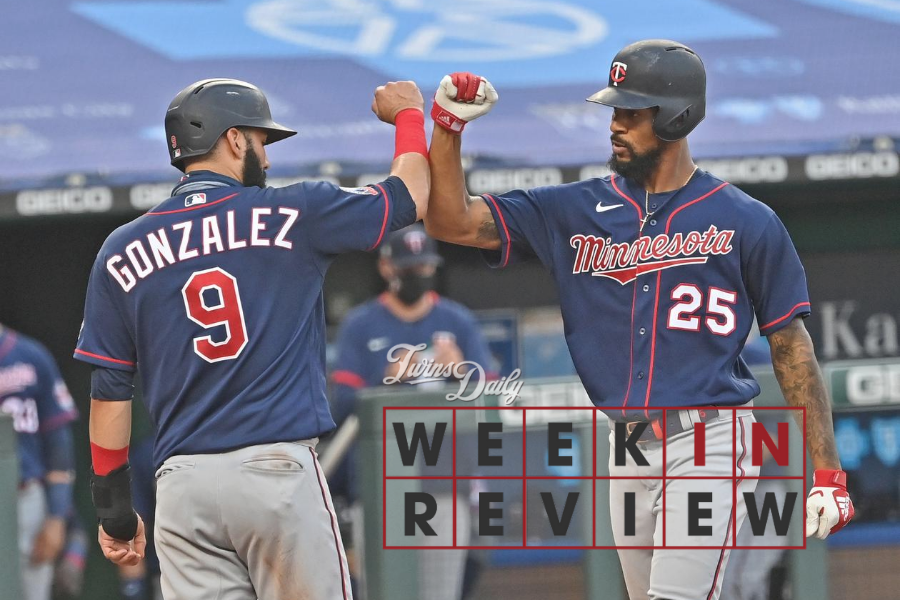 Weekly Snapshot: Mon, 8/3 through Sun, 8/9 *** Record Last Week: 3-4 (Overall: 10-6) Run Differential Last Week: +1 (Overall: +23) Standing: 1st Place in AL Central (0.5 GA) Bomba Counter: 25 (Pace: 94) Everything seemed to take a turn for the Twins on Thursday afternoon in Pittsburgh. With a two-run lead in the eighth inning, they appeared to be headed toward a seventh straight win. But the Pirates rallied to manufacture three runs against Sergio Romo and Taylor Rogers, despite not hitting anything especially hard. Rogers ended up getting walked off on a two-run ground ball single, and the Twins haven't won since. Making matters worse is the rash of negative injury news to emerge over the course of the week. Homer Bailey and Rich Hill were both placed on the Injured List, with fairly ominous issues. Bailey is bothered by right biceps tendinitis and, as of Saturday, had yet to resume throwing. Hill's injury seems more minor, as he's traveling with the team and going through his throwing progressions, but it's unsettling to hear about a 40-year-old experiencing shoulder fatigue after his first start of the season. On Friday the Twins announced that Josh Donaldson, who hadn't played for a week, was being placed on the Injured List retroactive to August 4th, meaning he'll miss most of next week at least. I had written on Thursday night about Donaldson's cursed (and blessed) massive calves, which have given him plenty of trouble in the past. On the bright side, Jake Odorizzi was activated to take Donaldson's place on the active roster, and made his season debut on Saturday. He looked okay, allowing two runs over three innings, but what's most important is that he's healthy and back in this depleted rotation. HIGHLIGHTS With the offense still looking to find its rhythm, pitching continues to steal the show. Granted, the Twins faced a soft slate of opponents over the past week, but their arms still deserve plenty of credit for taking care of business. With the exception of Saturday's lapse, it was another strong week for the pitchers, most notably: Randy Dobnak, who delivered yet another sterling performance with six scoreless innings against Pittsburgh on Wednesday. His ERA sits at 0.60 after three starts. Kenta Maeda, who made one make mistake the following day – a three-run homer – but was otherwise outstanding in delivering another quality start. Jorge Alcala, who joined the bullpen just ahead of the week and made three appearances, totaling five innings. He allowed two earned runs on three hits and struck out eight while walking only one. That last stat is most encouraging – if Alcala can keep his 99 MPH heater and hard slider in the zone, he's going be a difference-maker for the bullpen. Tyler Duffey, who pitched only once but extended his remarkable early-season run with a scoreless frame. On the season, Duffey has faced 16 batters and retired 15 of them – 10 on strikeouts. Very nearly perfect. It's interesting, though, that Alcala threw as many innings this past week as Duffey has all season, and that reflects a broader trend: Rocco Baldelli has seemed more inclined to use his lower-tier relief arms than his top dogs, even when his better options are well-rested. Trying to save as many bullets as possible for later? https://twitter.com/SethTweets/status/1292575832234266625 In a quieter week for the bats, there were still some standouts at the plate. Most notable among them is Byron Buxton, who shook off an early-season slump to homer in three straight games, and now finds himself on a six-game hitting streak. He raised his OPS from .167 to .779 from Monday to Sunday. Seeing him start to get rolling at the bottom of the order is a huge positive as so many other players struggle, and injuries take their toll. Another key figure in the lineup, especially with Donaldson absent, is Marwin González, and he has risen to the occasion. He started all seven games last week, manning every infield position other than short and looking sharp at each one while going 8-for-26 with a homer and three RBIs. His .855 OPS on the season ranks behind only Nelson Cruz and Max Kepler, who both also had good weeks. For more on Marwin, check out Cody Pirkl's recent article expressing appreciation for González and what he brings to the table for Minnesota. LOWLIGHTS The Twins lineup still has not been able to get going. They've averaged fewer than four runs per game since the season-opening series in Chicago, and were held almost completely in check by a mediocre Royals staff. As Seth wrote over the weekend, Minnesota's struggles might be a little overstated in the context of the entire league, where offense is down generally, but it's still disturbing to see so many hitters in this vaunted group scuffling. At the head of that list is Mitch Garver, who just cannot seem to find it. He started four of the team's seven games last week and went 0-for-14, dropping his average to .094 on the season. He showed decent discipline, drawing four walks against five strikeouts, but the catcher isn't squaring up anything. According to Statcast, his home run against Cleveland last weekend is the only ball he's barrelled up all year; in 2019, Garver ranked among the league's top 4% of players in Barrel %. Also struggling mightily from the right side is Miguel Sanó. The first baseman hit a double and home run against the Pirates, but otherwise went 0-for-20 on the week with 12 strikeouts. For the year, he has struck out 23 times with only one non-intentional walk. Unlike Garver, Sanó is at least crushing the ball when he makes contact, so I expect him to get into a zone soon as he sees more pitches, but it hasn't happened yet. He went 0-for-11 in the KC series. https://twitter.com/NickNelsonMN/status/1292159138424918021 With Garver and Sanó both failing to click, the lineup's right-handed power threat is severely diminished, which might help explain why the teams is slugging just .339 off southpaws. Last year they had a collective .521 slugging percentage against lefties. Count Luis Arráez as another expected spark plug who's been fizzling of late. Since opening the season on a five-game hitting streak, he's gone just 3-for-25, including 3-for-16 over the past week while missing a couple games due to knee soreness. His plate approach is still just fine – he drew four walks with only one strikeout – but the results aren't there right now for the scrappy second baseman, who basically hit non-stop as a rookie. While the pitching staff has mostly been quite good, an overt outlier is Lewis Thorpe. He got the starting nod against Pittsburgh on Monday and was quite shaky, allowing three earned runs on six hits and four walks over four innings. His second appearance of the week came in relief, as Thorpe came in after Odorizzi's exit on Saturday night, and it was even more brutal: He was charged with three runs on three hits – including a home run allowed to light-hitting second baseman Nicky Lopez – while failing to record an out. This year's version of Thorpe looks very little like the intriguing whiff machine we saw last year; his velocity is now down, his command has been poor, and batters aren't getting fooled as evidenced by a 7.4% swinging strike rate. He frankly doesn't look like a very palatable option right now. One wonders if the Twins would consider swapping in a higher-upside arm like Jhoan Duran from the alternative training site to see if it provides a jolt. TRENDING STORYLINE Speaking of reinforcements, the offense could maybe use some right now. The current 18-to-12 ratio of pitchers to position players is quite lopsided, and a lot of key relievers just aren't getting much work. Perhaps that's by design, to an extent, but there have to be downsides to it in terms of maintaining sharpness. Travis Blankenhorn stands out as a sensible short-term add, given that he can play both infield positions (third and second) where the Twins have players banged up. If the team concludes that Donaldson will be out for a prolonged time, might they consider something a little more drastic? Like, say, shifting Sanó back across the diamond to third and using someone like Alex Kirilloff or Brent Rooker at first? Or even sliding a Jorge Polanco or Arráez to third and giving Royce Lewis a look? Of course, there's also a beloved guy by the name of Willians Astudillo who is now recovered from his COVID bout and ramping up in St. Paul... LOOKING AHEAD The Twins are off to Milwaukee to wrap up their road trip in a border battle against the Brewers. Dobnak will open the week tryin build upon his spectacular start to the season on Monday. After three games against the Brew Crew, the Twins get their only day off in the month of August, and then head back to Target Field for a rematch against Kansas City. MONDAY, 8/10: TWINS @ BREWERS – RHP Randy Dobnak v. RHP Adrian Houser TUESDAY, 8/11: TWINS @ BREWERS – TBD v. RHP Josh Lindblom WEDNESDAY, 8/12: TWINS @ BREWERS – RHP Kenta Maeda v. LHP Eric Lauer FRIDAY, 8/14: ROYALS @ TWINS – RHP Jakob Junis v. RHP Jake Odorizzi SATURDAY, 8/15: ROYALS @ TWINS – LHP Danny Duffy v. RHP Jose Berrios SUNDAY, 8/16: ROYALS @ TWINS – Kris Bubic vs Undecided Catch Up On Twins Daily Game Recaps Game 10 | MIN 5, PIT 4: Nelson Cruz Delivers a Walk-Off Hit to Cap Comeback Game 11 | MIN 7, PIT 3: José Berríos Overcomes Command, Drone Game 12 | MIN 5, PIT 2: Randy Dobnak Delivers 6 Scoreless, Max Kepler Provides Key Insurance Homer Game 13 | PIT 6, MIN 5: Taylor Rogers Blows Save, Win Streak Snapped Game 14 | KCR 3, MIN 2: No Cruz, No Donaldson, No Arráez, No Offense Game 15 | KCR 9, MIN 6: Brief 2020 Debut for Odorizzi; Royals Bust It Open Against Bullpen Game 16 | KCR 4, MIN 2: Bad Day for Berríos, Bats MORE FROM TWINS DAILY — Latest Twins coverage from our writers — Recent Twins discussion in our forums — Follow Twins Daily via Twitter, Facebook or email
 -
Josh Donaldson's Cursed (and Blessed) Calves
Nick Nelson replied to Nick Nelson's topic in Twins Daily Front Page News
UPDATE: Donaldson has now officially been placed on IL, and the Twins are terming his injury a "calf strain" rather than tightness. -
Josh Donaldson's Cursed (and Blessed) Calves
Nick Nelson replied to Nick Nelson's topic in Twins Daily Front Page News
Their depth is strong at a lot of positions, but not so much this one. I broke down what it would look like if Donaldson went down in my preseason 3B position analysis ... here's the rub: There's pretty much zero not to like about Donaldson, but when you look past him on the depth chart, and in the pipeline, things get bleak in a hurry. Sizing up the long-term picture at third base, it suddenly becomes much easier to see why the Twins were willing to go four years with the 34-year-old, and why they'll need to hope he can hang at the hot corner for some time. ... It would actually be interesting to see what would happen if Donaldson were to go down for a while. Would the Twins move Sano back across the diamond? Would they slide over Arraez, who started 15 games at third as a rookie, and tap into their superior depth at second base? Or would they leave the right side of their infield alone and just let the utilitymen hold it down? Hopefully we won't need to find out. Donaldson played in all but seven games for Atlanta last year, and has generally been an iron man with the exception of 2017 and 2018, when he missed a full season's worth of games due to recurring calf issues. His 2019 was very reassuring, but at 34, nothing can be taken for granted. -
Josh Donaldson's Cursed (and Blessed) Calves
Nick Nelson replied to Nick Nelson's topic in Twins Daily Front Page News
Donaldson is not in the lineup for tonight's game in KC. -
Josh Donaldson struggled through his first six games as a Twin before exiting midway through last Friday's contest due to right calf tightness. We haven't seen him since, and it is not entirely clear when we'll see him again. Maybe this weekend in Kansas City. Maybe not. Either way, his early bout with a longtime tormenter serves as a stark reminder of the risk attached to Donaldson's lucrative four-year contract, the largest in franchise history.There is always an inherent amount of risk involved with guaranteeing a large sum of money to a player in his mid-30s. It is the fickle free agent quandary that has generally dissuaded Minnesota from entering into this arena at the high end in years past. Mid-market teams can ill afford to be tethered to albatross contracts that consume a huge chunk of their available payroll each year. (The Joe Mauer contract, while criticized too much and for all the wrong reasons, was certainly an impediment to Terry Ryan's team-building efforts in the 2010s.) Donaldson carries his own unique level of risk on top of the age factor. While the term "injury-prone" gets tossed around too often, it is valid in the case of someone who has a specific recurring issue. The third baseman's lengthy history of calf problems represents just that. Here's something you may or may not know about Josh Donaldson (it's not all that obvious when he's in uniform): He has enormous calves. Seriously. This photo of "Calfzilla" from The Athletic's David O'Brien, taken at Target Field last year, is illustrative: (Side note: I also have very big calves. It's been a running joke among friends since high school. One time a guy wrote the following line while targeting me in a battle rap: "Nick Nelson, your calves are gigantic, like the Titanic, or even the Atlantic." It was a scorching burn. My point being: I can relate in some small way.) For his part, Donaldson has called his large calves a blessing and a curse, which sounds about right. His incredibly muscular lower half is no doubt a major contributor to his almost unparalleled ability to crush baseballs, but those calves in particular have been very problematic in recent years. His troubles began in 2017 with the Blue Jays. Donaldson suffered a right calf strain on April 13th that knocked him out until late May. He came back and performed well the rest of the way, but played only 113 games total. In 2018, he suffered a left calf injury 36 games in. After three weeks on the DL, he was seemingly ready to return in late June, but suffered a setback while fielding ground balls ahead of a rehab game, with an acute strain delaying his return indefinitely. "He was moving along, and then something happens. What are you going to do?" said his manager John Gibbons. The slugger never played again for Toronto. They traded a rehabbing Donaldson to Cleveland just ahead of the post-waiver deadline on August 31st. He had a solid final month for the Indians, then went 1-for-11 with a single in an ALDS loss to Houston. As we all know, Donaldson bounced back in a big way last year in Atlanta, making a statement by playing in 155 games. He was named Comeback Player of the Year. But that accolade only comes with a preceding tribulation, and the one Donaldson faced is hardly out of mind just because of one great rebound season. Let's keep in mind that other contenders in JD's free agent derby (Washington and Atlanta, most notably) were shying away from four-year commitments. Even for the Twins, he was hardly their No. 1 target coming into the offseason, and talks looked to be dead before reviving in late January. As smoothly as things have gone for Minnesota in the early portion of this 2020 campaign, Donaldson's calf issues resurfacing within the first 10 days qualifies as a significant buzzkill, mostly from the big-picture view. They can get by without him for now, but the former MVP is a key component of their grand scheme, and they invested in him accordingly. I'd like to have genuine confidence in the team's position that this is a minor injury and not something they expect to be a long-term concern. But in a way, that just feels like wishful thinking. MORE FROM TWINS DAILY — Latest Twins coverage from our writers — Recent Twins discussion in our forums — Follow Twins Daily via Twitter, Facebook or email Click here to view the article
-
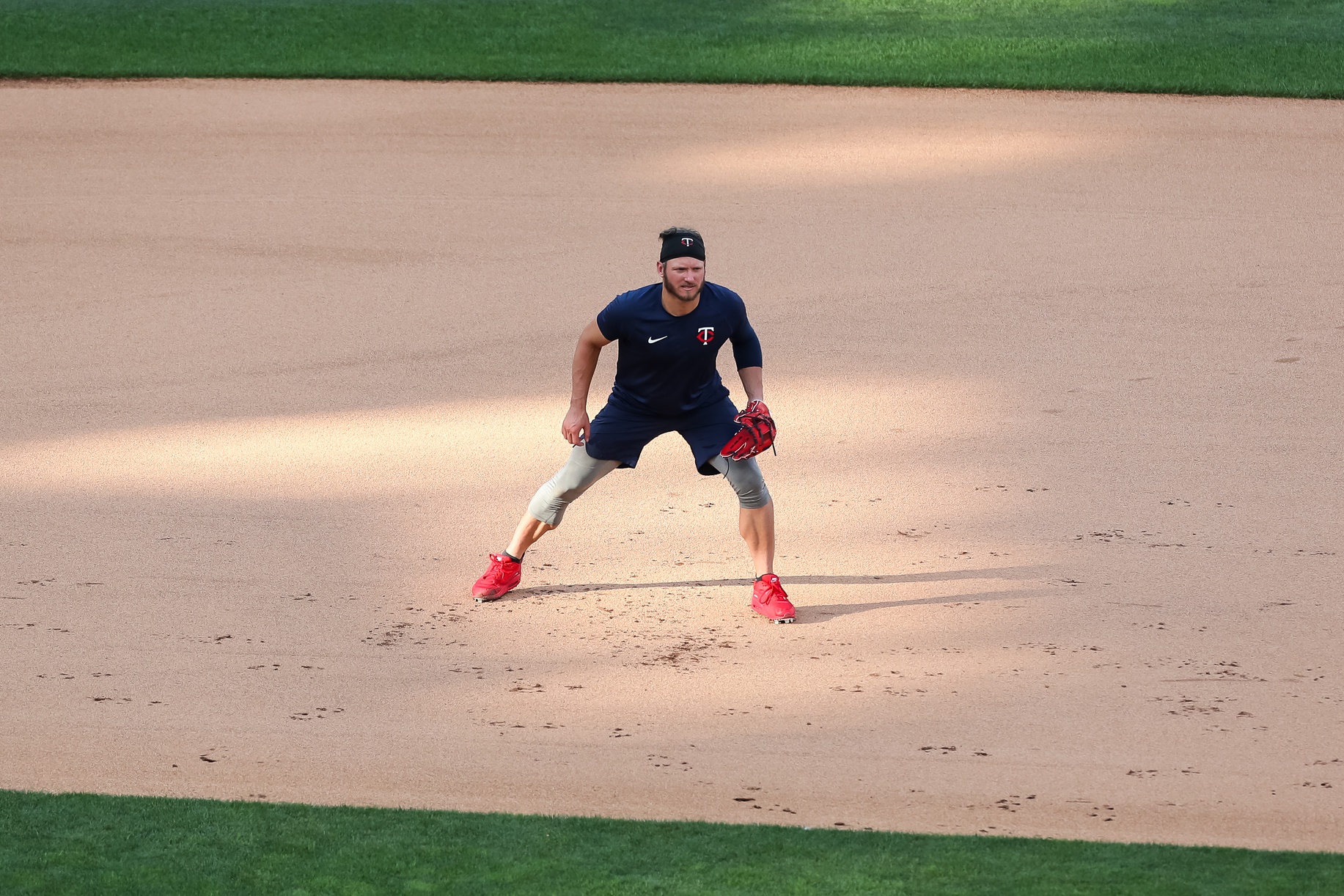 There is always an inherent amount of risk involved with guaranteeing a large sum of money to a player in his mid-30s. It is the fickle free agent quandary that has generally dissuaded Minnesota from entering into this arena at the high end in years past. Mid-market teams can ill afford to be tethered to albatross contracts that consume a huge chunk of their available payroll each year. (The Joe Mauer contract, while criticized too much and for all the wrong reasons, was certainly an impediment to Terry Ryan's team-building efforts in the 2010s.) Donaldson carries his own unique level of risk on top of the age factor. While the term "injury-prone" gets tossed around too often, it is valid in the case of someone who has a specific recurring issue. The third baseman's lengthy history of calf problems represents just that. Here's something you may or may not know about Josh Donaldson (it's not all that obvious when he's in uniform): He has enormous calves. Seriously. This photo of "Calfzilla" from The Athletic's David O'Brien, taken at Target Field last year, is illustrative: https://twitter.com/dobrienatl/status/1158864963269775361 (Side note: I also have very big calves. It's been a running joke among friends since high school. One time a guy wrote the following line while targeting me in a battle rap: "Nick Nelson, your calves are gigantic, like the Titanic, or even the Atlantic." It was a scorching burn. My point being: I can relate in some small way.) For his part, Donaldson has called his large calves a blessing and a curse, which sounds about right. His incredibly muscular lower half is no doubt a major contributor to his almost unparalleled ability to crush baseballs, but those calves in particular have been very problematic in recent years. His troubles began in 2017 with the Blue Jays. Donaldson suffered a right calf strain on April 13th that knocked him out until late May. He came back and performed well the rest of the way, but played only 113 games total. In 2018, he suffered a left calf injury 36 games in. After three weeks on the DL, he was seemingly ready to return in late June, but suffered a setback while fielding ground balls ahead of a rehab game, with an acute strain delaying his return indefinitely. "He was moving along, and then something happens. What are you going to do?" said his manager John Gibbons. The slugger never played again for Toronto. They traded a rehabbing Donaldson to Cleveland just ahead of the post-waiver deadline on August 31st. He had a solid final month for the Indians, then went 1-for-11 with a single in an ALDS loss to Houston. As we all know, Donaldson bounced back in a big way last year in Atlanta, making a statement by playing in 155 games. He was named Comeback Player of the Year. But that accolade only comes with a preceding tribulation, and the one Donaldson faced is hardly out of mind just because of one great rebound season. Let's keep in mind that other contenders in JD's free agent derby (Washington and Atlanta, most notably) were shying away from four-year commitments. Even for the Twins, he was hardly their No. 1 target coming into the offseason, and talks looked to be dead before reviving in late January. As smoothly as things have gone for Minnesota in the early portion of this 2020 campaign, Donaldson's calf issues resurfacing within the first 10 days qualifies as a significant buzzkill, mostly from the big-picture view. They can get by without him for now, but the former MVP is a key component of their grand scheme, and they invested in him accordingly. I'd like to have genuine confidence in the team's position that this is a minor injury and not something they expect to be a long-term concern. But in a way, that just feels like wishful thinking. MORE FROM TWINS DAILY — Latest Twins coverage from our writers — Recent Twins discussion in our forums — Follow Twins Daily via Twitter, Facebook or email
 -
Week in Review: Winning and Wondering
Nick Nelson replied to Nick Nelson's topic in Twins Daily Front Page News
This is basically where I stand. As much as I see people ripping Manfred and the league for their shortcomings in planning, there really is no feasible scenario for handling a proliferation of outbreaks, given the schedule constraints and realities of this virus. All you can do is put together the best protocols you can, hope the players follow them, and cross your fingers. From my view things are actually going reasonably well so far -- I think the Marlins players just completely screwed up and that's on them. If there's a silver lining to these grim early developments, it's that they might serve as a wake-up call to everyone else.- 18 replies
-
- 2
-
-
- kenta maeda
- randy dobnak
- (and 2 more)
-
The Twins are taking care of business and looking like a force to be reckoned with. But each day there are new developments threatening this precarious 2020 MLB season, casting a constant cloud of uncertainty. Minnesota narrowly missed being impacted in the past week, but were able to play all their games and went 5-1 to claim sole possession of first place in the AL Central. Weekly Snapshot: Mon, 7/27 through Sun, 8/2 *** Record Last Week: 5-1 (Overall: 7-2) Run Differential Last Week: +12 (Overall: +22) Standing: 1st Place in AL Central Bomba Counter: 16 (Pace: 107) The Twins got a scare when news of multiple positive COVID tests for St. Louis players surfaced, shortly after the Cardinals were swept out of Minnesota. Thursday's series opener against Cleveland was in doubt as personnel went through rapid testing all afternoon, but ultimately the Twins were able to avoid postponement all week. And they made hay. A 5-1 week against quality teams at home puts the Twins in excellent position moving forward. They won both games against the reigning NL Central champs, and then took three of four from their top challengers in the AL Central. We'll dive into the highlights and lowlights shortly, but first, a quick look at some roster moves made over the weekend: Before Saturday's game, Zack Littell was placed on the Injured List with a left hamstring strain, and replaced on the active roster by right-hander Jorge Alcala. The injury might help explain why Littell looked so rough in early action (3 IP, 6 H, 4 ER, 3 HR, 3 BB, 1 K) following his stellar 2019 campaign.After Saturday's game, we learned that Homer Bailey's scheduled start for Sunday was being pushed back, and on Sunday, Bailey went on IL due to right biceps tendinitis. Righty Sean Poppen took his place and the Twins ran a bullpen game on Sunday, with Tyler Clippard stepping in as the opener. Unlike Littell, there was no evidence of anything being physically wrong with Bailey.HIGHLIGHTS Last year, as a largely unknown rookie named Randy Dobnak tore through his first tour of the big leagues, finishing with a 1.59 ERA in 28 innings and earning himself a Game 2 ALDS start, we all wondered: Is this for real? Early on in this 2020 season, he's backing up the initial success, and then some. In a relatively big spot on Friday night, with Minnesota looking to bounce back from a series-opening loss against Cleveland, Dobnak spun five scoreless frames against the team's top division rival. He allowed only three hits and two walks while striking out four. This comes on the heels of a strong season debut, where Dobnak held the White Sox to one run over four innings in Chicago. Through 37 1/3 total MLB innings, the undrafted 25-year-old owns a 1.45 ERA with just one home run allowed. His sinker continues to be a tremendous asset, and he's mixing it with his curve and change in the lower regions of the zone to lethal effect. Dobnak has induced a 68% grounder rate this year – only Milwaukee's Brandon Woodruff (72%) is higher. Dobnak is an out-of-nowhere sensation who's beginning to really make his name on the major-league scene. On the other end of the spectrum we have Rich Hill, the 40-year-old ageless wonder who is well known in the game, but taking us by surprise nonetheless. Maybe we shouldn't have been caught off guard by Hill's brilliance against St. Louis on Wednesday night, when he stymied the Cards over five shutout innings, allowing just two singles and a walk. Business as usual I suppose for a guy who's gone 41-20 with a 2.91 ERA in 86 starts since 2016, but still it's pretty remarkable to see from someone his age coming off experimental elbow surgery. Hill said after the game that his repaired elbow "feels like it's 18 again." Wes Johnson has been working some wizardry with this group and so far every offseason move made by the front office – trading for Maeda, gambling on Hill and Bailey, signing Clippard, re-signing Sergio Romo, claiming Matt Wisler off waivers – is paying off handsomely. Those six collectively have a 1.31 ERA through 34 1/3 innings. LOWLIGHTS Not every offseason acquisition has been an immediate hit. There were troubling signs from the get-go for Josh Donaldson. He's been struggling at the plate, slashing just .182/.296/.318 through his first 27 plate appearances while missing on some very crushable pitches. During the opening series in Chicago, he conspicuously failed to leg out a grounder to short, when it turned out he easily could've reached on an error. In other words, it's been an inauspicious start for the biggest free-agent signing in franchise history. The former MVP has come out totally flat and on Friday we might've gotten a hint why. Donaldson exited midway through the win over Cleveland due to "right calf tightness." This is concerning given his lengthy history with calf issues, which more or less wiped out his 2018 season, but the team insists it's a minor setback and has not (as of yet) placed him on IL. Hopefully a bit of time off will help him find a groove. As you can see from his Statcast metrics compared to last year, Donaldson's still been hitting the ball fairly hard, but not at the elite level we've come to expect. Other measures are sagging badly. Download attachment: donaldsonstatcast.png The good news is the Twins have proven they can win without getting much from Donaldson. And in fact, they proved over the past week they can win without getting much from their vaunted offense at all. Minnesota averaged just 3.2 runs per game and still went 5-1. That would seem to bode well. They've gotten through one of the three scariest stretches on their 2020 schedule with a 7-2 record, even though their offense hasn't clicked since the opening weekend. TRENDING STORYLINE It's encouraging to see the Twins exercise a great deal of caution with their starting pitchers, given the proliferation of arm injuries around the league. They gave Hill a few extra days before making his first start of the season, seemingly for no other reason than to play it extra safe. They've been taking things very slowly with Jake Odorizzi and his minor back injury. They opted to put Bailey on IL rather than simply push his start back with what also appears to be a fairly minor injury. I think this is the right approach. Given the expanded playoff format, regular-season games are lessened in importance, and the Twins have given themselves a solid early buffer anyway. The top priority is ensuring their best arms are available to them down the stretch and into the postseason. But, it does give Rocco Baldelli some extra spinning plates to juggle here in the early going. At this moment he's down two starters, with Bailey and Odorizzi both on the shelf. Who will fill the extra slots? On Monday it'll be Lewis Thorpe. Who else might be called upon? Devin Smeltzer? More bullpen games? One thing to keep in mind is that MLB rosters must be trimmed down from 30 to 28 this coming Thursday, so Baldelli figures to lose a bit of his abundant pitching depth. LOOKING AHEAD The Twins now coast into a soft patch in the schedule, with all seven games in the week ahead coming against low-grade opponents. First, they wrap up the homestand with two games against the Pirates, who finished last in the NL Central last year with 93 losses, and are in all-out rebuilding mode. Then, it's off to Pittsburgh for the second half of an interleague home-and-home, which reunites Baldelli and his former bench coach Derek Shelton, now leading the Bucs. From there, the Twins head to Kauffman Stadium for three games against Kansas City. The Royals are of course another rebuilding team and one the Twins should theoretically be able to further fatten up on. MONDAY, 8/3: PIRATES @ TWINS TUESDAY, 8/4: PIRATES @ TWINS WEDNESDAY, 8/5: TWINS @ PIRATES THURSDAY, 8/6: TWINS @ PIRATES FRIDAY, 8/7: TWINS @ ROYALS SATURDAY, 8/8: TWINS @ ROYALS SUNDAY, 8/9: TWINS @ ROYALS Catch Up On Twins Daily Game Recaps Game 4 | MIN 6, STL 3: Donaldson Breaks Out, Early Offense Leads to Another Twins WinGame 5 | MIN 3, STL 0: Hill Pitches 5 Shutout Innings in Twins DebutGame 6 | CLE 2, MIN 0: Shane Bieber is a Cheat CodeGame 7 | MIN 4, CLE 1: Dobnak Delivers 5 Shutout InningsGame 8 | MIN 3, CLE 0: Miguel Sanó Hits Pair of Bombas, Kenta Maeda Pitches 6 Shutout InningsGame 9 | MIN 3, CLE 1: Bullpen Dominates as Twins Take SeriesMORE FROM TWINS DAILY— Latest Twins coverage from our writers — Recent Twins discussion in our forums — Follow Twins Daily via Twitter, Facebook or email Click here to view the article
-
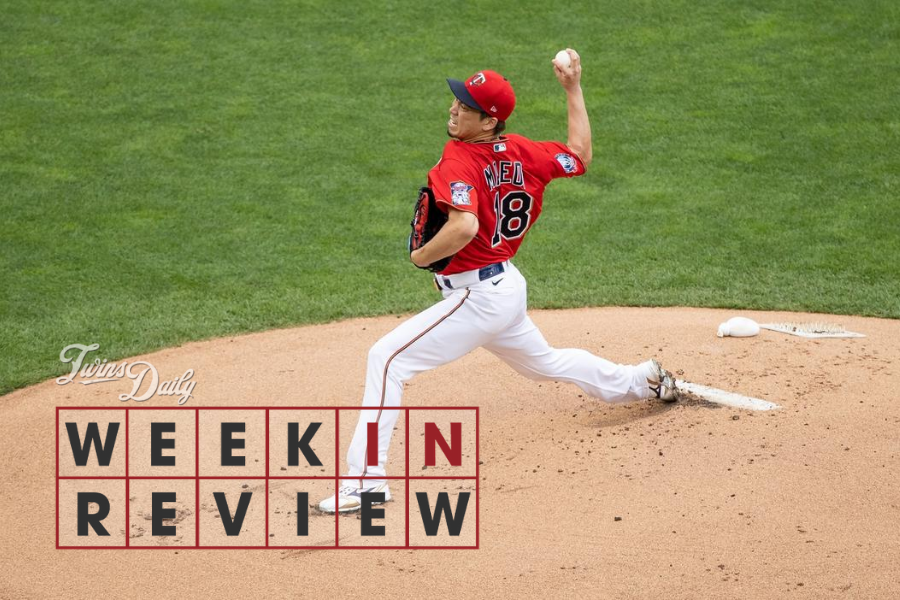 Weekly Snapshot: Mon, 7/27 through Sun, 8/2 *** Record Last Week: 5-1 (Overall: 7-2) Run Differential Last Week: +12 (Overall: +22) Standing: 1st Place in AL Central Bomba Counter: 16 (Pace: 107) The Twins got a scare when news of multiple positive COVID tests for St. Louis players surfaced, shortly after the Cardinals were swept out of Minnesota. Thursday's series opener against Cleveland was in doubt as personnel went through rapid testing all afternoon, but ultimately the Twins were able to avoid postponement all week. And they made hay. A 5-1 week against quality teams at home puts the Twins in excellent position moving forward. They won both games against the reigning NL Central champs, and then took three of four from their top challengers in the AL Central. We'll dive into the highlights and lowlights shortly, but first, a quick look at some roster moves made over the weekend: Before Saturday's game, Zack Littell was placed on the Injured List with a left hamstring strain, and replaced on the active roster by right-hander Jorge Alcala. The injury might help explain why Littell looked so rough in early action (3 IP, 6 H, 4 ER, 3 HR, 3 BB, 1 K) following his stellar 2019 campaign. After Saturday's game, we learned that Homer Bailey's scheduled start for Sunday was being pushed back, and on Sunday, Bailey went on IL due to right biceps tendinitis. Righty Sean Poppen took his place and the Twins ran a bullpen game on Sunday, with Tyler Clippard stepping in as the opener. Unlike Littell, there was no evidence of anything being physically wrong with Bailey. HIGHLIGHTS Last year, as a largely unknown rookie named Randy Dobnak tore through his first tour of the big leagues, finishing with a 1.59 ERA in 28 innings and earning himself a Game 2 ALDS start, we all wondered: Is this for real? Early on in this 2020 season, he's backing up the initial success, and then some. In a relatively big spot on Friday night, with Minnesota looking to bounce back from a series-opening loss against Cleveland, Dobnak spun five scoreless frames against the team's top division rival. He allowed only three hits and two walks while striking out four. This comes on the heels of a strong season debut, where Dobnak held the White Sox to one run over four innings in Chicago. Through 37 1/3 total MLB innings, the undrafted 25-year-old owns a 1.45 ERA with just one home run allowed. His sinker continues to be a tremendous asset, and he's mixing it with his curve and change in the lower regions of the zone to lethal effect. Dobnak has induced a 68% grounder rate this year – only Milwaukee's Brandon Woodruff (72%) is higher. Dobnak is an out-of-nowhere sensation who's beginning to really make his name on the major-league scene. On the other end of the spectrum we have Rich Hill, the 40-year-old ageless wonder who is well known in the game, but taking us by surprise nonetheless. Maybe we shouldn't have been caught off guard by Hill's brilliance against St. Louis on Wednesday night, when he stymied the Cards over five shutout innings, allowing just two singles and a walk. Business as usual I suppose for a guy who's gone 41-20 with a 2.91 ERA in 86 starts since 2016, but still it's pretty remarkable to see from someone his age coming off experimental elbow surgery. Hill said after the game that his repaired elbow "feels like it's 18 again." https://twitter.com/dohyoungpark/status/1288690774750769152 Hey, speaking of 18, the Twins also received a gem on Saturday from No. 18 in their rotation. Newcomer Kenta Maeda managed to top both Dobnak and Hill by delivering the best performance yet from a Twins starter: 6 IP, 0 R, 1 H, 1 BB, 6 K. In this impressive outing, Maeda was everything the Twins hoped for when they acquired him from Los Angeles to bolster their rotation. He attacked the zone relentlessly with a heavy dose of sliders and changeups, mixing in the fastball and – less frequently – the curve and sinker. It all kept Cleveland's lineup completely off-balance, as they managed just one infield single (on a debatable close call, at that) while inducing 15 whiffs on 83 pitches (18%). Not to be left out, Bailey and Jose Berríos both turned in quality efforts of their own, with each allowing two runs over five innings of work. There were a few hitters who enjoyed nice weeks – Eddie Rosario launching his first two home runs and driving in four; Miguel Sanó breaking out with a pair of bombs on Saturday; Marwin Gonzalez looking tremendously sharp at the plate and in the field – but pitching was the star of the show for Minnesota over the past week – and really, all season so far. https://twitter.com/NickNelsonMN/status/1289725066490462210 If we add Clippard's perfect two-inning "opener" appearance on Sunday to the sample above, that's now seven earned runs allowed over 47 innings for Twins starters since the season's second game – a 1.34 ERA. Meanwhile, the bullpen has been lights-out: Over the past six games, Twins relievers (sans Clippard) allowed three earned runs over 26 innings (1.04 ERA). I won't even bother to name names because literally every relief pitcher was outstanding. https://twitter.com/NickNelsonMN/status/1290026725842145284 Wes Johnson has been working some wizardry with this group and so far every offseason move made by the front office – trading for Maeda, gambling on Hill and Bailey, signing Clippard, re-signing Sergio Romo, claiming Matt Wisler off waivers – is paying off handsomely. Those six collectively have a 1.31 ERA through 34 1/3 innings. LOWLIGHTS Not every offseason acquisition has been an immediate hit. There were troubling signs from the get-go for Josh Donaldson. He's been struggling at the plate, slashing just .182/.296/.318 through his first 27 plate appearances while missing on some very crushable pitches. During the opening series in Chicago, he conspicuously failed to leg out a grounder to short, when it turned out he easily could've reached on an error. In other words, it's been an inauspicious start for the biggest free-agent signing in franchise history. The former MVP has come out totally flat and on Friday we might've gotten a hint why. Donaldson exited midway through the win over Cleveland due to "right calf tightness." This is concerning given his lengthy history with calf issues, which more or less wiped out his 2018 season, but the team insists it's a minor setback and has not (as of yet) placed him on IL. Hopefully a bit of time off will help him find a groove. As you can see from his Statcast metrics compared to last year, Donaldson's still been hitting the ball fairly hard, but not at the elite level we've come to expect. Other measures are sagging badly. The good news is the Twins have proven they can win without getting much from Donaldson. And in fact, they proved over the past week they can win without getting much from their vaunted offense at all. Minnesota averaged just 3.2 runs per game and still went 5-1. That would seem to bode well. They've gotten through one of the three scariest stretches on their 2020 schedule with a 7-2 record, even though their offense hasn't clicked since the opening weekend. TRENDING STORYLINE It's encouraging to see the Twins exercise a great deal of caution with their starting pitchers, given the proliferation of arm injuries around the league. They gave Hill a few extra days before making his first start of the season, seemingly for no other reason than to play it extra safe. They've been taking things very slowly with Jake Odorizzi and his minor back injury. They opted to put Bailey on IL rather than simply push his start back with what also appears to be a fairly minor injury. I think this is the right approach. Given the expanded playoff format, regular-season games are lessened in importance, and the Twins have given themselves a solid early buffer anyway. The top priority is ensuring their best arms are available to them down the stretch and into the postseason. But, it does give Rocco Baldelli some extra spinning plates to juggle here in the early going. At this moment he's down two starters, with Bailey and Odorizzi both on the shelf. Who will fill the extra slots? On Monday it'll be Lewis Thorpe. Who else might be called upon? Devin Smeltzer? More bullpen games? One thing to keep in mind is that MLB rosters must be trimmed down from 30 to 28 this coming Thursday, so Baldelli figures to lose a bit of his abundant pitching depth. LOOKING AHEAD The Twins now coast into a soft patch in the schedule, with all seven games in the week ahead coming against low-grade opponents. First, they wrap up the homestand with two games against the Pirates, who finished last in the NL Central last year with 93 losses, and are in all-out rebuilding mode. Then, it's off to Pittsburgh for the second half of an interleague home-and-home, which reunites Baldelli and his former bench coach Derek Shelton, now leading the Bucs. From there, the Twins head to Kauffman Stadium for three games against Kansas City. The Royals are of course another rebuilding team and one the Twins should theoretically be able to further fatten up on. MONDAY, 8/3: PIRATES @ TWINS TUESDAY, 8/4: PIRATES @ TWINS WEDNESDAY, 8/5: TWINS @ PIRATES THURSDAY, 8/6: TWINS @ PIRATES FRIDAY, 8/7: TWINS @ ROYALS SATURDAY, 8/8: TWINS @ ROYALS SUNDAY, 8/9: TWINS @ ROYALS Catch Up On Twins Daily Game Recaps Game 4 | MIN 6, STL 3: Donaldson Breaks Out, Early Offense Leads to Another Twins Win Game 5 | MIN 3, STL 0: Hill Pitches 5 Shutout Innings in Twins Debut Game 6 | CLE 2, MIN 0: Shane Bieber is a Cheat Code Game 7 | MIN 4, CLE 1: Dobnak Delivers 5 Shutout Innings Game 8 | MIN 3, CLE 0: Miguel Sanó Hits Pair of Bombas, Kenta Maeda Pitches 6 Shutout Innings Game 9 | MIN 3, CLE 1: Bullpen Dominates as Twins Take Series MORE FROM TWINS DAILY — Latest Twins coverage from our writers — Recent Twins discussion in our forums — Follow Twins Daily via Twitter, Facebook or email
 -
The Twins topped the Cardinals 6-3 in their home opener at Target Field on Tuesday night to move to 3-1 on the season. I watched the game and jotted down a specific note or thought based on the events of each inning. Let's run it back.1st Inning: Making Martínez Sweat The bottom of the first was not a great showing for the Twins offense. They missed some big opportunities. Nelson Cruz popped out to foul territory on a 2-0 count with two in scoring position, and later Mitch Garver grounded out to third on 3-1 with the bases juiced. No one hit anything particularly hard. And yet ... this lineup still made life extremely difficult for Cardinals starter Carlos Martínez, who needed 21 pitches to get through the frame. While the Twins may have failed to cash in, it's the kind of high-stress experience for a pitcher that can set up an inning like the second, where Minnesota took off and pushed across five runs. Martínez, a very good pitcher with a 3.36 career ERA, was soon chased from the game after just 4 2/3 innings. 2nd Inning: Hip Hip, Jorge Punctuating the five-run outburst in the bottom of the second was No. 3 hitter Jorge Polanco, who launched a two-run homer into the right field plaza. He very nearly followed with another bomb from the other side in his following at-bat, two innings later, though Cards left fielder Tyler O'Neill was able to track it down at the warning track. It was a bit strange to see from Buxton, for whom the spectacular has become almost routine. But among all the negative outcomes of him chasing a ball to the wall, a solo homer with a fairly comfortable lead is one we'll take. It was a tough break for May, but he recovered nicely by striking out the next three batters. His stuff looks absolutely filthy, as he induced seven swinging strikes on 21 pitches. 9th Inning: Where is Rogers? With the exception of Rich Hill (who starts tomorrow) only two players on the active roster had yet to see game action by this point: Sergio Romo and Taylor Rogers. Even in a save situation – albeit on the less-intense side – the Twins' top-tier closer remained unused. Romo tossed a clean ninth to close out the 6-3 victory. That leaves Rogers, one of the team's best and long-tenured players, as the only reliever we've yet to see. It doesn't necessarily point to any error in judgment from Baldelli, as there's been no real need to turn to the team's highest-leverage arm, but still it seems strange that Rogers hasn't even gotten in an inning of work while several others have made multiple appearances. Hopefully there's nothing bothering the southpaw physically, and this is all situational and strategic. Through the team's first four games in 2019, Rogers had already thrown four innings across three appearances. MORE FROM TWINS DAILY — Latest Twins coverage from our writers — Recent Twins discussion in our forums — Follow Twins Daily via Twitter, Facebook or email Click here to view the article
- 6 replies
-
- 1
-
-
- homer bailey
- cody stashak
- (and 2 more)
-
 1st Inning: Making Martínez Sweat The bottom of the first was not a great showing for the Twins offense. They missed some big opportunities. Nelson Cruz popped out to foul territory on a 2-0 count with two in scoring position, and later Mitch Garver grounded out to third on 3-1 with the bases juiced. No one hit anything particularly hard. And yet ... this lineup still made life extremely difficult for Cardinals starter Carlos Martínez, who needed 21 pitches to get through the frame. While the Twins may have failed to cash in, it's the kind of high-stress experience for a pitcher that can set up an inning like the second, where Minnesota took off and pushed across five runs. Martínez, a very good pitcher with a 3.36 career ERA, was soon chased from the game after just 4 2/3 innings. 2nd Inning: Hip Hip, Jorge Punctuating the five-run outburst in the bottom of the second was No. 3 hitter Jorge Polanco, who launched a two-run homer into the right field plaza. He very nearly followed with another bomb from the other side in his following at-bat, two innings later, though Cards left fielder Tyler O'Neill was able to track it down at the warning track. https://twitter.com/Twins/status/1288280300909400066 Polanco tends to get lost in a shuffle a bit for this offense, as a steadily solid hitter amidst a sea of flashy sluggers. He ranked sixth on the team in OPS+ last year, and he was a bit quiet down the stretch. It can be easy to forget he was the lone All-Star on a historic 2019 offense. One person who does not lose sight of Polanco's abilities at the plate is his manager. Polanco batted cleanup in the second game of this season in Chicago. That marks the only time since Rocco Baldelli took over as skipper that the shortstop has hit anywhere below third in the lineup. 3rd Inning: Living on the Edge The last time we saw Homer Bailey, it wasn't such a pretty sight. The newly signed right-hander got knocked around in his final tune-up start at Wrigley, as the Cubs took advantage of too many hittable pitches left up around the belt. His official debut was a different story. While he wasn't immune to mistakes, Bailey was executing far better this time out, peppering the borders of FSN's strike zone visualization to maximize the effectiveness of a so-so fastball. Here in the third inning, he was at the height of his prowess for the evening, striking out the side with some stellar pitch sequences. Impressively, it was his slider and not his highly-touted splitter doing much of the work. https://twitter.com/dohyoungpark/status/1288281129947148289 Bailey had a crisp outing, allowing four hits and two walks over five innings, with four strikeouts. It's a continuation of the trend we saw in 2019, which saw noticeable improvement in many indicators of hard contact (Barrel %, Sweet Spot %, XBA, XSLG). If he can keep dancing around the edges, while dropping the occasional slow breaking ball over the plate to catch a hitter off-guard, he's gonna be in good shape. 4th Inning: Here Comes the Rain It was a picture-perfect summer evening for the opener at Target Field, although the Bringer of Rain did make his first splash in the bottom of the fourth. Josh Donaldson watered the plants on the right-field overhang with an oppo shot that just barely cleared the wall. https://twitter.com/Twins/status/1288285962984984576 One thing that's really struck me about Donaldson is that even when he doesn't square it up – and so far he hasn't done so much; prior to the bomb, he was 2-for-11 with two infield singles – he still puts a charge into the ball. That home run came on a ripe pitch over the middle, but he really didn't seem to get all of it. There have been a few other occasions, including his sacrifice fly earlier in the game, where the ball has carried surprisingly far off Donaldson's bat. This guy is as strong and powerful as advertised. 5th Inning: Bailey Bounces Back The lone blemish in Bailey's outing came here in the fifth, where he left a hanging offspeed pitch over the dish and O'Neill destroyed it for a two-run homer. Following a well-struck single to open the inning, it looked like the Twins starter might be starting to lose steam. But he buckled down and rattled off three straight outs – a pop-out to first and two grounders. That's the resiliency you like to see from a back-end starter. It was maybe more encouraging to me than his triple-K third. 6th Inning: Pesky Arráez The sixth was fairly uneventful, with Tyler Clippard entering to pitch a clean top half and Minnesota going down 1-2-3 in the bottom. But one guy who did not go easily was Luis Arráez. As ever. The scrappy second baseman drove a pitch the other way and nearly had extra bases, but O'Neill was able to chase it down in left with a diving grab near the line. Arráez makes pitchers and defenders work awfully hard to get him out. He still has yet to strike out through 12 plate appearances, and he's been hitting the ball pretty dang hard. To have a player like this near the bottom of your lineup (he's hit seventh twice and ninth once) is just an unbelievable advantage. 7th Inning: Stashak and Bullpen Depth Bailey was out of the game for Minnesota after five, but the Twins had no trouble filling in the remaining innings. Second out of the bullpen was Cody Stashak, who delivered his second scoreless outing of the young season. With the exception of a ground-ball double, Stashak was basically flawless, throwing 12 of 17 pitches for strikes and retiring the side with little trouble. Just as Arráez is a major asset at the lower part of the order, Stashak is a major asset in the middle of the bullpen. He's looked every bit as good as the 3.24 ERA and 25-to-1 K/BB ratio in last year's MLB debut suggested. 8th Inning: Buxton Drops the Ball Trevor May followed Stashak in the eighth. Leading off against him was Tommy Edman, who lifted a deep fly to center field. Byron Buxton, making his first appearance of the season, sprinted back, reached the wall, and had it measured. He leapt up, had it in his glove, and the ball glanced right off it over the fence. https://twitter.com/cjzer0/status/1288302537221832707 It was a bit strange to see from Buxton, for whom the spectacular has become almost routine. But among all the negative outcomes of him chasing a ball to the wall, a solo homer with a fairly comfortable lead is one we'll take. It was a tough break for May, but he recovered nicely by striking out the next three batters. His stuff looks absolutely filthy, as he induced seven swinging strikes on 21 pitches. 9th Inning: Where is Rogers? With the exception of Rich Hill (who starts tomorrow) only two players on the active roster had yet to see game action by this point: Sergio Romo and Taylor Rogers. Even in a save situation – albeit on the less-intense side – the Twins' top-tier closer remained unused. Romo tossed a clean ninth to close out the 6-3 victory. That leaves Rogers, one of the team's best and long-tenured players, as the only reliever we've yet to see. It doesn't necessarily point to any error in judgment from Baldelli, as there's been no real need to turn to the team's highest-leverage arm, but still it seems strange that Rogers hasn't even gotten in an inning of work while several others have made multiple appearances. Hopefully there's nothing bothering the southpaw physically, and this is all situational and strategic. Through the team's first four games in 2019, Rogers had already thrown four innings across three appearances. MORE FROM TWINS DAILY — Latest Twins coverage from our writers — Recent Twins discussion in our forums — Follow Twins Daily via Twitter, Facebook or email
 -
A new season is finally underway, and that means it's time for the return of our weekly recap series. Read on for a full review of the Minnesota Twins' successful opening weekend in Chicago, featuring a series win, several Twins debuts, and of course plenty of bombas. Weekly Snapshot: Fri, 7/24 through Sun, 7/26 *** Record Last Week: 2-1 (Overall: 2-1) Run Differential Last Week: +10 (Overall: +10) Standing: Tied for 1st Place in AL Central Bomba Counter: 7 (On Pace for 140) Not everything went to plan for Minnesota in the opening series. Jake Odorizzi was originally expected to start for the Twins in Chicago, and then Rich Hill was, but both pitchers ended up getting pushed back. Byron Buxton missed all three games as his sprained foot heals, though it sounds like there's optimism he'll be out there for the first homestand. Even though they weren't quite at full strength, the Twins still looked plenty strong at Guaranteed Rate Field, taking two of three from the White Sox to kick off their quest for a second straight division title. HIGHLIGHTS The Bomba Squad wasted no time getting back to business, with Max Kepler launching a home run on the first pitch of the season from Lucas Giolito. It sparked a 10-run, 11-hit barrage in Minnesota's 10-5 Opening Day victory over the Sox. Kepler homered again in his next at-bat, and has gone 0-for-12 since. Baseball. Leading the charge in a tremendous series for the Twins was Nelson Cruz, who had himself a hell of a weekend at Guaranteed Rate Field: 7-for-13, three home runs, two doubles, 10 RBIs. If the ageless wonder can stay healthy for the full 60-game sprint, this offense's upside feels almost limitless. The team has never signaled much concern regarding Odorizzi's status. If things go well in the BP session, he could conceivably start the first game against Cleveland on Thursday, though it's more likely he'd go sometime during the weekend. Then again, as Cody Pirkl wrote here recently, we are wise not to downplay this reportedly "minor" issue because back injuries can be very tricky for pitchers and Odorizzi has a history with them. The 2019 All-Star is a critical piece for this rotation. We'll be keeping a close eye on his health updates. LOOKING AHEAD Two more Twins debuts are on tap in the home-opening series against St. Louis, with Homer Bailey and Hill slated to start for Minnesota. It'll be interesting to see how they fare against Paul Goldschmidt and a pretty good Cards team. Then, the top presumptive challengers in the division come to town, with Cleveland coming for four games. It's tough to overstate the magnitude of this home series for the Twins. A sweep either way would be a seismic development in the division race. This series will feature pennant-race-intensity baseball, played a week into the season before an empty stadium. Gonna be weird. TUESDAY, 7/28: CARDINALS @ TWINS – RHP Homer Bailey v. RHP Carlos Martinez WEDNESDAY, 7/29: CARDINALS @ TWINS – LHP Rich Hill v. RHP Miles Mikolas THURSDAY, 7/30: INDIANS @ TWINS FRIDAY, 7/31: INDIANS @ TWINS SATURDAY, 8/1: INDIANS @ TWINS SUNDAY, 8/2: INDIANS @ TWINS Catch Up On Twins Daily Game Recaps Game 1 | MIN 10, CHW 5: Kepler Blasts 2 Bombas, Twins Outlast White SoxGame 2 | CHW 10, MIN 3: White Sox Hit 5 Homers Off Twins BullpenGame 3 | MIN 14, CHW 2: Lineup Flexes Early to Aid Maeda in Victorious Twins DebutMORE FROM TWINS DAILY— Latest Twins coverage from our writers — Recent Twins discussion in our forums — Follow Twins Daily via Twitter, Facebook or email Click here to view the article

