



Nick Nelson
-
Posts
8,327 -
Joined
-
Last visited
-
Days Won
56
Content Type
Profiles
News
Minnesota Twins Videos
2026 Minnesota Twins Top Prospects Ranking
2022 Minnesota Twins Draft Picks
Minnesota Twins Free Agent & Trade Rumors, Notes, & Tidbits
Guides & Resources
2023 Minnesota Twins Draft Picks
The Minnesota Twins Players Project
2024 Minnesota Twins Draft Picks
2025 Minnesota Twins Draft Pick Tracker
2026 Minnesota Twins Draft Tracker: Picks & Bonuses
Forums
Blogs
Events
Store
Downloads
Gallery
Everything posted by Nick Nelson
-
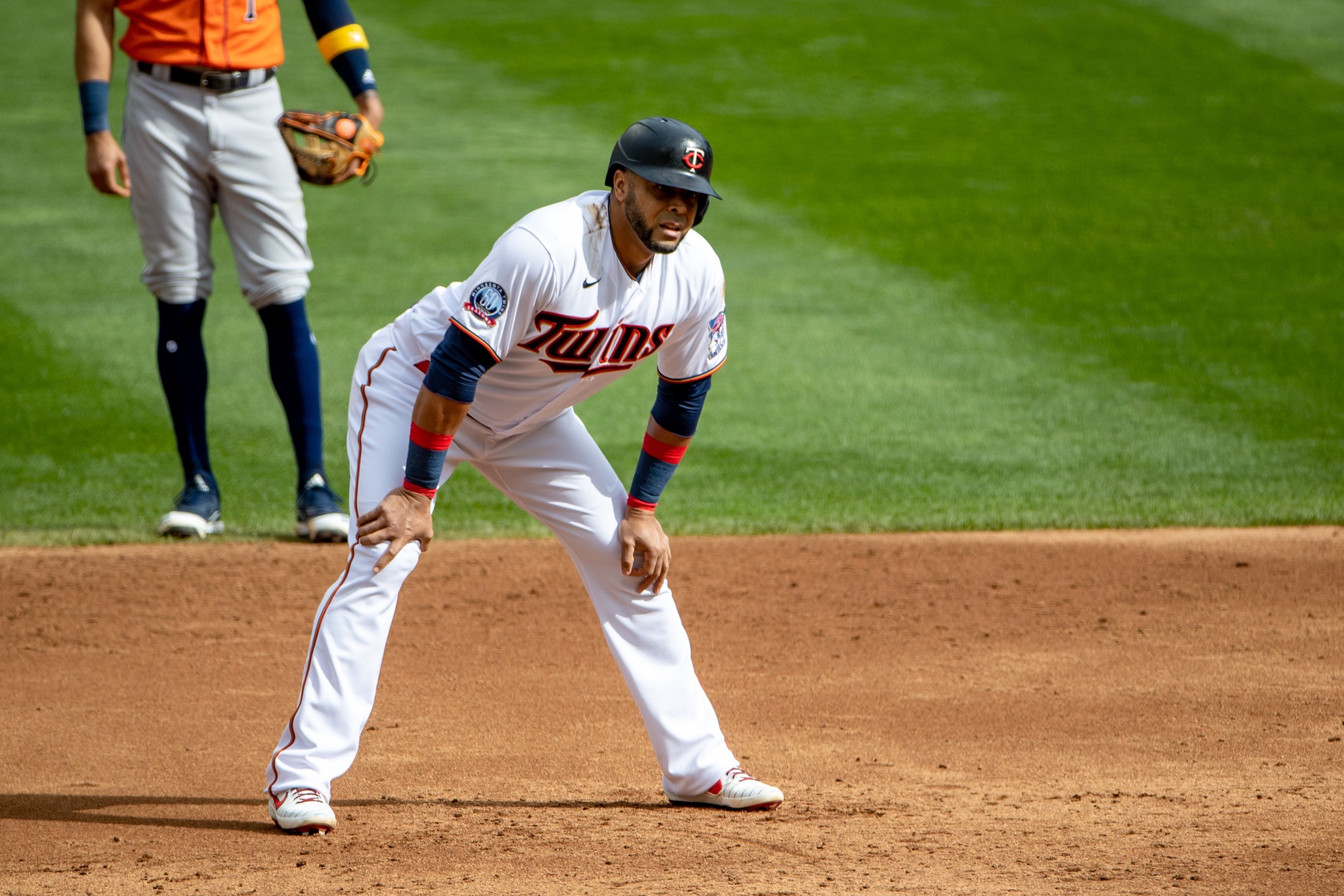 If the designated hitter is removed from the National League for next year, Cruz's potential market is sliced in half from 30 teams to the 15. But the reality for Cruz is even grimmer than that; only a select few teams might feasibly target him based on their needs and circumstances. As you size up the landscape of AL teams, their budgets, motivations, and current situations at DH, it becomes evident that Cruz will have a very limited field of suitors this winter. This is not unlike two offseasons ago, when the same dynamic led to him taking a lower-than-expected deal with the Twins. But this time around, the terrain may be even less favorable for Cruz. Below, I've grouped all 15 teams into three tiers, based on the level of interest they're likely to have in pursuing Cruz as a free agent target: YAY NELLY: These teams are bona fide contenders with a fairly evident need at DH, and a reasonable likelihood of spending the money necessary to sign Cruz. MAYBE NELLY: These teams are either borderline contenders, or light spenders, or good clubs without an obvious fit for a pure DH. NAY NELLY: These teams either have zero room for a DH-only player, or are rebuilding with no reason to spend money on a 40-year-old DH (and no appeal to Cruz at this point anyway). There's certainly room for debate, but here's how I see the suitors shaking out: YAY NELLY White Sox: If Cruz signs somewhere other than Minnesota this offseason, I see Chicago as the single most likely destination. They are in the same place as the Twins were two years ago when they signed Nelly – a talented young team on the cusp, in need of veteran leadership and proven production. The Sox declined a $12 million option on Edwin Encarnacion, who was a disappointment at DH in 2020, but I bet they'd happily give that same amount (or a bit more) to Cruz next year. Cleveland: I'm tempted to knock them down into the "Maybe" category, because we have every indication that Cleveland is going to scale back spending even more than usual this winter. The thing is, Cruz would be such a massive difference-maker for this team. They are well positioned to push, with an elite pitching staff led by the reigning Cy Young winner. Shane Bieber finished fourth in MVP voting this year, while Cruz finished sixth. Pairing those two would keep Cleveland squarely in the championship conversation, even if they trade Francisco Lindor and spend minimally elsewhere. Twins: They don't really *need* Cruz, which is a point that Matthew Taylor made well the other day. Minnesota could turn to a rotation of internal options and spend the funds elsewhere. But we'd be kidding ourselves to think they won't seriously pursue a reunion with Cruz. He's been named their Most Valuable Player in two straight years, bringing resounding value both on the field and off it. MAYBE NELLY Angels: Cruz and Mike Trout hitting in the same lineup – could you imagine it?! They rank No. 1 and 2 among all MLB hitters in OPS and wOBA over the past two seasons. And Los Angeles is very much in the business of winning now, as the clock continues to tick on Trout's incomplete legacy. The complication of course is Shohei Ohtani. If the Angels intend to continue using him as a two-way player, they simply can't sign a full-time designated hitter. Doesn't work. If they ditch that plan (against Ohtani's wishes), and move him to the outfield, Cruz suddenly becomes very viable, and LA moves up to the "Yay Nelly" category. It all hinges on Ohtani. Blue Jays: I like the idea of Cruz joining the Jays in that he'd make for a poetic bookend to 21-year-old Vladimir Guerrero Jr. – generational sluggers of Dominican descent, joining forces to help Toronto dethrone New York and take over the East. Cruz competed against Vlad Sr. for many years, and would bring much more than added punch to a talented young Jays lineup. However, even at his young age, the junior Vlad is already almost relegated to DH, and Toronto already has a second defensively limited slugger in Rowdy Tellez. I don't quite see how they make room for Cruz. Rays: Are they a great fit? Absolutely. This team reached the World Series before falling just short, and could desperately use the experience, leadership, and production Cruz would provide. On paper it's a match made in heaven. But here, paper is the problem – as in cash money. Tampa unloads payroll and spends frugally under the best of circumstances. They're also not known for buying high. In this depressed economic setting, with Cruz looking to cash in, I just can't see the Rays ponying up. But he is a great fit here, so they're in the conversation. Rangers: There are some reasons to see Texas as a logical landing spot for Cruz. The Rangers are coming off a really disappointing year and in need of a shakeup. Shin-Soo Choo, who's been a fixture at DH over the past few seasons, is now a free agent. Cruz would be a potentially transformative upgrade to an offense that ranked last in the American League in OPS in 2020. Plus, there's the familiarity – Cruz spent eight seasons playing in Texas and blossomed as a star there. Problem is: Texas seems a few years from contention at least. They finished last in 2020, haven't finished better than third since 2016, and just traded Lance Lynn to the White Sox. Astros: Houston was among the finalists (maybe runner-up) for Cruz when the Twins signed him two years ago. They will once again be targeting a title in 2021, and are facing the losses of a couple key offensive pieces in free agents George Springer and Michael Brantley. You could see how the addition of a star property like Cruz would be appealing. But the Astros have already got Yordan Alvarez. The 2019 Rookie of the Year was already basically a full-time DH before he had surgery on both knees this summer. I guess they could do something like put Alvarez at first base or left field to make room for Cruz, but it doesn't seem likely. NAY NELLY Athletics: Khris Davis is one of the two or three players who is even in the conversation with Cruz as best designated hitter in baseball. He plays for the A's, and is under contract for $16.75 million in 2021. Red Sox: The Red Sox are committed to J.D. Martinez for $19.35 million in 2021, and he's not really an option anywhere other than DH. Martinez is not far removed from producing at a Cruz-like level (which is why Boston gave him his mega-deal) and he's seven years younger. Yankees: Theoretically, I'm sure New York would love to add Cruz to their already power-packed lineup. It'd fit their M.O. But the details are tricky. The Yankees already have Aaron Judge in right, Giancarlo Stanton at DH, and breakout slugger Luke Voit at first base. How would Cruz possibly work into this equation? Orioles: Cruz might have one year left in the tank. He isn't spending it with a blatant rebuilder, with no realistic hopes of contending. Mariners: See above. Tigers: See above, again. Royals: Also basically the same. Kansas City is closer to contention than any of the three above, but they already have Jorge Soler at DH and just signed Carlos Santana. Okay, so what have we learned here? Basically, it's hard to see more than handful of teams making any kind of push for Cruz. Barring unseen developments, his market might amount to two or three teams. Which is be very bad news for him but good news for the Twins. He's a luxury, but perhaps one they can afford. MORE FROM TWINS DAILY — Latest Twins coverage from our writers — Recent Twins discussion in our forums — Follow Twins Daily via Twitter, Facebook or email
 -
Who was Jack the Ripper? Where is Jimmy Hoffa? What became of the Ark of the Covenant? On Wednesday night, a new mystery entered the annals of great unknowns: Why did the Twins front office non-tender Matt Wisler, one of their most resounding success stories? Ever the intrepid gumshoe, I set out to investigate.Here are the facts, as we know them: The Twins claimed Matt Wisler off waivers from Seattle on October 29th of last year, and tendered him a $725,000 contract via arbitration. Evidently they saw something they felt they could unlock in the 27-year-old, coming off a 5.61 ERA with the Padres and Mariners.They unlocked it. Wisler enjoyed a breakout season in 2020, albeit in the small sample of 60 games. Relying almost entirely on a fully realized slider, the right-hander was nearly unhittable, posting a 1.07 ERA in 25 ⅓ innings while holding opponents to a 1.65 batting average.Here in his second turn at arbitration, Wisler was expected to make somewhere between $1-2 million, a seemingly nominal fee for a 28-year-old relief pitcher coming off a breakout season. (Especially with Trevor May, Sergio Romo, and Tyler Clippard all cast into free agency.)Everything was lined up such that Wisler was never viewed as much of a question mark. Bringing him back was a given. Even if the Twins looked at Wisler more as a middle reliever than setup man, there was no reason to think he'd be cut loose. And yet. When Wednesday's non-tender deadline came, that is exactly what the Twins did. I was baffled. About an hour after this news dropped, I did a . We strained to make sense of the move but it was tough. Even if the Twins viewed Wisler's 1.07 ERA as an unsustainable fluke (it was), and even if they felt his agent was pushing a little hard, and even if budget constraints are tightening in this offseason of uncertainty ... it's just hard to comprehend why the front office would cut ties with a pickup that was everything they could've hoped. In my state of despair, I wandered over to Wisler's FanGraphs page, with no specific intention. "Maybe I'll just gaze longingly at his swinging strike rate," I thought. But as I arrived at the page... Download attachment: wisler1.png And scrolled down to look at his stats... Download attachment: wisler2.png My eyes suddenly zeroed in on one particular region... Download attachment: wisler3.png Again, we are dealing with a small sample size here. So everything must be taken with a grain of salt, including Wisler's shiny ERA and opponents' batting average. But these underlying numbers make you wonder a little more about those glossy bona fides. .241 BABIP: Opponents were less successful on balls in play against Wisler than ever before, by a longshot. His previous career low was .277, and his 2020 BABIP ranked as second-lowest in the Twins bullpen.99.3% LOB: This represents the percentage of baserunners that Wisler left on base, and if you find yourself exclaiming "WHAT?!" you are not alone my friend. That is an incredible number. As I ventured over to his Baseball Reference splits, I found that Wisler held opponents to a .080/.179/.160 slash line with runners in scoring position, and .119/.260/.190 with men on base. One could argue this signifies cold-blooded clutchness. One could also argue it represents a 25-inning fluke. I think I know which way the Twins lean.5.7% HR/FB: Wisler was one of the league's most extreme fly ball pitchers (his 23.6% grounder rate ranked 6th-lowest out of 323 pitchers with 20+ innings) but those flies only left the yard at a 5.7% rate, compared to the league average of 14.8%.Now, none of these on their own are damning. But each of the above metrics tends to be viewed as relatively random for pitchers ... as opposed to say missing bats, which Wisler did well, or limiting walks, which he didn't. What these numbers do is cast a little more light on why the Twins front office might've disagreed with the assessment of Wisler and his agent, as Derek Falvey put it so diplomatically: So for now, Wisler is out of the picture. Meanwhile, Trevor May has signed a deal with the Mets. Sergio Romo and Tyler Clippard are free agents. The Twins are sticking with Taylor Rogers, Tyler Duffey, and Caleb Thielbar. As for the rest of their bullpen? Now we have our next great mystery. MORE FROM TWINS DAILY — Latest Twins coverage from our writers — Recent Twins discussion in our forums — Follow Twins Daily via Twitter, Facebook or email Click here to view the article
-
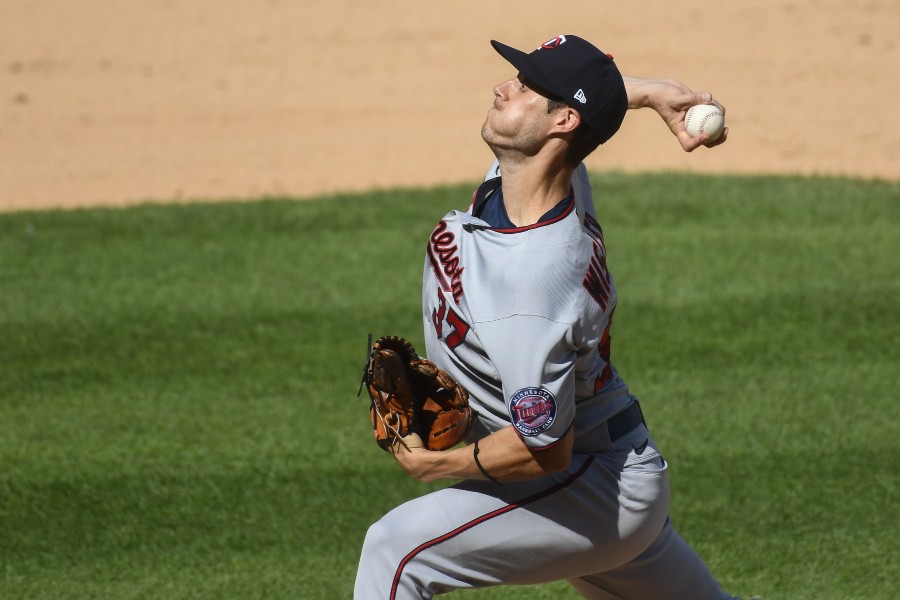 Here are the facts, as we know them: The Twins claimed Matt Wisler off waivers from Seattle on October 29th of last year, and tendered him a $725,000 contract via arbitration. Evidently they saw something they felt they could unlock in the 27-year-old, coming off a 5.61 ERA with the Padres and Mariners. They unlocked it. Wisler enjoyed a breakout season in 2020, albeit in the small sample of 60 games. Relying almost entirely on a fully realized slider, the right-hander was nearly unhittable, posting a 1.07 ERA in 25 ⅓ innings while holding opponents to a 1.65 batting average. Here in his second turn at arbitration, Wisler was expected to make somewhere between $1-2 million, a seemingly nominal fee for a 28-year-old relief pitcher coming off a breakout season. (Especially with Trevor May, Sergio Romo, and Tyler Clippard all cast into free agency.) Everything was lined up such that Wisler was never viewed as much of a question mark. Bringing him back was a given. Even if the Twins looked at Wisler more as a middle reliever than setup man, there was no reason to think he'd be cut loose. And yet. When Wednesday's non-tender deadline came, that is exactly what the Twins did. I was baffled. About an hour after this news dropped, I did a . We strained to make sense of the move but it was tough. Even if the Twins viewed Wisler's 1.07 ERA as an unsustainable fluke (it was), and even if they felt his agent was pushing a little hard, and even if budget constraints are tightening in this offseason of uncertainty ... it's just hard to comprehend why the front office would cut ties with a pickup that was everything they could've hoped. In my state of despair, I wandered over to Wisler's FanGraphs page, with no specific intention. "Maybe I'll just gaze longingly at his swinging strike rate," I thought. But as I arrived at the page... And scrolled down to look at his stats... My eyes suddenly zeroed in on one particular region... Again, we are dealing with a small sample size here. So everything must be taken with a grain of salt, including Wisler's shiny ERA and opponents' batting average. But these underlying numbers make you wonder a little more about those glossy bona fides. .241 BABIP: Opponents were less successful on balls in play against Wisler than ever before, by a longshot. His previous career low was .277, and his 2020 BABIP ranked as second-lowest in the Twins bullpen. 99.3% LOB: This represents the percentage of baserunners that Wisler left on base, and if you find yourself exclaiming "WHAT?!" you are not alone my friend. That is an incredible number. As I ventured over to his Baseball Reference splits, I found that Wisler held opponents to a .080/.179/.160 slash line with runners in scoring position, and .119/.260/.190 with men on base. One could argue this signifies cold-blooded clutchness. One could also argue it represents a 25-inning fluke. I think I know which way the Twins lean. 5.7% HR/FB: Wisler was one of the league's most extreme fly ball pitchers (his 23.6% grounder rate ranked 6th-lowest out of 323 pitchers with 20+ innings) but those flies only left the yard at a 5.7% rate, compared to the league average of 14.8%. Now, none of these on their own are damning. But each of the above metrics tends to be viewed as relatively random for pitchers ... as opposed to say missing bats, which Wisler did well, or limiting walks, which he didn't. What these numbers do is cast a little more light on why the Twins front office might've disagreed with the assessment of Wisler and his agent, as Derek Falvey put it so diplomatically: So for now, Wisler is out of the picture. Meanwhile, Trevor May has signed a deal with the Mets. Sergio Romo and Tyler Clippard are free agents. The Twins are sticking with Taylor Rogers, Tyler Duffey, and Caleb Thielbar. As for the rest of their bullpen? Now we have our next great mystery. MORE FROM TWINS DAILY — Latest Twins coverage from our writers — Recent Twins discussion in our forums — Follow Twins Daily via Twitter, Facebook or email
 -

Offseason Live Replay: Non-tender Deadline
Nick Nelson posted a topic in Twins Daily Front Page News
On Wednesday night, a major offseason milestone arrived with the non-tender deadline. This one loomed especially large for the Minnesota Twins, who are facing difficult stay-or-go arbitration decisions on two longtime fixtures. We reacted to those decisions, plus another out-of-nowhere shocker, and analyzed a wave of newly available free agents on Offseason Live.It looks like the Twins are moving on from longtime left fielder Eddie Rosario. But closer Taylor Rogers is sticking around. Shockingly, Matt Wisler was non-tendered despite a seemingly modest price tag coming off a breakout year. Download attachment: twinsinarb.png Minnesota wasn't the only team confronting tough calls on quality players – calls that would perhaps be no-brainers under different circumstances. Numerous players from other clubs suddenly became available, some of them logical fits for Minnesota. I was joined via live-stream by Seth Stohs and David Youngs on Wednesday night, an hour after the deadline, as we reacted to the news and broke it down. Tune into future live broadcasts on Twins Daily's Twitter, Facebook, or YouTube page. (Or by tuning into the YouTube stream above.) It's an interactive show where viewers help steer the conversation via comments and questions. You can also catch every episode via audio by subscribing to our podcast. In the meantime, check out previous episodes of Offseason Live and see what's upcoming: Ep 1: (Thurs, 10/8)Ep 2: (Tues, 10/13)Ep 3: (Thurs, 10/15)Ep 4: (Tues, 10/20)Ep 5: (Thurs, 10/22)Ep 6: (Tues, 10/27)Ep 7: (Thurs, 10/29)Ep 8: (Thurs, 11/5)Ep 9: (Thurs, 11/12)Ep 10: (Tues, 11/17)Ep 11: (Weds, 12/2) Click here to view the article -
 It looks like the Twins are moving on from longtime left fielder Eddie Rosario. But closer Taylor Rogers is sticking around. Shockingly, Matt Wisler was non-tendered despite a seemingly modest price tag coming off a breakout year. Minnesota wasn't the only team confronting tough calls on quality players – calls that would perhaps be no-brainers under different circumstances. Numerous players from other clubs suddenly became available, some of them logical fits for Minnesota. I was joined via live-stream by Seth Stohs and David Youngs on Wednesday night, an hour after the deadline, as we reacted to the news and broke it down. Tune into future live broadcasts on Twins Daily's Twitter, Facebook, or YouTube page. (Or by tuning into the YouTube stream above.) It's an interactive show where viewers help steer the conversation via comments and questions. You can also catch every episode via audio by subscribing to our podcast. In the meantime, check out previous episodes of Offseason Live and see what's upcoming: Ep 1: (Thurs, 10/8) Ep 2: (Tues, 10/13) Ep 3: (Thurs, 10/15) Ep 4: (Tues, 10/20) Ep 5: (Thurs, 10/22) Ep 6: (Tues, 10/27) Ep 7: (Thurs, 10/29) Ep 8: (Thurs, 11/5) Ep 9: (Thurs, 11/12) Ep 10: (Tues, 11/17) Ep 11: (Weds, 12/2)
 -
2 Newly Available Bats that May Interest the Twins
Nick Nelson replied to Nick Nelson's topic in Twins Daily Front Page News
Well, the idea is to save money, which you'd be doing. Obviously those prospects are all part of the long-term plan but throwing them directly into action for a World Series contender, with almost no combined MLB experience between them, is a bit dicey. There should be plenty of ABs to go around if both Cruz and Rosario are gone. Fair enough, but not sure I'd label either of these guys a reclamation project. Renfroe struggled in a short 2020 season but the power was still there and he was a solidly above-average hitter in 2018-19. Nunez had his best season in 2020 and was above average in each of the prior two. Neither one's power output in 2019 seems like an outlier. Let's look at it this way -- since the start of 2019, Nunez has 43 HR and Renfroe has 41. Only 4 Twins players had more than 41 HR over that span and two of them are Cruz and Rosario. -
The Minnesota Twins are staring down the potential departures of their two most established run producers this winter, with a key decision on Eddie Rosario looming in a few days. Should they be seeking out power bats to replace these lineup fixtures, the Twins may take interest in couple of righty sluggers that unexpectedly hit the market over the past week.Twins fans know all too well that just because a player is waived by one team doesn't mean he can't make a major impact for another one. David Ortiz lamentations aside, there are plenty of more recent examples to illustrate the point. Two offseasons ago, the Twins filled a need at first base by grabbing C.J. Cron after he was placed on waivers by Tampa Bay. While he was slowed by a thumb injury in 2019, Cron lived up to his rep as a quality slugger, playing a key role for an offense that set the all-time home run record. More recently, Minnesota plucked reliever Matt Wisler off waivers from Seattle last October; Wisler went on to become a huge asset and is one of their entrenched bullpen fixtures going forward. The two players we'll cover here already passed through waivers, unlike the two above who were claimed. This only underscores the fact that they are available, and probably at a pretty low cost. Let's take a look at Hunter Renfroe and Renato Nunez. Hunter Renfroe, OF Age 28 Waived by Tampa Bay The Rays have a history of waiving proven offensive producers with marginal defensive value. Cron, mentioned above, is one example. Corey Dickerson is another. Renfroe is a little less surprising than either of them, because he's coming off a rough season, but still – we're talking about a 28-year-old former top prospect with a .486 slugging percentage in the majors. Before his down year in 2020, in which he slashed .156/.252/.393 for Tampa, Renfroe belted 26, 26, and 33 home runs over his first three MLB seasons with the Padres. Most critically: he's a right-handed hitter with a career .258/.339/.573 line against left-handed pitchers. Even amid his struggles in 2020, Renfroe still went deep five times in 51 plate appearances against southpaws. In 2019 he had a .906 OPS against them. His clear strength would offset what was a clear weakness for the Twins in 2020. They slashed just .236/.309/.349 against left-handed pitching, and that was WITH Cruz posting a 1.456 OPS versus lefties. Renfroe is certainly no Cruz, but he'd be a good fit as a rotational player capable of filling in at DH as well as left field and right field (where the starters will presumably both be left-handed regardless of how the Twins decide on Rosario). As a righty power hitter with a somewhat depressed market, Renfroe looks like a nice option for the Twins. But he's not the only player with such a profile to have recently become available. Renato Núñez, 1B/DH Age: 26 Waived by Baltimore Like Renfroe, Núñez had a big offensive season in 2019, piling up 31 home runs and 90 RBIs for the Orioles as a 25-year-old. But unlike Renfroe, he didn't tail off in 2020 – Núñez homered 12 times in 52 games this season, putting up a career-high .256/.324/.492 slash line while splitting time between first base and DH. His price tag wouldn't have been all that high in Year 1 of arbitration (likely in the $3 million range) but the rebuilding Orioles understandably have other priorities than a defensively limited, impatient power hitter. Núñez is not the kind of player who will be in high demand, but he could fit the Twins' needs fairly well if they move on from Cruz. He's an inexpensive right-handed hitter who is in the heart of his prime, turning 27 next April. In his age 25 and 26 seasons, he has hit 43 home runs with a .469 slugging percentage in 203 games. There are two things that make Núñez less appealing than Renfroe for the Twins: Núñez doesn't play the outfield, so he'd be more of a straight-up Cruz replacement at DH, capable of filling in occasionally at first. (He can play a little third base but he's not strong there.)While he swings righty, Núñez hasn't specialized against mashing left-handed pitching. Eleven of his 12 home runs in 2020 came against righties, and he has a better career OPS against RHP.These hold-ups aside, Núñez is a talented player at the peak of his athleticism, and bringing him aboard would add some reliable power production cheaply while enabling the Twins to redirect their savings elsewhere. In an offseason landscape full of intriguing possibilities, we can add a couple more to the list, with the Winter Meetings suddenly just a week away. MORE FROM TWINS DAILY — Latest Twins coverage from our writers — Recent Twins discussion in our forums — Follow Twins Daily via Twitter, Facebook or email Click here to view the article
-
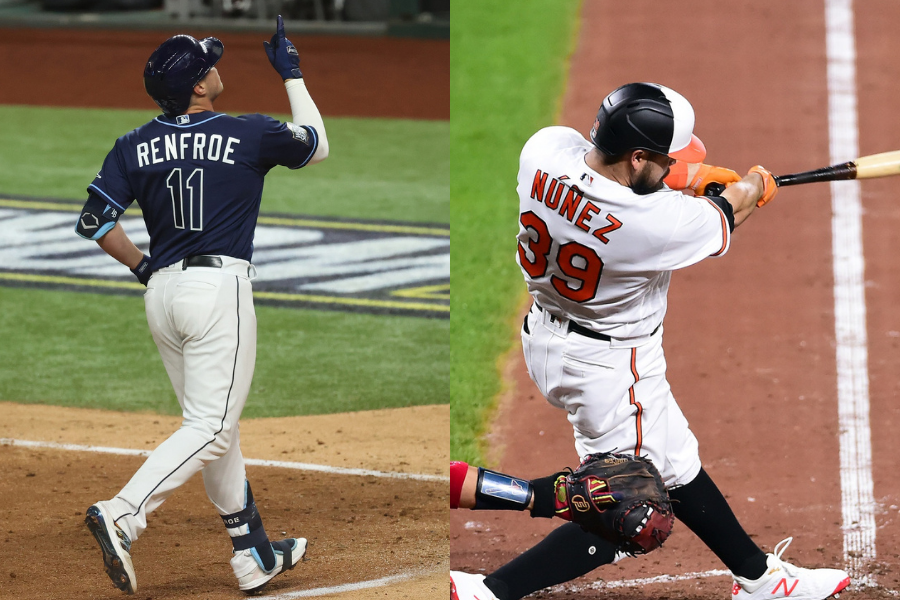 Twins fans know all too well that just because a player is waived by one team doesn't mean he can't make a major impact for another one. David Ortiz lamentations aside, there are plenty of more recent examples to illustrate the point. Two offseasons ago, the Twins filled a need at first base by grabbing C.J. Cron after he was placed on waivers by Tampa Bay. While he was slowed by a thumb injury in 2019, Cron lived up to his rep as a quality slugger, playing a key role for an offense that set the all-time home run record. More recently, Minnesota plucked reliever Matt Wisler off waivers from Seattle last October; Wisler went on to become a huge asset and is one of their entrenched bullpen fixtures going forward. The two players we'll cover here already passed through waivers, unlike the two above who were claimed. This only underscores the fact that they are available, and probably at a pretty low cost. Let's take a look at Hunter Renfroe and Renato Nunez. Hunter Renfroe, OF Age 28 Waived by Tampa Bay The Rays have a history of waiving proven offensive producers with marginal defensive value. Cron, mentioned above, is one example. Corey Dickerson is another. Renfroe is a little less surprising than either of them, because he's coming off a rough season, but still – we're talking about a 28-year-old former top prospect with a .486 slugging percentage in the majors. Before his down year in 2020, in which he slashed .156/.252/.393 for Tampa, Renfroe belted 26, 26, and 33 home runs over his first three MLB seasons with the Padres. Most critically: he's a right-handed hitter with a career .258/.339/.573 line against left-handed pitchers. Even amid his struggles in 2020, Renfroe still went deep five times in 51 plate appearances against southpaws. In 2019 he had a .906 OPS against them. His clear strength would offset what was a clear weakness for the Twins in 2020. They slashed just .236/.309/.349 against left-handed pitching, and that was WITH Cruz posting a 1.456 OPS versus lefties. Renfroe is certainly no Cruz, but he'd be a good fit as a rotational player capable of filling in at DH as well as left field and right field (where the starters will presumably both be left-handed regardless of how the Twins decide on Rosario). As a righty power hitter with a somewhat depressed market, Renfroe looks like a nice option for the Twins. But he's not the only player with such a profile to have recently become available. Renato Núñez, 1B/DH Age: 26 Waived by Baltimore Like Renfroe, Núñez had a big offensive season in 2019, piling up 31 home runs and 90 RBIs for the Orioles as a 25-year-old. But unlike Renfroe, he didn't tail off in 2020 – Núñez homered 12 times in 52 games this season, putting up a career-high .256/.324/.492 slash line while splitting time between first base and DH. His price tag wouldn't have been all that high in Year 1 of arbitration (likely in the $3 million range) but the rebuilding Orioles understandably have other priorities than a defensively limited, impatient power hitter. Núñez is not the kind of player who will be in high demand, but he could fit the Twins' needs fairly well if they move on from Cruz. He's an inexpensive right-handed hitter who is in the heart of his prime, turning 27 next April. In his age 25 and 26 seasons, he has hit 43 home runs with a .469 slugging percentage in 203 games. There are two things that make Núñez less appealing than Renfroe for the Twins: Núñez doesn't play the outfield, so he'd be more of a straight-up Cruz replacement at DH, capable of filling in occasionally at first. (He can play a little third base but he's not strong there.) While he swings righty, Núñez hasn't specialized against mashing left-handed pitching. Eleven of his 12 home runs in 2020 came against righties, and he has a better career OPS against RHP. These hold-ups aside, Núñez is a talented player at the peak of his athleticism, and bringing him aboard would add some reliable power production cheaply while enabling the Twins to redirect their savings elsewhere. In an offseason landscape full of intriguing possibilities, we can add a couple more to the list, with the Winter Meetings suddenly just a week away. MORE FROM TWINS DAILY — Latest Twins coverage from our writers — Recent Twins discussion in our forums — Follow Twins Daily via Twitter, Facebook or email
 -
Bailey Ober, added to Minnesota's 40-man roster a few days ago, is set to become the latest in a long line of Twins pitchers that are really, really tall. It's a running fascination that traces back through several different front office configurations. Let's explore the recent history of towering Twins hurlers.Tall pitchers have a natural mystique, which is rooted in both romantic and scientific thinking. Scouts cherish a tall young thrower, evoking adjectives like "angular" and "projectable." A mountainous figure on the mound is inherently imposing, and there are also more tangible advantages, like a deeper release point and sharper downward plane. Six-foot-10 Randy Johnson represented the epitome of these qualities, and he's rightly revered as one of the most dominant to ever take the hill. To an extent, you could argue being tall is almost a requisite for greatness. Last year Eli Ben-Porat of The Hardball Times reviewed the top pitchers from 2016 through 2018, and he more or less reached this conclusion. "All seven of the top pitchers over the past three seasons were at least 6-foot-3, with only two of the top 14 (6-foot-2 Aaron Nola and 6-foot-1 Trevor Bauer) shorter than that. Of the top 23, only five are below 6-foot-3, and all are at least 6-foot-1," he wrote. "Marcus Stroman is correct that Height Doesn’t Measure Heart; however, it definitely measures an individual’s potential to be a front-end major league baseball starter, especially in today’s game." Now, there's a difference between being lower-case "tall" and upper-case TALL. While the former is prototypical, the latter is more experimental, and Minnesota's many ventures on this front have been uneven. Standing 6-foot-9, Ober certainly lands in the TALL category. Starting with him, here's a backward-chronological look at some notable altitudinous specimens of the franchise's recent past. Bailey Ober, RHP (6'9"): He was recently added to the Twins' 40-man roster, paving way for a not-too-distant MLB debut. Drafted in the 12th round of the 2017 draft, Ober put up big numbers during his first two professionals seasons (181.2 IP, 2.38 ERA, 11.0 K/9, 1.0 BB/9, 0.94 WHIP), and was lights-out in his 2019 stint at Double-A, where he allowed one earned run on 10 hits over 24 innings with a 34-to-2 K/BB ratio. Despite the huge numbers (largely accrued as an advanced college arm facing inexperienced competition), Ober's stuff isn't considered overpowering and his fastball tops out in the 80s. Michael Pineda (6'7"): It wasn't necessarily Pineda's height that attracted Minnesota's front office to him three offseasons ago, so much as a favorable opportunity to land a quality pitcher on a savvy contract coming off surgery. But Big Mike is a big man, and his size certainly plays a role in his standout ability. He's the closest thing to a dominant starting pitcher on this list, which is saying something because while he can throw in the mid-90s and induce a fair share of whiffs, he's more of an efficient strike-thrower than intimidating power arm. Aaron Slegers (6'10"): Terry Ryan's Twins added Slegers in the fifth round of the 2013 draft, viewing him as an interesting project despite his meager strikeout numbers at the University of Indiana. Slegers was fairly similar to Ober in build, and likewise, didn't bring much heat. Unlike Ober, though, Slegers never posted impressive K-rates in the minors, and that has translated to a 5.3 K/9 rate in 58 MLB innings. He did make three appearances in the playoffs for Tampa this year. Mike Pelfrey (6'7"): Six months before Ryan's front office added Slegers in the draft, they added Pelfrey as a free agent. Pelf is the banner example of a tall pitcher whose primary appeal seems to be that he's tall. And to his credit, I guess, it's a trait that carried him through a remarkably lengthy major-league career. He was a first-round draft pick (ninth overall) by the Mets in 2006, and went on to make more than 250 MLB starts, logging nearly 1,500 innings. This despite the fact that he consistently put forth poor strikeout rates, poor control, and generally lackluster results. Pelfrey never struck out even twice as many batters as he walked, and never posted so much as a league-average ERA after his career year in 2010. Despite that, he pitched in the majors through 2017, receiving not one but TWO contracts from TR and the Twins. Alex Meyer (6'9"): One month before signing Pelfrey as a free agent, the Twins acquired Meyer from the Washington Nationals in exchange for Denard Span. Ryan definitely had a type in his second stint as GM. A lean, lanky fireballer with a quirky delivery, Meyer was much more of a high-upside prospect in the theoretical Randy Johnson mold. Unfortunately, his fate was one that befalls all too many tantalizing prodigies of this ilk: erratic control and injuries. They derailed the righty before he could even scratch the surface of his potential. Meyer threw 95 innings in the majors (just six with the Twins) before retiring. Jon Rauch (6'11"): While Terry Ryan clearly had an affinity for tall pitchers, it was his temporary replacement Bill Smith who traded for the tallest pitcher in major-league history. With the Twins racing for a playoff berth run in 2009, Smith acquired Rauch from Arizona in exchange for Kevin Mulvey. Minnesota was one of seven major-league stops for Rauch in an 11-year MLB run spent mostly in the bullpen. While he definitely carved out a nice career for himself, Rauch was known more for steadily solid reliability as opposed to overpowering dominance. His fastball often sat in the upper-80s and he never averaged even a strikeout per inning. Michael Tonkin (6'7"): The Twins took a liking to Tonkin as a high schooler in Palmdale, CA. They chose him with a late-round pick in 2008 and convinced him to sign for a huge over-slot bonus ($230K). At the time, Baseball America spoke highly of Tonkin's "projectable frame" and "ideal build." Fitting more of the prototypical mold for a tall and lanky pitcher, Tonkin used a power fastball to tally big strikeout totals and strong overall numbers in the minors, but he never translated it to sustained MLB success, mainly because of his proneness to home runs. Tonkin made 141 appearances over five seasons with the Twins, posting a 4.43 ERA, then spent 2018 pitching in Japan before returning in 2019 and pitching on a few different minor-league clubs. Still only 31, it's possible we haven't seen the last of him. Loek van Mil (7'1"): If he ever got his shot, Van Mil would've supplanted Rauch from his title as tallest MLB pitcher ever. Minnesota signed the unconventional Dutch right-hander out of the Netherlands in 2005, and he showed occasional flashes while rising through their system, though – much like for Meyer – injuries and control were constant battles. The Twins traded Van Mil to the Angels in exchange for Brian Fuentes in 2010 – incidentally, just two days after they acquired Rauch from Arizona. From there, Van Mil bounced around between a few different organizations, went to pitch in Japan and then the Netherlands, resurfaced in the Twins system for a bit in 2015-16, and then spent a few years pitching in Australia. Tragically, he passed away in July of 2019 at age 34. It's possible I'm missing a name or two, but these are the players that stand out to me from over the past couple of decades. Kyle Gibson (6'6") would be another borderline example but I kind of (arbitrarily) set the threshold at 6-foot-7 or taller. Such pitchers are relatively rare, but as you can see the Twins have found plenty to try and work with. So what have we learned on this journey? Maybe not much, other than that height is anything but a dependable predictor of dominance. While a few pitchers on the list above have managed to carve out lengthy and respectable major-league careers, none did so in a fashion even remotely resembling The Big Unit. In terms of stuff and approach, Ober is fairly comparable to a guy like Slegers, coming consistently over the plate with an arsenal that doesn't sizzle. But Slegers never put up remotely impressive K-rates at any level of the minors, whereas as Ober has shown an exceptional ability to miss bats, all the way up through Double-A. In his four starts at Pensacola to close out the 2019 campaign, Ober struck out 40% of the batters he faced with a 21% swinging strike rate. Velocity or not, those are the kind of flat-out dominant results you dream of from a 6-foot-9 figure on the hill. Even in light of the checkered history of outcomes, I'm really curious to see what becomes of Ober as the latest experiment in sky-scraping pitchers for the Twins. With his tremendous early success in the minors, he carries quite a bit of intrigue in the context of this list. If you want to learn more about the new Twins 40-man addition, in his own words, Seth interviewed Ober shortly after the roster move was announced. You can watch their conversation below on Twins Spotlight: MORE FROM TWINS DAILY — Latest Twins coverage from our writers — Recent Twins discussion in our forums — Follow Twins Daily via Twitter, Facebook or email Click here to view the article
-
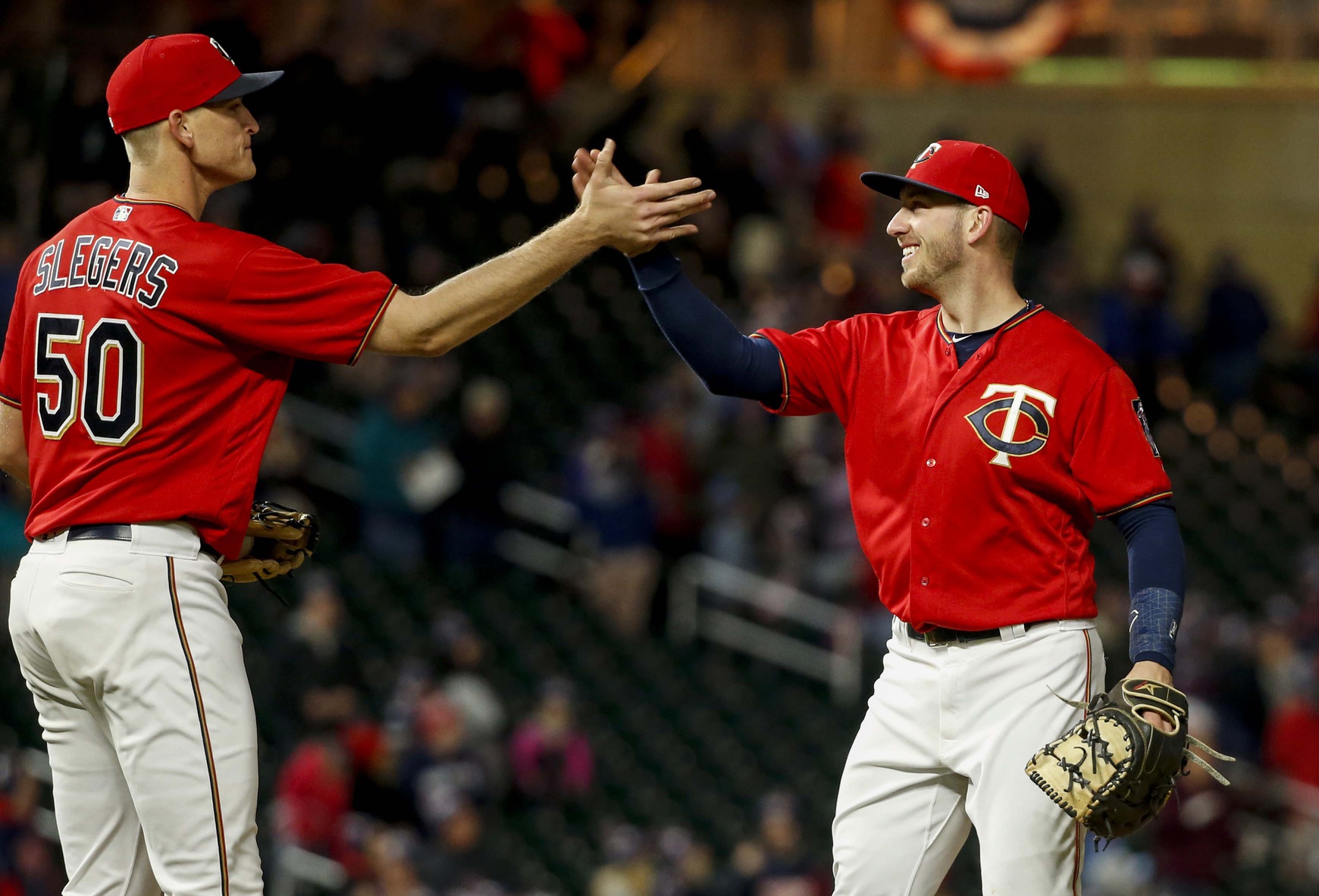 Tall pitchers have a natural mystique, which is rooted in both romantic and scientific thinking. Scouts cherish a tall young thrower, evoking adjectives like "angular" and "projectable." A mountainous figure on the mound is inherently imposing, and there are also more tangible advantages, like a deeper release point and sharper downward plane. Six-foot-10 Randy Johnson represented the epitome of these qualities, and he's rightly revered as one of the most dominant to ever take the hill. To an extent, you could argue being tall is almost a requisite for greatness. Last year Eli Ben-Porat of The Hardball Times reviewed the top pitchers from 2016 through 2018, and he more or less reached this conclusion. "All seven of the top pitchers over the past three seasons were at least 6-foot-3, with only two of the top 14 (6-foot-2 Aaron Nola and 6-foot-1 Trevor Bauer) shorter than that. Of the top 23, only five are below 6-foot-3, and all are at least 6-foot-1," he wrote. "Marcus Stroman is correct that Height Doesn’t Measure Heart; however, it definitely measures an individual’s potential to be a front-end major league baseball starter, especially in today’s game." Now, there's a difference between being lower-case "tall" and upper-case TALL. While the former is prototypical, the latter is more experimental, and Minnesota's many ventures on this front have been uneven. Standing 6-foot-9, Ober certainly lands in the TALL category. Starting with him, here's a backward-chronological look at some notable altitudinous specimens of the franchise's recent past. Bailey Ober, RHP (6'9"): He was recently added to the Twins' 40-man roster, paving way for a not-too-distant MLB debut. Drafted in the 12th round of the 2017 draft, Ober put up big numbers during his first two professionals seasons (181.2 IP, 2.38 ERA, 11.0 K/9, 1.0 BB/9, 0.94 WHIP), and was lights-out in his 2019 stint at Double-A, where he allowed one earned run on 10 hits over 24 innings with a 34-to-2 K/BB ratio. Despite the huge numbers (largely accrued as an advanced college arm facing inexperienced competition), Ober's stuff isn't considered overpowering and his fastball tops out in the 80s. Michael Pineda (6'7"): It wasn't necessarily Pineda's height that attracted Minnesota's front office to him three offseasons ago, so much as a favorable opportunity to land a quality pitcher on a savvy contract coming off surgery. But Big Mike is a big man, and his size certainly plays a role in his standout ability. He's the closest thing to a dominant starting pitcher on this list, which is saying something because while he can throw in the mid-90s and induce a fair share of whiffs, he's more of an efficient strike-thrower than intimidating power arm. Aaron Slegers (6'10"): Terry Ryan's Twins added Slegers in the fifth round of the 2013 draft, viewing him as an interesting project despite his meager strikeout numbers at the University of Indiana. Slegers was fairly similar to Ober in build, and likewise, didn't bring much heat. Unlike Ober, though, Slegers never posted impressive K-rates in the minors, and that has translated to a 5.3 K/9 rate in 58 MLB innings. He did make three appearances in the playoffs for Tampa this year. Mike Pelfrey (6'7"): Six months before Ryan's front office added Slegers in the draft, they added Pelfrey as a free agent. Pelf is the banner example of a tall pitcher whose primary appeal seems to be that he's tall. And to his credit, I guess, it's a trait that carried him through a remarkably lengthy major-league career. He was a first-round draft pick (ninth overall) by the Mets in 2006, and went on to make more than 250 MLB starts, logging nearly 1,500 innings. This despite the fact that he consistently put forth poor strikeout rates, poor control, and generally lackluster results. Pelfrey never struck out even twice as many batters as he walked, and never posted so much as a league-average ERA after his career year in 2010. Despite that, he pitched in the majors through 2017, receiving not one but TWO contracts from TR and the Twins. Alex Meyer (6'9"): One month before signing Pelfrey as a free agent, the Twins acquired Meyer from the Washington Nationals in exchange for Denard Span. Ryan definitely had a type in his second stint as GM. A lean, lanky fireballer with a quirky delivery, Meyer was much more of a high-upside prospect in the theoretical Randy Johnson mold. Unfortunately, his fate was one that befalls all too many tantalizing prodigies of this ilk: erratic control and injuries. They derailed the righty before he could even scratch the surface of his potential. Meyer threw 95 innings in the majors (just six with the Twins) before retiring. Jon Rauch (6'11"): While Terry Ryan clearly had an affinity for tall pitchers, it was his temporary replacement Bill Smith who traded for the tallest pitcher in major-league history. With the Twins racing for a playoff berth run in 2009, Smith acquired Rauch from Arizona in exchange for Kevin Mulvey. Minnesota was one of seven major-league stops for Rauch in an 11-year MLB run spent mostly in the bullpen. While he definitely carved out a nice career for himself, Rauch was known more for steadily solid reliability as opposed to overpowering dominance. His fastball often sat in the upper-80s and he never averaged even a strikeout per inning. Michael Tonkin (6'7"): The Twins took a liking to Tonkin as a high schooler in Palmdale, CA. They chose him with a late-round pick in 2008 and convinced him to sign for a huge over-slot bonus ($230K). At the time, Baseball America spoke highly of Tonkin's "projectable frame" and "ideal build." Fitting more of the prototypical mold for a tall and lanky pitcher, Tonkin used a power fastball to tally big strikeout totals and strong overall numbers in the minors, but he never translated it to sustained MLB success, mainly because of his proneness to home runs. Tonkin made 141 appearances over five seasons with the Twins, posting a 4.43 ERA, then spent 2018 pitching in Japan before returning in 2019 and pitching on a few different minor-league clubs. Still only 31, it's possible we haven't seen the last of him. Loek van Mil (7'1"): If he ever got his shot, Van Mil would've supplanted Rauch from his title as tallest MLB pitcher ever. Minnesota signed the unconventional Dutch right-hander out of the Netherlands in 2005, and he showed occasional flashes while rising through their system, though – much like for Meyer – injuries and control were constant battles. The Twins traded Van Mil to the Angels in exchange for Brian Fuentes in 2010 – incidentally, just two days after they acquired Rauch from Arizona. From there, Van Mil bounced around between a few different organizations, went to pitch in Japan and then the Netherlands, resurfaced in the Twins system for a bit in 2015-16, and then spent a few years pitching in Australia. Tragically, he passed away in July of 2019 at age 34. It's possible I'm missing a name or two, but these are the players that stand out to me from over the past couple of decades. Kyle Gibson (6'6") would be another borderline example but I kind of (arbitrarily) set the threshold at 6-foot-7 or taller. Such pitchers are relatively rare, but as you can see the Twins have found plenty to try and work with. So what have we learned on this journey? Maybe not much, other than that height is anything but a dependable predictor of dominance. While a few pitchers on the list above have managed to carve out lengthy and respectable major-league careers, none did so in a fashion even remotely resembling The Big Unit. In terms of stuff and approach, Ober is fairly comparable to a guy like Slegers, coming consistently over the plate with an arsenal that doesn't sizzle. But Slegers never put up remotely impressive K-rates at any level of the minors, whereas as Ober has shown an exceptional ability to miss bats, all the way up through Double-A. In his four starts at Pensacola to close out the 2019 campaign, Ober struck out 40% of the batters he faced with a 21% swinging strike rate. Velocity or not, those are the kind of flat-out dominant results you dream of from a 6-foot-9 figure on the hill. Even in light of the checkered history of outcomes, I'm really curious to see what becomes of Ober as the latest experiment in sky-scraping pitchers for the Twins. With his tremendous early success in the minors, he carries quite a bit of intrigue in the context of this list. If you want to learn more about the new Twins 40-man addition, in his own words, Seth interviewed Ober shortly after the roster move was announced. You can watch their conversation below on Twins Spotlight: MORE FROM TWINS DAILY — Latest Twins coverage from our writers — Recent Twins discussion in our forums — Follow Twins Daily via Twitter, Facebook or email
 -
We've spent the past several weeks previewing the Twins offseason, and breaking down different decisions that lie ahead in a series of live-streamed videos. Below, you can find them all in one place.Many are anticipating a slow-moving offseason for baseball, mired in uncertainty, but there has been some early action, and we may see more dominoes start to fall in the coming weeks as key milestones approach. The non-tender deadline falls a week from Wednesday, on December 2nd, at which point the pivotal Eddie Rosario decision will need to be made. The following week brings the Winter Meetings, which will be held virtually this year but should nonetheless create the means for deals to be advanced and completed. That Thursday, MLB will hold its Rule 5 draft, providing teams with an opportunity to pluck hidden talents out of rival organizations. Ready or not, Hot Stove season is almost upon us. While it might be a cooler version than normal, aggressive teams will have the chance to strike and make some early noise. The Twins should definitely be in that category. To gain a full grasp of the landscape, I recommend catching up on our Offseason Live series. We've gone through 10 episodes covering a variety of important angles and aspects of the offseason from Minnesota's point of view. If you've got some downtime ahead of you during the holiday week ahead, consider catching up on any episodes you might've missed. PREVIEWING HOT STOVE SZN WITH OFFSEASON LIVE Episode 1: We kicked things off with a gamified overview of the offseason. Nash, Matthew and Andrew competed to answer questions from our Jeopardy board as I did my best to channel the late, great Alex Trebek (R.I.P.). Episode 2: Baseball has no payroll, but we always try to set a realistic benchmark for where the Twins might set a self-imposed cap, so as to understand the constraints in place as the front office seeks to supplement and solidify the roster. Episode 3: Nine members of the 2020 Twins team became free agents when the postseason concluded, and nearly all of them were significant contributors. Currently, all nine of them remain unsigned. In this episode we debated the relative merits of attempting to bring back each. Episode 4: With the non-tender deadline fast approaching, this is an especially pertinent episode to watch. The Eddie decision looms largest, and we spent a fair amount of time talking about it, but that's not the only point of uncertainty among Minnesota's eight arbitration-eligible players. Episode 5: The Twins might seek a third catcher to fill the role of departing free agent Alex Avila. They will definitely seek at least one versatile infielder to fill the roles of departing free agents Marwin Gonzalez and Ehire Adrianza. In this episode, we went through a bunch of options we like for each of those vacancies. Episode 6: Rosario and Nelson Cruz have been the top run producers on back-to-back division champions. If both of them move on this winter (very possible) the Twins may want to procure some established veteran production to replace their contributions. You'll find nine options submitted and vetted here. Episode 7: Jake Odorizzi and Rich Hill are also among the crop of outgoing free agents, leaving a noticeable void in the rotation. Several options from the external free agency pool are discussed here, although a few of them have already signed contracts elsewhere – a sign that the starting pitching market could be in higher demand than any other. Episode 8: Bullpen was a decisive strength for the Twins in 2020. Can they keep it that way? It might take a bit of work with several key contributors – Trevor May, Tyler Clippard, Sergio Romo – now in free agency. The good news is that there's a deep collection of options available on the open market, and we discussed nine of them spread across three different pricing tiers here. Episode 9: Of course, free agency isn't the only avenue for improving your team. Last offseason, the Twins' most impactful addition came via trade, when they acquired Cy Young runner-up Kenta Maeda from Los Angeles for Brusdar Graterol. How might a similar blockbuster take shape this time around? We laid out six specific ideas in this episode. Episode 10: Finally, a look at how it all comes together. John, Seth and I drawing from all we learned in the payroll, arbitration, free agency, and trade targets episodes to craft our own visions of what a successful Minnesota Twins offseason (within set spending constraints) could look like. We invite you to draw up your own blueprint using the Twins Payroll Spender tool. While our pre-set schedule for Offseason Live is completed, we definitely plan to create more of these episodes, situated around key offseason milestones to come. And there's plenty more video/audio content to be found on our YouTube and podcast channels. For example, Seth has been conducting interviews with Twins players and prospects for the Twins Spotlight series. He recently chatted with and new 40-man addition ... and I hear he's got a fun show lined up on Monday. This offseason has a different vibe, and it might be a bit of a grind, so we're taking the opportunity to experiment with new content formats and approaches. We really appreciate everyone who's tuned in, interacted, and helped spread the word. Definitely let us know what you like and what you'd like to see more of, either by commenting or reaching out directly. MORE FROM TWINS DAILY — Latest Twins coverage from our writers — Recent Twins discussion in our forums — Follow Twins Daily via Twitter, Facebook or email Click here to view the article
-
 Many are anticipating a slow-moving offseason for baseball, mired in uncertainty, but there has been some early action, and we may see more dominoes start to fall in the coming weeks as key milestones approach. The non-tender deadline falls a week from Wednesday, on December 2nd, at which point the pivotal Eddie Rosario decision will need to be made. The following week brings the Winter Meetings, which will be held virtually this year but should nonetheless create the means for deals to be advanced and completed. That Thursday, MLB will hold its Rule 5 draft, providing teams with an opportunity to pluck hidden talents out of rival organizations. Ready or not, Hot Stove season is almost upon us. While it might be a cooler version than normal, aggressive teams will have the chance to strike and make some early noise. The Twins should definitely be in that category. To gain a full grasp of the landscape, I recommend catching up on our Offseason Live series. We've gone through 10 episodes covering a variety of important angles and aspects of the offseason from Minnesota's point of view. If you've got some downtime ahead of you during the holiday week ahead, consider catching up on any episodes you might've missed. PREVIEWING HOT STOVE SZN WITH OFFSEASON LIVE Episode 1: We kicked things off with a gamified overview of the offseason. Nash, Matthew and Andrew competed to answer questions from our Jeopardy board as I did my best to channel the late, great Alex Trebek (R.I.P.). Episode 2: Baseball has no payroll, but we always try to set a realistic benchmark for where the Twins might set a self-imposed cap, so as to understand the constraints in place as the front office seeks to supplement and solidify the roster. Episode 3: Nine members of the 2020 Twins team became free agents when the postseason concluded, and nearly all of them were significant contributors. Currently, all nine of them remain unsigned. In this episode we debated the relative merits of attempting to bring back each. Episode 4: With the non-tender deadline fast approaching, this is an especially pertinent episode to watch. The Eddie decision looms largest, and we spent a fair amount of time talking about it, but that's not the only point of uncertainty among Minnesota's eight arbitration-eligible players. Episode 5: The Twins might seek a third catcher to fill the role of departing free agent Alex Avila. They will definitely seek at least one versatile infielder to fill the roles of departing free agents Marwin Gonzalez and Ehire Adrianza. In this episode, we went through a bunch of options we like for each of those vacancies. Episode 6: Rosario and Nelson Cruz have been the top run producers on back-to-back division champions. If both of them move on this winter (very possible) the Twins may want to procure some established veteran production to replace their contributions. You'll find nine options submitted and vetted here. Episode 7: Jake Odorizzi and Rich Hill are also among the crop of outgoing free agents, leaving a noticeable void in the rotation. Several options from the external free agency pool are discussed here, although a few of them have already signed contracts elsewhere – a sign that the starting pitching market could be in higher demand than any other. Episode 8: Bullpen was a decisive strength for the Twins in 2020. Can they keep it that way? It might take a bit of work with several key contributors – Trevor May, Tyler Clippard, Sergio Romo – now in free agency. The good news is that there's a deep collection of options available on the open market, and we discussed nine of them spread across three different pricing tiers here. Episode 9: Of course, free agency isn't the only avenue for improving your team. Last offseason, the Twins' most impactful addition came via trade, when they acquired Cy Young runner-up Kenta Maeda from Los Angeles for Brusdar Graterol. How might a similar blockbuster take shape this time around? We laid out six specific ideas in this episode. Episode 10: Finally, a look at how it all comes together. John, Seth and I drawing from all we learned in the payroll, arbitration, free agency, and trade targets episodes to craft our own visions of what a successful Minnesota Twins offseason (within set spending constraints) could look like. We invite you to draw up your own blueprint using the Twins Payroll Spender tool. While our pre-set schedule for Offseason Live is completed, we definitely plan to create more of these episodes, situated around key offseason milestones to come. And there's plenty more video/audio content to be found on our YouTube and podcast channels. For example, Seth has been conducting interviews with Twins players and prospects for the Twins Spotlight series. He recently chatted with and new 40-man addition ... and I hear he's got a fun show lined up on Monday.This offseason has a different vibe, and it might be a bit of a grind, so we're taking the opportunity to experiment with new content formats and approaches. We really appreciate everyone who's tuned in, interacted, and helped spread the word. Definitely let us know what you like and what you'd like to see more of, either by commenting or reaching out directly. MORE FROM TWINS DAILY — Latest Twins coverage from our writers — Recent Twins discussion in our forums — Follow Twins Daily via Twitter, Facebook or email
 -
Stay the course? Make a free agent splash? Pull off a blockbuster trade? For a talent-laden Twins team in the heart of its championship window, all options are on the table. Thursday night on Offseason Live, we laid out three different paths the front office could plausibly follow this offseason, and what the results might look like in 2021.I was joined via live-stream by John Bonnes and Seth Stohs on Thursday night at 8:00 PM as we each talked through our respective theoretical blueprints for a successful Twins offseason. (Only to have them ruthlessly dissected by the other panelists.) Along the way, we gained some insight as to what real possibilities lie before of the Twins front office this winter. Watch the full episode replay below. You can catch future live-streams by subscribing to Twins Daily's Twitter, Facebook, or YouTube page. You can also always catch our shows via audio by subscribing to our podcast. How might everything come together for the Twins this offseason? Watch and find out: In the meantime, check out previous episodes of Offseason Live and see what's upcoming: Ep 1: (Thurs, 10/8)Ep 2: (Tues, 10/13)Ep 3: (Thurs, 10/15)Ep 4: (Tues, 10/20)Ep 5: (Thurs, 10/22)Ep 6: (Tues, 10/27)Ep 7: (Thurs, 10/29)Ep 8: (Thurs, 11/5)Ep 9: (Thurs, 11/12)Ep 10: (Thurs, 11/19)*MORE TO COME! STAY TUNED* Click here to view the article
-
 I was joined via live-stream by John Bonnes and Seth Stohs on Thursday night at 8:00 PM as we each talked through our respective theoretical blueprints for a successful Twins offseason. (Only to have them ruthlessly dissected by the other panelists.) Along the way, we gained some insight as to what real possibilities lie before of the Twins front office this winter. Watch the full episode replay below. You can catch future live-streams by subscribing to Twins Daily's Twitter, Facebook, or YouTube page. You can also always catch our shows via audio by subscribing to our podcast. How might everything come together for the Twins this offseason? Watch and find out: In the meantime, check out previous episodes of Offseason Live and see what's upcoming: Ep 1: (Thurs, 10/8) Ep 2: (Tues, 10/13) Ep 3: (Thurs, 10/15) Ep 4: (Tues, 10/20) Ep 5: (Thurs, 10/22) Ep 6: (Tues, 10/27) Ep 7: (Thurs, 10/29) Ep 8: (Thurs, 11/5) Ep 9: (Thurs, 11/12) Ep 10: (Thurs, 11/19) *MORE TO COME! STAY TUNED*
 -
The Best Baseball Video Games from Every Generation
Nick Nelson replied to Nick Nelson's topic in Twins Daily Front Page News
I wish I could relate. Personally I lost all interest after the MLB license was lost. Tried the college-themed versions a couple times, never did much for me. -
The Best Baseball Video Games from Every Generation
Nick Nelson replied to Nick Nelson's topic in Twins Daily Front Page News
Good submissions Tom. I can't believe I didn't mention Tony La Russa Baseball given the timely relevance. It came out in in 1991, six years before Luis Robert was born! Lookit this beaut: -
Last week, a new generation of video games officially kicked off, with both Sony and Microsoft launching their latest consoles. As such, I thought it'd be a timely moment to reflect on baseball's rich history in gaming. Here are my picks for the best baseball video games of each past console generation.I recently published my first book, VERSUS: 25 Head-to-Head Battles that Shaped the Evolution of Video Games. Created in partnership with designer Jerrald Spencer Jr., it is available via Lulu (paperback) and Gumroad (digital). Over the course of 25 chapters, we navigate the history of gaming through a series of dualities and dichotomies. With the ninth generation of video games now underway, here's a look at Jay's graphic from the book depicting highlights of the first eight: Download attachment: generationhighlights.png Baseball itself has been a staple throughout gaming's history, dating all the way back to the 1960s. Today I'll take a stroll through the evolution of our favorite sport in the virtual realm by sharing my choices for the best and most influential titles of each console generation. I'll sprinkle in a few Twins-related tidbits along the way, too. Note: We're skipping the first generation, which consisted of various rudimentary "gaming systems" producing some rough early efforts in the baseball genre. None are worthy of mentioning here, so we'll start with the second generation, when Atari 2600 brought home gaming to the mainstream. 2nd Generation: Home Run For Atari 2600 (1978) Download attachment: homerun_atari2600.png At this point things were still pretty rudimentary. I listed Atari's Home Run in VERSUS among memorable (if simplistic) titles on the breakout home console: "As a baseball geek I’ve gotta include this primitive interpretation of the dusty diamond. There were no fielders other than the pitcher, who delivered from second base." Created by Atari designer Bob Whitehead, Home Run wasn't exactly a convincing baseball simulation, but it had its retro charm. 3rd Generation: R.B.I. Baseball For Nintendo Entertainment System (1988) Download attachment: rbibaseball_nes.png When people think of classic baseball video games from the early days, this is typically the first that comes to mind. It was a massive step forward – the first title to feature an MLBPA license and thus, actual player names. Now, R.B.I. Baseball didn't have a license from MLB itself, so there were no team names or logos, but Minnesota was one of the eight selectable clubs in the game. (The Twins were, after all, reigning World Series champs at the time.) In the screenshot above you can see Frank Viola delivering to Detroit's Alan Trammell. The progression from Atari and Home Run is plain to see. Here we have colorful expansive fields with nine players and fairly genuine baseball action – varying pitch types and speeds, player stats, differentiated player attributes, etc. 4th Generation: Ken Griffey Jr. Presents Major League Baseball For Super NES (1994) Download attachment: Griffey-jr-mlb-cover.jpg By the fourth generation, video games were starting to come into their own. Sega and Nintendo competed to advance the industry with their popular 16-bit consoles, and sports titles started to emerge as prime attractions. While I myself owned a Genesis, and was rather fond of Sports Talk Baseball, no one can rightly deny that the highlight of the generation was Nintendo's smash hit for the SNES. The game starred Seattle superstar Ken Griffey Jr. – no coincidence, as Nintendo's president Hiroshi Yamauchi had purchased the Mariners in 1992 – but no other real big-leaguer players. In contrast to R.B.I. Baseball, this game had the MLB license and not the MLBPA license, meaning real teams and logos but fictional players. Twins fixtures included first baseman A. West, designated hitter J. Hendrix and closer W. Herzog. Taking advantage of the relatively powerful SNES hardware, Griffey brought a heightened sense of speed and scale to the baseball sim. It had an arcade-style feel with the exaggerated player builds and rapid pacing. This game was just plain fun. 5th Generation: Triple Play Baseball 2000 For PlayStation & Nintendo 64 (1999) Download attachment: Triple_Play_2000_Coverart.png The fifth generation of consoles was all about making the jump to 3D graphics. Sony's PlayStation entered the fold to compete with the Nintendo 64 and ill-fated Sega Saturn on this front. In retrospect it was kind of an awkward transition for the gaming medium; polygonal graphics opened up a new world of possibilities, but developers were still figuring out how to design with them and hardware capabilities were limited. As such, you had a whole slew of games released that were impressive at the time, but didn't age all that well. Triple Play 2000 is a fine example. Watching the gameplay footage below (with Kevin Tapani as Chicago's starting pitcher!), you may cringe at the blocky players, blurry textures, and choppy animations. Still, I went with this choice because I look back on it as my favorite of an era that bridged the gap to the third dimension and greater immersion. Triple Play 2000 was well received at the time, earning a 9.2 out of 10 from IGN, whose review lauded its authenticity: "It's all here but the hot dogs." Most vitally, the Triple Play series laid groundwork for what it would eventually become the pinnacle of baseball video gamedom (covered next). 6th Generation: MVP Baseball 2005 For PlayStation 2, Xbox & GameCube (2004) Download attachment: MVP_Baseball_2005_Coverart.png The next generation of consoles saw tremendous advancement in 3D graphical prowess. It also saw Electronic Arts retire the Triple Play series, rebranding their mainstay as MVP Baseball. The overhauled franchise came with strong efforts for the 2003 and 2004 editions, but MVP Baseball 2005 is widely regarded as the best baseball video game of all time (maybe even the best sports video game). It's hard to put a finger on exactly what made this game so damn good. EA really just perfected the whole package. The graphics were stellar for the time (and, tellingly, still look decent today). Gameplay was thoroughly enjoyable, with innovative meter-based pitching and zone-based hitting interfaces. Numerous game modes could be played, including a deep franchise mode that put users squarely in the GM's chair, accounting for things like team chemistry and fan happiness. You even managed minor-league teams, all the way down to Single-A! Tragically, this was also the final installment of the MVP Baseball series. While the sixth generation of consoles brought us many outstanding games (MLB Slugfest 20-04 is an honorable mention here for sure), it also marked a dark turning point for the sports genre. With its Madden franchise facing stiff competition from Sega's (superior) NFL 2K on the football front, Electronic Arts struck an exclusive licensing deal with the NFL, taking every other publisher out of the running. Shortly after, competing publisher Take Two Interactive returned fire by striking an exclusivity deal of its own with MLB, effectively killing EA's MVP franchise. It sucked. I wrote about this series of events at length in Chapter 18 of VERSUS. 7th Generation: MLB 10: The Show For PlayStation 3 (2010) Download attachment: MLB_10_The_Show_Cover.jpg One nuance of Take Two's exclusivity pact with MLB is that it still allowed for first-party licensing, which meant Sony could continue to produce its MLB: The Show series. For that, gamers were truly fortunate. Major League Baseball 2K, the third-party baseball sim series published by Take Two Interactive, was never much good and fizzled out. Meanwhile, MLB: The Show continued to distinguish itself, year after year, continually resetting the benchmark for balanced realism and enjoyability. The 2010 installment was especially noteworthy because its cover (and ) featured our guy Joe Mauer, fresh off an MVP season. The game also did a slick job portraying Target Field in its inaugural season. [/center] 8th Generation: MLB The Show 20 For PlayStation 4 (2020) Download attachment: MLB_The_Show_20_cover.jpg In a decade since MLB 10: The Show, the baseball games genre has stagnated somewhat. Granted, Sony has enhanced its flagship franchise each year, but without much in the way of competition, there's been a little pressure to innovate. Here I went with the most recent edition of MLB The Show, because it's as good as any from the latest generation, and also because its an opportunity to mention "The Show Must Go On," a simulated 2020 season I chronicled back in the early summer while MLB sat in limbo. The clip below of a Twins vs. White Sox game illustrates just how far the virtual baseball sim has come since the days of Home Run. MLB The Show has obviously reached unprecedented levels of realism and quality. But to be honest, I found myself using this newest iteration more for roster experimentation and simulating outcomes (a la OOTP Baseball, a mainstay in the PC gaming realm) than actually playing through games. As crisp as it is, there's just nothing all that novel about the experience anymore. With a new generation of consoles upon us, I'm hopeful to see the folks behind MLB The Show unlock new frontiers, along with other contenders stepping up their games to spark a little friendly competition. ~~~ As mentioned earlier, last week my friend and I released a book called VERSUS: 25 Head-to-Head Battles that Shaped the Evolution of Video Games. It's a self-published 246-page journey through gaming history with filled with full-color illustrations, sidebars, charts and plenty of fun. It's available for purchase now as a high-quality paperback ($30) or immediately downloadable ebook ($15). VERSUS makes for an excellent holiday gift, and by grabbing it you will be supporting a couple of independent creators. We'd love if you gave it a look! Click here to view the article
-
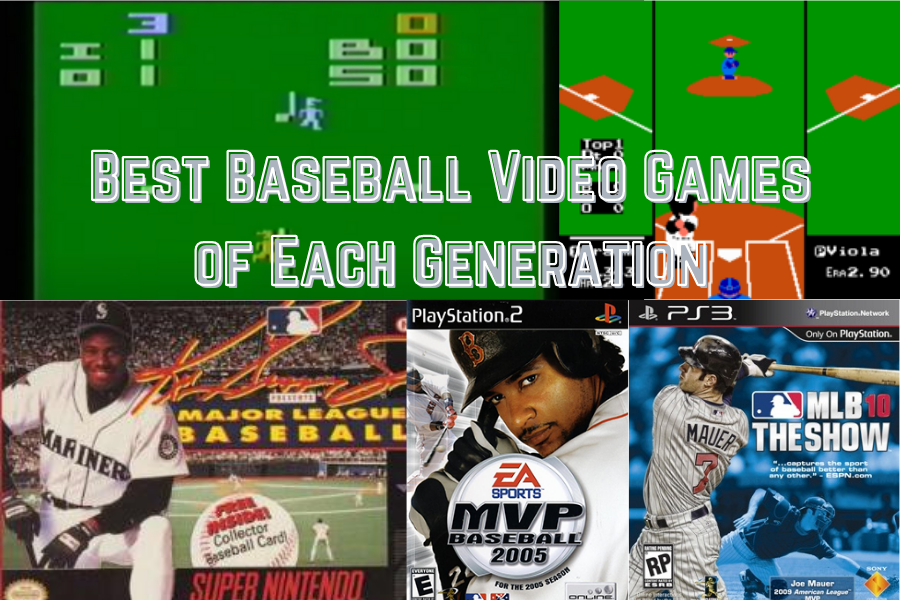 I recently published my first book, VERSUS: 25 Head-to-Head Battles that Shaped the Evolution of Video Games. Created in partnership with designer Jerrald Spencer Jr., it is available via Lulu (paperback) and Gumroad (digital). Over the course of 25 chapters, we navigate the history of gaming through a series of dualities and dichotomies. With the ninth generation of video games now underway, here's a look at Jay's graphic from the book depicting highlights of the first eight: Baseball itself has been a staple throughout gaming's history, dating all the way back to the 1960s. Today I'll take a stroll through the evolution of our favorite sport in the virtual realm by sharing my choices for the best and most influential titles of each console generation. I'll sprinkle in a few Twins-related tidbits along the way, too. Note: We're skipping the first generation, which consisted of various rudimentary "gaming systems" producing some rough early efforts in the baseball genre. None are worthy of mentioning here, so we'll start with the second generation, when Atari 2600 brought home gaming to the mainstream. 2nd Generation: Home Run For Atari 2600 (1978) At this point things were still pretty rudimentary. I listed Atari's Home Run in VERSUS among memorable (if simplistic) titles on the breakout home console: "As a baseball geek I’ve gotta include this primitive interpretation of the dusty diamond. There were no fielders other than the pitcher, who delivered from second base." Created by Atari designer Bob Whitehead, Home Run wasn't exactly a convincing baseball simulation, but it had its retro charm. 3rd Generation: R.B.I. Baseball For Nintendo Entertainment System (1988) When people think of classic baseball video games from the early days, this is typically the first that comes to mind. It was a massive step forward – the first title to feature an MLBPA license and thus, actual player names. Now, R.B.I. Baseball didn't have a license from MLB itself, so there were no team names or logos, but Minnesota was one of the eight selectable clubs in the game. (The Twins were, after all, reigning World Series champs at the time.) In the screenshot above you can see Frank Viola delivering to Detroit's Alan Trammell. The progression from Atari and Home Run is plain to see. Here we have colorful expansive fields with nine players and fairly genuine baseball action – varying pitch types and speeds, player stats, differentiated player attributes, etc. 4th Generation: Ken Griffey Jr. Presents Major League Baseball For Super NES (1994) By the fourth generation, video games were starting to come into their own. Sega and Nintendo competed to advance the industry with their popular 16-bit consoles, and sports titles started to emerge as prime attractions. While I myself owned a Genesis, and was rather fond of Sports Talk Baseball, no one can rightly deny that the highlight of the generation was Nintendo's smash hit for the SNES. The game starred Seattle superstar Ken Griffey Jr. – no coincidence, as Nintendo's president Hiroshi Yamauchi had purchased the Mariners in 1992 – but no other real big-leaguer players. In contrast to R.B.I. Baseball, this game had the MLB license and not the MLBPA license, meaning real teams and logos but fictional players. Twins fixtures included first baseman A. West, designated hitter J. Hendrix and closer W. Herzog. Taking advantage of the relatively powerful SNES hardware, Griffey brought a heightened sense of speed and scale to the baseball sim. It had an arcade-style feel with the exaggerated player builds and rapid pacing. This game was just plain fun. 5th Generation: Triple Play Baseball 2000 For PlayStation & Nintendo 64 (1999) The fifth generation of consoles was all about making the jump to 3D graphics. Sony's PlayStation entered the fold to compete with the Nintendo 64 and ill-fated Sega Saturn on this front. In retrospect it was kind of an awkward transition for the gaming medium; polygonal graphics opened up a new world of possibilities, but developers were still figuring out how to design with them and hardware capabilities were limited. As such, you had a whole slew of games released that were impressive at the time, but didn't age all that well. Triple Play 2000 is a fine example. Watching the gameplay footage below (with Kevin Tapani as Chicago's starting pitcher!), you may cringe at the blocky players, blurry textures, and choppy animations. Still, I went with this choice because I look back on it as my favorite of an era that bridged the gap to the third dimension and greater immersion. Triple Play 2000 was well received at the time, earning a 9.2 out of 10 from IGN, whose review lauded its authenticity: "It's all here but the hot dogs." Most vitally, the Triple Play series laid groundwork for what it would eventually become the pinnacle of baseball video gamedom (covered next). 6th Generation: MVP Baseball 2005 For PlayStation 2, Xbox & GameCube (2004) The next generation of consoles saw tremendous advancement in 3D graphical prowess. It also saw Electronic Arts retire the Triple Play series, rebranding their mainstay as MVP Baseball. The overhauled franchise came with strong efforts for the 2003 and 2004 editions, but MVP Baseball 2005 is widely regarded as the best baseball video game of all time (maybe even the best sports video game). It's hard to put a finger on exactly what made this game so damn good. EA really just perfected the whole package. The graphics were stellar for the time (and, tellingly, still look decent today). Gameplay was thoroughly enjoyable, with innovative meter-based pitching and zone-based hitting interfaces. Numerous game modes could be played, including a deep franchise mode that put users squarely in the GM's chair, accounting for things like team chemistry and fan happiness. You even managed minor-league teams, all the way down to Single-A! Tragically, this was also the final installment of the MVP Baseball series. While the sixth generation of consoles brought us many outstanding games (MLB Slugfest 20-04 is an honorable mention here for sure), it also marked a dark turning point for the sports genre. With its Madden franchise facing stiff competition from Sega's (superior) NFL 2K on the football front, Electronic Arts struck an exclusive licensing deal with the NFL, taking every other publisher out of the running. Shortly after, competing publisher Take Two Interactive returned fire by striking an exclusivity deal of its own with MLB, effectively killing EA's MVP franchise. It sucked. I wrote about this series of events at length in Chapter 18 of VERSUS. 7th Generation: MLB 10: The Show For PlayStation 3 (2010) One nuance of Take Two's exclusivity pact with MLB is that it still allowed for first-party licensing, which meant Sony could continue to produce its MLB: The Show series. For that, gamers were truly fortunate. Major League Baseball 2K, the third-party baseball sim series published by Take Two Interactive, was never much good and fizzled out. Meanwhile, MLB: The Show continued to distinguish itself, year after year, continually resetting the benchmark for balanced realism and enjoyability. The 2010 installment was especially noteworthy because its cover (and ) featured our guy Joe Mauer, fresh off an MVP season. The game also did a slick job portraying Target Field in its inaugural season. [/center] 8th Generation: MLB The Show 20 For PlayStation 4 (2020) In a decade since MLB 10: The Show, the baseball games genre has stagnated somewhat. Granted, Sony has enhanced its flagship franchise each year, but without much in the way of competition, there's been a little pressure to innovate. Here I went with the most recent edition of MLB The Show, because it's as good as any from the latest generation, and also because its an opportunity to mention "The Show Must Go On," a simulated 2020 season I chronicled back in the early summer while MLB sat in limbo. The clip below of a Twins vs. White Sox game illustrates just how far the virtual baseball sim has come since the days of Home Run. MLB The Show has obviously reached unprecedented levels of realism and quality. But to be honest, I found myself using this newest iteration more for roster experimentation and simulating outcomes (a la OOTP Baseball, a mainstay in the PC gaming realm) than actually playing through games. As crisp as it is, there's just nothing all that novel about the experience anymore. With a new generation of consoles upon us, I'm hopeful to see the folks behind MLB The Show unlock new frontiers, along with other contenders stepping up their games to spark a little friendly competition. ~~~ As mentioned earlier, last week my friend and I released a book called VERSUS: 25 Head-to-Head Battles that Shaped the Evolution of Video Games. It's a self-published 246-page journey through gaming history with filled with full-color illustrations, sidebars, charts and plenty of fun. It's available for purchase now as a high-quality paperback ($30) or immediately downloadable ebook ($15). VERSUS makes for an excellent holiday gift, and by grabbing it you will be supporting a couple of independent creators. We'd love if you gave it a look!
 -
The Minnesota Twins seem very likely to make at least one trade this winter. While there are an endless array of variables and moving parts, any deal they complete is all but certain to take one of three shapes: Take on money, free up money, or pony up a top prospect. What might each model look like in practice?On Thursday night's episode of Offseason Live, I was joined by Tom Froemming and Nash Walker as we exchanged and dissected Twins trade proposals that we view as plausible and sensible. You can watch that below to see the specific ideas and discussions: I won't relitigate the debates. Each Armchair GM can speak for himself above (also available via podcast). But what I will do is lay out the three different high-level categories that all of our proposals – or any realistic Twins trade to be made this offseason – fall into. MODEL 1: TWINS TAKE ON MONEY I think this route is probably the odds-on favorite heading in. Ken Rosenthal reported recently that rival executives expect Minnesota to be aggressive in a market where many are scaling back. If the ownership and front office are ready to keep pushing, they stand to gain a very real advantage. This could manifest in free agency, with the Twins outbidding other lukewarm suitors for top talent. But a willingness to spend might be even more valuable on the trade market. Certain clubs will be desperate to unload burdensome contracts, under a mandate to get leaner for the economic uncertainty to come. In our Offseason Live episode, we looked at a couple such examples. Francisco Lindor is essentially a lock to be traded by Cleveland, and while an intra-division trade is unlikely, I gave my pitch for what might get it done. Nash stumped for Trevor Story of the Rockies on a similar basis. Download attachment: twinsstorytrade.png None of these superstar players are coming for free, but with a lack of aggressive contenders to pit against one another, teams like Cleveland and Colorado will be limited in their ability to drive up returns for expensive one-year rentals. At the same time, their front offices are likely feeling unique pressure to get SOMETHING done. It's not often you have opportunities to pry loose top-tier talents in their prime, much less without giving up a painful haul. The Twins are very much in a position to do so – IF ownership is prepared to capitalize on a winning window by taking a bold financial risk. MODEL 2: TWINS FREE UP MONEY Then again, maybe the Pohlads are much like the vast majority of ownership groups: prepared to take a conservative wait-and-see approach this offseason. To be honest, I couldn't fault them for it, so long as they're not making extreme cuts with baffling implications. There aren't many guaranteed contracts on the 2021 books that could be viewed as unfavorable for the Twins, even in this environment. Their highest-paid player Josh Donaldson would qualify, but there's nothing to be done about his $21 million commitment. The next-biggest guaranteed salary belongs to Miguel Sanó, at $11 million. Here the Twins may have a viable trade chip. The downsides of Sanó's game go without saying, and he's relatively replaceable in the scope of Minnesota's organizational depth. An argument could be made that the $11 million he's owed could better spent elsewhere. But this is a 27-year-old former top prospect with elite power, controlled for two more years. The Twins aren't giving him up for nothing, or even close. For those reasons, they wouldn't need to. It's tricky, but not impossible, to envision a Sanó trade that works for both sides, with the Twins saving a bit of money and getting back immediate impact talent. Tom took a shot at actualizing such this with his seven-player, three-way hypothetical trade shared on Offseason Live. I'm not even gonna try to explain it. Download attachment: tomstrade.png MODEL 3: PONY UP A TOP PROSPECT With Model 1, the Twins would likely need to relinquish at least one very good prospect. Nash and I had them surrendering Jhoan Duran or Jordan Balazovic, respectively, to acquire Lindor or Story. Those are the best arms in Minnesota's system. But I don't think either could objectively be described as a "top prospect" in the big picture. In this sense, the Twins have exactly three players in their system who – based on aggregated rankings across industry publications – could be considered true top prospects: Royce Lewis, Alex Kirilloff, Trevor Larnach. In an offseason environment where high-upside, cost-controlled, near-ready talent will be coveted like perhaps never before, the Twins have an opportunity to make hay. This third model – not ENTIRELY distinct from the first one – is represented by Tom's suggestion in Offseason Live of trading Kirilloff for Rays ace Blake Snell, or by Nash posing a Larnach-led package for Milwaukee's two best pitchers. Such give-and-get scenarios invoke a veritable cocktail of emotions: exhilarating energy mixed with nauseating FOMO. It's a scenario, and feeling, that Twins fans know all too well. Because we literally just experienced it. In February, Minnesota gave up Brusdar Graterol – a bona fide "TOP PROSPECT" by anyone's definition (other than Boston) – in order to acquire Kenta Maeda. It was the epitome of a trade that, at least so far, has worked out brilliantly for both sides. Maeda leveled up in Minnesota and instantly became the Twins' most valuable player (in our eyes), and a Cy Young runner-up. He was the ace this franchise has long coveted. Meanwhile, Graterol was every bit the late inning weapon Los Angeles envisioned. He helped propel the Dodgers to a long-awaited championship, and remains under their control for five more years – a cost-effective successor for Kenley Jansen. Hey, it hurts to lose Graterol. It'd hurt to lose Lewis, or Kirilloff, or Larnach too. But Maeda has been a transformative difference-maker for the Twins. And his presence only bolsters their position as a front-running pennant contender in 2021, furthering the case for another move in the Model 3 vein. The time is now. Let us know in the comments which model(s) you'd prefer to adopt this winter. And by all means, share your own outlandish trade in the comments section. In the meantime, check out previous episodes of Offseason Live and be ready for the final planned installment: Ep 1: (Thurs, 10/8)Ep 2: (Tues, 10/13)Ep 3: (Thurs, 10/15)Ep 4: (Tues, 10/20)Ep 5: (Thurs, 10/22)Ep 6: (Tues, 10/27)Ep 7: (Thurs, 10/29)Ep 8: (Thurs, 11/5)Ep 9: (Thurs, 11/12)Ep 10: Offseason Blueprints (Coming Soon)MORE FROM TWINS DAILY — Latest Twins coverage from our writers — Recent Twins discussion in our forums — Follow Twins Daily via Twitter, Facebook or email Click here to view the article
- 7 replies
-
- 1
-

-
- miguel sano
- alex kirilloff
- (and 1 more)
-
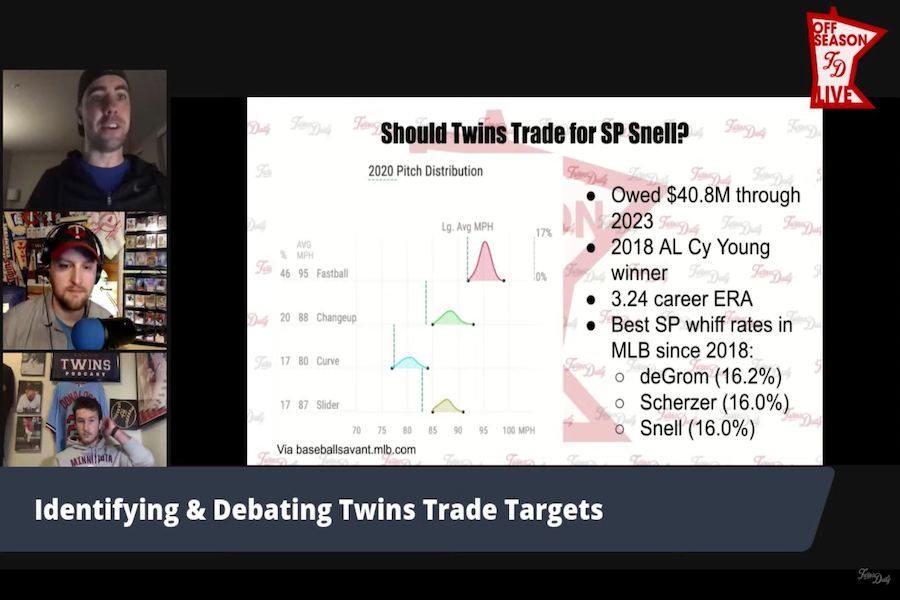 On Thursday night's episode of Offseason Live, I was joined by Tom Froemming and Nash Walker as we exchanged and dissected Twins trade proposals that we view as plausible and sensible. You can watch that below to see the specific ideas and discussions: I won't relitigate the debates. Each Armchair GM can speak for himself above (also available via podcast). But what I will do is lay out the three different high-level categories that all of our proposals – or any realistic Twins trade to be made this offseason – fall into. MODEL 1: TWINS TAKE ON MONEY I think this route is probably the odds-on favorite heading in. Ken Rosenthal reported recently that rival executives expect Minnesota to be aggressive in a market where many are scaling back. If the ownership and front office are ready to keep pushing, they stand to gain a very real advantage. This could manifest in free agency, with the Twins outbidding other lukewarm suitors for top talent. But a willingness to spend might be even more valuable on the trade market. Certain clubs will be desperate to unload burdensome contracts, under a mandate to get leaner for the economic uncertainty to come. In our Offseason Live episode, we looked at a couple such examples. Francisco Lindor is essentially a lock to be traded by Cleveland, and while an intra-division trade is unlikely, I gave my pitch for what might get it done. Nash stumped for Trevor Story of the Rockies on a similar basis. None of these superstar players are coming for free, but with a lack of aggressive contenders to pit against one another, teams like Cleveland and Colorado will be limited in their ability to drive up returns for expensive one-year rentals. At the same time, their front offices are likely feeling unique pressure to get SOMETHING done. It's not often you have opportunities to pry loose top-tier talents in their prime, much less without giving up a painful haul. The Twins are very much in a position to do so – IF ownership is prepared to capitalize on a winning window by taking a bold financial risk. MODEL 2: TWINS FREE UP MONEY Then again, maybe the Pohlads are much like the vast majority of ownership groups: prepared to take a conservative wait-and-see approach this offseason. To be honest, I couldn't fault them for it, so long as they're not making extreme cuts with baffling implications. There aren't many guaranteed contracts on the 2021 books that could be viewed as unfavorable for the Twins, even in this environment. Their highest-paid player Josh Donaldson would qualify, but there's nothing to be done about his $21 million commitment. The next-biggest guaranteed salary belongs to Miguel Sanó, at $11 million. Here the Twins may have a viable trade chip. The downsides of Sanó's game go without saying, and he's relatively replaceable in the scope of Minnesota's organizational depth. An argument could be made that the $11 million he's owed could better spent elsewhere. But this is a 27-year-old former top prospect with elite power, controlled for two more years. The Twins aren't giving him up for nothing, or even close. For those reasons, they wouldn't need to. It's tricky, but not impossible, to envision a Sanó trade that works for both sides, with the Twins saving a bit of money and getting back immediate impact talent. Tom took a shot at actualizing such this with his seven-player, three-way hypothetical trade shared on Offseason Live. I'm not even gonna try to explain it. MODEL 3: PONY UP A TOP PROSPECT With Model 1, the Twins would likely need to relinquish at least one very good prospect. Nash and I had them surrendering Jhoan Duran or Jordan Balazovic, respectively, to acquire Lindor or Story. Those are the best arms in Minnesota's system. But I don't think either could objectively be described as a "top prospect" in the big picture. In this sense, the Twins have exactly three players in their system who – based on aggregated rankings across industry publications – could be considered true top prospects: Royce Lewis, Alex Kirilloff, Trevor Larnach. In an offseason environment where high-upside, cost-controlled, near-ready talent will be coveted like perhaps never before, the Twins have an opportunity to make hay. This third model – not ENTIRELY distinct from the first one – is represented by Tom's suggestion in Offseason Live of trading Kirilloff for Rays ace Blake Snell, or by Nash posing a Larnach-led package for Milwaukee's two best pitchers. Such give-and-get scenarios invoke a veritable cocktail of emotions: exhilarating energy mixed with nauseating FOMO. It's a scenario, and feeling, that Twins fans know all too well. Because we literally just experienced it. In February, Minnesota gave up Brusdar Graterol – a bona fide "TOP PROSPECT" by anyone's definition (other than Boston) – in order to acquire Kenta Maeda. It was the epitome of a trade that, at least so far, has worked out brilliantly for both sides. Maeda leveled up in Minnesota and instantly became the Twins' most valuable player (in our eyes), and a Cy Young runner-up. He was the ace this franchise has long coveted. Meanwhile, Graterol was every bit the late inning weapon Los Angeles envisioned. He helped propel the Dodgers to a long-awaited championship, and remains under their control for five more years – a cost-effective successor for Kenley Jansen. Hey, it hurts to lose Graterol. It'd hurt to lose Lewis, or Kirilloff, or Larnach too. But Maeda has been a transformative difference-maker for the Twins. And his presence only bolsters their position as a front-running pennant contender in 2021, furthering the case for another move in the Model 3 vein. The time is now. Let us know in the comments which model(s) you'd prefer to adopt this winter. And by all means, share your own outlandish trade in the comments section. In the meantime, check out previous episodes of Offseason Live and be ready for the final planned installment: Ep 1: (Thurs, 10/8) Ep 2: (Tues, 10/13) Ep 3: (Thurs, 10/15) Ep 4: (Tues, 10/20) Ep 5: (Thurs, 10/22) Ep 6: (Tues, 10/27) Ep 7: (Thurs, 10/29) Ep 8: (Thurs, 11/5) Ep 9: (Thurs, 11/12) Ep 10: Offseason Blueprints (Coming Soon) MORE FROM TWINS DAILY — Latest Twins coverage from our writers — Recent Twins discussion in our forums — Follow Twins Daily via Twitter, Facebook or email
 -
Offseason Live Replay: Twins Trade Targets
Nick Nelson posted a topic in Twins Daily Front Page News
In this strange offseason, where front offices are compelled to weigh strategic team-building against stark financial realities, trades are expected to be a popular avenue. Thursday night on Offseason Live, we shared some ideas for specific moves the Minnesota Twins could make to fire up Hot Stove SZN.I was joined via live-stream by Tom Froemming and Nash Walker on Thursday night as we submitted our (ostensibly realistic) trade proposals on behalf of the Twins this winter. Does Minnesota have a chance to acquire the market's top prize, Francisco Lindor? Is there a way they could deal Miguel Sanó's contract and get real value back?? JUST WHO might be involved in Tom's hypothetical three-team, seven-player swap??? (I wish I was kidding.) Find out by watching below. Tune into future live broadcasts via Twins Daily's Twitter, Facebook, or YouTube page. It'll be an interactive show where viewers help steer the conversation via comments and questions. You'll also be able to catch replays on the site, or via audio by subscribing to our podcast. Who are the names to watch on the trade market this year? Find out below. Check out previous episodes of Offseason Live and see what's upcoming: Ep 1: (Thurs, 10/8)Ep 2: (Tues, 10/13)Ep 3: (Thurs, 10/15)Ep 4: (Tues, 10/20)Ep 5: (Thurs, 10/22)Ep 6: (Tues, 10/27)Ep 7: (Thurs, 10/29)Ep 8: (Thurs, 11/5)Ep 9: (Thurs, 11/12)Ep 10: Offseason Blueprints (Tues, 11/17 ) Click here to view the article -
 I was joined via live-stream by Tom Froemming and Nash Walker on Thursday night as we submitted our (ostensibly realistic) trade proposals on behalf of the Twins this winter. Does Minnesota have a chance to acquire the market's top prize, Francisco Lindor? Is there a way they could deal Miguel Sanó's contract and get real value back?? JUST WHO might be involved in Tom's hypothetical three-team, seven-player swap??? (I wish I was kidding.) Find out by watching below. Tune into future live broadcasts via Twins Daily's Twitter, Facebook, or YouTube page. It'll be an interactive show where viewers help steer the conversation via comments and questions. You'll also be able to catch replays on the site, or via audio by subscribing to our podcast. Who are the names to watch on the trade market this year? Find out below. Check out previous episodes of Offseason Live and see what's upcoming: Ep 1: (Thurs, 10/8) Ep 2: (Tues, 10/13) Ep 3: (Thurs, 10/15) Ep 4: (Tues, 10/20) Ep 5: (Thurs, 10/22) Ep 6: (Tues, 10/27) Ep 7: (Thurs, 10/29) Ep 8: (Thurs, 11/5) Ep 9: (Thurs, 11/12) Ep 10: Offseason Blueprints (Tues, 11/17 )
 -
Relief pitching was a major source of strength for the Minnesota Twins in 2020. If they hope to keep it that way next season, they might have their work cut out for them. The bullpen faces losing much of its core to free agency, but the good news is that (for related reasons) a deep market awaits. Let's explore it.On Thursday night's episode of Offseason Live I was joined by Tom Froemming and Matt Braun. Each of us submitted our own preferred targets for the bullpen, and those choices were discussed and debated. You can watch it all play out below, or keep reading for a breakdown of what's available, and which targets stand out as our favorite fits for the Twins. Free Agent Relief Pitchers at a Glance The Need: Sergio Romo, Trevor May, and Tyler Clippard are all free agents. Those three represented more than a quarter of Minnesota's bullpen innings in 2020, nearly all of them high-leverage. Toss in Taylor Rogers, who is by no means a lock to be retained with an arbitration pricetag in the $6-7 million range, and the Twins may be seeking to replenish a vast majority of their late-inning firepower. Granted, any or all of those relievers could be brought back (we discussed those possibilities on the and episodes), but there are many intriguing external options out there to sift through as well. The Market (This list is not comprehensive): Liam HendriksBrand HandTrevor RosenthalAlex ColoméBlake TreinenKirby YatesSean DoolittleBrandon WorkmanGreg HollandShane GreeneMark MelanconTrevor MayYusmeiro PetitKen GilesShane GreeneKeone KelaPedro BáezJoakim SoriaOliver PérezJustin WilsonJeremy JeffressSergio RomoTyler ClippardJake McGeePedro StropJuan NicasioFor this episode of Offseason Live, each of the three panelists was asked to pick one target in three different tiers.Tier 1: Ambitious and relatively expensive high-end free agent relievers. (Rogers tier)Tier 2: Mid-level options in the $3-5 million estimated salary range. (Clippard/Romo tier)Tier 3: Sleepers and flyers available potential minor-league deals. (Wisler tier)Our Tier 1 Targets Kirby Yates, RHP Age: 33 Former Team: San Diego 2020 Stats: 4.1 IP, 12.46 ERA, 2.54 WHIP, 16.6 K/9, 8.3 BB/9 Why He's a Fit: One could argue that a top-tier closer is Minnesota's most glaring need this offseason. Rogers and Romo partnered for that role in 2020, and both are expensive and optional to bring back. The Twins could theoretically save much of the money it would've cost to pay them and instead sign someone like Yates, who's coming off a season lost to injury (and surgery to remove bone chips from his elbow) but was previously perhaps the best closer in the majors. In 2019 he led the NL in saves with a 1.19 ERA. There's obviously some risk at age 33 with the elbow uncertainty, but for that reason he could be a value buy. Estimated 2021 Salary: $5 million Brad Hand, LHP Age: 30 Former Team: Cleveland 2020 Stats: 22 IP, 2.05 ERA, 0.77 WHIP, 11.9 K/9, 1.6 BB/9 Why He's a Fit: Hand is similar to Yates in that he's a proven All-Star closer, but there's less risk since he's coming off an outstanding (and healthy) 2020 campaign. Hand led the AL in saves and posted a 2.05 ERA for Cleveland, but the Indians declined his $10 million option nonetheless. He could serve as either a Rogers replacement, or a high-powered complement at the back end. Estimated 2021 Salary: $8 million Liam Hendriks, RHP Age: 31 Former Team: Oakland 2020 Stats: 25.1 IP, 1.78 ERA, 0.67 WHIP, 13.1 K/9, 1.1 BB/9 Why He's a Fit: For all the same reasons as Hand and Yates, basically. Like them, Hendriks brings the ability of an elite All-Star closer. But he also brings the least risk, because he's been incredibly consistent and durable since blossoming for the A's. Since 2019, he ranks first among MLB relievers in fWAR, leading the pack by a wide margin. He has a decisive argument as the best reliever in baseball. Granted, it's a volatile position and a difficult one to invest premium dollars into, but Hendriks is about as reliable as it gets, and the circumstances of this offseason may create a unique opportunity to lock the former Twin up at a relatively reasonable rate. Estimated 2021 Salary: $10 million Our Tier 2 Targets Yusmeiro Petit, RHP Age: 35 Former Team: Oakland 2020 Stats: 21.2 IP, 1.66 ERA, 1.11 WHIP, 7.1 K/9, 2.1 BB/9 Why He's a Fit: He's a more realistic target than Hendriks among departing A's. No, Petit wasn't quite at Liam's level, but he's been extremely good in his own right over the past two seasons with a 2.49 ERA in 104 ⅔ innings. During that span he's made 106 appearances, more than any other MLB reliever. The appeal of Petit is simple: a durable, experienced, and highly effective veteran setup man. Estimated 2021 Salary: $5 million Tommy Hunter, RHP Age: 34 Former Team: Philadelphia 2020 Stats: 24.2 IP, 4.01 ERA, 1.14 WHIP, 9.1 K/9, 2.2 BB/9 Why He's a Fit: He's a righty power arm to replace May. Hunter has a 3.24 ERA in eight seasons since moving to full-time bullpen duty. He's been a dependable bullpen workhorse and would provide some steadiness as the Twins experiment around him. Also, his fastball and curveball both have crazy high spin rates, so there might be another level to unlock. Estimated 2021 Salary: $4 million Justin Wilson, LHP Age: 34 Former Team: Philadelphia 2020 Stats: 19.2 IP, 3.66 ERA, 1.37 WHIP, 10.5 K/9, 4.1 BB/9 Why He's a Fit: If the Twins don't re-sign Clippard, they'll lose their nominal "lefty specialist." Wilson would be a high-upside option to fill that role, and he's similar to Clippard in that he's more of an all-around asset: excellent against lefties, good against righties. Wilson has posted a K/9 above 10.0 in five straight seasons. Shaky control is his biggest red flag, but the BB/9 rate has dropped in consecutive seasons. Estimated 2021 Salary: $4 million Our Tier 3 Targets Brandon Kline, RHP Age: 29 Former Team: Baltimore 2020 Stats: 5.0 IP, 1.80 ERA, 1.00 WHIP, 12.6 K/9, 5.4 BB/9 Why He's a Fit: This was a deep dive from Tom. Kline is a 29-year-old who's thrown only 46 total innings in the majors, with a 5.48 ERA to boot, and now enters the free agent pool without much of a rep. What he does have is a lively upper-90s fastball, and as a former second-round draft pick, a bit of pedigree. He'll almost certainly be available on a non-guaranteed deal, and is an example of the upside project this front office has gravitated toward. Estimated 2021 Salary: $1 million or minor-league deal Nate Jones, RHP Age: 34 Former Team: Cincinnati 2020 Stats: 18.2 IP, 6.27 ERA, 1.66 WHIP, 11.1 K/9, 2.9 BB/9 Why He's a Fit: Twins fans are familiar with Jones' premium velocity and general dominance from his days with the White Sox. He's got a terrific arm but has hit some speed bumps lately, which is exactly why he'll be available on an incentive-laden, possibly non-guaranteed deal. This is the kind of arm you bring into camp and take a look at, because if he's healthy and clicking, he's a real difference-maker. Estimated 2021 Salary: $1 million or minor-league deal David Robertson, RHP Age: 35 Former Team: Philadelphia 2020 Stats: Did Not Pitch (TJ Surgery) Why He's a Fit: Robertson's not much different from Jones, except that his ceiling and risk are both higher. He was very consistently one of the best and most overpowering relievers in baseball for a decade up until his disaster $23 million contract with Philadelphia, in which he made several total appearances over two seasons. Now 35, he needs a chance to prove he's still got it. Minnesota offers an inviting contender destination. Estimated 2021 Salary: $1 million or minor-league deal Let us know in the comments who you like at these positions, or if there's another approach you'd prefer to free agency. In the meantime, check out previous episodes of Offseason Live and see what's upcoming: Ep 1: (Thurs, 10/8)Ep 2: (Tues, 10/13)Ep 3: (Thurs, 10/15)Ep 4: (Tues, 10/20)Ep 5: (Thurs, 10/22)Ep 6: (Tues, 10/27)Ep 7: (Thurs, 10/29)Ep 8: (Thurs, 11/5)Ep 9: Twins Trade Targets (Thurs, 11/12)Ep 10: Offseason Blueprints (Tues, 11/17)MORE FROM TWINS DAILY— Latest Twins coverage from our writers — Recent Twins discussion in our forums — Follow Twins Daily via Twitter, Facebook or email Click here to view the article
-
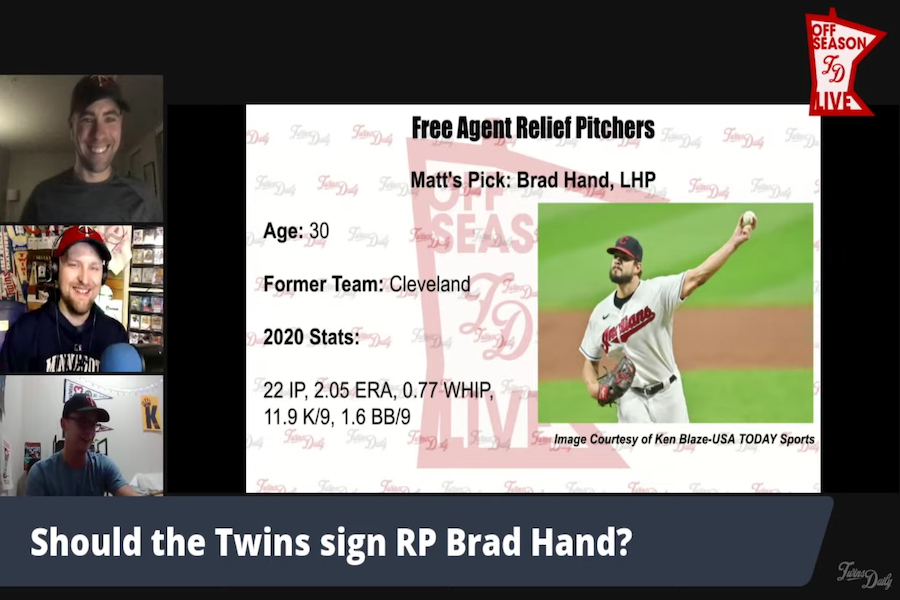 On Thursday night's episode of Offseason Live I was joined by Tom Froemming and Matt Braun. Each of us submitted our own preferred targets for the bullpen, and those choices were discussed and debated. You can watch it all play out below, or keep reading for a breakdown of what's available, and which targets stand out as our favorite fits for the Twins. Free Agent Relief Pitchers at a Glance The Need: Sergio Romo, Trevor May, and Tyler Clippard are all free agents. Those three represented more than a quarter of Minnesota's bullpen innings in 2020, nearly all of them high-leverage. Toss in Taylor Rogers, who is by no means a lock to be retained with an arbitration pricetag in the $6-7 million range, and the Twins may be seeking to replenish a vast majority of their late-inning firepower. Granted, any or all of those relievers could be brought back (we discussed those possibilities on the and episodes), but there are many intriguing external options out there to sift through as well. The Market (This list is not comprehensive): Liam Hendriks Brand Hand Trevor Rosenthal Alex Colomé Blake Treinen Kirby Yates Sean Doolittle Brandon Workman Greg Holland Shane Greene Mark Melancon Trevor May Yusmeiro Petit Ken Giles Shane Greene Keone Kela Pedro Báez Joakim Soria Oliver Pérez Justin Wilson Jeremy Jeffress Sergio Romo Tyler Clippard Jake McGee Pedro Strop Juan Nicasio For this episode of Offseason Live, each of the three panelists was asked to pick one target in three different tiers. Tier 1: Ambitious and relatively expensive high-end free agent relievers. (Rogers tier) Tier 2: Mid-level options in the $3-5 million estimated salary range. (Clippard/Romo tier) Tier 3: Sleepers and flyers available potential minor-league deals. (Wisler tier) Our Tier 1 Targets Kirby Yates, RHP Age: 33 Former Team: San Diego 2020 Stats: 4.1 IP, 12.46 ERA, 2.54 WHIP, 16.6 K/9, 8.3 BB/9 Why He's a Fit: One could argue that a top-tier closer is Minnesota's most glaring need this offseason. Rogers and Romo partnered for that role in 2020, and both are expensive and optional to bring back. The Twins could theoretically save much of the money it would've cost to pay them and instead sign someone like Yates, who's coming off a season lost to injury (and surgery to remove bone chips from his elbow) but was previously perhaps the best closer in the majors. In 2019 he led the NL in saves with a 1.19 ERA. There's obviously some risk at age 33 with the elbow uncertainty, but for that reason he could be a value buy. Estimated 2021 Salary: $5 million Brad Hand, LHP Age: 30 Former Team: Cleveland 2020 Stats: 22 IP, 2.05 ERA, 0.77 WHIP, 11.9 K/9, 1.6 BB/9 Why He's a Fit: Hand is similar to Yates in that he's a proven All-Star closer, but there's less risk since he's coming off an outstanding (and healthy) 2020 campaign. Hand led the AL in saves and posted a 2.05 ERA for Cleveland, but the Indians declined his $10 million option nonetheless. He could serve as either a Rogers replacement, or a high-powered complement at the back end. Estimated 2021 Salary: $8 million Liam Hendriks, RHP Age: 31 Former Team: Oakland 2020 Stats: 25.1 IP, 1.78 ERA, 0.67 WHIP, 13.1 K/9, 1.1 BB/9 Why He's a Fit: For all the same reasons as Hand and Yates, basically. Like them, Hendriks brings the ability of an elite All-Star closer. But he also brings the least risk, because he's been incredibly consistent and durable since blossoming for the A's. Since 2019, he ranks first among MLB relievers in fWAR, leading the pack by a wide margin. He has a decisive argument as the best reliever in baseball. Granted, it's a volatile position and a difficult one to invest premium dollars into, but Hendriks is about as reliable as it gets, and the circumstances of this offseason may create a unique opportunity to lock the former Twin up at a relatively reasonable rate. Estimated 2021 Salary: $10 million Our Tier 2 Targets Yusmeiro Petit, RHP Age: 35 Former Team: Oakland 2020 Stats: 21.2 IP, 1.66 ERA, 1.11 WHIP, 7.1 K/9, 2.1 BB/9 Why He's a Fit: He's a more realistic target than Hendriks among departing A's. No, Petit wasn't quite at Liam's level, but he's been extremely good in his own right over the past two seasons with a 2.49 ERA in 104 ⅔ innings. During that span he's made 106 appearances, more than any other MLB reliever. The appeal of Petit is simple: a durable, experienced, and highly effective veteran setup man. Estimated 2021 Salary: $5 million Tommy Hunter, RHP Age: 34 Former Team: Philadelphia 2020 Stats: 24.2 IP, 4.01 ERA, 1.14 WHIP, 9.1 K/9, 2.2 BB/9 Why He's a Fit: He's a righty power arm to replace May. Hunter has a 3.24 ERA in eight seasons since moving to full-time bullpen duty. He's been a dependable bullpen workhorse and would provide some steadiness as the Twins experiment around him. Also, his fastball and curveball both have crazy high spin rates, so there might be another level to unlock. Estimated 2021 Salary: $4 million Justin Wilson, LHP Age: 34 Former Team: Philadelphia 2020 Stats: 19.2 IP, 3.66 ERA, 1.37 WHIP, 10.5 K/9, 4.1 BB/9 Why He's a Fit: If the Twins don't re-sign Clippard, they'll lose their nominal "lefty specialist." Wilson would be a high-upside option to fill that role, and he's similar to Clippard in that he's more of an all-around asset: excellent against lefties, good against righties. Wilson has posted a K/9 above 10.0 in five straight seasons. Shaky control is his biggest red flag, but the BB/9 rate has dropped in consecutive seasons. Estimated 2021 Salary: $4 million Our Tier 3 Targets Brandon Kline, RHP Age: 29 Former Team: Baltimore 2020 Stats: 5.0 IP, 1.80 ERA, 1.00 WHIP, 12.6 K/9, 5.4 BB/9 Why He's a Fit: This was a deep dive from Tom. Kline is a 29-year-old who's thrown only 46 total innings in the majors, with a 5.48 ERA to boot, and now enters the free agent pool without much of a rep. What he does have is a lively upper-90s fastball, and as a former second-round draft pick, a bit of pedigree. He'll almost certainly be available on a non-guaranteed deal, and is an example of the upside project this front office has gravitated toward. Estimated 2021 Salary: $1 million or minor-league deal Nate Jones, RHP Age: 34 Former Team: Cincinnati 2020 Stats: 18.2 IP, 6.27 ERA, 1.66 WHIP, 11.1 K/9, 2.9 BB/9 Why He's a Fit: Twins fans are familiar with Jones' premium velocity and general dominance from his days with the White Sox. He's got a terrific arm but has hit some speed bumps lately, which is exactly why he'll be available on an incentive-laden, possibly non-guaranteed deal. This is the kind of arm you bring into camp and take a look at, because if he's healthy and clicking, he's a real difference-maker. Estimated 2021 Salary: $1 million or minor-league deal David Robertson, RHP Age: 35 Former Team: Philadelphia 2020 Stats: Did Not Pitch (TJ Surgery) Why He's a Fit: Robertson's not much different from Jones, except that his ceiling and risk are both higher. He was very consistently one of the best and most overpowering relievers in baseball for a decade up until his disaster $23 million contract with Philadelphia, in which he made several total appearances over two seasons. Now 35, he needs a chance to prove he's still got it. Minnesota offers an inviting contender destination. Estimated 2021 Salary: $1 million or minor-league deal Let us know in the comments who you like at these positions, or if there's another approach you'd prefer to free agency. In the meantime, check out previous episodes of Offseason Live and see what's upcoming: Ep 1: (Thurs, 10/8) Ep 2: (Tues, 10/13) Ep 3: (Thurs, 10/15) Ep 4: (Tues, 10/20) Ep 5: (Thurs, 10/22) Ep 6: (Tues, 10/27) Ep 7: (Thurs, 10/29) Ep 8: (Thurs, 11/5) Ep 9: Twins Trade Targets (Thurs, 11/12) Ep 10: Offseason Blueprints (Tues, 11/17) MORE FROM TWINS DAILY — Latest Twins coverage from our writers — Recent Twins discussion in our forums — Follow Twins Daily via Twitter, Facebook or email
 -
A huge chunk of Minnesota's high-leverage relief innings from 2020 just went into free agency, and it's not entirely clear that closer Taylor Rogers will be back. If the Twins want veteran reliability in the bullpen next year, they'll need to hammer out some deals. Thursday night on Offseason Live, we sized up the market.I was joined via live-stream by Tom Froemming and Matt Braun Thursday night at 8:00 PM as we looked over the free agent landscape for relief pitching. We each brought a few names to the table that we view as good fits, and those targets were discussed and debated. You can tune into future live broadcasts via Twins Daily's Twitter, Facebook, or YouTube page (or just watch it above). It'll be an interactive show where viewers help steer the conversation via comments and questions. You'll also be able to watch the replay tomorrow here on the site, or via audio by subscribing to our podcast. Who are the names to watch in free agency this year? Find out tonight. In the meantime, check out previous episodes of Offseason Live and see what's upcoming: Ep 1: (Thurs, 10/8)Ep 2: (Tues, 10/13)Ep 3: (Thurs, 10/15)Ep 4: (Tues, 10/20)Ep 5: (Thurs, 10/22)Ep 6: (Tues, 10/27)Ep 7: (Thurs, 10/29)Ep 8: (Thurs, 11/5)Ep 9: Twins Trade Targets (Thurs, 11/12)Ep 10: Offseason Blueprints (Tues, 11/17) Click here to view the article
