



Nick Nelson
-
Posts
8,327 -
Joined
-
Last visited
-
Days Won
56
Content Type
Profiles
News
Minnesota Twins Videos
2026 Minnesota Twins Top Prospects Ranking
2022 Minnesota Twins Draft Picks
Minnesota Twins Free Agent & Trade Rumors, Notes, & Tidbits
Guides & Resources
2023 Minnesota Twins Draft Picks
The Minnesota Twins Players Project
2024 Minnesota Twins Draft Picks
2025 Minnesota Twins Draft Pick Tracker
2026 Minnesota Twins Draft Tracker: Picks & Bonuses
Forums
Blogs
Events
Store
Downloads
Gallery
Everything posted by Nick Nelson
-
Twins Offseason Status Update: All Done?
Nick Nelson replied to Nick Nelson's topic in Twins Daily Front Page News
I think this is probably the case, yes, but I have him listed first on the depth chart because for all intents and purposes, he is. Guessing we'll see a fair amount of Arraez in left early in the season.- 30 replies
-
- 1
-

-
- matt shoemaker
- shaun anderson
- (and 1 more)
-
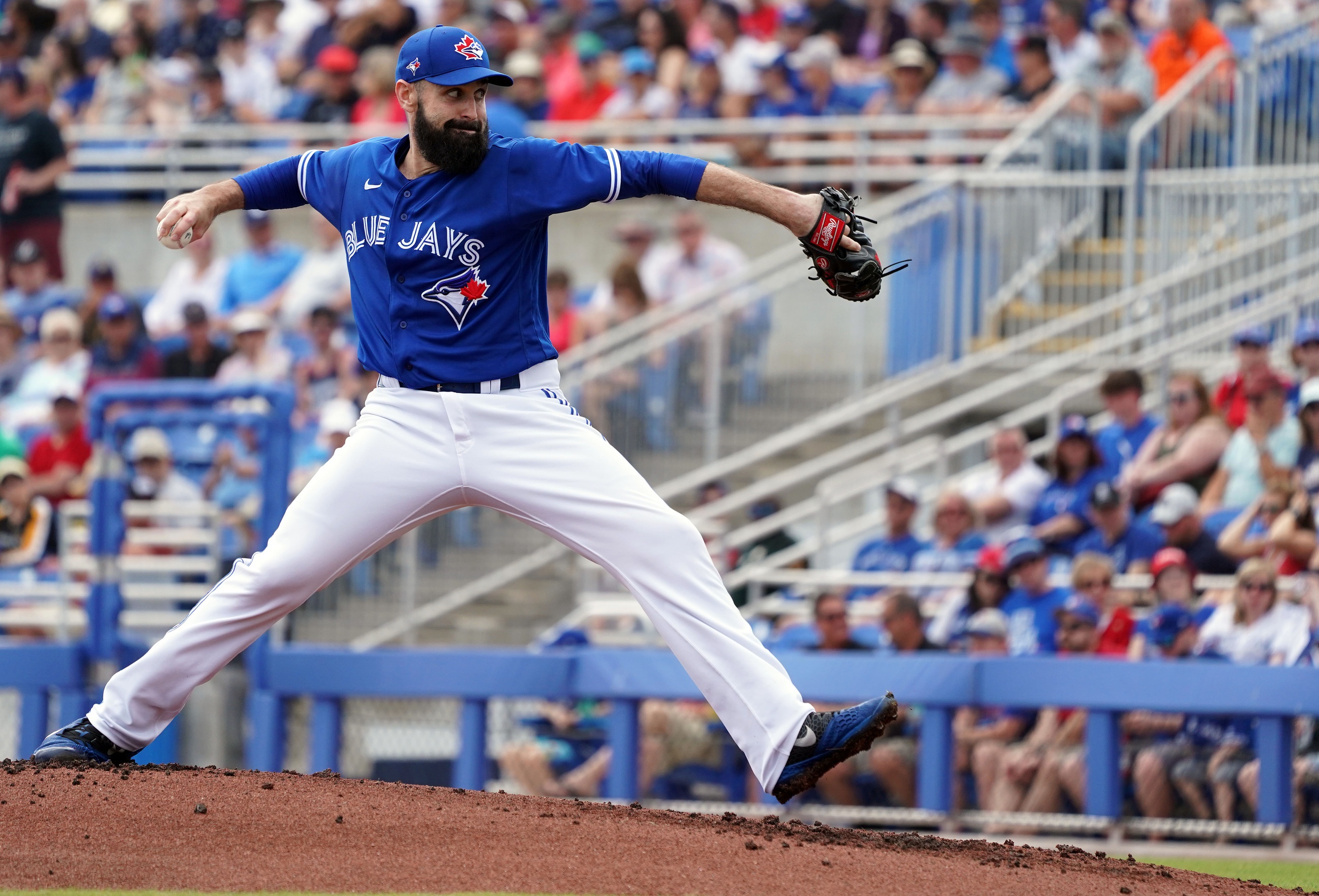
Following their flurry of early-February activity, the Twins made a few minor moves on the fringes of the bullpen and bench before wrapping up the rotation with an addition this week. Now, it looks as though their roster is mostly finalized, with just days until pitchers and catchers report for spring training.Here's a look at how the 2021 Minnesota Twins roster and payroll are shaping up, as spring training bears down upon us. Download attachment: twinsroster21521.png The $124 million payroll estimate above is merely a baseline – with reachable performance incentives added in (mainly Kenta Maeda's), the Twins will probably be well north of $130 million. It'd be the highest payroll in franchise history, although they were on track to spend more than $140 million last year before the season was shortened. Are they done? That's not entirely clear. But the 40-man roster is full, and the team is looking pretty complete. Here are some updates and things to watch as we wait for the Lee County Sports Complex to soon spring to life. IF THE SHOEMAKER FITS... The Twins have dropped plenty of hints that they were monitoring the starting pitcher market, seeking a reasonably-priced veteran to come in and compete with Randy Dobnak for the fifth rotation job. On Monday, they got their guy, agreeing to terms with 34-year-old right-hander Matt Shoemaker on a one-year deal worth $2 million. Shoemaker has much to prove on the health front, having thrown just 166 innings combined over the past four years due to various injuries. But as Andrew Thares pointed out ahead of the signing, Shoemaker saw a big spike in velocity last year and there are some signs his pitch mix can be further optimized by the Twins. Plus, the righty ended last year in good shape physically, and even got the nod in Game 1 of the postseason for Toronto last year, firing three shutout innings against the Rays. The presence of a perfectly dependable fallback option in Dobnak gave Minnesota the chance to gamble a bit in their final rotation spot. While some might have liked to see a higher-upside play such as James Paxton (who signed with Seattle last week for $8.5 million), Shoemaker can be a very strong fifth starter if healthy. ROUNDING OUT THE RELIEF CORPS In the days following their big free agency additions of Nelson Cruz and Alex Colomé, the Twins brought in a few more bullpen candidates, acquiring Shaun Anderson via trade and Ian Hamilton via waivers. The latter might already be on his way out, as the Twins designated him for assignment just days after claiming him, making room for Colomé. If another organization snags him, it'll be Hamilton's fourth time switching places since last September. If not, the Twins can keep him around as quality non-roster bullpen depth, alongside fellow waiver pickup Brandon Waddell. As for Anderson, it seems he is here to stay after the Twins acquired him from San Francisco in exchange for outfielder LaMonte Wade Jr. Anderson boasts big stuff – an upper-80s slider and spin-heavy mid-90s fastball – but the challenge for Minnesota lies in helping him command it. I wrote here about a mid-August incident in 2020 where Anderson buzzed Mike Trout's tower three times in one week, leading to some on-field tension and infuriating Angels manager Joe Maddon. If the Twins can help him reign in his intriguing stuff, Anderson could be a big addition to this bullpen. Will he make the Opening Day roster? PROJECTING THE OPENING DAY BULLPEN Last week I was joined by John Bonnes and David Youngs on Offseason Live to break down the bullpen picture and project the Opening Day setup. Together we tried to determine which relievers will be in the mix when the season starts, and what the pecking order might be. Here's where we landed: Taylor RogersTyler DuffeyAlex ColoméHansel RoblesJorge AlcalaCaleb ThielbarCody StashakLewis ThorpeAt that time, we were under then impression that Thorpe was out of minor-league options, giving him an inside track for the long relief role. Dobnak was also still penciled in as the fifth starter. With the revelation coming to light this week – via Aaron Gleeman of The Athletic – that Thorpe will get a rare fourth option year, the Twins are no longer obligated to carry him coming off a bad year. Meanwhile, Dobnak being supplanted from the rotation makes him the ideal fit for a long man/piggy-backing role, with which he's fairly familiar. Thus, we now have Dobnak as the eighth reliever in our roster projection, with Thorpe likely headed to St. Paul. SPICING UP THE OUTFIELD The Twins used another waiver claim last week to add outfielder Kyle Garlick, who effectively replaced the previous week's waiver claim, Hamilton. Garlick infuses helpful corner outfield depth, with Minnesota losing both Eddie Rosario and Marwin González, and his right-handedness adds some nice balance alongside Max Kepler, Alex Kirilloff, Jake Cave, and Trevor Larnach. Garlick hasn't had a ton of success in the majors (.691 OPS in 76 plate appearances), but he has slugged .553 against left-handed pitching, and he slashed .292/.364/.708 versus southpaws at Triple-A in 2019. Given how mightily the Twins struggled in this department last year, the decision to swap out a lefty swinger in Wade for a lefty masher in Garlick makes plenty of sense. Since Garlick has an option, he seems likely to open in Triple-A barring injuries. TWINS DONE MAKING BIG MOVES? The Twins could arguably use further additions in the bullpen, but it sounds unlikely they've got any big bullets left to fire. As Phil Miller reported in the Star Tribune, Derek Falvey indicated the the "heavy lifting is done" after the team committed nearly $40 million to Cruz, Colomé, Andrelton Simmons and J.A. Happ in the span of a few weeks. "We'll have some other conversations about other potential guys as well as nonroster fits and others that will compete. But I feel really good about our pitching right now," Falvey said. Miller understandably inferred this to mean that Jake Odorizzi is basically out of the picture, which seems all the more certain after Shoemaker's signing. The 40-man roster is full and the payroll seems to be essentially maxed out. I'd be surprised if they sign anyone else to a big-league deal. That said, I still fully expect the Twins to bring in a few non-roster relievers. Among the noteworthy names still unsigned: David Robertson, RHPPedro Strop, RHPIan Kennedy, RHPTyler Clippard, RHP,Oliver Drake, RHPBrad Peacock, RHPChaz Roe, RHPBrandon Workman, RHPJeremy Jeffress, RHPA.J. Ramos, RHPCam Bedrosian, RHPNobody on that list has particularly high stock at the moment, obviously, but there are plenty of legitimate names. I'd be thrilled to bring in a few of those guys on non-guaranteed contracts and get a good look at then. I'm sure the Twins would too. But for now, with the preliminary list of non-roster invites announced and the first player player group reporting to camp on Friday, it's time to start getting familiar with the group we have. For the most part, this is probably it, and from my view it's a dang good roster. MORE FROM TWINS DAILY — Latest Twins coverage from our writers — Recent Twins discussion in our forums — Follow Twins Daily via Twitter, Facebook or email Click here to view the article
-
 Here's a look at how the 2021 Minnesota Twins roster and payroll are shaping up, as spring training bears down upon us. The $124 million payroll estimate above is merely a baseline – with reachable performance incentives added in (mainly Kenta Maeda's), the Twins will probably be well north of $130 million. It'd be the highest payroll in franchise history, although they were on track to spend more than $140 million last year before the season was shortened. Are they done? That's not entirely clear. But the 40-man roster is full, and the team is looking pretty complete. Here are some updates and things to watch as we wait for the Lee County Sports Complex to soon spring to life. IF THE SHOEMAKER FITS... The Twins have dropped plenty of hints that they were monitoring the starting pitcher market, seeking a reasonably-priced veteran to come in and compete with Randy Dobnak for the fifth rotation job. On Monday, they got their guy, agreeing to terms with 34-year-old right-hander Matt Shoemaker on a one-year deal worth $2 million. Shoemaker has much to prove on the health front, having thrown just 166 innings combined over the past four years due to various injuries. But as Andrew Thares pointed out ahead of the signing, Shoemaker saw a big spike in velocity last year and there are some signs his pitch mix can be further optimized by the Twins. Plus, the righty ended last year in good shape physically, and even got the nod in Game 1 of the postseason for Toronto last year, firing three shutout innings against the Rays. The presence of a perfectly dependable fallback option in Dobnak gave Minnesota the chance to gamble a bit in their final rotation spot. While some might have liked to see a higher-upside play such as James Paxton (who signed with Seattle last week for $8.5 million), Shoemaker can be a very strong fifth starter if healthy. ROUNDING OUT THE RELIEF CORPS In the days following their big free agency additions of Nelson Cruz and Alex Colomé, the Twins brought in a few more bullpen candidates, acquiring Shaun Anderson via trade and Ian Hamilton via waivers. The latter might already be on his way out, as the Twins designated him for assignment just days after claiming him, making room for Colomé. If another organization snags him, it'll be Hamilton's fourth time switching places since last September. If not, the Twins can keep him around as quality non-roster bullpen depth, alongside fellow waiver pickup Brandon Waddell. As for Anderson, it seems he is here to stay after the Twins acquired him from San Francisco in exchange for outfielder LaMonte Wade Jr. Anderson boasts big stuff – an upper-80s slider and spin-heavy mid-90s fastball – but the challenge for Minnesota lies in helping him command it. I wrote here about a mid-August incident in 2020 where Anderson buzzed Mike Trout's tower three times in one week, leading to some on-field tension and infuriating Angels manager Joe Maddon. If the Twins can help him reign in his intriguing stuff, Anderson could be a big addition to this bullpen. Will he make the Opening Day roster? PROJECTING THE OPENING DAY BULLPEN Last week I was joined by John Bonnes and David Youngs on Offseason Live to break down the bullpen picture and project the Opening Day setup. Together we tried to determine which relievers will be in the mix when the season starts, and what the pecking order might be. Here's where we landed: Taylor Rogers Tyler Duffey Alex Colomé Hansel Robles Jorge Alcala Caleb Thielbar Cody Stashak Lewis Thorpe At that time, we were under then impression that Thorpe was out of minor-league options, giving him an inside track for the long relief role. Dobnak was also still penciled in as the fifth starter. With the revelation coming to light this week – via Aaron Gleeman of The Athletic – that Thorpe will get a rare fourth option year, the Twins are no longer obligated to carry him coming off a bad year. Meanwhile, Dobnak being supplanted from the rotation makes him the ideal fit for a long man/piggy-backing role, with which he's fairly familiar. Thus, we now have Dobnak as the eighth reliever in our roster projection, with Thorpe likely headed to St. Paul. SPICING UP THE OUTFIELD The Twins used another waiver claim last week to add outfielder Kyle Garlick, who effectively replaced the previous week's waiver claim, Hamilton. Garlick infuses helpful corner outfield depth, with Minnesota losing both Eddie Rosario and Marwin González, and his right-handedness adds some nice balance alongside Max Kepler, Alex Kirilloff, Jake Cave, and Trevor Larnach. Garlick hasn't had a ton of success in the majors (.691 OPS in 76 plate appearances), but he has slugged .553 against left-handed pitching, and he slashed .292/.364/.708 versus southpaws at Triple-A in 2019. Given how mightily the Twins struggled in this department last year, the decision to swap out a lefty swinger in Wade for a lefty masher in Garlick makes plenty of sense. Since Garlick has an option, he seems likely to open in Triple-A barring injuries. TWINS DONE MAKING BIG MOVES? The Twins could arguably use further additions in the bullpen, but it sounds unlikely they've got any big bullets left to fire. As Phil Miller reported in the Star Tribune, Derek Falvey indicated the the "heavy lifting is done" after the team committed nearly $40 million to Cruz, Colomé, Andrelton Simmons and J.A. Happ in the span of a few weeks. "We'll have some other conversations about other potential guys as well as nonroster fits and others that will compete. But I feel really good about our pitching right now," Falvey said. Miller understandably inferred this to mean that Jake Odorizzi is basically out of the picture, which seems all the more certain after Shoemaker's signing. The 40-man roster is full and the payroll seems to be essentially maxed out. I'd be surprised if they sign anyone else to a big-league deal. That said, I still fully expect the Twins to bring in a few non-roster relievers. Among the noteworthy names still unsigned: David Robertson, RHP Pedro Strop, RHP Ian Kennedy, RHP Tyler Clippard, RHP, Oliver Drake, RHP Brad Peacock, RHP Chaz Roe, RHP Brandon Workman, RHP Jeremy Jeffress, RHP A.J. Ramos, RHP Cam Bedrosian, RHP Nobody on that list has particularly high stock at the moment, obviously, but there are plenty of legitimate names. I'd be thrilled to bring in a few of those guys on non-guaranteed contracts and get a good look at then. I'm sure the Twins would too. But for now, with the preliminary list of non-roster invites announced and the first player player group reporting to camp on Friday, it's time to start getting familiar with the group we have. For the most part, this is probably it, and from my view it's a dang good roster. MORE FROM TWINS DAILY — Latest Twins coverage from our writers — Recent Twins discussion in our forums — Follow Twins Daily via Twitter, Facebook or email
 -
This former second-round draft pick dazzled during his brief debut as a pro, and has generated buzz lately for reportedly touching 99 on the radar gun during offseason workouts.Position: RHP Age: 23 (DOB: 12/14/1997) 2019 Stats (Rookie/A): 25 IP, 1.44 ERA, 0.64 WHIP, 11.2 K/9, 2.9 BB/9 ETA: 2022 2020 Ranking: 15 National Top 100 Rankings BA: NR | MLB: NR | ATH: NR | BP: NR What's To Like Well, let's not bury the lede. KSTP's Darren Wolfson recently tweeted a video of Canterino in an offseason throwing session, reporting that the right-hander was touching 99 MPH. That's an awfully good sign from the 54th overall draft pick in 2019, referred to by Baseball America at the time as "one of the better high-floor options among the college arms." He backed up that assessment with a strong performance in his 25-inning pro debut, and now, it's getting tough not to dream on his ceiling. In retrospect, it only makes sense the Twins liked the Rice University product enough to use a second-rounder on him. Canterino is very much their type of pitcher: a righty who pairs high heat with good breaking stuff, and – most importantly – upside that they feel they can analytically unlock. Last June, David Laurila of FanGraphs posted a Q&A with Canterino, in which the righty shared details of his experiences joining the Twins organization, and having his eyes opened to a new world of optimization. I found these tidbits particularly interesting: “Up to that point I’d never been familiarized with the type of technology the Twins use, the analytics type of stuff. It was basically to help me get to know myself better as a pitcher. For instance, there are things I do well and we were able to put a number to [them]; we could kind of reinforce those things, and also see if there were things I could get more out of. ... In college, I always knew that my fastball played well up in the zone. To see [data] showing that I’m getting a lot of carry on my fastball kind of clicked for me. Also, I’d shifted away from my curveball a little bit in my junior year. I was throwing my slider more, but [the data] put to paper that my curveball paired better with my fastball than my slider did. It’s not as though I’m scrapping my slider — I’m not — but I maybe want to use the curveball more than I did in college." Helping pitchers tweak their pitch mixes to greater effect is something the Twins have specialized in, and Canterino wasn't exactly a reclamation project to begin with. He starred at Rice, with double-digit K/9 rates in each of his three seasons. The Twins were perhaps lucky get him at No. 54 overall, given he was ranked 34th on BA's board. If Canterino is actually pumping high-90s that could be a game-changer, given that he was already viewed as a pretty great prospect coming out of college as a low-to-mid-90s guy. What's Left to Work On Performance-wise, there's not much to quibble with, and all evidence suggests Canterino is keeping up on the necessary work to grow and improve. One thing to keep an eye on, though, is his delivery mechanics. You'll notice from watching his highlights that Canterino has a very distinct, herky-jerky leg lift sequence, giving his delivery a bit of a frenetic feel. When profiling Canterino as a prospect after he was drafted, Eric Longenhagen of FanGraphs noted that the righty carried some "relief risk" due to "some effort and violence to the delivery" (perhaps helping explain why he slid to the Twins). When Laurila interviewed Canterino a few months later, he asked the pitcher about it directly. “I’m always trying to throw hard, obviously, but I’ve never thought of myself as being out of control," Canterino said. "I am a little herky-jerky, but that kind of just evolved to help give me cues for where I need in each part of my delivery. They’re kind of like checkpoints to keep myself on time between my arm and my body, and feel like I’m in sync. At that point I’m just trying to line everything up and throw hard. So I don’t feel like I’m super high-effort. I understand why it might look like that, but I feel I’m always in control and know where the ball is going. I haven’t had any issues up to this point.” Hard to argue with him on that last point, and as you watch the highlight clip above, one thing you'll notice is that Canterino's quirky mechanics don't seem to be negatively affecting his command. Certainly not his results thus far. With that said, it's also tough to argue with Longenhagen's assessment in his more recent Twins prospect rankings: "Canterino sure looks like a reliever. He doesn’t have the usual trim starter’s build, nor the statuesque posture, nor the mechanical ease and grace of a typical starter’s delivery." None of these characteristics preclude Canterino from sticking as a starter, but they are question marks for him to overcome if he wants to fulfill his highest potential as a rotation-fronter. More importantly, he'll need to get his workload on track; Canterino is now 23 and has yet to throw more than 125 innings in a season. What's Next Canterino will presumably start his season at Cedar Rapids – where he left off in 2019, except back then it was Minnesota's Low-A affiliate. With the minor-league realignment, the Kernels are now High-A, which seems a suitable level for him to reacclimate against pro competition. Given the quality of his stuff, Canterino will be poised to move quickly, but his progression will greatly depend on the Twins' plans for him. If they want to bring him along as a reliever he could rise in a hurry and theoretically gain consideration for a late-season call-up. If they're committed to seeing him through as a starter, they'll need to focus on building his stamina and endurance, which will mean slowing down the timeline a bit. One way or another, we'll probably know a lot more about Canterino and his future this time next year. Twins 2021 Top 20 Prospects Honorable Mentions 20. Bailey Ober, RHP 19. José Miranda, 3B/2B 18. Alerick Soularie, UTIL 17. Ben Rortvedt, C 16. Edwar Colina, RHP 15. Cole Sands, RHP 14. Misael Urbina, OF 13. Matt Wallner, OF 12. Brent Rooker, OF/1B 11. Gilberto Celestino, OF 10. Blayne Enlow, RHP 9. Matt Canterino, RHP 8. Coming tomorrow! Click here to view the article
-
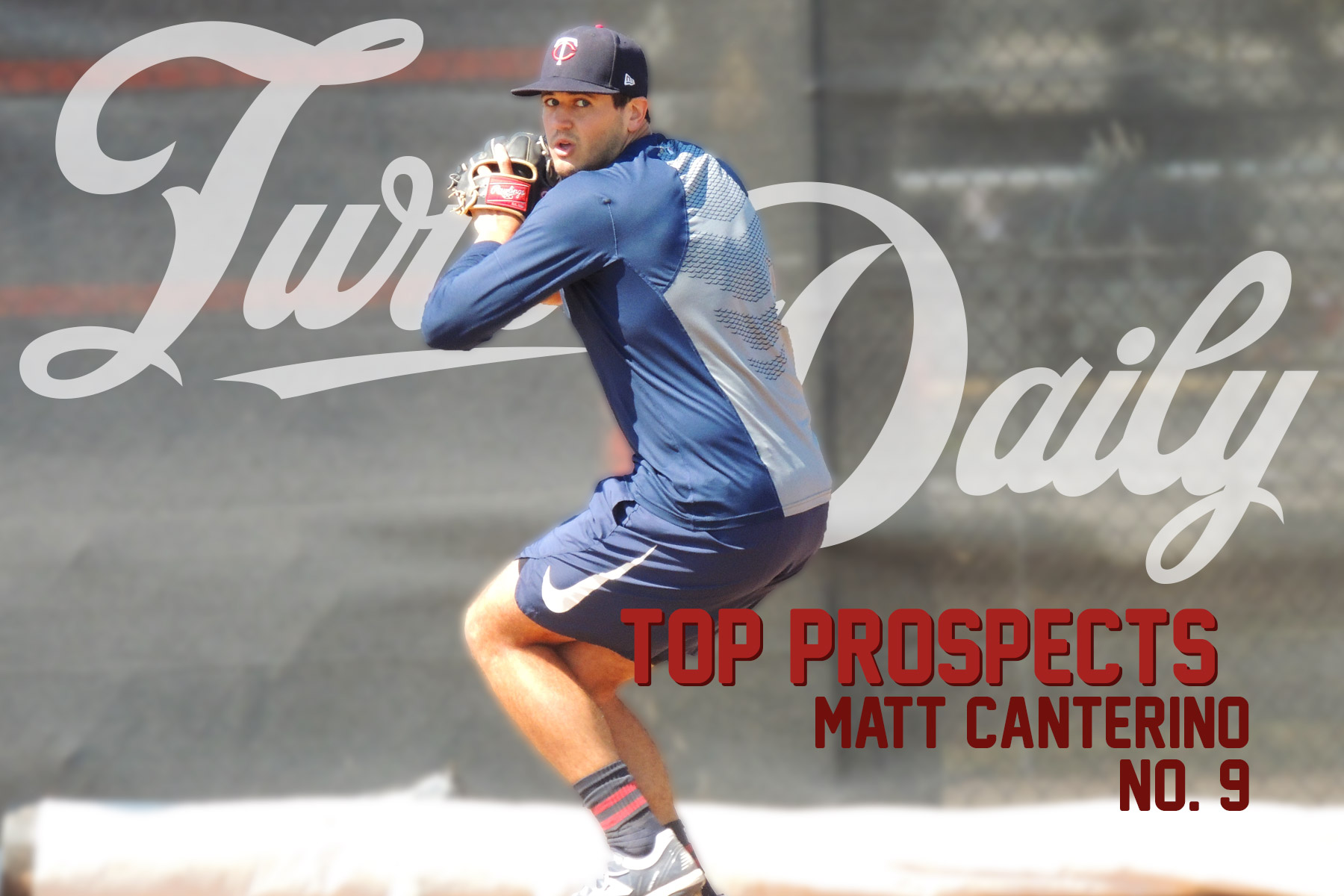 Position: RHP Age: 23 (DOB: 12/14/1997) 2019 Stats (Rookie/A): 25 IP, 1.44 ERA, 0.64 WHIP, 11.2 K/9, 2.9 BB/9 ETA: 2022 2020 Ranking: 15 National Top 100 Rankings BA: NR | MLB: NR | ATH: NR | BP: NR What's To Like Well, let's not bury the lede. KSTP's Darren Wolfson recently tweeted a video of Canterino in an offseason throwing session, reporting that the right-hander was touching 99 MPH. That's an awfully good sign from the 54th overall draft pick in 2019, referred to by Baseball America at the time as "one of the better high-floor options among the college arms." He backed up that assessment with a strong performance in his 25-inning pro debut, and now, it's getting tough not to dream on his ceiling. In retrospect, it only makes sense the Twins liked the Rice University product enough to use a second-rounder on him. Canterino is very much their type of pitcher: a righty who pairs high heat with good breaking stuff, and – most importantly – upside that they feel they can analytically unlock. Last June, David Laurila of FanGraphs posted a Q&A with Canterino, in which the righty shared details of his experiences joining the Twins organization, and having his eyes opened to a new world of optimization. I found these tidbits particularly interesting: “Up to that point I’d never been familiarized with the type of technology the Twins use, the analytics type of stuff. It was basically to help me get to know myself better as a pitcher. For instance, there are things I do well and we were able to put a number to [them]; we could kind of reinforce those things, and also see if there were things I could get more out of. ... In college, I always knew that my fastball played well up in the zone. To see [data] showing that I’m getting a lot of carry on my fastball kind of clicked for me. Also, I’d shifted away from my curveball a little bit in my junior year. I was throwing my slider more, but [the data] put to paper that my curveball paired better with my fastball than my slider did. It’s not as though I’m scrapping my slider — I’m not — but I maybe want to use the curveball more than I did in college." Helping pitchers tweak their pitch mixes to greater effect is something the Twins have specialized in, and Canterino wasn't exactly a reclamation project to begin with. He starred at Rice, with double-digit K/9 rates in each of his three seasons. The Twins were perhaps lucky get him at No. 54 overall, given he was ranked 34th on BA's board. If Canterino is actually pumping high-90s that could be a game-changer, given that he was already viewed as a pretty great prospect coming out of college as a low-to-mid-90s guy. What's Left to Work On Performance-wise, there's not much to quibble with, and all evidence suggests Canterino is keeping up on the necessary work to grow and improve. One thing to keep an eye on, though, is his delivery mechanics. You'll notice from watching his highlights that Canterino has a very distinct, herky-jerky leg lift sequence, giving his delivery a bit of a frenetic feel. When profiling Canterino as a prospect after he was drafted, Eric Longenhagen of FanGraphs noted that the righty carried some "relief risk" due to "some effort and violence to the delivery" (perhaps helping explain why he slid to the Twins). When Laurila interviewed Canterino a few months later, he asked the pitcher about it directly. “I’m always trying to throw hard, obviously, but I’ve never thought of myself as being out of control," Canterino said. "I am a little herky-jerky, but that kind of just evolved to help give me cues for where I need in each part of my delivery. They’re kind of like checkpoints to keep myself on time between my arm and my body, and feel like I’m in sync. At that point I’m just trying to line everything up and throw hard. So I don’t feel like I’m super high-effort. I understand why it might look like that, but I feel I’m always in control and know where the ball is going. I haven’t had any issues up to this point.” Hard to argue with him on that last point, and as you watch the highlight clip above, one thing you'll notice is that Canterino's quirky mechanics don't seem to be negatively affecting his command. Certainly not his results thus far. With that said, it's also tough to argue with Longenhagen's assessment in his more recent Twins prospect rankings: "Canterino sure looks like a reliever. He doesn’t have the usual trim starter’s build, nor the statuesque posture, nor the mechanical ease and grace of a typical starter’s delivery." None of these characteristics preclude Canterino from sticking as a starter, but they are question marks for him to overcome if he wants to fulfill his highest potential as a rotation-fronter. More importantly, he'll need to get his workload on track; Canterino is now 23 and has yet to throw more than 125 innings in a season. What's Next Canterino will presumably start his season at Cedar Rapids – where he left off in 2019, except back then it was Minnesota's Low-A affiliate. With the minor-league realignment, the Kernels are now High-A, which seems a suitable level for him to reacclimate against pro competition. Given the quality of his stuff, Canterino will be poised to move quickly, but his progression will greatly depend on the Twins' plans for him. If they want to bring him along as a reliever he could rise in a hurry and theoretically gain consideration for a late-season call-up. If they're committed to seeing him through as a starter, they'll need to focus on building his stamina and endurance, which will mean slowing down the timeline a bit. One way or another, we'll probably know a lot more about Canterino and his future this time next year. Twins 2021 Top 20 Prospects Honorable Mentions 20. Bailey Ober, RHP 19. José Miranda, 3B/2B 18. Alerick Soularie, UTIL 17. Ben Rortvedt, C 16. Edwar Colina, RHP 15. Cole Sands, RHP 14. Misael Urbina, OF 13. Matt Wallner, OF 12. Brent Rooker, OF/1B 11. Gilberto Celestino, OF 10. Blayne Enlow, RHP 9. Matt Canterino, RHP 8. Coming tomorrow!
 -
Offseason Live Replay: Sorting Out the Bullpen
Nick Nelson replied to Nick Nelson's topic in Twins Daily Front Page News
This is just a strange portrayal of the Maeda trade. He didn't "fall into their lap," they traded their best pitching prospect and one of the most hyped young arms in the game for him. Graterol was a massive haul, and the Twins wouldn't have given him up if they didn't expect Maeda to be a frontline starter. He's exactly what fans have been clamoring for, and now he's insufficient because the Twins didn't overpay for him? Seems like they're being punished for making a good move. They did not get Kenta Maeda from the "bargain bin" ... frankly that's ludicrous. I appreciate the kind words Mike! I share the historical frustration but I just don't see how it's valid anymore. They've set new franchise payroll records in 3 straight seasons. They went and signed Josh Donaldson for $100M a year ago despite him not filling an obvious need, solely for the purpose of putting them over the top. They have elevated a good team to a championship contender. The Twins are absolutely a championship contender as currently comprised. This front office is kicking ass. Let's give them some credit instead of rehashing grudges from the TR era! -
Offseason Live Replay: Sorting Out the Bullpen
Nick Nelson replied to Nick Nelson's topic in Twins Daily Front Page News
They traded for the Cy Young runner-up last year -
Are the Twins done shopping for relievers? How does their current bullpen makeup compare to other contenders? Which arms are likely to make the cut for Opening Day? Thursday night on Offseason Live, we tried and sort it all out.Since we last convened on , the Twins acquired two more right-handed relief pitchers: Ian Hamilton via waivers from Philadelphia, and Shaun Anderson via trade from San Francisco in exchange for LaMonte Wade Jr. With those two added to the bullpen mix, and 40-man roster, it's suddenly a rather crowded picture. Anderson and Hamilton join Taylor Rogers, Alex Colomé, Tyler Duffey, Caleb Thielbar, Hansel Robles, Jorge Alcala, Cody Stashak, Ian Gibaut, Edwar Colina, Dakota Chalmers, and others vying for the eight available bullpen jobs. On a new episode of Offseason Live on Thursday night, I was joined by John Bonnes and David Youngs as we analyzed the bullpen outlook, ranked the current options, and predicted who will make the Opening Day roster. Watch below! Tune into future live broadcast on Twins Daily's Twitter, Facebook, or YouTube page. It's an interactive show where viewers help steer the conversation via comments and questions. You can also catch each new episode via audio by subscribing to our podcast. In the meantime, check out previous episodes of Offseason Live and see what's upcoming: Ep 1: (Thurs, 10/8)Ep 2: (Tues, 10/13)Ep 3: (Thurs, 10/15)Ep 4: (Tues, 10/20)Ep 5: (Thurs, 10/22)Ep 6: (Tues, 10/27)Ep 7: (Thurs, 10/29)Ep 8: (Thurs, 11/5)Ep 9: (Thurs, 11/12)Ep 10: (Tues, 11/17)Ep 11: (Weds, 12/2)Ep 12: (Weds, 12/16)Ep 13: (Weds, 12/30)Ep 14: (Weds, 1/6)Ep 15: (Tues, 1/12)Ep 16: (Mon, 1/25)Ep 17: (Tues, 1/26)Ep 18: (Weds, 2/3)Ep 19: (Thurs, 2/11) Click here to view the article
-
 Since we last convened on , the Twins acquired two more right-handed relief pitchers: Ian Hamilton via waivers from Philadelphia, and Shaun Anderson via trade from San Francisco in exchange for LaMonte Wade Jr.With those two added to the bullpen mix, and 40-man roster, it's suddenly a rather crowded picture. Anderson and Hamilton join Taylor Rogers, Alex Colomé, Tyler Duffey, Caleb Thielbar, Hansel Robles, Jorge Alcala, Cody Stashak, Ian Gibaut, Edwar Colina, Dakota Chalmers, and others vying for the eight available bullpen jobs. On a new episode of Offseason Live on Thursday night, I was joined by John Bonnes and David Youngs as we analyzed the bullpen outlook, ranked the current options, and predicted who will make the Opening Day roster. Watch below! Tune into future live broadcast on Twins Daily's Twitter, Facebook, or YouTube page. It's an interactive show where viewers help steer the conversation via comments and questions. You can also catch each new episode via audio by subscribing to our podcast. In the meantime, check out previous episodes of Offseason Live and see what's upcoming: Ep 1: (Thurs, 10/8) Ep 2: (Tues, 10/13) Ep 3: (Thurs, 10/15) Ep 4: (Tues, 10/20) Ep 5: (Thurs, 10/22) Ep 6: (Tues, 10/27) Ep 7: (Thurs, 10/29) Ep 8: (Thurs, 11/5) Ep 9: (Thurs, 11/12) Ep 10: (Tues, 11/17) Ep 11: (Weds, 12/2) Ep 12: (Weds, 12/16) Ep 13: (Weds, 12/30) Ep 14: (Weds, 1/6) Ep 15: (Tues, 1/12) Ep 16: (Mon, 1/25) Ep 17: (Tues, 1/26) Ep 18: (Weds, 2/3) Ep 19: (Thurs, 2/11)
 -
As we work toward the Top 10, the next batch of prospects in our countdown features four outfielders, with varying skill sets and arrival timelines, as well as one of the organization's best young arms.15. Cole Sands, RHP Age: 23 (DOB: 7/17/1997) 2019 Stats (A/AA): 97.1 IP, 2.68 ERA, 1.03 WHIP, 10.0 K/9, 1.8 BB/9 ETA: 2022 2020 Ranking: 19 The lack of a minor-league season in 2020 hurt many prospects, and Sands is certainly among them. He was just beginning to ramp up his workload – from 75 ⅓ innings during his final year at Florida State to 97 ⅓ in his first year with the Twins – and then it all got shut down. Now, the former fifth-round draft pick will try to pick up where he left off. Prior to the pandemic, he had quite a bit of momentum going. Sands was extremely impressive during his first professional season in 2019, posting a 2.68 ERA along with a brilliant 108-to-19 K/BB over 18 starts. He started out at Low-A and ended in Double-A. Solidly built at 6-foot-3 and 215 lbs, Sands brings a fastball in the mid-90s and his changeup is rated by Baseball America as the best in the Twins system. The Twins called up Rooker in early September after Kepler went down with a groin strain. He wasted no time at the plate, collecting six hits including a home run and two doubles. "I don’t want to say he’s got Miguel Sanó power, but it’s that type of power to the big part of the field,” said hitting coach Edgar Varela of the slugger. Rooker's defensive limitations were also on display during brief action in right and left field, and while he is ostensibly an option at first base, he hasn't played it since 2018. With Nelson Cruz returning in 2021, Rooker doesn't have much of a path to regular playing time at the moment, but he's useful as a rotational righty bench bat. To become more than that, he'll need to cut down the strikeouts, prove his defensive viability, and above all, find an opportunity. 11. Gilberto Celestino, OF Age: 21 (DOB: 2/13/99) 2019 Stats (A): 536 PA, .277/.349/.410, 10 HR, 54 RBI ETA: 2023 2020 Ranking: 12 Celestino was on a roll before his 2020 season got wiped out. After a slow start at Cedar Rapids in 2019, the outfielder pressed the pedal to the medal, slashing .357/.427/.550 in 43 games after July 1st and earning a late-season call-up to Ft. Myers. After the season, Minnesota added him to the 40-man roster, fearing that another club might try to snap him up in the Rule 5 draft. For a 20-year-old who had barely skimmed High-A, it was a rather extraordinary move, setting Celestino's options clock in motion at a very early stage. Clearly, the Twins like this kid, and with good reason. He was seeing plenty of early action in spring training last year before the shutdown.
-
 15. Cole Sands, RHP Age: 23 (DOB: 7/17/1997) 2019 Stats (A/AA): 97.1 IP, 2.68 ERA, 1.03 WHIP, 10.0 K/9, 1.8 BB/9 ETA: 2022 2020 Ranking: 19 The lack of a minor-league season in 2020 hurt many prospects, and Sands is certainly among them. He was just beginning to ramp up his workload – from 75 ⅓ innings during his final year at Florida State to 97 ⅓ in his first year with the Twins – and then it all got shut down. Now, the former fifth-round draft pick will try to pick up where he left off. Prior to the pandemic, he had quite a bit of momentum going. Sands was extremely impressive during his first professional season in 2019, posting a 2.68 ERA along with a brilliant 108-to-19 K/BB over 18 starts. He started out at Low-A and ended in Double-A. Solidly built at 6-foot-3 and 215 lbs, Sands brings a fastball in the mid-90s and his changeup is rated by Baseball America as the best in the Twins system. The mission for Sands in 2021 is to rebuild his workload and get back on track toward a full starter's regimen, while also translating his early success into the high minors. It's a tall task, but all signs suggest the right-hander is up to it. He's a sleeper candidate to debut in the majors this year. 14. Misael Urbina, OF Age: 18 (DOB: 4/26/02) 2019 Stats (Rookie): 217 PA, .279/.382/.443 , 2 HR, 26 RBI ETA: 2024 2020 Ranking: 17 Urbina was considered one of the best international prospects available in 2018 when the Twins landed him with a $2.75 million signing bonus. The toolsy outfielder arrived with an exceptional pro debut the following year, slashing .279/.382/.443 over 50 games in the Dominican Summer League. In 217 plate appearances, Urbina showed excellent plate discipline (23 walks, 14 strikeouts), hit for power (21 extra-base hits), and flashed standout speed (19 steals and five triples). He also played a very sharp center field defensively. The Twins signed Urbina as a scrawny 16-year-old, and now he's going to be challenged to grow up in a hurry. He's still young, but turns 19 in April and hasn't been exposed to a full-season league. That'll happen now. If the uber-athletic teenager can come anywhere close to replicating his 2019 performance as he presumably graduates to A-ball, he'll climb these rankings quickly. 13. Matt Wallner, OF Age: 23 (DOB: 12/12/1997) 2019 Stats (Rookie/A): 291 PA, .258/.357/.452, 8 HR, 34 RBI ETA: 2022 2020 Ranking: 14 Like Urbina, Wallner was a highly touted young outfielder who made an impressive debut in 2019, posting an .810 OPS in 65 games between Elizabethton and Cedar Rapids after being selected in the supplemental first round of June's draft. But unlike Urbina, time is not on Wallner's side. The Twins took him out of the University of Southern Mississippi with the 39th overall pick, valuing the Forest Lake native as a polished and potentially fast-moving collegiate lefty bat. Now, after the lost 2020 season, he's 23 and has played 12 games above rookie ball. To put that in context: Eddie Rosario, Byron Buxton and Max Kepler were all established as full-time major-league outfielders at 23, and Alex Kirillloff will probably do so for himself this year at the same age. None of this is damning for Wallner, who faces the same need to make up for lost time as his minor-league peers, but it leaves him with little margin for error. If he struggles at all to acclimate in A-ball, he'll quickly fall behind the curve. Conversely, if he hits the ground running, Wallner is in line to move quickly as a relatively advanced hitter. 12. Brent Rooker, OF/1B Age: 26 (DOB: 11/1/1994) 2020 Stats (MLB): 21 PA, .316/.381/.579, 1 HR, 5 RBI ETA: 2021 2020 Ranking: 9 Rooker is different from almost every other prospect we'll rank on this list, in that he gave us some actual, concrete performance to evaluate in 2020. Granted, it was an absurdly small sample: 21 plate appearances with the Twins before a fractured forearm ended his season in mid-September. But what we saw mostly confirmed what we've come to believe about Rooker: he's a quality right-handed bat with real power potential, and ready for the big leagues. The Twins called up Rooker in early September after Kepler went down with a groin strain. He wasted no time at the plate, collecting six hits including a home run and two doubles. "I don’t want to say he’s got Miguel Sanó power, but it’s that type of power to the big part of the field,” said hitting coach Edgar Varela of the slugger. Rooker's defensive limitations were also on display during brief action in right and left field, and while he is ostensibly an option at first base, he hasn't played it since 2018. With Nelson Cruz returning in 2021, Rooker doesn't have much of a path to regular playing time at the moment, but he's useful as a rotational righty bench bat. To become more than that, he'll need to cut down the strikeouts, prove his defensive viability, and above all, find an opportunity. 11. Gilberto Celestino, OF Age: 21 (DOB: 2/13/99) 2019 Stats (A): 536 PA, .277/.349/.410, 10 HR, 54 RBI ETA: 2023 2020 Ranking: 12 Celestino was on a roll before his 2020 season got wiped out. After a slow start at Cedar Rapids in 2019, the outfielder pressed the pedal to the medal, slashing .357/.427/.550 in 43 games after July 1st and earning a late-season call-up to Ft. Myers. After the season, Minnesota added him to the 40-man roster, fearing that another club might try to snap him up in the Rule 5 draft. For a 20-year-old who had barely skimmed High-A, it was a rather extraordinary move, setting Celestino's options clock in motion at a very early stage. Clearly, the Twins like this kid, and with good reason. He was seeing plenty of early action in spring training last year before the shutdown. Celestino was on Minnesota's extended 60-man roster last summer, and got his work in daily at the alternate site in St. Paul, so his development was impeded less than many ohter prospects who weren't so lucky. That might give him a leg up heading into the coming season. He's probably the best center fielder in the system after Byron Buxton, which is noteworthy given Buxton's proneness to injury. Although Celestino is not a candidate to be called up early in the 2021 season, he could quickly enter the conversation with a fast start and a major-league opening. The combination of speed and power, combined with improving discipline and strong defense in center, makes him a multi-dimensional prospect with big impact potential. Although Ryan Pressly became an All-Star after the Twins traded him to Houston, it's still looking like the Twins – with young fireballer Jorge Alcala penned into their bullpen and Celestino fast on the rise – might end up getting the best of that 2018 trade. Twins 2021 Top 20 Prospects Honorable Mentions 20. Bailey Ober, RHP 19. José Miranda, 3B/2B 18. Alerick Soularie, UTIL 17. Ben Rortvedt, C 16. Edwar Colina, RHP
 -
Am I Still Excited About Willians Astudillo?
Nick Nelson replied to Nick Nelson's topic in Twins Daily Front Page News
By what measure is Telis a "far better" hitter than Astudillo? Willians has an OPS in the majors that's 200 points higher and 100 points higher in Triple-A. I would say Astudillo is pretty clearly the better hitter. -
Am I Still Excited About Willians Astudillo?
Nick Nelson replied to Nick Nelson's topic in Twins Daily Front Page News
Wow, that is a lofty compliment. Thank you! -
Am I Still Excited About Willians Astudillo?
Nick Nelson replied to Nick Nelson's topic in Twins Daily Front Page News
It's a true miracle. -
Am I Still Excited About Willians Astudillo?
Nick Nelson replied to Nick Nelson's topic in Twins Daily Front Page News
Nick, not Tom. I think you should keep expectations in check for a the 26th man on the roster. The hope is that he plays very little. Would say nothing about their ability to compete if he's on the roster compared to some other random bench piece. I don't know why you think he needs to make some dramatic improvement to become a .700 OPS guy given that he has a .750 OPS in the majors with his current approach. He's not going to become discerning and that's fine. Turtle in Spanish is la tortuga. It's not "using the feminine." It's how that language works. I spent far too many years pointlessly learning it in high school and college, trust me! -
I said across 35W. Target Field is west of the interstate, St Paul east. So you cross it while traveling on 94. Don't dare challenge my Twin Cities geography Bryz!
-
In this introspective journey, a mid-30s Twins fan confronts his complicated feelings about the enigmatic player known as La Tortuga."Our beautiful baby boy!" I cried, as Willians Astudillo hustled into second with a double during some random early-summer evening in 2019. My wife (fiancée at the time) looked at me with an expression combining befuddlement and a touch of embarrassment. It was hardly the first time she'd overheard such an outburst from me during a Twins game around this time, but that didn't make it seem any less strange to her. And I mean, it WAS strange. It's an odd type of behavior from an adult person who generally watches baseball with a detached analytical enjoyment. Not to say I don't get excited or emotional – I definitely do – but yeah, I wouldn't say it's normal for me to stan a player so irrationally and exuberantly that I resort to infant-speak and swoon at his most pedestrian of achievements on the field. Willians just has that effect. Or at least, he did. Over the course of that 2019 season, Astudillo's magical mystique began to fade. Now, I find myself wondering if it still exists. While the light has dimmed, I do think there's still a spark, and it intrigues me given his functional fit within this season's reshaped roster. THE LEGEND OF TORTUGA First, since he's been out of sight for so long, let us remind ourselves of why Astudillo became such a magnetic attraction to begin with. He arrived as a relative unknown in 2018 – a 26-year-old minor-league journeyman called up for a late-season look after catching some eyes in Rochester. In 29 games as a rookie in Minnesota, Astudillo did it all. He raked to the tune of .355/.371/.516, striking out only three times in 97 trips to the plate. He appeared at six different positions, including pitcher. He was a beaming ray of light for Twins fans in the waning weeks of a disappointing season. It wasn't just Astudillo's performance that earned him affinity. It was his VIBE. The man was utterly unique, like nothing any of us had seen before. Every single thing about him screamed "sandlot baseball." He swung at everything and made contact with everything. In spring training he executed a from behind the plate. He earned himself a label as "one of baseball's most entertaining players" from Sports Illustrated's Emma Baccellieri following his majestic celebration of a home run in the Venezuelan Winter League. Astudillo became a living meme, and an oddly inspirational figure, openly challenging the prototype for a major-league body. Maybe it's just the flickering embers of faith and affinity still burning within me, but I've reached the conclusion that... yeah, I am still kind of excited about Astudillo. And now that the hype and oversized expectations have died down a bit, I think he's got a real chance to impress people as a useful piece on this 2021 Twins team. Now almost 30, it's been a long journey for Astudillo. But if you're counting him out at this point, you clearly never read the story of The Tortoise and the Hare. MORE FROM TWINS DAILY — Latest Twins coverage from our writers — Recent Twins discussion in our forums — Follow Twins Daily via Twitter, Facebook or email Click here to view the article
-
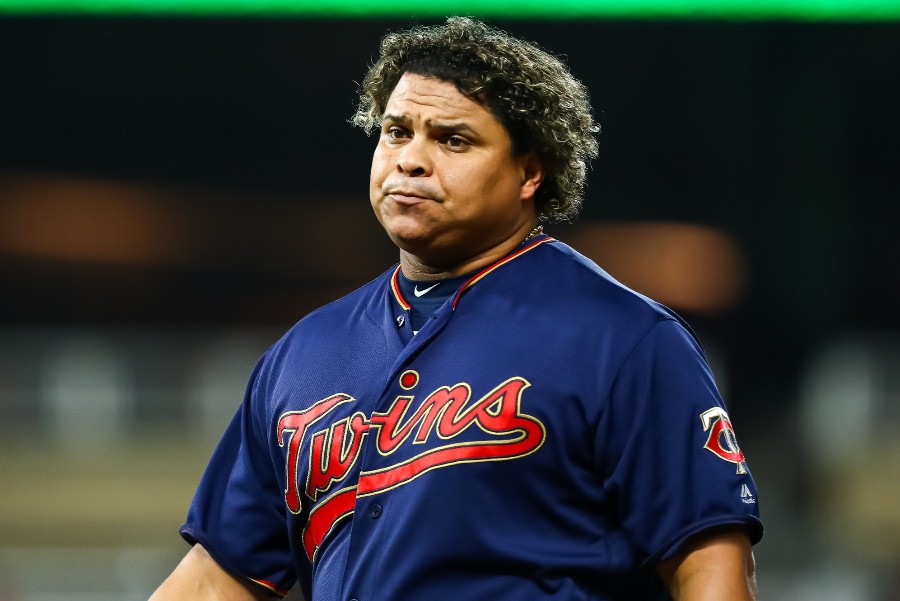 "Our beautiful baby boy!" I cried, as Willians Astudillo hustled into second with a double during some random early-summer evening in 2019. My wife (fiancée at the time) looked at me with an expression combining befuddlement and a touch of embarrassment. It was hardly the first time she'd overheard such an outburst from me during a Twins game around this time, but that didn't make it seem any less strange to her. And I mean, it WAS strange. It's an odd type of behavior from an adult person who generally watches baseball with a detached analytical enjoyment. Not to say I don't get excited or emotional – I definitely do – but yeah, I wouldn't say it's normal for me to stan a player so irrationally and exuberantly that I resort to infant-speak and swoon at his most pedestrian of achievements on the field. Willians just has that effect. Or at least, he did. Over the course of that 2019 season, Astudillo's magical mystique began to fade. Now, I find myself wondering if it still exists. While the light has dimmed, I do think there's still a spark, and it intrigues me given his functional fit within this season's reshaped roster. THE LEGEND OF TORTUGA First, since he's been out of sight for so long, let us remind ourselves of why Astudillo became such a magnetic attraction to begin with. He arrived as a relative unknown in 2018 – a 26-year-old minor-league journeyman called up for a late-season look after catching some eyes in Rochester. In 29 games as a rookie in Minnesota, Astudillo did it all. He raked to the tune of .355/.371/.516, striking out only three times in 97 trips to the plate. He appeared at six different positions, including pitcher. He was a beaming ray of light for Twins fans in the waning weeks of a disappointing season. It wasn't just Astudillo's performance that earned him affinity. It was his VIBE. The man was utterly unique, like nothing any of us had seen before. Every single thing about him screamed "sandlot baseball." He swung at everything and made contact with everything. In spring training he executed a from behind the plate. He earned himself a label as "one of baseball's most entertaining players" from Sports Illustrated's Emma Baccellieri following his majestic celebration of a home run in the Venezuelan Winter League.Astudillo became a living meme, and an oddly inspirational figure, openly challenging the prototype for a major-league body. Ever the smiling jokester, Willians exuded joy and youthful enthusiasm in an infectious way that had plenty of us developing weird pet names and anticipating his at-bats. The guy was just so damn easy to root for. TURTLE ON ITS BACK Enthralled as we may have been by La Tortuga, most of us weren't blind to the realities of his ceiling and sustainability. He came to the Twins as an unheralded 26-year-old with no MLB experience. Coming off a season where he batted .342 for Arizona's Triple-A affiliate, Astudillo generated little demand on the market and signed a minor-league contract. As good as he looked during his rookie stint in 2018, it was in a sample of less than 100 plate appearances. Still, there was a palpable buzz surrounding Astudillo in spring of 2019. He was viewed as a major wild-card in Minnesota's plans, with the potential to contribute in significant ways if he could keep raking as a versatile defender and occasional backstop. Unfortunately, the ensuing season served as a harsh reality check. Pitchers quickly began to take advantage of his swing-at-everything approach, rarely giving him anything decent to hit. Astudillo's production sagged, and he saw a 200-point drop in OPS. Over 204 plate appearances, he slashed .268/.299/.379, while his defensive shortcomings became more evident and impactful, especially behind the plate. FanGraphs pegged him as a sub-replacement level player (-0.2 WAR). La Tortuga's luster wore off in a hurry, and as a result, he came into 2020 as more of an afterthought. The 28-year-old spent most of his summer at the alternate site, making just 16 regular-season PAs for the Twins. His only postseason appearance came when he entered as a pinch-hitter in the ninth inning of Game 1, representing the tying run with two on and one out, and instantly hit into a game-ending double play. Thus we arrive at the present situation. Entering 2021, Astudillo is even more of an afterthought; in fact, some believe he might be in danger of losing his 40-man roster spot as the club faces crunches with late additions. Not me. I actually see Astudillo having a uniquely useful fit as the 26th man on this year's Twins team, perhaps giving him one more chance to recapture the magic. ASTUDILLO'S 2021 OUTLOOK There's no way Willians will be lined up for any kind of substantial role on the 2021 Twins, at least not out of the gate. But keep in mind that despite his recent struggles, he's still a likable clubhouse presence with a .294/.319/.428 slash line in 317 MLB plate appearances and, most importantly, the ability to provide depth at some key spots. Consider the three defensive positions where Astudillo has played more than 100 innings in the majors: Catcher. As third catcher behind Mitch Garver and Ryan Jeffers, Astudillo would make it a lot more easy to occasionally play the non-starter at DH (or first base or left field, in Garver's case), or to use them as pinch-hitters. Third base. Josh Donaldson is obviously the biggest injury concern on the roster. While Luis Arráez is now penciled as his top backup, the Twins currently have no other bench players who can fill in there, and Arráez is likely to be occupied by other assignments frequently. Also, it's very possible Astudillo is a better defender than Arráez at third. First base. This is a position where the Twins have sacrificed depth by switching to Arráez in the utility role. Marwin González played more than 200 innings at first in his two years with the Twins, and Ehire Adrianza played there a bunch in 2019. I doubt we'll ever see Arráez play at first base in a major-league game. Astudillo can handle it fine. Arráez and Astudillo actually make for a pretty functional backup infielder combo, giving the Twins coverage all around the diamond while also providing Baldelli with contact hitters from both sides of the plate, to be plugged into the lineup or pinch-hit. I'm not saying Astudillo is a high-quality defender at any of the positions he plays, but he's competent enough at all of them. And while his bat hurtled back to Earth in 2019, the .678 OPS he posted was fine for a versatile, sparsely-used bench guy. He can be that. Unlike Travis Blankenhorn or Nick Gordon, there's no need to feed Astudillo regular ABs for the sake of his development. And, I'm still not quite willing to give up on him as an offensive difference-maker. He just wrapped up an absolutely dominant showing in the Venezuelan Winter League, where he batted .379 and led all hitters in total bases. Maybe it's just the flickering embers of faith and affinity still burning within me, but I've reached the conclusion that... yeah, I am still kind of excited about Astudillo. And now that the hype and oversized expectations have died down a bit, I think he's got a real chance to impress people as a useful piece on this 2021 Twins team. Now almost 30, it's been a long journey for Astudillo. But if you're counting him out at this point, you clearly never read the story of The Tortoise and the Hare. MORE FROM TWINS DAILY — Latest Twins coverage from our writers — Recent Twins discussion in our forums — Follow Twins Daily via Twitter, Facebook or email
 -
The Minnesota Twins continued their early-February flurry of activity on Friday, when they claimed right-handed pitcher Ian Hamilton off waivers from the Phillies. Learn a little more about the newly acquired arm below.An 11th-round pick of the Chicago White Sox in 2016, Hamilton changed teams via waiver claim twice last year, first being picked up by the Mariners in September and then by Philadelphia in December. The Phillies waived him last week to make room on their 40-man roster for free agent catcher J.T. Realmuto. At 6-foot-1 and 200 lbs, the 25-year-old Hamilton has worked exclusively as a reliever since joining the pro ranks. He has posted a 4.50 ERA and 9-to-7 K/BB ratio over 12 major-league innings, but his numbers in the minors are much better 3.24 ERA, 1.14 WHIP, 9.7 K/9, 2.6 BB/9, with only 10 home runs allowed in 172 innings. He's got a big fastball that reaches the high 90s, and (you guessed it) a good slider, which averaged 89 MPH last season. The Twins' 40-man roster is full (pending the yet-to-be-finalized signings of Nelson Cruz and Alex Colomé), so a corresponding move will need to be made. Check back soon for more details on that and on the Twins' new relief pitcher. In the meantime, let's here your thoughts on yet another addition this week for your Minnesota Twins. MORE FROM TWINS DAILY — Latest Twins coverage from our writers — Recent Twins discussion in our forums — Follow Twins Daily via Twitter, Facebook or email Click here to view the article
-
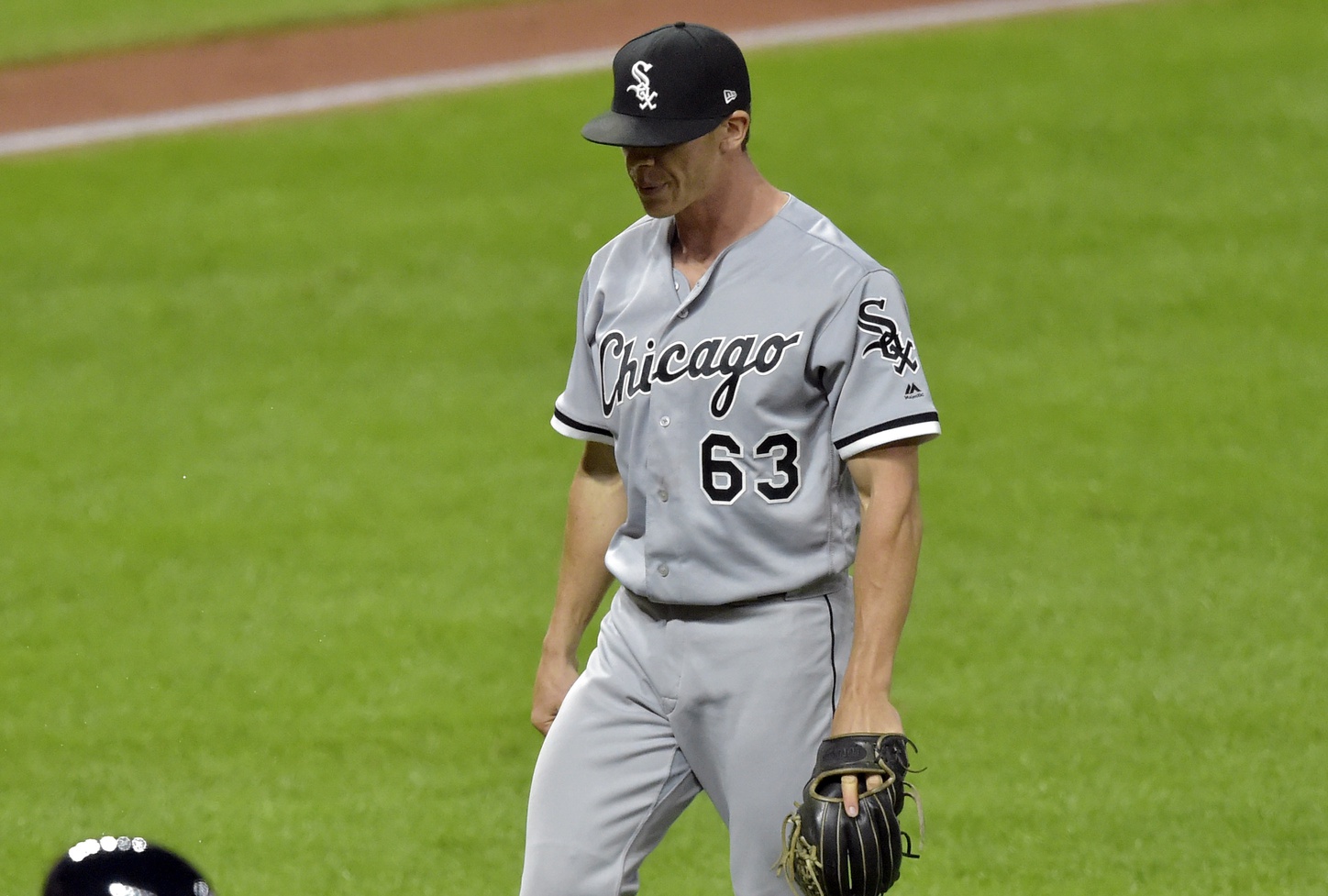 An 11th-round pick of the Chicago White Sox in 2016, Hamilton changed teams via waiver claim twice last year, first being picked up by the Mariners in September and then by Philadelphia in December. The Phillies waived him last week to make room on their 40-man roster for free agent catcher J.T. Realmuto. At 6-foot-1 and 200 lbs, the 25-year-old Hamilton has worked exclusively as a reliever since joining the pro ranks. He has posted a 4.50 ERA and 9-to-7 K/BB ratio over 12 major-league innings, but his numbers in the minors are much better 3.24 ERA, 1.14 WHIP, 9.7 K/9, 2.6 BB/9, with only 10 home runs allowed in 172 innings. He's got a big fastball that reaches the high 90s, and (you guessed it) a good slider, which averaged 89 MPH last season. The Twins' 40-man roster is full (pending the yet-to-be-finalized signings of Nelson Cruz and Alex Colomé), so a corresponding move will need to be made. Check back soon for more details on that and on the Twins' new relief pitcher. In the meantime, let's here your thoughts on yet another addition this week for your Minnesota Twins. MORE FROM TWINS DAILY — Latest Twins coverage from our writers — Recent Twins discussion in our forums — Follow Twins Daily via Twitter, Facebook or email
 -
On Thursday night, the Twins traded for their latest relief pitching project in Shaun Anderson, a big sturdy right-hander with a standout slider in the upper-80s. There's much to like, but some barriers to overcome, which are best exemplified by an incident that took place in San Francisco last August.Anderson is a wild one, and I'm not referring to the long locks pouring out from the back of his baseball cap. In 2020, his first full season (well, "full" season) as a reliever, he issued 12 walks over 15 ⅓ innings, a 7.0 BB/9 average. Obviously it's a ridiculously small sample size, and it doesn't necessarily jibe with his previous track record – he had a 3.6 BB/9 rate in 96 innings as a rookie in 2019, and a 2.3 BB/9 rate in the minors – but the wildness was fully on display last summer and it led to some rather heated moments. In mid-August, the Angels and Giants faced off in back-to-back series at their respective ballparks. On Tuesday night, Anderson entered in the ninth inning with an 8-1 lead. The leadoff man? Mike Trout. Facing the greatest player in the game, Anderson uncorked a pair of mid-90s fastballs that sailed near Trout's head. This one was the second, and it caused a bit of stir, later resulting in Giants manager Gabe Kapler feeling the need to explain afterward: "We don't throw at people. It's not who we are." This up-and-in fastball from Anderson wasn't quite as close to Trout's helmet, but after what transpired two days earlier, Angels manager Joe Maddon had seen enough. He confronted the umps on the field and later had some harsh words about the Giants reliever. "Enough is enough," Maddon said. "This is the major leagues. There's a level of accountability here also. I don't wanna use the word 'irresponsible' loosely, but in that situation, you pretty much knew it was gonna happen again. And I'm not accusing the guy of doing anything on purpose; I'm just saying he doesn't command his fastball enough in order to know where it's going." Quite the review of Anderson from Maddon there! And it speaks to the main challenge faced by the Twins as they look to work their magic once again. The slider is pretty clearly an overpowering weapon (he threw it 53% of the time last year and held opponents to a .108/.164/.243 with it in a limited sample) but it's not clear he can succeed as a one-trick pony a la Matt Wisler. The fastball has some potential, buzzing in at 94.4 MPH on average and ranking in the 92nd percentile for spin, but Anderson and the Twins are going to need to find a way to rein it in. Luckily, they can be patient. Although Anderson's no spring chicken at age 26, he does have options remaining so the Twins can develop in him in the minors or shuttle him back and forth across 35W as needed. There's something to be unlocked here, and when it comes to this pitcher profile, no team in the majors has proven more adept at turning the key than Minnesota. They've also shown they can help such pitchers succeed in spite of a wild side; Wisler averaged 5.0 BB/9 last year and still posted a 1.07 ERA. In other words, while Shaun Anderson might not be the most glitzy addition, Twins fans should know better by now than to discount it. Maybe keep him out in the pen when the Angels are in town this year, though. MORE FROM TWINS DAILY — Latest Twins coverage from our writers — Recent Twins discussion in our forums — Follow Twins Daily via Twitter, Facebook or email Click here to view the article
-
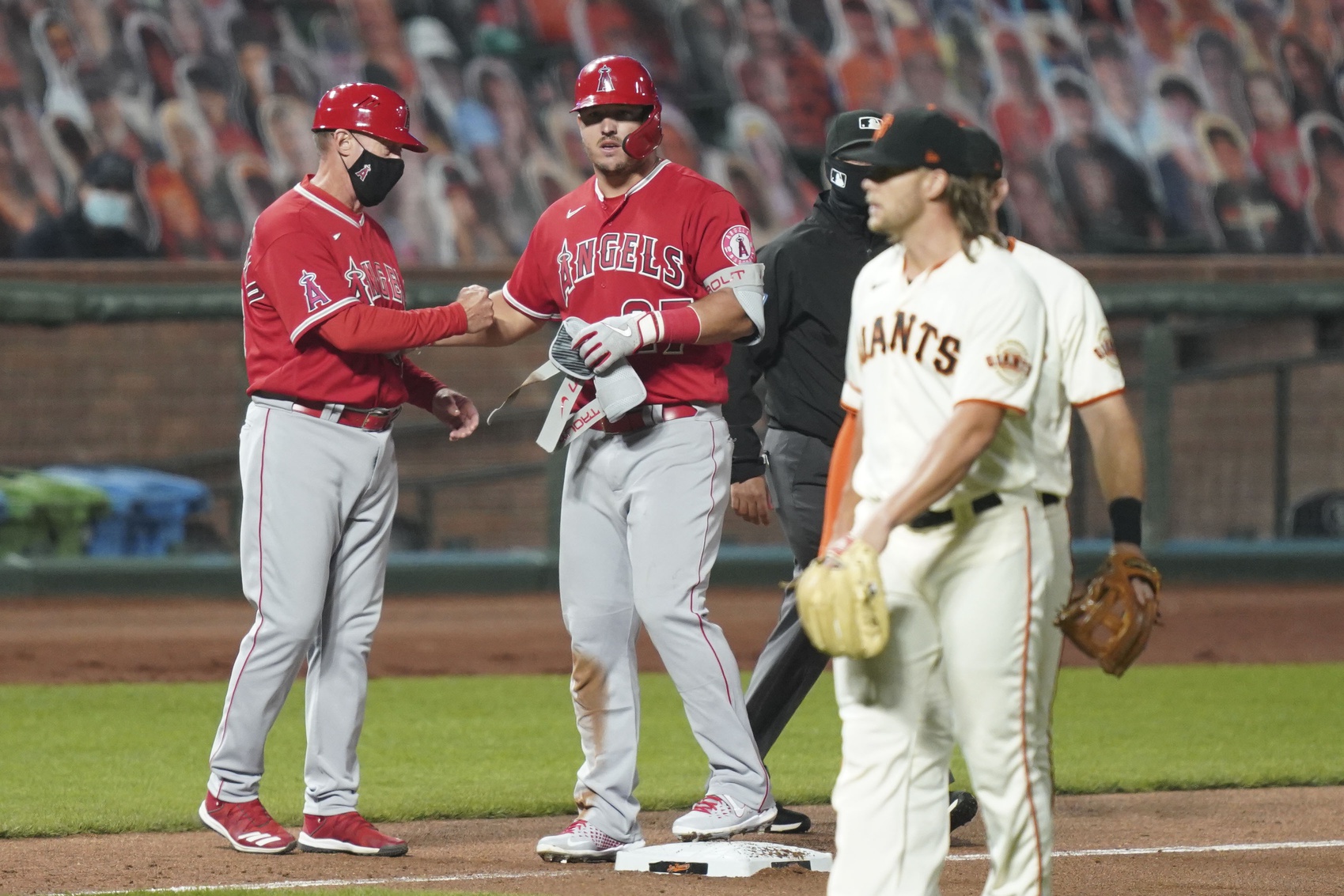 Anderson is a wild one, and I'm not referring to the long locks pouring out from the back of his baseball cap. In 2020, his first full season (well, "full" season) as a reliever, he issued 12 walks over 15 ⅓ innings, a 7.0 BB/9 average. Obviously it's a ridiculously small sample size, and it doesn't necessarily jibe with his previous track record – he had a 3.6 BB/9 rate in 96 innings as a rookie in 2019, and a 2.3 BB/9 rate in the minors – but the wildness was fully on display last summer and it led to some rather heated moments. In mid-August, the Angels and Giants faced off in back-to-back series at their respective ballparks. On Tuesday night, Anderson entered in the ninth inning with an 8-1 lead. The leadoff man? Mike Trout. Facing the greatest player in the game, Anderson uncorked a pair of mid-90s fastballs that sailed near Trout's head. This one was the second, and it caused a bit of stir, later resulting in Giants manager Gabe Kapler feeling the need to explain afterward: "We don't throw at people. It's not who we are." https://twitter.com/NBCSGiants/status/1295868683550523392 In fairness, the wayward heaters from Anderson did look like pretty clear misfires, and there's not much reason to think he'd be head-hunting a Hall of Famer in his second MLB season. Two days later however, in San Francisco, Anderson faced Trout once again. And once again... drama unfolded: https://twitter.com/NBCSGiants/status/1296671442587852800 This up-and-in fastball from Anderson wasn't quite as close to Trout's helmet, but after what transpired two days earlier, Angels manager Joe Maddon had seen enough. He confronted the umps on the field and later had some harsh words about the Giants reliever. "Enough is enough," Maddon said. "This is the major leagues. There's a level of accountability here also. I don't wanna use the word 'irresponsible' loosely, but in that situation, you pretty much knew it was gonna happen again. And I'm not accusing the guy of doing anything on purpose; I'm just saying he doesn't command his fastball enough in order to know where it's going." Quite the review of Anderson from Maddon there! And it speaks to the main challenge faced by the Twins as they look to work their magic once again. The slider is pretty clearly an overpowering weapon (he threw it 53% of the time last year and held opponents to a .108/.164/.243 with it in a limited sample) but it's not clear he can succeed as a one-trick pony a la Matt Wisler. The fastball has some potential, buzzing in at 94.4 MPH on average and ranking in the 92nd percentile for spin, but Anderson and the Twins are going to need to find a way to rein it in. Luckily, they can be patient. Although Anderson's no spring chicken at age 26, he does have options remaining so the Twins can develop in him in the minors or shuttle him back and forth across 35W as needed. There's something to be unlocked here, and when it comes to this pitcher profile, no team in the majors has proven more adept at turning the key than Minnesota. They've also shown they can help such pitchers succeed in spite of a wild side; Wisler averaged 5.0 BB/9 last year and still posted a 1.07 ERA. In other words, while Shaun Anderson might not be the most glitzy addition, Twins fans should know better by now than to discount it. Maybe keep him out in the pen when the Angels are in town this year, though. MORE FROM TWINS DAILY — Latest Twins coverage from our writers — Recent Twins discussion in our forums — Follow Twins Daily via Twitter, Facebook or email
 -
Another day, another move. After agreeing to terms with free agents Nelson Cruz and Alex Colomé on successive days, the Twins struck their first trade of the offseason Thursday. The team announced that it has dealt outfielder LaMonte Wade Jr. to the Giants for right-handed relief pitcher Shaun Anderson.Shaun Anderson was a third-round draft pick out of the University of Florida by the Red Sox in 2016. He went to San Francisco in the 2017 Eduardo Nunez trade ahead of the deadline. Anderson debuted for the Giants in 2019, making 16 starts and 12 relief appearances with a 5.44 ERA. In 2020, the right-hander moved to a full-time relief role and had more success, with a 3.54 and 18 strikeouts over 15 ⅓ innings, although his 12 walks were concerning. Standing 6-foot-4 and weighing around 230 lbs, the 26-year-old Anderson leans heavily on a high-powered slider (surprise!), which he threw 53% of the time last year. The pitch limited opponents to a .108/.164/.243 slash line. Obviously it's the kind of project the Twins like to take on, and have had success with. The Matt Wisler comparisons are natural enough (especially given that Anderson is coming from the team that just signed Wisler), and it's easy to see a similar scenario playing out here. We'll have plenty more information and analysis soon, so be sure to check back. For now, let's hear your initial thoughts and reactions in the comments. MORE FROM TWINS DAILY — Latest Twins coverage from our writers — Recent Twins discussion in our forums — Follow Twins Daily via Twitter, Facebook or email Click here to view the article
-
Twins Acquire RP Shaun Anderson from Giants for OF LaMonte Wade
Nick Nelson posted an article in Twins
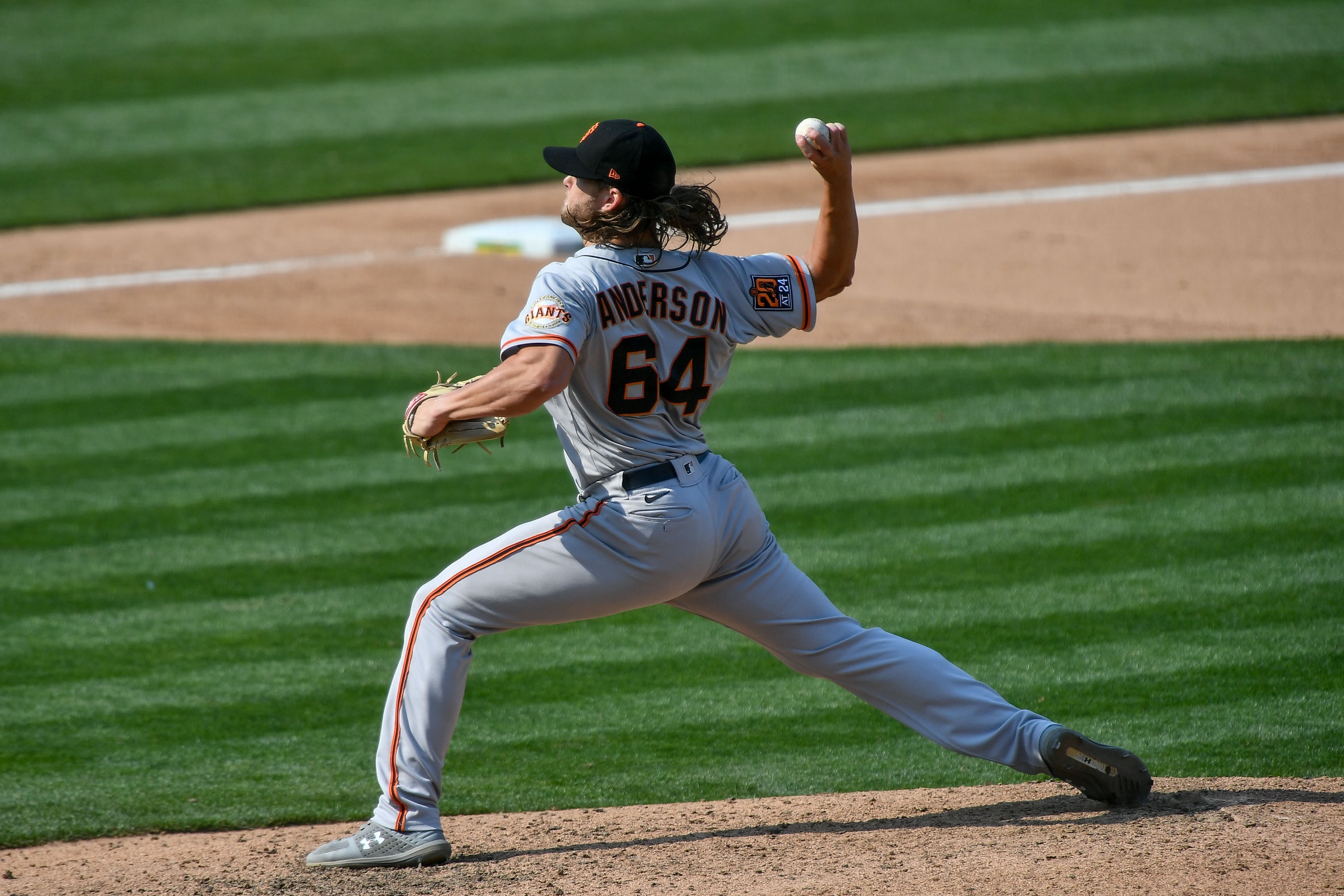 Shaun Anderson was a third-round draft pick out of the University of Florida by the Red Sox in 2016. He went to San Francisco in the 2017 Eduardo Nunez trade ahead of the deadline. Anderson debuted for the Giants in 2019, making 16 starts and 12 relief appearances with a 5.44 ERA. In 2020, the right-hander moved to a full-time relief role and had more success, with a 3.54 and 18 strikeouts over 15 ⅓ innings, although his 12 walks were concerning. Standing 6-foot-4 and weighing around 230 lbs, the 26-year-old Anderson leans heavily on a high-powered slider (surprise!), which he threw 53% of the time last year. The pitch limited opponents to a .108/.164/.243 slash line. Obviously it's the kind of project the Twins like to take on, and have had success with. The Matt Wisler comparisons are natural enough (especially given that Anderson is coming from the team that just signed Wisler), and it's easy to see a similar scenario playing out here. https://twitter.com/dohyoungpark/status/1357507395547709440 Anderson also throws a fastball in the mid-90s and has mixed in the occasional changeup, although it'd be no surprise if the Twins have him drop the third pitch. He has options, so there's no assurance he'll start on the big-league club. LaMonte Wade Jr. is a very solid player, capable of playing all three outfield positions and bringing exceptional discipline at the plate. Unfortunately he was hopelessly buried on the depth chart in Minnesota, even with Eddie Rosario out of the picture. In San Francisco he figures to get more of an opportunity, and reunite with former Twins farmhand Jaylin Davis. https://twitter.com/SethTweets/status/1357538628663009282 We'll have plenty more information and analysis soon, so be sure to check back. For now, let's hear your initial thoughts and reactions in the comments. MORE FROM TWINS DAILY — Latest Twins coverage from our writers — Recent Twins discussion in our forums — Follow Twins Daily via Twitter, Facebook or email
 -
I pointed this out on Twitter last night but actually Colome appears to be kinda similar to Clippard in this regard, with clearly superior numbers against LH batters. In 2020 he held lefties to a .098 avg and .122 SLG. I'm not saying I wouldn't still be interested in Clippard at the right price, but I'm starting to think the bullpen would be better balanced out by a true RH specialist. Esp considering the makeup of AL Central lineups.
