



Nick Nelson
-
Posts
8,327 -
Joined
-
Last visited
-
Days Won
56
Content Type
Profiles
News
Minnesota Twins Videos
2026 Minnesota Twins Top Prospects Ranking
2022 Minnesota Twins Draft Picks
Minnesota Twins Free Agent & Trade Rumors, Notes, & Tidbits
Guides & Resources
2023 Minnesota Twins Draft Picks
The Minnesota Twins Players Project
2024 Minnesota Twins Draft Picks
2025 Minnesota Twins Draft Pick Tracker
2026 Minnesota Twins Draft Tracker: Picks & Bonuses
Forums
Blogs
Events
Store
Downloads
Gallery
Everything posted by Nick Nelson
-
 If the Twins have ever fielded a better and deeper rotation than the one they're set to line up this year, I can't remember it. From top to bottom (and beyond) this unit looks stacked.Projected Rotation: Kenta Maeda, José Berríos, Michael Pineda, J.A. Happ, Matt Shoemaker Depth: Randy Dobnak, Devin Smeltzer, Lewis Thorpe, Bailey Ober Prospects: Jhoan Duran, Jordan Balazovic, Matt Canterino, Blayne Enlow, Cole Sands THE GOOD Let's start at the top. Kenta Maeda: The long-awaited ace and reigning Cy Young runner-up. Maeda's first year in a Minnesota uniform yielded the best performance we've seen from a Twins starting pitcher since Johan Santana left town. One of the great sadnesses of the shortened 2020 season was that we didn't get to see him do more of it. From his first turn to his last, Maeda was superb. He never gave up more than three runs in a game, or more hits than innings pitched in a start. His whiff rate was third-highest in the game behind Jacob deGrom and Lucas Giolito. Maeda shut down Houston with five shutout innings in the playoffs. A month prior, he came within three outs of no-hitting Milwaukee at Target Field. With an offspeed-heavy mix and impeccable command, he left opposing batters helpless. J.A. Happ is not a super flashy addition at age 38, but he's been basically as good as Berríos over the past handful of seasons, and he's a great asset as your fourth starter. Matt Shoemaker rounds out the rotation as a $2 million flier who probably has a 50/50 shot at lasting until the All-Star break. But as with any signing by this front office, there's upside here that's easy to see. The offseason additions might not have been too exciting, but what does excite about Minnesota's rotation picture this year is the internal depth. Randy Dobnak and Lewis Thorpe both offer plenty of intrigue, especially with their buzz-stirring spring camps. Devin Smeltzer is a better eighth option than most other teams have. And that's before you turn to the farm. The Twins' top three pitching prospects – Jhoan Duran, Jordan Balazovic, Matt Canterino – are verging on big-league ready. It's hard to say for sure since the 2020 minor-league season was wiped out, but had it been played, it's very possible any of those three would now be banging on the door – if not already debuted. Each is capable of a serious impact in short order, and the Twins are quietly counting on that to some degree. THE BAD One might argue the Twins have been extraordinarily lucky with the health of their starting pitchers over the past couple years. (Jake Odorizzi and Homer Bailey would disagree, but they're gone.) Berríos has continued to take the mound every fifth day, as usual. Maeda did the same in 2020, while transitioning from starter-reliever hybrid to relative workhorse. He experienced no issues, even after accruing a career-high 115 pitches in his no-hit bid. Pineda, so often injured before coming to Minnesota, has been perfectly healthy outside of the suspension. (Phantom DL stints not withstanding.) I'm not over here to trying to jinx anything. But it has to be acknowledged that this probably won't last forever. The rigors of being a starting pitcher in the major leagues are immense, and right now these guys are grappling with the transition back to a full-season workload, in the wake of 2020's disruption. If one of those top three starters goes down? Suddenly the Twins rotation doesn't look quite so sturdy anymore. Happ might be a nice luxury in the back half, but he's not necessarily someone you want to be depending on toward the front. Shoemaker, Dobnak, Thorpe and Smeltzer all have their own varying levels of promise and mystique, but also serious hurdles to overcome. The top prospects may well all need more seasoning, These aren't unique problems – all pitchers across the league will be facing the same readjustment challenges this year, and no team has infinite starting depth – but the Twins will need a bit of luck on their side to fulfill their potential in the rotation. They're relying heavily on some internal developments playing out well, because it's questionable whether the free agent talent incoming (Happ, Shoemaker) is better than the talent outgoing (Odorizzi, Rich Hill). Questionable might be putting it kindly. THE BOTTOM LINE This is a deep, well-rounded group with a high ceiling and a number of electrifying wild cards in play. Odorizzi is a significant loss, which should not be discounted, but the fact is, the Twins managed to post the second-best rotation ERA, FIP, and fWAR in the American League last year without him. An important thing to keep in mind is that, by retaining all prospect capital in the offseason, the Twins have positioned themselves nicely for a trade as the deadline approaches. That'll probably be a big storyline this summer, but I'm more eager to see what the system can provide internally after four years of remarkable progression under the new front office. "After four years of assembling the infrastructure and creating a culture of fearless development," wrote Dan Hayes at The Athletic recently, "the Twins front office feels as if its pitching pipeline is finally ready to churn out impressive arms at a more consistent rate." Their exhaustive work will be put to the test in what's certain to be a daunting and discombobulating year for MLB starting pitchers, with workloads thrown askew. READ OTHER 2021 POSITION ANALYSIS ARTICLES CatcherFirst BaseSecond BaseThird BaseShortstopLeft FieldCenter FieldRight FieldDesignated Hitter Click here to view the article
- 33 replies
-
- 2
-

-
- kenta maeda
- jose berrios
- (and 3 more)
-
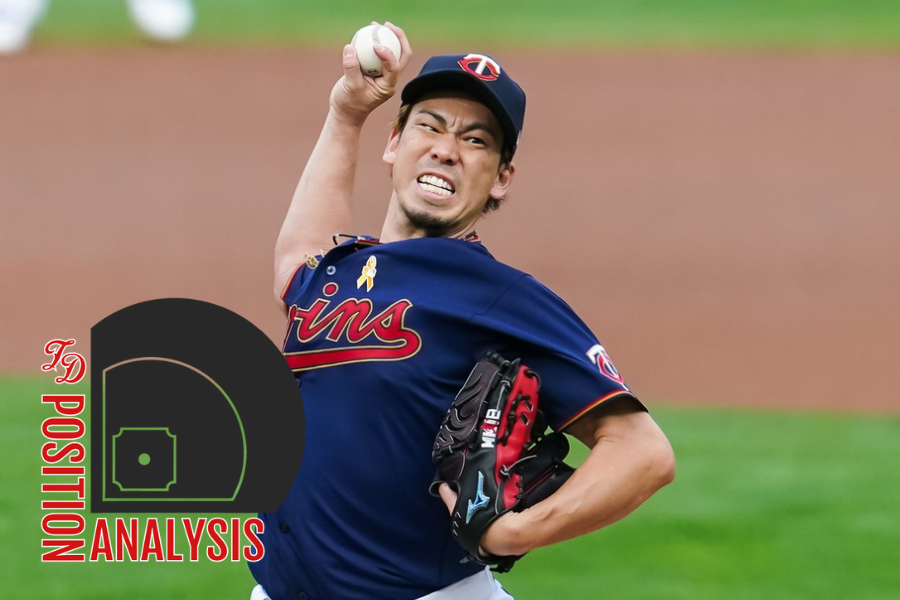 Projected Rotation: Kenta Maeda, José Berríos, Michael Pineda, J.A. Happ, Matt Shoemaker Depth: Randy Dobnak, Devin Smeltzer, Lewis Thorpe, Bailey Ober Prospects: Jhoan Duran, Jordan Balazovic, Matt Canterino, Blayne Enlow, Cole Sands THE GOOD Let's start at the top. Kenta Maeda: The long-awaited ace and reigning Cy Young runner-up. Maeda's first year in a Minnesota uniform yielded the best performance we've seen from a Twins starting pitcher since Johan Santana left town. One of the great sadnesses of the shortened 2020 season was that we didn't get to see him do more of it. From his first turn to his last, Maeda was superb. He never gave up more than three runs in a game, or more hits than innings pitched in a start. His whiff rate was third-highest in the game behind Jacob deGrom and Lucas Giolito. Maeda shut down Houston with five shutout innings in the playoffs. A month prior, he came within three outs of no-hitting Milwaukee at Target Field. With an offspeed-heavy mix and impeccable command, he left opposing batters helpless. https://twitter.com/MLB/status/1295914048043786241 This was a different version of Maeda than we ever saw in Los Angeles, where he was more good than great, leading to natural questions about how repeatable the breakout is. Indeed, the righty probably won't be quite so thoroughly dominant in a full-length follow-up, but there's little reason to think he won't be a credible rotation-fronter. The question is whether José Berríos will join him in that category. He's a very good starter, and one of the most reliably durable in the game, but Berríos hasn't quite been able to take that step into the highest tier despite flirting with it frequently. Last season might look like a setback, at a glance – his 4.00 ERA and 1.32 WHIP were both highest since Berríos' rocky debut in 2016. But they're also misleading, and emblematic of 2020's small-sample haziness. He gave up five runs in four innings against Chicago on Opening Day. From that point forward, the righty posted a 3.51 ERA and 1.27 WHIP, holding opponents to a .225 average. Same old Berríos. That's not including his postseason start against Houston, where he allowed one run on two hits in five frames. We'll see if he can find something more, and if he does, the Twins will boast one of the league's best 1-2 punches in the rotation. But they'd also be happy to get that same old Berríos again, because his baseline is a pretty damn good. And also: Minnesota has another underrated starter in the frontline discussion. Michael Pineda is finally coming into a season unhindered by injury rehab or suspension. When on the mound for Minnesota, he has consistently pitched well, and the Twins have played .677 baseball. He's 32 and playing for his next contract with free agency upcoming. As Twins GM Thad Levine put it, Pineda "has put himself in the best position he can to have a robust second chapter to his career.” https://twitter.com/NickNelsonMN/status/1361852125551157250 J.A. Happ is not a super flashy addition at age 38, but he's been basically as good as Berríos over the past handful of seasons, and he's a great asset as your fourth starter. Matt Shoemaker rounds out the rotation as a $2 million flier who probably has a 50/50 shot at lasting until the All-Star break. But as with any signing by this front office, there's upside here that's easy to see. The offseason additions might not have been too exciting, but what does excite about Minnesota's rotation picture this year is the internal depth. Randy Dobnak and Lewis Thorpe both offer plenty of intrigue, especially with their buzz-stirring spring camps. Devin Smeltzer is a better eighth option than most other teams have. And that's before you turn to the farm. The Twins' top three pitching prospects – Jhoan Duran, Jordan Balazovic, Matt Canterino – are verging on big-league ready. It's hard to say for sure since the 2020 minor-league season was wiped out, but had it been played, it's very possible any of those three would now be banging on the door – if not already debuted. Each is capable of a serious impact in short order, and the Twins are quietly counting on that to some degree. THE BAD One might argue the Twins have been extraordinarily lucky with the health of their starting pitchers over the past couple years. (Jake Odorizzi and Homer Bailey would disagree, but they're gone.) Berríos has continued to take the mound every fifth day, as usual. Maeda did the same in 2020, while transitioning from starter-reliever hybrid to relative workhorse. He experienced no issues, even after accruing a career-high 115 pitches in his no-hit bid. Pineda, so often injured before coming to Minnesota, has been perfectly healthy outside of the suspension. (Phantom DL stints not withstanding.) I'm not over here to trying to jinx anything. But it has to be acknowledged that this probably won't last forever. The rigors of being a starting pitcher in the major leagues are immense, and right now these guys are grappling with the transition back to a full-season workload, in the wake of 2020's disruption. If one of those top three starters goes down? Suddenly the Twins rotation doesn't look quite so sturdy anymore. Happ might be a nice luxury in the back half, but he's not necessarily someone you want to be depending on toward the front. Shoemaker, Dobnak, Thorpe and Smeltzer all have their own varying levels of promise and mystique, but also serious hurdles to overcome. The top prospects may well all need more seasoning, These aren't unique problems – all pitchers across the league will be facing the same readjustment challenges this year, and no team has infinite starting depth – but the Twins will need a bit of luck on their side to fulfill their potential in the rotation. They're relying heavily on some internal developments playing out well, because it's questionable whether the free agent talent incoming (Happ, Shoemaker) is better than the talent outgoing (Odorizzi, Rich Hill). Questionable might be putting it kindly. THE BOTTOM LINE This is a deep, well-rounded group with a high ceiling and a number of electrifying wild cards in play. Odorizzi is a significant loss, which should not be discounted, but the fact is, the Twins managed to post the second-best rotation ERA, FIP, and fWAR in the American League last year without him. An important thing to keep in mind is that, by retaining all prospect capital in the offseason, the Twins have positioned themselves nicely for a trade as the deadline approaches. That'll probably be a big storyline this summer, but I'm more eager to see what the system can provide internally after four years of remarkable progression under the new front office. "After four years of assembling the infrastructure and creating a culture of fearless development," wrote Dan Hayes at The Athletic recently, "the Twins front office feels as if its pitching pipeline is finally ready to churn out impressive arms at a more consistent rate." Their exhaustive work will be put to the test in what's certain to be a daunting and discombobulating year for MLB starting pitchers, with workloads thrown askew. READ OTHER 2021 POSITION ANALYSIS ARTICLES Catcher First Base Second Base Third Base Shortstop Left Field Center Field Right Field Designated Hitter
 -
No team is better set up at DH than the Minnesota Twins, who are fortunate enough to employ an all-time great at the position. He's 40 years old, and thus not without his question marks, but Nelson Cruz is back and we all should all be happy about that.Projected Starter: Nelson Cruz Likely Backup: Miguel Sanó Depth: Luis Arráez, Mitch Garver Prospects: Aaron Sabato, Brent Rooker THE GOOD There is no player in baseball better suited for the term "designated hitter" than Nelson Cruz. Hitting is all he does – the Twins wouldn't dream of playing him for an inning in the field at this point – but he does it unbelievably well. By almost any holistic offensive metric, Cruz has been the second-best hitter in MLB over the past two seasons, trailing only Mike Trout. The peak of Cruz's career has coincided with its twilight, and up to this point he hasn't shown much sign of showing down. His production in 2020 was basically right on par with the prior season, when he slugged 41 homers with 108 RBIs. Cruz batted third or fourth in every game he started, and lived up to the billing with monster production that was at times simply outrageous. From August 17th through September 8th, for example, he slashed .343/.450/.761 with nine home runs in 20 games. Even from the most optimistic view, it's probably fair to build some regression into expectations for Cruz. The man turns 41 in July, after all, and outstanding production – much less absolute top-tier production – is rarified air at such an age, to say the least. The nice thing is that Cruz has been SO GOOD that he can afford to experience a significant drop-off, and still be a high-impact designated hitter. If you took 100 points off his .992 OPS in 2020, it still would've been the best for a DH in the AL by 50 points. And as far as his anticipated age-related drop-off is concerned ... Cruz made a bit of a statement on that front in his first spring training game earlier his month: THE BAD I said earlier of Cruz: "up to this point he hasn't shown much sign of showing down." That's not to say he's shown NO sign of slowing down. In the second half of September last year, his bat tanked like we've never really seen as a Twin; albeit in a very small sample. His final 11 games, which followed the aforementioned ludicrous 20-game stretch, saw Cruz hit just .154/.267/.256 with one home run and one double, missing a week with knee soreness in the middle. For the season, Cruz's Statcast measures were great, but they weren't quite on par with years prior. Measures which were previously in the top 1-2% of all hitters were now more in the top 10-15%. Download attachment: cruzstatcast2020.png No one's gonna scoff at an Average Exit Velocity, HardHit% or xwOBA in the upper-80th percentiles, but in the previous three years, Cruz was literally 98th-99th percentile in each of those categories, without fail. As you look at his mid-to-long range xwOBA trends, the downward progression is quite noticeable: Download attachment: cruz_woba_trend.png Under normal circumstances, the above trends wouldn't be too noteworthy, especially for a player with Cruz's track record. But again: we're talking about a guy who turns 41 in three months. While it's difficult to envision him dropping off to the point where he's not an asset at DH (if healthy), it would be no real surprise if he morphs into more of a low-average, high-strikeout, all-or-nothing type this year, rather than the totally dominant force we're accustomed to. THE BOTTOM LINE Time is undefeated. Then again, from what we've seen during his tenure in Minnesota, the same can basically be said for Nelson Cruz. I find it hard to bet against the man even if all historical data suggests it's a pretty good bet. The Twins are well protected in the event of injuries or seismic drop-off, since he's on a one-year deal and they have a wealth of bats – majors and minors – capable of rotating through the DH spot to keep it juiced. Suffice to say this position is the last anyone needs to worry about. READ OTHER 2021 POSITION ANALYSIS ARTICLES CatcherFirst BaseSecond BaseThird BaseShortstopLeft FieldCenter FieldRight Field Click here to view the article
-
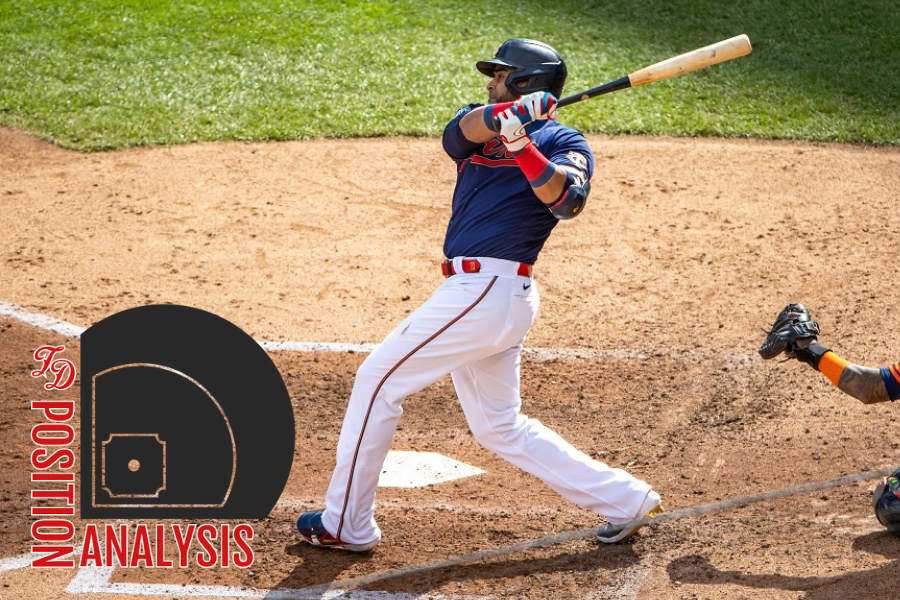 Projected Starter: Nelson Cruz Likely Backup: Miguel Sanó Depth: Luis Arráez, Mitch Garver Prospects: Aaron Sabato, Brent Rooker THE GOOD There is no player in baseball better suited for the term "designated hitter" than Nelson Cruz. Hitting is all he does – the Twins wouldn't dream of playing him for an inning in the field at this point – but he does it unbelievably well. By almost any holistic offensive metric, Cruz has been the second-best hitter in MLB over the past two seasons, trailing only Mike Trout. The peak of Cruz's career has coincided with its twilight, and up to this point he hasn't shown much sign of showing down. His production in 2020 was basically right on par with the prior season, when he slugged 41 homers with 108 RBIs. Cruz batted third or fourth in every game he started, and lived up to the billing with monster production that was at times simply outrageous. From August 17th through September 8th, for example, he slashed .343/.450/.761 with nine home runs in 20 games. Even from the most optimistic view, it's probably fair to build some regression into expectations for Cruz. The man turns 41 in July, after all, and outstanding production – much less absolute top-tier production – is rarified air at such an age, to say the least. The nice thing is that Cruz has been SO GOOD that he can afford to experience a significant drop-off, and still be a high-impact designated hitter. If you took 100 points off his .992 OPS in 2020, it still would've been the best for a DH in the AL by 50 points. And as far as his anticipated age-related drop-off is concerned ... Cruz made a bit of a statement on that front in his first spring training game earlier his month: https://twitter.com/SlangsOnSports/status/1367207298783969281 THE BAD I said earlier of Cruz: "up to this point he hasn't shown much sign of showing down." That's not to say he's shown NO sign of slowing down. In the second half of September last year, his bat tanked like we've never really seen as a Twin; albeit in a very small sample. His final 11 games, which followed the aforementioned ludicrous 20-game stretch, saw Cruz hit just .154/.267/.256 with one home run and one double, missing a week with knee soreness in the middle. For the season, Cruz's Statcast measures were great, but they weren't quite on par with years prior. Measures which were previously in the top 1-2% of all hitters were now more in the top 10-15%. No one's gonna scoff at an Average Exit Velocity, HardHit% or xwOBA in the upper-80th percentiles, but in the previous three years, Cruz was literally 98th-99th percentile in each of those categories, without fail. As you look at his mid-to-long range xwOBA trends, the downward progression is quite noticeable: Under normal circumstances, the above trends wouldn't be too noteworthy, especially for a player with Cruz's track record. But again: we're talking about a guy who turns 41 in three months. While it's difficult to envision him dropping off to the point where he's not an asset at DH (if healthy), it would be no real surprise if he morphs into more of a low-average, high-strikeout, all-or-nothing type this year, rather than the totally dominant force we're accustomed to. THE BOTTOM LINE Time is undefeated. Then again, from what we've seen during his tenure in Minnesota, the same can basically be said for Nelson Cruz. I find it hard to bet against the man even if all historical data suggests it's a pretty good bet. The Twins are well protected in the event of injuries or seismic drop-off, since he's on a one-year deal and they have a wealth of bats – majors and minors – capable of rotating through the DH spot to keep it juiced. Suffice to say this position is the last anyone needs to worry about. READ OTHER 2021 POSITION ANALYSIS ARTICLES Catcher First Base Second Base Third Base Shortstop Left Field Center Field Right Field
 -
Max Kepler is a fantastic defensive right fielder who, by and large, has hit more like a center fielder. As long as Byron Buxton roams center, Kepler's value to the Twins is largely predicated on his ability to produce at the plate. The 28-year-old unlocked something in 2019 – can he find it again?Projected Starter: Max Kepler Likely Backup: Jake Cave Depth: Brent Rooker, Kyle Garlick Prospects: Trevor Larnach, Matt Wallner THE GOOD Max Kepler is a pristine athlete who does basically everything well, from a skills standpoint. He's very fast, routinely ranking around the league's 75th percentile in sprint speed. Combine that with his strong outfield instincts and technique, and you've got one of the game's top-rated defenders in right. Meanwhile, if Kepler gets hurt, or is needed in center field, the Twins are well equipped to fill his RF vacancy. Alex Kirilloff could slide over to his more natural outfield position, opening up left for one of many other candidates. Or Trevor Larnach, who sure seems ready to make an impact, could step in. The Twins' youth movement sets them up well for a Kepler-related pivot, and if the kids aren't quite ready, they've got plenty of appeling interim options on hand between Jake Cave, Brent Rooker, Kyle Garlick, Keon Broxton, and the like. THE BAD Two years ago, Kepler seemingly turned a long-awaited corner offensively. He hadn't previously been a bad hitter, per se, but to be a standout in right field, greatness is the standard. It's one he has failed to reach in every season except that 2019 breakout as leadoff man for the Bomba Squad. The 2020 campaign, which started so promisingly with back-to-back home runs against White Sox ace Lucas Giolito in the opener, represented a troubling backstep for Kep. After hitting those two solo shots on Opening Day, Kepler slugged just .404, with seven homers and nine doubles in 47 contests. For the season, his batting average sagged to .228, and he was futile against southpaws, slashing .128/.208/.170 in 53 PA. Despite his good plate approach and high contact rates, Kepler has generally struggled to find open grass. His BABIP over the past three years is the worst in baseball, and that owes to a variety of factors: predictable hitting profile, defensive shifts, and plain old bad luck among them. Matthew Trueblood wrote here recently about Kepler's primary obstacle, and how he can overcome it. "It’s pretty clear that Kepler needs to make adjustments at the plate," Matthew argues. "He’s evolved impressively over the course of his big-league career, but his inability to generate hard contact against certain pitches or to certain parts of the park (plus the inherent disadvantage of being a lefty pull hitter, in the modern game) is putting a cap on his potential production." Kepler made real inroads against these weaknesses in 2019, but the reemergence of familiar flaws leaves his outlook in doubt. If he can't pump up the offensive production this year, he'll feel pressure from big bats rising up underneath. THE BOTTOM LINE Kepler's future with the Twins is in flux. They've got high-caliber corner bats knocking on the door to the majors (with Kirilloff probably already stepping through). Kepler remains locked under contract for three more years, but if he keeps hitting like a center fielder, you have to wonder if the Twins will trade him to another team that might find him more valuable there – or part with Byron Buxton and move Kepler to center themselves. For now, right field is his. So they'll hope he can recapture the outstanding offense of 2019, when he was a legitimate force. At 28, we'll see if he can find it again. READ OTHER 2021 POSITION ANALYSIS ARTICLES CatcherFirst BaseSecond BaseThird BaseShortstopLeft FieldCenter Field Click here to view the article
-
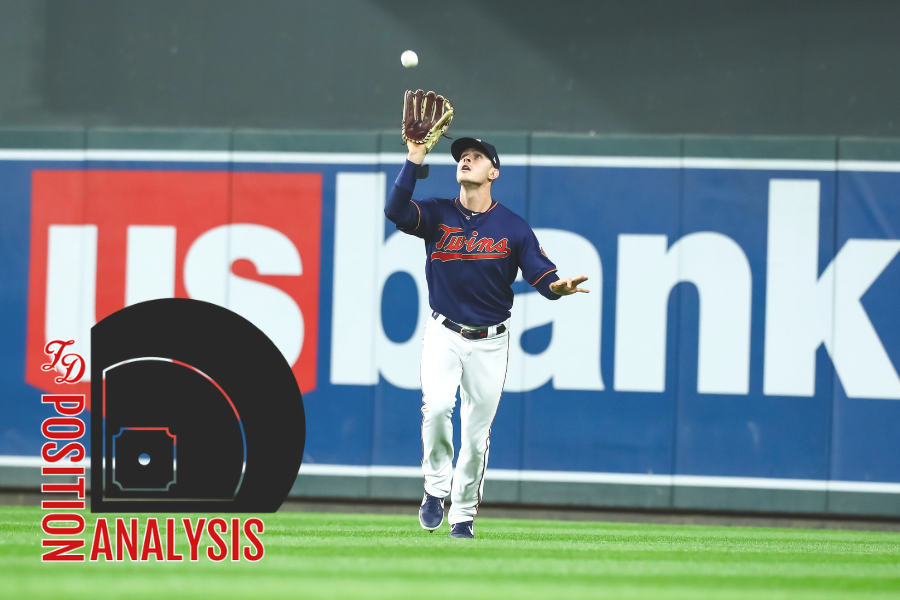 Projected Starter: Max Kepler Likely Backup: Jake Cave Depth: Brent Rooker, Kyle Garlick Prospects: Trevor Larnach, Matt Wallner THE GOOD Max Kepler is a pristine athlete who does basically everything well, from a skills standpoint. He's very fast, routinely ranking around the league's 75th percentile in sprint speed. Combine that with his strong outfield instincts and technique, and you've got one of the game's top-rated defenders in right. https://twitter.com/BarstoolHubbs/status/1295942989341229056 Since 2019, FanGraphs pegs Kepler as the fourth-most valuable defensive right fielder in baseball, trailing only Mookie Betts, Aaron Judge, and Cody Bellinger. He might not have the arm strength of some others, but Kepler is as good as they come at tracking down flies. At the plate, Kepler is a smart and disciplined hitter who consistently takes good at-bats. Year after year, he's been well above average when it comes to drawing walks, limiting strikeouts, and making contact when swinging. As you can see in the Statcast chart above, this was all true in 2020. The power hasn't been as reliable, but Kepler certainly showed what he's capable of in 2019, when he slugged .519 and swatted 36 home runs. If he can move back in that direction this year, while continuing to excel defensively, he'll be a rock-solid asset and perhaps even an All-Star in right. https://twitter.com/MLB/status/1286827782111211520 Meanwhile, if Kepler gets hurt, or is needed in center field, the Twins are well equipped to fill his RF vacancy. Alex Kirilloff could slide over to his more natural outfield position, opening up left for one of many other candidates. Or Trevor Larnach, who sure seems ready to make an impact, could step in. The Twins' youth movement sets them up well for a Kepler-related pivot, and if the kids aren't quite ready, they've got plenty of appeling interim options on hand between Jake Cave, Brent Rooker, Kyle Garlick, Keon Broxton, and the like. THE BAD Two years ago, Kepler seemingly turned a long-awaited corner offensively. He hadn't previously been a bad hitter, per se, but to be a standout in right field, greatness is the standard. It's one he has failed to reach in every season except that 2019 breakout as leadoff man for the Bomba Squad. The 2020 campaign, which started so promisingly with back-to-back home runs against White Sox ace Lucas Giolito in the opener, represented a troubling backstep for Kep. After hitting those two solo shots on Opening Day, Kepler slugged just .404, with seven homers and nine doubles in 47 contests. For the season, his batting average sagged to .228, and he was futile against southpaws, slashing .128/.208/.170 in 53 PA. Despite his good plate approach and high contact rates, Kepler has generally struggled to find open grass. His BABIP over the past three years is the worst in baseball, and that owes to a variety of factors: predictable hitting profile, defensive shifts, and plain old bad luck among them. Matthew Trueblood wrote here recently about Kepler's primary obstacle, and how he can overcome it. "It’s pretty clear that Kepler needs to make adjustments at the plate," Matthew argues. "He’s evolved impressively over the course of his big-league career, but his inability to generate hard contact against certain pitches or to certain parts of the park (plus the inherent disadvantage of being a lefty pull hitter, in the modern game) is putting a cap on his potential production." Kepler made real inroads against these weaknesses in 2019, but the reemergence of familiar flaws leaves his outlook in doubt. If he can't pump up the offensive production this year, he'll feel pressure from big bats rising up underneath. THE BOTTOM LINE Kepler's future with the Twins is in flux. They've got high-caliber corner bats knocking on the door to the majors (with Kirilloff probably already stepping through). Kepler remains locked under contract for three more years, but if he keeps hitting like a center fielder, you have to wonder if the Twins will trade him to another team that might find him more valuable there – or part with Byron Buxton and move Kepler to center themselves. For now, right field is his. So they'll hope he can recapture the outstanding offense of 2019, when he was a legitimate force. At 28, we'll see if he can find it again. READ OTHER 2021 POSITION ANALYSIS ARTICLES Catcher First Base Second Base Third Base Shortstop Left Field Center Field
 -
Spring Training Live Replay: Two Weeks to Go
Nick Nelson replied to Nick Nelson's topic in Twins Daily Front Page News
We'll be sure to address it tonight on the show! I'm probably more bullish on La Tortuga than others. -
In two weeks, the Twins will host the Pirates in their final spring training game. Then, they'll pack up and head to Milwaukee, where the regular season opens against the Brewers two days later. Tuesday night on Spring Training Live, we set up the final 14 days in camp.After spending nearly a month down in Fort Myers, our intrepid beat man John Bonnes is returning to Minnesota on Wednesday. Before traveling back, he joined us for a 90-minute live-stream. John and I broke down several storylines and updates, including Kenta Maeda's Opening Day assignment, minor-league cuts, surprising performers, and roster battles. We were joined by some special guests along the way. You can watch the episode on (or the video below), and can always catch future live-streams there or on our Twitter and Facebook pages. You can also always listen to new episodes via audio by subscribing to our podcast. Click here to view the article
-
 After spending nearly a month down in Fort Myers, our intrepid beat man John Bonnes is returning to Minnesota on Wednesday. Before traveling back, he joined us for a 90-minute live-stream. John and I broke down several storylines and updates, including Kenta Maeda's Opening Day assignment, minor-league cuts, surprising performers, and roster battles. We were joined by some special guests along the way. You can watch the episode on (or the video below), and can always catch future live-streams there or on our Twitter and Facebook pages. You can also always listen to new episodes via audio by subscribing to our podcast.
 -
Twins 2021 Position Analysis: Center Field
Nick Nelson posted a topic in Twins Daily Front Page News
It's the same old story: Minnesota's center field situation will be the envy of nearly every team in the league in 2021 ... IF they can keep their guy on the field. That's been a perpetual issue.Projected Starter: Byron Buxton Likely Backup: Jake Cave Depth: Max Kepler, Keon Broxton Prospects: Gilberto Celestino, Misael Urbina THE GOOD Ever since he was a teenager, Byron Buxton's greatness was preordained. He was drafted second overall out of high school. He became the consensus No. 1 prospect in baseball. He debuted in the major leagues at age 21, and won a Platinum Glove at age 23. Year after year, he's been situated as a centerpiece in Minnesota's plans. They rightfully view him as a singularly transformative force who can elevate a team to new heights. When Buxton's been on the field over the past two years, they've won 70% of their games. It's all too easy to focus on the time he's spent off the field, but let's be clear: this is a premier athlete, at the height of his physical prime. He's 27 years old, and for now, he's healthy. We can dream on the (very real) possibilities. Buxton's 2018 season was a total loss, sabotaged by front-to-back injury woes. But when you subtract that, his performance has been phenomenal since a breakout 2017 campaign. He has posted 7.5 fWAR in 266 games, mixing elite defensive value with outstanding offensive production – especially in the past couple seasons, where he's emerged as a power-hitting force. It is here that we've seen the most progression and growth from Buxton as a hitter. As you compare his Statcast measurements from 2017 and last year, you can see this pretty clearly. What hasn't changed is that Buxton is unbelievably fast, and amazing at covering ground in the outfield. What has changed is that he's now crushing the ball with the best of 'em. Download attachment: buxton2017.png Download attachment: buxton2020.png In 2019, Buxton set new career highs in basically every Statcast metric for power: Barrel %, Exit Velocity, Launch Angle, xSLG, Hard Hit %. In 2020, he was better in every category. Between those two seasons, he launched 23 home runs in 126 games with a .534 slugging percentage. Buxton is a bona fide slugger, who also plays world-class defense in center. That's not a combination you come across very often. If 2021 brings more of the same – checkered availability along with offensive ups and downs – he'll be lined up to hit the open market more as an intriguing gamble for some team, as opposed to a highly coveted nine-figure stud. The stakes aren't quite as high for the Twins, who by now are acclimated to playing without him, and fairly well positioned in terms of depth. But they know as well as anyone: Buxton is the single biggest wild-card in their quest to get over the hump. READ OTHER 2021 POSITION ANALYSIS ARTICLES CatcherFirst BaseSecond BaseThird BaseShortstopLeft Field Click here to view the article -
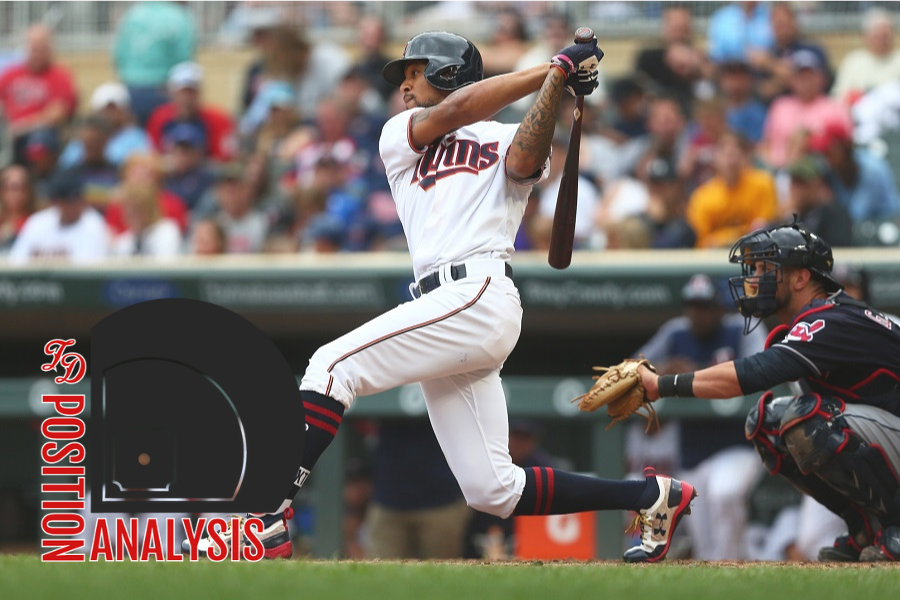 Projected Starter: Byron Buxton Likely Backup: Jake Cave Depth: Max Kepler, Keon Broxton Prospects: Gilberto Celestino, Misael Urbina THE GOOD Ever since he was a teenager, Byron Buxton's greatness was preordained. He was drafted second overall out of high school. He became the consensus No. 1 prospect in baseball. He debuted in the major leagues at age 21, and won a Platinum Glove at age 23. Year after year, he's been situated as a centerpiece in Minnesota's plans. They rightfully view him as a singularly transformative force who can elevate a team to new heights. When Buxton's been on the field over the past two years, they've won 70% of their games. It's all too easy to focus on the time he's spent off the field, but let's be clear: this is a premier athlete, at the height of his physical prime. He's 27 years old, and for now, he's healthy. We can dream on the (very real) possibilities. Buxton's 2018 season was a total loss, sabotaged by front-to-back injury woes. But when you subtract that, his performance has been phenomenal since a breakout 2017 campaign. He has posted 7.5 fWAR in 266 games, mixing elite defensive value with outstanding offensive production – especially in the past couple seasons, where he's emerged as a power-hitting force. It is here that we've seen the most progression and growth from Buxton as a hitter. As you compare his Statcast measurements from 2017 and last year, you can see this pretty clearly. What hasn't changed is that Buxton is unbelievably fast, and amazing at covering ground in the outfield. What has changed is that he's now crushing the ball with the best of 'em. In 2019, Buxton set new career highs in basically every Statcast metric for power: Barrel %, Exit Velocity, Launch Angle, xSLG, Hard Hit %. In 2020, he was better in every category. Between those two seasons, he launched 23 home runs in 126 games with a .534 slugging percentage. Buxton is a bona fide slugger, who also plays world-class defense in center. That's not a combination you come across very often. Of course, Buxton's appeal doesn't doesn't end with his power stroke. What makes him a uniquely exciting and valuable player is his unrivaled speed. He can beat you by bashing it over the fence, or tapping a dribbler to the shortstop. The Twins and Rocco Baldelli haven't opted to call many steals for him lately, but it's a weapon in his arsenal (he has an 87% career success rate) and Buxton can take extra bases with leisure. He keeps pitchers and defenses on edge. He's a threat at all times. When he's healthy and in his groove, Byron Buxton impacts every phase of the game and single-handedly shifts outcomes. How many players have we been able to say that about? THE BAD Needless to say, keeping Buxton healthy and in his groove has been an overwhelming challenge. Dating back to 2018 he has missed more than half of the team's games, and the difference in outcomes with and without him has been dramatic. The Twins have taken extensive measures to try and protect their superstar asset, to little avail. Last year he was healthier than usual, playing in two-thirds of Minnesota's regular-season games, but still ended the season hurt and unavailable. His surgically repaired shoulder reportedly continued to bother him (though you wouldn't know it by his results when swinging), and late in the year, he suffered a concussion after taking a fastball to the head. No amount of planning or safety-focused coaching is going to be able to prevent things like this. More broadly, Buxton's game is based on aggressiveness and borderline-reckless speed. If he's not going all out, he's not Byron. All the Twins can do is embed small tweaks (such as launching off one foot for leaping attempts the wall) and hope for a little better luck. All parties involved are beyond due for it. Alas, it'll be important to be prepared for his absence, with short-term and long-term contingencies. For the former scenario, Jake Cave is ready to step in. In the event of a lengthier absence, the Twins are more likely to slide Max Kepler over and activate their depth in the corners. Cave and Kepler are both capable, but sizable downgrades from the incumbent. Should Buxton find a way to stay mostly healthy this year, the key focus will be refining his approach at the plate. I've given up on the idea of him being a remotely disciplined hitter, and Buxton has proven he can make it work with a swing-at-everything mindset. His .844 OPS last season, when he drew two walks against 36 strikeouts, is evidence enough. But the .267 on-base percentage was painful, offsetting some of his power-driven value. If Buxton's future is as a streaky, slump-prone, pure power bat, that's not the worst thing. It's certainly how the Twins treated him last year, batting him consistently at the middle-bottom of the lineup and having him attempt only three total steals. But if he can just become a shade more selective at the plate, harnessing the pure hitting skill and modicum of discipline that contributed to a .310 average and .364 OBP at Triple-A, Buxton can take the next step to MVP-level stardom. THE BOTTOM LINE This is a massive season for Byron Buxton. He's at a crux point in his career, with free agency two years away and his reputation as a player on the line. Will he finally stay on the field, gaining the necessary comfort and consistency at the plate to fulfill his offensive potential while staying golden in center? If so, Buxton will probably be one of the two or three most impactful players in the league. If 2021 brings more of the same – checkered availability along with offensive ups and downs – he'll be lined up to hit the open market more as an intriguing gamble for some team, as opposed to a highly coveted nine-figure stud. The stakes aren't quite as high for the Twins, who by now are acclimated to playing without him, and fairly well positioned in terms of depth. But they know as well as anyone: Buxton is the single biggest wild-card in their quest to get over the hump. READ OTHER 2021 POSITION ANALYSIS ARTICLES Catcher First Base Second Base Third Base Shortstop Left Field
 -
Twins 2021 Position Analysis: Left Field
Nick Nelson replied to Nick Nelson's topic in Twins Daily Front Page News
This seems perfectly reasonable to me. I think you can make a legit argument that it's more pointless to send Rooker to practice at the alternate site than Kirilloff, and it also doesn't make much sense to have Rooker sitting on the bench in the majors. Twins can very easily make this case for buying time with AK. -
The Eddie Rosario era has ended. Minnesota's longtime mainstay in left field is gone, now playing for a division rival. In 2021, a new era is set to get underway for the Twins, with top prospect Alex Kirilloff in line to overtake the position. It's only a matter of when.Projected Starter: Alex Kirilloff Likely Backup: Jake Cave Depth: Luis Arráez, Brent Rooker Prospects: Trevor Larnach, Matt Wallner THE GOOD The Twins lost a pair of quality players in Eddie Rosario and LaMonte Wade Jr., but still have no shortage of corner-outfield depth. Jake Cave is still around. Brent Rooker stepped in last year and showed his potent ability. Waiver pickup Kyle Garlick and non-roster invite Keon Broxton are making strong early impressions in camp. Top prospects Trevor Larnach and Matt Wallner aren't too far off. But all of these names are secondary to THE top prospect, Alex Kirilloff, who is unquestionably on deck in left field. The Twins may opt to delay his arrival for a bit, but it's inevitable. Once he's here, Kirilloff will very likely be sticking for good. The Twins left no doubt as to their belief in his readiness, when they called up Kirilloff last September to make his major-league debut in a postseason elimination game. The 22-year-old rose to the occasion with a ringing single and a diving catch in right field. Kirilloff is gonna hit in the majors, and maybe right away. The question is when he will get his chance. The Twins stand to gain an extra year of control over the outfielder (his age-29 season) by waiting until late-April at least to call him up. Although Dan Hayes of The Athletic has reported that "the Twins are open-minded to promoting Kirilloff if he’s the best option," that's a very subjective "if." Given his lack of experience in the high minors, it's not a huge leap to say Kirilloff could use a bit more time – especially with the number of solid options on hand to serve as interim fill-ins. The Twins could, say, platoon Cave and Garlick or Rooker for three weeks and have a perfectly adequate setup in left field. Or they could start Arráez out there regularly if the infield is healthy. (Though they don't seem inclined to do so.) Like I said, no shortage of depth. And while that may or may not cost Kirilloff his chance to break camp with the Twins, it's a very good sign for the outlook of left field as a position. THE BAD It should be noted that left field is a relatively unfamiliar assignment for Kirilloff. Of his 2,077 professional innings played in the field as a professional, only 78 have been in left. He's made nine starts there compared to 181 in right and 35 at first base. In fact, he's made more career starts in center field (14) than in left. Kirilloff's lone major-league start came in right field. Whenever he first jogs out down the third base line toward Target Field's home run porch this year, it'll be very unfamiliar territory. The variances between baseball's two corner-outfield positions are not night-and-day, but also not insignificant. There's a learning curve involved with playing on the opposite side regularly, and also, there's a reason Kirilloff has played primarily in right: it's his better position. With limited mobility and a good arm (albeit less good after Tommy John surgery), he profiles much better in right, or at first base. Kirilloff should be just fine in left, and Rosario hardly set a lofty standard, but this doesn't quite fit the front office's grand overall defensive vision. Also, when you're a so-so defensive left fielder, the offensive bar is pretty high. Confident as I am in his abilities, it can't be assumed Kirilloff will flourish right off the bat. Even Yelich, whose name I generously invoked earlier as a high-end comp, took several years in the majors to become a truly special hitter. Expectations should be kept in check for left field in 2021. Kirilloff might step in and take off, but there's a better chance he'll experience the same slumps and setbacks of any MLB rookie, and maybe even need some time at Triple-A, where has yet to take an at-bat. THE BOTTOM LINE Long-term, Kirilloff probably won't stick in left field, barring some unexpected advances in terms of defensive range and skill. He projects as more of a right fielder or at first baseman, but those positions are both spoken for at the moment. With Rosario's departure leaving left field wide open, the Twins will happily unleash their best prospect there. What's important is finding a way to get Kirilloff's bat into the lineup. That might not happen right away, but barring unforeseen events, it's gonna happen. This is a transitional year for left field, albeit one bursting with upside and tantalizing promise. READ OTHER 2021 POSITION ANALYSIS ARTICLES CatcherFirst BaseSecond BaseThird BaseShortstop Click here to view the article
-
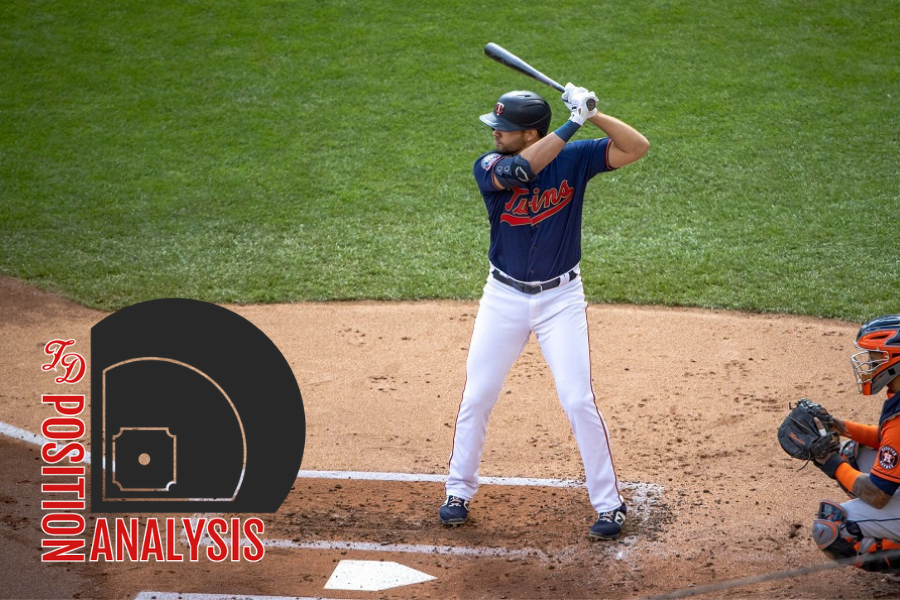 Projected Starter: Alex Kirilloff Likely Backup: Jake Cave Depth: Luis Arráez, Brent Rooker Prospects: Trevor Larnach, Matt Wallner THE GOOD The Twins lost a pair of quality players in Eddie Rosario and LaMonte Wade Jr., but still have no shortage of corner-outfield depth. Jake Cave is still around. Brent Rooker stepped in last year and showed his potent ability. Waiver pickup Kyle Garlick and non-roster invite Keon Broxton are making strong early impressions in camp. Top prospects Trevor Larnach and Matt Wallner aren't too far off. But all of these names are secondary to THE top prospect, Alex Kirilloff, who is unquestionably on deck in left field. The Twins may opt to delay his arrival for a bit, but it's inevitable. Once he's here, Kirilloff will very likely be sticking for good. The Twins left no doubt as to their belief in his readiness, when they called up Kirilloff last September to make his major-league debut in a postseason elimination game. The 22-year-old rose to the occasion with a ringing single and a diving catch in right field. https://twitter.com/MLBPipeline/status/1311374656335679489 When recently naming Kirilloff Twins Daily's No. 1 prospect, we listed off the many strengths that paint him as an immediate impact player. He's got a finely tuned swing and extremely advanced approach at the plate. He's strong, quick, and adaptive. While it's easy to fall into hyperbole and exaggerated expectations for a premium prospect of this caliber, it really does feel like his predecessor Rosario's career slash line – .277/.310/.478 – will eventually be Kirilloff's floor on a year-to-year basis. His ceiling is somewhere in Christian Yelich territory. https://twitter.com/SlangsOnSports/status/1370079829354237956 Kirilloff is gonna hit in the majors, and maybe right away. The question is when he will get his chance. The Twins stand to gain an extra year of control over the outfielder (his age-29 season) by waiting until late-April at least to call him up. Although Dan Hayes of The Athletic has reported that "the Twins are open-minded to promoting Kirilloff if he’s the best option," that's a very subjective "if." Given his lack of experience in the high minors, it's not a huge leap to say Kirilloff could use a bit more time – especially with the number of solid options on hand to serve as interim fill-ins. The Twins could, say, platoon Cave and Garlick or Rooker for three weeks and have a perfectly adequate setup in left field. Or they could start Arráez out there regularly if the infield is healthy. (Though they don't seem inclined to do so.) Like I said, no shortage of depth. And while that may or may not cost Kirilloff his chance to break camp with the Twins, it's a very good sign for the outlook of left field as a position. THE BAD It should be noted that left field is a relatively unfamiliar assignment for Kirilloff. Of his 2,077 professional innings played in the field as a professional, only 78 have been in left. He's made nine starts there compared to 181 in right and 35 at first base. In fact, he's made more career starts in center field (14) than in left. Kirilloff's lone major-league start came in right field. Whenever he first jogs out down the third base line toward Target Field's home run porch this year, it'll be very unfamiliar territory. The variances between baseball's two corner-outfield positions are not night-and-day, but also not insignificant. There's a learning curve involved with playing on the opposite side regularly, and also, there's a reason Kirilloff has played primarily in right: it's his better position. With limited mobility and a good arm (albeit less good after Tommy John surgery), he profiles much better in right, or at first base. Kirilloff should be just fine in left, and Rosario hardly set a lofty standard, but this doesn't quite fit the front office's grand overall defensive vision. Also, when you're a so-so defensive left fielder, the offensive bar is pretty high. Confident as I am in his abilities, it can't be assumed Kirilloff will flourish right off the bat. Even Yelich, whose name I generously invoked earlier as a high-end comp, took several years in the majors to become a truly special hitter. Expectations should be kept in check for left field in 2021. Kirilloff might step in and take off, but there's a better chance he'll experience the same slumps and setbacks of any MLB rookie, and maybe even need some time at Triple-A, where has yet to take an at-bat. THE BOTTOM LINE Long-term, Kirilloff probably won't stick in left field, barring some unexpected advances in terms of defensive range and skill. He projects as more of a right fielder or at first baseman, but those positions are both spoken for at the moment. With Rosario's departure leaving left field wide open, the Twins will happily unleash their best prospect there. What's important is finding a way to get Kirilloff's bat into the lineup. That might not happen right away, but barring unforeseen events, it's gonna happen. This is a transitional year for left field, albeit one bursting with upside and tantalizing promise. READ OTHER 2021 POSITION ANALYSIS ARTICLES Catcher First Base Second Base Third Base Shortstop
 -
It's been 20 days since pitchers and catchers first reported to Fort Myers, and we're 21 days away from Opening Day. We're officially eclipsing the halfway point of spring training. On Wednesday. we live-streamed with our man on the scene in Florida to cover key storylines, and you can watch it back below.John Bonnes has been down in Florida for a couple weeks now. He's been toiling, traversing, and TikToking, all in the name of bringing you all firsthand details and insights from Twins camp. In our latest Spring Training Live show, we got the direct download from Fort Myers. On Wednesday night, I picked John's brain about early exhibition action, noteworthy observations from camp, and updates on developing stories. We were also joined by Twins Daily's Matthew Trueblood, who unpacked his theoretical contract extension frameworks for Byron Buxton and José Berríos. Both players recently addressed possible talks with the club. Follow/subscribe to Twins Daily on , Twitter and Facebook so you never miss a future live broadcast. You can also always catch these shows via audio by subscribing to our podcast. Click here to view the article
-
Report from the Fort: Exhibition Results and Extension Rumors
Nick Nelson posted an article in Twins
 John Bonnes has been down in Florida for a couple weeks now. He's been toiling, traversing, and TikToking, all in the name of bringing you all firsthand details and insights from Twins camp. In our latest Spring Training Live show, we got the direct download from Fort Myers. On Wednesday night, I picked John's brain about early exhibition action, noteworthy observations from camp, and updates on developing stories. We were also joined by Twins Daily's Matthew Trueblood, who unpacked his theoretical contract extension frameworks for Byron Buxton and José Berríos. Both players recently addressed possible talks with the club. Follow/subscribe to Twins Daily on , Twitter and Facebook so you never miss a future live broadcast. You can also always catch these shows via audio by subscribing to our podcast.
 -
When is the last time the Minnesota Twins had a truly gifted defensive shortstop? It's been a long time, and there's a good chance this organization has never seen a fielder as good as Andrelton Simmons at the position. How big of an impact can all-world defense (assuming he still possesses it) make at the infield's most critical spot?Projected Starter: Andrelton Simmons Likely Backup: Jorge Polanco Depth: Luis Arráez, Nick Gordon Prospects: Royce Lewis, Wander Javier THE GOOD Simmons isn't just a good defender, or a great defender, or even an elite defender. He is a generational icon, whose name already sits beside Ozzie Smith and Omar Vizquel in the annals of all-time gloves at shortstop. At Baseball.FYI last summer, Jacob Kornhauser suggested that Simmons may go down as MLB's best defensive player ever, period. His article points out that Simmons has accumulated 26.7 dWAR through nine seasons in the majors, already good for 14th in history and putting him on track to eventually surpass the all-time leader Smith, who took 19 years to reach 44.2 dWAR. "He makes the hard plays look routine and makes the routine plays look downright boring," Kornhauser wrote of Simmons. That's an apt description for the four-time Gold Glover in action. With his supernatural instincts and unparalleled arm strength, he's a marvel to behold at the infield's most challenging position. You'll see what I'm talking about in the highlight reel below. (Jump to the ~6:30 mark, and Simmons' play against Travis d'Arnaud of the Mets, for a prime example of a play that would simply never happen with Jorge Polanco – or virtually any other player – at short.) By nudging Polanco to second base and joining forces with a hopefully-healthy Josh Donaldson on the left side, Simmons represents a clear and decisive upgrade for Minnesota's defensive unit, potentially helping turn it into one of the league's most effective. Simmons' offense certainly pales in comparison to his defense, but he's far from a major liability at the plate. In six of his nine MLB seasons, his OPS+ has fallen between 90 and 110, which is basically within a standard deviation of average. He's a high-contact guy who puts the ball on the ground a lot, and will probably bat at the bottom of the Twins order. If Simmons simply hits to his .269/.317/.379 (.696) career line, he'll be a fairly typical producer compared to league-wide norms in the No. 8 and 9 lineup spots. The Twins can live with that given their offensive strength at every other position. Even with the consistently ordinary bat, Simmons has earned MVP votes on three separate occasions, including 2017 when he finished eighth and 2018 when he finished 15th. The defense is simply that good, and that impactful. If he's back on top of his game in 2021, Simmons will be a transformative figure for the Twins. THE BAD The 2020 season is one Simmons would like to forget. He hurt his left ankle for a second consecutive year, produced little punch at the plate (zero home runs and seven doubles in 127 PA), and opted out with a handful of games remaining, later revealing his struggles with mental health. There's no reason to think he can't put all that behind him and move forward with a fresh slate. But what's difficult to shake when evaluating the 31-year-old's latest campaign is the conspicuous drop-off in defensive metrics. Advanced fielding stats are inexact, prone to variation and noise. But up until last year, Simmons has consistently rated very, very well in these metrics, pretty much across the board. As you can see below, his Outs Above Average according to Statcast sat between 15 and 19 in the prior four years (with the highest total coming in 2019, when he was limited to 103 games). Last year, OAA had him at NEGATIVE-one in 30 games. Download attachment: simmonsstatcast.png Here's how Simmons has compared to his peers by OAA over the past four years: 2017: 99th percentile2018: 98th percentile2019: 99th percentile2020: 24th percentileThat's an astonishing drop-off that is impossible to ignore, samples aside. Switching views to another metric, here's how Simmons has rated according to UZR/150 since he arrived in the majors in 2012 (keep in mind this is a rate stat, not a counting stat, so it should theoretically not be as effected by the shortened season): 2012: 26.12013: 14.42014: 16.02015: 17.82016: 18.12017: 18.52018: 19.52019: 13.82020: 4.0Again, what is so striking here is how incredibly consistent Simmons' top-tier defensive production was year after year, up until it plummeted. Clearly Simmons had a lot going on last year, physically and mentally. If he can turn the page and return to form, he's a slam-dunk addition with the deal Minnesota landed him on (one year, $10.5 million). But the fact they were able to get him on such favorable terms, while both other members of free agency's leading shortstop trio (Didi Gregorius and Marcus Semien) both got much more guaranteed money from other teams, leads to the inescapable conclusion there's a widespread skepticism about that scenario playing out. THE BOTTOM LINE The Simmons signing is the most interesting we've seen from this Twins front office, in terms of strategic vision and implications. If it works out as hoped, he'll have a dramatic impact on this team and its fundamental strengths. With so much offseason talk about pitching, and consternation over the failure to add big-name arms, not enough attention is paid to moves like this. Run prevention is the name of the game, and planting elite defenders at crucial positions in the field supports that directive. At the height of his powers, Simmons will make Twins pitchers, as well as the fielders around him, better. But that's dependent on his defense rebounding in a big way after taking an unprecedented downturn in 2020. As Kornhauer noted in his piece at Baseball.FYI: "In his nine seasons, Simmons has posted an overall WAR of 36.3, 26.7 of which is from his defense. In other words, he likely wouldn't be in the league anymore if it weren't for his defensive prowess." The return of that prowess, and to what extent, will define his value to the Twins in 2021. If he can't answer the call or stay healthy, Minnesota has a fine backup in Polanco, but their secondary depth is very iffy and Polanco is already a starter elsewhere. For this reason, I'll be curious to see if the Twins carry another SS-capable player like J.T. Riddle or Andrew Romine at the end of their bench. For now, we eagerly await Simmons' spring debut following a late arrival in camp. It sounds like that may come Friday. READ OTHER 2021 POSITION ANALYSIS ARTICLES CatcherFirst BaseSecond BaseThird Base Click here to view the article
-
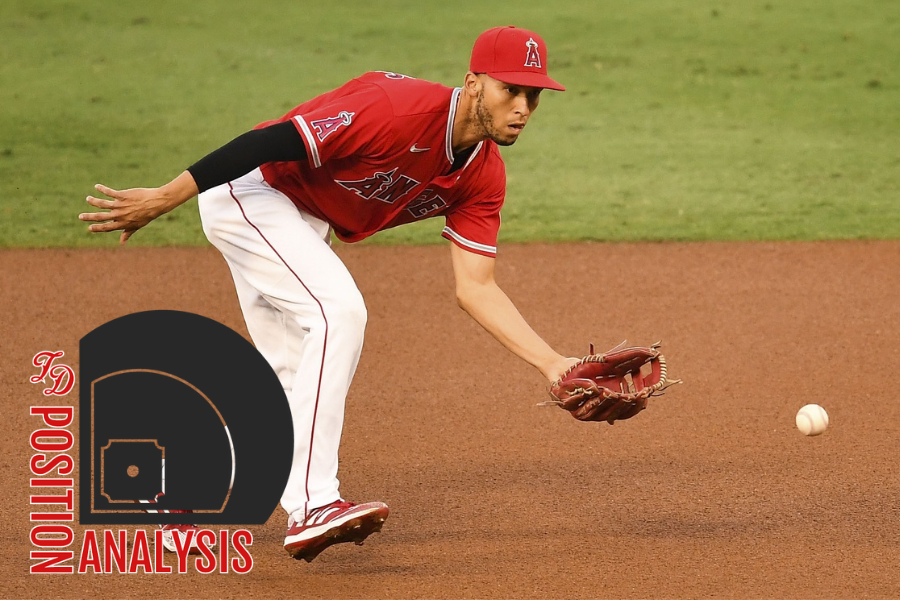 Projected Starter: Andrelton Simmons Likely Backup: Jorge Polanco Depth: Luis Arráez, Nick Gordon Prospects: Royce Lewis, Wander Javier THE GOOD Simmons isn't just a good defender, or a great defender, or even an elite defender. He is a generational icon, whose name already sits beside Ozzie Smith and Omar Vizquel in the annals of all-time gloves at shortstop. At Baseball.FYI last summer, Jacob Kornhauser suggested that Simmons may go down as MLB's best defensive player ever, period. His article points out that Simmons has accumulated 26.7 dWAR through nine seasons in the majors, already good for 14th in history and putting him on track to eventually surpass the all-time leader Smith, who took 19 years to reach 44.2 dWAR. "He makes the hard plays look routine and makes the routine plays look downright boring," Kornhauser wrote of Simmons. That's an apt description for the four-time Gold Glover in action. With his supernatural instincts and unparalleled arm strength, he's a marvel to behold at the infield's most challenging position. You'll see what I'm talking about in the highlight reel below. (Jump to the ~6:30 mark, and Simmons' play against Travis d'Arnaud of the Mets, for a prime example of a play that would simply never happen with Jorge Polanco – or virtually any other player – at short.) By nudging Polanco to second base and joining forces with a hopefully-healthy Josh Donaldson on the left side, Simmons represents a clear and decisive upgrade for Minnesota's defensive unit, potentially helping turn it into one of the league's most effective. Simmons' offense certainly pales in comparison to his defense, but he's far from a major liability at the plate. In six of his nine MLB seasons, his OPS+ has fallen between 90 and 110, which is basically within a standard deviation of average. He's a high-contact guy who puts the ball on the ground a lot, and will probably bat at the bottom of the Twins order. If Simmons simply hits to his .269/.317/.379 (.696) career line, he'll be a fairly typical producer compared to league-wide norms in the No. 8 and 9 lineup spots. The Twins can live with that given their offensive strength at every other position. Even with the consistently ordinary bat, Simmons has earned MVP votes on three separate occasions, including 2017 when he finished eighth and 2018 when he finished 15th. The defense is simply that good, and that impactful. If he's back on top of his game in 2021, Simmons will be a transformative figure for the Twins. THE BAD The 2020 season is one Simmons would like to forget. He hurt his left ankle for a second consecutive year, produced little punch at the plate (zero home runs and seven doubles in 127 PA), and opted out with a handful of games remaining, later revealing his struggles with mental health. There's no reason to think he can't put all that behind him and move forward with a fresh slate. But what's difficult to shake when evaluating the 31-year-old's latest campaign is the conspicuous drop-off in defensive metrics. Advanced fielding stats are inexact, prone to variation and noise. But up until last year, Simmons has consistently rated very, very well in these metrics, pretty much across the board. As you can see below, his Outs Above Average according to Statcast sat between 15 and 19 in the prior four years (with the highest total coming in 2019, when he was limited to 103 games). Last year, OAA had him at NEGATIVE-one in 30 games. Here's how Simmons has compared to his peers by OAA over the past four years: 2017: 99th percentile 2018: 98th percentile 2019: 99th percentile 2020: 24th percentile That's an astonishing drop-off that is impossible to ignore, samples aside. Switching views to another metric, here's how Simmons has rated according to UZR/150 since he arrived in the majors in 2012 (keep in mind this is a rate stat, not a counting stat, so it should theoretically not be as effected by the shortened season): 2012: 26.1 2013: 14.4 2014: 16.0 2015: 17.8 2016: 18.1 2017: 18.5 2018: 19.5 2019: 13.8 2020: 4.0 Again, what is so striking here is how incredibly consistent Simmons' top-tier defensive production was year after year, up until it plummeted. Clearly Simmons had a lot going on last year, physically and mentally. If he can turn the page and return to form, he's a slam-dunk addition with the deal Minnesota landed him on (one year, $10.5 million). But the fact they were able to get him on such favorable terms, while both other members of free agency's leading shortstop trio (Didi Gregorius and Marcus Semien) both got much more guaranteed money from other teams, leads to the inescapable conclusion there's a widespread skepticism about that scenario playing out. THE BOTTOM LINE The Simmons signing is the most interesting we've seen from this Twins front office, in terms of strategic vision and implications. If it works out as hoped, he'll have a dramatic impact on this team and its fundamental strengths. With so much offseason talk about pitching, and consternation over the failure to add big-name arms, not enough attention is paid to moves like this. Run prevention is the name of the game, and planting elite defenders at crucial positions in the field supports that directive. At the height of his powers, Simmons will make Twins pitchers, as well as the fielders around him, better. But that's dependent on his defense rebounding in a big way after taking an unprecedented downturn in 2020. As Kornhauer noted in his piece at Baseball.FYI: "In his nine seasons, Simmons has posted an overall WAR of 36.3, 26.7 of which is from his defense. In other words, he likely wouldn't be in the league anymore if it weren't for his defensive prowess." The return of that prowess, and to what extent, will define his value to the Twins in 2021. If he can't answer the call or stay healthy, Minnesota has a fine backup in Polanco, but their secondary depth is very iffy and Polanco is already a starter elsewhere. For this reason, I'll be curious to see if the Twins carry another SS-capable player like J.T. Riddle or Andrew Romine at the end of their bench. For now, we eagerly await Simmons' spring debut following a late arrival in camp. It sounds like that may come Friday. READ OTHER 2021 POSITION ANALYSIS ARTICLES Catcher First Base Second Base Third Base
 -
Twins 2021 Position Analysis: Third Base
Nick Nelson replied to Nick Nelson's topic in Twins Daily Front Page News
Almost every year, Donaldson ranks near the top of all hitters in terms of drawing walks and hitting the ball hard when he makes contact. As a result, he's been one of the most productive hitters in baseball. So it's a good sign he was continuing to do those things when on the field. These are not vague sabermetric calculations, they are measures of what he "actually did." Not sure what's controversial or even debatable about this. -
Twins 2021 Position Analysis: Third Base
Nick Nelson replied to Nick Nelson's topic in Twins Daily Front Page News
The players with the best underlying indicators tend to produce the most runs. So... yes? -
Around this time last year, we were dreaming on what Josh Donaldson might be able to bring at third base. Now, we're fretting over hot corner contingency plans following a first season with the Twins that cast serious doubt on his durability. But Donaldson's towering upside remains.Projected Starter: Josh Donaldson Likely Backup: Luis Arráez Depth: Willians Astudillo, Travis Blankenhorn Prospects: Keoni Cavaco, Jose Miranda THE GOOD A year ago when previewing this position, it was all about the Josh Donaldson hype. The Twins had signed JD to an historic $92 million contract, and fans were still buzzing from this emphatic and unprecedented "all-in" type move coming off a 103-win season. Minnesota's front office went big on the Bringer of Rain, envisioning him as the final piece to put their already upper-tier squad over the top. He still can be that. Donaldson may have a missed large chunk of 2020, and gotten another year older, but he's still very capable of being a game-changing weapon. READ OTHER 2021 POSITION ANALYSIS ARTICLES CatcherFirst BaseSecond Base Click here to view the article
-
 Projected Starter: Josh Donaldson Likely Backup: Luis Arráez Depth: Willians Astudillo, Travis Blankenhorn Prospects: Keoni Cavaco, Jose Miranda THE GOOD A year ago when previewing this position, it was all about the Josh Donaldson hype. The Twins had signed JD to an historic $92 million contract, and fans were still buzzing from this emphatic and unprecedented "all-in" type move coming off a 103-win season. Minnesota's front office went big on the Bringer of Rain, envisioning him as the final piece to put their already upper-tier squad over the top. He still can be that. Donaldson may have a missed large chunk of 2020, and gotten another year older, but he's still very capable of being a game-changing weapon. https://twitter.com/fsnorth/status/1368637856877600771 That much was evident when he was on the field last year. Though he was probably never really 100%, Donaldson's numbers and underlying indicators lived up to expectations when he played. In 107 plate appearances, he slashed .222/.373/.469 with six home runs, which is roughly a 30-HR pace in 500 PA. According to Statcast, he posted new career highs in Exit Velocity, Hard Hit %, and BB % – all categories where he's routinely been elite. If he stays healthy, Donaldson takes this team to another level. If, if, if. Fortunately, the team is now better prepared for his absence. In 2020, every start that Donaldson didn't make at third base went to Marwin Gonzalez (.606 OPS) or Ehire Adrianza (.557 OPS). Thus, the position they invested so heavily in proved to be a liability. Now, Donaldson's primary backup is Luis Arráez, who is a career .331/.390/.429 hitter in the majors and an indispensable lineup fixture. Is Arráez a prototypical defensive specimen at third base? Not by any means. Can he play the position capably? It seems that way, based on limited data, and the Twins are confidently betting on it. THE BAD Coming into the 2020 season, if you could pick any scenario that would most severely diminish the luster of Donaldson's gaudy new four-year contract with the Twins, it would be a re-emergence of his calf problems. Those calves derailed a Hall of Fame course for Donaldson, who was tapping new levels of dominance as he entered his 30s. Before 2017, when the soon-to-be-chronic issue first emerged, the slugger had made three straight All-Star teams and been a top-10 MVP finisher in four straight years. Since then, Donaldson has seen three of his four seasons shortened by calf-related injuries to varying degrees. The other season was an iron-man flex in 2019, when he played 155 games and made 659 plate appearances for Atlanta. You'd like to think he still has something like that in him. But given the recurring calf maladies, combined with his age, the 35-year-old can't be viewed as anything other than an extreme injury risk. It's going to be a while before fans stop wincing every time he takes an odd step, or follows through awkwardly on a swing. The Twins themselves are clearly attempting to take it easy on Donaldson, who didn't make his spring debut until Sunday. Until we see him continually out on the field, making explosive movements and running without hindrance, day after day, it'll be hard to feel confident in his durability. Arráez is a very appealing fallback in some senses, but he'd be stretched defensively as a full-timer at third base. And that's assuming he's not already being used elsewhere. If Donaldson goes down with another long-term injury, I wonder how the Twins might shift things around in response. Move Miguel Sanó back to third with Alex Kirilloff going to first? Slide Jorge Polanco to third with Arráez taking over at second? There are some different possibilities, but needless to say, it's impossible to offset the loss of what Donaldson can bring to the table. THE BOTTOM LINE A year ago, we were all pondering how good the Twins could be with Donaldson. Now, we're pondering how good they can be without him. It's just the reality of a player in his mid-30s who has missed more than one-third of his team's games over the past four years, plagued by a specific and chronic physical impediment with no definitive signs of being in the rearview. As much as the "injury-prone" label might be overprescribed and oft-inaccurate, it's undeniably affixed to Donaldson. He's going to be a huge question mark for the foreseeable future, meaning the Twins must constantly be cognizant of contingency plans behind him. If JD can set the calf issues aside and rebound as he did from 2018 to 2019 – if the 2020 relapse was indeed just a "fluke ordeal" affected by pandemic disruption, as he suggests – then third base can be a tremendous source of strength. If he stays healthy, Donaldson takes this team to another level. If, if, if. READ OTHER 2021 POSITION ANALYSIS ARTICLES Catcher First Base Second Base
 -
From 2013-18, Brian Dozier was reliably Minnesota's starting second baseman on Opening Day. Six straight years. The upcoming season opener will be their third since his departure, and the Twins intend to start a third different player at the position: This time, Dozier's former double-play partner. Can Jorge Polanco stick?Projected Starter: Jorge Polanco Likely Backup: Luis Arráez Depth: Nick Gordon, Travis Blankenhorn Prospects: Jose Miranda, Yunior Severino THE GOOD Jorge Polanco might finally be ready to unlock his potential as a major-league player. It still hasn't happened up to this point, mainly because he's always been limited by questionable defensive value at shortstop. Even in his All-Star first half of 2019, Polanco's appeal came more from his bat than his glove, and over the past couple seasons his flaws at short have become all the more evident and impactful. Polanco is better-suited for second base. That much was clear to the Twins when they moved him there full-time in Triple-A, prior to his promotion to MLB, where he relocated to shortstop out ot necessity. This winter's signing of Andelton Simmons allows Polanco to finally move back to second, where his skill set is a more optimal fit. With this in mind, it comes as no surprise that the Twins are very high on Polanco's defensive outlook at the new (old) position. So is he. "I think I can be pretty dang good at second base," the 27-year-old told reporters recently. Similarly, the idea of a healthy Polanco rebounding to his stellar level of offensive production from 2019 sounds great in theory, but needs to be tested in practice. He underwent ankle surgery prior to 2020 too, and it clearly didn't help much, so there are no guarantees with the latest procedure. Even if this repair takes, Polanco needs to prove he's a significantly above-hitter because on whole, the evidence suggests otherwise. Polanco had an .866 OPS in 2019 when he appeared as the AL's starting shortstop in the All-Star Game. Since then, he has slashed .268/.327/.411 (.738) in 511 plate appearances. Prior to 2019, he had a .272/.329/.420 (.749) line in the majors. So, a preponderance of evidence leads us to conclude Polanco's half-season of brilliance in '19 was more of a fluke than the mediocrity we've seen since. If he proves to be more of an average hitter, and an ordinary defender at second, Polanco won't necessarily be a liability, but he won't be any great asset either – perhaps not even an upgrade over the guy he's replacing as the second base starter. If we reach a point somewhere in the season where everyone's healthy and Arráez is outperforming the starter Polanco while in a utility role, it'll be interesting to see how things play out. THE BOTTOM LINE One way or another, Arráez figures to see a fair share of time at second base, filling in while Polanco is hurt, resting, or needed at short. We've grown familiar with what he has to offer at the position. But Polanco presents a very new look, and an intriguing one full of upside. As things stand, the Twins appear committed to him as their mainstay at second this year and beyond. It'd be swell if that works out. Polanco is under contract for three more years with a pair of additional team options at the back end, so if this transition takes he could be in line for a Dozier-like reign at second base. READ OTHER 2021 POSITION ANALYSIS ARTICLES CatcherFirst Base Click here to view the article
-
 Projected Starter: Jorge Polanco Likely Backup: Luis Arráez Depth: Nick Gordon, Travis Blankenhorn Prospects: Jose Miranda, Yunior Severino THE GOOD Jorge Polanco might finally be ready to unlock his potential as a major-league player. It still hasn't happened up to this point, mainly because he's always been limited by questionable defensive value at shortstop. Even in his All-Star first half of 2019, Polanco's appeal came more from his bat than his glove, and over the past couple seasons his flaws at short have become all the more evident and impactful. Polanco is better-suited for second base. That much was clear to the Twins when they moved him there full-time in Triple-A, prior to his promotion to MLB, where he relocated to shortstop out ot necessity. This winter's signing of Andelton Simmons allows Polanco to finally move back to second, where his skill set is a more optimal fit. With this in mind, it comes as no surprise that the Twins are very high on Polanco's defensive outlook at the new (old) position. So is he. "I think I can be pretty dang good at second base," the 27-year-old told reporters recently. Optimism is warranted. Polanco's shortcomings on the other side of the diamond were primarily tied to his inadequate arm, which led to cascading effects in terms of positioning and rushing plays, in addition to numerous throwing errors. With a shorter distance at second, he can let his strengths – athleticism, quickness, sure-handedness – take center stage. He'll almost surely be an upgrade over the previous tenant, Luis Arráez, who was more limited physically than Polanco. It's not just defense that intrigues for Jorge Polanco the second baseman. His bat should also play very well at the position. "You want to look at what he's capable of doing offensively and you put him at second, we may be talking about a top-five second baseman in the league," said Twins infield coordinator Tony Diaz (via MLB.com). That sentiment might sound a little counterintuitive – he's moving over from shortstop, which is hardly an offensive powerhouse – but it's valid. If Polanco hits he'll be relatively even more of an asset at second than he was at short, based on league-wide norms. In 2020, second base had the lowest production of any position in the American League, with a collective .706 OPS (shortstops were .727). In 2019, AL second basemen posted a .726 OPS, 56 points lower than shortstops and lowest of any position sans catcher. Of course, if Polanco hits the way he did last year, when he slashed .258/.304/.354, his bat won't be an asset anywhere. This brings us to his biggest positive at the moment: he's finally healthy. (We hope.) Polanco's surgically repaired ankle was never quite right in 2020, and we've come to learn that it was a bigger problem than anyone let on. Polanco recently shared that he contemplated getting surgery during the season. The switch-hitter said he was routinely in pain and that the injury affected him especially while swinging lefty; against right-handed pitching, he slashed a paltry .227/.287/.318, a night-and-day difference from his .306/.378/.513 line verses righties in '19. “He’s moving around really well,” Rocco Baldelli observed (per The Athletic). “Looks great. You can see it in his face. It’s been a while since he’s been completely healthy coming into camp. I think there’s an excitement level there for him and all of us to just watch him play and not have to worry about anything health-wise. It’s very nice." These kinds of rosy remarks are the norm in early spring training, so they should be taken with a grain of salt, but in Polanco's case it's pretty easy to buy into the hype. THE BAD Theoretically, Polanco could be a great second baseman. But until we actually see it play out, it's only theoretical. He may have all the tools to excel at the position but the fact is, Polanco has played a total of five games and 43 innings at second base in the majors, and none since 2016. There's bound to be a learning curve as he reacclimates to the differing angles, movements, and mechanics of the position. There are also defensive issues he'll need to iron out that supercede the unique challenges of playing shortstop, in terms of consistency and footwork. No matter where he's playing in the infield, he'll rarely see a throw shorter than this one: Similarly, the idea of a healthy Polanco rebounding to his stellar level of offensive production from 2019 sounds great in theory, but needs to be tested in practice. He underwent ankle surgery prior to 2020 too, and it clearly didn't help much, so there are no guarantees with the latest procedure. Even if this repair takes, Polanco needs to prove he's a significantly above-hitter because on whole, the evidence suggests otherwise. Polanco had an .866 OPS in 2019 when he appeared as the AL's starting shortstop in the All-Star Game. Since then, he has slashed .268/.327/.411 (.738) in 511 plate appearances. Prior to 2019, he had a .272/.329/.420 (.749) line in the majors. So, a preponderance of evidence leads us to conclude Polanco's half-season of brilliance in '19 was more of a fluke than the mediocrity we've seen since. If he proves to be more of an average hitter, and an ordinary defender at second, Polanco won't necessarily be a liability, but he won't be any great asset either – perhaps not even an upgrade over the guy he's replacing as the second base starter. If we reach a point somewhere in the season where everyone's healthy and Arráez is outperforming the starter Polanco while in a utility role, it'll be interesting to see how things play out. THE BOTTOM LINE One way or another, Arráez figures to see a fair share of time at second base, filling in while Polanco is hurt, resting, or needed at short. We've grown familiar with what he has to offer at the position. But Polanco presents a very new look, and an intriguing one full of upside. As things stand, the Twins appear committed to him as their mainstay at second this year and beyond. It'd be swell if that works out. Polanco is under contract for three more years with a pair of additional team options at the back end, so if this transition takes he could be in line for a Dozier-like reign at second base. READ OTHER 2021 POSITION ANALYSIS ARTICLES Catcher First Base
 -
Twins 2021 Position Analysis: First Base
Nick Nelson replied to Nick Nelson's topic in Twins Daily Front Page News
Exit velocity is an indicator -- a means to an end. I don't think it's something for a player to aspire to on its own. But let's be clear: it's very strongly correlated with elite offensive production. 2020 Avg Exit Velo Leaders: 1. Fernando Tatis Jr. 2. Miguel Sano 3. Christian Yelich 4. Mike Trout 5. Teoscar Hernandez 2019 Avg Exit Velo Leaders: 1. Nelson Cruz 2. Mike Trout 3. Jorge Soler 4. Christian Yelich 5. Pete Alonso
