



Nick Nelson
-
Posts
8,327 -
Joined
-
Last visited
-
Days Won
56
Content Type
Profiles
News
Minnesota Twins Videos
2026 Minnesota Twins Top Prospects Ranking
2022 Minnesota Twins Draft Picks
Minnesota Twins Free Agent & Trade Rumors, Notes, & Tidbits
Guides & Resources
2023 Minnesota Twins Draft Picks
The Minnesota Twins Players Project
2024 Minnesota Twins Draft Picks
2025 Minnesota Twins Draft Pick Tracker
2026 Minnesota Twins Draft Tracker: Picks & Bonuses
Forums
Blogs
Events
Store
Downloads
Gallery
Everything posted by Nick Nelson
-
Finally arriving at camp unhindered by controversy or constraint, Miguel Sanó seeks to fulfill his prodigious potential as a prototypical power bat at first base. Can he finally put it all together?Projected Starter: Miguel Sanó Likely Backup: Willians Astudillo Depth: Brent Rooker, Mitch Garver Prospects: Alex Kirilloff, Aaron Sabato THE GOOD Miguel Sanó is, by all accounts, firing up at spring camp with a fully clean slate. That's not something that could have been said about him last summer (late start due to COVID-19), or in 2019 (came to Fort Myers with heel laceration that required surgery), or in 2018 (under league investigation for assault allegations). This year Sanó appears to be in a good place both physically and mentally, which is welcome news for him at a crux point of his career. Despite plainly having all the talent and ability in the world, Sanó will turn 28 in May and has yet to put together a complete season in the majors. On the bright side, the closest he's come was in the last normal MLB season, 2019: Sanó joined the team late and made up for lost time by slashing .247/.346/.576 with 34 home runs and 79 RBIs in just 105 games. Extrapolate that over a full season and you're talking about 50-HR, 100+ RBI production that naturally tends to generate MVP steam. It was a recipe that helped Justin Morneau take home the award 15 years ago with a 34-HR, 130-RBI season in which he bolstered his case with timely hitting and sharp defense at first base. These are both areas where Sanó has shown he can follow suit. Throughout his career, Sanó has routinely risen to the occasion in run-producing opportunities. In 2019 he slugged .649 with runners on base, and last year – even amidst his overall struggles – he posted an .868 OPS with RISP, 100 points higher than his overall mark. Sanó has all the tools to be an elite first baseman of the traditional mold – a dominant and intimidating offensive force who is above-average with the glove. He hits the ball as hard as anyone in the major leagues, with exit velocities and barrel rates that consistently rank at the very top of the scale. His rare, generational raw power can make him a truly special player if he stays healthy and overcomes the shortcomings that have held him back from a sustained breakthrough. THE BAD Sanó is a huge man with a ferociously violent swing, which enables him to produce such thunderous contact when he connects. That swing also can very easily get thrown out of whack and caught up in bad habits, making Sanó extremely prone to slumps and strikeouts. We saw this issue sabotage a 2020 season that was heading in a promising direction. Shaking off a slow start, the first baseman got on a roll in mid-August. Over an admittedly hand-picked one-month span, from August 11th through September 10th, Sanó slashed .304/.407/.641 with seven home runs and 10 doubles in 27 games, carrying the load at times for a lineup that perpetually failed to click. From that point forward, however, it was Sanó who perpetually failed to click. In 13 games following September 10th, he hit .102/.120/.286 with an egregious 25-to-1 K/BB ratio in 50 plate appearances, looking as bad at the plate as we've ever seen him. The slump spilled over into the playoffs where he went 1-for-7 against Houston, following a 1-for-12 showing against New York in 2019. Streakiness will always inherently be a part of Sanó's game, and you accept it when the good healthily outweighs the bad, like in 2019. But by the end of 2020 his wayward swing mechanics and contact woes felt more out of hand than ever. THE BOTTOM LINE You don't have to squint hard to see the true potential of Sanó coming to fruition, even after all the trials and setbacks up to this point. He's an imposing figure in the box. As authoritatively as he hits the ball, and as much as he lifts it, he'll be an absolute force so long as he can make contact with any frequency. It's far from a given that'll happen, especially when you consider the lack of overall forward progress since Sanó debuted in the majors some six years ago. Last season he posted his highest strikeout rate and lowest walk rate as a big-leaguer. But in 2019 he really seemed to be finding his stride, and all players deserve some benefit of the doubt as far as 2020 is concerned. Sanó has two years at most to figure things out and turn the corner as a Twin. He's under contract for $11 million this season and $9.25 million in 2022, after which Minnesota holds a $14 million team option. Alex Kirilloff seems likely to end up at first base and if he doesn't, 2020 first-rounder Aaron Sabato could be on a fast track toward the majors. The Twins are conspicuously lacking in immediate depth at first base, so it'll be interesting to see how Rocco Baldelli handles any short-term absence from Sanó early in the season. Luis Arráez has no real experience at first base (and seems an odd fit there with his size and skill set). Jake Cave hasn't played first, nor has Ryan Jeffers. My assumption is that Willians Astudillo or Brent Rooker – or whoever else latches onto the final bench spot – will be Sanó's day-to-day backup, with Kirilloff in line to replace him during any prolonged absence. For a more extensive look at the long-term outlook, check out Cody Christie's future position analysis for first base. READ OTHER 2021 POSITION ANALYSIS ARTICLES Catcher Click here to view the article
-
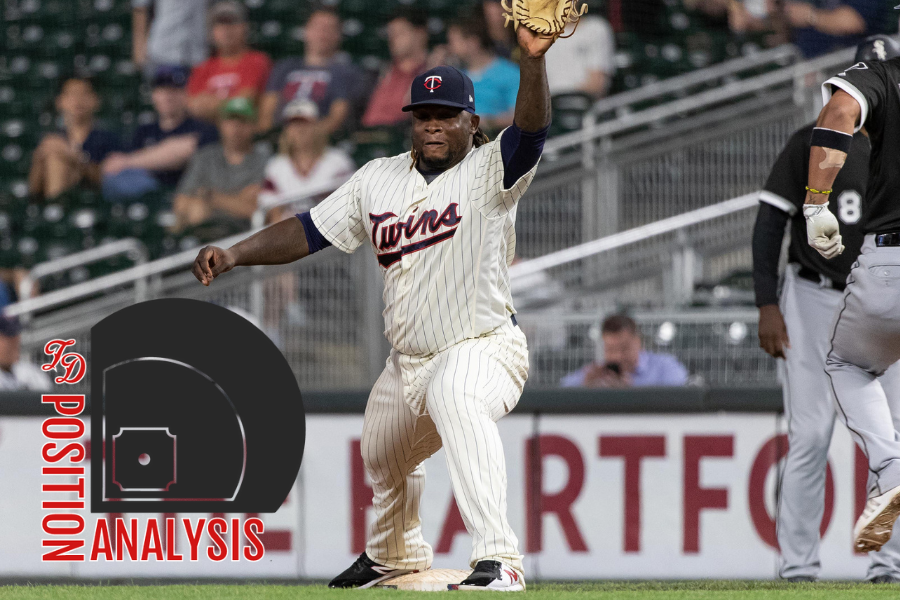 Projected Starter: Miguel Sanó Likely Backup: Willians Astudillo Depth: Brent Rooker, Mitch Garver Prospects: Alex Kirilloff, Aaron Sabato THE GOOD Miguel Sanó is, by all accounts, firing up at spring camp with a fully clean slate. That's not something that could have been said about him last summer (late start due to COVID-19), or in 2019 (came to Fort Myers with heel laceration that required surgery), or in 2018 (under league investigation for assault allegations). This year Sanó appears to be in a good place both physically and mentally, which is welcome news for him at a crux point of his career. Despite plainly having all the talent and ability in the world, Sanó will turn 28 in May and has yet to put together a complete season in the majors. On the bright side, the closest he's come was in the last normal MLB season, 2019: Sanó joined the team late and made up for lost time by slashing .247/.346/.576 with 34 home runs and 79 RBIs in just 105 games. Extrapolate that over a full season and you're talking about 50-HR, 100+ RBI production that naturally tends to generate MVP steam. It was a recipe that helped Justin Morneau take home the award 15 years ago with a 34-HR, 130-RBI season in which he bolstered his case with timely hitting and sharp defense at first base. These are both areas where Sanó has shown he can follow suit. Throughout his career, Sanó has routinely risen to the occasion in run-producing opportunities. In 2019 he slugged .649 with runners on base, and last year – even amidst his overall struggles – he posted an .868 OPS with RISP, 100 points higher than his overall mark. Defensively, 2020 was a process and learning experience for Sanó as he adapted to a new full-time position. But he took to it pretty well, with his size and athleticism shining as clear assets at first base. He visibly improved over the course of three months, and the flaws that occasionally cropped up – i.e. positioning and decision-making – seem mostly correctable. Incidentally, when asked by reporters about examples he's following to model his defensive skills at first base, the first two names Sanó shared were Morneau and Joe Mauer – the last two Twins MVPs and both players who transitioned from another natural position (catcher). Sanó also named three-time MVP and two-time Gold Glover Albert Pujols. Sanó has all the tools to be an elite first baseman of the traditional mold – a dominant and intimidating offensive force who is above-average with the glove. He hits the ball as hard as anyone in the major leagues, with exit velocities and barrel rates that consistently rank at the very top of the scale. His rare, generational raw power can make him a truly special player if he stays healthy and overcomes the shortcomings that have held him back from a sustained breakthrough. THE BAD Sanó is a huge man with a ferociously violent swing, which enables him to produce such thunderous contact when he connects. That swing also can very easily get thrown out of whack and caught up in bad habits, making Sanó extremely prone to slumps and strikeouts. We saw this issue sabotage a 2020 season that was heading in a promising direction. Shaking off a slow start, the first baseman got on a roll in mid-August. Over an admittedly hand-picked one-month span, from August 11th through September 10th, Sanó slashed .304/.407/.641 with seven home runs and 10 doubles in 27 games, carrying the load at times for a lineup that perpetually failed to click. From that point forward, however, it was Sanó who perpetually failed to click. In 13 games following September 10th, he hit .102/.120/.286 with an egregious 25-to-1 K/BB ratio in 50 plate appearances, looking as bad at the plate as we've ever seen him. The slump spilled over into the playoffs where he went 1-for-7 against Houston, following a 1-for-12 showing against New York in 2019. Streakiness will always inherently be a part of Sanó's game, and you accept it when the good healthily outweighs the bad, like in 2019. But by the end of 2020 his wayward swing mechanics and contact woes felt more out of hand than ever. THE BOTTOM LINE You don't have to squint hard to see the true potential of Sanó coming to fruition, even after all the trials and setbacks up to this point. He's an imposing figure in the box. As authoritatively as he hits the ball, and as much as he lifts it, he'll be an absolute force so long as he can make contact with any frequency. It's far from a given that'll happen, especially when you consider the lack of overall forward progress since Sanó debuted in the majors some six years ago. Last season he posted his highest strikeout rate and lowest walk rate as a big-leaguer. But in 2019 he really seemed to be finding his stride, and all players deserve some benefit of the doubt as far as 2020 is concerned. Sanó has two years at most to figure things out and turn the corner as a Twin. He's under contract for $11 million this season and $9.25 million in 2022, after which Minnesota holds a $14 million team option. Alex Kirilloff seems likely to end up at first base and if he doesn't, 2020 first-rounder Aaron Sabato could be on a fast track toward the majors. The Twins are conspicuously lacking in immediate depth at first base, so it'll be interesting to see how Rocco Baldelli handles any short-term absence from Sanó early in the season. Luis Arráez has no real experience at first base (and seems an odd fit there with his size and skill set). Jake Cave hasn't played first, nor has Ryan Jeffers. My assumption is that Willians Astudillo or Brent Rooker – or whoever else latches onto the final bench spot – will be Sanó's day-to-day backup, with Kirilloff in line to replace him during any prolonged absence. For a more extensive look at the long-term outlook, check out Cody Christie's future position analysis for first base. READ OTHER 2021 POSITION ANALYSIS ARTICLES Catcher
 -
With spring training officially underway and a new season rapidly approaching, it's time to kick off my annual position-by-position analysis of the Minnesota Twins roster. Today, we break down the team's very strong outlook behind the plate.Projected Starter: Mitch Garver Likely Backup: Ryan Jeffers Depth: Willians Astudillo, Tomás Telis Prospects: Ben Rortvedt THE GOOD Few teams have a starting catcher as good as Mitch Garver. No teams have a backup catcher as good as Ryan Jeffers – to the extent you'd call him a "backup" given this appears to be a straight 50/50 timeshare. The Twins are in a pretty optimal situation with two starting-caliber catchers on hand. Although questions marks surround both Garver and Jeffers to some extent, each backstop has proven his mettle in the majors after stepping in with big expectations and big pressure. In 2019, after coming up short in their offseason pursuits of free agents Yasmani Grandal and Robinson Chirinos, the Twins turned to Garver as the primary partner for veteran Jason Castro. Garver's future behind the plate was somewhat in doubt after another concussion ended his 2018 campaign, while Castro was trying to come back from knee surgery. It was a bit of a precarious situation. It worked out nicely, in part because Castro rebounded with a .767 OPS, but mainly because Garver broke through with a spectacular season that earned him Silver Slugger honors and catapulted him immediately into the upper echelon of major-league catchers. He slashed .273/.365/.630 with 31 home runs and a .404 wOBA in 391 plate appearance, producing 3.9 fWAR in just 93 games. Garver's offensive explosion was accompanied by clear improvements on the defensive end, as he graded out very well by pitch-framing metrics and earned more confidence from Twins pitchers. While the luster wore off from his breakout during in injury-marred and abbreviated 2020 campaign, Garver is a prime rebound candidate and remains a high-quality starting option. For a deeper dive into position's long-term outlook, check out Cody Christie's future position analysis at catcher. MORE FROM TWINS DAILY — Latest Twins coverage from our writers — Recent Twins discussion in our forums — Follow Twins Daily via Twitter, Facebook or email Click here to view the article
- 15 replies
-
- 1
-

-
- ryan jeffers
- mitch garver
- (and 2 more)
-
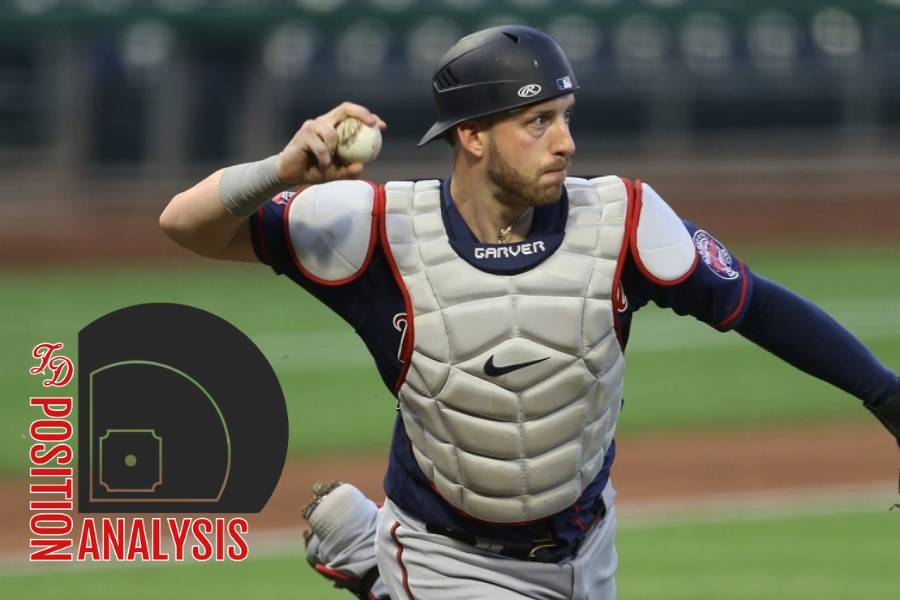 Projected Starter: Mitch Garver Likely Backup: Ryan Jeffers Depth: Willians Astudillo, Tomás Telis Prospects: Ben Rortvedt THE GOOD Few teams have a starting catcher as good as Mitch Garver. No teams have a backup catcher as good as Ryan Jeffers – to the extent you'd call him a "backup" given this appears to be a straight 50/50 timeshare. The Twins are in a pretty optimal situation with two starting-caliber catchers on hand. Although questions marks surround both Garver and Jeffers to some extent, each backstop has proven his mettle in the majors after stepping in with big expectations and big pressure. In 2019, after coming up short in their offseason pursuits of free agents Yasmani Grandal and Robinson Chirinos, the Twins turned to Garver as the primary partner for veteran Jason Castro. Garver's future behind the plate was somewhat in doubt after another concussion ended his 2018 campaign, while Castro was trying to come back from knee surgery. It was a bit of a precarious situation. It worked out nicely, in part because Castro rebounded with a .767 OPS, but mainly because Garver broke through with a spectacular season that earned him Silver Slugger honors and catapulted him immediately into the upper echelon of major-league catchers. He slashed .273/.365/.630 with 31 home runs and a .404 wOBA in 391 plate appearance, producing 3.9 fWAR in just 93 games. Garver's offensive explosion was accompanied by clear improvements on the defensive end, as he graded out very well by pitch-framing metrics and earned more confidence from Twins pitchers. While the luster wore off from his breakout during in injury-marred and abbreviated 2020 campaign, Garver is a prime rebound candidate and remains a high-quality starting option. The uncertainties attached to Garver are much easier to stomach given last year's emergence of Jeffers, who answered the call for Minnesota's beleaguered catching corps. Showing up as a 23-year-old rookie, he showed astonishing poise and preparedness, slashing .273/.355/.436 while grading out well defensively. Jeffers received Twins Daily's nod for Rookie of the Year, and made such an impression that his spot on the 2021 Opening Day roster was at no point in doubt. He might not offer the upside to match what Garver showed in 2019, but Jeffers has instantly established himself as a high-floor timeshare partner, balancing out Garver's risk factor while enabling Rocco Baldelli to take it easy on both of them. The manager can rotate his top two catchers steadily to regulate their workloads, without ever sacrificing high-end offense or defense. How many other teams can say that? THE BAD While the Twins have an admirable 1-2 punch atop the depth chart at catcher, neither player is necessarily a slam dunk. Garver's immense struggles in 2020, when his OPS plummeted by nearly 500 points and he struck out in 46% of his plate appearances, can't be completely ignored, mitigating circumstances aside. He won't be that bad again, and got off on the right foot this year with a ringing single in his first spring training AB, but Garver will not escape the shadow of his 2020 season until he goes out on the field in real games and firmly proves it a fluke. As for Jeffers, his successful first stint in the majors carried no specific indicators of unsustainability, but all standard caveats apply. It was a 26-game sample for a 23-year-old who'd previously played only 24 games above Single-A. He needs to substantiate that performance while holding up to the rigors of a full MLB season as catcher – no small task. In terms of depth behind these two, the Twins aren't in bad shape with Tomás Telis, Ben Rortvedt and Willians Astudillo (who may round out the Opening Day roster as a third catcher). Needless to say, they'd see a huge drop-off in the quality of their catching rotation if either Garver or Jeffers goes down. THE BOTTOM LINE Minnesota's catching situation is the envy of much of the league. You'd be hard-pressed to find another club that would be in as comfortable shape as the Twins if their 1A option became unavailable. In fact, as spring training gets underway, it's not entirely clear Garver should be the 1A, given that Jeffers earned enough trust last season to start both playoff games. Regardless of how you want to stack them, these two provide Minnesota with a decisive competitive advantage behind the plate compared to nearly all rivals. For a deeper dive into position's long-term outlook, check out Cody Christie's future position analysis at catcher. MORE FROM TWINS DAILY — Latest Twins coverage from our writers — Recent Twins discussion in our forums — Follow Twins Daily via Twitter, Facebook or email
 -
What did we learn while updating our annual Twins top prospect rankings after a year that offered no minor-league games, and very little new information to influence our analysis? Maybe more than you'd expect. Find the new list and some key takeaways below.Minnesota Twins 2021 Top 20 Prospects 20. Bailey Ober, RHP: Upside may not stack up to 6'9" frame, but he's almost ready to help. 19. José Miranda, 3B/2B: High-contract righty-swinging infielder needs to find power stroke. 18. Alerick Soularie, UTIL: Versatile defender with intriguing bat, drafted in 2020 second round. 17. Ben Rortvedt, C: Terrific defense behind the plate virtually assures he'll play a role in MLB. 16. Edwar Colina, RHP: Huge raw stuff, but command issues on display in rocky Twins debut. 15. Cole Sands, RHP: Dazzled in first pro stint. Now needs to back it up and ramp workload. 14. Misael Urbina, OF: Athletic CF with a leadoff man's offensive profile. Still unrefined at 18. 13. Matt Wallner, OF: Quality left-handed corner bat. The MN native is poised to move fast. 12. Brent Rooker, OF: Brings tons of power and strikeouts from the right side. Ready for bigs. 11. Gilberto Celestino, OF: Best CF in the org behind Buxton, was on the rise pre-pandemic. 10. Blayne Enlow, RHP: Owns 3.36 ERA in minors, but when will heralded curve lead to Ks? 9. Matt Canterino, RHP: Excelled in 2019, reportedly hit 99 MPH in recent throwing session. 8. Aaron Sabato, 1B: Last year's first-rounder does one thing, and does it very well: MASH. 7. Keoni Cavaco, SS: Seeking to shake off rough pro debut and let considerable talent shine. 6. Jordan Balazovic, RHP: Lanky righty has shredded hitters in minors with balanced arsenal. 5. Jhoan Duran, RHP: An intimidating force on the mound with high-90s heat. Will he start? 4. Ryan Jeffers, C: Showed his value as a polished two-way asset in MLB breakthrough. 3. Trevor Larnach, OF: Looks the part of a near-ready, well-rounded bat for heart of order. 2. Royce Lewis, SS: Twins believe he'll stick at short. Stardom easy to envision. Born leader. 1. Alex Kirilloff, OF: Prolific bat is big-league ready. High ceiling seems imminently reachable. PAST RANKINGS Twins Daily 2020 Top ProspectsTwins Daily 2019 Top ProspectsTwins Daily 2018 Top ProspectsTwins Daily 2017 Top ProspectsTwins Daily 2016 Top ProspectsTwins Daily 2015 Top ProspectsA CHANGE AT THE TOP For obvious reasons, there wasn't a ton of movement in our rankings compared to last year. The most noteworthy development is Alex Kirilloff overtaking Royce Lewis for the No. 1 spot after ranking second behind him in each of the past two years. How can the top dog be supplanted in a season where they both practiced all summer in a private camp? It's a question that raised some spirited debate as our panelists tried to work through a gridlocked decision. As someone who favored Kirilloff at No. 1, here's the argument that won out, from my view: 1: Although we had Lewis ahead of Kirilloff last year, it was very close. A virtual tie. Royce's tough 2019 at the plate had raised flags about his hitchy swing mechanics and lack of discipline, while Kirilloff acclimated impressively to Double-A at 21, closing the gap. The bottom line is that they're both extremely good prospects. 2: That said, even without playing official games, Kirilloff had the louder 2020. Praise for his daily work in St. Paul traveled routinely across the river. The decision to call him up for an elimination game proved there was substance behind the buzz. And Kirilloff's ability to handle such a situation unphased, looking like a natural under extreme pressure, speaks volumes. 3: Lewis didn't do anything to lower his own stock. Reports on him from the alternate were plenty positive. But it's fair to say that a player in his position – unfinished product with real question marks to resolve before breaking through – is more hurt by the disrupted year of development than Kirilloff. And now we've learned the disruption will continue for Lewis after suffering an ACL tear, which didn't factor into our rankings since we all learned of it two days ago. He'll miss all of 2021. Lewis has the higher ceiling, with the tools to become a dynamic two-way star at a premium position, but he still has a considerable path ahead of him, made steeper by his new setback. Kirilloff's skill set is narrower, but his offensive talents are immense and – by all appearances – fully developed. That gave him a slight edge this year. MOVEMENT ON THE LIST As mentioned earlier, there weren't a whole lot of jumps or drops. Most players are within a spot or two of where we had them last year. Risers included Matt Canterino, who went from No. 15 to No. 9 thanks in part to reports of throwing 99. Ryan Jeffers, who excelled in a 26-game major-league debut, rose from No. 7 to No. 4. The biggest individual change this year was a slide. Wander Javier went from 13th in 2019 to outside the Top 20. It's not so much that he did anything to lose ground in 2020, but he's now 22 with 80 games played and a .600 OPS above rookie ball. He's been passed up twice in the Rule 5 draft. Javier has gone from presumed shortstop of the future to longshot. TOP 20 POSITIONAL BREAKDOWN C: 2IF: 4OF: 7RHP: 7LHP: 0The Twins are a bit thin on high-level infield talent, especially with Lewis now sidelined, but the clearest deficiency is left-handed pitching. In past years, Lewis Thorpe was a steady presence in that category, but he graduated out of prospect status in 2020 (and frankly might not have made the Top 20 anyway). Minnesota has seen past promising southpaws like Stephen Gonsalves and Tyler Jay fizzle out, and Thorpe's in danger of joining them. This year is make-or-break, as far as his Twins future is concerned. The scarcity of left-handers runs pretty deep in the Twins' system. Of the five pitchers we named in the Honorable Mentions, all are righties. As to how big of a problem this is, your mileage may vary. It bears noting that the Twins have only one left-hander in their rotation, and he's 38, although the presence of Thorpe and Devin Smeltzer does provide some short-term balance. MORE FROM TWINS DAILY — Latest Twins coverage from our writers — Recent Twins discussion in our forums — Follow Twins Daily via Twitter, Facebook or email Click here to view the article
-
 Minnesota Twins 2021 Top 20 Prospects 20. Bailey Ober, RHP: Upside may not stack up to 6'9" frame, but he's almost ready to help. 19. José Miranda, 3B/2B: High-contract righty-swinging infielder needs to find power stroke. 18. Alerick Soularie, UTIL: Versatile defender with intriguing bat, drafted in 2020 second round. 17. Ben Rortvedt, C: Terrific defense behind the plate virtually assures he'll play a role in MLB. 16. Edwar Colina, RHP: Huge raw stuff, but command issues on display in rocky Twins debut. 15. Cole Sands, RHP: Dazzled in first pro stint. Now needs to back it up and ramp workload. 14. Misael Urbina, OF: Athletic CF with a leadoff man's offensive profile. Still unrefined at 18. 13. Matt Wallner, OF: Quality left-handed corner bat. The MN native is poised to move fast. 12. Brent Rooker, OF: Brings tons of power and strikeouts from the right side. Ready for bigs. 11. Gilberto Celestino, OF: Best CF in the org behind Buxton, was on the rise pre-pandemic. 10. Blayne Enlow, RHP: Owns 3.36 ERA in minors, but when will heralded curve lead to Ks? 9. Matt Canterino, RHP: Excelled in 2019, reportedly hit 99 MPH in recent throwing session. 8. Aaron Sabato, 1B: Last year's first-rounder does one thing, and does it very well: MASH. 7. Keoni Cavaco, SS: Seeking to shake off rough pro debut and let considerable talent shine. 6. Jordan Balazovic, RHP: Lanky righty has shredded hitters in minors with balanced arsenal. 5. Jhoan Duran, RHP: An intimidating force on the mound with high-90s heat. Will he start? 4. Ryan Jeffers, C: Showed his value as a polished two-way asset in MLB breakthrough. 3. Trevor Larnach, OF: Looks the part of a near-ready, well-rounded bat for heart of order. 2. Royce Lewis, SS: Twins believe he'll stick at short. Stardom easy to envision. Born leader. 1. Alex Kirilloff, OF: Prolific bat is big-league ready. High ceiling seems imminently reachable. PAST RANKINGS Twins Daily 2020 Top Prospects Twins Daily 2019 Top Prospects Twins Daily 2018 Top Prospects Twins Daily 2017 Top Prospects Twins Daily 2016 Top Prospects Twins Daily 2015 Top Prospects A CHANGE AT THE TOP For obvious reasons, there wasn't a ton of movement in our rankings compared to last year. The most noteworthy development is Alex Kirilloff overtaking Royce Lewis for the No. 1 spot after ranking second behind him in each of the past two years. How can the top dog be supplanted in a season where they both practiced all summer in a private camp? It's a question that raised some spirited debate as our panelists tried to work through a gridlocked decision. As someone who favored Kirilloff at No. 1, here's the argument that won out, from my view: 1: Although we had Lewis ahead of Kirilloff last year, it was very close. A virtual tie. Royce's tough 2019 at the plate had raised flags about his hitchy swing mechanics and lack of discipline, while Kirilloff acclimated impressively to Double-A at 21, closing the gap. The bottom line is that they're both extremely good prospects. 2: That said, even without playing official games, Kirilloff had the louder 2020. Praise for his daily work in St. Paul traveled routinely across the river. The decision to call him up for an elimination game proved there was substance behind the buzz. And Kirilloff's ability to handle such a situation unphased, looking like a natural under extreme pressure, speaks volumes. 3: Lewis didn't do anything to lower his own stock. Reports on him from the alternate were plenty positive. But it's fair to say that a player in his position – unfinished product with real question marks to resolve before breaking through – is more hurt by the disrupted year of development than Kirilloff. And now we've learned the disruption will continue for Lewis after suffering an ACL tear, which didn't factor into our rankings since we all learned of it two days ago. He'll miss all of 2021. Lewis has the higher ceiling, with the tools to become a dynamic two-way star at a premium position, but he still has a considerable path ahead of him, made steeper by his new setback. Kirilloff's skill set is narrower, but his offensive talents are immense and – by all appearances – fully developed. That gave him a slight edge this year. MOVEMENT ON THE LIST As mentioned earlier, there weren't a whole lot of jumps or drops. Most players are within a spot or two of where we had them last year. Risers included Matt Canterino, who went from No. 15 to No. 9 thanks in part to reports of throwing 99. Ryan Jeffers, who excelled in a 26-game major-league debut, rose from No. 7 to No. 4. The biggest individual change this year was a slide. Wander Javier went from 13th in 2019 to outside the Top 20. It's not so much that he did anything to lose ground in 2020, but he's now 22 with 80 games played and a .600 OPS above rookie ball. He's been passed up twice in the Rule 5 draft. Javier has gone from presumed shortstop of the future to longshot. TOP 20 POSITIONAL BREAKDOWN C: 2 IF: 4 OF: 7 RHP: 7 LHP: 0 The Twins are a bit thin on high-level infield talent, especially with Lewis now sidelined, but the clearest deficiency is left-handed pitching. In past years, Lewis Thorpe was a steady presence in that category, but he graduated out of prospect status in 2020 (and frankly might not have made the Top 20 anyway). Minnesota has seen past promising southpaws like Stephen Gonsalves and Tyler Jay fizzle out, and Thorpe's in danger of joining them. This year is make-or-break, as far as his Twins future is concerned. The scarcity of left-handers runs pretty deep in the Twins' system. Of the five pitchers we named in the Honorable Mentions, all are righties. As to how big of a problem this is, your mileage may vary. It bears noting that the Twins have only one left-hander in their rotation, and he's 38, although the presence of Thorpe and Devin Smeltzer does provide some short-term balance. MORE FROM TWINS DAILY — Latest Twins coverage from our writers — Recent Twins discussion in our forums — Follow Twins Daily via Twitter, Facebook or email
 -

Twins Daily 2021 Top Prospects: #1 OF Alex Kirilloff
Nick Nelson replied to Nick Nelson's topic in Twins Minor League Talk
Definitely a weird outlier. Here's an excerpt from their report on him: "His performance on the field in 2018 was quite good, but the underlying swing had us skeptical about just how loud the hit and power tools would be given the corner profile ... There’s the potential for a plus-or-better hit tool with plus power, but he can get pull-power-happy and out of sync, leading to suboptimal contact. And he doesn’t consistently lift the ball either, struggling to hit for corner bat game power above Low-A." It's well known that he could stand to lift he ball more, but I can't remember seeing anyone else criticize his swing fundamentally. They're either gonna end up looking really smart or really dumb. -
How much can a prospect raise his stock in a year where there is no minor-league season and he doesn't make a regular-season appearance in the majors? In Alex Kirilloff's case ... a fair amount.Position: OF Age: 23 (DOB: 11/9/1997) 2019 Stats (AA): 411 PA, .283/.343/.413, 9, 43 RBI ETA: 2021 2020 Ranking: 2 2019 Ranking: 2 National Top 100 Rankings BA: 18 | MLB: 26 | ATH: 7 | BP: 71 | ESPN: 22 | FG: 17 What's To Like When tantalizing upside and MLB-readiness collide, you get an elite prospect who generates palpable excitement. That's Kirilloff. There's no more dreaming or distant projection required here. The 23-year-old is ready; the Twins left no doubt with the stunning decision to call him up and start him in right field for an elimination game in the playoffs last September. Kirilloff faced an historically tall task in his MLB debut, but looked more than ready for it, collecting one of Minnesota's three hits in Game 2 to provide a glimmer of offensive positivity in their sweep-clinching loss. At age 22, he became the first player in history to record his first major-league hit in the postseason – a 106 MPH rocket yanked into right field. "He’s among the very best hitting prospects in baseball, thanks to a beautiful left-handed swing, an advanced approach to the strike zone, and all-fields power," writes The Athletic's Keith Law, who recently ranked the outfielder as the seventh-best prospect in all of baseball. Other sources share similar praise regarding Kirilloff's acumen. Baseball America also pegs him as the top Twins prospect: "While some players might have better pure bat speed, Kirilloff combines a balanced lefthanded swing, strong hands, quick wrists and the ability to make adjustments mechanically and mentally at an elite level." In other words, Kirilloff is very much ready to hit the ground running. The Twins, after allowing Eddie Rosario to walk during the offseason, appear (almost?) ready to let him off the leash. What's Left to Work On There's not much left for Kirilloff to prove in the minors. Even though he has played fewer than 100 games above Single-A, and his .756 OPS at Double-A in 2019 was nothing to write home about, there is little doubt among Twins officials that Kirilloff is ready. If he doesn't open in the majors, it won't be because he needs more seasoning. (More on that momentarily.) There are of course no guarantees for the 23-year-old. While he has a relatively high floor due to his natural talent and adaptability, his defensive limitations equate to a lofty bar for offensive production if he's going to be an above-average regular, much less an All-Star. This applies even more if he winds up as a first baseman or mediocre defensive corner outfielder – both possible given his middling footspeed. Two things to keep an eye on in Kirilloff's quest to become a truly feared MLB hitter: 1: Plate discipline. Kirilloff hasn't been strikeout-prone in the minors (16% K-rate) but he has also shown very little patience (6% walk rate). That's not exactly a problem – why take pitches when you're crushing everything? – but he'll need to develop a more discerning eye to thrive in the majors. Pitchers there are too good to be overcome by brute force. 2: Lifting the ball. Baseball America reports that Kirilloff's exit velocities were above average at Double-A, but his launch angles were below average. This, along with a nagging wrist issue, contributed to an underwhelming .413 slugging percentage in 2019. A lack of elevation is also reflected by Kirilloff hitting 20 home runs compared to 44 doubles during his breakout campaign at Single-A the prior year. A healthy Kirilloff will almost certainly be a high-contact, line-drive machine in the majors. If he can prove valuable defensively, infuse some patience into his plate approach, and start lifting the ball to unlock his power potential, he will be a star. What's Next Kirilloff is in line to take over the left field job in Minnesota. When that will happen remains to be seen. Service time is the elephant in the room; under the current CBA, the Twins stand to gain an additional year of MLB service from Kirilloff by having him spend the first few weeks of the season in Triple-A. Given the young outfielder's lack of experience in the high minors, and Luis Arráez's presence as a readily available plug in left field, it wouldn't be overly conservative for the Twins to start Kirilloff at St. Paul, all other things aside. But if they do that, it'll be a temporary arrangement. He's ready. No other player on our Top 20 list (save Ryan Jeffers) is poised to assume a regular major-league role more imminently, and few others can match Kirilloff's offensive ceiling. When tantalizing upside and MLB-readiness collide, you get an elite prospect who generates palpable excitement. That's Kirilloff. Twins 2021 Top 20 Prospects Honorable Mentions 20. Bailey Ober, RHP 19. José Miranda, 3B/2B 18. Alerick Soularie, UTIL 17. Ben Rortvedt, C 16. Edwar Colina, RHP 15. Cole Sands, RHP 14. Misael Urbina, OF 13. Matt Wallner, OF 12. Brent Rooker, OF/1B 11. Gilberto Celestino, OF 10. Blayne Enlow, RHP 9. Matt Canterino, RHP 8. Aaron Sabato, 1B 7. Keoni Cavaco, SS 6. Jordan Balazovic, RHP 5. Jhoan Duran, RHP 4. Ryan Jeffers, C 3. Trevor Larnach, OF 2. Royce Lewis, SS 1. Alex Kirilloff, OF Check back tomorrow for a full recap and breakdown of the Twins system heading into the 2021 season! Click here to view the article
-
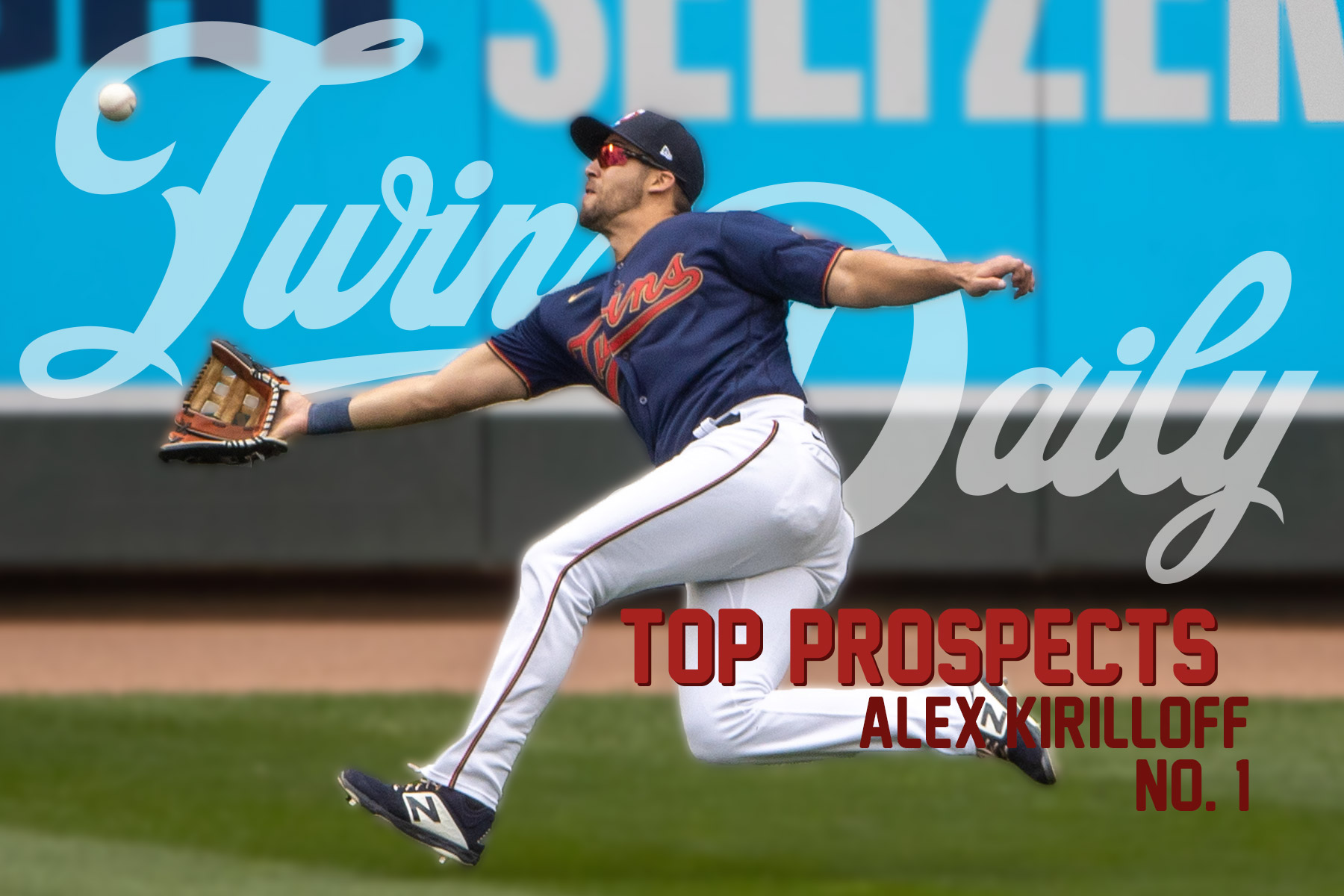 Position: OF Age: 23 (DOB: 11/9/1997) 2019 Stats (AA): 411 PA, .283/.343/.413, 9, 43 RBI ETA: 2021 2020 Ranking: 2 2019 Ranking: 2 National Top 100 Rankings BA: 18 | MLB: 26 | ATH: 7 | BP: 71 | ESPN: 22 | FG: 17 What's To Like When tantalizing upside and MLB-readiness collide, you get an elite prospect who generates palpable excitement. That's Kirilloff. There's no more dreaming or distant projection required here. The 23-year-old is ready; the Twins left no doubt with the stunning decision to call him up and start him in right field for an elimination game in the playoffs last September. Kirilloff faced an historically tall task in his MLB debut, but looked more than ready for it, collecting one of Minnesota's three hits in Game 2 to provide a glimmer of offensive positivity in their sweep-clinching loss. At age 22, he became the first player in history to record his first major-league hit in the postseason – a 106 MPH rocket yanked into right field. https://twitter.com/MLBPipeline/status/1311374656335679489 It says a lot about Kirilloff that the Twins were compelled to make such a move, especially when they already had a perfectly solid, experienced option available in Jake Cave. The bold showing of confidence served to affirm glowing reviews that had been floating over from the alternate site for months. "Rumors were flying last summer," wrote Phil Miller for the Star Tribune recently, "about what Kirilloff was doing to baseballs behind the closed and locked doors of CHS Field in St. Paul, where the Twins conducted private daily workouts and intrasquad games for their spare players." Triple-A manager Toby Gardenhire, who oversaw those workouts and games, had this to say in Miller's article: "He was really ripping it up. I don't have the exact numbers in front of me, but he was basically hitting .500 all summer, and with some long home runs. No kidding." While the Twins had a number of high-caliber prospects on hand in St. Paul, Kirilloff was just on a different level. His uncommon aptitude with the bat has been apparent for some time – ever since the first-rounder splashed onto the scene batting .306 as an 18-year-old during his 2016 rookie ball debut. In total, Kirilloff has slashed .317/.365/.498 through 1,204 minor-league plate appearances, brushing aside a year lost to Tommy John surgery and developing a mighty reputation while tearing through the Twins system. https://twitter.com/TFTwins/status/1346164367839158273 "He’s among the very best hitting prospects in baseball, thanks to a beautiful left-handed swing, an advanced approach to the strike zone, and all-fields power," writes The Athletic's Keith Law, who recently ranked the outfielder as the seventh-best prospect in all of baseball. Other sources share similar praise regarding Kirilloff's acumen. Baseball America also pegs him as the top Twins prospect: "While some players might have better pure bat speed, Kirilloff combines a balanced lefthanded swing, strong hands, quick wrists and the ability to make adjustments mechanically and mentally at an elite level." In other words, Kirilloff is very much ready to hit the ground running. The Twins, after allowing Eddie Rosario to walk during the offseason, appear (almost?) ready to let him off the leash. What's Left to Work On There's not much left for Kirilloff to prove in the minors. Even though he has played fewer than 100 games above Single-A, and his .756 OPS at Double-A in 2019 was nothing to write home about, there is little doubt among Twins officials that Kirilloff is ready. If he doesn't open in the majors, it won't be because he needs more seasoning. (More on that momentarily.) There are of course no guarantees for the 23-year-old. While he has a relatively high floor due to his natural talent and adaptability, his defensive limitations equate to a lofty bar for offensive production if he's going to be an above-average regular, much less an All-Star. This applies even more if he winds up as a first baseman or mediocre defensive corner outfielder – both possible given his middling footspeed. Two things to keep an eye on in Kirilloff's quest to become a truly feared MLB hitter: 1: Plate discipline. Kirilloff hasn't been strikeout-prone in the minors (16% K-rate) but he has also shown very little patience (6% walk rate). That's not exactly a problem – why take pitches when you're crushing everything? – but he'll need to develop a more discerning eye to thrive in the majors. Pitchers there are too good to be overcome by brute force. 2: Lifting the ball. Baseball America reports that Kirilloff's exit velocities were above average at Double-A, but his launch angles were below average. This, along with a nagging wrist issue, contributed to an underwhelming .413 slugging percentage in 2019. A lack of elevation is also reflected by Kirilloff hitting 20 home runs compared to 44 doubles during his breakout campaign at Single-A the prior year. A healthy Kirilloff will almost certainly be a high-contact, line-drive machine in the majors. If he can prove valuable defensively, infuse some patience into his plate approach, and start lifting the ball to unlock his power potential, he will be a star. What's Next Kirilloff is in line to take over the left field job in Minnesota. When that will happen remains to be seen. Service time is the elephant in the room; under the current CBA, the Twins stand to gain an additional year of MLB service from Kirilloff by having him spend the first few weeks of the season in Triple-A. Given the young outfielder's lack of experience in the high minors, and Luis Arráez's presence as a readily available plug in left field, it wouldn't be overly conservative for the Twins to start Kirilloff at St. Paul, all other things aside. But if they do that, it'll be a temporary arrangement. He's ready. No other player on our Top 20 list (save Ryan Jeffers) is poised to assume a regular major-league role more imminently, and few others can match Kirilloff's offensive ceiling. When tantalizing upside and MLB-readiness collide, you get an elite prospect who generates palpable excitement. That's Kirilloff. Twins 2021 Top 20 Prospects Honorable Mentions 20. Bailey Ober, RHP 19. José Miranda, 3B/2B 18. Alerick Soularie, UTIL 17. Ben Rortvedt, C 16. Edwar Colina, RHP 15. Cole Sands, RHP 14. Misael Urbina, OF 13. Matt Wallner, OF 12. Brent Rooker, OF/1B 11. Gilberto Celestino, OF 10. Blayne Enlow, RHP 9. Matt Canterino, RHP 8. Aaron Sabato, 1B 7. Keoni Cavaco, SS 6. Jordan Balazovic, RHP 5. Jhoan Duran, RHP 4. Ryan Jeffers, C 3. Trevor Larnach, OF 2. Royce Lewis, SS 1. Alex Kirilloff, OF Check back tomorrow for a full recap and breakdown of the Twins system heading into the 2021 season!
 -
I think we all approached that question in different ways. For John and Seth it was more of a "This guy is a sleeper to make the roster," for me it was more "This guy is gonna generate some buzz and get people talking." Certainly Sabato won't be on the Opening Day team but I think we'll see how advanced his bat is and realize he's not too far off.
-
Pretty sure he's out of options so I'd say he's close to a lock, so long as he's not a total mess. I tend to agree with this. Which underscores why they probably won't sign anyone else of note for the bullpen.
-
With position players reporting to camp on Monday, spring training is about to be in full swing for the Minnesota Twins. Here are some key competitions, decisions, and storylines to track in the four-plus weeks leading up to Opening Day.On Friday, I was joined by John Bonnes and Seth Stohs on the , in which we previewed spring training by discussing and debating a variety of topics. You can watch our conversation below, or listen via audio on our podcast. But if you don't have 100 minutes handy, read on for a quick rundown of focal points and takeaways in our discussion, plus a chance to share your takes and predictions in the comments. The Roster Outlook Entering Camp The Twins are building toward a 26-man Opening Day roster. Barring injuries, a vast majority of the jobs are essentially spoken for, leaving only a few true battles to be decided in camp. Here's how the roster shapes up at this time, with three notable openings: Download attachment: springtrainingroster.png The projection above begs a few questions: Who's starting in left field, and who's rounding out the bench and bullpen? We sorted through these topics in the show. Who Starts in Left Field on Opening Day? Candidates: Alex Kirilloff, Jake Cave, Luis Arráez, Brent Rooker, Kyle Garlick It's widely assumed that Kirilloff will ultimately hold down left field, but probably not out of the gates. The Twins stand to gain an extra year of service time by starting him in the minors, and there's certainly a case to be made the 23-year-old could use a bit more seasoning. We landed on Arráez as the clear choice here. He's got nowhere else to play in the Opening Day lineup at this point, and the thought of him being on the bench for that momentous occasion is almost outrageous. (Especially against a tough right-handed pitcher.) Arráez played quite a bit of left field as a rookie and has stated his intent to sharpen up there this spring. It seems likely Arráez will be the semi-regular left fielder early on, at least until Kirilloff arrives. Of course, that outlook can quickly change if someone gets hurt, requiring Arráez to fill in elsewhere. Then, Cave becomes the top candidate, or maybe even Kirilloff, should the Twins set aside service-time concerns or lock him up with an extension. Who Gets the Last Spot on the Bench? Candidates: Brent Rooker, Willians Astudillo, Kyle Garlick, Travis Blankenhorn, Nick Gordon Here's how we see a four-man bench taking form currently: Download attachment: twinsbench.png Something to keep in mind is that, under the assumption Kirilloff starts in the minors, Arráez or Cave is starting in left field. So that theoretically opens up an additional bench spot, but there still might only be one for the taking. MLB removed the roster stipulation of a 13-pitcher limit this year, so it's possible the Twins will carry 14 arms. In fact it's quite likely, I'd argue. So, let's stick with the idea that one final role on the bench is available. That role could take several different shapes. One might argue in favor of Rooker or Garlick, who offer right-handed bats to rotate with Arráez and Cave in left. There's also Blankenhorn and Gordon, who would provide necessary infield depth if Arráez is starting regularly in the outfield. Personally, I'm in favor of Astudillo, who brings a versatile right-handed bat as well as useful depth at catcher and third base. (Critically, unlike most others mentioned, there's no need to worry about Astudillo's development being impeded if he rarely plays.) Who Gets the Last Bullpen Spot? Candidates: Randy Dobnak, Devin Smeltzer, Lewis Thorpe, Shaun Anderson, Edwar Colina As noted in the previous section, the Twins could very well go with a 14-man pitching staff, extending the bullpen to nine spots and adding another opening to the projection below: Download attachment: twinsbullpen.png One way or another, the team is all but certain to have at least one long-relief, starter-hybrid type arm in the bullpen mix, whether that's Dobnak, Smeltzer, Thorpe, or otherwise. The prohibitive favorite in such a race would be Dobnak, given his experience and track record. If the Twins go with nine relievers, our panel liked Anderson to win the job, but there are plenty of other contenders, including non-roster invites and – perhaps – lingering free agents yet to be signed. Which Player in Camp Will Surprise? There are always at least a few players each spring who go from off-the-radar, or out-of-mind, to center spotlight. Maybe it's the transformed physical shape they arrive in. Maybe it's eye-opening displays in batting practice. Maybe it's huge performances in exhibition games. On Offseason Live we each put forth a name we expect to generate some buzz in Fort Myers. John's Pick: Nick Gordon. An incredibly challenging 2020, which saw him hospitalized for COVID and far away from the baseball field, leaves the former first-round draft pick on a path of redemption as he likely faces his last chance to emerge in the Twins organization.Seth's Pick: J.T. Riddle. Keep an eye on this stellar defensive infielder, who could sneak his way onto the Opening Day bench if the Twins go all-in on their commitment to fielding the ball, and value his ability to play anywhere – including short and center.Nick's Pick: Aaron Sabato. He's not exactly unknown, as last year's first-rounder and Twins Daily's eighth-ranked prospect, but fans have had no opportunity to get a handle on Sabato yet. He hasn't played in a minor-league game or participated in a spring camp, until now. He was one of the best and most advanced hitters in the 2020 class. I can't wait to see his heralded power first-hand.Projecting the Twins Starting Lineup We wrapped up the show by attempting to collectively predict the batting lineup Rocco Baldelli will write up for April 1st, against the Brewers and right-hander Brandon Woodruff. We went round-robin, taking turns at each successive spot in the order. This led to some interesting realizations. (Note: it's since come to my attention that since the Twins are playing in Milwaukee and the designated hitter has been removed from the NL this year, Nelson Cruz will probably not be able to start in their opening series. Lame. Anyway, this analysis still applies with regards to predicting Baldelli's A-lineup.) Seth chose first, and understandably went with the default at leadoff in Kepler. After all, Kepler has led off nearly two-thirds of Minnesota's games over the past two seasons (63%). But as we continued – Donaldson second, Cruz third – we quickly hit a wall. The cleanup spot that once so reliably belonged to Eddie Rosario is now open, and the best apparent fit to replace him had already been written in at leadoff. In this our first pass, we went with Sanó at cleanup, Polanco fifth, and then followed with Garver, Arráez, Buxton and Simmons, arriving at this lineup: Download attachment: twinslineup1.png But, it didn't feel quite right. So we took another stab, moving Kepler into the cleanup spot and sliding Arráez up to leadoff. This one felt more plausible: Download attachment: twinslineup2.png Whether that's how the go-to batting order will look, I don't know. But after working through it in our discussion, I do feel comfortable saying this: Kepler's days as the regular leadoff man are finished. His left-handed power will be needed elsewhere in this lineup, at least until Kirilloff is here. How do you expect the Opening Day lineup to materialize? Who do you see winning the roster competitions laid out above? Who else might the Twins add before the season starts? We'd love to hear your thoughts in the comments. Twins Daily's on-site coverage of spring training will officially commence later this week. John is on the scene and ready to report from the Fort. MORE FROM TWINS DAILY — Latest Twins coverage from our writers — Recent Twins discussion in our forums — Follow Twins Daily via Twitter, Facebook or email Click here to view the article
-
Twins Spring Training 2021: Roster Battles, Projections and Predictions
Nick Nelson posted an article in Twins
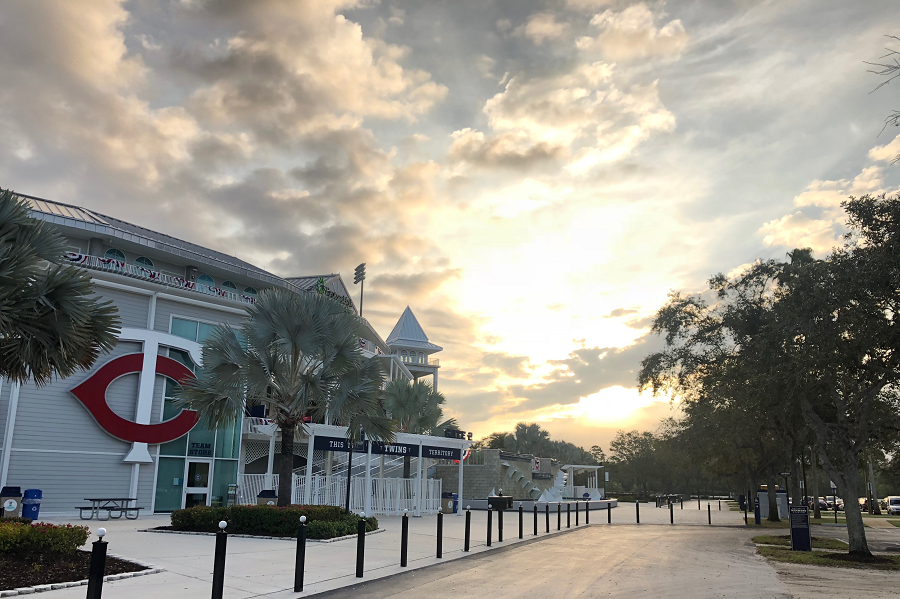 On Friday, I was joined by John Bonnes and Seth Stohs on the , in which we previewed spring training by discussing and debating a variety of topics. You can watch our conversation below, or listen via audio on our podcast. But if you don't have 100 minutes handy, read on for a quick rundown of focal points and takeaways in our discussion, plus a chance to share your takes and predictions in the comments. The Roster Outlook Entering Camp The Twins are building toward a 26-man Opening Day roster. Barring injuries, a vast majority of the jobs are essentially spoken for, leaving only a few true battles to be decided in camp. Here's how the roster shapes up at this time, with three notable openings: The projection above begs a few questions: Who's starting in left field, and who's rounding out the bench and bullpen? We sorted through these topics in the show. Who Starts in Left Field on Opening Day? Candidates: Alex Kirilloff, Jake Cave, Luis Arráez, Brent Rooker, Kyle GarlickIt's widely assumed that Kirilloff will ultimately hold down left field, but probably not out of the gates. The Twins stand to gain an extra year of service time by starting him in the minors, and there's certainly a case to be made the 23-year-old could use a bit more seasoning. We landed on Arráez as the clear choice here. He's got nowhere else to play in the Opening Day lineup at this point, and the thought of him being on the bench for that momentous occasion is almost outrageous. (Especially against a tough right-handed pitcher.) Arráez played quite a bit of left field as a rookie and has stated his intent to sharpen up there this spring. It seems likely Arráez will be the semi-regular left fielder early on, at least until Kirilloff arrives. Of course, that outlook can quickly change if someone gets hurt, requiring Arráez to fill in elsewhere. Then, Cave becomes the top candidate, or maybe even Kirilloff, should the Twins set aside service-time concerns or lock him up with an extension. Who Gets the Last Spot on the Bench? Candidates: Brent Rooker, Willians Astudillo, Kyle Garlick, Travis Blankenhorn, Nick GordonHere's how we see a four-man bench taking form currently: Something to keep in mind is that, under the assumption Kirilloff starts in the minors, Arráez or Cave is starting in left field. So that theoretically opens up an additional bench spot, but there still might only be one for the taking. MLB removed the roster stipulation of a 13-pitcher limit this year, so it's possible the Twins will carry 14 arms. In fact it's quite likely, I'd argue. So, let's stick with the idea that one final role on the bench is available. That role could take several different shapes. One might argue in favor of Rooker or Garlick, who offer right-handed bats to rotate with Arráez and Cave in left. There's also Blankenhorn and Gordon, who would provide necessary infield depth if Arráez is starting regularly in the outfield. Personally, I'm in favor of Astudillo, who brings a versatile right-handed bat as well as useful depth at catcher and third base. (Critically, unlike most others mentioned, there's no need to worry about Astudillo's development being impeded if he rarely plays.) Who Gets the Last Bullpen Spot? Candidates: Randy Dobnak, Devin Smeltzer, Lewis Thorpe, Shaun Anderson, Edwar ColinaAs noted in the previous section, the Twins could very well go with a 14-man pitching staff, extending the bullpen to nine spots and adding another opening to the projection below: One way or another, the team is all but certain to have at least one long-relief, starter-hybrid type arm in the bullpen mix, whether that's Dobnak, Smeltzer, Thorpe, or otherwise. The prohibitive favorite in such a race would be Dobnak, given his experience and track record. If the Twins go with nine relievers, our panel liked Anderson to win the job, but there are plenty of other contenders, including non-roster invites and – perhaps – lingering free agents yet to be signed. Which Player in Camp Will Surprise? There are always at least a few players each spring who go from off-the-radar, or out-of-mind, to center spotlight. Maybe it's the transformed physical shape they arrive in. Maybe it's eye-opening displays in batting practice. Maybe it's huge performances in exhibition games. On Offseason Live we each put forth a name we expect to generate some buzz in Fort Myers. John's Pick: Nick Gordon. An incredibly challenging 2020, which saw him hospitalized for COVID and far away from the baseball field, leaves the former first-round draft pick on a path of redemption as he likely faces his last chance to emerge in the Twins organization. Seth's Pick: J.T. Riddle. Keep an eye on this stellar defensive infielder, who could sneak his way onto the Opening Day bench if the Twins go all-in on their commitment to fielding the ball, and value his ability to play anywhere – including short and center. Nick's Pick: Aaron Sabato. He's not exactly unknown, as last year's first-rounder and Twins Daily's eighth-ranked prospect, but fans have had no opportunity to get a handle on Sabato yet. He hasn't played in a minor-league game or participated in a spring camp, until now. He was one of the best and most advanced hitters in the 2020 class. I can't wait to see his heralded power first-hand. Projecting the Twins Starting Lineup We wrapped up the show by attempting to collectively predict the batting lineup Rocco Baldelli will write up for April 1st, against the Brewers and right-hander Brandon Woodruff. We went round-robin, taking turns at each successive spot in the order. This led to some interesting realizations. (Note: it's since come to my attention that since the Twins are playing in Milwaukee and the designated hitter has been removed from the NL this year, Nelson Cruz will probably not be able to start in their opening series. Lame. Anyway, this analysis still applies with regards to predicting Baldelli's A-lineup.) Seth chose first, and understandably went with the default at leadoff in Kepler. After all, Kepler has led off nearly two-thirds of Minnesota's games over the past two seasons (63%). But as we continued – Donaldson second, Cruz third – we quickly hit a wall. The cleanup spot that once so reliably belonged to Eddie Rosario is now open, and the best apparent fit to replace him had already been written in at leadoff. In this our first pass, we went with Sanó at cleanup, Polanco fifth, and then followed with Garver, Arráez, Buxton and Simmons, arriving at this lineup: But, it didn't feel quite right. So we took another stab, moving Kepler into the cleanup spot and sliding Arráez up to leadoff. This one felt more plausible: Whether that's how the go-to batting order will look, I don't know. But after working through it in our discussion, I do feel comfortable saying this: Kepler's days as the regular leadoff man are finished. His left-handed power will be needed elsewhere in this lineup, at least until Kirilloff is here. How do you expect the Opening Day lineup to materialize? Who do you see winning the roster competitions laid out above? Who else might the Twins add before the season starts? We'd love to hear your thoughts in the comments. Twins Daily's on-site coverage of spring training will officially commence later this week. John is on the scene and ready to report from the Fort. MORE FROM TWINS DAILY — Latest Twins coverage from our writers — Recent Twins discussion in our forums — Follow Twins Daily via Twitter, Facebook or email
 -
I didn't say Colome "fixed the pen," I said he was an upgrade over the guy he replaced, who struggled in the postseason. The pen didn't need fixing, it was one of the best in the league. I also never said Maeda is second to Cole, I posed the question: which other contenders have a better #1 starter? I haven't heard any particularly convincing answers. (Cleveland, yes, if we're calling them a contender.) Anyway, I didn't even bring that comparison up til pretty deep into this comment thread, and long after you claimed the article was "homerish," so I'm calling BS on that one. You're basically arguing against positions that no one has stated. Maybe that's why you find them irrational. Because baseball is a game of sample sizes my friend, and 137-85 weighs a lot more heavily than 0-5. They aren't remotely equivalent so they're not treated as such. Regardless of what people want to believe, there is NOT some magical formula for winning in the playoffs that's different from the regular season. The bats coming up short against Houston was not a failure of planning, that was an extremely well-built offense marred by injuries and bad performances.
- 120 replies
-
- 2
-
-
- jorge polanco
- alex colome
- (and 1 more)
-
It was a long offseason, made to feel even longer by its glacial pace, but finally baseball's winter has ended. With workouts commencing in camp on Friday, it's time for the final episode of Offseason Live, as we welcome the arrival of spring training.Through 19 episodes of Offseason Live, we've previewed, dissected, debated, analyzed, and reacted to Hot Stove action in real-time. We've commiserated over the slow early trudge, and celebrated the late flourish. It's been a ton of fun, especially because of the engagement and interaction from viewers in each episode. And it all leads up to this: the arrival of a new (hopefully much more normal) baseball season. During the Offseason Live finale, I was joined by John Bonnes and Seth Stohs as we shared final thoughts on the Twins' winter and looked ahead to the next five weeks. We debate key position battles, predict camp surprises, and project the Opening Day roster while setting the stage for John's on-site coverage in Fort Myers. Watch it below. You can also always catch these episodes via audio by subscribing to our podcast. Check out previous episodes of Offseason Live: Ep 1: (Thurs, 10/8)Ep 2: (Tues, 10/13)Ep 3: (Thurs, 10/15)Ep 4: (Tues, 10/20)Ep 5: (Thurs, 10/22)Ep 6: (Tues, 10/27)Ep 7: (Thurs, 10/29)Ep 8: (Thurs, 11/5)Ep 9: (Thurs, 11/12)Ep 10: (Tues, 11/17)Ep 11: (Weds, 12/2)Ep 12: (Weds, 12/16)Ep 13: (Weds, 12/30)Ep 14: (Weds, 1/6)Ep 15: (Tues, 1/12)Ep 16: (Mon, 1/25)Ep 17: (Tues, 1/26)Ep 18: (Weds, 2/3)Ep 19: (Thurs, 2/11)Ep 20: (Fri, 2/19) Click here to view the article
-
 Through 19 episodes of Offseason Live, we've previewed, dissected, debated, analyzed, and reacted to Hot Stove action in real-time. We've commiserated over the slow early trudge, and celebrated the late flourish. It's been a ton of fun, especially because of the engagement and interaction from viewers in each episode. And it all leads up to this: the arrival of a new (hopefully much more normal) baseball season. During the Offseason Live finale, I was joined by John Bonnes and Seth Stohs as we shared final thoughts on the Twins' winter and looked ahead to the next five weeks. We debate key position battles, predict camp surprises, and project the Opening Day roster while setting the stage for John's on-site coverage in Fort Myers. Watch it below. You can also always catch these episodes via audio by subscribing to our podcast. Check out previous episodes of Offseason Live: Ep 1: (Thurs, 10/8) Ep 2: (Tues, 10/13) Ep 3: (Thurs, 10/15) Ep 4: (Tues, 10/20) Ep 5: (Thurs, 10/22) Ep 6: (Tues, 10/27) Ep 7: (Thurs, 10/29) Ep 8: (Thurs, 11/5) Ep 9: (Thurs, 11/12) Ep 10: (Tues, 11/17) Ep 11: (Weds, 12/2) Ep 12: (Weds, 12/16) Ep 13: (Weds, 12/30) Ep 14: (Weds, 1/6) Ep 15: (Tues, 1/12) Ep 16: (Mon, 1/25) Ep 17: (Tues, 1/26) Ep 18: (Weds, 2/3) Ep 19: (Thurs, 2/11) Ep 20: (Fri, 2/19)
 -
Your point was that the Twins play (and I quote) "boring baseball." The Twins who have won two straight division titles; who set an all-time HR record two years ago; who have dynamic talent at every position on the field; who will spend more on payroll this year than ever before in franchise history ... are boring. Just not doing enough to get you excited. If you feel that way, fine. But acknowledging and celebrating these things doesn't make us homers, it makes us fans.
- 120 replies
-
- 4
-
-
- jorge polanco
- alex colome
- (and 1 more)
-
It's amusing to me how selectively some people choose to apply the 2020 small sample argument. "It was a 60-game season, we can't put any stock into Maeda pitching at an elite level from start to finish. But the Twins offense definitely sucks and should've been completely overhauled!"
- 120 replies
-
- 8
-
-
- jorge polanco
- alex colome
- (and 1 more)
-
That's one article ranking AL rotations, not #1 starters. Do you actually think Hyun-Jun Ryu is better than Maeda? Who in Oakland's rotation is better than Maeda? Chris Bassitt??
-
He costs more than the reliever he replaced (Romo). He has a far better track record than the reliever the replaced. In what way is that a "cost saving signing"? It's hard to take your criticisms seriously when they're presented so inaccurately. Yes, how "homerish" of me to suggest that the Cy Young runner-up was the second-best pitcher in the AL. Look, I understand (and agree with) the notion that Maeda is due for some level of regression, but it's not like he just had a Scott Diamond 2012 season. They traded their #1 pitching prospect for him. He's always been a very good pitcher, and made specific adjustments that fueled his improvement last year. He came through in literally every big spot for the Twins. He's extremely dominant by any measure (higher whiff rate than Bieber). There is no real reason to doubt him other than the typical ebbs and flows of baseball, which apply to every player.
- 120 replies
-
- 3
-
-
- jorge polanco
- alex colome
- (and 1 more)
-
How many other AL contenders have a better #1 starter than Kenta Maeda? New York... anyone else?
- 120 replies
-
- 3
-
-
- jorge polanco
- alex colome
- (and 1 more)
-
I'm just trying to imagine myself from 2016 reading all these comments from people who are bored with winning baseball
- 120 replies
-
- 13
-
-
- jorge polanco
- alex colome
- (and 1 more)
-
Reality check: This is not a "make or break year for the FO." They completely turned around a mess of a franchise and have produced the best W% for a Twins team in the past 50 years in 2019/20. I know a lot of fans are cranky about postseason losses but the front office is not being held primarily responsible for that. Nor should they be. They have given themselves plenty of leash. This is just an amazingly cynical and pessimistic attitude in the days ahead of spring training. You're entitled to your negativity but don't accuse those who don't share it of being "homery." This is objectively an elite baseball team. Sorry that's not good enough for you.
- 120 replies
-
- 13
-
-
- jorge polanco
- alex colome
- (and 1 more)
-
With pitchers and catchers reporting to camp on Thursday, a new baseball season is upon us. The arrival of 2021 brings a mix of emotions for Twins fans, who are generally heartened by back-to-back division titles and an intriguing offseason, but impatient in the midst of an 0-for-18 postseason slump.An AL Central title is almost table stakes for the Twins this year. It says much about this team that the shortened 2020 season felt somewhat disappointing even though Minnesota took the division with a .600 winning percentage. That's where we were at. Personally, I'm pretty pleased that the front office has built a club that looks well positioned to fend off a credible threat from the White Sox and defend its budding division dynasty, but I get it – for many fans, the proof is in the postseason pudding. While I'm sure Derek Falvey and Thad Levine would agree it's important not to wildly overcompensate for what occurs in the small sample of a few October games, their offseason strategy does suggest that past playoff shortcomings were top-of-mind in their efforts to retool. We've seen this play out in a few areas. Infield Defense There were many contributors to Minnesota's all-too-familiar futility in the 2019 and 2020 postseasons, but defensive lapses in the infield loom large in memory. CJ Cron's failure to secure an off-target DP relay from Luis Arráez in New York was rough ... The irony of it all is that Romo brought with him to Minnesota the mythos of a postseason legend. He's got three rings, and was a renowned late-inning force during San Francisco's amazing run of championships in the early 2010s. It was a surely a big factor in the playoff-bound Twins acquiring him in 2019 (and bringing him back in 2020). When push came to shove, Romo couldn't deliver. Now, the Twins turn to Alex Colomé, who similarly centers his approach on a single spinning pitch, and doesn't dominate hitters in a conventional sense. Last year, Colomé's K-rate dropped to a new low, but his performance was as consistent as ever. The market at large seems to be betting against Colomé, given his contract. The Twins meanwhile are betting he can be what Romo wasn't: a reliever who lives up to the legend. It's a short squeeze, I guess? I need to stop reading about GameStop and the stock market. Based on all available evidence, the Twins are taking a good gamble. For what it's worth: Colomé has thrown two scoreless innings in the postseason, both with Chicago last year. Contingency Plans The unavailability of Donaldson in last year's playoffs forced the Twins to start Marwin González and his miserable .606 OPS at third base in both games. Meanwhile, the perpetual unavailability of Byron Buxton forced them to start Jake Cave twice in the 2019 ALDS, and to call up Alex Kirilloff with zero MLB experience to start Game 2 against Houston in 2020. Donaldson and Buxton will continue to be question marks, and the Twins can hardly count on them being on the field in October. But the team's fallback options have dramatically improved. Part of this is just time and development playing out within the system. Kirilloff should be a seasoned big-leaguer by the time this year's playoffs roll around. Brent Rooker, Trevor Larnach and others could factor as legit corner outfield depth, giving the Twins an array of quality options should Max Kepler be needed in center. Moving Arráez into a floating utility role provides a huge upgrade over the greatly diminished González. While he's lesser defensively than Marwin, Arráez is actually an asset in the lineup and arguably an essential fixture. In general, having a definitively starting-caliber player in that 10th-man role sets the Twins up for a variety of contingencies. In the event that everyone's healthy when the playoffs come around ... that'd present an interesting dilemma. But it's a bridge the Twins will be happy to cross when they get there. First, they need to get there. A full 162-game season lies ahead and the Twins will face even stiffer competition in the Central, after the much-improved White Sox very nearly clawed the division away in 2020. This Twins team is built for success in the postseason, but more importantly, it's built to endure the long haul of a six-month season and come out on top. The improvements above will serve them well on both fronts. MORE FROM TWINS DAILY — Latest Twins coverage from our writers — Recent Twins discussion in our forums — Follow Twins Daily via Twitter, Facebook or email Click here to view the article
-
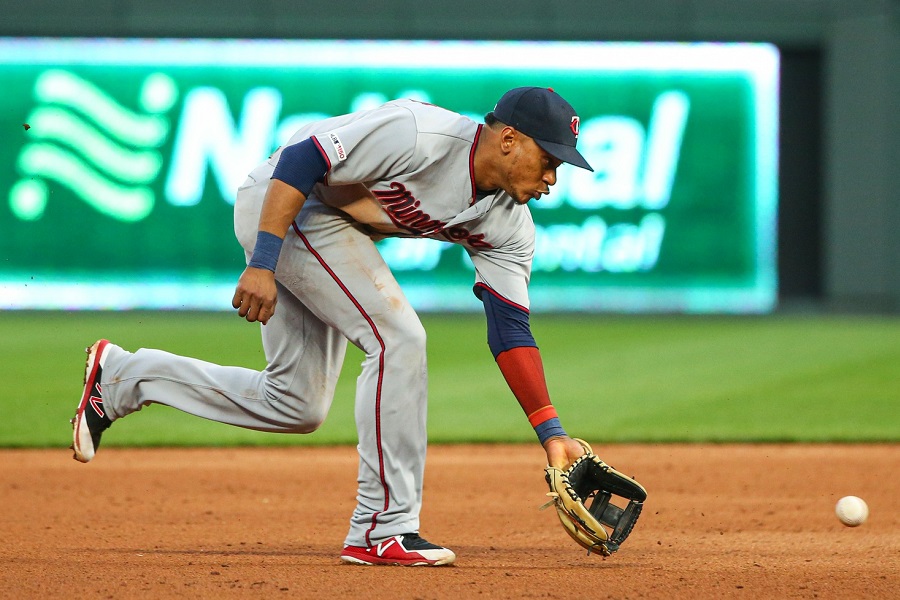 An AL Central title is almost table stakes for the Twins this year. It says much about this team that the shortened 2020 season felt somewhat disappointing even though Minnesota took the division with a .600 winning percentage. That's where we were at. Personally, I'm pretty pleased that the front office has built a club that looks well positioned to fend off a credible threat from the White Sox and defend its budding division dynasty, but I get it – for many fans, the proof is in the postseason pudding. While I'm sure Derek Falvey and Thad Levine would agree it's important not to wildly overcompensate for what occurs in the small sample of a few October games, their offseason strategy does suggest that past playoff shortcomings were top-of-mind in their efforts to retool. We've seen this play out in a few areas. Infield Defense There were many contributors to Minnesota's all-too-familiar futility in the 2019 and 2020 postseasons, but defensive lapses in the infield loom large in memory. CJ Cron's failure to secure an off-target DP relay from Luis Arráez in New York was rough ... But last year's Jorge Polanco flub at shortstop in the most crucial of moments was even more painful: The signing of free agent shortstop and defensive specialist Andrelton Simmons almost feels like a direct response to these two plays specifically. Polanco's inadequate arm at short has cost the Twins on this and plenty of other occasions. And while Arráez wasn't primarily responsible for either miscue ... his limitations didn't help in either instance. Now, the Twins install an all-world defender at short, while sliding Polanco over to a position for which he's much better suited. The Twins are high on his fit at second. At the same time, Arráez goes from being a so-so defensive second baseman to a so-so defensive utility man, adopting a role where his bat and versatility become even more valuable. It would also be helpful, of course, if Josh Donaldson is healthy enough to play at third in the playoffs. But the Twins are controlling what they can control, and we'll get to planning around JD's risk factor shortly. Back End of the Bullpen Taylor Rogers was unreliable last year, and he's back. The need for him to get straightened out is obviously paramount. His stumble in a Game 2 appearance against Houston was troubling (albeit ultimately inconsequential). But Rogers' postseason struggles with the Twins have nothing on those of Sergio Romo, who had assumed a role as co-closer by the end of 2020. In Game 1 against Houston last September, Romo entered to open the ninth inning of a tie game, then proceeded to load the bases and walk in the go-ahead run (an ignominious distinction!) before giving way to Caleb Thielbar who let two more of the inherited Romo runs score. It was Romo's first time pitching in the playoffs since Game 3 of the 2019 ALDS, when he let the Yankees pull away with two ninth-inning runs to complete a sweep. The irony of it all is that Romo brought with him to Minnesota the mythos of a postseason legend. He's got three rings, and was a renowned late-inning force during San Francisco's amazing run of championships in the early 2010s. It was a surely a big factor in the playoff-bound Twins acquiring him in 2019 (and bringing him back in 2020). When push came to shove, Romo couldn't deliver. Now, the Twins turn to Alex Colomé, who similarly centers his approach on a single spinning pitch, and doesn't dominate hitters in a conventional sense. Last year, Colomé's K-rate dropped to a new low, but his performance was as consistent as ever. The market at large seems to be betting against Colomé, given his contract. The Twins meanwhile are betting he can be what Romo wasn't: a reliever who lives up to the legend. It's a short squeeze, I guess? I need to stop reading about GameStop and the stock market. Based on all available evidence, the Twins are taking a good gamble. For what it's worth: Colomé has thrown two scoreless innings in the postseason, both with Chicago last year. Contingency Plans The unavailability of Donaldson in last year's playoffs forced the Twins to start Marwin González and his miserable .606 OPS at third base in both games. Meanwhile, the perpetual unavailability of Byron Buxton forced them to start Jake Cave twice in the 2019 ALDS, and to call up Alex Kirilloff with zero MLB experience to start Game 2 against Houston in 2020. Donaldson and Buxton will continue to be question marks, and the Twins can hardly count on them being on the field in October. But the team's fallback options have dramatically improved. Part of this is just time and development playing out within the system. Kirilloff should be a seasoned big-leaguer by the time this year's playoffs roll around. Brent Rooker, Trevor Larnach and others could factor as legit corner outfield depth, giving the Twins an array of quality options should Max Kepler be needed in center. Moving Arráez into a floating utility role provides a huge upgrade over the greatly diminished González. While he's lesser defensively than Marwin, Arráez is actually an asset in the lineup and arguably an essential fixture. In general, having a definitively starting-caliber player in that 10th-man role sets the Twins up for a variety of contingencies. In the event that everyone's healthy when the playoffs come around ... that'd present an interesting dilemma. But it's a bridge the Twins will be happy to cross when they get there. First, they need to get there. A full 162-game season lies ahead and the Twins will face even stiffer competition in the Central, after the much-improved White Sox very nearly clawed the division away in 2020. This Twins team is built for success in the postseason, but more importantly, it's built to endure the long haul of a six-month season and come out on top. The improvements above will serve them well on both fronts. MORE FROM TWINS DAILY — Latest Twins coverage from our writers — Recent Twins discussion in our forums — Follow Twins Daily via Twitter, Facebook or email
