



Nick Nelson
-
Posts
8,326 -
Joined
-
Last visited
-
Days Won
56
Content Type
Profiles
News
Minnesota Twins Videos
2026 Minnesota Twins Top Prospects Ranking
2022 Minnesota Twins Draft Picks
Minnesota Twins Free Agent & Trade Rumors, Notes, & Tidbits
Guides & Resources
2023 Minnesota Twins Draft Picks
The Minnesota Twins Players Project
2024 Minnesota Twins Draft Picks
2025 Minnesota Twins Draft Pick Tracker
2026 Minnesota Twins Draft Tracker: Picks & Bonuses
Forums
Blogs
Events
Store
Downloads
Gallery
Everything posted by Nick Nelson
-
 Weekly Snapshot: Mon, 4/12 through Sun, 4/18 *** Record Last Week: 1-4 (Overall: 6-8) Run Differential Last Week: -15 (Overall: +6) Standing: 4th Place in AL Central Last Week's Game Recaps: Game 10 | BOS 4, MIN 2: More Missed Opportunities, Another Blown Lead Game 11 | BOS 3, MIN 2: Twins Swept by Red Sox, Slip Deeper Into Slump Game 12 | BOS 7, MIN 1: Twins Swept by Red Sox, Slip Deeper Into Slump Game 13 | MIN 4, BOS 3: Twins Snap Losing Streak Despite Another Blown Lead Game 14 | LAA 10, MIN 3: Upton Slam Sinks Struggling Twins NEWS & NOTES Lest anyone thought we'd moved beyond the dangers and disruptions of a global pandemic, this past week for the Twins served as a sobering reminder that COVID-19 is very much still raging in our society, and pro sports are not immune (especially when partially-distributed vaccinations have yet to take full effect). On Wednesday, Andrelton Simmons tested positive and was placed on the COVID-19 IL. The following two days were both thrown into doubt as chaos ensued with pre-game false positives, and on Saturday, mounting fears came to roost. The Twins registered multiple positive tests in their Tier-1 group (including Kyle Garlick and another as-yet-unnamed player), shutting down the rest of their series against the Angels and leaving the upcoming trip to Oakland in limbo. Outside of the virus outbreak, the Twins had some other high-profile health issues. As soon as Josh Donaldson returned from his hamstring injury, Byron Buxton suffered one of his own, sitting out four straight games from Wednesday through Friday with what was described as a minor strain. So far, in a season where we were all so eager to see those two together in the lineup, it hasn't really happened yet. On the bright side, Buxton was slated to play on Saturday night before the game was axed, so he should be fine once the Twins get going again. Perhaps the extra time off for his legs will be a hidden silver lining of an extremely unfortunate situation. In other roster moves, the carousel at the end of the bullpen is already spinning, as expected. Brandon Waddell was optioned on Wednesday to make room for Donaldson. The next day, Cody Stashak was optioned and replaced for one game by Shaun Anderson, who was himself sent out the following day to make room for Friday night's starter Lewis Thorpe. Thorpe went back down after making his spot start, with Devin Smeltzer arriving to fill in as long reliever. It's probably just gonna be like this all year for the relief corps. Buckle up. HIGHLIGHTS In a week sparse on highlights and happy moments, Michael Pineda came through in a big way. His seven shutout innings against Boston on Thursday helped the Twins secure their only victory of the week, avoiding a sweep at home. In his finest start yet as a Twin, Big Mike cruised through seven frames on 88 pitches, striking out six and walking one with two singles allowed. A red-hot Boston lineup could never really mount a threat against Pineda as he pounded the zone with quality fastballs and then attacked with sharp sliders. https://twitter.com/PitchingNinja/status/1382773544363425792 Through three starts, Pineda has a 1.00 ERA and 17-to-3 K/BB ratio, holding opponents to a .159/.194/.270 slash line. He gave up a pair of solo homers against Seattle in his second start but those are the only earned runs he has allowed. Just phenomenal work on the mound. The Twins are now 23-11 behind him since he joined the team. https://twitter.com/AlexFast8/status/1383048350799441925 Some other highlights to take away from a tough week: While Miguel Sanó's swing still isn't quite dialed in, and he's not quite connecting on pitches he should, he's getting closer. This was evidenced by a big home run in Thursday's win. Narrowly missing the sweet spot is all that's holding Sanó back, because his plate approach is locked in. The first baseman walked (6) twice as much as he struck out (3) in 16 plate appearances. A breakout in production seems imminent. Donaldson's return to the lineup went about as well as one could have hoped. He tested his legs immediately, sprinting from first to third and then subsequently to home plate on a sac fly. JD came out of it fine, and went 3-for-6 with a walk and RBI in his two starts. Thorpe answered the call in Anaheim, delivering four quality innings against a tough lineup, with some notable highlights – including a three-pitch strikeout of Mike Trout. It ultimately wasn't enough, as the bullpen collapsed following his departure, but so far Thorpe's 2021 redemption tour is off to a good start. Even in a very poor week by his own standards (he went hitless in four of five starts), Luis Arraez was a big factor, carrying the offense single-handedly in Minnesota's lone win. Arraez tallied four hits, drove in two, and scored the winning run in a 4-3 squeaker. He also displayed some highly impressive instincts on the basepaths. (His form on the slide, however, could use some work.) https://twitter.com/AaronGleeman/status/1382800822870945801 LOWLIGHTS Aside from the smattering of encouraging developments above, the past seven days were a flurry of almost nonstop bad news for the Twins, both on the field and off it. The gravity of the latter outweighs the former so heavily, it feels pointless to pick apart individual performances in an almost universally ugly 1-4 stretch. Suffice to say that the offense as a whole slashed .228/.316/.282 with five doubles, one home run, and 12 runs scored in five games. With runners in scoring position they put up a putrid .175/.271/.200 line. Meanwhile, the bullpen posted a collective 9.19 ERA, with almost every reliever taking part in a series of poorly-timed implosions. Rocco Baldelli made a number of borderline decisions, and basically every one went the wrong way. With all that's going on, I find it difficult to hold these struggles against the manager or team. Beginning with Simmons on Wednesday, the Twins dealt with an endless onslaught of stress and drama, sparked by positive tests both legitimate and illegitimate. Beyond the mental distractions stemming from all this, the ability of players to prepare for games and go through normal routines was impeded. It's all bad. You just hope they can use this immense challenge as an opportunity to come together, rest up, and hit the ground running as they seek to turn around one of the most confounding team-wide slumps of Baldelli's tenure. More than anything, you hope there's no further spread, and that all who've been affected by this outbreak can recover quickly and fully. TRENDING STORYLINE Obviously, the overarching and all-consuming storyline is: when will the Twins play again? But within that, the status and outlook for Alex Kirilloff becomes a pivotal thread. Kirilloff came and went quickly on Thursday, joining as 27th man for the doubleheader and taking three hitless plate appearances before returning to the alternate site. But there's certainly an argument the Twins could've benefited from keeping him around, given the wavering availability of Buxton and the ongoing struggles of Jake Cave. One way or another, it's only a matter of time. Within the next few days, and perhaps before the team even plays again, Kirilloff will reach the point where it becomes impossible for him to accrue a full year of major-league service this season, meaning there's no reason to keep him down unless the Twins don't think he's ready or don't think he can help. That's becoming a tougher and tougher case to make, especially since they know they'll be without Garlick (at least) for some time. LOOKING AHEAD With Monday's series opener in Oakland already canceled, the tentative plan is for a traditional doubleheader on Tuesday – the second in a weeklong span for the Twins. Keyword: tentative. If they play then, it's anyone's guess how they might handle their rotation. Matt Shoemaker was due up on Saturday but with all the days off, the Twins have the option to skip him and J.A. Happ, starting both José Berríos and Kenta Maeda on five days rest. Then again, everyone needs their work and there's nothing wrong with getting the top two arms a little extra rest here early in the season. So I'd expect Shoemaker and Happ to start on Tuesday. Next weekend the Twins are scheduled to return home for a quick one-off series against the Pirates, but with Minneapolis bracing for the potential fallout of a verdict in the Derek Chauvin murder trial in the days ahead, that series carries its own cloud of uncertainty. Stay tuned and we'll keep you updated on things as they develop. But be ready for a weird week. TUESDAY, 4/20 (G1): TWINS @ ATHLETICS – TBD v. RHP Jesus Luzardo TUESDAY, 4/20 (G2): TWINS @ ATHLETICS – TBD v. LHP Sean Manaea WEDNESDAY, 4/21: TWINS @ ATHLETICS – TBD v. RHP Frankie Montas FRIDAY, 4/23: PIRATES @ TWINS – RHP Trevor Cahill v. TBD SATURDAY, 4/24: PIRATES @ TWINS – RHP Chad Kuhl v. TBD SUNDAY, 4/25: PIRATES @ TWINS – LHP Tyler Anderson v. TBD MORE FROM TWINS DAILY — Latest Twins coverage from our writers — Recent Twins discussion in our forums — Follow Twins Daily via Twitter, Facebook or email
 -
 They say first impressions last. That would seem to be the only explanation for Rocco Baldelli's enduring and unwavering faith in Jorge Polanco as an exceptional hitter, despite mounting evidence that says otherwise. At what point will the ever-analytical manager just accept the data?Look, I understand why Baldelli would have built up some confidence in Polanco's offensive abilities. During Rocco's first few months as manager of the Twins, Jorge was a monster. Through the end of May in 2019, he was slashing .338/.409/.590, which consequentially earned him a starting nod on the All-Star team. That's absolutely the kind of guy you want near the top of your lineup. Since then, however, Polanco has been a completely average hitter. Even that description might be generous. In 164 games since June 1st, 2019, he has a .260/.313/.393 slash line and .303 wOBA. In his career prior to 2019, he slashed .272/.329/.420 with a .323 wOBA, which is better of course but still not by any means exceptional. Not the kind of guy you want near the top of your lineup. And yet. Here's the number of times Rocco Baldelli, in 232 regular-season games at the helm, has ever batted Jorge Polanco anywhere below fourth in the lineup: seven. They all came at the end of last year, when a blatantly-hobbled Polanco finally hit sixth (3x), seventh (3x) and eighth (1x) in Baldelli's lineups in the final weeks. Jorge also batted seventh in both playoff games, and went 1-for-7 with a single. It appeared perhaps Baldelli's long-standing faith in Polanco as a hitter was wavering. But this year, following another offseason ankle surgery, the confidence is apparently restored. Polanco's batted second (5x), first (2x), fourth (2x) or third (1x) in every game so far, and has yet to sit one out. (Granted he was scheduled to do so on Monday before the postponement.) As a result of hitting so frequently and highly in a very productive offense, Polanco entered this week leading the American League in at-bats. Meanwhile, he has shown no signs of rebounding from a dismal 2020 campaign. Polanco looks terrible at the plate. He's slashing a miserable .119/.191/.167 and the advanced metrics back up the brutal results. Download attachment: polancostatcast.png An accumulating preponderance of evidence suggests that Polanco is a mediocre hitter who belongs near the bottom of the Twins lineup, much like Andrelton Simmons (who, by the way .268/.334/.348 with a .301 wOBA since 6/1/2019 – almost identical to Polanco). A couple of things bear noting here. One is that Baldelli had Polanco lined up to bat fifth on Tuesday before Nelson Cruz pulled out pre-game due to illness. That's still a pretty critical spot, hitting behind Cruz and Mitch Garver against a lefty, but it's further down than a healthy Polanco has ever batted under Baldelli. So maybe we're seeing some slight signs of diminishing faith. There's also the fact that injuries and poor performance have led to a lack of competition for Polanco at these key spots. But Josh Donaldson is about to return from the Injured List, and I believe Baldelli will soon start finding it hard to place Luis Arraez at the bottom of the order even against left-handers. In the near future, one longstanding pattern is going to have to snap: either Polanco will prove he's a far better hitter than he's shown over the past season's worth of games, or Baldelli will need to stop operating as if he is. MORE FROM TWINS DAILY — Latest Twins coverage from our writers — Recent Twins discussion in our forums — Follow Twins Daily via Twitter, Facebook or email Click here to view the article
 -
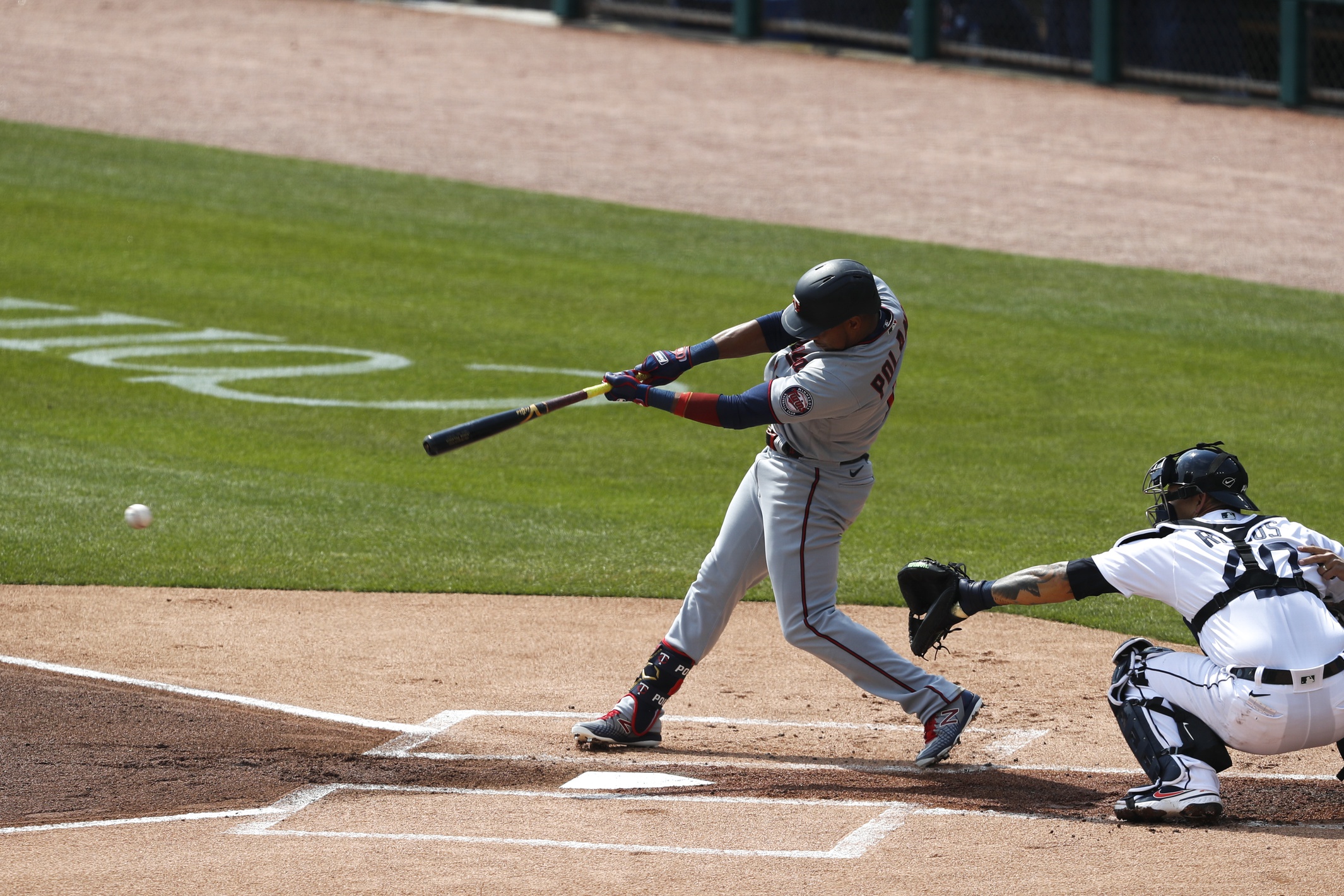 Look, I understand why Baldelli would have built up some confidence in Polanco's offensive abilities. During Rocco's first few months as manager of the Twins, Jorge was a monster. Through the end of May in 2019, he was slashing .338/.409/.590, which consequentially earned him a starting nod on the All-Star team. That's absolutely the kind of guy you want near the top of your lineup. Since then, however, Polanco has been a completely average hitter. Even that description might be generous. In 164 games since June 1st, 2019, he has a .260/.313/.393 slash line and .303 wOBA. In his career prior to 2019, he slashed .272/.329/.420 with a .323 wOBA, which is better of course but still not by any means exceptional. Not the kind of guy you want near the top of your lineup. And yet. Here's the number of times Rocco Baldelli, in 232 regular-season games at the helm, has ever batted Jorge Polanco anywhere below fourth in the lineup: seven. They all came at the end of last year, when a blatantly-hobbled Polanco finally hit sixth (3x), seventh (3x) and eighth (1x) in Baldelli's lineups in the final weeks. Jorge also batted seventh in both playoff games, and went 1-for-7 with a single. It appeared perhaps Baldelli's long-standing faith in Polanco as a hitter was wavering. But this year, following another offseason ankle surgery, the confidence is apparently restored. Polanco's batted second (5x), first (2x), fourth (2x) or third (1x) in every game so far, and has yet to sit one out. (Granted he was scheduled to do so on Monday before the postponement.) As a result of hitting so frequently and highly in a very productive offense, Polanco entered this week leading the American League in at-bats. Meanwhile, he has shown no signs of rebounding from a dismal 2020 campaign. Polanco looks terrible at the plate. He's slashing a miserable .119/.191/.167 and the advanced metrics back up the brutal results. An accumulating preponderance of evidence suggests that Polanco is a mediocre hitter who belongs near the bottom of the Twins lineup, much like Andrelton Simmons (who, by the way .268/.334/.348 with a .301 wOBA since 6/1/2019 – almost identical to Polanco). A couple of things bear noting here. One is that Baldelli had Polanco lined up to bat fifth on Tuesday before Nelson Cruz pulled out pre-game due to illness. That's still a pretty critical spot, hitting behind Cruz and Mitch Garver against a lefty, but it's further down than a healthy Polanco has ever batted under Baldelli. So maybe we're seeing some slight signs of diminishing faith. There's also the fact that injuries and poor performance have led to a lack of competition for Polanco at these key spots. But Josh Donaldson is about to return from the Injured List, and I believe Baldelli will soon start finding it hard to place Luis Arraez at the bottom of the order even against left-handers. In the near future, one longstanding pattern is going to have to snap: either Polanco will prove he's a far better hitter than he's shown over the past season's worth of games, or Baldelli will need to stop operating as if he is. MORE FROM TWINS DAILY — Latest Twins coverage from our writers — Recent Twins discussion in our forums — Follow Twins Daily via Twitter, Facebook or email
 -
The game outcomes were disappointing in a 3-3 stretch marked by late-game lapses, but the biggest story of the first full week Twins action in 2021 was Byron Buxton and his relentless dominance. Weekly Snapshot: Mon, 4/5 through Sun, 4/11 *** Record Last Week: 3-3 (Overall: 5-4) Run Differential Last Week: +14 (Overall: +21) Standing: T-2nd Place in AL Central Last Week's Game Recaps: Game 4 | MIN 15, DET 6: Cruz Leads Trouncing of TigersGame 5 | DET 4, MIN 3: Twins Fail to Execute in ExtrasGame 6 | MIN 3, DET 2: Colomé Holds on for 6-Out SaveGame 7 | MIN 10, SEA 2: Twins Treat Returning Fans With Dominant VictoryGame 8 | SEA 4, MIN 3: Another Loss in Extra InningsGame 9 | SEA 8, MIN 6: Mariners Score Eight Unanswered Runs NEWS & NOTES It's been a rough go for Brent Rooker. The slugging prospect looked quite good upon arriving in the major leagues last year, but broke his arm on an HBP in just his seventh game. This spring he missed out on a roster spot that many expected him to claim, with left field open, but quickly got his chance when Josh Donaldson went down in the opener. Unfortunately, Rooker just never looked right, going 1-for-11 with six strikeouts before being placed on the Injured List with a cervical strain ahead of Wednesday's game. Brandon Waddell replaced him on the roster, adding a 14th reliever. HIGHLIGHTS It is all coming together for Byron Buxton. We've seen torrid stretches from the center fielder before, but never in his career has he been so visibly confident, casual, and carefree while straight-up obliterating the competition. He looks like a fully-realized Neo in The Matrix right now, seeing ones and zeros. It's magical. Last week Buxton went 10-for-19 with three home runs and three doubles, lifting his seasonal hitting line to a hysterical .481/.548/1.185 while cementing his status as bona fide cleanup hitter. It sounds like there's a very real chance he'll rejoin the team this week, if not on Monday. With Miguel Sanó, Jorge Polanco, and basically everyone who sets foot in left field failing to do much offensively, the lineup could use JD's boost. LOOKING AHEAD The first full-slate week of the season is on tap, with seven games in seven days. First, the Twins will welcome the Red Sox for four at Target Field. Then it's off to Southern California for three against the Angels. It's unclear whether Shohei Ohtani, who missed his last start with a blister, might be ready to take the mound in one of those contests. MONDAY, 4/12: RED SOX @ TWINS – LHP Martin Perez v. LHP J.A. Happ TUESDAY, 4/13: RED SOX @ TWINS – RHP Nathan Eovaldi v. RHP Kenta Maeda WEDNESDAY, 4/14: RED SOX @ TWINS – LHP Eduardo Rodriguez v. RHP Jose Berrios THURSDAY, 4/15: RED SOX @ TWINS – RHP Garrett Richards v. RHP Michael Pineda FRIDAY, 4/16: TWINS @ ANGELS – RHP Matt Shoemaker v. TBD SATURDAY, 4/17: TWINS @ ANGELS – LHP J.A. Happ v. TBD SUNDAY, 4/11: TWINS @ ANGELS – RHP Kenta Maeda v. TBD MORE FROM TWINS DAILY — Latest Twins coverage from our writers — Recent Twins discussion in our forums — Follow Twins Daily via Twitter, Facebook or email Click here to view the article
-
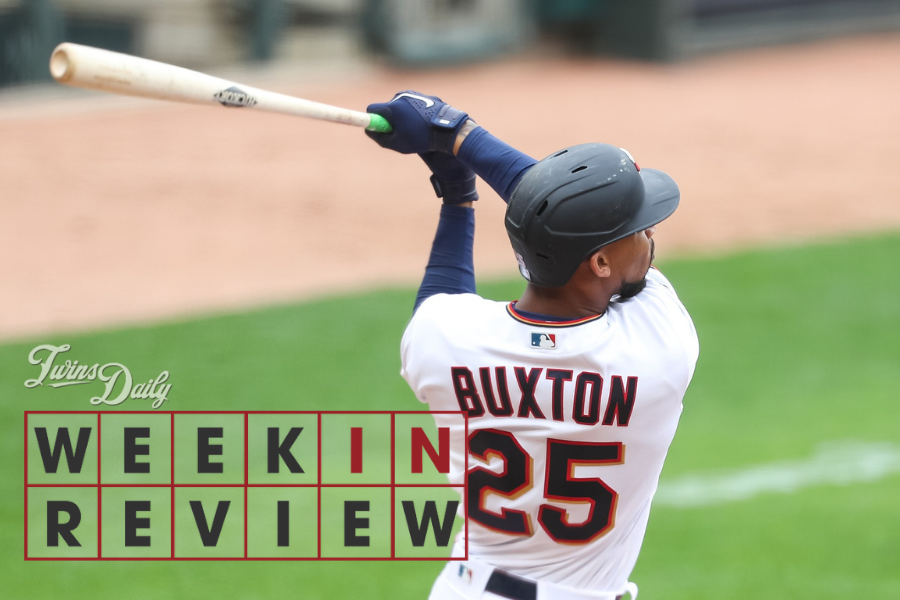 Weekly Snapshot: Mon, 4/5 through Sun, 4/11 *** Record Last Week: 3-3 (Overall: 5-4) Run Differential Last Week: +14 (Overall: +21) Standing: T-2nd Place in AL Central Last Week's Game Recaps: Game 4 | MIN 15, DET 6: Cruz Leads Trouncing of Tigers Game 5 | DET 4, MIN 3: Twins Fail to Execute in Extras Game 6 | MIN 3, DET 2: Colomé Holds on for 6-Out Save Game 7 | MIN 10, SEA 2: Twins Treat Returning Fans With Dominant Victory Game 8 | SEA 4, MIN 3: Another Loss in Extra Innings Game 9 | SEA 8, MIN 6: Mariners Score Eight Unanswered Runs NEWS & NOTES It's been a rough go for Brent Rooker. The slugging prospect looked quite good upon arriving in the major leagues last year, but broke his arm on an HBP in just his seventh game. This spring he missed out on a roster spot that many expected him to claim, with left field open, but quickly got his chance when Josh Donaldson went down in the opener. Unfortunately, Rooker just never looked right, going 1-for-11 with six strikeouts before being placed on the Injured List with a cervical strain ahead of Wednesday's game. Brandon Waddell replaced him on the roster, adding a 14th reliever. HIGHLIGHTS It is all coming together for Byron Buxton. We've seen torrid stretches from the center fielder before, but never in his career has he been so visibly confident, casual, and carefree while straight-up obliterating the competition. He looks like a fully-realized Neo in The Matrix right now, seeing ones and zeros. It's magical. Last week Buxton went 10-for-19 with three home runs and three doubles, lifting his seasonal hitting line to a hysterical .481/.548/1.185 while cementing his status as bona fide cleanup hitter. Meanwhile, Nelson Cruz continues to be an astounding offensive force as he approaches age 41. Finally joining the starting lineup with the Twins escaping NL rules, he launched two homers, including a grand slam, in his first start of the season in Detroit. He added another the following day and then went deep on Saturday at Target Field, totaling 11 hits and nine RBIs in six starts for the week. Buxton and Cruz are leading the charge for a lineup that has been locked in and routinely destroying the ball. There have been plenty of promising early signs suggesting the offensive powerhouse of 2019 has returned – in the past week alone, the Twins recorded more runs in a game (15 against Detroit on Monday) and more hits in a game (16 against Seattle on Thursday) than they ever did during the 2020 season. In the early going, these boys are hitting the ball HARD. Pitching continues to be a tremendous positive overall, albeit one that hit a snag with the unraveling midway through Sunday's game. Prior to that, the unit had been nothing short of incredible. Minnesota entered Sunday leading the American League in ERA (2.20), and trailing only Boston and New York in FIP (3.19). The starting pitching especially was exemplary, with an MLB-leading 1.88 ERA. Kenta Maeda, José Berríos, and Michael Pineda all contributed last week with strong showings, and Matt Shoemaker had allowed only one through 11 innings before things went south in the sixth on Sunday. We'll get a couple of looks at J.A. Happ in the week ahead, but so far this rotation has been highly impressive and even better than advertised. Excellent work from Wes Johnson and all involved. LOWLIGHTS Alex Colomé is a problem. The centerpiece of Minnesota's offseason bullpen overhaul has now been directly responsible for two of their four losses. While the blown three-run save in the season opener could be chalked up in part to defensive lapses and bad luck, there's no sugarcoating the meltdown that took place in the ninth inning Sunday, which cost the Twins a game and series against Seattle. Colomé looked flat-out brutal. He faced five hitters, induced zero swinging strikes on 17 pitches, and gave up contact of 99.9+ MPH on three of four balls in play. That includes Kyle Seager's game-winning home run, on a pitch very similar to the back-breaking Christian Yelich drive in Milwaukee: a 90 MPH cutter in the heart of the zone that basically grooved right into the sweet spot of the bat. It was the second consecutive day where Colomé surrendered a late-game lead. On Saturday he gave up a go-ahead single to Seager, on yet another crushable meatball right over the plate. These are frankly inexcusable pitches in key spots and he's been serving them up continually. Of all the front office's offseason moves, the Colomé signing was the one that gave me most pause. As good as his numbers on looked on paper, it was hard not to feel apprehensive about the fact that the White Sox – who watched him achieve near-perfection as closer in 2020 – spent $50 million for his replacement while seemingly making no effort to retain him. Likewise, the rest of the league showed lukewarm interest at best in Colomé, who ended up signing for less than almost anyone expected. It feels like we're quickly seeing why. TRENDING STORYLINE When will Donaldson return? From the sound of it, his activation from IL could be imminent. The Twins described his hamstring strain as "minor" from the start, and sure enough, he was running on treadmills and testing his legs just days after being placed on the shelf. On Sunday he went through a full battery of live baseball activities at the alternate site in St. Paul and reportedly came out of it feeling fine. It sounds like there's a very real chance he'll rejoin the team this week, if not on Monday. With Miguel Sanó, Jorge Polanco, and basically everyone who sets foot in left field failing to do much offensively, the lineup could use JD's boost. LOOKING AHEAD The first full-slate week of the season is on tap, with seven games in seven days. First, the Twins will welcome the Red Sox for four at Target Field. Then it's off to Southern California for three against the Angels. It's unclear whether Shohei Ohtani, who missed his last start with a blister, might be ready to take the mound in one of those contests. MONDAY, 4/12: RED SOX @ TWINS – LHP Martin Perez v. LHP J.A. Happ TUESDAY, 4/13: RED SOX @ TWINS – RHP Nathan Eovaldi v. RHP Kenta Maeda WEDNESDAY, 4/14: RED SOX @ TWINS – LHP Eduardo Rodriguez v. RHP Jose Berrios THURSDAY, 4/15: RED SOX @ TWINS – RHP Garrett Richards v. RHP Michael Pineda FRIDAY, 4/16: TWINS @ ANGELS – RHP Matt Shoemaker v. TBD SATURDAY, 4/17: TWINS @ ANGELS – LHP J.A. Happ v. TBD SUNDAY, 4/11: TWINS @ ANGELS – RHP Kenta Maeda v. TBD MORE FROM TWINS DAILY — Latest Twins coverage from our writers — Recent Twins discussion in our forums — Follow Twins Daily via Twitter, Facebook or email
 -
Coming into this 2021 season, there was much bluster about Major League Baseball's attempts to deaden its baseball. Nelson Cruz was even asked about it. How silly he and a Twins teammate are making those efforts seem in the early going.When asked ahead of spring training if he was concerned about reported alterations to the baseball, and their impact on his production, Cruz gave a perfectly logical answer: "That's gonna be for every hitter. If they were gonna keep it only for myself, yeah, I'd be worried, but that's everybody. I'll be good." So far in this young season, it does kinda seem like Cruz is hitting a different kind of baseball than everyone else. But not in the way he intimated. The 40-year-old DH was raring to go after sitting out much of the opening series. In the second at-bat of his first start of the season, Monday in Detroit, Cruz launched a grand slam that traveled out of the yard at 114.6 MPH. The return of baseball itself is itself a shock to the system, but if you feel like what you've been seeing from these Twins hitters at the plate is extraordinary, you're not wrong. Within the first five games of the season, this team is already doing eye-popping things. Cruz and Buxton are leading the charge by decimating balls in unprecedented fashion. So, with all that said, I can't really speak much to the efficacy of MLB's efforts to deaden the baseball. But I can say with certainty that a few of those baseballs are dead now. MORE FROM TWINS DAILY — Latest Twins coverage from our writers — Recent Twins discussion in our forums — Follow Twins Daily via Twitter, Facebook or email Click here to view the article
-
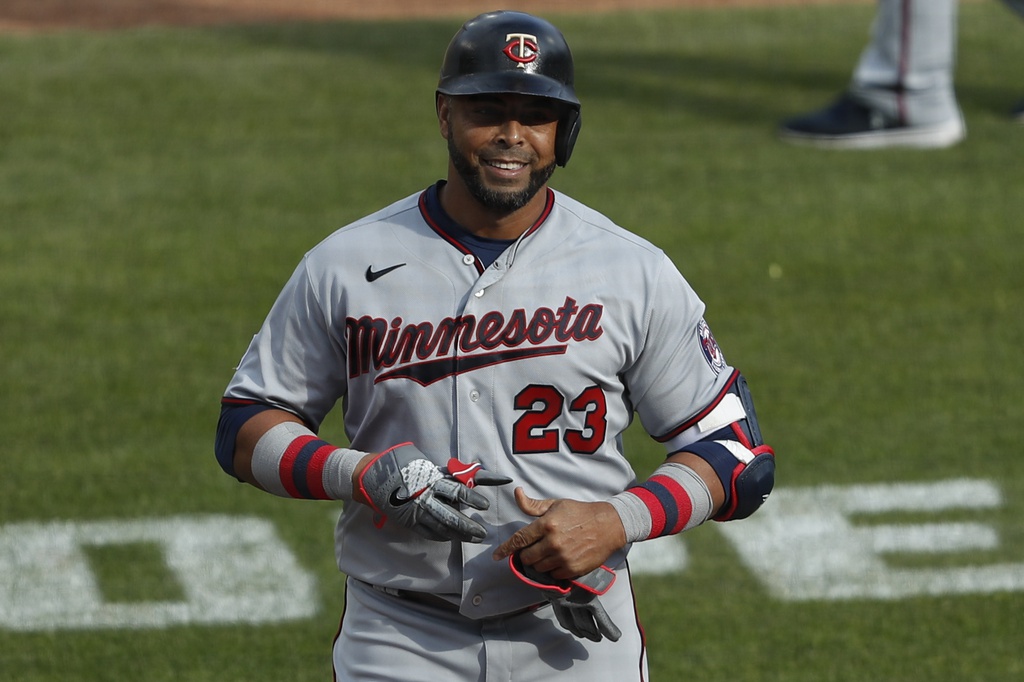 When asked ahead of spring training if he was concerned about reported alterations to the baseball, and their impact on his production, Cruz gave a perfectly logical answer: "That's gonna be for every hitter. If they were gonna keep it only for myself, yeah, I'd be worried, but that's everybody. I'll be good." So far in this young season, it does kinda seem like Cruz is hitting a different kind of baseball than everyone else. But not in the way he intimated. The 40-year-old DH was raring to go after sitting out much of the opening series. In the second at-bat of his first start of the season, Monday in Detroit, Cruz launched a grand slam that traveled out of the yard at 114.6 MPH. https://twitter.com/BleacherReport/status/1379145035162157060 To put that exit velocity in perspective, it would've ranked second-highest out of all his batted balls in the entire 2020 season, and sixth in 2019. Cruz was only warming up. In his next plate appearance, he crushed a solo home run with an exit velocity of 116.6 MPH. Not only would that EV have ranked third among all batted balls in the major leagues last year, it was the hardest-hit home run by a Minnesota Twins since Statcast started tracking data in 2015. Surpassing all 307 hit with the juiced ball in 2019. https://twitter.com/SInow/status/1379161050793312261 While we're very early on, Cruz's measurable rankings against fellow MLB hitters are hilarious. He's on another world, basically. Never mind that he's doing it at an age where, historically, even inner-circle Hall of Famers have generally failed to produce. As amazing as Cruz's crusade against deadened baseballs and aging curves might be, I find myself even more impressed by what Byron Buxton is doing in this young season. We've grown accustomed to Nelly obliterating the ball. Buck's breakout is still very much in blossom. On Opening Day, Buxton hit the longest and hardest home run of his career – a 111.4 MPH nuke measured at 456 feet. After entering midway through Tuesday's game against the Tigers, Buxton re-wrote his own exit velocity record. His game-tying solo shot clocked in at 114.1 MPH. (With a slightly higher arc, it fell just short in distance of his bomb in Milwaukee, at 451.) https://twitter.com/BallySportsNOR/status/1379526730046709761 The return of baseball itself is itself a shock to the system, but if you feel like what you've been seeing from these Twins hitters at the plate is extraordinary, you're not wrong. Within the first five games of the season, this team is already doing eye-popping things. Cruz and Buxton are leading the charge by decimating balls in unprecedented fashion. So, with all that said, I can't really speak much to the efficacy of MLB's efforts to deaden the baseball. But I can say with certainty that a few of those baseballs are dead now. MORE FROM TWINS DAILY — Latest Twins coverage from our writers — Recent Twins discussion in our forums — Follow Twins Daily via Twitter, Facebook or email
 -
Twins baseball is back, and that means so too is our season-long Sunday night tradition of reviewing the week that was. Here's a rundown of the highlights and lowlights from opening weekend in Milwaukee, where the Twins took two of three from the Brewers, as well as a look ahead to what's coming in the season's first full week. Weekly Snapshot: Thurs, 4/1 through Sun, 4/4 *** Record Last Week: 2-1 (Overall: 2-1) Run Differential Last Week: +7 (Overall: +7) Standing: T-1st Place in AL Central Last Week's Game Recaps: Game 1 | MIL 6, MIN 5: Twins Blow 3-Run Lead in 9th InningGame 2 | MIN 2, MIL 0: Take a Bow, José BerríosGame 3 | MIN 8, MIL 2: Arraez Reaches 5 Times, Twins Take Series NEWS & NOTES An opening series victory in Milwaukee brought plenty of glowing positives, but also a familiar feeling of dread as Minnesota's two most critical players – Josh Donaldson and Byron Buxton – still can't seem to stay on the field. Donaldson made it through only one plate appearance before his balky legs acted up once again. A tight hamstring disrupted his stride while he rounded first base on a double in Thursday's opener, and Donaldson was removed before taking the field at third base. The diagnosis is relatively encouraging, in that it wasn't calf-related and the Twins emphasized the "mild" nature of the injury ... but still. This is a gutting development right off the bat. While they weren't quite as overwhelmingly impressive, Kenta Maeda and Michael Pineda also deserve credit for high-caliber first turns in the rotation. The fielders behind them weren't always helpful (more on that in a moment), and Maeda especially was not at his sharpest, but both starters were effective, combining to allow just one earned run in 9 ⅓ innings with 10 strikeouts. The path to a 100-win season for the Twins this year lies in getting consistently strong starting pitching, day in day out, and letting the rest take care of itself. So far, so good on that front. LOWLIGHTS The Twins revamped their roster during the offseason with a clear objective in mind: upgrade to a world-class defense that can uplift the pitching staff and cut down on costly miscues. So far, not so good on that front. The series in Milwaukee featured a medley of gaffes and blunders. Andrelton Simmons dropped a force-out thrown right into his glove. Jorge Polanco muffed a routine grounder. Alex Colomé committed a mental and physical error with a wayward throw to second on Thursday. Later that inning, Kepler failed to secure a deep drive to right despite getting leather on it. Certainly not the hallmarks of a stalwart defensive club, although it's wise not to overreact at this stage, and there were some nifty plays mixed in as well. The disappointing glovework, and Colomé's ninth-inning meltdown in the opener, were really the only significant rough spots in this series, since the Twins outplayed Milwaukee quite thoroughly otherwise. TRENDING STORYLINE We've gotten past the known commodities in the Twins rotation. Maeda, Berríos and Pineda all looked good, but that's nothing new. They powered this starting staff to stellar results last year. Now, we'll get a look at the new guys. Matt Shoemaker is set to make his Twins debut on Monday, followed by J.A. Happ on Tuesday. Shoemaker will be looking to shake off a rough spring, where he posted a 6.57 ERA and allowed four homers in 12 ⅓ innings, while Happ will be looking to go as deep as he can following a COVID-shortened ramp-up. Expect to see some Randy Dobnak in the days ahead, and possibly some roster moves (position player out, pitcher in?) as the Twins aim to keep fresh arms stocked while escaping from NL rules. LOOKING AHEAD With interleague play in the rearview (for now), the Twins will welcome Cruz back to their starting lineup on Monday in Detroit, where they kick off a three-game series against the worst team in the division. Of note: in an early-season scheduling quirk, all three games at Detroit are noon starts. On Thursday, Target Field will welcome back fans for the first time in 18 months. It promises to be a very special occasion. With six games on tap against two of the worst teams in the league, this should hopefully be a chance for the Twins to flex their muscles a bit. MONDAY, 4/5: TWINS @ TIGERS – RHP Matt Shoemaker v. RHP Jose Urena TUESDAY, 4/6: TWINS @ TIGERS – LHP J.A. Happ v. RHP Casey Mize WEDNESDAY, 4/7: TWINS @ TIGERS – RHP Kenta Maeda v. LHP Matthew Boyd THURSDAY, 4/8: MARINERS @ TWINS – LHP Marco Gonzales v. RHP Jose Berrios SATURDAY, 4/10: MARINERS @ TWINS – RHP Yusei Kikuchi v. RHP Michael Pineda SUNDAY, 4/11: MARINERS @ TWINS – RHP Chris Flexen v. RHP Matt Shoemaker MORE FROM TWINS DAILY — Latest Twins coverage from our writers — Recent Twins discussion in our forums — Follow Twins Daily via Twitter, Facebook or email Click here to view the article
-
 Weekly Snapshot: Thurs, 4/1 through Sun, 4/4 *** Record Last Week: 2-1 (Overall: 2-1) Run Differential Last Week: +7 (Overall: +7) Standing: T-1st Place in AL Central Last Week's Game Recaps: Game 1 | MIL 6, MIN 5: Twins Blow 3-Run Lead in 9th Inning Game 2 | MIN 2, MIL 0: Take a Bow, José Berríos Game 3 | MIN 8, MIL 2: Arraez Reaches 5 Times, Twins Take Series NEWS & NOTES An opening series victory in Milwaukee brought plenty of glowing positives, but also a familiar feeling of dread as Minnesota's two most critical players – Josh Donaldson and Byron Buxton – still can't seem to stay on the field. Donaldson made it through only one plate appearance before his balky legs acted up once again. A tight hamstring disrupted his stride while he rounded first base on a double in Thursday's opener, and Donaldson was removed before taking the field at third base. The diagnosis is relatively encouraging, in that it wasn't calf-related and the Twins emphasized the "mild" nature of the injury ... but still. This is a gutting development right off the bat. Buxton lasted slightly longer before being removed from a game, but not by much. He exited Sunday's contest in the third inning, although fans were able to breathe a big sigh of relief upon learning he was lifted due to non-COVID illness. Donaldson went on the Injured List and was replaced on the roster by Brent Rooker, who made his season debut on Sunday in place of Buxton. Presumably Buck should be back within the next day or two. Still, to have both players already knocked out of games in a season where the big narrative is "What can the Twins do if they keep JD and Buck on the field for any length of time" is almost unreal. What's most unfortunate is that both players looked so good prior to these incidents. Donaldson hit a 112 MPH rocket into the gap in his lone at-bat, and Buxton's been on an absolute tear out of the gates. Which feels like a good place to start the next section. HIGHLIGHTS Before leaving Sunday's game, Buxton ripped a 98 MPH double in his first AB, tallying his third extra-base hit already. The first was a majestic moonshot on Opening Day that should've sealed a win (longest HR of Buxton's career), and the second home run on Saturday broke up a no-hitter by Milwaukee's Corbin Burnes, ultimately proving decisive in Minnesota's 2-0 victory. After slugging .534 with 23 home runs in 126 games over the past two years, Buxton is making an emphatic early statement that his power breakthrough is entirely legitimate. His hot start, combined with the injury to Donaldson and unavailability of Nelson Cruz, quickly elevated the center fielder to No. 3 hitter, and Buck looked the part. He wasn't the only one who looked like a natural at a new spot in the order. Luis Arraez batted leadoff in each of the first three games, and it sure seems like he's gonna stick there. He reached base nine times in the series, including five times in Sunday's finale. He's sporting a healthy .600 on-base percentage after three games. Although his defense at the hot corner may be somewhat questionable, Arraez is an absolute godsend in the absence of Donaldson, allowing the Twins to replace one of their most crucial players in the lineup with an amazing hitter and essential sparkplug. The team's decision to designate him essentially as a 10th man is already looking very savvy, dramatically lessening the blow of Donaldson's loss. Beyond Buxton and Arraez, there were plenty of other offensive highlights, including Max Kepler's clutch hitting, Mitch Garver's awakening, and some encouraging signs from Miguel Sanó. But the resounding positive coming out of this series is starting pitching. José Berríos was unbelievable on Saturday night, spinning the gem of his career with six no-hit innings and 12 strikeouts. With his fastball pumping 95-96 consistently and his breaking ball giving hitters fits, Berríos retired 18 of the 19 batters he faced, with an HBP the only blemish in his brilliant performance. While they weren't quite as overwhelmingly impressive, Kenta Maeda and Michael Pineda also deserve credit for high-caliber first turns in the rotation. The fielders behind them weren't always helpful (more on that in a moment), and Maeda especially was not at his sharpest, but both starters were effective, combining to allow just one earned run in 9 ⅓ innings with 10 strikeouts. The path to a 100-win season for the Twins this year lies in getting consistently strong starting pitching, day in day out, and letting the rest take care of itself. So far, so good on that front. LOWLIGHTS The Twins revamped their roster during the offseason with a clear objective in mind: upgrade to a world-class defense that can uplift the pitching staff and cut down on costly miscues. So far, not so good on that front. The series in Milwaukee featured a medley of gaffes and blunders. Andrelton Simmons dropped a force-out thrown right into his glove. Jorge Polanco muffed a routine grounder. Alex Colomé committed a mental and physical error with a wayward throw to second on Thursday. Later that inning, Kepler failed to secure a deep drive to right despite getting leather on it. Certainly not the hallmarks of a stalwart defensive club, although it's wise not to overreact at this stage, and there were some nifty plays mixed in as well. The disappointing glovework, and Colomé's ninth-inning meltdown in the opener, were really the only significant rough spots in this series, since the Twins outplayed Milwaukee quite thoroughly otherwise. TRENDING STORYLINE We've gotten past the known commodities in the Twins rotation. Maeda, Berríos and Pineda all looked good, but that's nothing new. They powered this starting staff to stellar results last year. Now, we'll get a look at the new guys. Matt Shoemaker is set to make his Twins debut on Monday, followed by J.A. Happ on Tuesday. Shoemaker will be looking to shake off a rough spring, where he posted a 6.57 ERA and allowed four homers in 12 ⅓ innings, while Happ will be looking to go as deep as he can following a COVID-shortened ramp-up. Expect to see some Randy Dobnak in the days ahead, and possibly some roster moves (position player out, pitcher in?) as the Twins aim to keep fresh arms stocked while escaping from NL rules. LOOKING AHEAD With interleague play in the rearview (for now), the Twins will welcome Cruz back to their starting lineup on Monday in Detroit, where they kick off a three-game series against the worst team in the division. Of note: in an early-season scheduling quirk, all three games at Detroit are noon starts. On Thursday, Target Field will welcome back fans for the first time in 18 months. It promises to be a very special occasion. With six games on tap against two of the worst teams in the league, this should hopefully be a chance for the Twins to flex their muscles a bit. MONDAY, 4/5: TWINS @ TIGERS – RHP Matt Shoemaker v. RHP Jose Urena TUESDAY, 4/6: TWINS @ TIGERS – LHP J.A. Happ v. RHP Casey Mize WEDNESDAY, 4/7: TWINS @ TIGERS – RHP Kenta Maeda v. LHP Matthew Boyd THURSDAY, 4/8: MARINERS @ TWINS – LHP Marco Gonzales v. RHP Jose Berrios SATURDAY, 4/10: MARINERS @ TWINS – RHP Yusei Kikuchi v. RHP Michael Pineda SUNDAY, 4/11: MARINERS @ TWINS – RHP Chris Flexen v. RHP Matt Shoemaker MORE FROM TWINS DAILY — Latest Twins coverage from our writers — Recent Twins discussion in our forums — Follow Twins Daily via Twitter, Facebook or email
 -
Today, a new season of Minnesota Twins baseball gets underway. While 2021 won't represent a full return to normalcy in baseball, it figures to be a big step in that direction. Can the Twins take a big step of their own and get over the hump in October? First, they'll need to fend off a challenge in the Central from a familiar and formidable foe.The 2020 MLB season will be mostly looked back upon as an anomaly – an abbreviated 60-game sprint, played out before empty ballparks, leading up to a hugely expanded playoff field. It was an odd, warped year of baseball that nonetheless produced a worthy champion. For the Twins and their fans, 2020 season was fun, yet unfulfilling. The team played .600 ball and won the division (or more accurately, Chicago lost the division), then went out with a whimper in the postseason. With 18 consecutive playoff losses in tow, Minnesota's directive in 2021 is crystal-clear. But that's putting the cart before the horse. They need to get to the dance before they can step onto the floor, and unlike last year, reaching the postseason will be no mere formality for quality teams. Having added a frontline starter and elite reliever to their emerging squad, the White Sox are favored by bettors to win the Central, and are feeling plenty confident for their part. That's nice and all, but the Twins are favored by most projection systems, including the latest forecast from Five Thirty Eight, a stats & analytics super-site. Their algorithm gives Minnesota a substantial advantage in the AL Central with a 64% chance to make the playoffs and 47% chance to win the division. Download attachment: 538forecast.JPG The White Sox have plenty of hype, and rightfully so. They're a talented young team coming off a breakout year, bolstered by big-name offseason additions. But until further notice, this division belongs to the two-time defending champs, and Chicago will need to get past the Twins. Projections and bettings odds are fun and all, but it's time to let it play out on the field. Here's the roster Minnesota is bringing to battle out of the gates: Download attachment: openingdayroster.png It's a deep and balanced group, which is also (knocking on wood) remarkably healthy at the moment. In our on Wednesday night, Seth and I went through the Twins 2021 roster position-by-position, and were joined by MLB.com's Do-Hyoung Park. You can watch that below, or keep scrolling for the skinny on each position, with links to the full breakdowns for each. CATCHER Starter: Mitch Garver Backup: Ryan Jeffers Depth: Willians Astudillo, Tomás Telis Prospects: Ben Rortvedt The Twins are perfectly equipped for a new era of workload management behind the plate, with two starting-caliber options who figure to split the time almost evenly. Garver is one year removed from playing at a borderline-MVP level and Jeffers looked tremendous as a rookie. Astudillo is a better third catcher than most other teams can boast, and Rortvedt gives them a legitimate prospect in the minors who's nearing readiness. This position is stacked. FIRST BASE Starter: Miguel Sanó Backup: Willians Astudillo Depth: Brent Rooker, Mitch Garver Prospects: Alex Kirilloff, Aaron Sabato This is definitely a prove-it year for Sanó, who followed up his breakout 2019 – and contract extension – with a disappointing 2020 campaign that saw him bat .204 while leading the league in strikeouts. He looked pretty solid defensively in his transition to first base, but the slugger's bat will determine his future. Sanó certainly has the makings of a prototypical run-producing first baseman. If he can't shake off the inconsistency and contact woes, the Twins have no shortage of options behind him; Rooker is just waiting his turn. SECOND BASE Starter: Jorge Polanco Backup: Luis Arraez Depth: Nick Gordon, Travis Blankenhorn Prospects: Jose Miranda, Yunior Severino Sanó is still acclimating to the right side of the diamond, and now the guy playing alongside him at second base will be doing the same. Polanco is shifting over from shortstop, to a position where he seems a more natural fit. His success as a second baseman will be defined in part by his ability to adapt defensively and let his fielding skills shine through, but even more so by his ability to rebound at the plate after a lackluster campaign and second consecutive offseason ankle surgery. THIRD BASE Starter: Josh Donaldson Backup: Luis Arraez Depth: Willians Astudillo, Travis Blankenhorn Prospects: Keoni Cavaco, Jose Miranda The first year of Donaldson's historic free agent contract with the Twins was more or less a flop, as his problematic calf flared up multiple times and kept him out of the lineup for half the shortened season, as well as the playoffs. The good news is that he looked mostly like his usual self when on the field. If he can shake off the injury relapse and play a full season at age 35, he can completely change the complexion of this team – offensively and defensively – but we should probably expect to see a significant amount of Arraez and Astudillo at third. SHORTSTOP Starter: Andrelton Simmons Backup: Jorge Polanco Depth: Luis Arráez, Nick Gordon Prospects: Royce Lewis, Wander Javier In one of their most intriguing offseason moves ever, the Twins supplanted Polanco from shortstop (where he started in the 2019 All-Star Game) by signing an all-time great defender in Simmons. It's an open question whether the 31-year-old can continue to play at that same historically outstanding level in the field, coming off a season where he hurt his ankle and his defensive metrics tanked, but on a one-year deal there's not much risk. The upside, if he's anywhere near his previous defensive norm, could be transformative. The downside basically involves going back to the previous Polanco-Arraez alignment in the middle infield, which is hardly a nightmare. LEFT FIELD Starter: Jake Cave Backup: Kyle Garlick Depth: Luis Arráez, Brent Rooker Prospects: Alex Kirilloff, Trevor Larnach Left field will belong to Kirilloff at some point, but up until then, a platoon of Cave and Garlick will be keeping the spot warm, with Arraez likely rotating through a fair amount. The team's top prospect brings tantalizing excitement to this position, but Cave and Garlick should be a perfectly serviceable interim solution. With Rooker, Larnach, Keon Broxton, and others all serving as depth, the Twins are in no danger of being needy here, even with longtime staple Eddie Rosario now gone. CENTER FIELD Starter: Byron Buxton Backup: Jake Cave Depth: Max Kepler, Keon Broxton Prospects: Gilberto Celestino, Misael Urbina Can Buxton stay healthy enough to play a full season, or even anything close? As usual, that's the big question in center field – one with pivotal implications for the team at large. If he can stay on the field he's a decisive difference-maker, but unfortunately the Twins must plan around the expectation of his absence at this point. They're fairly well equipped to sustain his loss, with Kepler able to shift over and plenty of depth in the corners, so Buxton's presence almost feels like a bonus this year – one with game-changing potential. RIGHT FIELD Starter: Max Kepler Backup: Jake Cave Depth: Brent Rooker, Kyle Garlick Prospects: Alex Kirilloff, Trevor Larnach Kepler is one of the best defensive right fielders in the game, but for much of his career, his bat hasn't quite measured up. Is he the average hitter we saw through 2018, or the true offensive asset we saw in a breakthrough, 36-homer 2019 season? His step backward in 2020 points to the former, but now Kepler has a chance to get back on track and re-establish himself as a top-tier right fielder. The pressure is mounting a bit, with top prospects starting to press. DESIGNATED HITTER Starter: Nelson Cruz Backup: Miguel Sanó Depth: Luis Arráez, Mitch Garver Prospects: Aaron Sabato, Brent Rooker Cruz's ongoing battle against Father Time is one of the big storylines heading into the 2021 season. Very few hitters in major-league history – even in the class of all-time greats – have remained productive at the same age as Nelly, who turns 41 in three months. But the good news is that he can drop off significantly and still be an asset at DH, and the better news is that even if things go totally awry, the Twins have numerous quality bats they can plug in at this position. It's really hard to envision a scenario where DH isn't a strength for this team. STARTING PITCHER Rotation: Kenta Maeda, José Berríos, Michael Pineda, J.A. Happ, Matt Shoemaker Depth: Randy Dobnak, Devin Smeltzer, Lewis Thorpe, Bailey Ober Prospects: Jhoan Duran, Jordan Balazovic, Matt Canterino, Blayne Enlow, Cole Sands It's difficult to remember a time when the Twins had this much starting pitching depth. Not only are they strong at the top, with the reigning Cy Young runner-up Maeda and the steadily great Berríos leading the charge, but through the middle and beyond the back end. Pineda and Happ are better than most third/fourth starters. Dobnak, with his freshly minted contract extension, is on the outside to open the season. Top prospects Duran, Balazovic, and Canterino could all make an impact imminently. Thorpe has looked tremendous this spring. Just a ton to like here. RELIEF PITCHER Bullpen: Taylor Rogers, Alex Colomé, Tyler Duffey, Hansel Robles, Caleb Thielbar, Jorge Alcalá, Cody Stashak, Randy Dobnak Depth: Shaun Anderson, Ian Hamilton, Brandon Waddell, Ian Gibaut Prospects: Jhoan Duran, Edwar Colina, Dakota Chalmers, Josh Winder This unit certainly represents the biggest question mark on the roster heading into the season. Almost every pitcher in the mix is either looking to rebound from a down year, modestly experienced, rejected by other teams, or all of the above. And yet ... how can we not faith in the way this team operates its bullpen plan? They've proven they know what they're doing, and so I trust them, and you don't have to squint too hard to see any pitcher in their collection being a real asset. With that said, if things unravel in the relief corps this year, the Twins will definitely be open to criticism after letting several key contributors from an outstanding 2020 bullpen walk. ~~~ The Twins are fielding a hell of a team this year. Health will of course be the primary determinant of their fate, and it's not an area they've fared well recently, but as they take the field in Milwaukee, they'll be healthy and at full strength. What more can you ask for? Happy Opening Day, and cheers to the return of baseball. This team is absolutely capable of winning a World Series. Can they fulfill their potential in what may be Nelly's last ride? MORE FROM TWINS DAILY — Latest Twins coverage from our writers — Recent Twins discussion in our forums — Follow Twins Daily via Twitter, Facebook or email Click here to view the article
-
 The 2020 MLB season will be mostly looked back upon as an anomaly – an abbreviated 60-game sprint, played out before empty ballparks, leading up to a hugely expanded playoff field. It was an odd, warped year of baseball that nonetheless produced a worthy champion. For the Twins and their fans, 2020 season was fun, yet unfulfilling. The team played .600 ball and won the division (or more accurately, Chicago lost the division), then went out with a whimper in the postseason. With 18 consecutive playoff losses in tow, Minnesota's directive in 2021 is crystal-clear. But that's putting the cart before the horse. They need to get to the dance before they can step onto the floor, and unlike last year, reaching the postseason will be no mere formality for quality teams. Having added a frontline starter and elite reliever to their emerging squad, the White Sox are favored by bettors to win the Central, and are feeling plenty confident for their part. https://twitter.com/JRFegan/status/1363949240209215488 That's nice and all, but the Twins are favored by most projection systems, including the latest forecast from Five Thirty Eight, a stats & analytics super-site. Their algorithm gives Minnesota a substantial advantage in the AL Central with a 64% chance to make the playoffs and 47% chance to win the division. The White Sox have plenty of hype, and rightfully so. They're a talented young team coming off a breakout year, bolstered by big-name offseason additions. But until further notice, this division belongs to the two-time defending champs, and Chicago will need to get past the Twins. Projections and bettings odds are fun and all, but it's time to let it play out on the field. Here's the roster Minnesota is bringing to battle out of the gates: It's a deep and balanced group, which is also (knocking on wood) remarkably healthy at the moment. In our on Wednesday night, Seth and I went through the Twins 2021 roster position-by-position, and were joined by MLB.com's Do-Hyoung Park. You can watch that below, or keep scrolling for the skinny on each position, with links to the full breakdowns for each. CATCHER Starter: Mitch Garver Backup: Ryan Jeffers Depth: Willians Astudillo, Tomás Telis Prospects: Ben RortvedtThe Twins are perfectly equipped for a new era of workload management behind the plate, with two starting-caliber options who figure to split the time almost evenly. Garver is one year removed from playing at a borderline-MVP level and Jeffers looked tremendous as a rookie. Astudillo is a better third catcher than most other teams can boast, and Rortvedt gives them a legitimate prospect in the minors who's nearing readiness. This position is stacked. FIRST BASE Starter: Miguel Sanó Backup: Willians Astudillo Depth: Brent Rooker, Mitch Garver Prospects: Alex Kirilloff, Aaron SabatoThis is definitely a prove-it year for Sanó, who followed up his breakout 2019 – and contract extension – with a disappointing 2020 campaign that saw him bat .204 while leading the league in strikeouts. He looked pretty solid defensively in his transition to first base, but the slugger's bat will determine his future. Sanó certainly has the makings of a prototypical run-producing first baseman. If he can't shake off the inconsistency and contact woes, the Twins have no shortage of options behind him; Rooker is just waiting his turn. SECOND BASE Starter: Jorge Polanco Backup: Luis Arraez Depth: Nick Gordon, Travis Blankenhorn Prospects: Jose Miranda, Yunior SeverinoSanó is still acclimating to the right side of the diamond, and now the guy playing alongside him at second base will be doing the same. Polanco is shifting over from shortstop, to a position where he seems a more natural fit. His success as a second baseman will be defined in part by his ability to adapt defensively and let his fielding skills shine through, but even more so by his ability to rebound at the plate after a lackluster campaign and second consecutive offseason ankle surgery. THIRD BASE Starter: Josh Donaldson Backup: Luis Arraez Depth: Willians Astudillo, Travis Blankenhorn Prospects: Keoni Cavaco, Jose MirandaThe first year of Donaldson's historic free agent contract with the Twins was more or less a flop, as his problematic calf flared up multiple times and kept him out of the lineup for half the shortened season, as well as the playoffs. The good news is that he looked mostly like his usual self when on the field. If he can shake off the injury relapse and play a full season at age 35, he can completely change the complexion of this team – offensively and defensively – but we should probably expect to see a significant amount of Arraez and Astudillo at third. SHORTSTOP Starter: Andrelton Simmons Backup: Jorge Polanco Depth: Luis Arráez, Nick Gordon Prospects: Royce Lewis, Wander JavierIn one of their most intriguing offseason moves ever, the Twins supplanted Polanco from shortstop (where he started in the 2019 All-Star Game) by signing an all-time great defender in Simmons. It's an open question whether the 31-year-old can continue to play at that same historically outstanding level in the field, coming off a season where he hurt his ankle and his defensive metrics tanked, but on a one-year deal there's not much risk. The upside, if he's anywhere near his previous defensive norm, could be transformative. The downside basically involves going back to the previous Polanco-Arraez alignment in the middle infield, which is hardly a nightmare. LEFT FIELD Starter: Jake Cave Backup: Kyle Garlick Depth: Luis Arráez, Brent Rooker Prospects: Alex Kirilloff, Trevor LarnachLeft field will belong to Kirilloff at some point, but up until then, a platoon of Cave and Garlick will be keeping the spot warm, with Arraez likely rotating through a fair amount. The team's top prospect brings tantalizing excitement to this position, but Cave and Garlick should be a perfectly serviceable interim solution. With Rooker, Larnach, Keon Broxton, and others all serving as depth, the Twins are in no danger of being needy here, even with longtime staple Eddie Rosario now gone. CENTER FIELD Starter: Byron Buxton Backup: Jake Cave Depth: Max Kepler, Keon Broxton Prospects: Gilberto Celestino, Misael UrbinaCan Buxton stay healthy enough to play a full season, or even anything close? As usual, that's the big question in center field – one with pivotal implications for the team at large. If he can stay on the field he's a decisive difference-maker, but unfortunately the Twins must plan around the expectation of his absence at this point. They're fairly well equipped to sustain his loss, with Kepler able to shift over and plenty of depth in the corners, so Buxton's presence almost feels like a bonus this year – one with game-changing potential. RIGHT FIELD Starter: Max Kepler Backup: Jake Cave Depth: Brent Rooker, Kyle Garlick Prospects: Alex Kirilloff, Trevor LarnachKepler is one of the best defensive right fielders in the game, but for much of his career, his bat hasn't quite measured up. Is he the average hitter we saw through 2018, or the true offensive asset we saw in a breakthrough, 36-homer 2019 season? His step backward in 2020 points to the former, but now Kepler has a chance to get back on track and re-establish himself as a top-tier right fielder. The pressure is mounting a bit, with top prospects starting to press. DESIGNATED HITTER Starter: Nelson Cruz Backup: Miguel Sanó Depth: Luis Arráez, Mitch Garver Prospects: Aaron Sabato, Brent RookerCruz's ongoing battle against Father Time is one of the big storylines heading into the 2021 season. Very few hitters in major-league history – even in the class of all-time greats – have remained productive at the same age as Nelly, who turns 41 in three months. But the good news is that he can drop off significantly and still be an asset at DH, and the better news is that even if things go totally awry, the Twins have numerous quality bats they can plug in at this position. It's really hard to envision a scenario where DH isn't a strength for this team. STARTING PITCHER Rotation: Kenta Maeda, José Berríos, Michael Pineda, J.A. Happ, Matt Shoemaker Depth: Randy Dobnak, Devin Smeltzer, Lewis Thorpe, Bailey Ober Prospects: Jhoan Duran, Jordan Balazovic, Matt Canterino, Blayne Enlow, Cole SandsIt's difficult to remember a time when the Twins had this much starting pitching depth. Not only are they strong at the top, with the reigning Cy Young runner-up Maeda and the steadily great Berríos leading the charge, but through the middle and beyond the back end. Pineda and Happ are better than most third/fourth starters. Dobnak, with his freshly minted contract extension, is on the outside to open the season. Top prospects Duran, Balazovic, and Canterino could all make an impact imminently. Thorpe has looked tremendous this spring. Just a ton to like here. RELIEF PITCHER Bullpen: Taylor Rogers, Alex Colomé, Tyler Duffey, Hansel Robles, Caleb Thielbar, Jorge Alcalá, Cody Stashak, Randy Dobnak Depth: Shaun Anderson, Ian Hamilton, Brandon Waddell, Ian Gibaut Prospects: Jhoan Duran, Edwar Colina, Dakota Chalmers, Josh WinderThis unit certainly represents the biggest question mark on the roster heading into the season. Almost every pitcher in the mix is either looking to rebound from a down year, modestly experienced, rejected by other teams, or all of the above. And yet ... how can we not faith in the way this team operates its bullpen plan? They've proven they know what they're doing, and so I trust them, and you don't have to squint too hard to see any pitcher in their collection being a real asset. With that said, if things unravel in the relief corps this year, the Twins will definitely be open to criticism after letting several key contributors from an outstanding 2020 bullpen walk. ~~~ The Twins are fielding a hell of a team this year. Health will of course be the primary determinant of their fate, and it's not an area they've fared well recently, but as they take the field in Milwaukee, they'll be healthy and at full strength. What more can you ask for? Happy Opening Day, and cheers to the return of baseball. This team is absolutely capable of winning a World Series. Can they fulfill their potential in what may be Nelly's last ride? MORE FROM TWINS DAILY — Latest Twins coverage from our writers — Recent Twins discussion in our forums — Follow Twins Daily via Twitter, Facebook or email
 -
With Opening Day upon us, we held an Opening Day Eve live-stream on Wednesday. Check out the discussion below!On Wednesday night, Seth and I went live with our 2021 season preview, breaking down the division battle ahead and the roster that Minnesota will roll out on Opening Day. We were joined during the first part of the show by MLB.com beat writer Do-Hyoung Park, who's in Milwaukee where the Twins open their season on Thursday. Watch below: Baseball's back, folks. Let us celebrate. You can catch future streams live on YouTube, and also via our Twitter and Facebook pages. Subscribe and follow them all so you never miss out! Click here to view the article
-
![More information about "Stream Our Twins Season Preview [VIDEO]"](//dtb3yzl0vm3pr.cloudfront.net/monthly_2021_05/b178f38d30b4c055a702b32139200be4.png.665916fc8b847e24907276c5e96ee664.png) On Wednesday night, Seth and I went live with our 2021 season preview, breaking down the division battle ahead and the roster that Minnesota will roll out on Opening Day. We were joined during the first part of the show by MLB.com beat writer Do-Hyoung Park, who's in Milwaukee where the Twins open their season on Thursday. Watch below: Baseball's back, folks. Let us celebrate. You can catch future streams live on YouTube, and also via our Twitter and Facebook pages. Subscribe and follow them all so you never miss out!
On Wednesday night, Seth and I went live with our 2021 season preview, breaking down the division battle ahead and the roster that Minnesota will roll out on Opening Day. We were joined during the first part of the show by MLB.com beat writer Do-Hyoung Park, who's in Milwaukee where the Twins open their season on Thursday. Watch below: Baseball's back, folks. Let us celebrate. You can catch future streams live on YouTube, and also via our Twitter and Facebook pages. Subscribe and follow them all so you never miss out! -
They now have (optional) control over 3 years of his free agency, so this isn't quite accurate. I also think guaranteeing him salaries for the next 5 years makes him a much firmer part of their plans.
-
We've learned that this Minnesota Twins front office highly values both flexibility and stability in its team-building strategy. With Randy Dobnak's newly-minted contract extension, the Twins maintain flexibility in their rotation plans while also securing some much-needed, low-risk stability for the long term.At first blush, Dobnak's new contract seems absurdly team-friendly. The Twins are locking up a proven young pitcher, with a 3.12 ERA through 75 MLB innings, to a five-year deal guaranteeing him less money than Michael Pineda or J.A. Happ will earn this year alone. That makes sense. Dobnak lacks the big-league bona fides of Kluber and Carrasco when they signed, or the top-prospect luster of Archer when he did. The implications of Dobnak's background in this decision are apparent from the outside – given where he was at a few short years ago, it's gotta be hard to pass up $9 million in guaranteed money, especially when the "worst case scenario" means you pitch really well and earn $30+ million while staying in the same place for the next eight years. The Twins, for their part, will happily take the stability in exchange for a modest financial commitment. Prior to extending Dobnak, Minnesota had no starters (sans prospects and fringe rotation options like Lewis Thorpe and Devin Smeltzer) under control beyond 2023. The graphic below show just how much his extension changes that picture. Download attachment: twinsspcontrol.png The Twins will have plenty of flexibility in building their rotation going forward. Dobnak is now firmly entrenched as a sturdy building block to serve as their bedrock. MORE FROM TWINS DAILY — Latest Twins coverage from our writers — Recent Twins discussion in our forums — Follow Twins Daily via Twitter, Facebook or email Click here to view the article
-
Dobnak Extension Brings Long-term Stability to Twins Rotation
Nick Nelson posted an article in Twins
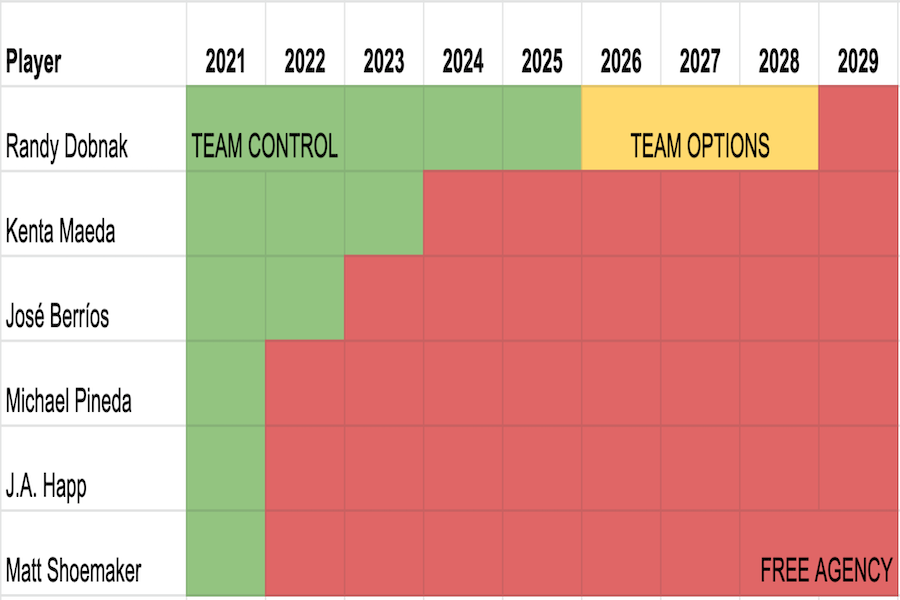 At first blush, Dobnak's new contract seems absurdly team-friendly. The Twins are locking up a proven young pitcher, with a 3.12 ERA through 75 MLB innings, to a five-year deal guaranteeing him less money than Michael Pineda or J.A. Happ will earn this year alone. https://twitter.com/JeffPassan/status/1376254481659232259 With three club option years on the back end, this deal gives Minnesota plenty of flexibility down the line. The ability to buy Dobnak's would-be free agent seasons at bargain prices will be useful if he merely stays the course as a groundball-inducing fourth starter, and extremely valuable if he takes a step forward to No. 2/3 status. (Say, if this much-ballyhooed new slider proves legit.) https://twitter.com/PitchingNinja/status/1373044556288122882 https://twitter.com/PitchingNinja/status/1375224556714127360 The value upside in Dobnak's contract is monumental. If the Twins activate all three options they'll control him for the next eight years for around $30 million, which is less than the Astros are paying Justin Verlander NOT to pitch in 2021 ($33 million). And if Dobnak's amazing ascent, from undrafted indy-ball pitcher and Uber driver to certified MLB starter, ultimately ends up being a flash in the pan? There's simply no risk. If the Twins need to cut bait at any point, the $9 million they'll pay Dobnak is trivial for them, life-changing for him. That last part helps explain why a deal like this can even come to fruition. It's certainly not the first time we've seen teams use their leverage over a young pitcher with limited service time to secure this sort of affordable long-term stability. In fact, Cleveland's front office was quite savvy in this regard while Derek Falvey was assistant GM. In 2015, Cleveland signed Corey Kluber and Carlos Carrasco – both a long way from free agency – to lengthy extensions with multiple team options. One year earlier, Chris Archer signed a five-year contract with Rocco Baldelli's Rays, despite having made just 27 career major-league starts. Archer's deal, like Kluber's and Carrasco's, included club options on two free agent years. Compared to those contracts, Dobnak's includes significantly less money, both in terms of guarantees and max payout. It also gives Minnesota a longer window of control than any of the other examples, with options extending through Dobnak's age-33 season in 2028. That makes sense. Dobnak lacks the big-league bona fides of Kluber and Carrasco when they signed, or the top-prospect luster of Archer when he did. The implications of Dobnak's background in this decision are apparent from the outside – given where he was at a few short years ago, it's gotta be hard to pass up $9 million in guaranteed money, especially when the "worst case scenario" means you pitch really well and earn $30+ million while staying in the same place for the next eight years. The Twins, for their part, will happily take the stability in exchange for a modest financial commitment. Prior to extending Dobnak, Minnesota had no starters (sans prospects and fringe rotation options like Lewis Thorpe and Devin Smeltzer) under control beyond 2023. The graphic below show just how much his extension changes that picture. The Twins will have plenty of flexibility in building their rotation going forward. Dobnak is now firmly entrenched as a sturdy building block to serve as their bedrock. MORE FROM TWINS DAILY — Latest Twins coverage from our writers — Recent Twins discussion in our forums — Follow Twins Daily via Twitter, Facebook or email
 -
Twins 2021 Position Analysis: Relief Pitcher
Nick Nelson replied to Nick Nelson's topic in Twins Daily Front Page News
I only included Thorpe as the last reliever here because of the uncertainty around Thorpe's fourth option (which is of course now cleared up). With that sorted, I expect Dobnak to be the long man in the pen. -
There's no two ways about it: on paper, Minnesota's bullpen picture is high on risk and low on assurance. Strategizing around a series of rebound performances and coaching-related glow ups, the message being sent to fans by the front office is essentially: trust us, we got this. Frankly, they've earned some faith.Projected Bullpen: Taylor Rogers, Alex Colomé, Tyler Duffey, Hansel Robles, Caleb Thielbar, Jorge Alcalá, Cody Stashak, Lewis Thorpe Depth: Shaun Anderson, Ian Hamilton, Brandon Waddell, Ian Gibaut Prospects: Jhoan Duran, Edwar Colina, Dakota Chalmers, Josh Winder THE GOOD The top of Minnesota's bullpen is well stocked with proven high-caliber arms. Taylor Rogers (3rd), Tyler Duffey (13th) and newcomer Hansel Robles (19th) all rank among the top 20 major-league relief pitchers in fWAR since 2019. Alex Colomé isn't rated quite as highly by that metric (42nd), but is a more conventionally appealing back-end arm: 15th in ERA, fourth in saves (with a 91% conversion rate), and seventh in Win Probability Added. Backfilling May's overpowering presence, along with the functional reliability of Clippard and Wisler (who ranked first and second among MN relievers in innings pitched), will be a tall task. While the Twins have a large quantity of talented arms for the task, there are legit question marks surrounding most of them. Rogers is coming off a tough year, in which hitters seemingly caught on to his previously baffling repertoire. Robles is trying to rebound from an unmitigated disaster that got him non-tendered by the Angels. Colomé was ditched by the White Sox and generated little demand in free agency, despite the gaudy numbers. It's hard to look at any of these pitchers with the same confidence as Rogers, May and Romo a year ago. THE BOTTOM LINE Great bullpens are requisite for transcendent teams, especially in the modern game. Year after year, when you look at MLB's leading teams in bullpen fWAR, you find clubs that made the playoffs and often made deep runs. (Last year, the Dodgers and Rays ranked first and second, respectively.) The Twins ranked third, for a second consecutive year, and they've achieved all this success by following their own model. They identify impact relievers (often below-the-radar types), develop customized plans, and execute. They've done it time and time again, and for that reason they've earned a good amount of faith. But leaps of faith are definitely required to see this bullpen maintaining the elite level of performance that's now become the norm. They lost a lot of quality during the offseason, and are gambling heavily on their secret sauce in this 2021 bullpen recipe. READ OTHER 2021 POSITION ANALYSIS ARTICLES CatcherFirst BaseSecond BaseThird BaseShortstopLeft FieldCenter FieldRight FieldDesignated HitterStarting Pitcher Click here to view the article
-
 Projected Bullpen: Taylor Rogers, Alex Colomé, Tyler Duffey, Hansel Robles, Caleb Thielbar, Jorge Alcalá, Cody Stashak, Lewis Thorpe Depth: Shaun Anderson, Ian Hamilton, Brandon Waddell, Ian Gibaut Prospects: Jhoan Duran, Edwar Colina, Dakota Chalmers, Josh Winder THE GOOD The top of Minnesota's bullpen is well stocked with proven high-caliber arms. Taylor Rogers (3rd), Tyler Duffey (13th) and newcomer Hansel Robles (19th) all rank among the top 20 major-league relief pitchers in fWAR since 2019. Alex Colomé isn't rated quite as highly by that metric (42nd), but is a more conventionally appealing back-end arm: 15th in ERA, fourth in saves (with a 91% conversion rate), and seventh in Win Probability Added. The team's second tier of relievers also offers plenty of prowess. Jorge Alcalá posted a 2.63 ERA and 10.1 K/9 rate as a rookie in 2020, flashing the potential to join the tier above. Cody Stashak has a 3.15 ERA and 42-to-4 K/BB ratio in 40 major-league innings. Caleb Thielbar put up a 2.25 ERA and 9.9 K/9 rate last year in his triumphant resurgence at age 33. On the fringe of the reliever mix are a number of interesting waiver adds and fixer-upper projects. Names like Shaun Anderson, Brandon Waddell, Ian Gibaut, Derek Law, Luke Farrell, Juan Minaya and Ian Hamilton give Minnesota considerable depth – all pitchers with some big-league experience and intriguing traits pinpointed by the front office. Given the success we've seen the Twins have with guys like Matt Wisler and Ryne Harper, none of those names can be discounted as potential impact relievers in the coming year. And that's before you get to the prospect pipeline, which packs some serious punch. The Twins have a deep well of relief pitchers, rich with impressive track records, closing experience, and appealing strengths. They'll have a lot of options to get them through a long season, in which much will likely be asked of the bullpen. It's easy to have faith in the people running this ship to keep it sailing smoothly. THE BAD By parting with Trevor May, Sergio Romo, Tyler Clippard, and Wisler during the offseason, the Twins lost 95 of their 231 bullpen innings from 2020. That's about 40% of the unit's total output, and a much higher share of the high-leverage work. With the help of those key contributors, Minnesota ranked fourth in the American League in bullpen ERA and second in fWAR. Now the relief corps will be looking to build upon that success through major turnover. It's hard to make a case on the surface that the Twins' incoming talent comes anywhere close to matching what exited; those four combined last year for a 2.85 ERA while averaging 11.6 K/9. May, in particular, was a flamethrowing strikeout machine whose dominant edge will be tough to replace. Backfilling May's overpowering presence, along with the functional reliability of Clippard and Wisler (who ranked first and second among MN relievers in innings pitched), will be a tall task. While the Twins have a large quantity of talented arms for the task, there are legit question marks surrounding most of them. Rogers is coming off a tough year, in which hitters seemingly caught on to his previously baffling repertoire. Robles is trying to rebound from an unmitigated disaster that got him non-tendered by the Angels. Colomé was ditched by the White Sox and generated little demand in free agency, despite the gaudy numbers. It's hard to look at any of these pitchers with the same confidence as Rogers, May and Romo a year ago. THE BOTTOM LINE Great bullpens are requisite for transcendent teams, especially in the modern game. Year after year, when you look at MLB's leading teams in bullpen fWAR, you find clubs that made the playoffs and often made deep runs. (Last year, the Dodgers and Rays ranked first and second, respectively.) The Twins ranked third, for a second consecutive year, and they've achieved all this success by following their own model. They identify impact relievers (often below-the-radar types), develop customized plans, and execute. They've done it time and time again, and for that reason they've earned a good amount of faith. But leaps of faith are definitely required to see this bullpen maintaining the elite level of performance that's now become the norm. They lost a lot of quality during the offseason, and are gambling heavily on their secret sauce in this 2021 bullpen recipe. READ OTHER 2021 POSITION ANALYSIS ARTICLES Catcher First Base Second Base Third Base Shortstop Left Field Center Field Right Field Designated Hitter Starting Pitcher
 -
Twins 2021 Position Analysis: Starting Pitcher
Nick Nelson replied to Nick Nelson's topic in Twins Daily Front Page News
You're probably right. I respect Morris' career but I think he's generally pretty overrated, and I'm so drained on hearing him always invoked as a "grass-is-greener" playoff rotation lament. He had great moments in the postseason, including maybe the greatest moment, but he was hardly infallible. The nature of the game was so different then compared to now, it feels completely pointless to bring his name up. Managers don't use starters in that same way, and are finding plenty of success anyway. Clayton Kershaw & Walker Buehler collectively pitched past the 6th inning once in 10 playoff starts last year. Kevin Cash routinely pulled his starters after a couple turns through the lineup. In the context of baseball as it is now, Maeda has been extremely effective in the playoffs. And that's what matters.- 33 replies
-
- 1
-

-
- kenta maeda
- jose berrios
- (and 3 more)
-
Twins 2021 Position Analysis: Starting Pitcher
Nick Nelson replied to Nick Nelson's topic in Twins Daily Front Page News
In which of the last few seasons would you say the Twins had a better and deeper rotation than this one? You might say last year, with the hindsight of knowing Maeda would break out, but then you'd also have the hindsight of knowing Odo would be completely unavailable. Also ,at no point in my recollection have they had this many high-caliber pitching prospects on the doorstep, which is a key part of that assertion.- 33 replies
-
- 3
-
-
- kenta maeda
- jose berrios
- (and 3 more)
-
Twins 2021 Position Analysis: Starting Pitcher
Nick Nelson replied to Nick Nelson's topic in Twins Daily Front Page News
You can lay out all the caveats but the fact remains: Morris was pretty mediocre in the playoffs outside of that one greatest postseason start ever (4.26 ERA in 12 starts). It's true that Maeda's been used differently, but he has risen to the occasion in his role very consistently. Morris' greatest asset as a postseason starter was durability and piling up complete games. He was used in a way that no modern manager (certainly not Baldelli) would ever use a starting pitcher today. So yeah, it is an oranges-to-orangutans comparison but I'd rather have the current version of Maeda than Morris at any point in his career. Morris was never this good. -
Twins 2021 Position Analysis: Starting Pitcher
Nick Nelson replied to Nick Nelson's topic in Twins Daily Front Page News
Maeda has pitched 25 times in the playoffs and has a 2.87 ERA. Jack Morris had a 3.80 career ERA in the playoffs. Just saying.- 33 replies
-
- 15
-
-
- kenta maeda
- jose berrios
- (and 3 more)
-
If the Twins have ever fielded a better and deeper rotation than the one they're set to line up this year, I can't remember it. From top to bottom (and beyond) this unit looks stacked.Projected Rotation: Kenta Maeda, José Berríos, Michael Pineda, J.A. Happ, Matt Shoemaker Depth: Randy Dobnak, Devin Smeltzer, Lewis Thorpe, Bailey Ober Prospects: Jhoan Duran, Jordan Balazovic, Matt Canterino, Blayne Enlow, Cole Sands THE GOOD Let's start at the top. Kenta Maeda: The long-awaited ace and reigning Cy Young runner-up. Maeda's first year in a Minnesota uniform yielded the best performance we've seen from a Twins starting pitcher since Johan Santana left town. One of the great sadnesses of the shortened 2020 season was that we didn't get to see him do more of it. From his first turn to his last, Maeda was superb. He never gave up more than three runs in a game, or more hits than innings pitched in a start. His whiff rate was third-highest in the game behind Jacob deGrom and Lucas Giolito. Maeda shut down Houston with five shutout innings in the playoffs. A month prior, he came within three outs of no-hitting Milwaukee at Target Field. With an offspeed-heavy mix and impeccable command, he left opposing batters helpless. J.A. Happ is not a super flashy addition at age 38, but he's been basically as good as Berríos over the past handful of seasons, and he's a great asset as your fourth starter. Matt Shoemaker rounds out the rotation as a $2 million flier who probably has a 50/50 shot at lasting until the All-Star break. But as with any signing by this front office, there's upside here that's easy to see. The offseason additions might not have been too exciting, but what does excite about Minnesota's rotation picture this year is the internal depth. Randy Dobnak and Lewis Thorpe both offer plenty of intrigue, especially with their buzz-stirring spring camps. Devin Smeltzer is a better eighth option than most other teams have. And that's before you turn to the farm. The Twins' top three pitching prospects – Jhoan Duran, Jordan Balazovic, Matt Canterino – are verging on big-league ready. It's hard to say for sure since the 2020 minor-league season was wiped out, but had it been played, it's very possible any of those three would now be banging on the door – if not already debuted. Each is capable of a serious impact in short order, and the Twins are quietly counting on that to some degree. THE BAD One might argue the Twins have been extraordinarily lucky with the health of their starting pitchers over the past couple years. (Jake Odorizzi and Homer Bailey would disagree, but they're gone.) Berríos has continued to take the mound every fifth day, as usual. Maeda did the same in 2020, while transitioning from starter-reliever hybrid to relative workhorse. He experienced no issues, even after accruing a career-high 115 pitches in his no-hit bid. Pineda, so often injured before coming to Minnesota, has been perfectly healthy outside of the suspension. (Phantom DL stints not withstanding.) I'm not over here to trying to jinx anything. But it has to be acknowledged that this probably won't last forever. The rigors of being a starting pitcher in the major leagues are immense, and right now these guys are grappling with the transition back to a full-season workload, in the wake of 2020's disruption. If one of those top three starters goes down? Suddenly the Twins rotation doesn't look quite so sturdy anymore. Happ might be a nice luxury in the back half, but he's not necessarily someone you want to be depending on toward the front. Shoemaker, Dobnak, Thorpe and Smeltzer all have their own varying levels of promise and mystique, but also serious hurdles to overcome. The top prospects may well all need more seasoning, These aren't unique problems – all pitchers across the league will be facing the same readjustment challenges this year, and no team has infinite starting depth – but the Twins will need a bit of luck on their side to fulfill their potential in the rotation. They're relying heavily on some internal developments playing out well, because it's questionable whether the free agent talent incoming (Happ, Shoemaker) is better than the talent outgoing (Odorizzi, Rich Hill). Questionable might be putting it kindly. THE BOTTOM LINE This is a deep, well-rounded group with a high ceiling and a number of electrifying wild cards in play. Odorizzi is a significant loss, which should not be discounted, but the fact is, the Twins managed to post the second-best rotation ERA, FIP, and fWAR in the American League last year without him. An important thing to keep in mind is that, by retaining all prospect capital in the offseason, the Twins have positioned themselves nicely for a trade as the deadline approaches. That'll probably be a big storyline this summer, but I'm more eager to see what the system can provide internally after four years of remarkable progression under the new front office. "After four years of assembling the infrastructure and creating a culture of fearless development," wrote Dan Hayes at The Athletic recently, "the Twins front office feels as if its pitching pipeline is finally ready to churn out impressive arms at a more consistent rate." Their exhaustive work will be put to the test in what's certain to be a daunting and discombobulating year for MLB starting pitchers, with workloads thrown askew. READ OTHER 2021 POSITION ANALYSIS ARTICLES CatcherFirst BaseSecond BaseThird BaseShortstopLeft FieldCenter FieldRight FieldDesignated Hitter Click here to view the article
- 33 replies
-
- 2
-
-
- kenta maeda
- jose berrios
- (and 3 more)
-
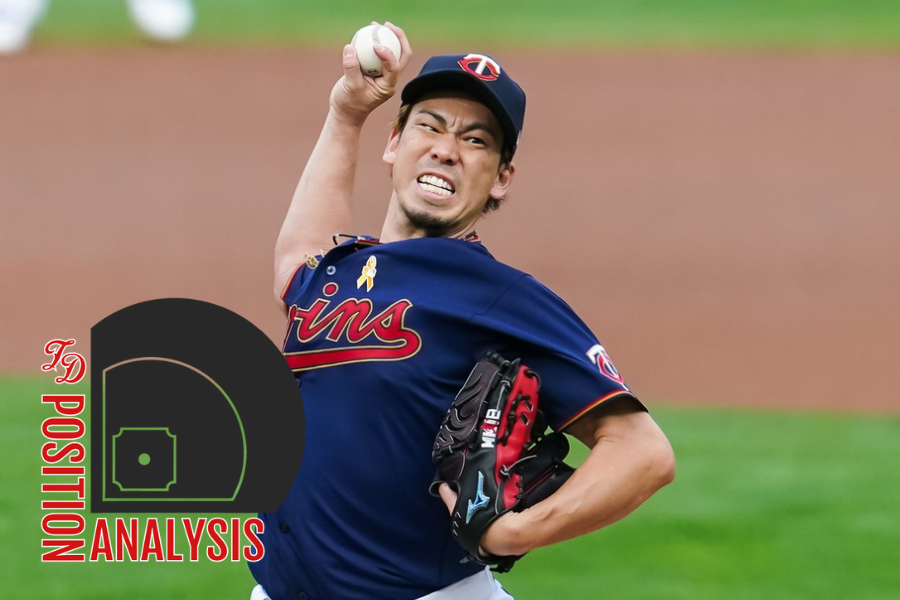 Projected Rotation: Kenta Maeda, José Berríos, Michael Pineda, J.A. Happ, Matt Shoemaker Depth: Randy Dobnak, Devin Smeltzer, Lewis Thorpe, Bailey Ober Prospects: Jhoan Duran, Jordan Balazovic, Matt Canterino, Blayne Enlow, Cole Sands THE GOOD Let's start at the top. Kenta Maeda: The long-awaited ace and reigning Cy Young runner-up. Maeda's first year in a Minnesota uniform yielded the best performance we've seen from a Twins starting pitcher since Johan Santana left town. One of the great sadnesses of the shortened 2020 season was that we didn't get to see him do more of it. From his first turn to his last, Maeda was superb. He never gave up more than three runs in a game, or more hits than innings pitched in a start. His whiff rate was third-highest in the game behind Jacob deGrom and Lucas Giolito. Maeda shut down Houston with five shutout innings in the playoffs. A month prior, he came within three outs of no-hitting Milwaukee at Target Field. With an offspeed-heavy mix and impeccable command, he left opposing batters helpless. https://twitter.com/MLB/status/1295914048043786241 This was a different version of Maeda than we ever saw in Los Angeles, where he was more good than great, leading to natural questions about how repeatable the breakout is. Indeed, the righty probably won't be quite so thoroughly dominant in a full-length follow-up, but there's little reason to think he won't be a credible rotation-fronter. The question is whether José Berríos will join him in that category. He's a very good starter, and one of the most reliably durable in the game, but Berríos hasn't quite been able to take that step into the highest tier despite flirting with it frequently. Last season might look like a setback, at a glance – his 4.00 ERA and 1.32 WHIP were both highest since Berríos' rocky debut in 2016. But they're also misleading, and emblematic of 2020's small-sample haziness. He gave up five runs in four innings against Chicago on Opening Day. From that point forward, the righty posted a 3.51 ERA and 1.27 WHIP, holding opponents to a .225 average. Same old Berríos. That's not including his postseason start against Houston, where he allowed one run on two hits in five frames. We'll see if he can find something more, and if he does, the Twins will boast one of the league's best 1-2 punches in the rotation. But they'd also be happy to get that same old Berríos again, because his baseline is a pretty damn good. And also: Minnesota has another underrated starter in the frontline discussion. Michael Pineda is finally coming into a season unhindered by injury rehab or suspension. When on the mound for Minnesota, he has consistently pitched well, and the Twins have played .677 baseball. He's 32 and playing for his next contract with free agency upcoming. As Twins GM Thad Levine put it, Pineda "has put himself in the best position he can to have a robust second chapter to his career.” https://twitter.com/NickNelsonMN/status/1361852125551157250 J.A. Happ is not a super flashy addition at age 38, but he's been basically as good as Berríos over the past handful of seasons, and he's a great asset as your fourth starter. Matt Shoemaker rounds out the rotation as a $2 million flier who probably has a 50/50 shot at lasting until the All-Star break. But as with any signing by this front office, there's upside here that's easy to see. The offseason additions might not have been too exciting, but what does excite about Minnesota's rotation picture this year is the internal depth. Randy Dobnak and Lewis Thorpe both offer plenty of intrigue, especially with their buzz-stirring spring camps. Devin Smeltzer is a better eighth option than most other teams have. And that's before you turn to the farm. The Twins' top three pitching prospects – Jhoan Duran, Jordan Balazovic, Matt Canterino – are verging on big-league ready. It's hard to say for sure since the 2020 minor-league season was wiped out, but had it been played, it's very possible any of those three would now be banging on the door – if not already debuted. Each is capable of a serious impact in short order, and the Twins are quietly counting on that to some degree. THE BAD One might argue the Twins have been extraordinarily lucky with the health of their starting pitchers over the past couple years. (Jake Odorizzi and Homer Bailey would disagree, but they're gone.) Berríos has continued to take the mound every fifth day, as usual. Maeda did the same in 2020, while transitioning from starter-reliever hybrid to relative workhorse. He experienced no issues, even after accruing a career-high 115 pitches in his no-hit bid. Pineda, so often injured before coming to Minnesota, has been perfectly healthy outside of the suspension. (Phantom DL stints not withstanding.) I'm not over here to trying to jinx anything. But it has to be acknowledged that this probably won't last forever. The rigors of being a starting pitcher in the major leagues are immense, and right now these guys are grappling with the transition back to a full-season workload, in the wake of 2020's disruption. If one of those top three starters goes down? Suddenly the Twins rotation doesn't look quite so sturdy anymore. Happ might be a nice luxury in the back half, but he's not necessarily someone you want to be depending on toward the front. Shoemaker, Dobnak, Thorpe and Smeltzer all have their own varying levels of promise and mystique, but also serious hurdles to overcome. The top prospects may well all need more seasoning, These aren't unique problems – all pitchers across the league will be facing the same readjustment challenges this year, and no team has infinite starting depth – but the Twins will need a bit of luck on their side to fulfill their potential in the rotation. They're relying heavily on some internal developments playing out well, because it's questionable whether the free agent talent incoming (Happ, Shoemaker) is better than the talent outgoing (Odorizzi, Rich Hill). Questionable might be putting it kindly. THE BOTTOM LINE This is a deep, well-rounded group with a high ceiling and a number of electrifying wild cards in play. Odorizzi is a significant loss, which should not be discounted, but the fact is, the Twins managed to post the second-best rotation ERA, FIP, and fWAR in the American League last year without him. An important thing to keep in mind is that, by retaining all prospect capital in the offseason, the Twins have positioned themselves nicely for a trade as the deadline approaches. That'll probably be a big storyline this summer, but I'm more eager to see what the system can provide internally after four years of remarkable progression under the new front office. "After four years of assembling the infrastructure and creating a culture of fearless development," wrote Dan Hayes at The Athletic recently, "the Twins front office feels as if its pitching pipeline is finally ready to churn out impressive arms at a more consistent rate." Their exhaustive work will be put to the test in what's certain to be a daunting and discombobulating year for MLB starting pitchers, with workloads thrown askew. READ OTHER 2021 POSITION ANALYSIS ARTICLES Catcher First Base Second Base Third Base Shortstop Left Field Center Field Right Field Designated Hitter

![More information about "Stream Our Twins Season Preview [VIDEO]"](http://dtb3yzl0vm3pr.cloudfront.net/monthly_2021_05/b178f38d30b4c055a702b32139200be4.png.665916fc8b847e24907276c5e96ee664.png)
