



Nick Nelson
-
Posts
8,327 -
Joined
-
Last visited
-
Days Won
56
Content Type
Profiles
News
Minnesota Twins Videos
2026 Minnesota Twins Top Prospects Ranking
2022 Minnesota Twins Draft Picks
Minnesota Twins Free Agent & Trade Rumors, Notes, & Tidbits
Guides & Resources
2023 Minnesota Twins Draft Picks
The Minnesota Twins Players Project
2024 Minnesota Twins Draft Picks
2025 Minnesota Twins Draft Pick Tracker
2026 Minnesota Twins Draft Tracker: Picks & Bonuses
Forums
Blogs
Events
Store
Downloads
Gallery
Everything posted by Nick Nelson
-
 Ridiculous? I mean I get that 2020 was ugly, but he's still a 30-year-old catcher with an .824 OPS and good defense. The uncertainties around both Garver and Jeffers (the small-sample caveats of 2020 work both ways with those two) led me to place them both in the top 10, and right next to each other. Catcher is such a crucial position and it's super vital that at least one of these guys clicks. I'd rank either one higher if not for the presence of the other.
- 25 replies
-
- 1
-

-
- trevor larnach
- byron buxton
- (and 3 more)
-
Good points. Believe me you're preaching to the choir in some ways. I have a hard time separating the idea of Buxton from what he has actually been. In terms of pure potential, absolutely he's in the top 3, but the reality is that he's got a .289 career OBP, .719 OPS, and has averaged 72 games played/season. My dream scenario for 2021 is that he finally stays healthy, produces like the MVP-caliber player he is, signs a long-term contract, and vaults back to the top of these rankings. Unfortunately, based on all past evidence, it's a big stretch.
- 25 replies
-
- 1
-
-
- trevor larnach
- byron buxton
- (and 3 more)
-
You're close. Rogers was #17
-
We've reached the top 10 in our ranking of the most indispensable assets to the Twins organization. The five players we'll look at today can be viewed as building blocks, but at this time... probably not cornerstones?First, you can get up to speed on the 'why and how' behind these rankings by reading Monday's introductory post. If you're already hip, proceed to find my choices (and reasoning) for the 11th-through-15th most valuable player assets currently under Minnesota's control as 2021 gets underway. Read Part 1 (16-20)Read Part 2 (11-15)10. Trevor Larnach, OF 2020 Ranking: 14 Ranked as Twins Daily's No. 3 prospect coming into the season, Larnach didn't have a chance to raise his stock in 2020. He spent his summer practicing and scrimmaging in St. Paul, and never seemed to be in serious consideration for a call-up (unlike fellow top prospect Alex Kirilloff, who debuted in a playoff elimination game). With that said, it's not as if Larnach forgot how to play. The former first-rounder had already established himself as a polished hitter ready to make an impact. Turning 24 next month, he's a plug-and-play corner outfield bat with a solid floor and real upside, controllable through much of his prime. The main thing holding him back on this list is redundancy. As a corner outfielder he's stuck behind Kirilloff and Max Kepler indefinitely, and while first base is a possible destination, Larnach has yet to play the position professionally. He's the prime example of a player who'd have much more value to another team than to the Twins, making him a trade candidate. 9: Byron Buxton, CF 2020 Ranking: 7 The 2020 season was much like the 2019 season for Buxton and his valuation. He showed signs of being an elite difference-maker, but was unavailable often – including at the end when the Twins needed him most. Buxton's health struggles have been so chronic and unshakable that they've defined his career more than anything else up to this point. Which is a real shame because when you take them out of the equation, he's one of the most valuable assets in all of baseball. Unparalleled speed, transformative defensive impact, and high-end power: all offered by a 27-year-old who will earn around $15 million in his final two years of team control. If he can stay on the field, Buxton could be the single most vital key to a championship for this franchise. But he continually hasn't been able to, and now the clock is ticking on his opportunity to fulfill all that potential as a Twin. 8: Mitch Garver, C 2020 Ranking: 6 Garver's drop-off in 2020 was dramatic to say the least, but I'm inclined to mostly write it off. He got hurt in spring training, missed tons of time with a strained oblique, and never appeared fully comfortable at the plate. His brutal stats – .167 average, .511 OPS, and an eye-popping 46% K rate – were vastly out of line with any prior benchmarks. Still, the question remains whether Garver is capable of sustaining anything close to the MVP-caliber level of performance shown over 93 games in 2019. Is he a star or merely a quality rotational piece behind the plate, as he appeared in 2018? The uncertainty, combined with a price tag that's beginning to rise as he progresses into arbitration, places Garver just one peg below the meteoric riser up next on the list. 7: Ryan Jeffers, C 2020 Ranking: 20 Last year, when Jeffers edged into these rankings at the No. 20 spot as a relative unknown, I wrote that "Folks in the know rave about his defensive skills, and pitch-framing especially ... Thus far Jeffers has done nothing but validate the team's belief in him. A catcher who shines both ways is among the game's most coveted assets." Affirming those beliefs in 2020 caused Jeffers to make a huge leap in these rankings. No longer is his impact theoretical; at age 23, his rookie contributions were crucial, coming in cold from the alternate site and filling in admirably for the injured Garver. All the strengths we'd heard about in those glowing reports – powerful bat, unusual poise behind the plate, natural instincts for pitch-framing, arm strong enough to deliver a bullet to second from his knees – were on display, under incredibly difficult circumstances. When I started putting these rankings together, catcher was a clear point of organizational weakness. In 2018 Jason Castro was the highest-ranked backstop at No. 17. Now, we've got two proven commodities, both under the age of 30 and controllable for several years, in the top 10. What a turnaround. 6: Jorge Polanco, SS 2020 Ranking: 1 From No. 1 to outside of the top five: how did it happen? The main thing is that 2020 reinforced some of the concerns that shrouded Polanco even when he sat atop this list. Namely: that his second-half production in 2019 (.788 OPS) was more representative than his All-Star first half (.882); that his balky ankle – now requiring surgery for a second straight winter – was no isolated issue; and that he doesn't really have the defensive chops to play short. That last one is most glaring, and is reflected by the front office's apparent pursuit of a new shortstop this winter. Polanco remains a fixture-type building block with a highly favorable contract – controlled for three years at a total of $18 million, with multiple team options on the back end. But it's becoming clearer that he'll play out these remaining years as either a utility man or a blatant defensive liability at short, which is a far cry from the American League's starting SS in the 2019 All-Star Game. THE TOP 20 TWINS ASSETS OF 2021 20. Keoni Cavaco, SS 19. Brent Rooker, OF/1B 18. Josh Donaldson, 3B 17. Taylor Rogers, LHP 16. Jorge Alcala, RHP 15. Miguel Sanó, 1B 14. Tyler Duffey, RHP 13. Jordan Balazovic, RHP 12. Jhoan Duran, RHP 11. Luis Arráez, 2B 10. Trevor Larnach, OF 9. Byron Buxton, CF 8. Mitch Garver, C 7. Ryan Jeffers, C 6. Jorge Polanco, SS 1-5: Coming tomorrow! MORE FROM TWINS DAILY — Latest Twins coverage from our writers — Recent Twins discussion in our forums — Follow Twins Daily via Twitter, Facebook or email Click here to view the article
- 25 replies
-
- 1
-
-
- trevor larnach
- byron buxton
- (and 3 more)
-
 First, you can get up to speed on the 'why and how' behind these rankings by reading Monday's introductory post. If you're already hip, proceed to find my choices (and reasoning) for the 11th-through-15th most valuable player assets currently under Minnesota's control as 2021 gets underway. Read Part 1 (16-20) Read Part 2 (11-15) 10. Trevor Larnach, OF 2020 Ranking: 14 Ranked as Twins Daily's No. 3 prospect coming into the season, Larnach didn't have a chance to raise his stock in 2020. He spent his summer practicing and scrimmaging in St. Paul, and never seemed to be in serious consideration for a call-up (unlike fellow top prospect Alex Kirilloff, who debuted in a playoff elimination game). With that said, it's not as if Larnach forgot how to play. The former first-rounder had already established himself as a polished hitter ready to make an impact. Turning 24 next month, he's a plug-and-play corner outfield bat with a solid floor and real upside, controllable through much of his prime. The main thing holding him back on this list is redundancy. As a corner outfielder he's stuck behind Kirilloff and Max Kepler indefinitely, and while first base is a possible destination, Larnach has yet to play the position professionally. He's the prime example of a player who'd have much more value to another team than to the Twins, making him a trade candidate. 9: Byron Buxton, CF 2020 Ranking: 7 The 2020 season was much like the 2019 season for Buxton and his valuation. He showed signs of being an elite difference-maker, but was unavailable often – including at the end when the Twins needed him most. Buxton's health struggles have been so chronic and unshakable that they've defined his career more than anything else up to this point. Which is a real shame because when you take them out of the equation, he's one of the most valuable assets in all of baseball. Unparalleled speed, transformative defensive impact, and high-end power: all offered by a 27-year-old who will earn around $15 million in his final two years of team control. If he can stay on the field, Buxton could be the single most vital key to a championship for this franchise. But he continually hasn't been able to, and now the clock is ticking on his opportunity to fulfill all that potential as a Twin. 8: Mitch Garver, C 2020 Ranking: 6 Garver's drop-off in 2020 was dramatic to say the least, but I'm inclined to mostly write it off. He got hurt in spring training, missed tons of time with a strained oblique, and never appeared fully comfortable at the plate. His brutal stats – .167 average, .511 OPS, and an eye-popping 46% K rate – were vastly out of line with any prior benchmarks. Still, the question remains whether Garver is capable of sustaining anything close to the MVP-caliber level of performance shown over 93 games in 2019. Is he a star or merely a quality rotational piece behind the plate, as he appeared in 2018? The uncertainty, combined with a price tag that's beginning to rise as he progresses into arbitration, places Garver just one peg below the meteoric riser up next on the list. 7: Ryan Jeffers, C 2020 Ranking: 20 Last year, when Jeffers edged into these rankings at the No. 20 spot as a relative unknown, I wrote that "Folks in the know rave about his defensive skills, and pitch-framing especially ... Thus far Jeffers has done nothing but validate the team's belief in him. A catcher who shines both ways is among the game's most coveted assets." Affirming those beliefs in 2020 caused Jeffers to make a huge leap in these rankings. No longer is his impact theoretical; at age 23, his rookie contributions were crucial, coming in cold from the alternate site and filling in admirably for the injured Garver. All the strengths we'd heard about in those glowing reports – powerful bat, unusual poise behind the plate, natural instincts for pitch-framing, arm strong enough to deliver a bullet to second from his knees – were on display, under incredibly difficult circumstances. When I started putting these rankings together, catcher was a clear point of organizational weakness. In 2018 Jason Castro was the highest-ranked backstop at No. 17. Now, we've got two proven commodities, both under the age of 30 and controllable for several years, in the top 10. What a turnaround. 6: Jorge Polanco, SS 2020 Ranking: 1 From No. 1 to outside of the top five: how did it happen? The main thing is that 2020 reinforced some of the concerns that shrouded Polanco even when he sat atop this list. Namely: that his second-half production in 2019 (.788 OPS) was more representative than his All-Star first half (.882); that his balky ankle – now requiring surgery for a second straight winter – was no isolated issue; and that he doesn't really have the defensive chops to play short. That last one is most glaring, and is reflected by the front office's apparent pursuit of a new shortstop this winter. Polanco remains a fixture-type building block with a highly favorable contract – controlled for three years at a total of $18 million, with multiple team options on the back end. But it's becoming clearer that he'll play out these remaining years as either a utility man or a blatant defensive liability at short, which is a far cry from the American League's starting SS in the 2019 All-Star Game. THE TOP 20 TWINS ASSETS OF 2021 20. Keoni Cavaco, SS 19. Brent Rooker, OF/1B 18. Josh Donaldson, 3B 17. Taylor Rogers, LHP 16. Jorge Alcala, RHP 15. Miguel Sanó, 1B 14. Tyler Duffey, RHP 13. Jordan Balazovic, RHP 12. Jhoan Duran, RHP 11. Luis Arráez, 2B 10. Trevor Larnach, OF 9. Byron Buxton, CF 8. Mitch Garver, C 7. Ryan Jeffers, C 6. Jorge Polanco, SS 1-5: Coming tomorrow!MORE FROM TWINS DAILY — Latest Twins coverage from our writers — Recent Twins discussion in our forums — Follow Twins Daily via Twitter, Facebook or email
 -
Which players and prospects are most essential to the front office's vision of building a World Series champion in Minnesota? As we move into the top 15, we find a trio of established mainstays along with two rising top arms.First, you can get up to speed on the 'why and how' behind these rankings by reading Monday's introductory post. If you're already hip, proceed to find my choices (and reasoning) for the 11th-through-15th most valuable player assets currently under Minnesota's control as 2021 gets underway. Read Part 1 (16-20) 15. Miguel Sanó, 1B 2020 Ranking: 11 This is the deepest placement yet in these rankings for Sanó, and with good reason. He moved from third base to first. He is coming off a disappointing year, marred by a ridiculous strikeout total. He is currently lined up as the team's second-highest paid player in 2021, with his $11 million commitment trailing only Donaldson's $21 million. With all this in mind, I think it's important to remember the qualities that have kept Sanó on this list year after year – all still on display in the abbreviated 2020 campaign. He is an incredibly gifted athlete who hits baseballs as hard as anyone in the world. He acclimated quickly to first base, with his natural skill and instincts shining through. He's only 27 years old, at the heart of his physical prime, and still quite athletic for his prodigious size. While he'll be somewhat highly paid in 2021, the Twins also control him in 2022 at $9.25 million, which will be an amazing bargain if he pulls it together. They also have a $14 million option for his age-30 season. Focus on Sanó's flaws all you want – it's valid. But don't lose sight of his strengths. They are in some ways unparalleled. 14. Tyler Duffey, RHP 2020 Ranking: 16 If he hadn't claimed it already, Duffey firmly took hold of the team's "bullpen ace" title in 2020. He was among the league's most dominant relievers, allowing only 19 baserunners via hit or walk in 24 innings, nearly all high-leverage. And because of his sparse previous track record, Duffey remains quite inexpensive in his second turn at arbitration. He's set to earn $2.2 million in 2020. In some ways, he epitomizes the volatility and unpredictability of relief arms. Duffey was not present in these rankings two years ago, and in fact was probably on the verge of moving on from the organization at that point. He has since harnessed his full potential out of the bullpen to become an elite force in the late innings. How long will it last? That remains to be seen. But the Twins are more than happy to control him affordably for the next two seasons. 13. Jordan Balazovic, RHP 2020 Ranking: 8 The lost minor-league season in 2020 was especially unfortunate for a guy like Balazovic. He entered the year as a fast-rising and highly promising young arm, ready to take on advanced levels for the first time and make a statement. But because he hadn't yet taken this step, and wasn't really within range of a call-up, he was left off the alternate site roster, leaving him to progress on his own, without the benefit of competition or direct coaching. (He did get added to the alternate group late in the season.) None of this means Balazovic's outlook has dropped off, especially in a relative context (all prospects just lost a year). But he was at such a pivotal crux in his development – 21 years old, three years removed from being drafted out of high school, set to reach Double-A for the first time – that the disruption weighs a bit harder in his case. With that said, he's clearly one of the organization's top pitching prospects – virtually deadlocked with the next guy, from my view – and that makes him one of Minnesota's most valuable assets. Huge year ahead for Balazovic. 12. Jhoan Duran, RHP 2020 Ranking: 13 The Twins acquired the Dominican right-hander from Arizona as part of the Eduardo Escobar deal in July of 2018. At the time, Duran was a middling Single-A starter with big stuff and lackluster results. Upon coming switching organizations, he immediately turned a corner. Since the trade, Duran has posted a 3.38 ERA, 1.10 WHIP, and 10.7 K/9 rate in 151 innings. His whiff rates are among the best in the system. He's been dominating. He's also just about big-league ready. Duran reached Double-A in 2019 and spent 2020 at the alternate site in St. Paul, where he gained consideration for a call-up. His proximity to the majors and proven performance in the upper minors gives him a slight edge over Balazovic in these rankings but as I said, they're practically even in my eyes. 11. Luis Arráez, 2B 2020 Ranking: 10 The strengths and positives that Arráez brings to the table are no secret. He's one of the game's best contact hitters and the definition of a spark plug, with a .331 average and .390 on-base percentage through nearly 500 major-league plate appearances. All this before turning 24. But Arráez also has his limitations. He's not a speedy runner, nor a strong defender, and it's dubious whether he'll ever develop enough power to become a well-rounded offensive threat. Overshadowing these shortcomings, all of which he's been able to rise above as a huge difference-maker in his first two seasons, is the one issue that has actually held him back: his health. The second baseman missed all of 2017 in the minors after tearing the ACL in one knee, and in 2020 he was bothered all year by tendinitis in the other. Arráez was clearly hobbled most of the time and spent much of September on the Injured List. No surgery was planned for this offseason, so he'll focus on strengthening his lower body and shaking off the creeping "injury-prone" rep that threatens to further tarnish his otherwise impeccable asset value as a cheap young core player with five remaining years of team control. THE TOP 20 TWINS ASSETS OF 2021 20. Keoni Cavaco, SS 19. Brent Rooker, OF/1B 18. Josh Donaldson, 3B 17. Taylor Rogers, LHP 16. Jorge Alcala, RHP 15. Miguel Sanó, 1B 14. Tyler Duffey, RHP 13. Jordan Balazovic, RHP 12. Jhoan Duran, RHP 11. Luis Arráez, 2B 6-10: Coming tomorrow! MORE FROM TWINS DAILY — Latest Twins coverage from our writers — Recent Twins discussion in our forums — Follow Twins Daily via Twitter, Facebook or email Click here to view the article
-
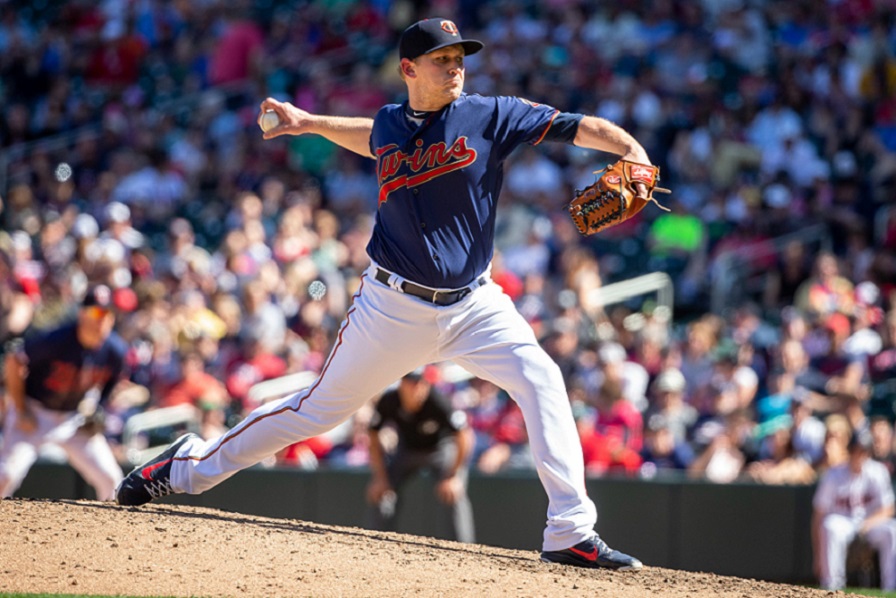 First, you can get up to speed on the 'why and how' behind these rankings by reading Monday's introductory post. If you're already hip, proceed to find my choices (and reasoning) for the 11th-through-15th most valuable player assets currently under Minnesota's control as 2021 gets underway. Read Part 1 (16-20) 15. Miguel Sanó, 1B 2020 Ranking: 11 This is the deepest placement yet in these rankings for Sanó, and with good reason. He moved from third base to first. He is coming off a disappointing year, marred by a ridiculous strikeout total. He is currently lined up as the team's second-highest paid player in 2021, with his $11 million commitment trailing only Donaldson's $21 million. With all this in mind, I think it's important to remember the qualities that have kept Sanó on this list year after year – all still on display in the abbreviated 2020 campaign. He is an incredibly gifted athlete who hits baseballs as hard as anyone in the world. He acclimated quickly to first base, with his natural skill and instincts shining through. He's only 27 years old, at the heart of his physical prime, and still quite athletic for his prodigious size. While he'll be somewhat highly paid in 2021, the Twins also control him in 2022 at $9.25 million, which will be an amazing bargain if he pulls it together. They also have a $14 million option for his age-30 season. Focus on Sanó's flaws all you want – it's valid. But don't lose sight of his strengths. They are in some ways unparalleled. 14. Tyler Duffey, RHP 2020 Ranking: 16 If he hadn't claimed it already, Duffey firmly took hold of the team's "bullpen ace" title in 2020. He was among the league's most dominant relievers, allowing only 19 baserunners via hit or walk in 24 innings, nearly all high-leverage. And because of his sparse previous track record, Duffey remains quite inexpensive in his second turn at arbitration. He's set to earn $2.2 million in 2020. In some ways, he epitomizes the volatility and unpredictability of relief arms. Duffey was not present in these rankings two years ago, and in fact was probably on the verge of moving on from the organization at that point. He has since harnessed his full potential out of the bullpen to become an elite force in the late innings. How long will it last? That remains to be seen. But the Twins are more than happy to control him affordably for the next two seasons. 13. Jordan Balazovic, RHP 2020 Ranking: 8 The lost minor-league season in 2020 was especially unfortunate for a guy like Balazovic. He entered the year as a fast-rising and highly promising young arm, ready to take on advanced levels for the first time and make a statement. But because he hadn't yet taken this step, and wasn't really within range of a call-up, he was left off the alternate site roster, leaving him to progress on his own, without the benefit of competition or direct coaching. (He did get added to the alternate group late in the season.) None of this means Balazovic's outlook has dropped off, especially in a relative context (all prospects just lost a year). But he was at such a pivotal crux in his development – 21 years old, three years removed from being drafted out of high school, set to reach Double-A for the first time – that the disruption weighs a bit harder in his case. With that said, he's clearly one of the organization's top pitching prospects – virtually deadlocked with the next guy, from my view – and that makes him one of Minnesota's most valuable assets. Huge year ahead for Balazovic. 12. Jhoan Duran, RHP 2020 Ranking: 13 The Twins acquired the Dominican right-hander from Arizona as part of the Eduardo Escobar deal in July of 2018. At the time, Duran was a middling Single-A starter with big stuff and lackluster results. Upon coming switching organizations, he immediately turned a corner. Since the trade, Duran has posted a 3.38 ERA, 1.10 WHIP, and 10.7 K/9 rate in 151 innings. His whiff rates are among the best in the system. He's been dominating. He's also just about big-league ready. Duran reached Double-A in 2019 and spent 2020 at the alternate site in St. Paul, where he gained consideration for a call-up. His proximity to the majors and proven performance in the upper minors gives him a slight edge over Balazovic in these rankings but as I said, they're practically even in my eyes. 11. Luis Arráez, 2B 2020 Ranking: 10 The strengths and positives that Arráez brings to the table are no secret. He's one of the game's best contact hitters and the definition of a spark plug, with a .331 average and .390 on-base percentage through nearly 500 major-league plate appearances. All this before turning 24. But Arráez also has his limitations. He's not a speedy runner, nor a strong defender, and it's dubious whether he'll ever develop enough power to become a well-rounded offensive threat. Overshadowing these shortcomings, all of which he's been able to rise above as a huge difference-maker in his first two seasons, is the one issue that has actually held him back: his health. The second baseman missed all of 2017 in the minors after tearing the ACL in one knee, and in 2020 he was bothered all year by tendinitis in the other. Arráez was clearly hobbled most of the time and spent much of September on the Injured List. No surgery was planned for this offseason, so he'll focus on strengthening his lower body and shaking off the creeping "injury-prone" rep that threatens to further tarnish his otherwise impeccable asset value as a cheap young core player with five remaining years of team control. THE TOP 20 TWINS ASSETS OF 2021 20. Keoni Cavaco, SS 19. Brent Rooker, OF/1B 18. Josh Donaldson, 3B 17. Taylor Rogers, LHP 16. Jorge Alcala, RHP 15. Miguel Sanó, 1B 14. Tyler Duffey, RHP 13. Jordan Balazovic, RHP 12. Jhoan Duran, RHP 11. Luis Arráez, 2B 6-10: Coming tomorrow!MORE FROM TWINS DAILY — Latest Twins coverage from our writers — Recent Twins discussion in our forums — Follow Twins Daily via Twitter, Facebook or email
 -
Well, you have to think of it this way: If they could subtract him, take his $21 million and spend it on other players, could they put themselves in better overall shape to win a championship (not just 2021 but beyond)? Given the injury risk and his age, they could at least invest it a lot more soundly. Donaldson's ranking in this equation would be a lot higher if we were talking strictly about winning it all this year, but we're not. And the more you zoom out, the more his asset value declines.
- 14 replies
-
- 3
-
-
- keoni cavaco
- brent rooker
- (and 3 more)
-
I'm weighing the risk against the upside. I think it's too soon to say his contract is an absolute liability because if he rebounds in 2021 and plays like he did in 2019, then his salary is fine. This isn't a Mauer situation where the glimmers of upside and transformative impact are basically gone. To say that no team would pick up JD'scontract (in this economic environment especially) is not to say the Twins would instantly dump it if they had the chance. They're in a championship window and he's the kind of asset that can get them over the top. They know that and it's why they ponied up. It doesn't change because of a rough 60-game season, as forebodingly as things may have played out.
- 14 replies
-
- 2
-
-
- keoni cavaco
- brent rooker
- (and 3 more)
-
This is a very valid argument, and it's one I had with myself quite a bit while compiling the rankings. Everything you mentioned is a very legitimate knock against his case. In my initial pass, Rooker didn't make the cut. Here's why I eventually changed my mind: I think really highly of Rooker's offensive upside. More highly than most probably. I see his power as being a notch above most good slugging prospects, and see him developing pretty decent patience down the line. Once he reaches full form, I don't think we'll be viewing him as the kinda talent you can go out and find readily. I also look at the Twins' situation specifically. They do have an ostensible glut of bat-first corner defenders, but when you look at their established RH bats? Sano, Donaldson, Buxton, Garver. All have proven to be injury prone, and all are getting expensive and/or closer to free agency. Rooker is the only developed righty hitter providing depth behind them so I see that as a bit of a value booster as well.
- 14 replies
-
- 2
-
-
- keoni cavaco
- brent rooker
- (and 3 more)
-
As we kick off our countdown of the Minnesota Twins' top 20 player assets, this first batch features a little of everything: from a raw and unproven teenaged prospect to a highly paid MVP-winning veteran. Let us begin.First, you can get up to speed on the 'why and how' behind these rankings by reading Monday's introductory post. If you're already hip, proceed to find my choices (and reasoning) for the 16th-through-20th most valuable assets under Minnesota's control as 2021 gets underway. 20. Keoni Cavaco, SS 2020 Ranking: NR The 20th spot in these rankings is one I always wrestle with most. There are so many different players with good arguments to appear on the list; this selection becomes a battle between many semi-critical assets, whose competing qualities are fundamental to this exercise. Which is more indispensable to the Twins' plans: a proven MLB commodity with a relatively low ceiling (i.e. Randy Dobnak, Jake Cave), versus a near-ready prospect with moderate upside (i.e. Travis Blankenhorn, Edwar Colina), versus a more distant and uncertain project with game-changing potential? Ultimately, I landed on the latter, best represented in the system by Keoni Cavaco. No, he hasn't done anything of note as a professional yet, posting a paltry .470 OPS in his first turn at rookie ball in 2019. But the Twins believed in him enough to take him 13th overall – the highest pick this regime has made outside of Royce Lewis (No. 1) in 2017 – because they so value Cavaco's athleticism and long-term ceiling. I have no special insight or information on the 19-year-old, especially coming off a lost minor-league season, but frankly I trust this front office enough to consider him an important part of the big picture going forward. Needless to say, 2021 will be a key year for Cavaco. 19. Brent Rooker, OF/1B 2020 Ranking: NR The former first-round pick reached the majors in 2020, just three years after being drafted, and was exactly as advertised: an advanced bat with big bop, exhibiting no signs of intimidation against MLB pitching. Rooker has factors working against him in the context of this list – namely, a lack of asset scarcity. Big, immobile sluggers who can only play first base and corner outfield are not hard to come by. He also happens to be a bit extreme in the traditional flaws of this profile: a sub-par defender and extremely strikeout prone. But on the flip side (pun intended), his raw power is at the highest end of the spectrum and Rooker shows potential to develop into a reasonably disciplined hitter. Although he only made 21 plate appearances as a rookie before breaking his forearm, he made a strong enough impression to solidify his place in the club's plans going forward. Rooker is inexpensively controllable for years to come. 18. Josh Donaldson, 3B 2020 Ranking: NR Donaldson signed after this list came out last year, so I didn't have to struggle with the challenging task of ranking him as an asset. It goes without saying he would've been higher at that point then he is now. The first year of Donaldson's historic contract was theoretically supposed to deliver the greatest value for the Twins, but was mostly a bust. Now, he's entering his age 35 season with magnified durability concerns, still owed $70 million in guaranteed money over the next three years. In the scope of this discussion, Donaldson's huge salary is a significant drawback, limiting the front office's ability to build around him within payroll constraints. The need to prioritize adding depth behind him, due to his unreliable health, is also a negative. And yet ... to an extent, this is all counterbalanced by the monumental impact he's capable of making. Donaldson is the only former MVP on the roster, and someone who was elite both offensively and defensively just two years ago. He showed signs of being that same player while on the field in 2020. It's possible no other team would take on Donaldson's contract at this moment if they had the chance, which is why he ranks as low as he does here. But his presence will be crucial if Minnesota's is to capitalize on the current championship window. 17. Taylor Rogers, LHP 2020 Ranking: 12 One year ago, Rogers was a top-end closer, set to earn less than $5 million, yet he still didn't crack the top 10 in these rankings. That says a lot about the relative value of relief pitchers, who are – for better or worse – among the game's most fungible assets. (The Twins, having made a habit of letting quality bullpen arms walk, seem to live by this credo.) Rogers is now a year older and closer to free agency, although the Twins still control him for two more seasons. He's also coming off a tough campaign, albeit it a shortened one where his peripherals and underlying indicators remained strong. Set to earn $6 million, he's no longer the clear-cut bargain he once was. The lefty's value has surely dropped but his price isn't unreasonable, all things considered, and he remains an integral piece of this bullpen – especially with Trevor May moving on, and guys like Sergio Romo and Tyler Clippard (for now) out of the picture. 16. Jorge Alcala, RHP 2020 Ranking: NR Like Rogers, Alcala has shown the ability to dominate out of the bullpen. The similarities end there. Whereas Rogers is a polished, experienced, time-tested relief fixture, Alcala is an up-and-comer with a sparse MLB track record. But that track record has yielded a 2.45 ERA and 9.8 K/9 rate in 25 ⅔ innings. The right-hander didn't exactly come out of nowhere. He was a big-ticket international signing by the Astros out of the Dominican Republic in 2014, and was the prospect headliner in a trade that sent Ryan Pressly to Houston in 2018. Though he predictably fizzled out as a starter, Alcala shows all the signs of a quality back-end reliever, and he's under team control for the next five seasons. If he can firmly establish himself as a lights-out setup man or closer in 2021, he'll move up this list. THE TOP 20 TWINS ASSETS OF 2021 20. Keoni Cavaco, SS 19. Brent Rooker, OF/1B 18. Josh Donaldson, 3B 17. Taylor Rogers, LHP 16. Jorge Alcala, RHP 11-15: Coming tomorrow! MORE FROM TWINS DAILY — Latest Twins coverage from our writers — Recent Twins discussion in our forums — Follow Twins Daily via Twitter, Facebook or email Click here to view the article
- 14 replies
-
- 1
-
-
- keoni cavaco
- brent rooker
- (and 3 more)
-
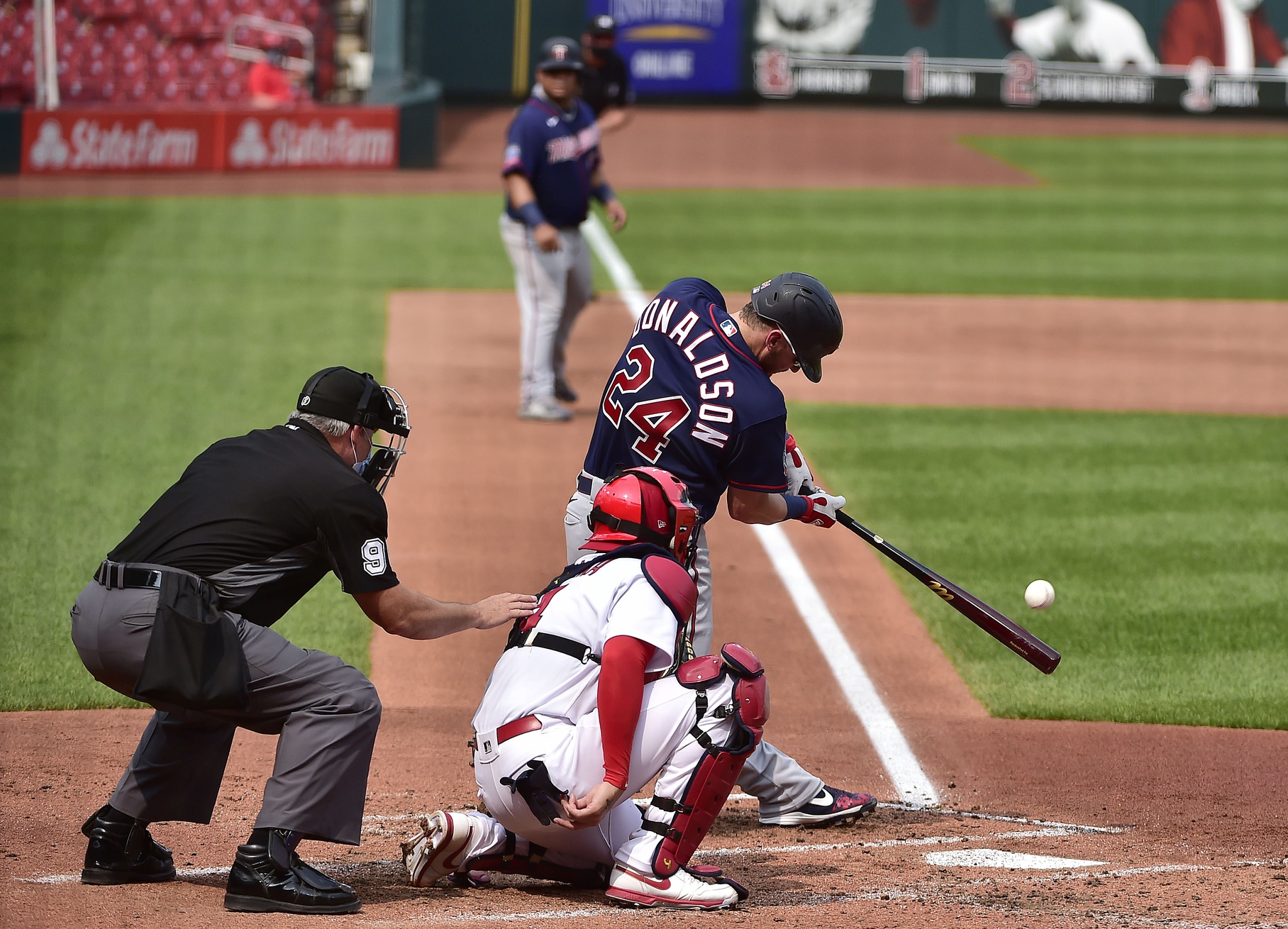 First, you can get up to speed on the 'why and how' behind these rankings by reading Monday's introductory post. If you're already hip, proceed to find my choices (and reasoning) for the 16th-through-20th most valuable assets under Minnesota's control as 2021 gets underway. 20. Keoni Cavaco, SS 2020 Ranking: NR The 20th spot in these rankings is one I always wrestle with most. There are so many different players with good arguments to appear on the list; this selection becomes a battle between many semi-critical assets, whose competing qualities are fundamental to this exercise. Which is more indispensable to the Twins' plans: a proven MLB commodity with a relatively low ceiling (i.e. Randy Dobnak, Jake Cave), versus a near-ready prospect with moderate upside (i.e. Travis Blankenhorn, Edwar Colina), versus a more distant and uncertain project with game-changing potential? Ultimately, I landed on the latter, best represented in the system by Keoni Cavaco. No, he hasn't done anything of note as a professional yet, posting a paltry .470 OPS in his first turn at rookie ball in 2019. But the Twins believed in him enough to take him 13th overall – the highest pick this regime has made outside of Royce Lewis (No. 1) in 2017 – because they so value Cavaco's athleticism and long-term ceiling. I have no special insight or information on the 19-year-old, especially coming off a lost minor-league season, but frankly I trust this front office enough to consider him an important part of the big picture going forward. Needless to say, 2021 will be a key year for Cavaco. 19. Brent Rooker, OF/1B 2020 Ranking: NR The former first-round pick reached the majors in 2020, just three years after being drafted, and was exactly as advertised: an advanced bat with big bop, exhibiting no signs of intimidation against MLB pitching. Rooker has factors working against him in the context of this list – namely, a lack of asset scarcity. Big, immobile sluggers who can only play first base and corner outfield are not hard to come by. He also happens to be a bit extreme in the traditional flaws of this profile: a sub-par defender and extremely strikeout prone. But on the flip side (pun intended), his raw power is at the highest end of the spectrum and Rooker shows potential to develop into a reasonably disciplined hitter. Although he only made 21 plate appearances as a rookie before breaking his forearm, he made a strong enough impression to solidify his place in the club's plans going forward. Rooker is inexpensively controllable for years to come. 18. Josh Donaldson, 3B 2020 Ranking: NR Donaldson signed after this list came out last year, so I didn't have to struggle with the challenging task of ranking him as an asset. It goes without saying he would've been higher at that point then he is now. The first year of Donaldson's historic contract was theoretically supposed to deliver the greatest value for the Twins, but was mostly a bust. Now, he's entering his age 35 season with magnified durability concerns, still owed $70 million in guaranteed money over the next three years. In the scope of this discussion, Donaldson's huge salary is a significant drawback, limiting the front office's ability to build around him within payroll constraints. The need to prioritize adding depth behind him, due to his unreliable health, is also a negative. And yet ... to an extent, this is all counterbalanced by the monumental impact he's capable of making. Donaldson is the only former MVP on the roster, and someone who was elite both offensively and defensively just two years ago. He showed signs of being that same player while on the field in 2020. It's possible no other team would take on Donaldson's contract at this moment if they had the chance, which is why he ranks as low as he does here. But his presence will be crucial if Minnesota's is to capitalize on the current championship window. 17. Taylor Rogers, LHP 2020 Ranking: 12 One year ago, Rogers was a top-end closer, set to earn less than $5 million, yet he still didn't crack the top 10 in these rankings. That says a lot about the relative value of relief pitchers, who are – for better or worse – among the game's most fungible assets. (The Twins, having made a habit of letting quality bullpen arms walk, seem to live by this credo.) Rogers is now a year older and closer to free agency, although the Twins still control him for two more seasons. He's also coming off a tough campaign, albeit it a shortened one where his peripherals and underlying indicators remained strong. Set to earn $6 million, he's no longer the clear-cut bargain he once was. The lefty's value has surely dropped but his price isn't unreasonable, all things considered, and he remains an integral piece of this bullpen – especially with Trevor May moving on, and guys like Sergio Romo and Tyler Clippard (for now) out of the picture. 16. Jorge Alcala, RHP 2020 Ranking: NR Like Rogers, Alcala has shown the ability to dominate out of the bullpen. The similarities end there. Whereas Rogers is a polished, experienced, time-tested relief fixture, Alcala is an up-and-comer with a sparse MLB track record. But that track record has yielded a 2.45 ERA and 9.8 K/9 rate in 25 ⅔ innings. The right-hander didn't exactly come out of nowhere. He was a big-ticket international signing by the Astros out of the Dominican Republic in 2014, and was the prospect headliner in a trade that sent Ryan Pressly to Houston in 2018. Though he predictably fizzled out as a starter, Alcala shows all the signs of a quality back-end reliever, and he's under team control for the next five seasons. If he can firmly establish himself as a lights-out setup man or closer in 2021, he'll move up this list. THE TOP 20 TWINS ASSETS OF 2021 20. Keoni Cavaco, SS 19. Brent Rooker, OF/1B 18. Josh Donaldson, 3B 17. Taylor Rogers, LHP 16. Jorge Alcala, RHP 11-15: Coming tomorrow!MORE FROM TWINS DAILY — Latest Twins coverage from our writers — Recent Twins discussion in our forums — Follow Twins Daily via Twitter, Facebook or email
 -
Top 20 Minnesota Twins Assets of 2021: Introduction
Nick Nelson replied to Nick Nelson's topic in Twins Daily Front Page News
You would argue that 32-year-old Michael Pineda, on a one-year $10 million deal, is more valuable than 26-year-old Jose Berrios on a two-year ~$16 million deal? I would, um, love to hear your case. Dating back to 2017, only 8 pitchers have thrown more innings than Berrios with a better ERA: deGrom, Cole, Greinke, Scherzer, Corbin, Nola, Verlander, Bauer. But yeah... #3 at best... -
It's that time again. With the arrival of a new year, we like to take stock of the Twins' organizational talent by revisiting and updating our rankings of the franchise's top 20 player assets. On Tuesday, the countdown begins. Today: an introduction, preview, and look back at past rankings.This will be my fourth time compiling and publishing these rankings, which always publish right around New Year's Day. You can find the previous lists (and some reflections) below, but here are the links if you want to quick-jump to past installments: Top 20 Twins Assets: 2018Top 20 Twins Assets: 2019Top 20 Twins Assets: 2020Here's a breakdown of the methodology and caveats for this exercise:Things that are factored into these rankings: production, age, upside, pedigree, health, length of team control, favorability of contract, positional scarcity (within the system, and generally).Players are people. Their value to the organization, and its fans, goes well beyond the strictly business-like scope we're using here. But for the purposes of this list, we're analyzing solely in terms of asset evaluation. Intangible qualities and popularity are not factors.The idea is to assess players' importance to the future of the Minnesota Twins. In this regard, it's not exactly a ranking in terms of trade value, because that's dependent on another team's situation and needs. (For instance, Jake Cave and LaMonte Wade Jr. would be more valuable to many other teams than they are to the Twins, who are rich with short-term and long-term corner outfield depth.)This is a snapshot in time. Rankings are heavily influenced by recent trends and where things stood as of the end of 2020.Current major-leaguers and prospects are all eligible. The ultimate goal here to answer this question: Which current players in the organization are most indispensable to fulfilling the vision of building a champion?Before we proceed, a note that will hopefully but these rankings in the proper context: Two years ago, I had Fernando Romero ranked as the sixth-most valuable player asset in the Twins organization. Last month, he was released so he could go play in Japan. It's obviously an extreme example, but illustrates a simple reality: these rankings are subjective and timebound. That's what makes them worthy of putting together each year. It's interesting to track the ups and downs, and to debate where different players might fit in or how their stock has changed. You'll see many examples of dramatic rises and falls from the past three years by looking over these previous lists: 2020 20. Ryan Jeffers, C 19. Eddie Rosario, OF 18. Michael Pineda, RHP 17. Nelson Cruz, DH 16. Tyler Duffey, RHP 15. Jake Odorizzi, RHP 14. Trevor Larnach, OF 13. Jhoan Duran, RHP 12. Taylor Rogers, LHP 11. Miguel Sano, 3B 10. Luis Arraez, 2B 9. Alex Kirilloff, OF 8. Jordan Balazovic, RHP 7. Byron Buxton OF 6. Mitch Garver, C 5. Royce Lewis, SS 4. Brusdar Graterol, RHP 3. Jose Berrios, RHP 2. Max Kepler, OF 1. Jorge Polanco, SS 2019 20. Nick Gordon, SS 19. C.J. Cron, 1B 18. Adalberto Mejia, LHP 17. Jake Cave, OF 16. Wander Javier, SS 15. Stephen Gonsalves, LHP 14. Miguel Sano, 3B 13. Kyle Gibson, RHP 12. Trevor May, RHP 11. Mitch Garver, C 10. Taylor Rogers, LHP 9. Max Kepler, OF 8. Eddie Rosario, OF 7. Jorge Polanco, SS 6. Fernando Romero, RHP 5. Brusdar Graterol, RHP 4. Alex Kirilloff, OF 3. Byron Buxton, OF 2. Jose Berrios, RHP 1. Royce Lewis, SS 2018 20. Alex Kirilloff, OF 19. Trevor May, RHP 18. Wander Javier, SS 17. Jason Castro, C 16. Tyler Duffey, RHP 15. Taylor Rogers, LHP 14. Adalberto Mejia, LHP 13. Nick Gordon, SS 12. Fernando Romero, RHP 11. Trevor Hildenberger, RHP 10. Stephen Gonsalves, LHP 9. Ervin Santana, RHP 8. Brian Dozier, 2B 7. Max Kepler, OF 6. Jorge Polanco, SS 5. Eddie Rosario, OF 4. Miguel Sano, 3B 3. Jose Berrios, RHP 2. Royce Lewis, SS 1. Byron Buxton, OF As mentioned, we'll start rolling out the 2021 rankings tomorrow with my choices for Nos. 16-through-20. But first, I thought I'd muse a bit on the last three years of rankings, and what insights or lessons we might take away from them. The Fall of Rosario In the first edition of these rankings, following the 2017 season, Rosario was pegged as the organization's fifth-best asset. The next year he dropped to eighth, then 19th, and now he's been non-tendered. This reflects broader implications of MLB's compensation system, and how it degrades player asset value en route to the open market. But Rosario also contributed to his own drop, by stagnating if not declining in the midst of his purported prime. Among the top seven players listed in 2018's rankings, Rosario is the only one gone. All others will be in this year's top 20. (Spoiler alert WOMP WOMP.) The Rise (and Departure) of Graterol Brusdar Graterol shows how premium assets can emerge out of nowhere. He wasn't on the 2018 list, and not really even on the radar at that point – an oft-injured teenager who'd thrown zero innings above rookie ball. His meteoric ensuing season launched him to No. 5 on the 2019 list, and in 2020 he moved up a spot to No. 4. Sadly, Graterol is now gone, although I'm guessing he's not so sad about it, World Series ring and all. The Twins took advantage of Graterol's sky-high stock by trading him for another highly valued asset in Kenta Maeda. Maeda is on this year's list. And, not to give anything away, but he's higher than the guy he replaced. Guess you'd call that a win. Steady José Only one player has appeared in the top three for all three years of rankings. That's José Berríos, the top pitching prospect turned good (at last) who continues to prove his worth. The right-hander never quite ascended to bona fide Ace™ status, but has been a consistent top-shelf starter with almost unrivaled durability. He has also been a supreme bargain, though that's finally starting to change as he inches toward free agency. Will the ticking service clock and rising pricetag bump him from his entrenched position in the top three this year? Riding with Buxton and Sanó Had these rankings existed in the five years before I started them, there's no doubt Byron Buxton and Miguel Sanó would've annually ranked near the very top. The Twins framed their entire rebuild around the two centerpieces. Buxton and Sanó were among the franchise's highest-profile amateur acquisitions of all time, and they both fueled the hype by emerging as top prospects in the game. The major-league chapter hasn't quite followed the same storybook formula. Things looked bright early on; I had them ranked first and fourth coming off an impressive 2017 campaign in which they helped return the Twins to contention. But Buxton and Sanó fell to third and 14th the following year. Most recently they were seventh and 11th. Meanwhile, Max Kepler and Jorge Polanco have risen above them as essential building blocks, merely because they are dependable and durable fixtures with good contracts. In a nutshell, that probably explains why the Twins have flirted with greatness rather than fully realizing it during the past couple seasons. Flawed and subjective as they might be, these rankings do tell an illuminating tale over time. I look forward to breaking down and debating this year's list, starting tomorrow night. BONUS CHALLENGE: If anyone dares take a shot, I'd like to see some predictions for how this year's top 20 will shake out. Share yours in the comments and if someone gets it right (or even close) I'll give a major shout-out in the final edition. MORE FROM TWINS DAILY — Latest Twins coverage from our writers — Recent Twins discussion in our forums — Follow Twins Daily via Twitter, Facebook or email Click here to view the article
-
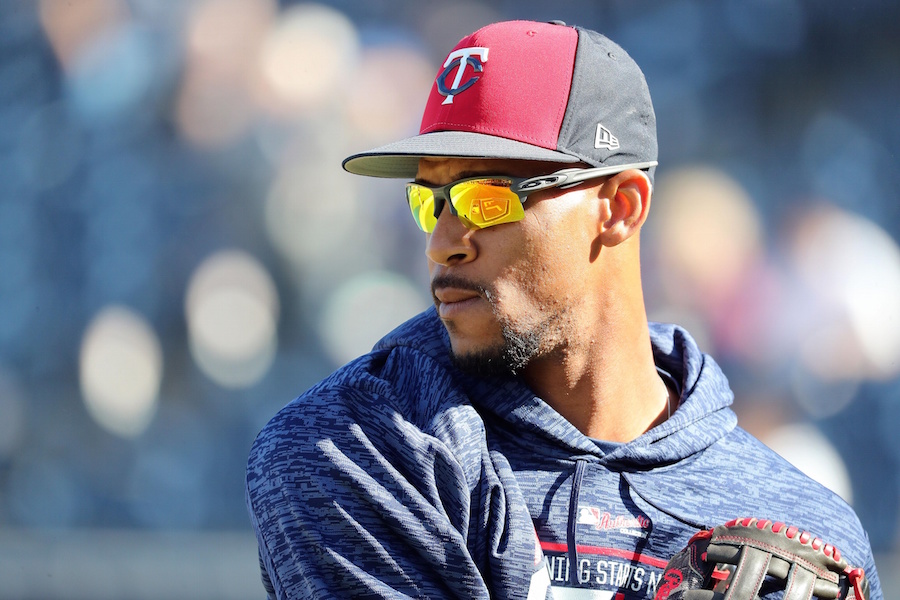 This will be my fourth time compiling and publishing these rankings, which always publish right around New Year's Day. You can find the previous lists (and some reflections) below, but here are the links if you want to quick-jump to past installments: Top 20 Twins Assets: 2018 Top 20 Twins Assets: 2019 Top 20 Twins Assets: 2020 Here's a breakdown of the methodology and caveats for this exercise: Things that are factored into these rankings: production, age, upside, pedigree, health, length of team control, favorability of contract, positional scarcity (within the system, and generally). Players are people. Their value to the organization, and its fans, goes well beyond the strictly business-like scope we're using here. But for the purposes of this list, we're analyzing solely in terms of asset evaluation. Intangible qualities and popularity are not factors. The idea is to assess players' importance to the future of the Minnesota Twins. In this regard, it's not exactly a ranking in terms of trade value, because that's dependent on another team's situation and needs. (For instance, Jake Cave and LaMonte Wade Jr. would be more valuable to many other teams than they are to the Twins, who are rich with short-term and long-term corner outfield depth.) This is a snapshot in time. Rankings are heavily influenced by recent trends and where things stood as of the end of 2020. Current major-leaguers and prospects are all eligible. The ultimate goal here to answer this question: Which current players in the organization are most indispensable to fulfilling the vision of building a champion? Before we proceed, a note that will hopefully but these rankings in the proper context: Two years ago, I had Fernando Romero ranked as the sixth-most valuable player asset in the Twins organization. Last month, he was released so he could go play in Japan. It's obviously an extreme example, but illustrates a simple reality: these rankings are subjective and timebound. That's what makes them worthy of putting together each year. It's interesting to track the ups and downs, and to debate where different players might fit in or how their stock has changed. You'll see many examples of dramatic rises and falls from the past three years by looking over these previous lists: 2020 20. Ryan Jeffers, C 19. Eddie Rosario, OF 18. Michael Pineda, RHP 17. Nelson Cruz, DH 16. Tyler Duffey, RHP 15. Jake Odorizzi, RHP 14. Trevor Larnach, OF 13. Jhoan Duran, RHP 12. Taylor Rogers, LHP 11. Miguel Sano, 3B 10. Luis Arraez, 2B 9. Alex Kirilloff, OF 8. Jordan Balazovic, RHP 7. Byron Buxton OF 6. Mitch Garver, C 5. Royce Lewis, SS 4. Brusdar Graterol, RHP 3. Jose Berrios, RHP 2. Max Kepler, OF 1. Jorge Polanco, SS2019 20. Nick Gordon, SS 19. C.J. Cron, 1B 18. Adalberto Mejia, LHP 17. Jake Cave, OF 16. Wander Javier, SS 15. Stephen Gonsalves, LHP 14. Miguel Sano, 3B 13. Kyle Gibson, RHP 12. Trevor May, RHP 11. Mitch Garver, C 10. Taylor Rogers, LHP 9. Max Kepler, OF 8. Eddie Rosario, OF 7. Jorge Polanco, SS 6. Fernando Romero, RHP 5. Brusdar Graterol, RHP 4. Alex Kirilloff, OF 3. Byron Buxton, OF 2. Jose Berrios, RHP 1. Royce Lewis, SS2018 20. Alex Kirilloff, OF 19. Trevor May, RHP 18. Wander Javier, SS 17. Jason Castro, C 16. Tyler Duffey, RHP 15. Taylor Rogers, LHP 14. Adalberto Mejia, LHP 13. Nick Gordon, SS 12. Fernando Romero, RHP 11. Trevor Hildenberger, RHP 10. Stephen Gonsalves, LHP 9. Ervin Santana, RHP 8. Brian Dozier, 2B 7. Max Kepler, OF 6. Jorge Polanco, SS 5. Eddie Rosario, OF 4. Miguel Sano, 3B 3. Jose Berrios, RHP 2. Royce Lewis, SS 1. Byron Buxton, OF As mentioned, we'll start rolling out the 2021 rankings tomorrow with my choices for Nos. 16-through-20. But first, I thought I'd muse a bit on the last three years of rankings, and what insights or lessons we might take away from them. The Fall of Rosario In the first edition of these rankings, following the 2017 season, Rosario was pegged as the organization's fifth-best asset. The next year he dropped to eighth, then 19th, and now he's been non-tendered. This reflects broader implications of MLB's compensation system, and how it degrades player asset value en route to the open market. But Rosario also contributed to his own drop, by stagnating if not declining in the midst of his purported prime. Among the top seven players listed in 2018's rankings, Rosario is the only one gone. All others will be in this year's top 20. (Spoiler alert WOMP WOMP.) The Rise (and Departure) of Graterol Brusdar Graterol shows how premium assets can emerge out of nowhere. He wasn't on the 2018 list, and not really even on the radar at that point – an oft-injured teenager who'd thrown zero innings above rookie ball. His meteoric ensuing season launched him to No. 5 on the 2019 list, and in 2020 he moved up a spot to No. 4. Sadly, Graterol is now gone, although I'm guessing he's not so sad about it, World Series ring and all. The Twins took advantage of Graterol's sky-high stock by trading him for another highly valued asset in Kenta Maeda. Maeda is on this year's list. And, not to give anything away, but he's higher than the guy he replaced. Guess you'd call that a win. Steady José Only one player has appeared in the top three for all three years of rankings. That's José Berríos, the top pitching prospect turned good (at last) who continues to prove his worth. The right-hander never quite ascended to bona fide Ace™ status, but has been a consistent top-shelf starter with almost unrivaled durability. He has also been a supreme bargain, though that's finally starting to change as he inches toward free agency. Will the ticking service clock and rising pricetag bump him from his entrenched position in the top three this year? Riding with Buxton and Sanó Had these rankings existed in the five years before I started them, there's no doubt Byron Buxton and Miguel Sanó would've annually ranked near the very top. The Twins framed their entire rebuild around the two centerpieces. Buxton and Sanó were among the franchise's highest-profile amateur acquisitions of all time, and they both fueled the hype by emerging as top prospects in the game. The major-league chapter hasn't quite followed the same storybook formula. Things looked bright early on; I had them ranked first and fourth coming off an impressive 2017 campaign in which they helped return the Twins to contention. But Buxton and Sanó fell to third and 14th the following year. Most recently they were seventh and 11th. Meanwhile, Max Kepler and Jorge Polanco have risen above them as essential building blocks, merely because they are dependable and durable fixtures with good contracts. In a nutshell, that probably explains why the Twins have flirted with greatness rather than fully realizing it during the past couple seasons. Flawed and subjective as they might be, these rankings do tell an illuminating tale over time. I look forward to breaking down and debating this year's list, starting tomorrow night. BONUS CHALLENGE: If anyone dares take a shot, I'd like to see some predictions for how this year's top 20 will shake out. Share yours in the comments and if someone gets it right (or even close) I'll give a major shout-out in the final edition. MORE FROM TWINS DAILY — Latest Twins coverage from our writers — Recent Twins discussion in our forums — Follow Twins Daily via Twitter, Facebook or email
 -
Twins Offseason Status Update: Slow Going
Nick Nelson replied to Nick Nelson's topic in Twins Daily Front Page News
Even in that case, I would say it was more about value than emotion. As I recall, they cut off talks at one point because he wasn't open to what they were offering, then they circled back like a month later and made it happen. On their terms. So, yeah, your point stands. -
Twins Offseason Status Update: Slow Going
Nick Nelson replied to Nick Nelson's topic in Twins Daily Front Page News
I don't think it's that rare? Most borderline shortstops start moving down the defensive spectrum at some point – Polanco has arguably hung in there at SS for an oddly long time given his performance. With few exceptions, if you can play a decent a shortstop you're gonna be able to play a fine second and third. They are easier positions and relatively familiar. This ain't exactly like asking Miguel Sano to play RF.- 21 replies
-
- 1
-
-
- nelson cruz
- hansel robles
- (and 2 more)
-
Twins Offseason Status Update: Slow Going
Nick Nelson replied to Nick Nelson's topic in Twins Daily Front Page News
This is a good point. I was actually thinking the other day that if they acquired an SS, Polanco would likely be penciled in as Opening Day DH. It's just hard for me to imagine a scenario where he's not out there for the opener, even with the understanding that he'll see very regular time in the utility role. Down year in 2020 aside, he's been a fixture atop the lineup for years and arguably their most reliable player overall. And he's one year removed from being an All-Star. Zero chance they are done. Don't worry.- 21 replies
-
- 1
-
-
- nelson cruz
- hansel robles
- (and 2 more)
-
As we prepare to flip the calendar to a new year, the Minnesota Twins haven't yet added many new faces to the fold in an offseason defined more by subtraction than addition up to this point. They have made a few pickups, and been involved in some notable rumors, so let's get up to speed as we say goodbye to 2020.After signing reliever Hansel Robles for $2 million on Tuesday (more on that shortly) here's a snapshot of Minnesota's projected 2021 roster and payroll: Download attachment: twinsroster122920.png This accounting does not include the $5+ million that Kenta Maeda is likely to make in incentives, but even still, the Twins are a long way from the $138.3 million mark I had them pegged for in the final update last winter. (They ended up spending a prorated portion of that in the 60-game season.) While it's generally believed that 2021 payroll will be down a shade, there have been no indications the Twins intend to scale back dramatically. They might not have $50 million to spend, but they've got absolutely got the means to make some noise. They haven't yet. And that's hardly unique among major-league teams. But with spring training (ostensibly) less than two months away, and with the San Diego Padres lighting the Hot Stove afire this week, it's time to start getting serious. Here's a rundown on the Twins, and where they stand on several fronts at year's end. Hansel Robles Joins Back End of Bullpen After non-tendering Matt Wisler and letting three key veteran right-handed relievers walk via free agency, the Twins finally made an offsetting addition on Tuesday, signing former Angels closer Hansel Robles to a one-year, $2 million deal plus incentives. The nature of those incentives probably tells us something about how they plan (or hope) to use him. All Quiet on the Nelson Cruz Front In many ways, Minnesota's offseason strategy appears to hinge on the Cruz decision. So far, there's been little known movement. He wants to wait to sign until MLB provides clarity on the DH rule for next year, but there's no sign of getting any in the immediate future. How long can the Twins wait, with their offseason plans mired in limbo? Baldelli made his pitch to the free agent slugger during a media Zoom session earlier this month. "Nelson, if you're watching, which I know you're not, we'd love to see you in spring training, and I'll talk to you soon," he said into the camera with a grin. Goofing around? Sure. But it felt like there was almost a knowingness to Baldelli's casual advance. I'm not saying the Twins and Cruz have a handshake agreement in place that any competing offer on a one-year contract will be matched ... but it wouldn't shock me if they did. We'll keep covering the news here at Twins Daily as it arises. I hope everyone has a happy, safe and healthy New Year. MORE FROM TWINS DAILY — Latest Twins coverage from our writers — Recent Twins discussion in our forums — Follow Twins Daily via Twitter, Facebook or email Click here to view the article
-
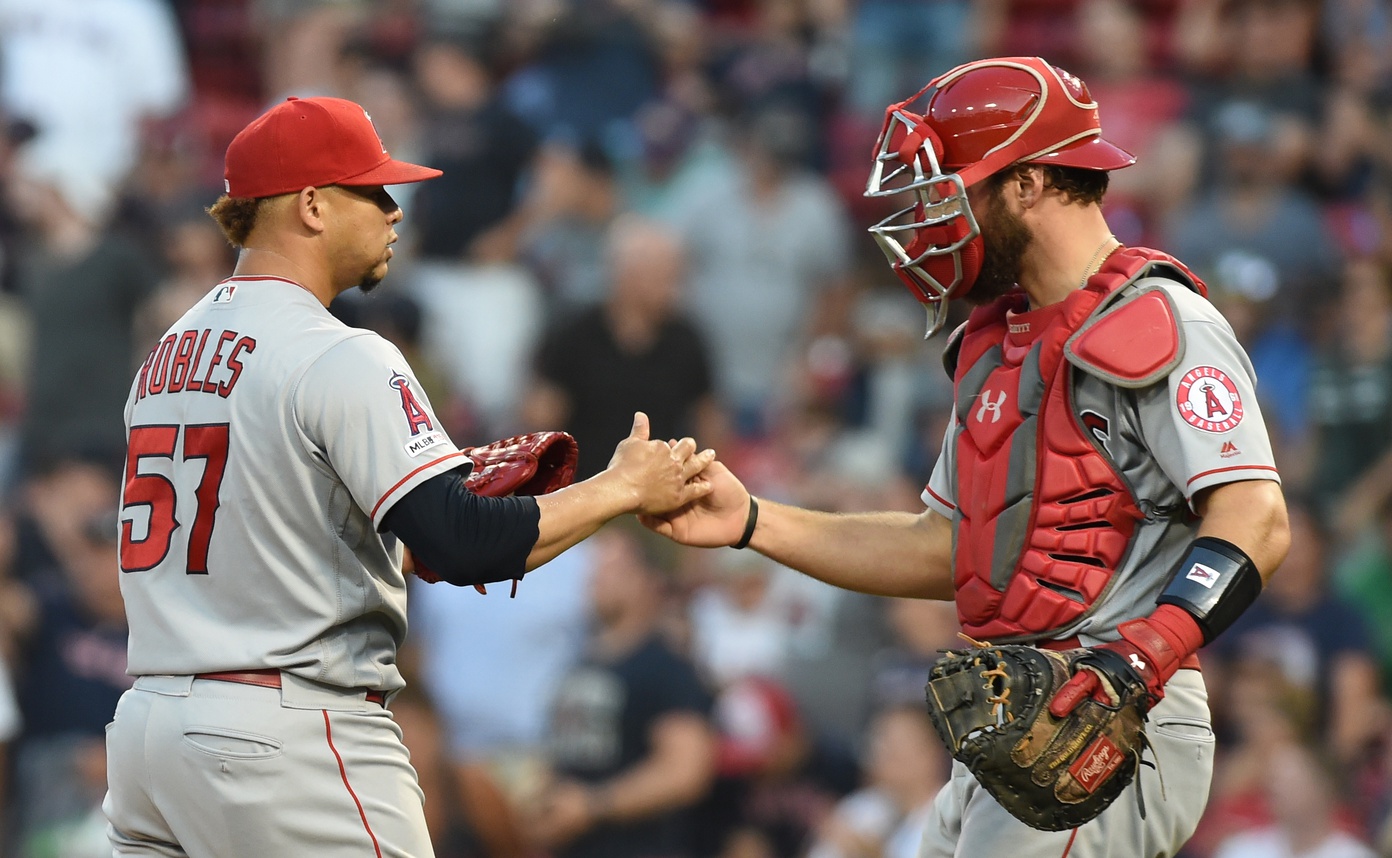 After signing reliever Hansel Robles for $2 million on Tuesday (more on that shortly) here's a snapshot of Minnesota's projected 2021 roster and payroll: This accounting does not include the $5+ million that Kenta Maeda is likely to make in incentives, but even still, the Twins are a long way from the $138.3 million mark I had them pegged for in the final update last winter. (They ended up spending a prorated portion of that in the 60-game season.) While it's generally believed that 2021 payroll will be down a shade, there have been no indications the Twins intend to scale back dramatically. They might not have $50 million to spend, but they've got absolutely got the means to make some noise. They haven't yet. And that's hardly unique among major-league teams. But with spring training (ostensibly) less than two months away, and with the San Diego Padres lighting the Hot Stove afire this week, it's time to start getting serious. Here's a rundown on the Twins, and where they stand on several fronts at year's end. Hansel Robles Joins Back End of Bullpen After non-tendering Matt Wisler and letting three key veteran right-handed relievers walk via free agency, the Twins finally made an offsetting addition on Tuesday, signing former Angels closer Hansel Robles to a one-year, $2 million deal plus incentives. The nature of those incentives probably tells us something about how they plan (or hope) to use him. Robles can earn bonuses based on how many games he finishes, all the way up to 40. This suggests the Twins will open a path for the 30-year-old to do so – presumably, by filling a role similar to Sergio Romo, and splitting closer duties with Taylor Rogers situationally. That's not a bad bet for the Twins if they're confident Robles' abbreviated 2020 season was an anomaly, and he can get back to the form he showed in 2019 as an All-Star caliber bullpen weapon for the Angels. Robles has the stuff, headlined by an upper-90s fastball, and the Twins have a recent track record that inspires confidence. But this is hardly the kind of slam-dunk move that screams "ALL IN!" for a club seemingly on the cusp. Is that yet to come? Rumblings of a Shortstop Splash Where there's smoke, there's often fire, and the flumes surrounding Minnesota's pursuit of an impact addition at shortstop are hard to ignore. The Athletic's Ken Rosenthal, who's as plugged in as any reporter covering the game, wrote recently about the possibility of a Twins trade for Francisco Lindor or Trevor Story (both those possibilities were discussed in our ). Rosenthal mentioned another shortstop target for Minnesota: free agent Marcus Semien. More recently, KSTP's Darren Wolfson reported over the weekend of the Twins having "real interest" in Semien. In the event they were to acquire a Semien or Story, it's unclear how the Twins would shift their existing pieces of accommodate. The simplest answer is moving Polanco into the utility role formerly occupied by Marwin Gonzalez. But Rosenthal also hinted at the idea of Minnesota trading Luis Arráez and moving Polanco to second. Something tells me this would be a tough sell for the fan base. All Quiet on the Nelson Cruz Front In many ways, Minnesota's offseason strategy appears to hinge on the Cruz decision. So far, there's been little known movement. He wants to wait to sign until MLB provides clarity on the DH rule for next year, but there's no sign of getting any in the immediate future. How long can the Twins wait, with their offseason plans mired in limbo? Baldelli made his pitch to the free agent slugger during a media Zoom session earlier this month. "Nelson, if you're watching, which I know you're not, we'd love to see you in spring training, and I'll talk to you soon," he said into the camera with a grin. Goofing around? Sure. But it felt like there was almost a knowingness to Baldelli's casual advance. I'm not saying the Twins and Cruz have a handshake agreement in place that any competing offer on a one-year contract will be matched ... but it wouldn't shock me if they did. We'll keep covering the news here at Twins Daily as it arises. I hope everyone has a happy, safe and healthy New Year. MORE FROM TWINS DAILY — Latest Twins coverage from our writers — Recent Twins discussion in our forums — Follow Twins Daily via Twitter, Facebook or email
 -
Revisiting the Tony Batista Signing, 15 Years Later
Nick Nelson replied to Nick Nelson's topic in Twins Daily Front Page News
There's a difference between being "analytically driven" & having "payroll restrictions" and signing Tony Batista for $1 million to fill a critical need on a WS contender. The Twins were at the extreme ends of both sides during that era, now they've moved to the opposite end of the spectrum. Which to me is worthy of reflecting on during a slow offseason. I guess not to everyone! -
Revisiting the Tony Batista Signing, 15 Years Later
Nick Nelson replied to Nick Nelson's topic in Twins Daily Front Page News
I'm not complaining about Terry Ryan. I'm expressing appreciation for the new front office and the transformative change in ownership investment compared to 15 years ago. Thought that was pretty clear? -
On this date 15 years ago, one of the previous front office regime's more memorable offseason moves (for all the wrong reasons) took place. Today, it's worth reflecting back on that ill-fated decision, as a measure of just how far we've come.On December 15th, 2005, the Minnesota Twins announced the signing of third baseman Tony Batista to a one year, $1.25 million contract. The Twins, at this stage, were very much in World Series contention, despite having missed the playoffs for the first time in four years. Minnesota had an elite talent core, highlighted by Johan Santana, Joe Mauer, Justin Morneau, Torii Hunter, and a strong bullpen led by Joe Nathan. They needed a few pieces to get them over the top. The Twins had a clear hole at the hot corner, having abandoned the "Michael Cuddyer, third baseman" experiment. The choice to fill it was Batista, a long-time big-leaguer who had spent the previous season playing in Japan. At the time, I was a fledgling 20-year-old blogger, still in my first year of co-operating Nick & Nick’s Twins Blog. I recall being fairly ambivalent about the move, seeing it as a low-cost power infusion with glimmers of upside. But I’ll never forget the furious reaction of one Aaron Gleeman, whose blog I’d only recently begun to read with regularity. In a piece titled “Tony F'ing Batista,” Gleeman eviscerated the move. “I have been critical of many Twins trades and signings in the past, but I can't possibly stress just how awful I think signing Batista is," he wrote. "I almost wish I had never disagreed with anything the franchise has ever done before, just so I could save up all of my disapproval for this singular decision." As I’d later learn, he was absolutely right. All these years later, the Batista signing sticks in my memory for epitomizing so many frustrating traits and tendencies of the previous baseball ops department – traits that would endure and hamper the club’s efforts for another decade before a full overhaul in 2016. The Batista signing represented three key downfalls of Terry Ryan and his disciples: Overvaluing traditional statistics. It’s a reflection of their dated evaluative methods, which quickly began to lag behind the times as an analytical revolution took hold of baseball. There was, quite literally, nothing very appealing about Batista other than his HR and RBI totals. He’d put up 32 homers and driven in 110 runs for Montreal two years earlier, but with a .272 on-base percentage, plainly bad defense, and a negative WAR. His performance in Japan the following year was much the same.Inability to assess and project performance from foreign pro leagues. There are many examples of former MLB players who spent a few years playing overseas and were revitalized; Eric Thames comes to mind, as does Miles Mikolas. If that’s what the Twins were hoping to achieve with Batista, they were woefully mistaken. His .263/.294/.463 slash line in one season with the Fukuoka Daiei Hawks, while uninspiring, proved to far exceed what he'd deliver the next year back in MLB. The Twins front office later flopped on high-profile international signings to fill immediate holes: Tsuyoshi Nishioka, and to a lesser extent, Byung-Ho Park.Unwillingness to decisively upgrade a championship-caliber roster. This was by far the most aggravating flaw, though not totally on the shoulders of the front office, since payroll limitations were more stark and suppressive in the Metrodome days. Still, the number of low-wattage veterans and creatively frugal pickups like Batista who were brought in to supplement a championship-caliber nucleus was infuriating – only more so in retrospect as we look back at the relentless playoff failures that defined that era of Twins baseball.I bring all this up not to lament the past, but to appreciate the present. A completely retooled front office has returned the Twins to the top of the division, turning around a 103-loss team in just three years. Derek Falvey and Thad Levine have been able to accomplish this largely because they are the antithesis of TR's administration with respect to the three items above. Overvaluing outdated performance metrics? Hardly. This operation is on the cutting edge analytically, which has fueled its immense success. Whereas the previous regime might've well kept around Eddie Rosario, cherishing his gaudy RBI totals and intangibles, it was never even a thought for the current front office. There isn't a direct comparison to be made on the second point, as Falvey's front office has yet to make a significant acquisition from the Asian pro leagues. (The closest thing would be Wilin Rosario, who came back from Japan in 2019 and raked at Triple-A but didn't reach the majors.) But, if and when they do, I trust it'll be made on quality data and valid intel, rather than gut feelings and specious thinking. It's food for thought as KBO star Ha-seong Kim, a talented young shortstop who could potentially suit the Twins' needs quite nicely, is expected to be posted by the Kiwoom Heroes this winter. As for Terry Ryan's penchant for nickel-and-diming his way through the ostensible construction of championship contenders? Here we find the sharpest contrast. And as mentioned earlier, it can't be entirely tied to the man in the GM's chair – things were very different back in 2005, when Carl Pohlad still ran the show and the Dome suffocated revenues. To what extent these realities weighed against Ryan's instinctive frugality, I don't know. All I know is I'm so damn glad the script has flipped. In signing Batista, Ryan spent $1.25 million to address a key need on a team that went on to win 96 games – in SPITE of Batista's brutal six weeks, which set up Nick Punto as a heroic figure by merely becoming an average replacement at third. Take that number, multiply it by nearly 100, and you arrive at the amount committed to Josh Donaldson last winter. Not only was it the kind of emphatic, all-in investment that would've been unthinkable in the previous era, but it didn't even address a clear need. The Twins had a third baseman in Miguel Sano. They signed Donaldson to power up an already outstanding team and put it over the top. We'll see what the current front office has in store this offseason, with the same opportunity still very much at hand and several needs to be addressed. I don't know what they'll do, but I am confident they won't sign the next Tony Batista. If they do, I'll definitely be making a visit to Mr. Gleeman's feed at The Athletic. MORE FROM TWINS DAILY — Latest Twins coverage from our writers — Recent Twins discussion in our forums — Follow Twins Daily via Twitter, Facebook or email Click here to view the article
-
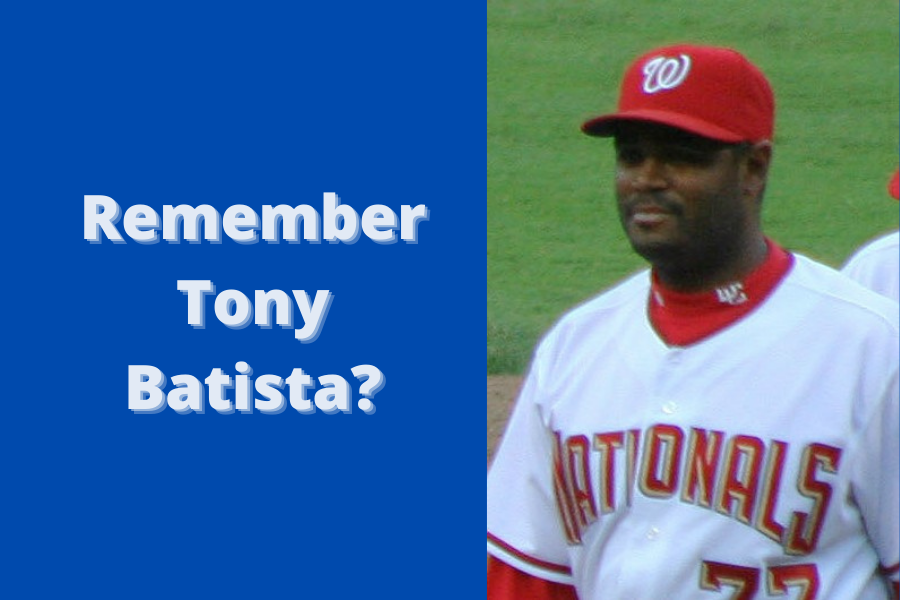 On December 15th, 2005, the Minnesota Twins announced the signing of third baseman Tony Batista to a one year, $1.25 million contract. The Twins, at this stage, were very much in World Series contention, despite having missed the playoffs for the first time in four years. Minnesota had an elite talent core, highlighted by Johan Santana, Joe Mauer, Justin Morneau, Torii Hunter, and a strong bullpen led by Joe Nathan. They needed a few pieces to get them over the top. The Twins had a clear hole at the hot corner, having abandoned the "Michael Cuddyer, third baseman" experiment. The choice to fill it was Batista, a long-time big-leaguer who had spent the previous season playing in Japan. At the time, I was a fledgling 20-year-old blogger, still in my first year of co-operating Nick & Nick’s Twins Blog. I recall being fairly ambivalent about the move, seeing it as a low-cost power infusion with glimmers of upside. But I’ll never forget the furious reaction of one Aaron Gleeman, whose blog I’d only recently begun to read with regularity. In a piece titled “Tony F'ing Batista,” Gleeman eviscerated the move. “I have been critical of many Twins trades and signings in the past, but I can't possibly stress just how awful I think signing Batista is," he wrote. "I almost wish I had never disagreed with anything the franchise has ever done before, just so I could save up all of my disapproval for this singular decision." As I’d later learn, he was absolutely right. All these years later, the Batista signing sticks in my memory for epitomizing so many frustrating traits and tendencies of the previous baseball ops department – traits that would endure and hamper the club’s efforts for another decade before a full overhaul in 2016. The Batista signing represented three key downfalls of Terry Ryan and his disciples: Overvaluing traditional statistics. It’s a reflection of their dated evaluative methods, which quickly began to lag behind the times as an analytical revolution took hold of baseball. There was, quite literally, nothing very appealing about Batista other than his HR and RBI totals. He’d put up 32 homers and driven in 110 runs for Montreal two years earlier, but with a .272 on-base percentage, plainly bad defense, and a negative WAR. His performance in Japan the following year was much the same. Inability to assess and project performance from foreign pro leagues. There are many examples of former MLB players who spent a few years playing overseas and were revitalized; Eric Thames comes to mind, as does Miles Mikolas. If that’s what the Twins were hoping to achieve with Batista, they were woefully mistaken. His .263/.294/.463 slash line in one season with the Fukuoka Daiei Hawks, while uninspiring, proved to far exceed what he'd deliver the next year back in MLB. The Twins front office later flopped on high-profile international signings to fill immediate holes: Tsuyoshi Nishioka, and to a lesser extent, Byung-Ho Park. Unwillingness to decisively upgrade a championship-caliber roster. This was by far the most aggravating flaw, though not totally on the shoulders of the front office, since payroll limitations were more stark and suppressive in the Metrodome days. Still, the number of low-wattage veterans and creatively frugal pickups like Batista who were brought in to supplement a championship-caliber nucleus was infuriating – only more so in retrospect as we look back at the relentless playoff failures that defined that era of Twins baseball. I bring all this up not to lament the past, but to appreciate the present. A completely retooled front office has returned the Twins to the top of the division, turning around a 103-loss team in just three years. Derek Falvey and Thad Levine have been able to accomplish this largely because they are the antithesis of TR's administration with respect to the three items above. Overvaluing outdated performance metrics? Hardly. This operation is on the cutting edge analytically, which has fueled its immense success. Whereas the previous regime might've well kept around Eddie Rosario, cherishing his gaudy RBI totals and intangibles, it was never even a thought for the current front office. There isn't a direct comparison to be made on the second point, as Falvey's front office has yet to make a significant acquisition from the Asian pro leagues. (The closest thing would be Wilin Rosario, who came back from Japan in 2019 and raked at Triple-A but didn't reach the majors.) But, if and when they do, I trust it'll be made on quality data and valid intel, rather than gut feelings and specious thinking. It's food for thought as KBO star Ha-seong Kim, a talented young shortstop who could potentially suit the Twins' needs quite nicely, is expected to be posted by the Kiwoom Heroes this winter. As for Terry Ryan's penchant for nickel-and-diming his way through the ostensible construction of championship contenders? Here we find the sharpest contrast. And as mentioned earlier, it can't be entirely tied to the man in the GM's chair – things were very different back in 2005, when Carl Pohlad still ran the show and the Dome suffocated revenues. To what extent these realities weighed against Ryan's instinctive frugality, I don't know. All I know is I'm so damn glad the script has flipped. In signing Batista, Ryan spent $1.25 million to address a key need on a team that went on to win 96 games – in SPITE of Batista's brutal six weeks, which set up Nick Punto as a heroic figure by merely becoming an average replacement at third. Take that number, multiply it by nearly 100, and you arrive at the amount committed to Josh Donaldson last winter. Not only was it the kind of emphatic, all-in investment that would've been unthinkable in the previous era, but it didn't even address a clear need. The Twins had a third baseman in Miguel Sano. They signed Donaldson to power up an already outstanding team and put it over the top. We'll see what the current front office has in store this offseason, with the same opportunity still very much at hand and several needs to be addressed. I don't know what they'll do, but I am confident they won't sign the next Tony Batista. If they do, I'll definitely be making a visit to Mr. Gleeman's feed at The Athletic. MORE FROM TWINS DAILY — Latest Twins coverage from our writers — Recent Twins discussion in our forums — Follow Twins Daily via Twitter, Facebook or email
 -
Major League Baseball has reportedly advised clubs to proceed under the assumption that DH will return to being AL-only in 2021. This would be very bad news for Nelson Cruz, but potentially very good news for Twins fans who are eager to see the veteran slugger return to Minnesota.If the designated hitter is removed from the National League for next year, Cruz's potential market is sliced in half from 30 teams to the 15. But the reality for Cruz is even grimmer than that; only a select few teams might feasibly target him based on their needs and circumstances. As you size up the landscape of AL teams, their budgets, motivations, and current situations at DH, it becomes evident that Cruz will have a very limited field of suitors this winter. This is not unlike two offseasons ago, when the same dynamic led to him taking a lower-than-expected deal with the Twins. But this time around, the terrain may be even less favorable for Cruz. Below, I've grouped all 15 teams into three tiers, based on the level of interest they're likely to have in pursuing Cruz as a free agent target: YAY NELLY: These teams are bona fide contenders with a fairly evident need at DH, and a reasonable likelihood of spending the money necessary to sign Cruz.MAYBE NELLY: These teams are either borderline contenders, or light spenders, or good clubs without an obvious fit for a pure DH.NAY NELLY: These teams either have zero room for a DH-only player, or are rebuilding with no reason to spend money on a 40-year-old DH (and no appeal to Cruz at this point anyway).There's certainly room for debate, but here's how I see the suitors shaking out: YAY NELLY White Sox: If Cruz signs somewhere other than Minnesota this offseason, I see Chicago as the single most likely destination. They are in the same place as the Twins were two years ago when they signed Nelly – a talented young team on the cusp, in need of veteran leadership and proven production. The Sox declined a $12 million option on Edwin Encarnacion, who was a disappointment at DH in 2020, but I bet they'd happily give that same amount (or a bit more) to Cruz next year. Cleveland: I'm tempted to knock them down into the "Maybe" category, because we have every indication that Cleveland is going to scale back spending even more than usual this winter. The thing is, Cruz would be such a massive difference-maker for this team. They are well positioned to push, with an elite pitching staff led by the reigning Cy Young winner. Shane Bieber finished fourth in MVP voting this year, while Cruz finished sixth. Pairing those two would keep Cleveland squarely in the championship conversation, even if they trade Francisco Lindor and spend minimally elsewhere. Twins: They don't really *need* Cruz, which is a point that Matthew Taylor made well the other day. Minnesota could turn to a rotation of internal options and spend the funds elsewhere. But we'd be kidding ourselves to think they won't seriously pursue a reunion with Cruz. He's been named their Most Valuable Player in two straight years, bringing resounding value both on the field and off it. MAYBE NELLY Angels: Cruz and Mike Trout hitting in the same lineup – could you imagine it?! They rank No. 1 and 2 among all MLB hitters in OPS and wOBA over the past two seasons. And Los Angeles is very much in the business of winning now, as the clock continues to tick on Trout's incomplete legacy. The complication of course is Shohei Ohtani. If the Angels intend to continue using him as a two-way player, they simply can't sign a full-time designated hitter. Doesn't work. If they ditch that plan (against Ohtani's wishes), and move him to the outfield, Cruz suddenly becomes very viable, and LA moves up to the "Yay Nelly" category. It all hinges on Ohtani. Blue Jays: I like the idea of Cruz joining the Jays in that he'd make for a poetic bookend to 21-year-old Vladimir Guerrero Jr. – generational sluggers of Dominican descent, joining forces to help Toronto dethrone New York and take over the East. Cruz competed against Vlad Sr. for many years, and would bring much more than added punch to a talented young Jays lineup. However, even at his young age, the junior Vlad is already almost relegated to DH, and Toronto already has a second defensively limited slugger in Rowdy Tellez. I don't quite see how they make room for Cruz. Rays: Are they a great fit? Absolutely. This team reached the World Series before falling just short, and could desperately use the experience, leadership, and production Cruz would provide. On paper it's a match made in heaven. But here, paper is the problem – as in cash money. Tampa unloads payroll and spends frugally under the best of circumstances. They're also not known for buying high. In this depressed economic setting, with Cruz looking to cash in, I just can't see the Rays ponying up. But he is a great fit here, so they're in the conversation. Rangers: There are some reasons to see Texas as a logical landing spot for Cruz. The Rangers are coming off a really disappointing year and in need of a shakeup. Shin-Soo Choo, who's been a fixture at DH over the past few seasons, is now a free agent. Cruz would be a potentially transformative upgrade to an offense that ranked last in the American League in OPS in 2020. Plus, there's the familiarity – Cruz spent eight seasons playing in Texas and blossomed as a star there. Problem is: Texas seems a few years from contention at least. They finished last in 2020, haven't finished better than third since 2016, and just traded Lance Lynn to the White Sox. Astros: Houston was among the finalists (maybe runner-up) for Cruz when the Twins signed him two years ago. They will once again be targeting a title in 2021, and are facing the losses of a couple key offensive pieces in free agents George Springer and Michael Brantley. You could see how the addition of a star property like Cruz would be appealing. But the Astros have already got Yordan Alvarez. The 2019 Rookie of the Year was already basically a full-time DH before he had surgery on both knees this summer. I guess they could do something like put Alvarez at first base or left field to make room for Cruz, but it doesn't seem likely. NAY NELLY Athletics: Khris Davis is one of the two or three players who is even in the conversation with Cruz as best designated hitter in baseball. He plays for the A's, and is under contract for $16.75 million in 2021. Red Sox: The Red Sox are committed to J.D. Martinez for $19.35 million in 2021, and he's not really an option anywhere other than DH. Martinez is not far removed from producing at a Cruz-like level (which is why Boston gave him his mega-deal) and he's seven years younger. Yankees: Theoretically, I'm sure New York would love to add Cruz to their already power-packed lineup. It'd fit their M.O. But the details are tricky. The Yankees already have Aaron Judge in right, Giancarlo Stanton at DH, and breakout slugger Luke Voit at first base. How would Cruz possibly work into this equation? Orioles: Cruz might have one year left in the tank. He isn't spending it with a blatant rebuilder, with no realistic hopes of contending. Mariners: See above. Tigers: See above, again. Royals: Also basically the same. Kansas City is closer to contention than any of the three above, but they already have Jorge Soler at DH and just signed Carlos Santana. Okay, so what have we learned here? Basically, it's hard to see more than handful of teams making any kind of push for Cruz. Barring unseen developments, his market might amount to two or three teams. Which is be very bad news for him but good news for the Twins. He's a luxury, but perhaps one they can afford. MORE FROM TWINS DAILY — Latest Twins coverage from our writers — Recent Twins discussion in our forums — Follow Twins Daily via Twitter, Facebook or email Click here to view the article

