



Matt Braun
-
Posts
1,393 -
Joined
-
Last visited
-
Days Won
1
Content Type
Profiles
News
Minnesota Twins Videos
2026 Minnesota Twins Top Prospects Ranking
2022 Minnesota Twins Draft Picks
Minnesota Twins Free Agent & Trade Rumors, Notes, & Tidbits
Guides & Resources
2023 Minnesota Twins Draft Picks
The Minnesota Twins Players Project
2024 Minnesota Twins Draft Picks
2025 Minnesota Twins Draft Pick Tracker
2026 Minnesota Twins Draft Tracker: Picks & Bonuses
Forums
Blogs
Events
Store
Downloads
Gallery
Everything posted by Matt Braun
-
Join us in argument as we count down the greatest Twins teams in history, as voted on by the Twins Daily writers. Today: the number 10 ranked team. Image courtesy of Thiéres Rabelo 2010 was much of the same for the Twins of this era: the team that won the 7th-most games of all franchises in the 2000s kicked off the 2010s with a new logo and yet another trip to the playoffs. Manager Ron Gardenhire won AL Manager of the Year. By wins, this was the team’s best performance since 2006—an impressive outcome considering this was now their third-straight Johan Santana-less season. They didn’t replace him—who could have—but they did shock the system with an impressive influx of young and old talent. Oh, and they had a new place to call home. Carl Pohlad had wanted out of the Metrodome since the 90s, but an extensive political battle kept the team grumpy yet covered by a roof. It’s not a good sign when the Wikipedia article for the stadium includes a history that starts 16 years before the field opened. The fight included an attempt by MLB to contract the Twins in 2001—a move that died a quick death when Hennepin County judge Harry Crump shot down the ploy just days following MLB’s decision hit the news. Then, less than nine years later, Minnesota opened the beautiful limestone-centric Target Field, bringing outdoor MLB back to the state. Lineup: While the Twins of the 2000s cloaked themselves in piranha vernacular, the 2010 team preferred to bop. Joe Mauer’s transcendent 2009 season gave the lineup two former MVPs and the best duo of lefties in the game. Neither of those was Mauer, though: Justin Morneau was the scariest batter in baseball that year, hitting a hilarious .345/.437/.618, and 39-year-old Jim Thome wasn’t far behind, topping the 1.000 mark himself over 340 plate appearances. Rookie Danny Valencia hit 300 in his first taste of the bigs. Six regulars hit above a 100 OPS+. The team finished 2nd in MLB in batting average, 2nd in OBP, and 7th in slugging. Perhaps the most significant positive development, though, was Delmon Young. The team made an uncharacteristically brash challenge trade for the former 1st overall pick just four years after he was drafted. He rewarded their boldness with two mediocre hitting seasons. Perhaps sensing that it was now seven years since he went number 1—and that goodwill in sports lasts about the same length of time as a House of Representative term, Young turned in a career year, posting a 124 OPS+ and 112 RBIs, netting him down-ballot MVP votes. A gaggle of veterans—two newcomers in Orlando Hudson and J.J. Hardy, two old-guard hitters in Michael Cuddyer and Denard Span, and Nick Punto—rounded out a supremely deep lineup. The bad news? Morneau’s story isn’t as simple as his outright dominance: the 29-year-old suffered a concussion against the Blue Jays on July 7th and never played another game the rest of the year. His play dropped in the following seasons. He led the NL with a .319 batting average in 2014 as a final show. Still, he never fully recovered from the concussion and subsequent injuries in the years following what could have been one of the greatest hitting seasons in Twins history. Pitching: 2010 was prime Rick Anderson’s Rick Anderson-ness. The longtime pitching coach famously preferred teaching a philosophy of limiting walks and pitching to contact—a strategy that worked for years until every pitcher became a nuclear flamethrower—and the 2010 Twins reflected his beliefs. Their rotation of Carl Pavano, Francisco Liriano, Scott Baker, Nick Blackburn, and Kevin Slowey struck out batters at the 10th-lowest rate, but their habit of seldom walking anyone (5.6% BB rate!) made them a roughly average group. The 2010 Twins were a bullpen team. Despite All-Star closer Joe Nathan missing the year with Tommy John surgery, Jon Rauch, Matt Guerrier, Jesse Crain, Jose Mijares, and swingman Brian Duensing, helped push the group to the 8th-best ERA in MLB (3.49). Adding Matt Capps at the deadline and Brian Fuentes on waivers in August only deepened the stable. Playoffs: Unfortunately, because this is a Twins team in the 21st century, their ultimate fate was a sweep at the hands of the Yankees. Games one and two were reasonably close. Game three wasn’t. That was it for the 2010 Twins. Concluding thoughts: This is a very worthy addition to the list. The 2010 team won the 7th-most games of any Twins team in history, and—considering some “luck” modifier—absolutely could have won even more had Nathan and Morneau enjoyed good health. The more I look at it, the more I see a team reminiscent of modern baseball. After acquiring Capps, the bullpen had six regulars with an ERA+ over 120, giving them a hearty amount of reliable relief arms; they could shut down games only needing four or five-inning starts. The rotation was missing a starter, though; the team axed Slowey, Blackburn, and Baker for the postseason, instead calling on Duensing to make the critical start in Yankee stadium down 2-0. It didn’t go well. If they had just one more sturdy starting pitcher, they could have moved Pavano to game three—a much better option than Duensing, who performed worse as a starter in 2010. Ultimately, this is the Jim Thome Season to me. His walk-off vs. the White Sox and absolute missile vs. the Royals are both singed deep into my memory banks, still crystal-clear over a decade later. Ironically, that this season came one year after Brett Favre led the Vikings to the NFC Championship game, considering Thome’s legendary run with Cleveland. “Jim Thome’s swan song with a 1.000 OPS, peak Mauer, Liriano was still good, Orlando Hudson, JJ Hardy, good Delmon. If only Morneau and Nathan had stayed intact.” -Hans Birkeland “The inaugural Target Field team won 94 games, but it’s easy to wonder how far these guys would have gone if Justin Morneau, who was having another MVP season, not suffered a career-altering concussion.” -Tom Froemming What do you think of the 2010 Twins? Were they ranked too high or too low? Do you have any special memories of them? Leave a comment below and start the discussion. View full article
-
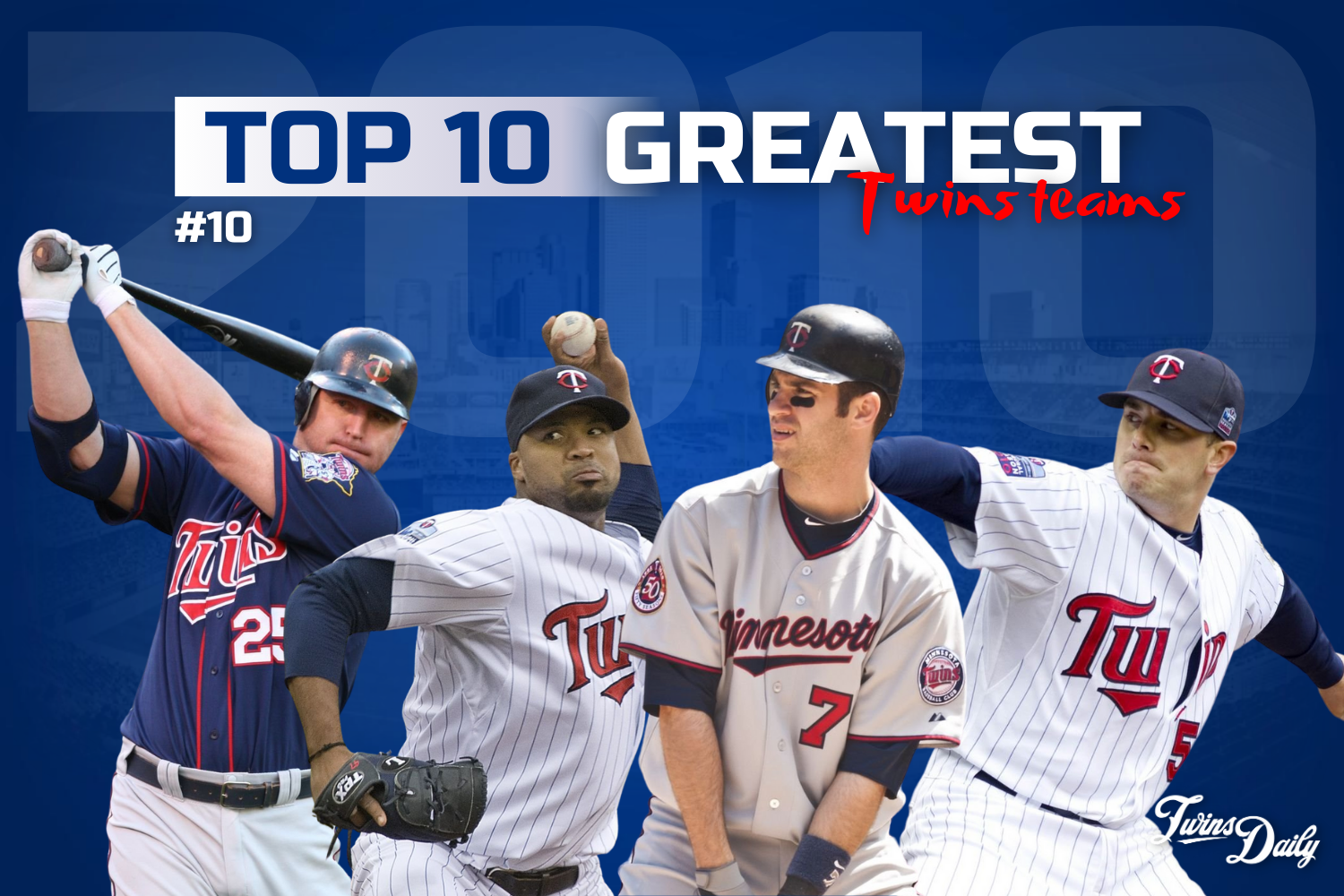 2010 was much of the same for the Twins of this era: the team that won the 7th-most games of all franchises in the 2000s kicked off the 2010s with a new logo and yet another trip to the playoffs. Manager Ron Gardenhire won AL Manager of the Year. By wins, this was the team’s best performance since 2006—an impressive outcome considering this was now their third-straight Johan Santana-less season. They didn’t replace him—who could have—but they did shock the system with an impressive influx of young and old talent. Oh, and they had a new place to call home. Carl Pohlad had wanted out of the Metrodome since the 90s, but an extensive political battle kept the team grumpy yet covered by a roof. It’s not a good sign when the Wikipedia article for the stadium includes a history that starts 16 years before the field opened. The fight included an attempt by MLB to contract the Twins in 2001—a move that died a quick death when Hennepin County judge Harry Crump shot down the ploy just days following MLB’s decision hit the news. Then, less than nine years later, Minnesota opened the beautiful limestone-centric Target Field, bringing outdoor MLB back to the state. Lineup: While the Twins of the 2000s cloaked themselves in piranha vernacular, the 2010 team preferred to bop. Joe Mauer’s transcendent 2009 season gave the lineup two former MVPs and the best duo of lefties in the game. Neither of those was Mauer, though: Justin Morneau was the scariest batter in baseball that year, hitting a hilarious .345/.437/.618, and 39-year-old Jim Thome wasn’t far behind, topping the 1.000 mark himself over 340 plate appearances. Rookie Danny Valencia hit 300 in his first taste of the bigs. Six regulars hit above a 100 OPS+. The team finished 2nd in MLB in batting average, 2nd in OBP, and 7th in slugging. Perhaps the most significant positive development, though, was Delmon Young. The team made an uncharacteristically brash challenge trade for the former 1st overall pick just four years after he was drafted. He rewarded their boldness with two mediocre hitting seasons. Perhaps sensing that it was now seven years since he went number 1—and that goodwill in sports lasts about the same length of time as a House of Representative term, Young turned in a career year, posting a 124 OPS+ and 112 RBIs, netting him down-ballot MVP votes. A gaggle of veterans—two newcomers in Orlando Hudson and J.J. Hardy, two old-guard hitters in Michael Cuddyer and Denard Span, and Nick Punto—rounded out a supremely deep lineup. The bad news? Morneau’s story isn’t as simple as his outright dominance: the 29-year-old suffered a concussion against the Blue Jays on July 7th and never played another game the rest of the year. His play dropped in the following seasons. He led the NL with a .319 batting average in 2014 as a final show. Still, he never fully recovered from the concussion and subsequent injuries in the years following what could have been one of the greatest hitting seasons in Twins history. Pitching: 2010 was prime Rick Anderson’s Rick Anderson-ness. The longtime pitching coach famously preferred teaching a philosophy of limiting walks and pitching to contact—a strategy that worked for years until every pitcher became a nuclear flamethrower—and the 2010 Twins reflected his beliefs. Their rotation of Carl Pavano, Francisco Liriano, Scott Baker, Nick Blackburn, and Kevin Slowey struck out batters at the 10th-lowest rate, but their habit of seldom walking anyone (5.6% BB rate!) made them a roughly average group. The 2010 Twins were a bullpen team. Despite All-Star closer Joe Nathan missing the year with Tommy John surgery, Jon Rauch, Matt Guerrier, Jesse Crain, Jose Mijares, and swingman Brian Duensing, helped push the group to the 8th-best ERA in MLB (3.49). Adding Matt Capps at the deadline and Brian Fuentes on waivers in August only deepened the stable. Playoffs: Unfortunately, because this is a Twins team in the 21st century, their ultimate fate was a sweep at the hands of the Yankees. Games one and two were reasonably close. Game three wasn’t. That was it for the 2010 Twins. Concluding thoughts: This is a very worthy addition to the list. The 2010 team won the 7th-most games of any Twins team in history, and—considering some “luck” modifier—absolutely could have won even more had Nathan and Morneau enjoyed good health. The more I look at it, the more I see a team reminiscent of modern baseball. After acquiring Capps, the bullpen had six regulars with an ERA+ over 120, giving them a hearty amount of reliable relief arms; they could shut down games only needing four or five-inning starts. The rotation was missing a starter, though; the team axed Slowey, Blackburn, and Baker for the postseason, instead calling on Duensing to make the critical start in Yankee stadium down 2-0. It didn’t go well. If they had just one more sturdy starting pitcher, they could have moved Pavano to game three—a much better option than Duensing, who performed worse as a starter in 2010. Ultimately, this is the Jim Thome Season to me. His walk-off vs. the White Sox and absolute missile vs. the Royals are both singed deep into my memory banks, still crystal-clear over a decade later. Ironically, that this season came one year after Brett Favre led the Vikings to the NFC Championship game, considering Thome’s legendary run with Cleveland. “Jim Thome’s swan song with a 1.000 OPS, peak Mauer, Liriano was still good, Orlando Hudson, JJ Hardy, good Delmon. If only Morneau and Nathan had stayed intact.” -Hans Birkeland “The inaugural Target Field team won 94 games, but it’s easy to wonder how far these guys would have gone if Justin Morneau, who was having another MVP season, not suffered a career-altering concussion.” -Tom Froemming What do you think of the 2010 Twins? Were they ranked too high or too low? Do you have any special memories of them? Leave a comment below and start the discussion.
- 6 comments
-
- 4
-

-
- joe mauer
- justin morneau
- (and 3 more)
-
There Aren't Many Johan Santanas These Days
Matt Braun posted a topic in Twins Daily Front Page News
A 2006 rule change narrowed an avenue once ripe with opportunity and talent. Image courtesy of © Jerry Lai-USA TODAY Sports Handed a chance to add a player to their major-league roster on Wednesday, the Twins—as they have done every year since 2017—passed. They weren’t solely driven by painful memories of Tyler Kinley and Justin Haley: The Rule 5 draft has, in recent years, devolved from a relatively consistent method of swiping talent to a largely barren, sure-let’s-shore-up-the-back-of-our-bullpen abstention fest. You can thank the 2006 CBA for this change. Before that year, players who signed at 18 or younger were eligible for the draft after four years; players signed at 19 or older needed just three years*. Emmanuel Rodriguez, for example, would have been eligible for last year’s Rule 5 process if the prior rules had still existed. The CBA pushed back the timeline a year for both age groups, allowing the Twins to wait until this offseason before ultimately deciding on Rodríguez. It’s just one year—seemingly innocuous stuff, really—but an extra season secretly cuts down on the talent available for selection. As Andrew Simon wrote for MLB.com: “relatively few players have stuck with a drafting team and made an impact [since 2006], though Josh Hamilton, R.A. Dickey, Darren O'Day, Brad Keller, Ender Inciarte and Mark Canha are among others who have been selected during that time.” Take Johan Santana. You know him. You love him! Santana was a 20-year-old fresh off a 4.66 ERA —a few ticks higher than the average hurler for the Midwest league that year. Needing to decide on his talents, the Astros gambled on leaving their $10,000 pitcher open for other teams to select, and the rest is well-documented history. Had it been after 2006, Houston would have enjoyed a bonus year of evaluation. Perhaps Santana flashes enough in his extra season to convince Astros decision-makers of his worth. In fact, it seems almost certain that he would have. -------------------- The last time a Rule 5 pick turned into an All-Star was in 2018, when the White Sox selected Jordan Romano… who only became an All-Star once he returned to his previous franchise. The only time before that was in 2017, when the Orioles selected Nestor Cortes… who only became an All-Star once he returned to his previous franchise. Other selections have turned into ancillary contributors or one- or two-year wonders. The last time a player turned into an All-Star for the team that drafted him was Odúbel Herrera, nearly a decade ago. The bonus year is grinding the already lengthy evaluation process to the point where no one misses. If a player hasn’t become a desirable prospect by the point at which he becomes eligible under the current rules, he likely never will be. In thinking about the Rule 5 draft and the changes made in 2006, I initially believed the new rules to be anti-player but pro-team. The talented must wait, laboring under the watch of a franchise safe in their evaluations. The team knows they have time; what’s the rush in ensuring they have someone of value? But, really, this process is only a boon to conservative teams. The swashbucklers of the league—the franchises who dare to bet on talent—have a worse chance at swiping a George Bell or a Shane Victorino, because it’s more evident to the original franchise whether they have a Victorino worth keeping. The cement is dried and set. Your best hope these days is to get a Brad Keller or maybe a Victor Reyes. It’s a bit of a travesty, just another minor alteration that makes the sport slightly worse for the fan. Given baseball’s place as the game most rooted in entropy—with Willi Castros popping up every season like clockwork—making it harder for teams to potentially hit the jackpot on talent creates a lesser product. Santana was an outlier, but can you imagine the mid-2000s Twins without him? What potential Santanas never wowed their fanbase because they never received the chance? *The specific wording is “professional seasons,” with occasional loopholes for players assigned to a team whose season has already ended. See J.J. Cooper’s article on Baseball America for more details. https://www.baseballamerica.com/stories/explaining-the-rule-5-draft/ What's your reaction? Is this change hurting the fan and player experience of baseball? Should it be revisited in future CBA negotiations? Join the conversation in the comments. View full article -
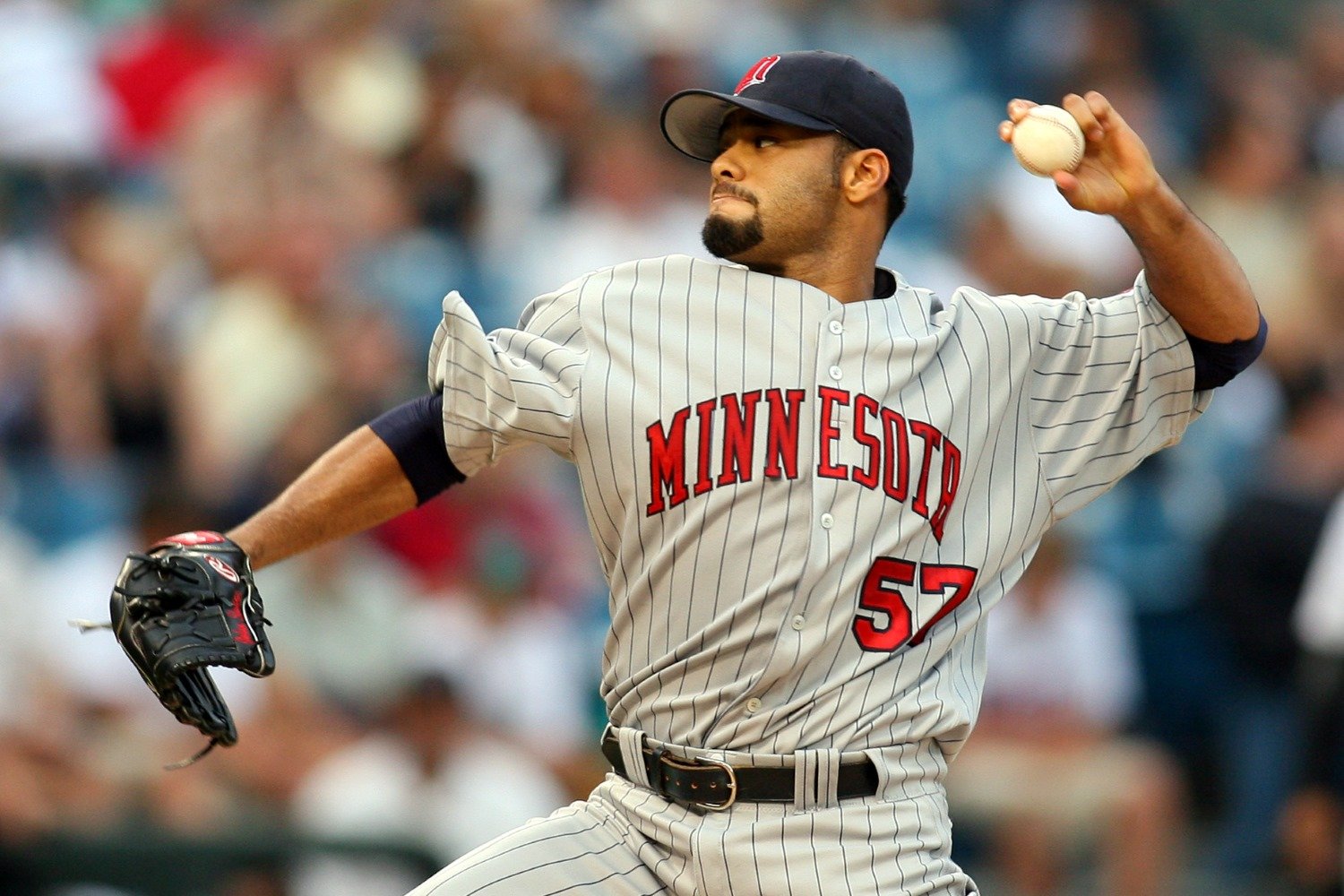 Handed a chance to add a player to their major-league roster on Wednesday, the Twins—as they have done every year since 2017—passed. They weren’t solely driven by painful memories of Tyler Kinley and Justin Haley: The Rule 5 draft has, in recent years, devolved from a relatively consistent method of swiping talent to a largely barren, sure-let’s-shore-up-the-back-of-our-bullpen abstention fest. You can thank the 2006 CBA for this change. Before that year, players who signed at 18 or younger were eligible for the draft after four years; players signed at 19 or older needed just three years*. Emmanuel Rodriguez, for example, would have been eligible for last year’s Rule 5 process if the prior rules had still existed. The CBA pushed back the timeline a year for both age groups, allowing the Twins to wait until this offseason before ultimately deciding on Rodríguez. It’s just one year—seemingly innocuous stuff, really—but an extra season secretly cuts down on the talent available for selection. As Andrew Simon wrote for MLB.com: “relatively few players have stuck with a drafting team and made an impact [since 2006], though Josh Hamilton, R.A. Dickey, Darren O'Day, Brad Keller, Ender Inciarte and Mark Canha are among others who have been selected during that time.” Take Johan Santana. You know him. You love him! Santana was a 20-year-old fresh off a 4.66 ERA —a few ticks higher than the average hurler for the Midwest league that year. Needing to decide on his talents, the Astros gambled on leaving their $10,000 pitcher open for other teams to select, and the rest is well-documented history. Had it been after 2006, Houston would have enjoyed a bonus year of evaluation. Perhaps Santana flashes enough in his extra season to convince Astros decision-makers of his worth. In fact, it seems almost certain that he would have. -------------------- The last time a Rule 5 pick turned into an All-Star was in 2018, when the White Sox selected Jordan Romano… who only became an All-Star once he returned to his previous franchise. The only time before that was in 2017, when the Orioles selected Nestor Cortes… who only became an All-Star once he returned to his previous franchise. Other selections have turned into ancillary contributors or one- or two-year wonders. The last time a player turned into an All-Star for the team that drafted him was Odúbel Herrera, nearly a decade ago. The bonus year is grinding the already lengthy evaluation process to the point where no one misses. If a player hasn’t become a desirable prospect by the point at which he becomes eligible under the current rules, he likely never will be. In thinking about the Rule 5 draft and the changes made in 2006, I initially believed the new rules to be anti-player but pro-team. The talented must wait, laboring under the watch of a franchise safe in their evaluations. The team knows they have time; what’s the rush in ensuring they have someone of value? But, really, this process is only a boon to conservative teams. The swashbucklers of the league—the franchises who dare to bet on talent—have a worse chance at swiping a George Bell or a Shane Victorino, because it’s more evident to the original franchise whether they have a Victorino worth keeping. The cement is dried and set. Your best hope these days is to get a Brad Keller or maybe a Victor Reyes. It’s a bit of a travesty, just another minor alteration that makes the sport slightly worse for the fan. Given baseball’s place as the game most rooted in entropy—with Willi Castros popping up every season like clockwork—making it harder for teams to potentially hit the jackpot on talent creates a lesser product. Santana was an outlier, but can you imagine the mid-2000s Twins without him? What potential Santanas never wowed their fanbase because they never received the chance? *The specific wording is “professional seasons,” with occasional loopholes for players assigned to a team whose season has already ended. See J.J. Cooper’s article on Baseball America for more details. https://www.baseballamerica.com/stories/explaining-the-rule-5-draft/ What's your reaction? Is this change hurting the fan and player experience of baseball? Should it be revisited in future CBA negotiations? Join the conversation in the comments.
 -
Join us in argument as we count down the greatest Twins teams in history, as voted on by the Twinsdaily writers. Image courtesy of Thiéres Rabelo Starting today and going until the weekend before pitchers and catchers report, you’ll find a weekly post highlighting a team we considered among the best in Twins history, Senators not included. (Sorry, Walter Johnson .) The methodology was simple: I asked our writers to rank the ten greatest teams in Twins history, with potential notes or comments on their selections as they saw fit. From there, points were awarded in reverse order (e.g., 1st place was worth 10 points, 10th place was worth 1 point). I double, triple, then, finally, quadruple-checked to ensure my elementary arithmetic was still intact before the final list—and accompanying honorable mentions—took shape. What defines “greatest?” I let our voters decide; no boundary or guideline came from me. Perhaps some writers valued regular season performance, playoff success, individual accomplishments, run differential, or just how much fun it was to watch said team in their consideration. Individual ballots reflected their personality to a degree, but I think the consensus represents a solid, well-rounded group touching on numerous critical eras for the team. No more yapping. Let’s get on to the honorable mentions: 2004 Twins Our first list-misser was a top-heavy team in transition. A kid named Joe Mauer made an outstanding first impression- and suffered his first injury - with the squad, slashing .308/.369/.570 with nearly as many walks as strikeouts, providing a glimpse as to why the Twins selected the hometown prospect first overall in 2001. Johan Santana won his first Cy Young award with a dominant campaign; he led the league in ERA, strikeouts, ERA+, FIP, WHIP, H/9, and K/9. Throw in the usual excellence from Brad Radke and Torii Hunter, mix in surprise breakouts in Lew Ford and Joe Nathan (only one would stick, take a guess), and it’s not shocking that this team won 92 games, enough to claim the AL Central crown. This was a 21st-century Twins team, though, which meant their ultimate fate was falling to the New York Yankees in the playoffs. 2009 Twins It’s rare for one image to symbolize an entire team, but the one for Twins this year is clear and defined: Carlos Gomez streaking around 3rd, dashing home in a hopeful sprint as his teammates explode with exuberance and cheers. He would be safe, they knew, and his successful score capped off one of the greatest games of Twins history, the final regular season game Minnesota would play in the Metrodome. The AL Central was now the Twins’ to own. The rest of the season went pretty well, too. Nathan, Matt Guerrier, and Jose Mijares headlined a top 10 bullpen by ERA, while an ensemble lineup plated the 5th-most runs of any team in MLB. Orchestrating that offense was a 26-year-old Mauer, who led the league in all three triple-slash categories—as a catcher, mind you—carrying him to an easy MVP despite “only” playing in 138 games. But, hey, wouldn’t you know it, the Yankees were pretty good this year, too, and they romped the Twins on their way to winning the World Series. So it goes. 1962 Twins This one may be a surprise even for those well-versed in Twins history: the 1960s teams are usually considered monolithically good, with 1965 as the crowning club. What, then, is there to make of the other teams? Considering 1962 was only the second season the team played in Minneapolis, the importance of this team may actually be understated. “[F]or them to be really good already in 1962 was huge,” wrote Seth Stohs when voting for them. Indeed, a familiar cast of Camilo Pascual, Jim Kaat, Earl Battey, Bob Allison, Zoilo Versalles, and Harmon Killebrew led Minnesota’s first foray into winning baseball in 1962. Mickey Mantle’s Yankees halted them from going to the World Series—they were pretty good, also, if you didn’t know—but 1962 remained a solid stepping stone for the franchise, one that would lead them into a profoundly successful decade of dominance. 1967 Twins Hey, it’s the 60s again! This team featured some new stars—mainly a young Rod Carew, a reborn Dean Chance, and arguably the best years of Jim Merrit and Dave Boswell’s careers—but this was still the Killebrew/Allison/Tony Oliva show; Oliva claimed the worst OPS+ of the trio with a 130 mark. This was also the final season for manager Sam Mele. The Queens native was Minnesota’s skipper since Cookie Lavagetto received the boot partway through the team’s inaugural season. What went around came back to Mele; owner Calvin Griffith pulled the plug on him after the team stood at .500 50 games into the season. Cal Ermer took over, and the team won 20 more games than they lost the rest of the way. Entering a critical final two-game set against the Red Sox—whom they tussled with in the standings—Minnesota stood at the edge of the playoffs. They blew it, losing both games to send Carl Yastrzemski and the “Impossible Dream” Boston squad to the World Series in their place. Two more measly wins may have reversed history and raised this team’s placement on the rankings, but those excruciating losses knocked them down to honorable mention status. 1963 Twins This is the final mention of the 60s in this article, I swear. It may seem strange to consider a team that only finished in 3rd place, but—as Tom Froemming wrote—“[t]he 1963 Twins only won 91 games, but had the fourth-best run differential in Twins history (+165). They had a Pythagorean record of 98-63. A lot of franchise icons were on this roster, they went on to do bigger and better things, but this was still a really strong Twins squad.” Indeed, Allison, Pascual, and rookie sensation Jimmie Hall spearheaded a team that led MLB in runs scored and pitched to the 3rd-best ERA in the AL. Future nerds might call this team “unlucky,” but there’s no reward for poor fortune; all this team could do was watch the Yankees win the World Series again. 2017 Twins This was a fun Twins team. They weren’t a great one, but they were certainly fun. Fresh off a disastrous 103-loss season, the team cleaned house—but kept manager Paul Molitor—and rebounded to win 85 games, just enough to nab a playoff spot for the first time in seven seasons. A personal favorite of writer Cody Schoenmann, he writes that having “young players in Byron Buxton, Max Kepler, Jorge Polanco, Eddie Rosario, and Miguel Sano emerge” amongst veteran leaders in Ervin Santana and Brian Dozier was fun to watch. It may reveal a lot about the actual quality of this squad that “fun” is the consistent adjective used by those who remember the team. Santana, Dozier, and Buxton were excellent players—and Mauer had his best post-injuries season—but depth was thin, and the team couldn’t escape themselves in the postseason, blowing a 4-0 lead in their matchup against… the Yankees. Good lord, 2023 couldn’t happen soon enough. 1988 Twins Our final team of the day is the often-forgotten follow-up to the famous 1987 squad. The same heroes of before were here—Kirby Puckett, Frank Viola, Kent Hrbek, and more—but their fortune was left in the past; a 104-win Oakland team boasting some bashing brothers flew by the Twins in the division. This was still a formidable group of players: Puckett finished 3rd in MVP voting, while Viola took home the Cy Young, and an otherwise non-descript lefty named Allan Anderson shocked the league by winning the ERA title, becoming the first Twins pitcher to accomplish the feat (how about that for bar trivia!) But, still, there’s no ring to show for this team, which stuffs them into the “honorable mentions” compartment. That concludes our honorable mentions. Join us next week to learn who ranked 10th in our Greatest Twins Teams list. View full article
-
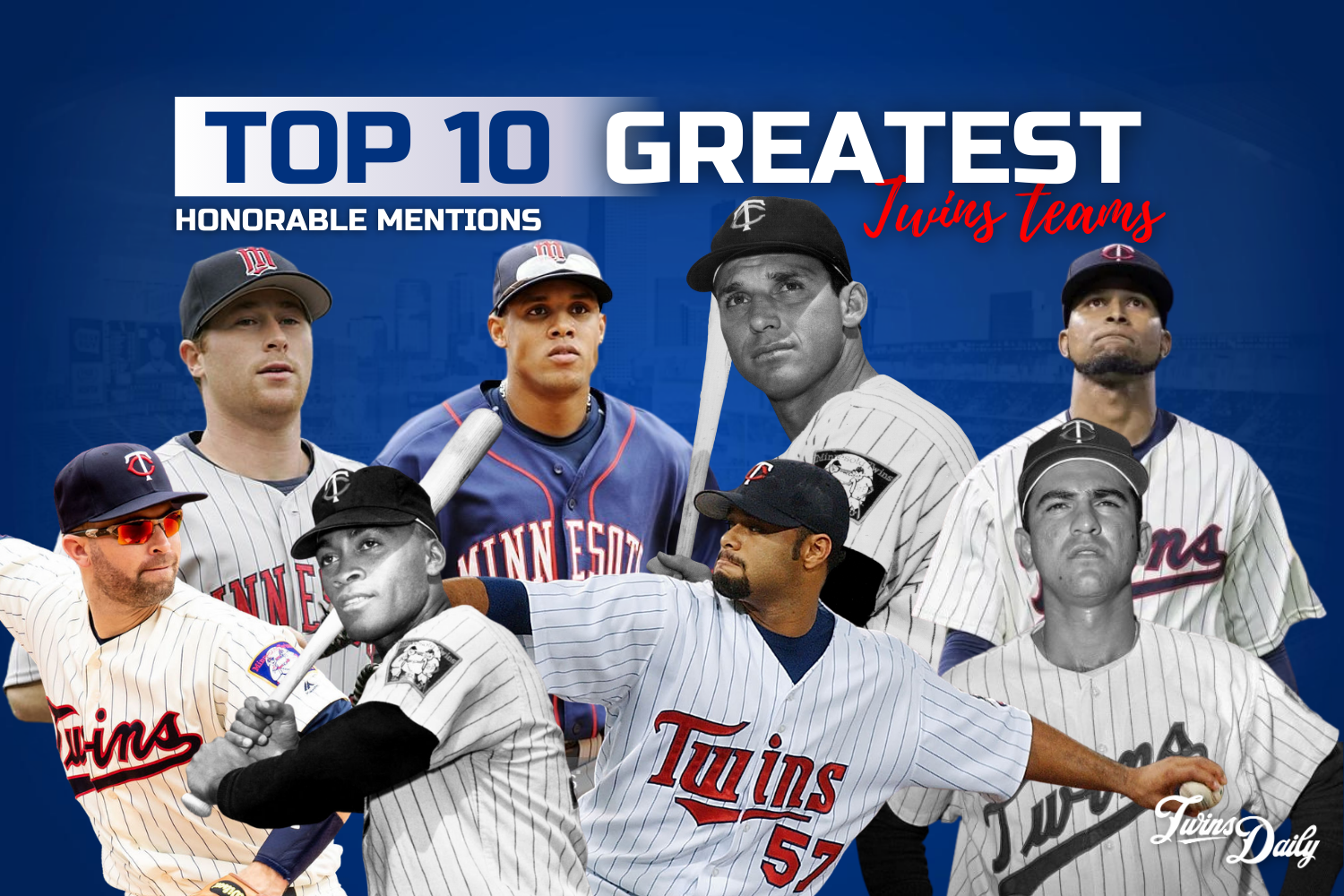 Starting today and going until the weekend before pitchers and catchers report, you’ll find a weekly post highlighting a team we considered among the best in Twins history, Senators not included. (Sorry, Walter Johnson .) The methodology was simple: I asked our writers to rank the ten greatest teams in Twins history, with potential notes or comments on their selections as they saw fit. From there, points were awarded in reverse order (e.g., 1st place was worth 10 points, 10th place was worth 1 point). I double, triple, then, finally, quadruple-checked to ensure my elementary arithmetic was still intact before the final list—and accompanying honorable mentions—took shape. What defines “greatest?” I let our voters decide; no boundary or guideline came from me. Perhaps some writers valued regular season performance, playoff success, individual accomplishments, run differential, or just how much fun it was to watch said team in their consideration. Individual ballots reflected their personality to a degree, but I think the consensus represents a solid, well-rounded group touching on numerous critical eras for the team. No more yapping. Let’s get on to the honorable mentions: 2004 Twins Our first list-misser was a top-heavy team in transition. A kid named Joe Mauer made an outstanding first impression- and suffered his first injury - with the squad, slashing .308/.369/.570 with nearly as many walks as strikeouts, providing a glimpse as to why the Twins selected the hometown prospect first overall in 2001. Johan Santana won his first Cy Young award with a dominant campaign; he led the league in ERA, strikeouts, ERA+, FIP, WHIP, H/9, and K/9. Throw in the usual excellence from Brad Radke and Torii Hunter, mix in surprise breakouts in Lew Ford and Joe Nathan (only one would stick, take a guess), and it’s not shocking that this team won 92 games, enough to claim the AL Central crown. This was a 21st-century Twins team, though, which meant their ultimate fate was falling to the New York Yankees in the playoffs. 2009 Twins It’s rare for one image to symbolize an entire team, but the one for Twins this year is clear and defined: Carlos Gomez streaking around 3rd, dashing home in a hopeful sprint as his teammates explode with exuberance and cheers. He would be safe, they knew, and his successful score capped off one of the greatest games of Twins history, the final regular season game Minnesota would play in the Metrodome. The AL Central was now the Twins’ to own. The rest of the season went pretty well, too. Nathan, Matt Guerrier, and Jose Mijares headlined a top 10 bullpen by ERA, while an ensemble lineup plated the 5th-most runs of any team in MLB. Orchestrating that offense was a 26-year-old Mauer, who led the league in all three triple-slash categories—as a catcher, mind you—carrying him to an easy MVP despite “only” playing in 138 games. But, hey, wouldn’t you know it, the Yankees were pretty good this year, too, and they romped the Twins on their way to winning the World Series. So it goes. 1962 Twins This one may be a surprise even for those well-versed in Twins history: the 1960s teams are usually considered monolithically good, with 1965 as the crowning club. What, then, is there to make of the other teams? Considering 1962 was only the second season the team played in Minneapolis, the importance of this team may actually be understated. “[F]or them to be really good already in 1962 was huge,” wrote Seth Stohs when voting for them. Indeed, a familiar cast of Camilo Pascual, Jim Kaat, Earl Battey, Bob Allison, Zoilo Versalles, and Harmon Killebrew led Minnesota’s first foray into winning baseball in 1962. Mickey Mantle’s Yankees halted them from going to the World Series—they were pretty good, also, if you didn’t know—but 1962 remained a solid stepping stone for the franchise, one that would lead them into a profoundly successful decade of dominance. 1967 Twins Hey, it’s the 60s again! This team featured some new stars—mainly a young Rod Carew, a reborn Dean Chance, and arguably the best years of Jim Merrit and Dave Boswell’s careers—but this was still the Killebrew/Allison/Tony Oliva show; Oliva claimed the worst OPS+ of the trio with a 130 mark. This was also the final season for manager Sam Mele. The Queens native was Minnesota’s skipper since Cookie Lavagetto received the boot partway through the team’s inaugural season. What went around came back to Mele; owner Calvin Griffith pulled the plug on him after the team stood at .500 50 games into the season. Cal Ermer took over, and the team won 20 more games than they lost the rest of the way. Entering a critical final two-game set against the Red Sox—whom they tussled with in the standings—Minnesota stood at the edge of the playoffs. They blew it, losing both games to send Carl Yastrzemski and the “Impossible Dream” Boston squad to the World Series in their place. Two more measly wins may have reversed history and raised this team’s placement on the rankings, but those excruciating losses knocked them down to honorable mention status. 1963 Twins This is the final mention of the 60s in this article, I swear. It may seem strange to consider a team that only finished in 3rd place, but—as Tom Froemming wrote—“[t]he 1963 Twins only won 91 games, but had the fourth-best run differential in Twins history (+165). They had a Pythagorean record of 98-63. A lot of franchise icons were on this roster, they went on to do bigger and better things, but this was still a really strong Twins squad.” Indeed, Allison, Pascual, and rookie sensation Jimmie Hall spearheaded a team that led MLB in runs scored and pitched to the 3rd-best ERA in the AL. Future nerds might call this team “unlucky,” but there’s no reward for poor fortune; all this team could do was watch the Yankees win the World Series again. 2017 Twins This was a fun Twins team. They weren’t a great one, but they were certainly fun. Fresh off a disastrous 103-loss season, the team cleaned house—but kept manager Paul Molitor—and rebounded to win 85 games, just enough to nab a playoff spot for the first time in seven seasons. A personal favorite of writer Cody Schoenmann, he writes that having “young players in Byron Buxton, Max Kepler, Jorge Polanco, Eddie Rosario, and Miguel Sano emerge” amongst veteran leaders in Ervin Santana and Brian Dozier was fun to watch. It may reveal a lot about the actual quality of this squad that “fun” is the consistent adjective used by those who remember the team. Santana, Dozier, and Buxton were excellent players—and Mauer had his best post-injuries season—but depth was thin, and the team couldn’t escape themselves in the postseason, blowing a 4-0 lead in their matchup against… the Yankees. Good lord, 2023 couldn’t happen soon enough. 1988 Twins Our final team of the day is the often-forgotten follow-up to the famous 1987 squad. The same heroes of before were here—Kirby Puckett, Frank Viola, Kent Hrbek, and more—but their fortune was left in the past; a 104-win Oakland team boasting some bashing brothers flew by the Twins in the division. This was still a formidable group of players: Puckett finished 3rd in MVP voting, while Viola took home the Cy Young, and an otherwise non-descript lefty named Allan Anderson shocked the league by winning the ERA title, becoming the first Twins pitcher to accomplish the feat (how about that for bar trivia!) But, still, there’s no ring to show for this team, which stuffs them into the “honorable mentions” compartment. That concludes our honorable mentions. Join us next week to learn who ranked 10th in our Greatest Twins Teams list.
- 13 comments
-
- 1
-
-
- 2004 twins
- 2009 twins
- (and 5 more)
-
To be clear: I'm arguing for a Clevinger-like player in skill, not the man himself.
- 70 replies
-
- 1
-
-
- sonny gray
- david festa
- (and 3 more)
-
As first reported by Jon Heyman, then confirmed by Ken Rosenthal, the 2023 AL Cy Young runner-up is a Twin no more. There's an almost golden lining to the cloud, though. Image courtesy of © Matt Blewett-USA TODAY Sports (Thankfully, Ken Rosenthal is here to cool our senses and establish order, because how comfortable were we with Heyman as the tip of the spear?) Following a tremendous season that saw him finish as the runner-up to Gerrit Cole for the AL Cy Young, Gray spoke glowingly about Minnesota, emphasizing in a rare public plea that money isn’t the only factor in his decision-making process. Comfort mattered, too, and Minnesota offers that in a unique way. The Twins spun a different tale. Much of their vernacular focused on what Gray had done, and their gratitude for his veteran savvy and excellent pitching. In the moment, this seemed like pretty typical posturing. Recent reporting regarding Minnesota’s future financials revealed the team was dead serious in their callousness. Today, Gray’s exit will become final. His time with the Twins will go down as the best amongst the four teams for whom he’s pitched. Gray spread a 2.90 ERA over 303 ⅔ frames in two seasons, easily making him one of the best traded-for starters this side of Dean Chance. Among all pitchers with at least 300 innings pitched since the beginning of 2022, only Blake Snell and Justin Verlander beat Gray in ERA. He also immortalized himself in recent Twins playoff history, winning the series-clinching game against Toronto with an unforgettable pickoff of Vladimir Guerrero Jr. to end his day. Because the team slapped Gray with the Qualifying Offer, the terms of his new deal will hand Minnesota a compensatory pick right after the first round in 2024. That return will soothe the loss of Chase Petty, who was a late first-round pick himself. It isn’t a perfect one-for-one—especially as Petty has worked his way to Double A hiccup-free in the Reds system—but dropping back a few spots in the draft for almost two full years of elite pitching remains an excellent deal. The Twins deserve a lot of credit for their foresight. They’ll need that wisdom again as Gray's exit—in combination with Kenta Maeda signing with Detroit—leaves a mangled 2024 rotation to deal with. Pablo López, Joe Ryan, and Bailey Ober are well-entrenched incumbents, but Chris Paddack (who hasn’t come close to his rookie-year career high of 140 ⅔ innings in four years) and Louie Varland (who pitched much better out of the bullpen in 2023) leave the back end feeling a bit shaky and untrustworthy. Sure, that describes most team’s fourth and fifth starter situations, but Minnesota would probably like to improve their depth, lest an untimely injury forces David Festa into a premature support role. Broadly speaking, the team has two options: they could acquire a top-tier starter like Corbin Burnes or Logan Gilbert, thickening their bunch at the top of the rotation at the cost of serious prospect capital. The upside in wielding another great starter is obvious, but such a deal would also protect them from the chaos and uncertainty involved in waiting until the trade deadline to make a move, where teams can hike up prices, and the only mercy is for those with stable elbows. Minnesota tried this route once with Tyler Mahle, which may push them to act now. They could also go the innings-eater route. Acquiring a Lucas Giolito or Mike Clevinger isn’t sexy, but it would at least give them extra protection if the ligament gods frown upon the team on any given day next year. This plan places pressure on Ryan shedding his gopher-ball habit—something no statistician or qualified religious figure has been able to correctly speak to the potential of. In the end, the goal should be to knock Varland into the same role Ober occupied in 2023. Either way, the team has plenty of work ahead. That work won’t reach the surface until late December or January—this is Derek Falvey we’re talking about here—but it’ll help define the move-making possible under the self-imposed economic restraints already affecting their structure. We shall see what path they take. View full article
- 70 replies
-
- 1
-
-
- sonny gray
- david festa
- (and 3 more)
-
 (Thankfully, Ken Rosenthal is here to cool our senses and establish order, because how comfortable were we with Heyman as the tip of the spear?) Following a tremendous season that saw him finish as the runner-up to Gerrit Cole for the AL Cy Young, Gray spoke glowingly about Minnesota, emphasizing in a rare public plea that money isn’t the only factor in his decision-making process. Comfort mattered, too, and Minnesota offers that in a unique way. The Twins spun a different tale. Much of their vernacular focused on what Gray had done, and their gratitude for his veteran savvy and excellent pitching. In the moment, this seemed like pretty typical posturing. Recent reporting regarding Minnesota’s future financials revealed the team was dead serious in their callousness. Today, Gray’s exit will become final. His time with the Twins will go down as the best amongst the four teams for whom he’s pitched. Gray spread a 2.90 ERA over 303 ⅔ frames in two seasons, easily making him one of the best traded-for starters this side of Dean Chance. Among all pitchers with at least 300 innings pitched since the beginning of 2022, only Blake Snell and Justin Verlander beat Gray in ERA. He also immortalized himself in recent Twins playoff history, winning the series-clinching game against Toronto with an unforgettable pickoff of Vladimir Guerrero Jr. to end his day. Because the team slapped Gray with the Qualifying Offer, the terms of his new deal will hand Minnesota a compensatory pick right after the first round in 2024. That return will soothe the loss of Chase Petty, who was a late first-round pick himself. It isn’t a perfect one-for-one—especially as Petty has worked his way to Double A hiccup-free in the Reds system—but dropping back a few spots in the draft for almost two full years of elite pitching remains an excellent deal. The Twins deserve a lot of credit for their foresight. They’ll need that wisdom again as Gray's exit—in combination with Kenta Maeda signing with Detroit—leaves a mangled 2024 rotation to deal with. Pablo López, Joe Ryan, and Bailey Ober are well-entrenched incumbents, but Chris Paddack (who hasn’t come close to his rookie-year career high of 140 ⅔ innings in four years) and Louie Varland (who pitched much better out of the bullpen in 2023) leave the back end feeling a bit shaky and untrustworthy. Sure, that describes most team’s fourth and fifth starter situations, but Minnesota would probably like to improve their depth, lest an untimely injury forces David Festa into a premature support role. Broadly speaking, the team has two options: they could acquire a top-tier starter like Corbin Burnes or Logan Gilbert, thickening their bunch at the top of the rotation at the cost of serious prospect capital. The upside in wielding another great starter is obvious, but such a deal would also protect them from the chaos and uncertainty involved in waiting until the trade deadline to make a move, where teams can hike up prices, and the only mercy is for those with stable elbows. Minnesota tried this route once with Tyler Mahle, which may push them to act now. They could also go the innings-eater route. Acquiring a Lucas Giolito or Mike Clevinger isn’t sexy, but it would at least give them extra protection if the ligament gods frown upon the team on any given day next year. This plan places pressure on Ryan shedding his gopher-ball habit—something no statistician or qualified religious figure has been able to correctly speak to the potential of. In the end, the goal should be to knock Varland into the same role Ober occupied in 2023. Either way, the team has plenty of work ahead. That work won’t reach the surface until late December or January—this is Derek Falvey we’re talking about here—but it’ll help define the move-making possible under the self-imposed economic restraints already affecting their structure. We shall see what path they take.
- 70 comments
-
- 9
-
-
- sonny gray
- david festa
- (and 3 more)
-
Nelson Cruz wasn’t a Twin for long—his Minnesota tenure lasted just 258 games—but few sluggers this side of Hrbek rocked the team with as much bombast and dominance as the man simply called “Boomstick.” Image courtesy of © Quinn Harris-USA TODAY Sports Signing with Minnesota in 2019 following four fruitful seasons in the Pacific Northwest, Twins fans didn’t know exactly what to expect from the soon-to-be 38-year-old. Sure, he had demolished plenty of baseballs in his career, but old-man authority in a young man’s game was something only Tom Brady and his ilk could accomplish; was Cruz up to the task? Could he turn around a team previously drenched in mediocrity? ------------------------------------ We all still remember the 2019 team. The power and overwhelming home run prowess shocked on a nightly basis, whether it was Miguel Sanó claiming the AL Central with a back-breaking Grand Slam, Max Kepler coming within a stone’s throw of 40 homers, or Ehire Adrianza smacking a solo shot off Justin Verlander to best the Astros in an unlikely victory. No matter your taste, there was a slugger for you; five different players reached the 30-homer mark that season. But overlooking all of them—standing as the unquestioned leader of the group—was Nelson Cruz, slashing .311/.392/.639 in one of the greatest offensive years in Twins history. By OPS, he’s tied with Joe Mauer’s 2009. No one else is higher. Oh, and his 2020 campaign is 6th, smack dab in the middle of a few classic Harmon Killebrews and Chuck Knoblauch’s 1996 season. Cruz joined a team needing more leadership following the 2018 departures of Brian Dozier, Eduardo Escobar, and Joe Mauer. His naps became as famous as his biceps, adding an air of delight to his outlandish power—an attitude that rubbed off on his teammates, who embraced Cruz almost like a father. Minnesota dealt Cruz at the 2021 trade deadline, netting Joe Ryan in a return that makes Nelson perhaps the greatest use of a roster spot in Twins history. His rate numbers are staggering: a .304/.386/.598 slashline, and—believe it or not—the highest team OPS+ of his career, just ahead of his run with the Mariners. He was only here for 1,081 plate appearances, but almost all were memorable. Following forgettable stints with the Nationals and Padres, Cruz has called it a career at 42, becoming one of the most memorable veteran sluggers in recent MLB history. Cruz will play one last winter in the Dominican Professional Baseball League as a farewell tour. He'll end his MLB career with 7 All-Star selections, 4 Silver Sluggers, and 464 home runs. The homers are good for 37th all-time, one spot behind Minnesota's own Dave Winfield. View full article
-
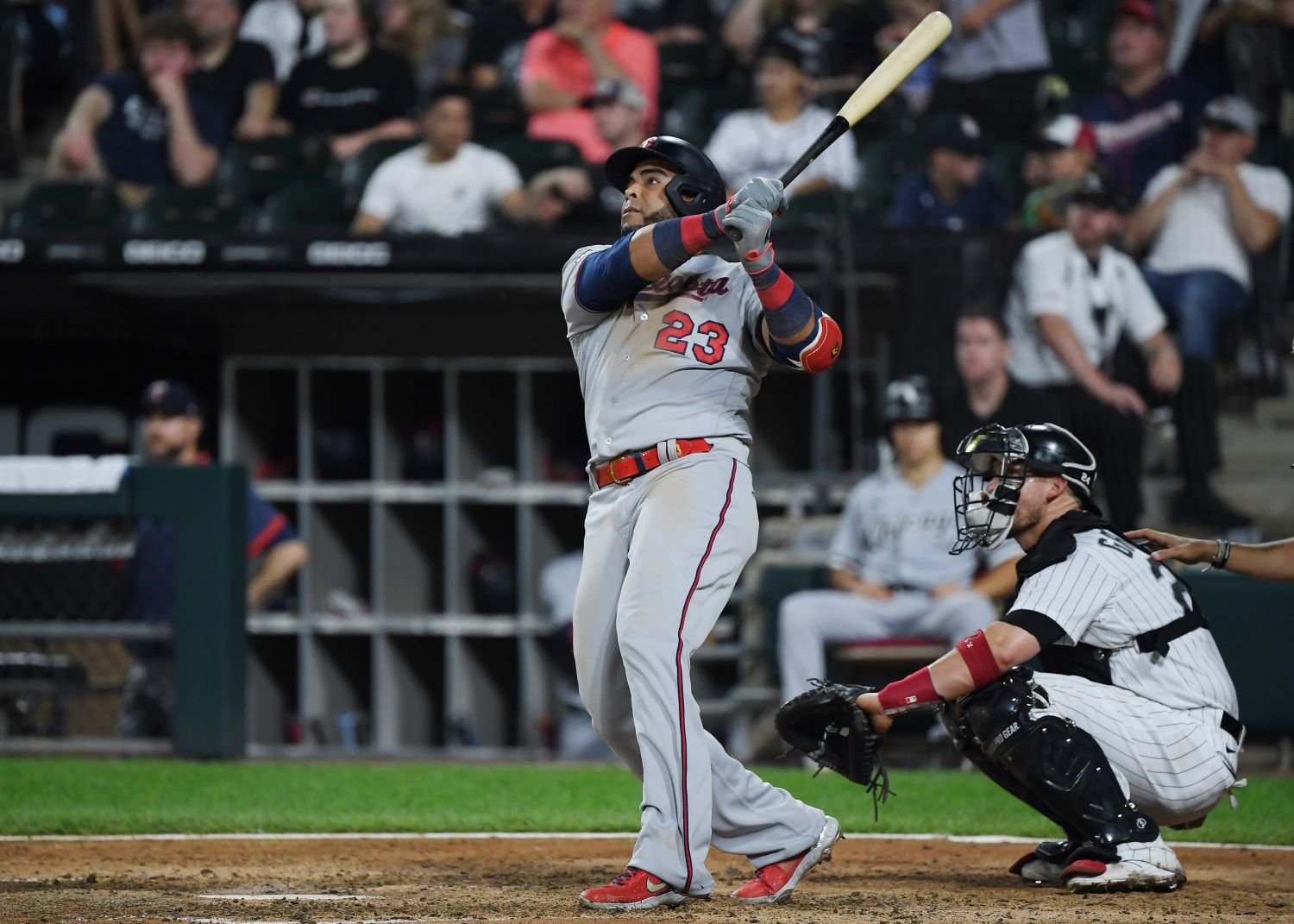 Signing with Minnesota in 2019 following four fruitful seasons in the Pacific Northwest, Twins fans didn’t know exactly what to expect from the soon-to-be 38-year-old. Sure, he had demolished plenty of baseballs in his career, but old-man authority in a young man’s game was something only Tom Brady and his ilk could accomplish; was Cruz up to the task? Could he turn around a team previously drenched in mediocrity? ------------------------------------ We all still remember the 2019 team. The power and overwhelming home run prowess shocked on a nightly basis, whether it was Miguel Sanó claiming the AL Central with a back-breaking Grand Slam, Max Kepler coming within a stone’s throw of 40 homers, or Ehire Adrianza smacking a solo shot off Justin Verlander to best the Astros in an unlikely victory. No matter your taste, there was a slugger for you; five different players reached the 30-homer mark that season. But overlooking all of them—standing as the unquestioned leader of the group—was Nelson Cruz, slashing .311/.392/.639 in one of the greatest offensive years in Twins history. By OPS, he’s tied with Joe Mauer’s 2009. No one else is higher. Oh, and his 2020 campaign is 6th, smack dab in the middle of a few classic Harmon Killebrews and Chuck Knoblauch’s 1996 season. Cruz joined a team needing more leadership following the 2018 departures of Brian Dozier, Eduardo Escobar, and Joe Mauer. His naps became as famous as his biceps, adding an air of delight to his outlandish power—an attitude that rubbed off on his teammates, who embraced Cruz almost like a father. Minnesota dealt Cruz at the 2021 trade deadline, netting Joe Ryan in a return that makes Nelson perhaps the greatest use of a roster spot in Twins history. His rate numbers are staggering: a .304/.386/.598 slashline, and—believe it or not—the highest team OPS+ of his career, just ahead of his run with the Mariners. He was only here for 1,081 plate appearances, but almost all were memorable. Following forgettable stints with the Nationals and Padres, Cruz has called it a career at 42, becoming one of the most memorable veteran sluggers in recent MLB history. Cruz will play one last winter in the Dominican Professional Baseball League as a farewell tour. He'll end his MLB career with 7 All-Star selections, 4 Silver Sluggers, and 464 home runs. The homers are good for 37th all-time, one spot behind Minnesota's own Dave Winfield.
 -
Just how accurate was our robot overlord? Image courtesy of © Bruce Kluckhohn-USA TODAY Sports If you can recall the two posts I made almost exactly eight months ago, PECOTA—the flagship projection system from Baseball Prospectus—had some thoughts regarding the Twins. Well, it had thoughts regarding every player, but we only looked at those set to don Minnesota jerseys. Enough beating around the bush: here’s how well the computer did. (After-season numbers are taken from Baseball Prospectus’ leaderboard found here for pitching, and here for hitting.) Perhaps most notable at the time was PECOTA’s optimism surrounding Pablo López, who joined the Twins as something of an unknown, possessing immense strikeout potential without the full season of unquestioned dominance. Turns out, the system was actually a pessimist: López crushed it in 2023, turning in 4.8 WARP, good for 3rd in MLB. PECOTA was also too low on Sonny Gray, Joe Ryan, and Bailey Ober; all three starters bested their projections, with Gray doubling his assumed WARP. Louie Varland can claim underrated status as well; he wasn’t even in the original post and ended up as the eighth-most-valuable pitcher on the team at the end of the year. Also, the computer was absolutely correct in regards to Emilio Pagán, whose ERA (2.99) and FIP (3.26) were freakily close to his projections. Perhaps this is a lesson in patience, or—rather—that giving up a lot of homers isn’t necessarily innate in a pitcher’s DNA; this is a weird and frankly unfair game we’re fans of, and Pagán proved that the difference between a hero and a villain is often just a few feet. Finally, the Jovani Moran train may have hit a cartoonish boulder, crashed, and exploded in a fiery rage, but he actually came within tickling distance of his projection thanks to a whiff rate amongst the best in MLB. He appears a good bet to rebound next season if healthy. Now, let’s move onto the batters: It, uh, didn’t do great here! Let’s start with the positives: PECOTA nailed Max Kepler’s bounceback season, actually underselling him by a few points of DRC+, but otherwise prophesizing his best season since COVID hit. It also warned people not to be too down on Royce Lewis; we all know how that went. But… yeah, this one is a mess. Minnesota’s 2nd and 3rd most valuable position players ended up being Willi Castro and Matt Wallner, not Jorge Polanco and Carlos Correa. Byron Buxton ended up behind Christian Vázquez. Jose Miranda is lost somewhere in the Joey Gallo void. Gallo himself… it’s best to keep his name locked up in a box, lest uttering it releases curses unto humanity. I'm a little humored that Trevor Larnach couldn't escape his fate, essentially nailing his pedestrian prediction. It's clear this was a season dominated by the unpredictable; be it the rookie onslaught or Castro's elevation, the exact shape of Minnesota's offensive production was atypical, but eventually effective. ---------------------------------- Overall, I’m impressed with how accurate PECOTA was in regards to the pitching staff. Some hurlers blew past their projections, but the order was mostly in line with how the season played out. Calling on Pagán to exceed wasn’t something perhaps any Twins fan could do. Hitting was a big miss—anyone who predicted Willi Castro being Correa’s equal in DRC+ would have been hanged as a witch. Projections are helpful, but there’s a reason they play the games, and strange and unusual things happen when competitors at the highest level face off against each other. View full article
-
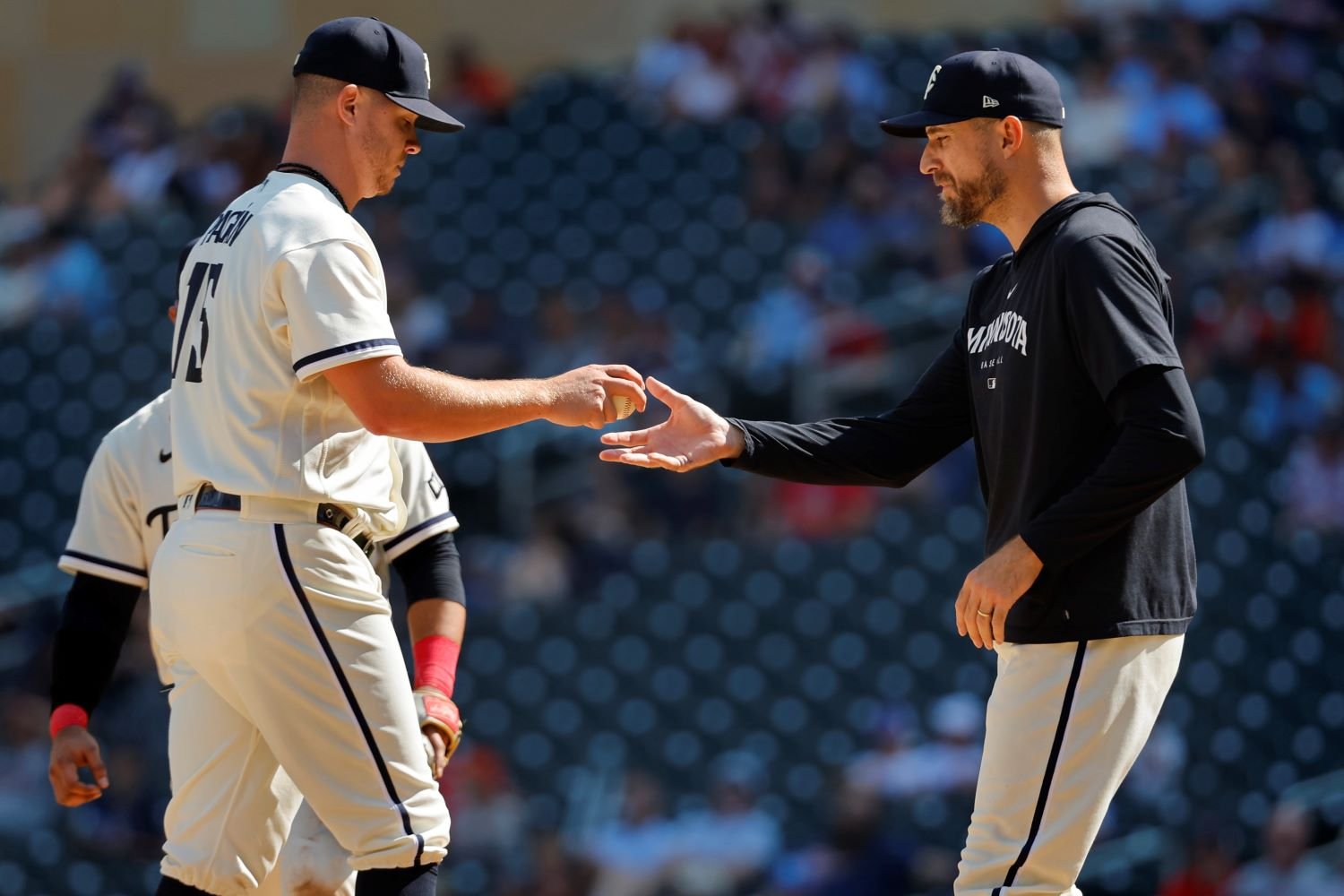 If you can recall the two posts I made almost exactly eight months ago, PECOTA—the flagship projection system from Baseball Prospectus—had some thoughts regarding the Twins. Well, it had thoughts regarding every player, but we only looked at those set to don Minnesota jerseys. Enough beating around the bush: here’s how well the computer did. (After-season numbers are taken from Baseball Prospectus’ leaderboard found here for pitching, and here for hitting.) Perhaps most notable at the time was PECOTA’s optimism surrounding Pablo López, who joined the Twins as something of an unknown, possessing immense strikeout potential without the full season of unquestioned dominance. Turns out, the system was actually a pessimist: López crushed it in 2023, turning in 4.8 WARP, good for 3rd in MLB. PECOTA was also too low on Sonny Gray, Joe Ryan, and Bailey Ober; all three starters bested their projections, with Gray doubling his assumed WARP. Louie Varland can claim underrated status as well; he wasn’t even in the original post and ended up as the eighth-most-valuable pitcher on the team at the end of the year. Also, the computer was absolutely correct in regards to Emilio Pagán, whose ERA (2.99) and FIP (3.26) were freakily close to his projections. Perhaps this is a lesson in patience, or—rather—that giving up a lot of homers isn’t necessarily innate in a pitcher’s DNA; this is a weird and frankly unfair game we’re fans of, and Pagán proved that the difference between a hero and a villain is often just a few feet. Finally, the Jovani Moran train may have hit a cartoonish boulder, crashed, and exploded in a fiery rage, but he actually came within tickling distance of his projection thanks to a whiff rate amongst the best in MLB. He appears a good bet to rebound next season if healthy. Now, let’s move onto the batters: It, uh, didn’t do great here! Let’s start with the positives: PECOTA nailed Max Kepler’s bounceback season, actually underselling him by a few points of DRC+, but otherwise prophesizing his best season since COVID hit. It also warned people not to be too down on Royce Lewis; we all know how that went. But… yeah, this one is a mess. Minnesota’s 2nd and 3rd most valuable position players ended up being Willi Castro and Matt Wallner, not Jorge Polanco and Carlos Correa. Byron Buxton ended up behind Christian Vázquez. Jose Miranda is lost somewhere in the Joey Gallo void. Gallo himself… it’s best to keep his name locked up in a box, lest uttering it releases curses unto humanity. I'm a little humored that Trevor Larnach couldn't escape his fate, essentially nailing his pedestrian prediction. It's clear this was a season dominated by the unpredictable; be it the rookie onslaught or Castro's elevation, the exact shape of Minnesota's offensive production was atypical, but eventually effective. ---------------------------------- Overall, I’m impressed with how accurate PECOTA was in regards to the pitching staff. Some hurlers blew past their projections, but the order was mostly in line with how the season played out. Calling on Pagán to exceed wasn’t something perhaps any Twins fan could do. Hitting was a big miss—anyone who predicted Willi Castro being Correa’s equal in DRC+ would have been hanged as a witch. Projections are helpful, but there’s a reason they play the games, and strange and unusual things happen when competitors at the highest level face off against each other.
- 9 comments
-
- 2
-
-
- pablo lopez
- emilio pagan
- (and 3 more)
-
Poor man wanna be rich Rich man wanna be king And a king ain't satisfied 'Til he rules everything Image courtesy of Jesse Johnson-USA TODAY Sports The Twins have lost. Included in the aftermath is the pouring of obituaries, a dissecting of a team surprising and, eventually, unthreatening. They'll use words like "scrappy" and "feisty"—words intended to praise with minor compliment, but ultimately mean there was no belief that Minnesota could have ever been a fair match for Houston. It was impossible. Their players—battle-tested; professional; of a different playing level; simply better—were always destined to win. In this reality and all others. Again. And again. These are the common narratives nestled in the threads of sports, where nuance is lost and understanding must be made easy. It's never about the games themselves: it's about the jerseys and names that accompany them. The known team winning, the unknown losing. Jeremy Peña, another success story in a long line of elite Astros players. Edouard Julien, a cute attempt at uncovering the same magic. So it has been. So it has been pre-ordained. So it shall always be. You can point to runners left on base, home runs, bad calls, the natural injustice of the sport, and how the Twins came up empty every single time with consistent help from freak occurrences and unusual plays, but it doesn't matter. That's how the better team separates itself from the lesser one; it's how losers lose while the winners roll with the punches. And the winners popped champagne while taking pictures on someone else's field. The difference was clear in dugout demeanor. The Astros were smiling, almost jovial. It was a lovely Sunday jaunt for them. They waved to their kids and laughed when Yordan Alvarez clobbered extra-base hits. They bunted for hits and watched their back-end starters dominate. They had bested cleverer teams than this—the best offerings from the Dodgers, Yankees, Red Sox, and whatever lone-season one hit wonder happened to sneak their way into the postseason this year—what real challenge could these Twins claim? It's doubtful that Pablo López's brilliance in game two even stirred them. --------------------------------------------- If there's a soft hope for the Twins, it's in these very same Astros. They didn't apparate fully-formed: their first crack at the playoffs was in 2015, where they fell to the Royals. "A plucky effort," thought baseball, one made a little funnier when they missed the postseason the following season. It's perhaps these years—the ones bearing small, enticing fruit—that develop a team. Winning turns opinions, but winning doesn't often happen at once; it takes a foundation of success to become a powerhouse. We've seen the start; now it's time for Minnesota to relentlessly pursue their best. View full article
-
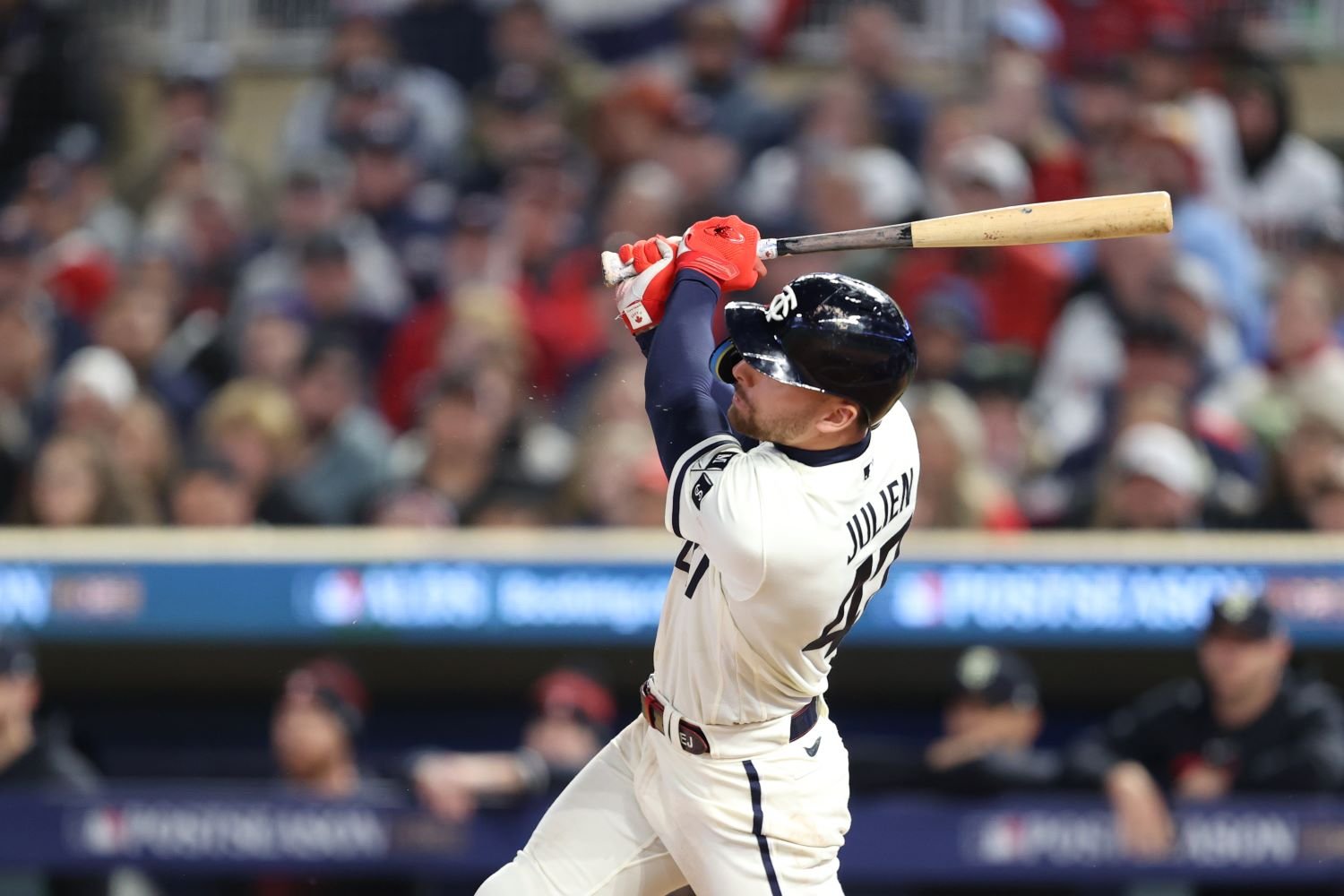 The Twins have lost. Included in the aftermath is the pouring of obituaries, a dissecting of a team surprising and, eventually, unthreatening. They'll use words like "scrappy" and "feisty"—words intended to praise with minor compliment, but ultimately mean there was no belief that Minnesota could have ever been a fair match for Houston. It was impossible. Their players—battle-tested; professional; of a different playing level; simply better—were always destined to win. In this reality and all others. Again. And again. These are the common narratives nestled in the threads of sports, where nuance is lost and understanding must be made easy. It's never about the games themselves: it's about the jerseys and names that accompany them. The known team winning, the unknown losing. Jeremy Peña, another success story in a long line of elite Astros players. Edouard Julien, a cute attempt at uncovering the same magic. So it has been. So it has been pre-ordained. So it shall always be. You can point to runners left on base, home runs, bad calls, the natural injustice of the sport, and how the Twins came up empty every single time with consistent help from freak occurrences and unusual plays, but it doesn't matter. That's how the better team separates itself from the lesser one; it's how losers lose while the winners roll with the punches. And the winners popped champagne while taking pictures on someone else's field. The difference was clear in dugout demeanor. The Astros were smiling, almost jovial. It was a lovely Sunday jaunt for them. They waved to their kids and laughed when Yordan Alvarez clobbered extra-base hits. They bunted for hits and watched their back-end starters dominate. They had bested cleverer teams than this—the best offerings from the Dodgers, Yankees, Red Sox, and whatever lone-season one hit wonder happened to sneak their way into the postseason this year—what real challenge could these Twins claim? It's doubtful that Pablo López's brilliance in game two even stirred them. --------------------------------------------- If there's a soft hope for the Twins, it's in these very same Astros. They didn't apparate fully-formed: their first crack at the playoffs was in 2015, where they fell to the Royals. "A plucky effort," thought baseball, one made a little funnier when they missed the postseason the following season. It's perhaps these years—the ones bearing small, enticing fruit—that develop a team. Winning turns opinions, but winning doesn't often happen at once; it takes a foundation of success to become a powerhouse. We've seen the start; now it's time for Minnesota to relentlessly pursue their best.
 -
Believe it or not, that was Caleb Thielbar's first double play all season What a sport
- 109 replies
-
- 24
-
-
- sonny gray
- jhoan duran
- (and 3 more)
-
We move onto the important, but perhaps overlooked contributors to the AL Central-winning Twins. This one was purposely nebulous: is an unsung hero an underrated player? Was it someone who stepped up in another’s absence? We allowed our writers to interpret the term independently before sending in their answers. Here’s how the voting broke down: Honorable mentions (all of these players earned a vote): Caleb Thielbar Emilio Pagán Ryan Jeffers Carlos Correa Griffin Jax Kenta Maeda Royce Lewis Kyle Farmer Christian Vázquez Alex Kirilloff 5. Jorge Polanco It’s a little weird seeing a veteran rank so highly on this list, especially considering that Jorge Polanco—because of his 2014 cup of coffee—is the longest-tenured Twin. He played with Kendrys Morales and Josmil Pinto. Yohan Pino made 11 starts. Let’s just move on. I think timing is the key here: Polanco hit the IL halfway through May, came back for a week in June, and then returned at the very end of July. The team entered its “rookies dominating the lineup phase” right around this point, making it easy for Polanco’s contributions—which was a fifth full season with an above-average OPS—to be lost in the hype. There’s no glory in boring consistency, I guess. 4. Bailey Ober Bailey Ober wasn’t even a Twin to start the year. First considered a depth piece, Minnesota sent him to St. Paul to marinate, hoping that they would only need him in case of an emergency. He was up before April ended. Pitchers did as pitchers do, a little bit of badda, a little bing—ligaments tore and aches became extreme—and suddenly, Ober was back to being a Twin. It was only for a while, they said. After some time, it was clear the elongated righty was simply one of their finest starters, so he stayed with the Twins for most of the year, only going back to St. Paul for some rest at the beginning of September. It’s clear why he ranked so highly; it’s uncommon for a team to be able to reach in and extract a 3.43 ERA over 144 1/3 innings when in need. Who knows what kind of eccentric pitching experiments we would see if Ober wasn’t there to stabilize the rotation. 3. Donovan Solano “Donovan Solano???” Thought every Twins fan when news of his signing broke late in February. Perhaps you remembered his 2020 silver slugger with the Giants—and maybe the more sick amongst us even recall his time as a Marlin—but none expected the 35-year-old to be the line drive, on-base machine he was in 2023. Solano hit righties and lefties; he hit at home and when playing on the road; he hit in April, May, June, July, August; he hit in low leverage, and he hit in high leverage. He wasn’t one for slugging—the indulgence of extra-base brutishness—but, no matter the situation, Solano hit. Remarkable consistency seemed to follow Solano, whether he manned 1st, 2nd, or 3rd, making him our 3rd place Unsung Hero. 2. Michael A. Taylor When the Twins dealt for Michael A. Taylor over the offseason, I wrote an article titled Twins Make Boring, Necessary Trade for Michael A. Taylor, likening acquiring the veteran to the team eating their veggies. Snarkiness lost out today; Taylor was even more than expected. Taylor has over seven years of MLB service time, and he technically broke out in 2017 with an .806 OPS as a National, making him an atypical selection for this award. He would at least provide competence when Byron Buxton had to rest, we all thought; with visions of Jake Cave and his optimistic dives running across our minds. What we didn’t envision was Buxton never stepping foot into Target Field’s outfield, necessitating 129 games for Taylor in an effort to curb any center field leakage. He was tremendous. Putting up the 2nd highest OPS+ of his career, Taylor bashed a career-high 21 homers, pairing his typically excellent defense with a power prowess unusually potent for a 9th-hole centerfielder. Minnesota likely would have struggled without Taylor—he’ll take home our 2nd place honors today. 1. Willi Castro You’d be forgiven if you thought Willi Castro simply apparated onto the roster in spring training. He had some oxidized prospect luster from his time in Detroit as a man on their top-10 list in 2019 and 2020, but he couldn’t hit much with the Tigers, and the team cut bait following an uneventful 2022. And the Twins are ecstatic that they did. Castro made the opening day roster as an afterthought—the kind of player who sticks around for a little, is thanked for their services, and then subsequently Ryan LaMarres his way out of usefulness around the time someone else gets healthy. This kind of player is a baseball tradition. But, unlike those of years past, Castro hit, played quality defense at nearly every position on the diamond, and utilized his legs to steal bases at a rate unique amongst Twins of the modern era. He was suddenly valuable; he’s now a critical weapon for Rocco Baldelli to use in the postseason. The zenith of Castro’s powers had to be his game on September 20th, when he halted Hunter Greene’s dominance with a two-run homer, before kickstarting a 9th inning rally with a bunt hit and madman baserunning that sent him to 3rd. He scored the tying run on a Kyle Farmer single. At just 26, Castro looks like a quality contributor for years to come, and—for his efforts in 2023—Twins Daily has named him their Unsung Hero. View full article
- 18 replies
-
- 1
-
-
- jorge polanco
- bailey ober
- (and 3 more)
-
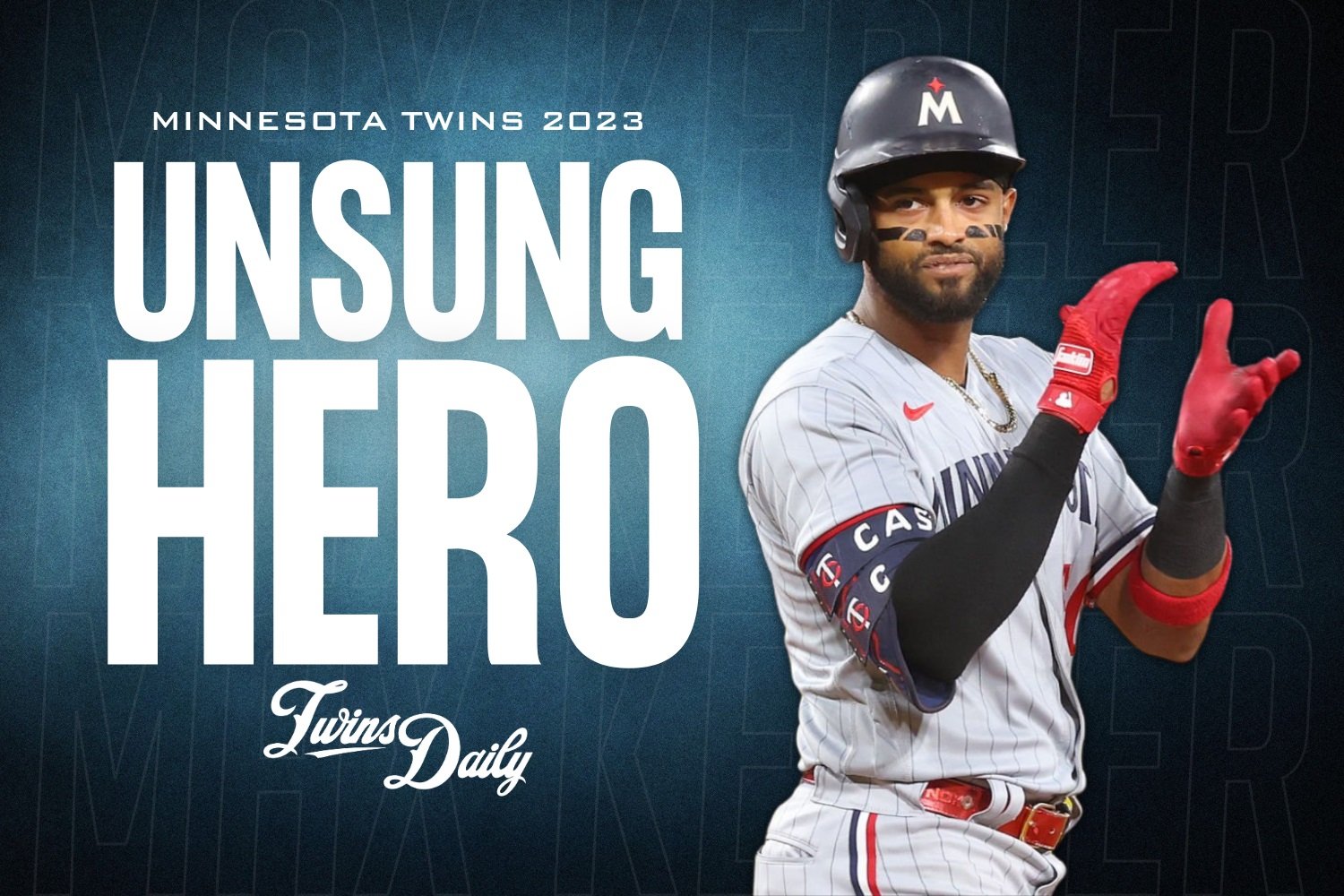 This one was purposely nebulous: is an unsung hero an underrated player? Was it someone who stepped up in another’s absence? We allowed our writers to interpret the term independently before sending in their answers. Here’s how the voting broke down: Honorable mentions (all of these players earned a vote): Caleb Thielbar Emilio Pagán Ryan Jeffers Carlos Correa Griffin Jax Kenta Maeda Royce Lewis Kyle Farmer Christian Vázquez Alex Kirilloff 5. Jorge Polanco It’s a little weird seeing a veteran rank so highly on this list, especially considering that Jorge Polanco—because of his 2014 cup of coffee—is the longest-tenured Twin. He played with Kendrys Morales and Josmil Pinto. Yohan Pino made 11 starts. Let’s just move on. I think timing is the key here: Polanco hit the IL halfway through May, came back for a week in June, and then returned at the very end of July. The team entered its “rookies dominating the lineup phase” right around this point, making it easy for Polanco’s contributions—which was a fifth full season with an above-average OPS—to be lost in the hype. There’s no glory in boring consistency, I guess. 4. Bailey Ober Bailey Ober wasn’t even a Twin to start the year. First considered a depth piece, Minnesota sent him to St. Paul to marinate, hoping that they would only need him in case of an emergency. He was up before April ended. Pitchers did as pitchers do, a little bit of badda, a little bing—ligaments tore and aches became extreme—and suddenly, Ober was back to being a Twin. It was only for a while, they said. After some time, it was clear the elongated righty was simply one of their finest starters, so he stayed with the Twins for most of the year, only going back to St. Paul for some rest at the beginning of September. It’s clear why he ranked so highly; it’s uncommon for a team to be able to reach in and extract a 3.43 ERA over 144 1/3 innings when in need. Who knows what kind of eccentric pitching experiments we would see if Ober wasn’t there to stabilize the rotation. 3. Donovan Solano “Donovan Solano???” Thought every Twins fan when news of his signing broke late in February. Perhaps you remembered his 2020 silver slugger with the Giants—and maybe the more sick amongst us even recall his time as a Marlin—but none expected the 35-year-old to be the line drive, on-base machine he was in 2023. Solano hit righties and lefties; he hit at home and when playing on the road; he hit in April, May, June, July, August; he hit in low leverage, and he hit in high leverage. He wasn’t one for slugging—the indulgence of extra-base brutishness—but, no matter the situation, Solano hit. Remarkable consistency seemed to follow Solano, whether he manned 1st, 2nd, or 3rd, making him our 3rd place Unsung Hero. 2. Michael A. Taylor When the Twins dealt for Michael A. Taylor over the offseason, I wrote an article titled Twins Make Boring, Necessary Trade for Michael A. Taylor, likening acquiring the veteran to the team eating their veggies. Snarkiness lost out today; Taylor was even more than expected. Taylor has over seven years of MLB service time, and he technically broke out in 2017 with an .806 OPS as a National, making him an atypical selection for this award. He would at least provide competence when Byron Buxton had to rest, we all thought; with visions of Jake Cave and his optimistic dives running across our minds. What we didn’t envision was Buxton never stepping foot into Target Field’s outfield, necessitating 129 games for Taylor in an effort to curb any center field leakage. He was tremendous. Putting up the 2nd highest OPS+ of his career, Taylor bashed a career-high 21 homers, pairing his typically excellent defense with a power prowess unusually potent for a 9th-hole centerfielder. Minnesota likely would have struggled without Taylor—he’ll take home our 2nd place honors today. 1. Willi Castro You’d be forgiven if you thought Willi Castro simply apparated onto the roster in spring training. He had some oxidized prospect luster from his time in Detroit as a man on their top-10 list in 2019 and 2020, but he couldn’t hit much with the Tigers, and the team cut bait following an uneventful 2022. And the Twins are ecstatic that they did. Castro made the opening day roster as an afterthought—the kind of player who sticks around for a little, is thanked for their services, and then subsequently Ryan LaMarres his way out of usefulness around the time someone else gets healthy. This kind of player is a baseball tradition. But, unlike those of years past, Castro hit, played quality defense at nearly every position on the diamond, and utilized his legs to steal bases at a rate unique amongst Twins of the modern era. He was suddenly valuable; he’s now a critical weapon for Rocco Baldelli to use in the postseason. The zenith of Castro’s powers had to be his game on September 20th, when he halted Hunter Greene’s dominance with a two-run homer, before kickstarting a 9th inning rally with a bunt hit and madman baserunning that sent him to 3rd. He scored the tying run on a Kyle Farmer single. At just 26, Castro looks like a quality contributor for years to come, and—for his efforts in 2023—Twins Daily has named him their Unsung Hero.
- 18 comments
-
- 7
-
-

-
- jorge polanco
- bailey ober
- (and 3 more)
-
Ryan Jeffers' miracle homers remain blessed. Image courtesy of © Ron Chenoy-USA TODAY Sports Box Score Joe Ryan: 5 IP, 8 H, 6 ER, 1 BB, 6 K Home Runs: Michael A. Taylor (21), Trevor Larnach (7), Ryan Jeffers (14) Top 3 WPA: Win Probability Chart (via FanGraphs) (Fangraphs is not working for some reason; we will have WPA info up as soon as it works again) For the first time since 2014, the Twins headed to Colorado to face off against the Rockies. The only player from Minnesota’s lineup that day still in MLB is Eduardo Escobar. Center fielder Sam Fuld is now the GM of the Phillies. Justin Morneau played 1st base for Colorado. Minnesota’s 3rd baseman—Trevor Plouffe—was at today’s game to support the broadcast. It had been a while. Given that the Twins were set to play in Coors, there was likely a skirmish amongst pitchers, with many hurlers protesting and petitioning Rocco Baldelli to avoid facing the thin air and hostile conditions. Evidently, Joe Ryan provided the least persuasive argument; he started the game on Friday. And he probably wishes he didn’t. His offerings of high fastballs and flyballs is the precise combination that inflates ERAs and bruises egos. He elicited 14 swings-and-misses, but Colorado clobbered three homers off him, leaving him holding six earned runs over five innings, otherwise known as a “Colorado quality start” (this is not true.) He finishes the season with 197 strikeouts, just one groin injury away from cracking the elusive 200 mark. Minnesota’s offense found Coors inviting—duh—at the start. Kyle Farmer flopped an RBI single to right and later grounded into a double play to invite another run home, but the big score came when Michael A. Taylor cracked a two-run shot to left. It was the longest homer a Twin had hit all year. It happened nine batters into their Coors adventure. Lest anyone would take that record sitting down, both Trevor Larnach and Ryan Jeffers offered legitimate claims to overtaking Taylor’s 468 feet of mashing. Their efforts tied the game. The Rockies—knowing that the Twins are undefeated when Jeffers homers—shook in their cleats, retreating to the safety of their bunkers, hiding in fear of the terror caused by the 26-year-old North Carolinian and the good fortune hidden in his bat. Well, that didn’t happen, but they had good reason to believe in Jeffers’ luck. With a runner on 1st in the 9th, Farmer grounded a single up the middle that struck former Twin Tyler Kinley’s leg, shooting the ball to a non-existent second baseman when an unimpeded ball certainly would have turned two. It didn’t. Instead, Max Kepler drove a fly ball deep to center to score Andrew Stevenson, successfully concluding Minnesota’s rally. Also, this didn’t have a place in my narrative, but Willi Castro made a hell of a play in the 7th—and I thought it deserved a mention. Emilio Pagán was the pitcher Rocco Baldelli's magic 8-ball spit out, so he received the call in the 9th. It worked. He allowed a single, but only threw nine pitches to earn his first save of the season. Notes: Michael A. Taylor extended his career-high in homers with bomb number 21; his previous record was 19 in 2017. Kody Funderburk won the second game of his MLB career on Friday. If he struck out three more batters, Joe Ryan would have made the 2023 Twins the first Minnesota squad since 1967 to have multiple 200 K pitchers. That team had three of them: Dean Chance, Jim Kaat, and Dave Boswell. Emilio Pagán is the 7th Twins pitcher to earn a save in 2023. Post-Game Interview: What’s Next? The Twins and Rockies will play the second game of their series on Saturday. It will be a legendary matchup, with the young but talented TBD facing off against the grizzled but tenacious TBD, looking for the 157th win of his career. First pitch is at 7:10. Bullpen Usage Spreadsheet View full article
-
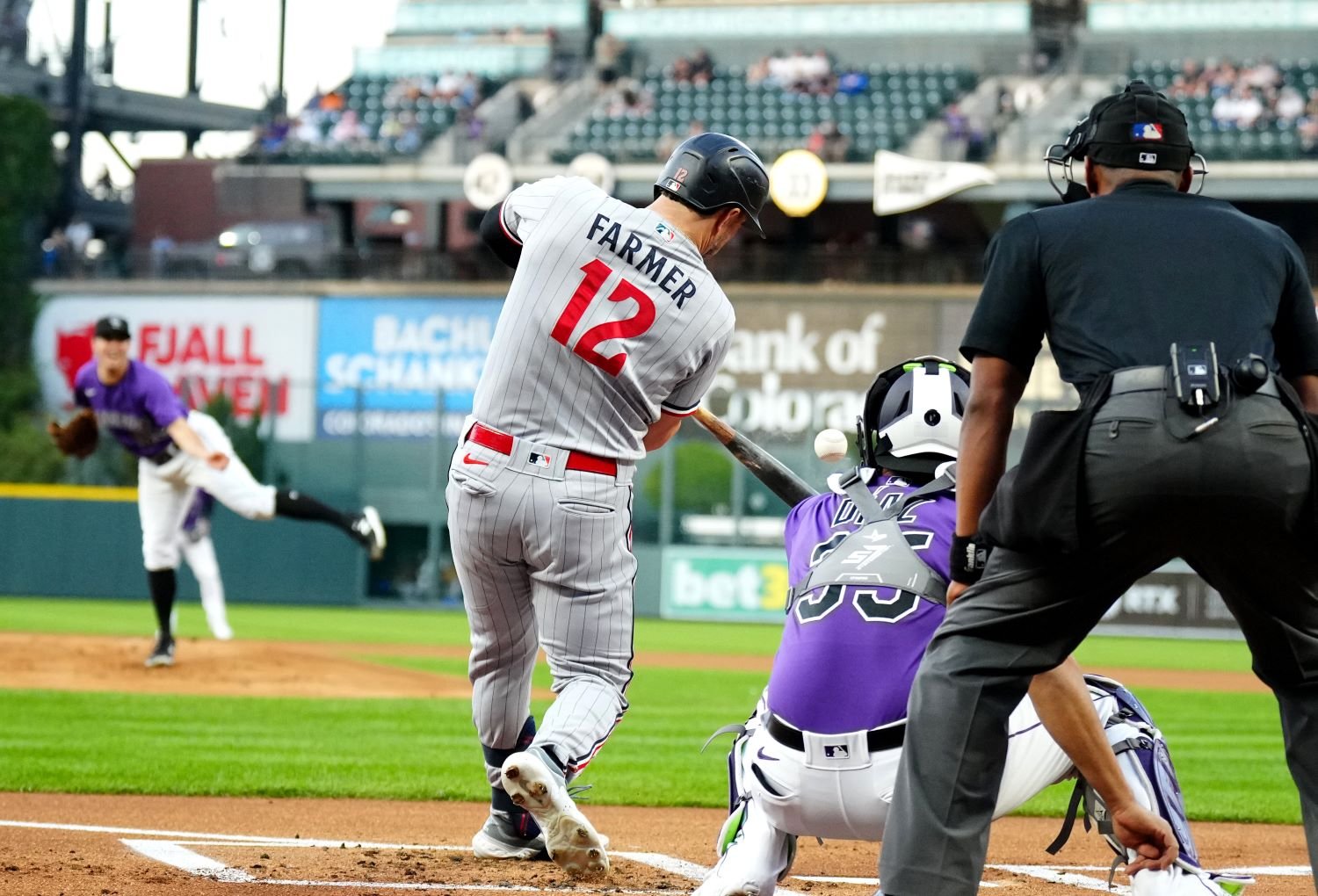 Box Score Joe Ryan: 5 IP, 8 H, 6 ER, 1 BB, 6 K Home Runs: Michael A. Taylor (21), Trevor Larnach (7), Ryan Jeffers (14) Top 3 WPA: Win Probability Chart (via FanGraphs) (Fangraphs is not working for some reason; we will have WPA info up as soon as it works again) For the first time since 2014, the Twins headed to Colorado to face off against the Rockies. The only player from Minnesota’s lineup that day still in MLB is Eduardo Escobar. Center fielder Sam Fuld is now the GM of the Phillies. Justin Morneau played 1st base for Colorado. Minnesota’s 3rd baseman—Trevor Plouffe—was at today’s game to support the broadcast. It had been a while. Given that the Twins were set to play in Coors, there was likely a skirmish amongst pitchers, with many hurlers protesting and petitioning Rocco Baldelli to avoid facing the thin air and hostile conditions. Evidently, Joe Ryan provided the least persuasive argument; he started the game on Friday. And he probably wishes he didn’t. His offerings of high fastballs and flyballs is the precise combination that inflates ERAs and bruises egos. He elicited 14 swings-and-misses, but Colorado clobbered three homers off him, leaving him holding six earned runs over five innings, otherwise known as a “Colorado quality start” (this is not true.) He finishes the season with 197 strikeouts, just one groin injury away from cracking the elusive 200 mark. Minnesota’s offense found Coors inviting—duh—at the start. Kyle Farmer flopped an RBI single to right and later grounded into a double play to invite another run home, but the big score came when Michael A. Taylor cracked a two-run shot to left. It was the longest homer a Twin had hit all year. It happened nine batters into their Coors adventure. Lest anyone would take that record sitting down, both Trevor Larnach and Ryan Jeffers offered legitimate claims to overtaking Taylor’s 468 feet of mashing. Their efforts tied the game. The Rockies—knowing that the Twins are undefeated when Jeffers homers—shook in their cleats, retreating to the safety of their bunkers, hiding in fear of the terror caused by the 26-year-old North Carolinian and the good fortune hidden in his bat. Well, that didn’t happen, but they had good reason to believe in Jeffers’ luck. With a runner on 1st in the 9th, Farmer grounded a single up the middle that struck former Twin Tyler Kinley’s leg, shooting the ball to a non-existent second baseman when an unimpeded ball certainly would have turned two. It didn’t. Instead, Max Kepler drove a fly ball deep to center to score Andrew Stevenson, successfully concluding Minnesota’s rally. Also, this didn’t have a place in my narrative, but Willi Castro made a hell of a play in the 7th—and I thought it deserved a mention. Emilio Pagán was the pitcher Rocco Baldelli's magic 8-ball spit out, so he received the call in the 9th. It worked. He allowed a single, but only threw nine pitches to earn his first save of the season. Notes: Michael A. Taylor extended his career-high in homers with bomb number 21; his previous record was 19 in 2017. Kody Funderburk won the second game of his MLB career on Friday. If he struck out three more batters, Joe Ryan would have made the 2023 Twins the first Minnesota squad since 1967 to have multiple 200 K pitchers. That team had three of them: Dean Chance, Jim Kaat, and Dave Boswell. Emilio Pagán is the 7th Twins pitcher to earn a save in 2023. Post-Game Interview: What’s Next? The Twins and Rockies will play the second game of their series on Saturday. It will be a legendary matchup, with the young but talented TBD facing off against the grizzled but tenacious TBD, looking for the 157th win of his career. First pitch is at 7:10. Bullpen Usage Spreadsheet
- 30 comments
-
- 3
-
-
- joe ryan
- ryan jeffers
- (and 3 more)
-
Twins Make Dubious History with Strikeout Record
Matt Braun replied to Matt Braun's topic in Twins Daily Front Page News
Well fortunately, we can use K%+ again to help cut through eras. You're absolutely on the nose with Bob Feller being an impressive strikeout artist; he struck out guys at a rate almost 70% better than his contemporaries, good for 10th all time amongst starters. The full list is here. -
When Ryan Jeffers punched out looking in the 2nd inning of Sunday's game, he officially broke Minnesota's tie with the 2021 Cubs, becoming the team's 1597th strikeout of the season. Awards were had for all and the champagne popped in celebration was only the finest the team could find. Image courtesy of © Matt Blewett-USA TODAY Sports Unless your TV only plays reruns of the 1980s Cardinals, you've noticed that whiffing in today's game is at a rate never before seen in MLB. The average hitter in 2023 strikes out in 22.7% of their plate appearances, almost three points higher than a decade ago. You need not dig far to see why; hitters primarily focus on dispensing baseballs to the outfield bleachers, swinging recklessly in the hopes that something good may happen if they make contact. There are exceptions—such as a certain Miami Marlins infielder—but the art of the base hit is dying, which doesn't appear to be changing soon. The thing is, this strategy works. Minnesota's offense isn't bad. They're 11th in runs scored, 10th in slugging, and 8th in wRC+. Sure, their numbers aren't making anyone forget about the 1927 Yankees. Still, that perfectly cromulent offense—when combined with their excellent starting rotation—has won them plenty of games, enough to reserve them a playoff spot in 2023. And this isn't a uniquely Twins problem: because strikeout rates have risen so much, their K%+—a stat that adjusts strikeout rate with league norms—is just 117, meaning they're only 17% higher than your average squad in 2023. Plenty of teams have been worse than that: over 80 in the AL since WW2, to be exact. Shoot, the 1972 and 2013 Twins put up the same rate, and I doubt anyone who watched that 2013 team grumbled about how often they came up empty (although you probably weren't a fan of Pedro Florimón's 446 plate appearances that year.) Let me be clear, though: this isn't great. Strikeouts are both an aesthetic and strategic mess. Not putting the ball in play robs us of watching the greatest athletes walk the Earth, run, and be athletic. We want to see something amazing; a guy missing a slider in the dirt doesn't cut the mustard. You can't hit and run anymore because who knows if the man at the plate can make contact, and moving a guy over with a productive out hasn't been a viable strategy since the Obama administration. These issues, while minor, have built to create an often dull, stagnant, station-to-station brand of baseball that causes in-stadium fans to become restless while at-home fans fall into a good nap. Honestly, I don't know what the solution is. Pitchers are ridiculous these days; the best teams can build these guys in labs, upping their velocity and sharpening their stuff to the point where 98 and a wipeout slider barely registers in our brain. It's more notable if a guy doesn't throw 95. That cat's out of the bag: the training works, and MLB can't step in and tell teams not to be good at their jobs. Pushing the mound back could be a solution, but doing so would also allow more time for pitches to break, potentially negating the bonus reaction time for hitters. I've heard suggestions for baseball to follow a similar path as when golf had to reconcile with their new, young bombers. Players like Tiger Woods were eviscerating courses designed when woods were... made of wood. Now that they all can crush like crazy, courses are now designed to be longer and more challenging to offset the improved athlete. Pushing back the dimensions would be a similar feat—although doing so would likely cause many unwanted secondary effects—and, in the end, you wouldn't want to erase homers from the game completely; it's still the outcome that most excites a crowd. A change will come somehow, though. These things wax and wane as strategy evolves; eventually, it'll become more rewarding to focus on base hits and contact, and stacking the lineup with hulking sluggers will be as funny as Babe Ruth's 114 career sacrifice bunts. I don't think that time is now—ask Cleveland how awesome a holistic contact approach is—but it will come eventually. For now, congratulations to the Minnesota Twins and whatever team inevitably beats their record next year. View full article
-
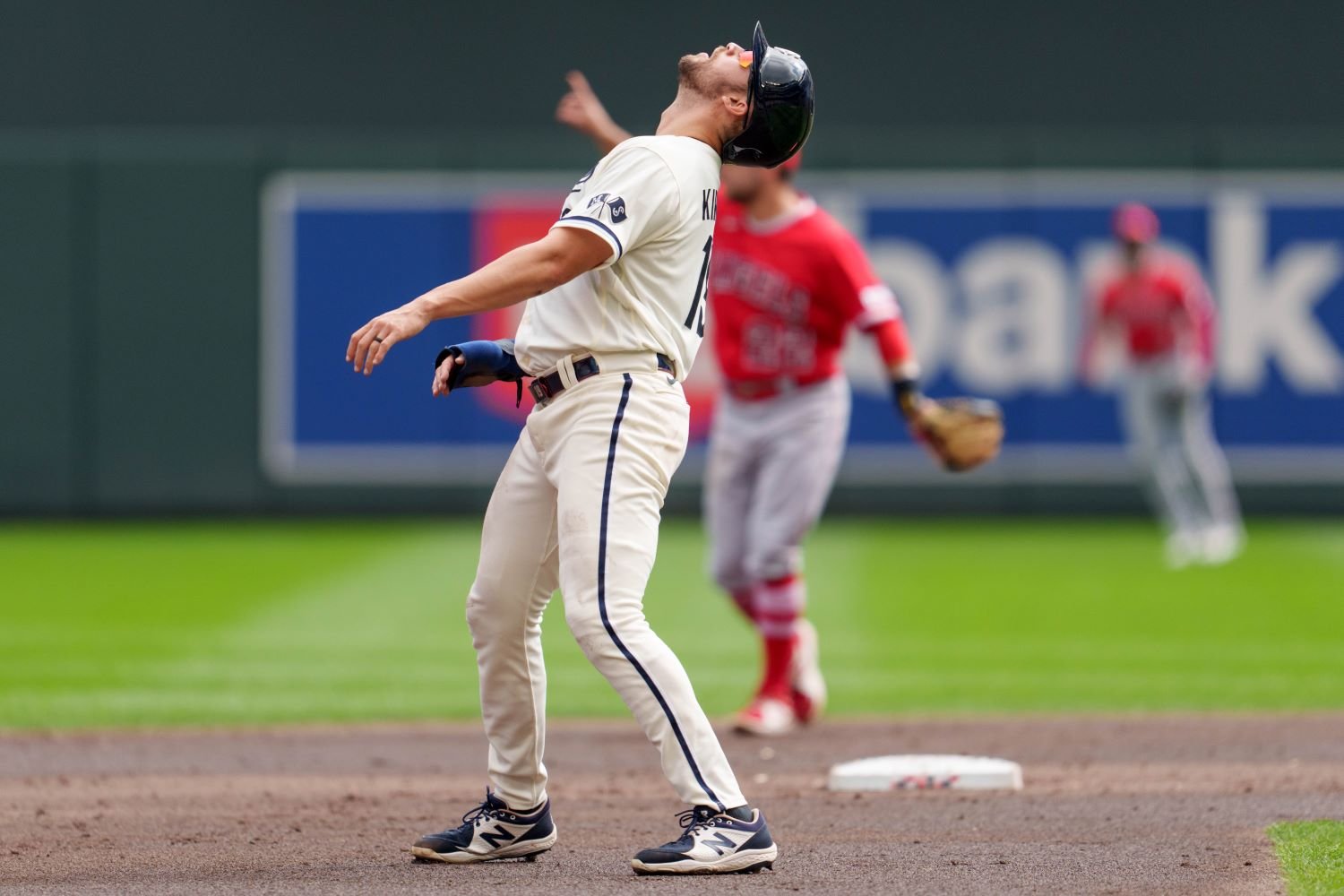 Unless your TV only plays reruns of the 1980s Cardinals, you've noticed that whiffing in today's game is at a rate never before seen in MLB. The average hitter in 2023 strikes out in 22.7% of their plate appearances, almost three points higher than a decade ago. You need not dig far to see why; hitters primarily focus on dispensing baseballs to the outfield bleachers, swinging recklessly in the hopes that something good may happen if they make contact. There are exceptions—such as a certain Miami Marlins infielder—but the art of the base hit is dying, which doesn't appear to be changing soon. The thing is, this strategy works. Minnesota's offense isn't bad. They're 11th in runs scored, 10th in slugging, and 8th in wRC+. Sure, their numbers aren't making anyone forget about the 1927 Yankees. Still, that perfectly cromulent offense—when combined with their excellent starting rotation—has won them plenty of games, enough to reserve them a playoff spot in 2023. And this isn't a uniquely Twins problem: because strikeout rates have risen so much, their K%+—a stat that adjusts strikeout rate with league norms—is just 117, meaning they're only 17% higher than your average squad in 2023. Plenty of teams have been worse than that: over 80 in the AL since WW2, to be exact. Shoot, the 1972 and 2013 Twins put up the same rate, and I doubt anyone who watched that 2013 team grumbled about how often they came up empty (although you probably weren't a fan of Pedro Florimón's 446 plate appearances that year.) Let me be clear, though: this isn't great. Strikeouts are both an aesthetic and strategic mess. Not putting the ball in play robs us of watching the greatest athletes walk the Earth, run, and be athletic. We want to see something amazing; a guy missing a slider in the dirt doesn't cut the mustard. You can't hit and run anymore because who knows if the man at the plate can make contact, and moving a guy over with a productive out hasn't been a viable strategy since the Obama administration. These issues, while minor, have built to create an often dull, stagnant, station-to-station brand of baseball that causes in-stadium fans to become restless while at-home fans fall into a good nap. Honestly, I don't know what the solution is. Pitchers are ridiculous these days; the best teams can build these guys in labs, upping their velocity and sharpening their stuff to the point where 98 and a wipeout slider barely registers in our brain. It's more notable if a guy doesn't throw 95. That cat's out of the bag: the training works, and MLB can't step in and tell teams not to be good at their jobs. Pushing the mound back could be a solution, but doing so would also allow more time for pitches to break, potentially negating the bonus reaction time for hitters. I've heard suggestions for baseball to follow a similar path as when golf had to reconcile with their new, young bombers. Players like Tiger Woods were eviscerating courses designed when woods were... made of wood. Now that they all can crush like crazy, courses are now designed to be longer and more challenging to offset the improved athlete. Pushing back the dimensions would be a similar feat—although doing so would likely cause many unwanted secondary effects—and, in the end, you wouldn't want to erase homers from the game completely; it's still the outcome that most excites a crowd. A change will come somehow, though. These things wax and wane as strategy evolves; eventually, it'll become more rewarding to focus on base hits and contact, and stacking the lineup with hulking sluggers will be as funny as Babe Ruth's 114 career sacrifice bunts. I don't think that time is now—ask Cleveland how awesome a holistic contact approach is—but it will come eventually. For now, congratulations to the Minnesota Twins and whatever team inevitably beats their record next year.
 -
I would have liked to have been more precise, but the rest of this thing was verbose enough, and quite frankly, I just wanted to put an end to what almost became four pages of typing.
- 32 replies
-
- 3
-
-
- pablo lopez
- alex kirilloff
- (and 3 more)
-
You go five months perfect and then suddenly think every day is Saturday
- 32 replies
-
- 3
-
-

-
- pablo lopez
- alex kirilloff
- (and 3 more)
