



Matt Braun
-
Posts
1,393 -
Joined
-
Last visited
-
Days Won
1
Content Type
Profiles
News
Minnesota Twins Videos
2026 Minnesota Twins Top Prospects Ranking
2022 Minnesota Twins Draft Picks
Minnesota Twins Free Agent & Trade Rumors, Notes, & Tidbits
Guides & Resources
2023 Minnesota Twins Draft Picks
The Minnesota Twins Players Project
2024 Minnesota Twins Draft Picks
2025 Minnesota Twins Draft Pick Tracker
2026 Minnesota Twins Draft Tracker: Picks & Bonuses
Forums
Blogs
Events
Store
Downloads
Gallery
Everything posted by Matt Braun
-
One fortunate start should not convince anyone otherwise. Image courtesy of © Nick Wosika-USA TODAY Sports There was quite a stir made when Dallas Keuchel signed with the Twins. Although MLB hitters spent much of the prior two seasons spanking his offerings, the former Cy Young winner felt that his sinker had a few more outs in it, and worked hard to add a few elusive ticks of velo—perhaps hoping that the extra oomph would be the difference between disaster and a spot on a major league roster. He latched onto the Twins on a minor league deal and waited for fate to move in his favor. Fortunately, Joe Ryan had a debatably real groin problem and an undeniably real home run problem. Needing to decide on keeping Keuchel around, the Twins called him up—and with his Sunday start now in the books—he now needs to be talked about. Some may have viewed his five frames of one-run ball positively; our own Sherry Cerny argues that he should be the 6th man in the Twins rotation, extending his stay on the major-league roster. He did only allow one run, after all. Beyond the earned runs, though, there’s much to be concerned about. Namely, Keuchel didn’t strike anyone out. Yes, no one would confuse prime Keuchel with Randy Johnson—the sinking lefty earned his bread off groundballs, not whiffs—but at his best, Keuchel could still offer five to six punchouts a game, improving his absurd ground ball total by ensuring that the few batted balls hitters could find were headed straight for infielder’s gloves. This year's performance is not Keuchel at his best; his strikeout rate in 2023 against AAA hitters—inferior competition—was below average. He’s almost wholly unable to miss major league bats. That matters. Some days, those batted balls aren’t always going to find gloves and will instead bang around the field, creating chaos and scoring runs as the visions of his double plays on Sunday become distant and unrecognizable. It’s a simple math problem, with a few more batted ball chances allowing for shenanigans and unideal outcomes. The Pied Piper comes calling for his due eventually; relying on fortunate sequencing and unsustainable left-on-base rates won’t cut it. Those hits will fall. They have to. Now, yes, he does still have the groundballs. The almighty ability to get batters to drive the ball directly into the earth hasn’t evaporated with age. However, diminished in recent years, Keuchel has demonstrated a rejuvenated grounder rate with the Saints and in his lone Twins start. That’ll always help cap the damage he allows. It can even erase some of his mistakes, but it’s not enough to only have groundballs—especially if batters are smoking his sinker with an exit velocity of 96.2 MPH as they did on Sunday. Put it this way: strip away the name and the Cy Young award. Would you trust a pitcher with 14 walks and 28 strikeouts over 37 innings? Would you trust a pitcher who could only elicit five swings and misses against one of the coldest offenses in baseball? He’s solid depth—the kind of guy you may trust more than Simeon Woods Richardson—but making big plans to add him to Minnesota’s grand down-the-stretch scheme is foolish. He got lucky on Sunday and was fortunate in his time with the Saints. Once Joe Ryan is over his bout of balls-keep-leaving-the-yard-itis, the Twins should thank Keuchel for his troubles, and jettison him to the depths of Baseball Reference, only to be uncovered by intrepid dorks wondering why he made a handful of starts for the 2023 Minnesota Twins. They have better starters, and they will be far more critical to the Twins staving off Cleveland in the coming months. View full article
-
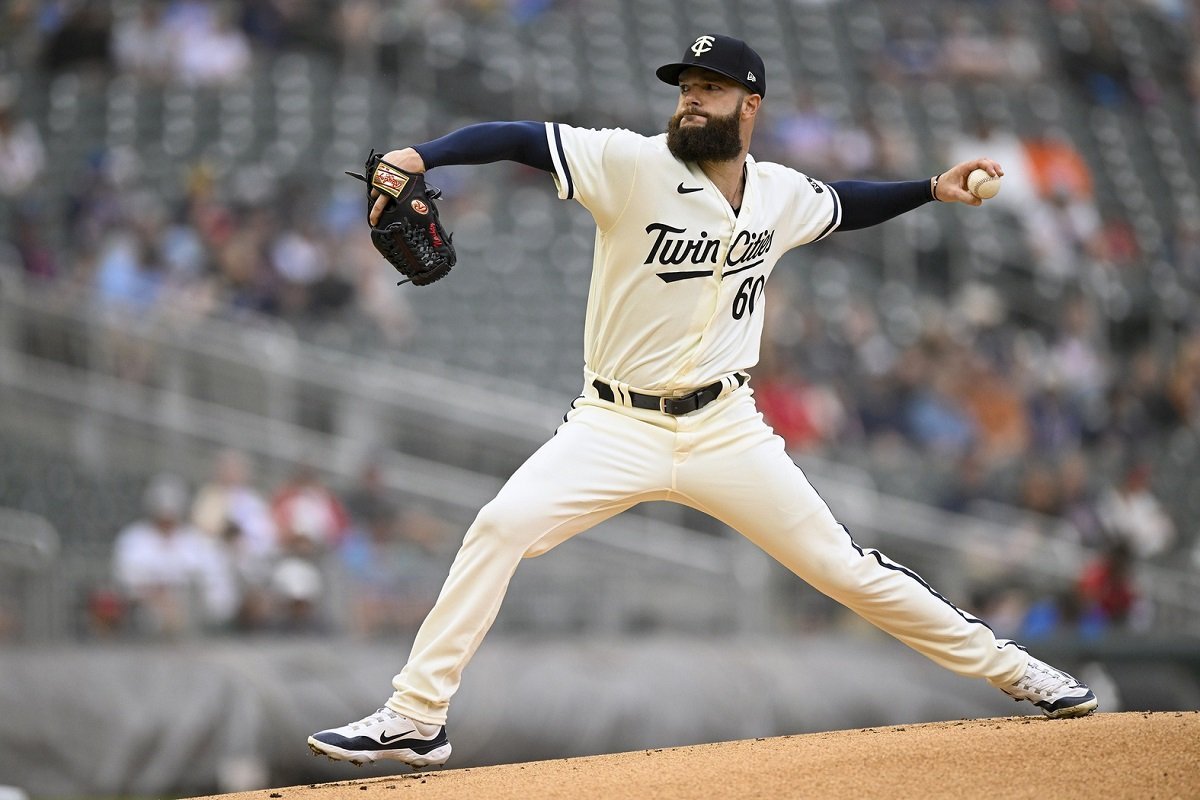 There was quite a stir made when Dallas Keuchel signed with the Twins. Although MLB hitters spent much of the prior two seasons spanking his offerings, the former Cy Young winner felt that his sinker had a few more outs in it, and worked hard to add a few elusive ticks of velo—perhaps hoping that the extra oomph would be the difference between disaster and a spot on a major league roster. He latched onto the Twins on a minor league deal and waited for fate to move in his favor. Fortunately, Joe Ryan had a debatably real groin problem and an undeniably real home run problem. Needing to decide on keeping Keuchel around, the Twins called him up—and with his Sunday start now in the books—he now needs to be talked about. Some may have viewed his five frames of one-run ball positively; our own Sherry Cerny argues that he should be the 6th man in the Twins rotation, extending his stay on the major-league roster. He did only allow one run, after all. Beyond the earned runs, though, there’s much to be concerned about. Namely, Keuchel didn’t strike anyone out. Yes, no one would confuse prime Keuchel with Randy Johnson—the sinking lefty earned his bread off groundballs, not whiffs—but at his best, Keuchel could still offer five to six punchouts a game, improving his absurd ground ball total by ensuring that the few batted balls hitters could find were headed straight for infielder’s gloves. This year's performance is not Keuchel at his best; his strikeout rate in 2023 against AAA hitters—inferior competition—was below average. He’s almost wholly unable to miss major league bats. That matters. Some days, those batted balls aren’t always going to find gloves and will instead bang around the field, creating chaos and scoring runs as the visions of his double plays on Sunday become distant and unrecognizable. It’s a simple math problem, with a few more batted ball chances allowing for shenanigans and unideal outcomes. The Pied Piper comes calling for his due eventually; relying on fortunate sequencing and unsustainable left-on-base rates won’t cut it. Those hits will fall. They have to. Now, yes, he does still have the groundballs. The almighty ability to get batters to drive the ball directly into the earth hasn’t evaporated with age. However, diminished in recent years, Keuchel has demonstrated a rejuvenated grounder rate with the Saints and in his lone Twins start. That’ll always help cap the damage he allows. It can even erase some of his mistakes, but it’s not enough to only have groundballs—especially if batters are smoking his sinker with an exit velocity of 96.2 MPH as they did on Sunday. Put it this way: strip away the name and the Cy Young award. Would you trust a pitcher with 14 walks and 28 strikeouts over 37 innings? Would you trust a pitcher who could only elicit five swings and misses against one of the coldest offenses in baseball? He’s solid depth—the kind of guy you may trust more than Simeon Woods Richardson—but making big plans to add him to Minnesota’s grand down-the-stretch scheme is foolish. He got lucky on Sunday and was fortunate in his time with the Saints. Once Joe Ryan is over his bout of balls-keep-leaving-the-yard-itis, the Twins should thank Keuchel for his troubles, and jettison him to the depths of Baseball Reference, only to be uncovered by intrepid dorks wondering why he made a handful of starts for the 2023 Minnesota Twins. They have better starters, and they will be far more critical to the Twins staving off Cleveland in the coming months.
 -
 TRANSACTIONS INF Kamron Willman reinstated from Development List (Fort Myers) C Wilfri Castro activated from 60-day Injured List (FCL Twins) Saints Sentinel St. Paul 7, Columbus 3 Box Score Louie Varland: 5 2/3 IP, 5 H, 0 ER, 3 BB, 5 K HR: None Multi-hit games: Anthony Prato (3-for-5, 2B, RBI, BB), Trevor Larnach (4-for-5, 3B, 2B, 3 R), Austin Martin (3-for-5, 2B, R, 2 RBI), Chris Williams (2-for-3, R, 3 RBI, BB) The Saints won handily on Saturday. I believe it’s a good thing when you out-hit your opponent 14 to six. Anthony Prato was a nuclear offensive force; the 25-year-old cracked a trio of hits and walked, pushing his Triple-A OPS to an unthinkable 1.119. He wasn’t even the best hitter, somehow, as Trevor Larnach tripled, doubled, and singled twice to give him his first four-hit game since July 13th, 2019. Austin Martin also had three hits. Sure. Louie Varland wasn’t quite himself on the mound—what with the walking three hitters and all. He still avoided allowing any earned runs thanks to some poorly-timed errors (aren’t they all?), and came one excruciating out away from earning a quality start. His bullpen had his back, though; Cole Sands, Michael Boyle, and Oliver Ortega carried the game to its final out without allowing another run to score. They combined to strike out five. St. Paul’s bats added eight walks on top of their 14 hits. Technically old friend, Chris Vallimont, pitched for the Clippers, although he probably wishes he didn’t: he allowed three runs over 2 2/3 innings. Cleveland’s best prospect—outfielder George Valera—walked once in five plate appearances. Wind Surge Wisdom Wichita 9, Tulsa 5 Box Score Jaylen Nowlin: 4 IP, 2 H, 0 ER, 3 BB, 5 K HR: Dalton Shuffield (1, 2), Willie Joe Garry Jr. (1), Patrick Winkel (7) Multi-hit games: Yoyner Fajardo (3-for-5, 2B, RBI), Pat Winkel (3-for-4, HR, 2 R, RBI, BB), Dalton Shuffield (2-for-3, 2 HR, 2 R, 2 RBI, BB) An explosive sixth inning guided the Wind Surge to victory on Saturday. No pitcher was safe. Well, Denny Bentley was; but he was the only hurler on either team to not see runs cross the plate on his watch. It was the kind of walk-fest that would make a DSL team pink in the cheeks. Fortunately, Wichita was able to come out on top. They did it by air and by land; the team blasted four homers while swiping eight bases, surely giving them some sort of superlative record this writer is far too lazy to look up. In any case, the attack proved mightily effective, giving Wichita nine runs off just 10 hits—more than enough to best the Drillers on Saturday. But it wasn’t easy on the pitching side of things, as Jaylen Nowlin was inefficient, placing a burden onto the bullpen to scrape together five innings. They weren’t clean—both Alex Scherff and Aaron Rozek allowed runs—but it was enough. When Bentley elicited a pop out to end the game, every pitcher likely breathed in relief, finally happy to not have this game’s tyranny ruining their ERAs anymore. Tulsa is typically the zenith of the Dodgers’ excellent farm system, and catcher Diego Cartaya—ranked 18th in MLB—is their finest offering. He homered in the fifth off Scherff. Kernels Nuggets Cedar Rapids 3, Lansing 1 Box Score Andrew Morris: 6 IP, 5 H, 1 ER, 0 BB, 9 K HR: Carson McCusker (1) Multi-hit games: None The Kernels won a pitcher’s duel on Saturday. Andrew Morris was brilliant, dominant. The righty shook off a poor introduction to A+ ball in his previous start, punching out nine with 16 total swings and misses—good for a swinging strike % of 19.5. That’s Spencer Strider territory. The Lugnuts appear fortunate to have even scored once off the righty from Texas Tech. Cedar Rapids needed the start, because the offense could only muster a minimal amount of runs. Mikey Perez knocked in one in the first, Carson McCusker plated two in the second, and then… nothing. McCusker’s homer concluded the day’s hits, and a third inning walk by Emmanuel Rodriguez proved to be the final baserunner for the Kernels. Fortunately, the rest of the pitching staff cleaned up Lansing’s batters; Jordan Carr worked two clean frames before Mike Paredes earned the final three outs with a lone walk serving as his only traffic. Clark Elliott—Oakland’s 15th-best prospect—went 0-for-3 with a strikeout. Mussel Matters Ft. Myers 3, Dunedin 4 Box Score Jack Noble: 6 IP, 7 H, 3 ER, 1 BB, 5 K HR: None Multi-hit games: Ricardo Olivar (2-for-5, R), Kyle Schmidt (2-for-4) The Mighty Mussels lost a close game on Saturday. Jack Noble was good, but not good enough; the righty worked six frames, allowing a trio runs—a total lower than he should have, but we’ll talk about that later—off seven hits. He threw 83 pitches. A pair of 2023 draftees—Luke Keaschall and Jay Harry—collected hits on Saturday, with Harry earning his first A-ball double and Keaschall reaching base twice. In one of the stranger things that can happen at a ballpark, Dunedin centerfielder Jaden Rudd was thrown out at home twice, with the two corner outfielders each adding to their collection of assists. The Mighty Mussels offense was actually very well-rounded, walking five times while only punching out in six at-bats, but they couldn’t quite string together the hits needed to break through Dunedin’s meager lead. The Blue Jays have a pair of excellent pitching prospects at A-ball, but neither played in Saturday’s game, making shortstop Tucker Toman the best representative of Toronto’s farm system in this game. He earned two RBIs on a third inning double. Complex Chronicles FCL Twins 2, FCL Red Sox 7 Box Score John Klein: 4 2/3 IP, 8 H, 5 ER, HR: None Multi-hit games: Brandon Winokur (3-for-4, 2B, R, RBI), Walker Jenkins (2-for-4, RBI) Two 2023 draft picks had big days on Saturday. Brandon Winokur—selected in the third round out of Edison High School—collected three hits, one of them being a double; Walker Jenkins singled twice. Pitching was less fortunate, though, as both John Klein and Matt Gabbert were roughed up, despite impressive K/BB numbers. One of the main culprits? Kyle Teel. Boston’s first-round pick in 2023 filled up the box score, homering, singling twice, and walking to give himself a perfect day at the plate. Dominican Dailies DSL Twins 5, DSL Nationals 6 Box Score Joel Garcia: 4 IP, 3 H, 1 ER, 2 BB, 5 K HR: None Multi-hit games: None The DSL Twins were walked-off on Saturday. It was another classic DSL slopfest; the Twins scored five runs, but only acquired three RBIs, earning two of their runs off a fielder’s choice/fielding error double whammy. It wasn’t enough, though, as the team literally walked away their chances of winning, handing out five free passes in the final frame—including two to tie and lose the game. Big-name international signing, Hendry Chivilli, has an OPS of .582 after going 0-for-4 with a pair of strikeouts. Dameury Pena, however, now holds an OPS of 1.020, and he swiped a base in Saturday’s game. TWINS DAILY PLAYERS OF THE DAY Twins Daily Minor League Pitcher of the Day – Andrew Morris Twins Daily Minor League Hitter of the Day – Trevor Larnach PROSPECT SUMMARY Here’s a look at how the Twins Daily Top 20 Twins Prospects performed: #1 - Brooks Lee (St. Paul) - 0-5, K #2 - Walker Jenkins (FCL Twins) - 2-4, RBI #3 - Emmanuel Rodriguez (Cedar Rapids) - 1-2, R, BB #5 - Matt Wallner (Minnesota) - 3-5, 2B, 2 R, 2 RBI, K #8 - Austin Martin (St. Paul) - 3-5, 2B, R, 2 RBI #10 - Tanner Schobel (Wichita) - 0-5, K #12 - Luke Keaschall (Ft. Myers) - 1-3, BB #13 - Brandon Winokur (FCL Twins) - 3-4, 2B, R, RBI #15 - Jordan Balazovic (Minnesota) - 2 IP, 0 H, 0 ER, 1 BB, 1 K #16 - Kala’i Rosario (Cedar Rapids) - 0-3, 3 K #17 - Yunior Severino (St. Paul) - 1-5, R, K #20 - Jose Rodriguez (FCL Twins) - 0-4 SUNDAY’S PROBABLE STARTERS St. Paul @ Columbus (3:05 PM) - LHP Brent Headrick Tulsa @ Wichita (1:05 PM) - RHP Chad Donato Lansing @ Cedar Rapids (1:05 PM) - RHP Cory Lewis Fort Myers @ Dunedin (11:00 AM) - TBD
- 20 comments
-
- 3
-

-
- anthony prato
- andrew morris
- (and 3 more)
-
Minor League Report (8/5): The Bats Are Alright
Matt Braun posted a topic in Twins Minor League Talk
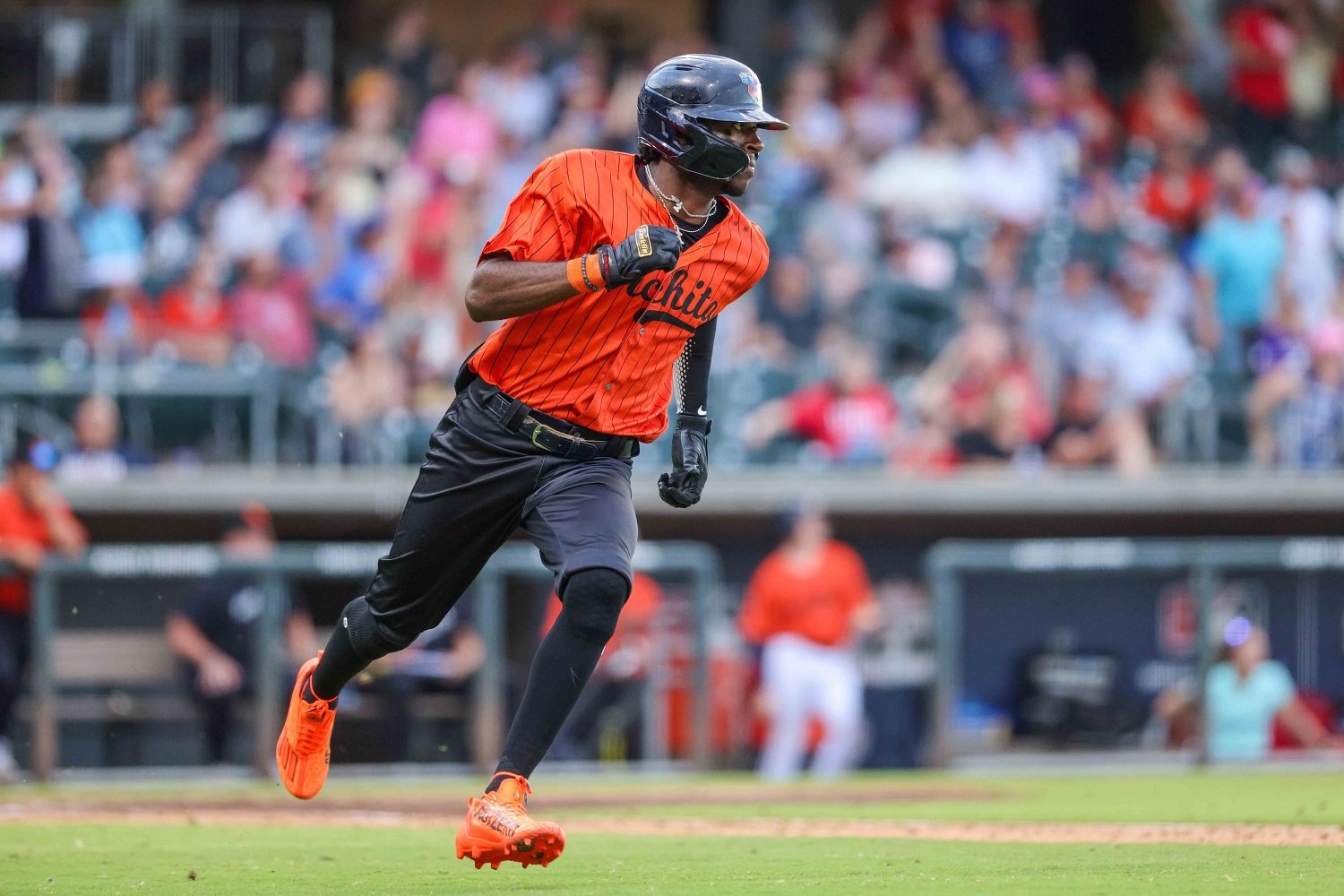
Dalton Shuffield hit two homers and wasn't even the hitter of the day! Image courtesy of Ed Bailey, Wichita Wind Surge (photo of Willie Joe Garry) TRANSACTIONS INF Kamron Willman reinstated from Development List (Fort Myers) C Wilfri Castro activated from 60-day Injured List (FCL Twins) Saints Sentinel St. Paul 7, Columbus 3 Box Score Louie Varland: 5 2/3 IP, 5 H, 0 ER, 3 BB, 5 K HR: None Multi-hit games: Anthony Prato (3-for-5, 2B, RBI, BB), Trevor Larnach (4-for-5, 3B, 2B, 3 R), Austin Martin (3-for-5, 2B, R, 2 RBI), Chris Williams (2-for-3, R, 3 RBI, BB) The Saints won handily on Saturday. I believe it’s a good thing when you out-hit your opponent 14 to six. Anthony Prato was a nuclear offensive force; the 25-year-old cracked a trio of hits and walked, pushing his Triple-A OPS to an unthinkable 1.119. He wasn’t even the best hitter, somehow, as Trevor Larnach tripled, doubled, and singled twice to give him his first four-hit game since July 13th, 2019. Austin Martin also had three hits. Sure. Louie Varland wasn’t quite himself on the mound—what with the walking three hitters and all. He still avoided allowing any earned runs thanks to some poorly-timed errors (aren’t they all?), and came one excruciating out away from earning a quality start. His bullpen had his back, though; Cole Sands, Michael Boyle, and Oliver Ortega carried the game to its final out without allowing another run to score. They combined to strike out five. St. Paul’s bats added eight walks on top of their 14 hits. Technically old friend, Chris Vallimont, pitched for the Clippers, although he probably wishes he didn’t: he allowed three runs over 2 2/3 innings. Cleveland’s best prospect—outfielder George Valera—walked once in five plate appearances. Wind Surge Wisdom Wichita 9, Tulsa 5 Box Score Jaylen Nowlin: 4 IP, 2 H, 0 ER, 3 BB, 5 K HR: Dalton Shuffield (1, 2), Willie Joe Garry Jr. (1), Patrick Winkel (7) Multi-hit games: Yoyner Fajardo (3-for-5, 2B, RBI), Pat Winkel (3-for-4, HR, 2 R, RBI, BB), Dalton Shuffield (2-for-3, 2 HR, 2 R, 2 RBI, BB) An explosive sixth inning guided the Wind Surge to victory on Saturday. No pitcher was safe. Well, Denny Bentley was; but he was the only hurler on either team to not see runs cross the plate on his watch. It was the kind of walk-fest that would make a DSL team pink in the cheeks. Fortunately, Wichita was able to come out on top. They did it by air and by land; the team blasted four homers while swiping eight bases, surely giving them some sort of superlative record this writer is far too lazy to look up. In any case, the attack proved mightily effective, giving Wichita nine runs off just 10 hits—more than enough to best the Drillers on Saturday. But it wasn’t easy on the pitching side of things, as Jaylen Nowlin was inefficient, placing a burden onto the bullpen to scrape together five innings. They weren’t clean—both Alex Scherff and Aaron Rozek allowed runs—but it was enough. When Bentley elicited a pop out to end the game, every pitcher likely breathed in relief, finally happy to not have this game’s tyranny ruining their ERAs anymore. Tulsa is typically the zenith of the Dodgers’ excellent farm system, and catcher Diego Cartaya—ranked 18th in MLB—is their finest offering. He homered in the fifth off Scherff. Kernels Nuggets Cedar Rapids 3, Lansing 1 Box Score Andrew Morris: 6 IP, 5 H, 1 ER, 0 BB, 9 K HR: Carson McCusker (1) Multi-hit games: None The Kernels won a pitcher’s duel on Saturday. Andrew Morris was brilliant, dominant. The righty shook off a poor introduction to A+ ball in his previous start, punching out nine with 16 total swings and misses—good for a swinging strike % of 19.5. That’s Spencer Strider territory. The Lugnuts appear fortunate to have even scored once off the righty from Texas Tech. Cedar Rapids needed the start, because the offense could only muster a minimal amount of runs. Mikey Perez knocked in one in the first, Carson McCusker plated two in the second, and then… nothing. McCusker’s homer concluded the day’s hits, and a third inning walk by Emmanuel Rodriguez proved to be the final baserunner for the Kernels. Fortunately, the rest of the pitching staff cleaned up Lansing’s batters; Jordan Carr worked two clean frames before Mike Paredes earned the final three outs with a lone walk serving as his only traffic. Clark Elliott—Oakland’s 15th-best prospect—went 0-for-3 with a strikeout. Mussel Matters Ft. Myers 3, Dunedin 4 Box Score Jack Noble: 6 IP, 7 H, 3 ER, 1 BB, 5 K HR: None Multi-hit games: Ricardo Olivar (2-for-5, R), Kyle Schmidt (2-for-4) The Mighty Mussels lost a close game on Saturday. Jack Noble was good, but not good enough; the righty worked six frames, allowing a trio runs—a total lower than he should have, but we’ll talk about that later—off seven hits. He threw 83 pitches. A pair of 2023 draftees—Luke Keaschall and Jay Harry—collected hits on Saturday, with Harry earning his first A-ball double and Keaschall reaching base twice. In one of the stranger things that can happen at a ballpark, Dunedin centerfielder Jaden Rudd was thrown out at home twice, with the two corner outfielders each adding to their collection of assists. The Mighty Mussels offense was actually very well-rounded, walking five times while only punching out in six at-bats, but they couldn’t quite string together the hits needed to break through Dunedin’s meager lead. The Blue Jays have a pair of excellent pitching prospects at A-ball, but neither played in Saturday’s game, making shortstop Tucker Toman the best representative of Toronto’s farm system in this game. He earned two RBIs on a third inning double. Complex Chronicles FCL Twins 2, FCL Red Sox 7 Box Score John Klein: 4 2/3 IP, 8 H, 5 ER, HR: None Multi-hit games: Brandon Winokur (3-for-4, 2B, R, RBI), Walker Jenkins (2-for-4, RBI) Two 2023 draft picks had big days on Saturday. Brandon Winokur—selected in the third round out of Edison High School—collected three hits, one of them being a double; Walker Jenkins singled twice. Pitching was less fortunate, though, as both John Klein and Matt Gabbert were roughed up, despite impressive K/BB numbers. One of the main culprits? Kyle Teel. Boston’s first-round pick in 2023 filled up the box score, homering, singling twice, and walking to give himself a perfect day at the plate. Dominican Dailies DSL Twins 5, DSL Nationals 6 Box Score Joel Garcia: 4 IP, 3 H, 1 ER, 2 BB, 5 K HR: None Multi-hit games: None The DSL Twins were walked-off on Saturday. It was another classic DSL slopfest; the Twins scored five runs, but only acquired three RBIs, earning two of their runs off a fielder’s choice/fielding error double whammy. It wasn’t enough, though, as the team literally walked away their chances of winning, handing out five free passes in the final frame—including two to tie and lose the game. Big-name international signing, Hendry Chivilli, has an OPS of .582 after going 0-for-4 with a pair of strikeouts. Dameury Pena, however, now holds an OPS of 1.020, and he swiped a base in Saturday’s game. TWINS DAILY PLAYERS OF THE DAY Twins Daily Minor League Pitcher of the Day – Andrew Morris Twins Daily Minor League Hitter of the Day – Trevor Larnach PROSPECT SUMMARY Here’s a look at how the Twins Daily Top 20 Twins Prospects performed: #1 - Brooks Lee (St. Paul) - 0-5, K #2 - Walker Jenkins (FCL Twins) - 2-4, RBI #3 - Emmanuel Rodriguez (Cedar Rapids) - 1-2, R, BB #5 - Matt Wallner (Minnesota) - 3-5, 2B, 2 R, 2 RBI, K #8 - Austin Martin (St. Paul) - 3-5, 2B, R, 2 RBI #10 - Tanner Schobel (Wichita) - 0-5, K #12 - Luke Keaschall (Ft. Myers) - 1-3, BB #13 - Brandon Winokur (FCL Twins) - 3-4, 2B, R, RBI #15 - Jordan Balazovic (Minnesota) - 2 IP, 0 H, 0 ER, 1 BB, 1 K #16 - Kala’i Rosario (Cedar Rapids) - 0-3, 3 K #17 - Yunior Severino (St. Paul) - 1-5, R, K #20 - Jose Rodriguez (FCL Twins) - 0-4 SUNDAY’S PROBABLE STARTERS St. Paul @ Columbus (3:05 PM) - LHP Brent Headrick Tulsa @ Wichita (1:05 PM) - RHP Chad Donato Lansing @ Cedar Rapids (1:05 PM) - RHP Cory Lewis Fort Myers @ Dunedin (11:00 AM) - TBD View full article- 20 replies
-
- 1
-

-
- anthony prato
- andrew morris
- (and 3 more)
-
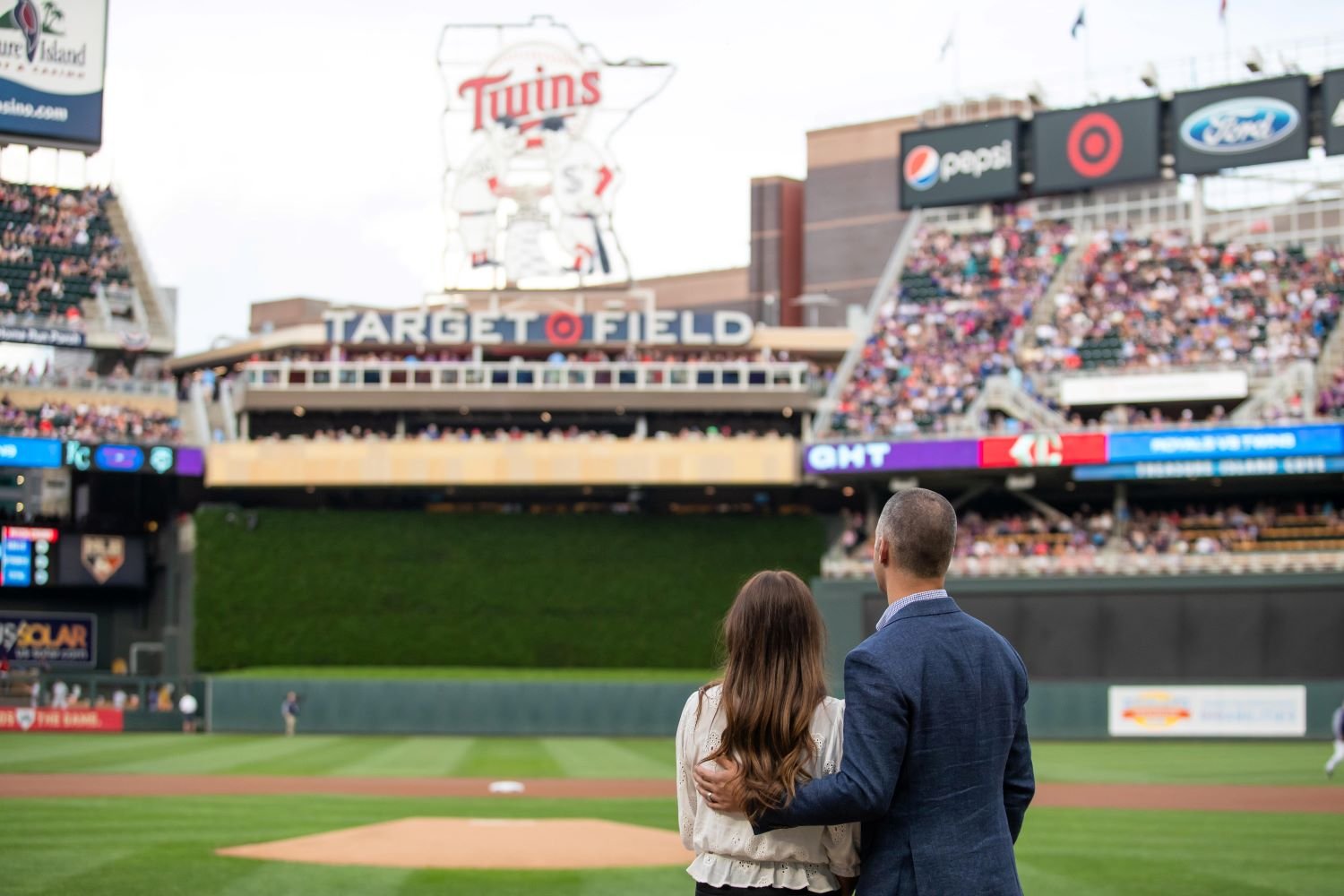 Often lost in sports is that these players are human, with their lives naked and popular. That openness leads fans to having—or thinking they have—insight into their personhood. I have never met Carlos Correa, but I feel that I know something about him and his personality, simply because I’ve watched him on my TV for nearly two years now. I know who his wife and child are, I know he went to High School, at the Puerto Rico Baseball Academy, and I know that he sometimes likes to one-hop throws to first base. Reserving three hours nightly to watch them play does that, and, without even realizing it, I have seen Correa more in my life than any of my aunts. It becomes a quiet comfort. While the people we meet in our life change and move, evolving as we do, sometimes fading away as the realities of adulthood command much of our attention, those three precious hours—treated religiously every night—offer a rare stability. I know I’ll see Max Kepler tonight, just as I have since he was 22, and I was in High School eight years ago. That’s a sort of emotional attachment usually reserved for the most intimate members of our life. And so: Joe Mauer. For 15 years—a decade and a half of everyone’s life—he was a rare constant. He joined a team with Lew Ford and Brad Radke, and left it in the hands of Eddie Rosario and José Berríos; he entered as a catching phenom, and left it as a worn-down first baseman; he started in the Metrodome, and left in the cool open-air breeze of Target Field. It was an atypical relationship between player and franchise, one that goes unnoticed and often underappreciated in an arena where one’s job is never safe for an extended period of time. Any slip in performance is met with calls for a trade or a signing, and personalities and people clash, with players soon finding themselves on different teams. Rod Carew was an Angel for seven years, Johan Santana tossed over 700 innings for the Mets, but Mauer never left. That quiet comfort—the familiarity of the shared experience—grew with Mauer as with no Twin in recent memory. As players and coaches went, there stood Mauer, penciled in at a different position perhaps, but still smiling, still slashing doubles into the left-center gap. I think, perhaps, this amount of exposure separates baseball from most other sports; I have to think for a decent amount of time to remember a time when Kirk Cousins hasn’t been the Vikings QB, but even his Minnesota career only amounts to 80 regular season games—less than half a typical baseball season. Mauer’s was 1,858. Inevitably, something he did on the field became connected with a life experience, something near and dear still fondly remembered today, in part because Mauer helped make it visceral. It’s unsurprising that Mauer donning his catching gear for one last time in 2018 evoked the kind of reaction it did; here was a man—Minnesota’s man—reminding the fans of good times, when our heroes were immortal and forever young; when the shackles of expectations and disappointment could fall aside and we could, revere and celebrate together. That 2018 team wasn’t good, but at that moment, no one cared; the moment was Mauer’s and his alone. When we see Mauer on the field to enter the Twins Hall of Fame tonight, we will all be flooded with memories. Some may think of his MVP season, some may recall his one-and-only walk-off homer in 2017, and some may think of his perfect Twins introduction: his first career hit smacked right up the middle. In all cases, though, there will surely be personal artifacts—parts of each person's life critical and endearing to them—associated with each moment; perhaps he cracked a big hit on an especially raucous night partying in college, or perhaps iconic behind-the-back snag preceded a first date that soon became a marriage. In any case, and in memory, the magic of Mauer is time: his extended, wonderful career became intertwined with the fans and their lives, making him a rare warm comfort with his familiarity and excellence.
 -
There are times, precious and rare, when a player elevates above the game, and becomes a member of our shared life experience. Image courtesy of David Berding-USA TODAY Sports Often lost in sports is that these players are human, with their lives naked and popular. That openness leads fans to having—or thinking they have—insight into their personhood. I have never met Carlos Correa, but I feel that I know something about him and his personality, simply because I’ve watched him on my TV for nearly two years now. I know who his wife and child are, I know he went to High School, at the Puerto Rico Baseball Academy, and I know that he sometimes likes to one-hop throws to first base. Reserving three hours nightly to watch them play does that, and, without even realizing it, I have seen Correa more in my life than any of my aunts. It becomes a quiet comfort. While the people we meet in our life change and move, evolving as we do, sometimes fading away as the realities of adulthood command much of our attention, those three precious hours—treated religiously every night—offer a rare stability. I know I’ll see Max Kepler tonight, just as I have since he was 22, and I was in High School eight years ago. That’s a sort of emotional attachment usually reserved for the most intimate members of our life. And so: Joe Mauer. For 15 years—a decade and a half of everyone’s life—he was a rare constant. He joined a team with Lew Ford and Brad Radke, and left it in the hands of Eddie Rosario and José Berríos; he entered as a catching phenom, and left it as a worn-down first baseman; he started in the Metrodome, and left in the cool open-air breeze of Target Field. It was an atypical relationship between player and franchise, one that goes unnoticed and often underappreciated in an arena where one’s job is never safe for an extended period of time. Any slip in performance is met with calls for a trade or a signing, and personalities and people clash, with players soon finding themselves on different teams. Rod Carew was an Angel for seven years, Johan Santana tossed over 700 innings for the Mets, but Mauer never left. That quiet comfort—the familiarity of the shared experience—grew with Mauer as with no Twin in recent memory. As players and coaches went, there stood Mauer, penciled in at a different position perhaps, but still smiling, still slashing doubles into the left-center gap. I think, perhaps, this amount of exposure separates baseball from most other sports; I have to think for a decent amount of time to remember a time when Kirk Cousins hasn’t been the Vikings QB, but even his Minnesota career only amounts to 80 regular season games—less than half a typical baseball season. Mauer’s was 1,858. Inevitably, something he did on the field became connected with a life experience, something near and dear still fondly remembered today, in part because Mauer helped make it visceral. It’s unsurprising that Mauer donning his catching gear for one last time in 2018 evoked the kind of reaction it did; here was a man—Minnesota’s man—reminding the fans of good times, when our heroes were immortal and forever young; when the shackles of expectations and disappointment could fall aside and we could, revere and celebrate together. That 2018 team wasn’t good, but at that moment, no one cared; the moment was Mauer’s and his alone. When we see Mauer on the field to enter the Twins Hall of Fame tonight, we will all be flooded with memories. Some may think of his MVP season, some may recall his one-and-only walk-off homer in 2017, and some may think of his perfect Twins introduction: his first career hit smacked right up the middle. In all cases, though, there will surely be personal artifacts—parts of each person's life critical and endearing to them—associated with each moment; perhaps he cracked a big hit on an especially raucous night partying in college, or perhaps iconic behind-the-back snag preceded a first date that soon became a marriage. In any case, and in memory, the magic of Mauer is time: his extended, wonderful career became intertwined with the fans and their lives, making him a rare warm comfort with his familiarity and excellence. View full article
-
Twins 3, Diamondbacks 2: Trio of Homers Enough to Best Arizona
Matt Braun posted an article in Twins
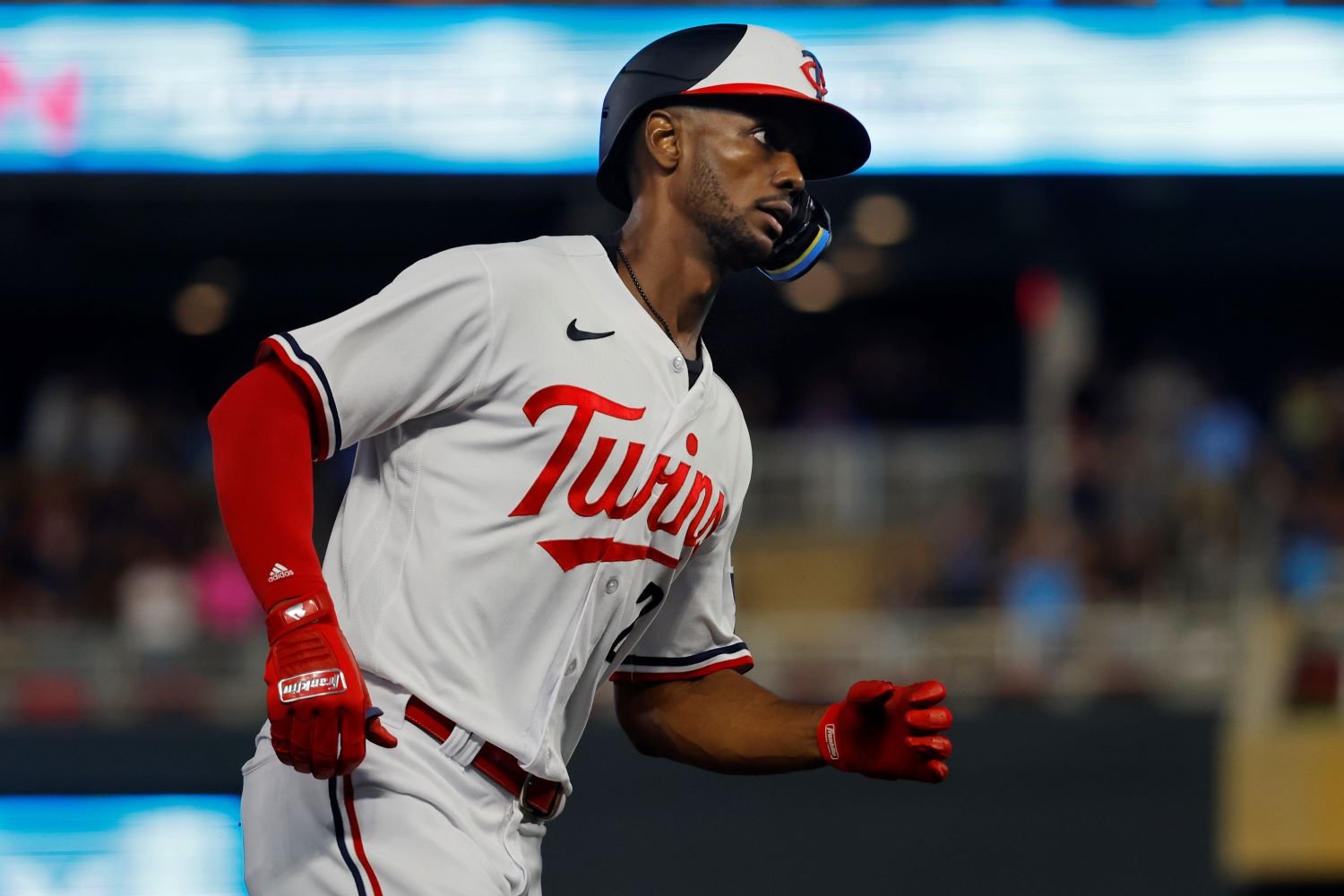 Box Score Bailey Ober: 5 IP, 6 H, 2 ER, 0 BB, 3 K Home Runs: Jorge Polanco (6), Max Kepler (16), Michael A. Taylor (14) Top 3 WPA: Jhoan Duran (.156), Caleb Thielbar (.139), Max Kepler (.119) Win Probability Chart (via FanGraphs) In an odd three-game homestand, the Twins play host to the Diamondbacks at Target Field for the first time sweeping the NL West team in 2017. Nik Turley appeared in one of those games; it’s been awhile. With Joe Mauer’s induction into the Twins Hall of Fame on Saturday, Minnesota looked to start a nostalgic weekend with a victory. Bailey Ober labored… again. Following an excruciating outing against the Royals in which the typical command wizard fired wildly inside the strike zone, Ober focused himself a little bit, but still ran into similar problems. He needed 104 pitches to get through five. Still—because this is Bailey Ober—he logged in his usual minimum statline, only allowing two while striking out three without a walk. Those two runs were dangerous, though, because of Minnesota’s opponent: Merrill Kelly. The 34-year-old is unassuming and easy to overlook, but he’s more than held his own in the brutal NL West—and Twins hitters soon learned that scoring off him is not an easy endeavor. Arizona struck first; Lourdes Gurriel Jr. jumped all over a changeup too far in the strike zone, smoking the pitch into left field to give his team a 1-0 advantage. The Twins allowed the lead to hold for a bit, but Jorge Polanco soon evened the game, crushing his own screaming blast, shooting a lightning bolt to right that just barely hooked inside the foul pole. Because of Joe Mauer’s imminent induction into the Twins Hall of Fame on Saturday, plenty of old friends were around the ballpark, with two joining Dick Bremer and Glen Perkins in the broadcast booth. Nick Punto—perhaps a little weepy staring at an un-dived into 1st base—offered some tales from the past; Brian Dozier did the same, but with an eye on the left field fans and their distinct lack of a Twins home run ball souvenir. Arizona re-took the lead on a soft single, but that hardly mattered; Minnesota yet again responded with a solo homer, this time from Max Kepler, this time to right-center. And now, there would be no see-sawing between advantages, disadvantages, and ties, as Michael A. Taylor popped a sky-scraping homer to right field, just barely able to guide the ball into the overhang to give the Twins their first lead of the game. Rocco Baldelli ramped up the relievers he was using. Caleb Thielbar acquired the first out of the 8th—nearly losing his head in the process—before Emilio Pagán coaxed the final two outs of the frame, acquiring a pair of groundballs rendering an earlier relinquished single harmless. You know who pitched next. Jhoan Duran was a little worse for wear following an uncharacteristically poor road trip—and he allowed a pair of baserunners—but he locked down the save, turning a botched bunt into an easy pop up before freezing Ketel Marte on a splitter somewhere in the vicinity of the outside corner. It wasn't easy, and it certainly wasn't pretty at times, but the Twins won—and winning ugly beats losing pretty every day of the week. Notes: Jhoan Duran earned his 20th save of the season on Saturday. Michael A. Taylor's 14 homers ties his 2015 rookie campaign for his second-highest home run total in a season; he's five bombs away from tying his career-high of 19 set in 2017. Max Kepler's homer boosted his slugging % to .445, his best outside of 2019. Emilio Pagán has a 1.35 ERA since June 15th. Post-Game Interview: What’s Next? The Twins and Diamondbacks will play the second game of their series on Saturday; scheduled for a 6:10 PM start, first pitch will come following Joe Mauer’s ceremony, likely somewhere between 30-60 minutes after the alleged 6:10 start. Bullpen Usage Spreadsheet
- 26 comments
-
- 4
-
-
- max kepler
- bailey ober
- (and 3 more)
-
Minnesota's slugging center fielder helped foster a win, just like we all expected going into the season. Image courtesy of © Bruce Kluckhohn-USA TODAY Sports Box Score Bailey Ober: 5 IP, 6 H, 2 ER, 0 BB, 3 K Home Runs: Jorge Polanco (6), Max Kepler (16), Michael A. Taylor (14) Top 3 WPA: Jhoan Duran (.156), Caleb Thielbar (.139), Max Kepler (.119) Win Probability Chart (via FanGraphs) In an odd three-game homestand, the Twins play host to the Diamondbacks at Target Field for the first time sweeping the NL West team in 2017. Nik Turley appeared in one of those games; it’s been awhile. With Joe Mauer’s induction into the Twins Hall of Fame on Saturday, Minnesota looked to start a nostalgic weekend with a victory. Bailey Ober labored… again. Following an excruciating outing against the Royals in which the typical command wizard fired wildly inside the strike zone, Ober focused himself a little bit, but still ran into similar problems. He needed 104 pitches to get through five. Still—because this is Bailey Ober—he logged in his usual minimum statline, only allowing two while striking out three without a walk. Those two runs were dangerous, though, because of Minnesota’s opponent: Merrill Kelly. The 34-year-old is unassuming and easy to overlook, but he’s more than held his own in the brutal NL West—and Twins hitters soon learned that scoring off him is not an easy endeavor. Arizona struck first; Lourdes Gurriel Jr. jumped all over a changeup too far in the strike zone, smoking the pitch into left field to give his team a 1-0 advantage. The Twins allowed the lead to hold for a bit, but Jorge Polanco soon evened the game, crushing his own screaming blast, shooting a lightning bolt to right that just barely hooked inside the foul pole. Because of Joe Mauer’s imminent induction into the Twins Hall of Fame on Saturday, plenty of old friends were around the ballpark, with two joining Dick Bremer and Glen Perkins in the broadcast booth. Nick Punto—perhaps a little weepy staring at an un-dived into 1st base—offered some tales from the past; Brian Dozier did the same, but with an eye on the left field fans and their distinct lack of a Twins home run ball souvenir. Arizona re-took the lead on a soft single, but that hardly mattered; Minnesota yet again responded with a solo homer, this time from Max Kepler, this time to right-center. And now, there would be no see-sawing between advantages, disadvantages, and ties, as Michael A. Taylor popped a sky-scraping homer to right field, just barely able to guide the ball into the overhang to give the Twins their first lead of the game. Rocco Baldelli ramped up the relievers he was using. Caleb Thielbar acquired the first out of the 8th—nearly losing his head in the process—before Emilio Pagán coaxed the final two outs of the frame, acquiring a pair of groundballs rendering an earlier relinquished single harmless. You know who pitched next. Jhoan Duran was a little worse for wear following an uncharacteristically poor road trip—and he allowed a pair of baserunners—but he locked down the save, turning a botched bunt into an easy pop up before freezing Ketel Marte on a splitter somewhere in the vicinity of the outside corner. It wasn't easy, and it certainly wasn't pretty at times, but the Twins won—and winning ugly beats losing pretty every day of the week. Notes: Jhoan Duran earned his 20th save of the season on Saturday. Michael A. Taylor's 14 homers ties his 2015 rookie campaign for his second-highest home run total in a season; he's five bombs away from tying his career-high of 19 set in 2017. Max Kepler's homer boosted his slugging % to .445, his best outside of 2019. Emilio Pagán has a 1.35 ERA since June 15th. Post-Game Interview: What’s Next? The Twins and Diamondbacks will play the second game of their series on Saturday; scheduled for a 6:10 PM start, first pitch will come following Joe Mauer’s ceremony, likely somewhere between 30-60 minutes after the alleged 6:10 start. Bullpen Usage Spreadsheet View full article
- 26 replies
-
- 1
-
-
- max kepler
- bailey ober
- (and 3 more)
-
Twins Minor League Starting Pitcher of the Month - July 2023
Matt Braun posted an article in Minor Leagues
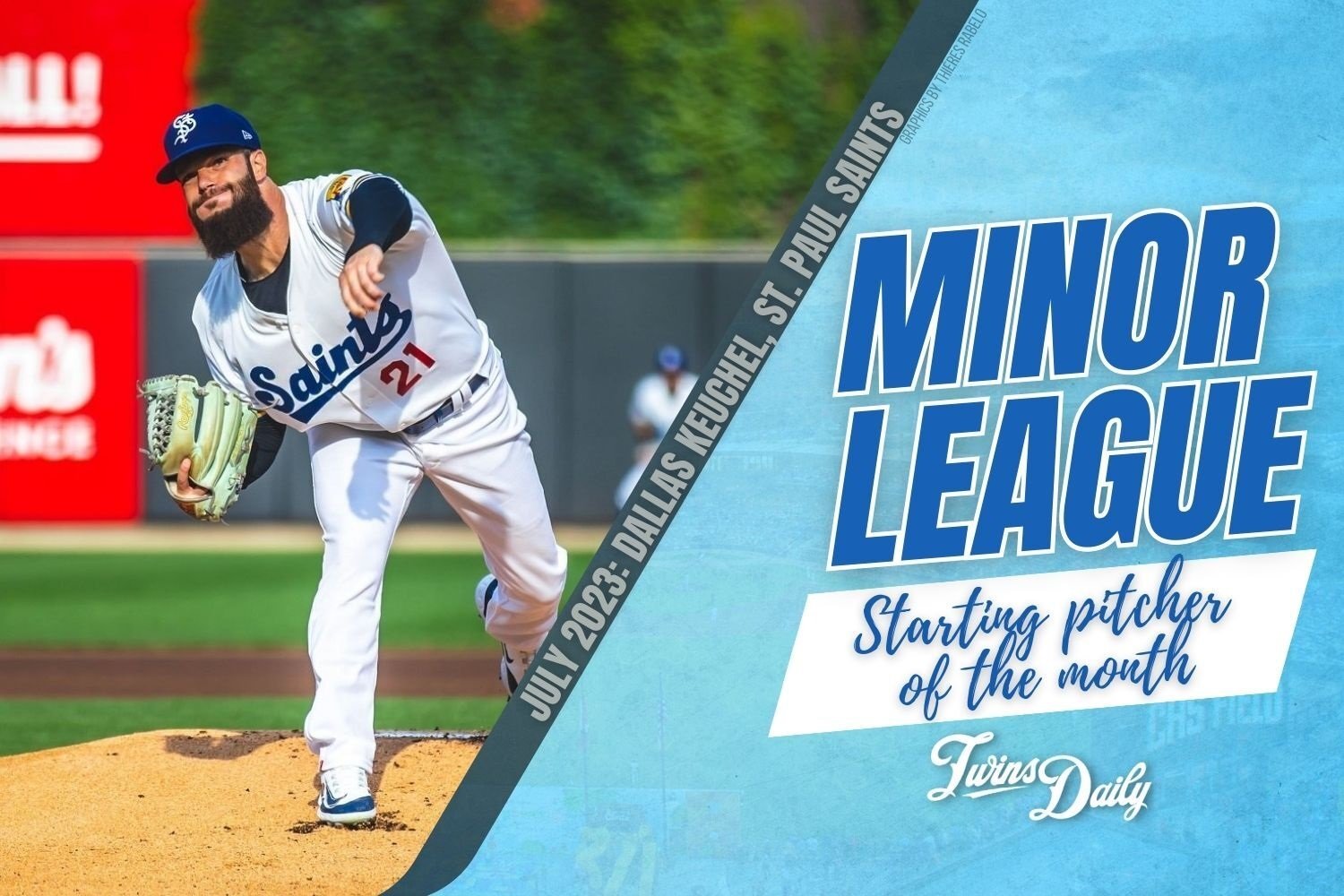 An issue that pops up in these lists is that of role assignments: pitchers in the minors often flip-flop between starting and relieving to eat up innings whenever they can. This poses challenges for those who acknowledge the delegation of title, as a starter with one relief appearance is still obviously a starter, but some situations aren't as clear-cut. I did my best to adhere to the spirit of the award while still understanding the sometimes silly nature of minor-league pitching order. Below are the names I thought most deserved to be on the list. Their ranking is entirely subjective; I value innings thrown, as those are outs, and outs are valuable, but also like to weigh strikeouts and peripherals as they can differentiate between dominance and a pitcher merely getting lucky. In times when it's a toss-up, I valued the almighty ERA as the great equalizer—got that? Good; let's start. Honorable mentions: RHP C.J. Culpepper - A+ Cedar Rapids C.J. “not Daunte” Culpepper has been one of the biggest stories in the Twins’ farm system this year. Drafted out of a California university not known for baseball stars, Culpepper cruised through Low-A before continuing his excellence at High-A. Why only an honorable mention? The Ks haven’t quite been there after the promotion. RHP Andrew Morris - A/A+ Fort Myers/Cedar Rapids Andrew Morris had a fighting chance at cracking the top five before he tossed up a stinker in his A+ debut on Sunday. Still, his stock is rising as much as his fastball, and he can make the list next month if he settles down at the new level. RHP Matt Gabbert - FCL Twins The short-season teams needed representation on the list as well—and Matt Gabbert is well-deserving of being mentioned. Plucked from indy ball this year, the Evanston, Illinois native struck out nearly 30% of the batters he faced in July, with his six-K outing on the 28th serving as the zenith of his punch out powers. RHP Juan Cota - DSL Twins And now the DSL representative: Juan Cota displayed impressive strikeout stuff with a K% above 30, and also the sort of diminished command typical of a literal teenager, walking three and hitting two over nine frames. 5. LHP Christian MacLeod - A+ Cedar Rapids, 23 1/3 IP, 22.8 K%, 3.47 ERA, 4.72 FIP An injury limited Christian MacLeod to 1 2/3 measly innings in 2021, and an even more measly 0 innings in 2022. Finally healthy, the big lefty drafted out of Mississippi State has done well in his first full-ish season of playing without limits following Tommy John surgery and rehab. The peak of MacLeod’s month came on July 3rd; he decimated the Peoria Chiefs with 5 2/3 overpowering innings, leading to a pair of earned runs along with seven strikeouts. The rest of the month wasn’t quite as impressive, but it was still deeply respectable for a pitcher who—for all intents and purposes—was making his professional debut. Plus, his overhand curveball is just a classic: 4. Zebby Matthews - A+ Cedar Rapids, 22 1/3 IP, 27.1 K%, 3.22 ERA, 4.02 FIP This is now the third “Minor League Starting Pitcher of the Month” article I’ve written this year; Zebby Matthews has made the list all three times. His introduction to A+ ball was bumpy, with a ruinous June 10th outing scorching him with eight earned runs over just 2/3 of an inning. Still, Matthews did what Matthews has done since the start of the year: he settled in. He crushed the month of July, flattening his ERA to an acceptable level while punching out hitters at an elevated level. He walked one batter the entire month. One. The eighth-round selection out of Western Carolina University certainly now looks the part, and it should only be a matter of time before he shoots up prospect lists, joining the likes of Bailey Ober as an underrated, undervalued arm from a Carolina college no one has heard of*. Aaron Gleeman already did just that, placing Matthews 19th in his updated top 20 ranking two weeks ago. *With Ryan Jeffers and now Walker Jenkins also hailing from North Carolina, it seems that they will soon be the Carolina Twins, not just the Puerto Rico Twins. 3. RHP Simeon Woods Richardson - AAA St. Paul, 24 1/3 IP, 20.4 K%, 2.96 ERA, 4.27 FIP Almost everything had been a disaster. Entering July, Simeon Woods Richardson held an ERA of 7.47 at AAA, with a FIP at a still unfathomable 5.63. Given the mess, the Twins knew they had to change something up, so they tried a small experiment on July 8th. Brent Headrick started the game, going two innings with four strikeouts while leaving a clean slate for the following arm. Woods Richardson—for just the third time in his professional career—emerged out of the bullpen. The result was mastery: five innings with seven strikeouts, one walk, and a single earned run. He used the momentum to propel himself to a tremendous July, one that finally lowered his ERA, and perhaps righted himself enough to place himself back on the prospect map. Woods Richardson moved back to being a traditional starter after just two relief appearances, and he walked five in his most recent start, potentially signaling that he needs more work before being declared fixed. Still, a fine month deserves praise; here's some recognition for the 22-year-old. 2. RHP Pierson Ohl - AA Wichita, 18 2/3 IP, 29.5 K%, 3.38 ERA, 3.75 FIP Pierson Ohl won’t knock you down with stuff blazing and true; rather, the 14th-round pick from the 2021 draft prefers to carve up hitters with command, placing perfect pitches in precious places, coaxing flailing swings and soft contact. He’s now reached AA in his second full season since being drafted—and he appears to be gaining confidence. Other pitchers may have better numbers, but when you consider Ohl’s placement in the offensive pressure cooker known as the Texas League, his numbers become that much more impressive. Wichita’s team ERA in July was 6.30; lord only knows what it would have been without Pierson Ohl. His July was actually antithetical to his usual body of work: the typically walk-stingy righty handed out seven free passes, but with the trade-off being a near 30% K rate, Ohl was probably fine with the extra base runners. 1. LHP Dallas Keuchel - AAA St. Paul, 28 IP, 20.5 K%, 0.96 ERA, 4.11 FIP Is having Dallas Keuchel on your AAA team like the scene from Billy Madison where Adam Sandler pelts little kids with a dodgeball? Maybe. But it’s impossible to ignore what he’s done in his short stint with the Saints. The 2015 AL Cy Young winner was dominant. He allowed three earned runs the entire month, accruing 28 innings—far more than any other hurler in the system—while striking out a hair over 20% of the batters he faced. That’s a solid showing for his first time in pro ball since September of 2022. With all the attention on his potential opt-out, and whether the Twins will trade, promote, or move on from Dallas Keuchel, it appears he did just about all he could do to earn a spot back in MLB.
- 2 comments
-
- 3
-

-
-
- christian macleod
- zebby matthews
- (and 3 more)
-
Read and rejoice in the starting pitchers who thrived in the month of July. Image courtesy of Rob Thompson, St. Paul Saints (graphics by Thieres Rabelo) An issue that pops up in these lists is that of role assignments: pitchers in the minors often flip-flop between starting and relieving to eat up innings whenever they can. This poses challenges for those who acknowledge the delegation of title, as a starter with one relief appearance is still obviously a starter, but some situations aren't as clear-cut. I did my best to adhere to the spirit of the award while still understanding the sometimes silly nature of minor-league pitching order. Below are the names I thought most deserved to be on the list. Their ranking is entirely subjective; I value innings thrown, as those are outs, and outs are valuable, but also like to weigh strikeouts and peripherals as they can differentiate between dominance and a pitcher merely getting lucky. In times when it's a toss-up, I valued the almighty ERA as the great equalizer—got that? Good; let's start. Honorable mentions: RHP C.J. Culpepper - A+ Cedar Rapids C.J. “not Daunte” Culpepper has been one of the biggest stories in the Twins’ farm system this year. Drafted out of a California university not known for baseball stars, Culpepper cruised through Low-A before continuing his excellence at High-A. Why only an honorable mention? The Ks haven’t quite been there after the promotion. RHP Andrew Morris - A/A+ Fort Myers/Cedar Rapids Andrew Morris had a fighting chance at cracking the top five before he tossed up a stinker in his A+ debut on Sunday. Still, his stock is rising as much as his fastball, and he can make the list next month if he settles down at the new level. RHP Matt Gabbert - FCL Twins The short-season teams needed representation on the list as well—and Matt Gabbert is well-deserving of being mentioned. Plucked from indy ball this year, the Evanston, Illinois native struck out nearly 30% of the batters he faced in July, with his six-K outing on the 28th serving as the zenith of his punch out powers. RHP Juan Cota - DSL Twins And now the DSL representative: Juan Cota displayed impressive strikeout stuff with a K% above 30, and also the sort of diminished command typical of a literal teenager, walking three and hitting two over nine frames. 5. LHP Christian MacLeod - A+ Cedar Rapids, 23 1/3 IP, 22.8 K%, 3.47 ERA, 4.72 FIP An injury limited Christian MacLeod to 1 2/3 measly innings in 2021, and an even more measly 0 innings in 2022. Finally healthy, the big lefty drafted out of Mississippi State has done well in his first full-ish season of playing without limits following Tommy John surgery and rehab. The peak of MacLeod’s month came on July 3rd; he decimated the Peoria Chiefs with 5 2/3 overpowering innings, leading to a pair of earned runs along with seven strikeouts. The rest of the month wasn’t quite as impressive, but it was still deeply respectable for a pitcher who—for all intents and purposes—was making his professional debut. Plus, his overhand curveball is just a classic: 4. Zebby Matthews - A+ Cedar Rapids, 22 1/3 IP, 27.1 K%, 3.22 ERA, 4.02 FIP This is now the third “Minor League Starting Pitcher of the Month” article I’ve written this year; Zebby Matthews has made the list all three times. His introduction to A+ ball was bumpy, with a ruinous June 10th outing scorching him with eight earned runs over just 2/3 of an inning. Still, Matthews did what Matthews has done since the start of the year: he settled in. He crushed the month of July, flattening his ERA to an acceptable level while punching out hitters at an elevated level. He walked one batter the entire month. One. The eighth-round selection out of Western Carolina University certainly now looks the part, and it should only be a matter of time before he shoots up prospect lists, joining the likes of Bailey Ober as an underrated, undervalued arm from a Carolina college no one has heard of*. Aaron Gleeman already did just that, placing Matthews 19th in his updated top 20 ranking two weeks ago. *With Ryan Jeffers and now Walker Jenkins also hailing from North Carolina, it seems that they will soon be the Carolina Twins, not just the Puerto Rico Twins. 3. RHP Simeon Woods Richardson - AAA St. Paul, 24 1/3 IP, 20.4 K%, 2.96 ERA, 4.27 FIP Almost everything had been a disaster. Entering July, Simeon Woods Richardson held an ERA of 7.47 at AAA, with a FIP at a still unfathomable 5.63. Given the mess, the Twins knew they had to change something up, so they tried a small experiment on July 8th. Brent Headrick started the game, going two innings with four strikeouts while leaving a clean slate for the following arm. Woods Richardson—for just the third time in his professional career—emerged out of the bullpen. The result was mastery: five innings with seven strikeouts, one walk, and a single earned run. He used the momentum to propel himself to a tremendous July, one that finally lowered his ERA, and perhaps righted himself enough to place himself back on the prospect map. Woods Richardson moved back to being a traditional starter after just two relief appearances, and he walked five in his most recent start, potentially signaling that he needs more work before being declared fixed. Still, a fine month deserves praise; here's some recognition for the 22-year-old. 2. RHP Pierson Ohl - AA Wichita, 18 2/3 IP, 29.5 K%, 3.38 ERA, 3.75 FIP Pierson Ohl won’t knock you down with stuff blazing and true; rather, the 14th-round pick from the 2021 draft prefers to carve up hitters with command, placing perfect pitches in precious places, coaxing flailing swings and soft contact. He’s now reached AA in his second full season since being drafted—and he appears to be gaining confidence. Other pitchers may have better numbers, but when you consider Ohl’s placement in the offensive pressure cooker known as the Texas League, his numbers become that much more impressive. Wichita’s team ERA in July was 6.30; lord only knows what it would have been without Pierson Ohl. His July was actually antithetical to his usual body of work: the typically walk-stingy righty handed out seven free passes, but with the trade-off being a near 30% K rate, Ohl was probably fine with the extra base runners. 1. LHP Dallas Keuchel - AAA St. Paul, 28 IP, 20.5 K%, 0.96 ERA, 4.11 FIP Is having Dallas Keuchel on your AAA team like the scene from Billy Madison where Adam Sandler pelts little kids with a dodgeball? Maybe. But it’s impossible to ignore what he’s done in his short stint with the Saints. The 2015 AL Cy Young winner was dominant. He allowed three earned runs the entire month, accruing 28 innings—far more than any other hurler in the system—while striking out a hair over 20% of the batters he faced. That’s a solid showing for his first time in pro ball since September of 2022. With all the attention on his potential opt-out, and whether the Twins will trade, promote, or move on from Dallas Keuchel, it appears he did just about all he could do to earn a spot back in MLB. View full article
-
A step above frugal may be the ideal resting point for a team searching for answers. Image courtesy of Jay Biggerstaff-USA TODAY Sports With the trade deadline in full swing, we—the good fans—anxiously await for our team to deliver us a deal. Like a child on Christmas Eve, we expect to suddenly receive a gift from our dreams; something to play with for a few months before inevitably growing tired and moving on. For the Twins, perhaps settling for something minor could be the better plan. Let’s start with what happened last year with a similarly decent squad: they bungled it. Acquiring all those very nice pitchers felt great in the moment, sure, but a year later, we can see they weren’t worth the trouble. Yennier Cano became an All-Star. Spencer Steer and Christian Encarnacion-Strand rock, yadda, yadda, yadda. We know this story. Would following this folly again not be the definition of madness? Can’t we see the team—and the franchise’s health as a whole—would be much improved if they sat on their hands and trusted their talent? With that pain still fresh, the team should look to add a few pieces still, but shy away from any bigger-ticket player, whoever that even is in this market. Adding Tommy Pham and maybe Brooks Raley—or someone of his ilk—is all they need to do. And, maybe, it’s all they really can do; as Greggory Masterson wrote on July 10th, the lineup is filled with veterans. The team can’t shuffle around players as much as you would like, with the only methods of removing hitters being a DFA or trade (yes, I know you would gladly do either to Joey Gallo). Outside of that Italian, though, everyone is stuck, whether productive or not. And Max Kepler and Jorge Polanco are not going anywhere—not suddenly shipped off after the team held onto them through thick and thin. The veterans are the crux of Minnesota’s problem. You can add Paul Goldschmidt, Mark Canha (who was just traded, so I guess not), or the ghost of Lou Gehrig to the lineup, but as long as Carlos Correa isn’t hitting and Byron Buxton isn’t playing center field, there’s really nowhere for the Twins to go. Their current construction won’t allow for it. They do have an ace up their sleeve: the Al Central. It stinks. The members of the exclusive club vary from outright terrible to selectively conservative, choosing to augment their complimentary pieces with… cheaper complimentary pieces. Never quite “in it,” Cleveland will remain in Minnesota’s vicinity, but will never overcome themselves, hamstringing their core with trades meant to churn perpetual competition, but not greatness. Aaron Civale will always be traded. In fewer words: they’re mediocre. It’s an indictment that the Twins can’t convincingly best that standard, but that’s the nest they already made for themselves. All they need is to be a little better than the Guardians anyways; punching your playoff ticket after making relatively minor additions is what the 2021 Atlanta Braves did, and that worked out pretty well for them. This time around, the Twins have a much better starting rotation. So go get Pham—they really could use him—and, what the hell, even grab another reliever while they’re at it; but taking any more extreme steps to improve this roster will only result in a repeat of last year. The players they have are correct, sort of—and they’re even really good when at their peak—but this season’s weirdness and failures from the established veterans make it difficult to believe that the Twins are just One Big Move away from being a playoff powerhouse. And what’s one more year anyways when you have Correa and Buxton locked up for two more presidential elections? View full article
-
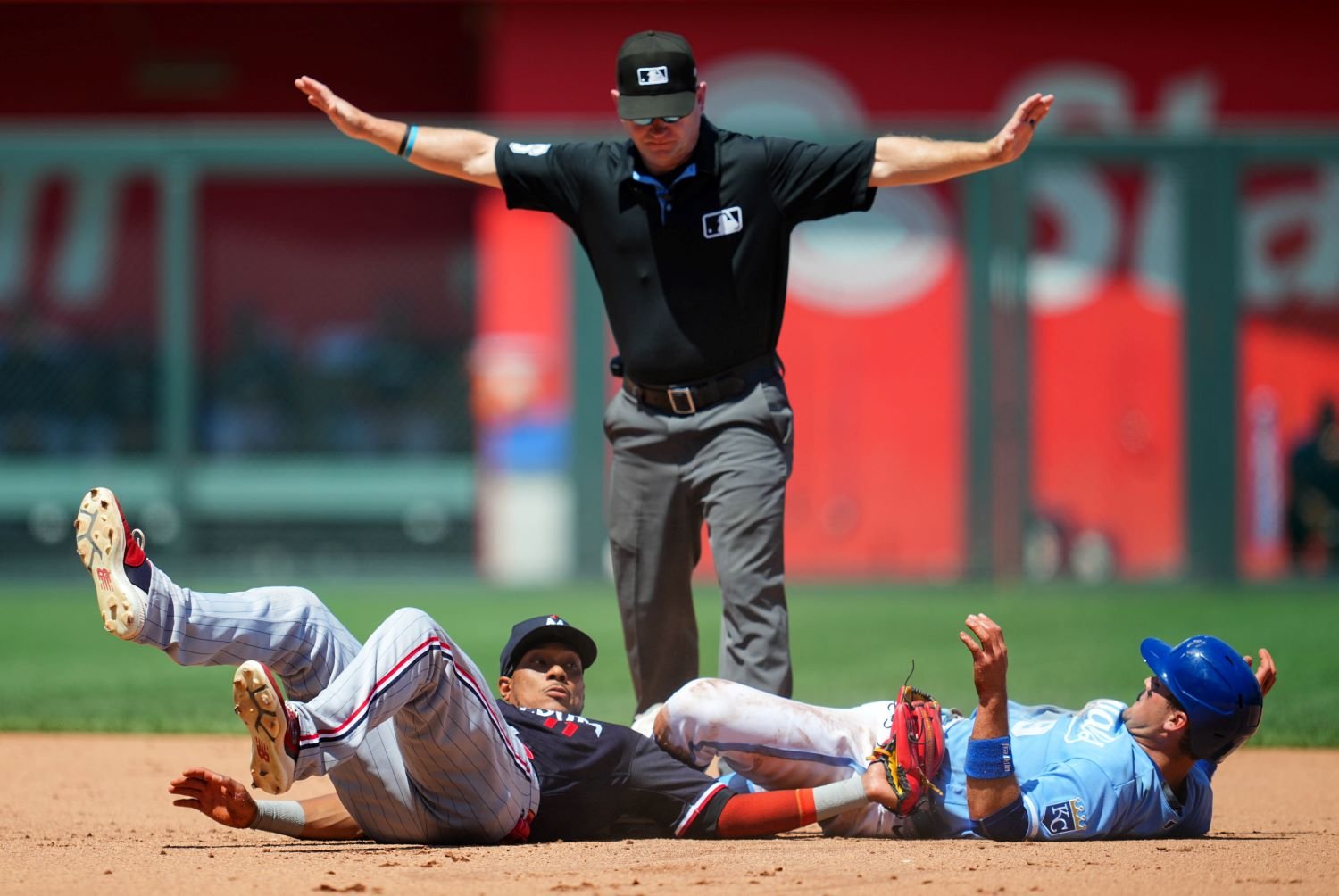 With the trade deadline in full swing, we—the good fans—anxiously await for our team to deliver us a deal. Like a child on Christmas Eve, we expect to suddenly receive a gift from our dreams; something to play with for a few months before inevitably growing tired and moving on. For the Twins, perhaps settling for something minor could be the better plan. Let’s start with what happened last year with a similarly decent squad: they bungled it. Acquiring all those very nice pitchers felt great in the moment, sure, but a year later, we can see they weren’t worth the trouble. Yennier Cano became an All-Star. Spencer Steer and Christian Encarnacion-Strand rock, yadda, yadda, yadda. We know this story. Would following this folly again not be the definition of madness? Can’t we see the team—and the franchise’s health as a whole—would be much improved if they sat on their hands and trusted their talent? With that pain still fresh, the team should look to add a few pieces still, but shy away from any bigger-ticket player, whoever that even is in this market. Adding Tommy Pham and maybe Brooks Raley—or someone of his ilk—is all they need to do. And, maybe, it’s all they really can do; as Greggory Masterson wrote on July 10th, the lineup is filled with veterans. The team can’t shuffle around players as much as you would like, with the only methods of removing hitters being a DFA or trade (yes, I know you would gladly do either to Joey Gallo). Outside of that Italian, though, everyone is stuck, whether productive or not. And Max Kepler and Jorge Polanco are not going anywhere—not suddenly shipped off after the team held onto them through thick and thin. The veterans are the crux of Minnesota’s problem. You can add Paul Goldschmidt, Mark Canha (who was just traded, so I guess not), or the ghost of Lou Gehrig to the lineup, but as long as Carlos Correa isn’t hitting and Byron Buxton isn’t playing center field, there’s really nowhere for the Twins to go. Their current construction won’t allow for it. They do have an ace up their sleeve: the Al Central. It stinks. The members of the exclusive club vary from outright terrible to selectively conservative, choosing to augment their complimentary pieces with… cheaper complimentary pieces. Never quite “in it,” Cleveland will remain in Minnesota’s vicinity, but will never overcome themselves, hamstringing their core with trades meant to churn perpetual competition, but not greatness. Aaron Civale will always be traded. In fewer words: they’re mediocre. It’s an indictment that the Twins can’t convincingly best that standard, but that’s the nest they already made for themselves. All they need is to be a little better than the Guardians anyways; punching your playoff ticket after making relatively minor additions is what the 2021 Atlanta Braves did, and that worked out pretty well for them. This time around, the Twins have a much better starting rotation. So go get Pham—they really could use him—and, what the hell, even grab another reliever while they’re at it; but taking any more extreme steps to improve this roster will only result in a repeat of last year. The players they have are correct, sort of—and they’re even really good when at their peak—but this season’s weirdness and failures from the established veterans make it difficult to believe that the Twins are just One Big Move away from being a playoff powerhouse. And what’s one more year anyways when you have Correa and Buxton locked up for two more presidential elections?
- 12 comments
-
- 4
-
-
-
- 2023 trade deadline
- tommy pham
- (and 3 more)
-
Minor League Report (7/29): Bats Explode in Potent Night on the Farm
Matt Braun posted an article in Minor Leagues
 TRANSACTIONS INF Jose Salas reinstated from development list, transferred to FCL Twins RHP John Klein transferred from FCL Twins to Low-A Fort Myers INF Kamron Willman placed on development list (Fort Myers) RHP Cole Sands reported and active (St. Paul) C Mark Kolozsvary transferred to development list (St. Paul) OF Ryan LaMarre released Saints Sentinel St. Paul 3, Toledo 7 Box Score Randy Dobnak: 5 IP, 4 H, 3 ER, 2 BB, 5 K HR: None Multi-hit games: Anthony Prato (2-for-4, 2B, 2 R, BB, K), Trevor Larnach (2-for-3, R, BB) The Saints were pummeled on Saturday. Randy Dobnak was cromulent; the former major-leaguer finished off five innings, but not before surrendering three runs—two coming from a 4th inning homer. He avoided the brunt of the offensive focus, though, as Blayne Enlow was battered even harder, allowing four earned runs over 2 ⅔ frames before mercifully exiting the game in favor of Kody Funderburk. It’s a shame, because St. Paul once led this game, if for just a short while. Gilberto Celestino beckoned two home in the 1st on a single, and Kyle Garlick brought home a third score off a third inning sacrifice fly. The scoring ended, though. Balls found gloves, and the Saints couldn’t take full advantage of six free passes, as their rallies were curt and fruitless. There were still some notable performances: Anthony Prato continued to rake with two hits and a walk, improving his AAA OPS to 1.122, while Jair Camargo walked three times—the first time he had done so in a game since April 6th. Colt Keith, ranked as the 38th-best prospect in MLB, struck out twice in five trips to the plate. Wind Surge Wisdom Wichita 7, Frisco 6 Box Score Travis Adams: 4 IP, 5 H, 5 ER, 4 BB, 1 K HR: Yunior Severino (23, 24) Multi-hit games: Yunior Severino (2-for-3, 2 HR, 2 R, 4 RBI, BB) The Wind Surge won on a walk-off on Saturday. Yunior Severino is in the spotlight, and no one else can possibly take it from him. After setting Wichita’s season home run record the other day, Severino evidently felt unsatisfied, hungry; he blasted a pair of homers to give him even more records to claim. The first bomb—a 413 foot blast in the fifth—made it his fifth straight game with a homer; his second gave him his fifth multi-homer game of the season. That’s also a Wichita record. It’s July. Severino’s power was well-needed, because Travis Adams had nothing. Frisco jumped on him for inning-starting extra-base hits three times, eventually bouncing him from the game in the fourth when he walked the bases loaded following a double. Denny Bentley nearly escaped the mess, but he ended up allowing all three inherited baserunners to score. Aaron Rozek shut things down, though. Utilized as a reliever after struggling as a starter, the Burnsville lefty established the law, holding Frisco scoreless over three dominant innings, giving Wichita’s bats the support they needed to come back. He struck out five. The Wind Surge pushed forward in the ninth, as not one, but two hit by pitches sent a man to second base. Will Holland placed the sac bunt, but the RoughRiders’ pitcher—perhaps wanting to be the hero—tried to nail Seth Gray at third. He didn’t. Firing wildly, the ball rattled around in left field’s foul territory long enough to plate the winning run. Texas’ best prospect—the sixth-finest in MLB, outfielder Owen Carter—walked once in five plate appearances. The RoughRiders are named after the 1st United States Volunteer Cavalry, notable for their effort in the Spanish-American war of 1898. They were more notable, though, for their commander, Assistant Secretary of the Navy, Theodore Roosevelt. Roosevelt’s bravery in the war turned him into a political icon in the states—and he would become President just three years following the war. Kernels Nuggets Game One: Cedar Rapids 3, Wisconsin 4 (10 Innings) Box Score Kyle Jones: 5 IP, 5 H, 1 ER, 3 BB, 4 K HR: None Multi-hit games: Andrew Cossetti (2-for-4, RBI) The Kernels lost their first game on Saturday, a match paused yesterday for dangerous weather. It went quickly; after finishing eight-and-a-half innings on Friday, the two teams were close to figuring out the winner. The Kernels threatened in the 10th—loading the bases off a pair of walks—but Jorel Ortega struck out, leaving the game in the hand of A.J. Labas. He issued two intentional walks in the frame, finally coaxing a matchup against Eduardo Garcia. A fielder’s choice won it. Game Two: Cedar Rapids 11, Wisconsin 3 Box Score Christian MacLeod: 5 IP, 6 H, 3 ER, 1 BB, 4 K HR: Kala’i Rosario (15) Multi-hit games: Noah Miller (2-for-5, R, RBI, BB), Kala’i Rosario (2-for-5, HR, 2B, 2 R, 4 RBI, BB), Jorel Ortega (2-for-3, 2 B, R, 2 RBI, BB) The Kernels pounded the Timber Rattlers in game two. It started early and never fell off; Jorel Ortega doubled home a run with Ben Ross singling home another one to kick off the first. Ortega may have been thrown out at home to halt the scoring at two, but that didn’t stop the Kernels, as they went on to have three more multi-run innings before the game ended. It was a sweet harmony, with Noah Miller and Emmanuel Rodriguez setting up Kala’i Rosario and Ortega with chances to score runs, and the sluggers doing exactly that. Rosario even left six men on base and still ended up with four RBIs—that’s a fruitful offensive explosion. And it was more than Christian MacLeod needed; the lefty coughed up three runs in the first, but settled down immediately, shutting down the Timber Rattlers four for innings following his gaff. Wisconsin lead-off man Robert Moore is Milwaukee’s eighth-best prospect; he singled and walked twice. Mussel Matters Ft. Myers 2, Palm Beach 9 Box Score John Klein: 2 2/3 IP, 8 H, 7 ER, 2 BB, 0 K HR: None Multi-hit games: Ricardo Olivar (2-for-4, 2 2B, R), Gregory Duran (2-for-4, K) The Mighty Mussels were blown out on Saturday. Starter John Klein didn’t have it. The Brooklyn Park native made his first Low-A outing since a brief start on July 9th, and he probably wishes it were briefer; the Cardinals jumped all over him in the second and third, eventually totaling seven earned runs on his watch. The runs were more than Fort Myers’ hitters could handle; they put together two runs in the fourth, but that was all they could do, as the team could only get one hit with a runner in scoring position. Ricardo Olivar had an impressive individual performance, though, doubling twice to give him 20 on the season. Fort Myers’ bullpen—Wilker Reyes, Jackson Hicks, and Ricardo Velez—pieced together an excellent effort to support their starter; they combined for eight punchouts and just one earned run over 6 1/3 innings. Catcher Leonardo Bernal—going 2-for-4 with a walk—is the Cardinals’ seventh-best prospect. Complex Chronicles FCL Twins 2, FCL Red Sox 8 Box Score Carlos Gutierrez: 4 IP, 6 H, 4 ER, 2 BB, 5 K HR: None Multi-hit games: Daniel Pena (2-for-4, R) The FCL Twins also lost a resumed game on Saturday. Pitchers Matt Gabbert and Julio Bonilla were effective, perhaps both a little lucky and unlucky following the rain. They allowed just one combined earned run, but also allowed 10 hits over five frames, striking out eight to deliver the game to its conclusion. Recent draft picks Luke Keaschall and Brandon Winokur covered the middle infield on Saturday; they went hitless with three strikeouts in seven at-bats. Rehabbing former big leaguers Bradley Zimmer and Dan Altavilla appeared for the FCL Red Sox. Zimmer—once a top prospect for Cleveland—collected three hits, while Altavilla earned the win with 1 1/3 scoreless innings. Dominican Dailies The DSL Twins did not play on Saturday. TWINS DAILY PLAYERS OF THE DAY Twins Daily Minor League Pitcher of the Day – Aaron Rozek Twins Daily Minor League Hitter of the Day – Yunior Severino PROSPECT SUMMARY Here’s a look at how the Twins Daily Top 20 Twins Prospects performed: #3 - Emmanuel Rodriguez (Cedar Rapids) - 1-4, 3B, 3 R, RBI, 2 BB #5 - Matt Wallner (Minnesota) - 0-3, BB, K #8 - Austin Martin (St. Paul) - 0-4, K #10 - Tanner Schobel (Wichita) - 0-3, BB, 2 K #12 - Luke Keaschall (FCL Twins) - 0-3, BB, K #13 - Brandon Winokur (FCL Twins) - 0-4, 2 K #15 - Jordan Balazovic (Minnesota) - 2 IP, 2 H, 1 ER, 1 BB, 1 K #16 - Kala’i Rosario (Cedar Rapids) - 2-5, HR, 2B, 2 R, 4 RBI, BB, K #17 - Yunior Severino (Wichita) - 2-3, 2 HR, 2 R, 4 RBI, BB #20 - Jose Rodriguez (FCL Twins) - 1-3, 2B, R, BB, K SUNDAY’S PROBABLE STARTERS Toledo @ St. Paul (2:07 PM) - RHP Louie Varland Frisco @ Wichita (1:05 PM) - LHP Jaylen Nowlin Cedar Rapids @ Wisconsin (1:10 PM) - RHP Andrew Morris Palm Beach @ Fort Myers (11:00 AM) - RHP Jack Noble
- 15 comments
-
- 4
-
-
-
- kalai rosario
- yunior severino
- (and 3 more)
-
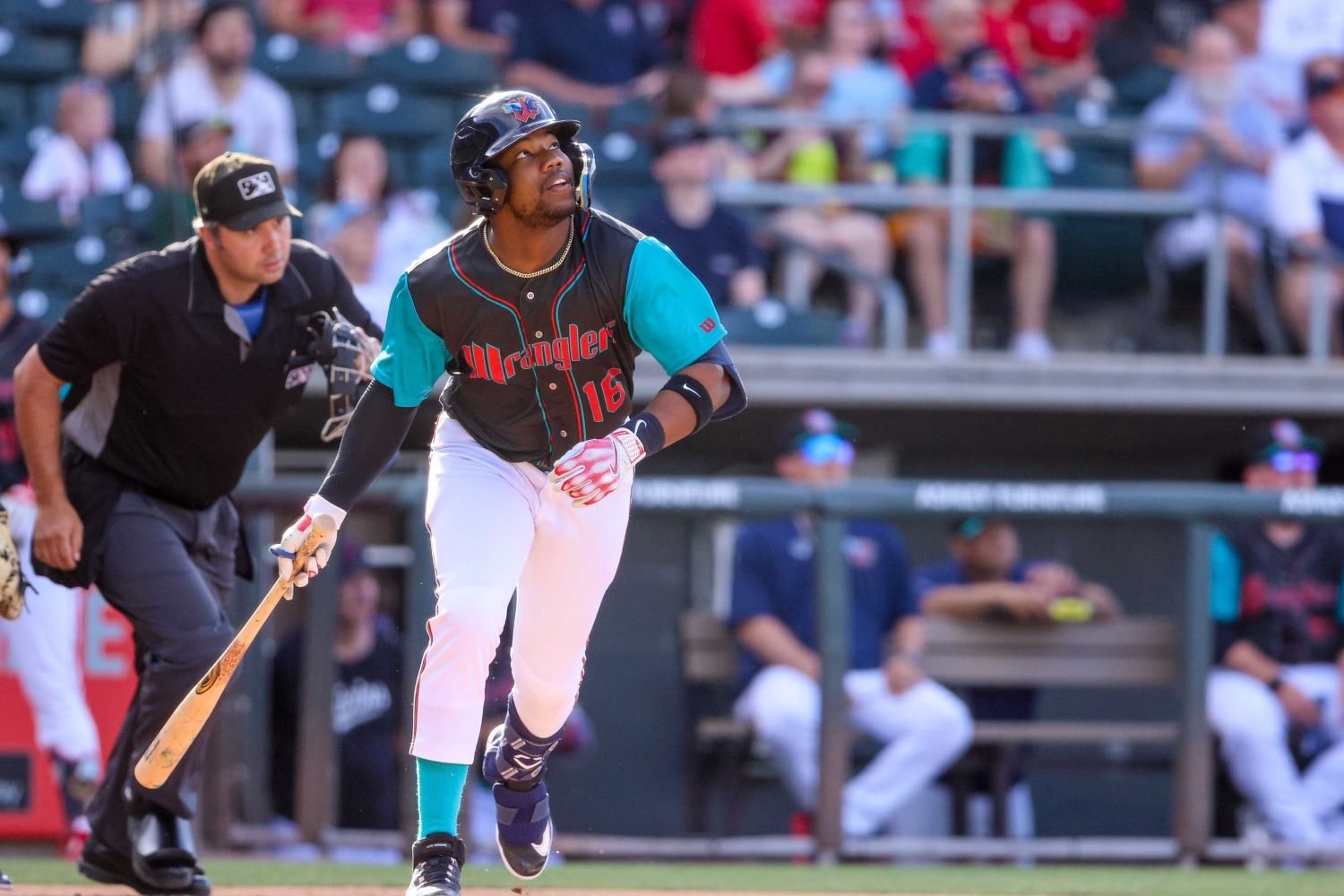
Aka: will Yunior Severino ever stop hitting homers? Image courtesy of Ed Bailey (Image is of Yunior Severino) TRANSACTIONS INF Jose Salas reinstated from development list, transferred to FCL Twins RHP John Klein transferred from FCL Twins to Low-A Fort Myers INF Kamron Willman placed on development list (Fort Myers) RHP Cole Sands reported and active (St. Paul) C Mark Kolozsvary transferred to development list (St. Paul) OF Ryan LaMarre released Saints Sentinel St. Paul 3, Toledo 7 Box Score Randy Dobnak: 5 IP, 4 H, 3 ER, 2 BB, 5 K HR: None Multi-hit games: Anthony Prato (2-for-4, 2B, 2 R, BB, K), Trevor Larnach (2-for-3, R, BB) The Saints were pummeled on Saturday. Randy Dobnak was cromulent; the former major-leaguer finished off five innings, but not before surrendering three runs—two coming from a 4th inning homer. He avoided the brunt of the offensive focus, though, as Blayne Enlow was battered even harder, allowing four earned runs over 2 ⅔ frames before mercifully exiting the game in favor of Kody Funderburk. It’s a shame, because St. Paul once led this game, if for just a short while. Gilberto Celestino beckoned two home in the 1st on a single, and Kyle Garlick brought home a third score off a third inning sacrifice fly. The scoring ended, though. Balls found gloves, and the Saints couldn’t take full advantage of six free passes, as their rallies were curt and fruitless. There were still some notable performances: Anthony Prato continued to rake with two hits and a walk, improving his AAA OPS to 1.122, while Jair Camargo walked three times—the first time he had done so in a game since April 6th. Colt Keith, ranked as the 38th-best prospect in MLB, struck out twice in five trips to the plate. Wind Surge Wisdom Wichita 7, Frisco 6 Box Score Travis Adams: 4 IP, 5 H, 5 ER, 4 BB, 1 K HR: Yunior Severino (23, 24) Multi-hit games: Yunior Severino (2-for-3, 2 HR, 2 R, 4 RBI, BB) The Wind Surge won on a walk-off on Saturday. Yunior Severino is in the spotlight, and no one else can possibly take it from him. After setting Wichita’s season home run record the other day, Severino evidently felt unsatisfied, hungry; he blasted a pair of homers to give him even more records to claim. The first bomb—a 413 foot blast in the fifth—made it his fifth straight game with a homer; his second gave him his fifth multi-homer game of the season. That’s also a Wichita record. It’s July. Severino’s power was well-needed, because Travis Adams had nothing. Frisco jumped on him for inning-starting extra-base hits three times, eventually bouncing him from the game in the fourth when he walked the bases loaded following a double. Denny Bentley nearly escaped the mess, but he ended up allowing all three inherited baserunners to score. Aaron Rozek shut things down, though. Utilized as a reliever after struggling as a starter, the Burnsville lefty established the law, holding Frisco scoreless over three dominant innings, giving Wichita’s bats the support they needed to come back. He struck out five. The Wind Surge pushed forward in the ninth, as not one, but two hit by pitches sent a man to second base. Will Holland placed the sac bunt, but the RoughRiders’ pitcher—perhaps wanting to be the hero—tried to nail Seth Gray at third. He didn’t. Firing wildly, the ball rattled around in left field’s foul territory long enough to plate the winning run. Texas’ best prospect—the sixth-finest in MLB, outfielder Owen Carter—walked once in five plate appearances. The RoughRiders are named after the 1st United States Volunteer Cavalry, notable for their effort in the Spanish-American war of 1898. They were more notable, though, for their commander, Assistant Secretary of the Navy, Theodore Roosevelt. Roosevelt’s bravery in the war turned him into a political icon in the states—and he would become President just three years following the war. Kernels Nuggets Game One: Cedar Rapids 3, Wisconsin 4 (10 Innings) Box Score Kyle Jones: 5 IP, 5 H, 1 ER, 3 BB, 4 K HR: None Multi-hit games: Andrew Cossetti (2-for-4, RBI) The Kernels lost their first game on Saturday, a match paused yesterday for dangerous weather. It went quickly; after finishing eight-and-a-half innings on Friday, the two teams were close to figuring out the winner. The Kernels threatened in the 10th—loading the bases off a pair of walks—but Jorel Ortega struck out, leaving the game in the hand of A.J. Labas. He issued two intentional walks in the frame, finally coaxing a matchup against Eduardo Garcia. A fielder’s choice won it. Game Two: Cedar Rapids 11, Wisconsin 3 Box Score Christian MacLeod: 5 IP, 6 H, 3 ER, 1 BB, 4 K HR: Kala’i Rosario (15) Multi-hit games: Noah Miller (2-for-5, R, RBI, BB), Kala’i Rosario (2-for-5, HR, 2B, 2 R, 4 RBI, BB), Jorel Ortega (2-for-3, 2 B, R, 2 RBI, BB) The Kernels pounded the Timber Rattlers in game two. It started early and never fell off; Jorel Ortega doubled home a run with Ben Ross singling home another one to kick off the first. Ortega may have been thrown out at home to halt the scoring at two, but that didn’t stop the Kernels, as they went on to have three more multi-run innings before the game ended. It was a sweet harmony, with Noah Miller and Emmanuel Rodriguez setting up Kala’i Rosario and Ortega with chances to score runs, and the sluggers doing exactly that. Rosario even left six men on base and still ended up with four RBIs—that’s a fruitful offensive explosion. And it was more than Christian MacLeod needed; the lefty coughed up three runs in the first, but settled down immediately, shutting down the Timber Rattlers four for innings following his gaff. Wisconsin lead-off man Robert Moore is Milwaukee’s eighth-best prospect; he singled and walked twice. Mussel Matters Ft. Myers 2, Palm Beach 9 Box Score John Klein: 2 2/3 IP, 8 H, 7 ER, 2 BB, 0 K HR: None Multi-hit games: Ricardo Olivar (2-for-4, 2 2B, R), Gregory Duran (2-for-4, K) The Mighty Mussels were blown out on Saturday. Starter John Klein didn’t have it. The Brooklyn Park native made his first Low-A outing since a brief start on July 9th, and he probably wishes it were briefer; the Cardinals jumped all over him in the second and third, eventually totaling seven earned runs on his watch. The runs were more than Fort Myers’ hitters could handle; they put together two runs in the fourth, but that was all they could do, as the team could only get one hit with a runner in scoring position. Ricardo Olivar had an impressive individual performance, though, doubling twice to give him 20 on the season. Fort Myers’ bullpen—Wilker Reyes, Jackson Hicks, and Ricardo Velez—pieced together an excellent effort to support their starter; they combined for eight punchouts and just one earned run over 6 1/3 innings. Catcher Leonardo Bernal—going 2-for-4 with a walk—is the Cardinals’ seventh-best prospect. Complex Chronicles FCL Twins 2, FCL Red Sox 8 Box Score Carlos Gutierrez: 4 IP, 6 H, 4 ER, 2 BB, 5 K HR: None Multi-hit games: Daniel Pena (2-for-4, R) The FCL Twins also lost a resumed game on Saturday. Pitchers Matt Gabbert and Julio Bonilla were effective, perhaps both a little lucky and unlucky following the rain. They allowed just one combined earned run, but also allowed 10 hits over five frames, striking out eight to deliver the game to its conclusion. Recent draft picks Luke Keaschall and Brandon Winokur covered the middle infield on Saturday; they went hitless with three strikeouts in seven at-bats. Rehabbing former big leaguers Bradley Zimmer and Dan Altavilla appeared for the FCL Red Sox. Zimmer—once a top prospect for Cleveland—collected three hits, while Altavilla earned the win with 1 1/3 scoreless innings. Dominican Dailies The DSL Twins did not play on Saturday. TWINS DAILY PLAYERS OF THE DAY Twins Daily Minor League Pitcher of the Day – Aaron Rozek Twins Daily Minor League Hitter of the Day – Yunior Severino PROSPECT SUMMARY Here’s a look at how the Twins Daily Top 20 Twins Prospects performed: #3 - Emmanuel Rodriguez (Cedar Rapids) - 1-4, 3B, 3 R, RBI, 2 BB #5 - Matt Wallner (Minnesota) - 0-3, BB, K #8 - Austin Martin (St. Paul) - 0-4, K #10 - Tanner Schobel (Wichita) - 0-3, BB, 2 K #12 - Luke Keaschall (FCL Twins) - 0-3, BB, K #13 - Brandon Winokur (FCL Twins) - 0-4, 2 K #15 - Jordan Balazovic (Minnesota) - 2 IP, 2 H, 1 ER, 1 BB, 1 K #16 - Kala’i Rosario (Cedar Rapids) - 2-5, HR, 2B, 2 R, 4 RBI, BB, K #17 - Yunior Severino (Wichita) - 2-3, 2 HR, 2 R, 4 RBI, BB #20 - Jose Rodriguez (FCL Twins) - 1-3, 2B, R, BB, K SUNDAY’S PROBABLE STARTERS Toledo @ St. Paul (2:07 PM) - RHP Louie Varland Frisco @ Wichita (1:05 PM) - LHP Jaylen Nowlin Cedar Rapids @ Wisconsin (1:10 PM) - RHP Andrew Morris Palm Beach @ Fort Myers (11:00 AM) - RHP Jack Noble View full article
-
With no respect for those who have to write postgames and the such. Image courtesy of Jay Biggerstaff-USA TODAY Sports Box Score Sonny Gray: 6 IP, 5 H, 3 ER, 0 BB, 5 K Home Runs: None Bottom 3 WPA: Jhoan Duran (-.793), Matt Wallner (-.326), Sonny Gray (-.116) Win Probability Chart (via FanGraphs) The Twins started their warm, sweaty foray into the state of Missouri with a weekend series against the dreadful Royals. At just 29-75—bad in ways even the A’s can admire—Kansas City represented a fine opportunity for Minnesota to rack up some wins, potentially separating themselves more from the sad melee that is the best of the AL Central. With Brady Singer and his 5.55 ERA on the mound, the game barely needed to be played. Singer pitched… a lot. Following a relatively breezy start to the game, the former first-round pick labored, utilizing the entirety of home plate and its accompanying space in the third, fourth, and fifth as his pitch count climbed. It all worked out fine for him; the Twins could only square up a few offerings as they stared at sinkers and whiffed at sliders, leading to a season-high 10 strikeouts for Kansas City’s young righty. He exited with 104 pitches. Minnesota scored a pair of runs, though; Ryan Jeffers stayed on a slider and punched it up the middle to plate the first score before another expertly executed double steal tangled up Bobby Witt Jr. just long enough to allow Willi Castro to dash home. In comparison, Sonny Gray was smooth, efficient. While Singer fired far too many bullets in 97-degree weather, sweating, walking, and hitting batters, Gray could seemingly only find quick innings—even the run he allowed early was in a frame that took only 10 pitches. His early command wasn’t quite sharp, but it quickly came around, leading to a trio of 1-2-3 innings leading into the sixth. And it seemed that this would be the game’s blueprint; it didn't matter that Salvador Perez (playing first base!) robbed Matt Wallner of a multi-RBI knock in the fifth, the Twins—being the better team—owned the win by birthright, and all they needed to do was count down the outs until they could add another W to their collection. But, no one apparently consulted the Royals in this matter, as they suddenly decided that the bottom of the sixth, with two outs, would be the best time for their stagnant, sleeping offense to break out. It started with a Maikel Garcia triple to right field—no problem; Gray just needed one more out anyways—before Witt Jr. pounded a double to tie the game. Uh oh. Finally, M.J. Melendez broke the tie, guiding a single into right-center. The Twins were no longer ahead. The ensuing bullpen battle didn’t move the needle in either direction. Relievers of all shapes, arm angles, and assorted offerings entered, acquired their needed outs, and left the game where they found it, but missing a few remaining outs. New Twin Dylan Floro entered for the first time; he surrendered an RBI single to Witt Jr. in the eighth. But there was the still the ninth, that critical game-deciding frame capable of giving and stealing hope. The Royals called upon their old weapon, Scott Barlow, to pitch. Byron Buxton—evidently now free from the tyranny of hospital cots—pinch hit and singled to center; he advanced to second on a Carlos Correa groundout. After an Edouard Julien walk and a Donovan Solano hit by pitch loaded the bases, Jorge Polanco stood as the man who could end the game, or continue hope for at least one more half-frame. In a game where he started at third base for the first time in a major-league game since 2016, Polanco came through, yanking a slider to right field to plate two. The game was tied. And so we entered Manfred baseball. With a free man on second, Kyle Farmer squeaked a ball through the infield, bringing home the go-ahead run for the Twins. Jhoan Duran emerged from the bullpen, ready to fire a few blazing darts before ending the game. He got Drew Waters with ease, but things were not so easy afterwards; Kyle Isbel swiped third, and Duran filled in the bases behind him, walking two to load the bases. His curve couldn't make it to the plate, diving feet before home plate as Jeffers stood on his head to ensure the tying run wouldn't score. No matter: he still had the lightning fastball to work with. He ran the count full yet again—this time to Witt Jr.—ensuring a game-altering pitch. He delivered his best: a riding, screaming 102 MPH fastball inside, but Witt Jr. knew the pitch was coming, sensed it's ensuing break, and blasted the offering 414 feet out to left field, ending the game on a miracle swing off a pitcher thought to be immortal. Notes: Sonny Gray has not won a game since April 30th. Gray is two strikeouts away from tying his total set in 2022 with the Twins. Duran's three earned runs are the most he's allowed in an outing since April 15th, 2022 against the Red Sox—his 3rd career major-league appearance. Ryan Jeffers collected his third multi-hit game in the month of July. Post-Game Interview: Bullpen Usage Spreadsheet View full article
- 61 replies
-
- 1
-
-
- sonny gray
- jorge polanco
- (and 3 more)
-
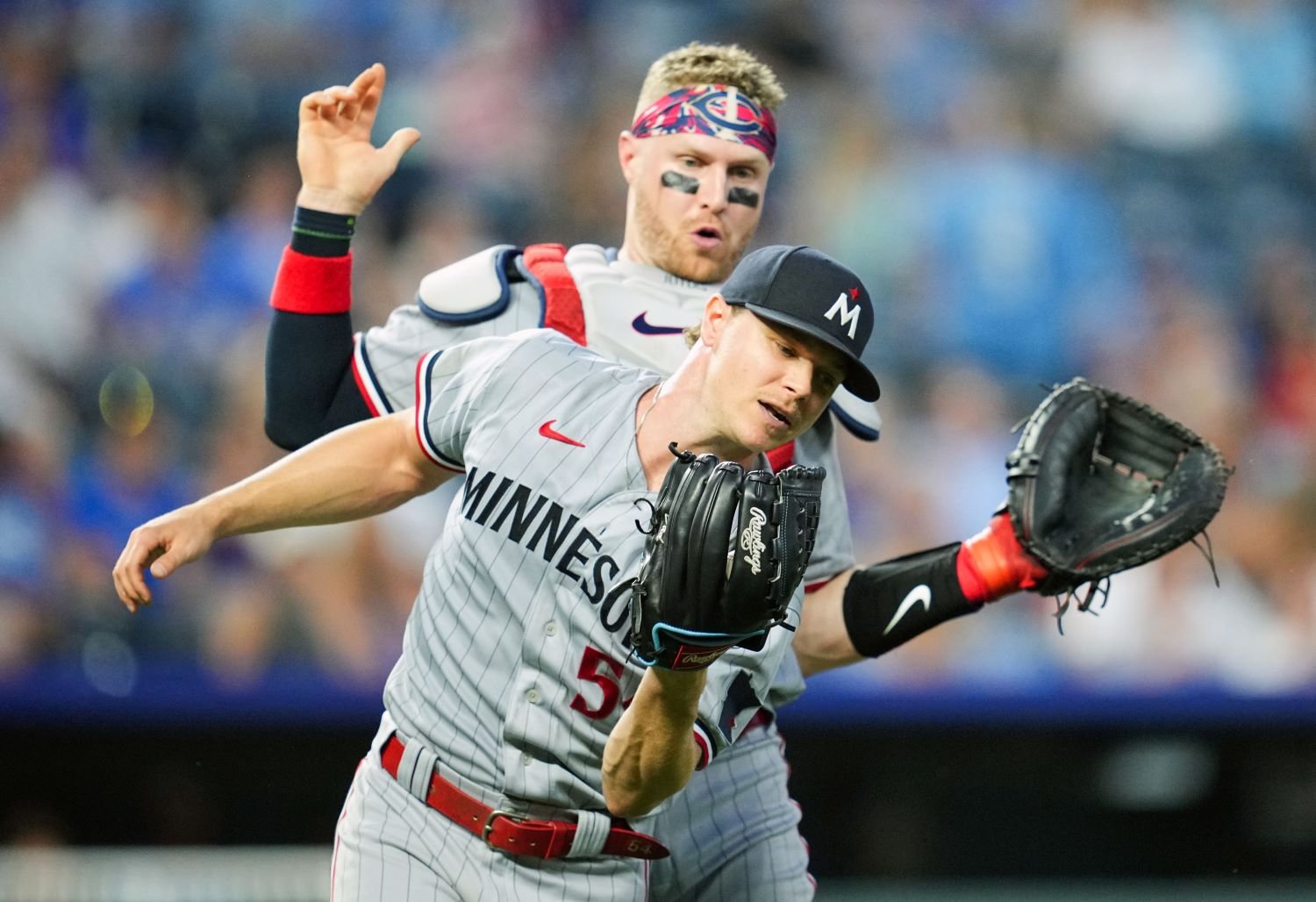 Box Score Sonny Gray: 6 IP, 5 H, 3 ER, 0 BB, 5 K Home Runs: None Bottom 3 WPA: Jhoan Duran (-.793), Matt Wallner (-.326), Sonny Gray (-.116) Win Probability Chart (via FanGraphs) The Twins started their warm, sweaty foray into the state of Missouri with a weekend series against the dreadful Royals. At just 29-75—bad in ways even the A’s can admire—Kansas City represented a fine opportunity for Minnesota to rack up some wins, potentially separating themselves more from the sad melee that is the best of the AL Central. With Brady Singer and his 5.55 ERA on the mound, the game barely needed to be played. Singer pitched… a lot. Following a relatively breezy start to the game, the former first-round pick labored, utilizing the entirety of home plate and its accompanying space in the third, fourth, and fifth as his pitch count climbed. It all worked out fine for him; the Twins could only square up a few offerings as they stared at sinkers and whiffed at sliders, leading to a season-high 10 strikeouts for Kansas City’s young righty. He exited with 104 pitches. Minnesota scored a pair of runs, though; Ryan Jeffers stayed on a slider and punched it up the middle to plate the first score before another expertly executed double steal tangled up Bobby Witt Jr. just long enough to allow Willi Castro to dash home. In comparison, Sonny Gray was smooth, efficient. While Singer fired far too many bullets in 97-degree weather, sweating, walking, and hitting batters, Gray could seemingly only find quick innings—even the run he allowed early was in a frame that took only 10 pitches. His early command wasn’t quite sharp, but it quickly came around, leading to a trio of 1-2-3 innings leading into the sixth. And it seemed that this would be the game’s blueprint; it didn't matter that Salvador Perez (playing first base!) robbed Matt Wallner of a multi-RBI knock in the fifth, the Twins—being the better team—owned the win by birthright, and all they needed to do was count down the outs until they could add another W to their collection. But, no one apparently consulted the Royals in this matter, as they suddenly decided that the bottom of the sixth, with two outs, would be the best time for their stagnant, sleeping offense to break out. It started with a Maikel Garcia triple to right field—no problem; Gray just needed one more out anyways—before Witt Jr. pounded a double to tie the game. Uh oh. Finally, M.J. Melendez broke the tie, guiding a single into right-center. The Twins were no longer ahead. The ensuing bullpen battle didn’t move the needle in either direction. Relievers of all shapes, arm angles, and assorted offerings entered, acquired their needed outs, and left the game where they found it, but missing a few remaining outs. New Twin Dylan Floro entered for the first time; he surrendered an RBI single to Witt Jr. in the eighth. But there was the still the ninth, that critical game-deciding frame capable of giving and stealing hope. The Royals called upon their old weapon, Scott Barlow, to pitch. Byron Buxton—evidently now free from the tyranny of hospital cots—pinch hit and singled to center; he advanced to second on a Carlos Correa groundout. After an Edouard Julien walk and a Donovan Solano hit by pitch loaded the bases, Jorge Polanco stood as the man who could end the game, or continue hope for at least one more half-frame. In a game where he started at third base for the first time in a major-league game since 2016, Polanco came through, yanking a slider to right field to plate two. The game was tied. And so we entered Manfred baseball. With a free man on second, Kyle Farmer squeaked a ball through the infield, bringing home the go-ahead run for the Twins. Jhoan Duran emerged from the bullpen, ready to fire a few blazing darts before ending the game. He got Drew Waters with ease, but things were not so easy afterwards; Kyle Isbel swiped third, and Duran filled in the bases behind him, walking two to load the bases. His curve couldn't make it to the plate, diving feet before home plate as Jeffers stood on his head to ensure the tying run wouldn't score. No matter: he still had the lightning fastball to work with. He ran the count full yet again—this time to Witt Jr.—ensuring a game-altering pitch. He delivered his best: a riding, screaming 102 MPH fastball inside, but Witt Jr. knew the pitch was coming, sensed it's ensuing break, and blasted the offering 414 feet out to left field, ending the game on a miracle swing off a pitcher thought to be immortal. Notes: Sonny Gray has not won a game since April 30th. Gray is two strikeouts away from tying his total set in 2022 with the Twins. Duran's three earned runs are the most he's allowed in an outing since April 15th, 2022 against the Red Sox—his 3rd career major-league appearance. Ryan Jeffers collected his third multi-hit game in the month of July. Post-Game Interview: Bullpen Usage Spreadsheet
- 61 comments
-
- 4
-
-
- sonny gray
- jorge polanco
- (and 3 more)
-
You don’t see many one-for-one reliever swaps, but this is one that looks solid for both sides. Image courtesy of Jim Rassol-USA TODAY Sports Minnesota kicked off their 2023 trade deadline on Wednesday, dealing Jorge López to the Marlins while getting Dylan Floro in return. Let’s talk about it. For the Twins, it was untenable to keep López in Minnesota; he allowed a run in his second career outing with the Twins, and it only got worse from there. Like a flicked switch, López went from dominating All-Star to a messy coin flip, with Rocco Baldelli never quite knowing what to expect whenever he called for the righty. A poor 2022 begat a disastrous 2023—one that has seen his ERA and FIP skyrocket to absurd levels. All the stuff in the world didn’t matter as batters pounded López’s offerings, hitting seven homers over just 35 ⅓ innings. There was more than just athletics, though. López was placed on the recently-created mental health IL, as he revealed that he was not right mentally, perhaps in part because of health problems ailing his son, perhaps because of his sudden fall-off in performance. The mound can be the loneliest place in the world, as the camera’s spotlight captures failure and success alike, leading to painful agony as the numbers balloon and the outs never come easy. Any man’s fortitude would be tested when such pressures are magnified by personal sorrow; we root for López to find the things in life that can better bring him joy. Hopefully, that joy is in Miami. (It feels weird to continue analyzing the deal after writing such a thing, but analyze we must, so.) In return, the Twins received the 32-year-old Dylan Floro. Floro—a champion with the 2020 Dodgers, perhaps most well-known as Kenley Jansen’s set-up man for a bit—is better than your typical throw-in. His ERA disagrees with him in 2023, but his peripherals rave about him; Floro is striking out batters at the highest rate of his career, and he’s acquiring groundballs at a 55.1% rate. The result is… a 4.54 ERA. That’ll happen when your BABIP is nearly touching .400. But his FIP is an elite 2.74. It's unlikely that he's a true-talent 2.74 FIP pitcher these days, as he has a a bit too much loud contact in his profile; still, somewhere in the mid 3s would represent enough reliability to fulfill an effective role in the second-tier of Minnesota's bullpen. With a boilerplate sinker/four-seam/slider/changeup repertoire, Floro likes to bully batters with a lively sinker before finishing them off with a well-placed slider. The occasional lefty will see a four-seamer. He’ll likely slot in behind Griffin Jax on the bullpen hierarchy, likely seeing time in the seventh or earlier before Brock Stewart’s return, bumping him to a more flexible, roving middle-relief guy. And, honestly, a solid middle reliever is a pretty good get for the Twins. It was clear that López was in dire need of a change of scenery, leaving the team without much leverage in negotiations. To get a potentially, historically reliable arm for a player they couldn’t do much with is a win; the onus is now on Miami to work with López and get him to the place he needs to be. It's interesting as well that the Twins were willing to admit a mistake: rather than double-down and continue playing a player obviously not as good as the one they expected, the team dealt López not even a year after acquiring him. This is no promise that a player like Joey Gallo will follow suit, but if I'm him, I'm less certain about my spot on the team going forward. Floro is only a rental, being a free agent at year’s end, while López is under team control for another year. There remains a chance that López figures it out in Miami, but that shouldn’t cause Twins fans to lose sleep: he probably wasn’t going to do that here. This is an atypical deal, involving no prospects, only two relievers with unattractive ERAs; the Twins probably did about as well as they could do, but this isn’t the impact deal that will define the team, and there’s a real chance this acquisition is washed over by the sands of time, with only immaculate grid weirdos remembering each player and whom they played for. View full article
-
The Twins Did Well in Trade of Jorge López Trade (The 2nd Time)
Matt Braun posted an article in Twins
 Minnesota kicked off their 2023 trade deadline on Wednesday, dealing Jorge López to the Marlins while getting Dylan Floro in return. Let’s talk about it. For the Twins, it was untenable to keep López in Minnesota; he allowed a run in his second career outing with the Twins, and it only got worse from there. Like a flicked switch, López went from dominating All-Star to a messy coin flip, with Rocco Baldelli never quite knowing what to expect whenever he called for the righty. A poor 2022 begat a disastrous 2023—one that has seen his ERA and FIP skyrocket to absurd levels. All the stuff in the world didn’t matter as batters pounded López’s offerings, hitting seven homers over just 35 ⅓ innings. There was more than just athletics, though. López was placed on the recently-created mental health IL, as he revealed that he was not right mentally, perhaps in part because of health problems ailing his son, perhaps because of his sudden fall-off in performance. The mound can be the loneliest place in the world, as the camera’s spotlight captures failure and success alike, leading to painful agony as the numbers balloon and the outs never come easy. Any man’s fortitude would be tested when such pressures are magnified by personal sorrow; we root for López to find the things in life that can better bring him joy. Hopefully, that joy is in Miami. (It feels weird to continue analyzing the deal after writing such a thing, but analyze we must, so.) In return, the Twins received the 32-year-old Dylan Floro. Floro—a champion with the 2020 Dodgers, perhaps most well-known as Kenley Jansen’s set-up man for a bit—is better than your typical throw-in. His ERA disagrees with him in 2023, but his peripherals rave about him; Floro is striking out batters at the highest rate of his career, and he’s acquiring groundballs at a 55.1% rate. The result is… a 4.54 ERA. That’ll happen when your BABIP is nearly touching .400. But his FIP is an elite 2.74. It's unlikely that he's a true-talent 2.74 FIP pitcher these days, as he has a a bit too much loud contact in his profile; still, somewhere in the mid 3s would represent enough reliability to fulfill an effective role in the second-tier of Minnesota's bullpen. With a boilerplate sinker/four-seam/slider/changeup repertoire, Floro likes to bully batters with a lively sinker before finishing them off with a well-placed slider. The occasional lefty will see a four-seamer. He’ll likely slot in behind Griffin Jax on the bullpen hierarchy, likely seeing time in the seventh or earlier before Brock Stewart’s return, bumping him to a more flexible, roving middle-relief guy. And, honestly, a solid middle reliever is a pretty good get for the Twins. It was clear that López was in dire need of a change of scenery, leaving the team without much leverage in negotiations. To get a potentially, historically reliable arm for a player they couldn’t do much with is a win; the onus is now on Miami to work with López and get him to the place he needs to be. It's interesting as well that the Twins were willing to admit a mistake: rather than double-down and continue playing a player obviously not as good as the one they expected, the team dealt López not even a year after acquiring him. This is no promise that a player like Joey Gallo will follow suit, but if I'm him, I'm less certain about my spot on the team going forward. Floro is only a rental, being a free agent at year’s end, while López is under team control for another year. There remains a chance that López figures it out in Miami, but that shouldn’t cause Twins fans to lose sleep: he probably wasn’t going to do that here. This is an atypical deal, involving no prospects, only two relievers with unattractive ERAs; the Twins probably did about as well as they could do, but this isn’t the impact deal that will define the team, and there’s a real chance this acquisition is washed over by the sands of time, with only immaculate grid weirdos remembering each player and whom they played for.
- 33 comments
-
- 11
-
-
- jorge lopez
- dylan floro
- (and 1 more)
-
Max Kepler is slashing .341/.378/.585 since the break. Seems good.
- 54 replies
-
- 8
-
-
-
- kenta maeda
- carlos correa
- (and 1 more)
-
Perhaps the player we’re looking for isn’t stuck on the doldrums of MLB’s worst teams. Image courtesy of Tommy Gilligan-USA TODAY Sports We, the good, dutiful Twins fans, have poked high and low over the past few weeks, interrogating each poor team’s roster for potential improvement. These players may be wasted with their current franchise, after all; might a move to the dynastic Twins better both side’s fortunes? Indeed, there are quality players available on such teams, but Minnesota may want to look at the Baltimore Orioles and their first baseman, Ryan Mountcastle. The Orioles strategically moved their left-field fence back 26.5 feet and raised the wall nearly six feet before the 2022 season. The result is aesthetic garbage, soiling one of MLB’s classic ballparks with jagged, empty nothingness, but it also bore great success, as the team took off in their first season with the new dimensions. They stacked their lineup with lefty power bats and righty contact hitters immune to left-field’s new poison; Mountcastle was left sobbing in the rain. As Jay Jaffe wrote in his recent replacement-level killers piece, when the Orioles first brought their Great Wall of Baltimore into existence last season, “perhaps no hitter bore the brunt [of left field’s dimensions] more than righty-swinging Ryan Mountcastle, whose 86-point gap between his slugging percentage and .509 xSLG was the majors’ largest, limiting him to a 106 wRC+.” xSLG is one of Baseball Savant's many New Deal program-sounding stats. It determines the expected slugging percent of any given batted ball based on exit velocity and launch angle, regardless of outcome. Things aren’t any better in 2023, as Mountcastle continues to lag behind his batted-ball data. He’s actually added a few points of xSLG, sitting at .519, good for 27th-best amongst qualified hitters. He’s tied with Bo Bichette. Indeed, being a righty power bat in Baltimore is like being cursed to push a boulder up a hill for eternity. Camden Yards is the fourth-toughest ballpark on righty homers—and the fourth-best at suppressing righty offense in general. Target Field isn’t an outlier in either metric, but its simple virtue of lacking a vast chasm where fans should be sitting could right Mountcastle’s problems. The whole situation smells a lot like the issue the Rays had with Willy Adames. Adames was a quality player—a slick shortstop capable of punishing a baseball like a corner outfielder—but he couldn’t see the ball for squat at Tropicana Field, a small problem given that Tampa Bay played 81 games a season there. They bit the bullet. The Rays found a partner with the Milwaukee Brewers, plucked a few talented arms from their system, and both sides have enjoyed a mutual tide-rising, with Adames playing his excellent fully-realized game and Drew Rasmussen tossing nearly 250 innings with a 2.70 ERA. Admittedly, the deal would make Minnesota’s lineup somewhat complex. Mountcastle is only a first baseman, and Alex Kirilloff—one of the few consistent potent bats in Minnesota’s lineup—calls that position home. With Byron Buxton evidently tied in a 30-year mortgage at DH, Kirilloff would need to move to the outfield, necessitating shuffling in the form of a Joey Gallo DFA (technically likely, maybe tough given the FO’s attachment to their moves) or a Max Kepler trade (not in a million years). In any case, Mountcastle is an asset the Orioles can’t use, a weapon they can’t fire. They know this. If the price is right, it might be beneficial for the Twins to save the power bat from his home ballpark, enjoying the fruits of an offense unable to grow in Baltimore’s harsh environment. View full article
-
 We, the good, dutiful Twins fans, have poked high and low over the past few weeks, interrogating each poor team’s roster for potential improvement. These players may be wasted with their current franchise, after all; might a move to the dynastic Twins better both side’s fortunes? Indeed, there are quality players available on such teams, but Minnesota may want to look at the Baltimore Orioles and their first baseman, Ryan Mountcastle. The Orioles strategically moved their left-field fence back 26.5 feet and raised the wall nearly six feet before the 2022 season. The result is aesthetic garbage, soiling one of MLB’s classic ballparks with jagged, empty nothingness, but it also bore great success, as the team took off in their first season with the new dimensions. They stacked their lineup with lefty power bats and righty contact hitters immune to left-field’s new poison; Mountcastle was left sobbing in the rain. As Jay Jaffe wrote in his recent replacement-level killers piece, when the Orioles first brought their Great Wall of Baltimore into existence last season, “perhaps no hitter bore the brunt [of left field’s dimensions] more than righty-swinging Ryan Mountcastle, whose 86-point gap between his slugging percentage and .509 xSLG was the majors’ largest, limiting him to a 106 wRC+.” xSLG is one of Baseball Savant's many New Deal program-sounding stats. It determines the expected slugging percent of any given batted ball based on exit velocity and launch angle, regardless of outcome. Things aren’t any better in 2023, as Mountcastle continues to lag behind his batted-ball data. He’s actually added a few points of xSLG, sitting at .519, good for 27th-best amongst qualified hitters. He’s tied with Bo Bichette. Indeed, being a righty power bat in Baltimore is like being cursed to push a boulder up a hill for eternity. Camden Yards is the fourth-toughest ballpark on righty homers—and the fourth-best at suppressing righty offense in general. Target Field isn’t an outlier in either metric, but its simple virtue of lacking a vast chasm where fans should be sitting could right Mountcastle’s problems. The whole situation smells a lot like the issue the Rays had with Willy Adames. Adames was a quality player—a slick shortstop capable of punishing a baseball like a corner outfielder—but he couldn’t see the ball for squat at Tropicana Field, a small problem given that Tampa Bay played 81 games a season there. They bit the bullet. The Rays found a partner with the Milwaukee Brewers, plucked a few talented arms from their system, and both sides have enjoyed a mutual tide-rising, with Adames playing his excellent fully-realized game and Drew Rasmussen tossing nearly 250 innings with a 2.70 ERA. Admittedly, the deal would make Minnesota’s lineup somewhat complex. Mountcastle is only a first baseman, and Alex Kirilloff—one of the few consistent potent bats in Minnesota’s lineup—calls that position home. With Byron Buxton evidently tied in a 30-year mortgage at DH, Kirilloff would need to move to the outfield, necessitating shuffling in the form of a Joey Gallo DFA (technically likely, maybe tough given the FO’s attachment to their moves) or a Max Kepler trade (not in a million years). In any case, Mountcastle is an asset the Orioles can’t use, a weapon they can’t fire. They know this. If the price is right, it might be beneficial for the Twins to save the power bat from his home ballpark, enjoying the fruits of an offense unable to grow in Baltimore’s harsh environment.
 -
Yet again, having Jhoan Duran to melt faces proves to be unimaginably valuable.
- 26 replies
-
- 14
-
-
-
-
- christian vazquez
- sonny gray
- (and 2 more)
-
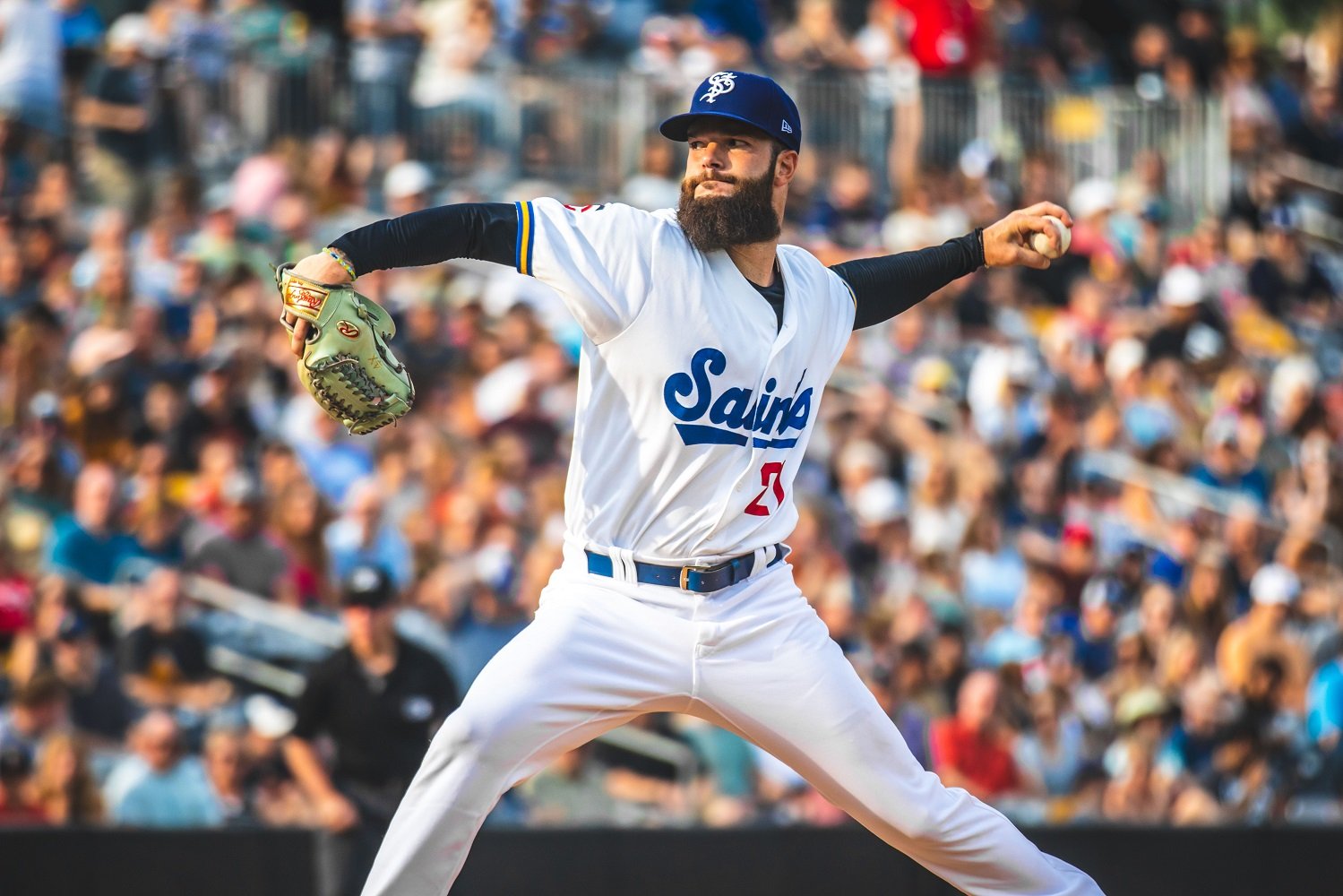 TRANSACTIONS OF Alec Sayre activated from 7-day IL (A-Fort Myers) SS Dalton Shuffield sent to a rehab assignment (FCL Twins) Saints Sentinel St. Paul 5, Omaha 8 Box Score Dallas Keuchel: 6 IP, 2 H, 0 ER, 3 BB, 3 K HR: Jorge Polanco (1), Andrew Stevenson (11), Jair Camargo (14) Multi-hit games: Andrew Stevenson (2-for-4, HR, R, 2 RBI), Jorge Polanco (2-for-3, HR, R, RBI), Mark Contreras (2-for-3, 2B, RBI) The Saints imploded late, allowing four runs in back-to-back frames to lose on Saturday. Dallas Keuchel shocked many earlier in the week, forgoing his opt-out to stay with St. Paul for the near future. His attachment was a reward for both sides; Keuchel continued to suppress runs, tossing six scoreless innings with just two hits allowed on 73 pitches. Jorge Polanco—rehabbing, perhaps soon to move to third base—smoked a solo shot to center to start the scoring. He wasn’t the only Saint homering to center; Andrew Stevenson blasted a two-run shot to give St. Paul a healthy 4-0 lead. It appeared the Saints were well on their way to a breezy victory, but fortune changed immediately when Keuchel left the game. Blayne Enlow imploded; the righty allowed seven earned runs over 1 1/3 innings, mixing in a pair of pickoff throwing errors to completely alter the shape of the game, turning it from an in-hand win for St. Paul to a sudden, heartbreaking deficit. Jair Camargo blasted a solo homer in the ninth, but that was all for the offense, and the Saints could only watch their once hard-earned lead dissipate into nothingness. Kansas City’s 3rd-ranked prospect, Nick Loftin, singled and struck out in four at-bats. Wind Surge Wisdom Wichita 2, Amarillo 8 Box Score Travis Adams: 5 2/3 IP, 8 H, 3 ER, 0 BB, 6 K HR: Alex Isola (12) Multi-hit games: None The Wind Surge scored twice in the first, and failed to do anything with it, eventually losing big to the Sod Poodles on Saturday. Let’s start with the good news: Alex Isola homered on his birthday. The fresh 25-year-old blasted a two-run shot in his first at-bat, giving the Wind Surge an early advantage. Unfortunately, the rest of the game only delivered bad news. Starter Travis Adams coughed up two runs of his own in the first—he gave up three over the course of his start—and Amarillo really stepped on the gas when Wichita’s bullpen entered the game. Each reliever allowed at least one run, leading to five extra runs, and a dominating, suffocating win for the Sod Poodles. Yoyner Fajardo swiped his 27th base of the season. The fifth-best prospect in MLB, Jordan Lawler, doubled twice and walked in an impressive showing out of the two-hole. Kernels Nuggets Cedar Rapids 3, Peoria 2 Box Score Kyle Jones: 6 IP, 5 H, 2 ER, 1 BB, 2 K HR: None Multi-hit games: None The Kernels scored early, late to win their game on Saturday. It started quickly; Noah Miller walked and Ben Ross was hit by a pitch, placing the first two men of Cedar Rapids’ lineup on base to start the game. A passed ball moved both runners up. Kala’i Rosario wasn’t fancy—he didn’t need to be—and a simple well-placed groundout plated the first run of the game. Kyle Jones appreciated the support. The sinking groundball specialist gobbled up six efficient innings, only needing 62 pitches (with 48 strikes) to carry his team deep into the ballgame. He punched out two. The eighth saw a similar situation as the first, with Rosario, again, stepping up to the plate with runners in scoring position. The infield was in, but a second well-placed groundball caused the second baseman to hesitate slightly, allowing the speedster Mikey Perez to scamper home on Rosario’s second RBI of the night. The lead held, and Miguel Rodriguez was the reliever who slammed the door in the ninth. The usually stacked Cardinals minor league system lacked a true dominant prospect playing in Saturday’s game, but the wonderfully named Jimmy Crooks—13th in the system—caught and went hitless in four at-bats. Mussel Matters Ft. Myers 3, Bradenton 2 Box Score Andrew Morris: 6 IP, 4 H, 1 ER, 1 BB, 8 K HR: Carson McCusker (7) Multi-hit games: Carson McCusker (2-for-5, HR, R, 2 RBI), Dylan Neuse (2-for-4, 2B) The Mighty Mussels won their game on Saturday… eventually. Andrew Morris was masterful. Minnesota’s fourth-round pick in 2022 set a professional career-high in strikeouts, punching out eight batters over six frames of work. He allowed one earned run. There was an early stumble—Bradenton knocked him for two runs in the first two innings—but Morris locked in, allowing one lonely hit in his last four innings of work. It was a well-deserved win that he did not get. The Mighty Mussels and Marauders settled into an extended Cold War, wiping out nearly the entire game with stranded runners and batters walking back to the dugout; no team scored between second and ninth innings. But Fort Myers broke through eventually, plating two off a clutch two-out Carson McCusker homer. The rain came, forcing the bottom of the ninth to wait a little, but Gabriel Yanez was unfazed, tossing a clean inning to end the game—perhaps some time later than they hoped. Ricardo Olivar did not take an at-bat on Saturday, walking all four times he stepped up to the plate. 2nd baseman Termarr Johnson served as Bradenton’s finest prospect; the 26th-best prospect in MLB went hitless in four trips to the plate. Complex Chronicles FCL Twins 2, FCL Red Sox 4 Box Score John Klein: 5 IP, 5 H, 3 ER, 3 BB, 4 K HR: Endy Rodriguez (2) Multi-hit games: Dalton Shuffield (2-for-4) The FCL Twins fell to the FCL Red Sox on Saturday. Rehabbing minor leaguer, Dalton Shuffield, collected a pair of hits out of the leadoff spot, also stealing a base for good effect. The rest of the offense mostly didn’t show up, though; Endy Rodriguez had the only extra-base hit with a fifth inning solo shot. They did find other ways to score, as Andres Centeno and Bryan Acuna executed a double steal, allowing Centeno to swipe home for the second run of the game. It was the FCL Twins’ final score. John Klein wasn’t great on the mound, but reliever Miguel Olivares was; he struck out two in a scoreless frame. Dominican Dailies DSL Twins 0, DSL NYY Yankees 3 Box Score Juan Cota: 4 IP, 1 H, 0 ER, 1 BB, 6 K HR: None Multi-hit games: None The DSL Twins lost quietly on Saturday. The bats were silent; Hendry Chivilli was the sole extra-base hit earner, and he was promptly left stranded on second—along with every other DSL Twins hitter that reached base. Juan Cota was solid on the mound, tossing four frames with no earned runs and six punchouts. Defense proved to be the Achilles Heel, as they committed four errors, leading to two unearned runs scoring. Somehow, neither team got a hit with runners in scoring position. TWINS DAILY PLAYERS OF THE DAY Twins Daily Minor League Pitcher of the Day – Dallas Keuchel Twins Daily Minor League Hitter of the Day – Andrew Stevenson PROSPECT SUMMARY Here’s a look at how the Twins Daily Top 20 Twins Prospects performed: #1 - Brooks Lee (Wichita) - 1-4, K #5 - Matt Wallner (Minnesota) - 0-4, K #8 - Austin Martin (St. Paul) - 0-0 #10 - Tanner Schobel (Wichita) - 0-4, K #11 - Yasser Mercedes (FCL Twins) - 0-3, K #15 - Jordan Balazovic (Minnesota) - 1 IP, 0 H, 0 R, 1 BB, 0 K, W #16 - Kala’i Rosario (Cedar Rapids) - 1-3, 2B, 2 RBI, BB #17 - Yunior Severino (Wichita) - 0-3, R, K #20 - Jose Rodriguez (FCL Twins) - 1-3 SUNDAY’S PROBABLE STARTERS St. Paul @ Omaha (5:05 PM) - RHP Randy Dobnak Wichita @ Amarillo (6:05 PM) - LHP Aaron Rozek Peoria @ Cedar Rapids (1:05 PM) - LHP Christian MacLeod Fort Myers @ Bradenton (11:00 AM) - RHP Ben Ethridge
- 17 comments
-
- 1
-
-
- dallas keuchel
- andrew stevenson
- (and 3 more)
-
Even the former major-leaguers couldn't help the Saints win, though. Image courtesy of Rob Thompson, St. Paul Saints TRANSACTIONS OF Alec Sayre activated from 7-day IL (A-Fort Myers) SS Dalton Shuffield sent to a rehab assignment (FCL Twins) Saints Sentinel St. Paul 5, Omaha 8 Box Score Dallas Keuchel: 6 IP, 2 H, 0 ER, 3 BB, 3 K HR: Jorge Polanco (1), Andrew Stevenson (11), Jair Camargo (14) Multi-hit games: Andrew Stevenson (2-for-4, HR, R, 2 RBI), Jorge Polanco (2-for-3, HR, R, RBI), Mark Contreras (2-for-3, 2B, RBI) The Saints imploded late, allowing four runs in back-to-back frames to lose on Saturday. Dallas Keuchel shocked many earlier in the week, forgoing his opt-out to stay with St. Paul for the near future. His attachment was a reward for both sides; Keuchel continued to suppress runs, tossing six scoreless innings with just two hits allowed on 73 pitches. Jorge Polanco—rehabbing, perhaps soon to move to third base—smoked a solo shot to center to start the scoring. He wasn’t the only Saint homering to center; Andrew Stevenson blasted a two-run shot to give St. Paul a healthy 4-0 lead. It appeared the Saints were well on their way to a breezy victory, but fortune changed immediately when Keuchel left the game. Blayne Enlow imploded; the righty allowed seven earned runs over 1 1/3 innings, mixing in a pair of pickoff throwing errors to completely alter the shape of the game, turning it from an in-hand win for St. Paul to a sudden, heartbreaking deficit. Jair Camargo blasted a solo homer in the ninth, but that was all for the offense, and the Saints could only watch their once hard-earned lead dissipate into nothingness. Kansas City’s 3rd-ranked prospect, Nick Loftin, singled and struck out in four at-bats. Wind Surge Wisdom Wichita 2, Amarillo 8 Box Score Travis Adams: 5 2/3 IP, 8 H, 3 ER, 0 BB, 6 K HR: Alex Isola (12) Multi-hit games: None The Wind Surge scored twice in the first, and failed to do anything with it, eventually losing big to the Sod Poodles on Saturday. Let’s start with the good news: Alex Isola homered on his birthday. The fresh 25-year-old blasted a two-run shot in his first at-bat, giving the Wind Surge an early advantage. Unfortunately, the rest of the game only delivered bad news. Starter Travis Adams coughed up two runs of his own in the first—he gave up three over the course of his start—and Amarillo really stepped on the gas when Wichita’s bullpen entered the game. Each reliever allowed at least one run, leading to five extra runs, and a dominating, suffocating win for the Sod Poodles. Yoyner Fajardo swiped his 27th base of the season. The fifth-best prospect in MLB, Jordan Lawler, doubled twice and walked in an impressive showing out of the two-hole. Kernels Nuggets Cedar Rapids 3, Peoria 2 Box Score Kyle Jones: 6 IP, 5 H, 2 ER, 1 BB, 2 K HR: None Multi-hit games: None The Kernels scored early, late to win their game on Saturday. It started quickly; Noah Miller walked and Ben Ross was hit by a pitch, placing the first two men of Cedar Rapids’ lineup on base to start the game. A passed ball moved both runners up. Kala’i Rosario wasn’t fancy—he didn’t need to be—and a simple well-placed groundout plated the first run of the game. Kyle Jones appreciated the support. The sinking groundball specialist gobbled up six efficient innings, only needing 62 pitches (with 48 strikes) to carry his team deep into the ballgame. He punched out two. The eighth saw a similar situation as the first, with Rosario, again, stepping up to the plate with runners in scoring position. The infield was in, but a second well-placed groundball caused the second baseman to hesitate slightly, allowing the speedster Mikey Perez to scamper home on Rosario’s second RBI of the night. The lead held, and Miguel Rodriguez was the reliever who slammed the door in the ninth. The usually stacked Cardinals minor league system lacked a true dominant prospect playing in Saturday’s game, but the wonderfully named Jimmy Crooks—13th in the system—caught and went hitless in four at-bats. Mussel Matters Ft. Myers 3, Bradenton 2 Box Score Andrew Morris: 6 IP, 4 H, 1 ER, 1 BB, 8 K HR: Carson McCusker (7) Multi-hit games: Carson McCusker (2-for-5, HR, R, 2 RBI), Dylan Neuse (2-for-4, 2B) The Mighty Mussels won their game on Saturday… eventually. Andrew Morris was masterful. Minnesota’s fourth-round pick in 2022 set a professional career-high in strikeouts, punching out eight batters over six frames of work. He allowed one earned run. There was an early stumble—Bradenton knocked him for two runs in the first two innings—but Morris locked in, allowing one lonely hit in his last four innings of work. It was a well-deserved win that he did not get. The Mighty Mussels and Marauders settled into an extended Cold War, wiping out nearly the entire game with stranded runners and batters walking back to the dugout; no team scored between second and ninth innings. But Fort Myers broke through eventually, plating two off a clutch two-out Carson McCusker homer. The rain came, forcing the bottom of the ninth to wait a little, but Gabriel Yanez was unfazed, tossing a clean inning to end the game—perhaps some time later than they hoped. Ricardo Olivar did not take an at-bat on Saturday, walking all four times he stepped up to the plate. 2nd baseman Termarr Johnson served as Bradenton’s finest prospect; the 26th-best prospect in MLB went hitless in four trips to the plate. Complex Chronicles FCL Twins 2, FCL Red Sox 4 Box Score John Klein: 5 IP, 5 H, 3 ER, 3 BB, 4 K HR: Endy Rodriguez (2) Multi-hit games: Dalton Shuffield (2-for-4) The FCL Twins fell to the FCL Red Sox on Saturday. Rehabbing minor leaguer, Dalton Shuffield, collected a pair of hits out of the leadoff spot, also stealing a base for good effect. The rest of the offense mostly didn’t show up, though; Endy Rodriguez had the only extra-base hit with a fifth inning solo shot. They did find other ways to score, as Andres Centeno and Bryan Acuna executed a double steal, allowing Centeno to swipe home for the second run of the game. It was the FCL Twins’ final score. John Klein wasn’t great on the mound, but reliever Miguel Olivares was; he struck out two in a scoreless frame. Dominican Dailies DSL Twins 0, DSL NYY Yankees 3 Box Score Juan Cota: 4 IP, 1 H, 0 ER, 1 BB, 6 K HR: None Multi-hit games: None The DSL Twins lost quietly on Saturday. The bats were silent; Hendry Chivilli was the sole extra-base hit earner, and he was promptly left stranded on second—along with every other DSL Twins hitter that reached base. Juan Cota was solid on the mound, tossing four frames with no earned runs and six punchouts. Defense proved to be the Achilles Heel, as they committed four errors, leading to two unearned runs scoring. Somehow, neither team got a hit with runners in scoring position. TWINS DAILY PLAYERS OF THE DAY Twins Daily Minor League Pitcher of the Day – Dallas Keuchel Twins Daily Minor League Hitter of the Day – Andrew Stevenson PROSPECT SUMMARY Here’s a look at how the Twins Daily Top 20 Twins Prospects performed: #1 - Brooks Lee (Wichita) - 1-4, K #5 - Matt Wallner (Minnesota) - 0-4, K #8 - Austin Martin (St. Paul) - 0-0 #10 - Tanner Schobel (Wichita) - 0-4, K #11 - Yasser Mercedes (FCL Twins) - 0-3, K #15 - Jordan Balazovic (Minnesota) - 1 IP, 0 H, 0 R, 1 BB, 0 K, W #16 - Kala’i Rosario (Cedar Rapids) - 1-3, 2B, 2 RBI, BB #17 - Yunior Severino (Wichita) - 0-3, R, K #20 - Jose Rodriguez (FCL Twins) - 1-3 SUNDAY’S PROBABLE STARTERS St. Paul @ Omaha (5:05 PM) - RHP Randy Dobnak Wichita @ Amarillo (6:05 PM) - LHP Aaron Rozek Peoria @ Cedar Rapids (1:05 PM) - LHP Christian MacLeod Fort Myers @ Bradenton (11:00 AM) - RHP Ben Ethridge View full article
