Matt Braun
-
Posts
1,393 -
Joined
-
Last visited
-
Days Won
1
Content Type
Profiles
News
Minnesota Twins Videos
2026 Minnesota Twins Top Prospects Ranking
2022 Minnesota Twins Draft Picks
Minnesota Twins Free Agent & Trade Rumors, Notes, & Tidbits
Guides & Resources
2023 Minnesota Twins Draft Picks
The Minnesota Twins Players Project
2024 Minnesota Twins Draft Picks
2025 Minnesota Twins Draft Pick Tracker
2026 Minnesota Twins Draft Tracker: Picks & Bonuses
Forums
Blogs
Events
Store
Downloads
Gallery
Everything posted by Matt Braun
-
Strikeouts still look good and the walks, save for the Oakland outing, are normal as well. It just looks like a homer phase which (normally) is pretty random. I’m at about a 2 or 3 out of 10 for worried-ness.
- 36 replies
-
- 3
-

-
- byron buxton
- edouard julien
- (and 3 more)
-
I suppose there's nothing uncommon about Lance Lynn giving up a lot of runs at Target Field. Image courtesy of Jesse Johnson-USA TODAY Sports Box Score Joe Ryan: 6 IP, 7 H, 4 ER, 1 BB, 10 K Home Runs: Alex Kirilloff (8), Byron Buxton (16, 17), Ryan Jeffers (5) Top 3 WPA: Byron Buxton (.209), Alex Kirilloff (.202), Edouard Julien (.045) Win Probability Chart (via FanGraphs) The first pitch couldn’t have gone any worse, as Andrew Benintendi blasted a fastball out to right field, making his second homer of the year a rare lead-off shot. Joe Ryan recovered, but the Twins would now need to respond in a timely manner. They did. Carlos Correa didn’t join the fun—he simply lined out sharply to center field—but Edouard Julien did, crushing a line drive deep to left field. Benintendi played the ball well, collecting the bounce and unleashing a throw to second base that should have nailed a lethargic Julien. Elvis Andrus muffed it. Oh well, surely the base-runner wouldn’t matter soon. Alex Kirilloff homered two pitches later. One of Lance Lynn’s cutters didn’t cut, and all Kirilloff had to do was lift the offering a little, earning his eighth homer of the season. Byron Buxton homered eight pitches later. Max Kepler reached on an infield hit—perhaps botched a little again by Andrus—and Matt Wallner walked on five pitches. Despite being 0-July (not really, but emotionally, perhaps), Buxton lasered a first-pitch fastball at 114.3 MPH, giving the Twins a sudden 5-1 advantage. The game calmed down, entering the usual see-saw to nowhere that many baseball games see for a few innings. Until Buxton, again, somehow, hit his second homer of the night, breaking free from the arctic grasp the baseball gods had on him; this time with a bomb less prodigious, but still effective. Ryan Jeffers joined him quickly. The runs were needed, because Ryan wasn’t as sharp as usual. The strikeouts were there—he whiffed 10 and elicited 17 swings and misses—but Chicago found a way to hit him hard; Yasmani Grandal’s two-run shot in the sixth inning was especially brutal. What should have felt like an untouchable lead was now well within reach. Lynn was battered, ineffective, and tiring, but he remained in the game, tasked with keeping the lead at three. He should have, having earned a flyout from Correa that should have ended the frame, but right fielder Zach Remillard booted the ball, giving Minnesota extra life. Oh well, surely the base-runner wouldn’t matter soon. Julien worked his second walk of the night before Kirilloff plastered Lynn’s final offering of the night: a fastball turned two-run double pelted off the right-center wall. And that was it. Emilio Pagán shut down the White Sox in the seventh and Jovani Moran carried the pitching effort to the finish line, tossing a pair of scoreless innings to end the game 9-4 in favor of the Twins. Notes: Byron Buxton's multi-homer game was his first since June 22nd against the Red Sox. Joe Ryan's 10 strikeouts tied a season-high; he's punched out 10 in a game five times in 2023. Alex Kirilloff has four homers since the All-Star break ended; he had four homers before the break. Edouard Julien extended his hit streak to nine games. Post-Game Interviews: What’s Next? The Twins and White Sox will play the second game of their weekend series on Saturday, with first pitch at 6:15. All-Star Sonny Gray and somehow-not-an-All-Star-in-2022 Dylan Cease will face-off on the mound. Bullpen Usage Spreadsheet View full article
- 36 replies
-
- 1
-
-
- byron buxton
- edouard julien
- (and 3 more)
-
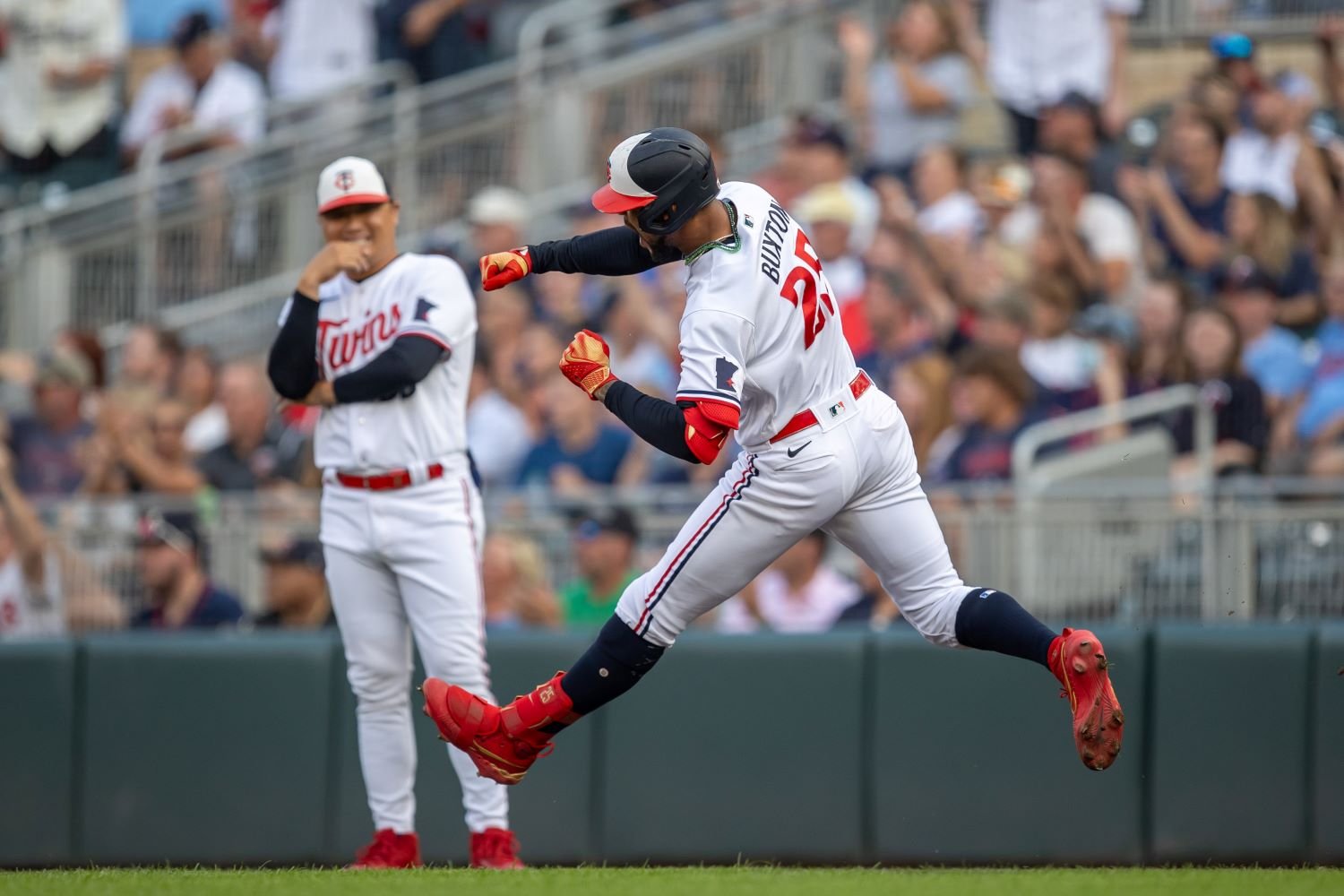 Box Score Joe Ryan: 6 IP, 7 H, 4 ER, 1 BB, 10 K Home Runs: Alex Kirilloff (8), Byron Buxton (16, 17), Ryan Jeffers (5) Top 3 WPA: Byron Buxton (.209), Alex Kirilloff (.202), Edouard Julien (.045) Win Probability Chart (via FanGraphs) The first pitch couldn’t have gone any worse, as Andrew Benintendi blasted a fastball out to right field, making his second homer of the year a rare lead-off shot. Joe Ryan recovered, but the Twins would now need to respond in a timely manner. They did. Carlos Correa didn’t join the fun—he simply lined out sharply to center field—but Edouard Julien did, crushing a line drive deep to left field. Benintendi played the ball well, collecting the bounce and unleashing a throw to second base that should have nailed a lethargic Julien. Elvis Andrus muffed it. Oh well, surely the base-runner wouldn’t matter soon. Alex Kirilloff homered two pitches later. One of Lance Lynn’s cutters didn’t cut, and all Kirilloff had to do was lift the offering a little, earning his eighth homer of the season. Byron Buxton homered eight pitches later. Max Kepler reached on an infield hit—perhaps botched a little again by Andrus—and Matt Wallner walked on five pitches. Despite being 0-July (not really, but emotionally, perhaps), Buxton lasered a first-pitch fastball at 114.3 MPH, giving the Twins a sudden 5-1 advantage. The game calmed down, entering the usual see-saw to nowhere that many baseball games see for a few innings. Until Buxton, again, somehow, hit his second homer of the night, breaking free from the arctic grasp the baseball gods had on him; this time with a bomb less prodigious, but still effective. Ryan Jeffers joined him quickly. The runs were needed, because Ryan wasn’t as sharp as usual. The strikeouts were there—he whiffed 10 and elicited 17 swings and misses—but Chicago found a way to hit him hard; Yasmani Grandal’s two-run shot in the sixth inning was especially brutal. What should have felt like an untouchable lead was now well within reach. Lynn was battered, ineffective, and tiring, but he remained in the game, tasked with keeping the lead at three. He should have, having earned a flyout from Correa that should have ended the frame, but right fielder Zach Remillard booted the ball, giving Minnesota extra life. Oh well, surely the base-runner wouldn’t matter soon. Julien worked his second walk of the night before Kirilloff plastered Lynn’s final offering of the night: a fastball turned two-run double pelted off the right-center wall. And that was it. Emilio Pagán shut down the White Sox in the seventh and Jovani Moran carried the pitching effort to the finish line, tossing a pair of scoreless innings to end the game 9-4 in favor of the Twins. Notes: Byron Buxton's multi-homer game was his first since June 22nd against the Red Sox. Joe Ryan's 10 strikeouts tied a season-high; he's punched out 10 in a game five times in 2023. Alex Kirilloff has four homers since the All-Star break ended; he had four homers before the break. Edouard Julien extended his hit streak to nine games. Post-Game Interviews: What’s Next? The Twins and White Sox will play the second game of their weekend series on Saturday, with first pitch at 6:15. All-Star Sonny Gray and somehow-not-an-All-Star-in-2022 Dylan Cease will face-off on the mound. Bullpen Usage Spreadsheet
- 36 comments
-
- 6
-
-
- byron buxton
- edouard julien
- (and 3 more)
-
Matt's Top Prospect List (Mid-Season) + Writeups
Matt Braun commented on Matt Braun's blog entry in 80MPH Changeup
On Andrade: "...though scouts now think he’s filled out to the point where he’ll be limited to second and third base on defense," quoted from Eric Longenhagen's prospect writeup. Also Minnesota's habit of handing him playing time at third, even if that slowed in 2023. Miller was just two spots ahead, and it doesn't matter anyways; tier matters more to me than specific rankings, meaning he could be as high as six in my rankings. I realize now I failed to make that clear in this article. On Rosario: It's relative for each player. Rodriguez can strike out that much because he walks more and has tapped into his power more consistently than Rosario, even if that's evened out more this season. Plus Rodriguez brings more to the table on the defensive end. -
I have no earthly clue how a batter is supposed to hit off Jhoan Duran
- 64 replies
-
- 12
-
-
- kenta maeda
- edouard julien
- (and 3 more)
-
Matt's Top Prospect List (Mid-Season) + Writeups
Matt Braun commented on Matt Braun's blog entry in 80MPH Changeup
Maybe. I can't get over the strikeouts even if they are a career-low for him. Rest assured he will rise if he continues to hit, though.- 18 comments
-
- 1
-
-
- brooks lee
- emmanuel rodriguez
- (and 3 more)
-
Thank you! The substitutions missed my mind, evidently
-
Whoops, good catch
-
Matt's Top Prospect List (Mid-Season) + Writeups
Matt Braun commented on Matt Braun's blog entry in 80MPH Changeup
I just don't see the Twins as being unique in pitcher health. Prielipp was a risk they knew about, sure, but other than Canterino, this is (knock furiously on wood) as stable a group of arms you could probably ask for. Henriquez is the only other non-Prielipp or Canterino arm to hit the IL this year, I believe.- 18 comments
-
- 2
-
-
- brooks lee
- emmanuel rodriguez
- (and 3 more)
-
Matt's Top Prospect List (Mid-Season) + Writeups
Matt Braun commented on Matt Braun's blog entry in 80MPH Changeup
Williams was a straight miss; should have had him in the back-end somewhere. Winokur is great, but I always feel uncomfortable ranking recently-drafted guys anywhere. I'll make an exception for the first two rounds, but anyone after that probably won't sniff any immediate list from me. Just a personal thing, and Winokur will absolutely hit the list once he plays well. Nowlin I just don't believe will ever throw enough strikes to be relevant, but I could be wrong. Probably should have had him somewhere on the back-end.- 18 comments
-
- 1
-
-
- brooks lee
- emmanuel rodriguez
- (and 3 more)
-
Have you guys heard that a win is a win? Image courtesy of © D. Ross Cameron-USA TODAY Sports Box Score Joe Ryan: 5 ⅓ IP, 5 H, 3 ER, 3 BB, 7 K Home Runs: Christian Vázquez (2), Alex Kirilloff (5) Top 3 WPA: Alex Kirilloff (.453), Emilio Pagán (.204), Christian Vázquez (.185) Win Probability Chart (via FanGraphs) The Twins—disappointing; lethargic—entered Sunday, the victors of the two first games of the second half. Oakland hadn't made it easy. The California tankers fought with vigor to win, challenging Minnesota in almost every inning the two teams played. Would the Twins earn a sweep to start the second half, or would the A's be too feisty to handle? It was a homecoming of sorts for Joe Ryan. The Northern California native took the mound with plenty of supporters in the stands, rooting on the sterling pitcher in his breakout season. He was stellar early, working a six-pitch 1st to send the team on its way. JP Sears is no slouch, however. Assuming Oakland's team lacks talent would be foolish; the 27-year-old lefty stood as Ryan's opponent on Saturday and was on his game. Until Mark Kotsay took the ball from Sears' hand, the former Yankees farmhand was sharp, efficient. He diced through lefties and righties all the same, offering rising heaters, dying changeups, and sweepers that seemed to move from the Pacific to the Atlantic, all leading to 6 ⅓ quality innings with seven strikeouts. But he wasn't perfect. Christian Vázquez startled his shutout effort in the 5th, hammering one of those fastballs out to right-center to give the Twins their first run. They only needed one more out to score again. Alex Kirilloff also caught a fastball—this one trickier, placed precisely on the outside corner—but powered it enough to reach the top of the wall, cutting Minnesota's deficit to one. About that deficit: Ryan wasn't himself. A sluggish splitter to Jordan Diaz cost him some ERA points in the 2nd, but the primary damage came in the fourth when Oakland shot the ball around the yard to plate two. You could tell Ryan's story in more than earned runs, though: he walked three batters for the first time since May 30th. It seemed, then, that the Twins would have trouble winning this game. With yet another lackluster start from their stud starting rotation and with the bats again flailing with wild abandon, Minnesota needed drastic action to take the lead. They got it. Sears exited the game to a hero's appreciation, turning the ball over to Oakland's dreadful bullpen. A walk and an infield hit loaded the bases, sending Kirilloff to the plate. He delivered. A shot a ball down the left field line, allowing all three runners to come home safely as he trotted into third. Minnesota failed to plate another run, but their lead was enough now. What would they need an extra gluttonous run for? 5-3 soon became 5-4. Jorge López smoothly ended the sixth with a first-pitch double-play lineout, but the seventh wasn't as kind. He walked a man, eventually giving him 2nd off a wild pitch. Then Zack Gelof plopped a ball between a galloping Kepler and a flailing Kirilloff, chopping off the all-important luxury run with one fortunate swing. And so entered Jhoan Duran. He pitched on Friday and Saturday, but Rocco Baldelli decided to call upon his reliable workhorse for a third straight game. He had yet to do such a thing in his MLB career. He coaxed a grounder to start the inning, but Shea Langeliers smoked a double high off the right-center field wall. Jace Peterson flew out. Laboring, Duran fired without his usual control, and Tony Kemp lined one of his hanging splitters... directly into Willi Castro's glove to end the game. Notes: Alex Kirilloff's 4 RBIs tied a single-game career-high; his previous 4 RBI outing was on April 30th, 2021 against the Royals. Joe Ryan's seven strikeouts pushed his season total to 131, good for 8th in MLB. He is 21 strikeouts away from setting a single-season career-high. Carlos Correa extended his on-base streak to 13 games. Christian Vázquez reached base three times for the first time since June 1st. Post-Game Interview: What’s Next? The Twins will extend their west coast trip, heading up I-5 to play the Mariners in Seattle. Sonny Gray will retake the mound he pitched on in the All-Star game; Logan Gilbert will pitch opposite of him and first pitch is at 8:40 PM. Bullpen Usage Spreadsheet View full article
-
Twins 5, A's 4: Alex Kirilloff Leads Twins to Sweep of Oakland
Matt Braun posted an article in Twins
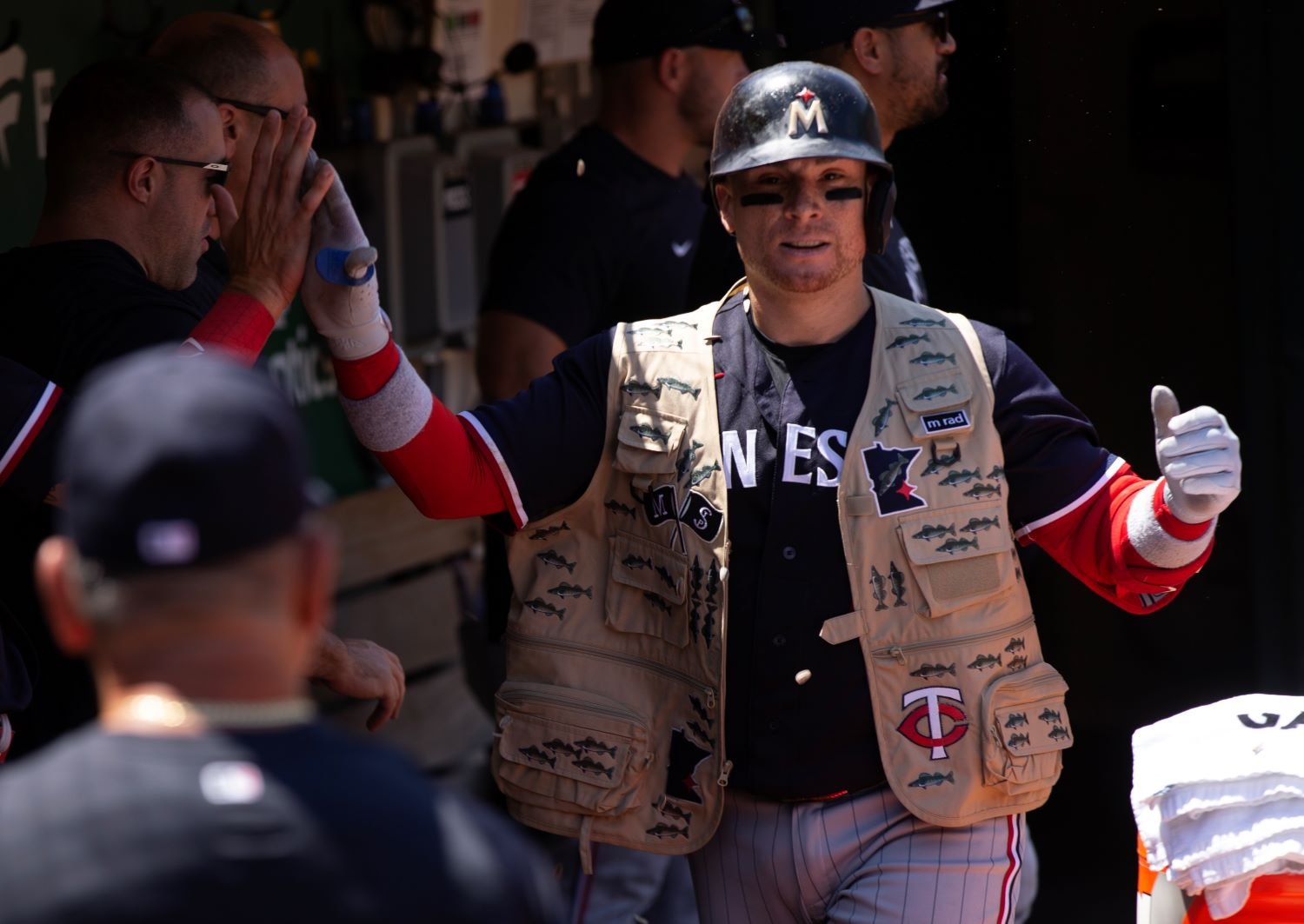 Box Score Joe Ryan: 5 ⅓ IP, 5 H, 3 ER, 3 BB, 7 K Home Runs: Christian Vázquez (2), Alex Kirilloff (5) Top 3 WPA: Alex Kirilloff (.453), Emilio Pagán (.204), Christian Vázquez (.185) Win Probability Chart (via FanGraphs) The Twins—disappointing; lethargic—entered Sunday, the victors of the two first games of the second half. Oakland hadn't made it easy. The California tankers fought with vigor to win, challenging Minnesota in almost every inning the two teams played. Would the Twins earn a sweep to start the second half, or would the A's be too feisty to handle? It was a homecoming of sorts for Joe Ryan. The Northern California native took the mound with plenty of supporters in the stands, rooting on the sterling pitcher in his breakout season. He was stellar early, working a six-pitch 1st to send the team on its way. JP Sears is no slouch, however. Assuming Oakland's team lacks talent would be foolish; the 27-year-old lefty stood as Ryan's opponent on Saturday and was on his game. Until Mark Kotsay took the ball from Sears' hand, the former Yankees farmhand was sharp, efficient. He diced through lefties and righties all the same, offering rising heaters, dying changeups, and sweepers that seemed to move from the Pacific to the Atlantic, all leading to 6 ⅓ quality innings with seven strikeouts. But he wasn't perfect. Christian Vázquez startled his shutout effort in the 5th, hammering one of those fastballs out to right-center to give the Twins their first run. They only needed one more out to score again. Alex Kirilloff also caught a fastball—this one trickier, placed precisely on the outside corner—but powered it enough to reach the top of the wall, cutting Minnesota's deficit to one. About that deficit: Ryan wasn't himself. A sluggish splitter to Jordan Diaz cost him some ERA points in the 2nd, but the primary damage came in the fourth when Oakland shot the ball around the yard to plate two. You could tell Ryan's story in more than earned runs, though: he walked three batters for the first time since May 30th. It seemed, then, that the Twins would have trouble winning this game. With yet another lackluster start from their stud starting rotation and with the bats again flailing with wild abandon, Minnesota needed drastic action to take the lead. They got it. Sears exited the game to a hero's appreciation, turning the ball over to Oakland's dreadful bullpen. A walk and an infield hit loaded the bases, sending Kirilloff to the plate. He delivered. A shot a ball down the left field line, allowing all three runners to come home safely as he trotted into third. Minnesota failed to plate another run, but their lead was enough now. What would they need an extra gluttonous run for? 5-3 soon became 5-4. Jorge López smoothly ended the sixth with a first-pitch double-play lineout, but the seventh wasn't as kind. He walked a man, eventually giving him 2nd off a wild pitch. Then Zack Gelof plopped a ball between a galloping Kepler and a flailing Kirilloff, chopping off the all-important luxury run with one fortunate swing. And so entered Jhoan Duran. He pitched on Friday and Saturday, but Rocco Baldelli decided to call upon his reliable workhorse for a third straight game. He had yet to do such a thing in his MLB career. He coaxed a grounder to start the inning, but Shea Langeliers smoked a double high off the right-center field wall. Jace Peterson flew out. Laboring, Duran fired without his usual control, and Tony Kemp lined one of his hanging splitters... directly into Willi Castro's glove to end the game. Notes: Alex Kirilloff's 4 RBIs tied a single-game career-high; his previous 4 RBI outing was on April 30th, 2021 against the Royals. Joe Ryan's seven strikeouts pushed his season total to 131, good for 8th in MLB. He is 21 strikeouts away from setting a single-season career-high. Carlos Correa extended his on-base streak to 13 games. Christian Vázquez reached base three times for the first time since June 1st. Post-Game Interview: What’s Next? The Twins will extend their west coast trip, heading up I-5 to play the Mariners in Seattle. Sonny Gray will retake the mound he pitched on in the All-Star game; Logan Gilbert will pitch opposite of him and first pitch is at 8:40 PM. Bullpen Usage Spreadsheet
- 43 comments
-
- 4
-
-
- alex kirilloff
- joe ryan
- (and 3 more)
-
It seems like something is going on in Cedar Rapids. Image courtesy of Rob Thompson, St. Paul Saints (image is of Simeon Woods Richardson) TRANSACTIONS INF Yohander Martinez reinstated from 7-day IL at Fort Myers OF Luis Baez transferred from 7-day IL to 60-day IL at Fort Myers OF Matt Wallner recalled by Twins RHP Pierson Ohl reinstated from development list RHP Jose Bravo reinstated from development list and released RHP Jordan Brink released OF Armani Smith released Saints Sentinel St. Paul 4, Durham 2 Box Score Brent Headrick: 3 IP, 3 H, 0 ER, 0 BB, 4 K HR: Anthony Prato (6), Jair Camargo Multi-hit games: Jair Camargo (2-for-4, HR, 2B, R, RBI) The Saints scored late to win on Saturday. They did it again. After the wild success that was last Saturday’s Brent Headrick/Simeon Woods Richardson’s piggyback, the Saints tried the strategy again. Headrick crushed his start, tossing a trio of scoreless innings, while Woods Richardson flourished as well, allowing a lone earned run over five frames. Kody Funderburk slammed the door with a quiet 9th. The bats aided the outstanding pitching effort. Anthony Prato and Jair Camargo both hammered late homers, earning and extending the precious lead. 0Prato now has a 1.064 OPS since joining the Saints. No hitter batting 1-4 got a hit on Saturday; only once did they reach base. Durham’s finest prospect is INF Curtis Mead. The Australian—third in the system; 32nd in MLB—doubled and singled in three at-bats. Wind Surge Wisdom Wichita 2, Springfield 10 Box Score Pierson Ohl: 4 ⅓ IP, 5 H, 3 ER, 3 BB, 2 K HR: Brooks Lee (8) Multi-hit games: None The Wind Surge got smoked on Saturday. Pierson Ohl was not himself. The righty, so adept at throwing strikes, never found his command; he walked three with a smattering of base hits to allow three runs on his watch. Given that he was only reinstated from the Development List today, he may have just been rusty. Hopefully his typical strike-throwing self appears soon. Brooks Lee gave Wichita their first run when he smoked a solo shot in the 4th inning. But they could only score once more against the Cardinals. Ace pitching prospect, Tink Hence, allowed both runs in an atypically mediocre outing, but Springfield’s bullpen was nails, and the Wind Surge never even got a hit after Hence exited the game. Wichita’s pitchers found no such fortune. Taylor Floyd and Hunter McMahon allowed seven combined runs in support of their starter. The team never recovered. Kernels Nuggets Cedar Rapids 9, Beloit 7 Box Score Kyle Jones: 5 IP, 7 H, 3 ER, 1 BB, 3 K HR: Kyler Fedko (3) Multi-hit games: Andrew Cossetti (3-for-3, R, RBI, BB) An explosive 1st inning carried the Kernels to victory on Saturday. It took until the seventh batter for Beloit starter Zach King to earn his first out; even that ended up as a run-scoring sacrifice fly. Cedar Rapids went double, hit by pitch, single, single, walk, single, before earning their fifth and final score of the inning when Andrew Cossetti flew a ball deep enough to coax in a run. The Kernels all-around offense continued throughout the game—and the team ended up walking more than they struck out (nine to eight) with every hitter reaching base at least once. Pitching wasn’t as smooth. Kyle Jones was cromulent over five innings, allowing a trio of earned runs, but a few late runs pushed the game within striking distance; fortunately, the Sky Carp never found the critical game-tying knot. Miguel Rodriguez stared down his last man and caught him looking, stranding a runner at third to conclude the game. The Kernels improved their season record to 51-32. Beloit’s star prospect—the second-in-the-system third baseman, Jacob Berry—doubled and struck out three times in five trips to the plate. Mussel Matters Ft. Myers 7, Clearwater 8 (10 Innings) Box Score Jarret Whorff: 5 IP, 2 H, 0 ER, 2 BB, 4 K HR: Danny De Andrade (7), Mikey Perez (5) Multi-hit games: Ricardo Olivar (3-for-4, 2B, R, 2 RBI, BB) The Mighty Mussels blew a late lead, turning a three-run advantage with one in the 9th into an extra-innings loss. Jarret Whorff was who he needed to be. The 24-year-old righty worked five scoreless frames, holding the second-scariest offense in the Florida State League to just a pair of singles, scattered and harmless. He unfortunately exited before his bats could give him the support he deserved. But they did come through eventually. Clearwater took a slim lead before Fort Myers roared back, plating four with a Danny De Andrade two-run shot exclaiming the scoring with authority. The lead held strong, guiding the Mighty Mussels into the 9th confident in their work. Gabriel Yanez acquired the first out before Jackson Hicks entered the game. He fell apart. A pair of singles and a three-run homer instantly zapped away the lead. The game entered extra innings. Zach Veen suffered just as well. The new pitcher allowed a back-breaking bases-clearing triple, eventually exiting with four runs standing between Fort Myers and the game continuing. They nearly did it. Mikey Perez blasted home himself and the Manfred Man. A productive groundout brought the game within one, but that was as close as the team could get, and Rubel Cespedes’ full-count strikeout delivered the game its final, disappointing verdict. Outfielder Justin Crawford, Philadelphia’s 3rd-best prospect, and the best prospect playing for the Threshers, singled in five plate appearances. Complex Chronicles The FCL Twins game was halted in the fifth; they will continue their match against the FCL Red Sox on the 21st. Dominican Dailies DSL Twins 2, DSL Guardians Red 6 Box Score Juan Cota: 3 IP, 0 H, 0 ER, 0 BB, 2 K HR: None Multi-hit games: Jayson Bass (2-for-3), Juan Zapata (2-for-3, 3B, RBI) The DSL Twins lost handily on Saturday. It took until the 5th for either team to score—and the game still ended up a seemingly normal affair. Starter Juan Cota has his stuff, leading to three scoreless frames with a pair of strikeouts—and, unusual for a DSL pitcher—no walks. But the Twins’ batters couldn’t take advantage of the effort; a Juan Zapata triple was their lone extra-base hit. The Guardians Red (what a clunky team name) stole four bases, and caught the Twins stealing twice. Hendry Chivilli, Minnesota’s big international signing in January, struck out three times in the game. TWINS DAILY PLAYERS OF THE DAY Twins Daily Minor League Pitcher of the Day – Simeon Woods Richardson Twins Daily Minor League Hitter of the Day – Jair Camargo PROSPECT SUMMARY Here’s a look at how the Twins Daily Top 20 Twins Prospects performed: #1 - Brooks Lee (Wichita) - 1-4, HR, R, RBI, 3 K #3 - Emmanuel Rodriguez (Cedar Rapids) - 0-3, R, BB, 2 K #7 - Simeon Woods Richardson (St. Paul) - 5 IP, 2 H, 1 ER, 0 BB, 2 K #11 - Austin Martin (St. Paul) - 0-4, K, SB #13 - Noah Miller (Cedar Rapids) - 0-4, R, BB K #15 - Brent Headrick (St. Paul) - 3 IP, 3 H, 0 ER, 0 BB, 4 K #19 - Yunior Severino (Wichita) - 0-4 SUNDAY’S PROBABLE STARTERS Durham @ St. Paul (2:07 PM) - LHP Dallas Keuchel Springfield @ Wichita (1:05 PM) - RHP Travis Adams Cedar Rapids @ Beloit (1:05 PM) - LHP Christian MacLeod Clearwater @ Fort Myers (11:00 AM) - RHP Andrew Morris View full article
- 9 replies
-
- 3
-
-

-
- simeon woods richardson
- jair camargo
- (and 3 more)
-
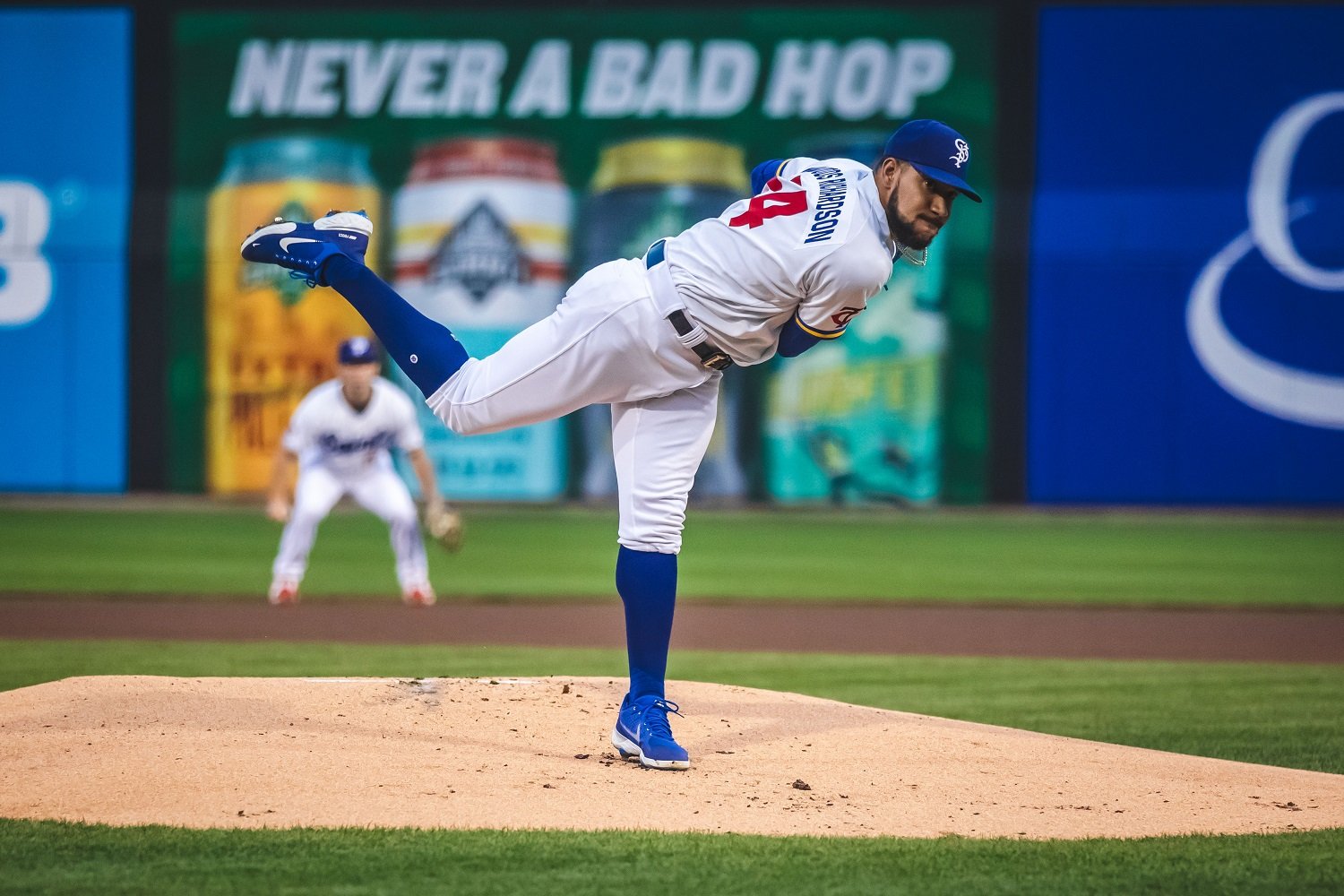 TRANSACTIONS INF Yohander Martinez reinstated from 7-day IL at Fort Myers OF Luis Baez transferred from 7-day IL to 60-day IL at Fort Myers OF Matt Wallner recalled by Twins RHP Pierson Ohl reinstated from development list RHP Jose Bravo reinstated from development list and released RHP Jordan Brink released OF Armani Smith released Saints Sentinel St. Paul 4, Durham 2 Box Score Brent Headrick: 3 IP, 3 H, 0 ER, 0 BB, 4 K HR: Anthony Prato (6), Jair Camargo Multi-hit games: Jair Camargo (2-for-4, HR, 2B, R, RBI) The Saints scored late to win on Saturday. They did it again. After the wild success that was last Saturday’s Brent Headrick/Simeon Woods Richardson’s piggyback, the Saints tried the strategy again. Headrick crushed his start, tossing a trio of scoreless innings, while Woods Richardson flourished as well, allowing a lone earned run over five frames. Kody Funderburk slammed the door with a quiet 9th. The bats aided the outstanding pitching effort. Anthony Prato and Jair Camargo both hammered late homers, earning and extending the precious lead. 0Prato now has a 1.064 OPS since joining the Saints. No hitter batting 1-4 got a hit on Saturday; only once did they reach base. Durham’s finest prospect is INF Curtis Mead. The Australian—third in the system; 32nd in MLB—doubled and singled in three at-bats. Wind Surge Wisdom Wichita 2, Springfield 10 Box Score Pierson Ohl: 4 ⅓ IP, 5 H, 3 ER, 3 BB, 2 K HR: Brooks Lee (8) Multi-hit games: None The Wind Surge got smoked on Saturday. Pierson Ohl was not himself. The righty, so adept at throwing strikes, never found his command; he walked three with a smattering of base hits to allow three runs on his watch. Given that he was only reinstated from the Development List today, he may have just been rusty. Hopefully his typical strike-throwing self appears soon. Brooks Lee gave Wichita their first run when he smoked a solo shot in the 4th inning. But they could only score once more against the Cardinals. Ace pitching prospect, Tink Hence, allowed both runs in an atypically mediocre outing, but Springfield’s bullpen was nails, and the Wind Surge never even got a hit after Hence exited the game. Wichita’s pitchers found no such fortune. Taylor Floyd and Hunter McMahon allowed seven combined runs in support of their starter. The team never recovered. Kernels Nuggets Cedar Rapids 9, Beloit 7 Box Score Kyle Jones: 5 IP, 7 H, 3 ER, 1 BB, 3 K HR: Kyler Fedko (3) Multi-hit games: Andrew Cossetti (3-for-3, R, RBI, BB) An explosive 1st inning carried the Kernels to victory on Saturday. It took until the seventh batter for Beloit starter Zach King to earn his first out; even that ended up as a run-scoring sacrifice fly. Cedar Rapids went double, hit by pitch, single, single, walk, single, before earning their fifth and final score of the inning when Andrew Cossetti flew a ball deep enough to coax in a run. The Kernels all-around offense continued throughout the game—and the team ended up walking more than they struck out (nine to eight) with every hitter reaching base at least once. Pitching wasn’t as smooth. Kyle Jones was cromulent over five innings, allowing a trio of earned runs, but a few late runs pushed the game within striking distance; fortunately, the Sky Carp never found the critical game-tying knot. Miguel Rodriguez stared down his last man and caught him looking, stranding a runner at third to conclude the game. The Kernels improved their season record to 51-32. Beloit’s star prospect—the second-in-the-system third baseman, Jacob Berry—doubled and struck out three times in five trips to the plate. Mussel Matters Ft. Myers 7, Clearwater 8 (10 Innings) Box Score Jarret Whorff: 5 IP, 2 H, 0 ER, 2 BB, 4 K HR: Danny De Andrade (7), Mikey Perez (5) Multi-hit games: Ricardo Olivar (3-for-4, 2B, R, 2 RBI, BB) The Mighty Mussels blew a late lead, turning a three-run advantage with one in the 9th into an extra-innings loss. Jarret Whorff was who he needed to be. The 24-year-old righty worked five scoreless frames, holding the second-scariest offense in the Florida State League to just a pair of singles, scattered and harmless. He unfortunately exited before his bats could give him the support he deserved. But they did come through eventually. Clearwater took a slim lead before Fort Myers roared back, plating four with a Danny De Andrade two-run shot exclaiming the scoring with authority. The lead held strong, guiding the Mighty Mussels into the 9th confident in their work. Gabriel Yanez acquired the first out before Jackson Hicks entered the game. He fell apart. A pair of singles and a three-run homer instantly zapped away the lead. The game entered extra innings. Zach Veen suffered just as well. The new pitcher allowed a back-breaking bases-clearing triple, eventually exiting with four runs standing between Fort Myers and the game continuing. They nearly did it. Mikey Perez blasted home himself and the Manfred Man. A productive groundout brought the game within one, but that was as close as the team could get, and Rubel Cespedes’ full-count strikeout delivered the game its final, disappointing verdict. Outfielder Justin Crawford, Philadelphia’s 3rd-best prospect, and the best prospect playing for the Threshers, singled in five plate appearances. Complex Chronicles The FCL Twins game was halted in the fifth; they will continue their match against the FCL Red Sox on the 21st. Dominican Dailies DSL Twins 2, DSL Guardians Red 6 Box Score Juan Cota: 3 IP, 0 H, 0 ER, 0 BB, 2 K HR: None Multi-hit games: Jayson Bass (2-for-3), Juan Zapata (2-for-3, 3B, RBI) The DSL Twins lost handily on Saturday. It took until the 5th for either team to score—and the game still ended up a seemingly normal affair. Starter Juan Cota has his stuff, leading to three scoreless frames with a pair of strikeouts—and, unusual for a DSL pitcher—no walks. But the Twins’ batters couldn’t take advantage of the effort; a Juan Zapata triple was their lone extra-base hit. The Guardians Red (what a clunky team name) stole four bases, and caught the Twins stealing twice. Hendry Chivilli, Minnesota’s big international signing in January, struck out three times in the game. TWINS DAILY PLAYERS OF THE DAY Twins Daily Minor League Pitcher of the Day – Simeon Woods Richardson Twins Daily Minor League Hitter of the Day – Jair Camargo PROSPECT SUMMARY Here’s a look at how the Twins Daily Top 20 Twins Prospects performed: #1 - Brooks Lee (Wichita) - 1-4, HR, R, RBI, 3 K #3 - Emmanuel Rodriguez (Cedar Rapids) - 0-3, R, BB, 2 K #7 - Simeon Woods Richardson (St. Paul) - 5 IP, 2 H, 1 ER, 0 BB, 2 K #11 - Austin Martin (St. Paul) - 0-4, K, SB #13 - Noah Miller (Cedar Rapids) - 0-4, R, BB K #15 - Brent Headrick (St. Paul) - 3 IP, 3 H, 0 ER, 0 BB, 4 K #19 - Yunior Severino (Wichita) - 0-4 SUNDAY’S PROBABLE STARTERS Durham @ St. Paul (2:07 PM) - LHP Dallas Keuchel Springfield @ Wichita (1:05 PM) - RHP Travis Adams Cedar Rapids @ Beloit (1:05 PM) - LHP Christian MacLeod Clearwater @ Fort Myers (11:00 AM) - RHP Andrew Morris
- 9 comments
-
- 1
-
-
- simeon woods richardson
- jair camargo
- (and 3 more)
-
Yes, it is possible for a win to feel gross. Image courtesy of © Kelley L Cox-USA TODAY Sports Box Score Kenta Maeda: 3 IP, 4 H, 3 ER, 4 BB, 6 K Home Runs: Joey Gallo (16) Top 3 WPA: Donovan Solano (.362), Joey Gallo (.331), Jovani Moran (.142) Win Probability Chart (via FanGraphs) Fresh out of the All-Star break, the Twins were handed a gift from the baseball gods: the Oakland A’s. Despite over 90 games already played, Minnesota had yet to establish a consistent, positive offense identity; the team recently leaned on the all-important semi-religious “players-only meeting,” to save their season, but the results hadn’t improved—outside a date with the lowly Royals. Would an entangle with the worst team the west coast could scrap up prove similar? Twins bats exploded with a mighty crash. Ken Waldichuk thought he had more time, more opportunities to toss his weaker stuff. Still, Minnesota offered no quarter, attacking quickly with a double from Carlos Correa and a single from Donovan Solano. Byron Buxton flew out deep enough to plate Correa. With a critical potential run on second base, Kyle Farmer crushed a changeup nearly as far as a batter can hit a ball without earning a free jog around the bases; instead, he earned a triple for his efforts. The game was underway. Unfortunately, Kenta Maeda was not sharp. He fired off a ton of pitches—entirely too many of them—to fend off Oakland in the 1st, and his frame proved prophetic: he would not last beyond three innings. He labored again in the 2nd, handing back a portion of the lead his offense earned. With another rally in the 3rd, Minnesota’s advantage was now a deficit—and Maeda’s day was over. These are the A’s we’re talking about—intentionally bad; served as a self-evident excuse to bolt cities—so the game was far from decided. A few walks inspired Rocco Baldelli to pinch-hit early, sending the rookie Edouard Julien to the plate with a pair of runners on the bases. He delivered. Julien smashed a double to left field, tying the game at three as the teams settled into their equal struggle for victory. And so the game entered its bullpen stage. This was not a smooth affair; batters often reached base, threatening to change the balance of power only to remain stagnant, forced to watch their teammates come up short. Twice the Twins loaded the bases. Both times they failed to net that critical damage-inducing knock. Twins hitting coach David Popkins was tossed in the 7th—the strike zone was nebulous all day—following a called third strike to Joey Gallo. Ironically, the call in question was correct; it was one of Nic Lentz’s best calls all night. So was the lone spark between the 4th and 9th. Both teams displayed a hideous understanding of hitting, working poor at-bats in crucial situations, leading to a slow and muddy affair—one dragging on far beyond any reasonable person’s tolerance for mediocre baseball. Until the sudden jolt. Gallo stepped up against Shintaro Fujinami, with Solano standing on 2nd. He received a fastball—Fujinami’s special—and turned it around with vigor, smoking a two-run shot into Oakland’s right field seats to give Minnesota the lead. The game was not done being mischievously annoying, though, as Jhoan Duran wobbled in the 9th, enough to sow real doubt regarding the potential win. He allowed a double and a single, bringing Brent Rooker to the plate as the go-ahead run. Duran plunked him with a curveball. Seth Brown now stood in the batter’s box, but he could not muster any magic, and his groundout to Julien mercifully ended a brutal 5-4 win for the Twins. Notes: Joey Gallo is now three homers away from tying his total from 2022; he has 234 plate appearances this year and earned 410 last year. Griffin Jax has not allowed an earned run since May 19th. Donovan Solano has reached base at least three times in three of his last six games. Post-Game Interview: What’s Next? The Twins and A’s play the second game of their weekend series on Saturday. Pablo López returns from his first All-Star game to pitch against Hobie Harris; first pitch is at 6:07 PM. Bullpen Usage Spreadsheet View full article
-
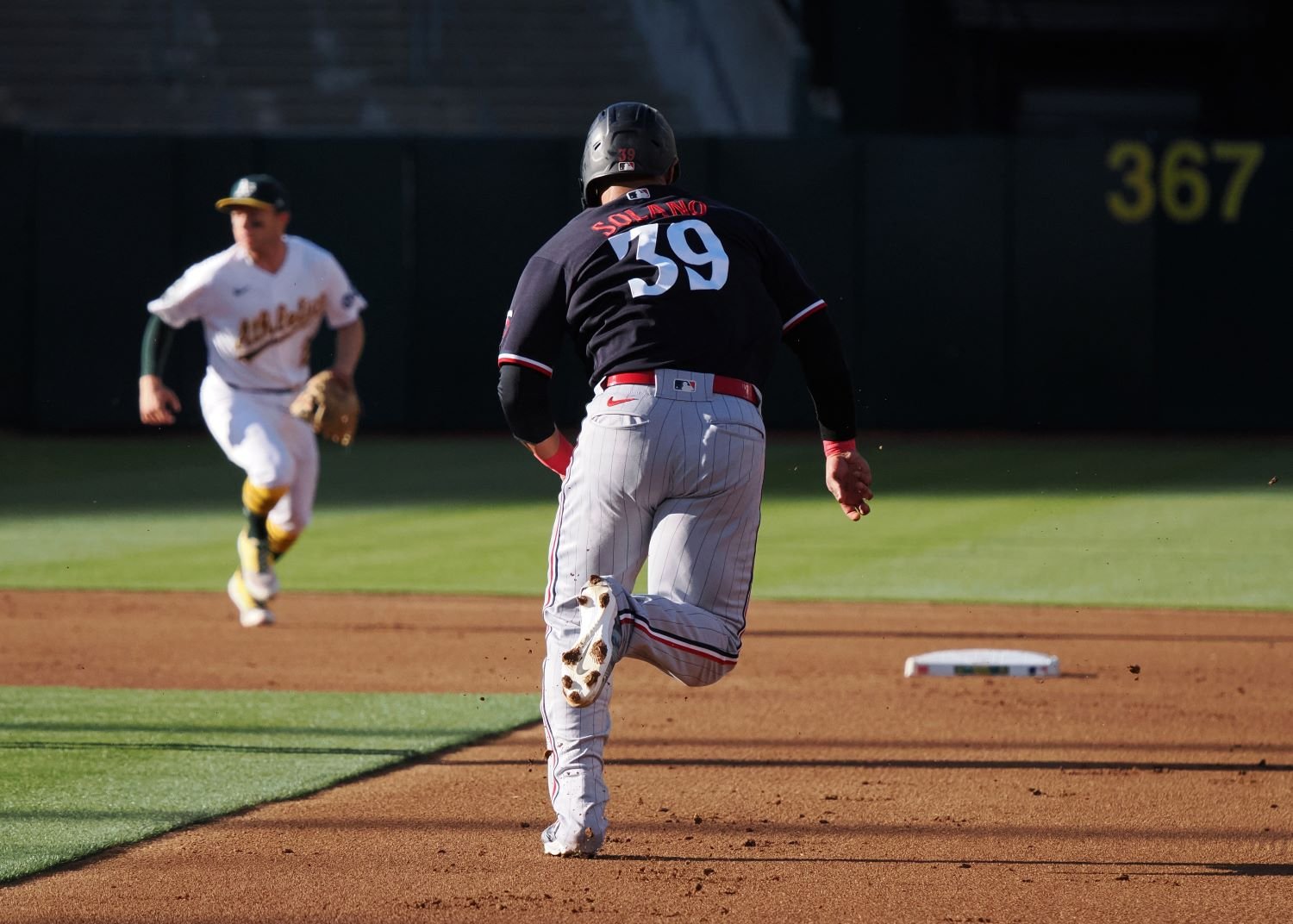 Box Score Kenta Maeda: 3 IP, 4 H, 3 ER, 4 BB, 6 K Home Runs: Joey Gallo (16) Top 3 WPA: Donovan Solano (.362), Joey Gallo (.331), Jovani Moran (.142) Win Probability Chart (via FanGraphs) Fresh out of the All-Star break, the Twins were handed a gift from the baseball gods: the Oakland A’s. Despite over 90 games already played, Minnesota had yet to establish a consistent, positive offense identity; the team recently leaned on the all-important semi-religious “players-only meeting,” to save their season, but the results hadn’t improved—outside a date with the lowly Royals. Would an entangle with the worst team the west coast could scrap up prove similar? Twins bats exploded with a mighty crash. Ken Waldichuk thought he had more time, more opportunities to toss his weaker stuff. Still, Minnesota offered no quarter, attacking quickly with a double from Carlos Correa and a single from Donovan Solano. Byron Buxton flew out deep enough to plate Correa. With a critical potential run on second base, Kyle Farmer crushed a changeup nearly as far as a batter can hit a ball without earning a free jog around the bases; instead, he earned a triple for his efforts. The game was underway. Unfortunately, Kenta Maeda was not sharp. He fired off a ton of pitches—entirely too many of them—to fend off Oakland in the 1st, and his frame proved prophetic: he would not last beyond three innings. He labored again in the 2nd, handing back a portion of the lead his offense earned. With another rally in the 3rd, Minnesota’s advantage was now a deficit—and Maeda’s day was over. These are the A’s we’re talking about—intentionally bad; served as a self-evident excuse to bolt cities—so the game was far from decided. A few walks inspired Rocco Baldelli to pinch-hit early, sending the rookie Edouard Julien to the plate with a pair of runners on the bases. He delivered. Julien smashed a double to left field, tying the game at three as the teams settled into their equal struggle for victory. And so the game entered its bullpen stage. This was not a smooth affair; batters often reached base, threatening to change the balance of power only to remain stagnant, forced to watch their teammates come up short. Twice the Twins loaded the bases. Both times they failed to net that critical damage-inducing knock. Twins hitting coach David Popkins was tossed in the 7th—the strike zone was nebulous all day—following a called third strike to Joey Gallo. Ironically, the call in question was correct; it was one of Nic Lentz’s best calls all night. So was the lone spark between the 4th and 9th. Both teams displayed a hideous understanding of hitting, working poor at-bats in crucial situations, leading to a slow and muddy affair—one dragging on far beyond any reasonable person’s tolerance for mediocre baseball. Until the sudden jolt. Gallo stepped up against Shintaro Fujinami, with Solano standing on 2nd. He received a fastball—Fujinami’s special—and turned it around with vigor, smoking a two-run shot into Oakland’s right field seats to give Minnesota the lead. The game was not done being mischievously annoying, though, as Jhoan Duran wobbled in the 9th, enough to sow real doubt regarding the potential win. He allowed a double and a single, bringing Brent Rooker to the plate as the go-ahead run. Duran plunked him with a curveball. Seth Brown now stood in the batter’s box, but he could not muster any magic, and his groundout to Julien mercifully ended a brutal 5-4 win for the Twins. Notes: Joey Gallo is now three homers away from tying his total from 2022; he has 234 plate appearances this year and earned 410 last year. Griffin Jax has not allowed an earned run since May 19th. Donovan Solano has reached base at least three times in three of his last six games. Post-Game Interview: What’s Next? The Twins and A’s play the second game of their weekend series on Saturday. Pablo López returns from his first All-Star game to pitch against Hobie Harris; first pitch is at 6:07 PM. Bullpen Usage Spreadsheet
- 70 comments
-
- 7
-

-
-
- joey gallo
- donovan solano
- (and 3 more)
-
Matt's Top Prospect List (Mid-Season) + Writeups
Matt Braun commented on Matt Braun's blog entry in 80MPH Changeup
CFer I say E Rod, but who knows; they guy hasn't even played at AA yet. Pitching isn't overwhelming, but which system is? I think Raya and Festa are strong plus there's a solid chance one of the many college arms from 2022 turn into something. Overall I'd say it's around league average. Fangraphs has them 13th before the draft and that feels about right.- 18 comments
-
- 2
-
-
- brooks lee
- emmanuel rodriguez
- (and 3 more)
-
Matt's Top Prospect List (Mid-Season) + Writeups
Matt Braun commented on Matt Braun's blog entry in 80MPH Changeup
Thank you for the helpful and insightful addition to the discussion- 18 comments
-
- 1
-
-
- brooks lee
- emmanuel rodriguez
- (and 3 more)
-
System overview: A lot changes in half a season. Royce Lewis finally departed the prospect list nearly 6 (six!) years after the team drafted him first overall in 2017. Edouard Julien and Louie Varland also lost their prospect status, weakening the high-end of the list despite a recent influx of incredible talent. Speaking of which… Walker Jenkins! The Twins actually did it; they eschewed their conservative desires and simply took the best player available at number 5: a sweet-swinging high-schooler who drew incredible reviews for his makeup. You could probably write a book with the superlative ink spilled about Jenkins over the past few days, but there's a good reason for that: he’s a stud. He immediately gives the team a fascinating, dynamic top three of Brooks Lee, Emmanuel Rodriguez, and himself. He hasn’t even been signed yet, so let’s not get carried away, but it’s certainly an exciting time for the Twins system. Which, I think, is the strongest it’s been in a few years. The team is now undeniably at the heart of the pitching movement, churning out and improving arms at a breakneck pace, making their pitching prospects that much more exciting. There are about four or five legitimately impressive arms in the system drafted in 2022, and with about 60 pitchers taken in this draft, a few more are certainly on their way. It’s madness. But it’s a good kind of madness. I’ve done something different with this list. As you’ll see, batters and pitchers are separated—something I’ve always felt should be done given the differences between the two. This is especially true these days, as any arm with one or two interesting characteristics is millimeters away from breaking out; hitters don’t currently enjoy such an advantage. Here’s the list: Hitters: Brooks Lee, 22, 5’11” / 205 - SS Now that Royce Lewis is finally no longer a prospect (for the first time since 2017!), Brooks Lee takes over as the best prospect in Minnesota’s system. There’s a lot to like in his tools; his defense isn’t consistently excellent at shortstop—he’s missing the kind of raw athletic force that, say, Carlos Correa possesses—but he’s nimble enough to make plenty of wow plays and could stick at the position in the majors. If not, he’ll be fine at third or second. The Twins appear dead-set on getting him reps here, as he’s barely started anywhere else in 2023. Offensively, he’ll likely hit, but his bat isn’t bulletproof. He doesn’t own any one overwhelming attribute, but he does most things pretty well and should never embarrass himself with poor swing decisions. Overall, he looks a lot like Marcus Semien with a little less pop—but I will warn that the lack of consistent game power is a concern. Really, though, most knocks feel like extreme nit-picking for a 22-year-old holding his own at AA in his first full year in organized ball. He’ll be fine and should join the Twins sometime in 2024. Emmanuel Rodriguez, 20, 5’10” / 210 - OF Emmanuel Rodriguez is a lesson in two parts: one, that monthly stat-worrying over prospects is often foolish; and slack should be handed to players returning from major surgery. Rodriguez spent April and May striking out at Gallo-ian rates before deflating his whiffs to palatable levels; he’s punched out at a 25.5% clip since June started. And while that cutoff is as arbitrary as any, I think it’s clear that Rodriguez is far more comfortable at the plate these days than when the season started. He still has laughable power as his swing-as-hard-as-humanly-possible approach yields monster homers and titanic bullets shot all around the field, offering welts to fielders who stand in their way. The whiffs will probably always be present, though, as he has a habit of running deep counts. If he continues to evolve, he could be the toolsy stud center fielder of the future for the Twins. The bust potential is high, though. Walker Jenkins, 18, 6’3” / 190 - OF Surprise! After blowing smoke around Jacob Gonzalez for a few months, the Twins took the sane route and drafted an excellent high school prospect. I’ll repeat the common refrain here; Jenkins could have gone 1st in any normal draft, and the Twins are deeply fortunate to have such an impact talent in their farm system. It’s a little silly trying to rank recently-selected players alongside pros with hundreds of at-bats under their belt, but you have to put the guy somewhere, and I thought right behind Emmanuel Rodriguez was the best choice. I don’t really have a good reason for this choice; he can move up quickly with early success. ------------------------- Matt Wallner, 25, 6’5” / 220 - OF The man who just cannot find a roster spot. Matt Wallner is the antithesis of Max Kepler: he’s going to swing hard, clobber a lot of baseballs, and play bumbling, clumsy defense in right field. We’ve seen his style of play work at times, as apparent by his little MLB playing time this year, but his extreme contact deficiency will spell ugly hitting streaks, and I worry what major-league pitchers are going to do to him once they become comfortable. Still, he rakes. His max exit velocity is already elite, and it’s not impossible to imagine an Austin Riley-like metamorphosis from hulking slugger to well-rounded nuclear offensive force. Defensively, Wallner is going to cost the Twins runs. He may earn some back with his arm—a true bazooka that will vex greedy baserunners, or just keep them stationary in fear—but the dropoff from Kepler to Wallner will be obvious. Minnesota’s favor towards flyball pitchers, and their insistence on playing Kepler and Gallo may keep him hidden on the periphery longer than most have the stomach for. Tanner Schobel, 22, 5’9” / 170 - 2B/3B Tanner Schobel is something of a throwback to the 2000s Twins: a slick do-it-all infielder with above-average speed and a good chance at becoming a roughly 2 WAR player for more years than you realize. He’s even added more ISO (in a pitcher’s league!) as his extended play with Cedar Rapids has been powerful. The thump may not be a mirage; Schobel slugged .689 his sophomore season at Virginia Tech. He loads up like Eugenio Saurez, allowing the ball to travel a little further than most before the full power of his torque releases, usually in a punishing manner (to the ball). Defensively, Schobel has mostly split time between second and third—his two most natural positions. He could potentially play shortstop, but that position has seen a lot of Noah Miller and Jose Salas, making it difficult for Schobel to earn playing time there. Overall, Schobel fits a likeable infielder mold that many good-to-great players have thrived in. ------------------------- Yasser Mercedes, 18, 6’2” / 175 - OF An expensive international signing from a few years ago, Yasser Mercedes showcased a dynamic offensive profile in 2022 before completely falling off a cliff in his first taste of stateside ball. Was he a victim of untrustworthy DSL stats? Is this a fluke? It’s far too early to tell; for now he’ll stay stagnant in my prospect list. Austin Martin, 24, 6’0” / 185 - SS/OF Oh what a fall for Austin Martin. You know the story by now: his flaming college performance capitulated immediately after the Blue Jays drafted him, and now the Twins are looking to get him back in the groove. 2022 was almost a complete loss, but Martin flashed life in September, and had a respectable enough AFL to soften his fall from grace. Frustratingly, an injury knocked Martin out of commission until a few days ago, when he finally popped back up on the Saints’ roster. A strong showing could earn him a quick promotion, as Royce Lewis is currently on the mend well until August; José Miranda took his place but could be shuffled if his bat doesn’t turn around. Hopefully Martin finds the minimum power needed to become a quality major-league bat, because his potential is of a classic two-hole batter, slashing hits across the field while stealing at whim. Luke Keaschall, 20, 6’1” / 190 - INF The Twins selected Luke Keaschall—an infielder out of Arizona State—with their second-round pick in 2023. Plenty of excellent alumnus call that college home, and Keaschall could join them soon, as he absolutely smoked PAC-12 pitching with a .353/.443/.725 slashline. We’ll understand Keaschall more as a prospect in time, so consider this ranking very loose; he could move up or down easily. Noah Miller, 20, 5’11” / 190 - SS Alright, I was probably wrong about Noah Miller. I grasped tightly onto his excellent strikeout-to-walk rate in 2022, but now that has evaporated, leaving a powerless, on-base-less profile only buoyed by his excellent shortstop defense. He added a tinge of power in 2023, upping his ISO almost .030 points up to .094, but that hasn’t been enough to save his hitting, and infielders who hit like this need a legendary glove to stick around in MLB for any serious period of time. Noah Cardenas, 23, 5’11” / 195 - C/1B I still cannot fathom why Noah Cardenas is not more well-received as a prospect. He’s hitting for a 129 wRC+ with the Kernels—as a catcher, mind you—after crushing A ball with similar vigor. His pop is more in doubles than homers, but he can take a walk like no one’s business, and that kind of plate control should translate well as he progresses up through the minors. The bugaboo: his defense. The Twins know this, and often spell time at 1st and DH (although Andrew Cossetti’s presence feeds into this decision as well). We don’t have public catching defensive metrics, but Eric Longenhagen rated him a 30-grade defender, and I’m willing to believe in his assessment. Still, the Twins were able to turn Mitch Garver into a workable defensive catcher—and Ryan Jeffers wasn’t a lock to stay at catcher either—so it’s very possible that Cardenas follows those two and blossoms into an everyday player. Danny De Andrade, 19, 5’11” / 190 - SS We’re finally seeing Danny De Andrade playing in full-season ball and the results have been… whelming. He’s walked a fair amount, but the power is merely ok, and he’s probably not going to play shortstop long-term. Still, this is a 19-year-old; picking on him too much seems like an unwise decision. He should rise up this list further with time. Jose Salas, 20, 6’0” / 191 - INF At this point, it’s unclear what Jose Salas does well. He’s in the middle of a dreadful repetition of A+ ball in which his slashline is so porous that I don’t even want to type it out. You don’t need to look it up; it’s bad. Normally this kind of performance would take a player completely off the list, but prospect evaluators swore he was around a 45 FV player coming into the year, and I’ll offer some slack in this regard. It won’t last long unless something changes quickly. Kala’i Rosario, 21, 6’0” / 205 - OF It’s been an impressive rebound for Kala’i Rosario, who wandered the prospect desert after being selected in the 2020 draft. Once a pure power threat, Rosario has improved in each stat of his triple slash-line, giving him a mean offensive profile that Midwest pitchers haven’t figured out yet. He even sliced a few points off his strikeout rate. Yet the hit tool remains shaky. There are major leaguers who can make it work with a swing-hard-and-maybe-something-good-will-happen approach, but it’s a wasteland of batters who pitchers figured out quickly; whether Rosario is any different will be seen shortly. He should see a promotion to AA soon, and his immense power could carry him to the majors. ------------------------- Andrew Cossetti, 23, 5’10” / 215 - C/1B Andrew Cossetti mashed A-ball with a hilarious .330/.462/.607 slashline before the Twins showed mercy on poor Florida State League arms, sending the menace to Cedar Rapids. His offense has cooled, but he still settled into a firmly above-average performance—especially for a catcher holding a .262 BABIP. He often spends time at 1st also, perhaps signalling Minnesota’s thoughts on his ability to stick as a backstop, but the bat may be real, and that’s enough to make Cossetti an exciting name to watch. Jose Rodriguez, 18, 6’2” / 196 - OF Jose Rodriguez popped 13 homers in an impressive somehow-young-for-the-level DSL debut and is now hitting for a 93 wRC+ with the FCL Twins. Like Mercedes, the question regarding untrustworthy DSL numbers exists here, but I’ll give Rodriguez some benefit of the doubt considering his absurd youth and small sample of plate appearances at his new level. Yunior Severino, 23, 6’0” / 189 - 2B/3B This is now the third season in a row that Yunior Severino has mashed the ball; his profile still scares the crap out of me. He makes his bread with power and walks, but the walks have dropped off since he reached AA, and we’re left with a high ISO/high BABIP batting line that, to me, seems unsustainable outside the Texas League. Maybe that’s unfair, but there’s also probably a reason the team has been slow to send him to AAA. DaShawn Kiersey Jr., 26, 6’0” / 195 - OF Is this a toolsy outfielder finally breaking out, or an old-for-the-level batter picking on pitchers who don’t know any better? Who knows—and the truth probably lies outside my black-and-white dichotomy—but, there’s no way to say it any other way: DaShawn Kiersey Jr. is raking. His season under-the-hood looks largely the same as 2022, save for a nearly .040 point bump in ISO, but Kiersey Jr. has already clobbered nine homers; it took him three minor league seasons after being drafted to hit his first longball. Throw in game-altering stolen base potential, and Kiersey Jr. is a compelling late-breakout outfielder who’ll need to claw past some other uber-talented players if he ever sees the majors. He’s blistered the ball since June started, turning in a .347/.407/.579 slash with seven steals. Ben Ross, 22, 6’0” / 180 - INF If you want a guy who can rake across the field, Ben Ross is your guy. He’s bopped 13 homers in a notorious pitchers league, all while playing at 1st base, shortstop, 3rd base, left field, center field, and right field (he played second last year, but not this year). Whether he’s adept at all these positions or merely a warm body capable of moonlighting at them will be seen, but the profile is certainly fascinating. He could probably catch if need be. Misael Urbina, 21, 5’10” / 190 - OF Misael Urbina is continuing his every-other-year pattern of not hitting. It appeared he bounced back nicely after a truly awful 2021 season, but not one number of his A+ slashline starts with a “.3” and, yeah, that’s not gonna play. The talent is still evident, but smooth sailing it has not been, and I worry that Urbina is not going to live up to the promise he showed in 2019. Aaron Sabato, 24, 6’2” / 230 - 1B It’s been a molasses-slow movement through the system for the 2020 1st-round selection. He hasn’t lived up to the hype he saw out of college, but—somehow—he’s dutifully earned promotions and usually turns in above-average performances after becoming acclimated to his competition. That’s not what you want from a 1st-round pick, but there’s still a very real chance Sabato can contribute to the major-league team. Pitchers: Marco Raya, 20, 6’0” / 170 - RHP The recently promoted Marco Raya represents Minnesota’s best shot at a top-of-the-rotation arm. That isn’t to say that he’s a lock to dominate—and, indeed, undervalued arms like Joe Ryan and Bailey Ober have proven that the best MLB pitchers aren’t always the well-known guys—but, if anyone here is a betting man, Raya would be the favored horse. He attacks batters with an ideal vertical fastball and a pair of devastating breaking balls, known to bring hitters to their knees if they swing improperly. Despite being over three years younger than the average competition at A+ ball, Raya smoked hitters, punching out nearly 30% of batters faced while chopping two percentage points off his walk rate from last year. It’s difficult to parse whether this was Raya just being plain better than these hitters, as the Twins capped his innings total in his starts at four, but the numbers are hard to ignore, and the team may be off-setting their conservatism with an aggressive promotion to the Wind Surge. The Texas League is known for hitting; good luck to Raya with his new competition. David Festa, 23, 6’6” / 185 - RHP There’s a strong argument for David Festa as the better pitching prospect, and, in the end, Raya won by a sliver. This is no knock on Festa; the Seton Hall product followed a now well-paved road set by the Falvey Twins, as he almost immediately enjoyed and sustained a four-tick velocity bump. The strikeouts soon came. With effective offerings in his sharp slider and surprisingly effective changeup (surprising only in that every pitching prospect has a “developing” cambio), Festa has impressive peripherals at AA, even if the walks have trended up with subsequent promotions. He was recently added to the Futures Game roster, and could see time with the Twins in 2024 if the current glut of 40-man options prove insufficient. ------------------------- Connor Prielipp, 22, 6’2” / 210 - LHP Almost a year after the Twins selected him, Connor Prielipp remains a mystery. He made exactly one start for the Kernels before hitting the IL, shuttled off to the grand nothingness that is the Twins’ prospect injury list, only evident through occasional tweets and whispers. The team finally ended his season, giving us 1 (one) start and no new knowledge on what Prielipp could become. It’s frustrating given Prielipp’s potentially dominant slider; a healthy Prielipp could easily be one of the best prospects in Minnesota’s system, but he can now only claim a combined 34 ⅔ innings between his time at Alabama and in pro ball. What will eventually become of the 22-year-old is just as unclear as when the Twins drafted him in 2022. Charlee Soto, 17, 6’5” / 197 - RHP If you built a pitcher in a lab, this is what he would look like—6 foot 5 inches with a big fastball and yeah, you get the idea. Eric Longenhagen at Fangraphs described his heater as sink-oriented, which does differentiate him from your typical ride/carry guy so coveted by MLB teams these days. Like Walker, ranking Soto is a fool’s errand. He’s even younger than your typical high schooler at 17, and I doubt we’ll understand Soto more as a prospect for at least a few years. ------------------------- Simeon Woods Richardson, 22, 6’3” / 210 - RHP Disastrous. Following a minor stabilizing season at AA and AAA last year, Simeon Woods Richardson is imploding in 2023. His K-BB% is 3.7%, far far far below the ground level acceptable for even a below-average major-league arm. This is nothing like the pitcher the Twins expected to receive in 2021—and he’s so far removed from his performance at any part of his minor league career that an injury is the only real explanation for his troubles. Minnesota pulled this same thing with Jordan Balazovic in 2022, allowing him to take drastic lumps while recovering from an injury, but at least Balazovic still had the Ks; Woods Richardson has nothing. With other arms clearly ahead of him in the depth chart, Woods Richardson’s path to the majors appears blocked, or at least heavily guarded. Jordan Balazovic, 24, 6’5” / 215 - RHP I think Jordan Balazvoic has been ranked differently in each list I’ve made, and I don’t think that’s a good thing. He has rebounded nicely from his putrid 2022 season, and parlayed a strikeout/walk oriented AAA performance into… a BABIP-aided 1.80 ERA over 10 major-league innings. No, I don’t get it either. There’s legitimate upside, though, with Balazovic’s killer vertical fastball/curve approach that could transform him into the new Griffin Jax. That may be a disappointment from the height of his prospect days in 2018 and 2019, but Jax is a valuable piece on the Twins; hopefully Balazovic will be as well. Blayne Enlow, 24, 6’3” / 170 (doubtful, but it’s what Fangraphs says) - RHP Risen from prospect ashes like the phoenix of old, Blayne Enlow might actually be a major-league arm. After being DFA’d and left out to dry last year, Enlow remained a Twin, crushing AA while halving his walk rate and adding a few more strikeouts to the mix. The promotion to AAA came soon. His time with the Saints hasn’t been as fruitful, but 17 ⅓ innings is a small sample, and I’m willing to bet on a future where Enlow can find an effective role in the majors. Brent Headrick, 25, 6’6” / 235 - LHP I still don’t really know what to make of Brent Headrick. He has a tremendous and a disastrous fastball, leading me to believe that he’s going to be a reliever long-term, not a starter. His height, odd arm action, and command should secure him a spot on the team in some capacity, but that fastball problem is dire, and it may not be easy to fix. Headrick gets a leg-up on other, similar pitchers because of his major-league readiness. Cory Lewis, 22, 6’5” / 220 - RHP One of Minnesota’s many interesting pitchers from the 2022 draft, Cory Lewis has been a buzzsaw. There’s nothing overwhelming about his profile, but he can command the hell out of his fastball and slider while occasionally tossing in a knuckleball, just for fun. Lewis’ ordinary draft stock, and his status as a developed college arm makes it difficult to decipher his undeniable dominance; I’ll keep him here for now—right in the middle of the pitcher melee that separates the best pitching prospects in the system from the rest of the herd. This is not a slight. Minnesota has proven wise in turning arms like Lewis into quality major leaguers, so this isn’t your normal piece of the scrap pile of young pitchers. Andrew Morris, 21, 6’0” / 195 - RHP Andrew Morris hasn’t been as overwhelming as his 2022 draftee peers, but he owns a potential outlier offering, and that buoys his profile while making him a real prospect. The pitch? A carry-monster fastball that usually sits in the lower 90s but can scratch 95—something that Bryce Miller has proven can dominate by itself. Throw in a solid slider, and Morris could easily be yet another college breakout arm for the Twins. Zebby Matthews, 23, 6’5” / 225 - RHP Zebby Matthews tore up the Florida State League with Maddux-like dominance, creating an air of excitement around the Western Carolina University product, before a promotion to Cedar Rapids shot that down. His xFIP is still fine, but his strikeout rate plummeted. The rest of the season will tell us who the real Matthews is. There’s still a lot to like in his profile; he throws six legitimate pitches with good control, and that alone could carry him to the majors. The cutter appears to be the critical offering. C.J. Culpepper, 21, 6’3” / 193 - RHP You could basically copy/paste the previous sentiments regarding A-ball dominance. C.J. Culpepper—no relation to Daunte, trust me—earned the second-highest signing bonus of any California Baptist University player ever (name me the two MLB players from that college without looking it up and I’ll give you five dollars) and almost immediately crushed his competition with the Mighty Mussels. A promotion to Cedar Rapids cooled his stats (in only two starts), so, again, Culpepper’s prospect status is unclear. Still, a 27.9 K% cannot be ignored, and Culpepper soon could rise further up this list with more impressive starts. ------------------------- Alejandro Hidalgo, 20, 6’1” / 160 - RHP I haven’t seen many pitchers like Alejandro Hidalgo. His command is either fine—with maybe a walk or two here or there—or it’s disastrous, completely wiping out his outing with four, five, six walks over a shockingly low inning total. When he’s on, he has a devastating fastball/changeup combo and looks lethal; when he’s not, duck. Ronny Henriquez, 23, 5’10” / 155 - RHP Entering the season as a dark-horse, hipster pick to carry important major-league frames, Ronny Henriquez has stumbled through a difficult season. An elbow injury was the first culprit, then he walked everyone and their mother at AAA, and a recent oblique strain knocked him out of commission for two weeks. He’s only allowed one run since returning, but the walks are still uncharacteristically overwhelming; he’ll need to fix that issue before he can rebound on this list. Matt Canterino, 25, 6’2” / 222 - RHP Matt Canterino has not thrown a competitive pitch in over a year. Given his injuries and missing innings, it would be a miracle for Canterino to become an effective starter; the bullpen is his likely future home. If shorter bursts can keep him healthy, he could dominate in that role. Kyle Jones, 23, 6’1” / 200 - RHP Yet another 2022 draft pitcher, Jones isn’t quite the strikeout artist seen in his peers, but he acquires groundballs at a hefty rate while keeping his whiffs and walks around league average. This looks like a vanilla, but safe profile that could earn him under-the-radar promotions to the system’s higher levels.
- 18 comments
-
- 7
-
-
-
- brooks lee
- emmanuel rodriguez
- (and 3 more)
-
I always roll my eyes at the “big projectable high school arm with velo,” but this kid can’t even vote, so I’ll tame my passive aggression. Hope the Twins can develop him well!
-
Minor League Report (7/8): Tanner Schobel Is Not Done
Matt Braun replied to Matt Braun's topic in Twins Minor League Talk
He's slashing .323/.447/.581 since the start of June. That's pretty damn good, alright.- 23 replies
-
- 5
-
-
- tanner schobel
- simeon woods richardson
- (and 3 more)
-
Minor League Report (7/8): Tanner Schobel Is Not Done
Matt Braun replied to Matt Braun's topic in Twins Minor League Talk
Added. I appreciate hearing feedback, and I'll add player names in the future!- 23 replies
-
- 6
-
-
- tanner schobel
- simeon woods richardson
- (and 3 more)
-
It's always a good day when multiple batters with three-hit games couldn't take home Hitter of the Day honors. Image courtesy of Steven Bisig-USA TODAY Sports (Image is of David Festa) TRANSACTIONS None Futures Game Buried somewhere deep beneath the streaming super highway, MLB’s yearly Futures Game played out, with the NL team handily beating the AL team 5-0. More important to us Twins fans: RHP David Festa pitched a scoreless inning with one hit and a strikeout of Milwaukee uber-prospect Jackson Chourio on three-straight sliders. He touched 97.6 MPH with his fastball. Saints Sentinel St. Paul 5, Iowa 2 Box Score Brent Headrick: 2 IP, 2 H, 0 ER, 0 BB, 4 K HR: Anthony Prato (4), Chris Williams (16) Multi-hit games: None A breakout seventh inning led the Saints to victory on Saturday. It wasn’t working. No matter the start, and no matter the strategy, Simeon Woods Richardson couldn’t get anyone out. The top prospect entered the weekend with a 7.27 ERA on the year at AAA—and had peripherals unable to offer him any comfort. The Saints offered a solution: Brent Headrick would start the game—acquiring as many outs as he could—allowing Woods Richardson to enter facing a Cubs lineup tuned into a left-hander. It worked. Not only did Headrick crush his outing, Woods Richardson had one of his finest performances all year, punching out seven batters over five innings of work with a lone homer as his only blemish. This may be the blueprint needed for the talented youngster. The bats, while not overwhelming, were well-coordinated, leading to five runs off of six hits—more than enough to best the Cubs. Austin Martin plated the first run with a double into the right-center gap, marking St. Paul’s only score until the third act. Patience begat rewards, with an Anthony Prato moonshot finally breaking the stalemate. And fruit continued to bear, turning a 3-1 advantage into a 5-1 lead after Chris Williams cracked a homer out to the right-center power alley. The Cubs played feisty to end the game, scoring a second time to bring the game within three. With two runners on, Josh Winder snapped off a high curve—thought too high by the home plate ump. Williams, the catcher, disagreed. He quickly called for a challenge, and the robots agreed with his assessment, ending the game on a call overturned. Of course, one could opine about the minors having a better strike/ball system than MLB, but that’s better saved for later. The best Cubs prospect in Saturday’s game was Chase Strumpf. Ranked 23rd in the system by MLB.com, Strumpf struck out three times and committed an error. (Strumpf was the shortstop at JSerra High School which is why Royce Lewis played third base his first three years of varsity baseball.) Wind Surge Wisdom Wichita 4, Tulsa 3 Box Score Travis Adams: 5 IP, 5 H, 3 ER, 0 BB, 5 K HR: Seth Gray (5), Aaron Sabato (5), Alerick Soularie (6) Multi-hit games: DaShawn Keirsey Jr. (3-for-5, 2B) The Wind Surge came back late to win on Saturday. Travis Adams was fine—maybe not great—over his five innings of work, allowing three runs against a surprisingly disappointing Drillers lineup. The 23-year-old started the season poorly, but now has back-to-back five inning starts with one and three runs allowed respectively. His bullpen had his back as well, as Regi Grace and Alex Scherff combined to toss four scoreless frames, carrying Wichita to the finish line as their bats came alive to win it. First it was Seth Gray—sudden and violent—blasting a ball over the centerfield wall to start the scoring, then Aaron Sabato shot one the other way to tie the game at two; Alerick Soularie’s skyscraper gave Wichita the lead for good. DaShawn Keirsey Jr. collected three hits and stole his 28th base of the season. The Drillers are led by Diego Cartaya, the Dodgers next big catcher in their efficient development system. He singled and walked in four trips to the plate. Kernels Nuggets Cedar Rapids 6, Quad Cities 8 Box Score Cory Lewis: 3 IP, 5 H, 2 ER, 1 BB, 3 K HR: Tanner Schobel (14), Noah Miller (3) Multi-hit games: Ben Ross (3-for-4, 2B, 3 R), Noah Miller (2-for-4, HR, R, 4 RBI), Noah Cardenas (2-for-5) The Kernels scored four in the 1st, but couldn’t hold on in a thriller. It was an ambush. Tanner Schobel blasted a fastball 420 feet away into centerfield, surging ahead to first place on the Midwest League homer leaderboard. A few batters later, Noah Miller became the one jogging safely around the bases—and his homer plated three runners, leading to a commanding 4-0 advantage. Unfortunately, Cory Lewis wasn’t sharp. The typically tough righty mis-fired and battled, leading to an inflated pitch count as the River Bandits spit on obvious balls and waited out hittable strikes. He was out after three. Malik Barrington held down the fort for two frames, handing the game off to Alejandro Hidalgo. His Mr. Hyde appeared. A laborious sixth shifted favor towards the River Bandits; a two-run seventh ended the game for good. While Cedar Rapids scored twice after their initial outburst, their bats couldn’t break through to save their lost lead, and the Kernels ended up falling with a bases-loaded groundout in the 9th. Gavin Cross—Kansas City’s best prospect—singled once and plated two runs. Mussel Matters Wet playing conditions ended this game before it began, and the Mussels will play a double-header on Sunday. Complex Chronicles The FCL Twins did not play on Saturday. Dominican Dailies DSL Twins 10, DSL Rockies 11 (10 Innings) Box Score Miguel Cordero: 3 1/3 IP, 6 H, 2 ER, 4 BB, 3 K HR: Carlos Silva (1) Multi-hit games: Dameury Pena (2-for-4, 2 R, RBI), Moises Lopez (3-for-4, 2B, 3B, R, 4 RBI), Carlos Silva (2-for-4, HR, 2B, R, 2 RBI) The DSL Twins lost a classic, sloppy DSL game on Saturday. These things happen when your starting pitcher is 16-years-old (born in 2006; hope that doesn’t ruin your Sunday). Miguel Cordero peppered the plate, making judicial use of his allotted targets to fire off four walks and five runs allowed. In his defense, his defense failed him for a few of those runs. Also in his defense, he’s two years away from being legally allowed to vote. The DSL Twins offense was prolific, plating 10 runs off of eight hits and seven walks, leaving just five men on base. Dameury Pena, Moises Lopez, and Carlos Silva (not that one) were your stars: the trio combined for seven knocks—with four going for extra-bases. Lopez served as a complex hero, though, as he drove in four runs and gave a few back with a pair of errors. TWINS DAILY PLAYERS OF THE DAY Twins Daily Minor League Pitcher of the Day – Simeon Woods Richardson Twins Daily Minor League Hitter of the Day – Carlos Silva PROSPECT SUMMARY Here’s a look at how the Twins Daily Top 20 Twins Prospects performed: #3 - Emmanuel Rodriguez (Cedar Rapids) - 1-5 #4 - Edouard Julien (Minnesota) - 2-4, 2B, R #7 - Simeon Woods Richardson (St. Paul) - 5 IP, 3 H, 1 ER, 1 BB, 7 K #8 - David Festa (Wichita) - 1 IP, 1 H, 0 ER, 0 BB, 1 K (Futures Game) #9 - Matt Wallner (St. Paul) - 1-5, RBI #11 - Austin Martin (St. Paul) - 1-5, 2B, RBI, K #13 - Noah Miller (Cedar Rapids) - 2-4, HR, R, 4 RBI, K #15 - Brent Headrick (St. Paul) - 2 IP, 2 H, 0 ER, 0 BB, 4 K SUNDAY’S PROBABLE STARTERS St. Paul @ Iowa (1:08 PM) - RHP Louie Varland Wichita @ Tulsa (1:05 PM) - LHP Aaron Rozek Quad Cities @ Cedar Rapids (1:05 PM) - LHP Christian MacLeod Fort Myers @ Tampa (10:00 AM) - RHP Jose Olivares Fort Myers @ Tampa (30 minutes later) View full article
- 23 replies
-
- 1
-
-
- tanner schobel
- simeon woods richardson
- (and 3 more)
-
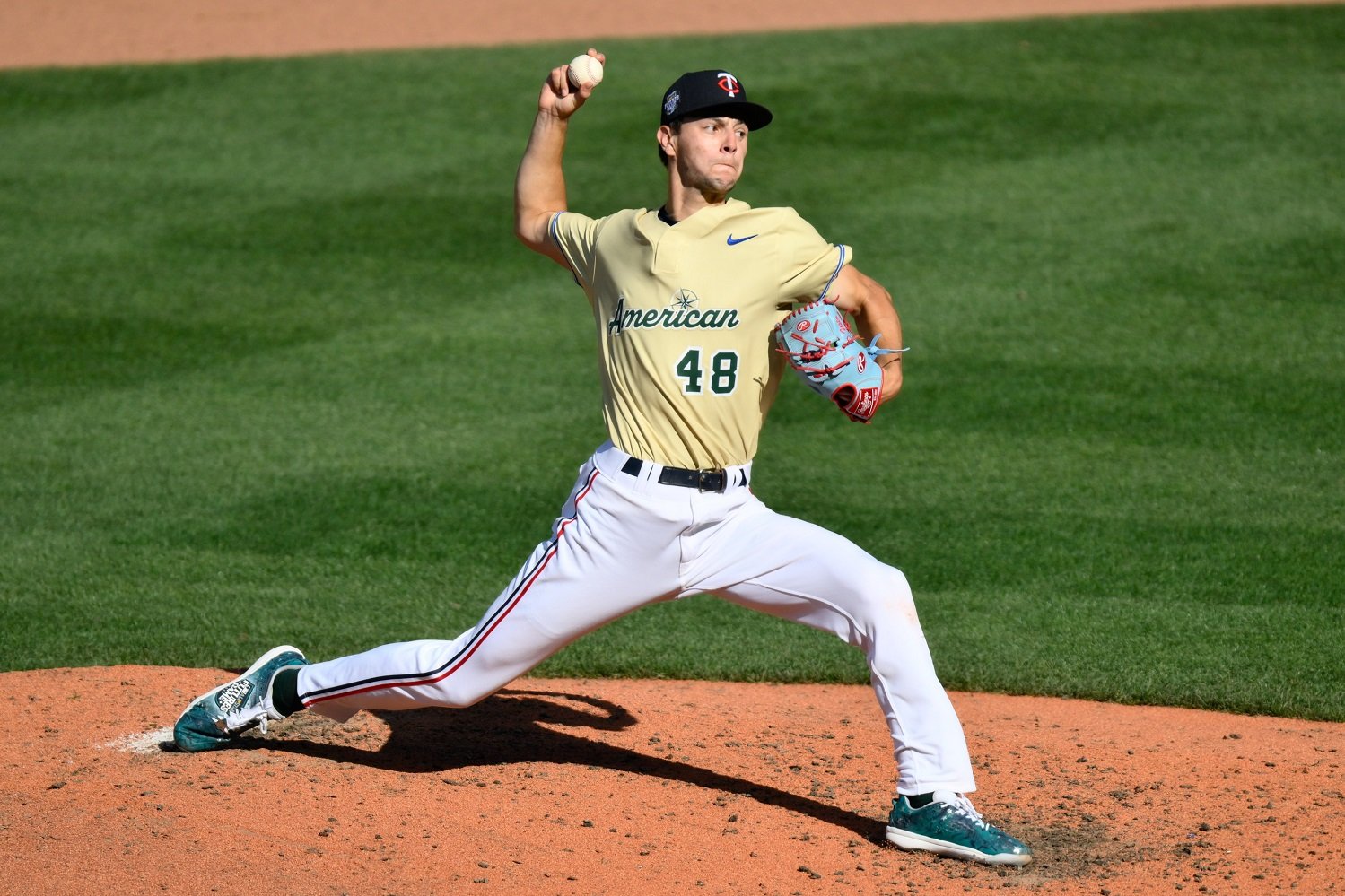 TRANSACTIONS None Futures Game Buried somewhere deep beneath the streaming super highway, MLB’s yearly Futures Game played out, with the NL team handily beating the AL team 5-0. More important to us Twins fans: RHP David Festa pitched a scoreless inning with one hit and a strikeout of Milwaukee uber-prospect Jackson Chourio on three-straight sliders. He touched 97.6 MPH with his fastball. Saints Sentinel St. Paul 5, Iowa 2 Box Score Brent Headrick: 2 IP, 2 H, 0 ER, 0 BB, 4 K HR: Anthony Prato (4), Chris Williams (16) Multi-hit games: None A breakout seventh inning led the Saints to victory on Saturday. It wasn’t working. No matter the start, and no matter the strategy, Simeon Woods Richardson couldn’t get anyone out. The top prospect entered the weekend with a 7.27 ERA on the year at AAA—and had peripherals unable to offer him any comfort. The Saints offered a solution: Brent Headrick would start the game—acquiring as many outs as he could—allowing Woods Richardson to enter facing a Cubs lineup tuned into a left-hander. It worked. Not only did Headrick crush his outing, Woods Richardson had one of his finest performances all year, punching out seven batters over five innings of work with a lone homer as his only blemish. This may be the blueprint needed for the talented youngster. The bats, while not overwhelming, were well-coordinated, leading to five runs off of six hits—more than enough to best the Cubs. Austin Martin plated the first run with a double into the right-center gap, marking St. Paul’s only score until the third act. Patience begat rewards, with an Anthony Prato moonshot finally breaking the stalemate. And fruit continued to bear, turning a 3-1 advantage into a 5-1 lead after Chris Williams cracked a homer out to the right-center power alley. The Cubs played feisty to end the game, scoring a second time to bring the game within three. With two runners on, Josh Winder snapped off a high curve—thought too high by the home plate ump. Williams, the catcher, disagreed. He quickly called for a challenge, and the robots agreed with his assessment, ending the game on a call overturned. Of course, one could opine about the minors having a better strike/ball system than MLB, but that’s better saved for later. The best Cubs prospect in Saturday’s game was Chase Strumpf. Ranked 23rd in the system by MLB.com, Strumpf struck out three times and committed an error. (Strumpf was the shortstop at JSerra High School which is why Royce Lewis played third base his first three years of varsity baseball.) Wind Surge Wisdom Wichita 4, Tulsa 3 Box Score Travis Adams: 5 IP, 5 H, 3 ER, 0 BB, 5 K HR: Seth Gray (5), Aaron Sabato (5), Alerick Soularie (6) Multi-hit games: DaShawn Keirsey Jr. (3-for-5, 2B) The Wind Surge came back late to win on Saturday. Travis Adams was fine—maybe not great—over his five innings of work, allowing three runs against a surprisingly disappointing Drillers lineup. The 23-year-old started the season poorly, but now has back-to-back five inning starts with one and three runs allowed respectively. His bullpen had his back as well, as Regi Grace and Alex Scherff combined to toss four scoreless frames, carrying Wichita to the finish line as their bats came alive to win it. First it was Seth Gray—sudden and violent—blasting a ball over the centerfield wall to start the scoring, then Aaron Sabato shot one the other way to tie the game at two; Alerick Soularie’s skyscraper gave Wichita the lead for good. DaShawn Keirsey Jr. collected three hits and stole his 28th base of the season. The Drillers are led by Diego Cartaya, the Dodgers next big catcher in their efficient development system. He singled and walked in four trips to the plate. Kernels Nuggets Cedar Rapids 6, Quad Cities 8 Box Score Cory Lewis: 3 IP, 5 H, 2 ER, 1 BB, 3 K HR: Tanner Schobel (14), Noah Miller (3) Multi-hit games: Ben Ross (3-for-4, 2B, 3 R), Noah Miller (2-for-4, HR, R, 4 RBI), Noah Cardenas (2-for-5) The Kernels scored four in the 1st, but couldn’t hold on in a thriller. It was an ambush. Tanner Schobel blasted a fastball 420 feet away into centerfield, surging ahead to first place on the Midwest League homer leaderboard. A few batters later, Noah Miller became the one jogging safely around the bases—and his homer plated three runners, leading to a commanding 4-0 advantage. Unfortunately, Cory Lewis wasn’t sharp. The typically tough righty mis-fired and battled, leading to an inflated pitch count as the River Bandits spit on obvious balls and waited out hittable strikes. He was out after three. Malik Barrington held down the fort for two frames, handing the game off to Alejandro Hidalgo. His Mr. Hyde appeared. A laborious sixth shifted favor towards the River Bandits; a two-run seventh ended the game for good. While Cedar Rapids scored twice after their initial outburst, their bats couldn’t break through to save their lost lead, and the Kernels ended up falling with a bases-loaded groundout in the 9th. Gavin Cross—Kansas City’s best prospect—singled once and plated two runs. Mussel Matters Wet playing conditions ended this game before it began, and the Mussels will play a double-header on Sunday. Complex Chronicles The FCL Twins did not play on Saturday. Dominican Dailies DSL Twins 10, DSL Rockies 11 (10 Innings) Box Score Miguel Cordero: 3 1/3 IP, 6 H, 2 ER, 4 BB, 3 K HR: Carlos Silva (1) Multi-hit games: Dameury Pena (2-for-4, 2 R, RBI), Moises Lopez (3-for-4, 2B, 3B, R, 4 RBI), Carlos Silva (2-for-4, HR, 2B, R, 2 RBI) The DSL Twins lost a classic, sloppy DSL game on Saturday. These things happen when your starting pitcher is 16-years-old (born in 2006; hope that doesn’t ruin your Sunday). Miguel Cordero peppered the plate, making judicial use of his allotted targets to fire off four walks and five runs allowed. In his defense, his defense failed him for a few of those runs. Also in his defense, he’s two years away from being legally allowed to vote. The DSL Twins offense was prolific, plating 10 runs off of eight hits and seven walks, leaving just five men on base. Dameury Pena, Moises Lopez, and Carlos Silva (not that one) were your stars: the trio combined for seven knocks—with four going for extra-bases. Lopez served as a complex hero, though, as he drove in four runs and gave a few back with a pair of errors. TWINS DAILY PLAYERS OF THE DAY Twins Daily Minor League Pitcher of the Day – Simeon Woods Richardson Twins Daily Minor League Hitter of the Day – Carlos Silva PROSPECT SUMMARY Here’s a look at how the Twins Daily Top 20 Twins Prospects performed: #3 - Emmanuel Rodriguez (Cedar Rapids) - 1-5 #4 - Edouard Julien (Minnesota) - 2-4, 2B, R #7 - Simeon Woods Richardson (St. Paul) - 5 IP, 3 H, 1 ER, 1 BB, 7 K #8 - David Festa (Wichita) - 1 IP, 1 H, 0 ER, 0 BB, 1 K (Futures Game) #9 - Matt Wallner (St. Paul) - 1-5, RBI #11 - Austin Martin (St. Paul) - 1-5, 2B, RBI, K #13 - Noah Miller (Cedar Rapids) - 2-4, HR, R, 4 RBI, K #15 - Brent Headrick (St. Paul) - 2 IP, 2 H, 0 ER, 0 BB, 4 K SUNDAY’S PROBABLE STARTERS St. Paul @ Iowa (1:08 PM) - RHP Louie Varland Wichita @ Tulsa (1:05 PM) - LHP Aaron Rozek Quad Cities @ Cedar Rapids (1:05 PM) - LHP Christian MacLeod Fort Myers @ Tampa (10:00 AM) - RHP Jose Olivares Fort Myers @ Tampa (30 minutes later)
- 23 comments
-
- 1
-
-
- tanner schobel
- simeon woods richardson
- (and 3 more)
-
With all due respect, Nick, the Twins are not trading for Juan Soto. Image courtesy of Gregory Fisher-USA TODAY Sports OF Tommy Pham, 35-Mets If you missed it, Mets owner Steve Cohen hosted a unique, and somewhat strange press conference in which he processed his team’s weak play with a shrug while admitting that he’s willing to deal pieces to gain prospects. The Twins don’t need Max Scherzer or Justin Verlander—and Pete Alonso is also a pipe dream—but Tommy Pham could be a wise addition. At 35-years-old on a one-year deal, Pham seems like a logical trade chip—and Minnesota should be in. His Baseball Savant profile is as red as the South, as he’s been able smoke fastballs and breaking balls alike, showcasing a rare dynamic hitting ability that made him so coveted a few years back. His glove isn’t great, but who cares. The only issue is the hulking elephant unable to wallflower his way around the room—Joey Gallo. The Twins would likely need to cut bait with him to create space for Pham, and whether they will admit defeat and do so is unclear. RHP Hunter Harvey, 28-Nationals Hunter Harvey looks like someone retrofitted Rod Beck to modern times. He throws gas, almost touching 99 on his average heater while yoinking hitters with an effective split and a slider that’s death to righties. This one isn’t complicated: Brock Stewart’s elbow issues softened a bullpen already lacking a little in depth, and the Twins will need to avoid “Jovani Moran on the mound needing multiple outs against a good team” as much as they can. The only issue is that everyone will probably look to Harvey—what other arm does Washington have—which will inflate his price. RHP Mark Leiter Jr. 32.-Cubs Another reliever, Mark Leiter Jr. is throwing splitters 35% of the time with the Cubs, and he is dominating. His ERA is fine, but his peripherals are mouth-watering—and his style of pitching as a reverse-split lefty-killer could help aid the Twins as they search for Caleb Thielbar’s health and Moran’s control. If neither of those come to pass, Leiter Jr. should be a cheap-ish lefty neutralizer just entering arbitration. RHP Chris Martin, 37-Red Sox There’s something hilarious about a team playing just about as well as the Twins having to sell; should have made your home in an easier division, Boston. Anyways, Martin is on what feels like his hundredth year of solid relief work, as the veteran holds a 1.67 ERA and good peripherals. Not 1.67 ERA peripherals, but good enough. He’s actually found a touch more velo this season, and while the strikeouts are down, his under-the-hood numbers don’t appear strange. Martin is no rental as well; he would be a Twin in 2024 as well if they consummate a trade for him. DH/1B Justin Turner, 38-Red Sox Did you know that Justin Turner was an Oriole way back in 2009? He’s famously the Met Who Couldn’t Hit turned The Dodger Who Could Do Nothing But, and 2023 so far has been yet again consistent—almost boringly so—with a healthy 121 wRC+. Considering Royce Lewis’ injury and José Miranda’s refusal to hit, waiting on the baseball gods to alter their favor may be unwise; Turner could be the name they look to for lineup beefing. He’s not much of a fielder anymore, making Byron Buxton’s permanent residence at the DH slot a tough road block, but few bats available at the deadline could provide more punch. I think if there were any lessons learned from this exercise, it’s that the extra wild card slots have made it more difficult on the buyers, as mediocre teams may buy into their glory, and close up business. Important pieces are no longer free to deal for. There will be surprises—that will never fully go away—but it’ll be hard to dig through and uncover players who can help the Twins going forward. View full article