Matt Braun
-
Posts
1,393 -
Joined
-
Last visited
-
Days Won
1
Content Type
Profiles
News
Minnesota Twins Videos
2026 Minnesota Twins Top Prospects Ranking
2022 Minnesota Twins Draft Picks
Minnesota Twins Free Agent & Trade Rumors, Notes, & Tidbits
Guides & Resources
2023 Minnesota Twins Draft Picks
The Minnesota Twins Players Project
2024 Minnesota Twins Draft Picks
2025 Minnesota Twins Draft Pick Tracker
2026 Minnesota Twins Draft Tracker: Picks & Bonuses
Forums
Blogs
Events
Store
Downloads
Gallery
Everything posted by Matt Braun
-
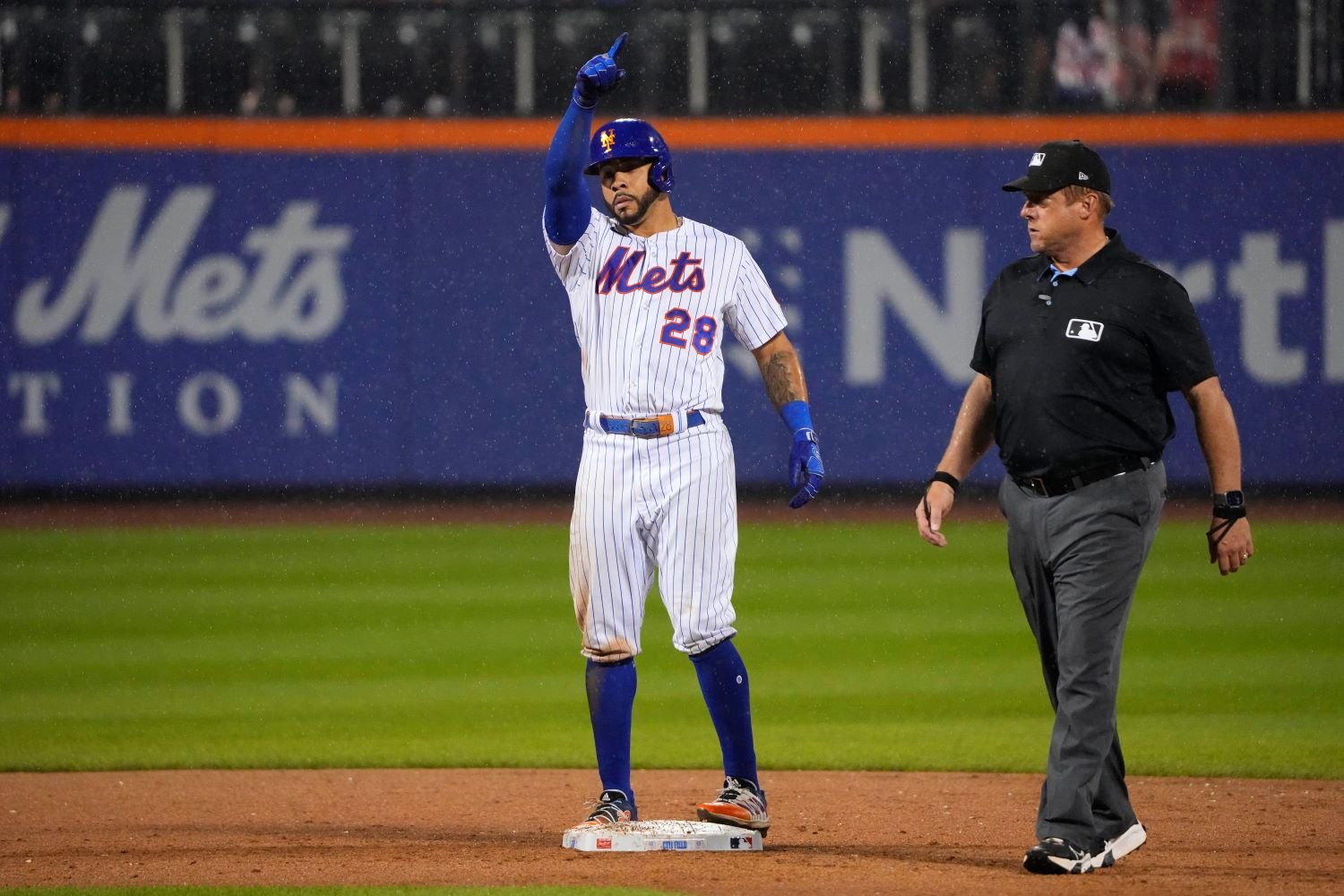 OF Tommy Pham, 35-Mets If you missed it, Mets owner Steve Cohen hosted a unique, and somewhat strange press conference in which he processed his team’s weak play with a shrug while admitting that he’s willing to deal pieces to gain prospects. The Twins don’t need Max Scherzer or Justin Verlander—and Pete Alonso is also a pipe dream—but Tommy Pham could be a wise addition. At 35-years-old on a one-year deal, Pham seems like a logical trade chip—and Minnesota should be in. His Baseball Savant profile is as red as the South, as he’s been able smoke fastballs and breaking balls alike, showcasing a rare dynamic hitting ability that made him so coveted a few years back. His glove isn’t great, but who cares. The only issue is the hulking elephant unable to wallflower his way around the room—Joey Gallo. The Twins would likely need to cut bait with him to create space for Pham, and whether they will admit defeat and do so is unclear. RHP Hunter Harvey, 28-Nationals Hunter Harvey looks like someone retrofitted Rod Beck to modern times. He throws gas, almost touching 99 on his average heater while yoinking hitters with an effective split and a slider that’s death to righties. This one isn’t complicated: Brock Stewart’s elbow issues softened a bullpen already lacking a little in depth, and the Twins will need to avoid “Jovani Moran on the mound needing multiple outs against a good team” as much as they can. The only issue is that everyone will probably look to Harvey—what other arm does Washington have—which will inflate his price. RHP Mark Leiter Jr. 32.-Cubs Another reliever, Mark Leiter Jr. is throwing splitters 35% of the time with the Cubs, and he is dominating. His ERA is fine, but his peripherals are mouth-watering—and his style of pitching as a reverse-split lefty-killer could help aid the Twins as they search for Caleb Thielbar’s health and Moran’s control. If neither of those come to pass, Leiter Jr. should be a cheap-ish lefty neutralizer just entering arbitration. RHP Chris Martin, 37-Red Sox There’s something hilarious about a team playing just about as well as the Twins having to sell; should have made your home in an easier division, Boston. Anyways, Martin is on what feels like his hundredth year of solid relief work, as the veteran holds a 1.67 ERA and good peripherals. Not 1.67 ERA peripherals, but good enough. He’s actually found a touch more velo this season, and while the strikeouts are down, his under-the-hood numbers don’t appear strange. Martin is no rental as well; he would be a Twin in 2024 as well if they consummate a trade for him. DH/1B Justin Turner, 38-Red Sox Did you know that Justin Turner was an Oriole way back in 2009? He’s famously the Met Who Couldn’t Hit turned The Dodger Who Could Do Nothing But, and 2023 so far has been yet again consistent—almost boringly so—with a healthy 121 wRC+. Considering Royce Lewis’ injury and José Miranda’s refusal to hit, waiting on the baseball gods to alter their favor may be unwise; Turner could be the name they look to for lineup beefing. He’s not much of a fielder anymore, making Byron Buxton’s permanent residence at the DH slot a tough road block, but few bats available at the deadline could provide more punch. I think if there were any lessons learned from this exercise, it’s that the extra wild card slots have made it more difficult on the buyers, as mediocre teams may buy into their glory, and close up business. Important pieces are no longer free to deal for. There will be surprises—that will never fully go away—but it’ll be hard to dig through and uncover players who can help the Twins going forward.
- 49 comments
-
- 3
-

-
- tommy pham
- hunter harvey
- (and 3 more)
-
At least that's the last of needing to ask around for an Apple TV login. Image courtesy of Matt Blewett-USA TODAY Sports Box Score Bailey Ober: 6 IP, 4 H, 1 ER, 3 BB, 5 K Home Runs: None Bottom 3 WPA: Jhoan Duran (-.287), Max Kepler (-.150), Carlos Correa (-.149) Win Probability Chart (via FanGraphs) It was Bailey Ober’s third time on Apple TV this year; he knew what he had to do. Facing Cole Irvin and an Orioles team fresh off bopping the Yankees, Ober needed to be sharp, accurate. This young Baltimore lineup is capable of crushing anyone—and their seemingly endless supply of talented bats, constantly refreshing and bolstering the position player pool makes them a tough beat. How did it go? Early? Slow. Michael A. Taylor started the game with a diving catch before Ober and Christian Vázquez combined for a strike-em-out-throw-em-out double play to end the frame. The game was in swing. And it seemed that the Twins would have the upper-hand. Irvin’s pitching line from his previous rendezvous with Minnesota appears clean, but the batted ball data reveals a shellacking unseen and unfounded; the Twins creamed nine hard-hit balls off the lefty with just one run scored. But it was a fresh day, and Irvin found what he didn’t have on Sunday. He was excellent. Minnesota’s batters guessed wrong all night. Three hits—one cheesy; the other a little less so; one a solidly struck double—served as the lone damage Irvin felt, as he struck out four batters over 6 ⅓ innings with no runs scored while he stood on the mound. He wasn’t alone in his effort, though, as Cedric Mullins stole a three-run homer from Byron Buxton that surely would have changed the game’s complexion—and the shade of purple this prose would be written with. It proved a turning point. Anthony Santander smoked a double beyond Donovan Solano, leading Ryan O’Hearn to shoot a single to left, placing runners on the corners with no one out. Mullins—of course—flew a ball deep enough out to right field to score the first run of the game. Ober was a little off his game, walking more than you would expect; perhaps striking out a few less, but the single run was more than Irvin allowed, so Ober could do nothing but watch and hope alongside the fans. Things turned almost immediately; the Twins tied the game four pitches after Irvin left as the Mahtomedi native, Mike Baumann, served up a single to Willi Castro, allowing Kyle Farmer to score with some wise baserunning. So began the late-game, bullpen-ing and lineup shuffling present in a close game like this. Relievers entered, acquiring as many outs as they could, battling starters and pinch-hitters alike in a race to score first before the last out of the ninth. Baltimore nearly had their rally, but a double play lineout picking off a greedy Gunnar Henderson ended that dream before it could start. The game stayed in its Cold War state until extra-innings, when a stretched-out Jhoan Duran finally cracked. His ninth was dominant—a pair of strikeouts; a controversial running lane violation—but his 10th was weak, leading to two runs to score off him as the Twins were now suddenly playing from behind again. Félix Bautista experienced no such issues, and he blew away Minnesota to end the game. Notes: The Twins earned two Statcast "Barrels" on Friday; one from Buxton on his robbed homer, and another from Farmer on his opposite-field double off Irvin. The outing was Ober's ninth quality start of the season. Willi Castro's 19th stolen base moved him into a tie at 7th place amongst AL base stealers, one away from the top five and 24 (!!!) away from the leader, Esteury Ruiz. Griffin Jax has not allowed an earned run since May 19th. Post-Game Interview: What’s Next? The Twins and Orioles will play the second game of the series on Saturday with first pitch coming at 1:10 PM; Sonny Gray will pitch opposite of former Twins farmhand, Tyler Wells. Bullpen Usage Spreadsheet View full article
- 41 replies
-
- 1
-
-
- bailey ober
- byron buxton
- (and 2 more)
-
Twins 1, Orioles 3 (10 Innings): Baltimore Bests Minnesota in Extras
Matt Braun posted an article in Twins
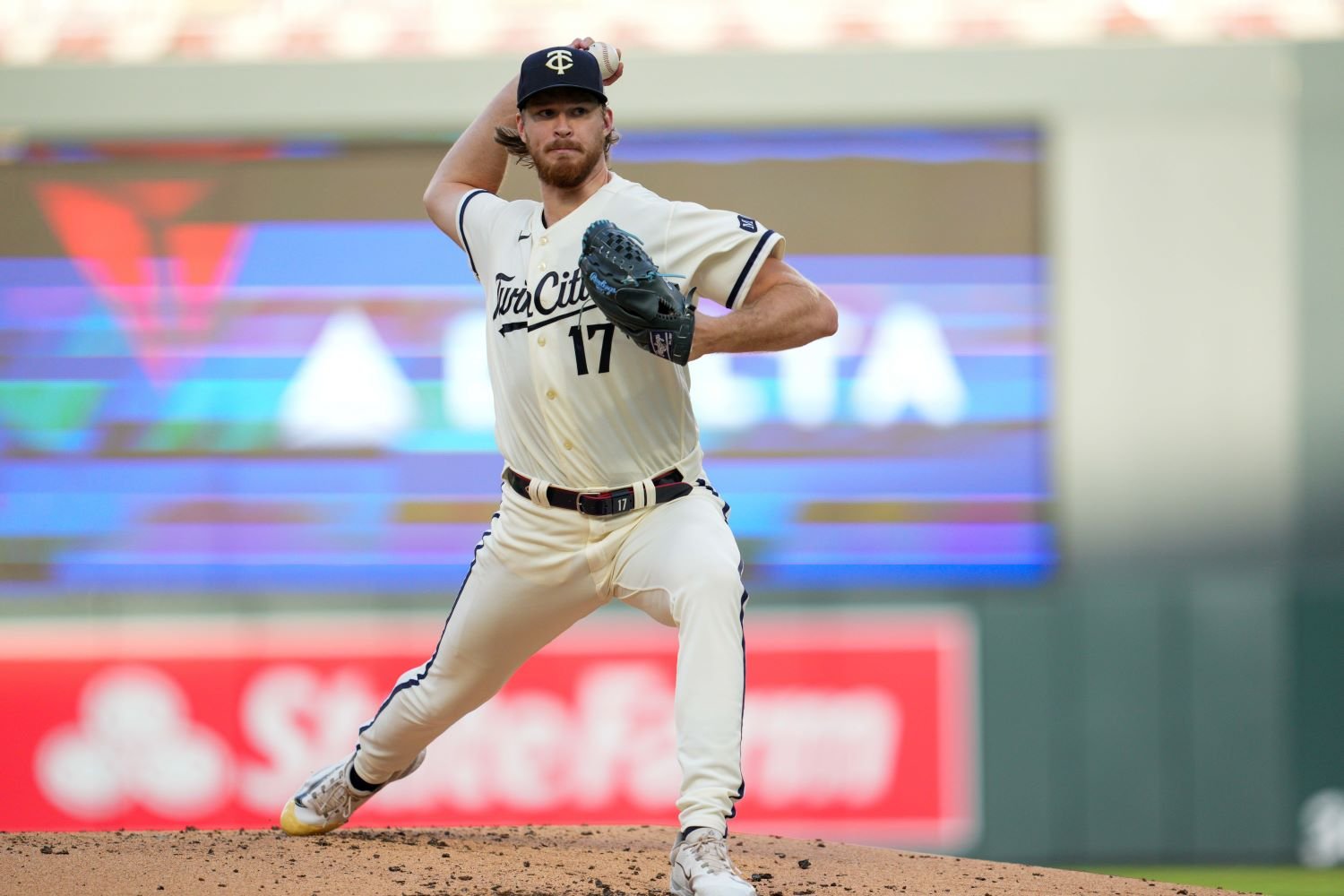 Box Score Bailey Ober: 6 IP, 4 H, 1 ER, 3 BB, 5 K Home Runs: None Bottom 3 WPA: Jhoan Duran (-.287), Max Kepler (-.150), Carlos Correa (-.149) Win Probability Chart (via FanGraphs) It was Bailey Ober’s third time on Apple TV this year; he knew what he had to do. Facing Cole Irvin and an Orioles team fresh off bopping the Yankees, Ober needed to be sharp, accurate. This young Baltimore lineup is capable of crushing anyone—and their seemingly endless supply of talented bats, constantly refreshing and bolstering the position player pool makes them a tough beat. How did it go? Early? Slow. Michael A. Taylor started the game with a diving catch before Ober and Christian Vázquez combined for a strike-em-out-throw-em-out double play to end the frame. The game was in swing. And it seemed that the Twins would have the upper-hand. Irvin’s pitching line from his previous rendezvous with Minnesota appears clean, but the batted ball data reveals a shellacking unseen and unfounded; the Twins creamed nine hard-hit balls off the lefty with just one run scored. But it was a fresh day, and Irvin found what he didn’t have on Sunday. He was excellent. Minnesota’s batters guessed wrong all night. Three hits—one cheesy; the other a little less so; one a solidly struck double—served as the lone damage Irvin felt, as he struck out four batters over 6 ⅓ innings with no runs scored while he stood on the mound. He wasn’t alone in his effort, though, as Cedric Mullins stole a three-run homer from Byron Buxton that surely would have changed the game’s complexion—and the shade of purple this prose would be written with. It proved a turning point. Anthony Santander smoked a double beyond Donovan Solano, leading Ryan O’Hearn to shoot a single to left, placing runners on the corners with no one out. Mullins—of course—flew a ball deep enough out to right field to score the first run of the game. Ober was a little off his game, walking more than you would expect; perhaps striking out a few less, but the single run was more than Irvin allowed, so Ober could do nothing but watch and hope alongside the fans. Things turned almost immediately; the Twins tied the game four pitches after Irvin left as the Mahtomedi native, Mike Baumann, served up a single to Willi Castro, allowing Kyle Farmer to score with some wise baserunning. So began the late-game, bullpen-ing and lineup shuffling present in a close game like this. Relievers entered, acquiring as many outs as they could, battling starters and pinch-hitters alike in a race to score first before the last out of the ninth. Baltimore nearly had their rally, but a double play lineout picking off a greedy Gunnar Henderson ended that dream before it could start. The game stayed in its Cold War state until extra-innings, when a stretched-out Jhoan Duran finally cracked. His ninth was dominant—a pair of strikeouts; a controversial running lane violation—but his 10th was weak, leading to two runs to score off him as the Twins were now suddenly playing from behind again. Félix Bautista experienced no such issues, and he blew away Minnesota to end the game. Notes: The Twins earned two Statcast "Barrels" on Friday; one from Buxton on his robbed homer, and another from Farmer on his opposite-field double off Irvin. The outing was Ober's ninth quality start of the season. Willi Castro's 19th stolen base moved him into a tie at 7th place amongst AL base stealers, one away from the top five and 24 (!!!) away from the leader, Esteury Ruiz. Griffin Jax has not allowed an earned run since May 19th. Post-Game Interview: What’s Next? The Twins and Orioles will play the second game of the series on Saturday with first pitch coming at 1:10 PM; Sonny Gray will pitch opposite of former Twins farmhand, Tyler Wells. Bullpen Usage Spreadsheet
- 41 comments
-
- 1
-
-
- bailey ober
- byron buxton
- (and 2 more)
-
Whatever they talked about it, it sure worked. Image courtesy of © Mitch Stringer-USA TODAY Sports Box Score Pablo López: 6 IP, 3 H, 1 ER, 3 BB, 6 K Home Runs: Joey Gallo (14), Max Kepler (11), Byron Buxton (14) Top 3 WPA: Pablo López (.144), Joey Gallo (.111), Royce Lewis (.096) Win Probability Chart (via FanGraphs) The infamous players' meeting—was all anyone could talk about. No one knows what precisely the hitters told each other beyond that Kyle Farmer offered incentives to his fellow batters and that—perhaps, hopefully—the bats would forget their previous struggles and embrace the endless future and its potential success. It seemed to work early. Carlos Correa smashed a single up the middle, and Alex Kirilloff lined a hit into right to brew early trouble for Baltimore starter Dean Kremer. It was too much. Joey Gallo adjusted, fouling off a tough cutter to find his bread and butter: a middle-middle fastball soon to be a souvenir for the Orioles faithful. Kepler made his adjustment, pulverizing a cement mixer well enough into right field in his mind to drop the bat with some swagger out of the box. And Byron Buxton adjusted, eschewing the puzzling left-handed troubles that have plagued the organization since Nelson Cruz became a Ray with a three-run homer that knocked the monkey entirely off Minnesota's back. Pablo López made his adjustment… in an atypical manner. Rather than dominate with an incredible strikeout-to-walk rate—and far too many runs—López walked three with just six strikeouts but only one earned run. He wobbled early, allowing baserunners when the game was fresh and still un-won, before settling in and cruising through Baltimore's lineup; a cheeky Adley Rutchsman solo shot was his lone error. His hat may have been thoroughly drenched in sweat, but his start was an easy success against a solid lineup. Immediate offensive excitement gave way to typical, atrophying scoring; the Twins didn't score following the 4th inning as the team sat on their comfortable lead, waiting out Baltimore's outs until the team could claim victory. And so they did. Jovani Moran, Emilio Pagán, and Jordan Balazovic continued the pitching effort, handing Minnesota a trio of scoreless frames to end the game decidedly in their favor. Notes: Pablo López earned 14 swings-and-misses on Friday. The Twins earned four Statcast "Barrels" on Friday—one from Byron Buxton, Max Kepler, Joey Gallo, and Kyle Farmer. Post-Game Interview: What’s Next? Minnesota and Baltimore will play the second game of the series on Saturday; Bailey Ober is set to face off against Kyle Bradish with first pitch at 12:05 PM. Bullpen Usage Spreadsheet View full article
- 45 replies
-
- 1
-
-
- joey gallo
- byron buxton
- (and 3 more)
-
Twins 8, Orioles 1: Players-Only Meeting Leads to Drumming in Baltimore
Matt Braun posted an article in Twins
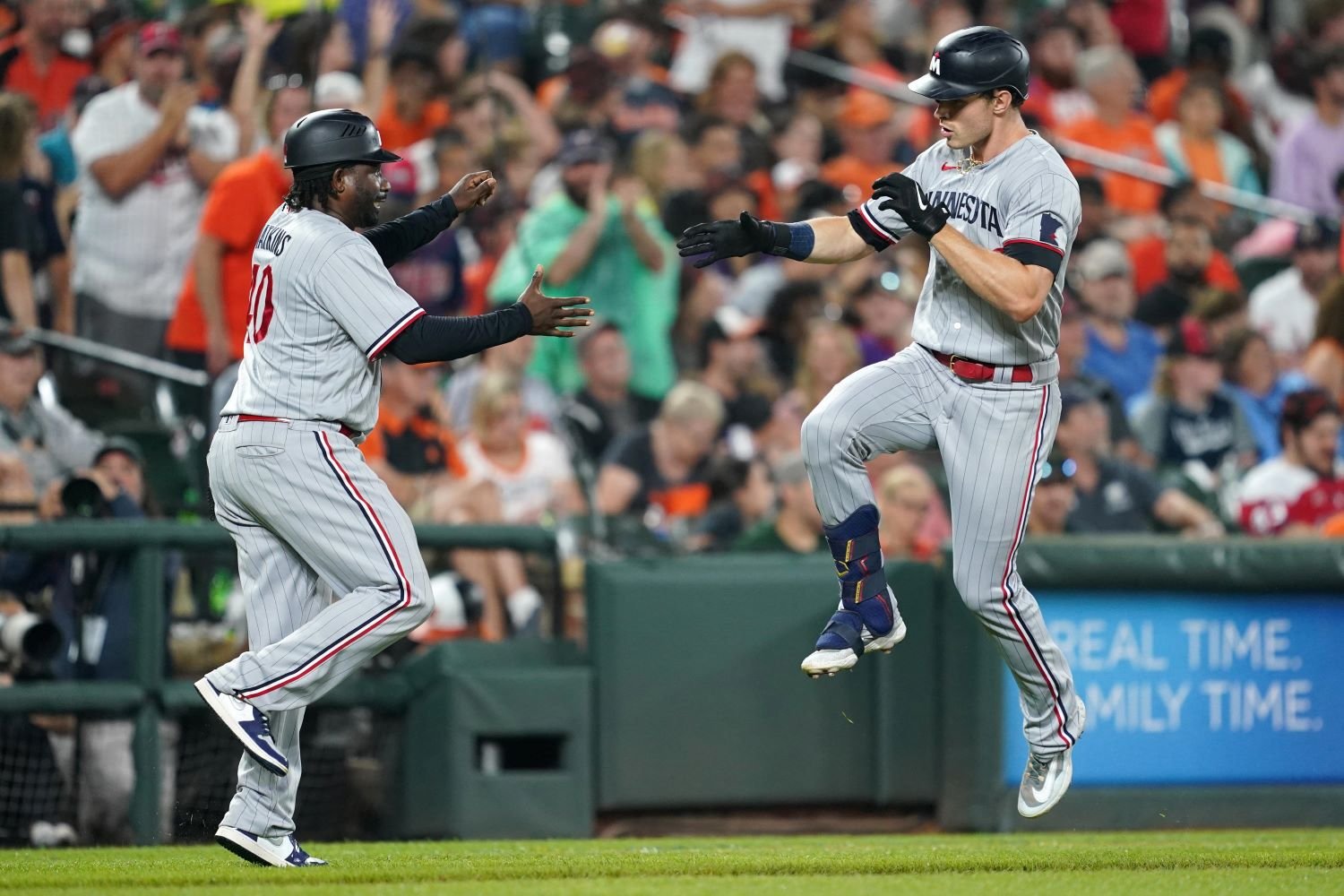 Box Score Pablo López: 6 IP, 3 H, 1 ER, 3 BB, 6 K Home Runs: Joey Gallo (14), Max Kepler (11), Byron Buxton (14) Top 3 WPA: Pablo López (.144), Joey Gallo (.111), Royce Lewis (.096) Win Probability Chart (via FanGraphs) The infamous players' meeting—was all anyone could talk about. No one knows what precisely the hitters told each other beyond that Kyle Farmer offered incentives to his fellow batters and that—perhaps, hopefully—the bats would forget their previous struggles and embrace the endless future and its potential success. It seemed to work early. Carlos Correa smashed a single up the middle, and Alex Kirilloff lined a hit into right to brew early trouble for Baltimore starter Dean Kremer. It was too much. Joey Gallo adjusted, fouling off a tough cutter to find his bread and butter: a middle-middle fastball soon to be a souvenir for the Orioles faithful. Kepler made his adjustment, pulverizing a cement mixer well enough into right field in his mind to drop the bat with some swagger out of the box. And Byron Buxton adjusted, eschewing the puzzling left-handed troubles that have plagued the organization since Nelson Cruz became a Ray with a three-run homer that knocked the monkey entirely off Minnesota's back. Pablo López made his adjustment… in an atypical manner. Rather than dominate with an incredible strikeout-to-walk rate—and far too many runs—López walked three with just six strikeouts but only one earned run. He wobbled early, allowing baserunners when the game was fresh and still un-won, before settling in and cruising through Baltimore's lineup; a cheeky Adley Rutchsman solo shot was his lone error. His hat may have been thoroughly drenched in sweat, but his start was an easy success against a solid lineup. Immediate offensive excitement gave way to typical, atrophying scoring; the Twins didn't score following the 4th inning as the team sat on their comfortable lead, waiting out Baltimore's outs until the team could claim victory. And so they did. Jovani Moran, Emilio Pagán, and Jordan Balazovic continued the pitching effort, handing Minnesota a trio of scoreless frames to end the game decidedly in their favor. Notes: Pablo López earned 14 swings-and-misses on Friday. The Twins earned four Statcast "Barrels" on Friday—one from Byron Buxton, Max Kepler, Joey Gallo, and Kyle Farmer. Post-Game Interview: What’s Next? Minnesota and Baltimore will play the second game of the series on Saturday; Bailey Ober is set to face off against Kyle Bradish with first pitch at 12:05 PM. Bullpen Usage Spreadsheet
- 45 comments
-
- 2
-
-
- joey gallo
- byron buxton
- (and 3 more)
-
All I know is, in the off-season, the Twins need to swipe a few of Atlantas hitting coaches or coordinators; I’ve never seen a group of hitters so dynamic.
- 117 replies
-
- 6
-
-
- kenta maeda
- jovani moran
- (and 2 more)
-
Pablo Lopez is Better than His ERA
Matt Braun replied to Ted Wiedmann's topic in Twins Daily Front Page News
This was a great Pablo López article that may accidentally be a “why is the twins defense so bad again?” piece. -
Top Twins Minor League Performers in Season's First Half
Matt Braun replied to Seth Stohs's topic in Twins Minor League Talk
That Kernels rotation is looking incredible these days. Not sure if there’s a real weakness.- 19 replies
-
- 1
-
-
- regi grace
- chris williams
- (and 3 more)
-
That was 1 (one) outing. I do believe that every reliever in baseball has an outing like that you could point to; Pagán isn’t unique in that regards.
-
I agree that the emotional aspect is overblown, but I can’t agree that he is “valuable” in a role that—for the most part—only sees him enter in games the team is already losing. That’s a human white flag. Only five times this year has the team brought him in when the score was tied or when the team was up by two or fewer runs. That’s a lot of mop-up duty just about any half-decent reliever could do.
-
 TRANSACTIONS OF Kyle Garlick cleared waivers and returned to the Saints. INF Michael Helman transferred to 60-day IL (left shoulder dislocation) RHP Alex Scherff transferred to AA Wichita Saints Sentinel St. Paul 7, Toledo 5 Box Score Aaron Sanchez: 4 IP, 6 H, 4 ER, 3 BB, 4 K HR: None Multi-hit games: Andrew Stevenson (3-for-4, 3B, 2 R, RBI, BB), Jose Miranda (2-for-5, 2B, R), Matt Wallner (2-for-4, 2B, R, 3 RBI, BB), Andrew Bechtold (2-for-4, 2 2B, R, 2 RBI), Jair Camargo (2-for-4, 2B) The Saints stomped 14 hits on the Mud Hens, besting Toledo in an offensive flurry. It didn’t appear that St. Paul’s bats were set to thrive like this. The early goings were rusty, slow. They mustered one run before the fifth before finally breaking through on a two-run knock by Matt Wallner (who also doubled and walked—mentioned for no particular reason). The seventh inning proved to be the critical frame; neither Anthony Misiewicz or old friend Matt Wisler could halt St. Paul’s bats from knocking around a trio of extra-base hits. They ended up scoring four—just enough to win the game. Aaron Sanchez was Aaron Sanchez, necessitating St. Paul’s multi-inning specialists to cover a significant innings total to win the game. They did. Josh Winder, Oliver Ortega, and Patrick Murphy combined to allow one run in the following five frames; Winder was especially crucial, striking out three over two scoreless innings. The Saints turned three double plays on Saturday. Gilberto Celestino stole his second base of the season; he stole five bases in 2022. Justyn-Henry Malloy is Detroit's seventh-best prospect and he singled in five trips to the plate. Wind Surge Wisdom Wichita 4, Arkansas 7 Box Score Jose Bravo: 4 2/3 IP, 6 H, 4 ER, 1 BB, 3 K HR: David Bañuelos (5) Multi-hit games: None A middle-inning streak of bleeding runs cost Wichita the game on Saturday. There’s nothing wrong with allowing runs in back-to-back innings; doing so in five straight frames is a cause for concern, though. Starter Jose Bravo and reliever Hunter McMahon couldn’t find the cure for their ails, finding Arkansas capable of ambushing them with no outs and two outs all the same. Wichita’s bats held steady for a little while but could not match their opponents’ outburst. A David Bañuelos bomb followed by a Brooks Lee RBI single in the third knotted the game, but that was close as they would get in Saturday’s affair; Arkansas’ pitchers were simply too good. Even their fourth and final run came via an error. Lee was characteristically inconsistent in the field, committing his 11th error of the season while also turning in a doozy of a defensive gem with this spinning throw: Hopefully the good continues to overtake the bad with him. Yoyner Fajardo swiped his 20th base on Saturday. Jonatan Clase—Seattle's 11th-best prospect—struck out in a pinch-hitting appearance. Kernels Nuggets Cedar Rapids’ game was suspended in the third inning and will be continued on Sunday. Mussel Matters Fort Myers 7, Tampa 9 Box Score Develson Aria: 2 1/3 IP, 3 H, 4 ER, 3 BB, 2 K HR: Danny De Andrade (5), Rafael Cruz (4) Multi-hit games: Danny De Andrade (2-for-5, HR, 2 R, RBI), Rafael Cruz (2-for-5, HR, 2B, R, 2 RBI), Mikey Perez (3-for-4, 2 R, BB) An eighth-inning blowup soiled a potential victory for the Mighty Mussels. It was an offensive display of immense strength; Danny De Andrade and Rafael Cruz spent the first-half of the game flexing their muscles with a pair of solo homers—and an RBI double by Cruz that gave Fort Myers the lead. It wouldn’t last, though. Starter Develson Aria was deeply inefficient, requiring far too early bullpen support. The first arm—Jarret Whorff—did his job marvelously, striking out four over 3 2/3 scoreless innings to hand the rest of his reliever brothers a great chance at keeping the game in hand. They didn’t. Zach Veen and A.J. Labas allowed multiple runs to score on each of their watches, giving Tampa their late victory. Mikey Perez netted three hits in the game and stole his 19th base of the season for good measure. New York’s 19th-best prospect, outfielder Anthony Hall, homered and singled, raking in four RBIs on the night. Complex Chronicles The FCL Twins did not play on Saturday. Dominican Dailies DSL Twins 5, DSL Angels 9 (10 Innings) Box Score Jose Vasquez: 4 IP, 2 H, 2 ER, 4 BB, 6 K HR: None Multi-hit games: Dameury Pena (2-for-3), Ricardo Pena (2-for-5, 2 RBI), Ewing Matos (2-for-4) The DSL Twins played a typical low-scoring affair on Saturday before radically altering course, leading to 10 total 10th-inning runs. 21-year-old Yency De Jesus carried the torch on the mound, tossing five nearly spotless frames with four strikeouts to deliver his team into extras with ease. It was an adventurous day on the bases for Ewing Matos; the right fielder stole a base but was picked off twice, likely in moments of extreme anticipation for his next steal. Perhaps only Ricardo Pena could claim a more frustrating day on the field as the catcher made two throwing errors and allowed a pair of pitches to reach the backstop on his watch. Still, this is the DSL, and these mistakes are bound to happen as the players learn the more precise nuances of the game; they’ll get better eventually. TWINS DAILY PLAYERS OF THE DAY Twins Daily Minor League Pitcher of the Day – Yency De Jesus Twins Daily Minor League Hitter of the Day – Rafael Cruz PROSPECT SUMMARY Here’s a look at how the Twins Daily Top 20 Twins Prospects performed: #1 - Brooks Lee (Wichita) - 1-4, RBI #2 - Royce Lewis (Minnesota) - 1-4, K #4 - Edouard Julien (Minnesota) - 0-5, 3 K #9 - Matt Wallner (St. Paul) - 2-for-4, 2B, R, 3 RBI, BB, K #14 - Jordan Balazovic (Minnesota) - ⅔ IP, 1 H, 0 ER, 0 BB, 0 K #19 - Yunior Severino (Wichita) - 0-4, 4 K SUNDAY’S PROBABLE STARTERS St. Paul @ Toledo (3:05 PM) - LHP Dallas Keuchel Arkansas @ Wichita (1:05 PM) - RHP Travis Adams Beloit @ Cedar Rapids (1:05 PM) - RHP Mike Paredes Fort Myers @ Tampa (11:00 AM) - RHP C.J. Culpepper
 -
St. Paul had more multi-hit batters than not; don't ask about the rest of the farm. TRANSACTIONS OF Kyle Garlick cleared waivers and returned to the Saints. INF Michael Helman transferred to 60-day IL (left shoulder dislocation) RHP Alex Scherff transferred to AA Wichita Saints Sentinel St. Paul 7, Toledo 5 Box Score Aaron Sanchez: 4 IP, 6 H, 4 ER, 3 BB, 4 K HR: None Multi-hit games: Andrew Stevenson (3-for-4, 3B, 2 R, RBI, BB), Jose Miranda (2-for-5, 2B, R), Matt Wallner (2-for-4, 2B, R, 3 RBI, BB), Andrew Bechtold (2-for-4, 2 2B, R, 2 RBI), Jair Camargo (2-for-4, 2B) The Saints stomped 14 hits on the Mud Hens, besting Toledo in an offensive flurry. It didn’t appear that St. Paul’s bats were set to thrive like this. The early goings were rusty, slow. They mustered one run before the fifth before finally breaking through on a two-run knock by Matt Wallner (who also doubled and walked—mentioned for no particular reason). The seventh inning proved to be the critical frame; neither Anthony Misiewicz or old friend Matt Wisler could halt St. Paul’s bats from knocking around a trio of extra-base hits. They ended up scoring four—just enough to win the game. Aaron Sanchez was Aaron Sanchez, necessitating St. Paul’s multi-inning specialists to cover a significant innings total to win the game. They did. Josh Winder, Oliver Ortega, and Patrick Murphy combined to allow one run in the following five frames; Winder was especially crucial, striking out three over two scoreless innings. The Saints turned three double plays on Saturday. Gilberto Celestino stole his second base of the season; he stole five bases in 2022. Justyn-Henry Malloy is Detroit's seventh-best prospect and he singled in five trips to the plate. Wind Surge Wisdom Wichita 4, Arkansas 7 Box Score Jose Bravo: 4 2/3 IP, 6 H, 4 ER, 1 BB, 3 K HR: David Bañuelos (5) Multi-hit games: None A middle-inning streak of bleeding runs cost Wichita the game on Saturday. There’s nothing wrong with allowing runs in back-to-back innings; doing so in five straight frames is a cause for concern, though. Starter Jose Bravo and reliever Hunter McMahon couldn’t find the cure for their ails, finding Arkansas capable of ambushing them with no outs and two outs all the same. Wichita’s bats held steady for a little while but could not match their opponents’ outburst. A David Bañuelos bomb followed by a Brooks Lee RBI single in the third knotted the game, but that was close as they would get in Saturday’s affair; Arkansas’ pitchers were simply too good. Even their fourth and final run came via an error. Lee was characteristically inconsistent in the field, committing his 11th error of the season while also turning in a doozy of a defensive gem with this spinning throw: Hopefully the good continues to overtake the bad with him. Yoyner Fajardo swiped his 20th base on Saturday. Jonatan Clase—Seattle's 11th-best prospect—struck out in a pinch-hitting appearance. Kernels Nuggets Cedar Rapids’ game was suspended in the third inning and will be continued on Sunday. Mussel Matters Fort Myers 7, Tampa 9 Box Score Develson Aria: 2 1/3 IP, 3 H, 4 ER, 3 BB, 2 K HR: Danny De Andrade (5), Rafael Cruz (4) Multi-hit games: Danny De Andrade (2-for-5, HR, 2 R, RBI), Rafael Cruz (2-for-5, HR, 2B, R, 2 RBI), Mikey Perez (3-for-4, 2 R, BB) An eighth-inning blowup soiled a potential victory for the Mighty Mussels. It was an offensive display of immense strength; Danny De Andrade and Rafael Cruz spent the first-half of the game flexing their muscles with a pair of solo homers—and an RBI double by Cruz that gave Fort Myers the lead. It wouldn’t last, though. Starter Develson Aria was deeply inefficient, requiring far too early bullpen support. The first arm—Jarret Whorff—did his job marvelously, striking out four over 3 2/3 scoreless innings to hand the rest of his reliever brothers a great chance at keeping the game in hand. They didn’t. Zach Veen and A.J. Labas allowed multiple runs to score on each of their watches, giving Tampa their late victory. Mikey Perez netted three hits in the game and stole his 19th base of the season for good measure. New York’s 19th-best prospect, outfielder Anthony Hall, homered and singled, raking in four RBIs on the night. Complex Chronicles The FCL Twins did not play on Saturday. Dominican Dailies DSL Twins 5, DSL Angels 9 (10 Innings) Box Score Jose Vasquez: 4 IP, 2 H, 2 ER, 4 BB, 6 K HR: None Multi-hit games: Dameury Pena (2-for-3), Ricardo Pena (2-for-5, 2 RBI), Ewing Matos (2-for-4) The DSL Twins played a typical low-scoring affair on Saturday before radically altering course, leading to 10 total 10th-inning runs. 21-year-old Yency De Jesus carried the torch on the mound, tossing five nearly spotless frames with four strikeouts to deliver his team into extras with ease. It was an adventurous day on the bases for Ewing Matos; the right fielder stole a base but was picked off twice, likely in moments of extreme anticipation for his next steal. Perhaps only Ricardo Pena could claim a more frustrating day on the field as the catcher made two throwing errors and allowed a pair of pitches to reach the backstop on his watch. Still, this is the DSL, and these mistakes are bound to happen as the players learn the more precise nuances of the game; they’ll get better eventually. TWINS DAILY PLAYERS OF THE DAY Twins Daily Minor League Pitcher of the Day – Yency De Jesus Twins Daily Minor League Hitter of the Day – Rafael Cruz PROSPECT SUMMARY Here’s a look at how the Twins Daily Top 20 Twins Prospects performed: #1 - Brooks Lee (Wichita) - 1-4, RBI #2 - Royce Lewis (Minnesota) - 1-4, K #4 - Edouard Julien (Minnesota) - 0-5, 3 K #9 - Matt Wallner (St. Paul) - 2-for-4, 2B, R, 3 RBI, BB, K #14 - Jordan Balazovic (Minnesota) - ⅔ IP, 1 H, 0 ER, 0 BB, 0 K #19 - Yunior Severino (Wichita) - 0-4, 4 K SUNDAY’S PROBABLE STARTERS St. Paul @ Toledo (3:05 PM) - LHP Dallas Keuchel Arkansas @ Wichita (1:05 PM) - RHP Travis Adams Beloit @ Cedar Rapids (1:05 PM) - RHP Mike Paredes Fort Myers @ Tampa (11:00 AM) - RHP C.J. Culpepper View full article
-
George Frazier, Reliever From the 1987 World Series Team, Dies at Age 68
Matt Braun posted an article in Twins
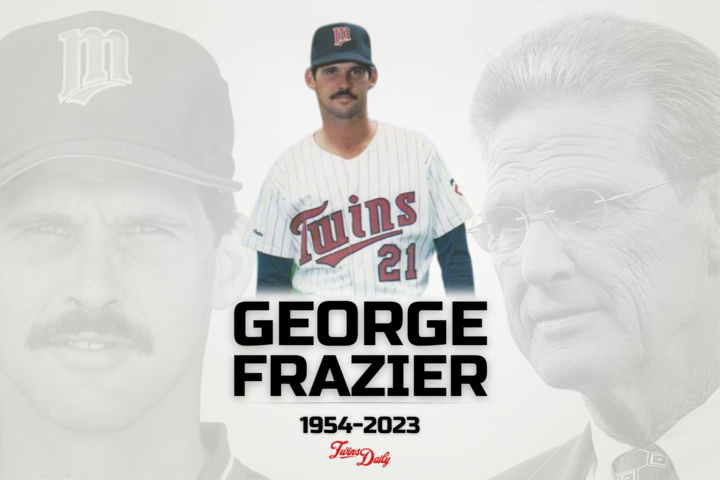 The game was well in hand. The Twins took a quick 1-0 advantage off a Greg Gagne homer, but Jim Lindeman almost immediately tied the match with a single in the bottom half of the frame. Then Tom Lawless hit the most infamous homer of his career, flipping his bat with the kind of swagger baseball would only begin to accept decades later, and the dam broke on the Twins. The inning drowned them. George Frazier finally entered in the seventh inning with a five-run deficit, struck out two over a pair of frames with a few fly balls along the way, and left the mound as one of the only successful Minnesota pitchers that night. No one knew it, but that would be Frazier’s final MLB career outing. Oklahoma-born and drafted, George Frazier journey-manned his way through a 10-year MLB career, evolving from back-end reliever on the pre-Herzog Cardinals, to stunning Yankee discovery, to 1981 World Series goat, to an often-traded commodity fortunate enough to latch onto the 1987 Twins for his last go-around in the majors. Typically traded for players more famous than himself—he left Cleveland with Rick Sutcliffe to join the Cubs; Joe Carter returned in the deal—Frazier worked to carve out his MLB career. 'I wasn't entitled to pitch in the 1981 World Series. I wasn't entitled to pitch in the 1987 World Series. It was a privilege I had an opportunity to do that, and I still feel that every day.' When much-maligned reliever Ron Davis was in the midst of a disastrous 1986 campaign, the Twins packaged him and Dewayne Coleman to acquire Frazier along with Ray Fontenot and Julius McDougal. McDougal never made the majors, and Fontenot’s MLB career quickly ended, but the trade accentuated the need for the Twins to fix their abysmal bullpen. Frazier helped, but major aid came in Minnesota signing Juan Berenguer and trading for Jeff Reardon—two arms critical to the World Series victory. "George was always a friendly face that came into the visiting clubhouse and came into the visitors' manager's office," [Rockies manager Bud] Black told MLB.com. "I always enjoyed my conversations with George. He'd come in, sit down on the chair, and we'd talk baseball. We were contemporaries, to a certain extent. Our timelines overlapped, and it was an easy conversation. It really was." Frazier’s Twins career was brief—he threw far more innings with the Yankees and Cubs—but he reliably gobbled up frames for a 1987 team desperate for any reliable arms. The same team that handed 42-year-old Steve Carlton 43 innings of work called on Frazier 54 times, often calling upon him in the eighth inning to keep the game close. He did just that, putting up the fourth-best ERA amongst the typical group of relievers Tom Kelly relied on that year. He was a true character—the kind of guy seemingly inevitably attracted to baseball. In an alleged meeting with then-commissioner Peter Ueberroth, he fought back against allegations that he used foreign substances, claiming that “[a]ll of the substances [he used] are made in the US." Following his playing career, Frazier tried his hand at broadcasting. Although he was known to be a wild quote, often speaking his mind when others would find such comments uncouth, Frazier latched on with the Colorado Rockies in 1998, becoming “a mainstay and the voice behind many classic calls on Rockies broadcasts,” as the official Rockies Twitter account wrote on June 19th. "I had more fun when I made $216.84 every two week in Class A ball and I didn't have to pay Uncle Sam $285,000 a year in taxes. ... The money's great, but all of it goes to my ex-wife [slight laugh], to be honest. She's driving a Mercedes and I'm driving a van, if that tells you anything." He provided color commentary on the TV broadcast through 2015, sitting front-row for a tremendous era of Rockies baseball, highlighted by the team’s magical 2007 run to the World Series. Frazier is survived by his sons, Matthew and Parker, the latter who was drafted in 2007 by the Rockies, and a daughter, Georgia, who was crowned Miss Oklahoma in 2015. ------------------------------------- Sources: B/R Bullpen - George Frazier. Gaydos, Ryan, World Series champ George Frazier dead at 68, FoxNews. Raskin, Alex, George Frazier, major league pitcher who played in the World Series for the Yankees and Twins, dies at 68 after battling undisclosed illness, DailyMail. Rockies, Twitter post, June 19th, 2023, 4:20 PM. Star Tribune Staff, George Frazier, member of Twins 1987 World Series championship team, dead at 68, StarTribune.
 -
Frazier helped Minnesota win it all in 1987 before becoming the color commentator for the Rockies for 17 seasons. Image courtesy of Thiéres Rabelo The game was well in hand. The Twins took a quick 1-0 advantage off a Greg Gagne homer, but Jim Lindeman almost immediately tied the match with a single in the bottom half of the frame. Then Tom Lawless hit the most infamous homer of his career, flipping his bat with the kind of swagger baseball would only begin to accept decades later, and the dam broke on the Twins. The inning drowned them. George Frazier finally entered in the seventh inning with a five-run deficit, struck out two over a pair of frames with a few fly balls along the way, and left the mound as one of the only successful Minnesota pitchers that night. No one knew it, but that would be Frazier’s final MLB career outing. Oklahoma-born and drafted, George Frazier journey-manned his way through a 10-year MLB career, evolving from back-end reliever on the pre-Herzog Cardinals, to stunning Yankee discovery, to 1981 World Series goat, to an often-traded commodity fortunate enough to latch onto the 1987 Twins for his last go-around in the majors. Typically traded for players more famous than himself—he left Cleveland with Rick Sutcliffe to join the Cubs; Joe Carter returned in the deal—Frazier worked to carve out his MLB career. 'I wasn't entitled to pitch in the 1981 World Series. I wasn't entitled to pitch in the 1987 World Series. It was a privilege I had an opportunity to do that, and I still feel that every day.' When much-maligned reliever Ron Davis was in the midst of a disastrous 1986 campaign, the Twins packaged him and Dewayne Coleman to acquire Frazier along with Ray Fontenot and Julius McDougal. McDougal never made the majors, and Fontenot’s MLB career quickly ended, but the trade accentuated the need for the Twins to fix their abysmal bullpen. Frazier helped, but major aid came in Minnesota signing Juan Berenguer and trading for Jeff Reardon—two arms critical to the World Series victory. "George was always a friendly face that came into the visiting clubhouse and came into the visitors' manager's office," [Rockies manager Bud] Black told MLB.com. "I always enjoyed my conversations with George. He'd come in, sit down on the chair, and we'd talk baseball. We were contemporaries, to a certain extent. Our timelines overlapped, and it was an easy conversation. It really was." Frazier’s Twins career was brief—he threw far more innings with the Yankees and Cubs—but he reliably gobbled up frames for a 1987 team desperate for any reliable arms. The same team that handed 42-year-old Steve Carlton 43 innings of work called on Frazier 54 times, often calling upon him in the eighth inning to keep the game close. He did just that, putting up the fourth-best ERA amongst the typical group of relievers Tom Kelly relied on that year. He was a true character—the kind of guy seemingly inevitably attracted to baseball. In an alleged meeting with then-commissioner Peter Ueberroth, he fought back against allegations that he used foreign substances, claiming that “[a]ll of the substances [he used] are made in the US." Following his playing career, Frazier tried his hand at broadcasting. Although he was known to be a wild quote, often speaking his mind when others would find such comments uncouth, Frazier latched on with the Colorado Rockies in 1998, becoming “a mainstay and the voice behind many classic calls on Rockies broadcasts,” as the official Rockies Twitter account wrote on June 19th. "I had more fun when I made $216.84 every two week in Class A ball and I didn't have to pay Uncle Sam $285,000 a year in taxes. ... The money's great, but all of it goes to my ex-wife [slight laugh], to be honest. She's driving a Mercedes and I'm driving a van, if that tells you anything." He provided color commentary on the TV broadcast through 2015, sitting front-row for a tremendous era of Rockies baseball, highlighted by the team’s magical 2007 run to the World Series. Frazier is survived by his sons, Matthew and Parker, the latter who was drafted in 2007 by the Rockies, and a daughter, Georgia, who was crowned Miss Oklahoma in 2015. ------------------------------------- Sources: B/R Bullpen - George Frazier. Gaydos, Ryan, World Series champ George Frazier dead at 68, FoxNews. Raskin, Alex, George Frazier, major league pitcher who played in the World Series for the Yankees and Twins, dies at 68 after battling undisclosed illness, DailyMail. Rockies, Twitter post, June 19th, 2023, 4:20 PM. Star Tribune Staff, George Frazier, member of Twins 1987 World Series championship team, dead at 68, StarTribune. View full article
-
Twins 4, Tigers 1: Kenta Maeda Dominates in Ejection-Filled Victory
Matt Braun posted an article in Twins
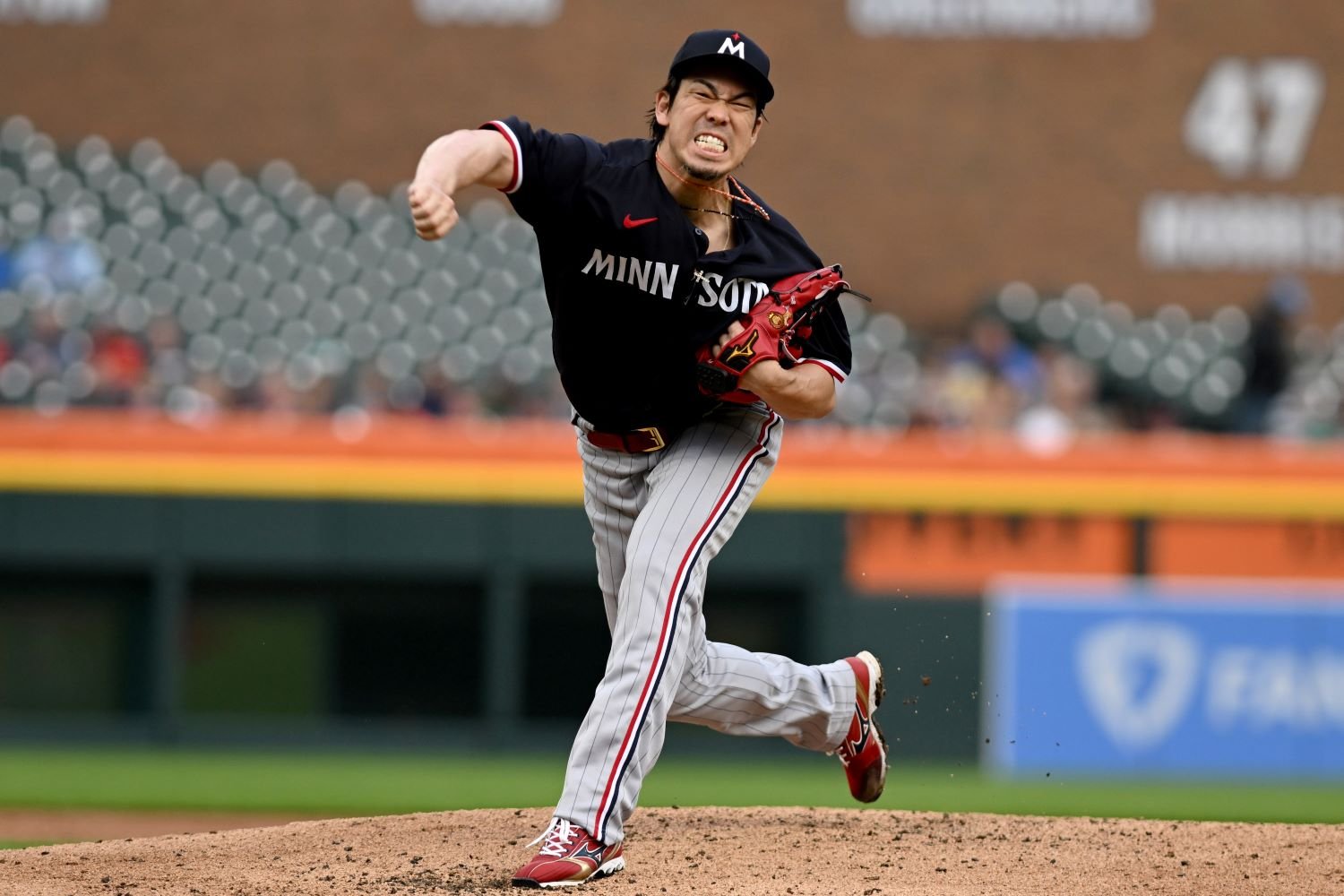 Box Score Kenta Maeda: 5 IP, 3 H, 0 ER, 2 BB, 8 K Home Runs: Royce Lewis (4), Max Kepler (10) Top 3 WPA: Kenta Maeda (.237), Max Kepler (.189), Brock Stewart (.078) Win Probability Chart (via FanGraphs) Kenta Maeda returned to a major-league mound for the first time since his disastrous—and hazardous—start against the Yankees on April 26th. The veteran righty served as a source of consternation and minor troubles, not necessarily in his potential addition to the pitching staff, but because every incumbent seemed well-entrenched. Then Louie Varland struggled. Now it’s up to Maeda to determine his fate. It started a little frustrating, which is really just par for the course in Minnesota this season. Two batters reached in the 1st, but a splitter vexed Kerry Carpenter—complete with the “why the hell did I swing at that” face most hitters make facing the pitch—and Javier Báez grounded into a double play; now the game could start. The Twins offensively faced off against the lefty Joey Wentz, who gave the team a shocking amount of trouble in his previous start—a six-inning, nine-strikeout performance just this past weekend. Royce Lewis quickly established that Friday’s tale would be a little different. He crushed a juicy fastball, pushing the boundaries of how high a homer can go with a 41-degree titanic blast expertly caught by someone holding a baby. Max Kepler—yes, that Max Kepler; yes, off a lefty; yes, after hitting two homers the previous week—then smoked a screaming liner off a lazy cutter, crushing the pitch 401 feet and just above the freshly-lowered homer boundary. Wentz wished it was last Saturday again. In an unusual turn of events, Rocco Baldelli made himself enemies with an umpire yet again, screaming at Lance Barrett for apparently allowing Wentz to pitch before coming set—a grievous sin. Indeed, Wentz toed the balk line with his glove movement. Barrett was satisfied; Baldelli disagreed. The ejection was the 15th in 623 games for the now-feisty Baldelli. The 2nd proved predictive in the game’s motion, but not immediately. Maeda punched out the side in the bottom of the frame, washing the events away with energy fueled with mightily missed hacks. And the rest of Maeda’s start played out in a similar fashion; Detroit could only total three hits and two walks off the veteran, and he returned the favor with interest in the form of eight strikeouts—the final punch-out especially sweet as he was able to convince Jayce Tingler to keep him in against Zach McKinstry. But chaos could only restrain itself for so long, and the 6th turned sour with angst. The Twins scored one more run—thank God for Detroit’s clumsy defense—but paid with two more ejections: the first, Michael A. Taylor for complaining about two walks stolen from him by Barrett; the second, assistant hitting coach Derek Shomon, because he woke up wanting to fight (or supported Taylor, whichever you want to believe). The calls were indeed bad, maybe not worse than the common ebbs and flows the strike zone experiences in any game, but for the same event to happen twice to one player, it’s understandable that he would show some emotions—and if Taylor is upset, then you seriously screwed up. So started the running of the bullpens. Jovani Moran allowed two runners to reach base before Tingler ended his show early, calling on Brock Stewart to save the Twins from themselves once more. He did. Mostly. One run did score, but a double play from the lethargic (respectfully) Miguel Cabrera ended the rally, and Stewart made up for the minor gaffe by punching out the side the next inning. Griffin Jax soon earned his bread, leaving the 9th to a familiar friend. Jhoan Duran made easy work of his first target before walking Matt Vierling, perhaps to add a tinge of drama. The great Cabrera fanned at a curve as devastating as any Duran has ever thrown before; the fireballer then somehow one-upped himself, catching Zack Short window-shopping at a nasty downer to conclude an emotional win. Notes: Kenta Maeda earned 11 swings-and-misses on Friday. Minnesota collected two Statcast "Barrels" in the game; one from Max Kepler and another from Kyle Farmer. Twins pitchers struck out 16 batters, the most for Minnesota in 2023 since they punched out 17 Astros on April 8th. Brock Stewart lowered his season ERA to 0.73. Post-Game Interview: What’s Next? The Twins and Tigers will play the second game of their weekend series on Saturday. A later affair, first pitch will exit Reese Olson’s right hand at 6:15 PM; Pablo López follows soon after. Bullpen Usage Spreadsheet
- 34 comments
-
- 7
-
-
- kenta maeda
- max kepler
- (and 2 more)
-
The ghost of Billy Martin must have watched over Comerica on Friday. Image courtesy of © Lon Horwedel-USA TODAY Sports Box Score Kenta Maeda: 5 IP, 3 H, 0 ER, 2 BB, 8 K Home Runs: Royce Lewis (4), Max Kepler (10) Top 3 WPA: Kenta Maeda (.237), Max Kepler (.189), Brock Stewart (.078) Win Probability Chart (via FanGraphs) Kenta Maeda returned to a major-league mound for the first time since his disastrous—and hazardous—start against the Yankees on April 26th. The veteran righty served as a source of consternation and minor troubles, not necessarily in his potential addition to the pitching staff, but because every incumbent seemed well-entrenched. Then Louie Varland struggled. Now it’s up to Maeda to determine his fate. It started a little frustrating, which is really just par for the course in Minnesota this season. Two batters reached in the 1st, but a splitter vexed Kerry Carpenter—complete with the “why the hell did I swing at that” face most hitters make facing the pitch—and Javier Báez grounded into a double play; now the game could start. The Twins offensively faced off against the lefty Joey Wentz, who gave the team a shocking amount of trouble in his previous start—a six-inning, nine-strikeout performance just this past weekend. Royce Lewis quickly established that Friday’s tale would be a little different. He crushed a juicy fastball, pushing the boundaries of how high a homer can go with a 41-degree titanic blast expertly caught by someone holding a baby. Max Kepler—yes, that Max Kepler; yes, off a lefty; yes, after hitting two homers the previous week—then smoked a screaming liner off a lazy cutter, crushing the pitch 401 feet and just above the freshly-lowered homer boundary. Wentz wished it was last Saturday again. In an unusual turn of events, Rocco Baldelli made himself enemies with an umpire yet again, screaming at Lance Barrett for apparently allowing Wentz to pitch before coming set—a grievous sin. Indeed, Wentz toed the balk line with his glove movement. Barrett was satisfied; Baldelli disagreed. The ejection was the 15th in 623 games for the now-feisty Baldelli. The 2nd proved predictive in the game’s motion, but not immediately. Maeda punched out the side in the bottom of the frame, washing the events away with energy fueled with mightily missed hacks. And the rest of Maeda’s start played out in a similar fashion; Detroit could only total three hits and two walks off the veteran, and he returned the favor with interest in the form of eight strikeouts—the final punch-out especially sweet as he was able to convince Jayce Tingler to keep him in against Zach McKinstry. But chaos could only restrain itself for so long, and the 6th turned sour with angst. The Twins scored one more run—thank God for Detroit’s clumsy defense—but paid with two more ejections: the first, Michael A. Taylor for complaining about two walks stolen from him by Barrett; the second, assistant hitting coach Derek Shomon, because he woke up wanting to fight (or supported Taylor, whichever you want to believe). The calls were indeed bad, maybe not worse than the common ebbs and flows the strike zone experiences in any game, but for the same event to happen twice to one player, it’s understandable that he would show some emotions—and if Taylor is upset, then you seriously screwed up. So started the running of the bullpens. Jovani Moran allowed two runners to reach base before Tingler ended his show early, calling on Brock Stewart to save the Twins from themselves once more. He did. Mostly. One run did score, but a double play from the lethargic (respectfully) Miguel Cabrera ended the rally, and Stewart made up for the minor gaffe by punching out the side the next inning. Griffin Jax soon earned his bread, leaving the 9th to a familiar friend. Jhoan Duran made easy work of his first target before walking Matt Vierling, perhaps to add a tinge of drama. The great Cabrera fanned at a curve as devastating as any Duran has ever thrown before; the fireballer then somehow one-upped himself, catching Zack Short window-shopping at a nasty downer to conclude an emotional win. Notes: Kenta Maeda earned 11 swings-and-misses on Friday. Minnesota collected two Statcast "Barrels" in the game; one from Max Kepler and another from Kyle Farmer. Twins pitchers struck out 16 batters, the most for Minnesota in 2023 since they punched out 17 Astros on April 8th. Brock Stewart lowered his season ERA to 0.73. Post-Game Interview: What’s Next? The Twins and Tigers will play the second game of their weekend series on Saturday. A later affair, first pitch will exit Reese Olson’s right hand at 6:15 PM; Pablo López follows soon after. Bullpen Usage Spreadsheet View full article
-
Gotta love a game that can speak for itself. Go Twins!
- 45 replies
-
- 8
-
-
- joe ryan
- byron buxton
- (and 3 more)
-
Article: Pumping The Brakes
Matt Braun replied to jdotmcmahon's topic in Twins Daily Front Page News
Extra depth can’t hurt. Consider me a little intrigued if he actually has improved his stuff from the past few seasons. -
Article: Pumping The Brakes
Matt Braun replied to jdotmcmahon's topic in Twins Daily Front Page News
Extra depth can’t hurt. Consider me a little intrigued if he actually has improved his stuff from the past few seasons. -
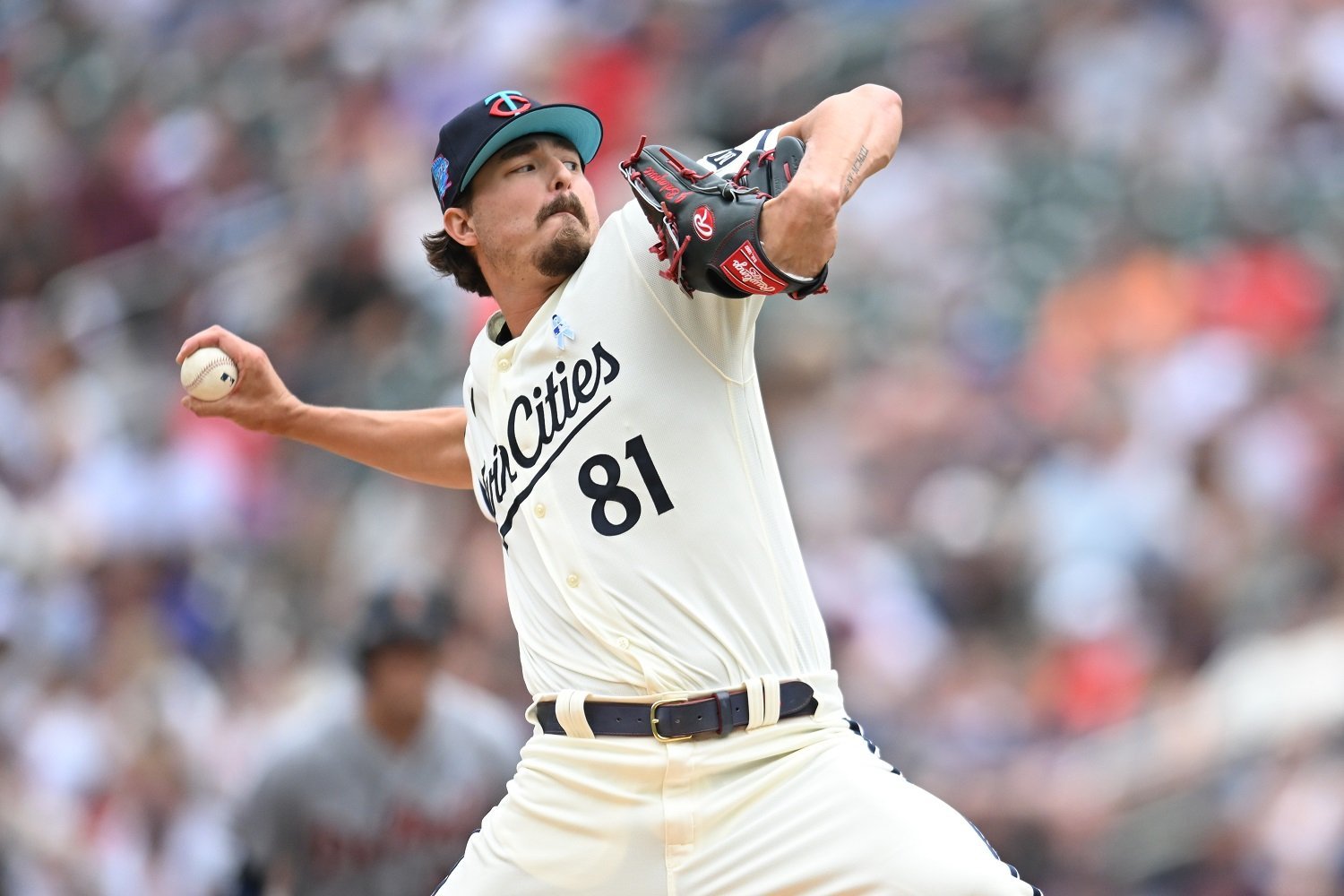 Typically, observing stats from one appearance is a bad idea—what with small samples and all that—but raw data does not require such patience, and we can parse through some of Jordan Balazovic’s Statcast information to understand his game better. Let’s not beat around the bush: here’s what caught my attention from his page. The most impressive pitch in Balazovic’s arsenal is his curveball. It’s a yakker, folks. The scouting reports were accurate. It doesn’t get too much extra vertical break; just 1.7 inches above average places him around Marco Gonzales and Lucas Sims—quality veteran arms who typically acquire outs through other means. What’s notable is his lack of horizontal movement; -5.7 inches of horizontal break places him amongst the top 20 of pitchers with vertical downers. You’d think the pitch may help neutralize platoons, but Balazovic has struggled with opposite-handed batters throughout his minor league career (although that could be for separate reasons). He’s death to righties at his peak, though. Here’s Javier Báez learning that Balazovic’s curve has an endless bottom to it: It appears that, if Balazovic is to stick at the major-league level, his curve will be the main contributor to his success. And that’s because his heater is nothing too special. He gets a little vertical movement on it, but not enough to stand out from the pitching quagmire around him; his outs in the minors have typically been from its location, not its pure bully factor. He does mirror his curveball’s movement perfectly, possibly allowing the offering to play above its raw characteristics—and the Twins have done well in developing vertical specialists in their pitching staff. That prior paragraph may sound like damning with faint praise, but having one average MLB selection and a second potentially plus pitch is enough for anyone to accrue outs these days, especially if they’re wise about usage. That’ll be crucial for Balazovic, as his slider doesn’t stand out too much. His changeup is interesting—owning almost no horizontal break, just like his curveball—so if he can command the pitch, he may have the three/two-and-a-half-ish pitch mix that turns him from tweener reliever to legitimate starter. And that’s the crucial aspect of talking about pitching: pitches are tools, but they’re only that, and it takes a Pitcher to separate themselves from the pack. The pitching industrial complex spits out a thousand arms scientifically built to miss bats and get outs; beating those hurlers requires something beyond just stuff, and whether Balazovic possesses that nebulous thing will soon be seen. At least he has a great curveball to help guide him.
 -
An outing in the majors means a day under camera’s watch; let’s see what the machines had to say about the new Twin. Image courtesy of Jeffrey Becker-USA TODAY Sports Typically, observing stats from one appearance is a bad idea—what with small samples and all that—but raw data does not require such patience, and we can parse through some of Jordan Balazovic’s Statcast information to understand his game better. Let’s not beat around the bush: here’s what caught my attention from his page. The most impressive pitch in Balazovic’s arsenal is his curveball. It’s a yakker, folks. The scouting reports were accurate. It doesn’t get too much extra vertical break; just 1.7 inches above average places him around Marco Gonzales and Lucas Sims—quality veteran arms who typically acquire outs through other means. What’s notable is his lack of horizontal movement; -5.7 inches of horizontal break places him amongst the top 20 of pitchers with vertical downers. You’d think the pitch may help neutralize platoons, but Balazovic has struggled with opposite-handed batters throughout his minor league career (although that could be for separate reasons). He’s death to righties at his peak, though. Here’s Javier Báez learning that Balazovic’s curve has an endless bottom to it: It appears that, if Balazovic is to stick at the major-league level, his curve will be the main contributor to his success. And that’s because his heater is nothing too special. He gets a little vertical movement on it, but not enough to stand out from the pitching quagmire around him; his outs in the minors have typically been from its location, not its pure bully factor. He does mirror his curveball’s movement perfectly, possibly allowing the offering to play above its raw characteristics—and the Twins have done well in developing vertical specialists in their pitching staff. That prior paragraph may sound like damning with faint praise, but having one average MLB selection and a second potentially plus pitch is enough for anyone to accrue outs these days, especially if they’re wise about usage. That’ll be crucial for Balazovic, as his slider doesn’t stand out too much. His changeup is interesting—owning almost no horizontal break, just like his curveball—so if he can command the pitch, he may have the three/two-and-a-half-ish pitch mix that turns him from tweener reliever to legitimate starter. And that’s the crucial aspect of talking about pitching: pitches are tools, but they’re only that, and it takes a Pitcher to separate themselves from the pack. The pitching industrial complex spits out a thousand arms scientifically built to miss bats and get outs; beating those hurlers requires something beyond just stuff, and whether Balazovic possesses that nebulous thing will soon be seen. At least he has a great curveball to help guide him. View full article
-
You know the game is unhinged when one of its WPA leaders wasn't in the starting lineup. Image courtesy of Nick Wosika-USA TODAY Sports Box Score Sonny Gray: 5 IP, 6 H, 3 ER, 2 BB, 5 K Home Run: Max Kepler (9) Top 3 WPA: Christian Vázquez (.257), Max Kepler (.195), Kyle Farmer (.150) Win Probability Chart (via FanGraphs) Sleep-walking and heavily pulverized over the past week, the Twins crawled into Wednesday’s battle against the Red Sox with the sort of enthusiasm men have when they’re due for a vasectomy. Nonetheless, the game must be played, so the two teams entered what became a compelling ball game. But it didn’t start pretty. Starter Sonny Gray walked Justin Turner on three pitches (with help from a pitch clock violation) before Rafael Devers golfed a breaking ball, banging a double off the center field wall with authority. The game had begun. Minnesota’s batters were up for the challenge, though, and their attack started in the second inning. Byron Buxton catalyzed the action, poking a double off the right-field wall before Max Kepler—in what must be the first time in his career—found a hole through the infield with a chopping single, scoring Buxton to re-knot the game. Royce Lewis swapped places with Kepler following a force out and immediately turned in one of the most exciting plays of the year. It was bedlam. Christian Vázquez’s stinging single tipped off Kiké Hernández’s reaching glove, dribbling lazily into center field. Lewis bolted, rounding second with evil intentions as the Red Sox attempted to run down the parked ball; he did not stop, blazing past third to score on an odd, invigorating play wholly unique to Minnesota’s distinctive brand of offense. The slim lead couldn’t hold up for long. Boston was far too feisty to allow that. Justin Turner blasted an inside sinker deep into the night to bring the game back to even. And yet—perhaps sensing the radiant angst emanating from Gray following his previous start—the Twins responded again. Edouard Julien socked the top of the left-field wall with a double; he eventually scored on a Carlos Correa dribbler. Lewis then smoked a double into left the next inning, finding himself on third with just one out. A gaffe killed him. Catcher Reese McGuire back-picked the young infielder, essentially ending the rally before a painted changeup to Joey Gallo concluded it for good. Not all were pleased, and Gallo took great exception to the strike call. Marred in a terrible strikeout streak, the outfielder barked at home plate umpire David Rackley a little too long, necessitating an intervention from Rocco Baldelli. Gallo’s emotions were not cooled within a few minutes, and some extra words for Rackley as he re-entered the field earned him an ejection. Baldelli followed suit quickly. It was his 14th career ejection. The game only just now reached the fifth. Boston re-tied the game—sometimes these plots are too predictable—but the match finally slowed a little, allowing the common monotony to take over. Until, hilariously, Kepler gave Minnesota yet another one-run advantage with a solo homer delivered just far back enough into the overhang. And yet—and yet, and yet—the game was not done with its twists and turns. Jayce Tingler successfully exhausted Brock Stewart and Griffin Jax; the eighth was now Jhoan Duran’s time to pitch. Usually dominant, his command was off, leading to a walk turned stolen base turned game-tying run when Triston Casas lined a double into the left-center gap. Yet again, neither team could claim an advantage. The game lurched into extra-innings, sometimes teasing favor one way before sling-shotting back to equilibrium as neither team could find That One Big Hit to break the score open and clear their anxiety. Until the bottom of the 10th. A bizarre Michael A. Taylor sacrifice bunt—somehow called out by New York despite no part of the fielder’s glove ever touching his body—set up Kyle Farmer for the clutch hit, and he delivered, serving a single just in front of Jarren Duran to end the game in favor of the Twins. Notes: The hit was Kyle Farmer's second walk-off of the season. Sonny Gray earned nine swings and misses during Wednesday's start. The Twins totaled three Statcast "barrels" on Wednesday: one each from Edouard Julien, Alex Kirilloff, and Royce Lewis, respectively. Wednesday was Julien's fourth multi-hit game since being re-called on June 10th; he has only once failed to reach base in a game he started since re-joining the Twins. Post-Game Interview: What’s Next? The Twins and Red Sox will conclude their four-game set with a day game on Thursday; the game starts at 12:10 PM, and Joe Ryan will face off against a starter to be named later. Bullpen Usage Spreadsheet View full article
- 39 replies
-
- 3
-
-

-
- sonny gray
- kyle farmer
- (and 3 more)
-
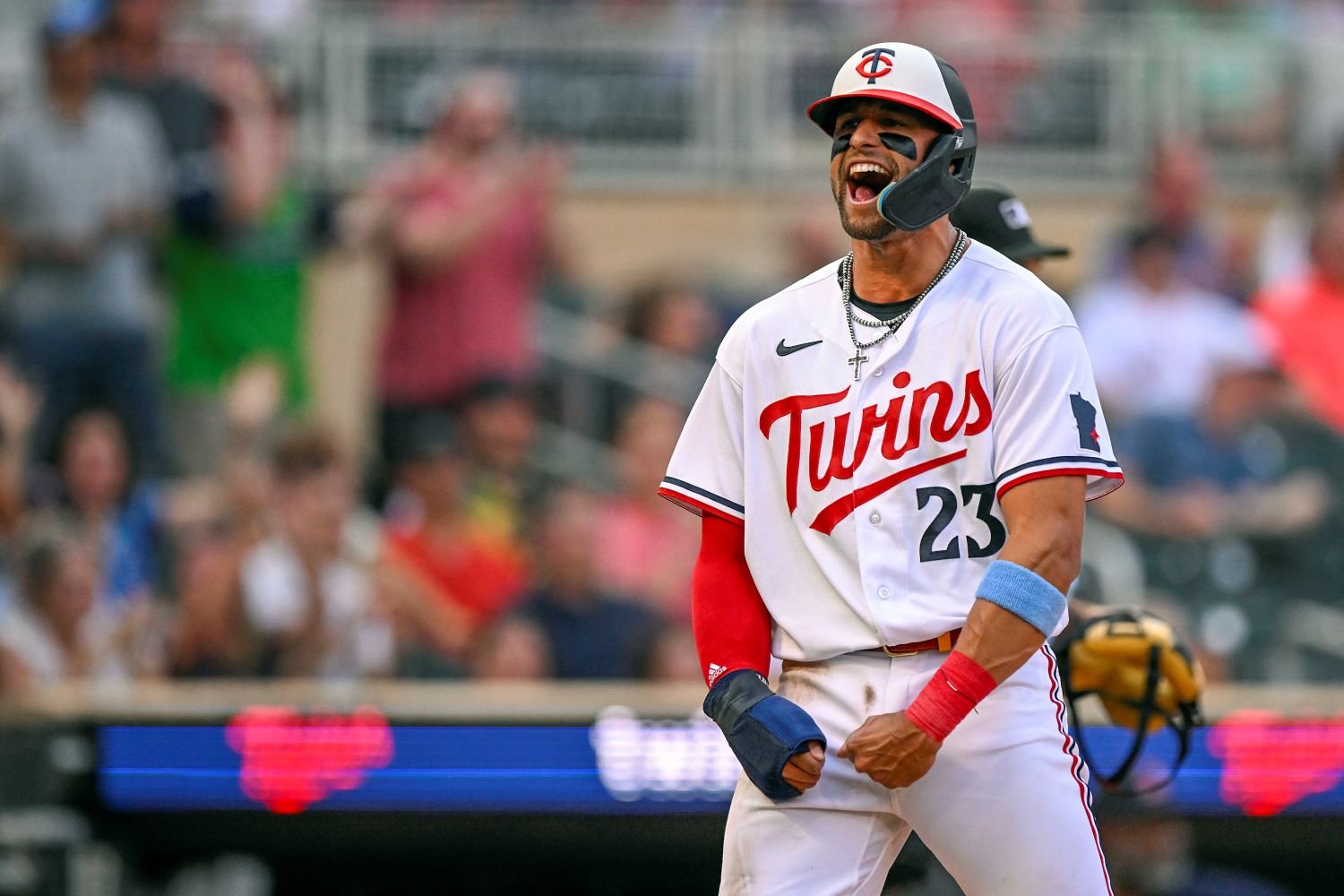 Box Score Sonny Gray: 5 IP, 6 H, 3 ER, 2 BB, 5 K Home Run: Max Kepler (9) Top 3 WPA: Christian Vázquez (.257), Max Kepler (.195), Kyle Farmer (.150) Win Probability Chart (via FanGraphs) Sleep-walking and heavily pulverized over the past week, the Twins crawled into Wednesday’s battle against the Red Sox with the sort of enthusiasm men have when they’re due for a vasectomy. Nonetheless, the game must be played, so the two teams entered what became a compelling ball game. But it didn’t start pretty. Starter Sonny Gray walked Justin Turner on three pitches (with help from a pitch clock violation) before Rafael Devers golfed a breaking ball, banging a double off the center field wall with authority. The game had begun. Minnesota’s batters were up for the challenge, though, and their attack started in the second inning. Byron Buxton catalyzed the action, poking a double off the right-field wall before Max Kepler—in what must be the first time in his career—found a hole through the infield with a chopping single, scoring Buxton to re-knot the game. Royce Lewis swapped places with Kepler following a force out and immediately turned in one of the most exciting plays of the year. It was bedlam. Christian Vázquez’s stinging single tipped off Kiké Hernández’s reaching glove, dribbling lazily into center field. Lewis bolted, rounding second with evil intentions as the Red Sox attempted to run down the parked ball; he did not stop, blazing past third to score on an odd, invigorating play wholly unique to Minnesota’s distinctive brand of offense. The slim lead couldn’t hold up for long. Boston was far too feisty to allow that. Justin Turner blasted an inside sinker deep into the night to bring the game back to even. And yet—perhaps sensing the radiant angst emanating from Gray following his previous start—the Twins responded again. Edouard Julien socked the top of the left-field wall with a double; he eventually scored on a Carlos Correa dribbler. Lewis then smoked a double into left the next inning, finding himself on third with just one out. A gaffe killed him. Catcher Reese McGuire back-picked the young infielder, essentially ending the rally before a painted changeup to Joey Gallo concluded it for good. Not all were pleased, and Gallo took great exception to the strike call. Marred in a terrible strikeout streak, the outfielder barked at home plate umpire David Rackley a little too long, necessitating an intervention from Rocco Baldelli. Gallo’s emotions were not cooled within a few minutes, and some extra words for Rackley as he re-entered the field earned him an ejection. Baldelli followed suit quickly. It was his 14th career ejection. The game only just now reached the fifth. Boston re-tied the game—sometimes these plots are too predictable—but the match finally slowed a little, allowing the common monotony to take over. Until, hilariously, Kepler gave Minnesota yet another one-run advantage with a solo homer delivered just far back enough into the overhang. And yet—and yet, and yet—the game was not done with its twists and turns. Jayce Tingler successfully exhausted Brock Stewart and Griffin Jax; the eighth was now Jhoan Duran’s time to pitch. Usually dominant, his command was off, leading to a walk turned stolen base turned game-tying run when Triston Casas lined a double into the left-center gap. Yet again, neither team could claim an advantage. The game lurched into extra-innings, sometimes teasing favor one way before sling-shotting back to equilibrium as neither team could find That One Big Hit to break the score open and clear their anxiety. Until the bottom of the 10th. A bizarre Michael A. Taylor sacrifice bunt—somehow called out by New York despite no part of the fielder’s glove ever touching his body—set up Kyle Farmer for the clutch hit, and he delivered, serving a single just in front of Jarren Duran to end the game in favor of the Twins. Notes: The hit was Kyle Farmer's second walk-off of the season. Sonny Gray earned nine swings and misses during Wednesday's start. The Twins totaled three Statcast "barrels" on Wednesday: one each from Edouard Julien, Alex Kirilloff, and Royce Lewis, respectively. Wednesday was Julien's fourth multi-hit game since being re-called on June 10th; he has only once failed to reach base in a game he started since re-joining the Twins. Post-Game Interview: What’s Next? The Twins and Red Sox will conclude their four-game set with a day game on Thursday; the game starts at 12:10 PM, and Joe Ryan will face off against a starter to be named later. Bullpen Usage Spreadsheet
- 39 comments
-
- 5
-
-
- sonny gray
- kyle farmer
- (and 3 more)
-
It's not a great sign when the team that walks away most unharmed had their game canceled for lightning. TRANSACTIONS C Kyle Schmidt Transferred from AA Wichita to Low-A Fort Myers C Frank Nigro transferred from Low-A Fort Myers to the FCL Twins C David Banuelos activated from IL at AA Wichita RHP Josh Winder optioned by the Twins to AAA St. Paul LHP Brent Headrick recalled by the Twins Saints Sentinel St. Paul 1, Louisville 12 Box Score Blayne Enlow: 3 IP, 7 H, 8 ER, 3 BB, 5 K HR: Trevor Larnach (4) Multi-hit games: Tony Wolters (2-for-2) A disastrous 4th inning soiled the Saints’ night on Saturday. It all happened so fast. Blayne Enlow—freshly promoted and ready for his AAA debut—breezed through three opening frames, even finding time to punch out the great Joey Votto twice. Matt Reynolds may have blasted a solo homer, but life was smooth. Then the 4th inning happened. A pair of full-count walks set Enlow on edge and teetering; the following two-run single knocked him fully off his perch. From there the walks and hits cascaded, eventually ending with a crescendo when Jose Barrero crushed a three-run homer off the righty to end his night. The deficit proved far too great for the Saints—and they only received a tepid hitting effort anyways. Despite a lead-off double by Gilberto Celestino to begin the game, Bats starter Michael Mariot cruised through St. Paul’s lineup, only surrendering a Trevor Larnach solo shot during his eight innings on the mound. The homer extended St. Paul’s streak of homering in a game to 22, tied for the second-longest streak in baseball in 2023. The Bats’ best prospect, one Christian Encarnacion-Strand—you may know him—racked up three hits and walked, sending his AAA OPS to 1.119. Wind Surge Wisdom Wichita 4, Midland 7 Box Score Carlos Luna: 5 IP, 5 H, 2 ER, 0 BB, 8 K HR: Pat Winkel (3), DaShawn Kiersey Jr. (8) Multi-hit games: None Wind Surge stumbled early, late in Saturday's loss. Usually, a first-inning homer begets a victory; this game was the exception. Pat Winkel barreled up a fastball at his shoulders, depositing the pitch over the wall in center to hand his team a quick 1-0 lead. The advantage held for one inning. Midland blasted their own homer before enjoying a Brooks Lee error allowing the chance at more runs; that runner stole second and eventually scored, putting Lee on poor terms with his starter. Carlos Luna allowed his second earned run the following frame when Lawrence Butler homered to extend Midland’s lead to two. And so it stayed—not large, capable of reaching with normal effort—until DaShawn Kiersey Jr. obliterated his eighth home run of the season. The ball landed 440 feet away. I waxed a little about Kiersey Jr. last week, and I’ll do it again this week: he’s been smoking AA this season. Is this an aberration—a 26-year-old crushing younger competition—or a true breakout from a talented outfielder? Only a promotion will tell. But it will be a promotion well deserved for the 4th-round pick out of Utah in 2018. Wichita’s hitting ceased with the homer, though, and a few runs allowed by Jose Bravo in the coming innings put the game too far out of reach for the Wind Surge; Will Holland’s 9th-inning RBI knock could only soften the blow. The aforementioned Butler is Midland’s best prospect, according to MLB.com; he added a double to total six bases in Saturday’s match. Kernels Nuggets Cedar Rapids 2, South Bend 10 Box Score Jaylen Nowlin: 2 ⅔ IP, 7 H, 4 ER, 2 BB, 5 K HR: Jeferson Morales (3), Willie Joe Garry Jr. (2) Multi-hit games: None The Kernels continued the streak of losing on Saturday, falling by eight runs to the Cubs. It was a disaster from the start. Jaylen Nowlin had two outs secured in the opening frame before releasing the pitch resulting in a sudden 2-0 disadvantage. He never recovered, allowing two more runs in the 3rd before exiting the ballgame, turning more than six innings of pitching duties over to Cedar Rapids’ bullpen. That weight—a punishing endeavor for any collection of arms—was far too mighty, and everyone paid the price. The only relief pitcher to walk away without extra earned runs attached to their name was Niklas Rimmel. He netted two outs. Cedar Rapids could not match the offensive effort, blasting a pair of homers in the 2nd before halting advances there; all they could offer following their home run outburst was two hits and three walks. Kevin Alcántara is the 70th-best prospect in baseball according to MLB.com, and he proved the ranking correct—if not a little low—with a monster five-hit outing, including a pair of homers. Mussel Matters Fort Myers 0, Bradenton 3 Box Score Ben Ethridge: 4 IP, 2 H, 1 ER, 1 BB, 3 K HR: None Multi-hit games: Alec Sayre (2-for-4), Yohander Martinez (3-for-4), Maddux Houghton (2-for-4) The Mighty Mussels wrapped up the full-season games by finalizing a straight sweep of the Twins’ system. Starter Ben Ethridge was solid, allowing a lone solo homer over his four otherwise quality innings of work—including a final striking out of the side in which he caught superstar prospect Termarr Johnson looking at strike three. The bats couldn’t support him, though. Despite out-hitting the Marauders eight to six, all of Fort Myers’ knocks were singles—poorly coordinated ones, at that—and runners across the frames experienced lonesome frustrations walking back to the dugout empty-handed. The shutout included a 6th inning play in which it appears Rubel Cespedes attempted a steal of home. He was unsuccessful. Bradenton blasted a second homer in the 7th, and so the game ended—with Fort Myers still seeking a hit with runners in scoring position and the Marauders satisfied with their victory. Johnson is the 20th-best prospect in baseball, according to MLB.com; he drew a walk in an otherwise silent night at the plate. Complex Chronicles Lightning postponed the FCL Twins’ game before it began; the match will be made up as a doubleheader on Friday, June 23rd. Dominican Dailies DSL Twins 3, DSL Giants Orange 10 Box Score Jose Vasquez: 4 IP, 4 H, 3 ER, 4 BB, 3 K HR: None Multi-hit games: Junior Del Valle (2-for-4, RBI) The DSL Twins imploded late, quickly losing nuts and bolts in the final frames to turn a tied match into a laugher. The common issues of DSL players—walks and defense—caused the fiasco: multiple 8th-inning throwing errors aided in expanding the deficit, while Twins pitchers walked eight batters. That’s how it goes when you’re dealing with literal teenagers. 17-year-old Moises Lopez tripled for the second time this season; Dameury Pena earned his fourth double and owns an OPS of 1.016. The Twins allowed five steals in the loss. TWINS DAILY PLAYERS OF THE DAY Twins Daily Minor League Pitcher of the Day – Carlos Luna Twins Daily Minor League Hitter of the Day – DaShawn Kiersey Jr. PROSPECT SUMMARY Here’s a look at how the Twins Daily Top 20 Twins Prospects performed: #1 - Brooks Lee (Wichita) - 0-4, 2 K #2 - Royce Lewis (Minnesota) - 0-2, R, BB, 2 K #12 - Jose Salas (Cedar Rapids) - 0-3, BB #15 - Brent Headrick (Minnesota) - 2 ⅓ IP, 1 H, 0 ER, 1 BB, 2 K #17 - Blayne Enlow (St. Paul) - 3 IP, 7 H, 8 ER, 3 BB, 5 K #19 - Yunior Severino (Wichita) - 1-3, BB, K SUNDAY’S PROBABLE STARTERS St. Paul @ Louisville (12:05 PM) - RHP Aaron Sanchez Wichita @ Midland (1:00 PM) - RHP Travis Adams South Bend @ Cedar Rapids (1:05 PM) - RHP Kyle Jones Fort Myers @ Bradenton (11:00 AM) - TBD View full article
- 7 replies
-
- 1
-

-
- blayne enlow
- dashawn keirsey jr
- (and 3 more)