Matt Braun
-
Posts
1,393 -
Joined
-
Last visited
-
Days Won
1
Content Type
Profiles
News
Minnesota Twins Videos
2026 Minnesota Twins Top Prospects Ranking
2022 Minnesota Twins Draft Picks
Minnesota Twins Free Agent & Trade Rumors, Notes, & Tidbits
Guides & Resources
2023 Minnesota Twins Draft Picks
The Minnesota Twins Players Project
2024 Minnesota Twins Draft Picks
2025 Minnesota Twins Draft Pick Tracker
2026 Minnesota Twins Draft Tracker: Picks & Bonuses
Forums
Blogs
Events
Store
Downloads
Gallery
Everything posted by Matt Braun
-
With baseball awakening from its slumber, join us on a trip through the AL Central, observing what each team has done—and still needs to do—in order to claim the division crown. Image courtesy of Jayne Kamin-Oncea-USA TODAY Sports How did last season go? Poorly. Again. The Royals extended their post-World Series rebuild another season, failing to crack .500 for the sixth straight season. They couldn’t pitch, but they made up for it by not hitting. Despite a recent influx of minor-league talent —including a gift from the prospect gods in Bobby Witt Jr.— the Royals allowed 810 runs, scored just 640 of them and dragged down a dismal AL Central with a 65-97 record. They will pick eighth in the 2023 MLB Draft. There were bright spots, a few shiny diamonds littered in their rough. Brady Singer made The Jump, improving his control enough to net him a more-than-respectable 3.23 ERA with peripherals to match. He will continue to spot sinkers on the outside corner for years to come. The aforementioned Witt Jr. treaded water at the major-league level, showcasing elite bat speed and a potentially dynamic hitting package, but couldn’t find his aggressive sweet spot, and his OBP sat below .300 on the year. For the sake of decency, his defense at shortstop should remain ignored. But then, Vinnie Pasquantino, the first baseman netted fewer than 300 plate appearances, but showcased a frightening Freddie Freeman-esque combo of contact and power with a walk rate higher than his strikeout rate; he’s their next Alex Gordon. What did they do this offseason? Not much. They unceremoniously dumped Adalberto Mondesí onto the Red Sox after years of waiting for his injury bug to find a new host (it never did), signed a few arms to eat innings—Ryan Yarbrough and Jordan Lyles—because, well, someone has to, brought on Aroldis Chapman because their version of baseball reference stopped updating at 2019, and re-signed Zack Greinke after his 2022 nostalgia trip resulted in a shockingly usable pitching campaign. They also dealt away Michael A. Taylor for bullpen arms. If that sounds like shuffling an old, mildew-covered deck of cards, you’re right. While they acquired capable major-league players—and a few once dominant ones—their on-field moves were made in order to fill roster spots, not to add impact pieces. The difference-maker for the Royals comes via their brain trust. Longtime decision-maker Dayton Moore earned the boot before the season ended, and J.J. Picollo took over to help steer Kansas City into modernity. Manager Mike Matheny transformed into Matt Quatraro, the recent bench coach for the Tampa Bay Rays. Trekking from Cleveland, Brian Sweeney replaced Cal Eldred as pitching coach. The moves, while small, point towards an acknowledgment of baseball’s changing times. With their laughably archaic minor-league pitching laws likely gone, the Royals appear set to embrace the data-driven movement. Perhaps no player represents Kansas City's issue with developing pitchers than Asa Lacy. The former 2020 4th overall pick dominated as a sophomore with Texas A&M, earning 130 strikeouts with a miniscule 2.13 ERA. His pro time has been a disaster. The few healthy innings Lacy owns are tainted with horrifying walk rates and uncompetitive starts; his prospect status is nowhere near his draft pedigree. What should we expect in 2023? The Al Central-hater that resides deep within this author’s core says more of the same, but that could be a touch mean. A playoff appearance would likely only occur if the rest of the division implodes, revealing each team to be groups of children wearing trench coats, but the Royals probably aren’t looking at wins to judge success. With Daniel Lynch, Kris Bubic, Jackson Kowar, and Jon Heasley, Kansas City has assembled a group of talented arms, pitchers who would otherwise likely thrive in more ideal pitching environments but have floundered in the Royals’ weird philosophical model. That should change. Picollo and Sweeney will make it change. It’s unclear specifically what the new Royals will preach, but it seems impossible for them to take a step backward. The position players tell a different story. Pasquantino is going to rake (seriously, buy as much stock in him as possible), but Kansas City has accrued an odd combination of talented hitters with poor defensive specs. Witt Jr. will probably hit well, but his defensive chops at shortstop in 2022 were atrocious; M.J. Melendez boasts a promising OBP/power skillset, but he’s a butcher at catcher and appears set to follow the Billy Butler defensive route. After them, it’s a weird assortment of older not-really-prospects and whatever Drew Waters has left in his hype tank. Although, even Waters will be out for six weeks with an oblique issue. What you see is mostly what you get; outfielder Gavin Cross likely won’t impact the 2022 team, leaving the light-hitting Maikel Garcia and the lighter-hitting Nick Loftin as the prospects most likely to alter Kansas City’s fortunes. Both players are infielders. Outfielder Tyler Gentry could mash enough to break the team at some point (he slugged .550 at Double-A last season). Their pitching is more dry, as Angel Zerpa and Alec Marsh represent the talented arms closest to the majors, but Kansas City will likely bank on their technically-not-prospect pool of pitchers anyways. The Royals probably won’t challenge much in the AL Central, but they’ve finally righted the organization, bringing in quality candidates from successful franchises who should help sift through the development quagmire that has soiled the team for years. It won’t work immediately; the 2023 Royals will exist in the nebula, only becoming apparent once the dust settles on their infrastructure altering. But for real, Vinnie Pasquantino is going to be awesome. View full article
-
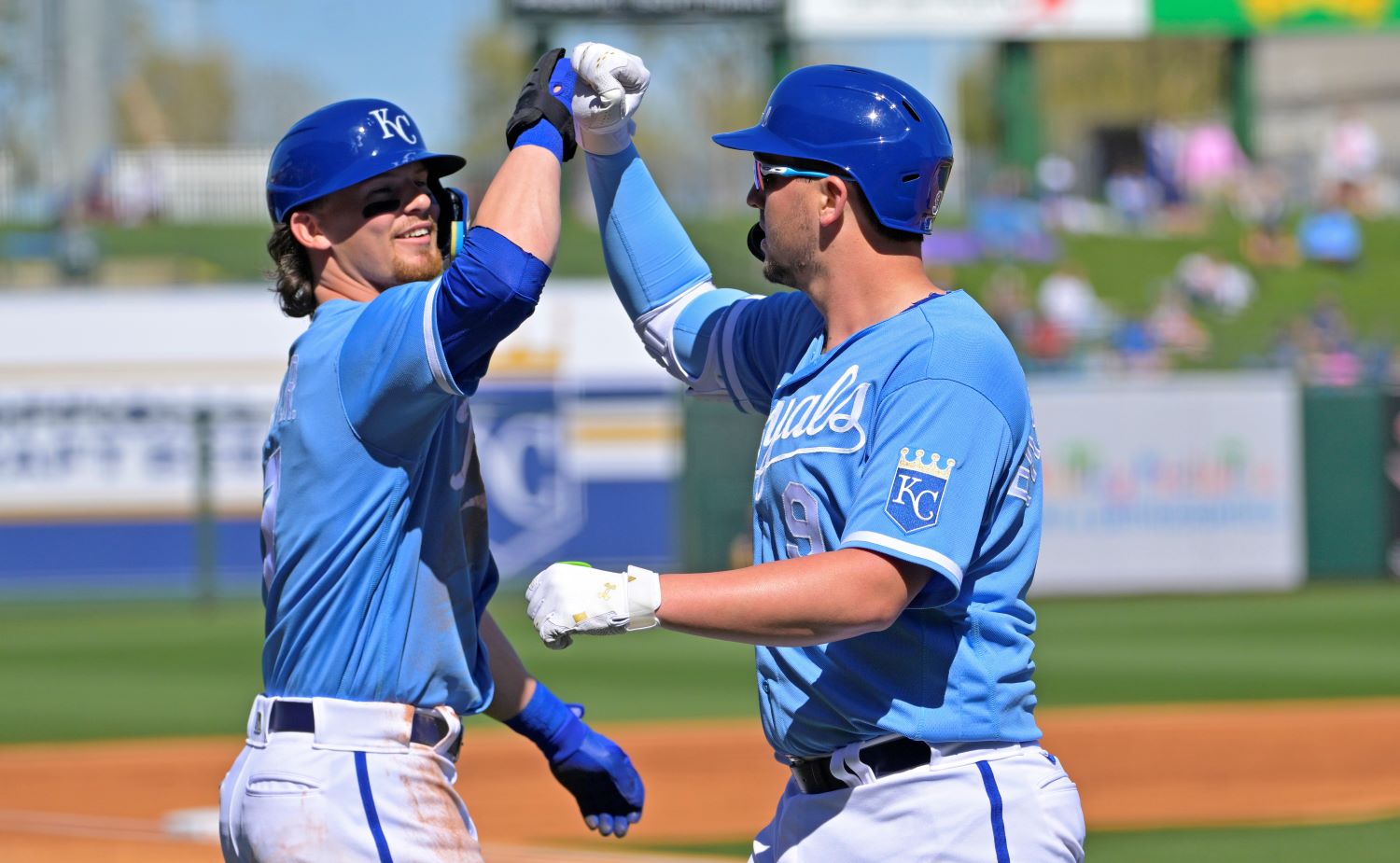 How did last season go? Poorly. Again. The Royals extended their post-World Series rebuild another season, failing to crack .500 for the sixth straight season. They couldn’t pitch, but they made up for it by not hitting. Despite a recent influx of minor-league talent —including a gift from the prospect gods in Bobby Witt Jr.— the Royals allowed 810 runs, scored just 640 of them and dragged down a dismal AL Central with a 65-97 record. They will pick eighth in the 2023 MLB Draft. There were bright spots, a few shiny diamonds littered in their rough. Brady Singer made The Jump, improving his control enough to net him a more-than-respectable 3.23 ERA with peripherals to match. He will continue to spot sinkers on the outside corner for years to come. The aforementioned Witt Jr. treaded water at the major-league level, showcasing elite bat speed and a potentially dynamic hitting package, but couldn’t find his aggressive sweet spot, and his OBP sat below .300 on the year. For the sake of decency, his defense at shortstop should remain ignored. But then, Vinnie Pasquantino, the first baseman netted fewer than 300 plate appearances, but showcased a frightening Freddie Freeman-esque combo of contact and power with a walk rate higher than his strikeout rate; he’s their next Alex Gordon. What did they do this offseason? Not much. They unceremoniously dumped Adalberto Mondesí onto the Red Sox after years of waiting for his injury bug to find a new host (it never did), signed a few arms to eat innings—Ryan Yarbrough and Jordan Lyles—because, well, someone has to, brought on Aroldis Chapman because their version of baseball reference stopped updating at 2019, and re-signed Zack Greinke after his 2022 nostalgia trip resulted in a shockingly usable pitching campaign. They also dealt away Michael A. Taylor for bullpen arms. If that sounds like shuffling an old, mildew-covered deck of cards, you’re right. While they acquired capable major-league players—and a few once dominant ones—their on-field moves were made in order to fill roster spots, not to add impact pieces. The difference-maker for the Royals comes via their brain trust. Longtime decision-maker Dayton Moore earned the boot before the season ended, and J.J. Picollo took over to help steer Kansas City into modernity. Manager Mike Matheny transformed into Matt Quatraro, the recent bench coach for the Tampa Bay Rays. Trekking from Cleveland, Brian Sweeney replaced Cal Eldred as pitching coach. The moves, while small, point towards an acknowledgment of baseball’s changing times. With their laughably archaic minor-league pitching laws likely gone, the Royals appear set to embrace the data-driven movement. Perhaps no player represents Kansas City's issue with developing pitchers than Asa Lacy. The former 2020 4th overall pick dominated as a sophomore with Texas A&M, earning 130 strikeouts with a miniscule 2.13 ERA. His pro time has been a disaster. The few healthy innings Lacy owns are tainted with horrifying walk rates and uncompetitive starts; his prospect status is nowhere near his draft pedigree. What should we expect in 2023? The Al Central-hater that resides deep within this author’s core says more of the same, but that could be a touch mean. A playoff appearance would likely only occur if the rest of the division implodes, revealing each team to be groups of children wearing trench coats, but the Royals probably aren’t looking at wins to judge success. With Daniel Lynch, Kris Bubic, Jackson Kowar, and Jon Heasley, Kansas City has assembled a group of talented arms, pitchers who would otherwise likely thrive in more ideal pitching environments but have floundered in the Royals’ weird philosophical model. That should change. Picollo and Sweeney will make it change. It’s unclear specifically what the new Royals will preach, but it seems impossible for them to take a step backward. The position players tell a different story. Pasquantino is going to rake (seriously, buy as much stock in him as possible), but Kansas City has accrued an odd combination of talented hitters with poor defensive specs. Witt Jr. will probably hit well, but his defensive chops at shortstop in 2022 were atrocious; M.J. Melendez boasts a promising OBP/power skillset, but he’s a butcher at catcher and appears set to follow the Billy Butler defensive route. After them, it’s a weird assortment of older not-really-prospects and whatever Drew Waters has left in his hype tank. Although, even Waters will be out for six weeks with an oblique issue. What you see is mostly what you get; outfielder Gavin Cross likely won’t impact the 2022 team, leaving the light-hitting Maikel Garcia and the lighter-hitting Nick Loftin as the prospects most likely to alter Kansas City’s fortunes. Both players are infielders. Outfielder Tyler Gentry could mash enough to break the team at some point (he slugged .550 at Double-A last season). Their pitching is more dry, as Angel Zerpa and Alec Marsh represent the talented arms closest to the majors, but Kansas City will likely bank on their technically-not-prospect pool of pitchers anyways. The Royals probably won’t challenge much in the AL Central, but they’ve finally righted the organization, bringing in quality candidates from successful franchises who should help sift through the development quagmire that has soiled the team for years. It won’t work immediately; the 2023 Royals will exist in the nebula, only becoming apparent once the dust settles on their infrastructure altering. But for real, Vinnie Pasquantino is going to be awesome.
 -
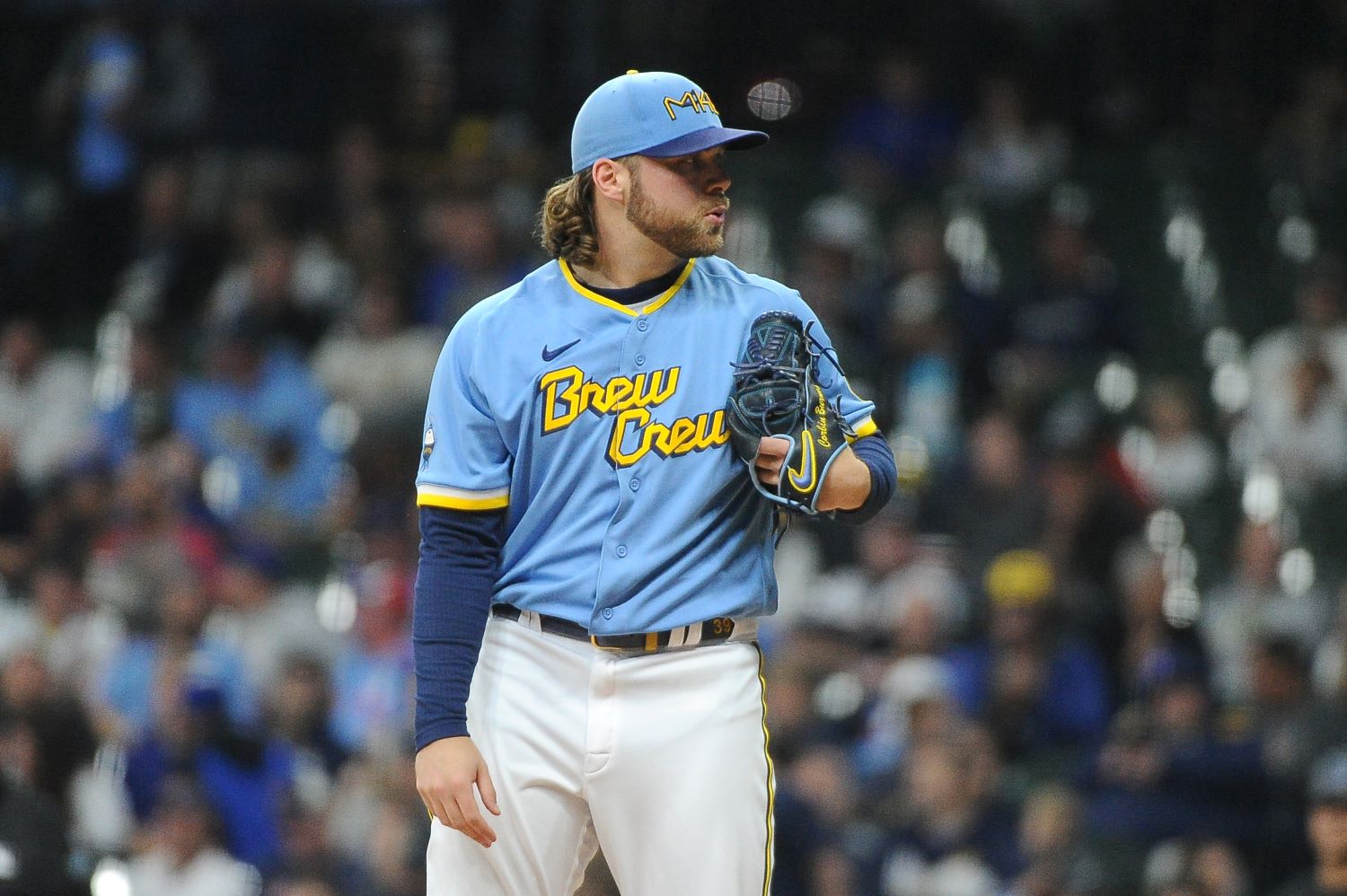 Hurt feelings over arbitration are not a new phenomena; they are the byproduct of a system that pits the player’s capitalizing desires against a team’s inherent payroll conservatism, revealing the gross reality when neither player nor team owns sole control over one’s salary. It's a messy beast. While team and player can kiss and make up—indeed, bridges don’t always burn—it seems inevitable that grudges, minor and major, can brew resentment. There’s a reason why both parties dread the process. Burnes’ arbitration case stands out as one of the messiest in recent memory. Milwaukee remained steadfast in their offer, forcing a day in court over a less than $750,000 difference in pay. While the Brewers technically offered a deal to avoid the meeting—a two-year pact that Burnes described as “pretty poor”— their arguments in the case revealed their intent. “I mean, there’s no denying that the relationship was definitely hurt from what (transpired) over the last couple of weeks,” said the 2021 Cy Young winner following the decision. “There’s really no way to get around that.” “You work hard for seven years in the organization and five years with the big-league team, and you get in there and basically they value you much different than what you thought you’d contributed to the organization.” Professionalism will keep Burnes from mutiny or internal sabotage, but his words tinge with hurt feelings and sourness. After all, Milwaukee apparently placed him in the forefront of reasons why they missed the playoffs. With two years of team control remaining, and a healthy PECOTA projection placing Milwaukee as the class of a weird NL Central, the Brewers have no reason to deal their starter. Burnes may be pissy, but athletes have been crabby for years; an upset star only matters when you start losing. But time can fritter and waste in an offhand way. Two years melt away, losses can pile up, and a team can suddenly find themselves staring at an extensive re-evaluation process as their assets’ years dwindle. It would not be a shock to see Christian Yelich and His Merry Men flail early, perhaps placing Milwaukee—a team always conscious about their stars—in a tough spot. Conversations may need to occur; tough decisions made. Could they afford to hold tight, banking that they reverse course in 2024 with enough vigor to make Burnes’ place on the team worthwhile? The Twins must have their radar up. Aces—always such a rarity these days—almost never become available, especially for a team that lacks the monetary fortitude to pay for one in free agency. Trades are the great savior. When the market evolves, potentially offering a chance for the team to snag their guy, they must react. But the timing must be right. The opportunity, perfect. Spring training is not the appropriate venue for such a deal to go down, but if the team holds their own through July, the trade deadline could be the time to strike. Other teams are thinking as well, wondering whether they can pull the same maneuver to swipe Burnes for themselves. Every team in baseball can use him; the only thing holding them back is themselves. They’ll battle with wondering if they have the gumption to bypass their desire to avoid risk and embrace owning the services of a unique starter. With an unambiguous stud in Burnes, that question becomes a lot easier. For Minnesota, their offer may not touch other teams; their prospect pool is ok, but acquiring Burnes’ services requires the best, not a heap pile of castaways. A combo likely requires Brooks Lee, Marco Raya, and more. It’ll hurt—especially after a plethora of prior trades drained their farm system—but it may be the most crucial step towards the glorious playoff run Derek Falvey and co have worked towards since taking over in 2016. It’s unlikely to happen, but so was signing Carlos Correa, and sometimes you need a little luck, or a grumpy ace, to put your team over the top.
 -
Corbin Burnes is down over $700,000 and is not happy. A feisty arbitration case between the ace and his employer, the Milwaukee Brewers, has morphed into a debacle, a spectacle rarely publicly available as the details regarding the hearing tell a strange, piddling tale. Image courtesy of Michael McLoone-USA TODAY Sports Hurt feelings over arbitration are not a new phenomena; they are the byproduct of a system that pits the player’s capitalizing desires against a team’s inherent payroll conservatism, revealing the gross reality when neither player nor team owns sole control over one’s salary. It's a messy beast. While team and player can kiss and make up—indeed, bridges don’t always burn—it seems inevitable that grudges, minor and major, can brew resentment. There’s a reason why both parties dread the process. Burnes’ arbitration case stands out as one of the messiest in recent memory. Milwaukee remained steadfast in their offer, forcing a day in court over a less than $750,000 difference in pay. While the Brewers technically offered a deal to avoid the meeting—a two-year pact that Burnes described as “pretty poor”— their arguments in the case revealed their intent. “I mean, there’s no denying that the relationship was definitely hurt from what (transpired) over the last couple of weeks,” said the 2021 Cy Young winner following the decision. “There’s really no way to get around that.” “You work hard for seven years in the organization and five years with the big-league team, and you get in there and basically they value you much different than what you thought you’d contributed to the organization.” Professionalism will keep Burnes from mutiny or internal sabotage, but his words tinge with hurt feelings and sourness. After all, Milwaukee apparently placed him in the forefront of reasons why they missed the playoffs. With two years of team control remaining, and a healthy PECOTA projection placing Milwaukee as the class of a weird NL Central, the Brewers have no reason to deal their starter. Burnes may be pissy, but athletes have been crabby for years; an upset star only matters when you start losing. But time can fritter and waste in an offhand way. Two years melt away, losses can pile up, and a team can suddenly find themselves staring at an extensive re-evaluation process as their assets’ years dwindle. It would not be a shock to see Christian Yelich and His Merry Men flail early, perhaps placing Milwaukee—a team always conscious about their stars—in a tough spot. Conversations may need to occur; tough decisions made. Could they afford to hold tight, banking that they reverse course in 2024 with enough vigor to make Burnes’ place on the team worthwhile? The Twins must have their radar up. Aces—always such a rarity these days—almost never become available, especially for a team that lacks the monetary fortitude to pay for one in free agency. Trades are the great savior. When the market evolves, potentially offering a chance for the team to snag their guy, they must react. But the timing must be right. The opportunity, perfect. Spring training is not the appropriate venue for such a deal to go down, but if the team holds their own through July, the trade deadline could be the time to strike. Other teams are thinking as well, wondering whether they can pull the same maneuver to swipe Burnes for themselves. Every team in baseball can use him; the only thing holding them back is themselves. They’ll battle with wondering if they have the gumption to bypass their desire to avoid risk and embrace owning the services of a unique starter. With an unambiguous stud in Burnes, that question becomes a lot easier. For Minnesota, their offer may not touch other teams; their prospect pool is ok, but acquiring Burnes’ services requires the best, not a heap pile of castaways. A combo likely requires Brooks Lee, Marco Raya, and more. It’ll hurt—especially after a plethora of prior trades drained their farm system—but it may be the most crucial step towards the glorious playoff run Derek Falvey and co have worked towards since taking over in 2016. It’s unlikely to happen, but so was signing Carlos Correa, and sometimes you need a little luck, or a grumpy ace, to put your team over the top. View full article
-
Twins PECOTA Projections: The Pitchers
Matt Braun replied to Matt Braun's topic in Twins Daily Front Page News
It should be noted that this was a 35-year-old Don Sutton, one who was still great, but not as consistently dominant as his younger self.- 27 replies
-
- 1
-

-
- pablo lopez
- joe ryan
- (and 3 more)
-
Twins PECOTA Projections: The Pitchers
Matt Braun replied to Matt Braun's topic in Twins Daily Front Page News
And the comps are: Pablo López - Bret Saberhagen (Fun!) Joe Ryan - Kyle Hendricks Sonny Gray - Roger Clemens (This was 1995 Clemens, one of his worst seasons) Tyler Mahle - Homer Bailey (Hahahahahahahaha) Kenta Maeda - Don Sutton Jhoan Duran - Jeurys Familia Jovani Moran - Paul Fry Caleb Thielbar - Randy Choate Emilio Pagán - Brad Brach Bailey Ober - Anthony DeSclafani Jorge López - Hector Noesí Griffin Jax - Shane Greene Jorge Alcalá - Robert Gsellman Chris Paddack - Scott Baker (The machine has jokes) Trevor Megill - Stefan Crichton -
What else does the machine have to say about the 2023 Twins, specifically how the pitchers will perform? Image courtesy of Jay Biggerstaff-USA TODAY Sports On Tuesday, Baseball Prospectus—one of baseball's leading analysis site—released their PECOTA projections for every player in MLB. PECOTA predicts nearly everything; minor stats like holds, quality starts, and losses emanate from its crystal ball along with more crucial numbers like FIP and groundball rate. For this article, we will focus on ERA, FIP and WARP. You all know what ERA is. FIP is similar to ERA—you read it exactly the same—but it only considers walks, strikeouts, and homers. WARP is Baseball Prospectus’ version of WAR. Note: These are the 50% projections, meaning each player has a coin flip’s chance of beating or falling behind their projection. I find these numbers more fascinating than the hitter ones. First, nearly every pitcher in MLB is set to beat their FIP according to PECOTA, something I don’t understand and have not found an answer for. I’d love to soliloquy about Minnesota’s excellent defense, but doing so may be incorrect. Anyways, perhaps the most surprising result is the first: Pablo López is the Twins’ best starter by a few ticks. The machine pegs him as netting the 33rd-most pitching WARP in baseball, hanging out with other quality arms like Dustin May and Chris Bassitt. Joe Ryan isn’t far behind him. PECOTA hammer home another point; the starting rotation is a quality assortment of high-floor starters—all five arms are projected to be in the top 80 of MLB by WARP—that lacks a true ace. There isn’t a black hole, however. Now we move into the bullpen. Jovani Moran earns a healthy projection, one that sees him as one of the best relief arms in the game and essentially tied with Caleb Thielbar as the second-best option for Rocco Baldelli. Emilio Pagán, everyone’s favorite punching bag, receives a hearty premonition from the machine, perhaps a sign that his underlying measurables are indeed favorable. The only notable surprise to me is Jorge López, although it makes sense that PECOTA is leery of his performance given his struggles with the Twins. To end our journey with PECOTA, a few other notable projections: Louie Varland receives a 4.01 FIP—usable, but not outstanding. The machine sees some value in both Patrick Murphy and José De León—two pitchers Minnesota signed to minor league deals—as they net 0.2 WARP projections. Note: Baseball Prospectus tinkers with PECOTA until the start of the season; these numbers were taken on February 15th and may not match future projections. Also, if you question PECOTA's value, Rob Mains wrote about how successful the machine is and where it fails. View full article
-
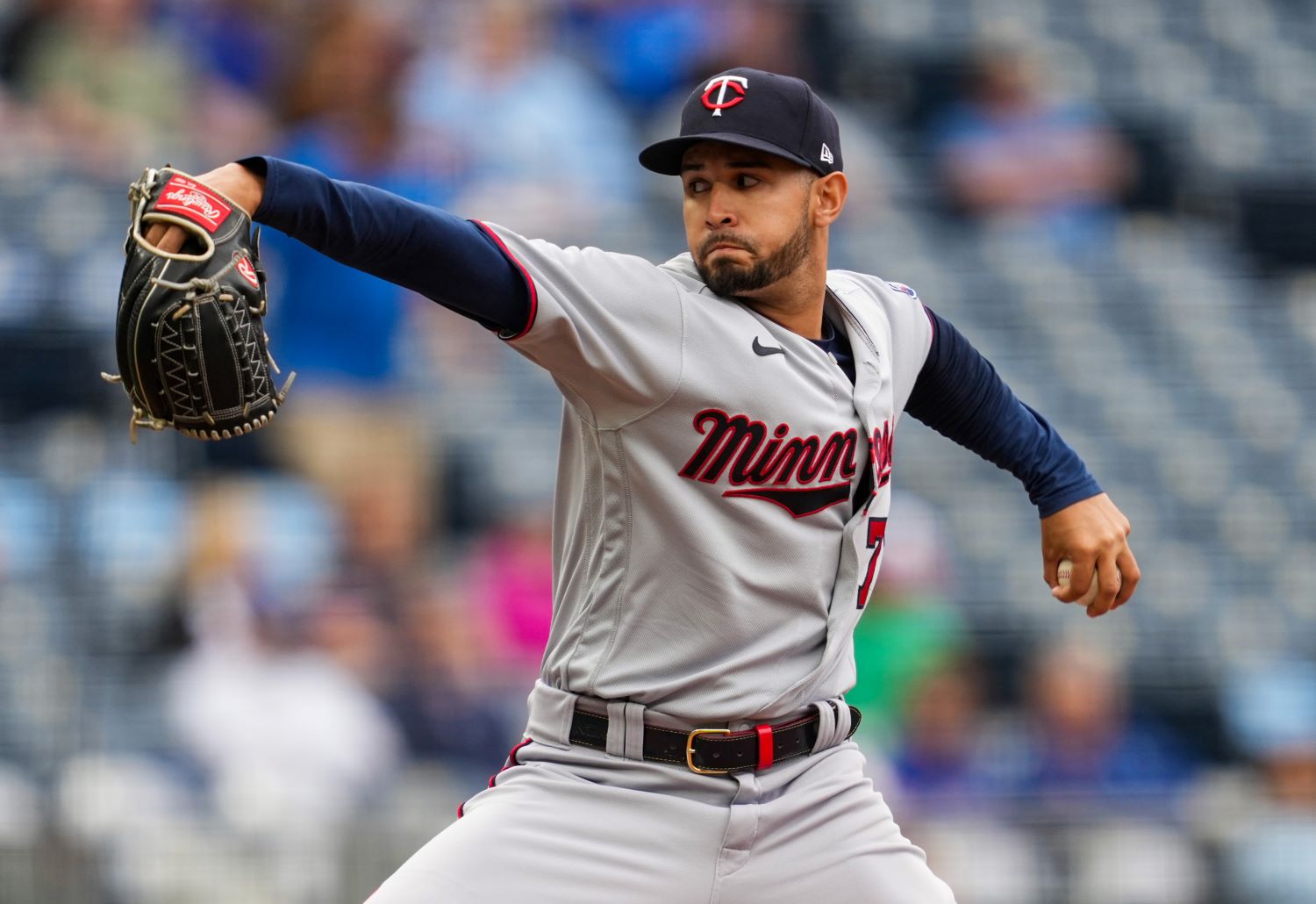 On Tuesday, Baseball Prospectus—one of baseball's leading analysis site—released their PECOTA projections for every player in MLB. PECOTA predicts nearly everything; minor stats like holds, quality starts, and losses emanate from its crystal ball along with more crucial numbers like FIP and groundball rate. For this article, we will focus on ERA, FIP and WARP. You all know what ERA is. FIP is similar to ERA—you read it exactly the same—but it only considers walks, strikeouts, and homers. WARP is Baseball Prospectus’ version of WAR. Note: These are the 50% projections, meaning each player has a coin flip’s chance of beating or falling behind their projection. I find these numbers more fascinating than the hitter ones. First, nearly every pitcher in MLB is set to beat their FIP according to PECOTA, something I don’t understand and have not found an answer for. I’d love to soliloquy about Minnesota’s excellent defense, but doing so may be incorrect. Anyways, perhaps the most surprising result is the first: Pablo López is the Twins’ best starter by a few ticks. The machine pegs him as netting the 33rd-most pitching WARP in baseball, hanging out with other quality arms like Dustin May and Chris Bassitt. Joe Ryan isn’t far behind him. PECOTA hammer home another point; the starting rotation is a quality assortment of high-floor starters—all five arms are projected to be in the top 80 of MLB by WARP—that lacks a true ace. There isn’t a black hole, however. Now we move into the bullpen. Jovani Moran earns a healthy projection, one that sees him as one of the best relief arms in the game and essentially tied with Caleb Thielbar as the second-best option for Rocco Baldelli. Emilio Pagán, everyone’s favorite punching bag, receives a hearty premonition from the machine, perhaps a sign that his underlying measurables are indeed favorable. The only notable surprise to me is Jorge López, although it makes sense that PECOTA is leery of his performance given his struggles with the Twins. To end our journey with PECOTA, a few other notable projections: Louie Varland receives a 4.01 FIP—usable, but not outstanding. The machine sees some value in both Patrick Murphy and José De León—two pitchers Minnesota signed to minor league deals—as they net 0.2 WARP projections. Note: Baseball Prospectus tinkers with PECOTA until the start of the season; these numbers were taken on February 15th and may not match future projections. Also, if you question PECOTA's value, Rob Mains wrote about how successful the machine is and where it fails.
- 27 comments
-
- 1
-
-
- pablo lopez
- joe ryan
- (and 3 more)
-
Twins PECOTA Projections: The Hitters
Matt Braun replied to Matt Braun's topic in Twins Daily Front Page News
Kirilloff actually received a much healthier 107 DRC+ projection when they corrected some issues with minor league walk and homer numbers.- 23 replies
-
- 3
-
-
- byron buxton
- jorge polanco
- (and 3 more)
-
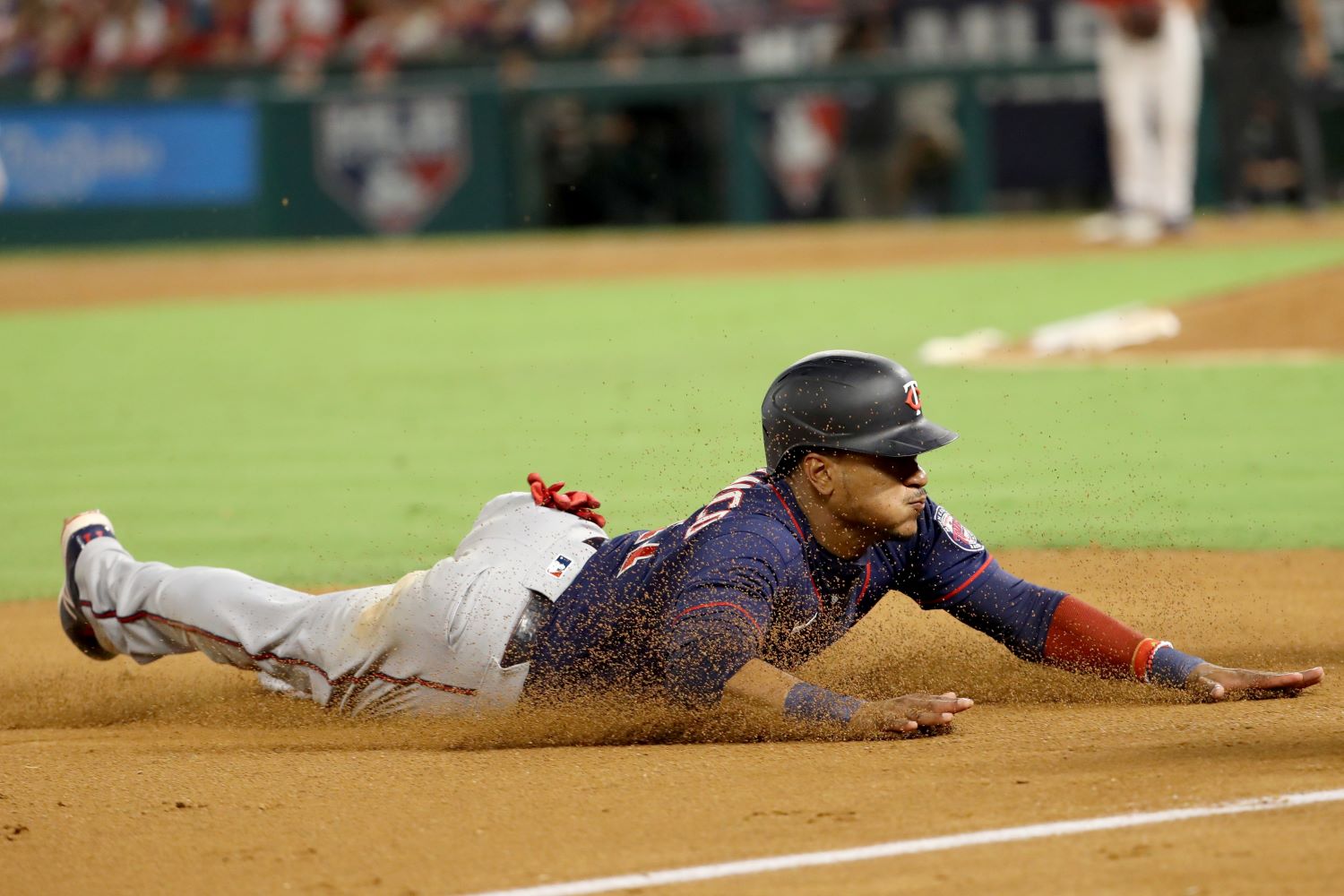 On Tuesday, Baseball Prospectus—one of baseball's leading analysis site—released their PECOTA projections for every player in MLB. PECOTA predicts nearly everything; minor stats like caught stealing, hit by pitch, and triples emanate from its crystal ball along with more crucial numbers like slugging and BABIP. For this article, we will focus on DRC+ and WARP. Below are Minnesota’s likely opening day position players (plus Royce Lewis) along with their position, DRC+, WARP, and player comp. You can read more about DRC+ here, but to oversimplify, it’s a play off Fangraphs’ wRC+ that also considers inputs like pitcher quality and play outcome relative to the stadium; a hit off Jacob deGrom is worth more than a hit off a position player, after all. 100 is league average, with each point in either direction standing as a percent in relation to the average. If that doesn’t make sense: Byron Buxton’s 119 projection means he will be 19% better than the average hitter. WARP is Baseball Prospectus’ version of WAR; 2.0 is considered an average player. Note: These are the 50% projections, meaning each player has a coin flip’s chance of beating or falling behind their projection. Alright! We have some zesty numbers above. I’m struck by Jorge Polanco standing as an equal with Carlos Correa (they were ranked 44 and 45, respectively) as they share an identical DRC+ projection. Cody Christie wrote that Polanco is Minnesota’s most underrated player, and he may be correct. Correa’s projection appears surprisingly tepid, given that he’s bested a 117 DRC+ in his last two seasons. The next surprise is Joey Gallo. Despite Gallo owning one of the most extreme profiles in baseball, PECOTA sees his 2022 as something of a fluke, and the machine hands him a generous 107 DRC+ projection. I think the Twins would be glad to receive that kind of production from Gallo. His comp is spot-on. Now, on to some disappointments. Nick Gordon’s 86 DRC+ appears low, but PECOTA is typically suspicious of high strikeout/high BABIP players. It’s a tricky balancing act—any drop in power kills his entire profile—but it’s not impossible for him to succeed; Gordon will need to prove himself again in 2023. Then, Trevor Larnach. I scrolled through about 1500 players before finding Larnach munching on algae at the bottom of the list, impressing no one with an 85 DRC+. He suffers from a similar ailment as Gordon: producing with a compromised strikeout-fueled skillset, but he also lacks the playing time to prove his system works. To end this article, we’ll go over a few fun projections. PECOTA loves what Yunior Severino cooked up in the minors last season, handing him a 97 DRC+ despite just a handful of games in the high minors. Jose Salas—part of Minnesota’s return for Luis Arraez—earns a 0.7 WARP projection despite a putrid offensive line; the machine must love his defense. PECOTA sees something in Jair Camargo’s profile; he earned a 0.4 WARP projection despite traveling in the same boat as Yunior Severino. And finally… 36-year-old ByungHo Park has a 99 DRC+ projection. Legends never die. Any other numbers catch your eye? Are there any projections not covered in this article you would like to know about? Leave a comment and start the discussion. Note: Baseball Prospectus tinkers with PECOTA until the start of the season; these numbers were taken on February 14th and may not match future projections. Also, if you question PECOTA's value, Rob Mains wrote about how successful the machine is and where it fails.
 -
What did our mighty machine overlord spit out about the 2023 seasons of several Minnesota Twins hitters? Image courtesy of Kiyoshi Mio-USA TODAY Sports On Tuesday, Baseball Prospectus—one of baseball's leading analysis site—released their PECOTA projections for every player in MLB. PECOTA predicts nearly everything; minor stats like caught stealing, hit by pitch, and triples emanate from its crystal ball along with more crucial numbers like slugging and BABIP. For this article, we will focus on DRC+ and WARP. Below are Minnesota’s likely opening day position players (plus Royce Lewis) along with their position, DRC+, WARP, and player comp. You can read more about DRC+ here, but to oversimplify, it’s a play off Fangraphs’ wRC+ that also considers inputs like pitcher quality and play outcome relative to the stadium; a hit off Jacob deGrom is worth more than a hit off a position player, after all. 100 is league average, with each point in either direction standing as a percent in relation to the average. If that doesn’t make sense: Byron Buxton’s 119 projection means he will be 19% better than the average hitter. WARP is Baseball Prospectus’ version of WAR; 2.0 is considered an average player. Note: These are the 50% projections, meaning each player has a coin flip’s chance of beating or falling behind their projection. Alright! We have some zesty numbers above. I’m struck by Jorge Polanco standing as an equal with Carlos Correa (they were ranked 44 and 45, respectively) as they share an identical DRC+ projection. Cody Christie wrote that Polanco is Minnesota’s most underrated player, and he may be correct. Correa’s projection appears surprisingly tepid, given that he’s bested a 117 DRC+ in his last two seasons. The next surprise is Joey Gallo. Despite Gallo owning one of the most extreme profiles in baseball, PECOTA sees his 2022 as something of a fluke, and the machine hands him a generous 107 DRC+ projection. I think the Twins would be glad to receive that kind of production from Gallo. His comp is spot-on. Now, on to some disappointments. Nick Gordon’s 86 DRC+ appears low, but PECOTA is typically suspicious of high strikeout/high BABIP players. It’s a tricky balancing act—any drop in power kills his entire profile—but it’s not impossible for him to succeed; Gordon will need to prove himself again in 2023. Then, Trevor Larnach. I scrolled through about 1500 players before finding Larnach munching on algae at the bottom of the list, impressing no one with an 85 DRC+. He suffers from a similar ailment as Gordon: producing with a compromised strikeout-fueled skillset, but he also lacks the playing time to prove his system works. To end this article, we’ll go over a few fun projections. PECOTA loves what Yunior Severino cooked up in the minors last season, handing him a 97 DRC+ despite just a handful of games in the high minors. Jose Salas—part of Minnesota’s return for Luis Arraez—earns a 0.7 WARP projection despite a putrid offensive line; the machine must love his defense. PECOTA sees something in Jair Camargo’s profile; he earned a 0.4 WARP projection despite traveling in the same boat as Yunior Severino. And finally… 36-year-old ByungHo Park has a 99 DRC+ projection. Legends never die. Any other numbers catch your eye? Are there any projections not covered in this article you would like to know about? Leave a comment and start the discussion. Note: Baseball Prospectus tinkers with PECOTA until the start of the season; these numbers were taken on February 14th and may not match future projections. Also, if you question PECOTA's value, Rob Mains wrote about how successful the machine is and where it fails. View full article
-
Yes, it has been a slow news month. But the competition committee gave us some rules to discuss. Image courtesy of Orlando Ramirez-USA TODAY Sports In a season introducing a slate of impactful new laws - the pitch clock, limits on the shift, and tweaks to encourage base running - MLB couldn’t help but dive into more minor waters, breaking through with bends-induced plans. The first: the extra-inning free runner on second base will continue in 2023 and beyond. Initially introduced in the truncated 2020 season, the runner - referred to as the Manfred Man, the zombie runner, the ghost runner, or whatever other snide label you prefer - the rule intended to halt the massive extra-inning slog fests. Gone are the days of 18-inning fever dreams. The next-day pitcher shuffling is now a relic. Postseason games will remain unaffected by the law. With editorial restraint, the rule has proven effective. Mike Axisa of CBS Sports notes that “[w]ith the extra-innings tiebreaker rule, only seven games have gone as long as 13 innings the last three seasons. There were 37 13-inning games in 2019 alone, the last year with "normal" extra-inning rules.” The other announced change pertains to position players pitching. Once considered a fun white flag to wave in a blowout, MLB teams, as they so often do, bastardized its original meaning, instead using fielders to save their relievers from extra strain. Jesse Rogers of ESPN writes that “[i]n 2017, there were 32 instances of position players pitching in a game. Last season, according to the Elias Sports Bureau, that number jumped to 132.” The new rule only allows position players to pitch in these scenarios: Extra-innings In the 9th inning, if the leading team is winning by 10 or more runs In any inning, if the losing team is behind by eight or more runs According to Eric Stephens, the new rule would have eliminated around 39 instances of a position player pitching in 2022. And now, the editorializing: The extra-inning rule is an insult to baseball. As MLB continues down its path of restricting as much baseball to be played as possible, they concluded that, in fact, baseball is its own enemy and must be stopped. Games cannot breathe as intended. Close matches are frowned upon. The rules must closely watch over play, punishing the game for moving in its own way for the sake of appeasing teams treating roster spots like gold. MLB knows this; they use the original rules in the postseason because winning via the extra-inning runner is an unnatural phenomena. The position player rule, however, is much needed. It was fun when Michael Cuddyer took the mound to toss a few meatballs in a blowout, but 132 moments of a position player on the mound is far too high. They’re calls for mercy; increasing the instances is sad. Although, removing the 39 times a position player pitched in 2022 still gives you 93 outings. Perhaps the problem is more that the good teams are crushing the bad teams at historical rates. What do you think of these new or updated rules? How do you feel about the decision to keep the Manfred Man in extra innings during the regular season? How do you feel about position players pitching? Leave a COMMENT below. View full article
-
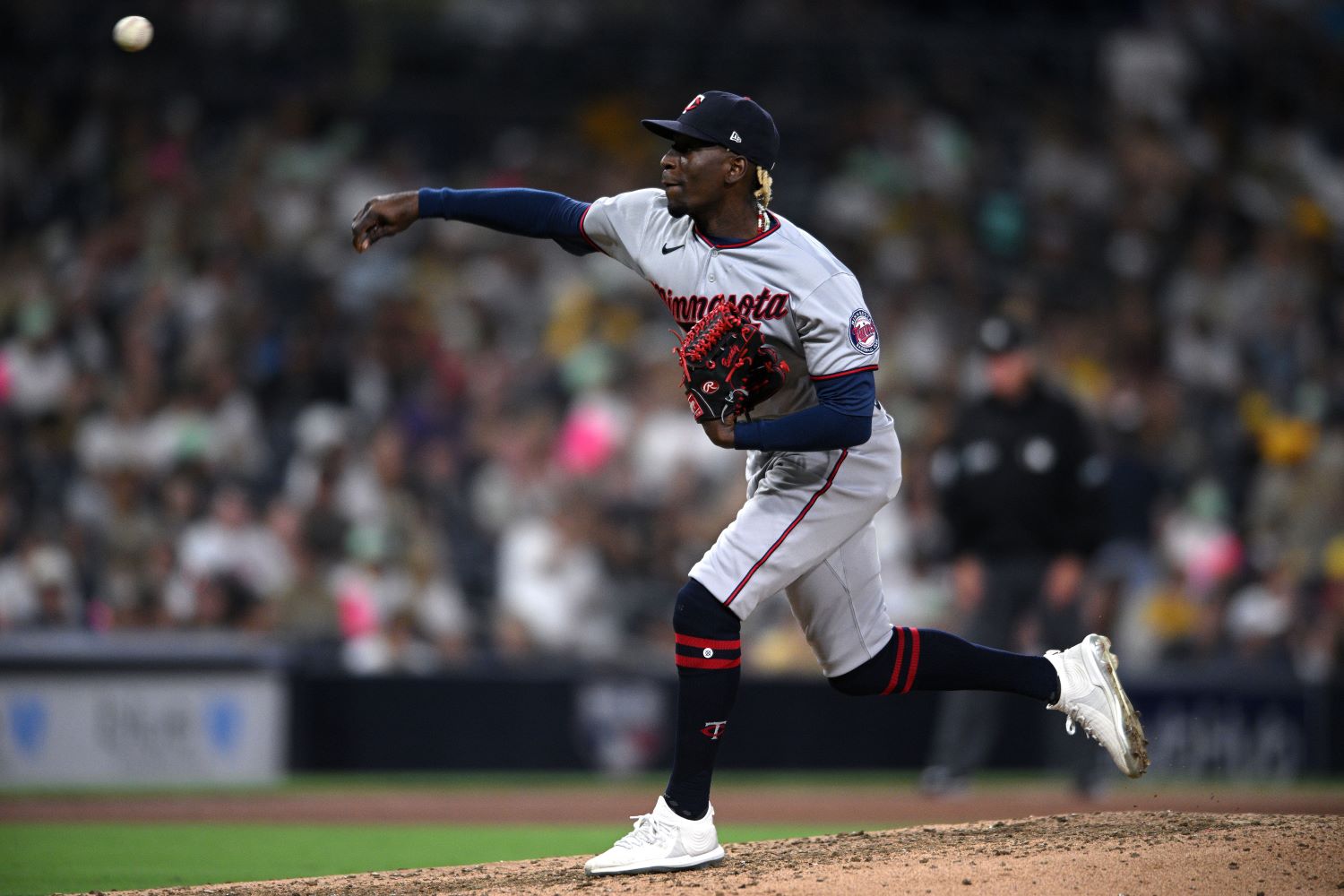 In a season introducing a slate of impactful new laws - the pitch clock, limits on the shift, and tweaks to encourage base running - MLB couldn’t help but dive into more minor waters, breaking through with bends-induced plans. The first: the extra-inning free runner on second base will continue in 2023 and beyond. Initially introduced in the truncated 2020 season, the runner - referred to as the Manfred Man, the zombie runner, the ghost runner, or whatever other snide label you prefer - the rule intended to halt the massive extra-inning slog fests. Gone are the days of 18-inning fever dreams. The next-day pitcher shuffling is now a relic. Postseason games will remain unaffected by the law. With editorial restraint, the rule has proven effective. Mike Axisa of CBS Sports notes that “[w]ith the extra-innings tiebreaker rule, only seven games have gone as long as 13 innings the last three seasons. There were 37 13-inning games in 2019 alone, the last year with "normal" extra-inning rules.” The other announced change pertains to position players pitching. Once considered a fun white flag to wave in a blowout, MLB teams, as they so often do, bastardized its original meaning, instead using fielders to save their relievers from extra strain. Jesse Rogers of ESPN writes that “[i]n 2017, there were 32 instances of position players pitching in a game. Last season, according to the Elias Sports Bureau, that number jumped to 132.” The new rule only allows position players to pitch in these scenarios: Extra-innings In the 9th inning, if the leading team is winning by 10 or more runs In any inning, if the losing team is behind by eight or more runs According to Eric Stephens, the new rule would have eliminated around 39 instances of a position player pitching in 2022. And now, the editorializing: The extra-inning rule is an insult to baseball. As MLB continues down its path of restricting as much baseball to be played as possible, they concluded that, in fact, baseball is its own enemy and must be stopped. Games cannot breathe as intended. Close matches are frowned upon. The rules must closely watch over play, punishing the game for moving in its own way for the sake of appeasing teams treating roster spots like gold. MLB knows this; they use the original rules in the postseason because winning via the extra-inning runner is an unnatural phenomena. The position player rule, however, is much needed. It was fun when Michael Cuddyer took the mound to toss a few meatballs in a blowout, but 132 moments of a position player on the mound is far too high. They’re calls for mercy; increasing the instances is sad. Although, removing the 39 times a position player pitched in 2022 still gives you 93 outings. Perhaps the problem is more that the good teams are crushing the bad teams at historical rates. What do you think of these new or updated rules? How do you feel about the decision to keep the Manfred Man in extra innings during the regular season? How do you feel about position players pitching? Leave a COMMENT below.
 -
He may be right; I may be crazy. Image courtesy of Jeffrey Becker-USA TODAY Sports Derek Falvey rustled some feathers the other day when, in an article written by Phil Miller of the Star Tribune, the exec said, "[i]f we were to do anything at this point, it would likely be to add depth in the middle [innings]. We'll keep an open mind, but [relief pitching is] not a priority." It’s a shockingly straightforward answer not saturated with Falvey’s typical lawyer-ish flourishes. Falvey and Miller covered the gambit in reliever talk in that article; I recommend people read the entire piece before outraging (that will never happen). Initially, it’s tough to accept Falvey’s evaluation. I watched the same 2022 Twins team he did, and that squad specialized in blowing games in the late innings. They often failed to hold leads in games that really should have won. Cleveland proved to be a special problem, as Minnesota handed out late wins like Costco free samples as Tyler Thornburg and his ilk tried their darndest to not be a part of the problem. It didn't work, and they finished with the seventh-most meltdowns, a quick-and-dirty Fangraphs stat that uses win probability to determine poor reliever performance. But you don’t need to hear it from a number: that bullpen stunk. Perhaps we’re looking at the issue too broadly, though. Yes, the relief corps was terrible in the first half of the season—Fangraphs pegged them as the 2nd worst in MLB—but they didn’t remain static. Michael Fulmer and Jorge López joined the squad. Caleb Thielber emerged as a tremendous, reliable arm. People with eyes determined that Emilio Pagán should probably not pitch late in games. Evolution took its course. Quietly, so silent that no one cared to notice, the Twins bullpen improved drastically in the second half. Sure, they couldn’t fall further than before, but their bullpen now ranked 4th in MLB in FIP, only sitting behind the blue-blood organizations who consistently dominate the pitching charts. Part of that may be the inherent randomness in reliever performance, but tangible changes appeared to afflict the Twins for the better. Take it from Falvey: "I feel like we saw a lot of progress as last season went on, and within a group that still can make even more progress as they gain experience." Bullpens aren’t made of numbers. People pitch those innings, at least for now. Minnesota’s group includes four arms dancing around one year of MLB service time with another, Jorge Alcalá, who is about as green as the others. Is it unreasonable to believe that Jovani Moran succeeds in an expanded role, Griffin Jax finds another gear, or Trevor Megill fully realizes his strikeout potential? Jhoan Duran will continue melting faces in the near future. The teams main worry will be the complimenting pieces always at risk for the bullpen randomness bug; there's nothing that signing Corey Knebel would do to alleviate that. The issue with the Twins bullpen is perhaps one of perception: because they seemingly blew an incalculable number of games in 2022, they appear incompetent, doomed to blow games again. But that may not be fair. As this author noted in July, relievers are an odd group, one whose jobs rely on the starting pitcher's effectiveness; it could be an all-hand-on-deck night, or Rocco Baldelli may only need the services of two arms the do the job. Given Minnesota’s dreadfully short starting pitching, the bullpen felt an extreme strain. Much of those games were technically the fault of the relief corps, but part of the battle is placing those arms in a position to succeed; Minnesota lost that fight consistently in 2022. And they likely won’t have to carry that weight in 2023. With plenty of wood knocking, the 2023 Twins rotation appears a more trustworthy bunch than their previous counterparts. Swapping Dylan Bundy and Chris Archer for Kenta Maeda and Pablo López gives them a deep rotation. No arm sticks out as truly dominant, but their reliability should feed into the bullpen, removing pressure and allowing its hierarchy to remain intact. The days of Jharel Cotton saving games are over. It is risky. Fewer outcomes in baseball are less aesthetically pleasing than a late blown lead; the win should have been in hand, after all. If López doesn’t regain his Orioles form, Alcalá fails to show the improvement he flashed in 2021, or if any of the breakout 2022 arms regress, it could be a tough summer to bear. View full article
-
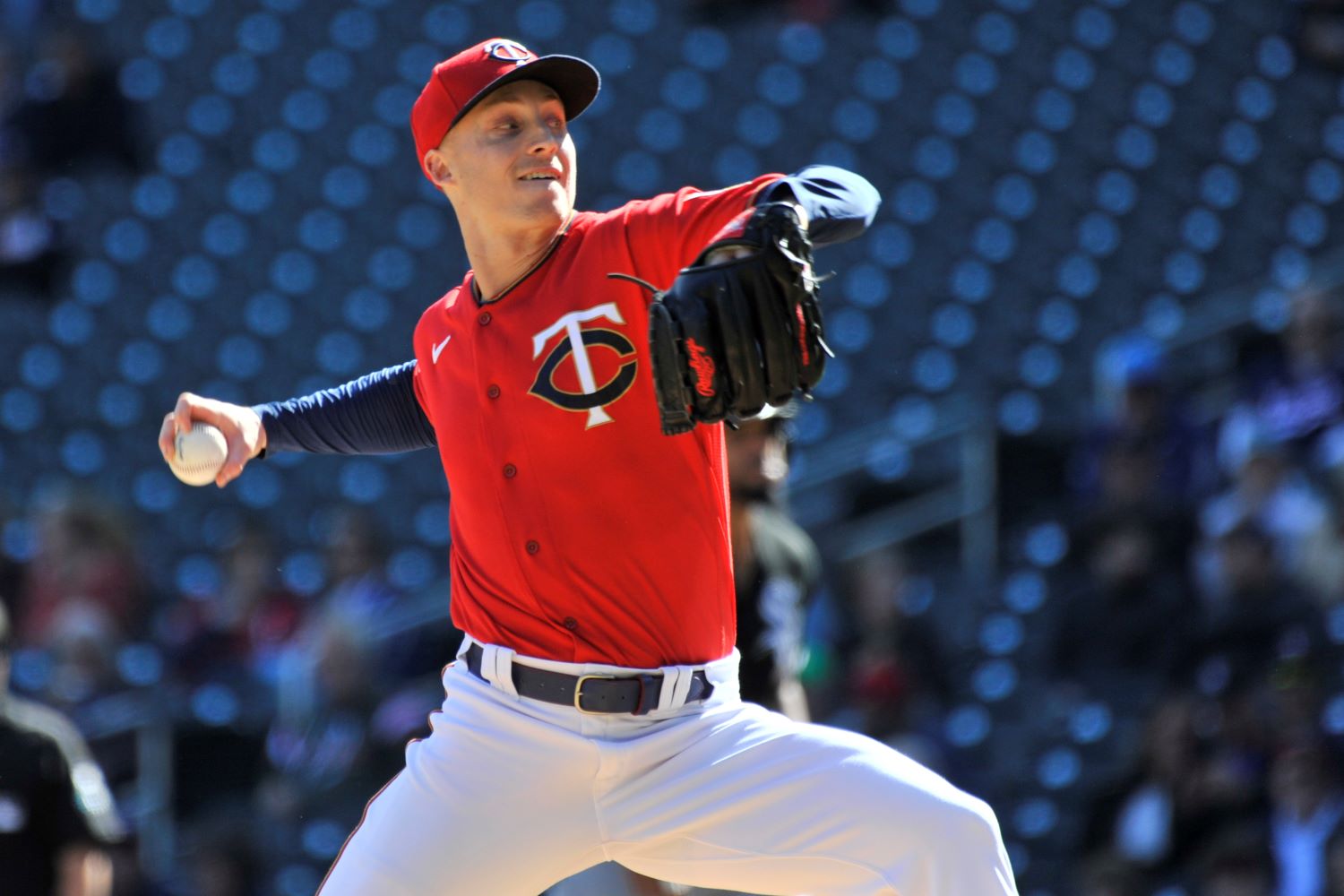 Derek Falvey rustled some feathers the other day when, in an article written by Phil Miller of the Star Tribune, the exec said, "[i]f we were to do anything at this point, it would likely be to add depth in the middle [innings]. We'll keep an open mind, but [relief pitching is] not a priority." It’s a shockingly straightforward answer not saturated with Falvey’s typical lawyer-ish flourishes. Falvey and Miller covered the gambit in reliever talk in that article; I recommend people read the entire piece before outraging (that will never happen). Initially, it’s tough to accept Falvey’s evaluation. I watched the same 2022 Twins team he did, and that squad specialized in blowing games in the late innings. They often failed to hold leads in games that really should have won. Cleveland proved to be a special problem, as Minnesota handed out late wins like Costco free samples as Tyler Thornburg and his ilk tried their darndest to not be a part of the problem. It didn't work, and they finished with the seventh-most meltdowns, a quick-and-dirty Fangraphs stat that uses win probability to determine poor reliever performance. But you don’t need to hear it from a number: that bullpen stunk. Perhaps we’re looking at the issue too broadly, though. Yes, the relief corps was terrible in the first half of the season—Fangraphs pegged them as the 2nd worst in MLB—but they didn’t remain static. Michael Fulmer and Jorge López joined the squad. Caleb Thielber emerged as a tremendous, reliable arm. People with eyes determined that Emilio Pagán should probably not pitch late in games. Evolution took its course. Quietly, so silent that no one cared to notice, the Twins bullpen improved drastically in the second half. Sure, they couldn’t fall further than before, but their bullpen now ranked 4th in MLB in FIP, only sitting behind the blue-blood organizations who consistently dominate the pitching charts. Part of that may be the inherent randomness in reliever performance, but tangible changes appeared to afflict the Twins for the better. Take it from Falvey: "I feel like we saw a lot of progress as last season went on, and within a group that still can make even more progress as they gain experience." Bullpens aren’t made of numbers. People pitch those innings, at least for now. Minnesota’s group includes four arms dancing around one year of MLB service time with another, Jorge Alcalá, who is about as green as the others. Is it unreasonable to believe that Jovani Moran succeeds in an expanded role, Griffin Jax finds another gear, or Trevor Megill fully realizes his strikeout potential? Jhoan Duran will continue melting faces in the near future. The teams main worry will be the complimenting pieces always at risk for the bullpen randomness bug; there's nothing that signing Corey Knebel would do to alleviate that. The issue with the Twins bullpen is perhaps one of perception: because they seemingly blew an incalculable number of games in 2022, they appear incompetent, doomed to blow games again. But that may not be fair. As this author noted in July, relievers are an odd group, one whose jobs rely on the starting pitcher's effectiveness; it could be an all-hand-on-deck night, or Rocco Baldelli may only need the services of two arms the do the job. Given Minnesota’s dreadfully short starting pitching, the bullpen felt an extreme strain. Much of those games were technically the fault of the relief corps, but part of the battle is placing those arms in a position to succeed; Minnesota lost that fight consistently in 2022. And they likely won’t have to carry that weight in 2023. With plenty of wood knocking, the 2023 Twins rotation appears a more trustworthy bunch than their previous counterparts. Swapping Dylan Bundy and Chris Archer for Kenta Maeda and Pablo López gives them a deep rotation. No arm sticks out as truly dominant, but their reliability should feed into the bullpen, removing pressure and allowing its hierarchy to remain intact. The days of Jharel Cotton saving games are over. It is risky. Fewer outcomes in baseball are less aesthetically pleasing than a late blown lead; the win should have been in hand, after all. If López doesn’t regain his Orioles form, Alcalá fails to show the improvement he flashed in 2021, or if any of the breakout 2022 arms regress, it could be a tough summer to bear.
- 22 comments
-
- 9
-
-
- jhoan duran
- griffin jax
- (and 3 more)
-
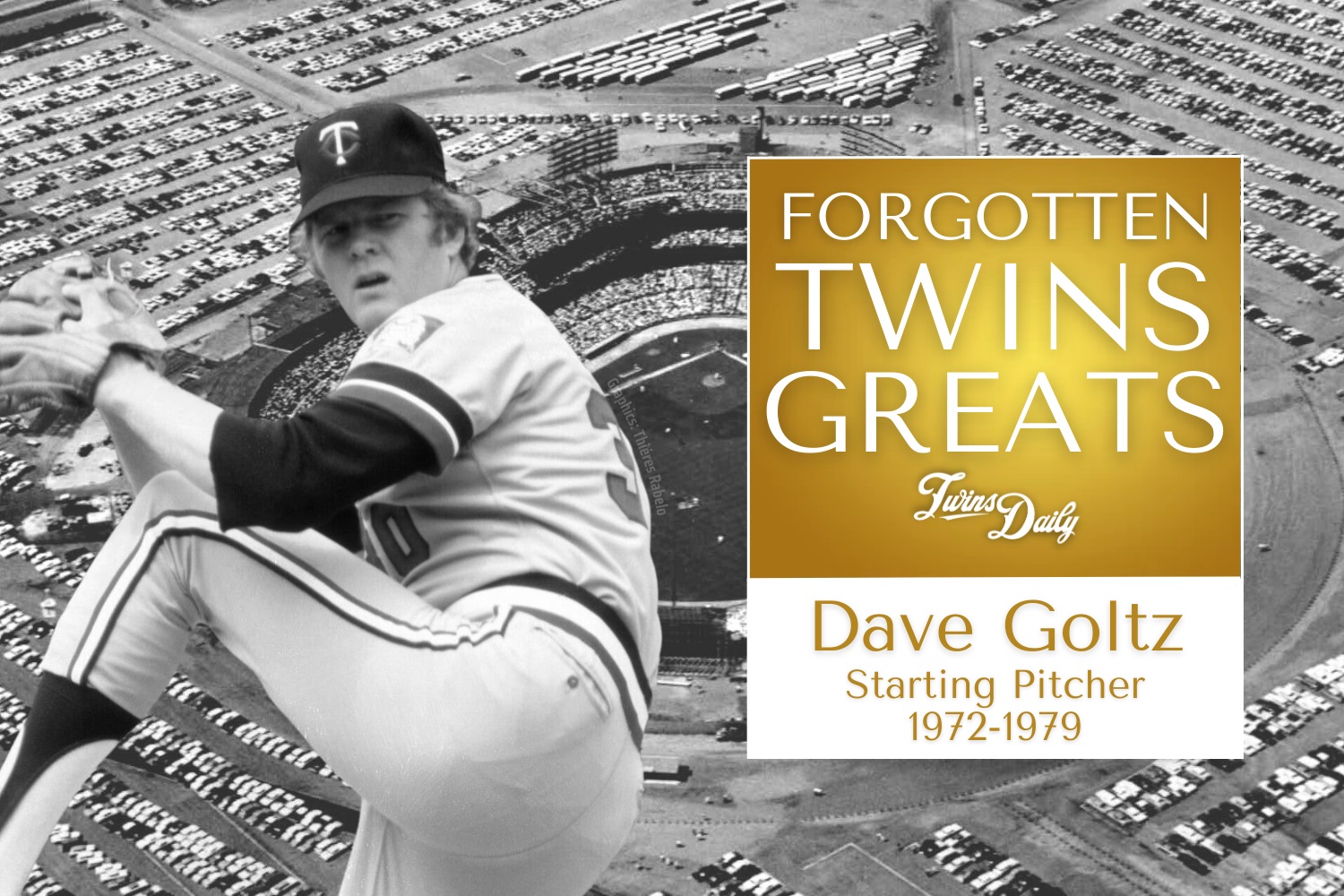 One of the greatest Minnesota-born pitchers, Dave Goltz could not have chosen a more inconspicuous start to his life. Born in Pelican Rapids on June 23rd, 1949, Goltz entered the world as the child of a produce marketer (his father) and a produce-business bookkeeper (his mother) (Temanson). He moved to Rothsay as a young boy. A multi-sport athlete in high school, Goltz’s 6’4” frame stood out among the regulars. His dominant performance in football, basketball, track, and baseball—the only four sports offered by Rothsay High School—spread his name across the state as a high school legend, perhaps a new athlete capable of great things (Temanson). Goltz eventually narrowed his focus to baseball, fueled by the interest sparked in him by his former teacher, Ken Reitan, who started a little league team when Goltz was young (Sorum). A fresh-faced 5th-round pick in the newly-minted June MLB draft (the first was in 1965; Goltz was drafted in 1967), Goltz headed to the GCL to start his professional career. His first two seasons were great successes. He led the GCL in ERA in 1967, then led the Northern League in strikeouts in 1968 (B/R bullpen). Set to lead a league in another pitching stat in 1969, conflict in Vietnam intruded on Goltz’s budding pitching career. Despite new President Richard Nixon beginning the slow, messy process of withdrawal, Uncle Sam called Goltz to service. He worked as a helicopter mechanic in the Army Reserve and missed the 1969 baseball season (Temanson). One of 54 former ballplayers who served in the Vietnam War, Goltz never left the states during his active duty (Baseball Almanac) (twinstrivia). Returning to baseball, Goltz spent two more seasons in the minors—one in Tacoma, Washington as roommates with Tom Kelly—before finally joining the Twins in 1972 (twinstrivia). In the middle of the season, Jim Kaat broke a bone in his wrist sliding into second base, and Minnesota “needed to fill the roster with pitchers,” necessitating a promotion for Goltz (Sorum). Two years removed from an ALCS appearance, this was not a legendary period for Twins baseball. A few remnants of the 1960s glory days remained—names like Kaat, Rod Carew, Cesar Tovar, Tony Oliva, and Harmon Killebrew—but this was a roster in turmoil. Bert Blyleven, 21 and one year away from a legendary pitching season, led a group of players whose ceiling was an 85-win season in 1976. Always one to pitch deep into ballgames, Goltz collected 83 complete games in his MLB career (image courtesy of twinstrivia.com) But this was still 1972 and there was baseball to be played. Goltz debuted against the Yankees on July 18th, pitching 3 2/3 scoreless frames in relief of starter Ray Corbin in a 6-0 loss. Thurman Munson—who should be in the Hall of Fame—homered and doubled. Goltz’s first win came in his first start—a six-inning, two-earned-run performance in the opening game of a doubleheader against the Milwaukee Brewers. The Twins used Goltz mainly as a starter the rest of the season, allowing him to soak up innings as the team struggled to stay afloat. As fun as 1972 was, 1973 proved disappointing, a lesson for Goltz to learn as he grew as a player. The 5.25 ERA, 106 1/3 inning slog cursed him to the minors to start 1974, but Minnesota quickly recalled the starter, and he tossed 174 1/3 frames with a finer 3.25 ERA in 1974. Thus began Goltz’s odd streak of consistency. The good: he gobbled nearly 700 innings between 1974 and 1976 with ERAs of 3.25, 3.67, and 3.36, respectively. The bad: Goltz could not escape his record—a stat as crucial to a starter as any—which somehow tagged him as a .500 pitcher each year. He went 10-10, 14-14, and 14-14, respectively, over the same period. Minnesota’s offense remained well over the league average each season; Goltz simply felt the run-support curse that occasionally dogs even the best pitchers in baseball. Goltz’s 1977 was legendary. In an unparalleled 39 start, 303-inning performance, Goltz accrued 19 complete games, won 20 games, and finished sixth in the AL Cy Young voting. He only finished third in MLB in innings pitched—this was the 70s, after all—but he led the AL in both starts and wins, something that a Twin didn’t do again until Johan Santana in 2006. No Twin has touched 300 innings since. Parsing through the best Twins pitching seasons by fWAR, you’ll find a few Hall of Famers—Bert Blyleven and Jim Kaat—a few Cy Young Winners—Johan Santana, Jim Perry, Frank Viola, and Dean Chance—Camilo Pascual’s excellent 1962 and Phil Hughes’ historic 2014, and sitting as the 16th best individual pitching season in Twins history is Goltz’s 1977 effort. In other words, he was pretty good that year. He was so good that he nearly tossed a no-hitter on August 23rd against Boston, only allowing a bloop hit to Jim Rice that barely sailed over a leaping Roy Smalley. Goltz’s 1978 season was even better by ERA. His 2.49 mark served as his career low, but a few ailments, including a burned hand suffered while grilling and a rib fracture earned during a scuffle against the Angels on April 22nd, cut his innings; he totaled “just” 220 1/3 of them that year (Temanson) (Gleeman, 175). The Twins gave Goltz the opening day nod in 1979, marking the third season in which he pitched the first game. Baseball forces worked against him that year; after five straight seasons with an ERA under 4.00, Goltz’s earned runs shot up, and he ended the year with a 4.16 ERA, the worst since his sophomore slump in 1973. His league-leading 282 hits allowed appear to be the culprit. But times were changing. The landmark 1972 Supreme Court decision Flood v. Kuhn effectively killed the reserve clause, allowing players to sign with whatever team they chose. Catfish Hunter's five-year, $3.35 contract before the 1975 season set the standard. Free agency started to develop even more following the 1976 Collective Bargaining Agreement. With years under his belt, Goltz earned the chance to capitalize on his worth. After his disappointing 1979 season, Goltz filed for free agency. The Twins in this era were stingy, to be kind. Owner Calvin Griffith ran potential stars Lyman Bostick and Larry Hisle out of town with his tight pockets and traded 1977 AL MVP Rod Carew for similar reasons. Although, Griffith’s infamous racist comments in Waseca in 1978 also fueled that move. Goltz claims Howard Fox, Minnesota’s Vice President, was the man he had financial issues with, but he nonetheless chose to dabble in the open waters (Temanson). Perhaps not the proudest accomplishment, Goltz owns the record for most runs allowed in a saved game after allowing eight runs against the Cleveland Guardians on June 6, 1973. Four teams, led by the trio of Southern California franchises and Milwaukee, vied for Goltz. The starter preferred the Brewers with their energetic hitters and gritty style of play, but kept his heart open to the Dodgers, Angels, and Padres (twinstrivia). When the Dodgers offered an eye-popping six-year $3 million contract, Goltz's agent sealed the deal, and the Minnesota boy officially headed west to join a growing powerhouse. The 1980s Dodgers, under manager Tommy Lasorda, were a legendary bunch. Fresh off NL pennant victories in 1977 and 1978, the team enjoyed a host of elite players: hitters like Ron Cey, Pedro Guerrero, Steve Garvey, and Dusty Baker supplied the pop while veteran Don Sutton handed the torch off to youngsters Bob Welch, Fernando Valenzuela, and Orel Hershiser. L.A. won two titles in the 1980s while finishing above .500 in six seasons. Goltz’s time as a Dodger was not happy. He started his career in L.A. with back-to-back shutouts but fell out of the rotation in 1981, and the team cut him just a few months into the 1982 season. Still, after tossing 3 1/3 innings in the 1981 World Series, Goltz aided in a championship victory, earning a ring in the process. Goltz remained in California, joining the Angels in 1982. Back under the watch of manager Gene Mauch, Goltz joined an eventual playoff team led by Carew, Reggie Jackson, the eternally-underrated Bobby Grich, Fred Lynn, and Don Baylor. Luis Tiant and Tommy John served as the (very) veteran depth arms. Goltz earned one more chance at postseason success, a relief appearance in Game 4 of the ALCS against the Milwaukee Brewers. However, Harvey’s Wall-Bangers didn’t spare Goltz as, after jumping on Tommy John, Milwaukee pegged Goltz for three runs on their way to a World Series appearance. Goltz tossed a few innings for the Angels in 1983, but his playing career ended quickly and quietly. Never a strikeout artist—he “relied more on ground balls” than strikeouts—Goltz could be easy to miss and simple to paint broadly (Gleeman, 175). Sometimes mentioned as one of the original free agent “busts,” Goltz was not merely a decent pitcher on an elite Dodger team, but instead, a starter who endured massive workloads in his prime, only finally wobbling once he reached the wrong side of 30. Of all the pitchers Gene Mauch oversaw—an impressive list that includes Nolan Ryan, Frank Tanana, and Jim Bunning, among others—he claims Goltz to be the best he ever managed (Temanson). A master of the sinker—one that would “rise” and another that would “sink” into a right-hander—Goltz earned his outs with movement (Sorum). When paired with a knuckle curve that he could throw three different ways, Goltz could gobble innings with the best of them (twinstrivia). His 1,248 innings thrown between 1975 and 1979 are the 11th-highest of all pitchers. Stars like Nolan Ryan, Luis Tiant, Don Sutton, and Jerry Koosman (another Minnesota-born Vietnam veteran) rank below Goltz’s total in that streak. Minnesota’s leaderboards bear Goltz’s greatness. He accrued the fifth-most fWAR of all Twins starters, the sixth-most innings, and has the 11th-lowest ERA of all qualified starters. His numbers compare favorably to Frank Viola—a Twin legend cherished and remembered by fans into the present. Goltz left baseball to join Midwest Insurance in Fergus Falls, Minnesota, where, as of 2010, he still entered the office consistently (Sorum). Occasionally making his way to various Twins events, Goltz prefers to avoid the city and its traffic, instead choosing to live in sparse parts of the state. Aaron Gleeman placed Goltz 30 in his Big 50 book, an appreciation of the men and moments that define the Minnesota Twins. -------------------------------------------------------------------------------------- Twinsdaily's formatting doesn't allow for footnotes, my preferred style of citation, so I used the Author/Date system in the text with my bibliography here. Sources are listed alphabetically, not necessarily by use. Temanson, Lee, "https://sabr.org/bioproj/person/Dave-Goltz/," SABR, 2009. Sorum, Scott, "Dave Goltz: Former Minnesota Twins pitcher calls this area ‘Home’," https://www.wahpetondailynews.com/, 2010. https://www.baseball-reference.com/bullpen/Dave_Goltz https://www.baseball-almanac.com/players/player.php?p=goltzda01 twinstrivia.com, "Dave Goltz interview," 2011. Gleeman, Aaron, "The Big 50: The Men and Moments That Made the Minnesota Twins," Triumph Books, 2018 https://www.fangraphs.com/
 -
Just as greats live on forever, the underappreciated athlete falls out of conversations. Often lost in time, only remembered through the etchings of historical leaderboards, these players still breathe eternally, only re-entering our shared knowledge when one re-discovers their accomplishments. This is one of those stories. Image courtesy of Thiéres Rabelo (Graphic) One of the greatest Minnesota-born pitchers, Dave Goltz could not have chosen a more inconspicuous start to his life. Born in Pelican Rapids on June 23rd, 1949, Goltz entered the world as the child of a produce marketer (his father) and a produce-business bookkeeper (his mother) (Temanson). He moved to Rothsay as a young boy. A multi-sport athlete in high school, Goltz’s 6’4” frame stood out among the regulars. His dominant performance in football, basketball, track, and baseball—the only four sports offered by Rothsay High School—spread his name across the state as a high school legend, perhaps a new athlete capable of great things (Temanson). Goltz eventually narrowed his focus to baseball, fueled by the interest sparked in him by his former teacher, Ken Reitan, who started a little league team when Goltz was young (Sorum). A fresh-faced 5th-round pick in the newly-minted June MLB draft (the first was in 1965; Goltz was drafted in 1967), Goltz headed to the GCL to start his professional career. His first two seasons were great successes. He led the GCL in ERA in 1967, then led the Northern League in strikeouts in 1968 (B/R bullpen). Set to lead a league in another pitching stat in 1969, conflict in Vietnam intruded on Goltz’s budding pitching career. Despite new President Richard Nixon beginning the slow, messy process of withdrawal, Uncle Sam called Goltz to service. He worked as a helicopter mechanic in the Army Reserve and missed the 1969 baseball season (Temanson). One of 54 former ballplayers who served in the Vietnam War, Goltz never left the states during his active duty (Baseball Almanac) (twinstrivia). Returning to baseball, Goltz spent two more seasons in the minors—one in Tacoma, Washington as roommates with Tom Kelly—before finally joining the Twins in 1972 (twinstrivia). In the middle of the season, Jim Kaat broke a bone in his wrist sliding into second base, and Minnesota “needed to fill the roster with pitchers,” necessitating a promotion for Goltz (Sorum). Two years removed from an ALCS appearance, this was not a legendary period for Twins baseball. A few remnants of the 1960s glory days remained—names like Kaat, Rod Carew, Cesar Tovar, Tony Oliva, and Harmon Killebrew—but this was a roster in turmoil. Bert Blyleven, 21 and one year away from a legendary pitching season, led a group of players whose ceiling was an 85-win season in 1976. Always one to pitch deep into ballgames, Goltz collected 83 complete games in his MLB career (image courtesy of twinstrivia.com) But this was still 1972 and there was baseball to be played. Goltz debuted against the Yankees on July 18th, pitching 3 2/3 scoreless frames in relief of starter Ray Corbin in a 6-0 loss. Thurman Munson—who should be in the Hall of Fame—homered and doubled. Goltz’s first win came in his first start—a six-inning, two-earned-run performance in the opening game of a doubleheader against the Milwaukee Brewers. The Twins used Goltz mainly as a starter the rest of the season, allowing him to soak up innings as the team struggled to stay afloat. As fun as 1972 was, 1973 proved disappointing, a lesson for Goltz to learn as he grew as a player. The 5.25 ERA, 106 1/3 inning slog cursed him to the minors to start 1974, but Minnesota quickly recalled the starter, and he tossed 174 1/3 frames with a finer 3.25 ERA in 1974. Thus began Goltz’s odd streak of consistency. The good: he gobbled nearly 700 innings between 1974 and 1976 with ERAs of 3.25, 3.67, and 3.36, respectively. The bad: Goltz could not escape his record—a stat as crucial to a starter as any—which somehow tagged him as a .500 pitcher each year. He went 10-10, 14-14, and 14-14, respectively, over the same period. Minnesota’s offense remained well over the league average each season; Goltz simply felt the run-support curse that occasionally dogs even the best pitchers in baseball. Goltz’s 1977 was legendary. In an unparalleled 39 start, 303-inning performance, Goltz accrued 19 complete games, won 20 games, and finished sixth in the AL Cy Young voting. He only finished third in MLB in innings pitched—this was the 70s, after all—but he led the AL in both starts and wins, something that a Twin didn’t do again until Johan Santana in 2006. No Twin has touched 300 innings since. Parsing through the best Twins pitching seasons by fWAR, you’ll find a few Hall of Famers—Bert Blyleven and Jim Kaat—a few Cy Young Winners—Johan Santana, Jim Perry, Frank Viola, and Dean Chance—Camilo Pascual’s excellent 1962 and Phil Hughes’ historic 2014, and sitting as the 16th best individual pitching season in Twins history is Goltz’s 1977 effort. In other words, he was pretty good that year. He was so good that he nearly tossed a no-hitter on August 23rd against Boston, only allowing a bloop hit to Jim Rice that barely sailed over a leaping Roy Smalley. Goltz’s 1978 season was even better by ERA. His 2.49 mark served as his career low, but a few ailments, including a burned hand suffered while grilling and a rib fracture earned during a scuffle against the Angels on April 22nd, cut his innings; he totaled “just” 220 1/3 of them that year (Temanson) (Gleeman, 175). The Twins gave Goltz the opening day nod in 1979, marking the third season in which he pitched the first game. Baseball forces worked against him that year; after five straight seasons with an ERA under 4.00, Goltz’s earned runs shot up, and he ended the year with a 4.16 ERA, the worst since his sophomore slump in 1973. His league-leading 282 hits allowed appear to be the culprit. But times were changing. The landmark 1972 Supreme Court decision Flood v. Kuhn effectively killed the reserve clause, allowing players to sign with whatever team they chose. Catfish Hunter's five-year, $3.35 contract before the 1975 season set the standard. Free agency started to develop even more following the 1976 Collective Bargaining Agreement. With years under his belt, Goltz earned the chance to capitalize on his worth. After his disappointing 1979 season, Goltz filed for free agency. The Twins in this era were stingy, to be kind. Owner Calvin Griffith ran potential stars Lyman Bostick and Larry Hisle out of town with his tight pockets and traded 1977 AL MVP Rod Carew for similar reasons. Although, Griffith’s infamous racist comments in Waseca in 1978 also fueled that move. Goltz claims Howard Fox, Minnesota’s Vice President, was the man he had financial issues with, but he nonetheless chose to dabble in the open waters (Temanson). Perhaps not the proudest accomplishment, Goltz owns the record for most runs allowed in a saved game after allowing eight runs against the Cleveland Guardians on June 6, 1973. Four teams, led by the trio of Southern California franchises and Milwaukee, vied for Goltz. The starter preferred the Brewers with their energetic hitters and gritty style of play, but kept his heart open to the Dodgers, Angels, and Padres (twinstrivia). When the Dodgers offered an eye-popping six-year $3 million contract, Goltz's agent sealed the deal, and the Minnesota boy officially headed west to join a growing powerhouse. The 1980s Dodgers, under manager Tommy Lasorda, were a legendary bunch. Fresh off NL pennant victories in 1977 and 1978, the team enjoyed a host of elite players: hitters like Ron Cey, Pedro Guerrero, Steve Garvey, and Dusty Baker supplied the pop while veteran Don Sutton handed the torch off to youngsters Bob Welch, Fernando Valenzuela, and Orel Hershiser. L.A. won two titles in the 1980s while finishing above .500 in six seasons. Goltz’s time as a Dodger was not happy. He started his career in L.A. with back-to-back shutouts but fell out of the rotation in 1981, and the team cut him just a few months into the 1982 season. Still, after tossing 3 1/3 innings in the 1981 World Series, Goltz aided in a championship victory, earning a ring in the process. Goltz remained in California, joining the Angels in 1982. Back under the watch of manager Gene Mauch, Goltz joined an eventual playoff team led by Carew, Reggie Jackson, the eternally-underrated Bobby Grich, Fred Lynn, and Don Baylor. Luis Tiant and Tommy John served as the (very) veteran depth arms. Goltz earned one more chance at postseason success, a relief appearance in Game 4 of the ALCS against the Milwaukee Brewers. However, Harvey’s Wall-Bangers didn’t spare Goltz as, after jumping on Tommy John, Milwaukee pegged Goltz for three runs on their way to a World Series appearance. Goltz tossed a few innings for the Angels in 1983, but his playing career ended quickly and quietly. Never a strikeout artist—he “relied more on ground balls” than strikeouts—Goltz could be easy to miss and simple to paint broadly (Gleeman, 175). Sometimes mentioned as one of the original free agent “busts,” Goltz was not merely a decent pitcher on an elite Dodger team, but instead, a starter who endured massive workloads in his prime, only finally wobbling once he reached the wrong side of 30. Of all the pitchers Gene Mauch oversaw—an impressive list that includes Nolan Ryan, Frank Tanana, and Jim Bunning, among others—he claims Goltz to be the best he ever managed (Temanson). A master of the sinker—one that would “rise” and another that would “sink” into a right-hander—Goltz earned his outs with movement (Sorum). When paired with a knuckle curve that he could throw three different ways, Goltz could gobble innings with the best of them (twinstrivia). His 1,248 innings thrown between 1975 and 1979 are the 11th-highest of all pitchers. Stars like Nolan Ryan, Luis Tiant, Don Sutton, and Jerry Koosman (another Minnesota-born Vietnam veteran) rank below Goltz’s total in that streak. Minnesota’s leaderboards bear Goltz’s greatness. He accrued the fifth-most fWAR of all Twins starters, the sixth-most innings, and has the 11th-lowest ERA of all qualified starters. His numbers compare favorably to Frank Viola—a Twin legend cherished and remembered by fans into the present. Goltz left baseball to join Midwest Insurance in Fergus Falls, Minnesota, where, as of 2010, he still entered the office consistently (Sorum). Occasionally making his way to various Twins events, Goltz prefers to avoid the city and its traffic, instead choosing to live in sparse parts of the state. Aaron Gleeman placed Goltz 30 in his Big 50 book, an appreciation of the men and moments that define the Minnesota Twins. -------------------------------------------------------------------------------------- Twinsdaily's formatting doesn't allow for footnotes, my preferred style of citation, so I used the Author/Date system in the text with my bibliography here. Sources are listed alphabetically, not necessarily by use. Temanson, Lee, "https://sabr.org/bioproj/person/Dave-Goltz/," SABR, 2009. Sorum, Scott, "Dave Goltz: Former Minnesota Twins pitcher calls this area ‘Home’," https://www.wahpetondailynews.com/, 2010. https://www.baseball-reference.com/bullpen/Dave_Goltz https://www.baseball-almanac.com/players/player.php?p=goltzda01 twinstrivia.com, "Dave Goltz interview," 2011. Gleeman, Aaron, "The Big 50: The Men and Moments That Made the Minnesota Twins," Triumph Books, 2018 https://www.fangraphs.com/ View full article
-
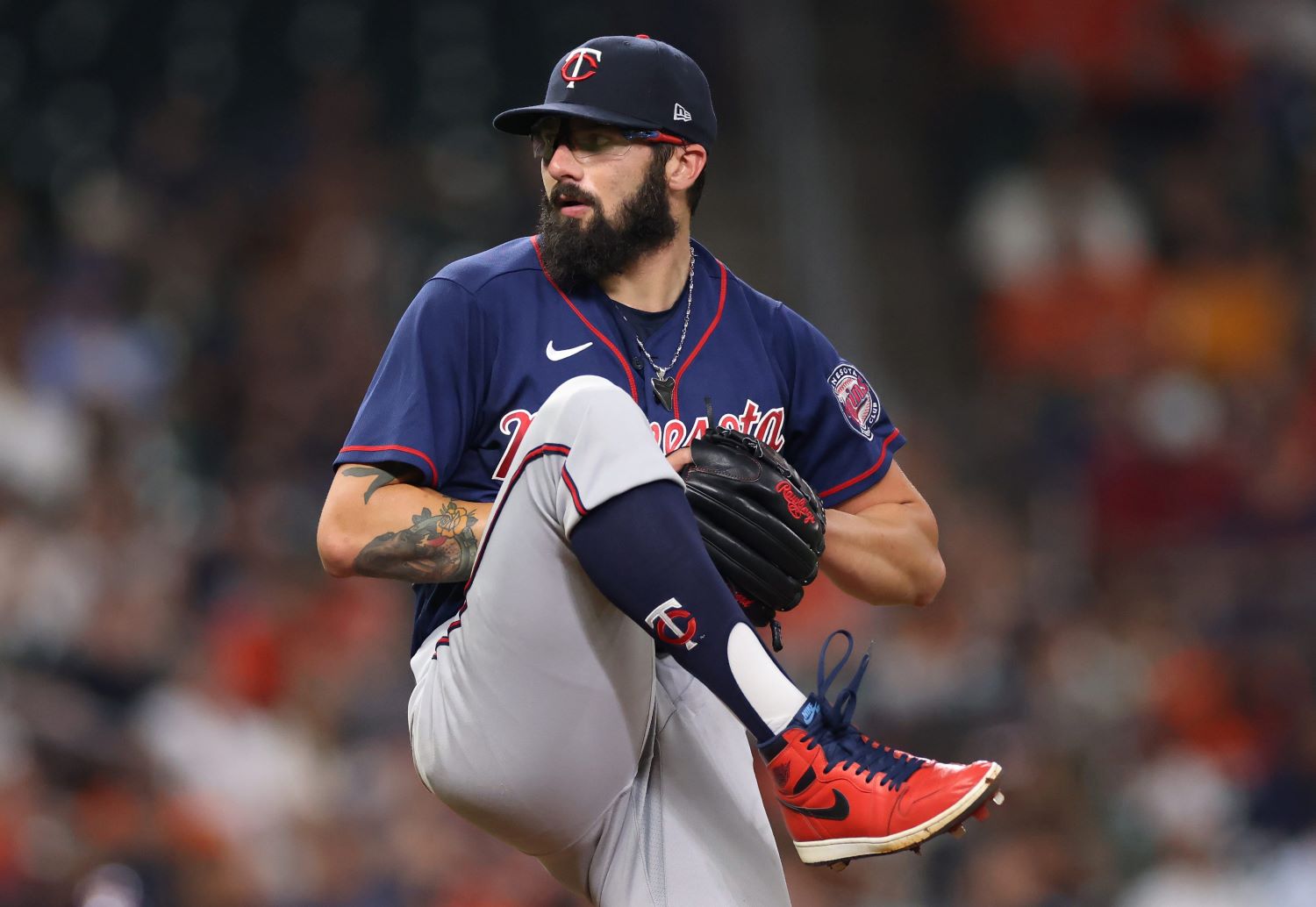 Devin Smeltzer operated in the most thankless of MLB roles: a Triple-A swingman. Always relied upon when the inevitable pitcher injury bug struck but never promised a spot with the big club. He was meant to be discarded, called up to soak innings, before heading back to St. Paul with a major-league paycheck in his pocket as a reward for his troubles. MLB playing time is better than slumming it in the minors, but the mental drain involved in bouncing between teams takes a toll. It almost never happened. A tumor discovered as a child threatened Smeltzer’s life—not just his playing career. Stricken with a terrible sickness, Smeltzer found solace in baseball, making trips to Citizens Bank Park to watch an elite Phillies team on the rise. Among stars like Ryan Howard, Cole Hamels, and Jimmy Rollins, Smeltzer picked out Chase Utley—Philadelphia’s all-around offensive threat, capable of reaching base while slugging at a rate typically unheard of for second baseman—as his favorite player. They met, and an unlikely relationship blossomed. Now healthy and pitching well, a 20-year-old Smeltzer found himself drafted by the Dodgers—the team that now employed Utley. They met again in Spring Training in 2018. A mid-season trade brought Smeltzer to the Twins that year. With a better chance to crack a weaker Twins rotation than the stacked Dodgers, Smeltzer debuted in 2019 with an unforgettable start. The stats could speak for themselves: Smeltzer challenged a playoff-bound Brewers team, one led by reigning MVP Christian Yelich, and dominated. Six innings, seven strikeouts, and no earned runs constituted one of the finest debuts a pitcher can have, but the numbers barely matter; the spectacle of watching Smeltzer—someone who once struggled with cancer at an age intended for carelessness—pitch at the major league level was enough to move every person in the ballpark. Jack Morris could barely speak. Smeltzer tossed 49 innings for the 2019 Twins but spent the next two seasons on the outskirts, consistently passed over as Minnesota looked elsewhere for pitching help. A bevy of injuries created an opportunity for Smeltzer in 2022. With plentiful openings in the rotation, Smeltzer collected 12 starts, accruing 70 1/3 frames for a team in desperate need of them. He was a godsend. But the life of a pitcher on the fringes isn’t a kind one. Fresh out of minor-league options, the Twins saw no need to keep Smeltzer around, jettisoning him to open waters for another team to swipe up. The Marlins did just that. It could be easy to paint Smeltzer’s career in broad strokes. His fastball wasn’t perfect—he could use a few more ticks—and his breaking ball wasn’t ideal—he had trouble getting lefties out—but doing so would be a disservice. Smeltzer was dutiful, consistent. When Minnesota needed innings, he was there, able to gobble frames while the team shifted around paperwork, searching for long-term solutions to their problems. Objectified for his availability, not his performance, Smeltzer served his role well. Not all players are legends; not all Twins are classic. Between the Joe Mauers and Kirby Pucketts—and even the Matt Guerriers—stands an army Devin Smeltzers, players whose contributions may be easy to miss, but are necessary nonetheless. Miami’s plans for him are unclear; the team enjoys a ransom of pitching riches—with one fewer arm, as of late—making chances for Smeltzer to crack their rotation difficult. But he’s faced obstacles before. Biding time is a small ask for someone with Smeltzer's fortitude.
 -
In signing a minor-league deal with the Marlins last week, Devin Smeltzer left the only franchise he donned a major-league uniform for, the Minnesota Twins. Image courtesy of Thomas Shea, USA TODAY Sports Devin Smeltzer operated in the most thankless of MLB roles: a Triple-A swingman. Always relied upon when the inevitable pitcher injury bug struck but never promised a spot with the big club. He was meant to be discarded, called up to soak innings, before heading back to St. Paul with a major-league paycheck in his pocket as a reward for his troubles. MLB playing time is better than slumming it in the minors, but the mental drain involved in bouncing between teams takes a toll. It almost never happened. A tumor discovered as a child threatened Smeltzer’s life—not just his playing career. Stricken with a terrible sickness, Smeltzer found solace in baseball, making trips to Citizens Bank Park to watch an elite Phillies team on the rise. Among stars like Ryan Howard, Cole Hamels, and Jimmy Rollins, Smeltzer picked out Chase Utley—Philadelphia’s all-around offensive threat, capable of reaching base while slugging at a rate typically unheard of for second baseman—as his favorite player. They met, and an unlikely relationship blossomed. Now healthy and pitching well, a 20-year-old Smeltzer found himself drafted by the Dodgers—the team that now employed Utley. They met again in Spring Training in 2018. A mid-season trade brought Smeltzer to the Twins that year. With a better chance to crack a weaker Twins rotation than the stacked Dodgers, Smeltzer debuted in 2019 with an unforgettable start. The stats could speak for themselves: Smeltzer challenged a playoff-bound Brewers team, one led by reigning MVP Christian Yelich, and dominated. Six innings, seven strikeouts, and no earned runs constituted one of the finest debuts a pitcher can have, but the numbers barely matter; the spectacle of watching Smeltzer—someone who once struggled with cancer at an age intended for carelessness—pitch at the major league level was enough to move every person in the ballpark. Jack Morris could barely speak. Smeltzer tossed 49 innings for the 2019 Twins but spent the next two seasons on the outskirts, consistently passed over as Minnesota looked elsewhere for pitching help. A bevy of injuries created an opportunity for Smeltzer in 2022. With plentiful openings in the rotation, Smeltzer collected 12 starts, accruing 70 1/3 frames for a team in desperate need of them. He was a godsend. But the life of a pitcher on the fringes isn’t a kind one. Fresh out of minor-league options, the Twins saw no need to keep Smeltzer around, jettisoning him to open waters for another team to swipe up. The Marlins did just that. It could be easy to paint Smeltzer’s career in broad strokes. His fastball wasn’t perfect—he could use a few more ticks—and his breaking ball wasn’t ideal—he had trouble getting lefties out—but doing so would be a disservice. Smeltzer was dutiful, consistent. When Minnesota needed innings, he was there, able to gobble frames while the team shifted around paperwork, searching for long-term solutions to their problems. Objectified for his availability, not his performance, Smeltzer served his role well. Not all players are legends; not all Twins are classic. Between the Joe Mauers and Kirby Pucketts—and even the Matt Guerriers—stands an army Devin Smeltzers, players whose contributions may be easy to miss, but are necessary nonetheless. Miami’s plans for him are unclear; the team enjoys a ransom of pitching riches—with one fewer arm, as of late—making chances for Smeltzer to crack their rotation difficult. But he’s faced obstacles before. Biding time is a small ask for someone with Smeltzer's fortitude. View full article
-
It's prospect season again. Pitchers and catchers will soon report, so our effort at Twinsdaily to cover the minor leagues will fire up once again, and that includes our prospect rankings. The system looks surprisingly strong. Despite a flurry of trades over the last 18 months or so, the Twins still have a top nucleus of elite talent, and the franchise enjoys solid upper-level pitching depth. They're a little low on gamechangers at the elite positions—centerfield and shortstop—but so is basically every system, and Minnesota could easily cover that deficiency with a healthy season from Emmanuel Rodriguez and continued development from their two DSL stars. Remember: tier matters more than ranking. Royce Lewis 6’2” / 200 (Prev: 1) Age: 23 Position: SS Highest level reached: MLB Nothing has changed my view of Royce Lewis since I last updated my list. He’s a potentially franchise-altering talent with a frustrating lack of baseball in his recent resume. Lewis’ short playing time in 2022 was a revelation, as he checked significant boxes—his ability to play shortstop and his hitting prowess—before the brutal knee injury cut off his time playing baseball. A much quieter batting stance appears to have unlocked his hitting potential. I’m looking forward to seeing what he can do when he is healthy again. Brooks Lee 6’2” / 205 (Prev: 2) Age: 21 Position: SS/3B Highest level reached: AA If you think Brooks Lee deserves to be in the one spot, I can’t argue with you; Lee is an incredibly safe bet to hit well, no matter where his defensive home is. Despite being drafted just seven months ago, Lee reached AA, playing in a handful of games for Wichita before calling it a season; he smoked A+ ball with a 140 wRC+. His immense hitting pedigree, combined with his lineage as a coach’s son indeed points towards an ideal makeup package that should serve him well as he transitions to big leaguer. He’ll probably impact the 2023 Twins and will undoubtedly affect the team in 2024. ------------------------- Emmanuel Rodriguez 5’10” / 210 (Prev: 4) Age: 19 Position: OF Highest level reached: A Potentially the most dynamic prospect in Minnesota’s system, Emmanuel Rodriguez’s nuclear 2022 fell violently when he tore his ACL in June. Still, Rodriguez walked an absurd 28.6% of the time while slugging .551 in a league that favors pitchers. Granted, it was just a 199 plate appearance sample. Still, I’m excited to see Rodriguez return to action healthy, and he could quickly become the Twins’ best prospect sometime next season. Noah Miller 6’1” / 190 (Prev: 3) Age: 20 Position: SS Highest level reached: A I am too high on Noah Miller; I will remain too high on Noah Miller until his hitting falls entirely off a cliff. Prospects who are locks to play shortstop do not grow on trees—at least none that I know—and Miller’s bat is just good enough to keep him a valuable contributor at the position. If it clicks offensively—and his strike zone awareness is already elite—we’re looking at a potential successor to Carlos Correa in a few years; he’ll need to gain more power, though. Marco Raya 6’1” / 170 (Prev: 8) Age: 20 Position: RHP Highest level reached: A “[Marco] Raya’s slider is Charon, come to ferry batters back to the dugout,” wrote Jeffery Paternostro for Baseball Prospectus in November—a perfect sentence. Raya carries the same risk all pitchers do—injury potential, a future in the bullpen—compounded by his smaller frame. But if he can stay healthy, Raya could vault into the top of the Twins rotation, dominating hitters with a compelling four-pitch mix and a bulldog mentality. Raya struck out 28.9% of batters over 65 innings with Fort Myers in 2022. Jose Salas 6’2” / 191 (Prev: n/a) Age: 19 Position: SS Highest level reached: A+ A new name! A critical, underrated addition to the Pablo López trade, Jose Salas adds another intriguing infield wrinkle to a system bursting with “people who can play shortstop,” not necessarily “shortstops.” A super young 19 in A+, Salas hit like an overwhelmed prospect, but some AFL seasoning plus an off-season of recovery could cleanse him anew. Salas hit .267/.355/.421 in A ball before his promotion in 2022. Edouard Julien 6’2” / 195 (Prev: 7) Age: 23 Position: 2B Highest level reached: AA If this were a list of favorite prospects, Edouard Julien would be top three, potentially sitting at the top spot. What’s not to love? The lefty smoked AA Wichita with a .300/.441/.490 line and then hit—and I’m not kidding here—.400/.563/.686 in the Arizona Fall League before ending his terror on pitchers for the season. He lacks a defensive home, but a team would move Heaven and Earth to find a spot for that bat somewhere. Minnesota added him to the 40-man roster this past season; we will probably see Julien in the majors soon. Connor Prielipp 6’2” / 210 (Prev: 5) Age: 22 Position: LHP Highest level reached: n/a Who is John Galt Connor Prielipp? The baseball world has seen startlingly little from Prielipp, as injuries limited his time with Alabama to seven starts. Still, he owns a mid-90s fastball and a power slider when healthy; 2023 will illuminate his prospect status. Simeon Woods Richardson 6’3” / 210 (Prev: 6) Age: 22 Position: RHP Highest level reached: MLB Maybe one of the more crucial cogs in Minnesota’s 2023 pitching machine, Simeon Woods Richardson appears well-set to impact the major league roster soon. Armed with unique fastball traits, Woods Richardson held his own in a harsh Texas League environment in 2022, then torched AAA at the end of the year for fun. He earned enough respect to make his first Twins start—a five-inning outing notable in that he’ll never have to debut again; the nerves are behind him. Still somehow just 22, Woods Richardson struck out 27% of batters in the minors last season. ------------------------- Louie Varland 6’1” / 205 (Prev: 10) Age: 25 Position: RHP Highest level reached: MLB Louie Varland should rank higher on this list, but something in his profile doesn’t fully click for me. His fastball is excellent—a real jumper he can use in any count because of his low angle. But none of his other pitches stood out as difference makers, turning Varland into a one-pitch pitcher. His slider and changeup command was non-existent, and batters brutalized his cutter. That’s a negative paragraph for the supposed 10th-best prospect on the team, but that’s what I’ve seen from Varland, and until it changes, I remain bearish on his starting capabilities. Austin Martin 6’0” / 185 (Prev: 13) Age: 23 Position: SS/OF Highest level reached: AA Austin Martin’s wild 2022 bounced him more than any other player around this list. After slugging a dreadful .315 in a hitter’s league, Martin crushed in the Arizona Fall League, showcasing his older, successful mechanics in a dramatic redemption arc. He’s not a shortstop—that much is obvious now, but if his bat is back, then the Twins could have a quality 3-win utility player capable of playing a variety of positions. 2023 will be a crucial test. Matt Wallner 6’5” / 220 (Prev: 9) Age: 25 Position: OF Highest level reached: MLB It’s hard to hold 18 major league games against a guy, but Matt Wallner’s Adventures in the Outfield stunk enough to deeply sour me on any notions of him replacing Max Kepler soon. The Twins appear to agree. With approximately 30,000 outfielders ahead of him, it would take a series of great tragedies before Wallner earns significant MLB playing time soon. Still, he shaved points off his strikeout rate in 2022—the biggest knock against him—and he could ride his outstanding power stroke to an elongated playing career. Yasser Mercedes 6’2” / 175 (Prev: 11) Age: 18 Position: OF Highest level reached: DSL Yasser Mercedes did things as a 17-year-old that teenagers aren’t supposed to do. Yes, it was in the noisy environment that is the DSL, but 30 steals with a .555 slugging percentage is impressive, no matter the level. Mercedes will likely play in rookie ball in 2023, and I imagine his prospect package will become much more apparent in 2024 when he’ll still be just 19. David Festa 6’6” / 185 (Prev: 20) Age: 22 Position: RHP Highest level reached: A+ One of the most “pop-uppiest” prospect in the Twins system in 2022, David Festa commands a tremendous fastball/slider combo that torched hitters in the low minors. Although his numbers dropped following a promotion to A+ ball, Festa punctuated his season with a 10-strikeout performance over six shutout innings in a playoff game against the Cubs. We will see how Festa pitches in a tougher environment in 2023. Misael Urbina 6’0” / 190 (Prev: 12) Age: 20 Position: OF Highest level reached: A Misael Urbina is an excellent example of why prospect evaluations are a snapshot in time, not the law in written form: he couldn’t hit for any power in 2021 but re-played A ball again in 2022 and showcased a much-improved power stroke. Soon to be 21, Urbina should unleash even more strength this year, potentially shooting him further up the list. ------------------------- Brent Headrick 6’6” / 235 (Prev: 14) Age: 25 Position: LHP Highest level reached: AA A surprise 40-man addition, Brent Headrick’s numbers are perhaps more impressive than his raw tools. His breaker is a bit of a looping pitch, which MLB hitters–especially righties—could lay off of, but his fastball lands perfectly at the top of the zone, and his command is good enough that the breaker shape may not matter. He will probably impact the Twins in 2023—though it’s unclear in what capacity—and he could become a regular, reliable lefty swingman. Jordan Balazovic 6’5” / 215 (Prev: 15) Age: 24 Position: RHP Highest level reached: AAA How do you rank Jordan Balazovic? Long considered the promised arm, delivered by our wonderful friends Up North, Balazovic faced a nightmare 2022 season, one so hideous that I don’t even want to post any stats from it. The Twins claimed he was healthy, but such a shocking drop-off in performance is almost unbelievable; hopefully 2023 will be a kinder year for Balazovic. Ronny Henriquez 5’10” / 155 (Prev: 17) Age: 22 Position: RHP Highest level reached: MLB One of the more exciting arms in Minnesota’s system, Ronny Henriquez spent a few months getting bullied by AAA hitters before turning around and delivering an adequate July through end-of-season performance. Armed with a fastball, slider, and changeup, Henriquez will pepper well-commanded off-speed pitches around the zone, hopefully enticing the hitter to bite before the end of the at-bat. His issue? A fastball that ends up either 1. In the heart of the strike zone 2. In the gap (if he’s lucky) 3. In the hands of a fan sitting in right-center field. Whether Henriquez can improve his heater will determine his success at the major league level. Noah Cardenas 6’1” / 195 (Prev: 18) Age: 23 Position: C Highest level reached: A I am still trying to understand why Noah Cardenas is not more well-regarded as a prospect. Catchers who hit for a 146 wRC+ aren’t common, and while he was older than your average A-ball hitter, I feel confident that Cardenas should continue to hit as he elevates through the system. Although catcher development is often strange, so he may run into weird pitfalls and unusual traps that keep him from improving linearly. Jose Rodriguez 6’2” / 196 (Prev: Unranked) Age: 17 Position: OF Highest level reached: DSL Like Yasser Mercedes, Jose Rodriguez is a 17-year-old whose only time in professional baseball is in the DSL—a sign that all hype should involve grains of salt and the such. Still, as a player even younger than most DSL hitters, Rodriguez pounded 13 homers and slugged over .600. He’s about as far away from the majors as possible. Still, you should keep his name in mind over the next few years as a potential big-league powerhouse. Cody Laweryson 6’4” / 205 (Prev: 23) Age: 24 Position: RHP Highest level reached: AA A personal favorite, Cody Laweryson prefers to trick hitters with his pitching motion: a lanky, swan-like delivery that combines the sudden violence of Carter Capps with the grace of Joe Ryan. Lawyerson crushed AA, striking out over 30% of hitters while holding an ERA just over 1.00. The Twins left him unprotected in the rule 5 draft, and no other team claimed him, giving Laweryson another year to prove that his play isn’t a fluke. Cole Sands 6’3” / 215 (Prev: 16) Age: 25 Position: RHP Highest level reached: MLB Cole Sands owns one of the nastiest pitches in Minnesota’s system: a whirling breaking ball, here to alter planes and send batters home wondering if they even saw the pitch. The issue? The offering moves so much that Sands has difficulty commanding the pitch. He mixes in an effective splitter—which actually outperformed his breaker by xwOBA during his time in the majors—but his fastball drags down his profile. Sands might be a kitchen sink reliever if he doesn’t improve his heater. Blayne Enlow 6’3” / 170 (Prev: 14) Age: 23 Position: RHP Highest level reached: AA Blayne Enlow pitched in an entire season for the first time since 2019, and his results were mixed. He struck out 24.8% of hitters—which is good—but walked 11.6% of them—which is not good. The Twins DFA’d him earlier in the offseason, but after no team claimed him, Enlow will have another year in the system to prove he was worth his high draft pick. Tanner Schobel 5’10” / 170 (Prev: 27) Age: 21 Position: 2B Highest level reached: A The Twins sent Tanner Schobel on the fast track, pushing their 2022 2nd-round pick to A Ball, where he held his own. Although lacking in power, Schobel could carve out a career as a contact/OBP/defense threat capable of putting together a 3 WAR season if everything works out; many teams could use a player like that. ------------------------- Alejandro Hidalgo 6’1” / 160 (Prev: n/a) Age: 19 Position: RHP Highest level reached: A A newcomer, Alexander Hidalgo joined the Twins in the Gio Urshela trade. The Angels handled him with kid gloves, as he didn’t touch 40 innings despite making 10 starts. The owner of a plus changeup, Hidalgo’s pitch mix is otherwise unimpressive, but he could grow into an off-speed specialist if he finds more consistency with his curveball; his fastball lacks crucial characteristics. Matt Canterino 6’2” / 222 (Prev: Unranked) Age: 25 Position: RHP Highest level reached: AA I highly doubt that Matt Canterino will even become an effective starter for the Twins. His minor league innings total is barren, and the righty looks to be standing in a long line of Rice products driven into the ground by an indifferent coaching staff. Still—and this is the only thing keeping him on the list—his electric stuff could allow him to live as a 1-2 inning reliever. Alex Isola 6’1” / 215 (Prev: 24) Age: 24 Position: C/1B Highest level reached: AA A 29th-round pick, Alex Isola has hit well at every step in his minor league journey. He owns a well-rounded hitting package, trading off a touch of power for excellent plate control (13.0% walk rate vs. 18.2% K rate at AA), and could find himself playing some first base for the Twins if a few injuries take out key players. Cesar Lares 6’0” / 155 (Prev: 28) Age: 19 Position: LHP Highest level reached: DSL Another DSL prospect, Cesar Lares crushed his competition in 2022, holding an impressive 2.23 FIP over 46 innings. Again, he’s literally a teenager; we don’t know much about how he’ll perform against older, tougher competition, but he appears to be on the right track. Keep his name in mind. Aaron Sabato 6’2” / 230 (Prev: 29) Age: 23 Position: 1B Highest level reached: AA For two years now, Aaron Sabato has done just enough to keep his name in these prospect conversations, but time is running out for the former 1st-round pick. After hitting well at A+ ball, AA smacked into Sabato like a truck; whether he can recover in 2023 will potentially define his time as a Twins prospect. Yunior Severino 6’1” / 189 (Prev: 25) Age: 23 Position: 2B/3B Highest level reached: AA A post-hype prospect received after the Braves got caught with their hands in the cookie jar, Yunior Severino broke out with big numbers at A+ ball before falling back to earth at AA. We will see if he can rebound at a higher level. Honorable mentions: Brayan Medina, RHP: Brayan Medina came over in the Chris Paddack trade and struggled to throw strikes in his time at Rookie Ball. He can touch the mid-90s and works well off a curveball. Danny De Andrade, 3B/SS: Danny De Andrade is an all-around player, lacking in one elite category but doing everything mostly well. He has yet to break out of rookie ball and could burst with his first (probable) playing time in full-season ball. Kala’i Rosario, OF: Kala’i Rosario strikes out far too much, but he has good power for a 20-year-old and could improve with extra seasoning. Michael Helman, 2B/OF: Michael Helman hasn’t exploded with an overwhelming season yet, but he’s snuck his way into AAA, and his overall package could serve him well if the Twins need to call him up. Alerick Soularie, 2B/OF: Alerick Soularie still hasn’t tapped into his power potential, which makes his high strikeout rate hard to stomach. Still, he could figure it out any day now and shoot back up this list.
- 7 comments
-
- 7
-
-
- royce lewis
- brooks lee
- (and 3 more)
-
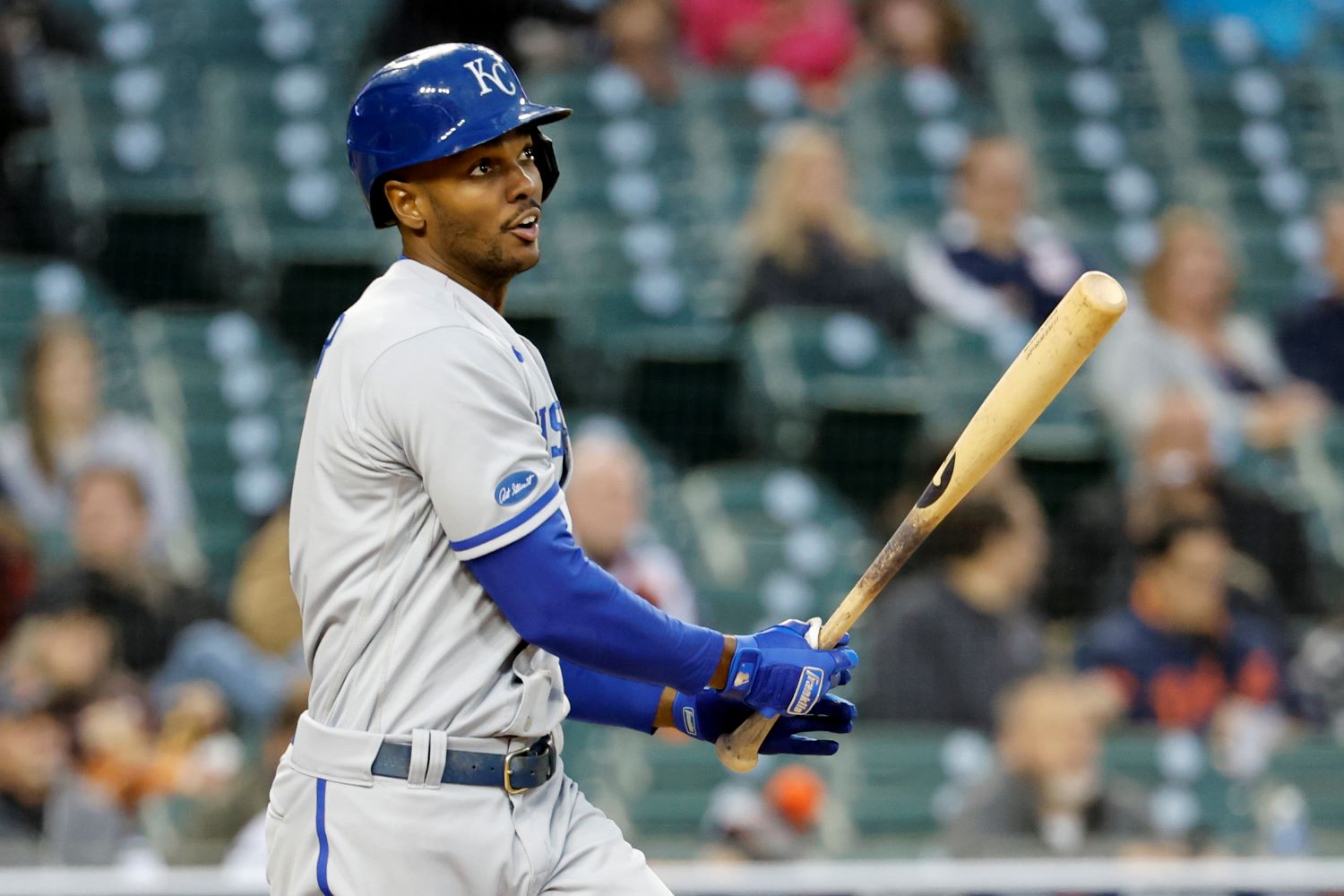 The Twins ate their veggies on Monday, trading away minor league relievers Evan Sisk and Steven Cruz for Royals outfielder Michael A. Taylor. Minnesota’s flirtation with the veteran first hit radars when news slithered in that Kansas City—perhaps under the influence of some real good stuff—asked for Josh Winder in return for their outfielder. The Twins glared around the room with the same look you give when grandma says something out of pocket during family dinner and promptly hung up the phone. Kansas City dropped their ask, instead greenlighting LHP Evan Sisk and RHP Steven Cruz as an acceptable return. Although so tantalizingly close to donning a Twins cap, Sisk remained in the minors for all of 2022. Half of the return for J.A. Happ in 2021—yes, a team gave up real, breathing players for him—Sisk held preposterously low earned run totals at Double-A and Triple-A, but poor command kept him east of the river. He will probably pitch for the Royals in 2023. Cruz is a similar story. The aesthetically ideal big, hard-throwing reliever struck out 28% of batters with Wichita last season but walked 13.6% of them as well; command has always been his bugaboo. No team selected Cruz in the Rule 5 draft, and now the Royals will decide how to fix his aim. Taylor will immediately slot in as Minnesota’s fourth outfielder. A more sure bet than Nick Gordon, or Joey Gallo in center, Taylor owns a strong arm, quick feet, and artful routes; he’s the ultimate defensive package. The Twins will likely start Taylor in center consistently, allowing Byron Buxton to DH on days he feels any sort of malady while Taylor glides around the outfield, allowing Minnesota not to miss a beat defensively. His bat isn’t great—Taylor owns a career .241/.296/.381 slash line—but his league-relative numbers perked up a touch in 2022, perhaps implying he has more in the tank. The big question is this: how in the world do the Twins set up their outfield? With Max Kepler, Buxton, Gallo, Trevor Larnach, Alex Kirilloff, Gordon, Gilberto Celestino, and now Taylor, the team has eight legitimate outfielders for three spots; creativity must be in the cards. Celestino is probably the biggest loser in the deal. With a similar playstyle as the new guy, it's easy to read the trade as a vote of no confidence in him; Minnesota probably grew frustrated with his consistent mental errors, always costing the team an extra base with poor decision-making. The deal likely knocks Celestino down to Triple-A, allowing him to grow as a ballplayer in a less stressful atmosphere. He has yet to celebrate his 24th birthday. This is unlikely to be the final trade for Minnesota. With more outfielders than available spots, dominos will probably fall over the next month. While Kepler appears to be the most apparent trade target—as he has been for about three years now—the Twins could surprise us, instead packaging some of their younger bats in a deal. But who knows? Derek Falvey loves keeping us on our toes.
- 37 comments
-
- 4
-
-
- michael a taylor
- evan sisk
- (and 2 more)
-
Well, someone had to do it. Image courtesy of Rick Osentoski-USA TODAY Sports The Twins ate their veggies on Monday, trading away minor league relievers Evan Sisk and Steven Cruz for Royals outfielder Michael A. Taylor. Minnesota’s flirtation with the veteran first hit radars when news slithered in that Kansas City—perhaps under the influence of some real good stuff—asked for Josh Winder in return for their outfielder. The Twins glared around the room with the same look you give when grandma says something out of pocket during family dinner and promptly hung up the phone. Kansas City dropped their ask, instead greenlighting LHP Evan Sisk and RHP Steven Cruz as an acceptable return. Although so tantalizingly close to donning a Twins cap, Sisk remained in the minors for all of 2022. Half of the return for J.A. Happ in 2021—yes, a team gave up real, breathing players for him—Sisk held preposterously low earned run totals at Double-A and Triple-A, but poor command kept him east of the river. He will probably pitch for the Royals in 2023. Cruz is a similar story. The aesthetically ideal big, hard-throwing reliever struck out 28% of batters with Wichita last season but walked 13.6% of them as well; command has always been his bugaboo. No team selected Cruz in the Rule 5 draft, and now the Royals will decide how to fix his aim. Taylor will immediately slot in as Minnesota’s fourth outfielder. A more sure bet than Nick Gordon, or Joey Gallo in center, Taylor owns a strong arm, quick feet, and artful routes; he’s the ultimate defensive package. The Twins will likely start Taylor in center consistently, allowing Byron Buxton to DH on days he feels any sort of malady while Taylor glides around the outfield, allowing Minnesota not to miss a beat defensively. His bat isn’t great—Taylor owns a career .241/.296/.381 slash line—but his league-relative numbers perked up a touch in 2022, perhaps implying he has more in the tank. The big question is this: how in the world do the Twins set up their outfield? With Max Kepler, Buxton, Gallo, Trevor Larnach, Alex Kirilloff, Gordon, Gilberto Celestino, and now Taylor, the team has eight legitimate outfielders for three spots; creativity must be in the cards. Celestino is probably the biggest loser in the deal. With a similar playstyle as the new guy, it's easy to read the trade as a vote of no confidence in him; Minnesota probably grew frustrated with his consistent mental errors, always costing the team an extra base with poor decision-making. The deal likely knocks Celestino down to Triple-A, allowing him to grow as a ballplayer in a less stressful atmosphere. He has yet to celebrate his 24th birthday. This is unlikely to be the final trade for Minnesota. With more outfielders than available spots, dominos will probably fall over the next month. While Kepler appears to be the most apparent trade target—as he has been for about three years now—the Twins could surprise us, instead packaging some of their younger bats in a deal. But who knows? Derek Falvey loves keeping us on our toes. View full article
-
With the acquisition of Pablo López, the Minnesota Twins confirmed their favorite style of starting pitcher to acquire: a troubled, perhaps underperforming arm capable of becoming something more with a few tweaks. Image courtesy of Michael McLoone-USA TODAY Sports Broadly speaking, that outline covers Chris Paddack, Tyler Mahle, and now López; one could argue that Kenta Maeda fits the mold as well. The idea probably stems from two sources: first, the Twins acknowledging themselves as an undesirable home for arms. Big-name starters have eschewed Minnesota for years. Despite recent infamous twirls with Yu Darvish and Zack Wheeler, Michael Pineda remains the richest starter to brace the cold under Derek Falvey’s watch. Realizing that players have no say in trades, Falvey and Co. decided to force the issue, utilizing the lack of consent involved in deals to pool together talented arms. The second part is the more interesting one—and its assumptions will likely decide how successful the Twins are with their strategy. Pitching in the modern baseball landscape is—and this is the technical term for it—absolutely bonkers. Arms become studs overnight—hello, Evan Phillips—as hefty advancements in technology make adjustments a science, no longer an art only understood by a few masters of the craft; a good pitching coach must communicate what the computer knows. Good teams aren't alone in claiming these resources; every team in MLB has them. But the most consistent franchises identify players most capable of breaking out, freeing them from the clutches of an ignorant team while reaping the rewards of a flourishing arm. The pickpocketed squad has no clue what happened. The Pirates lose 100 games. Looking beyond the horrifying societal implications of technological modernity, the scientific pitching movement hasn’t created an abundance of frustratingly talented pitchers—those will always exist—but it has made it tantalizingly irresistible to acquire them. “I can fix him,” thinks a team watching a guy with an ideal fastball get crushed for a 4.70 ERA. Phil Maton has pitched for three teams over six seasons. Phil Maton’s career rWAR is negative. Phil Maton will continue to have a bullpen spot on one of the smartest teams in baseball. Perhaps hearing the same information from a new source proves to be the catalyst. Or, as sports fans have known for decades, a guy just needs a change of scenery. If it doesn't work, the team may look silly, but that's the price of doing business. Minnesota took this concept and ran with it in 2021. They acquired Paddack, one of the more notorious problems in baseball, pulled some strings on his pitching package, and came out with a renewed starter… until he got injured. Players still have ligaments, after all. They then acquired Mahle, watched him be exactly as maddening as he was in Cincinnati for 16 1/3 innings, and failed to help him realize his potential… because he, too, got injured. This pitching business sounds hazardous. Whether López’s tale differs is up to him and whatever sacrifices the baseball gods choose to accept. While Minnesota hasn’t yet experienced success with the plan, other teams have reaped great riches. Perhaps most famously, Houston understood that Gerrit Cole should not be throwing sinkers, thank you very much, and they enjoyed two years of some of the most dominating starting pitching baseball has seen in recent years. Toronto somehow didn’t give up on Robbie Ray, transforming him into a Cy Young winner after a year where he walked nearly 18% of all hitters. Kevin Gausman evolved from pitching in relief for Cincinnati in 2019 into a legitimate Cy Young candidate. Minnesota hasn’t yet seen a transformation like the previous arms, but it injuries are the culprit, not poor targeting. Rather than tinker with potential, why not shoot for the best of the best? For starters, the most impactful arms in the game command a royal ransom in return, something that few teams are ok with meeting these days. You can criticize Minnesota for not going after Zac Gallen, but remember that no team yet has met Arizona's asking price for him; the Twins aren't an anomaly. Also, there just aren't many available aces these days. Sandy Alcántara is going to remain a Marlin for a few years, Milwaukee shut down trade noise, and Oakland is currently a picked-over walrus carcass. Is Cole Irvin your fallback plan? This isn’t to say that all their pitchers will figure it out eventually because, well, if everyone is super, then no one is. The game is in upside: what can you do in the future with your raw stuff? A player’s past hardly defines them; their measurables reign supreme and the Twins have gathered a hearty assortment of players with fascinating under-the-hood numbers. We shall see if the plan works. View full article
- 23 replies
-
- 2
-
-
- pablo lopez
- kenta maeda
- (and 2 more)
-
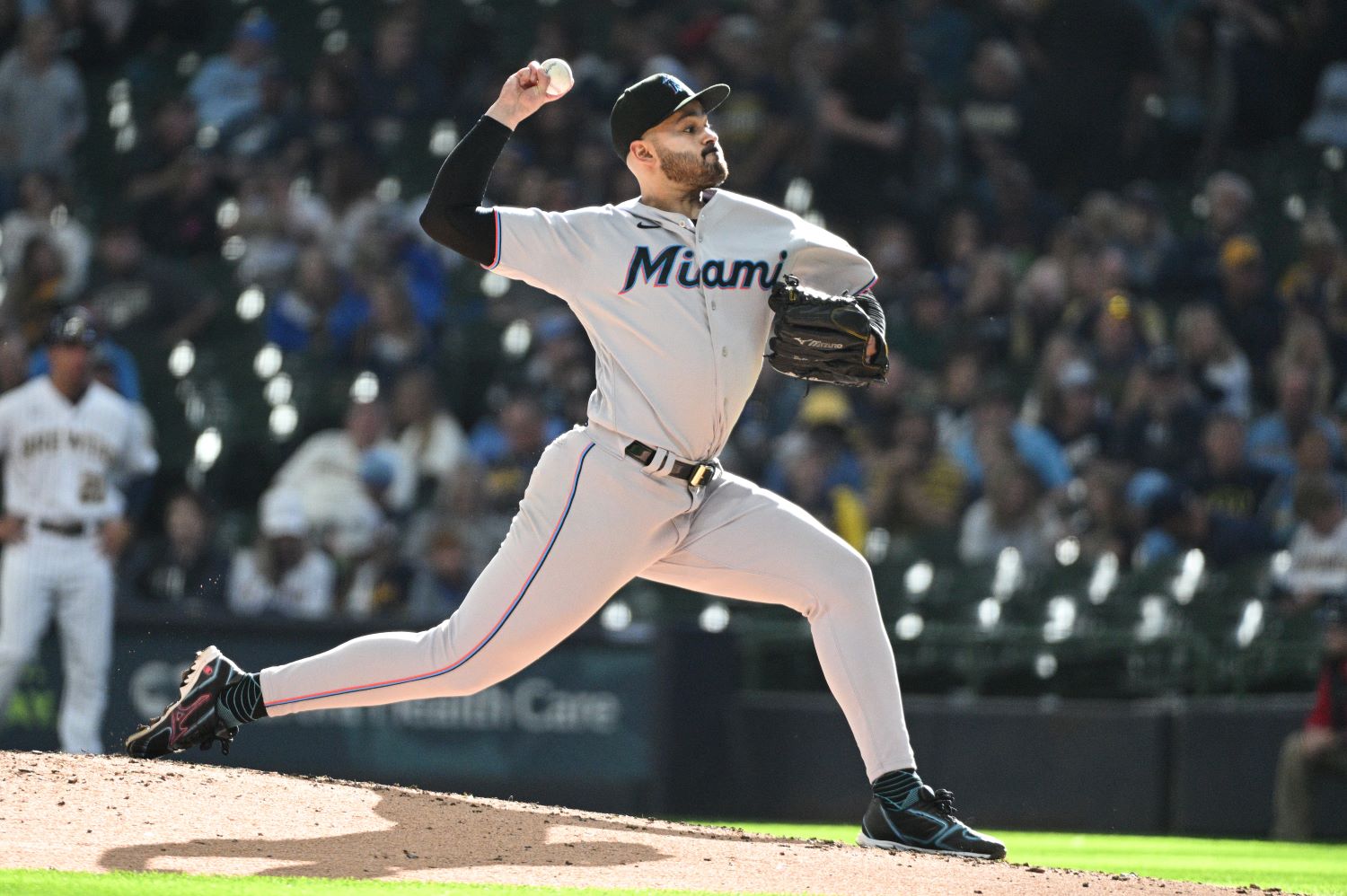 Broadly speaking, that outline covers Chris Paddack, Tyler Mahle, and now López; one could argue that Kenta Maeda fits the mold as well. The idea probably stems from two sources: first, the Twins acknowledging themselves as an undesirable home for arms. Big-name starters have eschewed Minnesota for years. Despite recent infamous twirls with Yu Darvish and Zack Wheeler, Michael Pineda remains the richest starter to brace the cold under Derek Falvey’s watch. Realizing that players have no say in trades, Falvey and Co. decided to force the issue, utilizing the lack of consent involved in deals to pool together talented arms. The second part is the more interesting one—and its assumptions will likely decide how successful the Twins are with their strategy. Pitching in the modern baseball landscape is—and this is the technical term for it—absolutely bonkers. Arms become studs overnight—hello, Evan Phillips—as hefty advancements in technology make adjustments a science, no longer an art only understood by a few masters of the craft; a good pitching coach must communicate what the computer knows. Good teams aren't alone in claiming these resources; every team in MLB has them. But the most consistent franchises identify players most capable of breaking out, freeing them from the clutches of an ignorant team while reaping the rewards of a flourishing arm. The pickpocketed squad has no clue what happened. The Pirates lose 100 games. Looking beyond the horrifying societal implications of technological modernity, the scientific pitching movement hasn’t created an abundance of frustratingly talented pitchers—those will always exist—but it has made it tantalizingly irresistible to acquire them. “I can fix him,” thinks a team watching a guy with an ideal fastball get crushed for a 4.70 ERA. Phil Maton has pitched for three teams over six seasons. Phil Maton’s career rWAR is negative. Phil Maton will continue to have a bullpen spot on one of the smartest teams in baseball. Perhaps hearing the same information from a new source proves to be the catalyst. Or, as sports fans have known for decades, a guy just needs a change of scenery. If it doesn't work, the team may look silly, but that's the price of doing business. Minnesota took this concept and ran with it in 2021. They acquired Paddack, one of the more notorious problems in baseball, pulled some strings on his pitching package, and came out with a renewed starter… until he got injured. Players still have ligaments, after all. They then acquired Mahle, watched him be exactly as maddening as he was in Cincinnati for 16 1/3 innings, and failed to help him realize his potential… because he, too, got injured. This pitching business sounds hazardous. Whether López’s tale differs is up to him and whatever sacrifices the baseball gods choose to accept. While Minnesota hasn’t yet experienced success with the plan, other teams have reaped great riches. Perhaps most famously, Houston understood that Gerrit Cole should not be throwing sinkers, thank you very much, and they enjoyed two years of some of the most dominating starting pitching baseball has seen in recent years. Toronto somehow didn’t give up on Robbie Ray, transforming him into a Cy Young winner after a year where he walked nearly 18% of all hitters. Kevin Gausman evolved from pitching in relief for Cincinnati in 2019 into a legitimate Cy Young candidate. Minnesota hasn’t yet seen a transformation like the previous arms, but it injuries are the culprit, not poor targeting. Rather than tinker with potential, why not shoot for the best of the best? For starters, the most impactful arms in the game command a royal ransom in return, something that few teams are ok with meeting these days. You can criticize Minnesota for not going after Zac Gallen, but remember that no team yet has met Arizona's asking price for him; the Twins aren't an anomaly. Also, there just aren't many available aces these days. Sandy Alcántara is going to remain a Marlin for a few years, Milwaukee shut down trade noise, and Oakland is currently a picked-over walrus carcass. Is Cole Irvin your fallback plan? This isn’t to say that all their pitchers will figure it out eventually because, well, if everyone is super, then no one is. The game is in upside: what can you do in the future with your raw stuff? A player’s past hardly defines them; their measurables reign supreme and the Twins have gathered a hearty assortment of players with fascinating under-the-hood numbers. We shall see if the plan works.
- 23 comments
-
- 8
-
-
- pablo lopez
- kenta maeda
- (and 2 more)
-
 Aaron Slegers took to Twitter the other day to announce that, due to a shoulder issue, he is ending his career as a pitcher. For 10 professional seasons, the walk-on Indiana University product hopped between four franchises, accruing 931 1/3 innings spread across the minors and majors; he pitched in three postseason games for the 2020 Rays. A Long Beach-born pitcher, Slegers dominated his junior season with the Hoosiers, earning Big Ten Conference Pitcher of the Year honors in a year he allowed a 2.03 ERA over 106 frames for a team that made it all the way to the College World Series. With future big-league players Sam Travis, Kyle Schwarber, Kyle Hart, Scott Effross, and Slegers himself, the team claimed surprising depth for a program not known for baseball. Chuck Knoblauch’s nephew served as the backup at first base. In the series, Indiana beat Louisville before losing to Mississippi State and Oregon State in two one-run losses. Slegers took the hard-luck loss against Oregon State, allowing a lone run in a complete game overshadowed by Matt Boyd’s 11 strikeouts. The disappointment stung, but Slegers moved on. The Twins called his name in the fifth round, perhaps hoping that the immense downward plane—calm yourself, Bert Blyleven—created from his 6’10” stature in conjunction with his sinker would translate to a groundball machine in the pros. Never a strikeout artist, Slegers worked diligently through the minors, absorbing innings by limiting hard contact and throwing strikes—the perfect pitcher for the Terry Ryan Twins. Though his numbers never popped off the page, Slegers consistently earned promotions and always remained younger than his competition level; his fabulous 2.87 ERA at High-A Fort Myers in 2015 served as his signature season. The great 2016 leadership migration didn’t change Slegers’ spot in the organization, and the righty debuted in 2017, making three spot starts for a team on its way to a surprise Wild Card game. Minnesota kept Slegers around for 2018 but shipped him to Pittsburgh following the season. He never appeared for the Pirates, instead joining the Rays before the start of the 2019 season. Tampa Bay proved to be a kind home for Slegers. The Rays—always looking for outcasts to turn into stars—squeezed 29 effective innings out of Slegers between 2019 and 2020; they even found him five postseason frames in the grueling 2020 bracket, albeit all in decided games. Slegers joined the Angels in 2021, pitching in 29 games to end his MLB career. The Rays re-signed him in 2022 on a minor-league deal, but Slegers appeared in just two games—the final outings of his professional career. Though it could be easy to paint Slegers' career as a disappointment, the path to baseball stardom is fraught with the hopes and potential of talented individuals; all cannot achieve greatness. Thousands of players tossed fewer MLB frames than Slegers; most never reached the grand stage. With a pocket full of major league money, Slegers is now free to pursue whatever venture he please, and he'll do so with less pain emanating from his right arm. For much more Aaron Slegers content from Twins Daily, click here.