Matt Braun
-
Posts
1,393 -
Joined
-
Last visited
-
Days Won
1
Content Type
Profiles
News
Minnesota Twins Videos
2026 Minnesota Twins Top Prospects Ranking
2022 Minnesota Twins Draft Picks
Minnesota Twins Free Agent & Trade Rumors, Notes, & Tidbits
Guides & Resources
2023 Minnesota Twins Draft Picks
The Minnesota Twins Players Project
2024 Minnesota Twins Draft Picks
2025 Minnesota Twins Draft Pick Tracker
2026 Minnesota Twins Draft Tracker: Picks & Bonuses
Forums
Blogs
Events
Store
Downloads
Gallery
Everything posted by Matt Braun
-
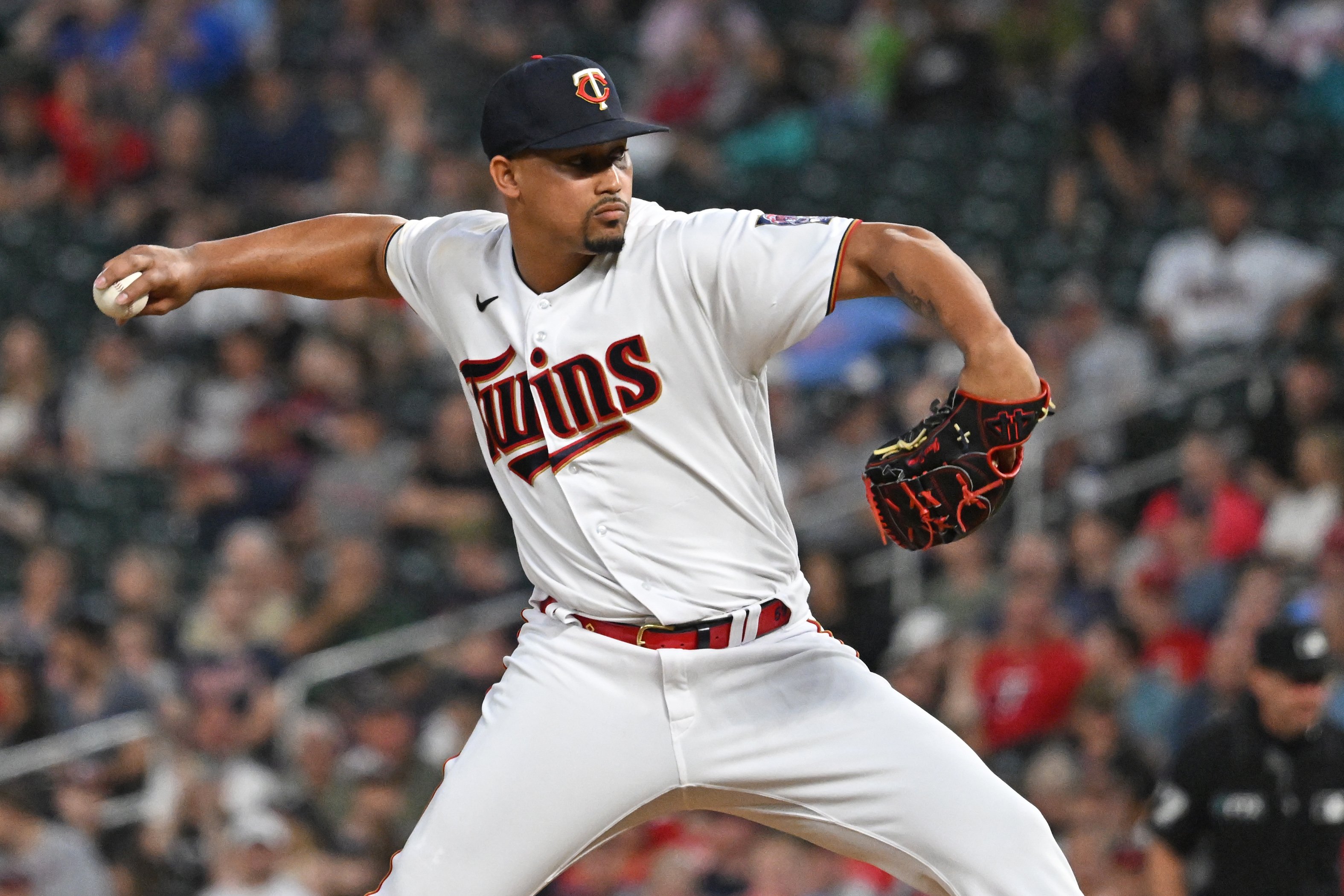 If you’ve paid even a second of attention to Twins fans lately, the dominant discussion point revolves around the bullpen’s lack of quality; the team needs extra, quality arms, and they need them now. This feeling is well-founded; it seems like every close loss involves a reliever screwing up late, costing the team a chance to escape the quagmire of mediocrity that plagues the rest of the AL Central. But is the team’s bullpen that bad in comparison to other teams? Relief pitchers are doomed to fail. The position naturally lends itself to magnified mistakes, and brutal momentum swings as a game’s final outs melt away at an accelerated pace. Each run allowed feels like the end of the world because, as far as a single baseball game is concerned, it is; the lack of remaining outs increases each outcome’s drama to a sometimes unbearable level. In that context, analyzing relievers requires us to remove emotion from the equation, instead choosing to coldly dissect the topic with numbers immune from hyperbole. Stats can’t complain. Overall, the picture isn’t pretty, but it’s not egregiously ugly; the relief core is 14th in MLB in ERA (3.74), 21st in FIP (4.10), 13th in xFIP (3.80), and 16th in WPA (0.19). No lipstick can spruce up this pig, but these numbers reflect a mediocre to below-average group, not one bordering on Greek Tragedy. The problem does not seem as dire with contextualized stats; the team needs to improve their bullpen, but so could just about every team in MLB. The Twins are well equipped to absorb fresh talent. What’s lost in bullpen arguments is the strategic aspect of utilizing relievers; broadly stating that the relievers stink helps no one; instead, we should imagine the role a reliever is filling and ask whether they can adequately fill it. For the Twins, their main issue is that pitchers who should not pitch in important innings are doing so because of a failure of top-end depth; it isn’t fully Jharel Cotton’s fault if he blows a game in the 9th inning because he shouldn’t be pitching in that scenario. As it stands, the team has one fully reliable reliever (Jhoan Duran), another solid reliever (Griffin Jax), and varying degrees of coin flips. With Duran rarely pitching in back-to-back games, when the game is close late—a situation a good team like the Twins frequently enters—Rocco Baldelli has little choice but to play baseball Russian Roulette and pray that Caleb Thielbar’s fastball looks extra rise-y today, or that Joe Smith’s corkscrewing magic appears even more incredible. It’s always a rock and a hard place choice. If one or two more quality relievers make their way to the team before the trade deadline, the bullpen can fall into place. Whatever scrap-heap reliever they picked up the other day could pitch earlier in the game rather than Thornburg-ing it up in a role he’s ill-equipped for. Usually worthwhile relievers like Tyler Duffey can simmer in a low-intensity role as another capable arm gives him a break he desperately needs; unproven pitchers like Jovani Moran can freely gain confidence by netting outs in the 6th inning, not the 9th. The Twins bullpen isn’t made of bad pitchers, just miscast ones. Duran is obviously an elite arm, but no other reliever commands as much trust, so the chain collapses when he can’t pitch, or the team needs an extended effort to reach his inning. Cotton is a Road to Nowhere when used beyond the 7th inning, but he has attempted to fill that role because no one else works in that spot; they don’t exist. If the team acquired a true, dominant arm to pair with Duran, the effect would reverberate around the entire bullpen; arms far higher on the totem pole of trust would fall back where they can succeed. David Robertson and/or Daniel Bard, a potentially revamped Tyler Duffey, and a healthy Joe Smith could establish order in the current chaos; the days of 8th inning man Tyler Thornburg would no longer exist. It’s hard to see, and sometimes it seems impossible, but there’s a good bullpen somewhere in the mess; it just needs some cleaning.
- 9 comments
-
- 3
-

-
- jhoan duran
- tyler duffey
- (and 3 more)
-
A team committed four errors, and that somehow did not set the record for most booted plays by a squad on Wednesday. Read all about that gross play and more in this edition of the minor league report. TRANSACTIONS INF Christian Encarnacion-Strand Re-Instated from IL RHP Ryan Shreve was activated from IL at Cedar Rapids. LHP Aaron Rozek was activated from IL at Cedar Rapids. INF Austin Martin was placed on Wichita IL (left elbow) C Frank Nigro added to AA Wichita from AAA St. Paul Saints Sentinel St. Paul 4, Louisville 6 Box Score Cole Sands: 5 IP, 7 H, 4 ER, 2 BB, 7 K HR: Jake Cave (11) Multi-hit games: Tim Beckham (2-for-5, 2 2B, 2 RBI) The Saints lost a messy game on Wednesday. The match started quietly; after 4 innings, the Saints held a 2-1 lead after Tim Beckham doubled home two runs to inflate rehabbing-big leaguer Justin Dunn’s ERA. Cole Sands was surgical in the early innings, cutting up and down the Bats’ lineup at will before his reign crumbled in the 5th inning. A barrage of doubles mixed with a single from technically old friend Taylor Motter shot Louisville’s run total up to four; Sands suddenly had a loss on his hands. The Saints stormed back. After the Bats tacked on another run in the 6th inning, Jake Cave Did the Darn Thing, swinging at a 3-0 pitch and blasting a Grand Slam to left field to give St. Paul a slight 6-5 edge. His on-base streak is now 48 games. Louisville did not acquiesce to the sudden deficit; a Stuart Fairchild homer knotted the game at 6. The game moved into extra innings, where the Bats won off of what appears to be a double fielding error from Michael Helman. St. Paul’s bats must have been smaller than usual; they struck out 17 times total, with five players facing the K multiple times. Let’s hope that Thursday is a more blessed day. Wind Surge Wisdom Wichita 2, Amarillo 4 Box Score Louie Varland: 6 IP, 7 H, 3 ER, 3 BB, 6 K HR: None Multi-hit games: Edouard Julien (2-for-5), Andrew Bechtold (3-for-4, 2B, RBI) Louie Varland gritted out six effective innings in his start. The antiquated “quality start” deems an outing like his worthy of its title, so Varland will take that and run. The damage could have been less severe; two of his runs came from a 6th inning homer, indicating a “careful, Icarus” moment, to steal a term from another baseball site. Wichita’s bats were up to the task on Wednesday, but poor coordination resulted in just two runs off of 12 hits. In all but three innings, the Wind Surge had a man on base, and they often had multiple players ready to score on a moment’s notice, but they could only plate runs in the 1st and 3rd innings. Perhaps better luck would have altered this game in their favor; Wichita left 18 men stranded. Cody Laweryson continued his AA shutout streak, allowing one hit over two innings while striking out a pair. Jordan Gore struck out two in his single inning of work. Matt Wallner threw another baserunner out on Wednesday. Since minor league fielding stats are basically impossible to find, let’s say it was his 50th gunned down runner of the year; that’s how history works. (Editor/Seth Note: I don't want to mess with history, or a fun narrative, but it is Wallner's 8th assist of the season.) Kernels Nuggets Cedar Rapids 3, Quad Cities 5 Box Score Cade Povich: 5 IP, 7 H, 3 ER, 0 BB, 11 K HR: None Multi-hit games: Pat Winkel (3-for-4) The Kernels lost an atypical game on Wednesday. Cade Povich submitted his attempt at one of the weirder pitching lines you’ll see. His 11 strikeouts reflect domination, a complete ability to miss bats at an elite level; his seven hits and three earned runs represent mistakes the River Bandits jumped on. For helping win the game, the start was not the best; for showing promise as an overpowering arm, this is an incredible start. Cedar Rapids’ bats were locked out of hits, only securing five of them despite walking more times than they struck out (7 to 5); either their BABIP luck failed to materialize, or their batted balls were not ideal. Maybe they should have mimicked Pat Winkel, as he netted 60% of their total hits. Hunter McMahon and Bobby Milacki cleaned up an impressive 16 strikeout showing from the Kernels’ pitching staff on Wednesday. While Povich shouldered much of that effort, Milacki’s four strikeouts over two innings are also impressive. Despite only knocking in five hits, every batter in the Kernels lineup reached base; this was a deeply weird ballgame. The number 9 hitter (Jake Rucker) picked up three RBIs. Mussel Matters Rain washed away Fort Myers’ match against the Tampa Tarpons; the teams will play double-headers on the 7th. (Also in Ft. Myers, there were no games in the FCL on Wednesday) Dominican Dailies DSL Twins 6, DSL Cardinals 5 Box Score Ledwin Taveras: 5 IP, 1 ER, 1 BB, 5 K HR: Jose Rodriguez (5), Rafael Cruz (2) Multi-hit games: Rafael Cruz (2-for-4, HR, 2B, R, 2 RBI), Jesus Peraza (2-for-2, 2 RBI, BB) The DSL Twins won a game in which they committed six errors; you don’t see that every day. DSL games are notorious for being sloppy, but that error total is one of the higher totals you’ll ever see outside of tee-ball or drop-dead-drunk beer league softball. Ledwin Taveras led the way with solid innings of work, and his relievers—Oscar Paredes and Anthony Narvaez—combined for four frames without an earned run. The DSL Twins’ offensive output was even, with every batter in their starting lineup reaching base. Rafael Cruz stood out from the group, hitting both a homer and a double. TWINS DAILY PLAYERS OF THE DAY Twins Daily Minor League Pitcher of the Day – Cade Povich, Cedar Rapids Kernels Twins Daily Minor League Hitter of the Day – Rafael Cruz, DSL Twins PROSPECT SUMMARY Here’s a look at how the Twins Daily Top 20 Twins Prospects performed: #6 - Spencer Steer (St. Paul) - 1-4, R, BB, K #10 - Cade Povich (Cedar Rapids) - 5 IP, 7 H, 3 ER, 0 BB, 11 K #11 - Louie Varland (Wichita) - 6 IP, 7 H, 3 ER, 3 BB, 6 K #12 - Matt Wallner (Wichita) - 1-4, R, BB, 2 K #15 - Edouard Julien (Wichita) - 2-5, 3 K #16 - Christian Encarnacion-Strand (Cedar Rapids) - 0-3, BB, K #17 - Cole Sands (St. Paul) - 5 IP, 7 H, 4 ER, 2 BB, 7 K THURSDAY’S PROBABLE STARTERS St. Paul @ Louisville (6:05 PM) - RHP Jordan Balazovic Amarillo @ Wichita (7:05 PM) - RHP Sawyer Gipson-Long Quad Cities @ Cedar Rapids (6:35 PM) - RHP David Festa Fort Myers @ Tampa (3:00 PM) - LHP Jaylen Nowlin Fort Myers @ Tampa (Game 2) - RHP Malik Barrington View full article
-
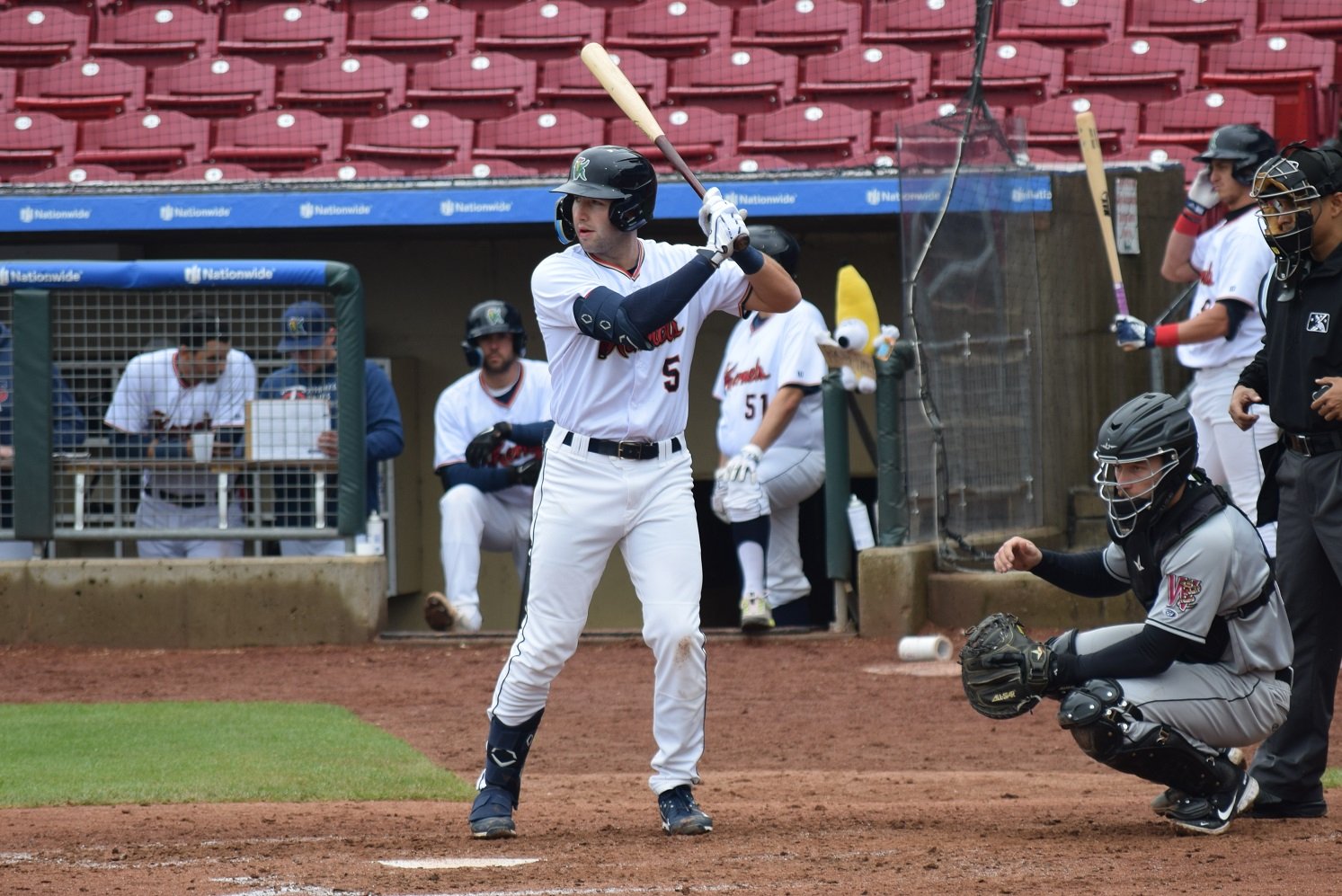 TRANSACTIONS INF Christian Encarnacion-Strand Re-Instated from IL RHP Ryan Shreve was activated from IL at Cedar Rapids. LHP Aaron Rozek was activated from IL at Cedar Rapids. INF Austin Martin was placed on Wichita IL (left elbow) C Frank Nigro added to AA Wichita from AAA St. Paul Saints Sentinel St. Paul 4, Louisville 6 Box Score Cole Sands: 5 IP, 7 H, 4 ER, 2 BB, 7 K HR: Jake Cave (11) Multi-hit games: Tim Beckham (2-for-5, 2 2B, 2 RBI) The Saints lost a messy game on Wednesday. The match started quietly; after 4 innings, the Saints held a 2-1 lead after Tim Beckham doubled home two runs to inflate rehabbing-big leaguer Justin Dunn’s ERA. Cole Sands was surgical in the early innings, cutting up and down the Bats’ lineup at will before his reign crumbled in the 5th inning. A barrage of doubles mixed with a single from technically old friend Taylor Motter shot Louisville’s run total up to four; Sands suddenly had a loss on his hands. The Saints stormed back. After the Bats tacked on another run in the 6th inning, Jake Cave Did the Darn Thing, swinging at a 3-0 pitch and blasting a Grand Slam to left field to give St. Paul a slight 6-5 edge. His on-base streak is now 48 games. Louisville did not acquiesce to the sudden deficit; a Stuart Fairchild homer knotted the game at 6. The game moved into extra innings, where the Bats won off of what appears to be a double fielding error from Michael Helman. St. Paul’s bats must have been smaller than usual; they struck out 17 times total, with five players facing the K multiple times. Let’s hope that Thursday is a more blessed day. Wind Surge Wisdom Wichita 2, Amarillo 4 Box Score Louie Varland: 6 IP, 7 H, 3 ER, 3 BB, 6 K HR: None Multi-hit games: Edouard Julien (2-for-5), Andrew Bechtold (3-for-4, 2B, RBI) Louie Varland gritted out six effective innings in his start. The antiquated “quality start” deems an outing like his worthy of its title, so Varland will take that and run. The damage could have been less severe; two of his runs came from a 6th inning homer, indicating a “careful, Icarus” moment, to steal a term from another baseball site. Wichita’s bats were up to the task on Wednesday, but poor coordination resulted in just two runs off of 12 hits. In all but three innings, the Wind Surge had a man on base, and they often had multiple players ready to score on a moment’s notice, but they could only plate runs in the 1st and 3rd innings. Perhaps better luck would have altered this game in their favor; Wichita left 18 men stranded. Cody Laweryson continued his AA shutout streak, allowing one hit over two innings while striking out a pair. Jordan Gore struck out two in his single inning of work. Matt Wallner threw another baserunner out on Wednesday. Since minor league fielding stats are basically impossible to find, let’s say it was his 50th gunned down runner of the year; that’s how history works. (Editor/Seth Note: I don't want to mess with history, or a fun narrative, but it is Wallner's 8th assist of the season.) Kernels Nuggets Cedar Rapids 3, Quad Cities 5 Box Score Cade Povich: 5 IP, 7 H, 3 ER, 0 BB, 11 K HR: None Multi-hit games: Pat Winkel (3-for-4) The Kernels lost an atypical game on Wednesday. Cade Povich submitted his attempt at one of the weirder pitching lines you’ll see. His 11 strikeouts reflect domination, a complete ability to miss bats at an elite level; his seven hits and three earned runs represent mistakes the River Bandits jumped on. For helping win the game, the start was not the best; for showing promise as an overpowering arm, this is an incredible start. Cedar Rapids’ bats were locked out of hits, only securing five of them despite walking more times than they struck out (7 to 5); either their BABIP luck failed to materialize, or their batted balls were not ideal. Maybe they should have mimicked Pat Winkel, as he netted 60% of their total hits. Hunter McMahon and Bobby Milacki cleaned up an impressive 16 strikeout showing from the Kernels’ pitching staff on Wednesday. While Povich shouldered much of that effort, Milacki’s four strikeouts over two innings are also impressive. Despite only knocking in five hits, every batter in the Kernels lineup reached base; this was a deeply weird ballgame. The number 9 hitter (Jake Rucker) picked up three RBIs. Mussel Matters Rain washed away Fort Myers’ match against the Tampa Tarpons; the teams will play double-headers on the 7th. (Also in Ft. Myers, there were no games in the FCL on Wednesday) Dominican Dailies DSL Twins 6, DSL Cardinals 5 Box Score Ledwin Taveras: 5 IP, 1 ER, 1 BB, 5 K HR: Jose Rodriguez (5), Rafael Cruz (2) Multi-hit games: Rafael Cruz (2-for-4, HR, 2B, R, 2 RBI), Jesus Peraza (2-for-2, 2 RBI, BB) The DSL Twins won a game in which they committed six errors; you don’t see that every day. DSL games are notorious for being sloppy, but that error total is one of the higher totals you’ll ever see outside of tee-ball or drop-dead-drunk beer league softball. Ledwin Taveras led the way with solid innings of work, and his relievers—Oscar Paredes and Anthony Narvaez—combined for four frames without an earned run. The DSL Twins’ offensive output was even, with every batter in their starting lineup reaching base. Rafael Cruz stood out from the group, hitting both a homer and a double. TWINS DAILY PLAYERS OF THE DAY Twins Daily Minor League Pitcher of the Day – Cade Povich, Cedar Rapids Kernels Twins Daily Minor League Hitter of the Day – Rafael Cruz, DSL Twins PROSPECT SUMMARY Here’s a look at how the Twins Daily Top 20 Twins Prospects performed: #6 - Spencer Steer (St. Paul) - 1-4, R, BB, K #10 - Cade Povich (Cedar Rapids) - 5 IP, 7 H, 3 ER, 0 BB, 11 K #11 - Louie Varland (Wichita) - 6 IP, 7 H, 3 ER, 3 BB, 6 K #12 - Matt Wallner (Wichita) - 1-4, R, BB, 2 K #15 - Edouard Julien (Wichita) - 2-5, 3 K #16 - Christian Encarnacion-Strand (Cedar Rapids) - 0-3, BB, K #17 - Cole Sands (St. Paul) - 5 IP, 7 H, 4 ER, 2 BB, 7 K THURSDAY’S PROBABLE STARTERS St. Paul @ Louisville (6:05 PM) - RHP Jordan Balazovic Amarillo @ Wichita (7:05 PM) - RHP Sawyer Gipson-Long Quad Cities @ Cedar Rapids (6:35 PM) - RHP David Festa Fort Myers @ Tampa (3:00 PM) - LHP Jaylen Nowlin Fort Myers @ Tampa (Game 2) - RHP Malik Barrington
- 6 comments
-
- 4
-
-
- cole sands
- louis varland
- (and 3 more)
-
Matt's Top Prospect List (June) + Explanations
Matt Braun commented on Matt Braun's blog entry in 80MPH Changeup
He hit the roster time threshold a while ago- 12 comments
-
- 2
-
-
- royce lewis
- austin martin
- (and 3 more)
-
Wait, they didn't come back? Box Score Starting Pitcher: Devin Smeltzer: 6 IP, 6 H, 3 ER, 1 BB, 3 K Home Runs: None Bottom 3 WPA: Max Kepler (.138), Carlos Correa (.132), Jose Miranda (.109) Win Probability Chart (via FanGraphs) Devin Smeltzer, already established as the rotation’s savior, faced off against an ex-Twins farmhand, Tyler Wells. Smeltzer had just set a season-high in strikeouts (10) in his previous start; Wells looked to continue his effectiveness in the Orioles’ starting rotation. The game began sleepily and lazily; neither team scored until the 5th inning, and both the Twins and the Orioles committed a careless error in the 1st frame. Gilberto Celestino was the culprit for Minnesota; Rougned Odor was the one for Baltimore. The mistakes did not lead to runs. The Orioles struck in the 4th inning; Anthony Santander hit a Texas Leaguer over Alex Kirilloff’s head and reached 2nd base after Smeltzer uncharacteristically spiked a wild pitch into the dirt. Tyler Nevin—the son of former Twin and current red-ass Phil Nevin—smoked a single up the middle, forcing Santander to try his luck with Celestino’s arm from center field. In a close battle, Celestino’s throw beat Santander to the plate, and Gary Sánchez slapped the runner to secure the out and energize the crowd. But the Twins offense remained in a coma; Wells, typically not a strike-out pitcher, overwhelmed Minnesota’s bats with his rising fastball and darting slider. Hitters of all variety failed to fight back; the team’s array of lefties netted just one extra-base hit (a Nick Gordon double in the 6th inning), while many walked away with an extra strikeout or two on their ledger. Even Luis Arraez punched out. Something was not right. Fortune turned quickly in the middle innings. Odor smoked a solo homer to right field to net the first run of the ball game; Trey Mancini and Ryan Mountcastle blasted off consecutively in the next frame. Suddenly, after Smeltzer appeared well in command of the game, the score ballooned to 3-0. After innings of nothingness, the Twins revved up their engines in the 6th, trampolining off a Celestino lead-off walk to plate a run. There was a slight feeling of disappointment amid the success; Carlos Correa grounded into a double-play following an Arraez single, eliminating a base-runner before Jorge Polanco singled home Celestino. Juan Minaya did his best to keep the Twins in the game; the often yo-yo-ed righty posted two scoreless innings with three strikeouts and one hit allowed. On a team looking for relief help, such outings will help Minaya make a case for acquiring crucial innings down the stretch. The Twins could not find success even after Wells exited the game. A series of Baltimore relievers—Keegan Akin, Joey Krehbiel, and Dillon Tate—continued Wells’ dominance and shutout Minnesota’s offense in the final three frames. What’s Next? The Twins will travel to Chicago and take on the White Sox for the first a few series in July; Dylan Bundy will take the mound for Minnesota, while Johnny Cueto (yes, he’s still around) will toe the rubber for Chicago. Bullpen Usage Spreadsheet View full article
- 23 replies
-
- 1
-
-
- devin smeltzer
- carlos correa
- (and 3 more)
-
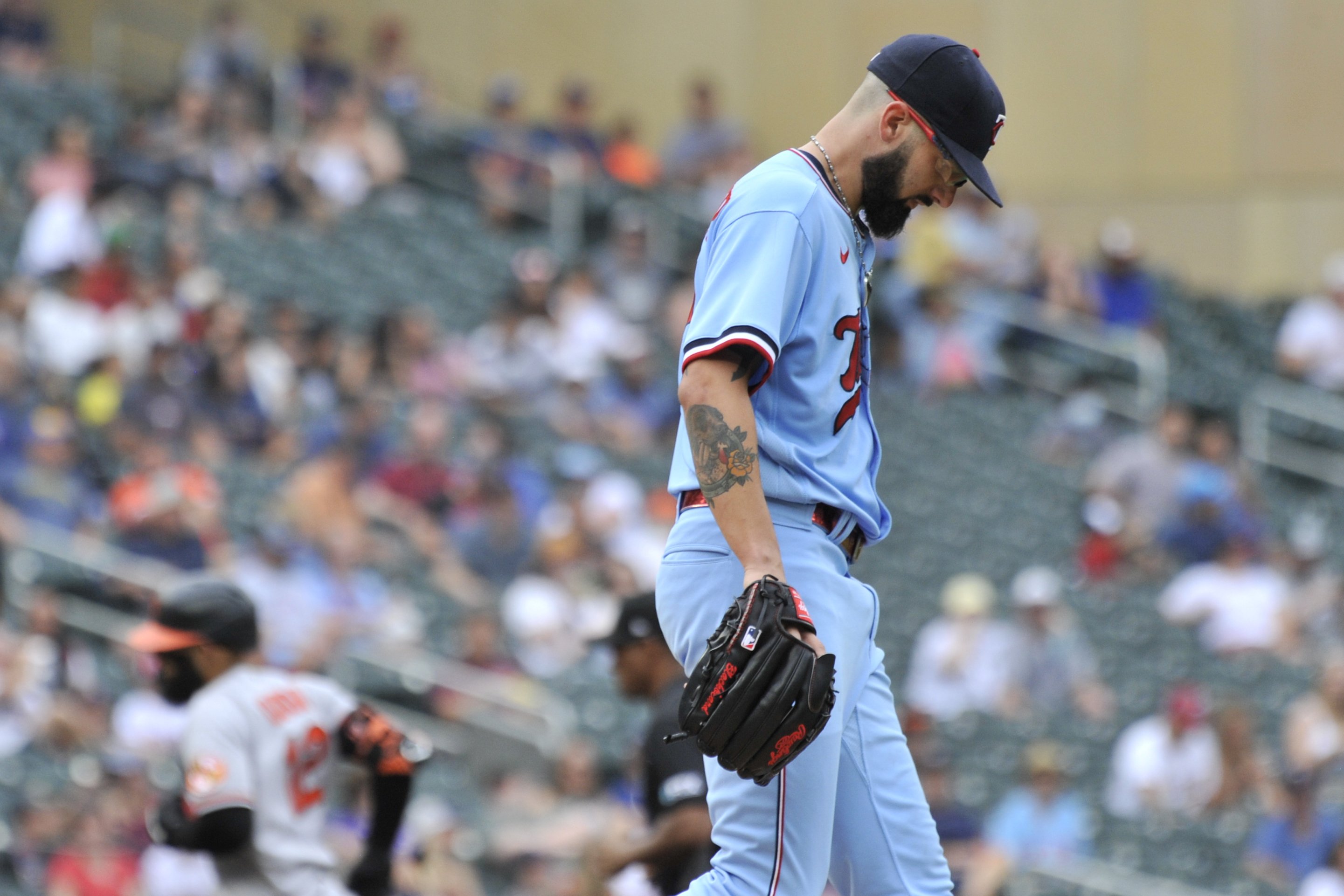 Box Score Starting Pitcher: Devin Smeltzer: 6 IP, 6 H, 3 ER, 1 BB, 3 K Home Runs: None Bottom 3 WPA: Max Kepler (.138), Carlos Correa (.132), Jose Miranda (.109) Win Probability Chart (via FanGraphs) Devin Smeltzer, already established as the rotation’s savior, faced off against an ex-Twins farmhand, Tyler Wells. Smeltzer had just set a season-high in strikeouts (10) in his previous start; Wells looked to continue his effectiveness in the Orioles’ starting rotation. The game began sleepily and lazily; neither team scored until the 5th inning, and both the Twins and the Orioles committed a careless error in the 1st frame. Gilberto Celestino was the culprit for Minnesota; Rougned Odor was the one for Baltimore. The mistakes did not lead to runs. The Orioles struck in the 4th inning; Anthony Santander hit a Texas Leaguer over Alex Kirilloff’s head and reached 2nd base after Smeltzer uncharacteristically spiked a wild pitch into the dirt. Tyler Nevin—the son of former Twin and current red-ass Phil Nevin—smoked a single up the middle, forcing Santander to try his luck with Celestino’s arm from center field. In a close battle, Celestino’s throw beat Santander to the plate, and Gary Sánchez slapped the runner to secure the out and energize the crowd. But the Twins offense remained in a coma; Wells, typically not a strike-out pitcher, overwhelmed Minnesota’s bats with his rising fastball and darting slider. Hitters of all variety failed to fight back; the team’s array of lefties netted just one extra-base hit (a Nick Gordon double in the 6th inning), while many walked away with an extra strikeout or two on their ledger. Even Luis Arraez punched out. Something was not right. Fortune turned quickly in the middle innings. Odor smoked a solo homer to right field to net the first run of the ball game; Trey Mancini and Ryan Mountcastle blasted off consecutively in the next frame. Suddenly, after Smeltzer appeared well in command of the game, the score ballooned to 3-0. After innings of nothingness, the Twins revved up their engines in the 6th, trampolining off a Celestino lead-off walk to plate a run. There was a slight feeling of disappointment amid the success; Carlos Correa grounded into a double-play following an Arraez single, eliminating a base-runner before Jorge Polanco singled home Celestino. Juan Minaya did his best to keep the Twins in the game; the often yo-yo-ed righty posted two scoreless innings with three strikeouts and one hit allowed. On a team looking for relief help, such outings will help Minaya make a case for acquiring crucial innings down the stretch. The Twins could not find success even after Wells exited the game. A series of Baltimore relievers—Keegan Akin, Joey Krehbiel, and Dillon Tate—continued Wells’ dominance and shutout Minnesota’s offense in the final three frames. What’s Next? The Twins will travel to Chicago and take on the White Sox for the first a few series in July; Dylan Bundy will take the mound for Minnesota, while Johnny Cueto (yes, he’s still around) will toe the rubber for Chicago. Bullpen Usage Spreadsheet
- 23 comments
-
- 2
-
-
- devin smeltzer
- carlos correa
- (and 3 more)
-
It was an uneven day in the Twins' system; every team played a close game and one pitcher stood out amongst the ruckus. Read all about that and more in this edition of the Minor League Report. TRANSACTIONS RHP Trevor Megill assigned to the Saints on Major League rehab C Frank Nigro transferred from High-A Cedar Rapids to St. Paul RHP Matt Mullenbach transferred from Low-A Fort Myers to High-A Cedar Rapids RHP Regi Grace Jr. was placed on the 7-day injured list (nasal fracture) Saints Sentinel St. Paul 4, Omaha 6 Box Score Ariel Jurado: 1 2/3 IP, 6 H, 5 ER, 2 BB, 2 K HR: Mark Contreras (8), Jake Cave (10) Multi-hit games: Jake Cave (2-for-3, HR, R, RBI, 2 BB), Elliot Soto (2-for-3, RBI) The Saints fell early and failed to pick themselves back up on Saturday. Ariel Jurado received the nod, perhaps looking to advance his name in discussions for a promotion to a big-league ballclub a week away from posting “Reliever Wanted” ads in the papers. He did not help his case, absorbing five of Omaha’s six runs—all due to the Michael Massey RBIs—while walking away after just five outs. A combo poo-poo plater of arms linked together after Jurado; Austin Schulfer, Trevor Megill, Mario Sanchez, and Yennier Cano worked the final 22 outs, allowing one run on two hits while striking out 11 batters. St. Paul’s bats nearly brought them back into the game; Mark Contreras boomed a two-run homer in the 5th inning to slice the lead to four, while Jake Cave’s 7th inning solo shot inched the Saints to the halfway mark. Michael Helman singled home a run later in the frame to narrow the deficit. St. Paul had an opportunity to tie the game in the 8th inning, but Spencer Steer and Cave both came up empty while trying to plate a run with men on the corners. Cave is secretly on a rare path; his early walk ensured safe passage to the base paths, and he has now reached base in 46 straight games. That’s an incredible streak. Wind Surge Wisdom Wichita 4, Springfield 5 Box Score Blayne Enlow: 4 IP, 2 H, 2 ER, 3 BB, 3 K HR: None Multi-hit games: Leobaldo Cabrera (2-for-4, 2B, R), Daniel Ozoria (2-for-3, R, 3 RBI) Blayne Enlow continued his quest toward Tommy John recovery, allowing a pair of runs over four innings; he has not passed that mark yet in eight AA starts. The numbers are not yet dominant for the highly-touted arm, but this is hopefully a trial period for future success. Daniel Ozoria played two roles on Saturday: the hero and the goat. Ozoria knocked in three runs; two came from a 4th inning single, while an 8th inning sacrifice fly topped him off for good. His defense, however, was an odyssey; an error to open the 2nd inning allowed a run to score, while little league defense in the 8th inning—a passed ball followed by an error that directly scored another run—almost equaled his RBI output. Ozoria’s bottom-of-the-order brother, Leobaldo Cabrera, was the other batter to acquire multiple hits on Saturday. With the aid of walks, Matt Wallner, Edouard Julien, and DaShawn Keirsey Jr. reached base more than once. Cody Laweryson, Alex Scherff, and Osiris German worked together to stop earned runs from scoring after Enlow left the game, but sloppy defense tacked three un-earned scores to the total. Kernels Nuggets Cedar Rapids 6, Wisconsin 7 Box Score John Stankiewicz: 4 IP, 5 H, 2 ER, 3 BB, 2 K HR: None Multi-hit games: Kyler Fedko (2-for-6, 2B, R, RBI), Wander Javier (2-for-4, R, RBI, BB), Pat Winkel (2-for-4, R, RBI, BB) The Kernels lost on a walk-off Saturday. John Stankiewicz—back to earth after reaching great heights to start the season—worked a gritty start on the mound. He allowed just a pair of runs but scattered eight baserunners across 12 outs; the righty exited the game with his team behind. While Wisconsin enjoyed a 4-1 advantage at one point, the Kernels struck in the 7th inning, cheekily plating two runs off an infield single by Jake Rucker and an RBI groundout from Dylan Neuse. The bats came back for seconds; Wander Javier singled home the go-ahead run in the 8th inning while Pat Winkel tacked on two more for good measure; he hit a single that reached the outfield. The Timber Rattlers were displeased with losing their lead. Their bats rallied against the usually reliable Bobby Milacki; plating two clutch runs in the bottom of the 8th inning; Tyler Black’s RBI double shaved a run off the lead before he scored later in the frame off of a sacrifice fly. After exchanging failed attempts at scoring the Manfred Zombie Runner, the Timber Rattlers plated a run off a fielder’s choice in the 11th inning, walking away victorious. Mussel Matters Fort Myers 3, Dunedin 1 Box Score Mike Paredes: 6 IP, 7 H, 1 ER, 0 BB, 3 K HR: Dillon Tatum (5) Multi-hit games: Rubel Cespedes (2-for-4, 2B, RBI) Fort Myers bested Dunedin in a close match on Saturday. Mike Paredes gave his batters the peace of mind needed to score against Dunedin effectively; his six innings pitched with just a single earned run provided consistency. While Paredes dabbled in fascism—he struck out three batters—he opted for a democratic approach to acquiring outs, choosing to let his fielders have some fun. It was precisely the sort of start the team needed. When Parades strutted off the mound in the 6th, the Mighty Mussels claimed a 2-1 advantage. Zach Huffins and LaRon Smith teamed up in the 2nd inning to prove that bottom-of-the-order hitters can contribute as well, with Huffins doubling home Smith off a sharply hit double to center field. Dillon Tatum claimed a victory for the middle-of-the-order, smacking a solo homer in the 4th inning and increasing Fort Myers’ lead to 2-0. Rubel Cespedes drove in the final run, scoring Noah Cardenas, but not Kala’i Rosario, on a bittersweet RBI ground-rule-double. While Paredes worked the Blue Jays for six effective innings, Samuel Perez tagged himself into the game in the 7th inning, and he proved meaner, shutting down Dunedin’s offense for the final three frames. The outing gave Perez his first save of the season. Walks were the game’s theme; Dunedin failed to take one, while Fort Myers trotted freely to first base five times; Cardenas alone worked three invitations to the base paths. Complex Chronicles FCL Twins 4, FCL Red Sox 6 Box Score Cleiber Maldonado: 4 IP, 5 H, 2 ER, 1 BB, 3 K HR: Jeferson Morales (1), Alexander Pena (3) Multi-hit games: None The FCL Twins fell to the FCL Red Sox in an even affair on Saturday. Cleiber Maldonado’s start lacked the sheen of his previous one; the lefty allowed six baserunners against three strikeouts but permitted just a single run. Groundballs were his accomplice; seven of his outs struck the earth before a fielder could reach the ball. The Twins’ offense was sparse but powerful when working correctly; rehabbing catcher Jeferson Morales smoked an Earl Weaver special in the 7th inning to spark a suddenly doable 3-5 disadvantage. Alexander Pena inched closer with a solo homer later in the frame. Two of the team’s five hits were of the over-the-wall variety. Lefty reliever Wilker Reyes truck out four batters over two innings; left fielder Andres Centeno walked three times. Dominican Dailies DSL Twins 5, DSL Cardinals 4 Box Score Cesar Lares: 4 IP, 2 H, 0 ER, 1 BB, 10 K HR: None Multi-hit games: Yasser Mercedes (3-for-5), Rafael Cruz (2-for-4, R, BB), Daniel Pena (2-for-3, 2 R, RBI, BB) In keeping with the “close game” theme of the night, the DSL Twins won by a run on Saturday. The bats knocked around 10 base hits while walking nine times; five runs seems low compared to how much pressure they placed on the Cardinals. The arms commanded the story, though; Cesar Lares led with 10 strikeouts, and the staff punched out 20 hitters in total. TWINS DAILY PLAYERS OF THE DAY Twins Daily Minor League Pitcher of the Day – Cesar Lares, FCL Twins Twins Daily Minor League Hitter of the Day – Jake Cave, St. Paul Saints PROSPECT SUMMARY Here’s a look at how the Twins Daily Top 20 Twins Prospects performed: #6 - Spencer Steer (St. Paul) - 0-5, K #8 - Noah Miller (Ft. Myers) - 0-2, BB, K #12 - Matt Wallner (Wichita) - 1-4, BB, 2 K #13 - Blayne Enlow (Wichita) - 4 IP, 2 H, 2 ER, 3 BB, 3 K #15 - Edouard Julien (Wichita) - 0-3, 2 BB, 2 K SUNDAY’S PROBABLE STARTERS Omaha @ St. Paul (5:02 PM) - RHP Mario Sanchez Wichita @ Springfield (4:25 PM) - LHP Kody Funderburk Cedar Rapids @ Wisconsin (12:10 PM) - TBD Dunedin @ Fort Myers (5:00 PM) - LHP Jordan Carr View full article
-
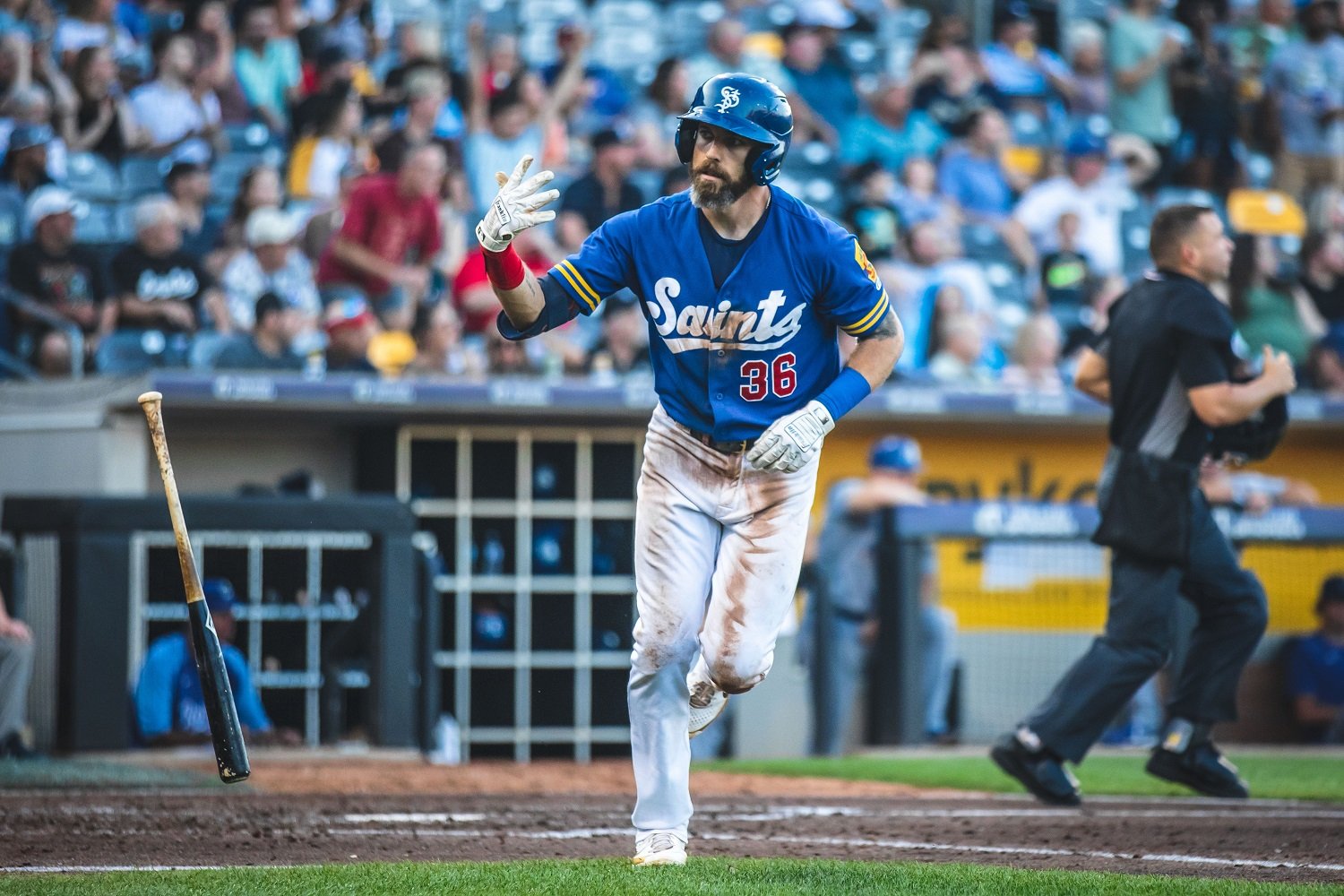 TRANSACTIONS RHP Trevor Megill assigned to the Saints on Major League rehab C Frank Nigro transferred from High-A Cedar Rapids to St. Paul RHP Matt Mullenbach transferred from Low-A Fort Myers to High-A Cedar Rapids RHP Regi Grace Jr. was placed on the 7-day injured list (nasal fracture) Saints Sentinel St. Paul 4, Omaha 6 Box Score Ariel Jurado: 1 2/3 IP, 6 H, 5 ER, 2 BB, 2 K HR: Mark Contreras (8), Jake Cave (10) Multi-hit games: Jake Cave (2-for-3, HR, R, RBI, 2 BB), Elliot Soto (2-for-3, RBI) The Saints fell early and failed to pick themselves back up on Saturday. Ariel Jurado received the nod, perhaps looking to advance his name in discussions for a promotion to a big-league ballclub a week away from posting “Reliever Wanted” ads in the papers. He did not help his case, absorbing five of Omaha’s six runs—all due to the Michael Massey RBIs—while walking away after just five outs. A combo poo-poo plater of arms linked together after Jurado; Austin Schulfer, Trevor Megill, Mario Sanchez, and Yennier Cano worked the final 22 outs, allowing one run on two hits while striking out 11 batters. St. Paul’s bats nearly brought them back into the game; Mark Contreras boomed a two-run homer in the 5th inning to slice the lead to four, while Jake Cave’s 7th inning solo shot inched the Saints to the halfway mark. Michael Helman singled home a run later in the frame to narrow the deficit. St. Paul had an opportunity to tie the game in the 8th inning, but Spencer Steer and Cave both came up empty while trying to plate a run with men on the corners. Cave is secretly on a rare path; his early walk ensured safe passage to the base paths, and he has now reached base in 46 straight games. That’s an incredible streak. Wind Surge Wisdom Wichita 4, Springfield 5 Box Score Blayne Enlow: 4 IP, 2 H, 2 ER, 3 BB, 3 K HR: None Multi-hit games: Leobaldo Cabrera (2-for-4, 2B, R), Daniel Ozoria (2-for-3, R, 3 RBI) Blayne Enlow continued his quest toward Tommy John recovery, allowing a pair of runs over four innings; he has not passed that mark yet in eight AA starts. The numbers are not yet dominant for the highly-touted arm, but this is hopefully a trial period for future success. Daniel Ozoria played two roles on Saturday: the hero and the goat. Ozoria knocked in three runs; two came from a 4th inning single, while an 8th inning sacrifice fly topped him off for good. His defense, however, was an odyssey; an error to open the 2nd inning allowed a run to score, while little league defense in the 8th inning—a passed ball followed by an error that directly scored another run—almost equaled his RBI output. Ozoria’s bottom-of-the-order brother, Leobaldo Cabrera, was the other batter to acquire multiple hits on Saturday. With the aid of walks, Matt Wallner, Edouard Julien, and DaShawn Keirsey Jr. reached base more than once. Cody Laweryson, Alex Scherff, and Osiris German worked together to stop earned runs from scoring after Enlow left the game, but sloppy defense tacked three un-earned scores to the total. Kernels Nuggets Cedar Rapids 6, Wisconsin 7 Box Score John Stankiewicz: 4 IP, 5 H, 2 ER, 3 BB, 2 K HR: None Multi-hit games: Kyler Fedko (2-for-6, 2B, R, RBI), Wander Javier (2-for-4, R, RBI, BB), Pat Winkel (2-for-4, R, RBI, BB) The Kernels lost on a walk-off Saturday. John Stankiewicz—back to earth after reaching great heights to start the season—worked a gritty start on the mound. He allowed just a pair of runs but scattered eight baserunners across 12 outs; the righty exited the game with his team behind. While Wisconsin enjoyed a 4-1 advantage at one point, the Kernels struck in the 7th inning, cheekily plating two runs off an infield single by Jake Rucker and an RBI groundout from Dylan Neuse. The bats came back for seconds; Wander Javier singled home the go-ahead run in the 8th inning while Pat Winkel tacked on two more for good measure; he hit a single that reached the outfield. The Timber Rattlers were displeased with losing their lead. Their bats rallied against the usually reliable Bobby Milacki; plating two clutch runs in the bottom of the 8th inning; Tyler Black’s RBI double shaved a run off the lead before he scored later in the frame off of a sacrifice fly. After exchanging failed attempts at scoring the Manfred Zombie Runner, the Timber Rattlers plated a run off a fielder’s choice in the 11th inning, walking away victorious. Mussel Matters Fort Myers 3, Dunedin 1 Box Score Mike Paredes: 6 IP, 7 H, 1 ER, 0 BB, 3 K HR: Dillon Tatum (5) Multi-hit games: Rubel Cespedes (2-for-4, 2B, RBI) Fort Myers bested Dunedin in a close match on Saturday. Mike Paredes gave his batters the peace of mind needed to score against Dunedin effectively; his six innings pitched with just a single earned run provided consistency. While Paredes dabbled in fascism—he struck out three batters—he opted for a democratic approach to acquiring outs, choosing to let his fielders have some fun. It was precisely the sort of start the team needed. When Parades strutted off the mound in the 6th, the Mighty Mussels claimed a 2-1 advantage. Zach Huffins and LaRon Smith teamed up in the 2nd inning to prove that bottom-of-the-order hitters can contribute as well, with Huffins doubling home Smith off a sharply hit double to center field. Dillon Tatum claimed a victory for the middle-of-the-order, smacking a solo homer in the 4th inning and increasing Fort Myers’ lead to 2-0. Rubel Cespedes drove in the final run, scoring Noah Cardenas, but not Kala’i Rosario, on a bittersweet RBI ground-rule-double. While Paredes worked the Blue Jays for six effective innings, Samuel Perez tagged himself into the game in the 7th inning, and he proved meaner, shutting down Dunedin’s offense for the final three frames. The outing gave Perez his first save of the season. Walks were the game’s theme; Dunedin failed to take one, while Fort Myers trotted freely to first base five times; Cardenas alone worked three invitations to the base paths. Complex Chronicles FCL Twins 4, FCL Red Sox 6 Box Score Cleiber Maldonado: 4 IP, 5 H, 2 ER, 1 BB, 3 K HR: Jeferson Morales (1), Alexander Pena (3) Multi-hit games: None The FCL Twins fell to the FCL Red Sox in an even affair on Saturday. Cleiber Maldonado’s start lacked the sheen of his previous one; the lefty allowed six baserunners against three strikeouts but permitted just a single run. Groundballs were his accomplice; seven of his outs struck the earth before a fielder could reach the ball. The Twins’ offense was sparse but powerful when working correctly; rehabbing catcher Jeferson Morales smoked an Earl Weaver special in the 7th inning to spark a suddenly doable 3-5 disadvantage. Alexander Pena inched closer with a solo homer later in the frame. Two of the team’s five hits were of the over-the-wall variety. Lefty reliever Wilker Reyes truck out four batters over two innings; left fielder Andres Centeno walked three times. Dominican Dailies DSL Twins 5, DSL Cardinals 4 Box Score Cesar Lares: 4 IP, 2 H, 0 ER, 1 BB, 10 K HR: None Multi-hit games: Yasser Mercedes (3-for-5), Rafael Cruz (2-for-4, R, BB), Daniel Pena (2-for-3, 2 R, RBI, BB) In keeping with the “close game” theme of the night, the DSL Twins won by a run on Saturday. The bats knocked around 10 base hits while walking nine times; five runs seems low compared to how much pressure they placed on the Cardinals. The arms commanded the story, though; Cesar Lares led with 10 strikeouts, and the staff punched out 20 hitters in total. TWINS DAILY PLAYERS OF THE DAY Twins Daily Minor League Pitcher of the Day – Cesar Lares, FCL Twins Twins Daily Minor League Hitter of the Day – Jake Cave, St. Paul Saints PROSPECT SUMMARY Here’s a look at how the Twins Daily Top 20 Twins Prospects performed: #6 - Spencer Steer (St. Paul) - 0-5, K #8 - Noah Miller (Ft. Myers) - 0-2, BB, K #12 - Matt Wallner (Wichita) - 1-4, BB, 2 K #13 - Blayne Enlow (Wichita) - 4 IP, 2 H, 2 ER, 3 BB, 3 K #15 - Edouard Julien (Wichita) - 0-3, 2 BB, 2 K SUNDAY’S PROBABLE STARTERS Omaha @ St. Paul (5:02 PM) - RHP Mario Sanchez Wichita @ Springfield (4:25 PM) - LHP Kody Funderburk Cedar Rapids @ Wisconsin (12:10 PM) - TBD Dunedin @ Fort Myers (5:00 PM) - LHP Jordan Carr
- 11 comments
-
- 3
-
-
- jake cave
- blayne enlow
- (and 3 more)
-
On June 30th, the year of our lord 2022, the Minnesota Twins’ bullpen blew a two-run lead with two innings left in the ballgame. It felt inevitable; the team had already melted down in four similar games against this same Cleveland team, each loss degrading from tragedy to outright comedy. The bullpen is the scapegoat, and while they deserve their share of criticism, these excruciating losses are a group effort. Frequently in baseball, we break up starters and relievers into separate, distinct groups; both types of pitchers exist in their sphere outside of the influence of the other. But such a view is myopic and inaccurate. Baseball is a team sport, after all, and the actions of one player reverberate among every player in this game and into future matches. Take it from a former soccer goalkeeper; sure, it’s the keeper's fault when they allow a goal, but why did an opposing player have the opportunity to score in the first place? What happened amongst the defense? Is it fair to blame a streaking striker on the keeper? Previous actions influenced the future. To lay this out in baseball terms, we must consider the workload the game flow demands of each party; a starter unable to collect a few extra, precious innings places more strain on the bullpen. A team can adjust for a series or even a month, but the wear-down will hit at some point; the Pied Piper always earns his due. As of Thursday, Twins starters have thrown the 11th fewest innings in MLB, while their bullpen has tossed the 4th most innings; the team is 4th overall in total innings. By itself, this isn’t necessarily a sign of an unhealthy pitching ecosystem; the Rays bullpen has thrown the most innings of any team in MLB, and they are probably okay with that given that their crew owns a 3.18 ERA. But the Rays are a unique beast; the Twins are a different animal entirely. The Rays want their relievers to pitch those innings; they have melted down titles like “starter” and “reliever” until a pitcher is merely an “out-getter” precisely until they aren’t, whether that ends with three or 12 outs. Kevin Cash mixes and matches his assorted pitchers until the team nets their allotted nine innings, and everyone goes home. The Twins perhaps had some mildly similar plan on hand when the season began, but they lacked the preparation. Chris Archer pitched four innings on Thursday, a standard fare for him these days. Knowing that Archer would not be suitable for more than five innings, the Twins decided to back him up conventionally; no pitcher after him netted more than five outs. Rocco Baldelli—a manager already working with an exhausted bullpen—called on Jovani Moran, Tyler Duffey, and Tyler Thornburg to end the game. He had no choice; he had already used five relievers the day prior. Moran and Duffey did their job, but games are not seven innings long, and suddenly a player signed earlier this month pitched the final two frames. It went as well as you expected. This situation would not have happened if the starter had pitched six innings, if they had a true multi-inning pitcher available, or if the bullpen wasn’t horribly gassed. You can blame Baldelli—he absolutely threw the game by keeping Thornburg out an extra inning—but his options were slim. You can blame Thornburg—he was the man on the mound in the situation—but he’s not supposed to be an 8th-inning reliever. The problem is that the Twins bullpen is constantly tired due to a shortage of effective arms mixed with a starting staff that has failed to pitch deep into ballgames. This shortcoming falls squarely on the front office, but luck is also at play. Derek Falvey and Thad Levine knowingly ran headfirst into the season with a pitching staff low on starters that can pitch deep into the game combined with a bullpen missing their ace reliever, Taylor Rogers. Instead—and again, they knew that pitchers like Archer, Dylan Bundy, and Bailey Ober are dead-to-right five-and-fly guys—traditional single-inning relievers who can occasionally stretch an extra out or two populated the bullpen. That plan worked fine when everyone was healthy, but injuries combined with Archer and Bundy failing to bounce back have strained the relief core to exhaustion. Of course, when the baseball gods sense weakness, they’ll painfully expose it. A team ill-prepared for an overwhelming amount of innings has been fed them like slop in the trough; their 690 2/3 innings looks monstrous compared to Cleveland’s MLB fewest 641. Perhaps, to play a little Devil’s Advocate, this is an extreme consequence of a plan gone awry; the team primed Winder for the swingman role, but his injury left a void no pitcher could fill. Devin Smeltzer could have done it, but the team needed him in the starting rotations; Cole Sands could have done it, but he lacked major league polish. Jorge Alcala, Joe Smith, Trevor Megill, Danny Coulombe, and Cody Stashak are all trustworthy arms to varying degrees; none of those relievers are currently healthy. The answer could just be to wait. The situation isn’t impossible to climb out of; the Twins will get Ober and Kenta Maeda back at some point, they’ll run into a few extra off-days soon, and the team will pick up extra arms before the trade deadline. Jhoan Duran and Griffin Jax are a good 1-2 punch already; adding two more competent relievers knocks everyone down the totem pole until pitchers like Cotton and Thornburg are early-game/mop-up arms like they should be. An extra stud starter—Tyler Mahle, Frankie Montas, and the such—can move a rotation member like Bundy or Archer into the missing long relief role, making them the aid in an emergency, not the cause. Solutions to the problem do exist; we will just have to see which ones the team chooses. View full article
-
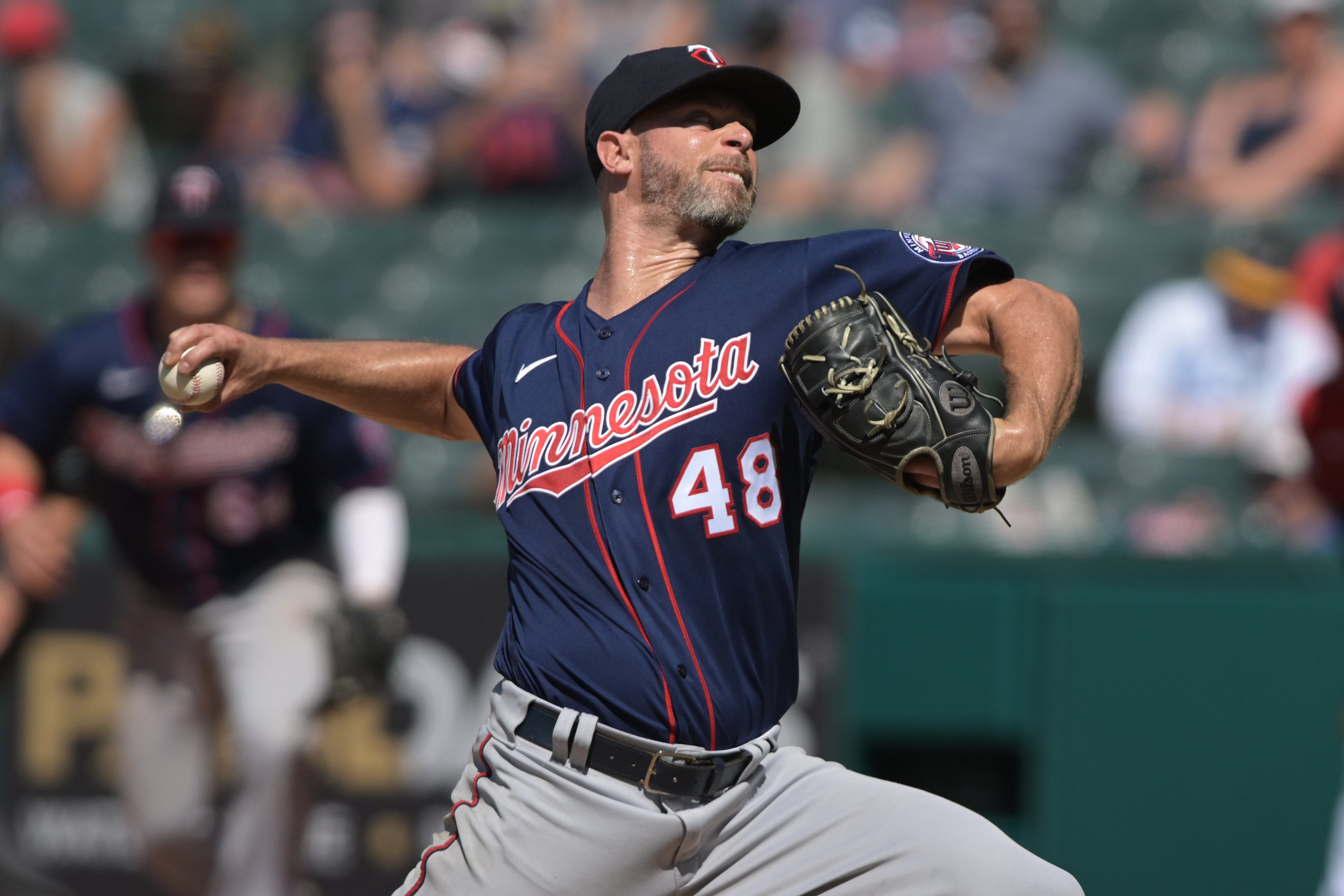 Frequently in baseball, we break up starters and relievers into separate, distinct groups; both types of pitchers exist in their sphere outside of the influence of the other. But such a view is myopic and inaccurate. Baseball is a team sport, after all, and the actions of one player reverberate among every player in this game and into future matches. Take it from a former soccer goalkeeper; sure, it’s the keeper's fault when they allow a goal, but why did an opposing player have the opportunity to score in the first place? What happened amongst the defense? Is it fair to blame a streaking striker on the keeper? Previous actions influenced the future. To lay this out in baseball terms, we must consider the workload the game flow demands of each party; a starter unable to collect a few extra, precious innings places more strain on the bullpen. A team can adjust for a series or even a month, but the wear-down will hit at some point; the Pied Piper always earns his due. As of Thursday, Twins starters have thrown the 11th fewest innings in MLB, while their bullpen has tossed the 4th most innings; the team is 4th overall in total innings. By itself, this isn’t necessarily a sign of an unhealthy pitching ecosystem; the Rays bullpen has thrown the most innings of any team in MLB, and they are probably okay with that given that their crew owns a 3.18 ERA. But the Rays are a unique beast; the Twins are a different animal entirely. The Rays want their relievers to pitch those innings; they have melted down titles like “starter” and “reliever” until a pitcher is merely an “out-getter” precisely until they aren’t, whether that ends with three or 12 outs. Kevin Cash mixes and matches his assorted pitchers until the team nets their allotted nine innings, and everyone goes home. The Twins perhaps had some mildly similar plan on hand when the season began, but they lacked the preparation. Chris Archer pitched four innings on Thursday, a standard fare for him these days. Knowing that Archer would not be suitable for more than five innings, the Twins decided to back him up conventionally; no pitcher after him netted more than five outs. Rocco Baldelli—a manager already working with an exhausted bullpen—called on Jovani Moran, Tyler Duffey, and Tyler Thornburg to end the game. He had no choice; he had already used five relievers the day prior. Moran and Duffey did their job, but games are not seven innings long, and suddenly a player signed earlier this month pitched the final two frames. It went as well as you expected. This situation would not have happened if the starter had pitched six innings, if they had a true multi-inning pitcher available, or if the bullpen wasn’t horribly gassed. You can blame Baldelli—he absolutely threw the game by keeping Thornburg out an extra inning—but his options were slim. You can blame Thornburg—he was the man on the mound in the situation—but he’s not supposed to be an 8th-inning reliever. The problem is that the Twins bullpen is constantly tired due to a shortage of effective arms mixed with a starting staff that has failed to pitch deep into ballgames. This shortcoming falls squarely on the front office, but luck is also at play. Derek Falvey and Thad Levine knowingly ran headfirst into the season with a pitching staff low on starters that can pitch deep into the game combined with a bullpen missing their ace reliever, Taylor Rogers. Instead—and again, they knew that pitchers like Archer, Dylan Bundy, and Bailey Ober are dead-to-right five-and-fly guys—traditional single-inning relievers who can occasionally stretch an extra out or two populated the bullpen. That plan worked fine when everyone was healthy, but injuries combined with Archer and Bundy failing to bounce back have strained the relief core to exhaustion. Of course, when the baseball gods sense weakness, they’ll painfully expose it. A team ill-prepared for an overwhelming amount of innings has been fed them like slop in the trough; their 690 2/3 innings looks monstrous compared to Cleveland’s MLB fewest 641. Perhaps, to play a little Devil’s Advocate, this is an extreme consequence of a plan gone awry; the team primed Winder for the swingman role, but his injury left a void no pitcher could fill. Devin Smeltzer could have done it, but the team needed him in the starting rotations; Cole Sands could have done it, but he lacked major league polish. Jorge Alcala, Joe Smith, Trevor Megill, Danny Coulombe, and Cody Stashak are all trustworthy arms to varying degrees; none of those relievers are currently healthy. The answer could just be to wait. The situation isn’t impossible to climb out of; the Twins will get Ober and Kenta Maeda back at some point, they’ll run into a few extra off-days soon, and the team will pick up extra arms before the trade deadline. Jhoan Duran and Griffin Jax are a good 1-2 punch already; adding two more competent relievers knocks everyone down the totem pole until pitchers like Cotton and Thornburg are early-game/mop-up arms like they should be. An extra stud starter—Tyler Mahle, Frankie Montas, and the such—can move a rotation member like Bundy or Archer into the missing long relief role, making them the aid in an emergency, not the cause. Solutions to the problem do exist; we will just have to see which ones the team chooses.
- 11 comments
-
- 1
-
-
- jharel cotton
- tyler thornburg
- (and 3 more)
-
Royce Lewis Royce Lewis is still the best prospect in the Twins’ system, but the soul refuses to accept that truth. Lewis will now miss extended time with another ACL surgery, and it’s impossible to feel anything but grief and sympathy for the man; he’s an elite talent that life continues to deal poor hands to maniacally. His major league performance proved that he’s capable of great things, and all we can do is hope that he’ll come back without missing a beat as he did before. ------------------------- Austin Martin .311. That number represents a crappy rock band from the 90s and Austin Martin’s season slugging percentage as of June 29th. It will be impossible for Martin to fulfill his destiny as a high-level number 2 hitter unless he—at the very least—finds his .380s slugging mark from last season. I’m not sure why he’s suddenly trying to put the ball in play with no regard for extra-base damage, but it is failing; he has 11 extra-base hits in 60 games. We knew Martin would never become Sammy Sosa at the plate, but he desperately needs a buoyant power level from which his excellent OBP skills can consistently launch upwards. Martin is also not a shortstop. Noah Miller Now we get to the messy part of the system. I like Noah Miller, but he has cooled off tremendously since his blistering May; this is the danger in trying to rank recently-drafted high school players. I’ll stick with my guns and say that he’s a future star—his defense and on-base abilities are still undeniably elite—but that statement carries less oomph than it did just a month ago. I believe he’ll grow into some power, but he probably will never be Fernando Tatís Jr. out there; instead, I see him as a jack-of-all-trades type of quality shortstop. Emmanuel Rodriguez Have you ever heard about the tragedy of Emmanuel Rodriguez the wise? Rodriguez was laying waste to low-A pitchers before he tore up his knee, costing him at least the rest of this season. Knee injuries for athletic marvels like Rodriguez are still scary, but Lewis’ success in returning from one proved that it might not be worrisome. It’s a shame, Rodriguez’s play was cartoonishly dominant, but we’ll have to wait a while before seeing him on the field again. The long-term outlook remains sturdy, but the short-term playing time loss hurts. Jordan Balazovic Aaron Gleeman recently noted that Jordan Balazovic is dealing with a knee issue that has curtailed his effectiveness this season. Maybe it’s weird to say this, but knowing that fact improves my opinion on Balazovic; his under-performance has to do with injury, not a sudden loss in ability. Still, he’s walking far too many hitters at AAA and gives up contact loud enough to break the sound barrier. I’ve knocked him down a few spots already, and the slide will continue unless he changes something quick. Spencer Steer Is Spencer Steer the only top name here with an unimpeachable performance in 2022? The Oregon product is slaying the ball, slashing .277/.360/.577 between AA and AAA with only a slight drop-off in production since his promotion; a low BABIP may be the culprit. He’s no defensive whizz, but he doesn’t need to be with that bat, and he should be firmly implanted in the Twins’ future infield plans. I debated placing him above Balazovic, but since Steer has less overall time as an elite player, I gave the nod to the pitcher for now. ------------------------- Simeon Woods Richardson Simeon Woods Richardson was pitching well, and then he got injured because of course he did. I was still deeply suspicious of his performance—4.87 xFIP and all—but he at least had a nice ERA, and that’s better than nothing. I don’t think he has unquestionably shed the narrative that he can’t pitch at AA; Woods Richardson is striking out fewer batters than he did at every other level in the minors before this season. Yet, he’s still just 21 years old, so it would be foolish to write him off yet. It’s strange that that team placed him on the IL with no explanation or announcement. Edouard Julien I’m uncomfortable placing Edouard Julien this high on the list, but I also don’t know who would reasonably overtake him. Julien is positionless, but who cares about that when you walk 20% of the time. He has had a suspicious drop-off in power (.138 ISO this season), which could be an ominous sign of future disappointment; until that shoe drops, he’ll remain a top-10 prospect on my list. Cade Povich Cade Povich is probably my new favorite Twins pitching prospect. The lefty has been dominant, striking out hitters at a 32.7% clip with an average walk rate and few homers; that’s a great combination, by the way. Povich has little left to prove at A+ and will be pitching in Wichita sooner than later. Just pray that his arm doesn’t fall off. Marco Raya I think the hype train on Marco Raya has accelerated a touch too quickly, but I can understand why. Raya combines the top-dog mentality needed in an ace with top-tier stuff; that’s an excellent combination for a pitching prospect. The drawback remains: Raya has 36 innings over 10 appearances and just recently left a start after netting two outs. Are the Twins using kid gloves to handle him? Probably, but I need a nice, unquestionably dominant run from Raya before I move him up any further; TINSTAAP and all that jazz. Cole Sands Yeah, I’m still too high on Cole Sands. His command needs tweaks that may be beyond his abilities—how many players suddenly drastically improve in their fourth year with a team—but that sweeper is what keeps Sands up here. His breaking ball is ridiculous, mimicking the great American migration of the early 1900s in how it moves from East to West with great efficiency. The rest of his profile is meh, but he’ll always have potential thanks to his vicious breaking ball. David Festa David Festa is the most pop-up-y pitching prospect in the system; as a 13th-round pick, he’s punching out hitters at a 30.4% mark over 54 ⅔ innings split between A and A+ ball. His status as an “un-prospect” may benefit him, as the team is less likely to baby him, instead throwing him to the wolves where he can prove his ability. Festa may reach AA this season—he’s pitched that well—and we should know more about him once he does. Christian Encarnacion-Strand It’s been a while since CES went berserk in April to the tune of a billion RBIs (at least that’s what it felt like). No, he’s not that good, but he is a solid hitter. Encarnacion-Strand’s beautiful slash line is .291/.357/.567, which will play in any league, which is good because he cannot field even a little bit. Errors are far from the end-all stat they used to be, but he has 21 of them in just over 400 innings at 3rd base this season; that’s bad. Being a future 1st base/DH type player curtails his upside, so his entire prospect pedigree rests on the power of his bat. ------------------------- Matt Wallner I think I was too harsh on Matt Wallner last month. I emphatically stated that a player with his strikeout numbers would need to be otherworldly in other aspects to offset the K. His response? Walk a lot. I still hold those reservations, but if his new monstrous walk rate (21.4% in June) is even slightly sticky, he has a solid shot at becoming a major league contributor. Also, he owns an absolute cannon in right field. Blayne Enlow Blayne Enlow is dipping his toes into the minor league waters after a missed year, so I find it difficult to evaluate him too harshly. The numbers aren’t great, but that barely matters; him just being on the mound is good enough for the moment. At some point, slack will no longer exist, but I’m okay with punting on criticizing him for now. Louie Varland In a season that has been chaotic for so many players, Louie Varland chugs along like nothing is wrong. The Minnesota native’s under-the-hood stats aren’t the best—he’s walking more batters than he did in his stellar 2021 campaign—but the rest of his profile appears solid. His 68 ⅓ innings leads the entire Twins minor league system. Brent Headrick Brent Headrick might be the biggest under-the-radar name in the Twins system. As a late-blooming 24-year-old in A+ ball, Headrick has utterly dominated with a 2.40 ERA and a strikeout rate above 30%. It’s hard to scout prospects in this vein; I give Headrick the benefit of the doubt until/if his numbers reverse. Ronny Henriquez What do we make of Ronny Henriquez? Sure, he’s still just 22 years old, but there’s little to latch onto regarding his AAA play so far. It seems that the Twins are okay with letting him die at that level, given that his ERA is 6.95 and his FIP isn’t far behind (6.07). At some point, I need performance to outweigh pedigree; that needs to change soon for Henriquez. Matt Canterino I’ll try to be as diplomatic as possible: Matt Canterino has not yet shown the ability to be a consistent, innings-eating top-level arm. He recently set his single-season record for innings pitched as a professional (34 ⅓) before another elbow injury sidelined him for a significant time. I don’t see real reasons for optimism; the Rice background combined with these injuries leaves little faith in him ever becoming the big front-of-the-rotation starter we expected of him. Steve Hajjar Steve Hajjar was following in the Cade Povich breakout mold until a shoulder injury in the middle of June stopped him in his tracks. Shoulder problems are not the death sentence they once were, but that ailment is still something to keep an eye on for the future. Sawyer Gipson-Long Sawyer Gipon-Long is shockingly similar to Brent Headrick; he is also an old-for-his-level breakout prospect looking to prove that he isn’t a fluke. The process is farther along for Gipson-Long as he recently enjoyed a promotion to AA Wichita; he has one clunker and two solid starts. The rest of the season will be essential to understand Gipson-Long more as a prospect. ------------------------- Kala’i Rosario Kala’i Rosario dropped three points off his strikeout rate since I last wrote about him, but that still leaves him at 36.0%. My view on players with a penchant for whiffing is well known; you must do something extraordinary to offset the Ks. Rosario has good power (.204 ISO) and is still just a teenager, so he still possesses the rare chance to evolve into an elite power threat. Michael Helman Not mentioning Michael Helman was probably my last ranking’s worst mistake. The 26-year-old has quietly hit well at every level in the minors and is now knocking on the Major’s door thanks to his 125 wRC+ at AAA. Is this just Brian Dinkelman 2.0? Maybe, and that’s not just because of how similar their last names are. Helman could debut soon if the Twins desperately smash the “break in case of emergency” glass if a few too many infielders suffer injuries. Brayan Medina Brayan Medina finally pitched in the Twins system for the first time this month. He’s thrown fewer than 10 innings, so who knows where he’s at in his development, but the stuff descriptions are good, so he’ll stay here until further notice. Aaron Sabato Aaron Sabato’s slash line is still not optimal for a great 1st base prospect. The walks are good (14.2%), but he doesn’t neutralize his strikeout tendencies with overwhelming power (.171 ISO). I remain skeptical that Sabato will develop into the type of player the Twins expected when they drafted him. Alerick Soularie I didn’t rank Alerick Soularie in my last write-up, but the guy put up a 144 wRC+ in June, and now here he is. His play rounded more into form; he struck out a little less, walked a little more, and ballooned his ISO from .114 to .167. If he’s genuinely backing his elite athletic ability with a more sound game, Soularie could rocket up this list. Misael Urbina Misael Urbina just recently popped back up in the Twins system after dealing with visa issues earlier in the year. He’s played a few games in the DSL; he’ll likely rejoin Fort Myers when he’s back in the groove. Keoni Cavaco Keoni Cavaco rebounded a little bit in June (101 wRC+), but his walk and strikeout rates remain heavily lopsided, and his power does not make up for it (.151 ISO). Maybe the play improvement will aid his confidence; he needs to improve his performance before people buy back into his prospect stock. Jake Rucker Jake Rucker recently earned a promotion to A+ ball after holding his own with Fort Myers (100 wRC+). He’s 22 years old, so the Twins might accelerate his movement through the system; keep an eye on him in the Michael Helman under-the-radar vein. Travis Adams All Travis Adams has done this season is pitch well for Fort Myers. The former 6th-round pick is crushing with a 3.10 ERA and peripherals to match. There’s still an unknown factor to his game that will only clear once he plays in A+ ball and beyond, which should be soon.
- 12 comments
-
- 7
-
-
- royce lewis
- austin martin
- (and 3 more)
-
There goes my streak of not messing up when copy/pasting my outline Actually not sure about SWR, one of my followers only recently tipped it off
-
Identifying Prospects the Twins Could Move at the Trade Dealine
Matt Braun posted an article in Minor Leagues
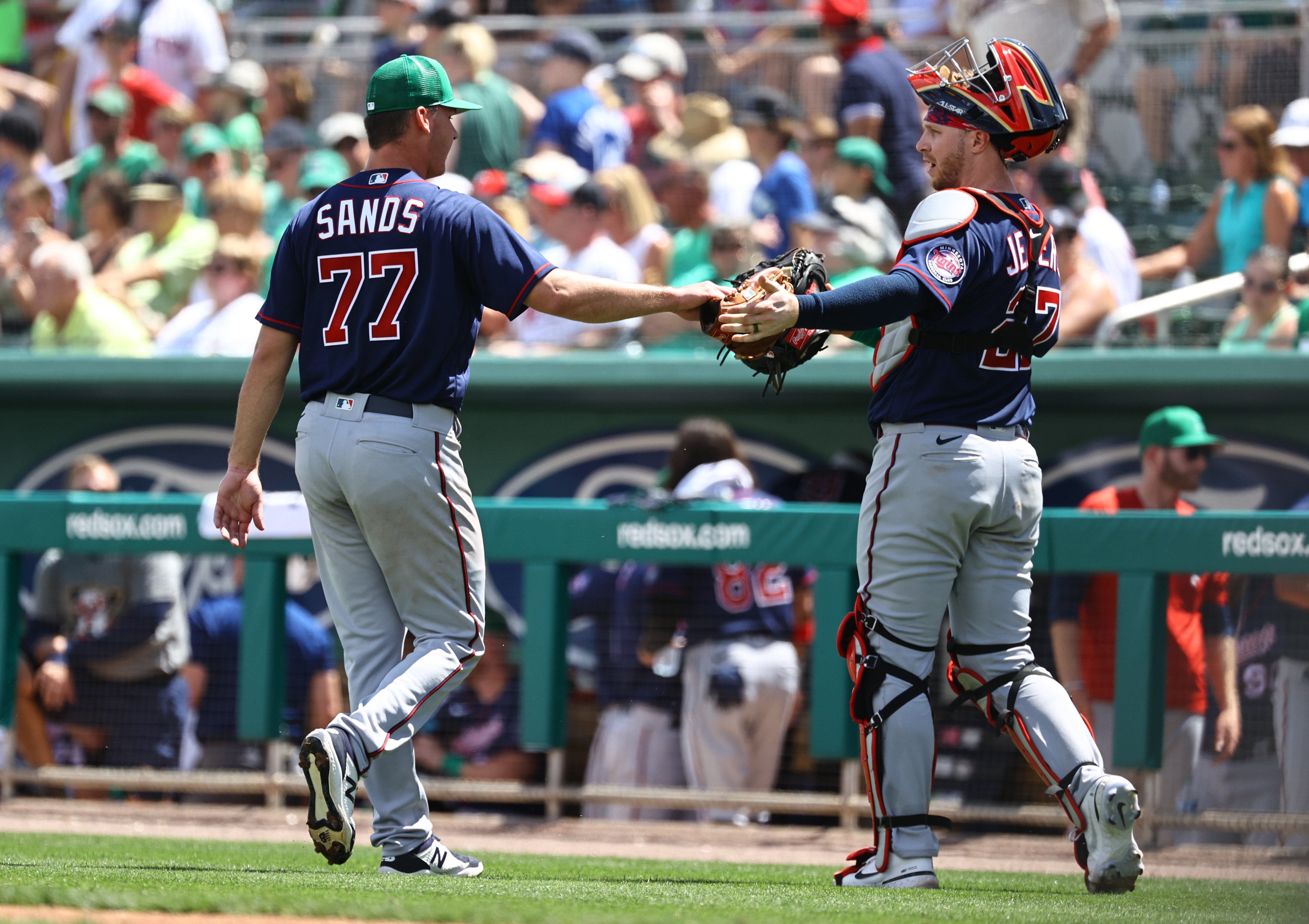 My secretary is informing me that the trade deadline is actually August 2nd, but because I’ve already written the previous paragraph, and because I found it funny, I will ignore that. There has recently been a weird but unsurprising defeatist mentality amongst Twins fans. Some have asked not what the Twins can do to improve at the deadline, but instead which veterans they can deal to consolidate their losses and give it another try next season. I disagree entirely with this notion. The Twins are a good baseball team lacking an extra arm, or two, or three, but acquiring those necessary few players is easily doable. Here are some of the prospects they may give up to do so. Matt Wallner It will be hard to part with a Minnesota boy, but the team may have to do it. Wallner stands at the crossroads of an excellent 2022 season and a weird position fit for the team in the future. There’s no shortage of young left-handed power-hitting outfielders on the Twins, making fate the beholder for any potential playing time for Wallner; his spot is far from saved. Wallner is a legitimate prospect as well; Fangraphs gives him a 45 FV rating—a number that doesn’t blow anyone away but does represent a quality player with MLB potential. After all, Luis Arraez was just a 40+ FV prospect according to the same website. When drawing up trades, it’s easy to clump up the bottom of the barrel (Brent Rooker and Nick Gordon for Luis Castillo, anyone?) in a foolish attempt at swindling grown men out of their other, more talented grown men. That doesn’t happen in this era of MLB. Wallner alone will not net Frankie Montas, but he could be the 2nd best piece in a package deal for him or a starter like him. The only thing that could make teams shy away from Wallner is that he may be too MLB-ready. Remember, out-of-contention organizations like the Athletics hate spending money even more than they hate their own fans, and they don’t like holding on to a player who will be arbitration-eligible around the time they’re supposed to compete again. Cole Sands Like Wallner, whether a team wants Cole Sands depends on how much they’re willing to pay a player more than the vet minimum. Still, Sands is an awkward fit on the Twins. He has potential—that sweeping breaking ball is something vicious—but are they willing to throw him to the major league wolves and potentially take losses in exchange for learning experiences? A team out of contention can say yes, but the answer is far trickier for the Twins. Sands is similar to Wallner in that he will likely be the 2nd best piece if the trade is of the big-splash variety. College Arm in the Low Minors This is cheating, but I make the rules, so I get to break them at will. The Twins have a glut of recently-drafted college arms laying waste to hitters in the low minors (hey, someone should write about that), and the team may dangle one in front of a team looking for the most sought-after commodity in sports: a young starting pitcher. I think the team will avoid bringing up Cade Povich in talks, but Brent Headrick, David Festa, and Travis Adams could be the lotto tickets necessary to coax an elite reliever out of another organization. Players the Team Will Not Move Remember, this is theorizing, not prophecizing; I have no idea which prospects the Twins covet and secretly loathe. I have a hard time seeing the team move Austin Martin; he’s both significantly underperforming and a crucial cog in their return for José Berríos. If the team liked him enough to part ways with their best homegrown starter in a generation, then I don’t see them reversing course so soon. Spencer Steer is another player I don’t see the team parting ways with unless the return is massive. Gio Urshela is a stop-gap to nowhere, and Jose Miranda should avoid playing 3rd base as much as possible. Steer fits so perfectly in the team’s plan for next season that dealing him would make little sense. Final player: Marco Raya. This is even more speculation-y than before, but he feels anointed by the Twins to be the next Berríos. A team would have to make an overwhelmingly generous offer to convince the team to trade him away, and sellers usually aren’t the ones to make such concessions.
- 20 comments
-
- 3
-
-
- matt wallner
- cole sands
- (and 3 more)
-
The incoming July month marks two important dates: the Fourth of July and the trade deadline. The first is an American celebration of freedom and liberty, where all across the political spectrum eschew their governmental criticisms and appreciate the uniquely American pastime of blowing your hand off in a firework accident. The second is a time when contending teams acquire relievers. My secretary is informing me that the trade deadline is actually August 2nd, but because I’ve already written the previous paragraph, and because I found it funny, I will ignore that. There has recently been a weird but unsurprising defeatist mentality amongst Twins fans. Some have asked not what the Twins can do to improve at the deadline, but instead which veterans they can deal to consolidate their losses and give it another try next season. I disagree entirely with this notion. The Twins are a good baseball team lacking an extra arm, or two, or three, but acquiring those necessary few players is easily doable. Here are some of the prospects they may give up to do so. Matt Wallner It will be hard to part with a Minnesota boy, but the team may have to do it. Wallner stands at the crossroads of an excellent 2022 season and a weird position fit for the team in the future. There’s no shortage of young left-handed power-hitting outfielders on the Twins, making fate the beholder for any potential playing time for Wallner; his spot is far from saved. Wallner is a legitimate prospect as well; Fangraphs gives him a 45 FV rating—a number that doesn’t blow anyone away but does represent a quality player with MLB potential. After all, Luis Arraez was just a 40+ FV prospect according to the same website. When drawing up trades, it’s easy to clump up the bottom of the barrel (Brent Rooker and Nick Gordon for Luis Castillo, anyone?) in a foolish attempt at swindling grown men out of their other, more talented grown men. That doesn’t happen in this era of MLB. Wallner alone will not net Frankie Montas, but he could be the 2nd best piece in a package deal for him or a starter like him. The only thing that could make teams shy away from Wallner is that he may be too MLB-ready. Remember, out-of-contention organizations like the Athletics hate spending money even more than they hate their own fans, and they don’t like holding on to a player who will be arbitration-eligible around the time they’re supposed to compete again. Cole Sands Like Wallner, whether a team wants Cole Sands depends on how much they’re willing to pay a player more than the vet minimum. Still, Sands is an awkward fit on the Twins. He has potential—that sweeping breaking ball is something vicious—but are they willing to throw him to the major league wolves and potentially take losses in exchange for learning experiences? A team out of contention can say yes, but the answer is far trickier for the Twins. Sands is similar to Wallner in that he will likely be the 2nd best piece if the trade is of the big-splash variety. College Arm in the Low Minors This is cheating, but I make the rules, so I get to break them at will. The Twins have a glut of recently-drafted college arms laying waste to hitters in the low minors (hey, someone should write about that), and the team may dangle one in front of a team looking for the most sought-after commodity in sports: a young starting pitcher. I think the team will avoid bringing up Cade Povich in talks, but Brent Headrick, David Festa, and Travis Adams could be the lotto tickets necessary to coax an elite reliever out of another organization. Players the Team Will Not Move Remember, this is theorizing, not prophecizing; I have no idea which prospects the Twins covet and secretly loathe. I have a hard time seeing the team move Austin Martin; he’s both significantly underperforming and a crucial cog in their return for José Berríos. If the team liked him enough to part ways with their best homegrown starter in a generation, then I don’t see them reversing course so soon. Spencer Steer is another player I don’t see the team parting ways with unless the return is massive. Gio Urshela is a stop-gap to nowhere, and Jose Miranda should avoid playing 3rd base as much as possible. Steer fits so perfectly in the team’s plan for next season that dealing him would make little sense. Final player: Marco Raya. This is even more speculation-y than before, but he feels anointed by the Twins to be the next Berríos. A team would have to make an overwhelmingly generous offer to convince the team to trade him away, and sellers usually aren’t the ones to make such concessions. View full article
-
A lot of people hit homers today, like a lot; someone hit a walk-off, Chris Sale pitched against a team in the low minors, and someone else hit two homers. Read all about that and more in this edition of the minor league report. TRANSACTIONS OF Mark Contreras recalled by the Minnesota Twins Saints Sentinel St. Paul 7, Buffalo 4 Box Score Aaron Sanchez: 5 IP, 5 H, 3 ER, 5 BB, 3 K HR: Michael Helman 2 (3, 4), John Andreoli (6) Multi-hit games: Jake Cave (2-for-5), Tim Beckham (2-for-4), Michael Helman (3-for-5, 2 HR, 3 R, 2 RBI), Elliot Soto (4-for-5, R, 3 RBI), John Andreoli (2-for-5, HR, R, RBI) The Saints won handily on Saturday. Former AL ERA champ Aaron Sanchez received the nod on Saturday. He was sporadic, walking a batter an inning while allowing three runners to score; he ended the day with a 2.00 WHIP. But the Saints’ bats pulled through. One-day big-leaguer, Elliot Soto, brought home a pair of runs with a single in the 4th inning. The Buffalo Bisons then chipped back, netting a few runs before parking themselves firmly in front of St. Paul at a 3-2 clip. Michael Helman wanted no part of that, and he sent a solo shot out to left before John Andreoli blasted his own homer, this time to center. If you thought Helman was done, then you would be wrong, my friend. Helman sent another solo homer out to left, this time staking a three-run lead that expanded after Soto brought him one final run with an RBI single. The Saints may have found good fortune on Saturday; their pitchers walked more batters than they struck out (eight to seven), but Buffalo could not take advantage of the free passes. Sometimes, it’s better to be lucky than good. Wind Surge Wisdom Wichita 2, San Antonio 4 Box Score Louie Varland: 5 IP, 5 H, 3 ER, 3 BB, 5 K HR: None Multi-hit games: Cole Sturgeon (2-for-5, HR, R, RBI), Kevin Merrell (2-for-3, 2 B, R) Wichita lost a weird one on Saturday. Every batter for Wichita, outside of one got a hit on Saturday; they had 10 in total. Yet, the team went a hearty 0-7 with RISP, and that’s how you score two runs off 10 hits. Heck, half of their RBIs on Saturday came from a bases-loaded walk. Cole Sturgeon realized that if you hit a homer, then you’re always in scoring position, and simply blasted a ball out to right field for his sixth homer of the season. Kevin Merrell had the other extra-base hit: a double in the 6th. Louie Varland was just good, not his usual dominant self on Saturday. The righty had a full stat line, allowing eight runners against five strikeouts with three earned runs bookending his start. Cody Laweryson made his AA debut after receiving a promotion on Friday. The righty worked two scoreless innings with three strikeouts and two singles allowed. He did work himself into some trouble in the 9th inning, but Chris Williams threw out a runner to end the inning. Kernels Nuggets Cedar Rapids 6, West Michigan 5 Box Score Sean Mooney: 4 ⅔ IP, 4 H, 2 ER, 1 BB, 6 K HR: Wander Javier (6), Christian Encarnacion-Strand (16) Multi-hit games: Seth Gray (2-for-4, 2 RBI) The Kernels won a walk-off on Saturday. Sean Mooney started the game and did an adequate job keeping his team in the game, allowing two runs over 4 ⅔ innings. Mooney also struck out six. Cedar Rapids’ bats picked up immediately on Saturday; Kyler Fedko brought home two runs on a 1st inning triple, giving the Kernels the quick advantage. The Whitecaps scratched back with a pair of sacrifice flies in the 3rd and 5th innings to tie the game. West Michigan didn’t stop there. A pair of plays involving errors from Charles Mack allowed the Whitecaps to take a two-run lead. With two on in the bottom of the 8th inning, Wander Javier launched a go-ahead three-run homer to centerfield, giving the Kernels their first lead since the 1st inning. The Whitecaps tied up the game in the 9th inning with a solo homer, but Christian Encarnacion-Strand punished such silliness by cracking a walk-off shot in the bottom of the inning. It was Encarnacion-Strand’s 16th home run of the season. Mussel Matters The Mighty Mussels were supposed to play a doubleheader, but rain intervened, and neither game occurred. Fort Myers will play two games on Sunday starting at 10:30 AM. Complex Chronicles FCL Twins 7, FCL Red Sox 6 (10 innings) Box Score Cleiber Maldonado: 4 IP, 4 H, 1 ER, 1 BB, 6 K HR: None Multi-hit games: Jefferson De La Cruz (3-for-5, 2 R), Andres Centeno (2-for-5, 2B, 2 R, RBI), Breilin Ramirez (3-for-5, 2 R) The FCL Twins won in extra-innings on Saturday. Rehabbing big-leaguer Chris Sale started for the FCL Red Sox. Sale ended up striking out six over 2 ⅔ IP—because of course he did—but the FCL Twins did knock out three hits against him. Cleiber Maldonado, now the owner of my favorite name in the system, was phenomenal on Saturday. The lefty punched out six batters while allowing just one run over 4 innings; he dominated by any metric. The FCL Twins had three players with multiple hits and fortunately, all three batters hit back-to-back-to-back; six of the Twins’ runs came from Jefferson De La Cruz, Andres Centeno, and Breilin Ramirez. Dominican Dailies DSL Twins 0, DSL Mariners 4 Box Score Cesar Lares: 4 IP, 5 H, 3 ER, 5 BB, 6 K HR: None Multi-hit games: Yasser Mercedes (2-for-3, 2B) The DSL Twins lost in a shutout on Saturday. Yasser Mercedes nabbed one of the two extra-base hits for the DSL Twins; Junior Del Valle had the other. Del Valle also stole a base. TWINS DAILY PLAYERS OF THE DAY Twins Daily Minor League Pitcher of the Day – Cleiber Maldonado Twins Daily Minor League Hitter of the Day – Michael Helman PROSPECT SUMMARY Here’s a look at how the Twins Daily Top 20 Twins Prospects performed: #1 - Royce Lewis (Minnesota) - Injured List #2 - Austin Martin (Wichita) - 0-1, K #3 - Jose Miranda (Minnesota) - 1-for-3, 2B, R, RBI, 2 K #4 - Jordan Balazovic (St. Paul) - Did Not Pitch #5 - Simeon Woods Richardson (Wichita) - IL #6 - Matt Canterino (Wichita) - IL #7 - Spencer Steer (St. Paul) - 1-4, RBI, BB #8 - Emmanuel Rodriguez (Ft. Myers) - IL #9 - Noah Miller (Ft. Myers) - Did not play #10 - Marco Raya (Ft. Myers) - Did Not Pitch #11 - Cade Povich (Cedar Rapids) - Did Not Pitch #12 - Louie Varland (Wichita) - 5 IP, 5 H, 3 ER, 3 BB, 5 K #13 - Ronny Hendriquez (St. Paul) - Did not pitch #14 - Blayne Enlow (Wichita) - Did not pitch #15 - Matt Wallner (Wichita) - 1-4, BB, 2 K #16 - Edouard Julien (Wichita) - 1-4, RBI, BB, K #17 - Cole Sands (St. Paul) - Did Not Pitch #18 - Christian Encarnacion-Strand (Cedar Rapids) - 1-4, HR, R, RBI, BB, 2 K #19 - Steve Hajjar (Ft. Myers) - IL #20 - David Festa (Cedar Rapids) - Did not pitch SUNDAY’S PROBABLE STARTERS St. Paul @ Buffalo (12:05 PM) - RHP Mario Sanchez San Antonio @ Wichita (1:05 PM) - RHP Sawyer Gipson-Long Western Michigan @ Cedar Rapids (2:05 PM) - RHP John Stankiewicz Fort Myers @ Lakeland (10:30 AM) - LHP Jaylen Nowlin View full article
-
 TRANSACTIONS OF Mark Contreras recalled by the Minnesota Twins Saints Sentinel St. Paul 7, Buffalo 4 Box Score Aaron Sanchez: 5 IP, 5 H, 3 ER, 5 BB, 3 K HR: Michael Helman 2 (3, 4), John Andreoli (6) Multi-hit games: Jake Cave (2-for-5), Tim Beckham (2-for-4), Michael Helman (3-for-5, 2 HR, 3 R, 2 RBI), Elliot Soto (4-for-5, R, 3 RBI), John Andreoli (2-for-5, HR, R, RBI) The Saints won handily on Saturday. Former AL ERA champ Aaron Sanchez received the nod on Saturday. He was sporadic, walking a batter an inning while allowing three runners to score; he ended the day with a 2.00 WHIP. But the Saints’ bats pulled through. One-day big-leaguer, Elliot Soto, brought home a pair of runs with a single in the 4th inning. The Buffalo Bisons then chipped back, netting a few runs before parking themselves firmly in front of St. Paul at a 3-2 clip. Michael Helman wanted no part of that, and he sent a solo shot out to left before John Andreoli blasted his own homer, this time to center. If you thought Helman was done, then you would be wrong, my friend. Helman sent another solo homer out to left, this time staking a three-run lead that expanded after Soto brought him one final run with an RBI single. The Saints may have found good fortune on Saturday; their pitchers walked more batters than they struck out (eight to seven), but Buffalo could not take advantage of the free passes. Sometimes, it’s better to be lucky than good. Wind Surge Wisdom Wichita 2, San Antonio 4 Box Score Louie Varland: 5 IP, 5 H, 3 ER, 3 BB, 5 K HR: None Multi-hit games: Cole Sturgeon (2-for-5, HR, R, RBI), Kevin Merrell (2-for-3, 2 B, R) Wichita lost a weird one on Saturday. Every batter for Wichita, outside of one got a hit on Saturday; they had 10 in total. Yet, the team went a hearty 0-7 with RISP, and that’s how you score two runs off 10 hits. Heck, half of their RBIs on Saturday came from a bases-loaded walk. Cole Sturgeon realized that if you hit a homer, then you’re always in scoring position, and simply blasted a ball out to right field for his sixth homer of the season. Kevin Merrell had the other extra-base hit: a double in the 6th. Louie Varland was just good, not his usual dominant self on Saturday. The righty had a full stat line, allowing eight runners against five strikeouts with three earned runs bookending his start. Cody Laweryson made his AA debut after receiving a promotion on Friday. The righty worked two scoreless innings with three strikeouts and two singles allowed. He did work himself into some trouble in the 9th inning, but Chris Williams threw out a runner to end the inning. Kernels Nuggets Cedar Rapids 6, West Michigan 5 Box Score Sean Mooney: 4 ⅔ IP, 4 H, 2 ER, 1 BB, 6 K HR: Wander Javier (6), Christian Encarnacion-Strand (16) Multi-hit games: Seth Gray (2-for-4, 2 RBI) The Kernels won a walk-off on Saturday. Sean Mooney started the game and did an adequate job keeping his team in the game, allowing two runs over 4 ⅔ innings. Mooney also struck out six. Cedar Rapids’ bats picked up immediately on Saturday; Kyler Fedko brought home two runs on a 1st inning triple, giving the Kernels the quick advantage. The Whitecaps scratched back with a pair of sacrifice flies in the 3rd and 5th innings to tie the game. West Michigan didn’t stop there. A pair of plays involving errors from Charles Mack allowed the Whitecaps to take a two-run lead. With two on in the bottom of the 8th inning, Wander Javier launched a go-ahead three-run homer to centerfield, giving the Kernels their first lead since the 1st inning. The Whitecaps tied up the game in the 9th inning with a solo homer, but Christian Encarnacion-Strand punished such silliness by cracking a walk-off shot in the bottom of the inning. It was Encarnacion-Strand’s 16th home run of the season. Mussel Matters The Mighty Mussels were supposed to play a doubleheader, but rain intervened, and neither game occurred. Fort Myers will play two games on Sunday starting at 10:30 AM. Complex Chronicles FCL Twins 7, FCL Red Sox 6 (10 innings) Box Score Cleiber Maldonado: 4 IP, 4 H, 1 ER, 1 BB, 6 K HR: None Multi-hit games: Jefferson De La Cruz (3-for-5, 2 R), Andres Centeno (2-for-5, 2B, 2 R, RBI), Breilin Ramirez (3-for-5, 2 R) The FCL Twins won in extra-innings on Saturday. Rehabbing big-leaguer Chris Sale started for the FCL Red Sox. Sale ended up striking out six over 2 ⅔ IP—because of course he did—but the FCL Twins did knock out three hits against him. Cleiber Maldonado, now the owner of my favorite name in the system, was phenomenal on Saturday. The lefty punched out six batters while allowing just one run over 4 innings; he dominated by any metric. The FCL Twins had three players with multiple hits and fortunately, all three batters hit back-to-back-to-back; six of the Twins’ runs came from Jefferson De La Cruz, Andres Centeno, and Breilin Ramirez. Dominican Dailies DSL Twins 0, DSL Mariners 4 Box Score Cesar Lares: 4 IP, 5 H, 3 ER, 5 BB, 6 K HR: None Multi-hit games: Yasser Mercedes (2-for-3, 2B) The DSL Twins lost in a shutout on Saturday. Yasser Mercedes nabbed one of the two extra-base hits for the DSL Twins; Junior Del Valle had the other. Del Valle also stole a base. TWINS DAILY PLAYERS OF THE DAY Twins Daily Minor League Pitcher of the Day – Cleiber Maldonado Twins Daily Minor League Hitter of the Day – Michael Helman PROSPECT SUMMARY Here’s a look at how the Twins Daily Top 20 Twins Prospects performed: #1 - Royce Lewis (Minnesota) - Injured List #2 - Austin Martin (Wichita) - 0-1, K #3 - Jose Miranda (Minnesota) - 1-for-3, 2B, R, RBI, 2 K #4 - Jordan Balazovic (St. Paul) - Did Not Pitch #5 - Simeon Woods Richardson (Wichita) - IL #6 - Matt Canterino (Wichita) - IL #7 - Spencer Steer (St. Paul) - 1-4, RBI, BB #8 - Emmanuel Rodriguez (Ft. Myers) - IL #9 - Noah Miller (Ft. Myers) - Did not play #10 - Marco Raya (Ft. Myers) - Did Not Pitch #11 - Cade Povich (Cedar Rapids) - Did Not Pitch #12 - Louie Varland (Wichita) - 5 IP, 5 H, 3 ER, 3 BB, 5 K #13 - Ronny Hendriquez (St. Paul) - Did not pitch #14 - Blayne Enlow (Wichita) - Did not pitch #15 - Matt Wallner (Wichita) - 1-4, BB, 2 K #16 - Edouard Julien (Wichita) - 1-4, RBI, BB, K #17 - Cole Sands (St. Paul) - Did Not Pitch #18 - Christian Encarnacion-Strand (Cedar Rapids) - 1-4, HR, R, RBI, BB, 2 K #19 - Steve Hajjar (Ft. Myers) - IL #20 - David Festa (Cedar Rapids) - Did not pitch SUNDAY’S PROBABLE STARTERS St. Paul @ Buffalo (12:05 PM) - RHP Mario Sanchez San Antonio @ Wichita (1:05 PM) - RHP Sawyer Gipson-Long Western Michigan @ Cedar Rapids (2:05 PM) - RHP John Stankiewicz Fort Myers @ Lakeland (10:30 AM) - LHP Jaylen Nowlin
- 7 comments
-
- 3
-
-
- christian encarnacion-strand
- michael helman
- (and 3 more)
-
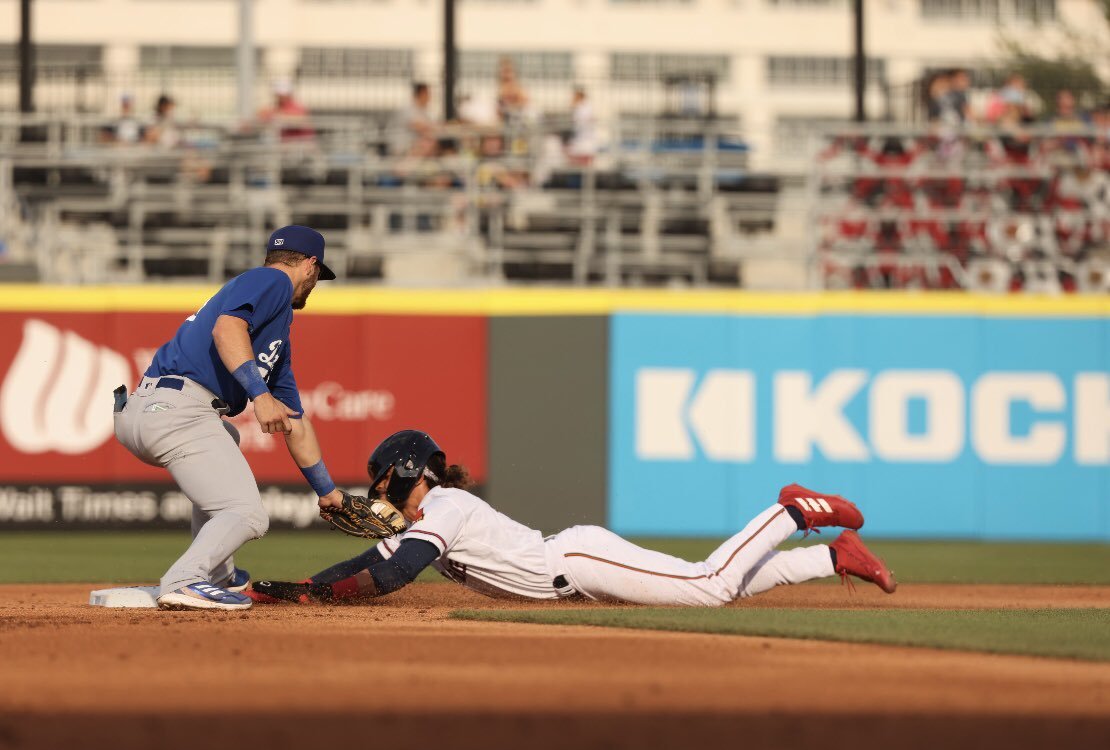 Let’s look at his team specifically: the Wichita Wind Surge. Currently, they sit as the 3rd most steal-happy team in their division, the Texas League. The two most effective culprits are Austin Martin and DaShawn Keirsey, as Martin has 22 bags swiped under his name, and Kiersey has 18. Michael Helman has also broken double digits—without being caught as well—but no other player stands out like Martin and Kiersey. Instead, the team offers a democratic approach, with only one player, Catcher Alex Isola, lacking a successful steal so far this season. For Martin, his stealing acumen appears to be a new or at least unreleased skill. He had a comparatively low 14 steals last year, holds a 50 FV grade in “Run” according to Fangraphs, and the only mention I can find about his speed on Fangraphs’ scouting reports is Eric Longenhagen calling it “solid.” Although, Jeffrey Paternostro at Baseball Prospectus noted that he “was aggressive on the basepaths” in college. Perhaps the Twins wanted to unleash a wild baserunner otherwise limited by the Blue Jays. Wichita isn’t the only team running mayhem on the base paths. The Fort Myers Mighty Mussels are also 3rd in their division in burglary. Mikey Perez alone has gotten away with an otherworldly 24 steals—a total that defines him as the 19th most prolific stealer in Minor League Baseball. Noah Miller, Jake Rucker, Emmanuel Rodriguez, and Daniel Ozoria join Perez as double-digit swipers; like Wichita, their catchers, Kyle Schmidt and Dillon Tatum, are the only regular players without a steal. Slight tangent: Mikey Perez is an enigma. I’ve been writing about his great play all year, but I can barely find any information on him. No one at Fangraphs has written anything him; Baseball Prospectus is equally silent. The only articles/mentions/smoke signals/morse code orders/messages from a bottle I can find about him come from an MLB. com article from last year and the three sentences that make up his Perfect Game scouting report. How is a player so good at stealing? I want to know! One big question remains: why more steals? The stolen base and its adjacent scrappy playstyle have taken a back seat to power since the Kansas City Royals lost their credibility following their World Series victory. Guess who the league leader in steals is; do you know? It’s Julio Rodriguez, but only Mariners fans and other niche hipster baseball dorks aggressively celebrate it. Once teams realized that hitting the ball over the fence ensures a run on the board, speed fell quickly out of favor as MLB’s metagame moved towards homers. But the steal may return soon. Proposed rule changes like bigger bases, a limit on pickoffs, and the seemingly inevitable pitch clock all at least implicitly support a rejuvenated stolen-base metagame. One of my followers pointed out that the pitch clock can work as a countdown for the baserunner as well; they can take off at the precise moment the pitcher must throw the ball. Anyways, it’s unclear whether this is an affiliate-at-large movement. The Cedar Rapids Kernels are 9th in their 12-team division, while the St. Paul Saints are 14th out of 20 teams. This swiped bags movement could be a serendipitous meeting of a few steal-happy players collaborating to annoy catchers in an otherwise neutral team philosophy; little stands out in the stats to say otherwise. Still, the franchise has a handful of successful stealers moving through their system, and their playstyle could add a dynamic wrinkle to a homogenous power-focused offense.
- 16 comments
-
- 6
-
-
- austin martin
- mikey perez
- (and 1 more)
-
Like the previous Gary Sánchez article, inspiration struck while I was writing the recent Minor League Week in Review piece. While skimming stats, I noticed that Matt Wallner had eight steals on the year. Wallner? Eight steals? Wasn’t he a big, lethargic slugger? Something seems afoot. I took a quick dive, and as it turns out, some interesting steal-related movements are occurring in the Twins’ minor league system. Let’s look at his team specifically: the Wichita Wind Surge. Currently, they sit as the 3rd most steal-happy team in their division, the Texas League. The two most effective culprits are Austin Martin and DaShawn Keirsey, as Martin has 22 bags swiped under his name, and Kiersey has 18. Michael Helman has also broken double digits—without being caught as well—but no other player stands out like Martin and Kiersey. Instead, the team offers a democratic approach, with only one player, Catcher Alex Isola, lacking a successful steal so far this season. For Martin, his stealing acumen appears to be a new or at least unreleased skill. He had a comparatively low 14 steals last year, holds a 50 FV grade in “Run” according to Fangraphs, and the only mention I can find about his speed on Fangraphs’ scouting reports is Eric Longenhagen calling it “solid.” Although, Jeffrey Paternostro at Baseball Prospectus noted that he “was aggressive on the basepaths” in college. Perhaps the Twins wanted to unleash a wild baserunner otherwise limited by the Blue Jays. Wichita isn’t the only team running mayhem on the base paths. The Fort Myers Mighty Mussels are also 3rd in their division in burglary. Mikey Perez alone has gotten away with an otherworldly 24 steals—a total that defines him as the 19th most prolific stealer in Minor League Baseball. Noah Miller, Jake Rucker, Emmanuel Rodriguez, and Daniel Ozoria join Perez as double-digit swipers; like Wichita, their catchers, Kyle Schmidt and Dillon Tatum, are the only regular players without a steal. Slight tangent: Mikey Perez is an enigma. I’ve been writing about his great play all year, but I can barely find any information on him. No one at Fangraphs has written anything him; Baseball Prospectus is equally silent. The only articles/mentions/smoke signals/morse code orders/messages from a bottle I can find about him come from an MLB. com article from last year and the three sentences that make up his Perfect Game scouting report. How is a player so good at stealing? I want to know! One big question remains: why more steals? The stolen base and its adjacent scrappy playstyle have taken a back seat to power since the Kansas City Royals lost their credibility following their World Series victory. Guess who the league leader in steals is; do you know? It’s Julio Rodriguez, but only Mariners fans and other niche hipster baseball dorks aggressively celebrate it. Once teams realized that hitting the ball over the fence ensures a run on the board, speed fell quickly out of favor as MLB’s metagame moved towards homers. But the steal may return soon. Proposed rule changes like bigger bases, a limit on pickoffs, and the seemingly inevitable pitch clock all at least implicitly support a rejuvenated stolen-base metagame. One of my followers pointed out that the pitch clock can work as a countdown for the baserunner as well; they can take off at the precise moment the pitcher must throw the ball. Anyways, it’s unclear whether this is an affiliate-at-large movement. The Cedar Rapids Kernels are 9th in their 12-team division, while the St. Paul Saints are 14th out of 20 teams. This swiped bags movement could be a serendipitous meeting of a few steal-happy players collaborating to annoy catchers in an otherwise neutral team philosophy; little stands out in the stats to say otherwise. Still, the franchise has a handful of successful stealers moving through their system, and their playstyle could add a dynamic wrinkle to a homogenous power-focused offense. View full article
-
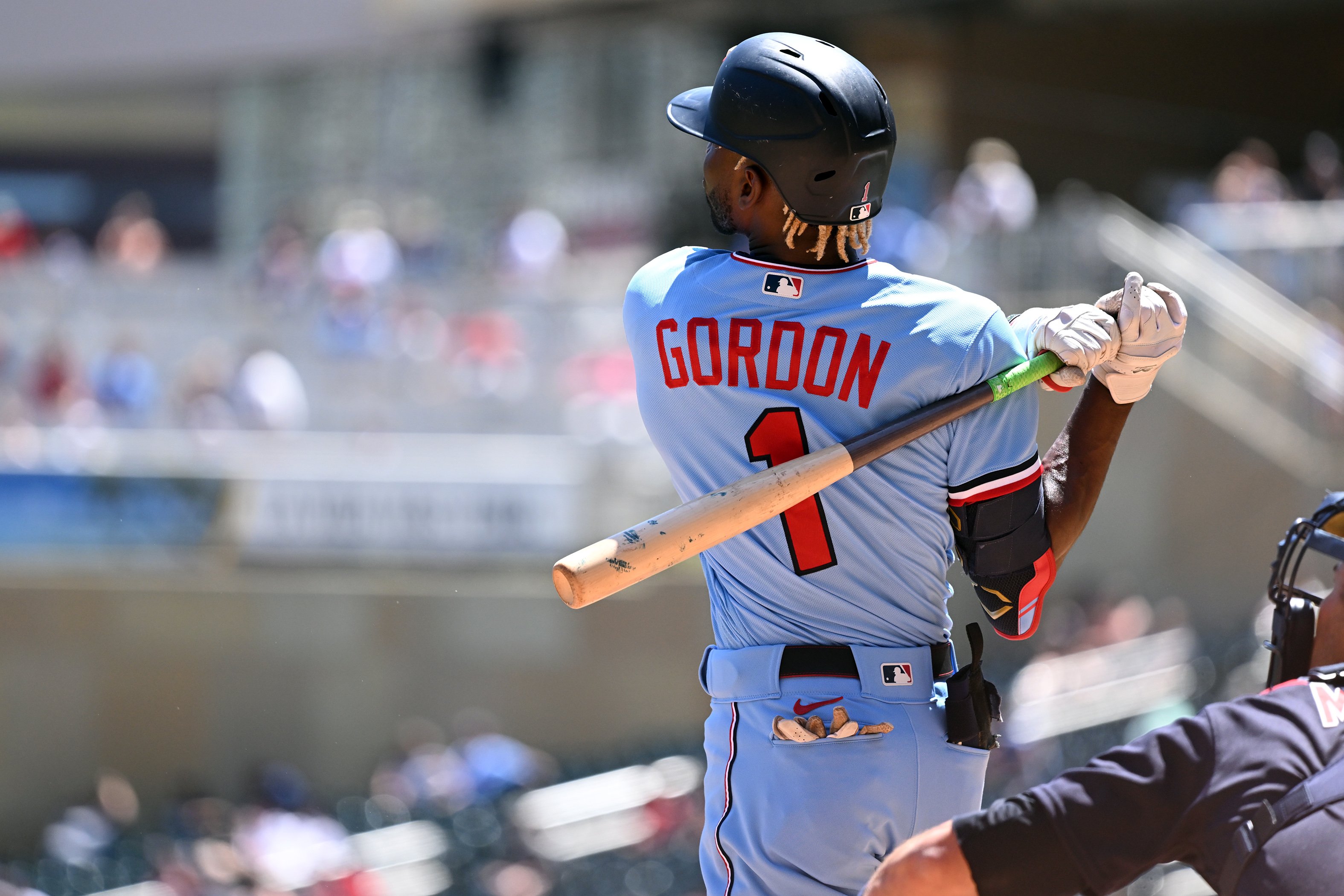 Box Score Starting Pitcher: Devin Smeltzer 6 IP, 3 H, 0 ER, 0 BB, 3 K Home Runs: Nick Gordon (2) Top 3 WPA: Devin Smeltzer (.359), Jhoan Duran (.188), Joe Smith (.094) Win Probability Chart (via FanGraphs) Devin Smeltzer faced off against seatbelt-enthusiast Zach Plesac in the final game of the series against the Cleveland Guardians. It was a beautiful day game; people around the country celebrated the 50th anniversary of Title IX, while Twins fans looked to celebrate a victory after pulling defeat from the jaws of victory on Monday and Tuesday. The first few innings breezed by before Nick Gordon blasted a hanging curveball deep into center field for his second homer of the season. The opportunity for Gordon to play centerfield and start in the lineup existed in the vacuum left by Byron Buxton’s mysterious, nagging injury. The team’s caution is Gordon’s advantage; the extra playing time has allowed him and Gilberto Celestino to flex their usefulness until Buxton returns. Smeltzer was the story on Thursday. The often-leaned on lefty came up clutch again, firing off 6 shutout innings with three strikeouts to stymy Cleveland’s bats. The Guardians were confounded all day, sending balls directly toward defenders without recourse; their BABIP against Smeltzer was a paltry .167. No one knows how he continues to do this, but few will dare be anything but grateful for the boost Smeltzer has given to the starting rotation in the absence of multiple starters. But this is a Twins game in 2022, and we know better than to get our hopes up after a great start; the bullpen must do their job, after all. Joe Smith started the 7th inning, and while he loaded the bases before netting out, he somehow wriggled out of the situation, and the team walked away unscathed. Jhoan Duran had the 8th inning and was considerably less noisy in his work. He “hit” Amed Rosario in the hand with a fastball—Rosario’s hands would no longer exist if that were true—but had an otherwise clean inning. Duran then entered the 9th inning, looking to end the game possibly. He obliterated Franmil Reyes before Rocco Baldelli halted the game and began a slow walk to the mound. It’s unclear what Baldelli said—us mere regulars don’t earn the privilege of knowing—but Caleb Thielbar then came bounding out of the bullpen to the sounds of exhausted boos anticipating the future. Andrés Giménez plopped a double into left field, of course, before Ernie Clement dribbled a ball 50 feet; Thielbar threw him out at 1st. Steven Kwan, the nuisance of the series, stepped up to the plate to pinch-hit. Thielbar peppered him with fastballs around the perimeter, daring the rookie to trust his strike zone instincts before blowing a fastball by him for strike three. After two barn-burners, Thursday's game was a tame palate cleanser. Both teams collected just five hits—Carlos Correa had three of them for the Twins—and pitchers issued just three walks on the day. If there was ever a dictionary definition of a getaway day-game, this would be it. Outside of Gordon's homer, the only extra-base hit for the Twins belonged to Gio Urshela, who earned credit for a "double" that Reyes brutally fumbled. Apparently the official scorer felt lenient on Thursday. What’s Next? The Twins will remain in Minnesota and host the Colorado Rockies on Friday, the first time Colorado has played at Target Field since 2017. Dylan Bundy is set to face off against Germán Márquez. Bullpen Usage Spreadsheet
- 48 comments
-
- 9
-
-
- devin smeltzer
- nick gordon
- (and 3 more)
-
You all thought there were going to lose, didn't you? Box Score Starting Pitcher: Devin Smeltzer 6 IP, 3 H, 0 ER, 0 BB, 3 K Home Runs: Nick Gordon (2) Top 3 WPA: Devin Smeltzer (.359), Jhoan Duran (.188), Joe Smith (.094) Win Probability Chart (via FanGraphs) Devin Smeltzer faced off against seatbelt-enthusiast Zach Plesac in the final game of the series against the Cleveland Guardians. It was a beautiful day game; people around the country celebrated the 50th anniversary of Title IX, while Twins fans looked to celebrate a victory after pulling defeat from the jaws of victory on Monday and Tuesday. The first few innings breezed by before Nick Gordon blasted a hanging curveball deep into center field for his second homer of the season. The opportunity for Gordon to play centerfield and start in the lineup existed in the vacuum left by Byron Buxton’s mysterious, nagging injury. The team’s caution is Gordon’s advantage; the extra playing time has allowed him and Gilberto Celestino to flex their usefulness until Buxton returns. Smeltzer was the story on Thursday. The often-leaned on lefty came up clutch again, firing off 6 shutout innings with three strikeouts to stymy Cleveland’s bats. The Guardians were confounded all day, sending balls directly toward defenders without recourse; their BABIP against Smeltzer was a paltry .167. No one knows how he continues to do this, but few will dare be anything but grateful for the boost Smeltzer has given to the starting rotation in the absence of multiple starters. But this is a Twins game in 2022, and we know better than to get our hopes up after a great start; the bullpen must do their job, after all. Joe Smith started the 7th inning, and while he loaded the bases before netting out, he somehow wriggled out of the situation, and the team walked away unscathed. Jhoan Duran had the 8th inning and was considerably less noisy in his work. He “hit” Amed Rosario in the hand with a fastball—Rosario’s hands would no longer exist if that were true—but had an otherwise clean inning. Duran then entered the 9th inning, looking to end the game possibly. He obliterated Franmil Reyes before Rocco Baldelli halted the game and began a slow walk to the mound. It’s unclear what Baldelli said—us mere regulars don’t earn the privilege of knowing—but Caleb Thielbar then came bounding out of the bullpen to the sounds of exhausted boos anticipating the future. Andrés Giménez plopped a double into left field, of course, before Ernie Clement dribbled a ball 50 feet; Thielbar threw him out at 1st. Steven Kwan, the nuisance of the series, stepped up to the plate to pinch-hit. Thielbar peppered him with fastballs around the perimeter, daring the rookie to trust his strike zone instincts before blowing a fastball by him for strike three. After two barn-burners, Thursday's game was a tame palate cleanser. Both teams collected just five hits—Carlos Correa had three of them for the Twins—and pitchers issued just three walks on the day. If there was ever a dictionary definition of a getaway day-game, this would be it. Outside of Gordon's homer, the only extra-base hit for the Twins belonged to Gio Urshela, who earned credit for a "double" that Reyes brutally fumbled. Apparently the official scorer felt lenient on Thursday. What’s Next? The Twins will remain in Minnesota and host the Colorado Rockies on Friday, the first time Colorado has played at Target Field since 2017. Dylan Bundy is set to face off against Germán Márquez. Bullpen Usage Spreadsheet View full article
- 48 replies
-
- 2
-
-
- devin smeltzer
- nick gordon
- (and 3 more)
-
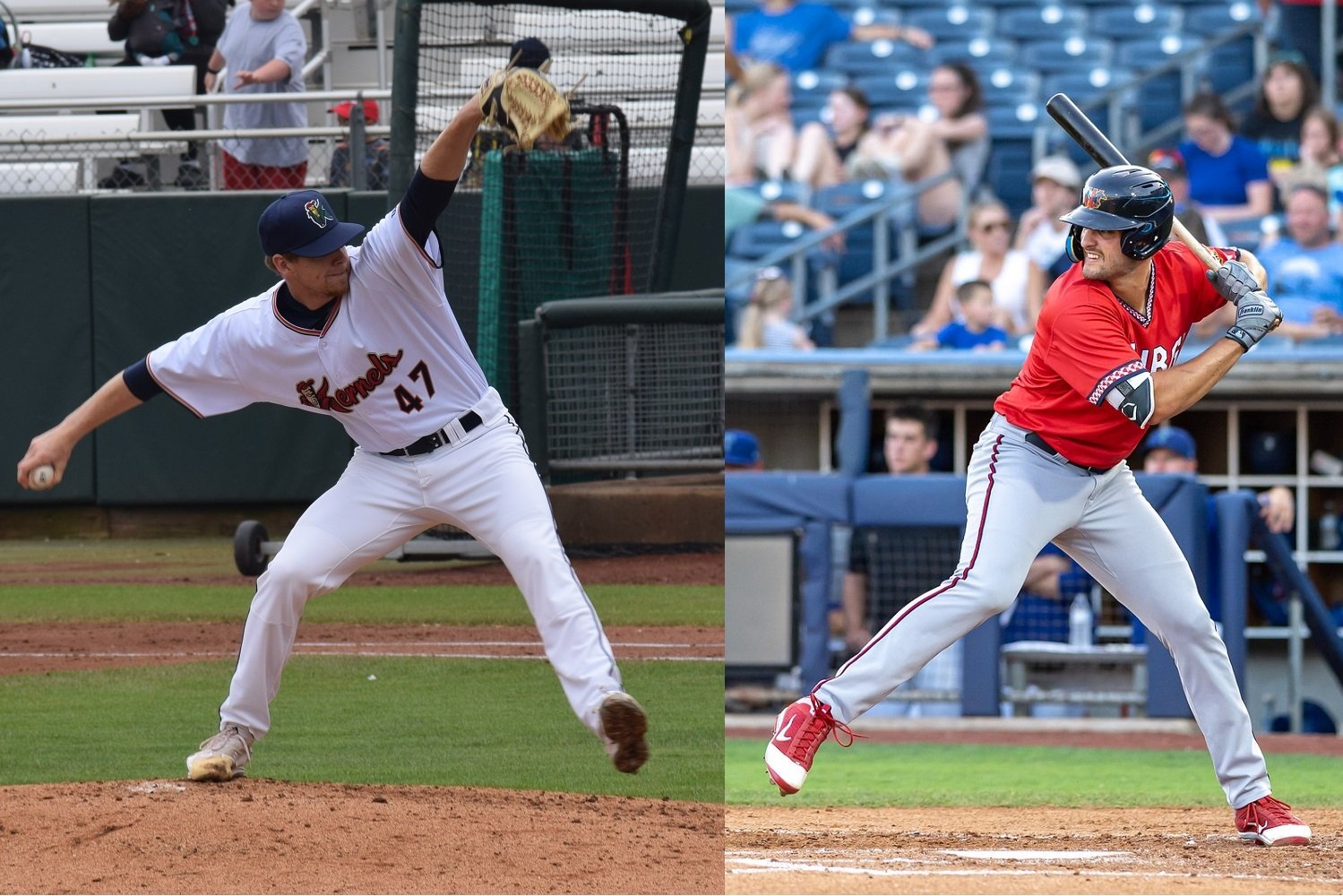 With short-season teams starting play recently, player names and teams can be somewhat overwhelming. When writing about Rookie Ball and the DSL, I can admit to having to click on a player’s name in the box score to remember their first name; you know you’re digging deep when the players don’t have a photo on MiLB.com. But those games are just as important; the Twins of the future have to start humbly, and they’ll make their way to the upper levels with hard work. TRANSACTIONS The Twins traded veteran infielder Daniel Robertson to the Phillies for Cash considerations. He has been rehabbing with the FCL Twins for the past two-plus weeks. RESULTS Previous Week in Review (6/7-6/13): Saints Sweep Red Wings Tuesday: Alex Kirilloff Does It Again Wednesday: Rucker walks it off, Varland Double-Header Split Highlight Wednesday in the Twins System Thursday: Wallner Blasts on Tough Night for Twins Farm Friday: Cedar Rapids Throws A Shutout, Wichita *is* Shutout Saturday: Kernels Clinch Division Title, Playoff Berth Sunday: Walk-off in Cedar Rapids, Saints Blister Bats MORE TWINS DAILY MINOR LEAGUE CONTENT Minnesota Twins 2014 Draft Retrospective: Swings and Misses TwinsDaily 2022 Draft Coverage, June 16 This season, MLB Fining Parent Clubs for Minor-League Brawls MONDAY’S SHORT SEASON RESULTS FCL Twins 11, FCL Orioles 9 (10 innings) Box Score Starting Pitcher: Juan Rojas (4 IP, 1 H, 0 ER, 0 BB, 2 K) Multi-Hit Games: Danny De Andrade (2-for-4, BB, R, 2 RBI), Alexander Pena (2-for-5, 2 R, RBI, 2 K), Yonardy Soto (3-for-5, 3 R, 2 RBI, 2 K), Jefferson De La Cruz (2-for-4, 2 RBI, K, SB), Ricardo Olivar (3-for-4, RBI) 2B: Alexander Pena (5), Ricardo Olivar (2) HR: Alexander Pena (2), Yonardy Soto 2 (2), Gregory Duran (1) Rehab Players: Daniel Robertson (0-for-2, K) Top Prospects: Danny De Andrade (2-for-4, BB, R, 2 RBI), Fredy Michel (0-for-6, R, 4 K). Summary: What a wild and wacky game! Going into the 9th inning, the Twins held a 4-0 lead. They added another run in the top of the 9th to go ahead 5-0, but the Orioles scored five runs in the bottom of the ninth to force extra innings. The Twins scored six runs in the top of the inning to take a big league. They gave up four runs in the bottom of the 10th inning and barely held on. DSL Twins 6, DSL Guardians Blue 14 Box Score Starting Pitcher: Jose Betancourt (0.2 IP, 0 H, 0 ER, 2 BB, 1 K) Multi-Hit Games: Isaac Pena (2-for-3, 2 BB. 2 R, 2 SB), Jose Rodriguez (3-for-4) XBH: None WEEK IN REVIEW Triple-A: St. Paul Saints Week: 3-3, playing in Columbus Season: 33-32 overall The Saints treaded water this week, but sometimes that’s all a team needs to do. The Columbus Clippers, the AAA affiliate for the Cleveland Guardians, are no pushovers either; they ended the week with a 38-28 season record. These were close affairs; just one run was the difference in five of the six games, including Sunday’s 11-10 thrilling win by the Saints. Manager Toby Gardenhire remained on paternity leave, but the team still gifted him a fine Father’s Day present with his 100th win as St. Paul’s skipper. Alex Kirilloff earned his promotion to the Twins on Friday after collecting four more hits this week. Kyle Garlick began a rehab assignment on Wednesday. The outfielder is hitting .300 over 21 plate appearances but has also struck out eight times. Josh Winder continued his rehab assignment, allowing one run over 3 innings with a strikeout. Curtis Terry hit a blistering .368/.429/.842 with a pair of homers and just one strikeout the entire week. Michael Helman slashed .400/.455/.600 and captured the most hits on the week for the Saints. Spencer Steer returned to orbit as he slashed .179/.200/.321 with 10 strikeouts. Hopefully, this is just a blip on his otherwise outstanding season. Recent signee, Aaron Sanchez, struck out six over 7 1/3 IP but also allowed five earned runs, including a pair of homers. Jordan Balazovic worked in relief this week, allowing two runs over 2 2/3 innings. What’s Next? The Saints are off to Buffalo to play in what was technically a major league ballpark for a year and some change. Pitching Probables (RHP Ronny Henriquez, RHP Josh Winder, RHP Jordan Balazovic, TBD, TBD, TBD) Double-A: Wichita Wind Surge Week: 1-6, @ Tulsa Season: 33-29 overall Things could have gone better for Wichita. The team has cooled off tremendously, and the result was an ugly 1-6 week, although five of those losses were by one run, so things may not be as bad as they seem. Matt Wallner obliterated the ball and walked away with a hilarious .313/.621/.750 slash line. Even more impressive, he walked more than he struck out (11 to eight). Edouard Julien did well also, hitting .280/.400/.560 with a pair of homers. Casey Legumina carried the torch on the mound, allowing only three earned runs over 10 2/3 innings with eight strikeouts. Daniel Gossett impressed in his first start with Wichita, tossing five shutout innings. Sawyer Gipson-Long finally earned a promotion to AA but was touched up for five earned runs over 4 2/3 innings. Let’s hope he can brush that off and find his footing with the Wind Surge. Andrew Cabezas threw four shutout innings in relief this week, striking out six while allowing just one hit. What’s Next? Wichita returns home to host the San Antonio Missions. Hopefully, some home cooking will help get them back on track. Pitching Probables (RHP Sawyer Gipson-Long, LHP Kody Funderburk, RHP Blayne Enlow, RHP Casey Legumina, RHP Louie Varland, TBD) High-A: Cedar Rapids Kernels Week: 4-2, hosting Dayton Season: 41-22 overall The Kernels were one of the teams that clinched a playoff spot this week. The team’s win on Saturday secured the first-half division crown, and the team can rest easy knowing that they will have a spot reserved for them in the post-season. In the meantime, there are ballgames to win. Yunior Severino smoked the ball all week, picking up seven hits, including two homers with eight RBIs. Alerick Soularie continued his season turn-around, hitting .368/.478/.632 with a pair of stolen bases. Cody Laweryson spearheaded the pitching effort with 5 2/3 scoreless innings and an incredible 11 strikeouts. Cade Povich wasn’t far behind, as he punched out 11 over 5 innings in his lone start of the week. Aaron Rozek walked away from this week unscathed, as he pitched 5 2/3 scoreless innings as part of Cedar Rapids’ shutout on Friday. What’s Next? The Kernels will remain at home and host the West Michigan Whitecaps. Pitching Probables (RHP David Festa, LHP Brent Headrick, LHP Aaron Rozek, LHP Cade Povich, RHP Sean Mooney, RHP John Stankiewicz) Low-A: Ft. Myers Mighty Mussels Week: 4-1 Season: 39-22 overall The Mighty Mussels were the other team that clinched a playoff spot this week. Their win on Wednesday ensured that no team in their division could catch them, and their spot in the post-season is now set in stone. Rubel Cespedes burst out of nowhere and dropped nine hits in just 17 at-bats. Kala’i Rosario launched a pair of homers while slugging .857 overall for the week. Luis Baez hit a scorching .500/.579/.563 while striking out as often as he walked (three to three) Noah Miller had just two hits but also walked five times Matt Mullenbach was elite in relief, punching out eight over 5 ⅓ innings devoid of an earned run Malik Barrington followed suit as he tossed 3 shutout innings with six strikeouts. Jordan Carr allowed one earned run in his 5-inning start What’s Next? The Mighty Mussels will head out to Lakeland to take on the Flying Tigers Pitching Probables (RHP Jordan Carr, RHP Travis Adams, RHP Pierson Ohl, TBD, TBD, LHP Jaylen Nowlin) PLAYERS OF THE WEEK Hitter of the Week: OF Matt Wallner, Wichita Wind Surge Matt Wallner might be turning a corner. The hometown talent has always been a slugger—power was never a question—but this week, he showed off an incredible talent for OBP on top of his already legendary ball-crushing ability. His eight strikeouts were still a touch high, but it feels nitpicky to call out when he walked 11 times while slugging .750. His OBP for the week starts with a .6. Enough said. At 24 years old, Wallner appears to be rounding into form at the right time. The lefty battled an assortment of injuries over his first few years in the minors—a bruise here and a nick there—and they added up to sap Wallner of consistency. His power kept him afloat, despite many (including I) questioning whether he could offset the large strikeout totals he racked up. Those strikeouts may never go away, but figuring out how to walk a bunch is an excellent way to even them out. His OBP on the year sits at a massive .408, thanks partly to a (probably) surprising batting average of .270. And, in case you weren’t convinced that his game is more well-rounded than before, he’s even stolen eight bases. It’s hard to see Wallner staying at AA for much longer. Pitcher of the Week: RHP Cody Laweryson, Cedar Rapids Kernels It’s rare to see a reliever win this distinction, but when you have the kind of week Cody Laweryson had, it’s easy to hand it to him. Laweryson made two relief outings; on June 14th, he struck out six over 3 ⅓ scoreless innings, while on June 17th, he struck out five over 2 ⅓ scoreless innings. That’ll play. Laweryson is under the radar, if not entirely off the grid, but that might not be fair to his ability. The righty made noise in 2019 by dominating Rookie-Ball as a 20-year-old, culminating in a monster 15 strikeout performance on August 26th of that season. His road has been bumpier since that breakout, but he could have a nice niche as a long reliever out of the bullpen. Given the breakdown of pitching barriers, that role can be valuable to a team. For a scouting report, Eric Longenhagen described him as a “How the hell is this guy doing this?” style of pitcher, sitting 89 MPH and crushing his competition with it. We’ve seen that work for Joe Ryan; perhaps it will serve Laweryson also.
- 3 comments
-
- 3
-
-
- matt wallner
- cody laweryson
- (and 1 more)
-
Minor league divisions across the country are finishing up their first-half schedules. If you didn’t know, teams outside of AAA can win their division during the first half of the season and clinch a seed in the playoffs; a handy link to the breakdown can be found here. If you still don’t fully understand, we’ll go over that and more in the following week in review. With short-season teams starting play recently, player names and teams can be somewhat overwhelming. When writing about Rookie Ball and the DSL, I can admit to having to click on a player’s name in the box score to remember their first name; you know you’re digging deep when the players don’t have a photo on MiLB.com. But those games are just as important; the Twins of the future have to start humbly, and they’ll make their way to the upper levels with hard work. TRANSACTIONS The Twins traded veteran infielder Daniel Robertson to the Phillies for Cash considerations. He has been rehabbing with the FCL Twins for the past two-plus weeks. RESULTS Previous Week in Review (6/7-6/13): Saints Sweep Red Wings Tuesday: Alex Kirilloff Does It Again Wednesday: Rucker walks it off, Varland Double-Header Split Highlight Wednesday in the Twins System Thursday: Wallner Blasts on Tough Night for Twins Farm Friday: Cedar Rapids Throws A Shutout, Wichita *is* Shutout Saturday: Kernels Clinch Division Title, Playoff Berth Sunday: Walk-off in Cedar Rapids, Saints Blister Bats MORE TWINS DAILY MINOR LEAGUE CONTENT Minnesota Twins 2014 Draft Retrospective: Swings and Misses TwinsDaily 2022 Draft Coverage, June 16 This season, MLB Fining Parent Clubs for Minor-League Brawls MONDAY’S SHORT SEASON RESULTS FCL Twins 11, FCL Orioles 9 (10 innings) Box Score Starting Pitcher: Juan Rojas (4 IP, 1 H, 0 ER, 0 BB, 2 K) Multi-Hit Games: Danny De Andrade (2-for-4, BB, R, 2 RBI), Alexander Pena (2-for-5, 2 R, RBI, 2 K), Yonardy Soto (3-for-5, 3 R, 2 RBI, 2 K), Jefferson De La Cruz (2-for-4, 2 RBI, K, SB), Ricardo Olivar (3-for-4, RBI) 2B: Alexander Pena (5), Ricardo Olivar (2) HR: Alexander Pena (2), Yonardy Soto 2 (2), Gregory Duran (1) Rehab Players: Daniel Robertson (0-for-2, K) Top Prospects: Danny De Andrade (2-for-4, BB, R, 2 RBI), Fredy Michel (0-for-6, R, 4 K). Summary: What a wild and wacky game! Going into the 9th inning, the Twins held a 4-0 lead. They added another run in the top of the 9th to go ahead 5-0, but the Orioles scored five runs in the bottom of the ninth to force extra innings. The Twins scored six runs in the top of the inning to take a big league. They gave up four runs in the bottom of the 10th inning and barely held on. DSL Twins 6, DSL Guardians Blue 14 Box Score Starting Pitcher: Jose Betancourt (0.2 IP, 0 H, 0 ER, 2 BB, 1 K) Multi-Hit Games: Isaac Pena (2-for-3, 2 BB. 2 R, 2 SB), Jose Rodriguez (3-for-4) XBH: None WEEK IN REVIEW Triple-A: St. Paul Saints Week: 3-3, playing in Columbus Season: 33-32 overall The Saints treaded water this week, but sometimes that’s all a team needs to do. The Columbus Clippers, the AAA affiliate for the Cleveland Guardians, are no pushovers either; they ended the week with a 38-28 season record. These were close affairs; just one run was the difference in five of the six games, including Sunday’s 11-10 thrilling win by the Saints. Manager Toby Gardenhire remained on paternity leave, but the team still gifted him a fine Father’s Day present with his 100th win as St. Paul’s skipper. Alex Kirilloff earned his promotion to the Twins on Friday after collecting four more hits this week. Kyle Garlick began a rehab assignment on Wednesday. The outfielder is hitting .300 over 21 plate appearances but has also struck out eight times. Josh Winder continued his rehab assignment, allowing one run over 3 innings with a strikeout. Curtis Terry hit a blistering .368/.429/.842 with a pair of homers and just one strikeout the entire week. Michael Helman slashed .400/.455/.600 and captured the most hits on the week for the Saints. Spencer Steer returned to orbit as he slashed .179/.200/.321 with 10 strikeouts. Hopefully, this is just a blip on his otherwise outstanding season. Recent signee, Aaron Sanchez, struck out six over 7 1/3 IP but also allowed five earned runs, including a pair of homers. Jordan Balazovic worked in relief this week, allowing two runs over 2 2/3 innings. What’s Next? The Saints are off to Buffalo to play in what was technically a major league ballpark for a year and some change. Pitching Probables (RHP Ronny Henriquez, RHP Josh Winder, RHP Jordan Balazovic, TBD, TBD, TBD) Double-A: Wichita Wind Surge Week: 1-6, @ Tulsa Season: 33-29 overall Things could have gone better for Wichita. The team has cooled off tremendously, and the result was an ugly 1-6 week, although five of those losses were by one run, so things may not be as bad as they seem. Matt Wallner obliterated the ball and walked away with a hilarious .313/.621/.750 slash line. Even more impressive, he walked more than he struck out (11 to eight). Edouard Julien did well also, hitting .280/.400/.560 with a pair of homers. Casey Legumina carried the torch on the mound, allowing only three earned runs over 10 2/3 innings with eight strikeouts. Daniel Gossett impressed in his first start with Wichita, tossing five shutout innings. Sawyer Gipson-Long finally earned a promotion to AA but was touched up for five earned runs over 4 2/3 innings. Let’s hope he can brush that off and find his footing with the Wind Surge. Andrew Cabezas threw four shutout innings in relief this week, striking out six while allowing just one hit. What’s Next? Wichita returns home to host the San Antonio Missions. Hopefully, some home cooking will help get them back on track. Pitching Probables (RHP Sawyer Gipson-Long, LHP Kody Funderburk, RHP Blayne Enlow, RHP Casey Legumina, RHP Louie Varland, TBD) High-A: Cedar Rapids Kernels Week: 4-2, hosting Dayton Season: 41-22 overall The Kernels were one of the teams that clinched a playoff spot this week. The team’s win on Saturday secured the first-half division crown, and the team can rest easy knowing that they will have a spot reserved for them in the post-season. In the meantime, there are ballgames to win. Yunior Severino smoked the ball all week, picking up seven hits, including two homers with eight RBIs. Alerick Soularie continued his season turn-around, hitting .368/.478/.632 with a pair of stolen bases. Cody Laweryson spearheaded the pitching effort with 5 2/3 scoreless innings and an incredible 11 strikeouts. Cade Povich wasn’t far behind, as he punched out 11 over 5 innings in his lone start of the week. Aaron Rozek walked away from this week unscathed, as he pitched 5 2/3 scoreless innings as part of Cedar Rapids’ shutout on Friday. What’s Next? The Kernels will remain at home and host the West Michigan Whitecaps. Pitching Probables (RHP David Festa, LHP Brent Headrick, LHP Aaron Rozek, LHP Cade Povich, RHP Sean Mooney, RHP John Stankiewicz) Low-A: Ft. Myers Mighty Mussels Week: 4-1 Season: 39-22 overall The Mighty Mussels were the other team that clinched a playoff spot this week. Their win on Wednesday ensured that no team in their division could catch them, and their spot in the post-season is now set in stone. Rubel Cespedes burst out of nowhere and dropped nine hits in just 17 at-bats. Kala’i Rosario launched a pair of homers while slugging .857 overall for the week. Luis Baez hit a scorching .500/.579/.563 while striking out as often as he walked (three to three) Noah Miller had just two hits but also walked five times Matt Mullenbach was elite in relief, punching out eight over 5 ⅓ innings devoid of an earned run Malik Barrington followed suit as he tossed 3 shutout innings with six strikeouts. Jordan Carr allowed one earned run in his 5-inning start What’s Next? The Mighty Mussels will head out to Lakeland to take on the Flying Tigers Pitching Probables (RHP Jordan Carr, RHP Travis Adams, RHP Pierson Ohl, TBD, TBD, LHP Jaylen Nowlin) PLAYERS OF THE WEEK Hitter of the Week: OF Matt Wallner, Wichita Wind Surge Matt Wallner might be turning a corner. The hometown talent has always been a slugger—power was never a question—but this week, he showed off an incredible talent for OBP on top of his already legendary ball-crushing ability. His eight strikeouts were still a touch high, but it feels nitpicky to call out when he walked 11 times while slugging .750. His OBP for the week starts with a .6. Enough said. At 24 years old, Wallner appears to be rounding into form at the right time. The lefty battled an assortment of injuries over his first few years in the minors—a bruise here and a nick there—and they added up to sap Wallner of consistency. His power kept him afloat, despite many (including I) questioning whether he could offset the large strikeout totals he racked up. Those strikeouts may never go away, but figuring out how to walk a bunch is an excellent way to even them out. His OBP on the year sits at a massive .408, thanks partly to a (probably) surprising batting average of .270. And, in case you weren’t convinced that his game is more well-rounded than before, he’s even stolen eight bases. It’s hard to see Wallner staying at AA for much longer. Pitcher of the Week: RHP Cody Laweryson, Cedar Rapids Kernels It’s rare to see a reliever win this distinction, but when you have the kind of week Cody Laweryson had, it’s easy to hand it to him. Laweryson made two relief outings; on June 14th, he struck out six over 3 ⅓ scoreless innings, while on June 17th, he struck out five over 2 ⅓ scoreless innings. That’ll play. Laweryson is under the radar, if not entirely off the grid, but that might not be fair to his ability. The righty made noise in 2019 by dominating Rookie-Ball as a 20-year-old, culminating in a monster 15 strikeout performance on August 26th of that season. His road has been bumpier since that breakout, but he could have a nice niche as a long reliever out of the bullpen. Given the breakdown of pitching barriers, that role can be valuable to a team. For a scouting report, Eric Longenhagen described him as a “How the hell is this guy doing this?” style of pitcher, sitting 89 MPH and crushing his competition with it. We’ve seen that work for Joe Ryan; perhaps it will serve Laweryson also. View full article
-
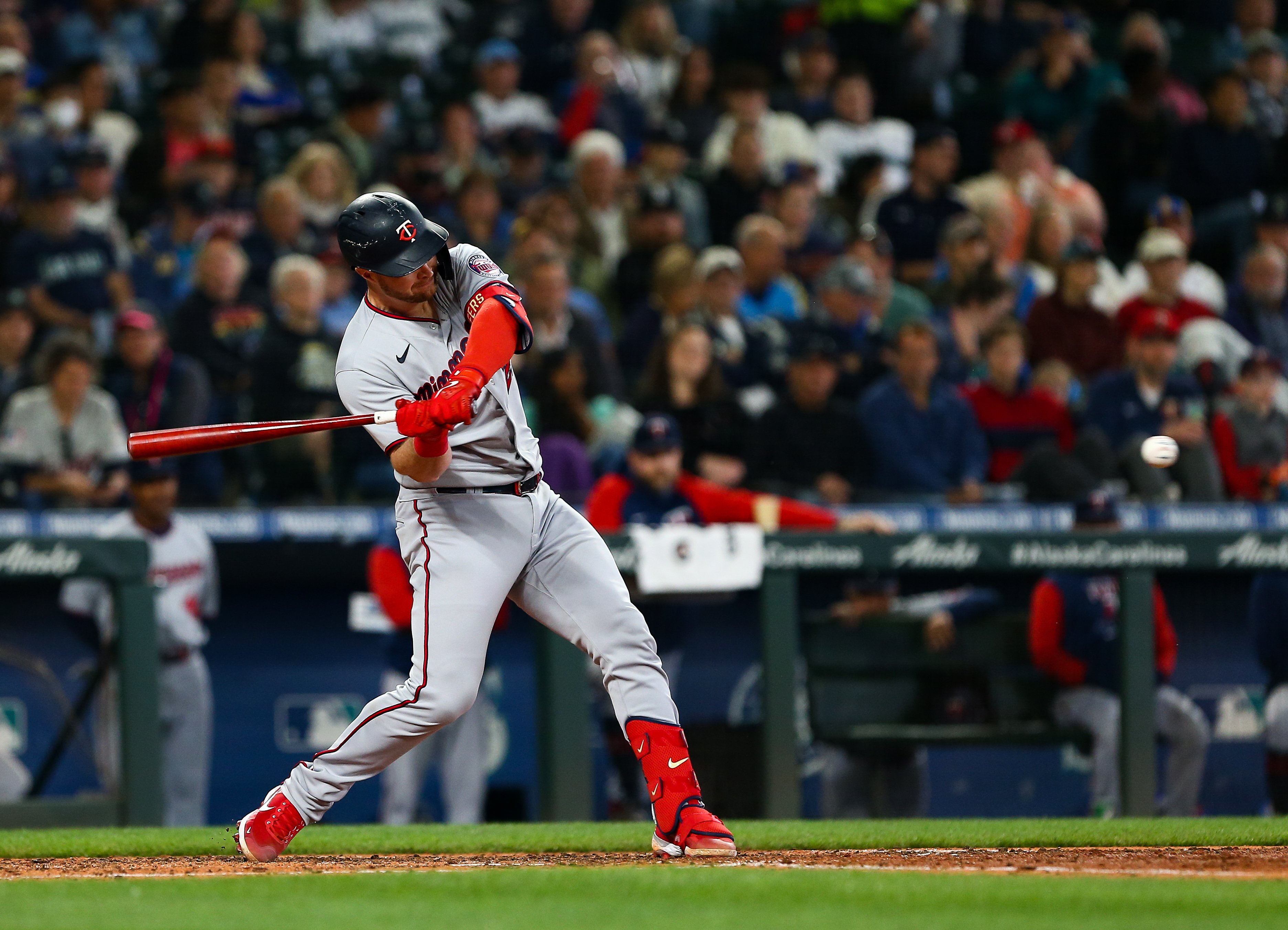 My colleague Nick Nelson recently wrote an article about Ryan Jeffers, outwardly wondering if the team mistakenly bestowed principal catching duties onto the former UNC Wilmington standout. While he never explicitly says it, and I would never want to speak for someone else, I walked away from the piece believing that he thinks that the Twins should not assume Jeffers to be a consistent, everyday starter for them unless he undergoes a serious evolution. Without a doubt, Jeffers’ initial hitting numbers are dreadful, mimicking Tim Laudnerian batting prowess instead of the league-average flirtation we expected from him. His career .202/.280/.378 slash line is dragged down by an even poorer .181/.271/.312 2022 season so far. The Manfred Mushball can’t explain that away. Jeffers’s initial 2020 offensive promise seems to be a mirage; he has failed to sniff even league-average production since that year. However, there are under-the-hood stats that tell a different story. Dan Syzmborski’s recent Fangraphs article detailing under and over-performers based on his secret “z” stats caught my eye. Scrolling down a little to his “zSLUG Underachievers” list will procure a list of names, including our subject for today: Ryan Jeffers. ZIPS believes that Jeffers should be slugging .441—a number in the ballpark of Matt Olson's (.440) and Freddie Freeman's (.441) production levels, not the Adam Frazier (.309) plateau he currently sits at. Syzmborski’s projection system is his creation, so how it reaches that conclusion is hidden from us regulars, but it’s a good sign nonetheless. There are other numbers as well. His Baseball Savant page doesn’t reflect un-impeachable elite performance like one sees from an Aaron Judge or a Mike Trout, but it does tell a tale of an unlucky slugger. Jeffers’ xwOBA is .339—right above league average for all hitters. Digging deeper, his barrel rate of 9.0%—a stat that indicates specific instances of a player hitting the crap out of the ball—puts him in elite territory; 26th amongst all qualified batters in MLB. Barrels aren’t an end-all stat—a player like Luis Arraez can be great because of other characteristics—but it is indicative of extra-base damage, and Jeffers’ current production does not reflect how much impact his bat has. There are other, more subtle numbers as well. Jeffers has tightened his command of the strike zone; his O-Swing % is down to 28.5, while his overall swinging strike rate has plummeted to 9.6%. Believe it or not, he swings at pitches outside the zone at the same rate as Luis Arraez (28.5%), and he whiffs at about the same rate as Paul Goldschmidt (9.5%). His total contact has also vastly improved (72.0% career vs. 78.5% in 2022, around Francisco Lindor territory (78.7%)). Those discipline numbers aren’t elite by any means, but they are average if not above-average in some cases, and average production would be a tremendous improvement for Jeffers. Jeffers’ walk rate reflects these changes (10.9%, up from 8.6%), while his strikeouts have dipped slightly, but probably less than one would expect (30.1%, down from 34.1%). I believe those punchouts will drop even further, given his improved plate control. Ryan Jeffers hits the ball hard at an elite level, has improved his plate discipline numbers across the board, and has worse surface-level hitting stats than before. That should change soon. The often-maligned 25-year-old has a good process in place; he has not found the final crucial step in unlocking his potential: luck. Once fortune turns in his direction, Jeffers will find himself as one of the better catchers in the game.
 -
Ryan Jeffers has become something of a punching bag amongst Twins fans. In a lineup full of boppers, his numbers stand out like a child’s doodle placed next to the Mona Lisa. His lack of production led Aaron Gleeman to write about his “frustrating” offensive development, and some have speculated whether a demotion to AAA would aid Jeffers in finding his groove again. I think this consternation is misplaced, and some under-the-hood stats reveal a hitter performing better than his results indicate. My colleague Nick Nelson recently wrote an article about Ryan Jeffers, outwardly wondering if the team mistakenly bestowed principal catching duties onto the former UNC Wilmington standout. While he never explicitly says it, and I would never want to speak for someone else, I walked away from the piece believing that he thinks that the Twins should not assume Jeffers to be a consistent, everyday starter for them unless he undergoes a serious evolution. Without a doubt, Jeffers’ initial hitting numbers are dreadful, mimicking Tim Laudnerian batting prowess instead of the league-average flirtation we expected from him. His career .202/.280/.378 slash line is dragged down by an even poorer .181/.271/.312 2022 season so far. The Manfred Mushball can’t explain that away. Jeffers’s initial 2020 offensive promise seems to be a mirage; he has failed to sniff even league-average production since that year. However, there are under-the-hood stats that tell a different story. Dan Syzmborski’s recent Fangraphs article detailing under and over-performers based on his secret “z” stats caught my eye. Scrolling down a little to his “zSLUG Underachievers” list will procure a list of names, including our subject for today: Ryan Jeffers. ZIPS believes that Jeffers should be slugging .441—a number in the ballpark of Matt Olson's (.440) and Freddie Freeman's (.441) production levels, not the Adam Frazier (.309) plateau he currently sits at. Syzmborski’s projection system is his creation, so how it reaches that conclusion is hidden from us regulars, but it’s a good sign nonetheless. There are other numbers as well. His Baseball Savant page doesn’t reflect un-impeachable elite performance like one sees from an Aaron Judge or a Mike Trout, but it does tell a tale of an unlucky slugger. Jeffers’ xwOBA is .339—right above league average for all hitters. Digging deeper, his barrel rate of 9.0%—a stat that indicates specific instances of a player hitting the crap out of the ball—puts him in elite territory; 26th amongst all qualified batters in MLB. Barrels aren’t an end-all stat—a player like Luis Arraez can be great because of other characteristics—but it is indicative of extra-base damage, and Jeffers’ current production does not reflect how much impact his bat has. There are other, more subtle numbers as well. Jeffers has tightened his command of the strike zone; his O-Swing % is down to 28.5, while his overall swinging strike rate has plummeted to 9.6%. Believe it or not, he swings at pitches outside the zone at the same rate as Luis Arraez (28.5%), and he whiffs at about the same rate as Paul Goldschmidt (9.5%). His total contact has also vastly improved (72.0% career vs. 78.5% in 2022, around Francisco Lindor territory (78.7%)). Those discipline numbers aren’t elite by any means, but they are average if not above-average in some cases, and average production would be a tremendous improvement for Jeffers. Jeffers’ walk rate reflects these changes (10.9%, up from 8.6%), while his strikeouts have dipped slightly, but probably less than one would expect (30.1%, down from 34.1%). I believe those punchouts will drop even further, given his improved plate control. Ryan Jeffers hits the ball hard at an elite level, has improved his plate discipline numbers across the board, and has worse surface-level hitting stats than before. That should change soon. The often-maligned 25-year-old has a good process in place; he has not found the final crucial step in unlocking his potential: luck. Once fortune turns in his direction, Jeffers will find himself as one of the better catchers in the game. View full article
-
The Kernels pitched a shutout on Friday, while the Wind Surge were shutout, and the Saints blasted four homers. Read all about that and more in this edition of the minor league report. TRANSACTIONS C Kyle Schmidt transferred to AA Wichita C Frank Nigro transferred to A+ Cedar Rapids OF Alex Kirilloff recalled by Twins INF Elliot Soto outrighted to AAA St. Paul C David Bañuelos placed on 7-day IL (Dislocated right finger) C Roy Morales reinstated from 7-day IL (Back spasms) RHP Daniel Gossett transferred to AA Wichita Saints Sentinel St. Paul 6, Columbus 5 Box Score Ariel Jurado: 3 IP, 4 H, 2 ER, BB, 4 K HR: John Andreoli (4), Mark Contreras (7), Curtis Terry (6), Michael Helman (2) Multi-hit games: Michael Helman (3-for-5, HR, 2 R, 2 RBI), Curtis Terry (2-for-4, HR, R, RBI) St. Paul won a stressful game on Friday. The Saints took a democratic approach to hitting; every batter reached base at least once, and their four homers all came from a different source. John Andreoli hit the first bomb, while Mark Contreras followed suit with a two-run shot. Both home runs came in the 3rd inning. The Clippers did respond, though. The double Wills of Brenson and Brennan (sounds like a law firm) brought home enough runs to tie the game at three; Curtis Terry broke that tie with a solo home run in the 4th. The game entered a pure Cold War stalemate for a handful of innings before Michael Helman Tore Down That Wall with a crucial two-run homer in the top of the 9th inning. Columbus punched through Dereck Rodriguez’s Star Wars defense in the bottom of the inning, but the Saints held strong and walked away victorious. Rodriguez netted the final 15 outs in the game, allowing just two runs in support of Jurado and Hunter Wood. Wind Surge Wisdom Wichita 0, Tulsa 5 Box Score Blayne Enlow: 3 2/3 IP, H, 2 ER, 2 BB, 4 K HR: None Multi-hit games: None Wichita was shut out on Friday. The famous Dodgers minor league system quieted the Wind Surge bats, striking out 15 with an assortment of arms that would make any team jealous. Tulsa pitchers have given the Wind Surge fits since their inception, and this series has been no different. Bobby Miller did it the other day; Clayton Beeter did it on Friday. Austin Martin was not in the lineup, and perhaps Wichita lost important vibes because of it. Blayne Enlow continued his attempt at finding his footing again after losing crucial development time to injury. He was admirable, working 3 2/3 innings with two earned runs and four strikeouts for good measure. It’s clear that his command isn’t crisp like he would hope, but this is one step in a marathon for him. Alex Scherff was the only pitcher to walk away with an unharmed ERA on Friday, as he allowed no runs in his one inning of work. Matt Wallner hit lead-off, which reminded this author of the time Logan Morrison did the same; what a time that was, huh? Kernels Nuggets Cedar Rapids 3, Dayton 0 Box Score Aaron Rozek: 5 2/3 IP, 3 H, 0 ER, 2 BB, 4 K HR: None Multi-hit games: None The Kernels won a shutout on Friday. Aaron Rozek was the man of the hour. The lefty held the Dragons to five baserunners over 5 2/3 IP with four strikeouts and, of course, no earned runs. The Dragons are no push-over, as they came into the game with a 38-21 record on the year. Cody Laweryson and Bradley Hanner slammed the door shut, netting the final 10 outs with a single hit allowed and six strikeouts. All three pitchers deserved a nice night out to celebrate their success on Friday; shutouts don't happen every day, after all. The Kernels’ bats did their job as well. They only needed one run, but they plated three off of a fielding error, a ground-rule double, and a wild pitch. In a form so ironic that Alanis Morissette would appreciate it, neither team allowed an earned run on Friday. This author cannot recall the last time they saw that occur in a baseball game. Despite the lack of runs, Cedar Rapids hitters took seven walks on top of their six hits; luck was their enemy in this game. Mussel Matters Fort Myers 8, Bradenton 3 Box Score Pierson Ohl: 5 IP, 4 H, 3 ER, BB, 5 K HR: Rubel Cespedes (1), Carlos Aguiar (2) Multi-hit games: Mikey Perez (2-for-4, 2B, 2 R, RBI), Kala’i Rosario (3-for-4, R), Luis Baez (2-for-4, RBI) Fort Myers cruised on Friday. The Mighty Mussels jumped out early in the 2nd inning thanks to the “ez” brothers—Mikey Perez doubled home a run, and Luis Baez singled home another. Those two represented an effective back-end of the lineup for Fort Myers on Friday; three of the bottom four hitters netted multiple hits. Bradenton ambushed Pierson Ohl in the 3rd, plating three runs off some piranha-like magic, including an RBI groundout and a two-run single. The 3rd inning proved to be the only one Ohl was not dominant in, and he settled in outside of that inning to not allow a run the rest of the way. While Ohl did his job, Malik Barrington and Juan Mendez ensured that the Marauders had no shot to return in the game. The two relievers combined for four effective innings with one hit allowed and an impressive eight strikeouts. Fort Myers pitchers struck out 13 hitters in total. The Mighty Mussels embodied the Earl Weaver approach to baseball and blasted a pair of three-run homers to bury Bradenton. Rubel Cespedes hit the first one, while Carlos Aguiar blasted one in the 8th inning for good measure. Complex Chronicles FCL Twins 2, FCL Red Sox 4 Box Score Brayan Medina: 1 IP, 0 H, 0 ER, 0 BB, 0 K HR: None Multi-hit games: Alexander Pena (2-for-4, 2 RBI) The FCL Twins took a loss six days in the making. The FCL Twins and FCL Red Sox were supposed to play on June 11th, but rain washed away any hope of playing that game beyond the 1st inning. Rehabbing starter and forgotten piece from the Lance Lynn trade, Luis Rijo, picked up where Bryana Medina left off, tossing two scoreless innings with a pair of strikeouts. Former big-leaguer Daniel Robertson was also on a rehab assignment; he picked up a pair of walks. Alexander Pena provided all the runs for the FCL Twins, with his 1st inning single bringing home two baserunners. The two teams were supposed to play a second game, but it was canceled due to COVID. Dominican Dailies DSL Twins 2, DSL Giants Black 6 Box Score Oscar Paredes: ⅔ IP, 3 H, 4 ER, 3 BB, K HR: Jose Rodriguez (2) Multi-hit games: None Jose Rodriguez provided all the offense for the DSL Twins with a 4th inning solo homer and an RBI groundout in the 6th. Cristian Jimenez struck out five over three innings of work. TWINS DAILY PLAYERS OF THE DAY Twins Daily Minor League Pitcher of the Day – Aaron Rozek, Cedar Rapids Kernels Twins Daily Minor League Hitter of the Day – Michael Helman, St. Paul Saints PROSPECT SUMMARY Here’s a look at how the Twins Daily Top 20 Twins Prospects performed: #3 - Jose Miranda (Minnesota) - In Progress. #7 - Spencer Steer (St. Paul) - 1-5, K #9 - Noah Miller (Ft. Myers) - 0-3, R, 2 BB #14 - Blayne Enlow (Wichita) - 3 ⅔ IP, H, 2 ER, 2 BB, 4 K #15 - Matt Wallner (Wichita) - 1-2, BB, K #16 - Edouard Julien (Wichita) - 1-3, BB, 2 K #18 - Christian Encarnacion-Strand (Cedar Rapids) - 1-2, 2 BB, K SATURDAY’S PROBABLE STARTERS St. Paul @ Columbus (4:05 PM) - RHP Jake Faria Wichita @ Tulsa (7:05 PM) - RHP Sawyer Gipson-Long Dayton @ Cedar Rapids (6:35 PM) - LHP Cade Povich Bradenton @ Fort Myers (6:00 PM) - RHP Marco Raya View full article
- 5 replies
-
- 1
-
-
- pierson ohl
- aaron rozek
- (and 3 more)