



Matt Braun
-
Posts
1,393 -
Joined
-
Last visited
-
Days Won
1
Content Type
Profiles
News
Minnesota Twins Videos
2026 Minnesota Twins Top Prospects Ranking
2022 Minnesota Twins Draft Picks
Minnesota Twins Free Agent & Trade Rumors, Notes, & Tidbits
Guides & Resources
2023 Minnesota Twins Draft Picks
The Minnesota Twins Players Project
2024 Minnesota Twins Draft Picks
2025 Minnesota Twins Draft Pick Tracker
2026 Minnesota Twins Draft Tracker: Picks & Bonuses
Forums
Blogs
Events
Store
Downloads
Gallery
Everything posted by Matt Braun
-
An (Over) Analysis of Royce Lewis' Hitting Numbers
Matt Braun replied to Matt Braun's topic in Twins Daily Front Page News
If I were to guess, the definition of a pitch in a certain location and it being "in the strike zone" could differ based on whether it was called a strike or not. Because the samples are so darn small, just a few calls could make it so that a pitch was thrown in a specific location of the plate, but not called a strike. Therefore, it could be reflected in the heatmap, but not necessarily his zone %. Also I grabbed most of my numbers from pitch info solutions and the heatmap could be from a different source, which mucks things up. That's the issue with trying to look at very small samples! -
It was 1920, alcohol would soon be banned, big band Jazz would become the popular music of the time, and Republican Warren G. Harding would take the office of the Presidency in March the following year. His opponent, James Cox, has melted away in the sands of time; the tragic victim of losing in a country that has no time for losers. Cox's running mate, Franklin Delano Roosevelt, could have easily been the nominee for the Democrats, but the politically wise Roosevelt sensed the shifting tides and understood that he would never win in 1920. Woodrow Wilson burned any goodwill left with the American public, and the last time a Democrat took office after another Democrat was James Buchanan in 1857. FDR still wanted to be president, but his time would have to wait. Royce Lewis is no longer on the Twins big-league roster. The top prospect slashed .308/.325/.564 with the ballclub, a total impressive for most hitters in the game, much less one who just recently played his first professional baseball game in two-and-a-half years. But the Twins, whether so enamored by Gio Urshela that they couldn’t possibly DFA him, or doggedly set on having Lewis play shortstop no matter the cost, optioned him to AAA. While Lewis is now literally just 15 minutes away, let's dive far too deep into his offensive numbers in the majors. Plate Discipline: Looking first at his O-Swing%, Lewis swung at 33.3% of pitches outside the strike zone, placing him 34th highest amongst qualified hitters in MLB, sandwiched between two Austins; Hays and Riley. There’s nothing inherently damning about that stat—O-Swing rate is more descriptive of how the meat is made rather than its quality; that he’s between a great hitter in Riley and a forgettable one in Hays makes that point by itself. Dave Cherman’s work allows us to understand that O-Swing rate is correlated with walks, meaning that Lewis did not show much of an affinity for taking a free base, which we knew. The following important stat is O-Contact %—how much contact did Lewis make with pitches outside the strike zone? He put up a 70.0% mark, an elite total that would tie him with teammate Gio Urshela and Ozzie Albies for 24th in baseball. If you can believe it, making contact with pitches outside the zone is a great way to lower your strikeout rate (as pointed out by general baseball logic and Cherman’s work from above), and Lewis rocked this area. His otherworldly 12% strikeout rate is probably lower than it will be when his numbers stabilize, but he should still settle in with a punchout rate well below average (in a good way). Finally, we’ll observe Z-Contact %. Zone contact rate, again using Cherman’s work to help, is correlated with strikeouts—a swing and a miss inside the zone means as much for the count as a swing and a miss outside of it. Lewis’s 88.2 % mark is well above average, sitting 54th among 172 hitters, right above José Abreu. Again, this number is hardly world-altering, but it reflects a hitter capable of putting the ball in play at the major league level. What is incredibly odd is that Lewis saw 56.8 % of pitches inside the strike zone, a total that would top the leaderboards if he qualified for them. MLB pitchers, rather than berate him with junk, thought the best course of action would be to hurl him enough strikes to make Jimmy Hoffa proud. That level of zone-filling will certainly change whenever Lewis re-joins the team. Batted Ball Nuggets Lewis popped an xWOBA of .347, good enough to tie him with known elite bats Gavin Lux and Andrew Knizer; Austin Hays isn’t far behind. Perhaps most impressive was his smoked “officer, I didn’t mean to kill him” 114 MPH line-out that could have cartoonishly blasted José Ramírez through brick walls if we didn’t live in such a dull reality. Instead, it was just an out. So it goes. Not Bryce Harper, Kyle Schwarber, or another big-meaty man, Pete Alonso, have hit a ball harder this year. The baseball gods gave Royce Lewis 139 pitches to sculpt an impressive resume from, and he did a solid B+ job, hinting at a tool collection full of noisy, consistent contact. Happenstance chose otherwise this time, but Lewis is guaranteed another shot at staying in the majors whenever the universe next carelessly chooses to injure an unfortunate starter. Hopefully, for that player’s sake, their nickname isn’t Wally Pipp. View full article
-
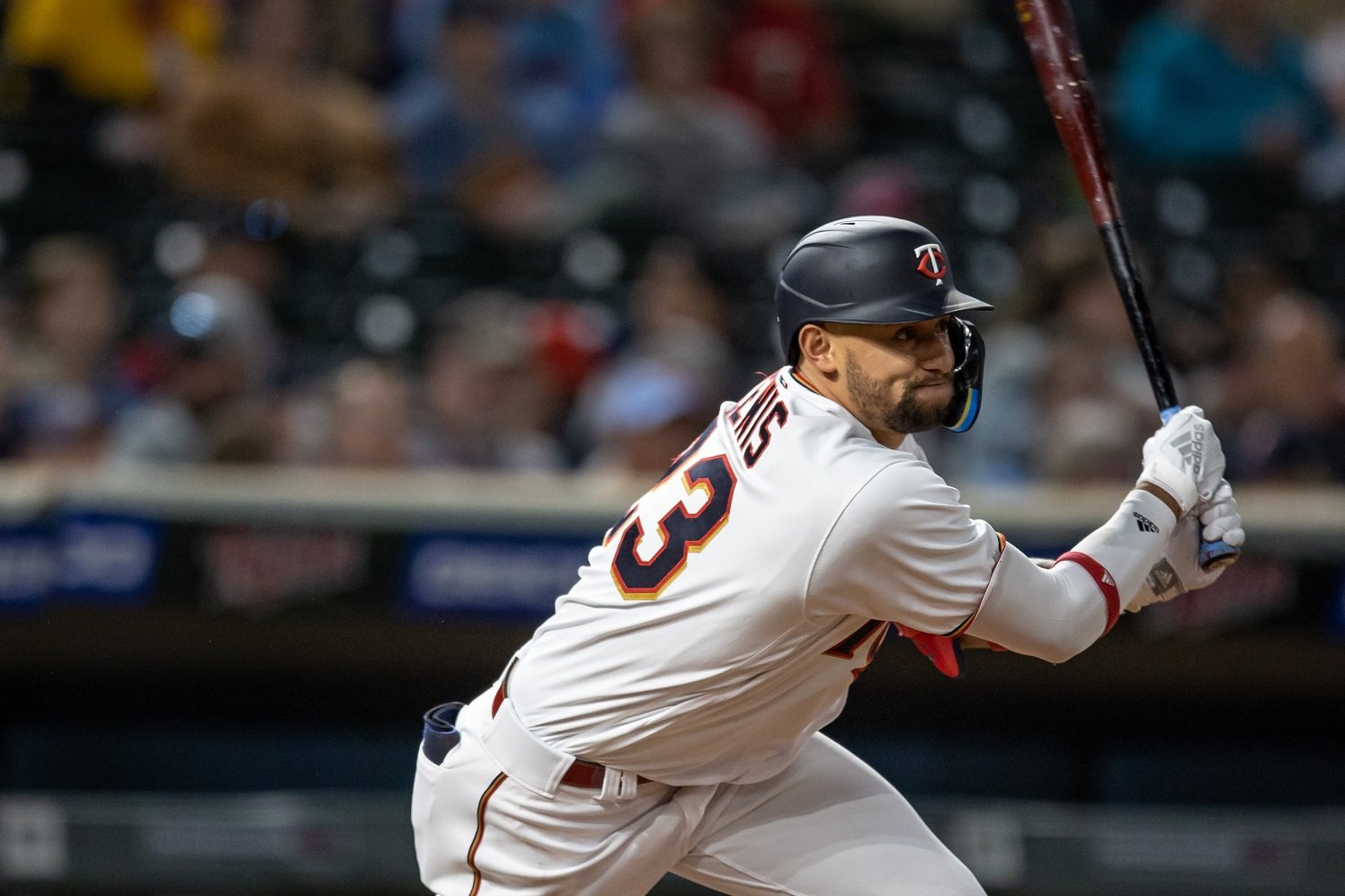 Royce Lewis is no longer on the Twins big-league roster. The top prospect slashed .308/.325/.564 with the ballclub, a total impressive for most hitters in the game, much less one who just recently played his first professional baseball game in two-and-a-half years. But the Twins, whether so enamored by Gio Urshela that they couldn’t possibly DFA him, or doggedly set on having Lewis play shortstop no matter the cost, optioned him to AAA. While Lewis is now literally just 15 minutes away, let's dive far too deep into his offensive numbers in the majors. Plate Discipline: Looking first at his O-Swing%, Lewis swung at 33.3% of pitches outside the strike zone, placing him 34th highest amongst qualified hitters in MLB, sandwiched between two Austins; Hays and Riley. There’s nothing inherently damning about that stat—O-Swing rate is more descriptive of how the meat is made rather than its quality; that he’s between a great hitter in Riley and a forgettable one in Hays makes that point by itself. Dave Cherman’s work allows us to understand that O-Swing rate is correlated with walks, meaning that Lewis did not show much of an affinity for taking a free base, which we knew. The following important stat is O-Contact %—how much contact did Lewis make with pitches outside the strike zone? He put up a 70.0% mark, an elite total that would tie him with teammate Gio Urshela and Ozzie Albies for 24th in baseball. If you can believe it, making contact with pitches outside the zone is a great way to lower your strikeout rate (as pointed out by general baseball logic and Cherman’s work from above), and Lewis rocked this area. His otherworldly 12% strikeout rate is probably lower than it will be when his numbers stabilize, but he should still settle in with a punchout rate well below average (in a good way). Finally, we’ll observe Z-Contact %. Zone contact rate, again using Cherman’s work to help, is correlated with strikeouts—a swing and a miss inside the zone means as much for the count as a swing and a miss outside of it. Lewis’s 88.2 % mark is well above average, sitting 54th among 172 hitters, right above José Abreu. Again, this number is hardly world-altering, but it reflects a hitter capable of putting the ball in play at the major league level. What is incredibly odd is that Lewis saw 56.8 % of pitches inside the strike zone, a total that would top the leaderboards if he qualified for them. MLB pitchers, rather than berate him with junk, thought the best course of action would be to hurl him enough strikes to make Jimmy Hoffa proud. That level of zone-filling will certainly change whenever Lewis re-joins the team. Batted Ball Nuggets Lewis popped an xWOBA of .347, good enough to tie him with known elite bats Gavin Lux and Andrew Knizer; Austin Hays isn’t far behind. Perhaps most impressive was his smoked “officer, I didn’t mean to kill him” 114 MPH line-out that could have cartoonishly blasted José Ramírez through brick walls if we didn’t live in such a dull reality. Instead, it was just an out. So it goes. Not Bryce Harper, Kyle Schwarber, or another big-meaty man, Pete Alonso, have hit a ball harder this year. The baseball gods gave Royce Lewis 139 pitches to sculpt an impressive resume from, and he did a solid B+ job, hinting at a tool collection full of noisy, consistent contact. Happenstance chose otherwise this time, but Lewis is guaranteed another shot at staying in the majors whenever the universe next carelessly chooses to injure an unfortunate starter. Hopefully, for that player’s sake, their nickname isn’t Wally Pipp.
 -
Emmanuel Rodriguez reminds me of a certain Sublime song; "I take two walks in the morning, I take two walks at night."
-
Bailey Ober was supposed to make his first rehab start, but rain stopped him from ever taking the mound on Saturday. However, the three teams that did play all won their games. Read all about that and more in this edition of the Minor League Report. TRANSACTIONS RHP Bailey Ober assigned to AAA St. Paul on Major League Rehab. OF Alex Kirilloff optioned to AAA St. Paul. LHP Devin Smeltzer contract selected by Minnesota Twins. IF Miguel Sano placed on 60-Day IL. RHP Blayne Enlow added to AA Wichita Saints Sentinel The Saints were rained out on Saturday. They will play a double-header against Columbus tomorrow with Bailey Ober taking the mound in game one. Wind Surge Wisdom Wichita 7, Arkansas 6 Box Score Blayne Enlow: 3 2/3 IP, 5 H, 2 ER, 0 BB, 6 K HR: Spencer Steer (6), Chris Williams (1) Multi-hit games: Austin Martin (2-for-5, R, RBI), Spencer Steer (3-for-5, HR, R, 3 RBI), Andrew Bechtold (2-for-4, 2B, R, BB, 2 K) The Wind Surge kept rolling on Saturday. Blayne Enlow made his Wind Surge debut and his first non-rehab assignment start since undergoing Tommy John surgery. He’s back. The start wasn’t the best, but six strikeouts is nothing to sneeze at. It’s just great to see him healthy and back on a pitching mound this summer. While the game ended up close, Wichita’s offense took off quickly in this game, scoring pairs of runs in the first three innings. Spencer Steer was the main culprit, hitting a two-run homer in the first to go with an RBI infield hit in the second. That may be the biggest difference feet-wise between RBI hits in baseball. Arkansas would steal a run in the bottom of the 2nd inning, but Chris Williams belted a hearty laugh, and blasted a two-run homer to right-center field. The Naturals came scratching back, though. Chris Vallimont had a tough outing in relief, allowing two earned runs and walking four batters in 1 2/3 innings of work. Defense didn’t help either, as both Andrew Bechtold and Austin Martin made errors that allowed un-earned runs to score. That Martin error was especially deadly, as Arkansas rode their extra out to three runs and a tied game. In dramatic fashion, Martin then made good and gave Wichita the lead in the 8th with an RBI single. The Naturals could not recover from that deficit. Kernels Nuggets Cedar Rapids 7, Peoria 1 Box Score Sawyer Gipson-Long: 5 IP, 2 H, 0 ER, 0 BB, 7 K HR: Anthony Prato (5) Multi-hit games: Aaron Sabato (2-for-4, 2B, R), Alerick Soularie (2-for-4, 3B, 2 R, RBI), Will Holland (2-for-3, R, RBI) The Kernels won on Saturday. Water is wet. These were the two sentences used last time, and they are still appropriate. Sawyer Gipson-Long Did the Darn Thing and completely silenced the Chiefs’ bats. It took the righty just 62 pitches to run through 15 outs with seven of those being strikeouts. Gipson-Long has been a surprising revelation since joining the Twins organization, and Saturday was another day in a line of impressive starts from him. Credit news to be given to Derek Molina, Tyler Palm, and Denny Bentley, as they combined for four clutch innings of work and just a single earned run allowed. Although the game ended up handily won by Cedar Rapids, the game flow was not always so simple. The score was 2-1 after eight innings with an Alerick Soularie little-league homer (triple with an error allowing him to score), and a Jair Camargo RBI single representing their only offense of the game. But the Kernels broke it open in the 9th inning, plating five runs off a few base knocks, and an Anthony Prato three-run bomb. Peoria had no response in their half of the inning. Mussel Matters Fort Myers 10, Palm Beach 4 Box Score Steve Hajjar: 4 IP, 1 H, 1 ER, 5 BB, 5 K HR: Mikey Perez (3), Dillon Tatum (2) Multi-hit games: Emmanuel Rodriguez (3-for-4, 2B, 3 R, RBI, BB), Mikey Perez (3-for-4, 2B, HR, R, 4 RBI, BB) The Mighty Mussels won handily on Saturday. Is it a good thing to have four players reach base three times in one game? Asking for a friend. Fort Myers dominated with an equal attack amongst their offense—no one batter should own the means of run production after all. Noah Miller and Emmanuel Rodriguez continued to be on-base machines, which isn’t surprising. Mikey Perez was the big story though, as he doubled, homered, and reached base four times in the game. Eight hitters reached base at least once. Steve Hajjar took the mound, and while he allowed just one run, command eluded him. Hajjar walked five batters while throwing just 46 of his 80 pitches for strikes. Although, it appears he was “effectively wild” given that the Cardinals could only knock one hit off of him. Walks proved to be the name of the game overall. The Mighty Mussels walked more than they struck out (nine to eight) while the Cardinals weren’t far behind (seven to 10). One could refer to this game as “leisurely.” TWINS DAILY PLAYERS OF THE DAY Twins Daily Minor League Pitcher of the Day – Sawyer Gipson-Long Twins Daily Minor League Hitter of the Day – Spencer Steer PROSPECT SUMMARY Here’s a look at how the Twins Daily Top 20 Twins Prospects performed: #1 – Austin Martin (Wichita) - 2-for-5, R, RBI #2 – Royce Lewis (Minnesota) - 1-for-4 #3 – Jose Miranda (Minnesota) - 0-for-5, 2 K #4 – Jordan Balazovic (St. Paul) - Did not pitch #5 – Joe Ryan (Minnesota) - Did not pitch #6 – Matt Canterino (Wichita) - Did not pitch #7 – Jhoan Duran (Minnesota) - 1 IP, 0 H, 0 ER, 0 BB, K #8 – Simeon Woods Richardson (Wichita) - Did not pitch #9 – Josh Winder (Minnesota) - Did not pitch #10 – Noah Miller (Fort Myers) - 1-for-2, 2 R, 3 BB #11 – Gilberto Celestino (Minnesota) - 1-for-4, 2 K #12 – Matt Wallner (Wichita) - 0-for-3, 2 BB, K #13 – Cole Sands (St. Paul) - Did not pitch #14 – Louie Varland (Wichita) - Did not pitch #15 – Emmanuel Rodriguez (Fort Myers) - 3-for-4, 2B, 3 R, RBI, BB, K #16 – Ronny Henriquez (St. Paul) - Did not pitch #17 – Blayne Enlow (Wichita) - 3 2/3 IP, 5 H, 3 R, 2 ER, 0 BB, 6 K #18 – Spencer Steer (Wichita) - 3-for-5, 2 R, 3 RBI, 2 HR, 2B #19 – Edouard Julien (Wichita) - 1-for-3, 2 R, 2 BB, K #20 – Steve Hajjar (Fort Myers) - 4 IP, 1 H, 1 ER, 5 BB, 5 K SATURDAY’S PROBABLE STARTERS St. Paul @ Columbus (12:05 PM) - RHP Bailey Ober St. Paul @ Columbus (Game Two) - RHP Dereck Rodriguez Wichita @ NW Arkansas (1:35 PM) - RHP Casey Legumina Cedar Rapids @ Peoria (1:35 PM) - RHP John Stankiewicz Palm Beach @ Fort Myers (12:00 PM) - RHP Marco Raya View full article
-
 TRANSACTIONS RHP Bailey Ober assigned to AAA St. Paul on Major League Rehab. OF Alex Kirilloff optioned to AAA St. Paul. LHP Devin Smeltzer contract selected by Minnesota Twins. IF Miguel Sano placed on 60-Day IL. RHP Blayne Enlow added to AA Wichita Saints Sentinel The Saints were rained out on Saturday. They will play a double-header against Columbus tomorrow with Bailey Ober taking the mound in game one. Wind Surge Wisdom Wichita 7, Arkansas 6 Box Score Blayne Enlow: 3 2/3 IP, 5 H, 2 ER, 0 BB, 6 K HR: Spencer Steer (6), Chris Williams (1) Multi-hit games: Austin Martin (2-for-5, R, RBI), Spencer Steer (3-for-5, HR, R, 3 RBI), Andrew Bechtold (2-for-4, 2B, R, BB, 2 K) The Wind Surge kept rolling on Saturday. Blayne Enlow made his Wind Surge debut and his first non-rehab assignment start since undergoing Tommy John surgery. He’s back. The start wasn’t the best, but six strikeouts is nothing to sneeze at. It’s just great to see him healthy and back on a pitching mound this summer. While the game ended up close, Wichita’s offense took off quickly in this game, scoring pairs of runs in the first three innings. Spencer Steer was the main culprit, hitting a two-run homer in the first to go with an RBI infield hit in the second. That may be the biggest difference feet-wise between RBI hits in baseball. Arkansas would steal a run in the bottom of the 2nd inning, but Chris Williams belted a hearty laugh, and blasted a two-run homer to right-center field. The Naturals came scratching back, though. Chris Vallimont had a tough outing in relief, allowing two earned runs and walking four batters in 1 2/3 innings of work. Defense didn’t help either, as both Andrew Bechtold and Austin Martin made errors that allowed un-earned runs to score. That Martin error was especially deadly, as Arkansas rode their extra out to three runs and a tied game. In dramatic fashion, Martin then made good and gave Wichita the lead in the 8th with an RBI single. The Naturals could not recover from that deficit. Kernels Nuggets Cedar Rapids 7, Peoria 1 Box Score Sawyer Gipson-Long: 5 IP, 2 H, 0 ER, 0 BB, 7 K HR: Anthony Prato (5) Multi-hit games: Aaron Sabato (2-for-4, 2B, R), Alerick Soularie (2-for-4, 3B, 2 R, RBI), Will Holland (2-for-3, R, RBI) The Kernels won on Saturday. Water is wet. These were the two sentences used last time, and they are still appropriate. Sawyer Gipson-Long Did the Darn Thing and completely silenced the Chiefs’ bats. It took the righty just 62 pitches to run through 15 outs with seven of those being strikeouts. Gipson-Long has been a surprising revelation since joining the Twins organization, and Saturday was another day in a line of impressive starts from him. Credit news to be given to Derek Molina, Tyler Palm, and Denny Bentley, as they combined for four clutch innings of work and just a single earned run allowed. Although the game ended up handily won by Cedar Rapids, the game flow was not always so simple. The score was 2-1 after eight innings with an Alerick Soularie little-league homer (triple with an error allowing him to score), and a Jair Camargo RBI single representing their only offense of the game. But the Kernels broke it open in the 9th inning, plating five runs off a few base knocks, and an Anthony Prato three-run bomb. Peoria had no response in their half of the inning. Mussel Matters Fort Myers 10, Palm Beach 4 Box Score Steve Hajjar: 4 IP, 1 H, 1 ER, 5 BB, 5 K HR: Mikey Perez (3), Dillon Tatum (2) Multi-hit games: Emmanuel Rodriguez (3-for-4, 2B, 3 R, RBI, BB), Mikey Perez (3-for-4, 2B, HR, R, 4 RBI, BB) The Mighty Mussels won handily on Saturday. Is it a good thing to have four players reach base three times in one game? Asking for a friend. Fort Myers dominated with an equal attack amongst their offense—no one batter should own the means of run production after all. Noah Miller and Emmanuel Rodriguez continued to be on-base machines, which isn’t surprising. Mikey Perez was the big story though, as he doubled, homered, and reached base four times in the game. Eight hitters reached base at least once. Steve Hajjar took the mound, and while he allowed just one run, command eluded him. Hajjar walked five batters while throwing just 46 of his 80 pitches for strikes. Although, it appears he was “effectively wild” given that the Cardinals could only knock one hit off of him. Walks proved to be the name of the game overall. The Mighty Mussels walked more than they struck out (nine to eight) while the Cardinals weren’t far behind (seven to 10). One could refer to this game as “leisurely.” TWINS DAILY PLAYERS OF THE DAY Twins Daily Minor League Pitcher of the Day – Sawyer Gipson-Long Twins Daily Minor League Hitter of the Day – Spencer Steer PROSPECT SUMMARY Here’s a look at how the Twins Daily Top 20 Twins Prospects performed: #1 – Austin Martin (Wichita) - 2-for-5, R, RBI #2 – Royce Lewis (Minnesota) - 1-for-4 #3 – Jose Miranda (Minnesota) - 0-for-5, 2 K #4 – Jordan Balazovic (St. Paul) - Did not pitch #5 – Joe Ryan (Minnesota) - Did not pitch #6 – Matt Canterino (Wichita) - Did not pitch #7 – Jhoan Duran (Minnesota) - 1 IP, 0 H, 0 ER, 0 BB, K #8 – Simeon Woods Richardson (Wichita) - Did not pitch #9 – Josh Winder (Minnesota) - Did not pitch #10 – Noah Miller (Fort Myers) - 1-for-2, 2 R, 3 BB #11 – Gilberto Celestino (Minnesota) - 1-for-4, 2 K #12 – Matt Wallner (Wichita) - 0-for-3, 2 BB, K #13 – Cole Sands (St. Paul) - Did not pitch #14 – Louie Varland (Wichita) - Did not pitch #15 – Emmanuel Rodriguez (Fort Myers) - 3-for-4, 2B, 3 R, RBI, BB, K #16 – Ronny Henriquez (St. Paul) - Did not pitch #17 – Blayne Enlow (Wichita) - 3 2/3 IP, 5 H, 3 R, 2 ER, 0 BB, 6 K #18 – Spencer Steer (Wichita) - 3-for-5, 2 R, 3 RBI, 2 HR, 2B #19 – Edouard Julien (Wichita) - 1-for-3, 2 R, 2 BB, K #20 – Steve Hajjar (Fort Myers) - 4 IP, 1 H, 1 ER, 5 BB, 5 K SATURDAY’S PROBABLE STARTERS St. Paul @ Columbus (12:05 PM) - RHP Bailey Ober St. Paul @ Columbus (Game Two) - RHP Dereck Rodriguez Wichita @ NW Arkansas (1:35 PM) - RHP Casey Legumina Cedar Rapids @ Peoria (1:35 PM) - RHP John Stankiewicz Palm Beach @ Fort Myers (12:00 PM) - RHP Marco Raya
- 9 comments
-
- 1
-

-
- sawyer gipson-long
- spencer steer
- (and 3 more)
-
Griffin Jax: Slider Slingin' Relief Ace
Matt Braun replied to Matt Braun's topic in Twins Daily Front Page News
Of course, what happens is you spend a few days writing an article about a guy and on the day you send it, he has his worst outing of the season. Really shouldn't have tempted fate like that.- 10 replies
-
- 3
-
-
- griffin jax
- danny coulombe
- (and 3 more)
-
Jhoan Duran has melted faces, Emilio Pagán has given everyone heart attacks, and Joe Smith has rumbled on, continuing his excellence with a fastball that wouldn’t get pulled over on most highways. Yet, Griffin Jax has quietly emerged as a reliable stud in the bullpen, giving the team desperately needed bridge-outs in the middle innings with relative ease. Let’s talk about Jax, the relief ace. Griffin Jax had a poor 2021 season by just about any stat you prefer. He struck out just 18.1% of batters, walked them at an 8.1% clip, and gave up 23 home runs in 82 innings, a total high enough to make Bert Blyleven blush. Unsurprisingly, his ERA/FIP/xFIP slash line looked more like the price of gas these days, as it went 6.37/6.47/5.75. Outside of a surprise, 10 strikeout game against the White Sox on August 10th, outings of upside were few and far between. Jax always had a trick up his sleeve: his slider. The pitch was a bright spot in an otherwise bland repertoire, running a .275 xWOBA with characteristics favorable in Eno Sarris' pitch data collection. Ironically, his popular slide piece only recently joined his repertoire. You can read Jax himself describe the pitch to David Laurila in possibly the greatest baseball information series known to mankind. According to Jax, the pitch came as a fluke; “I was toying around in catch-play, right before I was about to go on the mound, and was like, ‘What if I just turned my curveball a little bit?’ That’s how I got the slider I have now.” Coaches immediately caught on to the pitch and encouraged him to continue using it. In its horizontal break, the pitch perfectly fits with the sweeper revolution in baseball, and it has buoyed Jax’s 2022 season so far. With his two-pitch (basically one-pitch) mix, Jax became a reliever. His velocity has bumped up two ticks to 94.7 MPH, and he has thrown his slider a Matt Wisler-like 52.7% of the time. While the fastball remains hittable, the breaker is anything but. He owns a .195 xWOBA with it, while hitters are whiffing 47.3% of the time they swing at it. That’s good. In fact, that’s good for 11th best amongst all pitchers in MLB who have faced 25 hitters in 2022. The total numbers are inspiring; an ERA/FIP/xFIP slash line of 1.35/2.43/2.83 that looks great in any era, dead ball or not. The only two criticisms are ‘it’s early’ and ‘it’s not sustainable.’ The first point is fair, but the second one may not be true in the age of breakers. Matt Wisler, Amir Garrett, Andrés Muñoz, Diego Castillo, and the Rogers twins are all quality relievers throwing sliders more often this season than Jax. And, well, just look at the pitch! Hitters may eventually key in on the pitch, but its movement combined with Jax’s command makes it a safe bet that he’ll continue to succeed in the majors. Like we talked about with Danny Coulombe, where a pitch ends up matters as much, if not more than any movement profile. Jax knows how to put his slider juuuuuuuust in the precise place to fool hitters. Yeah, that’ll work. Griffin Jax has become a revelation, finding his proper place in the bullpen where he can unleash as many sliders as humanly possible. It has only been a handful of innings, but Jax has wholly changed course from 2021; his performance is much improved, and his stuff suggests that this will be a permanent change. View full article
-
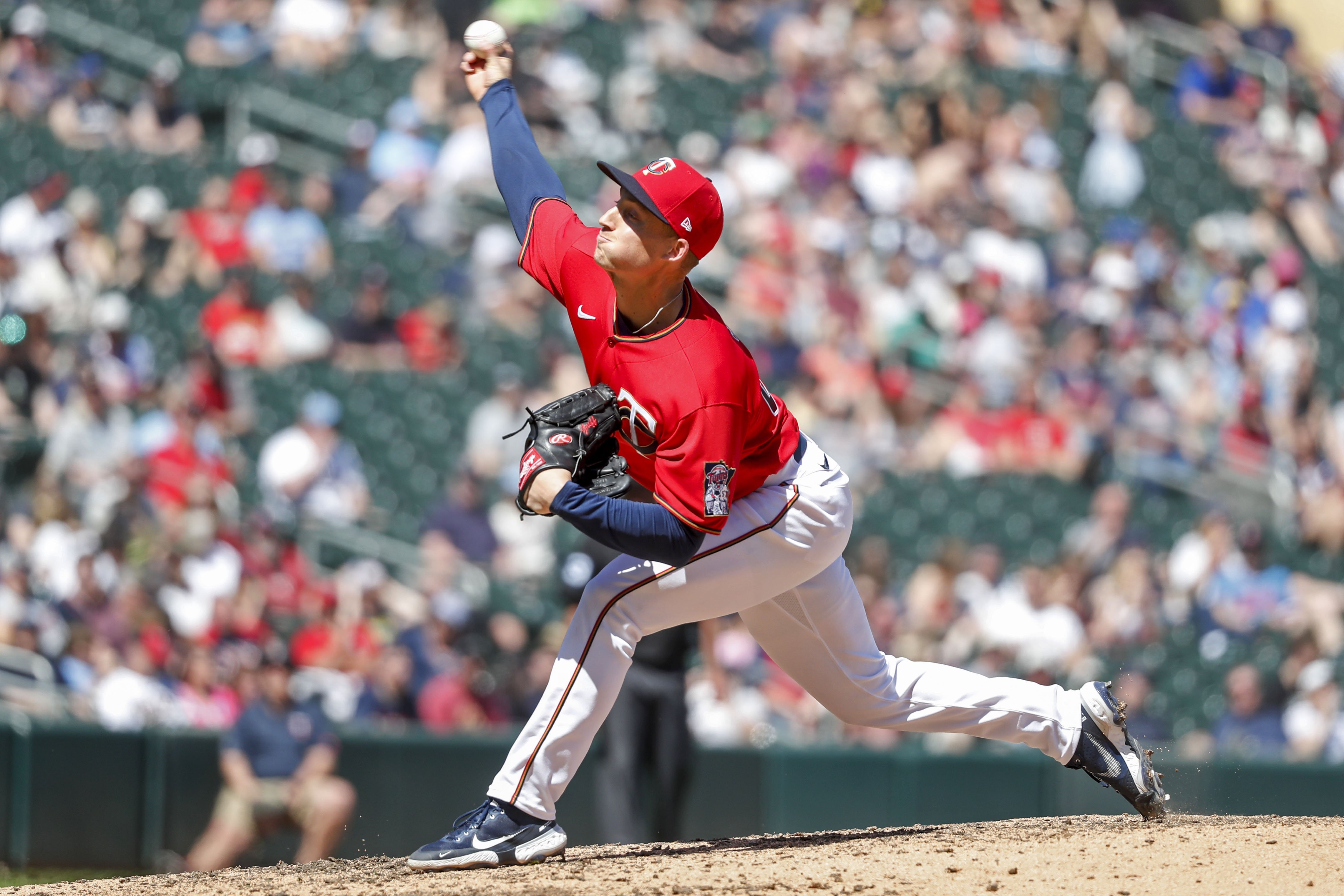 Griffin Jax had a poor 2021 season by just about any stat you prefer. He struck out just 18.1% of batters, walked them at an 8.1% clip, and gave up 23 home runs in 82 innings, a total high enough to make Bert Blyleven blush. Unsurprisingly, his ERA/FIP/xFIP slash line looked more like the price of gas these days, as it went 6.37/6.47/5.75. Outside of a surprise, 10 strikeout game against the White Sox on August 10th, outings of upside were few and far between. Jax always had a trick up his sleeve: his slider. The pitch was a bright spot in an otherwise bland repertoire, running a .275 xWOBA with characteristics favorable in Eno Sarris' pitch data collection. Ironically, his popular slide piece only recently joined his repertoire. You can read Jax himself describe the pitch to David Laurila in possibly the greatest baseball information series known to mankind. According to Jax, the pitch came as a fluke; “I was toying around in catch-play, right before I was about to go on the mound, and was like, ‘What if I just turned my curveball a little bit?’ That’s how I got the slider I have now.” Coaches immediately caught on to the pitch and encouraged him to continue using it. In its horizontal break, the pitch perfectly fits with the sweeper revolution in baseball, and it has buoyed Jax’s 2022 season so far. With his two-pitch (basically one-pitch) mix, Jax became a reliever. His velocity has bumped up two ticks to 94.7 MPH, and he has thrown his slider a Matt Wisler-like 52.7% of the time. While the fastball remains hittable, the breaker is anything but. He owns a .195 xWOBA with it, while hitters are whiffing 47.3% of the time they swing at it. That’s good. In fact, that’s good for 11th best amongst all pitchers in MLB who have faced 25 hitters in 2022. The total numbers are inspiring; an ERA/FIP/xFIP slash line of 1.35/2.43/2.83 that looks great in any era, dead ball or not. The only two criticisms are ‘it’s early’ and ‘it’s not sustainable.’ The first point is fair, but the second one may not be true in the age of breakers. Matt Wisler, Amir Garrett, Andrés Muñoz, Diego Castillo, and the Rogers twins are all quality relievers throwing sliders more often this season than Jax. And, well, just look at the pitch! Hitters may eventually key in on the pitch, but its movement combined with Jax’s command makes it a safe bet that he’ll continue to succeed in the majors. Like we talked about with Danny Coulombe, where a pitch ends up matters as much, if not more than any movement profile. Jax knows how to put his slider juuuuuuuust in the precise place to fool hitters. Yeah, that’ll work. Griffin Jax has become a revelation, finding his proper place in the bullpen where he can unleash as many sliders as humanly possible. It has only been a handful of innings, but Jax has wholly changed course from 2021; his performance is much improved, and his stuff suggests that this will be a permanent change.
- 10 comments
-
- 5
-
-
- griffin jax
- danny coulombe
- (and 3 more)
-
The Twins Have Cracked the Pitching Code in 2022
Matt Braun replied to Matt Braun's topic in Twins Daily Front Page News
You may think it's too early, and that's fine, but we have countless articles from incredibly bright minds that can absolutely prove that the balls are dead. https://blogs.fangraphs.com/home-runs-and-drag-an-early-look-at-the-2022-season/ https://www.baseballprospectus.com/news/article/74097/moonshot-2022-mlb-baseball-higher-drag/ https://theathletic.com/3272450/2022/04/26/baseballs-arent-flying-as-far-and-home-runs-are-down-across-mlb-is-it-the-ball-itself/- 14 replies
-
- 4
-
-
- joe ryan
- sonny gray
- (and 3 more)
-
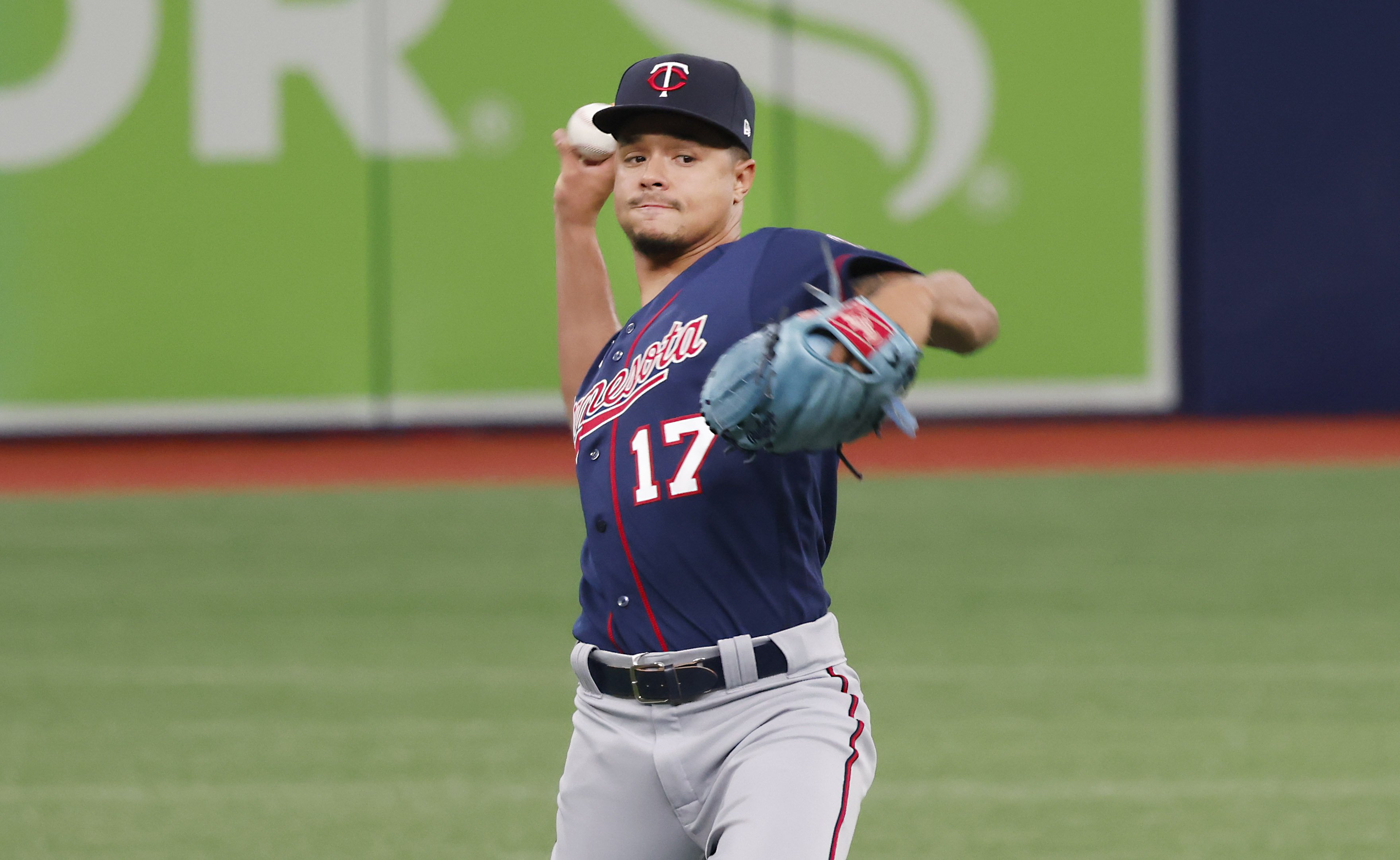 The ball is dead. The ball remains dead. And Rob Manfred has killed it. One can barely watch a game or read a baseball article without someone mentioning just how short baseballs are flying compared to previous years. Perhaps MLB wanted to counter-act the previous “rabbit ball” era, perhaps they wanted to de-incentivize home runs to move away from three-true-outcome baseball, or perhaps Manfred is a foolish stooge. One cannot say with authority which statement is true, or if the answer includes some combo of the three, but the reality is thus: baseballs in 2022 are not flying as far as before. If the baseballs are dead, and they are, then flyball pitchers have the most to gain from such a development; their main weakness—one of those flyballs landing behind the fence—is neutered. The term “flyball pitcher” has become something of a swear in the juiced-ball age, implying a deficiency rather than describing a strategy. The main plus to being a flyball pitcher is that most true flyballs end up in gloves; flyballs held a .117 BABIP in 2018, and that number barely moves yearly. If flyballs are no longer as threatening as before, a team in 2022 could be more liberal with allowing them. For the Twins, that’s an important note. The team has the seventh-highest flyball rate in baseball, and many of the culprits holding that number up—Joe Ryan, Chris Archer, and Sonny Gray—the team targeted over the past year. Those pitchers have other desirable traits, so their flyball rate could be a secondary thought, but that consideration looms especially large this season. Of course, presumably, part of why the Twins targeted them involved other details; Target Field and outfield defense. If Target Field feels like it’s on the cavernous side of ballparks, that’s because it is. Statcast’s park factors claim that the stadium was the 10th best at suppressing homers between 2019-2021 and is generally slightly more of a pitcher’s park. That feels right. The high walls in right field block homers that would go out in the wiffleball field that is Yankee Stadium, while centerfield often plays like Death Valley, eating up flyballs for dinner. Righties have it better for hitting doubles, but it’s also the most challenging park for them to single in. A secondary point: that 2019 team looks even more impressive when you consider that the team hit many of those homers in a park that is bad for power. The exact characteristics that define Target Field aside, there’s one glaring, painfully obvious reason Target Field is more challenging for hitters: Byron Buxton. Buxton’s defense needs no introduction, so it won’t get one. Buxton is an out machine, whether you like OAA, UZR, DRS, or any other suspiciously New Deal Program-sounding acronyms. His presence in center is world-altering, attracting fly balls to his person so he can gobble them up in a SportsCenter Top 10-esque diving catch or during a mid-sprint effort that only looks easy because Buxton makes it look so. Even his backup, Gilberto Celestino, currently is in the 84th percentile of outfielders by OAA, albeit in a minuscule sample size. In fact, let’s talk about those other outfielders; Max Kepler has long been one of the finest defensive right fielders in the game, ranking in the top 15 in MLB in OAA every full year since its introduction. Trevor Larnach is messier to analyze given his small sample, but Statcast at least thinks his route-running is good enough for an NFL wide receiver. Nick Gordon holds the least attractive numbers, but he has the athleticism to play in the outfield and should improve with more reps. It should be unsurprising that the Twins outfield is currently 1st in MLB in DRS, 3rd in OAA, and 3rd in UZR/150 innings. The ball does not fly as far as before, Twins pitchers are good at allowing fly balls, Target Field suppresses those fly balls, and the Twins outfield will probably catch them. Derek Falvey and Thad Levine are either cracked-out geniuses or fortunate individuals because they have quietly built a perfect relationship between the ball, pitcher, park, and defense. That combination has not only fueled their success so far in 2022, but it will probably carry them to many victories as the season continues.
- 14 comments
-
- 6
-
-
- joe ryan
- sonny gray
- (and 3 more)
-
Do the Twins actually have a good pitching staff? Twins fans have asked this question in various forms, attempting to grapple with a group of arms currently sitting with the fourth-lowest ERA in baseball. Usually, one does not question a good thing, but Minnesota sports fans know better than to buy into any hype. This author cannot answer for sure, but it does appear that the team has purposely constructed a stable of pitchers perfectly suited for a new Twins pitching style. Let’s dive in. The ball is dead. The ball remains dead. And Rob Manfred has killed it. One can barely watch a game or read a baseball article without someone mentioning just how short baseballs are flying compared to previous years. Perhaps MLB wanted to counter-act the previous “rabbit ball” era, perhaps they wanted to de-incentivize home runs to move away from three-true-outcome baseball, or perhaps Manfred is a foolish stooge. One cannot say with authority which statement is true, or if the answer includes some combo of the three, but the reality is thus: baseballs in 2022 are not flying as far as before. If the baseballs are dead, and they are, then flyball pitchers have the most to gain from such a development; their main weakness—one of those flyballs landing behind the fence—is neutered. The term “flyball pitcher” has become something of a swear in the juiced-ball age, implying a deficiency rather than describing a strategy. The main plus to being a flyball pitcher is that most true flyballs end up in gloves; flyballs held a .117 BABIP in 2018, and that number barely moves yearly. If flyballs are no longer as threatening as before, a team in 2022 could be more liberal with allowing them. For the Twins, that’s an important note. The team has the seventh-highest flyball rate in baseball, and many of the culprits holding that number up—Joe Ryan, Chris Archer, and Sonny Gray—the team targeted over the past year. Those pitchers have other desirable traits, so their flyball rate could be a secondary thought, but that consideration looms especially large this season. Of course, presumably, part of why the Twins targeted them involved other details; Target Field and outfield defense. If Target Field feels like it’s on the cavernous side of ballparks, that’s because it is. Statcast’s park factors claim that the stadium was the 10th best at suppressing homers between 2019-2021 and is generally slightly more of a pitcher’s park. That feels right. The high walls in right field block homers that would go out in the wiffleball field that is Yankee Stadium, while centerfield often plays like Death Valley, eating up flyballs for dinner. Righties have it better for hitting doubles, but it’s also the most challenging park for them to single in. A secondary point: that 2019 team looks even more impressive when you consider that the team hit many of those homers in a park that is bad for power. The exact characteristics that define Target Field aside, there’s one glaring, painfully obvious reason Target Field is more challenging for hitters: Byron Buxton. Buxton’s defense needs no introduction, so it won’t get one. Buxton is an out machine, whether you like OAA, UZR, DRS, or any other suspiciously New Deal Program-sounding acronyms. His presence in center is world-altering, attracting fly balls to his person so he can gobble them up in a SportsCenter Top 10-esque diving catch or during a mid-sprint effort that only looks easy because Buxton makes it look so. Even his backup, Gilberto Celestino, currently is in the 84th percentile of outfielders by OAA, albeit in a minuscule sample size. In fact, let’s talk about those other outfielders; Max Kepler has long been one of the finest defensive right fielders in the game, ranking in the top 15 in MLB in OAA every full year since its introduction. Trevor Larnach is messier to analyze given his small sample, but Statcast at least thinks his route-running is good enough for an NFL wide receiver. Nick Gordon holds the least attractive numbers, but he has the athleticism to play in the outfield and should improve with more reps. It should be unsurprising that the Twins outfield is currently 1st in MLB in DRS, 3rd in OAA, and 3rd in UZR/150 innings. The ball does not fly as far as before, Twins pitchers are good at allowing fly balls, Target Field suppresses those fly balls, and the Twins outfield will probably catch them. Derek Falvey and Thad Levine are either cracked-out geniuses or fortunate individuals because they have quietly built a perfect relationship between the ball, pitcher, park, and defense. That combination has not only fueled their success so far in 2022, but it will probably carry them to many victories as the season continues. View full article
-
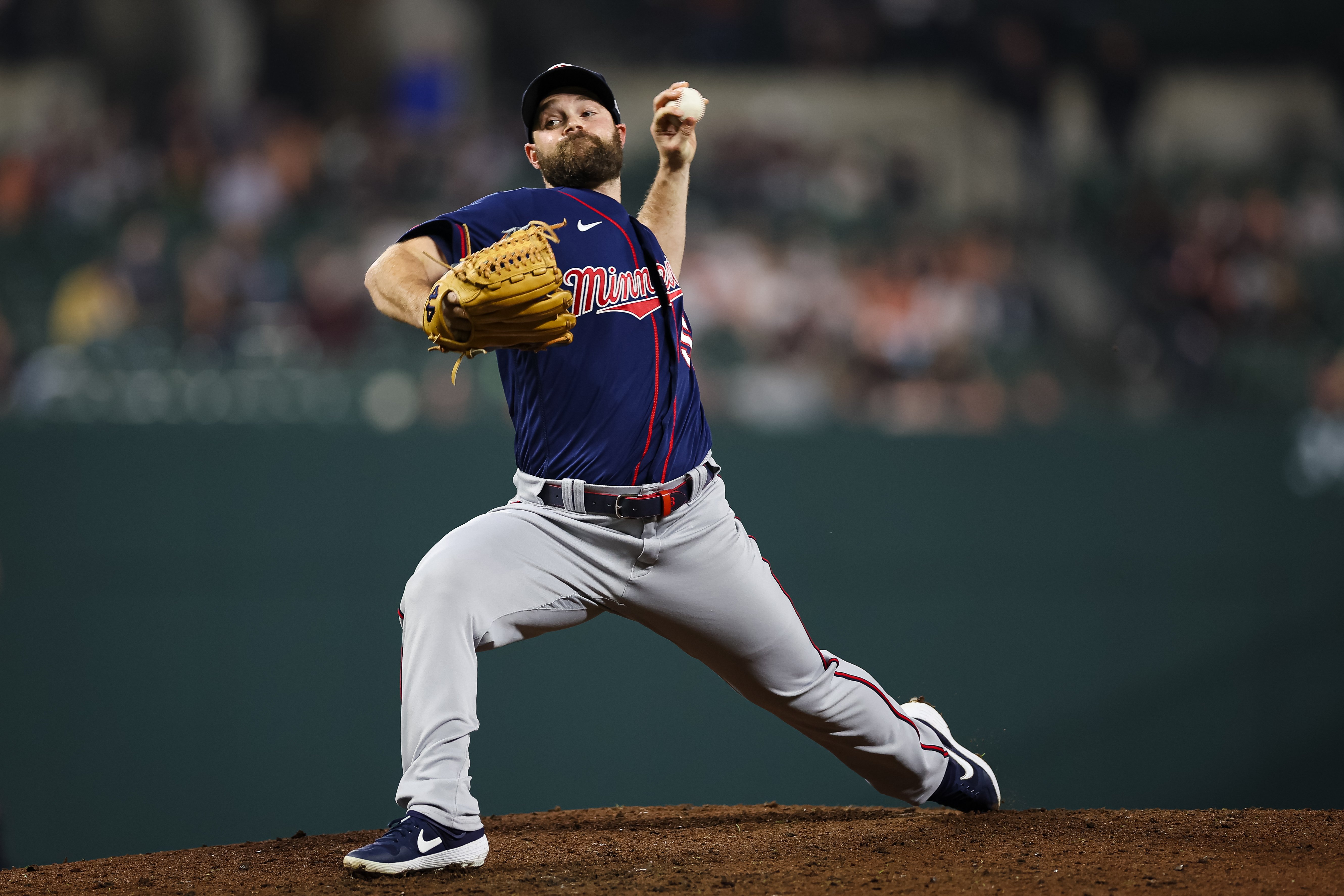 The first sign of evolution for a reliever is always velocity—is he throwing harder in a pitching landscape so focused on the radar gun? To end this streak of questions, no. His average fastball has reached a new high in 2022 (91.6 MPH), but the sample of 11 innings is negligible. Looking at 2021, the year featuring the bulk of his Twins innings, the fastball remained unchanged from his “heyday” with Oakland: 90.6 MPH sitting in a sea of relative sameness. The secret sauce in Danny Coulombe’s recipe is his off-speed collection. Unique amongst most bullpen arms, he often spins both a curve and a slider (with a healthy seasoning of changeups in 2022), giving Coulombe plenty of options to net his outs. When talking to David Laurila, Coulombe mentioned that he developed the slider to throw off hitters able to key in on the “hump” noticeable in most curveballs. The new pitch was not specifically for aiding in platoon splits, but more valuable weapons are never bad for a pitcher. Coulombe is the kind of arm who could use as many options as possible. The public movement data from Statcast paints a rather average portrait of a reliever. Despite having enough red in his percentile rankings to make Senator Joseph McCarthy irate, his curveball’s vertical movement is the only pitch with outstanding characteristics. In fact, most of his pitches are pretty poor by advanced movement measurements. Let’s talk about the slider. Stop me if you’ve heard this before, but the Twins have coaxed him into tossing it more often than before. In Minnesota, Coulombe has thrown 36.5% sliders against 31.7% with the Dodgers and Athletics before 2020. But, oddly, the slider is not that great of a pitch. It produced a .304 xwOBA in 2021, which is fine but nowhere near elite; his curveball was far better at a .169 xwOBA mark. What gives? Command might be the answer. Movement profiles and batted ball data are great, but the goal of all pitchers is still to throw the ball where they want. The first two heatmaps are for his slider and curveball locations respectively before joining the Twins, the next two afterward. Aha! That looks significant. The Twins have moved Coulombe towards throwing his breaking balls more off the plate rather than in the strike zone. The reason should be apparent; off-speed pitches thrown for strikes are dangerous when not adequately commanded, and hitters across the board perform worse against breaking balls outside of the zone. So what do we make of this? To venture a guess, Coulombe will generally avoid loud contact thanks to his decision to now throw breakers out of the zone, but he may run an elevated walk rate because of it. The aforementioned plan is excellent when the pitcher is working ahead, but without an 0-1 or 1-2 count, Coulombe may struggle more than your average arm. At the moment, his first-pitch strike % sits a touch below the league average for relievers (58.1% vs. 60.2%). Gripping stuff, yes. “A pitcher needs to get ahead to succeed” isn’t new knowledge by any stretch of the imagination, but this is more “Coulombe’s entire plan succeeds or fails depending on whether he can get ahead of the count.” So far this year, the philosophy has yielded iffy xFIP numbers, and his early-count strike rate may reveal a house of cards. As always, though, it is still May, and performances can vary in the coming months. We shall see how successful Coulombe is in the future with the Twins plan, but he is undeniably a different pitcher. So what do you think? Can Danny Coulombe be a reliable arm out of the Twins bullpen all season, or maybe even longer? Leave your COMMENTS below.
 -
Like a well-used Nissan Altima, Danny Coulombe bafflingly has done his job almost every time Rocco Baldelli has handed him the ball. The 32-year-old lefty was an afterthought, an assumed sacrificial arm for the baseball gods when the Twins added him to the 40-man roster in 2020. What would you expect from a former nondescript reliever known for a handful of innings on some Athletics teams of varying greatness? The first sign of evolution for a reliever is always velocity—is he throwing harder in a pitching landscape so focused on the radar gun? To end this streak of questions, no. His average fastball has reached a new high in 2022 (91.6 MPH), but the sample of 11 innings is negligible. Looking at 2021, the year featuring the bulk of his Twins innings, the fastball remained unchanged from his “heyday” with Oakland: 90.6 MPH sitting in a sea of relative sameness. The secret sauce in Danny Coulombe’s recipe is his off-speed collection. Unique amongst most bullpen arms, he often spins both a curve and a slider (with a healthy seasoning of changeups in 2022), giving Coulombe plenty of options to net his outs. When talking to David Laurila, Coulombe mentioned that he developed the slider to throw off hitters able to key in on the “hump” noticeable in most curveballs. The new pitch was not specifically for aiding in platoon splits, but more valuable weapons are never bad for a pitcher. Coulombe is the kind of arm who could use as many options as possible. The public movement data from Statcast paints a rather average portrait of a reliever. Despite having enough red in his percentile rankings to make Senator Joseph McCarthy irate, his curveball’s vertical movement is the only pitch with outstanding characteristics. In fact, most of his pitches are pretty poor by advanced movement measurements. Let’s talk about the slider. Stop me if you’ve heard this before, but the Twins have coaxed him into tossing it more often than before. In Minnesota, Coulombe has thrown 36.5% sliders against 31.7% with the Dodgers and Athletics before 2020. But, oddly, the slider is not that great of a pitch. It produced a .304 xwOBA in 2021, which is fine but nowhere near elite; his curveball was far better at a .169 xwOBA mark. What gives? Command might be the answer. Movement profiles and batted ball data are great, but the goal of all pitchers is still to throw the ball where they want. The first two heatmaps are for his slider and curveball locations respectively before joining the Twins, the next two afterward. Aha! That looks significant. The Twins have moved Coulombe towards throwing his breaking balls more off the plate rather than in the strike zone. The reason should be apparent; off-speed pitches thrown for strikes are dangerous when not adequately commanded, and hitters across the board perform worse against breaking balls outside of the zone. So what do we make of this? To venture a guess, Coulombe will generally avoid loud contact thanks to his decision to now throw breakers out of the zone, but he may run an elevated walk rate because of it. The aforementioned plan is excellent when the pitcher is working ahead, but without an 0-1 or 1-2 count, Coulombe may struggle more than your average arm. At the moment, his first-pitch strike % sits a touch below the league average for relievers (58.1% vs. 60.2%). Gripping stuff, yes. “A pitcher needs to get ahead to succeed” isn’t new knowledge by any stretch of the imagination, but this is more “Coulombe’s entire plan succeeds or fails depending on whether he can get ahead of the count.” So far this year, the philosophy has yielded iffy xFIP numbers, and his early-count strike rate may reveal a house of cards. As always, though, it is still May, and performances can vary in the coming months. We shall see how successful Coulombe is in the future with the Twins plan, but he is undeniably a different pitcher. So what do you think? Can Danny Coulombe be a reliable arm out of the Twins bullpen all season, or maybe even longer? Leave your COMMENTS below. View full article
-
Minor League Report (5/7): Top Pitching Prospects Galore
Matt Braun posted an article in Minor Leagues
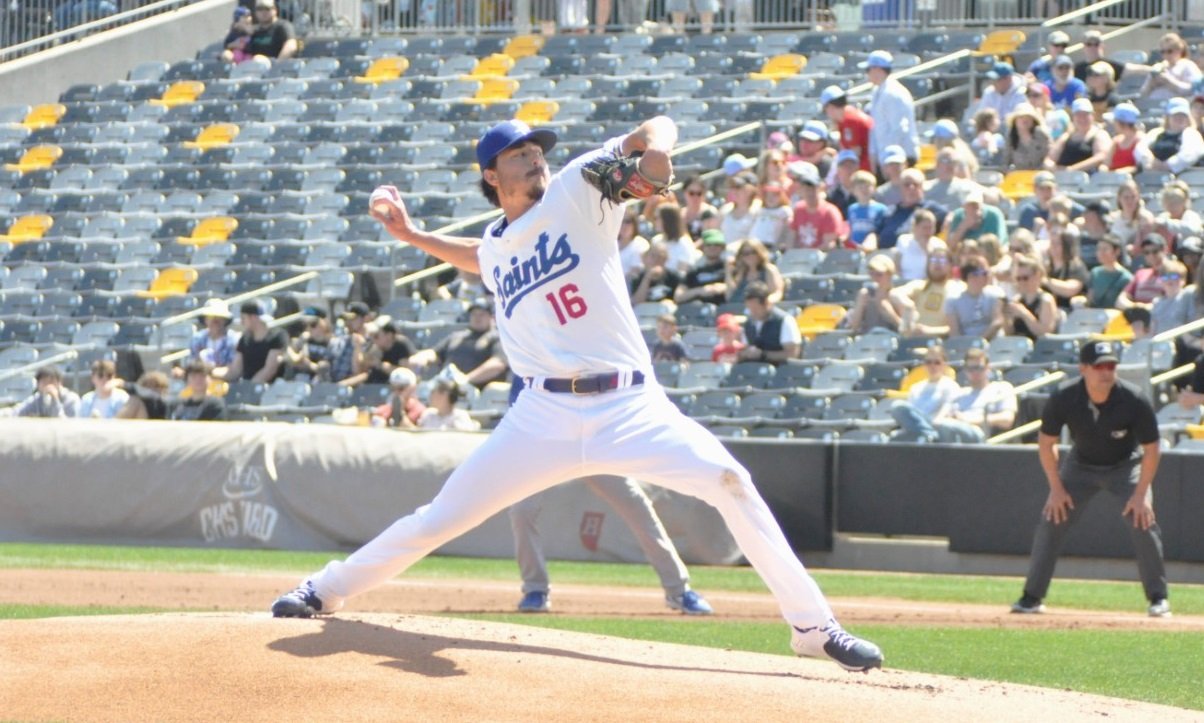 TRANSACTIONS RHP Jordan Balazovic activated from the IL for the St. Paul Saints RHP Cole Sands optioned to the St. Paul Saints from the Minnesota Twins RHP Blayne Enlow assigned to Low-A Fort Myers on minor league rehab RHP Dylan Thomas was reinstated from the 7-day IL and released Saints Sentinel St. Paul 9, Iowa 2 Box Score Jordan Balazovic: 3 2/3 IP, 5 H, 0 ER, 2 BB, 4 K HR: Kevin Merrell (1), Derek Fisher (3) Multi-hit games: Jermaine Palacios (2-for-5, RBI) A top prospect made his AAA debut on Saturday. Jordan Balazovic, one of the team’s top pitching young arms, returned from the injured list on Saturday, tossing 3 2/3 scoreless innings for the Saints. Other exciting pitching prospects have overshadowed Balazovic with their major-league performances, but no one should forget just how dominant Balazovic can be when healthy. Of course, one should never lose themselves in a pitcher when St. Paul’s offense scored nine runs. It was a group effort on Saturday; every player got on base at least once, and the only player without a hit (Curtis Terry) walked four times. In fact, the team ended up walking more often than they struck out (11 to 10). The Cubs suffered death by a thousand paper cuts. Outside of the Kevin Merrell homer above, Derek Fisher and Cole Sturgeon provided the only other extra-base hits of the game. One final offensive note: every RBI came from the 5-9 hitters. Mario Sanchez allowed two runs over 3 1/3 innings in relief of Balazovic; Wladimir Pinto shut out Iowa over the final two innings with an impressive five strikeouts. Wind Surge Wisdom Wichita 5, Tulsa 4 Box Score Simeon Woods Richardson: 5 1/3 IP, 5 H, 4 ER, 1 BB, 6 K HR: Spencer Steer 2 (3, 4) Multi-hit games: Spencer Steer (3-for-5, 2 R, 3 RBI, 2 HR) Wichita walked off their opponent on Saturday. Simeon Woods Richardson proved he was human, allowing his first earned runs of the year in a decidedly middling start. The Drillers, full of classically tough Dodgers prospects, ambushed Woods Richardson in the third inning with three hits and an HBP, ultimately netting three runs in the frame. Wichita would not stand around quietly, though. Or, Spencer Steer specifically, would not stand around quietly. Steer was a train engine, doubling home a run in the first before homering in the third and fourth innings. One must assume that Tulsa pitchers were on the verge of an outright revolt if their coaches forced them to pitch to Steer. Of course, one man an offense does not make. Alex Isola reached base three times, Michael Helman singled home a run, and Matt Wallner brought home the walk-off run in the 9th inning. Don’t look now, but Wallner now owns an .897 OPS at AA despite his dreadful start to the season. We all sometimes Need A Little Help From Our Friends, and the wind smiled favorably onto Wichita. Oh, and Wallner also threw a missile to nail a runner at home. Kernels Nuggets Cedar Rapids 6, Quad Cities 2 Box Score Cade Povich: 5 IP, 4 H, 0 ER, 1 BB, 8 K HR: Anthony Prato (4), Will Holland (1), Aaron Sabato (4) Multi-hit games: Jeferson Morales (3-for-4, 2 R) The Kernels won on Saturday. Water is wet. Cade Povich continued his utterly brilliant introduction to the full minor-league season by punching out eight batters without allowing an earned run. Don’t look now, but the Twins may already have the second wave of arms in the wings waiting for the first group to graduate. Cedar Rapids’ offense started with a bang. Anthony Prato hit a lead-off homer and Charles Mack doubled home another run in the first to give Povich a 2-0 lead before his second inning of work. Will Holland extended the lead in the second with a solo shot before Aaron Sabato blasted away, giving the Kernels a six-run lead before anyone knew what hit them. Bobby Milacki and Denny Bentley combined for four innings with just one run allowed to end the game. Kernels pitchers struck out 15 batters in total. Mussel Matters Fort Myers 7, Lakeland 12 Box Score Blayne Enlow: 1 2/3 IP, 5 H, 3 ER, 1 BB, 1 K HR: None Multi-hit games: Jake Rucker (2-for-3, R, RBI, 2B, BB), Noah Miller (2-for-4, R, RBI, BB), Noah Cardenas (2-for-4, 2 RBI), Daniel Ozoria (2-for-4, 2 R) The Mighty Mussels lost a high scorer on Saturday. Blayne Enlow made his much-anticipated return from Tommy John surgery. The young righty was tagged as the Lance McCullers of the Twins’ 2017 draft when they went over-slot to pick him in the third round after drafting Royce Lewis with the first overall pick. His career hasn’t been straightforward since, but the Twins saw enough potential to protect him from the Rule 5 draft, and this year will go a long way to proving whether that decision was wise. Baseball is far too cruel to carry a storybook tale, though. Even after Fort Myers jumped out to a 6-0 lead, Lakeland harassed Enlow in the second inning, taking advantage of poor defense to take a 7-6 lead after the dust had settled. Mike Parades tried in vain to put the effort to a stop, but Lakeland’s bats were in an evil mood, and all he gained was a higher ERA. The game wasn’t all bad; Fort Myers reached base 16 times as Noah Miller and Emmanuel Rodriguez continued to flash their on-base potential with three and two times reaching base respectively. Keoni Cavaco was not so fortunate, striking out three times in the loss. TWINS DAILY PLAYERS OF THE DAY Twins Daily Minor League Pitcher of the Day – Cade Povich Twins Daily Minor League Hitter of the Day – Spencer Steer PROSPECT SUMMARY Here’s a look at how the Twins Daily Top 20 Twins Prospects performed: #1 – Austin Martin (Wichita) - 0-for-5, R #2 – Royce Lewis (Minnesota) - 1-for-3, 2B, K #3 – Jose Miranda (Minnesota) - 0-for-2, BB #4 – Jordan Balazovic (St. Paul) - 3 2/3 IP, 5 H, 0 ER, 2 BB, 4 K #7 – Jhoan Duran (Minnesota) - 2 IP, 0 H, 0 ER, 1 BB, 5 K #10 – Noah Miller (Fort Myers) - 2-for-4, R, RBI, BB, K #11 – Gilberto Celestino (Minnesota) - 0-for-1 #12 – Matt Wallner (Wichita) - 1-for-4, RBI, 2B, BB, 2 K #15 – Emmanuel Rodriguez (Fort Myers) - 0-for-3, R, 2 BB, K #17 – Blayne Enlow (Fort Myers) - 1 2/3 IP, 5 H, 3 ER, 1 BB, 1 K #18 – Spencer Steer (Wichita) - 3-for-5, 2 R, 3 RBI, 2 HR, 2B SATURDAY’S PROBABLE STARTERS Iowa @ St. Paul (2:07 PM) - RHP Dereck Rodriguez Tulsa @ Wichita (12:05 PM) - RHP Chris Vallimont Quad Cities @ Cedar Rapids (2:05 PM) - RHP Sawyer Gipson-Long Fort Myers @ Lakeland (12:00 PM) - LHP Steve Hajjar
- 16 comments
-
- 5
-
-
- jordan balazovic
- blayne enlow
- (and 3 more)
-
One important pitching prospect made his first start in a while, another made his AAA debut, and yet another one looked to continue his dominant beginning of the season. Read all about that and more in this edition of the minor league report. TRANSACTIONS RHP Jordan Balazovic activated from the IL for the St. Paul Saints RHP Cole Sands optioned to the St. Paul Saints from the Minnesota Twins RHP Blayne Enlow assigned to Low-A Fort Myers on minor league rehab RHP Dylan Thomas was reinstated from the 7-day IL and released Saints Sentinel St. Paul 9, Iowa 2 Box Score Jordan Balazovic: 3 2/3 IP, 5 H, 0 ER, 2 BB, 4 K HR: Kevin Merrell (1), Derek Fisher (3) Multi-hit games: Jermaine Palacios (2-for-5, RBI) A top prospect made his AAA debut on Saturday. Jordan Balazovic, one of the team’s top pitching young arms, returned from the injured list on Saturday, tossing 3 2/3 scoreless innings for the Saints. Other exciting pitching prospects have overshadowed Balazovic with their major-league performances, but no one should forget just how dominant Balazovic can be when healthy. Of course, one should never lose themselves in a pitcher when St. Paul’s offense scored nine runs. It was a group effort on Saturday; every player got on base at least once, and the only player without a hit (Curtis Terry) walked four times. In fact, the team ended up walking more often than they struck out (11 to 10). The Cubs suffered death by a thousand paper cuts. Outside of the Kevin Merrell homer above, Derek Fisher and Cole Sturgeon provided the only other extra-base hits of the game. One final offensive note: every RBI came from the 5-9 hitters. Mario Sanchez allowed two runs over 3 1/3 innings in relief of Balazovic; Wladimir Pinto shut out Iowa over the final two innings with an impressive five strikeouts. Wind Surge Wisdom Wichita 5, Tulsa 4 Box Score Simeon Woods Richardson: 5 1/3 IP, 5 H, 4 ER, 1 BB, 6 K HR: Spencer Steer 2 (3, 4) Multi-hit games: Spencer Steer (3-for-5, 2 R, 3 RBI, 2 HR) Wichita walked off their opponent on Saturday. Simeon Woods Richardson proved he was human, allowing his first earned runs of the year in a decidedly middling start. The Drillers, full of classically tough Dodgers prospects, ambushed Woods Richardson in the third inning with three hits and an HBP, ultimately netting three runs in the frame. Wichita would not stand around quietly, though. Or, Spencer Steer specifically, would not stand around quietly. Steer was a train engine, doubling home a run in the first before homering in the third and fourth innings. One must assume that Tulsa pitchers were on the verge of an outright revolt if their coaches forced them to pitch to Steer. Of course, one man an offense does not make. Alex Isola reached base three times, Michael Helman singled home a run, and Matt Wallner brought home the walk-off run in the 9th inning. Don’t look now, but Wallner now owns an .897 OPS at AA despite his dreadful start to the season. We all sometimes Need A Little Help From Our Friends, and the wind smiled favorably onto Wichita. Oh, and Wallner also threw a missile to nail a runner at home. Kernels Nuggets Cedar Rapids 6, Quad Cities 2 Box Score Cade Povich: 5 IP, 4 H, 0 ER, 1 BB, 8 K HR: Anthony Prato (4), Will Holland (1), Aaron Sabato (4) Multi-hit games: Jeferson Morales (3-for-4, 2 R) The Kernels won on Saturday. Water is wet. Cade Povich continued his utterly brilliant introduction to the full minor-league season by punching out eight batters without allowing an earned run. Don’t look now, but the Twins may already have the second wave of arms in the wings waiting for the first group to graduate. Cedar Rapids’ offense started with a bang. Anthony Prato hit a lead-off homer and Charles Mack doubled home another run in the first to give Povich a 2-0 lead before his second inning of work. Will Holland extended the lead in the second with a solo shot before Aaron Sabato blasted away, giving the Kernels a six-run lead before anyone knew what hit them. Bobby Milacki and Denny Bentley combined for four innings with just one run allowed to end the game. Kernels pitchers struck out 15 batters in total. Mussel Matters Fort Myers 7, Lakeland 12 Box Score Blayne Enlow: 1 2/3 IP, 5 H, 3 ER, 1 BB, 1 K HR: None Multi-hit games: Jake Rucker (2-for-3, R, RBI, 2B, BB), Noah Miller (2-for-4, R, RBI, BB), Noah Cardenas (2-for-4, 2 RBI), Daniel Ozoria (2-for-4, 2 R) The Mighty Mussels lost a high scorer on Saturday. Blayne Enlow made his much-anticipated return from Tommy John surgery. The young righty was tagged as the Lance McCullers of the Twins’ 2017 draft when they went over-slot to pick him in the third round after drafting Royce Lewis with the first overall pick. His career hasn’t been straightforward since, but the Twins saw enough potential to protect him from the Rule 5 draft, and this year will go a long way to proving whether that decision was wise. Baseball is far too cruel to carry a storybook tale, though. Even after Fort Myers jumped out to a 6-0 lead, Lakeland harassed Enlow in the second inning, taking advantage of poor defense to take a 7-6 lead after the dust had settled. Mike Parades tried in vain to put the effort to a stop, but Lakeland’s bats were in an evil mood, and all he gained was a higher ERA. The game wasn’t all bad; Fort Myers reached base 16 times as Noah Miller and Emmanuel Rodriguez continued to flash their on-base potential with three and two times reaching base respectively. Keoni Cavaco was not so fortunate, striking out three times in the loss. TWINS DAILY PLAYERS OF THE DAY Twins Daily Minor League Pitcher of the Day – Cade Povich Twins Daily Minor League Hitter of the Day – Spencer Steer PROSPECT SUMMARY Here’s a look at how the Twins Daily Top 20 Twins Prospects performed: #1 – Austin Martin (Wichita) - 0-for-5, R #2 – Royce Lewis (Minnesota) - 1-for-3, 2B, K #3 – Jose Miranda (Minnesota) - 0-for-2, BB #4 – Jordan Balazovic (St. Paul) - 3 2/3 IP, 5 H, 0 ER, 2 BB, 4 K #7 – Jhoan Duran (Minnesota) - 2 IP, 0 H, 0 ER, 1 BB, 5 K #10 – Noah Miller (Fort Myers) - 2-for-4, R, RBI, BB, K #11 – Gilberto Celestino (Minnesota) - 0-for-1 #12 – Matt Wallner (Wichita) - 1-for-4, RBI, 2B, BB, 2 K #15 – Emmanuel Rodriguez (Fort Myers) - 0-for-3, R, 2 BB, K #17 – Blayne Enlow (Fort Myers) - 1 2/3 IP, 5 H, 3 ER, 1 BB, 1 K #18 – Spencer Steer (Wichita) - 3-for-5, 2 R, 3 RBI, 2 HR, 2B SATURDAY’S PROBABLE STARTERS Iowa @ St. Paul (2:07 PM) - RHP Dereck Rodriguez Tulsa @ Wichita (12:05 PM) - RHP Chris Vallimont Quad Cities @ Cedar Rapids (2:05 PM) - RHP Sawyer Gipson-Long Fort Myers @ Lakeland (12:00 PM) - LHP Steve Hajjar View full article
- 16 replies
-
- 1
-
-
- jordan balazovic
- blayne enlow
- (and 3 more)
-
Minor League Report 4/23 Emmanuel Rodriguez Does it Again
Matt Braun posted an article in Minor Leagues
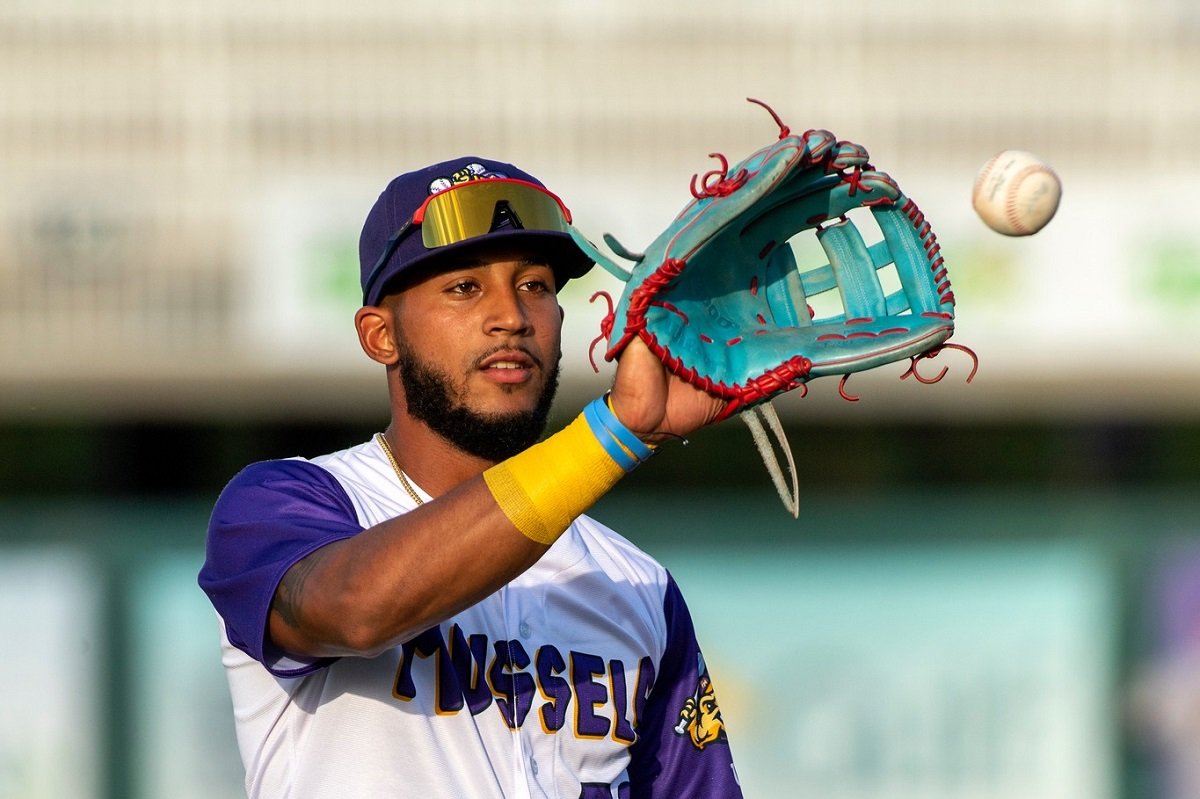 TRANSACTIONS C José Godoy selected by Minnesota Twins Saints Sentinel St. Paul 2, Toledo 5 Box Score Jake Faria: 4 IP, 4 H, 1 ER, 0 BB, 5 K HR: Royce Lewis (2) Multi-hit games: Curtis Terry (2-for-4, 2B) The Saints lost a winnable game on Saturday. Starter Jake Faria carried the torch for the first few innings of the game, racking up five strikeouts over four solid frames with one earned run to his name. He was not as efficient as he probably would have liked, however, and was pulled from the game after 76 pitches. The game sat at a 1-0 standstill heading into the 6th inning before Royce Lewis strode up to the plate and absolutely molly whopped crushed destroyed obliterated annihilated the baseball to give the Saints a 2-1 lead. The lead was short-lived. Chi Chi Gonzalez, pitching in relief of Faria, allowed a two-run triple and RBI single that gave the Mud Hens a lead they would never relinquish. Drew Strotman pitched an inning with no earned runs. The offense outside of Lewis’ blast was sparse. Curtis Terry and Elliot Soto provided a double each, while Chance Cisco was the only hitter outside of Terry to reach base twice. Wind Surge Wisdom Wichita 4, Midland 15 Box Score Brandon Lawson: 1 1/3 IP, 6 H, 6 ER, 3 BB, K HR: None Multi-hit games: Edouard Julien (3-for-4, 2 R, RBI, 2B), Michael Helman (2-for-4, RBI, 2B) Wichita was clobbered on Saturday. It was one of those days where showing up to the diamond felt like a mistake; The Wind Surge fell into a deficit in the first inning and never recovered. Wichita pitchers allowed 17 hits, 14 earned runs, and 10 walks. Alex Scherff was the only pitcher not to allow a baserunner. It would be for the best if we ended the discussion on pitching there. Wind Surge hitters were somewhat more successful. While they only knocked around three extra-base hits, they struck out just four times; poor BABIP proved to be their downfall more than anything. Edouard Julien was the most prolific hitter of the bunch, dropping in three hits while scoring half of Wichita’s total runs. Kernels Nuggets Cedar Rapids 6, Peoria 3 Box Score Sawyer Gipson-Long: 4 IP, 6 H, 3 ER, 1 BB, 2 K HR: None Multi-hit games: Anthony Prato (2-for-2, 2 R, RBI, BB, 2 2B), Aaron Sabato (2-for-4, R, 2 RBI, 2B), Will Holland (2-for-3, 2 RBI, BB, 2B) The Kernels continued their dominant start to the season on Saturday. Unusually mortal, Sawyer Gipson-Long did not over-match hitters like he usually does. The righty trudged through four innings while Peoria hitters frustrated him by scoring in three of those frames. It was a rare off-day for a pitcher who had been so great for most of last season and the beginning of this one. The Kernels offense had his back, though. They pecked away at the Chiefs’ lead, scoring in five separate innings to culminate in six runs total—more than enough needed to win the game. Aaron Sabato and Will Holland were the most consistent culprits, twice plating runners and twice knocking in hits. In relief of Gipson-Long, Bradley Hanner, Melvi Acosta, and Osiris German combined to toss five scoreless innings, ensuring the win for Cedar Rapids. Mussel Matters Fort Myers 7, Dunedin 3 Box Score David Festa: 4 IP, 3 H, 0 ER, 2 BB, 4 K HR: Kala’i Rosario (1), Emmanuel Rodriguez (5), Kyler Fedko (2) Multi-hit games: Noah Miller (2-for-3, 2 R, BB, 2B), Dylan Neuse (2-for-5) The Miracle won solidly on Saturday. David Festa continued his incredible start to the season with four shutout innings. It was not the cleanest performance—he needed 70 pitches to net 12 outs—but the start lowered his season ERA to 1.93. Much like the Kernels, Fort Myers hitters backed up their pitchers. The New Bash Brothers, Emmanuel Rodriguez, and Kyler Fedko, both launched homers in their effort to discredit the entire concept of pitching in general. Oddly enough, all of Fort Myers’ runs came via a homer or a bases-loaded BB. Walks proved to be the defining aspect of the game, as the Mighty Mussels took eight of them in the game; that’s how they plated seven runs off eight hits. The barrage of relievers—Jaylen Nowlin, Malik Barrington, Regi Grace, Matthew Swain—worked five innings with five strikeouts and three earned runs to carry the team to victory. TWINS DAILY PLAYERS OF THE DAY Twins Daily Minor League Pitcher of the Day – David Festa, Ft. Myers Mighty Mussels Twins Daily Minor League Hitter of the Day – Edouard Julien, Wichita Wind Surge PROSPECT SUMMARY Here’s a look at how the Twins Daily Top 20 Twins Prospects performed: #1 – Austin Martin (Wichita) - 0-for-3, BB, R #2 – Royce Lewis (St. Paul) - 1-for-4, R, 2 RBI, HR #3 – Jose Miranda (St. Paul) - 0-for-4 #10 – Noah Miller (Fort Myers) - 2-for-3, 2 R, BB, 2B, K #11 – Gilberto Celestino (Minnesota) - 0-1 #15 – Emmanuel Rodriguez (Fort Myers) - 1-for-4, R, 2 RBI, BB, K, HR #18 – Spencer Steer (Wichita) - 0-for-4, 2 K #19 – Edouard Julien (Wichita) - 3-for-4, 2 R, RBI, 2B SATURDAY’S PROBABLE STARTERS St. Paul @ Toledo (1:05 PM) - RHP Daniel Gossett Midland @ Wichita (1:05 PM) - RHP Matt Canterino Peoria @ Cedar Rapids (2:05 PM) - LHP Aaron Rozek Fort Myers @ Dunedin (11:00 AM) - RHP Travis Adams
- 18 comments
-
- 5
-
-
- emmanuel rodriguez
- royce lewis
- (and 3 more)
-
Twins’ minor league teams split the night, going 2-2 with some good, some bad, and some ugly... All that and more in this edition of the minor league report. TRANSACTIONS C José Godoy selected by Minnesota Twins Saints Sentinel St. Paul 2, Toledo 5 Box Score Jake Faria: 4 IP, 4 H, 1 ER, 0 BB, 5 K HR: Royce Lewis (2) Multi-hit games: Curtis Terry (2-for-4, 2B) The Saints lost a winnable game on Saturday. Starter Jake Faria carried the torch for the first few innings of the game, racking up five strikeouts over four solid frames with one earned run to his name. He was not as efficient as he probably would have liked, however, and was pulled from the game after 76 pitches. The game sat at a 1-0 standstill heading into the 6th inning before Royce Lewis strode up to the plate and absolutely molly whopped crushed destroyed obliterated annihilated the baseball to give the Saints a 2-1 lead. The lead was short-lived. Chi Chi Gonzalez, pitching in relief of Faria, allowed a two-run triple and RBI single that gave the Mud Hens a lead they would never relinquish. Drew Strotman pitched an inning with no earned runs. The offense outside of Lewis’ blast was sparse. Curtis Terry and Elliot Soto provided a double each, while Chance Cisco was the only hitter outside of Terry to reach base twice. Wind Surge Wisdom Wichita 4, Midland 15 Box Score Brandon Lawson: 1 1/3 IP, 6 H, 6 ER, 3 BB, K HR: None Multi-hit games: Edouard Julien (3-for-4, 2 R, RBI, 2B), Michael Helman (2-for-4, RBI, 2B) Wichita was clobbered on Saturday. It was one of those days where showing up to the diamond felt like a mistake; The Wind Surge fell into a deficit in the first inning and never recovered. Wichita pitchers allowed 17 hits, 14 earned runs, and 10 walks. Alex Scherff was the only pitcher not to allow a baserunner. It would be for the best if we ended the discussion on pitching there. Wind Surge hitters were somewhat more successful. While they only knocked around three extra-base hits, they struck out just four times; poor BABIP proved to be their downfall more than anything. Edouard Julien was the most prolific hitter of the bunch, dropping in three hits while scoring half of Wichita’s total runs. Kernels Nuggets Cedar Rapids 6, Peoria 3 Box Score Sawyer Gipson-Long: 4 IP, 6 H, 3 ER, 1 BB, 2 K HR: None Multi-hit games: Anthony Prato (2-for-2, 2 R, RBI, BB, 2 2B), Aaron Sabato (2-for-4, R, 2 RBI, 2B), Will Holland (2-for-3, 2 RBI, BB, 2B) The Kernels continued their dominant start to the season on Saturday. Unusually mortal, Sawyer Gipson-Long did not over-match hitters like he usually does. The righty trudged through four innings while Peoria hitters frustrated him by scoring in three of those frames. It was a rare off-day for a pitcher who had been so great for most of last season and the beginning of this one. The Kernels offense had his back, though. They pecked away at the Chiefs’ lead, scoring in five separate innings to culminate in six runs total—more than enough needed to win the game. Aaron Sabato and Will Holland were the most consistent culprits, twice plating runners and twice knocking in hits. In relief of Gipson-Long, Bradley Hanner, Melvi Acosta, and Osiris German combined to toss five scoreless innings, ensuring the win for Cedar Rapids. Mussel Matters Fort Myers 7, Dunedin 3 Box Score David Festa: 4 IP, 3 H, 0 ER, 2 BB, 4 K HR: Kala’i Rosario (1), Emmanuel Rodriguez (5), Kyler Fedko (2) Multi-hit games: Noah Miller (2-for-3, 2 R, BB, 2B), Dylan Neuse (2-for-5) The Miracle won solidly on Saturday. David Festa continued his incredible start to the season with four shutout innings. It was not the cleanest performance—he needed 70 pitches to net 12 outs—but the start lowered his season ERA to 1.93. Much like the Kernels, Fort Myers hitters backed up their pitchers. The New Bash Brothers, Emmanuel Rodriguez, and Kyler Fedko, both launched homers in their effort to discredit the entire concept of pitching in general. Oddly enough, all of Fort Myers’ runs came via a homer or a bases-loaded BB. Walks proved to be the defining aspect of the game, as the Mighty Mussels took eight of them in the game; that’s how they plated seven runs off eight hits. The barrage of relievers—Jaylen Nowlin, Malik Barrington, Regi Grace, Matthew Swain—worked five innings with five strikeouts and three earned runs to carry the team to victory. TWINS DAILY PLAYERS OF THE DAY Twins Daily Minor League Pitcher of the Day – David Festa, Ft. Myers Mighty Mussels Twins Daily Minor League Hitter of the Day – Edouard Julien, Wichita Wind Surge PROSPECT SUMMARY Here’s a look at how the Twins Daily Top 20 Twins Prospects performed: #1 – Austin Martin (Wichita) - 0-for-3, BB, R #2 – Royce Lewis (St. Paul) - 1-for-4, R, 2 RBI, HR #3 – Jose Miranda (St. Paul) - 0-for-4 #10 – Noah Miller (Fort Myers) - 2-for-3, 2 R, BB, 2B, K #11 – Gilberto Celestino (Minnesota) - 0-1 #15 – Emmanuel Rodriguez (Fort Myers) - 1-for-4, R, 2 RBI, BB, K, HR #18 – Spencer Steer (Wichita) - 0-for-4, 2 K #19 – Edouard Julien (Wichita) - 3-for-4, 2 R, RBI, 2B SATURDAY’S PROBABLE STARTERS St. Paul @ Toledo (1:05 PM) - RHP Daniel Gossett Midland @ Wichita (1:05 PM) - RHP Matt Canterino Peoria @ Cedar Rapids (2:05 PM) - LHP Aaron Rozek Fort Myers @ Dunedin (11:00 AM) - RHP Travis Adams View full article
-
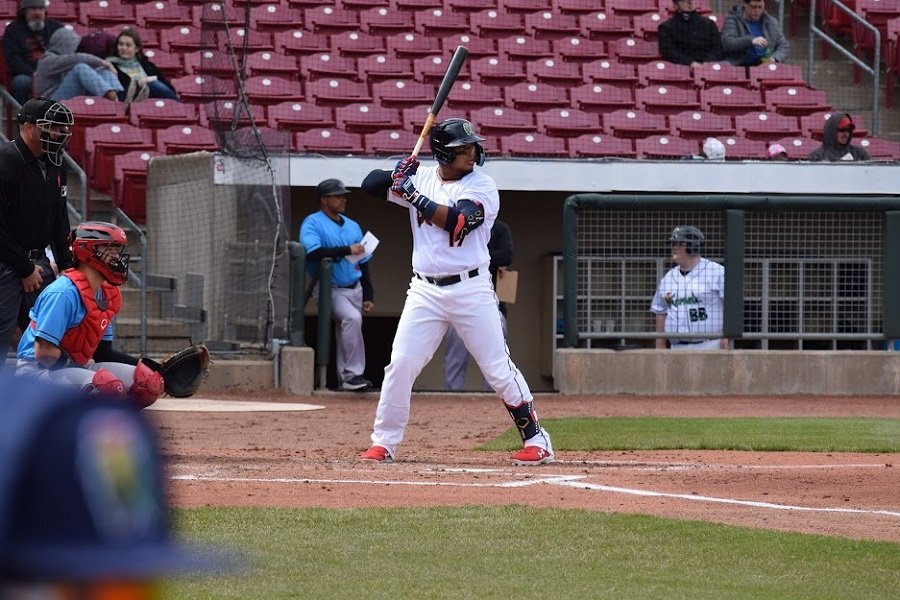 TRANSACTIONS LHP Lewis Thorpe added to AAA St. Paul from Development List Saints Sentinel St. Paul 16, Indianapolis 13 Box Score Lewis Thorpe: 1 ⅔ IP, 6 H, 8 ER, 2 BB, 2 K HR: Derek Fisher (2), Curtis Terry (3), Jermaine Palacios (1) Multi-hit games: Jose Miranda (3-for-5, 2 R, 4 RBI, 2B), Royce Lewis (3-for-5, 2 R, RBI, 2 2B, 3B), Curtis Terry (2-for-5, 2 R, 3 RBI, HR), Jermaine Palacios (4-for-4, 4 R, 2 RBI, HR) The Saints won a crazy game on Saturday. Lewis Thorpe took the bump for St. Paul; the recently outrighted left-hander was looking to impress in his first official start of the season. Things did not go well. Thorpe was tagged for a solo shot in the first inning, but the second inning proved to be most damaging as seven runners crossed home plate for Indianapolis. J.C. Ramirez had to be called in to end the madness. Down eight runs early, the Saints' bats remained unphased. Derek Fisher answered back with a two-run homer to cut the lead to six, while a Jose Miranda single knocked down the deficit to within one-hand-counting distance. But the team was not done yet. In the third inning, St. Paul harassed Jerad Eickhoff and southpaw-Frenchman, Cam Vieaux to the tune of five runs—just enough to knot the game at eight. The game remained a slugfest until the bell rung in the ninth inning. Indianapolis would take a three-run lead, Curtis Terry would erase it; Indianapolis jumped ahead later, then Miranda and Royce Lewis negated it. Eventually, Jermaine Palacios yelled enough and blasted a two-run homer that cemented the Saints’ lead for good. Royce Lewis, once again, was the star of the show. He unleashed three crucial extra-base hits from the DH spot that either ignited a rally or stoked the flames of one. It would be difficult to have a better start to the season (although Christian Encarnacion-Strand is making a case). Jermaine Palacios’ 4-for-4 performance should not be ignored either. The 25-year-old started at left field instead of shortstop like usual and showed no discomfort by reaching base all five times he walked up to the plate. Wind Surge Wisdom Wichita 6, NW Arkansas 5 Box Score Chris Vallimont: 2 ⅓ IP, 2 H, 2 ER, 5 BB, 2 K HR: None Multi-hit games: Austin Martin (3-for-4, 2 R, RBI, 2 BB), Spencer Steer (2-for-5), Dennis Ortega (2-for-5, 2 RBI), Michael Helman (2-for-5), Andrew Bechtold (2-for-5, R), Kevin Merrell (3-for-5, RBI) Wichita won an extra-inning affair on Saturday. Chris Vallimont was handed the ball to start the game and did not have his best stuff. The righty struggles with command, walking five hitters before his day ended partway through the third inning. Hopefully, he can rebound in his next start. The offense kept the game within reach, however. Dennis Ortega brought home the first run of the game with a two-run single in the 5th inning, while Wichita drew the game even closer when Austin Martin scored in the 7th inning when the Naturals' defense threw the ball around the field. Martin later knotted the game with a clutch RBI single in the 8th inning. The game moved into extra innings, where the Wind Surge took advantage of the Manfred runner to plate two runs thanks to an Alex Isola sacrifice fly and a single from Kevin Merrell. Steven Klimek was shaky to close the game. He allowed a runner to score, and ultimately loaded the bases before inducing the final outs to end the game in favor of Wichita. Kernels Nuggets Cedar Rapids 10, Quad Cities 2 Box Score Sawyer Gipson-Long: 5 IP, 3 H, 0 ER, 0 BB, 9 K HR: Aaron Sabato (1), Jair Camargo (2, 3) Multi-hit games: Anthony Prato (2-for-5, 2 R, 2 RBI, BB), Christian Encarnacion-Strand (2-for-6, 2 R), Aaron Sabato (2-for-4, 2 R, 5 RBI, BB, 2B, HR), Jair Camargo (4-for-5, 2 R, 2 RBI, 2 HR), Will Holland (2-for-5, R, 2B) The Kernels demolished their opponent on Saturday. Sawyer Gipson-Long set the tone on the mound with five masterful innings. The righty scattered three hits across his start while punching out an impressive nine batters in just 60 pitches. Talk about efficiency. Gipson-Long found a groove late last year, and he has continued to melt faces with the Kernels; he’ll certainly be in Wichita sooner than later. But that’s enough about pitching. Cedar Rapids’ bats were explosive early and often on Saturday. Aaron Sabato smacked a three-run homer in the first inning, Jair Camargo sent a solo shot over the wall in the second, Jeferson Morales tripled home a run in the third, Camargo hit another homer in the fourth, and, well, you get the idea. In total, the Kernels bopped seven extra-base hits in the game with a fairly even distribution of damage amongst all hitters. Derek Molina concluded the game with two shutout innings and four strikeouts. Mussel Matters Fort Myers 2, Jupiter 6 Box Score David Festa: 5 IP, 5 H, 3 ER, 1 BB, 8 K HR: None Multi-hit games: Kyler Fedko (3-for-3, R, RBI, 2B) The Mighty Mussels lost a rain-shortened game on Saturday. David Festa took the mound for the second Saturday in a row, and much like the previous week, he flashed dominant ability with eight strikeouts over five efficient innings. Tom Froemming notes that he topped out at 97.2 MPH with his fastball. Offensively, the game was a struggle for the Fort Myers bats. Thanks to RBI doubles from Kyler Fedko and Kala’i Rosario, the Mighty Mussels took a quick lead, but those would prove to be the only two runs of the day for the team. Unfortunately, Mother Nature had enough of Fort Myers’ winning streak, and the higher powers convened to snap the team’s seven-game run in the 6th inning. TWINS DAILY PLAYERS OF THE DAY Twins Daily Minor League Pitcher of the Day – Sawyer Gipson-Long Twins Daily Minor League Hitter of the Day – Jermaine Palacios/Jair Camargo PROSPECT SUMMARY Here’s a look at how the Twins Daily Top 20 Twins Prospects performed: #1 – Austin Martin (Wichita) - 3-for-4, 2 R, RBI, 2 BB, K #2 – Royce Lewis (St. Paul) - 3-for-5, 2 R, RBI, 2 2B, 3B, #3 – Jose Miranda (St. Paul) - 3-for-5, 2 R, 4 RBI, 2B #9 – Josh Winder (Minnesota) - 5 ⅓ IP, 4 H, 2 ER, 1 BB, 2 K #12 – Matt Wallner (Wichita) - 0-for-5, 2 K #15 – Emmanuel Rodriguez (Fort Myers) - 0-for-3, 2 K #18 – Spencer Steer (Wichita) - 2-for-5, K SUNDAY’S PROBABLE STARTERS Indianapolis @ St. Paul (2:07 PM) - RHP Jake Faria Wichita @ NW Arkansas (2:05 PM) - RHP Brandon Lawson Cedar Rapids @ Quad Cities (1:00 PM) - LHP Aaron Rozek Jupiter @ Fort Myers (12:00 PM) - RHP Travis Adams
- 26 comments
-
- 1
-
-
- austin martin
- kyler fedko
- (and 3 more)
-
The hitters across the farm system enjoyed fruitful days at the plate. Read all about that and more in this edition of the minor league report. TRANSACTIONS LHP Lewis Thorpe added to AAA St. Paul from Development List Saints Sentinel St. Paul 16, Indianapolis 13 Box Score Lewis Thorpe: 1 ⅔ IP, 6 H, 8 ER, 2 BB, 2 K HR: Derek Fisher (2), Curtis Terry (3), Jermaine Palacios (1) Multi-hit games: Jose Miranda (3-for-5, 2 R, 4 RBI, 2B), Royce Lewis (3-for-5, 2 R, RBI, 2 2B, 3B), Curtis Terry (2-for-5, 2 R, 3 RBI, HR), Jermaine Palacios (4-for-4, 4 R, 2 RBI, HR) The Saints won a crazy game on Saturday. Lewis Thorpe took the bump for St. Paul; the recently outrighted left-hander was looking to impress in his first official start of the season. Things did not go well. Thorpe was tagged for a solo shot in the first inning, but the second inning proved to be most damaging as seven runners crossed home plate for Indianapolis. J.C. Ramirez had to be called in to end the madness. Down eight runs early, the Saints' bats remained unphased. Derek Fisher answered back with a two-run homer to cut the lead to six, while a Jose Miranda single knocked down the deficit to within one-hand-counting distance. But the team was not done yet. In the third inning, St. Paul harassed Jerad Eickhoff and southpaw-Frenchman, Cam Vieaux to the tune of five runs—just enough to knot the game at eight. The game remained a slugfest until the bell rung in the ninth inning. Indianapolis would take a three-run lead, Curtis Terry would erase it; Indianapolis jumped ahead later, then Miranda and Royce Lewis negated it. Eventually, Jermaine Palacios yelled enough and blasted a two-run homer that cemented the Saints’ lead for good. Royce Lewis, once again, was the star of the show. He unleashed three crucial extra-base hits from the DH spot that either ignited a rally or stoked the flames of one. It would be difficult to have a better start to the season (although Christian Encarnacion-Strand is making a case). Jermaine Palacios’ 4-for-4 performance should not be ignored either. The 25-year-old started at left field instead of shortstop like usual and showed no discomfort by reaching base all five times he walked up to the plate. Wind Surge Wisdom Wichita 6, NW Arkansas 5 Box Score Chris Vallimont: 2 ⅓ IP, 2 H, 2 ER, 5 BB, 2 K HR: None Multi-hit games: Austin Martin (3-for-4, 2 R, RBI, 2 BB), Spencer Steer (2-for-5), Dennis Ortega (2-for-5, 2 RBI), Michael Helman (2-for-5), Andrew Bechtold (2-for-5, R), Kevin Merrell (3-for-5, RBI) Wichita won an extra-inning affair on Saturday. Chris Vallimont was handed the ball to start the game and did not have his best stuff. The righty struggles with command, walking five hitters before his day ended partway through the third inning. Hopefully, he can rebound in his next start. The offense kept the game within reach, however. Dennis Ortega brought home the first run of the game with a two-run single in the 5th inning, while Wichita drew the game even closer when Austin Martin scored in the 7th inning when the Naturals' defense threw the ball around the field. Martin later knotted the game with a clutch RBI single in the 8th inning. The game moved into extra innings, where the Wind Surge took advantage of the Manfred runner to plate two runs thanks to an Alex Isola sacrifice fly and a single from Kevin Merrell. Steven Klimek was shaky to close the game. He allowed a runner to score, and ultimately loaded the bases before inducing the final outs to end the game in favor of Wichita. Kernels Nuggets Cedar Rapids 10, Quad Cities 2 Box Score Sawyer Gipson-Long: 5 IP, 3 H, 0 ER, 0 BB, 9 K HR: Aaron Sabato (1), Jair Camargo (2, 3) Multi-hit games: Anthony Prato (2-for-5, 2 R, 2 RBI, BB), Christian Encarnacion-Strand (2-for-6, 2 R), Aaron Sabato (2-for-4, 2 R, 5 RBI, BB, 2B, HR), Jair Camargo (4-for-5, 2 R, 2 RBI, 2 HR), Will Holland (2-for-5, R, 2B) The Kernels demolished their opponent on Saturday. Sawyer Gipson-Long set the tone on the mound with five masterful innings. The righty scattered three hits across his start while punching out an impressive nine batters in just 60 pitches. Talk about efficiency. Gipson-Long found a groove late last year, and he has continued to melt faces with the Kernels; he’ll certainly be in Wichita sooner than later. But that’s enough about pitching. Cedar Rapids’ bats were explosive early and often on Saturday. Aaron Sabato smacked a three-run homer in the first inning, Jair Camargo sent a solo shot over the wall in the second, Jeferson Morales tripled home a run in the third, Camargo hit another homer in the fourth, and, well, you get the idea. In total, the Kernels bopped seven extra-base hits in the game with a fairly even distribution of damage amongst all hitters. Derek Molina concluded the game with two shutout innings and four strikeouts. Mussel Matters Fort Myers 2, Jupiter 6 Box Score David Festa: 5 IP, 5 H, 3 ER, 1 BB, 8 K HR: None Multi-hit games: Kyler Fedko (3-for-3, R, RBI, 2B) The Mighty Mussels lost a rain-shortened game on Saturday. David Festa took the mound for the second Saturday in a row, and much like the previous week, he flashed dominant ability with eight strikeouts over five efficient innings. Tom Froemming notes that he topped out at 97.2 MPH with his fastball. Offensively, the game was a struggle for the Fort Myers bats. Thanks to RBI doubles from Kyler Fedko and Kala’i Rosario, the Mighty Mussels took a quick lead, but those would prove to be the only two runs of the day for the team. Unfortunately, Mother Nature had enough of Fort Myers’ winning streak, and the higher powers convened to snap the team’s seven-game run in the 6th inning. TWINS DAILY PLAYERS OF THE DAY Twins Daily Minor League Pitcher of the Day – Sawyer Gipson-Long Twins Daily Minor League Hitter of the Day – Jermaine Palacios/Jair Camargo PROSPECT SUMMARY Here’s a look at how the Twins Daily Top 20 Twins Prospects performed: #1 – Austin Martin (Wichita) - 3-for-4, 2 R, RBI, 2 BB, K #2 – Royce Lewis (St. Paul) - 3-for-5, 2 R, RBI, 2 2B, 3B, #3 – Jose Miranda (St. Paul) - 3-for-5, 2 R, 4 RBI, 2B #9 – Josh Winder (Minnesota) - 5 ⅓ IP, 4 H, 2 ER, 1 BB, 2 K #12 – Matt Wallner (Wichita) - 0-for-5, 2 K #15 – Emmanuel Rodriguez (Fort Myers) - 0-for-3, 2 K #18 – Spencer Steer (Wichita) - 2-for-5, K SUNDAY’S PROBABLE STARTERS Indianapolis @ St. Paul (2:07 PM) - RHP Jake Faria Wichita @ NW Arkansas (2:05 PM) - RHP Brandon Lawson Cedar Rapids @ Quad Cities (1:00 PM) - LHP Aaron Rozek Jupiter @ Fort Myers (12:00 PM) - RHP Travis Adams View full article
- 26 replies
-
- 1
-
-
- austin martin
- kyler fedko
- (and 3 more)
-
 TRANSACTIONS None Saints Sentinel St. Paul 11, Louisville 1 Box Score SP: Devin Smeltzer: 4 IP, 2 H, 0 ER, 3 BB, 2 K HR: Royce Lewis (1), Chance Cisco (1) Multi-hit games: Royce Lewis (2-for-3, 2 R, RBI, 3 BB, 2B, HR), Daniel Robertson (2-for-5, 2 R, RBI, BB), Jake Cave (2-for-5, R, BB), Caleb Hamilton (3-for-5, R, 3 RBI) It’s Royce Lewis’ world, and we’re just living in it. The top prospect reached base five times on the back of three walks, a double, and a homer. He also flashed some leather with an excellent play rolling to his right. It’s been a small sample, but Lewis has quickly re-established why evaluators were originally high on the high school shortstop out of California. The rest of the offense wasn’t bad. Saints bats took nine walks and dropped 14 hits on the helpless Bats pitching staff. They aren’t called the Louisville Arms. Somehow, the Saints scored 11 runs while leaving 13 players stranded on base. Not to be outdone, Devin Smeltzer and the Saints’ pitching staff did their job as well. Smeltzer tossed four scoreless innings while Griffin Jax, Jovani Moran, and Yennier Cano combined to finish the job. Those three relievers struck out eight hitters and allowed just one run. Wind Surge Wisdom Wichita 2, Tulsa 3 Box Score SP: Simeon Woods Richardson: 5 2/3 IP, 1 H, 0 ER, 2 BB, 5 K HR: None Multi-hit games: None Simeon Woods Richardson pitched a masterpiece on Saturday. The right-handed pitching prospect was looking to improve his 2021 performance with Wichita, and Saturday was a good start. His start was the longest of the day for any Twins prospect, and it took him just 66 pitches to net 17 outs. Woods Richardson’s prospect stock may be deflated, but his talent is undeniable. The Wind Surge offense was mainly held in check. The game took 10 innings to complete, but the bats were held to three hits and three walks on the night. Hopefully, Sunday can be a more productive day for Wichita hitters. The game was going smoothly before two runs were scored in the 7th off of wild pitches from Austin Schulfer. In fact, if one doesn’t count the 10th inning zombie runner as legitimate, then Tulsa did not have a hit with a runner in scoring position. Kernels Nuggets Cedar Rapids 9, Beloit 3 Box Score SP: Brent Headrick: 5 IP, 2 H, 2 ER, 0 BB, 8 K HR: Christian Encarnacion-Strand (3) Multi-hit games: Anthony Prato (3-for-5, 2 R, 2 RBI), Christian Encarnacion-Strand (5-for-5, 3 R, 5 RBI, 2B, HR) Christian Encarnacion-Strand may not be of this planet. The 2021 4th round draft pick went an amazing five-for-five on Saturday, one notch better than the previous day when he went four-for-five. He somehow has more RBIs on the year than plate appearances, and it should be fully expected that he somehow goes six-for-five on Sunday. He also stole a base. The rest of the Kernels offense acted like prime Michael Jackson by dropping singles after singles in what ended up being a 13 hit effort. Like the Saints, the Kernels still left 23 men on base despite scoring nine runs. Brent Headrick, the Twins’ 9th round pick in 2019, shoved. He punched out eight batters over five innings of work and allowed just two runs to score off two hits. Cody Laweryson and Matt Mullenbach tossed four innings with no earned runs to end the game. Mussel Matters Fort Myers 4, Clearwater 2 Box Score SP: David Festa: 5 IP, 3 H, 0 ER, 0 BB, 5 K HR: Emmanuel Rodriguez (1) Multi-hit games: Emmanuel Rodriguez (2-for-3, R, 2 RBI, 2 BB, 2B, HR) The Mighty Mussels won a close one on Saturday. Emmanuel Rodriguez led the offensive movement, reaching base four times and supplying two of the three RBIs from Mighty Mussels hitters. He also owned the two extra-base hits of the game for Fort Myers. The big 2019 international signee is looking to make a significant splash in his first taste of full-season minor league ball, and Saturday’s performance was just the kind of day to make his name known. David Festa was the shining star on the mound. The tall right-hander punched out five batters while allowing just three hits over five innings of work. Festa was a 2021 draft pick, and while pitchers like Steve Hajjar and Cade Povich have received more attention, he should not be forgotten. A rule change also aided Fort Myers. Kala’i Rosario appeared to strike out on a full count with the bases loaded to end the 8th, but he challenged the call, and the ABS system reversed the strike to a ball, leading to an insurance run to score. (Also, that would have been Rosario's fifth strikeout of the game. Instead, he settled for the Golden Sombrero and an RBI walk!) Regi Grace and Mike Paredes combined for four innings of relief with just one earned run to win the game for Fort Myers. TWINS DAILY PLAYERS OF THE DAY Twins Daily Minor League Pitcher of the Day – Simeon Woods Richardson, Wichita Wind Surge Twins Daily Minor League Hitter of the Day – Christian Encarnacion-Strand, Cedar Rapids Kernels PROSPECT SUMMARY Here’s a look at how the Twins Daily Top 20 Twins Prospects performed: #1 – Austin Martin (Wichita) - 1-for-4, 2B #2 – Royce Lewis (St. Paul) - 2-for-3, 2 R, RBI, 3 BB, 2B, HR #3 – Jose Miranda (St. Paul) - 1-for-5, R, RBI, 2 K #8 – Simeon Woods Richardson (Wichita) - 5 2/3 IP, 1 H, 0 ER, 2 BB, 5 K #10 – Noah Miller (Fort Myers) - 0-for-5, 3 K #12 – Matt Wallner (Wichita) - 1-for-4, 2 K #15 – Emmanuel Rodriguez (Fort Myers) - 2-for-3, R, 2 RBI, 2 BB, K, 2B, HR #18 – Spencer Steer (Wichita) - 1-for-4, RBI, K, 2B #19 – Edouard Julien (Wichita) - 0-for-3, BB, K SUNDAY’S PROBABLE STARTERS St. Paul @ Louisville (12:05 PM) - RHP Jake Faria Tulsa @ Wichita (1:05 PM) - RHP Chris Vallimont Beloit @ Cedar Rapids (2:05 PM) - RHP Sawyer Gipson-Long Fort Myers @ Clearwater (11:00 AM) - RHP Travis Adams
- 27 comments
-
- 8
-
-
- royce lewis
- christian encarnacion-strand
- (and 3 more)
-
A few hitters had monster nights, while the pitchers also did their job. Read all about that and more in this edition of the minor league report. TRANSACTIONS None Saints Sentinel St. Paul 11, Louisville 1 Box Score SP: Devin Smeltzer: 4 IP, 2 H, 0 ER, 3 BB, 2 K HR: Royce Lewis (1), Chance Cisco (1) Multi-hit games: Royce Lewis (2-for-3, 2 R, RBI, 3 BB, 2B, HR), Daniel Robertson (2-for-5, 2 R, RBI, BB), Jake Cave (2-for-5, R, BB), Caleb Hamilton (3-for-5, R, 3 RBI) It’s Royce Lewis’ world, and we’re just living in it. The top prospect reached base five times on the back of three walks, a double, and a homer. He also flashed some leather with an excellent play rolling to his right. It’s been a small sample, but Lewis has quickly re-established why evaluators were originally high on the high school shortstop out of California. The rest of the offense wasn’t bad. Saints bats took nine walks and dropped 14 hits on the helpless Bats pitching staff. They aren’t called the Louisville Arms. Somehow, the Saints scored 11 runs while leaving 13 players stranded on base. Not to be outdone, Devin Smeltzer and the Saints’ pitching staff did their job as well. Smeltzer tossed four scoreless innings while Griffin Jax, Jovani Moran, and Yennier Cano combined to finish the job. Those three relievers struck out eight hitters and allowed just one run. Wind Surge Wisdom Wichita 2, Tulsa 3 Box Score SP: Simeon Woods Richardson: 5 2/3 IP, 1 H, 0 ER, 2 BB, 5 K HR: None Multi-hit games: None Simeon Woods Richardson pitched a masterpiece on Saturday. The right-handed pitching prospect was looking to improve his 2021 performance with Wichita, and Saturday was a good start. His start was the longest of the day for any Twins prospect, and it took him just 66 pitches to net 17 outs. Woods Richardson’s prospect stock may be deflated, but his talent is undeniable. The Wind Surge offense was mainly held in check. The game took 10 innings to complete, but the bats were held to three hits and three walks on the night. Hopefully, Sunday can be a more productive day for Wichita hitters. The game was going smoothly before two runs were scored in the 7th off of wild pitches from Austin Schulfer. In fact, if one doesn’t count the 10th inning zombie runner as legitimate, then Tulsa did not have a hit with a runner in scoring position. Kernels Nuggets Cedar Rapids 9, Beloit 3 Box Score SP: Brent Headrick: 5 IP, 2 H, 2 ER, 0 BB, 8 K HR: Christian Encarnacion-Strand (3) Multi-hit games: Anthony Prato (3-for-5, 2 R, 2 RBI), Christian Encarnacion-Strand (5-for-5, 3 R, 5 RBI, 2B, HR) Christian Encarnacion-Strand may not be of this planet. The 2021 4th round draft pick went an amazing five-for-five on Saturday, one notch better than the previous day when he went four-for-five. He somehow has more RBIs on the year than plate appearances, and it should be fully expected that he somehow goes six-for-five on Sunday. He also stole a base. The rest of the Kernels offense acted like prime Michael Jackson by dropping singles after singles in what ended up being a 13 hit effort. Like the Saints, the Kernels still left 23 men on base despite scoring nine runs. Brent Headrick, the Twins’ 9th round pick in 2019, shoved. He punched out eight batters over five innings of work and allowed just two runs to score off two hits. Cody Laweryson and Matt Mullenbach tossed four innings with no earned runs to end the game. Mussel Matters Fort Myers 4, Clearwater 2 Box Score SP: David Festa: 5 IP, 3 H, 0 ER, 0 BB, 5 K HR: Emmanuel Rodriguez (1) Multi-hit games: Emmanuel Rodriguez (2-for-3, R, 2 RBI, 2 BB, 2B, HR) The Mighty Mussels won a close one on Saturday. Emmanuel Rodriguez led the offensive movement, reaching base four times and supplying two of the three RBIs from Mighty Mussels hitters. He also owned the two extra-base hits of the game for Fort Myers. The big 2019 international signee is looking to make a significant splash in his first taste of full-season minor league ball, and Saturday’s performance was just the kind of day to make his name known. David Festa was the shining star on the mound. The tall right-hander punched out five batters while allowing just three hits over five innings of work. Festa was a 2021 draft pick, and while pitchers like Steve Hajjar and Cade Povich have received more attention, he should not be forgotten. A rule change also aided Fort Myers. Kala’i Rosario appeared to strike out on a full count with the bases loaded to end the 8th, but he challenged the call, and the ABS system reversed the strike to a ball, leading to an insurance run to score. (Also, that would have been Rosario's fifth strikeout of the game. Instead, he settled for the Golden Sombrero and an RBI walk!) Regi Grace and Mike Paredes combined for four innings of relief with just one earned run to win the game for Fort Myers. TWINS DAILY PLAYERS OF THE DAY Twins Daily Minor League Pitcher of the Day – Simeon Woods Richardson, Wichita Wind Surge Twins Daily Minor League Hitter of the Day – Christian Encarnacion-Strand, Cedar Rapids Kernels PROSPECT SUMMARY Here’s a look at how the Twins Daily Top 20 Twins Prospects performed: #1 – Austin Martin (Wichita) - 1-for-4, 2B #2 – Royce Lewis (St. Paul) - 2-for-3, 2 R, RBI, 3 BB, 2B, HR #3 – Jose Miranda (St. Paul) - 1-for-5, R, RBI, 2 K #8 – Simeon Woods Richardson (Wichita) - 5 2/3 IP, 1 H, 0 ER, 2 BB, 5 K #10 – Noah Miller (Fort Myers) - 0-for-5, 3 K #12 – Matt Wallner (Wichita) - 1-for-4, 2 K #15 – Emmanuel Rodriguez (Fort Myers) - 2-for-3, R, 2 RBI, 2 BB, K, 2B, HR #18 – Spencer Steer (Wichita) - 1-for-4, RBI, K, 2B #19 – Edouard Julien (Wichita) - 0-for-3, BB, K SUNDAY’S PROBABLE STARTERS St. Paul @ Louisville (12:05 PM) - RHP Jake Faria Tulsa @ Wichita (1:05 PM) - RHP Chris Vallimont Beloit @ Cedar Rapids (2:05 PM) - RHP Sawyer Gipson-Long Fort Myers @ Clearwater (11:00 AM) - RHP Travis Adams View full article
- 27 replies
-
- 1
-
-
- royce lewis
- christian encarnacion-strand
- (and 3 more)
-
As of writing this article on April 5th, the year of our Lord 2022, the Twins bullpen is far from set. Some prominent names have established themselves, while other, darker horses rode a hot spring into the opening day roster. But the pitching staff generally is a name salad of “whos” and “whys;” players with little star power at the moment but who are still guys potentially capable of carrying a team. The Twins this year will be flexible, and that is a good thing. Why go with a flexible pitching staff? There are two significant reasons. The first stems from the natural volatility of relievers, something in the DNA of the position curses them with inconsistency more unusual than any other position in baseball. We see relievers rise and fall yearly, with only a handful of genuinely elite talents remaining at the top of the heap for more than a year at a time. They’re about as consistent as Ohio or Pennsylvania in an election year. That creates a significant challenge for team-building. Beyond occasionally being stuck with poor performances, the issue is the sunk-cost fallacy that comes with bringing in a free-agent reliever. The Twins know all about this. What do you do with a struggling reliever with a solid history of success? Alex Colomé was utterly dreadful in 2021, blowing saves in cartoonish fashion for three painful months before the sting of each loss numbed due to the team’s already poor record. If Colomé were some AAAA schlep, he would have been optioned before April ended, and a different arm would have had the chance to prove themselves. But Colomé didn’t have options, and the team owed him $5 million, so the Twins had to be as confident as humanly possible that Colomé was no longer worth the roster spot. The season was already a lost cause by that time, and Colomé remained on the team. Ensuring that you can quickly rid yourself of a poor-performing reliever is a wise strategy. The other main reason to have flexibility is rooted in pitching philosophy. For years, a pitcher was either a starter, an individual capable of pitching anywhere between five-to-nine innings every fifth day, or they were a reliever, an individual tasked with netting three outs on a moment's notice. The system does not make much sense if one thinks about it. There’s a significant grey area between “incapable of pitching deep into games” and “can only be relied upon for three outs.” Indeed, some of these arms could go for two or three innings, right? One could combine pitchers like Voltron to make a better, more complete staff out of pitchers with potential drawbacks. Fortunately, some more enlightened baseball philosophers have moved away from this rigid binary, and, in a move that harkens back to the pitching staffs of the 60s and 70s, labels like “starter” and “reliever” have merged into someone simply being an “out-getter.” A pitcher is no longer only good for one or five-to-nine innings; they are allowed to get as many outs as physically possible. A myriad of terms have grown into our shared baseball lexicon to describe this shift: “opener,” “piggy-backing,” uhhh, “two dogs and two cats.” While differing in their meaning, they all call back to the idea that pitchers differ in the duration of their effectiveness. The Rays are a masterclass in this style of strategy. In what feels like the millionth year in a row, the team owned a top-10 pitching staff in baseball by fWAR, struck out a small army, and barely walked anyone despite losing ace Tyler Glasnow to Tommy John surgery. Four pitchers, Shane McClanahan, Rich Hill, Glasnow, and Shane Baz, appeared solely as a starter. The 11 other pitchers who made a start for them in 2021 also appeared out of the bullpen at some point in 2021. Let’s take a look at their strategy in action. On July 28th, Michael Wacha pitched five solid innings before being followed by Drew Rasmussen, old friend Matt Wisler, Pete Fairbanks, and Andrew Kittredge. On August 12th, Rasmussen started the game and went four innings; he was followed by Collin McHugh, old friend J.T. Chargois, Louis Head, and Ryan Sheriff. Rasmussen both started and entered the game in the sixth inning in about a two-week period, and he netted significant innings in both roles. It’s a high-wire act for sure, a bad game or two could throw the entire staff into chaos, but a deft manager can properly tip-toe the line. In practice for the Twins, we may see something like Chris Archer going four innings, Jhoan Duran following with three innings of his own, and then the usual suspects of Tyler Duffey and Taylor Rogers cleaning up the game, assuming all went well. This style of pitching management will be even more necessary at the beginning of the season; starters are not yet ready for their usual pitch counts, and games have not yet been shortened (but I wouldn’t put anything by Rob Manfred). Expanded rosters will help alleviate the pitching roster crunch. As it stands, five relievers—Rogers, Duffey, Joe Smith, Jharel Cotton, and Danny Coulombe—are un-optionable (without the risk of losing them on waivers). The rest of the bullpen will be ushered into the continuous testing machinery to determine which arms can stay at the major league level. Think of it like the Hunger Games, but you’re sent to St. Paul instead of dying. Guys like Griffin Jax, Josh Winder, Cody Stashak, and Jovani Moran may or may not begin the season in the majors, but the team will certainly shuffle them in at some point in 2022. It may be for the best if you don’t get too attached to the names you see in the bullpen to begin the season. How would you like to see the pitching staff work, especially in the season's first month. Leave a COMMENT and discuss below. View full article
- 18 replies
-
- 1
-
-
- chris archer
- jhoan duran
- (and 3 more)
-
The 2022 Twins Will Have a Flexible Pitching Staff (and That's a Good Thing)
Matt Braun posted an article in Twins
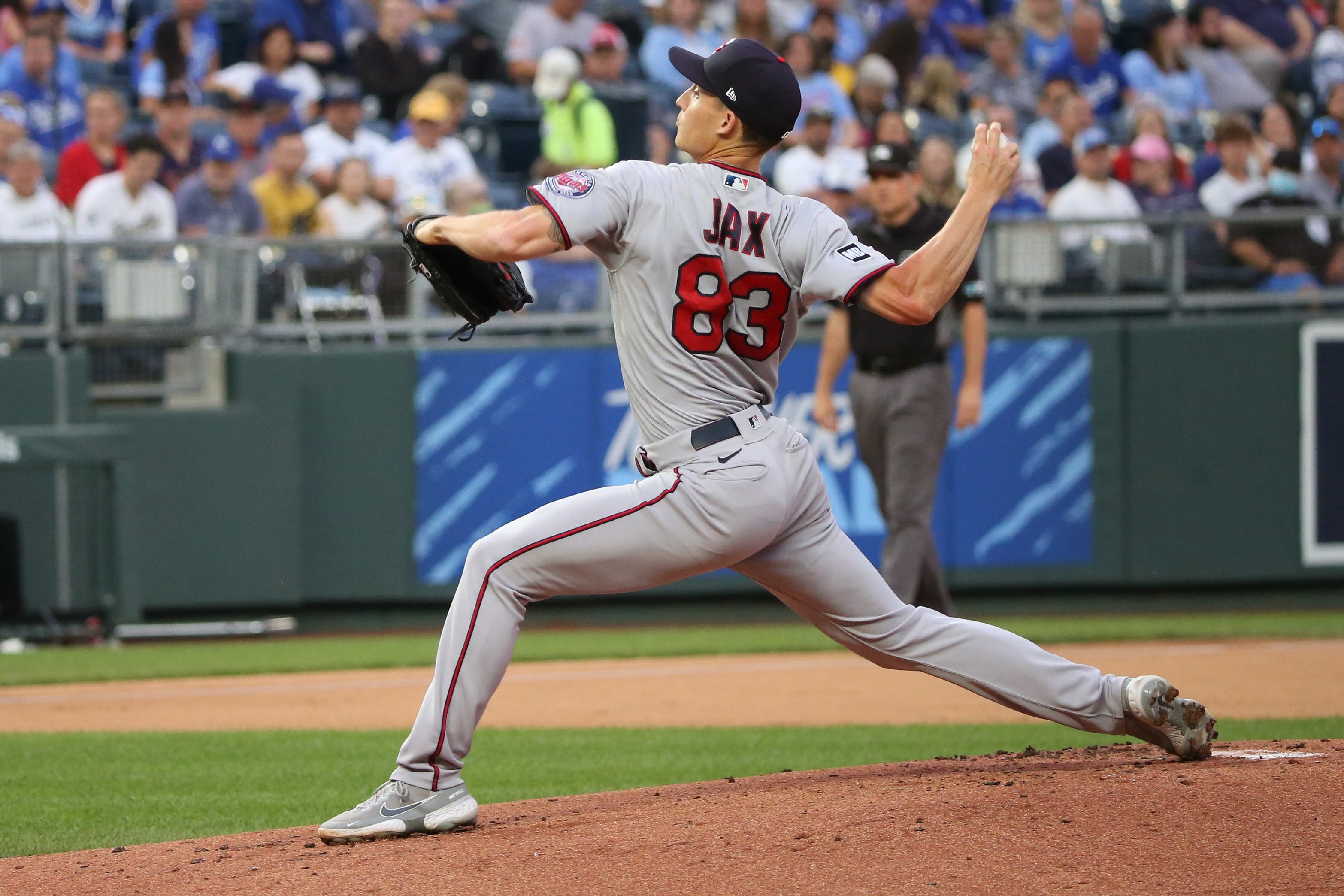 Why go with a flexible pitching staff? There are two significant reasons. The first stems from the natural volatility of relievers, something in the DNA of the position curses them with inconsistency more unusual than any other position in baseball. We see relievers rise and fall yearly, with only a handful of genuinely elite talents remaining at the top of the heap for more than a year at a time. They’re about as consistent as Ohio or Pennsylvania in an election year. That creates a significant challenge for team-building. Beyond occasionally being stuck with poor performances, the issue is the sunk-cost fallacy that comes with bringing in a free-agent reliever. The Twins know all about this. What do you do with a struggling reliever with a solid history of success? Alex Colomé was utterly dreadful in 2021, blowing saves in cartoonish fashion for three painful months before the sting of each loss numbed due to the team’s already poor record. If Colomé were some AAAA schlep, he would have been optioned before April ended, and a different arm would have had the chance to prove themselves. But Colomé didn’t have options, and the team owed him $5 million, so the Twins had to be as confident as humanly possible that Colomé was no longer worth the roster spot. The season was already a lost cause by that time, and Colomé remained on the team. Ensuring that you can quickly rid yourself of a poor-performing reliever is a wise strategy. The other main reason to have flexibility is rooted in pitching philosophy. For years, a pitcher was either a starter, an individual capable of pitching anywhere between five-to-nine innings every fifth day, or they were a reliever, an individual tasked with netting three outs on a moment's notice. The system does not make much sense if one thinks about it. There’s a significant grey area between “incapable of pitching deep into games” and “can only be relied upon for three outs.” Indeed, some of these arms could go for two or three innings, right? One could combine pitchers like Voltron to make a better, more complete staff out of pitchers with potential drawbacks. Fortunately, some more enlightened baseball philosophers have moved away from this rigid binary, and, in a move that harkens back to the pitching staffs of the 60s and 70s, labels like “starter” and “reliever” have merged into someone simply being an “out-getter.” A pitcher is no longer only good for one or five-to-nine innings; they are allowed to get as many outs as physically possible. A myriad of terms have grown into our shared baseball lexicon to describe this shift: “opener,” “piggy-backing,” uhhh, “two dogs and two cats.” While differing in their meaning, they all call back to the idea that pitchers differ in the duration of their effectiveness. The Rays are a masterclass in this style of strategy. In what feels like the millionth year in a row, the team owned a top-10 pitching staff in baseball by fWAR, struck out a small army, and barely walked anyone despite losing ace Tyler Glasnow to Tommy John surgery. Four pitchers, Shane McClanahan, Rich Hill, Glasnow, and Shane Baz, appeared solely as a starter. The 11 other pitchers who made a start for them in 2021 also appeared out of the bullpen at some point in 2021. Let’s take a look at their strategy in action. On July 28th, Michael Wacha pitched five solid innings before being followed by Drew Rasmussen, old friend Matt Wisler, Pete Fairbanks, and Andrew Kittredge. On August 12th, Rasmussen started the game and went four innings; he was followed by Collin McHugh, old friend J.T. Chargois, Louis Head, and Ryan Sheriff. Rasmussen both started and entered the game in the sixth inning in about a two-week period, and he netted significant innings in both roles. It’s a high-wire act for sure, a bad game or two could throw the entire staff into chaos, but a deft manager can properly tip-toe the line. In practice for the Twins, we may see something like Chris Archer going four innings, Jhoan Duran following with three innings of his own, and then the usual suspects of Tyler Duffey and Taylor Rogers cleaning up the game, assuming all went well. This style of pitching management will be even more necessary at the beginning of the season; starters are not yet ready for their usual pitch counts, and games have not yet been shortened (but I wouldn’t put anything by Rob Manfred). Expanded rosters will help alleviate the pitching roster crunch. As it stands, five relievers—Rogers, Duffey, Joe Smith, Jharel Cotton, and Danny Coulombe—are un-optionable (without the risk of losing them on waivers). The rest of the bullpen will be ushered into the continuous testing machinery to determine which arms can stay at the major league level. Think of it like the Hunger Games, but you’re sent to St. Paul instead of dying. Guys like Griffin Jax, Josh Winder, Cody Stashak, and Jovani Moran may or may not begin the season in the majors, but the team will certainly shuffle them in at some point in 2022. It may be for the best if you don’t get too attached to the names you see in the bullpen to begin the season. How would you like to see the pitching staff work, especially in the season's first month. Leave a COMMENT and discuss below.
- 18 comments
-
- 2
-

-
-
- chris archer
- jhoan duran
- (and 3 more)
-
On March 19th, the Twins officially announced the signing of reliever Joe Smith to a one-year deal. It was the quintessential Derek Falvey acquisition. The team ignored declining velocity, instead choosing to bank on Smith’s historic consistency—a consistency that stems from his unique traits that fly in the face of the modern velocity obsession—to carry him for one more season. It may be only one move, but the signing, on top of a handful of other moves by the front office, signals a divergence away from the general baseball consensus and may define the team’s future. In the fanfare and celebration of signing Carlos Correa, you'd be forgiven if you missed the Twins inking 38-year-old Joe Smith to a one-year pact. Smith, an MLB pitcher since the Bush administration, is precisely the style of reliever favored by Falvey and company. His average fastball hasn’t tickled 90 MPH in years, and much of his effectiveness is rooted in “funkiness,” a pitching trait in the Potter Stewart philosophy of “I know it when I see it.” In the case of Smith, his unique, low arm slot is his special calling card. Smith now joins the likes of Matt Belisle, Fernando Rodney, Zach Duke, Sergio Romo, and Tyler Clippard as an “unusual Twins reliever” acquired during the Falvey regime. That is to say, these bullpeners are (or were) atypical in their archetype—age or poor fastball velocity lowered the industry opinion of them, whether fair or not. But the Twins, perhaps believing in a philosophical blind spot, decided to trust in their past effectiveness and were rewarded with mixed but generally positive results. Belisle caught fire in the second half of 2017 to help lead the team to their first playoff appearance in seven years, Rodney and Duke both performed just well enough to net prospects in 2018, Romo was crucial in cementing a shaky Twins bullpen in 2019, and Clippard was a quality reliever for the Twins during the truncated 2020 season. Of course, the Twins haven’t solely focused on cast-offs from the island of misfit toys; they have signed or acquired more prototypical relievers like Addison Reed, Sam Dyson, and Alex Colomé on top of their usual assortment of unique funkmasters. Funny enough, it seems like they have had better fortune with odd relievers than with your more standard ones, but that isn’t quite the point of this article. Why ignore velocity? The Twins, as pointed out by Tom Froemming, had a velocity problem in May 2021 and had not fixed that issue by October 2021. It is March 2022, and the symptoms still persist. None of the four assumed starters possess an average fastball velocity that tops 93 MPH—a fact entirely at odds with the front office’s implications that velocity would be a top priority when they took over command of decision-making in 2016. Both newly-acquired starters, Sonny Gray and Dylan Bundy, are more masters of breaking balls than fireballers. Taylor Rogers and Jorge Alcala are the only true flamethrowers established in the bullpen. When diagnosing the malady, we must remember that there is nuance in team building; teams like the Twins count all their chips to the last penny as their room for error is smaller than other franchises. The team could quickly cash in and deal their top prospects for high-octane arms or sign the fastest-tossing relievers with little care for the long-term implications of those decisions. Still, such moves would not only likely hurt the franchise, but it would also open them up to being dunked on by randoms on Twitter years in the future, and that’s a risk no one wants to take. Why ignore velocity? Velocity is expensive, perhaps too much so. Corey Knebel (96.5 MPH) signed for $10 million, Joe Kelly (98.1 MPH) signed for $17 million over two years, and Kendall Graveman (96.5 MPH), signed for $24 million over three years. With no disrespect, none of those three players have been particularly consistent in their performance (or with health), but teams see their “stuff” and can’t help but imagine a perfect world where it all comes together for such a player. Trading for velocity can also be expensive. The White Sox parted with two young, talented players in Nick Madrigal and Codi Heuer to acquire Craig Kimbrel, the Padres gave up their 9th best prospect, Mason Thompson, for half a season of Daniel Hudson, and the fact that the Twins received anyone for Hansel Robles showed that teams are willing to ignore performance in favor of the allure of stuff. The same can be said for prospects. Arms that can sit in the high-90s are valued highly because the upside of that player is tantalizing. We’ve seen the natural sheen of “stuff” blind teams into ignoring risk because they see the next Roger Clemens in an arm that will likely flame out in high-A. The Twins have recognized this and seem to tap their higher-velo arms in deals; Huascar Ynoa, Luis Gil, Brusdar Graterol, and Chase Petty all own big fastballs, but now pitch for other organizations. The guess is that the team is leveraging industry opinions on fastball velocity to acquire major-league talent they otherwise could not have if the pitcher were your average 93-95 MPH Joe. Or, to simplify, they think other teams over-value fastballs and are trying to find value in overlooked arms. Consider the Smith signing; $2.5 million for Joe Smith’s consistency is a bargain if you choose to look at his performance absent velocity implications. The Gray trade looks exquisite as well. Acquiring a great starting pitcher for a pitcher four or so years away from debuting is a masterclass in fleecing. Has it worked? The results are iffy. Twins pitching was undeniably elite in 2019 and 2020 when their team average fastball velocity sat in the bottom five of the league but fell off entirely in 2021. We shall see how 2022 plays out, but the prospects so far do not look good. Shoot, 43-year-old Johan Santana might be an upgrade to the starting rotation. That isn’t to say the team is completely ignoring velocity. Jordan Balazovic is capable of sitting 94-95, Jhoan Duran hits 100 daily, Josh Winder can sit in the mid-90s, and Matt Canterino can do the same. The team is still focusing on velocity, but more on developing said heat, not paying for it upfront. If a pitching prospect can throw hard, great, but their velocity isn’t as prioritized as other aspects of their game. If another team overvalues a prospect’s velocity? Ship him off and receive a more bountiful return than expected. Again, it is unclear if the plan has been successful or not, but the Twins unquestionably believe in their process. View full article
