



Matt Braun
-
Posts
1,393 -
Joined
-
Last visited
-
Days Won
1
Content Type
Profiles
News
Minnesota Twins Videos
2026 Minnesota Twins Top Prospects Ranking
2022 Minnesota Twins Draft Picks
Minnesota Twins Free Agent & Trade Rumors, Notes, & Tidbits
Guides & Resources
2023 Minnesota Twins Draft Picks
The Minnesota Twins Players Project
2024 Minnesota Twins Draft Picks
2025 Minnesota Twins Draft Pick Tracker
2026 Minnesota Twins Draft Tracker: Picks & Bonuses
Forums
Blogs
Events
Store
Downloads
Gallery
Everything posted by Matt Braun
-
Minor League Report 6/19 Runs Galore
Matt Braun replied to Matt Braun's topic in Twins Minor League Talk
Depends on who you ask. I have him back in the top 20 but he fell off the map the last few years. -
Holy crap! Every team in the system popped off for an absurd amount of runs. Someone was apparently passing around some hitting magic on Saturday because the bats were on fire. Read all about that and more in this edition of the minor league report. TRANSACTIONS None Saints Sentinel St. Paul 8, Iowa 1 Box Score Charlie Barnes: 5 IP, 0 H, 0 ER, 4 BB, 7 K HR: Drew Maggi (2), Brent Rooker (10) Multi-hit games: Sherman Johnson (2-for-3, RBI, 2 R, 2 BB), Tomás Telis (3-for-5, 2 R, RBI), Brent Rooker (2-for-4, HR, 2B, R, 4 RBI), Damek Tomscha (2-for-4, RBI), Drew Maggi (3-for-3, HR, 2 R, RBI, BB) Let us kick off the offensive explosions with the game in St. Paul. Before we get to that, though, we should discuss the start made by Charlie Barnes. There has been some chatter regarding calling up Barnes to replace a certain ineffective starter in the Twins rotation. Barnes did his part to aid the conversation by tossing five shutout innings on Saturday. The four walks are ugly but Barnes possesses the ability to get both righties and lefties out thanks to his ability to command both an effective changeup and a slider. He will likely be in the majors at some point in 2021. Alright, now we can talk about the bats. The Saints wasted no time as Brent Rooker doubled home a run in the first before Damek Tomscha singled home a second run to give Barnes a quick lead to work with. Drew Maggi tacked on another run in the 2nd with his second homer of the season. Things got out of hand pretty quickly in the 4th inning. Sherman Johnson singled, Tomás Telis singled, and Rooker hit a three-run bomb to give St. Paul an immense 8-0 lead. The Saints would end their scoring for the night there but that would not matter. Juan Minaya, Ian Hamilton, and Yennier Cano were able to hold the Cubs in check the rest of the way and the Saints walked away victorious. Wind Surge Wisdom Wichita 7, Springfield 4 Box Score Jason García: 3 ⅓ IP, 4 H, 2 ER, 2 BB, 4 K HR: None Multi-hit games: Ernie De La Trinidad (2-for-4, 2B, 3 RBI), B.J. Boyd (2-for-4, 2 R), Aaron Whitefield (3-for-3, 2B, 3 R, RBI, BB) The Wichita Wind Surge won a come-from-behind game on Saturday. Springfield sprung first in the run scoring department. A Luken Baker double in the 3rd broke the ice before an Aaron Antonini homer in the following inning doubled the lead to two. Springfield then nearly scored again in the 6th but Yeltsin Encarnacion had other plans: But this is the Wind Surge offense we are talking about here. Two runs is nothing. Ernie De La Trinidad made sure that the Cardinals lead was to be short lived as he plated two runs with a single in the 5th inning. Encarnacion would end the stalemate with a 7th inning double before De La Trinidad doubled him home. Oh, did you think that was all? Nope, that is not how Wichita does things (I have never been to Wichita so I cannot confirm this statement). Aaron Whitefield and Encarnacion knocked in two more runners in the following inning and those seven Wind Surge runs would prove to be more than enough. While Jason García was unable to go deep into the game, the triumvirate of Calvin Faucher, Zach Neff, and Jovani Moran combined to fulfill the deed. In a shocking turn of events, Moran actually gave up a pair of runs which pushed his season ERA all the way to… 1.37? 1.37?!?! That is ridiculous. Kernels Nuggets Cedar Rapids 10, South Bend 2 Box Score Cody Laweryson: 3 IP, 3 H, 1 ER, 2 BB, 6 K HR: Jair Camargo 2 (6, 7), Spencer Steer (10) Multi-hit games: Seth Gray (2-for-4, R, RBI, BB), Jair Camargo (2-for-4, 2 HR, 2 R, 3 RBI), Gabriel Maciel (2-for-4, 3B, R, 2 RBI) I do not advertise myself as a baseball expert but I can say with a good deal of certainty that hitting three home runs will take you a good way towards winning a baseball game. Hot take, I know. Cedar Rapids took the first lead thanks to a Jair Camargo homer. This is what screenwriters would call “foreshadowing”. The Cubs would actually momentarily take the lead after some runs in the 3rd and the 4th but this would not be nearly enough to stop the Kernels’ leviathan offense. The next six instances of a run being scored in this game would occur thanks to a Cedar Rapids player instigating the fact. This gets pretty fun. Seth Gray and Wander Javier singled home some runners in the 6th but Camargo once again brought the lumber and blasted his second homer of the game. Spencer Steer homered for the 10th time of the season, Gabriel Maciel singled home another run, and a Gray groundout followed by some fielding shenanigans plated the final handful of runs for the Kernels. Were they needed? Of course not. Was it fun to do? Absolutely. Mussel Matters Fort Myers 10, Lakeland 4 Box Score Bobby Milacki: 4 IP, 7 H, 3 ER, 0 BB, 2 K HR: Will Holland (2) Multi-hit games: Jefferson Morales (2-for-5, 2 2B, R, BB), Edouard Julien (2-for-3, 3 R, BB), Charles Mack (2-for-4, R, RBI, BB), Will Holland (2-for-5, HR, 2B, R, 5 RBI), Willie Joe Garry Jr. (2-for-5, RBI) Last week I apparently wrote that the Mighty Mussels were involved in an offensive struggle. Such a statement would not accurately apply to the game played this Saturday. Fort Myers actually only ended up scoring in three separate innings but they made sure that those innings were absolute backbreakers. A 1-2-3 punch of Yunior Severino, Will Holland, and Willie Joe Garry Jr. plated four runs in the 3rd. This would just be a warning shot, however. Lakeland would add another run but to no avail. Misael Urbina and Charles Mack both knocked in runs in the bottom of the 4th to make sure that it would be a “1 step forward 2 steps back” situation for Lakeland. Then, the kicker. With the bases loaded in the 6th inning, Holland stepped up to the plate and bashed a monstrous grand slam to put the game away. Holland would end the game with an impressive five runs batted in. The underrated Edouard Julien proved to be the main catalyst for the offense. He did not knock in any runs but he set the table for the guys behind him and he personally crossed home plate three times. His season OBP was already nearing .500 before the game and his effort tonight will only serve to push that ridiculous number even higher. TWINS DAILY PLAYERS OF THE DAY Twins Daily Minor League Pitcher of the Day – Charlie Barnes Twins Daily Minor League Hitter of the Day – Jair Camargo PROSPECT SUMMARY Here’s a look at how the Twins Daily Top 20 Twins Prospects performed: #1 - Alex Kirilloff (Minnesota) – Did not play #2 - Royce Lewis (Rehab) - Out for Season (torn ACL) #3 - Trevor Larnach (Minnesota) – 0-3, BB, K #4 - Ryan Jeffers (Minnesota) – 0-4, K #5 - Jhoan Duran (St. Paul) – Did not pitch #6 - Jordan Balazovic (Wichita) – Did not pitch #7 - Keoni Cavaco (Ft. Myers) – IL (concussion) #8 - Aaron Sabato (Ft. Myers) – 0-2, R, 3 BB, K #9 - Matt Canterino (Cedar Rapids) – IL (right elbow strain) #10 - Blayne Enlow (Cedar Rapids) – IL (Tommy John surgery) #11 - Gilberto Celestino (St. Paul) – Did not play #12 - Brent Rooker (St. Paul) – 2-4, HR, 2B, R, 4 RBI #13 - Matt Wallner (Cedar Rapids) – IL (wrist sprain) #14 - Misael Urbina (Ft. Myers) – 1-2, R, RBI, 2 BB #15 - Cole Sands (Wichita) – Did not pitch #16 - Edwar Colina (Rehab) - IL (elbow) #17 - Ben Rortvedt (Minnesota) – Did not play #18 - Alerick Soularie (Complex) – N/A #19 - Jose Miranda (Wichita) – 1-5, K #20 - Bailey Ober (Minnesota) – Did not pitch SUNDAY’S PROBABLE STARTERS Lakeland @ Fort Myers (10:00 AM) - RHP Sawyer Gipson-Long Springfield @ Wichita (12:05 PM) - RHP Jordan Balazovic South Bend @ Cedar Rapids (1:05 PM) - RHP Tyler Beck Iowa @ St. Paul (1:05 PM) - RHP Griffin Jax View full article
-
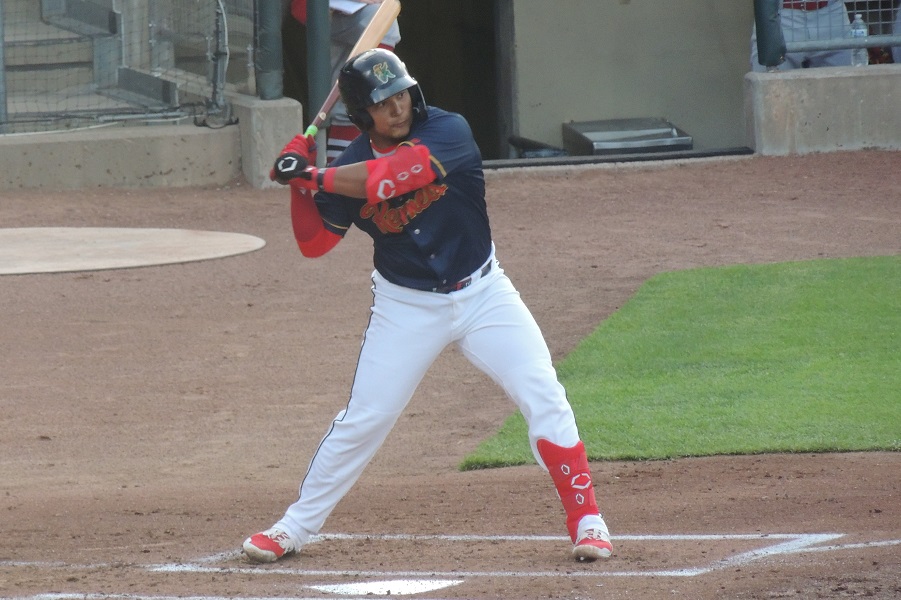 TRANSACTIONS None Saints Sentinel St. Paul 8, Iowa 1 Box Score Charlie Barnes: 5 IP, 0 H, 0 ER, 4 BB, 7 K HR: Drew Maggi (2), Brent Rooker (10) Multi-hit games: Sherman Johnson (2-for-3, RBI, 2 R, 2 BB), Tomás Telis (3-for-5, 2 R, RBI), Brent Rooker (2-for-4, HR, 2B, R, 4 RBI), Damek Tomscha (2-for-4, RBI), Drew Maggi (3-for-3, HR, 2 R, RBI, BB) Let us kick off the offensive explosions with the game in St. Paul. Before we get to that, though, we should discuss the start made by Charlie Barnes. There has been some chatter regarding calling up Barnes to replace a certain ineffective starter in the Twins rotation. Barnes did his part to aid the conversation by tossing five shutout innings on Saturday. The four walks are ugly but Barnes possesses the ability to get both righties and lefties out thanks to his ability to command both an effective changeup and a slider. He will likely be in the majors at some point in 2021. Alright, now we can talk about the bats. The Saints wasted no time as Brent Rooker doubled home a run in the first before Damek Tomscha singled home a second run to give Barnes a quick lead to work with. Drew Maggi tacked on another run in the 2nd with his second homer of the season. Things got out of hand pretty quickly in the 4th inning. Sherman Johnson singled, Tomás Telis singled, and Rooker hit a three-run bomb to give St. Paul an immense 8-0 lead. The Saints would end their scoring for the night there but that would not matter. Juan Minaya, Ian Hamilton, and Yennier Cano were able to hold the Cubs in check the rest of the way and the Saints walked away victorious. Wind Surge Wisdom Wichita 7, Springfield 4 Box Score Jason García: 3 ⅓ IP, 4 H, 2 ER, 2 BB, 4 K HR: None Multi-hit games: Ernie De La Trinidad (2-for-4, 2B, 3 RBI), B.J. Boyd (2-for-4, 2 R), Aaron Whitefield (3-for-3, 2B, 3 R, RBI, BB) The Wichita Wind Surge won a come-from-behind game on Saturday. Springfield sprung first in the run scoring department. A Luken Baker double in the 3rd broke the ice before an Aaron Antonini homer in the following inning doubled the lead to two. Springfield then nearly scored again in the 6th but Yeltsin Encarnacion had other plans: But this is the Wind Surge offense we are talking about here. Two runs is nothing. Ernie De La Trinidad made sure that the Cardinals lead was to be short lived as he plated two runs with a single in the 5th inning. Encarnacion would end the stalemate with a 7th inning double before De La Trinidad doubled him home. Oh, did you think that was all? Nope, that is not how Wichita does things (I have never been to Wichita so I cannot confirm this statement). Aaron Whitefield and Encarnacion knocked in two more runners in the following inning and those seven Wind Surge runs would prove to be more than enough. While Jason García was unable to go deep into the game, the triumvirate of Calvin Faucher, Zach Neff, and Jovani Moran combined to fulfill the deed. In a shocking turn of events, Moran actually gave up a pair of runs which pushed his season ERA all the way to… 1.37? 1.37?!?! That is ridiculous. Kernels Nuggets Cedar Rapids 10, South Bend 2 Box Score Cody Laweryson: 3 IP, 3 H, 1 ER, 2 BB, 6 K HR: Jair Camargo 2 (6, 7), Spencer Steer (10) Multi-hit games: Seth Gray (2-for-4, R, RBI, BB), Jair Camargo (2-for-4, 2 HR, 2 R, 3 RBI), Gabriel Maciel (2-for-4, 3B, R, 2 RBI) I do not advertise myself as a baseball expert but I can say with a good deal of certainty that hitting three home runs will take you a good way towards winning a baseball game. Hot take, I know. Cedar Rapids took the first lead thanks to a Jair Camargo homer. This is what screenwriters would call “foreshadowing”. The Cubs would actually momentarily take the lead after some runs in the 3rd and the 4th but this would not be nearly enough to stop the Kernels’ leviathan offense. The next six instances of a run being scored in this game would occur thanks to a Cedar Rapids player instigating the fact. This gets pretty fun. Seth Gray and Wander Javier singled home some runners in the 6th but Camargo once again brought the lumber and blasted his second homer of the game. Spencer Steer homered for the 10th time of the season, Gabriel Maciel singled home another run, and a Gray groundout followed by some fielding shenanigans plated the final handful of runs for the Kernels. Were they needed? Of course not. Was it fun to do? Absolutely. Mussel Matters Fort Myers 10, Lakeland 4 Box Score Bobby Milacki: 4 IP, 7 H, 3 ER, 0 BB, 2 K HR: Will Holland (2) Multi-hit games: Jefferson Morales (2-for-5, 2 2B, R, BB), Edouard Julien (2-for-3, 3 R, BB), Charles Mack (2-for-4, R, RBI, BB), Will Holland (2-for-5, HR, 2B, R, 5 RBI), Willie Joe Garry Jr. (2-for-5, RBI) Last week I apparently wrote that the Mighty Mussels were involved in an offensive struggle. Such a statement would not accurately apply to the game played this Saturday. Fort Myers actually only ended up scoring in three separate innings but they made sure that those innings were absolute backbreakers. A 1-2-3 punch of Yunior Severino, Will Holland, and Willie Joe Garry Jr. plated four runs in the 3rd. This would just be a warning shot, however. Lakeland would add another run but to no avail. Misael Urbina and Charles Mack both knocked in runs in the bottom of the 4th to make sure that it would be a “1 step forward 2 steps back” situation for Lakeland. Then, the kicker. With the bases loaded in the 6th inning, Holland stepped up to the plate and bashed a monstrous grand slam to put the game away. Holland would end the game with an impressive five runs batted in. The underrated Edouard Julien proved to be the main catalyst for the offense. He did not knock in any runs but he set the table for the guys behind him and he personally crossed home plate three times. His season OBP was already nearing .500 before the game and his effort tonight will only serve to push that ridiculous number even higher. TWINS DAILY PLAYERS OF THE DAY Twins Daily Minor League Pitcher of the Day – Charlie Barnes Twins Daily Minor League Hitter of the Day – Jair Camargo PROSPECT SUMMARY Here’s a look at how the Twins Daily Top 20 Twins Prospects performed: #1 - Alex Kirilloff (Minnesota) – Did not play #2 - Royce Lewis (Rehab) - Out for Season (torn ACL) #3 - Trevor Larnach (Minnesota) – 0-3, BB, K #4 - Ryan Jeffers (Minnesota) – 0-4, K #5 - Jhoan Duran (St. Paul) – Did not pitch #6 - Jordan Balazovic (Wichita) – Did not pitch #7 - Keoni Cavaco (Ft. Myers) – IL (concussion) #8 - Aaron Sabato (Ft. Myers) – 0-2, R, 3 BB, K #9 - Matt Canterino (Cedar Rapids) – IL (right elbow strain) #10 - Blayne Enlow (Cedar Rapids) – IL (Tommy John surgery) #11 - Gilberto Celestino (St. Paul) – Did not play #12 - Brent Rooker (St. Paul) – 2-4, HR, 2B, R, 4 RBI #13 - Matt Wallner (Cedar Rapids) – IL (wrist sprain) #14 - Misael Urbina (Ft. Myers) – 1-2, R, RBI, 2 BB #15 - Cole Sands (Wichita) – Did not pitch #16 - Edwar Colina (Rehab) - IL (elbow) #17 - Ben Rortvedt (Minnesota) – Did not play #18 - Alerick Soularie (Complex) – N/A #19 - Jose Miranda (Wichita) – 1-5, K #20 - Bailey Ober (Minnesota) – Did not pitch SUNDAY’S PROBABLE STARTERS Lakeland @ Fort Myers (10:00 AM) - RHP Sawyer Gipson-Long Springfield @ Wichita (12:05 PM) - RHP Jordan Balazovic South Bend @ Cedar Rapids (1:05 PM) - RHP Tyler Beck Iowa @ St. Paul (1:05 PM) - RHP Griffin Jax
 -
Byron Buxton and Luis Arraez both continued their rehab assignments as the teams in the Twins’ system took care of business on Saturday. Read all about it and more in this edition of the minor league report. TRANSACTIONS None Saints Sentinel St. Paul 9, Omaha, 5 Box Score Andrew Albers: 5 ⅓ IP, 7 H, 4 ER, 0 BB, 5 K HR: Tomás Telis (4) Multi-hit games: Tomás Telis (3-for-4, HR, 2 R, 3 RBI) Omaha had been a juggernaut squad coming into Saturday but evidently no one told the Saints. St. Paul kicked off the scoring quickly thanks to a J.T. Riddle double in the 1st that plated two. Tomás Telis then provided the next three runs off of a 3rd inning single and a 5th inning two-run bomb. Omaha made it a game with some shenanigans in the 6th that brought them within a run but some minor defensive errors in the bottom half of the inning gave St. Paul a comfortable lead again. Oh, and Byron Buxton absolutely clobbered a two-run double. Ian Hamilton continued to be an absolute menace to hitters as he threw 1 ⅔ shutout innings with three punchies. It seems inevitable at this point that he will join the Twins at some point in 2021. Buxton in total went 1-4 with a double, two runs, two RBIs, and a walk. Luis Arraez went 1-4 with a single, two runs, an RBI, and a walk. Wind Surge Wisdom Wichita 4, Tulsa 2 Box Score Austin Schulfer: 4 ⅔ IP, 6 H, 2 ER, 1 BB, 5 K HR: Peter Monney (2) Multi-hit games: None It was a close game between the Wind Surge and the Drillers but the ways both teams reached their run totals were completely different. The Drillers took a 2-0 lead thanks to runs in back-to-back innings starting with a 4th inning double and concluding with a 5th inning single. Two runs is typically nothing to be impressed by but the Wichita bats were stifled for most of the night. In fact, The Wind Surge were no-hit until Ernie De La Trinidad dropped a single in the 7th inning. That would not be the only hit of the inning. Aaron Whitefield found green with the bases loaded and knotted the game at two. The recently written about Jovani Moran pitched two easy shutout innings in relief of Shulfer and punched out four in his effort. His season ERA is now down to a blasphemous 0.77. The game marched on to extra-innings and the Wind Surge were able to score a run thanks to some Manfredball a well-earned grounder and a sacrifice fly by Whitefield. Although, they were apparently unimpressed with scoring solely through that manner so Peter Mooney launched a solo shot to give them a second, more legitimate extra-innings run. Kernels Nuggets Cedar Rapids 5, Beloit 1 Box Score Ben Gross: 4 IP, 3 H, 0 ER, 4 BB, 5 K HR: Wander Javier (4) Multi-hit games: Seth Gray (3-for-4, R), Wander Javier (2-for-5, HR, 2 R, 2 RBI), Trey Cabbage (2-for-5, R, RBI), Alex Isola (2-for-4, RBI), Michael Helman (2-for-4, 2B, RBI) Is it a good thing when your 2-6 hitters all have multi-hit games? I’m asking for a friend. It was a 0-0 stalemate for three innings before the Kernels reached their tipping point and decided to try this “scoring runs” thing. I don’t know, it might be just a fad. Trey Cabbage singled home Wander Javier before Michael Helman singled home Cabbage in return. But the scoring was not over yet. Javier continued his streak of destruction with a two-run homer in the 5th that gave Cedar Rapids a 4-0 lead. There has been much said about Javier’s status as a prospect but it certainly seems as if he has figured out something recently. Or, at the very least, he has selectively chosen to destroy the ball on the day this writer covers the minors. Why limit all the talk to the batters, though? Ben Gross saw more traffic than I-5 in Los Angeles during the day as he allowed seven baserunners over his four innings of work. Still, he was able to stop any runners from crossing the plate. The trifecta of Jordan Gore, Zach Featherstone, and Melvi Acosta allowed just one run over the final five innings of the game. One more win and the Kernels will reach .500. I’ll let the Kernels’ Twitter account describe where they are as a team. Mussel Matters Fort Myers 1, Jupiter 0 Box Score Brent Headrick: 5 IP, 3 H, 0 ER, 2 BB, 8 K HR: None Multi-hit games: None It was the definition of an offensive struggle for both Fort Myers and Jupiter on Saturday. Miracle starter Brent Headrick dropped the metaphorical hammer on Jupiter all night. The lefty struck out eight hitters over his five innings of work while holding a clean WHIP of just 1.00. That is what we in the business like to refer to as a “good start” (note: I am in no business where this is true but I thought it sounded snazzy so). After Headrick, Osiris German and Denny Bentley combined for four shutout innings of their own to keep the Hammerheads bats at bay. In total, Fort Myers pitchers combined to allow seven baserunners against 14 strikeouts. Fort Myers was finally able to plate a run in the 9th. A Charles Mack walk was followed by a Nick Anderson double and a Ruben Santana grounder provided the only run of the ballgame. Hey, why waste runs that you don’t need? TWINS DAILY PLAYERS OF THE DAY Twins Daily Minor League Pitcher of the Day – Brent Headrick Twins Daily Minor League Hitter of the Day – Tomás Telis PROSPECT SUMMARY Here’s a look at how the Twins Daily Top 20 Twins Prospects performed: #1 - Alex Kirilloff (Minnesota) – 0-3, BB #2 - Royce Lewis (Rehab) - Out for Season (torn ACL) #3 - Trevor Larnach (Minnesota) – 1-3, R, K #4 - Ryan Jeffers (Minnesota) – Did not play #5 - Jhoan Duran (St. Paul) – Did not pitch #6 - Jordan Balazovic (Wichita) – Did not pitch #7 - Keoni Cavaco (Ft. Myers) – IL (concussion) #8 - Aaron Sabato (Ft. Myers) – 1-2, 2 BB, K #9 - Matt Canterino (Cedar Rapids) – IL (right elbow strain) #10 - Blayne Enlow (Cedar Rapids) – IL (Tommy John surgery) #11 - Gilberto Celestino (Minnesota) – Did not play #12 - Brent Rooker (St. Paul) – 1-5, 2B, 4 K #13 - Matt Wallner (Cedar Rapids) – IL (wrist sprain) #14 - Misael Urbina (Ft. Myers) – 1-3, BB, K #15 - Cole Sands (Wichita) – Did not pitch #16 - Edwar Colina (Rehab) - IL (elbow) #17 - Ben Rortvedt (Minnesota) – 1-3, 2B, R, RBI #18 - Alerick Soularie (Complex) – N/A #19 - Jose Miranda (Wichita) – 0-4 #20 - Bailey Ober (Minnesota) – Did not pitch SUNDAY’S PROBABLE STARTERS Fort Myers @ Jupiter (10:00 AM) - TBD Wichita @ Tulsa (12:05 PM) - RHP Josh Winder Cedar Rapids @ Beloit (1:05 PM) - RHP Luis Rijo Omaha @ St. Paul (1:05 PM) - LHP Charlie Barnes View full article
-
Minor League Report 6/12 Rehabbing Big Leaguers and another Breakout?
Matt Braun posted an article in Minor Leagues
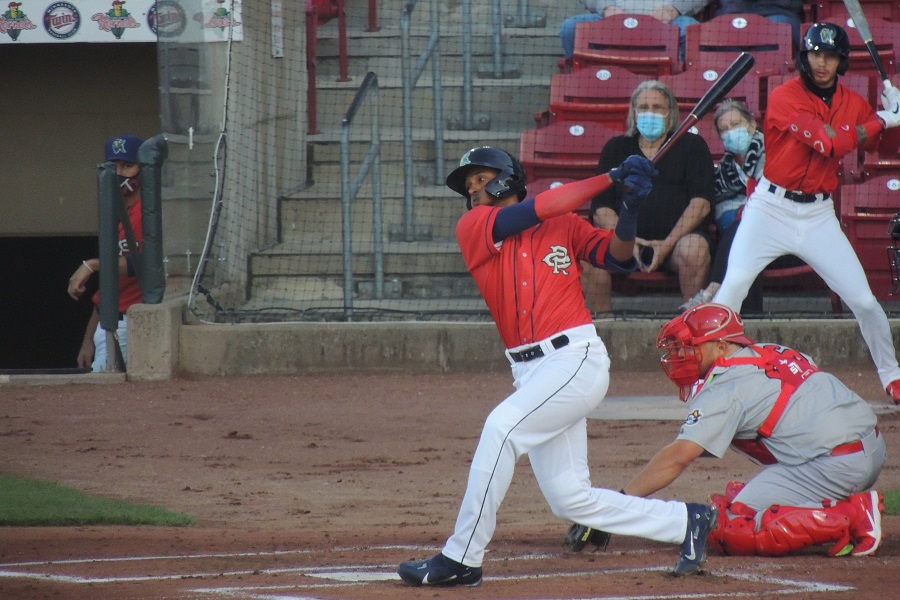 TRANSACTIONS None Saints Sentinel St. Paul 9, Omaha, 5 Box Score Andrew Albers: 5 ⅓ IP, 7 H, 4 ER, 0 BB, 5 K HR: Tomás Telis (4) Multi-hit games: Tomás Telis (3-for-4, HR, 2 R, 3 RBI) Omaha had been a juggernaut squad coming into Saturday but evidently no one told the Saints. St. Paul kicked off the scoring quickly thanks to a J.T. Riddle double in the 1st that plated two. Tomás Telis then provided the next three runs off of a 3rd inning single and a 5th inning two-run bomb. Omaha made it a game with some shenanigans in the 6th that brought them within a run but some minor defensive errors in the bottom half of the inning gave St. Paul a comfortable lead again. Oh, and Byron Buxton absolutely clobbered a two-run double. Ian Hamilton continued to be an absolute menace to hitters as he threw 1 ⅔ shutout innings with three punchies. It seems inevitable at this point that he will join the Twins at some point in 2021. Buxton in total went 1-4 with a double, two runs, two RBIs, and a walk. Luis Arraez went 1-4 with a single, two runs, an RBI, and a walk. Wind Surge Wisdom Wichita 4, Tulsa 2 Box Score Austin Schulfer: 4 ⅔ IP, 6 H, 2 ER, 1 BB, 5 K HR: Peter Monney (2) Multi-hit games: None It was a close game between the Wind Surge and the Drillers but the ways both teams reached their run totals were completely different. The Drillers took a 2-0 lead thanks to runs in back-to-back innings starting with a 4th inning double and concluding with a 5th inning single. Two runs is typically nothing to be impressed by but the Wichita bats were stifled for most of the night. In fact, The Wind Surge were no-hit until Ernie De La Trinidad dropped a single in the 7th inning. That would not be the only hit of the inning. Aaron Whitefield found green with the bases loaded and knotted the game at two. The recently written about Jovani Moran pitched two easy shutout innings in relief of Shulfer and punched out four in his effort. His season ERA is now down to a blasphemous 0.77. The game marched on to extra-innings and the Wind Surge were able to score a run thanks to some Manfredball a well-earned grounder and a sacrifice fly by Whitefield. Although, they were apparently unimpressed with scoring solely through that manner so Peter Mooney launched a solo shot to give them a second, more legitimate extra-innings run. Kernels Nuggets Cedar Rapids 5, Beloit 1 Box Score Ben Gross: 4 IP, 3 H, 0 ER, 4 BB, 5 K HR: Wander Javier (4) Multi-hit games: Seth Gray (3-for-4, R), Wander Javier (2-for-5, HR, 2 R, 2 RBI), Trey Cabbage (2-for-5, R, RBI), Alex Isola (2-for-4, RBI), Michael Helman (2-for-4, 2B, RBI) Is it a good thing when your 2-6 hitters all have multi-hit games? I’m asking for a friend. It was a 0-0 stalemate for three innings before the Kernels reached their tipping point and decided to try this “scoring runs” thing. I don’t know, it might be just a fad. Trey Cabbage singled home Wander Javier before Michael Helman singled home Cabbage in return. But the scoring was not over yet. Javier continued his streak of destruction with a two-run homer in the 5th that gave Cedar Rapids a 4-0 lead. There has been much said about Javier’s status as a prospect but it certainly seems as if he has figured out something recently. Or, at the very least, he has selectively chosen to destroy the ball on the day this writer covers the minors. Why limit all the talk to the batters, though? Ben Gross saw more traffic than I-5 in Los Angeles during the day as he allowed seven baserunners over his four innings of work. Still, he was able to stop any runners from crossing the plate. The trifecta of Jordan Gore, Zach Featherstone, and Melvi Acosta allowed just one run over the final five innings of the game. One more win and the Kernels will reach .500. I’ll let the Kernels’ Twitter account describe where they are as a team. Mussel Matters Fort Myers 1, Jupiter 0 Box Score Brent Headrick: 5 IP, 3 H, 0 ER, 2 BB, 8 K HR: None Multi-hit games: None It was the definition of an offensive struggle for both Fort Myers and Jupiter on Saturday. Miracle starter Brent Headrick dropped the metaphorical hammer on Jupiter all night. The lefty struck out eight hitters over his five innings of work while holding a clean WHIP of just 1.00. That is what we in the business like to refer to as a “good start” (note: I am in no business where this is true but I thought it sounded snazzy so). After Headrick, Osiris German and Denny Bentley combined for four shutout innings of their own to keep the Hammerheads bats at bay. In total, Fort Myers pitchers combined to allow seven baserunners against 14 strikeouts. Fort Myers was finally able to plate a run in the 9th. A Charles Mack walk was followed by a Nick Anderson double and a Ruben Santana grounder provided the only run of the ballgame. Hey, why waste runs that you don’t need? TWINS DAILY PLAYERS OF THE DAY Twins Daily Minor League Pitcher of the Day – Brent Headrick Twins Daily Minor League Hitter of the Day – Tomás Telis PROSPECT SUMMARY Here’s a look at how the Twins Daily Top 20 Twins Prospects performed: #1 - Alex Kirilloff (Minnesota) – 0-3, BB #2 - Royce Lewis (Rehab) - Out for Season (torn ACL) #3 - Trevor Larnach (Minnesota) – 1-3, R, K #4 - Ryan Jeffers (Minnesota) – Did not play #5 - Jhoan Duran (St. Paul) – Did not pitch #6 - Jordan Balazovic (Wichita) – Did not pitch #7 - Keoni Cavaco (Ft. Myers) – IL (concussion) #8 - Aaron Sabato (Ft. Myers) – 1-2, 2 BB, K #9 - Matt Canterino (Cedar Rapids) – IL (right elbow strain) #10 - Blayne Enlow (Cedar Rapids) – IL (Tommy John surgery) #11 - Gilberto Celestino (Minnesota) – Did not play #12 - Brent Rooker (St. Paul) – 1-5, 2B, 4 K #13 - Matt Wallner (Cedar Rapids) – IL (wrist sprain) #14 - Misael Urbina (Ft. Myers) – 1-3, BB, K #15 - Cole Sands (Wichita) – Did not pitch #16 - Edwar Colina (Rehab) - IL (elbow) #17 - Ben Rortvedt (Minnesota) – 1-3, 2B, R, RBI #18 - Alerick Soularie (Complex) – N/A #19 - Jose Miranda (Wichita) – 0-4 #20 - Bailey Ober (Minnesota) – Did not pitch SUNDAY’S PROBABLE STARTERS Fort Myers @ Jupiter (10:00 AM) - TBD Wichita @ Tulsa (12:05 PM) - RHP Josh Winder Cedar Rapids @ Beloit (1:05 PM) - RHP Luis Rijo Omaha @ St. Paul (1:05 PM) - LHP Charlie Barnes
 -
Top pitching prospect Jordan Balazovic made his much anticipated 2021 debut for the Wichita Wind Surge on Saturday and it came not a day too soon. Read all about that and more in this edition of the minor league report. TRANSACTIONS RHP Griffin Jax promoted to the Twins. RHP Juan Minaya DFAd. LHP Bryan Sammons promoted to AAA St. Paul RHP Matt Mullenbach promoted to AAA St. Paul from the Ft. Myers complex. (He was just signed on Friday from an independent league) RHP Bailey Ober promoted to Twins from AAA St. Paul RHP Matt Canterino placed on the 7-day IL for A+ Cedar Rapids (right elbow strain) LHP Lewis Thorpe placed on the 7-day IL for AAA St. Paul (left shoulder strain) Saints Sentinel St. Paul 3, Louisville 6 Box Score Bryan Sammons 4 IP, 6 H, 4 ER, 4 BB, 2 K HR: Brent Rooker (7), Mark Contreras (1) Multi-hit games: Mark Contreras (2-for-4, HR, 2B, R, 2 RBI) Bryan Sammons' AAA debut did not go exactly as he likely would have preferred. The lefty struggled to throw strikes consistently over his four innings of work as he was worked for four walks on top of six hits. Hopefully this is an example of a pitcher getting a stinker outing out of the way before settling into a groove. The night started off hopeful as Brent Rooker launched a solo blast in the first inning to kick off the scoring. The notoriously snarky Saints twitter account claims the ball went 449 feet and who am I to call them liars? If you want to try to measure for yourself, here is the video: I wish the good news could continue but it does not. The appropriately named Bats came back to score two in the first inning. Although, one of the runs came via a walk, so maybe the name is not quite as appropriate as I thought (petition to create a team named the “Walkers” can be created by someone else who is less lazy). A Mark Contreras homer in the sixth inning put the game in reach for the Saints but the Bats fortified their lead with runs in the bottom half of the inning as well as the eighth. A rehabbing Joey Votto went 3-for-4 with a double and a triple. Naturally, the only way to beat the Saints is to have an MLB All-Star play for your team. Wind Surge Wisdom Wichita 6, Arkansas 4 Box Score Jordan Balazovic: 3 ⅓ IP, 1 H, 0 ER, 2 BB, 5 K HR: Caleb Hamilton (1, 2), Andrew Bechtold (2) Multi-hit games: Jose Miranda (2-for-3, R, BB), Jermaine Palacios (2-for-4, R), Roy Morales (2-for-4, R), Caleb Hamilton (2-for-4, 2 HR, 2 R, 4 RBI) The big news of the day in Wichita was the debut of Jordan Balazovic. The righty, along with Jhoan Duran, creates what most consider a future 1-2 punch that will lock down the Twins rotation for a number of years. That might be looking too far forward, how did he do today? Balazovic threw 62 pitches to nab 10 outs. Half of them came via the strikeout. That’s just how he does things. Unfortunately, this also came with two walks and two hit batters. That’s not how he does things. But this start was just an effort in shaking off any potential rust that Balazovic may have had and to that point he was quite successful. That was the main story on the mound, what about in the box? That belonged to Caleb Hamilton who blasted not just his first homer of the season for Wichita, but also his second. Good things do come in bunches. Not to be overshadowed, Andrew Bechtold had a home run of his own sandwiched in between Hamilton’s vulgar display of power. I should also point out that Jose Miranda dropped two hits in the game along with a walk and now is up to a terrifying .950 OPS. I cannot imagine trying to be a pitcher against Miranda during his incendiary start to the season. Kernels Nuggets Cedar Rapids 11, Fort Wayne 5 Box Score Andrew Cabezas: 5 IP, 3 H, 0 ER, 1 BB, 5 K HR: Alex Isola (1) Multi-hit games: Wander Javier (4-for-6, 3B, 2B, 4 R, 2 RBI), Trey Cabbage (2-for-4, 2B, 2 R, 2 RBI, BB), Alex Isola (2-for-3, HR, 2B, R, 4 RBI, BB), Max Smith (2-for-5) Remember all those snarky things that I said last week about the Kernels offense? Well, evidently they were not too pleased by them because they gave the TinCaps the business on Saturday. Cedar Rapids wasted no time getting the scoring started on Saturday as they burst out of the gates with three runs in the first. Gabe Snyder grounded out to plate the first run before Wander Javier decided that triples are cooler than nerdy outs. While ground outs are nerdy, scoring on passed balls are what all the popular kids do and no kid was more popular today than Javier as he waltzed home later in the inning. Things were relatively silent on the Western front in the game until the fifth inning. Trey Cabbage blasted an opposite field double that plated Javier for the second time in the game (he would score an absurd four times). The Kernels offense decided to give the TinCaps pitching staff a short breather before storming back in the 7th and 8th innings with an almost insulting amount of runs. The seventh inning saw a Cabbage single, a wild pitch, and an Alex Isola double to add three runs to their total. The eighth inning was more efficient as far as run scoring went. Javier doubled home Snyder before Alex Isola delivered his first homer of the year over the left-center field fence. While the entire focus is on the offense (as it typically will be in an 11-5 game), Andrew Cabezas deserves a shout out as well. He fired off five quiet innings with just four baserunners allowed. His season ERA now sits at an impressive 2.42. Mussel Matters Fort Myers 9, St. Lucie 4 Box Score Miguel Rodriguez: 4 IP, 3 H, 2 ER, 3 BB, 4 K HR: None Multi-hit games: Yunior Severino (2-for-5, R, RBI) Normally I would talk about something great that happened in the game or would say something vague like “the Mighty Mussels lost a close one on Saturday” but I wanted to start out by mentioning that the St. Lucie Mets committed seven (!!!) errors. Seven. How is that even possible? The Mighty Mussels took full advantage of those errors by plating nine runs during a comfortable win. Six players nabbed an RBI while all but two scored a run. That kind of consistently great output can only be matched by David Bowie. Oddly enough, only two times did the Mighty Mussels score a run off of a hit. Yunior Severino’s first inning single and Kyle Schmidt’s seventh inning triple were the sole culprits. Every other run was scored via a sacrifice fly, a ground out, or an error. Truly an unusual way to win a ballgame but hey, a win is a win. If the other team is handing you runs, then all you can do is thank them. TWINS DAILY PLAYERS OF THE DAY Twins Daily Minor League Pitcher of the Day – Andrew Cabezas, Cedar Rapids Kernels Twins Daily Minor League Hitter of the Day – Wander Javier, Cedar Rapids Kernels PROSPECT SUMMARY Here’s a look at how the Twins Daily Top 20 Twins Prospects performed: #1 - Alex Kirilloff (Minnesota) – 1-4, R #2 - Royce Lewis (Rehab) - Out for Season (torn ACL) #3 - Trevor Larnach (Minnesota) – Did not play #4 - Ryan Jeffers (Minnesota) – 1-4, HR, R, 2 RBI, K #5 - Jhoan Duran (St. Paul) – Did not pitch #6 - Jordan Balazovic (Wichita) – 3 ⅓ IP, 1 H, 0 ER, 2 BB, 5 K #7 - Keoni Cavaco (Ft. Myers) – 1-5, RBI, K #8 - Aaron Sabato (Ft. Myers) – 1-3, 2 R, 2 BB, K #9 - Matt Canterino (Cedar Rapids) – IL (right elbow strain) #10 - Blayne Enlow (Cedar Rapids) – IL (right elbow strain) #11 - Gilberto Celestino (Minnesota) – 0-3, K #12 - Brent Rooker (St. Paul) – 1-3, HR, 2 R, RBI, BB, K #13 - Matt Wallner (Cedar Rapids) – IL (wrist/hand) #14 - Misael Urbina (Ft. Myers) – 0-4, RBI, K #15 - Cole Sands (Wichita) – Did not pitch #16 - Edwar Colina (Rehab) - 60-Day IL (elbow surgery - not Tommy John) #17 - Ben Rortvedt (Minnesota) – Did not play #18 - Alerick Soularie (Complex) – N/A #19 - Jose Miranda (Wichita) – 2-3, R, BB, K #20 - Bailey Ober (Minnesota) – Did not pitch SUNDAY’S PROBABLE STARTERS St. Paul @ Iowa (11:00 AM) - TBD Arkansas @ Wichita (12:05 PM) - RHP Chris Vallimont Cedar Rapids @ Fort Wayne (11:05 AM) - RHP Ben Gross St. Lucie @ Fort Myers (10:00 AM) - LHP Brent Headrick View full article
-
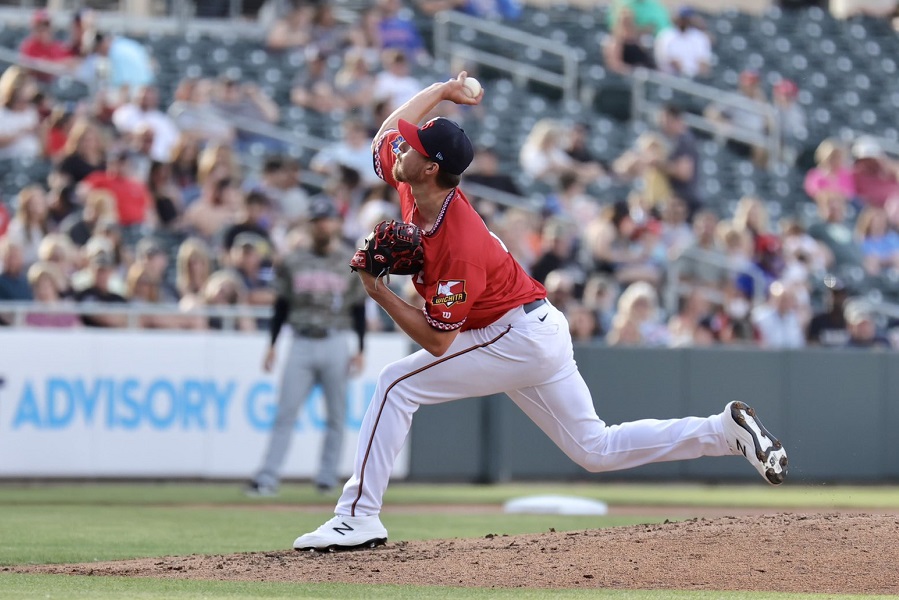 TRANSACTIONS RHP Griffin Jax promoted to the Twins. RHP Juan Minaya DFAd. LHP Bryan Sammons promoted to AAA St. Paul RHP Matt Mullenbach promoted to AAA St. Paul from the Ft. Myers complex. (He was just signed on Friday from an independent league) RHP Bailey Ober promoted to Twins from AAA St. Paul RHP Matt Canterino placed on the 7-day IL for A+ Cedar Rapids (right elbow strain) LHP Lewis Thorpe placed on the 7-day IL for AAA St. Paul (left shoulder strain) Saints Sentinel St. Paul 3, Louisville 6 Box Score Bryan Sammons 4 IP, 6 H, 4 ER, 4 BB, 2 K HR: Brent Rooker (7), Mark Contreras (1) Multi-hit games: Mark Contreras (2-for-4, HR, 2B, R, 2 RBI) Bryan Sammons' AAA debut did not go exactly as he likely would have preferred. The lefty struggled to throw strikes consistently over his four innings of work as he was worked for four walks on top of six hits. Hopefully this is an example of a pitcher getting a stinker outing out of the way before settling into a groove. The night started off hopeful as Brent Rooker launched a solo blast in the first inning to kick off the scoring. The notoriously snarky Saints twitter account claims the ball went 449 feet and who am I to call them liars? If you want to try to measure for yourself, here is the video: I wish the good news could continue but it does not. The appropriately named Bats came back to score two in the first inning. Although, one of the runs came via a walk, so maybe the name is not quite as appropriate as I thought (petition to create a team named the “Walkers” can be created by someone else who is less lazy). A Mark Contreras homer in the sixth inning put the game in reach for the Saints but the Bats fortified their lead with runs in the bottom half of the inning as well as the eighth. A rehabbing Joey Votto went 3-for-4 with a double and a triple. Naturally, the only way to beat the Saints is to have an MLB All-Star play for your team. Wind Surge Wisdom Wichita 6, Arkansas 4 Box Score Jordan Balazovic: 3 ⅓ IP, 1 H, 0 ER, 2 BB, 5 K HR: Caleb Hamilton (1, 2), Andrew Bechtold (2) Multi-hit games: Jose Miranda (2-for-3, R, BB), Jermaine Palacios (2-for-4, R), Roy Morales (2-for-4, R), Caleb Hamilton (2-for-4, 2 HR, 2 R, 4 RBI) The big news of the day in Wichita was the debut of Jordan Balazovic. The righty, along with Jhoan Duran, creates what most consider a future 1-2 punch that will lock down the Twins rotation for a number of years. That might be looking too far forward, how did he do today? Balazovic threw 62 pitches to nab 10 outs. Half of them came via the strikeout. That’s just how he does things. Unfortunately, this also came with two walks and two hit batters. That’s not how he does things. But this start was just an effort in shaking off any potential rust that Balazovic may have had and to that point he was quite successful. That was the main story on the mound, what about in the box? That belonged to Caleb Hamilton who blasted not just his first homer of the season for Wichita, but also his second. Good things do come in bunches. Not to be overshadowed, Andrew Bechtold had a home run of his own sandwiched in between Hamilton’s vulgar display of power. I should also point out that Jose Miranda dropped two hits in the game along with a walk and now is up to a terrifying .950 OPS. I cannot imagine trying to be a pitcher against Miranda during his incendiary start to the season. Kernels Nuggets Cedar Rapids 11, Fort Wayne 5 Box Score Andrew Cabezas: 5 IP, 3 H, 0 ER, 1 BB, 5 K HR: Alex Isola (1) Multi-hit games: Wander Javier (4-for-6, 3B, 2B, 4 R, 2 RBI), Trey Cabbage (2-for-4, 2B, 2 R, 2 RBI, BB), Alex Isola (2-for-3, HR, 2B, R, 4 RBI, BB), Max Smith (2-for-5) Remember all those snarky things that I said last week about the Kernels offense? Well, evidently they were not too pleased by them because they gave the TinCaps the business on Saturday. Cedar Rapids wasted no time getting the scoring started on Saturday as they burst out of the gates with three runs in the first. Gabe Snyder grounded out to plate the first run before Wander Javier decided that triples are cooler than nerdy outs. While ground outs are nerdy, scoring on passed balls are what all the popular kids do and no kid was more popular today than Javier as he waltzed home later in the inning. Things were relatively silent on the Western front in the game until the fifth inning. Trey Cabbage blasted an opposite field double that plated Javier for the second time in the game (he would score an absurd four times). The Kernels offense decided to give the TinCaps pitching staff a short breather before storming back in the 7th and 8th innings with an almost insulting amount of runs. The seventh inning saw a Cabbage single, a wild pitch, and an Alex Isola double to add three runs to their total. The eighth inning was more efficient as far as run scoring went. Javier doubled home Snyder before Alex Isola delivered his first homer of the year over the left-center field fence. While the entire focus is on the offense (as it typically will be in an 11-5 game), Andrew Cabezas deserves a shout out as well. He fired off five quiet innings with just four baserunners allowed. His season ERA now sits at an impressive 2.42. Mussel Matters Fort Myers 9, St. Lucie 4 Box Score Miguel Rodriguez: 4 IP, 3 H, 2 ER, 3 BB, 4 K HR: None Multi-hit games: Yunior Severino (2-for-5, R, RBI) Normally I would talk about something great that happened in the game or would say something vague like “the Mighty Mussels lost a close one on Saturday” but I wanted to start out by mentioning that the St. Lucie Mets committed seven (!!!) errors. Seven. How is that even possible? The Mighty Mussels took full advantage of those errors by plating nine runs during a comfortable win. Six players nabbed an RBI while all but two scored a run. That kind of consistently great output can only be matched by David Bowie. Oddly enough, only two times did the Mighty Mussels score a run off of a hit. Yunior Severino’s first inning single and Kyle Schmidt’s seventh inning triple were the sole culprits. Every other run was scored via a sacrifice fly, a ground out, or an error. Truly an unusual way to win a ballgame but hey, a win is a win. If the other team is handing you runs, then all you can do is thank them. TWINS DAILY PLAYERS OF THE DAY Twins Daily Minor League Pitcher of the Day – Andrew Cabezas, Cedar Rapids Kernels Twins Daily Minor League Hitter of the Day – Wander Javier, Cedar Rapids Kernels PROSPECT SUMMARY Here’s a look at how the Twins Daily Top 20 Twins Prospects performed: #1 - Alex Kirilloff (Minnesota) – 1-4, R #2 - Royce Lewis (Rehab) - Out for Season (torn ACL) #3 - Trevor Larnach (Minnesota) – Did not play #4 - Ryan Jeffers (Minnesota) – 1-4, HR, R, 2 RBI, K #5 - Jhoan Duran (St. Paul) – Did not pitch #6 - Jordan Balazovic (Wichita) – 3 ⅓ IP, 1 H, 0 ER, 2 BB, 5 K #7 - Keoni Cavaco (Ft. Myers) – 1-5, RBI, K #8 - Aaron Sabato (Ft. Myers) – 1-3, 2 R, 2 BB, K #9 - Matt Canterino (Cedar Rapids) – IL (right elbow strain) #10 - Blayne Enlow (Cedar Rapids) – IL (right elbow strain) #11 - Gilberto Celestino (Minnesota) – 0-3, K #12 - Brent Rooker (St. Paul) – 1-3, HR, 2 R, RBI, BB, K #13 - Matt Wallner (Cedar Rapids) – IL (wrist/hand) #14 - Misael Urbina (Ft. Myers) – 0-4, RBI, K #15 - Cole Sands (Wichita) – Did not pitch #16 - Edwar Colina (Rehab) - 60-Day IL (elbow surgery - not Tommy John) #17 - Ben Rortvedt (Minnesota) – Did not play #18 - Alerick Soularie (Complex) – N/A #19 - Jose Miranda (Wichita) – 2-3, R, BB, K #20 - Bailey Ober (Minnesota) – Did not pitch SUNDAY’S PROBABLE STARTERS St. Paul @ Iowa (11:00 AM) - TBD Arkansas @ Wichita (12:05 PM) - RHP Chris Vallimont Cedar Rapids @ Fort Wayne (11:05 AM) - RHP Ben Gross St. Lucie @ Fort Myers (10:00 AM) - LHP Brent Headrick
 -
 TRANSACTIONS OF Trey Cabbage transferred from AA Wichita to A+ Cedar Rapids RHP Juan Minaya selected by the Twins (from AAA St. Paul) RHP Cody Stashak optioned by Twins to AAA St. Paul Saints Sentinel St. Paul 6, Iowa 5 Box Score Chandler Shepherd: 3 IP, 7 H, 1 ER, 0 BB, 3 K HR: Ben Rortvedt (1), Damek Tomscha (2, 3) Multi-hit games: Drew Maggi (2-for-5, 3B, R), J.T. Riddle (2-for-4, R), Damek Tomscha (4-for-4, 2 HR, 2 R, 2 RBI) The Saints played an interesting game on Saturday. They held a comfortable lead heading into the 9th. The reason for this lead? Two homers by Damek Tomscha and another by Ben Rortvedt. Well, there were other reasons but those were the major ones. A combination of arms led by Robinson Leyer and Danny Coulombe kept the Iowa offense in check after Chandler Shepherd’s start. Leyer and Coulombe combined to punch out seven batters over four innings of work. Their lead looked safe with Andrew Vasquez coming in to close the game in the 9th but things went awry. He walked the bases loaded and walked one more batter for good measure before Derek Law relieved him. While Law allowed another run, that would be it for Iowa and the Saints were able to walk away victorious. Wind Surge Wisdom Wichita 10, Springfield 9 Box Score Josh Winder: 5 IP, 2 H, 2 ER, 1 BB, 7 K HR: Jose Miranda (6), Gilberto Celestino (2) Multi-hit games: Jose Miranda (2-for-5, HR, R, 4 RBI), B.J. Boyd (4-for-4, 2 2B, 3 R, 3 RBI) The Wind Surge played an absolute slugfest on Saturday. Josh Winder stopped Springfield cold in their tracks for the first five innings. He struck out seven while just walking one batter and somehow actually raised his ERA 1.48. He may find himself in St. Paul much sooner than later. The Wind Surge offense supported Winder early. B.J. Boyd and Jose Miranda dropped back-to-back knocks to plate two runs quickly in the 3rd inning. The offense was not finished, though. A 4th inning attack again led by Boyd and Miranda plated five more runs to give Wichita a cool 7-0 lead. This would not last. The Cardinals chipped away at this lead over the next handful of innings before taking the outright lead in the top of the 9th thanks to a two-run bomb by Juan Yepez. It seemed like this was set to be the end of the night for Wichita. Their 7-0 lead had been lost to the sands of time and the Cardinals had successfully completed an impressive comeback against all odds. Yet it was not the end. Boyd singled to top off his perfect night at the plate before Jose Miranda blasted a game-tying two-run shot. Unsatisfied with just a tie game, Gilberto Celestino stepped to the plate and sent a ball deep into right field to end the game and send the Wind Surge home with a hard-earned W in the books. Kernels Nuggets Game one: Cedar Rapids 1, Wisconsin 8 Box Score Andrew Cabezas: 4 ⅔ IP, 5 H, 3 ER, 3 BB, 6 K HR: None Multi-hit games: None The Kernels were no-hit* by Wisconsin in game one of their doubleheader. *Apparently MLB has decided that while 7 inning games count, 7 inning no-hitters do not Oddly enough, the Kernels actually held the lead first in this game. A Jair Camargo groundout scored Michael Helman thanks to some walks and a previous Wander Javier groundball that moved Helman to 3rd base. This lead did not last long. The Timber Rattlers jumped all over Andrew Cabezas in the 5th inning thanks to four straight hits. A duo of singles followed by a David Hamilton triple gave the Timber Rattlers the outright lead. This would not be the last time Wisconsin scored. The following inning saw an even bigger ambush, this time of Derek Molina who walked away with five earned runs on his ledger. Game two: Cedar Rapids 1, Wisconsin 5 Box Score Jon Olsen: 3 ⅔ IP, 4 H, 2 ER, 2 BB, 5 K HR: Trey Cabbage (3) Multi-hit games: None Well if game one could be considered an offensive struggle, game two was not much better. Kernels finally broke their hitless streak thanks to a 6th inning single by Seth Gray. I have to imagine that the hit was met with a large sarcastic applause by the Cedar Rapids faithful. Trey Cabbage decided that two straight shutouts was unacceptable and launched a solo shot in the 7th inning to save the team from this fate. Maybe there is some sort of sacrifice the Kernels could make in order to get their hits to actually fall in. I don’t know but at this point they should look into all options. Mussel Matters Fort Myers 1, Lakeland 2 Box Score Casey Legumina: 4 IP, 7 H, 2 ER, 1 BB, 4 K HR: None Multi-hit games: None The Mighty Mussels lost a close one on Saturday. Casey Legumina navigated the first three innings of the game to perfection as a few baserunners were never allowed to come in to score. The luck broke in the 4th inning as a bases loaded ground-rule double scored the only two runs that would be needed to win the game. The Mighty Mussels offense only put up three hits in the game but that is somewhat misleading. Fort Myers hitters walked five times to add up to eight times in which a Mighty Mussels batter reached base safely. The offense was simply not able to score a run outside of a bases loaded walk by Charles Mack. Sean Mooney replaced Legumina as the first reliever out of the bullpen and continued to dominate. He struck out six over three innings while only allowing a single hit. His ERA is now down to 1.17 on the season. If there is such a thing as a “quality loss” in baseball, this game may best qualify for it. Fort Myers pitchers struck out 11 batters while only walking one with just two earned runs allowed. The offense gave themselves chances but were just unable to push across the runs needed to win the game. TWINS DAILY PLAYERS OF THE DAY Twins Daily Minor League Pitcher of the Day – Josh Winder Twins Daily Minor League Hitter of the Day – B.J. Boyd PROSPECT SUMMARY Here’s a look at how the Twins Daily Top 20 Twins Prospects performed: #1 - Alex Kirilloff (Minnesota) – 1-3, 3 K #2 - Royce Lewis (Rehab) - Out for Season (torn ACL) #3 - Trevor Larnach (Minnesota) – 1-2, HR, R, RBI, 2 BB #4 - Ryan Jeffers (St. Paul) – 0-3, BB, R, K #5 - Jhoan Duran (St. Paul) – Did not pitch #6 - Jordan Balazovic (Wichita) – Injured List (back) #7 - Keoni Cavaco (Ft. Myers) – Did not play #8 - Aaron Sabato (Ft. Myers) – 0-4, 2 K #9 - Matt Canterino (Cedar Rapids) – Did not pitch #10 - Blayne Enlow (Cedar Rapids) – Did not pitch #11 - Gilberto Celestino (Wichita) – 1-5, HR, R, RBI, 2 K #12 - Brent Rooker (St. Paul) – 1-4, 3 K #13 - Matt Wallner (Cedar Rapids) – Did not play #14 - Misael Urbina (Ft. Myers) – Did not play #15 - Cole Sands (Wichita) – Did not pitch #16 - Edwar Colina (Rehab) - 60-Day IL (elbow) #17 - Ben Rortvedt (St. Paul) – 1-4, HR, R, 2 RBI #18 - Alerick Soularie (Complex) – N/A #19 - Jose Miranda (Wichita) – 2-4, HR, R, 4 RBI, K #20 - Bailey Ober (St. Paul) – Did not pitch SUNDAY’S PROBABLE STARTERS Fort Myers @ Lakeland (11:00 AM) - RHP Hunter McMahon Springfield @ Wichita (12:05 PM) - LHP Bryan Sammons St. Paul @ Iowa (12:08 PM) - RHP Bailey Ober Wisconsin @ Cedar Rapids (1:05 PM) - RHP Ben Gross
 -
One team had a dramatic walk-off homer while another was no-hit, kind of. I explain it all in this edition of the minor league report. TRANSACTIONS OF Trey Cabbage transferred from AA Wichita to A+ Cedar Rapids RHP Juan Minaya selected by the Twins (from AAA St. Paul) RHP Cody Stashak optioned by Twins to AAA St. Paul Saints Sentinel St. Paul 6, Iowa 5 Box Score Chandler Shepherd: 3 IP, 7 H, 1 ER, 0 BB, 3 K HR: Ben Rortvedt (1), Damek Tomscha (2, 3) Multi-hit games: Drew Maggi (2-for-5, 3B, R), J.T. Riddle (2-for-4, R), Damek Tomscha (4-for-4, 2 HR, 2 R, 2 RBI) The Saints played an interesting game on Saturday. They held a comfortable lead heading into the 9th. The reason for this lead? Two homers by Damek Tomscha and another by Ben Rortvedt. Well, there were other reasons but those were the major ones. A combination of arms led by Robinson Leyer and Danny Coulombe kept the Iowa offense in check after Chandler Shepherd’s start. Leyer and Coulombe combined to punch out seven batters over four innings of work. Their lead looked safe with Andrew Vasquez coming in to close the game in the 9th but things went awry. He walked the bases loaded and walked one more batter for good measure before Derek Law relieved him. While Law allowed another run, that would be it for Iowa and the Saints were able to walk away victorious. Wind Surge Wisdom Wichita 10, Springfield 9 Box Score Josh Winder: 5 IP, 2 H, 2 ER, 1 BB, 7 K HR: Jose Miranda (6), Gilberto Celestino (2) Multi-hit games: Jose Miranda (2-for-5, HR, R, 4 RBI), B.J. Boyd (4-for-4, 2 2B, 3 R, 3 RBI) The Wind Surge played an absolute slugfest on Saturday. Josh Winder stopped Springfield cold in their tracks for the first five innings. He struck out seven while just walking one batter and somehow actually raised his ERA 1.48. He may find himself in St. Paul much sooner than later. The Wind Surge offense supported Winder early. B.J. Boyd and Jose Miranda dropped back-to-back knocks to plate two runs quickly in the 3rd inning. The offense was not finished, though. A 4th inning attack again led by Boyd and Miranda plated five more runs to give Wichita a cool 7-0 lead. This would not last. The Cardinals chipped away at this lead over the next handful of innings before taking the outright lead in the top of the 9th thanks to a two-run bomb by Juan Yepez. It seemed like this was set to be the end of the night for Wichita. Their 7-0 lead had been lost to the sands of time and the Cardinals had successfully completed an impressive comeback against all odds. Yet it was not the end. Boyd singled to top off his perfect night at the plate before Jose Miranda blasted a game-tying two-run shot. Unsatisfied with just a tie game, Gilberto Celestino stepped to the plate and sent a ball deep into right field to end the game and send the Wind Surge home with a hard-earned W in the books. Kernels Nuggets Game one: Cedar Rapids 1, Wisconsin 8 Box Score Andrew Cabezas: 4 ⅔ IP, 5 H, 3 ER, 3 BB, 6 K HR: None Multi-hit games: None The Kernels were no-hit* by Wisconsin in game one of their doubleheader. *Apparently MLB has decided that while 7 inning games count, 7 inning no-hitters do not Oddly enough, the Kernels actually held the lead first in this game. A Jair Camargo groundout scored Michael Helman thanks to some walks and a previous Wander Javier groundball that moved Helman to 3rd base. This lead did not last long. The Timber Rattlers jumped all over Andrew Cabezas in the 5th inning thanks to four straight hits. A duo of singles followed by a David Hamilton triple gave the Timber Rattlers the outright lead. This would not be the last time Wisconsin scored. The following inning saw an even bigger ambush, this time of Derek Molina who walked away with five earned runs on his ledger. Game two: Cedar Rapids 1, Wisconsin 5 Box Score Jon Olsen: 3 ⅔ IP, 4 H, 2 ER, 2 BB, 5 K HR: Trey Cabbage (3) Multi-hit games: None Well if game one could be considered an offensive struggle, game two was not much better. Kernels finally broke their hitless streak thanks to a 6th inning single by Seth Gray. I have to imagine that the hit was met with a large sarcastic applause by the Cedar Rapids faithful. Trey Cabbage decided that two straight shutouts was unacceptable and launched a solo shot in the 7th inning to save the team from this fate. Maybe there is some sort of sacrifice the Kernels could make in order to get their hits to actually fall in. I don’t know but at this point they should look into all options. Mussel Matters Fort Myers 1, Lakeland 2 Box Score Casey Legumina: 4 IP, 7 H, 2 ER, 1 BB, 4 K HR: None Multi-hit games: None The Mighty Mussels lost a close one on Saturday. Casey Legumina navigated the first three innings of the game to perfection as a few baserunners were never allowed to come in to score. The luck broke in the 4th inning as a bases loaded ground-rule double scored the only two runs that would be needed to win the game. The Mighty Mussels offense only put up three hits in the game but that is somewhat misleading. Fort Myers hitters walked five times to add up to eight times in which a Mighty Mussels batter reached base safely. The offense was simply not able to score a run outside of a bases loaded walk by Charles Mack. Sean Mooney replaced Legumina as the first reliever out of the bullpen and continued to dominate. He struck out six over three innings while only allowing a single hit. His ERA is now down to 1.17 on the season. If there is such a thing as a “quality loss” in baseball, this game may best qualify for it. Fort Myers pitchers struck out 11 batters while only walking one with just two earned runs allowed. The offense gave themselves chances but were just unable to push across the runs needed to win the game. TWINS DAILY PLAYERS OF THE DAY Twins Daily Minor League Pitcher of the Day – Josh Winder Twins Daily Minor League Hitter of the Day – B.J. Boyd PROSPECT SUMMARY Here’s a look at how the Twins Daily Top 20 Twins Prospects performed: #1 - Alex Kirilloff (Minnesota) – 1-3, 3 K #2 - Royce Lewis (Rehab) - Out for Season (torn ACL) #3 - Trevor Larnach (Minnesota) – 1-2, HR, R, RBI, 2 BB #4 - Ryan Jeffers (St. Paul) – 0-3, BB, R, K #5 - Jhoan Duran (St. Paul) – Did not pitch #6 - Jordan Balazovic (Wichita) – Injured List (back) #7 - Keoni Cavaco (Ft. Myers) – Did not play #8 - Aaron Sabato (Ft. Myers) – 0-4, 2 K #9 - Matt Canterino (Cedar Rapids) – Did not pitch #10 - Blayne Enlow (Cedar Rapids) – Did not pitch #11 - Gilberto Celestino (Wichita) – 1-5, HR, R, RBI, 2 K #12 - Brent Rooker (St. Paul) – 1-4, 3 K #13 - Matt Wallner (Cedar Rapids) – Did not play #14 - Misael Urbina (Ft. Myers) – Did not play #15 - Cole Sands (Wichita) – Did not pitch #16 - Edwar Colina (Rehab) - 60-Day IL (elbow) #17 - Ben Rortvedt (St. Paul) – 1-4, HR, R, 2 RBI #18 - Alerick Soularie (Complex) – N/A #19 - Jose Miranda (Wichita) – 2-4, HR, R, 4 RBI, K #20 - Bailey Ober (St. Paul) – Did not pitch SUNDAY’S PROBABLE STARTERS Fort Myers @ Lakeland (11:00 AM) - RHP Hunter McMahon Springfield @ Wichita (12:05 PM) - LHP Bryan Sammons St. Paul @ Iowa (12:08 PM) - RHP Bailey Ober Wisconsin @ Cedar Rapids (1:05 PM) - RHP Ben Gross View full article
-
 TRANSACTIONS None. Saints Sentinel St. Paul 1, Indianapolis 5 Box Score Jhoan Duran: 3 IP, 4 H, 1 ER, 1 BB, 6 K HR: Jimmy Kerrigan (3) Multi-hit games: Nick Gordon (2-for-3, BB) Even if the Saints got blown out by 20 in this game, the story still would have been the 2021 debut of top prospect Jhoan Duran. The #86 overall prospect by MLB Pipeline possesses the kind of raw stuff that likely intimidates his own catchers. Duran pitched about as well as he was going to given his pitch limit. His six strikeouts over just nine total outs reflect exactly the sort of upside he can bring on the mound. The St. Paul radar gun had his fastball velocity consistently at 102 MPH with an occasional 103 in the mix. Toby Gardenhire himself all but confirms that the radar gun is juiced at higher velocities, however. It is more likely that Duran was only throwing 100. In any case, it is great to have Duran back on the mound and it seems as if it is only a matter of time before he finds himself in Minneapolis. Jimmy Kerrigan continued his power surge with his second homer in as many games. Old friend Chase De Jong threw a curveball that caught a bit too much of the plate and the righty did not miss it. That homer proved to be the only run the Saints could score. A barrage of assorted relievers followed Duran’s start on Saturday. Of note was Juan Minaya who allowed a run but struck out five over his three innings of work. The Saints pitching staff struck out 14 batters in total. Wind Surge Wisdom Wichita 5, Tulsa 1 Box Score Chris Vallimont: 4 ⅔ IP, 1 H, 1 ER, 2 BB, 8 K HR: None Multi-hit games: Mark Conteras (2-for-4, R), Jermaine Palacios (2-for-4, R, RBI), Ernie De La Trinidad (2-for-5, 2B, R, RBI), Aaron Whitefield (3-for-4, R, RBI) While all the attention was on Jhoan Duran, Chris Vallimont submitted his objection to such an isolated focus. Vallimont’s AA debut went smoothly as a solo homerun was the only blemish on his sheet for the night. The eight strikeouts were a nice touch as well. But games cannot solely be won by the pitcher. The Wind Surge offense provided all that was needed for a successful team effort. Jermaine Palacios knotted the game at one run with a single in the 2nd before Aaron Whitefield gave Wichita the outright lead with his own single in the 4th. Uncomfortable with just a one-run lead, the Wind Surge added on in the 6th inning as well. Ernie De La Trinidad doubled home a run, Sherman Johnson singled home yet another, and Jose Miranda brought in yet another one with a sacrifice fly. Calvin Faucher and Brandon Koch took over after Vallimont’s day was finished and they made sure his effort was not to be made in vain. Faucher and Koch combined for the final 13 outs with seven of those coming via the strikeout. Kernels Nuggets Cedar Rapids 5, Beloit 8 Box Score Andrew Cabezas: 3 ⅔ IP, 5 H, 2 ER, 0 BB, 4 K HR: Spencer Steer (3), Gabe Synder (5) Multi-hit games: Gabe Synder (3-for-4, HR, 2B, R, 2 RBI) It was another back-and-forth game for the Cedar Rapids Kernels. Their penchant for such a battle is becoming quite clear (and likely quite tiring for them). It was looking to be all Snappers early as a homer by Griffin Conine (yes, he is the son of former MLB-er Jeff Conine) and a double by Thomas Jones gave Beloit the first lead. This would hold up until the 6th inning when the indomitable Spencer Steer launched a three-run homer to give Cedar Rapids the lead. Steer has cooled down somewhat since the author last wrote the minor league report but he is still hitting well over .300 on the season. It is looking like it may only be a matter of time before he is packing his bags for Kansas. The lead did not hold for long. Beloit struck back with two runs of their own in the top half of the 7th to ensure that the Kernels would not command the lead for long. The Snappers would add even more runs (four to be exact) in the following inning to all but end the game. Matt Wallner left the game in the 6th inning with an apparent injury. It is unclear exactly why he left but we hope that it was just a precautionary move. Mussel Matters Fort Myers 0, Tampa 13 Box Score Louie Varland: 3 IP, 7 H, 4 ER, 2 BB, 6 K HR: None Multi-hit games: Edouard Julien (2-for-4, 2B) It was a game that got ugly quick for the Mighty Mussels and never found its way back on the tracks. The game was so ugly, in fact, that you did not even realize that I mixed my sayings in the previous sentence. Starter Louie Varland found himself in trouble in the 2nd inning as a two-run homer off the bat of Chad Bell put the Mighty Mussels in a quick hole. A few more knocks by the Tarpons doubled the deficit before Varland could escape the inning. Four runs allowed would be a pleasant dream compared to the 13 that Tampa ended up with. The Tampa Tarpons took a “Earth Wind and Fire” offensive approach into the game. That is to say, they destroyed the competition with an unfathomable amount of great singles. The offense fared little better than the pitching for Ft. Myers. Edouard Julien supplied the sole extra-base hit of the game for the Mighty Mussels and the team was only able to scrape up six hits in total. Strikeouts, however, were plentiful. The platter of Tarpon arms were able to punch out Ft. Myers hitters a total of 16 times in the game. The best thing to be said is that Sunday is a new day with a clean slate. We shall see if the Mighty Mussels seize that opportunity. TWINS DAILY PLAYERS OF THE DAY Twins Daily Minor League Pitcher of the Day – Chris Vallimont Twins Daily Minor League Hitter of the Day – Aaron Whitefield PROSPECT SUMMARY Here’s a look at how the Twins Daily Top 20 Twins Prospects performed: #1 - Alex Kirilloff (Minnesota) – 1-3, RBI, BB #2 - Royce Lewis (Rehab) - Out for Season (torn ACL) #3 - Trevor Larnach (Minnesota) – 0-4, 2 K #4 - Ryan Jeffers (St. Paul) – 0-4, K #5 - Jhoan Duran (St. Paul) – 3 IP, 4 H, 1 ER, 1 BB, 6 K #6 - Jordan Balazovic (Wichita) – Injured List (back) #7 - Keoni Cavaco (Ft. Myers) – 0-4, 3 K #8 - Aaron Sabato (Ft. Myers) – 1-4 #9 - Matt Canterino (Cedar Rapids) – Did not pitch #10 - Blayne Enlow (Cedar Rapids) – Did not pitch #11 - Gilberto Celestino (Wichita) – 1-5, K #12 - Brent Rooker (St. Paul) – Did not play #13 - Matt Wallner (Cedar Rapids) – 1-3, K (left game early) #14 - Misael Urbina (Ft. Myers) – 0-4, 2 K #15 - Cole Sands (Wichita) – Did not pitch #16 - Edwar Colina (Rehab) - 60-Day IL (elbow) #17 - Ben Rortvedt (St. Paul) – Did not play #18 - Alerick Soularie (Complex) – N/A #19 - Jose Miranda (Wichita) – 0-4, RBI, K #20 - Bailey Ober (St. Paul) – Did not pitch SUNDAY’S PROBABLE STARTERS Fort Myers @ Tampa (10:00 PM) - TBD Wichita @ Tulsa (12:05 PM) - RHP Austin Schulfer Beloit @ Cedar Rapids (1:05 PM) - RHP Ben Gross Indianapolis @ St. Paul (1:05 PM) - RHP Griffin Jax
 -
Top pitching prospect Jhoan Duran made his 2021 debut for the St. Paul Saints this Saturday. Read all about how his start went along with all the other action in the Twins minor league system. TRANSACTIONS None. Saints Sentinel St. Paul 1, Indianapolis 5 Box Score Jhoan Duran: 3 IP, 4 H, 1 ER, 1 BB, 6 K HR: Jimmy Kerrigan (3) Multi-hit games: Nick Gordon (2-for-3, BB) Even if the Saints got blown out by 20 in this game, the story still would have been the 2021 debut of top prospect Jhoan Duran. The #86 overall prospect by MLB Pipeline possesses the kind of raw stuff that likely intimidates his own catchers. Duran pitched about as well as he was going to given his pitch limit. His six strikeouts over just nine total outs reflect exactly the sort of upside he can bring on the mound. The St. Paul radar gun had his fastball velocity consistently at 102 MPH with an occasional 103 in the mix. Toby Gardenhire himself all but confirms that the radar gun is juiced at higher velocities, however. It is more likely that Duran was only throwing 100. In any case, it is great to have Duran back on the mound and it seems as if it is only a matter of time before he finds himself in Minneapolis. Jimmy Kerrigan continued his power surge with his second homer in as many games. Old friend Chase De Jong threw a curveball that caught a bit too much of the plate and the righty did not miss it. That homer proved to be the only run the Saints could score. A barrage of assorted relievers followed Duran’s start on Saturday. Of note was Juan Minaya who allowed a run but struck out five over his three innings of work. The Saints pitching staff struck out 14 batters in total. Wind Surge Wisdom Wichita 5, Tulsa 1 Box Score Chris Vallimont: 4 ⅔ IP, 1 H, 1 ER, 2 BB, 8 K HR: None Multi-hit games: Mark Conteras (2-for-4, R), Jermaine Palacios (2-for-4, R, RBI), Ernie De La Trinidad (2-for-5, 2B, R, RBI), Aaron Whitefield (3-for-4, R, RBI) While all the attention was on Jhoan Duran, Chris Vallimont submitted his objection to such an isolated focus. Vallimont’s AA debut went smoothly as a solo homerun was the only blemish on his sheet for the night. The eight strikeouts were a nice touch as well. But games cannot solely be won by the pitcher. The Wind Surge offense provided all that was needed for a successful team effort. Jermaine Palacios knotted the game at one run with a single in the 2nd before Aaron Whitefield gave Wichita the outright lead with his own single in the 4th. Uncomfortable with just a one-run lead, the Wind Surge added on in the 6th inning as well. Ernie De La Trinidad doubled home a run, Sherman Johnson singled home yet another, and Jose Miranda brought in yet another one with a sacrifice fly. Calvin Faucher and Brandon Koch took over after Vallimont’s day was finished and they made sure his effort was not to be made in vain. Faucher and Koch combined for the final 13 outs with seven of those coming via the strikeout. Kernels Nuggets Cedar Rapids 5, Beloit 8 Box Score Andrew Cabezas: 3 ⅔ IP, 5 H, 2 ER, 0 BB, 4 K HR: Spencer Steer (3), Gabe Synder (5) Multi-hit games: Gabe Synder (3-for-4, HR, 2B, R, 2 RBI) It was another back-and-forth game for the Cedar Rapids Kernels. Their penchant for such a battle is becoming quite clear (and likely quite tiring for them). It was looking to be all Snappers early as a homer by Griffin Conine (yes, he is the son of former MLB-er Jeff Conine) and a double by Thomas Jones gave Beloit the first lead. This would hold up until the 6th inning when the indomitable Spencer Steer launched a three-run homer to give Cedar Rapids the lead. Steer has cooled down somewhat since the author last wrote the minor league report but he is still hitting well over .300 on the season. It is looking like it may only be a matter of time before he is packing his bags for Kansas. The lead did not hold for long. Beloit struck back with two runs of their own in the top half of the 7th to ensure that the Kernels would not command the lead for long. The Snappers would add even more runs (four to be exact) in the following inning to all but end the game. Matt Wallner left the game in the 6th inning with an apparent injury. It is unclear exactly why he left but we hope that it was just a precautionary move. Mussel Matters Fort Myers 0, Tampa 13 Box Score Louie Varland: 3 IP, 7 H, 4 ER, 2 BB, 6 K HR: None Multi-hit games: Edouard Julien (2-for-4, 2B) It was a game that got ugly quick for the Mighty Mussels and never found its way back on the tracks. The game was so ugly, in fact, that you did not even realize that I mixed my sayings in the previous sentence. Starter Louie Varland found himself in trouble in the 2nd inning as a two-run homer off the bat of Chad Bell put the Mighty Mussels in a quick hole. A few more knocks by the Tarpons doubled the deficit before Varland could escape the inning. Four runs allowed would be a pleasant dream compared to the 13 that Tampa ended up with. The Tampa Tarpons took a “Earth Wind and Fire” offensive approach into the game. That is to say, they destroyed the competition with an unfathomable amount of great singles. The offense fared little better than the pitching for Ft. Myers. Edouard Julien supplied the sole extra-base hit of the game for the Mighty Mussels and the team was only able to scrape up six hits in total. Strikeouts, however, were plentiful. The platter of Tarpon arms were able to punch out Ft. Myers hitters a total of 16 times in the game. The best thing to be said is that Sunday is a new day with a clean slate. We shall see if the Mighty Mussels seize that opportunity. TWINS DAILY PLAYERS OF THE DAY Twins Daily Minor League Pitcher of the Day – Chris Vallimont Twins Daily Minor League Hitter of the Day – Aaron Whitefield PROSPECT SUMMARY Here’s a look at how the Twins Daily Top 20 Twins Prospects performed: #1 - Alex Kirilloff (Minnesota) – 1-3, RBI, BB #2 - Royce Lewis (Rehab) - Out for Season (torn ACL) #3 - Trevor Larnach (Minnesota) – 0-4, 2 K #4 - Ryan Jeffers (St. Paul) – 0-4, K #5 - Jhoan Duran (St. Paul) – 3 IP, 4 H, 1 ER, 1 BB, 6 K #6 - Jordan Balazovic (Wichita) – Injured List (back) #7 - Keoni Cavaco (Ft. Myers) – 0-4, 3 K #8 - Aaron Sabato (Ft. Myers) – 1-4 #9 - Matt Canterino (Cedar Rapids) – Did not pitch #10 - Blayne Enlow (Cedar Rapids) – Did not pitch #11 - Gilberto Celestino (Wichita) – 1-5, K #12 - Brent Rooker (St. Paul) – Did not play #13 - Matt Wallner (Cedar Rapids) – 1-3, K (left game early) #14 - Misael Urbina (Ft. Myers) – 0-4, 2 K #15 - Cole Sands (Wichita) – Did not pitch #16 - Edwar Colina (Rehab) - 60-Day IL (elbow) #17 - Ben Rortvedt (St. Paul) – Did not play #18 - Alerick Soularie (Complex) – N/A #19 - Jose Miranda (Wichita) – 0-4, RBI, K #20 - Bailey Ober (St. Paul) – Did not pitch SUNDAY’S PROBABLE STARTERS Fort Myers @ Tampa (10:00 PM) - TBD Wichita @ Tulsa (12:05 PM) - RHP Austin Schulfer Beloit @ Cedar Rapids (1:05 PM) - RHP Ben Gross Indianapolis @ St. Paul (1:05 PM) - RHP Griffin Jax View full article
-
The games on Saturday were split into two groups; laughers that were finished before the game ended and nail-biters that ended in the final plate appearance. All of that and more in this edition of the minor league report. TRANSACTIONS C David Bañuelos activated from the temporary inactive roster (he is now the father of a baby boy. Congratulations to Bañuelos!) OF Rob Refsynder selected from AAA St. Paul by the Minnesota Twins Saints Sentinel St. Paul 2, Iowa 1 Box Score Charlie Barnes: 4 IP, 3 H, 1 ER, 3 BB, 4 K HR: Ryan Jeffers (3) Multi-hit games: Ryan Jeffers (2-for-4, HR, R, RBI) The Saints and Cubs were locked into a pitching clinic for much of the game on Saturday. Both teams combined for just two runs over seven hits through the first seven innings of the game. Keon Broxton put the first run on the board with a 2nd inning single but was thrown out attempting to stretch the hit into a double. Broxton has struggled so far at AAA but he may find himself with the Twins due to injuries in the outfield (hey that sounds like a movie title). There was a scary moment in the top half of the 2nd inning as Brent Rooker crashed into the wall to make a great catch but was slow to get up. He eventually was able to walk off the field on his own but needed to leave the game. We hope that Rooker was not seriously hurt and can find the field again soon. Luke Farrell dominated out of the bullpen as he struck out five men over his two innings of work. He may end up joining the Twins soon if they cannot sort out their bullpen issues. Cody Stashak added four outs of his own and he looked much better in this outing compared to his 2021 performance in the majors. The game remained deadlocked at 1-1 heading into the 9th. The Cubs put together a quick rally thanks to a single and an error. They were undone, however, thanks to a clutch double play that kept the game knotted. In the bottom half of the inning, as it happens to occur in baseball, the Saints dunked home the remaining momentum as Ryan Jeffers sent a baseball deep into the night to walk it off for the Saints. Wind Surge Wisdom Wichita 0, Amarillo 8 Box Score Bryan Sammons: 5 IP, 4 H, 2 ER, 2 BB, 5 K HR: None Multi-hit games: Ernie De La Trinidad (2-for-3) The Wind Surge suffered a rare defeat on Saturday as the Amarillo Sod Poodles (yes, that is a real name) beat Wichita thanks to a “1000 paper cuts” attack method. The Sod Poodles scored what most would call a notable amount of times as they pounded out eight runs with five different innings seeing a run increase. Two of those scoring events came due to homers as both Luis Alejandro Basabe and Dominic Miroglio flexed some muscle and hit the ball out of the park. While eight runs will win you a good number of ball games, the Sod Poodles really just needed one as the Wind Surge offense was held completely in check. No Wichita hitter nabbed an extra-base hit and only one (Ernie De La Trinidad) found himself on base on more than one occasion. No Wichita pitcher was left unscathed as all three arms (Bryan Sammons, Rob Whalen, and Ryan Mason) allowed multiple runs to score. For Whalen, Saturday’s outing marked his first in the minors since 2018. Whalen had retired from baseball in 2019 due to depression and anxiety but came back in 2020 after signing a minor league deal with the Mets. Whalen was set to pitch for the Atlantic league this season but inked a minor league deal a handful of days ago with the Twins. It is great to see Whalen back in baseball and we wish him the best in his battle with mental health. Kernels Nuggets Cedar Rapids 6, Quad Cities 7 Box Score Matt Canterino: 5 IP, 3 H, 1 ER, 1 BB, 9 K HR: Gabe Snyder (3), Trey Cabbage (2), Michael Helman (1) Multi-hit games: Matt Wallner (2-for-4), Gabe Snyder (2-for-4, HR, 2 R, RBI), Michael Helman (2-for-4, HR, 2B, R, 2 RBI) The Kernels and River Bandits played an absolute dogfight of a game on Saturday. Matt Canterino shut things down for the Kernels to begin as he allowed just one earned run over five innings with a career-high nine strikeouts. His prospects of pitching with the Twins in 2021 are uncertain but it definitely seems as if he is primed for a strong 2021 debut. A barrage of extra base hits gave the Kernels a respectable lead during the first seven innings. Gabe Snyder and Trey Cabbage both sent solo shots out of the park in the 2nd inning and Michael Helman hit his own homer in the 4th. Helman decided that just hitting a homerun was not enough so he doubled home another run in the 6th to add a cherry on top of the lead. However, seven innings is not a complete ballgame (well, unless they are playing a doubleheader but you get what I mean). The River Bandits took advantage of poor defense in the 8th inning to tie the game before a Seuly Matias single walked-off the Kernels in the 9th. Cedar Rapids had been up by as much as four runs at one point. It is hard to blame the Kernels offense for this loss. Four different hitters reached base multiple times and they banged out five extra-base hits in total. Spencer Steer was especially effective as the leadoff hitter as he reached base three times. He is now hitting a cool .364 on the season. Mussel Matters Fort Myers 0, Clearwater 10 Box Score Sawyer Gipson-Long: 3 IP, 5 H, 4 ER, 3 BB, 3 K HR: None Multi-hit games: Miseal Urbina (2-for-4) The Fort Myers Mussels fell down early in this affair and were not able to dig themselves out. The game barely had begun before Miracle starter Sawyer Gipson-Long was in trouble. The first inning had everything. Numerous errors, extra-base hits, and base-running shenanigans had the Miracle down by five before they even realized what was going on. Much like the Wind Surge, this was too much for the Miracle offense to handle. No Miracle batter earned an extra-base hit, they did not walk once, and the Fort Myers offense whiffed 12 times on the day. It is fair to say that it was not their best performance. To find a silver lining (something we should all do), Ryan Schreve was lights out in relief of Gipson-Long. He punched out four batters over three innings and did not allow a single baserunner in his outing. If not for Canterino, Schreve may have taken home the title for our pitcher of the day. I’ll let the Might Mussels own Twitter account describe how the game went: TWINS DAILY PLAYERS OF THE DAY Twins Daily Minor League Pitcher of the Day – Matt Canterino Twins Daily Minor League Hitter of the Day – Michael Helman PROSPECT SUMMARY Here’s a look at how the Twins Daily Top 20 Twins Prospects performed: #1 - Alex Kirilloff (Minnesota) – Injured List (wrist) #2 - Royce Lewis (Rehab) - Out for Season (torn ACL) #3 - Trevor Larnach (Minnesota) – Did not play #4 - Ryan Jeffers (St. Paul) – 2-4, HR, R, RBI, #5 - Jhoan Duran (St. Paul) – Injured List #6 - Jordan Balazovic (Wichita) – Injured List (back) #7 - Keoni Cavaco (Ft. Myers) – 1-4, 2 K #8 - Aaron Sabato (Ft. Myers) – 0-4, 2 K #9 - Matt Canterino (Cedar Rapids) – 5 IP, 3 H, 1 ER, 1 BB, 9 K #10 - Blayne Enlow (Cedar Rapids) – Did not pitch #11 - Gilberto Celestino (Wichita) – Did not play #12 - Brent Rooker (St. Paul) – 0-0, BB (left game early) #13 - Matt Wallner (Cedar Rapids) – 2-4, K #14 - Misael Urbina (Ft. Myers) – 2-4, SB #15 - Cole Sands (Wichita) – Did not pitch #16 - Edwar Colina (Rehab) - 60-Day IL (elbow) #17 - Ben Rortvedt (Minnesota) – Did not play #18 - Alerick Soularie (Complex) – N/A #19 - Jose Miranda (Wichita) – 0-3 #20 - Bailey Ober (St. Paul) – Did not pitch SUNDAY’S PROBABLE STARTERS Clearwater @ Fort Myers (10:00 PM) - RHP Louie Varland Cedar Rapids @ Quad Cities (12:00 PM) - RHP Andrew Cabezas Amarillo @ Wichita (12:05 PM) - RHP Cole Sands Iowa @ St. Paul (1:05 PM) - RHP Randy Dobnak View full article
-
Minor League Report (5/15): Double Duds and Double Walk-Offs
Matt Braun posted an article in Minor Leagues
 TRANSACTIONS C David Bañuelos activated from the temporary inactive roster (he is now the father of a baby boy. Congratulations to Bañuelos!) OF Rob Refsynder selected from AAA St. Paul by the Minnesota Twins Saints Sentinel St. Paul 2, Iowa 1 Box Score Charlie Barnes: 4 IP, 3 H, 1 ER, 3 BB, 4 K HR: Ryan Jeffers (3) Multi-hit games: Ryan Jeffers (2-for-4, HR, R, RBI) The Saints and Cubs were locked into a pitching clinic for much of the game on Saturday. Both teams combined for just two runs over seven hits through the first seven innings of the game. Keon Broxton put the first run on the board with a 2nd inning single but was thrown out attempting to stretch the hit into a double. Broxton has struggled so far at AAA but he may find himself with the Twins due to injuries in the outfield (hey that sounds like a movie title). There was a scary moment in the top half of the 2nd inning as Brent Rooker crashed into the wall to make a great catch but was slow to get up. He eventually was able to walk off the field on his own but needed to leave the game. We hope that Rooker was not seriously hurt and can find the field again soon. Luke Farrell dominated out of the bullpen as he struck out five men over his two innings of work. He may end up joining the Twins soon if they cannot sort out their bullpen issues. Cody Stashak added four outs of his own and he looked much better in this outing compared to his 2021 performance in the majors. The game remained deadlocked at 1-1 heading into the 9th. The Cubs put together a quick rally thanks to a single and an error. They were undone, however, thanks to a clutch double play that kept the game knotted. In the bottom half of the inning, as it happens to occur in baseball, the Saints dunked home the remaining momentum as Ryan Jeffers sent a baseball deep into the night to walk it off for the Saints. Wind Surge Wisdom Wichita 0, Amarillo 8 Box Score Bryan Sammons: 5 IP, 4 H, 2 ER, 2 BB, 5 K HR: None Multi-hit games: Ernie De La Trinidad (2-for-3) The Wind Surge suffered a rare defeat on Saturday as the Amarillo Sod Poodles (yes, that is a real name) beat Wichita thanks to a “1000 paper cuts” attack method. The Sod Poodles scored what most would call a notable amount of times as they pounded out eight runs with five different innings seeing a run increase. Two of those scoring events came due to homers as both Luis Alejandro Basabe and Dominic Miroglio flexed some muscle and hit the ball out of the park. While eight runs will win you a good number of ball games, the Sod Poodles really just needed one as the Wind Surge offense was held completely in check. No Wichita hitter nabbed an extra-base hit and only one (Ernie De La Trinidad) found himself on base on more than one occasion. No Wichita pitcher was left unscathed as all three arms (Bryan Sammons, Rob Whalen, and Ryan Mason) allowed multiple runs to score. For Whalen, Saturday’s outing marked his first in the minors since 2018. Whalen had retired from baseball in 2019 due to depression and anxiety but came back in 2020 after signing a minor league deal with the Mets. Whalen was set to pitch for the Atlantic league this season but inked a minor league deal a handful of days ago with the Twins. It is great to see Whalen back in baseball and we wish him the best in his battle with mental health. Kernels Nuggets Cedar Rapids 6, Quad Cities 7 Box Score Matt Canterino: 5 IP, 3 H, 1 ER, 1 BB, 9 K HR: Gabe Snyder (3), Trey Cabbage (2), Michael Helman (1) Multi-hit games: Matt Wallner (2-for-4), Gabe Snyder (2-for-4, HR, 2 R, RBI), Michael Helman (2-for-4, HR, 2B, R, 2 RBI) The Kernels and River Bandits played an absolute dogfight of a game on Saturday. Matt Canterino shut things down for the Kernels to begin as he allowed just one earned run over five innings with a career-high nine strikeouts. His prospects of pitching with the Twins in 2021 are uncertain but it definitely seems as if he is primed for a strong 2021 debut. A barrage of extra base hits gave the Kernels a respectable lead during the first seven innings. Gabe Snyder and Trey Cabbage both sent solo shots out of the park in the 2nd inning and Michael Helman hit his own homer in the 4th. Helman decided that just hitting a homerun was not enough so he doubled home another run in the 6th to add a cherry on top of the lead. However, seven innings is not a complete ballgame (well, unless they are playing a doubleheader but you get what I mean). The River Bandits took advantage of poor defense in the 8th inning to tie the game before a Seuly Matias single walked-off the Kernels in the 9th. Cedar Rapids had been up by as much as four runs at one point. It is hard to blame the Kernels offense for this loss. Four different hitters reached base multiple times and they banged out five extra-base hits in total. Spencer Steer was especially effective as the leadoff hitter as he reached base three times. He is now hitting a cool .364 on the season. Mussel Matters Fort Myers 0, Clearwater 10 Box Score Sawyer Gipson-Long: 3 IP, 5 H, 4 ER, 3 BB, 3 K HR: None Multi-hit games: Miseal Urbina (2-for-4) The Fort Myers Mussels fell down early in this affair and were not able to dig themselves out. The game barely had begun before Miracle starter Sawyer Gipson-Long was in trouble. The first inning had everything. Numerous errors, extra-base hits, and base-running shenanigans had the Miracle down by five before they even realized what was going on. Much like the Wind Surge, this was too much for the Miracle offense to handle. No Miracle batter earned an extra-base hit, they did not walk once, and the Fort Myers offense whiffed 12 times on the day. It is fair to say that it was not their best performance. To find a silver lining (something we should all do), Ryan Schreve was lights out in relief of Gipson-Long. He punched out four batters over three innings and did not allow a single baserunner in his outing. If not for Canterino, Schreve may have taken home the title for our pitcher of the day. I’ll let the Might Mussels own Twitter account describe how the game went: TWINS DAILY PLAYERS OF THE DAY Twins Daily Minor League Pitcher of the Day – Matt Canterino Twins Daily Minor League Hitter of the Day – Michael Helman PROSPECT SUMMARY Here’s a look at how the Twins Daily Top 20 Twins Prospects performed: #1 - Alex Kirilloff (Minnesota) – Injured List (wrist) #2 - Royce Lewis (Rehab) - Out for Season (torn ACL) #3 - Trevor Larnach (Minnesota) – Did not play #4 - Ryan Jeffers (St. Paul) – 2-4, HR, R, RBI, #5 - Jhoan Duran (St. Paul) – Injured List #6 - Jordan Balazovic (Wichita) – Injured List (back) #7 - Keoni Cavaco (Ft. Myers) – 1-4, 2 K #8 - Aaron Sabato (Ft. Myers) – 0-4, 2 K #9 - Matt Canterino (Cedar Rapids) – 5 IP, 3 H, 1 ER, 1 BB, 9 K #10 - Blayne Enlow (Cedar Rapids) – Did not pitch #11 - Gilberto Celestino (Wichita) – Did not play #12 - Brent Rooker (St. Paul) – 0-0, BB (left game early) #13 - Matt Wallner (Cedar Rapids) – 2-4, K #14 - Misael Urbina (Ft. Myers) – 2-4, SB #15 - Cole Sands (Wichita) – Did not pitch #16 - Edwar Colina (Rehab) - 60-Day IL (elbow) #17 - Ben Rortvedt (Minnesota) – Did not play #18 - Alerick Soularie (Complex) – N/A #19 - Jose Miranda (Wichita) – 0-3 #20 - Bailey Ober (St. Paul) – Did not pitch SUNDAY’S PROBABLE STARTERS Clearwater @ Fort Myers (10:00 PM) - RHP Louie Varland Cedar Rapids @ Quad Cities (12:00 PM) - RHP Andrew Cabezas Amarillo @ Wichita (12:05 PM) - RHP Cole Sands Iowa @ St. Paul (1:05 PM) - RHP Randy Dobnak
 -
A pair of starting pitchers on the 40-man roster were set to make their 2021 debuts on Saturday but only two games were able to be played in full due to rain. All of that and more in this edition of the minor league report. TRANSACTIONS RHP Donny Breek transferred to A Fort Myers RHP Anthony Escobar transferred to A Fort Myers RHP Sean Mooney of A Fort Myers placed on the 7-day IL (right shoulder strain), retroactive to May 7 OF Jimmy Kerrigan promoted to AAA St. Paul from AA Wichita RHP Derek Law of AAA St. Paul contract selected by Minnesota Twins RHP Cody Stashak optioned from Minnesota Twins to AAA St. Paul Saints Sentinel The St. Paul Saints game was suspended in the 5th inning due to rain. The club announced that the game will be continued at some point but that exact date is yet to be seen. The Saints were winning 8-1 when play was halted. It was not a completed game but the link to the box score can be found here. Wind Surge Wisdom Wichita 9, Springfield 3 Box Score Dakota Chalmers: 4 IP, 4 H, 3 ER, 4 BB, 5 K HR: None Multi-hit games: Aaron Whitefield (2-for-4, 2 R), Jose Miranda (3-for-5, 2 RBI), Mark Contreras (3-for-6, 3B, 2B, 2 R, 2 RBI), Gilberto Celestino (2-for-4, 2B, R, 2 RBI) Dakota Chalmers made his 2021 debut in a way that best encapsulated his status as a prospect. His five strikeouts represented his upside while his four walks reflected an occasional lack of command. At any rate, Chalmers possesses the kind of arm that coaches dream on and it will be exciting to see what he can do the rest of the season. Here is a piece of the sort of knee-buckling stuff that Chalmers can unleash: An Ernie De La Trinidad double in the 2nd inning kicked off the scoring for the Wind Surge and he was later brought home thanks to a Damek Tomscha single. While De La Trinidad and Tomscha may have started the scoring, the bulk of the runs came from four other batters. The combination of Aaron Whitefield, Jose Miranda, Mark Contreras, and Gilberto Celestino proved to be too much to handle. Those four hitters totaled 10 hits, five runs, and six RBIs en route to the six run victory. 13 total hits were dropped by the Wind Surge with eight walks sprinkled around to supply a great number of men on base. Hector Lujan and Zach Neff made sure that the offense’s efforts would not go to waste. The two relievers combined for 4 2/3 shutout innings with just three total Cardinals finding their way on base during both relievers’ tenures on the mound. Neff would have likely finished the game but was pulled before the final out with an apparent injury. Hopefully all is well with Neff. Kernels Nuggets The Kernels were rained out on Saturday and will play a doubleheader on Sunday with game two starting 30 minutes after the final out of game one. Remember that all doubleheaders in the minors are seven inning affairs. Mussel Matters Fort Myers 2, Bradenton 7 Box Score Steven Cruz: 1 2/3 IP, 2 H, 2 ER, 4 BB, 5 K HR: Willie Joe Garry Jr. (2) Multi-hit games: Kyle Schmidt (2-for-4), Keoni Cavaco (2-for-4) Saturday was Steven Cruz’s first start for a full-season team. His debut for the Might Mussels was messy as he struck out five batters but also walked four and was unable to pitch beyond the 2nd inning. It was a rough start but Cruz flashed some high-velocity potential. Just check out these two pitches below (and how about that flow!): The Mighty Mussels were at risk of being shut out by the Bradenton Marauders before Willie Joe Garry Jr. decided that he had had enough of their shenanigans and he blasted a two-run homer in the 7th inning. The homer was Garry Jr’s. second of the year as the soon-to-be 21-year-old looks to get off to a hot start in 2021. The 7th inning as a whole nearly became the turning point of the game for the Mighty Mussels. Twin first-round picks Keoni Cavaco and Aaron Sabato both drew back-to-back walks to bring up the tying run to the plate but Edouard Julien struck out swinging to end the rally. Speaking of Cavaco, his walk was supported by two singles that moved his batting average on the season to .350. Yes, the sample is small, but it is great that Cavaco is starting the season off with a bang as his 2019 was relatively disappointing and he never got a proper 2020 season to prove his worth. Hopefully this is a sign of things to come. The loss moved the Mighty Mussels to 3-2 on the season as they look to stay above .500 with a potential revenge victory on Sunday. TWINS DAILY PLAYERS OF THE DAY Twins Daily Minor League Pitcher of the Day – Zach Neff Twins Daily Minor League Hitter of the Day – Mark Contreras PROSPECT SUMMARY Here’s a look at how the Twins Daily Top 20 Twins Prospects performed: #1 - Alex Kirilloff (Minnesota) – Injured List (wrist) #2 - Royce Lewis (Rehab) - Out for Season (torn ACL) #3 - Trevor Larnach (Minnesota) – 0-4, HBP #4 - Ryan Jeffers (St. Paul) – Suspended game #5 - Jhoan Duran (St. Paul) – Suspended game #6 - Jordan Balazovic (Wichita) – Injured List (back) #7 - Keoni Cavaco (Ft. Myers) – 2-4, BB, 2 K #8 - Aaron Sabato (Ft. Myers) – 0-2, 2 BB, 2 K #9 - Matt Canterino (Cedar Rapids) – No game #10 - Blayne Enlow (Cedar Rapids) – No game #11 - Gilberto Celestino (Wichita) – 2-4, 2B, R, 2 RBI, BB, K #12 - Brent Rooker (St. Paul) – Suspended game #13 - Matt Wallner (Cedar Rapids) – No game #14 - Misael Urbina (Complex) – N/A #15 - Cole Sands (Wichita) – Did not pitch #16 - Edwar Colina (Rehab) - 60-Day IL (elbow) #17 - Ben Rortvedt (Minnesota) – 0-3, BB, K #18 - Alerick Soularie (Complex) – N/A #19 - Jose Miranda (Wichita) – 3-6, 2 RBI, K #20 - Bailey Ober (St. Paul) – Suspended game SUNDAY’S PROBABLE STARTERS Fort Myers @ Bradenton (12:05 PM) - RHP Sawyer Gipson-Long St. Paul @ Omaha (1:05 PM) - LHP Andrew Albers Peoria @ Cedar Rapids (2:05 PM) - RHP Matt Canterino Wichita @ Springfield (6:05 PM) - RHP Josh Winder View full article
-
 TRANSACTIONS RHP Donny Breek transferred to A Fort Myers RHP Anthony Escobar transferred to A Fort Myers RHP Sean Mooney of A Fort Myers placed on the 7-day IL (right shoulder strain), retroactive to May 7 OF Jimmy Kerrigan promoted to AAA St. Paul from AA Wichita RHP Derek Law of AAA St. Paul contract selected by Minnesota Twins RHP Cody Stashak optioned from Minnesota Twins to AAA St. Paul Saints Sentinel The St. Paul Saints game was suspended in the 5th inning due to rain. The club announced that the game will be continued at some point but that exact date is yet to be seen. The Saints were winning 8-1 when play was halted. It was not a completed game but the link to the box score can be found here. Wind Surge Wisdom Wichita 9, Springfield 3 Box Score Dakota Chalmers: 4 IP, 4 H, 3 ER, 4 BB, 5 K HR: None Multi-hit games: Aaron Whitefield (2-for-4, 2 R), Jose Miranda (3-for-5, 2 RBI), Mark Contreras (3-for-6, 3B, 2B, 2 R, 2 RBI), Gilberto Celestino (2-for-4, 2B, R, 2 RBI) Dakota Chalmers made his 2021 debut in a way that best encapsulated his status as a prospect. His five strikeouts represented his upside while his four walks reflected an occasional lack of command. At any rate, Chalmers possesses the kind of arm that coaches dream on and it will be exciting to see what he can do the rest of the season. Here is a piece of the sort of knee-buckling stuff that Chalmers can unleash: An Ernie De La Trinidad double in the 2nd inning kicked off the scoring for the Wind Surge and he was later brought home thanks to a Damek Tomscha single. While De La Trinidad and Tomscha may have started the scoring, the bulk of the runs came from four other batters. The combination of Aaron Whitefield, Jose Miranda, Mark Contreras, and Gilberto Celestino proved to be too much to handle. Those four hitters totaled 10 hits, five runs, and six RBIs en route to the six run victory. 13 total hits were dropped by the Wind Surge with eight walks sprinkled around to supply a great number of men on base. Hector Lujan and Zach Neff made sure that the offense’s efforts would not go to waste. The two relievers combined for 4 2/3 shutout innings with just three total Cardinals finding their way on base during both relievers’ tenures on the mound. Neff would have likely finished the game but was pulled before the final out with an apparent injury. Hopefully all is well with Neff. Kernels Nuggets The Kernels were rained out on Saturday and will play a doubleheader on Sunday with game two starting 30 minutes after the final out of game one. Remember that all doubleheaders in the minors are seven inning affairs. Mussel Matters Fort Myers 2, Bradenton 7 Box Score Steven Cruz: 1 2/3 IP, 2 H, 2 ER, 4 BB, 5 K HR: Willie Joe Garry Jr. (2) Multi-hit games: Kyle Schmidt (2-for-4), Keoni Cavaco (2-for-4) Saturday was Steven Cruz’s first start for a full-season team. His debut for the Might Mussels was messy as he struck out five batters but also walked four and was unable to pitch beyond the 2nd inning. It was a rough start but Cruz flashed some high-velocity potential. Just check out these two pitches below (and how about that flow!): The Mighty Mussels were at risk of being shut out by the Bradenton Marauders before Willie Joe Garry Jr. decided that he had had enough of their shenanigans and he blasted a two-run homer in the 7th inning. The homer was Garry Jr’s. second of the year as the soon-to-be 21-year-old looks to get off to a hot start in 2021. The 7th inning as a whole nearly became the turning point of the game for the Mighty Mussels. Twin first-round picks Keoni Cavaco and Aaron Sabato both drew back-to-back walks to bring up the tying run to the plate but Edouard Julien struck out swinging to end the rally. Speaking of Cavaco, his walk was supported by two singles that moved his batting average on the season to .350. Yes, the sample is small, but it is great that Cavaco is starting the season off with a bang as his 2019 was relatively disappointing and he never got a proper 2020 season to prove his worth. Hopefully this is a sign of things to come. The loss moved the Mighty Mussels to 3-2 on the season as they look to stay above .500 with a potential revenge victory on Sunday. TWINS DAILY PLAYERS OF THE DAY Twins Daily Minor League Pitcher of the Day – Zach Neff Twins Daily Minor League Hitter of the Day – Mark Contreras PROSPECT SUMMARY Here’s a look at how the Twins Daily Top 20 Twins Prospects performed: #1 - Alex Kirilloff (Minnesota) – Injured List (wrist) #2 - Royce Lewis (Rehab) - Out for Season (torn ACL) #3 - Trevor Larnach (Minnesota) – 0-4, HBP #4 - Ryan Jeffers (St. Paul) – Suspended game #5 - Jhoan Duran (St. Paul) – Suspended game #6 - Jordan Balazovic (Wichita) – Injured List (back) #7 - Keoni Cavaco (Ft. Myers) – 2-4, BB, 2 K #8 - Aaron Sabato (Ft. Myers) – 0-2, 2 BB, 2 K #9 - Matt Canterino (Cedar Rapids) – No game #10 - Blayne Enlow (Cedar Rapids) – No game #11 - Gilberto Celestino (Wichita) – 2-4, 2B, R, 2 RBI, BB, K #12 - Brent Rooker (St. Paul) – Suspended game #13 - Matt Wallner (Cedar Rapids) – No game #14 - Misael Urbina (Complex) – N/A #15 - Cole Sands (Wichita) – Did not pitch #16 - Edwar Colina (Rehab) - 60-Day IL (elbow) #17 - Ben Rortvedt (Minnesota) – 0-3, BB, K #18 - Alerick Soularie (Complex) – N/A #19 - Jose Miranda (Wichita) – 3-6, 2 RBI, K #20 - Bailey Ober (St. Paul) – Suspended game SUNDAY’S PROBABLE STARTERS Fort Myers @ Bradenton (12:05 PM) - RHP Sawyer Gipson-Long St. Paul @ Omaha (1:05 PM) - LHP Andrew Albers Peoria @ Cedar Rapids (2:05 PM) - RHP Matt Canterino Wichita @ Springfield (6:05 PM) - RHP Josh Winder
 -
There may not be any decision more difficult in baseball than determining what to do with a struggling All-Star closer. Their past performance argues that they will continue to be great but their present actions are actively hurting the team. The Twins are in this very situation. How should they act?It should have been all but a given on Sunday, April 11. The Twins had taken a commanding 6-0 lead over the docile Mariners after Byron Buxton annihilated his fifth homer of the season. Matt Shoemaker was dealing, the bats were electric, Max Kepler was doing Hot Girl ****, and the mood was nothing short of a college house party; the kind of which actually could exist before the pandemic. But, well, you all know how this story went. The Mariners slowly clawed back and before anyone could finish their Surly, eight unanswered runs were on the board. There is never a singular culprit when it comes to such an implosion. The offense had suddenly lost any ability to score in the later innings for yet another uncomfortable time. Shoemaker decided that hanging off-speed pitches might be a good idea against major league hitters (friends, it is not) and gave up four runs almost as quickly as I could make my sandwich that afternoon (the sandwich was pretty good). Perhaps his sins would have been more remembered if he was not immediately tossed from the game. I’m sure the umpire forced him to throw such terrible sliders. But no one player was the target of outrage more than Alex Colomé. The closer blew yet another lead by giving up the game-deciding three-run-homer to Kyle Seager. People were furious. Rightfully so, I suppose. The team had paid a not-insignificant amount of money for the righty with the idea that he would be capable of consistently netting late-inning outs; 6 ⅓ innings later and some Twins fans would rather see Kevin Jepsen or Matt Capps on the mound in the ninth inning. In his first few outings as a Twin, Colomé has given up four earned runs with three more unearned runs tacked on top of that total. Considering that those unearned runs came following an error by the man himself, it’s fair to say that Colomé has been personally responsible for an astonishing seven runs over just six-and-a-third innings pitched. Not good. Closers have failed before. Even the great Mariano Rivera blew over 40 regular season games over the course of his career. The act of bungling the end of the game is baked into the very nature and existence of the reliever role. The problem lies in how a team deals with someone in the middle of one of these cold streaks. The team must accept that the player is not up to his normal standards while still sending him out to play in his original role. Why? Because the only way for a struggling reliever to get out of one these funks is to unquestionably prove that he is still capable of performing at the most stressful level. Getting outs in the sixth inning of a blowout does not help. Nailing down a close game in the ninth does. There is more to the issue than just this, however. What if the reliever continues to fail? No team would keep sending out a struggling arm long after he has conclusively shown a lack of closing ability. That would be, quite literally, the definition of insanity. This is especially true on a team like the Twins that already possesses other relievers who are capable of filling the role of closer. There is no solid answer to this problem. Pitching is too abstract to set performance benchmarks one way or the other. Colomé is well on his way to losing his role but such a move should not be made anytime soon. His position as a late inning arm should be relinquished in favor of innings going towards a tandem of Taylor Rogers and Hansel Robles only if he continues to fail over a longer sample. If it has been adequately determined that Colomé can no longer net crucial late-inning outs, his role should look more like that of Cody Stashak-a useful bridge-type of arm who only pitches late in the game when all other options have been exhausted. I do think, knowing how the Twins have reacted to previous relievers such as Fernando Rodney and Blake Parker, that it will be a while until this happens. The team showed a great deal of patience with both arms as they faced similar trials as Colomé. That places any timeline regarding a change in use for the all-star in late May or June with any earlier movement coming only when his struggles go nuclear. Some may think that we are already at that place but that simply is not true. Just four relievers have thrown 10 or more innings. The sample is entirely too small. Colomé did somewhat get back on the horse the other day. He punched out a pair of batters in a scoreless inning of work but a ringing double off the bat of Christian Arroyo showed that he still had work to do. Patience will be the key word for the Twins. If they opt to react quickly and move Colomé out of a late-inning role, they will only be limiting the potential relief options they have for such an occasion. Such a show of no-confidence would also only disenfranchise the reliever who otherwise holds a strong track record of performance. Letting Colomé work through his struggles, as brutal as they may be, could potentially allow him to figure it out again and aid the team in the future as they try to win yet another division title. At the end of the day, the team needs to find out without any doubt whether or not Alex Colomé can continue to be an elite high-leverage arm and that will only come with sticking by his side through the mess. MORE FROM TWINS DAILY — Latest Twins coverage from our writers — Recent Twins discussion in our forums — Follow Twins Daily via Twitter, Facebook or email Click here to view the article
-
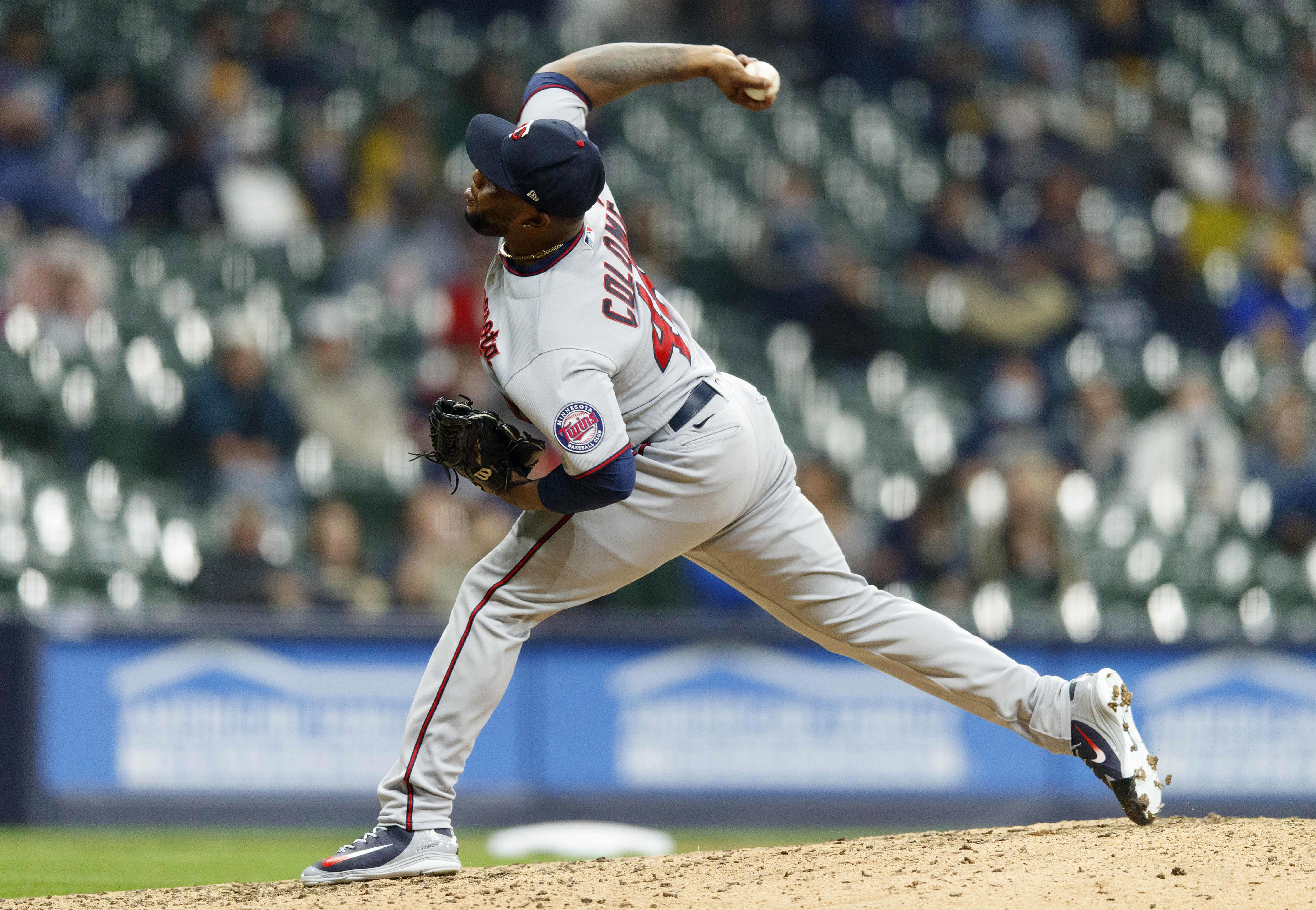 It should have been all but a given on Sunday, April 11. The Twins had taken a commanding 6-0 lead over the docile Mariners after Byron Buxton annihilated his fifth homer of the season. Matt Shoemaker was dealing, the bats were electric, Max Kepler was doing Hot Girl ****, and the mood was nothing short of a college house party; the kind of which actually could exist before the pandemic. But, well, you all know how this story went. The Mariners slowly clawed back and before anyone could finish their Surly, eight unanswered runs were on the board. There is never a singular culprit when it comes to such an implosion. The offense had suddenly lost any ability to score in the later innings for yet another uncomfortable time. Shoemaker decided that hanging off-speed pitches might be a good idea against major league hitters (friends, it is not) and gave up four runs almost as quickly as I could make my sandwich that afternoon (the sandwich was pretty good). Perhaps his sins would have been more remembered if he was not immediately tossed from the game. I’m sure the umpire forced him to throw such terrible sliders. But no one player was the target of outrage more than Alex Colomé. The closer blew yet another lead by giving up the game-deciding three-run-homer to Kyle Seager. People were furious. Rightfully so, I suppose. The team had paid a not-insignificant amount of money for the righty with the idea that he would be capable of consistently netting late-inning outs; 6 ⅓ innings later and some Twins fans would rather see Kevin Jepsen or Matt Capps on the mound in the ninth inning. In his first few outings as a Twin, Colomé has given up four earned runs with three more unearned runs tacked on top of that total. Considering that those unearned runs came following an error by the man himself, it’s fair to say that Colomé has been personally responsible for an astonishing seven runs over just six-and-a-third innings pitched. Not good. Closers have failed before. Even the great Mariano Rivera blew over 40 regular season games over the course of his career. The act of bungling the end of the game is baked into the very nature and existence of the reliever role. The problem lies in how a team deals with someone in the middle of one of these cold streaks. The team must accept that the player is not up to his normal standards while still sending him out to play in his original role. Why? Because the only way for a struggling reliever to get out of one these funks is to unquestionably prove that he is still capable of performing at the most stressful level. Getting outs in the sixth inning of a blowout does not help. Nailing down a close game in the ninth does. There is more to the issue than just this, however. What if the reliever continues to fail? No team would keep sending out a struggling arm long after he has conclusively shown a lack of closing ability. That would be, quite literally, the definition of insanity. This is especially true on a team like the Twins that already possesses other relievers who are capable of filling the role of closer. There is no solid answer to this problem. Pitching is too abstract to set performance benchmarks one way or the other. Colomé is well on his way to losing his role but such a move should not be made anytime soon. His position as a late inning arm should be relinquished in favor of innings going towards a tandem of Taylor Rogers and Hansel Robles only if he continues to fail over a longer sample. If it has been adequately determined that Colomé can no longer net crucial late-inning outs, his role should look more like that of Cody Stashak-a useful bridge-type of arm who only pitches late in the game when all other options have been exhausted. I do think, knowing how the Twins have reacted to previous relievers such as Fernando Rodney and Blake Parker, that it will be a while until this happens. The team showed a great deal of patience with both arms as they faced similar trials as Colomé. That places any timeline regarding a change in use for the all-star in late May or June with any earlier movement coming only when his struggles go nuclear. Some may think that we are already at that place but that simply is not true. Just four relievers have thrown 10 or more innings. The sample is entirely too small. Colomé did somewhat get back on the horse the other day. He punched out a pair of batters in a scoreless inning of work but a ringing double off the bat of Christian Arroyo showed that he still had work to do. Patience will be the key word for the Twins. If they opt to react quickly and move Colomé out of a late-inning role, they will only be limiting the potential relief options they have for such an occasion. Such a show of no-confidence would also only disenfranchise the reliever who otherwise holds a strong track record of performance. Letting Colomé work through his struggles, as brutal as they may be, could potentially allow him to figure it out again and aid the team in the future as they try to win yet another division title. At the end of the day, the team needs to find out without any doubt whether or not Alex Colomé can continue to be an elite high-leverage arm and that will only come with sticking by his side through the mess. MORE FROM TWINS DAILY — Latest Twins coverage from our writers — Recent Twins discussion in our forums — Follow Twins Daily via Twitter, Facebook or email
 -
On Wednesday, Alex Colomé was asked to get six outs, something he had not done since 2017. The decision raises questions, specifically why did Rocco Baldelli decide, with a reasonably rested bullpen, to use his closer for two innings?Before getting into that, the decision by Baldelli to send his closer out for a second inning of work was not actually the result of a new philosophical change. Taylor Rogers made nine different appearances in which he threw at least two innings during the 2019 season. The reason for this was because the bullpen was made up of bubble gum, paper clips, and lost dreams. Also, Matt Magill. The rest of the team was performing well but the lack of reliable arms outside of Rogers had pushed Baldelli into getting creative with his relief ace. This forced a number of occasions where Rogers threw it back to the days of Goose Gossage and Lee Smith. Eventually, Tyler Duffey would prove himself to be worthwhile, and the additions of Sergio Romo and name redacted gave Baldelli the proper amount of firepower that had been lacking in the first half (just one of Rogers’ two innings outings would come after the month of July). Nonetheless, Baldelli at one point had adhered to an old-school mentality regarding his reliever use. This is not the 2019 Twins, though. While that team lacked trustworthy arms early in the season, the 2021 Twins are seemingly overflowing with them. The aforementioned Colomé and Rogers along with Hansel Robles all had at least 20 saves in 2019. Duffey, while deficient in the save department, has the sixth-lowest FIP among all relievers in MLB since 2019 (min. 80 innings). This is all a somewhat long-winded way of saying that Baldelli did not really need to use Colomé for two innings. So why did he? Now, Rogers, Duffey, and Robles all did pitch in the previous game, but even the most progressive manager would not use that fact as a deterrent. Relievers can still be effective on no days' rest after all. However the most crucial name on that list is Rogers. His struggles as a reliever pitching without rest have been well documented. His career ERA with zero days rest is 4.01 while with one and two days rest his career ERA is 3.26 and 3.22 respectively. Baldelli understands this and knew that Rogers on that particular day would likely not be at his usual self. Avoiding using him would be ideal. With a good deal of certainty, I can say that Baldelli’s decision to use Colomé for two innings was an aid to Rogers. He understood that his other best relief choice in that situation simply lacks the ability to be consistently great in back-to-back games and opted instead to use his next best reliever in a multi-inning role in order to best guarantee a victory. I believe there is a second reason behind this decision but I will admit that this one is more conjecture than anything. We know that teams will struggle in 2021 to procure the innings total needed from their starters to finish a full 162 game season after the shortened 2020 year capped how often pitchers could throw. However, there may be a similar shortcoming in the bullpen. Relievers ultimately do not throw as many innings as starters but they just as well were not able to reach their totals from previous years. They simply have not been able to throw the 60+ stressful innings that they are accustomed to. Baldelli knows this as well. His solution to this problem looks to be to consolidate the burden onto just one or two relievers instead of running the entire group into the ground. He believed that it was better to add two innings to Colomé’s arm while he was fully rested rather than forcing another reliever to pitch without rest. I come to this conclusion because I find it unusual that Duffey was not the one used for the eighth inning. Yes, he pitched in the previous game, but he threw a pretty negligible total of just 12 pitches. He should have been ready to go in the eighth inning of that game. Baldelli had not previously shown any hesitancy to utilize Duffey in that specific bridge-type of role. Not calling in Duffey, who has been arguably better than Colomé since the beginning of 2019, seems like an unusual decision to me. Neither reliever ultimately bests the other when it comes to platoon splits and the sample size in 2021 is too small to determine who should be more “trustworthy” based on recent outcomes. To me, there is a grander process at play. Great stuff, Matt, you typed a lot of words but what is the ultimate point? That’s a fair question to ask. Truly, I’m not sure. Perhaps this is way over-analyzing one singular managerial decision (it was just one outing, after all). If Baldelli fails to make a similar move the rest of the season then no one will likely remember it outside of extreme nerds and dorks. But, when someone is sent out to do something they had not done in nearly four years, well, I find that to be too interesting to ignore. The addition of Colomé has given the Twins their best 1-2 reliever punch since Joe Nathan and Juan Rincon. What will be notable going forward is seeing whether Baldelli leans on using them in succession or if he uses one to alleviate the other in order to give himself backup for the next day. Essentially, will Baldelli use both shots in one game or save the other for later? We will have to wait and see. MORE FROM TWINS DAILY — Latest Twins coverage from our writers — Recent Twins discussion in our forums — Follow Twins Daily via Twitter, Facebook or email Click here to view the article
-
Did Colomé Throwing 2 Innings Hint at Baldelli's 2021 Bullpen Strategy?
Matt Braun posted an article in Twins
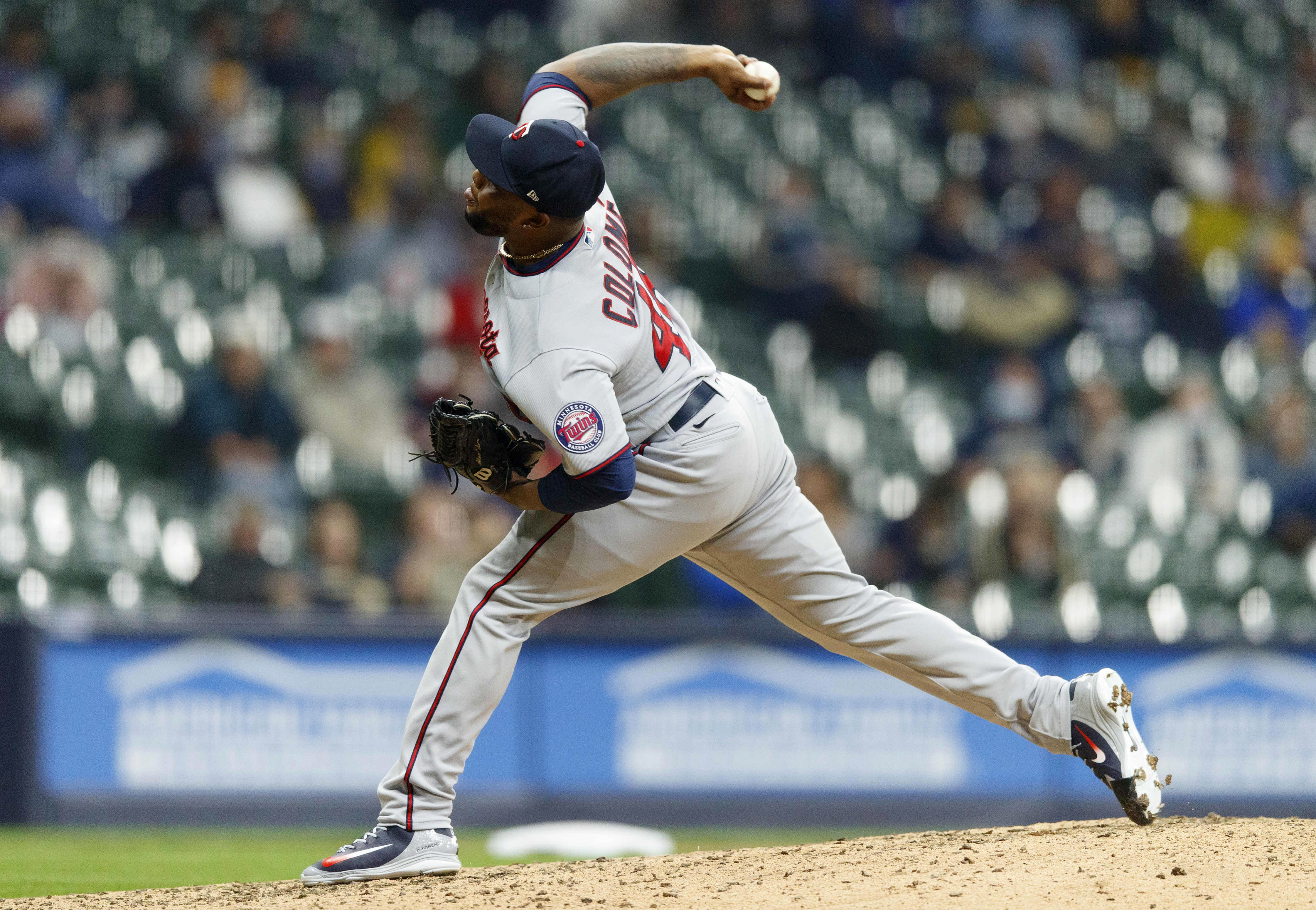 Before getting into that, the decision by Baldelli to send his closer out for a second inning of work was not actually the result of a new philosophical change. Taylor Rogers made nine different appearances in which he threw at least two innings during the 2019 season. The reason for this was because the bullpen was made up of bubble gum, paper clips, and lost dreams. Also, Matt Magill. The rest of the team was performing well but the lack of reliable arms outside of Rogers had pushed Baldelli into getting creative with his relief ace. This forced a number of occasions where Rogers threw it back to the days of Goose Gossage and Lee Smith. Eventually, Tyler Duffey would prove himself to be worthwhile, and the additions of Sergio Romo and name redacted gave Baldelli the proper amount of firepower that had been lacking in the first half (just one of Rogers’ two innings outings would come after the month of July). Nonetheless, Baldelli at one point had adhered to an old-school mentality regarding his reliever use. This is not the 2019 Twins, though. While that team lacked trustworthy arms early in the season, the 2021 Twins are seemingly overflowing with them. The aforementioned Colomé and Rogers along with Hansel Robles all had at least 20 saves in 2019. Duffey, while deficient in the save department, has the sixth-lowest FIP among all relievers in MLB since 2019 (min. 80 innings). This is all a somewhat long-winded way of saying that Baldelli did not really need to use Colomé for two innings. So why did he? Now, Rogers, Duffey, and Robles all did pitch in the previous game, but even the most progressive manager would not use that fact as a deterrent. Relievers can still be effective on no days' rest after all. However the most crucial name on that list is Rogers. His struggles as a reliever pitching without rest have been well documented. His career ERA with zero days rest is 4.01 while with one and two days rest his career ERA is 3.26 and 3.22 respectively. Baldelli understands this and knew that Rogers on that particular day would likely not be at his usual self. Avoiding using him would be ideal. With a good deal of certainty, I can say that Baldelli’s decision to use Colomé for two innings was an aid to Rogers. He understood that his other best relief choice in that situation simply lacks the ability to be consistently great in back-to-back games and opted instead to use his next best reliever in a multi-inning role in order to best guarantee a victory. I believe there is a second reason behind this decision but I will admit that this one is more conjecture than anything. We know that teams will struggle in 2021 to procure the innings total needed from their starters to finish a full 162 game season after the shortened 2020 year capped how often pitchers could throw. However, there may be a similar shortcoming in the bullpen. Relievers ultimately do not throw as many innings as starters but they just as well were not able to reach their totals from previous years. They simply have not been able to throw the 60+ stressful innings that they are accustomed to. Baldelli knows this as well. His solution to this problem looks to be to consolidate the burden onto just one or two relievers instead of running the entire group into the ground. He believed that it was better to add two innings to Colomé’s arm while he was fully rested rather than forcing another reliever to pitch without rest. I come to this conclusion because I find it unusual that Duffey was not the one used for the eighth inning. Yes, he pitched in the previous game, but he threw a pretty negligible total of just 12 pitches. He should have been ready to go in the eighth inning of that game. Baldelli had not previously shown any hesitancy to utilize Duffey in that specific bridge-type of role. Not calling in Duffey, who has been arguably better than Colomé since the beginning of 2019, seems like an unusual decision to me. Neither reliever ultimately bests the other when it comes to platoon splits and the sample size in 2021 is too small to determine who should be more “trustworthy” based on recent outcomes. To me, there is a grander process at play. Great stuff, Matt, you typed a lot of words but what is the ultimate point? That’s a fair question to ask. Truly, I’m not sure. Perhaps this is way over-analyzing one singular managerial decision (it was just one outing, after all). If Baldelli fails to make a similar move the rest of the season then no one will likely remember it outside of extreme nerds and dorks. But, when someone is sent out to do something they had not done in nearly four years, well, I find that to be too interesting to ignore. The addition of Colomé has given the Twins their best 1-2 reliever punch since Joe Nathan and Juan Rincon. What will be notable going forward is seeing whether Baldelli leans on using them in succession or if he uses one to alleviate the other in order to give himself backup for the next day. Essentially, will Baldelli use both shots in one game or save the other for later? We will have to wait and see. MORE FROM TWINS DAILY — Latest Twins coverage from our writers — Recent Twins discussion in our forums — Follow Twins Daily via Twitter, Facebook or email
 -
Who do we think will win the World Series and which players will take home some special hardware?Twins Daily Staff Predictions: National League Twins Daily Staff Predictions: American League World Series Champion: Dodgers Oh wow, that’s a really risky pick there. The team that, on paper, will give most All-Star rosters a run for their money is going to take home the piece of metal at the end of the year? Who could see such a thing coming? I mean, what else is there to say about the Dodgers that has not already been written about ad nauseum? After doubling down last off-season by acquiring former MVP Mookie Betts, the team doubled down yet again and added the spinmaster general himself, Trevor Bauer, in order to create the most unholiest starting rotation man has ever seen. The Pitching Ninja gifs that this staff will create will be written about and read in the future as we today read about the Call of Cthulhu and the Old Testament. The only factor going against the Dodgers (outside of pressure from the Padres) is that no team in MLB has won the World Series in back-to-back years since the 1999-2000 Yankees. As for regular season success? Their win over/under is set at 102.5. Enough said. Author’s pick: I chose the Padres not necessarily because I think that they’re the best team in MLB but more so because I think they might be the most fun team in the league and that should count for something (it does not, indeed, count for anything). Full Results: Dodgers: 13 Padres: 3 Yankees: 3 Twins: 2 Braves: 2 NL MVP: Tie between Juan Soto, Mookie Betts, and Fernando Tatís Jr. Hey, now there’s an interesting result! Not only did we end up with a three-way tie for the award, but Ronald Acuña Jr. and his four votes made this a solid four-man race. The lack of a Mike Trout-like presence means that the winner of this race will be decided by the essential philosophies of the voters. Juan Soto is the best hitter of the bunch, but he can’t field his position well and how valuable is an elite corner outfielder on a Nationals team that is utterly destined to be mediocre? Fernando Tatís Jr.’s sneezes have more talent than I possess in my entire body but he still has yet to play more than 90 games in a season. Mookie Betts is probably the safest bet but he could get overshadowed on a star-studded Dodgers squad that has two other MVPs already on the roster. Ronald Acuña Jr. has as much upside as any other player in baseball but just simply lacks a true completely dominant season as his WAR totals have always been somewhat depressed due to mediocre fielding statistics. Yes, these are nitpicky but we had no choice but to split hairs when there are so many great options to choose from. Author’s pick: I chose Acuña Jr. because he became a more all-around hitter in 2020 (18.8% walk rate!) and, more so than any other choice, possesses the elite, toolsy ability to completely dominate the game in a way that ever so slightly one ups the other incredible players in the NL. Full Results: Juan Soto: 5 Mookie Betts: 5 Fernando Tatís Jr.: 5 Ronald Acuña Jr.: 4 Corey Seager: 2 Francisco Lindor: 2 NL Cy Young: Jacob deGrom This pick was so obvious that when I filled out the form, I wrote “Jacob deGrom (duh)” because, well duh. deGrom inarguably has been the best pitcher on the planet since the start of 2018. Name any stat and he’s the guy at the top of the leaderboard. fWAR? deGrom. ERA? deGrom. FIP? deGrom? Innings pitched? Yeah, you get it. deGrom was well on his way to winning his third straight Cy Young award until the odd 2020 season paved the way for Trevor Bauer to swipe the hardware. That’s not to say Bauer was not deserving. He bullied and harassed hitters all season and was well deserving of the award. Still, it’s hard not to think that deGrom would have won it yet again if the season was the standard 162 game affair. A more interesting question here is how much does a third Cy Young award change deGrom’s place among the historically great starting pitchers? A third Cy Young win would place him with Clayton Kershaw, Sandy Koufax, Pedro Martínez, Jim Palmer, Tom Seaver, and Max Scherzer. That’s a lot of greatness. Author’s pick: The guy throws 102! As a starting pitcher! Human beings should not be able to do this! Full Results: Jacob deGrom: 18 Walker Buehler: 2 Brandon Woodruff: 1 Jack Flaherty: 1 Luis Castillo: 1 NL Rookie of the Year: Ke’Bryan Hayes Here we reach one of the only reasons why anyone would willingly watch the Pirates in 2021. I mean, I’m shocked that showing this team on television isn’t banned by one of our many peace treaties or something like that. Anyways, Hayes put up a 195 wRC+ over 95 plate appearances and has continued to absolutely destroy the ball in spring training. This along with his elite prospect status places him at the very top of the list when it comes to those who will likely win this award. Also of note: Sixto Sánchez, who throws 100, was great last year for the Marlins, and is named “Sixto”. I don’t think his case requires much more of a description. It is somewhat interesting that Ian Anderson only came in third in our voting despite putting up a 2.54 FIP in 2020 while throwing about a hundred straight scoreless innings in the playoffs for the Braves. Author’s pick: Ke’Bryan Hayes. And I fully stand by what I said about the Pirates. That team is going to be bad. Full Results: Ke’Bryan Hayes: 9 Sixto Sánchez: 6 Ian Anderson: 4 Dylan Carlson: 3 Cristian Pache: 1 AL MVP: Mike Trout Mike Trout. Author’s pick: Mike Trout. Full Results: Mike Trout: 16 Shohei Ohtani: 2 Aaron Judge: 2 Tim Anderson: 1 Matt Chapman: 1 Bo Bichette: 1 AL Cy Young: Gerrit Cole Man, we really need some true contrarians on this site. Wow, the two best pitchers in the league are going to win each league’s respective Cy Young award, next you’re going to tell me that the Pope is Catholic. Anyways, Cole’s case more or less speaks for himself. He’s been a strikeout machine ever since the Astros taught him how to totally legally raise his spin rate better harvest his skills and shed whatever nonsense they were feeding him over in Pittsburgh. He then turned two ridiculous seasons with Houston into over $300 million guaranteed with the Yankees and will now have the honor of being viciously booed by New Yorkers as a future overpaid 37-year-old. What’s more interesting to me at least is the battle for second place in the Cy Young race. The triumvirate of AL Central aces all have strong arguments for why they could potentially overturn the results that so far favor Gerrit Cole. Maybe the mail-in ballots will favor Shane Bieber. Author’s pick: Gerrit Cole. Bieber was a close second, though. Full Results: Gerrit Cole: 8 Kenta Maeda: 4 Lucas Giolito: 4 Shane Bieber: 4 Tyler Glasnow: 3 AL Rookie of the Year: Randy Arozarena When my own dad texts me out of the blue to say that “Arozarena is mythical”, you can tell this guy is something else. He somehow has just 99 career regular season plate appearances but broke everyone’s brains when he made a mockery of pitchers in the postseason. Arozarena bashed 10 homers throughout the entire playoffs and really didn’t even seem to be trying too hard while he did it. The names after Arozarena represent one of the more disputed awards that we have analyzed today. Besides Arozarena, the only other player to receive more than two votes was Jarred Kelenic (who officially will not start 2021 in the majors). This race is pretty wide open, as even Arozarena is far from a guarantee to repeat his monstrous total 2020 performance. Author’s pick: See, now I chose Casey Mize in part because I really do think that he’ll be great in the future but also I believed without any doubt that Arozarena had lost his rookie eligibility. Whoops. Full Results: Randy Arozarena: 7 Jarred Kelenic: 4 Alex Kirilloff: 2 Nate Pearson: 2 Ryan Mountcastle: 2 Wander Franco: 1 Casey Mize: 1 Dane Dunning: 1 Tarik Skubal: 1 Triston McKensie: 1 Nick Madrigal: 1 MORE FROM TWINS DAILY — Latest Twins coverage from our writers — Recent Twins discussion in our forums — Follow Twins Daily via Twitter, Facebook or email Click here to view the article
-
Twins Daily Staff Predictions: World Series and Individual Awards
Matt Braun posted an article in Twins
 Twins Daily Staff Predictions: National League Twins Daily Staff Predictions: American League World Series Champion: Dodgers Oh wow, that’s a really risky pick there. The team that, on paper, will give most All-Star rosters a run for their money is going to take home the piece of metal at the end of the year? Who could see such a thing coming? I mean, what else is there to say about the Dodgers that has not already been written about ad nauseum? After doubling down last off-season by acquiring former MVP Mookie Betts, the team doubled down yet again and added the spinmaster general himself, Trevor Bauer, in order to create the most unholiest starting rotation man has ever seen. The Pitching Ninja gifs that this staff will create will be written about and read in the future as we today read about the Call of Cthulhu and the Old Testament. The only factor going against the Dodgers (outside of pressure from the Padres) is that no team in MLB has won the World Series in back-to-back years since the 1999-2000 Yankees. As for regular season success? Their win over/under is set at 102.5. Enough said. Author’s pick: I chose the Padres not necessarily because I think that they’re the best team in MLB but more so because I think they might be the most fun team in the league and that should count for something (it does not, indeed, count for anything). Full Results: Dodgers: 13 Padres: 3 Yankees: 3 Twins: 2 Braves: 2 NL MVP: Tie between Juan Soto, Mookie Betts, and Fernando Tatís Jr. Hey, now there’s an interesting result! Not only did we end up with a three-way tie for the award, but Ronald Acuña Jr. and his four votes made this a solid four-man race. The lack of a Mike Trout-like presence means that the winner of this race will be decided by the essential philosophies of the voters. Juan Soto is the best hitter of the bunch, but he can’t field his position well and how valuable is an elite corner outfielder on a Nationals team that is utterly destined to be mediocre? Fernando Tatís Jr.’s sneezes have more talent than I possess in my entire body but he still has yet to play more than 90 games in a season. Mookie Betts is probably the safest bet but he could get overshadowed on a star-studded Dodgers squad that has two other MVPs already on the roster. Ronald Acuña Jr. has as much upside as any other player in baseball but just simply lacks a true completely dominant season as his WAR totals have always been somewhat depressed due to mediocre fielding statistics. Yes, these are nitpicky but we had no choice but to split hairs when there are so many great options to choose from. Author’s pick: I chose Acuña Jr. because he became a more all-around hitter in 2020 (18.8% walk rate!) and, more so than any other choice, possesses the elite, toolsy ability to completely dominate the game in a way that ever so slightly one ups the other incredible players in the NL. Full Results: Juan Soto: 5 Mookie Betts: 5 Fernando Tatís Jr.: 5 Ronald Acuña Jr.: 4 Corey Seager: 2 Francisco Lindor: 2 NL Cy Young: Jacob deGrom This pick was so obvious that when I filled out the form, I wrote “Jacob deGrom (duh)” because, well duh. deGrom inarguably has been the best pitcher on the planet since the start of 2018. Name any stat and he’s the guy at the top of the leaderboard. fWAR? deGrom. ERA? deGrom. FIP? deGrom? Innings pitched? Yeah, you get it. deGrom was well on his way to winning his third straight Cy Young award until the odd 2020 season paved the way for Trevor Bauer to swipe the hardware. That’s not to say Bauer was not deserving. He bullied and harassed hitters all season and was well deserving of the award. Still, it’s hard not to think that deGrom would have won it yet again if the season was the standard 162 game affair. A more interesting question here is how much does a third Cy Young award change deGrom’s place among the historically great starting pitchers? A third Cy Young win would place him with Clayton Kershaw, Sandy Koufax, Pedro Martínez, Jim Palmer, Tom Seaver, and Max Scherzer. That’s a lot of greatness. Author’s pick: The guy throws 102! As a starting pitcher! Human beings should not be able to do this! Full Results: Jacob deGrom: 18 Walker Buehler: 2 Brandon Woodruff: 1 Jack Flaherty: 1 Luis Castillo: 1 NL Rookie of the Year: Ke’Bryan Hayes Here we reach one of the only reasons why anyone would willingly watch the Pirates in 2021. I mean, I’m shocked that showing this team on television isn’t banned by one of our many peace treaties or something like that. Anyways, Hayes put up a 195 wRC+ over 95 plate appearances and has continued to absolutely destroy the ball in spring training. This along with his elite prospect status places him at the very top of the list when it comes to those who will likely win this award. Also of note: Sixto Sánchez, who throws 100, was great last year for the Marlins, and is named “Sixto”. I don’t think his case requires much more of a description. It is somewhat interesting that Ian Anderson only came in third in our voting despite putting up a 2.54 FIP in 2020 while throwing about a hundred straight scoreless innings in the playoffs for the Braves. Author’s pick: Ke’Bryan Hayes. And I fully stand by what I said about the Pirates. That team is going to be bad. Full Results: Ke’Bryan Hayes: 9 Sixto Sánchez: 6 Ian Anderson: 4 Dylan Carlson: 3 Cristian Pache: 1 AL MVP: Mike Trout Mike Trout. Author’s pick: Mike Trout. Full Results: Mike Trout: 16 Shohei Ohtani: 2 Aaron Judge: 2 Tim Anderson: 1 Matt Chapman: 1 Bo Bichette: 1 AL Cy Young: Gerrit Cole Man, we really need some true contrarians on this site. Wow, the two best pitchers in the league are going to win each league’s respective Cy Young award, next you’re going to tell me that the Pope is Catholic. Anyways, Cole’s case more or less speaks for himself. He’s been a strikeout machine ever since the Astros taught him how to totally legally raise his spin rate better harvest his skills and shed whatever nonsense they were feeding him over in Pittsburgh. He then turned two ridiculous seasons with Houston into over $300 million guaranteed with the Yankees and will now have the honor of being viciously booed by New Yorkers as a future overpaid 37-year-old. What’s more interesting to me at least is the battle for second place in the Cy Young race. The triumvirate of AL Central aces all have strong arguments for why they could potentially overturn the results that so far favor Gerrit Cole. Maybe the mail-in ballots will favor Shane Bieber. Author’s pick: Gerrit Cole. Bieber was a close second, though. Full Results: Gerrit Cole: 8 Kenta Maeda: 4 Lucas Giolito: 4 Shane Bieber: 4 Tyler Glasnow: 3 AL Rookie of the Year: Randy Arozarena When my own dad texts me out of the blue to say that “Arozarena is mythical”, you can tell this guy is something else. He somehow has just 99 career regular season plate appearances but broke everyone’s brains when he made a mockery of pitchers in the postseason. Arozarena bashed 10 homers throughout the entire playoffs and really didn’t even seem to be trying too hard while he did it. The names after Arozarena represent one of the more disputed awards that we have analyzed today. Besides Arozarena, the only other player to receive more than two votes was Jarred Kelenic (who officially will not start 2021 in the majors). This race is pretty wide open, as even Arozarena is far from a guarantee to repeat his monstrous total 2020 performance. Author’s pick: See, now I chose Casey Mize in part because I really do think that he’ll be great in the future but also I believed without any doubt that Arozarena had lost his rookie eligibility. Whoops. Full Results: Randy Arozarena: 7 Jarred Kelenic: 4 Alex Kirilloff: 2 Nate Pearson: 2 Ryan Mountcastle: 2 Wander Franco: 1 Casey Mize: 1 Dane Dunning: 1 Tarik Skubal: 1 Triston McKensie: 1 Nick Madrigal: 1 MORE FROM TWINS DAILY — Latest Twins coverage from our writers — Recent Twins discussion in our forums — Follow Twins Daily via Twitter, Facebook or email
 -
Well now, that’s an awfully negative title, Matt. I know, I know. Look, I meant this as a sort of “hey, can we find any historical comps for what Royce Lewis has had to endure”? Or, more precisely; “are there any other first overall draft picks who have had similar experiences and still succeeded”? It wasn’t meant to be this depressing. Anyways, let’s find out.You all have probably heard the news by now. Royce Lewis tore his ACL after slipping on Texas ice and now will be out for all of 2021. That’s an unfortunate Mad Libs scenario if I’ve ever seen one but it’s real and so are the consequences. This injury is now yet another speed bump in the path that has tested Lewis’ status as a top prospect. From underperforming in 2019 to questions regarding his swing to lost development in 2020 due to a canceled minor league season, Lewis’ career has been proclaimed dead by some before he has even seen a major league pitch. But is that fair? Are there any other first overall picks who struggled or endured major injuries but still ended up succeeding at the major league level? Here is the list of every first overall pick in MLB. The list includes 55 players over 56 drafts (ex-Twin Danny Goodwin was drafted twice and is the only player to accomplish this). We have some familiar names like Gerrit Cole, Stephen Strasburg, Bryce Harper and, of course, Joe Mauer. Oh, and we also have Delmon Young. Hope he’s doing well these days. Let’s begin by looking at the players that share Lewis’ position; shortstop. That leaves us with Dansby Swanson, Carlos Correa, Tim Beckham, Justin Upton (who was apparently taken as a shortstop, did not know that!), Matt Bush (yikes), Jennifer Lopez’s husband, Chipper Jones, Shawon Dunston, Bill Almon, and Tim Foli. Let’s narrow down that list a bit more to just include the players who were All-Stars (my arbitrary definition of “successful”). Doing so gives us just Correa, Upton, A-Rod, Jones, and Dunston. Immediately, Lewis is in some trouble. All of the “successful players” debuted no later than three years after being drafted. All five players were also, if not outright the youngest player in the league at the time of their debut, among the youngest players in the game in their rookie season. Lewis will now be at least 22-years-old when he makes his debut. It may seem aggressive to deem that “too old” but debuting that late as a high school shortstop puts him in a similar category as Tim Beckham, and you do not want to be in a similar category as Tim Beckham. Maybe only looking at shortstops is too narrow. Let’s expand the list to include every All-Star position player. That adds Bryce Harper, Joe Mauer, Adrián González, Josh Hamilton, Darin Erstad, Phil Nevin, Ken Griffey Jr., B.J. Surhoff, Darryl Strawberry, Bob Horner, Harold Baines, Jeff Burroughs, and Rick Monday to the list. Everyone on this list again debuted within three years of being drafted with the exceptions of González and Hamilton. González does provide a bit of good news for Lewis and Twins fans alike. González was taken first overall by the Marlins in 2000 as a high school first baseman but never hit at an overwhelming level while in the minors. His OPS topped out at .868 in 2001 but he tended to hover around the .660 mark during his time in the minors. A wrist injury in 2003 convinced the competing Marlins to deal him for help at the deadline and so González joined the Rangers. The injury plagued him for much of the next two years as it was only diagnosed after the season and González rushed the rehab. He didn’t play much over two seasons with Texas and was dealt for the third time in his career, this time to San Diego. González hit well in 2006 and would eventually become a strong middle-of-the-order presence on three different squads for nearly a decade. González retired in 2018 with a career .843 OPS, five All-Star selections, four Gold Gloves, and two Silver Slugger awards. So is there hope for Lewis? Potentially. The history of first overall shortstops who took longer than three years to reach the majors is certainly not pretty. Adrián González, however, proves that a first-overall pick can both struggle in the minors and suffer a significant injury while still becoming a great MLB player. The cards may be stacked against Lewis but history shows that it may still be possible for him to turn it around and become a great player at the major league level. MORE FROM TWINS DAILY — Latest Twins coverage from our writers — Recent Twins discussion in our forums — Follow Twins Daily via Twitter, Facebook or email Click here to view the article
-
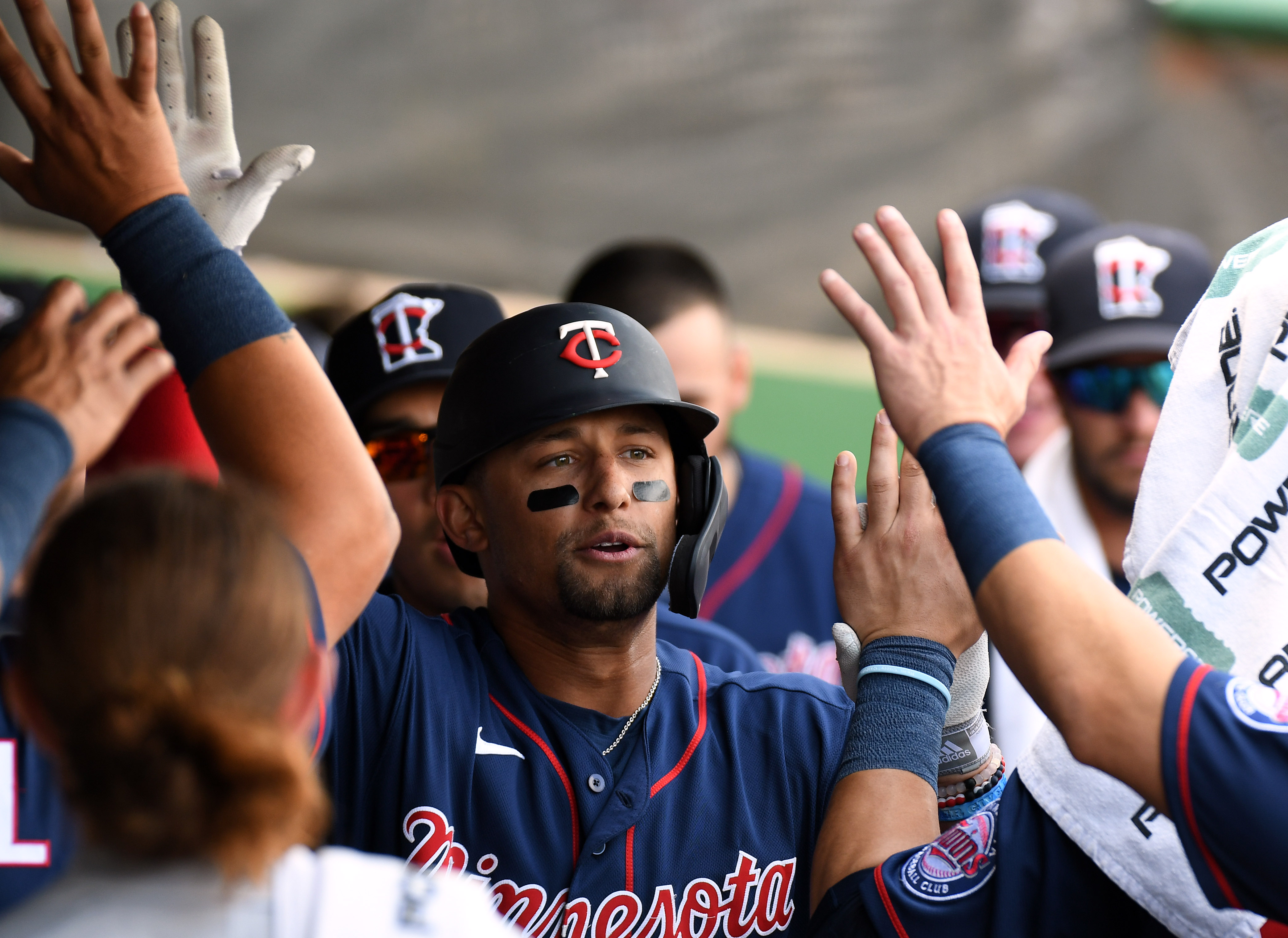 You all have probably heard the news by now. Royce Lewis tore his ACL after slipping on Texas ice and now will be out for all of 2021. That’s an unfortunate Mad Libs scenario if I’ve ever seen one but it’s real and so are the consequences. This injury is now yet another speed bump in the path that has tested Lewis’ status as a top prospect. From underperforming in 2019 to questions regarding his swing to lost development in 2020 due to a canceled minor league season, Lewis’ career has been proclaimed dead by some before he has even seen a major league pitch. But is that fair? Are there any other first overall picks who struggled or endured major injuries but still ended up succeeding at the major league level? Here is the list of every first overall pick in MLB. The list includes 55 players over 56 drafts (ex-Twin Danny Goodwin was drafted twice and is the only player to accomplish this). We have some familiar names like Gerrit Cole, Stephen Strasburg, Bryce Harper and, of course, Joe Mauer. Oh, and we also have Delmon Young. Hope he’s doing well these days. Let’s begin by looking at the players that share Lewis’ position; shortstop. That leaves us with Dansby Swanson, Carlos Correa, Tim Beckham, Justin Upton (who was apparently taken as a shortstop, did not know that!), Matt Bush (yikes), Jennifer Lopez’s husband, Chipper Jones, Shawon Dunston, Bill Almon, and Tim Foli. Let’s narrow down that list a bit more to just include the players who were All-Stars (my arbitrary definition of “successful”). Doing so gives us just Correa, Upton, A-Rod, Jones, and Dunston. Immediately, Lewis is in some trouble. All of the “successful players” debuted no later than three years after being drafted. All five players were also, if not outright the youngest player in the league at the time of their debut, among the youngest players in the game in their rookie season. Lewis will now be at least 22-years-old when he makes his debut. It may seem aggressive to deem that “too old” but debuting that late as a high school shortstop puts him in a similar category as Tim Beckham, and you do not want to be in a similar category as Tim Beckham. Maybe only looking at shortstops is too narrow. Let’s expand the list to include every All-Star position player. That adds Bryce Harper, Joe Mauer, Adrián González, Josh Hamilton, Darin Erstad, Phil Nevin, Ken Griffey Jr., B.J. Surhoff, Darryl Strawberry, Bob Horner, Harold Baines, Jeff Burroughs, and Rick Monday to the list. Everyone on this list again debuted within three years of being drafted with the exceptions of González and Hamilton. González does provide a bit of good news for Lewis and Twins fans alike. González was taken first overall by the Marlins in 2000 as a high school first baseman but never hit at an overwhelming level while in the minors. His OPS topped out at .868 in 2001 but he tended to hover around the .660 mark during his time in the minors. A wrist injury in 2003 convinced the competing Marlins to deal him for help at the deadline and so González joined the Rangers. The injury plagued him for much of the next two years as it was only diagnosed after the season and González rushed the rehab. He didn’t play much over two seasons with Texas and was dealt for the third time in his career, this time to San Diego. González hit well in 2006 and would eventually become a strong middle-of-the-order presence on three different squads for nearly a decade. González retired in 2018 with a career .843 OPS, five All-Star selections, four Gold Gloves, and two Silver Slugger awards. So is there hope for Lewis? Potentially. The history of first overall shortstops who took longer than three years to reach the majors is certainly not pretty. Adrián González, however, proves that a first-overall pick can both struggle in the minors and suffer a significant injury while still becoming a great MLB player. The cards may be stacked against Lewis but history shows that it may still be possible for him to turn it around and become a great player at the major league level. MORE FROM TWINS DAILY — Latest Twins coverage from our writers — Recent Twins discussion in our forums — Follow Twins Daily via Twitter, Facebook or email
 -
Not sure who this "Matt Baun" fellow is but he sure sounds fishy
-
Now, I really did not want to write this but I thought too much about it and whoops! Here we are.The past few days have seen no less than a million arguments from baseball fans, ex-players, and talking heads on the role of analytics in the sport. All of this was sparked by the decision by Kevin Cash to remove his starter, Blake Snell, in the 6th inning of game 6 of the World Series. Given that we all already have strong opinions on everything as is, this decision specifically sent everyone into a mad frenzy. What were we mad about? Analytics! The bastard had ruined the aesthetic of our game and directly led to the fall of Rome Rays losing in the World Series. Never mind that analytics got them to the World Series in the first place, or that they lost to a team that is also analytically-driven, or that their offense could only score one run against the Dodgers’ myriad of pitchers in game 6. But I digress. This leads me to a crucial question; what does the term “analytics” mean? Anyone? “Analytics” has become sort of a “woo-woo” buzzword among fans and figure heads when it comes to the game of baseball. It describes a sort of magical new-age thinking that can be hard to pin down but is absolutely understood by all who watch the game. Some of this stems from the fact that we don’t know the majority of what teams are looking at because those secrets remain locked behind closed doors. Instead, a lot of what we now understand as “analytics” stems from people like Bill James and Billy Beane through the quite famous story of “Moneyball”. “Analytics” became synonymous with a sort of “different” decision-making. One that ignores traditional baseball logic. While this understanding is partially correct, some of this basis is misguided. "Analytics" in its most basic form is quite simple. For starters, utilizing a platoon would count as analytics. Bringing in a left-handed reliever to face a left-handed batter would also count as analytics. Hell, as long as the lineup wasn’t set by pulling names out of a hat, then analytics played a role in that as well. All of these are choices that managers have been making since the dawn of the game but still fall under the umbrella of “analytics” just like using a hitter’s batted-ball profile in order to shift the defense against him. The only difference is the level of complexity. At the end of the day, analytics is just numbers and data. This data is then seen and interpreted by someone else who then makes a decision. At no point does any analytic choice pass through without any human engagement. Cash had to make the conscious decision to pull Snell. Even if a team decides to only go with the optimal strategy through analytics (which in itself, “optimal” is impossible to define), that decision was still consciously made by a human. Sort of like “if you choose not to decide, you still have made a choice”. Analytics is simply a tool available to anyone who wants to utilize it. Let’s get back to Cash and Snell. Immediately, taking Snell out became an analytic choice in our mind due to teams now being more aware than ever of the fact that starters tend to do worse the 3rd time through the batting order. This was also the reason Cash deferred to during the post-game presser. And yes, this is mostly true. As much as old pitchers and baseball dads like to complain about it, it’s a fact that most starting pitchers perform at a worse level when they face batters for the 3rd time in a game. (Here are two Fangraphs pages. The first consists of the stats of SP going through the order the first two times from 2011-2020 and the second has the same qualifiers but for the third time through the order.) The key word there is “most”. You shouldn’t apply a blanket concept to your players like that. Any decision to pull Snell has to be made with his personal splits in mind. Now, 2020 was a small sample but Snell actually performed a bit better the 3rd time through the order compared to the 2nd time (.379 wOBA allowed vs .407). Both numbers are awful, however. Career numbers paint a different story. Snell has allowed a wOBA of .263 when going through a lineup for the first time, a wOBA .309 when going through that same lineup a second time, and a wOBA of .321 when greeting those hitters for a third time. (For context, Ian Desmond’s career wOBA is .321.) Immediately, there becomes an apparent problem. What numbers do you look at? Cash knows Snell’s historic numbers as well as his recent ones. Which do you put more weight into and how much weight do you put into it? How does Snell’s recent injury history play into it? None of these questions even touch on the specific players Snell was set to face or how his replacement would fare against them as well or how rested his bullpen was or, well, I think you get the point now. This was also a hot topic among Twins fans during the playoffs. Rocco Baldelli pulled both Kenta Maeda and José Berríos after 5 innings each during their respective starts. Some saw this as “over-managing” (and in the case of Berríos, I agree). The point of this isn’t to actually prove whether or not Cash’s or Baldelli’s decisions were “analytical” or not because, well, all decisions in baseball are and always have been analytical. The only difference is that we have different numbers to look at. Putting your big bopper who rakes in RBIs is technically an analytical decision as much as it makes me want to squirm. The manager used data that he had available to make a decision that he thought was best for the team. Keep in mind as well that analytics are never perfect. No system of decision making is. The point of utilizing advanced methods of interpreting information is to improve your odds. If your odds of making a “good” decision go from 55 to 60 percent, then analytics have succeeded. But even that leads to a significant amount of scenarios where failure occurs. That’s normal. It happens in any event where someone must make a decision with random variables. All I want to do is try and steer the conversation in the correct direction. We shouldn’t be talking about whether analytics failed Cash and the Rays but instead whether Cash made appropriate decisions based on the information he had. It appears that the answer is “no” but we can never truly know as the situation only played out once. If Nick Anderson induces a double play and the Rays go on to win, then I doubt the conversation is as aggressive. But who knows? These types of discussions are what drive baseball thought and will be what continues to push the metagame of this beautiful sport. MORE FROM TWINS DAILY — Latest Twins coverage from our writers — Recent Twins discussion in our forums — Follow Twins Daily via Twitter, Facebook or email Click here to view the article

