



Matt Braun
-
Posts
1,393 -
Joined
-
Last visited
-
Days Won
1
Content Type
Profiles
News
Minnesota Twins Videos
2026 Minnesota Twins Top Prospects Ranking
2022 Minnesota Twins Draft Picks
Minnesota Twins Free Agent & Trade Rumors, Notes, & Tidbits
Guides & Resources
2023 Minnesota Twins Draft Picks
The Minnesota Twins Players Project
2024 Minnesota Twins Draft Picks
2025 Minnesota Twins Draft Pick Tracker
2026 Minnesota Twins Draft Tracker: Picks & Bonuses
Forums
Blogs
Events
Store
Downloads
Gallery
Everything posted by Matt Braun
-
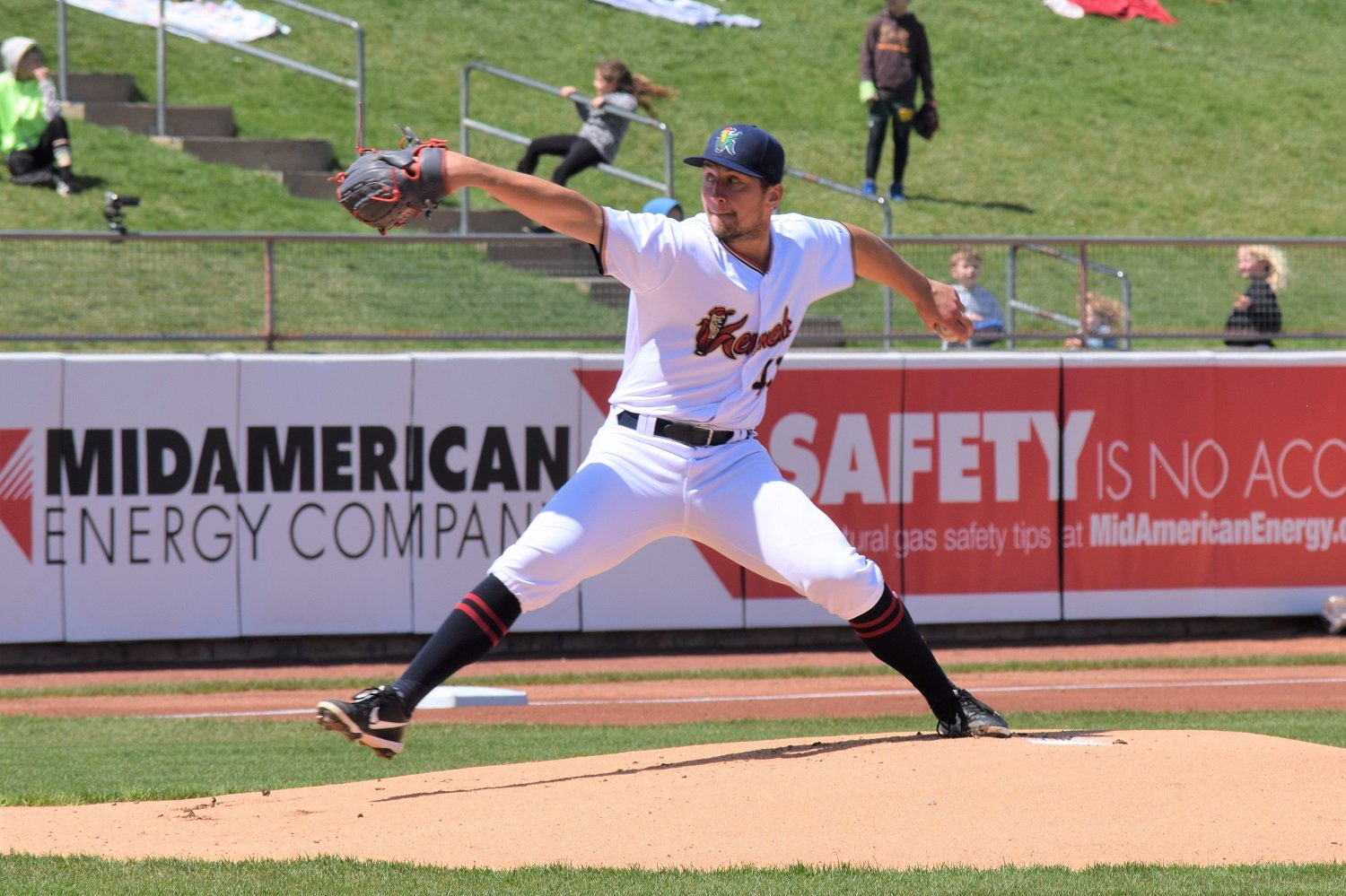 TRANSACTIONS C Kyle Schmidt transferred to AA Wichita C Frank Nigro transferred to A+ Cedar Rapids OF Alex Kirilloff recalled by Twins INF Elliot Soto outrighted to AAA St. Paul C David Bañuelos placed on 7-day IL (Dislocated right finger) C Roy Morales reinstated from 7-day IL (Back spasms) RHP Daniel Gossett transferred to AA Wichita Saints Sentinel St. Paul 6, Columbus 5 Box Score Ariel Jurado: 3 IP, 4 H, 2 ER, BB, 4 K HR: John Andreoli (4), Mark Contreras (7), Curtis Terry (6), Michael Helman (2) Multi-hit games: Michael Helman (3-for-5, HR, 2 R, 2 RBI), Curtis Terry (2-for-4, HR, R, RBI) St. Paul won a stressful game on Friday. The Saints took a democratic approach to hitting; every batter reached base at least once, and their four homers all came from a different source. John Andreoli hit the first bomb, while Mark Contreras followed suit with a two-run shot. Both home runs came in the 3rd inning. The Clippers did respond, though. The double Wills of Brenson and Brennan (sounds like a law firm) brought home enough runs to tie the game at three; Curtis Terry broke that tie with a solo home run in the 4th. The game entered a pure Cold War stalemate for a handful of innings before Michael Helman Tore Down That Wall with a crucial two-run homer in the top of the 9th inning. Columbus punched through Dereck Rodriguez’s Star Wars defense in the bottom of the inning, but the Saints held strong and walked away victorious. Rodriguez netted the final 15 outs in the game, allowing just two runs in support of Jurado and Hunter Wood. Wind Surge Wisdom Wichita 0, Tulsa 5 Box Score Blayne Enlow: 3 2/3 IP, H, 2 ER, 2 BB, 4 K HR: None Multi-hit games: None Wichita was shut out on Friday. The famous Dodgers minor league system quieted the Wind Surge bats, striking out 15 with an assortment of arms that would make any team jealous. Tulsa pitchers have given the Wind Surge fits since their inception, and this series has been no different. Bobby Miller did it the other day; Clayton Beeter did it on Friday. Austin Martin was not in the lineup, and perhaps Wichita lost important vibes because of it. Blayne Enlow continued his attempt at finding his footing again after losing crucial development time to injury. He was admirable, working 3 2/3 innings with two earned runs and four strikeouts for good measure. It’s clear that his command isn’t crisp like he would hope, but this is one step in a marathon for him. Alex Scherff was the only pitcher to walk away with an unharmed ERA on Friday, as he allowed no runs in his one inning of work. Matt Wallner hit lead-off, which reminded this author of the time Logan Morrison did the same; what a time that was, huh? Kernels Nuggets Cedar Rapids 3, Dayton 0 Box Score Aaron Rozek: 5 2/3 IP, 3 H, 0 ER, 2 BB, 4 K HR: None Multi-hit games: None The Kernels won a shutout on Friday. Aaron Rozek was the man of the hour. The lefty held the Dragons to five baserunners over 5 2/3 IP with four strikeouts and, of course, no earned runs. The Dragons are no push-over, as they came into the game with a 38-21 record on the year. Cody Laweryson and Bradley Hanner slammed the door shut, netting the final 10 outs with a single hit allowed and six strikeouts. All three pitchers deserved a nice night out to celebrate their success on Friday; shutouts don't happen every day, after all. The Kernels’ bats did their job as well. They only needed one run, but they plated three off of a fielding error, a ground-rule double, and a wild pitch. In a form so ironic that Alanis Morissette would appreciate it, neither team allowed an earned run on Friday. This author cannot recall the last time they saw that occur in a baseball game. Despite the lack of runs, Cedar Rapids hitters took seven walks on top of their six hits; luck was their enemy in this game. Mussel Matters Fort Myers 8, Bradenton 3 Box Score Pierson Ohl: 5 IP, 4 H, 3 ER, BB, 5 K HR: Rubel Cespedes (1), Carlos Aguiar (2) Multi-hit games: Mikey Perez (2-for-4, 2B, 2 R, RBI), Kala’i Rosario (3-for-4, R), Luis Baez (2-for-4, RBI) Fort Myers cruised on Friday. The Mighty Mussels jumped out early in the 2nd inning thanks to the “ez” brothers—Mikey Perez doubled home a run, and Luis Baez singled home another. Those two represented an effective back-end of the lineup for Fort Myers on Friday; three of the bottom four hitters netted multiple hits. Bradenton ambushed Pierson Ohl in the 3rd, plating three runs off some piranha-like magic, including an RBI groundout and a two-run single. The 3rd inning proved to be the only one Ohl was not dominant in, and he settled in outside of that inning to not allow a run the rest of the way. While Ohl did his job, Malik Barrington and Juan Mendez ensured that the Marauders had no shot to return in the game. The two relievers combined for four effective innings with one hit allowed and an impressive eight strikeouts. Fort Myers pitchers struck out 13 hitters in total. The Mighty Mussels embodied the Earl Weaver approach to baseball and blasted a pair of three-run homers to bury Bradenton. Rubel Cespedes hit the first one, while Carlos Aguiar blasted one in the 8th inning for good measure. Complex Chronicles FCL Twins 2, FCL Red Sox 4 Box Score Brayan Medina: 1 IP, 0 H, 0 ER, 0 BB, 0 K HR: None Multi-hit games: Alexander Pena (2-for-4, 2 RBI) The FCL Twins took a loss six days in the making. The FCL Twins and FCL Red Sox were supposed to play on June 11th, but rain washed away any hope of playing that game beyond the 1st inning. Rehabbing starter and forgotten piece from the Lance Lynn trade, Luis Rijo, picked up where Bryana Medina left off, tossing two scoreless innings with a pair of strikeouts. Former big-leaguer Daniel Robertson was also on a rehab assignment; he picked up a pair of walks. Alexander Pena provided all the runs for the FCL Twins, with his 1st inning single bringing home two baserunners. The two teams were supposed to play a second game, but it was canceled due to COVID. Dominican Dailies DSL Twins 2, DSL Giants Black 6 Box Score Oscar Paredes: ⅔ IP, 3 H, 4 ER, 3 BB, K HR: Jose Rodriguez (2) Multi-hit games: None Jose Rodriguez provided all the offense for the DSL Twins with a 4th inning solo homer and an RBI groundout in the 6th. Cristian Jimenez struck out five over three innings of work. TWINS DAILY PLAYERS OF THE DAY Twins Daily Minor League Pitcher of the Day – Aaron Rozek, Cedar Rapids Kernels Twins Daily Minor League Hitter of the Day – Michael Helman, St. Paul Saints PROSPECT SUMMARY Here’s a look at how the Twins Daily Top 20 Twins Prospects performed: #3 - Jose Miranda (Minnesota) - In Progress. #7 - Spencer Steer (St. Paul) - 1-5, K #9 - Noah Miller (Ft. Myers) - 0-3, R, 2 BB #14 - Blayne Enlow (Wichita) - 3 ⅔ IP, H, 2 ER, 2 BB, 4 K #15 - Matt Wallner (Wichita) - 1-2, BB, K #16 - Edouard Julien (Wichita) - 1-3, BB, 2 K #18 - Christian Encarnacion-Strand (Cedar Rapids) - 1-2, 2 BB, K SATURDAY’S PROBABLE STARTERS St. Paul @ Columbus (4:05 PM) - RHP Jake Faria Wichita @ Tulsa (7:05 PM) - RHP Sawyer Gipson-Long Dayton @ Cedar Rapids (6:35 PM) - LHP Cade Povich Bradenton @ Fort Myers (6:00 PM) - RHP Marco Raya
- 5 comments
-
- 1
-

-
- pierson ohl
- aaron rozek
- (and 3 more)
-
Nick Gordon’s baseball career has been an odyssey. The former 2014 first-round pick immediately established residence on top 100 prospect lists across the baseball spectrum, wowing evaluators with an effective combination of speed, batting average, and a potential future at shortstop. His story since includes pitfalls and more challenging experiences than first expected, but he is now finding an effective and valuable role for the Twins. Consider this author among those once skeptical of Gordon’s MLB potential. The son of longtime MLB pitcher Tom Gordon fell flat on his face at AAA in 2018 and only rebounded to respectable, not elite, numbers in 2019. His bat’s potential was less dynamic, his ability to play shortstop was in the “capable of standing in the infield” camp of defensive quality, and the MLB meta grew detached from speed as a desirable trait. Perhaps some role as a utility player—the cursed designation for every fringe player—could fit Gordon’s general skillset, but he would never become a “set it and forget it” type of starter like Jorge Polanco or Max Kepler; he had to fight for a role. There are a few ways for an outside player to force a team’s hand; you either hit so well that a team has no choice but to find a position for you, or you scrap around and man numerous positions at an above-average level, allowing a team to use you as a stopgap player. Gordon fits in the latter category. His bat isn’t otherworldly, but he does provide value with it in atypical ways. You probably take one look at Gordon—a 160-pound human according to Baseball-Reference—and assume that he’s the type to dink, dunk, and slash his way to doing damage at the plate. However, Gordon is something of a Statcast hero, owning a max exit velocity of 110.7 MPH in 2022, a number ahead of players like Luke Voit, Nick Castellanos, and Tyler O’Neill. Hitting the ball hard is far from the only way a hitter can do damage, but it does represent extra-base upside, and Gordon (perhaps surprisingly) possesses that kind of potential. xwOBA likes him as well, as Gordon currently sits a few points above the league average in that stat (.333 to .329). How he reaches these concluding stats is the more exciting part. Gordon isn’t one to walk, and he has more swing-and-miss in his game than one would expect, but his contact is strong enough to offset his negative attributes; he owns a .429 xwOBACON in 2022. That’s xwOBA but only including balls in play. Do you want to know how good a .429 xwOBACON is? Josh Donaldson, Mookie Betts, and Paul Goldschmidt all have a lower number in that stat. When Gordon puts the ball in play, good things happen. What has given Gordon the most value, though, is his newfound ability to play multiple positions. Various afflictions have required him to play left field, center field, shortstop, second base, and the guy even pitched once; talk about utility. He does more than just moonlight at these positions; Statcast credits him with an OAA in both left and center in 2022, as his reaction and burst make up for amateur routes. Considering that most of his minor league innings occurred at shortstop, his early success in the outfield is awe-inspiring; he played just 27 2/3 innings there in the minors. Gordon should continue to be considered solely a “break glass in case of emergency” shortstop, and he’ll probably only rarely play at 2nd base given the glut of talent the team already has there, but his defensive acumen should demand a more active team role than one of a player like Jake Cave. If playing time only exists in the outfield, he’s more than capable of making that work. If baseball has an equivalent to the 6th man in basketball, Nick Gordon fits that role perfectly. He’s good at many things but not undeniably elite in any aspect of the game; Gordon instead takes a “jack of all trades” approach, one that stats can only partially quantify. This is also conjecture, but Gordon seems like an excellent clubhouse presence as well, and he can claim a stake in building the culture that many players have raved about this season. The 26-year-old may not be the star we once anticipated, but he’s a useful player on a winning team, and that counts for something. View full article
-
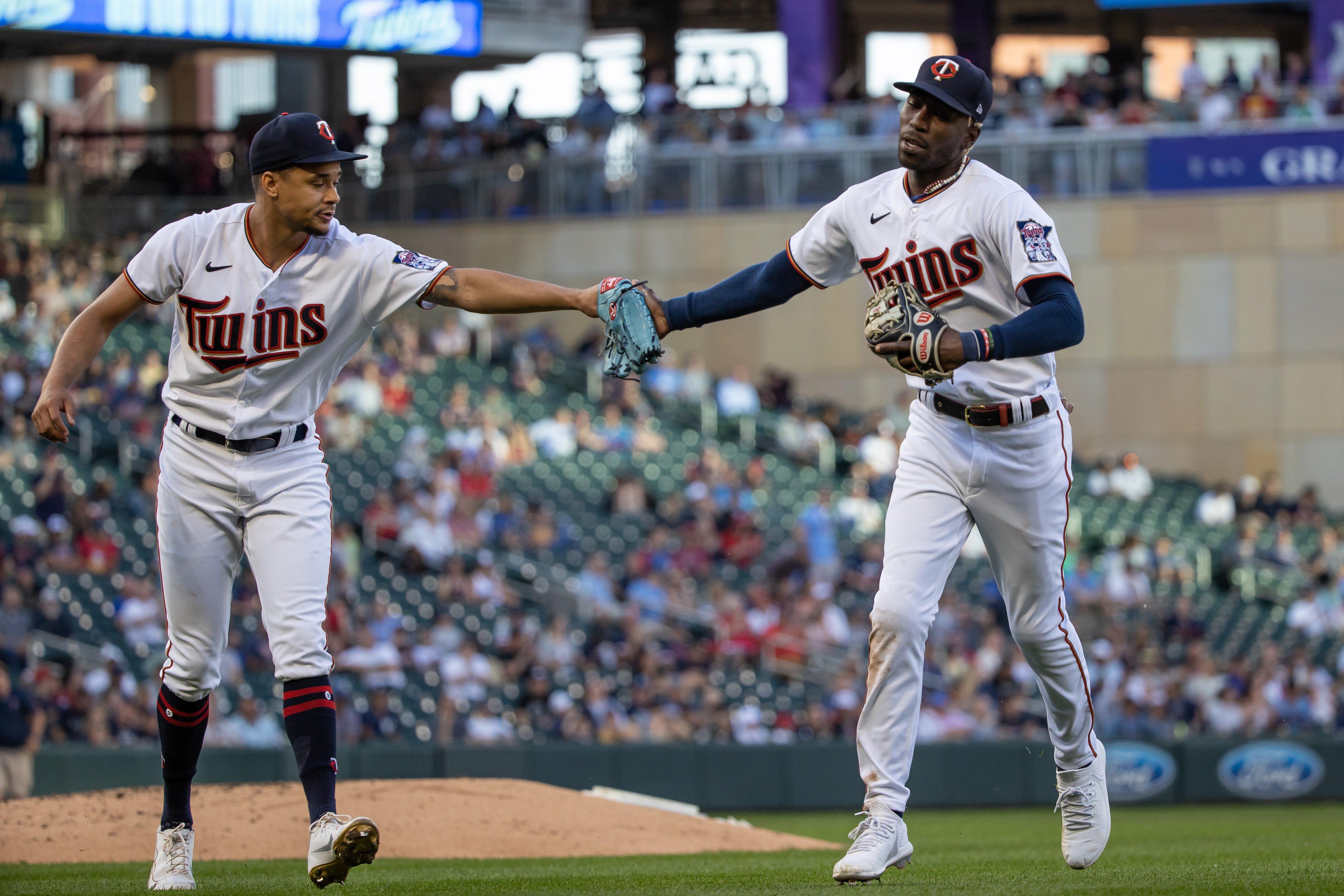 Consider this author among those once skeptical of Gordon’s MLB potential. The son of longtime MLB pitcher Tom Gordon fell flat on his face at AAA in 2018 and only rebounded to respectable, not elite, numbers in 2019. His bat’s potential was less dynamic, his ability to play shortstop was in the “capable of standing in the infield” camp of defensive quality, and the MLB meta grew detached from speed as a desirable trait. Perhaps some role as a utility player—the cursed designation for every fringe player—could fit Gordon’s general skillset, but he would never become a “set it and forget it” type of starter like Jorge Polanco or Max Kepler; he had to fight for a role. There are a few ways for an outside player to force a team’s hand; you either hit so well that a team has no choice but to find a position for you, or you scrap around and man numerous positions at an above-average level, allowing a team to use you as a stopgap player. Gordon fits in the latter category. His bat isn’t otherworldly, but he does provide value with it in atypical ways. You probably take one look at Gordon—a 160-pound human according to Baseball-Reference—and assume that he’s the type to dink, dunk, and slash his way to doing damage at the plate. However, Gordon is something of a Statcast hero, owning a max exit velocity of 110.7 MPH in 2022, a number ahead of players like Luke Voit, Nick Castellanos, and Tyler O’Neill. Hitting the ball hard is far from the only way a hitter can do damage, but it does represent extra-base upside, and Gordon (perhaps surprisingly) possesses that kind of potential. xwOBA likes him as well, as Gordon currently sits a few points above the league average in that stat (.333 to .329). How he reaches these concluding stats is the more exciting part. Gordon isn’t one to walk, and he has more swing-and-miss in his game than one would expect, but his contact is strong enough to offset his negative attributes; he owns a .429 xwOBACON in 2022. That’s xwOBA but only including balls in play. Do you want to know how good a .429 xwOBACON is? Josh Donaldson, Mookie Betts, and Paul Goldschmidt all have a lower number in that stat. When Gordon puts the ball in play, good things happen. What has given Gordon the most value, though, is his newfound ability to play multiple positions. Various afflictions have required him to play left field, center field, shortstop, second base, and the guy even pitched once; talk about utility. He does more than just moonlight at these positions; Statcast credits him with an OAA in both left and center in 2022, as his reaction and burst make up for amateur routes. Considering that most of his minor league innings occurred at shortstop, his early success in the outfield is awe-inspiring; he played just 27 2/3 innings there in the minors. Gordon should continue to be considered solely a “break glass in case of emergency” shortstop, and he’ll probably only rarely play at 2nd base given the glut of talent the team already has there, but his defensive acumen should demand a more active team role than one of a player like Jake Cave. If playing time only exists in the outfield, he’s more than capable of making that work. If baseball has an equivalent to the 6th man in basketball, Nick Gordon fits that role perfectly. He’s good at many things but not undeniably elite in any aspect of the game; Gordon instead takes a “jack of all trades” approach, one that stats can only partially quantify. This is also conjecture, but Gordon seems like an excellent clubhouse presence as well, and he can claim a stake in building the culture that many players have raved about this season. The 26-year-old may not be the star we once anticipated, but he’s a useful player on a winning team, and that counts for something.
 -
No one predicted this would occur, yet everyone saw it coming. Box Score Starting Pitcher: Dylan Bundy, 4 IP, 5 H, 4 ER, BB, K Home Runs: Luis Arraez (2), Byron Buxton 2 (14, 15), Carlos Correa (4), Trevor Larnach (5) Top 3 WPA: Byron Buxton (.337), Luiz Arraez (.094), Carlos Correa (.068) Win Probability Chart (via FanGraphs) Dylan Bundy matched up against Gerrit Cole in the series' rubber match. It looked like a classic David-vs-Goliath battle nestled within a broader clash in a similar vein; the Twins against the Yankees. Bundy coughed up a run in the 1st inning off some dinks and dunks, but the real story of the inning wouldn’t exist until the bottom half. Luis Arraez sent a ball over the wall for a solo homer, Byron Buxton followed suit, and Carlos Correa finally made it an improbable three-peat with a solo home run that made it a 3-1 game before Cole recorded a single out. For real, against Cole. But this was just the 1st inning—one against the Yankees no less; the game was far from over. Bundy nabbed two quick outs in the 2nd inning before Jose Trevino dumped a single into center, and muscly big man Joey Gallo provided the “blast” portion of “a bloop and a blast.” 1st inning fanfare could barely have time to recede before the game turned tied. Because this was a Yankees vs. Twins game, the craziness refused to exit the ballpark, and Buxton launched a three-run homer off Cole in the bottom of the 2nd to push the lead to 6-3. Again, against Gerrit Cole. The Yankees went quietly in the 3rd—perhaps saving their torrent for later—and Trevor Larnach tacked on a solo shot for the 5th Twins homer of the night. There’s probably some German word out there for it—god knows how to spell or say it—but the feeling at this point became an uneasy comfort, one that acknowledges the incredible lead while still not believing for a second that it will hold. Sure, the Twins held a four-run lead after dumping all over one of the finest starting pitchers in the sport, but come on, we know how this story goes; we aren’t fools. The Yankees moved in the 5th inning. Bundy gave up a massive homer to Joey Gallo, the second of the night for the former Ranger before Rocco Baldelli took the lonely trot to the mound and called upon Jharel Cotton in the hopes that he could provide some necessary relief. He did not. A tough missed strike three call necessitated an extra pitch, and D.J. Lemahieu cut the lead down to two with a solo bomb of his own. The Twins' offense was in scuffle mode. Yankees lefty Lucas Leutge pulled a Chad Green in 2017 (since when has it almost been five years since that game?) and held back the onslaught while New York’s bats chipped away as the outs melted away slower than the Twins would have liked. At this point, Twins fans anticipated the dreadful reality of this game's conclusion. The lead lasted one more full inning before, sigh, old friend Aaron Hicks knotted the game at 7 with a two-run homer. It didn’t stop there—the Yankees jumped all over Jhoan Duran and plated two more runs thanks to an Anthony Rizzo single and a Hicks opposite-field knock. New York took just four innings to tie and eventually overtake Minnesota’s quick, fleeting lead. Slow, draining baseball followed until the game mercifully ended. Whatever reliever Aaron Boone chose didn’t matter; they all methodically shut down a Twins offense that crushed Gerrit Cole but could find no answers for Wandy Peralta. The team mustered up just one lonely hit once the struggling starter exited the game. So it goes. The Yankees plated another run—they didn’t matter at this point, but the spirit of competition and sportsmanship call for it—and Minnesota officially fell to New York by a score of 10-7. Bullpen Usage Spreadsheet View full article
- 54 replies
-
- 1
-
-
- byron buxton
- luis arraez
- (and 3 more)
-
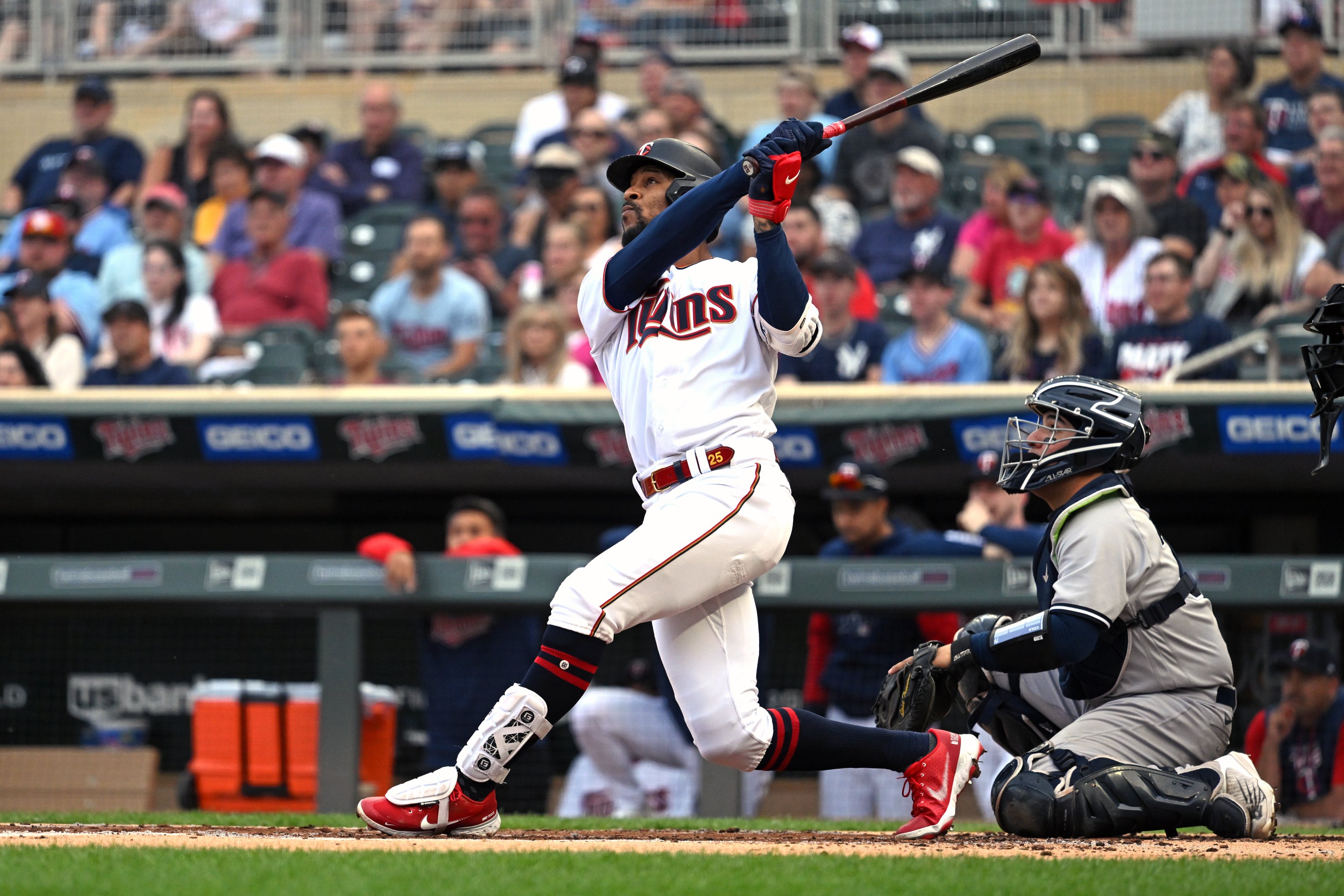 Box Score Starting Pitcher: Dylan Bundy, 4 IP, 5 H, 4 ER, BB, K Home Runs: Luis Arraez (2), Byron Buxton 2 (14, 15), Carlos Correa (4), Trevor Larnach (5) Top 3 WPA: Byron Buxton (.337), Luiz Arraez (.094), Carlos Correa (.068) Win Probability Chart (via FanGraphs) Dylan Bundy matched up against Gerrit Cole in the series' rubber match. It looked like a classic David-vs-Goliath battle nestled within a broader clash in a similar vein; the Twins against the Yankees. Bundy coughed up a run in the 1st inning off some dinks and dunks, but the real story of the inning wouldn’t exist until the bottom half. Luis Arraez sent a ball over the wall for a solo homer, Byron Buxton followed suit, and Carlos Correa finally made it an improbable three-peat with a solo home run that made it a 3-1 game before Cole recorded a single out. For real, against Cole. But this was just the 1st inning—one against the Yankees no less; the game was far from over. Bundy nabbed two quick outs in the 2nd inning before Jose Trevino dumped a single into center, and muscly big man Joey Gallo provided the “blast” portion of “a bloop and a blast.” 1st inning fanfare could barely have time to recede before the game turned tied. Because this was a Yankees vs. Twins game, the craziness refused to exit the ballpark, and Buxton launched a three-run homer off Cole in the bottom of the 2nd to push the lead to 6-3. Again, against Gerrit Cole. The Yankees went quietly in the 3rd—perhaps saving their torrent for later—and Trevor Larnach tacked on a solo shot for the 5th Twins homer of the night. There’s probably some German word out there for it—god knows how to spell or say it—but the feeling at this point became an uneasy comfort, one that acknowledges the incredible lead while still not believing for a second that it will hold. Sure, the Twins held a four-run lead after dumping all over one of the finest starting pitchers in the sport, but come on, we know how this story goes; we aren’t fools. The Yankees moved in the 5th inning. Bundy gave up a massive homer to Joey Gallo, the second of the night for the former Ranger before Rocco Baldelli took the lonely trot to the mound and called upon Jharel Cotton in the hopes that he could provide some necessary relief. He did not. A tough missed strike three call necessitated an extra pitch, and D.J. Lemahieu cut the lead down to two with a solo bomb of his own. The Twins' offense was in scuffle mode. Yankees lefty Lucas Leutge pulled a Chad Green in 2017 (since when has it almost been five years since that game?) and held back the onslaught while New York’s bats chipped away as the outs melted away slower than the Twins would have liked. At this point, Twins fans anticipated the dreadful reality of this game's conclusion. The lead lasted one more full inning before, sigh, old friend Aaron Hicks knotted the game at 7 with a two-run homer. It didn’t stop there—the Yankees jumped all over Jhoan Duran and plated two more runs thanks to an Anthony Rizzo single and a Hicks opposite-field knock. New York took just four innings to tie and eventually overtake Minnesota’s quick, fleeting lead. Slow, draining baseball followed until the game mercifully ended. Whatever reliever Aaron Boone chose didn’t matter; they all methodically shut down a Twins offense that crushed Gerrit Cole but could find no answers for Wandy Peralta. The team mustered up just one lonely hit once the struggling starter exited the game. So it goes. The Yankees plated another run—they didn’t matter at this point, but the spirit of competition and sportsmanship call for it—and Minnesota officially fell to New York by a score of 10-7. Bullpen Usage Spreadsheet
- 54 comments
-
- 1
-

-
- byron buxton
- luis arraez
- (and 3 more)
-
I have about as much confidence in Perez keeping this up as I do in the Twins winning a game against the Yankees
-
When the Twins acquired Gary Sánchez in that weird trade with the Yankees, I, like many Twins fans, groaned at the thought of having Sánchez on the Twins. Overall, he is a fine player, but his infamous moments of less-than-desirable hustle combined with aesthetically (although statistically mixed) defense did not attract pleasant thoughts. But after watching him play for nearly two months, I have some different thoughts. Let’s begin. We’ll focus solely on Sánchez’s bat in this article; defensive analysis can be left to Parker Hageman or some other actual baseball knower with a shred of a clue regarding mechanics. The Twins weren’t acquiring the frustrating catcher for his glove, after all; they were after his inconsistent yet potentially game-altering bat. You’re well aware of Sánchez’s MLB career narrative. He set the world on fire in 2016, finishing 2nd in AL Rookie of the Year voting to Michael Fulmer, before running it back in 2017 with an elite wRC+ (131) that no qualified catcher has topped over an entire season since. It’s been shaky after that season; Sánchez has oscillated between mediocre, good, and dreadful, with “frustrating” working as the only consistently accurate description of his play in New York. But he’s in Minnesota now; a fresh start with a new franchise. Has he changed? Yes, to a degree. His strikeout and walk rates have moved in the wrong direction for a hitter (career 9.8 BB% to 5.8, and 26.7 K% to 28.3), but the under-the-hood numbers tell a far more interesting story. This story drew inspiration from this one image. Look at that cluster in right-center; does that reflect what you would expect from a traditional dead-pull righty? It may only be four doubles, but that’s enough to catch one’s eye. A similar grouping only ever shows up in his 2017 hit map; what’s going on? WARNING! Numbers ahead, like a lot of them. After seeing that, I moved to check his batted ball data, and wouldn’t you know it, Sánchez has inched towards a more democratic approach to hitting. His pull rate is down (45.5% vs career 51.7%), moving more batted balls into center (31.8% vs career 30.2%) and right (22.7% vs career 18.0%). Becoming a more well-rounded hitter in this vein sounds like a good thing by itself, but it may not be ideal for a powerful pull-hitter. We need more information—is Sánchez doing more damage with this new philosophy? Yes! Actually. Sánchez owns a wRC+ of 172 on batted balls sent to what Fangraphs defines as centerfield—a number almost equal to what he did during his fabulous 2017 campaign (174). He’s still not great on balls shot the other way (57 wRC+)—we didn’t expect him to become righty Juan Soto overnight—but it certainly appears that he’s found a more well-rounded stroke. Is it any coincidence that his BABIP is back up to .282 after he wallowed in Keplerian levels for the last four seasons? The good news is that he isn’t sacrificing any of his crucial pull-power to accomplish this. Sánchez is crushing balls to the tune of a 240 wRC+ when he sends them to left field—a number even finer than his legendary 2017 season. He’s not perfect, however. It seems that his new approach has cost him valuable walks, and his strikeouts have ticked up a touch as well, although I question how sticky the extra Ks are. Walks are valuable, but extra-base hits are even more precious, and the Twins seem to believe that Sánchez is a cleaner fit in the lineup when he’s doing damage, not setting the table. The "underperforming" part of the title stems from his Statcast data; Sánchez is walloping fastballs at a .412 xWOBA clip but only has a .328 wOBA against the pitch. Sure, some of that is due to the soggy ball draining power from everyone's bat, but nearly .100 points of wOBA cannot be explained away with that answer; luck must be involved. It's easy to imagine that his approach will bear even more fruit once the summer heat pushes those warning track disappointments into free souvenirs. There you have it; sometimes, an intuition or a minor blip of information can send you down a rabbit hole from which a truth hides. Gary Sánchez has adjusted his hitting style, and it may have been precisely what the doctor ordered. The former hulking slugger has embraced right-center field and may flourish for it. View full article
-
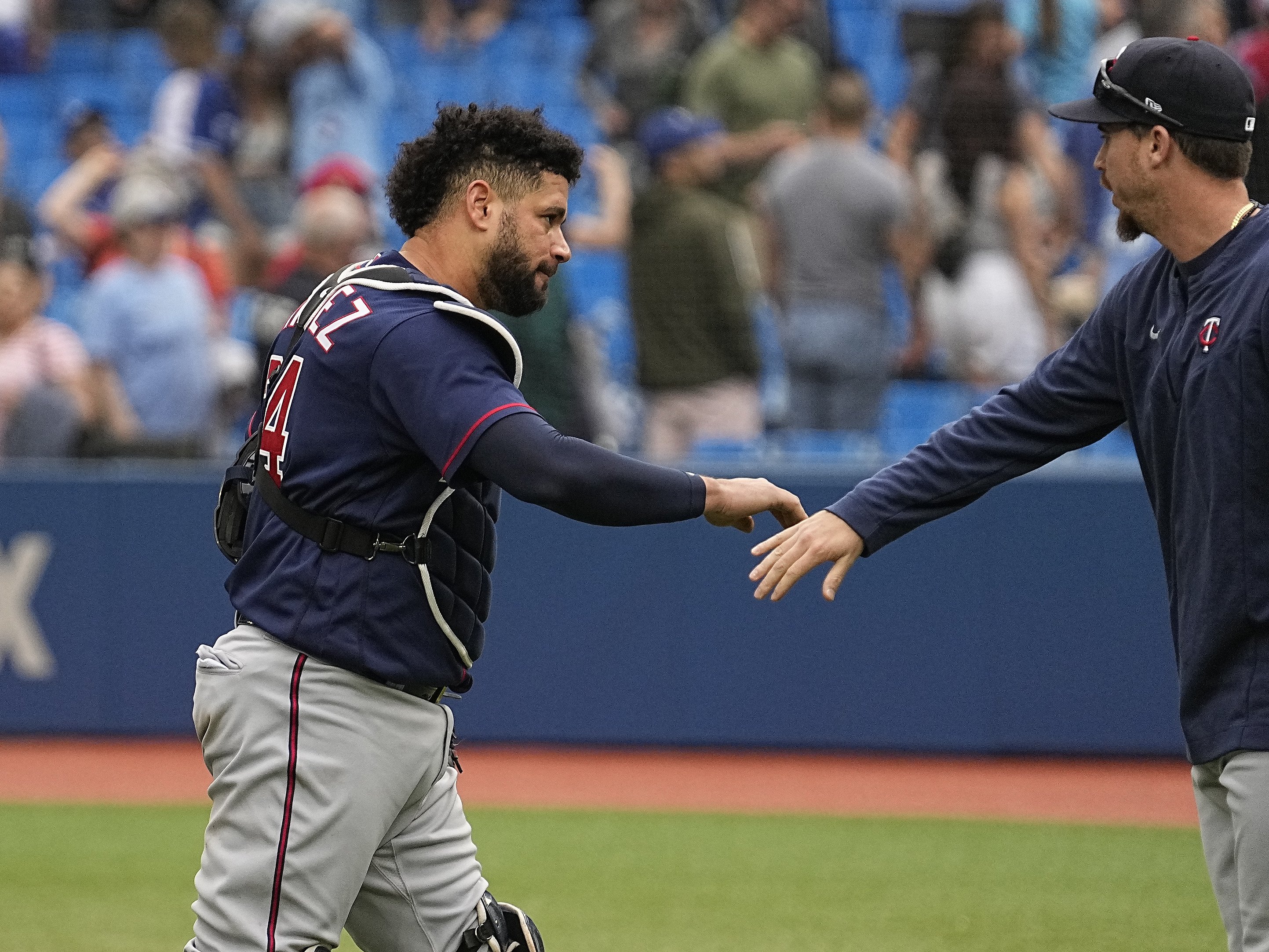 We’ll focus solely on Sánchez’s bat in this article; defensive analysis can be left to Parker Hageman or some other actual baseball knower with a shred of a clue regarding mechanics. The Twins weren’t acquiring the frustrating catcher for his glove, after all; they were after his inconsistent yet potentially game-altering bat. You’re well aware of Sánchez’s MLB career narrative. He set the world on fire in 2016, finishing 2nd in AL Rookie of the Year voting to Michael Fulmer, before running it back in 2017 with an elite wRC+ (131) that no qualified catcher has topped over an entire season since. It’s been shaky after that season; Sánchez has oscillated between mediocre, good, and dreadful, with “frustrating” working as the only consistently accurate description of his play in New York. But he’s in Minnesota now; a fresh start with a new franchise. Has he changed? Yes, to a degree. His strikeout and walk rates have moved in the wrong direction for a hitter (career 9.8 BB% to 5.8, and 26.7 K% to 28.3), but the under-the-hood numbers tell a far more interesting story. This story drew inspiration from this one image. Look at that cluster in right-center; does that reflect what you would expect from a traditional dead-pull righty? It may only be four doubles, but that’s enough to catch one’s eye. A similar grouping only ever shows up in his 2017 hit map; what’s going on? WARNING! Numbers ahead, like a lot of them. After seeing that, I moved to check his batted ball data, and wouldn’t you know it, Sánchez has inched towards a more democratic approach to hitting. His pull rate is down (45.5% vs career 51.7%), moving more batted balls into center (31.8% vs career 30.2%) and right (22.7% vs career 18.0%). Becoming a more well-rounded hitter in this vein sounds like a good thing by itself, but it may not be ideal for a powerful pull-hitter. We need more information—is Sánchez doing more damage with this new philosophy? Yes! Actually. Sánchez owns a wRC+ of 172 on batted balls sent to what Fangraphs defines as centerfield—a number almost equal to what he did during his fabulous 2017 campaign (174). He’s still not great on balls shot the other way (57 wRC+)—we didn’t expect him to become righty Juan Soto overnight—but it certainly appears that he’s found a more well-rounded stroke. Is it any coincidence that his BABIP is back up to .282 after he wallowed in Keplerian levels for the last four seasons? The good news is that he isn’t sacrificing any of his crucial pull-power to accomplish this. Sánchez is crushing balls to the tune of a 240 wRC+ when he sends them to left field—a number even finer than his legendary 2017 season. He’s not perfect, however. It seems that his new approach has cost him valuable walks, and his strikeouts have ticked up a touch as well, although I question how sticky the extra Ks are. Walks are valuable, but extra-base hits are even more precious, and the Twins seem to believe that Sánchez is a cleaner fit in the lineup when he’s doing damage, not setting the table. The "underperforming" part of the title stems from his Statcast data; Sánchez is walloping fastballs at a .412 xWOBA clip but only has a .328 wOBA against the pitch. Sure, some of that is due to the soggy ball draining power from everyone's bat, but nearly .100 points of wOBA cannot be explained away with that answer; luck must be involved. It's easy to imagine that his approach will bear even more fruit once the summer heat pushes those warning track disappointments into free souvenirs. There you have it; sometimes, an intuition or a minor blip of information can send you down a rabbit hole from which a truth hides. Gary Sánchez has adjusted his hitting style, and it may have been precisely what the doctor ordered. The former hulking slugger has embraced right-center field and may flourish for it.
 -
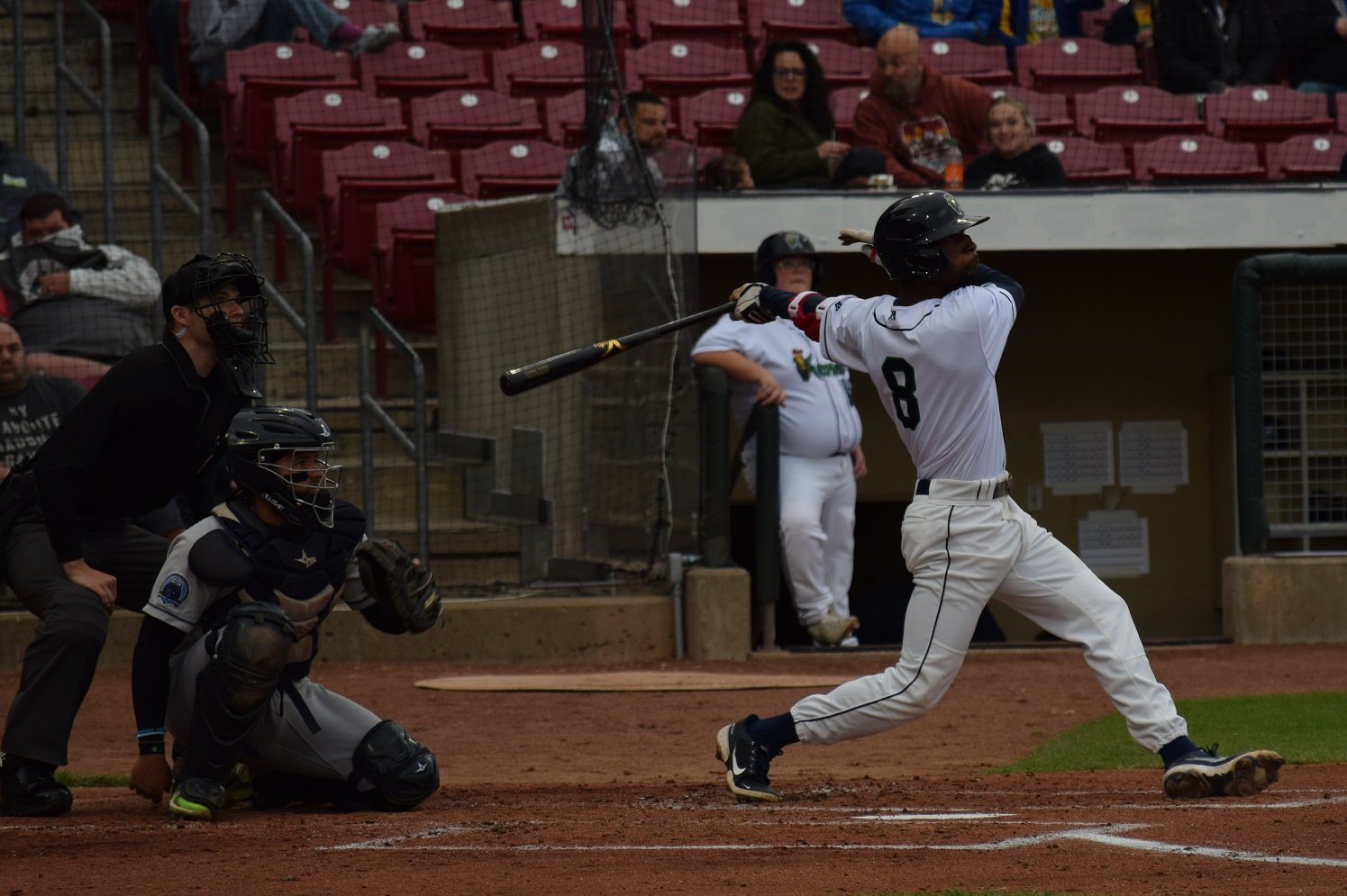 TRANSACTIONS INF Anthony Prato promoted to AA Wichita OF Dylan Neuse promoted to A+ Cedar Rapids OF Nelson Roberto promoted to A Fort Myers C Jair Camargo placed on IL (AA Wichita) RHP Chi Chi González optioned to AAA St. Paul Saints Sentinel St. Paul 5, Iowa 8 Box Score Dereck Rodriguez: 2 IP, 7 H, 6 ER, BB, K HR: Spencer Steer (3), Alex Kirilloff (4) Multi-hit games: Alex Kirilloff (2-for-3, HR, 3 R, RBI, BB), Tim Beckham (2-for-4, 2B, 2 RBI) Iowa kicked St. Paul into a hole early on Saturday, and they never recovered. The Cubs jumped all over Dereck Rodriguez in the first inning, plating six runs before the mayhem came to a merciful end. Rodriguez stayed in for another inning, but his night was far shorter than he probably anticipated. St. Paul didn’t take it laying down, though. Spencer Steer popped his third AAA homer, because of course he did, while Tim Beckham drove in runs in the 3rd and 5th innings to slash the lead to two. Alex Kirilloff brought the game within a run with a solo homer in the 7th. Then the momentum ended for St. Paul. Iowa added three runs thanks in part to a homer from Technically Old Friend John Hicks. Jake Faria gritted out six clutch, effective innings, but the task was too tall in the end. Of note: Steer played SS in this game. Wind Surge Wisdom Wichita 8, Frisco 7 Box Score Louie Varland: 5 IP, 5 H, 2 ER, 2 BB, 9 K HR: Chris Williams (4), Edouard Julien (2), Matt Wallner (11) Multi-hit games: Edouard Julien (2-for-5, HR, R, RBI), Matt Wallner (4-for-5, HR, 2 R, 3 RBI) Wichita won an extra-inning affair on Saturday. Louie Varland made his bid for pitcher of the day, striking out nine batters over five innings with just two earned runs to his name. On any other day, that start would win him the title, but some other arms were just a bit better. The bats followed a homer-heavy itinerary. Chris Williams, Edouard Julien, and Matt Wallner all crushed bombs; Williams was the only one who did so with runners on base, though. The Wind Surge carried the lead into the 9th, but the usually reliable Evan Sisk was fallible and allowed the tying run to score. The teams exchanged blows in the 10th before Dennis Ortega sent fans home happy with a zombie runner-scoring single. Kernels Nuggets Cedar Rapids 7, Lansing Lugnuts 5 Box Score Brent Headrick: 5 ⅔ IP, 4 H, 2 ER, 1 BB, 9 K HR: Alerick Soularie (5) Multi-hit games: Alerick Soularie (4-for-4, HR, 3B, 2B, 3 R, 2 RBI), Pat Winkel (2-for-4, 2B, 2 R) The Kernels won again on Saturday. It was the “thousand paper-cuts” method of execution, but that counts all the same. Cedar Rapids was like David Bowie in his Berlin sessions—a consistent force pumping out more hits than you can believe. All but two batters reached base. Brent Headrick continued his excellent start to the season. He netted 17 outs—perhaps the most this author has observed from a Twins minor league starter this year—and never found himself in consistent trouble. The lefty struck out nine hitters. Alerick Soularie was the star of the game, going a perfect 4-for-4 and hitting the Kernels’ first cycle in 13 years. He also walked once. Things got tight in the final innings as Lansing plated a few runs, but the Kernels pulled through in the end. Old Friend Gabriel Maciel was the final out. Mussel Matters Fort Myers 8, Tampa 2 Box Score Travis Adams: 5 IP, 2 H, 0 ER, 0 BB, 8 K HR: Keoni Cavaco (3) Multi-hit games: Keoni Cavaco (2-for-4, HR, 2 R, 4 RBI), Kala’i Rosario (3-for-4, R) Fort Myers smacked Tampa on Saturday. Travis Adams set the tone, making sure that his hitters didn’t have to worry about hitting their way out of a deficit. The young righty dominated, allowing just a single earned run over five innings of work with eight strikeouts and no walks. Yeah, that’ll play. The bats picked him up almost immediately. The Mighty Mussels took a slim 2-1 lead in the 3rd inning before Keoni Cavaco blew the doors down and smacked a three-run homer. Cavaco then added an RBI single in the 7th. It’s been a good last 10 days for the former first-round pick, as he came into the day slashing .286/.333/.524 over that stretch. Jaylen Nowlin and Hunter McMahon worked four combined stellar innings in relief, allowing 0 earned runs while punching out nine batters. Fort Myers pitchers struck out 17 Tampa batters overall on Saturday. The Mighty Mussels must have had intel on Tarpons catcher Antonio Gomez, as four different players nabbed a steal off him; Jake Rucker nabbed his 12th of the season, Emmanuel Rodriguez swiped his 11th. Uber prospect Jasson Dominguez went hitless, netting an RBI and striking out once. TWINS DAILY PLAYERS OF THE DAY Twins Daily Minor League Pitcher of the Day – Travis Adamsm, Ft. Myers Twins Daily Minor League Hitter of the Day – Alerick Soularie, Cedar Rapids PROSPECT SUMMARY Here’s a look at how the Twins Daily Top 20 Twins Prospects performed: #2 - Austin Martin (Wichita) - 1-4, R, K #3 - Jose Miranda (Minnesota) - 1-for-3, 2B, R, RBI, 2 K #7 - Spencer Steer (St. Paul) - 1-for-5, HR, R, 2 RBI, 2 K #8 - Emmanuel Rodriguez (Ft. Myers) - 1-for-2, R, RBI, BB, SB #9 - Noah Miller (Ft. Myers) - 0-for-4, R, BB, K #12 - Louie Varland (Wichita) - 5 IP, 5 H, 2 ER, 2 BB, 9 K #15 - Matt Wallner (Wichita) - 4-for-5, HR, 2 R, 3 RBI #16 - Edouard Julien (Wichita) - 2-for-5, HR, R, RBI, 3 K #18 - Christian Encarnacion-Strand (Cedar Rapids) - 1-for-4, 2B, R, RBI, BB, K SUNDAY’S PROBABLE STARTERS St. Paul @ Iowa (1:08 PM) - RHP Cole Sands Frisco @ Wichita (1:05 PM) - RHP Simeon Woods Richardson Cedar Rapids @ Lansing (12:05 PM) - LHP Aaron Rozek Tampa @ Fort Myers (11:00 AM) - RHP Pierson Ohl Tampa @ Fort Myers (Game Two) - TBD
- 17 comments
-
- 3
-
-
- alerick soularie
- travis adams
- (and 3 more)
-
Alerick Soularie hit for the first Kernels cycle since 2009, three starting pitchers dominated, and a pair of upper-level outfielders exploded at the plate. It was certainly an eventful night in the Twins system. Read all about that and more in this edition of the minor league report. TRANSACTIONS INF Anthony Prato promoted to AA Wichita OF Dylan Neuse promoted to A+ Cedar Rapids OF Nelson Roberto promoted to A Fort Myers C Jair Camargo placed on IL (AA Wichita) RHP Chi Chi González optioned to AAA St. Paul Saints Sentinel St. Paul 5, Iowa 8 Box Score Dereck Rodriguez: 2 IP, 7 H, 6 ER, BB, K HR: Spencer Steer (3), Alex Kirilloff (4) Multi-hit games: Alex Kirilloff (2-for-3, HR, 3 R, RBI, BB), Tim Beckham (2-for-4, 2B, 2 RBI) Iowa kicked St. Paul into a hole early on Saturday, and they never recovered. The Cubs jumped all over Dereck Rodriguez in the first inning, plating six runs before the mayhem came to a merciful end. Rodriguez stayed in for another inning, but his night was far shorter than he probably anticipated. St. Paul didn’t take it laying down, though. Spencer Steer popped his third AAA homer, because of course he did, while Tim Beckham drove in runs in the 3rd and 5th innings to slash the lead to two. Alex Kirilloff brought the game within a run with a solo homer in the 7th. Then the momentum ended for St. Paul. Iowa added three runs thanks in part to a homer from Technically Old Friend John Hicks. Jake Faria gritted out six clutch, effective innings, but the task was too tall in the end. Of note: Steer played SS in this game. Wind Surge Wisdom Wichita 8, Frisco 7 Box Score Louie Varland: 5 IP, 5 H, 2 ER, 2 BB, 9 K HR: Chris Williams (4), Edouard Julien (2), Matt Wallner (11) Multi-hit games: Edouard Julien (2-for-5, HR, R, RBI), Matt Wallner (4-for-5, HR, 2 R, 3 RBI) Wichita won an extra-inning affair on Saturday. Louie Varland made his bid for pitcher of the day, striking out nine batters over five innings with just two earned runs to his name. On any other day, that start would win him the title, but some other arms were just a bit better. The bats followed a homer-heavy itinerary. Chris Williams, Edouard Julien, and Matt Wallner all crushed bombs; Williams was the only one who did so with runners on base, though. The Wind Surge carried the lead into the 9th, but the usually reliable Evan Sisk was fallible and allowed the tying run to score. The teams exchanged blows in the 10th before Dennis Ortega sent fans home happy with a zombie runner-scoring single. Kernels Nuggets Cedar Rapids 7, Lansing Lugnuts 5 Box Score Brent Headrick: 5 ⅔ IP, 4 H, 2 ER, 1 BB, 9 K HR: Alerick Soularie (5) Multi-hit games: Alerick Soularie (4-for-4, HR, 3B, 2B, 3 R, 2 RBI), Pat Winkel (2-for-4, 2B, 2 R) The Kernels won again on Saturday. It was the “thousand paper-cuts” method of execution, but that counts all the same. Cedar Rapids was like David Bowie in his Berlin sessions—a consistent force pumping out more hits than you can believe. All but two batters reached base. Brent Headrick continued his excellent start to the season. He netted 17 outs—perhaps the most this author has observed from a Twins minor league starter this year—and never found himself in consistent trouble. The lefty struck out nine hitters. Alerick Soularie was the star of the game, going a perfect 4-for-4 and hitting the Kernels’ first cycle in 13 years. He also walked once. Things got tight in the final innings as Lansing plated a few runs, but the Kernels pulled through in the end. Old Friend Gabriel Maciel was the final out. Mussel Matters Fort Myers 8, Tampa 2 Box Score Travis Adams: 5 IP, 2 H, 0 ER, 0 BB, 8 K HR: Keoni Cavaco (3) Multi-hit games: Keoni Cavaco (2-for-4, HR, 2 R, 4 RBI), Kala’i Rosario (3-for-4, R) Fort Myers smacked Tampa on Saturday. Travis Adams set the tone, making sure that his hitters didn’t have to worry about hitting their way out of a deficit. The young righty dominated, allowing just a single earned run over five innings of work with eight strikeouts and no walks. Yeah, that’ll play. The bats picked him up almost immediately. The Mighty Mussels took a slim 2-1 lead in the 3rd inning before Keoni Cavaco blew the doors down and smacked a three-run homer. Cavaco then added an RBI single in the 7th. It’s been a good last 10 days for the former first-round pick, as he came into the day slashing .286/.333/.524 over that stretch. Jaylen Nowlin and Hunter McMahon worked four combined stellar innings in relief, allowing 0 earned runs while punching out nine batters. Fort Myers pitchers struck out 17 Tampa batters overall on Saturday. The Mighty Mussels must have had intel on Tarpons catcher Antonio Gomez, as four different players nabbed a steal off him; Jake Rucker nabbed his 12th of the season, Emmanuel Rodriguez swiped his 11th. Uber prospect Jasson Dominguez went hitless, netting an RBI and striking out once. TWINS DAILY PLAYERS OF THE DAY Twins Daily Minor League Pitcher of the Day – Travis Adamsm, Ft. Myers Twins Daily Minor League Hitter of the Day – Alerick Soularie, Cedar Rapids PROSPECT SUMMARY Here’s a look at how the Twins Daily Top 20 Twins Prospects performed: #2 - Austin Martin (Wichita) - 1-4, R, K #3 - Jose Miranda (Minnesota) - 1-for-3, 2B, R, RBI, 2 K #7 - Spencer Steer (St. Paul) - 1-for-5, HR, R, 2 RBI, 2 K #8 - Emmanuel Rodriguez (Ft. Myers) - 1-for-2, R, RBI, BB, SB #9 - Noah Miller (Ft. Myers) - 0-for-4, R, BB, K #12 - Louie Varland (Wichita) - 5 IP, 5 H, 2 ER, 2 BB, 9 K #15 - Matt Wallner (Wichita) - 4-for-5, HR, 2 R, 3 RBI #16 - Edouard Julien (Wichita) - 2-for-5, HR, R, RBI, 3 K #18 - Christian Encarnacion-Strand (Cedar Rapids) - 1-for-4, 2B, R, RBI, BB, K SUNDAY’S PROBABLE STARTERS St. Paul @ Iowa (1:08 PM) - RHP Cole Sands Frisco @ Wichita (1:05 PM) - RHP Simeon Woods Richardson Cedar Rapids @ Lansing (12:05 PM) - LHP Aaron Rozek Tampa @ Fort Myers (11:00 AM) - RHP Pierson Ohl Tampa @ Fort Myers (Game Two) - TBD View full article
-
Why We Should be Worried About the Twins
Matt Braun replied to Matt Braun's topic in Twins Daily Front Page News
You are correct, I would say I personally only believe like two things I said here. This was created on a whim, really, and I'm never one to pass up a chance to be snarky for an entire piece.- 21 replies
-
- 5
-
-

-
- jhoan duran
- joe ryan
- (and 3 more)
-
The esteemed Matthew brother, the one with the surname “Taylor,” decided to write about why people should not be worried about the Twins. In Fairness (™), we at Twinsdaily thought it would be fun to pull a Richard Nixon; reaping the benefits of reactionary negativity by presenting a counter-article proclaiming that we should, indeed, be worried about these Twins. The Twins are currently 4.5 games up on the Cleveland Guardians; the White Sox are stinky, and the Tigers and Royals remembered that they are, in fact, the Tigers and Royals. Every other team in the Twins' division is dreadfully below .500 and has little recourse for their sins. Given the AL Comedy Central context, what could the Twins possibly worry about? A few things! Actually. Let’s talk about the bullpen, that terrible bullpen. Twins relievers moonlighted as an adequate group for a handful of games, perhaps fooling some into believing that Jhoan Duran, Joe Smith, and their Merry Group of Men could hold their own at least until the trade deadline. That came down in a crashing, painful fashion. Cody Stashak is injured, Smith is now mortal, Tyler Duffey forgot that he’s supposed to be good, Caleb Thielbar is walking a small village, and Emilio Pagán… let’s just leave that name undescribed. If not for Duran and his magical right arm, the bullpen would require an NC-17 rating every time Rocco Baldelli called for “support.” Stretching back to when Houston systematically crushed the Twins starting on May 10th, the unit has put up the 6th worst FIP in MLB (4.45). There is little in the form of inspirational reinforcements as well. Yennier Cano has excellent stuff but wrestles with bouts of lost command; Trevor Megill also has great stuff, but, and you’ll be shocked to read this, he too struggles with command at times. Maybe Ian Hamilton or Austin Schulfer could provide a jolt, but it would be foolish to bet on that happening. One could snarkily mention Taylor Rogers, but the Brewers jumped all over him on Thursday, so that punchline is no longer as funny. How about the starting rotation, now. Outside of the one time a week Joe Ryan descends from above to bless us with a great start (or at least when that used to happen before he got COVID), the rotation is more inconsistent than Florida in an election year. Sonny Gray is great but has now suffered multiple injuries; Chris Archer finally hit the five-inning threshold in a start the other day (it’s June), Dylan Bundy is Dylan Bundy-ing, and, honestly, who knows after that. Chris Paddack was a joy to watch until he tore his UCL again, and Josh Winder flashed potential… until he aggravated his right shoulder… again. The rotation is now Bailey Ober and whatever magic Devin Smeltzer has left in his stirrups. Chi Chi González is now starting. The case rests. “But the team is severely injured,” you might say. The Twins these days are indeed the baseball equivalent of the Ship of Theseus, but there’s no promise that the injuries will let up, and what matters is what the team does on the field, not what the team could be doing on the field. There are no awards for potential. To combat an article full of negativity, Ryan and Carlos Correa will return from COVID soon, as will Gilberto Celestino. This very well could be just one of those streaks in a baseball season, the kind that scares everyone into claiming the sky is falling before laughing off the notion after a month of great play; the team did win 18 games in May. Perhaps none of this matters—the Al Central is currently a handful of teams that look more like fronts for tax fraud than actual baseball franchises—but this team is not in great shape. The two-month slog until the trade deadline will be crucial; key pieces need to get healthy and stay healthy for this team to have hope against the better squads in the AL. The house of cards was wobbly to begin with, and they may be slipping with each day. View full article
-
 The Twins are currently 4.5 games up on the Cleveland Guardians; the White Sox are stinky, and the Tigers and Royals remembered that they are, in fact, the Tigers and Royals. Every other team in the Twins' division is dreadfully below .500 and has little recourse for their sins. Given the AL Comedy Central context, what could the Twins possibly worry about? A few things! Actually. Let’s talk about the bullpen, that terrible bullpen. Twins relievers moonlighted as an adequate group for a handful of games, perhaps fooling some into believing that Jhoan Duran, Joe Smith, and their Merry Group of Men could hold their own at least until the trade deadline. That came down in a crashing, painful fashion. Cody Stashak is injured, Smith is now mortal, Tyler Duffey forgot that he’s supposed to be good, Caleb Thielbar is walking a small village, and Emilio Pagán… let’s just leave that name undescribed. If not for Duran and his magical right arm, the bullpen would require an NC-17 rating every time Rocco Baldelli called for “support.” Stretching back to when Houston systematically crushed the Twins starting on May 10th, the unit has put up the 6th worst FIP in MLB (4.45). There is little in the form of inspirational reinforcements as well. Yennier Cano has excellent stuff but wrestles with bouts of lost command; Trevor Megill also has great stuff, but, and you’ll be shocked to read this, he too struggles with command at times. Maybe Ian Hamilton or Austin Schulfer could provide a jolt, but it would be foolish to bet on that happening. One could snarkily mention Taylor Rogers, but the Brewers jumped all over him on Thursday, so that punchline is no longer as funny. How about the starting rotation, now. Outside of the one time a week Joe Ryan descends from above to bless us with a great start (or at least when that used to happen before he got COVID), the rotation is more inconsistent than Florida in an election year. Sonny Gray is great but has now suffered multiple injuries; Chris Archer finally hit the five-inning threshold in a start the other day (it’s June), Dylan Bundy is Dylan Bundy-ing, and, honestly, who knows after that. Chris Paddack was a joy to watch until he tore his UCL again, and Josh Winder flashed potential… until he aggravated his right shoulder… again. The rotation is now Bailey Ober and whatever magic Devin Smeltzer has left in his stirrups. Chi Chi González is now starting. The case rests. “But the team is severely injured,” you might say. The Twins these days are indeed the baseball equivalent of the Ship of Theseus, but there’s no promise that the injuries will let up, and what matters is what the team does on the field, not what the team could be doing on the field. There are no awards for potential. To combat an article full of negativity, Ryan and Carlos Correa will return from COVID soon, as will Gilberto Celestino. This very well could be just one of those streaks in a baseball season, the kind that scares everyone into claiming the sky is falling before laughing off the notion after a month of great play; the team did win 18 games in May. Perhaps none of this matters—the Al Central is currently a handful of teams that look more like fronts for tax fraud than actual baseball franchises—but this team is not in great shape. The two-month slog until the trade deadline will be crucial; key pieces need to get healthy and stay healthy for this team to have hope against the better squads in the AL. The house of cards was wobbly to begin with, and they may be slipping with each day.
- 21 comments
-
- 8
-
-
-
- jhoan duran
- joe ryan
- (and 3 more)
-
May has ended, and it is now time to crown the player we at Twins Daily believed is deserving of our coveted Minor League Starter of the Month Award. College arms dominating has been the story so far this year, and our list reflects that. Let's begin! Previous 2022 Starting Pitcher of the Month April - John Stankiewicz Methodology: This isn’t a scientific ranking by any stretch of the imagination. Other minor league writers gave feedback on their top players before the author weighed their choices with his own opinions. Results were less clear-cut than one would hope (one writer had Matt Canterino 2nd while another had him 6th). This is meant to act as a general spotlight to shine on many players, not just the one we deemed “the best,” so don’t take this any more seriously than it needs to be. Honorable Mention - Travis Adams - Fort Myers Mighty Mussels, 3.15 ERA, 3.45 FIP, 29.7 K%, 20 IP Travis Adams, the Twins 6th round pick in 2021 out of Sacramento State, threw his hat in the ring of notable college arms making noise in 2022. He allowed a few more runs than the arms that will grace this list, but he was still outstanding—allowing an opponent batting average of .162 in May against a WHIP of 0.85. Honorable Mention - Chi Chi González - St. Paul Saints, 2.53 ERA, 2.52 FIP, 24.4 K%, 21 1/3 IP Chi Chi González joined the Twins organization this past off-season, inking a minor league deal hoping that he could pitch his way into an unsteady major league rotation. That hasn’t happened yet, but González took a significant step towards that future in May. He rebounded from a shaky April to pitch to a respectable 2.53 ERA in May without giving up a long ball in four starts. Number Five - Sawyer Gipson-Long - Cedar Rapids Kernels, 1.74 ERA, 3.59 FIP, 29.5 K%, 20 2/3 IP Sawyer Gipson-Long, another recent college arm (someone should write about that), popped up on the prospect radar last season and is proving that his success is no fluke. The righty from Mercer crushed his competition in May, allowing a sub-.200 batting average against while striking out batters at nearly a 30% clip. That’s good, folks. His age, combined with his status as an older arm, curses his evaluations to be bland; Eric Longenhagen and Tess Taruskin described him as someone who sits “90-94 with an above-average slider and plenty of strikes.” Keep an eye on him as an under-the-radar pitcher who could be in Wichita very soon. Number Four - Brent Headrick - Cedar Rapids Kernels, 0.93 ERA, 3.70 FIP, 26.0 K%, 19 ⅓ IP Another former-collegiate pitcher, Brent Headrick, has found command in 2022, and hitters have suffered for it. Headrick crushed May, holding a WHIP of just 0.78 with three of his four starts ending without him surrendering an earned run. His FIP held him back from placing higher on this list—the next three pitchers all dominated in ERA and peripherals—but that’s hardly a knock on Headrick’s pitching ability. Allowing two earned runs in an entire month is elite, no matter how you slice it. Number Three - Matt Canterino - Wichita Wind Surge, 2.00 ERA, 2.95 FIP, 37.3 K%, 18 IP Matt Canterino had an unusual month of May; he started four games while piggybacking in another but still ended up with fewer innings than all previously named starters. Nonetheless, he dominated. Canterino allowed runs in just one outing while striking out the world as he returns from an elbow injury that shortened his 2021 season. The Rice product walked more batters than one would prefer (12.0% of them), but his strikeout total in May was so ridiculous that he still ended up at the number three spot. Number Two - David Festa- Fort Myers Mighty Mussels/Cedar Rapids Kernels, 1.45 ERA, 2.32 FIP, 36.8 K%, 18 2/3 IP One of the most talked-about Twins prospects this year, David Festa, had a month to remember in May. The 13th-round pick out of Seton Hall embodied efficiency, striking out hitters like an elite MLB reliever while not sacrificing command in favor of his stuff; he walked just 5.9% of hitters in May. His performance earned him a promotion to Cedar Rapids, where he made two outings; one great and one forgettable. His ascent through the minors could be rapid, so make sure to stop and appreciate Festa before he switches levels again. Number One - Steve Hajjar - Fort Myers Mighty Mussels, 0.51 ERA, 2.21 FIP, 42.6 K%, 17 ⅔ IP For a while, Steve Hajjar was like Cthulu—legendary and fearsome, but never seen as he pitched with a Fort Myers team that doesn’t broadcast their games and only occasionally plays against a team that does. Then May 26th happened. Hajjar took the mound against the Bradenton Marauders and shut them down completely, fanning 10 over 5 ⅔ innings with no earned runs. It was the perfect culmination of Hajjar’s ability. The Twins drafted the tall lefty out of Michigan in the 2nd round of the 2021 draft; enamored by his potential, they handed him over $1 million. Hajjar didn’t pitch for the organization that year, but grumblings from team sources indicated that they were pleased with his internal performance. 2022 hasn’t left much for the imagination. The fewest amount of strikeouts Hajjar netted in a single game is 5, and he’s already punched out 50 batters through 29 innings of work. 29; he’s thrown 29 innings and has 50 strikeouts. Walker Buehler has thrown nearly 60 innings and only has 49. The primary issue left for Hajjar is command—he’s walked 17 hitters in those 29 innings to give him a ghastly 14.7 BB% on the year. Although, there may be signs of control as he’s walked just one batter respectively in each of his last two starts. Hajjar is a starter with immense potential, and it will be a great joy to watch him develop in the Twins system. View full article
-
Twins Minor League Starting Pitcher of the Month - May 2022
Matt Braun posted an article in Minor Leagues
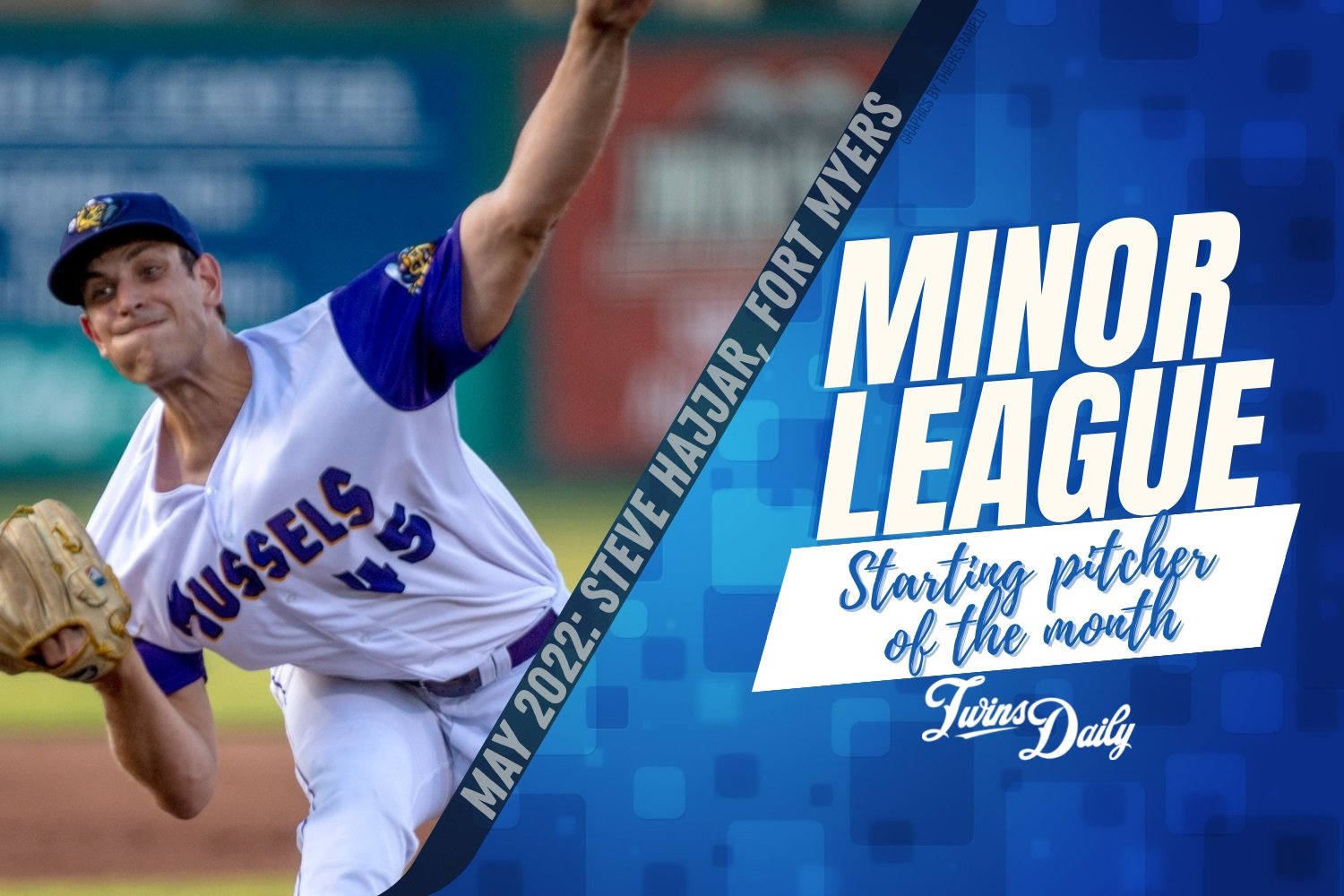 Previous 2022 Starting Pitcher of the Month April - John Stankiewicz Methodology: This isn’t a scientific ranking by any stretch of the imagination. Other minor league writers gave feedback on their top players before the author weighed their choices with his own opinions. Results were less clear-cut than one would hope (one writer had Matt Canterino 2nd while another had him 6th). This is meant to act as a general spotlight to shine on many players, not just the one we deemed “the best,” so don’t take this any more seriously than it needs to be. Honorable Mention - Travis Adams - Fort Myers Mighty Mussels, 3.15 ERA, 3.45 FIP, 29.7 K%, 20 IP Travis Adams, the Twins 6th round pick in 2021 out of Sacramento State, threw his hat in the ring of notable college arms making noise in 2022. He allowed a few more runs than the arms that will grace this list, but he was still outstanding—allowing an opponent batting average of .162 in May against a WHIP of 0.85. Honorable Mention - Chi Chi González - St. Paul Saints, 2.53 ERA, 2.52 FIP, 24.4 K%, 21 1/3 IP Chi Chi González joined the Twins organization this past off-season, inking a minor league deal hoping that he could pitch his way into an unsteady major league rotation. That hasn’t happened yet, but González took a significant step towards that future in May. He rebounded from a shaky April to pitch to a respectable 2.53 ERA in May without giving up a long ball in four starts. Number Five - Sawyer Gipson-Long - Cedar Rapids Kernels, 1.74 ERA, 3.59 FIP, 29.5 K%, 20 2/3 IP Sawyer Gipson-Long, another recent college arm (someone should write about that), popped up on the prospect radar last season and is proving that his success is no fluke. The righty from Mercer crushed his competition in May, allowing a sub-.200 batting average against while striking out batters at nearly a 30% clip. That’s good, folks. His age, combined with his status as an older arm, curses his evaluations to be bland; Eric Longenhagen and Tess Taruskin described him as someone who sits “90-94 with an above-average slider and plenty of strikes.” Keep an eye on him as an under-the-radar pitcher who could be in Wichita very soon. Number Four - Brent Headrick - Cedar Rapids Kernels, 0.93 ERA, 3.70 FIP, 26.0 K%, 19 ⅓ IP Another former-collegiate pitcher, Brent Headrick, has found command in 2022, and hitters have suffered for it. Headrick crushed May, holding a WHIP of just 0.78 with three of his four starts ending without him surrendering an earned run. His FIP held him back from placing higher on this list—the next three pitchers all dominated in ERA and peripherals—but that’s hardly a knock on Headrick’s pitching ability. Allowing two earned runs in an entire month is elite, no matter how you slice it. Number Three - Matt Canterino - Wichita Wind Surge, 2.00 ERA, 2.95 FIP, 37.3 K%, 18 IP Matt Canterino had an unusual month of May; he started four games while piggybacking in another but still ended up with fewer innings than all previously named starters. Nonetheless, he dominated. Canterino allowed runs in just one outing while striking out the world as he returns from an elbow injury that shortened his 2021 season. The Rice product walked more batters than one would prefer (12.0% of them), but his strikeout total in May was so ridiculous that he still ended up at the number three spot. Number Two - David Festa- Fort Myers Mighty Mussels/Cedar Rapids Kernels, 1.45 ERA, 2.32 FIP, 36.8 K%, 18 2/3 IP One of the most talked-about Twins prospects this year, David Festa, had a month to remember in May. The 13th-round pick out of Seton Hall embodied efficiency, striking out hitters like an elite MLB reliever while not sacrificing command in favor of his stuff; he walked just 5.9% of hitters in May. His performance earned him a promotion to Cedar Rapids, where he made two outings; one great and one forgettable. His ascent through the minors could be rapid, so make sure to stop and appreciate Festa before he switches levels again. Number One - Steve Hajjar - Fort Myers Mighty Mussels, 0.51 ERA, 2.21 FIP, 42.6 K%, 17 ⅔ IP For a while, Steve Hajjar was like Cthulu—legendary and fearsome, but never seen as he pitched with a Fort Myers team that doesn’t broadcast their games and only occasionally plays against a team that does. Then May 26th happened. Hajjar took the mound against the Bradenton Marauders and shut them down completely, fanning 10 over 5 ⅔ innings with no earned runs. It was the perfect culmination of Hajjar’s ability. The Twins drafted the tall lefty out of Michigan in the 2nd round of the 2021 draft; enamored by his potential, they handed him over $1 million. Hajjar didn’t pitch for the organization that year, but grumblings from team sources indicated that they were pleased with his internal performance. 2022 hasn’t left much for the imagination. The fewest amount of strikeouts Hajjar netted in a single game is 5, and he’s already punched out 50 batters through 29 innings of work. 29; he’s thrown 29 innings and has 50 strikeouts. Walker Buehler has thrown nearly 60 innings and only has 49. The primary issue left for Hajjar is command—he’s walked 17 hitters in those 29 innings to give him a ghastly 14.7 BB% on the year. Although, there may be signs of control as he’s walked just one batter respectively in each of his last two starts. Hajjar is a starter with immense potential, and it will be a great joy to watch him develop in the Twins system.
- 3 comments
-
- 4
-
-
- steve hajjar
- matt canterino
- (and 3 more)
-
We are soon about to reach the fifth anniversary of Derek Falvey and Thad Levine joining the Twins. It was to be an intellectual super-team of sorts; Falvey had drawn praise for building the dominant Cleveland starting rotation, with Terry Francona describing him as a do-it-all “rising star.” Thad Levine, a crucial cog in keeping Texas’ front office together, helped orchestrate two popular World Series teams in Texas. Key to their vision was sustainability, long-term planning, and the “method—” whatever system could best improve a depleted Twins franchise. Are we seeing this process at this moment? If you hadn’t been paying attention to the Twins’ minor leagues, you don’t read this site enough, which is a shame. Twins Daily has been covering the system, uhhh, daily, and there has been an apparent development so far in the season: college arms dominating. Cade Povich, Brent Headrick, Steve Hajjar, David Festa, Travis Adams, Matt Canterino, and Sawyer Gipson-Long have all performed well, especially in the context of a minor league system with less sheen after graduations and under-performance amongst the best prospects. Those names stand out. I find K-BB% to be the best quick-and-dirty stat analysis for pitching prospects. It sums up just how dominant a pitcher is against his penchant for walking batters, and it completely removes poor minor league defense from the equation. It’s an incomplete picture for sure, but that’s how minor league stat-scouting goes. How well are those arms performing in context with their peers? With a minimum of 30 innings pitched, here’s how they compare with pitchers in their division. Players ranked by rank relative to division: *Hajjar has 29 innings pitched as of writing this, but he’s an essential piece of the story, so I included him anyway. Festa has pitched with both Fort Myers and Cedar Rapids in 2022, which makes his placement in the table messy—just know his K-BB% would be elite in either league. The Twins have targeted college arms specifically for years now. Since 2017, their drafts have been 43%, 43%, 38%, and 45% college arms, respectively, with 2020 ignored as it should be for every topic. Bailey Ober, Cole Sands, and Josh Winder were college arms, and while they didn’t draft Joe Ryan, he came from the collegiate ranks as well. It took a few years of cleaning out the gutters, but the system is now overflowing with college arms. This focus is nothing new for Derek Falvey; he coveted multiple collegiate arms during his time as a Cleveland executive. Corey Kluber, Trevor Bauer, Mike Clevinger, Shane Bieber, and Aaron Civale rose through the college ranks before joining Cleveland’s system and found varying levels of success in the majors. That’s three Cy Young winners for those keeping track. An advantage to drafting college arms is their seasoning; those players have more time performing against high-level talent and require less time in the minors than their high school counterparts. Teams know this; it’s why the Angels, probably foolishly, drafted 19 college pitchers in 2021. The draft is 20 rounds. Another truism about drafting college pitchers is that, because their cement is more dry, taking one is less a game of projections and more a project of finding undervalued characteristics. High schoolers might as well be light-years away from the majors, and their development presents an immense risk. The Moneyball book perfectly represented the idea with Billy Beane’s anger at drafting Jeremy Bonderman, a projectable arm with a “clean delivery, and a body that looked as if it had been created to wear a baseball uniform.” Although, Bonderman had the last laugh when he pitched more than 1,200 innings in MLB over a nine-year career. Is this simply just the game repeating itself; it’s meta-game moving full-circle back towards what was cutting edge thinking 20 years ago? Perhaps, perhaps not. If you looked carefully, you’d see that players like Povich and Hajjar found extra velocity ticks after joining the organization. The team could be identifying players with more data attached to them to target a fix or two and enjoy the benefits of a more realized player. After all, this is the landscape of Big Data in baseball, and the Twins might be using it to their advantage. View full article
-
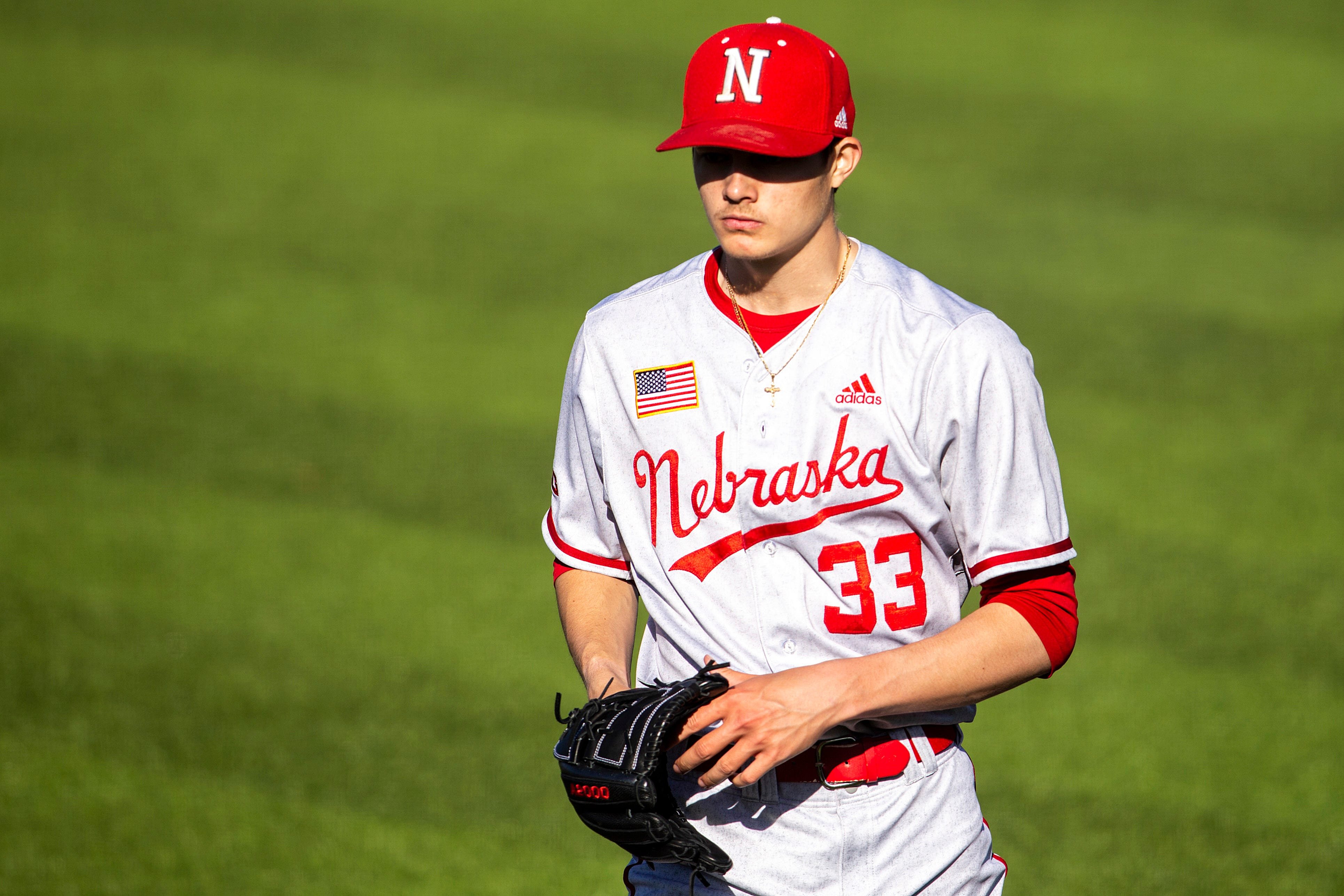 If you hadn’t been paying attention to the Twins’ minor leagues, you don’t read this site enough, which is a shame. Twins Daily has been covering the system, uhhh, daily, and there has been an apparent development so far in the season: college arms dominating. Cade Povich, Brent Headrick, Steve Hajjar, David Festa, Travis Adams, Matt Canterino, and Sawyer Gipson-Long have all performed well, especially in the context of a minor league system with less sheen after graduations and under-performance amongst the best prospects. Those names stand out. I find K-BB% to be the best quick-and-dirty stat analysis for pitching prospects. It sums up just how dominant a pitcher is against his penchant for walking batters, and it completely removes poor minor league defense from the equation. It’s an incomplete picture for sure, but that’s how minor league stat-scouting goes. How well are those arms performing in context with their peers? With a minimum of 30 innings pitched, here’s how they compare with pitchers in their division. Players ranked by rank relative to division: *Hajjar has 29 innings pitched as of writing this, but he’s an essential piece of the story, so I included him anyway. Festa has pitched with both Fort Myers and Cedar Rapids in 2022, which makes his placement in the table messy—just know his K-BB% would be elite in either league. The Twins have targeted college arms specifically for years now. Since 2017, their drafts have been 43%, 43%, 38%, and 45% college arms, respectively, with 2020 ignored as it should be for every topic. Bailey Ober, Cole Sands, and Josh Winder were college arms, and while they didn’t draft Joe Ryan, he came from the collegiate ranks as well. It took a few years of cleaning out the gutters, but the system is now overflowing with college arms. This focus is nothing new for Derek Falvey; he coveted multiple collegiate arms during his time as a Cleveland executive. Corey Kluber, Trevor Bauer, Mike Clevinger, Shane Bieber, and Aaron Civale rose through the college ranks before joining Cleveland’s system and found varying levels of success in the majors. That’s three Cy Young winners for those keeping track. An advantage to drafting college arms is their seasoning; those players have more time performing against high-level talent and require less time in the minors than their high school counterparts. Teams know this; it’s why the Angels, probably foolishly, drafted 19 college pitchers in 2021. The draft is 20 rounds. Another truism about drafting college pitchers is that, because their cement is more dry, taking one is less a game of projections and more a project of finding undervalued characteristics. High schoolers might as well be light-years away from the majors, and their development presents an immense risk. The Moneyball book perfectly represented the idea with Billy Beane’s anger at drafting Jeremy Bonderman, a projectable arm with a “clean delivery, and a body that looked as if it had been created to wear a baseball uniform.” Although, Bonderman had the last laugh when he pitched more than 1,200 innings in MLB over a nine-year career. Is this simply just the game repeating itself; it’s meta-game moving full-circle back towards what was cutting edge thinking 20 years ago? Perhaps, perhaps not. If you looked carefully, you’d see that players like Povich and Hajjar found extra velocity ticks after joining the organization. The team could be identifying players with more data attached to them to target a fix or two and enjoy the benefits of a more realized player. After all, this is the landscape of Big Data in baseball, and the Twins might be using it to their advantage.
- 11 comments
-
- 6
-
-
- cade povich
- steve hajjar
- (and 3 more)
-
A competitive Twins team with a problematic bullpen? Is it 2019 again?
-
Royce Lewis I have been conservative about Lewis for a while, and it is time to admit that he is the best prospect in the Twins system. His hit tool looks real, at least much better than before, and the eye test shows that he can currently play a passable shortstop, a significant point in his development. The Twins are lowering him into a super-utility role, which is fine given his athleticism, but I would prefer to have him challenged at shortstop every day. There is no real easy answer to that conundrum until Carlos Correa no longer calls that position home. For now, we shall appreciate watching a unique talent perform at the highest level for years to come. Austin Martin 2022 has not been the best season for Martin. He is striking out at a lower rate but is somehow hitting for less power than before; his season wRC+ sits at 95. While I have supreme confidence in his bat turning around eventually, his glove is a different story. He is not a shortstop; that is clear now. I’m not sure what position he can play, but the Twins will have to find one, and his value is now much lower as a super-utility guy unable to cover such a crucial position. He also has a ridiculous 20 steals, perhaps hinting at a skillset philosophy leaning closer towards a traditional, scrappy type of player. I think he’ll figure it out and become a useful major league player, but his future is far hazier than one prefers from one of their best prospects. Jose Miranda Although not because of his performance, Miranda moves up one spot in my ranking. He hasn’t hit during his time in the majors, owning terrible batted ball data during his brief stint that ended with Lewis’ re-appearance on the Twins. One should never overreact to 70 plate appearances, and Miranda’s 2021 was so legendary that I tend to believe this to be a fad and not an indictment of his hitting ability. He owns a rare batting average/power combo that few in baseball can claim, and that alone is what keeps Miranda sitting near the top of this list. Time shall tell whether Miranda can find his groove again. ------------------------- Jordan Balazovic I’m still a firm believer in Balazovic as the team’s best pitching prospect, but it has been an extended period since he last unquestionably dominated hitters for a significant stretch, and it’s fair to lean into doubts. Early returns at AAA have been ugly, although the eye doesn’t catch exactly what the problem for him seems to be. He’s avoided major injury, but the nicks and dings are starting to add up, holding him back from being the “set-it-and-forget-it” ace that many thought he would become after his excellent 2018 and 2019 performances. Again, let’s not overreact, but it’s time for a correction of sorts for Balazovic. Noah Miller Miller is good, and people should recognize this as soon as possible. 19-year-old shortstops are not supposed to dominate A-ball like this, and the ones that do tend to become exceptional players. He’s hitting for a 146 wRC+ with reportedly silky smooth defense that could play if the team called him up tomorrow. He isn’t hitting for much power (ISO of .113), but that feels like an extreme nitpick for an otherwise otherworldly performance this far into the season. Get used to his name this high on prospect lists. Emmanuel Rodriguez Rodriguez could have easily claimed the five spot, but Miller’s shortstop potential broke the tie, and Rodriguez ends up here. He’s also just 19, which is ridiculous, and he’s walking at a 27.3% clip while slugging .475. If one wanted to nitpick, he’s also striking out 28.5% of the time, a number digestible given his age, but one to keep an eye on given how sticky strikeout numbers tend to be as a player changes levels. His profile will clear up with time (mainly whether he owns discipline or is plain passive against wild pitchers), but things are exciting for the former international big shot signing. Spencer Steer I don’t think that Steer is legitimately a 147 wRC+ batter, but it is apparent that he is a well-rounded player with a potentially rare batting average/OBP/power combination. His best comp is probably Jose Miranda’s 2021 season which was equally impressive in how he didn’t have to sacrifice batting average for power. We’ve seen that combo struggle in the majors over a short sample with Miranda, but a player like Ty France proves that it can work with refinement. He can pass at both 3rd and 2nd base, giving the team options if they ever decide to clean out their gutter at 3rd or trade Jorge Polanco. ------------------------- Simeon Woods Richardson I originally had Woods Richardson above the previous three hitters, but I kept questioning whether I was more excited about him or the other batters, and you can see the answer I came to. Woods Richardson’s ERA is excellent, but his FIP is merely passable, and his xFIP is dreadful; combine that with a suspicious BABIP, and I’m not sold that he has improved significantly since struggling at AA all of last season. He’s still just 21, which feels impossible, but his stock remains stagnant in my eyes. Matt Canterino Canterino is a reliever. Usually, I don’t consider relievers prospects, but his stuff is so otherworldly that it’s not out of the question that he becomes a 2-3 inning fire-breathing dragon, which can be extremely valuable to every team in MLB. He has already bested his innings total from last season, and he should be up with the team down the stretch if he can remain healthy. Walks are up this year, but I believe that to be a mirage and not a loss of command for a pitcher who has otherwise thrown strikes during his time in the minors. Cole Sands I like Sands more than I probably should. He flashed an incredible sweeper during his cup of coffee, a pitch that I believe can carry him to some sort of helpful niche in the team’s pitching staff. The rest of his profile is pretty vanilla, and he’s currently on the IL, a statement often too true about Sands, but the power of his breaker keeps him elevated on my list. Ronny Henriquez Henriquez is still a somewhat mysterious prospect. He came over as an afterthought in the Mitch Garver deal and has flashed some major league playable stuff but has yet to play enough for me to get as good of a read on him. It’s been a rough go at AAA so far, but he’s not even 22-years-old yet, and his development feels like it will be more of a slow burn a la Woods Richardson rather than a fiery explosion like Jhoan Duran. Edouard Julien Julien is unfortunately injured at the moment, but his profile is far too intriguing to ignore. It’s not every day that one comes across a player practically guaranteed to get on base at a .400 clip, but Julien is precisely that kind of player. His OBP is true, a sign of patience over passivity, which will carry him across all levels of baseball. He’s more positionless than one would like, but his bat projects so well that the Twins will find a way to make it work. Marco Raya Raya was a popular pop-up pick in the pre-season, and he’s impressed so far with an 18.8 K-BB%. His stuff is electric, the classic mid-90s fastball and wipeout slider combo that fans can dream on with a curve and change that will need refinement as he elevates through the minors. It has been less than 30 innings into Raya’s professional debut, but it’s easy to see why the Twins were so high on him in the 2020 draft. David Festa The Twins system has lost top-end credibility due to some graduations and players in that tier struggling, but their middle area has beefed up considerably thanks to arms like Festa. Festa came out of nowhere in 2022, dominating hitters with Fort Myers before enjoying a promotion to Cedar Rapids. His K-BB% sits at 28.9%, the highest in the system amongst pitchers who have thrown at least 30 innings. Christian Encarnacion-Strand Encarnacion-Strand went supernova to begin the season, netting all the RBIs before gently cooling off and settling in as a merely great, not Bondsian hitter. Evaluators are still baffled by Encarnacion-Strand; he fits into the scary right/first baseman/college bucket from which hitters go to die (or become Pete Alonso), and it’s unclear if he’s made proper adjustments since joining the Twins organization. For now, it’s best to shrug your shoulders and continue to ride the wave. Cade Povich Povich, like Raya, was also a popular breakout pick for 2022. He’s responded with an eye-catching 27.4 K-BB%, a total bested only by Shane McClanahan amongst qualified MLB pitchers this year. It’s not a 1:1 comp, but his success should not be understated, and he could find himself at AA sooner rather than later at this rate. ------------------------- Blayne Enlow I remain a firm believer in Enlow. Tommy John surgery derailed his path to AA in 2021, but he recently returned from the procedure, and his performance the rest of the season will help illuminate his prospect status; it says a lot that the Twins protected him in the rule 5 draft despite his injuries and underperformance. Brayan Medina Medina has yet to pitch in an organized game for the Twins, so this ranking is an aggregate of other publications rather than a personal evaluation. Louie Varland Varland is not having as fine a season like 2020, but he has still settled in as a consistent, reliable arm at AA. The walks have crept up while his home run rate has ballooned, perhaps an ominous sign of regression waiting in the wings. Back-sliding has not hit yet, so he remains solidly in the mid-tier of prospects until otherwise. Steve Hajjar Hajjar, like Povich, was an intriguing breakout arm to keep an eye on in 2022. He’s punched out a small army but has also walked far too many batters for his good; less than 50% of plate appearances against him have ended with a ball put into play. It has been less than 30 innings, but I’m far leerier of his skillset translating unless he tames his walks. Brent Headrick Like Gipson-Long in the next spot, Headrick is an old-for-his-level starter who has easily crushed his competition. His command is much improved in 2022, and hitters are now overwhelmed by stuff that they can no longer just wait out for the inevitable walk. He’s so similar to Gipson-Long in this regard that I gave him the one-spot nod for better peripherals (28.3 K-BB %). Sawyer Gipson-Long Gipson-Long is an old-for-the-level starter but should not be ignored when looking at this system. He has picked up right where he left off in 2021, owning the 9th best K-BB% rate amongst all pitchers with 30 innings in the system this year (22.4%). He should get a taste of AA soon, which will help illuminate his prospect status more than feasting on A+ hitters. ------------------------- Kala’i Rosario Rosario is a raw, toolsy prospect dipping into the full-season waters for the first time. His 94 wRC+ is far from disastrous, but his 39.2% strikeout rate is ghastly, perhaps a sign that he’s still too green. As a 19-year-old, he exists in that frustrating “potential” sphere of prospect evaluation where his struggles are summed up as him “learning,” and no actual analysis is gleaned from his performance. In summary: early returns are not favorable but not indictable yet. Matt Wallner To be blunt, I have little faith in Wallner becoming a valuable major league player. Hitters who strike out 34% of the time need legendary power to negate their whiffs, and Wallner seems to have merely great, not jaw-dropping power. He can still walk and bop homers, but I remain skeptical of his skillset translating at the major league level; Brent Rooker soured any ability I have to overlook one’s strikeout rate. Aaron Sabato Speaking of hitters striking out too much, Sabato has been disappointing since the Twins took him in the 1st round in 2020. He can take a walk, but his ISO is far lower than one wants from a pure 1st baseman (.163). At this point, I don’t expect Sabato to become a useful contributor for the Twins, and he can join Keoni Cavaco in the club of “Falvey and Levine’s unwise 1st round picks.” Speaking of which… Keoni Cavaco Cavaco has never shown any consistent ability to hit at any level during any extended period of play. His career minor league OBP begins with a .2, which should tell you everything you need to know. Yes, injuries have played a role in his poor performance, but injuries can’t excuse his immense strikeout problems, and his ranking on any prospect list is honorary at this point. I’m holding on to his draft pedigree, but he will be dropped soon unless his performance turns around. John Stankiewicz I have no idea what to make of Stankiewicz. He was an undrafted free agent in 2020 and has performed very well during his time in the Twins system. Time will tell if it’s a lower-level mirage, but he should still be a name to remember throughout the remainder of the season. Jake Rucker I just wanted to get Rucker a mention on one of these lists. Since the Twins drafted him in 2021, he's held his own and has improved his ISO (.059 to .111) despite the rest of his stat-line not falling in line. He feels like the kind of prospect who can suddenly be in AAA despite flying under the radar for the entirety of his professional career. Misael Urbina Urbina showed great peripherals in 2021 (12.3% walk rate, 18.7% K rate), which lost out overall to his otherwise poor slash line. Visa issues have delayed the start of his season, which is both a shame and a detriment to his development. Hopefully, he’ll be playing baseball in the Twins system soon. Drew Strotman The clickbait 30 spot goes to Strotman out of deference towards teams far wiser than I. The Rays added Strotman to the 40-man roster, and the Twins targeted him in a trade now overshadowed by Joe Ryan’s success, showing that there are franchises that believe in him. He is now a reliever, limiting his upside, but I’ll wait to give up on him when the Twins do.
- 6 comments
-
- 6
-
-
- royce lewis
- austin martin
- (and 3 more)
-
The pitchers weren't the best on Saturday, but the bats helped make up for that. Read all about that and more in this edition of the minor league report. TRANSACTIONS OF Willie Joe Garry Jr. placed on IL for A+ Cedar Rapids RHP Yennier Cano optioned to AAA St. Paul LHP Jovani Moran recalled by Minnesota Twins RHP Juan Minaya contract selected by Minnesota Twins INF Tim Beckham assigned to Low-A Fort Myers on minor league rehab Saints Sentinel St. Paul 4, Indianapolis 7 Box Score Ronny Henriquez: 4 2/3 IP, 7 H, 5 ER, 1 BB, 8 K HR: Spencer Steer (2), Jake Cave, (3) Multi-hit games: Mark Contreras (2-for-4) The Saints lost a winnable game on Saturday. Indianapolis jumped all over Ronny Henriquez, scoring five runs before the young starter could complete five innings. Henriquez continues to own great strikeout numbers since joining the Twins organization, but his ERA has yet to follow suit. We shall see which budges first. Spencer Steer continued his assault on baseballs. The high-flying prospect has no desire to stay at AAA and is surprisingly banging on the door of the majors thanks to a .306/.392/.599 slash-line that hints at a rare OBP/power combination oddly reminiscent of Jose Miranda's 2021 season. Of all the prospect risers in the system, few have shot as highly as Steer. Jake Cave also homered, but the total offensive effort was not enough on Saturday. The Saints gave up seven runs but also struck out 15 batters, flashing some punch out upside available in the high minors. Ian Hamilton descended again, lowering his season ERA to 0.84. The soon-to-be 27-year-old has reigned in command issues that plagued him in 2021, walking batters at a passable 9.1% clip while striking them out 36.4% of the time. Wind Surge Wisdom Wichita 13, Corpus Cristi 14 Box Score Casey Legumina: 3 1/3 IP, 7 H, 7 ER, 3 BB, 2 K HR: Leobaldo Cabrera (4), Matt Wallner, (10), Dennis Ortega (2) Multi-hit games: Austin Martin (2-for-6, RBI), Michael Helman (2-for-5, 2 R), DaShawn Kiersey (2-for-4, 2B, 2 R, 2 RBI), Leobaldo Cabrera (2-for-3, HR, 2 R, 4 RBI), Ernie Yake (2-for-5, R, 2 RBI) Wichita lost a heartbreaker on Saturday. A true barn-burner, no lead was safe on Saturday, as both teams traded blows like Muhammad Ali fighting against Joe Frazier; Leobaldo Cabrera was the big winner with his early-game grand slam. Matt Wallner and Dennis Ortega were the other big blasters of the night. It was a tough night for Wind Surge pitchers. Every arm allowed at least two runs, and the team ended up walking more hitters than they struck out, a bad outcome no matter how you slice it. Perhaps something was in the water, or maybe the vibes were off, but Wichita pitchers will undoubtably look to forget their outings on Saturday. Offensively, the 7-9 hitters found an incredible amount of success, with each batter scoring at least two runs and two hits. Usually, the top of the order sets up the middle section, but Saturday proved the opposite, as those bottom hitters wrecked havoc all night long. Kernels Nuggets Cedar Rapids 8, Wisconsin 3 Box Score Brent Headrick: 4 IP, 5 H, 2 ER, 1 BB, 3 K HR: Aaron Sabato (6), Alerick Soularie (3) Multi-hit games: Aaron Sabato (2-for-4, HR, R, 3 RBI), Will Holland (2-for-4, 3B, 2 R, 2 RBI) The Kernels won handily on Saturday. Brent Headrick took the mound and had a rather mortal outing. The lefty had previously well-established himself as a breakout arm, but his start here was forgettable, allowing more baserunners than innings pitched while striking just three. David Festa followed with four quality innings of work, including three strikeouts and one earned run allowed. The offense stole the show on Saturday. Will Holland brought home the earliest runs with a bases-clearing little-league homer that brought the game to a 3-0 advantage for the Kernels. Wisconsin eventually knotted the game, but Aaron Sabato gave Cedar Rapids a massive lead thanks to a three-run homer in the 5th. Alerick Soularie homered and brought home a final run with a sacrifice fly. Mussel Matters Fort Myers 9, Bradenton 2 Box Score Jaylen Nowlin: 4 IP, 1 H, 2 ER, 2 BB, 9 K HR: Emmanuel Rodriguez (7), Tim Beckham (1) Multi-hit games: Emmanuel Rodriguez (2-for-3, HR, R, RBI, 2 BB), Kala’i Rosario (2-for-4, R, 2 RBI), Luis Baez (2-for-4, R, RBI) Fort Myers won a blowout on Saturday. It was one of those games that could have ended just about as soon as it began. Emmanuel Rodriguez blasted a solo homer in the first inning before the Mighty Mussels put up a five-spot in the following frame. Tim Beckham hit the home run in that inning. Fort Myers scored three more runs in the game, but it hardly mattered. Jaylen Nowlin had the start of the night, striking out nine batters over his four innings of work. Yes, he allowed two runs as well, but acquiring 75% of one’s outs via the strikeout is a far more impressive task. Matt Mullenbach, Juan Mendez, and Niklas Rimmel combined to hold Bradenton scoreless in relief of Nowlin. Although Mendez and Rimmel walked more batters than either pitcher probably cared to, the extra base-runners never came around to score. TWINS DAILY PLAYERS OF THE DAY Twins Daily Minor League Pitcher of the Day – Jaylen Nowlin Twins Daily Minor League Hitter of the Day – Leobaldo Cabrera PROSPECT SUMMARY Here’s a look at how the Twins Daily Top 20 Twins Prospects performed: #1 – Austin Martin (Wichita) - 2-for-6, RBI #2 – Royce Lewis (St. Paul) - 1-for-5, R, 2 K (played LF) #12 – Matt Wallner (Wichita) - 1-for-2, HR, 4 R, RBI, 2 BB, K #15 – Emmanuel Rodriguez (Fort Myers) - 2-for-3, HR, R, RBI, 2 BB #16 – Ronny Henriquez (St. Paul) - 4 2/b IP, 7 H, 5 ER, 1 BB, 8 K #18 – Spencer Steer (St. Paul) - 1-for-3, HR, R, 2 RBI, BB, 2 K SUNDAY’S PROBABLE STARTERS Indianapolis @ St. Paul (5:07 PM) - RHP Cole Sands Wichita @ Corpus Christi (6:05 PM) - RHP Louie Varland Wisconsin @ Cedar Rapids (2:05 PM) - RHP Sean Mooney Fort Myers @ Bradenton (11:00 AM) - TBD View full article
-
 TRANSACTIONS OF Willie Joe Garry Jr. placed on IL for A+ Cedar Rapids RHP Yennier Cano optioned to AAA St. Paul LHP Jovani Moran recalled by Minnesota Twins RHP Juan Minaya contract selected by Minnesota Twins INF Tim Beckham assigned to Low-A Fort Myers on minor league rehab Saints Sentinel St. Paul 4, Indianapolis 7 Box Score Ronny Henriquez: 4 2/3 IP, 7 H, 5 ER, 1 BB, 8 K HR: Spencer Steer (2), Jake Cave, (3) Multi-hit games: Mark Contreras (2-for-4) The Saints lost a winnable game on Saturday. Indianapolis jumped all over Ronny Henriquez, scoring five runs before the young starter could complete five innings. Henriquez continues to own great strikeout numbers since joining the Twins organization, but his ERA has yet to follow suit. We shall see which budges first. Spencer Steer continued his assault on baseballs. The high-flying prospect has no desire to stay at AAA and is surprisingly banging on the door of the majors thanks to a .306/.392/.599 slash-line that hints at a rare OBP/power combination oddly reminiscent of Jose Miranda's 2021 season. Of all the prospect risers in the system, few have shot as highly as Steer. Jake Cave also homered, but the total offensive effort was not enough on Saturday. The Saints gave up seven runs but also struck out 15 batters, flashing some punch out upside available in the high minors. Ian Hamilton descended again, lowering his season ERA to 0.84. The soon-to-be 27-year-old has reigned in command issues that plagued him in 2021, walking batters at a passable 9.1% clip while striking them out 36.4% of the time. Wind Surge Wisdom Wichita 13, Corpus Cristi 14 Box Score Casey Legumina: 3 1/3 IP, 7 H, 7 ER, 3 BB, 2 K HR: Leobaldo Cabrera (4), Matt Wallner, (10), Dennis Ortega (2) Multi-hit games: Austin Martin (2-for-6, RBI), Michael Helman (2-for-5, 2 R), DaShawn Kiersey (2-for-4, 2B, 2 R, 2 RBI), Leobaldo Cabrera (2-for-3, HR, 2 R, 4 RBI), Ernie Yake (2-for-5, R, 2 RBI) Wichita lost a heartbreaker on Saturday. A true barn-burner, no lead was safe on Saturday, as both teams traded blows like Muhammad Ali fighting against Joe Frazier; Leobaldo Cabrera was the big winner with his early-game grand slam. Matt Wallner and Dennis Ortega were the other big blasters of the night. It was a tough night for Wind Surge pitchers. Every arm allowed at least two runs, and the team ended up walking more hitters than they struck out, a bad outcome no matter how you slice it. Perhaps something was in the water, or maybe the vibes were off, but Wichita pitchers will undoubtably look to forget their outings on Saturday. Offensively, the 7-9 hitters found an incredible amount of success, with each batter scoring at least two runs and two hits. Usually, the top of the order sets up the middle section, but Saturday proved the opposite, as those bottom hitters wrecked havoc all night long. Kernels Nuggets Cedar Rapids 8, Wisconsin 3 Box Score Brent Headrick: 4 IP, 5 H, 2 ER, 1 BB, 3 K HR: Aaron Sabato (6), Alerick Soularie (3) Multi-hit games: Aaron Sabato (2-for-4, HR, R, 3 RBI), Will Holland (2-for-4, 3B, 2 R, 2 RBI) The Kernels won handily on Saturday. Brent Headrick took the mound and had a rather mortal outing. The lefty had previously well-established himself as a breakout arm, but his start here was forgettable, allowing more baserunners than innings pitched while striking just three. David Festa followed with four quality innings of work, including three strikeouts and one earned run allowed. The offense stole the show on Saturday. Will Holland brought home the earliest runs with a bases-clearing little-league homer that brought the game to a 3-0 advantage for the Kernels. Wisconsin eventually knotted the game, but Aaron Sabato gave Cedar Rapids a massive lead thanks to a three-run homer in the 5th. Alerick Soularie homered and brought home a final run with a sacrifice fly. Mussel Matters Fort Myers 9, Bradenton 2 Box Score Jaylen Nowlin: 4 IP, 1 H, 2 ER, 2 BB, 9 K HR: Emmanuel Rodriguez (7), Tim Beckham (1) Multi-hit games: Emmanuel Rodriguez (2-for-3, HR, R, RBI, 2 BB), Kala’i Rosario (2-for-4, R, 2 RBI), Luis Baez (2-for-4, R, RBI) Fort Myers won a blowout on Saturday. It was one of those games that could have ended just about as soon as it began. Emmanuel Rodriguez blasted a solo homer in the first inning before the Mighty Mussels put up a five-spot in the following frame. Tim Beckham hit the home run in that inning. Fort Myers scored three more runs in the game, but it hardly mattered. Jaylen Nowlin had the start of the night, striking out nine batters over his four innings of work. Yes, he allowed two runs as well, but acquiring 75% of one’s outs via the strikeout is a far more impressive task. Matt Mullenbach, Juan Mendez, and Niklas Rimmel combined to hold Bradenton scoreless in relief of Nowlin. Although Mendez and Rimmel walked more batters than either pitcher probably cared to, the extra base-runners never came around to score. TWINS DAILY PLAYERS OF THE DAY Twins Daily Minor League Pitcher of the Day – Jaylen Nowlin Twins Daily Minor League Hitter of the Day – Leobaldo Cabrera PROSPECT SUMMARY Here’s a look at how the Twins Daily Top 20 Twins Prospects performed: #1 – Austin Martin (Wichita) - 2-for-6, RBI #2 – Royce Lewis (St. Paul) - 1-for-5, R, 2 K (played LF) #12 – Matt Wallner (Wichita) - 1-for-2, HR, 4 R, RBI, 2 BB, K #15 – Emmanuel Rodriguez (Fort Myers) - 2-for-3, HR, R, RBI, 2 BB #16 – Ronny Henriquez (St. Paul) - 4 2/b IP, 7 H, 5 ER, 1 BB, 8 K #18 – Spencer Steer (St. Paul) - 1-for-3, HR, R, 2 RBI, BB, 2 K SUNDAY’S PROBABLE STARTERS Indianapolis @ St. Paul (5:07 PM) - RHP Cole Sands Wichita @ Corpus Christi (6:05 PM) - RHP Louie Varland Wisconsin @ Cedar Rapids (2:05 PM) - RHP Sean Mooney Fort Myers @ Bradenton (11:00 AM) - TBD
- 3 comments
-
- 3
-
-
- matt wallner
- tim beckham
- (and 3 more)
-
Richard Nixon had a problem. No, it wasn’t Vietnam, or the Russians, or the press finding out about a secret slush fund; those would be issues for the ghosts of Nixon past and future. Rather, this was a dilemma for a mid-1960s Nixon, one that the people barely rejected in 1960 in favor of some young, handsome guy and who then badly lost a California governor race that should have ended his career. But the times were changing. The Democrats, crushed under the sins of Lyndon Johnson, were in disarray and out of favor with the general populous. The Republicans were comparatively healthy, but they lacked a true conservative superstar to carry them to success; significant players like George Romney and Nelson Rockefeller belonged to the liberal Republican camp. Perhaps, and this was a longshot, Nixon could re-brand himself and prove that a changed man was deserving of the White House. ----------------------------------- Tyler Duffey. You know him; you may like him! The Duffman is now the longest-tenured Twins pitcher, debuting in 2015 back when Ryan O’Rourke and Blaine Boyer were a thing (Caleb Thielbar was technically on that team also, but he took a bunch of years off, so it doesn’t count the same). Evolution has defined his entire career; Duffey moved to a relief role in 2019, cut his changeup, and found new success as a reliable late-inning arm. He’s back to tinkering in 2022. 2019 is the pivotal year in this discussion. Yes, those previous seasons do count, but Duffey was a different pitcher, so different that analyzing those years does not help us. The Twins front office decided that Duffey would not be up to snuff as a starter (probably true) and moved him to the bullpen where his fastball/curveball combo could play up. Friends, that’s exactly what it did. Duffey averaged 94 MPH with his fastball and spent 57 ⅔ innings laying waste to batters to the tune of a 2.50 ERA with great peripherals (3.06 FIP, 2.94 xFIP). Success since that year has been inconsistent, though. He was better in 2020 (1.88 ERA, 2.57 FIP), but his peripherals fell off a cliff in 2021 (3.49 FIP, 4.19 xFIP, enough walks to start a protest). He became hittable and less deadly outside the strike zone, as both his O-Swing % dipped (33.9% in 2019 to 26.6% in 2021) and Contact % rose (69.2% in 2019 to 77.9% in 2021); a terrible combination for any pitcher. Oh, and he’s lost a tick and a half on his fastball. The fastball is perhaps the most interesting pitch in Duffey’s repertoire. His curveball always had deep, visceral movement, the kind of drop that pushes one to theorize that all stadiums have a baseball magnet hidden underneath home plate. His 4-seam fastball, though, never carried great traits. It spins a bit more than average but doesn’t ride in the way that Justin Verlander’s heater can look like it’s elevating towards heaven. Still, he had enough juice to effectively attack hitters at the top of the zone in 2019. In the years since? It’s a different story. That’s… something; he’s become unpredictable, which can help to a degree (the hitter can’t know where the pitch is going if you don’t either), but inconsistency has plagued him with this new strategy. His solution? Re-invite the sinker to the party. He’s thrown the sinker 10.8% of the time—mainly against righties—and has successfully thrown it in exactly one location. See if you can spot the pattern: The pitch has excellent Statcast outcomes, but with only six batted ball events against it, bringing up those numbers seems foolish. Overall, Duffey has had an inconsistent start to his season, more than what one would expect from any reliever. The good news is that he might be ahead of the curve by trying out his sinker more; the bad news is that it is unclear yet whether that plan will work. Either way, Duffey is a changed pitcher in 2022. View full article
-
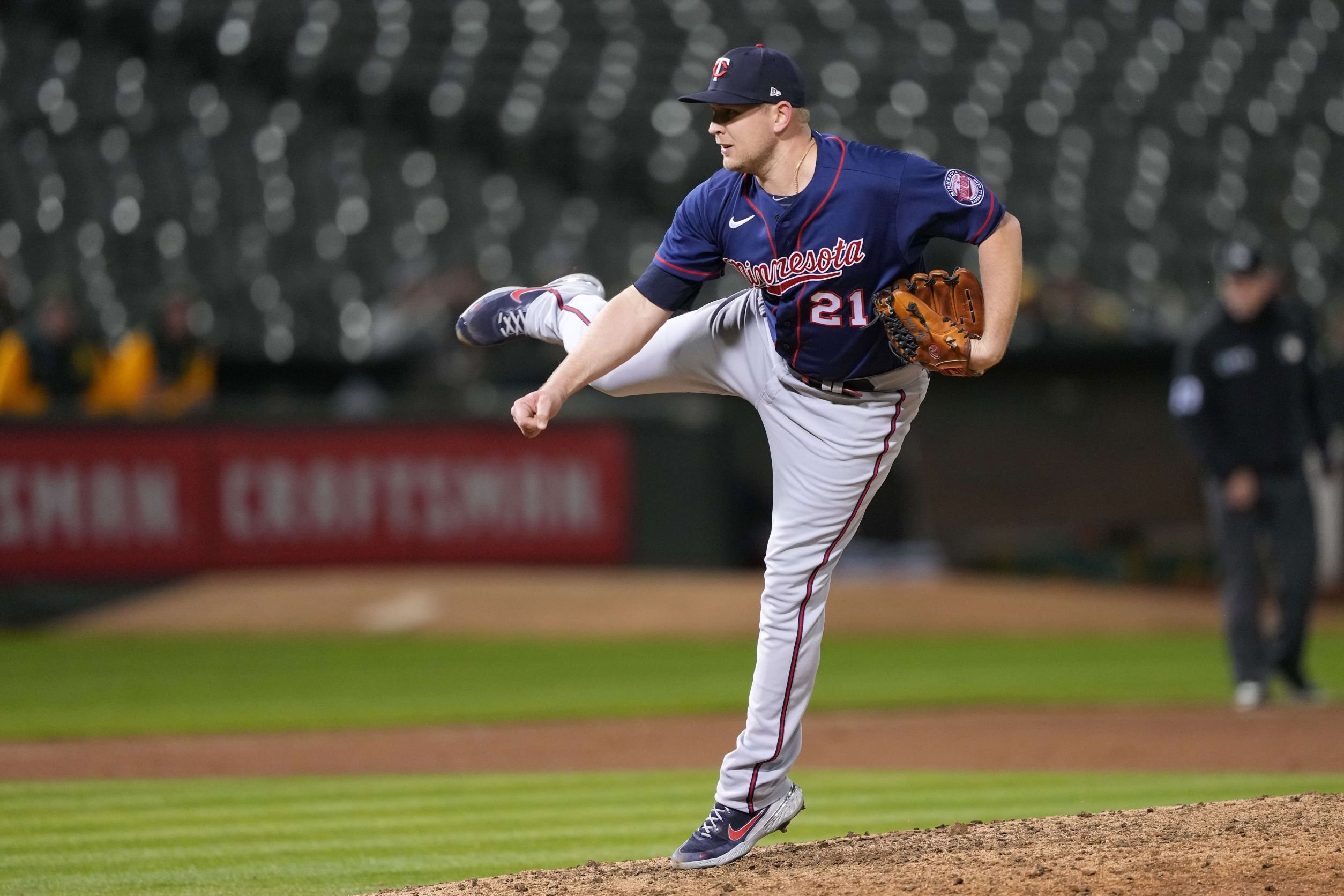 ----------------------------------- Tyler Duffey. You know him; you may like him! The Duffman is now the longest-tenured Twins pitcher, debuting in 2015 back when Ryan O’Rourke and Blaine Boyer were a thing (Caleb Thielbar was technically on that team also, but he took a bunch of years off, so it doesn’t count the same). Evolution has defined his entire career; Duffey moved to a relief role in 2019, cut his changeup, and found new success as a reliable late-inning arm. He’s back to tinkering in 2022. 2019 is the pivotal year in this discussion. Yes, those previous seasons do count, but Duffey was a different pitcher, so different that analyzing those years does not help us. The Twins front office decided that Duffey would not be up to snuff as a starter (probably true) and moved him to the bullpen where his fastball/curveball combo could play up. Friends, that’s exactly what it did. Duffey averaged 94 MPH with his fastball and spent 57 ⅔ innings laying waste to batters to the tune of a 2.50 ERA with great peripherals (3.06 FIP, 2.94 xFIP). Success since that year has been inconsistent, though. He was better in 2020 (1.88 ERA, 2.57 FIP), but his peripherals fell off a cliff in 2021 (3.49 FIP, 4.19 xFIP, enough walks to start a protest). He became hittable and less deadly outside the strike zone, as both his O-Swing % dipped (33.9% in 2019 to 26.6% in 2021) and Contact % rose (69.2% in 2019 to 77.9% in 2021); a terrible combination for any pitcher. Oh, and he’s lost a tick and a half on his fastball. The fastball is perhaps the most interesting pitch in Duffey’s repertoire. His curveball always had deep, visceral movement, the kind of drop that pushes one to theorize that all stadiums have a baseball magnet hidden underneath home plate. His 4-seam fastball, though, never carried great traits. It spins a bit more than average but doesn’t ride in the way that Justin Verlander’s heater can look like it’s elevating towards heaven. Still, he had enough juice to effectively attack hitters at the top of the zone in 2019. In the years since? It’s a different story. That’s… something; he’s become unpredictable, which can help to a degree (the hitter can’t know where the pitch is going if you don’t either), but inconsistency has plagued him with this new strategy. His solution? Re-invite the sinker to the party. He’s thrown the sinker 10.8% of the time—mainly against righties—and has successfully thrown it in exactly one location. See if you can spot the pattern: The pitch has excellent Statcast outcomes, but with only six batted ball events against it, bringing up those numbers seems foolish. Overall, Duffey has had an inconsistent start to his season, more than what one would expect from any reliever. The good news is that he might be ahead of the curve by trying out his sinker more; the bad news is that it is unclear yet whether that plan will work. Either way, Duffey is a changed pitcher in 2022.
 -
Royce Lewis played left field, the Wind Surge almost made an impressive comeback, and Jake Cave blasted a grand slam. If that doesn't excite you, then nothing will. Read all about that and more in this edition of the minor league report. TRANSACTIONS RHP Trevor Megill selected by Minnesota Twins LHP Devin Smeltzer optioned to AAA St. Paul RHP Tyler Bashlor placed on IL (right elbow strain) RHP Jake Petricka placed on COVID-19 related IL RHP Bailey Ober returned to Twins Saints Sentinel St. Paul 4, Omaha 2 Box Score Dereck Rodriguez: 5 IP, 3 H, 1 ER, 3 BB, 9 K HR: Jake Cave (2) Multi-hit games: None The Saints cruised on Saturday. Royce Lewis walked, Alex Kirilloff singled, Jermaine Palacios walked, and Jake Cave brought the family home with a grand slam. You can’t start a game better than that. St. Paul would not score the rest of the game, but they didn’t need to as they received an outstanding effort from their pitching staff. Dereck Rodriguez was on his game. The former, former Twins prospect struck out nine batters over five innings while allowing just six baserunners. His ERA at AAA is now a sparkling 1.74, and one has to imagine that he’ll get another chance in the majors before long. Rodriguez handed the reigns to Ian Hamilton, who out-dueled Omaha hitters to the tune of three strikeouts over five total outs. His ERA is somehow even lower at 1.08. If he continues to quell the walks, his number could be called very soon. Overall it was a pretty quiet game. Cave’s grand slam represented the crucial runs while Omaha never established themselves at the plate. Hey, quiet wins count as much as loud ones. Of note: Royce Lewis played in left field, and it appears that he caught all of one out in the game. Wind Surge Wisdom Wichita 7, Springfield 9 Box Score Ben Gross: 3 IP, 3 H, ER, BB, K HR: Andrew Bechtold (5) Multi-hit games: Austin Martin (2-for-4, R, RBI, 2 BB), Andrew Bechtold (2-for-4, HR, R, 3 RBI, BB), Chris Williams (3-for-4, R, RBI, BB) Wichita lost a close game on Saturday. It was a classic barn-burner in score but not in game flow. Springfield, at one point, enjoyed a 9-0 lead over Wichita before an explosive six-run 7th inning brought intrigue to a game entirely in the blowout category. Let’s back up. An ugly 2nd inning that included a balk, a few hits, and two errors netted the Cardinals four quick runs. Gross would pitch one more inning afterward, but the damage remained attached to his name. Zach Featherstone put forth his best attempt at controlling the game but was only rewarded with an inflated ERA. A barrage of hits mixed with an error from Michael Helman doubled Springfield’s lead in short order. A solo homer would make the score the aforementioned 9-0 lead, but Wichita’s bats came alive in the 7th. It was a story in two parts: the first being runs scored by traditional hits, the second being patience leading to flourishing rewards. Ernie Yake doubled, Austin Martin singled, and Andrew Bechtold brought everyone home with a three-run blast. Some may see a home run as a rally-killer, yet it was anything but in this inning. An array of walks knocked old friend Kevin Marnon from the game before old friend Johan Quezada came in to establish order. He did not. A wild pitch brought home the inning's fifth run before a walk to Martin netted the sixth and final one. Chris Williams doubled home a run in the following inning, but it was not enough to overcome the brutal 9-0 deficit, and Wichita walked away without a win. Kernels Nuggets Cedar Rapids 4, Lake County 12 Box Score John Stankiewicz: 3 2/3 IP, 7 H, 6 ER, 2 BB, 5 K HR: Will Holland (3) Multi-hit games: Seth Gray (2-for-3, 2B, 2 RBI, BB) The Kernels lost handily on Saturday. The Captains jumped on John Stankiewicz as the early innings melted into the middle innings, and the rest of the game’s narrative quickly followed suit. Ryan Shreve and Miguel Rodriguez were unable to stop an offensive movement in the 6th inning, and any scoring after that was a vain attempt at stat-padding. Cedar Rapids was held in check offensively as well. Kernels hitters punched out 14 times while reaching base only nine times; they went 2-for-12 with runners in scoring position. Seth Gray was the big bat of the day, reaching base three times while knocking in half of Cedar Rapids’ runs; Will Holland knocked in the other two when he homered in the 3rd inning. To look for more bright spots, Bradley Hanner continued his ridiculous start to the season with two strikeouts over 1 1/3 scoreless innings. His season ERA is now a sparkling 0.50. Yeah, that’ll play. Mussel Matters Fort Myers 4, Clearwater 5 Box Score Marco Raya: 5 IP, 8 H, 3 ER, 3 BB, 3 K HR: Mikey Perez (5) Multi-hit games: Mikey Perez (2-for-5, HR, R, 3 RBI), Keoni Cavaco (2-for-5, 2B, RBI), Dylan Neuse (2-for-3) Fort Myers lost a close one on Saturday. Marco Raya, looking to continue his fine start to the season, took the mound for the Mighty Mussels. The right-hander could not reign in his dominant stuff, and the Threshers made him pay, knocking around eight hits to go with three walks and three earned runs. It will be on to the next start for him. Clearwater’s offense was not a consistent onslaught despite the earned runs, instead evenly distributing their runs one at a time in the 1st, 3rd, and 5th innings, respectively. In fact, the Mighty Mussels held a slight lead after the top of the 7th inning when Mikey Perez blasted an Earl Weaver special to give Fort Myers a 4-3 lead. Although, the Mighty Mussels forgot that defense was part of Weaver’s special equation, and a dodgeball fight involving Noah Cardenas and Perez in the bottom half of the 7th resulted in a tying run scoring for Clearwater. They would score once more the following inning to win. The team shot themselves in the foot offensively as well. While four runs will win a team a fair amount of ballgames, the Mighty Mussels left a small army stranded on base; 11 to be exact. They walked and slashed hits all around the field like a good team is supposed to do but just missed out on a few damaging knocks that could have sealed a win. Altogether, six Mighty Mussels hitters reached base multiple times; Noah Miller and Emmanuel Rodriguez walked more than once, while Miller added a base hit for good measure. Regi Grace stood out for Fort Myers pitchers, allowing just one earned run over eight outs, with five of those coming via a strikeout. Because baseball is inherently cruel, he was tagged with the loss. TWINS DAILY PLAYERS OF THE DAY Twins Daily Minor League Pitcher of the Day – Dereck Rodriguez Twins Daily Minor League Hitter of the Day – Mikey Perez PROSPECT SUMMARY Here’s a look at how the Twins Daily Top 20 Twins Prospects performed: #1 – Austin Martin (Wichita) - 2-for-4, R, RBI, 2 BB #2 – Royce Lewis (St. Paul) - 0-for-3, BB, R, K #5 – Joe Ryan (Minnesota) - 5 2/3 IP, 5 H, 1 ER, 2 BB, 6 K (79 pitches, 51 strikes) #10 – Noah Miller (Fort Myers) - 1-for-3, 2 R, 2 BB, K #11 – Gilberto Celestino (Minnesota) - 1-for-2, R, BB #12 – Matt Wallner (Wichita) - 0-for-2, 2 R, 3 BB #15 – Emmanuel Rodriguez (Fort Myers) - 0-for-2, R, 3 BB, 2 K SUNDAY’S PROBABLE STARTERS St. Paul @ Omaha (2:05 PM) - RHP Ronny Henriquez Springfield @ Wichita (1:05 PM) - RHP Matt Canterino Lake County @ Cedar Rapids (2:05 PM) - LHP Brent Headrick Fort Myers @ Clearwater (11:00 AM) - LHP Jaylen Nowlin View full article
-
Minor League Report (5/21): Cave, Saints Slam Storm Chasers
Matt Braun posted an article in Minor Leagues
 TRANSACTIONS RHP Trevor Megill selected by Minnesota Twins LHP Devin Smeltzer optioned to AAA St. Paul RHP Tyler Bashlor placed on IL (right elbow strain) RHP Jake Petricka placed on COVID-19 related IL RHP Bailey Ober returned to Twins Saints Sentinel St. Paul 4, Omaha 2 Box Score Dereck Rodriguez: 5 IP, 3 H, 1 ER, 3 BB, 9 K HR: Jake Cave (2) Multi-hit games: None The Saints cruised on Saturday. Royce Lewis walked, Alex Kirilloff singled, Jermaine Palacios walked, and Jake Cave brought the family home with a grand slam. You can’t start a game better than that. St. Paul would not score the rest of the game, but they didn’t need to as they received an outstanding effort from their pitching staff. Dereck Rodriguez was on his game. The former, former Twins prospect struck out nine batters over five innings while allowing just six baserunners. His ERA at AAA is now a sparkling 1.74, and one has to imagine that he’ll get another chance in the majors before long. Rodriguez handed the reigns to Ian Hamilton, who out-dueled Omaha hitters to the tune of three strikeouts over five total outs. His ERA is somehow even lower at 1.08. If he continues to quell the walks, his number could be called very soon. Overall it was a pretty quiet game. Cave’s grand slam represented the crucial runs while Omaha never established themselves at the plate. Hey, quiet wins count as much as loud ones. Of note: Royce Lewis played in left field, and it appears that he caught all of one out in the game. Wind Surge Wisdom Wichita 7, Springfield 9 Box Score Ben Gross: 3 IP, 3 H, ER, BB, K HR: Andrew Bechtold (5) Multi-hit games: Austin Martin (2-for-4, R, RBI, 2 BB), Andrew Bechtold (2-for-4, HR, R, 3 RBI, BB), Chris Williams (3-for-4, R, RBI, BB) Wichita lost a close game on Saturday. It was a classic barn-burner in score but not in game flow. Springfield, at one point, enjoyed a 9-0 lead over Wichita before an explosive six-run 7th inning brought intrigue to a game entirely in the blowout category. Let’s back up. An ugly 2nd inning that included a balk, a few hits, and two errors netted the Cardinals four quick runs. Gross would pitch one more inning afterward, but the damage remained attached to his name. Zach Featherstone put forth his best attempt at controlling the game but was only rewarded with an inflated ERA. A barrage of hits mixed with an error from Michael Helman doubled Springfield’s lead in short order. A solo homer would make the score the aforementioned 9-0 lead, but Wichita’s bats came alive in the 7th. It was a story in two parts: the first being runs scored by traditional hits, the second being patience leading to flourishing rewards. Ernie Yake doubled, Austin Martin singled, and Andrew Bechtold brought everyone home with a three-run blast. Some may see a home run as a rally-killer, yet it was anything but in this inning. An array of walks knocked old friend Kevin Marnon from the game before old friend Johan Quezada came in to establish order. He did not. A wild pitch brought home the inning's fifth run before a walk to Martin netted the sixth and final one. Chris Williams doubled home a run in the following inning, but it was not enough to overcome the brutal 9-0 deficit, and Wichita walked away without a win. Kernels Nuggets Cedar Rapids 4, Lake County 12 Box Score John Stankiewicz: 3 2/3 IP, 7 H, 6 ER, 2 BB, 5 K HR: Will Holland (3) Multi-hit games: Seth Gray (2-for-3, 2B, 2 RBI, BB) The Kernels lost handily on Saturday. The Captains jumped on John Stankiewicz as the early innings melted into the middle innings, and the rest of the game’s narrative quickly followed suit. Ryan Shreve and Miguel Rodriguez were unable to stop an offensive movement in the 6th inning, and any scoring after that was a vain attempt at stat-padding. Cedar Rapids was held in check offensively as well. Kernels hitters punched out 14 times while reaching base only nine times; they went 2-for-12 with runners in scoring position. Seth Gray was the big bat of the day, reaching base three times while knocking in half of Cedar Rapids’ runs; Will Holland knocked in the other two when he homered in the 3rd inning. To look for more bright spots, Bradley Hanner continued his ridiculous start to the season with two strikeouts over 1 1/3 scoreless innings. His season ERA is now a sparkling 0.50. Yeah, that’ll play. Mussel Matters Fort Myers 4, Clearwater 5 Box Score Marco Raya: 5 IP, 8 H, 3 ER, 3 BB, 3 K HR: Mikey Perez (5) Multi-hit games: Mikey Perez (2-for-5, HR, R, 3 RBI), Keoni Cavaco (2-for-5, 2B, RBI), Dylan Neuse (2-for-3) Fort Myers lost a close one on Saturday. Marco Raya, looking to continue his fine start to the season, took the mound for the Mighty Mussels. The right-hander could not reign in his dominant stuff, and the Threshers made him pay, knocking around eight hits to go with three walks and three earned runs. It will be on to the next start for him. Clearwater’s offense was not a consistent onslaught despite the earned runs, instead evenly distributing their runs one at a time in the 1st, 3rd, and 5th innings, respectively. In fact, the Mighty Mussels held a slight lead after the top of the 7th inning when Mikey Perez blasted an Earl Weaver special to give Fort Myers a 4-3 lead. Although, the Mighty Mussels forgot that defense was part of Weaver’s special equation, and a dodgeball fight involving Noah Cardenas and Perez in the bottom half of the 7th resulted in a tying run scoring for Clearwater. They would score once more the following inning to win. The team shot themselves in the foot offensively as well. While four runs will win a team a fair amount of ballgames, the Mighty Mussels left a small army stranded on base; 11 to be exact. They walked and slashed hits all around the field like a good team is supposed to do but just missed out on a few damaging knocks that could have sealed a win. Altogether, six Mighty Mussels hitters reached base multiple times; Noah Miller and Emmanuel Rodriguez walked more than once, while Miller added a base hit for good measure. Regi Grace stood out for Fort Myers pitchers, allowing just one earned run over eight outs, with five of those coming via a strikeout. Because baseball is inherently cruel, he was tagged with the loss. TWINS DAILY PLAYERS OF THE DAY Twins Daily Minor League Pitcher of the Day – Dereck Rodriguez Twins Daily Minor League Hitter of the Day – Mikey Perez PROSPECT SUMMARY Here’s a look at how the Twins Daily Top 20 Twins Prospects performed: #1 – Austin Martin (Wichita) - 2-for-4, R, RBI, 2 BB #2 – Royce Lewis (St. Paul) - 0-for-3, BB, R, K #5 – Joe Ryan (Minnesota) - 5 2/3 IP, 5 H, 1 ER, 2 BB, 6 K (79 pitches, 51 strikes) #10 – Noah Miller (Fort Myers) - 1-for-3, 2 R, 2 BB, K #11 – Gilberto Celestino (Minnesota) - 1-for-2, R, BB #12 – Matt Wallner (Wichita) - 0-for-2, 2 R, 3 BB #15 – Emmanuel Rodriguez (Fort Myers) - 0-for-2, R, 3 BB, 2 K SUNDAY’S PROBABLE STARTERS St. Paul @ Omaha (2:05 PM) - RHP Ronny Henriquez Springfield @ Wichita (1:05 PM) - RHP Matt Canterino Lake County @ Cedar Rapids (2:05 PM) - LHP Brent Headrick Fort Myers @ Clearwater (11:00 AM) - LHP Jaylen Nowlin
- 10 comments
-
- 2
-
-
- jake cave
- dereck rodriguez
- (and 3 more)
