



Matt Braun
-
Posts
1,393 -
Joined
-
Last visited
-
Days Won
1
Content Type
Profiles
News
Minnesota Twins Videos
2026 Minnesota Twins Top Prospects Ranking
2022 Minnesota Twins Draft Picks
Minnesota Twins Free Agent & Trade Rumors, Notes, & Tidbits
Guides & Resources
2023 Minnesota Twins Draft Picks
The Minnesota Twins Players Project
2024 Minnesota Twins Draft Picks
2025 Minnesota Twins Draft Pick Tracker
2026 Minnesota Twins Draft Tracker: Picks & Bonuses
Forums
Blogs
Events
Store
Downloads
Gallery
Everything posted by Matt Braun
-
You guys are lucky that I decided to reference that specific case from the Warren court and not Brown v Board of Education or Gideon v Wainwright. Trust me, I could have done it!
-
Minor League Report 8/21 You Have The Right To Be A Hitting Machine
Matt Braun posted an article in Minor Leagues
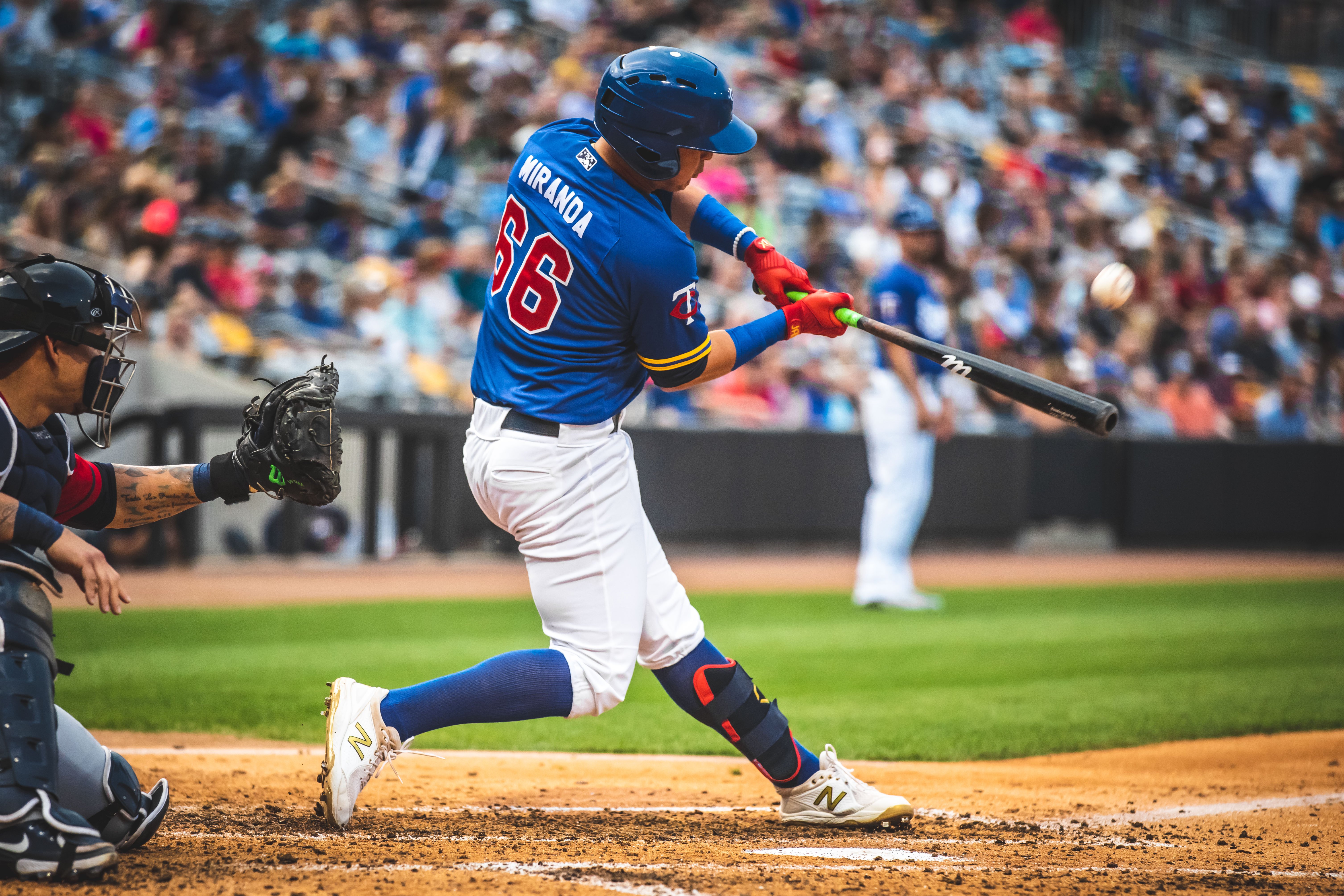 TRANSACTIONS RHP Matt Canterino placed on the 7-day IL at A+ Cedar Rapids (right elbow strain) RHP Breckin Williams placed on the 7-day IL at A+ Cedar Rapids (right shoulder strain) LHP Bryan Sammons promoted to AAA St. Paul RHP Randy Dobnak assigned to A Fort Myers for a rehab assignment Saints Sentinel St. Paul 7, Iowa 4 Box Score Bryan Sammons: 4 2/3 IP, 4 H, 3 ER, 3 BB, 2 K HR: Jose Miranda (12) Multi-hit games: Jose Miranda (4-for-5, HR, 2 R, 2 RBI), Tomás Telis (2-for-4, R) Jose Miranda. Yeah, usually I begin with the pitcher, but this one is going to be different. Jose Miranda dropped four hits on Saturday, including a home run, and I’m left wondering what in the world he possibly needs to do in order to get called up. I mean, he’s having one of the best minor league seasons these eyes have seen, and the major league team is not doing much of anything at the moment. Figure it out. Speaking of guys that need to be called up, Jovani Moran pitched 2 1/3 innings in relief with one earned run and three strikeouts. He will certainly be up at some point, but whenever that time comes, it’ll already be overdue. Beyond Miranda, the Saints found the 5th inning to be the perfect time to strike. Mark Contereras singled home a run, Drew Maggi brought another run in with a groundout, and a wild pitch scored the final run of the inning. All-in-all, the Saints had six runs on the board. Ian Hamilton brought us all home with two clean innings to end the game. Yeah, maybe he walked a guy, but he was just keeping the hitters on their toes. It appears that it worked. Wind Surge Wisdom Wichita 2, Springfield 0 Box Score Jordan Balazovic: 6 IP, 4 H, 0 ER, 5 BB, 6 K HR: None Multi-hit games: None Wichita’s pitching took care of business on Saturday. Jordan Balazovic had an interesting day on the mound. He held the Cardinals scoreless, which is good; but then he walked five batters, which is not good. This is one of those times we just say “we take those” and move on. Details don’t matter. Wichita did not score much, but they didn’t need to. Austin Martin plated the first run of the game with an 8th inning single, and Andrew Bechtold brought home the final run with a single of his own in the 9th inning. Honestly, that was it. But that was all that was needed. After Balazovic’s six innings of work, Adam Lau took the team to the ninth and Erik Manoah Jr. ended it. Those three pitchers combined to allow just five hits total in the entire game. That’ll work. Funny enough, the Wind Surge actually only had four hits. Kernels Nuggets Cedar Rapids 5, Wisconsin 12 Box Score Cody Laweryson: 4 2.3 IP, 6 H, 3 ER, 0 BB, 7 K HR: Matt Wallner (11), Michael Helman (15) Multi-hit games: Edouard Julien (2-for-3, 2B, 2 R, 2 BB), Matt Wallner (2-for-5, HR, 2B, 2 R, 2 RBI), Daniel Ozoria (2-for-4) The Kernels were unable to come back on Saturday. Cody Laweryson put forth an impressive effort with half of his outs coming via the K. He was bogged down by some 4th inning shenanigans that saw a double error play score a run. This was actually not even the only double error play of the game by the Kernels; the 7th inning saw a similar effort that ended up plating a pair of runs. As you will read later, it was not a great day for defense in the system. I hope Laweryson’s fielders bought him one of those real cheesy Hallmark apology cards after the game. Despite scoring just three runs, Cedar Rapids brought some firepower. Matt Wallner deposited his 11th homer of the year over the fence while Michael Helman, who suddenly has been possessed by the spirit of Hank Aaron, blasted his 15th home run. The problem was that both of these blasts came without a runner on base. Edouard Julien reached base four times because of course he did. I find myself more shocked when he doesn’t get on base multiple times than when he does. I assume that his season OBP is still .600 or something like that. Mussel Matters Fort Myers 3, Dunedin 4 Box Score Randy Dobnak: 3 IP, 0 H, 0 ER, 0 BB, 5 K HR: None Multi-hit games: Charles Mack (2-for-4) Well, Randy Dobnak sure came to play on Saturday. The right-hander emerged from his long slumber (or injury) and took the mound for the first time in two months. Using his major league success as well as his right hand, Dobnak completely shut down the Dunedin lineup in just 32 pitches. It’s good to see Dobnak back on the mound; his return will hopefully be a relief for a depleted major league pitching staff. On the offensive side of things, Jesus Feliz carried the team. He broke the 0-0 tie in the 5th with a solo homer, before then putting a ball into play in the 7th that brought home two off of an error. That must have been one impressive error. It appears that defense was the Achilles heel for Fort Myers on Saturday. The team had five errors in total (Keoni Cavaco had his 17th error of the year), and it was a Charles Mack throwing error that sent the game-winning runner to third base in the 9th inning. That run was then brought home off an infield single. Hopefully the team can clean it up on Sunday. Complex Chronicles FCL Twins 5, FCL Red Sox 11 Box Score Develson Aria: 1 IP, 3 H, 2 ER, 3 BB, 3 K HR: Endy Rodriguez (1) Multi-hit games: None The FCL Twins lost a rough one to the FCL Red Sox on Saturday. A certain swear for poop hit the fan quickly in this effort as the Red Sox plated two runs before fans could even find their seats. Top draft pick, Marcelo Mayer, dropped an RBI single while Bryan Gonzalez singled home another run. In fact, the Red Sox scored 10 times before the Twins plated a single run. In the 5th, Mayer then blasted his first career professional home run. This is far from the first time that we’ve seen a Mayer have multiple hits. Alright, let’s get back to talking about the Twins. The team responded to the 10-0 deficit with an impressive gusto. A 6th inning rally brought three runs home while individual runs were then scored in the 7th and 8th, respectively. That 8th inning run came due to Endy Rodriguez’s first home run of the season; so congrats to Rodriguez. The run of, well, runs, was not enough, and the team fell to the Red Sox on Saturday. TWINS DAILY PLAYERS OF THE DAY Twins Daily Minor League Pitcher of the Day – Jordan Balazovic Twins Daily Minor League Hitter of the Day – Jose Miranda PROSPECT SUMMARY Here’s a look at how the Twins Daily Top 20 Twins Prospects performed: #1 – Royce Lewis (Rehab) – Out for season (torn ACL) #2 – Austin Martin (Wichita) - 1-4, RBI #3 – Jordan Balazovic (Wichita) – 6 IP, 4 H, 0 ER, 5 BB, 6 K #4 – Simeon Woods Richardson (Wichita) - Did not pitch #5 – Jhoan Duran (St. Paul) - Injured List (Right Elbow Strain) #6 – Jose Miranda (St. Paul) - 4-5, HR, 2 R, 2 RBI #7 – Joe Ryan (St. Paul) - Did not pitch #8 – Matt Canterino (Cedar Rapids) - Injured List (Right Elbow Strain) #9 – Chase Petty (Complex) - #10 – Keoni Cavaco (Fort Myers) - 1-5, 3 K #11 – Josh Winder (St. Paul) - Injured List (Right Shoulder Impingement) #12 – Matt Wallner (Cedar Rapids) - 2-4, HR, 2B, 2 R, 2 RBI, 2 K #13 – Gilberto Celestino (St. Paul) - 0-3 #14 – Drew Strotman (St. Paul) - Did not pitch #15 – Noah Miller (FCL Twins) - 1-3, RBI, BB, 2 K #16 – Brent Rooker (Minnesota) - Did not play #17 – Blayne Enlow (Cedar Rapids) - Out for Season (Tommy John surgery) #18 – Misael Urbina (Fort Myers) - 1-4 #19 – Cole Sands (Wichita) - Did not pitch #20 – Spencer Steer (Wichita) - Did not play SUNDAY’S PROBABLE STARTERS Fort Myers @ Dunedin (11:00 AM) RHP Bobby Milacki Wisconsin @ Cedar Rapids (1:05 PM) TBD Iowa @ St. Paul (1:05 PM) RHP Drew Strotman Wichita @ Springfield (4:05 PM) RHP Chris Vallimont
- 10 comments
-
- 1
-

-
- jordan balazovic
- jose miranda
- (and 2 more)
-
Jose Miranda had four hits, Jordan Balazovic went six scoreless, and Austin Martin had a late go-ahead hit. If that doesn't get you excited to read about this minor league report, then nothing will. TRANSACTIONS RHP Matt Canterino placed on the 7-day IL at A+ Cedar Rapids (right elbow strain) RHP Breckin Williams placed on the 7-day IL at A+ Cedar Rapids (right shoulder strain) LHP Bryan Sammons promoted to AAA St. Paul RHP Randy Dobnak assigned to A Fort Myers for a rehab assignment Saints Sentinel St. Paul 7, Iowa 4 Box Score Bryan Sammons: 4 2/3 IP, 4 H, 3 ER, 3 BB, 2 K HR: Jose Miranda (12) Multi-hit games: Jose Miranda (4-for-5, HR, 2 R, 2 RBI), Tomás Telis (2-for-4, R) Jose Miranda. Yeah, usually I begin with the pitcher, but this one is going to be different. Jose Miranda dropped four hits on Saturday, including a home run, and I’m left wondering what in the world he possibly needs to do in order to get called up. I mean, he’s having one of the best minor league seasons these eyes have seen, and the major league team is not doing much of anything at the moment. Figure it out. Speaking of guys that need to be called up, Jovani Moran pitched 2 1/3 innings in relief with one earned run and three strikeouts. He will certainly be up at some point, but whenever that time comes, it’ll already be overdue. Beyond Miranda, the Saints found the 5th inning to be the perfect time to strike. Mark Contereras singled home a run, Drew Maggi brought another run in with a groundout, and a wild pitch scored the final run of the inning. All-in-all, the Saints had six runs on the board. Ian Hamilton brought us all home with two clean innings to end the game. Yeah, maybe he walked a guy, but he was just keeping the hitters on their toes. It appears that it worked. Wind Surge Wisdom Wichita 2, Springfield 0 Box Score Jordan Balazovic: 6 IP, 4 H, 0 ER, 5 BB, 6 K HR: None Multi-hit games: None Wichita’s pitching took care of business on Saturday. Jordan Balazovic had an interesting day on the mound. He held the Cardinals scoreless, which is good; but then he walked five batters, which is not good. This is one of those times we just say “we take those” and move on. Details don’t matter. Wichita did not score much, but they didn’t need to. Austin Martin plated the first run of the game with an 8th inning single, and Andrew Bechtold brought home the final run with a single of his own in the 9th inning. Honestly, that was it. But that was all that was needed. After Balazovic’s six innings of work, Adam Lau took the team to the ninth and Erik Manoah Jr. ended it. Those three pitchers combined to allow just five hits total in the entire game. That’ll work. Funny enough, the Wind Surge actually only had four hits. Kernels Nuggets Cedar Rapids 5, Wisconsin 12 Box Score Cody Laweryson: 4 2.3 IP, 6 H, 3 ER, 0 BB, 7 K HR: Matt Wallner (11), Michael Helman (15) Multi-hit games: Edouard Julien (2-for-3, 2B, 2 R, 2 BB), Matt Wallner (2-for-5, HR, 2B, 2 R, 2 RBI), Daniel Ozoria (2-for-4) The Kernels were unable to come back on Saturday. Cody Laweryson put forth an impressive effort with half of his outs coming via the K. He was bogged down by some 4th inning shenanigans that saw a double error play score a run. This was actually not even the only double error play of the game by the Kernels; the 7th inning saw a similar effort that ended up plating a pair of runs. As you will read later, it was not a great day for defense in the system. I hope Laweryson’s fielders bought him one of those real cheesy Hallmark apology cards after the game. Despite scoring just three runs, Cedar Rapids brought some firepower. Matt Wallner deposited his 11th homer of the year over the fence while Michael Helman, who suddenly has been possessed by the spirit of Hank Aaron, blasted his 15th home run. The problem was that both of these blasts came without a runner on base. Edouard Julien reached base four times because of course he did. I find myself more shocked when he doesn’t get on base multiple times than when he does. I assume that his season OBP is still .600 or something like that. Mussel Matters Fort Myers 3, Dunedin 4 Box Score Randy Dobnak: 3 IP, 0 H, 0 ER, 0 BB, 5 K HR: None Multi-hit games: Charles Mack (2-for-4) Well, Randy Dobnak sure came to play on Saturday. The right-hander emerged from his long slumber (or injury) and took the mound for the first time in two months. Using his major league success as well as his right hand, Dobnak completely shut down the Dunedin lineup in just 32 pitches. It’s good to see Dobnak back on the mound; his return will hopefully be a relief for a depleted major league pitching staff. On the offensive side of things, Jesus Feliz carried the team. He broke the 0-0 tie in the 5th with a solo homer, before then putting a ball into play in the 7th that brought home two off of an error. That must have been one impressive error. It appears that defense was the Achilles heel for Fort Myers on Saturday. The team had five errors in total (Keoni Cavaco had his 17th error of the year), and it was a Charles Mack throwing error that sent the game-winning runner to third base in the 9th inning. That run was then brought home off an infield single. Hopefully the team can clean it up on Sunday. Complex Chronicles FCL Twins 5, FCL Red Sox 11 Box Score Develson Aria: 1 IP, 3 H, 2 ER, 3 BB, 3 K HR: Endy Rodriguez (1) Multi-hit games: None The FCL Twins lost a rough one to the FCL Red Sox on Saturday. A certain swear for poop hit the fan quickly in this effort as the Red Sox plated two runs before fans could even find their seats. Top draft pick, Marcelo Mayer, dropped an RBI single while Bryan Gonzalez singled home another run. In fact, the Red Sox scored 10 times before the Twins plated a single run. In the 5th, Mayer then blasted his first career professional home run. This is far from the first time that we’ve seen a Mayer have multiple hits. Alright, let’s get back to talking about the Twins. The team responded to the 10-0 deficit with an impressive gusto. A 6th inning rally brought three runs home while individual runs were then scored in the 7th and 8th, respectively. That 8th inning run came due to Endy Rodriguez’s first home run of the season; so congrats to Rodriguez. The run of, well, runs, was not enough, and the team fell to the Red Sox on Saturday. TWINS DAILY PLAYERS OF THE DAY Twins Daily Minor League Pitcher of the Day – Jordan Balazovic Twins Daily Minor League Hitter of the Day – Jose Miranda PROSPECT SUMMARY Here’s a look at how the Twins Daily Top 20 Twins Prospects performed: #1 – Royce Lewis (Rehab) – Out for season (torn ACL) #2 – Austin Martin (Wichita) - 1-4, RBI #3 – Jordan Balazovic (Wichita) – 6 IP, 4 H, 0 ER, 5 BB, 6 K #4 – Simeon Woods Richardson (Wichita) - Did not pitch #5 – Jhoan Duran (St. Paul) - Injured List (Right Elbow Strain) #6 – Jose Miranda (St. Paul) - 4-5, HR, 2 R, 2 RBI #7 – Joe Ryan (St. Paul) - Did not pitch #8 – Matt Canterino (Cedar Rapids) - Injured List (Right Elbow Strain) #9 – Chase Petty (Complex) - #10 – Keoni Cavaco (Fort Myers) - 1-5, 3 K #11 – Josh Winder (St. Paul) - Injured List (Right Shoulder Impingement) #12 – Matt Wallner (Cedar Rapids) - 2-4, HR, 2B, 2 R, 2 RBI, 2 K #13 – Gilberto Celestino (St. Paul) - 0-3 #14 – Drew Strotman (St. Paul) - Did not pitch #15 – Noah Miller (FCL Twins) - 1-3, RBI, BB, 2 K #16 – Brent Rooker (Minnesota) - Did not play #17 – Blayne Enlow (Cedar Rapids) - Out for Season (Tommy John surgery) #18 – Misael Urbina (Fort Myers) - 1-4 #19 – Cole Sands (Wichita) - Did not pitch #20 – Spencer Steer (Wichita) - Did not play SUNDAY’S PROBABLE STARTERS Fort Myers @ Dunedin (11:00 AM) RHP Bobby Milacki Wisconsin @ Cedar Rapids (1:05 PM) TBD Iowa @ St. Paul (1:05 PM) RHP Drew Strotman Wichita @ Springfield (4:05 PM) RHP Chris Vallimont View full article
- 10 replies
-
- 1
-
-
- jordan balazovic
- jose miranda
- (and 2 more)
-
Game Score: Twins 12, Rays 0
Matt Braun replied to Lucas Seehafer PT's topic in Twins Daily Front Page News
Twins should try to win more games like this imo -
Well, uh, everyone lost on Saturday. Some lost in a closer fashion than others, but they still lost alright. Read all about who performed well in these losses. TRANSACTIONS INF Anthony Prato added to A+ Cedar Rapids following rehab assignment RHP Matt Canterino activated from IL at A+ Cedar Rapids RHP Ralph Garza Jr. recalled by Minnesota Twins Saints Sentinel St. Paul 4, Indianapolis 7 Box Score Starter: Beau Burrows: 3 IP, 1 H, 0 ER, 2 BB, 5 K HR: Tomás Telis (8), Nick Gordon (3) Multi-hit games: Nick Gordon (2-for-4, HR, R, 3 RBI), Tomás Telis (2-for-4, HR, R, RBI), Damek Tomscha (2-for-4, R) St. Paul lost their momentum on Saturday. It began with some Beau on Beau action as both starting pitchers were named “Beau” (seriously). Burrows (or BB, as the cool kids call him), held Indianapolis scoreless over his three innings of work with five strikeouts. Burrows then passed the baton to Jovani Moran who, as usual, shut it down. He struck out three over two innings of work, and could be heard muttering “what else did I have to do to get called up?*” *I cannot confirm this. Offensively, St. Paul jumped out in front first. Tomás Telis plopped his eighth homer of the year in the first inning to give the Saints a quick 1-0 lead. Nick Gordon was not to be outdone, and he sent his third home run of the year over the right field wall. Now, usually I don’t point out defense in these games because, well, who cares. But Nick Gordon played at third base while Jose Miranda played in left field. I assume that this was done out of necessity, but if both players can play at those positions in just a passable manner, then their value to the major league club will be just that much more. This game revealed one of the problems that can arise in a bullpen game. Burrows and Moran did their part well, but Ryan Mason struggled and it allowed Indianapolis to tie the game in the 7th inning. Indianapolis then jumped on Ian Hamilton in the 8th with a bases-clearing double, and that ended up being all she wrote. Wind Surge Wisdom Wichita 2, Tulsa 5 Box Score Starter: Cole Sands: 5 2/3 IP, 5 H, 2 ER, 1 BB, 10 K HR: B.J. Boyd 2 (11, 12) Multi-hit games: B.J. Boyd (2-for-4, 2 HR, 2 R, 2 RBI), Ernie De La Trinidad (2-for-3, BB) The Wind Surge lost on Saturday. ...But not due to Cole Sands. The righty was on his game on Saturday. Of the 17 outs he netted, 10 came via strikeouts. Yeah, that’ll work. It was his first start of the season with double-digit punch outs, and it was also his seventh start allowing one or fewer walks. They also did not lose because of B.J. Boyd. The free agent signee has been nothing short of elite in his time with Wichita. His OPS on the season is now above .900, and I imagine that one more game like this will finally force Wichita to build a statue in his honor. It was not enough to top the Drillers, though. Tulsa took out their frustration on Erik Manoah Jr., and put the game out of reach after the 7th inning. Oddly enough, Tulsa only had one more hit than Wichita. Kernels Nuggets Cedar Rapids 3, Peoria 7 Box Score Starter: Sawyer Gipson-Long: 5 IP, 8 H, 4 ER, 1 BB, 9 K HR: None Multi-hit games: Edouard Julien (2-for-4, 2 R) The Kernels lost to a rehabbing major leaguer on Saturday. Miles Mikolas started for the Chiefs and was excellent. He held the Kernels to three runs over seven innings of work with eight strikeouts to boot. Come on man, go pick on players your own age (I’m sure he will soon). Sawyer Gipson-Long’s line is misleading. Two of his earned runs came via a two-run homer, while another run scored due to a throwing error by his catcher (not sure why it counts as an earned run, actually). No matter the runs, striking out nine batters over five innings of work is impressive. The bats were a bit quiet on Saturday. Every run was scored off the bat of Matt Wallner (a first inning DP, and a 6th inning two-run single), and Edouard Julien was the only batter to net multiple hits. Of course it was Julien. I swear he gets on base twice every time I check the box score. The game slipped away in the 7th inning as the Chiefs ambushed Osiris German to the tune of three earned runs. Much like how the Saints lost, this proved to be too back-breaking for the Kernels to overcome. Mussel Matters Fort Myers 1, Bradenton 2 Box Score Starter: Bobby Milacki: 4 IP, 3 H, 1 ER, 0 BB, 6 K HR: Aaron Sabato (10) Multi-hit games: Misael Urbina (2-for-5, 2B) Fort Myers lost in extra-innings on Saturday. Bobby Milacki started the Mighty Mussels off right with an excellent start on Saturday. His six strikeouts tied a personal single-game record, and it was his sixth outing in 2021 that ended without a walk. Not bad for a 38th round pick who the Twins signed out of independent ball. John Stankiewicz, Zaquiel Puentes, and Aaron Rozek carried the weight the rest of the way with five combined innings, and just a single hit allowed. They struck out three in total. Offensively, things were a bit tough. Misael Urbina was the lone hitter to drop in multiple hits, and just one other batter had an extra-base hit. But that one batter was Aaron Sabato who, unsurprisingly now, bopped his 10th homer of the year. He had just four home runs coming into the month of August. It has been great to see Sabato turn the corner like this. No prospect dropped as much as him when we at Twinsdaily updated our top prospect list, and a monster August to cap off his season would go a long way towards regaining his old 1st-round pick status. Will he do it? I suppose we shall see. Unfortunately, the Mighty Mussels got Manfred-ed and the very first opposing batter in the bottom of the 10th singled home a run to end the game. I’m sure that they didn’t mind getting out of the way of the tropical storm, though. Complex Chronicles The FCL Twins game was suspended on Saturday, and will be finished on Sunday. A quick scan of the box score reveals that Zander Wiel was in the starting lineup working through a rehab assignment. TWINS DAILY PLAYERS OF THE DAY Twins Daily Minor League Pitcher of the Day – Cole Sands Twins Daily Minor League Hitter of the Day – B.J. Boyd PROSPECT SUMMARY Here’s a look at how the Twins Daily Top 20 Twins Prospects performed: #1 – Royce Lewis (Rehab) – Out for season (torn ACL) #2 – Austin Martin (Wichita) - 0-3, 2 K #3 – Jordan Balazovic (Wichita) – Did not pitch #4 – Simeon Woods Richardson (Wichita) - Did not pitch #5 – Jhoan Duran (St. Paul) - Injured List (Right Elbow Strain) #6 – Jose Miranda (St. Paul) - 1-3, BB #7 – Joe Ryan (St. Paul) - Did not pitch #8 – Matt Canterino (Cedar Rapids) - Did not pitch #9 – Chase Petty (Complex) - #10 – Keoni Cavaco (Fort Myers) - 1-5, K #11 – Josh Winder (St. Paul) - Injured List (Right Shoulder Impingement) #12 – Matt Wallner (Cedar Rapids) - 1-4, 2 RBI, K #13 – Gilberto Celestino (St. Paul) - 0-3 #14 – Drew Strotman (St. Paul) - Did not pitch #15 – Noah Miller (Complex) - #16 – Brent Rooker (Minnesota) - 2-4, HR, 2B, 2 R, 2 RBI #17 – Blayne Enlow (Cedar Rapids) - Out for Season (Tommy John surgery) #18 – Misael Urbina (Fort Myers) - 2-5, 2B #19 – Cole Sands (Wichita) - 5 ⅔ IP, 5 H, 2 ER, 1 BB, 10 K #20 – Spencer Steer (Wichita) - Did not play SUNDAY’S PROBABLE STARTERS St. Paul @ Indianapolis (11:35 AM) LHP Andrew Albers Wichita @ Tulsa (12:05 PM) RHP Jordan Balazovic Cedar Rapids @ Peoria (12:35 PM) RHP Matt Canterino Fort Myers will not play on Sunday in anticipation of Tropical Storm Fred. View full article
- 5 replies
-
- 1
-
-
- cole sands
- nick gordon
- (and 3 more)
-
Twins Minor League Report (8/14): Clean Sweep (But Not In A Good Way)
Matt Braun posted an article in Minor Leagues
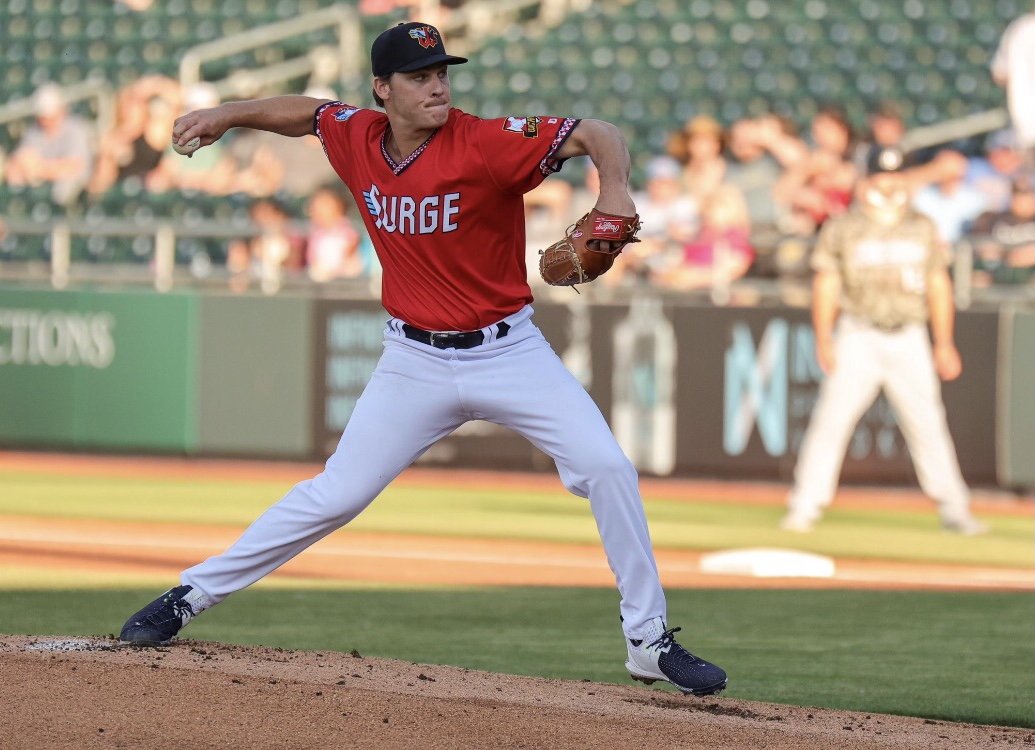 TRANSACTIONS INF Anthony Prato added to A+ Cedar Rapids following rehab assignment RHP Matt Canterino activated from IL at A+ Cedar Rapids RHP Ralph Garza Jr. recalled by Minnesota Twins Saints Sentinel St. Paul 4, Indianapolis 7 Box Score Starter: Beau Burrows: 3 IP, 1 H, 0 ER, 2 BB, 5 K HR: Tomás Telis (8), Nick Gordon (3) Multi-hit games: Nick Gordon (2-for-4, HR, R, 3 RBI), Tomás Telis (2-for-4, HR, R, RBI), Damek Tomscha (2-for-4, R) St. Paul lost their momentum on Saturday. It began with some Beau on Beau action as both starting pitchers were named “Beau” (seriously). Burrows (or BB, as the cool kids call him), held Indianapolis scoreless over his three innings of work with five strikeouts. Burrows then passed the baton to Jovani Moran who, as usual, shut it down. He struck out three over two innings of work, and could be heard muttering “what else did I have to do to get called up?*” *I cannot confirm this. Offensively, St. Paul jumped out in front first. Tomás Telis plopped his eighth homer of the year in the first inning to give the Saints a quick 1-0 lead. Nick Gordon was not to be outdone, and he sent his third home run of the year over the right field wall. Now, usually I don’t point out defense in these games because, well, who cares. But Nick Gordon played at third base while Jose Miranda played in left field. I assume that this was done out of necessity, but if both players can play at those positions in just a passable manner, then their value to the major league club will be just that much more. This game revealed one of the problems that can arise in a bullpen game. Burrows and Moran did their part well, but Ryan Mason struggled and it allowed Indianapolis to tie the game in the 7th inning. Indianapolis then jumped on Ian Hamilton in the 8th with a bases-clearing double, and that ended up being all she wrote. Wind Surge Wisdom Wichita 2, Tulsa 5 Box Score Starter: Cole Sands: 5 2/3 IP, 5 H, 2 ER, 1 BB, 10 K HR: B.J. Boyd 2 (11, 12) Multi-hit games: B.J. Boyd (2-for-4, 2 HR, 2 R, 2 RBI), Ernie De La Trinidad (2-for-3, BB) The Wind Surge lost on Saturday. ...But not due to Cole Sands. The righty was on his game on Saturday. Of the 17 outs he netted, 10 came via strikeouts. Yeah, that’ll work. It was his first start of the season with double-digit punch outs, and it was also his seventh start allowing one or fewer walks. They also did not lose because of B.J. Boyd. The free agent signee has been nothing short of elite in his time with Wichita. His OPS on the season is now above .900, and I imagine that one more game like this will finally force Wichita to build a statue in his honor. It was not enough to top the Drillers, though. Tulsa took out their frustration on Erik Manoah Jr., and put the game out of reach after the 7th inning. Oddly enough, Tulsa only had one more hit than Wichita. Kernels Nuggets Cedar Rapids 3, Peoria 7 Box Score Starter: Sawyer Gipson-Long: 5 IP, 8 H, 4 ER, 1 BB, 9 K HR: None Multi-hit games: Edouard Julien (2-for-4, 2 R) The Kernels lost to a rehabbing major leaguer on Saturday. Miles Mikolas started for the Chiefs and was excellent. He held the Kernels to three runs over seven innings of work with eight strikeouts to boot. Come on man, go pick on players your own age (I’m sure he will soon). Sawyer Gipson-Long’s line is misleading. Two of his earned runs came via a two-run homer, while another run scored due to a throwing error by his catcher (not sure why it counts as an earned run, actually). No matter the runs, striking out nine batters over five innings of work is impressive. The bats were a bit quiet on Saturday. Every run was scored off the bat of Matt Wallner (a first inning DP, and a 6th inning two-run single), and Edouard Julien was the only batter to net multiple hits. Of course it was Julien. I swear he gets on base twice every time I check the box score. The game slipped away in the 7th inning as the Chiefs ambushed Osiris German to the tune of three earned runs. Much like how the Saints lost, this proved to be too back-breaking for the Kernels to overcome. Mussel Matters Fort Myers 1, Bradenton 2 Box Score Starter: Bobby Milacki: 4 IP, 3 H, 1 ER, 0 BB, 6 K HR: Aaron Sabato (10) Multi-hit games: Misael Urbina (2-for-5, 2B) Fort Myers lost in extra-innings on Saturday. Bobby Milacki started the Mighty Mussels off right with an excellent start on Saturday. His six strikeouts tied a personal single-game record, and it was his sixth outing in 2021 that ended without a walk. Not bad for a 38th round pick who the Twins signed out of independent ball. John Stankiewicz, Zaquiel Puentes, and Aaron Rozek carried the weight the rest of the way with five combined innings, and just a single hit allowed. They struck out three in total. Offensively, things were a bit tough. Misael Urbina was the lone hitter to drop in multiple hits, and just one other batter had an extra-base hit. But that one batter was Aaron Sabato who, unsurprisingly now, bopped his 10th homer of the year. He had just four home runs coming into the month of August. It has been great to see Sabato turn the corner like this. No prospect dropped as much as him when we at Twinsdaily updated our top prospect list, and a monster August to cap off his season would go a long way towards regaining his old 1st-round pick status. Will he do it? I suppose we shall see. Unfortunately, the Mighty Mussels got Manfred-ed and the very first opposing batter in the bottom of the 10th singled home a run to end the game. I’m sure that they didn’t mind getting out of the way of the tropical storm, though. Complex Chronicles The FCL Twins game was suspended on Saturday, and will be finished on Sunday. A quick scan of the box score reveals that Zander Wiel was in the starting lineup working through a rehab assignment. TWINS DAILY PLAYERS OF THE DAY Twins Daily Minor League Pitcher of the Day – Cole Sands Twins Daily Minor League Hitter of the Day – B.J. Boyd PROSPECT SUMMARY Here’s a look at how the Twins Daily Top 20 Twins Prospects performed: #1 – Royce Lewis (Rehab) – Out for season (torn ACL) #2 – Austin Martin (Wichita) - 0-3, 2 K #3 – Jordan Balazovic (Wichita) – Did not pitch #4 – Simeon Woods Richardson (Wichita) - Did not pitch #5 – Jhoan Duran (St. Paul) - Injured List (Right Elbow Strain) #6 – Jose Miranda (St. Paul) - 1-3, BB #7 – Joe Ryan (St. Paul) - Did not pitch #8 – Matt Canterino (Cedar Rapids) - Did not pitch #9 – Chase Petty (Complex) - #10 – Keoni Cavaco (Fort Myers) - 1-5, K #11 – Josh Winder (St. Paul) - Injured List (Right Shoulder Impingement) #12 – Matt Wallner (Cedar Rapids) - 1-4, 2 RBI, K #13 – Gilberto Celestino (St. Paul) - 0-3 #14 – Drew Strotman (St. Paul) - Did not pitch #15 – Noah Miller (Complex) - #16 – Brent Rooker (Minnesota) - 2-4, HR, 2B, 2 R, 2 RBI #17 – Blayne Enlow (Cedar Rapids) - Out for Season (Tommy John surgery) #18 – Misael Urbina (Fort Myers) - 2-5, 2B #19 – Cole Sands (Wichita) - 5 ⅔ IP, 5 H, 2 ER, 1 BB, 10 K #20 – Spencer Steer (Wichita) - Did not play SUNDAY’S PROBABLE STARTERS St. Paul @ Indianapolis (11:35 AM) LHP Andrew Albers Wichita @ Tulsa (12:05 PM) RHP Jordan Balazovic Cedar Rapids @ Peoria (12:35 PM) RHP Matt Canterino Fort Myers will not play on Sunday in anticipation of Tropical Storm Fred.
- 5 comments
-
- 2
-
-
- cole sands
- nick gordon
- (and 3 more)
-
For the sake of transparency (and because I like writing about prospects), here is what my top 5 looked like and my thoughts on each player: 5. Jhoan Duran On reflection, I probably should have dropped Duran a bit more. Yes, he has phenomenal stuff, but his elbow injury is terrifying, and will now limit him to just 16 professional innings over the last two years. That's a lot of stamina that the Twins will need to build back up if they desire him as a starter. If he can't do it, then he'll be a dominant reliever; but dominant relievers shouldn't be in the top 5. 2022 will be a decisive year for him. 4. Simeon Woods Richardson It was hard to rank Richardson because I personally want to actually watch a pitcher pitch before declaring anything about him. In the end, I deferred to professional opinions which agreed that he more or less belongs here. I don't feel especially attached to this ranking at the moment, though. 3. Jordan Balazovic Man, I love Balazovic. He has a nice, repeatable delivery, he commands both his slider and his fastball well, and he pitches exactly how a modern pitcher should. Really, the only concern with him is health (and stamina, but every pitching prospect has that issue this year). I firmly believe that he is the best pitching prospect this team has had since José Berríos. 2. Royce Lewis I originally had Lewis at 1, but I decided to flip him because I had been harsher on players with injuries and, well, I thought I should be consistent. He may not have that #1 overall pick shine anymore, but I don't see any good reason why anyone should be *too* down on him. He's still young and absurdly talented. It's a shame he isn't healthy or else the Twins would have drop-kicked Andrelton Simmons months ago. 1. Austin Martin Man, this guy is fun. He's a real old-school type of hitter who lacks any decent MLB comp. Seriously, there is almost no one like him these days. I fully believe that he will cement the 2 hole in the Twins lineup until social security runs out. I especially love the annoying combo he would make if Luis Arráez hit lead-off. The starter might have to throw 15 pitchers before he even sees the #3 hitter. Feel free to agree or disagree with my assessments.
- 35 replies
-
- 8
-
-
- royce lewis
- austin martin
- (and 3 more)
-
On Tuesday, we revealed prospects 16-20 in our new, post-deadline update. Today, we will announce our next five prospects in rank. 15. Noah Miller - INF Age: 18 ETA: 2025 2021 Stats: n/a 2021 Mid-Season Ranking: n/a There is little to say about Noah Miller considering the fact that he is just 18, and has not played a game of professional baseball yet. The Twins decided to select Miller with the final pick in the 1st round of the 2021 MLB Draft as they believe in his immense potential as a switch-hitting, athletic shortstop. Oh, and also because he hit .608 as a high school senior. No, that is not a typo. Miller will certainly require a significant amount of time to develop, but the end result could be a truly dynamic middle-infielder who could anchor the top of a lineup for years. Just make sure to keep his name tucked away for future reference. 14. Drew Strotman - RHSP Age: 24 ETA: 2021 2021 Stats: 67 ⅔ IP, 3.59 ERA, 1.40 WHIP, 4.14 FIP, 22.8 K%, 13.1 BB% 2021 Mid-Season Ranking: n/a Drew Strotman is perhaps the most polarizing prospect the Twins received at the trade deadline. Fangraphs has him placed optimistically as the team’s 7th best prospect (and on the edge of the top 100 prospect list), while MLB.com ranked him as the franchise's 15th best prospect-a number much closer to what we decided. At any rate, Strotman is an exciting combination of talent and seasoning. A brand new cutter has deepened what was already an intriguing repertoire of major league quality. He has already been added to the 40-man roster so his promotion to the major league club is simply a formality at this point. The walks are high, but Eric Longenhagen wrote that Strotman is “likely a big league starter”. Lord knows that the Twins need as many of those as they can get. 13. Gilberto Celestino - OF Age: 22 ETA: 2021 2021 Stats: (MLB): .136 AVG, .177 OBP, .288 SLG, 23 wRC+ (AA/AAA): .259 AVG, .338 OBP, .431 SLG, 107 WRC+ 2021 Mid-Season Ranking: 7 Gilberto Celestino is the only player from this part of the list to play at the major league level and, well, he certainly seemed overwhelmed. The young outfielder was acquired by the Twins in the Ryan Pressly trade three years ago (holy bleep, it’s been three years already?), and it is quite clear that, while Celestino possesses quality tools, he needs more seasoning before he can succeed in the show. But fear not. Celestino is still just 22 years old and, as we all have seen over the past few years, toolsy center fielders often require an extended amount of time to realize their full potential. Celestino will play out the rest of 2021 at AAA (where he owns a 130 wRC+ in a small sample) and will be better prepared to potentially etch out a role on the 2022 Twins. 12. Matt Wallner - OF Age: 23 ETA: 2022 2021 Stats (A+): .281 AVG, .338 OBP, .548 SLG, 135 wRC+ 2021 Mid-Season Ranking: 10 Matt Wallner was plucked from the backwoods of Minnesota by the Twins with the 39th overall pick of the 2019 draft. Well, that is not entirely accurate as the Twins neither physically plucked him, like one would with an apple, nor was he taken directly from the state (he played college ball at the University of Southern Mississippi), but the sentence sounds cool so it shall stay. (Editor's Note: Ummmm....) Anyways, Wallner was drafted as a high-strikeout guy with “light tower power,” and so far in his minor league career he has played… like a high strikeout guy with light tower power. He has been frustratingly limited to just over 30 games in 2021 due to a pesky wrist injury that proved to be more serious than previously believed. He had surgery on his hamate bone. But in the time he has played, Wallner has mashed. His nine homers over 148 plate appearances gives him about a 36 home run pace over 600 plate appearances (a typical full season), while his .548 slugging percentage would make him the 11th best qualified major leaguer by that stat. Simply put, a healthy Wallner can absolutely crush. 11. Josh Winder - RHSP Age: 24 ETA: 2022 2021 Stats (AA/AAA): 72 IP, 2.63 ERA, 0.94 WHIP, 3.41 FIP, 29.1 K%, 4.7 BB% 2021 Mid-Season Ranking: 8 Perhaps no prospect throughout the Twins’ system has seen his stock rise higher in 2021 than Josh Winder. Even the noted, uh, “strong opinion-holder”, Keith Law, admitted that he was anticipating watching Winder pitch in 2021. So far, Winder has not disappointed. He saw a tangible uptick in velocity while working out in 2020, and the upgrade has rippled throughout his entire pitch mix. The result was an utterly dominant stint at AA Wichita that saw him strike out more than 30% of the hitters he faced, walk less than 5% of them, and earn a trip to the MLB Futures Game. Batters hit a paltry .207 against him, and I can only imagine that hitters in the AA-Central North division threw an absolute rager of a party to celebrate his promotion to AAA. A shoulder injury has cut Winder’s playtime in AAA to just four meager starts, and it appears that the team is in no rush to bring Winder back in 2021; a mix of injuries and a desire to limit his innings total is the culprit here. In any case, Winder should be on everyone's radar as a starter who will make an impact in 2022. View full article
-
TD Top Twins Prospect Rankings (Post Draft and Trade Deadline): 15-11
Matt Braun posted an article in Minor Leagues
15-11.png.98876089155c946e37019c7ca53dd49e.png) 15. Noah Miller - INF Age: 18 ETA: 2025 2021 Stats: n/a 2021 Mid-Season Ranking: n/a There is little to say about Noah Miller considering the fact that he is just 18, and has not played a game of professional baseball yet. The Twins decided to select Miller with the final pick in the 1st round of the 2021 MLB Draft as they believe in his immense potential as a switch-hitting, athletic shortstop. Oh, and also because he hit .608 as a high school senior. No, that is not a typo. Miller will certainly require a significant amount of time to develop, but the end result could be a truly dynamic middle-infielder who could anchor the top of a lineup for years. Just make sure to keep his name tucked away for future reference. 14. Drew Strotman - RHSP Age: 24 ETA: 2021 2021 Stats: 67 ⅔ IP, 3.59 ERA, 1.40 WHIP, 4.14 FIP, 22.8 K%, 13.1 BB% 2021 Mid-Season Ranking: n/a Drew Strotman is perhaps the most polarizing prospect the Twins received at the trade deadline. Fangraphs has him placed optimistically as the team’s 7th best prospect (and on the edge of the top 100 prospect list), while MLB.com ranked him as the franchise's 15th best prospect-a number much closer to what we decided. At any rate, Strotman is an exciting combination of talent and seasoning. A brand new cutter has deepened what was already an intriguing repertoire of major league quality. He has already been added to the 40-man roster so his promotion to the major league club is simply a formality at this point. The walks are high, but Eric Longenhagen wrote that Strotman is “likely a big league starter”. Lord knows that the Twins need as many of those as they can get. 13. Gilberto Celestino - OF Age: 22 ETA: 2021 2021 Stats: (MLB): .136 AVG, .177 OBP, .288 SLG, 23 wRC+ (AA/AAA): .259 AVG, .338 OBP, .431 SLG, 107 WRC+ 2021 Mid-Season Ranking: 7 Gilberto Celestino is the only player from this part of the list to play at the major league level and, well, he certainly seemed overwhelmed. The young outfielder was acquired by the Twins in the Ryan Pressly trade three years ago (holy bleep, it’s been three years already?), and it is quite clear that, while Celestino possesses quality tools, he needs more seasoning before he can succeed in the show. But fear not. Celestino is still just 22 years old and, as we all have seen over the past few years, toolsy center fielders often require an extended amount of time to realize their full potential. Celestino will play out the rest of 2021 at AAA (where he owns a 130 wRC+ in a small sample) and will be better prepared to potentially etch out a role on the 2022 Twins. 12. Matt Wallner - OF Age: 23 ETA: 2022 2021 Stats (A+): .281 AVG, .338 OBP, .548 SLG, 135 wRC+ 2021 Mid-Season Ranking: 10 Matt Wallner was plucked from the backwoods of Minnesota by the Twins with the 39th overall pick of the 2019 draft. Well, that is not entirely accurate as the Twins neither physically plucked him, like one would with an apple, nor was he taken directly from the state (he played college ball at the University of Southern Mississippi), but the sentence sounds cool so it shall stay. (Editor's Note: Ummmm....) Anyways, Wallner was drafted as a high-strikeout guy with “light tower power,” and so far in his minor league career he has played… like a high strikeout guy with light tower power. He has been frustratingly limited to just over 30 games in 2021 due to a pesky wrist injury that proved to be more serious than previously believed. He had surgery on his hamate bone. But in the time he has played, Wallner has mashed. His nine homers over 148 plate appearances gives him about a 36 home run pace over 600 plate appearances (a typical full season), while his .548 slugging percentage would make him the 11th best qualified major leaguer by that stat. Simply put, a healthy Wallner can absolutely crush. 11. Josh Winder - RHSP Age: 24 ETA: 2022 2021 Stats (AA/AAA): 72 IP, 2.63 ERA, 0.94 WHIP, 3.41 FIP, 29.1 K%, 4.7 BB% 2021 Mid-Season Ranking: 8 Perhaps no prospect throughout the Twins’ system has seen his stock rise higher in 2021 than Josh Winder. Even the noted, uh, “strong opinion-holder”, Keith Law, admitted that he was anticipating watching Winder pitch in 2021. So far, Winder has not disappointed. He saw a tangible uptick in velocity while working out in 2020, and the upgrade has rippled throughout his entire pitch mix. The result was an utterly dominant stint at AA Wichita that saw him strike out more than 30% of the hitters he faced, walk less than 5% of them, and earn a trip to the MLB Futures Game. Batters hit a paltry .207 against him, and I can only imagine that hitters in the AA-Central North division threw an absolute rager of a party to celebrate his promotion to AAA. A shoulder injury has cut Winder’s playtime in AAA to just four meager starts, and it appears that the team is in no rush to bring Winder back in 2021; a mix of injuries and a desire to limit his innings total is the culprit here. In any case, Winder should be on everyone's radar as a starter who will make an impact in 2022.
15. Noah Miller - INF Age: 18 ETA: 2025 2021 Stats: n/a 2021 Mid-Season Ranking: n/a There is little to say about Noah Miller considering the fact that he is just 18, and has not played a game of professional baseball yet. The Twins decided to select Miller with the final pick in the 1st round of the 2021 MLB Draft as they believe in his immense potential as a switch-hitting, athletic shortstop. Oh, and also because he hit .608 as a high school senior. No, that is not a typo. Miller will certainly require a significant amount of time to develop, but the end result could be a truly dynamic middle-infielder who could anchor the top of a lineup for years. Just make sure to keep his name tucked away for future reference. 14. Drew Strotman - RHSP Age: 24 ETA: 2021 2021 Stats: 67 ⅔ IP, 3.59 ERA, 1.40 WHIP, 4.14 FIP, 22.8 K%, 13.1 BB% 2021 Mid-Season Ranking: n/a Drew Strotman is perhaps the most polarizing prospect the Twins received at the trade deadline. Fangraphs has him placed optimistically as the team’s 7th best prospect (and on the edge of the top 100 prospect list), while MLB.com ranked him as the franchise's 15th best prospect-a number much closer to what we decided. At any rate, Strotman is an exciting combination of talent and seasoning. A brand new cutter has deepened what was already an intriguing repertoire of major league quality. He has already been added to the 40-man roster so his promotion to the major league club is simply a formality at this point. The walks are high, but Eric Longenhagen wrote that Strotman is “likely a big league starter”. Lord knows that the Twins need as many of those as they can get. 13. Gilberto Celestino - OF Age: 22 ETA: 2021 2021 Stats: (MLB): .136 AVG, .177 OBP, .288 SLG, 23 wRC+ (AA/AAA): .259 AVG, .338 OBP, .431 SLG, 107 WRC+ 2021 Mid-Season Ranking: 7 Gilberto Celestino is the only player from this part of the list to play at the major league level and, well, he certainly seemed overwhelmed. The young outfielder was acquired by the Twins in the Ryan Pressly trade three years ago (holy bleep, it’s been three years already?), and it is quite clear that, while Celestino possesses quality tools, he needs more seasoning before he can succeed in the show. But fear not. Celestino is still just 22 years old and, as we all have seen over the past few years, toolsy center fielders often require an extended amount of time to realize their full potential. Celestino will play out the rest of 2021 at AAA (where he owns a 130 wRC+ in a small sample) and will be better prepared to potentially etch out a role on the 2022 Twins. 12. Matt Wallner - OF Age: 23 ETA: 2022 2021 Stats (A+): .281 AVG, .338 OBP, .548 SLG, 135 wRC+ 2021 Mid-Season Ranking: 10 Matt Wallner was plucked from the backwoods of Minnesota by the Twins with the 39th overall pick of the 2019 draft. Well, that is not entirely accurate as the Twins neither physically plucked him, like one would with an apple, nor was he taken directly from the state (he played college ball at the University of Southern Mississippi), but the sentence sounds cool so it shall stay. (Editor's Note: Ummmm....) Anyways, Wallner was drafted as a high-strikeout guy with “light tower power,” and so far in his minor league career he has played… like a high strikeout guy with light tower power. He has been frustratingly limited to just over 30 games in 2021 due to a pesky wrist injury that proved to be more serious than previously believed. He had surgery on his hamate bone. But in the time he has played, Wallner has mashed. His nine homers over 148 plate appearances gives him about a 36 home run pace over 600 plate appearances (a typical full season), while his .548 slugging percentage would make him the 11th best qualified major leaguer by that stat. Simply put, a healthy Wallner can absolutely crush. 11. Josh Winder - RHSP Age: 24 ETA: 2022 2021 Stats (AA/AAA): 72 IP, 2.63 ERA, 0.94 WHIP, 3.41 FIP, 29.1 K%, 4.7 BB% 2021 Mid-Season Ranking: 8 Perhaps no prospect throughout the Twins’ system has seen his stock rise higher in 2021 than Josh Winder. Even the noted, uh, “strong opinion-holder”, Keith Law, admitted that he was anticipating watching Winder pitch in 2021. So far, Winder has not disappointed. He saw a tangible uptick in velocity while working out in 2020, and the upgrade has rippled throughout his entire pitch mix. The result was an utterly dominant stint at AA Wichita that saw him strike out more than 30% of the hitters he faced, walk less than 5% of them, and earn a trip to the MLB Futures Game. Batters hit a paltry .207 against him, and I can only imagine that hitters in the AA-Central North division threw an absolute rager of a party to celebrate his promotion to AAA. A shoulder injury has cut Winder’s playtime in AAA to just four meager starts, and it appears that the team is in no rush to bring Winder back in 2021; a mix of injuries and a desire to limit his innings total is the culprit here. In any case, Winder should be on everyone's radar as a starter who will make an impact in 2022.- 20 comments
-
- 4
-
-
- drew strotman
- noah miller
- (and 3 more)
-
Two teams in the system won via the walk-off on Saturday. Read all about that and more in this edition of the minor league report. TRANSACTIONS C Jeferson Morales promoted to A+ Cedar Rapids RHP Luis Rijo placed on 7-day IL at A+ Cedar Rapids (right elbow sprain) C Allante Hall transferred to A Fort Myers LHP Sean Gilmartin placed on 7-day IL at AA Wichita C Jair Camargo placed on 7-day IL at A+ Cedar Rapids retroactive to August 6th (right hamstring strain) RHP Josh Winder placed on 7-day IL at AAA St. Paul retroactive to July 22nd (right shoulder impingement) Saints Sentinel St. Paul 4, Louisville 2 Box Score Ian Hamilton: 3 IP, 4 H, 1 ER, 0 BB, 4 K HR: None Multi-hit games: None St. Paul was nearly no-hit on Saturday. Bo Takahashi held the squad hitless while he was on the mound but the team was able to pounce on rehabbing reliever Tejay Antone for their first hit, and their first run of the game. The run tied the game; a fact aided in no small part by the Saints pitching staff on Saturday. It was a bullpen game and Ian Hamilton drew the first straw. Hamilton was able to shed his previous issues with command, and staunchly allowed no Reds hitter to reach base via the walk. All in all, Hamilton tossed three quality innings. The game was even at one headed into the 9th inning. Ryan Mason ran into some trouble, and before anyone could even realize it, the bases were loaded. The Bats plated a run but nearly scored another if Jimmy Kerrigan did not hose the runner at home with a great play: It looked as if Louisville was going to walk away with a win, but Mark Contreras had other plans. He sent a ball to what was previously an undocumented dimension with his game-tying blast: Édgar García ran into some trouble in the top half of the 10th inning, but was able to escape any real damage. In the bottom half of the inning, Ben Rortvedt was called upon to pinch hit for J.T. Riddle and send the home crowd into a frenzy with a walk-off two-run bomb: Wind Surge Wisdom Wichita 5, Midland 4 Box Score SP: Austin Schulfer: 5 IP, 5 H, 1 ER, 2 BB, 6 K HR: Caleb Hamilton (7), Jermaine Palacios (16) Multi-hit games: Caleb Hamilton (2-for-3, HR, 2B, R, 4 RBI) The Wind Surge won a thriller on Saturday. Austin Schulfer carried the squad early with yet another wonderful start. The right-hander has been workhorse-like in 2021 with nearly 80 innings on the year; an impressive total considering the non-existent 2020 minor league season. Caleb Hamilton backed his starter quickly with a 2nd inning, two-run homer. The 26-year-old is now creeping up on his career-high in homers for a season (9) which he set in 2017. In the least surprising news since the election of George Washington, Jermaine Palacios crushed his 16th homer of the year on Saturday. The blast moved Palacios into the top 10 for homeruns among all minor league shortstops. Yes, all of them. His new-found power is real and, if you happen to be the unfortunate soul pitching to him, terrifying. The game was knotted at three headed into the 9th inning. The Rockhounds inched ahead thanks to a Jonah Bride homer, but the Wind Surge refused to end quietly. With the bases loaded, Caleb Hamilton sent everyone home with a sacrifice fly that scored not one, but two runs. Take a look for yourself: Kernels Nuggets Cedar Rapids 1, Quad Cities 4 Box Score SP: Tyler Beck: 6 IP, 5 H, 4 ER, 1 BB, 5 K HR: None Multi-hit games: None The Kernels lost a clean game on Saturday. Tyler Beck’s line looks uglier than reality. Four runs is poor no matter how it’s sliced, but Beck’s runs came in the form of a duo of two-run shots. The sudden nature of home runs reflects a pitcher who was more unlucky than poor. Two pitches made the difference between four earned runs and a potentially better outing. In any case, the Kernels offense did little to help Beck. Wander Javier’s 7th inning triple was the lone extra-base hit by Cedar Rapids in the game. In total, only four base hits came off the bats of Kernels hitters on Saturday. For an inkling of good news from this game, Breckin Williams and Andrew Cabezas combined for three perfect innings of relief. The two righties punched out four batters in total. Mussel Matters Fort Myers 5, Dunedin 3 Box Score SP: Miguel Rodriguez: 3 IP, 2 H, 1 ER, 1 BB, 4 K HR: None Multi-hit games: Jesus Feliz (2-for-4, 2B, R, RBI), Willie Joe Garry Jr. (2-for-4, R) Fort Myers won a (somewhat) close one on Saturday. Despite falling down into a quick 1-0 pit, the Mighty Mussels easily rebounded. In the 2nd inning, Ruben Santana grounded home a run and Misael Urbina walked home another to steal the lead from Dunedin. Jesus Feliz singled home a third run in the 3rd inning, and a wild pitch in the 5th plated the final two runs scored by Fort Myers on the night. One has to unleash a truly reckless pitch to score two baserunners. If only the play was televised. Both Charles Mack and Nick Anderson reached base four times on Saturday. They combined for enough walks to challenge an old-persons home. But that’s enough for the offense. Let’s honor the pitchers who paved the path for the Mighty Mussels on Saturday. Beyond Miguel Rodriguez, whose great performance was self-evident, Zarion Sharpe held the Blue Jays scoreless for four crucial innings. Combining both of their pitching lines gives you one singular starter who gave up just one run over seven innings of work. That will play. Originally, I had written that the Mighty Mussels “won a comfortable one on Saturday”, but that became false in the 9th inning. Steven Cruz was called upon to guard a four-run lead. He would end the game with a two-run lead. But hey, the size of the lead does not matter at all as long as it holds. Complex Chronicles Game one: FCL Twins 5, FCL Red Sox 11 Box Score SP: Erasmo Moreno: 3 IP, 4 H, 2 ER, 1 BB, 1 K R: Emmanuel Rodriguez (5) Multi-hit games: Emmanuel Rodriguez (3-for-4, HR, 2B, 2 R, RBI) This game was a continuation of the battle that began yesterday, but was suspended. Perhaps the FCL Twins would have preferred it if the matchup was just canceled instead. FCL Twins pitchers were struck well and often by the FCL Red Sox offense. No Twin escaped the endeavor without a wounded ERA with the lone exception of John Wilson. There was good news on the offensive front, however. Emmanuel Rodriguez knocked around a pair of extra-base hits, and Alerick Soularie finally graced a baseball diamond as a member of the Twins. Other than that, it is best to leave this game to the history books. Game two: FCL Twins 5, FCL Red Sox 1 Box Score SP: Develson Aria: 3 IP, 2 H, 0 ER, 2 BB, 4 K HR: Alerick Soularie (1), Ricardo Oliver (1) Multi-hit games: Alerick Soularie (2-for-2, HR, 2 R, 2 RBI), Alexander Pena (2-for-4, RBI) While the first game was considerably unremarkable, game two was anything but. This type of glow-up has not been seen since George Gordon Meade took over command of the Army of the Potomac. In a level of irony well-suited for Alanis Morissette, the FCL Twins scored as many runs in this game as they had in the previous encounter. Alerick Soularie demanded that his presence be acknowledged as he blasted his first career homer in the first inning of the game. In all, three runs would be scored before three outs were netted. All three pitchers for the FCL Twins left the game with a clean slate. Develson Aria proved that he is more than just a phenomenal name, and he held the Red Sox scoreless in his start. Danny Moreno and Samuel Perez were called upon to relieve Aria, and both players evaded allowing any earned runs. TWINS DAILY PLAYERS OF THE DAY Twins Daily Minor League Pitcher of the Day – Austin Schulfer Twins Daily Minor League Hitter of the Day – Caleb Hamilton PROSPECT SUMMARY Here’s a look at how the Twins Daily Top 20 Twins Prospects performed: #1 – Royce Lewis (Rehab) – Out for season (torn ACL) #2 – Jhoan Duran (St. Paul) – Injured List (elbow strain) #3 – Jordan Balazovic (Wichita) – Did not pitch #4 – Matt Canterino (Cedar Rapids) – Injured List (right elbow strain) #5 – Jose Miranda (St. Paul) - 0-3 #6 – Keoni Cavaco (Fort Myers) – 0-4, 2 K #7 – Gilberto Celestino (St. Paul) – 1-4, R, K #8 – Josh Winder (St. Paul) – Injured List (Right Shoulder Impingement) #9 – Aaron Sabato (Fort Myers) – Did not play #10 – Matt Wallner (Cedar Rapids) – 0-4, K #11 – Blayne Enlow (Cedar Rapids) – Out for Season (Tommy John surgery) #12 – Bailey Ober (Minnesota) – 4 IP, 4 H, 1 ER, 1 BB, 6 K #13 – Cole Sands (Wichita) – Did not pitch #14 – Brent Rooker (Minnesota) – 1-5, 2 R, K #15 – Misael Urbina (Fort Myers) – 0-4, BB, K #16 – Spencer Steer (Wichita) – 0-4, K #17 – Wander Javier (Cedar Rapids) – 1-4, 3B, 2 K #18 – Alerick Soularie (FCL Twins) – 2-5, HR, 2 R, 2 RBI, BB, K #19 – Edwar Colina (Rehab) – Injured List (elbow) #20 – Chris Vallimont (Wichita) – Did not pitch SUNDAY’S PROBABLE STARTERS Dunedin @ Fort Myers (10:00 AM) RHP Sawyer Gipson-Long Midland @ Wichita (12:05 PM) RHP Cole Sands Quad Cities @ Cedar Rapids (1:05 PM) RHP Cody Laweryson Louisville @ St. Paul (1:05 PM) LHP Lewis Thorpe View full article
-
 TRANSACTIONS C Jeferson Morales promoted to A+ Cedar Rapids RHP Luis Rijo placed on 7-day IL at A+ Cedar Rapids (right elbow sprain) C Allante Hall transferred to A Fort Myers LHP Sean Gilmartin placed on 7-day IL at AA Wichita C Jair Camargo placed on 7-day IL at A+ Cedar Rapids retroactive to August 6th (right hamstring strain) RHP Josh Winder placed on 7-day IL at AAA St. Paul retroactive to July 22nd (right shoulder impingement) Saints Sentinel St. Paul 4, Louisville 2 Box Score Ian Hamilton: 3 IP, 4 H, 1 ER, 0 BB, 4 K HR: None Multi-hit games: None St. Paul was nearly no-hit on Saturday. Bo Takahashi held the squad hitless while he was on the mound but the team was able to pounce on rehabbing reliever Tejay Antone for their first hit, and their first run of the game. The run tied the game; a fact aided in no small part by the Saints pitching staff on Saturday. It was a bullpen game and Ian Hamilton drew the first straw. Hamilton was able to shed his previous issues with command, and staunchly allowed no Reds hitter to reach base via the walk. All in all, Hamilton tossed three quality innings. The game was even at one headed into the 9th inning. Ryan Mason ran into some trouble, and before anyone could even realize it, the bases were loaded. The Bats plated a run but nearly scored another if Jimmy Kerrigan did not hose the runner at home with a great play: It looked as if Louisville was going to walk away with a win, but Mark Contreras had other plans. He sent a ball to what was previously an undocumented dimension with his game-tying blast: Édgar García ran into some trouble in the top half of the 10th inning, but was able to escape any real damage. In the bottom half of the inning, Ben Rortvedt was called upon to pinch hit for J.T. Riddle and send the home crowd into a frenzy with a walk-off two-run bomb: Wind Surge Wisdom Wichita 5, Midland 4 Box Score SP: Austin Schulfer: 5 IP, 5 H, 1 ER, 2 BB, 6 K HR: Caleb Hamilton (7), Jermaine Palacios (16) Multi-hit games: Caleb Hamilton (2-for-3, HR, 2B, R, 4 RBI) The Wind Surge won a thriller on Saturday. Austin Schulfer carried the squad early with yet another wonderful start. The right-hander has been workhorse-like in 2021 with nearly 80 innings on the year; an impressive total considering the non-existent 2020 minor league season. Caleb Hamilton backed his starter quickly with a 2nd inning, two-run homer. The 26-year-old is now creeping up on his career-high in homers for a season (9) which he set in 2017. In the least surprising news since the election of George Washington, Jermaine Palacios crushed his 16th homer of the year on Saturday. The blast moved Palacios into the top 10 for homeruns among all minor league shortstops. Yes, all of them. His new-found power is real and, if you happen to be the unfortunate soul pitching to him, terrifying. The game was knotted at three headed into the 9th inning. The Rockhounds inched ahead thanks to a Jonah Bride homer, but the Wind Surge refused to end quietly. With the bases loaded, Caleb Hamilton sent everyone home with a sacrifice fly that scored not one, but two runs. Take a look for yourself: Kernels Nuggets Cedar Rapids 1, Quad Cities 4 Box Score SP: Tyler Beck: 6 IP, 5 H, 4 ER, 1 BB, 5 K HR: None Multi-hit games: None The Kernels lost a clean game on Saturday. Tyler Beck’s line looks uglier than reality. Four runs is poor no matter how it’s sliced, but Beck’s runs came in the form of a duo of two-run shots. The sudden nature of home runs reflects a pitcher who was more unlucky than poor. Two pitches made the difference between four earned runs and a potentially better outing. In any case, the Kernels offense did little to help Beck. Wander Javier’s 7th inning triple was the lone extra-base hit by Cedar Rapids in the game. In total, only four base hits came off the bats of Kernels hitters on Saturday. For an inkling of good news from this game, Breckin Williams and Andrew Cabezas combined for three perfect innings of relief. The two righties punched out four batters in total. Mussel Matters Fort Myers 5, Dunedin 3 Box Score SP: Miguel Rodriguez: 3 IP, 2 H, 1 ER, 1 BB, 4 K HR: None Multi-hit games: Jesus Feliz (2-for-4, 2B, R, RBI), Willie Joe Garry Jr. (2-for-4, R) Fort Myers won a (somewhat) close one on Saturday. Despite falling down into a quick 1-0 pit, the Mighty Mussels easily rebounded. In the 2nd inning, Ruben Santana grounded home a run and Misael Urbina walked home another to steal the lead from Dunedin. Jesus Feliz singled home a third run in the 3rd inning, and a wild pitch in the 5th plated the final two runs scored by Fort Myers on the night. One has to unleash a truly reckless pitch to score two baserunners. If only the play was televised. Both Charles Mack and Nick Anderson reached base four times on Saturday. They combined for enough walks to challenge an old-persons home. But that’s enough for the offense. Let’s honor the pitchers who paved the path for the Mighty Mussels on Saturday. Beyond Miguel Rodriguez, whose great performance was self-evident, Zarion Sharpe held the Blue Jays scoreless for four crucial innings. Combining both of their pitching lines gives you one singular starter who gave up just one run over seven innings of work. That will play. Originally, I had written that the Mighty Mussels “won a comfortable one on Saturday”, but that became false in the 9th inning. Steven Cruz was called upon to guard a four-run lead. He would end the game with a two-run lead. But hey, the size of the lead does not matter at all as long as it holds. Complex Chronicles Game one: FCL Twins 5, FCL Red Sox 11 Box Score SP: Erasmo Moreno: 3 IP, 4 H, 2 ER, 1 BB, 1 K R: Emmanuel Rodriguez (5) Multi-hit games: Emmanuel Rodriguez (3-for-4, HR, 2B, 2 R, RBI) This game was a continuation of the battle that began yesterday, but was suspended. Perhaps the FCL Twins would have preferred it if the matchup was just canceled instead. FCL Twins pitchers were struck well and often by the FCL Red Sox offense. No Twin escaped the endeavor without a wounded ERA with the lone exception of John Wilson. There was good news on the offensive front, however. Emmanuel Rodriguez knocked around a pair of extra-base hits, and Alerick Soularie finally graced a baseball diamond as a member of the Twins. Other than that, it is best to leave this game to the history books. Game two: FCL Twins 5, FCL Red Sox 1 Box Score SP: Develson Aria: 3 IP, 2 H, 0 ER, 2 BB, 4 K HR: Alerick Soularie (1), Ricardo Oliver (1) Multi-hit games: Alerick Soularie (2-for-2, HR, 2 R, 2 RBI), Alexander Pena (2-for-4, RBI) While the first game was considerably unremarkable, game two was anything but. This type of glow-up has not been seen since George Gordon Meade took over command of the Army of the Potomac. In a level of irony well-suited for Alanis Morissette, the FCL Twins scored as many runs in this game as they had in the previous encounter. Alerick Soularie demanded that his presence be acknowledged as he blasted his first career homer in the first inning of the game. In all, three runs would be scored before three outs were netted. All three pitchers for the FCL Twins left the game with a clean slate. Develson Aria proved that he is more than just a phenomenal name, and he held the Red Sox scoreless in his start. Danny Moreno and Samuel Perez were called upon to relieve Aria, and both players evaded allowing any earned runs. TWINS DAILY PLAYERS OF THE DAY Twins Daily Minor League Pitcher of the Day – Austin Schulfer Twins Daily Minor League Hitter of the Day – Caleb Hamilton PROSPECT SUMMARY Here’s a look at how the Twins Daily Top 20 Twins Prospects performed: #1 – Royce Lewis (Rehab) – Out for season (torn ACL) #2 – Jhoan Duran (St. Paul) – Injured List (elbow strain) #3 – Jordan Balazovic (Wichita) – Did not pitch #4 – Matt Canterino (Cedar Rapids) – Injured List (right elbow strain) #5 – Jose Miranda (St. Paul) - 0-3 #6 – Keoni Cavaco (Fort Myers) – 0-4, 2 K #7 – Gilberto Celestino (St. Paul) – 1-4, R, K #8 – Josh Winder (St. Paul) – Injured List (Right Shoulder Impingement) #9 – Aaron Sabato (Fort Myers) – Did not play #10 – Matt Wallner (Cedar Rapids) – 0-4, K #11 – Blayne Enlow (Cedar Rapids) – Out for Season (Tommy John surgery) #12 – Bailey Ober (Minnesota) – 4 IP, 4 H, 1 ER, 1 BB, 6 K #13 – Cole Sands (Wichita) – Did not pitch #14 – Brent Rooker (Minnesota) – 1-5, 2 R, K #15 – Misael Urbina (Fort Myers) – 0-4, BB, K #16 – Spencer Steer (Wichita) – 0-4, K #17 – Wander Javier (Cedar Rapids) – 1-4, 3B, 2 K #18 – Alerick Soularie (FCL Twins) – 2-5, HR, 2 R, 2 RBI, BB, K #19 – Edwar Colina (Rehab) – Injured List (elbow) #20 – Chris Vallimont (Wichita) – Did not pitch SUNDAY’S PROBABLE STARTERS Dunedin @ Fort Myers (10:00 AM) RHP Sawyer Gipson-Long Midland @ Wichita (12:05 PM) RHP Cole Sands Quad Cities @ Cedar Rapids (1:05 PM) RHP Cody Laweryson Louisville @ St. Paul (1:05 PM) LHP Lewis Thorpe
- 11 comments
-
- 3
-
-
- caleb hamilton
- austin schulfer
- (and 3 more)
-
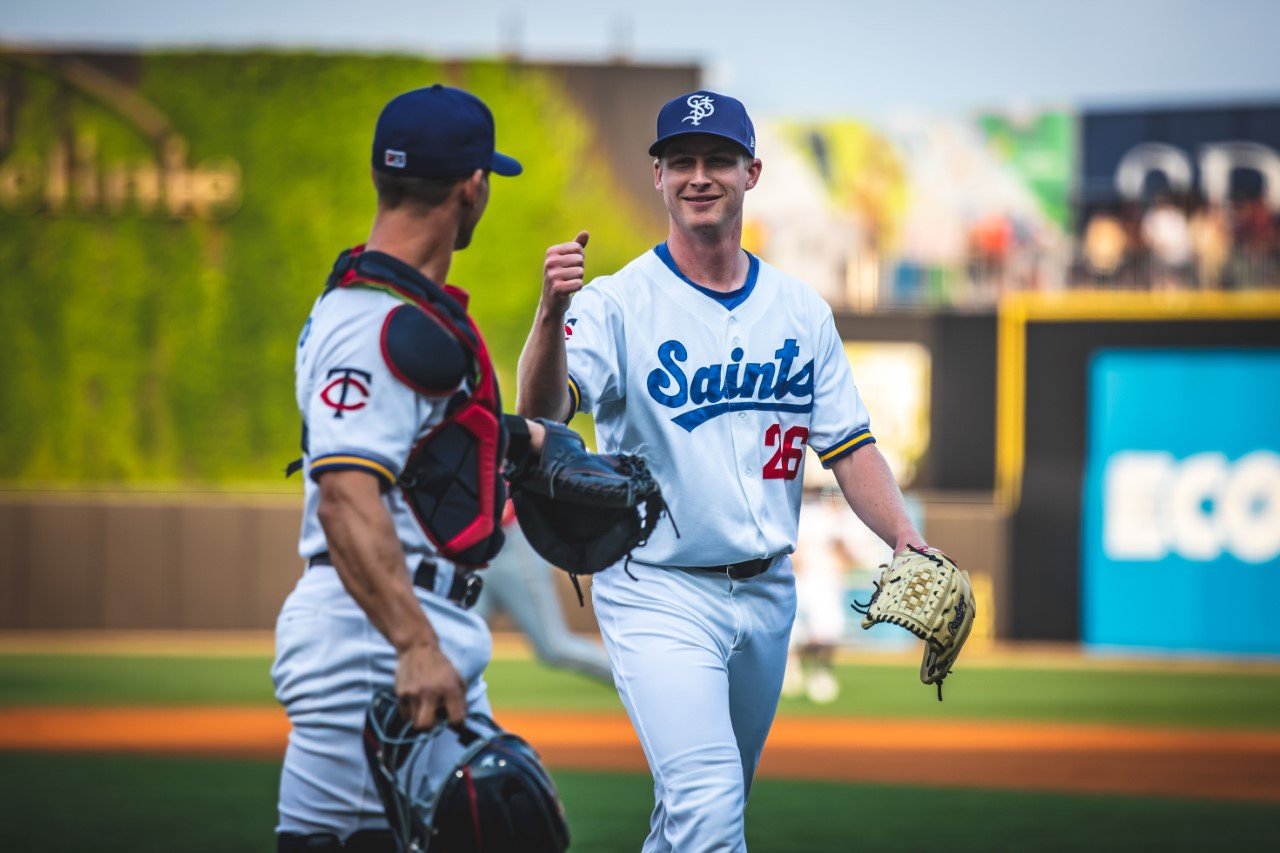 TRANSACTIONS RHP Ryan Mason promoted to AAA St. Paul LHP Evan Sisk added to AA Wichita (received from St. Louis in the J.A. Happ trade) RHP Simeon Woods Richardson added to AA Wichita and placed on the Temporary Inactive list (he is pitching for team USA in the Tokyo Olympics) RHP Alex Scherff added to AA Wichita and placed on the IL OF Gilberto Celestino optioned to AAA St. Paul as Luis Arraez was activated from the IL Saints Sentinel St. Paul 5, Indianapolis 6 Box Score Drew Strotman: 4 ⅓ IP, 3 H, 4 ER, 2 BB, 1 K HR: None Multi-hit games: Mark Contreras (2-for-5, 2B, 2 RBI) A much anticipated prospect made his Saints debut on Saturday. RHP Drew Strotman, one of the pitchers received by the Twins in the Nelson Cruz trade, started for St. Paul for the first time. It was not smooth sailing for Strotman who gave up four runs while striking out just a single batter. It was not the best of first impressions, but Strotman will certainly have more opportunities to impress in the future. The Saints offense did its best to back Strotman. The 1-2 punch of Jose Miranda and Mark Contreras combined for two runs and three RBIs as both players bugged Indianapolis’ pitching staff all night. Oh, and Miranda is casually chilling with a AAA batting average in the .350’s. Just FYI. A few notable relievers threw scoreless outings on Saturday. Ian Hamilton tossed 1 ⅔ innings with no earned runs, Jovani Moran threw 1 ⅓ IP with no earned runs, and Yennier Cano, uh, hurled a single inning without any earned runs. At least one (if not all) of those players will certainly be on the Twins sometime soon. Wind Surge Wisdom Wichita 4, NW Arkansas 8 Box Score Adam Lau: 2 ⅔ IP, 1 H, 1 ER, 2 BB, 4 K HR: B.J. Boyd (7), Jermaine Palacios (13) Multi-hit games: B.J. Boyd (2-for-4, HR, R, RBI), Jermaine Palacios (2-for-3, HR, 2B, 3 RBI) Wichita could not hold on to the lead on Saturday. B.J. Boyd kicked off the scoring quickly by blasting a lead-off homerun before fans could even reach their seats. It was Boyd’s seventh homer of the season and the hit, yet again, has proved Boyd to be a worthy and useful addition to the Twins’ minor league system. Boyd was not the only hitter to get in on the homer fun. Jermaine Palacios continued on his path of destruction by sending his 13th shot of the year over the wall in the 4th inning. Last week, I wrote about Palacios as one of, if not the single most pleasantly surprising player in the minor league system. Today was no exception. Unfortunately, Boyd and Palacios were essentially the entire Wind Surge offense. Trey Cabbage was the only other player to net a hit in the game, and all four RBIs were the result of either Boyd or Palacios. It was no more smooth for Wichita on the pitching side of the equation. All four of their pitchers allowed at least one earned run, with Zach Neff acting as the guiltiest culprit (four earned runs allowed over seven outs). All in all, it was a rather forgettable night for the Wind Surge as they are waiting until the massive prospect reinforcements finally reach Kansas. Evan Sisk, acquired in the J.A. Happ/John Gant trade, made his debut in the Twins organization. He gave up one run over two innings. Kernels Nuggets Cedar Rapids 2, Wisconsin 12 Box Score Cody Laweryson: ⅔ IP, 2 H, 3 ER, 0 BB, 1 K HR: None Multi-hit games: Yunior Severino (2-for-3, 2B, R, BB), DaShawn Kiersey (2-for-3, 3B) Things could have gone better for Cedar Rapids on Saturday. The first sign that today would not end up being the day for the Kernels occurred in the very first inning. Cody Laweryson was unable to finish his first frame of work due to an apparent injury and had to be replaced by Tyler Palm. Wisconsin took advantage of the unpredicted short start by plating seven runs in the first two innings. That more or less stood to be the end of the Kernels’ odds of winning. They were able to plate two runs in an attempt to regain something of a lead, but it was to no avail. For the sake of having some food news, Breckin Williams and Ryan Shreve combined to allow just a single earned run over three innings of relief. In total, they struck out seven batters. Mussel Matters The game between Fort Myers and Clearwater was canceled as Clearwater has been struck by a COVID-19 outbreak. Tomorrow’s match between the two teams has been canceled as well. Complex Chronicles FCL Twins 6, FCL Red Sox 4 Box Score Juan Mendez: 3 ⅔ IP, 1 H, 0 ER, 2 BB, 1 K HR: None Multi-hit games: Kala’i Rosario (2-for-3, R, RBI, BB), Yonardy Soto (3-for-4, RBI) The FCL Twins turned around their luck and beat the FCL Red Sox on Saturday. Juan Mendez did his job by holding the Red Sox in check over his 3 2/3 innings of work. Yeah, walking more than you strike out is not generally ideal, but zero earned runs is zero earned runs. You take those. Samuel Perez was even more impressive as he pitched for four innings to finish off the game, and struck out five while allowing just two baserunners. Now that is a well-earned win. The win was actually well within hand for the Red Sox. They had put up a four-spot in the 6th inning while holding the Twins scoreless up until that point. However, the Twins broke out for a pair of runs in the 7th, and followed that up with their own four-spot in the 8th. Somehow, they ended up with six runs off of just one extra-base hit. TWINS DAILY PLAYERS OF THE DAY Twins Daily Minor League Pitcher of the Day – Samuel Perez Twins Daily Minor League Hitter of the Day – Jermaine Palacios PROSPECT SUMMARY Here’s a look at how the Twins Daily Top 20 Twins Prospects performed: #1 – Royce Lewis (Rehab) – Out for season (torn ACL) #2 – Jhoan Duran (St. Paul) – Injured List (elbow strain) #3 – Jordan Balazovic (Wichita) – Did not pitch #4 – Matt Canterino (Cedar Rapids) – Injured List (right elbow strain) #5 – Jose Miranda (St. Paul) - 1-5, 2 R, 2 K #6 – Keoni Cavaco (Fort Myers) – No game #7 – Gilberto Celestino (St. Paul) – Did not play #8 – Josh Winder (St. Paul) – Did not pitch #9 – Aaron Sabato (Fort Myers) – No game #10 – Matt Wallner (Cedar Rapids) – Did not play #11 – Blayne Enlow (Cedar Rapids) – Out for Season (Tommy John surgery) #12 – Bailey Ober (Minnesota) – 4 IP, 4 H, 1 ER, 1 BB, 6 K #13 – Cole Sands (Wichita) – Did not pitch #14 – Brent Rooker (Minnesota) – 1-5, 2 R, K #15 – Misael Urbina (Fort Myers) – No game #16 – Spencer Steer (Wichita) – 0-2, 2 BB #17 – Wander Javier (Cedar Rapids) – 0-4, 2 K #18 – Alerick Soularie (Complex) – N/A (foot injury) #19 – Edwar Colina (Rehab) – Injured List (elbow) #20 – Chris Vallimont (Wichita) – Did not pitch SUNDAY’S PROBABLE STARTERS Cedar Rapids @ Wisconsin (12:05 PM) RHP Tyler Beck Indianapolis @ St. Paul (1:05 PM) RHP Chandler Shephard Wichita @ NW Arkansas (1:05 PM) TBD Fort Myers @ Clearwater Canceled
- 13 comments
-
- 1
-
-
- drew strotman
- mark contreras
- (and 3 more)
-
The Twins saw the first impact of their recent trades on Saturday as Drew Strotman made his St. Paul debut on Saturday. Read all about that and more in this edition of the minor league report. TRANSACTIONS RHP Ryan Mason promoted to AAA St. Paul LHP Evan Sisk added to AA Wichita (received from St. Louis in the J.A. Happ trade) RHP Simeon Woods Richardson added to AA Wichita and placed on the Temporary Inactive list (he is pitching for team USA in the Tokyo Olympics) RHP Alex Scherff added to AA Wichita and placed on the IL OF Gilberto Celestino optioned to AAA St. Paul as Luis Arraez was activated from the IL Saints Sentinel St. Paul 5, Indianapolis 6 Box Score Drew Strotman: 4 ⅓ IP, 3 H, 4 ER, 2 BB, 1 K HR: None Multi-hit games: Mark Contreras (2-for-5, 2B, 2 RBI) A much anticipated prospect made his Saints debut on Saturday. RHP Drew Strotman, one of the pitchers received by the Twins in the Nelson Cruz trade, started for St. Paul for the first time. It was not smooth sailing for Strotman who gave up four runs while striking out just a single batter. It was not the best of first impressions, but Strotman will certainly have more opportunities to impress in the future. The Saints offense did its best to back Strotman. The 1-2 punch of Jose Miranda and Mark Contreras combined for two runs and three RBIs as both players bugged Indianapolis’ pitching staff all night. Oh, and Miranda is casually chilling with a AAA batting average in the .350’s. Just FYI. A few notable relievers threw scoreless outings on Saturday. Ian Hamilton tossed 1 ⅔ innings with no earned runs, Jovani Moran threw 1 ⅓ IP with no earned runs, and Yennier Cano, uh, hurled a single inning without any earned runs. At least one (if not all) of those players will certainly be on the Twins sometime soon. Wind Surge Wisdom Wichita 4, NW Arkansas 8 Box Score Adam Lau: 2 ⅔ IP, 1 H, 1 ER, 2 BB, 4 K HR: B.J. Boyd (7), Jermaine Palacios (13) Multi-hit games: B.J. Boyd (2-for-4, HR, R, RBI), Jermaine Palacios (2-for-3, HR, 2B, 3 RBI) Wichita could not hold on to the lead on Saturday. B.J. Boyd kicked off the scoring quickly by blasting a lead-off homerun before fans could even reach their seats. It was Boyd’s seventh homer of the season and the hit, yet again, has proved Boyd to be a worthy and useful addition to the Twins’ minor league system. Boyd was not the only hitter to get in on the homer fun. Jermaine Palacios continued on his path of destruction by sending his 13th shot of the year over the wall in the 4th inning. Last week, I wrote about Palacios as one of, if not the single most pleasantly surprising player in the minor league system. Today was no exception. Unfortunately, Boyd and Palacios were essentially the entire Wind Surge offense. Trey Cabbage was the only other player to net a hit in the game, and all four RBIs were the result of either Boyd or Palacios. It was no more smooth for Wichita on the pitching side of the equation. All four of their pitchers allowed at least one earned run, with Zach Neff acting as the guiltiest culprit (four earned runs allowed over seven outs). All in all, it was a rather forgettable night for the Wind Surge as they are waiting until the massive prospect reinforcements finally reach Kansas. Evan Sisk, acquired in the J.A. Happ/John Gant trade, made his debut in the Twins organization. He gave up one run over two innings. Kernels Nuggets Cedar Rapids 2, Wisconsin 12 Box Score Cody Laweryson: ⅔ IP, 2 H, 3 ER, 0 BB, 1 K HR: None Multi-hit games: Yunior Severino (2-for-3, 2B, R, BB), DaShawn Kiersey (2-for-3, 3B) Things could have gone better for Cedar Rapids on Saturday. The first sign that today would not end up being the day for the Kernels occurred in the very first inning. Cody Laweryson was unable to finish his first frame of work due to an apparent injury and had to be replaced by Tyler Palm. Wisconsin took advantage of the unpredicted short start by plating seven runs in the first two innings. That more or less stood to be the end of the Kernels’ odds of winning. They were able to plate two runs in an attempt to regain something of a lead, but it was to no avail. For the sake of having some food news, Breckin Williams and Ryan Shreve combined to allow just a single earned run over three innings of relief. In total, they struck out seven batters. Mussel Matters The game between Fort Myers and Clearwater was canceled as Clearwater has been struck by a COVID-19 outbreak. Tomorrow’s match between the two teams has been canceled as well. Complex Chronicles FCL Twins 6, FCL Red Sox 4 Box Score Juan Mendez: 3 ⅔ IP, 1 H, 0 ER, 2 BB, 1 K HR: None Multi-hit games: Kala’i Rosario (2-for-3, R, RBI, BB), Yonardy Soto (3-for-4, RBI) The FCL Twins turned around their luck and beat the FCL Red Sox on Saturday. Juan Mendez did his job by holding the Red Sox in check over his 3 2/3 innings of work. Yeah, walking more than you strike out is not generally ideal, but zero earned runs is zero earned runs. You take those. Samuel Perez was even more impressive as he pitched for four innings to finish off the game, and struck out five while allowing just two baserunners. Now that is a well-earned win. The win was actually well within hand for the Red Sox. They had put up a four-spot in the 6th inning while holding the Twins scoreless up until that point. However, the Twins broke out for a pair of runs in the 7th, and followed that up with their own four-spot in the 8th. Somehow, they ended up with six runs off of just one extra-base hit. TWINS DAILY PLAYERS OF THE DAY Twins Daily Minor League Pitcher of the Day – Samuel Perez Twins Daily Minor League Hitter of the Day – Jermaine Palacios PROSPECT SUMMARY Here’s a look at how the Twins Daily Top 20 Twins Prospects performed: #1 – Royce Lewis (Rehab) – Out for season (torn ACL) #2 – Jhoan Duran (St. Paul) – Injured List (elbow strain) #3 – Jordan Balazovic (Wichita) – Did not pitch #4 – Matt Canterino (Cedar Rapids) – Injured List (right elbow strain) #5 – Jose Miranda (St. Paul) - 1-5, 2 R, 2 K #6 – Keoni Cavaco (Fort Myers) – No game #7 – Gilberto Celestino (St. Paul) – Did not play #8 – Josh Winder (St. Paul) – Did not pitch #9 – Aaron Sabato (Fort Myers) – No game #10 – Matt Wallner (Cedar Rapids) – Did not play #11 – Blayne Enlow (Cedar Rapids) – Out for Season (Tommy John surgery) #12 – Bailey Ober (Minnesota) – 4 IP, 4 H, 1 ER, 1 BB, 6 K #13 – Cole Sands (Wichita) – Did not pitch #14 – Brent Rooker (Minnesota) – 1-5, 2 R, K #15 – Misael Urbina (Fort Myers) – No game #16 – Spencer Steer (Wichita) – 0-2, 2 BB #17 – Wander Javier (Cedar Rapids) – 0-4, 2 K #18 – Alerick Soularie (Complex) – N/A (foot injury) #19 – Edwar Colina (Rehab) – Injured List (elbow) #20 – Chris Vallimont (Wichita) – Did not pitch SUNDAY’S PROBABLE STARTERS Cedar Rapids @ Wisconsin (12:05 PM) RHP Tyler Beck Indianapolis @ St. Paul (1:05 PM) RHP Chandler Shephard Wichita @ NW Arkansas (1:05 PM) TBD Fort Myers @ Clearwater Canceled View full article
- 13 replies
-
- 1
-
-
- drew strotman
- mark contreras
- (and 3 more)
-
 What's Their Situation? When writing the title for this article, I thought to add a question mark after the word "Mariners." Such a thing would have served two purposes. The first would have reflected the surprise some may have when they realize that the Seattle Mariners are in wild card contention (1.0 games out as of Tuesday morning), with the second being the enigmatic future of the team. Will they buy? Will they sell? Quite honestly, I am not even sure that Jerry Dipoto knows. On Tuesday, they swung their first major deal in an odd swap with the Astros that, according to Dipoto, will make sense once all of their planned deals have been completed. The team was also in on Adam Frazier before San Diego, as per usual, swooped in to pick him up. In the dead of night on Tuesday, Tyler Anderson was swiped from under the Phillies nose. Knowing Dipoto’s love of deals, we are in for some truly wild stuff. What Do They Need? Bats, and a lot of them. The team has just a 91 wRC+ as a whole as their team batting average infamously dipped below the Mendoza line for a portion of the year. They have somewhat rebounded as their wRC+ since the start of June is 100, but holes still exist at significant positions. Second base has been a particularly nasty position for them as either Dylan Moore or Shed Long Jr. have participated there this season with little success. They also have no significant prospects at the position. Beyond that, there is no real clear-cut need in the lineup. Many of the Mariners' position players are either in flux due to injuries or are just warming the spot of a significant prospect. Even with their poorly performing players, I find it challenging to put together a trade because the team is in such a major transition. Perhaps they usurp one of those prospects with an unexpected deal, but I do not see that happening. Again, I must stress that nothing is out of question with Dipoto, to the point that them bringing in Miguel Sanó or Max Kepler would not be out of the question. Their starting rotation, however, is more apparent as a point of concern. Yusei Kikuchi has been outstanding, and Logan Gilbert looks to be the real deal, but the rest is uninspiring. Chris Flexen is hilariously overperforming, Marco Gonzales has regressed, and Justin Dunn and Justus Sheffield have been flimsy during their time in the majors. They have prospects to fill these spots, but most of them will not be ready until 2022 or beyond. They did fill a need by acquiring Anderson. Which Twins Are The Best Fit? In a beautiful twist, the best fit may be an ex-Mariner. Michael Pineda would be a consistent presence in a rotation full of youthful arms. He could provide the exact type of 5-6 inning guarantee that few other pitchers on their roster can promise. Depending on the price, the team may add him for a more negligible cost than what other, more major names may net. A shocking trade for José Berríos may not be out of play. The Mariners have well learned that pitching prospects are far from promises, and Jerry Dipoto is an absolute madman, so a move for an established arm could be in their plans. Still, Berríos looks to depart after 2022, and that kind of uncertainty will probably turn off a team looking towards the future. If you squint hard enough, then a surprising deal for Luis Arraez also may be in the cards. The second base position has been a black hole for the team, and they could use a long-term player with the ability to play third as Kyle Seager is unlikely to return following the end of the season. The team knows this as well-they tried to acquire Frazier, as mentioned earlier, and other second baseman have been connected to them Still, the Twins' asking price for Arraez and the Mariners' willingness to meet that mark are probably on two separate continents. Beyond them, the team may look to add a bullpen depth piece like Tyler Duffey. Originally I had written Hansel Robles in here as well, but his performance on Tuesday reflects a player who is anything but valuable. Do you like pitching prospects? Good. Their top 7 or so prospects are likely untouchable, but beyond them, they have: Wyatt Mills: A 26-year-old pure reliever with enough funk to make George Clinton proud. Eric Longenhagen wrote that Mills' "combo of repertoire depth (though he's been exclusively fastball/slider so far in the big leagues) and command are both rare for a reliever." Yes, a pure reliever prospect is not the most exciting option, but he would satisfy a desperate need. Sam Carlson: A 22-year-old Minnesota boy with upside. Carlson is almost entirely unknown as a prospect as a combination of Tommy John surgery and an absent minor league season in 2020 forced him to go four years between throwing a pitch in a professional setting. In any case, Carlson's pedigree as a 2nd round pick reflects an arm with potential. Matt Brash: A more typical hard-throwing righty with quality stuff. Brash is a prototypically modern pitching prospect who possesses great ability with questionable command. If he reigns it in, he's an All-Star; if not, he's a reliever. He can be yet another lotto ticket in the Twins farm. Review: Quite frankly, a trade with the Mariners made much more sense a week ago-when this article was first written. The Cruz trade and the Anderson deal have thrown any predictions out the window. All I can really say now is "be prepared for something weird from this team." The Mariners are genuinely in the great unknown as a team. All signs point towards them selling, but their record so far has gifted them a chance to become soft buyers in the hope that other franchises crash and burn around them. Players like Duffey, Pineda, and potentially Robles may be of interest to them. The partnership is certainly odd, but it would not be all too surprising if the two teams find a way to make a deal with each other. Remember, the Twins did trade Zach Duke to the Mariners in 2018, so a prior relationship does exist.
- 2 comments
-
- 1
-
-
- hansel robles
- michael pineda
- (and 3 more)
-
The Seattle Mariners are a surprising wild card contender in a crowded American League full of teams who could all reasonably compete for the two spots. Their shock season so far has put them in a unique position. The team prepared for 2022 or 2023 to be their years for contention, but sudden performances (and quite a bit of good luck) have resulted in a riper basket than anticipated. A possible trade connection between the Twins and Mariners is faint but not invisible. What's Their Situation? When writing the title for this article, I thought to add a question mark after the word "Mariners." Such a thing would have served two purposes. The first would have reflected the surprise some may have when they realize that the Seattle Mariners are in wild card contention (1.0 games out as of Tuesday morning), with the second being the enigmatic future of the team. Will they buy? Will they sell? Quite honestly, I am not even sure that Jerry Dipoto knows. On Tuesday, they swung their first major deal in an odd swap with the Astros that, according to Dipoto, will make sense once all of their planned deals have been completed. The team was also in on Adam Frazier before San Diego, as per usual, swooped in to pick him up. In the dead of night on Tuesday, Tyler Anderson was swiped from under the Phillies nose. Knowing Dipoto’s love of deals, we are in for some truly wild stuff. What Do They Need? Bats, and a lot of them. The team has just a 91 wRC+ as a whole as their team batting average infamously dipped below the Mendoza line for a portion of the year. They have somewhat rebounded as their wRC+ since the start of June is 100, but holes still exist at significant positions. Second base has been a particularly nasty position for them as either Dylan Moore or Shed Long Jr. have participated there this season with little success. They also have no significant prospects at the position. Beyond that, there is no real clear-cut need in the lineup. Many of the Mariners' position players are either in flux due to injuries or are just warming the spot of a significant prospect. Even with their poorly performing players, I find it challenging to put together a trade because the team is in such a major transition. Perhaps they usurp one of those prospects with an unexpected deal, but I do not see that happening. Again, I must stress that nothing is out of question with Dipoto, to the point that them bringing in Miguel Sanó or Max Kepler would not be out of the question. Their starting rotation, however, is more apparent as a point of concern. Yusei Kikuchi has been outstanding, and Logan Gilbert looks to be the real deal, but the rest is uninspiring. Chris Flexen is hilariously overperforming, Marco Gonzales has regressed, and Justin Dunn and Justus Sheffield have been flimsy during their time in the majors. They have prospects to fill these spots, but most of them will not be ready until 2022 or beyond. They did fill a need by acquiring Anderson. Which Twins Are The Best Fit? In a beautiful twist, the best fit may be an ex-Mariner. Michael Pineda would be a consistent presence in a rotation full of youthful arms. He could provide the exact type of 5-6 inning guarantee that few other pitchers on their roster can promise. Depending on the price, the team may add him for a more negligible cost than what other, more major names may net. A shocking trade for José Berríos may not be out of play. The Mariners have well learned that pitching prospects are far from promises, and Jerry Dipoto is an absolute madman, so a move for an established arm could be in their plans. Still, Berríos looks to depart after 2022, and that kind of uncertainty will probably turn off a team looking towards the future. If you squint hard enough, then a surprising deal for Luis Arraez also may be in the cards. The second base position has been a black hole for the team, and they could use a long-term player with the ability to play third as Kyle Seager is unlikely to return following the end of the season. The team knows this as well-they tried to acquire Frazier, as mentioned earlier, and other second baseman have been connected to them Still, the Twins' asking price for Arraez and the Mariners' willingness to meet that mark are probably on two separate continents. Beyond them, the team may look to add a bullpen depth piece like Tyler Duffey. Originally I had written Hansel Robles in here as well, but his performance on Tuesday reflects a player who is anything but valuable. Do you like pitching prospects? Good. Their top 7 or so prospects are likely untouchable, but beyond them, they have: Wyatt Mills: A 26-year-old pure reliever with enough funk to make George Clinton proud. Eric Longenhagen wrote that Mills' "combo of repertoire depth (though he's been exclusively fastball/slider so far in the big leagues) and command are both rare for a reliever." Yes, a pure reliever prospect is not the most exciting option, but he would satisfy a desperate need. Sam Carlson: A 22-year-old Minnesota boy with upside. Carlson is almost entirely unknown as a prospect as a combination of Tommy John surgery and an absent minor league season in 2020 forced him to go four years between throwing a pitch in a professional setting. In any case, Carlson's pedigree as a 2nd round pick reflects an arm with potential. Matt Brash: A more typical hard-throwing righty with quality stuff. Brash is a prototypically modern pitching prospect who possesses great ability with questionable command. If he reigns it in, he's an All-Star; if not, he's a reliever. He can be yet another lotto ticket in the Twins farm. Review: Quite frankly, a trade with the Mariners made much more sense a week ago-when this article was first written. The Cruz trade and the Anderson deal have thrown any predictions out the window. All I can really say now is "be prepared for something weird from this team." The Mariners are genuinely in the great unknown as a team. All signs point towards them selling, but their record so far has gifted them a chance to become soft buyers in the hope that other franchises crash and burn around them. Players like Duffey, Pineda, and potentially Robles may be of interest to them. The partnership is certainly odd, but it would not be all too surprising if the two teams find a way to make a deal with each other. Remember, the Twins did trade Zach Duke to the Mariners in 2018, so a prior relationship does exist. View full article
-
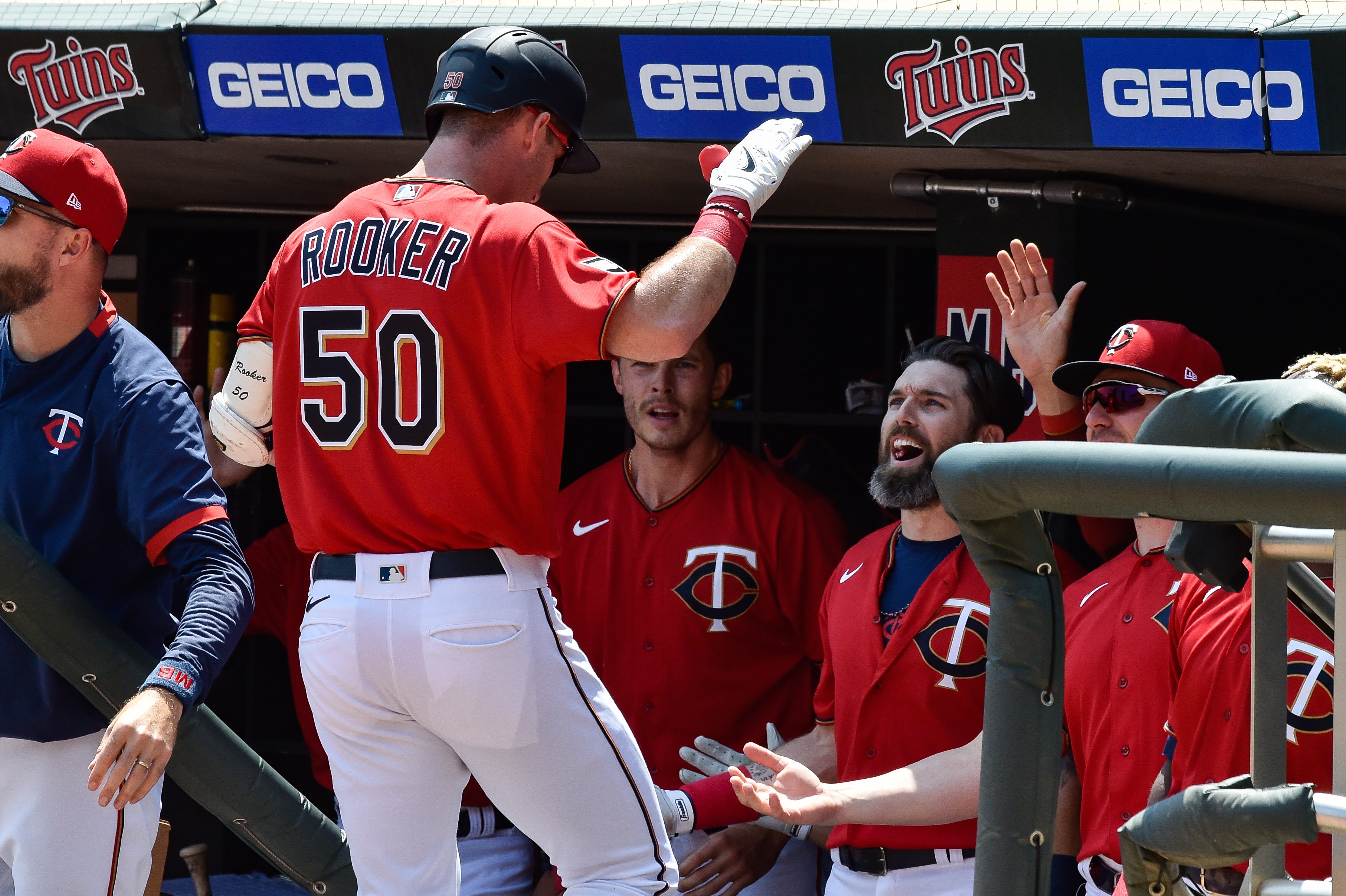 Box Score Bailey Ober: 5 ⅓ IP, 3 H, 2 ER, 1 BB, 4 K (67.7% strikes) HR: Max Kepler (13), Brent Rooker (2) Bottom 3 in WPA: Miguel Sanó (-0.236), Jorge Alcala (-0.149), Danny Coulombe (-0.109) Win Probability Chart (via Fangraphs) Early Offense Saturday night was characterized by a distinct lack of hitting ability, but Sunday quickly proved to be a different story. Max Kepler continued his hot streak by blasting a lead-off homer to kick off the scoring. In the time it took this author to inform his mom of what Kepler did, Brent Rooker, the breaker of no-hitters, absolutely launched a titanic bomb that landed somewhere in Canada. Coming into the game, Kepler had been slugging .597 since July 4th (date chosen for no particular reason). A streak of good health has been a blessing for the outfielder who has been inconsistent since his 2019 breakout. For Rooker, the opportunity is golden. The DH spot is wide open now that Nelson Cruz is on the Rays, and Rooker must impress in a speedy manner if he wishes to be a mainstay in 2022 and beyond. Blasting a ball like that off of a righty is an excellent start. A Familiar Face Returns Jake Cave made his first start for the Twins since May 12th. The added depth is much welcomed as the team has run through approximately 1053 different center fielders in 2021. Cave can provide relief for a struggling Gilberto Celestino. This is more of a result of improper seasoning than an indictment on Celestino’s upside, which simply needs more time to be seen. At any rate, it’s good to see Cave back off the IL. Ober The Hills And Far Away The oak-like rookie made another impressive start on Sunday. Ober punched out four while allowing a pair of earned runs in what is now his longest career start (5 ⅓ IP). Ober could have gone longer, but the team has been especially careful in limiting his innings in 2021 since he did not get to pitch in games in 2020. His xFIP of 4.19 on the year places him among names like Zack Greinke, Aaron Civale, and Casey Mize. Ober may only make a handful of starts down the stretch, though. Sunday’s affair brought him to 59 ⅓ innings pitched split between St. Paul and Minnesota in 2021. His previous high mark came in 2019 when Ober threw 78 ⅔ innings between three levels of the minors. It is unclear just how many more innings the team will allow him to throw-either in an effort to match his career high or lightly pass it-but it can be solidly predicted that the team will be conservative in his workload going forward. Enjoy watching him while you can! Where Did The Momentum Go? Despite getting off to a fast 2-0 start, the Twins let their lead slowly slip away. Max Stassi proved to be an especially pesky enemy as he tripled and homered to bring the game to a tie. With the game tied, the unrivaled Shohei Ohtani took one look at a hanging Danny Coulombe slider and bazooka’d it out of right field. After Rooker’s homerun, the Twins offense let Jamie Barria settle into a groove. The righty put the homers behind him, and cruised through seven innings of work with just four baserunners allowed after the homers. None of the two Twins hits after the 1st went for extra bases. The inability of the Twins to push more runs across after getting off to such a hot start has been an issue the entire season and, once again, put a dent in their chances of winning on Sunday. It was a close 3-2 game headed into the top of the 9th. The game was still well within grasp for the Twins even if they did not have the strongest part of the lineup set up for the bottom of the inning. But, things got messy. Jorge Alcala gave up a single, a double, and another single in succession, and the Angels notched two more runs. Los Angeles would have six runs on the board when it was all said and done. Postgame Interviews Bullpen Usage Spreadsheet TUE WED THU FRI SAT SUN TOT Colomé 26 22 0 11 0 10 69 Alcala 24 0 0 0 10 24 58 Duffey 0 38 0 0 0 0 38 Thielbar 17 16 0 0 16 0 49 Coulombe 5 0 32 0 0 18 55 Rogers 0 0 0 18 0 0 18 Robles 7 0 0 0 0 0 7 Minaya 0 0 0 20 0 0 20 MORE FROM TWINS DAILY — Latest Twins coverage from our writers — Recent Twins discussion in our forums — Follow Twins Daily via Twitter, Facebook or email
- 9 comments
-
- 1
-
-
- brent rooker
- max kepler
- (and 3 more)
-
The Twins followed up losing a close game on Saturday by… losing a less close game on Sunday. This one played out in a different way, but the result stayed the same. Read about what happened on Sunday here. Box Score Bailey Ober: 5 ⅓ IP, 3 H, 2 ER, 1 BB, 4 K (67.7% strikes) HR: Max Kepler (13), Brent Rooker (2) Bottom 3 in WPA: Miguel Sanó (-0.236), Jorge Alcala (-0.149), Danny Coulombe (-0.109) Win Probability Chart (via Fangraphs) Early Offense Saturday night was characterized by a distinct lack of hitting ability, but Sunday quickly proved to be a different story. Max Kepler continued his hot streak by blasting a lead-off homer to kick off the scoring. In the time it took this author to inform his mom of what Kepler did, Brent Rooker, the breaker of no-hitters, absolutely launched a titanic bomb that landed somewhere in Canada. Coming into the game, Kepler had been slugging .597 since July 4th (date chosen for no particular reason). A streak of good health has been a blessing for the outfielder who has been inconsistent since his 2019 breakout. For Rooker, the opportunity is golden. The DH spot is wide open now that Nelson Cruz is on the Rays, and Rooker must impress in a speedy manner if he wishes to be a mainstay in 2022 and beyond. Blasting a ball like that off of a righty is an excellent start. A Familiar Face Returns Jake Cave made his first start for the Twins since May 12th. The added depth is much welcomed as the team has run through approximately 1053 different center fielders in 2021. Cave can provide relief for a struggling Gilberto Celestino. This is more of a result of improper seasoning than an indictment on Celestino’s upside, which simply needs more time to be seen. At any rate, it’s good to see Cave back off the IL. Ober The Hills And Far Away The oak-like rookie made another impressive start on Sunday. Ober punched out four while allowing a pair of earned runs in what is now his longest career start (5 ⅓ IP). Ober could have gone longer, but the team has been especially careful in limiting his innings in 2021 since he did not get to pitch in games in 2020. His xFIP of 4.19 on the year places him among names like Zack Greinke, Aaron Civale, and Casey Mize. Ober may only make a handful of starts down the stretch, though. Sunday’s affair brought him to 59 ⅓ innings pitched split between St. Paul and Minnesota in 2021. His previous high mark came in 2019 when Ober threw 78 ⅔ innings between three levels of the minors. It is unclear just how many more innings the team will allow him to throw-either in an effort to match his career high or lightly pass it-but it can be solidly predicted that the team will be conservative in his workload going forward. Enjoy watching him while you can! Where Did The Momentum Go? Despite getting off to a fast 2-0 start, the Twins let their lead slowly slip away. Max Stassi proved to be an especially pesky enemy as he tripled and homered to bring the game to a tie. With the game tied, the unrivaled Shohei Ohtani took one look at a hanging Danny Coulombe slider and bazooka’d it out of right field. After Rooker’s homerun, the Twins offense let Jamie Barria settle into a groove. The righty put the homers behind him, and cruised through seven innings of work with just four baserunners allowed after the homers. None of the two Twins hits after the 1st went for extra bases. The inability of the Twins to push more runs across after getting off to such a hot start has been an issue the entire season and, once again, put a dent in their chances of winning on Sunday. It was a close 3-2 game headed into the top of the 9th. The game was still well within grasp for the Twins even if they did not have the strongest part of the lineup set up for the bottom of the inning. But, things got messy. Jorge Alcala gave up a single, a double, and another single in succession, and the Angels notched two more runs. Los Angeles would have six runs on the board when it was all said and done. Postgame Interviews Bullpen Usage Spreadsheet TUE WED THU FRI SAT SUN TOT Colomé 26 22 0 11 0 10 69 Alcala 24 0 0 0 10 24 58 Duffey 0 38 0 0 0 0 38 Thielbar 17 16 0 0 16 0 49 Coulombe 5 0 32 0 0 18 55 Rogers 0 0 0 18 0 0 18 Robles 7 0 0 0 0 0 7 Minaya 0 0 0 20 0 0 20 MORE FROM TWINS DAILY — Latest Twins coverage from our writers — Recent Twins discussion in our forums — Follow Twins Daily via Twitter, Facebook or email View full article
- 9 replies
-
- 1
-
-
- brent rooker
- max kepler
- (and 3 more)
-
The Twins’ minor league teams won more than they lost on Saturday, and most teams did better on offense than the Twins. Of course, that isn’t much of a bar to clear, but I digress. Read all about that and more in this edition of the minor league report. TRANSACTIONS INF Tzu-Wei Lin transferred from 7-day IL to 60-day IL Saints Sentinel St. Paul 3, Omaha 1 Box Score Andrew Albers: 5 ⅔ IP, 6 H, 1 ER, 1 BB, 6 K HR: Drew Maggi (11) Multi-hit games: Tomás Telis (2-for-4, 2 RBI) The Saints took down the Omaha powerhouse on Saturday. Andrew Albers was brilliant in his start. The 35-year-old lefty almost completely shut down an offense powered by some serious prospect talent. I hope that some grateful teammates took him out for a nice steak dinner afterwards. Drew Maggi continued his power surge as he blasted his 11th homer of the year in the 6th inning. The blast gave him a new career high in home runs in any given season over his extensive minor league career. He may end up with the Twins if (when) Andrelton Simmons is traded. The big hit of the night came off the bat of Tomás Telis. His 7th inning single added two extra-crucial runs for the Saints. Jovani Moran threw a pair of scoreless innings with three strikeouts. It’s difficult to imagine a scenario where he is not pitching for the Twins by September at the latest. Wind Surge Wisdom Wichita 5, Arkansas 4 Box Score Adam Lau: 3 ⅔ IP, 1 H, 0 ER, 1 BB, 6 K HR: Jermaine Palacios (12) Multi-hit games: Roy Morales (2-for-5, R, RBI), Andrew Bechtold (2-for-4), D.J. Burt (2-for-4) Wichita played an absolute dog fight of a game on Saturday. Adam Lau kicked off the game with an impressive start. He was not meant to get many outs, but the ones he got were efficient. It’s hard to criticize a guy who allowed just two baserunners over 11 outs. The offense was there for Wichita early as Roy Morales singled home the first run of the game in the 3rd inning and Jermaine Palacios bashed a three-run homer in the 5th. If Palacios is not the outright most surprising minor leaguer of the year, he’s at least in the conversation. He quietly returned to the Twins after the Rays were unable to work their magic on him. 2021 has been nothing but a rake fest as he came into Saturday with a 120 wRC+. It has been a good year for Palacios. It was looking like Wichita could set the game to cruise control on their way to an easy W, but things did not shake out that way. Some shenanigans in the 7th inning by Arkansas knotted the game and suddenly upped the stakes. The game went into extras where the Wind Surge were able to take advantage of Manfredball an honest runner in scoring position with a sacrifice fly by Aaron Whitefield. Zach Neff and Ryan Mason combined forces to hold the Travelers scoreless in the bottom of the inning, and Wichita was able to walk away with a win. Kernels Nuggets Cedar Rapids 10, Beloit 4 Box Score Ben Gross: 5 IP, 4 H, 0 ER, 1 BB, 8 K HR: Michael Helman (9), Matt Wallner (6) Multi-hit games: Matt Wallner (3-for-5, HR, 2 R, RBI), Michael Helman (3-for-4, HR, 2B, 4 R, RBI, BB), Kyle Schmidt (3-for-5, R), Gabriel Maciel (3-for-4, 2B, R, 3 RBI, BB), Daniel Ozoria (2-for-5, RBI) Something, something, beware the 7th inning, something, something. Ben Gross, was, uhh, gross in his start on Saturday. The righty struck out eight batters over five shutout innings and was generally the man in charge. I mean, how can a pitcher not succeed when he has such an appropriate last name? He proves the theory of nominative determinism. The Kernels supported Gross early as Gabriel Maciel knocked home the first run of the game in the 2nd inning, and Michael Helman added on in the 5th frame with a solo shot. Oh, but did things ever get wacky after that. The Snappers responded in the 7th inning with four runs off a sacrifice fly and a bases-clearing double. Suddenly, the game was tilted four to two in favor of Beloit. The Kernels were having none of it. In the bottom half of the inning, a wild pitch brought the game to within a run. Maciel then doubled home two runs to gain the lead before Edouard Julien doubled home two more runs for posterity sake. Matt Wallner homered in the 8th inning just for giggles (and for scoring, I guess). Daniel Ozoria singled home yet another run, and Julien walked in the tenth (and final) run for good measure. Eight hitters for the Kernels reached base multiple times on Saturday. Mussel Matters Fort Myers 1, Daytona 4 Box Score Orlando Rodriguez: 5 IP, 5 H, 2 ER, 3 BB, 7 K HR: None Multi-hit games: Yunior Severino (2-for-3, RBI, BB) Fort Myers attempted a tribute to the Twins on Saturday, as they also could not find much offense on the day. Starter Orlando Rodriguez did his job well as he allowed just a pair of earned runs over his five innings of work. He walked three, which is a bit much, but he also struck out seven batters, which is also a bit much. So it evened out in the end. The offense just could not find anything, however. Will Holland and Nick Anderson were both able to work a pair of walks, and Yunior Severino got on base three times. Outside of them, the box score is quite dusty. Aaron Sabato and Misael Urbina both had especially rough games as they combined for seven strikeouts without a hit. You tend not to win many games when your three and four hitters put up lines like that. Matthew Swain and Steven Cruz combined for three shutout innings in relief of Rodriguez. Complex Chronicles FCL Twins 4, FCL Red Sox 7 Box Score Juan Mendez: 3 IP, 3 H, 0 ER, 0 BB, 3 K HR: Kala’i Rosario (2) Multi-hit games: None The FCL Twins lost on Saturday, but not without a vicious comeback attempt. The game was even through four as Juan Mendez did his best to support his team on the mound. He would end with the best line of any FCL Twins pitcher on Saturday. A double by what I can only assume is someone’s superhero alter-ego, a man named Blaze Jordan, kicked off a run of, well, runs for the Red Sox. They would plate seven over three innings in what ended up being the dagger. The FCL Twins did not go gentle into that good night. Kala’i Rosario blasted a 9th inning grand slam that, while awesome, was not enough to turn the game around. TWINS DAILY PLAYERS OF THE DAY Twins Daily Minor League Pitcher of the Day – Ben Gross Twins Daily Minor League Hitter of the Day – Michael Helman PROSPECT SUMMARY Here’s a look at how the Twins Daily Top 20 Twins Prospects performed: #1 – Royce Lewis (Rehab) – Out for season (torn ACL) #2 – Jhoan Duran (St. Paul) – Injured List (elbow strain) #3 – Jordan Balazovic (Wichita) – Did not pitch #4 – Matt Canterino (Cedar Rapids) – Injured List (right elbow strain) #5 – Jose Miranda (St. Paul) - 1-5, R, K #6 – Keoni Cavaco (Fort Myers) – 0-4 #7 – Gilberto Celestino (Minnesota) – 0-3, 3 K #8 – Josh Winder (St. Paul) – Did not pitch #9 – Aaron Sabato (Fort Myers) – 0-3, BB, 3 K #10 – Matt Wallner (Cedar Rapids) – 3-5, HR, 2 R, RBI #11 – Blayne Enlow (Cedar Rapids) – Out for Season (Tommy John surgery) #12 – Bailey Ober (Minnesota) – Did not pitch #13 – Cole Sands (Wichita) – Did not pitch #14 – Brent Rooker (Minnesota) – 1-4, 3 K #15 – Misael Urbina (Fort Myers) – 0-4, 4 K #16 – Spencer Steer (Wichita) – 0-1, K #17 – Wander Javier (Cedar Rapids) – Did not play #18 – Alerick Soularie (Complex) – N/A (foot injury) #19 – Edwar Colina (Rehab) – Injured List (elbow) #20 – Chris Vallimont (Wichita) – Did not pitch SUNDAY’S PROBABLE STARTERS Daytona @ Fort Myers (10:00 AM) LHP Zarion Sharpe Beloit @ Cedar Rapids (1:05 PM) RHP Cody Laweryson Wichita @ Arkansas (1:10 PM) RHP Jordan Balazovic St. Paul @ Omaha (4:05 PM) RHP Griffin Jax View full article
- 10 replies
-
- 1
-
-
- matt wallner
- ben gross
- (and 3 more)
-
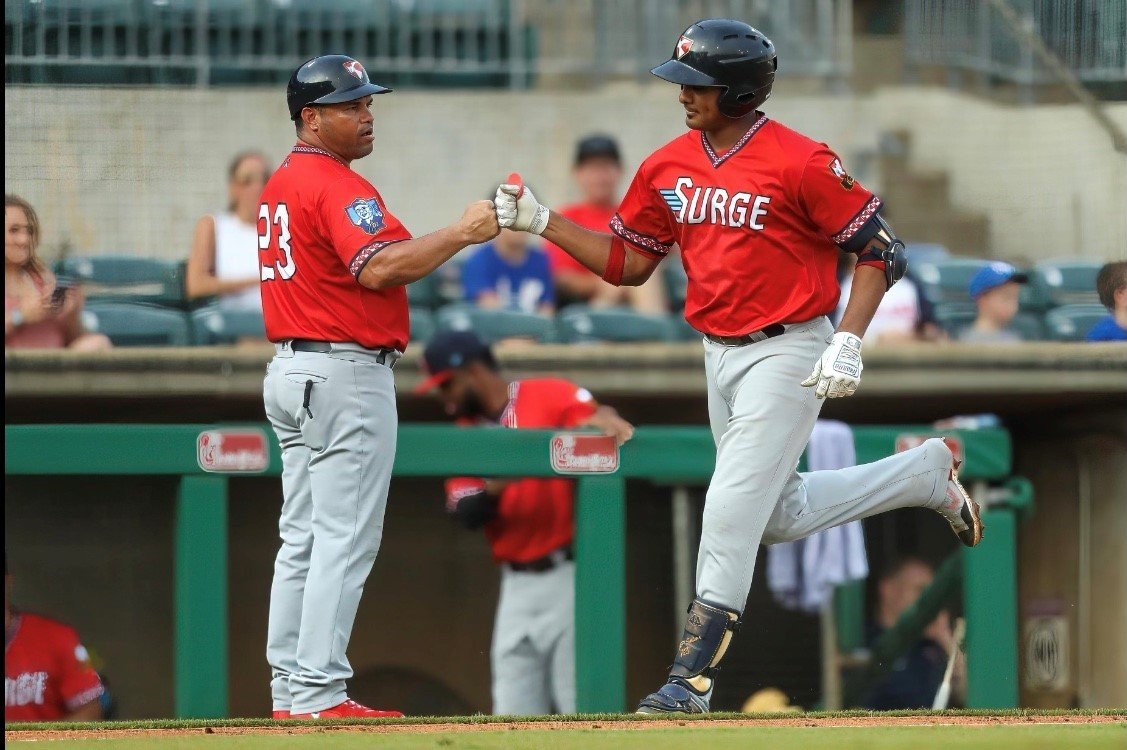 TRANSACTIONS INF Tzu-Wei Lin transferred from 7-day IL to 60-day IL Saints Sentinel St. Paul 3, Omaha 1 Box Score Andrew Albers: 5 ⅔ IP, 6 H, 1 ER, 1 BB, 6 K HR: Drew Maggi (11) Multi-hit games: Tomás Telis (2-for-4, 2 RBI) The Saints took down the Omaha powerhouse on Saturday. Andrew Albers was brilliant in his start. The 35-year-old lefty almost completely shut down an offense powered by some serious prospect talent. I hope that some grateful teammates took him out for a nice steak dinner afterwards. Drew Maggi continued his power surge as he blasted his 11th homer of the year in the 6th inning. The blast gave him a new career high in home runs in any given season over his extensive minor league career. He may end up with the Twins if (when) Andrelton Simmons is traded. The big hit of the night came off the bat of Tomás Telis. His 7th inning single added two extra-crucial runs for the Saints. Jovani Moran threw a pair of scoreless innings with three strikeouts. It’s difficult to imagine a scenario where he is not pitching for the Twins by September at the latest. Wind Surge Wisdom Wichita 5, Arkansas 4 Box Score Adam Lau: 3 ⅔ IP, 1 H, 0 ER, 1 BB, 6 K HR: Jermaine Palacios (12) Multi-hit games: Roy Morales (2-for-5, R, RBI), Andrew Bechtold (2-for-4), D.J. Burt (2-for-4) Wichita played an absolute dog fight of a game on Saturday. Adam Lau kicked off the game with an impressive start. He was not meant to get many outs, but the ones he got were efficient. It’s hard to criticize a guy who allowed just two baserunners over 11 outs. The offense was there for Wichita early as Roy Morales singled home the first run of the game in the 3rd inning and Jermaine Palacios bashed a three-run homer in the 5th. If Palacios is not the outright most surprising minor leaguer of the year, he’s at least in the conversation. He quietly returned to the Twins after the Rays were unable to work their magic on him. 2021 has been nothing but a rake fest as he came into Saturday with a 120 wRC+. It has been a good year for Palacios. It was looking like Wichita could set the game to cruise control on their way to an easy W, but things did not shake out that way. Some shenanigans in the 7th inning by Arkansas knotted the game and suddenly upped the stakes. The game went into extras where the Wind Surge were able to take advantage of Manfredball an honest runner in scoring position with a sacrifice fly by Aaron Whitefield. Zach Neff and Ryan Mason combined forces to hold the Travelers scoreless in the bottom of the inning, and Wichita was able to walk away with a win. Kernels Nuggets Cedar Rapids 10, Beloit 4 Box Score Ben Gross: 5 IP, 4 H, 0 ER, 1 BB, 8 K HR: Michael Helman (9), Matt Wallner (6) Multi-hit games: Matt Wallner (3-for-5, HR, 2 R, RBI), Michael Helman (3-for-4, HR, 2B, 4 R, RBI, BB), Kyle Schmidt (3-for-5, R), Gabriel Maciel (3-for-4, 2B, R, 3 RBI, BB), Daniel Ozoria (2-for-5, RBI) Something, something, beware the 7th inning, something, something. Ben Gross, was, uhh, gross in his start on Saturday. The righty struck out eight batters over five shutout innings and was generally the man in charge. I mean, how can a pitcher not succeed when he has such an appropriate last name? He proves the theory of nominative determinism. The Kernels supported Gross early as Gabriel Maciel knocked home the first run of the game in the 2nd inning, and Michael Helman added on in the 5th frame with a solo shot. Oh, but did things ever get wacky after that. The Snappers responded in the 7th inning with four runs off a sacrifice fly and a bases-clearing double. Suddenly, the game was tilted four to two in favor of Beloit. The Kernels were having none of it. In the bottom half of the inning, a wild pitch brought the game to within a run. Maciel then doubled home two runs to gain the lead before Edouard Julien doubled home two more runs for posterity sake. Matt Wallner homered in the 8th inning just for giggles (and for scoring, I guess). Daniel Ozoria singled home yet another run, and Julien walked in the tenth (and final) run for good measure. Eight hitters for the Kernels reached base multiple times on Saturday. Mussel Matters Fort Myers 1, Daytona 4 Box Score Orlando Rodriguez: 5 IP, 5 H, 2 ER, 3 BB, 7 K HR: None Multi-hit games: Yunior Severino (2-for-3, RBI, BB) Fort Myers attempted a tribute to the Twins on Saturday, as they also could not find much offense on the day. Starter Orlando Rodriguez did his job well as he allowed just a pair of earned runs over his five innings of work. He walked three, which is a bit much, but he also struck out seven batters, which is also a bit much. So it evened out in the end. The offense just could not find anything, however. Will Holland and Nick Anderson were both able to work a pair of walks, and Yunior Severino got on base three times. Outside of them, the box score is quite dusty. Aaron Sabato and Misael Urbina both had especially rough games as they combined for seven strikeouts without a hit. You tend not to win many games when your three and four hitters put up lines like that. Matthew Swain and Steven Cruz combined for three shutout innings in relief of Rodriguez. Complex Chronicles FCL Twins 4, FCL Red Sox 7 Box Score Juan Mendez: 3 IP, 3 H, 0 ER, 0 BB, 3 K HR: Kala’i Rosario (2) Multi-hit games: None The FCL Twins lost on Saturday, but not without a vicious comeback attempt. The game was even through four as Juan Mendez did his best to support his team on the mound. He would end with the best line of any FCL Twins pitcher on Saturday. A double by what I can only assume is someone’s superhero alter-ego, a man named Blaze Jordan, kicked off a run of, well, runs for the Red Sox. They would plate seven over three innings in what ended up being the dagger. The FCL Twins did not go gentle into that good night. Kala’i Rosario blasted a 9th inning grand slam that, while awesome, was not enough to turn the game around. TWINS DAILY PLAYERS OF THE DAY Twins Daily Minor League Pitcher of the Day – Ben Gross Twins Daily Minor League Hitter of the Day – Michael Helman PROSPECT SUMMARY Here’s a look at how the Twins Daily Top 20 Twins Prospects performed: #1 – Royce Lewis (Rehab) – Out for season (torn ACL) #2 – Jhoan Duran (St. Paul) – Injured List (elbow strain) #3 – Jordan Balazovic (Wichita) – Did not pitch #4 – Matt Canterino (Cedar Rapids) – Injured List (right elbow strain) #5 – Jose Miranda (St. Paul) - 1-5, R, K #6 – Keoni Cavaco (Fort Myers) – 0-4 #7 – Gilberto Celestino (Minnesota) – 0-3, 3 K #8 – Josh Winder (St. Paul) – Did not pitch #9 – Aaron Sabato (Fort Myers) – 0-3, BB, 3 K #10 – Matt Wallner (Cedar Rapids) – 3-5, HR, 2 R, RBI #11 – Blayne Enlow (Cedar Rapids) – Out for Season (Tommy John surgery) #12 – Bailey Ober (Minnesota) – Did not pitch #13 – Cole Sands (Wichita) – Did not pitch #14 – Brent Rooker (Minnesota) – 1-4, 3 K #15 – Misael Urbina (Fort Myers) – 0-4, 4 K #16 – Spencer Steer (Wichita) – 0-1, K #17 – Wander Javier (Cedar Rapids) – Did not play #18 – Alerick Soularie (Complex) – N/A (foot injury) #19 – Edwar Colina (Rehab) – Injured List (elbow) #20 – Chris Vallimont (Wichita) – Did not pitch SUNDAY’S PROBABLE STARTERS Daytona @ Fort Myers (10:00 AM) LHP Zarion Sharpe Beloit @ Cedar Rapids (1:05 PM) RHP Cody Laweryson Wichita @ Arkansas (1:10 PM) RHP Jordan Balazovic St. Paul @ Omaha (4:05 PM) RHP Griffin Jax
- 10 comments
-
- 2
-
-
- matt wallner
- ben gross
- (and 3 more)
-
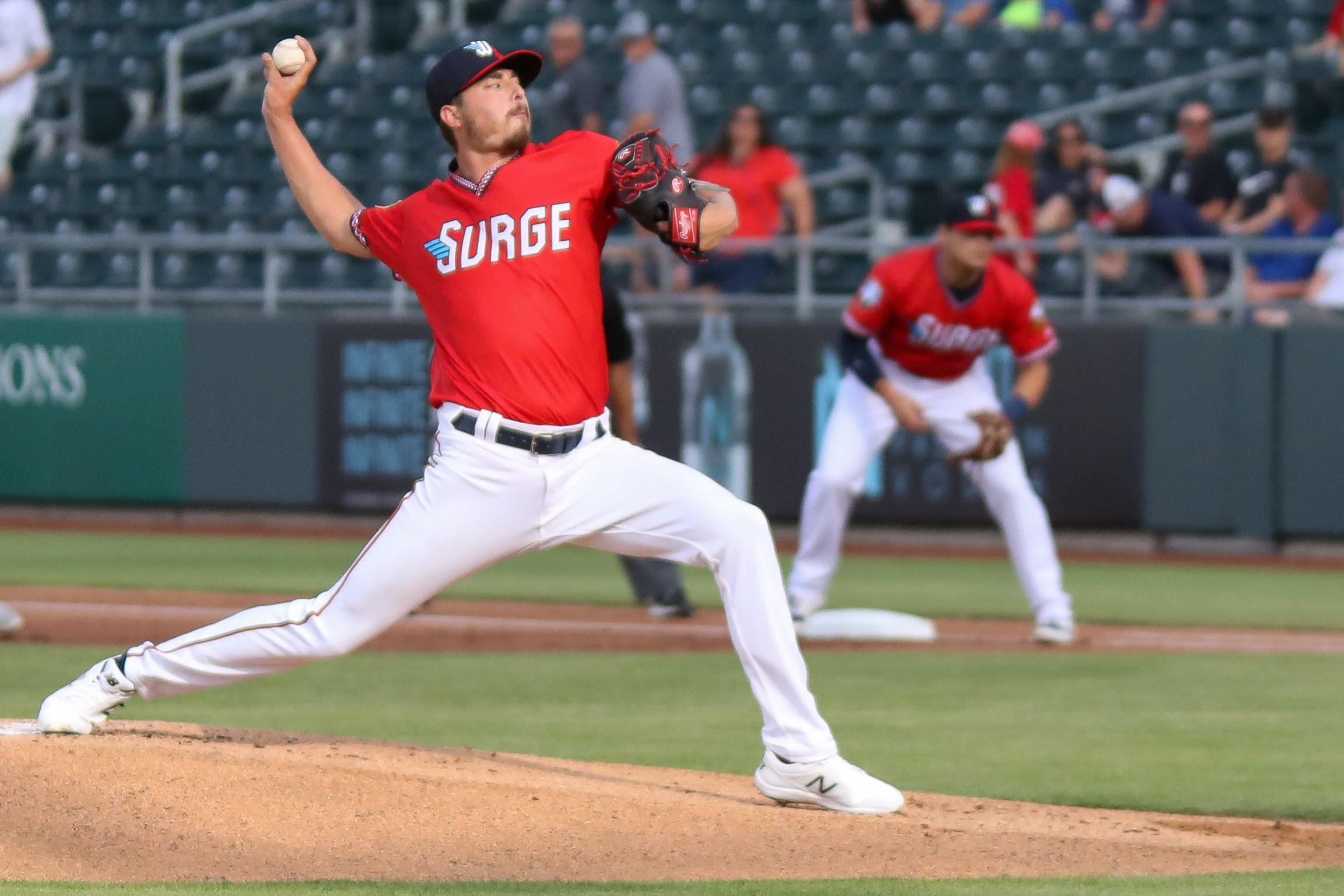 TRANSACTIONS C Nick Garland transferred from FCL Twins to Low-A Fort Myers C Charles Mack placed on the temporary inactive list with Low-A Fort Myers. The Twins are allowing him to be with his family, specifically his brother Joe, for the MLB Draft on Sunday night. Joe Mack could go as early as the mid-first round. Saints Sentinel The Saints were rained out on Saturday in Iowa. The game will be made up Sunday as part of a double-header against the Cubs. Wind Surge Wisdom Wichita 5, NW Arkansas 4 Box Score Jordan Balazovic: 6 IP, 5 H, 0 ER, 0 BB, 7 K HR: B.J. Boyd (4), Andrew Bechtold (9) Multi-hit games: B.J. Boyd (2-for-4, HR, R, 4 RBI), Andrew Bechtold (2-for-4, HR, R, RBI) Jordan Balazovic is everything that he has been promised to be. The de-facto top active prospect in the Twins’ system was dominant in yet another start. He completely shut down the NW Arkansas lineup over six masterful innings in which he proved why he is held in such high regard as a prospect. This author specifically was impressed by his consistent ability to miss bats at the top of the strike zone with his fastball. Such a skill is crucial in today’s baseball landscape and Balazovic’s command over the pitch is pristine. Alright, but what about the rest of the team? The Wind Surge were in a 0-0 deadlock for the majority of the game before the levee finally broke in the 8th inning. Wichita loaded the bases for B.J. Boyd who promptly sent everyone home with a blast over the right-centerfield wall. Andrew Bechtold followed up Boyd’s grand slam with a solo shot of his own. Normally, this would be seen as showing off, but the run was actually crucial for Wichita. The Naturals thundered back in the ninth inning off of Alex Phillips with four runs of their own before finally retiring for the night. Had Bechtold been more modest with his 8th inning at-bat, this game may have ended in a completely different fashion. Kernels Nuggets Cedar Rapids 8, Peoria 2 Box Score Jon Olsen: 5 ⅔ IP, 3 H, 2 ER, 1 BB, 5 K HR: Max Smith (3) Multi-hit games: Alex Isola (2-for-5, R), Seth Gray (2-for-4, RBI, BB), Max Smith (2-for-3, HR, 2 R, 2 RBI, BB) It was a late-bloomer of a game for the Cedar Rapids Kernels on Saturday. Jon Olsen made quick work of Peoria’s lineup in the second-longest start of the day by a Twins prospect. His ERA now sits at 3.59 on the season. Most of the fun did not occur until later into the game, though. The Kernels headed into the 5th inning looking at a 2-0 deficit and tied the game with a Wander Javier sacrifice fly and a DaShawn Kiersey groundout. Who says that you need hits to score runs? They were not yet finished scoring as the next inning saw a Gabriel Maciel triple that brought home a run and an Edouard Julien groundout that plated the fourth run of the game. But they were still not done terrorizing Chiefs’ pitchers as Max Smith broke the game open in the 7th inning with a two-run bomb. This came after a run-scoring wild pitch earlier in the inning in what became a five-run lead for Cedar Rapids. BUT THEY WERE STILL NOT DONE as Seth Gray singled home one more run in the 8th frame. Ok, then they were done scoring. Erik Manoah, Jr. tossed 2 1/3 scoreless, one-hit innings in relief of Olsen. He struck out three batters. Jordan Gore struck out three batters in the ninth inning to end the game. Mussel Matters Fort Myers 1, St. Lucie 2 Box Score Bobby Milacki: 5 IP, 3 H, 2 ER, 2 BB, 5 K HR: None Multi-hit games: Aaron Sabato (2-for-3, BB) The Mighty Mussels lost an odd one on Saturday. Teams often find themselves as the victors when they can limit the other team to just three hits, but that was not the case in this matchup. Bobby Milacki served honorably by allowing two runs over his five innings of work before Osiris German took the game to the finish line. Normally, just two runs would be good enough but Milacki got deGromed. Fort Myers’ offense actually performed pretty well based on the box score. They knocked out seven hits and walked three times. What gives? Well, the "LOBsters" were out in full force as they grounded into two double plays while leaving entirely too many runners on base. Willie Joe Garry Jr. brought in the only run of the game for the Mighty Mussels with his 7th inning double. Aaron Sabato reached base three times in the game. He has not yet flashed the power that the team was expecting when they drafted him in the 1st round in 2020, but his on-base ability has been a pleasant plus. Hopefully he can harness his power soon. Complex Chronicles FCL Twins 3, FCL Red Sox 4 Box Score Elpidio Perez: 3 IP, 2 H, 2 ER, 3 BB, 5 K HR: None Multi-hit games: Alexander Pena (3-for-4, 2B, R) The FCL Twins lost a heart-breaker on Saturday. Twins starter Elpidio Perez sailed through some rough waters in his start that proved to be too much to navigate through. Juan Mendez and John Wilson were able to right the boat as they combined for four shutout innings in relief of Perez. The Twins bats were dead silent to begin the game but were jolted to life thanks to a Breilin Ramirez double in the 5th inning. Kala’i Rosario added to the fun with a triple in the following inning, and he came around to score a few pitches later as the opposing Red Sox pitcher unleashed a pitch that was too wild to handle. The Red Sox had the last laugh, though, as a clutch 9th inning double severed the tie and lead the Red Sox to victory. TWINS DAILY PLAYERS OF THE DAY Twins Daily Minor League Pitcher of the Day – Jordan Balazovic Twins Daily Minor League Hitter of the Day – B.J. Boyd PROSPECT SUMMARY Here’s a look at how the Twins Daily Top 20 Twins Prospects performed: #1 – Royce Lewis (Rehab) – Out for season (torn ACL) #2 – Jhoan Duran (St. Paul) – Injured List (elbow strain) #3 – Jordan Balazovic (Wichita) – 6 IP, 5 H, 0 ER, 0 BB, 7 K #4 – Matt Canterino (Cedar Rapids) – Injured List (right elbow strain) #5 – Jose Miranda (St. Paul) – Rained Out #6 – Keoni Cavaco (Fort Myers) – 0-3, BB, 3 K #7 – Gilberto Celestino (Minnesota) – Did not play #8 – Josh Winder (St. Paul) – Traveled to Denver for the Futures Game. #9 – Aaron Sabato (Fort Myers) – 2-3, BB, K #10 – Matt Wallner (Cedar Rapids) – Injured List (hamate bone surgery) #11 – Blayne Enlow (Cedar Rapids) – Out for Season (Tommy John surgery) #12 – Bailey Ober (Minnesota) – 3 1/3 IP, 4 H, 4 ER, 2 BB, 4 K #13 – Cole Sands (Wichita) – Injured List #14 – Brent Rooker (St. Paul) – Rained Out #15 – Misael Urbina (Fort Myers) – 1-4, 2B, 2 K #16 – Spencer Steer (Wichita) – 0-3, BB, R #17 – Wander Javier (Cedar Rapids) – 1-3, RBI, 2 K #18 – Alerick Soularie (Complex) – N/A (foot injury) #19 – Edwar Colina (Rehab) – Injured List (elbow) #20 – Chris Vallimont (Wichita) – Did not pitch SUNDAY’S PROBABLE STARTERS Fort Myers @ St. Lucie (11:10 AM) - RHP Miguel Rodriguez St. Paul @ Iowa (12:08 PM) - RHP Beau Burrows St. Paul @ Iowa (Game Two) - LHP Andrew Albers NW Arkansas @ Wichita (1:05 PM) - LHP Bryan Sammons Peoria @ Cedar Rapids (2:05 PM) - LHP Tyler Watson
 -
One of the best prospects in the Twins system showcased his dominance in yet another great performance. Read all about that and more in this edition of the Twins minor league report. TRANSACTIONS C Nick Garland transferred from FCL Twins to Low-A Fort Myers C Charles Mack placed on the temporary inactive list with Low-A Fort Myers. The Twins are allowing him to be with his family, specifically his brother Joe, for the MLB Draft on Sunday night. Joe Mack could go as early as the mid-first round. Saints Sentinel The Saints were rained out on Saturday in Iowa. The game will be made up Sunday as part of a double-header against the Cubs. Wind Surge Wisdom Wichita 5, NW Arkansas 4 Box Score Jordan Balazovic: 6 IP, 5 H, 0 ER, 0 BB, 7 K HR: B.J. Boyd (4), Andrew Bechtold (9) Multi-hit games: B.J. Boyd (2-for-4, HR, R, 4 RBI), Andrew Bechtold (2-for-4, HR, R, RBI) Jordan Balazovic is everything that he has been promised to be. The de-facto top active prospect in the Twins’ system was dominant in yet another start. He completely shut down the NW Arkansas lineup over six masterful innings in which he proved why he is held in such high regard as a prospect. This author specifically was impressed by his consistent ability to miss bats at the top of the strike zone with his fastball. Such a skill is crucial in today’s baseball landscape and Balazovic’s command over the pitch is pristine. Alright, but what about the rest of the team? The Wind Surge were in a 0-0 deadlock for the majority of the game before the levee finally broke in the 8th inning. Wichita loaded the bases for B.J. Boyd who promptly sent everyone home with a blast over the right-centerfield wall. Andrew Bechtold followed up Boyd’s grand slam with a solo shot of his own. Normally, this would be seen as showing off, but the run was actually crucial for Wichita. The Naturals thundered back in the ninth inning off of Alex Phillips with four runs of their own before finally retiring for the night. Had Bechtold been more modest with his 8th inning at-bat, this game may have ended in a completely different fashion. Kernels Nuggets Cedar Rapids 8, Peoria 2 Box Score Jon Olsen: 5 ⅔ IP, 3 H, 2 ER, 1 BB, 5 K HR: Max Smith (3) Multi-hit games: Alex Isola (2-for-5, R), Seth Gray (2-for-4, RBI, BB), Max Smith (2-for-3, HR, 2 R, 2 RBI, BB) It was a late-bloomer of a game for the Cedar Rapids Kernels on Saturday. Jon Olsen made quick work of Peoria’s lineup in the second-longest start of the day by a Twins prospect. His ERA now sits at 3.59 on the season. Most of the fun did not occur until later into the game, though. The Kernels headed into the 5th inning looking at a 2-0 deficit and tied the game with a Wander Javier sacrifice fly and a DaShawn Kiersey groundout. Who says that you need hits to score runs? They were not yet finished scoring as the next inning saw a Gabriel Maciel triple that brought home a run and an Edouard Julien groundout that plated the fourth run of the game. But they were still not done terrorizing Chiefs’ pitchers as Max Smith broke the game open in the 7th inning with a two-run bomb. This came after a run-scoring wild pitch earlier in the inning in what became a five-run lead for Cedar Rapids. BUT THEY WERE STILL NOT DONE as Seth Gray singled home one more run in the 8th frame. Ok, then they were done scoring. Erik Manoah, Jr. tossed 2 1/3 scoreless, one-hit innings in relief of Olsen. He struck out three batters. Jordan Gore struck out three batters in the ninth inning to end the game. Mussel Matters Fort Myers 1, St. Lucie 2 Box Score Bobby Milacki: 5 IP, 3 H, 2 ER, 2 BB, 5 K HR: None Multi-hit games: Aaron Sabato (2-for-3, BB) The Mighty Mussels lost an odd one on Saturday. Teams often find themselves as the victors when they can limit the other team to just three hits, but that was not the case in this matchup. Bobby Milacki served honorably by allowing two runs over his five innings of work before Osiris German took the game to the finish line. Normally, just two runs would be good enough but Milacki got deGromed. Fort Myers’ offense actually performed pretty well based on the box score. They knocked out seven hits and walked three times. What gives? Well, the "LOBsters" were out in full force as they grounded into two double plays while leaving entirely too many runners on base. Willie Joe Garry Jr. brought in the only run of the game for the Mighty Mussels with his 7th inning double. Aaron Sabato reached base three times in the game. He has not yet flashed the power that the team was expecting when they drafted him in the 1st round in 2020, but his on-base ability has been a pleasant plus. Hopefully he can harness his power soon. Complex Chronicles FCL Twins 3, FCL Red Sox 4 Box Score Elpidio Perez: 3 IP, 2 H, 2 ER, 3 BB, 5 K HR: None Multi-hit games: Alexander Pena (3-for-4, 2B, R) The FCL Twins lost a heart-breaker on Saturday. Twins starter Elpidio Perez sailed through some rough waters in his start that proved to be too much to navigate through. Juan Mendez and John Wilson were able to right the boat as they combined for four shutout innings in relief of Perez. The Twins bats were dead silent to begin the game but were jolted to life thanks to a Breilin Ramirez double in the 5th inning. Kala’i Rosario added to the fun with a triple in the following inning, and he came around to score a few pitches later as the opposing Red Sox pitcher unleashed a pitch that was too wild to handle. The Red Sox had the last laugh, though, as a clutch 9th inning double severed the tie and lead the Red Sox to victory. TWINS DAILY PLAYERS OF THE DAY Twins Daily Minor League Pitcher of the Day – Jordan Balazovic Twins Daily Minor League Hitter of the Day – B.J. Boyd PROSPECT SUMMARY Here’s a look at how the Twins Daily Top 20 Twins Prospects performed: #1 – Royce Lewis (Rehab) – Out for season (torn ACL) #2 – Jhoan Duran (St. Paul) – Injured List (elbow strain) #3 – Jordan Balazovic (Wichita) – 6 IP, 5 H, 0 ER, 0 BB, 7 K #4 – Matt Canterino (Cedar Rapids) – Injured List (right elbow strain) #5 – Jose Miranda (St. Paul) – Rained Out #6 – Keoni Cavaco (Fort Myers) – 0-3, BB, 3 K #7 – Gilberto Celestino (Minnesota) – Did not play #8 – Josh Winder (St. Paul) – Traveled to Denver for the Futures Game. #9 – Aaron Sabato (Fort Myers) – 2-3, BB, K #10 – Matt Wallner (Cedar Rapids) – Injured List (hamate bone surgery) #11 – Blayne Enlow (Cedar Rapids) – Out for Season (Tommy John surgery) #12 – Bailey Ober (Minnesota) – 3 1/3 IP, 4 H, 4 ER, 2 BB, 4 K #13 – Cole Sands (Wichita) – Injured List #14 – Brent Rooker (St. Paul) – Rained Out #15 – Misael Urbina (Fort Myers) – 1-4, 2B, 2 K #16 – Spencer Steer (Wichita) – 0-3, BB, R #17 – Wander Javier (Cedar Rapids) – 1-3, RBI, 2 K #18 – Alerick Soularie (Complex) – N/A (foot injury) #19 – Edwar Colina (Rehab) – Injured List (elbow) #20 – Chris Vallimont (Wichita) – Did not pitch SUNDAY’S PROBABLE STARTERS Fort Myers @ St. Lucie (11:10 AM) - RHP Miguel Rodriguez St. Paul @ Iowa (12:08 PM) - RHP Beau Burrows St. Paul @ Iowa (Game Two) - LHP Andrew Albers NW Arkansas @ Wichita (1:05 PM) - LHP Bryan Sammons Peoria @ Cedar Rapids (2:05 PM) - LHP Tyler Watson View full article
-
There was an epidemic of the offensive kind on Saturday. Almost every Twins affiliate caught a nasty case of “no runs” (no constipation jokes please) and hitters were confounded at every turn. Read all about that and more in this edition of the minor league report. TRANSACTIONS None Saints Sentinel St. Paul 4, Omaha 2 Box Score Charlie Barnes: 7 IP, 6 H, 2 ER, 1 BB, 3 K HR: Brent Rooker (14), Drew Maggi (5) Multi-hit games: Willians Astudillo (2-for-4) It was a brief and relatively easy win for the Saints on Saturday. Charlie Barnes Did The Darn Thing and essentially shut down Omaha over seven great innings of work. Barnes has made some noise all season in AAA while the major league rotation has struggled and this start will especially aid his bid for the Twins’ rotation. At this point it seems like it is a matter of “when” and not “if”. On the offensive side of things, Brent Rooker went deep (what else is new?) and Drew Maggi supplied a homer of his own. Rooker now holds an OPS of .920 on the season. Believe it or not, St. Paul actually failed to get a hit with runners in scoring position but if you can hit homers then you are always in scoring position (taps head). Also, for those that find these things interesting, José Miranda played first base in this game. Fans have been even more restless than usual about Miguel Sanó and Miranda may present the team with their best long-term replacement for him. Wind Surge Wisdom Wichita 1, Springfield 4 Box Score Austin Schulfer: 4 ⅔ IP, 6 H, 4 ER, 1 BB, 2 K HR: Spencer Steer (3) Multi-hit games: Spencer Steer (2-for-3, HR, R, RBI, BB) Spencer Steer has done it again. One would think that a promotion would slow down the blitzkrieg offensive that has been the infielder from Oregon but no, that has not happened. Steer obliterated his third homer since joining the Wind Surge while also adding a single and a walk for good measure. Good lord. Unfortunately, the good news ends there. Austin Schulfer was uncharacteristically shaky, the rest of the lineup went cool, and some other third thing happened. Just three batters not named Spencer Steer were able to land a hit and well, that is not a recipe for success. If there is some sort of positive to find, Alex Phillips and Zach Neff combined to finish the game scoreless in relief of Schulfer. Kernels Nuggets Cedar Rapids 1, Quad Cities 6 Box Score Kody Funderburk: 5 IP, 2 H, 2 ER, 3 BB, 2 K HR: Michael Helman (7) Multi-hit games: Michael Helman (2-for-4, HR, R, RBI), Edouard Julien (2-for-4) It started out well for Cedar Rapids on Saturday before things came crashing down. All this author can say is that he has had golf outings that played out in a similar fashion. Michael Helman wasted no time by blasting a lead-off homer. Even more impressive was the fact that it came off top prospect Asa Lacy. Lacy quickly settled in, though, and proved why he is considered one of the best pitching prospects in baseball. Yeah, this isn’t Royalsdaily but his start must be touched on. Lacy ended up going six innings with nine strikeouts and just a single earned run. The start was not imitated by Kody Funderburk. He was mowing through the lineup before some trouble in the 5th plated two runs. Normally this would not be too much to worry about but again, Asa Lacy was the other starter. Helman’s partner in crime, Edouard Julien, did what he always does and reached base twice. Really, this should not require its own paragraph because such a thing is expected but here it is anyways. Mussel Matters Fort Myers 0, Bradenton 1 Box Score Louie Varland: 6 IP, 6 H, 1 ER, 0 BB, 9 K HR: None Multi-hit games: Charles Mack (2-for-4) It was a pretty empty game for the Mighty Mussels on Saturday. Louie Varland pulled a Charles Barnes by also Doing The Darn Thing in an excellent six inning start. Unfortunately, he caught a bad case of deGrom-itis and took the loss in a game where he gave up just a lone run. Tough luck indeed. If there is any consolation prize, he was just placed on the honorable mentions list for Twinsdaily’s latest prospect re-ranking. Silver linings and all that. In total, Fort Myers pitchers on the night struck out 13 batters without issuing a single walk. For those wondering at home, that is quite good. Fort Myers’ offense was blanked on the day. Avant-garde modern paintings have more to look at than their box score on the night. Charles Mack, to his credit, earned a pair of knocks in his effort. Hopefully Sunday will prove to be a more fruitful day than Saturday. Complex Chronicles FCL Twins 4, FCL Red Sox 3 Box Score Donny Breek: 1 IP, 0 H, 0 ER, 2 BB, 0 K HR: Emmanuel Rodriguez Multi-hit games: Jesus Feliz (2-for-4, 2B, R), Yonardy Soto (2-for-4, R) It was a close one for the FCL Twins on Saturday. Donny Breek proved to be a false starter as he threw just one inning before Aaron Rozek took over, and did he ever take over. Rozek demoralized hitters to the tune of 11 punchouts over five innings. With great certainty, it can be assumed that the FCL Red Sox hitters celebrated when Rozek finally exited the game. In total, FCL Twins’ pitchers struck out 14 batters. But, there must be an offense as well as a pitching staff. The FCL Twins backed up their pitching with just enough offense. The highly-touted international signing, Emmanuel Rodriguez, blasted his first homer of the season in the 3rd inning. It is great to finally see him play in professional games for the Twins. Wilfri Castro provided the other big hit of the game as he scored two with his 6th inning single. A wild pitch later in the inning would plate the fourth and most crucial run of the game. TWINS DAILY PLAYERS OF THE DAY Twins Daily Minor League Pitcher of the Day – Charlie Barnes Twins Daily Minor League Hitter of the Day – Michael Helman PROSPECT SUMMARY Here’s a look at how the Twins Daily Top 20 Twins Prospects performed: #1 - Alex Kirilloff (Minnesota) – 0-4 #2 - Royce Lewis (Rehab) - Out for Season (torn ACL) #3 - Trevor Larnach (Minnesota) – 2-2, HR, R, RBI #4 - Ryan Jeffers (Minnesota) – 0-3, R, BB #5 - Jhoan Duran (St. Paul) – IL (elbow strain) #6 - Jordan Balazovic (Wichita) – Did not pitch #7 - Keoni Cavaco (Ft. Myers) – Did not play #8 - Aaron Sabato (Ft. Myers) – 0-4 #9 - Matt Canterino (Cedar Rapids) – IL (right elbow strain) #10 - Blayne Enlow (Cedar Rapids) – IL (Tommy John surgery) #11 - Gilberto Celestino (Minnesota) – 1-2, 2B, R #12 - Brent Rooker (St. Paul) – 1-4, HR, R, 2 RBI, 3 K #13 - Matt Wallner (Cedar Rapids) – IL (wrist sprain) #14 - Misael Urbina (Ft. Myers) – 1-4 #15 - Cole Sands (Wichita) – Did not pitch #16 - Edwar Colina (Rehab) - IL (elbow) #17 - Ben Rortvedt (Minnesota) – Did not play #18 - Alerick Soularie (Complex) – N/A #19 - Jose Miranda (St. Paul) – 1-3, R, BB, K #20 - Bailey Ober (Minnesota) – Did not pitch SUNDAY’S PROBABLE STARTERS Cedar Rapids @ Quad Cities (5:00 PM) - RHP Jon Olsen Bradenton @ Fort Myers (5:00 PM) - RHP Bobby Milacki Omaha @ St. Paul (5:05 PM) - RHP Chandler Shephard Wichita @ Amarillo (6:05 PM) - RHP Jason García View full article
-
 TRANSACTIONS None Saints Sentinel St. Paul 4, Omaha 2 Box Score Charlie Barnes: 7 IP, 6 H, 2 ER, 1 BB, 3 K HR: Brent Rooker (14), Drew Maggi (5) Multi-hit games: Willians Astudillo (2-for-4) It was a brief and relatively easy win for the Saints on Saturday. Charlie Barnes Did The Darn Thing and essentially shut down Omaha over seven great innings of work. Barnes has made some noise all season in AAA while the major league rotation has struggled and this start will especially aid his bid for the Twins’ rotation. At this point it seems like it is a matter of “when” and not “if”. On the offensive side of things, Brent Rooker went deep (what else is new?) and Drew Maggi supplied a homer of his own. Rooker now holds an OPS of .920 on the season. Believe it or not, St. Paul actually failed to get a hit with runners in scoring position but if you can hit homers then you are always in scoring position (taps head). Also, for those that find these things interesting, José Miranda played first base in this game. Fans have been even more restless than usual about Miguel Sanó and Miranda may present the team with their best long-term replacement for him. Wind Surge Wisdom Wichita 1, Springfield 4 Box Score Austin Schulfer: 4 ⅔ IP, 6 H, 4 ER, 1 BB, 2 K HR: Spencer Steer (3) Multi-hit games: Spencer Steer (2-for-3, HR, R, RBI, BB) Spencer Steer has done it again. One would think that a promotion would slow down the blitzkrieg offensive that has been the infielder from Oregon but no, that has not happened. Steer obliterated his third homer since joining the Wind Surge while also adding a single and a walk for good measure. Good lord. Unfortunately, the good news ends there. Austin Schulfer was uncharacteristically shaky, the rest of the lineup went cool, and some other third thing happened. Just three batters not named Spencer Steer were able to land a hit and well, that is not a recipe for success. If there is some sort of positive to find, Alex Phillips and Zach Neff combined to finish the game scoreless in relief of Schulfer. Kernels Nuggets Cedar Rapids 1, Quad Cities 6 Box Score Kody Funderburk: 5 IP, 2 H, 2 ER, 3 BB, 2 K HR: Michael Helman (7) Multi-hit games: Michael Helman (2-for-4, HR, R, RBI), Edouard Julien (2-for-4) It started out well for Cedar Rapids on Saturday before things came crashing down. All this author can say is that he has had golf outings that played out in a similar fashion. Michael Helman wasted no time by blasting a lead-off homer. Even more impressive was the fact that it came off top prospect Asa Lacy. Lacy quickly settled in, though, and proved why he is considered one of the best pitching prospects in baseball. Yeah, this isn’t Royalsdaily but his start must be touched on. Lacy ended up going six innings with nine strikeouts and just a single earned run. The start was not imitated by Kody Funderburk. He was mowing through the lineup before some trouble in the 5th plated two runs. Normally this would not be too much to worry about but again, Asa Lacy was the other starter. Helman’s partner in crime, Edouard Julien, did what he always does and reached base twice. Really, this should not require its own paragraph because such a thing is expected but here it is anyways. Mussel Matters Fort Myers 0, Bradenton 1 Box Score Louie Varland: 6 IP, 6 H, 1 ER, 0 BB, 9 K HR: None Multi-hit games: Charles Mack (2-for-4) It was a pretty empty game for the Mighty Mussels on Saturday. Louie Varland pulled a Charles Barnes by also Doing The Darn Thing in an excellent six inning start. Unfortunately, he caught a bad case of deGrom-itis and took the loss in a game where he gave up just a lone run. Tough luck indeed. If there is any consolation prize, he was just placed on the honorable mentions list for Twinsdaily’s latest prospect re-ranking. Silver linings and all that. In total, Fort Myers pitchers on the night struck out 13 batters without issuing a single walk. For those wondering at home, that is quite good. Fort Myers’ offense was blanked on the day. Avant-garde modern paintings have more to look at than their box score on the night. Charles Mack, to his credit, earned a pair of knocks in his effort. Hopefully Sunday will prove to be a more fruitful day than Saturday. Complex Chronicles FCL Twins 4, FCL Red Sox 3 Box Score Donny Breek: 1 IP, 0 H, 0 ER, 2 BB, 0 K HR: Emmanuel Rodriguez Multi-hit games: Jesus Feliz (2-for-4, 2B, R), Yonardy Soto (2-for-4, R) It was a close one for the FCL Twins on Saturday. Donny Breek proved to be a false starter as he threw just one inning before Aaron Rozek took over, and did he ever take over. Rozek demoralized hitters to the tune of 11 punchouts over five innings. With great certainty, it can be assumed that the FCL Red Sox hitters celebrated when Rozek finally exited the game. In total, FCL Twins’ pitchers struck out 14 batters. But, there must be an offense as well as a pitching staff. The FCL Twins backed up their pitching with just enough offense. The highly-touted international signing, Emmanuel Rodriguez, blasted his first homer of the season in the 3rd inning. It is great to finally see him play in professional games for the Twins. Wilfri Castro provided the other big hit of the game as he scored two with his 6th inning single. A wild pitch later in the inning would plate the fourth and most crucial run of the game. TWINS DAILY PLAYERS OF THE DAY Twins Daily Minor League Pitcher of the Day – Charlie Barnes Twins Daily Minor League Hitter of the Day – Michael Helman PROSPECT SUMMARY Here’s a look at how the Twins Daily Top 20 Twins Prospects performed: #1 - Alex Kirilloff (Minnesota) – 0-4 #2 - Royce Lewis (Rehab) - Out for Season (torn ACL) #3 - Trevor Larnach (Minnesota) – 2-2, HR, R, RBI #4 - Ryan Jeffers (Minnesota) – 0-3, R, BB #5 - Jhoan Duran (St. Paul) – IL (elbow strain) #6 - Jordan Balazovic (Wichita) – Did not pitch #7 - Keoni Cavaco (Ft. Myers) – Did not play #8 - Aaron Sabato (Ft. Myers) – 0-4 #9 - Matt Canterino (Cedar Rapids) – IL (right elbow strain) #10 - Blayne Enlow (Cedar Rapids) – IL (Tommy John surgery) #11 - Gilberto Celestino (Minnesota) – 1-2, 2B, R #12 - Brent Rooker (St. Paul) – 1-4, HR, R, 2 RBI, 3 K #13 - Matt Wallner (Cedar Rapids) – IL (wrist sprain) #14 - Misael Urbina (Ft. Myers) – 1-4 #15 - Cole Sands (Wichita) – Did not pitch #16 - Edwar Colina (Rehab) - IL (elbow) #17 - Ben Rortvedt (Minnesota) – Did not play #18 - Alerick Soularie (Complex) – N/A #19 - Jose Miranda (St. Paul) – 1-3, R, BB, K #20 - Bailey Ober (Minnesota) – Did not pitch SUNDAY’S PROBABLE STARTERS Cedar Rapids @ Quad Cities (5:00 PM) - RHP Jon Olsen Bradenton @ Fort Myers (5:00 PM) - RHP Bobby Milacki Omaha @ St. Paul (5:05 PM) - RHP Chandler Shephard Wichita @ Amarillo (6:05 PM) - RHP Jason García
 -
It is once again a great time for the good folks at Twins Daily (and myself) to re-evaluate our prospect lists. The minor league season often surprises just as much as its major-league counterpart and this calls for prospects to rise and fall accordingly. The Twins may be in all sorts of disarray but the farm system continues to breed bountiful harvests. Some of the riper prospects (Alex Kirilloff, Trevor Larnach, Ryan Jeffers, Nick Gordon, and Ben Rortvedt) are no longer considered eligible for this list, so do not expect to see them anytime over the next few days. With all that being said, this author will reveal our 20-16 rankings along with a handful of honorable mentions who just narrowly missed the cut. Honorable Mentions: Louie Varland Varland turned heads in the off-season when he started to throw absolute heat. He owns a K rate of 37% over 36 ⅓ innings at Fort Myers. Seth Gray Gray was a 4th round pick out of Wright State in the 2019 draft who possesses 60 raw power according to Fangraphs. He has since flipped a successful 2019 campaign into a respectable 112 wRC+ with Cedar Rapids. Jermaine Palacios Palacios was previously a long-time Twins prospect before he was dealt to Tampa Bay for Jake Odorizzi in 2018. The Rays surprisingly did not turn him into a perennial All-Star, and he re-joined the Twins this past offseason. He has a .376 OBP over 210 plate appearances with Wichita. Jovani Moran Moran has been fighting for a shot in the majors for a while now, and his 2021 effort has been impressive so far. Armed with a 70 grade changeup, Moran has dominated AA hitters to the tune of a 1.88 ERA over 28 2/3 innings. Edouard Julien I’ll be blunt here. Julien has been absolutely incredible in 2021. He reached base at a .490 clip with Fort Myers before recently receiving the call to pester pitchers with the Cedar Rapids Kernels. Now, onto the list. 20. Chris Vallimont - RHSP Age: 24 ETA: 2023 2021 Stats (A/AA): 34 1/3 IP, 3.41 ERA, 1.28 WHIP, 2.64 FIP, 38.2 K%, 9.0 BB% 2021 Ranking: n/a Vallimont was acquired by the Twins almost as an afterthought in the same trade that brought the electric and eclectic Sergio Romo to the franchise. He should no longer be seen in this context. Vallimont has not only performed well since joining the organization, but his background as a modern arm that trains along the Driveline method of thinking reflects a pitcher who is both effective and methodical. Outside of a bad start on the 1st of June, Vallimont has struck out at least six hitters in every start he has made in 2021. He stands to be an arm that never receives the proper attention he deserves for whatever reason. You, the good reader, should not make this mistake. 19. Edwar Colina - RHSP Age: 24 ETA: n/a 2021 Stats: n/a (IL) 2021 Ranking: 16 Moving from one arm to another, it is now time to talk about Colina. He sits in the mid-to-high 90s with the hot stuff before wiping the hitter away with a short but effectively-commanded slider. He may have been able to stick as a starter but the Twins moved him to the bullpen midway through August in 2019. Perhaps that was an anticipatory move as the bullpen at the time was looking shady but questions always persist when talking about whether a pitching prospect can stick as a starter. Colina also already owns the makeup most teams currently covet when it comes to young relievers. It was looking like 2021 would be the year for Colina to truly prove himself after he netted just a single out in his major league debut in 2020 but it has not gone that way so far. A right elbow injury (had surgery to remove bone chips) has sidelined Colina but recent chatter points to him beginning a throwing program soon. At any rate, young arms that can throw hard with command will always hang around and Colina will most certainly carve out some sort of major league role when he is eventually healthy. 18. Alerick Soularie - 2B/OF Age: 21 ETA: 2024 2021 Stats: n/a 2021 Ranking: 18 I suppose it seems appropriate that Soularie stayed put in the ranking considering the fact that he has not yet played a minor league game. This is not because he is in the doghouse but merely a result of a foot injury. Soularie might arguably be the best pure athlete in the Twins system which is what drew the team to draft him in the 2nd round in 2020. His unusual combination of raw power, speed, and on-base ability puts him in a rarified category of prospect that can really break the game. Soularie has played a number of different positions, but it appears that the Twins are interested in him at 2nd base to start with. Whether he fulfills this destiny is yet to be seen but Soularie is undoubtedly talented. 17. Wander Javier - SS Age: 22 ETA: 2022 2021 Stats (A+): .230 BA, .291 OBP, .427 SLG, 92 wRC+ 2021 Ranking: n/a It feels a bit weird to see a 22-year-old on the list and think “man, this guy has been around forever”. Certainly it has been quite the ride for the former top 100 prospect who bottomed out after a poor 2019 season and was left open for the taking in the Rule 5 draft the past two offseasons. He was signed way back in 2015 with the idea that his tools would carry him into becoming a Fernando Tatís Jr.-type of player. Obviously that has not happened yet, but hope is not lost for Javier. 2021 has been somewhat of a resurgence for the 22-year-old. He slashed .260/.324/.510 in the month of June and it is exactly that type of upside that makes Javier impossible to give up on quite yet. 16. Spencer Steer - 2B/3B Age: 23 ETA: 2022 2021 Stats (A+/AA): .273 BA, .406 OBP, .511 SLG, 150 wRC+ 2021 Ranking: n/a One of the defining characteristics of the players around this part of the list has been their “rocket potential”. That is not to say that they go off to aid Elon Musk in their free time but instead that they were previously unranked players who have since shot up the list due to great play in 2021. Steer is no exception. The 3rd round pick in 2019 impressed in his first season in the system but has taken his game to a completely different planet in 2021. He walked more than he struck out with the Kernels while slugging over .500. That is terrifying. That sort of ability is unheard of for a second baseman and would put him in company with players like Justin Turner, Alex Bregman, and José Ramírez for third basemen. I do not need to tell you that those names should excite you immensely. Steer, along with some other names, represents a recent crop of infielders throughout the system who all bring an intriguing and dynamic skill set that could very well translate to major league success. View full article
-
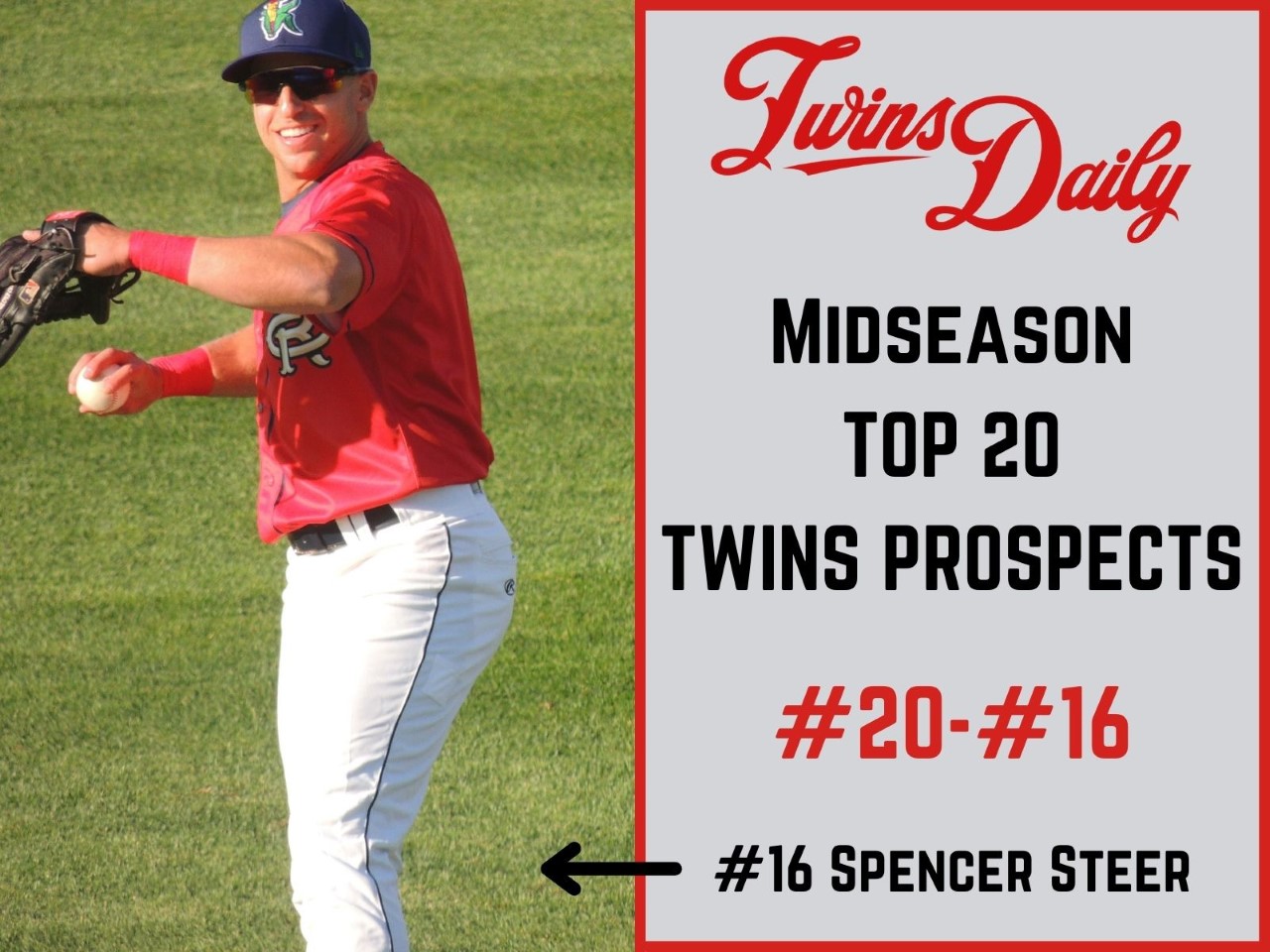 Honorable Mentions: Louie Varland Varland turned heads in the off-season when he started to throw absolute heat. He owns a K rate of 37% over 36 ⅓ innings at Fort Myers. Seth Gray Gray was a 4th round pick out of Wright State in the 2019 draft who possesses 60 raw power according to Fangraphs. He has since flipped a successful 2019 campaign into a respectable 112 wRC+ with Cedar Rapids. Jermaine Palacios Palacios was previously a long-time Twins prospect before he was dealt to Tampa Bay for Jake Odorizzi in 2018. The Rays surprisingly did not turn him into a perennial All-Star, and he re-joined the Twins this past offseason. He has a .376 OBP over 210 plate appearances with Wichita. Jovani Moran Moran has been fighting for a shot in the majors for a while now, and his 2021 effort has been impressive so far. Armed with a 70 grade changeup, Moran has dominated AA hitters to the tune of a 1.88 ERA over 28 2/3 innings. Edouard Julien I’ll be blunt here. Julien has been absolutely incredible in 2021. He reached base at a .490 clip with Fort Myers before recently receiving the call to pester pitchers with the Cedar Rapids Kernels. Now, onto the list. 20. Chris Vallimont - RHSP Age: 24 ETA: 2023 2021 Stats (A/AA): 34 1/3 IP, 3.41 ERA, 1.28 WHIP, 2.64 FIP, 38.2 K%, 9.0 BB% 2021 Ranking: n/a Vallimont was acquired by the Twins almost as an afterthought in the same trade that brought the electric and eclectic Sergio Romo to the franchise. He should no longer be seen in this context. Vallimont has not only performed well since joining the organization, but his background as a modern arm that trains along the Driveline method of thinking reflects a pitcher who is both effective and methodical. Outside of a bad start on the 1st of June, Vallimont has struck out at least six hitters in every start he has made in 2021. He stands to be an arm that never receives the proper attention he deserves for whatever reason. You, the good reader, should not make this mistake. 19. Edwar Colina - RHSP Age: 24 ETA: n/a 2021 Stats: n/a (IL) 2021 Ranking: 16 Moving from one arm to another, it is now time to talk about Colina. He sits in the mid-to-high 90s with the hot stuff before wiping the hitter away with a short but effectively-commanded slider. He may have been able to stick as a starter but the Twins moved him to the bullpen midway through August in 2019. Perhaps that was an anticipatory move as the bullpen at the time was looking shady but questions always persist when talking about whether a pitching prospect can stick as a starter. Colina also already owns the makeup most teams currently covet when it comes to young relievers. It was looking like 2021 would be the year for Colina to truly prove himself after he netted just a single out in his major league debut in 2020 but it has not gone that way so far. A right elbow injury (had surgery to remove bone chips) has sidelined Colina but recent chatter points to him beginning a throwing program soon. At any rate, young arms that can throw hard with command will always hang around and Colina will most certainly carve out some sort of major league role when he is eventually healthy. 18. Alerick Soularie - 2B/OF Age: 21 ETA: 2024 2021 Stats: n/a 2021 Ranking: 18 I suppose it seems appropriate that Soularie stayed put in the ranking considering the fact that he has not yet played a minor league game. This is not because he is in the doghouse but merely a result of a foot injury. Soularie might arguably be the best pure athlete in the Twins system which is what drew the team to draft him in the 2nd round in 2020. His unusual combination of raw power, speed, and on-base ability puts him in a rarified category of prospect that can really break the game. Soularie has played a number of different positions, but it appears that the Twins are interested in him at 2nd base to start with. Whether he fulfills this destiny is yet to be seen but Soularie is undoubtedly talented. 17. Wander Javier - SS Age: 22 ETA: 2022 2021 Stats (A+): .230 BA, .291 OBP, .427 SLG, 92 wRC+ 2021 Ranking: n/a It feels a bit weird to see a 22-year-old on the list and think “man, this guy has been around forever”. Certainly it has been quite the ride for the former top 100 prospect who bottomed out after a poor 2019 season and was left open for the taking in the Rule 5 draft the past two offseasons. He was signed way back in 2015 with the idea that his tools would carry him into becoming a Fernando Tatís Jr.-type of player. Obviously that has not happened yet, but hope is not lost for Javier. 2021 has been somewhat of a resurgence for the 22-year-old. He slashed .260/.324/.510 in the month of June and it is exactly that type of upside that makes Javier impossible to give up on quite yet. 16. Spencer Steer - 2B/3B Age: 23 ETA: 2022 2021 Stats (A+/AA): .273 BA, .406 OBP, .511 SLG, 150 wRC+ 2021 Ranking: n/a One of the defining characteristics of the players around this part of the list has been their “rocket potential”. That is not to say that they go off to aid Elon Musk in their free time but instead that they were previously unranked players who have since shot up the list due to great play in 2021. Steer is no exception. The 3rd round pick in 2019 impressed in his first season in the system but has taken his game to a completely different planet in 2021. He walked more than he struck out with the Kernels while slugging over .500. That is terrifying. That sort of ability is unheard of for a second baseman and would put him in company with players like Justin Turner, Alex Bregman, and José Ramírez for third basemen. I do not need to tell you that those names should excite you immensely. Steer, along with some other names, represents a recent crop of infielders throughout the system who all bring an intriguing and dynamic skill set that could very well translate to major league success.

15-11.png.98876089155c946e37019c7ca53dd49e.png)
