


Twins Video
In the classic transcendentalist novel Walden, author Henry David Thoreau wrote, "In any weather, at any hour of the day or night, I have been anxious to improve the nick of time, and notch it on my stick too; to stand on the meeting of two eternities, the past and present, which is precisely the present moment; to toe that line."
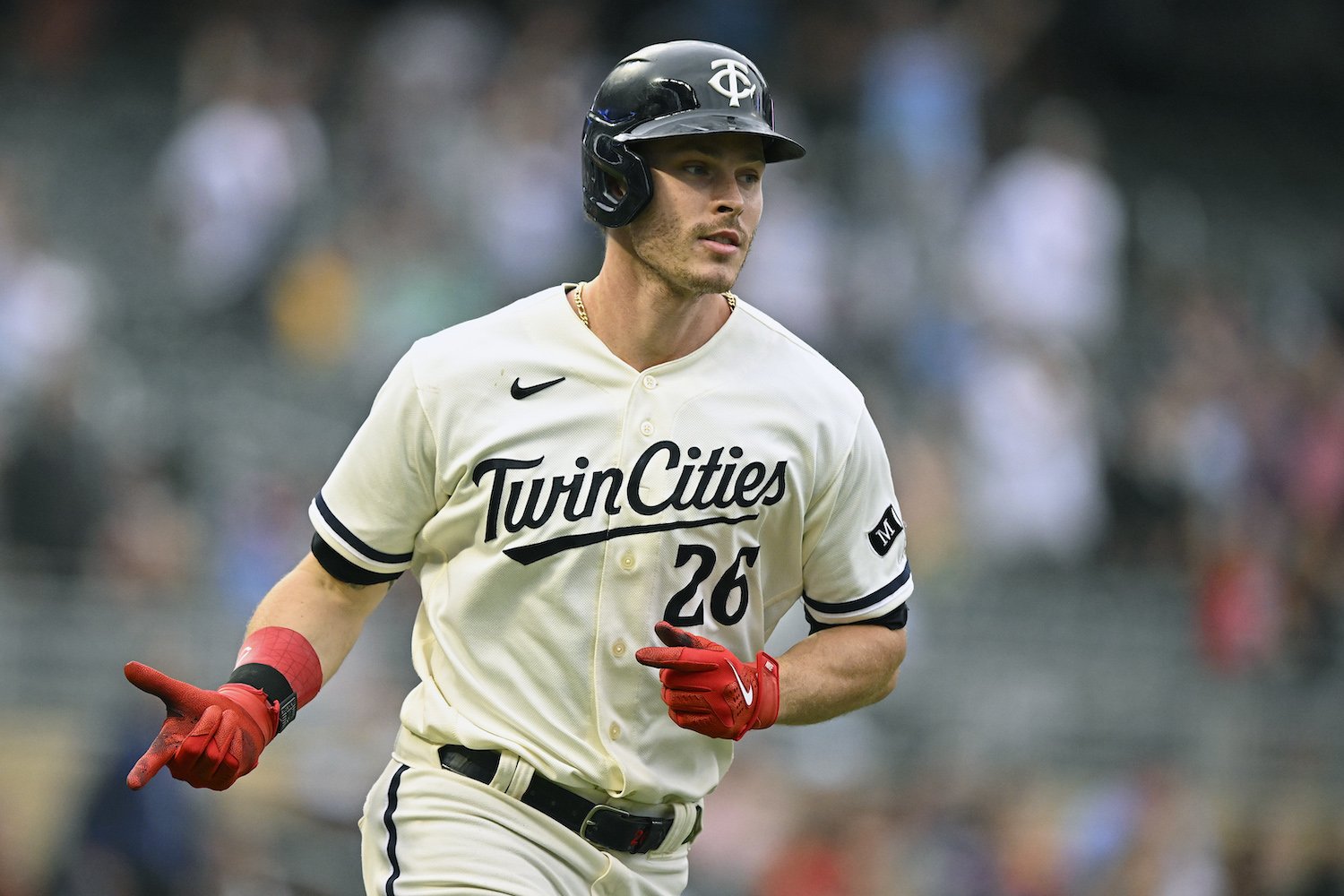
The Twins find themselves at the meeting of two eternities, deciding whether or not they should keep the third longest-tenured Minnesota Twins player, Max Kepler, or trade him. Critically analyzing Kepler's past, present, and future is essential when analyzing whether trading him would be in the Twins' best interest.
The Past
On September 27, 2015, Kepler debuted for the Twins, striking out while pinch-hitting for Twins legend Torii Hunter during a 7-1 victory over the Detroit Tigers. Since then, Kepler has played in 966 games for the Twins, hitting .236/.319/.434 (.753) with 800 hits, 153 home runs, 390 walks, and 709 strikeouts.
Despite posting two above-average seasons with the Twins in 2019 (122 wRC+) and 2020 (109 wRC+), Kepler's tenure with the Twins has consistently been plagued by frustration, vexation, and wasted potential. Interestingly, Kepler, despite posting below-average seasons in 2021 (97 wRC+) and 2022 (95 wRC+), seemingly regained his 2019 Bomba Squad form and posted what was arguably his best season as a Major League Baseball player, hitting .260/.332/.484 (.816) with 24 home runs, generating 2.6 fWAR and a 124 wRC+ over 491 plate appearances.
Halfway through the 2023 season, many who follow the Twins were ready to cut ties with Kepler, struggling for a third straight season, and replace him with the younger Matt Wallner, who was tearing up Triple-A pitching at the time. Luckily, the front office ignored our pleas, and Kepler became a cog in the Twins' resurgent post-All-Star Break lineup, helping the franchise win their first AL Central title since 2020.
It was reported the Twins were shopping Kepler last offseason when his perceived value was much less than it is now, so should the Twins finally execute the decision they have been meandering over for some time now?
The Present
It is late November, and after the Twins exercised Kepler's $10 million team option for 2024, he will be under team control for one more season. For many reasons, above-average veteran players on expiring contracts are enticing to contending teams, and with the corner outfield free agent and trade market being scarce this offseason, teams may be willing to shell out surprisingly favorable offers to the Twins for Kepler's services.
This train of thought was already expressed nationally when The Athletic's Keith Law wrote that he "sees the upside" with Kepler and wouldn't have been surprised if a team had offered him a 4-5 year contract worth $20-25 million per season on the open market. So, with Kepler's trade value rising, what type of package could the Twins net in return?
If the Twins were to trade Kepler, it would make sense for them to make another position player for a starting pitcher swap, like they did trading Luis Arráez to the Miami Marlins for Pablo López last offseason. Similarly to last offseason, the Twins need a frontline starting pitcher, and they yet again have a surplus of Major League-ready left-handed corner bats, like Kepler, to trade.
Starting pitchers the Twins could execute this trade for include Edward Cabrera of the Marlins, Alex Cobb of the Giants, and Nestor Cortes of the Yankees. Although these three pitchers possess value and would slot in as the Twins' number two starter behind López, the Twins could instead sign free-agent pitchers of similar value, like Michael Wacha or Seth Lugo, without having to part with their starting right fielder.
The Future
The Twins plan on reducing their payroll this offseason. Regardless, with Kepler costing only $10 million and the Twins not having a reliable corner outfield option beyond Wallner, who will likely be the Opening Day starting left fielder, it would be in the World Series-hopeful Twins best interest to keep Kepler at his current salary.
Suppose the Twins keep Kepler, and he again produces at an above-average rate in 2024. In that case, the Twins will then be tasked with deciding whether to extend Kepler the qualifying offer, offer him a contract extension, or let him walk in free agency.
The 2025 qualifying offer will likely be between $21-22 million, as it currently sits at $20.325 million and steadily increases every season. Offering Kepler, who will be 31-year-old, a four to five-year deal worth $20-25 million would likely come back to haunt the Twins as he is an inconsistent and moderately volatile player who could quickly revert to his late-2020-to-mid-2023 ways, but extending him the one-year, $21-22 million would make sense for both parties.
The Twins could keep an elite defensive corner outfielder, who would be coming off two straight above-average offensive seasons, at a reasonable rate while not committing to a long-term contract that could backfire. On the other hand, Kepler could capitalize off two straight admirable seasons and earn his first big payday at 31 years old.
Regardless, the Twins front office is tasked with making a tough decision this offseason. They could trade Kepler for an above-average starting pitcher or keep him and ride out his last season under team control in pursuit of their first World Series title since 1991.
Should the Twins keep or trade Kepler? If the Twins traded Kepler, who would you want them to get in return? Comment below.
Do you approve of the job Derek Shelton is doing as Twins manager?

Follow Twins Daily For Minnesota Twins News & Analysis



- tarheeltwinsfan, miracleb, Fatbat and 2 others
-
 5
5


Recommended Comments
Create an account or sign in to comment
You need to be a member in order to leave a comment
Create an account
Sign up for a new account in our community. It's easy!
Register a new accountSign in
Already have an account? Sign in here.
Sign In Now