


Twins Video
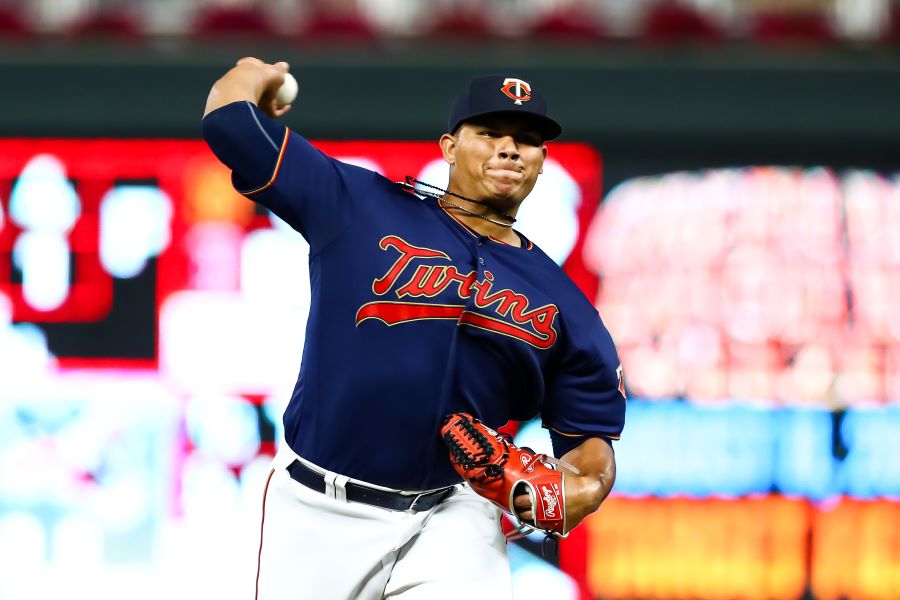
The way the Boston Red Sox interpreted and evaluated medical information about Brusdar Graterol cost the Minnesota Twins something tangible. Now that the terms of the Mookie Betts megadeal are more or less set, we can assess exactly what that cost was. Instead of getting Kenta Maeda in exchange for Graterol in a straight-up exchange, the Twins are now getting Maeda and $10 million from the Los Angeles Dodgers, but giving up Graterol, outfielder Luke Raley, and the 67th pick in the 2020 MLB Draft. The change in marginal value for Minnesota is small, but it’s real, and it’s not really fair. The Red Sox shouldn’t have had the right to hold up the deal on this basis, and MLB should modify its rules to avoid similar situations in the future.
At first, this might seem an extreme position. No team should be expected to take on damaged goods, and any rule that reduces the discretion a team can exercise when reviewing otherwise privileged information before giving a trade final approval would be met with dismay. There are relevant, recent precedents for teams withholding key information about a player when trading them to another club, and that can’t be allowed to happen. However, there’s a marked difference between truly damaged, injured baseball players—especially pitchers—and merely risky ones. I would argue the difference is one of kind, not of degree, and that the ability of one team to apply their own prognoses to subjective medical data after a trade has been agreed upon is unfair to the other party in said trade and to the player himself.
We’re very bad at predicting injuries in baseball, but that should come as no surprise. We’re pretty bad at predicting, and even diagnosing, much more simple, straightforward medical conditions, across much more robust and similar populations than big-league pitchers. In numerous studies, when shown them far enough apart to minimize awareness of the subject at issue, radiologists have been shown to draw almost diametrically opposite conclusions and make dramatically different diagnostic proclamations of two scans, only to be told afterward that the two scans were actually identical.
Representativeness, available mental energy, halo effects, and a half-dozen other external factors and cognitive biases affect the way medical professionals assess patients, even in much higher stakes situations and with more time available for the review. It’s easy to imagine that the Red Sox drew different conclusions from Graterol’s medical history and private health information than did the Twins, or even the Dodgers. That doesn’t mean they’re right. In fact, they’re probably wrong.
Graterol is most likely to be a reliever, in both the short- and the long-term future. His build, his delivery, his repertoire, and his movement profile all point in that direction. So does his health history, though the tea leaves are much less clear there, because it’s not at all clear that pitching in relief poses less risk to a pitcher’s arm or allows him to stay healthier than he would as a starter. However, he’s healthy right now. He’s pitched at a very high level as recently as the MLB postseason, and his offseason workouts have been uninterrupted.
By declaring his medicals unsatisfactory, the Red Sox were able to renegotiate their deal with the Dodgers, and they got better talent in the process. The Twins, however, had to decide whether to go forward with a deal that lost some of its original simplicity and desirability. The Dodgers, though willing to take on Graterol, were in a position to apply leverage to the Twins, because of the public reports about the newly questionable health of their flamethrowing pitcher. If the Twins had elected to back out of the deal, they’d have had an even more damaged asset on their hands, because (unfairly) the outside view would have been that Graterol was also rejected, to one extent or another, by the Dodgers.
For Graterol, this is all patently unfair. It will, if only tacitly, affect his future earnings. It will color the global perception of him. Again, the risky elements of his body, background, and skill set were already public knowledge, but this assigns a false sense of objective reality to one of those elements. If a player can be shown to be injured (in a way that prevents him from taking the field) at the time of a trade, and if that injury was not known to the acquiring team when the trade was agreed upon, the league should step in, certify as much, and nullify the deal. In all other cases, once an agreement has been reached, it should be final.
If teams want to run risk analyses around injury precursors on a given player, they should have to do it using publicly available information, and they should have to do it before agreeing to acquire that player. A smart front office employee can map out the injury risk of a given pitcher using that pitcher’s age, workload, documented injury history, and average velocity, with purely statistical data, repertoire, and qualitative information about their delivery baked into the assessment. They can do so just about as reliably as a doctor, a biomechanics expert, and another front office employee can by viewing old scans of a shoulder strain or measurements of the length of the player’s ulnar collateral ligament, and the simpler method also avoids trafficking in divination. It wards off overconfident assessments that also hurt the reputation and earning power of players, and it provides a fairer foundation for trade negotiations.
MORE FROM TWINS DAILY
— Latest Twins coverage from our writers
— Recent Twins discussion in our forums
— Follow Twins Daily via Twitter, Facebook or email





Recommended Comments
Create an account or sign in to comment
You need to be a member in order to leave a comment
Create an account
Sign up for a new account in our community. It's easy!
Register a new accountSign in
Already have an account? Sign in here.
Sign In Now