


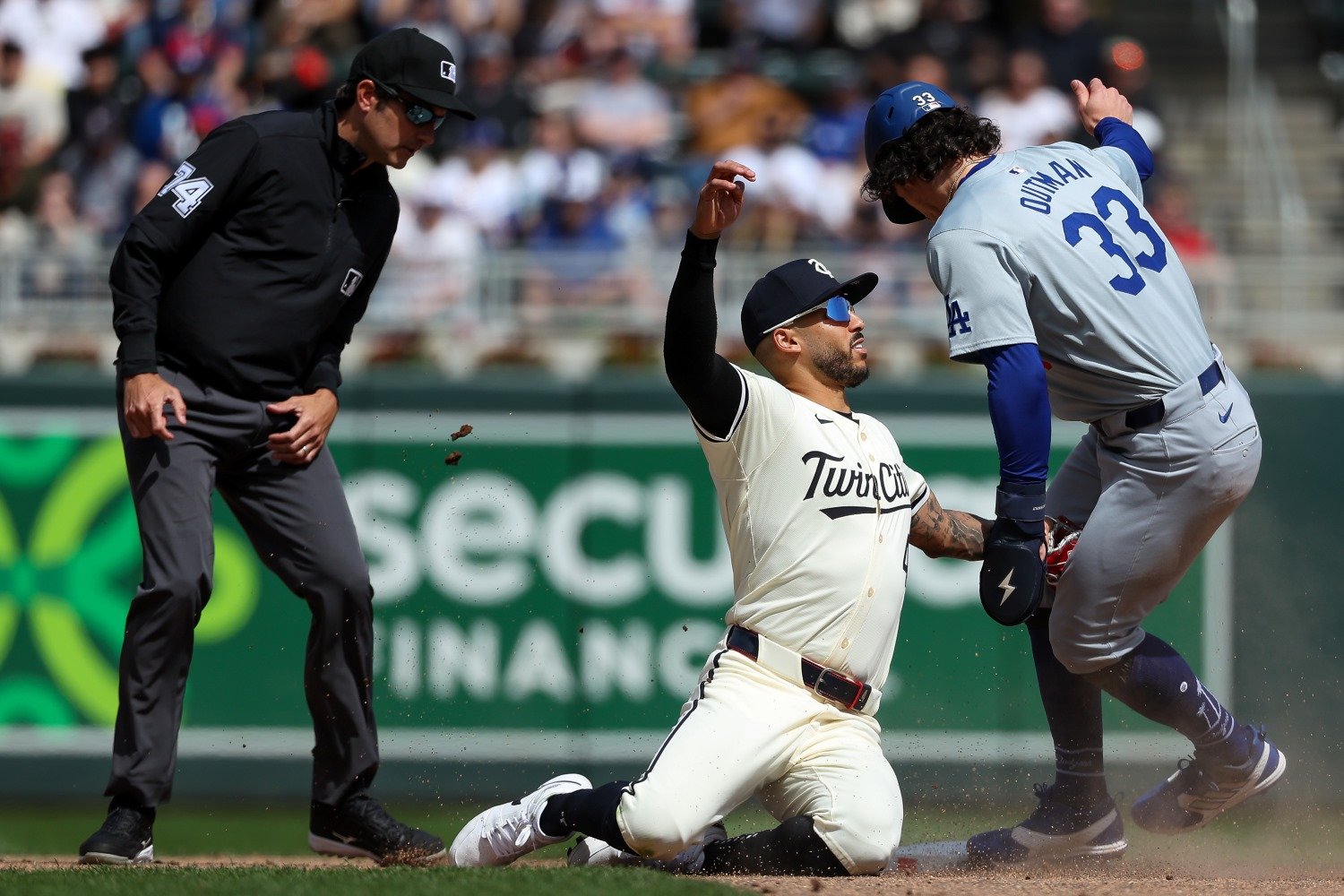
Twins Video
Carlos Correa left Friday night's loss to the Tigers after experiencing tightness in his right side. He was placed on the injured list on Saturday with what was originally stated to be a right oblique strain. However, an MRI conducted after Correa left the game Friday instead revealed the injury to be a minor right intercostal strain.
The obliques are a group of large, powerful muscles located on each side of the trunk that, along with the rectus abdominis (i.e. the abs), the transverse abdominis (i.e. the body's internal corset), and a slew of back muscles, comprise the core. In fact, there are two types of oblique muscles, the external and the internal. The external oblique is the primary driver for "cross-body" rotation of the trunk, whereas the internal oblique is the primary driver for "open-body" rotation; for example, when a right-handed batter swings, their right external oblique and left internal oblique contract powerfully to twist the core.
Oblique injuries are notorious for lingering and recurring, because of how frequently those muscles are utilized during baseball activities: any swing of the bat or throw of the ball recruits the muscles. Additionally, muscle injuries most frequently occur when the muscle quickly and forcefully transitions between a concentric and eccentric contraction. During a concentric contraction, the individual muscle fibers pull each other closer, causing the muscle to shorten; during an eccentric contraction, the muscle fibers grip onto each other like a hug while the muscle lengthens. This transition between muscle contraction types exerts significant force through the musculature, and if the force is too great, the muscle fibers tear (i.e. a muscle strain).
Correa's injury occurred during a check swing, which definitionally occurs when a batter begins their swing but abruptly stops. This is an example of a concentric-to-eccentric muscle contraction transition and is a common way in which the oblique muscles get injured among batters. Add in that he immediately grabbed at his right side and an initial diagnosis of an oblique strain makes sense.
Luckily, further testing revealed that the intercostal muscles were actually the culprit of Correa's discomfort. The intercostal muscles are located between each rib and, like the obliques, consist of an external and internal variant. Whereas the obliques function to rotate the trunk, the intercostals are primarily involved with forceful inhalation and exhalation. The internal intercostals forcefully contract during actions such as coughing and holding one's breath (like when swinging at a 95-mph heater).
Correa revealed Saturday morning that he had been dealing with an illness recently, which may have caused his side to ache. It isn't uncommon for repetitive, forceful coughing to strain the intercostal muscles; in rare instances, it can even fracture ribs.
Intercostal muscle strains are generally relatively minor and don't impact long-term performance. They typically heal within a couple of weeks. Correa is guaranteed to miss 10 games due to being placed on the IL, but, likely, he won't miss much more time than the minimum. Over the past three seasons, oblique injuries have resulted in injured-list stays averaging roughly five weeks in length.

Intercostal injuries are not only much, much less common, but have resulted in injured list stays averaging roughly 20 days.
.png.3cca2240b10d428de6328f0787b2cab9.png)
The Twins caught a major break here, and just have to hope Correa stays healthy on the other side of this brief absence.
The Four-Year Injury Map graphics in this piece are drawn from Baseball Prospectus. View and explore the tool here.








Recommended Comments
Create an account or sign in to comment
You need to be a member in order to leave a comment
Create an account
Sign up for a new account in our community. It's easy!
Register a new accountSign in
Already have an account? Sign in here.
Sign In Now