


Twins Video
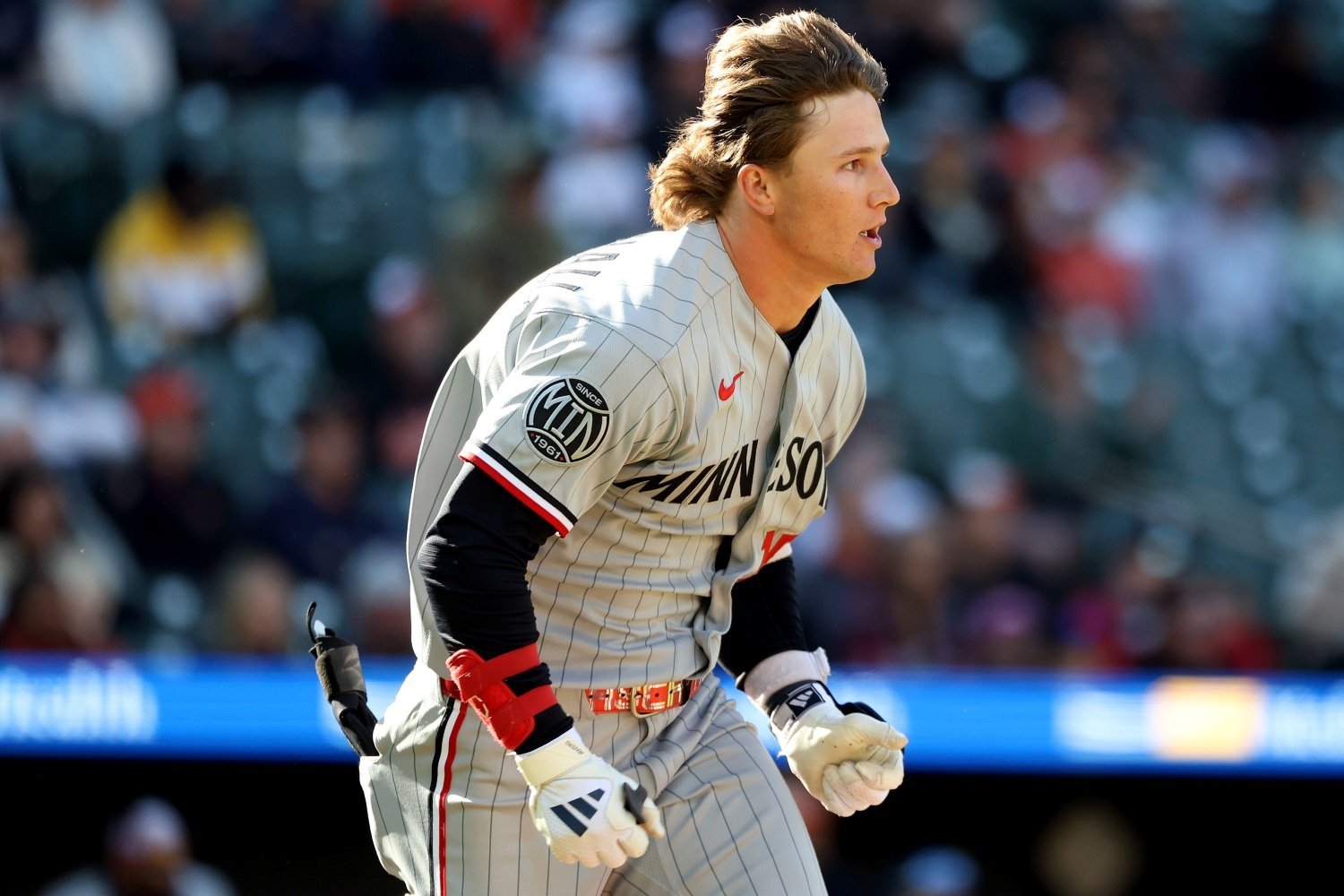
Expectations can be tricky in baseball. One year, a player bursts onto the scene and looks like a foundational piece. The next, the league adjusts, and suddenly, nothing comes easily. That’s what Luke Keaschall faces early in his sophomore season with the Twins.
After an impressive rookie season where he slashed .302/.382/.445, Keaschall's sophomore start hasn’t been as smooth. Through Sunday, he is hitting just .209/.258/.279. On Saturday, manager Derek Shelton moved him down in the lineup for the first time this season, shifting him from third to fifth. On Sunday, with right-handed hurler Brady Singer on the mound for the opposing Reds, he slid to sixth.
That move tells part of the story. Shelton began the season with confidence in Keaschall as a table-setter near the top of the order. The adjustment now signals a need to reset and a chance to take pressure off a young hitter still finding his footing at the big league level.
Friday’s game against the Reds might have been the epitome of his struggles. Keaschall batted with the bases loaded in the third inning, two runners on base in the fifth inning, and two more runners in the seventh. None of those runners scored. In those three at-bats, Keaschall struck out on a called third strike, grounded into his first double play of the season, and hit an inning-ending groundout. After the game, he gathered with the team’s hitting coaches to break down his swing and his at-bats.
“We’ll get it back,” said Keaschall after the game. “We’re a tick off. It can change quickly. That’s what I keep on thinking, and it’s going to happen soon.”
That belief is shared inside the clubhouse as well.
“Luke Keaschall has hit at every level. I mean, I can’t go back to his Little League stats, but I guarantee he raked there,” Shelton said. “It’s early in the season, and it’s also the first year he’s started the year in the big leagues. A lot of guys put more emphasis on that.”
There’s a mental side to this as much as a physical one. Shelton acknowledged that moving Keaschall down in the lineup was designed to ease the burden, as Shelton felt Keaschall was putting “a little extra on himself.” As Keaschall looks for answers, he said his focus is on getting the most out of each day.
“I think it’s just being in control of your movements and executing plans,” Keaschall said. “Right now, we’re not doing that the best. All you can do is get a little bit better each and every day.”
The underlying numbers explain why the results haven’t been as strong. His 85.0 mph exit velocity and 24% Hard Hit rate both sit in the bottom 7% of the league. His exit velocity is down 1.2 mph compared to last season, and his hard-hit rate has dropped by 6.6%. That lack of authoritative contact has limited his ability to cause damage, even when he puts the ball in play.
Pitchers have also adjusted their approach. He is seeing fewer fastballs, down 4% from last season, and he hasn't punished them when he gets them, posting just a .302 slugging average despite an xSLG that sits more than 100 points higher. That gap suggests there may be some bad luck involved, but it also highlights missed opportunities.
Instead of fastballs, Keaschall is seeing a heavier dose of offspeed pitches. Last season, he torched those offerings to the tune of a .407 average and a .556 slugging, though the expected numbers hinted at regression. That regression has come quickly. This year, he is hitting just .211 against offspeed pitches and has yet to record an extra-base hit against them.
Still, this is not a profile completely devoid of optimism. Keaschall continues to show strong plate discipline. His chase rate, per-swing whiff rate, and strikeout rate all rank in the 82nd percentile or better, and his 27.2% Squared-Up rate sits comfortably above league average, meaning he's getting his fair share of exit velocity from below-average bat speed. Those are indicators of a hitter who is not overmatched, but rather one who is just missing his best contact by a small margin.
Sometimes, that margin is everything. Moving down in the lineup could give Keaschall space to recalibrate. Rather than setting the tone early, he can focus on simple at-bats and build momentum one swing at a time.
For a Twins team that has leaned on young talent to exceed expectations, getting Keaschall back on track is an important piece of the puzzle. The foundation is still there. The approach remains sound. Now, it's about turning those underlying positives into production. If history is any indication, that turnaround may not be far away.
What are your thoughts on Keaschall's sophomore performance? Leave a comment and start the discussion.
Do you approve of the job the Twins front office is doing?

Follow Twins Daily For Minnesota Twins News & Analysis



- Patzky and mikelink45
-
 2
2



Recommended Comments
Create an account or sign in to comment
You need to be a member in order to leave a comment
Create an account
Sign up for a new account in our community. It's easy!
Register a new accountSign in
Already have an account? Sign in here.
Sign In Now