


Twins Video
Each year, I endeavor to project the draft not by claiming to know every player who will be taken, but by standing on the shoulders of giants. I take MLB mock draft rankings from major industry outlets like MLB Pipeline, ESPN, The Athletic and many others to form a consensus board, with a working hypothesis that using this approach will eliminate some of the noise and variance in MLB Draft mock rankings. This year, that all feels especially important for the Twins, who pick high enough in the first round to make this draft a pivotal moment for the franchise.
The Minnesota Twins’ first five picks are:
- Round 1: 3rd Overall
- Round 2: 43rd Overall
- Competitive Balance Round B: 74th Overall
- Round 3: 79th Overall
- Round 4: 107th Overall
Here's a look at who might be available to them at each stop.
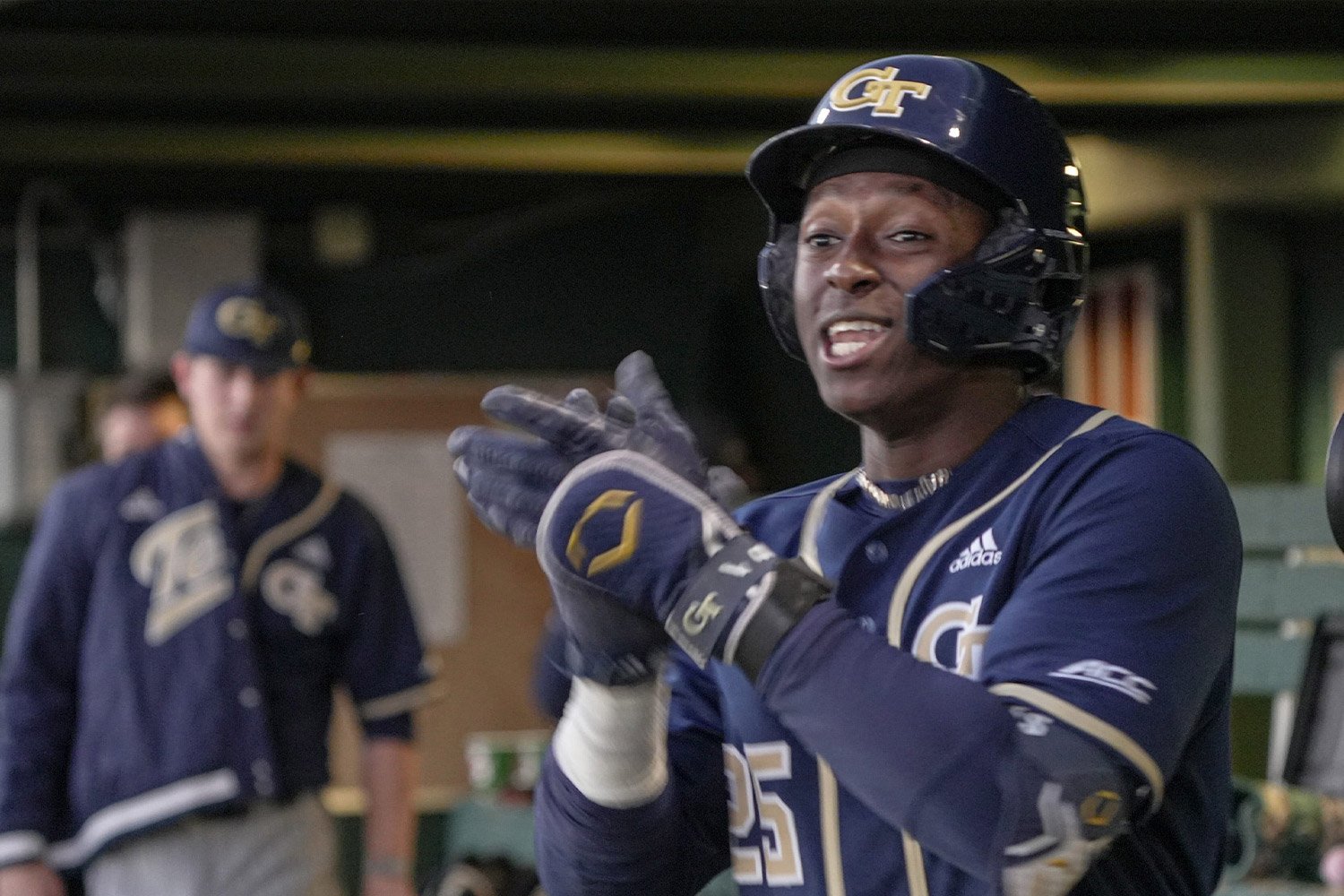
Round 1: Vahn Lackey, C, Georgia Tech
Every draft cycle seems to produce 2-3 first-round catchers, most of whom have warts offensively, defensively, or both. Georgia Tech's Vahn Lackey may be the most complete college catcher in recent seasons and has a case to make as college baseball’s most improved player in 2026. Lackey entered 2026 viewed as an excellent defensive catcher, with athleticism uncommon for the position, in addition to having strong bat-to-ball skills. He’s continued to look excellent behind the plate, with good receiving and blocking skills, an excellent arm and strong pop and transfer times. He has all the ingredients to be a plus defensive catcher.
Offensively, his power has taken a step forward. After hitting 6 home runs in 60 games in 2025, he managed 20 in 61 games in 2026, with more walks than strikeouts, adding a high on-base floor to his profile. Lackey ended 2026 hitting .397/.519/.772, with 39 extra-base hits, a 17.7 BB%, a 13.4 K%, and 15 steals (94%). Simply put, he’s one of the most complete profiles in this draft class.
Round 2: Aiden Ruiz, SS, The Stony Brook HS (NY)
Ruiz is a diminutive, switch-hitting shortstop currently committed to Vanderbilt. He'll be a fascinating follow on draft day. He'll be 19 and is listed at 5-foot-10 and 170 pounds with limited power projection, so he'll test some of our assumptions about what prospect profiles and traits organizations will and won't lean into.
Ruiz is arguably the best defensive shortstop in the entire class. He has a quick first step, soft hands, and a big arm. He can make any play from any spot in the infield, it's plus defense at one of the most important positions on the field.
Offensively, Ruiz is a switch hitter, with a contact-oriented approach. It's exceptional bat-to-ball skills from both sides of the plate. Ruiz will expand the zone a little, at times, so there's some risk his quality of contact is diminished unless he tightens his approach. There's never going to be a ton of power, but Ruiz is an above-average runner and should be a pesky threat on the basepaths.
The defense and contact skills headline this profile, it's a combination that can rack up plenty of value for a drafting organization.
Competitive Balance Round B: Brett Renfrow, RHP, Virginia Tech
Renfrow was previously a two-way player who began to focus solely on pitching when he got to campus at Virginia Tech. This is a classic draft 'type', a college starter where stuff and ingredients don't line up neatly with outcomes.
I'd classify Renfrow as someone with a significant 'up arrow' this spring, though. It's a good frame, and he's about to surpass 70 innings for the third consecutive season. Renfrow has slowly ticked up his strikeout rate while reducing his walk rate—exactly what you want to see.
In terms of stuff, the fastball is good. It sits 94 mph and has been up to 97 mph, playing well at the top of the zone. There's a slider/cutter hybrid he throws in the upper 80s, a curveball with plenty of depth that sits in the low 80s, and a changeup with good horizontal action.
Renfrow is a pitcher you can see making significant strides in a pro organization. There are plenty of starter traits here. In 73.2 innings in 2026, Renfrow managed a 4.67 FIP, while striking out 27.7% of hitters and walking just 7.9%.
Round 3: Beau Peterson, 3B, Mill Valley HS (KS)
Peterson is one of the more physically imposing frames on the prep side in 2026. The Kansas prepster is committed to Texas and has played third base, corner outfield, catcher and pitcher in recent years.
Peterson has a left-handed swing with good bat speed. He has easy raw power, while currently getting into more line drive power in games. When he learns to add loft with more consistency, he'll be a 25-home run threat as a pro hitter. He has good bat-to-ball skills, too, and controls the strike zone well, giving him a well-rounded offensive profile.
Peterson projects to be an average runner (at best) as he continues to fill out. Despite the lack of foot speed, the glove will play just fine at third base. He's been up to 95 mph on the mound, so there's plenty of arm for the hot corner or a corner outfield spot.
Curious to see the players around the Minnesota Twins picks in the draft? Click on the button below to view the entire mock draft board!
Do you approve of the job Derek Shelton is doing as Twins manager?

Check out our 2026 MLB Draft tracker, with scouting reports, player information, total pool allotments, and much more!
View The 2026 Draft Tracker







Recommended Comments
Create an account or sign in to comment
You need to be a member in order to leave a comment
Create an account
Sign up for a new account in our community. It's easy!
Register a new accountSign in
Already have an account? Sign in here.
Sign In Now