Jump to content
Twins Daily
  • Create Account

Recommended Posts

Posted

Backup catchers aren't particularly memorable, which isn't fair to guys who often play 50 or more games in a season.

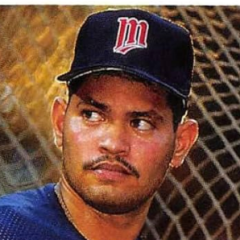
Who is the best, longest-tenured backup catcher in Twins History? I can think of some memorable catchers, such as Junior Ortiz and Matt LeCroy, but they weren’t here particularly long, nor would they be considered the best. What about Phil Roof, Mike Redmond, or either of the father/son Butera tandem, Sal and Drew? But if we look at number of seasons with the Twins, perhaps the answer is the light-hitting, good-fielding, well-liked teammate of the 1960s, Jerry Zimmerman. Let’s take a closer look at Zimmerman’s career. 

Gerald Robert Zimmerman was born in Omaha, Nebraska, on September 21, 1934. During childhood, his family moved to Oregon, where Jerry attended high school. During his high school baseball career, Jerry, a right-handed batter, had a .425 batting average over the full four years but an incredible .625 as a senior. In addition to his catching prowess, those numbers caught the attention of scouts from 14 of the 16 Major League Baseball teams. 

After high school, Zimmerman signed with the Boston Red Sox before the 1952 season, well before the MLB amateur draft. The six-foot-two, 185-pound catcher signed for a reported signing bonus of $80,000, a significant amount in that era. However, minor league baseball would prove tougher than high school. 

Zimmerman played eight long years in Boston’s minor league system at all levels, which included two seasons with the Triple-A Minneapolis Millers, who, during Jerry’s tenure, played their home games at Bloomington’s (new) Metropolitan Stadium. However, Zimmerman never hit well enough to be promoted to the Red Sox and was released in 1959. From there, he bounced around, first to the Baltimore organization, then to Cincinnati, where he performed well enough in minor league Seattle to earn a shot with the big club in 1961.

He debuted in the major leagues on April 14, 1961, in a 7-3 win against the St. Louis Cardinals. He was a defensive replacement in the ninth inning who walked and tallied his first two hits a few days later against Pittsburgh in a 4-2 win. That Reds team was particularly good, ending with a 93-61 record, winning the National League, and making the World Series. Unfortunately, they ran into the Yankees with record-breakers Roger Maris and Mickey Mantle. The Reds fell to the Yankees, four games to one. Zimmerman saw little action. He appeared as a defensive replacement in two games but had no plate appearances. The Reds moved on and traded him to the Twins before the 1962 season for outfielder Dan Dobbek.

Zimmerman came to the Twins in 1962 and immediately settled into a backup role for Earl Battey. Battey took the lion’s share of the playing time as he was on his way to being a four-time All-Star before injuries struck in 1967, leading to Battey’s retirement. 1967 was the one season when Zimmerman garnered most of the playing time behind the plate.

By all reports, Zimmerman was a capable backup. According to Cool of the Evening by Jim Thielman, Manager Sam Mele thought Zimmerman was the best defensive catcher in the American League in 1965. Baseball-Reference backs that up, reporting Zimmerman had the best fielding percentage (.997) by a catcher that season. But after the 1967 season and Battey’s retirement, the Twins did not turn to Zimmerman. They quickly traded for John Roseboro, again relegating Zimmerman to backup duties for 1968.

Zimmerman had a negligible effect on the Twins' 1965 World Series loss to the Los Angeles Dodgers. He was used as a defensive replacement in two games. In his lone plate appearance, he hit into a game-ending double play in game three.

For his MLB career, Zimmerman batted .204/.269/.239. He had three home runs and 72 RBI in 994 at-bats. Baseball-Reference calculates his career WAR as -2.7. His batting statistics were not very prodigious. His 46 OPS+ during his Twins career is the lowest of any batter with a minimum of 502 at-bats in his career (which is the minimum needed in a season to qualify for a batting title and the cut-off I used for this trivia nugget, i.e., one season’s worth of at-bats). I don’t mean to be critical of Mr. Zimmerman. It speaks to his ability as a defensive catcher and how to handle pitchers if he could stick around as long as he did (seven seasons on some pretty good teams) with a bat that was, to put it bluntly, a liability. 

Going back to his time in 1958 and 1959 at Triple-A Minneapolis, Zimmerman established a long-lasting relationship with manager Gene Mauch, which benefitted his post-playing career. After Zimmerman’s MLB career, the Montreal Expos immediately hired him as bullpen coach for their inaugural season in 1969, during which he stayed until 1975. The manager during that time? Gene Mauch. When Mauch moved to manage the Twins in 1976, he brought Zimmerman along, where they remained until 1980. 

During that Twins coaching stint, there was a weird one-inning performance as an umpire on August 25, 1978, during a one-day MLB umpires’ strike. Zimmerman and a Toronto Blue Jays coach, Don Leppert, were pressed into duty to help three amateur umpires working that day's game. Zimmerman and Leppert both umpired as it was deemed fairer to use one coach from each team and have five umpires. The fourth amateur umpire finally arrived in time for the second inning, and Zimmerman and Leppert returned to their respective benches. To this day, Zimmerman and Leppert are the last two active coaches to serve as umpires in an MLB game. 

After his coaching career, Zimmerman served as a scout for the Yankees and Orioles. 

While never great, Jerry Zimmerman played seven seasons for those formative Minnesota Twins teams of the 1960s. He parlayed his abilities and positive clubhouse presence into a solid MLB career, then followed that as a coach and scout. He passed away on September 9, 1998, in Oregon at the age of 63.

Zimmerman made lasting friendships with teammates. His widow stayed connected with former Twins teammates, such as Frank Kostro, even after Jerry died. Cool of the Evening quoted Kostro, “You just can not believe how those friendships were just a genuine part of the deal.” 


Do any of you have recollections of Jerry Zimmerman? Add a comment below to start the conversation. 

If you like looking back at the Twins past, check out my previous articles at Twins Daily History.

Sources include Baseball-Reference and Cool of the Evening.


View full article

Posted

I enjoy your historical looks, Al.

But I don’t think I’d give it to Zimmerman, given that he had -1.2 bWAR over his seven years with the Twins. Roof only had six years, but he had a 2.2 bWAR. And in reality, Zimmerman played enough games in 1967 to be considered the starter, so in that sense, Roof played as many seasons as the backup. (Or maybe not, if you consider that Roof’s first and last years were partial years.)

And if you use six seasons as a benchmark, an interesting candidate is Glenn Borgmann. He was a backup for six years, but was the starter for year 3 and 4 in his eight-year career with the Twins. He had a total bWAR of 5.0 with the Twins, but even if you take out the 2.6 from his two years as a starter, he’s left with 2.4 in his six years as a backup. 

And changes in the nature of the role makes Jeffers an interesting case. He’s got 7.2 bWAR in his five seasons, but that’s augmented by time as a DH and it’s hard to really call him a backup, given the team’s commitment to using two games more or less equally. This year, he and Vasquez had the same number of starts, but in prior seasons he would technically have been considered the “backup.”


Posted

I started loving the Twins in 1963. Jerry Zimmerman was the first Twin I ever got in a Topps baseball card so he became my favorite player. I was a catcher too so also that connection. I always listened to the second games of doubleheaders in case Jerry started and was tuned in when he hit his first home run! As I understand it- he was a savy ball player, a formidable defensive player and a great teammate. Part of some of the very best Twins teams, he passed way too soon. 

Posted

WOW! 63 That's young, what a pity. Zimmerman was much better than WAR shows. WAR is a terrible way to measure a catcher's worth. But IMO Jeffers has been our best backup catcher, when used in this backup catcher role his #s are great, The more Jeffers was used as a starting catcher the worse his numbers got.

Posted

No doubt Zimmerman was a great defensive catcher.  But the bat was such a noodle it's hard to say he was the best "backup" catcher in Twins history.  Eventually, backups need to become starters if they are any good at all.  

That's why Brian Harper is a great suggestion.  He started at Laudner's backup and eventually beat him out.  Sustained mediocrity or below average play shouldn't be celebrated.  Mike Redmond is probably the closest to being that "all-time backup."  He was never going to beat out a Hall of Famer like Mauer, but hitting .341 as the RH compliment to Joe was pretty good.  

Posted
On 12/1/2024 at 5:10 PM, IndianaTwin said:

I enjoy your historical looks, Al.

But I don’t think I’d give it to Zimmerman, given that he had -1.2 bWAR over his seven years with the Twins. Roof only had six years, but he had a 2.2 bWAR. And in reality, Zimmerman played enough games in 1967 to be considered the starter, so in that sense, Roof played as many seasons as the backup. (Or maybe not, if you consider that Roof’s first and last years were partial years.)

And if you use six seasons as a benchmark, an interesting candidate is Glenn Borgmann. He was a backup for six years, but was the starter for year 3 and 4 in his eight-year career with the Twins. He had a total bWAR of 5.0 with the Twins, but even if you take out the 2.6 from his two years as a starter, he’s left with 2.4 in his six years as a backup. 

And changes in the nature of the role makes Jeffers an interesting case. He’s got 7.2 bWAR in his five seasons, but that’s augmented by time as a DH and it’s hard to really call him a backup, given the team’s commitment to using two games more or less equally. This year, he and Vasquez had the same number of starts, but in prior seasons he would technically have been considered the “backup.”


I can't argue any of your points. Thanks for reading.

Create an account or sign in to comment

You need to be a member in order to leave a comment

Create an account

Sign up for a new account in our community. It's easy!

Register a new account

Sign in

Already have an account? Sign in here.

Sign In Now
The Twins Daily Caretaker Fund

You all care about this site. The next step is caring for it. We’re asking you to caretake this site so it can remain the premier Twins community on the internet.

×
×
  • Create New...