



Matthew Trueblood
-
Posts
1,033 -
Joined
-
Last visited
Content Type
Profiles
News
Minnesota Twins Videos
2026 Minnesota Twins Top Prospects Ranking
2022 Minnesota Twins Draft Picks
Minnesota Twins Free Agent & Trade Rumors, Notes, & Tidbits
Guides & Resources
2023 Minnesota Twins Draft Picks
The Minnesota Twins Players Project
2024 Minnesota Twins Draft Picks
2025 Minnesota Twins Draft Pick Tracker
2026 Minnesota Twins Draft Tracker: Picks & Bonuses
Forums
Blogs
Events
Store
Downloads
Gallery
Everything posted by Matthew Trueblood
-
The slump thing he did, specifically, was get eaten alive by his own signature move in the batter's box. Image courtesy of © Brian Bradshaw Sevald-Imagn Images Royce Lewis is a freak. He put up historic numbers during the first year and change of his big-league career, and the raw production came with huge hits in key moments; playoff heroism; and no small dose of swagger. Lewis oozed confidence up there. He owned the box, and even the opposing pitcher seemed to know it. Certainly, Lewis himself did. You'd feel that way, too, if you were capable of maintaining a sequence of movements that unlocks devastating power without sacrificing feel for contact—one most of your cohort finds impossible to emulate, because it's complex and difficult. Lewis attacks the baseball in a two-phase move, with a step forward before the pitcher goes into his delivery, then a traditional leg lift and stride. The Lew Step.mp4 This move is a cousin to one Nolan Arenado cultivated early in his career, with the Rockies. Arenado would stomp his back foot as the first move in his load, to ensure that his weight didn't get stuck on his back foot. The back-foot stomp forces you to get both halves of the body moving, and unleashes a torrent of energy into the ball. Lewis's almost tentative-looking pre-stride step does the same thing, by drawing him forward, forcing him to lean back into his back leg and hip, and then letting the rest of his power flow as he picks up the front foot again for the real leg kick. He can generate as much force on a line to the ball, with as much upward plane through the hitting zone, as hitters like Justin Turner do with much larger leg kicks. There's a rhythm to Lewis's moves that creates bat speed without undue loading of the hands or tipping of the barrel. It's all that that permitted him to bat .304/.367/.588 in 338 plate appearances from the start of 2023 through the 2024 All-Star break, despite multiple injuries. So, what went horribly wrong? View full article
-
.png.22e58bbb74b57d463cac99703186d00d.png) Royce Lewis is a freak. He put up historic numbers during the first year and change of his big-league career, and the raw production came with huge hits in key moments; playoff heroism; and no small dose of swagger. Lewis oozed confidence up there. He owned the box, and even the opposing pitcher seemed to know it. Certainly, Lewis himself did. You'd feel that way, too, if you were capable of maintaining a sequence of movements that unlocks devastating power without sacrificing feel for contact—one most of your cohort finds impossible to emulate, because it's complex and difficult. Lewis attacks the baseball in a two-phase move, with a step forward before the pitcher goes into his delivery, then a traditional leg lift and stride. The Lew Step.mp4 This move is a cousin to one Nolan Arenado cultivated early in his career, with the Rockies. Arenado would stomp his back foot as the first move in his load, to ensure that his weight didn't get stuck on his back foot. The back-foot stomp forces you to get both halves of the body moving, and unleashes a torrent of energy into the ball. Lewis's almost tentative-looking pre-stride step does the same thing, by drawing him forward, forcing him to lean back into his back leg and hip, and then letting the rest of his power flow as he picks up the front foot again for the real leg kick. He can generate as much force on a line to the ball, with as much upward plane through the hitting zone, as hitters like Justin Turner do with much larger leg kicks. There's a rhythm to Lewis's moves that creates bat speed without undue loading of the hands or tipping of the barrel. It's all that that permitted him to bat .304/.367/.588 in 338 plate appearances from the start of 2023 through the 2024 All-Star break, despite multiple injuries. So, what went horribly wrong?
Royce Lewis is a freak. He put up historic numbers during the first year and change of his big-league career, and the raw production came with huge hits in key moments; playoff heroism; and no small dose of swagger. Lewis oozed confidence up there. He owned the box, and even the opposing pitcher seemed to know it. Certainly, Lewis himself did. You'd feel that way, too, if you were capable of maintaining a sequence of movements that unlocks devastating power without sacrificing feel for contact—one most of your cohort finds impossible to emulate, because it's complex and difficult. Lewis attacks the baseball in a two-phase move, with a step forward before the pitcher goes into his delivery, then a traditional leg lift and stride. The Lew Step.mp4 This move is a cousin to one Nolan Arenado cultivated early in his career, with the Rockies. Arenado would stomp his back foot as the first move in his load, to ensure that his weight didn't get stuck on his back foot. The back-foot stomp forces you to get both halves of the body moving, and unleashes a torrent of energy into the ball. Lewis's almost tentative-looking pre-stride step does the same thing, by drawing him forward, forcing him to lean back into his back leg and hip, and then letting the rest of his power flow as he picks up the front foot again for the real leg kick. He can generate as much force on a line to the ball, with as much upward plane through the hitting zone, as hitters like Justin Turner do with much larger leg kicks. There's a rhythm to Lewis's moves that creates bat speed without undue loading of the hands or tipping of the barrel. It's all that that permitted him to bat .304/.367/.588 in 338 plate appearances from the start of 2023 through the 2024 All-Star break, despite multiple injuries. So, what went horribly wrong? -
Inside the ardent campaign to rid the Twins of the pox that is, apparently, a dirt-cheap, rubber-armed reliever who's a perfect fit for their roster. Image courtesy of © Matt Blewett-Imagn Images What did Michael Tonkin ever do to you? What did he do wrong, except bounce around the league for the last decade without evincing the ability to be a relief ace? What is he really asking of you? Just, maybe, $1.5 million, on a one-year deal, and a roster spot the team has spent on guys like Jay Jackson and Josh Staumont lately. Is that so much to ask? Must you detest him so, for his failure to be elite? As offseason blueprints roll in and fans speculate about non-tender candidates on the Twins roster, I find myself agog (agog!) at the number of people eager—desperate, almost—to be shot of Tonkin, soon to turn 36 years old. The message from Twins Territory is clear: This is not Tonkin Territory. Here's my question: Why? Since the start of the 2023 season, only the following players have more innings pitched in relief than Tonkin: Tyler Holton [end list] Hang on, sorry, this thing must not be working. I said, here are all the relievers who have been more available and more used than Michael Tonkin over the last two years: Tyler Holton [end list] Ok, well, I guess it's true then. Holton has pitched more than Tonkin, but no other reliever in baseball has. Could the mileage catch up to the aging righty? Of course. That's a risk with any pitcher who has pitched a lot recently. By and large, though, it's not a good idea—it is, in fact, a colossally stupid idea—to mentally punish pitchers for being durable, especially if they're established veterans, rather than guys in their early 20s. Tonkin is the proverbial rubber arm, the guy you don't mind not being able to option to the minors because you know you can go to him for multiple innings, or on back-to-back days. That's argument number one for everyone to stop being so mean to him. Here's argument number two: It's not like he's been bad, at all, over these two years. He doesn't have a true out pitch, and (by modern high-leverage standards) he doesn't throw very hard, but Tonkin has allowed an OPS of just .662 since the start of last season. He's struck out 24.1% of opposing batters and walked 8% of them. He's not wildly homer-prone. Tonkin is, simply, an above-average pitcher who will give you 80 innings of work if he's healthy, and we know that for sure because he just got done doing so two years in a row. I think fans, and even many would-be experts, are mostly (perhaps subconsciously) holding it against Tonkin that he was out of the big leagues from 2017 until 2023. He's had a peripatetic, fairly anonymous career, but Twins fans remember him from over a decade ago. They know that he's not famous or rich. They naturally fill in the rest, and assume he's as forgettable and fringy as ever. He's not, though! He's not dominant, and he comes with some age-related risk, but he's just good now! The kicker is, Tonkin is also a truly terrific fit for this Twins pitching staff. They desperately need exactly what he does, because they're a team with a lot of guys who use high arm slots, and Tonkin offers the contrast every team wants to have. If you plan out a game well, using Tonkin against a right-leaning pocket of an opposing lineup who last saw the likes of David Festa or Pablo López can be devastating. He gives hitters an especially tough look if they've been accustomed to seeing guys with high release points and vertically-oriented arsenals, because he works almost purely east and west. If Tonkin didn't exist on this roster, a master builder would need to create him. He's the yin to a whole lot of yang, and he and the rest of his likely 2025 teammates can make each other better by presenting opponents with contrasting styles and changes of pace. There are arguments for cutting Tonkin later this week. I just don't think any of them are good. Please, be nicer to Michael Tonkin. View full article
-
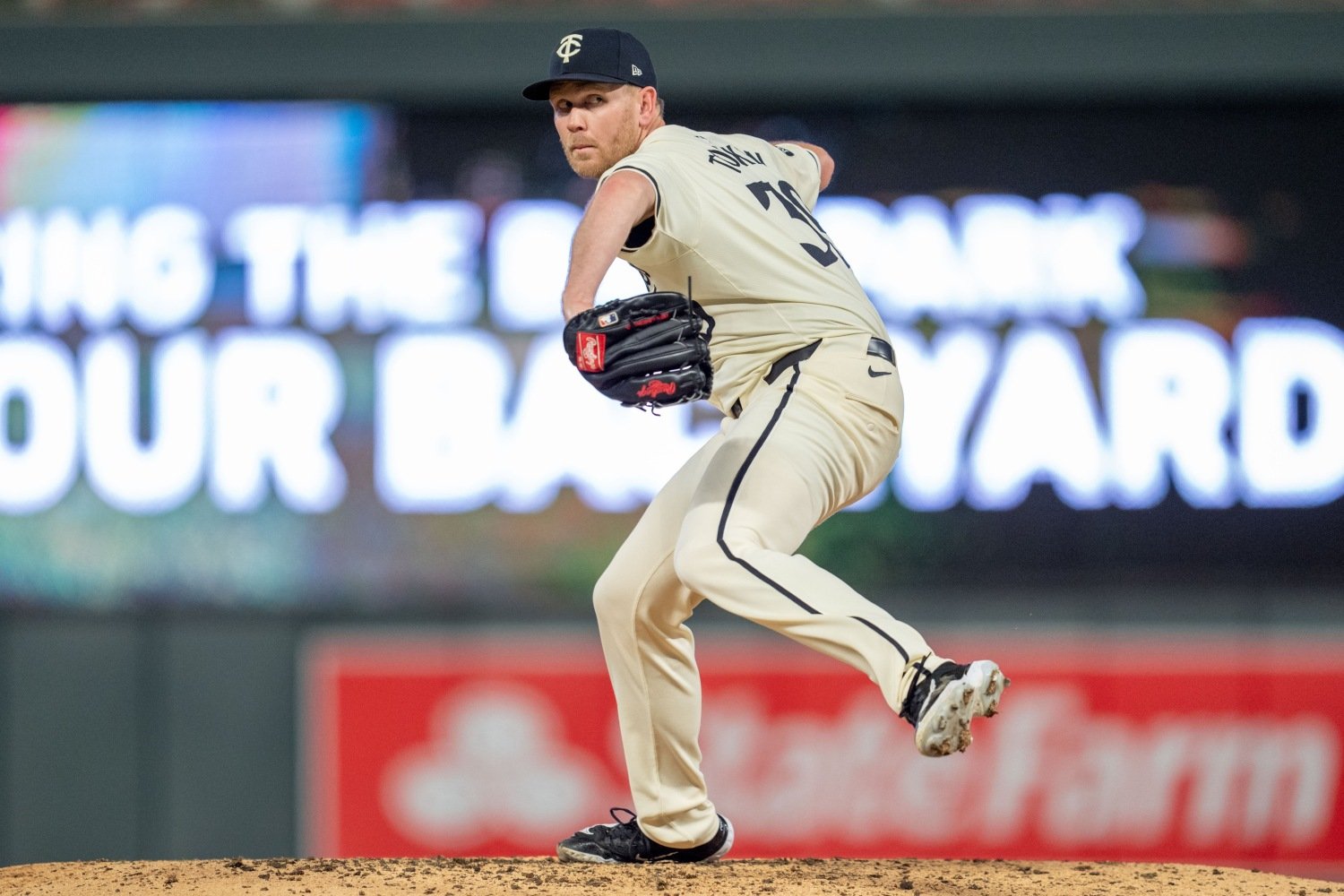 What did Michael Tonkin ever do to you? What did he do wrong, except bounce around the league for the last decade without evincing the ability to be a relief ace? What is he really asking of you? Just, maybe, $1.5 million, on a one-year deal, and a roster spot the team has spent on guys like Jay Jackson and Josh Staumont lately. Is that so much to ask? Must you detest him so, for his failure to be elite? As offseason blueprints roll in and fans speculate about non-tender candidates on the Twins roster, I find myself agog (agog!) at the number of people eager—desperate, almost—to be shot of Tonkin, soon to turn 36 years old. The message from Twins Territory is clear: This is not Tonkin Territory. Here's my question: Why? Since the start of the 2023 season, only the following players have more innings pitched in relief than Tonkin: Tyler Holton [end list] Hang on, sorry, this thing must not be working. I said, here are all the relievers who have been more available and more used than Michael Tonkin over the last two years: Tyler Holton [end list] Ok, well, I guess it's true then. Holton has pitched more than Tonkin, but no other reliever in baseball has. Could the mileage catch up to the aging righty? Of course. That's a risk with any pitcher who has pitched a lot recently. By and large, though, it's not a good idea—it is, in fact, a colossally stupid idea—to mentally punish pitchers for being durable, especially if they're established veterans, rather than guys in their early 20s. Tonkin is the proverbial rubber arm, the guy you don't mind not being able to option to the minors because you know you can go to him for multiple innings, or on back-to-back days. That's argument number one for everyone to stop being so mean to him. Here's argument number two: It's not like he's been bad, at all, over these two years. He doesn't have a true out pitch, and (by modern high-leverage standards) he doesn't throw very hard, but Tonkin has allowed an OPS of just .662 since the start of last season. He's struck out 24.1% of opposing batters and walked 8% of them. He's not wildly homer-prone. Tonkin is, simply, an above-average pitcher who will give you 80 innings of work if he's healthy, and we know that for sure because he just got done doing so two years in a row. I think fans, and even many would-be experts, are mostly (perhaps subconsciously) holding it against Tonkin that he was out of the big leagues from 2017 until 2023. He's had a peripatetic, fairly anonymous career, but Twins fans remember him from over a decade ago. They know that he's not famous or rich. They naturally fill in the rest, and assume he's as forgettable and fringy as ever. He's not, though! He's not dominant, and he comes with some age-related risk, but he's just good now! The kicker is, Tonkin is also a truly terrific fit for this Twins pitching staff. They desperately need exactly what he does, because they're a team with a lot of guys who use high arm slots, and Tonkin offers the contrast every team wants to have. If you plan out a game well, using Tonkin against a right-leaning pocket of an opposing lineup who last saw the likes of David Festa or Pablo López can be devastating. He gives hitters an especially tough look if they've been accustomed to seeing guys with high release points and vertically-oriented arsenals, because he works almost purely east and west. If Tonkin didn't exist on this roster, a master builder would need to create him. He's the yin to a whole lot of yang, and he and the rest of his likely 2025 teammates can make each other better by presenting opponents with contrasting styles and changes of pace. There are arguments for cutting Tonkin later this week. I just don't think any of them are good. Please, be nicer to Michael Tonkin.
 -
We know the Twins need to add pitching depth this winter. We also know their financial constraints will make that difficult. Let's head down to the river and pan for gold in the silt. Image courtesy of © Charles LeClaire-Imagn Images A dearth of viable pitching depth did in the Twins down the stretch in 2024. After Joe Ryan went down with injury, the team's overreliance on young hurlers became glaringly apparent. David Festa, Simeon Woods RIchardson, and Zebby Matthews were all asked to do just a bit too much, and when they couldn't meet that challenge, important innings had to be shifted onto middle relievers, who also cracked under the burden of those demands. Bringing in multiple high-level arms with strong track records would be the most natural response to that structural failure, but because the Pohlad family has left in place its artificially low ceiling on payroll while they shop the team this winter, the front office will need to get creative in pursuit of any improvement in pitching depth. That might mean trades, either to directly acquire good pitchers who are still far from free agency and cost relatively little or to create financial flexibility that can then be reallocated toward pitching. It can also mean doing some more bargain-hunting. Over 500 players became minor-league free agents earlier this month, because they've played at least six full professional seasons or have previously been outrighted off the 40-man roster and were not on it five days after the World Series. In the description of how these players achieved their free agency, you can hear the reality that they're not likely to be great, surefire options. If they were, though, they wouldn't be available as free agents—or, if they were, their price tags would be out of the Twins' range. Combing through the list of those free agents to find all those who might have value is enough work to be assigned to a full-time employee of some big-league front office. For our Caretakers, though, I did sift through a large number of pitchers who hit the market, in search of some who could help the Twins. Here are the six who stood out as fits for the team's needs and their predilections, ranked from most to least desirable. View full article
-
.png.91ddf3cb55aee00b65b3d25e6c93986e.png) A dearth of viable pitching depth did in the Twins down the stretch in 2024. After Joe Ryan went down with injury, the team's overreliance on young hurlers became glaringly apparent. David Festa, Simeon Woods RIchardson, and Zebby Matthews were all asked to do just a bit too much, and when they couldn't meet that challenge, important innings had to be shifted onto middle relievers, who also cracked under the burden of those demands. Bringing in multiple high-level arms with strong track records would be the most natural response to that structural failure, but because the Pohlad family has left in place its artificially low ceiling on payroll while they shop the team this winter, the front office will need to get creative in pursuit of any improvement in pitching depth. That might mean trades, either to directly acquire good pitchers who are still far from free agency and cost relatively little or to create financial flexibility that can then be reallocated toward pitching. It can also mean doing some more bargain-hunting. Over 500 players became minor-league free agents earlier this month, because they've played at least six full professional seasons or have previously been outrighted off the 40-man roster and were not on it five days after the World Series. In the description of how these players achieved their free agency, you can hear the reality that they're not likely to be great, surefire options. If they were, though, they wouldn't be available as free agents—or, if they were, their price tags would be out of the Twins' range. Combing through the list of those free agents to find all those who might have value is enough work to be assigned to a full-time employee of some big-league front office. For our Caretakers, though, I did sift through a large number of pitchers who hit the market, in search of some who could help the Twins. Here are the six who stood out as fits for the team's needs and their predilections, ranked from most to least desirable.
A dearth of viable pitching depth did in the Twins down the stretch in 2024. After Joe Ryan went down with injury, the team's overreliance on young hurlers became glaringly apparent. David Festa, Simeon Woods RIchardson, and Zebby Matthews were all asked to do just a bit too much, and when they couldn't meet that challenge, important innings had to be shifted onto middle relievers, who also cracked under the burden of those demands. Bringing in multiple high-level arms with strong track records would be the most natural response to that structural failure, but because the Pohlad family has left in place its artificially low ceiling on payroll while they shop the team this winter, the front office will need to get creative in pursuit of any improvement in pitching depth. That might mean trades, either to directly acquire good pitchers who are still far from free agency and cost relatively little or to create financial flexibility that can then be reallocated toward pitching. It can also mean doing some more bargain-hunting. Over 500 players became minor-league free agents earlier this month, because they've played at least six full professional seasons or have previously been outrighted off the 40-man roster and were not on it five days after the World Series. In the description of how these players achieved their free agency, you can hear the reality that they're not likely to be great, surefire options. If they were, though, they wouldn't be available as free agents—or, if they were, their price tags would be out of the Twins' range. Combing through the list of those free agents to find all those who might have value is enough work to be assigned to a full-time employee of some big-league front office. For our Caretakers, though, I did sift through a large number of pitchers who hit the market, in search of some who could help the Twins. Here are the six who stood out as fits for the team's needs and their predilections, ranked from most to least desirable.- 7 comments
-
- 3
-

-
- jose castillo
- tyler matzek
- (and 4 more)
-
Next season, the Minnesota Twins need a better alternative to Byron Buxton than they had in their outfield in 2024. Could the answer to those problems lie right down I-94? Image courtesy of © Lon Horwedel-Imagn Images When the Fielding Bible Awards were announced earlier this month, the center field honoree was Rockies outfielder Brenton Doyle. Toronto Blue Jays center fielder Daulton Varsho also claimed a prise, as the Multi-Position Fielding Bible Award winner. That made sense; Doyle and Varsho are marvelous, multi-talented players who stood out from the field both statistically and in a scouting sense. However, if you watched the Milwaukee Brewers in one of the roughly half of their games in which Blake Perkins patrolled center field, you might have balked a bit. The switch-hitting Perkins, 28, has played parts of the last two seasons for the Brewers, after signing with them as a minor-league free agent after the 2022 season. He's only batted .234/.318/.337 across 602 plate appearances, which would make him underqualified for everyday inclusion in the lineup. However, he's cobbled together that significant a share of playing time because almost no one in baseball can match his combination of athleticism, efficiency, and IQ in center field, inning for inning. He was worth 9 Defensive Runs Saved in fewer than 1,000 innings in center field, including some clutch plays that were worth more than that style of valuation can capture. Firstly, unlike Byron Buxton, Perkins has exquisite feel for the wall. When he goes back on the ball, he does it with a mixture of confidence and control, gliding toward the wall, jumping off one foot, and changing the angle of his body to minimize the risks both of having the ball jarred out of his glove and getting injured in a collision. Blake Glide.mp4 It's relatively easy to make such plays at one's home park, where the dimensions and the flight of fly balls are familiar. Perkins, however, often took his homer-robbing show on the road in 2024. Even when a ball was hit to a particularly idiosyncratic place, he seemed to have charted his course and to make small adjustments with ease and grace. Blake Robbery.mp4 Perkins also charges balls in front of him (even surefire hits) exceptionally aggressively, though. He racked up seven outfield assists in relatively modest playing time in 2024, but the biggest of them by far was this kill of a runner trying to score the tying run in the ninth inning of a game in the first half. Blake Throw.mp4 These are just a few examples, but they capture what Perkins can do—including things even Buxton can't, at this stage, and which all the team's secondary options and alternatives to Buxton failed to do in 2024. He covers ground effortlessly, has a strong arm, and makes plays even when they require last-second changes of direction or orientation of the body. He's situationally aware and has a nose for the out an opponent isn't anticipating. Perkins's offensive game is also slightly more dynamic than his overall numbers suggest. He's a good bunter and a great baserunner, and although he doesn't lift the ball consistently enough to generate big power numbers, he has the ability to cut it loose and hit the ball a long way. All of this makes him an invaluable role player, but the Brewers have a crowded outfield picture, with Jackson Chourio, Christian Yelich, Sal Frelick, and Garrett Mitchell also on board, and a couple of top prospects knocking on the door. Milwaukee needs help in the starting rotation, and the Twins need to shed some salary to give themselves more financial flexibility in building a 2025 winner. Could the two Upper Midwest neighbors find a fit on a trade? Perkins is still not yet eligible for arbitration, so he'd be cheaper and more controllable than previous acquisitions in the same vein, Michael A. Taylor and Manuel Margot. That would make him more expensive to acquire, in terms of talent, but again, the Twins need to offload some money, anyway. They could spin either Joe Ryan or Bailey Ober to Milwaukee for Perkins and a prospect, in a move somewhat reminiscent of the Jorge Polanco trade last winter—though grander in scale and better calibrated to their needs. It would have to be Perkins and a somewhat valuable secondary piece, for a player like Ryan or Ober, but keeping in mind that Perkins would fill a crucial immediate need and be controllable for up to five years, as well as costing less than Ryan or Ober, it wouldn't need to be such a good prospect as to cause the Brewers to walk away. Though he did stay on the field much better in 2024 than in previous years, Buxton only proved that he is no longer the defensive ace he once was. It's too soon to ask him to permanently move to a corner, but he could do so in a part-time capacity this year, in addition to spending time as the designated hitter. That would best serve the team in terms of winning the games he plays, as well as keeping him healthy enough to play more games—as long as they bring in a player who can adequately sub for him in center on a regular basis. Surveying their options throughout baseball, the best one available might be right next door. View full article
-
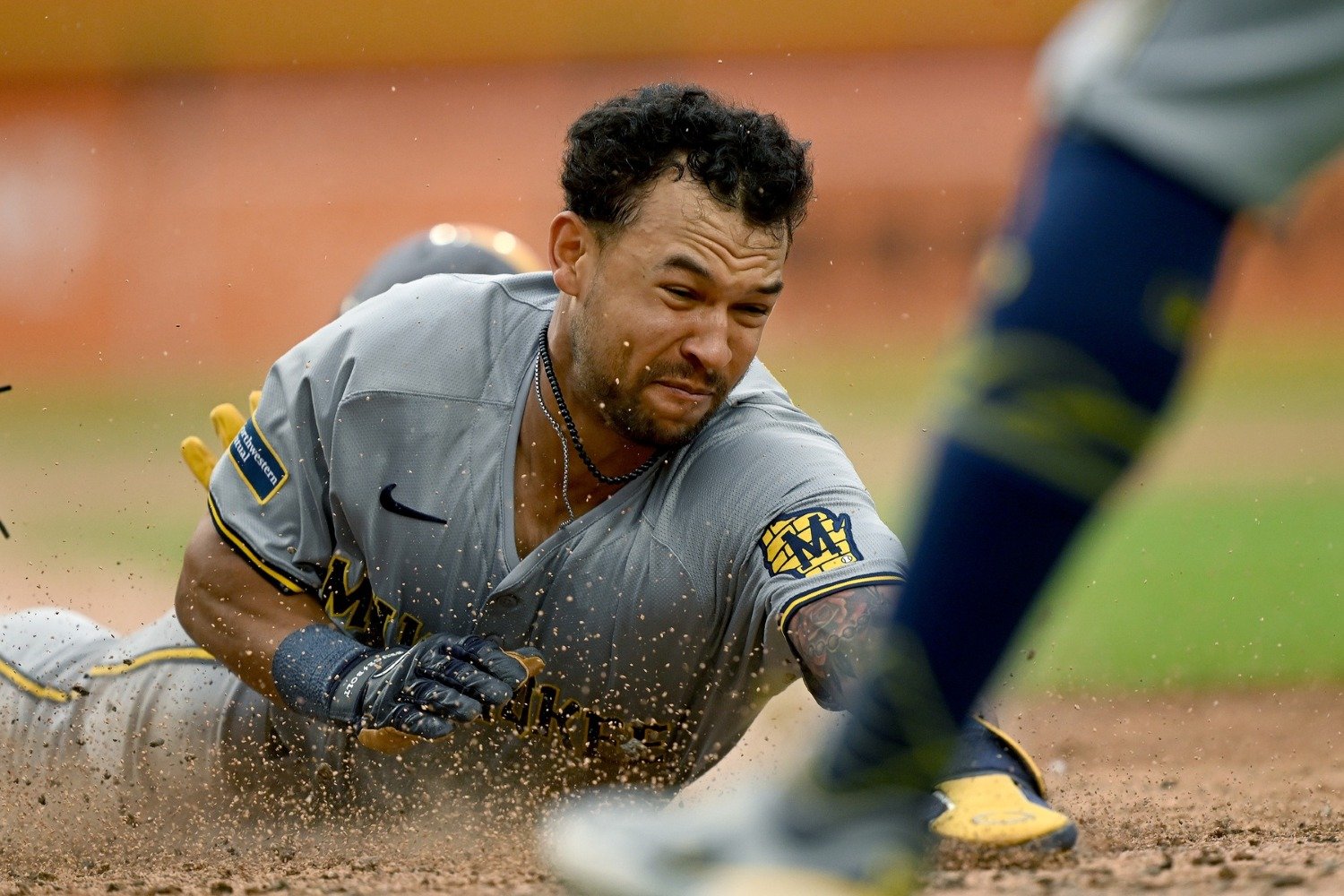 When the Fielding Bible Awards were announced earlier this month, the center field honoree was Rockies outfielder Brenton Doyle. Toronto Blue Jays center fielder Daulton Varsho also claimed a prise, as the Multi-Position Fielding Bible Award winner. That made sense; Doyle and Varsho are marvelous, multi-talented players who stood out from the field both statistically and in a scouting sense. However, if you watched the Milwaukee Brewers in one of the roughly half of their games in which Blake Perkins patrolled center field, you might have balked a bit. The switch-hitting Perkins, 28, has played parts of the last two seasons for the Brewers, after signing with them as a minor-league free agent after the 2022 season. He's only batted .234/.318/.337 across 602 plate appearances, which would make him underqualified for everyday inclusion in the lineup. However, he's cobbled together that significant a share of playing time because almost no one in baseball can match his combination of athleticism, efficiency, and IQ in center field, inning for inning. He was worth 9 Defensive Runs Saved in fewer than 1,000 innings in center field, including some clutch plays that were worth more than that style of valuation can capture. Firstly, unlike Byron Buxton, Perkins has exquisite feel for the wall. When he goes back on the ball, he does it with a mixture of confidence and control, gliding toward the wall, jumping off one foot, and changing the angle of his body to minimize the risks both of having the ball jarred out of his glove and getting injured in a collision. Blake Glide.mp4 It's relatively easy to make such plays at one's home park, where the dimensions and the flight of fly balls are familiar. Perkins, however, often took his homer-robbing show on the road in 2024. Even when a ball was hit to a particularly idiosyncratic place, he seemed to have charted his course and to make small adjustments with ease and grace. Blake Robbery.mp4 Perkins also charges balls in front of him (even surefire hits) exceptionally aggressively, though. He racked up seven outfield assists in relatively modest playing time in 2024, but the biggest of them by far was this kill of a runner trying to score the tying run in the ninth inning of a game in the first half. Blake Throw.mp4 These are just a few examples, but they capture what Perkins can do—including things even Buxton can't, at this stage, and which all the team's secondary options and alternatives to Buxton failed to do in 2024. He covers ground effortlessly, has a strong arm, and makes plays even when they require last-second changes of direction or orientation of the body. He's situationally aware and has a nose for the out an opponent isn't anticipating. Perkins's offensive game is also slightly more dynamic than his overall numbers suggest. He's a good bunter and a great baserunner, and although he doesn't lift the ball consistently enough to generate big power numbers, he has the ability to cut it loose and hit the ball a long way. All of this makes him an invaluable role player, but the Brewers have a crowded outfield picture, with Jackson Chourio, Christian Yelich, Sal Frelick, and Garrett Mitchell also on board, and a couple of top prospects knocking on the door. Milwaukee needs help in the starting rotation, and the Twins need to shed some salary to give themselves more financial flexibility in building a 2025 winner. Could the two Upper Midwest neighbors find a fit on a trade? Perkins is still not yet eligible for arbitration, so he'd be cheaper and more controllable than previous acquisitions in the same vein, Michael A. Taylor and Manuel Margot. That would make him more expensive to acquire, in terms of talent, but again, the Twins need to offload some money, anyway. They could spin either Joe Ryan or Bailey Ober to Milwaukee for Perkins and a prospect, in a move somewhat reminiscent of the Jorge Polanco trade last winter—though grander in scale and better calibrated to their needs. It would have to be Perkins and a somewhat valuable secondary piece, for a player like Ryan or Ober, but keeping in mind that Perkins would fill a crucial immediate need and be controllable for up to five years, as well as costing less than Ryan or Ober, it wouldn't need to be such a good prospect as to cause the Brewers to walk away. Though he did stay on the field much better in 2024 than in previous years, Buxton only proved that he is no longer the defensive ace he once was. It's too soon to ask him to permanently move to a corner, but he could do so in a part-time capacity this year, in addition to spending time as the designated hitter. That would best serve the team in terms of winning the games he plays, as well as keeping him healthy enough to play more games—as long as they bring in a player who can adequately sub for him in center on a regular basis. Surveying their options throughout baseball, the best one available might be right next door.
- 33 comments
-
- 8
-

-

-
- blake perkins
- joe ryan
- (and 2 more)
-
The historic hiccup that is the Twins' singularly even distribution of catcher playing time has to end, now, for the sake of the team. Which guy should they keep? Image courtesy of © John Hefti-Imagn Images Welcome to the 2025 Offseason Handbook! This year, we’re offering the format online only through our Caretakers program. The Offseason Handbook is a comprehensive look at what challenges the Twins face in the coming winter to field a competitive team in 2025. To become a Caretaker, visit this page. On top of receiving exclusive access to the Offseason Handbook, Caretakers also receive in-depth analysis from national writers you cannot find anywhere else. You will also receive exclusive access to events and an ad-free browsing option. In celebration of the Offseason Handbook’s release, we’re offering 20% off all Caretaker programs for the next week. Use the code HANDBOOK at checkout to receive 20% off your purchase! When the Twins signed Christian Vázquez for three years and $30 million prior to 2023, it was a perfectly reasonable move. He's underperformed slightly, relative to expectations, but in much greater part, the fault for how badly his deal suits the team now falls on ownership. You can spend $15 million on the catcher position, as the Twins will have to do if they don't trade either Vázquez or Ryan Jeffers this winter, if your overall payroll is pressing toward $180 million, as the team's behavior right up until their elimination from last year's postseason suggested they would. Once it stalled out south of $160 million, and especially once it plunged back downward from there, the pact became onerous. Imagine how obvious this choice could be, if Ryan Jeffers were just a bit more consistently in contact with his talent. At times, the younger of the Twins' timeshare backstops looks like a good framer and game-caller. At times, he looks like a star-caliber slugger, especially adjusting for his position. At times, he even looks like a situational hitting ace, using the big part of the field expertly when there's a runner on third and less than two outs. Alas, at other times, he looks as bad as any player in baseball—worse, even, than the aged husk of Vázquez, even offensively. Though Jeffers had an above-average OPS this year, whereas Vázquez had one south of .600; though Jeffers will still cost less than half what Vázquez will in 2025, as he begins the arbitration process; and though he's more than half a decade younger, it's not clear that Jeffers is the better player. The Twins need to trade one of these two, to create even a scintilla of flexibility for upgrades elsewhere on the roster. Jeffers, being younger, is probably better suited to take on the resulting increase in workload if he sticks around, and Vázquez has more money attached to him. But could the front office clear his whole salary? And if Jeffers would bring back meaningfully more in a trade, does that make him the better candidate? It really comes down to: What do you want from your catchers? View full article
-
.png.95eaed293c7a2ce12f9702866b223f6b.png) Welcome to the 2025 Offseason Handbook! This year, we’re offering the format online only through our Caretakers program. The Offseason Handbook is a comprehensive look at what challenges the Twins face in the coming winter to field a competitive team in 2025. To become a Caretaker, visit this page. On top of receiving exclusive access to the Offseason Handbook, Caretakers also receive in-depth analysis from national writers you cannot find anywhere else. You will also receive exclusive access to events and an ad-free browsing option. In celebration of the Offseason Handbook’s release, we’re offering 20% off all Caretaker programs for the next week. Use the code HANDBOOK at checkout to receive 20% off your purchase! When the Twins signed Christian Vázquez for three years and $30 million prior to 2023, it was a perfectly reasonable move. He's underperformed slightly, relative to expectations, but in much greater part, the fault for how badly his deal suits the team now falls on ownership. You can spend $15 million on the catcher position, as the Twins will have to do if they don't trade either Vázquez or Ryan Jeffers this winter, if your overall payroll is pressing toward $180 million, as the team's behavior right up until their elimination from last year's postseason suggested they would. Once it stalled out south of $160 million, and especially once it plunged back downward from there, the pact became onerous. Imagine how obvious this choice could be, if Ryan Jeffers were just a bit more consistently in contact with his talent. At times, the younger of the Twins' timeshare backstops looks like a good framer and game-caller. At times, he looks like a star-caliber slugger, especially adjusting for his position. At times, he even looks like a situational hitting ace, using the big part of the field expertly when there's a runner on third and less than two outs. Alas, at other times, he looks as bad as any player in baseball—worse, even, than the aged husk of Vázquez, even offensively. Though Jeffers had an above-average OPS this year, whereas Vázquez had one south of .600; though Jeffers will still cost less than half what Vázquez will in 2025, as he begins the arbitration process; and though he's more than half a decade younger, it's not clear that Jeffers is the better player. The Twins need to trade one of these two, to create even a scintilla of flexibility for upgrades elsewhere on the roster. Jeffers, being younger, is probably better suited to take on the resulting increase in workload if he sticks around, and Vázquez has more money attached to him. But could the front office clear his whole salary? And if Jeffers would bring back meaningfully more in a trade, does that make him the better candidate? It really comes down to: What do you want from your catchers?
Welcome to the 2025 Offseason Handbook! This year, we’re offering the format online only through our Caretakers program. The Offseason Handbook is a comprehensive look at what challenges the Twins face in the coming winter to field a competitive team in 2025. To become a Caretaker, visit this page. On top of receiving exclusive access to the Offseason Handbook, Caretakers also receive in-depth analysis from national writers you cannot find anywhere else. You will also receive exclusive access to events and an ad-free browsing option. In celebration of the Offseason Handbook’s release, we’re offering 20% off all Caretaker programs for the next week. Use the code HANDBOOK at checkout to receive 20% off your purchase! When the Twins signed Christian Vázquez for three years and $30 million prior to 2023, it was a perfectly reasonable move. He's underperformed slightly, relative to expectations, but in much greater part, the fault for how badly his deal suits the team now falls on ownership. You can spend $15 million on the catcher position, as the Twins will have to do if they don't trade either Vázquez or Ryan Jeffers this winter, if your overall payroll is pressing toward $180 million, as the team's behavior right up until their elimination from last year's postseason suggested they would. Once it stalled out south of $160 million, and especially once it plunged back downward from there, the pact became onerous. Imagine how obvious this choice could be, if Ryan Jeffers were just a bit more consistently in contact with his talent. At times, the younger of the Twins' timeshare backstops looks like a good framer and game-caller. At times, he looks like a star-caliber slugger, especially adjusting for his position. At times, he even looks like a situational hitting ace, using the big part of the field expertly when there's a runner on third and less than two outs. Alas, at other times, he looks as bad as any player in baseball—worse, even, than the aged husk of Vázquez, even offensively. Though Jeffers had an above-average OPS this year, whereas Vázquez had one south of .600; though Jeffers will still cost less than half what Vázquez will in 2025, as he begins the arbitration process; and though he's more than half a decade younger, it's not clear that Jeffers is the better player. The Twins need to trade one of these two, to create even a scintilla of flexibility for upgrades elsewhere on the roster. Jeffers, being younger, is probably better suited to take on the resulting increase in workload if he sticks around, and Vázquez has more money attached to him. But could the front office clear his whole salary? And if Jeffers would bring back meaningfully more in a trade, does that make him the better candidate? It really comes down to: What do you want from your catchers? -
Join up as a Caretaker, and see the full story! That's addressed, in part, by the exclusive portion of Davy's piece.
-
I agree wholeheartedly, and you should subscribe in time to read Hans Birkeland's piece for the Handbook tomorrow. It's killer, and precisely on this topic.
-
Welcome to the 2024-25 Twins Daily Offseason Handbook! We're going to be running a special series of articles tackling big offseason topics in exceptional depth, all week, so keep checking back and sign up to become a TD Caretaker. In this first installment, let's get into the key questions facing any team, in any winter: How much wiggle room is there? Image courtesy of © Matt Blewett-Imagn Images Welcome to the 2025 Offseason Handbook! This year, we’re offering the format online only through our Caretakers program. The Offseason Handbook is a comprehensive look at what challenges the Twins face in the coming winter to field a competitive team in 2025. To become a Caretaker, visit this page. On top of receiving exclusive access to the Offseason Handbook, Caretakers also receive in-depth analysis from national writers you cannot find anywhere else. You will also receive exclusive access to events and an ad-free browsing option. In celebration of the Offseason Handbook’s release, we’re offering 20% off all Caretaker programs for the next week. Use the code HANDBOOK at checkout to receive 20% off your purchase! Wiggle room, of course, comes in many forms. Teams don't relish using it, in any sense, because the modern approach to team-building is to be so ruthlessly efficient as to obviate wiggle room. As the Twins have proved lately, though, sometimes that attempt to control and optimize everything only backfires, begetting fragility and eventual sclerosis. Just as a team has to be willing to be flexible, they have to have the luxury of that flexibility, even once they embrace the concept. A lack of ownership investment reduced the team's flexibility when it comes to building a winner last winter, and unfortunately, it looks very much as though those conditions will persist during hot stove season this time around. Last winter, though, the team's greatest failing might have been the inability or unwillingness to use the levers available to them to create more flexibility even without financial options. They pursued their customary, plodding strategy in an offseason that moved at a pace that should have suited them, but they never found the right opportunity to pounce and rapidly create new value. They didn't leave their comfort zone in order to overcome the new challenges posed by a lack of spending power, and as a result, they brought back a more extreme version of the team they were in 2023: older, more power-reliant, more athleticially limited. Realigning one's principles based purely on a shift of the wind is a lousy way to live, but one could argue that the Twins have cleaved too tightly to their team-building paradigm, even absent a sudden and dramatic change of direction from ownership. They believe so fervently in a pull power-focused offense and a strikeout-mad, four-seam-only, soft-and-spin pitching approach that they might be trapped in that mode, at the expense of both mental dexterity and roster maneuverability—both of which are indispensable if you're already dealing with sparing financial capacity. Maybe the tears that rolled down Derek Falvey's cheeks at his intimate season-end media scrub were the waters of onrushing change, though. Maybe they symbolize that the pain of their late-season collapse broke this front office open and forced them to seriously reconsider some things about their own approach to team building. In that case, maybe flexibility is back, even if the belts are still tight all along the factory line. Let's take a closer look at the numbers, to find out. View full article
-
 Welcome to the 2025 Offseason Handbook! This year, we’re offering the format online only through our Caretakers program. The Offseason Handbook is a comprehensive look at what challenges the Twins face in the coming winter to field a competitive team in 2025. To become a Caretaker, visit this page. On top of receiving exclusive access to the Offseason Handbook, Caretakers also receive in-depth analysis from national writers you cannot find anywhere else. You will also receive exclusive access to events and an ad-free browsing option. In celebration of the Offseason Handbook’s release, we’re offering 20% off all Caretaker programs for the next week. Use the code HANDBOOK at checkout to receive 20% off your purchase! Wiggle room, of course, comes in many forms. Teams don't relish using it, in any sense, because the modern approach to team-building is to be so ruthlessly efficient as to obviate wiggle room. As the Twins have proved lately, though, sometimes that attempt to control and optimize everything only backfires, begetting fragility and eventual sclerosis. Just as a team has to be willing to be flexible, they have to have the luxury of that flexibility, even once they embrace the concept. A lack of ownership investment reduced the team's flexibility when it comes to building a winner last winter, and unfortunately, it looks very much as though those conditions will persist during hot stove season this time around. Last winter, though, the team's greatest failing might have been the inability or unwillingness to use the levers available to them to create more flexibility even without financial options. They pursued their customary, plodding strategy in an offseason that moved at a pace that should have suited them, but they never found the right opportunity to pounce and rapidly create new value. They didn't leave their comfort zone in order to overcome the new challenges posed by a lack of spending power, and as a result, they brought back a more extreme version of the team they were in 2023: older, more power-reliant, more athleticially limited. Realigning one's principles based purely on a shift of the wind is a lousy way to live, but one could argue that the Twins have cleaved too tightly to their team-building paradigm, even absent a sudden and dramatic change of direction from ownership. They believe so fervently in a pull power-focused offense and a strikeout-mad, four-seam-only, soft-and-spin pitching approach that they might be trapped in that mode, at the expense of both mental dexterity and roster maneuverability—both of which are indispensable if you're already dealing with sparing financial capacity. Maybe the tears that rolled down Derek Falvey's cheeks at his intimate season-end media scrub were the waters of onrushing change, though. Maybe they symbolize that the pain of their late-season collapse broke this front office open and forced them to seriously reconsider some things about their own approach to team building. In that case, maybe flexibility is back, even if the belts are still tight all along the factory line. Let's take a closer look at the numbers, to find out.
- 3 comments
-
- 4
-
-

-
- carlos correa
- byron buxton
- (and 2 more)
-
For as long as there have been World Series, there have been occasional complaints that they're sloppy. We should expect that. The crispest baseball of the season can't come at the end of a 200-game schedule, in varying climates and amid a media circus. But extraordinarily compelling baseball still can. Image courtesy of © Vincent Carchietta-Imagn Images A great World Series has to run six or seven games, and thus, sadly, the much-hyped 2024 Fall Classic fell short. A good one needn't be played at an exceptionally high level of tautness or neatness, though. Chaos is good. Chaos is the element thrown at the last moment into the mixture of great ingredients—talent, stakes, and setting—that make up good baseball in general, elevating it by testing the players contesting a series and forcing them to meet unexpected moments and challenges. Chaos creates vividity, and that's how you should truly judge a World Series: by its vividity, piquancy, and historical redolence. Those are the aspects of great baseball drama, and they were all present in the 2024 postseason, including the Series between the Dodgers and Yankees. There has to be rising action, and good rising action includes foreshadowing. We had that. There have to be visible, understandable protagonists, but there also have to be surprise heroes and goats. We had that. Finally, there have to be twists, but not twists so violent that the final outcome feels unearned. We got that, too. The Dodgers were the better baseball team, and they won this Series without even having to go back to Los Angeles for a second miniature set at home. It didn't have to be that way, though, and the path the team carved to their ultimate victory was as messy, as dramatic, and as fragile as good baseball always ought to be, even as they earned every drop of it. View full article
-
.png.dc14a7c15a40a16bc78b27b5b6f523f3.png) A great World Series has to run six or seven games, and thus, sadly, the much-hyped 2024 Fall Classic fell short. A good one needn't be played at an exceptionally high level of tautness or neatness, though. Chaos is good. Chaos is the element thrown at the last moment into the mixture of great ingredients—talent, stakes, and setting—that make up good baseball in general, elevating it by testing the players contesting a series and forcing them to meet unexpected moments and challenges. Chaos creates vividity, and that's how you should truly judge a World Series: by its vividity, piquancy, and historical redolence. Those are the aspects of great baseball drama, and they were all present in the 2024 postseason, including the Series between the Dodgers and Yankees. There has to be rising action, and good rising action includes foreshadowing. We had that. There have to be visible, understandable protagonists, but there also have to be surprise heroes and goats. We had that. Finally, there have to be twists, but not twists so violent that the final outcome feels unearned. We got that, too. The Dodgers were the better baseball team, and they won this Series without even having to go back to Los Angeles for a second miniature set at home. It didn't have to be that way, though, and the path the team carved to their ultimate victory was as messy, as dramatic, and as fragile as good baseball always ought to be, even as they earned every drop of it.
A great World Series has to run six or seven games, and thus, sadly, the much-hyped 2024 Fall Classic fell short. A good one needn't be played at an exceptionally high level of tautness or neatness, though. Chaos is good. Chaos is the element thrown at the last moment into the mixture of great ingredients—talent, stakes, and setting—that make up good baseball in general, elevating it by testing the players contesting a series and forcing them to meet unexpected moments and challenges. Chaos creates vividity, and that's how you should truly judge a World Series: by its vividity, piquancy, and historical redolence. Those are the aspects of great baseball drama, and they were all present in the 2024 postseason, including the Series between the Dodgers and Yankees. There has to be rising action, and good rising action includes foreshadowing. We had that. There have to be visible, understandable protagonists, but there also have to be surprise heroes and goats. We had that. Finally, there have to be twists, but not twists so violent that the final outcome feels unearned. We got that, too. The Dodgers were the better baseball team, and they won this Series without even having to go back to Los Angeles for a second miniature set at home. It didn't have to be that way, though, and the path the team carved to their ultimate victory was as messy, as dramatic, and as fragile as good baseball always ought to be, even as they earned every drop of it.- 4 comments
-
- 2
-
-
-
- aaron judge
- gerrit cole
- (and 5 more)
-
The Minnesota Twins’ 2016 first-round pick is stepping away from the game a week shy of his 27th birthday, after a pro career frequently disrupted and ultimately derailed by a series of injuries. Image courtesy of © Sam Navarro-USA TODAY Sports Although his MLB tenure got an auspicious start when he was included as part of the Twins’ playoff roster in 2020 and debuted in postseason play, Alex Kirilloff goes down as one in a string of Twins first-round picks that all went sour, From 2013 to 2016, Minnesota made Kohl Stewart, Nick Gordon, Tyler Jay. and Kirilloff top selections. None of the quartet found their way to big-league success. As a group, they have -0.1 career wins above replacement (WAR), according to Baseball Reference. As has become some mixture of running joke and hard-earned commiseration, Kirilloff joins Gordon, Miguel Sanó, Byron Buxton, Royce Lewis and Trevor Larnach among a seemingly endless list of players who entered the organization as top prospects, only to immediately suffer major, development-damaging injuries that sidelined them for long periods. A few of those players survived and eventually established themselves in the big leagues, but for Kirilloff, the damage never stopped piling up, and his talent couldn’t compensate. During a career in which he lost significant time with injuries to his elbow, wrist, shoulder, and back (among other maladies), Kirilloff did climb to the majors and flash the potential to hit for both average and power there. Slumps and new injuries repeatedly threw him out of rhythm, though, and the team wasn’t able to rely on him enough to commit to him unreservedly at any point. In parts of four regular seasons, he had just 884 career plate appearances, with a career line of .248/.309/.412—far from impressive or sufficient, for a player who was billed first as a fine defender in the outfield corners, then as a potential whiz at first base, but who was never able to demonstrate above-average defense or baserunning anywhere. In 15 postseason plate appearances, he went 1-for-13, leaving no mark other than by failing to come up with a key ground ball in the 2023 ALDS against the Astros. We’ll never know how good Kirilloff could have been, but he did hit the ball hard when he was right physically. A product of his father’s passion as a coach, Kirilloff took great pride in his swing, but struggled to adjust and create the consistent lift to tap into his natural power. He played well for a long stretch in 2023 and started scorching-hot in 2024, only to collapse brilliantly and unmistakably. He went so cold from mid-April through mid-June that the Twins tried to option him to Triple-A St. Paul, whereupon Kirilloff informed them about a nagging back discomfort that contributed to that catastrophic stretch. Fairly or not, the perception thereafter was that the team and the player were at odds, and because Kirilloff never got back to full health or showed any sign of being able to help the big-league team thereafter, he fell off the radar in the second half. The baseball gods can be cruel, and they were unremitting with Kirilloff. He might have been able to do more to make the most of his brief career, but he had impressive talent and worked hard to translate it to production. His body defied and betrayed him so many times that he’s now decided to let his dream go. The Twins, who seemed certain to move on anyway, are left to wish things had panned out better, and to plan a permanent replacement for Kirilloff’s left-handed upside at first base and/or DH. View full article
-
Twins First Baseman Alex Kirilloff Retires from Professional Baseball
Matthew Trueblood posted an article in Twins
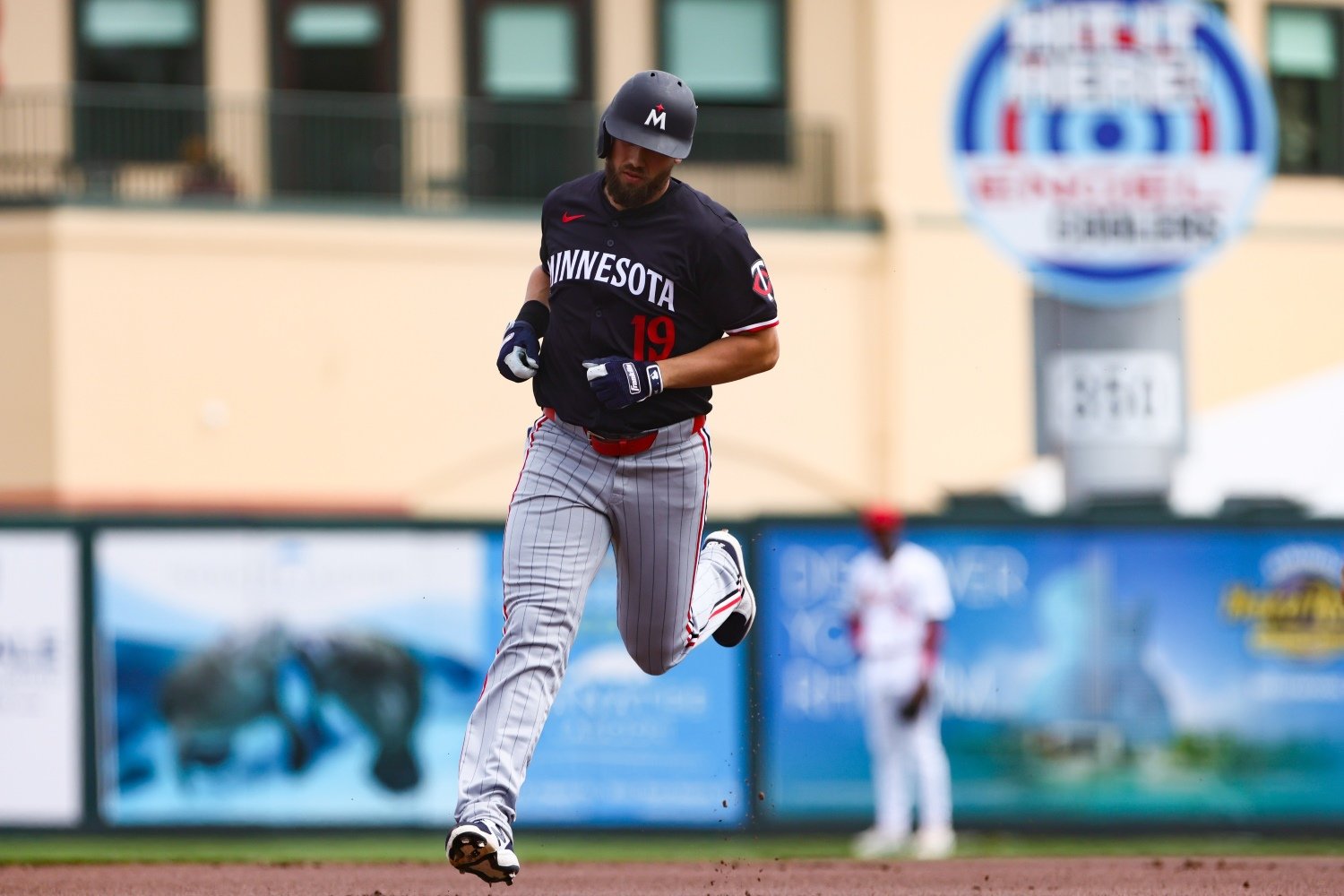 Although his MLB tenure got an auspicious start when he was included as part of the Twins’ playoff roster in 2020 and debuted in postseason play, Alex Kirilloff goes down as one in a string of Twins first-round picks that all went sour, From 2013 to 2016, Minnesota made Kohl Stewart, Nick Gordon, Tyler Jay. and Kirilloff top selections. None of the quartet found their way to big-league success. As a group, they have -0.1 career wins above replacement (WAR), according to Baseball Reference. As has become some mixture of running joke and hard-earned commiseration, Kirilloff joins Gordon, Miguel Sanó, Byron Buxton, Royce Lewis and Trevor Larnach among a seemingly endless list of players who entered the organization as top prospects, only to immediately suffer major, development-damaging injuries that sidelined them for long periods. A few of those players survived and eventually established themselves in the big leagues, but for Kirilloff, the damage never stopped piling up, and his talent couldn’t compensate. During a career in which he lost significant time with injuries to his elbow, wrist, shoulder, and back (among other maladies), Kirilloff did climb to the majors and flash the potential to hit for both average and power there. Slumps and new injuries repeatedly threw him out of rhythm, though, and the team wasn’t able to rely on him enough to commit to him unreservedly at any point. In parts of four regular seasons, he had just 884 career plate appearances, with a career line of .248/.309/.412—far from impressive or sufficient, for a player who was billed first as a fine defender in the outfield corners, then as a potential whiz at first base, but who was never able to demonstrate above-average defense or baserunning anywhere. In 15 postseason plate appearances, he went 1-for-13, leaving no mark other than by failing to come up with a key ground ball in the 2023 ALDS against the Astros. We’ll never know how good Kirilloff could have been, but he did hit the ball hard when he was right physically. A product of his father’s passion as a coach, Kirilloff took great pride in his swing, but struggled to adjust and create the consistent lift to tap into his natural power. He played well for a long stretch in 2023 and started scorching-hot in 2024, only to collapse brilliantly and unmistakably. He went so cold from mid-April through mid-June that the Twins tried to option him to Triple-A St. Paul, whereupon Kirilloff informed them about a nagging back discomfort that contributed to that catastrophic stretch. Fairly or not, the perception thereafter was that the team and the player were at odds, and because Kirilloff never got back to full health or showed any sign of being able to help the big-league team thereafter, he fell off the radar in the second half. The baseball gods can be cruel, and they were unremitting with Kirilloff. He might have been able to do more to make the most of his brief career, but he had impressive talent and worked hard to translate it to production. His body defied and betrayed him so many times that he’s now decided to let his dream go. The Twins, who seemed certain to move on anyway, are left to wish things had panned out better, and to plan a permanent replacement for Kirilloff’s left-handed upside at first base and/or DH.
 -
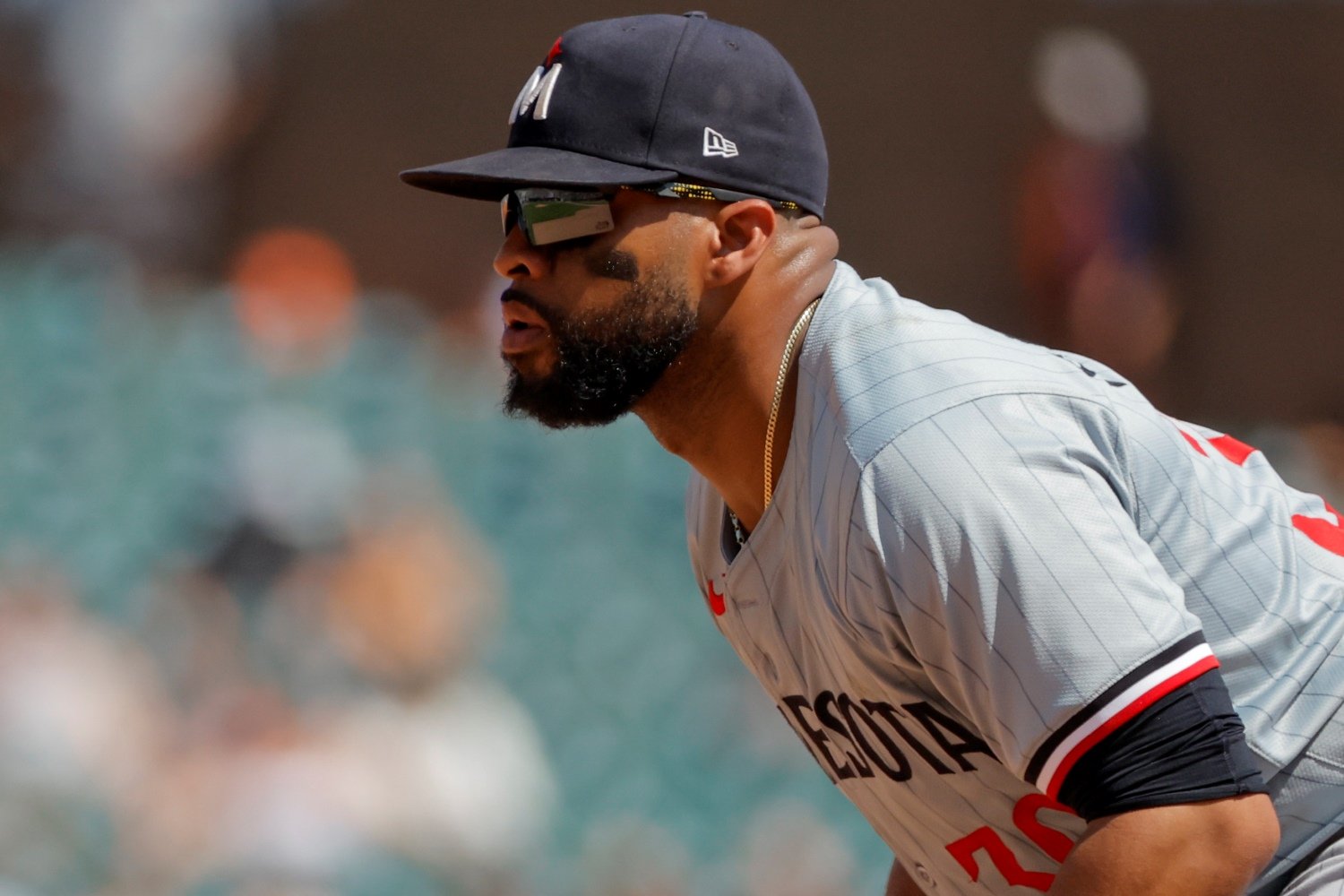 Though the Gold Gloves get far more attention, the Fielding Bible Awards have become by far the better platform on which the best fielders in MLB are honored each year. Whereas the Gold Gloves are voted on by coaches and managers (who often show halfhearted interest in the process and are often ignorant of some things going on outside their own rosters) on shallow ballots, the Fielding Bible Awards are decided by the votes of 16 experts who work in the public sphere, much like the MVP, Cy Young and Rookie of the Year Awards. Each voter completes a 10-player ballot at each position. Rather than an NL and an AL winner, there is only one Fielding Bible Award per position, plus a Multi-Position Award—an innovation started by the Fielding Bibles before it was introduced as part of the Gold Gloves. However, Sports Info Solutions—the progenitor and sponsor of the awards—releases the full voting results, so we can see who came close to winning an award, as well as who actually did. It's much more indicative of a great defensive season to finish second or third in Fielding Bible voting than to win a Gold Glove. Alas, the Twins didn't do especially well in this year's voting. That, perhaps, is to be expected. The 2024 Minnesota Twins were not a good defensive team. They finished with -20 Defensive Runs Saved, sixth-worst in MLB, and the voting for Fielding Bible honors reflects the collective ineptitude at an individual level. Let's run down the handful of notable results for the team. First, the good news—literally. First baseman Carlos Santana was the only true defensive bright spot on the Twins this season, and he finished third in Fielding Bible Award voting at the cold corner. Matt Olson of Atlanta won, and Arizona's Christian Walker finished second, but in a system in which 160 would be a perfect score for a unanimous winter, there was no runaway in that contest. Olson got 142 vote points, Walker 132, and Santana tucked in close behind at 126. It was almost a toss-up among the three, and Santana led the AL in the balloting. Not only did Santana not win, though, but no other Minnesota infielder came anywhere near it. The Twins didn't manage so much as a 10th-place vote for any player at third base, shortstop, or second base, and Christian Vázquez finished 11th with 18 vote points at catcher. A healthy Carlos Correa might have put himself in the mix, but since winning a Fielding Bible prize in 2021, Correa hasn't even made the top 10 in any of his three seasons with Minnesota. Vázquez is an adequate defender in a relatively low-volume role, so his placement feels appropriate. The bigger problems for the Twins are that, when Correa was hurt and when Vázquez had the day off, they were using even worse defenders at those crucial positions. Meanwhile, none of their various options at second or third base was anywhere close to getting meaningful support. In right field voting, Max Kepler represented the Twins relatively strongly, finishing seventh. He was the only outfielder to receive votes. Byron Buxton had an exceptionally healthy season, by his unfortunate standards for that, but he's a greatly diminished defender and was not among the 17 center fielders who got votes. That the team has so much money still committed to Correa and Buxton, given their overall payroll picture and the decline in each player's non-batting value over the last two seasons, is discouraging. Willi Castro did collect a few votes for the Multi-Position Fielding Bible Award. Unlike his hilariously high standing in Gold Glove voting, though, he finished 17th in Fielding Bible balloting, a much better reflection of the way his lack of positive value at any one position eats into the value of his versatility. No Twins pitcher got any support, one year after three of the team's hurlers (Pablo López, Bailey Ober, and Sonny Gray) finished in the top 11. As the team tries to reshape its roster this winter, shoring up their defense should be a top priority. With Santana and Kepler due to become free agents in a few days, there's a strong case to be made that Minnesota currently has the worst collection of fielders in baseball. It will take some bold, creative action to solve that problem, but if they don't, they'll repeat the bitter disappointment of 2024 in 2025.
- 36 comments
-
- 10
-
-
-
- carlos santana
- byron buxton
- (and 3 more)
-
The industry's truest markers of defensive excellence were handed out last week, but the voting for them only reveals that the Minnesota Twins lack excellent fielders. Image courtesy of © Rick Osentoski-Imagn Images Though the Gold Gloves get far more attention, the Fielding Bible Awards have become by far the better platform on which the best fielders in MLB are honored each year. Whereas the Gold Gloves are voted on by coaches and managers (who often show halfhearted interest in the process and are often ignorant of some things going on outside their own rosters) on shallow ballots, the Fielding Bible Awards are decided by the votes of 16 experts who work in the public sphere, much like the MVP, Cy Young and Rookie of the Year Awards. Each voter completes a 10-player ballot at each position. Rather than an NL and an AL winner, there is only one Fielding Bible Award per position, plus a Multi-Position Award—an innovation started by the Fielding Bibles before it was introduced as part of the Gold Gloves. However, Sports Info Solutions—the progenitor and sponsor of the awards—releases the full voting results, so we can see who came close to winning an award, as well as who actually did. It's much more indicative of a great defensive season to finish second or third in Fielding Bible voting than to win a Gold Glove. Alas, the Twins didn't do especially well in this year's voting. That, perhaps, is to be expected. The 2024 Minnesota Twins were not a good defensive team. They finished with -20 Defensive Runs Saved, sixth-worst in MLB, and the voting for Fielding Bible honors reflects the collective ineptitude at an individual level. Let's run down the handful of notable results for the team. First, the good news—literally. First baseman Carlos Santana was the only true defensive bright spot on the Twins this season, and he finished third in Fielding Bible Award voting at the cold corner. Matt Olson of Atlanta won, and Arizona's Christian Walker finished second, but in a system in which 160 would be a perfect score for a unanimous winter, there was no runaway in that contest. Olson got 142 vote points, Walker 132, and Santana tucked in close behind at 126. It was almost a toss-up among the three, and Santana led the AL in the balloting. Not only did Santana not win, though, but no other Minnesota infielder came anywhere near it. The Twins didn't manage so much as a 10th-place vote for any player at third base, shortstop, or second base, and Christian Vázquez finished 11th with 18 vote points at catcher. A healthy Carlos Correa might have put himself in the mix, but since winning a Fielding Bible prize in 2021, Correa hasn't even made the top 10 in any of his three seasons with Minnesota. Vázquez is an adequate defender in a relatively low-volume role, so his placement feels appropriate. The bigger problems for the Twins are that, when Correa was hurt and when Vázquez had the day off, they were using even worse defenders at those crucial positions. Meanwhile, none of their various options at second or third base was anywhere close to getting meaningful support. In right field voting, Max Kepler represented the Twins relatively strongly, finishing seventh. He was the only outfielder to receive votes. Byron Buxton had an exceptionally healthy season, by his unfortunate standards for that, but he's a greatly diminished defender and was not among the 17 center fielders who got votes. That the team has so much money still committed to Correa and Buxton, given their overall payroll picture and the decline in each player's non-batting value over the last two seasons, is discouraging. Willi Castro did collect a few votes for the Multi-Position Fielding Bible Award. Unlike his hilariously high standing in Gold Glove voting, though, he finished 17th in Fielding Bible balloting, a much better reflection of the way his lack of positive value at any one position eats into the value of his versatility. No Twins pitcher got any support, one year after three of the team's hurlers (Pablo López, Bailey Ober, and Sonny Gray) finished in the top 11. As the team tries to reshape its roster this winter, shoring up their defense should be a top priority. With Santana and Kepler due to become free agents in a few days, there's a strong case to be made that Minnesota currently has the worst collection of fielders in baseball. It will take some bold, creative action to solve that problem, but if they don't, they'll repeat the bitter disappointment of 2024 in 2025. View full article
- 36 replies
-
- 1
-
-
- carlos santana
- byron buxton
- (and 3 more)
-
.png.a11a5c0b28b56ed4fc6c261c5fd1c207.png) All year, Aaron Judge was one of the best hitters in baseball on low pitches. No tall hitter gets very far if they don't learn to guard the bottom rail of their strike zone, because to pitchers accustomed to facing guys six inches shorter, it's pretty easy to target that segment. Judge long ago learned to cover that area, but because his swing is all about staying compact and getting up through the ball he still doesn't like to swing there. During the regular season, Judge swung at just 32.8% of pitches in the lower third of the zone and below, one of the lowest rates in baseball. He only chased a bit over 17% of the low pitches he saw outside the zone, eighth-best of the 282 batters who saw at least 500 low pitches on the year. He doesn't have a persistent problem with low stuff, even tight, low breaking stuff. That set of pitches isn't kryptonite; it's limestone. You can find it everywhere, and no hitter for whom that was a weakness could possibly be Superman, as Judge has been for the last three years. Nor, in these playoffs, has he totally broken and started fishing wildly on those offerings. It's tempting to feel like he has, based both on his overall failure to produce throughout the postseason and on the narratives pushed by certain commentators broadcasting the World Series, but in fact, he's chasing at just a 25.9% rate this month on those low offerings outside the zone. It's never good to chase more, but it's natural to get slightly anxious. The more important problem is not pitch recognition or plate discipline, but the fact that Judge's timing is out of whack. He whiffed on 27% of lower-third pitches inside the zone during the regular season, but that number is 48.3% in the postseason. That is the crisis number, and it's hard to solve the problems that spring from it. Though John Smoltz labored in an effort to prove Judge "in-between" during Game 2 analytical interludes, the facts defy him. Judge has not seen a spike in in-zone whiffs or a degradation in batted-ball quality on hard stuff, even at above-average velocities, during the postseason. He's just hunting fastballs too aggressively, given that he's not getting them. In the regular season, four-seamers and sinkers made up 43.5% of the pitches he saw. This month, it's been 37.3%. The share of pitches he's seen that are breaking balls is up from a regular-season share of 32% to over 38%. The Yankees' captain wants to be his teammates' hero, and he's begging every pitch to be a fastball. He's gearing up and starting early, wanting the fastball. He keeps getting wrinkles, and he looks terrible on them right now. If he succeeds in Games 3 and beyond, it will be by relaxing into his at-bat more, willing to be late on the fastball and secure in the knowledge that his swing is fast enough to do damage even if he truly is late. More often, since it's October and he's clearly sped-up, trying to be slow will put him right on time, and he'll be able to handle the slider again. That ability is still in there. The problem with all of this analysis, though, is the yawning gap between the ease of identifying the issues and the ease of solving them. Again, this is all about feelings. It's about compensating for whatever extra sense of fatigue he's feeling, amid the absolutely scorching internal fire of wanting to finish off this championship run. It's about managing the moment, not the mechanics. It's about dealing with the rising brain pain of these struggles, and finding enough calm within it to get back in touch with his talent. Where Judge bats for the Yankees will be a hot-button topic, unless and until he breaks out of this. Aaron Boone has taken criticism already for not sliding him down at the expense of Giancarlo Stanton, wild though that might sound, but it's fair to note that Boone has lived a charmed life just to get this far into the postseason. He hasn't managed especially well; he's gotten especially lucky.
All year, Aaron Judge was one of the best hitters in baseball on low pitches. No tall hitter gets very far if they don't learn to guard the bottom rail of their strike zone, because to pitchers accustomed to facing guys six inches shorter, it's pretty easy to target that segment. Judge long ago learned to cover that area, but because his swing is all about staying compact and getting up through the ball he still doesn't like to swing there. During the regular season, Judge swung at just 32.8% of pitches in the lower third of the zone and below, one of the lowest rates in baseball. He only chased a bit over 17% of the low pitches he saw outside the zone, eighth-best of the 282 batters who saw at least 500 low pitches on the year. He doesn't have a persistent problem with low stuff, even tight, low breaking stuff. That set of pitches isn't kryptonite; it's limestone. You can find it everywhere, and no hitter for whom that was a weakness could possibly be Superman, as Judge has been for the last three years. Nor, in these playoffs, has he totally broken and started fishing wildly on those offerings. It's tempting to feel like he has, based both on his overall failure to produce throughout the postseason and on the narratives pushed by certain commentators broadcasting the World Series, but in fact, he's chasing at just a 25.9% rate this month on those low offerings outside the zone. It's never good to chase more, but it's natural to get slightly anxious. The more important problem is not pitch recognition or plate discipline, but the fact that Judge's timing is out of whack. He whiffed on 27% of lower-third pitches inside the zone during the regular season, but that number is 48.3% in the postseason. That is the crisis number, and it's hard to solve the problems that spring from it. Though John Smoltz labored in an effort to prove Judge "in-between" during Game 2 analytical interludes, the facts defy him. Judge has not seen a spike in in-zone whiffs or a degradation in batted-ball quality on hard stuff, even at above-average velocities, during the postseason. He's just hunting fastballs too aggressively, given that he's not getting them. In the regular season, four-seamers and sinkers made up 43.5% of the pitches he saw. This month, it's been 37.3%. The share of pitches he's seen that are breaking balls is up from a regular-season share of 32% to over 38%. The Yankees' captain wants to be his teammates' hero, and he's begging every pitch to be a fastball. He's gearing up and starting early, wanting the fastball. He keeps getting wrinkles, and he looks terrible on them right now. If he succeeds in Games 3 and beyond, it will be by relaxing into his at-bat more, willing to be late on the fastball and secure in the knowledge that his swing is fast enough to do damage even if he truly is late. More often, since it's October and he's clearly sped-up, trying to be slow will put him right on time, and he'll be able to handle the slider again. That ability is still in there. The problem with all of this analysis, though, is the yawning gap between the ease of identifying the issues and the ease of solving them. Again, this is all about feelings. It's about compensating for whatever extra sense of fatigue he's feeling, amid the absolutely scorching internal fire of wanting to finish off this championship run. It's about managing the moment, not the mechanics. It's about dealing with the rising brain pain of these struggles, and finding enough calm within it to get back in touch with his talent. Where Judge bats for the Yankees will be a hot-button topic, unless and until he breaks out of this. Aaron Boone has taken criticism already for not sliding him down at the expense of Giancarlo Stanton, wild though that might sound, but it's fair to note that Boone has lived a charmed life just to get this far into the postseason. He hasn't managed especially well; he's gotten especially lucky.-
- 2
-
-
- shohei ohtani
- aaron judge
- (and 2 more)
-
The latest twist in this World Series, already as loaded with drama as such an entity can be so early in the proceedings, is that the wounded superstar intends to play through a daunting injury. And that's not even the biggest headline, at the moment. Image courtesy of © Jayne Kamin-Oncea-Imagn Images All year, Aaron Judge was one of the best hitters in baseball on low pitches. No tall hitter gets very far if they don't learn to guard the bottom rail of their strike zone, because to pitchers accustomed to facing guys six inches shorter, it's pretty easy to target that segment. Judge long ago learned to cover that area, but because his swing is all about staying compact and getting up through the ball he still doesn't like to swing there. During the regular season, Judge swung at just 32.8% of pitches in the lower third of the zone and below, one of the lowest rates in baseball. He only chased a bit over 17% of the low pitches he saw outside the zone, eighth-best of the 282 batters who saw at least 500 low pitches on the year. He doesn't have a persistent problem with low stuff, even tight, low breaking stuff. That set of pitches isn't kryptonite; it's limestone. You can find it everywhere, and no hitter for whom that was a weakness could possibly be Superman, as Judge has been for the last three years. Nor, in these playoffs, has he totally broken and started fishing wildly on those offerings. It's tempting to feel like he has, based both on his overall failure to produce throughout the postseason and on the narratives pushed by certain commentators broadcasting the World Series, but in fact, he's chasing at just a 25.9% rate this month on those low offerings outside the zone. It's never good to chase more, but it's natural to get slightly anxious. The more important problem is not pitch recognition or plate discipline, but the fact that Judge's timing is out of whack. He whiffed on 27% of lower-third pitches inside the zone during the regular season, but that number is 48.3% in the postseason. That is the crisis number, and it's hard to solve the problems that spring from it. Though John Smoltz labored in an effort to prove Judge "in-between" during Game 2 analytical interludes, the facts defy him. Judge has not seen a spike in in-zone whiffs or a degradation in batted-ball quality on hard stuff, even at above-average velocities, during the postseason. He's just hunting fastballs too aggressively, given that he's not getting them. In the regular season, four-seamers and sinkers made up 43.5% of the pitches he saw. This month, it's been 37.3%. The share of pitches he's seen that are breaking balls is up from a regular-season share of 32% to over 38%. The Yankees' captain wants to be his teammates' hero, and he's begging every pitch to be a fastball. He's gearing up and starting early, wanting the fastball. He keeps getting wrinkles, and he looks terrible on them right now. If he succeeds in Games 3 and beyond, it will be by relaxing into his at-bat more, willing to be late on the fastball and secure in the knowledge that his swing is fast enough to do damage even if he truly is late. More often, since it's October and he's clearly sped-up, trying to be slow will put him right on time, and he'll be able to handle the slider again. That ability is still in there. The problem with all of this analysis, though, is the yawning gap between the ease of identifying the issues and the ease of solving them. Again, this is all about feelings. It's about compensating for whatever extra sense of fatigue he's feeling, amid the absolutely scorching internal fire of wanting to finish off this championship run. It's about managing the moment, not the mechanics. It's about dealing with the rising brain pain of these struggles, and finding enough calm within it to get back in touch with his talent. Where Judge bats for the Yankees will be a hot-button topic, unless and until he breaks out of this. Aaron Boone has taken criticism already for not sliding him down at the expense of Giancarlo Stanton, wild though that might sound, but it's fair to note that Boone has lived a charmed life just to get this far into the postseason. He hasn't managed especially well; he's gotten especially lucky. View full article
-
The Dodgers have a commanding lead in the World Series—except, they now face the prospect of a cross-country trip into the toughest place for visitors to play postseason baseball, their pitching is wearing thin, and the best player in baseball might be gone from the top of their lineup. Image courtesy of © Jayne Kamin-Oncea-Imagn Images You can't unring a bell, because there's no way to reverse sound waves. Waves are waves and they make sounds, and there's no backward and forward to them, except in cases where we expect a highly organized set of sounds. You can tell if I say this sentence backward to you, but you won't hear a difference if a bell rings backward. Most importantly, too, you can put all the atoms that make up the air right back where they were, but it won't change the fact that the vibrations passed through them. That's how baseball works, too. Carlos Rodón didn't pitch all that badly, for most of his outing. He retired eight of the first 10 batters he faced, and the last two, and he was lifted early as much because the World Series is a high-stakes environment requiring special measures as because damage seemed imminent again. The problem: in between his strong start and those solid couple of batters to finish, he allowed a double, two home runs, and another double. The Dodgers, who are just lethal this way, rang the bell loud and hard. Basketball doesn't really have an analog for this, but the other major team sports all do. Within any game, there will be strongest and weakest stretches for you, and that's fine; it's unavoidable. The quality of your opponent determines your margin for error, though, and if your worst stretch is a little too sloppy and your opponent is really good, the rest of it might not matter. Football games can slip irretrievably away because of one bad turnover that the opponent turns into points. Even more akin to baseball is soccer, where the scoring baseline is low enough that a lapse of just a few minutes can render 85 minutes of hard fight and sound plans meaningless. Yoshinobu Yamamoto never had that prolonged slip. He gave up a solo home run to Juan Soto, just as Rodón did to Tommy Edman, but he never had another bad stretch on which the Yankees could capitalize. Blake Treinen nearly did, but New York's inferior lineup depth denied them the ability to seize their opportunity the way Los Angeles had. There's a better metaphor for the unrung bell that we have to talk about, though, because if this Series makes it back to Dodger Stadium from here, one big reason will be a play that didn't involve Rodón or Yamamoto or Treinen. View full article
-
.png.739b9bd271348cf7e59d0a455d563572.png) You can't unring a bell, because there's no way to reverse sound waves. Waves are waves and they make sounds, and there's no backward and forward to them, except in cases where we expect a highly organized set of sounds. You can tell if I say this sentence backward to you, but you won't hear a difference if a bell rings backward. Most importantly, too, you can put all the atoms that make up the air right back where they were, but it won't change the fact that the vibrations passed through them. That's how baseball works, too. Carlos Rodón didn't pitch all that badly, for most of his outing. He retired eight of the first 10 batters he faced, and the last two, and he was lifted early as much because the World Series is a high-stakes environment requiring special measures as because damage seemed imminent again. The problem: in between his strong start and those solid couple of batters to finish, he allowed a double, two home runs, and another double. The Dodgers, who are just lethal this way, rang the bell loud and hard. Basketball doesn't really have an analog for this, but the other major team sports all do. Within any game, there will be strongest and weakest stretches for you, and that's fine; it's unavoidable. The quality of your opponent determines your margin for error, though, and if your worst stretch is a little too sloppy and your opponent is really good, the rest of it might not matter. Football games can slip irretrievably away because of one bad turnover that the opponent turns into points. Even more akin to baseball is soccer, where the scoring baseline is low enough that a lapse of just a few minutes can render 85 minutes of hard fight and sound plans meaningless. Yoshinobu Yamamoto never had that prolonged slip. He gave up a solo home run to Juan Soto, just as Rodón did to Tommy Edman, but he never had another bad stretch on which the Yankees could capitalize. Blake Treinen nearly did, but New York's inferior lineup depth denied them the ability to seize their opportunity the way Los Angeles had. There's a better metaphor for the unrung bell that we have to talk about, though, because if this Series makes it back to Dodger Stadium from here, one big reason will be a play that didn't involve Rodón or Yamamoto or Treinen.
You can't unring a bell, because there's no way to reverse sound waves. Waves are waves and they make sounds, and there's no backward and forward to them, except in cases where we expect a highly organized set of sounds. You can tell if I say this sentence backward to you, but you won't hear a difference if a bell rings backward. Most importantly, too, you can put all the atoms that make up the air right back where they were, but it won't change the fact that the vibrations passed through them. That's how baseball works, too. Carlos Rodón didn't pitch all that badly, for most of his outing. He retired eight of the first 10 batters he faced, and the last two, and he was lifted early as much because the World Series is a high-stakes environment requiring special measures as because damage seemed imminent again. The problem: in between his strong start and those solid couple of batters to finish, he allowed a double, two home runs, and another double. The Dodgers, who are just lethal this way, rang the bell loud and hard. Basketball doesn't really have an analog for this, but the other major team sports all do. Within any game, there will be strongest and weakest stretches for you, and that's fine; it's unavoidable. The quality of your opponent determines your margin for error, though, and if your worst stretch is a little too sloppy and your opponent is really good, the rest of it might not matter. Football games can slip irretrievably away because of one bad turnover that the opponent turns into points. Even more akin to baseball is soccer, where the scoring baseline is low enough that a lapse of just a few minutes can render 85 minutes of hard fight and sound plans meaningless. Yoshinobu Yamamoto never had that prolonged slip. He gave up a solo home run to Juan Soto, just as Rodón did to Tommy Edman, but he never had another bad stretch on which the Yankees could capitalize. Blake Treinen nearly did, but New York's inferior lineup depth denied them the ability to seize their opportunity the way Los Angeles had. There's a better metaphor for the unrung bell that we have to talk about, though, because if this Series makes it back to Dodger Stadium from here, one big reason will be a play that didn't involve Rodón or Yamamoto or Treinen. -
Friday night, we all got to watch something that hadn't happened since 1988. We also got to watch something that hadn't happened since 1960. And honestly, it amounts to something that hasn't happened, period. Image courtesy of © Sage Osentoski-Imagn Images When Game 1 of the 2024 World Series began, there had been 20 home runs in the history of the Fall Classic that took a team from behind to ahead, in the sixth inning or later. There have been more go-ahead home runs than that, of course, but it's easy to forget just how many of them came with the score already tied. Often, in those moments, you already knew something was up. Those dingers hit like sudden, breathtaking forward sprints, from a standing start: they brought the blood up to your cheeks, and they got that tingle of adrenaline racing out to your fingertips. But was there drama, there? Was the rising action sufficient to give the moment the perfect mixture of expectation and desperation—of fear, and hope, and then (depending on your perspective) the violent confounding or confirmation of either? No, I like my go-ahead homers to be single-stroke come-from-behind jobs. To make them happen, there has to have been some preamble. After all, there's a runner on base. Besides, while a tie game can be tense and taut, the ragged, feral energy of a close but non-tied game is something different, brighter, sharper, more dangerous, and more fun. In those moments, a home run hits less like a sudden sprint and more like a masterfully blocked twist in a dramatic story. Twists that good are earned and difficult and therefore rare, which is why we'd only seen 20 of them when Friday's game started. Now we've seen 22. View full article
.png.22e58bbb74b57d463cac99703186d00d.png)
.png.91ddf3cb55aee00b65b3d25e6c93986e.png)

.png.95eaed293c7a2ce12f9702866b223f6b.png)
.png.dc14a7c15a40a16bc78b27b5b6f523f3.png)

.png.a11a5c0b28b56ed4fc6c261c5fd1c207.png)
.png.739b9bd271348cf7e59d0a455d563572.png)