



Jamie Cameron
-
Posts
1,341 -
Joined
-
Last visited
-
Days Won
4
Content Type
Profiles
News
Minnesota Twins Videos
2026 Minnesota Twins Top Prospects Ranking
2022 Minnesota Twins Draft Picks
Minnesota Twins Free Agent & Trade Rumors, Notes, & Tidbits
Guides & Resources
2023 Minnesota Twins Draft Picks
The Minnesota Twins Players Project
2024 Minnesota Twins Draft Picks
2025 Minnesota Twins Draft Pick Tracker
2026 Minnesota Twins Draft Tracker: Picks & Bonuses
Forums
Blogs
Events
Store
Downloads
Gallery
Everything posted by Jamie Cameron
-
 On episode 27 of Destination: The Show, Jeremy and JD are joined by Theo Tollefson to talk Twins top prospects. The trio compare their top 20 prospect lists. Who is the low man on Charlee Soto? Will is Emmanuel Rodriguez' ceiling? Who is the most likely pitcher from the 2023 draft class to become a starting pitcher at the major league level? The fellas also get a chance to watch some footage of Jeremy displaying surprising speed and athleticism (at the expense of Twins Geek), before previewing what draft content and coverage will look like starting next week. 5:37 Drunken race chat on Gleeman and the Geek 12:00 Twins Top 20 13:31 Walker Jenkins 19:14 Brooks Lee 27:39 Emmanuel Rodriguez 33:07 Prospects 4-6 38:13 Prospects 7-10 49:50 Prospect 11: Culpepper vs someone else 53:28 Prospects 12-13 56:27 Prospects 14-16 58:58 Prospect 17 1:03:15 Prospects 18 1:09:52 Prospects 19-20 1:10:30 Under the Radar Prospect You can support the show by downloading it from wherever you get your podcasts, including iTunes and Spotify. If you enjoy the content, consider leaving us a five-star rating and review in addition to sharing or retweeting DTS-related content. You can follow us on Twitter @DTS_POD1, @Jeremynygaard, @J_D_Cameron, and @TheodoreTollef1. You can also find full episodes and clips of our shows on our YouTube page @DestinationTheShow.
 -
Draft tandem Jeremy Nygaard and JD Cameron team up for a podcast to discuss prospects on their way to the big leagues and the MLB draft, produced by Theo Tollefson. Image courtesy of Thieres Rabelo On episode 27 of Destination: The Show, Jeremy and JD are joined by Theo Tollefson to talk Twins top prospects. The trio compare their top 20 prospect lists. Who is the low man on Charlee Soto? Will is Emmanuel Rodriguez' ceiling? Who is the most likely pitcher from the 2023 draft class to become a starting pitcher at the major league level? The fellas also get a chance to watch some footage of Jeremy displaying surprising speed and athleticism (at the expense of Twins Geek), before previewing what draft content and coverage will look like starting next week. 5:37 Drunken race chat on Gleeman and the Geek 12:00 Twins Top 20 13:31 Walker Jenkins 19:14 Brooks Lee 27:39 Emmanuel Rodriguez 33:07 Prospects 4-6 38:13 Prospects 7-10 49:50 Prospect 11: Culpepper vs someone else 53:28 Prospects 12-13 56:27 Prospects 14-16 58:58 Prospect 17 1:03:15 Prospects 18 1:09:52 Prospects 19-20 1:10:30 Under the Radar Prospect You can support the show by downloading it from wherever you get your podcasts, including iTunes and Spotify. If you enjoy the content, consider leaving us a five-star rating and review in addition to sharing or retweeting DTS-related content. You can follow us on Twitter @DTS_POD1, @Jeremynygaard, @J_D_Cameron, and @TheodoreTollef1. You can also find full episodes and clips of our shows on our YouTube page @DestinationTheShow. View full article
-
Minnesota Twins 2024 X-Factors: Could Brooks Lee's Impact Come Right Away?
Jamie Cameron posted an article in Twins
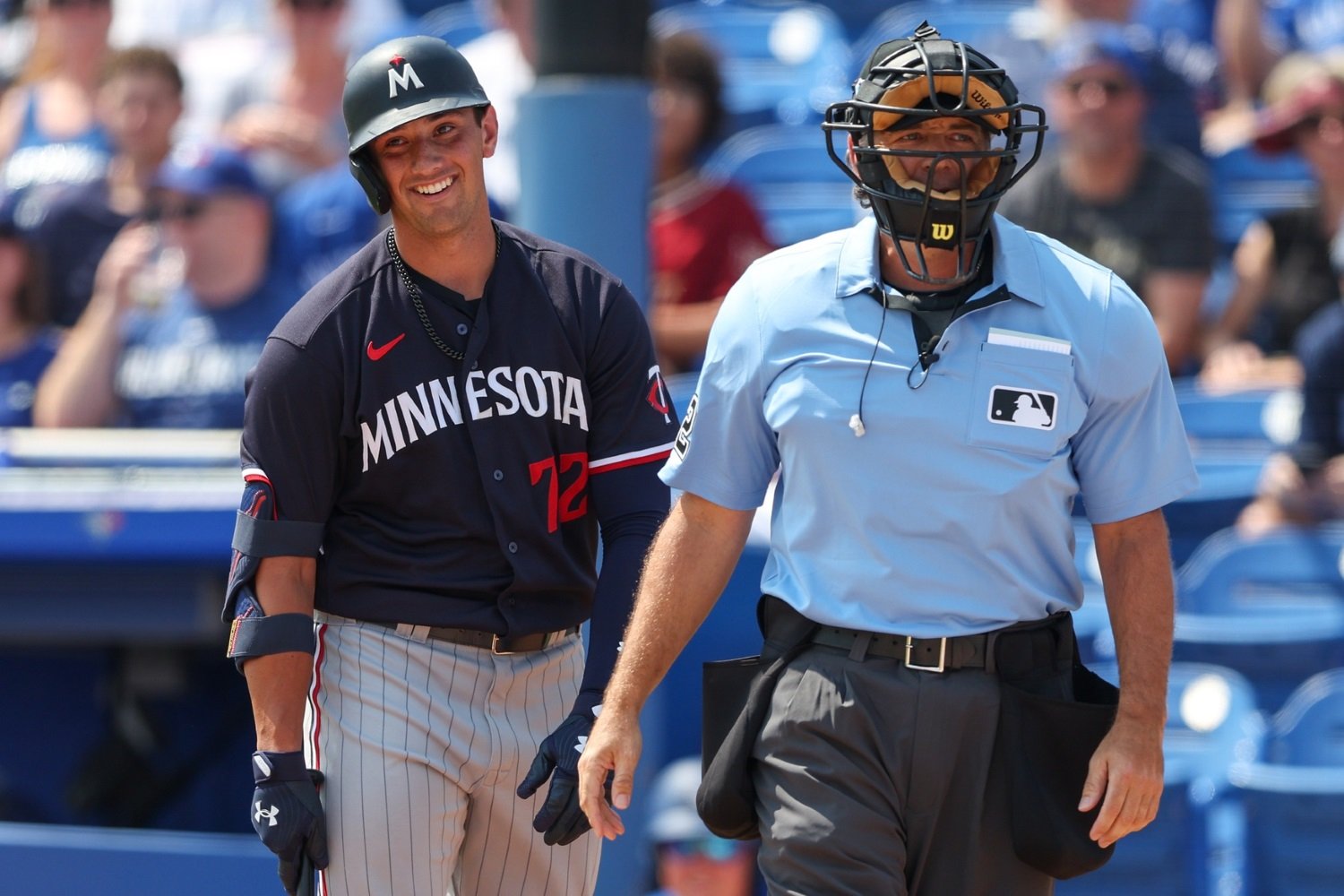 Brooks Lee has faithfully traversed the path the Twins laid out before him when he was selected eighth overall in the 2022 MLB Draft. His ready-made professional skill set (with few unique strengths and few real weaknesses) has guided him to the doorstep of the majors in two short professional seasons. To assess what an impactful 2024 Brooks Lee looks like, digging into his minor-league numbers, his scouting report, and skill set is a great jumping-off point. Lee is a switch-hitting shortstop whose swing looks more polished from the left side of the plate (more on this later). In a roughly 40-game sample at Triple A in 2023, Lee demonstrated many of the strengths that made him such a highly regarded prospect in his class. He managed a 76.3% contact rate (3.1% above league average), a 90.6 mph average exit velocity (3.2 mph above league average), and hit the ball at or above 95 mph 48% of the time (league average 36.2%). That’s a promising platform of bat-to-ball skills and quality of contact. There are some critical and inextricably linked questions that need answering when prognosticating Lee’s 2024 impact. Where is his playing time going to come from? What position will he play defensively? The answers will govern the magnitude of the value he can produce. Let’s start with playing time. There are two variables that will impact Lee’s 2024 playing time; injuries on the MLB roster, and his performance at Triple A. Lee had an uneven start to his time at St. Paul, but he had enough playing time at the level to see better stuff, get a clear understanding of adjustments that need to be made before working on them in the offseason. In a recent radio interview for MLB Network Radio, Thad Levine stated that ‘when he (Lee) tells us he’s ready to go, we’re going to get him up to the big leagues’. One possibility is Lee is crushing it at one end of the Green Line and forcing his way to the other. Another, more likely possibility is that Lee is given his first shot at the big leagues because of an injury. The 2023 Twins were infinitely more lucky than the 2022 team health-wise. Lee could follow the path of Edouard Julien and get short stints throughout the first half of the season, allowing for an adjustment period until his performance dictates he is in Minneapolis to stay. Defensively, it’s unlikely Lee plays shortstop for the Twins, barring an even more serious injury to Carlos Correa than the one that spoiled his 2023 campaign. Even then, Royce Lewis may slide over from third base. 'Yeah all over...he's gonna play short and second or third', relayed Twins manager Rocco Baldelli to reporters of Lee's defensive position this spring. While Lee has good instincts and defensive actions at the position, second or third base seem the likely fit. With the Twins seemingly keen on giving Lee a run at some defensive consistency, playing the majority of his defensive innings at second base (either via a Julien injury or a transition to first base for the Quebecois) seems the most likely. The good news is that Lee has the defensive profile (actions, quickness, arm) to be an upgrade at the position--at worst, above average. So what does Lee need to accomplish offensively to be deemed ‘ready’? Lee struck out at a 16.7% clip in Triple A (level average 22.4%), which is great, but he walked just 8.9% of the time (level average 12%; the automated strike zone was tiny). These rates help us arrive at our first area that needs polishing for Lee: his chase rate. Lee expanded the zone too much, chasing at a 34.7% rate (level average 27.1%). Despite Lee’s strong exit velocity and hard-hit numbers, he underperformed his expected rate stats at Triple A (.428 SLG, .468 xSLG). Lee will have to limit the amount he chases, particularly north and south in the strike zone, to prevent better pitchers from getting him into leveraged counts too easily. It’s also worth digging into Lee’s splits batting left versus right handed, with the caveat that his sample as a right-handed hitter at Triple A is too small to draw meaningful conclusions. EV Hit95+% Contact% Chase% xAVG xSLG as LHH 91.3 mph 52.9% 78.2% 33.8% .310 .531 as RHH 87.4 mph 26.1% 68.7% 38.2% .178 .203 Whew! Parsing Lee’s split down further to how he performed versus fastballs against left-handed and right-handed pitching is similarly illuminating. Lee received a steady diet of fastballs outside the strike zone as a right-handed hitter, which he went after, and often missed. He chased fastballs from right-handed pitchers at a 55% clip. This is where a high chase rate and good bat-to-ball skills coinciding can be dangerous. Lee chased and made poor quality contact against left-handers all too often in 2023. Improved selectivity as a right-handed hitter is an important developmental next step in 2024. The 95th-percentile impact for Lee in 2024 is a regular MLB starter who competes for AL Rookie of the Year. That outcome would reverberate beyond the Twins 2024 season, as he’d net the Twins a PPI draft pick right after the first round in 2025. While that outcome may seem unlikely, you could say the same about a thousand other player development stories. I think it’s fair to say that his progress through the minors has been slightly overlooked due to his perception as a ‘high-floor’ prospect, while his potential impact is overlooked due to a perceived lack of ceiling. Don’t overlook the value Brooks Lee can bring to the 2024 Twins; it’s significant.
 -
Brooks Lee is knocking on the door of the majors. What does a version of the 2024 season in which he makes a difference for a contending Twins team look like? Where is his defensive home? What's needed to round out his offensive profile? Let's dig in. Image courtesy of © Nathan Ray Seebeck-USA TODAY Sports Brooks Lee has faithfully traversed the path the Twins laid out before him when he was selected eighth overall in the 2022 MLB Draft. His ready-made professional skill set (with few unique strengths and few real weaknesses) has guided him to the doorstep of the majors in two short professional seasons. To assess what an impactful 2024 Brooks Lee looks like, digging into his minor-league numbers, his scouting report, and skill set is a great jumping-off point. Lee is a switch-hitting shortstop whose swing looks more polished from the left side of the plate (more on this later). In a roughly 40-game sample at Triple A in 2023, Lee demonstrated many of the strengths that made him such a highly regarded prospect in his class. He managed a 76.3% contact rate (3.1% above league average), a 90.6 mph average exit velocity (3.2 mph above league average), and hit the ball at or above 95 mph 48% of the time (league average 36.2%). That’s a promising platform of bat-to-ball skills and quality of contact. There are some critical and inextricably linked questions that need answering when prognosticating Lee’s 2024 impact. Where is his playing time going to come from? What position will he play defensively? The answers will govern the magnitude of the value he can produce. Let’s start with playing time. There are two variables that will impact Lee’s 2024 playing time; injuries on the MLB roster, and his performance at Triple A. Lee had an uneven start to his time at St. Paul, but he had enough playing time at the level to see better stuff, get a clear understanding of adjustments that need to be made before working on them in the offseason. In a recent radio interview for MLB Network Radio, Thad Levine stated that ‘when he (Lee) tells us he’s ready to go, we’re going to get him up to the big leagues’. One possibility is Lee is crushing it at one end of the Green Line and forcing his way to the other. Another, more likely possibility is that Lee is given his first shot at the big leagues because of an injury. The 2023 Twins were infinitely more lucky than the 2022 team health-wise. Lee could follow the path of Edouard Julien and get short stints throughout the first half of the season, allowing for an adjustment period until his performance dictates he is in Minneapolis to stay. Defensively, it’s unlikely Lee plays shortstop for the Twins, barring an even more serious injury to Carlos Correa than the one that spoiled his 2023 campaign. Even then, Royce Lewis may slide over from third base. 'Yeah all over...he's gonna play short and second or third', relayed Twins manager Rocco Baldelli to reporters of Lee's defensive position this spring. While Lee has good instincts and defensive actions at the position, second or third base seem the likely fit. With the Twins seemingly keen on giving Lee a run at some defensive consistency, playing the majority of his defensive innings at second base (either via a Julien injury or a transition to first base for the Quebecois) seems the most likely. The good news is that Lee has the defensive profile (actions, quickness, arm) to be an upgrade at the position--at worst, above average. So what does Lee need to accomplish offensively to be deemed ‘ready’? Lee struck out at a 16.7% clip in Triple A (level average 22.4%), which is great, but he walked just 8.9% of the time (level average 12%; the automated strike zone was tiny). These rates help us arrive at our first area that needs polishing for Lee: his chase rate. Lee expanded the zone too much, chasing at a 34.7% rate (level average 27.1%). Despite Lee’s strong exit velocity and hard-hit numbers, he underperformed his expected rate stats at Triple A (.428 SLG, .468 xSLG). Lee will have to limit the amount he chases, particularly north and south in the strike zone, to prevent better pitchers from getting him into leveraged counts too easily. It’s also worth digging into Lee’s splits batting left versus right handed, with the caveat that his sample as a right-handed hitter at Triple A is too small to draw meaningful conclusions. EV Hit95+% Contact% Chase% xAVG xSLG as LHH 91.3 mph 52.9% 78.2% 33.8% .310 .531 as RHH 87.4 mph 26.1% 68.7% 38.2% .178 .203 Whew! Parsing Lee’s split down further to how he performed versus fastballs against left-handed and right-handed pitching is similarly illuminating. Lee received a steady diet of fastballs outside the strike zone as a right-handed hitter, which he went after, and often missed. He chased fastballs from right-handed pitchers at a 55% clip. This is where a high chase rate and good bat-to-ball skills coinciding can be dangerous. Lee chased and made poor quality contact against left-handers all too often in 2023. Improved selectivity as a right-handed hitter is an important developmental next step in 2024. The 95th-percentile impact for Lee in 2024 is a regular MLB starter who competes for AL Rookie of the Year. That outcome would reverberate beyond the Twins 2024 season, as he’d net the Twins a PPI draft pick right after the first round in 2025. While that outcome may seem unlikely, you could say the same about a thousand other player development stories. I think it’s fair to say that his progress through the minors has been slightly overlooked due to his perception as a ‘high-floor’ prospect, while his potential impact is overlooked due to a perceived lack of ceiling. Don’t overlook the value Brooks Lee can bring to the 2024 Twins; it’s significant. View full article
-
The Twins drafted collegiate right-handed pitcher Tanner Hall in the 4th round in 2023. Hall was ranked as the 98th overall prospect in the draft class, on our Consensus Draft Board. What can Twins fans expect from him in 2024? Image courtesy of Thieres Rabelo The Twins leaned into one of the strengths of the 2023 class with their first crop of picks, taking prep players Walker Jenkins, Charlee Soto, and Brandon Winokur with three of their first four selections. With their fourth round selection, they continued the Southern Miss-to-Minneapolis pipeline by selecting an incredibly productive college pitcher. Tanner Hall signed for $510,000, $76,000 under slot. Minnesota has grown a reputation for successfully developing mid- to late-round college arms in recent seasons, through a combination of adding velocity, tweaking pitch mixes, and other small but important upgrades. Hall bucks the trend slightly, as he was an incredibly successful pitcher in college, such that he was a consensus All-American who also happened to win a Gold Glove at his position. A converted reliever, Hall pitched 112 innings in 2023, managing a 2.48 ERA, striking out 124 and walking just 33. A 27% strikeout rate combined with a 7.3% walk rate. He was 10th among all Div. I pitchers in strikeouts. Yet, the Twins will probably feel there is ample fruit left on the tree, so to speak. Why? Let’s dig into what Hall offers on the mound. Hall’s primary offerings in college were a fastball (88-91 mph) with a ton of sink and a devastating changeup (low 80s), one of the best in the entire draft class, with a ton of tumbling action. Hall also throws a sweeping slider (low 80s) which he leaned on less in college. That pitch has plenty of promise when it’s on, but can definitely use refinement if he’s going to stick as a starter. Despite not being a prototypical starter’s build (6-foot-1, 190 pounds), Hall has an efficient, repeatable delivery with a loose, quick arm from a three-quarter slot. It’s efficient and repeatable. The consistency of Hall’s performance in 2022 and 2023 at one of the more consistent programs in the country speaks for itself. Like many of the Twins pitchers drafted in 2023, Hall didn’t make his debut right away, instead spending time at instructs with other pitching prospects. Like Soto, Dylan Questad, and others, 2024 will be our first extended look at what the Twins have been able to accomplish with an initial developmental focus. There will be plenty to monitor in 2024. Can the Twins add a little velocity to take his fastball from the 89-91 mph range to the 92-94 mph range? I’d bet on the affirmative. I’d also imagine the shape and consistency of Hall’s sweeper will be another area of focus right off the bat. Hall has a great developmental platform with such pinpoint command and control. I’d expect him to find some early success in the lower levels of the minors. This entire crop of new Twins pitching prospects ought to be fun to follow in 2024. What are your thoughts on Tanner Hall? Which Twins draftees are you most excited to follow in 2024? View full article
-
2024 Minnesota Twins Prospect Previews: Tanner Hall
Jamie Cameron posted an article in Minor Leagues
 The Twins leaned into one of the strengths of the 2023 class with their first crop of picks, taking prep players Walker Jenkins, Charlee Soto, and Brandon Winokur with three of their first four selections. With their fourth round selection, they continued the Southern Miss-to-Minneapolis pipeline by selecting an incredibly productive college pitcher. Tanner Hall signed for $510,000, $76,000 under slot. Minnesota has grown a reputation for successfully developing mid- to late-round college arms in recent seasons, through a combination of adding velocity, tweaking pitch mixes, and other small but important upgrades. Hall bucks the trend slightly, as he was an incredibly successful pitcher in college, such that he was a consensus All-American who also happened to win a Gold Glove at his position. A converted reliever, Hall pitched 112 innings in 2023, managing a 2.48 ERA, striking out 124 and walking just 33. A 27% strikeout rate combined with a 7.3% walk rate. He was 10th among all Div. I pitchers in strikeouts. Yet, the Twins will probably feel there is ample fruit left on the tree, so to speak. Why? Let’s dig into what Hall offers on the mound. Hall’s primary offerings in college were a fastball (88-91 mph) with a ton of sink and a devastating changeup (low 80s), one of the best in the entire draft class, with a ton of tumbling action. Hall also throws a sweeping slider (low 80s) which he leaned on less in college. That pitch has plenty of promise when it’s on, but can definitely use refinement if he’s going to stick as a starter. Despite not being a prototypical starter’s build (6-foot-1, 190 pounds), Hall has an efficient, repeatable delivery with a loose, quick arm from a three-quarter slot. It’s efficient and repeatable. The consistency of Hall’s performance in 2022 and 2023 at one of the more consistent programs in the country speaks for itself. Like many of the Twins pitchers drafted in 2023, Hall didn’t make his debut right away, instead spending time at instructs with other pitching prospects. Like Soto, Dylan Questad, and others, 2024 will be our first extended look at what the Twins have been able to accomplish with an initial developmental focus. There will be plenty to monitor in 2024. Can the Twins add a little velocity to take his fastball from the 89-91 mph range to the 92-94 mph range? I’d bet on the affirmative. I’d also imagine the shape and consistency of Hall’s sweeper will be another area of focus right off the bat. Hall has a great developmental platform with such pinpoint command and control. I’d expect him to find some early success in the lower levels of the minors. This entire crop of new Twins pitching prospects ought to be fun to follow in 2024. What are your thoughts on Tanner Hall? Which Twins draftees are you most excited to follow in 2024?
 -
Emmanuel Rodríguez has cemented himself as a top-75 global prospect prior to the 2024 season. What’s next for ‘Emma’ and his potent combination of patience and power at the plate? Image courtesy of Thieres Rabelo There might not be a louder total tool set in the Twins farm system than that of Emmanuel Rodriguez. That said, he has plenty of questions left to answer. Age: 20 (DOB: 02/28/2003) 2023 Stats (A+): 455 PA, .240/.400/.463, 13 2B, 16 HR, 20 SB, 145 wRC+ ETA: 2025 2023 Ranking: 3 National Top 100 Rankings BA: 53 | MLB: 42 | ATH: 47 | BP: 62 What’s to Like After joining the Twins in the 2019 international signing period for a $2.5-million signing bonus, Rodríguez has vaulted himself onto top prospect lists, consistently occupying spaces between 40th and 75th overall. Bursting onto the scene at Low-A in 2022, Rodríguez turned heads with a gaudy 196 wRC+ in 47 games, before suffering a season-ending knee surgery in June. The Twins were confident about his availability for the 2023 season, and he produced quite the encore at High-A Cedar Rapids. In 2023, Rodríguez turned the corner from intriguing to legitimate. After an atrocious start at Cedar Rapids, he slugged his way to a .240/.400/.468 line, with 16 home runs and 20 steals, all while maintaining a walk rate north of 20%. Rodríguez put up a 145 wRC+ in his age-20 season at High-A. That’s some production. So, what are the skills behind these data? Incredible bat speed, for one. Rodríguez’s 90th-percentile exit velocity in 2023 was 109 mph, his max 117 mph. That’s ‘up there’ with the hardest hitters in MLB. He also possesses an exceptional eye at the plate. Rodríguez chased just 15% of pitches outside the strike zone in 2023. That’s Edouard Julien and Juan Soto territory. It’s hard not to be tantalized by that combination of power and swing decisions. What’s Left to Work On What about the final element of the big three of hitting, bat-to-ball skills? This is where Rodríguez gives you pause, or at least tempers expectations. In 2023, the Dominican slugger posted a Swing% of just 36.7%--borderline passive. Combine that with a Contact% of just 69%, (not that nice, really), and you have a potentially dangerous cocktail: an otherwise excellent hitter who doesn’t swing that much, and misses quite a bit when he does. That all added up to a 29.5% strikeout rate, which is concerning for a prospect about to make the challenging jump to Double A. Rodríguez saw a whopping 4.29 pitches per plate appearance in 2023. Navigating the ‘patience versus passivity’ tension will likely help us zero in on what his eventual ceiling is. As Nick Nelson noted in January, if Rodríguez (like Julien) can become more aggressive early in counts to bypass some of the swing-and-miss in his game, look out. What’s Next: Recently acquired Gabriel Gonzalez should fill the void left in the Cedar Rapids outfield by Rodríguez, who ought to start 2024 at Double-A Wichita. They form a beautifully asymmetrical pair of prospects and (with Walker Jenkins) make the outfield the position of strength in a solid Twins farm system. The transition from High A to Double A is often tough, and I’d expect Rodríguez to have some growing pains in 2024 as he faces better stuff and more consistent strike throwers. The power, on base skills, and the solid speed provide a higher floor than one might associate with a prospect like 'Emma'. If he can settle the patience versus passivity debate, you can look forward to locking him into your big-league lineup cards sooner than later. Check back Monday to read about our pick for No. 2 on the list! For now, let's hear your thoughts on Emmanuel Rodríguez. Is he the real deal, or will his flaws be exploited in Double A? View full article
-
Twins Daily 2024 Top Prospect: #3 Emmanuel Rodriguez, OF
Jamie Cameron posted an article in Minor Leagues
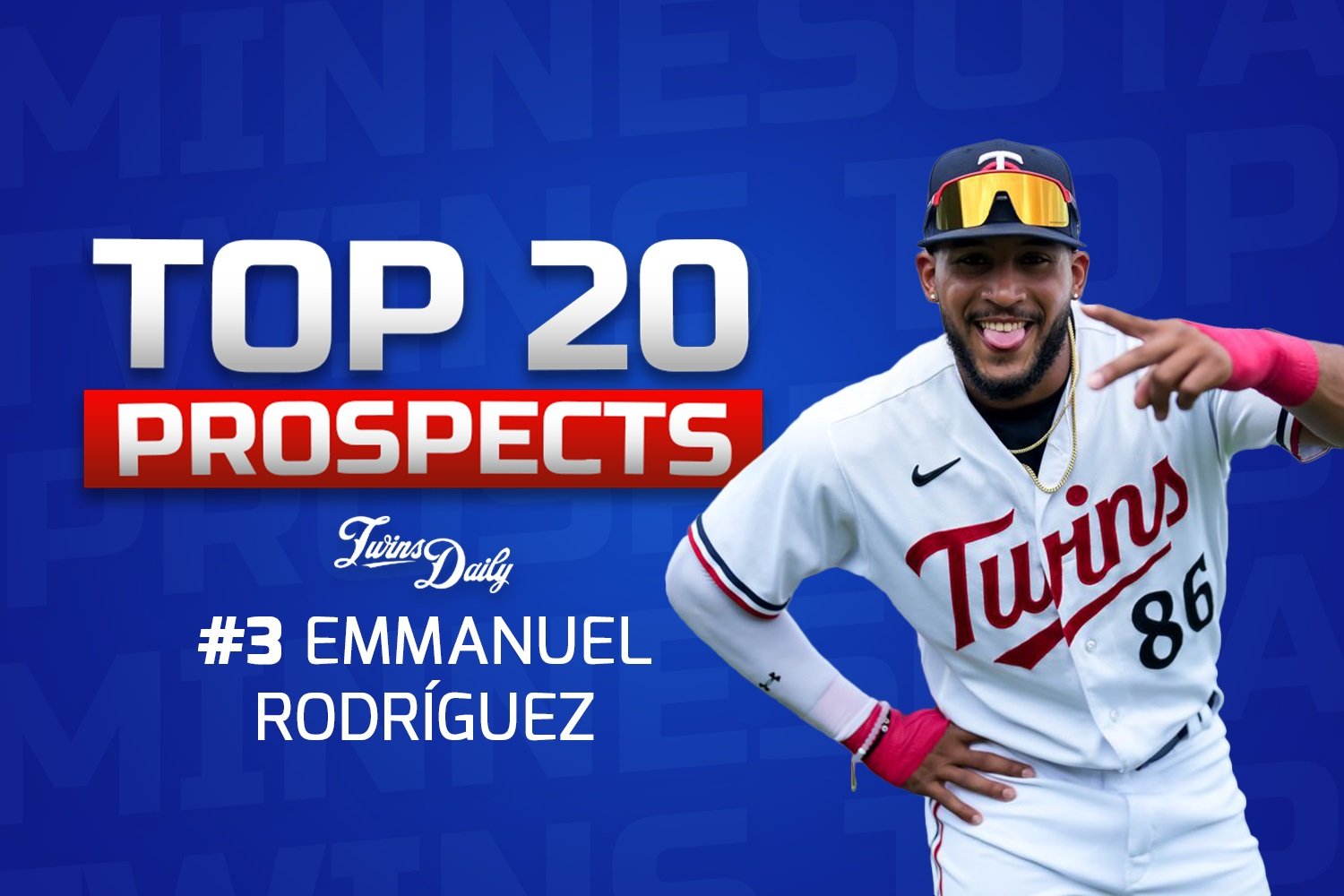 There might not be a louder total tool set in the Twins farm system than that of Emmanuel Rodriguez. That said, he has plenty of questions left to answer. Age: 20 (DOB: 02/28/2003) 2023 Stats (A+): 455 PA, .240/.400/.463, 13 2B, 16 HR, 20 SB, 145 wRC+ ETA: 2025 2023 Ranking: 3 National Top 100 Rankings BA: 53 | MLB: 42 | ATH: 47 | BP: 62 What’s to Like After joining the Twins in the 2019 international signing period for a $2.5-million signing bonus, Rodríguez has vaulted himself onto top prospect lists, consistently occupying spaces between 40th and 75th overall. Bursting onto the scene at Low-A in 2022, Rodríguez turned heads with a gaudy 196 wRC+ in 47 games, before suffering a season-ending knee surgery in June. The Twins were confident about his availability for the 2023 season, and he produced quite the encore at High-A Cedar Rapids. In 2023, Rodríguez turned the corner from intriguing to legitimate. After an atrocious start at Cedar Rapids, he slugged his way to a .240/.400/.468 line, with 16 home runs and 20 steals, all while maintaining a walk rate north of 20%. Rodríguez put up a 145 wRC+ in his age-20 season at High-A. That’s some production. So, what are the skills behind these data? Incredible bat speed, for one. Rodríguez’s 90th-percentile exit velocity in 2023 was 109 mph, his max 117 mph. That’s ‘up there’ with the hardest hitters in MLB. He also possesses an exceptional eye at the plate. Rodríguez chased just 15% of pitches outside the strike zone in 2023. That’s Edouard Julien and Juan Soto territory. It’s hard not to be tantalized by that combination of power and swing decisions. What’s Left to Work On What about the final element of the big three of hitting, bat-to-ball skills? This is where Rodríguez gives you pause, or at least tempers expectations. In 2023, the Dominican slugger posted a Swing% of just 36.7%--borderline passive. Combine that with a Contact% of just 69%, (not that nice, really), and you have a potentially dangerous cocktail: an otherwise excellent hitter who doesn’t swing that much, and misses quite a bit when he does. That all added up to a 29.5% strikeout rate, which is concerning for a prospect about to make the challenging jump to Double A. Rodríguez saw a whopping 4.29 pitches per plate appearance in 2023. Navigating the ‘patience versus passivity’ tension will likely help us zero in on what his eventual ceiling is. As Nick Nelson noted in January, if Rodríguez (like Julien) can become more aggressive early in counts to bypass some of the swing-and-miss in his game, look out. What’s Next: Recently acquired Gabriel Gonzalez should fill the void left in the Cedar Rapids outfield by Rodríguez, who ought to start 2024 at Double-A Wichita. They form a beautifully asymmetrical pair of prospects and (with Walker Jenkins) make the outfield the position of strength in a solid Twins farm system. The transition from High A to Double A is often tough, and I’d expect Rodríguez to have some growing pains in 2024 as he faces better stuff and more consistent strike throwers. The power, on base skills, and the solid speed provide a higher floor than one might associate with a prospect like 'Emma'. If he can settle the patience versus passivity debate, you can look forward to locking him into your big-league lineup cards sooner than later. Check back Monday to read about our pick for No. 2 on the list! For now, let's hear your thoughts on Emmanuel Rodríguez. Is he the real deal, or will his flaws be exploited in Double A?
 -
Draft tandem Jeremy Nygaard and JD Cameron team up for a podcast to discuss prospects on their way to the big leagues and the MLB draft, produced by Theo Tollefson Image courtesy of Thieres Rabelo In episode 23 of Destination: The Show, Jeremy and JD are joined by Ben Badler of Baseball America. Ben talks about his journey in the baseball industry and how he ended up covering the international signing period at BA. Ben details the joys and challenges of covering baseball on Latin America, in addition to breaking down the recent adds of the Brewers, Cubs, and Twins, and answering listener questions. 0:00 Intro 0:55 Ben Badler joins the show 5:52 International signing period 9:42 July signing period is now January 15:20 Scouting the draft prospects 20:45 Ben's thoughts on the recent Athletic article 27:00 International Big Board 35:58 How does this most recent international group compare to recent classes? 38:10 Teams and their "approach" to international free agency 43:44 Brewers Notables 50:30 Cubs Notables 54:41 Twins Notables 1:03:09 Final thoughts You can support the show by downloading it from wherever you get your podcasts, including I-Tunes and Spotify. If you enjoy the content, consider leaving us a five star rating and review in addition to sharing or retweeting DTS related content. You can follow us on Twitter @DTS_POD1, @Jeremynygaard, @J_D_Cameron, and @TheoforeTollef1. You can also find full episodes and clips of our shows on our YouTube page @DestinationTheShow. View full article
-
 In episode 23 of Destination: The Show, Jeremy and JD are joined by Ben Badler of Baseball America. Ben talks about his journey in the baseball industry and how he ended up covering the international signing period at BA. Ben details the joys and challenges of covering baseball on Latin America, in addition to breaking down the recent adds of the Brewers, Cubs, and Twins, and answering listener questions. 0:00 Intro 0:55 Ben Badler joins the show 5:52 International signing period 9:42 July signing period is now January 15:20 Scouting the draft prospects 20:45 Ben's thoughts on the recent Athletic article 27:00 International Big Board 35:58 How does this most recent international group compare to recent classes? 38:10 Teams and their "approach" to international free agency 43:44 Brewers Notables 50:30 Cubs Notables 54:41 Twins Notables 1:03:09 Final thoughts You can support the show by downloading it from wherever you get your podcasts, including I-Tunes and Spotify. If you enjoy the content, consider leaving us a five star rating and review in addition to sharing or retweeting DTS related content. You can follow us on Twitter @DTS_POD1, @Jeremynygaard, @J_D_Cameron, and @TheoforeTollef1. You can also find full episodes and clips of our shows on our YouTube page @DestinationTheShow.
 -
2024 Prospect Previews: Brandon Winokur
Jamie Cameron replied to Jamie Cameron's topic in Twins Minor League Talk
Two quick comments: 1) 'Let's take a look at what prompted them', was actually an editorial choice. I didn't write that. 2) My board is a compilation of 8-10 industry boards. Winokur was a very interesting prospect as he had ranking ranges all over the place, and there tends to be some clustering with top 150 ranked players. Winokur had rankings as high as top 75 on the inputs I use. It's not a jab at the Twins evaluation of his talent (I'm extremely confident in that), it's more a context setting sentence. -
2024 Prospect Previews: Brandon Winokur
Jamie Cameron replied to Jamie Cameron's topic in Twins Minor League Talk
Yeah, I mean, in general, that very tall players are often more susceptible to velo at the top of the zone, as they have longer limbs and can have a longer swing. I think Winokur's swing is pretty direct, so I'm speculating more about how he'll be tested as pitching he faces improves. -
With their third round pick in the 2023 draft, the Twins dipped back into a loaded prep class, landing athletic prep player Brandon Winokur. What can Twins fans expect from Winokur in 2024? Let's dig in. Image courtesy of Thieres Rabelo The Twins took Brandon Winokur 82nd in the 2023 Draft, although he was (on our consensus board) the 124th prospect in the draft class. Let's take a look at what prompted them to take him above that expected spot. Leaning into one of the strengths of the 2023 draft at the top of their class, the Twins grabbed Walker Jenkins and Charlee Soto with their first two selections. After taking high-floored college infielder Luke Keaschall in the second round, they circled back to an incredibly deep prep class in the third round to take Winokur, a 6-foot-5, 210-pound outfielder. Though more common parlance in college football recruiting, it might be more accurate to list Winokur simply as an ‘athlete’. I mean that as a compliment, rather than a jab at defensive uncertainty. Heading into the draft, Winokur raised his stock with a performance for the ages at the still-new Draft Combine, sending baseball after baseball into orbit. He had the second-hardest-hit ball at the event (113.5 mph), and the hardest average exit velocity of any player with at least a nine-batted ball sample (108.3 mph). Coming into the draft, scouting reports on the UCLA commit centered on his extraordinary athleticism. A two-way player in high school (somewhat reminiscent of Matt Wallner), Winokur was regularly pumping 96-mph fastballs his senior year, in addition to manning shortstop for Edison High School. Winokur has easy plus power now, with a chance to be double-plus when it’s all said and done. His ceiling will be determined by his hit tool. As you’d imagine for a hitter of his size, maintaining a swing that is short and direct to the ball with consistency is likely to be a challenge, particularly against elite velocity up in the zone. Winokur moves extremely well for such a large human being (evidenced by his use at shortstop and in center field), and should be at least average defensively with a plus arm, so power is the carrying tool, but certainly not the only one. The Twins famously benefited from a $2.3-million bump to their bonus pool from moving up in the inaugural draft lottery. Having the fifth-most money to spend overall helped them find leverage within an uncommonly strong prep class. They pried Winokur away from his college commitment with a $1.5-million signing bonus (a handsome bump from that pick's $859,700 slot allotment). Winokur got a 17-game taste of pro ball in Fort Myers in the FCL after signing, and had a promising start. He put together a .288/.338/.545 line, with four home runs and five doubles to go with 23 strikeouts and just four walks--pretty much as advertised. The Twins elected not to move Winokur up a level at the culmination of the FCL season. There will be plenty to monitor in 2024. Can he develop a more selective approach at the plate? Work to close holes in his swing? Find a consistent defensive home? Winokur will likely start his 2024 season in Fort Myers. I’d bet he’s one of the most fun new Twins prospects to track this season. Expect big power, expect plenty of strikeouts, and expect to be patient. Winokur is a high-risk, high-reward prospect. When a player with his raw athleticism and toolset clicks, it’s spectacular viewing. It rarely happens right away. What are your thoughts on Brandon Winokur? How do you expect him to fare in 2024? View full article
-
 The Twins took Brandon Winokur 82nd in the 2023 Draft, although he was (on our consensus board) the 124th prospect in the draft class. Let's take a look at what prompted them to take him above that expected spot. Leaning into one of the strengths of the 2023 draft at the top of their class, the Twins grabbed Walker Jenkins and Charlee Soto with their first two selections. After taking high-floored college infielder Luke Keaschall in the second round, they circled back to an incredibly deep prep class in the third round to take Winokur, a 6-foot-5, 210-pound outfielder. Though more common parlance in college football recruiting, it might be more accurate to list Winokur simply as an ‘athlete’. I mean that as a compliment, rather than a jab at defensive uncertainty. Heading into the draft, Winokur raised his stock with a performance for the ages at the still-new Draft Combine, sending baseball after baseball into orbit. He had the second-hardest-hit ball at the event (113.5 mph), and the hardest average exit velocity of any player with at least a nine-batted ball sample (108.3 mph). Coming into the draft, scouting reports on the UCLA commit centered on his extraordinary athleticism. A two-way player in high school (somewhat reminiscent of Matt Wallner), Winokur was regularly pumping 96-mph fastballs his senior year, in addition to manning shortstop for Edison High School. Winokur has easy plus power now, with a chance to be double-plus when it’s all said and done. His ceiling will be determined by his hit tool. As you’d imagine for a hitter of his size, maintaining a swing that is short and direct to the ball with consistency is likely to be a challenge, particularly against elite velocity up in the zone. Winokur moves extremely well for such a large human being (evidenced by his use at shortstop and in center field), and should be at least average defensively with a plus arm, so power is the carrying tool, but certainly not the only one. The Twins famously benefited from a $2.3-million bump to their bonus pool from moving up in the inaugural draft lottery. Having the fifth-most money to spend overall helped them find leverage within an uncommonly strong prep class. They pried Winokur away from his college commitment with a $1.5-million signing bonus (a handsome bump from that pick's $859,700 slot allotment). Winokur got a 17-game taste of pro ball in Fort Myers in the FCL after signing, and had a promising start. He put together a .288/.338/.545 line, with four home runs and five doubles to go with 23 strikeouts and just four walks--pretty much as advertised. The Twins elected not to move Winokur up a level at the culmination of the FCL season. There will be plenty to monitor in 2024. Can he develop a more selective approach at the plate? Work to close holes in his swing? Find a consistent defensive home? Winokur will likely start his 2024 season in Fort Myers. I’d bet he’s one of the most fun new Twins prospects to track this season. Expect big power, expect plenty of strikeouts, and expect to be patient. Winokur is a high-risk, high-reward prospect. When a player with his raw athleticism and toolset clicks, it’s spectacular viewing. It rarely happens right away. What are your thoughts on Brandon Winokur? How do you expect him to fare in 2024?
 -
What are the Twins Getting in Darren Bowen?
Jamie Cameron replied to Jamie Cameron's topic in Twins Minor League Talk
So it's funny that you mention that. As a general rule, I think disregarding outcomes for college players is a good way to go (especially pitchers). The offensive environment in college is really bloated. -
What are the Twins Getting in Darren Bowen?
Jamie Cameron replied to Jamie Cameron's topic in Twins Minor League Talk
Not sure of the level, but sure they'll give him a chance to start -
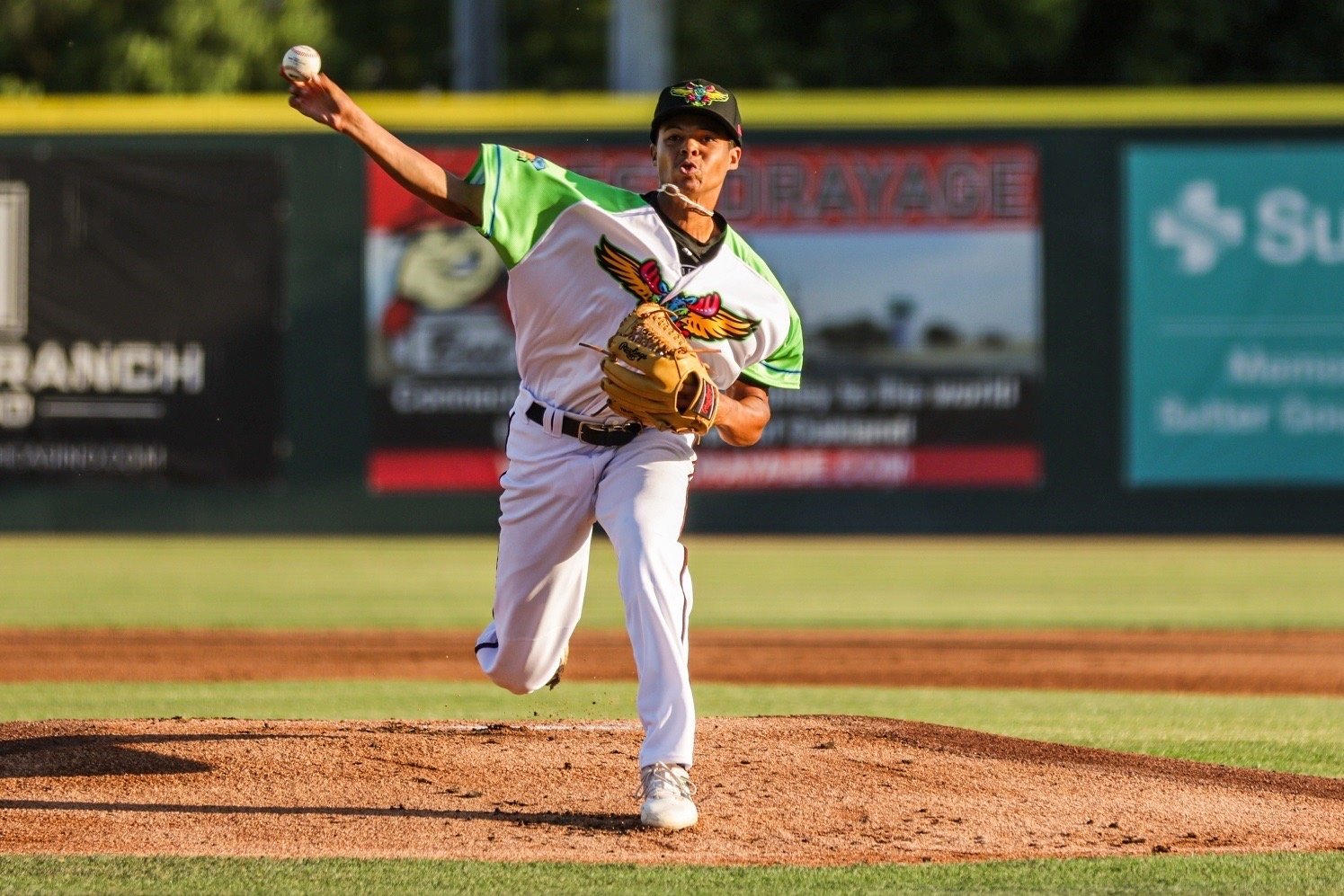 The Twins parted company with their longest tenured player, Jorge Polanco on Monday night in a trade with the Seattle Mariners. Darren Bowen was the pitching prospect portion of the four-player return from the Mariners. Who is he? What does he offer as a prospect? Bowen, 23, is a right-handed pitcher who was drafted by the Mariners in the 13th round of the 2022 Draft out of UNC Pembroke. You might remember the 2022 class as one in which the Twins have found considerable success drafting collegiate pitchers from small schools (Cory Lewis and Zebby Matthews, for example). The Twins' 13th-round pick was C.J. Culpepper, who has since ascended to being a top-10 prospect in the organization. Sources with the team confirmed that Bowen was an arm the Twins were weighing alongside Culpepper, before the Mariners nabbed him later in that round. At 6’3", 180 lbs., Bowen draws rave reviews for his athleticism. Bowen’s arsenal is headlined by an above-average fastball with some interesting characteristics. The pitch sits 92-95 mph. My guess, given their past success with adding velocity, is that the Twins feel like they can ensure it sits at the high end of that range. The Mariners' performance department felt, based on data and testing done in their lab, that Bower was the best athlete in their system, pitcher or position player. His fastball has up to 19 inches of induced vertical break, close to elite vertical movement. I’d bet one of Bowen’s initial developmental goals with the Twins is fastball command, as the pitch will play best at the top of the strike zone. Bowen’s primary breaking ball is a sweepy slider, which he throws 80-84 mph and which already grades out as above-average. Bowen’s arm slot is such that a sweeper will play well with his fastball, so don’t be surprised if the team tweaks his slider into a full-on sweeper and attempts to maximize the horizontal movement it generates. Additionally, Bowen has a changeup that’s probably fair to deem a developmental pitch currently. It sits 84-87 mph with some tumble, but needs refinement in both control and command. Team sources confirmed that the Twins are considering adding a sinker to Bowen’s arsenal, or building out the nascent one he has. That's notable, given that league-wide, the pitch posted its first positive run value in several seasons. (Anthony DeSclafani and Justin Topa also have sinkers in their pitching repertoires.) So what did this amount to for Bowen in his debut professional season? He pitched in 19 games (15 starts) for the Mariners at Low-A Modesto, accruing 55 2/3 innings. He managed a 3.88 ERA, 3.08 FIP, struck out 59, walked 25, and surrendered just two home runs. Opposing hitters really struggled to generate consistent hard contact against Bowen. If he can refine his control (10.9% walk rate), there’s plenty to be excited about. Labeling Bowen a ‘throw-in’ to this trade does him and the Twins a disservice. He was a calculated acquisition for the team, who will likely slot into Twins prospect lists somewhere between 20 and 30. It’s fair to say he carries reliever risk. If the development of a third pitch is successful, I’d expect the Twins to give him a chance to start, if it doesn't, expect the team to be more aggressive with him in the coming seasons. Bowen has the arm talent and under-the-hood pitch data to be a buzzy industry name on the back of his strong professional debut. That’s exactly the kind of clay you’d target for your development staff to mold. Research assistance provided by TruMedia
 -
Great read, Cody.
-
Darren Bowen is a pitching prospect the Twins received from the Mariners as part of the Jorge Polanco trade on Monday night. What does his first MiLB season tell us? How might the Twins tweak his pitch mix? Let's dig in. Image courtesy of Chris Estrade/Modesto Nuts The Twins parted company with their longest tenured player, Jorge Polanco on Monday night in a trade with the Seattle Mariners. Darren Bowen was the pitching prospect portion of the four player return from the Mariners. Who is he? What does he offer as a prospect? Let’s dig in. Darren Bowen is a right-handed pitcher who was drafted by the Mariners in the 13th round of the 2022 draft out of UNC Pembroke. You might remember the 2022 draft class as one in which the Twins have found considerable success drafting collegiate pitchers from small schools (Cory Lewis and Zebby Matthews, for example). The Twins 13th round pick in 2022 was C.J. Culpepper, who has since ascended to being a top ten prospect in the organization. Sources with the team confirmed that Bowen was an arm the Twins were weighing alongside Culpepper before he was taken by the Mariners later that round in 2022. At 6’3, 180 lbs, Bowen draws rave reviews for his athleticism. Bowen’s arsenal is headlined by an above average fastball with some interesting characteristics. The pitch sits 92-95 mph. My guess, given their past success with adding velocity, is the Twins feel like they can ensure it sits at the high end of that range. Bowen’s fastball has up to 19 inches of induced vertical break, close to elite vertical movement. I’d bet one of Bowen’s initial developmental goals with the Twins is fastball command, as the pitch will play best at the top of the strike zone. Bowen’s primary breaking ball is a sweepy slider which he throws 80-84 mph that already grades out as above average. Bowen’s arm slot is such that a sweeper will play well with his fastball, so don’t be surprised if the team tweaks his slider into a full on sweeper and attempts to maximize the horizontal movement it generates. Additionally, Bowen has a changeup that’s probably fair to deem a developmental pitch currently. It sits 84-87 mph with some tumble but needs refinement in both control and command. Team sources confirmed that the Twins are considering adding a sinker to Bowen’s arsenal. Notable, given that league-wide, the pitch posted its first positive run value in several seasons (DeSclafani and Topa also have sinkers in their pitching repertoires). So what did this amount to for Bowen his debut professional season in 2023? Bowen pitched in 19 games (15 starts) for the Mariners at Low-A Modesto, accruing 55.2 innings. He managed a 3.88 ERA, 3.08 FIP, struck out 59, walked 25, and surrendered just two home runs. Opposing hitters really struggled to generate consistent hard contact against Bowen. If he can refine his control (10.9 BB%) there’s plenty to be excited about. Labeling Bowen a ‘throw in’ to this trade does him and the Twins a disservice. He was a calculated acquisition for the team who will likely slot into Twins prospect lists between 20-30. It’s fair to say he carries reliever risk. If the development of a third pitch is successful, I’d expect the Twins to give him a chance to start, if it doesn't, expect the team to be more aggressive with him in the coming seasons. Bowen has the arm talent and under the hood pitch data to be a buzzy industry name on the back of his strong professional debut. That’s exactly the kind of clay you’d target for your development staff to mold. Research assistance provided by TruMedia View full article
-
Gabriel González was the most valuable piece the Twins acquired from the Mariners on Monday night. What does his minor-league production and data tell us about his offensive profile? Let's dig in. Image courtesy of Everett AquaSox The Twins parted company with their longest tenured player, Jorge Polanco, on Monday night, in a trade with the Seattle Mariners. Gabriel Gonzalez was one half of the prospect portion of the four-player return from the Mariners. Who is he? What does he offer as a prospect? González signed with the Mariners as an international prospect out of Venezuela, for $1.3 million. He reached Low-A Modesto in his first full season in the US, as an 18-year-old, before repeating the level at the beginning of 2023. Gonzalez dominated Low A in his second go-around, eventually earning a promotion to High-A Everett in the second half of the season. Gonzalez is listed at 5’10, 165 lbs on MiLB.com, but that’s no longer reflective of his physique. A thickly-built outfielder, Gonzalez has quick hands and generates high-quality contact, despite a slightly noisy operation at the plate. In 2023, González knocked the stuffing out of Low-A pitching, to the tune of a .348/.403/.530 (.933) with 9 home runs and 19 doubles in 73 games. The transition to High A was a difficult adjustment for González (let’s remember, he was fully two years younger than a typical High-A hitter). In 43 games, he slashed .215/.290/.387, albeit with another 9 home runs and 4 doubles for the AquaSox. Gonzalez doesn’t walk much (6.4 BB%), but doesn’t strike out much either (16.6 K%). When examining his quality of contact, Aram Leighton points out a few key data points that are worth monitoring for Gonzalez in 2024. There’s a limit to the data we (at Twins Daily) have available on González (we’re missing EV and performance against specific pitches, most notably). While the exit velocity is notable, it’s worth considering González’s age as a factor here. Prospects typically add around 4 mph to their average exit velocity between the ages of 18 and 22, and around 3.5 mph to their 90th percentile exit velocity. While González’s 90th-percentile numbers may not jump off the page, I’d argue there’s still room for growth, and the Twins probably like what they see given his age and level. Looking at González’s approach at the plate, it’s easy to distill the factor most likely to drive his success or struggles with the Twins: swing decisions. González has good hand-eye coordination, evidenced by a cromulent contact rate at Low A (74.9%) that didn’t really suffer when he moved to High A (73.9%). What’s noticeable about González is how easily he gives up on plate appearances when he falls behind in the count. He’s already worked to improve his swing decisions since coming Stateside, but is a free swinger, taking a hack at 55.1% of pitches in 2023. To put this in perspective with an extreme counter example, Edouard Julien swung at 36.6% of pitches in 2023. González’s swing decisions are much more conservative in hitter's counts (48.3 Swing%) than pitcher's counts (63.3 Swing%). That will undoubtedly be an area of focus for the Twins, as finding consistent success when pitchers have leverage will be an extremely tough ask. Backing up to consider his overall profile, González is carried by two tools currently, a plus arm (12 outfield assists in 2023), and power. Defensively, given his limited athleticism, it seems González is destined for a corner outfield spot, which will make refining his hit tool and swing decisions a must if he is to progress. It’s worth digging into his platoon splits and spray chart to make some additional observations. González has a relatively mild platoon split. He’s a lefty masher, managing a .916 OPS against southpaws in 2023 (compared to .803 versus right-handed pitching). His approach and contact are aligned regardless of pitcher handedness. There’s not enough there to suggest that platooning will be a significant issue for him. Looking at González’s spray chart, it’s notable that the majority of his home runs in 2023 are to the pull side, a tendency the Twins favor in right-handed hitters. It's also worth noting that his teammates in A-ball bestowed upon him the sobriquet El Dron, in honor of the ruthless efficiency of his swing. That's a guy who sticks in the lineup, just as La Regadera did. González was ranked 79th by MLB Pipeline on their recently-published top 100 prospects. While González hasn’t appeared on other lists (neither Baseball America nor Baseball Prospectus included him), it’s fair to say that he’s a consensus top-125 prospect in baseball and offers comparable value to Jorge Polanco on his own. Research assistance provided by TruMedia View full article
-
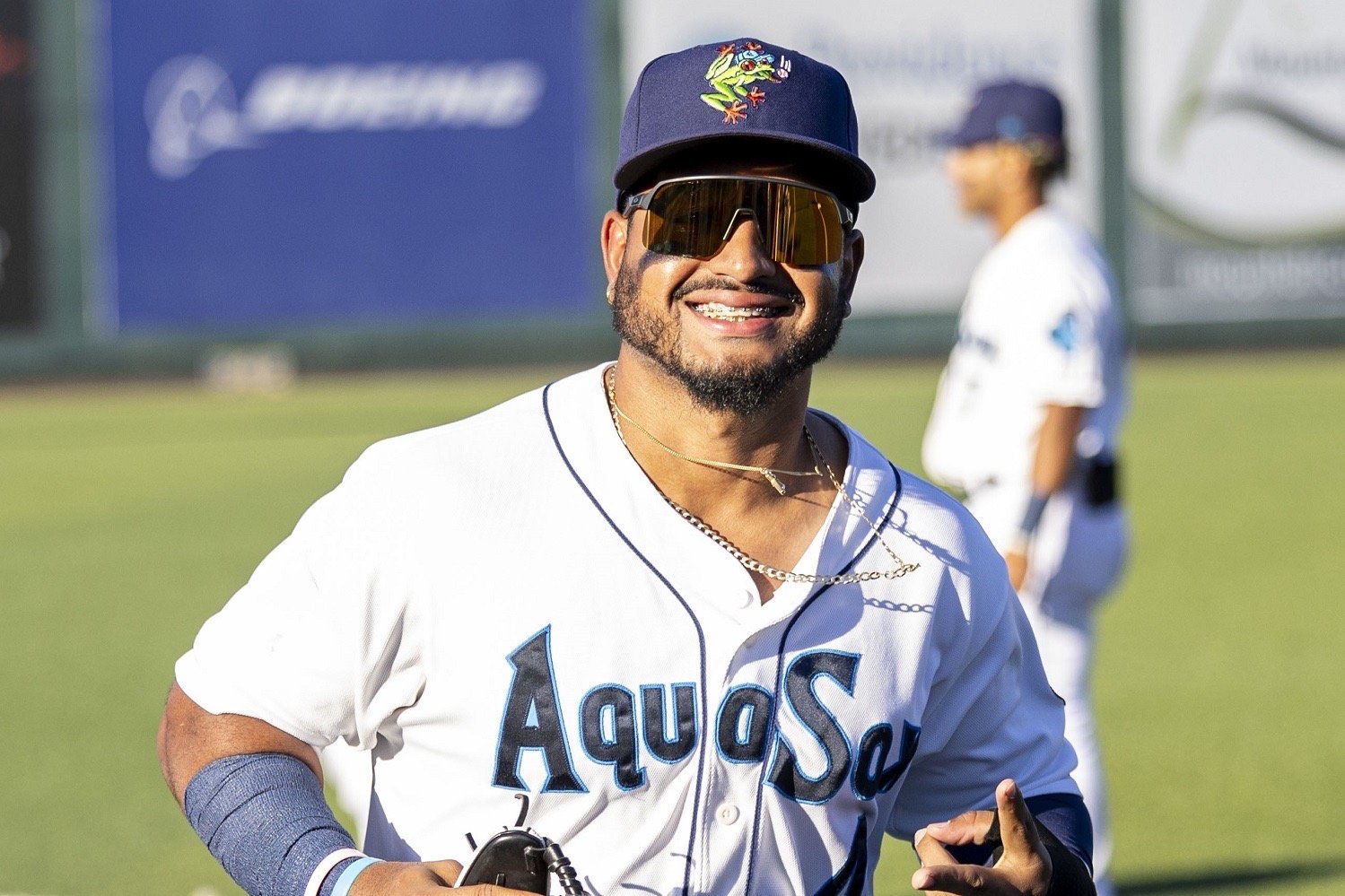 The Twins parted company with their longest tenured player, Jorge Polanco, on Monday night, in a trade with the Seattle Mariners. Gabriel Gonzalez was one half of the prospect portion of the four-player return from the Mariners. Who is he? What does he offer as a prospect? González signed with the Mariners as an international prospect out of Venezuela, for $1.3 million. He reached Low-A Modesto in his first full season in the US, as an 18-year-old, before repeating the level at the beginning of 2023. Gonzalez dominated Low A in his second go-around, eventually earning a promotion to High-A Everett in the second half of the season. Gonzalez is listed at 5’10, 165 lbs on MiLB.com, but that’s no longer reflective of his physique. A thickly-built outfielder, Gonzalez has quick hands and generates high-quality contact, despite a slightly noisy operation at the plate. In 2023, González knocked the stuffing out of Low-A pitching, to the tune of a .348/.403/.530 (.933) with 9 home runs and 19 doubles in 73 games. The transition to High A was a difficult adjustment for González (let’s remember, he was fully two years younger than a typical High-A hitter). In 43 games, he slashed .215/.290/.387, albeit with another 9 home runs and 4 doubles for the AquaSox. Gonzalez doesn’t walk much (6.4 BB%), but doesn’t strike out much either (16.6 K%). When examining his quality of contact, Aram Leighton points out a few key data points that are worth monitoring for Gonzalez in 2024. There’s a limit to the data we (at Twins Daily) have available on González (we’re missing EV and performance against specific pitches, most notably). While the exit velocity is notable, it’s worth considering González’s age as a factor here. Prospects typically add around 4 mph to their average exit velocity between the ages of 18 and 22, and around 3.5 mph to their 90th percentile exit velocity. While González’s 90th-percentile numbers may not jump off the page, I’d argue there’s still room for growth, and the Twins probably like what they see given his age and level. Looking at González’s approach at the plate, it’s easy to distill the factor most likely to drive his success or struggles with the Twins: swing decisions. González has good hand-eye coordination, evidenced by a cromulent contact rate at Low A (74.9%) that didn’t really suffer when he moved to High A (73.9%). What’s noticeable about González is how easily he gives up on plate appearances when he falls behind in the count. He’s already worked to improve his swing decisions since coming Stateside, but is a free swinger, taking a hack at 55.1% of pitches in 2023. To put this in perspective with an extreme counter example, Edouard Julien swung at 36.6% of pitches in 2023. González’s swing decisions are much more conservative in hitter's counts (48.3 Swing%) than pitcher's counts (63.3 Swing%). That will undoubtedly be an area of focus for the Twins, as finding consistent success when pitchers have leverage will be an extremely tough ask. Backing up to consider his overall profile, González is carried by two tools currently, a plus arm (12 outfield assists in 2023), and power. Defensively, given his limited athleticism, it seems González is destined for a corner outfield spot, which will make refining his hit tool and swing decisions a must if he is to progress. It’s worth digging into his platoon splits and spray chart to make some additional observations. González has a relatively mild platoon split. He’s a lefty masher, managing a .916 OPS against southpaws in 2023 (compared to .803 versus right-handed pitching). His approach and contact are aligned regardless of pitcher handedness. There’s not enough there to suggest that platooning will be a significant issue for him. Looking at González’s spray chart, it’s notable that the majority of his home runs in 2023 are to the pull side, a tendency the Twins favor in right-handed hitters. It's also worth noting that his teammates in A-ball bestowed upon him the sobriquet El Dron, in honor of the ruthless efficiency of his swing. That's a guy who sticks in the lineup, just as La Regadera did. González was ranked 79th by MLB Pipeline on their recently-published top 100 prospects. While González hasn’t appeared on other lists (neither Baseball America nor Baseball Prospectus included him), it’s fair to say that he’s a consensus top-125 prospect in baseball and offers comparable value to Jorge Polanco on his own. Research assistance provided by TruMedia
 -
The Best Twins Prospect You're Not Talking About
Jamie Cameron replied to Jamie Cameron's topic in Twins Minor League Talk
Really appreciate it. Love writing these. Trying to get as many out as possible before draft hybernation. -
The Best Twins Prospect You're Not Talking About
Jamie Cameron replied to Jamie Cameron's topic in Twins Minor League Talk
Thanks for reading. I'd pump the brakes on C and CF. I think it's a corner spot, eventually. -
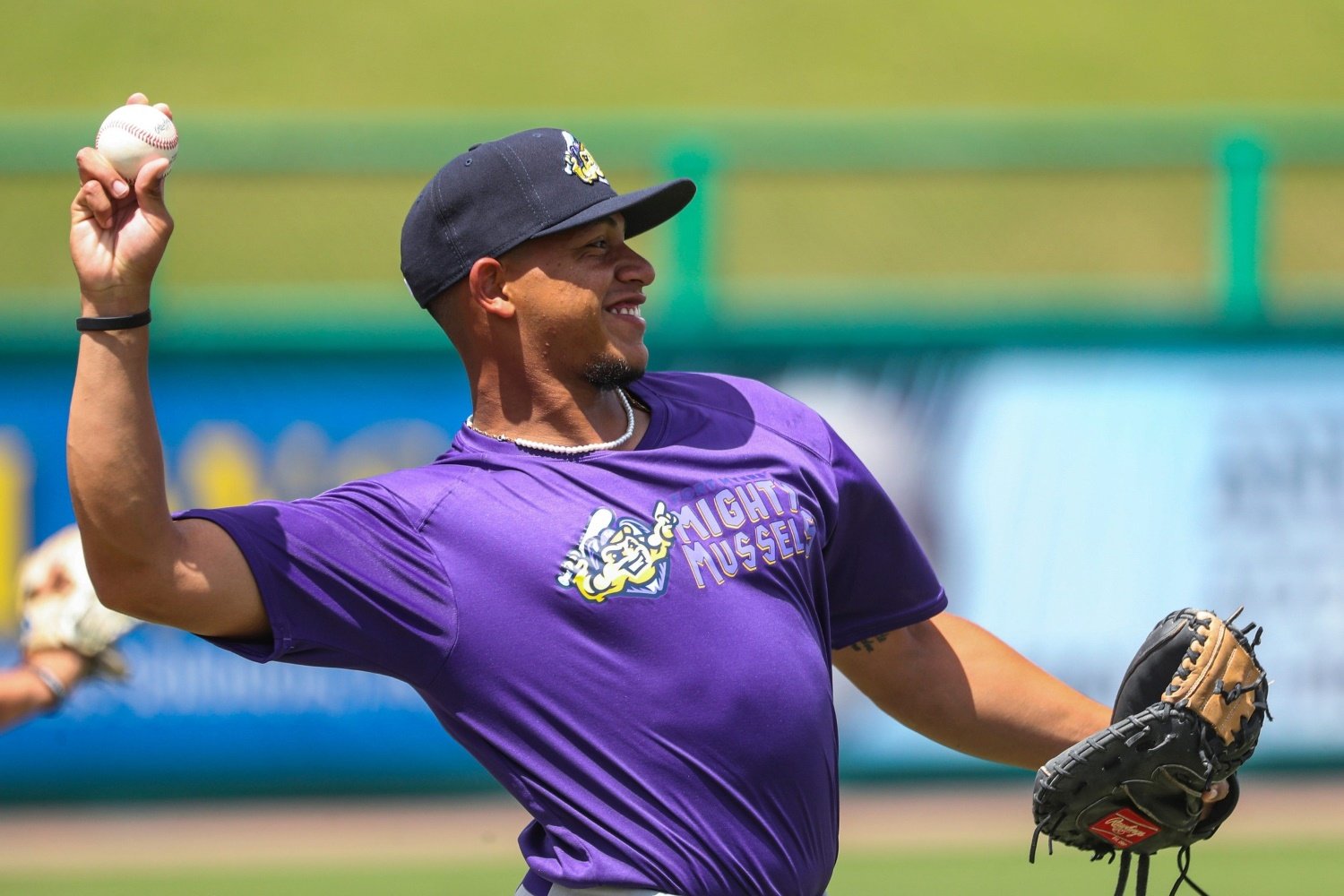 Ricardo Olivar is the most intriguing Twins prospect you’re not talking about. I’m here to tell you why. The Twins' 2019 international signing period is shaping up to be one of their most impactful in recent years. Emmanuel Rodriguez has established himself as a consensus top-100, borderline consensus top-50 prospect. Yennier Canó, despite uneven performances with the Twins, established himself with the Orioles as a dominant relief option. Scraping the bottom of the bonus barrel was Olivar, a then-17-year-old skinny Venezuelan prospect, who signed for just $20,000. Olivar is a prime example of the patience required when scouting and evaluating prospects, particularly those who sign at 16 or 17 years old. Olivar struggled initially as a professional. In 2021, he hit .204/.339/.347 in a 34-game Rookie-level debut that didn’t do much to spark the imagination. Repeating that level in 2022, Olivar put it together, eviscerating opposing pitching for an unrecognizable .349/.442/.605 line, picking up FCL MVP on the way, and finishing the season in full-season ball with Fort Myers. How did Olivar follow up an MVP short-season performance with his first full season in a pitcher-friendly league? With another robust offensive campaign. Splitting time between catcher (39 games) and center field (38 games), Olivar mashed his way to a .285/.403/.452 line, with 10 home runs and 12 stolen bases. Having an overview of Olivar’s outcomes for the 2023 season, let’s dive into the data to see what kind of an offensive profile he offers. Olivar made much better swing decisions in 2023. He managed a 13.2% walk rate, and a 20.7% strikeout rate. These figures are both better than average for Low-A baseball; the strikeouts are close to five percentage points better. These solid outputs are supported by good bat-to-ball skills. He had a 76.3% contact rate (6.4% above level average). When contact was made, it was usually high-quality contact. Of qualified players at his level, Olivar was second in average exit velocity (89.5 mph) behind only Cam Collier (89.6), and tied for fourth in Barrel Rate, at 18.5%. (TruMedia defines barrel% as batted balls with an EV of 95 mph or higher and a launch angle between 10 and 35 degrees.) We can see the quality of Olivar’s contact on the graphic below, with exit velocity plotted on the x-axis, and Barrel % on the y-axis. We know that Olivar has good bat-to-ball skills and is consistently making high-quality contact, but surely he expands the zone, or is overly aggressive at the plate, right? Not really. Olivar’s chase% was 23.9%, 4.7% less than average for Low-A hitters. One aspect of prospect performance I track less frequently than ideally is various splits over time. This is another area where Olivar excels, and Twins fans should be encouraged by his steady 2023 improvement. Consider the following table tracking some of Olivar’s key metrics month by month at Fort Myers. Olivar simply got better and better throughout the course of the season. He chased less, made contact more, his average exit velocity even improved from 88.7 mph in April to 90.9 mph in August. His OPS month by month speaks to the incremental, cumulative improvements in other aspects of his offensive game. Month Chase% Contact% OPS May 28.5% 74% .807 June 23.7% 74% .835 July 23% 79.1% .909 August 21.2% 78.3% .945 Olivar’s well-rounded offensive profile doesn’t even suffer from a heavy platoon disadvantage. Olivar is a lefty killer. His OPS against southpaws in 2023 was .952, and he draws significantly more walks off lefties. Despite this, he maintained solid production against righties, with a .277/.386/.439 line. There’s no significant difference in the amount of hard contact Olivar generates from lefties versus righties. It’s more that he is good against righties, and exceptional against lefties thus far in his professional career. The graphic below shows Olivar’s scatter chart by exit velocity, and boy, does he use the whole field well with his hardest hit batted balls. Olivar’s barrel manipulation gives him good coverage throughout the plate, but, as you’d expect, there are a few blind spots. Olivar struggles most to drive pitches on the outer third of the plate. If we look at his splits for various pitch types, we can orient ourselves to another area for improvement, dealing with breaking pitches. Olivar’s OPS on curveballs (.750), and sliders (.771) are around 150 points worse than any other pitch. His chase rate is much higher on breaking pitches, and his contact rate and quality of contact much lower. While his numbers aren’t drastic, recognizing spin will likely be an area of focus in 2024. It’s worth spending a moment on Olivar’s baserunning and defense. He stole bases at a 92% clip in 2023, a useful skill if he can provide even modest returns with consistency. His defensive home needs clarifying, though. Unusually, Olivar spent most of his defensive time at catcher or in the outfield. Olivar has a strong arm, but the catching skills are fringy. While TruMedia liked his framing, particularly at the top of the zone (5.11 catcher framing runs above average in 39 games), controlling the run game and receiving skills are a work in progress. Given that he has an ideal build for a catcher, I’d guess the Twins maintain his defensive flexibility, but it's probably more sensible and realistic to view him as an outfielder long term. Olivar should start 2024 in High-A Cedar Rapids. He’ll be 23 in August, marginally above the average age for hitters at the level. Prognosticating prospects is a tough business, but if he continues to hit, I’d bet he’s represented in Twins top 10 lists by the end of 2024. All research assistance provided by TruMedia.
 -
A little-known, defensively versatile Venezuelan prospect started turning heads for the Twins in 2023. Who is he, and what is his outlook for 2024? Image courtesy of © Jonah Hinebaugh/Naples Daily News / USA TODAY NETWORK Ricardo Olivar is the most intriguing Twins prospect you’re not talking about. I’m here to tell you why. The Twins' 2019 international signing period is shaping up to be one of their most impactful in recent years. Emmanuel Rodriguez has established himself as a consensus top-100, borderline consensus top-50 prospect. Yennier Canó, despite uneven performances with the Twins, established himself with the Orioles as a dominant relief option. Scraping the bottom of the bonus barrel was Olivar, a then-17-year-old skinny Venezuelan prospect, who signed for just $20,000. Olivar is a prime example of the patience required when scouting and evaluating prospects, particularly those who sign at 16 or 17 years old. Olivar struggled initially as a professional. In 2021, he hit .204/.339/.347 in a 34-game Rookie-level debut that didn’t do much to spark the imagination. Repeating that level in 2022, Olivar put it together, eviscerating opposing pitching for an unrecognizable .349/.442/.605 line, picking up FCL MVP on the way, and finishing the season in full-season ball with Fort Myers. How did Olivar follow up an MVP short-season performance with his first full season in a pitcher-friendly league? With another robust offensive campaign. Splitting time between catcher (39 games) and center field (38 games), Olivar mashed his way to a .285/.403/.452 line, with 10 home runs and 12 stolen bases. Having an overview of Olivar’s outcomes for the 2023 season, let’s dive into the data to see what kind of an offensive profile he offers. Olivar made much better swing decisions in 2023. He managed a 13.2% walk rate, and a 20.7% strikeout rate. These figures are both better than average for Low-A baseball; the strikeouts are close to five percentage points better. These solid outputs are supported by good bat-to-ball skills. He had a 76.3% contact rate (6.4% above level average). When contact was made, it was usually high-quality contact. Of qualified players at his level, Olivar was second in average exit velocity (89.5 mph) behind only Cam Collier (89.6), and tied for fourth in Barrel Rate, at 18.5%. (TruMedia defines barrel% as batted balls with an EV of 95 mph or higher and a launch angle between 10 and 35 degrees.) We can see the quality of Olivar’s contact on the graphic below, with exit velocity plotted on the x-axis, and Barrel % on the y-axis. We know that Olivar has good bat-to-ball skills and is consistently making high-quality contact, but surely he expands the zone, or is overly aggressive at the plate, right? Not really. Olivar’s chase% was 23.9%, 4.7% less than average for Low-A hitters. One aspect of prospect performance I track less frequently than ideally is various splits over time. This is another area where Olivar excels, and Twins fans should be encouraged by his steady 2023 improvement. Consider the following table tracking some of Olivar’s key metrics month by month at Fort Myers. Olivar simply got better and better throughout the course of the season. He chased less, made contact more, his average exit velocity even improved from 88.7 mph in April to 90.9 mph in August. His OPS month by month speaks to the incremental, cumulative improvements in other aspects of his offensive game. Month Chase% Contact% OPS May 28.5% 74% .807 June 23.7% 74% .835 July 23% 79.1% .909 August 21.2% 78.3% .945 Olivar’s well-rounded offensive profile doesn’t even suffer from a heavy platoon disadvantage. Olivar is a lefty killer. His OPS against southpaws in 2023 was .952, and he draws significantly more walks off lefties. Despite this, he maintained solid production against righties, with a .277/.386/.439 line. There’s no significant difference in the amount of hard contact Olivar generates from lefties versus righties. It’s more that he is good against righties, and exceptional against lefties thus far in his professional career. The graphic below shows Olivar’s scatter chart by exit velocity, and boy, does he use the whole field well with his hardest hit batted balls. Olivar’s barrel manipulation gives him good coverage throughout the plate, but, as you’d expect, there are a few blind spots. Olivar struggles most to drive pitches on the outer third of the plate. If we look at his splits for various pitch types, we can orient ourselves to another area for improvement, dealing with breaking pitches. Olivar’s OPS on curveballs (.750), and sliders (.771) are around 150 points worse than any other pitch. His chase rate is much higher on breaking pitches, and his contact rate and quality of contact much lower. While his numbers aren’t drastic, recognizing spin will likely be an area of focus in 2024. It’s worth spending a moment on Olivar’s baserunning and defense. He stole bases at a 92% clip in 2023, a useful skill if he can provide even modest returns with consistency. His defensive home needs clarifying, though. Unusually, Olivar spent most of his defensive time at catcher or in the outfield. Olivar has a strong arm, but the catching skills are fringy. While TruMedia liked his framing, particularly at the top of the zone (5.11 catcher framing runs above average in 39 games), controlling the run game and receiving skills are a work in progress. Given that he has an ideal build for a catcher, I’d guess the Twins maintain his defensive flexibility, but it's probably more sensible and realistic to view him as an outfielder long term. Olivar should start 2024 in High-A Cedar Rapids. He’ll be 23 in August, marginally above the average age for hitters at the level. Prognosticating prospects is a tough business, but if he continues to hit, I’d bet he’s represented in Twins top 10 lists by the end of 2024. All research assistance provided by TruMedia. View full article


