


Twins Video
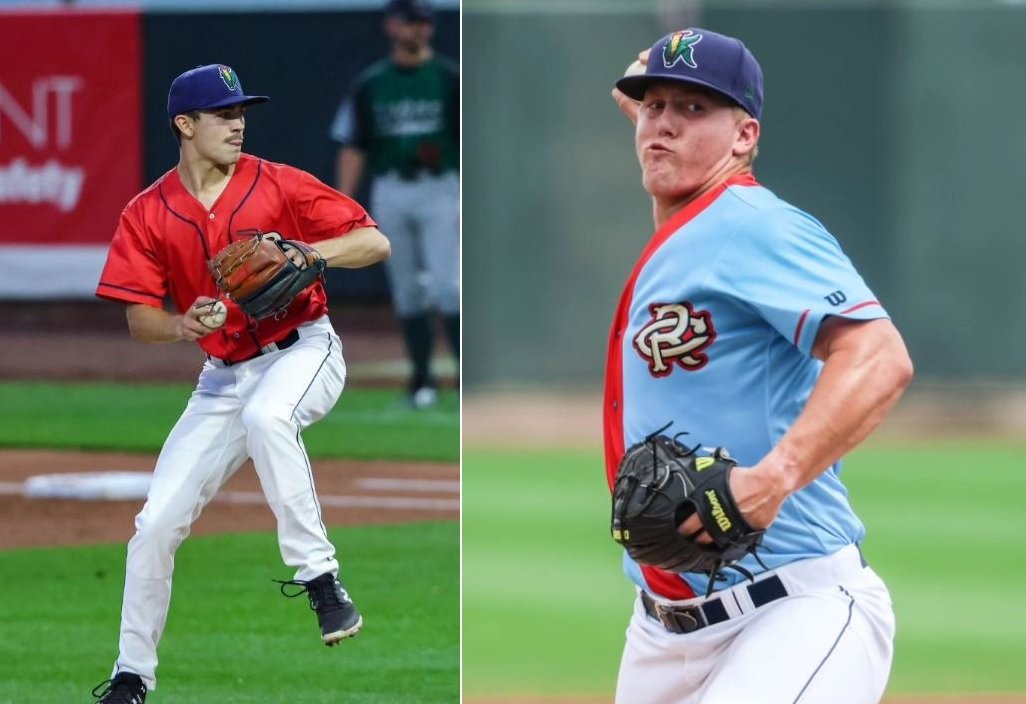
For whatever the reason, Andrew Morris may be the Twins pitcher from the 2022 draft to fly most impressively under the radar, despite being their fourth round pick out of Texas Tech. Morris signed for $500,000 but missed some time early in 2023 through injury. A smaller built starter at 6 '0, 195 pounds, Morris put together impressive showings at Fort Myers and Cedar Rapids in 2023. In 84 1/3 innings, he managed a 2.88 ERA, with 79 strikeouts and 19 walks. What are his strengths and areas of opportunity? Let’s dive in.
Morris’ arsenal is headlined by his fastball. His four seamer has an average velocity of 93.5 mph and a 90th percentile velocity of 95.6 mph, which underpins some of it’s other characteristics and Morris’ other pitching traits that help the pitch succeed. Morris get’s good induced vertical break on his fastball (averaging 15.6 inches, but up to 23 inches in 2023). He also has a unique and deceptive release point. Morris’ arm slot features a high, vertical release.

The combination of good carry and a unique release led the pitch to limit damage to the tune of a 3.45 FIP in 2023. Morris’ fastball is a picture of consistency month by month in 2023. Velocity, spin, movement are all incredibly consistent, although Morris seemed to unlock more consistent induced vertical break in July (2 inches more on average). Morris’ fastball performed better against LHH in 2023 than RHH, but that could be because he demonstrated significantly better control of the pitch to LHH. Even though the pitch didn’t get a ton of whiffs (12.7% SwStr% compared to the A+ average of 13.6 SwStr%), it’s a good platform for Morris to work from and has enough to continue to be effective.

Morris’ slider is his most frequently used breaking pitch, a pitch more vertical than horizontal movement that looks on his movement plot like a hybrid slider/cutter.. It features an average separation of around eight mph from his fastball and had promising results in 2023. Opposing hitters weren’t able to hit it in the air much, or hit it hard much (8.8 Barrel%). The pitch gave up a FIP of 0.97 in 2023. Like his fastball, it doesn’t get a ton of whiffs (27.8 Chase% and 13.8 SwStr% in 2023). Again, much like his fastball, Morris’ slider is a good breaking ball with an opportunity for more.
Morris’ final two offerings are a curveball and a changeup. The curveball is a softer pitch (averaging 75.8 mph in 2023), that produced good results in a limited sample despite giving up a lot of contact, and not generating much swing and miss from hitters. Conversely, Morris’ changeup was given a fringy/below average grade from draft evaluators, but offers the best platform for an effective tertiary pitch for Morris. He throws the pitch pretty hard (88.5 mph average velocity in 2023). In 2023 Morris was able to develop more tumble and fade to his changeup month by month, and the results bore this out. The pitch generated a 15.6 SwStr% in June, and a 34.8% SwStr% in July, while decreasing contact from 68.2% to 38.5%.
I’d argue that for Morris, the next developmental foci in 2024 are tweaking his slider to generate an established swing and miss breaking pitch, and continuing to develop the consistency of his changeup as a tertiary offering. Playing off the strengths off his fastball, there’s the ceiling of a back-end starting pitcher in the big leagues here.
Zebby Matthews
The Twins signed Zebby Matthews as an under-slot eighth round pick in 2022 out of Western Carolina. Initially known post-draft as a strike thrower with excellent command, the Twins waved their magic velocity wand and helped Matthews’ stuff trend up in 2023, where, like Morris, he split time between Fort Myers and Cedar Rapids.
A prototypical starting pitchers’ body at 6 '5, 225 pounds, Matthews enjoyed an excellent 2023. In 108 1/3 innings across two levels he managed a 3.84 ERA, with 112 strikeouts and just 15 walks. Matthews struggled more at Cedar Rapids, developing a bit of a home run problem. Let’s look under the hood at some of his strengths in 2023, and opportunities for 2024.
Matthews throws from a more typical, three quarter arm slot than Morris. More typical arm angles at release tend to create more typical (read ineffective) fastball shapes. Matthews, however, has good carry on his fastball (17.8 IndVertBrk) and good run on his sinker (13.5 HorzBrk) for his arm slot, which he combines with another significant strength, control and command. Matthews throws his fastball for strikes 70% of the time (compared to the A ball average of 63.3% in 2024). Matthews’ carry and run on his two fastballs means they plays well up and in when thrown to right handed hitters. Looking at a heat map of his fastball location in 2023, his outstanding command allows him to maximize this opportunity.

All of that adds up to a 13.1 K/9 on his fastball from the data we have available via Tru Media, a pitch generating around 10% less contact than the A ball average and generating about 7% more swinging strikes than average, that’s a strong platform for success.

Zooming in on Matthews’ other pitches points the way for his next opportunity in 2024, developing more unique shapes on his secondary pitches. Matthews throws a slider that looks like it has the characteristics of a sweeper (more horizontal, less vertical movement). Looking at the green dots in the graphic, you’ll notice that there’s a fairly diverse spread here. I’d guess that’s indicative of the Twins and Matthews messing with cues and grips and working to improve the consistency of the pitch. While the slider had good results on the data we have available, it’s clearly a pitch still in development.
The same can be said of Matthews changeup. Again referring to his movement chart, there’s a blur of Matthews four seam fastball (blue dots), and changeup (purple dots). You’d like to see more of a difference vertically here (look at Morris’ movement chart for a more clear distinction). Like the slider, Matthews’ changeup got good results, likely from the differential in velocity from his fastball (approximately 8 mph in our data set). With a SwStr of just 4.4%, better hitters are going to treat the changeup as a slow fastball, so it won’t maintain effectiveness as he moves through MiLB levels unless the pitch continues to develop more distinctive characteristics.
All of these data are small samples, and with the speed and success of player development, it’s likely these pitching prospects have already outgained some of these observations. The Twins continue to do an impressive job with both identifying mid-late round pitching talents, and developing them throughout their minor-league journeys. What did you make of Andrew Morris and Zebby Matthews in 2023? What are your expectations for the pair in 2024
Research assistance provided by TruMedia








Recommended Comments
Create an account or sign in to comment
You need to be a member in order to leave a comment
Create an account
Sign up for a new account in our community. It's easy!
Register a new accountSign in
Already have an account? Sign in here.
Sign In Now