



stringer bell
-
Posts
21,521 -
Joined
-
Last visited
-
Days Won
95
Content Type
Profiles
News
Minnesota Twins Videos
2026 Minnesota Twins Top Prospects Ranking
2022 Minnesota Twins Draft Picks
Minnesota Twins Free Agent & Trade Rumors, Notes, & Tidbits
Guides & Resources
2023 Minnesota Twins Draft Picks
The Minnesota Twins Players Project
2024 Minnesota Twins Draft Picks
2025 Minnesota Twins Draft Pick Tracker
2026 Minnesota Twins Draft Tracker: Picks & Bonuses
Forums
Blogs
Events
Store
Downloads
Gallery
Everything posted by stringer bell
-
Article: Let's Just Roll With What We Have
stringer bell replied to RealTwinsFan357's topic in Twins Daily Front Page News
The reality is that the Twins have taken a large step on offense. There are a lot of good offensive ballplayers on the roster and they will score plenty of runs next year, as they did this year. The core of this team is okay and pretty young, but they need a competitive pitching staff and improved defense. IMHO, the minimum they need to do is add an outfielder (must be good defensively) and a starter. No matter how many pitchers you add, there is never enough. Reinforcements might be the very top prospects in baseball or maybe like this year, surprises will make their way to the majors. I don't anticipate contention next year, but it is possible. The Twins owe it to their fans to do that much. -
Last year, Ricky Nolasco signed what is easily the largest free agent contract ever for the Twins. While not every Twins fan was happy, the consensus was that the Twins had opened their wallets wide to get a guy who would guarantee them innings and competitive starts. In other words, while Nolasco's ceiling wasn't thought to be that of an ace, his floor was thought to be competence or better.For one season, at least, the Twins were totally wrong. They didn't get middle-of-the-rotation production from him. They didn't get bottom-of-the-rotation production. Mostly, the team got very poor performance for what is agreed to be a lot of money. What went wrong? There are some numbers and circumstances that tell the tale. First of all, Nolasco has always given up a lot of hits and hasn't been very good at stranding runners. The naysayers of the contract pointed that out from the beginning. Secondly, Nolasco had spent all his career in the National League, where, without a DH, it is thought to be easier for pitchers to put up good numbers. The last two factors--health and luck-- may or may not be supported by numbers. Nolasco pitched with forearm tightness from spring training until he was disabled in early July. He pitched to an awful 5.90 ERA prior to going on the DL, and post All-Star game yielded a more representative 4.39 ERA. Finally, Nolasco posted a 4.30 FIP, indicating that he suffered from bad luck and bad defense. In watching most of his starts, I would submit that he didn't get much help from his defence and that he suffered from a bunch of bloop hits and some bad hops. I also saw a lot of hard-hit balls with quite a few reaching the seats. What does the future hold? First of all, while the first year was a disaster, Nolasco's body of work suggests he'll bounce back. He's been pretty dependable and reliable for a long time. No, he won't be traded in a salary dump and I sincerely doubt that he'll be exchanged for another "bad" contract. He'll get a chance to come back for the Twins. Secondly, I don't see him in the top of Twins rotation next year or for the duration of his contract. The Twins signed him 10 days short of his 31st birthday, and it is doubtful he'll ever perform better than he has in his better years ('10, '12 and '13) and not close to his best year in '08. In looking at Ricky's season, I would classify eight starts as "good" or better, six as "meh" to average, and the remainder (13) qualify as poor. Certainly not good enough, but there were some decent outings. How much was health related? An open question. I think Nolasco has learned a bit about what he has to do to succeed and might minimize those poor starts. He showed a pretty good breaking ball to go with an OK fastball but he needs to mix his pitches effectively. Finally, the Twins need to improve their defense. Better defensive outfielders would likely disproportionately benefit this veteran hurler. Better defense, better luck and better health will most likely lead to better results. I doubt he will ever be regarded as a good signing, but I also doubt he'll be viewed as a total failure going forward. The Twins should have gotten better production for over $12M per year, I think they'll get closer to it for the rest of his contract. But much like Joe Mauer, people will expect more than he'll produce. Click here to view the article
-
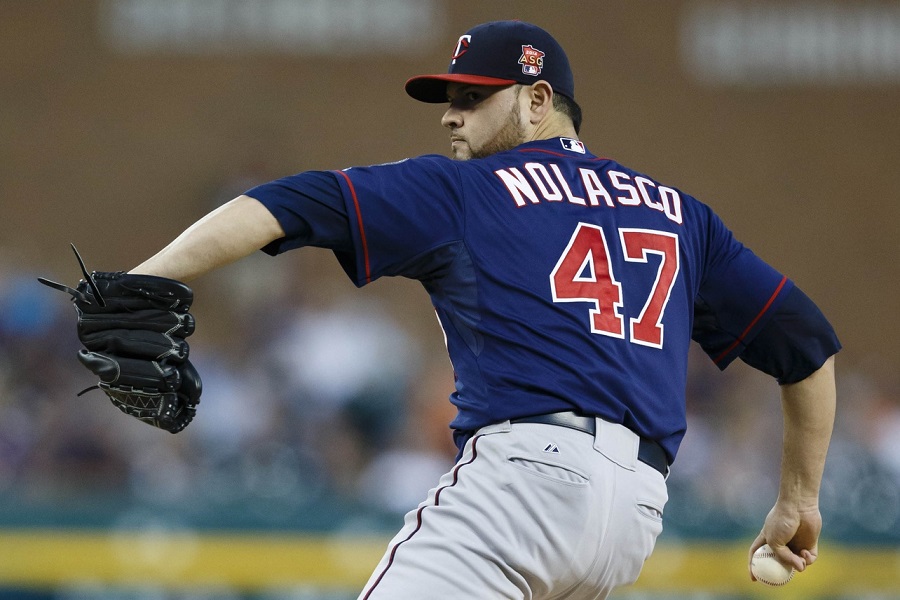 For one season, at least, the Twins were totally wrong. They didn't get middle-of-the-rotation production from him. They didn't get bottom-of-the-rotation production. Mostly, the team got very poor performance for what is agreed to be a lot of money. What went wrong? There are some numbers and circumstances that tell the tale. First of all, Nolasco has always given up a lot of hits and hasn't been very good at stranding runners. The naysayers of the contract pointed that out from the beginning. Secondly, Nolasco had spent all his career in the National League, where, without a DH, it is thought to be easier for pitchers to put up good numbers. The last two factors--health and luck-- may or may not be supported by numbers. Nolasco pitched with forearm tightness from spring training until he was disabled in early July. He pitched to an awful 5.90 ERA prior to going on the DL, and post All-Star game yielded a more representative 4.39 ERA. Finally, Nolasco posted a 4.30 FIP, indicating that he suffered from bad luck and bad defense. In watching most of his starts, I would submit that he didn't get much help from his defence and that he suffered from a bunch of bloop hits and some bad hops. I also saw a lot of hard-hit balls with quite a few reaching the seats. What does the future hold? First of all, while the first year was a disaster, Nolasco's body of work suggests he'll bounce back. He's been pretty dependable and reliable for a long time. No, he won't be traded in a salary dump and I sincerely doubt that he'll be exchanged for another "bad" contract. He'll get a chance to come back for the Twins. Secondly, I don't see him in the top of Twins rotation next year or for the duration of his contract. The Twins signed him 10 days short of his 31st birthday, and it is doubtful he'll ever perform better than he has in his better years ('10, '12 and '13) and not close to his best year in '08. In looking at Ricky's season, I would classify eight starts as "good" or better, six as "meh" to average, and the remainder (13) qualify as poor. Certainly not good enough, but there were some decent outings. How much was health related? An open question. I think Nolasco has learned a bit about what he has to do to succeed and might minimize those poor starts. He showed a pretty good breaking ball to go with an OK fastball but he needs to mix his pitches effectively. Finally, the Twins need to improve their defense. Better defensive outfielders would likely disproportionately benefit this veteran hurler. Better defense, better luck and better health will most likely lead to better results. I doubt he will ever be regarded as a good signing, but I also doubt he'll be viewed as a total failure going forward. The Twins should have gotten better production for over $12M per year, I think they'll get closer to it for the rest of his contract. But much like Joe Mauer, people will expect more than he'll produce.
 -
Ricky Nolasco signed easily the largest free agent contract for the Twins last year. While not every Twins fan was happy, the consensus was that the Twins had opened their wallets wide to get a guy that would guarantee them innings and competitive starts. In other words, while Nolasco's ceiling wasn't thought to be that high, his floor was thought to be competence or better than that. For one season, at least, the Twins were totally wrong. They didn't get middle-of-the-rotation production from him. They didn't get bottom of the rotation production. Mostly, the team got very poor performance for what is agreed to be a lot of money. What went wrong? There are some things numbers that tell the tale. First of all, Nolasco has always given up a lot of hits and hasn't been very good at stranding runners. The naysayers of the contract pointed that out from the beginning. Secondly, Nolasco had spent all his career in the National League, without a DH, thought to be easier for pitchers to put up good numbers. The last two factors may or may not be supported by numbers--Nolasco pitched with forearm tightness from spring training until he was disabled in early July. He pitched to an awful 5.90 ERA prior to going on the DL, post All-Star game yielded a more representative 4.39 ERA. Finally, Nolasco posted a 4.30 FIP, indicating that he suffered from bad luck and bad defense. In watching most of his starts, I would submit that Nolasco didn't get much help behind him and that he suffered from a bunch of bloop hits and some bad hops. I also saw a lot of hard-hit balls with quite a few reaching the seats. What does the future hold? First of all, while the first year was a disaster, Nolasco's body of work suggests he'll bounce back. He's been pretty dependable and reliable for a long time. No, he won't be traded in a salary dump and I sincerely doubt that he'll be exchanged for another "bad" contract. He'll get a chance to come back for the Twins. Secondly, I don't see him in the top of Twins rotation next year or for the duration of his contract. The Twins signed him 10 days short of his 31st birthday, it is doubtful he'll every perform better than he has in his better years ('10, '12 and '13) and not close to his best year in '08. In looking at Ricky's season, I would classify eight starts as "good" or better, six as "meh" to average, and the remainder (13) to qualify as poor. Certainly not good enough, but there were some decent outings. How much was health related? An open question. I think Nolasco has learned a bit about what he has to do to succeed and might minimize those poor starts. He showed a pretty good breaking ball, to go with an okay fastball but he needs to mix his pitches effectively. Finally, the Twins need to improve their defense. Better defensive outfielders would probably disproportionately benefit the veteran hurler. Better defense, better luck and better health will most likely lead to better results. I doubt he ever is regarded as a good signing, but I also doubt he'll be viewed as a total failure going forward. The Twins should have expected better for over $12M per year, I think they'll get closer to it for the rest of his contract. But much like Joe Mauer, people will expect more than he'll produce.
-
Article: Postseason Review: Phil Hughes
stringer bell replied to stringer bell's topic in Twins Daily Front Page News
If Hughes says he's healthy, no amount of poor outings in ST will change anything. -
Article: Left Field In Need Of Upgrade
stringer bell replied to Parker Hageman's topic in Twins Daily Front Page News
Mike Carp (2013) and Steve Pearce (2014) come to mind, although Pearce never was much of a prospect. -
Article: Left Field In Need Of Upgrade
stringer bell replied to Parker Hageman's topic in Twins Daily Front Page News
It wouldn't surprise me if Ortiz gets a callup either during the season (short term) or in September. There are a lot of LH hitting candidates for platoon/4th OF on the Twins roster, but Ortiz' skill set might be a pretty good match for the Twins' needs. -
Isn't what you're proposing just rearranging deck chairs? IMHO, the bench wasn't the cause of the 90 loss season, nor was the infield or offense in general. Pitching and defense. I'll grant that the Twins' bench wasn't any great shakes defensively, with the possible exception of Schafer, but they offer some pop and defensive flexibility.
-
Orioles Bench ('14 OPS) C Joseph (.618), J Paredes (.752), D Lough (.694), K Johnson (.658), D Young (.779). "Starters" De Aza (.700), Schoop (.598), Pearce (929 OPS, raising his career OPS to .758), R Flaherty (.644). A year ago, several of these guys weren't candidates for a big-league roster. I think if you'd look at the other three semifinalists, you would see plenty of other players with checkered resumès.
-
I think 80% is a strong number for both Rosario and Buxton. However, I expect at least one and probably more of the relievers to make their debut this year. Add in Mason Melotakis (a lefty) if his arm is sound. As far as Kepler goes, I've been to spring training three straight years and I liked him more three years ago than I do now. However, he is only 21 and has lost plenty of time with injuries. Last year, I pinpointed JO Berrios as a guy with a chance to make a big jump and he did. This year, the guy is Kepler.
-
Playoff teams can get away with a smaller bullpen and add a specialist like Gore. It really helps KC to have that specialist in postseason. I am almost certain that they wouldn't have won that game vs. Oakland without the extra basestealer.
-
Article: Postseason Review: Aaron Hicks
stringer bell replied to stringer bell's topic in Twins Daily Front Page News
I haven't tempered my criticisms of Hicks, but there is zero reason to let him go at this point. It appears that many are resigned to Hicks being no more than a stopgap and perhaps a platoon or fourth OF. That may be true. I think his struggles as a left handed hitter are more mental than physical. Any switch hitter with the tools he has is going to be given multiple chances to seize a regular role. I have consistently doubted Hicks' ability to hit at the major league level, but many have added this tool later in their development. Needless to say, this year is huge for Hicks. If he doesn't develop into a big league hitter this year, he may well bounce around from team to team as he will be out of options. -
Article: Left Field In Need Of Upgrade
stringer bell replied to Parker Hageman's topic in Twins Daily Front Page News
Parm passed thru every team when he was outrighted to Rochester. At that point he had zero trade value. He added a third position (LF), hit very well against left handed pitching and pretty well as a pinch hitter. I think some National League team could look at that skill set and see something at this point. However, the yield in a trade would be pretty small or low percentage, I would guess. -
This will close out my postseason reviews of position players. Parmelee and Nuñez spent a majority of the season with the Twins. Even absent significant injuries, they didn't start many games. Schafer was claimed from the Braves and played regularly. All three players had their moments, but most likely won't seriously compete for a starting spot in 2015. There is a significant possibility that one or more of these players will be cut loose in the offseason.Parmelee: Chris Parmelee had chances to claim a regular position with the Twins in 2012 and 2013. In 2012 Parmelee started at first base to start the season after a very successful September audition. Justin Morneau was coming off a severe concussion and was slated to be the DH. Parmelee was given first base. He played acceptable defense, but failed to hit. Parmelee was sent to Rochester where he crushed AAA pitching, but failed to sustain his swing when recalled by the Twins. In 2013, Parm got the starting nod as the right fielder. He surprised many by being an acceptable right fielder, although he lacked speed. Again, his bat failed him and he was eventually sent to Rochester. In 2014, Parmelee competed again for a roster spot and lost out. Out of options, he was outrighted to Rochester when no one claimed him. In 32 games, Parmelee hit well, coming up with a .920 OPS and maintaining a batting average over .300. When the Twins suffered a rash of injuries, Chris was recalled and did not return to the minors. Parmelee split his playing time three ways, starting 14 games in left, 28 in right, 16 at first, and one in center field. Parmelee was inconsistent at the plate, at some points hitting in the middle of the order and other times slumping dramatically. His final numbers were so-so--a .691 OPS (94 OPS+). Probably the most striking stat was Parmelee's platoon split. Despite batting left-handed, his OPS vs. left handed pitching was .859, with a .325 batting average. Chris was also the Twins top pinch hitter. He was 5-13 with 7 RBI. Parmelee didn't get much of an audition late in the season, indicating that the coaching staff pretty much knew what they had. It appears Parmelee's chances of competing for a starting spot are over with the Twins. I think that if other roster moves work out that Parmelee could be a pretty good bench player. As a hitter, he has shown he can hit against lefties and has been pretty effective as a pinch hitter. He's shown he is an acceptable corner OF, as well as a good defensive first baseman. Nuñez: Eduardo Nuñez was once regarded as the probable successor to Derek Jeter. Bad defense and unspectacular offense lowered the expectation to that of competing for a utility spot on the Yankees. In spring training, he lost out for that job and was designated for assignment. The Twins claimed Eduardo and early in May, he was recalled. Nuñez was primarily a backup, and he got at-bats at several positions. He started 17 games at short, 12 at third, and 11 in the outfield (10 in left, one in right). Metrics indicate that Nuñez was pretty good in the outfield, decent at short, but subpar at third. He seemed uncomfortable in the outfield, surprisingly good at short and third. With the bat, Nuñez had some moments, but overall was not a great hitter. He showed very good speed on the bases and a bit of pop. Like Parmelee, Nunez also had "reverse" platoon splits. The right-handed hitter put up solid numbers against right-handers (716 OPS), but struggled against lefties (586 OPS). The future for Nuñez is fairly cloudy, partly because he is eligible for arbitration. With no more additions, he has a good chance of claiming a utility spot on the 2015 Twins. As noted, he offers good speed, some versatility and some pop for a utility player. His defense isn't outstanding and he is 27, so it is unlikely he will get substantially better either at the plate or in the field. In short stints, he has provided a shot in the arm for the Twins. Schafer: Jordan Schafer was once a top prospect for the Braves. However. poor performance, off-field problems and injuries combined to short circuit his trials with the Braves and the Astros. Schafer was designated for assignment at the trade deadline and the Twins claimed him and immediately used him regularly, mostly as the left fielder. More regular play netted improved performance. Schafer eclipsed almost all of his Brave stats in a month, reaching base at a good clip, stealing bases and playing good defense in both left and center. Schafer hit .333 with an OPS of .831 in August. He tailed off in September, compounded by a non-throwing shoulder injury. He finished his two-month trial with the Twins with a .285 average, .707 OPS (100 OPS+) and 15 stolen bases in 147 plate appearances (roughly a quarter of the season). The left-handed hitting Schafer posted severe platoon splits for both the Braves and the Twins in 2014. He had an OPS of .822 (.326 BA) against right handed pitchers, but had a near-helpless .388 OPS (.171 BA) against same-handed hurlers. Schafer displayed one outstanding skill -- he is an very good base stealer. He swiped 15 bases in his limited time with the Twins. His defense rated as good, especially in left field which is a new position for him. Going forward, the Twins must decide what to do with the arb-eligible Schafer. Given his good performance late in 2014 and the lack of great internal options, I expect the Twins will find a way to retain him. Schafer will likely compete for a starting spot, but his probable landing spot is fourth or platoon OF. Having the skill of an accomplished base thief gives him a leg up to be a helpful bench player. His poor performance against southpaws would limit him to being a platoon player at best. At 28 years of age, the most the Twins can hope for from Schafer would be to see what they saw in August and September. Schafer could be a helpful player for an improving Twins team. I think all three players profiled here are big-leaguers, but none of them will ever be more than part-time players. None of them are really young (Parm 26, Nuñez 27, and Schafer 28), but all seem to have skills that could help them be helpful bench guys. Nuñez plays both infield and outfield, Parmelee plays first and the outfield corners and Schafer looks like a three-position outfielder. Nuñez and Schafer have good speed and Schafer appears to be an elite base stealer. Parmelee had a good season (SSS) pinch-hitting and facing LH pitching. Ideally, bench players would provide high-quality defense, but that's not the case here. Acquisitions and DFAs will probably determine whether all three guys remain with the Twins. Click here to view the article
-
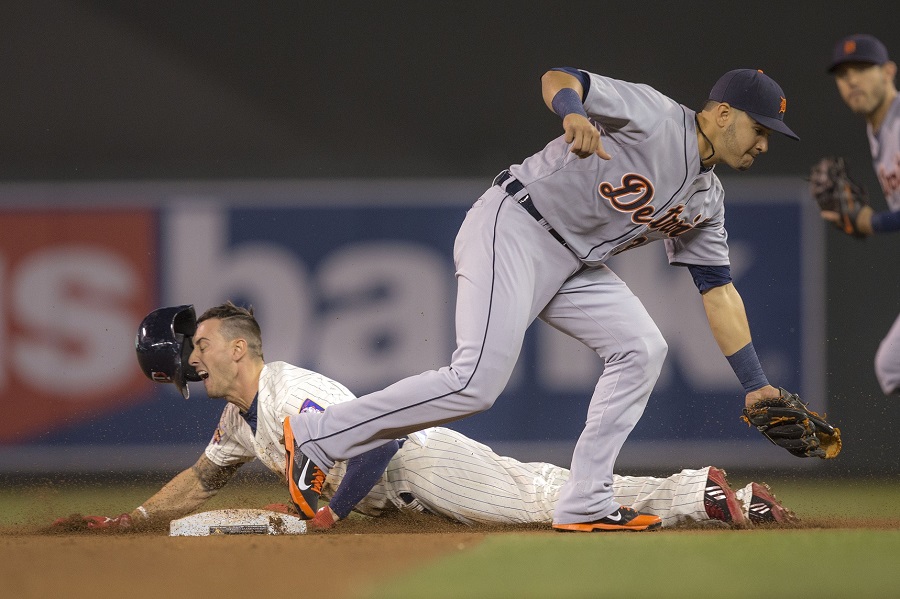 Parmelee: Chris Parmelee had chances to claim a regular position with the Twins in 2012 and 2013. In 2012 Parmelee started at first base to start the season after a very successful September audition. Justin Morneau was coming off a severe concussion and was slated to be the DH. Parmelee was given first base. He played acceptable defense, but failed to hit. Parmelee was sent to Rochester where he crushed AAA pitching, but failed to sustain his swing when recalled by the Twins. In 2013, Parm got the starting nod as the right fielder. He surprised many by being an acceptable right fielder, although he lacked speed. Again, his bat failed him and he was eventually sent to Rochester. In 2014, Parmelee competed again for a roster spot and lost out. Out of options, he was outrighted to Rochester when no one claimed him. In 32 games, Parmelee hit well, coming up with a .920 OPS and maintaining a batting average over .300. When the Twins suffered a rash of injuries, Chris was recalled and did not return to the minors. Parmelee split his playing time three ways, starting 14 games in left, 28 in right, 16 at first, and one in center field. Parmelee was inconsistent at the plate, at some points hitting in the middle of the order and other times slumping dramatically. His final numbers were so-so--a .691 OPS (94 OPS+). Probably the most striking stat was Parmelee's platoon split. Despite batting left-handed, his OPS vs. left handed pitching was .859, with a .325 batting average. Chris was also the Twins top pinch hitter. He was 5-13 with 7 RBI. Parmelee didn't get much of an audition late in the season, indicating that the coaching staff pretty much knew what they had. It appears Parmelee's chances of competing for a starting spot are over with the Twins. I think that if other roster moves work out that Parmelee could be a pretty good bench player. As a hitter, he has shown he can hit against lefties and has been pretty effective as a pinch hitter. He's shown he is an acceptable corner OF, as well as a good defensive first baseman. Nuñez: Eduardo Nuñez was once regarded as the probable successor to Derek Jeter. Bad defense and unspectacular offense lowered the expectation to that of competing for a utility spot on the Yankees. In spring training, he lost out for that job and was designated for assignment. The Twins claimed Eduardo and early in May, he was recalled. Nuñez was primarily a backup, and he got at-bats at several positions. He started 17 games at short, 12 at third, and 11 in the outfield (10 in left, one in right). Metrics indicate that Nuñez was pretty good in the outfield, decent at short, but subpar at third. He seemed uncomfortable in the outfield, surprisingly good at short and third. With the bat, Nuñez had some moments, but overall was not a great hitter. He showed very good speed on the bases and a bit of pop. Like Parmelee, Nunez also had "reverse" platoon splits. The right-handed hitter put up solid numbers against right-handers (716 OPS), but struggled against lefties (586 OPS). The future for Nuñez is fairly cloudy, partly because he is eligible for arbitration. With no more additions, he has a good chance of claiming a utility spot on the 2015 Twins. As noted, he offers good speed, some versatility and some pop for a utility player. His defense isn't outstanding and he is 27, so it is unlikely he will get substantially better either at the plate or in the field. In short stints, he has provided a shot in the arm for the Twins. Schafer: Jordan Schafer was once a top prospect for the Braves. However. poor performance, off-field problems and injuries combined to short circuit his trials with the Braves and the Astros. Schafer was designated for assignment at the trade deadline and the Twins claimed him and immediately used him regularly, mostly as the left fielder. More regular play netted improved performance. Schafer eclipsed almost all of his Brave stats in a month, reaching base at a good clip, stealing bases and playing good defense in both left and center. Schafer hit .333 with an OPS of .831 in August. He tailed off in September, compounded by a non-throwing shoulder injury. He finished his two-month trial with the Twins with a .285 average, .707 OPS (100 OPS+) and 15 stolen bases in 147 plate appearances (roughly a quarter of the season). The left-handed hitting Schafer posted severe platoon splits for both the Braves and the Twins in 2014. He had an OPS of .822 (.326 BA) against right handed pitchers, but had a near-helpless .388 OPS (.171 BA) against same-handed hurlers. Schafer displayed one outstanding skill -- he is an very good base stealer. He swiped 15 bases in his limited time with the Twins. His defense rated as good, especially in left field which is a new position for him. Going forward, the Twins must decide what to do with the arb-eligible Schafer. Given his good performance late in 2014 and the lack of great internal options, I expect the Twins will find a way to retain him. Schafer will likely compete for a starting spot, but his probable landing spot is fourth or platoon OF. Having the skill of an accomplished base thief gives him a leg up to be a helpful bench player. His poor performance against southpaws would limit him to being a platoon player at best. At 28 years of age, the most the Twins can hope for from Schafer would be to see what they saw in August and September. Schafer could be a helpful player for an improving Twins team. I think all three players profiled here are big-leaguers, but none of them will ever be more than part-time players. None of them are really young (Parm 26, Nuñez 27, and Schafer 28), but all seem to have skills that could help them be helpful bench guys. Nuñez plays both infield and outfield, Parmelee plays first and the outfield corners and Schafer looks like a three-position outfielder. Nuñez and Schafer have good speed and Schafer appears to be an elite base stealer. Parmelee had a good season (SSS) pinch-hitting and facing LH pitching. Ideally, bench players would provide high-quality defense, but that's not the case here. Acquisitions and DFAs will probably determine whether all three guys remain with the Twins.
 -
Barring injury, Phil Hughes will be the opening day starting pitcher for the Twins in 2015. Hughes pitched in 2014 as a 28-year old, so he was one of the younger free-agent signees inked in the offseason. He was the Twins best and most reliable starting pitcher last year by far. Hughes was signed to a three-year $24M contract coming off a 4-14 season with the New York Yankees, a team that won 85 games. Hughes had allowed 24 homers in 145+ innings for the Yanks and the thought was that a new location and less pressure would allow for improvement.It was not just improvement, but a sea change. Hughes started rather slowly in April, not getting his first win until his fourth start and recording a 5.14 ERA for the month. Hughes walked six batters in his first four starts, then proceeded to walk 10 (10!) in his final 28 starts. He was regarded as a pitcher with good control, but nothing like what he put up this season. He kept his team in the game almost every outing. He struck out eight hitters per nine innings while walking .7 per nine, setting a record for the highest K/BB ratio in a single season and leading the league with fewest walks per innings pitched. Hughes' 3.52 ERA was good, but his FIP of 2.65 was much better. Hughes this week earned Twins Diamond Award hardware as both Pitcher of the Year and MVP. His fine season was arguably the best by a free agent signee this year. Now, as we turn the page to 2015, we all wonder if Hughes can sustain his excellent 2014 campaign. He did set a career high for innings pitched and batters faced, and he's coming off a season when he allowed only .7 homers per nine, about half his mark in New York. Also, Hughes has had strong seasons in even-numbered years. Can he break the jinx and put up good numbers in consecutive seasons? There are reasons to expect some regression, but also reasons to believe Hughes has "found it". there isn't really another season where he practically walked no one. However, there is hope he will be backed by an improved defensive outfield. I also can't see Hughes continuing to suppress home runs as well as he did in 2014. It does make sense that Hughes would perform closer to his FIP and perhaps allow a lower number of hits per inning pitched. Hughes' ability to "pound the strike zone" seems ingrained in his approach and has, no doubt, been effective for him. Hughes was regarded as an extreme fly ball pitcher and indeed he has allowed many balls to be put in the air. His air out percentage is one of the higher ones in the league, but it has worked for him. With all the failures of pitchers brought in to the Twins, Hughes was both a pleasant surprise and an advertisement that finding the right free agent is possible. Any thought of contending revolves around him backing up last year's success with another strong season. Click here to view the article
- 19 replies
-
- 1
-

-
- air out percentage
- kk.bb
- (and 1 more)
-
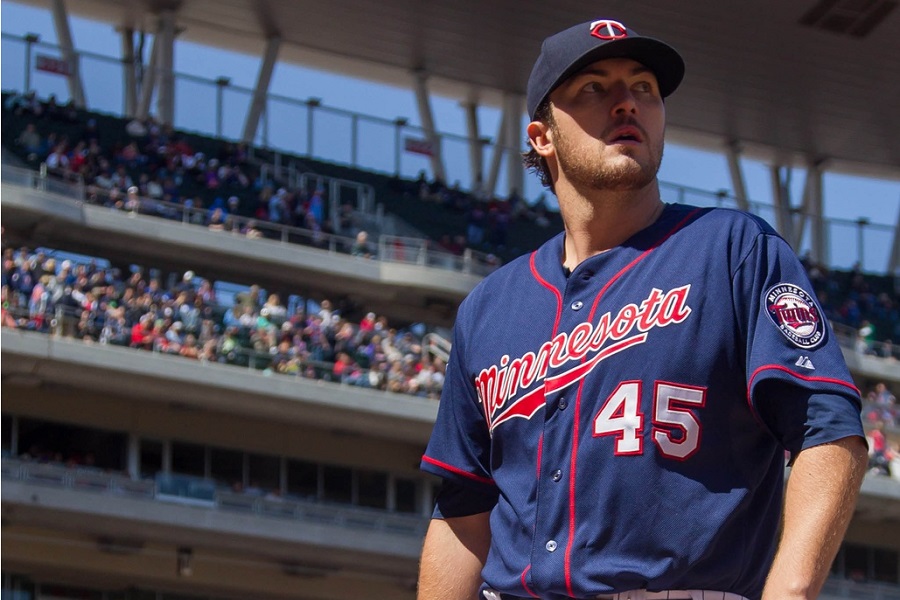 It was not just improvement, but a sea change. Hughes started rather slowly in April, not getting his first win until his fourth start and recording a 5.14 ERA for the month. Hughes walked six batters in his first four starts, then proceeded to walk 10 (10!) in his final 28 starts. He was regarded as a pitcher with good control, but nothing like what he put up this season. He kept his team in the game almost every outing. He struck out eight hitters per nine innings while walking .7 per nine, setting a record for the highest K/BB ratio in a single season and leading the league with fewest walks per innings pitched. Hughes' 3.52 ERA was good, but his FIP of 2.65 was much better. Hughes this week earned Twins Diamond Award hardware as both Pitcher of the Year and MVP. His fine season was arguably the best by a free agent signee this year. Now, as we turn the page to 2015, we all wonder if Hughes can sustain his excellent 2014 campaign. He did set a career high for innings pitched and batters faced, and he's coming off a season when he allowed only .7 homers per nine, about half his mark in New York. Also, Hughes has had strong seasons in even-numbered years. Can he break the jinx and put up good numbers in consecutive seasons? There are reasons to expect some regression, but also reasons to believe Hughes has "found it". there isn't really another season where he practically walked no one. However, there is hope he will be backed by an improved defensive outfield. I also can't see Hughes continuing to suppress home runs as well as he did in 2014. It does make sense that Hughes would perform closer to his FIP and perhaps allow a lower number of hits per inning pitched. Hughes' ability to "pound the strike zone" seems ingrained in his approach and has, no doubt, been effective for him. Hughes was regarded as an extreme fly ball pitcher and indeed he has allowed many balls to be put in the air. His air out percentage is one of the higher ones in the league, but it has worked for him. With all the failures of pitchers brought in to the Twins, Hughes was both a pleasant surprise and an advertisement that finding the right free agent is possible. Any thought of contending revolves around him backing up last year's success with another strong season.
 -
Let's Just Roll With What We Have
stringer bell commented on RealTwinsFan357's blog entry in Random Thoughts About Baseball
70 wins can turn into 85 with improved pitching from Starters #3-5, improved offense and defense from left field and no drop-offs elsewhere. Improvement and full season from Arcia, a return to form for Mauer and some help from the farm system should offset regression from guys who surprised last year. Pitchers get hurt and are ineffective. I think adding one more starter (Masterson) would solidify the rotation a bit. I also think adding a RH defense-first guy (Bourgos or Gentry) would help the OF. I say that Schafer showed more in two months than Hicks showed in two seasons, plus at 28 he isn't a prospect to be protected. -
Article: Postseason Review: Aaron Hicks
stringer bell replied to stringer bell's topic in Twins Daily Front Page News
Doing well so far. 4-11 with a homer and three walks. However, I don't see any major leaguers playing in Winter League. Do they usually play later in their season? -
Postseason Review: Schafer, Parmelee, Nuñez
stringer bell posted a blog entry in stringer bell's Blog
This will close out my postseason reviews of position players. Parmelee and Nuñez spent a majority of the season with the Twins. Absent significant injuries, they didn't start many games. Schafer was claimed from the Braves and played regularly. All three players had their moments, but most likely won't seriously compete for a starting spot in 2015. There is a significant possibility that one or more of these players will be cut loose in the offseason. Parmelee: Chris Parmelee had chances to claim a regular position with the Twins in 2012 and 2013. In 2012 Parmelee started at first base to start the season after a very successful September audition. Justin Morneau was coming off a severe concussion and was slated to be the DH. Parmelee was given first base. He played acceptable defense, but failed to hit. Parmelee was sent to Rochester where he crushed AAA pitching, but failed to sustain his swing when recalled by the Twins. In 2013, Parm got the starting nod as the right fielder. He surprised many by being an acceptable right fielder, although he lacked speed. Again, the bat failed him and he was eventually sent to Rochester. In 2014, Parmelee competed again for a roster spot and lost out. Out of options, he was outrighted to Rochester when no one claimed him. In 32 games, Parmelee hit well, coming up with a .920 OPS and maintaining a batting average over .300. When the Twins suffered a rash of injuries, Chris was recalled and did not return to the minors. Parmelee split his playing time three ways, starting 14 games in left, 28 in right, 16 at first, and one in center field. Parmelee was inconsistent at the plate, at some points hitting in the middle of the order and other times slumping dramatically. His final numbers were so-so--a .691 OPS (94 OPS+). Probably the most striking stat was Parmelee's platoon split. His OPS vs. left handed pitching was .859, with a .325 batting average. Chris was also the Twins top pinch hitter. He was 5-13 with 7 RBI. Parmelee didn't get much of an audition late in the season, indicating that the coaching staff pretty much knew what they had. It appears Parmelee's chances of competing for a starting spot are over with the Twins. I think that if other roster moves work out that Parmelee could be a pretty good bench player. As a hitter, he has shown he can hit against lefties and has been pretty effective as a pinch hitter. He's shown he is an acceptable corner OF, as well as a good defensive first baseman. Nuñez: Eduardo Nuñez was once regarded as the probable successor for Derek Jeter. Bad defense and unspectacular offense lowered the expectation to competing for a utility spot on the Yankees. In spring training, he lost out for that job and was DFAed. The Twins claimed Eduardo and early in May, he was recalled. Nuñez was primarily a backup, and he got at-bats at several positions. He started 17 games at short, 12 at third, and 11 in the outfield (10 in left, one in right). Metrics indicate that Nuñez was pretty good in the outfield, decent at short, but subpar at third. I thought he was uncomfortable in the outfield, surprisingly good at short and third. With the bat, Nuñez had some moments, but overall was not a great hitter. He showed very good speed on the bases and a bit of pop. Probably most surprising was the platoon splits. Eduardo hit well against right handers, but struggled against lefties, putting up an OPS of .716 vs. righties, but of .586 against southpaws. The future for Nuñez is pretty cloudy. With no more additions, he has a good chance of claiming a utility spot on the 2015 Twins. As noted, he offers good speed, some versatility, and some pop for a utility player. His defense isn't outstanding and he is 27, so it is unlikely he will get substantially better either at the plate or in the field. In short stints, he has provided a shot in the arm for the Twins. Schafer: Jordan Schafer was once a top prospect for the Braves. He had had opportunities, but poor performance, off-field problems and injuries combined to short circuit his trials with the Braves and the Astros. The Braves DFAed Schafer at the trade deadline after poor performance as the last man on the bench for a contending team. The Twins claimed Jordan and immediately used him regularly, mostly as the left fielder. Regular play netted improved performance. Schafer eclipsed almost all of his Brave stats in a month, reaching base at a good clip, stealing bases and playing good defense in both left and center. Schafer hit .333 with an OPS of .831 in August. He tailed off in September, compounded by a non-throwing shoulder injury. He finished his two-month trial with the Twins with a .285 average, .707 OPS (100 OPS+) and 15 stolen bases in 147 plate appearances (roughly a quarter of the season). Schafer posted severe platoon splits for both the Braves and the Twins in 2014. He had an OPS of .822 (.326 BA) against right handed pitchers, but had a near-helpless .388 OPS (.171 BA) against same-handed hurlers. Schafer displayed one outstanding skill--he is an outstanding base stealer. He swiped 15 bases in his limited time with the Twins. His defense rated as pretty good, especially in left field, a new position for him. Going forward, the Twins must decide what to do with the arb-eligible Schafer. Given his good performance late in 2014 and the lack of great internal options, I expect that the Twins will find a way to retain him. I expect that Schafer will compete for a starting spot, but his likely landing spot is fourth or platoon OF. Having the skill of being an accomplished base thief gives him a leg up to be a helpful bench player. His poor performance against LH pitching would limit him to being a platoon player at best. At 28 years of age, the most the Twins can hope for from Schafer would be to see what they saw from him in August and September. I think that Schafer can be a helpful player for an improving Twins team. I think all three players profiled here are big-leaguers. I don't think any of them will ever be more than a part-time player. None of the guys is really young (Parm 26, Nuñez 27, and Schafer 28), but all seem to have skills that could help them be helpful bench guys. Nuñez plays both infield and outfield, Parmelee plays first and the outfield corners and Schafer looks like a three-positon outfielder. Nuñez and Schafer have good speed and Schafer appears to be an elite base stealer. Parmelee had a good season (SSS) pinch-hitting and facing LH pitching. Ideally, bench players should provide high-quality defense, and that's not the case here. Acquisitions and DFAs will probably determine whether all three guys remain with the Twins. -
Article: Postseason Review: Aaron Hicks
stringer bell replied to stringer bell's topic in Twins Daily Front Page News
Isn't it likely that the two things are interrelated? In order to get on base more, he seems to have sacrificed power. I didn't see him hit the ball hard at all this year and he increased his OBP mostly by taking more walks. Hicks used his good strike zone judgment to go deep in counts, but the passive approach also robbed him of power perhaps. I'll say again that his offense isn't good enough to be a regular in the major leagues. Until he proves he is a good enough hitter, he should be working on it in the minors. -
Article: Postseason Review: Aaron Hicks
stringer bell replied to stringer bell's topic in Twins Daily Front Page News
I'm trying to be evenhanded here. Aaron Hicks' OBP increased substantially from 2013 to 2014. but it was at the expense of power. In '13, Hicks had 22 XBH in 313 PAs and had a slugging avg of .338, this year Hicks' slugging decreased to a miserable .274, with nine XBH in 181 PAs. That's Jamey Carroll and Nick Punto territory for slugging. This version of Hicks isn't good enough to play in the majors. I think there is a better player there, but he needs to prove it and develop in Triple A. In light of the last two disappointing seasons, I think it is unconscionable to give him a starting position, no matter what he does in the spring. It would be great for a guy with the tools of Aaron Hicks to become a good enough hitter to man a corner outfield position. I just don't know if that will ever come to pass. -
Article: Left Field In Need Of Upgrade
stringer bell replied to Parker Hageman's topic in Twins Daily Front Page News
I wouldn't be surprised if the position players aren't changed much. Basically the 12 who were on the squad when rosters were expanded and why not? That group scored runs as well as anyone. As others have pointed out, any additions need to help the team play better defense. On the other hand, the Twins need to shake up their pitching staff. I think the bullpen needs turnover and at least two starting jobs are wide open. -
Barring injury, Phil Hughes will be the Opening Day starting pitcher for the Twins in 2015. He was the Twins best and most reliable starting pitcher last year by far. Hughes was signed to a three-year $24M contract coming off a 4-14 season with the New York Yankees, a team that won 85 games. Hughes had allowed 24 homers in 145+ innings for the Yanks and the thought was that a new location and less pressure would allow for improvement. Hughes pitched in 2014 as a 28-year old, so he was one of the younger free-agent signees signed in the offseason. It was not just improvement, but a sea change. Hughes started rather slowly in April, not getting his first win until his fourth start and recording a 5.14 ERA for the month. Hughes walked six batter in his first four starts, and walked 10(10!) in his final 28 starts. He was regarded as a pitcher with good control, but nothing like what he put up this season. He kept his team in the game almost every outing. He struck out eight hitters per nine innings while walking .7 per nine, setting a record for the highest K/BB ratio in a single season and leading the league with fewest walks per innings pitched. Hughes 3.52 ERA was good, but his FIP of 2.65 was much better. Hughes this week earned Diamond Award hardware of both pitcher of the year and MVP. His fine season was arguably the best by a free agent signee this year. Now, as we turn the page to 2015, we all wonder if Hughes can sustain his excellent 2014 campaign. He did set a career high for innings and batters faced, and he's coming off a season when he only allowed .7 homers per nine, about half of his mark in New York. Also, Hughes has had strong seasons in even-numbered years, can he break the jinx and put good numbers in consecutive seasons? There are reasons to expect some regression, but also reasons to believe Hughes has "found it". I can't really see another season where he practically walks no one. However, there is hope he will be backed by an improved defensive outfield I also can't see Hughes continuing to suppress home runs as well as he did in 2014. It does make sense that Hughes would perform closer to his FIP and perhaps allow a lower number of hits per inning pitched. Hughes' ability to "pound the strike zone" seems ingrained in his approach and has, no doubt, been effective for him. Hughes was regarded as an extreme fly ball pitcher and indeed he has many balls put in the air. His air out percentage is one of the higher ones in the league, but it has worked for him. With all the failures of pitchers brought in to the Twins, Hughes was both a pleasant surprise and an advertisement that finding the right free agent is possible. Any thought of contending revolves around him backing up last year's success with another strong season.
-
Article: Left Field In Need Of Upgrade
stringer bell replied to Parker Hageman's topic in Twins Daily Front Page News
Good post, ChrisKnutson. Yeah, lets bring in Denorfia and Young. We could have Herrmann, Colabello, Denorfia, Parmelee and Young. The Twins would lead the league in guys named Chris for sure. Seriously, I don't know much about either Denorfia or Young, but they would appear to be upgrades who could bridge the team to when the prospects are here. Of the current outfield candidates, Arcia, Schafer, Rosario, Daniel Ortiz, Parmelee, and Herrmann all hit left handed. It makes perfect sense to bring in a RH hitter who can play good defense. It looks like both Chrises fill the bill in that respect.
