



Matthew Taylor
-
Posts
973 -
Joined
-
Last visited
Content Type
Profiles
News
Minnesota Twins Videos
2026 Minnesota Twins Top Prospects Ranking
2022 Minnesota Twins Draft Picks
Minnesota Twins Free Agent & Trade Rumors, Notes, & Tidbits
Guides & Resources
2023 Minnesota Twins Draft Picks
The Minnesota Twins Players Project
2024 Minnesota Twins Draft Picks
2025 Minnesota Twins Draft Pick Tracker
2026 Minnesota Twins Draft Tracker: Picks & Bonuses
Forums
Blogs
Events
Store
Downloads
Gallery
Everything posted by Matthew Taylor
-
Could Louis Varland’s Emergence Lead to a Jhoan Duran Trade?
Matthew Taylor posted an article in Twins
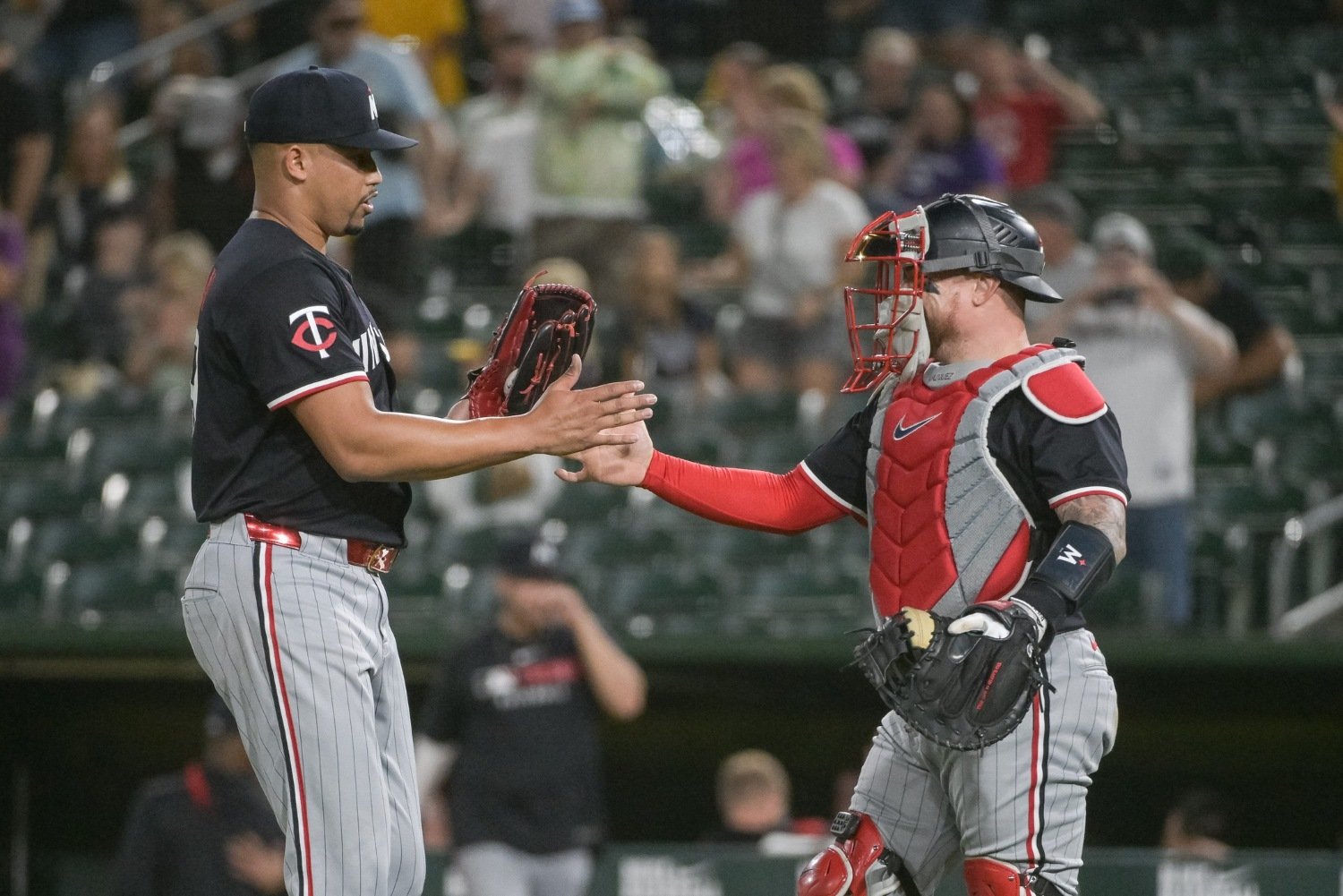 Jhoan Duran has been lights-out for the Minnesota Twins in 2025. Despite a dip in velocity from years past, he’s thrived as the team’s closer, locking down late-inning leads with a 0.95 ERA and the second-highest WPA on the roster, at 1.6. His dominance was rightfully recognized when he was named the American League Reliever of the Month in May. For a contending team with playoff aspirations, trading such a dominant weapon out of the bullpen seems counterintuitive, even reckless. But the Twins may be in a rare position of strength to consider it—not because Duran has lost anything, but because someone else has found something. Louis Varland, once a fringe starter, has emerged as a bullpen stud. For the first time in a full-time relief role this season, Varland has been electric. His fastball regularly hits 99 MPH, and his knuckle curve is generating a whopping 41% whiff rate. Since May began, he’s pitched in the third-highest leverage spots in the bullpen, and he owns a 2.54 ERA with a 33:7 strikeout-to-walk ratio. He’s no longer just a promising arm. He’s one of the most dominant relievers in the Twins bullpen, and flashing that dominance in big-time spots. So if the Twins can trust Varland (along with Griffin Jax) to handle the ninth inning, could they afford to deal Duran to address a glaring need on the offensive side of the roster? Although shocking on the surface, it's a question worth digging into. The Twins offense has sputtered, and any path toward adding impact bats at the trade deadline comes with risk. They could deal from their farm system, but that’s a tough sell with the team’s ownership situation in flux. Do you really want to trade away cost-controlled prospects when you don’t even know who’ll be signing the checks next year? They could explore moving a starting pitcher, as Cody Christie recently suggested with Chris Paddack. But with the riskiness of starting pitching injuries and how valuable the Twins’ rotation has been, that feels like an unnecessary gamble. Certainly, this week's unfortunate Pablo López news highlights that. The third, perhaps most logical option, is to trade from the bullpen, the one area of true organizational depth. Of course, trading Duran would create a domino effect. Everyone else in the bullpen would have to move up a rung. But the Twins have effectively built a unit deep enough to handle it. Cole Sands and Brock Stewart have both earned trust in key situations. Danny Coulombe is set to return soon. Beyond them, the front office could create another Louis Varland out of a minor-league starter like Marco Raya, Andrew Morris, or Connor Prielipp, all of whom profile as potential weapons in short stints down the stretch of the regular season. There’s also the financial reality. Duran is making more than $4 million this year, and that number could exceed $7 million next season in arbitration. If the Twins aren’t planning to hang onto him at that cost (and there’s no guarantee they will), this could be the moment to flip a valuable asset for a hitter who can help both now and in the future. Losing Duran wouldn’t be easy. But with Varland thriving, Jax dominating (1.50 ERA and a 31/3 K/BB over his last 19 appearances), and the bullpen pipeline stocked with arms, it might be a move the Twins can afford to make. Especially if it brings in a bat that finally balances this lineup and helps push the team to another level. What do you think? Could Louis Varland's emergence allow the Twins to trade Jhoan Duran? Would you make that deal for the right bat, or is Duran simply too valuable to this roster? Leave a comment below and start the conversation!
 -
Image courtesy of © Ed Szczepanski-Imagn Images Jhoan Duran has been lights-out for the Minnesota Twins in 2025. Despite a dip in velocity from years past, he’s thrived as the team’s closer, locking down late-inning leads with a 0.95 ERA and the second-highest WPA on the roster, at 1.6. His dominance was rightfully recognized when he was named the American League Reliever of the Month in May. For a contending team with playoff aspirations, trading such a dominant weapon out of the bullpen seems counterintuitive, even reckless. But the Twins may be in a rare position of strength to consider it—not because Duran has lost anything, but because someone else has found something. Louis Varland, once a fringe starter, has emerged as a bullpen stud. For the first time in a full-time relief role this season, Varland has been electric. His fastball regularly hits 99 MPH, and his knuckle curve is generating a whopping 41% whiff rate. Since May began, he’s pitched in the third-highest leverage spots in the bullpen, and he owns a 2.54 ERA with a 33:7 strikeout-to-walk ratio. He’s no longer just a promising arm. He’s one of the most dominant relievers in the Twins bullpen, and flashing that dominance in big-time spots. So if the Twins can trust Varland (along with Griffin Jax) to handle the ninth inning, could they afford to deal Duran to address a glaring need on the offensive side of the roster? Although shocking on the surface, it's a question worth digging into. The Twins offense has sputtered, and any path toward adding impact bats at the trade deadline comes with risk. They could deal from their farm system, but that’s a tough sell with the team’s ownership situation in flux. Do you really want to trade away cost-controlled prospects when you don’t even know who’ll be signing the checks next year? They could explore moving a starting pitcher, as Cody Christie recently suggested with Chris Paddack. But with the riskiness of starting pitching injuries and how valuable the Twins’ rotation has been, that feels like an unnecessary gamble. Certainly, this week's unfortunate Pablo López news highlights that. The third, perhaps most logical option, is to trade from the bullpen, the one area of true organizational depth. Of course, trading Duran would create a domino effect. Everyone else in the bullpen would have to move up a rung. But the Twins have effectively built a unit deep enough to handle it. Cole Sands and Brock Stewart have both earned trust in key situations. Danny Coulombe is set to return soon. Beyond them, the front office could create another Louis Varland out of a minor-league starter like Marco Raya, Andrew Morris, or Connor Prielipp, all of whom profile as potential weapons in short stints down the stretch of the regular season. There’s also the financial reality. Duran is making more than $4 million this year, and that number could exceed $7 million next season in arbitration. If the Twins aren’t planning to hang onto him at that cost (and there’s no guarantee they will), this could be the moment to flip a valuable asset for a hitter who can help both now and in the future. Losing Duran wouldn’t be easy. But with Varland thriving, Jax dominating (1.50 ERA and a 31/3 K/BB over his last 19 appearances), and the bullpen pipeline stocked with arms, it might be a move the Twins can afford to make. Especially if it brings in a bat that finally balances this lineup and helps push the team to another level. What do you think? Could Louis Varland's emergence allow the Twins to trade Jhoan Duran? Would you make that deal for the right bat, or is Duran simply too valuable to this roster? Leave a comment below and start the conversation! View full article
-
Image courtesy of Thieres Rabelo The Minnesota Twins continued their dominant run on the mound through the month of May, establishing themselves as one of the best pitching staffs in baseball. As a team, they finished the month with a 3.11 ERA, good for fourth-best in the majors. They led the league in pitching fWAR, with 6.1—more than a full win ahead of second-place Philadelphia (4.8). The rotation ranked ninth in ERA (3.25), while the bullpen was even better, checking in fourth with a 2.90 ERA. Several pitchers contributed to the team's excellent month, but four stood out above the rest. #4: Bailey Ober 6 G, 2.76 ERA, 1.36 WHIP, 29 1/3 IP, 33 H, 7 BB, 25 K Ober made six starts in May, and while the surface stats might not immediately leap off the page, his steady consistency helped the Twins win four of those games. A rain-suspended outing against Cleveland skewed his innings total a bit, but Ober still didn't allow more than three earned runs in any appearance all month. Since his rough season debut, he's quietly continued his run as one of the more reliable arms in this rotation and in the American League, chewing innings and keeping his team in games every time out. #3: Jhoan Duran 15 G, 0.60 ERA, 1.13 WHIP, 15 IP, 12 H, 5 BB, 20 K Duran was lights-out for most of the month, allowing just one earned run in 15 innings. That lone blemish came in a blown save against Cleveland, though the Twins ultimately walked it off to salvage the win, and give Duran credit for the W. He also earned seven saves in May, more than triple his April total. Even with one ghost-runner-induced loss in extra innings, Duran remained dominant and reaffirmed his role as the bullpen's undisputed anchor. The league recognized him with the AL Relief Pitcher of the Month Award, which has to count for something. Duran's the first Twin to win those honors since Joe Nathan in 2009. #2: Chris Paddack 5 G, 2.40 ERA, 0.93 WHIP, 30 IP, 23 H, 5 BB, 18 K Paddack turned heads in May, bouncing back from early-season struggles with one of the strongest months of his career. He threw at least five innings in four of his five starts and gave up two runs or fewer in all but one. He was especially electric in back-to-back outings, tossing 7 1/3 innings of one-run ball against San Francisco, followed by seven shutout innings against Baltimore. After a long road back from injury, Paddack is finally showing the potential that made the Twins hang onto him this offseason. #1: Joe Ryan – Twins Daily Pitcher of the Month 5 G, 1.86 ERA, 0.72 WHIP, 29 IP, 16 H, 5 BB, 33 K Ryan was nearly untouchable in May, dominating hitters with elite command and his usual dominant stuff. He posted quality starts in four of his five outings and never allowed more than five hits in any of them. His signature performance came in a rivalry win over Milwaukee, when he spun six shutout innings with just two hits allowed. Ryan is not only the staff ace right now, he’s pitching like a legitimate Cy Young contender. There’s no reason to believe the Twins’ pitching will slow down any time soon. If the bats can turn the corner, this team could be in for a special summer. Who was your pick for Pitcher of the Month? Do you agree with the order above? Let us know in the comments below! View full article
-
.png.984fbfc88222722c47b61f2c44d3cba7.png) The Minnesota Twins continued their dominant run on the mound through the month of May, establishing themselves as one of the best pitching staffs in baseball. As a team, they finished the month with a 3.11 ERA, good for fourth-best in the majors. They led the league in pitching fWAR, with 6.1—more than a full win ahead of second-place Philadelphia (4.8). The rotation ranked ninth in ERA (3.25), while the bullpen was even better, checking in fourth with a 2.90 ERA. Several pitchers contributed to the team's excellent month, but four stood out above the rest. #4: Bailey Ober 6 G, 2.76 ERA, 1.36 WHIP, 29 1/3 IP, 33 H, 7 BB, 25 K Ober made six starts in May, and while the surface stats might not immediately leap off the page, his steady consistency helped the Twins win four of those games. A rain-suspended outing against Cleveland skewed his innings total a bit, but Ober still didn't allow more than three earned runs in any appearance all month. Since his rough season debut, he's quietly continued his run as one of the more reliable arms in this rotation and in the American League, chewing innings and keeping his team in games every time out. #3: Jhoan Duran 15 G, 0.60 ERA, 1.13 WHIP, 15 IP, 12 H, 5 BB, 20 K Duran was lights-out for most of the month, allowing just one earned run in 15 innings. That lone blemish came in a blown save against Cleveland, though the Twins ultimately walked it off to salvage the win, and give Duran credit for the W. He also earned seven saves in May, more than triple his April total. Even with one ghost-runner-induced loss in extra innings, Duran remained dominant and reaffirmed his role as the bullpen's undisputed anchor. The league recognized him with the AL Relief Pitcher of the Month Award, which has to count for something. Duran's the first Twin to win those honors since Joe Nathan in 2009. #2: Chris Paddack 5 G, 2.40 ERA, 0.93 WHIP, 30 IP, 23 H, 5 BB, 18 K Paddack turned heads in May, bouncing back from early-season struggles with one of the strongest months of his career. He threw at least five innings in four of his five starts and gave up two runs or fewer in all but one. He was especially electric in back-to-back outings, tossing 7 1/3 innings of one-run ball against San Francisco, followed by seven shutout innings against Baltimore. After a long road back from injury, Paddack is finally showing the potential that made the Twins hang onto him this offseason. #1: Joe Ryan – Twins Daily Pitcher of the Month 5 G, 1.86 ERA, 0.72 WHIP, 29 IP, 16 H, 5 BB, 33 K Ryan was nearly untouchable in May, dominating hitters with elite command and his usual dominant stuff. He posted quality starts in four of his five outings and never allowed more than five hits in any of them. His signature performance came in a rivalry win over Milwaukee, when he spun six shutout innings with just two hits allowed. Ryan is not only the staff ace right now, he’s pitching like a legitimate Cy Young contender. There’s no reason to believe the Twins’ pitching will slow down any time soon. If the bats can turn the corner, this team could be in for a special summer. Who was your pick for Pitcher of the Month? Do you agree with the order above? Let us know in the comments below!
The Minnesota Twins continued their dominant run on the mound through the month of May, establishing themselves as one of the best pitching staffs in baseball. As a team, they finished the month with a 3.11 ERA, good for fourth-best in the majors. They led the league in pitching fWAR, with 6.1—more than a full win ahead of second-place Philadelphia (4.8). The rotation ranked ninth in ERA (3.25), while the bullpen was even better, checking in fourth with a 2.90 ERA. Several pitchers contributed to the team's excellent month, but four stood out above the rest. #4: Bailey Ober 6 G, 2.76 ERA, 1.36 WHIP, 29 1/3 IP, 33 H, 7 BB, 25 K Ober made six starts in May, and while the surface stats might not immediately leap off the page, his steady consistency helped the Twins win four of those games. A rain-suspended outing against Cleveland skewed his innings total a bit, but Ober still didn't allow more than three earned runs in any appearance all month. Since his rough season debut, he's quietly continued his run as one of the more reliable arms in this rotation and in the American League, chewing innings and keeping his team in games every time out. #3: Jhoan Duran 15 G, 0.60 ERA, 1.13 WHIP, 15 IP, 12 H, 5 BB, 20 K Duran was lights-out for most of the month, allowing just one earned run in 15 innings. That lone blemish came in a blown save against Cleveland, though the Twins ultimately walked it off to salvage the win, and give Duran credit for the W. He also earned seven saves in May, more than triple his April total. Even with one ghost-runner-induced loss in extra innings, Duran remained dominant and reaffirmed his role as the bullpen's undisputed anchor. The league recognized him with the AL Relief Pitcher of the Month Award, which has to count for something. Duran's the first Twin to win those honors since Joe Nathan in 2009. #2: Chris Paddack 5 G, 2.40 ERA, 0.93 WHIP, 30 IP, 23 H, 5 BB, 18 K Paddack turned heads in May, bouncing back from early-season struggles with one of the strongest months of his career. He threw at least five innings in four of his five starts and gave up two runs or fewer in all but one. He was especially electric in back-to-back outings, tossing 7 1/3 innings of one-run ball against San Francisco, followed by seven shutout innings against Baltimore. After a long road back from injury, Paddack is finally showing the potential that made the Twins hang onto him this offseason. #1: Joe Ryan – Twins Daily Pitcher of the Month 5 G, 1.86 ERA, 0.72 WHIP, 29 IP, 16 H, 5 BB, 33 K Ryan was nearly untouchable in May, dominating hitters with elite command and his usual dominant stuff. He posted quality starts in four of his five outings and never allowed more than five hits in any of them. His signature performance came in a rivalry win over Milwaukee, when he spun six shutout innings with just two hits allowed. Ryan is not only the staff ace right now, he’s pitching like a legitimate Cy Young contender. There’s no reason to believe the Twins’ pitching will slow down any time soon. If the bats can turn the corner, this team could be in for a special summer. Who was your pick for Pitcher of the Month? Do you agree with the order above? Let us know in the comments below!- 3 comments
-
- 1
-

-
- joe ryan
- chris paddack
- (and 2 more)
-
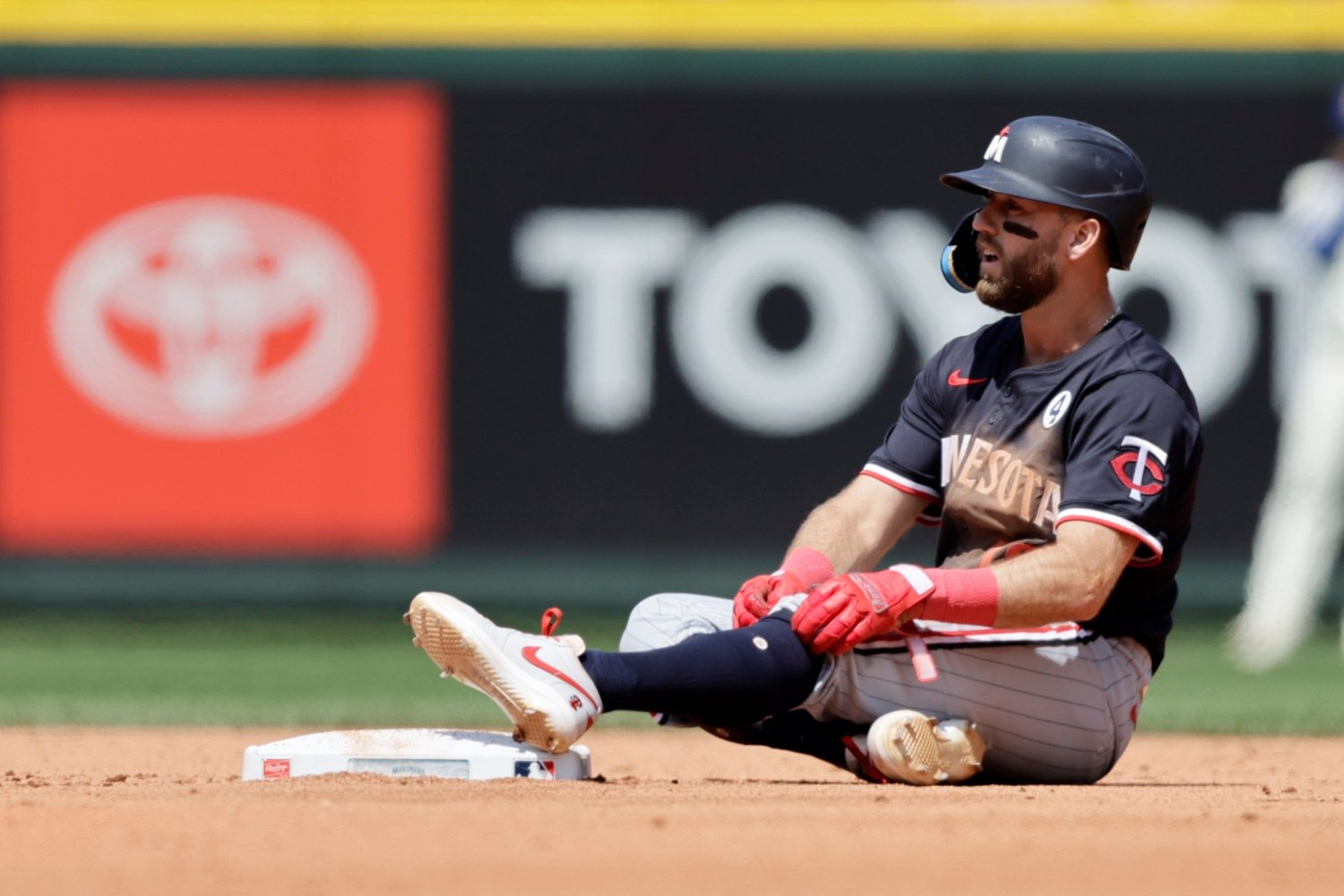 In a deal that initially flew under the radar, the Minnesota Twins acquired utility man Kody Clemens from the Philadelphia Phillies earlier this season in exchange for journeyman financial asset Cash Considerations. At the time, the move was met with shrugs. Now, it’s being met with "Did they really just fleece Dombrowski?" Since arriving in Minnesota, Clemens has transformed into a left-handed sledgehammer. In just 61 plate appearances, he's slashing an otherworldly .321/.400/.736 with 5 home runs and 12 RBIs. That’s good for 1.2 WAR, which is, according to statheads, exactly 1.2 more WAR than Cash Considerations has compiled since joining the Phillies. To be fair, Considerations has seen limited playing time in Philadelphia, largely because he's a pile of money and not technically eligible for the 40-man roster. Still, let’s go to the stat comparison: Player AVG OBP SLG HR RBI fWAR Kody Clemens .265 .359 .588 5 12 0.8 Cash Considerations .000 .000 .000 0 0 0 "It's early," said Phillies president of baseball operations Dave Dombrowski, when asked about the production gap. "Obviously, Kody is playing well, but we believe Cash just needs time to adjust to our culture and maybe a currency exchange. We’re still optimistic about his upside in the luxury tax column." Cash Considerations, acquired for the 483rd time in MLB history, reportedly showed up late to his Phillies physical, citing “bank holiday delays” and “wire transfer fatigue.” He’s been mostly invisible since, which mirrors his performance at the plate and on the field. The Phillies are rumored to be considering adding a pair of googly eyes to Considerations to lend a whimsical sense of sentience, but it's unclear how that would affect performance. One unnamed Phillies scout, when asked how Cash looks in pregame warmups, replied, "Honestly? Shiny. Crisp. High denomination. But I wouldn’t trust him in the 9th inning." Meanwhile, Clemens has quickly earned a cult following in Minnesota. Not only is he delivering clutch hits, but he also reportedly paid for lunch for the bullpen using leftover Considerations. "I think we won this deal," said Twins manager Rocco Baldelli. "Every time Kody homers, we text the Phillies’ front office a screenshot of his stat line and a Venmo request." The Phanatic once held up a sign reading “Let’s Go, Cash!” during a mid-inning skit. Sources confirm it was supposed to say “Let’s Go, Castellanos.” As the season progresses, it's clear the Twins made a savvy move. Clemens continues to contribute. Considerations continues to not be a person. The verdict is in: Advantage: Minnesota.
 -
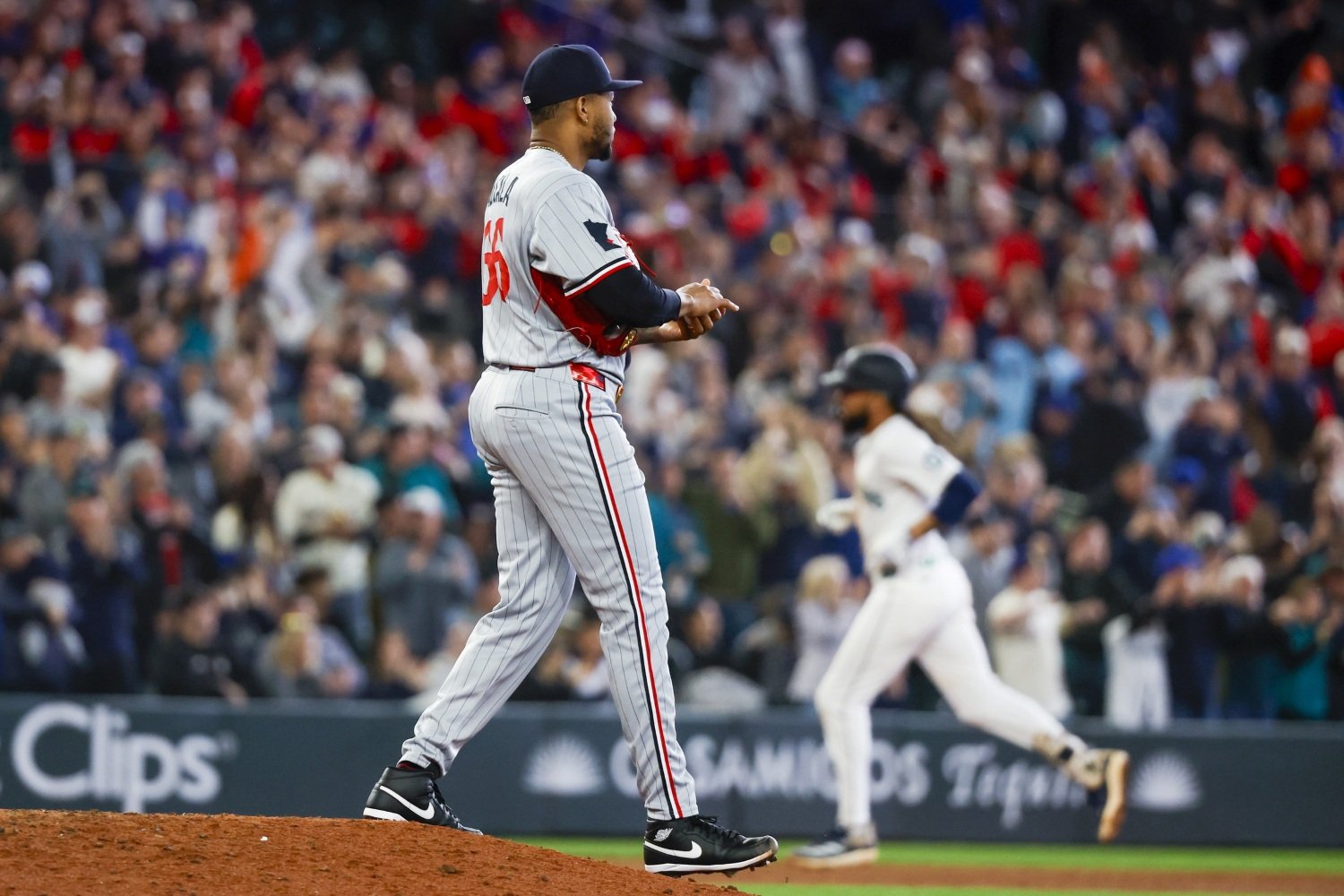 On Saturday in Seattle, Jorge Alcala was handed a one-run lead in the seventh inning. Before that outing, the Twins had avoided using Alcala in a spot like that, as he had been relegated to low-leverage duty. Workloads forced him into this spot, though, and he promptly walked Cole Young, Seattle’s No. 8 hitter playing in his first major-league game. He then served up a two-run homer to J.P. Crawford. That was the difference between a win or a loss in the game. Alcala now owns a 7.08 ERA and a 1.67 WHIP on the season. Since last year’s All-Star break, he has allowed 30 earned runs in 40 innings. That's nearly a full season’s worth of work with results that range from underwhelming to disastrous. It is a sharp decline from the promising start he had to 2023, and at this point, the Twins have clearly lost trust in him. He has been relegated almost exclusively to mop-up duty, with just six of his 19 outings this year coming in even moderate leverage. In three of those six, he gave up 4, 3, and 2 earned runs, respectively, providing little reason to believe he is turning a corner. Yet, the Twins find themselves in a bind. Alcala is out of minor-league options. Sending him to Triple-A St. Paul would mean exposing him to waivers, where another team would likely scoop him up. His fastball still averages 97 MPH, and his pitch arsenal continues to generate strong expected stats. His expected batting average against is .193, good for the 96th percentile, and his expected ERA is a solid 3.25. There is evidence in the peripherals that the tools are still there, and certainly enough that a team would be enticed to give him a shot. But results matter. For three straight seasons now, Alcala has not been able to turn his stuff into consistent, reliable production. The long ball continues to hurt him. He has not solved his struggles against left-handed hitters. And time and again, when given a shot in a meaningful moment, the results have gone the wrong way. It raises a tough but necessary question: Is the value of Alcala’s upside worth the cost of carrying a reliever who cannot be trusted, especially in a bullpen that has been otherwise very good this year? With Danny Coulombe on the injured list, Kody Funderburk’s struggles have been tolerated because he is the lone left-handed reliever on the roster. Once Coulombe returns, Funderburk is a clear candidate to head back to Triple-A, with minor-league options making that decision a straightforward one—leaving Alcala as the one remaining weak link with no easy path to improvement. If the Twins want to shake things up, they do have options. Right-hander Travis Adams has quietly put together a strong showing in St. Paul, with a 3.43 ERA and a 37:10 strikeout-to-walk ratio in 42 innings. Anthony Misiewicz has posted a 3.54 ERA and a 23:4 strikeout-to-walk ratio in 20 1/3 innings and would allow the Twins to have another lefty in the bullpen. Both pitchers could potentially fill Alcala’s low-leverage role with less risk and more upside. Alcala is already making $1.5 million this year, one of the higher-priced arms in Minnesota’s bullpen. With another year of arbitration eligibility on the horizon, it is hard to imagine the team bringing him back for 2026 unless something drastically changes. At this point, there is little to suggest that change is coming. Jorge Alcala still looks like a big-league pitcher on paper, but for a long time now, he has not pitched like one when it matters. If the Twins cannot trust him with real innings, and if the only role he serves is to soak up outs in blowouts, then maybe it is time to find out whether someone else can offer more, both now and in the future. What do you think the Twins should do with Alcala? Would you keep trying to make it work, or is it time to move on? Share your thoughts in the comments.
 -
Image courtesy of © Joe Nicholson-Imagn Images On Saturday in Seattle, Jorge Alcala was handed a one-run lead in the seventh inning. Before that outing, the Twins had avoided using Alcala in a spot like that, as he had been relegated to low-leverage duty. Workloads forced him into this spot, though, and he promptly walked Cole Young, Seattle’s No. 8 hitter playing in his first major-league game. He then served up a two-run homer to J.P. Crawford. That was the difference between a win or a loss in the game. Alcala now owns a 7.08 ERA and a 1.67 WHIP on the season. Since last year’s All-Star break, he has allowed 30 earned runs in 40 innings. That's nearly a full season’s worth of work with results that range from underwhelming to disastrous. It is a sharp decline from the promising start he had to 2023, and at this point, the Twins have clearly lost trust in him. He has been relegated almost exclusively to mop-up duty, with just six of his 19 outings this year coming in even moderate leverage. In three of those six, he gave up 4, 3, and 2 earned runs, respectively, providing little reason to believe he is turning a corner. Yet, the Twins find themselves in a bind. Alcala is out of minor-league options. Sending him to Triple-A St. Paul would mean exposing him to waivers, where another team would likely scoop him up. His fastball still averages 97 MPH, and his pitch arsenal continues to generate strong expected stats. His expected batting average against is .193, good for the 96th percentile, and his expected ERA is a solid 3.25. There is evidence in the peripherals that the tools are still there, and certainly enough that a team would be enticed to give him a shot. But results matter. For three straight seasons now, Alcala has not been able to turn his stuff into consistent, reliable production. The long ball continues to hurt him. He has not solved his struggles against left-handed hitters. And time and again, when given a shot in a meaningful moment, the results have gone the wrong way. It raises a tough but necessary question: Is the value of Alcala’s upside worth the cost of carrying a reliever who cannot be trusted, especially in a bullpen that has been otherwise very good this year? With Danny Coulombe on the injured list, Kody Funderburk’s struggles have been tolerated because he is the lone left-handed reliever on the roster. Once Coulombe returns, Funderburk is a clear candidate to head back to Triple-A, with minor-league options making that decision a straightforward one—leaving Alcala as the one remaining weak link with no easy path to improvement. If the Twins want to shake things up, they do have options. Right-hander Travis Adams has quietly put together a strong showing in St. Paul, with a 3.43 ERA and a 37:10 strikeout-to-walk ratio in 42 innings. Anthony Misiewicz has posted a 3.54 ERA and a 23:4 strikeout-to-walk ratio in 20 1/3 innings and would allow the Twins to have another lefty in the bullpen. Both pitchers could potentially fill Alcala’s low-leverage role with less risk and more upside. Alcala is already making $1.5 million this year, one of the higher-priced arms in Minnesota’s bullpen. With another year of arbitration eligibility on the horizon, it is hard to imagine the team bringing him back for 2026 unless something drastically changes. At this point, there is little to suggest that change is coming. Jorge Alcala still looks like a big-league pitcher on paper, but for a long time now, he has not pitched like one when it matters. If the Twins cannot trust him with real innings, and if the only role he serves is to soak up outs in blowouts, then maybe it is time to find out whether someone else can offer more, both now and in the future. What do you think the Twins should do with Alcala? Would you keep trying to make it work, or is it time to move on? Share your thoughts in the comments. View full article
-
 When the Minnesota Twins stumbled to a 7-15 start this season, many fans were ready to throw in the towel. The reaction was swift and intense: calls to fire Rocco Baldelli, trade away veterans, and shift the focus to the future flooded social media. Some had already written off the season by late April. It’s understandable. Sports fans are conditioned to expect immediate results, especially in a world shaped by football’s weekly drama and short season. But baseball doesn’t work that way. Baseball is unique. It’s a game of long seasons, slow builds, and constant recalibration. A 162-game season means a single game, or even a stretch of 20, doesn’t carry the same weight as it might in other sports. In football, a 1-3 start can derail a season. In baseball, it’s just a blip. That’s why reacting to a poor start, or even a hot streak, too strongly can be misleading. After all, the Twins followed up that 7-15 start by rattling off a 13-game winning streak and now find themselves firmly in the playoff hunt. The same people who buried the team in April are now proclaiming them contenders in May. The truth is probably somewhere in between, and the only thing we know for sure is that we don’t know anything for sure. Not yet. This isn’t just about the team as a whole. It applies to players, too. Griffin Jax looked broken to begin the season. Through 10 appearances, he had an ERA north of 10 and couldn’t be trusted in any kind of leverage. Fans called for him to be demoted to lower leverage, assuming the version they were seeing was the new reality. But baseball doesn’t work like that. Since that rough tenth outing, Jax has allowed just two earned runs in more than sixteen innings. He looks every bit like the high-leverage weapon he was last year. Turns out he just needed time for his stats to even out. Royce Lewis is going through something similar. The highly touted third baseman has struggled mightily at the plate since returning to the lineup. He’s pressing, trying to make an impact, and the results haven’t been there. But that doesn’t mean he should be demoted or cast aside. He’s still adjusting. Just like Jax, Lewis deserves the benefit of time. A player can’t be judged after 20 games—just like a team can’t be judged after 20 games. These things take time. That’s just the nature of the sport. Baseball is a game of sample sizes. It’s designed to weed out flukes and expose consistency. The key is not to ride the highs too high or let the lows pull you too far down. That doesn’t mean fans shouldn’t be passionate or emotional; it’s part of what makes following a team so fun. But it does mean we should try to keep perspective. Baseball doesn’t give you instant gratification. It rewards those who wait. It rewards those who keep watching, keep caring, and keep believing, even when the results aren’t there yet. The Twins are still writing the story of their season. We don’t know the ending. We don’t even know what kind of team this is yet. By July or August, we’ll have a much better sense. Until then, the best thing fans can do is stay patient, stay balanced, and enjoy the ride. Because that’s what baseball is. A journey. How is your patience level? How are you holding up? Tell us about it in the comments.
- 13 comments
-
- 2
-
-
- griffin jax
- royce lewis
- (and 1 more)
-
Image courtesy of © Mitch Stringer-Imagn Images When the Minnesota Twins stumbled to a 7-15 start this season, many fans were ready to throw in the towel. The reaction was swift and intense: calls to fire Rocco Baldelli, trade away veterans, and shift the focus to the future flooded social media. Some had already written off the season by late April. It’s understandable. Sports fans are conditioned to expect immediate results, especially in a world shaped by football’s weekly drama and short season. But baseball doesn’t work that way. Baseball is unique. It’s a game of long seasons, slow builds, and constant recalibration. A 162-game season means a single game, or even a stretch of 20, doesn’t carry the same weight as it might in other sports. In football, a 1-3 start can derail a season. In baseball, it’s just a blip. That’s why reacting to a poor start, or even a hot streak, too strongly can be misleading. After all, the Twins followed up that 7-15 start by rattling off a 13-game winning streak and now find themselves firmly in the playoff hunt. The same people who buried the team in April are now proclaiming them contenders in May. The truth is probably somewhere in between, and the only thing we know for sure is that we don’t know anything for sure. Not yet. This isn’t just about the team as a whole. It applies to players, too. Griffin Jax looked broken to begin the season. Through 10 appearances, he had an ERA north of 10 and couldn’t be trusted in any kind of leverage. Fans called for him to be demoted to lower leverage, assuming the version they were seeing was the new reality. But baseball doesn’t work like that. Since that rough tenth outing, Jax has allowed just two earned runs in more than sixteen innings. He looks every bit like the high-leverage weapon he was last year. Turns out he just needed time for his stats to even out. Royce Lewis is going through something similar. The highly touted third baseman has struggled mightily at the plate since returning to the lineup. He’s pressing, trying to make an impact, and the results haven’t been there. But that doesn’t mean he should be demoted or cast aside. He’s still adjusting. Just like Jax, Lewis deserves the benefit of time. A player can’t be judged after 20 games—just like a team can’t be judged after 20 games. These things take time. That’s just the nature of the sport. Baseball is a game of sample sizes. It’s designed to weed out flukes and expose consistency. The key is not to ride the highs too high or let the lows pull you too far down. That doesn’t mean fans shouldn’t be passionate or emotional; it’s part of what makes following a team so fun. But it does mean we should try to keep perspective. Baseball doesn’t give you instant gratification. It rewards those who wait. It rewards those who keep watching, keep caring, and keep believing, even when the results aren’t there yet. The Twins are still writing the story of their season. We don’t know the ending. We don’t even know what kind of team this is yet. By July or August, we’ll have a much better sense. Until then, the best thing fans can do is stay patient, stay balanced, and enjoy the ride. Because that’s what baseball is. A journey. How is your patience level? How are you holding up? Tell us about it in the comments. View full article
-
On Wednesday, the Twins optioned Carson McCusker back to the minors after a short stint in the majors. That decision wasn’t paired with a corresponding roster move. Byron Buxton will likely return Friday, but Thursday’s off day gave the Twins cover to delay his activation by 24 hours. Why make the move a day early? It’s simple. By doing so, the team saves roughly $4,200 in salary and a day of service time. That’s the daily rate for a major leaguer making the league minimum (compared to about $200 per day for a triple-A player). To McCusker, who climbed from indie ball to the majors and likely isn’t long for an extended big-league career, that day meant everything. To the Twins and their ownership group, it amounted to a rounding error. This isn’t a one-off decision. The McCusker move is the latest in a clear and troubling trend. So far in 2025, the Twins have repeatedly executed this kind of roster manipulation, and did the same last year. They send players down on the eve of an off day and delay the promotion or recall of a replacement until after the break. Ryan Fitzgerald, Mickey Gasper, David Festa, Eiberson Castellano, and Edouard Julien have all been subject to this strategy. (Hat tip to Greggory Masterson, who’s been tracking these decisions. We believe the team has saved nearly $100,000 through a bevy of these one-day layover transactions.) Technically, it’s legal. Across the league, the practice is becoming more common. But no team seems to embrace it as eagerly or as frequently as the Minnesota Twins. The motivation is clear: money. But the cost isn’t zero. These small-sum savings, $4,000 here, $4,200 there, might protect the club’s books, but they undercut its culture. That missing service time and Major League salary matters, especially to fringe players who may never build enough days to qualify for arbitration or earn pension benefits. And the message it sends is that the organization prioritizes savings over people. This isn't just about McCusker. It’s about the perception the Twins are creating across the baseball world. Prospects, minor-league free agents, and indie ball standouts pay attention. They see who treats players like people and who treats them like payroll liabilities. The more the Twins act like the latter, the harder it becomes to attract high-character depth options in the future. Major League Baseball already has a history of poor treatment toward non-union players in Triple-A. Facilities are worse. Accommodations are worse. Salaries hover around $200 per day. Players who don’t crack the 40-man roster are largely on their own. And when they finally get the call, it’s a coin toss whether they’ll be held up as a feel-good story or used as a financial lever. The Twins’ off-day demotion strategy may be within the rules, but it is outside the spirit of the game. It reflects a mindset that prioritizes marginal gains at the expense of human beings. That’s a bad look for the front office. Over time, it could become a bigger problem for the franchise than the pennies they are saving are worth. What do you think? Is this just smart roster management, or is it a short-sighted move that damages the Twins' reputation? Leave a comment below and start the conversation. View full article
-
 On Wednesday, the Twins optioned Carson McCusker back to the minors after a short stint in the majors. That decision wasn’t paired with a corresponding roster move. Byron Buxton will likely return Friday, but Thursday’s off day gave the Twins cover to delay his activation by 24 hours. Why make the move a day early? It’s simple. By doing so, the team saves roughly $4,200 in salary and a day of service time. That’s the daily rate for a major leaguer making the league minimum (compared to about $200 per day for a triple-A player). To McCusker, who climbed from indie ball to the majors and likely isn’t long for an extended big-league career, that day meant everything. To the Twins and their ownership group, it amounted to a rounding error. This isn’t a one-off decision. The McCusker move is the latest in a clear and troubling trend. So far in 2025, the Twins have repeatedly executed this kind of roster manipulation, and did the same last year. They send players down on the eve of an off day and delay the promotion or recall of a replacement until after the break. Ryan Fitzgerald, Mickey Gasper, David Festa, Eiberson Castellano, and Edouard Julien have all been subject to this strategy. (Hat tip to Greggory Masterson, who’s been tracking these decisions. We believe the team has saved nearly $100,000 through a bevy of these one-day layover transactions.) Technically, it’s legal. Across the league, the practice is becoming more common. But no team seems to embrace it as eagerly or as frequently as the Minnesota Twins. The motivation is clear: money. But the cost isn’t zero. These small-sum savings, $4,000 here, $4,200 there, might protect the club’s books, but they undercut its culture. That missing service time and Major League salary matters, especially to fringe players who may never build enough days to qualify for arbitration or earn pension benefits. And the message it sends is that the organization prioritizes savings over people. This isn't just about McCusker. It’s about the perception the Twins are creating across the baseball world. Prospects, minor-league free agents, and indie ball standouts pay attention. They see who treats players like people and who treats them like payroll liabilities. The more the Twins act like the latter, the harder it becomes to attract high-character depth options in the future. Major League Baseball already has a history of poor treatment toward non-union players in Triple-A. Facilities are worse. Accommodations are worse. Salaries hover around $200 per day. Players who don’t crack the 40-man roster are largely on their own. And when they finally get the call, it’s a coin toss whether they’ll be held up as a feel-good story or used as a financial lever. The Twins’ off-day demotion strategy may be within the rules, but it is outside the spirit of the game. It reflects a mindset that prioritizes marginal gains at the expense of human beings. That’s a bad look for the front office. Over time, it could become a bigger problem for the franchise than the pennies they are saving are worth. What do you think? Is this just smart roster management, or is it a short-sighted move that damages the Twins' reputation? Leave a comment below and start the conversation.
 -
In a deal that initially flew under the radar, the Minnesota Twins acquired utility man Kody Clemens from the Philadelphia Phillies earlier this season in exchange for journeyman financial asset Cash Considerations. At the time, the move was met with shrugs. Now, it’s being met with "Did they really just fleece Dombrowski?" Since arriving in Minnesota, Clemens has transformed into a left-handed sledgehammer. In just 61 plate appearances, he's slashing an otherworldly .321/.400/.736 with 5 home runs and 12 RBI. That’s good for 1.2 WAR, which is, according to statheads, exactly 1.2 more WAR than Cash Considerations has compiled since joining the Phillies. To be fair, Considerations has seen limited playing time in Philadelphia, largely because he's a pile of money and not technically eligible for the 40-man roster. Still, let’s go to the stat comparison: Player AVG OBP SLG HR RBI fWAR Kody Clemens .265 .359 .588 5 12 0.8 Cash Considerations .000 .000 .000 0 0 0 "It's early," said Phillies president of baseball operations Dave Dombrowski when asked about the production gap. "Obviously, Kody is playing well, but we believe Cash just needs time to adjust to our culture and maybe a currency exchange. We’re still optimistic about his upside in the luxury tax column." Cash Considerations, acquired for the 483rd time in MLB history, reportedly showed up late to his Phillies physical, citing “bank holiday delays” and “wire transfer fatigue.” He’s been mostly invisible since, which mirrors his performance at the plate and on the field. One unnamed Phillies scout, when asked how Cash looks in pregame warmups, replied, "Honestly? Shiny. Crisp. High denomination. But I wouldn’t trust him in the 9th inning." Meanwhile, Clemens has quickly earned a cult following in Minnesota. Not only is he delivering clutch hits, but he also reportedly paid for lunch for the bullpen using leftover Considerations. "I think we won this deal," said Twins manager Rocco Baldelli. "Every time Kody homers, we text the Phillies’ front office a screenshot of his stat line and a Venmo request." The Phanatic once held up a sign reading “Let’s Go, Cash!” during a mid-inning skit. Sources confirm it was supposed to say “Let’s Go, Castellanos.” As the season progresses, it's clear the Twins made a savvy move. Clemens continues to contribute. Considerations continues to not be a person. The verdict is in: Advantage: Minnesota. View full article
-
Image courtesy of © Matt Blewett-Imagn Images Ty France delivered the 100th walkoff win in Target Field history earlier this month, hammering a game-winning homer against the Royals. It was a milestone moment for the ballpark, and before there was time to reflect on it, the Twins added another the very next day. Rookie Brooks Lee came through with his first career walkoff hit, completing back-to-back wins over Kansas City and pushing the total to 101 walkoff victories at Target Field. It was the perfect moment to dig into a long-standing idea: a complete look at every walkoff win the Twins have recorded at their home park, and the trends that have shaped them. How the Twins Walk It Off The most common walkoff outcome at Target Field is also the most familiar. Of the 101 total walkoff wins, 47 came on singles. Another 30 were walkoff home runs, with the rest spread across a mix of outcomes: 7 doubles, 1 triple, 5 sacrifice flies, 3 walks, 2 hit by pitches, 3 fielder’s choices, 2 errors, and a lone wild pitch. While many of these were typical baseball endings, a few defied expectations. In 2022, Miguel Sanó hit a sharp line drive to right field against Detroit that turned into two runs scoring, after a throwing error by the catcher. The official scoring credited no RBI and no earned runs. It's the kind of play that’s nearly impossible to explain without video. R3hWR1lfWGw0TUFRPT1fRHdSWVZnY0ZYZ1lBWFZWUkJBQUFBbE5SQUFOVEJnTUFVRklEQndJRkNWZFNBZ01F.mp4 Peaks and Valleys by Season Walkoff totals have varied year to year, with the most coming in 2023, when the Twins recorded 10 walkoff wins. The fewest came in 2019, with just four—which is notable, given that the 2019 team won 101 games. But they also led so many games comfortably that walkoff chances were limited. The first walkoff at Target Field came in May 2010, when Jason Kubel drove in Joe Mauer with a sacrifice fly to beat the Brewers. The most recent was Lee’s RBI single in, just over 14 years later. Who Delivers in the Clutch? Max Kepler leads all Twins players with 11 walkoff hits at Target Field. That's four more than Jorge Polanco, and five more than Brian Dozier. No one else has more than five. Kepler also owns the latest walkoff, a 17th-inning single that beat the Red Sox in 2019. S2REOWpfWGw0TUFRPT1fRHdZREJ3VU5Vd1lBQUFSWFV3QUFVZ2RVQUZrTkJRSUFVMUJRQ0FJQkFWY0VBQUZW.mp4 In total, 50 different players have notched walkoff hits for the Twins. Some are franchise staples. Others are the kinds of names that spark deep memories for diehard fans, including Chris Herrmann, Josmil Pinto, Rene Tosoni, and Ronald Torreyes. azY3NURfWGw0TUFRPT1fVUZKUlhBSU1WRllBWGdjSFVBQUFCQTREQUZoUlVBUUFCZ2NCQVFBRkNWWURCd1pR.mp4 Opponents on the Wrong Side of History—or at Least Memory As expected, the Twins have walked off against their AL Central rivals more than any other teams. They have 14 walkoffs against the White Sox, 13 against the Guardians, and 12 against the Tigers. The most frequent non-division victim is the Red Sox, who have lost seven games at Target Field in walkoff fashion. On the mound, a few opposing relievers stand out. Liam Hendriks and Gregory Soto have each been walked off three times. Jorge López allowed walkoff hits in back-to-back games in 2022, only to be traded to the Twins later that season. (It turned out the one might have been an omen warning against the other. Alas.) Game Situations and Notable Moments Most walkoffs happen with the game tied, and that is true at Target Field as well. Ninety of the 101 walkoff wins came in tie games. The remaining 11 required a comeback, with the most dramatic being Josh Willingham’s three-run home run with two outs in the ninth against Oakland in 2012, turning a 2-0 deficit into a 3-2 win. That swing carried a .91 WPA, the largest change in any of the 101 walkoff moments. Twenty-one of the walkoffs came with the bases loaded, the most common base-out situation. Five ended with sacrifice flies, including the first ever at Target Field. One ended on a wild pitch. A few others came via infield singles or throwing errors that let the winning run score. What the Numbers Tell Us Through 14 and a half seasons, Target Field has already seen a wide variety of walkoff wins. Some were delivered by franchise cornerstones. Others came from role players in brief appearances. Some ended standard games. A few came in the 12th, 14th, or 17th inning. Altogether, they paint a picture of a team that has consistently found ways to win late, especially in front of the home crowd. Walkoff wins will always be remembered for the emotion they create in the moment. But behind that emotion, the numbers tell a story of their own. The Full List of Target Field Walkoffs What’s your favorite walkoff memory at Target Field? Was it a dramatic home run, an unexpected hero, or just a game you happened to be at? Share your thoughts and memories in the comments below. View full article
-
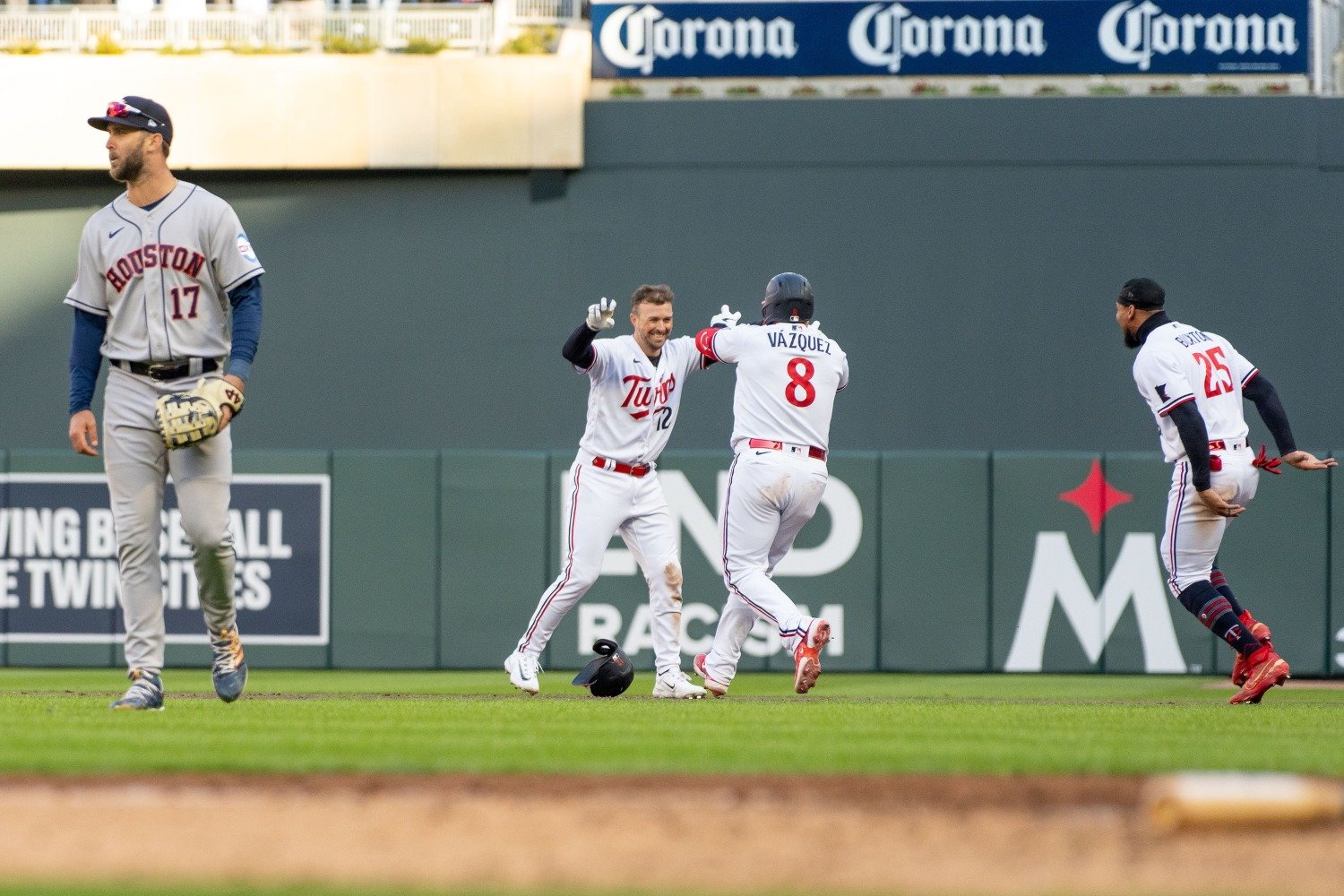 Ty France delivered the 100th walkoff win in Target Field history earlier this month, hammering a game-winning homer against the Royals. It was a milestone moment for the ballpark, and before there was time to reflect on it, the Twins added another the very next day. Rookie Brooks Lee came through with his first career walkoff hit, completing back-to-back wins over Kansas City and pushing the total to 101 walkoff victories at Target Field. It was the perfect moment to dig into a long-standing idea: a complete look at every walkoff win the Twins have recorded at their home park, and the trends that have shaped them. How the Twins Walk It Off The most common walkoff outcome at Target Field is also the most familiar. Of the 101 total walkoff wins, 47 came on singles. Another 30 were walkoff home runs, with the rest spread across a mix of outcomes: 7 doubles, 1 triple, 5 sacrifice flies, 3 walks, 2 hit by pitches, 3 fielder’s choices, 2 errors, and a lone wild pitch. While many of these were typical baseball endings, a few defied expectations. In 2022, Miguel Sanó hit a sharp line drive to right field against Detroit that turned into two runs scoring, after a throwing error by the catcher. The official scoring credited no RBI and no earned runs. It's the kind of play that’s nearly impossible to explain without video. R3hWR1lfWGw0TUFRPT1fRHdSWVZnY0ZYZ1lBWFZWUkJBQUFBbE5SQUFOVEJnTUFVRklEQndJRkNWZFNBZ01F.mp4 Peaks and Valleys by Season Walkoff totals have varied year to year, with the most coming in 2023, when the Twins recorded 10 walkoff wins. The fewest came in 2019, with just four—which is notable, given that the 2019 team won 101 games. But they also led so many games comfortably that walkoff chances were limited. The first walkoff at Target Field came in May 2010, when Jason Kubel drove in Joe Mauer with a sacrifice fly to beat the Brewers. The most recent was Lee’s RBI single in, just over 14 years later. Who Delivers in the Clutch? Max Kepler leads all Twins players with 11 walkoff hits at Target Field. That's four more than Jorge Polanco, and five more than Brian Dozier. No one else has more than five. Kepler also owns the latest walkoff, a 17th-inning single that beat the Red Sox in 2019. S2REOWpfWGw0TUFRPT1fRHdZREJ3VU5Vd1lBQUFSWFV3QUFVZ2RVQUZrTkJRSUFVMUJRQ0FJQkFWY0VBQUZW.mp4 In total, 50 different players have notched walkoff hits for the Twins. Some are franchise staples. Others are the kinds of names that spark deep memories for diehard fans, including Chris Herrmann, Josmil Pinto, Rene Tosoni, and Ronald Torreyes. azY3NURfWGw0TUFRPT1fVUZKUlhBSU1WRllBWGdjSFVBQUFCQTREQUZoUlVBUUFCZ2NCQVFBRkNWWURCd1pR.mp4 Opponents on the Wrong Side of History—or at Least Memory As expected, the Twins have walked off against their AL Central rivals more than any other teams. They have 14 walkoffs against the White Sox, 13 against the Guardians, and 12 against the Tigers. The most frequent non-division victim is the Red Sox, who have lost seven games at Target Field in walkoff fashion. On the mound, a few opposing relievers stand out. Liam Hendriks and Gregory Soto have each been walked off three times. Jorge López allowed walkoff hits in back-to-back games in 2022, only to be traded to the Twins later that season. (It turned out the one might have been an omen warning against the other. Alas.) Game Situations and Notable Moments Most walkoffs happen with the game tied, and that is true at Target Field as well. Ninety of the 101 walkoff wins came in tie games. The remaining 11 required a comeback, with the most dramatic being Josh Willingham’s three-run home run with two outs in the ninth against Oakland in 2012, turning a 2-0 deficit into a 3-2 win. That swing carried a .91 WPA, the largest change in any of the 101 walkoff moments. Twenty-one of the walkoffs came with the bases loaded, the most common base-out situation. Five ended with sacrifice flies, including the first ever at Target Field. One ended on a wild pitch. A few others came via infield singles or throwing errors that let the winning run score. What the Numbers Tell Us Through 14 and a half seasons, Target Field has already seen a wide variety of walkoff wins. Some were delivered by franchise cornerstones. Others came from role players in brief appearances. Some ended standard games. A few came in the 12th, 14th, or 17th inning. Altogether, they paint a picture of a team that has consistently found ways to win late, especially in front of the home crowd. Walkoff wins will always be remembered for the emotion they create in the moment. But behind that emotion, the numbers tell a story of their own. The Full List of Target Field Walkoffs What’s your favorite walkoff memory at Target Field? Was it a dramatic home run, an unexpected hero, or just a game you happened to be at? Share your thoughts and memories in the comments below.
 -
Royce Lewis Isn’t Going 100 Percent, and That’s a Good Thing
Matthew Taylor posted an article in Twins
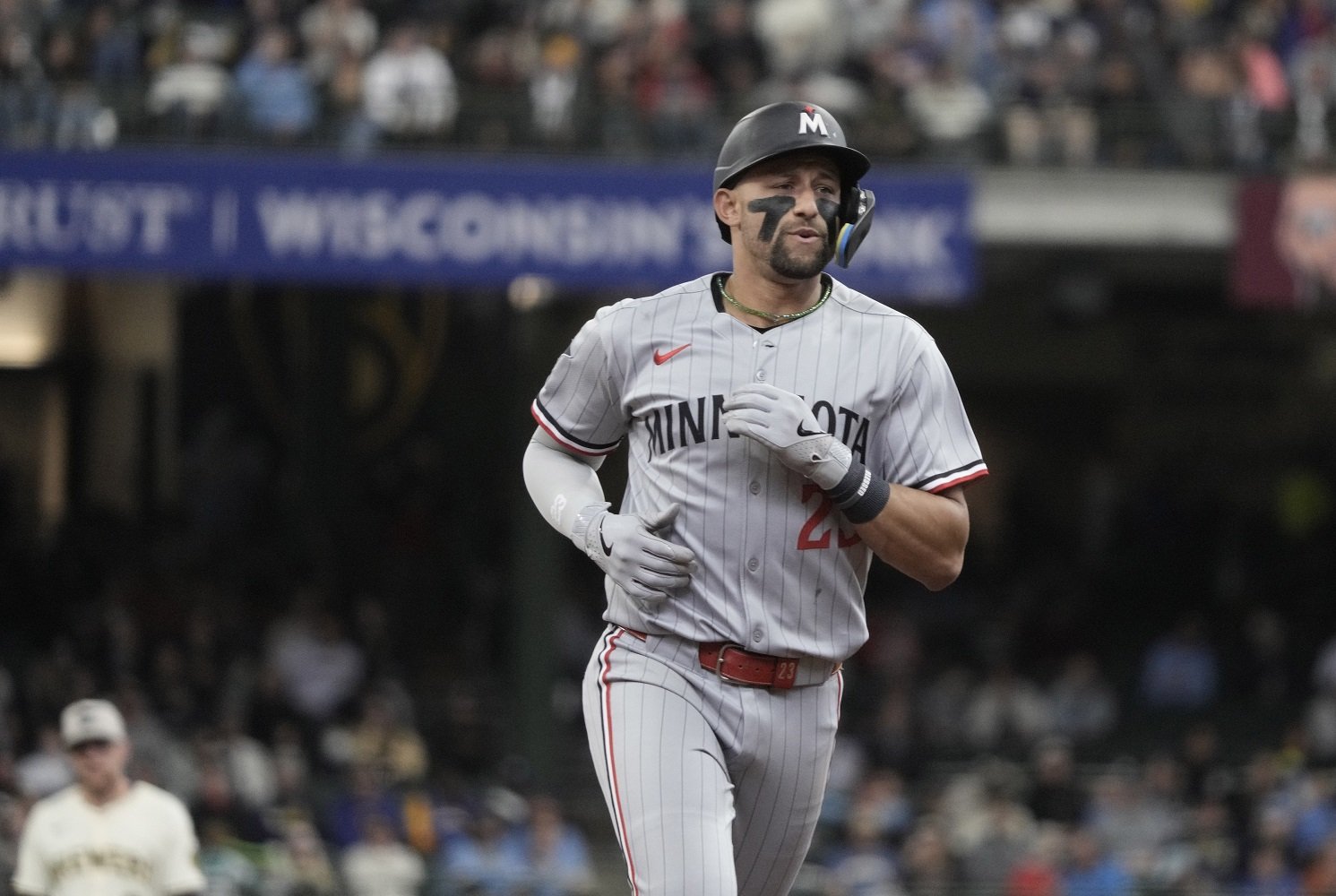 Royce Lewis’s return to the Minnesota Twins lineup brought a jolt of energy, excitement, and, naturally, a few questions. After missing significant time with a hamstring injury, the former No. 1 pick has slowly started to find his rhythm at the plate. He’s tallied extra-base hits in three of his past four games, including his first home run of the season. It's a welcome sight for a Twins offense that can always use more production. But if you’ve been watching closely, there’s something else that stands out. Lewis is clearly playing with a new mindset. He’s not going all-out on every play. He’s not diving, sliding, or sprinting unless absolutely necessary. He is protecting his legs, and it's intentional. For some fans, that might be a tough pill to swallow. We’ve grown used to players giving 100 percent at all times. That expectation, though, ignores the realities of the game and the toll injuries can take. Lewis is doing what he needs to do to stay on the field, and the Twins are better for it. Two back-to-back plays in Monday's game against Cleveland serve as the perfect encapsulation of Lewis's mindset. A Calculated Double Against Jakob Junis Lewis smoked a ball to the gap. A player eager to stretch something extra might have gone for a triple. But Lewis never even hinted at it. He slowed well before second base and coasted in with a stand-up double. lewis double.mp4 Could he have tried for third? Maybe. Would it have increased the Twins' chances of scoring that inning? Slightly. But the extra strain on his hamstring might have come at a much greater cost. The risk was not worth the reward. Lewis made the safe and smart play, one that keeps him on the field and in the lineup. Conceding the Double Play On the very next play, Ty France ripped a liner to third base and Lewis, caught off the bag, was doubled up. He didn’t even attempt a slide to get back. What looked like a routine double play was actually a calculated decision to avoid the kind of sudden movement that could cost him weeks on the injured list. double.mp4 That decision may confuse fans at first, but it fits with everything he has said and shown. Making a quick change of direction and sprint back to the bag is exactly the kind of explosive movement that re-aggravates hamstrings. Lewis thought it through, realized the odds of beating the throw were slim, and decided not to risk it. Lewis has been open about his mindset. Before coming off the injured list, he talked about the need to play the game differently going forward. "Yeah, I think you just need to be smart in general," Lewis said. "Whenever I play the game going forward, I just gotta play a little bit smarter. And some of these other guys I've seen play the game at a high level do, to be able to play 162. If I was Bobby Witt’s speed, I think I’d run a lot, but I'm not there anymore, you know, with all the injuries, so just play smart, man, and let me get in the box, because that's where I have my most fun." That perspective is critical. Players like Lewis are naturally wired to give everything on every play. But when they do that and get hurt, fans criticize them for being injury prone. When they ease up to stay healthy, some of those same fans call them lazy or soft. You can’t have it both ways. The truth is, the version of Royce Lewis that can fly around the bases and dive into third is exciting. But that version also does not exist if he’s back on the shelf. What matters now is that Lewis is back, healthy, and contributing. He may not be playing at full speed, but he is playing full-time. And for the Twins, that is a trade worth making every time.
 -
Image courtesy of © Michael McLoone-Imagn Images Royce Lewis’s return to the Minnesota Twins lineup brought a jolt of energy, excitement, and, naturally, a few questions. After missing significant time with a hamstring injury, the former No. 1 pick has slowly started to find his rhythm at the plate. He’s tallied extra-base hits in three of his past four games, including his first home run of the season. It's a welcome sight for a Twins offense that can always use more production. But if you’ve been watching closely, there’s something else that stands out. Lewis is clearly playing with a new mindset. He’s not going all-out on every play. He’s not diving, sliding, or sprinting unless absolutely necessary. He is protecting his legs, and it's intentional. For some fans, that might be a tough pill to swallow. We’ve grown used to players giving 100 percent at all times. That expectation, though, ignores the realities of the game and the toll injuries can take. Lewis is doing what he needs to do to stay on the field, and the Twins are better for it. Two back-to-back plays in Monday's game against Cleveland serve as the perfect encapsulation of Lewis's mindset. A Calculated Double Against Jakob Junis Lewis smoked a ball to the gap. A player eager to stretch something extra might have gone for a triple. But Lewis never even hinted at it. He slowed well before second base and coasted in with a stand-up double. lewis double.mp4 Could he have tried for third? Maybe. Would it have increased the Twins' chances of scoring that inning? Slightly. But the extra strain on his hamstring might have come at a much greater cost. The risk was not worth the reward. Lewis made the safe and smart play, one that keeps him on the field and in the lineup. Conceding the Double Play On the very next play, Ty France ripped a liner to third base and Lewis, caught off the bag, was doubled up. He didn’t even attempt a slide to get back. What looked like a routine double play was actually a calculated decision to avoid the kind of sudden movement that could cost him weeks on the injured list. double.mp4 That decision may confuse fans at first, but it fits with everything he has said and shown. Making a quick change of direction and sprint back to the bag is exactly the kind of explosive movement that re-aggravates hamstrings. Lewis thought it through, realized the odds of beating the throw were slim, and decided not to risk it. Lewis has been open about his mindset. Before coming off the injured list, he talked about the need to play the game differently going forward. "Yeah, I think you just need to be smart in general," Lewis said. "Whenever I play the game going forward, I just gotta play a little bit smarter. And some of these other guys I've seen play the game at a high level do, to be able to play 162. If I was Bobby Witt’s speed, I think I’d run a lot, but I'm not there anymore, you know, with all the injuries, so just play smart, man, and let me get in the box, because that's where I have my most fun." That perspective is critical. Players like Lewis are naturally wired to give everything on every play. But when they do that and get hurt, fans criticize them for being injury prone. When they ease up to stay healthy, some of those same fans call them lazy or soft. You can’t have it both ways. The truth is, the version of Royce Lewis that can fly around the bases and dive into third is exciting. But that version also does not exist if he’s back on the shelf. What matters now is that Lewis is back, healthy, and contributing. He may not be playing at full speed, but he is playing full-time. And for the Twins, that is a trade worth making every time. View full article
-
Image courtesy of © Junfu Han / USA TODAY NETWORK via Imagn Images A quarter into the 2025 season, the Detroit Tigers have gone from feel-good story to legit contender. They currently hold the best record in baseball and have jumped out to a five game lead in the American League Central, putting the Twins and the rest of the league on notice. This isn’t smoke and mirrors. The Tigers rank fifth in team OPS at .752, sixth in team ERA, sixth in starting pitcher ERA, and seventh in bullpen ERA. Their defense is strong as well, ranking 11th in outs above average. Pair those numbers with the second best run differential in the majors, and it’s clear their success is no accident. They’re balanced, well rounded, and led by one of the most respected managers in the game in A.J. Hinch, who brings years of experience from winning teams in Houston. Detroit’s lineup features a mix of emerging stars and players finding new life. Riley Greene is pacing the offense with a 144 OPS+, blossoming into the player many thought he could be. Javier Báez, after three disappointing seasons in Detroit, is having a stunning resurgence. He’s posted a 123 OPS+ and is playing with the energy and swagger he brought to the Cubs during his peak years. Spencer Torkelson is finally realizing the potential that made him a top pick, leading the team with 12 home runs, 39 RBI, and a 147 OPS+. Role players like Zach McKinstry and second-year catcher Dillon Dingler have delivered valuable production in key spots, adding depth to a lineup that’s been tough to contain. The pitching staff has been just as impressive. Tarik Skubal continues to look like one of the best pitchers in the American League, building off his breakout campaign last season. Casey Mize, another former number one overall pick who many pegged as a disappointment, is thriving, posting a 158 ERA+ and leading the league with six wins. The bullpen is locking things down late, with Tommy Kahnle and Will Vest emerging as a dominant late inning tandem. It’s easy to see why Detroit has been so successful. Every part of the roster is contributing, and while some performances may cool off, this doesn’t look like a team that’s going away. Yes, it’s fair to wonder whether Báez can keep this up all year or if Mize and Torkelson will sustain their breakouts. But the Tigers aren’t riding one or two lucky stretches. They’re playing complete, winning baseball, and they have the look of a team that will be in the mix for years to come. That makes them the Twins’ top competition for the division crown. So far this season, the Twins are 1-2 against Detroit with 10 head-to-head games remaining, including six in Detroit. Those games are going to matter. If Minnesota can win even a slight edge in the season series, they’ll stay within striking distance. But if the Tigers take control of those matchups, the gap could widen quickly. Looking at the remaining schedule, Detroit has the advantage. The Tigers have the seventh easiest remaining slate in baseball, while the Twins face the ninth hardest. Still, trying to determine in May whether the Twins can catch the Tigers is a bit of a fool’s errand. Injuries, trades, hot streaks, cold spells — all of that will shape the standings in ways no strength of schedule metric can forecast. What matters right now is that the Tigers are for real. But so are the Twins. Minnesota has been playing excellent baseball in their own right, going 18-6 over their past 24 games. Detroit is 18-7 in their last 25. If both teams keep up this pace, we could be heading for a compelling division race that runs all the way into late September. But make no mistake, the Twins need to take Detroit seriously. The Tigers are young, talented, and surging. And now it’s up to Minnesota to keep pace. Do you think the Twins can hang with the Tigers the rest of the way, or even overtake them for the division? Let us know in the comments. View full article
-
The Detroit Tigers Are For Real, and the Twins Should Take Notice
Matthew Taylor posted an article in Twins
 A quarter into the 2025 season, the Detroit Tigers have gone from feel-good story to legit contender. They currently hold the best record in baseball and have jumped out to a five game lead in the American League Central, putting the Twins and the rest of the league on notice. This isn’t smoke and mirrors. The Tigers rank fifth in team OPS at .752, sixth in team ERA, sixth in starting pitcher ERA, and seventh in bullpen ERA. Their defense is strong as well, ranking 11th in outs above average. Pair those numbers with the second best run differential in the majors, and it’s clear their success is no accident. They’re balanced, well rounded, and led by one of the most respected managers in the game in A.J. Hinch, who brings years of experience from winning teams in Houston. Detroit’s lineup features a mix of emerging stars and players finding new life. Riley Greene is pacing the offense with a 144 OPS+, blossoming into the player many thought he could be. Javier Báez, after three disappointing seasons in Detroit, is having a stunning resurgence. He’s posted a 123 OPS+ and is playing with the energy and swagger he brought to the Cubs during his peak years. Spencer Torkelson is finally realizing the potential that made him a top pick, leading the team with 12 home runs, 39 RBI, and a 147 OPS+. Role players like Zach McKinstry and second-year catcher Dillon Dingler have delivered valuable production in key spots, adding depth to a lineup that’s been tough to contain. The pitching staff has been just as impressive. Tarik Skubal continues to look like one of the best pitchers in the American League, building off his breakout campaign last season. Casey Mize, another former number one overall pick who many pegged as a disappointment, is thriving, posting a 158 ERA+ and leading the league with six wins. The bullpen is locking things down late, with Tommy Kahnle and Will Vest emerging as a dominant late inning tandem. It’s easy to see why Detroit has been so successful. Every part of the roster is contributing, and while some performances may cool off, this doesn’t look like a team that’s going away. Yes, it’s fair to wonder whether Báez can keep this up all year or if Mize and Torkelson will sustain their breakouts. But the Tigers aren’t riding one or two lucky stretches. They’re playing complete, winning baseball, and they have the look of a team that will be in the mix for years to come. That makes them the Twins’ top competition for the division crown. So far this season, the Twins are 1-2 against Detroit with 10 head-to-head games remaining, including six in Detroit. Those games are going to matter. If Minnesota can win even a slight edge in the season series, they’ll stay within striking distance. But if the Tigers take control of those matchups, the gap could widen quickly. Looking at the remaining schedule, Detroit has the advantage. The Tigers have the seventh easiest remaining slate in baseball, while the Twins face the ninth hardest. Still, trying to determine in May whether the Twins can catch the Tigers is a bit of a fool’s errand. Injuries, trades, hot streaks, cold spells — all of that will shape the standings in ways no strength of schedule metric can forecast. What matters right now is that the Tigers are for real. But so are the Twins. Minnesota has been playing excellent baseball in their own right, going 18-6 over their past 24 games. Detroit is 18-7 in their last 25. If both teams keep up this pace, we could be heading for a compelling division race that runs all the way into late September. But make no mistake, the Twins need to take Detroit seriously. The Tigers are young, talented, and surging. And now it’s up to Minnesota to keep pace. Do you think the Twins can hang with the Tigers the rest of the way, or even overtake them for the division? Let us know in the comments.
 -
Image courtesy of © Matt Blewett-Imagn Images The 2025 season is a little more than one-quarter complete, and the Minnesota Twins are rolling. While the rotation has been outstanding, the bullpen has matched it stride for stride, delivering exactly the kind of dominance that was expected entering the year. The Twins came into the campaign widely regarded as having one of the top bullpens in baseball. So far, they’ve delivered on that promise. As of mid-May, the Twins bullpen ranks first in fWAR, third in ERA (2.89), and first in FIP (3.01). Since May 1, the unit has taken it up another notch, posting a 1.74 ERA and allowing just 46 hits in 57 innings. With the squad looking this sharp, it’s time to take stock of how the hierarchy has shaken out. Who are the trusted high-leverage arms? Who’s waiting for blowouts or clean-up duty? And who might be next in line for a promotion? Let’s break it down. Low Leverage/Mop-up Duty Kody Funderburk Kody Funderburk hasn't been utilized much so far this year, with just four big-league appearances to his name and trips to Triple-A in between. All of those appearances have come in low-leverage situations. After a promising debut in 2023, he struggled last season to a 6.49 ERA in 34 2/3 innings. So far in 2025, he’s been limited to the margins of the bullpen, but as the lone lefty currently available with Danny Coulombe's injury, he could be called upon in more meaningful spots to handle tough left-handed bats. Jorge Alcala Alcala opened the season pitching in high-leverage spots in four of his first six outings, but has since been used exclusively in low-leverage situations. His 7.27 ERA and 1.67 WHIP over 17 1/3 innings reflect his struggles. The stuff still flashes—he's throwing in the upper 90s—but unless he can string together quality outings, he’ll remain on the outside looking in. Medium Leverage Guys Building Trust Justin Topa Topa is starting to reward the Twins for acquiring him in the Jorge Polanco trade. With a 1.72 ERA on the season and just one earned run allowed over his last eight outings, he’s trending in the right direction. The Twins have gradually increased his workload in tighter spots, including key extra-inning appearances against the Guardians and a clutch outing in Baltimore. If the current trend continues, Topa could soon find himself in regular high-leverage duty. Louis Varland The bullpen transition has gone about as well as the Twins could have hoped for with Varland. He owns a 2.95 ERA and has logged the second-most innings out of the bullpen. Eight of his last 10 appearances have come in high-leverage spots, showing that the team is beginning to trust him more to get key outs. Home runs can still be an issue, but overall, Varland has become a valuable weapon in his new role. High(ish) Leverage Brock Stewart Stewart was one of the Twins’ best relievers each of the last two seasons, and despite missing the first month of 2025, he’s quickly been reintegrated into meaningful innings. His average leverage index of 1.26 is actually higher than last year’s, a sign of how quickly the Twins have ramped him back up. They’ve still been cautious with back-to-backs and tend to use him more in the sixth and seventh innings for now, but his velocity and stuff look elite again. If he stays healthy, he’ll continue climbing the leverage ladder. Cole Sands Sands has taken another step forward in 2025, building on his breakout in last year’s bullpen. He owns a 2.29 ERA in 19 2/3 innings and has put together eight consecutive scoreless outings. His leverage index ranks second on the team, and five of his last seven appearances have come in the eighth or ninth innings, including two recent saves. He’s quietly become one of the team’s steadiest right-handed options. High-Leverage Weapon Griffin Jax Don’t let the 5.23 ERA fool you—Jax has been one of the most trusted arms in the Twins’ bullpen this year. He leads the team with 13 holds and has been used in the highest-leverage situations across a variety of innings. The results haven’t always been perfect, but the trust from the coaching staff is clear. Jax remains a go-to option when the game is on the line. Most Trusted Arm, Locked-in Closer Jhoan Duran After spending 2024 in more of a shared closer role, Duran has mostly locked down the ninth inning in 2025, collecting eight saves so far. His ERA sits at a sparkling 0.84. While the triple-digit velocity isn't quite back to its 2023 peak, Duran has adjusted well, leaning on his splitter and curveball to keep hitters off balance. There’s still a question of whether Jax could earn back ninth-inning chances down the road, but for now, Duran is the clear top dog in the bullpen. On the doorstep Two intriguing names to watch are Andrew Morris and Connor Prielipp, both of whom could help the Twins in relief roles later this season. Morris is currently in Triple-A and continues to flash the upside that has the Twins high on his future. While he's behind Zebby Matthews and David Festa in the pecking order for starting opportunities, his triple-digit fastball and aggressive approach could make him a dynamic reliever if the team looks to strengthen the bullpen for the stretch run. Prielipp, a former second-round pick, is working as a starter in the minors but is currently limited to 2–3 inning outings. Given his raw stuff and limited innings, the Twins may ultimately see him as a bullpen weapon later this year. If things click, Prielipp could give Minnesota another high-upside arm to call upon down the stretch. With the Twins’ bullpen performing at an elite level and reinforcements like Morris and Prielipp waiting in the wings, Minnesota looks well-positioned to weather the grind of the season. If the current group can stay healthy and the potential call-ups pan out, this unit could be the backbone of a deep postseason run. Who do you see climbing the hierarchy next? Drop your thoughts in the comments below. View full article
-
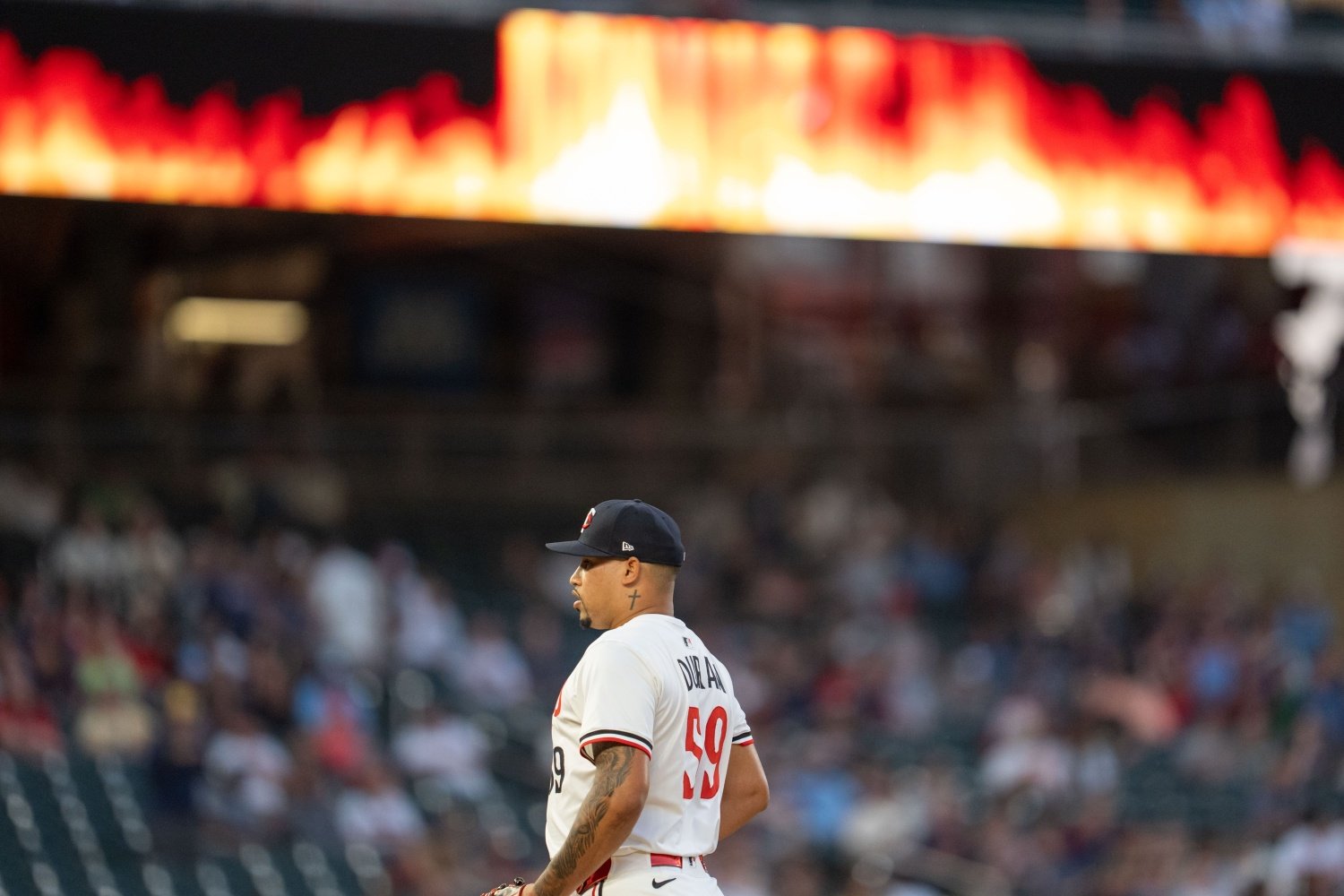 The 2025 season is a little more than one-quarter complete, and the Minnesota Twins are rolling. While the rotation has been outstanding, the bullpen has matched it stride for stride, delivering exactly the kind of dominance that was expected entering the year. The Twins came into the campaign widely regarded as having one of the top bullpens in baseball. So far, they’ve delivered on that promise. As of mid-May, the Twins bullpen ranks first in fWAR, third in ERA (2.89), and first in FIP (3.01). Since May 1, the unit has taken it up another notch, posting a 1.74 ERA and allowing just 46 hits in 57 innings. With the squad looking this sharp, it’s time to take stock of how the hierarchy has shaken out. Who are the trusted high-leverage arms? Who’s waiting for blowouts or clean-up duty? And who might be next in line for a promotion? Let’s break it down. Low Leverage/Mop-up Duty Kody Funderburk Kody Funderburk hasn't been utilized much so far this year, with just four big-league appearances to his name and trips to Triple-A in between. All of those appearances have come in low-leverage situations. After a promising debut in 2023, he struggled last season to a 6.49 ERA in 34 2/3 innings. So far in 2025, he’s been limited to the margins of the bullpen, but as the lone lefty currently available with Danny Coulombe's injury, he could be called upon in more meaningful spots to handle tough left-handed bats. Jorge Alcala Alcala opened the season pitching in high-leverage spots in four of his first six outings, but has since been used exclusively in low-leverage situations. His 7.27 ERA and 1.67 WHIP over 17 1/3 innings reflect his struggles. The stuff still flashes—he's throwing in the upper 90s—but unless he can string together quality outings, he’ll remain on the outside looking in. Medium Leverage Guys Building Trust Justin Topa Topa is starting to reward the Twins for acquiring him in the Jorge Polanco trade. With a 1.72 ERA on the season and just one earned run allowed over his last eight outings, he’s trending in the right direction. The Twins have gradually increased his workload in tighter spots, including key extra-inning appearances against the Guardians and a clutch outing in Baltimore. If the current trend continues, Topa could soon find himself in regular high-leverage duty. Louis Varland The bullpen transition has gone about as well as the Twins could have hoped for with Varland. He owns a 2.95 ERA and has logged the second-most innings out of the bullpen. Eight of his last 10 appearances have come in high-leverage spots, showing that the team is beginning to trust him more to get key outs. Home runs can still be an issue, but overall, Varland has become a valuable weapon in his new role. High(ish) Leverage Brock Stewart Stewart was one of the Twins’ best relievers each of the last two seasons, and despite missing the first month of 2025, he’s quickly been reintegrated into meaningful innings. His average leverage index of 1.26 is actually higher than last year’s, a sign of how quickly the Twins have ramped him back up. They’ve still been cautious with back-to-backs and tend to use him more in the sixth and seventh innings for now, but his velocity and stuff look elite again. If he stays healthy, he’ll continue climbing the leverage ladder. Cole Sands Sands has taken another step forward in 2025, building on his breakout in last year’s bullpen. He owns a 2.29 ERA in 19 2/3 innings and has put together eight consecutive scoreless outings. His leverage index ranks second on the team, and five of his last seven appearances have come in the eighth or ninth innings, including two recent saves. He’s quietly become one of the team’s steadiest right-handed options. High-Leverage Weapon Griffin Jax Don’t let the 5.23 ERA fool you—Jax has been one of the most trusted arms in the Twins’ bullpen this year. He leads the team with 13 holds and has been used in the highest-leverage situations across a variety of innings. The results haven’t always been perfect, but the trust from the coaching staff is clear. Jax remains a go-to option when the game is on the line. Most Trusted Arm, Locked-in Closer Jhoan Duran After spending 2024 in more of a shared closer role, Duran has mostly locked down the ninth inning in 2025, collecting eight saves so far. His ERA sits at a sparkling 0.84. While the triple-digit velocity isn't quite back to its 2023 peak, Duran has adjusted well, leaning on his splitter and curveball to keep hitters off balance. There’s still a question of whether Jax could earn back ninth-inning chances down the road, but for now, Duran is the clear top dog in the bullpen. On the doorstep Two intriguing names to watch are Andrew Morris and Connor Prielipp, both of whom could help the Twins in relief roles later this season. Morris is currently in Triple-A and continues to flash the upside that has the Twins high on his future. While he's behind Zebby Matthews and David Festa in the pecking order for starting opportunities, his triple-digit fastball and aggressive approach could make him a dynamic reliever if the team looks to strengthen the bullpen for the stretch run. Prielipp, a former second-round pick, is working as a starter in the minors but is currently limited to 2–3 inning outings. Given his raw stuff and limited innings, the Twins may ultimately see him as a bullpen weapon later this year. If things click, Prielipp could give Minnesota another high-upside arm to call upon down the stretch. With the Twins’ bullpen performing at an elite level and reinforcements like Morris and Prielipp waiting in the wings, Minnesota looks well-positioned to weather the grind of the season. If the current group can stay healthy and the potential call-ups pan out, this unit could be the backbone of a deep postseason run. Who do you see climbing the hierarchy next? Drop your thoughts in the comments below.
- 13 comments
-
- 6
-
-
- jhoan duran
- griffin jax
- (and 1 more)
-
Image courtesy of © Mitch Stringer-Imagn Images Box Score SP: Chris Paddack 7 IP, 3 H, 0 ER, 1 BB, 3 K (89 pitches, 61 strikes (69%) Home Runs: DaShawn Keirsey Jr. (1), Byron Buxton (10) Top 3 WPA: Paddack (.320), Keirsey Jr. (.178), Buxton (.067) Win Probability Chart (via FanGraphs): The Minnesota Twins came into Thursday’s matchup riding high on a 10-game winning streak, fresh off a doubleheader sweep of the Orioles the day before. They were 5-0 against Baltimore on the season and looked to cap off the season series with a perfect sweep. Chris Paddack took the mound, coming off his best outing of the season against San Francisco. With every arm in the bullpen used during Wednesday’s twin bill, Minnesota was counting on a deep start, and Paddack delivered. For much of the first quarter of the season, the Twins’ offense was sluggish out of the gate, but that wasn’t the case today. In the top of the 3rd, DaShawn Keirsey Jr. (who came into the game with an .086 slugging percentage) launched a two-run homer to right to open the scoring. Moments later, Byron Buxton followed with a solo shot of his own, continuing his hot streak and putting the Twins up 3-0. But the mood shifted dramatically in the bottom of the 3rd. As a shallow fly ball looped just beyond second base, Byron Buxton and Carlos Correa collided violently in pursuit of the catch (Byron incredibly held onto the ball). Both players were down for an extended period. Trainers came out immediately. While Buxton initially stayed in the game, he did not return to the field for the bottom of the 4th inning. It was later reported that both Buxton and Correa are now in MLB’s concussion protocol. We’ll certainly learn more in the coming days, but it’s a gut punch to lose two of the team’s highest-paid and most crucial players in the same freak accident. Still, the game had to continue. In the bottom of the 4th, Baltimore looked poised to start a rally when Ryan Mountcastle laced a ball down the right-field line. It rebounded hard off the high wall and got past Kody Clemens, inspiring Mountcastle to try for a triple. Clemens picked it up on the run and fired a strike to third, though, thwarting the slow-footed Mountcastle and forestalling a rally. The injury woes didn’t end there for the Twins. In the top of the 7th, Willi Castro hit a double and immediately stayed down in visible pain after a headfirst slide into second base. Unlike Correa and Buxton, though, Castro was able to remain in the game, and he scored on the very next pitch, when Royce Lewis singled him home. While the day featured plenty of drama, the Twins got exactly what they needed on the mound. Paddack threw 7 brilliant innings, allowing just 3 hits and no runs. On a day when the bullpen was taxed, Paddack’s performance was both timely and crucial. Since surrendering 9 earned runs in his season debut, Paddack has not allowed more than 3 earned runs in any of his last eight starts. His ERA now sits at 4.05, a testament to his consistency and resilience in the fifth spot of the rotation. The bullpen slammed the door once again. Louis Varland and Jhoan Duran each tossed a scoreless frame to secure Minnesota’s third shutout of the season. It also extended the winning streak to 11 games, just one shy of their 12-game streak from a year ago—around this same time. The Twins improve to 24-20 and gained ground in the suddenly stacked AL Central, as the Royals, Guardians, and Tigers were all idle. What’s Next The Twins take their 11-game winning streak on the road to Milwaukee this weekend to face the 21-23 Brewers. The series kicks off Friday night at 7:10 p.m. with Joe Ryan getting the start for Minnesota. He’ll be opposed by Brewers right-hander Chad Patrick. Postgame Interviews Bullpen Usage Spreadsheet View full article
- 81 replies
-
- 1
-
-
- dashawn keirsey jr
- byron buxton
- (and 1 more)
-
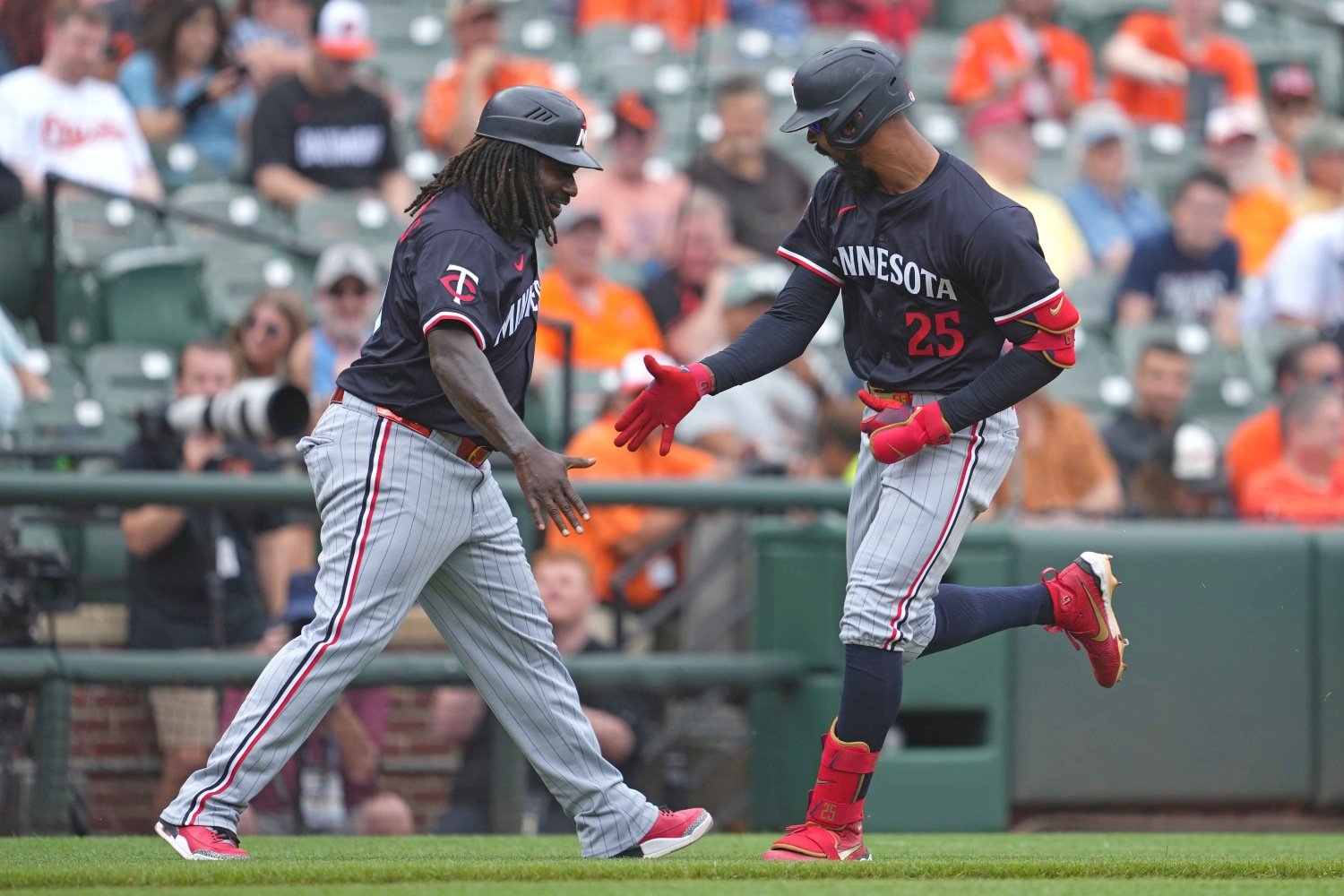 Box Score SP: Chris Paddack 7 IP, 3 H, 0 ER, 1 BB, 3 K (89 pitches, 61 strikes (69%) Home Runs: DaShawn Keirsey Jr. (1), Byron Buxton (10) Top 3 WPA: Paddack (.320), Keirsey Jr. (.178), Buxton (.067) Win Probability Chart (via FanGraphs): The Minnesota Twins came into Thursday’s matchup riding high on a 10-game winning streak, fresh off a doubleheader sweep of the Orioles the day before. They were 5-0 against Baltimore on the season and looked to cap off the season series with a perfect sweep. Chris Paddack took the mound, coming off his best outing of the season against San Francisco. With every arm in the bullpen used during Wednesday’s twin bill, Minnesota was counting on a deep start, and Paddack delivered. For much of the first quarter of the season, the Twins’ offense was sluggish out of the gate, but that wasn’t the case today. In the top of the 3rd, DaShawn Keirsey Jr. (who came into the game with an .086 slugging percentage) launched a two-run homer to right to open the scoring. Moments later, Byron Buxton followed with a solo shot of his own, continuing his hot streak and putting the Twins up 3-0. But the mood shifted dramatically in the bottom of the 3rd. As a shallow fly ball looped just beyond second base, Byron Buxton and Carlos Correa collided violently in pursuit of the catch (Byron incredibly held onto the ball). Both players were down for an extended period. Trainers came out immediately. While Buxton initially stayed in the game, he did not return to the field for the bottom of the 4th inning. It was later reported that both Buxton and Correa are now in MLB’s concussion protocol. We’ll certainly learn more in the coming days, but it’s a gut punch to lose two of the team’s highest-paid and most crucial players in the same freak accident. Still, the game had to continue. In the bottom of the 4th, Baltimore looked poised to start a rally when Ryan Mountcastle laced a ball down the right-field line. It rebounded hard off the high wall and got past Kody Clemens, inspiring Mountcastle to try for a triple. Clemens picked it up on the run and fired a strike to third, though, thwarting the slow-footed Mountcastle and forestalling a rally. The injury woes didn’t end there for the Twins. In the top of the 7th, Willi Castro hit a double and immediately stayed down in visible pain after a headfirst slide into second base. Unlike Correa and Buxton, though, Castro was able to remain in the game, and he scored on the very next pitch, when Royce Lewis singled him home. While the day featured plenty of drama, the Twins got exactly what they needed on the mound. Paddack threw 7 brilliant innings, allowing just 3 hits and no runs. On a day when the bullpen was taxed, Paddack’s performance was both timely and crucial. Since surrendering 9 earned runs in his season debut, Paddack has not allowed more than 3 earned runs in any of his last eight starts. His ERA now sits at 4.05, a testament to his consistency and resilience in the fifth spot of the rotation. The bullpen slammed the door once again. Louis Varland and Jhoan Duran each tossed a scoreless frame to secure Minnesota’s third shutout of the season. It also extended the winning streak to 11 games, just one shy of their 12-game streak from a year ago—around this same time. The Twins improve to 24-20 and gained ground in the suddenly stacked AL Central, as the Royals, Guardians, and Tigers were all idle. What’s Next The Twins take their 11-game winning streak on the road to Milwaukee this weekend to face the 21-23 Brewers. The series kicks off Friday night at 7:10 p.m. with Joe Ryan getting the start for Minnesota. He’ll be opposed by Brewers right-hander Chad Patrick. Postgame Interviews Bullpen Usage Spreadsheet
- 81 comments
-
- 7
-

-

-
-
- dashawn keirsey jr
- byron buxton
- (and 1 more)
-
Credit to my wonderful editor, Matthew Trueblood for that one.
- 14 replies
-
- 2
-
-
- danny coulombe
- jhoan duran
- (and 1 more)
-
 When the Minnesota Twins signed Danny Coulombe this offseason for just $3 million, it barely made a ripple. A 35-year-old left-handed reliever returning to his old team after a solid year in Baltimore? Most fans saw it as a minor move—maybe a steady veteran to round out the bullpen after Caleb Thielbar left in free agency, but nothing more. Instead, Coulombe has been one of the most valuable and consistent arms on the roster. He hasn’t allowed a run yet this season. His strikeout rate is a career-best 32.8%. Lefties are hitting just .148 against him. Righties? Even worse, just .133, with 10 strikeouts in 30 at-bats. He’s walked one batter. One. And the Twins have used him in all kinds of spots: to get a single tough lefty out, to clean up late-inning messes, and most recently, to lock down the heart of an opposing lineup in a high-leverage ninth inning. That outing, on Sunday against the Giants, might have been his finest yet. After Griffin Jax had just coughed up the lead, Coulombe entered a tie game and faced the 9-1-2 hitters in San Francisco’s order, with a seven-game winning streak on the line. He struck out Christian Koss and Willy Adames, before stranding the go-ahead run at second by inducing a fly ball from Jung Hoo Lee. The Twins would go on to win in extras—but without Coulombe stepping up in the biggest moment, that opportunity might never have come. Coulombe doesn’t overpower anyone with velocity—his fastball averages just 90 MPH—but he works with five different pitches, all of them effective. He keeps hitters off-balance by mixing speeds, eye levels, and locations. His cutter is his bread and butter, thrown about 35% of the time and generating swing-and-miss roughly 30% of the time. It’s the foundation of his approach and keeps hitters guessing. The pitch that’s been most intriguing this year, though, is his sinker. Coulombe has increased its usage from 14% last season to 23% in 2025. What makes it so unusual isn’t just the volume—it’s the location. Coulombe is almost exclusively throwing the sinker to the glove side, a highly unconventional strategy, especially for a left-hander. To understand why that’s noteworthy: a sinker is a pitch that typically has "arm-side" movement, meaning it runs in toward batters on the same side of the plate (e.g., a lefty pitcher facing a lefty batter). Most pitchers use this movement to jam hitters and induce weak contact to their arm side. For a southpaw, that means the first-base side of the dish, in on lefties and away from righties. But Coulombe is defying convention by commanding his sinker to the glove side—away from same-sided hitters—essentially treating it more like a cutter or backdoor fastball. It’s a tough pitch to execute, but when done well, it can freeze hitters. TUF2ZTNfWGw0TUFRPT1fVndKV1hWd0RWQUFBREZRQlZnQUhCQThGQUFBQlV3Y0FBd0JYVmdzTkFRRlNDUVlE.mp4 Batters are hitting just .133 against his sinker this year, and against lefties, where he’s using that backdoor approach, Coulombe is throwing the sinker more than any other pitch. Left-handers are hitting just .100 against it. It’s truly becoming a weapon, especially against lefties. “It’s a pitch that I think really plays with my other stuff really well,” he said Saturday. “Being able to command it backdoor to lefties is generally a pretty good pitch. So I feel like if I execute it, good things generally will happen.” That precision didn’t come naturally—it came through reps. "I think for most guys, we just don’t practice it," Coulombe explained. "It’s something that actually we really opened up last year when I was with the Orioles, was, ‘Hey, let’s target it. Let’s move the catcher out, and then let’s practice it a lot.’ A lot of guys say they can’t do it, but it’s like, ‘Have you actually tried, and have you spent time doing it?’ Because in my opinion, there’s guys on this team that have really good command that don’t do it, and I’m like, y’all should try. It’s a good pitch, if you can execute it." The data backs it up, and it fuels the commitment. “Just seeing the data on it, ‘OK, if I can get it to that spot, it plays really well,’ then I’m going to practice that every single day.” Coulombe’s value to the Twins goes beyond the numbers. With a bullpen full of electric but relatively young arms like Jhoan Duran, Cole Sands, and Louis Varland, his presence has been a steadying one. He’s not just getting outs—he’s modeling preparation, poise, and execution. Rocco Baldelli made that clear when asked about what Coulombe has brought to the club. “He’s been awesome, and he’s brought a ton of character, personality and leadership to the clubhouse,” Baldelli said. “It’s been a pretty good signing. It’s something we were excited about at the time … He’s been phenomenal.” The original vision for Coulombe may have been a lefty-on-lefty matchup guy, but he’s earned a much larger role. “I thought of him as a very versatile guy,” Baldelli said. “But also, you can just pitch him. You can send him out there against anyone. He has the stuff and the ability to locate to get righties out. He’s been kind of a stopper in a lot of ways.” It’s easy to overlook a 35-year-old soft-tossing reliever with a $3-million deal signed in January. But there’s nothing quiet about what Danny Coulombe is doing for the Twins right now. He’s been one of the best relievers in baseball. and one of the most important players on this team. And he’s doing it as part of a bullpen that’s become one of the best in baseball. Minnesota currently leads baseball in bullpen fWAR and, since April 20, Twins relievers own a 2.56 ERA, third-best in the league. Coulombe’s incredible performance, his ability to get hitters out on both sides of the plate, the versatility in his pitch mix, and his ebullient veteran presence have been driving forces behind the group’s dominance. He was signed to quietly fill a left-handed void. Instead, he’s become one of the loudest reasons for optimism as the season marches on.
- 14 comments
-
- 11
-
-
-
- danny coulombe
- jhoan duran
- (and 1 more)
-
Image courtesy of © Bruce Kluckhohn-Imagn Images When the Minnesota Twins signed Danny Coulombe this offseason for just $3 million, it barely made a ripple. A 35-year-old left-handed reliever returning to his old team after a solid year in Baltimore? Most fans saw it as a minor move—maybe a steady veteran to round out the bullpen after Caleb Thielbar left in free agency, but nothing more. Instead, Coulombe has been one of the most valuable and consistent arms on the roster. He hasn’t allowed a run yet this season. His strikeout rate is a career-best 32.8%. Lefties are hitting just .148 against him. Righties? Even worse, just .133, with 10 strikeouts in 30 at-bats. He’s walked one batter. One. And the Twins have used him in all kinds of spots: to get a single tough lefty out, to clean up late-inning messes, and most recently, to lock down the heart of an opposing lineup in a high-leverage ninth inning. That outing, on Sunday against the Giants, might have been his finest yet. After Griffin Jax had just coughed up the lead, Coulombe entered a tie game and faced the 9-1-2 hitters in San Francisco’s order, with a seven-game winning streak on the line. He struck out Christian Koss and Willy Adames, before stranding the go-ahead run at second by inducing a fly ball from Jung Hoo Lee. The Twins would go on to win in extras—but without Coulombe stepping up in the biggest moment, that opportunity might never have come. Coulombe doesn’t overpower anyone with velocity—his fastball averages just 90 MPH—but he works with five different pitches, all of them effective. He keeps hitters off-balance by mixing speeds, eye levels, and locations. His cutter is his bread and butter, thrown about 35% of the time and generating swing-and-miss roughly 30% of the time. It’s the foundation of his approach and keeps hitters guessing. The pitch that’s been most intriguing this year, though, is his sinker. Coulombe has increased its usage from 14% last season to 23% in 2025. What makes it so unusual isn’t just the volume—it’s the location. Coulombe is almost exclusively throwing the sinker to the glove side, a highly unconventional strategy, especially for a left-hander. To understand why that’s noteworthy: a sinker is a pitch that typically has "arm-side" movement, meaning it runs in toward batters on the same side of the plate (e.g., a lefty pitcher facing a lefty batter). Most pitchers use this movement to jam hitters and induce weak contact to their arm side. For a southpaw, that means the first-base side of the dish, in on lefties and away from righties. But Coulombe is defying convention by commanding his sinker to the glove side—away from same-sided hitters—essentially treating it more like a cutter or backdoor fastball. It’s a tough pitch to execute, but when done well, it can freeze hitters. TUF2ZTNfWGw0TUFRPT1fVndKV1hWd0RWQUFBREZRQlZnQUhCQThGQUFBQlV3Y0FBd0JYVmdzTkFRRlNDUVlE.mp4 Batters are hitting just .133 against his sinker this year, and against lefties, where he’s using that backdoor approach, Coulombe is throwing the sinker more than any other pitch. Left-handers are hitting just .100 against it. It’s truly becoming a weapon, especially against lefties. “It’s a pitch that I think really plays with my other stuff really well,” he said Saturday. “Being able to command it backdoor to lefties is generally a pretty good pitch. So I feel like if I execute it, good things generally will happen.” That precision didn’t come naturally—it came through reps. "I think for most guys, we just don’t practice it," Coulombe explained. "It’s something that actually we really opened up last year when I was with the Orioles, was, ‘Hey, let’s target it. Let’s move the catcher out, and then let’s practice it a lot.’ A lot of guys say they can’t do it, but it’s like, ‘Have you actually tried, and have you spent time doing it?’ Because in my opinion, there’s guys on this team that have really good command that don’t do it, and I’m like, y’all should try. It’s a good pitch, if you can execute it." The data backs it up, and it fuels the commitment. “Just seeing the data on it, ‘OK, if I can get it to that spot, it plays really well,’ then I’m going to practice that every single day.” Coulombe’s value to the Twins goes beyond the numbers. With a bullpen full of electric but relatively young arms like Jhoan Duran, Cole Sands, and Louis Varland, his presence has been a steadying one. He’s not just getting outs—he’s modeling preparation, poise, and execution. Rocco Baldelli made that clear when asked about what Coulombe has brought to the club. “He’s been awesome, and he’s brought a ton of character, personality and leadership to the clubhouse,” Baldelli said. “It’s been a pretty good signing. It’s something we were excited about at the time … He’s been phenomenal.” The original vision for Coulombe may have been a lefty-on-lefty matchup guy, but he’s earned a much larger role. “I thought of him as a very versatile guy,” Baldelli said. “But also, you can just pitch him. You can send him out there against anyone. He has the stuff and the ability to locate to get righties out. He’s been kind of a stopper in a lot of ways.” It’s easy to overlook a 35-year-old soft-tossing reliever with a $3-million deal signed in January. But there’s nothing quiet about what Danny Coulombe is doing for the Twins right now. He’s been one of the best relievers in baseball. and one of the most important players on this team. And he’s doing it as part of a bullpen that’s become one of the best in baseball. Minnesota currently leads baseball in bullpen fWAR and, since April 20, Twins relievers own a 2.56 ERA, third-best in the league. Coulombe’s incredible performance, his ability to get hitters out on both sides of the plate, the versatility in his pitch mix, and his ebullient veteran presence have been driving forces behind the group’s dominance. He was signed to quietly fill a left-handed void. Instead, he’s become one of the loudest reasons for optimism as the season marches on. View full article
- 14 replies
-
- 2
-
-
- danny coulombe
- jhoan duran
- (and 1 more)


.png.984fbfc88222722c47b61f2c44d3cba7.png)
