



Matthew Taylor
-
Posts
973 -
Joined
-
Last visited
Content Type
Profiles
News
Minnesota Twins Videos
2026 Minnesota Twins Top Prospects Ranking
2022 Minnesota Twins Draft Picks
Minnesota Twins Free Agent & Trade Rumors, Notes, & Tidbits
Guides & Resources
2023 Minnesota Twins Draft Picks
The Minnesota Twins Players Project
2024 Minnesota Twins Draft Picks
2025 Minnesota Twins Draft Pick Tracker
2026 Minnesota Twins Draft Tracker: Picks & Bonuses
Forums
Blogs
Events
Store
Downloads
Gallery
Everything posted by Matthew Taylor
-
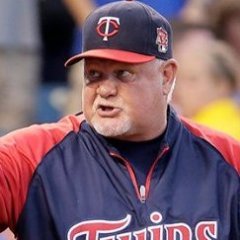 Image courtesy of Matt Blewett-Imagn Images The Minnesota Twins are heading into an offseason with no shortage of questions, but perhaps none is bigger than the one that has followed this organization for years: How much money will the team spend? That question has become almost impossible to separate from any discussion about the Twins' offseason plans. Fans look at the top of the free-agent class and immediately cross off many names, because they assume the Pohlad family won't pay for them. Every potential trade eventually comes back to salary. Every roster need comes with the question of whether ownership will actually provide the money necessary to address it. That's why Tom Pohlad's comments at Monday's end-of-season press conference were so interesting. He didn't give a specific payroll number, but he was about as direct as a Twins owner has ever been about the organization's willingness to spend. "The approach we’re going to take this offseason is strictly about what our strategy is, and I have said over and over that a $100 million payroll or anything close to that is not sufficient to be consistently competitive and in the playoffs, and so we intend to take the offseason and meaningfully invest," Pohlad said. "I know everybody in this room wants me to define what 'meaningfully' is, and I understand that that’s a subjective word. But I am confident that Jeremy Zoll, if he has conviction about a move that’s going to improve this roster and help us accomplish our goals, that this ownership group is prepared to support him with the financial resources he needs." The quote has understandably been divisive among Twins fans. Some fans heard an owner finally saying the things they have wanted to hear for years. Others heard another Pohlad making another promise and immediately thought, "I'll believe it when I see it." Honestly, I understand both reactions. If your immediate response to that quote was skepticism, there is plenty of history behind it. Tom Pohlad is not the first Pohlad to own the Twins, and that family history is a huge reason why fans have such a difficult time trusting anything the organization says about payroll. Carl Pohlad, Jim Pohlad and Joe Pohlad all had their own versions of the same ownership philosophy, at least in the eyes of many Twins fans. The organization has consistently operated with financial limitations, and fans have repeatedly watched the Twins pass on opportunities to spend at the top of the market. Joe Pohlad's comments following the 2024 season are a perfect example. When asked about payroll in an interview with WCCO, he said, "If we have a winning product, regardless of what our payroll is, I think fans will come out." He also said he wasn't going to get into payroll at that point, while promising the Twins would have a better product the following season. A year earlier, he famously talked about the organization needing to "right-size our business." Those comments fit the perception Twins fans had developed over decades. When a Pohlad talked about payroll, the conversation was either vague or focused on financial restraint. That's why I can't blame anyone for looking at Tom Pohlad's comments and refusing to believe them. He has the same last name as the people who came before him, and the Twins have spent years giving fans reasons to be skeptical. There's nothing wrong with wanting to see the money actually spent before deciding that this time is different. Talk is cheap, and the Twins have had plenty of it over the years. But I'm going to do something a little different this offseason. I'm going to believe Tom Pohlad. I'm not suddenly a Pohlad apologist. I've been as critical of the ownership group as anyone, and I'm certainly not willing to declare that Tom Pohlad has already proven he is going to run this organization differently. What I'm willing to do is give him a chance to prove that he is different, because there are some legitimate reasons to think this Pohlad might not simply be a carbon copy of the ones who came before him. The first reason is the obvious one: Tom Pohlad talks about the Twins very differently than the previous Pohlads did. That doesn't mean words are enough, because they aren't, but the difference is difficult to ignore. Compare Monday's comments to Joe Pohlad's comments following the 2024 season. Joe wouldn't even get into a payroll number. Tom Pohlad volunteered that a $100 million payroll is not enough to consistently compete and make the playoffs. Joe talked about having a better product. Tom talked about "meaningfully invest." Joe talked about the business. Tom talked about giving Zoll the financial resources necessary to make moves he has conviction in. We've also heard Tom Pohlad say that he is a "go big or go home" guy. We've heard him say that he would invest in the team at the trade deadline if the Twins were in the playoff mix. We've heard him speak much more confidently about what he believes this organization needs to do to compete. Maybe all of that will ultimately amount to nothing, but it's certainly not the same messaging Twins fans have heard from the Pohlad family for the past several decades. This is a Pohlad talking about spending with a level of confidence and specificity that we haven't heard before. The second reason I'm willing to believe him is that we've already seen Tom Pohlad follow through on one of his promises. Just as the 2026 season began, Pohlad said that if the Twins were in the playoff mix at the time of the trade deadline, he would be aggressive and invest further in the team at that time. When the deadline arrived, the Twins were indeed in the playoff mix, and Pohlad did exactly what he said he would do. The Twins didn't sit on their hands or make a token addition. They were aggressive, adding multiple players and taking on significant money (by Minnesota Twins standards) in the process. The A.J. Minter trade was the clearest example of that. The Twins took on Minter's full remaining contract, rather than trying to find a way to make the deal work while minimizing their financial commitment. Considering the uncertainty surrounding the Twins at the deadline, when it wasn't exactly clear whether they should be buying or selling, ownership could have easily used that uncertainty as a reason to stay conservative. Instead, Pohlad followed through on what he said he would do and supported one of the more aggressive trade deadlines we've seen from the Twins, both in terms of the players they acquired and the money they were willing to take on. It doesn't prove that everything Pohlad has said will come true, but it does give us one pretty important example of him saying he would invest when the opportunity presented itself, and then actually doing it. That doesn't erase decades of skepticism toward the Pohlad family, and it shouldn't. But it does give us at least one example of Tom Pohlad saying he would do something and then actually doing it. Up to this point, he really hasn't given Twins fans much evidence that he can't be trusted when he says he is willing to invest. Now he has a full offseason to show whether that continues. That's why I'm choosing optimism this time around. I'm tired of approaching every Twins offseason by looking at the biggest names in free agency and immediately convincing myself that the Twins won't sign them. I'm tired of looking at a big contract and immediately calculating why ownership won't approve it. I'm tired of telling myself not to get excited about certain players because the Pohlad family will never spend that much anyway. Maybe that pessimism will prove to be correct again, but I'm not going to start the offseason there this time. Maybe I'll be wrong. Maybe "meaningfully invest" will end up meaning something much smaller than Twins fans hope. Maybe the Twins will make a handful of modest moves and call it an investment. Maybe they'll pursue some of the biggest names in free agency and lose out to teams willing to spend more. If that happens, I'll be right there with everyone else asking why the words didn't match the actions. But I don't think Tom Pohlad should be judged entirely on what Carl, Jim or Joe Pohlad did. At some point, you have to allow the new guy to show you who he is. Tom Pohlad has talked differently. He has shown some willingness to back up those words. Now he has a full offseason and an opportunity to make his biggest statement yet. So I'm going to take him at his word. I'm going to believe that "meaningfully invest" actually means meaningful investment. I'm going to believe that a $100 million payroll really isn't enough. I'm going to believe that when Zoll has conviction about a move, ownership will back him up. Maybe I'll regret it, but for once I'm going to enjoy a Twins offseason believing that something bigger might actually be coming. What do you think? Are you willing to believe Tom Pohlad, or do you need to see the Twins actually spend before you'll buy what he's selling? Leave a comment below and start the conversation! View full article
 -
 The Minnesota Twins are heading into an offseason with no shortage of questions, but perhaps none is bigger than the one that has followed this organization for years: How much money will the team spend? That question has become almost impossible to separate from any discussion about the Twins' offseason plans. Fans look at the top of the free-agent class and immediately cross off many names, because they assume the Pohlad family won't pay for them. Every potential trade eventually comes back to salary. Every roster need comes with the question of whether ownership will actually provide the money necessary to address it. That's why Tom Pohlad's comments at Monday's end-of-season press conference were so interesting. He didn't give a specific payroll number, but he was about as direct as a Twins owner has ever been about the organization's willingness to spend. "The approach we’re going to take this offseason is strictly about what our strategy is, and I have said over and over that a $100 million payroll or anything close to that is not sufficient to be consistently competitive and in the playoffs, and so we intend to take the offseason and meaningfully invest," Pohlad said. "I know everybody in this room wants me to define what 'meaningfully' is, and I understand that that’s a subjective word. But I am confident that Jeremy Zoll, if he has conviction about a move that’s going to improve this roster and help us accomplish our goals, that this ownership group is prepared to support him with the financial resources he needs." The quote has understandably been divisive among Twins fans. Some fans heard an owner finally saying the things they have wanted to hear for years. Others heard another Pohlad making another promise and immediately thought, "I'll believe it when I see it." Honestly, I understand both reactions. If your immediate response to that quote was skepticism, there is plenty of history behind it. Tom Pohlad is not the first Pohlad to own the Twins, and that family history is a huge reason why fans have such a difficult time trusting anything the organization says about payroll. Carl Pohlad, Jim Pohlad and Joe Pohlad all had their own versions of the same ownership philosophy, at least in the eyes of many Twins fans. The organization has consistently operated with financial limitations, and fans have repeatedly watched the Twins pass on opportunities to spend at the top of the market. Joe Pohlad's comments following the 2024 season are a perfect example. When asked about payroll in an interview with WCCO, he said, "If we have a winning product, regardless of what our payroll is, I think fans will come out." He also said he wasn't going to get into payroll at that point, while promising the Twins would have a better product the following season. A year earlier, he famously talked about the organization needing to "right-size our business." Those comments fit the perception Twins fans had developed over decades. When a Pohlad talked about payroll, the conversation was either vague or focused on financial restraint. That's why I can't blame anyone for looking at Tom Pohlad's comments and refusing to believe them. He has the same last name as the people who came before him, and the Twins have spent years giving fans reasons to be skeptical. There's nothing wrong with wanting to see the money actually spent before deciding that this time is different. Talk is cheap, and the Twins have had plenty of it over the years. But I'm going to do something a little different this offseason. I'm going to believe Tom Pohlad. I'm not suddenly a Pohlad apologist. I've been as critical of the ownership group as anyone, and I'm certainly not willing to declare that Tom Pohlad has already proven he is going to run this organization differently. What I'm willing to do is give him a chance to prove that he is different, because there are some legitimate reasons to think this Pohlad might not simply be a carbon copy of the ones who came before him. The first reason is the obvious one: Tom Pohlad talks about the Twins very differently than the previous Pohlads did. That doesn't mean words are enough, because they aren't, but the difference is difficult to ignore. Compare Monday's comments to Joe Pohlad's comments following the 2024 season. Joe wouldn't even get into a payroll number. Tom Pohlad volunteered that a $100 million payroll is not enough to consistently compete and make the playoffs. Joe talked about having a better product. Tom talked about "meaningfully invest." Joe talked about the business. Tom talked about giving Zoll the financial resources necessary to make moves he has conviction in. We've also heard Tom Pohlad say that he is a "go big or go home" guy. We've heard him say that he would invest in the team at the trade deadline if the Twins were in the playoff mix. We've heard him speak much more confidently about what he believes this organization needs to do to compete. Maybe all of that will ultimately amount to nothing, but it's certainly not the same messaging Twins fans have heard from the Pohlad family for the past several decades. This is a Pohlad talking about spending with a level of confidence and specificity that we haven't heard before. The second reason I'm willing to believe him is that we've already seen Tom Pohlad follow through on one of his promises. Just as the 2026 season began, Pohlad said that if the Twins were in the playoff mix at the time of the trade deadline, he would be aggressive and invest further in the team at that time. When the deadline arrived, the Twins were indeed in the playoff mix, and Pohlad did exactly what he said he would do. The Twins didn't sit on their hands or make a token addition. They were aggressive, adding multiple players and taking on significant money (by Minnesota Twins standards) in the process. The A.J. Minter trade was the clearest example of that. The Twins took on Minter's full remaining contract, rather than trying to find a way to make the deal work while minimizing their financial commitment. Considering the uncertainty surrounding the Twins at the deadline, when it wasn't exactly clear whether they should be buying or selling, ownership could have easily used that uncertainty as a reason to stay conservative. Instead, Pohlad followed through on what he said he would do and supported one of the more aggressive trade deadlines we've seen from the Twins, both in terms of the players they acquired and the money they were willing to take on. It doesn't prove that everything Pohlad has said will come true, but it does give us one pretty important example of him saying he would invest when the opportunity presented itself, and then actually doing it. That doesn't erase decades of skepticism toward the Pohlad family, and it shouldn't. But it does give us at least one example of Tom Pohlad saying he would do something and then actually doing it. Up to this point, he really hasn't given Twins fans much evidence that he can't be trusted when he says he is willing to invest. Now he has a full offseason to show whether that continues. That's why I'm choosing optimism this time around. I'm tired of approaching every Twins offseason by looking at the biggest names in free agency and immediately convincing myself that the Twins won't sign them. I'm tired of looking at a big contract and immediately calculating why ownership won't approve it. I'm tired of telling myself not to get excited about certain players because the Pohlad family will never spend that much anyway. Maybe that pessimism will prove to be correct again, but I'm not going to start the offseason there this time. Maybe I'll be wrong. Maybe "meaningfully invest" will end up meaning something much smaller than Twins fans hope. Maybe the Twins will make a handful of modest moves and call it an investment. Maybe they'll pursue some of the biggest names in free agency and lose out to teams willing to spend more. If that happens, I'll be right there with everyone else asking why the words didn't match the actions. But I don't think Tom Pohlad should be judged entirely on what Carl, Jim or Joe Pohlad did. At some point, you have to allow the new guy to show you who he is. Tom Pohlad has talked differently. He has shown some willingness to back up those words. Now he has a full offseason and an opportunity to make his biggest statement yet. So I'm going to take him at his word. I'm going to believe that "meaningfully invest" actually means meaningful investment. I'm going to believe that a $100 million payroll really isn't enough. I'm going to believe that when Zoll has conviction about a move, ownership will back him up. Maybe I'll regret it, but for once I'm going to enjoy a Twins offseason believing that something bigger might actually be coming. What do you think? Are you willing to believe Tom Pohlad, or do you need to see the Twins actually spend before you'll buy what he's selling? Leave a comment below and start the conversation!
 -
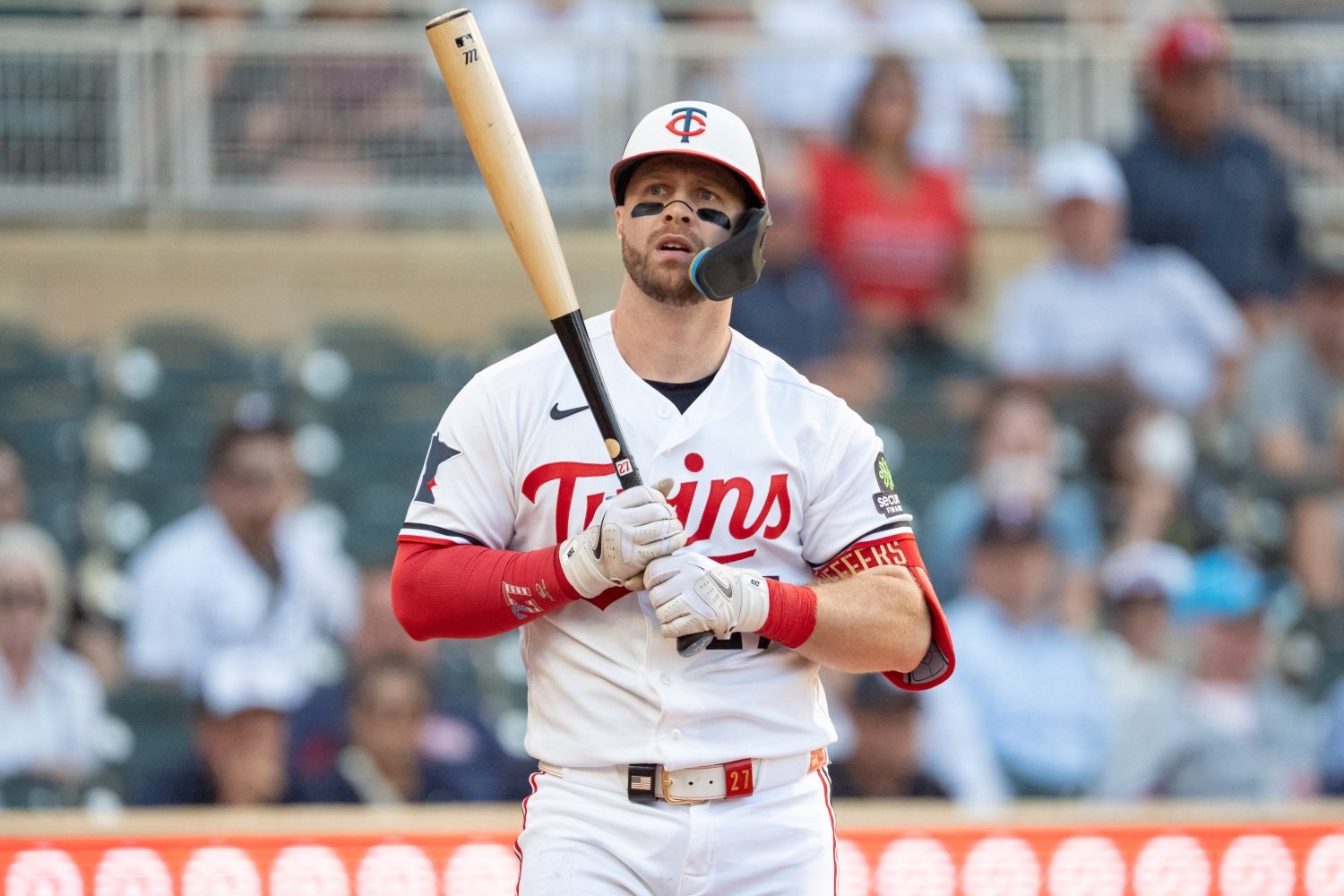
Image courtesy of Erik Williams-Imagn Images The 2026 season didn’t end the way Twins fans had hoped, but now that the season is officially in the books, there’s still plenty to look back on and remember fondly. There were big wins, breakout performances, unexpected contributors, and, of course, plenty of home runs. Everyone loves a good home run, but there’s something especially fun about watching one absolutely disappear. The Twins had one of the better offenses in the American League this season, finishing third in runs scored. They didn’t rank quite as highly in home runs, but they still finished 12th in baseball with 187 long balls. So, as we put a bow on the 2026 season, let’s take a look back at some of the biggest blasts of the year. Here are the five (technically six) longest home runs hit by a Twins player in 2026, based on projected distance. 5. Ryan Kreidler, 438 feet April 13 vs. Boston Red Sox When the Twins claimed Ryan Kreidler off waivers over the offseason, they did so primarily for his glove, not his bat. While that assessment turned out to be mostly accurate, Kreidler still managed to hit a career-high eight home runs during the season. None traveled farther than his solo blast against the Boston Red Sox on April 13. Kreidler came to the plate in the second inning with the Twins already holding a commanding 10-0 lead. He added to it in a hurry, launching a ball 438 feet for his third home run of the season and pushing the lead to 11-0. The Twins went on to win the game 13-6. It wasn't exactly a high-leverage home run, but it showcased what Kreidler is capable of, including some things he wasn't capable of before. He swung the bat at a lightning-fast 77.6 miles per hour, and the ball jumped off it at 109 MPH, with a 29° launch angle. 5. Byron Buxton, 438 feet April 14 vs. Boston Red Sox Kreidler wasn't the only Twin to hit a 438-foot home run in 2026—or even in that series. Byron Buxton did it one day later, also against the Red Sox. Buxton had the third-highest home run total of his career this season, and none traveled farther than his third home run of the season. Facing Boston's Jack Anderson (who later became a teammate), Buxton took a 2-0 slider that was well below the strike zone and somehow turned it into a 108-MPH, 438-foot blast. It was as close to a carbon copy of Kreidler's dinger as any ball can be of another, down to the launch angle and bat speed. It was part of arguably Buxton's best game of the season. He went 4-for-5 with two home runs and scored four runs as the Twins rolled the Red Sox. Unfortunately, injuries once again derailed Buxton's season, but when he was healthy, he remained one of the most impactful players in baseball. 4. Josh Bell, 442 feet June 7 vs. Kansas City Royals Josh Bell had a knack for hitting the ball a long way in 2026, and his first appearance on this list came during a ninth-inning rally against the Kansas City Royals on June 7. The Twins entered the ninth trailing 6-1, but after a walk and a single to open the inning, Bell stepped to the plate with an opportunity to bring the Twins back into the game. He did exactly that, launching a 442-foot blast into the right-field concourse at Target Field. Suddenly, the Twins were within two runs, and what had looked like a blowout was turning into a potentially dramatic comeback. It was a missile, launched such a long distance because it wasted no time rising or falling. A 78-MPH swing produced a 112-MPH exit velocity, at a frozen-rope 25° launch angle. The Twins scored another run later in the inning, but couldn't quite finish the job and fell 6-5. 3. Royce Lewis, 444 feet June 10 vs. Detroit Tigers Royce Lewis's 2026 season was a roller coaster, with a demotion to the minors, a red-hot return to Minnesota and a difficult finish to the season. Along the way, there were plenty of reminders of why the Twins have been so excited about Lewis throughout his young career. One of those came on June 10 against the Detroit Tigers. Lewis took left-hander Framber Valdez deep in the second inning, sending a solo shot 444 feet into the left-center-field seats. It was an impressive display of power against a typically stud pitcher. Lewis's bat speed fluctuated as he worked through mechanical issues, but on this offering, he got off an 81-MPH 'A' swing and connected cleanly enough to hit it 108 MPH at a 32° launch angle. Lewis finished the year with 15 home runs, the second-highest total of his Twins career. While the season didn't go exactly as he or the Twins would have hoped, blasts like this one showed the offensive upside that remains in his bat. 2. Josh Bell, 452 feet July 1 vs. Houston Astros Bell makes another appearance near the top of the list, this time with a 452-foot blast against the Houston Astros on July 1. He hit his 11th home run of the season that night, launching a ball over the batter's eye in center field at Daikin Park. It was another example of Bell, who's just a huge guy with a great feel for hitting, really, getting just enough air under one to send it soaring. He swished the stick at 78 MPH, launched it at 26°, and got a whopping 113 MPH of exit velocity behind it. Bell would finish the season with 21 home runs, fourth-most on the Twins in 2026. Three of those home runs ended up among the five longest blasts of the season. Wait, three? But that means... 1. Josh Bell, 460 feet September 4 vs. Chicago White Sox And finally, we have the longest home run hit by a Twin in 2026, and fittingly, it's another one from Bell. He launched a ball 460 feet into the right-center-field concourse, giving the Twins their longest home run of the season by a considerable margin. MLB's Statcast data measured the blast at 114 MPH off the bat. He swung the bat a little slower than on his other ferocious blasts (76 MPH), but connected more cleanly, and putting just a little more air under it (30°) let it carry farther than any of his other shots this year. And there you have it. Bell accounted for three of the five longest blasts, while Lewis, Buxton and Kreidler each contributed impressive ones of their own. The season may be over, but these are some of the moments that are fun to look back on. Which of these home runs was your favorite? View full article
- 8 replies
-
- 1
-

-
- ryan kreidler
- josh bell
- (and 2 more)
-
The 6 Longest Home Runs of the Minnesota Twins' 2026 Season
Matthew Taylor posted an article in Twins
 The 2026 season didn’t end the way Twins fans had hoped, but now that the season is officially in the books, there’s still plenty to look back on and remember fondly. There were big wins, breakout performances, unexpected contributors, and, of course, plenty of home runs. Everyone loves a good home run, but there’s something especially fun about watching one absolutely disappear. The Twins had one of the better offenses in the American League this season, finishing third in runs scored. They didn’t rank quite as highly in home runs, but they still finished 12th in baseball with 187 long balls. So, as we put a bow on the 2026 season, let’s take a look back at some of the biggest blasts of the year. Here are the five (technically six) longest home runs hit by a Twins player in 2026, based on projected distance. 5. Ryan Kreidler, 438 feet April 13 vs. Boston Red Sox When the Twins claimed Ryan Kreidler off waivers over the offseason, they did so primarily for his glove, not his bat. While that assessment turned out to be mostly accurate, Kreidler still managed to hit a career-high eight home runs during the season. None traveled farther than his solo blast against the Boston Red Sox on April 13. Kreidler came to the plate in the second inning with the Twins already holding a commanding 10-0 lead. He added to it in a hurry, launching a ball 438 feet for his third home run of the season and pushing the lead to 11-0. The Twins went on to win the game 13-6. It wasn't exactly a high-leverage home run, but it showcased what Kreidler is capable of, including some things he wasn't capable of before. He swung the bat at a lightning-fast 77.6 miles per hour, and the ball jumped off it at 109 MPH, with a 29° launch angle. 5. Byron Buxton, 438 feet April 14 vs. Boston Red Sox Kreidler wasn't the only Twin to hit a 438-foot home run in 2026—or even in that series. Byron Buxton did it one day later, also against the Red Sox. Buxton had the third-highest home run total of his career this season, and none traveled farther than his third home run of the season. Facing Boston's Jack Anderson (who later became a teammate), Buxton took a 2-0 slider that was well below the strike zone and somehow turned it into a 108-MPH, 438-foot blast. It was as close to a carbon copy of Kreidler's dinger as any ball can be of another, down to the launch angle and bat speed. It was part of arguably Buxton's best game of the season. He went 4-for-5 with two home runs and scored four runs as the Twins rolled the Red Sox. Unfortunately, injuries once again derailed Buxton's season, but when he was healthy, he remained one of the most impactful players in baseball. 4. Josh Bell, 442 feet June 7 vs. Kansas City Royals Josh Bell had a knack for hitting the ball a long way in 2026, and his first appearance on this list came during a ninth-inning rally against the Kansas City Royals on June 7. The Twins entered the ninth trailing 6-1, but after a walk and a single to open the inning, Bell stepped to the plate with an opportunity to bring the Twins back into the game. He did exactly that, launching a 442-foot blast into the right-field concourse at Target Field. Suddenly, the Twins were within two runs, and what had looked like a blowout was turning into a potentially dramatic comeback. It was a missile, launched such a long distance because it wasted no time rising or falling. A 78-MPH swing produced a 112-MPH exit velocity, at a frozen-rope 25° launch angle. The Twins scored another run later in the inning, but couldn't quite finish the job and fell 6-5. 3. Royce Lewis, 444 feet June 10 vs. Detroit Tigers Royce Lewis's 2026 season was a roller coaster, with a demotion to the minors, a red-hot return to Minnesota and a difficult finish to the season. Along the way, there were plenty of reminders of why the Twins have been so excited about Lewis throughout his young career. One of those came on June 10 against the Detroit Tigers. Lewis took left-hander Framber Valdez deep in the second inning, sending a solo shot 444 feet into the left-center-field seats. It was an impressive display of power against a typically stud pitcher. Lewis's bat speed fluctuated as he worked through mechanical issues, but on this offering, he got off an 81-MPH 'A' swing and connected cleanly enough to hit it 108 MPH at a 32° launch angle. Lewis finished the year with 15 home runs, the second-highest total of his Twins career. While the season didn't go exactly as he or the Twins would have hoped, blasts like this one showed the offensive upside that remains in his bat. 2. Josh Bell, 452 feet July 1 vs. Houston Astros Bell makes another appearance near the top of the list, this time with a 452-foot blast against the Houston Astros on July 1. He hit his 11th home run of the season that night, launching a ball over the batter's eye in center field at Daikin Park. It was another example of Bell, who's just a huge guy with a great feel for hitting, really, getting just enough air under one to send it soaring. He swished the stick at 78 MPH, launched it at 26°, and got a whopping 113 MPH of exit velocity behind it. Bell would finish the season with 21 home runs, fourth-most on the Twins in 2026. Three of those home runs ended up among the five longest blasts of the season. Wait, three? But that means... 1. Josh Bell, 460 feet September 4 vs. Chicago White Sox And finally, we have the longest home run hit by a Twin in 2026, and fittingly, it's another one from Bell. He launched a ball 460 feet into the right-center-field concourse, giving the Twins their longest home run of the season by a considerable margin. MLB's Statcast data measured the blast at 114 MPH off the bat. He swung the bat a little slower than on his other ferocious blasts (76 MPH), but connected more cleanly, and putting just a little more air under it (30°) let it carry farther than any of his other shots this year. And there you have it. Bell accounted for three of the five longest blasts, while Lewis, Buxton and Kreidler each contributed impressive ones of their own. The season may be over, but these are some of the moments that are fun to look back on. Which of these home runs was your favorite?
- 8 comments
-
- 1
-
-
- ryan kreidler
- josh bell
- (and 2 more)
-
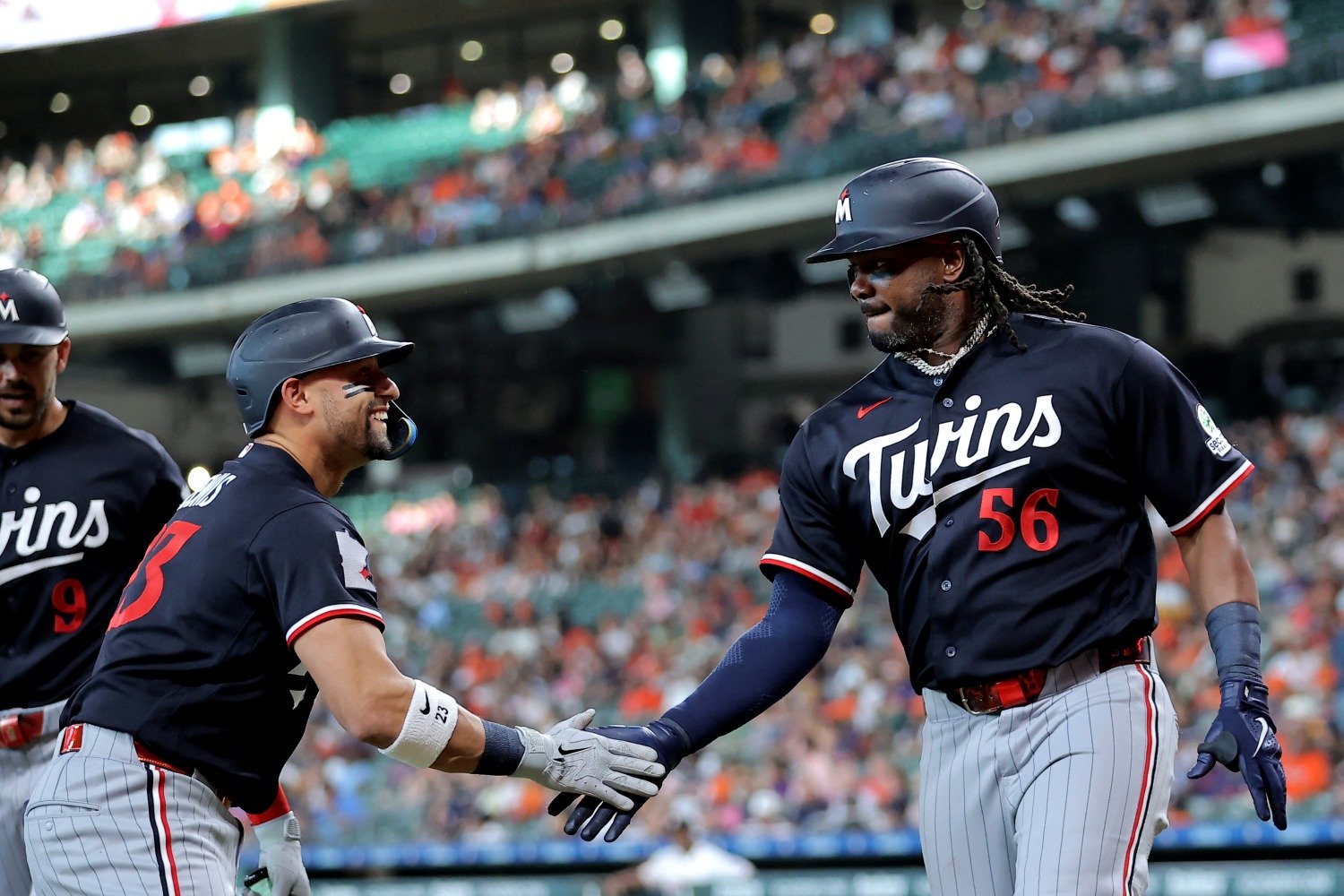
Image courtesy of John Jones, Nick Turchiaro-Imagn Images The 2026 Minnesota Twins were not supposed to be contenders. Heading into the season, expectations were low, and few people expected them to spend most of the year hanging around the American League playoff picture. Yet that is exactly what happened. The Twins were surprisingly in the playoff mix for roughly 80% of the season, were buyers at the trade deadline and even occupied a playoff spot midway through August. They were not mathematically eliminated until the middle of September. A big reason they remained relevant for so long was the weakness of the American League, but that should not take away from the fact that they had an opportunity in front of them. The Twins were playing meaningful baseball deep into the season, and the playoff spot was there for the taking. Unfortunately, the Twins could not take advantage of it. Despite becoming buyers at the trade deadline, Minnesota went on to become one of the worst teams in baseball over the final stretch of the season. The frustrating part is that this was not a roster that was completely incapable of competing. The Twins will likely finish the season with the second-most runs scored in the American League. Their starting rotation, despite its flaws, was not among the worst in baseball. The starters will finish 18th in MLB in fWAR and 14th in xERA. The defense was certainly a problem, but when looking at what ultimately kept the Twins from taking advantage of such a wide-open playing field, the bullpen stands out. The Twins bullpen was one of the worst in baseball for much of the season and will finish 26th in MLB in ERA. It also had the second-highest walk rate in baseball. Those numbers actually include the improvements Minnesota made at the trade deadline by acquiring A.J. Minter and Jeff Hoffman, meaning the full-season numbers make the bullpen look better than it was for much of the first half. Before the deadline, the Twins had the second-worst bullpen ERA in baseball. It took the front office most of the season to figure out what it wanted its bullpen to look like, from acquiring Yoendrys Gomez early in the season to turning Andrew Morris into a one-inning reliever in May and eventually adding Hoffman and Minter at the deadline. By the end, the Twins had finally put together some legitimate pieces, but all of that work still resulted in a bullpen that ranked near the bottom of the league in ERA, and well below average in metrics like FIP, WAR and WPA. That makes it difficult not to think about two star relievers who could have been in that bullpen all along. At last year's trade deadline, the Twins traded away their three best relievers in Jhoan Duran, Griffin Jax and Louis Varland. Jax has since transitioned into a starting role, so his situation is a little different. Duran and Varland, however, continued in the roles they had with Minnesota and turned in two of the best relief seasons in baseball. Duran was spectacular for the Phillies, posting Win Probability Added. He became exactly the type of high-leverage weapon Philadelphia hoped it was acquiring when it traded for him. Varland was even better. After showing flashes with the Twins, primarily in the bullpen, Varland took his career to another level after settling into a full-time relief role with Toronto. He posted a 1.29 ERA, trailing only Mason Miller for the best mark among MLB relievers. He was worth 3.1 fWAR and posted a 3.57 WPA, making him one of the most valuable relievers in baseball. Put the two seasons together and Duran and Varland were worth nearly six fWAR in 2026. That is an especially significant number when looking at the Twins' bullpen because Minnesota spent a large portion of the season relying on replacement-level players to fill innings. This bullpen needed significant help, while those two departed relievers combined to provide nearly six fWAR for other teams. Simply replacing some of the innings Minnesota gave to replacement-level relievers with Duran and Varland would have dramatically changed the quality of the bullpen. There is also a much bigger domino effect to consider. If Duran and Varland had been in Minnesota from the beginning of the season, the Twins certainly would not have blown as many games early in the year. A better bullpen would have meant a better record, which would have meant higher playoff odds at the trade deadline. Higher playoff odds could have led the front office to be more aggressive in July, potentially resulting in an even stronger roster for the final two months of the season. Instead of spending much of the year trying to figure out the bullpen, Minnesota could have spent those resources addressing other weaknesses. There is no way to know exactly how those alternate decisions would have played out, but the point is that the impact of keeping Duran and Varland would not have been limited to the innings they personally pitched. The other side of the equation is what the Twins actually received for the two relievers. Mick Abel, acquired in the Duran trade, barely had an opportunity to contribute before an injury ended his season. Alan Roden and Kendry Rojas, acquired in the Varland trade, also did not make a meaningful impact on the Twins' 2026 season. That does not mean those players cannot become important pieces for Minnesota in the future, and it would obviously be unfair to evaluate prospects solely on what they did in the first year after the trade. But it does make the opportunity cost of the trades much easier to see. The Twins gave up two relievers who became two of the best in baseball, and the players they received did not help them win games during a season in which the team was surprisingly close to the playoffs. That is the important distinction here. Trading Duran and Varland was much easier to justify if the Twins were convinced they were heading into a lost season and needed to prioritize the future. Both players were relatively inexpensive, had multiple years of team control remaining and had significant trade value. If the Twins had spent 2026 buried in the standings, nobody would be looking at these trades and wondering how many games they cost the team. Trading established relievers for promising prospects makes sense when a team is rebuilding. But the Twins insisted they were not rebuilding, and the 2026 season more or less proved that out. They were in the playoff race. They were buyers at the trade deadline. They were sitting in a playoff spot in August. They remained alive until September, despite having one of the worst bullpens in baseball. That is what makes the decision so much harder to swallow in hindsight. There is obviously no way to say that Duran and Varland would have guaranteed a playoff spot. Baseball does not work that cleanly, and there are too many variables involved to simply add their WAR to the Twins' win total and declare an alternate result. But it is difficult to look at the season the Twins just had and argue that those two players would not have made a significant difference. The offense was good enough. The starting pitching was good enough to keep the team competitive. The American League was vulnerable all season. The Twins remained in contention despite their bullpen being one of the biggest weaknesses on the roster. Maybe the Twins still would have fallen short with Duran and Varland. Maybe other weaknesses would have caught up with them. But considering how long they remained in the playoff race with a terrible bullpen, it is difficult not to wonder what would have happened if two of the best relievers in baseball had still been wearing Minnesota uniforms. So, what do you think? If the Twins had kept Jhoan Duran and Louis Varland instead of trading them last season, would Minnesota have made the playoffs in 2026? Leave a comment below and start the conversation! View full article
-
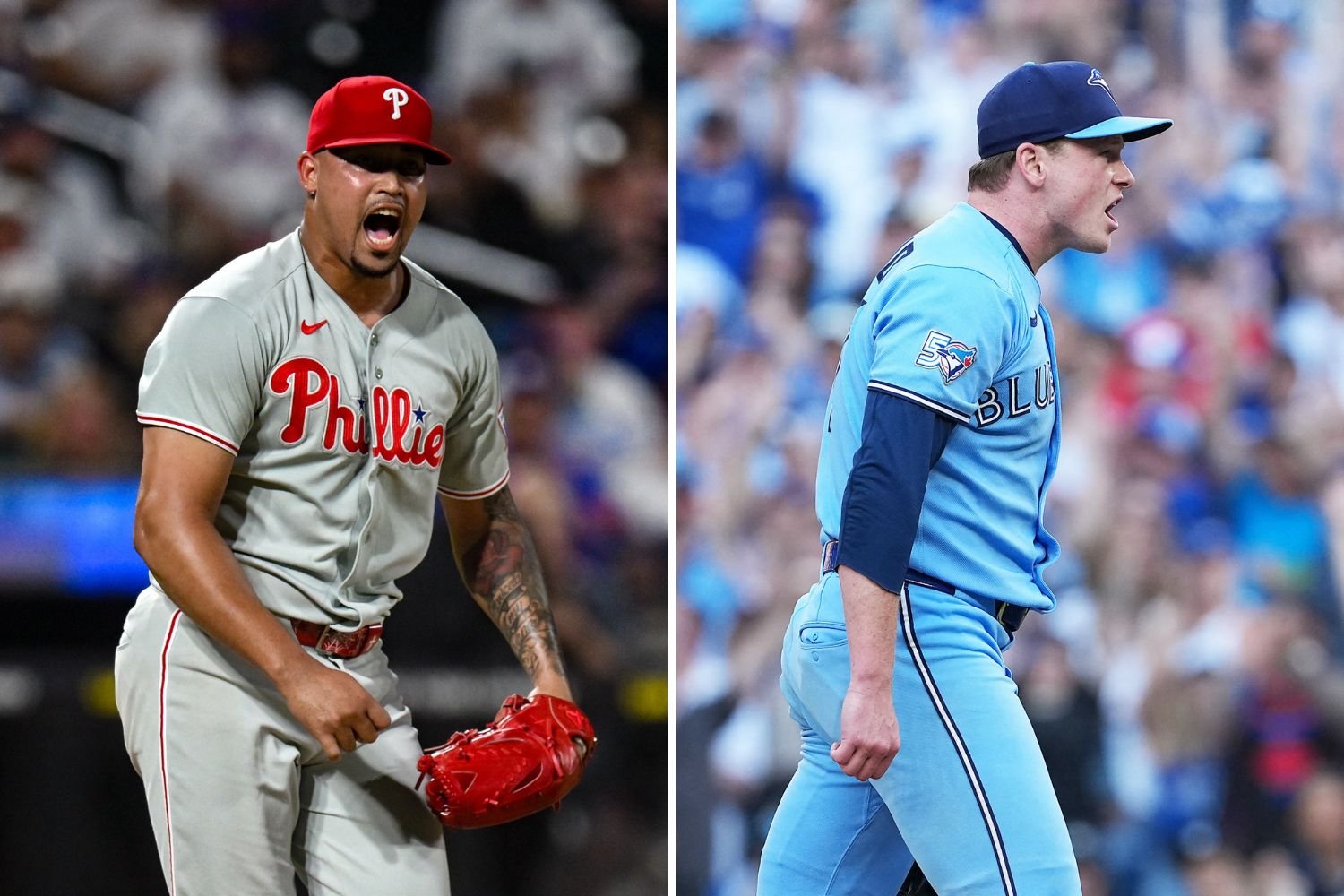 The 2026 Minnesota Twins were not supposed to be contenders. Heading into the season, expectations were low, and few people expected them to spend most of the year hanging around the American League playoff picture. Yet that is exactly what happened. The Twins were surprisingly in the playoff mix for roughly 80% of the season, were buyers at the trade deadline and even occupied a playoff spot midway through August. They were not mathematically eliminated until the middle of September. A big reason they remained relevant for so long was the weakness of the American League, but that should not take away from the fact that they had an opportunity in front of them. The Twins were playing meaningful baseball deep into the season, and the playoff spot was there for the taking. Unfortunately, the Twins could not take advantage of it. Despite becoming buyers at the trade deadline, Minnesota went on to become one of the worst teams in baseball over the final stretch of the season. The frustrating part is that this was not a roster that was completely incapable of competing. The Twins will likely finish the season with the second-most runs scored in the American League. Their starting rotation, despite its flaws, was not among the worst in baseball. The starters will finish 18th in MLB in fWAR and 14th in xERA. The defense was certainly a problem, but when looking at what ultimately kept the Twins from taking advantage of such a wide-open playing field, the bullpen stands out. The Twins bullpen was one of the worst in baseball for much of the season and will finish 26th in MLB in ERA. It also had the second-highest walk rate in baseball. Those numbers actually include the improvements Minnesota made at the trade deadline by acquiring A.J. Minter and Jeff Hoffman, meaning the full-season numbers make the bullpen look better than it was for much of the first half. Before the deadline, the Twins had the second-worst bullpen ERA in baseball. It took the front office most of the season to figure out what it wanted its bullpen to look like, from acquiring Yoendrys Gomez early in the season to turning Andrew Morris into a one-inning reliever in May and eventually adding Hoffman and Minter at the deadline. By the end, the Twins had finally put together some legitimate pieces, but all of that work still resulted in a bullpen that ranked near the bottom of the league in ERA, and well below average in metrics like FIP, WAR and WPA. That makes it difficult not to think about two star relievers who could have been in that bullpen all along. At last year's trade deadline, the Twins traded away their three best relievers in Jhoan Duran, Griffin Jax and Louis Varland. Jax has since transitioned into a starting role, so his situation is a little different. Duran and Varland, however, continued in the roles they had with Minnesota and turned in two of the best relief seasons in baseball. Duran was spectacular for the Phillies, posting Win Probability Added. He became exactly the type of high-leverage weapon Philadelphia hoped it was acquiring when it traded for him. Varland was even better. After showing flashes with the Twins, primarily in the bullpen, Varland took his career to another level after settling into a full-time relief role with Toronto. He posted a 1.29 ERA, trailing only Mason Miller for the best mark among MLB relievers. He was worth 3.1 fWAR and posted a 3.57 WPA, making him one of the most valuable relievers in baseball. Put the two seasons together and Duran and Varland were worth nearly six fWAR in 2026. That is an especially significant number when looking at the Twins' bullpen because Minnesota spent a large portion of the season relying on replacement-level players to fill innings. This bullpen needed significant help, while those two departed relievers combined to provide nearly six fWAR for other teams. Simply replacing some of the innings Minnesota gave to replacement-level relievers with Duran and Varland would have dramatically changed the quality of the bullpen. There is also a much bigger domino effect to consider. If Duran and Varland had been in Minnesota from the beginning of the season, the Twins certainly would not have blown as many games early in the year. A better bullpen would have meant a better record, which would have meant higher playoff odds at the trade deadline. Higher playoff odds could have led the front office to be more aggressive in July, potentially resulting in an even stronger roster for the final two months of the season. Instead of spending much of the year trying to figure out the bullpen, Minnesota could have spent those resources addressing other weaknesses. There is no way to know exactly how those alternate decisions would have played out, but the point is that the impact of keeping Duran and Varland would not have been limited to the innings they personally pitched. The other side of the equation is what the Twins actually received for the two relievers. Mick Abel, acquired in the Duran trade, barely had an opportunity to contribute before an injury ended his season. Alan Roden and Kendry Rojas, acquired in the Varland trade, also did not make a meaningful impact on the Twins' 2026 season. That does not mean those players cannot become important pieces for Minnesota in the future, and it would obviously be unfair to evaluate prospects solely on what they did in the first year after the trade. But it does make the opportunity cost of the trades much easier to see. The Twins gave up two relievers who became two of the best in baseball, and the players they received did not help them win games during a season in which the team was surprisingly close to the playoffs. That is the important distinction here. Trading Duran and Varland was much easier to justify if the Twins were convinced they were heading into a lost season and needed to prioritize the future. Both players were relatively inexpensive, had multiple years of team control remaining and had significant trade value. If the Twins had spent 2026 buried in the standings, nobody would be looking at these trades and wondering how many games they cost the team. Trading established relievers for promising prospects makes sense when a team is rebuilding. But the Twins insisted they were not rebuilding, and the 2026 season more or less proved that out. They were in the playoff race. They were buyers at the trade deadline. They were sitting in a playoff spot in August. They remained alive until September, despite having one of the worst bullpens in baseball. That is what makes the decision so much harder to swallow in hindsight. There is obviously no way to say that Duran and Varland would have guaranteed a playoff spot. Baseball does not work that cleanly, and there are too many variables involved to simply add their WAR to the Twins' win total and declare an alternate result. But it is difficult to look at the season the Twins just had and argue that those two players would not have made a significant difference. The offense was good enough. The starting pitching was good enough to keep the team competitive. The American League was vulnerable all season. The Twins remained in contention despite their bullpen being one of the biggest weaknesses on the roster. Maybe the Twins still would have fallen short with Duran and Varland. Maybe other weaknesses would have caught up with them. But considering how long they remained in the playoff race with a terrible bullpen, it is difficult not to wonder what would have happened if two of the best relievers in baseball had still been wearing Minnesota uniforms. So, what do you think? If the Twins had kept Jhoan Duran and Louis Varland instead of trading them last season, would Minnesota have made the playoffs in 2026? Leave a comment below and start the conversation!
 -
Giants 5, Twins 2: Aaron Sabato Debuts, But Zebby Matthews Stumbled
Matthew Taylor posted an article in Twins
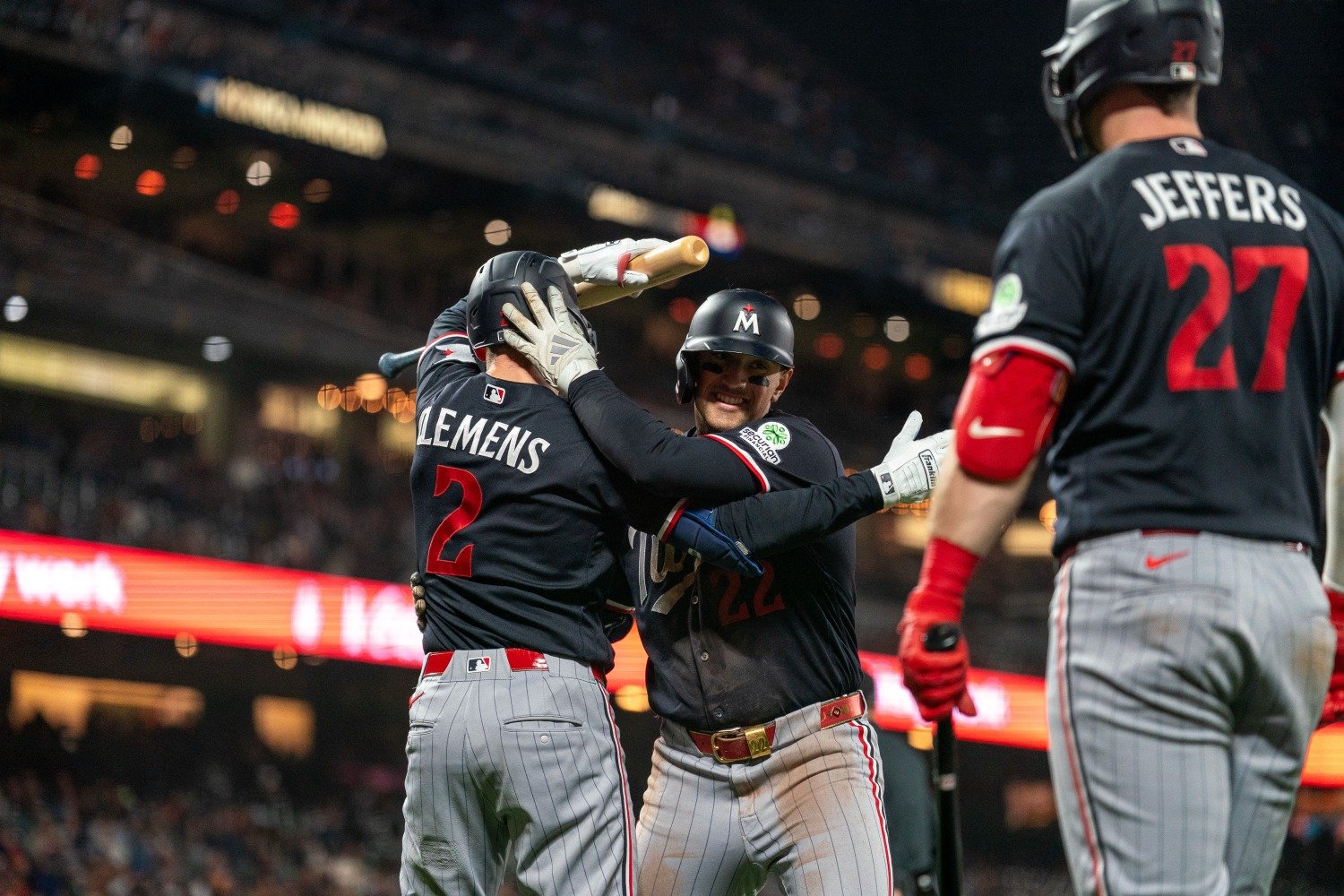 Box Score SP: Zebby Matthews 5 IP, 8 H, 5 ER, 0 BB, 9 K HR: Brooks Lee (24), Emmanuel Rodríguez (2) Bottom 3 WPA: Matthews -0.27, Ryan Jeffers -0.06, Luke Keaschall -0.05 Win Probability Chart (via FanGraphs): The Twins aren't playing for much these days. With just two series remaining in the 2026 season, the standings have largely stopped mattering. The Twins came into San Francisco having split a four-gamer in Anaheim over the weekend, but whether they win or lose these final games isn't particularly important. What does matter is what they can learn. Monday night's 5-2 loss to the San Francisco Giants provided plenty of features of interest, from another uneven outing for Zebby Matthews to the major-league debut of Aaron Sabato and an encouraging moment from one of the organization's most important young players, Emmanuel Rodríguez. The Twins are already looking toward 2027, and these final games give the organization an opportunity to evaluate players who could play important roles next season. Zebby Matthews's Uncertain Future There may not be a player on the Twins roster with a wider gap between his ceiling and his floor than Matthews. At his best, he's looked like a frontline starting pitcher. At his worst, he's looked like a pitcher who should eventually find himself in the bullpen. The Twins already have Joe Ryan, Pablo López and Taj Bradley locked into their rotation for 2027, leaving two spots that figure to be contested by Connor Prielipp, Mick Abel, Matthews and Dean Kremer. Matthews does not appear particularly likely to end up in the bullpen at this point, but a strong finish to the season could have helped his case for one of those final rotation spots. His start Monday did not do much to strengthen that case. Matthews allowed eight hits and five earned runs over five innings against a Giants lineup that looked more like a Triple-A corps than a major-league one. The damage started immediately in the first inning when Matthews allowed three consecutive hits, including a two-run single from Giants third baseman Brett Harris. San Francisco added two more runs in the second, on a two-run single from Minnesota native Drew Gilbert. Gilbert struck again in the fifth inning with his 11th home run of the season. There were some positives for Matthews. He generated 15 swings and misses and struck out nine batters, showing the stuff that has made the Twins believe there's still a significant ceiling here. The problem is that the quality of the Giants lineup makes those numbers a little more difficult to evaluate. Against this particular opponent, the five earned runs were ultimately more concerning than the strikeout and whiff totals were encouraging. Matthews may get one more opportunity to pitch before the season ends, but he currently sits with a 4.90 ERA over just over 130 innings. What the Twins decide to do with him this offseason could be one of the more fascinating pitching decisions of the winter. There's still a version of Matthews who looks like a major-league starter, but Monday was another reminder that getting that version consistently remains the challenge. Aaron Sabato Finally Gets His Chance The other major storyline entering the game was the long-awaited major-league debut of Aaron Sabato. The Twins selected Sabato with the 27th overall pick in the 2020 MLB Draft, and six years later, the first baseman finally made it to the majors at age 27. His path to the majors was winding. Sabato had to work his way out of the prospect bust conversation just to put himself in position to receive this opportunity. He posted a .877 OPS with 29 home runs in Triple-A this season, earning his call-up and finally getting the opportunity that had seemed increasingly unlikely throughout his minor-league career. His first night in the majors certainly did not go the way he dreamed it would. Sabato went 0-for-3 and saw just eight pitches. In his first plate appearance, he struck out swinging at an 84-mph sweeper. In his second, he flew out to center field on the first pitch he saw. His final at-bat came with runners on first and second, but he grounded into an inning-ending double play. That's obviously not the debut Sabato would have drawn up. But the important part is that he's here. After six years in the organization, Sabato finally has his name in the major-league record books, and he will have more opportunities to get that first career hit. For a player who had to work extremely hard to even get this opportunity, one 0-for-3 night does little to change the larger story. The Twins wanted to see what Sabato could do against major league pitching, and now they have the chance to find out. Emmanuel Rodríguez Keeps Getting Valuable Reps Brooks Lee provided some of the Twins' offense Monday, launching his 24th home run of the season as his power surge continues. But the biggest offensive highlight came from Rodríguez in the eighth inning. The rookie launched his second home run of the season, sending a ball into the deepest part of center field for an impressive reminder of the talent the Twins have invested heavily in. These games may be meaningless from a standings perspective, but they are anything but meaningless for Rodríguez. The Twins are going to need plenty from him next season. Getting him regular opportunities against major-league pitching, allowing him to make adjustments, and giving him the chance to experience success is an important part of his development. A home run like Monday's is exactly the sort of moment the Twins want to see as they evaluate what Rodríguez can become in 2027. The same can be said for many of the young players getting opportunities during these final games. The Twins aren't trying to salvage their 2026 season. They're trying to learn as much as possible before they have to start making decisions about the next one. The Twins ultimately fell to the Giants 5-2 and dropped to 73-84 on the season with five games remaining. What's Next The Twins will continue their series in San Francisco on Tuesday at 8:45 p.m. Taj Bradley will take the mound for Minnesota and face Giants righty Anthony Molina. Postgame Interviews Coming soon... Bullpen Usage Chart THU FRI SAT SUN MON TOT Rogers 0 0 26 0 25 51 Gomez 18 0 24 0 0 42 Adams 0 10 0 0 20 30 Morris 13 0 15 0 0 28 Hoffman 5 0 19 0 0 24 Nance 0 23 0 0 0 23 Minter 14 0 8 0 0 22 Funderburk 1 0 2 0 0 3
- 21 comments
-
- 3
-

-
- aaron sabato
- emmanuel rodriguez
- (and 2 more)
-
Image courtesy of Neville E. Guard-Imagn Images Box Score SP: Zebby Matthews 5 IP, 8 H, 5 ER, 0 BB, 9 K HR: Brooks Lee (24), Emmanuel Rodríguez (2) Bottom 3 WPA: Matthews -0.27, Ryan Jeffers -0.06, Luke Keaschall -0.05 Win Probability Chart (via FanGraphs): The Twins aren't playing for much these days. With just two series remaining in the 2026 season, the standings have largely stopped mattering. The Twins came into San Francisco having split a four-gamer in Anaheim over the weekend, but whether they win or lose these final games isn't particularly important. What does matter is what they can learn. Monday night's 5-2 loss to the San Francisco Giants provided plenty of features of interest, from another uneven outing for Zebby Matthews to the major-league debut of Aaron Sabato and an encouraging moment from one of the organization's most important young players, Emmanuel Rodríguez. The Twins are already looking toward 2027, and these final games give the organization an opportunity to evaluate players who could play important roles next season. Zebby Matthews's Uncertain Future There may not be a player on the Twins roster with a wider gap between his ceiling and his floor than Matthews. At his best, he's looked like a frontline starting pitcher. At his worst, he's looked like a pitcher who should eventually find himself in the bullpen. The Twins already have Joe Ryan, Pablo López and Taj Bradley locked into their rotation for 2027, leaving two spots that figure to be contested by Connor Prielipp, Mick Abel, Matthews and Dean Kremer. Matthews does not appear particularly likely to end up in the bullpen at this point, but a strong finish to the season could have helped his case for one of those final rotation spots. His start Monday did not do much to strengthen that case. Matthews allowed eight hits and five earned runs over five innings against a Giants lineup that looked more like a Triple-A corps than a major-league one. The damage started immediately in the first inning when Matthews allowed three consecutive hits, including a two-run single from Giants third baseman Brett Harris. San Francisco added two more runs in the second, on a two-run single from Minnesota native Drew Gilbert. Gilbert struck again in the fifth inning with his 11th home run of the season. There were some positives for Matthews. He generated 15 swings and misses and struck out nine batters, showing the stuff that has made the Twins believe there's still a significant ceiling here. The problem is that the quality of the Giants lineup makes those numbers a little more difficult to evaluate. Against this particular opponent, the five earned runs were ultimately more concerning than the strikeout and whiff totals were encouraging. Matthews may get one more opportunity to pitch before the season ends, but he currently sits with a 4.90 ERA over just over 130 innings. What the Twins decide to do with him this offseason could be one of the more fascinating pitching decisions of the winter. There's still a version of Matthews who looks like a major-league starter, but Monday was another reminder that getting that version consistently remains the challenge. Aaron Sabato Finally Gets His Chance The other major storyline entering the game was the long-awaited major-league debut of Aaron Sabato. The Twins selected Sabato with the 27th overall pick in the 2020 MLB Draft, and six years later, the first baseman finally made it to the majors at age 27. His path to the majors was winding. Sabato had to work his way out of the prospect bust conversation just to put himself in position to receive this opportunity. He posted a .877 OPS with 29 home runs in Triple-A this season, earning his call-up and finally getting the opportunity that had seemed increasingly unlikely throughout his minor-league career. His first night in the majors certainly did not go the way he dreamed it would. Sabato went 0-for-3 and saw just eight pitches. In his first plate appearance, he struck out swinging at an 84-mph sweeper. In his second, he flew out to center field on the first pitch he saw. His final at-bat came with runners on first and second, but he grounded into an inning-ending double play. That's obviously not the debut Sabato would have drawn up. But the important part is that he's here. After six years in the organization, Sabato finally has his name in the major-league record books, and he will have more opportunities to get that first career hit. For a player who had to work extremely hard to even get this opportunity, one 0-for-3 night does little to change the larger story. The Twins wanted to see what Sabato could do against major league pitching, and now they have the chance to find out. Emmanuel Rodríguez Keeps Getting Valuable Reps Brooks Lee provided some of the Twins' offense Monday, launching his 24th home run of the season as his power surge continues. But the biggest offensive highlight came from Rodríguez in the eighth inning. The rookie launched his second home run of the season, sending a ball into the deepest part of center field for an impressive reminder of the talent the Twins have invested heavily in. These games may be meaningless from a standings perspective, but they are anything but meaningless for Rodríguez. The Twins are going to need plenty from him next season. Getting him regular opportunities against major-league pitching, allowing him to make adjustments, and giving him the chance to experience success is an important part of his development. A home run like Monday's is exactly the sort of moment the Twins want to see as they evaluate what Rodríguez can become in 2027. The same can be said for many of the young players getting opportunities during these final games. The Twins aren't trying to salvage their 2026 season. They're trying to learn as much as possible before they have to start making decisions about the next one. The Twins ultimately fell to the Giants 5-2 and dropped to 73-84 on the season with five games remaining. What's Next The Twins will continue their series in San Francisco on Tuesday at 8:45 p.m. Taj Bradley will take the mound for Minnesota and face Giants righty Anthony Molina. Postgame Interviews Coming soon... Bullpen Usage Chart THU FRI SAT SUN MON TOT Rogers 0 0 26 0 25 51 Gomez 18 0 24 0 0 42 Adams 0 10 0 0 20 30 Morris 13 0 15 0 0 28 Hoffman 5 0 19 0 0 24 Nance 0 23 0 0 0 23 Minter 14 0 8 0 0 22 Funderburk 1 0 2 0 0 3 View full article
-
Image courtesy of Matt Blewett-Imagn Images The Twins have to find better answers in the bullpen next season than they found this year, and that process starts now. There are some names that feel like they're written in pen for next year, including Yoendrys Gómez, Andrew Morris and Jeff Hoffman. Others appear likely to move on, including Taylor Rogers and A.J. Minter. Then there's a large group in between, where it's difficult to know exactly what the Twins will do. Two of those pitchers are right-handed reliever Cole Sands and left-handed reliever Kody Funderburk. Both have pitched well enough in the past to make a legitimate case for returning in 2027. At the same time, neither has established himself as a pitcher the Twins can confidently pencil into their bullpen for an entire season. That makes their situations precarious, because Funderburk will enter the 2027 season without any remaining minor-league options, while Sands is due to pass a second time through the arbitration process. Sands has spent five seasons with the Twins and owns a 4.42 career ERA. His 2024 season was by far his most encouraging, as he posted a 2.63 FIP while striking out 29% of opposing batters. That season gave the Twins reason to believe Sands could develop into a legitimate back-end bullpen weapon. Instead, Sands struggled in 2025, and his 2026 season was derailed by injuries. He threw just 12 innings this season, making it difficult to know exactly what the Twins will have when he reports to Spring Training next year on the other side of elbow surgery. There's still plenty to like. Sands's 2024 season wasn't a fluke, in the sense that he showed real swing-and-miss ability. Presumably, there's still a version of Sands who could regain that form and become a very useful reliever. But there are also legitimate reasons for concern. Sands will turn 30 next season, and his four-seam fastball velocity has dropped nearly three miles per hour from its peak in 2024. After two consecutive seasons that have raised questions about his performance and health, the Twins can't simply assume that the 2024 version of Sands is going to return. Funderburk has a somewhat different story, but the overall dilemma is similar. He has a 4.13 career ERA across four seasons with the Twins, and after struggling badly in 2024 with a 6.49 ERA, he's put together back-to-back seasons with an ERA below 4.00. This season has also been his most productive from an innings standpoint, and he has continued to show that he can be an effective option against left-handed hitters. But there are still questions surrounding Funderburk. Even with a career-high workload this season, he's only going to finish around 50 innings. Injuries and subpar control have prevented him from putting together a full season in the majors, and much of his best work has come in lower-leverage situations. He's never been given consistent responsibility in the biggest spots against the best hitters. Like Sands, Funderburk will turn 30 next season. The Twins have two pitchers who have shown enough to make you want to keep them, but not enough to make them sure things. Sands has the higher ceiling, particularly if he can get healthy and regain some of his velocity. Funderburk has the more recent track record of success, putting together his best two seasons in the past two years. Neither has established himself as a stable, high-leverage piece of a major-league bullpen. Normally, that wouldn't necessarily be a huge problem. A team can carry a pitcher like Funderburk or Sands and see how things go. If the pitcher struggles, the team can send him to Triple-A, let him work through whatever is wrong, and bring him back when he is ready. That's where the options issue changes the equation. Funderburk can't simply be sent to the minors in 2027. If the Twins decide they no longer want him on the major-league roster, they would have to designate them for assignment and expose him to waivers before they could send him to Triple-A. That means the Twins have to be more certain about Funderburk than they otherwise would—and it's hard to see how they could feel that confidence, given the way his season has unfolded. His is a particularly interesting case, because the Twins have used his minor-league options repeatedly throughout his career. He's spent parts of each of the past four seasons in Triple-A, and that flexibility has allowed the organization to move him back and forth depending on his performance and the needs of the roster. If he struggled in 2027, that would no longer be an option. Sands presents a different problem, but an equally salient one. He's making $1.1 million this season, after becoming arbitration-eligible for the first time last winter. Though he pitched for St. Paul on a rehab assignment, he was never actually optioned there this season, so he still has one more year of optionability, but at a certain point, that's just a technicality. The Twins would have to pay him at least $1.3 million to retain him without first non-tendering him and making him a free agent. That's a modest amount, but when a team pays even that much to a player, they expect to be able to keep them in the majors as long as they're healthy. It's no guarantee that, if the Twins are on the fence about Sands as a staple of their roster next year, they'll still be willing to pay him like a full-fledged big-leaguer. They might also have some concerns about doing so with a player whose health outlook has gotten so iffy. Heading into the offseason, the question isn't simply whether Sands and Funderburk are good enough to pitch in the majors. It's whether they're good enough to justify taking up a bullpen spot without the flexibility to send them down if things go wrong. Technically, they'll have that flexibility with Sands, but would they feel it? Will the slightly greater roster flexibility and the aforementioned high-leverage upside give Sands the edge, even though Funderburk will be $500,000 or so cheaper next season and is two years further from free agency than Sands is? The Twins can't afford to have an entire bullpen filled with question marks. If Gómez, Morris and Hoffman are part of the plan, and if (when?) the Twins add other relievers during the offseason, there are only so many spots available. Using two of those spots on Sands and Funderburk would mean committing one-quarter of an eight-man bullpen to pitchers who have never established themselves as dependable major-league relievers for an entire season, without the easily attainable upside or the roster flexibility teams prefer for that spot. There's a legitimate argument for keeping Sands because his 2024 season showed the possibility of having a legitimate back-end bullpen weapon. There is also a legitimate argument for keeping Funderburk. He gives the Twins a left-handed option who has shown he can get lefties out, and there is at least a chance that his recent success could lead to further improvement. The problem is that keeping both requires the Twins to make a pretty significant bet on two pitchers who still have a lot to prove. They might need to roll their dice in other directions. If you were calling the shots in the Twins' front office, what would you do with Cole Sands and Kody Funderburk? What do you think the Twins will do? Leave a comment below and start the conversation! View full article
-
Cole Sands and Kody Funderburk Each Have a Problem Heading Into 2027
Matthew Taylor posted an article in Twins
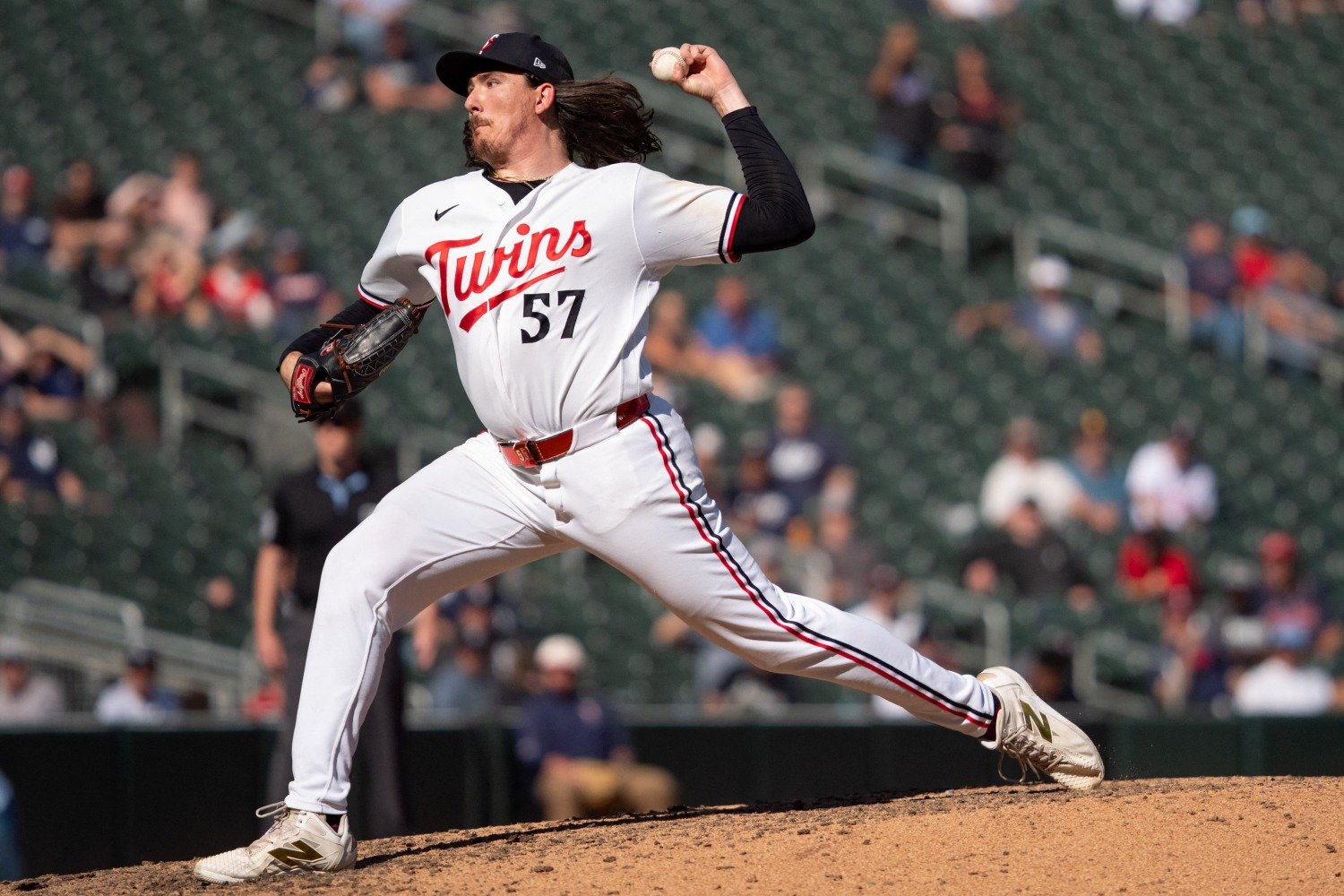 The Twins have to find better answers in the bullpen next season than they found this year, and that process starts now. There are some names that feel like they're written in pen for next year, including Yoendrys Gómez, Andrew Morris and Jeff Hoffman. Others appear likely to move on, including Taylor Rogers and A.J. Minter. Then there's a large group in between, where it's difficult to know exactly what the Twins will do. Two of those pitchers are right-handed reliever Cole Sands and left-handed reliever Kody Funderburk. Both have pitched well enough in the past to make a legitimate case for returning in 2027. At the same time, neither has established himself as a pitcher the Twins can confidently pencil into their bullpen for an entire season. That makes their situations precarious, because Funderburk will enter the 2027 season without any remaining minor-league options, while Sands is due to pass a second time through the arbitration process. Sands has spent five seasons with the Twins and owns a 4.42 career ERA. His 2024 season was by far his most encouraging, as he posted a 2.63 FIP while striking out 29% of opposing batters. That season gave the Twins reason to believe Sands could develop into a legitimate back-end bullpen weapon. Instead, Sands struggled in 2025, and his 2026 season was derailed by injuries. He threw just 12 innings this season, making it difficult to know exactly what the Twins will have when he reports to Spring Training next year on the other side of elbow surgery. There's still plenty to like. Sands's 2024 season wasn't a fluke, in the sense that he showed real swing-and-miss ability. Presumably, there's still a version of Sands who could regain that form and become a very useful reliever. But there are also legitimate reasons for concern. Sands will turn 30 next season, and his four-seam fastball velocity has dropped nearly three miles per hour from its peak in 2024. After two consecutive seasons that have raised questions about his performance and health, the Twins can't simply assume that the 2024 version of Sands is going to return. Funderburk has a somewhat different story, but the overall dilemma is similar. He has a 4.13 career ERA across four seasons with the Twins, and after struggling badly in 2024 with a 6.49 ERA, he's put together back-to-back seasons with an ERA below 4.00. This season has also been his most productive from an innings standpoint, and he has continued to show that he can be an effective option against left-handed hitters. But there are still questions surrounding Funderburk. Even with a career-high workload this season, he's only going to finish around 50 innings. Injuries and subpar control have prevented him from putting together a full season in the majors, and much of his best work has come in lower-leverage situations. He's never been given consistent responsibility in the biggest spots against the best hitters. Like Sands, Funderburk will turn 30 next season. The Twins have two pitchers who have shown enough to make you want to keep them, but not enough to make them sure things. Sands has the higher ceiling, particularly if he can get healthy and regain some of his velocity. Funderburk has the more recent track record of success, putting together his best two seasons in the past two years. Neither has established himself as a stable, high-leverage piece of a major-league bullpen. Normally, that wouldn't necessarily be a huge problem. A team can carry a pitcher like Funderburk or Sands and see how things go. If the pitcher struggles, the team can send him to Triple-A, let him work through whatever is wrong, and bring him back when he is ready. That's where the options issue changes the equation. Funderburk can't simply be sent to the minors in 2027. If the Twins decide they no longer want him on the major-league roster, they would have to designate them for assignment and expose him to waivers before they could send him to Triple-A. That means the Twins have to be more certain about Funderburk than they otherwise would—and it's hard to see how they could feel that confidence, given the way his season has unfolded. His is a particularly interesting case, because the Twins have used his minor-league options repeatedly throughout his career. He's spent parts of each of the past four seasons in Triple-A, and that flexibility has allowed the organization to move him back and forth depending on his performance and the needs of the roster. If he struggled in 2027, that would no longer be an option. Sands presents a different problem, but an equally salient one. He's making $1.1 million this season, after becoming arbitration-eligible for the first time last winter. Though he pitched for St. Paul on a rehab assignment, he was never actually optioned there this season, so he still has one more year of optionability, but at a certain point, that's just a technicality. The Twins would have to pay him at least $1.3 million to retain him without first non-tendering him and making him a free agent. That's a modest amount, but when a team pays even that much to a player, they expect to be able to keep them in the majors as long as they're healthy. It's no guarantee that, if the Twins are on the fence about Sands as a staple of their roster next year, they'll still be willing to pay him like a full-fledged big-leaguer. They might also have some concerns about doing so with a player whose health outlook has gotten so iffy. Heading into the offseason, the question isn't simply whether Sands and Funderburk are good enough to pitch in the majors. It's whether they're good enough to justify taking up a bullpen spot without the flexibility to send them down if things go wrong. Technically, they'll have that flexibility with Sands, but would they feel it? Will the slightly greater roster flexibility and the aforementioned high-leverage upside give Sands the edge, even though Funderburk will be $500,000 or so cheaper next season and is two years further from free agency than Sands is? The Twins can't afford to have an entire bullpen filled with question marks. If Gómez, Morris and Hoffman are part of the plan, and if (when?) the Twins add other relievers during the offseason, there are only so many spots available. Using two of those spots on Sands and Funderburk would mean committing one-quarter of an eight-man bullpen to pitchers who have never established themselves as dependable major-league relievers for an entire season, without the easily attainable upside or the roster flexibility teams prefer for that spot. There's a legitimate argument for keeping Sands because his 2024 season showed the possibility of having a legitimate back-end bullpen weapon. There is also a legitimate argument for keeping Funderburk. He gives the Twins a left-handed option who has shown he can get lefties out, and there is at least a chance that his recent success could lead to further improvement. The problem is that keeping both requires the Twins to make a pretty significant bet on two pitchers who still have a lot to prove. They might need to roll their dice in other directions. If you were calling the shots in the Twins' front office, what would you do with Cole Sands and Kody Funderburk? What do you think the Twins will do? Leave a comment below and start the conversation!
 -
Image courtesy of Bruce Kluckhohn- IMAGN IMAGES via Reuters Connect The Twins announced Friday that they were placing Trevor Larnach on the injured list with left wrist soreness, effectively bringing an end to his 2026 season with just nine games remaining on the schedule. Barring something unexpected, it also appears likely to bring an end to Larnach's time with the Twins. Larnach will have another year of arbitration remaining this offseason, but after his salary climbs from $4.475 million in 2026 to what could be somewhere in the $6.5 million to $7 million range, it is difficult to see Minnesota making that commitment to a player who has spent much of his career as a platoon outfielder. But before we close the book on Larnach's time in Minnesota, it is worth looking back at the decision the Twins made last January to bring him back in the first place. At the time, there was plenty of uncertainty surrounding whether Larnach was a player worth bringing back via arbitration. He had been a solid, but not spectacular, player for the Twins, entering the offseason with a career 102 OPS+ and coming off a 2025 season in which he posted a 101 OPS+. There was little reason to expect a major offensive breakout, and the Twins had limited money to spend after another offseason in which payroll flexibility was going to be at a premium. That made the Twins' decision to offer Larnach arbitration and bring him back for $4.475 million a surprising one. There were two obvious questions surrounding the decision. Did the Twins really need another left-handed outfielder on their roster, and was Larnach worth using a meaningful chunk of their limited payroll? Regarding the roster, Minnesota already had a number of left-handed outfielders on the 40-man, including Hendry Mendez, James Outman, Alan Roden, Emmanuel Rodriguez and Matt Wallner. Walker Jenkins was not yet on the 40-man roster but was clearly part of the Twins' near-term plans as well. The organization had plenty of players who could potentially fill the role Larnach had occupied, and several of them were younger and considerably cheaper. That made Trevor Larnach something of a luxury. If one of those players could provide similar production, the Twins could save the money, give a younger player an opportunity and use the roster spot somewhere else. For a team that didn't have much payroll flexibility, that seemed like a pretty reasonable argument. Then there was the money. Larnach's $4.475 million salary represented a meaningful investment for a Twins team that had very little to spend. Even if the Twins believed Larnach could be a useful player, there was a legitimate question about whether that money could be better spent somewhere else. Minnesota needed help in multiple areas of the roster, and spending nearly $5 million on a player who had never produced more than a 116 OPS+ in a season was hardly an obvious decision. The 2026 season, however, showed that neither of those concerns ended up being much of a problem. Start with the roster. Larnach ended up being by far the best left-handed outfielder on the Twins' roster. James Outman was designated for assignment early in the season. Alan Roden looked overmatched time and time again, posting a season-long OPS+ of 84 as of the time of this writing. Matt Wallner was sent to Triple-A early in the season because of his struggles. Emmanuel Rodriguez struggled with injuries, while Walker Jenkins showed why relying on young players to immediately establish themselves at the major league level can be risky. The supposed glut of left-handed outfielders never materialized into a player who forced the Twins to regret keeping Larnach around. Instead, Larnach was the one who established himself as the most reliable option of the group. The financial side of the decision also looks different with the benefit of hindsight. The Twins didn't actually have another $4.475 million to spend if they had let Larnach walk, because they still would have needed to pay the league minimum to whoever replaced him on the roster. That means the real amount available to redirect elsewhere was roughly $3.7 million. Could the Twins have used that money on another player? Sure. But realistically, what were they going to get for it? Another bullpen arm was probably the most obvious possibility, particularly considering how much the Twins struggled with pitching throughout the season. But Taylor Rogers signed with Minnesota for just $2 million. For another $1.5 million on top of that, they weren't suddenly going to be shopping for an impactful reliever. And then there was what Larnach actually did on the field. Larnach put together the best offensive season of his career. He posted a 121 OPS+, five points better than his previous career high of 116 in 2024 and finished with a career-best 2.2 fWAR. His home run rate was lower than in previous seasons, but he made up for some of that lost power by cutting down on his strikeouts while posting career highs in batting average and on-base percentage. Larnach sacrificed some power in favor of better plate discipline and getting on base more often. For a Twins team that struggled with pitching all season, Minnesota needed to rely on its bats to win them ball games, and Larnach certainly did his part. According to FanGraphs, his 2.2 fWAR was worth approximately $17.9 million in value this season, while his 0.49 Win Probability Added ranked fourth on the Twins. There were certainly some negatives. Larnach struggled defensively, posting career lows with -8 Defensive Runs Saved and -5 Outs Above Average. His offensive production also fell off considerably in the second half, with his .830 first-half OPS dropping to .703 in the second half. The wrist injury that ultimately ended his season may have contributed to those struggles, but regardless the drop-off happened. Still, Larnach was equally as productive in the first half as he was disappointing in the second. Whatever the reasons for his late-season decline, the season as a whole represented the best offensive performance of his career, and the Twins got it for $4.475 million. The Twins had questioned whether they needed Larnach when they already had so many left-handed outfielders. Those players never surpassed him. They questioned whether they could better use his salary elsewhere. There were no real alternatives for Larnach's salary number. And they questioned whether Larnach could take his offensive game to another level, which he certainly did. That doesn't necessarily mean the Twins should bring him back again. Larnach will have another year of arbitration remaining next season, and his salary will likely jump into the $6.5 million to $7 million range. I don't expect the Twins to make that commitment. At that price, the calculus is different, particularly given his defensive limitations and the questions raised by his second half. Additionally, Emmanuel Rodriguez and Walker Jenkins have made the Majors and will be in the plans on Opening Day Next season. Last January, bringing Trevor Larnach back looked like a questionable use of limited payroll and a roster spot that could have gone to one of the organization's younger left-handed outfielders. After watching the season play out, it looks like the Twins made the right decision. For this season, bringing Trevor Larnach back was worth it. What do you think? Was bringing Trevor Larnach back for the 2026 season the right decision for the Twins? Leave a comment below and start the conversation! View full article
-
In Hindsight, Bringing Back Trevor Larnach Was The Right Decision
Matthew Taylor posted an article in Twins
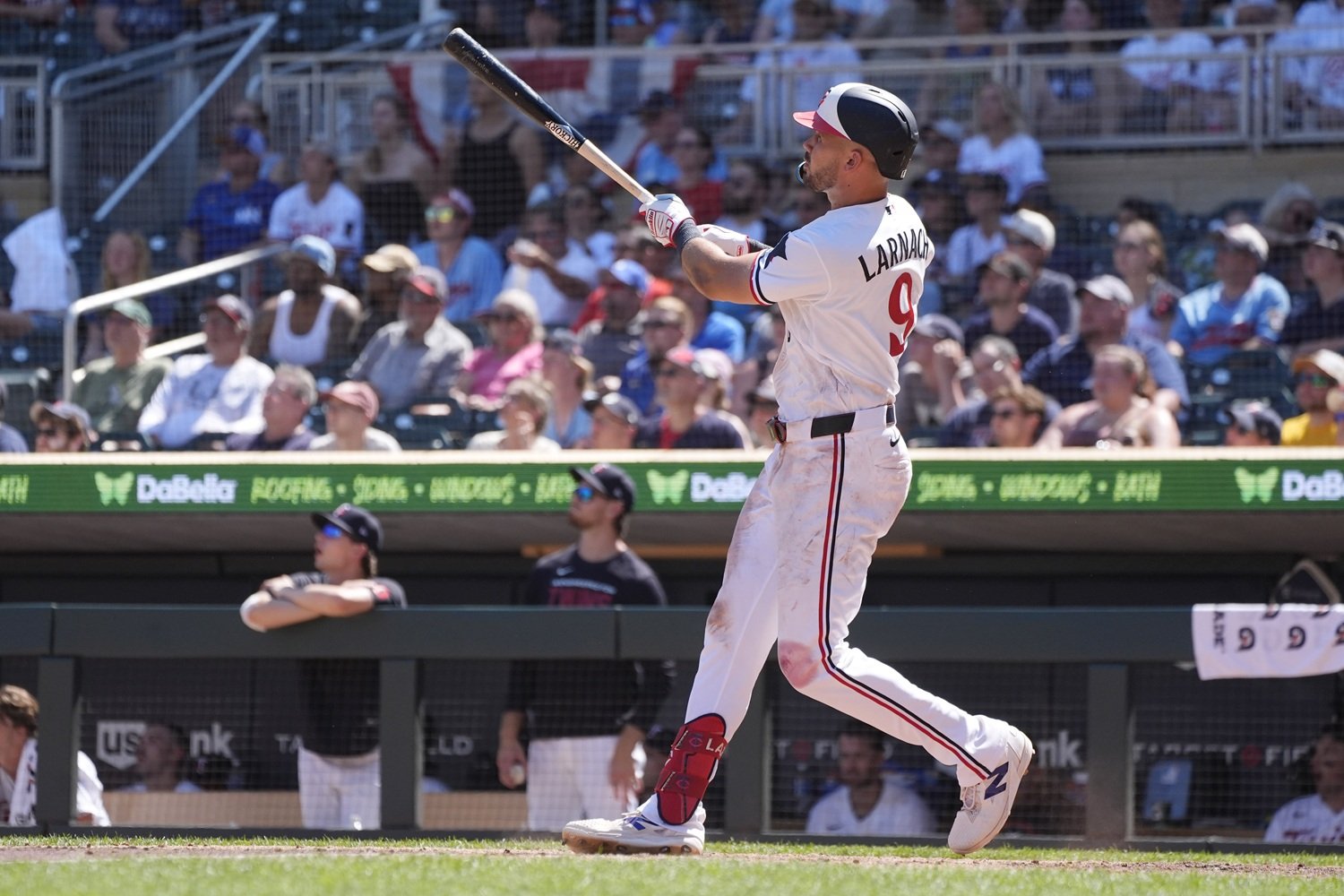 The Twins announced Friday that they were placing Trevor Larnach on the injured list with left wrist soreness, effectively bringing an end to his 2026 season with just nine games remaining on the schedule. Barring something unexpected, it also appears likely to bring an end to Larnach's time with the Twins. Larnach will have another year of arbitration remaining this offseason, but after his salary climbs from $4.475 million in 2026 to what could be somewhere in the $6.5 million to $7 million range, it is difficult to see Minnesota making that commitment to a player who has spent much of his career as a platoon outfielder. But before we close the book on Larnach's time in Minnesota, it is worth looking back at the decision the Twins made last January to bring him back in the first place. At the time, there was plenty of uncertainty surrounding whether Larnach was a player worth bringing back via arbitration. He had been a solid, but not spectacular, player for the Twins, entering the offseason with a career 102 OPS+ and coming off a 2025 season in which he posted a 101 OPS+. There was little reason to expect a major offensive breakout, and the Twins had limited money to spend after another offseason in which payroll flexibility was going to be at a premium. That made the Twins' decision to offer Larnach arbitration and bring him back for $4.475 million a surprising one. There were two obvious questions surrounding the decision. Did the Twins really need another left-handed outfielder on their roster, and was Larnach worth using a meaningful chunk of their limited payroll? Regarding the roster, Minnesota already had a number of left-handed outfielders on the 40-man, including Hendry Mendez, James Outman, Alan Roden, Emmanuel Rodriguez and Matt Wallner. Walker Jenkins was not yet on the 40-man roster but was clearly part of the Twins' near-term plans as well. The organization had plenty of players who could potentially fill the role Larnach had occupied, and several of them were younger and considerably cheaper. That made Trevor Larnach something of a luxury. If one of those players could provide similar production, the Twins could save the money, give a younger player an opportunity and use the roster spot somewhere else. For a team that didn't have much payroll flexibility, that seemed like a pretty reasonable argument. Then there was the money. Larnach's $4.475 million salary represented a meaningful investment for a Twins team that had very little to spend. Even if the Twins believed Larnach could be a useful player, there was a legitimate question about whether that money could be better spent somewhere else. Minnesota needed help in multiple areas of the roster, and spending nearly $5 million on a player who had never produced more than a 116 OPS+ in a season was hardly an obvious decision. The 2026 season, however, showed that neither of those concerns ended up being much of a problem. Start with the roster. Larnach ended up being by far the best left-handed outfielder on the Twins' roster. James Outman was designated for assignment early in the season. Alan Roden looked overmatched time and time again, posting a season-long OPS+ of 84 as of the time of this writing. Matt Wallner was sent to Triple-A early in the season because of his struggles. Emmanuel Rodriguez struggled with injuries, while Walker Jenkins showed why relying on young players to immediately establish themselves at the major league level can be risky. The supposed glut of left-handed outfielders never materialized into a player who forced the Twins to regret keeping Larnach around. Instead, Larnach was the one who established himself as the most reliable option of the group. The financial side of the decision also looks different with the benefit of hindsight. The Twins didn't actually have another $4.475 million to spend if they had let Larnach walk, because they still would have needed to pay the league minimum to whoever replaced him on the roster. That means the real amount available to redirect elsewhere was roughly $3.7 million. Could the Twins have used that money on another player? Sure. But realistically, what were they going to get for it? Another bullpen arm was probably the most obvious possibility, particularly considering how much the Twins struggled with pitching throughout the season. But Taylor Rogers signed with Minnesota for just $2 million. For another $1.5 million on top of that, they weren't suddenly going to be shopping for an impactful reliever. And then there was what Larnach actually did on the field. Larnach put together the best offensive season of his career. He posted a 121 OPS+, five points better than his previous career high of 116 in 2024 and finished with a career-best 2.2 fWAR. His home run rate was lower than in previous seasons, but he made up for some of that lost power by cutting down on his strikeouts while posting career highs in batting average and on-base percentage. Larnach sacrificed some power in favor of better plate discipline and getting on base more often. For a Twins team that struggled with pitching all season, Minnesota needed to rely on its bats to win them ball games, and Larnach certainly did his part. According to FanGraphs, his 2.2 fWAR was worth approximately $17.9 million in value this season, while his 0.49 Win Probability Added ranked fourth on the Twins. There were certainly some negatives. Larnach struggled defensively, posting career lows with -8 Defensive Runs Saved and -5 Outs Above Average. His offensive production also fell off considerably in the second half, with his .830 first-half OPS dropping to .703 in the second half. The wrist injury that ultimately ended his season may have contributed to those struggles, but regardless the drop-off happened. Still, Larnach was equally as productive in the first half as he was disappointing in the second. Whatever the reasons for his late-season decline, the season as a whole represented the best offensive performance of his career, and the Twins got it for $4.475 million. The Twins had questioned whether they needed Larnach when they already had so many left-handed outfielders. Those players never surpassed him. They questioned whether they could better use his salary elsewhere. There were no real alternatives for Larnach's salary number. And they questioned whether Larnach could take his offensive game to another level, which he certainly did. That doesn't necessarily mean the Twins should bring him back again. Larnach will have another year of arbitration remaining next season, and his salary will likely jump into the $6.5 million to $7 million range. I don't expect the Twins to make that commitment. At that price, the calculus is different, particularly given his defensive limitations and the questions raised by his second half. Additionally, Emmanuel Rodriguez and Walker Jenkins have made the Majors and will be in the plans on Opening Day Next season. Last January, bringing Trevor Larnach back looked like a questionable use of limited payroll and a roster spot that could have gone to one of the organization's younger left-handed outfielders. After watching the season play out, it looks like the Twins made the right decision. For this season, bringing Trevor Larnach back was worth it. What do you think? Was bringing Trevor Larnach back for the 2026 season the right decision for the Twins? Leave a comment below and start the conversation!
 -
Image courtesy of USA TODAY Network via Reuters Connect The Twins wanted Framber Valdez this offseason. It was one of the biggest free-agent pursuits of the winter, and for a minute there, it looked like Minnesota might actually land the left-handed ace. Ultimately, Valdez signed a three-year, $115-million contract with the Detroit Tigers, leaving the Twins without the big pitching addition many fans were hoping for. It was a late lunge after an unexpected pair of major leadership changes during the winter; there just wasn't enough runway to land the plane. According to Bobby Nightingale of the Minnesota Star Tribune, the Twins made a late pursuit of Valdez and put a multi-year offer on the table for the left-handed All-Star. Valdez was the last marquee free agent available, and signed on Feb. 10. Tom Pohlad later confirmed the pursuit and made it clear the Twins were willing to go well beyond their typical spending comfort zone if Zoll believed the move was right for the organization. At the time, the Twins missing out on Valdez became another piece of evidence for those who believed Pohlad had talked a bigger game than he was actually willing to play. The team had reportedly made a serious offer for one of the best starting pitchers available, but Valdez ultimately chose Detroit, and later reporting made it clear that the team was never especially close to wooing the southpaw. The more we see from Valdez this season, however, the more it looks like the Twins may dodged a bullet. There's no way around it: Valdez has been bad this season. Through 26 starts, the 32-year-old lefty has a 4.35 ERA and a 1.41 WHIP. His 1.5 fWAR is hardly what the Tigers envisioned when they handed him a huge annual average value (AAV). His expected ERA sits at 4.50, suggesting his results are a fairly accurate representation of how he has pitched. Even more concerning is what has happened to his ability to miss bats. Valdez has struck out just 17.4% of opposing hitters, the lowest rate of his career and a significant drop from last season. His whiff percentage has also fallen to a career-low 19.8%, down 6.8 percentage points from last year. Those numbers are particularly concerning for the Tigers, because Valdez's success has always been built around generating weak contact while still having enough swing-and-miss ability to get out of trouble. His velocity has taken a step backward across his pitch mix, providing another potential warning sign. The Tigers have been one of the most disappointing teams in all of baseball this season, and the performance of Framber Valdez is certainly part of what has ailed the team. Perhaps most concerning is that there isn't an obvious injury explanation for the dip in stuff. Valdez has remained in Detroit's rotation and hasn't missed time because of an injury. The only games he missed came because of the six-game suspension he served after intentionally throwing a ball at Boston's Trevor Story in May. Valdez will turn 33 after the season, making it possible the Twins were looking at an aging pitcher whose best days are behind him. That doesn't mean he can't bounce back, but it makes committing more than $100 million to him considerably more frightening. The Tigers can probably survive the Valdez contract if it turns into a bad one. Detroit typically operates with a payroll that gives the organization more room to absorb a mistake of this magnitude. The Twins have very little margin for error. We've already seen what happens when Minnesota gets locked into an expensive contract that doesn't work out. Carlos Correa's deal has become a perfect example, as the Twins eventually agreed to pay him $10 million per season for three years not to play for them. Imagine making a similar decision with Valdez while he's earning roughly $38 million per season. There's also another reason the Twins may have been better off avoiding Valdez: they don't necessarily need to buy a starting rotation. Their pitching situation is actually set up fairly well for next season. Pablo López, Joe Ryan and Taj Bradley are a locked-in trio to lead the starting rotation next season. They also have Mick Abel, Zebby Matthews, Connor Prielipp and Kendrys Rojas, while newly-added Dean Kremer provides another experienced option with another year of arbitration remaining. Had Minnesota signed Valdez, one of those young pitchers would almost certainly have been pushed out of the rotation picture. Instead, the Twins have flexibility to see what their young arms can do and determine where they actually need help. There's certainly a fair argument that the Twins should have been more aggressive this offseason. Pohlad said he was willing to make a splash, and the organization ultimately didn't make the kind of major investment that would have demonstrated a dramatic change in philosophy. Valdez, however, is a different conversation. He comes with makeup concerns, which the team might have factored into its reluctance to go as far as Detroit did. He also comes with major performance red flags, and the smaller-payroll Twins were wise not to let him become a drag on their operation. What do you think? Were the Twins lucky to miss out on Framber Valdez, or would you still rather have the veteran lefty locked into the rotation despite his struggles this season? Leave a comment below and start the conversation! View full article
-
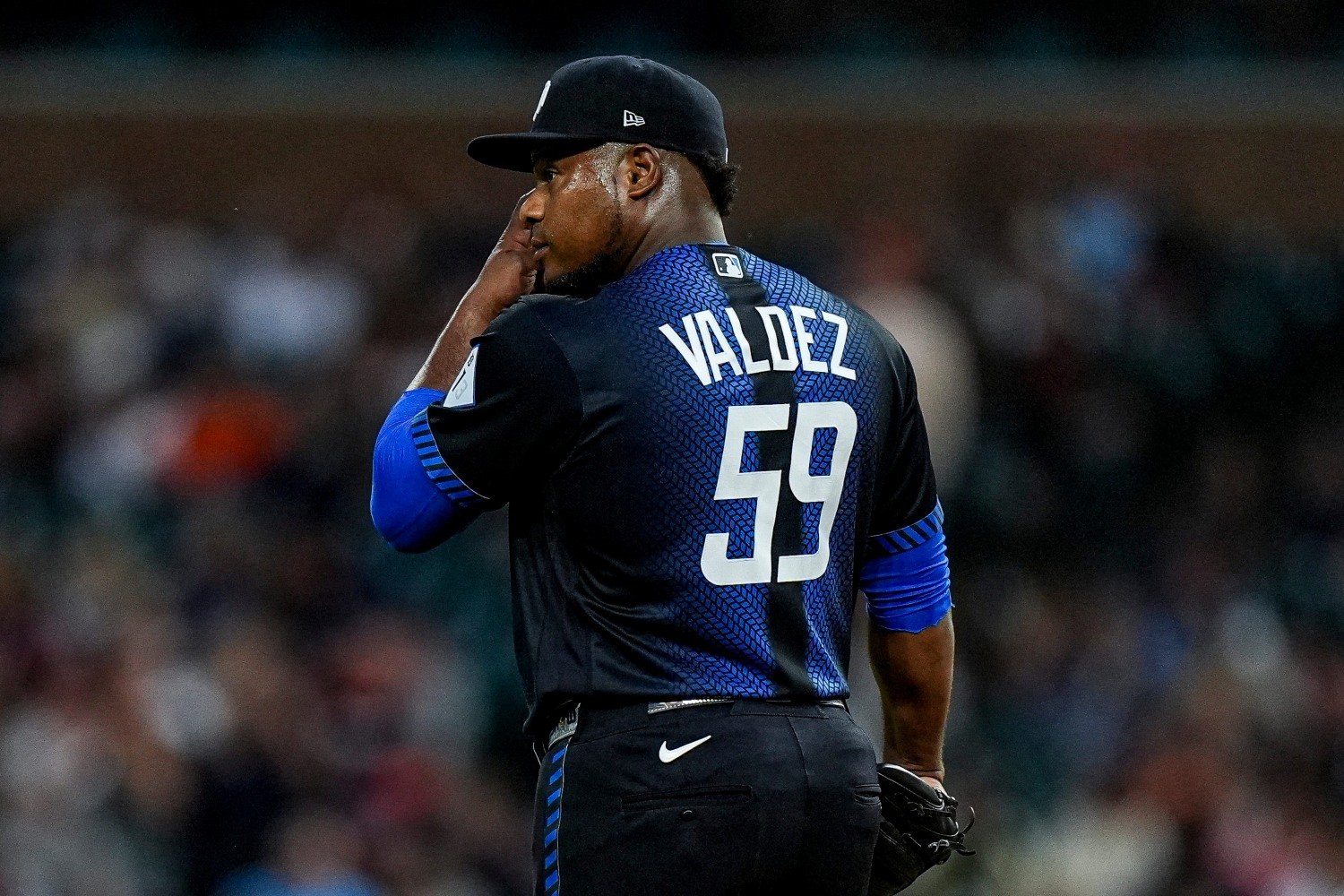 The Twins wanted Framber Valdez this offseason. It was one of the biggest free-agent pursuits of the winter, and for a minute there, it looked like Minnesota might actually land the left-handed ace. Ultimately, Valdez signed a three-year, $115-million contract with the Detroit Tigers, leaving the Twins without the big pitching addition many fans were hoping for. It was a late lunge after an unexpected pair of major leadership changes during the winter; there just wasn't enough runway to land the plane. According to Bobby Nightingale of the Minnesota Star Tribune, the Twins made a late pursuit of Valdez and put a multi-year offer on the table for the left-handed All-Star. Valdez was the last marquee free agent available, and signed on Feb. 10. Tom Pohlad later confirmed the pursuit and made it clear the Twins were willing to go well beyond their typical spending comfort zone if Zoll believed the move was right for the organization. At the time, the Twins missing out on Valdez became another piece of evidence for those who believed Pohlad had talked a bigger game than he was actually willing to play. The team had reportedly made a serious offer for one of the best starting pitchers available, but Valdez ultimately chose Detroit, and later reporting made it clear that the team was never especially close to wooing the southpaw. The more we see from Valdez this season, however, the more it looks like the Twins may dodged a bullet. There's no way around it: Valdez has been bad this season. Through 26 starts, the 32-year-old lefty has a 4.35 ERA and a 1.41 WHIP. His 1.5 fWAR is hardly what the Tigers envisioned when they handed him a huge annual average value (AAV). His expected ERA sits at 4.50, suggesting his results are a fairly accurate representation of how he has pitched. Even more concerning is what has happened to his ability to miss bats. Valdez has struck out just 17.4% of opposing hitters, the lowest rate of his career and a significant drop from last season. His whiff percentage has also fallen to a career-low 19.8%, down 6.8 percentage points from last year. Those numbers are particularly concerning for the Tigers, because Valdez's success has always been built around generating weak contact while still having enough swing-and-miss ability to get out of trouble. His velocity has taken a step backward across his pitch mix, providing another potential warning sign. The Tigers have been one of the most disappointing teams in all of baseball this season, and the performance of Framber Valdez is certainly part of what has ailed the team. Perhaps most concerning is that there isn't an obvious injury explanation for the dip in stuff. Valdez has remained in Detroit's rotation and hasn't missed time because of an injury. The only games he missed came because of the six-game suspension he served after intentionally throwing a ball at Boston's Trevor Story in May. Valdez will turn 33 after the season, making it possible the Twins were looking at an aging pitcher whose best days are behind him. That doesn't mean he can't bounce back, but it makes committing more than $100 million to him considerably more frightening. The Tigers can probably survive the Valdez contract if it turns into a bad one. Detroit typically operates with a payroll that gives the organization more room to absorb a mistake of this magnitude. The Twins have very little margin for error. We've already seen what happens when Minnesota gets locked into an expensive contract that doesn't work out. Carlos Correa's deal has become a perfect example, as the Twins eventually agreed to pay him $10 million per season for three years not to play for them. Imagine making a similar decision with Valdez while he's earning roughly $38 million per season. There's also another reason the Twins may have been better off avoiding Valdez: they don't necessarily need to buy a starting rotation. Their pitching situation is actually set up fairly well for next season. Pablo López, Joe Ryan and Taj Bradley are a locked-in trio to lead the starting rotation next season. They also have Mick Abel, Zebby Matthews, Connor Prielipp and Kendrys Rojas, while newly-added Dean Kremer provides another experienced option with another year of arbitration remaining. Had Minnesota signed Valdez, one of those young pitchers would almost certainly have been pushed out of the rotation picture. Instead, the Twins have flexibility to see what their young arms can do and determine where they actually need help. There's certainly a fair argument that the Twins should have been more aggressive this offseason. Pohlad said he was willing to make a splash, and the organization ultimately didn't make the kind of major investment that would have demonstrated a dramatic change in philosophy. Valdez, however, is a different conversation. He comes with makeup concerns, which the team might have factored into its reluctance to go as far as Detroit did. He also comes with major performance red flags, and the smaller-payroll Twins were wise not to let him become a drag on their operation. What do you think? Were the Twins lucky to miss out on Framber Valdez, or would you still rather have the veteran lefty locked into the rotation despite his struggles this season? Leave a comment below and start the conversation!
 -
Twins 9, Athletics 6: Twins Build Big Lead, Hold On for Much-Needed Win
Matthew Taylor posted an article in Twins
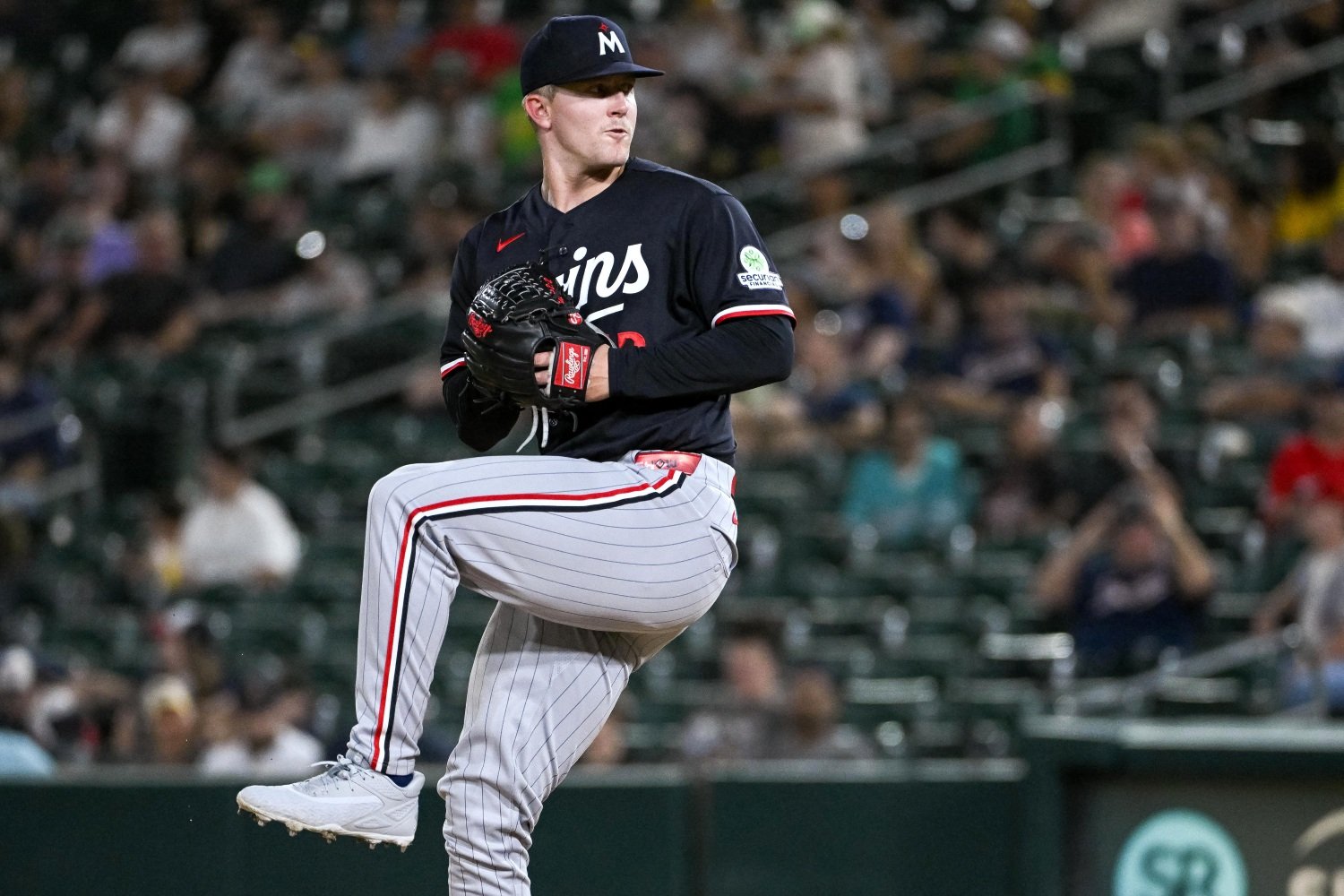 Box Score SP: Zebby Matthews 7 IP, 6 H, 1 ER, 7 K, 1 BB (105 pitches, 70 strikes) HR: Ryan Kreidler (6) Top 3 WPA: Matthews 0.21, Bell 0.13, Kreidler 0.11 Win Probability Chart (via FanGraphs): After being swept by the San Diego Padres over the weekend, Minnesota saw its playoff odds cut in half, dropping from around 40% to just 20%, according to FanGraphs. (Baseball Prospectus put them even lower Monday morning—down around 12%.) With their postseason hopes hanging in the balance, the Twins traveled to West Sacramento to face an Athletics team with the worst record in the American League. The last time the Twins were swept, they responded by sweeping the Atlanta Braves. This time, they were hoping for a similar rebound. Minnesota ran into a struggling Jeffrey Springs, who came in with a 6.02 ERA. Considering the Twins' season-long struggles against left-handed pitching, there was still plenty of reason to wonder which offense would show up, but those concerns were quickly put to rest. Byron Buxton drew a walk to start a first-inning rally. Ryan Jeffers followed with a single, and Josh Bell continued his excellent month of August by ripping a double off the top of the wall in left-center. The ball missed being a home run by roughly an inch, but it still brought Buxton home to give the Twins an early 1-0 lead. The Twins added another run in the third inning when Bell grounded into a fielder's choice, bringing home Buxton. Minnesota then really began to pull away in the fourth, when Ryan Kreidler launched a solo home run, his sixth of the season and first since June 28. A massive hit for the hometown kid who had lots of friends and family at the game. Kody Clemens followed with an RBI single, extending the lead to 4-1 and chasing Springs. The Twins broke the game open in the sixth inning after loading the bases and putting pressure on the A's bullpen. Luke Keaschall came through with a two-run double down the third-base line, giving Minnesota a 6-1 lead. Bell followed with a sacrifice fly for his third RBI of the night. It was Bell's team-leading 17th RBI of August and brought him to 80 on the season, continuing what has been an impressive month at the plate for the switch hitter. Minnesota kept its foot on the gas into the late innings. In the eighth, Clemens picked up another RBI single, scoring Buxton and giving the center fielder four runs scored on the night. Buxton went 3-for-4 in what was a massive game as he had been struggling mightily since returning from the injured list two weeks ago. A couple batters later, Kaelen Culpepper added an RBI single to cap a four-hit night and push his batting average to .340 on the season, an impressive start to his young major-league career. By the time the night was over, the Twins had collected 15 hits and scored nine runs, with every batter in the starting lineup recording at least one hit. It was the kind of offensive performance that has been frustratingly elusive of late, making it even more encouraging to see Minnesota put everything together. While the offense stole the show, Zebby Matthews quietly delivered one of his best outings of the season. Matthews didn't need to be great to win, but he was, anyway, tossing seven innings and allowing just one earned run (on an infield single) and striking out seven. He generated 23 swings and misses, a season high, and followed up another solid start with a second straight strong outing. That offers some encouraging signs of consistency from a pitcher who hasn't been able to find much of it this season. Yoendrys Gómez was called upon to close out the game in a non-save opportunity, having not pitched since August 19. After getting two quick outs, however, Gómez ran into trouble. A single and a walk put two runners on. Back-to-back-to-back doubles from Jeff McNeil, Zack Gelof and Lawrence Butler suddenly turned a 9-1 game into a 9-6 contest. What looked like an opportunity to give the back end of the bullpen a much-needed night off quickly became a somewhat sticky situation. The Twins were forced to bring in Andrew Morris to record the final out, and he did just that (on one single pitch), securing the 9-6 victory. It wasn't the clean finish the Twins envisioned when they built an eight-run lead, but the important part was getting the win. After a weekend in San Diego that threatened to derail their season, the Twins got exactly the kind of offensive response they needed. Minnesota improved to 64-68 on the season and, with the Guardians also winning, remains two games behind Cleveland for the third and final American League Wild Card spot. The White Sox lost 11-2 to the Rangers, meanwhile, bringing the Twins to within 4.5 games of first place in the AL Central. Now they need to do it again. What's Next The Twins will look to take the series on Tuesday against Athletics rookie Gage Jump. Minnesota will send Taj Bradley to the mound. First pitch is scheduled for 8:40 p.m. Central. Postgame Interviews Bullpen Usage Chart THUR FRI SAT SUN MON TOT Adams 0 17 0 34 0 51 Nance 0 0 27 0 16 43 Rogers 0 11 0 15 0 26 Morris 0 0 19 0 1 20 Gomez 0 0 0 0 20 20 Hoffman 0 0 0 17 0 17 Funderburk 0 0 0 17 0 17 Minter 0 0 8 0 0 8
- 20 comments
-
- 3
-
-
- game recap
- zebby matthews
- (and 2 more)
-
Image courtesy of Ed Szczepanski-Imagn Images Box Score SP: Zebby Matthews 7 IP, 6 H, 1 ER, 7 K, 1 BB (105 pitches, 70 strikes) HR: Ryan Kreidler (6) Top 3 WPA: Matthews 0.21, Bell 0.13, Kreidler 0.11 Win Probability Chart (via FanGraphs): After being swept by the San Diego Padres over the weekend, Minnesota saw its playoff odds cut in half, dropping from around 40% to just 20%, according to FanGraphs. (Baseball Prospectus put them even lower Monday morning—down around 12%.) With their postseason hopes hanging in the balance, the Twins traveled to West Sacramento to face an Athletics team with the worst record in the American League. The last time the Twins were swept, they responded by sweeping the Atlanta Braves. This time, they were hoping for a similar rebound. Minnesota ran into a struggling Jeffrey Springs, who came in with a 6.02 ERA. Considering the Twins' season-long struggles against left-handed pitching, there was still plenty of reason to wonder which offense would show up, but those concerns were quickly put to rest. Byron Buxton drew a walk to start a first-inning rally. Ryan Jeffers followed with a single, and Josh Bell continued his excellent month of August by ripping a double off the top of the wall in left-center. The ball missed being a home run by roughly an inch, but it still brought Buxton home to give the Twins an early 1-0 lead. The Twins added another run in the third inning when Bell grounded into a fielder's choice, bringing home Buxton. Minnesota then really began to pull away in the fourth, when Ryan Kreidler launched a solo home run, his sixth of the season and first since June 28. A massive hit for the hometown kid who had lots of friends and family at the game. Kody Clemens followed with an RBI single, extending the lead to 4-1 and chasing Springs. The Twins broke the game open in the sixth inning after loading the bases and putting pressure on the A's bullpen. Luke Keaschall came through with a two-run double down the third-base line, giving Minnesota a 6-1 lead. Bell followed with a sacrifice fly for his third RBI of the night. It was Bell's team-leading 17th RBI of August and brought him to 80 on the season, continuing what has been an impressive month at the plate for the switch hitter. Minnesota kept its foot on the gas into the late innings. In the eighth, Clemens picked up another RBI single, scoring Buxton and giving the center fielder four runs scored on the night. Buxton went 3-for-4 in what was a massive game as he had been struggling mightily since returning from the injured list two weeks ago. A couple batters later, Kaelen Culpepper added an RBI single to cap a four-hit night and push his batting average to .340 on the season, an impressive start to his young major-league career. By the time the night was over, the Twins had collected 15 hits and scored nine runs, with every batter in the starting lineup recording at least one hit. It was the kind of offensive performance that has been frustratingly elusive of late, making it even more encouraging to see Minnesota put everything together. While the offense stole the show, Zebby Matthews quietly delivered one of his best outings of the season. Matthews didn't need to be great to win, but he was, anyway, tossing seven innings and allowing just one earned run (on an infield single) and striking out seven. He generated 23 swings and misses, a season high, and followed up another solid start with a second straight strong outing. That offers some encouraging signs of consistency from a pitcher who hasn't been able to find much of it this season. Yoendrys Gómez was called upon to close out the game in a non-save opportunity, having not pitched since August 19. After getting two quick outs, however, Gómez ran into trouble. A single and a walk put two runners on. Back-to-back-to-back doubles from Jeff McNeil, Zack Gelof and Lawrence Butler suddenly turned a 9-1 game into a 9-6 contest. What looked like an opportunity to give the back end of the bullpen a much-needed night off quickly became a somewhat sticky situation. The Twins were forced to bring in Andrew Morris to record the final out, and he did just that (on one single pitch), securing the 9-6 victory. It wasn't the clean finish the Twins envisioned when they built an eight-run lead, but the important part was getting the win. After a weekend in San Diego that threatened to derail their season, the Twins got exactly the kind of offensive response they needed. Minnesota improved to 64-68 on the season and, with the Guardians also winning, remains two games behind Cleveland for the third and final American League Wild Card spot. The White Sox lost 11-2 to the Rangers, meanwhile, bringing the Twins to within 4.5 games of first place in the AL Central. Now they need to do it again. What's Next The Twins will look to take the series on Tuesday against Athletics rookie Gage Jump. Minnesota will send Taj Bradley to the mound. First pitch is scheduled for 8:40 p.m. Central. Postgame Interviews Bullpen Usage Chart THUR FRI SAT SUN MON TOT Adams 0 17 0 34 0 51 Nance 0 0 27 0 16 43 Rogers 0 11 0 15 0 26 Morris 0 0 19 0 1 20 Gomez 0 0 0 0 20 20 Hoffman 0 0 0 17 0 17 Funderburk 0 0 0 17 0 17 Minter 0 0 8 0 0 8 View full article
-
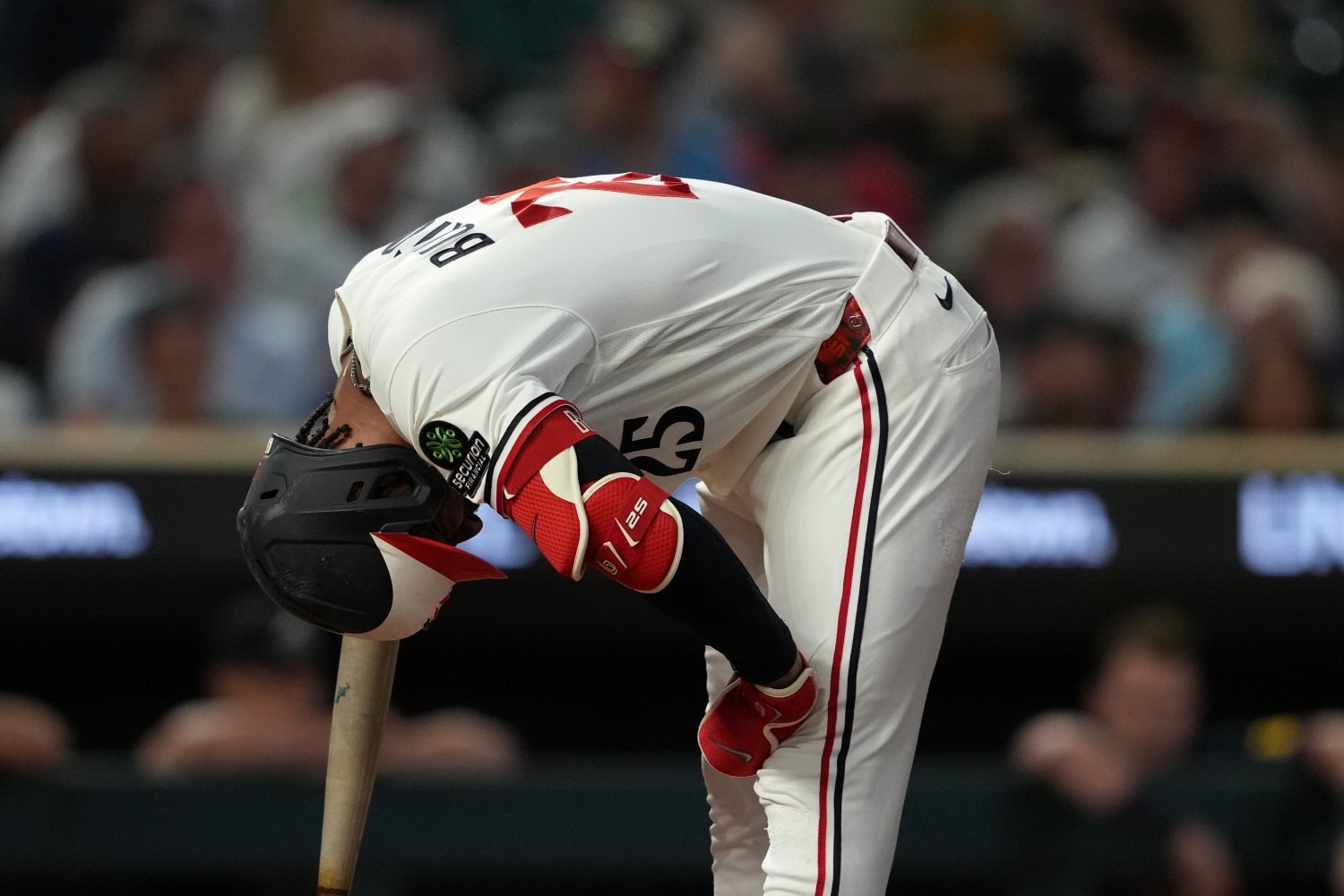 Byron Buxton was one of the biggest reasons for the Twins' success in the first half of the season. He earned his third career All-Star selection and entered the break leading Minnesota with a .904 OPS, 25 home runs and 3.0 fWAR. Since then, however, everything has changed. Buxton has been one of the worst players on the roster while dealing with a lingering hip injury. Now, the Twins have a decision to make about whether continuing to play him is actually helping the team. Injuries have played a major role in Buxton's season. He began dealing with intermittent right hip soreness in May, which eventually forced him to miss the All-Star Game and spend time on the injured list in July. After a brief return to the lineup on July 20, Buxton reaggravated the hip on July 28 and received an injection. He returned for the Field of Dreams game on August 13 and has been in the lineup ever since, but the results since the break have been anything but encouraging. In the 16 games Buxton has played since the All-Star break (with a two-week IL stint in the middle of that stretch), he's posted a .411 OPS with just one extra-base hit. He's also produced a team-worst -0.4 fWAR during that time. For a Twins team already struggling to consistently produce offensively, having one of its biggest stars performing at that level is a significant problem. His struggles go back even further than the IL stints. Since June 15, Buxton has a .585 OPS with just seven extra-base hits in 125 plate appearances. The difficult part is figuring out exactly what's causing the struggles. Buxton has always been a streaky hitter, so it's hardly unprecedented for him to go through an extended cold stretch. He's also been one of the more injury-prone players in baseball, which makes it difficult to determine whether a struggling Buxton is simply in one of his slumps or whether something physical is preventing him from being himself. In this case, it appears to be a combination of the two, but there are enough signs to make it clear that his hip is still bothering him. First, Buxton has not attempted a stolen base since the break, after attempting eight before the break. For a player whose speed is such an important part of his game, the complete absence of stolen base attempts is notable. He has also grounded into two double plays in his 16 games since the break. To put that in perspective, Buxton did not ground into a double play all last season. Neither statistic proves by itself that Buxton is injured, but when combined with his struggles at the plate, the eye test, and all that we know of his hip injury, it's pretty easy to connect the dots. If this were simply a slump, the Twins would be wise to wait it out. Buxton has earned that patience; everyone knows what can happen when he gets hot. He's one of those players who can flip a switch and become one of the most dangerous hitters in baseball. A hot Buxton can carry an offense for weeks, and the Twins would be foolish to take that possibility away from themselves. But this isn't a simple slump. If Buxton is playing through an injury, the Twins can't afford to assume that continuing to play him every day will eventually fix the problem. They don't know how long the hip will bother him; they could spend the rest of the season waiting for the healthy version of Buxton to return. As admirable as it is that Buxton continues to play through the injury because he wants to help his team, there comes a point where playing through it starts hurting them. The Twins' offense is struggling, and right now no player is hurting the team more than their center fielder. That is not a criticism of Buxton's effort or his desire to play. It's the reality of what's happening on the field. The Twins are trying to win games with Buxton in the lineup, but they're not getting the production they need from him, and there's little evidence that his situation is improving. What makes this decision more palatable is that the Twins have a natural replacement waiting at Triple-A. Walker Jenkins is doing everything possible to knock the door to the majors off its hinges. He's slashing .387/.457/.694 with a 1.151 OPS in 15 games in August in St. Paul. There's very little left for him to prove in Triple-A—although that has been said for the past three weeks. If the Twins had no capable replacement for Buxton in center field, continuing to play him would be much easier to defend. Instead, they have one of the best prospects in baseball playing at Triple-A and putting together one of the hottest stretches of his season. Making the swap with Buxton and handing center field to Jenkins full-time down the stretch would give Buxton an opportunity to properly recover, while giving the Twins another dynamic offensive player. The timing makes the decision even more important. The Twins are currently two games back in the American League Wild Card race, and beginning this weekend, they're scheduled to play 15 consecutive games against division opponents. This is the part of the season where every game matters, and the Twins can't afford to sit around and hope that an injured player eventually gets healthy enough to start producing again. They need to play the players who give them the best chance to win right now. Usually, that player is Buxton. The first half of this season, that player was Buxton. Unfortunately, Buxton isn't healthy right now, and the Twins aren't getting that version of him. The Twins don't need to give up on Buxton. They just need to give him time to get healthy. At the same time, they need to take advantage of the opportunity sitting in Triple-A. Walker Jenkins is ready, Buxton is not himself, and the Twins are running out of time to wait for that to change. What do you think the Twins should do with Byron Buxton? Leave a comment below and start the conversation!
 -
Image courtesy of Jordan Johnson-Imagn Images Byron Buxton was one of the biggest reasons for the Twins' success in the first half of the season. He earned his third career All-Star selection and entered the break leading Minnesota with a .904 OPS, 25 home runs and 3.0 fWAR. Since then, however, everything has changed. Buxton has been one of the worst players on the roster while dealing with a lingering hip injury. Now, the Twins have a decision to make about whether continuing to play him is actually helping the team. Injuries have played a major role in Buxton's season. He began dealing with intermittent right hip soreness in May, which eventually forced him to miss the All-Star Game and spend time on the injured list in July. After a brief return to the lineup on July 20, Buxton reaggravated the hip on July 28 and received an injection. He returned for the Field of Dreams game on August 13 and has been in the lineup ever since, but the results since the break have been anything but encouraging. In the 16 games Buxton has played since the All-Star break (with a two-week IL stint in the middle of that stretch), he's posted a .411 OPS with just one extra-base hit. He's also produced a team-worst -0.4 fWAR during that time. For a Twins team already struggling to consistently produce offensively, having one of its biggest stars performing at that level is a significant problem. His struggles go back even further than the IL stints. Since June 15, Buxton has a .585 OPS with just seven extra-base hits in 125 plate appearances. The difficult part is figuring out exactly what's causing the struggles. Buxton has always been a streaky hitter, so it's hardly unprecedented for him to go through an extended cold stretch. He's also been one of the more injury-prone players in baseball, which makes it difficult to determine whether a struggling Buxton is simply in one of his slumps or whether something physical is preventing him from being himself. In this case, it appears to be a combination of the two, but there are enough signs to make it clear that his hip is still bothering him. First, Buxton has not attempted a stolen base since the break, after attempting eight before the break. For a player whose speed is such an important part of his game, the complete absence of stolen base attempts is notable. He has also grounded into two double plays in his 16 games since the break. To put that in perspective, Buxton did not ground into a double play all last season. Neither statistic proves by itself that Buxton is injured, but when combined with his struggles at the plate, the eye test, and all that we know of his hip injury, it's pretty easy to connect the dots. If this were simply a slump, the Twins would be wise to wait it out. Buxton has earned that patience; everyone knows what can happen when he gets hot. He's one of those players who can flip a switch and become one of the most dangerous hitters in baseball. A hot Buxton can carry an offense for weeks, and the Twins would be foolish to take that possibility away from themselves. But this isn't a simple slump. If Buxton is playing through an injury, the Twins can't afford to assume that continuing to play him every day will eventually fix the problem. They don't know how long the hip will bother him; they could spend the rest of the season waiting for the healthy version of Buxton to return. As admirable as it is that Buxton continues to play through the injury because he wants to help his team, there comes a point where playing through it starts hurting them. The Twins' offense is struggling, and right now no player is hurting the team more than their center fielder. That is not a criticism of Buxton's effort or his desire to play. It's the reality of what's happening on the field. The Twins are trying to win games with Buxton in the lineup, but they're not getting the production they need from him, and there's little evidence that his situation is improving. What makes this decision more palatable is that the Twins have a natural replacement waiting at Triple-A. Walker Jenkins is doing everything possible to knock the door to the majors off its hinges. He's slashing .387/.457/.694 with a 1.151 OPS in 15 games in August in St. Paul. There's very little left for him to prove in Triple-A—although that has been said for the past three weeks. If the Twins had no capable replacement for Buxton in center field, continuing to play him would be much easier to defend. Instead, they have one of the best prospects in baseball playing at Triple-A and putting together one of the hottest stretches of his season. Making the swap with Buxton and handing center field to Jenkins full-time down the stretch would give Buxton an opportunity to properly recover, while giving the Twins another dynamic offensive player. The timing makes the decision even more important. The Twins are currently two games back in the American League Wild Card race, and beginning this weekend, they're scheduled to play 15 consecutive games against division opponents. This is the part of the season where every game matters, and the Twins can't afford to sit around and hope that an injured player eventually gets healthy enough to start producing again. They need to play the players who give them the best chance to win right now. Usually, that player is Buxton. The first half of this season, that player was Buxton. Unfortunately, Buxton isn't healthy right now, and the Twins aren't getting that version of him. The Twins don't need to give up on Buxton. They just need to give him time to get healthy. At the same time, they need to take advantage of the opportunity sitting in Triple-A. Walker Jenkins is ready, Buxton is not himself, and the Twins are running out of time to wait for that to change. What do you think the Twins should do with Byron Buxton? Leave a comment below and start the conversation! View full article
-
Image courtesy of Jordan Johnson-Imagn Images When Derek Falvey and the Twins mutually parted ways at the end of January, it marked the end of a nine-year run for the executive who had helped reshape the organization. Before leaving, Falvey made three free-agent signings for the Twins during the offseason: Taylor Rogers, Victor Caratini, and Josh Bell. Rogers has struggled for much of the season, albeit usually in low-leverage spots, while Caratini has had his moments. Bell, however, has turned into something much more valuable. The designated hitter has been one of the Twins' most important offensive players, and his signing is looking more and more like Falvey's parting gift to the organization. Bell's overall numbers tell a big part of the story. He currently owns a 110 OPS+, putting him on pace for his best offensive season since 2022, when he split the season between the Washington Nationals and San Diego Padres. He leads the Twins with 499 plate appearances, 26 doubles and 77 RBI, providing a level of consistency in the middle of the lineup that the team has desperately needed. But Bell's impact goes beyond his overall numbers. He has been particularly outstanding when the Twins have needed him most, hitting .349 with a 1.039 OPS with runners in scoring position. In a season in which the Twins have struggled to consistently produce offense, Bell has repeatedly come through in the biggest moments. That wasn't necessarily what anyone expected when the season began. Bell got off to a brutal start, something that has become somewhat of a calling card throughout his career. Through May 31st, he was hitting just .219 with a .619 OPS, five home runs and 32 RBI through 57 games. At the time, it was fair to wonder whether the Twins had signed a veteran whose best days were behind him. Instead, Bell has completely turned his season around. Since June 1st, Bell has posted a .869 OPS with 12 home runs and 45 RBI over 66 games (entering play Friday). His best stretch has come at exactly the time the Twins have needed it most. In 16 games during August, Bell is hitting .361 with a 1.041 OPS. That performance has been massive for the Twins because the offense around him has struggled badly this month. Minnesota ranks in the bottom third of Major League Baseball in runs scored in August, making Bell's production even more important. Without him in the middle of the lineup, it is difficult to imagine how an already-struggling offense would have survived this stretch. That is particularly important considering where the Twins are in the standings. With Minnesota fighting to keep its playoff hopes alive, there isn't much room for an extended offensive slump. Games are becoming increasingly important, and when the Twins have needed a big hit with runners on base, Bell has consistently been the guy delivering it, like he did on Tuesday with a first run blast to the third deck with a runner on second base to give the Twins a big first-inning lead. Falvey signed Bell in December to a one-year, $7 million contract. For an executive who typically preferred to wait until late in the offseason, and sometimes even into spring training, before making significant free-agent additions, the timing of the deal was notable. It was clear that Bell was someone Falvey wanted from the beginning of the offseason, and he didn't wait around to see if the market would bring the price down. And for a while, that decision looked questionable. Bell's slow start made it seem as though the Twins had committed $7 million to a veteran whose best offensive years were behind him. But the Twins stuck with him, and Bell has rewarded that patience by becoming one of the most productive and important players on the roster. According to FanGraphs, Bell has already provided roughly $6 million in value to the Twins this season. That alone makes the contract look like a strong investment, but it doesn't fully capture what Bell has meant to this team. The timing of his production matters. His best baseball has come while the Twins have desperately needed offense, and his ability to drive in runs has been particularly valuable. Add in the veteran leadership he has provided in the clubhouse, and the signing has turned into a slam dunk. That makes Bell an interesting final chapter for Falvey, whose best previous most was arguably the signing of another veteran DH with stellar clubhouse vibes in Nelson Cruz. Falvey's tenure with the Twins ended before he could see the full results of the moves he made during his final offseason. Rogers hasn't provided the results the Twins hoped for, and Caratini has been a mixed bag. Bell, however, has become a legitimate success story. The player Falvey targeted from the very beginning of the offseason has turned into one of the reasons the Twins are still hanging around the playoff race in August. It may not have been the most exciting signing when it happened. It certainly didn't look like one when Bell struggled through the first two months of the season. But with the season entering its most important stretch, Josh Bell has made that $7 million investment look awfully smart. In the end, perhaps the best way to remember Falvey's final offseason with the Twins is through the player he went out and got before he left. Josh Bell was one of Derek Falvey's final moves as a member of the Twins. Now, he is one of the biggest reasons Minnesota still has a chance to make something out of this season. What do you think? How would you grade Josh Bell's signing now, and has he become the best free-agent addition of Derek Falvey's final offseason with the Twins? Leave a comment below and start the conversation! View full article
-
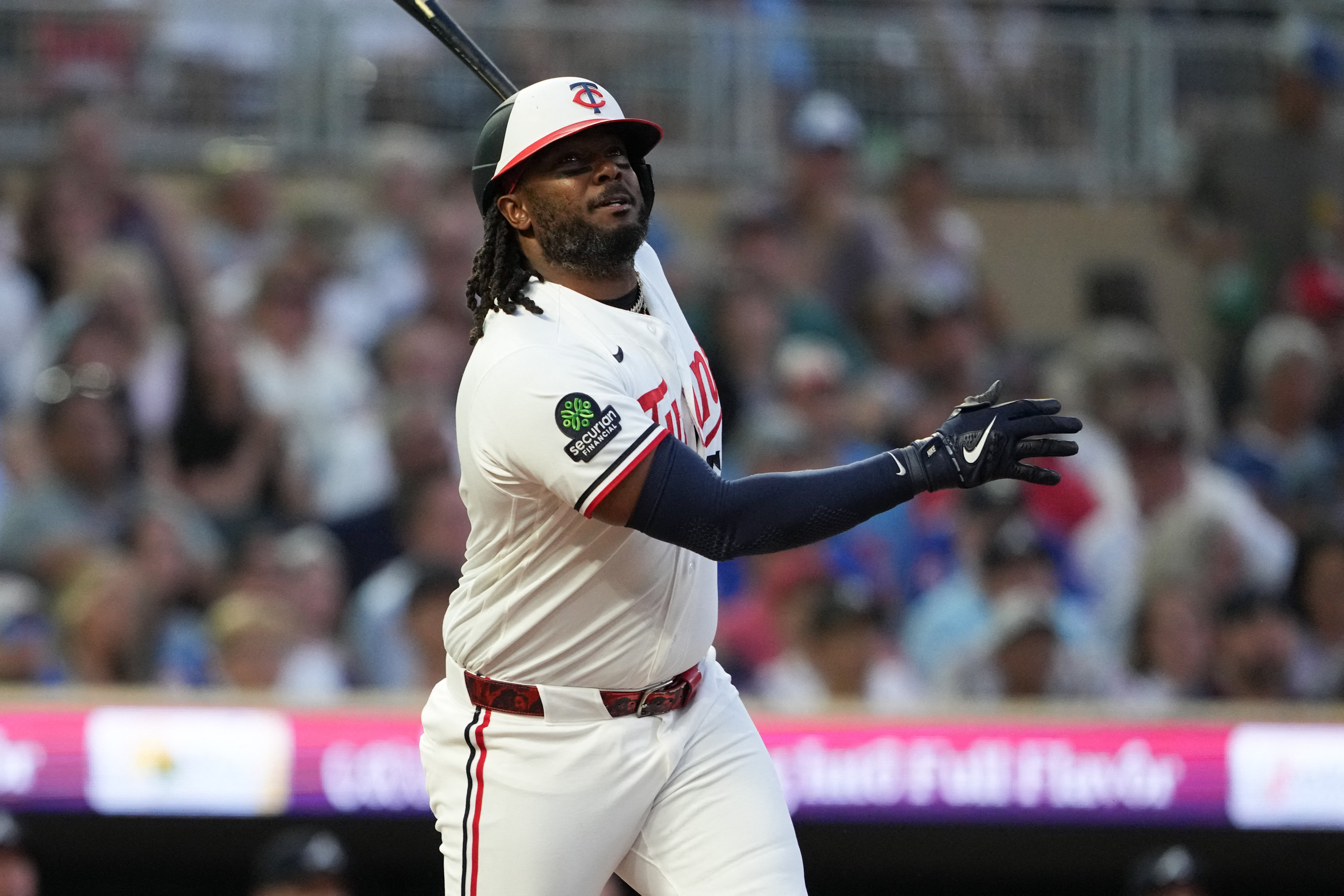 When Derek Falvey and the Twins mutually parted ways at the end of January, it marked the end of a nine-year run for the executive who had helped reshape the organization. Before leaving, Falvey made three free-agent signings for the Twins during the offseason: Taylor Rogers, Victor Caratini, and Josh Bell. Rogers has struggled for much of the season, albeit usually in low-leverage spots, while Caratini has had his moments. Bell, however, has turned into something much more valuable. The designated hitter has been one of the Twins' most important offensive players, and his signing is looking more and more like Falvey's parting gift to the organization. Bell's overall numbers tell a big part of the story. He currently owns a 110 OPS+, putting him on pace for his best offensive season since 2022, when he split the season between the Washington Nationals and San Diego Padres. He leads the Twins with 499 plate appearances, 26 doubles and 77 RBI, providing a level of consistency in the middle of the lineup that the team has desperately needed. But Bell's impact goes beyond his overall numbers. He has been particularly outstanding when the Twins have needed him most, hitting .349 with a 1.039 OPS with runners in scoring position. In a season in which the Twins have struggled to consistently produce offense, Bell has repeatedly come through in the biggest moments. That wasn't necessarily what anyone expected when the season began. Bell got off to a brutal start, something that has become somewhat of a calling card throughout his career. Through May 31st, he was hitting just .219 with a .619 OPS, five home runs and 32 RBI through 57 games. At the time, it was fair to wonder whether the Twins had signed a veteran whose best days were behind him. Instead, Bell has completely turned his season around. Since June 1st, Bell has posted a .869 OPS with 12 home runs and 45 RBI over 66 games (entering play Friday). His best stretch has come at exactly the time the Twins have needed it most. In 16 games during August, Bell is hitting .361 with a 1.041 OPS. That performance has been massive for the Twins because the offense around him has struggled badly this month. Minnesota ranks in the bottom third of Major League Baseball in runs scored in August, making Bell's production even more important. Without him in the middle of the lineup, it is difficult to imagine how an already-struggling offense would have survived this stretch. That is particularly important considering where the Twins are in the standings. With Minnesota fighting to keep its playoff hopes alive, there isn't much room for an extended offensive slump. Games are becoming increasingly important, and when the Twins have needed a big hit with runners on base, Bell has consistently been the guy delivering it, like he did on Tuesday with a first run blast to the third deck with a runner on second base to give the Twins a big first-inning lead. Falvey signed Bell in December to a one-year, $7 million contract. For an executive who typically preferred to wait until late in the offseason, and sometimes even into spring training, before making significant free-agent additions, the timing of the deal was notable. It was clear that Bell was someone Falvey wanted from the beginning of the offseason, and he didn't wait around to see if the market would bring the price down. And for a while, that decision looked questionable. Bell's slow start made it seem as though the Twins had committed $7 million to a veteran whose best offensive years were behind him. But the Twins stuck with him, and Bell has rewarded that patience by becoming one of the most productive and important players on the roster. According to FanGraphs, Bell has already provided roughly $6 million in value to the Twins this season. That alone makes the contract look like a strong investment, but it doesn't fully capture what Bell has meant to this team. The timing of his production matters. His best baseball has come while the Twins have desperately needed offense, and his ability to drive in runs has been particularly valuable. Add in the veteran leadership he has provided in the clubhouse, and the signing has turned into a slam dunk. That makes Bell an interesting final chapter for Falvey, whose best previous most was arguably the signing of another veteran DH with stellar clubhouse vibes in Nelson Cruz. Falvey's tenure with the Twins ended before he could see the full results of the moves he made during his final offseason. Rogers hasn't provided the results the Twins hoped for, and Caratini has been a mixed bag. Bell, however, has become a legitimate success story. The player Falvey targeted from the very beginning of the offseason has turned into one of the reasons the Twins are still hanging around the playoff race in August. It may not have been the most exciting signing when it happened. It certainly didn't look like one when Bell struggled through the first two months of the season. But with the season entering its most important stretch, Josh Bell has made that $7 million investment look awfully smart. In the end, perhaps the best way to remember Falvey's final offseason with the Twins is through the player he went out and got before he left. Josh Bell was one of Derek Falvey's final moves as a member of the Twins. Now, he is one of the biggest reasons Minnesota still has a chance to make something out of this season. What do you think? How would you grade Josh Bell's signing now, and has he become the best free-agent addition of Derek Falvey's final offseason with the Twins? Leave a comment below and start the conversation!
 -
Should Twins Fans Be Excited About What We've Seen From Kaelen Culpepper?
Matthew Taylor posted an article in Twins
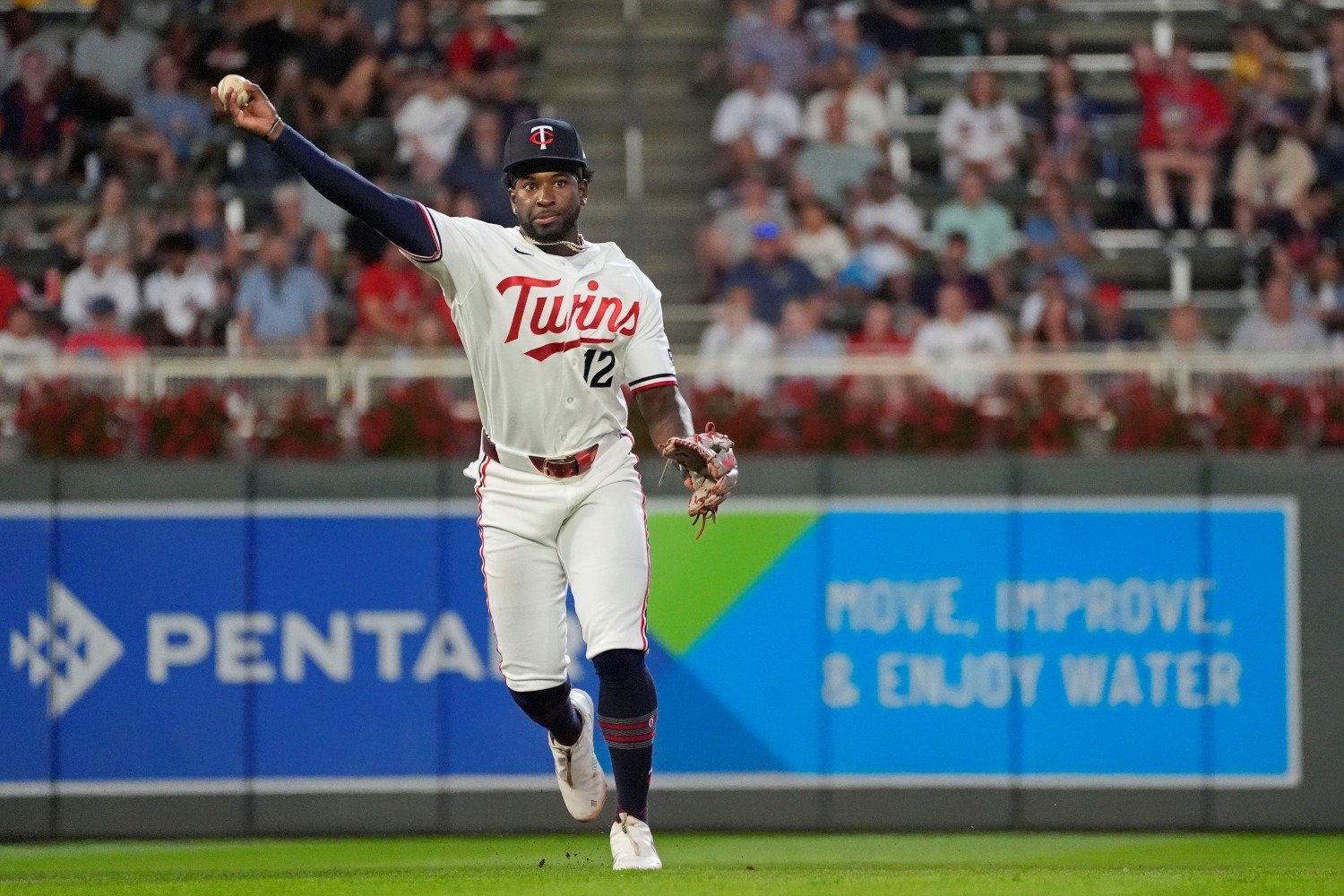 It would be foolish to draw any sweeping conclusions from the first fortnight of Kaelen Culpepper's major-league career. The Twins called up their top prospect on August 7, and through his first 10 games, we're talking about a player who has barely had enough time to get comfortable in a major-league clubhouse, let alone establish what kind of player he'll become. Culpepper was a first-round pick and entered the season as a top-50 prospect in baseball for a reason, but none of that guarantees that he will live up to those expectations. Ten games certainly aren't enough to answer the questions that followed Culpepper to this level, but they gave us our first look at some of the tools that made Culpepper such an intriguing prospect in the first place, as well as some of the adjustments he'll need to make if he's going to turn those tools into major-league success. So far, there have been plenty of reasons to be encouraged. The most obvious one is that the underlying swing numbers on Culpepper are every bit as advertised. Culpepper has developed into a violent swinger as he's worked his way through the Twins' farm system, and that violence has carried over to the majors. His Statcast numbers back it up, with Culpepper's 74-MPH swing speed ranking in the upper quartile of major-league hitters. While plenty of his other statistics are impossible to trust as they're based on an extremely small sample size, swing speed is one of the measurements that stabilizes extremely quickly. Bat speed also has a strong positive relationship with exit velocity and barrel rate, so seeing Culpepper come out of the gate with a swing speed in the neighborhood of hitters such as Byron Buxton, Miguel Vargas and Pete Alonso is exciting. We've also seen that swing speed translate into some legitimate impact. In just his second career at-bat, Culpepper launched a home run to left-center field after hitting the ball 100.2 MPH. A few days later, he doubled off Jesús Luzardo with a 103.4-MPH line drive. Those are obviously just two swings, and it would be silly to extrapolate them into anything more than that. However, seeing Culpepper pair the elite swing speed with the ability to produce 100+ MPH exit velocities is exactly what you want to see from a young hitter with his profile. The power is not merely theoretical. We've already seen glimpses of it against major-league pitching. The other side of the coin has been his plate discipline. Culpepper has struck out 11 times compared to just two walks through his first 10 games. His 43.4% chase rate would rank among the bottom 10 hitters in baseball if he maintained it over a full season. That's an area that will need to improve, but it's also an area where some growing pains should be expected. Plate discipline is often one of the biggest adjustments for young hitters making the jump to the majors. Major-league pitchers throw harder and locate more consistently. Breaking balls that might have been strikes in Triple-A suddenly finish outside the zone, while fastballs are coming in quicker than ever before. Young hitters have to learn which pitches they can damage and—perhaps just as importantly—which pitches they need to let go. Culpepper is learning that lesson in real time, but the encouraging part is that he's already started to look more comfortable. After going 1-for-9 to begin his career, Culpepper has recorded a hit in each of his last seven games. That's still an incredibly small sample, but he has looked more confident at the plate as the month has progressed, which is exactly what you'd hope to see from a young player trying to make one of the biggest adjustments of his baseball career. The defensive side has provided a similar mix of excitement and growing pains. Culpepper got an immediate introduction to the difficulty of playing shortstop in the majors during the fifth inning of his first career game, when he had two ground balls turn into singles that had sub-.200 expected batting averages, meaning they were plays that should have been outs. The first came from David Hamilton, who hit a ground ball that Culpepper wasn't able to range to quickly enough. Culpepper was forced to backhand the ball and couldn't complete the play. A few batters later, Garrett Mitchell hit another ground ball, and Culpepper took some extra time gathering himself before making his throw. The hesitation proved costly against a player with Mitchell's speed, as the throw was late and Mitchell beat it out for another single. Neither play is something the Twins should panic about, but both are good examples of what Culpepper is going to have to learn at the major-league level. Shortstop is a difficult position, and the difference between Triple-A and the majors can be exposed quickly. Runners are faster, balls are hit harder, and the window to make a decision and execute a throw gets smaller. Culpepper got a taste of that immediately. There have also been some clear positives defensively, particularly when it comes to his arm. That was one of the tools we knew Culpepper had coming into the season, and it's already translated to the major league level. He has recorded a max throw velocity of 86.3 MPH, although he doesn't yet have enough throws to establish a reliable overall arm-strength measurement. Still, the arm is clearly legitimate, as we saw on a strong throw to get Coby Mayo at first base. That's ultimately what makes this first week so interesting. We're not learning that Culpepper is going to be an All-Star, that he's going to be the Twins' shortstop for the next decade, or that his current strikeout and chase rates are going to be permanent. What we are learning is that some of the tools that made him a first-round pick and a top-50 prospect are real. The violent swing is real. The raw power is real. The arm strength is real. At the same time, we've seen some of the areas where he still has work to do. His plate discipline needs to improve, and he needs to become more comfortable with the speed and demands of major-league defense. That's perfectly normal for a young player making his debut. He looks like a young player who has some legitimate major-league tools, and is now figuring out how to put them all together. That's about as much as we could reasonably ask for after a couple of weeks. Now comes the fun part: watching what he does with it. What do you think of Kaelen Culpepper's first week in the majors? Are you encouraged by what you've seen so far, or are there areas that still concern you? Let us know in the comments.
 -
Image courtesy of Jeffrey Becker-Imagn Images The Minnesota Twins have once again found a creative solution to a roster problem. This time, the club has decided that what its 26-man roster really needs is another catcher. Almost out of nowhere, they're selecting the contract of St. Paul Saints catcher David Bañuelos and promoting him to the major leagues. The fan base has clamored for days for the promotion of top prospect Walker Jenkins, perhaps to replace little-used outfielder Alan Roden. Instead, the club has elected to add its fourth catcher, with Bañuelos joining Ryan Jeffers, Victor Caratini and Alex Jackson on the active roster. Jenkins has game-changing potential, and the team has playoff odds just south of 40%, so it seems like a good time to go for broke. However, according to Twins General Manager Jeremy Zoll, the organization ultimately decided that there was simply too much value in carrying a fourth catcher. “We looked at bringing up Walker,” Zoll said. “Obviously, he's a very talented player and he's doing everything you could possibly ask him to do in Triple-A. But then we looked at the roster and realized we only had three catchers. That just didn't feel right.” Zoll explained that the Twins' internal discussions eventually centered around a simple philosophy. “Two catchers is necessary,” Zoll said. “Three catchers is a luxury. Four catchers is where you start seeing the real value. Four catchers is like two houses and a private plane. Billionaire [stuff].” The decision to add Bañuelos also appears to be influenced by the success of the Twins' current three-catcher strategy. Alex Jackson, who was designated for assignment just four days before being recalled to the majors, has already demonstrated the effectiveness of the plan. The Twins have reportedly been thrilled with his usage, which has involved appearing in a game approximately once every seven or eight days. When asked how Bañuelos would fit into the catching rotation, Zoll suggested that fans shouldn't expect the Twins to suddenly abandon their successful formula. Bañuelos isn't particularly likely to receive playing time. But the Twins believe that is actually a feature, not a bug. “People are looking at this the wrong way,” Zoll said. “It's not about how much he plays. It's about having the option to play him.” That option, apparently, was too valuable to pass up. The decision also means Jenkins will remain in Triple-A, where the Twins believe he can continue to develop and prepare for his eventual major-league debut. If at all possible, the team would love to see him move behind the plate and take some reps at catcher. Think about it. If one catcher gets injured, the Twins still have three catchers. If two catchers get injured, the Twins still have two catchers. If three catchers get injured, the Twins still have one catcher. And if all four catchers somehow get injured, the Twins will finally be able to promote Walker Jenkins—as long as he's ready to play catcher. As for Bañuelos, the veteran catcher will now get to experience the thrill of being a major leaguer, while simultaneously wondering why exactly he has been promoted. “We're really excited about David,” Zoll said. “He's earned this opportunity, and we're excited about what he brings to the roster.” What does he bring? Zoll paused. “A fourth catcher.” Sometimes, that's all a baseball team really needs. View full article
-
In Latest Twist, Twins Add Fourth Catcher to Big-League Roster
Matthew Taylor posted an article in Just For Fun
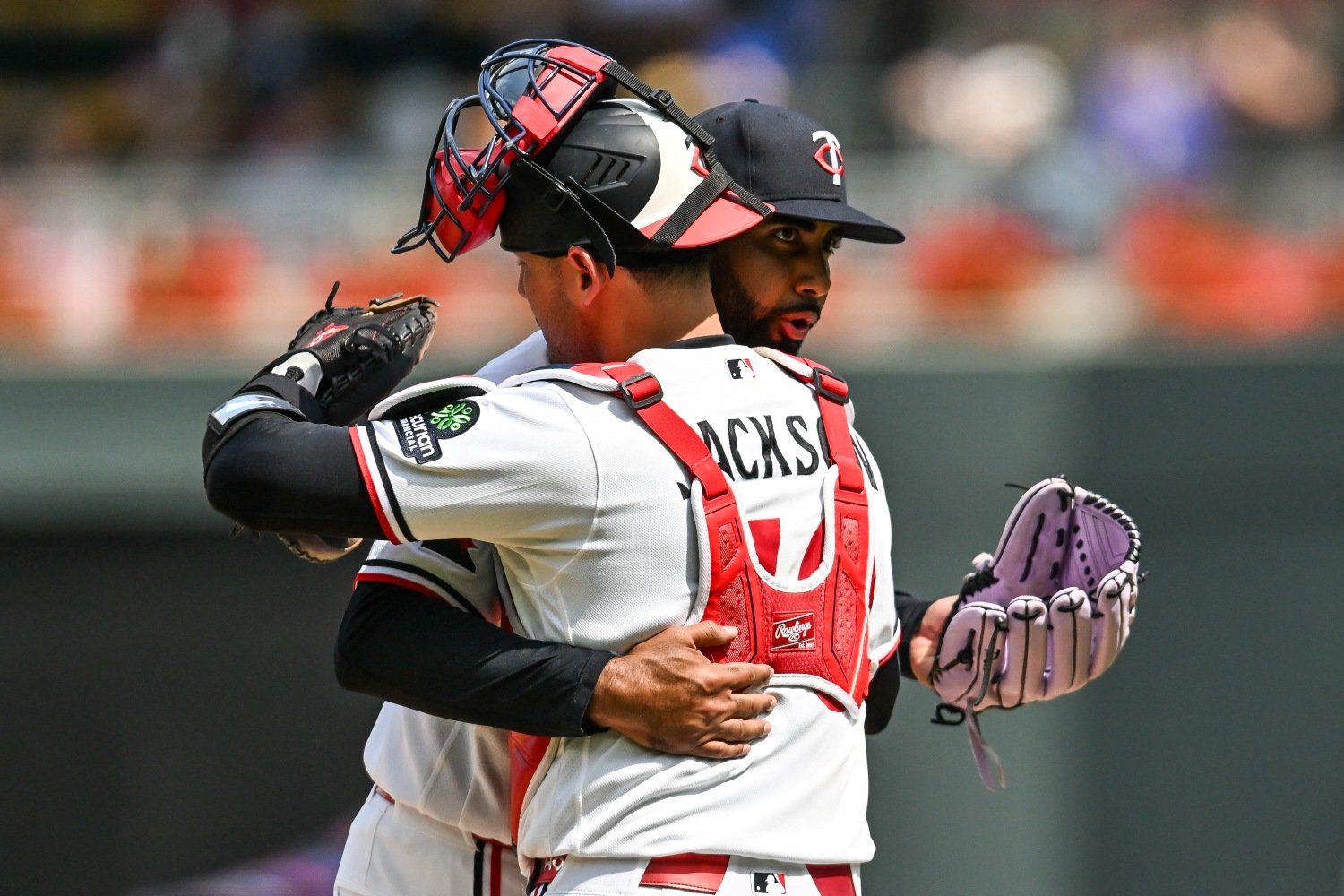 The Minnesota Twins have once again found a creative solution to a roster problem. This time, the club has decided that what its 26-man roster really needs is another catcher. Almost out of nowhere, they're selecting the contract of St. Paul Saints catcher David Bañuelos and promoting him to the major leagues. The fan base has clamored for days for the promotion of top prospect Walker Jenkins, perhaps to replace little-used outfielder Alan Roden. Instead, the club has elected to add its fourth catcher, with Bañuelos joining Ryan Jeffers, Victor Caratini and Alex Jackson on the active roster. Jenkins has game-changing potential, and the team has playoff odds just south of 40%, so it seems like a good time to go for broke. However, according to Twins General Manager Jeremy Zoll, the organization ultimately decided that there was simply too much value in carrying a fourth catcher. “We looked at bringing up Walker,” Zoll said. “Obviously, he's a very talented player and he's doing everything you could possibly ask him to do in Triple-A. But then we looked at the roster and realized we only had three catchers. That just didn't feel right.” Zoll explained that the Twins' internal discussions eventually centered around a simple philosophy. “Two catchers is necessary,” Zoll said. “Three catchers is a luxury. Four catchers is where you start seeing the real value. Four catchers is like two houses and a private plane. Billionaire [stuff].” The decision to add Bañuelos also appears to be influenced by the success of the Twins' current three-catcher strategy. Alex Jackson, who was designated for assignment just four days before being recalled to the majors, has already demonstrated the effectiveness of the plan. The Twins have reportedly been thrilled with his usage, which has involved appearing in a game approximately once every seven or eight days. When asked how Bañuelos would fit into the catching rotation, Zoll suggested that fans shouldn't expect the Twins to suddenly abandon their successful formula. Bañuelos isn't particularly likely to receive playing time. But the Twins believe that is actually a feature, not a bug. “People are looking at this the wrong way,” Zoll said. “It's not about how much he plays. It's about having the option to play him.” That option, apparently, was too valuable to pass up. The decision also means Jenkins will remain in Triple-A, where the Twins believe he can continue to develop and prepare for his eventual major-league debut. If at all possible, the team would love to see him move behind the plate and take some reps at catcher. Think about it. If one catcher gets injured, the Twins still have three catchers. If two catchers get injured, the Twins still have two catchers. If three catchers get injured, the Twins still have one catcher. And if all four catchers somehow get injured, the Twins will finally be able to promote Walker Jenkins—as long as he's ready to play catcher. As for Bañuelos, the veteran catcher will now get to experience the thrill of being a major leaguer, while simultaneously wondering why exactly he has been promoted. “We're really excited about David,” Zoll said. “He's earned this opportunity, and we're excited about what he brings to the roster.” What does he bring? Zoll paused. “A fourth catcher.” Sometimes, that's all a baseball team really needs.
- 2 comments
-
- 5
-
-

-
- satire
- david banuelos
- (and 1 more)
-
It would be foolish to draw any sweeping conclusions from the first week of Kaelen Culpepper's major league career. The Twins called up their top prospect on August 7, and through his first eight games, we're talking about a player who has barely had enough time to get comfortable in a major league clubhouse, let alone establish what kind of big league player he is going to become. Culpepper was a first-round pick and entered the season as a top-50 prospect in baseball for a reason, but none of that guarantees that he will live up to those expectations. Eight games certainly aren't enough to know that, but they can give us our first look at some of the tools that made Culpepper such an intriguing prospect in the first place, as well as some of the adjustments he'll need to make if he's going to turn those tools into major league success. So far, there have been plenty of reasons to be encouraged. The most obvious one is that the underlying swing numbers on Culpepper are every bit as advertised. Culpepper has developed into a violent swinger as he has worked his way through the Twins' minor league system, and that violence has carried over to the majors. His Statcast numbers back it up, with Culpepper's 74 mph swing speed ranking in the upper quartile of major league hitters. While plenty of his other statistics are impossible to trust as they're based on an extremely small sample size, swing speed is one of the measurements that stabilizes relatively quickly. Bat speed also has a strong positive relationship with exit velocity and barrel rate, so seeing Culpepper come out of the gate with a swing speed in the neighborhood of hitters such as Byron Buxton, Miguel Vargas and Pete Alonso is certainly encouraging. We've also seen that swing speed translate into some legitimate impact. In just his second career at-bat, Culpepper launched a home run to left-center field after hitting the ball 100.2 mph, and a few days later doubled off Jesus Luzardo with a 103.4 mph line drive. Those are obviously just two swings, and it would be silly to extrapolate them into anything more than that. However, seeing Culpepper pair the elite swing speed with the ability to produce 100-plus mph exit velocities is exactly what you want to see from a young hitter with his profile. The power is not simply theoretical. We've already seen glimpses of it against major league pitching. The other side of the coin has been his plate discipline. Culpepper has struck out 11 times compared to just two walks through his first eight games, while his 42.5% chase rate would rank among the bottom 10 hitters in baseball if he maintained it over a full season. That's an area that will need to improve, but it's also an area where some growing pains should be expected. Plate discipline is often one of the biggest adjustments for young hitters making the jump to the majors. Major league pitchers throw harder and locate more consistently. Breaking balls that might have been strikes in Triple-A suddenly finish outside the zone, while fastballs are coming in quicker than ever before. Young hitters have to learn which pitches they can damage and, perhaps just as importantly, which pitches they need to let go. Culpepper is learning that lesson in real time, but the encouraging part is that he has already started to look more comfortable. After going 1-for-9 to begin his career, Culpepper has recorded a hit in each of his last five games. That's still an incredibly small sample, but he has looked more confident at the plate as the week has progressed, which is exactly what you'd hope to see from a young player trying to make one of the biggest adjustments of his baseball career. The defensive side has provided a similar mix of excitement and growing pains. Culpepper got an immediate introduction to the difficulty of playing shortstop in the majors during the fifth inning of his first career game, when he had two ground balls turn into singles that had sub-.200 expected batting averages, meaning they were plays that should have been outs. The first came from David Hamilton, who hit a ground ball that Culpepper wasn't able to range to quickly enough. Culpepper was forced to backhand the ball and couldn't complete the play. A few batters later, Garrett Mitchell hit another ground ball, and Culpepper took some extra time gathering himself before making his throw. The hesitation proved costly against a player with Mitchell's speed, as the throw was late and Mitchell beat it out for another single. Neither play is something the Twins should panic about, but both are good examples of what Culpepper is going to have to learn at the major league level. Shortstop is an incredibly difficult position, and the difference between Triple-A and the majors can be exposed quickly. Runners are faster, balls are hit harder and the window to make a decision and execute a throw gets smaller. Culpepper got a taste of that immediately. There have also been some clear positives defensively, particularly when it comes to his arm. That was one of the tools we knew Culpepper had coming into the season, and it has already translated to the major league level. He has recorded a max throw velocity of 86.3 mph, although he doesn't yet have enough throws to establish a reliable overall arm-strength measurement. Still, the arm is clearly legitimate, as we saw on a strong throw to get Coby Mayo at first base. That's ultimately what makes this first week so interesting. We're not learning that Kaelen Culpepper is going to be an All-Star, that he's going to be the Twins' shortstop for the next decade or that his current strikeout and chase rates are going to be permanent. What we are learning is that some of the tools that made him a first-round pick and a top-50 prospect are real. The violent swing is real. The ability to generate impressive bat speed is real. The raw power is real. The arm strength is real. At the same time, we've seen some of the areas where he still has work to do. His plate discipline needs to improve, and he needs to become more comfortable with the speed and demands of major league defense. That's perfectly normal for a young player making his debut. And, to borrow an Aaron Gleeman-ism, perhaps the most important thing we've learned about Culpepper through his first week is that he has passed the lemon test. He certainly hasn't looked like someone who doesn't belong on a major league field. Culpepper has already connected on some big hits, shown off his elite swing speed, made some impressive throws and, yes, made some mistakes. But there has been enough good mixed in with the bad to suggest that the Twins' top prospect isn't simply being thrown into the deep end and hoping he can survive. He looks like a young player who has some legitimate major league tools and is now figuring out how to put them all together. That's about as much as we could reasonably ask for after one week, and now comes the fun part: watching what he does with it. What do you think of Kaelen Culpepper's first week in the majors? Are you encouraged by what you've seen so far, or are there areas that still concern you? Let us know in the comments. View full article
-
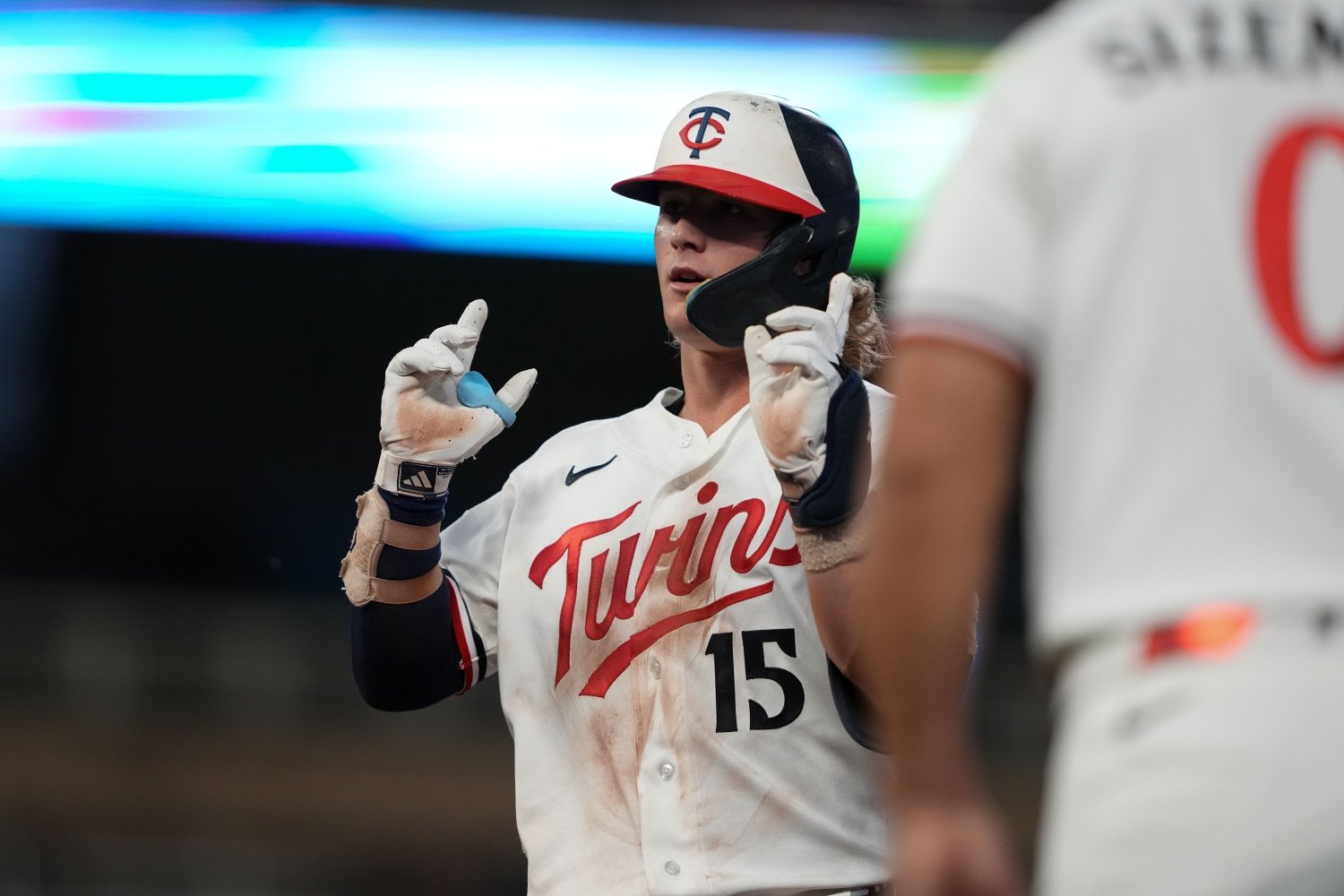 Box Score SP: Bailey Ober 4 1/3 IP, 6 H, 2 ER, 4 K, 1 BB (94 pitches, 62 strikes) HR: None Top 3 WPA: Bell 0.15, Adams 0.14, Hoffman 0.08 Win Probability Chart (via FanGraphs): The Minnesota Twins came into Monday night’s series opener against the Atlanta Braves with plenty of pressure on their shoulders. After being swept by the Philadelphia Phillies over the weekend, the Twins fell six games behind in the American League Central and dropped to five games below .500. They remained just one game out of the AL Wild Card, but with the season quickly running out of runway, another series sweep would have been a difficult hole to climb out of. The Twins were also looking for a bounce-back performance after blowing a five-run lead against the Phillies on Sunday. They got exactly what they needed Monday night, although it certainly did not come easy. The game itself started later than usual after the Twins and Braves called for a preemptive rain delay. The tarps eventually came off, and after waiting an hour, the two teams began the game without a drop of rain falling. The Twins were tasked with facing an old friend in Braves starter Martín Pérez, who spent the 2019 season with Minnesota. It looked like a challenging matchup on paper, especially considering the Twins entered the night ranked 22nd in baseball in OPS against left-handed pitching. They certainly didn't play like it in the first inning. Luke Keaschall got the offense started with a leadoff double, and the Twins quickly loaded the bases after Pérez walked Byron Buxton and Ryan Jeffers. That brought Josh Bell to the plate, and the veteran first baseman delivered with a two-run bloop double down the first base line to give Minnesota an early 2-0 advantage. The Twins weren't finished. Royce Lewis followed with an RBI single, and Kody Clemens added another RBI single to make it 4-0 before the Twins had even recorded their first out. After struggling to generate offense against left-handed pitching all season, Minnesota couldn't have asked for a better start. Bailey Ober took the mound for the Twins looking to rebound from a rough outing against Baltimore last week in which he allowed five earned runs. Ober looked sharp through the first four innings, but things began to unravel in the fifth. Austin Riley led off the inning with a single before reigning Rookie of the Year Drake Baldwin doubled to put two runners in scoring position. Ronald Acuña Jr. then delivered a two-run single to cut the Twins' lead in half. With Acuña on base and just one out, the Twins decided they had seen enough from Ober. The right-hander was pulled after just 4 1/3 innings, leaving Minnesota's bullpen with a tall task: protect a two-run lead for the final 4 2/3 innings. Considering what had happened less than 24 hours earlier, it was easy to wonder if the Twins were about to watch another big lead disappear. Instead, the bullpen saved the day. Taylor Rogers was the first man through the door, and he entered in a difficult situation. Acuña was standing on first base, there was only one out, and the heart of Atlanta's lineup was coming to the plate with the Twins clinging to a 4-2 lead. Rogers worked his way out of the jam to keep the Braves off the board, giving the Twins exactly what they needed after Ober's abbreviated outing. Travis Adams followed and provided perhaps the biggest contribution of the night. Adams has struggled considerably of late, but the Twins needed him to provide length and bridge the gap to the back end of the bullpen. He responded with two scoreless innings, striking out three without allowing a baserunner, allowing Minnesota to preserve its two-run advantage. That set the stage for the bullpen's heavy hitters. Jeff Hoffman, who has quickly become the Twins' most important bullpen piece since arriving at the trade deadline, tossed a scoreless eighth inning, aided by a massive defensive play from Kody Clemens. Then Yoendrys Gómez came in for the ninth and shut the door, albeit not without some nerves, securing a 4-2 Twins victory. After scoring four runs in the first inning, the Twins couldn't push another run across the plate despite creating several opportunities. The biggest came in the bottom of the eighth, when Minnesota loaded the bases with nobody out and had a chance to put the game away, and came away empty-handed. It didn't matter. The four runs Minnesota scored in the opening frame were enough because the bullpen refused to let Atlanta answer. After Ober's early exit, the Twins' relievers combined for 4 2/3 scoreless innings, allowing Minnesota to survive a game that could have easily gone the other direction. The Twins improved to 61-65 with the victory and, thanks to losses by both the Baltimore Orioles and the Texas Rangers and Toronto Blue Jays having the day off, moved to just a half-game back of the AL Wild Card. After the way the weekend went, the Twins desperately needed a win to start this series, and they got exactly that. What's Next The Twins will look to capture a series victory on Tuesday evening at Target Field. The Twins will be facing another old friend in Tyler Mahle, with Zebby Matthews taking the rubber for the Twins. First pitch will be at 6:40 pm (assuming no rain delay this time). Postgame Interviews Bullpen Usage Chart THU FRI SAT SUN MON TOT Morris 0 0 23 28 0 51 Adams 42 0 0 0 18 60 Hoffman 0 0 17 0 20 37 Minter 0 0 12 14 0 26 Rogers 10 0 0 16 11 37 Funderburk 0 0 16 4 0 20 Nance 16 0 0 0 0 16 Gomez 0 0 0 0 19 19
- 34 comments
-
- 3
-
-
- game recap
- josh bell
- (and 3 more)

