

Twins Video
The Twins have to find better answers in the bullpen next season than they found this year, and that process starts now. There are some names that feel like they're written in pen for next year, including Yoendrys Gómez, Andrew Morris and Jeff Hoffman. Others appear likely to move on, including Taylor Rogers and A.J. Minter. Then there's a large group in between, where it's difficult to know exactly what the Twins will do.
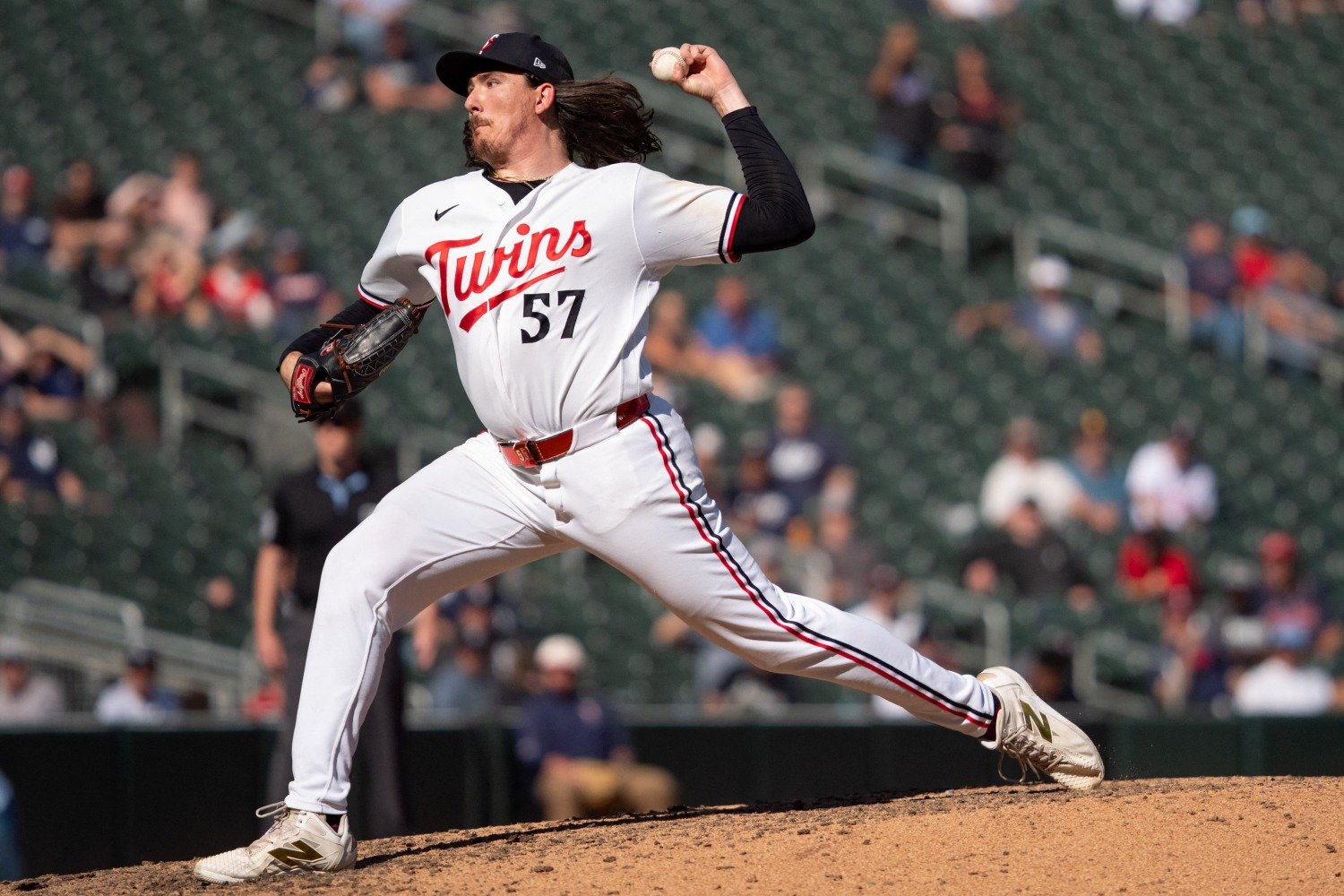
Two of those pitchers are right-handed reliever Cole Sands and left-handed reliever Kody Funderburk. Both have pitched well enough in the past to make a legitimate case for returning in 2027. At the same time, neither has established himself as a pitcher the Twins can confidently pencil into their bullpen for an entire season. That makes their situations precarious, because Funderburk will enter the 2027 season without any remaining minor-league options, while Sands is due to pass a second time through the arbitration process.
Sands has spent five seasons with the Twins and owns a 4.42 career ERA. His 2024 season was by far his most encouraging, as he posted a 2.63 FIP while striking out 29% of opposing batters. That season gave the Twins reason to believe Sands could develop into a legitimate back-end bullpen weapon. Instead, Sands struggled in 2025, and his 2026 season was derailed by injuries. He threw just 12 innings this season, making it difficult to know exactly what the Twins will have when he reports to Spring Training next year on the other side of elbow surgery.
There's still plenty to like. Sands's 2024 season wasn't a fluke, in the sense that he showed real swing-and-miss ability. Presumably, there's still a version of Sands who could regain that form and become a very useful reliever. But there are also legitimate reasons for concern. Sands will turn 30 next season, and his four-seam fastball velocity has dropped nearly three miles per hour from its peak in 2024. After two consecutive seasons that have raised questions about his performance and health, the Twins can't simply assume that the 2024 version of Sands is going to return.
Funderburk has a somewhat different story, but the overall dilemma is similar. He has a 4.13 career ERA across four seasons with the Twins, and after struggling badly in 2024 with a 6.49 ERA, he's put together back-to-back seasons with an ERA below 4.00. This season has also been his most productive from an innings standpoint, and he has continued to show that he can be an effective option against left-handed hitters.
But there are still questions surrounding Funderburk. Even with a career-high workload this season, he's only going to finish around 50 innings. Injuries and subpar control have prevented him from putting together a full season in the majors, and much of his best work has come in lower-leverage situations. He's never been given consistent responsibility in the biggest spots against the best hitters. Like Sands, Funderburk will turn 30 next season.
The Twins have two pitchers who have shown enough to make you want to keep them, but not enough to make them sure things. Sands has the higher ceiling, particularly if he can get healthy and regain some of his velocity. Funderburk has the more recent track record of success, putting together his best two seasons in the past two years. Neither has established himself as a stable, high-leverage piece of a major-league bullpen.
Normally, that wouldn't necessarily be a huge problem. A team can carry a pitcher like Funderburk or Sands and see how things go. If the pitcher struggles, the team can send him to Triple-A, let him work through whatever is wrong, and bring him back when he is ready. That's where the options issue changes the equation. Funderburk can't simply be sent to the minors in 2027. If the Twins decide they no longer want him on the major-league roster, they would have to designate them for assignment and expose him to waivers before they could send him to Triple-A.
That means the Twins have to be more certain about Funderburk than they otherwise would—and it's hard to see how they could feel that confidence, given the way his season has unfolded. His is a particularly interesting case, because the Twins have used his minor-league options repeatedly throughout his career. He's spent parts of each of the past four seasons in Triple-A, and that flexibility has allowed the organization to move him back and forth depending on his performance and the needs of the roster. If he struggled in 2027, that would no longer be an option.
Sands presents a different problem, but an equally salient one. He's making $1.1 million this season, after becoming arbitration-eligible for the first time last winter. Though he pitched for St. Paul on a rehab assignment, he was never actually optioned there this season, so he still has one more year of optionability, but at a certain point, that's just a technicality. The Twins would have to pay him at least $1.3 million to retain him without first non-tendering him and making him a free agent. That's a modest amount, but when a team pays even that much to a player, they expect to be able to keep them in the majors as long as they're healthy. It's no guarantee that, if the Twins are on the fence about Sands as a staple of their roster next year, they'll still be willing to pay him like a full-fledged big-leaguer. They might also have some concerns about doing so with a player whose health outlook has gotten so iffy.
Heading into the offseason, the question isn't simply whether Sands and Funderburk are good enough to pitch in the majors. It's whether they're good enough to justify taking up a bullpen spot without the flexibility to send them down if things go wrong. Technically, they'll have that flexibility with Sands, but would they feel it? Will the slightly greater roster flexibility and the aforementioned high-leverage upside give Sands the edge, even though Funderburk will be $500,000 or so cheaper next season and is two years further from free agency than Sands is?
The Twins can't afford to have an entire bullpen filled with question marks. If Gómez, Morris and Hoffman are part of the plan, and if (when?) the Twins add other relievers during the offseason, there are only so many spots available. Using two of those spots on Sands and Funderburk would mean committing one-quarter of an eight-man bullpen to pitchers who have never established themselves as dependable major-league relievers for an entire season, without the easily attainable upside or the roster flexibility teams prefer for that spot.
There's a legitimate argument for keeping Sands because his 2024 season showed the possibility of having a legitimate back-end bullpen weapon. There is also a legitimate argument for keeping Funderburk. He gives the Twins a left-handed option who has shown he can get lefties out, and there is at least a chance that his recent success could lead to further improvement. The problem is that keeping both requires the Twins to make a pretty significant bet on two pitchers who still have a lot to prove. They might need to roll their dice in other directions.
If you were calling the shots in the Twins' front office, what would you do with Cole Sands and Kody Funderburk? What do you think the Twins will do? Leave a comment below and start the conversation!








Recommended Comments
Create an account or sign in to comment
You need to be a member in order to leave a comment
Create an account
Sign up for a new account in our community. It's easy!
Register a new accountSign in
Already have an account? Sign in here.
Sign In Now