Jump to content
Twins Daily
  • Create Account
  • Twins News & Analysis

    Prioritizing Trade Candidates for the Deadline


    Nick Nelson

    Few expected this 2018 Minnesota Twins team would be putting up the 'For Sale' sign in early July, but here we are. With a nightmarish road trip pushing them hopelessly out of contention, the Twins now have no choice but to unload assets and make whatever upgrades they can to move forward.

    Let's take stock and assess what they've got.

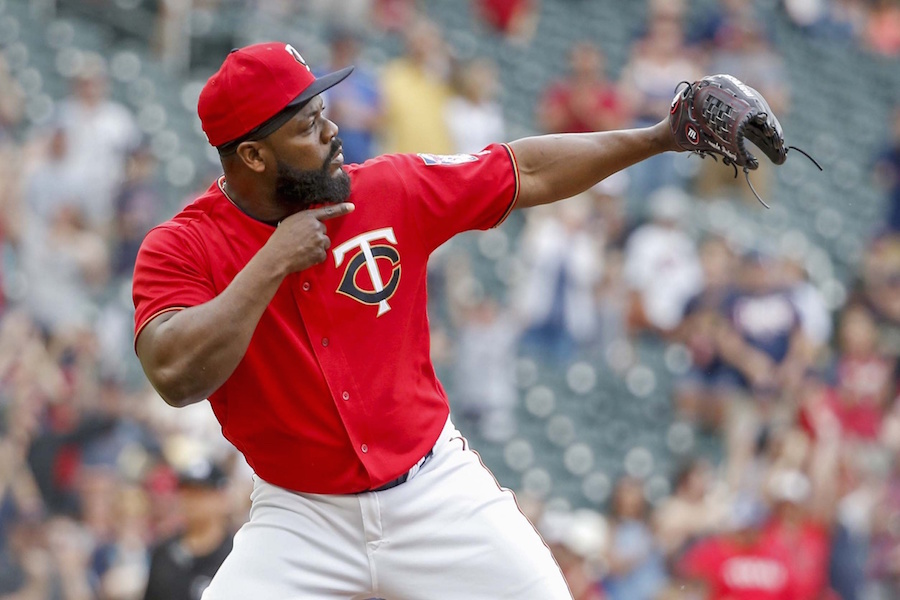
    Image courtesy of Bruce Kluckhohn, USA Today

    Twins Video

    As is the nature of this miserable season, the Twins haven't seen trade candidates do much to build value, so the front office won't exactly be working from a position of great strength as the deadline approaches and buyers inquire.

    With that said, here's how I'd rank players on the "sell" board – not strictly in terms of what they'll bring back, but how eager I'd be to deal them all things considered.

    1. Brian Dozier, 2B

    The hope was that, even if Minnesota slid out of contention during the first four months, Dozier would at least position himself as a coveted trade target.

    Imagine if he put up the same kind of numbers that earned him an All-Star nod in the first half of 2015: .849 OPS, 19 home runs, 67 runs scored.

    Coming off back-to-back campaigns that bordered on MVP-caliber, and entering a contract year, this sort of production seemed possible – if not probable – for the 31-year-old. Alas, much like everything else this year, it hasn't gone to plan.

    Dozier entered play on Thursday with a .220/.308/.394 slash line. That batting average would rank as the worst of his career, and he hasn't posted a lower OPS since his tumultuous rookie season in 2012.

    Despite the hugely disappointing output, Dozier will still be attractive as a trade candidate.

    His clubhouse presence is reputed throughout the league. He has a recent history of catching fire down the stretch. And he'll only be owed about $3 million over the final two months of the season.

    Those two months (plus postseason) are all that a theoretical trade partner will be getting, since Dozier becomes a free agent after the season, but he does have the potential to make a significant impact for a contender.

    So I do think it's possible he yields a reasonably decent haul, especially if he gets rolling a little here in July. The front office will take any salary relief it can get after the 2018 fizzled out with an all-time high payroll.

    One club to look out for on the Dozier front: Seattle. Yes, the Mariners will be getting Robinson Cano back from his suspension in mid-August, but he'll be coming off finger surgery and is ineligible for the playoffs.

    Projected Return: 2 to 3 solid mid-level prospects

    2. Fernando Rodney, RP

    Out of all the moves Derek Falvey and Thad Levine made over the winter, signing Rodney may have drawn the most skepticism. He was, after all, a 41-year-old with a reputation for putting runners aboard and making things interesting. It was all too easy to see this acquisition backfiring.

    Instead, it's actually proven to be their savviest move. The grizzled vet has looked as strong as ever, pumping fastballs in the mid-90s, and his control has actually been considerably improved from recent years – Rodney's 3.5 BB/9 is lower than any mark he's finished with in that category since 2012, when he was an All-Star and Cy Young candidate.

    The righty holds a 3.18 ERA, 9.8 K/9 rate, and .626 opponents' OPS. He recently ended a streak of 15 straight converted saves.

    It's true that relief pitchers don't tend to bring back a ton in deadline trades, owing to the fact they'll only pitch a couple dozen innings thereafter, but Rodney has a couple of factors adding to his appeal:

    1) He is as experienced a relief arm as you're going to find on the market, with 16 seasons and 317 saves (tied with Craig Kimbrel for most among active players) under his belt.

    2) He's not just a rental, necessarily. His contract includes a team option for $4.25 million next year, so he can easily be brought back on the cheap.

    Whereas the market for Dozier will be narrowly defined (most contenders have players locked in at second base), most teams will be looking for bullpen help, so Rodney ought to draw more askers.

    Projected Return: 1-to-2 decent prospects

    3. Lance Lynn, SP

    No one seemed to want Lynn much during the offseason, where he went unsigned before joining the Twins three weeks into spring training, and it's unlikely that has changed during the past few months. In 16 starts, Lynn has posted a 5.49 ERA and 1.68 WHIP while issuing more walks (50) than all but two other big-league starters.

    On top of the poor numbers, there's the poor attitude; his perpetually visible grumpiness was passed off as competitiveness when he was pitching well for good Cardinals teams, but seems more sulky when he's struggling for a terrible Twins team. Lynn's failure to cover first base during a disastrous second inning in his latest start – subject of a frustrated Paul Molitor's venting after the game – is the kind of thing that is noticed and frowned upon.

    Having said all that, Lynn is a vet with a lengthy track record of success, and his performance has generally been better of late; he posted a 3.27 ERA in May and June. There are also some promising underlying signs in his performance: a four-seamer averaging nearly 93 MPH, a career-high 10.6% swinging strike rate, and metrics like a .341 BABIP and sub-70% strand rate that suggest he's been victimized by unsustainably bad luck.

    I've got to think someone will take a shot on him. He's a better bet than the fifth starters on several contenders and could be a real difference-maker if he gets invigorated and throws strikes. But the Twins will be lucky to get someone to eat all of his remaining ~$5 million in salary, and are very unlikely to get back on anything of consequence.

    The real value here is in opening up a 40-man roster spot, and some innings for younger pitchers.

    Projected Return: 1 non-prospect

    4. Kyle Gibson, SP

    Without question, Gibson would yield much more than Lynn in a trade. He has legitimately turned a corner in his career and is controllable through 2019, his final year of arbitration eligibility. But those very same factors should make Minnesota reluctant to move him.

    Gibson is making $4.2 million this season (about one-third of Lynn's salary) after losing his arbitration case against the Twins. Presuming he stays healthy and on track the rest of the way, he'll get a healthy raise next year but still shouldn't make more than $10 million or so, a bargain for someone of his caliber.

    As the Twins eye a quick return to contention, they'll certainly want to maintain their improvements in the rotation. Gibson's been such a big part of that, and figures to be a key depth piece next year with Lynn, Jake Odorizzi and Ervin Santana all potentially moving on.

    For what it's worth, the Yankees reportedly had scouts on hand to watch Gibson's latest start.

    Projected Return: 1 prospect that ranks in the 6-to-15 range on Twins top prospect list, and maybe another low-level guy

    5. Zach Duke, RP

    He has quietly been everything the Twins could've hoped for, turning in a 2.90 ERA, 2.49 FIP and 9.3 K/9 rate while allowing zero home runs in 38 appearances. His 0.7 WAR leads all Minnesota relievers.

    Yet despite his fine work, Duke hasn't had a huge overall impact, evidenced by -0.40 WPA and only 31 innings pitchers through the team's first 82 games. It's the nature of his role, a limited one by convention, and that will limit his trade value. The Twins won't likely get much more substance in return for Duke than they did for Fernando Abad (remember Pat Light?), so they may be just as well holding on and letting him eat innings the rest of the way.

    Projected Return: One prospect who ranks toward the back of Minnesota's Top 40

    6. Eduardo Escobar, IF

    He is Minnesota's most valuable trade chip among realistic candidates, to be sure. Escobar is having a career year at age 29, hitting .277/.335/.531 with a league-leading 34 doubles through the first half. He's a versatile and solid defender, beloved by all who spend time around him.

    Similar attributes fueled Eduardo Nunez's value two years ago, when the Twins flipped him to San Francisco for Adalberto Mejia, now a long-term rotation candidate. Escobar's a better and more desirable player now than Nunez was then, so it's easy to see the appeal of floating him out there. Any quality prospect is worth more than two months of Esco in a lost season.

    But there's a bit more to the equation than that. Once the season ends, Minnesota will be able to extend Escobar a qualifying offer. If accepted, he'll come back on a one-year deal worth around $18 million. If rejected, the Twins will net a high draft pick when he signs elsewhere.

    That sure seems like a good plan. He probably takes the QO, but that would put the Twins in a good position. A one-year commitment to Escobar carries little risk – they'll be overpaying but shouldn't have any trouble affording it – and might be really handy as the club faces an uncertain outlook in the infield.

    Obviously the conversation changes if the right offer comes along, but I lean toward holding onto Escobar.

    Projected Return: Roughly the same as Gibson's

    7. Jake Odorizzi, SP

    This is really a take-it-or-leave-it situation. Like Gibson, Odorizzi has one year of arbitration eligibility remaining, so the Twins will have an option to bring him back on the cheap(ish). But the trajectories of these two careers have moved in opposite directions – Gibson sharply ascending and Odorizzi in stark decline.

    Inefficient, homer-prone and unable to work deep into games (he hasn't recorded an out in the seventh all year), Odorizzi is pitching as poorly as he has at any point in his career. The Twins got him from Tampa in exchange for Jermaine Palacios, who ranked outside their Top 20 prospects when they dealt him, and they'd get less for him now.

    At this point it's a little hard to envision Odorizzi figuring into the team's 2019 plans, but you never know what'll happen, and that optional control is nice to have.

    Projected Return: Roughly the same as Duke's

    8. Everyone Else

    To me, those are the names worth discussing. Other impending free agents either have too little value to merit mentioning (Logan Morrison) or a no-trade clause (Joe Mauer).

    Some might suggest a name like Addison Reed but it's hard to see the wisdom in trading him with his stock at perhaps an all-time low.

    There are, of course, more ambitious and outside-the-box ideas, like selling high on Eddie Rosario, or giving up on Max Kepler, or shipping Ryan Pressly – despite his controllability – to a team that looks at his stuff and whiffs more than his lack of results. But those options don't interest me all that much.

    What interests you in terms of a deadline approach? I'd love to hear your thoughts in the comments.

    Follow Twins Daily For Minnesota Twins News & Analysis

    Recent Twins Articles

    Recent Twins Videos


    User Feedback

    Recommended Comments


    Featured Comments


    Too bad they have nothing to offer for Realmuto.

    They have players to offer. 4 prospects on top 100 lists. Lewis being the gem of the organization.


    The question remains is it smart to give up the assets necessary to make the trade? Not sure if I can answer that anymore given how badly this season has gone.

    I've always thought Mauer would be a fantastic fit for Fenway Park. He hasn't been the same hitter since those fly balls that landed in the first row in LF at the Dome became outs at Target Field. Those balls would be over or off the wall at Fenway.  Would he waive his no-trade clause for a chance at a World Series with the Red Sox?

    I’m sure he’d love a chance to win his first playoff series. He can always return next year,

    I’m sure he’d love a chance to win his first playoff series. He can always return next year,

    If he cared about that, he would have asked for a trade years ago.


    Without knowing him personally, it sure seems like all he wants to do is play for his home state's team, and be close to his family.

    Keep Gibson. Otherwise, could someone name the 2019 opening day rotation?


    And as I’ve asked before, aside from the Yankees maybe wanting Gibson, does anyone have any suggestions on potential counter parties?


    Also, by sheer numbers, there will be a lot more selling teams than buyers


    Keep Gibson. Otherwise, could someone name the 2019 opening day rotation? And as I’ve asked before, aside from the Yankees maybe wanting Gibson, does anyone have any suggestions on potential counter parties? Also, by sheer numbers, there will be a lot more selling teams than buyers


    the Brewers, the Cubs, the Angels (not likely now), Seattle (not sure they have the players), Atlanta, Philly.....so, ya, the list of playoff teams that could use him is long, actually.


    And, that doesn't count anyone that thinks they are a playoff team next year.


    How do people propose getting better if they won't trade guys under control next year? And by better, I mean MUCH better, over the long haul.

    By my estimation, the five AL playoff teams are pretty much decided. The sixth team is the A’s who are 8 games out.

    In the NL, by contrast, there are maybe 10 teams still in it. So, look for the ten AL out of contention teams selling to the 10 in contention NL teams.


    Any proposed trades?

    So ... controversial point here:


    There are some advantages to the American system of trading players rather than buying and selling for cash as is the norm in world football. (Principally, it limits the ability of a rich owner to acquire players without giving any up.) But there are serious disadvantages.


    Monetary economists argue that the advantage of money transactions over barter is the elimination of a "double coincidence of wants." Under barter (as in MLB), we not only have to find a seller with something we want, but he must want something we have. Only a few teams are interested in a 2B and they may not have the ideal trade pieces that the Twins would want for Dozier, for example.


    One way in which this impacts the Twins currently is the inability to use multiple small sales to finance one big purchase. For example, suppose that we were able to sell 4 players (Dozier, Lynn, Duke, and Rodney, for example) for $5m each. We could then use that money to fund a $20m purchase (Realmuto?). The numbers are made up, but you probably get the idea.


    Under the current system, no one wants to pick up 4 useful but not stellar players that we could offer (especially a team like Miami). So although we may have sufficient assets to obtain a star, the transaction technology prevents us from doing so. This means that (as per my earlier post) we are left with trading away each of our "little" pieces for other little pieces like non-elite prospects.


    All of the proposed moves discussed in the article seem to me unlikely to make the Twins better in 2019 and beyond. We are shuffling off little pieces we don't need for someone else's little pieces they don't need. Under a monetary system, we could sell multiple resources that have higher value to others than to us and pool the proceeds to buy a difference-maker.


    I agree, but I wouldn't be surprised if other teams tried to place his value using his spotty history.


    If so, I'd hang on to him and look to move him in the offseason after a full year of proving his worth (fingers crossed) or hang on to him if they are ready for a managerial overhaul in 2019 and another stab at contention.


    Man, there is a lot of risk with that.  Dozier is a poster boy for this cautionary tale.


    I think this overvalues Dozier and probably undervalues Lynn a bit. I figured those two would get similar returns, and I don't see Dozier bring in several mid-level prospects. Someone might send a decent prospect our way on a flier that he gets hot, but they aren't sending a bunch... now if he suddenly starts hitting, that would be different.


    I think Levi mentioned trading Pressley as he has only a year of control left. He might net a decent prospect.


    Yeah, Die Hard, but pitchers are really critical down the stretch when arms get tired. Not so much pitchers that periodically struggle with command  


    Are we as fans really ready to see Gordon? He has a worse OPS in AAA then guys we want cut in the majors?

    IMO he is a guy us fans are going to love to hate if he isn't really good.


    Yeah, Gordon was not brought up when Polanco was suspended. That must mean he is not ready. My question is, will he be ready if Dozier is traded?


    I've always thought Mauer would be a fantastic fit for Fenway Park. He hasn't been the same hitter since those fly balls that landed in the first row in LF at the Dome became outs at Target Field. Those balls would be over or off the wall at Fenway.  Would he waive his no-trade clause for a chance at a World Series with the Red Sox?


    I remember Joaquin Andujar saying when he played his first game at Fenway. "This is like a slow pitch softball field"


    Man, there is a lot of risk with that.  Dozier is a poster boy for this cautionary tale.


    In my view this team needs to be taking more high-reward type risks. I mean if Gibson can bring back a pretty dang good haul now I'm fine with a July deal, but if we're talking about a Stephen Gonsalves type return, eh, I don't think your risking much by waiting. 90% of the board was fine passing on Jose De Leon when Dozier was peaking as well. 


    But again, I'm only trading Gibson assuming this team isn't going to be a legit contending next year. My first preference is they make the changes needed to do so.

    If he cared about that, he would have asked for a trade years ago.

    Without knowing him personally, it sure seems like all he wants to do is play for his home state's team, and be close to his family.

    But, in past years, he would have to stay with the new team for the length of his contract or get traded back. This is the first time he knows he CAN come back as a FA

    So ... controversial point here:


    There are some advantages to the American system of trading players rather than buying and selling for cash as is the norm in world football. (Principally, it limits the ability of a rich owner to acquire players without giving any up.) But there are serious disadvantages.


    Monetary economists argue that the advantage of money transactions over barter is the elimination of a "double coincidence of wants." Under barter (as in MLB), we not only have to find a seller with something we want, but he must want something we have. Only a few teams are interested in a 2B and they may not have the ideal trade pieces that the Twins would want for Dozier, for example.


    One way in which this impacts the Twins currently is the inability to use multiple small sales to finance one big purchase. For example, suppose that we were able to sell 4 players (Dozier, Lynn, Duke, and Rodney, for example) for $5m each. We could then use that money to fund a $20m purchase (Realmuto?). The numbers are made up, but you probably get the idea.


    Under the current system, no one wants to pick up 4 useful but not stellar players that we could offer (especially a team like Miami). So although we may have sufficient assets to obtain a star, the transaction technology prevents us from doing so. This means that (as per my earlier post) we are left with trading away each of our "little" pieces for other little pieces like non-elite prospects.


    All of the proposed moves discussed in the article seem to me unlikely to make the Twins better in 2019 and beyond. We are shuffling off little pieces we don't need for someone else's little pieces they don't need. Under a monetary system, we could sell multiple resources that have higher value to others than to us and pool the proceeds to buy a difference-maker.

    I take your point, but would you really trust the Pohlad’s to turn around and use the accumulated monies? Perhaps a better baseball historian than I can recall Charlie Findlay’s great sell off.


    And, I believe one can trade a player for cash.


    I take your point, but would you really trust the Pohlad’s to turn around and use the accumulated monies? Perhaps a better baseball historian than I can recall Charlie Findlay’s great sell off.

    And, I believe one can trade a player for cash.


    Not straight up, but you can sort of do this, like the Twins just did with Hughes. They sold him and a draft pick for money, basically......The Marlins (depending on how you feel about the prospects they got back) did that with Stanton also.


    So, you could trade existing contracts and minor league players, for minor league players. That essentially frees up money to be spent (or pocketed). That said, the league will likely nix deals that go too far that way.

    Unless the Twins get a better offer for Dozier than is likely, I suspect the best course would be to keep him. If Dozier has a huge second half like in previous years, he might get back to a point where the qualifying offer makes sense which is probably the best possible outcome at this point. 


    As for the rest of the trade options, I'd keep Odorizzi, Gibson, and Escobar (with the intent of extending a qualifying offer). I'd look to trade Lynn, Rodney, Morrison (more likely to be waived), and Duke.

    Nobody on the current active 25 man should be left off of this list, aside from Berrios.


    Some I'd pull the trigger in faster than others. Dozier, Morrison, Lynn, Rodney, Duke, and Reed I'd take just about anything for.


    Guys like Gibson and Escobar I'd need to get a nice return.


    I'm still hoping Dozier, Morrison, and Lynn go a bit of a streak over the next couple weeks to entice some palatable offers. Reed could potentially fetch a nice piece. Santana could be a waiver guy in August if e comes back.


    They could potentially turn in a pretty nice haul. They won't be getting any top 50 prospects, but they could add some nice peices to the system.

    Edited by Darius


    In my view this team needs to be taking more high-reward type risks. I mean if Gibson can bring back a pretty dang good haul now I'm fine with a July deal, but if we're talking about a Stephen Gonsalves type return, eh, I don't think your risking much by waiting. 90% of the board was fine passing on Jose De Leon when Dozier was peaking as well. 


    But again, I'm only trading Gibson assuming this team isn't going to be a legit contending next year. My first preference is they make the changes needed to do so.


    We rarely know what is actually out there.  Sometimes taking an offer that is less than what you hoped is still better than getting nothing.


    Unless the Twins get a better offer for Dozier than is likely, I suspect the best course would be to keep him. If Dozier has a huge second half like in previous years, he might get back to a point where the qualifying offer makes sense which is probably the best possible outcome at this point. 


    As for the rest of the trade options, I'd keep Odorizzi, Gibson, and Escobar (with the intent of extending a qualifying offer). I'd look to trade Lynn, Rodney, Morrison (more likely to be waived), and Duke.


    I have zero interest in taking the chance he accepts the QO....zero.

    I have zero interest in taking the chance he accepts the QO....zero.

    Even if it means getting a lesser than that prospect in return for him now? I thinl the chances of Dozier accepting it are slim to none. He has a better chance convincing other teams that 2018 was an abberation due to being on a bad team than he does coming back, risk having another subpar year or getting hurt and being a FA another year older.


    Falvey and Levine are all about analytics and numbers, supposedly. I think the numbers say roll the dice that he won't accept.

    We are tossing around QO for Escobar and Dozier, I don't think 17M would be required for either player in order to keep them on a short term basis.


    Moustakas and others are a good example of that IMO.

    Even if it means getting a lesser than that prospect in return for him now? I thinl the chances of Dozier accepting it are slim to none. He has a better chance convincing other teams that 2018 was an abberation due to being on a bad team than he does coming back, risk having another subpar year or getting hurt and being a FA another year older.


    Falvey and Levine are all about analytics and numbers, supposedly. I think the numbers say roll the dice that he won't accept.

    Correct. I have no interest in him accepting, and I think he does not likely than not.

    We rarely know what is actually out there. Sometimes taking an offer that is less than what you hoped is still better than getting nothing.

    We all get how this works, trades are an unpredictable endeavor. However, this team should be moving at least a half dozen players this summer most of which will bring back returns ranges from "OK, I can live with that" to "Not another Cash Considerations or a PTBNL!!!". Gibson's the only one with potential to increase his value to something substantial.


    Unless they do nothing they should be flooded with more organizational filler than they can handle. They wouldn't be risking much to roll the dice that Gibson doesn't blow out his arm in the next three months.

    We are tossing around QO for Escobar and Dozier, I don't think 17M would be required for either player in order to keep them on a short term basis.


    Moustakas and others are a good example of that IMO.

    After last offseason it's certainly possible agents adjust their method and advise players to accept the QO.


    I don't really disagree with you (though don't really agree either :)), but the benefit is that you free up a spot for a younger player to come up and play nearly every day and get his feet wet for next season.  I think that experience is very valuable to a player.

    What players have ever benefited from the late season call up and who is the equivalent  player now in Rochester


    We all get how this works, trades are an unpredictable endeavor. However, this team should be moving at least a half dozen players this summer most of which will bring back returns ranges from "OK, I can live with that" to "Not another Cash Considerations or a PTBNL!!!". Gibson's the only one with potential to increase his value to something substantial.

    Unless they do nothing they should be flooded with more organizational filler than they can handle. They wouldn't be risking much to roll the dice that Gibson doesn't blow out his arm in the next three months.


    I just don't see how August and September are going to move the needle on Gibson.  That's essentially what you're saying - Aug and September will make him more valuable in December.


    Right now his most valuable asset is he'll give you a year plus of team control.  I think his team control right now is worth more than any increments of value you might accrue by him continuing to pitch well for two meaningless months with the Twins.


    I see little or no upside in waiting on him. 

    Edited by TheLeviathan


    Create an account or sign in to comment

    You need to be a member in order to leave a comment

    Create an account

    Sign up for a new account in our community. It's easy!

    Register a new account

    Sign in

    Already have an account? Sign in here.

    Sign In Now

×
×
  • Create New...