


Twins Video
Doug Mientkiewicz was on A.J. Pierzynski’s podcast recently, doing his best Jose Canseco impression and lamenting that the Twins wanted Byron Buxton to experience success in the minors and prioritized that, in Mientkiewicz’s eyes, over his development. That was eye-opening given Buxton’s initial struggles in the majors. Buxton was put in the leadoff spot, according to Mientkiewicz, because he would see more fastballs and would have more success. He could crush fastballs at that point. His weakness was the slider, and in that sense Buxton’s High-A numbers were inflated at the expense of his own development.
If this is true, it is pretty damning for the Twins, but not overly surprising. Another area where numbers are given priority over the humans behind them is with lineup construction, and specifically the murky nature of what each hitter’s role is on the team.
The roster is full of both good players that need to start hitting, and not-great players the team is stuck with. The only real goal is winning with the guys they have by executing game plans, in-game situations, hitter’s counts. All of it.
I’m sure Mientkiewicz would describe this as “knowing how to win.” Teams in all sports need to have success in this somewhat subjective realm. The Vikings won thirteen games this past season by emphasizing winning in-game situations, and their record in one-score games would seem to confirm that.
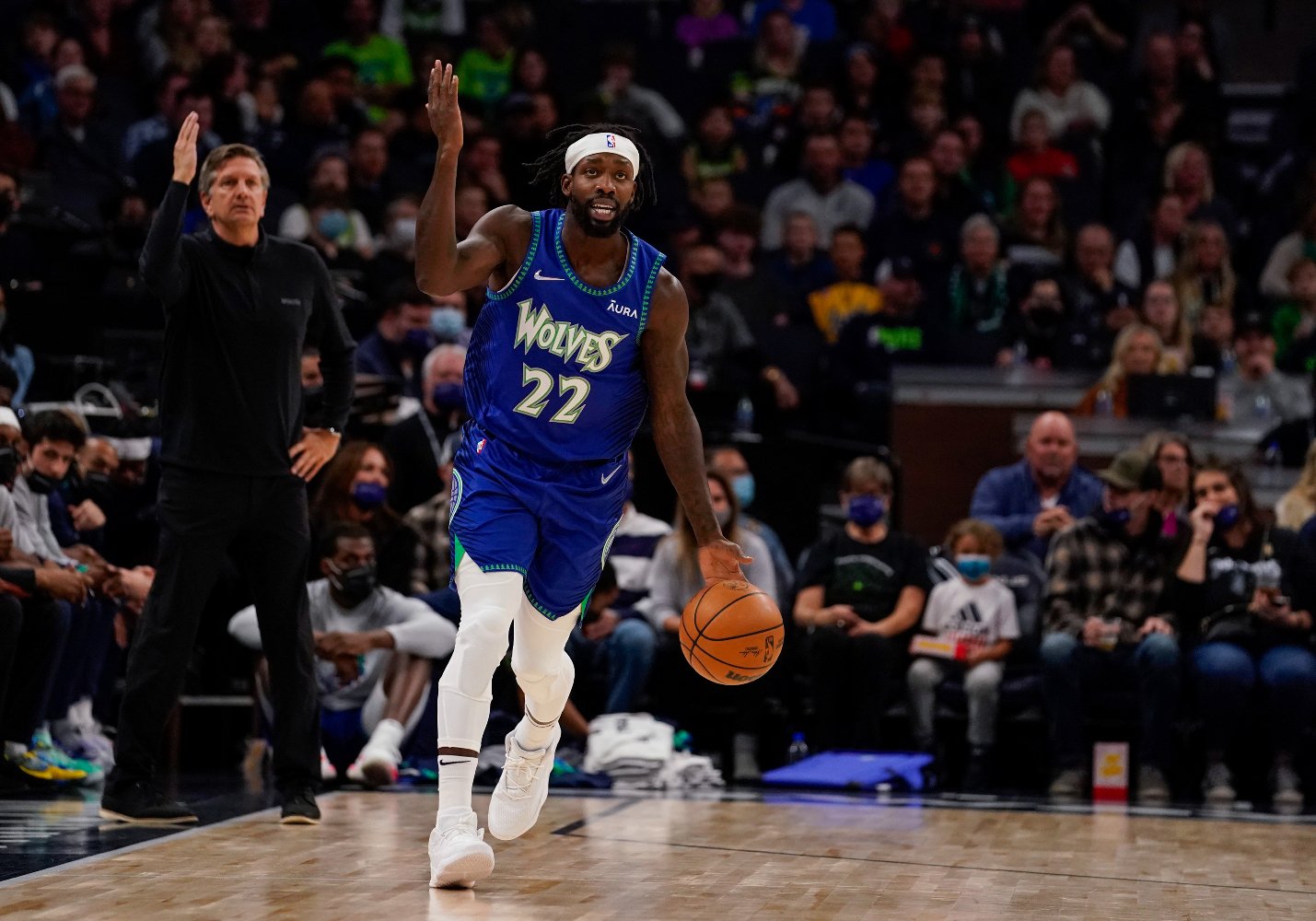
The Timberwolves returned to the playoffs two years ago, and one of the main catalysts was point guard Patrick Beverly, who personally took all of his teammates aside and demanded to know what their “role” was.
There is an argument that the Vikings had success because they were lucky and the Wolves had success because they had star players and a good coach, but both franchises had surprising turnarounds either way. When a team has an acute problem and the personnel isn’t the issue, there are only so many options. You can fire the coach like the Vikings, fire the front office like the Angels (but also like the Vikings), or try something new, maybe something a little old school.
You can channel some Pat Bev energy and establish defined roles for the lineup, for one. Certainly, injuries have played a part in the infinite number of lineup combinations Rocco Baldelli has utilized thus far. However, getting back to basics and letting individual guys know what spot in the lineup they are going to hit could have some intrinsic benefit.
Carlos Correa, for instance, batted in the two hole last year 105 times and the three hole 28 times. This year, he has hit second 33 times, third 18 times, and apparently is now the team’s cleanup hitter. And he’s had a more consistent role than many others:
Jorge Polanco has been slowed by injuries this year, yet he still has found himself more than once in each of the leadoff, second, third, fourth and fifth spots in the lineup.
Byron Buxton isn’t sure if he’s the leadoff hitter, third place or fourth place hitter.
Alex Kirilloff has between four and eight starts in the second, third, fourth and fifth spots in the order.
Joey Gallo has more than four starts in the first, fifth, sixth and seventh spots.
And now Royce Lewis has only played ten games so far, but has started in five different spots in the batting order.
Stability can be beneficial, because different spots in the lineup present different challenges. Leadoff hitters see fewer breaking balls, while number nine hitters see more strikes, as do guys hitting in front of a team’s best hitter. Cleanup hitters might feel their duty is to hit for power and drive in runs, even if that doesn’t come naturally to them as an individual. Leadoff hitters might feel they need to take a pitch or two, even if ambushing the first strike they see is a strength for them. Shuffling between slots can definitely impact a hitter’s confidence because of the pitches they see and their overall mindset, especially if they are a player who thrives off of having a consistent routine.
The Twins have depth and a positionally flexible lineup and bench, so there will always be three to four spots that could change on any given day. But it might help to establish that Polanco is the leadoff hitter when he’s healthy. Perhaps Kirilloff has done enough to warrant being the number two hitter. Correa can be the third place hitter, and Buxton can hit cleanup. If the team is confident that Lewis is ascendant, cement him in the number five spot. Gallo can take sixth and the catcher, Michael A. Taylor and your remaining corner outfielder of the month can shuffle around in the final three spots.
It should be noted that the hitter who has had the most stability in his lineup position, Taylor (who has hit ninth in 43 out of 51 starts this year), has probably outperformed his preseason projection more than anyone else on the team.
The other issue is platooning, and I’m going to jump out on a limb here. The 2021 Giants won 107 games by breaking their backs to have the platoon advantage whenever and wherever possible. Since then, their offense has, for the most part, stalled, with a lot of their lefty mashers regressing against those who they previously feasted upon. It could be a market inefficiency that not fixating on always having the platoon advantage can allow hitters to settle in a little more, get some reps against same-sided pitchers, and more organically be exposed to opposite-handed pitchers. It also might be true that with more pitchers using data to tinker with new pitches, and often pitches that fade arm-side, the platoon advantage for a hitter just doesn’t mean what it once did.
If this sounds off base, I implore you to find a more logical explanation for the Twins futility against left-handed pitchers since 2020, with players like Mitch Garver, Miguel Sano, Byron Buxton, Josh Donaldson, Gary Sanchez and Ryan Jeffers inexplicably losing half their OPS against lefties for years at a time once a light was shone on how successful they had been against them.
Fixating on the platoon advantage also means subbing out fairly good hitters early in the game, a meager benefit whose cost is potentially prohibitive. Pinch hitting for Kirilloff against the Giants in the second inning a few weeks ago is the best (worst?) example of the kind of over-platooning that can cost the team in the short term (it would be nice to have the team’s best hitter available in the late innings) and long-term (Kirilloff looks like he has the kind of swing and approach to hold his own against lefties if given enough chances).
I’m not saying to ignore all platoon advantages, but maybe instead of benching every lefty possible when facing a left-handed starter, just bench one or two. This team has a lot of talent, and the impression I get is that in addition to injuries, the team is messing around with its talent to the point that they are getting in their own way. These guys should hit, and simplifying the job is not only a good way to climb out of any rut, it may be a good long-term play, as well.









Recommended Comments
Create an account or sign in to comment
You need to be a member in order to leave a comment
Create an account
Sign up for a new account in our community. It's easy!
Register a new accountSign in
Already have an account? Sign in here.
Sign In Now