Jump to content
Twins Daily
  • Create Account
  • Twins News & Analysis

    Jason Castro and a Cup of Coffee


    Jamie Cameron

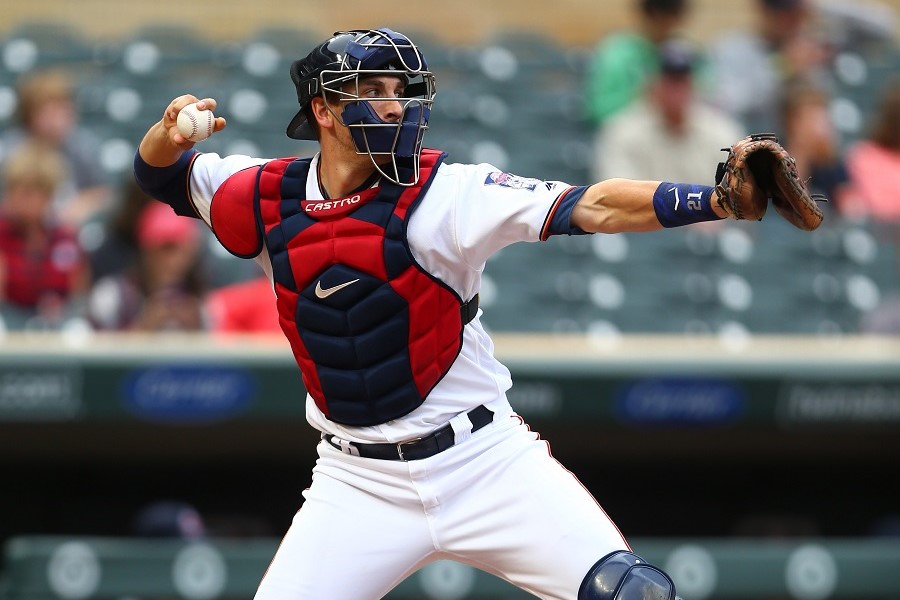
    I was sitting down the third base line at Target Field on April 5th, giving me an excellent view of Mitch Garver’s timely first big league home run. This got me to thinking about Jason Castro, and catching in general.

    OK. Let’s get weird.

    Image courtesy of Mark J. Rebilas-USA TODAY Sports

    Twins Video

    When I first moved to the US, I worked in an upscale deli. I had just been given permission to work, and I needed money badly, a stable income for a few months to get up and running and on my feet. At said upscale deli, ownership (I like to pretend I’m part of a baseball franchise at all times), made us do regular tastings and scorings of the deli’s offerings.

    Folks would bring around a tray with samples and we would all score a given sample out of ten, with some brief words of explanation. I knew I wasn’t long for the food industry when others reeled off complex descriptions of how samples affected their palette, while I typically landed into two categories; ‘delicious’ or ‘not my thing’.

    What does this have to do with catching? I promise I’m going somewhere with this.

    Invariably, scores on samples were really high because the deli only sold delicious food. The one exception to this was coffee. Folks typically scored coffees in the 5-7 range, instead of the typical 8-10 range of other samples? Why? Because most (including myself) didn’t know what they were looking for.

    What differentiates a great coffee from a good coffee? Darned if I know. So what does this have to do with baseball? My contention is, tasting fancy coffee and evaluating catchers are the same. We don’t know what we don’t know, and we can’t always account for the subtle nuances that differentiate good from great. So I set out to try to gain a better understanding of the question; what goes into making a good catcher? Where does Jason Castro fall in these criteria?

    Hitting

    Let’s start with some general numbers on Castro. The reason I wanted to acknowledge hitting is it seems to me that there is generally a poor understanding of what an average offensive catcher looks like in MLB. Catchers like Gary Sanchez, Buster Posey and J.T. Realmuto tend to skew overall perception of what typical catcher offensive production looks like.

    Firstly, it’s important to acknowledge how useful it is to have a catcher who plays as much as Castro. In 2017, only 14 catchers made at least 400 PA. Of these 14, Castro finished 10th in fWAR (1.6). Again, of these 14, Castro finished 6th in OBP (behind only Posey, Contreras, Barnhart, Lucroy and Sanchez) and first in BB% (11.1%). While Castro isn’t a plus hitter, he gets on base enough to be a solid offensive contributor in a small group of elite catchers who play as much as he does throughout the course of the season.

    Framing

    This might seem like a weird place to go next. The reason I’m going here is that when Castro signed with the Twins, he came with a reputation as an excellent pitch framer. When Castro was brought in at the beginning of an otherwise quiet first off-season for Derrick Falvey and Thad Levine, his framing prowess was well established.

    In Castro’s final season in Houston, he got 96 more strikes called than expected, good for fifth in MLB. This, combined with the Twins transitioning from Kurt Suzuki, who got 38 less strikes than expected, had a significant positive swing for a Twins pitching staff expected to be mediocre at best in advance of the 2017 season. Several factors resulted in a slightly improved pitching performance in 2017, none more so than Byron Buxton. Castro certainly had an impact too, but what about the other aspects of catching we might be less familiar with?

    Regular Fielding

    ‘Regular fielding’ is an odd term. It simply doesn’t apply to catchers. While defensive metrics like UZR (ultimate zone rating) and DRS (defensive runs saved) give insight into most defensive positions, it’s too general to accurately appropriate to the catcher position. DRS, however, is a useful starting point for analyzing Castro’s fielding. DRS measures the runs saved or cost by a given player compared to a league average player at that position. In 2017 Castro finished ninth among catchers who caught at least 600 innings (34 catchers altogether), with a DRS of 10. Jonathan Lucroy was last at -15.

    Preventing Base Stealing

    Another important aspect is how catchers handle base runners. rSB is essentially DRS combined with stolen base runs above average. Castro is right around replacement level (20th in MLB among catchers who caught 600 innings) with a 0 rSB. Tucker Barnhart is first at 7.

    New Statcast data sheds light on Castro’s performance against base runners. Pop time measures the amount of time from the pitch hitting the catcher’s mitt to the moment the ball reaches the fielder’s receiving point at the center of the base. In 2017, Castro ranked 46th in MLB in pop time at 2.07 (MLB average 2.00). Castro ranked dead middle in MLB in his arm strength and second to last in exchange time. Essentially, he has an averagely strong arm, a slightly below average pop time but a far below average exchange of the ball from mitt to throwing hand.

    This resulted in Castro throwing out 26% of base runners, still good for a solid ninth in MLB, in a category where there is a large disparity between solid and great (Wellington Castillo, who ranked first, threw out almost 50% of base runners).

    Blocking

    Blocking is another element of catcher defensive performance that is difficult to measure. FanGraphs uses RPP (runs on passed pitches) which uses PITCHf/x data to attempt to measure how many runs a catcher saved based on the difficulty of corralling the pitch. PITCHf/x data may not be sufficient to inform this stat as it does not accurately measure whether a pitch should have been controlled by a catcher or not. Statcast may end up providing more accurate data to inform this measurement. FanGraphs’ last metric for Castro was 0.1 with the Astros in 2014, but a lack of data makes comparing him across MLB difficult.

    Game Management

    Finally, game management is the most difficult skill to evaluate in catcher performance. Catchers have a massive impact on how a pitcher navigates a lineup, where and what pitches they throw etc. Sports Info Solutions attempts to quantify game calling in its Catcher Pitch Calling Runs Above Average metric, or RerC, which is available at Baseball-Reference. Last season, Castro was seven runs above average per that stat. The only catcher to best that mark was Barnhart, who was 10 runs above average.

    When it’s all said and done, it’s extremely hard to comprehend how impactful Castro is for the Twins. At catcher, unlike any other position, there exists an intersection between offensive and defensive metrics which impact their contributions to their given team. Castro is a little below average offensively and above average defensively.

    If we were tasting a coffee named ‘Castro blend’ we might give it a 7 out of 10. That’s a score the Twins would gladly take over the next two years, as there are very few eights, nines and tens.
    Follow Twins Daily For Minnesota Twins News & Analysis

    Recent Twins Articles

    Recent Twins Videos

    Twins Top Prospects

    Marek Houston

    Cedar Rapids Kernels - A+, SS
    The 22-year-old went 2-for-5 on Friday night, his fourth straight multi-hit game. Heading into the week, he was hitting .246/.328/.404 (.732). Four games later, he is hitting .303/.361/.447 (.808).

    User Feedback

    Recommended Comments


    Featured Comments

    Very interesting read - although to me, pitch framing is sort of like turning double plays. It's dependent on an opportunity for it to occur before it can occur - and those opportunities vary depending on the quality of the pitching staff and the mix of home plate umpires involved. (Framing should be adjusted for umpires and pitchers just like hitting stats are adjusted for ballpark and era.)

    Personally, I would never overpay for catching. I'm hoping that Jason Castro is the last Free Agent Catcher signed and that is nothing against Jason Castro. 


    I believe Catching should developed by the organization from the ground up and whatever they hit.. .they hit. 


    Once they arrive at the big league level. They should be on field managers and extensions of the pitching staff/team pitching philosophy. 


    If the Pitching Coach, Bullpen Coach and Manager is having a meeting talking about pitching. The Catchers should be in the room and part of the discussion. 


    I think if a pitching staff is struggling as a whole. Accountability is not only on the pitchers and pitching coach but the catchers as well. 


    Whatever they hit is a bonus.

    This! There are three premier defensive positions in baseball. Catcher, SS, and CF. SS has been sort of bastardized by the incessant shifting, and launch angles, but it's still a defense first spot. As is CF. I also realize the short benches make an offense bench catcher as asset, see Garver. But your #1 guy should be glove first, and I still would prefer the second one to be the same. I know it's hard to find good catchers. And harder to find a two way one. It generally leaves you with a choice, offense or defense. It takes a lot of stick to make up for a poor glove at that position. A lot!


    2 stories about Dad and handling the pitchers.


    A young kid with a real live arm but control problems. 12 pitches into the game and not a strike thrown. 3 went to the backstop and 1 run scored. Dad took the ball to the mound, shoved it right under the pitchers nose and yelled " I got too F----ing drunk last night to chase this so throw it over the plate and let somebody else run after it." 9 innings later the pitcher had his first no hitter.


    Another pitcher with a live arm comes in the game in the 9th inning with 2 on nobody out up by 1 run. 4 straight balls. Dad goes out to the mound and tells him if he can get out of this jam he will set him up with that pretty blond in the 4th row behind the dugout. Made the kid look at her. Took his mind off being nervous and 3 outs with nobody scoring they won the game. Later this year that kid and my Aunt will celebrate their 60th wedding anniversary.


    Controlling a game cannot be measured, it has to be lived.

    Excellent stories, and great illustration of your point, to which I agree.  Despite having no catching expertise whatsoever.


    But more importantly, did your Dad really use a date with his sister as a means to win a baseball game?  Classic big brother move.  Or little.


    Excellent stories, and great illustration of your point, to which I agree.  Despite having no catching expertise whatsoever.


    But more importantly, did your Dad really use a date with his sister as a means to win a baseball game?  Classic big brother move.  Or little.


    I don't think he thought it would stick or last but that is the story told by all 3.


    BTW he was the big brother.

    First, great read! Thank you for the effort!


    But more to the point of the article and it's intent. Catcher might be the single most difficult position in any sport to truly quantify. When you have the rare one who is truly special, and they are few and far between, like a Rodriguez, Mauer or Posey, you can clearly see they can do it all. If you wish to compare other sports, in many ways they are the point guard of basketball in setting things in motion. A football comparison would seem to dictate they are both center and QB. Yes, the pitcher is paramount, but the catcher is at least partially responsible for what is called and does the grunt work of a lineman. (Weird analogies I know, but I think there is a reference there worth considering).


    As the article points out, some defensive metrics that apply to other positions don't fit the position due to the various complexities involved. Can you truly measure game calling? Can you truly the pitching staff's comfort level with said Catcher? Crash Davis may be a fictional character, but the great stories BillBrown69 shared are worth considering in regard to handling a pitcher.


    We often talk about pitchers knowing/learning how to attack a batter. But this knowledge/growth is also true about a quality catcher. He also has to receive well and block the plate. At least a decent arm is required. Offense is great, but it's still a defensive position.


    I actually like Castro quite a bit. What's most important is, I think the staff likes him. My only real complaint is he seems to run a little hit and cold as a hitter, but that's nit-picking a bit. I can't say I know enough about Garver to accurately comment on his defense except to say this: the few times I've watched him behind the plate I thought he moved well, and be has a gun. Reports are his game calling and defense have continued to improve. Offensively, he seems to have above or well above average potential. I know catcher isn't strictly a platoon position, but I really like the potential of our current pair. I hope Molitor doesn't run a strict platoon, as that would hinder Barber's development, but I also hope he's not afraid to play the matchup game where it allows him to.


    Call me crazy, but I have hopes for quality defense along with 16HR and 30 doubles from the combination of the proven get and the developing understudy.


    I guess I feel about catcher like I feel about all spots on the Twins roster...it'd be great if they developed their own above average players.  Ones you can win a pennant with.


    But when they don't (and they won't, nobody does), catcher shouldn't be ignored, just because the in-house options aren't good.


    Go get what you need somehow.  Wherever the need.


    I'm cheap... you are a drunken sailor.  :)


    I'm taking the savings on the catcher scarcity over pay and adding it to the pile necessary to bring in a big scary hitter that doesn't have to wear a face mask.  

    Great article.


    I also don’t think it’s unreasonable to think that there may be improvement left in Castro’s bat. At other positions, guys can come up and work on improving their offense immediately. For a catcher, the focus when they come up is on defense, so they focus their energies there. Then, as they master the defensive side of the game, they can start to focus on the hitting.


    Wish I could think of specific examples, but it seems like catchers have a later offensive peak than other positions. Russell Martin and Robinson Chrinos are a couple who come to mind who have had some of their better offensive years after age 30.

    Life is too short to drink coffee.


    Or as I like to say, “Mt. Dew. It’s not just for breakfast anymore.”


    As a coffee AND Mt Dew lover, Dew is good anytime, anywhere! Of course, a good beer or two is good a lot of days past noon. After all, it's always 5:00 somewhere. Lol


    Great article. I also don’t think it’s unreasonable to think that there may be improvement left in Castro’s bat. At other positions, guys can come up and work on improving their offense immediately. For a catcher, the focus when they come up is on defense, so they focus their energies there. Then, as they master the defensive side of the game, they can start to focus on the hitting. Wish I could think of specific examples, but it seems like catchers have a later offensive peak than other positions.

    Castro turns 31 in a few weeks. He's not going to get better offensively.


    But that doesn't diminish the value he brings to the team. The Twins badly needed a solution at catcher and he delivers. Castro isn't great with the bat but he's good enough... and his glove brings enough to the table that overall, he's a player you want starting for your team unless you have one of 2-3 elite catchers that exist in baseball at any given moment.

    Suzuki seems like a nice guy and the staff liked him.


    But I'd trade his 3 or 4 C+ at bats per game for Butera's D- at bats and A defense for 27 outs any day.


    Castro is a nice point in the middle, where his bat doesn't kill the offense but he's still a strength on defense.


    The catcher always has the ball in his hand, and it affects the outcome of the game more than most positions. I never realized how much until last year.

    Very good article.  Change the title and eliminate everything before the "Hitting" heading. Baseball people will appreciate the work just as much.  It seems that Falvey and Co. have done a good job estimating Garver's rise.  It has to be impossible to nail the timing down perfectly. Two more years of Castro with Garver probably taking 1/2 (or more) of the starts in 2019.  

    I imagine there a quite a few people on TD who have umped baseball at some level. Organized ball, high school, Legion, or above. If you have you know it takes about 3 minutes of the first inning to know how your day will go behind the plate. Catching seems to be so hard to quantify statiscally, that sometimes the eye test is more readily applied. A guy who doesn't square his body blocking the ball in high leverage situations, whose receiving hand lurches, and who seems to have an acceptable arm, but has a low throw out percentage is fairly easy to spot. A catcher is the only defensive position player who handles every pitch. That's why judging him in 4 AB's seems shortsighted to me.

    I am lukewarm on Castro. However, people do say he puts in the hours with video and with the front office and pitchers. As long as pitchers are pitching well and the team is winning, Castro is getting the job done.


    By the way, lukewarm coffee is the worst. :)

    Good read , and I agree 2+ years ago I was unsure , even upset we chose Castro vs K. Suzuki , Wilson Ramos ECT ( who were FA's). However , I can say the Front Office was proven Right . Castro has dynamically improven the pitching staff vs Kurt Suzuki , Mike Redmond , Ryan Doumit yrs.


    I'd rank mlb catchers as follows:


    1) Posey. 2) J.t. Realmuto

    3) Sal Perez 4) Gary Sanchez

    5) Wilson Contreras 6) Yad Molina

    7) Jon Lucroy 8) Wilson Ramos

    9) Brian McCann 10) Yaz Grandal


    After that Jason Castro is right there with guys like Gomes, Avila, Zunino, Vogt , Cervelli & the FA the Chi Six signed..

    Thanks for sharing, great stories!

    2 stories about Dad and handling the pitchers.


    A young kid with a real live arm but control problems. 12 pitches into the game and not a strike thrown. 3 went to the backstop and 1 run scored. Dad took the ball to the mound, shoved it right under the pitchers nose and yelled " I got too F----ing drunk last night to chase this so throw it over the plate and let somebody else run after it." 9 innings later the pitcher had his first no hitter.


    Another pitcher with a live arm comes in the game in the 9th inning with 2 on nobody out up by 1 run. 4 straight balls. Dad goes out to the mound and tells him if he can get out of this jam he will set him up with that pretty blond in the 4th row behind the dugout. Made the kid look at her. Took his mind off being nervous and 3 outs with nobody scoring they won the game. Later this year that kid and my Aunt will celebrate their 60th wedding anniversary.


    Controlling a game cannot be measured, it has to be lived.


    Very interesting read - although to me, pitch framing is sort of like turning double plays. It's dependent on an opportunity for it to occur before it can occur - and those opportunities vary depending on the quality of the pitching staff and the mix of home plate umpires involved. (Framing should be adjusted for umpires and pitchers just like hitting stats are adjusted for ballpark and era.)


    Great point, I would agree.

    Thanks for reading!


    I think something you speak to which is impossible to measure is Castro's impact on the staff. Established catcher with solid D gives him cred with veterans like Santana and confidence in him from up and comers like Berrios.


    First, great read! Thank you for the effort!

    But more to the point of the article and it's intent. Catcher might be the single most difficult position in any sport to truly quantify. When you have the rare one who is truly special, and they are few and far between, like a Rodriguez, Mauer or Posey, you can clearly see they can do it all. If you wish to compare other sports, in many ways they are the point guard of basketball in setting things in motion. A football comparison would seem to dictate they are both center and QB. Yes, the pitcher is paramount, but the catcher is at least partially responsible for what is called and does the grunt work of a lineman. (Weird analogies I know, but I think there is a reference there worth considering).

    As the article points out, some defensive metrics that apply to other positions don't fit the position due to the various complexities involved. Can you truly measure game calling? Can you truly the pitching staff's comfort level with said Catcher? Crash Davis may be a fictional character, but the great stories BillBrown69 shared are worth considering in regard to handling a pitcher.

    We often talk about pitchers knowing/learning how to attack a batter. But this knowledge/growth is also true about a quality catcher. He also has to receive well and block the plate. At least a decent arm is required. Offense is great, but it's still a defensive position.

    I actually like Castro quite a bit. What's most important is, I think the staff likes him. My only real complaint is he seems to run a little hit and cold as a hitter, but that's nit-picking a bit. I can't say I know enough about Garver to accurately comment on his defense except to say this: the few times I've watched him behind the plate I thought he moved well, and be has a gun. Reports are his game calling and defense have continued to improve. Offensively, he seems to have above or well above average potential. I know catcher isn't strictly a platoon position, but I really like the potential of our current pair. I hope Molitor doesn't run a strict platoon, as that would hinder Barber's development, but I also hope he's not afraid to play the matchup game where it allows him to.

    Call me crazy, but I have hopes for quality defense along with 16HR and 30 doubles from the combination of the proven get and the developing understudy.


    Agree with this 100%


    Castro turns 31 in a few weeks. He's not going to get better offensively.


    But that doesn't diminish the value he brings to the team. The Twins badly needed a solution at catcher and he delivers. Castro isn't great with the bat but he's good enough... and his glove brings enough to the table that overall, he's a player you want starting for your team unless you have one of 2-3 elite catchers that exist in baseball at any given moment.


    Good perspective but totally depends on how the team does as a whole. On a winner Castro is a pro who does his job. On a loser Castro becomes part of the problem due to overall lack of hitting and slightly above average behind the plate. So as the team goes, so goes Castro.

    Good perspective but totally depends on how the team does as a whole. On a winner Castro is a pro who does his job. On a loser Castro becomes part of the problem due to overall lack of hitting and slightly above average behind the plate. So as the team goes, so goes Castro.

    Average OPS for a catcher is about .670, so I don't think Castro has a lack of hitting problem.


    Good perspective but totally depends on how the team does as a whole. On a winner Castro is a pro who does his job. On a loser Castro becomes part of the problem due to overall lack of hitting and slightly above average behind the plate. So as the team goes, so goes Castro.

    I don't follow this logic.  Help me understand how rating Castro depends on the success/failure of the team around him.


    i missed this article last week. Too much else occupying my time. But very well written and researched. Plenty of interesting variables and skills touched upon. I love reading articles like this, ones that make you look at a player from a different perspective.


    Create an account or sign in to comment

    You need to be a member in order to leave a comment

    Create an account

    Sign up for a new account in our community. It's easy!

    Register a new account

    Sign in

    Already have an account? Sign in here.

    Sign In Now

×
×
  • Create New...