


Twins Video
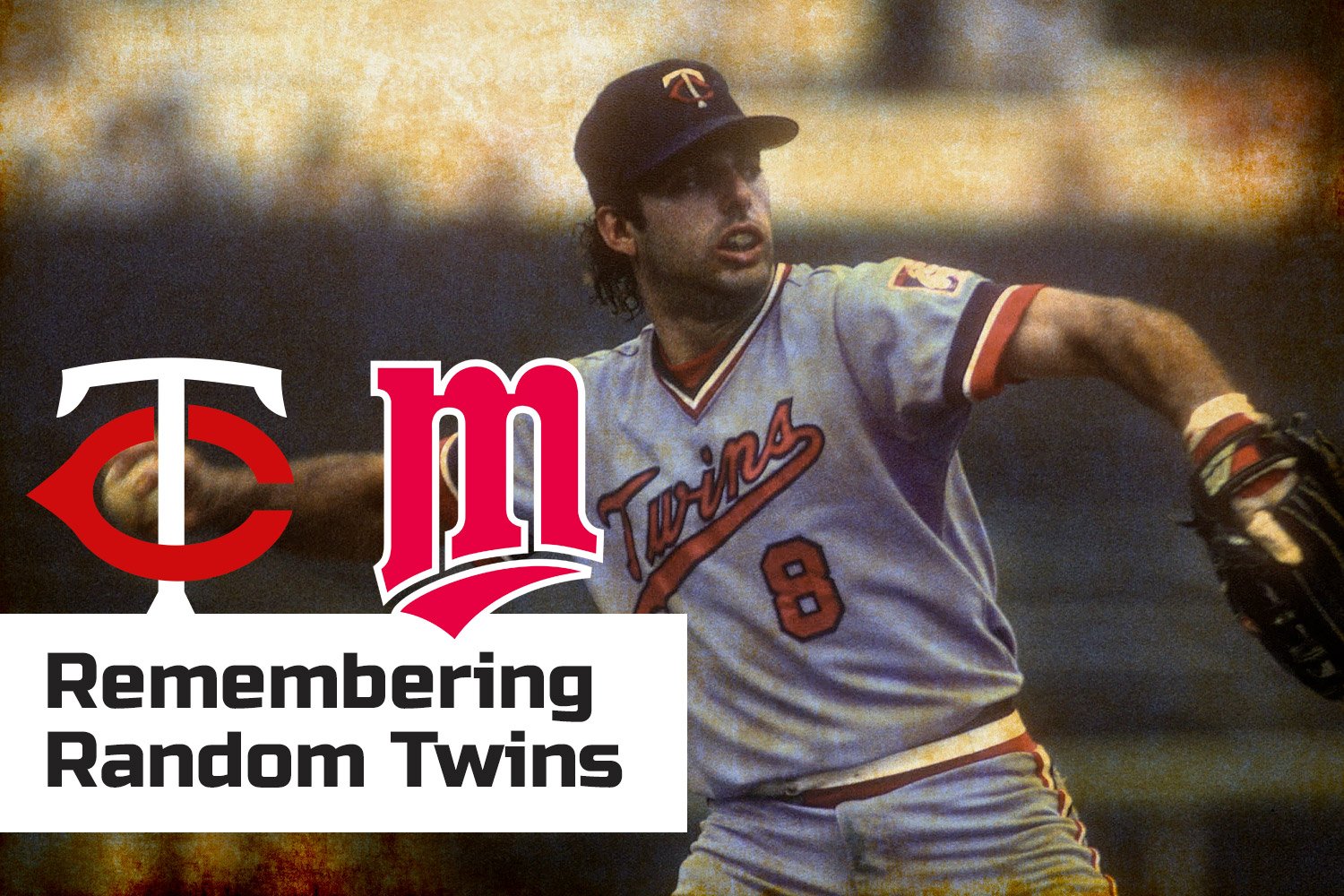
Who is the best third baseman in Twins history? There are a few worthy players to consider. Of course, Hall of Famer Harmon Killebrew played some third base but only had three seasons as a Twin where he played more third base than other positions. John Castino won Rookie of the Year in 1979, but back issues curtailed his promising career. Ron Coomer was a good, not great, fan favorite for the bad 1990s team, and he, like Killebrew, played more first base in his career. Corey Koskie was great in the early 2000s – a great hitter and fielder in seven seasons for the Twins. Trevor Plouffe and Nick Punto had some decent seasons as well. But I think most would agree that the choice is obvious. Gary Gaetti was the best third baseman in Twins history.
Gary Joseph Gaetti was born August 19, 1958, in Centralia, Illinois, about an hour east of St. Louis. Like many other children in the neighborhood, he quickly became a Cardinals fan. He came from a blue-collar family. His father worked for the railroad. His dad often nurtured Gary’s love of baseball, playing catch and hitting grounders after the elder Gaetti’s long day at work.
After graduating from Centralia High School. Gary considered getting a job with the railroad, but in an instance of reverse nepotism, his father made sure young Gary did not get the job. That forced Gary to look for an alternative, and he ended up at Lincoln Land Community College in Springfield and played baseball. He impressed enough that he was drafted in both 1978 MLB Drafts (by the Cardinals in January and by the White Sox in June) but decided to transfer to Northwest Missouri State University to play at a higher level of competition. After a successful 1979 season, the Twins selected the right-handed power hitter in the first round of the MLB draft, 11th overall.
Gaetti joined the Twins minor leagues and made an immediate impact. From 1979 to 1981, the six-foot, 180-pound Gaetti totaled 66 home runs and 217 runs batted in. During this time Gaetti obtained two memorable nicknames, “G-Man” and “the Rat” (because you can’t sneak the cheese – fastball – past the Rat). The Twins gave him his first taste of big-league action at the end of the 1981 season. His first game was against the Texas Rangers, where Gaetti hit a home run in his first plate appearance off knuckleballer Charlie Hough. His 20-year Major League career was off to a blazing start. He would never again return to the minor leagues.
Like his first plate appearance, Gaetti started 1982 with a bang. On his first opening day, G-Man had two home runs, a triple, a single, and four runs batted in. But his one-man show was not enough, as the Twins fell to the Mariners 11-7. This was a precursor for the 1982 season – there were some young hitters with potential, but not enough pitching. 1982 would see the team lose 102 games, a team record worst at the time. Gaetti’s season was one on which to build. He hit .230/.280/.443 for a .723 OPS. He had 25 home runs and 84 runs batted in. He finished fifth in Rookie of the Year voting (teammate Kent Hrbek was second). Gary was now entrenched as the Twins' third baseman, remaining until 1990.
By 1984, the team was improving. Gaetti’s power inexplicably dipped to only five home runs, but the team was winning and in a pennant race for the first time for most of this young group of players. In the third to last game of the season, the Twins had one of their most memorable games ever, but not in a good way. They were still technically alive in the playoff race, three games back of Kansas City. They needed to win their last three games against Cleveland and hope for help. After the top of the third, things could not have looked better. The Twins had jumped out to a 10-0 lead. But the Twins’ inexperience in these types of pressure-packed games began to show. Young ace pitcher, Frank Viola, gave up a two-run homer in the third inning but the Twins still held a 10-2 lead. The sixth inning was the beginning of the real disaster. Cleveland scored seven times. Gaetti had a devastating throwing error that contributed to three unearned runs that inning. The Twins ultimately lost 11-10 and were eliminated from playoff contention. After the game Gaetti had a famous quote about the debacle, “It’s hard to throw with both hands around your neck.” The comment is frank and to the point, similar to how he played the game.
Gaetti and the young Twins improved each season. By 1986, Gaetti put together a tremendous season. He batted .287/.347/.518 and an OPS+ of 131. He had 34 home runs and 108 runs batted in. He also won his first Gold Glove. Gaetti’s 1987 numbers were very similar, and the team success finally came. The Twins won the Western Division and advanced to the playoffs.
As a fan watching, I had the impression that Gaetti was an ultra-competitive player who got hyped up for big situations. He showed that in a big way in Game One of the American League Championship Series against Detroit. The Tigers won 98 games in 1987 while the plucky Twins won only 85. Detroit was seen as a huge favorite to win the series. They had older, more experienced players who had won the World Series three seasons earlier. But the young Twins, especially Gaetti, would not be intimidated. Gaetti came to play for Game One. In his first postseason plate appearance, he matched what he did in his first career plate appearance. He ripped a home run. Then he matched that by hitting another dinger in his second plate appearance. Gaetti finished the game with two home runs and a walk, he scored three and drove in two. The Twins won 8-5.
In Game Two, Gaetti had a double, and a run scored a run in the 6-3 win. G-Man had two hits and two RBI in Game Three where the Twins dug out of a 5-0 deficit and took a 6-5 lead only to see the Tigers come back and win 7-6. But the Twins came back and won Game Four 5-3. Gaetti drove in a run with a sacrifice fly, but a bigger contribution came in the field. In the bottom of the sixth inning, the Twins were up 4-2. The first three Tigers hitters singled to make it 4-3. After a sacrifice bunt, there was one out and runners on second and third. At this point, Gaetti signaled to catcher Tim Laudner and after a pitch, Laudner fired to third base, where Gaetti was waiting to tag out Tiger runner Darrell Evans who had strayed too far from the bag. It was a pivotal play in this tight game and the series. It helped the Twins escape the inning with a lead, which they would not relinquish. What could have easily been a tie series now had the Twins with a three games to one lead. The Twins smelled blood in Game Five and jumped out to a quick 4-0 lead. Gaetti singled and scored the first run in the four-run second inning. The Twins went on to win 9-5 and advanced to the second World Series since moving to Minnesota. For his strong play, Gaetti was selected as the ALCS Most Valuable Player.
The Twins faced the St. Louis Cardinals in the World Series where they were underdogs again. But like the ALCS, the Twins started quickly, winning the first two games at home again. Gaetti had two hits in five at bats in Game One as the Twins hammered the Cards, 10-1. The Twins came out quickly again in Game Two getting out to an early 7-0 lead, thanks partly to a Gaetti second inning home run. He would finish the game with two hits and a walk, he scored two and drove in one in the 8-4 win. The Twins bats went cold in St. Louis where the Cardinals won all three games. Gaetti had only two hits in the three games. The Twins’ backs were against the wall and the Cardinals got out to a 5-2 lead in Game Six. But in the bottom of the fifth inning the Twins bats came alive. Kirby Puckett singled to start the inning. Gaetti doubled to score Kirby. Then Don Baylor homered. Three batters. Three runs. Tie game. The Twins scored another in the fifth then four more in the sixth. In the end, they won easily, 11-5. Game Seven was tight the whole way. Gaetti contributed only a walk and was thrown out at home trying to score in the fifth inning. No worries, though. The Twins scored the go ahead run in the sixth inning on an infield single by Greg Gagne and scored an insurance run in the eighth inning. They took a 4-2 lead into the ninth inning where Jeff Reardon closed out the Cardinals with a 1-2-3 inning. Gary Gaetti started the final out, gobbling up a chopper from Willie McGee and firing the ball across the diamond to longtime friend and teammate, Kent Hrbek, to win the first World Series for Minnesota. Gaetti and the Twins had reached the pinnacle.
In 1988, the Twins followed their World Series championship with a decent season. They had a better record than 1987 finishing 91-71. But the Oakland A’s were building an excellent team with power hitting and good pitching. The A’s won 104 games. The Twins finished second, 13 games behind. Gaetti had a strong season, batting over .300 for the only time in his career. In 1988, G-Man hit .301/.353/.551 with 28 home runs and 88 RBI. His OPS+ was also a career-high 148. He made his first All-Star Game and won his third consecutive Gold Glove.
Gaetti went to another All-Star game in 1989 and won his fourth Gold Glove, but his offensive numbers began to slide. The power hitter had only 19 and 16 home runs respectively in 1989 and 1990. His OPS+ dipped to 88 and 76. And that was the end of his Twins career.
Despite a couple of down seasons by Gaetti’s standards, the Angels were unafraid to award him a four-year $11.4 million contract. His play was not good in 1991, got worse in 1992, and was so atrocious in 1993 that he was often not starting and was ultimately released with a year and a half left on the contract. From afar, this Twins fan thought he was washed up. But soon, the Kansas City Royals took a flyer on Gaetti. He was good for the rest of 1993 and 1994. In 1995, he was excellent with a career-high 35 home runs and 96 RBI and won his only Silver Slugger Award.
He signed to play with his boyhood-favorite Cardinals in 1996. That went well. In two plus seasons, he produced 5.6 WAR, and his OPS+ was over 100. In 1998, the Cardinals were in the pennant race. They saw an opportunity to improve themselves by trading for third baseman Fernando Tatis, Sr. One could argue that Tatis was not an improvement over Gaetti, but he was having a good season, and he was 14 years younger. After the Cardinals acquired Tatis, Gaetti was released. The Chicago Cubs signed him five days later – the Cardinals’ archrival. Gaetti was great down the stretch for the Cubs, with eight home runs and 27 RBI in only 37 games. In the pennant race, Gaetti’s Cubs finished ahead of the Cardinals but neither team won the division. In that summer of the epic home run battle of Mark McGwire and Sammy Sosa, who remembers that it was the Houston Astros who won the National League Central Division? However, Gaetti and the Cubs did qualify for the playoffs as the Wild Card. (An interesting bit of trivia is that Gary Gaetti was the only player to play with both McGwire and Sosa during that memorable summer.) In the NL Division Series, the Cubs were quickly swept by the Atlanta Braves. Gaetti had only one hit in the three games.
Gary Gaetti played another season with Chicago followed by surprisingly making the Red Sox in 2000 as a 40-year-old minor league free agent. He made the team, but it didn’t last long. He had no hits in five games before he retired. His 20-year career was over.
Gaetti’s lengthy career places him high on many all-time lists. His 2,282 games played as a third baseman are the fourth most ever by a third baseman (ahead of names like Wade Boggs, Mike Schmidt, and Eddie Mathews). He is 58th in career games played among all players. His 360 home runs placed him 88th all-time. His 1,341 runs batted in are 93rd. He holds a couple of very obscure records: most triple plays by a third baseman with seven, and most home runs by a player who hit a home run in their first plate appearance. For his career, he batted .255/.308/.434. He accumulated an impressive 42.1 WAR. Despite a handful of excellent seasons, he finished with a below-average OPS+ of 97. He received four votes (of 520 voters) in Hall of Fame voting during his single year on the ballot.
This is all great, but Gaetti’s best seasons were with the Twins. His two All-Star games came as a Twin. He won four consecutive Gold Gloves as a Twin. The only other Twins with more Gold Gloves than Gaetti’s four are Jim Kaat (12 with Twins), Torii Hunter (7 with Twins), and Kirby Puckett (6). Gaetti was selected to the Twins Hall of Fame in 2007. During his induction, Hrbek summed up his longtime friend, saying, “Gary wanted to win more than anybody. Gary wasn’t out there to make friends or headlines. He was just out there to win.” I can’t think of a better way to wrap this up.
Gary Gaetti was one of my favorite Twins and I believe he was the greatest third baseman in Twins history. What do you think? Please share your memories and opinions below.
If you like looking back at the Twins past, check out my previous articles at Twins Daily History.
Sources include Baseball Reference, Society for American Baseball Research, Twenty-Five Seasons: The First Quarter Century of the Minnesota Twins, Kent Hrbek’s Tales from the Minnesota Twins Dugout, and The Stark Truth.
Are you optimistic about the Twins right now?

Are you interested in Twins history? Then check out the Minnesota Twins Players Project, a community-driven project to discover and collect great information on every player to wear a Twins uniform!
View The Players Project






Recommended Comments
Create an account or sign in to comment
You need to be a member in order to leave a comment
Create an account
Sign up for a new account in our community. It's easy!
Register a new accountSign in
Already have an account? Sign in here.
Sign In Now