Jump to content
Twins Daily
  • Create Account

Recommended Posts

Posted
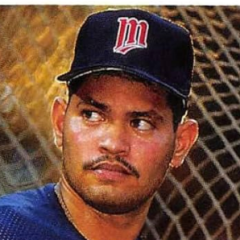
Image courtesy of © Nick Turchiaro-Imagn Images

Throughout the offseason, Trevor Larnach worked to refine his approach at the plate, focusing on making more consistent contact and becoming a more complete offensive contributor. While that adjustment has shown some positive results, it has also coincided with a noticeable shift in his power profile.

Manager Derek Shelton pointed to several hard-hit balls during the Twins' recent road trip as evidence that better results could be on the horizon. However, Larnach's underlying metrics suggest a more significant change may be taking place. Since early May, he has increased his contact rate, but it appears to have come at the expense of the impact that made him one of Minnesota's most dangerous left-handed hitters.

Beginning with the road series against Washington and Cleveland, Larnach posted a .225/.295/.352 slash line while averaging just 85.1 mph in exit velocity. His contact point has also moved significantly farther out in front of the plate compared to 2025, a potential indication that he is committing earlier to pitches and prioritizing contact over damage.

That trend is particularly noteworthy considering the adjustments he has already made to his swing. Twins Daily reported in 2025 that Larnach had flattened his bat path, reducing his swing angle from 40 degrees to 36 degrees. This season, that figure has dipped again to 33 degrees and it's making a huge difference in his production. The tip of the bat is nearly scrapping the ground, but it's squaring up and has shoved his stats early in the season lookg better already then 2025.

image.png              image.png

The clearest example came during his home run against Pittsburgh. Larnach turned on a 98 mph fastball and made contact approximately 40.5 inches in front of his body—an unusually aggressive contact point against that velocity. The result was a home run, but the swing also raised an important question: Is Larnach intentionally moving his contact point forward to reduce swing-and-miss and put more balls in play?

The data suggests this may be less about timing and more about approach.

Despite the decline in power production, there are encouraging signs. Larnach has become considerably more selective at the plate, increasing his walk rate by 48 percent compared to 2025. He is consistently finding the sweet spot of the bat, with a sweet-spot percentage approaching 66 percent, and much of his contact has been driven through the middle of the field. Rather than selling out for pull-side power, he appears focused on producing quality at-bats and creating opportunities for the offense.

In many ways, Larnach's evolution reflects a hitter continuing to make adjustments. While the power numbers have suffered, the improved discipline and contact quality have helped make him a productive offensive piece in other ways and he's having one of the best seasons of his career.

The transition also appears to be gaining traction. Since returning to Target Field at the start of June, Larnach has recorded hits in three of four games while helping manufacture three runs for Minnesota's offense.

Whether this shift is the result of an organizational emphasis or simply a hitter searching for a more sustainable approach remains unclear. What is evident, however, is that the version of Larnach the Twins are seeing today looks different from the one who generated much of his power a season ago.

Larnach has been open about hits struggles, as well as his growth. At the beginning of the season, it was obvious that he was confident in his process and that his commitment to the game was a priority. It leads to a thought about how he continues to improve when other hitters continue to struggle with finding a way to hit for power only, leaving out the adjustments that make players like Larnach continue to be successful. Looking at previous trends in his at-bats, intentional has appeared to be the name of the game for Larnach, but maybe his secret formula to his recent success is a mixture of both.

The answer may reveal the true story behind how his struggles that started on the road came about. If the change is intentional, it points to a philosophical adjustment centered on contact and plate discipline. If it is not, it could suggest a hitter who has become sped up by velocity and is compensating by committing earlier, an explanation that would align with both the reduced slugging numbers and the decline in hard contact. Either way, Larnach continues to be one of the most productive hitters on the team, as well as a strong presence in the field.


View full article

Posted

Trade him at the deadline. He’ll be due something in the $7-8mil range next year and doesn’t warrant that. Time to start making decisions with an eye towards the future. Roden’s rehab assignment is moving to Ft Myers and I’d rather see what he’s got.  

Create an account or sign in to comment

You need to be a member in order to leave a comment

Create an account

Sign up for a new account in our community. It's easy!

Register a new account

Sign in

Already have an account? Sign in here.

Sign In Now
The Twins Daily Caretaker Fund

You all care about this site. The next step is caring for it. We’re asking you to caretake this site so it can remain the premier Twins community on the internet.

×
×
  • Create New...