



Matthew Trueblood
-
Posts
1,033 -
Joined
-
Last visited
Content Type
Profiles
News
Minnesota Twins Videos
2026 Minnesota Twins Top Prospects Ranking
2022 Minnesota Twins Draft Picks
Minnesota Twins Free Agent & Trade Rumors, Notes, & Tidbits
Guides & Resources
2023 Minnesota Twins Draft Picks
The Minnesota Twins Players Project
2024 Minnesota Twins Draft Picks
2025 Minnesota Twins Draft Pick Tracker
2026 Minnesota Twins Draft Tracker: Picks & Bonuses
Forums
Blogs
Events
Store
Downloads
Gallery
Everything posted by Matthew Trueblood
-
The Earned Drama and the Hero Shot: World Series Game 1
Matthew Trueblood posted an article in Caretakers
.png.2240a9f38f3ef40f5ddf19b246506d45.png) When Game 1 of the 2024 World Series began, there had been 20 home runs in the history of the Fall Classic that took a team from behind to ahead, in the sixth inning or later. There have been more go-ahead home runs than that, of course, but it's easy to forget just how many of them came with the score already tied. Often, in those moments, you already knew something was up. Those dingers hit like sudden, breathtaking forward sprints, from a standing start: they brought the blood up to your cheeks, and they got that tingle of adrenaline racing out to your fingertips. But was there drama, there? Was the rising action sufficient to give the moment the perfect mixture of expectation and desperation—of fear, and hope, and then (depending on your perspective) the violent confounding or confirmation of either? No, I like my go-ahead homers to be single-stroke come-from-behind jobs. To make them happen, there has to have been some preamble. After all, there's a runner on base. Besides, while a tie game can be tense and taut, the ragged, feral energy of a close but non-tied game is something different, brighter, sharper, more dangerous, and more fun. In those moments, a home run hits less like a sudden sprint and more like a masterfully blocked twist in a dramatic story. Twists that good are earned and difficult and therefore rare, which is why we'd only seen 20 of them when Friday's game started. Now we've seen 22.
When Game 1 of the 2024 World Series began, there had been 20 home runs in the history of the Fall Classic that took a team from behind to ahead, in the sixth inning or later. There have been more go-ahead home runs than that, of course, but it's easy to forget just how many of them came with the score already tied. Often, in those moments, you already knew something was up. Those dingers hit like sudden, breathtaking forward sprints, from a standing start: they brought the blood up to your cheeks, and they got that tingle of adrenaline racing out to your fingertips. But was there drama, there? Was the rising action sufficient to give the moment the perfect mixture of expectation and desperation—of fear, and hope, and then (depending on your perspective) the violent confounding or confirmation of either? No, I like my go-ahead homers to be single-stroke come-from-behind jobs. To make them happen, there has to have been some preamble. After all, there's a runner on base. Besides, while a tie game can be tense and taut, the ragged, feral energy of a close but non-tied game is something different, brighter, sharper, more dangerous, and more fun. In those moments, a home run hits less like a sudden sprint and more like a masterfully blocked twist in a dramatic story. Twists that good are earned and difficult and therefore rare, which is why we'd only seen 20 of them when Friday's game started. Now we've seen 22.- 1 comment
-
- 3
-

-
- freddie freeman
- giancarlo stanton
- (and 3 more)
-
Yankees vs. Dodgers: Previewing the 2024 World Series
Matthew Trueblood posted an article in Caretakers
.png.765424335e4735b7ba1afb0754c9dbdf.png) Why does it affront so many fans when big-market teams succeed? That question is rhetorical, but not sneering, because once you think about it a bit, the reason is both obvious and reasonable: it makes us all feel small. Every baseball fan holds equal worth, and no team's worth and value depends solely on the size of their fan base, let alone some special merit that stretches past numbers. That's the truth, and it's fair and it's just, but the sharp-edged threat and snarl of it is this: there are more Yankees fans than there are Twins fans. There are more Dodgers fans than there are Twins fans. They aren't smarter, or more passionate, or more special, and neither the league nor its broadcast partners nor mainstream media intends to treat those fans as more valuable than Twins, Brewers, Cubs, or any other kinds of fans. But there are way, way more of them, and that raises the stakes of the whole affair when something like this World Series matchup happens. The league has a greater opportunity, and has a fiduciary duty—as much to Twins and Brewers and Cubs fans as to Yankees and Dodgers fans—to seize it. Their broadcast partners have a larger audience and the ability to justify more resources allocated toward serving it. The commentary media has a chance, especially in our polarized and friction-fueled social media world, to stir up some pride and some bile. They're all going to act accordingly, and it's hard to blame them—er, actually, it's very easy, fun, and wildly popular to blame them. But it's probably also wrong. Coverage of a series like Yankees-Dodgers tends to savor of triumphalism, which our Midwestern eyes tend to code as coastal elitism. In truth, though, it's just writers and marketers and TV producers working with what they have. We might fairly argue for a system that works harder to evenly distribute revenue throughout the league, but even if such a system went into effect today, it wou;dn't erase the last 125 years. Over that century and change, Yankee and Dodger triumphs pepper the landscape, and Yankees and Dodgers legends people the pages. Why is this Series exciting? Because these two teams are meeting in this context for the 12th time, more than anyone else has done it. When the Twins made the World Series, there were plenty of paeans to the value of Minnesotan baseball and its specific virtues. It's just been so long since the team made it that we tend to misremember those blandishments as smaller than the compliments paid to these teams. Certainly, when the Cubs were in the Series in 2016, a huge deal was made of it. Now, it's the Yankees' and Dodgers' turn. Have I convinced you to care about this fight between two evil corporate supervillains? If so, I hope you'll read on, especially if you're not yet a Caretaker. You can become one for just $6 on our monthly plan, which will get you my coverage throughout the Series and our Offseason Handbook right after it. After that, you can decide whether to stick around and continue enjoying the benefits of our premium content, along with extra perks. If not, hey, sign up anyway! Maybe I can sell you on it before the games run out.
Why does it affront so many fans when big-market teams succeed? That question is rhetorical, but not sneering, because once you think about it a bit, the reason is both obvious and reasonable: it makes us all feel small. Every baseball fan holds equal worth, and no team's worth and value depends solely on the size of their fan base, let alone some special merit that stretches past numbers. That's the truth, and it's fair and it's just, but the sharp-edged threat and snarl of it is this: there are more Yankees fans than there are Twins fans. There are more Dodgers fans than there are Twins fans. They aren't smarter, or more passionate, or more special, and neither the league nor its broadcast partners nor mainstream media intends to treat those fans as more valuable than Twins, Brewers, Cubs, or any other kinds of fans. But there are way, way more of them, and that raises the stakes of the whole affair when something like this World Series matchup happens. The league has a greater opportunity, and has a fiduciary duty—as much to Twins and Brewers and Cubs fans as to Yankees and Dodgers fans—to seize it. Their broadcast partners have a larger audience and the ability to justify more resources allocated toward serving it. The commentary media has a chance, especially in our polarized and friction-fueled social media world, to stir up some pride and some bile. They're all going to act accordingly, and it's hard to blame them—er, actually, it's very easy, fun, and wildly popular to blame them. But it's probably also wrong. Coverage of a series like Yankees-Dodgers tends to savor of triumphalism, which our Midwestern eyes tend to code as coastal elitism. In truth, though, it's just writers and marketers and TV producers working with what they have. We might fairly argue for a system that works harder to evenly distribute revenue throughout the league, but even if such a system went into effect today, it wou;dn't erase the last 125 years. Over that century and change, Yankee and Dodger triumphs pepper the landscape, and Yankees and Dodgers legends people the pages. Why is this Series exciting? Because these two teams are meeting in this context for the 12th time, more than anyone else has done it. When the Twins made the World Series, there were plenty of paeans to the value of Minnesotan baseball and its specific virtues. It's just been so long since the team made it that we tend to misremember those blandishments as smaller than the compliments paid to these teams. Certainly, when the Cubs were in the Series in 2016, a huge deal was made of it. Now, it's the Yankees' and Dodgers' turn. Have I convinced you to care about this fight between two evil corporate supervillains? If so, I hope you'll read on, especially if you're not yet a Caretaker. You can become one for just $6 on our monthly plan, which will get you my coverage throughout the Series and our Offseason Handbook right after it. After that, you can decide whether to stick around and continue enjoying the benefits of our premium content, along with extra perks. If not, hey, sign up anyway! Maybe I can sell you on it before the games run out. -
For this particular Fall Classic, the Midwest truly will be flyover country, as the Yankees and Dodgers pull the attention of the baseball world back and forth across the breadth of the continent. For fans who can set aside their provincialism and the bitterness of their own seasons' ends, though, it's going to be a whale of a matchup. Image courtesy of © Jayne Kamin-Oncea-Imagn Images Why does it affront so many fans when big-market teams succeed? That question is rhetorical, but not sneering, because once you think about it a bit, the reason is both obvious and reasonable: it makes us all feel small. Every baseball fan holds equal worth, and no team's worth and value depends solely on the size of their fan base, let alone some special merit that stretches past numbers. That's the truth, and it's fair and it's just, but the sharp-edged threat and snarl of it is this: there are more Yankees fans than there are Twins fans. There are more Dodgers fans than there are Twins fans. They aren't smarter, or more passionate, or more special, and neither the league nor its broadcast partners nor mainstream media intends to treat those fans as more valuable than Twins, Brewers, Cubs, or any other kinds of fans. But there are way, way more of them, and that raises the stakes of the whole affair when something like this World Series matchup happens. The league has a greater opportunity, and has a fiduciary duty—as much to Twins and Brewers and Cubs fans as to Yankees and Dodgers fans—to seize it. Their broadcast partners have a larger audience and the ability to justify more resources allocated toward serving it. The commentary media has a chance, especially in our polarized and friction-fueled social media world, to stir up some pride and some bile. They're all going to act accordingly, and it's hard to blame them—er, actually, it's very easy, fun, and wildly popular to blame them. But it's probably also wrong. Coverage of a series like Yankees-Dodgers tends to savor of triumphalism, which our Midwestern eyes tend to code as coastal elitism. In truth, though, it's just writers and marketers and TV producers working with what they have. We might fairly argue for a system that works harder to evenly distribute revenue throughout the league, but even if such a system went into effect today, it wou;dn't erase the last 125 years. Over that century and change, Yankee and Dodger triumphs pepper the landscape, and Yankees and Dodgers legends people the pages. Why is this Series exciting? Because these two teams are meeting in this context for the 12th time, more than anyone else has done it. When the Twins made the World Series, there were plenty of paeans to the value of Minnesotan baseball and its specific virtues. It's just been so long since the team made it that we tend to misremember those blandishments as smaller than the compliments paid to these teams. Certainly, when the Cubs were in the Series in 2016, a huge deal was made of it. Now, it's the Yankees' and Dodgers' turn. Have I convinced you to care about this fight between two evil corporate supervillains? If so, I hope you'll read on, especially if you're not yet a Caretaker. You can become one for just $6 on our monthly plan, which will get you my coverage throughout the Series and our Offseason Handbook right after it. After that, you can decide whether to stick around and continue enjoying the benefits of our premium content, along with extra perks. If not, hey, sign up anyway! Maybe I can sell you on it before the games run out. View full article
-
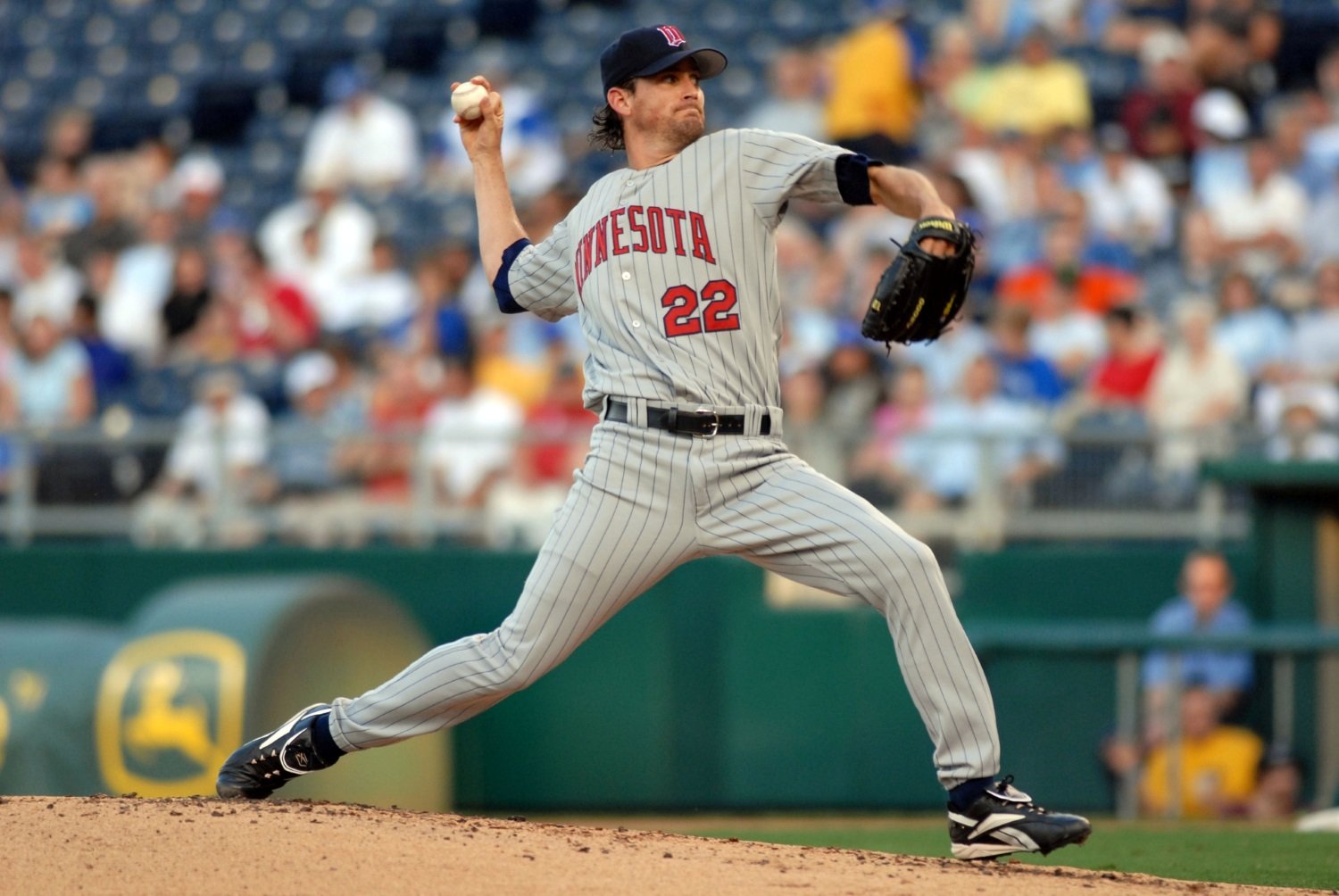
Yes, pitchers throw harder than they used to. But there's so much more about their fastballs that has changed, over the last 20 years. Image courtesy of © Jerome Miron-Imagn Images Last week, in watching an old Twins game against the Red Sox, I found myself thinking a lot about all the information we didn't get about games played as recently as 2007, but which we can obtain with a few well-directed clicks for any game of the last 17 seasons. It's obvious, to anyone who grew up with the game before computers began meticulously capturing and documenting the action in numbers, that pitching has changed a lot in the time since then. As I watched, though, I was increasingly struck by the feeling that some of the non-obvious changes to the way pitchers throw fastballs were the most important ones. For those who didn't read the above-linked article, the game I watched and reflected on was a clash on the day of the 2005 trade deadline, and Brad Radke took the ball for the Twins that day. If you're reading this, you probably have at least a generational memory of Radke; he was a fixture for the team for over a decade. He was one of the great FIPsters of the era just before FIP gained wide acceptance as an indicator of real talent. He struck out a good number of batters, for a pitcher without overwhelming stuff, and he issued very, very few walks. His ERAs rarely fully reflected his brilliance in those regards, though, because he gave up a lot of home runs. It was as much part of his style as were the good strikeout and walk numbers, but it felt unfair. He was doing everything right, except the most important thing, and so he was much more often good than great. Radke was, perhaps, a little ahead of his time. He used the high fastball to set up the rest of his arsenal, which tended to bend and tumble toward the bottom of the zone. He accepted the homers he allowed as part of doing business, because he didn't have five extra miles per hour laying around or anything, and he couldn't enjoy as much success with his soft stuff except by throwing the high heater. In the two decades since Radke slipped into his senescence, the landscape of pitching has changed in some radical ways. There are plenty of modern pitchers who do some version of the same calculus Radke did and accept the same tradeoffs, but the way those tradeoffs actually take shape has changed quite a bit. Let's talk about how. View full article
-
.png.65a920a2ac36be5ea5ff1f0486629617.png) Last week, in watching an old Twins game against the Red Sox, I found myself thinking a lot about all the information we didn't get about games played as recently as 2007, but which we can obtain with a few well-directed clicks for any game of the last 17 seasons. It's obvious, to anyone who grew up with the game before computers began meticulously capturing and documenting the action in numbers, that pitching has changed a lot in the time since then. As I watched, though, I was increasingly struck by the feeling that some of the non-obvious changes to the way pitchers throw fastballs were the most important ones. For those who didn't read the above-linked article, the game I watched and reflected on was a clash on the day of the 2005 trade deadline, and Brad Radke took the ball for the Twins that day. If you're reading this, you probably have at least a generational memory of Radke; he was a fixture for the team for over a decade. He was one of the great FIPsters of the era just before FIP gained wide acceptance as an indicator of real talent. He struck out a good number of batters, for a pitcher without overwhelming stuff, and he issued very, very few walks. His ERAs rarely fully reflected his brilliance in those regards, though, because he gave up a lot of home runs. It was as much part of his style as were the good strikeout and walk numbers, but it felt unfair. He was doing everything right, except the most important thing, and so he was much more often good than great. Radke was, perhaps, a little ahead of his time. He used the high fastball to set up the rest of his arsenal, which tended to bend and tumble toward the bottom of the zone. He accepted the homers he allowed as part of doing business, because he didn't have five extra miles per hour laying around or anything, and he couldn't enjoy as much success with his soft stuff except by throwing the high heater. In the two decades since Radke slipped into his senescence, the landscape of pitching has changed in some radical ways. There are plenty of modern pitchers who do some version of the same calculus Radke did and accept the same tradeoffs, but the way those tradeoffs actually take shape has changed quite a bit. Let's talk about how.
Last week, in watching an old Twins game against the Red Sox, I found myself thinking a lot about all the information we didn't get about games played as recently as 2007, but which we can obtain with a few well-directed clicks for any game of the last 17 seasons. It's obvious, to anyone who grew up with the game before computers began meticulously capturing and documenting the action in numbers, that pitching has changed a lot in the time since then. As I watched, though, I was increasingly struck by the feeling that some of the non-obvious changes to the way pitchers throw fastballs were the most important ones. For those who didn't read the above-linked article, the game I watched and reflected on was a clash on the day of the 2005 trade deadline, and Brad Radke took the ball for the Twins that day. If you're reading this, you probably have at least a generational memory of Radke; he was a fixture for the team for over a decade. He was one of the great FIPsters of the era just before FIP gained wide acceptance as an indicator of real talent. He struck out a good number of batters, for a pitcher without overwhelming stuff, and he issued very, very few walks. His ERAs rarely fully reflected his brilliance in those regards, though, because he gave up a lot of home runs. It was as much part of his style as were the good strikeout and walk numbers, but it felt unfair. He was doing everything right, except the most important thing, and so he was much more often good than great. Radke was, perhaps, a little ahead of his time. He used the high fastball to set up the rest of his arsenal, which tended to bend and tumble toward the bottom of the zone. He accepted the homers he allowed as part of doing business, because he didn't have five extra miles per hour laying around or anything, and he couldn't enjoy as much success with his soft stuff except by throwing the high heater. In the two decades since Radke slipped into his senescence, the landscape of pitching has changed in some radical ways. There are plenty of modern pitchers who do some version of the same calculus Radke did and accept the same tradeoffs, but the way those tradeoffs actually take shape has changed quite a bit. Let's talk about how. -
 Every year, even before baseball has quite stopped, I start missing it. I know that's silly, but it's very much how I'm wired. One part of me likes that the game has an offseason, and not because I savor the daily pining and hand-wringing if trades don't flow like the waters of the Mississippi. I do love some good hot-stove talk, but it's all just a distraction from the absence of baseball, all that rumor-mongering and transaction analysis. The game is what we really love, and there are stretches of the fall and the winter where I can be without it--but in mid-October, when the flow of games thins to a trickle and my favorite teams often don't even get to participate, I am downright ravenous. There used to be 15 games a day. When, suddenly, there are only two, I want 20. Here's the thing about being a baseball fan in our particular moment of history's march to the future, though: any baseball deprivation from which you suffer is voluntary. If you want it, and if you're not afflicted by some Borgesian curse of super-memory, YouTube is positively crawling with baseball. Just pick a game and settle in. Often, the commercials have even been edited out. I do this all the time, and this offseason, I'm going to occasionally invite you down whatever rabbit holes I find by doing it. I flipped on a game played on the day of the 2005 trade deadline Thursday night. The Twins were visiting the defending champion Red Sox, and (in brash, very on-brand defiance of rumors that he might trade his top prospect) Boston GM Theo Epstein had promoted Jonathan Papelbon (who just went by Jon then) to make his big-league debut. The video preserved online is the NESN broadcast, but so be it. In fact, it was a pretty fun day to be a fly on that particular wall. Starting opposite Papelbon, for the Twins, was Brad Radke. Got lucky there. In this game, the Twins started creatures long lost to my very normal human memory, guys named Luis Rodríguez, Terry Tiffee, and Mike Ryan. Torii Hunter had just gotten hurt. There were some hot-and-heavy rumors of a trade for Alfonso Soriano, but just at that moment, the Twins were depleted. Ron Gardenhire, in his infinite wisdom, batted Tiffee fourth, and Rodríguez second. Ryan batted eighth, but was the DH. These are three players with an aggregate career OPS+ of about 75. But! I got to watch Radke. This isn't strictly a Remember Some Guys, so if you want to dig deeper on the illustrious careers of Rodríguez, Tiffee, and Ryan, have fun. It's not going to be my focus. Instead, I want to talk about watching a young Joe Mauer catch and hit. I'd forgotten, just a little bit, what a joy that was. Not yet fully dedicated to his career-long crusade against first-pitch swinging, Mauer whacked away at the first pitch he saw from Papelbon in the top of the first. Both Shannon Stewart and Rodríguez had struck out, so maybe Joe just didn't want to risk the same fate. He flied out on that pitch, and he'd go hitless on the day, but he nearly undressed Papelbon with a liner back through the box in his second trip and drew a walk from him the third time. The quickness of his bat, the level ferocity of his swing, was delightful. So, too, was his stolid posture behind the plate. If you haven't watched any baseball except current baseball recently, go back and treat yourself to a peek at some old game--be it this one, or another. Catchers did their whole jobs differently! I don't mean this as a lament, the way some of the more toxic denizens of Baseball Twitter have decided to lately. I just think it's interesting. Every catcher nowadays catches with one knee down, of course, but Mauer wasn't doing any of that on this day. He had, instead, his two familiar stances. One, with no one on base, made use of his powerful legs to form a rock-solid (if mostly immobile) foundation: feet about shoulder-width, both shins square to the incoming pitch, butt slightly lower than knees as a counterbalance in the crouch. The other, with runners on, is the one I think of when I remember Mauer as a catcher. He'd start in that same compact fold, but after calling the pitch deep in the shadow of his crotch, he'd then bounce and stutter-step into a wider, more athletic stance. His feet would get well outside his frame, and outside his knees, such that both shin guards formed slashes from the ground up toward the target he set with his mitt. His upper body leaned forward more, and every move was quicker. He was ready to throw out runners who might try him, of course, but that repositioning of his legs also put him halfway to a blocking position, should the ball skip in the dirt. That stance, rather than the deeper, steadier bases-empty squat, is why catchers' knees hurt for the rest of their lives, but Mauer could bear it with ease back then. He was such a rare and special athlete back there. Radke, of course, didn't bounce anything in the dirt all day. Even when he went to his breaking and offspeed stuff, that wasn't how he did business. I'm just old enough to remember using Radke on Triple Play 2000 and similar video games, and I have 2002's invaluable The Neyer-James Guide to Pitchers: An Historical Compendium of Pitching, Pitchers, and Pitches, so I can tell you that Radke threw a fastball, a curve, a slider, and a changeup. But it's funny: he might be one of the most familiar pitchers for whom we don't have even one scrap of PITCHf/x data. The cameras and the robots and the data didn't take over the game until 2008; Radke would last appear in the big leagues in 2006. I mention that to convey a broader truth, too, which is that this game--played less than two full decades ago--sure feels like it belongs to a radically different time. There were pop-up velocity readings on NESN then, but no pitch counter on the screen. Only after Papelbon was lifted in the sixth inning did play-by-play man Don Orsillo mention that he had thrown exactly 100 pitches. It's a bit wild to imagine a rookie flamethrower being permitted to rack up such a workload--and to pitch until he was forced out by the opposing hitters, really, rather than out of proactive workload or situation management--in their MLB debut, but then, it's wild to watch baseball without the noxious white box telling us what should and shouldn't be a strike. Consuming this game was a wild time! I don't intend overlong discussions for these posts, and certainly not exhaustive recaps, so let me just hit a few more high notes. Justin Morneau (still in his No. 27 jersey, back then) opened the scoring with a home run against Papelbon, but David Ortiz and John Olerud hit back-to-back shots against Radke to give Boston a lead again. That, as we all remember, was Radke's kryptonite. He didn't issue a walk in this game, and went seven strong innings, only giving up one more tally in his final frame. He needed fewer pitches to get 21 outs than Papelbon did to get 16. He was always vulnerable to power, though, because of the extent to which he filled up the zone with non-overpowering stuff. After the Red Sox tied it 3-3 in the bottom of the seventh, the Twins threatened loudly in the top of the eighth. After a Ryan groundout, Nick Punto (you won't believe it!) beat out an infield single on a chopper to shortstop by diving headfirst into first base. Shannon Stewart then doubled off the Green Monster, but Punto was conservative and stopped at third. Big mistake. Huge. Remember who was batting second? Rodríguez popped up to the catcher, Jason Varitek, and then the Sox intentionally walked Mauer to get to (remember who was batting fourth?) Tiffee, who struck out to end the inning. Woof. It's not Twins-related, but to sell you on watching this game a bit: that day at Fenway was a real soap opera. Right up until about a decade ago, we still had these soap operas in sports. Then, it seems to me, everyone got really good media training overnight, and now we get nothing of the sort. I remind you, it was trade deadline day, and it was a tense one for Boston. Manny Ramírez was disgruntled. A few days earlier, he had taken himself out of a game, and possibly left the park early without permission. He'd been booed by the Fenway faithful, and he'd been benched for two days. There'd been a big clear-the-air meeting between the team and the player, and then one that involved the player and manager Terry Francona in the Sox skipper's office earlier that day. The thing was, Ramírez still wasn't in the lineup. This was a Sunday game, so the deadline passed during the contest, and only after it did so and a press box announcement of no more trades was made did people know for certain that Ramírez wasn't being dealt. (The Twins, and I hope this won't break your heart, didn't trade for Soriano, either.) All of this led, when Édgar Rentería doubled off the Monstah with two outs, to Juan Rincón intentionally walking Ortiz--and then, to a truly explosive, deafening ovation and with the PA system playing the 'Superman' theme, to Ramírez coming up as a pinch-hitter. Naturally, he drove in the go-ahead run. The place went to pieces. Speaking of soap opera characters, did you remember that Curt Schilling basically spent that season as a reliever? After returning from an injury in July, he worked as the team's closer--and, when he wasn't really all that good, as their mop-up man, too--for most of the second half. He came in and closed down the victory for the Sox, somehow managing not to be shaken by the intimidating presence of Ryan in the left-handed batter's box with two outs and the tying run at first. Papelbon started, Schilling finished. Radke, Mauer, and Morneau were great, but they were overshadowed by Boston's stars and undermined by some truly lousy teammates in this one. It was a pretty fair encapsulation of the 2005 Twins, and probably a very frustrating one in the moment. Watching it 20 years later and in the midst of a hankering, though, it was pretty fun.
- 2 comments
-
- 3
-
-

-
- joe mauer
- terry tiffee
- (and 3 more)
-
A man who fiercely loved baseball once called it "our best invention to stay change," so as the seasons turn and change swirls on, let's spend a moment batting it back. In fact, let's spend a bunch. Image courtesy of © John Rieger-Imagn Images Every year, even before baseball has quite stopped, I start missing it. I know that's silly, but it's very much how I'm wired. One part of me likes that the game has an offseason, and not because I savor the daily pining and hand-wringing if trades don't flow like the waters of the Mississippi. I do love some good hot-stove talk, but it's all just a distraction from the absence of baseball, all that rumor-mongering and transaction analysis. The game is what we really love, and there are stretches of the fall and the winter where I can be without it--but in mid-October, when the flow of games thins to a trickle and my favorite teams often don't even get to participate, I am downright ravenous. There used to be 15 games a day. When, suddenly, there are only two, I want 20. Here's the thing about being a baseball fan in our particular moment of history's march to the future, though: any baseball deprivation from which you suffer is voluntary. If you want it, and if you're not afflicted by some Borgesian curse of super-memory, YouTube is positively crawling with baseball. Just pick a game and settle in. Often, the commercials have even been edited out. I do this all the time, and this offseason, I'm going to occasionally invite you down whatever rabbit holes I find by doing it. I flipped on a game played on the day of the 2005 trade deadline Thursday night. The Twins were visiting the defending champion Red Sox, and (in brash, very on-brand defiance of rumors that he might trade his top prospect) Boston GM Theo Epstein had promoted Jonathan Papelbon (who just went by Jon then) to make his big-league debut. The video preserved online is the NESN broadcast, but so be it. In fact, it was a pretty fun day to be a fly on that particular wall. Starting opposite Papelbon, for the Twins, was Brad Radke. Got lucky there. In this game, the Twins started creatures long lost to my very normal human memory, guys named Luis Rodríguez, Terry Tiffee, and Mike Ryan. Torii Hunter had just gotten hurt. There were some hot-and-heavy rumors of a trade for Alfonso Soriano, but just at that moment, the Twins were depleted. Ron Gardenhire, in his infinite wisdom, batted Tiffee fourth, and Rodríguez second. Ryan batted eighth, but was the DH. These are three players with an aggregate career OPS+ of about 75. But! I got to watch Radke. This isn't strictly a Remember Some Guys, so if you want to dig deeper on the illustrious careers of Rodríguez, Tiffee, and Ryan, have fun. It's not going to be my focus. Instead, I want to talk about watching a young Joe Mauer catch and hit. I'd forgotten, just a little bit, what a joy that was. Not yet fully dedicated to his career-long crusade against first-pitch swinging, Mauer whacked away at the first pitch he saw from Papelbon in the top of the first. Both Shannon Stewart and Rodríguez had struck out, so maybe Joe just didn't want to risk the same fate. He flied out on that pitch, and he'd go hitless on the day, but he nearly undressed Papelbon with a liner back through the box in his second trip and drew a walk from him the third time. The quickness of his bat, the level ferocity of his swing, was delightful. So, too, was his stolid posture behind the plate. If you haven't watched any baseball except current baseball recently, go back and treat yourself to a peek at some old game--be it this one, or another. Catchers did their whole jobs differently! I don't mean this as a lament, the way some of the more toxic denizens of Baseball Twitter have decided to lately. I just think it's interesting. Every catcher nowadays catches with one knee down, of course, but Mauer wasn't doing any of that on this day. He had, instead, his two familiar stances. One, with no one on base, made use of his powerful legs to form a rock-solid (if mostly immobile) foundation: feet about shoulder-width, both shins square to the incoming pitch, butt slightly lower than knees as a counterbalance in the crouch. The other, with runners on, is the one I think of when I remember Mauer as a catcher. He'd start in that same compact fold, but after calling the pitch deep in the shadow of his crotch, he'd then bounce and stutter-step into a wider, more athletic stance. His feet would get well outside his frame, and outside his knees, such that both shin guards formed slashes from the ground up toward the target he set with his mitt. His upper body leaned forward more, and every move was quicker. He was ready to throw out runners who might try him, of course, but that repositioning of his legs also put him halfway to a blocking position, should the ball skip in the dirt. That stance, rather than the deeper, steadier bases-empty squat, is why catchers' knees hurt for the rest of their lives, but Mauer could bear it with ease back then. He was such a rare and special athlete back there. Radke, of course, didn't bounce anything in the dirt all day. Even when he went to his breaking and offspeed stuff, that wasn't how he did business. I'm just old enough to remember using Radke on Triple Play 2000 and similar video games, and I have 2002's invaluable The Neyer-James Guide to Pitchers: An Historical Compendium of Pitching, Pitchers, and Pitches, so I can tell you that Radke threw a fastball, a curve, a slider, and a changeup. But it's funny: he might be one of the most familiar pitchers for whom we don't have even one scrap of PITCHf/x data. The cameras and the robots and the data didn't take over the game until 2008; Radke would last appear in the big leagues in 2006. I mention that to convey a broader truth, too, which is that this game--played less than two full decades ago--sure feels like it belongs to a radically different time. There were pop-up velocity readings on NESN then, but no pitch counter on the screen. Only after Papelbon was lifted in the sixth inning did play-by-play man Don Orsillo mention that he had thrown exactly 100 pitches. It's a bit wild to imagine a rookie flamethrower being permitted to rack up such a workload--and to pitch until he was forced out by the opposing hitters, really, rather than out of proactive workload or situation management--in their MLB debut, but then, it's wild to watch baseball without the noxious white box telling us what should and shouldn't be a strike. Consuming this game was a wild time! I don't intend overlong discussions for these posts, and certainly not exhaustive recaps, so let me just hit a few more high notes. Justin Morneau (still in his No. 27 jersey, back then) opened the scoring with a home run against Papelbon, but David Ortiz and John Olerud hit back-to-back shots against Radke to give Boston a lead again. That, as we all remember, was Radke's kryptonite. He didn't issue a walk in this game, and went seven strong innings, only giving up one more tally in his final frame. He needed fewer pitches to get 21 outs than Papelbon did to get 16. He was always vulnerable to power, though, because of the extent to which he filled up the zone with non-overpowering stuff. After the Red Sox tied it 3-3 in the bottom of the seventh, the Twins threatened loudly in the top of the eighth. After a Ryan groundout, Nick Punto (you won't believe it!) beat out an infield single on a chopper to shortstop by diving headfirst into first base. Shannon Stewart then doubled off the Green Monster, but Punto was conservative and stopped at third. Big mistake. Huge. Remember who was batting second? Rodríguez popped up to the catcher, Jason Varitek, and then the Sox intentionally walked Mauer to get to (remember who was batting fourth?) Tiffee, who struck out to end the inning. Woof. It's not Twins-related, but to sell you on watching this game a bit: that day at Fenway was a real soap opera. Right up until about a decade ago, we still had these soap operas in sports. Then, it seems to me, everyone got really good media training overnight, and now we get nothing of the sort. I remind you, it was trade deadline day, and it was a tense one for Boston. Manny Ramírez was disgruntled. A few days earlier, he had taken himself out of a game, and possibly left the park early without permission. He'd been booed by the Fenway faithful, and he'd been benched for two days. There'd been a big clear-the-air meeting between the team and the player, and then one that involved the player and manager Terry Francona in the Sox skipper's office earlier that day. The thing was, Ramírez still wasn't in the lineup. This was a Sunday game, so the deadline passed during the contest, and only after it did so and a press box announcement of no more trades was made did people know for certain that Ramírez wasn't being dealt. (The Twins, and I hope this won't break your heart, didn't trade for Soriano, either.) All of this led, when Édgar Rentería doubled off the Monstah with two outs, to Juan Rincón intentionally walking Ortiz--and then, to a truly explosive, deafening ovation and with the PA system playing the 'Superman' theme, to Ramírez coming up as a pinch-hitter. Naturally, he drove in the go-ahead run. The place went to pieces. Speaking of soap opera characters, did you remember that Curt Schilling basically spent that season as a reliever? After returning from an injury in July, he worked as the team's closer--and, when he wasn't really all that good, as their mop-up man, too--for most of the second half. He came in and closed down the victory for the Sox, somehow managing not to be shaken by the intimidating presence of Ryan in the left-handed batter's box with two outs and the tying run at first. Papelbon started, Schilling finished. Radke, Mauer, and Morneau were great, but they were overshadowed by Boston's stars and undermined by some truly lousy teammates in this one. It was a pretty fair encapsulation of the 2005 Twins, and probably a very frustrating one in the moment. Watching it 20 years later and in the midst of a hankering, though, it was pretty fun. View full article
-
In news that will hit many Twins fans as welcome (but which introduces an ocean of uncertainty for the future), the Pohlad family announced Thursday that they will explore a sale of the team, paving the way for change. Image courtesy of © David Berding-Imagn Images No team has been more antonymous with change over the last four decades than the Twins. The Pohlad family has presided over a long period of conservative stewardship, in which changes in the front office, the field staff, and even the roster tended to come more slowly than almost anywhere else in the league. Out of nowhere, today, the chances of enormous and fairly imminent change loomed up over Twins fans in an exhilaratingly unfamiliar way. Phil Miller of the Star-Tribune was first with the news. It's too early to make definitive statements about this. If, as Joe Pohlad said in his statement, the family arrived at the decision to explore a sale this summer, this could move fairly quickly, but the owners of both the Angels and the Nationals have announced intentions to sell in the last few years, only to close up shop and hold onto their clubs, after all. Should this come to fruition, though, it will be a radical change, at a moment when such a thing is precisely what the fan base craves. Over the last few years, the relationship between the team and its fans has become tangibly strained, and last year's decision to scale back payroll after the most exciting season in over a decade snapped one or two strands of connection for good. If this was under consideration, though, it certainly explains that choice to some extent. Keeping relatively clean books is a common tactical choice for owners eyeing a sale. It tends to read well to prospective buyers and inflate the asking price. This probably doesn't come with immediate changes in tack or spending expectation for the team, but it rocks the world of Minnesota baseball. Over the next several weeks and months, it will be a background story, but it could well be the most important one in years for this team. Most Twins fans have only a fuzzy memory of life before the Pohlads bought the club, or none at all. The culture of this organization has been persistently different from that of most others around baseball, and that might soon change, for the first time in decades--for better and for worse. Without a doubt, a sale would net a massive profit for the family, who bought the team for roughly $40 million. They won't sell for less than $1.5 billion now, and that number could easily reach $2 billion. Target Field is a relatively new, well-kept and beloved park. No prospective owner will have interest in moving the team in the near term. They might, however, run things very differently. It's impossible to predict what that will look like. That doesn't mean some fans won't spend the next few months daydreaming, though. View full article
-
Game-Changer: Pohlad Family Announces They Will Explore Selling Twins
Matthew Trueblood posted an article in Twins
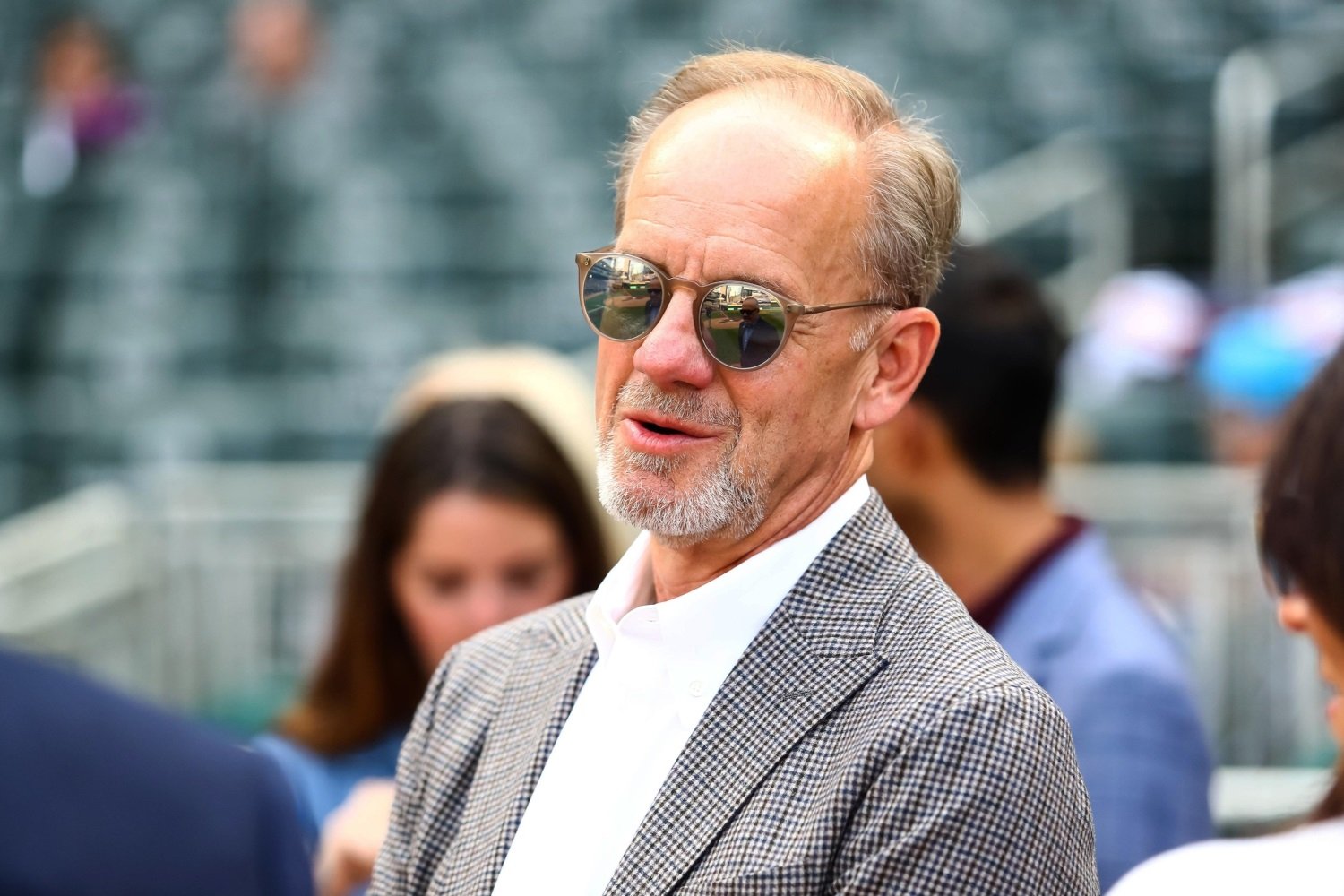 No team has been more antonymous with change over the last four decades than the Twins. The Pohlad family has presided over a long period of conservative stewardship, in which changes in the front office, the field staff, and even the roster tended to come more slowly than almost anywhere else in the league. Out of nowhere, today, the chances of enormous and fairly imminent change loomed up over Twins fans in an exhilaratingly unfamiliar way. Phil Miller of the Star-Tribune was first with the news. It's too early to make definitive statements about this. If, as Joe Pohlad said in his statement, the family arrived at the decision to explore a sale this summer, this could move fairly quickly, but the owners of both the Angels and the Nationals have announced intentions to sell in the last few years, only to close up shop and hold onto their clubs, after all. Should this come to fruition, though, it will be a radical change, at a moment when such a thing is precisely what the fan base craves. Over the last few years, the relationship between the team and its fans has become tangibly strained, and last year's decision to scale back payroll after the most exciting season in over a decade snapped one or two strands of connection for good. If this was under consideration, though, it certainly explains that choice to some extent. Keeping relatively clean books is a common tactical choice for owners eyeing a sale. It tends to read well to prospective buyers and inflate the asking price. This probably doesn't come with immediate changes in tack or spending expectation for the team, but it rocks the world of Minnesota baseball. Over the next several weeks and months, it will be a background story, but it could well be the most important one in years for this team. Most Twins fans have only a fuzzy memory of life before the Pohlads bought the club, or none at all. The culture of this organization has been persistently different from that of most others around baseball, and that might soon change, for the first time in decades--for better and for worse. Without a doubt, a sale would net a massive profit for the family, who bought the team for roughly $40 million. They won't sell for less than $1.5 billion now, and that number could easily reach $2 billion. Target Field is a relatively new, well-kept and beloved park. No prospective owner will have interest in moving the team in the near term. They might, however, run things very differently. It's impossible to predict what that will look like. That doesn't mean some fans won't spend the next few months daydreaming, though.
- 240 comments
-
- 10
-
-
Gotta read carefully! Alcántara is ranked 27th *overall* by FanGraphs--as in, among all prospects in baseball. Not just the Cubs.
-
Can I interest you in a trade that would bolster the Cubs' rotation by drawing from the Twins' bullpen, and upgrade the Twins' big-league outfield while also giving them payroll flexibility?Can I interest you in a trade that would bolster the Cubs' rotation by drawing from the Twins' bullpen, and upgrade the Twins' big-league outfield while also giving them payroll flexibility? The first thing you need to know about this potential trade is that it's just a sketch, meant to bring light to a couple of more important issues affecting each team. While I would find this specific trade proposal compelling, it's unlikely that either side would actually pull the trigger on it, and that itself is part of the story. The second thing you need to know is that Griffin Jax wants to be a starting pitcher again, after spending the last two seasons becoming increasingly dominant at the back end of the Minnesota Twins bullpen. The third thing you need to know is that Kevin Alcántara is blocked in Chicago and in need of an outlet to the big leagues. Let's stop counting, now, but here's some other vital information about these two teams and their fit on a potential trade this winter: The Twins continue to face self-inflicted, self-destructive payroll constraints, making it functionally impossible for them to keep both Christian Vázquez and Ryan Jeffers, whom they've deployed in an unprecedentedly even timeshare over the last two seasons but who will cost roughly $15 million as a duo in 2025. The Cubs enter the offseason with money to spend on a big bat somewhere in their lineup, but they also need to get creative about improving the front end of their starting rotation. Specifically, they suffer from a lack of sheer velocity and overall stuff from their starters, and the problem runs much deeper than Kyle Hendricks. Chicago helped Miguel Amaya unlock his offensive upside last season, but he's a subpar defender behind the plate, and the Cubs front office is unlikely to accept below-average work from that position--arguably the most important on the diamond for run prevention, other than pitcher. Ok, enough throat-clearing. Let's lay out the trade I think would help both of these teams quite a bit, and then expand on the reasons why I think so. Cubs Get: Griffin Jax, RHP: Will turn 30 years old next month. Three years of team control remaining. MLB Trade Rumors projected arbitration earnings for 2025: $2.6 million. Christian Vázquez, Catcher: 34 years old. Entering final season of three-year, $30-million deal. Will make $10 million in 2025. Twins Get: Kevin Alcántara, OF: 22 years old. No. 27 overall prospect in baseball, according to FanGraphs. Already on 40-man roster, but can be optioned for one more season. Got a cup of coffee to close this season. Brody McCullough, RHP: 24 years old. No. 13 prospect in Cubs system, according to FanGraphs. Has made only a very brief appearance at Double A, but also doesn't need to be added to 40-man roster for protection from Rule 5 Draft until after 2025. This trade would clear as much as $13 million in expected salary for the 2025 Twins, and it would immediately fill a critical role for them. Alcántara is a right-handed hitter who's essentially ready for the majors, and is a plus defensive center fielder. He's not currently ready to be an average-plus hitter in the big leagues, but he has All-Star upside and six years of team control left. He would be the fallback plan for Byron Buxton in center field, a platoon partner for both Trevor Larnach and Matt Wallner in the corners, and an important step toward making the brutally slow, unathletic Twins a more dynamic team. He's a premium piece, despite his lack of offensive refinement. McCullough is a throw-in, but an interesting one. Knee surgery ended his 2023 season, and after a late start, his 2024 season had an abrupt, premature end with another injury. When he's been on the mound, though, the 2022 draftee has been very impressive, and he could fall in line with the rest of the flowing Twins pitching pipeline, if he can just get healthy enough to benefit from the team's superb pitching development system. That's what the Twins stand to gain: a role player with humongous upside and flexible team control, a 40-man roster spot to play with, and some serious spending power. For the Cubs, it's a much more present-focused move, but no less variable. The key to this proposal is that Jax wouldn't come in as a prospective relief ace for next year's team, alongside Porter Hodge. Instead, he'd convert back to the starting rotation, taking with him much of the velocity he gained when he first moved from that unit to the bullpen in 2022. That's because that bump isn't all about his compressed workload since becoming a reliever. He's also made major mechanical improvements over that span. Chris Langin, the director of pitching for Driveline, laid out the case for Jax as a starter earlier this year, in a compelling YouTube video: Jax is already 30, but his arm isn't. Because his service in the Air Force kept him away from the game for stretches throughout his ascent through the minors, and because of the move to the pen upon reaching the big leagues, he's thrown fewer than 600 total professional innings--despite not having notable injury problems at any point. Even if you bake in his collegiate work, he's thrown fewer than 1,000 innings of competitive baseball through the end of his 20s. That doesn't mean Jax will be good until he's 40, but for the three seasons of team control he has left, there's good reason to hope he could be the next Garrett Crochet, Reynaldo López, or Seth Lugo. He throws five different pitches, including both a sweeper and a changeup that can be devastating. Even if his fastball shrinks back from sitting 97 and touching 99 to sitting 95 and touching 97, he has the profile of a starter with elite upside. In this scenario, the Cubs would give up one of their top prospects, but they'd do it with the idea that they can slot Jax in alongside Justin Steele, Shota Imanaga, Jameson Taillon and Javier Assad in a fully-stocked, top-tier rotation for the next two or three years. There would be injuries and failures, but Jordan Wicks, Cade Horton, Ben Brown, and Brandon Birdsell would be available to backfill when those breaches took place. The team would also solve its catching conundrum, because Vázquez is the perfect complement to Amaya. Since Amaya is still making the league-minimum salary, he and Vázquez would represent a reasonable investment in the position, and Vázquez is a good enough all-around defender--good framer, fine thrower, excellent handler of pitchers both in terms of game-planning and in terms of managing difficult innings or outings--to justify more playing time than a true scrap-heap pickup like this year's Christian Bethancourt and Tomás Nido experiments could. His contract has negative value, especially to the cash-strapped Twins, but the Cubs could take it on easily. Unlike the Twins, they can win without efficiently spending every remaining dime. The Twins could just keep Jax, but they don't need him as a starter, and therefore, they don't need to take the risks that still exist if he does try to move back into that role. He could anchor their bullpen and they could trade Jhoan Durán, who actually projects to make anywhere from $1 million to $1.5 million more than Jax, but Durán's diminished velocity this year will have teams asking careful questions before turning over top talent for him. Nor will any team trade as much for a pure reliever, like Durán, as they would for a player they would view as a starter. If you doubt this, note the surprise that met the deals signed by López, Jordan Hicks, and Lugo last winter. Those free agents had been considered relievers, so when they signed for guaranteed amounts ranging from $30 million to $45 million, fans were briefly shocked--until each team announced their intentions to move those players into starting roles. Now, two of those deals look like bargains. The Cubs could shop Alcántara for starters who have already proved their ability to stay healthy and succeed in that role. Jax hasn't yet done that, which is why he should be available for a prospect package starting with Alcántara, rather than Matt Shaw. However, this move is perfect for them, because it allows them to leverage their wealth advantage without plunging into free agency and locking into a long-term deal. Thought they would receive Vázquez, taking on his salary would effectively be a benefit to the Twins, like throwing in another prospect alongside Alcántara and McCullough. Each side would be accepting significant risk, because that deal is a loser for the Cubs if Jax doesn't make it as a starter, and it's a loser for the Twins if Alcántara doesn't figure out how to lift the ball and/or make more consistent contact. Each side also faces difficult constraints and/or substantial risks associated with inaction, too, though. The Cubs don't have the available playing time to give all their intriguing position players enough run to prove themselves, and they need to win now, not wait around. The Twins need to clear Vázquez's salary so that they can address other needs on their roster, and they need to turn away from the plodding, pull-and-lift, defensively limited player profile they've clung to for the last few years. Again, I really like this framework, but it's only an outline. The idea is to illustrate the creative options each side needs to ready themselves to pursue this winter, and the way their respective needs and surpluses might overlap. It's not designed to be a done deal, as-is. I'm posting this piece at both North Side Baseball and Twins Daily, in a rare bit of cross-posting to get both of our communities talking. If you don't think your side comes out well enough in this trade, you might be right--but check out the other version of the article, where you might see fans of the other team saying the same thing. View full article
- 66 replies
-
- 1
-
-
- kevin alcantara
- brody mccullough
- (and 2 more)
-
A Big, Creative Cubs-Twins Trade That Just Might Work for Both Teams
Matthew Trueblood posted an article in Twins
.png.c8b5ef491c2565f095f0315a2fd7670f.png) The first thing you need to know about this potential trade is that it's just a sketch, meant to bring light to a couple of more important issues affecting each team. While I would find this specific trade proposal compelling, it's unlikely that either side would actually pull the trigger on it, and that itself is part of the story. The second thing you need to know is that Griffin Jax wants to be a starting pitcher again, after spending the last two seasons becoming increasingly dominant at the back end of the Minnesota Twins bullpen. The third thing you need to know is that Kevin Alcántara is blocked in Chicago and in need of an outlet to the big leagues. Let's stop counting, now, but here's some other vital information about these two teams and their fit on a potential trade this winter: The Twins continue to face self-inflicted, self-destructive payroll constraints, making it functionally impossible for them to keep both Christian Vázquez and Ryan Jeffers, whom they've deployed in an unprecedentedly even timeshare over the last two seasons but who will cost roughly $15 million as a duo in 2025. The Cubs enter the offseason with money to spend on a big bat somewhere in their lineup, but they also need to get creative about improving the front end of their starting rotation. Specifically, they suffer from a lack of sheer velocity and overall stuff from their starters, and the problem runs much deeper than Kyle Hendricks. Chicago helped Miguel Amaya unlock his offensive upside last season, but he's a subpar defender behind the plate, and the Cubs front office is unlikely to accept below-average work from that position--arguably the most important on the diamond for run prevention, other than pitcher. Ok, enough throat-clearing. Let's lay out the trade I think would help both of these teams quite a bit, and then expand on the reasons why I think so. Cubs Get: Griffin Jax, RHP: Will turn 30 years old next month. Three years of team control remaining. MLB Trade Rumors projected arbitration earnings for 2025: $2.6 million. Christian Vázquez, Catcher: 34 years old. Entering final season of three-year, $30-million deal. Will make $10 million in 2025. Twins Get: Kevin Alcántara, OF: 22 years old. No. 27 overall prospect in baseball, according to FanGraphs. Already on 40-man roster, but can be optioned for one more season. Got a cup of coffee to close this season. Brody McCullough, RHP: 24 years old. No. 13 prospect in Cubs system, according to FanGraphs. Has made only a very brief appearance at Double A, but also doesn't need to be added to 40-man roster for protection from Rule 5 Draft until after 2025. This trade would clear as much as $13 million in expected salary for the 2025 Twins, and it would immediately fill a critical role for them. Alcántara is a right-handed hitter who's essentially ready for the majors, and is a plus defensive center fielder. He's not currently ready to be an average-plus hitter in the big leagues, but he has All-Star upside and six years of team control left. He would be the fallback plan for Byron Buxton in center field, a platoon partner for both Trevor Larnach and Matt Wallner in the corners, and an important step toward making the brutally slow, unathletic Twins a more dynamic team. He's a premium piece, despite his lack of offensive refinement. McCullough is a throw-in, but an interesting one. Knee surgery ended his 2023 season, and after a late start, his 2024 season had an abrupt, premature end with another injury. When he's been on the mound, though, the 2022 draftee has been very impressive, and he could fall in line with the rest of the flowing Twins pitching pipeline, if he can just get healthy enough to benefit from the team's superb pitching development system. That's what the Twins stand to gain: a role player with humongous upside and flexible team control, a 40-man roster spot to play with, and some serious spending power. For the Cubs, it's a much more present-focused move, but no less variable. The key to this proposal is that Jax wouldn't come in as a prospective relief ace for next year's team, alongside Porter Hodge. Instead, he'd convert back to the starting rotation, taking with him much of the velocity he gained when he first moved from that unit to the bullpen in 2022. That's because that bump isn't all about his compressed workload since becoming a reliever. He's also made major mechanical improvements over that span. Chris Langin, the director of pitching for Driveline, laid out the case for Jax as a starter earlier this year, in a compelling YouTube video: Jax is already 30, but his arm isn't. Because his service in the Air Force kept him away from the game for stretches throughout his ascent through the minors, and because of the move to the pen upon reaching the big leagues, he's thrown fewer than 600 total professional innings--despite not having notable injury problems at any point. Even if you bake in his collegiate work, he's thrown fewer than 1,000 innings of competitive baseball through the end of his 20s. That doesn't mean Jax will be good until he's 40, but for the three seasons of team control he has left, there's good reason to hope he could be the next Garrett Crochet, Reynaldo López, or Seth Lugo. He throws five different pitches, including both a sweeper and a changeup that can be devastating. Even if his fastball shrinks back from sitting 97 and touching 99 to sitting 95 and touching 97, he has the profile of a starter with elite upside. In this scenario, the Cubs would give up one of their top prospects, but they'd do it with the idea that they can slot Jax in alongside Justin Steele, Shota Imanaga, Jameson Taillon and Javier Assad in a fully-stocked, top-tier rotation for the next two or three years. There would be injuries and failures, but Jordan Wicks, Cade Horton, Ben Brown, and Brandon Birdsell would be available to backfill when those breaches took place. The team would also solve its catching conundrum, because Vázquez is the perfect complement to Amaya. Since Amaya is still making the league-minimum salary, he and Vázquez would represent a reasonable investment in the position, and Vázquez is a good enough all-around defender--good framer, fine thrower, excellent handler of pitchers both in terms of game-planning and in terms of managing difficult innings or outings--to justify more playing time than a true scrap-heap pickup like this year's Christian Bethancourt and Tomás Nido experiments could. His contract has negative value, especially to the cash-strapped Twins, but the Cubs could take it on easily. Unlike the Twins, they can win without efficiently spending every remaining dime. The Twins could just keep Jax, but they don't need him as a starter, and therefore, they don't need to take the risks that still exist if he does try to move back into that role. He could anchor their bullpen and they could trade Jhoan Durán, who actually projects to make anywhere from $1 million to $1.5 million more than Jax, but Durán's diminished velocity this year will have teams asking careful questions before turning over top talent for him. Nor will any team trade as much for a pure reliever, like Durán, as they would for a player they would view as a starter. If you doubt this, note the surprise that met the deals signed by López, Jordan Hicks, and Lugo last winter. Those free agents had been considered relievers, so when they signed for guaranteed amounts ranging from $30 million to $45 million, fans were briefly shocked--until each team announced their intentions to move those players into starting roles. Now, two of those deals look like bargains. The Cubs could shop Alcántara for starters who have already proved their ability to stay healthy and succeed in that role. Jax hasn't yet done that, which is why he should be available for a prospect package starting with Alcántara, rather than Matt Shaw. However, this move is perfect for them, because it allows them to leverage their wealth advantage without plunging into free agency and locking into a long-term deal. Thought they would receive Vázquez, taking on his salary would effectively be a benefit to the Twins, like throwing in another prospect alongside Alcántara and McCullough. Each side would be accepting significant risk, because that deal is a loser for the Cubs if Jax doesn't make it as a starter, and it's a loser for the Twins if Alcántara doesn't figure out how to lift the ball and/or make more consistent contact. Each side also faces difficult constraints and/or substantial risks associated with inaction, too, though. The Cubs don't have the available playing time to give all their intriguing position players enough run to prove themselves, and they need to win now, not wait around. The Twins need to clear Vázquez's salary so that they can address other needs on their roster, and they need to turn away from the plodding, pull-and-lift, defensively limited player profile they've clung to for the last few years. Again, I really like this framework, but it's only an outline. The idea is to illustrate the creative options each side needs to ready themselves to pursue this winter, and the way their respective needs and surpluses might overlap. It's not designed to be a done deal, as-is. I'm posting this piece at both North Side Baseball and Twins Daily, in a rare bit of cross-posting to get both of our communities talking. If you don't think your side comes out well enough in this trade, you might be right--but check out the other version of the article, where you might see fans of the other team saying the same thing.
The first thing you need to know about this potential trade is that it's just a sketch, meant to bring light to a couple of more important issues affecting each team. While I would find this specific trade proposal compelling, it's unlikely that either side would actually pull the trigger on it, and that itself is part of the story. The second thing you need to know is that Griffin Jax wants to be a starting pitcher again, after spending the last two seasons becoming increasingly dominant at the back end of the Minnesota Twins bullpen. The third thing you need to know is that Kevin Alcántara is blocked in Chicago and in need of an outlet to the big leagues. Let's stop counting, now, but here's some other vital information about these two teams and their fit on a potential trade this winter: The Twins continue to face self-inflicted, self-destructive payroll constraints, making it functionally impossible for them to keep both Christian Vázquez and Ryan Jeffers, whom they've deployed in an unprecedentedly even timeshare over the last two seasons but who will cost roughly $15 million as a duo in 2025. The Cubs enter the offseason with money to spend on a big bat somewhere in their lineup, but they also need to get creative about improving the front end of their starting rotation. Specifically, they suffer from a lack of sheer velocity and overall stuff from their starters, and the problem runs much deeper than Kyle Hendricks. Chicago helped Miguel Amaya unlock his offensive upside last season, but he's a subpar defender behind the plate, and the Cubs front office is unlikely to accept below-average work from that position--arguably the most important on the diamond for run prevention, other than pitcher. Ok, enough throat-clearing. Let's lay out the trade I think would help both of these teams quite a bit, and then expand on the reasons why I think so. Cubs Get: Griffin Jax, RHP: Will turn 30 years old next month. Three years of team control remaining. MLB Trade Rumors projected arbitration earnings for 2025: $2.6 million. Christian Vázquez, Catcher: 34 years old. Entering final season of three-year, $30-million deal. Will make $10 million in 2025. Twins Get: Kevin Alcántara, OF: 22 years old. No. 27 overall prospect in baseball, according to FanGraphs. Already on 40-man roster, but can be optioned for one more season. Got a cup of coffee to close this season. Brody McCullough, RHP: 24 years old. No. 13 prospect in Cubs system, according to FanGraphs. Has made only a very brief appearance at Double A, but also doesn't need to be added to 40-man roster for protection from Rule 5 Draft until after 2025. This trade would clear as much as $13 million in expected salary for the 2025 Twins, and it would immediately fill a critical role for them. Alcántara is a right-handed hitter who's essentially ready for the majors, and is a plus defensive center fielder. He's not currently ready to be an average-plus hitter in the big leagues, but he has All-Star upside and six years of team control left. He would be the fallback plan for Byron Buxton in center field, a platoon partner for both Trevor Larnach and Matt Wallner in the corners, and an important step toward making the brutally slow, unathletic Twins a more dynamic team. He's a premium piece, despite his lack of offensive refinement. McCullough is a throw-in, but an interesting one. Knee surgery ended his 2023 season, and after a late start, his 2024 season had an abrupt, premature end with another injury. When he's been on the mound, though, the 2022 draftee has been very impressive, and he could fall in line with the rest of the flowing Twins pitching pipeline, if he can just get healthy enough to benefit from the team's superb pitching development system. That's what the Twins stand to gain: a role player with humongous upside and flexible team control, a 40-man roster spot to play with, and some serious spending power. For the Cubs, it's a much more present-focused move, but no less variable. The key to this proposal is that Jax wouldn't come in as a prospective relief ace for next year's team, alongside Porter Hodge. Instead, he'd convert back to the starting rotation, taking with him much of the velocity he gained when he first moved from that unit to the bullpen in 2022. That's because that bump isn't all about his compressed workload since becoming a reliever. He's also made major mechanical improvements over that span. Chris Langin, the director of pitching for Driveline, laid out the case for Jax as a starter earlier this year, in a compelling YouTube video: Jax is already 30, but his arm isn't. Because his service in the Air Force kept him away from the game for stretches throughout his ascent through the minors, and because of the move to the pen upon reaching the big leagues, he's thrown fewer than 600 total professional innings--despite not having notable injury problems at any point. Even if you bake in his collegiate work, he's thrown fewer than 1,000 innings of competitive baseball through the end of his 20s. That doesn't mean Jax will be good until he's 40, but for the three seasons of team control he has left, there's good reason to hope he could be the next Garrett Crochet, Reynaldo López, or Seth Lugo. He throws five different pitches, including both a sweeper and a changeup that can be devastating. Even if his fastball shrinks back from sitting 97 and touching 99 to sitting 95 and touching 97, he has the profile of a starter with elite upside. In this scenario, the Cubs would give up one of their top prospects, but they'd do it with the idea that they can slot Jax in alongside Justin Steele, Shota Imanaga, Jameson Taillon and Javier Assad in a fully-stocked, top-tier rotation for the next two or three years. There would be injuries and failures, but Jordan Wicks, Cade Horton, Ben Brown, and Brandon Birdsell would be available to backfill when those breaches took place. The team would also solve its catching conundrum, because Vázquez is the perfect complement to Amaya. Since Amaya is still making the league-minimum salary, he and Vázquez would represent a reasonable investment in the position, and Vázquez is a good enough all-around defender--good framer, fine thrower, excellent handler of pitchers both in terms of game-planning and in terms of managing difficult innings or outings--to justify more playing time than a true scrap-heap pickup like this year's Christian Bethancourt and Tomás Nido experiments could. His contract has negative value, especially to the cash-strapped Twins, but the Cubs could take it on easily. Unlike the Twins, they can win without efficiently spending every remaining dime. The Twins could just keep Jax, but they don't need him as a starter, and therefore, they don't need to take the risks that still exist if he does try to move back into that role. He could anchor their bullpen and they could trade Jhoan Durán, who actually projects to make anywhere from $1 million to $1.5 million more than Jax, but Durán's diminished velocity this year will have teams asking careful questions before turning over top talent for him. Nor will any team trade as much for a pure reliever, like Durán, as they would for a player they would view as a starter. If you doubt this, note the surprise that met the deals signed by López, Jordan Hicks, and Lugo last winter. Those free agents had been considered relievers, so when they signed for guaranteed amounts ranging from $30 million to $45 million, fans were briefly shocked--until each team announced their intentions to move those players into starting roles. Now, two of those deals look like bargains. The Cubs could shop Alcántara for starters who have already proved their ability to stay healthy and succeed in that role. Jax hasn't yet done that, which is why he should be available for a prospect package starting with Alcántara, rather than Matt Shaw. However, this move is perfect for them, because it allows them to leverage their wealth advantage without plunging into free agency and locking into a long-term deal. Thought they would receive Vázquez, taking on his salary would effectively be a benefit to the Twins, like throwing in another prospect alongside Alcántara and McCullough. Each side would be accepting significant risk, because that deal is a loser for the Cubs if Jax doesn't make it as a starter, and it's a loser for the Twins if Alcántara doesn't figure out how to lift the ball and/or make more consistent contact. Each side also faces difficult constraints and/or substantial risks associated with inaction, too, though. The Cubs don't have the available playing time to give all their intriguing position players enough run to prove themselves, and they need to win now, not wait around. The Twins need to clear Vázquez's salary so that they can address other needs on their roster, and they need to turn away from the plodding, pull-and-lift, defensively limited player profile they've clung to for the last few years. Again, I really like this framework, but it's only an outline. The idea is to illustrate the creative options each side needs to ready themselves to pursue this winter, and the way their respective needs and surpluses might overlap. It's not designed to be a done deal, as-is. I'm posting this piece at both North Side Baseball and Twins Daily, in a rare bit of cross-posting to get both of our communities talking. If you don't think your side comes out well enough in this trade, you might be right--but check out the other version of the article, where you might see fans of the other team saying the same thing.- 66 comments
-
- 3
-
-

-
- kevin alcantara
- brody mccullough
- (and 2 more)
-
I think you'll be able to, but if you primarily have Fubo for Twins reasons, I would cancel it! It'll be much cheaper to buy their package directly--even to buy that AND, for instance, Netflix or Peacock. Now, if it's just a replacement for cable, different equation.
-
Our long local nightmare is over. The Twins have a broadcast home for 2025, and it’s not a company in bankruptcy, and blackouts are really going away this time. Just get ready to pony up for the right to stream their games. Image courtesy of © D. Ross Cameron-Imagn Images On Tuesday afternoon, the Twins announced that they will be leaving the Diamond Sports Group and have their game broadcasts produced and distributed by MLB itself. In addition to the Padres, Rockies, and Diamondbacks, who played the entire 2024 season under this arrangement, the Twins will be in the same boat as Upper Midwest neighbors the Brewers and the division rival Guardians. The new right allocation will include the ability to stream games within the Twin Cities market, without blackouts, on a direct subscriber model. The announcement is the Twins' first truly fan-friendly move regarding television and streaming rights in several years—not that it’s a terribly high bar to clear. Let's review: Direct-to-consumer streaming options have not been available for Twins games for any in-market games for several years, as the Twins bargained them away in the TV rights agreement that the Twins had with Diamond Sports/Bally Sports North. Then, about this time last year, Twins fans were told that since Diamond Sports/Bally Sports North would no longer be paying the Twins for TV rights (later revealed to be worth $54M/year), the Twins player payroll would be slashed. However, at least Twins fans could expect to have games on TV and streaming without in-market blackouts for the 2025 season. Except then, the Twins re-signed for one year with Diamond Sports/Bally Sports North for a portion of their previous agreement. However, none of that money went to the slashed Twins player payroll. Instead, the Twins announced they needed to “right-size” their spending. Plus, no streaming options and in-market blackouts existed since the old agreement was again back in place. The (rancid) icing on the (disgusting) cake came on May 1st, when Diamond Sports and Comcast announced that they could not agree for Bally regional sports channels to remain on Comcast. As a result, from May 1st through July 31st, the biggest cable carrier in Minnesota could not televise Twins games to Twins fans, who also could not stream games because of the Twins’ TV rights agreement with Diamond Sports. Today’s announcement could be viewed as all parties involved finally agreeing that it was time to rip off the bandage if one hadn’t watched it being slowly and painfully pulled for the last several years. To be fair to the parties involved, they all previously had a pretty sweet deal, including Twins fans, as the TV revenues were largely being carried by cable subscribers who had no interest in baseball. Previously, because Bally’s Sports North (BSN) was part of the basic cable package, they charged Comcast for every cable subscriber they had, whether the subscriber wanted to watch sports or not. That’s how it works for every basic cable channel, but not every channel charges the estimated $8-10 per month that BSN demands. For instance, if a million local cable subscribers are paying $8/month for 12 months per year, that’s $96M in gross revenues per year. One can quickly get to the point where a $54M annual TV-rights contract makes sense. However, as part of the new agreement that got BSN back on Comcast, BSN is now a tiered channel, meaning subscribers need to opt into it for something like $20/month. That changes the business model significantly. For instance, in the example above, BSN would need to get 400,000 of Comcast’s million subscribers to opt in to get the same revenue. The actual number of households that will pay an extra $20/month for sports is likely a fraction of that. The same goes for streaming. While it’s the future, it suffers from the same problem that BSN faces with Comcast—it only bills those who opt in. That’s why the Twins kept sacrificing it as an option to sign their much more lucrative TV deal with Diamond Sports. The new deal means the middleman is gone, at least for now. Twins fans can watch their team via TV or the internet by paying MLB (essentially) directly, whether they are cutting the cord or not. The new deal also recognizes that those lucrative TV rights days are likely gone forever for baseball teams and regional sports networks. Moving to MLB Media’s platform means the Twins are trading the past’s significant revenues for the present’s ability to meet their fan base wherever their fan base wants. So long as they opt in. That decision would have been much more admirable if the past’s significant revenues had remained an option. And had the Twins not been dragged to that realization over the last year, kicking and screaming. View full article
-
Former Twins Pitcher and Longtime Great Luis Tiant Dead at 83
Matthew Trueblood posted an article in History
 Luis Tiant, the 19-year MLB veteran whose poignant life story and vivid style of pitching made him one of the central characters in the greatest single-game drama in the sport's history, passed away Tuesday at age 83. In an alternate universe where the sport came to a better understanding of the nature and prognosis of pitching injuries much earlier, Tiant might be remembered not for his heroics with the 1970s Red Sox--culminating in a great start in Game 6 of the 1975 World Series--but as the ace of the Twins during the same period. Instead, his legacy among Twins fans is as one piece of the regrettable trade in which Minnesota dealt away eventual great Graig Nettles and got long-term value back. Tiant had dealt with a sore elbow late in his time with Cleveland, for whom he pitched most of a decade to begin his MLB career. With the Twins, what we would now diagnose as a stress fracture in his shoulder derailed his 1970 season. Back then, pitchers still in their 20s who came up with arm injuries in consecutive seasons were thought to be damaged goods, and all the blame for their inability to perform at their best tended to fall on the players. Tiant pitched fewer than 100 innings in a Twins uniform. When he suffered what we would now diagnose as an oblique strain in the spring of 1971, Calvin Griffith grew so impatient with the hurler that the team released him outright. The owner went so far as to openly proclaim his belief that Tiant was done--washed up. By the end of that season, it would be painfully obvious how wrong he was. Tiant briefly pitched in the Atlanta organization, then landed with the Red Sox, for whom he made 21 appearances to finish the campaign. The results were mixed, but the signals were encouraging. The next year, Tiant won his second AL ERA title. Over the next decade, Tiant won 20 or more games for Boston three times, and hung on in the majors past age 40. He pitched 2,193 innings in the majors after Griffith pronounced him professionally dead, and he did it all with ebullience, intensity, and a twisting, deceptive delivery that made him even more famous than his superb performances would have assured. Tiant is one of the great "what-if" people in Twins history. He was exceptionally good for many years on either side of his one-year stint with the team, but things couldn't have panned out worse for the two parties when they happened upon each other. Sometimes, baseball is like that. In this case, though, all the fault falls to the Twins, who weren't a smart outfit at the time. Even with his tepid contributions, Tiant's 1970 team won 98 games and their second straight AL West championship--but that would be the last time they finished higher than third until 1984. Still a folk hero and favorite visitor to Red Sox spring training throughout his later years, Tiant was an emblem of the vivacity Latin American players brought to the game in the 1960s and the personality and individual flair players began to demonstrate around that time, transforming the culture of the game for the better. He didn't get to give much of that illuminating effort to the Twins, but he left an indelible impression on the game as a whole.
 -
It was a star-crossed stopover during an illustrious career, which is a shame. Luis Tiant was one of the giants of the game during his time, and briefly, he twirled for the Twins. Image courtesy of © Malcolm Emmons-Imagn Images Luis Tiant, the 19-year MLB veteran whose poignant life story and vivid style of pitching made him one of the central characters in the greatest single-game drama in the sport's history, passed away Tuesday at age 83. In an alternate universe where the sport came to a better understanding of the nature and prognosis of pitching injuries much earlier, Tiant might be remembered not for his heroics with the 1970s Red Sox--culminating in a great start in Game 6 of the 1975 World Series--but as the ace of the Twins during the same period. Instead, his legacy among Twins fans is as one piece of the regrettable trade in which Minnesota dealt away eventual great Graig Nettles and got long-term value back. Tiant had dealt with a sore elbow late in his time with Cleveland, for whom he pitched most of a decade to begin his MLB career. With the Twins, what we would now diagnose as a stress fracture in his shoulder derailed his 1970 season. Back then, pitchers still in their 20s who came up with arm injuries in consecutive seasons were thought to be damaged goods, and all the blame for their inability to perform at their best tended to fall on the players. Tiant pitched fewer than 100 innings in a Twins uniform. When he suffered what we would now diagnose as an oblique strain in the spring of 1971, Calvin Griffith grew so impatient with the hurler that the team released him outright. The owner went so far as to openly proclaim his belief that Tiant was done--washed up. By the end of that season, it would be painfully obvious how wrong he was. Tiant briefly pitched in the Atlanta organization, then landed with the Red Sox, for whom he made 21 appearances to finish the campaign. The results were mixed, but the signals were encouraging. The next year, Tiant won his second AL ERA title. Over the next decade, Tiant won 20 or more games for Boston three times, and hung on in the majors past age 40. He pitched 2,193 innings in the majors after Griffith pronounced him professionally dead, and he did it all with ebullience, intensity, and a twisting, deceptive delivery that made him even more famous than his superb performances would have assured. Tiant is one of the great "what-if" people in Twins history. He was exceptionally good for many years on either side of his one-year stint with the team, but things couldn't have panned out worse for the two parties when they happened upon each other. Sometimes, baseball is like that. In this case, though, all the fault falls to the Twins, who weren't a smart outfit at the time. Even with his tepid contributions, Tiant's 1970 team won 98 games and their second straight AL West championship--but that would be the last time they finished higher than third until 1984. Still a folk hero and favorite visitor to Red Sox spring training throughout his later years, Tiant was an emblem of the vivacity Latin American players brought to the game in the 1960s and the personality and individual flair players began to demonstrate around that time, transforming the culture of the game for the better. He didn't get to give much of that illuminating effort to the Twins, but he left an indelible impression on the game as a whole. View full article
-
.png.7ceeb0dbcdf74d531aa177756f02483c.png) The analytics revolution has brought a wealth of new buzzwords into the pitching lexicon. Teams latch onto certain terms, and public-facing analysts repeat them. The terms are often helpful and illuminating, but their ubiquity stems from the need for those who are deeply involved in pitching analysis to communicate in a shared language, and to recognize when they're talking to another person who's been initiated. As a result, the jargon of the moment can be a bit opaque to people outside either front offices, the coaching profession, or the endeavor of pitching analysis. Many fans struggle to keep up, because front offices have no incentive to slow down and explain things more accessibly, and public baseball analysts have every incentive to make sure everyone knows how smart they are as they go about making their points. Let's try to break down those barriers to entry a bit. The Derek Falvey Pitching Pipeline, to the extent that it's a real project and not just a Twins Twitter meme, is centered on a patterned acquisition of scouting and player development. At the Society for American Baseball Research's annual convention in Minneapolis in August, several members of the front office took the stage to do a panel discussion about the use of advanced data, and one theme was the way they seek out pitchers. "We don't try to change fastball shapes. We hone in on that, because fastball shape is like a fingerprint," said team pitching guru Joshua Kalk. The implication there is that fastball shape is hard--maybe even impossible--to change, whereas velocity, mechanical efficiency, and breaking-ball shape are much more malleable. Thus, the Twins wait into the middle rounds of drafts and seek out pitchers with a suitable fastball shape, then go to work on improving their velocity and their secondary offerings with their player-development group. But that skips over two vital questions: What, exactly, is fastball shape? And which one do the Twins like?
The analytics revolution has brought a wealth of new buzzwords into the pitching lexicon. Teams latch onto certain terms, and public-facing analysts repeat them. The terms are often helpful and illuminating, but their ubiquity stems from the need for those who are deeply involved in pitching analysis to communicate in a shared language, and to recognize when they're talking to another person who's been initiated. As a result, the jargon of the moment can be a bit opaque to people outside either front offices, the coaching profession, or the endeavor of pitching analysis. Many fans struggle to keep up, because front offices have no incentive to slow down and explain things more accessibly, and public baseball analysts have every incentive to make sure everyone knows how smart they are as they go about making their points. Let's try to break down those barriers to entry a bit. The Derek Falvey Pitching Pipeline, to the extent that it's a real project and not just a Twins Twitter meme, is centered on a patterned acquisition of scouting and player development. At the Society for American Baseball Research's annual convention in Minneapolis in August, several members of the front office took the stage to do a panel discussion about the use of advanced data, and one theme was the way they seek out pitchers. "We don't try to change fastball shapes. We hone in on that, because fastball shape is like a fingerprint," said team pitching guru Joshua Kalk. The implication there is that fastball shape is hard--maybe even impossible--to change, whereas velocity, mechanical efficiency, and breaking-ball shape are much more malleable. Thus, the Twins wait into the middle rounds of drafts and seek out pitchers with a suitable fastball shape, then go to work on improving their velocity and their secondary offerings with their player-development group. But that skips over two vital questions: What, exactly, is fastball shape? And which one do the Twins like?- 2 comments
-
- 3
-
-
- david festa
- simeon woods richardson
- (and 3 more)
-
This team will live or die, in years to come, based on its pitching pipeline. When bringing new arms into it, they have specific criteria--but it's sometimes hard to understand those standards from the outside. Let's get into it. Image courtesy of © Kevin Jairaj-Imagn Images The analytics revolution has brought a wealth of new buzzwords into the pitching lexicon. Teams latch onto certain terms, and public-facing analysts repeat them. The terms are often helpful and illuminating, but their ubiquity stems from the need for those who are deeply involved in pitching analysis to communicate in a shared language, and to recognize when they're talking to another person who's been initiated. As a result, the jargon of the moment can be a bit opaque to people outside either front offices, the coaching profession, or the endeavor of pitching analysis. Many fans struggle to keep up, because front offices have no incentive to slow down and explain things more accessibly, and public baseball analysts have every incentive to make sure everyone knows how smart they are as they go about making their points. Let's try to break down those barriers to entry a bit. The Derek Falvey Pitching Pipeline, to the extent that it's a real project and not just a Twins Twitter meme, is centered on a patterned acquisition of scouting and player development. At the Society for American Baseball Research's annual convention in Minneapolis in August, several members of the front office took the stage to do a panel discussion about the use of advanced data, and one theme was the way they seek out pitchers. "We don't try to change fastball shapes. We hone in on that, because fastball shape is like a fingerprint," said team pitching guru Joshua Kalk. The implication there is that fastball shape is hard--maybe even impossible--to change, whereas velocity, mechanical efficiency, and breaking-ball shape are much more malleable. Thus, the Twins wait into the middle rounds of drafts and seek out pitchers with a suitable fastball shape, then go to work on improving their velocity and their secondary offerings with their player-development group. But that skips over two vital questions: What, exactly, is fastball shape? And which one do the Twins like? View full article
-
Rocco Baldelli had to pull his starter after just three outs Wednesday night and ask his bullpen to do heroic work to save the team's season. The only problem is, there are four more must-win games coming, and no rest. Image courtesy of © Jesse Johnson-Imagn Images Simeon Woods Richardson's regular season likely ended with a thud Wednesday night, as he couldn't record an out in the second inning before his manager had to take the ball. With their margin for error gone, the Twins needed to find a way to win, and their rookie starter wasn't going to be able to give it to them. Now, though, the club's relief corps will have to bounce back and deliver again Thursday night--and for the three games after that. Every night, we publish the bullpen usage report at the bottom of our game recaps. Only rarely do we use it in other contexts, though, and this is a great time to break it out, because we need to look ahead to Thursday night's action. Wednesday night will inform a lot of Baldelli's choices. SAT SUN MON TUE WED TOT Tonkin 0 37 0 25 0 62 Varland 0 0 0 0 48 48 Sands 0 20 0 0 16 36 Blewett 0 7 0 20 0 27 Alcalá 0 0 0 0 20 20 Thielbar 0 17 0 3 0 20 Jax 0 0 0 0 20 20 Durán 0 0 0 0 14 14 Topa 0 0 0 0 8 8 We color-code these cells with the idea that a manager rarely wants to come back to a pitcher the day after he throws 20-plus pitches, but in some situations, I would expect Griffin Jax to be available tonight. He certainly wouldn't throw 20 pitches again, and there would be no having him sit down and then bringing him back, for even a portion of a second inning of work, but the days off prior to Wednesday night could permit Jax to come back with the game in the balance. The thing is, there is no day off after this series, before the Orioles come in for the weekend. Therefore, Jax might still be down tonight, since it's likely the Twins will need to win at least two of their three contests with Baltimore, too. Woods Richardson might join the bullpen for a moonlighting role Saturday or Sunday, but he won't be a primary option, so most of the guys who will try to get the team across the finish line are listed above. As such, Jax has to be kept fresh enough to keep pitching for three more days beyond tonight. Jhoan Durán is probably somewhat more available, but Louie Varland, Jorge Alcalá, Cole Sands, and Justin Topa are almost certainly down, for various reasons. That means that Baldelli will have to try to get an extra out or two from David Festa, if the game is close, then hand things off to a middle relief corps of Scott Blewett, Caleb Thielbar, and Michael Tonkin. That's not the sturdy bridge you want from your rookie starter to a pair of relief aces you'd prefer to hold in reserve. It's more like one of those rickety plank-and-rope numbers from a movie. As it happens, Baseball Savant released new ways to visualize pitching data today, including arm angle measurements that show how a pitcher's shoulder and the ball relate to each other in space at release. One interesting takeaway from the rollout is that Festa is one of the more extreme overhand righthanders in the majors, with pitch shapes that reflect that characteristic. Thielber, the lefty, could help Baldelli capture a matchup advantage once Festa departs, but so could Tonkin--who is, by sharp contrast with Festa, one of the lowest-angle righties in the game, with movement patterns that are influence by his own slot. Giving opponents different looks within a game, even from pitchers of the same handedness, is one way to carve out small but crucial advantages. Every team in the league loves doing it, when possible, and the Twins will have a clear path to doing it Thursday. Interestingly, Baldelli has paired up Festa's and Tonkin's appearances with some regularity. In four games in which Festa started, Tonkin has worked 4 2/3 innings, with three hits, two walks, no runs, and a whopping nine strikeouts. He might be the secret weapon for this contest, and that might even include trying to use him instead of turning to Jax or Durán. That's where the Twins are now. Having obliterated their own margins, they have to pull out all the stops, but keep thinking about how they'll survive a weekend set they have to win just as much as they have to win tonight. It's the kind of unhappy squeeze a team puts on itself with the six-week downward spiral the team has described. Baldelli has to hope his offense can sustain the momentum they found late Wednesday night and give him some wiggle room--or that Festa can turn in a truly salvific gem to take the rubber game with minimal assistance required. View full article
-
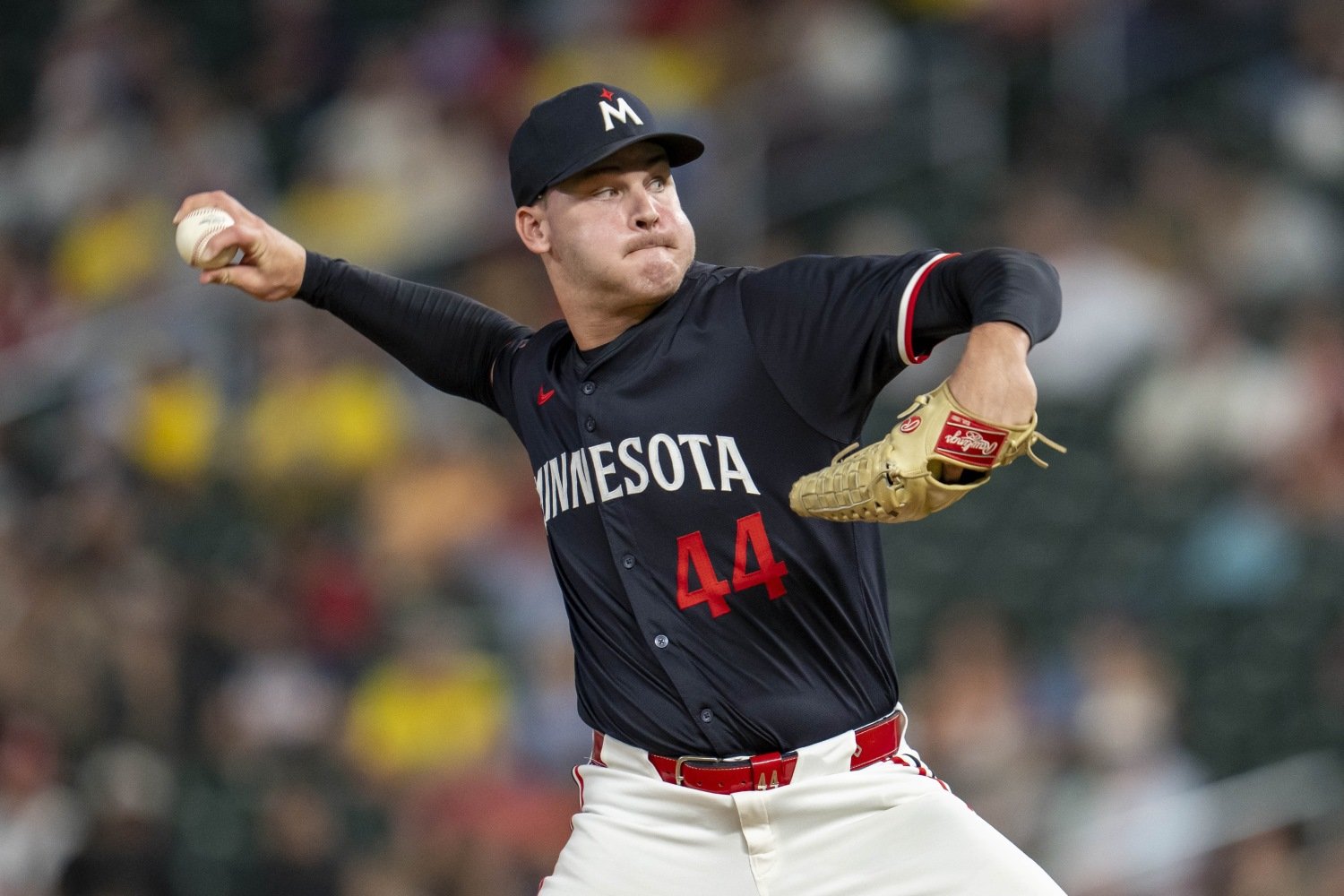 Simeon Woods Richardson's regular season likely ended with a thud Wednesday night, as he couldn't record an out in the second inning before his manager had to take the ball. With their margin for error gone, the Twins needed to find a way to win, and their rookie starter wasn't going to be able to give it to them. Now, though, the club's relief corps will have to bounce back and deliver again Thursday night--and for the three games after that. Every night, we publish the bullpen usage report at the bottom of our game recaps. Only rarely do we use it in other contexts, though, and this is a great time to break it out, because we need to look ahead to Thursday night's action. Wednesday night will inform a lot of Baldelli's choices. SAT SUN MON TUE WED TOT Tonkin 0 37 0 25 0 62 Varland 0 0 0 0 48 48 Sands 0 20 0 0 16 36 Blewett 0 7 0 20 0 27 Alcalá 0 0 0 0 20 20 Thielbar 0 17 0 3 0 20 Jax 0 0 0 0 20 20 Durán 0 0 0 0 14 14 Topa 0 0 0 0 8 8 We color-code these cells with the idea that a manager rarely wants to come back to a pitcher the day after he throws 20-plus pitches, but in some situations, I would expect Griffin Jax to be available tonight. He certainly wouldn't throw 20 pitches again, and there would be no having him sit down and then bringing him back, for even a portion of a second inning of work, but the days off prior to Wednesday night could permit Jax to come back with the game in the balance. The thing is, there is no day off after this series, before the Orioles come in for the weekend. Therefore, Jax might still be down tonight, since it's likely the Twins will need to win at least two of their three contests with Baltimore, too. Woods Richardson might join the bullpen for a moonlighting role Saturday or Sunday, but he won't be a primary option, so most of the guys who will try to get the team across the finish line are listed above. As such, Jax has to be kept fresh enough to keep pitching for three more days beyond tonight. Jhoan Durán is probably somewhat more available, but Louie Varland, Jorge Alcalá, Cole Sands, and Justin Topa are almost certainly down, for various reasons. That means that Baldelli will have to try to get an extra out or two from David Festa, if the game is close, then hand things off to a middle relief corps of Scott Blewett, Caleb Thielbar, and Michael Tonkin. That's not the sturdy bridge you want from your rookie starter to a pair of relief aces you'd prefer to hold in reserve. It's more like one of those rickety plank-and-rope numbers from a movie. As it happens, Baseball Savant released new ways to visualize pitching data today, including arm angle measurements that show how a pitcher's shoulder and the ball relate to each other in space at release. One interesting takeaway from the rollout is that Festa is one of the more extreme overhand righthanders in the majors, with pitch shapes that reflect that characteristic. Thielber, the lefty, could help Baldelli capture a matchup advantage once Festa departs, but so could Tonkin--who is, by sharp contrast with Festa, one of the lowest-angle righties in the game, with movement patterns that are influence by his own slot. Giving opponents different looks within a game, even from pitchers of the same handedness, is one way to carve out small but crucial advantages. Every team in the league loves doing it, when possible, and the Twins will have a clear path to doing it Thursday. Interestingly, Baldelli has paired up Festa's and Tonkin's appearances with some regularity. In four games in which Festa started, Tonkin has worked 4 2/3 innings, with three hits, two walks, no runs, and a whopping nine strikeouts. He might be the secret weapon for this contest, and that might even include trying to use him instead of turning to Jax or Durán. That's where the Twins are now. Having obliterated their own margins, they have to pull out all the stops, but keep thinking about how they'll survive a weekend set they have to win just as much as they have to win tonight. It's the kind of unhappy squeeze a team puts on itself with the six-week downward spiral the team has described. Baldelli has to hope his offense can sustain the momentum they found late Wednesday night and give him some wiggle room--or that Festa can turn in a truly salvific gem to take the rubber game with minimal assistance required.
- 15 comments
-
- 5
-
-
- caleb thielbar
- michael tonkin
- (and 2 more)
-
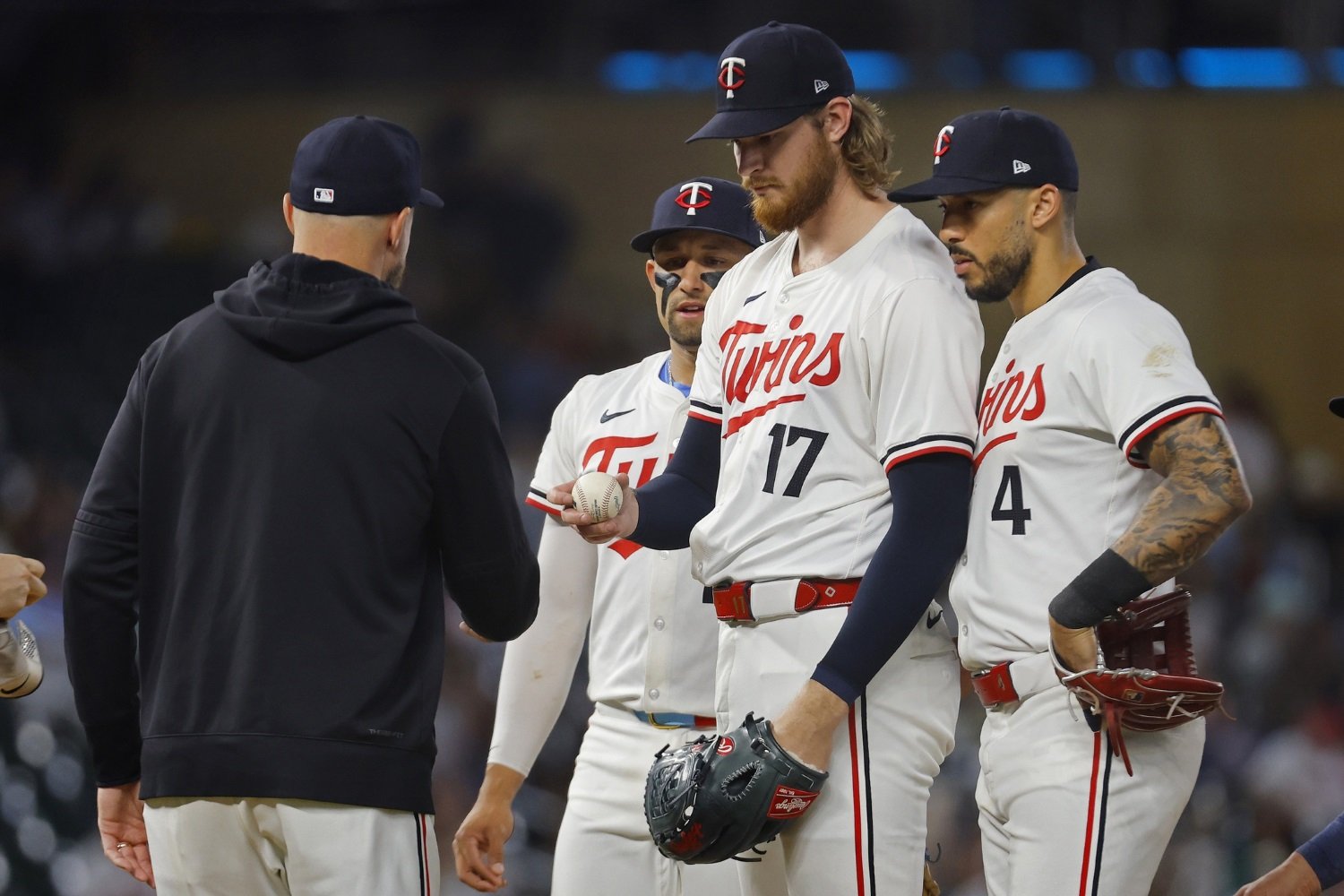 One of the things we ask of baseball is, not to dissociate us from the real world or spare us from it, but to give us a break from the otherwise unrelenting awareness of the gap between how the world is and how we want it to be. Great thinkers from the Buddhists to the Stoics to the best philosophers of the 20th century stressed that that awareness is where all human suffering lies. We can't turn a blind eye to that gap, permanently, but we need a rest from our weary knowing, sometimes. Baseball is never better than when it's providing us that respite. Baseball is never worse, though, than when it's shoving that gap right into our faces, making it even more stark and obvious and excruciating than it is while we navigate the rest of our day. Right now, Twins baseball is baseball at its very worst. Fans want the team to win, and to qualify for the postseason, of course, but we all come to the game with our eyes open on that front. We all know wins can't be guaranteed. What's making watching the Twins so miserable, lately, is our inescapable awareness of the chasm between what the organization is and what it ought to be. Target Field is a jewel, and when the team is in contention, it should be brimming and buzzing and alive with excited fans. The Minnesota front office has assembled a team with several players whose ceiling is superstardom, and they should have the club in contention. And yet, the team has underachieved. We can save most of the blame game for another time, but this team isn't playing the way it should. That falls on the players, and on their manager, and on the front office's inclination toward conservatism, but most of all on ownership's foolhardy avarice and calamitous lack of real business savvy. There's somewhere between $35 million and $50 million that belongs on the field, in Twins uniforms, that is moldering away in the pockets of a family of clueless billionaires, instead. If it had been invested in this team over the last year, they would have already secured a playoff berth, instead of being on the verge of elimination--even if they had still underachieved. There's good news, though. Given the above, this might sound embittered or sarcastic, but it isn't. This is a genuine upside, of the kind Buddha and Seneca and Camus and Tversky would all encourage you to seek: In a way, the Twins are already in the playoffs. You can rebel against the impulse toward despair and rage and resentment, if you want, and embrace the fact that everything we really want out of the postseason is already coming to Target Field over the next few days--at bargain-basement prices, to boot. What makes the playoffs worth pursuing? Why are they the objective of every fan base and every player? It's partially because qualifying for them is a prerequisite for winning the World Series, of course, but we're all realistic enough to understand that the odds are against winning it all even once a team makes it to October. That's been true ever since divisional play began, more than a half-century ago. Now, in the 12-team playoff era, it's undeniable, and essential to understand. No, we like something more about the playoffs than the glimmer that comes into view on a far horizon once you clamber up onto that stage. It's the raising of the stakes of the game that changes it. It's the brightness of the lights and the national attention and the desperation that makes its way onto the field. Players can't hold anything in reserve anymore, and neither can managers. There can be no more shrugging or flushing tough losses. Everything matters. In life, hardly anything feels better than knowing you're doing or witnessing something authentically important, and whereas regular-season baseball is always of negotiable importance, the playoffs matter. Every pitch, every swing, every fielded ball, every umpire's call, every emotional response and every change in the direction of the wind has meaning and urgency. That's where the Twins are. With five games to play, they need four or five wins. Tuesday night's loss pulverized their margin for error, making all the games left playoff levels of do-or-die. Their season is on the line, right now. We might fairly hope, though we can't quite know, that several people's jobs are on the line. All that vividity and nerve-jangling danger is here. The Twins are a daily story everywhere that baseball is discussed, and they'll play on national TV this Saturday against the Orioles. All that's missing is the bunting on the railings. Well, that's not quite true. Because the Pohlad family has so methodically demoralized their customer base, there's one other vital, joyous ingredient of playoff baseball missing: the crowd. The few people who actually attended Tuesday night's game all agreed that the atmosphere was something worse than underwhelming: it was actively depressing. Playoff baseball is outrageously expensive, but fans will pay it, because those games are earned and they can be fully confident that all the other seats will be full and all the outs will be fiercely contested. It's easy to get in cheaply at Target Field this week, and given that the stakes and the odds are so clearly marked out, we can safely assume that the team will keep fighting as hard as they can to get the wins they need. In the world I want, we could all melt together into this moment, and Target Field would be full all week, because the Twins have earned this quintet of de facto playoff games--for worse, with this month-plus of harrowing collapse, but also for better, with a summer of tremendous baseball. Yet, I can't blame the fans who will stay away in droves, because the world I want is not the one we have, and this team won't stop reminding us all of that fact. No one wants to pay any amount of money to have their most hardwired soft spot poked over and over, even if it comes with some chance of seeing stirring, high-octane baseball. For the players who have to summon the energy and focus to attempt this heavy lift, it sucks. Having a small and unenthusiastic crowd makes their job harder. It's not the fans' fault, though. The untouchable, disinterested owners of the team have set up everyone below them in the chain of command to fail, and as a result, watching even this quasi-playoff week of baseball isn't off to a fun start. In the world I want, the Pohlads would realize that this is all their fault and try hard to ameliorate the problem in the future. In the world we have, a lot of irrevocable damage is already done, and the mountainous beds of money on which that family luxuriates make them partially unaware of and wholly indifferent to the ways they're making the world worse--including this way.
- 74 comments
-
- 11
-
-
-
-
What's in a name? Would a Wild Card Series by any other name not smell as sweet? Image courtesy of © Bruce Kluckhohn-Imagn Images One of the things we ask of baseball is, not to dissociate us from the real world or spare us from it, but to give us a break from the otherwise unrelenting awareness of the gap between how the world is and how we want it to be. Great thinkers from the Buddhists to the Stoics to the best philosophers of the 20th century stressed that that awareness is where all human suffering lies. We can't turn a blind eye to that gap, permanently, but we need a rest from our weary knowing, sometimes. Baseball is never better than when it's providing us that respite. Baseball is never worse, though, than when it's shoving that gap right into our faces, making it even more stark and obvious and excruciating than it is while we navigate the rest of our day. Right now, Twins baseball is baseball at its very worst. Fans want the team to win, and to qualify for the postseason, of course, but we all come to the game with our eyes open on that front. We all know wins can't be guaranteed. What's making watching the Twins so miserable, lately, is our inescapable awareness of the chasm between what the organization is and what it ought to be. Target Field is a jewel, and when the team is in contention, it should be brimming and buzzing and alive with excited fans. The Minnesota front office has assembled a team with several players whose ceiling is superstardom, and they should have the club in contention. And yet, the team has underachieved. We can save most of the blame game for another time, but this team isn't playing the way it should. That falls on the players, and on their manager, and on the front office's inclination toward conservatism, but most of all on ownership's foolhardy avarice and calamitous lack of real business savvy. There's somewhere between $35 million and $50 million that belongs on the field, in Twins uniforms, that is moldering away in the pockets of a family of clueless billionaires, instead. If it had been invested in this team over the last year, they would have already secured a playoff berth, instead of being on the verge of elimination--even if they had still underachieved. There's good news, though. Given the above, this might sound embittered or sarcastic, but it isn't. This is a genuine upside, of the kind Buddha and Seneca and Camus and Tversky would all encourage you to seek: In a way, the Twins are already in the playoffs. You can rebel against the impulse toward despair and rage and resentment, if you want, and embrace the fact that everything we really want out of the postseason is already coming to Target Field over the next few days--at bargain-basement prices, to boot. What makes the playoffs worth pursuing? Why are they the objective of every fan base and every player? It's partially because qualifying for them is a prerequisite for winning the World Series, of course, but we're all realistic enough to understand that the odds are against winning it all even once a team makes it to October. That's been true ever since divisional play began, more than a half-century ago. Now, in the 12-team playoff era, it's undeniable, and essential to understand. No, we like something more about the playoffs than the glimmer that comes into view on a far horizon once you clamber up onto that stage. It's the raising of the stakes of the game that changes it. It's the brightness of the lights and the national attention and the desperation that makes its way onto the field. Players can't hold anything in reserve anymore, and neither can managers. There can be no more shrugging or flushing tough losses. Everything matters. In life, hardly anything feels better than knowing you're doing or witnessing something authentically important, and whereas regular-season baseball is always of negotiable importance, the playoffs matter. Every pitch, every swing, every fielded ball, every umpire's call, every emotional response and every change in the direction of the wind has meaning and urgency. That's where the Twins are. With five games to play, they need four or five wins. Tuesday night's loss pulverized their margin for error, making all the games left playoff levels of do-or-die. Their season is on the line, right now. We might fairly hope, though we can't quite know, that several people's jobs are on the line. All that vividity and nerve-jangling danger is here. The Twins are a daily story everywhere that baseball is discussed, and they'll play on national TV this Saturday against the Orioles. All that's missing is the bunting on the railings. Well, that's not quite true. Because the Pohlad family has so methodically demoralized their customer base, there's one other vital, joyous ingredient of playoff baseball missing: the crowd. The few people who actually attended Tuesday night's game all agreed that the atmosphere was something worse than underwhelming: it was actively depressing. Playoff baseball is outrageously expensive, but fans will pay it, because those games are earned and they can be fully confident that all the other seats will be full and all the outs will be fiercely contested. It's easy to get in cheaply at Target Field this week, and given that the stakes and the odds are so clearly marked out, we can safely assume that the team will keep fighting as hard as they can to get the wins they need. In the world I want, we could all melt together into this moment, and Target Field would be full all week, because the Twins have earned this quintet of de facto playoff games--for worse, with this month-plus of harrowing collapse, but also for better, with a summer of tremendous baseball. Yet, I can't blame the fans who will stay away in droves, because the world I want is not the one we have, and this team won't stop reminding us all of that fact. No one wants to pay any amount of money to have their most hardwired soft spot poked over and over, even if it comes with some chance of seeing stirring, high-octane baseball. For the players who have to summon the energy and focus to attempt this heavy lift, it sucks. Having a small and unenthusiastic crowd makes their job harder. It's not the fans' fault, though. The untouchable, disinterested owners of the team have set up everyone below them in the chain of command to fail, and as a result, watching even this quasi-playoff week of baseball isn't off to a fun start. In the world I want, the Pohlads would realize that this is all their fault and try hard to ameliorate the problem in the future. In the world we have, a lot of irrevocable damage is already done, and the mountainous beds of money on which that family luxuriates make them partially unaware of and wholly indifferent to the ways they're making the world worse--including this way. View full article
-
Counterpoint: How could anything better exemplify, better embody the last few years of the Twins franchise than a player who plays slightly over half the games on the schedule?
-
Six months from now, the greatest defensive center fielder of his time might be relegated to a corner, or to designated hitter. He might be in another uniform. Is the clock running out on the face of the Twins franchise? Image courtesy of © Jesse Johnson-Imagn Images He's never played an inning anywhere else, and hardly anyone has had the temerity to suggest that he might. When you think Byron Buxton, you think of center field. His picturesque athletic proportions, speed that seems to cost him less effort than it costs others, and incredible feel for making the play once the ball comes within his reach make Buxton a breathtaking defender. His nickname comes partially from the fact that his name bumps up against it, but it's also an invitation to remember that Willie Mays's teammates called him "Buck," too--first for his paradoxically ungainly grace and speed, but later with reverential respect. Buxton, like Mays, draws your eye on the field at all times, and commands his teammates' awe both with prodigious talent and with his willingness to play through maladies of all kinds. Yet, it might soon be time to dislodge the once-great fielder from a position that has contributed to his injury trouble over the years. Sadly, more than was true of Mays, Buxton's body has broken down and his athleticism has faded, even at age 30. This December, he'll turn 31, and his defense is in decline. In the only approximation of a full season he ever played afield, back in 2017, Buxton chalked up 23 Defensive Runs Saved, according to Sports Info Solutions. Over the following five seasons, he only played 2,192 1/3 innings in total, but he was worth about 20 DRS per 1,000 frames--a remarkable rate that varied little from year to year, even as he played through minor injuries and had to return the season after more serious ones. Those halcyon days, alas, are fading into memory. Infamously, Buxton didn't take up center field even once in 2023, relegated to DH duties full-time to manage a knee injury and survive the season as best he could. Coming back this year, he's played a lot out there, by his standards. His 727 innings in center are the most he's played since that 2017 campaign. Yet, he's only been worth 1 DRS--and there are some even worse indicators than that. According to Baseball Prospectus's Range Out Score, which is a defensive rate stat, Buxton was pretty safely 5% better than the league average at reaching fly balls throughout his prime. That number fell to 1.9 in 2022, though, and this season, it's a shock to the system: -4.2. Buxton's range, by one model focused on scaling that very skill carefully, is now markedly worse than average. Baseball Savant offers a spin on this called Success Rate, which basically takes all playable fly balls and asks what percentage of them an outfielder catches. Buxton's rate hovered in the range between 92 and 96 percent in every season he spent in center, prior to this one. This year, he's at 87 percent. It's a stark change, for the worse. We've still seen some moments that remind us what a wonder Buxton can be. We've still seen some heroics from him. On balance, though, the guy who changed the game for the better from his position in the outfield is gone. He'll keep running into walls, and keep hurling himself after the ball when his hips and knees allow him to get close to it, and that will still result in some incredible plays. It will also still result in some injuries, which are devastating to a franchise built so much around Buxton amid a pattern of shrinking payrolls. And worse, all that effort and speed and grace and excellence will keep becoming more infrequent--not because the spirit isn't willing, but because plainly, the body is only very intermittently able. What to do about it if Buxton can't stay in center beyond this season is a big, daunting, sad question. It's impossible to answer it right now. Nonetheless, we have to admit that it's there, staring us in the face. Could he stay healthier and resist the temptation to break himself against the walls if he moved to left or right field? Can he be the major, consistent offensive threat he's been for much of this season if he moves back to a full-fledged DH role? This week at Target Field, soak in Buxton, and pray to see some big plays from him. The Twins need them, and we all need a few more reminders of what a joy he has been over the years. There might not be any more such plays coming on the other side of a winter that suddenly both promises and ominously threatens change. View full article
-
Will This Week Be the Last We See of Byron Buxton in Center Field?
Matthew Trueblood posted an article in Twins
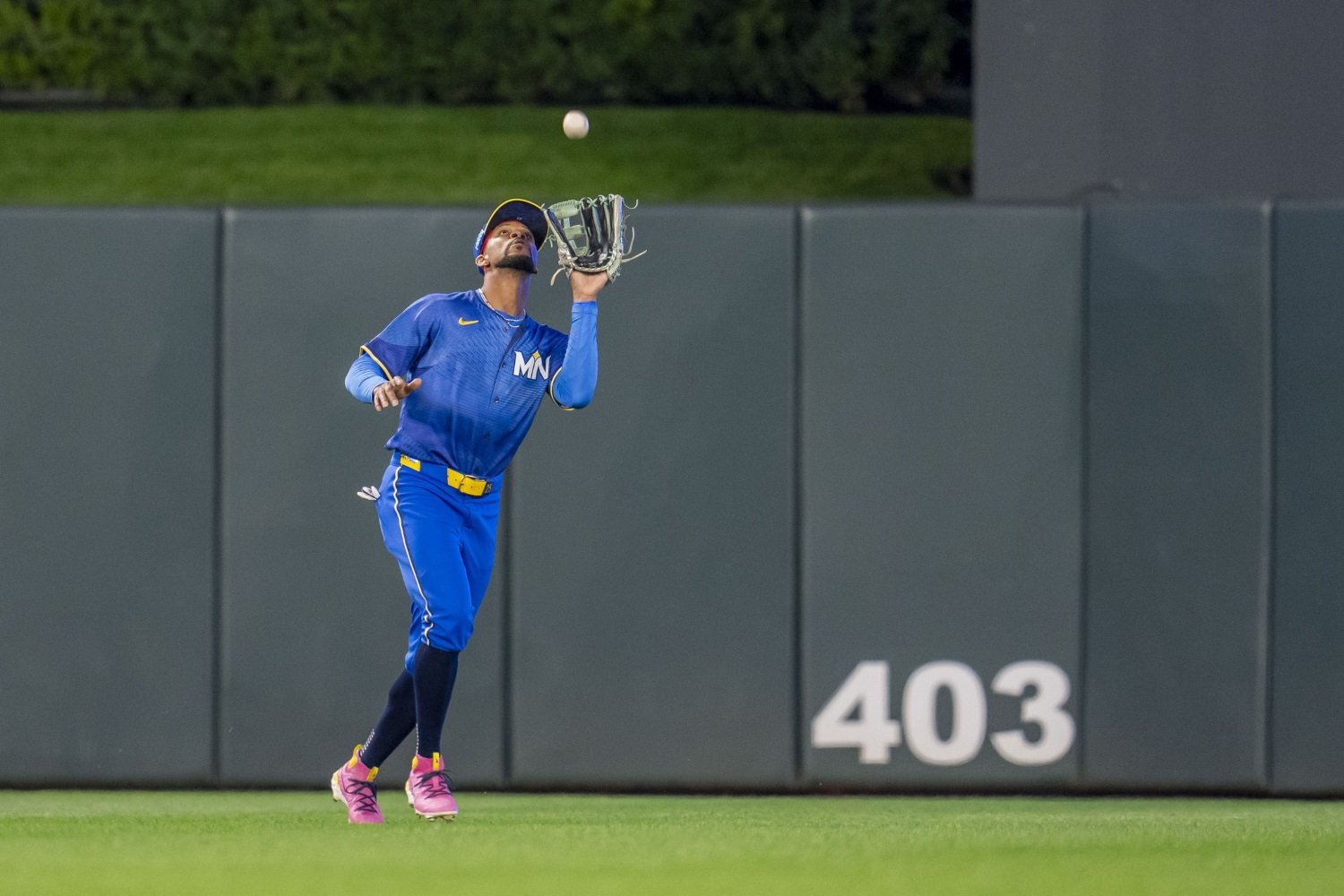 He's never played an inning anywhere else, and hardly anyone has had the temerity to suggest that he might. When you think Byron Buxton, you think of center field. His picturesque athletic proportions, speed that seems to cost him less effort than it costs others, and incredible feel for making the play once the ball comes within his reach make Buxton a breathtaking defender. His nickname comes partially from the fact that his name bumps up against it, but it's also an invitation to remember that Willie Mays's teammates called him "Buck," too--first for his paradoxically ungainly grace and speed, but later with reverential respect. Buxton, like Mays, draws your eye on the field at all times, and commands his teammates' awe both with prodigious talent and with his willingness to play through maladies of all kinds. Yet, it might soon be time to dislodge the once-great fielder from a position that has contributed to his injury trouble over the years. Sadly, more than was true of Mays, Buxton's body has broken down and his athleticism has faded, even at age 30. This December, he'll turn 31, and his defense is in decline. In the only approximation of a full season he ever played afield, back in 2017, Buxton chalked up 23 Defensive Runs Saved, according to Sports Info Solutions. Over the following five seasons, he only played 2,192 1/3 innings in total, but he was worth about 20 DRS per 1,000 frames--a remarkable rate that varied little from year to year, even as he played through minor injuries and had to return the season after more serious ones. Those halcyon days, alas, are fading into memory. Infamously, Buxton didn't take up center field even once in 2023, relegated to DH duties full-time to manage a knee injury and survive the season as best he could. Coming back this year, he's played a lot out there, by his standards. His 727 innings in center are the most he's played since that 2017 campaign. Yet, he's only been worth 1 DRS--and there are some even worse indicators than that. According to Baseball Prospectus's Range Out Score, which is a defensive rate stat, Buxton was pretty safely 5% better than the league average at reaching fly balls throughout his prime. That number fell to 1.9 in 2022, though, and this season, it's a shock to the system: -4.2. Buxton's range, by one model focused on scaling that very skill carefully, is now markedly worse than average. Baseball Savant offers a spin on this called Success Rate, which basically takes all playable fly balls and asks what percentage of them an outfielder catches. Buxton's rate hovered in the range between 92 and 96 percent in every season he spent in center, prior to this one. This year, he's at 87 percent. It's a stark change, for the worse. We've still seen some moments that remind us what a wonder Buxton can be. We've still seen some heroics from him. On balance, though, the guy who changed the game for the better from his position in the outfield is gone. He'll keep running into walls, and keep hurling himself after the ball when his hips and knees allow him to get close to it, and that will still result in some incredible plays. It will also still result in some injuries, which are devastating to a franchise built so much around Buxton amid a pattern of shrinking payrolls. And worse, all that effort and speed and grace and excellence will keep becoming more infrequent--not because the spirit isn't willing, but because plainly, the body is only very intermittently able. What to do about it if Buxton can't stay in center beyond this season is a big, daunting, sad question. It's impossible to answer it right now. Nonetheless, we have to admit that it's there, staring us in the face. Could he stay healthier and resist the temptation to break himself against the walls if he moved to left or right field? Can he be the major, consistent offensive threat he's been for much of this season if he moves back to a full-fledged DH role? This week at Target Field, soak in Buxton, and pray to see some big plays from him. The Twins need them, and we all need a few more reminders of what a joy he has been over the years. There might not be any more such plays coming on the other side of a winter that suddenly both promises and ominously threatens change.
.png.2240a9f38f3ef40f5ddf19b246506d45.png)
.png.765424335e4735b7ba1afb0754c9dbdf.png)
.png.65a920a2ac36be5ea5ff1f0486629617.png)
.png.c8b5ef491c2565f095f0315a2fd7670f.png)


.png.7ceeb0dbcdf74d531aa177756f02483c.png)

