Greggory Masterson
-
Posts
819 -
Joined
-
Last visited
-
Days Won
2
Content Type
Profiles
News
Minnesota Twins Videos
2026 Minnesota Twins Top Prospects Ranking
2022 Minnesota Twins Draft Picks
Minnesota Twins Free Agent & Trade Rumors, Notes, & Tidbits
Guides & Resources
2023 Minnesota Twins Draft Picks
The Minnesota Twins Players Project
2024 Minnesota Twins Draft Picks
2025 Minnesota Twins Draft Pick Tracker
2026 Minnesota Twins Draft Tracker: Picks & Bonuses
Forums
Blogs
Events
Store
Downloads
Gallery
Everything posted by Greggory Masterson
-

Episode 10: Remember When Joe Mays Was An All-Star?
Greggory Masterson posted an article in Podcasts
 Sweet Lou and Ol Gregg continue the All-Star Break bonanza and discuss the Twins' two All-Stars: Carlos Correa and Willi Castro. They also delve into forgotten Twins All-Stars of years past, propose a skills completion, and predict the Twins' 2025 All-Stars Listen using Apple Podcasts: https://podcasts.apple.com/us/podcast/the-twins-off-daily-podcast/id1741266056 Listen using Spotify: https://open.spotify.com/show/4tb78XlurcPTYYSsARdbD7
 -
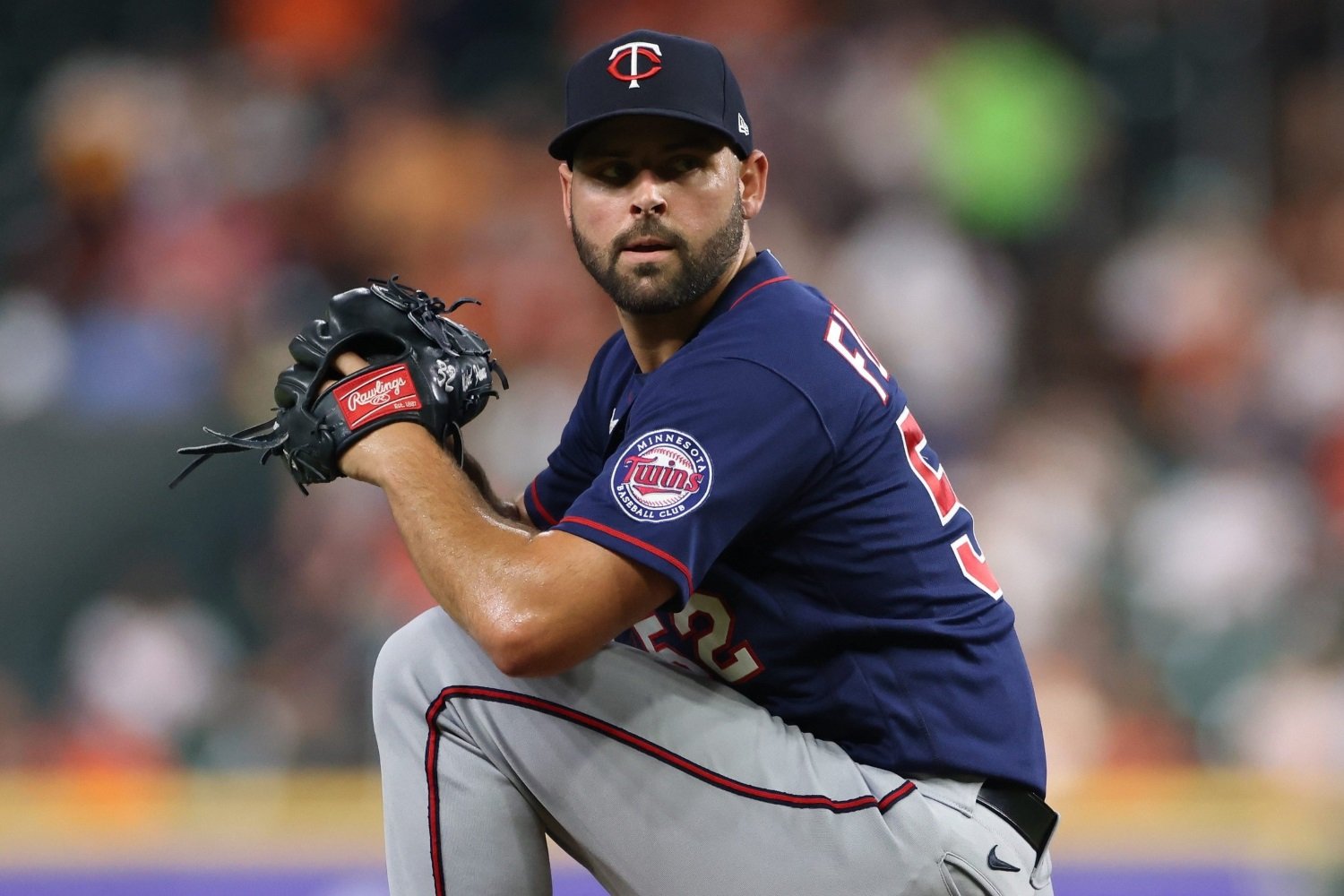
Trading for a good (but not great) reliever at the trade deadline: it’s the easiest trade to make for contenders' front offices. But the Twins don’t need to do it this year. Image courtesy of © Thomas Shea-USA TODAY Sports Every year, roughly a dozen right-handed setup men get flipped from a team out of contention to a playoff hopeful. Teams packing it in for the year—and potentially future years—are often eager to find their reliable reliever a new home and an opportunity to throw in the playoffs, and contending teams are happy to take them in, at the cost of a low-wattage prospect or two. This type of player, given the large supply of them and their debatable effect (a setup man does much less for a team than a star first baseman), doesn’t cost much. As an example, consider the Twins’ recent trade deadline acquisitions. Since 2019, they’ve made six trades for big-league talent, and three of those trades were for right-handed setup men. Most recently, the Twins traded for Michael Fulmer, who gave them 24 solid innings down the stretch in 2022, sending starting pitching prospect Sawyer Gipson-Long to Detroit. Gipson-Long underwent Tommy John surgery after four solid starts for the Tigers in 2023. In 2019, the club acquired two such relievers: Sergio Romo and Sam Dyson. Romo pitched well enough down the stretch to get a second year with the Twins, and his return for the Marlins, Lewin Díaz, made the big leagues, but failed to stick as a first baseman. Likewise, the players the Giants received—Prelander Berroa, Jaylin Davis, Kai-Wei Teng—for Dyson (who, it is sometimes hard to remember, was a very good reliever at the time of the trade) have struggled to gain their footing in the majors. Still, each has had at least a cup of coffee. As one would expect, the prospect capital expended for these three relievers was modest. But there was risk. Gipson-Long, for example, has a reasonable shot at being an MLB starter if he recovers well from elbow surgery. Even if that career hadn’t come with the Twins, his value was surrendered for two months of a player who ranked fourth or fifth in the bullpen pecking order. At times, even a moderate risk might not be worth it. This might be one of those times. Consider the current back end of the Twins bullpen. It’s anchored by Jhoan Durán (one of the most exciting relievers in baseball) and Griffin Jax—considered by many to be even better. Surrounding them are the likes of Brock Stewart, Jorge Alcalá, and Josh Staumont, though each comes with their own questions. Stewart has significant injury question marks and has not pitched in two months, but he would fit into the same tier as Durán and Jax. Alcala is finally hitting his stride, but doesn’t have a long résumé. Staumont is recovering from thoracic outlet syndrome and walking too many batters, but he is pumping triple-digit velocity and improving as he recovers. That’s a decent enough collection of potential playoff arms. But there’s more. Come October, the Twins might attempt a ramp-down for some of their starting pitchers, echoing their strategy in 2023—in which Louie Varland, Chris Paddack, and Kenta Maeda each pitched in relief. Varland and Paddack were especially impressive, and could reprise their relief roles this year. That assumes someone takes Paddack’s spot in the rotation, of course. Beyond Paddack and Varland, Simeon Woods Richardson and David Festa are each quality candidates to ramp down, focus on their best pitches, and pump up their velocity in shorter appearances for the playoffs. It’s easy to see how a playoff bullpen—which only needs, maybe, five good righty pitchers—could fill up and render another Alcalá or Justin Topa-level pitcher redundant (humor me here, but even Topa could find his way into the picture). If the Twins spring for another righty, it needs to be someone in the Durán-Jax-Stewart territory, moving incumbents out of the picture. Anything else probably isn’t worth the prospect risk. From the left-handed side, however: sure. Go right ahead. Lefty relief has been a sore spot for the Twins. Caleb Thielbar has been slumping in his age-37 season, nowhere close to fulfilling his top lefty role of years past. Steven Okert has been Steven Okert, and Kody Funderburk has not taken the step forward many hoped to see this season. There’s a world wherein any of those three is a secondary lefty on a playoff team, but there’s no reason to turn to them over one of the big three (and arguably even Alcalá), even against lefties. A lefty Alcalá-type would be perfectly reasonable, and that’s where the Twins should focus their attention—if they’re shopping in the setup man section at all. Is it unreasonable to seek some regular season depth (for the right price)? No. Another Romo-for-Díaz swap is palatable. But it really doesn’t do much in terms of a playoff bullpen. The sights should be set higher than that. The 2022 Jorge López trade was a mess. López failed to even be useful as a Twin, and the package sent back to Baltimore almost immediately began outperforming him. He himself was flipped to Miami in 2023 for Dylan Floro, a reliever who was designated for assignment before the playoffs began. But this kind of trade would bring value to this year’s team. It has its own heightened level of risk, but if you’re shopping for righties, they should be righties who can help in October, not just August. Make a good trade for a lefty sixth-inning guy. Make a trade for a righty eighth- or ninth-inning guy. Trade for a starter, to facilitate that shift into a relief role for one or more of Varland, Woods Richardson, and Paddack. But don’t make a trade for a righty sixth-inning guy who won't factor into a playoff bullpen. It doesn’t move the needle, and it’s simply prospect risk you don’t need to take. View full article
- 45 replies
-
- 1
-

-
- sergio romo
- sam dyson
- (and 2 more)
-
 Every year, roughly a dozen right-handed setup men get flipped from a team out of contention to a playoff hopeful. Teams packing it in for the year—and potentially future years—are often eager to find their reliable reliever a new home and an opportunity to throw in the playoffs, and contending teams are happy to take them in, at the cost of a low-wattage prospect or two. This type of player, given the large supply of them and their debatable effect (a setup man does much less for a team than a star first baseman), doesn’t cost much. As an example, consider the Twins’ recent trade deadline acquisitions. Since 2019, they’ve made six trades for big-league talent, and three of those trades were for right-handed setup men. Most recently, the Twins traded for Michael Fulmer, who gave them 24 solid innings down the stretch in 2022, sending starting pitching prospect Sawyer Gipson-Long to Detroit. Gipson-Long underwent Tommy John surgery after four solid starts for the Tigers in 2023. In 2019, the club acquired two such relievers: Sergio Romo and Sam Dyson. Romo pitched well enough down the stretch to get a second year with the Twins, and his return for the Marlins, Lewin Díaz, made the big leagues, but failed to stick as a first baseman. Likewise, the players the Giants received—Prelander Berroa, Jaylin Davis, Kai-Wei Teng—for Dyson (who, it is sometimes hard to remember, was a very good reliever at the time of the trade) have struggled to gain their footing in the majors. Still, each has had at least a cup of coffee. As one would expect, the prospect capital expended for these three relievers was modest. But there was risk. Gipson-Long, for example, has a reasonable shot at being an MLB starter if he recovers well from elbow surgery. Even if that career hadn’t come with the Twins, his value was surrendered for two months of a player who ranked fourth or fifth in the bullpen pecking order. At times, even a moderate risk might not be worth it. This might be one of those times. Consider the current back end of the Twins bullpen. It’s anchored by Jhoan Durán (one of the most exciting relievers in baseball) and Griffin Jax—considered by many to be even better. Surrounding them are the likes of Brock Stewart, Jorge Alcalá, and Josh Staumont, though each comes with their own questions. Stewart has significant injury question marks and has not pitched in two months, but he would fit into the same tier as Durán and Jax. Alcala is finally hitting his stride, but doesn’t have a long résumé. Staumont is recovering from thoracic outlet syndrome and walking too many batters, but he is pumping triple-digit velocity and improving as he recovers. That’s a decent enough collection of potential playoff arms. But there’s more. Come October, the Twins might attempt a ramp-down for some of their starting pitchers, echoing their strategy in 2023—in which Louie Varland, Chris Paddack, and Kenta Maeda each pitched in relief. Varland and Paddack were especially impressive, and could reprise their relief roles this year. That assumes someone takes Paddack’s spot in the rotation, of course. Beyond Paddack and Varland, Simeon Woods Richardson and David Festa are each quality candidates to ramp down, focus on their best pitches, and pump up their velocity in shorter appearances for the playoffs. It’s easy to see how a playoff bullpen—which only needs, maybe, five good righty pitchers—could fill up and render another Alcalá or Justin Topa-level pitcher redundant (humor me here, but even Topa could find his way into the picture). If the Twins spring for another righty, it needs to be someone in the Durán-Jax-Stewart territory, moving incumbents out of the picture. Anything else probably isn’t worth the prospect risk. From the left-handed side, however: sure. Go right ahead. Lefty relief has been a sore spot for the Twins. Caleb Thielbar has been slumping in his age-37 season, nowhere close to fulfilling his top lefty role of years past. Steven Okert has been Steven Okert, and Kody Funderburk has not taken the step forward many hoped to see this season. There’s a world wherein any of those three is a secondary lefty on a playoff team, but there’s no reason to turn to them over one of the big three (and arguably even Alcalá), even against lefties. A lefty Alcalá-type would be perfectly reasonable, and that’s where the Twins should focus their attention—if they’re shopping in the setup man section at all. Is it unreasonable to seek some regular season depth (for the right price)? No. Another Romo-for-Díaz swap is palatable. But it really doesn’t do much in terms of a playoff bullpen. The sights should be set higher than that. The 2022 Jorge López trade was a mess. López failed to even be useful as a Twin, and the package sent back to Baltimore almost immediately began outperforming him. He himself was flipped to Miami in 2023 for Dylan Floro, a reliever who was designated for assignment before the playoffs began. But this kind of trade would bring value to this year’s team. It has its own heightened level of risk, but if you’re shopping for righties, they should be righties who can help in October, not just August. Make a good trade for a lefty sixth-inning guy. Make a trade for a righty eighth- or ninth-inning guy. Trade for a starter, to facilitate that shift into a relief role for one or more of Varland, Woods Richardson, and Paddack. But don’t make a trade for a righty sixth-inning guy who won't factor into a playoff bullpen. It doesn’t move the needle, and it’s simply prospect risk you don’t need to take.
- 45 comments
-
- 12
-

-
- sergio romo
- sam dyson
- (and 2 more)
-
It's a Twins off-day so that means a new podcast! Greggory and Cody are joined by Tom Froemming as they cover three series wins against Detroit, Houston, and the White Sox. They also hand out midseason awards, discuss some prospects, and play an Immaculate Gregg (see below). When the cat (Sweet Lou) is away, the mice (Gregg, Cody, and Tom) will play. View full article
-
 Greggory and Cody are joined by Tom Froemming as they cover three series wins against Detroit, Houston, and the White Sox. They also hand out midseason awards, discuss some prospects, and play an Immaculate Gregg (see below). When the cat (Sweet Lou) is away, the mice (Gregg, Cody, and Tom) will play.
 -
Zack Littell and Dietrich Enns, which was effectively a wash with this methodology, I wrote up the deadline selloffs last season, so the numbers aren't up to date, but if you want to check them out, they're right here:
-
Garcia was a difficult one--I have a separate list with his sell included, but it's not relevant to the Twins this year, because they will almost assuredly not be sellers. But I wanted to evaluate the moves in isolation, whether they made a good move for Garcia in the first place
-
I understand this criticism, and the reason I added a writeup and additional statistics like playing time is because I don't believe WAR is the singular best way to evaluate the trades. However, I'm not fully on board with the "he was blocked" defense. Yes, Steer would have trouble cracking Minnesota's roster, but he still was a valuable trade chip that could have been part of a package for any number of assets. In the end, he was traded for Mahle, so those two should be compared. In another world, Steer could have been traded for someone better or worse than Mahle. Just because he was blocked doesn't mean we can write off his value to other teams is what I'm trying to say.
-
Falvey's Deadline Deals: Winners, Losers, and Nothingburgers
Greggory Masterson posted an article in Twins
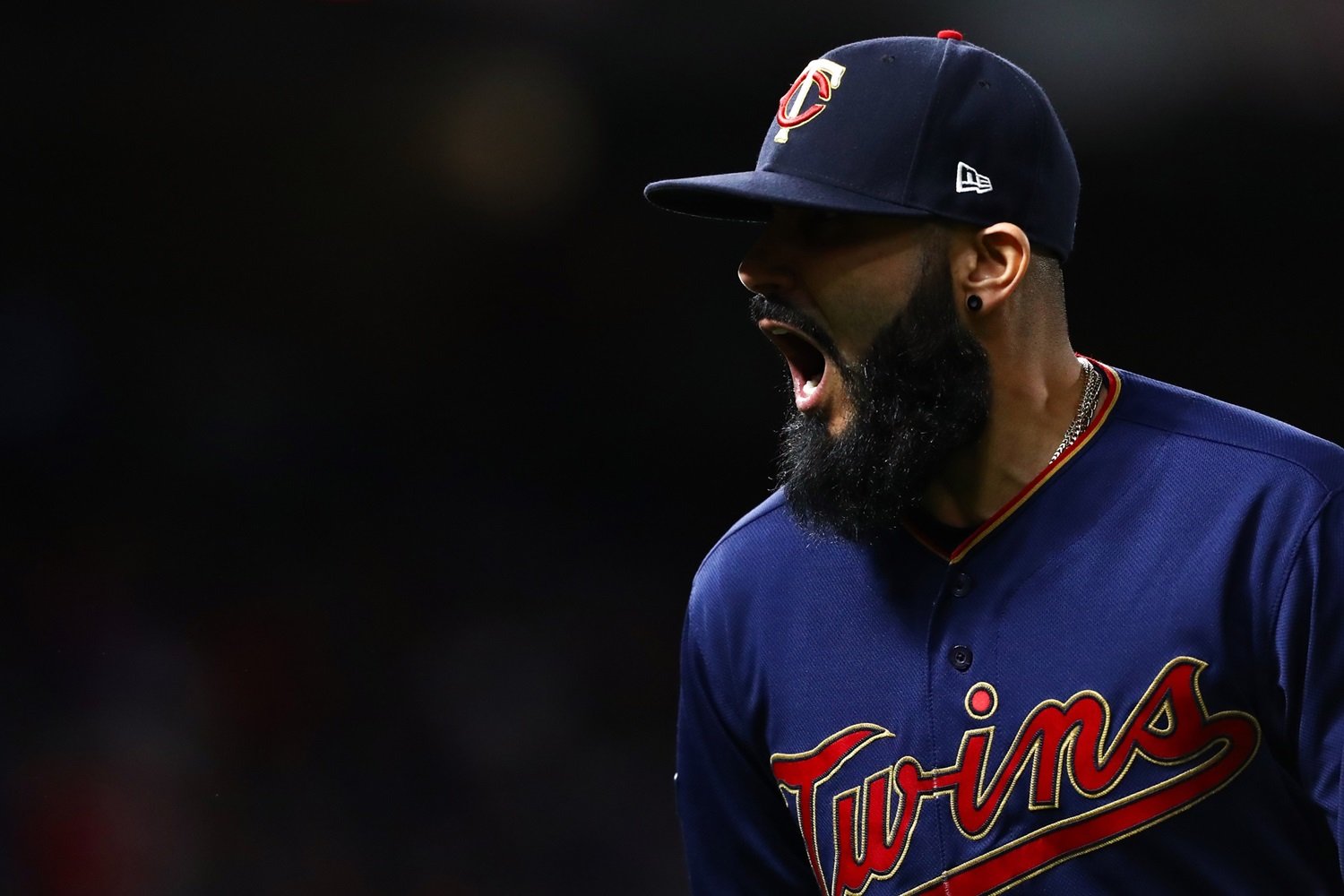 No team wins every trade. Deadline buys are especially complicated, because a team almost always knowingly trades away valuable long-term pieces for short-term rewards. The urgency of an opportunity and the paucity of sellers usually makes the market tough on teams who want to get better down the stretch in a pennant race. Deadline trades are hot on Twins fans’ minds this month, as the team sits in line for a Wild Card spot and continues to chase the red-hot Guardians. I, your humble narrator, have combed through every deadline trade that the Twins have made since October 2016 (when Falvey and Levine were brought on). You, my only friends, can make your own judgments. Below, I’ve listed every trade that could be considered a buy near the deadline. These trades occurred in 2017, 2019, and 2022, as the team was in contention in each of those three years. Interestingly, the Twins did not make any deadline buy additions in 2023 despite being in first place (we’re not including the Jorge López-Dylan Floro swap). The analysis below includes stats and context. If they were again traded or signed elsewhere as free agents after the trade, their subsequent performances aren't considered here. This information was gathered as a snapshot on Jun. 29, 2024, and obviously doesn't contain future performance. Those with an * indicate that the player is still in the organization they were traded to, so the complete picture isn’t available. I will also be providing some context for each trade. Comparing statistics does not necessarily indicate which team won the trade (and sometimes there are no winners, despite the statistics; see the Sam Dyson trade), so I have done my best to explain why the trade occurred and other relevant circumstances. Without further ado, here’s my order, from best to worst, based on a subjective mix of process and results. 1. Jul. 27, 2019: Minnesota acquires Sergio Romo (42.2 IP, 125 ERA+, 0.4 bWAR), Chris Vallimont (did not reach Minnesota) from Miami for Lewin Díaz (343 PA, 55 OPS+, 0.1 bWAR), +0.3 bWAR for Minnesota. Romo was one of two relievers acquired at the 2019 deadline, and he would be a mainstay in the back of the Twins bullpen for two years, as he was brought back for 2020 before having his option declined. Vallimont was waived in 2022 and is currently in the Dodgers system. Díaz had some promise but failed to hit enough as a first baseman to stick in Miami. 2. Aug. 2, 2022: Minnesota acquires Michael Fulmer (24.1 IP, 107 ERA+, 0.5 bWAR) from Detroit for Sawyer Gipson-Long* (20 IP, 166 ERA+, 0.4 bWAR), +0.1 bWAR for Minnesota. Fulmer was a quality setup man down the stretch in 2022, though the Twins did not re-sign him in the offseason. He had high highs and low lows for the 2023 Cubs, and was forced to undergo Tommy John surgery for a second time at the end of the campaign. Gipson-Long debuted in 2023 with four solid starts for the Tigers, but is on the injured list following his own Tommy John surgery. 3. Jul. 27, 2017: Minnesota acquires Gabriel Moya (42.2 IP, 94 ERA+, 0.2 bWAR) from Arizona for John Ryan Murphy (299 PA, 62 OPS+, -0.2 bWAR), +0.4 bWAR for Minnesota Murphy was most infamous in Minnesota for being the return in the trade that sent Aaron Hicks to New York. Moya was a decent reliever for a couple of years, but was designated for assignment in 2019. 4. Aug. 2, 2022: Minnesota acquires Sandy León (65 PA, 46 OPS+, -0.4 bWAR) from Cleveland for Ian Hamilton (did not reach Cleveland), -0.4 bWAR for Minnesota. A simple veteran-for-veteran swap sent journeyman catcher León to Minnesota as catcher depth and Hamilton to Cleveland as reliever depth. León didn’t hit a lick, but the pitching staff appreciated him, and Hamilton never got called up prior to his release in 2022, though he is a fixture in the current Yankees bullpen. 5. Jul. 24, 2017: Minnesota acquires Jaime Garcia (6.2 IP, 115 ERA+, 0.1 bWAR), Anthony Recker (did not reach Minnesota) from Atlanta for Huascar Ynoa* (122.1 IP, 85 ERA+, 1.1 bWAR), -1.0 bWAR for Minnesota In an effort to “go for it,” the Twins acquired the aging starter to fortify the rotation, sending over the 19-year-old prospect. Garcia made one start. Ynoa had a solid 17-start stretch for Atlanta in 2021, but has not had a significant effect otherwise and is currently dealing with elbow issues. It’s hard to separate this trade from the one that sent Garcia away a week later, but the first trade wasn’t bad in itself. 6. Aug. 2, 2022: Minnesota acquires Jorge López (58.0 IP, 86 ERA+, -0.2 bWAR) from Baltimore for Juan Rojas* (has not reached Baltimore), Cade Povich* (21.1 IP, 91 ERA+, 0.2 bWAR), Juan Nuñez* (has not reached Baltimore), Yennier Cano* (110.2 IP, 128 ERA+, 2.2 bWAR), -2.6 bWAR for Minnesota. The Twins swung a deal for what was arguably the best reliever traded at the 2022 deadline in López, along with his 2.5 years of team control. However, he disappointed in 2022 and 2023 and was swapped to the Marlins for fellow struggling reliever Dylan Floro. Rojas and Nuñez are still in the minors, but Cano emerged as arguably the best reliever in baseball in 2023 for the Orioles. He has cooled off in 2024, but is still a major part of the bullpen, and Povich has started four games for Baltimore. 7. Jul. 31, 2019: Minnesota acquires Sam Dyson (11.1 IP, 65 ERA+, -0.3 bWAR) from San Francisco for Prelander Berroa (did not reach San Francisco), Jaylin Davis (68 PA, 31 OPS+, -0.7 bWAR), Kai-Wei Teng* (11.0 IP, 40 ERA+, -0.3 bWAR), +0.7 bWAR for Minnesota. This trade was a mess for all involved, as Dyson pitched a poor 11 innings, had a season-ending injury, and was exposed as a domestic abuser shortly thereafter. Berroa, who debuted in 2023, was traded to Seattle in 2022. Teng has struggled in his first year as a reliever for the Giants in 2024. Davis played poorly in limited action over three years, and has bounced around since the trade. 8. Aug. 2, 2022: Minnesota acquires Tyler Mahle (42 IP, 116 ERA+, 0.5 bWAR) from Cincinnati for Spencer Steer* (1,106 PA, 112 OPS+, 4.2 bWAR), Christian Encarnacion-Strand* (364 PA, 90 OPS+, -0.2 bWAR), Steven Hajjar (did not reach Cincinnati), -3.5 bWAR for Minnesota. Mahle was one of the top available starting pitchers and was brought in to bring stability to a rotation, though his preexisting injuries in 2022 and eventual Tommy John (not necessarily related to his 2022 injuries) limited him to 42 moderately effective innings as a Twin. Steer was blocked from reaching MLB at the time, and has become a mainstay in Cincinnati’s lineup. Encarnacion-Strand has been up and down since his debut in 2023, and Hajjar was traded as player to be named later in a trade for Will Benson. Total bWAR change through deadline buys: -5.9. (Disclaimer: It's easier to gain WAR over multiple years in sells than buys, given how much longer the prospects are in the organization). In review, the two top trades were for solid right-handed relievers. There were three trades in the middle that were effectively nothingburgers. The other three were failures, due to a mix of health, underperformance, and significant character issues. There is some reason to be nervous about losing on these deadline buys, but that's also part of the risk when a team trades future pieces for present talent. One big hit at the deadline could even be enough to even out these missteps, given that there are only three true flops. Do you agree with this order? How do you feel about the team’s performance buying at the deadline? Do you hope that the team buys again this year?
- 28 comments
-
- 8
-
-
- sergio romo
- tyler mahle
- (and 3 more)
-
How have Derek Falvey and Thad Levine fared buying at the deadline? As the 2024 Trade Deadline approaches and the Twins sit in second place, let’s take a look at every time the current front office has tried to give a winning team a July boost. Image courtesy of © David Berding-USA TODAY Sports No team wins every trade. Deadline buys are especially complicated, because a team almost always knowingly trades away valuable long-term pieces for short-term rewards. The urgency of an opportunity and the paucity of sellers usually makes the market tough on teams who want to get better down the stretch in a pennant race. Deadline trades are hot on Twins fans’ minds this month, as the team sits in line for a Wild Card spot and continues to chase the red-hot Guardians. I, your humble narrator, have combed through every deadline trade that the Twins have made since October 2016 (when Falvey and Levine were brought on). You, my only friends, can make your own judgments. Below, I’ve listed every trade that could be considered a buy near the deadline. These trades occurred in 2017, 2019, and 2022, as the team was in contention in each of those three years. Interestingly, the Twins did not make any deadline buy additions in 2023 despite being in first place (we’re not including the Jorge López-Dylan Floro swap). The analysis below includes stats and context. If they were again traded or signed elsewhere as free agents after the trade, their subsequent performances aren't considered here. This information was gathered as a snapshot on Jun. 29, 2024, and obviously doesn't contain future performance. Those with an * indicate that the player is still in the organization they were traded to, so the complete picture isn’t available. I will also be providing some context for each trade. Comparing statistics does not necessarily indicate which team won the trade (and sometimes there are no winners, despite the statistics; see the Sam Dyson trade), so I have done my best to explain why the trade occurred and other relevant circumstances. Without further ado, here’s my order, from best to worst, based on a subjective mix of process and results. 1. Jul. 27, 2019: Minnesota acquires Sergio Romo (42.2 IP, 125 ERA+, 0.4 bWAR), Chris Vallimont (did not reach Minnesota) from Miami for Lewin Díaz (343 PA, 55 OPS+, 0.1 bWAR), +0.3 bWAR for Minnesota. Romo was one of two relievers acquired at the 2019 deadline, and he would be a mainstay in the back of the Twins bullpen for two years, as he was brought back for 2020 before having his option declined. Vallimont was waived in 2022 and is currently in the Dodgers system. Díaz had some promise but failed to hit enough as a first baseman to stick in Miami. 2. Aug. 2, 2022: Minnesota acquires Michael Fulmer (24.1 IP, 107 ERA+, 0.5 bWAR) from Detroit for Sawyer Gipson-Long* (20 IP, 166 ERA+, 0.4 bWAR), +0.1 bWAR for Minnesota. Fulmer was a quality setup man down the stretch in 2022, though the Twins did not re-sign him in the offseason. He had high highs and low lows for the 2023 Cubs, and was forced to undergo Tommy John surgery for a second time at the end of the campaign. Gipson-Long debuted in 2023 with four solid starts for the Tigers, but is on the injured list following his own Tommy John surgery. 3. Jul. 27, 2017: Minnesota acquires Gabriel Moya (42.2 IP, 94 ERA+, 0.2 bWAR) from Arizona for John Ryan Murphy (299 PA, 62 OPS+, -0.2 bWAR), +0.4 bWAR for Minnesota Murphy was most infamous in Minnesota for being the return in the trade that sent Aaron Hicks to New York. Moya was a decent reliever for a couple of years, but was designated for assignment in 2019. 4. Aug. 2, 2022: Minnesota acquires Sandy León (65 PA, 46 OPS+, -0.4 bWAR) from Cleveland for Ian Hamilton (did not reach Cleveland), -0.4 bWAR for Minnesota. A simple veteran-for-veteran swap sent journeyman catcher León to Minnesota as catcher depth and Hamilton to Cleveland as reliever depth. León didn’t hit a lick, but the pitching staff appreciated him, and Hamilton never got called up prior to his release in 2022, though he is a fixture in the current Yankees bullpen. 5. Jul. 24, 2017: Minnesota acquires Jaime Garcia (6.2 IP, 115 ERA+, 0.1 bWAR), Anthony Recker (did not reach Minnesota) from Atlanta for Huascar Ynoa* (122.1 IP, 85 ERA+, 1.1 bWAR), -1.0 bWAR for Minnesota In an effort to “go for it,” the Twins acquired the aging starter to fortify the rotation, sending over the 19-year-old prospect. Garcia made one start. Ynoa had a solid 17-start stretch for Atlanta in 2021, but has not had a significant effect otherwise and is currently dealing with elbow issues. It’s hard to separate this trade from the one that sent Garcia away a week later, but the first trade wasn’t bad in itself. 6. Aug. 2, 2022: Minnesota acquires Jorge López (58.0 IP, 86 ERA+, -0.2 bWAR) from Baltimore for Juan Rojas* (has not reached Baltimore), Cade Povich* (21.1 IP, 91 ERA+, 0.2 bWAR), Juan Nuñez* (has not reached Baltimore), Yennier Cano* (110.2 IP, 128 ERA+, 2.2 bWAR), -2.6 bWAR for Minnesota. The Twins swung a deal for what was arguably the best reliever traded at the 2022 deadline in López, along with his 2.5 years of team control. However, he disappointed in 2022 and 2023 and was swapped to the Marlins for fellow struggling reliever Dylan Floro. Rojas and Nuñez are still in the minors, but Cano emerged as arguably the best reliever in baseball in 2023 for the Orioles. He has cooled off in 2024, but is still a major part of the bullpen, and Povich has started four games for Baltimore. 7. Jul. 31, 2019: Minnesota acquires Sam Dyson (11.1 IP, 65 ERA+, -0.3 bWAR) from San Francisco for Prelander Berroa (did not reach San Francisco), Jaylin Davis (68 PA, 31 OPS+, -0.7 bWAR), Kai-Wei Teng* (11.0 IP, 40 ERA+, -0.3 bWAR), +0.7 bWAR for Minnesota. This trade was a mess for all involved, as Dyson pitched a poor 11 innings, had a season-ending injury, and was exposed as a domestic abuser shortly thereafter. Berroa, who debuted in 2023, was traded to Seattle in 2022. Teng has struggled in his first year as a reliever for the Giants in 2024. Davis played poorly in limited action over three years, and has bounced around since the trade. 8. Aug. 2, 2022: Minnesota acquires Tyler Mahle (42 IP, 116 ERA+, 0.5 bWAR) from Cincinnati for Spencer Steer* (1,106 PA, 112 OPS+, 4.2 bWAR), Christian Encarnacion-Strand* (364 PA, 90 OPS+, -0.2 bWAR), Steven Hajjar (did not reach Cincinnati), -3.5 bWAR for Minnesota. Mahle was one of the top available starting pitchers and was brought in to bring stability to a rotation, though his preexisting injuries in 2022 and eventual Tommy John (not necessarily related to his 2022 injuries) limited him to 42 moderately effective innings as a Twin. Steer was blocked from reaching MLB at the time, and has become a mainstay in Cincinnati’s lineup. Encarnacion-Strand has been up and down since his debut in 2023, and Hajjar was traded as player to be named later in a trade for Will Benson. Total bWAR change through deadline buys: -5.9. (Disclaimer: It's easier to gain WAR over multiple years in sells than buys, given how much longer the prospects are in the organization). In review, the two top trades were for solid right-handed relievers. There were three trades in the middle that were effectively nothingburgers. The other three were failures, due to a mix of health, underperformance, and significant character issues. There is some reason to be nervous about losing on these deadline buys, but that's also part of the risk when a team trades future pieces for present talent. One big hit at the deadline could even be enough to even out these missteps, given that there are only three true flops. Do you agree with this order? How do you feel about the team’s performance buying at the deadline? Do you hope that the team buys again this year? View full article
- 28 replies
-
- 1
-
-
- sergio romo
- tyler mahle
- (and 3 more)
-
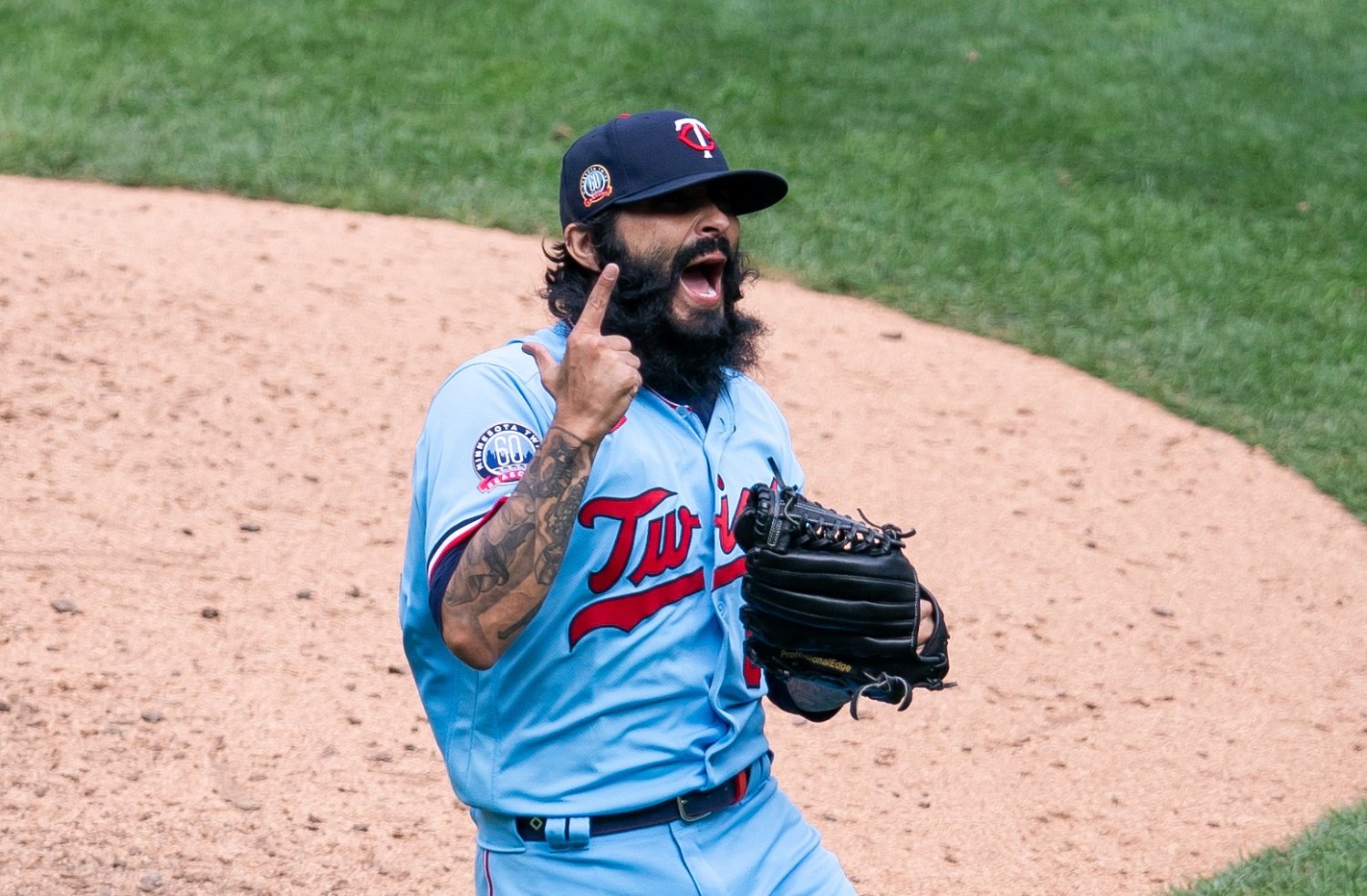 One of the more consistent patterns during the Derek Falvey regime has been a reluctance to spend prospect capital on short-term solutions. The idea is solid—it can be risky to trade away over a half-decade of a prospect’s career for just a few months of a veteran’s services. It becomes even more risky if two, three, or even four prospects are leaving the organization. As such, many of the players the Twins have acquired with a year or less of team control remaining have been lower-end filler like Sandy León, Dylan Floro, or Jaime Garcia. Michael Fulmer and Sergio Romo were setup men acquired at the deadline with only a few months left on their contracts. Gary Sánchez, Anthony DeSclafani, and Michael A. Taylor were acquired to fill temporary holes at catcher/DH, starting pitcher, and center field, respectively, with a full season of control ahead. That’s it. Really. Those are all the expiring contracts the Twins have brought on since 2016. Every other trade that they’ve made has been for someone with multiple years of control, like Kenta Maeda, Pablo López, or Jake Odorizzi. Even players like Sam Dyson and Gio Urshela, who only played one year as a Twin, had multiple years of theoretical team control when they were acquired. Manuel Margot, for example, has an option for 2025, albeit one almost sure to be declined. The Twins’ emphasis on sustained success—not selling out for a single year, even at a juncture when another team might—has been consistent, but 2024 presents a situation that might make acquiring a short-term piece worthwhile. Not only is the team working with a high floor, but they also have prospect capital and are facing payroll constraints next year. First, the Twins do not have a glaring need. This is not to say they don’t need another playoff arm or something along those lines; it’s that there are pieces in place already that are at least competent. A player in the 2019 Sergio Romo or 2023 Michael A. Taylor range doesn’t really move the needle. A player who moves quality bats down in the lineup or quality arms down in the rotation or bullpen would be the standard to meet to compel a trade. Those types of players, for multiple years, are expensive. That might not be a gambit that the Twins are interested in, especially with the number of quality options already on or near the big-league team. There might be space in the outfield in future years, but Trevor Larnach, Austin Martin, Matt Wallner, Emmanuel Rodriguez, Willi Castro, and Alex Kirilloff are options there. After Carlos Santana departs, Edouard Julien, José Miranda and/or Kirilloff could be options. The starting rotation is already filled with names for next year, and additional options like Louie Varland, David Festa, and Zebby Matthews provide it with depth. Some of those names aren’t world-beaters, but there’s not an abject feeling of dread or an urgent need around those positions in the near future. Given that, the need for long-term talent is diminished, and the bar for an acquisition is high: a recipe for a high-end expiring contract. That point works in another direction—it lowers the need to hold onto prospects. If there were no other options to replace Max Kepler in 2025, someone like Wallner would be less expendable. Someone a little further down the system and a few years younger would also be less expendable. But right now, the Twins have seven players who have landed on some top-100 prospect list—Walker Jenkins, Brooks Lee, Rodriguez, Festa, Matthews, Gabriel Gonzalez, and Luke Keaschall—and there are exciting lower-tier prospects providing an exciting pool of potential trade chips, because they aren't absolutely necessary for the team's future. Combining those points, the Twins have a high bar to clear, less need to bring in a core building block, and prospect capital to make it happen. Those are theoretical and organizational reasons that can make them more likely to splurge on a team-altering expiring contract. However, there’s a pragmatic reason above all of this: payroll. Back in the offseason, Peter Labuza wrote a great story outlining the Twins’ impending payroll increase in 2025. Key players will see bumps in their contracts and reach or continue arbitration while a few notable veteran contracts expire. The projected payroll is already greater for 2025 than now, and there are no indications that spending will rise to 2023 levels. When bringing on new contracts in trade, that might be an issue. Although contracts are prorated, and the team would only need to take on the player’s remaining salary for 2024, they would still be on the hook for the player’s future salary in 2025 and beyond. A team may even be talked into retaining some of that salary for 2024, but good luck next year. Take someone like Vladimir Guerrero Jr., a common trade target among fans. Guerrero is making approximately $20 million this season. If he were traded on Jul. 31, his new team would be responsible for about $7 million. The Blue Jays could cover some of the money, for the right prospect, leaving the Twins owing $3 million, which might be palatable for ownership. However, in arbitration ahead of 2025, Guerrero might receive $24 million, or even more. The Twins would either have to pay him that, trade him again, or non-tender him in the offseason, making him a free agent (and Toronto wouldn’t give Falvey a discount for not employing him in 2025). There’s no winning there, given ownership’s payroll constraints. So, an uncharacteristic rental makes all the sense in the world this season, and the Twins should try to take advantage of a mercenary who can raise the floor and ceiling of this 2024 team without worrying about the future. It increases the risk of a trade backfiring, but it might be the best move.
 -
The Twins have appeared hesitant to trade for players on expiring contracts under the management of Derek Falvey. However, they may be in a perfect position to break that apparent rule this July. Image courtesy of Brad Rempel-USA TODAY Sports One of the more consistent patterns during the Derek Falvey regime has been a reluctance to spend prospect capital on short-term solutions. The idea is solid—it can be risky to trade away over a half-decade of a prospect’s career for just a few months of a veteran’s services. It becomes even more risky if two, three, or even four prospects are leaving the organization. As such, many of the players the Twins have acquired with a year or less of team control remaining have been lower-end filler like Sandy León, Dylan Floro, or Jaime Garcia. Michael Fulmer and Sergio Romo were setup men acquired at the deadline with only a few months left on their contracts. Gary Sánchez, Anthony DeSclafani, and Michael A. Taylor were acquired to fill temporary holes at catcher/DH, starting pitcher, and center field, respectively, with a full season of control ahead. That’s it. Really. Those are all the expiring contracts the Twins have brought on since 2016. Every other trade that they’ve made has been for someone with multiple years of control, like Kenta Maeda, Pablo López, or Jake Odorizzi. Even players like Sam Dyson and Gio Urshela, who only played one year as a Twin, had multiple years of theoretical team control when they were acquired. Manuel Margot, for example, has an option for 2025, albeit one almost sure to be declined. The Twins’ emphasis on sustained success—not selling out for a single year, even at a juncture when another team might—has been consistent, but 2024 presents a situation that might make acquiring a short-term piece worthwhile. Not only is the team working with a high floor, but they also have prospect capital and are facing payroll constraints next year. First, the Twins do not have a glaring need. This is not to say they don’t need another playoff arm or something along those lines; it’s that there are pieces in place already that are at least competent. A player in the 2019 Sergio Romo or 2023 Michael A. Taylor range doesn’t really move the needle. A player who moves quality bats down in the lineup or quality arms down in the rotation or bullpen would be the standard to meet to compel a trade. Those types of players, for multiple years, are expensive. That might not be a gambit that the Twins are interested in, especially with the number of quality options already on or near the big-league team. There might be space in the outfield in future years, but Trevor Larnach, Austin Martin, Matt Wallner, Emmanuel Rodriguez, Willi Castro, and Alex Kirilloff are options there. After Carlos Santana departs, Edouard Julien, José Miranda and/or Kirilloff could be options. The starting rotation is already filled with names for next year, and additional options like Louie Varland, David Festa, and Zebby Matthews provide it with depth. Some of those names aren’t world-beaters, but there’s not an abject feeling of dread or an urgent need around those positions in the near future. Given that, the need for long-term talent is diminished, and the bar for an acquisition is high: a recipe for a high-end expiring contract. That point works in another direction—it lowers the need to hold onto prospects. If there were no other options to replace Max Kepler in 2025, someone like Wallner would be less expendable. Someone a little further down the system and a few years younger would also be less expendable. But right now, the Twins have seven players who have landed on some top-100 prospect list—Walker Jenkins, Brooks Lee, Rodriguez, Festa, Matthews, Gabriel Gonzalez, and Luke Keaschall—and there are exciting lower-tier prospects providing an exciting pool of potential trade chips, because they aren't absolutely necessary for the team's future. Combining those points, the Twins have a high bar to clear, less need to bring in a core building block, and prospect capital to make it happen. Those are theoretical and organizational reasons that can make them more likely to splurge on a team-altering expiring contract. However, there’s a pragmatic reason above all of this: payroll. Back in the offseason, Peter Labuza wrote a great story outlining the Twins’ impending payroll increase in 2025. Key players will see bumps in their contracts and reach or continue arbitration while a few notable veteran contracts expire. The projected payroll is already greater for 2025 than now, and there are no indications that spending will rise to 2023 levels. When bringing on new contracts in trade, that might be an issue. Although contracts are prorated, and the team would only need to take on the player’s remaining salary for 2024, they would still be on the hook for the player’s future salary in 2025 and beyond. A team may even be talked into retaining some of that salary for 2024, but good luck next year. Take someone like Vladimir Guerrero Jr., a common trade target among fans. Guerrero is making approximately $20 million this season. If he were traded on Jul. 31, his new team would be responsible for about $7 million. The Blue Jays could cover some of the money, for the right prospect, leaving the Twins owing $3 million, which might be palatable for ownership. However, in arbitration ahead of 2025, Guerrero might receive $24 million, or even more. The Twins would either have to pay him that, trade him again, or non-tender him in the offseason, making him a free agent (and Toronto wouldn’t give Falvey a discount for not employing him in 2025). There’s no winning there, given ownership’s payroll constraints. So, an uncharacteristic rental makes all the sense in the world this season, and the Twins should try to take advantage of a mercenary who can raise the floor and ceiling of this 2024 team without worrying about the future. It increases the risk of a trade backfiring, but it might be the best move. View full article
-
 Sweet Lou, Cody, and Gregg are joined by Twins Daily technical lead Brock Beauchamp to recap the Twins' series wins over Arizona and Seattle. The fellas speculate on who will represent the Twins at the All-Star game, the causes for concern on the roster, and whether Bert Blyleven uses YouTube. Gregg also complains about Luis Castillo's at-bat in Sunday's game. Listen using Apple Podcasts: https://podcasts.apple.com/us/podcast/the-twins-off-daily-podcast/id1741266056 Listen using Spotify: https://open.spotify.com/show/4tb78XlurcPTYYSsARdbD7
 -
Royce Lewis, why'd you open your big mouth and do this to yourself? Sweet Lou, Cody, and Gregg are joined by Twins Daily technical lead Brock Beauchamp to recap the Twins' series wins over Arizona and Seattle. The fellas speculate on who will represent the Twins at the All-Star game, the causes for concern on the roster, and whether Bert Blyleven uses YouTube. Gregg also complains about Luis Castillo's at-bat in Sunday's game. Listen using Apple Podcasts: https://podcasts.apple.com/us/podcast/the-twins-off-daily-podcast/id1741266056 Listen using Spotify: https://open.spotify.com/show/4tb78XlurcPTYYSsARdbD7 View full article
-
It's an off day for the Twins and you know what that means! Lou, Cody, and Gregg are joined by Peter Labuza to discuss the Twins' 3-3 week against the Rays and A's, as well as Brooks Lee's MLB timeline, the Twins' final series in Oakland, and Gregg gripes about a classic baseball film. Listen using Apple Podcasts: https://podcasts.apple.com/us/podcast/the-twins-off-daily-podcast/id1741266056 Listen using Spotify: https://open.spotify.com/show/4tb78XlurcPTYYSsARdbD7 View full article
-
 Lou, Cody, and Gregg are joined by Peter Labuza to discuss the Twins' 3-3 week against the Rays and A's, as well as Brooks Lee's MLB timeline, the Twins' final series in Oakland, and Gregg gripes about a classic baseball film. Listen using Apple Podcasts: https://podcasts.apple.com/us/podcast/the-twins-off-daily-podcast/id1741266056 Listen using Spotify: https://open.spotify.com/show/4tb78XlurcPTYYSsARdbD7
 -
 Sweet Lou Hennessy and Greggory Masterson are joined by Melissa Berman to go over a long 13-game stretch of Twins baseball. Between the highs and lows, they discuss the torrid pace of Carlos Correa's and Royce Lewis's bats, the release of the Twins City Connect jerseys, and Friday's postgame Flo Rida concert. There's also an Immaculate Gregg! Listen using Apple Podcasts: https://podcasts.apple.com/us/podcast/the-twins-off-daily-podcast/id1741266056 Listen using Spotify: https://open.spotify.com/show/4tb78XlurcPTYYSsARdbD7
 -
The Twins have an off-day today, so you know what that means. Sweet Lou Hennessy and Greggory Masterson are joined by Melissa Berman to go over a long 13-game stretch of Twins baseball. Between the highs and lows, they discuss the torrid pace of Carlos Correa's and Royce Lewis's bats, the release of the Twins City Connect jerseys, and Friday's postgame Flo Rida concert. There's also an Immaculate Gregg! Listen using Apple Podcasts: https://podcasts.apple.com/us/podcast/the-twins-off-daily-podcast/id1741266056 Listen using Spotify: https://open.spotify.com/show/4tb78XlurcPTYYSsARdbD7 View full article
-
The following is an excerpt from the 2024 Gregg Media Guide, a 35-page lighthearted collection of essays, player profiles, a prospect list, and more that I penned prior to the 2024 season. The opening essay was the most serious piece of writing, as it's something that I've thought a lot about over the last year, even if it might not make sense to everyone. I've decided to post it here, in case anyone else finds it interesting. ~~~~ I’m being serious. I kind of miss 0-18. If you are deep enough in the weeds to purchase the Gregg Media Guide, you already know that the Twins broke an 18-game streak of playoff losses that spanned from 2004 to 2023. During that time, despite their success in the AL Central (five division titles and a Wild Card berth), they were utterly futile. It was embarrassing. But it was also kind of funny. And kind of remarkable. And you almost got used to it. Let’s get the first one out of the way. Despite being a diehard Twins fan for my entire life, I’ve been known to identify myself as a bit of a sports nihilist. I don’t take it personally when the team plays poorly. I almost find it weird to root for the team. But I still love the Twins. I also love a good storyline. One of my favorite characters in The Simpsons is Ol’ Gil Gunderson, a consistently down-on-his-luck victim of the rat race. No matter what job Ol’ Gil has worked himself into in any given episode, the consistent theme is that he’s not good at it and/or he’ll be screwed by the world in some way. It’s sad, but it’s also so funny to see how Ol’ Gil will manage to screw it up this week. Admittedly, many fans of The Simpsons are not fans of Gil for one reason or another. Much in the same way, few Twins fans found joy in the Twins year after year fustily letting the season slip through their fingers. Well, some rejoiced in it, but many of those seemed to be more fueled by their love-hate relationship with the team, whether that be a disdain for ownership, analytics, or any other pet peeve. It was like a clown car’s breaks being cut on the Audubon. You know it’s a tragedy, and people are going to be hurt, so you hope they navigate it safely into the ditch, but you also know it would be funny if 11 clowns flew through the windshield, in a shocking, horrifying, but hilarious way. Beyond the humor of it, there was something remarkable about the streak. It had never happened before. Other things that had never happened before at some point: No one had ever hit 765 homers, no one had ever had 262 hits in a season, and no one had ever stolen 1406 bases. But then they happened, and that was special. You will probably never see another team lose 18 straight postseason games—in any sport. It’s literally the longest playoff losing streak in the history of North American men’s pro sports. I hope you can appreciate that. They say that every day you can go to the ballpark and see something you’ve never seen before. In a sad and comical way, the Twins etched their names into baseball history and folklore. Chris Hanel put together a terrific oral history and movie documenting each of the losses in order. He used win expectancy charts to explain just how improbable it was that a team could pull this off. It required snatching defeat from the jaws of victory several times, with many games in which the Twins had a win expectancy over 90%. I encourage you to check it out if you haven’t, or re-watch it in hindsight. Around the same time that Chris’s movie was released, I wrote a 5000 word narrative about the concept of a streak that lasted 19 years. By my math, in the 18 losses, over 100 individual Twins played in a playoff game for the team. The general manager was changed four times, there were three managers, and three separate Pohlads stood as the face of the ownership group during that time. No Twin played in more than four of the seven playoff series, and five distinct cores of talent moved through the organization between wins. It was special. Maybe not in the way you’d hope, but it was remarkable. And it only got more and more remarkable as each loss piled up. We could have seen an 0-20, and we were robbed of it. Finally, I got used to the streak. Not in a Stockholm syndrome way, but more in an acclimation. It’s what I grew to see the Twins as, and many inside and outside of Twins Territory did as well. And so now it’ll take some getting used to. It’s now feasible that the Twins could make a run. The monkey is off their backs. I saw them win for the first time in nigh on 20 years. It’s awesome. But it’ll take some getting used to. Who knows, maybe they’ll be able to play the Yankees heads-up now, breaking that funk as well. Maybe they’ll have a playoff team that doesn’t always come with the “best team in a bad division” qualifier. But, maybe, they’re also just now a normal team with nothing special about them. People paid attention to 0-18. In the same way, they paid attention to the Mariners’ two-decade playoff drought. People pay attention to the Rockies having never won the NL West. People pay attention to the poverty operations of the Athletics. But the Twins? They’re just another consistently mediocre to solid team now. They sit among teams like the Blue Jays, Brewers, and Diamondbacks now. There’s not a lot to laugh at, but also not a lot of history. No one is going to be rallying the troops behind the plucky team with 12, 13, or 16 straight losses taking on the Evil Empire Yankees or Astros. The Twins, who have always struggled to break out of obscurity, return to the tier of teams that are just that: teams. And so there’s an adjustment to be made. 0-18 is over. There could always be a new streak. It would be funny, special, and noteworthy if they went and won a World Series. The same goes for if they rattled off 10 more straight playoff losses and 2023 was a blip. But for now, they’re another mid-market team with a mid-market payroll. I’m glad they broke the streak. I shed a couple manly tears as I sat in my office alone watching it on a 19-inch TV screen that I’ve had since they were on a nine game losing streak. But I kind of miss it. Thank you for ordering the Gregg Media Guide. I don’t take much seriously, but I do hope that it’s worth your time and money to read through this and have, at least, a few chuckles along the way. Greggory. (if you'd like to purchase the full GMG for as little as $2, here's the link, hopefully the owners don't fire me for this. https://greggtmasterson1.gumroad.com/).
-
Much speculation has already been thrown out, about the Twins going fishing for Miami's Jesús Luzardo ahead of the trade deadline next month. Do the Marlins have any other useful pieces that the Twins could reel in? Image courtesy of © David Reginek-USA TODAY Sports The trade deadline is roughly seven weeks away, and although the Twins have been up and down this year, they’re in position to fight for a Wild Card berth in the American League, at a minimum. As such, they may be buyers. It’s worth looking around the league to get familiar with some players who might become Twins by August. Let’s dive into Miami’s roster and see if there’s anything there. Miami is currently 23-43, and far out of contention. They’ve already shipped off Luis Arráez to San Diego, and we’ve already had a story on Jesús Luzardo at Twins Daily. What else might the Twins be able to salvage off this sinking Miami ship? Other Starters Derek Falvey has shown a preference for acquiring starting pitchers via trade who have more than one year of team control (Jake Odorizzi, Kenta Maeda, Sonny Gray, Tyler Mahle, Pablo Lopez), despite breaking that rule on a couple of occasions (Jaime García, Anthony DeSclafani). Given that a deadline deal would probably be for a mid-rotation starter or better, it’d be safe to assume that the Twins would be looking for a starter with multiple years of control, if they are shopping. Miami has a few. Trevor Rogers Rogers is a left-handed, 26-year-old 2021 All-Star, under team control through 2026—two and a half years. He utilizes a fastball-changeup-sinker-slider mix. The bad news is that he hasn’t been good since 2021, and currently has a 5.68 ERA. His underlying metrics don’t look good, either, as he isn’t striking many opponents out, and he’s surrendering too many walks. He also missed most of last year with a lat tear. Twins fans, stop me if you’ve heard this before, but if the Twins can get him back to his 2021 form, he can be a weapon for them in the playoff rotation, with two more years of control. He’s also only making $1.5 million this season, which would make ownership happy. If he’s available, the price might be something like a small package centered around Gabriel González or Tanner Schobel. Braxton Garrett Garrett is also a 26-year-old lefty with a low salary (currently making the minimum), off to a slow start. However, he’s under team control through 2028, and he had a very good 2023, with a 3.66 ERA (126 ERA+) and 3.68 FIP in 160 innings. Repeating that performance would entrench him in the top half of the Twins rotation this season. Garrett started this season late, as he’s been dealing with shoulder soreness, which should be something to keep an eye on. If you’re interested in his services, maybe search his name over the next month to monitor the shoulder. He also had Tommy John surgery in 2017 and missed time with a 2022 oblique injury, so (as with every pitcher) there’s some risk that he won't really hold up until 2028. The Twins are aware of that, but between the team control and 2023 performance, the Marlins would probably be seeking a package that starts with Brooks Lee and also includes at least one player from the González-to-Marco Raya range. Other names to be aware of include Edward Cabrera, yet another 26-year-old. The righty is currently on the IL with a shoulder impingement and has lost a lot of time to injury since his 2021 debut, but he’s flashed the potential to be a solid starter when healthy. Ryan Weathers has been their top starter this season, but has a ton of team control left (driving up his price) and little success outside of his first 12 starts this season. Both of them would probably command a prospect package somewhere between those commanded for Rogers and Garrett. Relievers A majority of Falvey’s deadline acquisitions have been relievers (Jorge López, Michael Fulmer, Sergio Romo, Sam Dyson, Gabriel Moya), so it wouldn’t be surprising if there was a trade for a bullpen arm on the horizon. He’s also been open to trading for closers and quality middle relievers. Whom do the Marlins have? Miami has a few solid relievers who likely wouldn’t crack the late-inning group for the Twins of Jhoan Durán, Griffin Jax, and Brock Stewart. The Marlins closer, Tanner Scott, is solid but not great, with a 1.50 ERA but a 3.97 FIP. Last year, his ERA and FIP matched better, at 2.31 and 2.17, respectively, and he could probably slot into a sixth- or seventh-inning role in the playoffs. He’s also on an expiring contract, lowering his value to a prospect in the 8-20 range like José Salas. However, the Twins have been reluctant to expend much in return for a one-year return (though the exception has been relievers like Fulmer and Romo). As for multi-year options, lefties Andrew Nardi and A.J. Puk still have several years of team control left. Nardi, age 25, is likely the more costly player, with four more years after 2024, but he may be a better option this season than the Twins have in Caleb Thielbar, Steven Okert, and Kody Funderburk. Puk is a few years older and only has two years of control after 2024. He’s struggled mightily this year, but if he straightens out over the next two months to where he was in 2022 and 2023, he could also be a reliable lefty—either a low-end number one or high-end number two in a playoff pen. The Marlins also have righty relievers like Huascar Brazoban, Declan Cronin, or old friend Calvin Faucher, who might be competent regular-season arms, but it would be hard to put money on them in the middle innings of a playoff game. Instead, many prefer those innings go to internal players like Jorge Alcalá, but if there was a rash of bullpen injuries, sure, maybe. Hitters Right now, it seems like the Twins could use a competent bat to shore up first base, left field, or designated hitter. They have internal options to fill those spots (e.g., Trevor Larnach, José Miranda, Carlos Santana), but bringing in a more proven bat would definitely calm some nerves. Unfortunately, the Marlins don’t have many of those, with only Jazz Chisholm Jr., Otto Lopez, and Josh Bell hitting at an above-average clip this season. Chisholm likely isn’t going anywhere, and Lopez has 103 career plate appearances. However, if you want a name to watch: Josh Bell Like the old gray mare, Bell ain’t what he used to be. The former All-Star is a few years removed from his last very good season in Washington. He was an average hitter last season—about on par with Santana this season—and he’s dropped off a bit more in 2024 (101 OPS+). However, if he gets it going and can get himself up to something around a 110 OPS+ and (or?) the Twins see a tweak he could make, he could solidify the power positions that have been so unstable. You can decide for yourself how likely that is. Oh, they’d also probably need to pick up some salary. The Marlins don’t have anyone who will turn the Twins' season around, but they do have some players with the potential to be contributors on a good team in the right roles. If the Twins are looking more to conserve resources and improve around the margins, they could get together with the Marlins, as they have done a number of times in the past few years. Do any of these options entice you? View full article
-
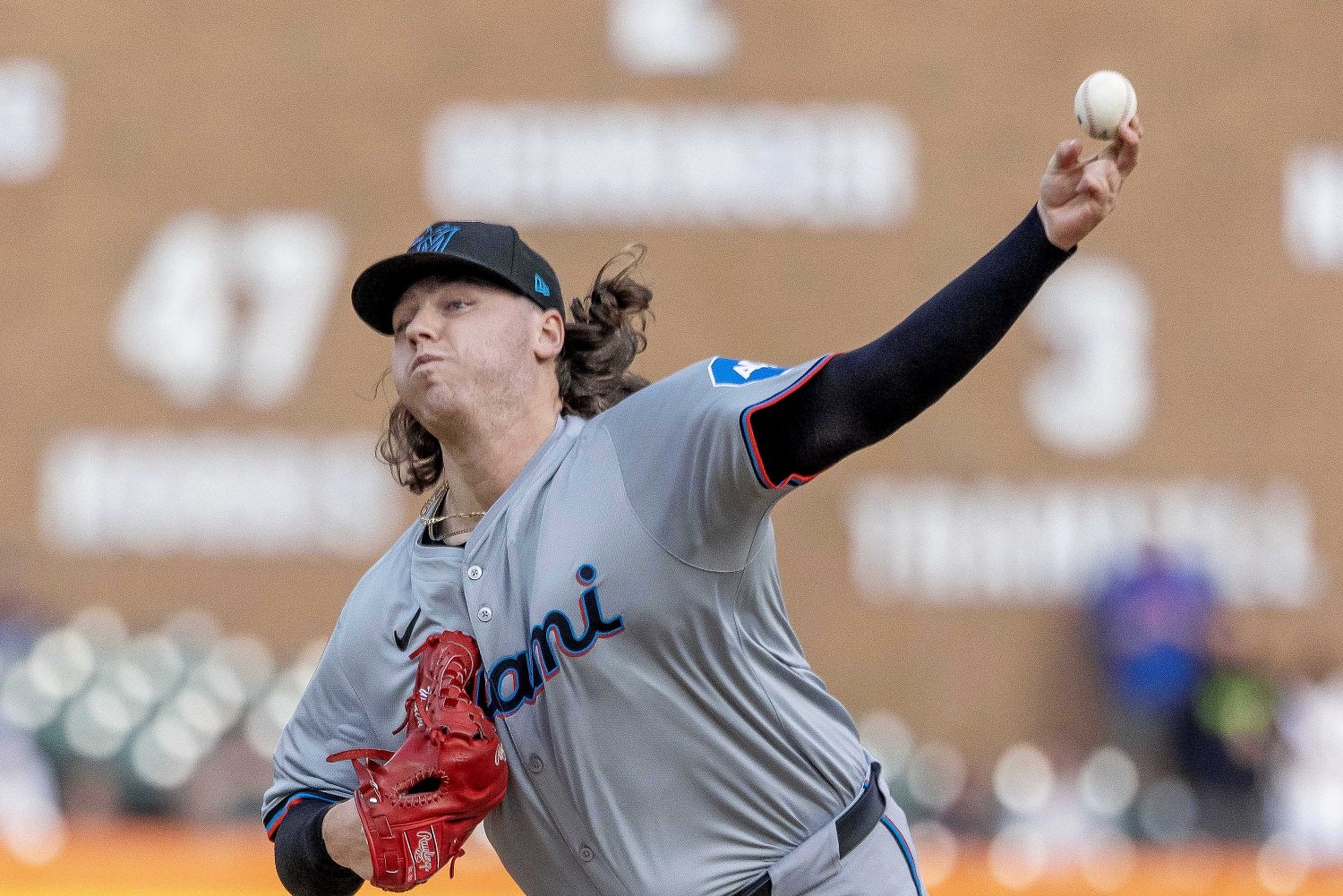 The trade deadline is roughly seven weeks away, and although the Twins have been up and down this year, they’re in position to fight for a Wild Card berth in the American League, at a minimum. As such, they may be buyers. It’s worth looking around the league to get familiar with some players who might become Twins by August. Let’s dive into Miami’s roster and see if there’s anything there. Miami is currently 23-43, and far out of contention. They’ve already shipped off Luis Arráez to San Diego, and we’ve already had a story on Jesús Luzardo at Twins Daily. What else might the Twins be able to salvage off this sinking Miami ship? Other Starters Derek Falvey has shown a preference for acquiring starting pitchers via trade who have more than one year of team control (Jake Odorizzi, Kenta Maeda, Sonny Gray, Tyler Mahle, Pablo Lopez), despite breaking that rule on a couple of occasions (Jaime García, Anthony DeSclafani). Given that a deadline deal would probably be for a mid-rotation starter or better, it’d be safe to assume that the Twins would be looking for a starter with multiple years of control, if they are shopping. Miami has a few. Trevor Rogers Rogers is a left-handed, 26-year-old 2021 All-Star, under team control through 2026—two and a half years. He utilizes a fastball-changeup-sinker-slider mix. The bad news is that he hasn’t been good since 2021, and currently has a 5.68 ERA. His underlying metrics don’t look good, either, as he isn’t striking many opponents out, and he’s surrendering too many walks. He also missed most of last year with a lat tear. Twins fans, stop me if you’ve heard this before, but if the Twins can get him back to his 2021 form, he can be a weapon for them in the playoff rotation, with two more years of control. He’s also only making $1.5 million this season, which would make ownership happy. If he’s available, the price might be something like a small package centered around Gabriel González or Tanner Schobel. Braxton Garrett Garrett is also a 26-year-old lefty with a low salary (currently making the minimum), off to a slow start. However, he’s under team control through 2028, and he had a very good 2023, with a 3.66 ERA (126 ERA+) and 3.68 FIP in 160 innings. Repeating that performance would entrench him in the top half of the Twins rotation this season. Garrett started this season late, as he’s been dealing with shoulder soreness, which should be something to keep an eye on. If you’re interested in his services, maybe search his name over the next month to monitor the shoulder. He also had Tommy John surgery in 2017 and missed time with a 2022 oblique injury, so (as with every pitcher) there’s some risk that he won't really hold up until 2028. The Twins are aware of that, but between the team control and 2023 performance, the Marlins would probably be seeking a package that starts with Brooks Lee and also includes at least one player from the González-to-Marco Raya range. Other names to be aware of include Edward Cabrera, yet another 26-year-old. The righty is currently on the IL with a shoulder impingement and has lost a lot of time to injury since his 2021 debut, but he’s flashed the potential to be a solid starter when healthy. Ryan Weathers has been their top starter this season, but has a ton of team control left (driving up his price) and little success outside of his first 12 starts this season. Both of them would probably command a prospect package somewhere between those commanded for Rogers and Garrett. Relievers A majority of Falvey’s deadline acquisitions have been relievers (Jorge López, Michael Fulmer, Sergio Romo, Sam Dyson, Gabriel Moya), so it wouldn’t be surprising if there was a trade for a bullpen arm on the horizon. He’s also been open to trading for closers and quality middle relievers. Whom do the Marlins have? Miami has a few solid relievers who likely wouldn’t crack the late-inning group for the Twins of Jhoan Durán, Griffin Jax, and Brock Stewart. The Marlins closer, Tanner Scott, is solid but not great, with a 1.50 ERA but a 3.97 FIP. Last year, his ERA and FIP matched better, at 2.31 and 2.17, respectively, and he could probably slot into a sixth- or seventh-inning role in the playoffs. He’s also on an expiring contract, lowering his value to a prospect in the 8-20 range like José Salas. However, the Twins have been reluctant to expend much in return for a one-year return (though the exception has been relievers like Fulmer and Romo). As for multi-year options, lefties Andrew Nardi and A.J. Puk still have several years of team control left. Nardi, age 25, is likely the more costly player, with four more years after 2024, but he may be a better option this season than the Twins have in Caleb Thielbar, Steven Okert, and Kody Funderburk. Puk is a few years older and only has two years of control after 2024. He’s struggled mightily this year, but if he straightens out over the next two months to where he was in 2022 and 2023, he could also be a reliable lefty—either a low-end number one or high-end number two in a playoff pen. The Marlins also have righty relievers like Huascar Brazoban, Declan Cronin, or old friend Calvin Faucher, who might be competent regular-season arms, but it would be hard to put money on them in the middle innings of a playoff game. Instead, many prefer those innings go to internal players like Jorge Alcalá, but if there was a rash of bullpen injuries, sure, maybe. Hitters Right now, it seems like the Twins could use a competent bat to shore up first base, left field, or designated hitter. They have internal options to fill those spots (e.g., Trevor Larnach, José Miranda, Carlos Santana), but bringing in a more proven bat would definitely calm some nerves. Unfortunately, the Marlins don’t have many of those, with only Jazz Chisholm Jr., Otto Lopez, and Josh Bell hitting at an above-average clip this season. Chisholm likely isn’t going anywhere, and Lopez has 103 career plate appearances. However, if you want a name to watch: Josh Bell Like the old gray mare, Bell ain’t what he used to be. The former All-Star is a few years removed from his last very good season in Washington. He was an average hitter last season—about on par with Santana this season—and he’s dropped off a bit more in 2024 (101 OPS+). However, if he gets it going and can get himself up to something around a 110 OPS+ and (or?) the Twins see a tweak he could make, he could solidify the power positions that have been so unstable. You can decide for yourself how likely that is. Oh, they’d also probably need to pick up some salary. The Marlins don’t have anyone who will turn the Twins' season around, but they do have some players with the potential to be contributors on a good team in the right roles. If the Twins are looking more to conserve resources and improve around the margins, they could get together with the Marlins, as they have done a number of times in the past few years. Do any of these options entice you?
 -
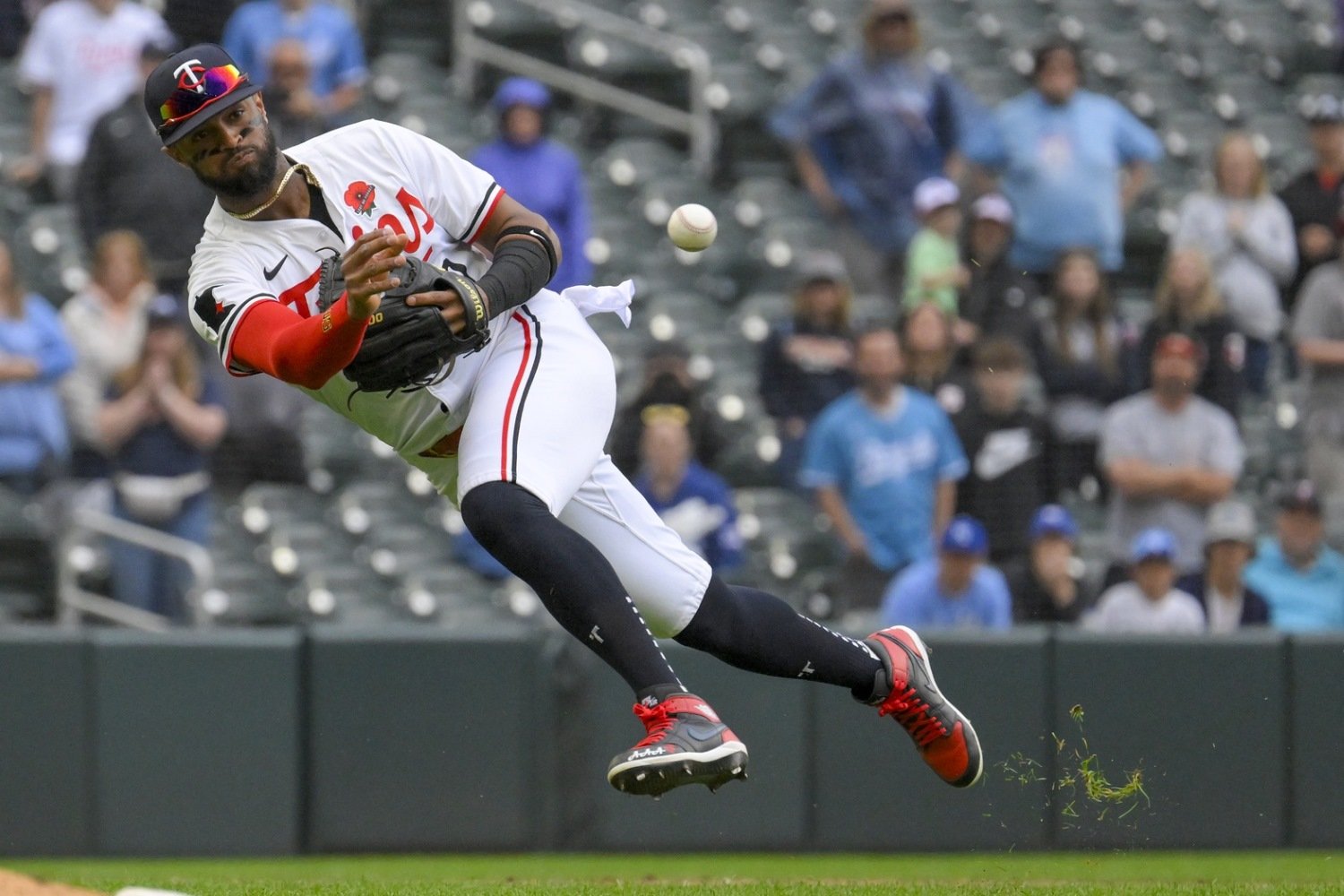 Willi Castro has managed to become a legitimate super-utility player, playing in each of the team’s first 66 games at six different positions—something almost unheard of under manager Rocco Baldelli. And he’s doing a great job at it. Castro’s emergence as a bench weapon in 2023 is pretty well-documented. He started the year as the 13th man on a bench already facing injury trouble, which necessitated his addition. He had initially signed a minor league contract after being non-tendered by the Tigers as a 24-year-old. He had some experience at second base, shortstop, third base, and left field at that point, and he was quick. He was a sensible emergency fill-in at multiple spots and could steal a bag when needed. That’s a fine 13th man. Over the season, he took on a super-utility role, in a sense, and enabled all of Rocco Baldelli’s shenanigans. His utility was primarily his ability to balance out the roster on a game-to-game basis. Approximately a quarter of his appearances were off the bench as a pinch runner, pinch hitter, or defensive replacement. Even in games he started, he often switched positions--more than 40 times during the year. Because of his flexibility, Baldelli could make nearly any substitution he wanted. This season, though, it’s been a different story. Through Sunday, Castro had started 61 of the team’s 65 games, and he played at some point in all of them. He’s still been flexible in-game, moving positions 17 times in those 65 games, but he’s been a consistent starter—and at several different positions. That’s new. Following injuries to Royce Lewis, Carlos Correa, and Byron Buxton, Castro has taken over as the primary option at third base (10 starts), shortstop (17 starts), and center field (16 starts), respectively. After Edouard Julien’s demotion, he will likely continue to be the everyday guy at second base (four starts thus far). He’s also started in left field 14 times, primarily in Baldelli Special™ platoon lineups. Although he was a prominent utility player in 2023, he’s developed into the Platonic ideal of a super-utility guy this year—playing all but first base, catcher, and right field (even pitching in garbage time). He’s an everyday player with positional flexibility. It’s a treat for a manager to know that there’s someone competent who can be turned to in any situation. Castro has mostly held up his end of the bargain. He hasn’t been as good on the basepaths as in 2023, but he’s been fine defensively in every spot (though he’s a bit stretched in center and at short), and he’s hit about 15 percent above league average. That’s a legitimate MLB starter, and he can be plugged in wherever needed. This degree of versatility is very, very rare. If Castro plays even three more games in left field, he'll become just the fourth player ever to play at least 20 times at left, center, shortstop, and third base. The other three are a fun collection, including one very familiar name. Query Results Table Player Season Age Team G PA R H HR RBI SB CS BB SO BA OBP SLG OPS OPS+ José Hernández 1998 28 CHC 149 533 76 124 23 75 4 6 40 140 .254 .311 .471 .782 100 César Tovar 1968 27 MIN 157 673 89 167 6 47 35 13 34 41 .272 .326 .372 .698 107 Tony Kubek 1957 21 NYY 127 475 56 128 3 39 6 6 24 48 .297 .335 .381 .716 97 Provided by Stathead.com: Found with Stathead. See Full Results. Generated 6/10/2024. If Julien stays in the minors long enough for Castro to make 14 more appearances at second (he's made six, in total, so far), he'd be the first person ever, in any major league, to show up 20 times at those five positions in a single campaign. This more prominent role probably hamstrings Baldelli a bit, as he is no longer able to, for instance, deploy Castro strategically as a pinch-runner, where he was 33-for-38 in stolen-base attempts last year. Baldelli would also likely prefer to have his everyday players healthy and playing every day at their natural positions, giving Castro a bit more rest (at least one day off a month might be nice), using him as a bench weapon more often, and allowing Castro to be used to give players a breather rather than filling a void. Castro’s prevalence is also an indictment on the other reserves employed by the Twins. Manuel Margot and Kyle Farmer were recently everyday players at center field and shortstop, respectively. Many had assumed that Margot would be the top reserve outfielder, and Farmer would be the top reserve infielder. Instead, both have been reduced almost entirely to platoon bats against left-handed pitchers, and both have moved down the defensive spectrum, as Margot is primarily a corner outfielder and Farmer is primarily a second baseman. If Margot and Farmer played better this year, there would not nearly be as much time for Castro. Instead, Castro has received the lion’s share of injury fill-in time, and he’s also received most of the bench plate appearances against right-handed starters (in addition to typically starting in left field versus lefties). He’s made the most of his everyday time, with the team's fifth-highest OPS+ (114). Baldelli has asked him to do more and more this season, and he’s answered the bell. Hopefully, by the end of the year, the lineup will be a bit more solidified and healthy, and he’ll be able to be deployed strategically more often. But for right now, he’s become a real 10th man; an everyday starter with positional flexibility; an asset.
- 13 comments
-
- 2
-
-
- willi castro
- manuel margot
- (and 1 more)
-
Not even two plunkings Sunday can force Willi Castro out of the lineup. He leads off again Monday night, and has played in every Twins game of the season so far. He’s gone from an afterthought to leading the team in plate appearances in a year and a half. Huh? Image courtesy of © Nick Wosika-USA TODAY Sports Willi Castro has managed to become a legitimate super-utility player, playing in each of the team’s first 66 games at six different positions—something almost unheard of under manager Rocco Baldelli. And he’s doing a great job at it. Castro’s emergence as a bench weapon in 2023 is pretty well-documented. He started the year as the 13th man on a bench already facing injury trouble, which necessitated his addition. He had initially signed a minor league contract after being non-tendered by the Tigers as a 24-year-old. He had some experience at second base, shortstop, third base, and left field at that point, and he was quick. He was a sensible emergency fill-in at multiple spots and could steal a bag when needed. That’s a fine 13th man. Over the season, he took on a super-utility role, in a sense, and enabled all of Rocco Baldelli’s shenanigans. His utility was primarily his ability to balance out the roster on a game-to-game basis. Approximately a quarter of his appearances were off the bench as a pinch runner, pinch hitter, or defensive replacement. Even in games he started, he often switched positions--more than 40 times during the year. Because of his flexibility, Baldelli could make nearly any substitution he wanted. This season, though, it’s been a different story. Through Sunday, Castro had started 61 of the team’s 65 games, and he played at some point in all of them. He’s still been flexible in-game, moving positions 17 times in those 65 games, but he’s been a consistent starter—and at several different positions. That’s new. Following injuries to Royce Lewis, Carlos Correa, and Byron Buxton, Castro has taken over as the primary option at third base (10 starts), shortstop (17 starts), and center field (16 starts), respectively. After Edouard Julien’s demotion, he will likely continue to be the everyday guy at second base (four starts thus far). He’s also started in left field 14 times, primarily in Baldelli Special™ platoon lineups. Although he was a prominent utility player in 2023, he’s developed into the Platonic ideal of a super-utility guy this year—playing all but first base, catcher, and right field (even pitching in garbage time). He’s an everyday player with positional flexibility. It’s a treat for a manager to know that there’s someone competent who can be turned to in any situation. Castro has mostly held up his end of the bargain. He hasn’t been as good on the basepaths as in 2023, but he’s been fine defensively in every spot (though he’s a bit stretched in center and at short), and he’s hit about 15 percent above league average. That’s a legitimate MLB starter, and he can be plugged in wherever needed. This degree of versatility is very, very rare. If Castro plays even three more games in left field, he'll become just the fourth player ever to play at least 20 times at left, center, shortstop, and third base. The other three are a fun collection, including one very familiar name. Query Results Table Player Season Age Team G PA R H HR RBI SB CS BB SO BA OBP SLG OPS OPS+ José Hernández 1998 28 CHC 149 533 76 124 23 75 4 6 40 140 .254 .311 .471 .782 100 César Tovar 1968 27 MIN 157 673 89 167 6 47 35 13 34 41 .272 .326 .372 .698 107 Tony Kubek 1957 21 NYY 127 475 56 128 3 39 6 6 24 48 .297 .335 .381 .716 97 Provided by Stathead.com: Found with Stathead. See Full Results. Generated 6/10/2024. If Julien stays in the minors long enough for Castro to make 14 more appearances at second (he's made six, in total, so far), he'd be the first person ever, in any major league, to show up 20 times at those five positions in a single campaign. This more prominent role probably hamstrings Baldelli a bit, as he is no longer able to, for instance, deploy Castro strategically as a pinch-runner, where he was 33-for-38 in stolen-base attempts last year. Baldelli would also likely prefer to have his everyday players healthy and playing every day at their natural positions, giving Castro a bit more rest (at least one day off a month might be nice), using him as a bench weapon more often, and allowing Castro to be used to give players a breather rather than filling a void. Castro’s prevalence is also an indictment on the other reserves employed by the Twins. Manuel Margot and Kyle Farmer were recently everyday players at center field and shortstop, respectively. Many had assumed that Margot would be the top reserve outfielder, and Farmer would be the top reserve infielder. Instead, both have been reduced almost entirely to platoon bats against left-handed pitchers, and both have moved down the defensive spectrum, as Margot is primarily a corner outfielder and Farmer is primarily a second baseman. If Margot and Farmer played better this year, there would not nearly be as much time for Castro. Instead, Castro has received the lion’s share of injury fill-in time, and he’s also received most of the bench plate appearances against right-handed starters (in addition to typically starting in left field versus lefties). He’s made the most of his everyday time, with the team's fifth-highest OPS+ (114). Baldelli has asked him to do more and more this season, and he’s answered the bell. Hopefully, by the end of the year, the lineup will be a bit more solidified and healthy, and he’ll be able to be deployed strategically more often. But for right now, he’s become a real 10th man; an everyday starter with positional flexibility; an asset. View full article
-
Twins Off-Daily Podcast: Will Jose Miranda Play Second Base? (No)
Greggory Masterson posted an article in Podcasts
 Sweet Lou Hennessy, Cody Schoenmann, and Greggory Masterson are joined by the pride of Twins Daily Nick Nelson to go over the Twins recent 7-3 stretch. They also react to and analyze Edouard Julien's demotion, and Gregg bemoans the institution of interleague play. Listen using Apple Podcasts: https://podcasts.apple.com/us/podcast/the-twins-off-daily-podcast/id1741266056 Listen using Spotify: https://open.spotify.com/show/4tb78XlurcPTYYSsARdbD7