Nick Nelson
-
Posts
8,322 -
Joined
-
Last visited
-
Days Won
56
Content Type
Profiles
News
Minnesota Twins Videos
2026 Minnesota Twins Top Prospects Ranking
2022 Minnesota Twins Draft Picks
Minnesota Twins Free Agent & Trade Rumors, Notes, & Tidbits
Guides & Resources
2023 Minnesota Twins Draft Picks
The Minnesota Twins Players Project
2024 Minnesota Twins Draft Picks
2025 Minnesota Twins Draft Pick Tracker
2026 Minnesota Twins Draft Tracker: Picks & Bonuses
Forums
Blogs
Events
Store
Downloads
Gallery
Everything posted by Nick Nelson
-
 The Minnesota Twins have officially announced their Opening Day roster, with a few moderate surprises compared to expectations at the start of spring camp. Read on for a rundown of who made the team, and the roles they will fill. Griffin Jax (29): He was already in line for a key bullpen role before Jhoan Durán went down. Now, Jax could very well be the crux of the unit. He looks equipped to answer the call as Baldelli's late-inning fireman, armed with one of the best pitches in the league as his featured offering. Jax's sweeper somehow keeps getting better. Steven Okert (32): In the wake of the Thielbar injury, the acquisition of Okert in exchange for Nick Gordon looks especially sage. He will likely be Baldelli's top weapon against lefty hitters, though Okert has fairly neutral splits. Twins are hoping last year's second-half struggles don't resurface. Cole Sands (26): Posted a 5.52 FIP in 22 innings last year and was horrible this spring. He's here because the Twins simply need bodies in the bullpen with Thielbar, Durán and Justin Topa all down. Sands can provide some length and throw multiple innings, but should be reserved for mop-up duty. Brock Stewart (32): He was the most dominant Twins reliever when healthy last year – ahead of even Durán and Jax – but staying healthy has been a constant battle for the veteran righty. He seems to be feeling good coming out of camp and is expected to serve as primary closer at the start of the season. Is this the right roster, given the choices the Twins were left with at the end of the Grapefruit League schedule? Do you expect them to get off to a strong start? Join the discussion below. View full article
 -
The Season's Here: Get Up to Speed with Our 2024 Twins Roster Preview
Nick Nelson posted an article in Caretakers
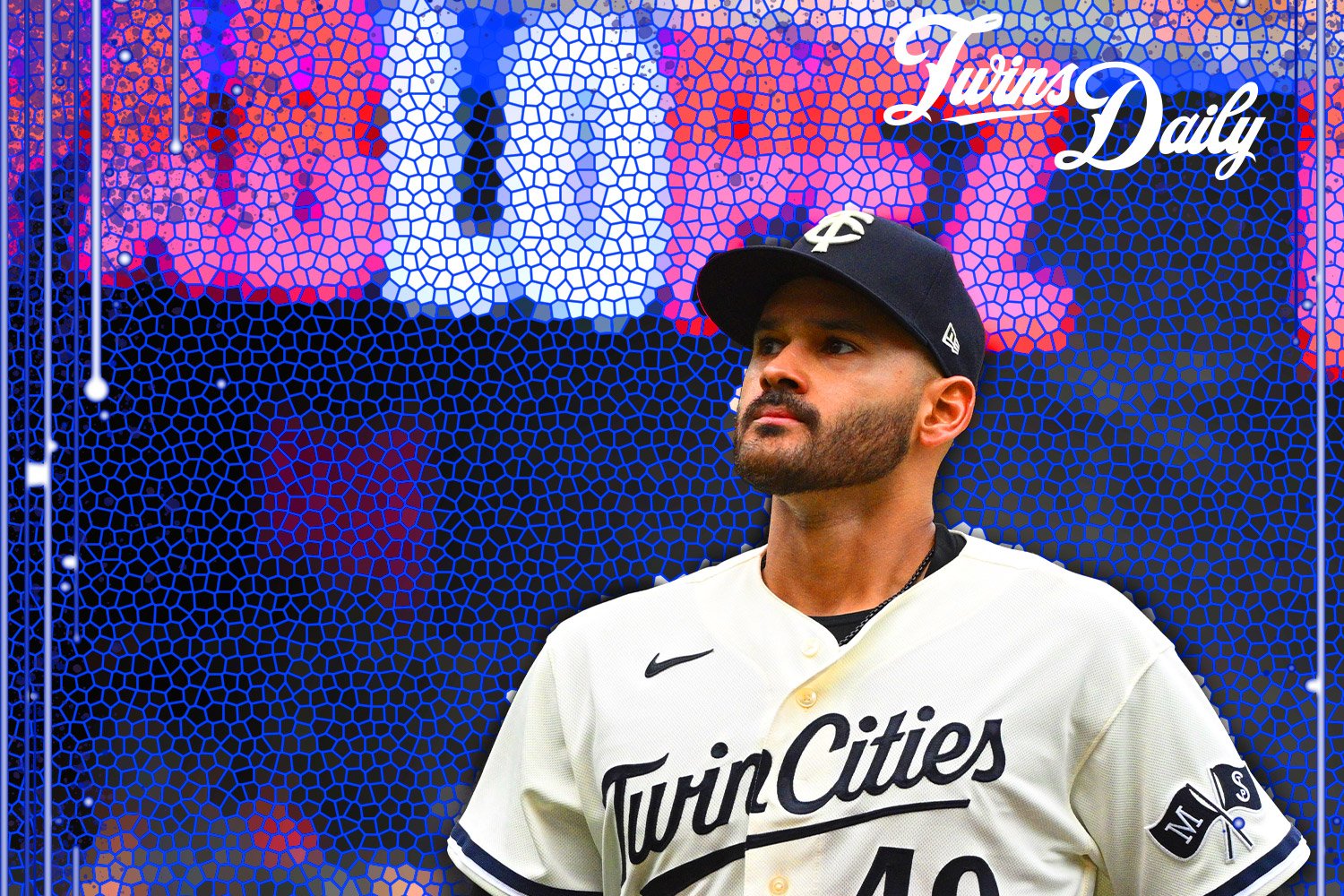 The Twins and their fans are ready to put a long, slow offseason behind them as the season finally springs into action. Kauffman Stadium will host an Opening Day showdown on Thursday between Pablo Lopez and Cole Ragans, while Forgotten Star Brewing will host a bunch of Twins Daily folks to catch the game together. (Join us!) Our 2024 Twins Roster Preview PDF is now available exclusively for Caretakers, offering quick overviews of each position on the roster along with a few insider takeaways and tidbits that our writers gleaned during several weeks spent covering spring training. If you're interested, learn more about the Twins Daily Caretaker Fund and how to become a member. This is an opportunity for people to support the site and community; providing premium content perks like these are a small part of how we say thank you. As always, there will be plenty more free coverage on the site today, tomorrow, and throughout the season. Here's a quick preview of the spring training takeaways section of the PDF. Caretakers can scroll beyond that to find a link to download the full version. Byron Buxton's mood. Anyone who's covered Twins spring training in years past and was down there this year will tell you the same thing: this was a different Buxton. In the past he's been friendly and respectful but more reserved, clearly burdened by the weight of relentless health issues. This spring, he was full of life and energy, frequently bounding around the clubhouse with a big grin. On the field, he was running the bases and diving in the outfield with no restriction. This put all of us in a very good mood. Bailey Ober's new pitch. In order to address the velocity gap between his fastball and his slower offspeed pitches, Ober was working to introduce a new cutter to his arsenal this spring. He used the pitch heavily in all of his outings to try and get it "dialed in and consistent" when the season starts. A new go-to breaking ball for the big righty? "We'll see what it turns into ... it'll be good to have both to play with." Willi Castro's exit velocity. After making a big impression in his first season with the Twins, the versatile utility man was making noisy contact in Grapefruit League action, registering a handful of the highest exit velocities that he's ever recorded under Statcast. "He's smoked some balls early in this camp," said Rocco Baldelli.
 -
Happy Opening Day Eve! With the season finally upon us, we've put together a quick downloadable preview guide for Twins Daily Caretakers, overviewing the roster at each position and sharing our final takeaways from spring camp. The Twins and their fans are ready to put a long, slow offseason behind them as the season finally springs into action. Kauffman Stadium will host an Opening Day showdown on Thursday between Pablo Lopez and Cole Ragans, while Forgotten Star Brewing will host a bunch of Twins Daily folks to catch the game together. (Join us!) Our 2024 Twins Roster Preview PDF is now available exclusively for Caretakers, offering quick overviews of each position on the roster along with a few insider takeaways and tidbits that our writers gleaned during several weeks spent covering spring training. If you're interested, learn more about the Twins Daily Caretaker Fund and how to become a member. This is an opportunity for people to support the site and community; providing premium content perks like these are a small part of how we say thank you. As always, there will be plenty more free coverage on the site today, tomorrow, and throughout the season. Here's a quick preview of the spring training takeaways section of the PDF. Caretakers can scroll beyond that to find a link to download the full version. Byron Buxton's mood. Anyone who's covered Twins spring training in years past and was down there this year will tell you the same thing: this was a different Buxton. In the past he's been friendly and respectful but more reserved, clearly burdened by the weight of relentless health issues. This spring, he was full of life and energy, frequently bounding around the clubhouse with a big grin. On the field, he was running the bases and diving in the outfield with no restriction. This put all of us in a very good mood. Bailey Ober's new pitch. In order to address the velocity gap between his fastball and his slower offspeed pitches, Ober was working to introduce a new cutter to his arsenal this spring. He used the pitch heavily in all of his outings to try and get it "dialed in and consistent" when the season starts. A new go-to breaking ball for the big righty? "We'll see what it turns into ... it'll be good to have both to play with." Willi Castro's exit velocity. After making a big impression in his first season with the Twins, the versatile utility man was making noisy contact in Grapefruit League action, registering a handful of the highest exit velocities that he's ever recorded under Statcast. "He's smoked some balls early in this camp," said Rocco Baldelli. View full article
-
Sweeping Success: Can Captain Jax Take Command in Twins Bullpen?
Nick Nelson posted an article in Twins
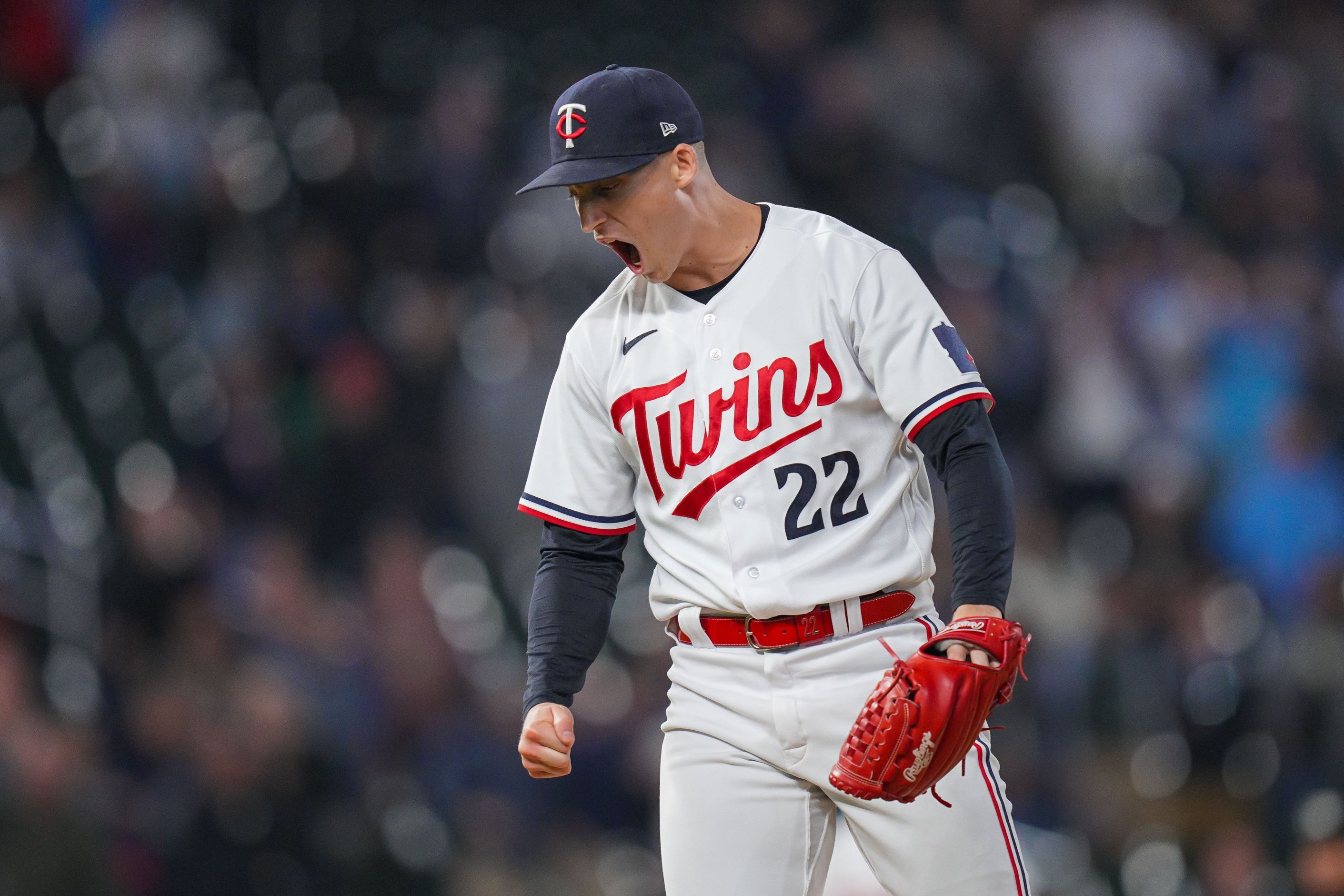 Griffin Jax is having a ridiculous spring for the Twins. That's evident when you take a glance at this overall stats – zero runs allowed on three hits with 12 strikeouts and no walks in 7 ⅔ innings – but even more so when you dive into the underlying metrics. It's been noticed by his teammates, his opponents, and pitch data analysts who pay attention to specific traits. Jax isn't just pitching well and getting outs; he is blowing people away. Heading into his age-29 season, the right-hander appears to be unlocking the true peak of his powers – and at an ideal time for the Twins. Minnesota's bullpen was shaping up as a major strength heading into the season, projected by FanGraphs as the second-best unit in the majors. That was before the team received a double-whammy of bad news last week: Caleb Thielbar's balky hamstring was not improving, and worse yet, Jhoan Durán had developed a moderate oblique strain. Both will open the season on the injured list, and given the nature of these soft-tissue injuries, the Twins should probably grow accustomed to life without them for awhile. It's expected that two relievers will primarily be leaned upon to fill this high-leverage void in the late innings. Jax and Brock Stewart were already lined to play critical setup roles, but now will factor in at the very end of games, and in the very most pivotal of moments, which usually would've gone to Durán. Stewart is capable but needs to be handled very carefully given his injury history, meaning Jax figures to elevate as Rocco Baldelli's top bullpen ace. Relative to Stewart, Jax can be ridden to some extent in the absence of Durán, counted on to throw multiple innings or pitch on consecutive days. Jax has been a durable and dependable workhorse out of the bullpen after originally coming up as a starter. With that in mind, it's hard to overstate just how impactful his presence can be early in the season. Jax owes much of his success to an evolving hard slider (or "sweeper") that is among the filthiest pitches in all of baseball. Last year in his breakdown of best pitches in MLB, Eno Sarris of The Athletic gave Jax the silver medal for sweepers (behind only Sonny Gray): "It’s a true frisbee, with nearly 14 inches of horizontal movement. What’s remarkable about this pitch is that Jax gets above-average movement, but he also throws it nearly 87 mph on average." Jax threw his sweeper 53% of the time last year, and it held opponents to a .197 average with a .243 xwOBA. Somehow, his best pitch seems to be getting better. As Bobby Nightengale of the Star Tribune reported earlier in camp, a few Twins catchers rated it this spring as the best pitch on the staff (lofty praise given Jax's peers). "For how hard he throws it and how much movement it has, I've never seen anything like that," non-roster catcher Patrick Winkel told Nightengale. "Usually when you see a slider, if it's really hard, it doesn't move as much. It's shorter. He throws it 90 mph and it has the movement of one that is 82 — so much movement that it's incredible." Data analyst Thomas Nestico, who breaks down in-depth pitch analytics for his Patreon TJ Stats, marveled recently about how Jax's sweeper has broken his tjStuff+ model this spring, producing absurd chase and whiff rates. I reached out to Thomas for his thoughts on Jax and what makes the pitch such a weapon, and he elaborated on Winkel's insight. "Griffin Jax's sweeper is one of the more unique pitches in baseball," he told me. "Its combination of glove-side movement and velocity is uncommon for pitchers. Generally, sliders which are thrown at higher velocities sacrifice movement, and the same the other way around. Jax defies this conventional thought by throwing one of the hardest sliders in the league, and with enough horizontal movement to classify it as a sweeper. This spring he increased the velocity on the sweeper to 88 mph, up from 86.7 mph from last season, while maintaining horizontal movement." Baldelli, who turned to Jax a team-leading 71 times in the 2023 season, obviously appreciates the featured sweeper offering. But Rocco also values the reliever for his versatility, and the depth of his arsenal as a former starter. "Griffin is a rare reliever that has five legitimate major-league pitches," he told reporters in Fort Myers on Saturday. This spring, Jax has been working to reintroduce a curveball into his pitch mix. As Baldelli shared, "I think he and our pitching coaches are going to identify guys where that curveball should factor in ... We’re gonna have a plan for it." "He can spin a baseball really effectively," the manager added, "and he can do it in a lot of different ways, and most people can’t do it in that many ways." Last year, Jax was good – much better than his 3.86 ERA, which was inflated by a few spells of poor batted-ball outcomes. He was especially good late in the year when it counted most, posting a 2.45 ERA in September and carrying that success into October where he was flat-out dominant. Jax retired 11 of the 12 batters he faced in the playoffs, including five on strikeouts. Yet somehow, Jax still seems to be finding another gear. Driven by his curiosity as a notorious "tinkerer" and the discipline developed through a military background (Jax is a Captain in the Air Force), he keeps on improving. It's an extremely exciting prospect at a time where the Twins need him to take control as the bullpen looks to reconfigure itself mid-flight in the early weeks. "I don’t really see a situation where I wouldn’t wanna pitch Griff," Baldelli said on Saturday. "You wish you could pitch him and use him every game, in some way, shape or form ... He has weapons to face any type of hitter that he might run up against."
- 14 comments
-
- 7
-

-
- griffin jax
- jhoan duran
- (and 1 more)
-
The Twins have lost two of their most critical relief pitchers for the early portion of the season. If Griffin Jax can live up to his ever-climbing potential, he'll play an essential role in ensuring the bullpen can hold up in the absence of Jhoan Durán and Caleb Thielbar. Image courtesy of Brad Rempel-USA TODAY Sports Griffin Jax is having a ridiculous spring for the Twins. That's evident when you take a glance at this overall stats – zero runs allowed on three hits with 12 strikeouts and no walks in 7 ⅔ innings – but even more so when you dive into the underlying metrics. It's been noticed by his teammates, his opponents, and pitch data analysts who pay attention to specific traits. Jax isn't just pitching well and getting outs; he is blowing people away. Heading into his age-29 season, the right-hander appears to be unlocking the true peak of his powers – and at an ideal time for the Twins. Minnesota's bullpen was shaping up as a major strength heading into the season, projected by FanGraphs as the second-best unit in the majors. That was before the team received a double-whammy of bad news last week: Caleb Thielbar's balky hamstring was not improving, and worse yet, Jhoan Durán had developed a moderate oblique strain. Both will open the season on the injured list, and given the nature of these soft-tissue injuries, the Twins should probably grow accustomed to life without them for awhile. It's expected that two relievers will primarily be leaned upon to fill this high-leverage void in the late innings. Jax and Brock Stewart were already lined to play critical setup roles, but now will factor in at the very end of games, and in the very most pivotal of moments, which usually would've gone to Durán. Stewart is capable but needs to be handled very carefully given his injury history, meaning Jax figures to elevate as Rocco Baldelli's top bullpen ace. Relative to Stewart, Jax can be ridden to some extent in the absence of Durán, counted on to throw multiple innings or pitch on consecutive days. Jax has been a durable and dependable workhorse out of the bullpen after originally coming up as a starter. With that in mind, it's hard to overstate just how impactful his presence can be early in the season. Jax owes much of his success to an evolving hard slider (or "sweeper") that is among the filthiest pitches in all of baseball. Last year in his breakdown of best pitches in MLB, Eno Sarris of The Athletic gave Jax the silver medal for sweepers (behind only Sonny Gray): "It’s a true frisbee, with nearly 14 inches of horizontal movement. What’s remarkable about this pitch is that Jax gets above-average movement, but he also throws it nearly 87 mph on average." Jax threw his sweeper 53% of the time last year, and it held opponents to a .197 average with a .243 xwOBA. Somehow, his best pitch seems to be getting better. As Bobby Nightengale of the Star Tribune reported earlier in camp, a few Twins catchers rated it this spring as the best pitch on the staff (lofty praise given Jax's peers). "For how hard he throws it and how much movement it has, I've never seen anything like that," non-roster catcher Patrick Winkel told Nightengale. "Usually when you see a slider, if it's really hard, it doesn't move as much. It's shorter. He throws it 90 mph and it has the movement of one that is 82 — so much movement that it's incredible." Data analyst Thomas Nestico, who breaks down in-depth pitch analytics for his Patreon TJ Stats, marveled recently about how Jax's sweeper has broken his tjStuff+ model this spring, producing absurd chase and whiff rates. I reached out to Thomas for his thoughts on Jax and what makes the pitch such a weapon, and he elaborated on Winkel's insight. "Griffin Jax's sweeper is one of the more unique pitches in baseball," he told me. "Its combination of glove-side movement and velocity is uncommon for pitchers. Generally, sliders which are thrown at higher velocities sacrifice movement, and the same the other way around. Jax defies this conventional thought by throwing one of the hardest sliders in the league, and with enough horizontal movement to classify it as a sweeper. This spring he increased the velocity on the sweeper to 88 mph, up from 86.7 mph from last season, while maintaining horizontal movement." Baldelli, who turned to Jax a team-leading 71 times in the 2023 season, obviously appreciates the featured sweeper offering. But Rocco also values the reliever for his versatility, and the depth of his arsenal as a former starter. "Griffin is a rare reliever that has five legitimate major-league pitches," he told reporters in Fort Myers on Saturday. This spring, Jax has been working to reintroduce a curveball into his pitch mix. As Baldelli shared, "I think he and our pitching coaches are going to identify guys where that curveball should factor in ... We’re gonna have a plan for it." "He can spin a baseball really effectively," the manager added, "and he can do it in a lot of different ways, and most people can’t do it in that many ways." Last year, Jax was good – much better than his 3.86 ERA, which was inflated by a few spells of poor batted-ball outcomes. He was especially good late in the year when it counted most, posting a 2.45 ERA in September and carrying that success into October where he was flat-out dominant. Jax retired 11 of the 12 batters he faced in the playoffs, including five on strikeouts. Yet somehow, Jax still seems to be finding another gear. Driven by his curiosity as a notorious "tinkerer" and the discipline developed through a military background (Jax is a Captain in the Air Force), he keeps on improving. It's an extremely exciting prospect at a time where the Twins need him to take control as the bullpen looks to reconfigure itself mid-flight in the early weeks. "I don’t really see a situation where I wouldn’t wanna pitch Griff," Baldelli said on Saturday. "You wish you could pitch him and use him every game, in some way, shape or form ... He has weapons to face any type of hitter that he might run up against." View full article
-
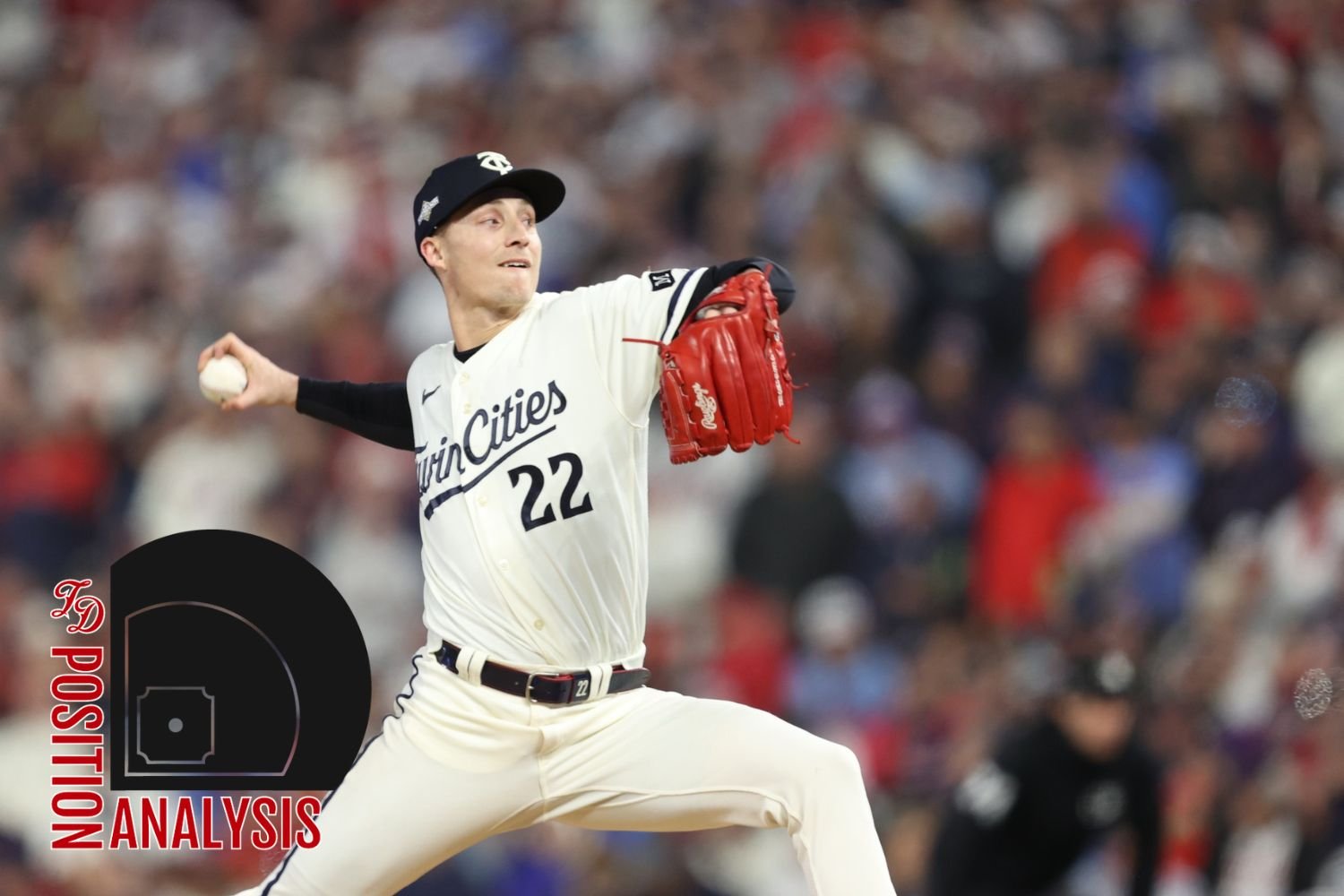 A deep, powerful bullpen can help you take over a game, and teams are embracing this as a potential market inefficiency. The Rays had one of the league's most effective staffs last year while ranking second among AL teams in relief innings, a model the Twins seem keen to adopt based on their offseason moves. The approach Minnesota used to sweep Toronto in the AL Wild Card Series – getting about five innings from the starter and then turning things over to a series of high-octane relief arms to mow through the second half of the game – probably represents the way they're envisioning a lot of wins this year. Sort out of necessity, given the rotation losses. The viability of that plan just took a bit of a hit. Before we get started, let's address the elephant in the room: On Monday, we learned that Jhoan Duran and Caleb Thielbar will both open the season on the injured list. While their recovery timetables aren't fully known yet, it seems fair to say that Thielbar (hamstring) will miss weeks and Duran (oblique) will miss months. Losing two of their most critical back-end relievers for significant portions of the season dramatically alters the outlook for the Twins bullpen. A week ago FanGraphs had them projected for the second-highest fWAR in the majors; now they're down to ninth. All things considered, however, that's not so bad. Let's break down how the bullpen shapes up in the wake of this week's news. TWINS RELIEF PITCHERS AT A GLANCE Bullpen: Jhoan Duran, Griffin Jax, Brock Stewart, Caleb Thielbar, Jay Jackson, Steven Okert, Justin Topa, Josh Staumont Depth: Jorge Alcala, Kody Funderburk, Daniel Duarte, Cole Sands, Ryan Jensen, Zack Weiss Prospects: Marco Raya, Matt Canterino, Ronny Henriquez Twins fWAR Ranking Last Year: 21st out of 30 Twins fWAR Projection This Year: 9th out of 30 THE GOOD Losing bullpen cornerstones like Duran and Thielbar would to be tough for any team to endure. But, as a hopeful silver lining, it's better to be missing them at the beginning of the season than the end. Hopefully the two stalwarts can eventually come back strong, and maybe even benefit from having fresher arms in the second half. In the meantime, few teams would be as well equipped to endure the losses of a Duran and a Thielbar as Minnesota – a major credit to their peers in the bullpen mix. Jax and Stewart were tracking to be Duran's top setup men, and now they'll elevate to the top spots. Given his health history, it's a small victory that Stewart has thus far escaped the attrition, and he looks to be in top form at camp. Jax has looked even better, flashing improved stuff and dominating hitters like no other pitcher on the spring circuit. Another spring standout is Alcala, who may find himself thrust into the Opening Day picture following the injuries to Duran and Thielbar. Looking to rebound from a lost season, Alcala's been healthy in camp and he's throwing fire. He has the ability to factor into the late innings alongside Jax and Stewart, giving the Twins a trio of upper-90s flamethrowers to offset the loss of their ultimate flamethrower. Staumont could give them a fourth, if he can recapture that spark. Even with Thielbar down, the Twins have a pair of good lefties on hand to start the season. Okert was acquired from Miami in the Nick Gordon trade, adding a proven veteran alongside the inexperienced Funderburk, who showed much promise in his 2023 debut and earned a spot on the playoff roster. Right-handers Topa and Jackson were acquired in the offseason to provide further veteran stability to the relief corps, and each offers a fair amount of intrigue in his own right. Through minor-league signings and waiver claims, the Twins have also set themselves up to have an assortment of interesting arms available in Triple-A, including Duarte, Weiss, Henriquez, Jensen and others. THE BAD There's no sugarcoating the losses of Thielbar and especially Duran, who is one of the league's elite closers and could be at risk of missing nearly half the season. These soft-tissue injuries are scary, especially for a pitcher in his late 30s and another who throws harder than anyone else in the league. The Twins need to take every precaution to avoid a setback that would tank either of their seasons, meaning they team will have to make peace with life without them. These early breakdowns are not a great sign in a season where the bullpen figures to wear a heavy burden. The Twins will be hard-pressed to backfill the rotation innings they lost from Sonny Gray and Kenta Maeda. Last year Minnesota ranked third among all major-league teams in starting pitcher innings; this year it's tough to imagine them coming close. In theory, the idea of meeting this increased demand with sheer volume of quality relief arms makes sense. But in practice things get murkier. This bullpen will probably be called upon to provide four or five innings in a game regularly. Having all these levels of depth in the majors and minors is nice, but you can only have eight relievers available at any time, and as we've seen time and again: it's the ultimate position of volatility. The increased burden will be felt not just by the bullpen at a macro level, but by Twins relievers individually – something Rocco Baldelli more or less acknowledged when I was in Fort Myers last weekend. He shared with reporters, "Pete [Maki] in his last pitchers meeting, made the statement to the entire group: there might be a couple guys in this room who are likely gonna throw one inning, but everybody else who is a bullpen arm will have to throw more than one inning. So it's a good statement to give to the group." "It just mentally prepares them for what's to come," he continued. "There might be a few guys that haven't thrown two innings in a while. They're gonna have to." That's a potentially daunting proposition. Duran and Thielbar are sidelined already, and quite a few other pitchers in this mix have significant injury histories. Baldelli cannot afford to run his remaining premium arms into the ground in June and July. He knows that. But he's got a challenge in front of him, especially if things go the wrong way on a few flips the coin elsewhere. During the offseason he lost his most rubber-armed reliever in Emilio Pagán, a departure that looms especially large now. THE BOTTOM LINE The front office was very intentional about assembling a deep reserve of relief pitching depth in the offseason, to the point that this position was overflowing with capable options at the start of camp. Two key injuries later, they're merely flowing with options, but there's still enough here to feel solid about the way things will take shape on Opening Day – assuming they can avoid any further attrition in the next week. That now becomes the story going forward: can these guys hold up? Already down two workhorses, the Twins bullpen will be counted on for a lot of innings this year. Navigating the day-to-day needs of the season while trying to mitigate workloads and solidify roles on the fly will present a major challenge for Baldelli. He will need to hope the front office chose wisely in its additions and Maki can work his magic once again. Catch up on the rest of our spring position previews: Twins 2024 Position Analysis: Catcher Twins 2024 Position Analysis: First Base Twins 2024 Position Analysis: Second Base Twins 2024 Position Analysis: Third Base Twins 2024 Position Analysis: Shortstop Twins 2024 Position Analysis: Left Field Twins 2024 Position Analysis: Center Field Twins 2024 Position Analysis: Right Field Twins 2024 Position Analysis: Designated Hitter Twins 2024 Position Analysis: Starting Pitcher
- 13 comments
-
- 6
-
-
- jhoan duran
- griffin jax
- (and 2 more)
-
In a mostly quiet offseason, the front office focused much of its energy on building out quality depth in the bullpen, making it Minnesota's most-improved unit on paper. Good thing, too, because a pair of brutal injury developments in the late stage of camp will test that depth immediately. Image courtesy of Jesse Johnson-USA TODAY Sports A deep, powerful bullpen can help you take over a game, and teams are embracing this as a potential market inefficiency. The Rays had one of the league's most effective staffs last year while ranking second among AL teams in relief innings, a model the Twins seem keen to adopt based on their offseason moves. The approach Minnesota used to sweep Toronto in the AL Wild Card Series – getting about five innings from the starter and then turning things over to a series of high-octane relief arms to mow through the second half of the game – probably represents the way they're envisioning a lot of wins this year. Sort out of necessity, given the rotation losses. The viability of that plan just took a bit of a hit. Before we get started, let's address the elephant in the room: On Monday, we learned that Jhoan Duran and Caleb Thielbar will both open the season on the injured list. While their recovery timetables aren't fully known yet, it seems fair to say that Thielbar (hamstring) will miss weeks and Duran (oblique) will miss months. Losing two of their most critical back-end relievers for significant portions of the season dramatically alters the outlook for the Twins bullpen. A week ago FanGraphs had them projected for the second-highest fWAR in the majors; now they're down to ninth. All things considered, however, that's not so bad. Let's break down how the bullpen shapes up in the wake of this week's news. TWINS RELIEF PITCHERS AT A GLANCE Bullpen: Jhoan Duran, Griffin Jax, Brock Stewart, Caleb Thielbar, Jay Jackson, Steven Okert, Justin Topa, Josh Staumont Depth: Jorge Alcala, Kody Funderburk, Daniel Duarte, Cole Sands, Ryan Jensen, Zack Weiss Prospects: Marco Raya, Matt Canterino, Ronny Henriquez Twins fWAR Ranking Last Year: 21st out of 30 Twins fWAR Projection This Year: 9th out of 30 THE GOOD Losing bullpen cornerstones like Duran and Thielbar would to be tough for any team to endure. But, as a hopeful silver lining, it's better to be missing them at the beginning of the season than the end. Hopefully the two stalwarts can eventually come back strong, and maybe even benefit from having fresher arms in the second half. In the meantime, few teams would be as well equipped to endure the losses of a Duran and a Thielbar as Minnesota – a major credit to their peers in the bullpen mix. Jax and Stewart were tracking to be Duran's top setup men, and now they'll elevate to the top spots. Given his health history, it's a small victory that Stewart has thus far escaped the attrition, and he looks to be in top form at camp. Jax has looked even better, flashing improved stuff and dominating hitters like no other pitcher on the spring circuit. Another spring standout is Alcala, who may find himself thrust into the Opening Day picture following the injuries to Duran and Thielbar. Looking to rebound from a lost season, Alcala's been healthy in camp and he's throwing fire. He has the ability to factor into the late innings alongside Jax and Stewart, giving the Twins a trio of upper-90s flamethrowers to offset the loss of their ultimate flamethrower. Staumont could give them a fourth, if he can recapture that spark. Even with Thielbar down, the Twins have a pair of good lefties on hand to start the season. Okert was acquired from Miami in the Nick Gordon trade, adding a proven veteran alongside the inexperienced Funderburk, who showed much promise in his 2023 debut and earned a spot on the playoff roster. Right-handers Topa and Jackson were acquired in the offseason to provide further veteran stability to the relief corps, and each offers a fair amount of intrigue in his own right. Through minor-league signings and waiver claims, the Twins have also set themselves up to have an assortment of interesting arms available in Triple-A, including Duarte, Weiss, Henriquez, Jensen and others. THE BAD There's no sugarcoating the losses of Thielbar and especially Duran, who is one of the league's elite closers and could be at risk of missing nearly half the season. These soft-tissue injuries are scary, especially for a pitcher in his late 30s and another who throws harder than anyone else in the league. The Twins need to take every precaution to avoid a setback that would tank either of their seasons, meaning they team will have to make peace with life without them. These early breakdowns are not a great sign in a season where the bullpen figures to wear a heavy burden. The Twins will be hard-pressed to backfill the rotation innings they lost from Sonny Gray and Kenta Maeda. Last year Minnesota ranked third among all major-league teams in starting pitcher innings; this year it's tough to imagine them coming close. In theory, the idea of meeting this increased demand with sheer volume of quality relief arms makes sense. But in practice things get murkier. This bullpen will probably be called upon to provide four or five innings in a game regularly. Having all these levels of depth in the majors and minors is nice, but you can only have eight relievers available at any time, and as we've seen time and again: it's the ultimate position of volatility. The increased burden will be felt not just by the bullpen at a macro level, but by Twins relievers individually – something Rocco Baldelli more or less acknowledged when I was in Fort Myers last weekend. He shared with reporters, "Pete [Maki] in his last pitchers meeting, made the statement to the entire group: there might be a couple guys in this room who are likely gonna throw one inning, but everybody else who is a bullpen arm will have to throw more than one inning. So it's a good statement to give to the group." "It just mentally prepares them for what's to come," he continued. "There might be a few guys that haven't thrown two innings in a while. They're gonna have to." That's a potentially daunting proposition. Duran and Thielbar are sidelined already, and quite a few other pitchers in this mix have significant injury histories. Baldelli cannot afford to run his remaining premium arms into the ground in June and July. He knows that. But he's got a challenge in front of him, especially if things go the wrong way on a few flips the coin elsewhere. During the offseason he lost his most rubber-armed reliever in Emilio Pagán, a departure that looms especially large now. THE BOTTOM LINE The front office was very intentional about assembling a deep reserve of relief pitching depth in the offseason, to the point that this position was overflowing with capable options at the start of camp. Two key injuries later, they're merely flowing with options, but there's still enough here to feel solid about the way things will take shape on Opening Day – assuming they can avoid any further attrition in the next week. That now becomes the story going forward: can these guys hold up? Already down two workhorses, the Twins bullpen will be counted on for a lot of innings this year. Navigating the day-to-day needs of the season while trying to mitigate workloads and solidify roles on the fly will present a major challenge for Baldelli. He will need to hope the front office chose wisely in its additions and Maki can work his magic once again. Catch up on the rest of our spring position previews: Twins 2024 Position Analysis: Catcher Twins 2024 Position Analysis: First Base Twins 2024 Position Analysis: Second Base Twins 2024 Position Analysis: Third Base Twins 2024 Position Analysis: Shortstop Twins 2024 Position Analysis: Left Field Twins 2024 Position Analysis: Center Field Twins 2024 Position Analysis: Right Field Twins 2024 Position Analysis: Designated Hitter Twins 2024 Position Analysis: Starting Pitcher View full article
-
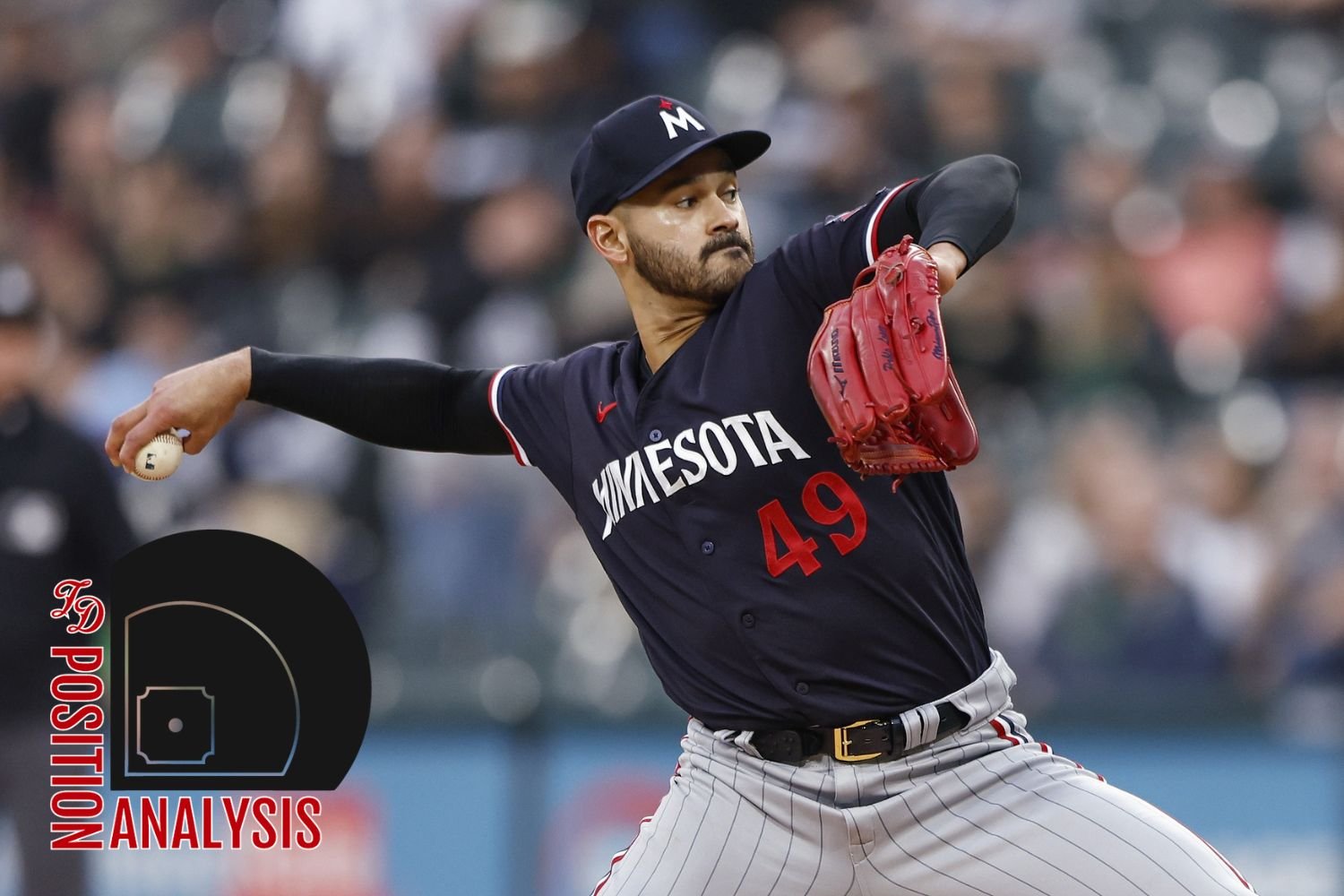 Sonny Gray was not only Minnesota's best pitcher last year but also the team MVP. Replacing the void he left atop the rotation is one of the Twins' biggest challenges following an offseason that yielded no outside additions designed to do so. The front office is hoping that increased roles for returning players and key breakthroughs from young talent can make up for the loss of Gray, who's already dealt with renewed right hamstring issues after signing a $75 million deal with the Cardinals. Even if he was back, there was almost no chance Gray was going to replicate his career year, so one way or another, the continued success of Minnesota's rotation was always going to depend on other returning arms taking the next step. Now the pressure is heightened. Fortunately, it's a group that's well poised to deliver. TWINS STARTING PITCHERS AT A GLANCE Starting Rotation: Pablo López, Joe Ryan, Bailey Ober, Chris Paddack, Louie Varland Depth: Simeon Woods Richardson, Brent Headrick, Randy Dobnak Prospects: David Festa, Marco Raya, Corey Lewis, Charlee Soto, C.J. Culpepper Twins fWAR Ranking Last Year: 2nd out of 30 Twins fWAR Projection This Year: 6th out of 30 THE GOOD Finally, the Twins have a true ace starter. There's really no quibbling with the distinction for Pablo López. After being acquired from the Marlins for Luis Arraez and signing a long-term extension, López bookended a sensational age-27 season by propelling the Twins to their first and last wins. He fired 5 ⅓ shutout innings on Opening Day, and in Game 2 of the ALDS, he blanked the Astros over seven innings in Houston. In between, López was an All-Star and clearly one of the league's most effective, dominant starting pitchers. His 234 strikeouts tied NL Cy Young Award winner Blake Snell for third-most in the majors, and López ranked 10th among all pitchers in fWAR. On the few occasions where the right-hander got roughed up, it almost always seemed to owe more to bad luck than bad pitching. Statcast corroborates this impression: López's 3.00 xERA was considerably lower than his 3.66 ERA, and was in fact the best in all of baseball. Having celebrated his 28th birthday earlier this month, López is in the heart of his prime. He looks healthy and strong in camp coming off a career-high workload (194 IP). Rocco Baldelli uncharacteristically made no secret of López's status as No. 1 starter this spring, and the righty's presence is easily the biggest reason for optimism about this rotation – maybe even this team. Even in Gray's absence, the Twins should have the ability to go at least four deep with above-average starters, with lots of reason for optimism around the top four entering the season, with the fifth spot more of a question mark. Ober has consistently been good when he's pitched in the majors, and he was as good as ever last year, successfully pushing his own workload to unprecedented heights while looking the part of a worthy No. 2 starter. There was no thought of forcing him to start the season in Triple-A this time around. Ryan also pitched to the level of a frontline starter for a time, before an undisclosed injury in July sent his performance in the tank, but he rebounded after time on the injured list. Ryan is one of the league's premier strikeout artists and has been excellent for long stretches. He's got to keep the home runs at bay, but his upside is easy to see if that happens. There's optimism around Ryan and some of the tweaks he's making to address the issue. Paddack is a key figure in Minnesota's rotation outlook. He looked pretty good in his five starts in 2022 before going down with an elbow injury and requiring Tommy John surgery, which sidelined him for most of last year. Paddack threw fire during a late stint out of the bullpen, and has impressed with his stuff and velocity this spring. If the right-hander can stay healthy and pitch up to at least his career baseline (3.93 FIP) he'll be a big factor in the success of this unit. Given the stakes surrounding his improvement, and the implications if he's not up to the task, Varland will be one of the most pivotal players in the Twins rotation picture. He was set to follow the Ober path as a top reinforcement at Triple-A, but Anthony DeSclafani's elbow issues have vaulted Varland back into the rotation spotlight after he excelled in a relief role late last year. The 26-year-old is having a very impressive spring, and there's hope that developing a two-seamer will elevate his game in a starting role. THE BAD DeSclafani was the front office's lone offseason addition to the rotation. Now he's out of the picture before he had a chance to enter it. The veteran came to camp with hopes of moving past last year's flexor strain, but was unable to bounce back and now appears destined for elbow surgery. The Twins still boast a more than respectable starting five, but the depth behind those five is vastly more suspect than it was a year ago. There's far less margin for error, which is troubling because there is considerable potential for error. In every rotation spot behind López at the top, credible concerns exist. Ryan was horrible in the second half, and below average overall. Ober blew past his record workload and got sent back to Triple-A in late August as the team felt his performance was waning. It's striking that despite their strong work throughout the regular season, the Twins didn't trust either of Ober or Ryan to get any leash in a postseason start. Paddack has thrown 27 total innings in the past two seasons and as good as he looked after coming back last year, that was as a reliever. He's a real wild card but the Twins are counting on him to deliver quality innings and help offset their losses, especially with DeSclafani going down. It's a precarious gamble for a pitcher who hasn't thrown even 110 innings in a season since he was a rookie in 2019. Then you've got Varland, who shows promise but has much to prove in the rotation. He has yet to demonstrate he can be an impact starter in the majors; he had a 5.30 ERA and 5.49 FIP in 10 starts last season. From there you start delving into completely unproven prospect depth, via Woods Richardson, Festa and other prospects. There's talent and intrigue within this group but very little major-league experience. THE BOTTOM LINE It's fair to say that the Twins aren't in nearly as good of a position from a rotation quality and depth standpoint as they were a year ago, with Gray, Maeda and Mahle all on hand. At the same time, it's important not to lose sight of the forest for the trees. The Twins are in much better shape with starting pitching than a vast majority of teams around the league, as reflected by a top six projection from FanGraphs at the position. López is the kind of building block that others envy, and the kind that Twins fans themselves have envied pretty much ever since his idol Johan Santana departed. Ober, Ryan and Paddack have given us reason to believe they can support Minnesota's unquestioned ace as key complementary pieces. But Derek Falvey's pitching pipeline will be tested if more injuries strike. By leaving themselves little room for error, the Twins are leaving themselves ample room for potential criticism. Catch up on the rest of our spring position previews: Twins 2024 Position Analysis: Catcher Twins 2024 Position Analysis: First Base Twins 2024 Position Analysis: Second Base Twins 2024 Position Analysis: Third Base Twins 2024 Position Analysis: Shortstop Twins 2024 Position Analysis: Left Field Twins 2024 Position Analysis: Center Field Twins 2024 Position Analysis: Right Field Twins 2024 Position Analysis: Designated Hitter
- 31 comments
-
- 7
-
-
- pablo lopez
- bailey ober
- (and 3 more)
-
Starting pitching was a defining strength for the Twins in 2023, propelling them to a division championship and postseason advancement. This unit suffered significant talent losses during the offseason, but the club is hoping internal risers can offset the negative impact. Image courtesy of Kamil Krzaczynski-USA TODAY Sports Sonny Gray was not only Minnesota's best pitcher last year but also the team MVP. Replacing the void he left atop the rotation is one of the Twins' biggest challenges following an offseason that yielded no outside additions designed to do so. The front office is hoping that increased roles for returning players and key breakthroughs from young talent can make up for the loss of Gray, who's already dealt with renewed right hamstring issues after signing a $75 million deal with the Cardinals. Even if he was back, there was almost no chance Gray was going to replicate his career year, so one way or another, the continued success of Minnesota's rotation was always going to depend on other returning arms taking the next step. Now the pressure is heightened. Fortunately, it's a group that's well poised to deliver. TWINS STARTING PITCHERS AT A GLANCE Starting Rotation: Pablo López, Joe Ryan, Bailey Ober, Chris Paddack, Louie Varland Depth: Simeon Woods Richardson, Brent Headrick, Randy Dobnak Prospects: David Festa, Marco Raya, Corey Lewis, Charlee Soto, C.J. Culpepper Twins fWAR Ranking Last Year: 2nd out of 30 Twins fWAR Projection This Year: 6th out of 30 THE GOOD Finally, the Twins have a true ace starter. There's really no quibbling with the distinction for Pablo López. After being acquired from the Marlins for Luis Arraez and signing a long-term extension, López bookended a sensational age-27 season by propelling the Twins to their first and last wins. He fired 5 ⅓ shutout innings on Opening Day, and in Game 2 of the ALDS, he blanked the Astros over seven innings in Houston. In between, López was an All-Star and clearly one of the league's most effective, dominant starting pitchers. His 234 strikeouts tied NL Cy Young Award winner Blake Snell for third-most in the majors, and López ranked 10th among all pitchers in fWAR. On the few occasions where the right-hander got roughed up, it almost always seemed to owe more to bad luck than bad pitching. Statcast corroborates this impression: López's 3.00 xERA was considerably lower than his 3.66 ERA, and was in fact the best in all of baseball. Having celebrated his 28th birthday earlier this month, López is in the heart of his prime. He looks healthy and strong in camp coming off a career-high workload (194 IP). Rocco Baldelli uncharacteristically made no secret of López's status as No. 1 starter this spring, and the righty's presence is easily the biggest reason for optimism about this rotation – maybe even this team. Even in Gray's absence, the Twins should have the ability to go at least four deep with above-average starters, with lots of reason for optimism around the top four entering the season, with the fifth spot more of a question mark. Ober has consistently been good when he's pitched in the majors, and he was as good as ever last year, successfully pushing his own workload to unprecedented heights while looking the part of a worthy No. 2 starter. There was no thought of forcing him to start the season in Triple-A this time around. Ryan also pitched to the level of a frontline starter for a time, before an undisclosed injury in July sent his performance in the tank, but he rebounded after time on the injured list. Ryan is one of the league's premier strikeout artists and has been excellent for long stretches. He's got to keep the home runs at bay, but his upside is easy to see if that happens. There's optimism around Ryan and some of the tweaks he's making to address the issue. Paddack is a key figure in Minnesota's rotation outlook. He looked pretty good in his five starts in 2022 before going down with an elbow injury and requiring Tommy John surgery, which sidelined him for most of last year. Paddack threw fire during a late stint out of the bullpen, and has impressed with his stuff and velocity this spring. If the right-hander can stay healthy and pitch up to at least his career baseline (3.93 FIP) he'll be a big factor in the success of this unit. Given the stakes surrounding his improvement, and the implications if he's not up to the task, Varland will be one of the most pivotal players in the Twins rotation picture. He was set to follow the Ober path as a top reinforcement at Triple-A, but Anthony DeSclafani's elbow issues have vaulted Varland back into the rotation spotlight after he excelled in a relief role late last year. The 26-year-old is having a very impressive spring, and there's hope that developing a two-seamer will elevate his game in a starting role. THE BAD DeSclafani was the front office's lone offseason addition to the rotation. Now he's out of the picture before he had a chance to enter it. The veteran came to camp with hopes of moving past last year's flexor strain, but was unable to bounce back and now appears destined for elbow surgery. The Twins still boast a more than respectable starting five, but the depth behind those five is vastly more suspect than it was a year ago. There's far less margin for error, which is troubling because there is considerable potential for error. In every rotation spot behind López at the top, credible concerns exist. Ryan was horrible in the second half, and below average overall. Ober blew past his record workload and got sent back to Triple-A in late August as the team felt his performance was waning. It's striking that despite their strong work throughout the regular season, the Twins didn't trust either of Ober or Ryan to get any leash in a postseason start. Paddack has thrown 27 total innings in the past two seasons and as good as he looked after coming back last year, that was as a reliever. He's a real wild card but the Twins are counting on him to deliver quality innings and help offset their losses, especially with DeSclafani going down. It's a precarious gamble for a pitcher who hasn't thrown even 110 innings in a season since he was a rookie in 2019. Then you've got Varland, who shows promise but has much to prove in the rotation. He has yet to demonstrate he can be an impact starter in the majors; he had a 5.30 ERA and 5.49 FIP in 10 starts last season. From there you start delving into completely unproven prospect depth, via Woods Richardson, Festa and other prospects. There's talent and intrigue within this group but very little major-league experience. THE BOTTOM LINE It's fair to say that the Twins aren't in nearly as good of a position from a rotation quality and depth standpoint as they were a year ago, with Gray, Maeda and Mahle all on hand. At the same time, it's important not to lose sight of the forest for the trees. The Twins are in much better shape with starting pitching than a vast majority of teams around the league, as reflected by a top six projection from FanGraphs at the position. López is the kind of building block that others envy, and the kind that Twins fans themselves have envied pretty much ever since his idol Johan Santana departed. Ober, Ryan and Paddack have given us reason to believe they can support Minnesota's unquestioned ace as key complementary pieces. But Derek Falvey's pitching pipeline will be tested if more injuries strike. By leaving themselves little room for error, the Twins are leaving themselves ample room for potential criticism. Catch up on the rest of our spring position previews: Twins 2024 Position Analysis: Catcher Twins 2024 Position Analysis: First Base Twins 2024 Position Analysis: Second Base Twins 2024 Position Analysis: Third Base Twins 2024 Position Analysis: Shortstop Twins 2024 Position Analysis: Left Field Twins 2024 Position Analysis: Center Field Twins 2024 Position Analysis: Right Field Twins 2024 Position Analysis: Designated Hitter View full article
-
Unless they stumble across someone like Nelson Cruz, the Twins have made it pretty clear they prefer to use the designated hitter position as a revolving door, leveraged mostly for situational matchups and partial rest days. We'll likely see that philosophy embraced to the extreme this year, with nothing resembling a clear-cut regular at the position. Image courtesy of Sam Navarro–USA TODAY Sports Last spring, the Twins were shoehorned into a plan at designated hitter that was far from ideal, with Byron Buxton's physical limitations restricting him to DH-only availability. It looked to be working for a while, as Buxton jumped out to a hot start at the plate in April, but as his performance deteriorated, he became a liability in this offense-driven position. As Buck himself acknowledged, by a certain point he "wasn't really helping the team." It doesn't seem like an experiment that Buxton or the Twins are interested in repeating, so while I do expect to see him rotate through a decent amount, I can't envision any scenario where he's starting 80 games at DH again. Instead, the Twins figure to go with a fairly diverse mix of players at the position, giving opportunities to bat-first players and regulars who could use a day off their feet. Let's take a look at how this group shapes up, and where the strengths and weaknesses lie. TWINS DESIGNATED HITTERS AT A GLANCE Starter: Alex Kirilloff Backup: Edouard Julien Depth: Byron Buxton, Matt Wallner, José Miranda, Trevor Larnach Prospects: Gabriel Gonzalez, Kala'i Rosario Twins fWAR Ranking Last Year: 8th out of 30 Twins fWAR Projection This Year: 16th out of 30 THE GOOD Kirilloff is currently lined up as the primary DH against right-handed pitchers, at least to start the season. He could be very well suited for the task, as a former first-round draft pick and top prospect renowned for his hitting ability. Even through injuries he's posted a decent .274/.329/.440 slash line in the majors against righties, and last year he elevated that to .300/.373/.485, which would be stellar production from the strong side of a DH platoon. Coming off shoulder surgery, Kirilloff has had a very encouraging spring at the plate, piling up extra-base hits. Julien also figures to get some of those DH starts against RHP, though the frequency may be influenced by how his defense looks at second early on. Wallner will probably get used here a decent amount on days where Rocco Baldelli wants to inject a bit more range into the outfield via Willi Castro or Manuel Margot. That leaves Larnach buried on the depth chart and waiting for some sort of opportunity to materialize, either here or in the outfield corners. Having a Triple-A contingency like that on hand is a fine luxury for the Twins; he's slashed .230/.331/.411 against righties in the big leagues and like Kirilloff, the former first-rounder exhibits clear potential for more. The Twins are organizationally very deep on quality left-handed bats, so they shouldn't have much trouble plugging a good one in at DH in those majority of RHP matchups. The flip side of the platoon is where more uncertainty exists. THE BAD If Buxton is healthy and frequently rotating through DH against left-handed starters as a matter of maintenance, the Twins will be in solid shape. But if Buxton's too hurt to play center field he's probably not going to be a great option at DH, even against lefties (last year he batted just .180 against southpaws). Beyond him, the lack of clear right-handed options for this spot is one of the few noticeable shortcomings on a generally well-rounded position player corps. When the Twins face a LHP on Opening Day in Cole Ragans, who gets the nod at designated hitter? One of the catchers? Not the most exciting proposition, coming off the year Christian Vázquez just had, though he did show some power against lefties. Miranda? He's probably not on the roster to start the season, though he could vault himself into this mix easily if he hits. Guys like Margot, Castro and Carlos Santana can plug in against left-handers, but they're known more for their gloves than their bats, making them less than ideal fits at DH. Beyond their core nucleus of Buxton, Carlos Correa and Royce Lewis, the Twins are much more lefty-heavy in terms of their makeup of bats. This puts a special emphasis on two upcoming prospects specifically: Gabriel Gonzalez and Kala'i Rosario, ranked fourth and 13th on our top prospects list. These are promising righty sluggers with the potential to flat-out mash southpaws. Gonzalez, headliner of the Jorge Polanco trade, slashed .310/.360/.556 against them in Single-A as a 19-year-old. Rosario slashed .275/.362/.549 versus LHP en route to earning Midwest League MVP honors for Cedar Rapids. Neither outfielder is considered much a defender, so an opening against left-handed pitchers at the DH spot in Minnesota could be a great ticket to the big leagues for either. But Gonzalez and Rosario are both probably at least another year away from making an impact. THE BOTTOM LINE The Twins have assembled a lot of good bats and we'll likely see a bunch of them filter through the DH spot this year. Between Kirilloff, Julien, Wallner and Larnach, they're going to have plenty of juice against right-handed pitching. Against lefties? That's a bigger question, although there are a number of bats capable of stepping and and producing here. Expect to see a wide distribution of starts at this position, with heavy platooning to provide advantageous matchups on a daily basis. Catch up on the rest of our position previews: Twins 2024 Position Analysis: Catcher Twins 2024 Position Analysis: First Base Twins 2024 Position Analysis: Second Base Twins 2024 Position Analysis: Third Base Twins 2024 Position Analysis: Shortstop Twins 2024 Position Analysis: Left Field Twins 2024 Position Analysis: Center Field Twins 2024 Position Analysis: Right Field View full article
-
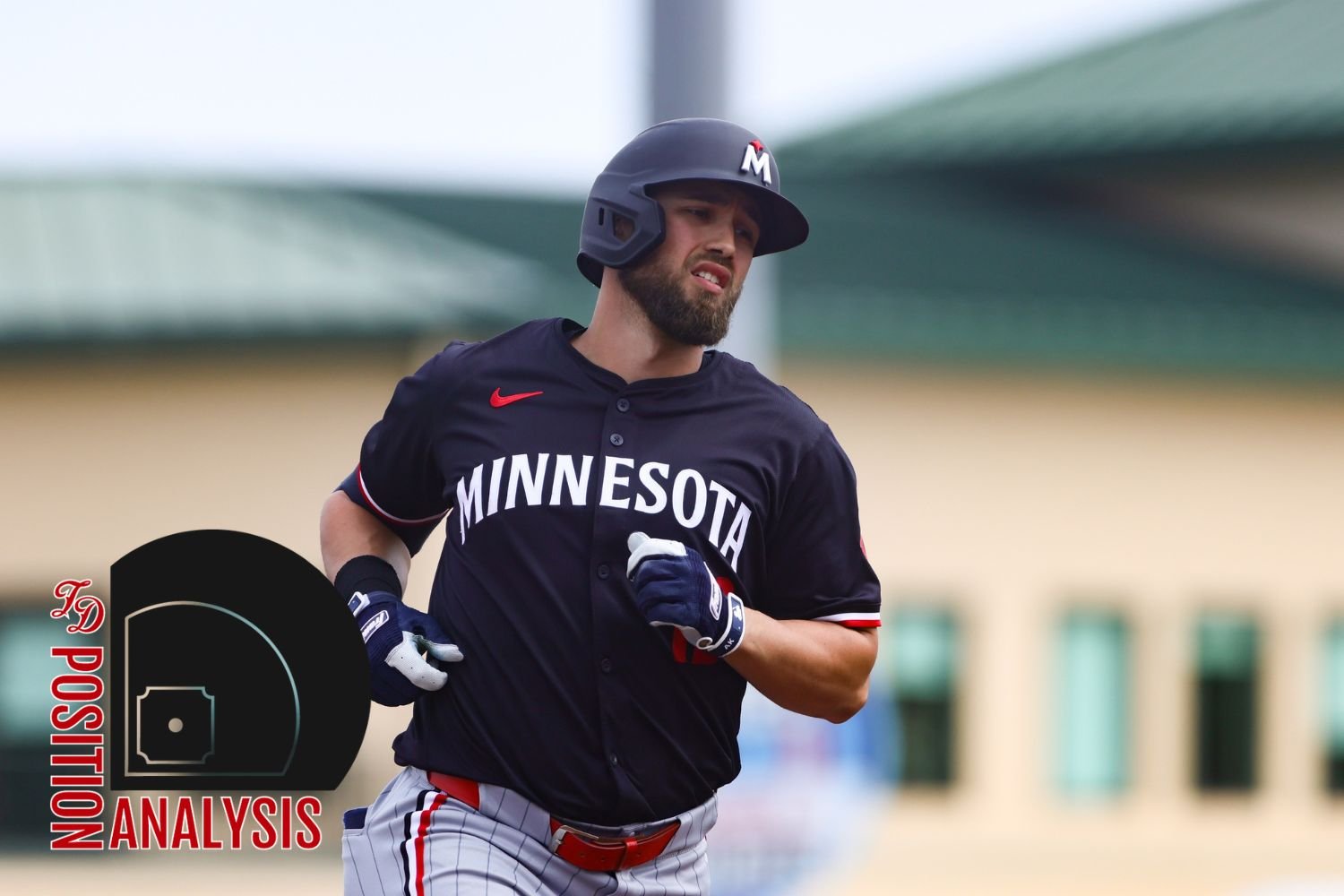 Last spring, the Twins were shoehorned into a plan at designated hitter that was far from ideal, with Byron Buxton's physical limitations restricting him to DH-only availability. It looked to be working for a while, as Buxton jumped out to a hot start at the plate in April, but as his performance deteriorated, he became a liability in this offense-driven position. As Buck himself acknowledged, by a certain point he "wasn't really helping the team." It doesn't seem like an experiment that Buxton or the Twins are interested in repeating, so while I do expect to see him rotate through a decent amount, I can't envision any scenario where he's starting 80 games at DH again. Instead, the Twins figure to go with a fairly diverse mix of players at the position, giving opportunities to bat-first players and regulars who could use a day off their feet. Let's take a look at how this group shapes up, and where the strengths and weaknesses lie. TWINS DESIGNATED HITTERS AT A GLANCE Starter: Alex Kirilloff Backup: Edouard Julien Depth: Byron Buxton, Matt Wallner, José Miranda, Trevor Larnach Prospects: Gabriel Gonzalez, Kala'i Rosario Twins fWAR Ranking Last Year: 8th out of 30 Twins fWAR Projection This Year: 16th out of 30 THE GOOD Kirilloff is currently lined up as the primary DH against right-handed pitchers, at least to start the season. He could be very well suited for the task, as a former first-round draft pick and top prospect renowned for his hitting ability. Even through injuries he's posted a decent .274/.329/.440 slash line in the majors against righties, and last year he elevated that to .300/.373/.485, which would be stellar production from the strong side of a DH platoon. Coming off shoulder surgery, Kirilloff has had a very encouraging spring at the plate, piling up extra-base hits. Julien also figures to get some of those DH starts against RHP, though the frequency may be influenced by how his defense looks at second early on. Wallner will probably get used here a decent amount on days where Rocco Baldelli wants to inject a bit more range into the outfield via Willi Castro or Manuel Margot. That leaves Larnach buried on the depth chart and waiting for some sort of opportunity to materialize, either here or in the outfield corners. Having a Triple-A contingency like that on hand is a fine luxury for the Twins; he's slashed .230/.331/.411 against righties in the big leagues and like Kirilloff, the former first-rounder exhibits clear potential for more. The Twins are organizationally very deep on quality left-handed bats, so they shouldn't have much trouble plugging a good one in at DH in those majority of RHP matchups. The flip side of the platoon is where more uncertainty exists. THE BAD If Buxton is healthy and frequently rotating through DH against left-handed starters as a matter of maintenance, the Twins will be in solid shape. But if Buxton's too hurt to play center field he's probably not going to be a great option at DH, even against lefties (last year he batted just .180 against southpaws). Beyond him, the lack of clear right-handed options for this spot is one of the few noticeable shortcomings on a generally well-rounded position player corps. When the Twins face a LHP on Opening Day in Cole Ragans, who gets the nod at designated hitter? One of the catchers? Not the most exciting proposition, coming off the year Christian Vázquez just had, though he did show some power against lefties. Miranda? He's probably not on the roster to start the season, though he could vault himself into this mix easily if he hits. Guys like Margot, Castro and Carlos Santana can plug in against left-handers, but they're known more for their gloves than their bats, making them less than ideal fits at DH. Beyond their core nucleus of Buxton, Carlos Correa and Royce Lewis, the Twins are much more lefty-heavy in terms of their makeup of bats. This puts a special emphasis on two upcoming prospects specifically: Gabriel Gonzalez and Kala'i Rosario, ranked fourth and 13th on our top prospects list. These are promising righty sluggers with the potential to flat-out mash southpaws. Gonzalez, headliner of the Jorge Polanco trade, slashed .310/.360/.556 against them in Single-A as a 19-year-old. Rosario slashed .275/.362/.549 versus LHP en route to earning Midwest League MVP honors for Cedar Rapids. Neither outfielder is considered much a defender, so an opening against left-handed pitchers at the DH spot in Minnesota could be a great ticket to the big leagues for either. But Gonzalez and Rosario are both probably at least another year away from making an impact. THE BOTTOM LINE The Twins have assembled a lot of good bats and we'll likely see a bunch of them filter through the DH spot this year. Between Kirilloff, Julien, Wallner and Larnach, they're going to have plenty of juice against right-handed pitching. Against lefties? That's a bigger question, although there are a number of bats capable of stepping and and producing here. Expect to see a wide distribution of starts at this position, with heavy platooning to provide advantageous matchups on a daily basis. Catch up on the rest of our position previews: Twins 2024 Position Analysis: Catcher Twins 2024 Position Analysis: First Base Twins 2024 Position Analysis: Second Base Twins 2024 Position Analysis: Third Base Twins 2024 Position Analysis: Shortstop Twins 2024 Position Analysis: Left Field Twins 2024 Position Analysis: Center Field Twins 2024 Position Analysis: Right Field
- 12 comments
-
- 5
-
-
- alex kirilloff
- edouard julien
- (and 1 more)
-
 Anthony DeSclafani has been a very productive, valuable starting pitcher as recently as 2021, which is undoubtedly why he intrigued the Twins as a throw-in to the package they got back from the Mariners for Jorge Polanco. If healthy, DeSclafani seemed like a fine fit for the back of the rotation, capable of helping make up for the quality innings Minnesota is losing from Sonny Gray and Kenta Maeda. As with past acquisitions such as Chris Paddack and Tyler Mahle, however, the "if healthy" caveat has proven to be a costly one. DeSclafani's elbow concerns were known after he missed the second half of last season with a flexor strain and received a PRP injection to bolster his healing. He arrived at Twins camp reporting that he felt fine, but the elbow didn't take long to start barking again. DeSclafani and the team initially downplayed the issue, but the righthander has been unable to get going. He hasn't thrown in a Grapefruit League game and came out of pitching in a minor-league game over the weekend not feeling great. On Monday, the Twins revealed the corresponding bad news: he's been shut down due to ongoing issues with his flexor tendon and is slated for a consult with orthopedic surgeon Dr. Keith Meister. Nothing has been finalized, but Derek Falvey acknowledged that elbow surgery is on the table. Dr. Meister, who performed reconstructive elbow surgeries on Maeda, Paddack and Mahle, is known as "the maestro of Tommy John surgery" and has been credited with revolutionizing the procedure. With their lone rotation addition going down before the season begins, it seems to be back to square one for the Twins rotation. DeSclafani was meant to provide the sort of additional depth that enabled Minnesota to weather the absences of Paddack and Mahle last year, as those hurlers recovered from Tommy John surgery. Now, Plan A is out the window, seemingly moving their only established contingency plan into the season-opening rotation. Louie Varland has looked great this spring, inspiring hope that he'll be up to the task, but the Twins will surely need to depend on more than five starters this season, and the depth behind Varland is now almost entirely unproven. Monday's unfortunate news coincided with a smattering of tough injury updates on pitchers from the Twins, who shared that Jhoan Duran and Caleb Thielbar will also open the season on the injured list, as will promising minor-leaguer Matt Canterino. Arm-ageddon, indeed. With DeSclafani officially out of the picture indefinitely, will the front office try to find another veteran in the remaining free-agent crop? Notably, both Blake Snell and Jordan Montgomery remain available, with the start of the season 10 days away. It might be time to ask the Pohlads once more about opening the wallet a bit wider.
 -
The Twins took another flier on a starter with arm concerns, and they are once again seeing the downside. After experiencing renewed elbow soreness this spring and trying to battle through it, projected fifth starter Anthony DeSclafani looks likely to miss most or all of the season. What are the implications for the Twins' rotation? Image courtesy of Kim Klement Neitzel-USA TODAY Sports Anthony DeSclafani has been a very productive, valuable starting pitcher as recently as 2021, which is undoubtedly why he intrigued the Twins as a throw-in to the package they got back from the Mariners for Jorge Polanco. If healthy, DeSclafani seemed like a fine fit for the back of the rotation, capable of helping make up for the quality innings Minnesota is losing from Sonny Gray and Kenta Maeda. As with past acquisitions such as Chris Paddack and Tyler Mahle, however, the "if healthy" caveat has proven to be a costly one. DeSclafani's elbow concerns were known after he missed the second half of last season with a flexor strain and received a PRP injection to bolster his healing. He arrived at Twins camp reporting that he felt fine, but the elbow didn't take long to start barking again. DeSclafani and the team initially downplayed the issue, but the righthander has been unable to get going. He hasn't thrown in a Grapefruit League game and came out of pitching in a minor-league game over the weekend not feeling great. On Monday, the Twins revealed the corresponding bad news: he's been shut down due to ongoing issues with his flexor tendon and is slated for a consult with orthopedic surgeon Dr. Keith Meister. Nothing has been finalized, but Derek Falvey acknowledged that elbow surgery is on the table. Dr. Meister, who performed reconstructive elbow surgeries on Maeda, Paddack and Mahle, is known as "the maestro of Tommy John surgery" and has been credited with revolutionizing the procedure. With their lone rotation addition going down before the season begins, it seems to be back to square one for the Twins rotation. DeSclafani was meant to provide the sort of additional depth that enabled Minnesota to weather the absences of Paddack and Mahle last year, as those hurlers recovered from Tommy John surgery. Now, Plan A is out the window, seemingly moving their only established contingency plan into the season-opening rotation. Louie Varland has looked great this spring, inspiring hope that he'll be up to the task, but the Twins will surely need to depend on more than five starters this season, and the depth behind Varland is now almost entirely unproven. Monday's unfortunate news coincided with a smattering of tough injury updates on pitchers from the Twins, who shared that Jhoan Duran and Caleb Thielbar will also open the season on the injured list, as will promising minor-leaguer Matt Canterino. Arm-ageddon, indeed. With DeSclafani officially out of the picture indefinitely, will the front office try to find another veteran in the remaining free-agent crop? Notably, both Blake Snell and Jordan Montgomery remain available, with the start of the season 10 days away. It might be time to ask the Pohlads once more about opening the wallet a bit wider. View full article
-
Rocco was asked about this topic after Bailey Ober's start last Thursday (he was pulled with two outs in the second, then re-entered to pitch the third). Here was his response, FWIW: "It's not just a helpful rule, I think it's a good rule. I think it's good for the game and all of the players that are trying to get ready for a season. We could wedge him in there and keep him going or stick him down in the bullpen to throw by himself to get his work in, which is what you used to have to do, but I think it's a good way of the league adapting and giving the players really an opportunity to get ready. So it's good, I think we'll always take advantage of it as long as it's part of the rules. I think Major League Baseball likes this rule and so do we."
-
Oberdrive: Bailey Ober Looks to Up His Game and Boost Top of Rotation
Nick Nelson posted an article in Twins
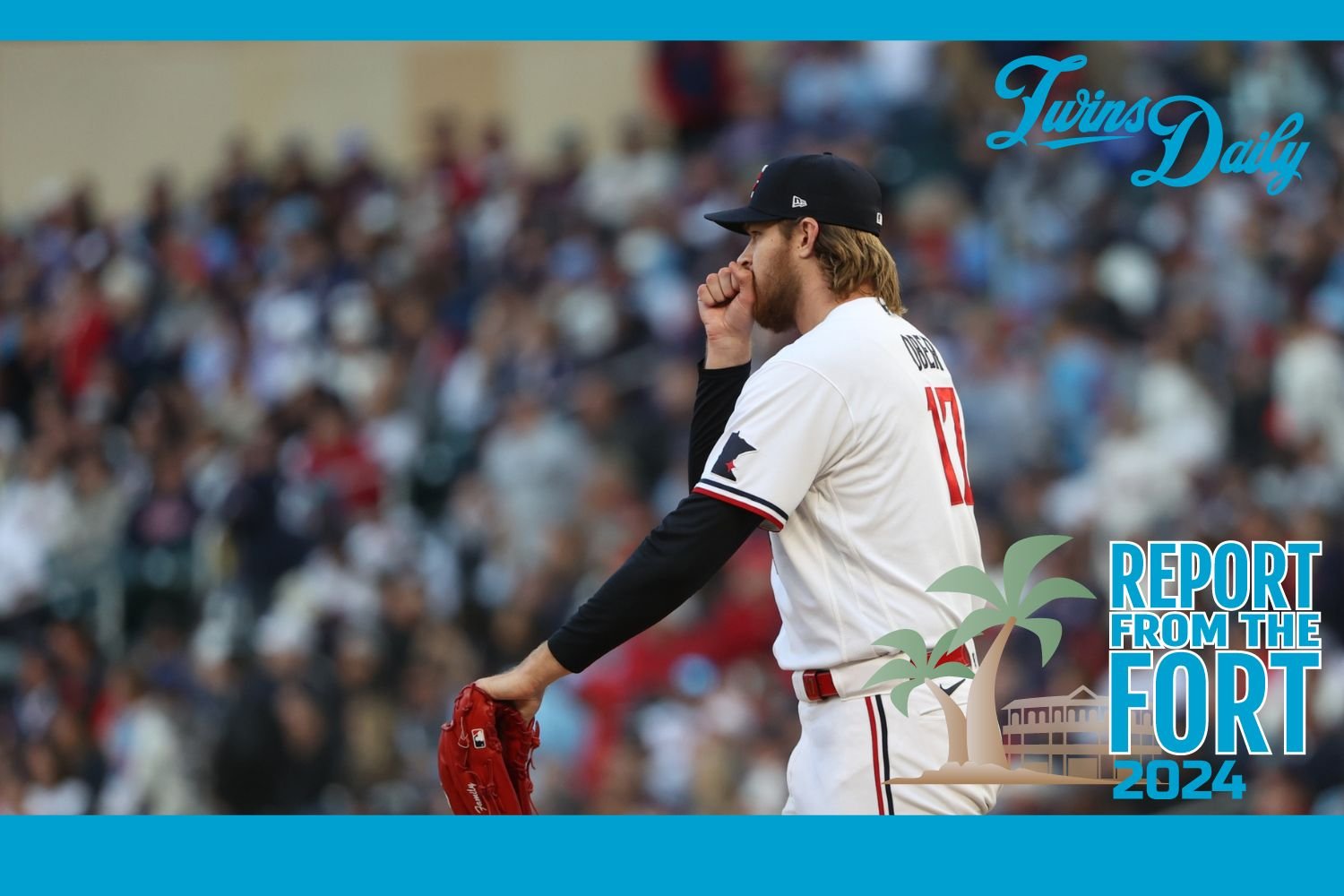 FT. MYERS, FL – Bailey Ober was better than you think last year. There seems to be a widespread perception that he was a fine mid-rotation starter, but little more. Opening the season in the minors, and getting sent back down in August, may play a role in that perception, along with his strikeout rate looking pedestrian compared to the likes of Pablo López and Joe Ryan. But when you take a step back and look at the overall numbers, Ober was fantastic: a true top-of-rotation starter from a production perspective. Only 17 pitchers in the major leagues threw 140 or more innings with an ERA+ of 125 or better in 2023. Ober was one of them. What more could you want from a No. 2 starter? Maybe that's why, when asked about how Ober can improve and take the next step this season, manager Rocco Baldelli finds it tough to summon an answer. "Bailey’s a difficult one to talk about in that conversation because he does a lot of different things really well, and has from truly the day he walked in the door at the big-league level," Baldelli said after Ober's latest start against Toronto on Thursday. "Could he go from exceptional to very exceptional? It's like, I don't know, maybe." Possibly, Baldelli too has taken notice of the way Ober seems to be underrated in discussions of the Twins rotation and its caliber. As the Twins skipper points out, Ober has already made a lot of the necessary adjustments and improvements necessary to unlock the success he had last year. So it might be more about sustaining than gaining for the big righty. Still, it's hard to overlook how much pressure is on him, along with Ryan and Chris Paddack, to help fill the void of Sonny Gray's loss. And for as good as Ober was, there are a couple of key areas in which he has a chance to up his game. Fortunately, there have been promising signs on both fronts. The first is fastball velocity. While it plays up for hitters due to Ober's extension and release point, his four-seamer averaged just 91.3 MPH last year, which ranked in the 13th percentile among all major-league starters. The pitch still worked for him, holding opponents to a .306 xwOBA, in part because – as mentioned – it feels like it's coming in harder since he releases it so close to the plate. (Known as perceived velocity.) But this underscores how much more effective that pitch could be if he can add just a couple ticks. Encouragingly, Ober threw a fastball earlier this spring that registered as his fastest ever measured by Statcast (94.8 MPH). He's been in the 92-93 MPH range quite often, including the first couple innings of Thursday's start, though there was a noticeable dropoff thereafter. It should be noted that Ober also flashed increased velo last spring but it didn't carry over to the regular season. Ober doesn't see any secret formula to keeping his fastball in the 92-93 range deeper into starts and through the season. It's a matter of staying healthy, putting his work in, and not overthinking it. "My movement and mechanics are gonna take care of the rest," he said. "I feel like whenever it’s coming out good is when I’m not thinking as much out there and it’s just coming natural." The other area where Ober is aiming to level up his repertoire is the addition of a new breaking ball, potentially to replace his slider, which got hit harder than any other pitch last year (.320 xwOBA). Statcast classifies the new pitch as a cutter, though some people view it as simply a harder slider than the 81-MPH version he used in 2023. "Whatever you want to call it. Something that's hard and goes to the left," Ober said earlier this spring. He's been using it plentifully in spring action as he attempts to "have it pretty dialed in and consistent when the season starts." In his latest outing he threw more cutters (nine) than curveballs and sliders combined (five). The same was true in his previous starts this spring. Averaging around 85 MPH, the cutter gives hitters a harder offspeed pitch to complement his outstanding changeup and big slow curveball. A new go-to breaking ball for Ober? "We'll see what it turns into," he said. "We’ll see what the hitters keep telling us. It’ll be good to have both to play with. Something softer with bigger movement, and then something that’s a little bit harder." Circumstances have changed dramatically for Ober in one year's time. Last spring he was the odd man out in a crowded rotation; now he's an essential fixture in their starting pitching mix, and maybe the team's best chance for a legitimate No. 2 behind López. Fastball velocity and the success of his cutter will be key things to watch early in the season as he looks to add the finishing touches to his already impressive game. While it might be a tall order (pun intended), Ober going from exceptional to very exceptional might be just what the Twins rotation needs to maintain the latter distinction in Gray's absence.
 -
The Twins are relying on internal improvement to help offset the loss of Sonny Gray atop the rotation. Bailey Ober, with a few new tricks up his sleeve, might be their best hope to emerge as a frontliner alongside ace Pablo López. Image courtesy of Jesse Johnson-USA TODAY Sports FT. MYERS, FL – Bailey Ober was better than you think last year. There seems to be a widespread perception that he was a fine mid-rotation starter, but little more. Opening the season in the minors, and getting sent back down in August, may play a role in that perception, along with his strikeout rate looking pedestrian compared to the likes of Pablo López and Joe Ryan. But when you take a step back and look at the overall numbers, Ober was fantastic: a true top-of-rotation starter from a production perspective. Only 17 pitchers in the major leagues threw 140 or more innings with an ERA+ of 125 or better in 2023. Ober was one of them. What more could you want from a No. 2 starter? Maybe that's why, when asked about how Ober can improve and take the next step this season, manager Rocco Baldelli finds it tough to summon an answer. "Bailey’s a difficult one to talk about in that conversation because he does a lot of different things really well, and has from truly the day he walked in the door at the big-league level," Baldelli said after Ober's latest start against Toronto on Thursday. "Could he go from exceptional to very exceptional? It's like, I don't know, maybe." Possibly, Baldelli too has taken notice of the way Ober seems to be underrated in discussions of the Twins rotation and its caliber. As the Twins skipper points out, Ober has already made a lot of the necessary adjustments and improvements necessary to unlock the success he had last year. So it might be more about sustaining than gaining for the big righty. Still, it's hard to overlook how much pressure is on him, along with Ryan and Chris Paddack, to help fill the void of Sonny Gray's loss. And for as good as Ober was, there are a couple of key areas in which he has a chance to up his game. Fortunately, there have been promising signs on both fronts. The first is fastball velocity. While it plays up for hitters due to Ober's extension and release point, his four-seamer averaged just 91.3 MPH last year, which ranked in the 13th percentile among all major-league starters. The pitch still worked for him, holding opponents to a .306 xwOBA, in part because – as mentioned – it feels like it's coming in harder since he releases it so close to the plate. (Known as perceived velocity.) But this underscores how much more effective that pitch could be if he can add just a couple ticks. Encouragingly, Ober threw a fastball earlier this spring that registered as his fastest ever measured by Statcast (94.8 MPH). He's been in the 92-93 MPH range quite often, including the first couple innings of Thursday's start, though there was a noticeable dropoff thereafter. It should be noted that Ober also flashed increased velo last spring but it didn't carry over to the regular season. Ober doesn't see any secret formula to keeping his fastball in the 92-93 range deeper into starts and through the season. It's a matter of staying healthy, putting his work in, and not overthinking it. "My movement and mechanics are gonna take care of the rest," he said. "I feel like whenever it’s coming out good is when I’m not thinking as much out there and it’s just coming natural." The other area where Ober is aiming to level up his repertoire is the addition of a new breaking ball, potentially to replace his slider, which got hit harder than any other pitch last year (.320 xwOBA). Statcast classifies the new pitch as a cutter, though some people view it as simply a harder slider than the 81-MPH version he used in 2023. "Whatever you want to call it. Something that's hard and goes to the left," Ober said earlier this spring. He's been using it plentifully in spring action as he attempts to "have it pretty dialed in and consistent when the season starts." In his latest outing he threw more cutters (nine) than curveballs and sliders combined (five). The same was true in his previous starts this spring. Averaging around 85 MPH, the cutter gives hitters a harder offspeed pitch to complement his outstanding changeup and big slow curveball. A new go-to breaking ball for Ober? "We'll see what it turns into," he said. "We’ll see what the hitters keep telling us. It’ll be good to have both to play with. Something softer with bigger movement, and then something that’s a little bit harder." Circumstances have changed dramatically for Ober in one year's time. Last spring he was the odd man out in a crowded rotation; now he's an essential fixture in their starting pitching mix, and maybe the team's best chance for a legitimate No. 2 behind López. Fastball velocity and the success of his cutter will be key things to watch early in the season as he looks to add the finishing touches to his already impressive game. While it might be a tall order (pun intended), Ober going from exceptional to very exceptional might be just what the Twins rotation needs to maintain the latter distinction in Gray's absence. View full article
-
Major League Baseball added a new wrinkle to break the monotony of spring training this year, adding a Spring Breakout game for each team to showcase their top prospects in a head-to-head competition against those from another organization. I was in attendance for Minnesota's first-ever Spring Breakout on Saturday, against the Tampa Bay Rays. Here are some things that stood out. Image courtesy of Dave Nelson-USA TODAY Sports The minor leagues and prospect development are one of the unique aspects of following baseball compared to other sports. There's a whole different universe of teams, players and stories to track throughout your favorite team's system, all summer long, with implications on the future of the big-league club. Obsessing over prospects is one of my most valued aspects of baseball fandom, and I know many readers and writers here at Twins Daily feel the same. As such, MLB's decision to introduce these Spring Breakouts as a league-wide convention in the late stage of camp struck me as an excellent one. It's a way to lean in and celebrate prospect culture, intermingling advanced young players who are nearing MLB-readiness (i.e. Brooks Lee) with teenagers who've barely gotten their feet wet at the pro level (i.e. Brandon Winokur). About 30 minutes after Saturday's standard Grapefruit League contest between the Twins and Rays concluded, the prospect showdown got underway, essentially serving as the back end of a doubleheader at that ballpark. The seven-inning affair saw Tampa's prospects build a sizable early lead before Minnesota broke through with an eight-run third to take the lead, but the Rays battled back to tie the game 8-8, which ended up being the final score. Here are five observations I came away from the prospect showcase with: 1. Jenkins misses out Much of the event's luster was unfortunately siphoned away in the lead-up, as we learned a couple of days beforehand that Walker Jenkins, the Twins' top prospect and one of the highest-rated in baseball, would not participate. Jenkins is dealing with a quad strain that is considered minor. He's still been very present around the minor-league fields while I've been here, and he's still been hitting. It sounds like the Twins just don't want to push him to run at full speed in game situations at this time, which is understandable. But still a big bummer given that Jenkins figured to be the main attraction for this game aside from Rays top prospect Junior Caminero (No. 4 in all of baseball, per MLB Pipeline). 2. Festa throws fire Twins starter David Festa, ranked by Twins Daily as the organization's fifth-best prospect entering 2024, got the starting nod and demonstrated why he's so highly regarded. He may have been a little extra revved for his first-inning matchup against Caminero, against whom he threw his hardest pitch of the day: a four-seamer that clocked at 96.8 MPH. Festa totaled 35 pitches over 1 ⅔ before being removed in the second. He gave up a run on a walk and two hits, but generally looked impressive, striking out three of the eight batters he faced while inducing some ugly swings. 3. Soto is electric yet erratic We've all been waiting a long time to get eyes on Charlee Soto. Minnesota's second pick in last year's draft after Jenkins (34th overall) didn't pitch after joining the organization, setting him up to make his pro debut this year. Minnesota doesn't often pursue high school arms in the draft, especially with such a high pick, but Soto was considered special, boasting a high-octane arsenal that dazzled scouts in the prep circuit. That arsenal was on display when the 18-year-old entered to pitch in the third inning. He unleashed a barrage of fastballs in the 97-98 MPH range, topping out at 98.5, along with several sliders and changeups in the upper 80s. Unfortunately, he struggled mightily to command these pitches, throwing just nine of 21 for strikes and issuing two walks, including one with the bases loaded that led to his getting pulled after recording only two outs. Soto seemed to have his own dedicated cheering section behind him plate. That, along with the opportunity to finally pitch before fans in a pro stadium, might've led to him being a little overly amped up. But his control will be something to watch this season as he gets going in real minor-league games. It's pretty clear the stuff is legit. 4. Emma flashes his skills No. 3 prospect Emmanuel Rodriguez is an exciting talent because of his dynamic skill set: power, speed, patience, defense. He started in center field and had a chance to show off some of the things he can do. In his first at-bat he tapped a single the other way, then stole second base. In his second AB he drew a walk with the bases loaded to pick up an RBI. The only hurdle that threatens to hold Rodriguez back is his difficulty making consistent contact. That wasn't an issue in this game but it was apparent during his time on the major-league side this spring, where he struck out 13 times in 24 plate appearances. Then again, he was the youngest player in camp, having just turned 21 at the end of February. 5. Gonzalez gets a hold of one Gabriel Gonzalez, centerpiece of the package received from Seattle for Jorge Polanco, has a rep for two things: swinging at almost everything, and doing damage when he makes contact. Both qualities were on display in the Breakout. In his first at-bat, Gonzalez swung at three of the four pitches he saw, including a couple that were well out of the zone, and struck out. In his second, he came up with the bases loaded and delivered a two-run double, getting the end of his bat on a pitch at the knees from lefty Drew Sommers and poking it into left center. He did draw a four-pitch walk in his third trip to the plate, dialing back the signature aggressiveness a bit, though none of the pitches were close enough to be tempting. Last year, between two levels of Single-A in the Mariners system, Gonzalez drew only 36 walks in 535 plate appearances, but posted an .837 OPS with 18 homers and 84 RBIs. Did you watch this televised prospect showcase on Saturday? What caught your eye? I'd love to hear your thoughts on the game, or the general concept of this Spring Breakout prospect showcase, in the comments. View full article
- 25 replies
-
- 2
-
-
- david festa
- walker jenkins
- (and 2 more)
-
 The minor leagues and prospect development are one of the unique aspects of following baseball compared to other sports. There's a whole different universe of teams, players and stories to track throughout your favorite team's system, all summer long, with implications on the future of the big-league club. Obsessing over prospects is one of my most valued aspects of baseball fandom, and I know many readers and writers here at Twins Daily feel the same. As such, MLB's decision to introduce these Spring Breakouts as a league-wide convention in the late stage of camp struck me as an excellent one. It's a way to lean in and celebrate prospect culture, intermingling advanced young players who are nearing MLB-readiness (i.e. Brooks Lee) with teenagers who've barely gotten their feet wet at the pro level (i.e. Brandon Winokur). About 30 minutes after Saturday's standard Grapefruit League contest between the Twins and Rays concluded, the prospect showdown got underway, essentially serving as the back end of a doubleheader at that ballpark. The seven-inning affair saw Tampa's prospects build a sizable early lead before Minnesota broke through with an eight-run third to take the lead, but the Rays battled back to tie the game 8-8, which ended up being the final score. Here are five observations I came away from the prospect showcase with: 1. Jenkins misses out Much of the event's luster was unfortunately siphoned away in the lead-up, as we learned a couple of days beforehand that Walker Jenkins, the Twins' top prospect and one of the highest-rated in baseball, would not participate. Jenkins is dealing with a quad strain that is considered minor. He's still been very present around the minor-league fields while I've been here, and he's still been hitting. It sounds like the Twins just don't want to push him to run at full speed in game situations at this time, which is understandable. But still a big bummer given that Jenkins figured to be the main attraction for this game aside from Rays top prospect Junior Caminero (No. 4 in all of baseball, per MLB Pipeline). 2. Festa throws fire Twins starter David Festa, ranked by Twins Daily as the organization's fifth-best prospect entering 2024, got the starting nod and demonstrated why he's so highly regarded. He may have been a little extra revved for his first-inning matchup against Caminero, against whom he threw his hardest pitch of the day: a four-seamer that clocked at 96.8 MPH. Festa totaled 35 pitches over 1 ⅔ before being removed in the second. He gave up a run on a walk and two hits, but generally looked impressive, striking out three of the eight batters he faced while inducing some ugly swings. 3. Soto is electric yet erratic We've all been waiting a long time to get eyes on Charlee Soto. Minnesota's second pick in last year's draft after Jenkins (34th overall) didn't pitch after joining the organization, setting him up to make his pro debut this year. Minnesota doesn't often pursue high school arms in the draft, especially with such a high pick, but Soto was considered special, boasting a high-octane arsenal that dazzled scouts in the prep circuit. That arsenal was on display when the 18-year-old entered to pitch in the third inning. He unleashed a barrage of fastballs in the 97-98 MPH range, topping out at 98.5, along with several sliders and changeups in the upper 80s. Unfortunately, he struggled mightily to command these pitches, throwing just nine of 21 for strikes and issuing two walks, including one with the bases loaded that led to his getting pulled after recording only two outs. Soto seemed to have his own dedicated cheering section behind him plate. That, along with the opportunity to finally pitch before fans in a pro stadium, might've led to him being a little overly amped up. But his control will be something to watch this season as he gets going in real minor-league games. It's pretty clear the stuff is legit. 4. Emma flashes his skills No. 3 prospect Emmanuel Rodriguez is an exciting talent because of his dynamic skill set: power, speed, patience, defense. He started in center field and had a chance to show off some of the things he can do. In his first at-bat he tapped a single the other way, then stole second base. In his second AB he drew a walk with the bases loaded to pick up an RBI. The only hurdle that threatens to hold Rodriguez back is his difficulty making consistent contact. That wasn't an issue in this game but it was apparent during his time on the major-league side this spring, where he struck out 13 times in 24 plate appearances. Then again, he was the youngest player in camp, having just turned 21 at the end of February. 5. Gonzalez gets a hold of one Gabriel Gonzalez, centerpiece of the package received from Seattle for Jorge Polanco, has a rep for two things: swinging at almost everything, and doing damage when he makes contact. Both qualities were on display in the Breakout. In his first at-bat, Gonzalez swung at three of the four pitches he saw, including a couple that were well out of the zone, and struck out. In his second, he came up with the bases loaded and delivered a two-run double, getting the end of his bat on a pitch at the knees from lefty Drew Sommers and poking it into left center. He did draw a four-pitch walk in his third trip to the plate, dialing back the signature aggressiveness a bit, though none of the pitches were close enough to be tempting. Last year, between two levels of Single-A in the Mariners system, Gonzalez drew only 36 walks in 535 plate appearances, but posted an .837 OPS with 18 homers and 84 RBIs. Did you watch this televised prospect showcase on Saturday? What caught your eye? I'd love to hear your thoughts on the game, or the general concept of this Spring Breakout prospect showcase, in the comments.
- 25 comments
-
- 17
-
-

-
- david festa
- walker jenkins
- (and 2 more)
-
Is this the end of an era in right field? Entering his final year under contract, Max Kepler's stock is as high as it's been in years. If the longest-tenured Twin can recapture the form he showed in the second half last year, it would bode very well for both his and the team's outlook. Image courtesy of Matt Blewett-USA TODAY Sports This will be Max Kepler's eighth consecutive Opening Day start in right field for the Twins. Ever since the 2017 season he's been a constant out there in a career that has included some lofty highs and frustrating lows. Now, we finally appear to be reaching the end of the road for Max in Minny. Kepler evaded the swirling trade rumors this past offseason, but he's due for free agency after 2024 and the team appears in no position to extend or re-sign him. The stakes are high as he looks to bolster his market and help elevate one of the most clear-cut contenders of his lengthy tenure. TWINS RIGHT FIELDERS AT A GLANCE Starter: Max Kepler Backup: Manuel Margot Depth: Matt Wallner, Trevor Larnach, Alex Kirilloff Prospects: Emmanuel Rodriguez, Gabriel Gonzalez, Kala'i Rosario Twins fWAR Ranking Last Year: 8th out of 30 Twins fWAR Projection This Year: 10th out of 30 THE GOOD It was business as usual for Kepler last year. Then it wasn't. He slumped his way into the All-Star break with a .688 OPS but then a switch finally flipped for the outfielder. He came out of the break on a six-game hitting streak and never looked back, slashing .306/.377/.549 in the second half and playing a pivotal role as Minnesota went 42-29 to lock up the division. Kepler finished with 2.6 fWAR, third-highest on the team and second-best of his career, which is awfully impressive when you consider that as of mid-July he was at about zero. Just as it seemed he was completing his gradual descent into mediocrity, Kepler stunningly turned the tables and recaptured the high-end form of his 2019 season. Now we'll see if it sticks. Nothing about Kepler's second-half emergence seemed illegitimate. He was crushing the ball consistently, with a 92.4 MPH post-break average exit velocity that led the Twins and ranked 15th in the majors. His approach at the plate was dialed in. Kepler's always graded out pretty well on the Statcast sliders and last year he was blazing red, with all the attributes of a well-rounded star player. Offensive output was the icing on the cake for a right fielder of rare defensive caliber. Kepler's range and athleticism are extremely uncommon in the province of slow-footed sluggers. Over the past five seasons he ranks second among MLB right fielders in defensive value, per FanGraphs. It's been an underrated aspect of the outfielder's value, and when he's hitting Kepler's impact in the field really shines. Over the past few seasons, Kepler has mostly been healthy and available, but he's run into the occasional IL stint. If that happens again, Wallner is an obvious choice to slide over from left. It seems clear that beyond 2024 this position will belong to the strong-armed Wallner, and as we discussed in the left field preview, there's much to like about his outlook now and going forward. THE BAD Kepler's huge second half reversed a long-running trend of performance decline spanning several seasons. Since his career year in 2019, his OPS+ had dropped from 109 to 98 to 92, and the 2023 campaign was looking like another step downward. By the All-Star break, calls for the Twins to move on were loudening. In spite of newly implemented shift limitations, Kepler's signature struggle – generating consistent results when putting the ball in play – continued to hold him back, with a .213 BABIP in the first half. After mid-July it all came together, as Kepler enjoyed a run of batted-ball success like never before, posting a .351 BABIP in the second half. He finished with a career-high .260 average, driven by an overall .288 BABIP that bested his previous career benchmark by 40 points. How much of that was legit and how much was the byproduct of an extended locked-in hot streak? That's really the key question entering a pivotal walk year for Kepler. The talent has always been there, and we've seen sporadic bursts of standout production at times, but outside of 2019 he's never been able to sustainably harness it. Even in looking at Kepler's excellent second half in 2023, we can see the emergence of another negative trend leading up to the finish line, with a flat postseason performance. Another point of regression risk for Kepler is his performance against left-handed pitching. This will be important since it's likely he will be platooned out of the lineup far less frequently than Wallner or Edouard Julien. Kepler held his own against southpaws last year, slashing .250/.320/.432 after posting a .677 OPS against them in 2022 and .509 in 2021. THE BOTTOM LINE Kepler's post-break surge last year secured him a place in the team's 2024 plans, but it's hard to see a future for him here beyond that. The Twins are banking on the right fielder channeling his turnaround into a big year that approximates his 4-WAR campaign in 2019. If he's able to do so it would be huge for both him and the team, setting Kepler up for a big free-agent payday while adding another All-Star performer to Minnesota's potentially loaded lineup. If Kepler lapses once again and reverts to the same sub-mediocre form as he did in the first half last year, the Twins may feel compelled to accelerate their plans for Wallner to succeed him as long-term right fielder. It will be interesting how much his lengthy tenure and status factor into that decision as the team chases championship aspirations and, as always, keeps an eye to the future. Catch up on the rest of our position-by-position preview series: Twins 2024 Position Analysis: Catcher Twins 2024 Position Analysis: First Base Twins 2024 Position Analysis: Second Base Twins 2024 Position Analysis: Third Base Twins 2024 Position Analysis: Shortstop Twins 2024 Position Analysis: Left Field Twins 2024 Position Analysis: Center Field View full article
-
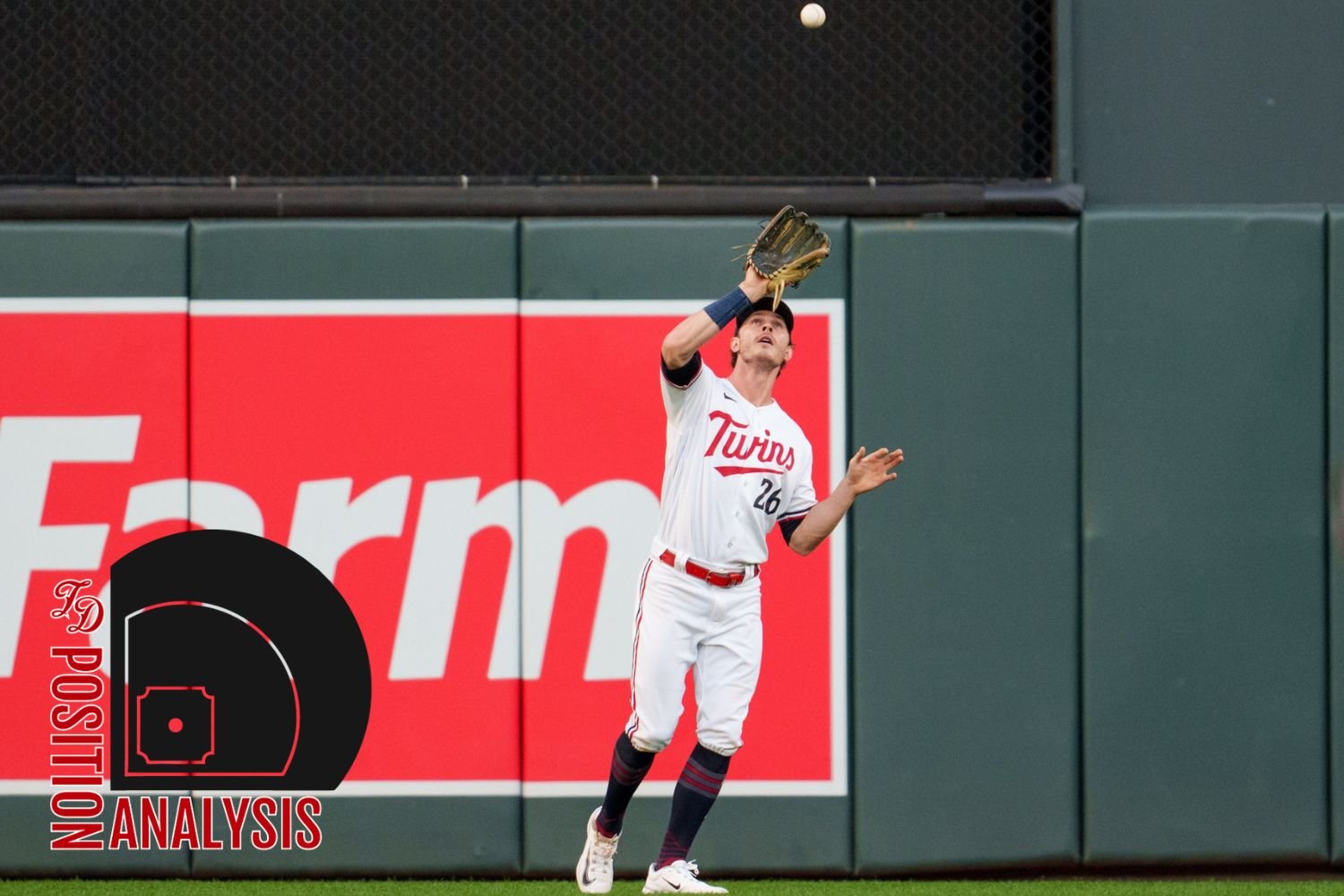 This will be Max Kepler's eighth consecutive Opening Day start in right field for the Twins. Ever since the 2017 season he's been a constant out there in a career that has included some lofty highs and frustrating lows. Now, we finally appear to be reaching the end of the road for Max in Minny. Kepler evaded the swirling trade rumors this past offseason, but he's due for free agency after 2024 and the team appears in no position to extend or re-sign him. The stakes are high as he looks to bolster his market and help elevate one of the most clear-cut contenders of his lengthy tenure. TWINS RIGHT FIELDERS AT A GLANCE Starter: Max Kepler Backup: Manuel Margot Depth: Matt Wallner, Trevor Larnach, Alex Kirilloff Prospects: Emmanuel Rodriguez, Gabriel Gonzalez, Kala'i Rosario Twins fWAR Ranking Last Year: 8th out of 30 Twins fWAR Projection This Year: 10th out of 30 THE GOOD It was business as usual for Kepler last year. Then it wasn't. He slumped his way into the All-Star break with a .688 OPS but then a switch finally flipped for the outfielder. He came out of the break on a six-game hitting streak and never looked back, slashing .306/.377/.549 in the second half and playing a pivotal role as Minnesota went 42-29 to lock up the division. Kepler finished with 2.6 fWAR, third-highest on the team and second-best of his career, which is awfully impressive when you consider that as of mid-July he was at about zero. Just as it seemed he was completing his gradual descent into mediocrity, Kepler stunningly turned the tables and recaptured the high-end form of his 2019 season. Now we'll see if it sticks. Nothing about Kepler's second-half emergence seemed illegitimate. He was crushing the ball consistently, with a 92.4 MPH post-break average exit velocity that led the Twins and ranked 15th in the majors. His approach at the plate was dialed in. Kepler's always graded out pretty well on the Statcast sliders and last year he was blazing red, with all the attributes of a well-rounded star player. Offensive output was the icing on the cake for a right fielder of rare defensive caliber. Kepler's range and athleticism are extremely uncommon in the province of slow-footed sluggers. Over the past five seasons he ranks second among MLB right fielders in defensive value, per FanGraphs. It's been an underrated aspect of the outfielder's value, and when he's hitting Kepler's impact in the field really shines. Over the past few seasons, Kepler has mostly been healthy and available, but he's run into the occasional IL stint. If that happens again, Wallner is an obvious choice to slide over from left. It seems clear that beyond 2024 this position will belong to the strong-armed Wallner, and as we discussed in the left field preview, there's much to like about his outlook now and going forward. THE BAD Kepler's huge second half reversed a long-running trend of performance decline spanning several seasons. Since his career year in 2019, his OPS+ had dropped from 109 to 98 to 92, and the 2023 campaign was looking like another step downward. By the All-Star break, calls for the Twins to move on were loudening. In spite of newly implemented shift limitations, Kepler's signature struggle – generating consistent results when putting the ball in play – continued to hold him back, with a .213 BABIP in the first half. After mid-July it all came together, as Kepler enjoyed a run of batted-ball success like never before, posting a .351 BABIP in the second half. He finished with a career-high .260 average, driven by an overall .288 BABIP that bested his previous career benchmark by 40 points. How much of that was legit and how much was the byproduct of an extended locked-in hot streak? That's really the key question entering a pivotal walk year for Kepler. The talent has always been there, and we've seen sporadic bursts of standout production at times, but outside of 2019 he's never been able to sustainably harness it. Even in looking at Kepler's excellent second half in 2023, we can see the emergence of another negative trend leading up to the finish line, with a flat postseason performance. Another point of regression risk for Kepler is his performance against left-handed pitching. This will be important since it's likely he will be platooned out of the lineup far less frequently than Wallner or Edouard Julien. Kepler held his own against southpaws last year, slashing .250/.320/.432 after posting a .677 OPS against them in 2022 and .509 in 2021. THE BOTTOM LINE Kepler's post-break surge last year secured him a place in the team's 2024 plans, but it's hard to see a future for him here beyond that. The Twins are banking on the right fielder channeling his turnaround into a big year that approximates his 4-WAR campaign in 2019. If he's able to do so it would be huge for both him and the team, setting Kepler up for a big free-agent payday while adding another All-Star performer to Minnesota's potentially loaded lineup. If Kepler lapses once again and reverts to the same sub-mediocre form as he did in the first half last year, the Twins may feel compelled to accelerate their plans for Wallner to succeed him as long-term right fielder. It will be interesting how much his lengthy tenure and status factor into that decision as the team chases championship aspirations and, as always, keeps an eye to the future. Catch up on the rest of our position-by-position preview series: Twins 2024 Position Analysis: Catcher Twins 2024 Position Analysis: First Base Twins 2024 Position Analysis: Second Base Twins 2024 Position Analysis: Third Base Twins 2024 Position Analysis: Shortstop Twins 2024 Position Analysis: Left Field Twins 2024 Position Analysis: Center Field
- 17 comments
-
- 9
-
-
- max kepler
- manuel margot
- (and 1 more)
-
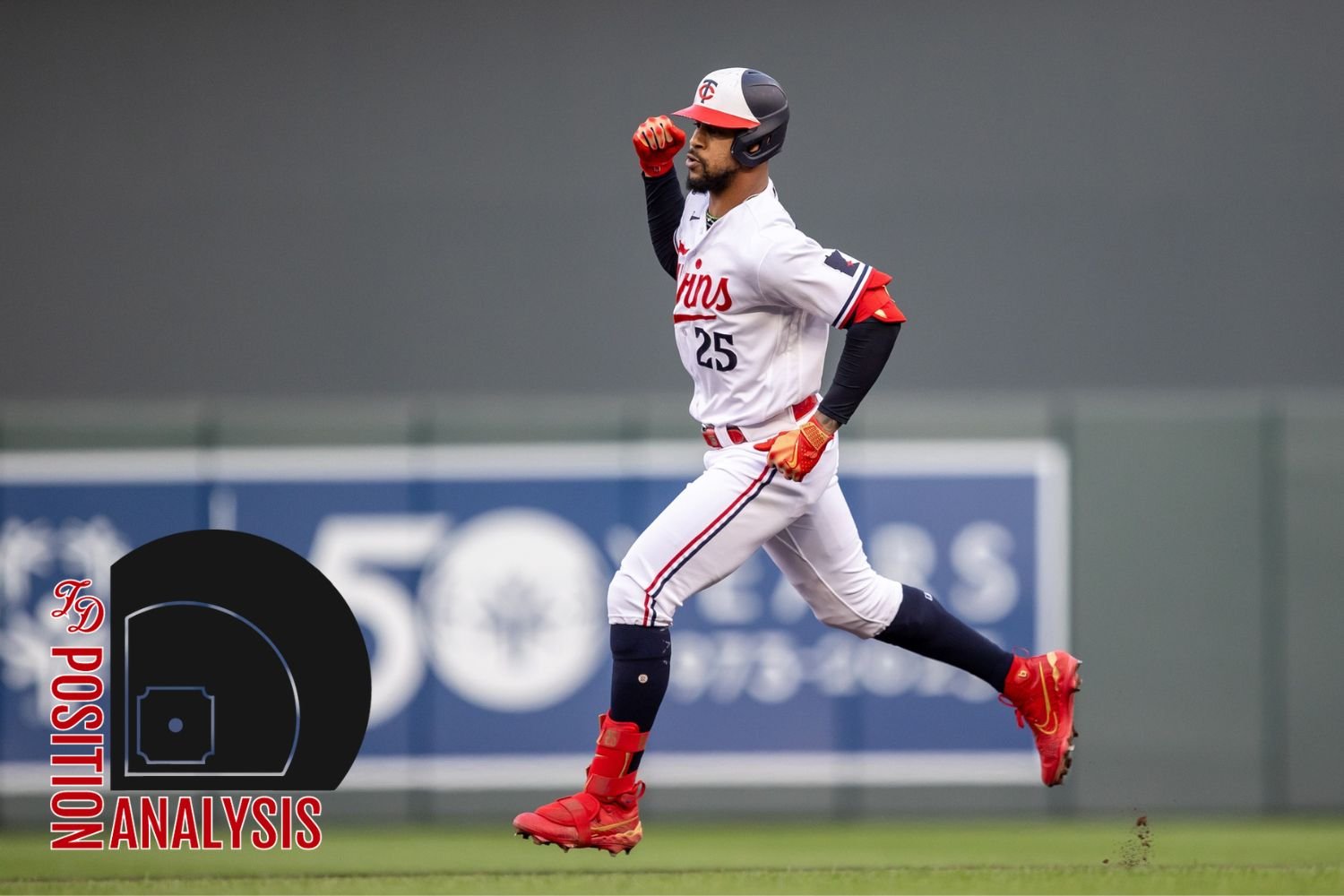 Unfortunately, contingency planning in center field has been a constant consideration for the Twins front office over the past decade. In 2023, their backup plan worked out beautifully, as Michael A. Taylor was able to step in and deliver with the oft-injured starter once again unavailable. This year the Twins are going in a different direction in the backup role, while hoping the starter can at long last buck a long-running negative trend. Perhaps no position on the roster exposes us all to a wider range of outcomes. TWINS CENTER FIELDERS AT A GLANCE Starter: Byron Buxton Backup: Manuel Margot Depth: Willi Castro, Austin Martin, DaShawn Keirsey Prospects: Walker Jenkins, Emmanuel Rodríguez, Brandon Winokur Twins fWAR Ranking Last Year: 24th out of 30 Twins fWAR Projection This Year: 7th out of 30 THE GOOD Buxton showed up to camp talking a big game about how much better he was feeling, and so far he's been backing it up. In stark contrast to last year, the 30-year-old was able to hit the ground running this spring. He's moving around comfortably and participating in all activities with no issue. He's already made several starts in center, after making zero defensive appearances last spring or summer. Early returns on his latest knee surgery are very promising. That's huge news. As Bobby Nightengale wrote recently for the Star Tribune, "Twins players and coaches believe a healthy season from Buxton is more impactful than any trade or free agent acquisition," and that belief is warranted. Over the past five years, when playing center field, Buxton has been one of the biggest difference-makers in the major leagues (on a per-game basis). His slugging percentage is 11th-highest among all hitters since 2019; he has the best stolen-base percentage in MLB history; and he's a Platinum Glove winner in center. It says a lot about Buxton's sheer talent and physical prowess that last year, even while essentially playing on one leg, he still registered 94th-percentile sprint speed and was in the 91st percentile for baserunning value. He also continued to post impressive batted-ball metrics when making contact and managed a career-high walk rate, as he struggled to consistently find his swing. Buxton is on track to start in center field on Opening Day, which would be a beautiful sight to see. From there, it's going to be touch-and-go all season, as we know, but for Rocco Baldelli and the Twins, a reasonable (albeit optimistic) hope might be to get 100 or so starts from Buxton in the outfield and have him available for the playoffs. It's the type of outcome that would dramatically improve Minnesota's viability as a World Series contender. It's also a major long shot. THE BAD Buxton has played 100 games in a single season just once, in a career spanning nine seasons. He's coming off his most depressing campaign yet, ruined by a knee injury that became a chronic problem. For all the good vibes right now, we have to be realistic, and so do the Twins. That's why they prioritized adding a credible backup option to replace Taylor, even if they waited until spring training was underway to finally pull the trigger. Acquiring Margot gives the Twins a veteran player with 450 career starts in center field, putting a crucial layer of depth between Buxton and the likes of Castro, Martin or Keirsey. If he's starting once or twice a week in center, and plugging into the corner spots against lefties, Margot should be a fine roster piece. If Buxton goes down again, and Margot is needed as basically an everyday player in center – as Taylor was last year – he'll be stretched. Margot was barely above replacement level for the Rays in 2023, rendering him a salary dump toss-in when Tampa sent Tyler Glasnow to the Dodgers. He was 9% worse than average at the plate, same as for his career, and while great in the corners, he's a lesser defender than Buxton or Taylor. After Margot, the depth chart gets even shakier, with the Nick Gordon trade removing another theoretical option from the mix. Castro is next in line, but very stretched in center. Martin offers an intriguing skill set at the position with his speed and aggressiveness, but we'll see how ready he is. If Buxton doesn't, Martin would be my dark horse candidate to lead the team in center-field starts. THE BOTTOM LINE A somewhat healthy Byron Buxton is the difference between the Twins being a top-tier or bottom-tier team in the league in center field. It really is that simple, and the FanGraphs forecast illustrates it well enough. Last year, with Buck sidelined, the Twins ranked 24th among 30 teams in fWAR at the position, even with Taylor playing great defense and hitting 21 bombs. This year, they're projected to be seventh, and that's with Buxton making 350 plate appearances. That seemingly modest target is one he's reached just twice in his career, leaving us all to dream on what could be if Buxton finally shakes off the injury woes and stays on the field. At least for now, there's legitimate reason to hope and believe. Catch up on the rest of our position-by-position preview series: Twins 2024 Position Analysis: Catcher Twins 2024 Position Analysis: First Base Twins 2024 Position Analysis: Second Base Twins 2024 Position Analysis: Third Base Twins 2024 Position Analysis: Shortstop Twins 2024 Position Analysis: Left Field
- 33 comments
-
- 5
-
-
- byron buxton
- manuel margot
- (and 1 more)
-
Twins 2024 Position Analysis: Center Field
Nick Nelson posted a topic in Twins Daily Front Page News
Much of the Minnesota Twins' outlook in 2024 feels like it boils down to this position. A healthy Byron Buxton is the definition of a game-changer, but the Twins lost a proven veteran safety net behind him during the offseason and could be scrambling if he goes down again. Image courtesy of Jesse Johnson-USA TODAY Sports Unfortunately, contingency planning in center field has been a constant consideration for the Twins front office over the past decade. In 2023, their backup plan worked out beautifully, as Michael A. Taylor was able to step in and deliver with the oft-injured starter once again unavailable. This year the Twins are going in a different direction in the backup role, while hoping the starter can at long last buck a long-running negative trend. Perhaps no position on the roster exposes us all to a wider range of outcomes. TWINS CENTER FIELDERS AT A GLANCE Starter: Byron Buxton Backup: Manuel Margot Depth: Willi Castro, Austin Martin, DaShawn Keirsey Prospects: Walker Jenkins, Emmanuel Rodríguez, Brandon Winokur Twins fWAR Ranking Last Year: 24th out of 30 Twins fWAR Projection This Year: 7th out of 30 THE GOOD Buxton showed up to camp talking a big game about how much better he was feeling, and so far he's been backing it up. In stark contrast to last year, the 30-year-old was able to hit the ground running this spring. He's moving around comfortably and participating in all activities with no issue. He's already made several starts in center, after making zero defensive appearances last spring or summer. Early returns on his latest knee surgery are very promising. That's huge news. As Bobby Nightengale wrote recently for the Star Tribune, "Twins players and coaches believe a healthy season from Buxton is more impactful than any trade or free agent acquisition," and that belief is warranted. Over the past five years, when playing center field, Buxton has been one of the biggest difference-makers in the major leagues (on a per-game basis). His slugging percentage is 11th-highest among all hitters since 2019; he has the best stolen-base percentage in MLB history; and he's a Platinum Glove winner in center. It says a lot about Buxton's sheer talent and physical prowess that last year, even while essentially playing on one leg, he still registered 94th-percentile sprint speed and was in the 91st percentile for baserunning value. He also continued to post impressive batted-ball metrics when making contact and managed a career-high walk rate, as he struggled to consistently find his swing. Buxton is on track to start in center field on Opening Day, which would be a beautiful sight to see. From there, it's going to be touch-and-go all season, as we know, but for Rocco Baldelli and the Twins, a reasonable (albeit optimistic) hope might be to get 100 or so starts from Buxton in the outfield and have him available for the playoffs. It's the type of outcome that would dramatically improve Minnesota's viability as a World Series contender. It's also a major long shot. THE BAD Buxton has played 100 games in a single season just once, in a career spanning nine seasons. He's coming off his most depressing campaign yet, ruined by a knee injury that became a chronic problem. For all the good vibes right now, we have to be realistic, and so do the Twins. That's why they prioritized adding a credible backup option to replace Taylor, even if they waited until spring training was underway to finally pull the trigger. Acquiring Margot gives the Twins a veteran player with 450 career starts in center field, putting a crucial layer of depth between Buxton and the likes of Castro, Martin or Keirsey. If he's starting once or twice a week in center, and plugging into the corner spots against lefties, Margot should be a fine roster piece. If Buxton goes down again, and Margot is needed as basically an everyday player in center – as Taylor was last year – he'll be stretched. Margot was barely above replacement level for the Rays in 2023, rendering him a salary dump toss-in when Tampa sent Tyler Glasnow to the Dodgers. He was 9% worse than average at the plate, same as for his career, and while great in the corners, he's a lesser defender than Buxton or Taylor. After Margot, the depth chart gets even shakier, with the Nick Gordon trade removing another theoretical option from the mix. Castro is next in line, but very stretched in center. Martin offers an intriguing skill set at the position with his speed and aggressiveness, but we'll see how ready he is. If Buxton doesn't, Martin would be my dark horse candidate to lead the team in center-field starts. THE BOTTOM LINE A somewhat healthy Byron Buxton is the difference between the Twins being a top-tier or bottom-tier team in the league in center field. It really is that simple, and the FanGraphs forecast illustrates it well enough. Last year, with Buck sidelined, the Twins ranked 24th among 30 teams in fWAR at the position, even with Taylor playing great defense and hitting 21 bombs. This year, they're projected to be seventh, and that's with Buxton making 350 plate appearances. That seemingly modest target is one he's reached just twice in his career, leaving us all to dream on what could be if Buxton finally shakes off the injury woes and stays on the field. At least for now, there's legitimate reason to hope and believe. Catch up on the rest of our position-by-position preview series: Twins 2024 Position Analysis: Catcher Twins 2024 Position Analysis: First Base Twins 2024 Position Analysis: Second Base Twins 2024 Position Analysis: Third Base Twins 2024 Position Analysis: Shortstop Twins 2024 Position Analysis: Left Field View full article -
People aren't talking about not having Sonny Gray this year. They're talking about the failure to even try and replace what he provided, which was stable and reliable front-of-rotation impact, and that did play a very important role in their success last year. I don't know why people keep throwing around this stat about having a losing record in his starts like it's meaningful. He was the Cy Young runner-up! Imagine what their record would've been in those games with Anthony DeSclafani starting them.
-
The Twins Stand in the Center of a Power Vacuum in the American League
Nick Nelson posted an article in Twins
 For most of the past few decades, there's been at least one monolithic kingpin looming over the American League, the so-called "team to beat." For a club like the Minnesota Twins, saddled with certain limitations and disadvantages by their market and ownership, going up against the likes of the New York Yankees and Houston Astros has often felt (and played out) like an unfair proposition. Those storied franchises play in two of the country's biggest cities, and they reap the benefits in terms of resources, routinely ranking among the highest payrolls in baseball. Their rosters tend to be star-studded and deeply experienced. It's no coincidence that, of Minnesota's last eight trips to the playoffs, they've been ousted by either New York or Houston in seven. The Twins have plenty of company in this regard. The Yankees were a dynastic postseason force around the turn of the century, reaching the World Series seven times from 1996 through 2009 and winning five titles. Then, New York's long stretch of domination finally reached an end. From 2010 to 2016, the AL felt like more of an open race, with the Yankees failing to hold strong in October and even missing the playoffs three times. Notably, four of the seven World Series during this span featured teams from the American League Central: Detroit in 2012, Kansas City in 2014 and 2015, and Cleveland in 2016. No team from the division has gone since, of course, because starting in 2017, the Houston Astros dynasty was officially underway. Houston has been to the ALCS seven straight years, reaching the World Series four times and winning it twice. Not since New York's late '90s run had any team in baseball managed such a prolific and consistent run of postseason success. They've been blocking the way for other AL contenders in similar fashion. Last year, as the Twins prepared to face the Astros in the playoffs, I spat out a bit of a hot take: "Houston looks like a declining dynasty whose über-impressive reign in the AL may be reaching its end." Not your older brother's Astros, I declared. They went ahead and shut me up by defeating Minnesota 3-1 in the series to advance to the ALCS, where they fell to the Rangers. But I still believe the underlying point--that many of the Astros' key players are aging and showing signs of decline--is a valid one that could influence the American League's outlook, this year and beyond. Already, 41-year-old ace Justin Verlander is dealing with shoulder issues that will force him to open the season on the injured list. And what about the good ol' Yankees? Now going on 15 years removed from their last World Series appearance, they are looking to revive their reputation as a powerhouse, and they made an emphatic move to assert themselves as such with the blockbuster addition of Juan Soto. But in contrast to all the good vibes and positive storylines in Twins camp, New York is besieged by early challenges with their most critical players. Gerrit Cole is experiencing elbow issues and is slated for an MRI. Aaron Judge is reportedly feeling "beat up" already by the spring training grind, after missing nearly two months last year with a toe injury that he acknowledged will require "constant maintenance" going forward. It also must be noted that, even with Cole winning the Cy Young and Judge posting a 1.019 OPS last year, the Yankees still only won 82 games and finished in fourth place. Despite their star power and MLB-leading payroll, the Yankees just aren't all that imposing. They're gonna have a hell of a fight on their hands just getting out of the AL East. The landscape of the American League feels very different from the National League, where two "super teams" are entering the season as heavy favorites. It'd be a surprise if anyone gets past both the Dodgers and Braves, though as the Diamondbacks showed us, it can happen. Meanwhile, in the AL, plenty of teams have legit shots, even if Houston and New York remain slight favorites. Here's a look at the current pennant odds for both leagues, per FanDuel: NL Winner Odds: Los Angeles Dodgers (+165) Atlanta Braves (+215) Philadelphia Phillies (+800) St. Louis Cardinals (+1600) Chicago Cubs (+1700) AL Winner Odds Houston Astros (+380) New York Yankees (+460) Texas Rangers (+600) Baltimore Orioles (+650) Seattle Mariners (+900) Minnesota Twins (+900) Toronto Blue Jays (+1000) Tampa Bay Rays (+1300) That's eight AL teams with better odds to reach the World Series than all but three NL teams. An open race. With the American League's two highest-spending and most imperious teams looking vulnerable, the window is now thrust open for other aspiring contenders to break through and take a shot at establishing their own dynasties. The Twins, who have the best odds of any AL team to win their division, are obviously at the center of that mix. They'll need to fend off the defending champs, of course. Then again, the Texas Rangers, too, had a quiet offseason amid TV revenue uncertainty. (One of their biggest additions was Tyler Mahle.) The Rays are always going to be a factor. The Orioles are on the rise, bolstered by the addition of Corbin Burnes. The Jays will be formidable again. The Mariners are in a similar spot to the Twins, with a powerful lineup and good pitching. Fortuitously, all of these other teams happen to reside outside of the Central, meaning they'll be battling each other (and the Yankees and Astros) all year while Minnesota is poised for relatively smooth sailing if they play up to expectations. The opportunity in front of the Twins to rise above this clustered pack is part of why I'm so disappointed that they chose to dial back this offseason, rather than putting their foot on the gas. The failure to replace Sonny Gray with another frontline talent sticks out as a notable miss, but there's always the trade deadline. With or without Gray, Minnesota does have all the ingredients for a hugely successful season and deep playoff run: ace starter, high-powered bullpen, and a star-studded lineup featuring proven October performers. Don't sleep on them as the potential best team in the American League and No. 1 seed for the playoffs. Relative to past years, there is little standing in their way--other, perhaps, than themselves.
 -
Traditional powerhouses like New York and Houston show signs of fading, at least temporarily. For an upstart contender like the Minnesota Twins, the window is wide open. Can they seize this opportunity and take command as the big boss in the American League? Image courtesy of Nathan Ray Seebeck-USA TODAY Sports For most of the past few decades, there's been at least one monolithic kingpin looming over the American League, the so-called "team to beat." For a club like the Minnesota Twins, saddled with certain limitations and disadvantages by their market and ownership, going up against the likes of the New York Yankees and Houston Astros has often felt (and played out) like an unfair proposition. Those storied franchises play in two of the country's biggest cities, and they reap the benefits in terms of resources, routinely ranking among the highest payrolls in baseball. Their rosters tend to be star-studded and deeply experienced. It's no coincidence that, of Minnesota's last eight trips to the playoffs, they've been ousted by either New York or Houston in seven. The Twins have plenty of company in this regard. The Yankees were a dynastic postseason force around the turn of the century, reaching the World Series seven times from 1996 through 2009 and winning five titles. Then, New York's long stretch of domination finally reached an end. From 2010 to 2016, the AL felt like more of an open race, with the Yankees failing to hold strong in October and even missing the playoffs three times. Notably, four of the seven World Series during this span featured teams from the American League Central: Detroit in 2012, Kansas City in 2014 and 2015, and Cleveland in 2016. No team from the division has gone since, of course, because starting in 2017, the Houston Astros dynasty was officially underway. Houston has been to the ALCS seven straight years, reaching the World Series four times and winning it twice. Not since New York's late '90s run had any team in baseball managed such a prolific and consistent run of postseason success. They've been blocking the way for other AL contenders in similar fashion. Last year, as the Twins prepared to face the Astros in the playoffs, I spat out a bit of a hot take: "Houston looks like a declining dynasty whose über-impressive reign in the AL may be reaching its end." Not your older brother's Astros, I declared. They went ahead and shut me up by defeating Minnesota 3-1 in the series to advance to the ALCS, where they fell to the Rangers. But I still believe the underlying point--that many of the Astros' key players are aging and showing signs of decline--is a valid one that could influence the American League's outlook, this year and beyond. Already, 41-year-old ace Justin Verlander is dealing with shoulder issues that will force him to open the season on the injured list. And what about the good ol' Yankees? Now going on 15 years removed from their last World Series appearance, they are looking to revive their reputation as a powerhouse, and they made an emphatic move to assert themselves as such with the blockbuster addition of Juan Soto. But in contrast to all the good vibes and positive storylines in Twins camp, New York is besieged by early challenges with their most critical players. Gerrit Cole is experiencing elbow issues and is slated for an MRI. Aaron Judge is reportedly feeling "beat up" already by the spring training grind, after missing nearly two months last year with a toe injury that he acknowledged will require "constant maintenance" going forward. It also must be noted that, even with Cole winning the Cy Young and Judge posting a 1.019 OPS last year, the Yankees still only won 82 games and finished in fourth place. Despite their star power and MLB-leading payroll, the Yankees just aren't all that imposing. They're gonna have a hell of a fight on their hands just getting out of the AL East. The landscape of the American League feels very different from the National League, where two "super teams" are entering the season as heavy favorites. It'd be a surprise if anyone gets past both the Dodgers and Braves, though as the Diamondbacks showed us, it can happen. Meanwhile, in the AL, plenty of teams have legit shots, even if Houston and New York remain slight favorites. Here's a look at the current pennant odds for both leagues, per FanDuel: NL Winner Odds: Los Angeles Dodgers (+165) Atlanta Braves (+215) Philadelphia Phillies (+800) St. Louis Cardinals (+1600) Chicago Cubs (+1700) AL Winner Odds Houston Astros (+380) New York Yankees (+460) Texas Rangers (+600) Baltimore Orioles (+650) Seattle Mariners (+900) Minnesota Twins (+900) Toronto Blue Jays (+1000) Tampa Bay Rays (+1300) That's eight AL teams with better odds to reach the World Series than all but three NL teams. An open race. With the American League's two highest-spending and most imperious teams looking vulnerable, the window is now thrust open for other aspiring contenders to break through and take a shot at establishing their own dynasties. The Twins, who have the best odds of any AL team to win their division, are obviously at the center of that mix. They'll need to fend off the defending champs, of course. Then again, the Texas Rangers, too, had a quiet offseason amid TV revenue uncertainty. (One of their biggest additions was Tyler Mahle.) The Rays are always going to be a factor. The Orioles are on the rise, bolstered by the addition of Corbin Burnes. The Jays will be formidable again. The Mariners are in a similar spot to the Twins, with a powerful lineup and good pitching. Fortuitously, all of these other teams happen to reside outside of the Central, meaning they'll be battling each other (and the Yankees and Astros) all year while Minnesota is poised for relatively smooth sailing if they play up to expectations. The opportunity in front of the Twins to rise above this clustered pack is part of why I'm so disappointed that they chose to dial back this offseason, rather than putting their foot on the gas. The failure to replace Sonny Gray with another frontline talent sticks out as a notable miss, but there's always the trade deadline. With or without Gray, Minnesota does have all the ingredients for a hugely successful season and deep playoff run: ace starter, high-powered bullpen, and a star-studded lineup featuring proven October performers. Don't sleep on them as the potential best team in the American League and No. 1 seed for the playoffs. Relative to past years, there is little standing in their way--other, perhaps, than themselves. View full article