



Hans Birkeland
-
Posts
458 -
Joined
-
Days Won
1
Content Type
Profiles
News
Minnesota Twins Videos
2026 Minnesota Twins Top Prospects Ranking
2022 Minnesota Twins Draft Picks
Minnesota Twins Free Agent & Trade Rumors, Notes, & Tidbits
Guides & Resources
2023 Minnesota Twins Draft Picks
The Minnesota Twins Players Project
2024 Minnesota Twins Draft Picks
2025 Minnesota Twins Draft Pick Tracker
2026 Minnesota Twins Draft Tracker: Picks & Bonuses
Forums
Blogs
Events
Store
Downloads
Gallery
Everything posted by Hans Birkeland
-
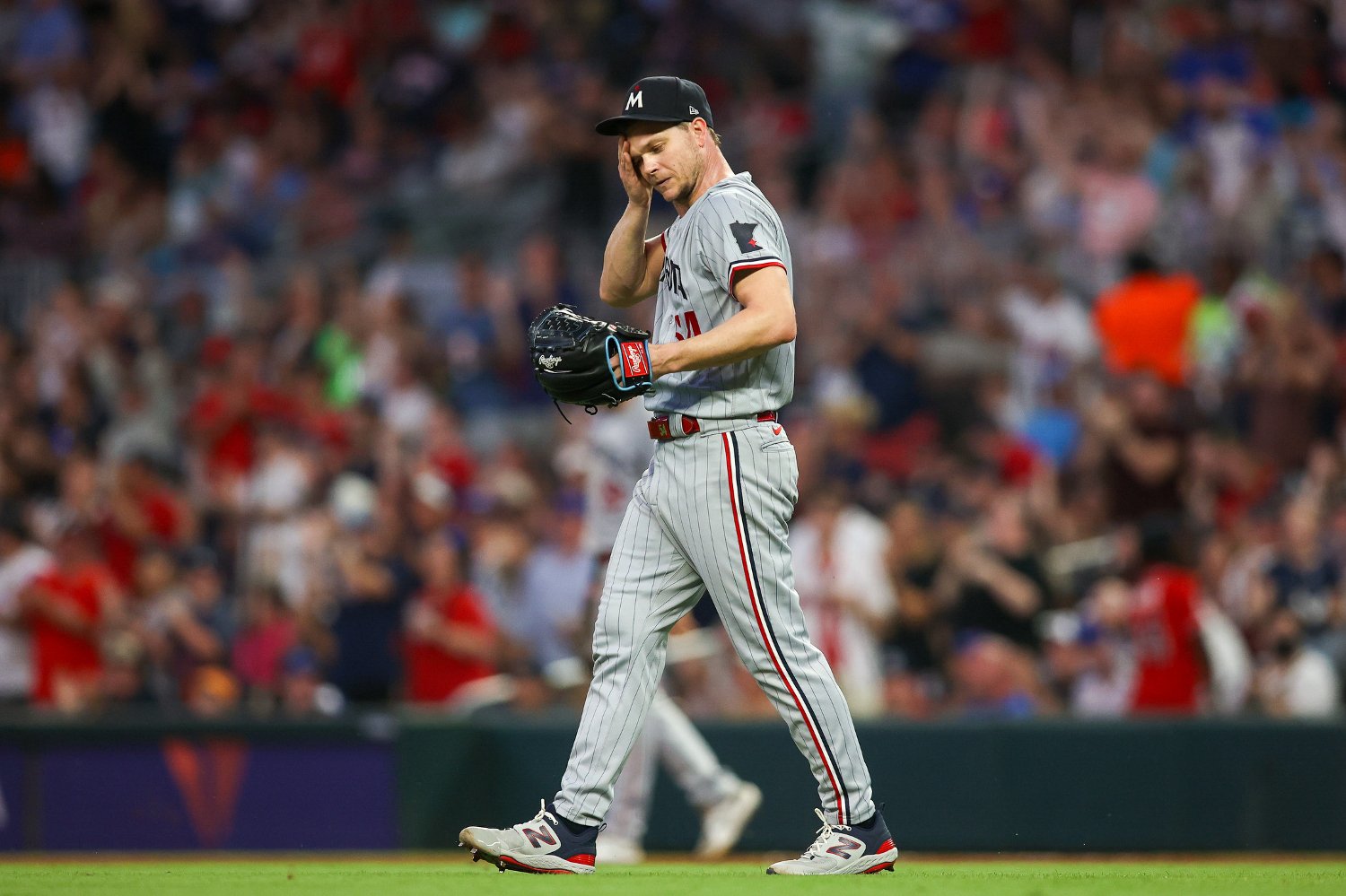 Box Score Starting Pitcher: Sonny Gray: 6 IP 6 H 6 ER 3 BB 5 SO (91 Pitches, 60 Strikes, 65.9%) Home Runs: None Bottom 3 WPA: Gray (-.408), Ryan Jeffers (-.082) Kyle Farmer (-.088) Win Probability Chart (Via Fangraphs): Sonny was pretty good in five of his innings After an easy first inning, newly named All-Star Gray ran into trouble in the second. He left three offspeed pitches up in the zone in consecutive fashion, allowing three singles (one of which should have been field by Ed Julien). He then fell behind rookie Colton Cowser 3-0 and threw a fastball right down the middle that was inexplicably called a ball, tying the game at one. He had a more competitive sequence against Ramon Urias, but lost him, allowing a second run to score. Urias has had a number of excellent at-bats against the Twins this season, with his double against Jhoan Duran leading off the tenth inning in Friday’s game the shining example. As one might expect, two flare singles followed, making the score 5-1 in the blink of an eye. Anthony Santander then roped a single for the sixth and final fun of the inning. Ryan O’Hearn, batting for the second time in the inning, lined into a double play to mercifully end the frame. Gray settled down after that, throwing his secondary pitches below the zone and getting a number of ground balls and grinding through six innings with no further damage. Twins have very few answers for former Twin Tyler Wells Tyler Wells opposed Gray, and he might represent the greatest loss the Twins took from COVID, as he was a part of the minor league system before being left unprotected in the Rule 5 draft following the 2020 season. Having no recent evaluation of Wells, a 15th round pick in 2016 who, of course, didn’t get to pitch in 2020, or in 2019 due to Tommy John surgery the Twins probably felt pretty safe leaving Wells exposed. The Orioles called that bluff, and now Wells pitches atop their rotation, moving his cutter and slider away from righty bats and his sinker and changeup away from lefties to great effect. He does allow quite a few home runs, but held the Twins in check in that regard, with Donovan Solano's three doubles the only minor exception. The Twins started to build a few rallies off of Wells, with multiple doubles in the first resulting in the game’s first run, a leadoff walk in the third by Michael A. Taylor, and a leadoff double by Donovan Solano in the fourth that was followed by a walk to Max Kepler. Double plays extinguished the latter two rallies. Athletic plays by Orioles infielders played a big part in those, with shortstop Henderson making an athletic adjustment on a Kyle Farmer ground ball in the fourth, as he bobbled the ball attempting to make a flip to second, then decided to take it himself, stepping on second and firing first to finish a huge double play. Urias made a great play of a wicked hop off the bat of Farmer in the second, and O'Hearn's spear of Ed Julien's hot ground ball in the sixth that hit the first bag bag was huge in hindsight, as Byron Buxton followed with a hit, and then Solano added his third double of the game to score Buxton. Pablo López earns first All-Star nod It was announced in the seventh inning that López would join the AL All-Star team as a replacement. If that comes as a surprise to Twins fans, keep in mind that Joe Ryan will pitch tomorrow, making him ineligible for the game. If you think Bailey Ober has been better, well, you might have a point. However, López is among the league leaders in strikeouts (11.2 K/9) and his peripheral numbers are exemplary (.639 OPS against, 3.18 FIP). He has been a huge part of the Twins' successful rotation. What’s Next: Joe Ryan (8-5, 3.42 ERA) goes against old friend Kyle Gibson (8-6, 4.73 ERA) looking to salvage one game in the final series of the first half. Postgame Interviews: Bullpen Usage Chart: TUE WED THU FRI SAT TOT Ortega 13 0 0 0 25 38 Durán 0 0 0 21 0 21 J. López 8 0 0 0 13 21 Morán 0 0 0 16 0 16 Jax 0 0 0 13 0 13 Pagán 0 0 0 4 0 4 Balazovic 0 0 0 0 0 0 Sands 0 0 0 0 0 0
- 29 comments
-
- 2
-

-
- sonny gray
- donovan solano
- (and 2 more)
-
What's so Bad About Max Kepler?
Hans Birkeland replied to Hans Birkeland's topic in Twins Daily Front Page News
-
What's so Bad About Max Kepler?
Hans Birkeland replied to Hans Birkeland's topic in Twins Daily Front Page News
I said "Every year the Twins are decent, the knock against them is starting pitching." That's a comma, not a semicolon. -
What's so Bad About Max Kepler?
Hans Birkeland replied to Hans Birkeland's topic in Twins Daily Front Page News
Tampa would 100% keep Kepler, never let him face a lefty and see him post his best OPS in years while subbing in for defense late in games he doesn't start. Then they would flip him while his value is high. -
What's so Bad About Max Kepler?
Hans Birkeland replied to Hans Birkeland's topic in Twins Daily Front Page News
The Phillies had different needs, and they did a good job fulfilling them. Kepler won't bring back much, maybe an A-ball pitcher with some upside; the days of him having significant trade value are long gone. May as well keep him and let him give you 1.5-2 WAR down the stretch with good clubhouse feels. -
What's so Bad About Max Kepler?
Hans Birkeland replied to Hans Birkeland's topic in Twins Daily Front Page News
I think there is a perception that Kepler doesn't care enough, as well. I was watching him make that catch along the foul line last night, and I noticed he started slowing up when he was still 15 feet from the ball which allowed him to make the catch and avoid any issues with the stands/netting. Jake Cave would have had a worse jump but still made the catch, flown top speed into the stands, busted his lip and worn it as a badge of honor. Kind of a Robinson Cano vs Derek Jeter thing. Same result, but fans tend to embrace the guy who busted his lip for the team.- 87 replies
-
- 1
-

-
- max kepler
- trevor larnach
- (and 1 more)
-
Knock-Getters and Boppers: The Eternal Struggle
Hans Birkeland commented on Hans Birkeland's blog entry in Hansblog
I meant just the slashers are streaky.. I don't have a lot of evidence, and certainly plenty of boppers are streaky as well. But guys like Gurriel, Adam Frazier, Eddie Rosario, Delmon Young, Alex Bregman, Joey Votto seem to run so hot and so cold. I may be totally off base! -
What's so Bad About Max Kepler?
Hans Birkeland replied to Hans Birkeland's topic in Twins Daily Front Page News
Every year THAT they are decent our rotation is questioned.- 87 replies
-
- 1
-
-
- max kepler
- trevor larnach
- (and 1 more)
-
What's so Bad About Max Kepler?
Hans Birkeland replied to Hans Birkeland's topic in Twins Daily Front Page News
The Phillies were terrible defensively and went out and got Brandon Marsh, who solidified center field for them. They also got rid of Didi Gregorius and traded for Edmundo Sosa, who was great defensively for them. As for trading Kepler, it has to be for something that improves the team now. I don't think Lane Thomas is that guy, maybe Connor Joe of the Pirates who can really hit lefties but has no track record of success. Jorge Soler again but he's such a Jekyl and Hyde kind of player I don't think he improves the team much, either with his poor defense. If the team goes out and gets a bat, it needs to be Justin Turner or better, and even that carries risk outside of the prospect capital required. -
What's so Bad About Max Kepler?
Hans Birkeland replied to Hans Birkeland's topic in Twins Daily Front Page News
Every year the Twins are decent, the knock against them is starting pitching. Every year when analysts look at the dark horses or favorites going into the postseason, its the teams with the best starting pitching that are highlighted. Now, the starting pitching has to stay healthy, but imagine Gray, Ryan and Lopez with Ober kicked to the bullpen for the playoffs. This is a golden opportunity with how terrible our division is. If you don't give it a shot, why even try?- 87 replies
-
- 2
-
-
- max kepler
- trevor larnach
- (and 1 more)
-
What's so Bad About Max Kepler?
Hans Birkeland replied to Hans Birkeland's topic in Twins Daily Front Page News
Good points. .344 may be on the high side for Kepler, but a .390 SLG is on the low side so I'm just saying give me a .730 OPS however I can get it. As far as him being the 7th best hitter, you're right he does bat high in the order a lot, which I find pretty annoying, but with the injuries it is what it is. For Wallner I was just quoting Law for his K rate in 2022, but he's at over 30% in Triple A this year so I'm just not sure he isn't Kennys Vargas with a better arm.- 87 replies
-
- 1
-
-
- max kepler
- trevor larnach
- (and 1 more)
-
What's so Bad About Max Kepler?
Hans Birkeland replied to Hans Birkeland's topic in Twins Daily Front Page News
He could be, but it better be a great one plus a B level prospect coming back. -
What's so Bad About Max Kepler?
Hans Birkeland replied to Hans Birkeland's topic in Twins Daily Front Page News
That's how deadline trades work? How did the Nationals get Wilson Ramos for Matt Capps? The sellers market needs to materialize a lot before we can start throwing names out there but Wallner might be a popular ask.- 87 replies
-
- 2
-
-
- max kepler
- trevor larnach
- (and 1 more)
-
What's so Bad About Max Kepler?
Hans Birkeland replied to Hans Birkeland's topic in Twins Daily Front Page News
I would want a lot. A good right-handed bat with team control. -
What's so Bad About Max Kepler?
Hans Birkeland replied to Hans Birkeland's topic in Twins Daily Front Page News
They CAN pick up Kepler's option for next year, and if he finishes strong I wouldn't bet against it getting picked up. Wallner might be good trade bait since there is a good chance he flames out, but his numbers couldn't look better to other teams right now.- 87 replies
-
- 4
-
-
- max kepler
- trevor larnach
- (and 1 more)
-
Max Kepler has been a little better lately, but Twins' fans still want him gone. What's our deal? Image courtesy of Jeffrey Becker-USA TODAY Sports Max Kepler has been a little better lately, but Twins' fans still want him gone. What's our deal? I get why people are sick of Max Kepler. He looked like a transcendent talent eight years ago; a sweet-swinging lefty who slowly rose to dominance over minor-league competition after signing as a raw 16-year-old wild card out of Germany. He looked great doing everything and the expectations were sky-high. He then treaded water his first few seasons in the big leagues, holding his own offensively, slashing .233/.313/.417, while flourishing defensively. His metrics looked good, his BABIP looked low, and the Twins were so sure of a breakout they gave Kepler a long-term extension, potentially buying out several of his free agent years. The breakout seemed to come in 2019, when he popped 36 home runs and got MVP votes, but in retrospect we all know it had to do with the juiced ball that year. He’s reverted to the form he showed from 2016-2018 since then, which is worth about 3.0 WAR over a 162 game sample. He still plays great defense, doesn’t strike out and offers 20 home run power. His career OBP is .315, which is pretty playable given that. So the crusade against him is a bit much, with Aaron Gleeman-types offering the same critiques (poor contact quality, not being as good as we thought, blocking other prospects) and thinking if they repeat them over and over, it makes the case more compelling. But let’s be real here. The contact quality issue is ever-present, but he nonetheless puts up average offensive numbers, with a career 100 OPS+. He isn’t as good as we thought but who cares; this isn’t a sunk cost... developing average players is good! I had a commenter in a piece I did on Alex Kirilloff complain that seeing Kirilloff having a Kirk Gibson-like career would be a disappointment, so it's no surprise Twins fans are disappointed Kepler didn’t turn into Paul O’Neill . Part of the frustration with Kepler is when he makes an impact. His production comes in drips, not bursts (like Byron Buxton). He needs to get his timing right before he’s impactful, but once he does, he’ll give you a hard hit ball every game against a right-hander. It’s not sexy but it is pretty valuable over time, and even this year, a recent hot drip (.298/.355/.614) has raised his OPS by 107 points since he was chastised for his baserunning mistake in Tampa. And it's not like the Twins’ other options are great. Or, we can't prove that yet. Matt Wallner and Trevor Larnach aren’t exactly Mays and Mantle. Wallner is cited by Gleeman ad-nauseum as the “back-to-back Twins minor league player of the year,” in trying to justify giving him runway. Except Gleeman himself has always been the one to put that honor in quotation marks because the award tends to reward players who dominate the high minors but aren’t anticipated to do well in the majors. Previous winners include Randy Dobnak, Kennys Vargas and Zach Granite. And Wallner may fit that bill, as well. Keith Law placed him 15th on his preseason rankings of Twins prospects, with the following comment: "Wallner has an 80 arm and plus raw power with terrible pitch recognition — the man just does not hit offspeed stuff anywhere near often enough to be a regular, with massive strikeout rates last year: 30 percent in Triple A, 38.5 percent in the majors." Fangraphs puts Wallner eighth on their mid-season Twins prospect rankings, noting that his 70% zone contact rate would have ranked as the lowest in all of baseball, five percent lower than Josh Donaldson who was the next worst. Baseball Prospectus ranked Wallner tenth, with the note that, “Few hitters find sustained success in MLB making such little contact as Wallner did in his debut.” Where did Gleeman rank him? Fourth. Us having collective ADHD and wanting novelty and star level performance at all times is no reason to ditch a perfectly average big league regular like Kepler. Sure, Wallner threw out Brandon Belt and his necrotic knees trying for a double once, but Kepler would have made the catch on that same ball without leaving his feet. And do the Twins need more swing and miss in their lineup? Larnach is a decent fielder, much better than Wallner but without the range of the more athletic Kepler. He also has had a full season’s worth of games in the majors and hasn’t hit for any power, with 18 career home runs in 177 career games. Some of that lack of production happened while Larnach was fighting through injury (more on that next paragraph), but this year his OPS+ sits at a Kepler-ish 92, meaning eight percent below average. Kepler just hasn’t been that bad, especially if you parse out his injuries in your analysis similar to how we evaluate Larnach. He contributed 2.2 bWAR last year despite playing for two months with a broken toe, ranking between Joe Ryan and Nick Gordon for the season totals in bWAR. While playing with that injury he posted a sub .500 OPS. This is where Gleeman in particular is most disingenuous. He has never mentioned Kepler’s toe injury in any of his analyses that I’m aware of, but he has mentioned on a few occasions that Kepler is not one to play through injury, viewing him as a player who likes to be 100%. Which is it? What I expect from Kepler is exactly what he was producing last year prior to the toe injury- .244/.344/.390 with good defense in right field. He’s shown the ability to be a little better than that, but as is, that is a three WAR player, and the sort of production any team should be happy to pencil in from their seventh or eighth best hitter. Look at any team (besides the Braves) and tell me how good their seven-hole hitter is. Of course, this Twins team needs to get their offense going, and Kepler hasn’t helped much overall. But the focus shouldn’t be on sacrificing defense in favor of mystery boxes. Peter Griffin put it best when offered the choice between a mystery box and a boat. “A boat's a boat but the mystery box could be anything, it could even be a boat!” Similarly, on a recent podcast, Gleeman mentioned the downside of cutting Kepler was that Wallner and Larnach don’t perform. “Then you can just trade for another team’s Max Kepler.” was his solution. Kepler is also important to the clubhouse, and you could see he was one of the more emotional players coming out of the much-ballyhooed team meeting, cussing out the plate umpire on a brutal called strike in Baltimore, which I can’t remember him doing, ever, and giving perhaps the most dramatic bat flip for the Twins all year one at-bat later. Max Kepler is playing defense and posting a .730 OPS while not striking out that much. He is not the problem. As much as you, me and Gleeman all want to see the next shiny toy without enough experience to have a cap on their projection, I’m glad the Twins’ brass stuck to their guns and didn’t do a knee-jerk DFA weeks ago when Kepler was struggling the most. Kepler is vegetable lasagna, a lower octane Nick Swisher, a younger Mark Canha, a prettier Austin Kearns. And he’s making less than Gio Urshela. Give him a break. View full article
- 87 replies
-
- 1
-
-
- max kepler
- trevor larnach
- (and 1 more)
-
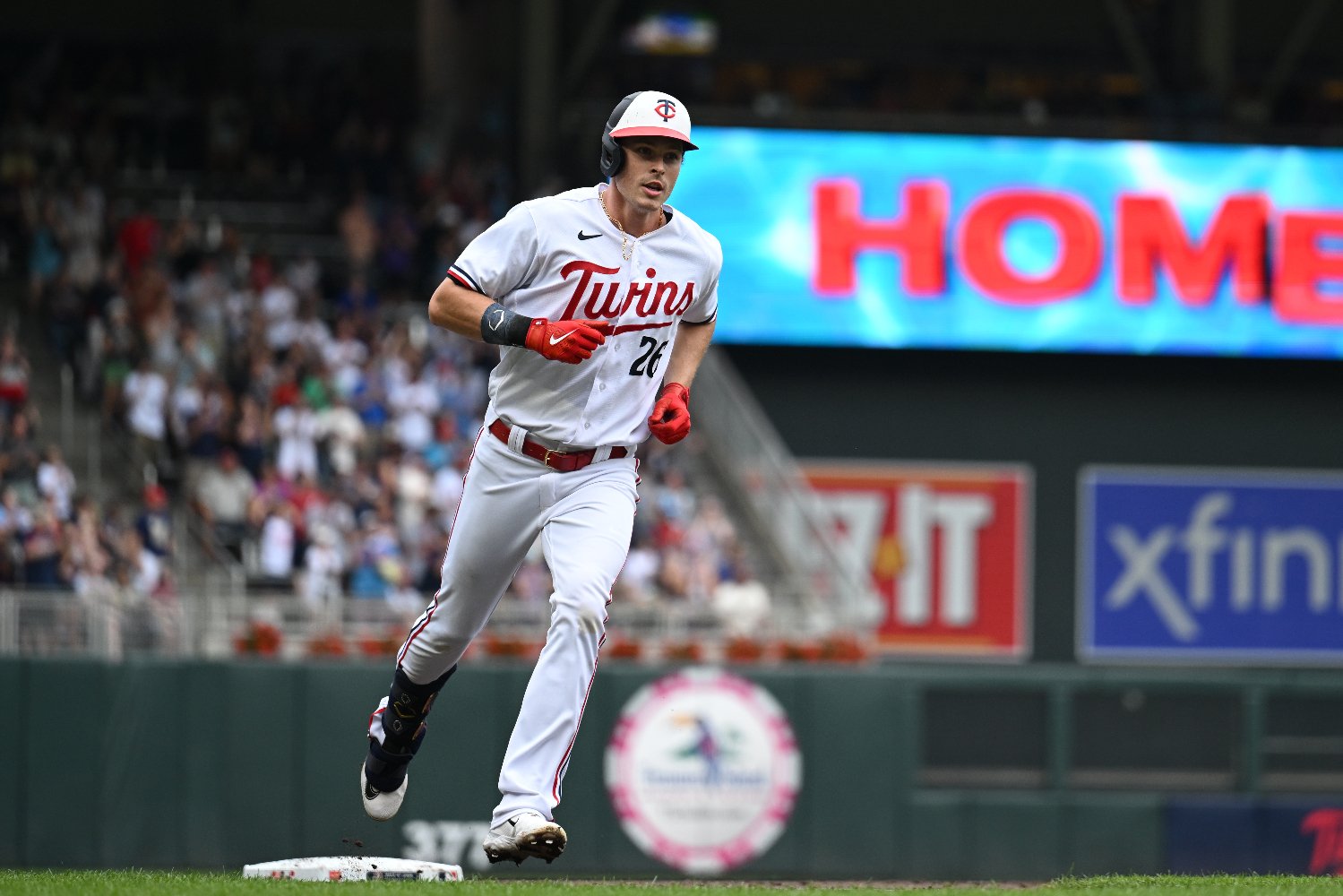 I get why people are sick of Max Kepler. He looked like a transcendent talent eight years ago; a sweet-swinging lefty who slowly rose to dominance over minor-league competition after signing as a raw 16-year-old wild card out of Germany. He looked great doing everything and the expectations were sky-high. He then treaded water his first few seasons in the big leagues, holding his own offensively, slashing .233/.313/.417, while flourishing defensively. His metrics looked good, his BABIP looked low, and the Twins were so sure of a breakout they gave Kepler a long-term extension, potentially buying out several of his free agent years. The breakout seemed to come in 2019, when he popped 36 home runs and got MVP votes, but in retrospect we all know it had to do with the juiced ball that year. He’s reverted to the form he showed from 2016-2018 since then, which is worth about 3.0 WAR over a 162 game sample. He still plays great defense, doesn’t strike out and offers 20 home run power. His career OBP is .315, which is pretty playable given that. So the crusade against him is a bit much, with Aaron Gleeman-types offering the same critiques (poor contact quality, not being as good as we thought, blocking other prospects) and thinking if they repeat them over and over, it makes the case more compelling. But let’s be real here. The contact quality issue is ever-present, but he nonetheless puts up average offensive numbers, with a career 100 OPS+. He isn’t as good as we thought but who cares; this isn’t a sunk cost... developing average players is good! I had a commenter in a piece I did on Alex Kirilloff complain that seeing Kirilloff having a Kirk Gibson-like career would be a disappointment, so it's no surprise Twins fans are disappointed Kepler didn’t turn into Paul O’Neill . Part of the frustration with Kepler is when he makes an impact. His production comes in drips, not bursts (like Byron Buxton). He needs to get his timing right before he’s impactful, but once he does, he’ll give you a hard hit ball every game against a right-hander. It’s not sexy but it is pretty valuable over time, and even this year, a recent hot drip (.298/.355/.614) has raised his OPS by 107 points since he was chastised for his baserunning mistake in Tampa. And it's not like the Twins’ other options are great. Or, we can't prove that yet. Matt Wallner and Trevor Larnach aren’t exactly Mays and Mantle. Wallner is cited by Gleeman ad-nauseum as the “back-to-back Twins minor league player of the year,” in trying to justify giving him runway. Except Gleeman himself has always been the one to put that honor in quotation marks because the award tends to reward players who dominate the high minors but aren’t anticipated to do well in the majors. Previous winners include Randy Dobnak, Kennys Vargas and Zach Granite. And Wallner may fit that bill, as well. Keith Law placed him 15th on his preseason rankings of Twins prospects, with the following comment: "Wallner has an 80 arm and plus raw power with terrible pitch recognition — the man just does not hit offspeed stuff anywhere near often enough to be a regular, with massive strikeout rates last year: 30 percent in Triple A, 38.5 percent in the majors." Fangraphs puts Wallner eighth on their mid-season Twins prospect rankings, noting that his 70% zone contact rate would have ranked as the lowest in all of baseball, five percent lower than Josh Donaldson who was the next worst. Baseball Prospectus ranked Wallner tenth, with the note that, “Few hitters find sustained success in MLB making such little contact as Wallner did in his debut.” Where did Gleeman rank him? Fourth. Us having collective ADHD and wanting novelty and star level performance at all times is no reason to ditch a perfectly average big league regular like Kepler. Sure, Wallner threw out Brandon Belt and his necrotic knees trying for a double once, but Kepler would have made the catch on that same ball without leaving his feet. And do the Twins need more swing and miss in their lineup? Larnach is a decent fielder, much better than Wallner but without the range of the more athletic Kepler. He also has had a full season’s worth of games in the majors and hasn’t hit for any power, with 18 career home runs in 177 career games. Some of that lack of production happened while Larnach was fighting through injury (more on that next paragraph), but this year his OPS+ sits at a Kepler-ish 92, meaning eight percent below average. Kepler just hasn’t been that bad, especially if you parse out his injuries in your analysis similar to how we evaluate Larnach. He contributed 2.2 bWAR last year despite playing for two months with a broken toe, ranking between Joe Ryan and Nick Gordon for the season totals in bWAR. While playing with that injury he posted a sub .500 OPS. This is where Gleeman in particular is most disingenuous. He has never mentioned Kepler’s toe injury in any of his analyses that I’m aware of, but he has mentioned on a few occasions that Kepler is not one to play through injury, viewing him as a player who likes to be 100%. Which is it? What I expect from Kepler is exactly what he was producing last year prior to the toe injury- .244/.344/.390 with good defense in right field. He’s shown the ability to be a little better than that, but as is, that is a three WAR player, and the sort of production any team should be happy to pencil in from their seventh or eighth best hitter. Look at any team (besides the Braves) and tell me how good their seven-hole hitter is. Of course, this Twins team needs to get their offense going, and Kepler hasn’t helped much overall. But the focus shouldn’t be on sacrificing defense in favor of mystery boxes. Peter Griffin put it best when offered the choice between a mystery box and a boat. “A boat's a boat but the mystery box could be anything, it could even be a boat!” Similarly, on a recent podcast, Gleeman mentioned the downside of cutting Kepler was that Wallner and Larnach don’t perform. “Then you can just trade for another team’s Max Kepler.” was his solution. Kepler is also important to the clubhouse, and you could see he was one of the more emotional players coming out of the much-ballyhooed team meeting, cussing out the plate umpire on a brutal called strike in Baltimore, which I can’t remember him doing, ever, and giving perhaps the most dramatic bat flip for the Twins all year one at-bat later. Max Kepler is playing defense and posting a .730 OPS while not striking out that much. He is not the problem. As much as you, me and Gleeman all want to see the next shiny toy without enough experience to have a cap on their projection, I’m glad the Twins’ brass stuck to their guns and didn’t do a knee-jerk DFA weeks ago when Kepler was struggling the most. Kepler is vegetable lasagna, a lower octane Nick Swisher, a younger Mark Canha, a prettier Austin Kearns. And he’s making less than Gio Urshela. Give him a break.
- 87 comments
-
- 12
-
-

-

-
- max kepler
- trevor larnach
- (and 1 more)
-
Let's not go crazy, we're in year nine of Buck getting hurt. Lewis is in year two.
- 45 replies
-
- 2
-
-
- bailey ober
- byron buxton
- (and 3 more)
-
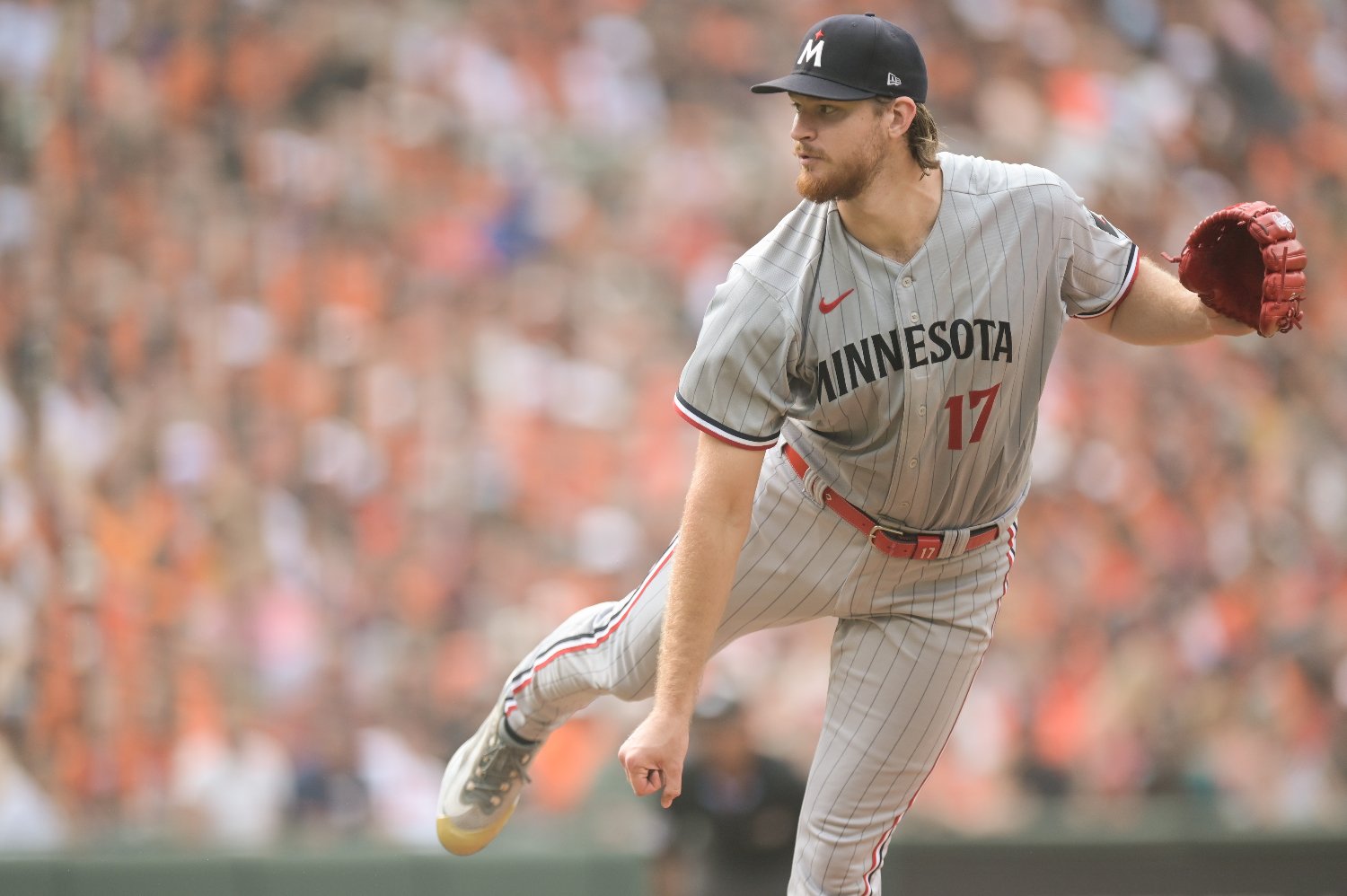 Box Score: Starting pitcher: Bailey Ober: 7 IP 2 H 0 ER 0 BB 8 SO (85 pitches, 58 for strikes, 68.2%) Home Runs: Joey Gallo (15) Top 3 WPA: Ober (.371), Griffin Jax (.138) Gallo (.133) Win Probability Chart (Via Fangraphs): Coming off of a game that could not have gone any better against a competitive Orioles team on the road, the Twins came out swinging against Orioles starter Kyle Bradish, who has been quite good lately, pitching to a 3.14 ERA since May began. He seemed to have some spotty command early, giving up two singles and a walk to Joey Gallo his first time through the lineup. The Twins put together some good at-bats and made Bradish work, but were held scoreless until Gallo’s home run in the fourth. He made good pitches in key spots, including a gorgeous full count curveball to freeze Max Kepler in the sixth with a man on second. Although the runs did not come easy, the at-bats were competitive and the Twins put traffic on the bases, with only one 1-2-3 inning in the first seven. Unfortunately, they hit into a double-play, were caught stealing and had an unusual situation in the sixth when Kyle Farmer, trying to advance to third on a Christian Vázquez dribbler, interfered with the third baseman Jordan Westburg and was called out to end the inning, and Bradish’s outing. Ober brings it Bailey Ober has pitched well recently but has fallen into the Pablo López trap of having one off inning that inflates his ERA and puts the team behind the eight-ball offensively. Today the Orioles were aggressive early in counts but couldn’t get the barrel on the ball outside of Gunnar Henderson’s two-out single in the second. Ober entered the fourth inning having thrown only 28 pitches. He had command of all three pitches, even mixing in a couple curveballs, and took advantage of the swing-happy Orioles lineup. He didn’t encounter a three ball count until going 3-1 to Cedric Mullins in the sixth. He ended up striking out Mullins looking on a changeup that started as a ball inside and faded to the inside edge of the strike zone. His performance brought to mind his gem against the White Sox last September in which he pitched into the eighth inning, striking out ten and allowing just two hits. Royce Lewis exits with injury Running out a ground ball in the 3rd inning, Lewis appeared to pull something in his oblique area and exited the game. Losing Lewis for any length of time will represent a call for rain on any contact-oriented parade the Twins’ lineup had planned to put on. However, it may allow for the return of Jose Miranda, who has hit better recently in the minors but looked increasingly blocked with his main positions manned by Lewis, Alex Kirilloff and Donovan Solano, arguably the Twins’ best hitters this year. Max Kepler shows off his defensive chops After a challenge overturned Jorge Mateo being thrown out at second with one out in the ninth, Anthony Santander roped a line drive to the right field corner that had game-tying hit written all over it. Max Kepler got to the ball quickly and made a sprawling catch to preserve the lead. No offense to Matt Wallner, but there is only one corner outfielder on the 40-man who can make that play. Buxton makes hard contact, gets robbed After lining a 103 MPH single in the first, Buxton crushed a line drive headed for the left field corner at 106 MPH (.770 expected batting-average) in the third. Orioles left-fielder Austin Hays came out of nowhere and made an incredible catch, saving what may have been the game’s first run. Not to be outdone, Buxton lined out sharply to shortstop Henderson in the fifth with an identical .770 xBA. Joey Gallo lives Perhaps annoyed with fans calling for his ouster with increasing vitriol lately, Gallo has now homered in four of his last seven games, crushing a breaking ball from Bradish 439 feet for the game’s first run in the fourth inning and making a diving catch on a blooper from Adley Rutschman in the first. All of a sudden, Gallo’s OPS is back above .800 and he looks positively playable. What’s Next: Sonny Gray (4-2, 2.67) tries to build off his success against the Braves in Atlanta, facing the Orioles’ Cole Irvin (1-3, 7.18 ERA) who has been a disappointment after they acquired him thinking he could stabilize their young rotation. Postgame Interviews: Bullpen Usage Chart: TUE WED THU FRI SAT TOT Morán 0 36 0 8 0 44 Headrick 35 0 0 0 0 35 Ortega 32 0 0 0 0 32 Balazovic 0 18 0 9 0 27 Pagán 0 0 0 19 0 27 Jax 0 0 0 0 11 11 Durán 0 0 0 0 8 8 Winder 0 0 0 0 0 0
- 45 comments
-
- 7
-
-
- bailey ober
- byron buxton
- (and 3 more)
-
The Twins meeting-fueled offense sputtered in game two of the "new season," but Bailey Ober pitched his best game of the year, Max Kepler made an incredible game-saving catch in the ninth and Joey Gallo homered for the second straight day en route to a tense victory in Baltimore. Image courtesy of © Tommy Gilligan-USA TODAY Sports The Twins meeting-fueled offense sputtered in game two of the "new season," but Bailey Ober pitched his best game of the year, Max Kepler made an incredible game-saving catch in the ninth and Joey Gallo homered for the second straight day en route to a tense victory in Baltimore. Box Score: Starting pitcher: Bailey Ober: 7 IP 2 H 0 ER 0 BB 8 SO (85 pitches, 58 for strikes, 68.2%) Home Runs: Joey Gallo (15) Top 3 WPA: Ober (.371), Griffin Jax (.138) Gallo (.133) Win Probability Chart (Via Fangraphs): Coming off of a game that could not have gone any better against a competitive Orioles team on the road, the Twins came out swinging against Orioles starter Kyle Bradish, who has been quite good lately, pitching to a 3.14 ERA since May began. He seemed to have some spotty command early, giving up two singles and a walk to Joey Gallo his first time through the lineup. The Twins put together some good at-bats and made Bradish work, but were held scoreless until Gallo’s home run in the fourth. He made good pitches in key spots, including a gorgeous full count curveball to freeze Max Kepler in the sixth with a man on second. Although the runs did not come easy, the at-bats were competitive and the Twins put traffic on the bases, with only one 1-2-3 inning in the first seven. Unfortunately, they hit into a double-play, were caught stealing and had an unusual situation in the sixth when Kyle Farmer, trying to advance to third on a Christian Vázquez dribbler, interfered with the third baseman Jordan Westburg and was called out to end the inning, and Bradish’s outing. Ober brings it Bailey Ober has pitched well recently but has fallen into the Pablo López trap of having one off inning that inflates his ERA and puts the team behind the eight-ball offensively. Today the Orioles were aggressive early in counts but couldn’t get the barrel on the ball outside of Gunnar Henderson’s two-out single in the second. Ober entered the fourth inning having thrown only 28 pitches. He had command of all three pitches, even mixing in a couple curveballs, and took advantage of the swing-happy Orioles lineup. He didn’t encounter a three ball count until going 3-1 to Cedric Mullins in the sixth. He ended up striking out Mullins looking on a changeup that started as a ball inside and faded to the inside edge of the strike zone. His performance brought to mind his gem against the White Sox last September in which he pitched into the eighth inning, striking out ten and allowing just two hits. Royce Lewis exits with injury Running out a ground ball in the 3rd inning, Lewis appeared to pull something in his oblique area and exited the game. Losing Lewis for any length of time will represent a call for rain on any contact-oriented parade the Twins’ lineup had planned to put on. However, it may allow for the return of Jose Miranda, who has hit better recently in the minors but looked increasingly blocked with his main positions manned by Lewis, Alex Kirilloff and Donovan Solano, arguably the Twins’ best hitters this year. Max Kepler shows off his defensive chops After a challenge overturned Jorge Mateo being thrown out at second with one out in the ninth, Anthony Santander roped a line drive to the right field corner that had game-tying hit written all over it. Max Kepler got to the ball quickly and made a sprawling catch to preserve the lead. No offense to Matt Wallner, but there is only one corner outfielder on the 40-man who can make that play. Buxton makes hard contact, gets robbed After lining a 103 MPH single in the first, Buxton crushed a line drive headed for the left field corner at 106 MPH (.770 expected batting-average) in the third. Orioles left-fielder Austin Hays came out of nowhere and made an incredible catch, saving what may have been the game’s first run. Not to be outdone, Buxton lined out sharply to shortstop Henderson in the fifth with an identical .770 xBA. Joey Gallo lives Perhaps annoyed with fans calling for his ouster with increasing vitriol lately, Gallo has now homered in four of his last seven games, crushing a breaking ball from Bradish 439 feet for the game’s first run in the fourth inning and making a diving catch on a blooper from Adley Rutschman in the first. All of a sudden, Gallo’s OPS is back above .800 and he looks positively playable. What’s Next: Sonny Gray (4-2, 2.67) tries to build off his success against the Braves in Atlanta, facing the Orioles’ Cole Irvin (1-3, 7.18 ERA) who has been a disappointment after they acquired him thinking he could stabilize their young rotation. Postgame Interviews: Bullpen Usage Chart: TUE WED THU FRI SAT TOT Morán 0 36 0 8 0 44 Headrick 35 0 0 0 0 35 Ortega 32 0 0 0 0 32 Balazovic 0 18 0 9 0 27 Pagán 0 0 0 19 0 27 Jax 0 0 0 0 11 11 Durán 0 0 0 0 8 8 Winder 0 0 0 0 0 0 View full article
- 45 replies
-
- 1
-
-
- bailey ober
- byron buxton
- (and 3 more)
-
Swinging hard in baseball was invented by Mel Gibson in 2001 for the movie “Signs.” From that point forward, hitters kept swinging harder while in many cases adding steroids to the mix, resulting in more power across the league. Guys who were teetering on the brink of being labeled “Quad-A Guys,” suddenly realized if they could add 20 home run power to their repertoire, they could cover up all their other glaring flaws. In 2019, a juiced ball turbocharged this trend and not coincidentally that year’s Twins team set the all-time team home run record, featuring big contributions from previously unexciting players like CJ Cron, Max Kepler, Jonathan Schoop and Mitch Garver. After a 101 win season and the surprising addition of Josh Donaldson, the future seemed bright for the Twins lineup. Instead, the team has taken steps backward and now looks as dysfunctional as ever offensively, despite the track record of their hitters being quite good on paper. What happened? To start, the Twins aren’t the only team with a lot of names in their lineup and not a lot of runs on the board. Many teams who employ a multitude of high power hitters with great backsides to their baseball cards, are finding that their performance is suffering. The Yankees have a decent record, but the vibe around them is not positive, with their hitting underwhelming despite employing many successful sluggers like Aaron Judge, Anthony Rizzo, Giancarlo Stanton and Gleyber Torres. The Padres are at the bottom of the league in offense despite boasting four potential MVP candidates in their lineup, most of whom can do more than just slug. The Mets are struggling mightily despite Pete Alonso pacing the sport in homers, Francisco Lindor hitting the ball as hard as ever, and Francisco Alvarez breaking through offensively. The issue is how hard the guys are swinging. And no I’m not saying that swinging a bat is putting undue strain on these precious hitters. I’m saying you need a mix of efforts in terms of swing speed/length of swing, and the Twins have too many guys selling out for power, especially in key situations that require a base hit. I’ve categorized it that there are three types of hitters based on how hard they swing: Knock-getters: Think Luis Arraez, Rod Carew, and maybe Royce Lewis (more on that later). They’ll take a few rips to keep pitchers honest but really they're just trying to get a hit somehow. Slashers: Think Yuli Gurriel or Paul O’Neil. They’ll run into plenty of homers, but mainly they are just trying to get the barrel on the ball. My theory is that medium swingers go into the biggest slumps, perhaps due to oscillations in what “medium swinging” means for a hitter, but can often spark a team in the postseason. Boppers: Think Joey Gallo or Jim Thome. They want to lift at all times, and swing as hard as they reasonably can. The most rigid approach, and most dependent on mistakes. It also includes most of the current Twins lineup. It may seem like I am denigrating the power guys like any old baseball analyst from the 1930’s, but what I’m really saying is you can’t have too many of the same type of hitter on your team. As the Padres have shown, you can have four .900 OPS guys in your lineup and still struggle to score. If all you have is knock-getters you end up like the Cleveland Guardians, which isn’t very effective, either. It would seem that a team made up of slashers, or medium swingers, would be great, but I swear they’re streakier, and not always the best defenders. But a team full of boppers has all the makings of a heartbreaking team. They are scary to face as a pitcher, but importantly, they can be pitched to. For instance, any pitcher knows the game plan on how to get Joey Gallo out: high fastballs and breaking balls below the zone. If you execute that plan Gallo almost certainly will not hurt you; at worst you’ll walk him. A knock-getter, by contrast, can take a pitch you executed well and plop it the other way for a single. Not always, but at a far higher success rate than Gallo just accepting his fate with two strikes. Logically, a shorter, easier swing is easier to control, less deceived by velocity, and easier to pull back on if the pitch is a ball. I don’t think you’ll find a hitter who disagrees with that. And admit it, when Joey Gallo or Byron Buxton come to the plate with a man on second and two outs down a run, it burns you up because you know you would rather have Christian Vazquez hit in that situation, despite his poor overall numbers. It’s like a really physical basketball team with an elite big man. You can counter that team by putting a bunch of quick shooters all around the perimeter and forcing the big to come out and defend, negating his overall impact. He’s still really good, yet his existence is hurting the team. Or it's like a golfer who hits it further than anyone else but is playing a course with tiny fairways and deep rough. He has less margin for error than shorter hitters and his advantage is turned into a weakness. Or a male pickup artist looking to meet women at a lesbian bar. From a baseball strategy standpoint too, having a bunch of slower/shorter-swinging guys can make the opposing pitcher less of a factor. And if you’re facing Gerrit Cole or Shohei Ohtani with your season on the line, you want them to matter as little as possible. Elite pitchers, the kind you often see in the postseason, probably won’t make many mistakes during a game. The beautiful part is, if you’re a good knock-getter, you don’t need them to make any mistakes. You’ve accepted you can’t get a homer without several stars aligning, so you try to guess a location and punch the ball through somewhere. You can’t win the war with one swing, but you can pile up wins in individual battles and accomplish the same thing. That is still hard to do, but not as hard as trying to homer off of an elite pitcher who isn’t making mistakes. After Sunday’s game, Royce Lewis was interviewed and he mentioned that the Tigers approach to Twins’ hitters was to exploit that they were waiting for a mistake. He also said he personally went against that approach by selling out for contact during the game, during which he collected three singles. That was eye-opening because it confirmed what a lot of us fans have witnessed during the Falvey/Baldelli era: Swinging for the fences regardless of situation and hoping for a mistake pitch, resulting in failing to score in too many innings, and falling short offensively even if the total season output was highly ranked. On that note, the Firejoemorgan.com site of the early aughts was a favorite of mine, and one of Morgan’s most mocked beliefs was that sometimes home run hitters could be selfish. “What a load,” we said, “as if hitting a home run was something to be shamed for when it is statistically the best thing you can do as a hitter.” Except most of the time guys try to hit home runs, they don’t. The best home run hitters get a dinger every ten to twelve at-bats, a hugely valuable ratio, no doubt. But it’s easier to make contact if you’re just trying to get a knock, and if that’s what the situation dictates, then yes, trying to hit a home run is selfish, because of the home runs you don’t hit. If you know that a given pitcher is going to start you with a breaking ball outside, and you have the ability to poke a ball the other way, it is your job to ambush that pitcher and get a knock. Good pitchers give up home runs, but good pitches don’t (unless the hitter guesses perfectly), and that’s an important distinction. Sometimes you don’t get the cement mixer breaking ball of your dreams, and already this year, we have seen the reverse approach work against the best of the Twins’ excellent rotation: Sonny Gray, Joe Ryan, Pablo Lopez and Bailey Ober have all been victimized by bloop hits and squibbers the other way, often off of good pitches, and those hits have led to key losses against division rivals Cleveland and Detroit, not to mention the Angels, Red Sox, and Rays. Getting rid of Luis Arraez is then so much more of a blunder by the Twins. He wasn’t just a knock-getter, he was the knock-getter, and the Twins haven’t really had anybody else in recent years who could grind at-bats and was willing to sacrifice almost all his potential power for base hits like Arraez. Lewis has shown this ability at times, notably against Ryan Pressly of the Astros the day he was called up, also mentioning after Sunday’s win that he was trying to channel his “inner-Arraez.” Which brings me to Austin Martin. He recently returned to action after missing three weeks following a collision in one of his first games back from a sprained UCL in his elbow. That's a real shame because Martin is an up and coming knock-getter, and to hear him tell it, his failed experiment with adding power to his profile in 2022 just made him more committed to selling out for base hits and getting on base no matter what. Putting him in left field, if he’s healthy enough to play, might be the best recreation of Arraez the Twins can do at this point. And they’ll need him if what Lewis says about the hitting approach is true. If the team is truly gameplanning, or being gameplanned against, by virtue of its hitters trying to stay in at-bats until the pitcher makes a mistake, that’s a problem. It also matches the eye-test of watching this team. Sometimes pitchers don’t make mistakes, and sometimes when they do, you miss them (we’ve seen plenty of that). Whoever is advocating for that approach is stuck in 2019 and though Lewis surely didn’t mean to stir the pot with his comment, his saying it gives me hope that he may inspire others on the team to follow his lead and sell out for contact when appropriate. The vanishing act this offense has shown since the 2019 postseason is no longer a coincidence, it's a trait, and their league-high strikeout rate confirms it. Furthermore, against better pitching overall, with less power and a less juicy ball, that trait is dooming this team to fail despite an incredible (for the Twins) pitching staff. Gallo and Buxton will continue to swing away no matter what, but everyone else needs to realize what’s been right in front of them (by watching their opposition), and to give up a little power for contact. Not always, just when it matters.
- 20 comments
-
- 9
-
-
-
- max kepler
- byron buxton
- (and 3 more)
-
Tigers 3, Twins 2: Bloop-Filled 2nd Inning and Rookie Hurler Top Twins
Hans Birkeland posted an article in Twins
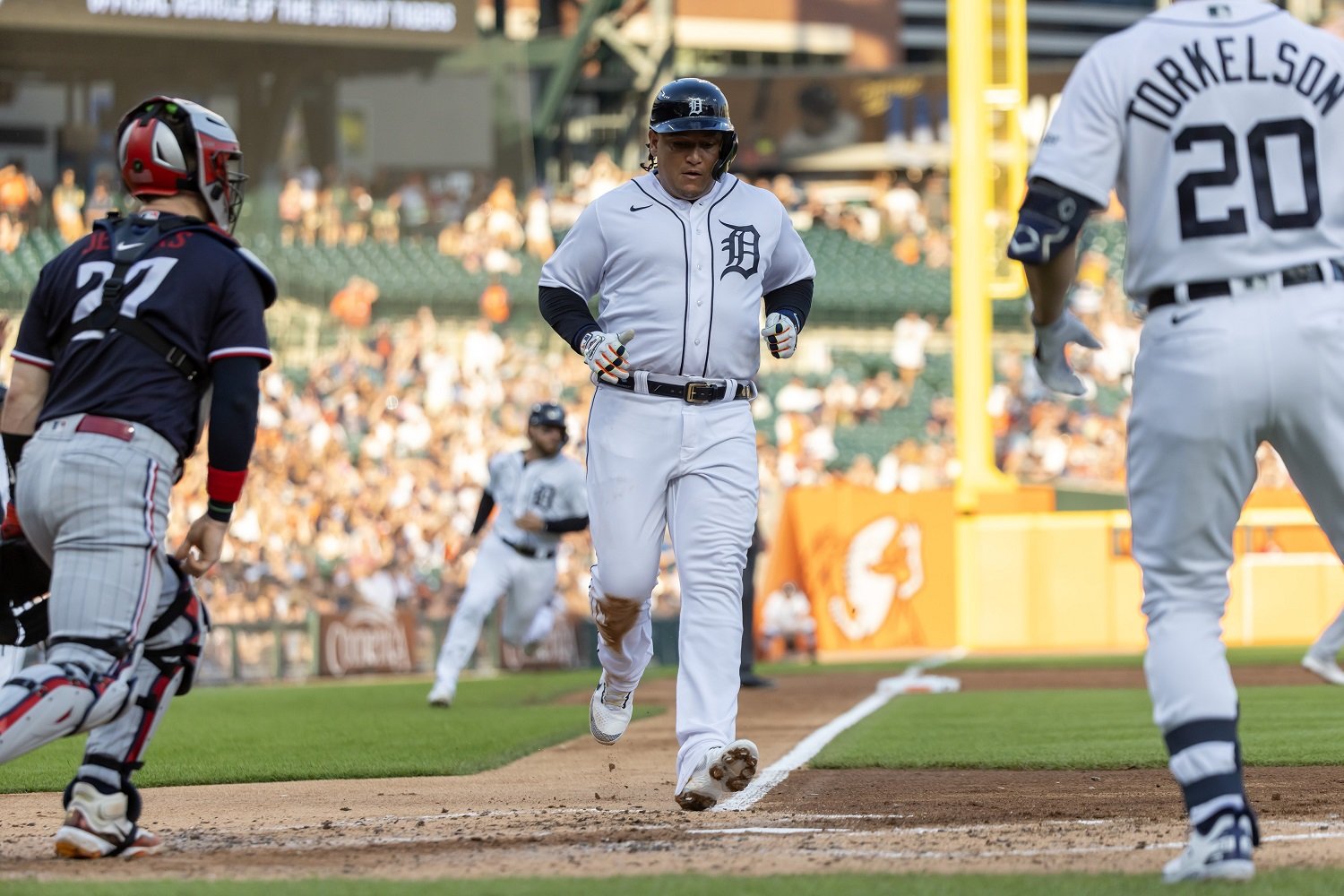 Box Score SP: Pablo López: 6 IP, 7 H, 3 ER, 1 BB, 10 K (100 pitches, 73 for strikes, 73%) Home Runs: Carlos Correa (11), Joey Gallo (12) Bottom 3 WPA: Edouard Julien (-.200) Royce Lewis (-.176), López (-.120) Win Probability Chart (Via Fangraphs): Tigers find out that Ed Julien can’t play second With the game scoreless in the bottom of the second, the Tigers got to work exposing Ed Julien for his defensive shortcomings. Andy Ibanez grounded to Correa with Nick Maton on first, and Correa made the feed to Julien, who double-clutched before his throw to first, allowing Ibanez to reach. He came around to score on a grounder up the middle from Eric Haase (expected batting-average of .210) that Julien took an odd, stumbling route to (OK, he dove for it). The All-Star break can’t come soon enough for a number of reasons for this club, but potentially getting Jorge Polanco back around then may be the biggest. Pablo López pays for defensive miscues, own hubris López’s stuff looked decent on Saturday, but he threw too many hittable pitches while ahead in the count and got dinked and dunked on by an array of Tigers hitters fighting to stay in not only the at-bat, but the majors. His stuff got crisper as the game progressed, and started putting Tigers hitters away when ahead, finishing with 10 strikeouts over six innings. Reese Olson shows electric stuff Reese Olson started for the Tigers and hasn’t had a great start to his career, nor was he pitching well in the minors to begin the year. But he struck out 12.6 batters per nine innings last year at Triple-A and showed some of that potential against the Twins’ sell-out-for-power lineup, generating plenty of whiffs on his plus-slider while keeping hitters honest with a generally well-located 96 MPH fastball. He appeared to tire a bit in the sixth, allowing a long home run to Carlos Correa, and a single to Alex Kirilloff, which ended his night. The return for Daniel Norris, who himself was the main return for David Price, looks like he has some promise and may get some extended run for the Tigers this year given their multitude of pitching injuries. Byron Buxton doesn’t have a great night After starting 0-for-2 with a strikeout against Olson, Buxton delivered a rocket grounder (110 mph) off of reliever Jose Cisnero , right to shortstop Javier Baez, who turned an easy double play. Buxton wasn’t running hard on the play, and looked to be in immense pain as he ambled down the first base line. He ended up leaving the game at that point with back spasms. What’s Next Bailey Ober (4-4, 2.83 ERA) goes up against Michael Lorenzen (2-5, 4.00 ERA) for the series win. Ober has been the Twins most consistent pitcher in recent weeks and needs to be at his best (apparently) in order to win a road series against a team 10 games under .500. Postgame Interviews The game aired nationally on Fox, so there may not be any postgame interviews, but we'll look. Bullpen Usage Chart TUE WED THU FRI SAT TOT Durán 0 32 0 19 0 51 Stewart 0 15 0 28 0 43 Headrick 41 0 0 0 0 41 Morán 0 17 0 16 0 33 Pagán 0 0 0 0 30 30 Jax 0 8 0 12 0 20 Balazovic 0 0 0 0 6 6 De León 0 0 0 0 0 0
- 26 comments
-
- 1
-
-
- byron buxton
- carlos correa
- (and 2 more)
-
The Twins bats were stymied by another unproven callup, but Reese Olson looked like a solid prospect in holding the Twins to one run while striking out nine batters. Pablo López was done in by one big inning once again, while Byron Buxton and Jose De Leon both left with injuries. Image courtesy of David Reginek-USA TODAY Sports The Twins bats were stymied by another unproven callup, but Reese Olson looked like a solid prospect in holding the Twins to one run while striking out nine batters. Pablo López was done in by one big inning once again, while Byron Buxton and Jose De Leon both left with injuries. Box Score SP: Pablo López: 6 IP, 7 H, 3 ER, 1 BB, 10 K (100 pitches, 73 for strikes, 73%) Home Runs: Carlos Correa (11), Joey Gallo (12) Bottom 3 WPA: Edouard Julien (-.200) Royce Lewis (-.176), López (-.120) Win Probability Chart (Via Fangraphs): Tigers find out that Ed Julien can’t play second With the game scoreless in the bottom of the second, the Tigers got to work exposing Ed Julien for his defensive shortcomings. Andy Ibanez grounded to Correa with Nick Maton on first, and Correa made the feed to Julien, who double-clutched before his throw to first, allowing Ibanez to reach. He came around to score on a grounder up the middle from Eric Haase (expected batting-average of .210) that Julien took an odd, stumbling route to (OK, he dove for it). The All-Star break can’t come soon enough for a number of reasons for this club, but potentially getting Jorge Polanco back around then may be the biggest. Pablo López pays for defensive miscues, own hubris López’s stuff looked decent on Saturday, but he threw too many hittable pitches while ahead in the count and got dinked and dunked on by an array of Tigers hitters fighting to stay in not only the at-bat, but the majors. His stuff got crisper as the game progressed, and started putting Tigers hitters away when ahead, finishing with 10 strikeouts over six innings. Reese Olson shows electric stuff Reese Olson started for the Tigers and hasn’t had a great start to his career, nor was he pitching well in the minors to begin the year. But he struck out 12.6 batters per nine innings last year at Triple-A and showed some of that potential against the Twins’ sell-out-for-power lineup, generating plenty of whiffs on his plus-slider while keeping hitters honest with a generally well-located 96 MPH fastball. He appeared to tire a bit in the sixth, allowing a long home run to Carlos Correa, and a single to Alex Kirilloff, which ended his night. The return for Daniel Norris, who himself was the main return for David Price, looks like he has some promise and may get some extended run for the Tigers this year given their multitude of pitching injuries. Byron Buxton doesn’t have a great night After starting 0-for-2 with a strikeout against Olson, Buxton delivered a rocket grounder (110 mph) off of reliever Jose Cisnero , right to shortstop Javier Baez, who turned an easy double play. Buxton wasn’t running hard on the play, and looked to be in immense pain as he ambled down the first base line. He ended up leaving the game at that point with back spasms. What’s Next Bailey Ober (4-4, 2.83 ERA) goes up against Michael Lorenzen (2-5, 4.00 ERA) for the series win. Ober has been the Twins most consistent pitcher in recent weeks and needs to be at his best (apparently) in order to win a road series against a team 10 games under .500. Postgame Interviews The game aired nationally on Fox, so there may not be any postgame interviews, but we'll look. Bullpen Usage Chart TUE WED THU FRI SAT TOT Durán 0 32 0 19 0 51 Stewart 0 15 0 28 0 43 Headrick 41 0 0 0 0 41 Morán 0 17 0 16 0 33 Pagán 0 0 0 0 30 30 Jax 0 8 0 12 0 20 Balazovic 0 0 0 0 6 6 De León 0 0 0 0 0 0 View full article
-
Should the Twins Pursue Wil Myers?
Hans Birkeland replied to Cody Schoenmann's topic in Twins Daily Front Page News
I had to look it up, he was playing fortnite five years ago and didn't realize it was a recorded stream and ripped his manager to shreds. Pretty dumb but not really disqualifying.- 48 replies
-
- 1
-
-
- wil myers
- max kepler
- (and 1 more)
-
Should the Twins Pursue Wil Myers?
Hans Birkeland replied to Cody Schoenmann's topic in Twins Daily Front Page News
I see your point, but any benefit would probably be marginal, and I have heard Myers isn't the best clubhouse guy.

