


Twins Video
I feel like baseball statistics are measured in half lives. Originally, the landscape of pitcher evaluation, for instance, started out so broad that we gave one pitcher per game credit for an entire win. Then we sliced that up into how many runs he gave up. Some guys were better at that metric but they didn’t pitch as long or as often, so we divided runs by innings pitched.
That was fine but some guys who give up the same number of runs per nine innings seem a lot more susceptible to bad luck, so what if we cared about how many strikeouts a guy had? In fact, what if we had a stat that measured how good a pitcher was if you took luck completely out of it?
Cool, but what about just having better pitches? What if we could measure effective velocity, horizontal and vertical break, and how the pitch path diverges from the expected path of a different pitch?
And now we’re here. What the hell kind of halving can you do of Statcast data for pitches? You can’t. It’s over. Once hitters perfect using full VR bodysuits that can simulate facing a perfect sim of any pitcher, they’re done too. At some point, the margins of finding a competitive advantage in data become so small, that they just aren’t worth the effort, like we did with openers.
I’ve advocated that the next market inefficiency in baseball was scouting player’s mental games, but it could also be found in evaluating a player not on his total performance, but in his ability in the different approaches he takes in game situations. A diversity in what a hitter or pitcher intends to do, sprinkled throughout a lineup, can make a team equal more than the sum of its parts.
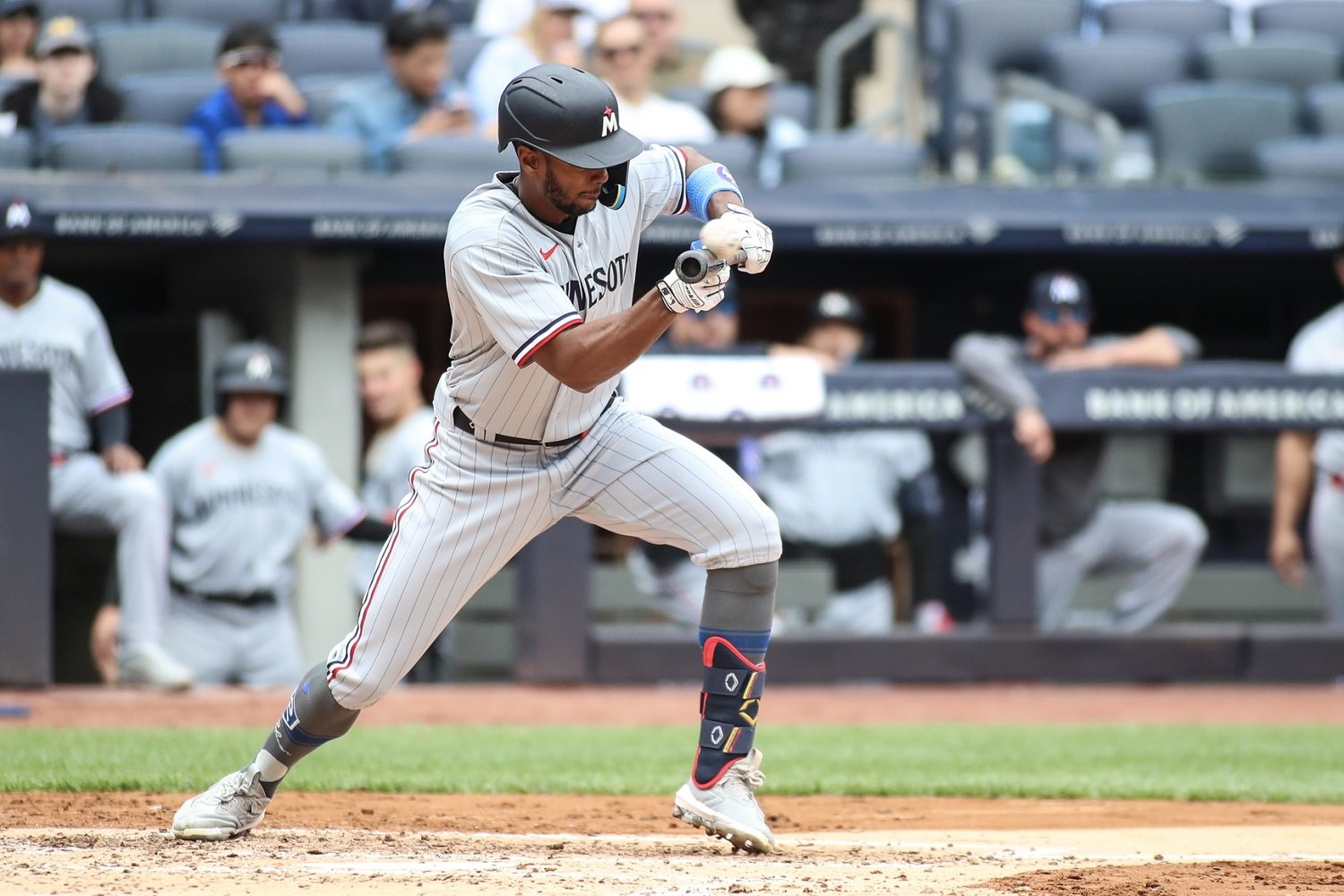
The most obvious example of this would be bunting. Many dinosaurs-turned-broadcasters lament the decline of the sacrifice bunt, or any bunt for that matter. Statistical models show that bunting is rarely, if ever, the prudent choice from a probability perspective. But some guys are better at it than others, and on a micro level that can be a huge advantage in a given game.
What about the ability to hit the ball to a particular side of the field? Some guys can, and usually will do so with a man on second and no outs, in a game where one run may mean the difference. This wouldn’t seem like a huge thing, but imagine a team with thirteen guys that couldn’t control where they hit the ball, and another team where they all could. Who would be sweating more in the 10th inning with the Manfred-man in play?
We talk a lot about pitchers who get strike one consistently, and we can measure that. But we can’t measure how a pitcher performs if, in his mind, he decides to challenge a hitter. We can’t measure if he is attempting to induce a ground ball, or a pop up (we can guess, though, as well as measuring the results). Unlike in pool, baseball does not require a shot to be called, so we have no way of knowing how well a pitch was executed toward a specific intention. How often do we see a pitcher throw a backup slider to a same-handed hitter only for them to swing through the pitch, because they anticipated the pitch not being so poorly thrown.
And then there are the two-strike-approach hitters, who cut down their swing, sacrificing power for contact so as to avoid striking out. Would a team of those guys be better in the long run than a team of guys who only give their “A” swing on every pitch? My hypothesis, and it isn’t a controversial one, is that it is good to have a team with all sorts of different skillsets. While other teams are digging deeper into programming a pitcher’s arm with AI to always repeat perfect mechanics, a forward thinking front office could get a couple “gameplan guys” they could plug in to torment a particular pitcher.
It's entirely possible a hitter could be at Mike Trout’s level as a hitter, roughly 75% better than average, and still be a liability in certain spots. Imagine the Angels in the bottom of the 10th inning with Trout at the plate. If we’re being honest, they might want a subpar hitter with good contact/bunting skills up in that situation.
Because Trout will do what he’s done his entire career and look for a pitch to crush. But a line out to deep left field, for instance, would be a bad result in that situation, since the runner at second could not advance, and you only need one run. Whether Trout can bunt or not is irrelevant because that won’t be what he’s looking to do, because of some combination of ego and analytics.
Hopefully the Twins are exploring this arena. I wrote about how important Jorge Polanco was to this lineup, and that follows the same vein of having some diversity of approach. Polanco can bunt, go the other way, steal a bag if he knows no one is expecting him to, and avoid striking out if the situation warrants it. Michael Taylor can bunt pretty well and that has proven impactful a handful of times already.
Joe Ryan is pretty good pitching with a lead, and Caleb Thielbar is particularly effective when he enters in the middle of an inning. It cuts both ways, though. Jose Miranda has struggled to put the ball in the air; is that something he is conscious of?
One advantage the Guardians have had in the past two seasons was a lineup chock-full of contact oriented hitters without the prestige or ego to use the same approach, especially in key situations. They didn’t execute all that well in their series against the Twins, all told, but the Twins certainly showed a lack of situational execution, and that made all the difference.








Recommended Comments
Create an account or sign in to comment
You need to be a member in order to leave a comment
Create an account
Sign up for a new account in our community. It's easy!
Register a new accountSign in
Already have an account? Sign in here.
Sign In Now