


Twins Video
The 2020 MLB Draft posed unprecedented challenges for front offices across baseball. The COVID-19 pandemic shut down high school and college seasons, forcing teams to lean heavily on previous scouting reports, data analysis, and virtual interviews. While some organizations struck gold in this shortened five-round draft, the Minnesota Twins are now widely regarded as one of the biggest losers, as Baseball America’s five-year review casts a harsh light on their decisions.
Contextual Challenges
Revisiting the draft’s circumstances is essential to understand Minnesota's struggles fully. The pandemic forced scouts off the road, canceled in-person workouts, and left teams relying on incomplete information. For the Twins, this meant entering the draft with limited insight while trying to bolster a system that was trying to improve from what the previous regime had left behind.
Additionally, the Twins forfeited their third-round pick to sign free agent Josh Donaldson, and they dealt their compensation-round pick to the Dodgers in the Kenta Maeda trade. These moves left the team with only three selections, putting extra pressure on their top picks to succeed.
A Swing and a Miss: Aaron Sabato
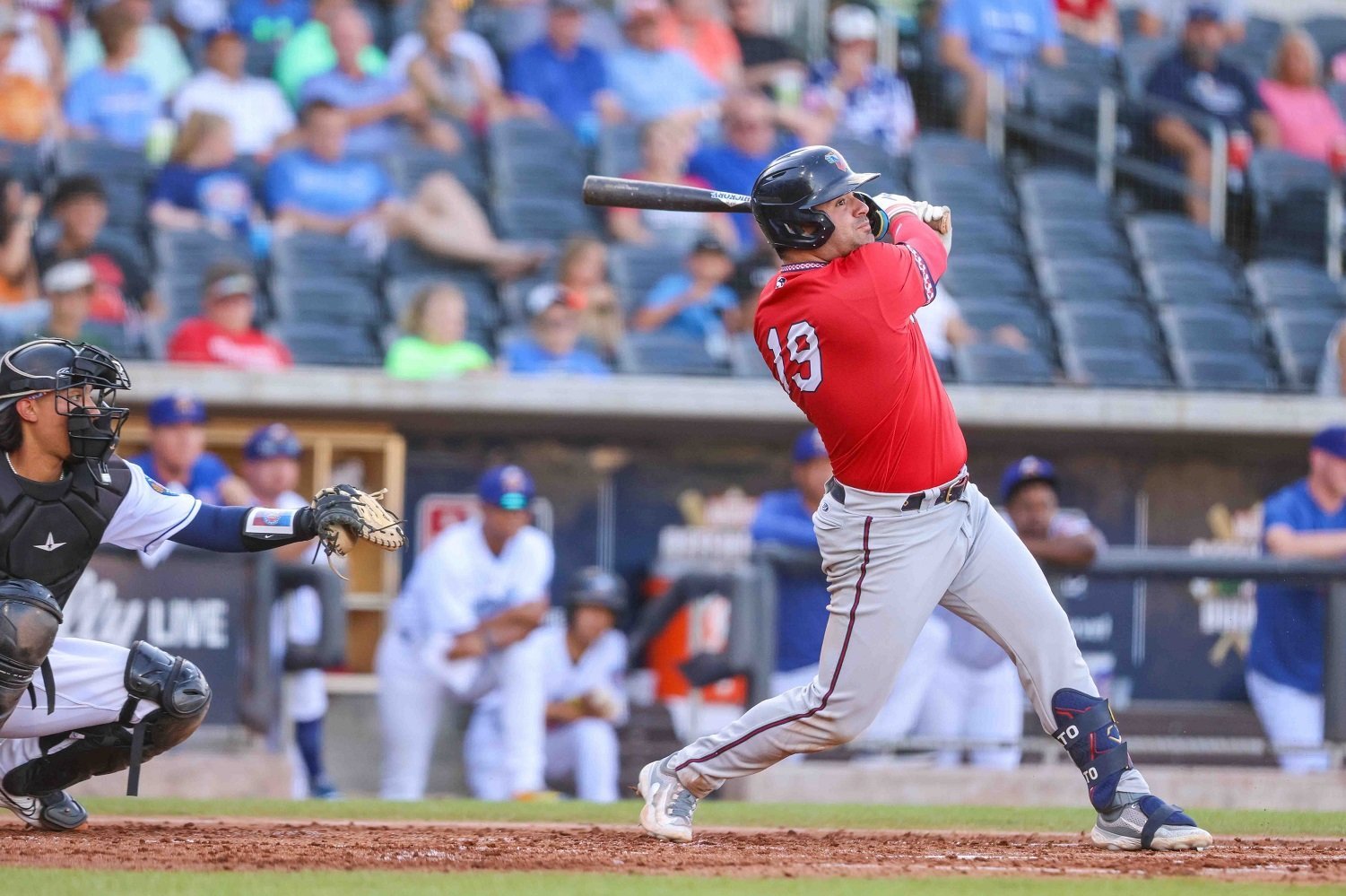
With the 27th overall pick, the Twins selected first baseman Aaron Sabato, a slugger from the University of North Carolina. At the time, Sabato’s raw power and plate discipline drew comparisons to MLB standouts like Pete Alonso. However, Sabato’s professional career has been riddled with inconsistency five years later.
At the time, the Twins liked him for his offensive profile and signed him to an above-slot deal.
Quote“We like his swing, we like his mental approach to the game, to hitting,” scouting director Sean Johnson said following the draft. “He's a very confident hitter. He has a great plan at the plate already. He's got a really workable swing. It's a really tight swing with good movements with good direction. He's got power to all fields and so we just like that as an option in the back of the first round. We thought he was the best offensive player left on the board.”
Injuries and strikeout issues have plagued Sabato, and while he’s shown flashes of power in the minors, his inability to adjust to high-level pitching has kept him from reaching the big leagues. As of the 2024 season, he remains in Double-A with little indication of breaking through. Last season, he hit .199/.308/.336 (.645) while being older than the average age of players in the Texas League. Meanwhile, other picks taken shortly after him have already accumulated positive WAR. Austin Wells (28th overall) has 2.6 WAR in 134 games, while Jordan Westburg (30th overall) has 3.7 WAR in 175 games. Sabato would always need to hit at a high level to impact the big-league roster, but that has yet to happen.
Alerick Soularie: A Risk That Didn’t Pay Off
The Twins’ second-round pick, Alerick Soularie, was a versatile outfielder from the University of Tennessee known for his athleticism and offensive upside. Unfortunately, Soularie struggled to find his footing in pro ball. He’s battled injuries and inconsistent performance, and his defensive versatility hasn’t been enough to offset his lack of production at the plate.
Here’s what the Twins said at the time.
Quote“Really displayed a lot of bat-to-ball skills, ability to control the strike zone, even going all the way back to San Jac, more walks than strikeouts -- [that’s] a big thing for us that we're into,” Johnson said after taking Soularie. “He's still able to get the power. … He had a monster year last year in the SEC, which is always a nice thing to look at from a prospect perspective.”
Minnesota released Soularie in May 2024 after he posted a .598 OPS in 33 games. He signed with the Giants organization and played 24 games before heading to an independent league to end last season. The Twins gambled on his potential in a year when scouting was limited, but that risk did not pay off.
Marco Raya: A Rare Bright Spot
The lone bright spot in Minnesota’s 2020 draft class is fourth-round pick Marco Raya, a high school pitcher from Texas. Raya has displayed a promising mix of velocity and secondary pitches, rising through the system as a potential middle-of-the-rotation arm. He remains one of the team’s top pitching prospects and could still salvage some value from this otherwise underwhelming draft haul.
Quote“We had really good evaluations, we all liked him, we all thought he could evolve into a starter,” Johnson said. “He's a really solid athlete. He's got really good delivery, really good arm action. And he's got four pitches now, and we think ... he's not the biggest kid out there, but he is athletic and he's got a chance to fill out.”
Last season, he finished the year at Triple-A at only 21 years old. In 25 starts, he posted a 4.05 ERA with a 1.36 WHIP and 9.5 K/9. Raya faced older batters in over 90% of his plate appearances because the Twins have been confident in moving him up the organizational ladder. Minnesota has limited his workload in recent seasons, so the 2025 campaign is crucial for him to prove he can throw over 100 innings in a season.
Kala’i Rosario: Another Chance for Late-Round Value
Besides Raya, the Twins have also given Rosario every opportunity to succeed in the organization. Minnesota selected him out of high school in Hawaii, and he has consistently moved up the ladder, including being sent to the Arizona Fall League the last two seasons. The Twins left him unprotected from the Rule 5 Draft this winter, but no teams selected him. Now, he must prove his worth to the organization and put himself back on the prospect map.
Quote“Another guy we got to connect with. Really love the kid, his background, his desire to work, his curiosity to improve,” Johnson said. “We think there's some things we can optimize in his swing yet. But his power doesn't grow on trees, and we were really excited about him being in the fifth round.”
Last season, Rosario reached Double-A and hit .235/.321/.405 (.726) with 30 extra-base hits in 69 games. He missed a good chunk of time due to an elbow injury. He’s combined for over 30 K% in his professional career, so there has been plenty of swing-and-miss with his power totals. He was the Midwest League MVP in 2023, pointing to his long-term potential upside.
The Cost of Missed Opportunities
To be fair, the Twins weren’t the only team hamstrung by the challenges of the 2020 draft. However, the combination of limited scouting, forfeited picks, and questionable selections has left Minnesota with one of the weakest draft classes from that year. The Sabato pick, in particular, looms large as a missed opportunity, especially considering the elite talent still available in other rounds.
Draft misses are inevitable in baseball, but the 2020 MLB Draft will likely serve as a cautionary tale for the Twins. With the team now facing increased pressure to develop homegrown talent, the lack of impact players from this class is a glaring hole in their long-term plans. As Baseball America’s review suggests, the 2020 draft may be remembered as pivotal in the Twins’ struggles to build a sustainable contender.
For Minnesota, the hope is that players like Raya and Rosario can eventually make an impact, but five years later, it’s clear the team’s early-round picks were a missed opportunity in an already challenging year.
Were the Twins the biggest losers of the 2020 MLB Draft? Leave a comment and start the discussion.
Do you approve of the job the Twins front office is doing?

Follow Twins Daily For Minnesota Twins News & Analysis



- glunn, Fatbat and Hrbeks Divot
-
 3
3



Recommended Comments
Create an account or sign in to comment
You need to be a member in order to leave a comment
Create an account
Sign up for a new account in our community. It's easy!
Register a new accountSign in
Already have an account? Sign in here.
Sign In Now