Jump to content
Twins Daily
  • Create Account

Recommended Posts

Posted
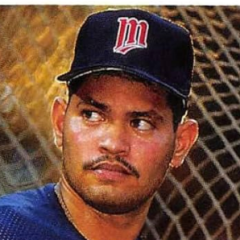
Image courtesy of © Vincent Carchietta-Imagn Images

By one metric, Royce Lewis was on time as often as any hitter in baseball in 2025. Only the Diamondbacks' Corbin Carroll edged out Lewis in Statcast's Ideal Attack Angle rate, which gives the percentage of swings on which a hitter's barrel is moving uphill at their contact point, within the range (8° to 20°) that most often generates high-value batted balls.

Attack Angle is one number meant to tell us whether a hitter is on time for the pitch they're swinging at. Every swing has to start downhill, to enter the hitting zone, and to hit anything more than a weak ground ball, they almost all have to begin working upward before making contact. If the timing of the swing is right, the barrel will be usually be moving at an angle that fits in that 8-20° range, generating fly balls and line drives with high exit velocities or high-trajectory, topspin grounders when slightly miscalibrating. In theory, the fact that Lewis trailed only Carroll should tell us that he was on time exceptionally often, leading to very dangerous contact.

We know that's not really how things played out. Lewis not only batted a forgettable .237/.283/.388, but ran an unimpressive BABIP (.267) for the second year in a row, and saw his power decline sharply. He's actually quite good at hitting the ball in the air and pulling it, which is a product of his swing's timing signature, but those tendencies don't translate to high-value contact—despite his above-average bat speed. Part of the problem could be an approach that was pretty aggressive and unrefined in 2025, but the issue runs deeper. The ideal attack angle for a swing by Lewis doesn't range from 8° to 20°. It's a much smaller window than that.

Consider these breakdowns of swing shape and performance based on attack angle, for Lewis and for another hitter with a very high Ideal Attack Angle rate, Alex Bregman.

        Royce Lewis             Alex Bregman      
Attack Angle Attack Dir. Swing Speed Contact Point Whiff Rate Exit Vel. Launch RV/100 Attack Dir. Swing Speed Contact Point Whiff Rate Exit Vel. Launch RV/100
Below 0° 19° Opp. 64.7 11.5 36.2 89.2 -8° -7.3 13° Opp. 66.2 18.6 20.4 84.9 1.1
0°-5° 6° Opp. 70.8 20 22.2 90.2 11° -3.1 17° Opp. 65.5 19.5 11.3 91.7 10
5°-10° 2° Pull 72.6 24.8 19.2 90.6 21° -3.3 9° Opp. 68 24.4 16.3 89.5 13° -5.5
10°-15° 9° Pull 72.9 29.2 23.4 91.2 20° 4.8 2° Pull 69.5 29.9 9.2 90.4 23° -4.1
15°-20° 18° Pull 73.7 35.2 25.3 88.1 24° -5 11° Pull 71.9 35.2 9.3 91.7 22° 0.8
20°+ 28° Pull 69.1 42.9 55 80.4 -3.5 26° Pull 70.2 43.6 29.8 83.4 16° -1.4

Bregman doesn't actually benefit much from hitting what Statcast has mapped onto all hitters as the Ideal Attack Angle band, but he can create lots of positive outcomes when catching the ball unusually deep and with a very flat address of the ball—in essence, when he's late. He can't be consistently beaten by velocity, because he doesn't have to get the barrel out in front of him very far or get around on it to produce solid contact. Lewis, on the other hand, has to find the ball within one small window of Attack Angle. Even in that window, he whiffs on nearly a quarter of his swings, which is an issue; most hitters whiff at a much lower rate when they're on time. More importantly, though, his swing only truly works—he only delivers the barrel to the ball in a way that results in hard, lofted contact by getting a good piece of the ball—when he gets around the ball a bit and catches it out close to 30 inches in front of his frame. 

Indeed, one reason why Lewis's swing so often fell into the Ideal Attack Angle range is that pitchers learned that they could beat him with fastballs. They didn't spend much time manipulating his timing; he saw fastballs more often than in any previous big-league stint.

chart (100).jpeg

Compare that chart to this one, showing the same pitch type distribution by year for Carroll, the other guy who topped the league in Ideal Attack Angle rate.

chart - 2026-01-06T150744.998.jpeg

Carroll can be dangerous within a much wider range of attack angles, so pitchers tried to mess with his timing more. Yet, he was just as good at overcoming that and being on time as Lewis was: equally accurate, despite a higher degree of difficulty and a greater margin for error had he needed it. That's why Carroll batted .259/.343/.541, while Lewis struggled so much despite meeting the same threshold for being on time as often as Carroll did.

It's not that hard to see why Carroll is more adaptable than Lewis, and why this number thus tells us two different things about them. To grasp it best, let's fold in one other comparator, too. William Contreras is another right-handed batter, whose swing might be easier to contrast with Lewis's at a glance. His nominal swing plane (29°) is the same as Lewis's, and he, too, has a high Ideal Attack Angle rate. Here are the swings for all three players, as visualized in composite form and frozen at the frame closest to when each makes contact.

image.png

Both Contreras and Carroll stay back better, partially because they see more soft stuff and have to. Lewis's weight has crashed forward more by the time he makes contact, such that he's catching the ball deeper in his own hitting zone than the other two, despite having the same nominal attack angle. Yet, he's also come around the ball more than either of them, signaling that despite hitting it deeper in the zone, he's closer to being too early to catch it squarely and keep it fair. Contreras and Carroll are not ideals against which Lewis must be measured, but studying the different ways their bodies and bats work in space as they attack the baseball lays bare the ways that their apparently similar swing stats can mislead us when evaluating them. 

Lewis's unusual stride locks him into some big problems at the plate. He's unique, with a step forward as the pitcher prepares to deliver the ball, then a second, separate one going in the same direction. It amounts to something very close to a lunge, but he stays stiffly upright during it, as you can see by comparing his posture at contact to those of Contreras and Carroll. This is part of why the window within which his swing can yield a cleanly struck ball is so small, relative to many other players, and in 2025, pitchers found that they could consistently get their fastball past that window and into his kitchen, such that they didn't need to change speeds, location or movement direction as much as they do against other, similarly fearsome swingers.

Contreras and Carroll are long striders; it's not about the sheer distance covered as Lewis gets going in the box. Rather, his double-forward move brings his weight forward sooner, and makes it harder for him to rotate and flatten out through the ball, producing feel for the barrel throughout the swing. The dots between each player's feet in the grids below show the player's center of mass. Notice how much farther forward Lewis's is, within his starting (black) and ending (red) foot positions, relative to those of Contreras and Carroll.

Untitled design (55).png

The more we learn about swing metrics, the more obvious it becomes that we need to study each player's physical and mental approach in and of themselves, rather than applying broad rules to large batches of players. There's still plenty to take away from things like Ideal Attack Angle rate, attack angle and direction, and swing speed and plane, but for most players, sorting leaderboards does little to elucidate what's really happening.

Bregman, Carroll and Contreras are all more selective than Lewis, not only in terms of how often they expand the zone but in terms of what they swing at within it. Just as we needed to know that pitchers stopped throwing Lewis as many offspeed and breaking pitches to understand why he fooled Statcast into thinking he was always on time, we need to know what types of pitches each hitter should be swinging at (and in what areas of the zone) based on their swing characteristics, to discern whether they're really on time or on target as much as one-size-fits-all numbers might imply. Lewis, clearly, needs to adjust both his physical moves and his plan at the plate in 2026. That's a big job for new hitting coach Keith Beauregard, but armed with data like this (and superior, proprietary metrics teams can build without trying to create a single number digestible to fans), he and the rest of the coaching staff have a chance to turn Lewis around. They just need to avoid letting anyone imply that what Lewis did last season was ideal, or league-leading.


View full article

Posted

There was something during the season about the Twins wanting him to change his swing but he wouldn't do it. The line was something like if it doesn’t work it would cost him money. 

Posted

In 2025, I watched Lewis in the batter's box, and it sure seemed like he was stutter-stepping forward and was way off-balance.  I couldn't understand why a guy would be so active with his feet just as the pitch was coming into the plate.  It looked impossible for him to generate any power.  I figured the Twins would work with him to be more centered and not moving so much.  

Definitely a weird approach, but, he's Royce Lewis and if he wants to do it like that, well, that's his prerogative, I guess.  Doesn't work for him but, he's a great personality and he'll have a good life beyond baseball.


Verified Member
Posted

It looked for all the world like he was having leg problems that led to this terrible swing.  It was as if he couldn't push off, didn't see the pitch well and was guessing with a hurried stride to get out there for the fastball. I'm no mechanics guy,  so I'm happy to accept this reading of the numbers to explain what was happening. 

But none of these interpretations matter as much as how Lewis and his coaches respond to it. He looked bad last year, even after he started looking healthy and athletic. Too bad he didn't want to make changes during the season, but now is the time to fix things. Five weeks to see how it went. 

Posted

Ding Ding Ding. (no reason, just need to wake up)

Herein lies the KEY to the Twins success this year AND moving forward.

Can the coaches IMPROVE the Twin's hitters and STOP degradating them to Low A level.

Ideal Angle is just single data point.

It will probably produce great results...

If everything is right or near right.

If you are busy, (feet/hands/head) you are most not likely going to be able to Ideal Angle.

NOTE:  This applies only to RH hitters because lefties are never Right.

Verified Member
Posted

Sometimes I wonder how much of all this advanced swing, and pitching, stuff gets into some players heads too much that it works against them.  I am all for more info the better, and trying to figure out how to play better, but I feel with baseball, the head game plays such a roll that when you start thinking a ton about every little thing, that you start to try to change what worked for you all the years you played.  Your mind and body loses the muscle memory and then you fail.

I like to point to Buxton as one guy I feel like all the adjustments they tried with him early in his career really held him back.  Eventually he get settled in and mostly, to what he did all his life.  Are there some guys that will really benefit from this type of stuff, yeah, but not all will. 

Sometimes you just need to let the kids hit and make adjustments without going into the lab.

Verified Member
Posted

Not sure I really understand everything that was written. I don’t need to. A MLB player who is unable to catch up to a fastball will generally have a very short and unsuccessful career. 

Create an account or sign in to comment

You need to be a member in order to leave a comment

Create an account

Sign up for a new account in our community. It's easy!

Register a new account

Sign in

Already have an account? Sign in here.

Sign In Now
The Twins Daily Caretaker Fund

You all care about this site. The next step is caring for it. We’re asking you to caretake this site so it can remain the premier Twins community on the internet.

×
×
  • Create New...