Jump to content
Twins Daily
  • Create Account

Recommended Posts

Posted

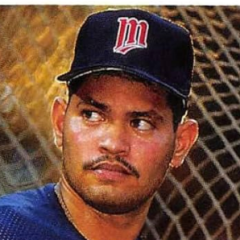
Since his return from the IL, Carlos Correa had been trying out a new approach at the plate. Then he exploded.

Something changed last night for Carlos Correa. Well, something changed back. Correa has been excellent all season, but he’s been even better since his return from the IL on September 14. He’s running a 187 wRC+, up from 153 before the injury, and his on-base percentage is approaching .500. Now, we’re talking about just 10 games and 46 plate appearances, and Correa is running an unsustainable .429 BABIP over that period. However, I think there might be some real changes going on; temporary changes, but real ones nonetheless.

When Correa returned last week from a two-month absence due to plantar fasciitis in his right foot, I checked in on his bat speed and noticed that it wasn’t too far below his season average. However, I spoke too soon. The really useful thing about bat speed is that it stabilizes very quickly. You only need to see a player reach a bat speed of 88 mph one time to know that they’re capable of hitting the ball extremely hard. Correa’s bat speed before the injury was 74.7 mph, which put him in the 85th percentile. Since his return, his bat speed has averaged 72.8 mph, which would drop him down to the 65th percentile. Before the injury, 48% of his swings were over 75 mph; since he came back, it’s 28%. Watching Correa swing the bat these past two weeks, I don’t think the issue is that he can’t put everything into his swing. He’s hit the ball hard often enough, and his swing has looked explosive at times. Back in May, Matt Trueblood noticed that Correa had started using a scissor kick, transferring his weight so aggressively that his right foot would slide backwards away from home plate, sometimes rising off the ground entirely. Correa is still using that move. Here he is doing so on Wednesday night.

<iframe src="https://sporty-clips.mlb.com/OVpCM0FfWGw0TUFRPT1fQjFOV1VBWUJWMWNBQ0ZRRUF3QUFDQUpTQUFOUlZGY0FWZ2NHVlFRREJ3dFZCd0pW.mp4" width="560" height="315"></iframe>

However, Correa still hasn’t approached the highest bat speed that he’s capable of. While he’s still scissoring, his back foot is rarely leaving the ground entirely. Correa’s hardest swing of the season was measured at 87 mph, and he’s had 50 that were measured at or above 80 mph this season. Since his return, however, the fastest swing he’s unleashed was 79.2 mph. It ranks as just his 72nd-hardest swing of the season. In fact, of his 100 hardest swings this season, just four have come since his return. Statistically speaking, if nothing had changed at all, we would expect that number to be closer to 12. However, at this point, I need to remind you of how Statcast measures bat speed.

The number you see indicates how fast the barrel is moving in the video frame where it’s closest to the ball, and many, many factors influence it. For example, because the bat keeps accelerating all the way through the hitting zone, pulled balls, which are necessarily hit out in front, will have a higher bat speed than balls hit the other way, which are usually caught deeper in the zone. The overarching theme of these factors is adjustments. When you're exactly on time and the ball is put right where you want it, you can get off the fastest swing of your life. The more you have to adjust your swing – maybe you’re late on a fastball so you have to cheat to catch up to it; maybe you’re early on a breaking pitch so you have to slow down in order to avoid whiffing; maybe the pitch is high and your swing is geared for lower pitches; maybe a changeup dropped more than you expected, so you have to lower your bat angle at the last second; and so on; and so on – the more bat speed you’re going to surrender.

Players with superhuman bat speed, like Giancarlo Stanton, swing from their heels no matter what, and things go great when they manage to connect with the ball. Players with the slowest bat speed, like Luis Arraez, use the shortest, quickest swing possible and use the extra time and more direct bat path to give themselves a better chance of squaring the ball up. This is just a hunch based on watching his swings over these past two weeks, but I think Correa has been doing something slightly different lately. I think Correa hasn’t felt like he was completely ready to let it rip, and he’s been attempting his own version of the Arraez method.

The graph below shows Correa’s 10-game rolling hard-hit rate, courtesy of FanGraphs. However, this isn’t hard-hit rate as Statcast measures it, with a cutoff at 95 mph. This chart uses data from Sports Info Solutions, which categorizes batted balls as soft, medium, or hard, using its own proprietary criteria. According to Statcast, Correa has a 30% hard-hit rate over his last 10 games. That’s on the low side for him, but not at all out of the norm. However, look at what SIS is seeing. The last 10 games are all the way on the right.

Correa10GameHardWholeCareer2.png.f5e0a3cd82a7c7861bdc736b2f8ff4c5.png

Correa is all the way down near 12%. According to SIS, this is the lowest 10-game hard-hit rate of Correa’s entire career! Clearly Correa is hitting the ball hard enough to impress Statcast, but not hard enough to impress SIS. The problem isn’t that he’s mis-hitting the ball and making tons of soft contact. His soft contact rate is pretty low too, so the process of elimination tells us that Correa must be making lots of medium contact, and SIS agrees wholeheartedly. Once again, you're looking for the far right of the graph.

10GameRollingMediumWholeCareer2.png.d8a4414180bb0df3baf9aa43687df453.png

Correa is all the way up near 75%, very nearly at a career-high in medium contact. He’s trading the extremely loud contact that he’s normally capable of for a whole bunch of almost-hard contact. He’s not going full Arraez – in fact, he’s chasing more, so his contact rate and squared-up rate are both down  – but he is pulling the ball less often and hitting more line drives. When he does put the ball in play, he seems less focused on blowing it to smithereens. Sometimes he seems focused on hitting it where it’s pitched, and other times he seems like he’s really trying to direct the ball to a gap in the defense, which would help explain why his BABIP has been so unbelievably high. Here are three recent swings where he’s found a way to shoot the ball through the right side of the infield, even if it means a very awkward swing, because that’s what the defense was giving him.

<iframe src="https://streamable.com/mlbfilmroom/00u836p5h9trnqKaW356/correa-going-the-other-way?partnerId=web_multimedia-search_video-share" width="560" height="315"></iframe>

So that’s what I wanted to show you, but I mentioned a thousand words ago that these changes were temporary. Sometimes all it takes is one swing to make you feel like you’re back, and did Correa ever get that one swing last night. Here’s the monster home run he hit.

<iframe src="https://sporty-clips.mlb.com/S3d2NjRfWGw0TUFRPT1fVUFSU1VWZFhBQUlBRGdkUVZ3QUFDRklEQUZoUVZRTUFVUUVDVTFaUVVnQlJDVkZl.mp4" width="560" height="315"></iframe>

The soft-tossing Valente Bellozo hung an elevated sweeper right down the middle, and Correa got every bit of it. Unfortunately, Statcast didn’t get a bat speed reading on that swing, but I think it's safe to say that it was in the neighborhood of 150 mph. If you were watching the game, you might have noticed that Correa looked a little bit different after the home run. Even though the game went to extra innings, where the zombie runner on second made it an excellent time to simply punch the ball through the right side of the infield, Correa seemed to be feeling himself. He was swinging from his shoes again rather than looking to place the ball or staying back and hitting it where it was pitched. 

<iframe src="https://sporty-clips.mlb.com/S3d2NjRfWGw0TUFRPT1fVXdkVVVRRURBMWNBV1ZJTFVBQUFVZ1JUQUZrR0JRSUFWbDFUVWxWVEJRSlRBRmRl.mp4" width="560" height="315"></iframe>

I’ll be really curious to see what Corera’s swing looks like over the final three games of the season. Did that homer give him the confidence to unleash his A swing? If the team is mathematically eliminated, will he go back to the bench because he’s not 100% after all? However, I doubt these last couple weeks will have much bearing on Correa over the long-term. He’s got a powerful bat, and while he’s had been great since his return, he's also been a bit lucky; there’s no question that the Twins will want him to keep blasting home runs when he’s back to full strength next season. Still, it’s been really fun to watch him succeed with a new approach, and the ability to do so speaks volumes about his skill as a hitter.


View full article

Posted

Correa looked great when healthy this year. The .300 average was nice to see, but I wonder if the higher avg came at the expense of power. For Correa to be worth almost 40 million a year to a team that's pinching pennies, he's going to have to hit 20+ home runs, and even more important, drive in way more runs. Same goes for Buxton and Lewis. When is the last time we had a true power hitter that hit 30 or more homers and hit 100+ RBIs? Nelson Cruz? Would be nice if we could add a true power threat to our lineup like Alonzo to play first base. That would really lengthen the lineup, but it'll never happen while Correa and Buxton are taking up 1/3 of the team payroll.

Posted

My biggest question about Correa is whether the Twins (and their fans) will regret dedicating 25 percent of the payroll to a guy who will be on the shelf for good chunks of the next few years (SF and NY docs likely knew something). He’s great in spurts (which is better than not good at all), but when he’s down, the team suffers. I hope his future health is better than recent history would indicate … 

Create an account or sign in to comment

You need to be a member in order to leave a comment

Create an account

Sign up for a new account in our community. It's easy!

Register a new account

Sign in

Already have an account? Sign in here.

Sign In Now
The Twins Daily Caretaker Fund

You all care about this site. The next step is caring for it. We’re asking you to caretake this site so it can remain the premier Twins community on the internet.

×
×
  • Create New...