Cody Christie
-
Posts
7,815 -
Joined
-
Last visited
-
Days Won
5
Content Type
Profiles
News
Minnesota Twins Videos
2026 Minnesota Twins Top Prospects Ranking
2022 Minnesota Twins Draft Picks
Minnesota Twins Free Agent & Trade Rumors, Notes, & Tidbits
Guides & Resources
2023 Minnesota Twins Draft Picks
The Minnesota Twins Players Project
2024 Minnesota Twins Draft Picks
2025 Minnesota Twins Draft Pick Tracker
2026 Minnesota Twins Draft Tracker: Picks & Bonuses
Forums
Blogs
Events
Store
Downloads
Gallery
Everything posted by Cody Christie
-

Byron Buxton, Leadership, and Cultivating Clubhouse Culture
Cody Christie posted an article in Twins
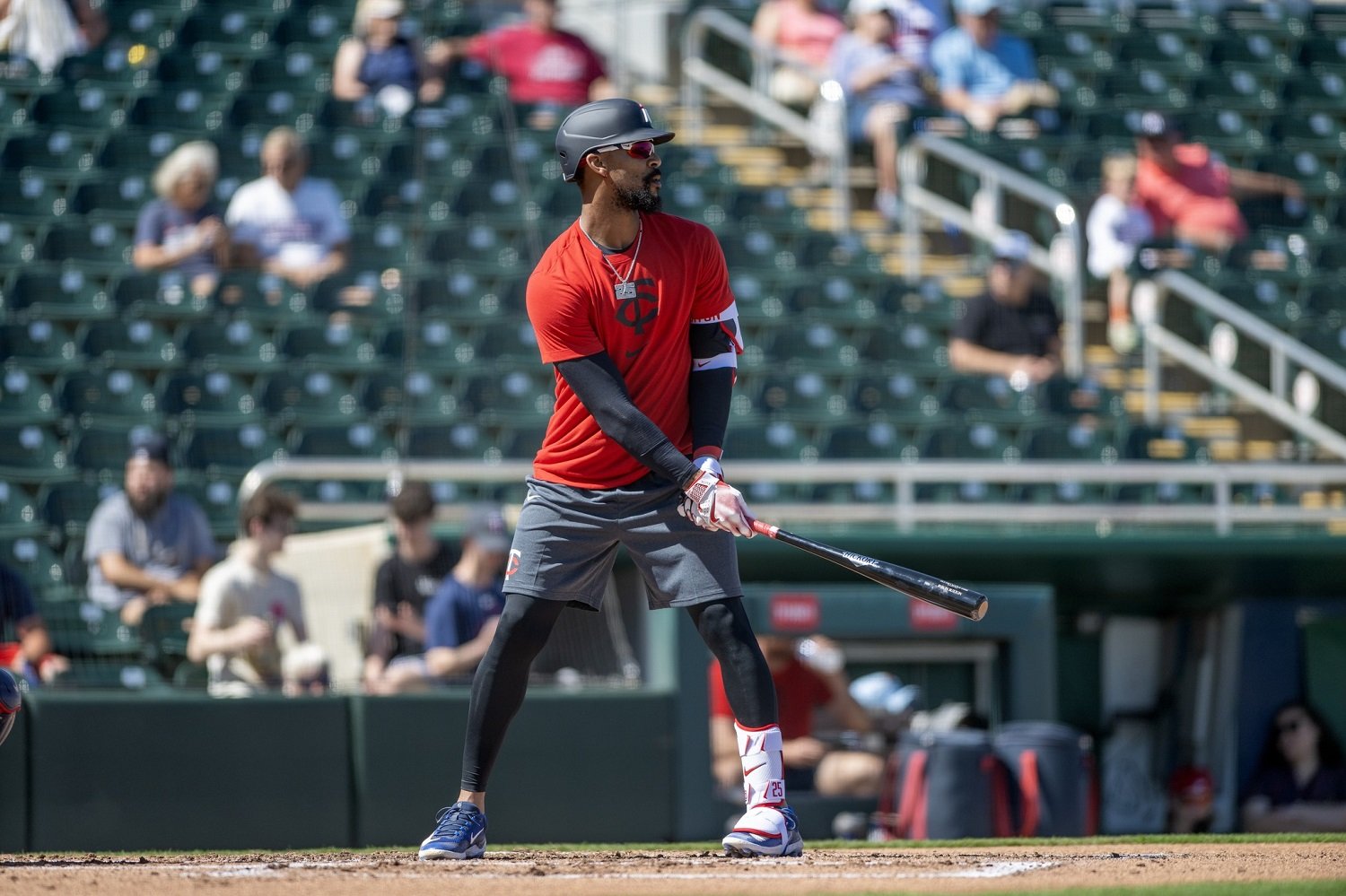 Byron Buxton has been a cornerstone of the Minnesota Twins organization for nearly a decade. Still, his view on leadership remains the same as when he first walked into the clubhouse as a highly touted rookie. As the Twins prepare for another season, Buxton finds himself in a role that naturally carries leadership expectations. However, he isn't changing who he is just because of a new label. "Go about my business. I'm not about to change just because I'm put in a new role. Like when you change, that's when things don't go your way. So I'm still the same person I was when I walked in here as a rookie," Buxton explained in a recent interview on WCCO radio with Jason DeRusha. In truth, there isn't much that's new about his status, anyway. It's been several years since Buxton was the young player looking up to clubhouse veterans for guidance. When he debuted in 2015, the Twins had an established group of leaders, including Joe Mauer, Brian Dozier, Trevor Plouffe, and Torii Hunter. The grizzled Hunter, in particular, played a pivotal role in helping young players like Buxton navigate their first experiences in the big leagues. The veteran outfielder had returned to Minnesota for one final season, bringing a wealth of experience and an infectious energy that permeated the clubhouse. At the time, Hunter clarified that relationships are at the heart of leadership. "I try to reach out to guys and get a chance to know everybody," Hunter said. "But you can't just go up to guys and say, 'Hey, do it this way.' You have to build a relationship up so they'll listen to you. And that's what spring training is for." After that campaign, Hunter retired, but Mauer, Dozier, and Plouffe remained. The 2016 season proved difficult for the Twins, who finished with the worst record in baseball, but it taught Buxton valuable lessons about perseverance and professionalism, which helped shape his leadership approach today. "Yeah, I'm a leader, but to these guys, I'm just one of the teammates, one of the brothers that they can come up and talk to," Buxton told WCCO. "When you put a title on it and you have young guys that come in here, they feel different, like they can't talk to you, and that's how it was when I came up. I'm not going to be like that. I want you to be able to talk, communicate, and do whatever you want to do and make yourself better as a player but also as a person because this game is going to end." In that quote, it doesn't even sound like Buxton felt he got much positive leadership from the veteran core of the club he joined all those years ago. He's been one of the team's established leaders for a few years now, though, so he's had time to carve out a different niche. Buxton's words carry weight, especially for the young players looking to prove themselves in the majors. The 2025 Twins have a mix of veteran talent and emerging stars, and Buxton's presence provides a steadying influence. This is one of the reasons the Twins were willing to sign him to an extension to keep him in Minnesota. His approach to leadership is rooted in authenticity. He's not the type to deliver fiery speeches or command attention in the locker room. Instead, he leads by example, showing younger players what it takes to succeed at the highest level. As one of the longest-tenured Twins, Buxton understands the ups and downs of a major-league career. Injuries have plagued him throughout his time in Minnesota, but his perseverance has never wavered. They can see the way he prepares his body on a daily basis. That resilience is something his teammates undoubtedly notice and respect. While his role may have evolved, Buxton remains committed to being the same person he's always been. That consistency and his natural ability to connect with teammates make him a leader in every sense of the word. And for a team looking to build something special, that type of leadership might be exactly what they need. Does Buxton’s style of leadership work for the current clubhouse? Should other veterans have helped Buxton more when he was younger? Leave a comment and start the discussion.
 -
The scars of 2024’s collapse won’t disappear until the Twins start winning games. To begin that healing process, though, requires lots of work before those wins can accumulate. Image courtesy of William Parmeter (Photo of Matt Borgschulte) The scars of 2024’s collapse won’t disappear until the Twins start winning games. To begin that healing process, though, requires lots of work before those wins can accumulate. How will the Twins rebound from their 2024 collapse? Last season, Minnesota looked destined for October baseball, before an unfathomable 12-27 finish left them watching the playoffs from home. The frustration lingers, but spring training is about new beginnings. Here are some ways the Twins are looking to avoid another collapse. Chip On Their Shoulder Baseball is a game where players can ill afford to dwell on the past. One bad pitch or at-bat must quickly be put behind a player, so they can focus on the next critical moment. However, Minnesota’s collapse was one of the most disappointing seasons in team history. Those involved with the organization will continue to be asked about the end of last season. Derek Falvey, the Twins' president of baseball operations, was recently asked if the collapse left a bitter taste in the team’s mouth. "No question. I think it fueled us throughout the offseason," Falvey said. "It fueled the work that these players did. It fueled the work the coaches did behind the scenes as far as preparing for the season. It fueled us in the front office to think about what we can do to be better." Losing can be great motivation during the offseason, but that can only carry a team so far. The Twins project to have one of baseball’s best bullpens, but even great relievers will burn out from overuse. To find more consistency, Minnesota will need to focus on other areas when the season begins. New Hitting Philosophy The 2024 Twins showed the ability to hit for power, but ran into serious issues when making contact in key moments. That’s where Matt Borgschulte comes in. Returning to the organization as a hitting coach, he brings a fresh focus to Minnesota’s offensive approach. Borgschulte visited key players this winter, including Byron Buxton, Royce Lewis, and Edouard Julien, to prepare them for the new season. While the Twins will always have power hitters, they may be moving away from an all-or-nothing approach. Instead of living and dying by the home run, there’s an emphasis on making more consistent contact, especially late in counts. Twins manager Rocco Baldelli did some offseason introspection, which led to a philosophy shift, prioritizing versatility and situational hitting. "We did make some staff changes. We have a new hitting department that we're going to unleash with our players in spring training," Baldelli revealed. "The goals heading into spring training for our team are to talk about approach and to talk about how to win games when you don't hit two home runs." Falvey reiterated that hitting philosophy. "I will say, I think our guys have thought about how to start winning games that we lost last year," he said. "We were waiting for that one big three-run homer at different times, to the point that maybe guys put a little too much pressure on themselves. “I think, this year, there has been a concerted effort among the hitting guys to just figure out a way to grind out different types of at-bats,” Falvey continued. “You don’t always have to wait for the three-run homer. Sometimes, you just have to find a way to move the line along. You get to hit, then you move on to the next guy. You take a walk, then you move on to the next guy. I think our guys are talking about that kind of offensive approach." This shift could be crucial for a team that struggled with runners in scoring position and other missed opportunities in 2024. If the Twins can put the ball in play more often in high-leverage situations, they’ll have a much better shot at bouncing back in 2025. With a talented roster and a new mindset at the plate, the question has to be focused on how they will rebound when another offensive slump hits the team. Staying Healthy for the Stretch Run One of the biggest reasons for the Twins' 2024 collapse was the absence of key players in the second half. Injuries took a significant toll, with Joe Ryan, Byron Buxton, and Carlos Correa all missing significant time. All three players were playing at or near an All-Star level in the first half, and there weren’t suitable replacements on the roster. Their absences weakened both the lineup and the pitching staff, making it difficult for the team to sustain success down the stretch. A healthy Ryan stabilizes the rotation, as he has shown ace-like potential when at full strength. Buxton, one of the most dynamic players in baseball, needs to stay on the field to provide elite defense and game-changing power. Correa is arguably the team’s best overall player and will be relied upon to anchor the infield and deliver in big moments. For the Twins to truly put 2024 behind them, they must keep their stars on the field. Improved injury prevention strategies, smarter workload management, and a little luck could go a long way in ensuring that Minnesota has its best players available when it matters most. A healthy core gives the Twins their best shot at contending deep into the season and beyond. Are there other ways the Twins can avoid a collapse in 2025? Leave a comment and start the discussion. View full article
-
Burning Questions for 2025 Twins Spring Training: Recovering From Collapse
Cody Christie posted an article in Twins
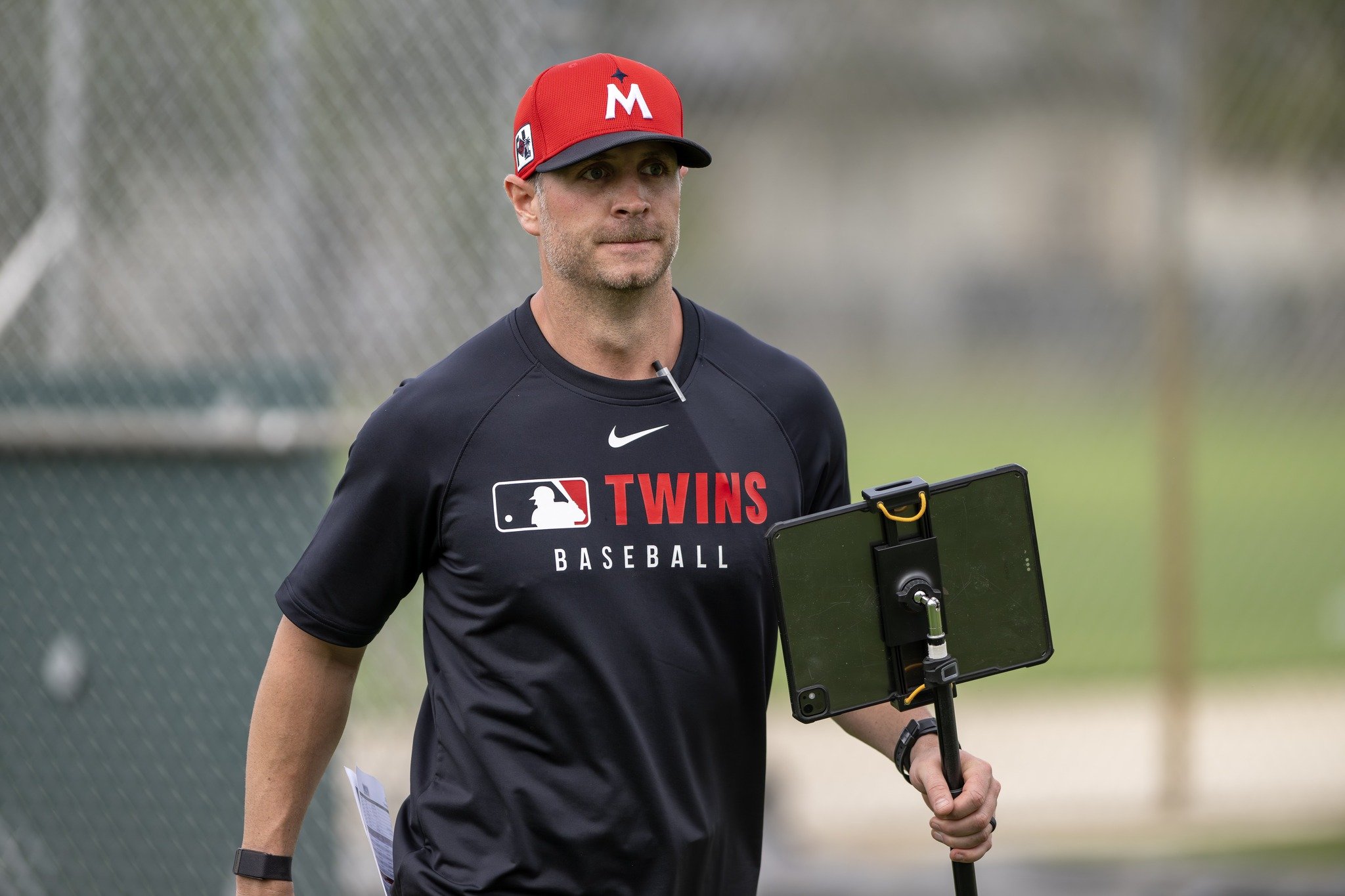 How will the Twins rebound from their 2024 collapse? Last season, Minnesota looked destined for October baseball, before an unfathomable 12-27 finish left them watching the playoffs from home. The frustration lingers, but spring training is about new beginnings. Here are some ways the Twins are looking to avoid another collapse. Chip On Their Shoulder Baseball is a game where players can ill afford to dwell on the past. One bad pitch or at-bat must quickly be put behind a player, so they can focus on the next critical moment. However, Minnesota’s collapse was one of the most disappointing seasons in team history. Those involved with the organization will continue to be asked about the end of last season. Derek Falvey, the Twins' president of baseball operations, was recently asked if the collapse left a bitter taste in the team’s mouth. "No question. I think it fueled us throughout the offseason," Falvey said. "It fueled the work that these players did. It fueled the work the coaches did behind the scenes as far as preparing for the season. It fueled us in the front office to think about what we can do to be better." Losing can be great motivation during the offseason, but that can only carry a team so far. The Twins project to have one of baseball’s best bullpens, but even great relievers will burn out from overuse. To find more consistency, Minnesota will need to focus on other areas when the season begins. New Hitting Philosophy The 2024 Twins showed the ability to hit for power, but ran into serious issues when making contact in key moments. That’s where Matt Borgschulte comes in. Returning to the organization as a hitting coach, he brings a fresh focus to Minnesota’s offensive approach. Borgschulte visited key players this winter, including Byron Buxton, Royce Lewis, and Edouard Julien, to prepare them for the new season. While the Twins will always have power hitters, they may be moving away from an all-or-nothing approach. Instead of living and dying by the home run, there’s an emphasis on making more consistent contact, especially late in counts. Twins manager Rocco Baldelli did some offseason introspection, which led to a philosophy shift, prioritizing versatility and situational hitting. "We did make some staff changes. We have a new hitting department that we're going to unleash with our players in spring training," Baldelli revealed. "The goals heading into spring training for our team are to talk about approach and to talk about how to win games when you don't hit two home runs." Falvey reiterated that hitting philosophy. "I will say, I think our guys have thought about how to start winning games that we lost last year," he said. "We were waiting for that one big three-run homer at different times, to the point that maybe guys put a little too much pressure on themselves. “I think, this year, there has been a concerted effort among the hitting guys to just figure out a way to grind out different types of at-bats,” Falvey continued. “You don’t always have to wait for the three-run homer. Sometimes, you just have to find a way to move the line along. You get to hit, then you move on to the next guy. You take a walk, then you move on to the next guy. I think our guys are talking about that kind of offensive approach." This shift could be crucial for a team that struggled with runners in scoring position and other missed opportunities in 2024. If the Twins can put the ball in play more often in high-leverage situations, they’ll have a much better shot at bouncing back in 2025. With a talented roster and a new mindset at the plate, the question has to be focused on how they will rebound when another offensive slump hits the team. Staying Healthy for the Stretch Run One of the biggest reasons for the Twins' 2024 collapse was the absence of key players in the second half. Injuries took a significant toll, with Joe Ryan, Byron Buxton, and Carlos Correa all missing significant time. All three players were playing at or near an All-Star level in the first half, and there weren’t suitable replacements on the roster. Their absences weakened both the lineup and the pitching staff, making it difficult for the team to sustain success down the stretch. A healthy Ryan stabilizes the rotation, as he has shown ace-like potential when at full strength. Buxton, one of the most dynamic players in baseball, needs to stay on the field to provide elite defense and game-changing power. Correa is arguably the team’s best overall player and will be relied upon to anchor the infield and deliver in big moments. For the Twins to truly put 2024 behind them, they must keep their stars on the field. Improved injury prevention strategies, smarter workload management, and a little luck could go a long way in ensuring that Minnesota has its best players available when it matters most. A healthy core gives the Twins their best shot at contending deep into the season and beyond. Are there other ways the Twins can avoid a collapse in 2025? Leave a comment and start the discussion.
- 17 comments
-
- 5
-

-
- matt borgschulte
- derek falvey
- (and 1 more)
-
Leadership and clubhouse culture are hard to hold in balance, especially if a team isn’t performing up to expectations. For Byron Buxton, leadership is even more critical with the Twins' young core. Image courtesy of William Parmeter Leadership and clubhouse culture are hard to hold in balance, especially if a team isn’t performing up to expectations. For Byron Buxton, leadership is even more critical with the Twins' young core. Byron Buxton has been a cornerstone of the Minnesota Twins organization for nearly a decade. Still, his view on leadership remains the same as when he first walked into the clubhouse as a highly touted rookie. As the Twins prepare for another season, Buxton finds himself in a role that naturally carries leadership expectations. However, he isn't changing who he is just because of a new label. "Go about my business. I'm not about to change just because I'm put in a new role. Like when you change, that's when things don't go your way. So I'm still the same person I was when I walked in here as a rookie," Buxton explained in a recent interview on WCCO radio with Jason DeRusha. In truth, there isn't much that's new about his status, anyway. It's been several years since Buxton was the young player looking up to clubhouse veterans for guidance. When he debuted in 2015, the Twins had an established group of leaders, including Joe Mauer, Brian Dozier, Trevor Plouffe, and Torii Hunter. The grizzled Hunter, in particular, played a pivotal role in helping young players like Buxton navigate their first experiences in the big leagues. The veteran outfielder had returned to Minnesota for one final season, bringing a wealth of experience and an infectious energy that permeated the clubhouse. At the time, Hunter clarified that relationships are at the heart of leadership. "I try to reach out to guys and get a chance to know everybody," Hunter said. "But you can't just go up to guys and say, 'Hey, do it this way.' You have to build a relationship up so they'll listen to you. And that's what spring training is for." After that campaign, Hunter retired, but Mauer, Dozier, and Plouffe remained. The 2016 season proved difficult for the Twins, who finished with the worst record in baseball, but it taught Buxton valuable lessons about perseverance and professionalism, which helped shape his leadership approach today. "Yeah, I'm a leader, but to these guys, I'm just one of the teammates, one of the brothers that they can come up and talk to," Buxton told WCCO. "When you put a title on it and you have young guys that come in here, they feel different, like they can't talk to you, and that's how it was when I came up. I'm not going to be like that. I want you to be able to talk, communicate, and do whatever you want to do and make yourself better as a player but also as a person because this game is going to end." In that quote, it doesn't even sound like Buxton felt he got much positive leadership from the veteran core of the club he joined all those years ago. He's been one of the team's established leaders for a few years now, though, so he's had time to carve out a different niche. Buxton's words carry weight, especially for the young players looking to prove themselves in the majors. The 2025 Twins have a mix of veteran talent and emerging stars, and Buxton's presence provides a steadying influence. This is one of the reasons the Twins were willing to sign him to an extension to keep him in Minnesota. His approach to leadership is rooted in authenticity. He's not the type to deliver fiery speeches or command attention in the locker room. Instead, he leads by example, showing younger players what it takes to succeed at the highest level. As one of the longest-tenured Twins, Buxton understands the ups and downs of a major-league career. Injuries have plagued him throughout his time in Minnesota, but his perseverance has never wavered. They can see the way he prepares his body on a daily basis. That resilience is something his teammates undoubtedly notice and respect. While his role may have evolved, Buxton remains committed to being the same person he's always been. That consistency and his natural ability to connect with teammates make him a leader in every sense of the word. And for a team looking to build something special, that type of leadership might be exactly what they need. Does Buxton’s style of leadership work for the current clubhouse? Should other veterans have helped Buxton more when he was younger? Leave a comment and start the discussion. View full article
-
Justin Ishiba shocked the Twins by dropping out of the running to be the team’s next owner. So, what’s next? Here are five ramifications for fans to follow. Image courtesy of © Bruce Kluckhohn-Imagn Images Justin Ishiba shocked the Twins by dropping out of the running to be the team’s next owner. So, what’s next? Here are five ramifications for fans to follow. The Minnesota Twins' ownership saga has taken an unexpected turn. Billionaire businessman Justin Ishbia, once a frontrunner to acquire the franchise, has withdrawn his bid to focus on increasing his stake in the Chicago White Sox. This development carries significant implications for the Twins' future. Here are five key ramifications of Ishbia's decision: 1. Prolonged Sale Process Recently, the Pohlad family aimed to finalize the sale by Opening Day 2025. With Ishbia's exit, the pool of known serious bidders has diminished, potentially extending the timeline. The process, which began in October 2024, might now stretch into mid-season or beyond as the team seeks a suitable buyer. Earlier this winter, I wrote how the first half of 2025 might be the most pivotal point in Twins' history. Part of the premise of that article was to have new ownership in place by the trade deadline so the Twins could be active buyers if the team is in contention. There is still a chance for new owners to be in place by that point, but they might not get a chance to impact the roster until 2026. 2. Potential Reassessment by the Pohlad Family Ishbia's withdrawal could prompt the Pohlad family to reconsider their decision to sell. Reports suggest they might even take the team off the market, mainly if a satisfactory offer doesn't materialize. This uncertainty could impact the team's strategic planning and operations. Sportico values the Twins at $1.7 billion, and Forbes pegs the franchise value at $1.46 billion. The Pohlads only get one opportunity to sell the franchise and will want to capitalize on its value. However, few MLB teams have been put on the market, which could allow an unknown bidder to meet the team’s asking price. Fans are ready for new ownership, so the Pohlads keeping the team would be a disappointment. 3. Increased Uncertainty for Team Operations Ownership transitions often bring changes in management and operational strategies. The delay in finalizing new ownership could lead to a period of uncertainty, affecting decision-making processes, player morale, and overall team performance. Will the team need to trade players to cut payroll? Can the club push the payroll higher at the trade deadline? Some questions won't have easy answers. Derek Falvey will be stepping into the dual role of baseball operations president and the franchise's business side. There are no guarantees that the new owners will want to keep him in that role. Sometimes, ownership groups like having people they know at the organization's top. There is value in keeping strong leadership in place, and that’s one of the reasons the Twins are promoting Falvey before the sale is finalized. 4. Financial Implications The Twins reportedly sought offers around $1.8 billion, with $1.5 billion considered a more realistic expectation. Ishbia's departure might influence the franchise's market valuation, potentially leading to adjustments in the asking price or terms of sale. Other bidders are aware that Ishibia is dropping out of the ownership race. Many considered him the frontrunner, so there is one fewer person to outbid for the new ownership. Those still interested in the Twins could try and submit a lower bid, but then there is the danger of being outbid or the Pohlads pulling the team off the market. Again, MLB teams are rarely for sale, so this is a once-in-a-lifetime opportunity. 5. Renewed Search for Potential Buyers With Ishbia out of the picture, the Twins may need to identify and engage new potential buyers. This could involve reaching out to local business figures or exploring interest from other national or international investors, potentially reshaping the future ownership landscape of the franchise. If the Twins honestly had a “robust market,” then there should be plenty of other groups interested in purchasing the team. If the Pohlads feel the bids are too low, perhaps they widen their search and look for other potential buyers. A renewed search likely stretches the timeline for new ownership until later this year. As the situation evolves, the Twins' leadership faces critical decisions shaping the organization's trajectory in the coming years. View full article
-
5 Ramifications of Justin Ishbia Dropping His Twins Ownership Bid
Cody Christie posted an article in Twins
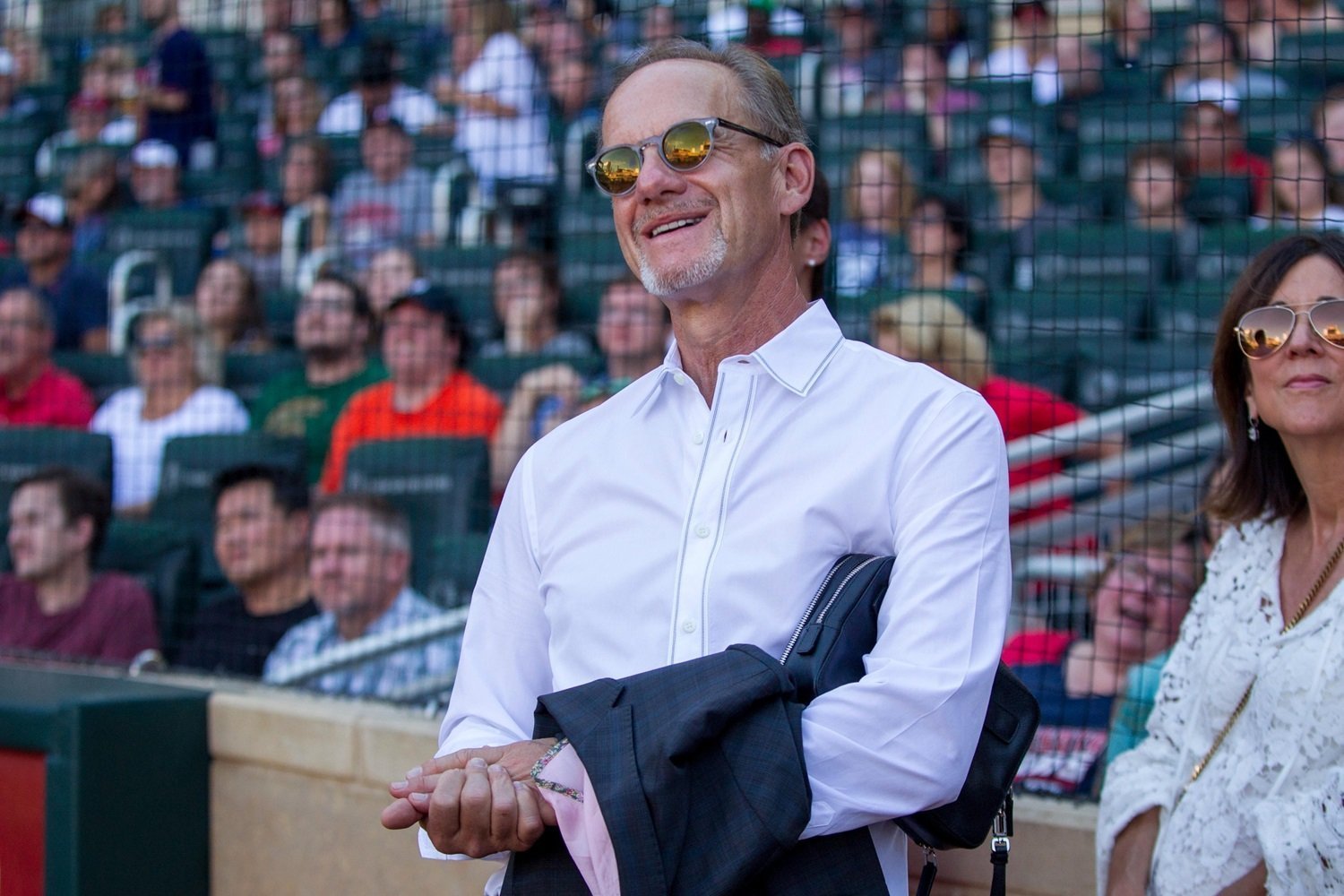 The Minnesota Twins' ownership saga has taken an unexpected turn. Billionaire businessman Justin Ishbia, once a frontrunner to acquire the franchise, has withdrawn his bid to focus on increasing his stake in the Chicago White Sox. This development carries significant implications for the Twins' future. Here are five key ramifications of Ishbia's decision: 1. Prolonged Sale Process Recently, the Pohlad family aimed to finalize the sale by Opening Day 2025. With Ishbia's exit, the pool of known serious bidders has diminished, potentially extending the timeline. The process, which began in October 2024, might now stretch into mid-season or beyond as the team seeks a suitable buyer. Earlier this winter, I wrote how the first half of 2025 might be the most pivotal point in Twins' history. Part of the premise of that article was to have new ownership in place by the trade deadline so the Twins could be active buyers if the team is in contention. There is still a chance for new owners to be in place by that point, but they might not get a chance to impact the roster until 2026. 2. Potential Reassessment by the Pohlad Family Ishbia's withdrawal could prompt the Pohlad family to reconsider their decision to sell. Reports suggest they might even take the team off the market, mainly if a satisfactory offer doesn't materialize. This uncertainty could impact the team's strategic planning and operations. Sportico values the Twins at $1.7 billion, and Forbes pegs the franchise value at $1.46 billion. The Pohlads only get one opportunity to sell the franchise and will want to capitalize on its value. However, few MLB teams have been put on the market, which could allow an unknown bidder to meet the team’s asking price. Fans are ready for new ownership, so the Pohlads keeping the team would be a disappointment. 3. Increased Uncertainty for Team Operations Ownership transitions often bring changes in management and operational strategies. The delay in finalizing new ownership could lead to a period of uncertainty, affecting decision-making processes, player morale, and overall team performance. Will the team need to trade players to cut payroll? Can the club push the payroll higher at the trade deadline? Some questions won't have easy answers. Derek Falvey will be stepping into the dual role of baseball operations president and the franchise's business side. There are no guarantees that the new owners will want to keep him in that role. Sometimes, ownership groups like having people they know at the organization's top. There is value in keeping strong leadership in place, and that’s one of the reasons the Twins are promoting Falvey before the sale is finalized. 4. Financial Implications The Twins reportedly sought offers around $1.8 billion, with $1.5 billion considered a more realistic expectation. Ishbia's departure might influence the franchise's market valuation, potentially leading to adjustments in the asking price or terms of sale. Other bidders are aware that Ishibia is dropping out of the ownership race. Many considered him the frontrunner, so there is one fewer person to outbid for the new ownership. Those still interested in the Twins could try and submit a lower bid, but then there is the danger of being outbid or the Pohlads pulling the team off the market. Again, MLB teams are rarely for sale, so this is a once-in-a-lifetime opportunity. 5. Renewed Search for Potential Buyers With Ishbia out of the picture, the Twins may need to identify and engage new potential buyers. This could involve reaching out to local business figures or exploring interest from other national or international investors, potentially reshaping the future ownership landscape of the franchise. If the Twins honestly had a “robust market,” then there should be plenty of other groups interested in purchasing the team. If the Pohlads feel the bids are too low, perhaps they widen their search and look for other potential buyers. A renewed search likely stretches the timeline for new ownership until later this year. As the situation evolves, the Twins' leadership faces critical decisions shaping the organization's trajectory in the coming years.
- 44 comments
-
- 5
-
-
- justin ishbia
- joe pohlad
- (and 1 more)
-
The list could be seemingly endless. I tried to limit it for the purposes of this article.
- 14 replies
-
- 1
-
-
- emmanuel rodriguez
- byron buxton
- (and 3 more)
-
ZiPS is a projection system. It is not made to project arrivals. Their ZiPS numbers were released at the beginning of January. There have been multiple articles on the site talking about the numbers already. If you would like to see them, there are available here. https://blogs.fangraphs.com/2024-zips-projections-minnesota-twins/
-
Here's the article for those that want to read it. https://blogs.fangraphs.com/walker-jenkins-wants-to-hit-the-ball-hard-and-usually-does/
-
Emmanuel Rodriguez is hurt again. While it might be a minor injury this time, it continues a disturbing trend for the team’s top prospects that stretches back for decades. Image courtesy of Rob Thompson, St. Paul Saints Emmanuel Rodriguez is hurt again. While it might be a minor injury this time, it continues a disturbing trend for the team’s top prospects that stretches back for decades. For years, the Minnesota Twins have prided themselves on developing homegrown talent, but one troubling trend continues to haunt the franchise. The organization’s top prospects continue to get injured. As spring training gets underway, the latest setback belongs to Emmanuel Rodriguez, a consensus top-50 global prospect, who sprained his ankle in the days leading up to camp starting. The injury is expected to sideline him for one to two weeks, but it’s another frustrating hurdle for a player who has struggled to stay on the field. Rodriguez was limited to just 47 games last season due to multiple thumb injuries, and now his 2025 campaign begins with another setback. Unfortunately, Rodriguez’s situation is hardly unique among the Twins' top prospects. Injury woes have plagued some of the most promising players in the organization, often slowing or even derailing their ascent to the big leagues. Royce Lewis, the first overall pick in the 2017 draft, was considered one of the best prospects in baseball. However, injuries have defined much of his professional career. Two ACL surgeries robbed him of critical development time, and just as he began to establish himself at the major league level last season, an oblique strain sidelined him again. He’s entering his age-26 season, so there is still hope for him to put it all together, but injuries have impacted his potential development into a superstar player. Austin Martin, Twins Daily’s top-ranked prospect in 2022, had a chance to make an impact in 2023 before a UCL sprain sidelined him early in spring training. That injury significantly limited his availability and set back his development in a crucial year. He played 67 games and reached Triple-A, posting a .791 OPS. Expectations were very high for him coming out of Vanderbilt, and last season was his first professional season where he played more than 100 games. When the Twins traded for Martin, they hoped he’d be a centerpiece of their plans, but he’s looking to be a utility, role player. Alex Kirilloff was Twins Daily’s number two ranked prospect entering the 2019 season behind Lewis. He looked like a future middle-of-the-order bat but battled persistent wrist and back issues throughout his professional career. He played 249 big-league games and hit .248/.309/.412 (.721) with a 99 OPS+. Those ailments took such a toll that he ultimately decided to retire after last season, a stunning end to what once seemed like a promising career. And then there’s Byron Buxton, the quintessential example of a supremely-talented player whose career will be forever marked by injuries. Buxton was once considered among baseball's top prospects, but a lengthy list of ailments (including knee, hip, and shoulder issues) has prevented him from reaching his full potential. He’s one of the game’s best players when healthy, but those stretches have been all too fleeting. The injury trend isn’t just limited to the current crop of prospects. Looking back, the Twins have seen numerous highly-touted players deal with injuries that impacted their careers. Joe Mauer, Justin Morneau, Francisco Liriano, and Jason Kubel all suffered significant injuries in their early years, preventing them from having a smooth, uninterrupted transition to the big leagues. Some, like Mauer and Morneau, went on to have fantastic careers, but the road was far from easy. As the next wave of Twins prospects prepares to make their mark, the team can only hope for better fortune on the health front. Prospects like Walker Jenkins and Brooks Lee have immense potential, but staying on the field will be as critical as their on-field performance. Both missed significant time in 2024. Injuries are a part of baseball, but for the Twins, they have become an unfortunate and all-too-common obstacle for their most talented young players. Is there anything the Twins can do to keep their top prospects healthy? Whose career was most impacted by injuries? Leave a comment and start the discussion. View full article
-
An Incomplete History of Minnesota’s Top Prospects Getting Injured
Cody Christie posted an article in Twins
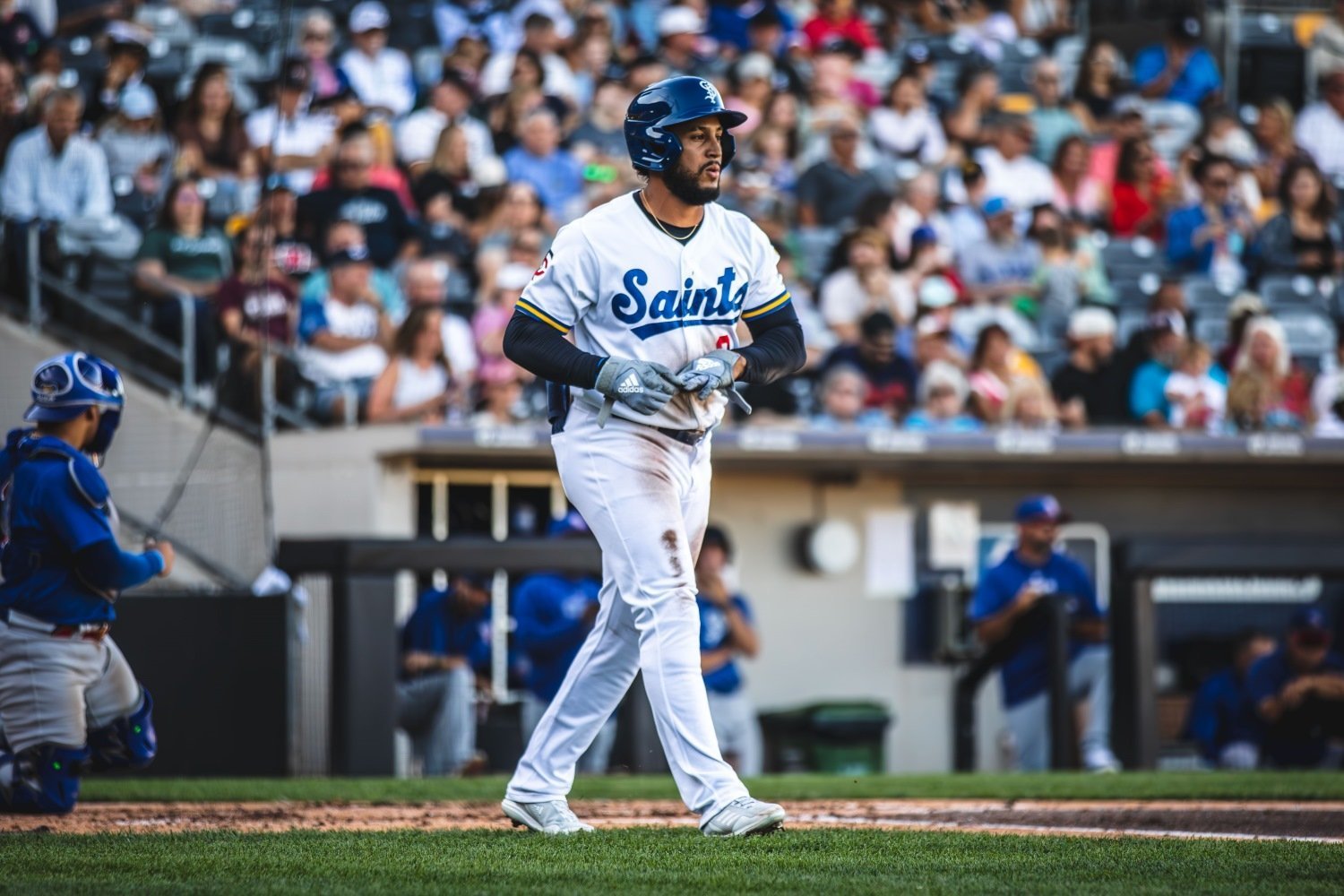 For years, the Minnesota Twins have prided themselves on developing homegrown talent, but one troubling trend continues to haunt the franchise. The organization’s top prospects continue to get injured. As spring training gets underway, the latest setback belongs to Emmanuel Rodriguez, a consensus top-50 global prospect, who sprained his ankle in the days leading up to camp starting. The injury is expected to sideline him for one to two weeks, but it’s another frustrating hurdle for a player who has struggled to stay on the field. Rodriguez was limited to just 47 games last season due to multiple thumb injuries, and now his 2025 campaign begins with another setback. Unfortunately, Rodriguez’s situation is hardly unique among the Twins' top prospects. Injury woes have plagued some of the most promising players in the organization, often slowing or even derailing their ascent to the big leagues. Royce Lewis, the first overall pick in the 2017 draft, was considered one of the best prospects in baseball. However, injuries have defined much of his professional career. Two ACL surgeries robbed him of critical development time, and just as he began to establish himself at the major league level last season, an oblique strain sidelined him again. He’s entering his age-26 season, so there is still hope for him to put it all together, but injuries have impacted his potential development into a superstar player. Austin Martin, Twins Daily’s top-ranked prospect in 2022, had a chance to make an impact in 2023 before a UCL sprain sidelined him early in spring training. That injury significantly limited his availability and set back his development in a crucial year. He played 67 games and reached Triple-A, posting a .791 OPS. Expectations were very high for him coming out of Vanderbilt, and last season was his first professional season where he played more than 100 games. When the Twins traded for Martin, they hoped he’d be a centerpiece of their plans, but he’s looking to be a utility, role player. Alex Kirilloff was Twins Daily’s number two ranked prospect entering the 2019 season behind Lewis. He looked like a future middle-of-the-order bat but battled persistent wrist and back issues throughout his professional career. He played 249 big-league games and hit .248/.309/.412 (.721) with a 99 OPS+. Those ailments took such a toll that he ultimately decided to retire after last season, a stunning end to what once seemed like a promising career. And then there’s Byron Buxton, the quintessential example of a supremely-talented player whose career will be forever marked by injuries. Buxton was once considered among baseball's top prospects, but a lengthy list of ailments (including knee, hip, and shoulder issues) has prevented him from reaching his full potential. He’s one of the game’s best players when healthy, but those stretches have been all too fleeting. The injury trend isn’t just limited to the current crop of prospects. Looking back, the Twins have seen numerous highly-touted players deal with injuries that impacted their careers. Joe Mauer, Justin Morneau, Francisco Liriano, and Jason Kubel all suffered significant injuries in their early years, preventing them from having a smooth, uninterrupted transition to the big leagues. Some, like Mauer and Morneau, went on to have fantastic careers, but the road was far from easy. As the next wave of Twins prospects prepares to make their mark, the team can only hope for better fortune on the health front. Prospects like Walker Jenkins and Brooks Lee have immense potential, but staying on the field will be as critical as their on-field performance. Both missed significant time in 2024. Injuries are a part of baseball, but for the Twins, they have become an unfortunate and all-too-common obstacle for their most talented young players. Is there anything the Twins can do to keep their top prospects healthy? Whose career was most impacted by injuries? Leave a comment and start the discussion.
- 14 comments
-
- 5
-
-
- emmanuel rodriguez
- byron buxton
- (and 3 more)
-
Both players had the most at-bats at DH last season so he has to put them into the projection system that way. Keaschall made 53 starts at DH, 16 in CF, and 20 at 2B. Jenkins made 45 starts at DH, 35 in CF, and 2 in RF. The Twins knew Keaschall would need TJ surgery but were trying to get him as many at-bats as possible before going under the knife. Jenkins was coming back from his early season leg injury so the Twins were being cautious with him.
- 19 replies
-
- 5
-
-
- emmanuel rodriguez
- walker jenkins
- (and 1 more)
-
Rodriguez being higher than Jenkins is different than nearly every national list. It was also important to look at how the Twins compare to the rest of the AL Central since those are the teams Minnesota will be competing against. It's also a look back at the list from a decade ago to see how those players developed at the big-league level. I also tried to highlight that ZiPS sometimes values players that aren't always on national lists like they did with Danny De Andrade. Overall, ZiPS tends to have a different view of baseball's top-100 prospects so this was meant to review their rankings.
- 19 replies
-
- 5
-
-
- emmanuel rodriguez
- walker jenkins
- (and 1 more)
-
How Does ZiPS View the Minnesota Twins' Top Prospects for 2025?
Cody Christie posted an article in Minor Leagues
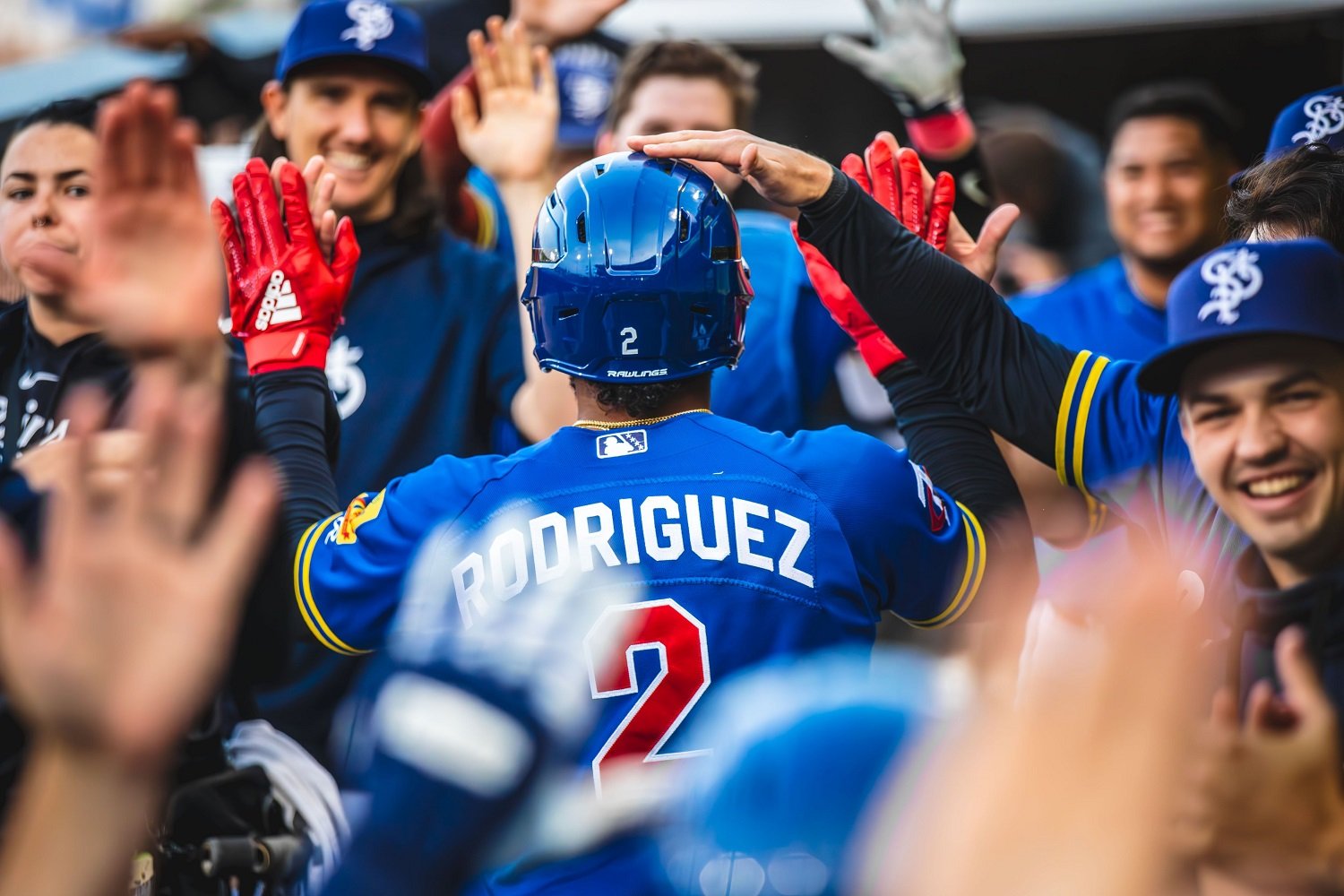 To be successful in a sustainable way, teams must find value around the margins. For some teams, that means knowing when a prospect is ready to jump to the MLB level. Recently, at FanGraphs, Dan Szymborski released his 2025 Top 100 Prospects based on ZiPS, a projection system built to forecast how players will perform in both the immediate and the longer-term future. He clarifies that ZiPS is only one way to project players and that scouting should still play an evaluative role. His top-100 lists, however, are based on data and don’t have room for individual interpretation. On the 2025 list, the Twins' top three prospects are ranked differently than most national lists. Emmanuel Rodriguez is the highest-ranked Twins prospect and sits at No. 8 overall. He finished last season at Triple-A, so ZiPS values his proximity to the majors and his high ceiling. Rodriguez is also the third-ranked outfielder. Walker Jenkins ranks 41st, even though he is widely considered the organization’s top prospect. Luke Keaschall is two spots lower than Jenkins, roughly where he ranks on national top prospect lists. Only two teams (Detroit Tigers and Chicago White Sox) have more prospects in the top 50 ZiPS prospects than do the Twins. When the list is expanded to top-500, the Twins are tied for eighth overall, with 19 ranked prospects. Among AL Central teams, the White Sox (21 players) and Guardians (20 players) are the only teams who rank higher than the Twins on the top-500 list. The Twins have rebuilt their farm system, and the results point to the big-league team keeping their winning window open. Danny De Andrade was the most surprising Twins prospect on the 2024 ZiPS list, ranking 68th overall. He was coming off a breakout season in the Florida State League. In 105 games in 2023, he hit .244/.354/.396, with 21 doubles, three triples, and 11 home runs. Over 98 percent of his plate appearances came against older pitchers; he was one of the youngest players at his level. Projections were high on him because he showed moderate power and thought he could stick at shortstop. In 2024, he spent the year at High-A and saw his OPS dip to .693 while continuing to face older pitchers. He continues to be viewed promisingly with Twins Daily ranking him as the team’s 18th-best prospect, but he certainly isn't on the national radar anymore. Rodriguez suffered an ankle injury before camp started, so he will be delayed for a week or two from participating in camp. It is an unfortunate setback, but it shouldn’t significantly impact his long-term outlook. He has already established himself as one of the most well-rounded hitters in the Twins system, showing a strong ability to control the strike zone while tapping into impressive power. Even if the injury delays the start of his season, Rodriguez should still be in line for a midseason call-up, assuming he performs well in Triple-A. If everything clicks, he has the potential to be an impact bat in the middle of Minnesota’s lineup for years to come. Jenkins, meanwhile, may have the highest ceiling of any prospect in the organization, but patience will be key. His quick rise to Double-A last season was impressive, especially considering it was his first full professional season. However, the Twins have typically been cautious with their top-position prospects, and there’s no need to rush him with depth in the big-league outfield. A strong showing in the upper minors could put him in line for a late-season debut, but 2026 is a more realistic target for him to break into the lineup as a regular contributor. Keaschall’s situation is a little different. Returning from Tommy John surgery, he will need to prove that he can handle the rigors of everyday play, but his inclusion in full spring training is a positive sign. He brings a versatile defensive skill set, which could allow him to carve out a role in Minnesota sooner rather than later. If his bat continues to develop and he maintains the strong plate discipline he showed last year, he could force his way into the conversation for a call-up by season’s end. The ZiPS projections highlight the Twins' talent coming through the pipeline, even if the big-league club won’t see an immediate influx of these prospects in 2025. Rodriguez is the closest to contributing, while Jenkins and Keaschall will likely need more time to refine their skills. If things break right, this trio could form a key part of Minnesota’s next wave of homegrown talent, helping sustain the club’s competitive window for years. Do you agree with the ZiPS rankings? Which player will have the most significant impact on the Twins roster this season? Leave a comment and start the discussion.
- 19 comments
-
- 3
-
-
- emmanuel rodriguez
- walker jenkins
- (and 1 more)
-
The Twins have three consensus top-100 prospects entering the 2025 season. How does ZiPS project the Twins' top prospects will perform this year? Let’s dive in. Image courtesy of Rob Thompson, St. Paul Saints The Twins have three consensus top-100 prospects entering the 2025 season. How does ZiPS project the Twins' top prospects will perform this year? Let’s dive in. To be successful in a sustainable way, teams must find value around the margins. For some teams, that means knowing when a prospect is ready to jump to the MLB level. Recently, at FanGraphs, Dan Szymborski released his 2025 Top 100 Prospects based on ZiPS, a projection system built to forecast how players will perform in both the immediate and the longer-term future. He clarifies that ZiPS is only one way to project players and that scouting should still play an evaluative role. His top-100 lists, however, are based on data and don’t have room for individual interpretation. On the 2025 list, the Twins' top three prospects are ranked differently than most national lists. Emmanuel Rodriguez is the highest-ranked Twins prospect and sits at No. 8 overall. He finished last season at Triple-A, so ZiPS values his proximity to the majors and his high ceiling. Rodriguez is also the third-ranked outfielder. Walker Jenkins ranks 41st, even though he is widely considered the organization’s top prospect. Luke Keaschall is two spots lower than Jenkins, roughly where he ranks on national top prospect lists. Only two teams (Detroit Tigers and Chicago White Sox) have more prospects in the top 50 ZiPS prospects than do the Twins. When the list is expanded to top-500, the Twins are tied for eighth overall, with 19 ranked prospects. Among AL Central teams, the White Sox (21 players) and Guardians (20 players) are the only teams who rank higher than the Twins on the top-500 list. The Twins have rebuilt their farm system, and the results point to the big-league team keeping their winning window open. Danny De Andrade was the most surprising Twins prospect on the 2024 ZiPS list, ranking 68th overall. He was coming off a breakout season in the Florida State League. In 105 games in 2023, he hit .244/.354/.396, with 21 doubles, three triples, and 11 home runs. Over 98 percent of his plate appearances came against older pitchers; he was one of the youngest players at his level. Projections were high on him because he showed moderate power and thought he could stick at shortstop. In 2024, he spent the year at High-A and saw his OPS dip to .693 while continuing to face older pitchers. He continues to be viewed promisingly with Twins Daily ranking him as the team’s 18th-best prospect, but he certainly isn't on the national radar anymore. Rodriguez suffered an ankle injury before camp started, so he will be delayed for a week or two from participating in camp. It is an unfortunate setback, but it shouldn’t significantly impact his long-term outlook. He has already established himself as one of the most well-rounded hitters in the Twins system, showing a strong ability to control the strike zone while tapping into impressive power. Even if the injury delays the start of his season, Rodriguez should still be in line for a midseason call-up, assuming he performs well in Triple-A. If everything clicks, he has the potential to be an impact bat in the middle of Minnesota’s lineup for years to come. Jenkins, meanwhile, may have the highest ceiling of any prospect in the organization, but patience will be key. His quick rise to Double-A last season was impressive, especially considering it was his first full professional season. However, the Twins have typically been cautious with their top-position prospects, and there’s no need to rush him with depth in the big-league outfield. A strong showing in the upper minors could put him in line for a late-season debut, but 2026 is a more realistic target for him to break into the lineup as a regular contributor. Keaschall’s situation is a little different. Returning from Tommy John surgery, he will need to prove that he can handle the rigors of everyday play, but his inclusion in full spring training is a positive sign. He brings a versatile defensive skill set, which could allow him to carve out a role in Minnesota sooner rather than later. If his bat continues to develop and he maintains the strong plate discipline he showed last year, he could force his way into the conversation for a call-up by season’s end. The ZiPS projections highlight the Twins' talent coming through the pipeline, even if the big-league club won’t see an immediate influx of these prospects in 2025. Rodriguez is the closest to contributing, while Jenkins and Keaschall will likely need more time to refine their skills. If things break right, this trio could form a key part of Minnesota’s next wave of homegrown talent, helping sustain the club’s competitive window for years. Do you agree with the ZiPS rankings? Which player will have the most significant impact on the Twins roster this season? Leave a comment and start the discussion. View full article
-
Edouard Julien entered last season with high expectations but was one of the team’s biggest disappointments. Did one focus area mess up his entire approach? Image courtesy of William Parmeter Edouard Julien entered last season with high expectations but was one of the team’s biggest disappointments. Did one focus area mess up his entire approach? For Edouard Julien, the path to becoming a more complete hitter has taken some unexpected turns. After an impressive rookie campaign in 2023, the Twins' infielder recognized a prominent area for improvement: his struggles against left-handed pitching. But when a player invests time and energy into an area that the organization may not even allow him to utilize, is that effort truly productive, or is it ultimately a misallocation of resources? Julien’s situation presents an interesting philosophical dilemma that many young hitters face. He wants to be an everyday player, and that means proving he can hit lefties. Players who are platoon-proof typically make more money and have longer careers. But the Twins' plans for him don't necessarily align with his personal aspirations. Minnesota’s front office is committed to maximizing team production. They could see him as a strict platoon bat, limiting his chances against southpaws despite any offseason progress. If the team isn’t going to let him prove himself in those situations, does his focus on left-handed pitching go to waste? Last offseason, Julien dedicated himself to improving against lefties, but the results weren’t what he’d hoped for. His bread and butter had been his numbers against right-handed pitching, but they took a hit. In 268 plate appearances, he posted a .620 OPS with a 32.8 K%. That was a 278-point drop in his OPS compared to his rookie season. His adjustments disrupted his natural approach, leading to a regression in areas where he was already elite. Instead of becoming a more well-rounded hitter, he became an unbalanced one. “Two offseasons ago, after my first year in the big leagues, I was really focused on getting better against lefties, but obviously here, lefties don't get a chance to face lefties, so I kind of messed my swing up,” Julien said. “I was more rotated just to be able to hit lefties, and I didn't get a chance to hit them. So I was better against lefties last year. I was worse against righties, where I only faced righties, so it wasn't a good combo.” Recognizing this, Julien and the Twins took a different approach heading into 2024. Rather than forcing a direct fix against lefties, he zeroed in on handling right-handed breaking balls more effectively. Sharpening his skills against breaking stuff should improve his ability to adjust against lefties, who often attack him with similar pitches. Suppose he can improve his plate coverage and maintain his elite ability to control the zone. In that case, he’ll naturally give himself a better chance to be more than just a platoon piece without actively derailing what already makes him unique. Reflecting on the offseason, Julien said, “I just focused on the righty angle, left or righty curveball, righty slider, so I feel good, and I'm sure it's going to help me against lefties too. So I'm positive about it.” Communication between the player and the organization is critical in areas like this. Teams have to be honest with players about their projected role, but they also need to guide development in a way that benefits both the individual and the club. Over the last two seasons, he has averaged around 40 plate appearances per year against lefties. If the Twins never planned on giving Julien significant at-bats against lefties, was it fair to let him believe that improving in that area would change his playing time? Instead, the focus should be on refining the aspects of his game that will earn him more plate appearances and maximize his value within the team’s framework. Julien’s offseason adjustments reflect a more efficient development path. By prioritizing his ability to handle breaking pitches (especially against righties), he’s working on something that the Twins will ask him to do on a nightly basis. At the same time, the residual benefits may still allow him to perform better when he does get those limited opportunities against lefties. For young players like Julien, the dream is to be a star, a lineup fixture against all types of pitching. But baseball is a game of roles, and part of reaching your full potential is understanding what the team needs from you, not just what you want for yourself. If the two can align, that’s when a player truly flourishes. Did Julien have the wrong approach last season? How can he improve in 2025? Leave a comment and start the discussion. View full article
-
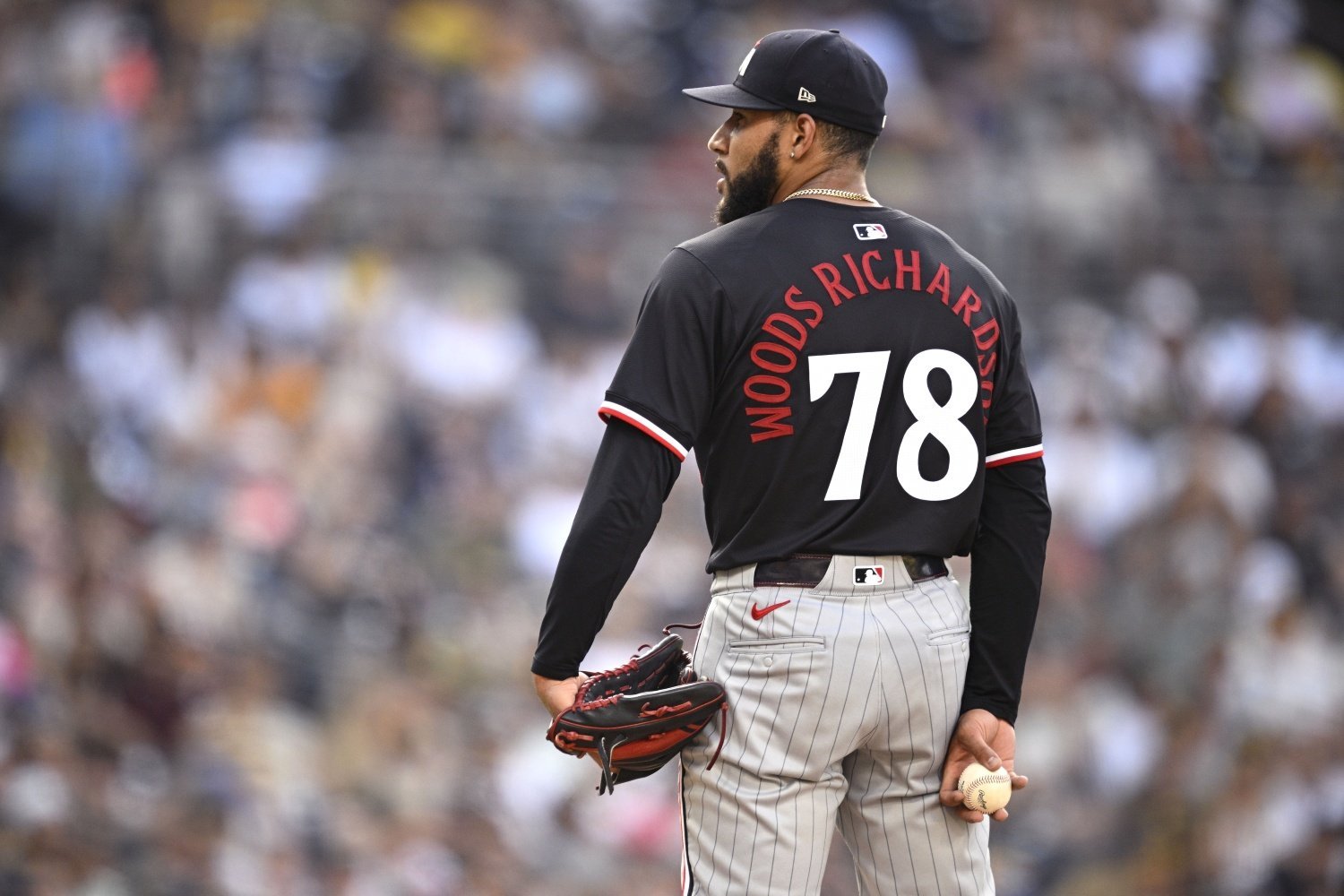 Simeon Woods Richardson entered last spring with something to prove to the Twins. His 2023 season had been an unmitigated disaster. He spent most of the season pitching in Triple A, where he recorded a 4.91 ERA, a 1.50 WHIP, and a 19.3% strikeout rate. His mechanics were inconsistent and stiff, causing his fastball velocity to dip below 90 mph. As a result, Woods Richardson’s prospect status took a significant hit. Without improvement, his chances of becoming a viable major-league pitcher appeared slim. Improbably, though, Woods Richardson saved the Twins rotation last season. He was thrust into the rotation on Apr. 13 after injuries and poor performances from other starters, and he never looked back. Across 133 2/3 innings, Woods Richardson struck out 20.6% of batters and held an ERA of 4.17. His ERA was significantly lower before the season’s final month, when he pitched past his career high in innings. At Twins Daily, SWR was the runaway choice for the team’s Rookie of the Year. Based on that performance, does he deserve the fifth starter job coming out of spring training? “We have another spot that we have guys that they’ve shown us a lot already,” Baldelli told reporters. “We have some young guys that have really stepped their game up in the last 12 months, and we’re going to look to those guys to go out there and show us what they can do.” We knew that, though. Which pitchers have an edge, in the skipper's eyes? “Festa looked great. Simeon Woods Richardson had a great year for us as well. But we're not going to set the rotation or put them in any order any time soon," Baldelli said. "We'll start with Pablo on day one, Joe and Bailey sometime early and we'll discuss what the rest of the orders and shapes and things like that look like.” Baldelli didn't name Chris Paddack during that off-the-cuff remark, but it sounds like Paddack will get the inside track on the fourth starting gig. That just leaves one. Woods Richardson will have to separate himself from Festa, Zebby Matthews, and more. The other options for the team’s fifth rotation spot have plenty of upside, even if they have less big-league experience than Woods Richardson. Festa leads the pack, armed with a mid- to upper-90s fastball and a slider that has shown huge promise. He made 14 appearances with the Twins last season and flashed the ability to generate swings and misses, though refining his command will be key. Matthews emerged as one of the system’s biggest risers, displaying elite strike-throwing ability (7 walks in 97 IP) while carving up hitters at multiple levels. His mix of polish and control could give him a legitimate shot if the Twins value a steady presence at the back of the rotation. Beyond those two, Marco Raya and Travis Adams remain intriguing but slightly less plausible options. Raya possesses some of the best pure stuff in the system, but workload concerns have followed him throughout his professional career. The Twins have been careful with his innings, and it’s unclear if they’d entrust him with a full starter’s workload right away. Adams doesn’t have the same level of prospect hype, but the Twins thought highly enough of him to add him to the 40-man roster in November to shield him from December's Rule 5 Draft. His ability to generate weak contact and limit damage makes him a dark-horse candidate. The competition among these young pitchers will be one of the most compelling storylines of camp. Woods Richardson earned some trust last year. He should get the first shot in the team’s rotation, but it sure looks like he'll have to seize his opportunity, rather than having it offered to him. He’s out to prove himself again, and that might help to drive the entire pitching staff to improve. Does Woods Richardson deserve the final rotation spot based on his 2024 performance? Leave a comment and start the discussion.
- 67 comments
-
- 9
-
-
- simeon woods richardson
- david festa
- (and 3 more)
-
Rocco Baldelli isn’t locked into one player for the final spot in the rotation. Instead, there seems to be a competition for one spot among a few impressive young arms. Should last year's emergent rookie get a leg up? Image courtesy of © Orlando Ramirez-Imagn Images Rocco Baldelli isn’t locked into one player for the final spot in the rotation. Instead, there seems to be a competition for one spot among a few impressive young arms. Should last year's emergent rookie get a leg up? Simeon Woods Richardson entered last spring with something to prove to the Twins. His 2023 season had been an unmitigated disaster. He spent most of the season pitching in Triple A, where he recorded a 4.91 ERA, a 1.50 WHIP, and a 19.3% strikeout rate. His mechanics were inconsistent and stiff, causing his fastball velocity to dip below 90 mph. As a result, Woods Richardson’s prospect status took a significant hit. Without improvement, his chances of becoming a viable major-league pitcher appeared slim. Improbably, though, Woods Richardson saved the Twins rotation last season. He was thrust into the rotation on Apr. 13 after injuries and poor performances from other starters, and he never looked back. Across 133 2/3 innings, Woods Richardson struck out 20.6% of batters and held an ERA of 4.17. His ERA was significantly lower before the season’s final month, when he pitched past his career high in innings. At Twins Daily, SWR was the runaway choice for the team’s Rookie of the Year. Based on that performance, does he deserve the fifth starter job coming out of spring training? “We have another spot that we have guys that they’ve shown us a lot already,” Baldelli told reporters. “We have some young guys that have really stepped their game up in the last 12 months, and we’re going to look to those guys to go out there and show us what they can do.” We knew that, though. Which pitchers have an edge, in the skipper's eyes? “Festa looked great. Simeon Woods Richardson had a great year for us as well. But we're not going to set the rotation or put them in any order any time soon," Baldelli said. "We'll start with Pablo on day one, Joe and Bailey sometime early and we'll discuss what the rest of the orders and shapes and things like that look like.” Baldelli didn't name Chris Paddack during that off-the-cuff remark, but it sounds like Paddack will get the inside track on the fourth starting gig. That just leaves one. Woods Richardson will have to separate himself from Festa, Zebby Matthews, and more. The other options for the team’s fifth rotation spot have plenty of upside, even if they have less big-league experience than Woods Richardson. Festa leads the pack, armed with a mid- to upper-90s fastball and a slider that has shown huge promise. He made 14 appearances with the Twins last season and flashed the ability to generate swings and misses, though refining his command will be key. Matthews emerged as one of the system’s biggest risers, displaying elite strike-throwing ability (7 walks in 97 IP) while carving up hitters at multiple levels. His mix of polish and control could give him a legitimate shot if the Twins value a steady presence at the back of the rotation. Beyond those two, Marco Raya and Travis Adams remain intriguing but slightly less plausible options. Raya possesses some of the best pure stuff in the system, but workload concerns have followed him throughout his professional career. The Twins have been careful with his innings, and it’s unclear if they’d entrust him with a full starter’s workload right away. Adams doesn’t have the same level of prospect hype, but the Twins thought highly enough of him to add him to the 40-man roster in November to shield him from December's Rule 5 Draft. His ability to generate weak contact and limit damage makes him a dark-horse candidate. The competition among these young pitchers will be one of the most compelling storylines of camp. Woods Richardson earned some trust last year. He should get the first shot in the team’s rotation, but it sure looks like he'll have to seize his opportunity, rather than having it offered to him. He’s out to prove himself again, and that might help to drive the entire pitching staff to improve. Does Woods Richardson deserve the final rotation spot based on his 2024 performance? Leave a comment and start the discussion. View full article
-
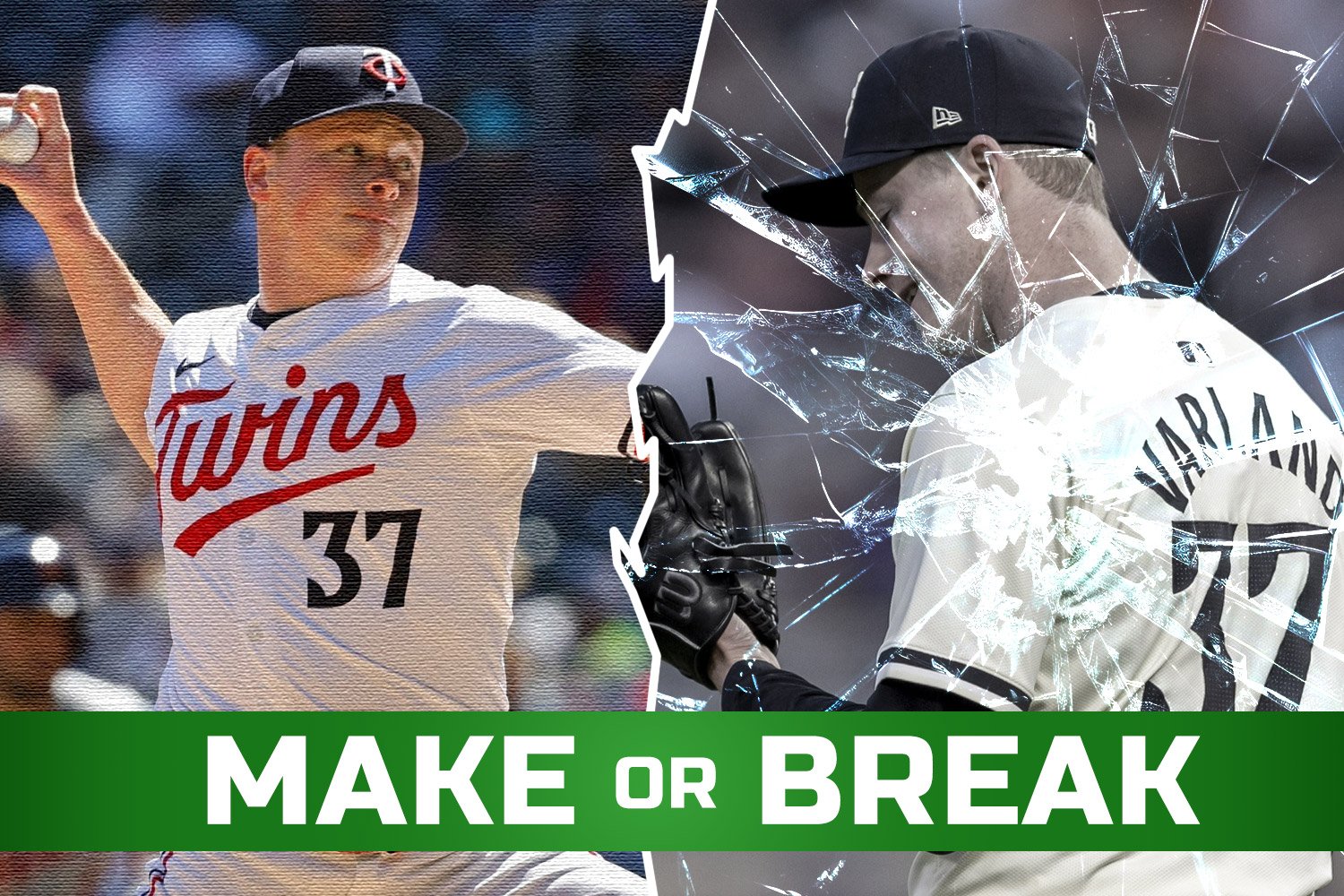 The Minnesota Twins head into 2025 with high expectations, but the stakes are even higher for the artist formerly known as Louie Varland. After a turbulent 2024 campaign, the Minnesota native finds himself at a career crossroads. With a crowded rotation, an increasingly competitive bullpen, and younger arms surpassing him on the depth chart, Varland must prove he belongs. If he can’t, his long-term role with the Twins could be in jeopardy. What Went Wrong in 2024? Heading into the 2024 season, the Twins viewed Varland as a valuable depth starter who could step into the rotation when needed. Unfortunately, his performance didn’t match expectations. After starting the year in Triple A, Varland struggled when called upon in the majors. In 16 appearances (49 2/3 innings), he posted a 7.61 ERA with a 1.69 WHIP. His strikeout rate plunged from 25.1% in 2023 to 20.6%. His command wavered, leading to an increased walk rate (6.7 BB%), and his once-effective cutter went from a weapon to a pitch pummeled for a .603 SLG. Varland saw opponents' hard-hit rate increase, as he had extended at-bats and struggled to put hitters away. As a result, the Twins shifted him to the bullpen late in the season, hoping his stuff would play up in shorter stints. While he has shown flashes of dominance in relief, inconsistency continued to be an issue. Entering 2025, Varland finds himself pushed further down the depth chart by the emergence of other arms, like Simeon Woods Richardson, Zebby Matthews, and David Festa. What Can Go Right in 2025? If Varland wants to solidify his place in the Twins’ plans, he needs a strong showing in 2025. The best path forward may be a full-time move to the bullpen. His fastball could regain its life in shorter outings, and his secondary pitches might play up with a more simplified approach. The Twins have seen success with similar transitions, and Varland has the raw stuff to thrive as a high-leverage reliever. He provided the Twins with -1.4 WAR last season, so reprising last year's attempt to salvage his starting career seems unlikely. However, the challenge remains: there isn’t a clear opening in the bullpen to start the season. The Twins project to have baseball’s best bullpen, meaning Varland will need to force their hand with a dominant spring training or early-season performance in Triple A. There is also a chance that injuries will impact the projected bullpen group, which could give Varland an opportunity. Twins manager Rocco Baldelli has been impressed with Varland’s previous relief appearances. He could become an impact arm by midseason, if he can sharpen his command and regain the velocity that he's previously shown in the bullpen. “[Varland] is just preparing for the season. He's not preparing for one role in particular. He's a guy that can adapt very quickly if we needed him to,” Baldelli told Twins Daily’s John Bonnes in Fort Myers. “I think it's very possible that we see a good amount of him out of the bullpen this year. We've seen the way he looks when he pitches out of the bullpen, but I'm not ready to say 100 percent locked in that Louie will pitch there.” How Will This Impact the Twins? The Twins’ pitching staff is in a strong position heading into 2025, but injuries and underperformance are inevitable over a 162-game season. If Varland can rediscover his form, he will give the club valuable depth in the bullpen. Conversely, if his struggles continue, the Twins may be forced to make a tough decision regarding his future as other pitchers pass him on the team’s depth chart. With younger pitchers like Woods Richardson, Matthews, and Festa climbing the ranks, the Twins may not have the patience to wait for Varland to figure things out. The Twins must give him a season to adjust to being a full-time reliever without jerking him back and forth from Triple-A to the big leagues. He took value away from the Twins in 2024, but now he can seize a new role and thrive. For Varland, 2025 is about finding sustained success at the big-league level, albeit in a different role than the one he might have hoped to fill. The Twins have options, and he is no longer a guaranteed part of their long-term plans. It’s now or never for the Minnesota native, as he either finds a way to contribute or risks being left behind. What value can Varland provide to the Twins? Is he best suited as a starter or reliever? Leave a comment and start the discussion.
 -
As the Twins gather in Florida to gear up for the 2025 season, a handful of players face a make-or-break campaign. Here’s why their hard-throwing local product is one of the most critical pieces for the pitching staff. Image courtesy of © Bruce Kluckhohn-USA TODAY Sports / © Jesse Johnson-Imagn Images As the Twins gather in Florida to gear up for the 2025 season, a handful of players face a make-or-break campaign. Here’s why their hard-throwing local product is one of the most critical pieces for the pitching staff. The Minnesota Twins head into 2025 with high expectations, but the stakes are even higher for the artist formerly known as Louie Varland. After a turbulent 2024 campaign, the Minnesota native finds himself at a career crossroads. With a crowded rotation, an increasingly competitive bullpen, and younger arms surpassing him on the depth chart, Varland must prove he belongs. If he can’t, his long-term role with the Twins could be in jeopardy. What Went Wrong in 2024? Heading into the 2024 season, the Twins viewed Varland as a valuable depth starter who could step into the rotation when needed. Unfortunately, his performance didn’t match expectations. After starting the year in Triple A, Varland struggled when called upon in the majors. In 16 appearances (49 2/3 innings), he posted a 7.61 ERA with a 1.69 WHIP. His strikeout rate plunged from 25.1% in 2023 to 20.6%. His command wavered, leading to an increased walk rate (6.7 BB%), and his once-effective cutter went from a weapon to a pitch pummeled for a .603 SLG. Varland saw opponents' hard-hit rate increase, as he had extended at-bats and struggled to put hitters away. As a result, the Twins shifted him to the bullpen late in the season, hoping his stuff would play up in shorter stints. While he has shown flashes of dominance in relief, inconsistency continued to be an issue. Entering 2025, Varland finds himself pushed further down the depth chart by the emergence of other arms, like Simeon Woods Richardson, Zebby Matthews, and David Festa. What Can Go Right in 2025? If Varland wants to solidify his place in the Twins’ plans, he needs a strong showing in 2025. The best path forward may be a full-time move to the bullpen. His fastball could regain its life in shorter outings, and his secondary pitches might play up with a more simplified approach. The Twins have seen success with similar transitions, and Varland has the raw stuff to thrive as a high-leverage reliever. He provided the Twins with -1.4 WAR last season, so reprising last year's attempt to salvage his starting career seems unlikely. However, the challenge remains: there isn’t a clear opening in the bullpen to start the season. The Twins project to have baseball’s best bullpen, meaning Varland will need to force their hand with a dominant spring training or early-season performance in Triple A. There is also a chance that injuries will impact the projected bullpen group, which could give Varland an opportunity. Twins manager Rocco Baldelli has been impressed with Varland’s previous relief appearances. He could become an impact arm by midseason, if he can sharpen his command and regain the velocity that he's previously shown in the bullpen. “[Varland] is just preparing for the season. He's not preparing for one role in particular. He's a guy that can adapt very quickly if we needed him to,” Baldelli told Twins Daily’s John Bonnes in Fort Myers. “I think it's very possible that we see a good amount of him out of the bullpen this year. We've seen the way he looks when he pitches out of the bullpen, but I'm not ready to say 100 percent locked in that Louie will pitch there.” How Will This Impact the Twins? The Twins’ pitching staff is in a strong position heading into 2025, but injuries and underperformance are inevitable over a 162-game season. If Varland can rediscover his form, he will give the club valuable depth in the bullpen. Conversely, if his struggles continue, the Twins may be forced to make a tough decision regarding his future as other pitchers pass him on the team’s depth chart. With younger pitchers like Woods Richardson, Matthews, and Festa climbing the ranks, the Twins may not have the patience to wait for Varland to figure things out. The Twins must give him a season to adjust to being a full-time reliever without jerking him back and forth from Triple-A to the big leagues. He took value away from the Twins in 2024, but now he can seize a new role and thrive. For Varland, 2025 is about finding sustained success at the big-league level, albeit in a different role than the one he might have hoped to fill. The Twins have options, and he is no longer a guaranteed part of their long-term plans. It’s now or never for the Minnesota native, as he either finds a way to contribute or risks being left behind. What value can Varland provide to the Twins? Is he best suited as a starter or reliever? Leave a comment and start the discussion. View full article
-
Record Number of Twins Players Arrive in Best Shape of Their Lives
Cody Christie posted an article in Just For Fun
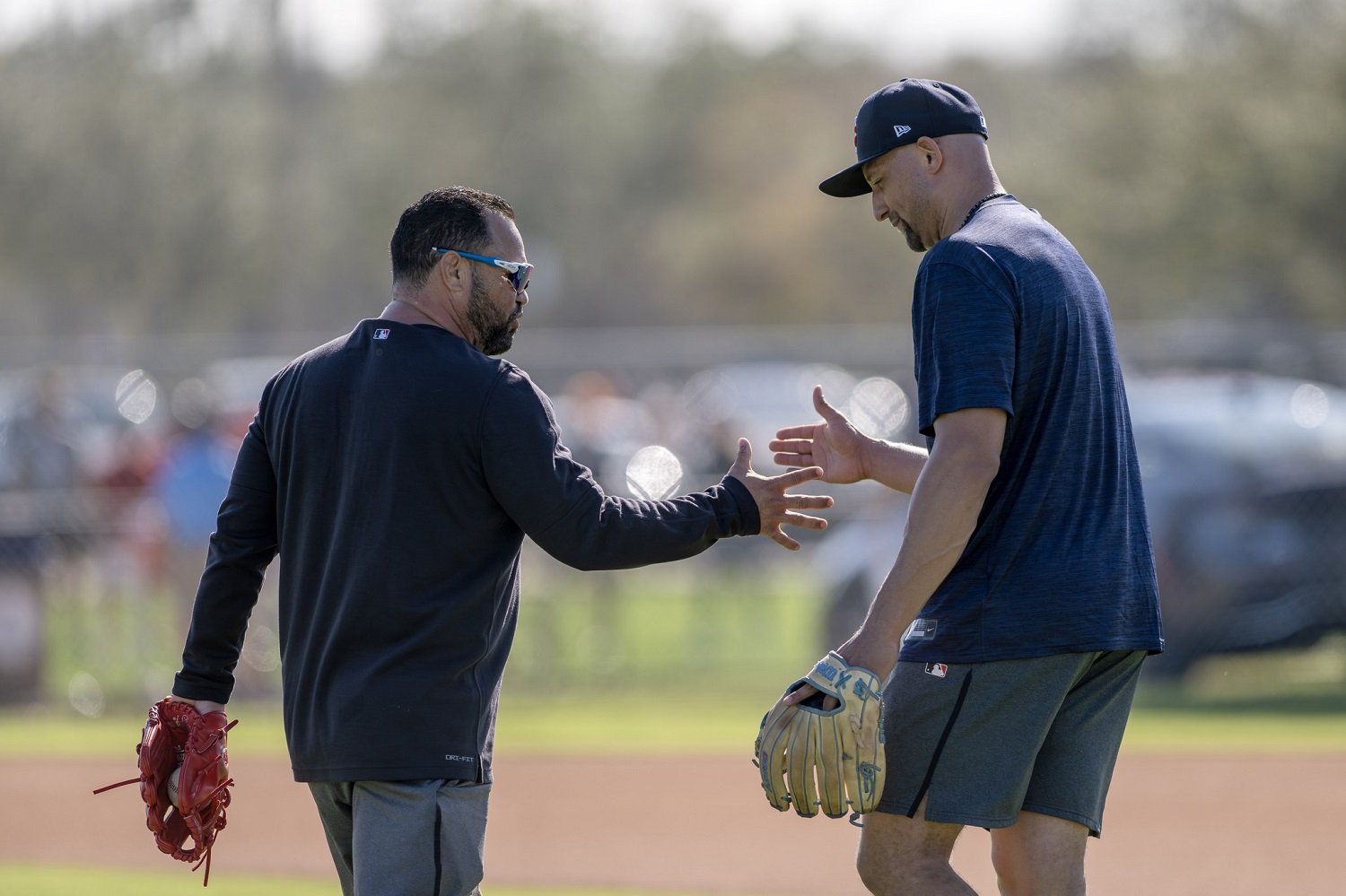 A shocking development has surfaced as the Minnesota Twins report to Fort Myers for spring training. Every single player has arrived in the best shape of their lives. That’s right, folks. The Twins are in such pristine condition that local Florida gyms have reported an unprecedented shortage of free weights, and protein shake supply chains are struggling to keep up. Royce Lewis, now allegedly boasting an 8% body fat percentage and an entirely new set of abs, was the first to comment on his own new physique. “I just really committed this offseason,” Lewis said while effortlessly flipping a tractor tire across the outfield. “Some guys do yoga, some do pilates. I personally just ran up and down Mount Everest every morning. It really unlocked something in me. I don't do slumps, but I do slopes, brother.” Carlos Correa, whose plantar fasciitis was a major talking point last season, dismissed any concerns with a bold declaration. “My foot? It’s stronger than ever,” Correa said, balancing on one foot atop a Bosu ball while juggling kettlebells. “I trained exclusively on a surface of uneven rocks to make sure it’s indestructible. Also, I might have developed the ability to levitate. We’re still testing that.” Meanwhile, Byron Buxton, who entered the offseason healthy for the first time in over half a decade, revealed his new approach. “I decided to just rebuild my entire body from scratch,” Buxton said. “[Surgery] is a tough habit to kick. Had some experimental procedures done. Some people have called it ‘extreme’ or ‘potentially illegal.’ But, let’s just say if I collide with an outfield wall this year, the wall is what’s going to break.” Perhaps the most shocking transformation came from flamethrowing closer Jhoan Durán, who insists his offseason gains have translated directly into his pitching. “My fastball now sits at 112 mph,” Durán said nonchalantly. “It's sitting there now, but I'm touching higher. Hopefully, by the time the weather warms up, I'll be closer to 117, 118." Manager Rocco Baldelli was left speechless, with every player reporting in peak condition. “I—I don’t even know what to say,” Baldelli muttered while gazing at his roster of apparent superhumans. “It’s either a dream come true or a science experiment gone too far. Our chances in 2025? Let’s just say the league might need to implement a mercy rule.” Trainer Nick Paparesta, the mastermind behind these transformations, shared his secret. “It’s really just a mix of science, grit, and a few experimental techniques that are still pending FDA approval,” Paparesta admitted. “We focused on biomechanics, cutting-edge recovery methods, and a whole lot of protein. Also, there may have been some cryogenic freezing involved. But hey, results speak for themselves—and I think the FDA's enforcement officers all got laid off anyway.” With Opening Day still weeks away, one thing is clear: the Minnesota Twins are bigger, faster, stronger, and possibly defying modern sports science. If this trend continues, opponents may soon request hazard pay before taking the field.
 -
The term “best shape of his life" gets thrown around extensively as teams report to spring training. For the Twins, it might be a record-setting year. Image courtesy of William Parmeter The term “best shape of his life" gets thrown around extensively as teams report to spring training. For the Twins, it might be a record-setting year. A shocking development has surfaced as the Minnesota Twins report to Fort Myers for spring training. Every single player has arrived in the best shape of their lives. That’s right, folks. The Twins are in such pristine condition that local Florida gyms have reported an unprecedented shortage of free weights, and protein shake supply chains are struggling to keep up. Royce Lewis, now allegedly boasting an 8% body fat percentage and an entirely new set of abs, was the first to comment on his own new physique. “I just really committed this offseason,” Lewis said while effortlessly flipping a tractor tire across the outfield. “Some guys do yoga, some do pilates. I personally just ran up and down Mount Everest every morning. It really unlocked something in me. I don't do slumps, but I do slopes, brother.” Carlos Correa, whose plantar fasciitis was a major talking point last season, dismissed any concerns with a bold declaration. “My foot? It’s stronger than ever,” Correa said, balancing on one foot atop a Bosu ball while juggling kettlebells. “I trained exclusively on a surface of uneven rocks to make sure it’s indestructible. Also, I might have developed the ability to levitate. We’re still testing that.” Meanwhile, Byron Buxton, who entered the offseason healthy for the first time in over half a decade, revealed his new approach. “I decided to just rebuild my entire body from scratch,” Buxton said. “[Surgery] is a tough habit to kick. Had some experimental procedures done. Some people have called it ‘extreme’ or ‘potentially illegal.’ But, let’s just say if I collide with an outfield wall this year, the wall is what’s going to break.” Perhaps the most shocking transformation came from flamethrowing closer Jhoan Durán, who insists his offseason gains have translated directly into his pitching. “My fastball now sits at 112 mph,” Durán said nonchalantly. “It's sitting there now, but I'm touching higher. Hopefully, by the time the weather warms up, I'll be closer to 117, 118." Manager Rocco Baldelli was left speechless, with every player reporting in peak condition. “I—I don’t even know what to say,” Baldelli muttered while gazing at his roster of apparent superhumans. “It’s either a dream come true or a science experiment gone too far. Our chances in 2025? Let’s just say the league might need to implement a mercy rule.” Trainer Nick Paparesta, the mastermind behind these transformations, shared his secret. “It’s really just a mix of science, grit, and a few experimental techniques that are still pending FDA approval,” Paparesta admitted. “We focused on biomechanics, cutting-edge recovery methods, and a whole lot of protein. Also, there may have been some cryogenic freezing involved. But hey, results speak for themselves—and I think the FDA's enforcement officers all got laid off anyway.” With Opening Day still weeks away, one thing is clear: the Minnesota Twins are bigger, faster, stronger, and possibly defying modern sports science. If this trend continues, opponents may soon request hazard pay before taking the field. View full article
-
The trade that sent Mitch Garver to the Texas Rangers had ripple effects on the Twins organization for years to come. All three players involved in the trade have ended up in new organizations, so did the Twins win this trade? Image courtesy of © Andrew Dieb-USA TODAY Sports The trade that sent Mitch Garver to the Texas Rangers had ripple effects on the Twins organization for years to come. All three players involved in the trade have ended up in new organizations, so did the Twins win this trade? The Minnesota Twins made a flurry of moves before the 2022 season, and one of the most intriguing was sending Mitch Garver to the Texas Rangers in exchange for pitcher Ronny Henriquez and infielder Isiah Kiner-Falefa. The deal was part of a more extensive roster reshaping, as the Twins quickly flipped Kiner-Falefa to the Yankees in a move that offloaded Josh Donaldson’s contract. Three years later, with Henriquez departing via waivers and Garver having completed his tenure in Texas, it’s time to assess how this trade played out. The Rangers’ Return: Mitch Garver’s Impact in Texas For Texas, Garver provided solid offensive production despite health concerns limiting his time behind the plate. Over two seasons, he accumulated 2.5 WAR while slashing .246/.342/.463 (.805). His best stretch came in 2023 when he hit 19 home runs and posted a .500 SLG while helping Texas win the World Series. However, lingering injury issues meant he appeared in just 157 games combined over those two years. Garver played a significant role in Texas' championship-winning 2023 season, stepping up as a key designated hitter down the stretch. In the ALDS, he went 4-for-10 with a home run, a double, and seven RBI in the team’s three-game sweep over Baltimore. The ALCS against Houston went seven games, and Garver posted a .357 OBP while driving in four runs and scoring four. He may not have been a full-time catcher, but his offensive upside was a valuable addition to the Rangers’ lineup, especially when healthy. Ultimately, Texas got two years of inconsistent production before Garver left in free agency following the 2023 campaign. The Twins’ Return: Henriquez’s Limited Role and the Donaldson Dump For the Twins, the key piece in the trade ended up being Kiner-Falefa, but only for a matter of hours. Before he could suit up in a Twins uniform, he was packaged with Donaldson and Ben Rortvedt in a deal with the Yankees that brought back Gary Sánchez and Gio Urshela. That trade allowed the Twins to clear Donaldson’s $51.5 million commitment, giving them payroll flexibility to eventually sign Carlos Correa. That left Henriquez as the only long-term piece from the original trade. The young right-hander showed promise in the minors but struggled to carve out a consistent role at the big-league level. Across three seasons, he bounced between Triple-A and the majors, logging just 31 big-league innings with a 2.90 ERA. This week, the Twins placed him on waivers, and he was claimed by the Miami Marlins, officially ending his time in Minnesota. Final Verdict: Did Anyone Win the Trade? Looking back, the Rangers undoubtedly got more direct value from the trade. Garver wasn’t an everyday catcher, but he provided a potent bat, helped them win a World Series, and ultimately outperformed what the Twins got in return. From Minnesota’s perspective, the trade can’t be evaluated in isolation. The Kiner-Falefa flip allowed the Twins to shed Donaldson’s contract, indirectly contributing to later moves, such as the team signing Correa in two consecutive winters and inking Pablo López to an extension. However, regarding on-field returns, Henriquez’s limited impact makes it difficult to argue that the Twins won this deal. If the goal was pure production, Texas got the better end. If the goal was financial flexibility, Minnesota accomplished what it set out to do. Neither team received extensive value from the trade, but the Rangers have a World Series title thanks to Garver’s contributions. There was a lot of value in the Twins getting rid of Donaldson, which likely extended the team’s current winning window. Did the Twins indirectly win the Garver trade? Leave a comment and start the discussion. View full article
-
Ranking the Top 5 Twins Prospects in Big-League Camp
Cody Christie posted an article in Minor Leagues
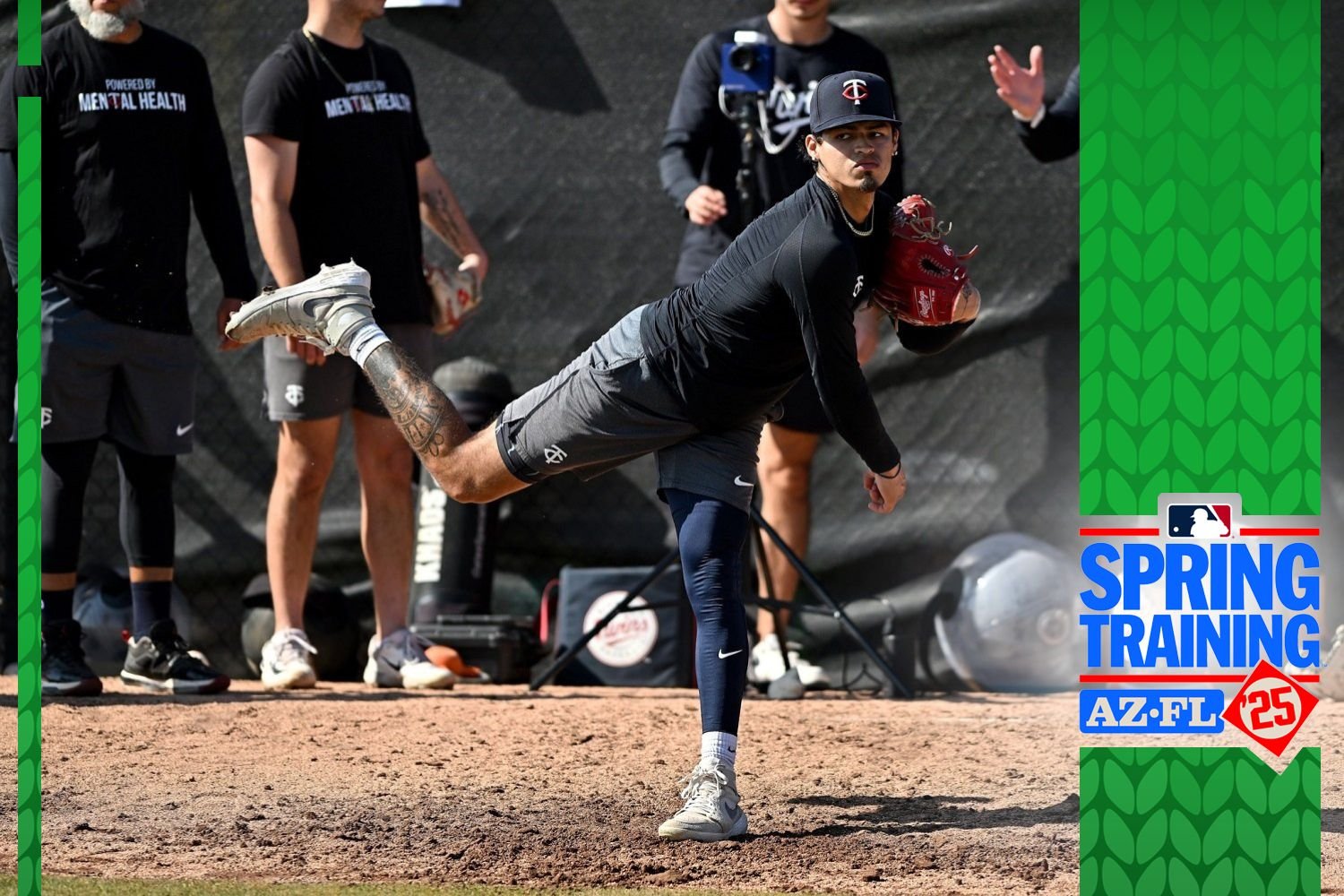 Not every top prospect in an organization gets an invite to big-league camp. Some players are far enough away from the big leagues that it doesn’t make sense to rush them. Others have yet to be added to the 40-man roster so they can stay in minor league camp and focus on preparing with the players who are more likely to be their teammates. For the Twins, some of the organization's top prospects will be in big-league camp, with some getting their first opportunity for the big-league coaching staff to get a long look at potential future stars. Here are the top five Twins prospects who will have a big-league locker as the team reports to Fort Myers. 5. Cory Lewis, SP TD Top Prospect Rank: 9 Lewis was the organization’s 2023 minor league pitcher of the year, so hopes were high for him entering last season. Unfortunately, he suffered a shoulder injury in spring training last year and missed the season’s first three months. In 19 starts, he posted a 2.51 ERA with a 1.32 WHIP and a 27.9 K%. Most of his starts last season were at Double-A, but he finished the year with one start in St. Paul, where he allowed two earned runs in five innings. Lewis should start the year at Triple-A with the chance for a call-up by the middle of the season. 2025 Prediction: Lewis makes his debut ahead of other pitchers on this list. 4. Marco Raya, SP TD Top Prospect Rank: 5 The Twins have taken a unique approach with Raya by aggressively pushing him up the organizational ladder while also limiting his innings. In his first 55 career appearances, there was only one time where he threw more than 75 pitches. In his age-21 season, he finished the year at Triple-A and posted a 4.05 ERA with a 1.36 WHIP and a 24.6 K%. He has a five-pitch mix, including a mid-90s fastball that he uses up in the zone with high spin rates. His slider is a devastating outpitch with an elite spin rate. His slower curveball and changeup also change the eye level of batters. He must prove he can handle a starter’s workload in 2025. 2025 Prediction: The Twins will unleash Raya this year by allowing him to pitch a career-high innings while pitching further into games. 3. Andrew Morris, SP TD Top Prospect Rank: 6 Morris has used his college experience at Texas Tech to quickly move through the Twins system. Last season, he nearly followed Zebby Matthews from High-A to the MLB level in one season. Morris topped out at Triple-A, but his overall numbers were impressive. In 133 innings, he posted a 2.37 ERA with a 1.08 WHIP and a 24.5 K. His over-the-top delivery helps him to hide the ball, making it more difficult for batters to track his five-pitch mix. He follows a recent trend with Twins draftees as the club takes college arms in the mid-to-late rounds and quickly finds a way to add velocity. In 2024, he averaged 94 mph and showed an ability to amp it up to the high 90s. Morris pounds the strike zone with solid pitch offerings, which is a recipe for success at the big-league level. 2025 Prediction: Morris will establish himself as a mid-rotation starter in what is becoming a fruitful Twins pitching pipeline. 2. Luke Keaschall, UTL TD Top Prospect Rank: 3 Keaschall is returning from Tommy John surgery, but the Twins expect him to be ready for the season’s start. Last year, he was the organization’s breakout hitter, batting .303/.420/.483 (.903) with 21 doubles and 15 home runs in 102 games. Keaschall enters this season as a consensus top-100 prospect, with Baseball America and Baseball Prospectus ranking him in their top 45 players. He finished last season at Double-A so the Twins could send him back to Wichita to get his feet under him before a promotion to St. Paul. He seems like the kind of player Twins manager Rocco Baldelli will gravitate towards. Look for the manager to sing Keaschall’s praises this spring. 2025 Prediction: Keaschall will debut in the first half and provide enough value that it will be tough for him to be sent back down. 1. Emmanuel Rodriguez, OF TD Top Prospect Rank: 2 In many other organizations, Rodriguez would be the top-ranked prospect. His approach is unique, with some of the best plate discipline of any Twins prospect in recent memory and showcasing elite power potential. His professional career has been hampered by injury, but he's shown tremendous ability when healthy. Last season, he hit .280/.459/.567 (1.026) with 14 doubles and nine home runs in 209 plate appearances. His 29.7 K% is high, but he pairs it with a 24.4 BB%. The Twins think highly of Rodriguez and pushed him to Triple-A last season despite missing time due to multiple injuries. He’s one of baseball’s best prospects and will impact the Twins lineup sooner rather than later. 2025 Prediction: Rodriguez will provide a second-half spark to the Twins lineup that propels the team to the postseason. Rodriguez and Keaschall will get a lot of attention, but the trio of top pitching prospects also brings excitement to big-league camp. None of the players seem destined to make the Opening Day roster, but they should all play regularly in St. Paul at some point in 2025. The Saints will have an exciting roster, and these five players will be only one step away from making their MLB debuts. Which prospect are you most excited to see during spring training? Leave a comment and start the discussion.
- 17 comments
-
- 6
-
-

-
- marco raya
- luke keaschall
- (and 3 more)