Cody Christie
-
Posts
7,810 -
Joined
-
Last visited
-
Days Won
5
Content Type
Profiles
News
Minnesota Twins Videos
2026 Minnesota Twins Top Prospects Ranking
2022 Minnesota Twins Draft Picks
Minnesota Twins Free Agent & Trade Rumors, Notes, & Tidbits
Guides & Resources
2023 Minnesota Twins Draft Picks
The Minnesota Twins Players Project
2024 Minnesota Twins Draft Picks
2025 Minnesota Twins Draft Pick Tracker
2026 Minnesota Twins Draft Tracker: Picks & Bonuses
Forums
Blogs
Events
Store
Downloads
Gallery
Everything posted by Cody Christie
-

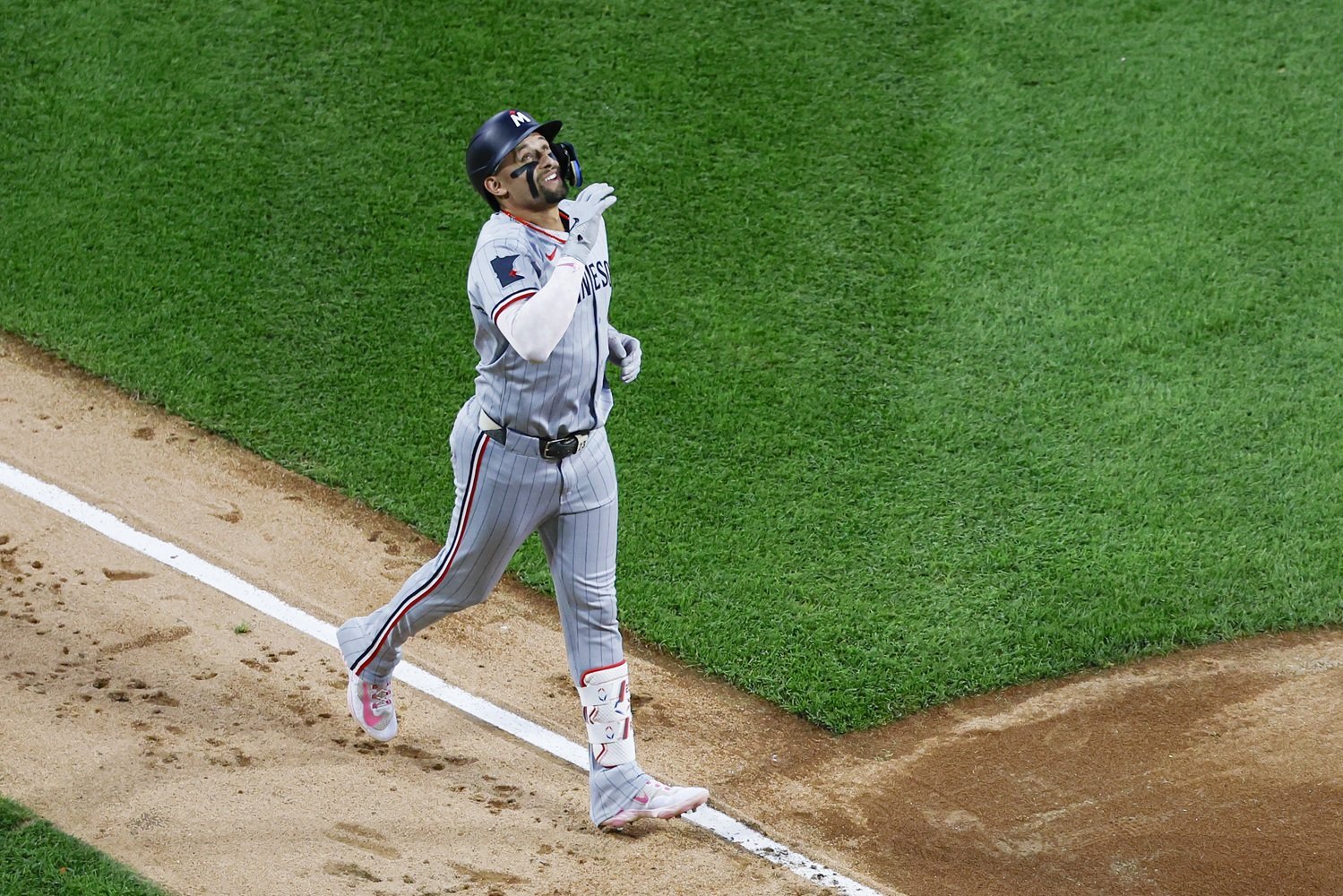 When the dust settled on this year’s trade deadline, the Minnesota Twins looked like a team in transition, but not necessarily one that had been truly overhauled. On the surface, dealing 10 players from the 26-man roster sounds like a seismic shake-up, but most of those moves involved expiring contracts, bullpen arms, and one high-priced veteran who had long since failed to live up to his contract. Relievers often burn bright and fast, and then (just as quickly) flame out. We’ve seen this before in Minnesota. Tyler Duffey was an indispensable piece of Rocco Baldelli’s bullpen for a short stretch, before he became expendable. Taylor Rogers rose to All-Star status, only to be dealt when the shine wore off. It’s the cycle of relief pitching, with high volatility and short shelf lives. The Twins cashed in on most of their current crop while they still had value. The headliner, of course, was moving on from Carlos Correa. It’s difficult to frame it as anything but a salary dump. Correa seemed relatively healthy this season, with a chance to match his superstar paycheck. Instead, he turned in another year of inconsistency and nagging health issues. From a roster-construction standpoint, the Twins are probably better for reallocating those dollars. But does that really constitute shaking up the “core?” Not exactly. The Real Core Problem If Minnesota truly wants to change its long-term trajectory, the team can’t stop at moving veterans and relievers. The elephant in the room remains a group of once-promising, now-underperforming position players: Royce Lewis, Edouard Julien, Jose Miranda, and Trevor Larnach. All are still in their mid- to late 20s. All have flashed stretches of MLB productivity. And yet, none have proven they can be cornerstone-caliber players over a 162-game season. The Twins have banked heavily on these players to fill everyday roles, but the return has been wildly inconsistent. Larnach’s power has always been enticing, but his approach leaves too many empty at-bats. Miranda has contact skills, but too often puts pitchers’ pitches in play, and now is stuck at Triple-A, even in a lost season. Julien’s bat is supposed to carry him, but holes in his defense and streaky offense leave questions about his long-term fit. And Lewis, who still flashes the tools of a star, has struggled to live up to his numbers from earlier in his career. Some of the career numbers below are sufficient, but all four of these players are trending in the wrong direction. Lewis has an 83 OPS+ in 2025, Julien and Miranda have a negative WAR, and Larnach is going to cost even more through the arbitration process. At this point, none look like long-term core pieces. Player OPS+ WAR WPA Royce Lewis 112 3.9 -0.05 Edouard Julien 99 1.6 -1.37 Jose Miranda 101 2.0 -2.80 Trevor Larnach 101 3.2 -2.08 A Developmental Reckoning All of this leads to a larger question: can the Twins actually develop their top young players once they reach the majors? Prospects are drafted because of raw tools and potential. But turning tools into production requires consistent coaching, development, and refinement at the big-league level. This has long been a weak point for Minnesota. When Derek Falvey arrived from Cleveland, his reputation was as a pitching guru, someone who could spot and develop talent as well as anyone in baseball. The Twins have, indeed, made strides in pitching depth, from drafting college arms to maximizing trade acquisitions. But the organization’s track record with position players leaves plenty to be desired. The list of recent homegrown hitters who turned into actual core pieces is short, and the jury remains out on whether this current crop will ever get there. Matt Wallner and Luke Keaschall have shown promising signs, but there is a long way to go before either can be considered a star, rather than another promising bat—in an environment where that promise feels a lot like a threat. What Comes Next So, did the Twins really shake up their core at the trade deadline? Not yet. They shed bad contracts, moved relievers at peak value, and cleared a few short-term veterans off the books. Those were necessary steps, but they weren’t revolutionary. The actual test of this front office’s vision will be whether they stick by Lewis, Julien, Miranda, and Larnach or finally decide to move on from players who may never reach the heights once expected of them. There is little to no value left in these players, so the front office may have to trade them for underwhelming returns. Until that happens, the so-called “core” of the Twins remains essentially unchanged. Do you believe the Twins shook up their core at the trade deadline? Which player's leaving would signal a true shake-up? Leave a comment and start the discussion.
- 48 comments
-
- 5
-

-

-
- royce lewis
- edouard julien
- (and 3 more)
-
Walker Jenkins and the Path to the Twins Opening Day Roster
Cody Christie posted an article in Minor Leagues
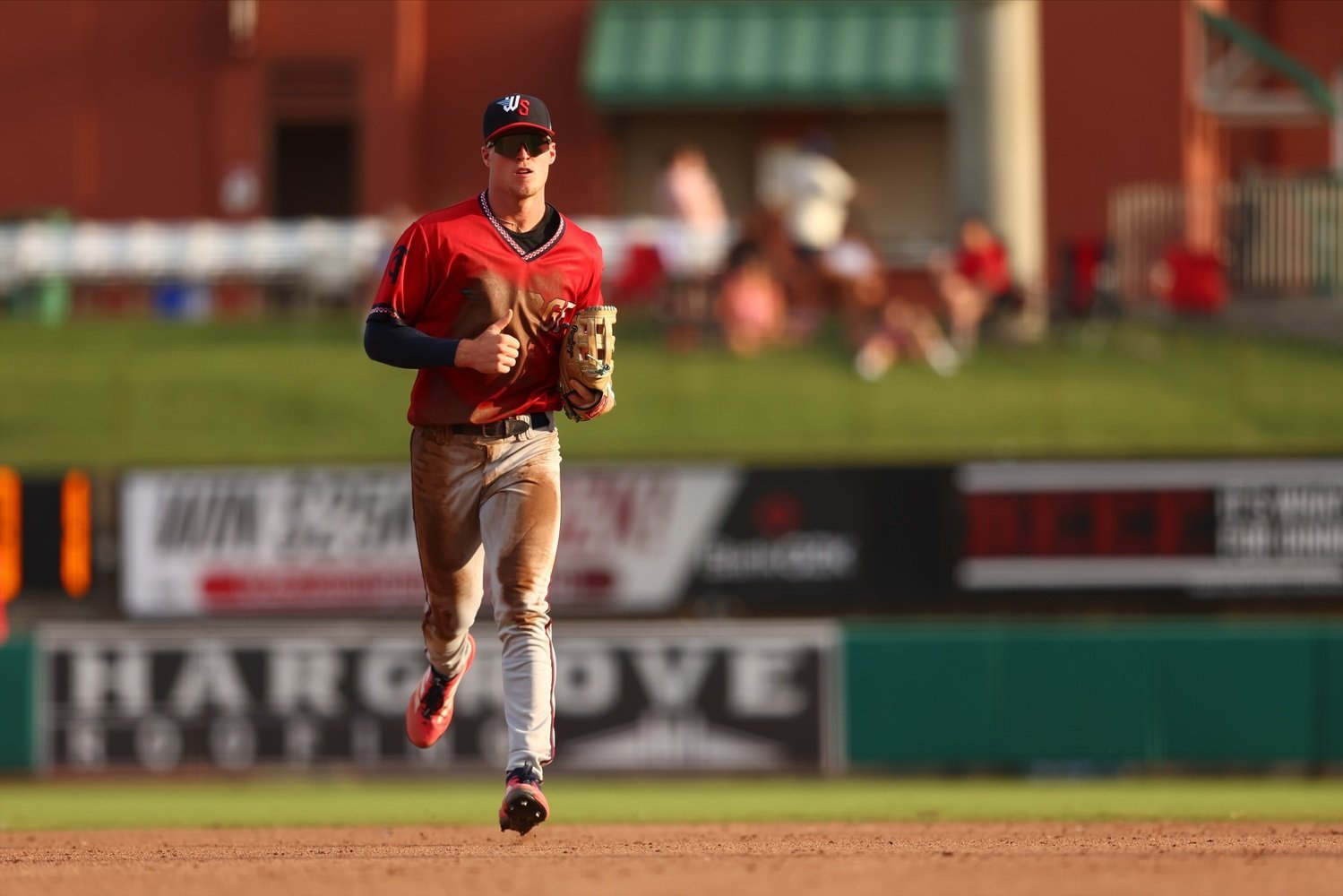 The Minnesota Twins find themselves in an interesting spot when it comes to their crown jewel prospect, Walker Jenkins. The 20-year-old outfielder has handled everything the organization has thrown his way. His strong showing at Double-A Wichita has positioned him for a late-season bump to Triple-A St. Paul, setting the stage for a pivotal spring training next year. The question becomes: can Jenkins break camp with the big-league club in 2026? The Path Forward Minnesota has taken a patient approach with its position players in recent years, preferring to give them plenty of at-bats at each level. But Jenkins has looked like an outlier since the moment he signed. His bat speed, pitch recognition, and advanced approach scream "big-league ready" sooner than most recently drafted players. If he carries that success into a late-season Triple-A stint, he’ll enter Fort Myers next March with the chance to push his way onto the 26-man roster. The Twins’ outfield picture also creates opportunity. Injuries and inconsistencies have left room for a cornerstone to emerge. If Jenkins’ bat proves too loud to ignore, the organization may have no choice but to let him skip the final developmental checkpoints and see how he handles major-league pitching right away. Is He Ready? Jenkins has already shown in 2025 that his bat is ahead of the curve. Through his Double-A season, he’s posted an OPS north of .880 while limiting strikeouts against advanced pitching (17.9 K% vs. 14.3 BB%), a sign of his mature approach at the plate. He also flashed the all-around game that made him a top five draft pick, with steady defense in the outfield and improved baserunning instincts (12-for-16 in stolen base attempts). Simply put, he hasn’t just held his own, he’s looked like one of the best players on the field most nights, which is precisely the kind of performance that forces an organization to consider skipping the usual development timeline. Since July 18, he is hitting .362/.436/.574 (1.011) with six doubles and four home runs. The Twins haven’t had a prospect of Jenkins’ caliber in quite some time. Royce Lewis and Byron Buxton were in the same category of prospect, but injuries slowed their progress in the minors. That made it less likely for them to start the year on the big-league roster, and it also gave the Twins more service time control. Joe Mauer was the last prominent Twins prospect to make the jump from Double-A to the majors the next season. Those are some big footsteps to follow, but the Twins may have another incentive to move quickly with Jenkins that didn’t exist when Mauer was a prospect. Prospect Promotion Incentive Factor The Collective Bargaining Agreement added another wrinkle for teams making decisions with elite prospects. The Prospect Promotion Incentive (PPI) was created to encourage teams to promote their top players when they’re ready, rather than holding them down for service-time manipulation. The rules are clear: to qualify, a player must rank on at least two of the three major preseason Top 100 lists (MLB Pipeline, Baseball America, ESPN), retain rookie eligibility, and make the Opening Day roster. If the rookie accrues a full year of service time and finishes in the top three of MVP or Cy Young voting or wins Rookie of the Year, the team earns an extra draft pick. It’s happened four times since the system was implemented: Julio Rodríguez (2022 AL ROY) → Mariners gained an extra pick in 2023 Gunnar Henderson (2023 AL ROY) → Orioles gained an extra pick in 2024 Corbin Carroll (2023 NL ROY) → Diamondbacks gained an extra pick in 2024 Bobby Witt Jr. (2024 AL MVP finalist) → Royals gained an extra pick in 2025 On the other side, the Pirates missed out when Paul Skenes debuted in mid-May 2024 despite winning Rookie of the Year. His late arrival cost Pittsburgh a valuable selection. The Twins will have every incentive to give Jenkins a real chance next spring. If he makes the team and lives up to expectations, Minnesota could end up with an extra draft pick as a reward, an opportunity no front office should take lightly. Balancing Act Of course, this all comes down to readiness. The Twins can’t force the issue to chase a draft pick. A player’s confidence and long-term development come first. However, some teams may value the service time aspect and team control over a player compared to the extra draft pick. But Jenkins’ profile puts him in rare territory as a big bat that is polished beyond his years for a big-league team that has struggled to find an offensive spark for the past two seasons. If he hits the ground running in Triple-A this September, fans should keep their eyes on Fort Myers next March. Jenkins could give Minnesota a cornerstone outfielder for the next decade and potentially a bonus draft pick in the process. Can Jenkins break camp with the club next spring? Leave a comment and start the discussion.
- 77 comments
-
- 8
-
-
- walker jenkins
- royce lewis
- (and 2 more)
-
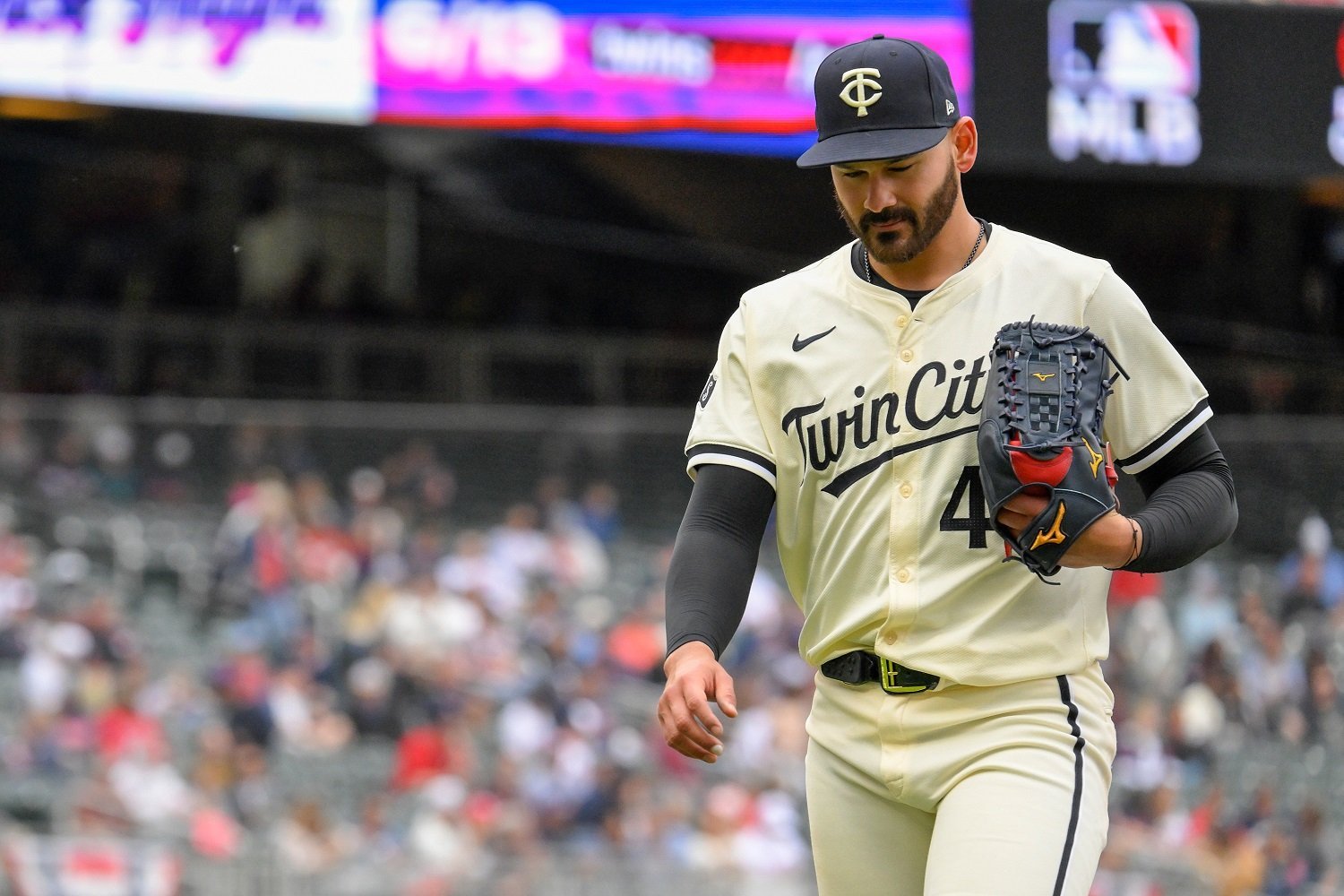 The Minnesota Twins find themselves in an interesting position with their pitching staff. With Pablo López and Simeon Woods Richardson both working their way back from the injured list, the club must balance the short-term goal of finishing the season strong with the long-term considerations tied to each pitcher’s future. Their recent rehab outings with St. Paul provided the first glimpse of what the road back might look like. López’s Return: A Balancing Act of Health and Trade Value López made his first rehab start on Thursday and worked through a demanding outing. The right-hander labored in the first inning, throwing 32 pitches before being removed after hitting his 45-pitch limit in the second. He finished 1 2/3 innings, surrendering a run on four hits, walking one, and striking out two. His velocity looked encouraging, with fastballs averaging 94.3 mph and sinkers holding steady at 93.9 mph. For López, this rehab stint is about more than just regaining his rhythm. Following the Twins’ trade deadline sell-off, López is now the club’s highest guaranteed contract, set to make $21.5 million in both 2026 and 2027. That contract status complicates the picture, because he is a team leader and would like to compete, but his performance down the stretch also doubles as an audition for other clubs should the Twins pursue a trade this winter. Minnesota will want to prove he’s healthy and effective, which makes his workload management even more delicate. Woods Richardson’s Path Back to Stability Woods Richardson followed López in St. Paul and tossed 3 1/3 innings, giving up four runs (three earned) on five hits, while walking one and striking out four. He threw 64 pitches, landing 40 for strikes, with his fastball sitting at 93.3 mph and topping out at 95.2. The results weren’t perfect, but the velocity and ability to miss bats remain encouraging signs for a pitcher returning from injury. Unlike López, Woods Richardson’s situation is less about showcasing trade value and more about development. Still just 24 years old, the Twins hope he can take another step forward as a reliable rotation option. His workload down the stretch needs to be carefully managed, with an emphasis on building innings in a controlled way. Over the last two seasons, he has posted a 100 ERA+ with a K% north of 20.0% and a BB% just above 9.0%. If he can get back to consistently pounding the zone and avoiding the big inning, Minnesota will feel much better about penciling him into next year’s plans. How the Twins Should Handle Them Down the Stretch The Twins are out of contention, but these rehab assignments underline that the rest of the season still matters. López’s starts should be approached with two key goals in mind: proving he is healthy and helping the front office position him as a valuable asset. That doesn’t mean pushing him to his limits. It means measured progress, targeting outings of four to five innings before letting him finish the year in the big-league rotation. For Woods Richardson, the priority is experience and confidence. Minnesota should aim to get him stretched out to around 80–90 pitches, focusing on refining command and sequencing rather than raw results. His ability to consistently compete deep into outings will go a long way toward determining whether he’s viewed as a rotation lock or depth option moving forward. This stretch run may not carry playoff implications, but it still holds weight for the Twins’ future. López needs to show health and effectiveness to either remain a frontline piece or become a centerpiece in a winter trade. Woods Richardson needs to show progress and stability so the team can confidently rely on him in 2026. Both pitchers represent different parts of the Twins’ puzzle, and how the club handles their usage over the next six weeks could have ripple effects far beyond this season. How should the Twins handle these two pitchers over the season’s final month? Leave a comment and start the discussion.
 -
Image courtesy of © Nick Wosika- -Imagn Images The Minnesota Twins find themselves in an interesting position with their pitching staff. With Pablo López and Simeon Woods Richardson both working their way back from the injured list, the club must balance the short-term goal of finishing the season strong with the long-term considerations tied to each pitcher’s future. Their recent rehab outings with St. Paul provided the first glimpse of what the road back might look like. López’s Return: A Balancing Act of Health and Trade Value López made his first rehab start on Thursday and worked through a demanding outing. The right-hander labored in the first inning, throwing 32 pitches before being removed after hitting his 45-pitch limit in the second. He finished 1 2/3 innings, surrendering a run on four hits, walking one, and striking out two. His velocity looked encouraging, with fastballs averaging 94.3 mph and sinkers holding steady at 93.9 mph. For López, this rehab stint is about more than just regaining his rhythm. Following the Twins’ trade deadline sell-off, López is now the club’s highest guaranteed contract, set to make $21.5 million in both 2026 and 2027. That contract status complicates the picture, because he is a team leader and would like to compete, but his performance down the stretch also doubles as an audition for other clubs should the Twins pursue a trade this winter. Minnesota will want to prove he’s healthy and effective, which makes his workload management even more delicate. Woods Richardson’s Path Back to Stability Woods Richardson followed López in St. Paul and tossed 3 1/3 innings, giving up four runs (three earned) on five hits, while walking one and striking out four. He threw 64 pitches, landing 40 for strikes, with his fastball sitting at 93.3 mph and topping out at 95.2. The results weren’t perfect, but the velocity and ability to miss bats remain encouraging signs for a pitcher returning from injury. Unlike López, Woods Richardson’s situation is less about showcasing trade value and more about development. Still just 24 years old, the Twins hope he can take another step forward as a reliable rotation option. His workload down the stretch needs to be carefully managed, with an emphasis on building innings in a controlled way. Over the last two seasons, he has posted a 100 ERA+ with a K% north of 20.0% and a BB% just above 9.0%. If he can get back to consistently pounding the zone and avoiding the big inning, Minnesota will feel much better about penciling him into next year’s plans. How the Twins Should Handle Them Down the Stretch The Twins are out of contention, but these rehab assignments underline that the rest of the season still matters. López’s starts should be approached with two key goals in mind: proving he is healthy and helping the front office position him as a valuable asset. That doesn’t mean pushing him to his limits. It means measured progress, targeting outings of four to five innings before letting him finish the year in the big-league rotation. For Woods Richardson, the priority is experience and confidence. Minnesota should aim to get him stretched out to around 80–90 pitches, focusing on refining command and sequencing rather than raw results. His ability to consistently compete deep into outings will go a long way toward determining whether he’s viewed as a rotation lock or depth option moving forward. This stretch run may not carry playoff implications, but it still holds weight for the Twins’ future. López needs to show health and effectiveness to either remain a frontline piece or become a centerpiece in a winter trade. Woods Richardson needs to show progress and stability so the team can confidently rely on him in 2026. Both pitchers represent different parts of the Twins’ puzzle, and how the club handles their usage over the next six weeks could have ripple effects far beyond this season. How should the Twins handle these two pitchers over the season’s final month? Leave a comment and start the discussion. View full article
-
Mick Abel’s Development Path: From First-Round Pick to Twins Rotation
Cody Christie posted an article in Twins
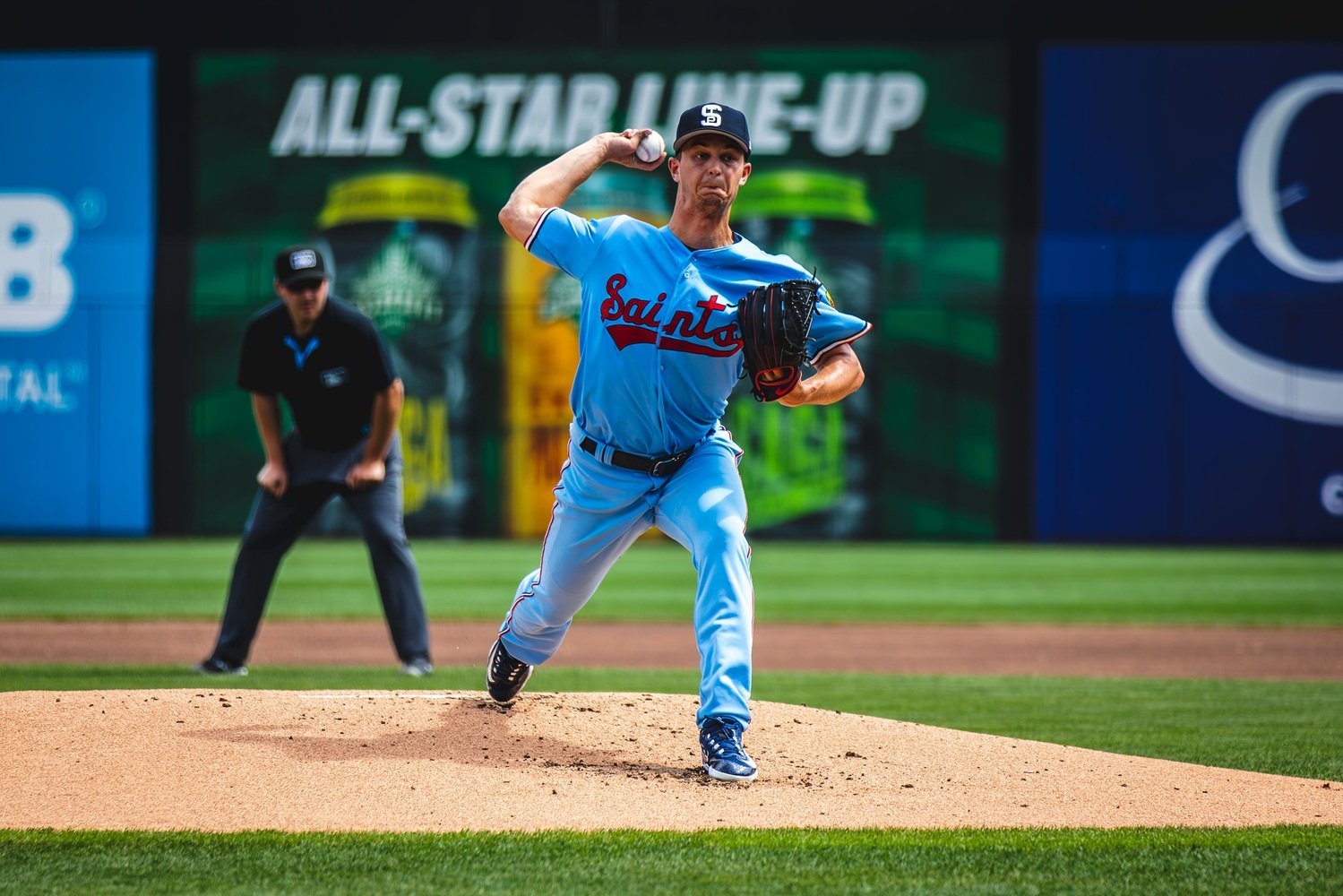 When the Twins acquired Mick Abel, they were getting a former first-round draft pick and taking on a developmental project with frontline potential. Abel, the 15th overall selection in the 2020 MLB Draft by the Philadelphia Phillies, carried ace-level upside when he entered pro ball. Still, like many young pitchers, the road to the majors has included both mechanical adjustments and growing pains. Phillies Beginnings Coming out of Jesuit High School in Oregon, Abel was the first high school pitcher off the board in 2020. With a prototypical 6-foot-5 frame and a fastball that sat mid-to-upper 90s, he quickly earned attention as one of Philadelphia’s top prospects. His early years in the Phillies’ system showed flashes of that promise: a four-pitch mix, high strikeout numbers, and the kind of mound presence that screamed rotation anchor. In 2021, he posted a 4.43 ERA with a 1.21 WHIP and 34.9 K% at Low-A. The Phillies were aggressive with him in 2022 as he moved from High-A to Double-A, where he was 4.5 years younger than the average age of the competition. Across 108 1/3 innings, he posted a 4.13 ERA with a 27.6 K% but shrunk his BB% by nearly 4%. He made all but one start at Double-A in 2023 with a 4.13 ERA and a 1.26 WHIP. His K% stayed consistent, but his BB% increased back to 13.5%. There were some positive signs, and he was still considered a top-100 global prospect. But there were also challenges as he moved up the organizational ladder. Command wavered, particularly with his secondary pitches, and the fastball-heavy approach left him vulnerable when he couldn’t land his slider and changeup for strikes. In 2024, he had career-worst marks with a 22.7 K% and a 15.1 BB%. Questions began to swirl about whether Abel’s stuff would truly translate against advanced hitters. A New Home in Minnesota Fast forward to 2025, and the Twins saw an opportunity. Abel made a brief MLB debut with the Phillies earlier in the season, but the bulk of his appearances were at Triple-A. His walk rate dropped below 11% for the first time since 2022, and his strikeout rate increased by nearly 4% compared to 2024. Abel became part of a prospect package the Phillies used to acquire Jhoan Duran, and Minnesota immediately identified him as a candidate for a mechanical overhaul. Early results in St. Paul showed improved strike-throwing and a sharper pitch profile, with one of the most intriguing developments being the addition of a new pitch. The Twins asked Abel to experiment with a sweeper, a pitch that has become increasingly popular across baseball. In his most recent Triple-A start, Abel unveiled the new breaking ball, and the results were promising. He only used the pitch to right-handed batters, and it had the second-highest spin rate of any pitch he threw. In that start, he had a 43.1 Whiff% and struck out 11 batters. For Abel, the sweeper represents another weapon to keep hitters guessing. Combined with a mid-90s fastball and a developing curveball, his arsenal suddenly looks far more dynamic. What Comes Next? The Twins haven’t rushed Abel, and for good reason. He’s only 24, and despite his pedigree, the organization sees him as a long-term piece, and that’s why they wanted him to get some time to acclimate to the organization. But the progress is tangible: a simplified delivery, more consistency in the strike zone, and now, a new breaking ball that could give him the out pitch he’s lacked in recent seasons. “I think some opportunities for us to help him refine his slider a little bit more and make that a little bit more of a weapon against righties,” Twins general manager Jeremy Zoll explained. “For him, it’s really just keep getting innings under your belt and make sure you are as prepared as possible. He got a cameo of sorts at the big-league level earlier this year, and we want to make sure he can keep pushing forward developmentally to take that next step.” Minnesota has had success in reshaping young arms, with Joe Ryan being the team’s biggest success story in recent years. Abel’s path won’t look identical, but the framework is in place. If the Twins can continue to harness his raw stuff while building confidence in the sweeper, Abel could go from former first-round question mark to a legitimate playoff-caliber starter in the seasons ahead. What stands out about Abel's time in the minor leagues? Leave a comment and start the discussion.
 -
Image courtesy of Rob Thompson, St. Paul Saints (Photo of Mick Abel) When the Twins acquired Mick Abel, they were getting a former first-round draft pick and taking on a developmental project with frontline potential. Abel, the 15th overall selection in the 2020 MLB Draft by the Philadelphia Phillies, carried ace-level upside when he entered pro ball. Still, like many young pitchers, the road to the majors has included both mechanical adjustments and growing pains. Phillies Beginnings Coming out of Jesuit High School in Oregon, Abel was the first high school pitcher off the board in 2020. With a prototypical 6-foot-5 frame and a fastball that sat mid-to-upper 90s, he quickly earned attention as one of Philadelphia’s top prospects. His early years in the Phillies’ system showed flashes of that promise: a four-pitch mix, high strikeout numbers, and the kind of mound presence that screamed rotation anchor. In 2021, he posted a 4.43 ERA with a 1.21 WHIP and 34.9 K% at Low-A. The Phillies were aggressive with him in 2022 as he moved from High-A to Double-A, where he was 4.5 years younger than the average age of the competition. Across 108 1/3 innings, he posted a 4.13 ERA with a 27.6 K% but shrunk his BB% by nearly 4%. He made all but one start at Double-A in 2023 with a 4.13 ERA and a 1.26 WHIP. His K% stayed consistent, but his BB% increased back to 13.5%. There were some positive signs, and he was still considered a top-100 global prospect. But there were also challenges as he moved up the organizational ladder. Command wavered, particularly with his secondary pitches, and the fastball-heavy approach left him vulnerable when he couldn’t land his slider and changeup for strikes. In 2024, he had career-worst marks with a 22.7 K% and a 15.1 BB%. Questions began to swirl about whether Abel’s stuff would truly translate against advanced hitters. A New Home in Minnesota Fast forward to 2025, and the Twins saw an opportunity. Abel made a brief MLB debut with the Phillies earlier in the season, but the bulk of his appearances were at Triple-A. His walk rate dropped below 11% for the first time since 2022, and his strikeout rate increased by nearly 4% compared to 2024. Abel became part of a prospect package the Phillies used to acquire Jhoan Duran, and Minnesota immediately identified him as a candidate for a mechanical overhaul. Early results in St. Paul showed improved strike-throwing and a sharper pitch profile, with one of the most intriguing developments being the addition of a new pitch. The Twins asked Abel to experiment with a sweeper, a pitch that has become increasingly popular across baseball. In his most recent Triple-A start, Abel unveiled the new breaking ball, and the results were promising. He only used the pitch to right-handed batters, and it had the second-highest spin rate of any pitch he threw. In that start, he had a 43.1 Whiff% and struck out 11 batters. For Abel, the sweeper represents another weapon to keep hitters guessing. Combined with a mid-90s fastball and a developing curveball, his arsenal suddenly looks far more dynamic. What Comes Next? The Twins haven’t rushed Abel, and for good reason. He’s only 24, and despite his pedigree, the organization sees him as a long-term piece, and that’s why they wanted him to get some time to acclimate to the organization. But the progress is tangible: a simplified delivery, more consistency in the strike zone, and now, a new breaking ball that could give him the out pitch he’s lacked in recent seasons. “I think some opportunities for us to help him refine his slider a little bit more and make that a little bit more of a weapon against righties,” Twins general manager Jeremy Zoll explained. “For him, it’s really just keep getting innings under your belt and make sure you are as prepared as possible. He got a cameo of sorts at the big-league level earlier this year, and we want to make sure he can keep pushing forward developmentally to take that next step.” Minnesota has had success in reshaping young arms, with Joe Ryan being the team’s biggest success story in recent years. Abel’s path won’t look identical, but the framework is in place. If the Twins can continue to harness his raw stuff while building confidence in the sweeper, Abel could go from former first-round question mark to a legitimate playoff-caliber starter in the seasons ahead. What stands out about Abel's time in the minor leagues? Leave a comment and start the discussion. View full article
-
Image courtesy of Ed Bailey, Wichita Wind Surge (Photo of Walker Jenkins) The Minnesota Twins find themselves in an interesting spot when it comes to their crown jewel prospect, Walker Jenkins. The 20-year-old outfielder has handled everything the organization has thrown his way. His strong showing at Double-A Wichita has positioned him for a late-season bump to Triple-A St. Paul, setting the stage for a pivotal spring training next year. The question becomes: can Jenkins break camp with the big-league club in 2026? The Path Forward Minnesota has taken a patient approach with its position players in recent years, preferring to give them plenty of at-bats at each level. But Jenkins has looked like an outlier since the moment he signed. His bat speed, pitch recognition, and advanced approach scream "big-league ready" sooner than most recently drafted players. If he carries that success into a late-season Triple-A stint, he’ll enter Fort Myers next March with the chance to push his way onto the 26-man roster. The Twins’ outfield picture also creates opportunity. Injuries and inconsistencies have left room for a cornerstone to emerge. If Jenkins’ bat proves too loud to ignore, the organization may have no choice but to let him skip the final developmental checkpoints and see how he handles major-league pitching right away. Is He Ready? Jenkins has already shown in 2025 that his bat is ahead of the curve. Through his Double-A season, he’s posted an OPS north of .880 while limiting strikeouts against advanced pitching (17.9 K% vs. 14.3 BB%), a sign of his mature approach at the plate. He also flashed the all-around game that made him a top-five draft pick, with steady defense in the outfield and improved baserunning instincts (12-for-16 in stolen base attempts). Simply put, he hasn’t just held his own, he’s looked like one of the best players on the field most nights, which is precisely the kind of performance that forces an organization to consider skipping the usual development timeline. Since July 18, he is hitting .362/.436/.574 (1.011) with six doubles and four home runs. The Twins haven’t had a prospect of Jenkins’ caliber in quite some time. Royce Lewis and Byron Buxton were in the same category of prospect, but injuries slowed their progress in the minors. That made it less likely for them to start the year on the big-league roster, and it also gave the Twins more service time control. Joe Mauer was the last prominent Twins prospect to make the jump from Double-A to the majors the next season. Those are some big footsteps to follow, but the Twins may have another incentive to move quickly with Jenkins that didn’t exist when Mauer was a prospect. Prospect Promotion Incentive Factor The Collective Bargaining Agreement added another wrinkle for teams making decisions with elite prospects. The Prospect Promotion Incentive (PPI) was created to encourage teams to promote their top players when they’re ready, rather than holding them down for service-time manipulation. The rules are clear: to qualify, a player must rank on at least two of the three major preseason Top 100 lists (MLB Pipeline, Baseball America, ESPN), retain rookie eligibility, and make the Opening Day roster. If the rookie accrues a full year of service time and finishes in the top three of MVP or Cy Young voting or wins Rookie of the Year, the team earns an extra draft pick. It’s happened four times since the system was implemented: Julio Rodríguez (2022 AL ROY) → Mariners gained an extra pick in 2023 Gunnar Henderson (2023 AL ROY) → Orioles gained an extra pick in 2024 Corbin Carroll (2023 NL ROY) → Diamondbacks gained an extra pick in 2024 Bobby Witt Jr. (2024 AL MVP finalist) → Royals gained an extra pick in 2025 On the other side, the Pirates missed out when Paul Skenes debuted in mid-May 2024 despite winning Rookie of the Year. His late arrival cost Pittsburgh a valuable selection. The Twins will have every incentive to give Jenkins a real chance next spring. If he makes the team and lives up to expectations, Minnesota could end up with an extra draft pick as a reward, an opportunity no front office should take lightly. Balancing Act Of course, this all comes down to readiness. The Twins can’t force the issue to chase a draft pick. A player’s confidence and long-term development come first. However, some teams may value the service time aspect and team control over a player compared to the extra draft pick. But Jenkins’ profile puts him in rare territory as a big bat that is polished beyond his years for a big-league team that has struggled to find an offensive spark for the past two seasons. If he hits the ground running in Triple-A this September, fans should keep their eyes on Fort Myers next March. Jenkins could give Minnesota a cornerstone outfielder for the next decade and potentially a bonus draft pick in the process. Can Jenkins break camp with the club next spring? Leave a comment and start the discussion. View full article
-
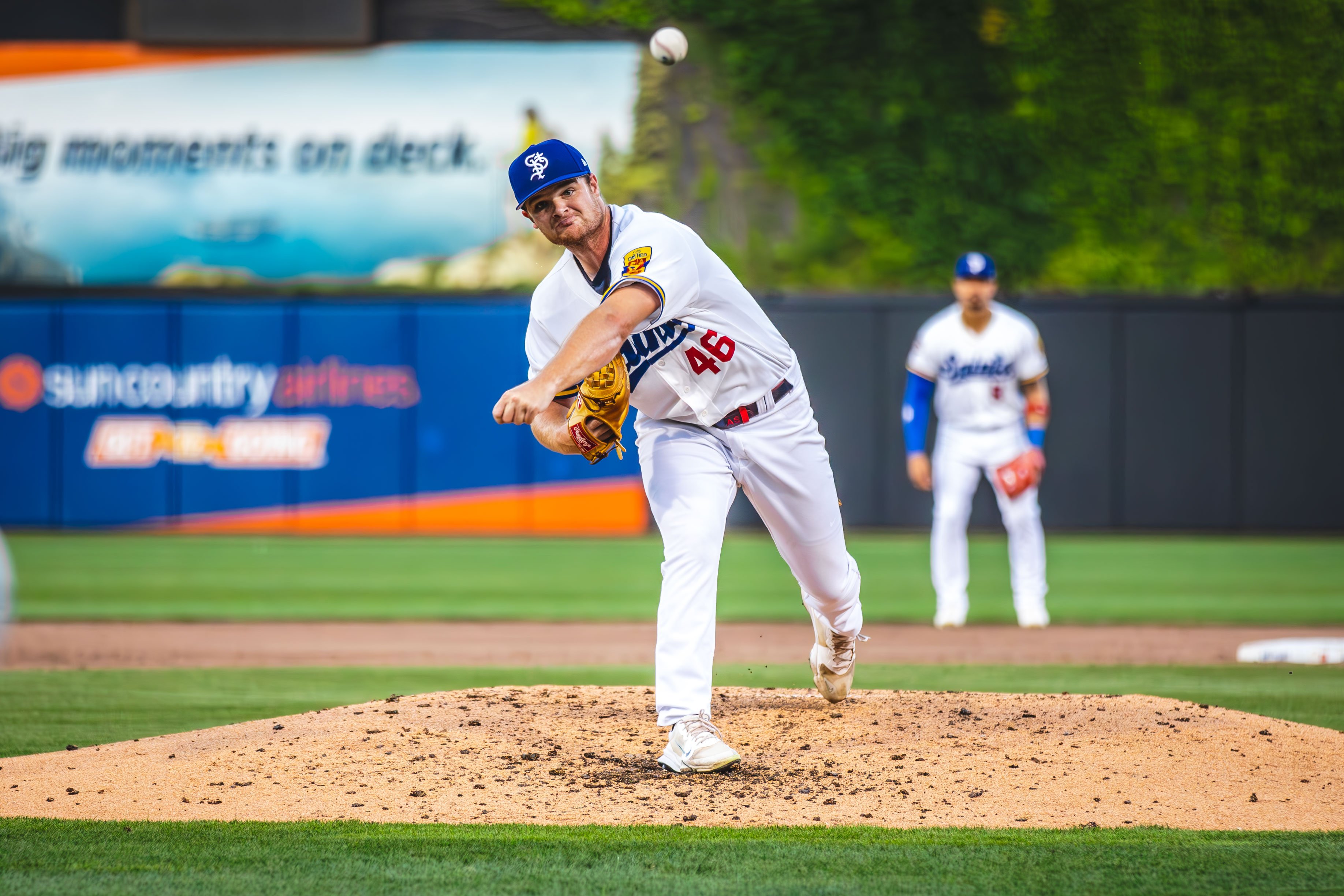 When the St. Paul Saints announced that Connor Prielipp would be making the jump from Double-A Wichita, it was another milestone in what has already been a winding journey. One of the hardest-throwing southpaws in the system, Prielipp’s ascent is notable for both his talent and his turbulence. After all, this is the first year he’s pitched above Single-A, and injuries have repeatedly slowed his path. For Twins fans hoping to see him in Minneapolis soon, there are still some boxes that need to be checked before he’s ready for The Show. Staying on the Mound The first and most crucial question mark surrounding Prielipp is simple: health. Since being drafted in 2022, he has undergone both Tommy John surgery and an internal brace procedure, costing him the better part of two seasons. Between Alabama, the minors, and his pro rehab, his innings total since 2020 remains shockingly light for a 24-year-old pitcher (under 32 professional innings entering 2025). The Twins know he has the arsenal to compete, but the reality is that his body hasn’t proven it can hold up across a full professional season. At Double-A Wichita, Minnesota kept his workload tightly managed. He never pitched past the fifth inning and never threw more than 76 pitches in an outing. That caution speaks volumes. Before the Twins can even consider him for a rotation spot in Minneapolis, he’ll need to prove he can consistently take the ball every fifth day without setback. Building Up the Innings The next step in Prielipp’s progression is building volume. In Wichita, his strikeout numbers were eye-catching (27% K rate), but the club has yet to see him navigate a lineup three times through or reach the 90–100 pitch range that big-league starters regularly handle. In his last three Double-A appearances, he allowed multiple earned runs and averaged just over three innings and 70 pitches per appearance. Triple-A will provide the stage for this. Even if his ERA or strikeout totals fluctuate, what the Twins want to see is stamina. Can he get through five innings regularly? Can he stay sharp past the 70-pitch mark? Until he demonstrates those traits, he’ll remain more of a “talented prospect” than a true major-league option. In his Triple-A debut on Tuesday, he pitched 3 1/3 innings on 81 pitches (53 strikes) with four walks and five strikeouts. Command, Not Just Stuff One area that makes Prielipp stand out is his ability to throw strikes. His 6.7% walk rate ranked among the best in the Texas League, and his career strikeout-to-walk ratio (20.4 K-BB% at Double-A) is one of the highest in the Twins’ system. Still, command in the upper minors is a different beast. Triple-A hitters are far less likely to chase out of the zone and more capable of punishing mistakes left over the plate. Nerves may have impacted his Triple-A debut, where he walked a season-high four batters. At Double-A, Prielipp never walked more than two batters in a game. For Prielipp, refining that edge between throwing strikes and commanding them will be crucial. His slider is a true out pitch, but big-league hitters will force him to land his fastball consistently in the zone if he’s going to find success at the next level. Lessons From the Bullpen Path The Twins have been down this road before with talented but injury-risk arms. Most recently, Jhoan Duran was shifted to a relief role after his own durability questions surfaced. That transition allowed him to stay healthy, focus on shorter bursts, and eventually become one of the most dominant late-inning weapons in all of baseball. The same fate could await Prielipp if the innings never build up or if the medical red flags persist. His mid-90s fastball and wipeout slider could play up even more in relief, giving the Twins another potential weapon at the back of their bullpen. It’s not the preferred path, because Minnesota would love to develop him as a starter. However, history shows that the bullpen can sometimes be the best way to unlock a pitcher’s potential while managing risk. What Comes Next? The Twins didn’t promote Prielipp to St. Paul because he was dominating Double-A. He had a 3.65 ERA with a 1.49 WHIP, and those numbers don’t scream “ready.” Instead, they want him tested against more advanced hitters while stretching his arm in a more controlled environment. If he stays healthy and can handle a larger workload, he has the tools to move quickly from “project” to “rotation option.” In many ways, Prielipp remains the ultimate high-risk, high-reward arm in the system. The ceiling is that of a playoff-caliber starter, the kind of cost-controlled lefty that the Twins haven’t developed in years. But the floor, if his health doesn’t hold or he can’t build innings, is a reliever role or stalled progression. For now, the biggest victory is that Prielipp is still healthy. The Saints placed him on the development list after his outing Tuesday, to give themselves an extra arm as they massage and manage his workload in the final phase of the season, but he has no injury concerns at the moment. The next victory will be when he proves he no longer needs such careful handling, in whatever role. What stands out about Prielipp’s season so far? What will his role be in 2026 and beyond? Leave a comment and start the discussion.
 -
Image courtesy of Rob Thompson, St. Paul Saints (photo of Connor Prielipp) When the St. Paul Saints announced that Connor Prielipp would be making the jump from Double-A Wichita, it was another milestone in what has already been a winding journey. One of the hardest-throwing southpaws in the system, Prielipp’s ascent is notable for both his talent and his turbulence. After all, this is the first year he’s pitched above Single-A, and injuries have repeatedly slowed his path. For Twins fans hoping to see him in Minneapolis soon, there are still some boxes that need to be checked before he’s ready for The Show. Staying on the Mound The first and most crucial question mark surrounding Prielipp is simple: health. Since being drafted in 2022, he has undergone both Tommy John surgery and an internal brace procedure, costing him the better part of two seasons. Between Alabama, the minors, and his pro rehab, his innings total since 2020 remains shockingly light for a 24-year-old pitcher (under 32 professional innings entering 2025). The Twins know he has the arsenal to compete, but the reality is that his body hasn’t proven it can hold up across a full professional season. At Double-A Wichita, Minnesota kept his workload tightly managed. He never pitched past the fifth inning and never threw more than 76 pitches in an outing. That caution speaks volumes. Before the Twins can even consider him for a rotation spot in Minneapolis, he’ll need to prove he can consistently take the ball every fifth day without setback. Building Up the Innings The next step in Prielipp’s progression is building volume. In Wichita, his strikeout numbers were eye-catching (27% K rate), but the club has yet to see him navigate a lineup three times through or reach the 90–100 pitch range that big-league starters regularly handle. In his last three Double-A appearances, he allowed multiple earned runs and averaged just over three innings and 70 pitches per appearance. Triple-A will provide the stage for this. Even if his ERA or strikeout totals fluctuate, what the Twins want to see is stamina. Can he get through five innings regularly? Can he stay sharp past the 70-pitch mark? Until he demonstrates those traits, he’ll remain more of a “talented prospect” than a true major-league option. In his Triple-A debut on Tuesday, he pitched 3 1/3 innings on 81 pitches (53 strikes) with four walks and five strikeouts. Command, Not Just Stuff One area that makes Prielipp stand out is his ability to throw strikes. His 6.7% walk rate ranked among the best in the Texas League, and his career strikeout-to-walk ratio (20.4 K-BB% at Double-A) is one of the highest in the Twins’ system. Still, command in the upper minors is a different beast. Triple-A hitters are far less likely to chase out of the zone and more capable of punishing mistakes left over the plate. Nerves may have impacted his Triple-A debut, where he walked a season-high four batters. At Double-A, Prielipp never walked more than two batters in a game. For Prielipp, refining that edge between throwing strikes and commanding them will be crucial. His slider is a true out pitch, but big-league hitters will force him to land his fastball consistently in the zone if he’s going to find success at the next level. Lessons From the Bullpen Path The Twins have been down this road before with talented but injury-risk arms. Most recently, Jhoan Duran was shifted to a relief role after his own durability questions surfaced. That transition allowed him to stay healthy, focus on shorter bursts, and eventually become one of the most dominant late-inning weapons in all of baseball. The same fate could await Prielipp if the innings never build up or if the medical red flags persist. His mid-90s fastball and wipeout slider could play up even more in relief, giving the Twins another potential weapon at the back of their bullpen. It’s not the preferred path, because Minnesota would love to develop him as a starter. However, history shows that the bullpen can sometimes be the best way to unlock a pitcher’s potential while managing risk. What Comes Next? The Twins didn’t promote Prielipp to St. Paul because he was dominating Double-A. He had a 3.65 ERA with a 1.49 WHIP, and those numbers don’t scream “ready.” Instead, they want him tested against more advanced hitters while stretching his arm in a more controlled environment. If he stays healthy and can handle a larger workload, he has the tools to move quickly from “project” to “rotation option.” In many ways, Prielipp remains the ultimate high-risk, high-reward arm in the system. The ceiling is that of a playoff-caliber starter, the kind of cost-controlled lefty that the Twins haven’t developed in years. But the floor, if his health doesn’t hold or he can’t build innings, is a reliever role or stalled progression. For now, the biggest victory is that Prielipp is still healthy. The Saints placed him on the development list after his outing Tuesday, to give themselves an extra arm as they massage and manage his workload in the final phase of the season, but he has no injury concerns at the moment. The next victory will be when he proves he no longer needs such careful handling, in whatever role. What stands out about Prielipp’s season so far? What will his role be in 2026 and beyond? Leave a comment and start the discussion. View full article
-
Image courtesy of © Bruce Kluckhohn-Imagn Images Twins Daily has exclusively uncovered what appears to be the most shocking revelation of the summer: Joe Pohlad, the team’s Executive Chair, has been running a burner account on X (formerly Twitter). While it’s not uncommon for athletes to have secret accounts to clap back at critics, it’s a bit more unusual when the owner of a professional baseball team does the same. Through advanced forensic journalism (read: we noticed the account only follows Byron Buxton, Chipotle, and the Timberwolves), we’ve pieced together what appears to be a treasure trove of digital breadcrumbs that point directly to Pohlad. Below are some of the best posts from @DefinitelyNotJoePohlad47, an account with six followers, a default egg profile picture, and a suspicious tendency to defend the ownership group at all costs. The Fire Sale Spin @DefinitelyNotJoePohlad47: Everyone’s mad about the “fire sale,” but let’s call it what it is: a “fireworks sale.” BOOM. Exciting prospects! BANG. Payroll flexibility! KA-POW. Hope for 2029! 🔥💥 #TrustThePohladProcess Yes, nothing screams “competitive window” like fireworks scheduled for half a decade from now. Also, payroll flexibility is just code for the ownership group needed to pay off their $400+ million in debt. Building Up the Brand @DefinitelyNotJoePohlad47: Some fans don’t get it: the Pohlad family is the most dedicated group in baseball. They gave you Target Field, complete with a Prince-themed dance party, and a $14 hot dog. What else do you people want? Honestly, hard to argue with the Prince dance party. But it does raise the question: Can even Purple Rain wash away the sting of a 90-loss season? Keeping the Franchise in the Family @DefinitelyNotJoePohlad47: Fans wanted the Pohlads to sell? To WHO? Some “tech billionaire” from California? No thanks. Only the Pohlads understand the sacred art of running a team with a below average payroll every year. Tradition matters. Hard to argue against tradition. The Twins have been falling short of expectations since before half the (shrinking) fan base was born. Rebranding Disappointment @DefinitelyNotJoePohlad47: “Mediocrity” is such a harsh word. I prefer “consistently humble.” 💜 #Blessed #NotEveryTeamGetsALosingStreakThisSpecial It’s unclear if Pohlad has trademarked “consistently humble,” but don’t be surprised if you see it on a billboard off I-94 next season. Responding to Criticism @DefinitelyNotJoePohlad47: People always say, “Sell the team!” Okay, but imagine how sad you’d be if the Pohlads didn’t get to pass this franchise down to the next three generations of Pohlads. Think about the children! #Legacy The good news: Legacy does last forever. The bad news: so do screenshots. If you ever stumble across an account defending the sanctity of family ownership, praising the glory of a 20th-ranked payroll, or reminding you that “we still have Buxton under contract for a long time,” don’t be surprised if it’s coming from the very top of the organizational ladder. After all, in an age where transparency is rare, it’s refreshing to know the team’s Executive Chair might be secretly tweeting from his couch, reminding us that everything is fine so long as you don’t look too closely at the standings. View full article
-
Brooks Lee and the Danger of Falling Into the Jose Miranda Trap
Cody Christie posted an article in Twins
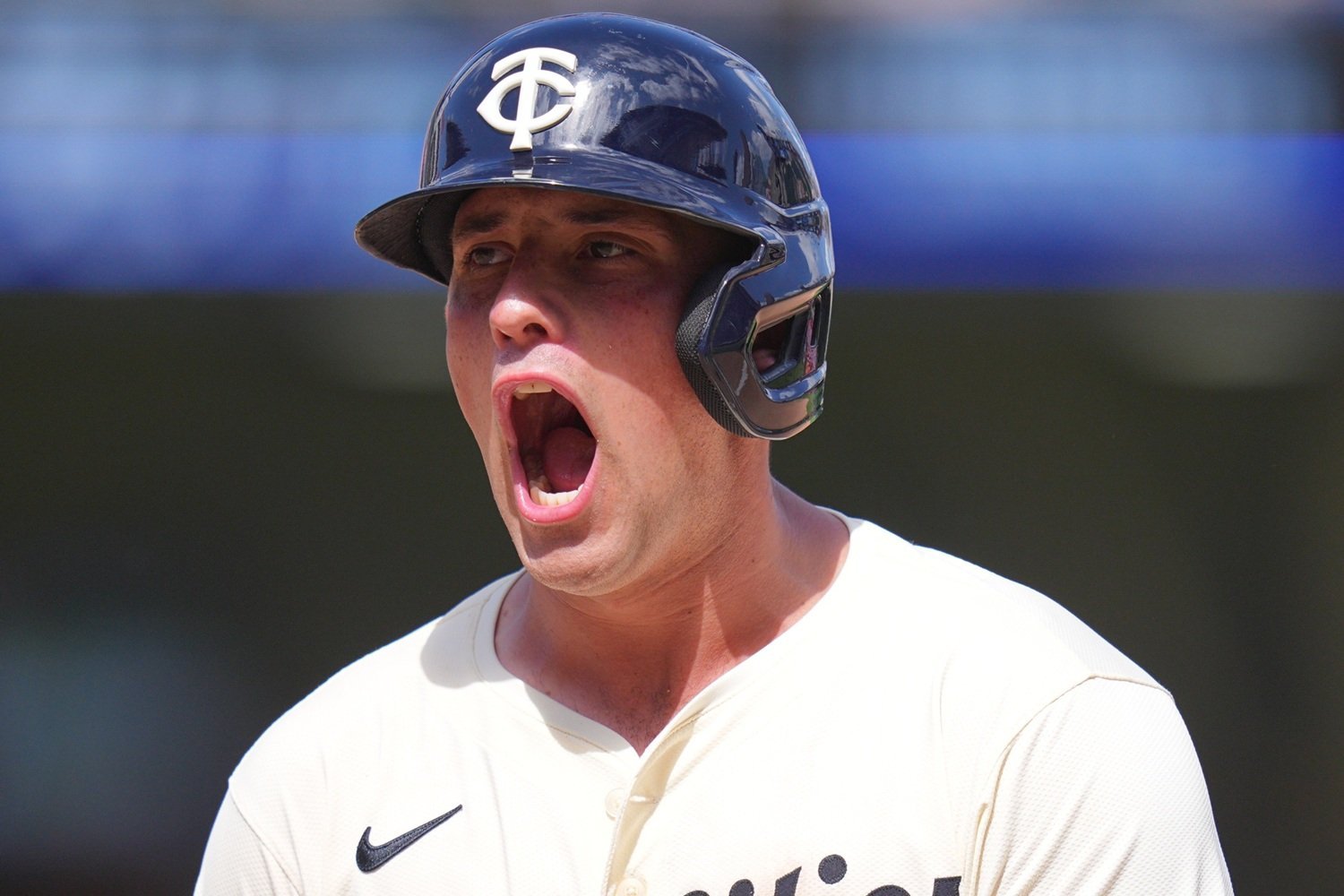 The Minnesota Twins believe in Brooks Lee, even if his on-field results haven’t matched the organization’s expectations. They believe in him because his approach, bat-to-ball skills, and polished college pedigree suggest he could be a foundational piece of the next great Twins lineup. But if Lee isn’t careful, he may be walking down a familiar road—the same one Jose Miranda traveled back to Triple-A St. Paul, perhaps for good. The Contact Paradox Lee’s ability to put the bat on nearly any pitch is both his greatest strength and his most pressing concern. While making contact is a highly coveted skill in today’s game, putting “pitchers’ pitches” in play doesn’t often result in much damage. Weak choppers, lazy fly balls, and soft groundouts aren’t much better than strikeouts, and in many cases, they’re worse, because they rob hitters of the chance to unlock power. This was Miranda’s downfall. Despite his contact-heavy approach, he often put bad pitches in play, rolling over into outs rather than punishing mistakes. His strikeout numbers were never the problem (15.4% strikeout rate in 2024); it was the lack of consistent impact that held him back. His Hard-Hit% ranked in the 42nd percentile, and his Barrel% ranked in the 28th percentile. Lee is starting to show the early signs of falling into the same trap. The Discipline Gap In the minors, Lee’s bat played because pitchers weren’t as refined. His walk rates looked solid (10.0 BB%), but big-league pitchers are more willing to challenge hitters—and they have more ways to manipulate and bait them. The numbers back it up. Lee currently owns a 31.3% chase rate, ranking in the 25th percentile in the American League. In other words, he’s swinging at pitches on which he simply can’t do damage. Against high-level pitching, that approach will bury a hitter quickly. Lee vs. Miranda Swing Decisions Player Chase% BB% K% Hard-Hit% Brooks Lee (2025) 31.3 5.1 18.3 40.0 Jose Miranda (Career) 34.3 5.0 17.6 40.3 The similarity is clear: both players avoid strikeouts but expand the zone often, such that even though they're capable of making solid contact, it's rarely the most valuable kind. The difference is that Lee’s chase rate suggests more potential for adjustment, whereas Miranda has struggled to show that patience. As a switch-hitter, Lee also has a wired-in advantage when it comes to plate discipline. The Path Forward The encouraging part for Lee and the Twins is that his swing decisions are not set in stone. Unlike Miranda, whose free-swinging nature has never truly adjusted at the big-league level, Lee still has the developmental runway to refine his approach. The tools are there, and the Twins believe in his ceiling. “I think I just have to be smart [about] picking and choosing my times to take that A-plus swing,” Lee said after his recent grand slam. “Other than that, I’m the type of player to put the ball in play. Supposed to be gap-to-gap and outrunning the balls. But it’s more important for me to get the next guy up.” For Lee, the next step is learning to control the zone. It’s not enough to avoid strikeouts; he needs to identify and punish pitches he can drive. That means laying off borderline offerings and staying patient enough to hunt “his” pitch. If he can shift his profile from a hitter who can put anything in play to one who makes selective, damaging contact, the Twins will have a cornerstone infielder. The Twins have seen this story before. Miranda’s bat-to-ball ability looked like a weapon until it became a liability, and he fell out of the team’s long-term plans. Lee now stands at that same crossroads. The difference between a productive, middle-of-the-order hitter and a frustrating contact-first infielder will come down to Lee’s ability to say “no” at the plate. If he can, he’ll be more than just another contact hitter. He’ll be the impact bat the Twins envisioned when they called his name on draft night. How can Lee avoid following Miranda’s path? Leave a comment and start the discussion.
 -
Image courtesy of © Brad Rempel-Imagn Images The Minnesota Twins believe in Brooks Lee, even if his on-field results haven’t matched the organization’s expectations. They believe in him because his approach, bat-to-ball skills, and polished college pedigree suggest he could be a foundational piece of the next great Twins lineup. But if Lee isn’t careful, he may be walking down a familiar road—the same one Jose Miranda traveled back to Triple-A St. Paul, perhaps for good. The Contact Paradox Lee’s ability to put the bat on nearly any pitch is both his greatest strength and his most pressing concern. While making contact is a highly coveted skill in today’s game, putting “pitchers’ pitches” in play doesn’t often result in much damage. Weak choppers, lazy fly balls, and soft groundouts aren’t much better than strikeouts, and in many cases, they’re worse, because they rob hitters of the chance to unlock power. This was Miranda’s downfall. Despite his contact-heavy approach, he often put bad pitches in play, rolling over into outs rather than punishing mistakes. His strikeout numbers were never the problem (15.4% strikeout rate in 2024); it was the lack of consistent impact that held him back. His Hard-Hit% ranked in the 42nd percentile, and his Barrel% ranked in the 28th percentile. Lee is starting to show the early signs of falling into the same trap. The Discipline Gap In the minors, Lee’s bat played because pitchers weren’t as refined. His walk rates looked solid (10.0 BB%), but big-league pitchers are more willing to challenge hitters—and they have more ways to manipulate and bait them. The numbers back it up. Lee currently owns a 31.3% chase rate, ranking in the 25th percentile in the American League. In other words, he’s swinging at pitches on which he simply can’t do damage. Against high-level pitching, that approach will bury a hitter quickly. Lee vs. Miranda Swing Decisions Player Chase% BB% K% Hard-Hit% Brooks Lee (2025) 31.3 5.1 18.3 40.0 Jose Miranda (Career) 34.3 5.0 17.6 40.3 The similarity is clear: both players avoid strikeouts but expand the zone often, such that even though they're capable of making solid contact, it's rarely the most valuable kind. The difference is that Lee’s chase rate suggests more potential for adjustment, whereas Miranda has struggled to show that patience. As a switch-hitter, Lee also has a wired-in advantage when it comes to plate discipline. The Path Forward The encouraging part for Lee and the Twins is that his swing decisions are not set in stone. Unlike Miranda, whose free-swinging nature has never truly adjusted at the big-league level, Lee still has the developmental runway to refine his approach. The tools are there, and the Twins believe in his ceiling. “I think I just have to be smart [about] picking and choosing my times to take that A-plus swing,” Lee said after his recent grand slam. “Other than that, I’m the type of player to put the ball in play. Supposed to be gap-to-gap and outrunning the balls. But it’s more important for me to get the next guy up.” For Lee, the next step is learning to control the zone. It’s not enough to avoid strikeouts; he needs to identify and punish pitches he can drive. That means laying off borderline offerings and staying patient enough to hunt “his” pitch. If he can shift his profile from a hitter who can put anything in play to one who makes selective, damaging contact, the Twins will have a cornerstone infielder. The Twins have seen this story before. Miranda’s bat-to-ball ability looked like a weapon until it became a liability, and he fell out of the team’s long-term plans. Lee now stands at that same crossroads. The difference between a productive, middle-of-the-order hitter and a frustrating contact-first infielder will come down to Lee’s ability to say “no” at the plate. If he can, he’ll be more than just another contact hitter. He’ll be the impact bat the Twins envisioned when they called his name on draft night. How can Lee avoid following Miranda’s path? Leave a comment and start the discussion. View full article
-
Image courtesy of David Malamut, Cedar Rapids Kernels (Photo of Eduardo Tait) It’s easy to slot Walker Jenkins at the top of Minnesota’s prospect rankings. The 2023 first-round pick has already established himself as one of the premier prospects in all of baseball, combining elite hitting ability with the chance to be a franchise cornerstone. But once you move past Jenkins, the conversation becomes much more interesting. Four players all have legitimate cases to sit just behind him, so here’s a look at the pros and cons for each. Eduardo Tait – C The Case For: The Twins aggressively targeted catching depth at this year’s trade deadline, and Tait has emerged as the most exciting young backstop in the system. He’s already shown an advanced approach at the plate for his age, and there’s real upside in his bat-to-ball skills. If he sticks behind the plate, he could be a middle-of-the-order catcher, something every franchise covets. ESPN and MLB Pipeline recently updated their top prospect lists, and Tait is ranked second on both. The Case Against: That “if” is a big one. Scouts have long debated whether Tait’s defense will allow him to stay at catcher long-term. If he’s forced to move off the position, his bat may not be enough to carry a premium ranking compared to other prospects who project at more valuable defensive spots. Tait has a premium bat for a catcher, but sliding him to first base or designated hitter would be a disappointing long-term outcome. Luke Keaschall – INF The Case For: Keaschall has done nothing but hit since joining the organization, and fans have been witness to his playing style at the big-league level. He was recently named the AL Player of the Week. His plate discipline and ability to spray line drives across the field give him one of the highest offensive floors in the system. Even without big power, his consistency could make him a regular in the Twins’ infield for years. The Case Against: While his bat-to-ball skills are excellent, Keaschall’s swing speed limits his ability to drive the ball with authority consistently. That means he’s unlikely to add much over-the-fence power, which caps his ceiling. He looks more like a steady contributor than a potential star, and that’s why some rankings might move him down their list. Currently, Twins Daily has him ranked as the organization’s second-best prospect even after the trade deadline. Kaelen Culpepper – SS/3B The Case For: Culpepper has quickly climbed the ladder since being drafted in 2024. His combination of speed, athleticism, and contact ability makes him an exciting player to dream on. He’s held his own against advanced pitching this season, and his athleticism gives him defensive flexibility. During the 2025 season, he has answered many of the questions that surrounded him when the team drafted him. He has one of the fastest-rising stocks in the Twins system this year and will enter next season as a national top-100 prospect. The Case Against: The question is where that flexibility will land him. While Culpepper has been developed as a shortstop, some evaluators see his long-term defensive home at third base. If that shift happens, he’ll need to continue to hit for more power to profile as an above-average regular at the position. Emmanuel Rodriguez – OF The Case For: Rodriguez entered the year as Minnesota’s consensus No. 2 prospect, and the reasons are clear. He’s a true on-base machine with plus power, and when healthy, he’s shown flashes of being an impact outfielder at the big-league level. Few in the system can match his combination of patience and pop. The Case Against: Health remains the story. Rodriguez has battled injuries throughout his professional career, and each time he seems to be building momentum, he’s sidelined again. Evaluating a player who’s rarely on the field is difficult, and that uncertainty has opened the door for others to leapfrog him in the rankings. There’s no debate about who sits atop the Twins’ system; Jenkins is in a tier of his own. But the debate for No. 2 is where things get interesting. Tait’s ceiling as a catcher gives him a strong case, but his defensive future is uncertain. Keaschall has already impacted the big-league roster, but his lack of power could hold him back from stardom. Culpepper’s athleticism is exciting, though his long-term position may shift. And Rodriguez remains the most talented of the bunch, if he can stay healthy. It’s a good problem for the Twins to have: multiple legitimate contenders to sit right behind Jenkins. How the organization ranks them says a lot about how they balance ceiling, risk, and positional value. Who would you rank as the Twins’ second-best prospect? Leave a comment and start the discussion. View full article
-
Who’s the Minnesota Twins’ No. 2 Prospect Behind Walker Jenkins?
Cody Christie posted an article in Minor Leagues
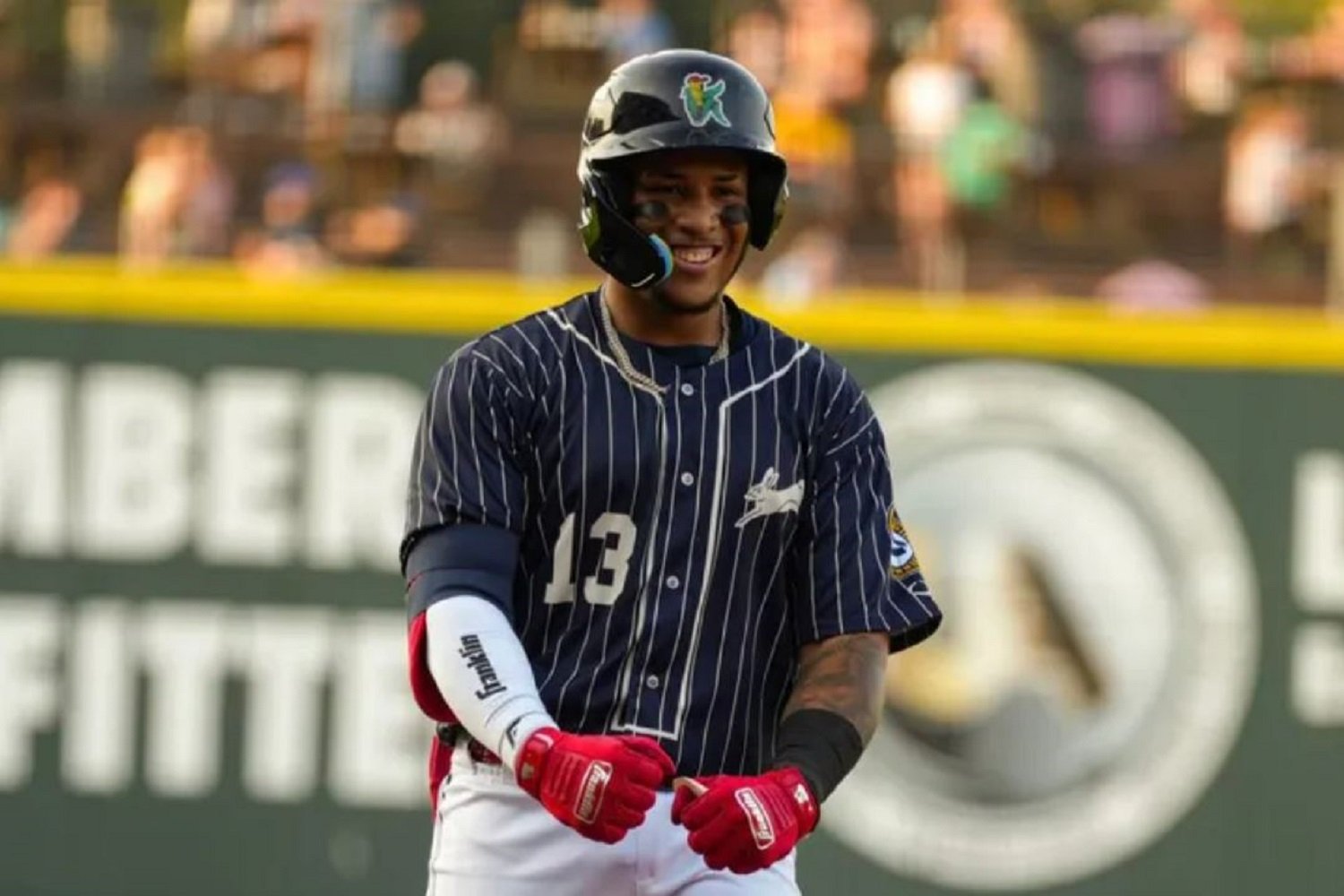 It’s easy to slot Walker Jenkins at the top of Minnesota’s prospect rankings. The 2023 first-round pick has already established himself as one of the premier prospects in all of baseball, combining elite hitting ability with the chance to be a franchise cornerstone. But once you move past Jenkins, the conversation becomes much more interesting. Four players all have legitimate cases to sit just behind him, so here’s a look at the pros and cons for each. Eduardo Tait – C The Case For: The Twins aggressively targeted catching depth at this year’s trade deadline, and Tait has emerged as the most exciting young backstop in the system. He’s already shown an advanced approach at the plate for his age, and there’s real upside in his bat-to-ball skills. If he sticks behind the plate, he could be a middle-of-the-order catcher, something every franchise covets. ESPN and MLB Pipeline recently updated their top prospect lists, and Tait is ranked second on both. The Case Against: That “if” is a big one. Scouts have long debated whether Tait’s defense will allow him to stay at catcher long-term. If he’s forced to move off the position, his bat may not be enough to carry a premium ranking compared to other prospects who project at more valuable defensive spots. Tait has a premium bat for a catcher, but sliding him to first base or designated hitter would be a disappointing long-term outcome. Luke Keaschall – INF The Case For: Keaschall has done nothing but hit since joining the organization, and fans have been witness to his playing style at the big-league level. He was recently named the AL Player of the Week. His plate discipline and ability to spray line drives across the field give him one of the highest offensive floors in the system. Even without big power, his consistency could make him a regular in the Twins’ infield for years. The Case Against: While his bat-to-ball skills are excellent, Keaschall’s swing speed limits his ability to drive the ball with authority consistently. That means he’s unlikely to add much over-the-fence power, which caps his ceiling. He looks more like a steady contributor than a potential star, and that’s why some rankings might move him down their list. Currently, Twins Daily has him ranked as the organization’s second-best prospect even after the trade deadline. Kaelen Culpepper – SS/3B The Case For: Culpepper has quickly climbed the ladder since being drafted in 2024. His combination of speed, athleticism, and contact ability makes him an exciting player to dream on. He’s held his own against advanced pitching this season, and his athleticism gives him defensive flexibility. During the 2025 season, he has answered many of the questions that surrounded him when the team drafted him. He has one of the fastest-rising stocks in the Twins system this year and will enter next season as a national top-100 prospect. The Case Against: The question is where that flexibility will land him. While Culpepper has been developed as a shortstop, some evaluators see his long-term defensive home at third base. If that shift happens, he’ll need to continue to hit for more power to profile as an above-average regular at the position. Emmanuel Rodriguez – OF The Case For: Rodriguez entered the year as Minnesota’s consensus No. 2 prospect, and the reasons are clear. He’s a true on-base machine with plus power, and when healthy, he’s shown flashes of being an impact outfielder at the big-league level. Few in the system can match his combination of patience and pop. The Case Against: Health remains the story. Rodriguez has battled injuries throughout his professional career, and each time he seems to be building momentum, he’s sidelined again. Evaluating a player who’s rarely on the field is difficult, and that uncertainty has opened the door for others to leapfrog him in the rankings. There’s no debate about who sits atop the Twins’ system; Jenkins is in a tier of his own. But the debate for No. 2 is where things get interesting. Tait’s ceiling as a catcher gives him a strong case, but his defensive future is uncertain. Keaschall has already impacted the big-league roster, but his lack of power could hold him back from stardom. Culpepper’s athleticism is exciting, though his long-term position may shift. And Rodriguez remains the most talented of the bunch, if he can stay healthy. It’s a good problem for the Twins to have: multiple legitimate contenders to sit right behind Jenkins. How the organization ranks them says a lot about how they balance ceiling, risk, and positional value. Who would you rank as the Twins’ second-best prospect? Leave a comment and start the discussion.
- 37 comments
-
- 8
-
-

-
- eduardo tait
- walker jenkins
- (and 3 more)
-
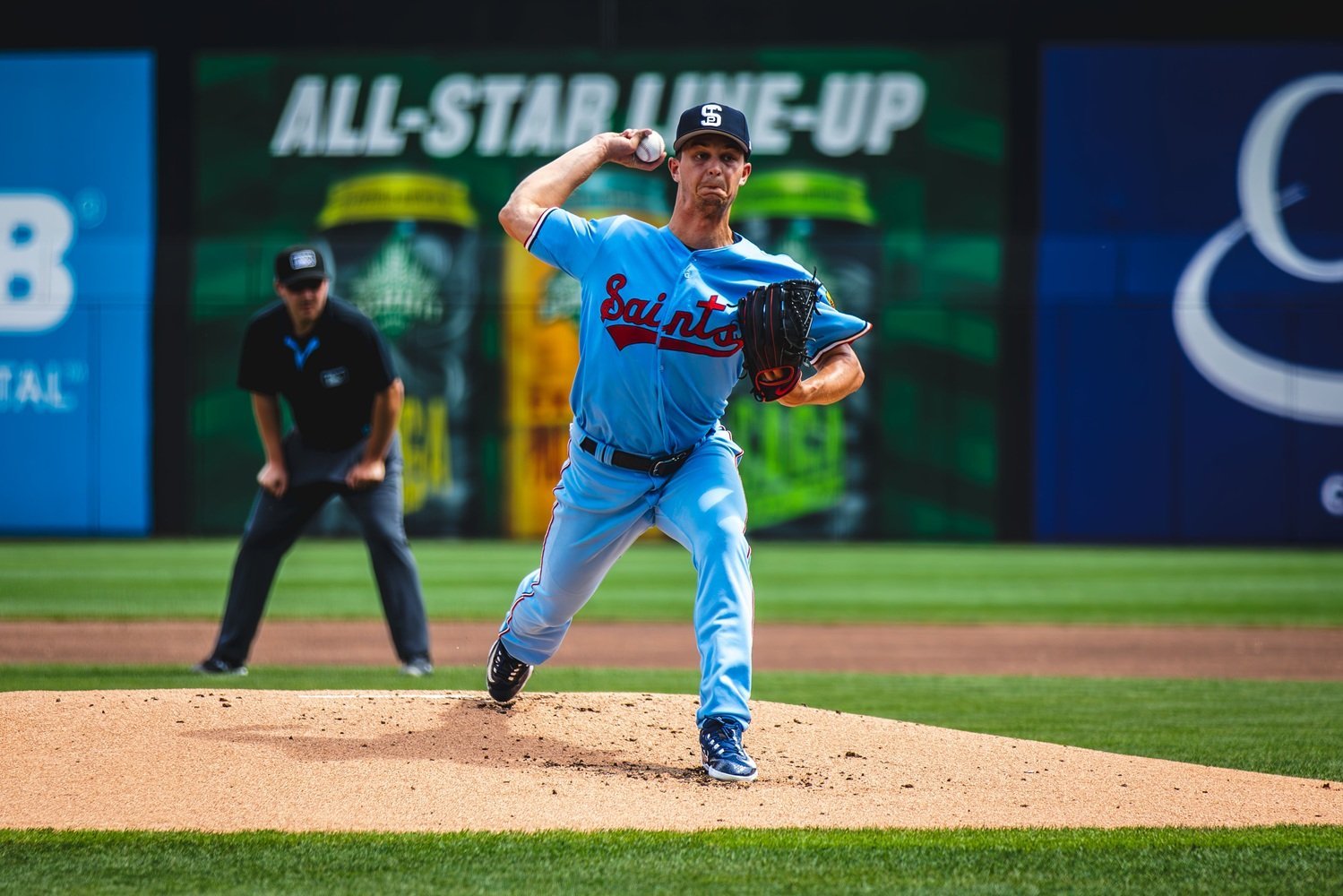 The Twins pipeline continues to provide plenty of intrigue, across all levels. With new additions from the trade deadline and young bats starting to make noise, the organization saw strong performances from players with very different paths to Minnesota. Let’s dive into the week’s top standouts. 1B JP Smith II – Fort Myers Mighty Mussels How They Got Here: Smith, 20, joined the Twins as a 17th-round pick in the 2025 MLB Draft. He spent three collegiate seasons playing at Sacramento State, slashing .297/.372/.581. The young first baseman needs to hit for power during his professional career, because he is already near the bottom of the defensive spectrum. Thankfully, he has shown some early promise. Hitting the Hot Button: Smith’s college experience at the plate has been on display in Fort Myers this summer. He has hits in 10 of his first 13 professional games, including five multi-hit efforts. To start his career, Smith has gone 19-for-55, with five extra-base hits and three walks. He won FSL Player of the Week honors (Aug. 4-11) after slashing .478/.500/.913. Despite being a college player, he has been facing older pitchers in nearly 80% of his at-bats while posting a .928 OPS against them. RHP Mick Abel – St. Paul Saints How They Got Here: Abel, 23, was acquired from the Phillies at the trade deadline as part of the deal that sent Jhoan Duran to Philadelphia. The former first-round pick (15th overall in 2020) came to Minnesota with a big arm and frontline starter potential, though inconsistency had held him back with his previous club. Last season, he posted a 6.46 ERA with a 1.81 WHIP in 108 2/3 innings at Triple-A, where he was five years younger than the average age of the competition. Hitting the Hot Button: Abel has wasted little time making an impression in the Twins organization. In three starts, he has 15 1/3 innings pitched, allowing three runs on seven hits with a 23-to-6 strikeout-to-walk ratio. He’s held opponents to a .140 batting average and a .492 OPS in the hitter-friendly International League. His mid-90s fastball and sharp breaking ball overwhelmed hitters in his most recent outing, where he struck out a career-high 11 batters. The Twins believe a change of scenery and development tweaks (including adding a sweeper) could push him toward the ceiling that once made him one of the top pitching prospects in baseball. RHP Ryan Gallagher – Wichita Wind Surge How They Got Here: Gallagher, 22, came from the Chicago Cubs in exchange for Willi Castro. The Sacramento, Calif. native was selected by the Cubs in the sixth round of the 2024 MLB Draft out of UC-Santa Barbara. He did not make his professional debut until this season, and is currently ranked as Minnesota’s No. 16 prospect by MLB.com. He made 14 High-A starts with the Cubs and posted a 3.72 ERA with a 1.12 WHIP in 72 2/3 innings. Hitting the Hot Button: On Friday in Springfield, Gallagher delivered a strong outing for Wichita. The right-hander tossed six innings, allowing just two unearned runs on four hits with one walk and three strikeouts. It was another glimpse of the polished stuff and mound presence that made him appealing to the Twins at the deadline. In five Double-A starts this season, he has posted a 2.63 ERA with a 0.99 WHIP. With a projectable frame and improving command, Gallagher could move quickly through the system and position himself as a rotation option as early as mid-2026. The Twins’ system continues to show its depth, from late-round draftees like Smith flashing their upside to trade acquisitions like Abel and Gallagher making an immediate impact. As the organization balances developing talent with competing at the big-league level, these performances are a reminder that the next wave of contributors is already taking shape. Which performance stands out most in recent weeks? Leave a comment and start the discussion.
- 11 comments
-
- 13
-
-
Image courtesy of Rob Thompson, Saint Paul Saints (photo of Mick Abel) The Twins pipeline continues to provide plenty of intrigue, across all levels. With new additions from the trade deadline and young bats starting to make noise, the organization saw strong performances from players with very different paths to Minnesota. Let’s dive into the week’s top standouts. 1B JP Smith II – Fort Myers Mighty Mussels How They Got Here: Smith, 20, joined the Twins as a 17th-round pick in the 2025 MLB Draft. He spent three collegiate seasons playing at Sacramento State, slashing .297/.372/.581. The young first baseman needs to hit for power during his professional career, because he is already near the bottom of the defensive spectrum. Thankfully, he has shown some early promise. Hitting the Hot Button: Smith’s college experience at the plate has been on display in Fort Myers this summer. He has hits in 10 of his first 13 professional games, including five multi-hit efforts. To start his career, Smith has gone 19-for-55, with five extra-base hits and three walks. He won FSL Player of the Week honors (Aug. 4-11) after slashing .478/.500/.913. Despite being a college player, he has been facing older pitchers in nearly 80% of his at-bats while posting a .928 OPS against them. RHP Mick Abel – St. Paul Saints How They Got Here: Abel, 23, was acquired from the Phillies at the trade deadline as part of the deal that sent Jhoan Duran to Philadelphia. The former first-round pick (15th overall in 2020) came to Minnesota with a big arm and frontline starter potential, though inconsistency had held him back with his previous club. Last season, he posted a 6.46 ERA with a 1.81 WHIP in 108 2/3 innings at Triple-A, where he was five years younger than the average age of the competition. Hitting the Hot Button: Abel has wasted little time making an impression in the Twins organization. In three starts, he has 15 1/3 innings pitched, allowing three runs on seven hits with a 23-to-6 strikeout-to-walk ratio. He’s held opponents to a .140 batting average and a .492 OPS in the hitter-friendly International League. His mid-90s fastball and sharp breaking ball overwhelmed hitters in his most recent outing, where he struck out a career-high 11 batters. The Twins believe a change of scenery and development tweaks (including adding a sweeper) could push him toward the ceiling that once made him one of the top pitching prospects in baseball. RHP Ryan Gallagher – Wichita Wind Surge How They Got Here: Gallagher, 22, came from the Chicago Cubs in exchange for Willi Castro. The Sacramento, Calif. native was selected by the Cubs in the sixth round of the 2024 MLB Draft out of UC-Santa Barbara. He did not make his professional debut until this season, and is currently ranked as Minnesota’s No. 16 prospect by MLB.com. He made 14 High-A starts with the Cubs and posted a 3.72 ERA with a 1.12 WHIP in 72 2/3 innings. Hitting the Hot Button: On Friday in Springfield, Gallagher delivered a strong outing for Wichita. The right-hander tossed six innings, allowing just two unearned runs on four hits with one walk and three strikeouts. It was another glimpse of the polished stuff and mound presence that made him appealing to the Twins at the deadline. In five Double-A starts this season, he has posted a 2.63 ERA with a 0.99 WHIP. With a projectable frame and improving command, Gallagher could move quickly through the system and position himself as a rotation option as early as mid-2026. The Twins’ system continues to show its depth, from late-round draftees like Smith flashing their upside to trade acquisitions like Abel and Gallagher making an immediate impact. As the organization balances developing talent with competing at the big-league level, these performances are a reminder that the next wave of contributors is already taking shape. Which performance stands out most in recent weeks? Leave a comment and start the discussion. View full article
-
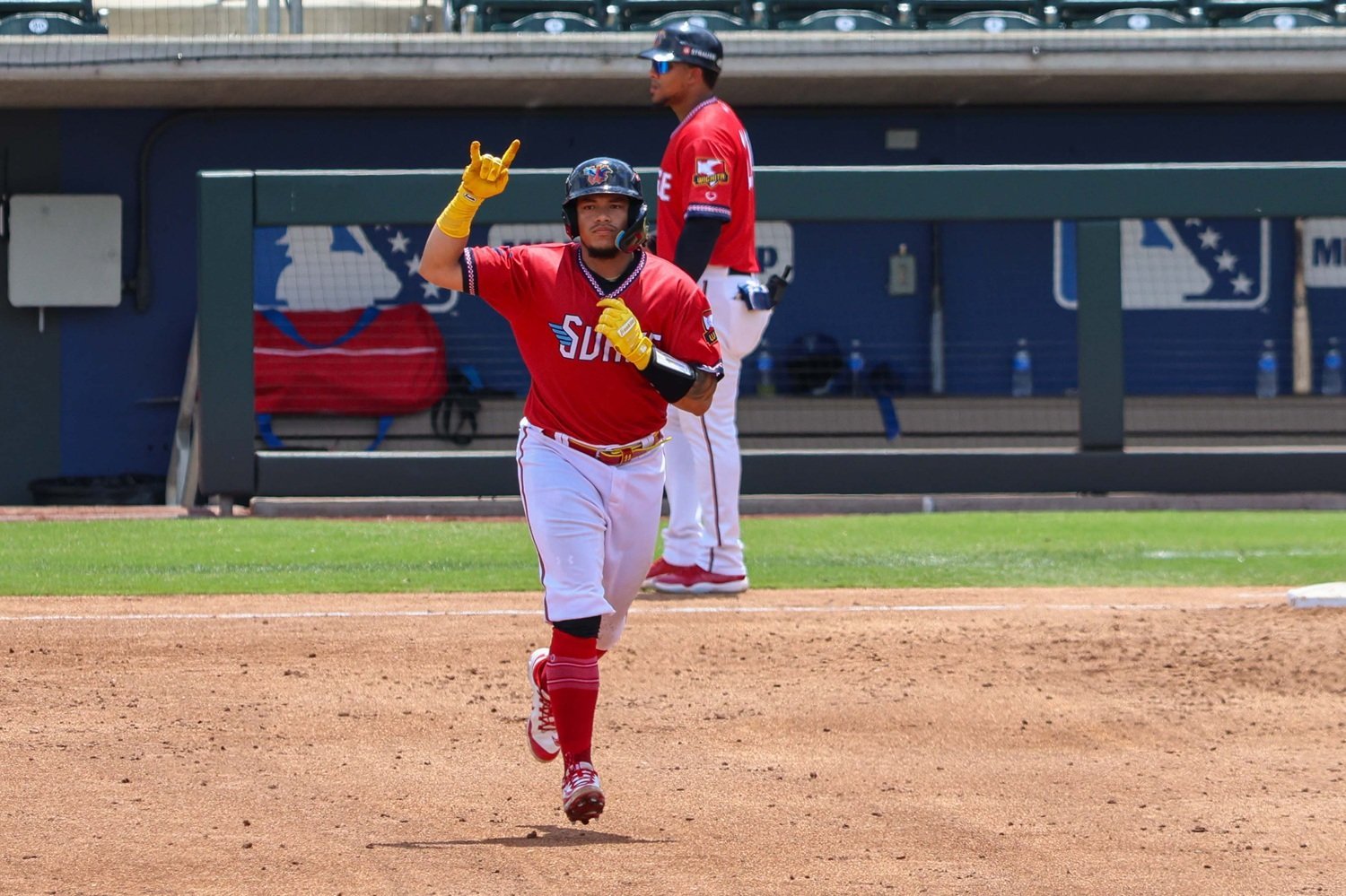 Catching depth has been a quiet strength for the Minnesota Twins in recent seasons, but it’s been tested in 2025. Christian Vázquez landed on the injured list with a shoulder infection, forcing Minnesota to dip into its reserves for the first time in three years. Jhonny Pereda, a recent waiver claim from Oakland, joined the roster alongside Mickey Gasper, who has extensive minor-league catching experience despite primarily being used in a utility role. The front office also made it clear at the trade deadline that catching was a priority. Eduardo Tait was acquired in the Jhoan Duran deal, and Enrique Jimenez arrived from San Diego in the Chris Paddack trade. Those moves added to an already layered system stocked with intriguing talent at every level. Here’s a look at the organization’s catching depth, from Triple-A St. Paul to Low-A Fort Myers. Triple-A St. Paul Saints Jhonny Pereda – Pereda was claimed off waivers from the Athletics organization last month and already has been called up to the Twins for one stint. Since joining the Saints, he is hitting .393/.500/.679 with five extra-base hits in eight games. He won’t continue to hit at that level with the Saints, but has a .352 OBP in nearly 3,000 plate appearances in the minor leagues. Pereda adds solid organizational depth at a position where the Twins will need options in 2026. Patrick Winkel – Drafted in the ninth round in 2021 out of UConn, Winkel has built his value on solid receiving skills and a steady presence behind the plate. In 2025, he’s posted a .217/.280/.443 slash line, while throwing out 16% of attempted base stealers. His OPS has risen by over 80 points this season as he repeats Triple-A. His experience calling games makes him a valuable option, if the Twins need another emergency promotion. Noah Cardenas – Drafted in the eighth round in 2021 from UCLA, he’s split time between Double- and Triple-A. He’s shown more offensive consistency this season, hitting .241 with a .831 OPS through mid-August. Last season, he struggled in the Texas League, with a .587 OPS in 75 games. His college experience and offensive improvements could make him a backup option at the big-league level in 2026. Double-A Wichita Wind Surge Ricardo Olivar – Olivar has been known for his bat over the last two seasons, as he's posted an aggregate OPS above .800. Signed out of Venezuela in 2018, he’s hitting .273 with 26 extra-base hits and a .797 OPS in 81 games this season. Also, he’s making strides in controlling the running game, with a career-high 19% rate of catching opposing baserunners attempting to steal. His versatility adds to his roster value, as he has played outfield in the past. Nate Baez – A 12th-round pick in 2022 out of Arizona State, Baez split time between Cedar Rapids and Wichita this season. His 2025 season features a .285 batting average with gap-to-gap doubles power and a walk rate near 12%. His game-calling continues to improve as he moves up the organizational ladder. He also plays first base regularly to keep his bat in the lineup. Andrew Cossetti – Known for his bat-first profile, Cossetti has lived up to that billing this season. The St. Joseph’s product has 23 extra-base hits and has improved his OPS by 125 points compared to 2024. He’s repeating Double-A, where he is a year older than the average age of the competition. High-A Cedar Rapids Kernels Eduardo Tait – The centerpiece from Philadelphia in the Jhoan Duran trade, Tait is only 18 years old, but already showing an advanced feel for hitting. During the 2025 season, he has hit .251/.313/.428, with 23 doubles and 13 home runs in 93 games. Those numbers might not pop off the page, but he’s also been pushed aggressively and has yet to face a younger pitcher this season. Scouts rave about his arm strength and raw power projection. The Twins hope he is their catcher of the future. Khadim Diaw – The Twins’ third-round pick in 2024 out of Loyola Marymount, Diaw entered the season as one of the top catching prospects in the system. He’s continued to put himself on the prospect map at High-A, posting a .297/.450/.445 slash line with 10 extra-base hits in 42 games. His athleticism behind the plate and improved blocking skills make him a potential long-term answer. Poncho Ruiz – Signed as a non-drafted free agent in 2023, Ruiz provided steady production for Fort Myers to start the year with an .813 OPS in 31 games. Since being promoted, he’s been getting on base nearly 35% of the time, with modest power (.664 OPS). Defensively, he has cut down over 20% of would-be base stealers. Luis Hernandez – Hernandez spent four years as a college catcher before signing with the Twins in July. He went 4-for-9 (.444 BA) with three walks and three strikeouts in four games with Fort Myers, before an injury at Cedar Rapids forced a promotion. He’s very early in his professional career, so there is a lot to learn. His college experience should help to add catching depth to the system, for however long he sticks around. Jefferson Valladares – The Twins selected Valladares in the Triple-A phase of the 2024 Rule 5 Draft from the Los Angeles Dodgers organization. Over the last two seasons, he has averaged 22 games per year due to multiple injuries. In 2025, he is slashing .186/.268/.361, with 11 doubles and seven home runs in 59 games. At 23 years old, he is slightly older than his level of competition, so the relative lack of progress here could imperil his status on the organizational roster this winter. Low-A Fort Myers Mighty Mussels Enrique Jimenez – Acquired from the Tigers in the Chris Paddack deal, Jiménez is a switch-hitting catcher who won’t turn 20 until November. The Tigers had been playing him in the rookie leagues, but the Twins bumped him to Fort Myers after the trade. He has a strong approach at the plate (.356 OBP) and shows above-average arm strength (29.0 CS%). Evaluators believe his offensive approach will improve as he gets more pro at-bats. Daniel Pena – Signed out of Venezuela in 2021, Pena has been splitting time between catching and first base. Offensively, he’s struggled with consistency (.570 OPS) even though he is repeating Low-A. He’s faced older pitchers in over 90% of his plate appearances, so he could show improvement when facing same-age competition. Ian Daugherty – The Twins signed Daugherty in July following a four-year college career playing for Oklahoma State, where he posted an .841 OPS. In two games for Fort Myers, he has gone 2-for-7 with a home run and two RBIs. His college experience in the Big 12 should help him work with young pitchers in the low minors. Ranking the Best Catcher by Level Triple-A: Cardenas – His improved bat in 2025 gives him the edge over Winkel as a short-term call-up candidate. Pereda might have the inside track on a role with the 2026 Twins. Double-A: Olivar – His ability to contribute offensively while handling pitchers makes him a high-upside name to watch. He could be a fast riser if injuries strike. High-A: Tait – While young, Tait already shows an advanced approach and could move quickly if he continues to adjust to High-A pitching. He's one of baseball's best catching prospects. Low-A: Jimenez – His age, tools, and athleticism give him the inside track as a future everyday MLB catcher, though he’s still several years away. From the majors to the Florida State League, the Twins’ catching cupboard is as stocked as it’s been in years. Between recent trade acquisitions and steady player development, Minnesota has built a depth chart capable of absorbing injuries without drastically compromising production behind the plate. Who’s the team’s top-ranked catcher outside of Tait and Diaw? Who will be the team’s catching duo in 2027? Leave a comment and start the discussion.
- 24 comments
-
- 8
-
-
- eduardo tait
- khadim diaw
- (and 5 more)
-
Catching depth has been a quiet strength for the Minnesota Twins in recent seasons, but it’s been tested in 2025. Christian Vazquez landed on the injured list with a shoulder infection, forcing Minnesota to dip into its reserves for the first time in three years. Jhonny Pereda, a recent waiver claim from Oakland, joined the roster alongside Mickey Gasper, who has extensive minor-league catching experience despite primarily being used in a utility role. The front office also made it clear at the trade deadline that catching was a priority. Eduardo Tait was acquired in the Jhoan Duran deal, and Enrique Jimenez arrived from San Diego in the Chris Paddack trade. Those moves added to an already layered system stocked with intriguing talent at every level. Here’s a look at the organization’s catching depth from the Triple-A St. Paul to Low-A Fort Myers. Triple-A St. Paul Saints Jhonny Pereda – Pereda was claimed off waivers from the Athletics organization last month and already has been called up to the Twins. Since joining the Saints, he is hitting .393/.500/.679 (1.179) with five extra-base hits in eight games. He won’t continue to hit at that level with the Saints, but has a .352 OBP in nearly 3,000 plate appearances in the minor leagues. Pereda adds solid organizational depth at a position where the Twins will need options in 2026. Patrick Winkel – Drafted in the ninth round in 2021 out of UConn, Winkel has built his value on solid receiving skills and a steady presence behind the plate. In 2025, he’s posted a .217/.280/.443 (.723) slash line while throwing out 16% of attempted base stealers. His OPS has risen by over 80 points this season as he repeats Triple-A. His experience calling games makes him a valuable option if the Twins need another emergency promotion. Noah Cardenas – Drafted in the eighth round in 2021 from UCLA, he’s split time between Double- and Triple-A. He’s shown more offensive consistency this season, hitting .241 with a .831 OPS through mid-August. Last season, he struggled in the Texas League with a .587 OPS in 75 games. His college experience and offensive improvements could make him a backup option at the big-league level in 2026. Double-A Wichita Wind Surge Ricardo Olivar – Olivar has been known for his bat over the last two seasons as he combined for an OPS above .800. Signed out of Venezuela in 2018, he’s hitting .273 with 26 extra-base hits and a .797 OPS in 81 games this season. Also, he’s making strides in controlling the running game with a career-high 19% CS%. His versatility adds to his roster value as he has played outfield in the past. Nate Baez – A 12th-round pick in 2022 out of Arizona State, Baez split time between Cedar Rapids and Wichita this season. His 2025 season features a .285 batting average with gap-to-gap doubles power and a walk rate near 12%. His game-calling continues to improve as he moves up the organizational ladder. He also plays first base regularly to keep his bat in the lineup. Andrew Cossetti – Known for his bat-first profile, Cossetti has lived up to that billing this season. The St. Joseph’s product has 23 extra-base hits and has improved his OPS by 125 points compared to 2024. He’s repeating Double-A where he is a year older than the average age of the competition. High-A Cedar Rapids Kernels Eduardo Tait – The centerpiece from Philadelphia in the Jhoan Duran trade, Tait is only 18 years old but already showing an advanced feel for hitting. During the 2025 season, he has hit .251/.313/.428 (.741) with 23 doubles and 13 home runs in 93 games. Those numbers might not pop off the page, but he’s also been pushed aggressively and has yet to face a younger pitcher this season. Scouts rave about his arm strength and raw power projection. The Twins hope he is their long-term catcher of the future. Khadim Diaw – The Twins’ third-round pick in 2024 out of Loyola Marymount, Diaw entered the season as one of the top catching prospects in the system. He’s continued to put himself on the prospect map at High-A, posting a .297/.450/.445 (.895) slash line with ten extra-base hits in 42 games. His athleticism behind the plate and improved blocking skills make him a potential long-term answer. Poncho Ruiz – Signed as a non-drafted free agent in 2023, Ruiz provided steady production for Fort Myers to start the year with an .813 OPS in 31 games. Since being promoted, he’s been getting on base nearly 35% of the time with modest power (.664 OPS). Defensively, he has cut down over 20% of would-be base stealers. Luis Hernandez – Hernandez spent four years as a college catcher before signing with the Twins in July. He went 4-for-9 (.444 BA) with three walks and three strikeouts in four games with Fort Myers before an injury at Cedar Rapids forced a promotion. He’s very early in his professional career, so there is a lot to learn. His college experience should help to add catching depth to the system. Jefferson Valladares – The Twins selected Valladares in the Triple-A phase of the 2024 Rule 5 Draft from the Los Angeles Dodgers organization. Over the last two seasons, he has averaged 22 games per year due to multiple injuries. In 2025, he is slashing .186/.268/.361 (.629) with 11 doubles and seven home runs in 59 games. At 23 years old, he is slightly older than his level of competition. Low-A Fort Myers Mighty Mussels Enrique Jimenez – Acquired from the Padres in the Chris Paddack deal, Jimenez is a switch-hitting catcher who won’t turn 20 until November. The Tigers had been playing him in the rookie leagues, but the Twins bumped him to Fort Myers after the trade. He has a strong approach at the plate (.356 OBP) and shows above-average arm strength (29.0 CS%). Evaluators believe his offensive approach will improve as he gets more pro at-bats. Daniel Pena – Signed out of Venezuela in 2021, Pena has been splitting time between catching and first base. Offensively, he’s struggled with consistency (.570 OPS) even though he is repeating Low-A. He’s faced older pitchers in over 90% of his plate appearances, so he could show improvement when facing same-aged competition. Ian Daugherty – The Twins signed Daugherty in July following a four-year college career playing for Oklahoma State, where he posted an .841 OPS. In two games for Fort Myers, he has gone 2-for-7 with a home run and two RBI. His college experience in the Big 12 should help him work with young pitchers in the low minors. Ranking the Best Catcher by Level Triple-A: Cardenas – His improved bat in 2025 gives him the edge over Winkel as a short-term call-up candidate. Pereda might have the inside track on a role with the 2026 Twins. Double-A: Olivar – His ability to contribute offensively while handling pitchers makes him a high-upside name to watch. He could be a fast riser if injuries strike. High-A: Tait – While young, Tait already shows an advanced approach and could move quickly if he continues to adjust to High-A pitching. He's one of baseball's best catching prospects. Low-A: Jimenez – His age, tools, and athleticism give him the inside track as a future everyday MLB catcher, though he’s still several years away. From the majors to the Florida State League, the Twins’ catching cupboard is as stocked as it’s been in years. Between recent trade acquisitions and steady player development, Minnesota has built a depth chart capable of absorbing injuries without drastically compromising production behind the plate. Who’s the team’s top-ranked catcher outside of Tait and Diaw? Who will be the team’s catching duo in 2027? Leave a comment and start the discussion. View full article
-
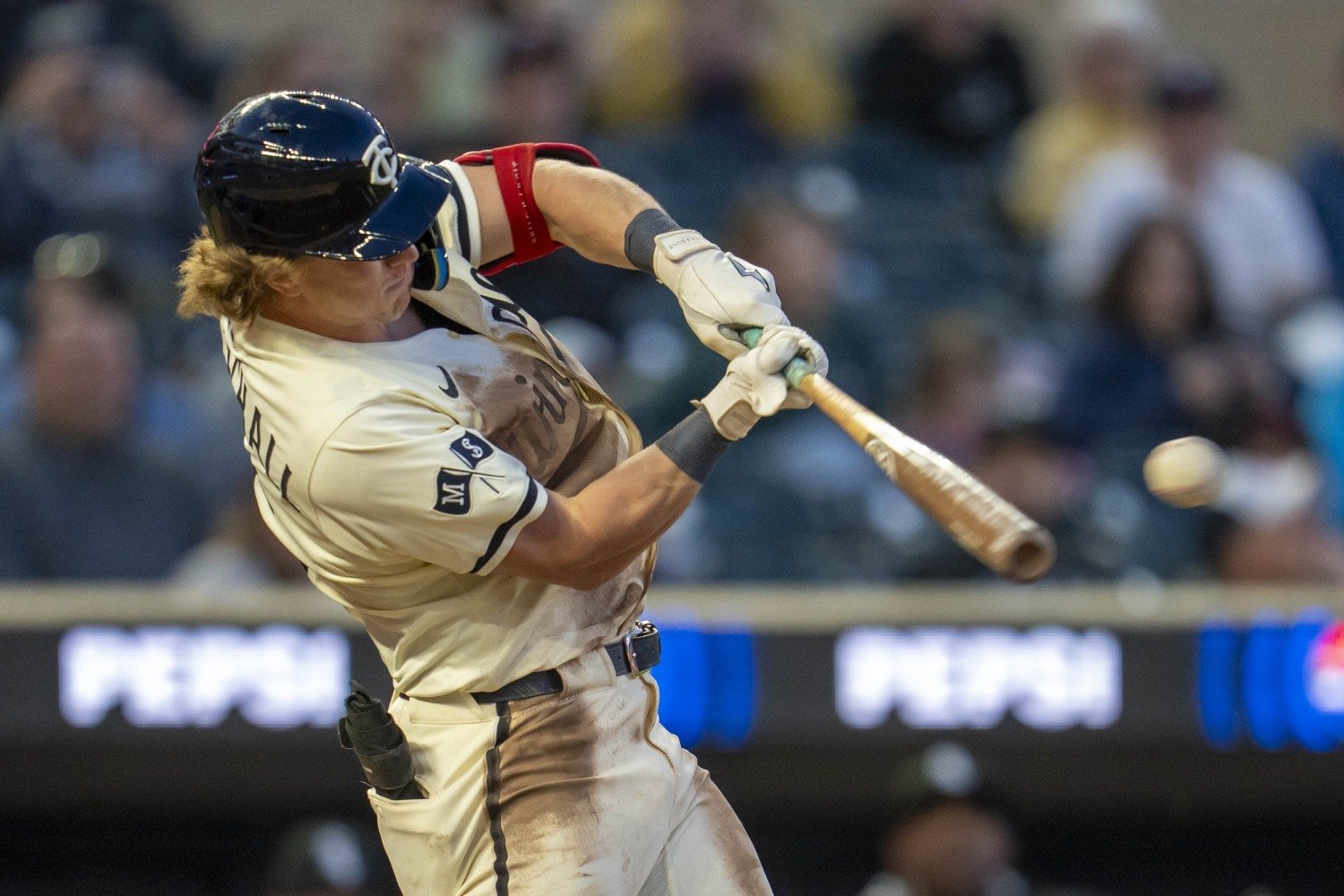 The Twins traded Carlos Correa, Jhoan Duran, Griffin Jax, Louis Varland, and seemingly anyone with any semblance of value in their back pocket. The result? Fans are wandering around Target Field like shoppers in a grocery store that just discontinued their favorite brand of cereal. Don’t panic. I’ve prepared a completely unbiased, absolutely objective guide to selecting your new favorite Twin. Think of this as a dating app for baseball fandom: you’re not swiping left or right, you’re just bracing for whoever is still on the roster come August. Byron Buxton – The Lifelong Hope Investment If you’ve ever said “this is the year” every single season since 2015, Byron is your guy. He’s a franchise mainstay, a walking highlight reel when healthy, and a permanent “day-to-day” designation in human form. Picking Buxton as your favorite player is like buying stock in a company that might go bankrupt or might invent the next iPhone. There is high risk or infinite reward. Ideal Fan Type: Eternal optimists, fans with three unused Buxton shirsey purchases in their closet, and anyone who has the Mayo Clinic bookmarked Luke Keaschall – The Prospect Hipster Pick Keaschall is for the fan who loved Jose Miranda before he popped up on top prospect lists and listens to bands before they hit Spotify’s Top 50. He’s a rising infielder with sneaky power and plenty of “up-the-middle” defensive swagger. If he becomes a star, you’ll be insufferable about how you “always knew." Ideal Fan Type: People who talk about OPS+ at dinner parties, own one of those old-school “Win Twins” pennants, and correct others when they say “Cash-ull” instead of “Keesh-al.” Joe Ryan – The Workhorse With the Perfect Hair Ryan didn’t get traded because you can’t put a price on a facial hair-and-flow combo like his. He’s got a competitive streak, throws more fastballs than your rec league softball team, and delivers the occasional gem to keep you hooked. He’s the safe bet, even if there's a danger that he's traded this winter. Ideal Fan Type: Folks who love reliability, Instagram hair tutorials, and shouting “give him one more inning” from the second deck. Ryan Jeffers – The Lunch-Pail Slugger Jeffers is the guy who just keeps showing up, mashing home runs, and doing interviews in a voice that sounds like it should be narrating truck commercials. He’s become one of the most underrated offensive catchers in baseball, but still somehow looks like he’s filling in until the starter gets back. Ideal Fan Type: Fans who like power hitters who don’t need a spotlight, people who pack their lunch in an old Igloo cooler, and anyone who still remembers Tim Laudner fondly. Royce Lewis – Buxton 2.0 If you’re looking for potential star power that somehow survived the deadline purge, Royce is your man. He’s got charisma, clutch hits, and the kind of smile that makes you forget how many IL stints he’s had. He’s lost some of the prospect shine, but he has a chance to be a core piece until the next fire sale. Ideal Fan Type: Kids who wear eye black for tee-ball, fans who cry during walk-off celebrations, and anyone willing to refresh Twitter for injury updates during dinner. Brooks Lee – The Old-School Baseball Guy in a Young Body Lee plays like he’s been in the league for ten years, even though he still gets carded at restaurants. He’s got smooth hands, a pure swing, and the fundamentally sound play that warms the hearts of “the game used to be better” purists. Ideal Fan Type: Baseball traditionalists, people who complain about shift bans, and anyone who has a favorite fungo bat. Matt Wallner – The Homegrown Hulk Wallner is here for the fans who like their baseball players built like they just walked out of a lumberjack competition. He hits baseballs to places where Statcast can’t find them and throws like he’s trying to dent the catcher’s mitt. Yes, he’ll strike out, but those home runs are worth the price of admission. Ideal Fan Type: People who measure distance in “dingers,” Duluth natives, and anyone who believes launch angle is a lifestyle. Totally Accurate Flowchart for Picking Your New Favorite Twin Do you enjoy disappointment but believe in miracles YES: Welcome to Team BYRON BUXTON NO: Continue… Do you brag about prospects before anyone else knows them? YES: L-U-K-E K-E-A-S-C-H-A-L-L NO: Continue… Are you here for elite hair & reliable innings? YES: Joe "Fastball" Ryan NO: Continue… Do you like catchers who hit bombs & look like they could fix your carburetor? YES: Ryan Jeffers NO: Continue… Do you need a player injured as much as Buxton with less upside? YES: Royce Lewis NO: Continue… Do you wear stirrups unironically and own a scorebook? YES: Brooks Lee NO: Continue… Do you only watch for tape-measure home runs & 100 mph outfield assists? YES: Matt Wallner NO: Try Again… Final Step: Accept the Chaos Remember, your favorite player selection is temporary. The 2025 trade deadline taught us that. So pick someone, root like crazy, and keep an emotional go-bag ready for next July. The Twins may have traded away their stars, but at least you’ve still got options… for now.
 -
Image courtesy of Ed Bailey, Wichita Wind Surge (photo of Walker Jenkins) The Twins’ farm system has undergone a significant shakeup over the past year, with trades, breakout performances, and injuries all impacting the arrival timelines for their top prospects. Some players are pushing their way toward Target Field sooner than expected, while others still have development work ahead. Here’s a look at the Twins Daily top prospects sorted by their updated estimated time of arrival. Prospects with 2025 ETA Mick Abel – RHP – Triple-A TD Prospect Rank: 8 Acquired in the summer blockbuster that sent Jhoan Durán to Philadelphia, Abel is big-league ready and will be part of the team’s long-term pitching plans. His mid-90s fastball and sharp slider have overwhelmed hitters, and improved control has trimmed his walk rate (down over 5.5% compared to 2024). If he keeps this up, Abel could be a rotation option as soon as late this season. Prospects with 2026 ETA Walker Jenkins – OF – Double- TD Prospect Rank: 1 Jenkins has looked every bit the part of a future cornerstone since being drafted fifth overall in 2023. He’s holding his own in Double-A as a 20-year-old, showcasing advanced plate skills, gap-to-gap power, and steady defensive work in center field. Injuries have impacted his first two full seasons as a pro, but the Twins have continued to be aggressive with him. Jenkins will likely be challenged with a Triple-A promotion before the end of 2025. Kaelen Culpepper – SS – Double-A TD Prospect Rank: 3 Culpepper’s steady glove at shortstop continues to be his calling card, but his bat has made strides in 2025. He’s added more lift to his swing, leading to career-best power numbers (.943 OPS at Double-A). If the offensive gains stick, he could push for an MLB role sooner than his original ETA, with the Carlos Correa trade paving way for his arrival. There is a good chance that he will be the team’s shortstop in the not-so-distant future. Emmanuel Rodriguez – OF – Triple-A TD Prospect Rank: 4 Rodriguez entered 2025 looking to prove his bat could handle upper-minors pitching, and he’s doing just that with an .853 OPS. His combination of elite plate discipline and plus raw power makes him one of the most dangerous hitters in the International League. Staying healthy remains key, but if he keeps producing, an early 2026 debut feels inevitable. Connor Prielipp – LHP – Double-A TD Prospect Rank: 6 After missing significant time due to injury early in his pro career, Prielipp is finally building momentum. His mid-90s fastball and wipeout slider give him frontline potential, but the Twins are carefully monitoring his workload. A late 2026 debut seems realistic if his health holds. Like Duran before him, the Twins could move him to a bullpen role to keep him healthy for the long term. Kendry Rojas – LHP – Triple-A TD Prospect Rank: 9 The Twins acquired Rojas as part of the Louis Varland trade, and the front office is excited for what he brings to the system. His sinker-slider combination is tough on both lefties and righties, and he’s refining his other pitches to miss more bats. The Twins have him using his fastball more regularly than he did with Toronto, so that’s something to watch. He profiles as either a mid-rotation starter or high-leverage reliever when he arrives. Prospects with 2027+ ETA Eduardo Tait – C – High-A TD Prospect Rank: 5 Tait, the second prospect in the Duran trade with Philadelphia, has quickly shown why the Twins targeted him. His mature approach at the plate is rare for a teenager, and his arm strength behind the plate is already above-average. He’s a consensus top-100 prospect and was the second-best prospect traded at the deadline. There’s plenty of time for him to develop, but his foundation is impressive. Dasan Hill – LHP – High-A TD Prospect Rank: 7 Hill’s 2025 season has been about refining his command. His mid-90s fastball and wipeout slider give him an intriguing starter’s profile, but he’s still learning to attack the zone consistently. He posted a 30.6 K% at Low-A, and the organization promoted him to High-A before his 20th birthday. Patience will be key, but the tools are here for a potential rotation piece. Charlee Soto – RHP – High-A TD Prospect Rank: 10 Soto’s stuff jumps off the page with a mid-to-upper 90s fastball with a sharp slider, but he’s still learning how to sequence effectively. He suffered a right triceps strain earlier this season and hasn’t appeared in a game since April 17th. At just 19 years old, he’s one of the younger arms in the league, so he needs to get healthy. The Twins can always have him repeat High-A next season. If the Twins’ development plan holds, fans could see an influx of top talent over the next three seasons. With multiple MLB-ready players knocking on the door in 2025 and a wave of high-ceiling prospects following closely behind, the organization’s long-term core is starting to take shape. Do you agree with the ETAs? Which player will have the biggest impact on the 2026 roster? Leave a comment and start the discussion. View full article
-
Updated ETAs for the Minnesota Twins’ Top 10 Prospects
Cody Christie posted an article in Minor Leagues
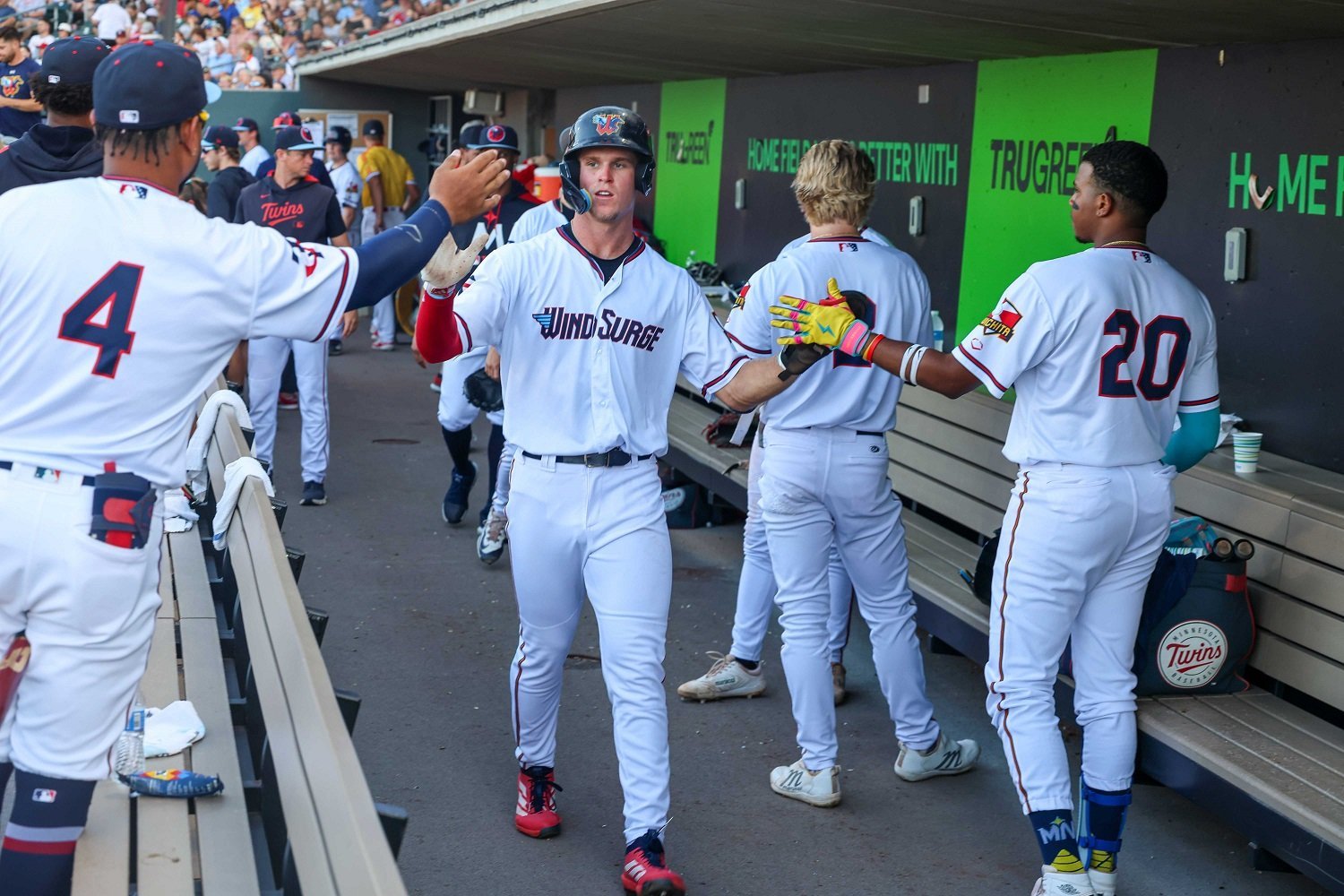 The Twins’ farm system has undergone a significant shakeup over the past year, with trades, breakout performances, and injuries all impacting the arrival timelines for their top prospects. Some players are pushing their way toward Target Field sooner than expected, while others still have development work ahead. Here’s a look at the Twins Daily top prospects sorted by their updated estimated time of arrival. Prospects with 2025 ETA Mick Abel – RHP – Triple-A TD Prospect Rank: 8 Acquired in the summer blockbuster that sent Jhoan Durán to Philadelphia, Abel is big-league ready and will be part of the team’s long-term pitching plans. His mid-90s fastball and sharp slider have overwhelmed hitters, and improved control has trimmed his walk rate (down over 5.5% compared to 2024). If he keeps this up, Abel could be a rotation option as soon as late this season. Prospects with 2026 ETA Walker Jenkins – OF – Double- TD Prospect Rank: 1 Jenkins has looked every bit the part of a future cornerstone since being drafted fifth overall in 2023. He’s holding his own in Double-A as a 20-year-old, showcasing advanced plate skills, gap-to-gap power, and steady defensive work in center field. Injuries have impacted his first two full seasons as a pro, but the Twins have continued to be aggressive with him. Jenkins will likely be challenged with a Triple-A promotion before the end of 2025. Kaelen Culpepper – SS – Double-A TD Prospect Rank: 3 Culpepper’s steady glove at shortstop continues to be his calling card, but his bat has made strides in 2025. He’s added more lift to his swing, leading to career-best power numbers (.943 OPS at Double-A). If the offensive gains stick, he could push for an MLB role sooner than his original ETA, with the Carlos Correa trade paving way for his arrival. There is a good chance that he will be the team’s shortstop in the not-so-distant future. Emmanuel Rodriguez – OF – Triple-A TD Prospect Rank: 4 Rodriguez entered 2025 looking to prove his bat could handle upper-minors pitching, and he’s doing just that with an .853 OPS. His combination of elite plate discipline and plus raw power makes him one of the most dangerous hitters in the International League. Staying healthy remains key, but if he keeps producing, an early 2026 debut feels inevitable. Connor Prielipp – LHP – Double-A TD Prospect Rank: 6 After missing significant time due to injury early in his pro career, Prielipp is finally building momentum. His mid-90s fastball and wipeout slider give him frontline potential, but the Twins are carefully monitoring his workload. A late 2026 debut seems realistic if his health holds. Like Duran before him, the Twins could move him to a bullpen role to keep him healthy for the long term. Kendry Rojas – LHP – Triple-A TD Prospect Rank: 9 The Twins acquired Rojas as part of the Louis Varland trade, and the front office is excited for what he brings to the system. His sinker-slider combination is tough on both lefties and righties, and he’s refining his other pitches to miss more bats. The Twins have him using his fastball more regularly than he did with Toronto, so that’s something to watch. He profiles as either a mid-rotation starter or high-leverage reliever when he arrives. Prospects with 2027+ ETA Eduardo Tait – C – High-A TD Prospect Rank: 5 Tait, the second prospect in the Duran trade with Philadelphia, has quickly shown why the Twins targeted him. His mature approach at the plate is rare for a teenager, and his arm strength behind the plate is already above-average. He’s a consensus top-100 prospect and was the second-best prospect traded at the deadline. There’s plenty of time for him to develop, but his foundation is impressive. Dasan Hill – LHP – High-A TD Prospect Rank: 7 Hill’s 2025 season has been about refining his command. His mid-90s fastball and wipeout slider give him an intriguing starter’s profile, but he’s still learning to attack the zone consistently. He posted a 30.6 K% at Low-A, and the organization promoted him to High-A before his 20th birthday. Patience will be key, but the tools are here for a potential rotation piece. Charlee Soto – RHP – High-A TD Prospect Rank: 10 Soto’s stuff jumps off the page with a mid-to-upper 90s fastball with a sharp slider, but he’s still learning how to sequence effectively. He suffered a right triceps strain earlier this season and hasn’t appeared in a game since April 17th. At just 19 years old, he’s one of the younger arms in the league, so he needs to get healthy. The Twins can always have him repeat High-A next season. If the Twins’ development plan holds, fans could see an influx of top talent over the next three seasons. With multiple MLB-ready players knocking on the door in 2025 and a wave of high-ceiling prospects following closely behind, the organization’s long-term core is starting to take shape. Do you agree with the ETAs? Which player will have the biggest impact on the 2026 roster? Leave a comment and start the discussion.
- 32 comments
-
- 10
-
-
- walker jenkins
- emmanuel rodriguez
- (and 7 more)
-
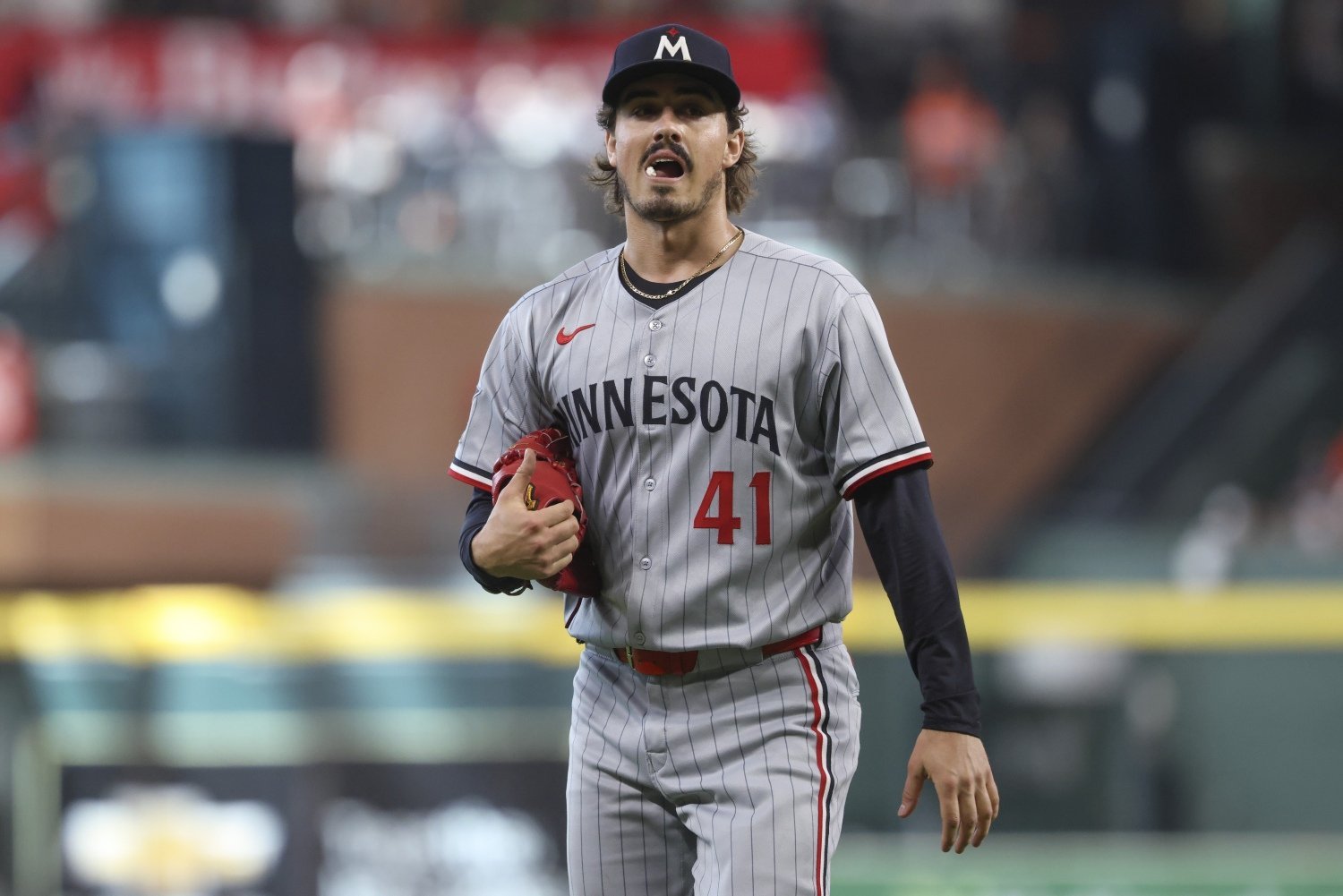 The Minnesota Twins’ 2025 season was already shaping up to be one of the most disappointing in the Derek Falvey–Rocco Baldelli era. Popular players were shipped out at the trade deadline, the roster is underperforming on the field, and now the Pohlads’ announcement that they will remain as owners has put a bit of a damper on hopes for significant organizational change. With ownership unchanged, the front office still has to answer a significant question: What direction does this roster take from here? As things stand today, there are two drastically different paths forward. Path 1: The Full Teardown If the Twins are ready to admit they’re entering a true rebuild, there’s little reason to hold onto pitchers like Joe Ryan, Pablo López, and Bailey Ober. The organization was transparent with Carlos Correa before dealing him to Houston, acknowledging that this wasn’t what he signed up for. If the front office is serious about building a roster to compete a few years from now, those starters won’t be around for the next window of contention. Ryan was already the subject of trade conversations in July, and those talks can easily be revisited this winter. López, owed $21 million in 2026, is now the highest-paid player on the team. In a cost-conscious approach, the Twins might prefer replacing him with younger, cheaper options from their system or via smaller acquisitions. Ober, while not yet expensive, is becoming more so through the arbitration process. Like Ryan and Lopez, he could also bring back useful prospect capital, if he has a strong finish to the seaspn. This route is about maximizing return on assets before their value dips, and it signals a clear commitment to a multi-year rebuild. This is something the Twins have been reluctant to admit publicly. However, there is a way for the team to get their overall payroll below $100 million if they choose this path. Path 2: Reinvest for 2026 and Beyond The alternative is to take the salary relief gained from the deadline deals and use it to stabilize the roster. That could mean offering an extension to Ryan and/or Ober, ensuring the pitching staff retains a reliable core. Ryan Jeffers is another extension candidate, especially with no strong catching prospect near the big-league level. The math makes sense: even after arbitration raises, Minnesota’s projected 2026 payroll sits under $100 million. For context, they were at $158 million in 2023 before the infamous “right-sizing” of the payroll leading into the 2024 season. Minnesota ranked in the middle of the pack for payroll for multiple seasons coming out of the pandemic. However, that is no longer the case. According to Spotrac.com, their 2025 figure of about $125 million ranks 20th in MLB following the team’s moves at the trade deadline. The space is there to add a bat, shore up the bullpen, and retain key arms, but history tells us that’s not how the Pohlads have been leaning. The messaging from ownership points toward a Tampa Bay Rays/Milwaukee Brewers style model, where payroll remains modest and efficiency becomes the defining trait. That doesn’t mean they can’t win, but it does mean relying on high turnover and sustained player development, rather than locking in veteran talent. The Twins’ trade deadline sell-off may have hurt the 2025 big-league roster, but it’s already paying dividends in prospect capital. MLB Pipeline’s post-deadline farm system rankings have Minnesota sitting second overall, an impressive leap from their preseason ranking of 10th. The front office added 10 prospects in those trades. That group is headlined by Eduardo Tait, one of baseball’s top catching prospects; he was acquired in the Jhoan Duran deal. Combined with the five 2025 draft picks, the Twins now feature a rare blend of elite talent and organizational depth that should help define their next competitive window. The Twins stand at a familiar crossroads. The Pohlads’ decision to stay on as owners means the philosophy at the top likely won’t shift dramatically. A complete teardown might be the clearest baseball move, but it would mean another long wait for meaningful games in September. Reinvestment could keep the team competitive sooner, but it requires a willingness to spend in a way the franchise hasn’t embraced in recent years. In either case, the 2025-26 offseason could be one of the most crucial in recent Twins history, not just for the roster, but for the tone it sets with the fanbase. Which path will the Twins follow? Leave a comment and start the discussion.
- 95 comments
-
- 7
-
-
- pablo lopez
- joe ryan
- (and 2 more)
-
Image courtesy of © Troy Taormina-Imagn Images The Minnesota Twins’ 2025 season was already shaping up to be one of the most disappointing in the Derek Falvey–Rocco Baldelli era. Popular players were shipped out at the trade deadline, the roster is underperforming on the field, and now the Pohlads’ announcement that they will remain as owners has put a bit of a damper on hopes for significant organizational change. With ownership unchanged, the front office still has to answer a significant question: What direction does this roster take from here? As things stand today, there are two drastically different paths forward. Path 1: The Full Teardown If the Twins are ready to admit they’re entering a true rebuild, there’s little reason to hold onto pitchers like Joe Ryan, Pablo López, and Bailey Ober. The organization was transparent with Carlos Correa before dealing him to Houston, acknowledging that this wasn’t what he signed up for. If the front office is serious about building a roster to compete a few years from now, those starters won’t be around for the next window of contention. Ryan was already the subject of trade conversations in July, and those talks can easily be revisited this winter. López, owed $21 million in 2026, is now the highest-paid player on the team. In a cost-conscious approach, the Twins might prefer replacing him with younger, cheaper options from their system or via smaller acquisitions. Ober, while not yet expensive, is becoming more so through the arbitration process. Like Ryan and Lopez, he could also bring back useful prospect capital, if he has a strong finish to the seaspn. This route is about maximizing return on assets before their value dips, and it signals a clear commitment to a multi-year rebuild. This is something the Twins have been reluctant to admit publicly. However, there is a way for the team to get their overall payroll below $100 million if they choose this path. Path 2: Reinvest for 2026 and Beyond The alternative is to take the salary relief gained from the deadline deals and use it to stabilize the roster. That could mean offering an extension to Ryan and/or Ober, ensuring the pitching staff retains a reliable core. Ryan Jeffers is another extension candidate, especially with no strong catching prospect near the big-league level. The math makes sense: even after arbitration raises, Minnesota’s projected 2026 payroll sits under $100 million. For context, they were at $158 million in 2023 before the infamous “right-sizing” of the payroll leading into the 2024 season. Minnesota ranked in the middle of the pack for payroll for multiple seasons coming out of the pandemic. However, that is no longer the case. According to Spotrac.com, their 2025 figure of about $125 million ranks 20th in MLB following the team’s moves at the trade deadline. The space is there to add a bat, shore up the bullpen, and retain key arms, but history tells us that’s not how the Pohlads have been leaning. The messaging from ownership points toward a Tampa Bay Rays/Milwaukee Brewers style model, where payroll remains modest and efficiency becomes the defining trait. That doesn’t mean they can’t win, but it does mean relying on high turnover and sustained player development, rather than locking in veteran talent. The Twins’ trade deadline sell-off may have hurt the 2025 big-league roster, but it’s already paying dividends in prospect capital. MLB Pipeline’s post-deadline farm system rankings have Minnesota sitting second overall, an impressive leap from their preseason ranking of 10th. The front office added 10 prospects in those trades. That group is headlined by Eduardo Tait, one of baseball’s top catching prospects; he was acquired in the Jhoan Duran deal. Combined with the five 2025 draft picks, the Twins now feature a rare blend of elite talent and organizational depth that should help define their next competitive window. The Twins stand at a familiar crossroads. The Pohlads’ decision to stay on as owners means the philosophy at the top likely won’t shift dramatically. A complete teardown might be the clearest baseball move, but it would mean another long wait for meaningful games in September. Reinvestment could keep the team competitive sooner, but it requires a willingness to spend in a way the franchise hasn’t embraced in recent years. In either case, the 2025-26 offseason could be one of the most crucial in recent Twins history, not just for the roster, but for the tone it sets with the fanbase. Which path will the Twins follow? Leave a comment and start the discussion. View full article