



Cody Christie
-
Posts
7,808 -
Joined
-
Last visited
-
Days Won
5
Content Type
Profiles
News
Minnesota Twins Videos
2026 Minnesota Twins Top Prospects Ranking
2022 Minnesota Twins Draft Picks
Minnesota Twins Free Agent & Trade Rumors, Notes, & Tidbits
Guides & Resources
2023 Minnesota Twins Draft Picks
The Minnesota Twins Players Project
2024 Minnesota Twins Draft Picks
2025 Minnesota Twins Draft Pick Tracker
2026 Minnesota Twins Draft Tracker: Picks & Bonuses
Forums
Blogs
Events
Store
Downloads
Gallery
Everything posted by Cody Christie
-

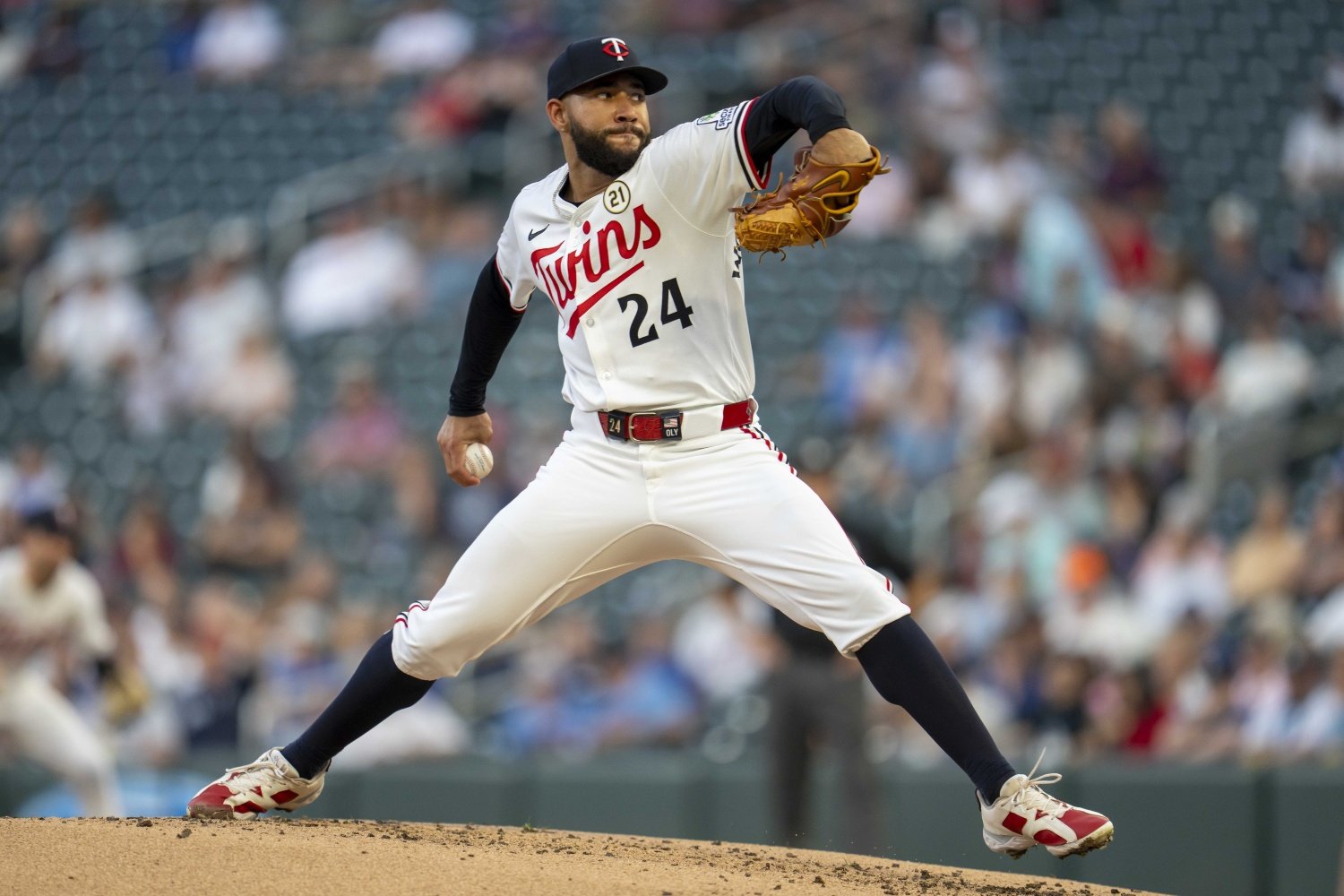 Facing the Yankees usually serves as a measuring stick for any young pitcher (especially with the word Twins on the front of their jersey). On Monday night at Target Field, Simeon Woods Richardson excelled in a game that meant a lot more to New York than to his own club. Against baseball’s most dangerous offense, the 24-year-old right-hander delivered the finest outing of his career, striking out a career-high 11 batters over six scoreless innings as the Twins cruised to a 7-0 victory. It was the type of performance that leaves more than a final box score behind. It provided a glimpse of what Woods Richardson is becoming, and why the Twins may be able to count on him moving forward. Steps Up Game Against Top Competition Some pitchers wilt when the bright lights shine against baseball’s elite lineups. Woods Richardson seems to get sharper. Monday’s performance continued a trend that has seen him thrive against tough opponents, including the Tigers, Astros, Mariners, Cubs, and now the Yankees, the last of whom lead the majors in runs, home runs, slugging percentage, and walks. 9/15/25 (vs. NYY): 6 IP, 0 ER, 2 H, 11 K, 3 BB 7/8/25 (vs. CHC): 5 IP, 0 ER, 2 H, 4 K, 3 BB 6/26/25 (vs. SEA): 5 IP, 0 ER, 2 H, 6 K, 1 BB 6/15/25 (vs. HOU): 5 IP, 0 ER, 1 H, 4 K, 1 BB 4/13/25 (vs. DET): 5 IP, 1 ER, 5 H, 5 K, 0 BB “I’ve always been a competitor,” Woods Richardson said after the game. “I’ve always been one of those guys who wants to face the best, compete against the best. … If I can knock down the powerhouses, it’s like a miniature game that you play with yourself.” The confidence translated into command and execution. Aside from two walks to Aaron Judge, New York’s hitters rarely threatened him, and maybe those walks were strategic; it's only smart to be careful against the reigning AL MVP. His Splitter is for Real Perhaps the biggest revelation of the night was Woods Richardson’s pitch mix. For the first time this season, his splitter became the focal point of his arsenal. He threw it 33 times (36% of his pitches), and it generated eight swinging strikes, a career-high for the offering. “Me and Jhonny [Pereda, catcher] looked at each other, and he was like, ‘Keep throwing [the splitter],’” Woods Richardson said. “‘Keep throwing it. Have confidence in it.’” The approach paid off, especially against a power-heavy lineup that hunts fastballs. By leaning less on his four-seamer (just 35% usage) and more on his evolving splitter, Woods Richardson showed how his repertoire is still growing, and how difficult he can be to prepare for. There’s no way the Yankees were expecting to see his splitter that much. Getting Better Throughout the Game Manager Rocco Baldelli noted that Woods Richardson set the tone early and sharpened as the game progressed. “In some ways, he was great early on, but it almost looked like he got even more focused as the game went on,” Baldelli said. “That’s not always an easy thing to do. … You’ve got to make nothing but good pitches, good decisions, and really be at your best. He was at his best tonight, and it was great to watch.” That ability to sustain command and composure deeper into outings is a key step for any young starter. Woods Richardson pitched into the sixth inning in just four starts this season, and he’s only completed six frames two times. Against the league’s most relentless lineup, though, he proved he can handle that challenge. What It Means for 2026 The Twins already know who their rotation anchors will be next year: Pablo López, Joe Ryan, and Bailey Ober provide a steady and proven top three. However, there is a possibility that the club explores trades of López or Ryan. The bigger question comes in filling the final two spots, and Woods Richardson is making a strong case to claim one of them. He’ll face competition from multiple directions. Young pitchers Zebby Matthews and David Festa have shown flashes of potential, while Taj Bradley and Mick Abel (acquired in this summer’s fire sale) add another layer of intrigue. That creates a healthy level of competition for a young staff that could set the tone for the next Twins contender. Monday’s masterpiece didn’t lock anything in, but it showed why Woods Richardson deserves to be part of that conversation. If he keeps taking steps like this, the Twins may not just have a back-end option; they may have another arm capable of elevating the rotation. What stands out about SWR’s performance against the Yankees? Can his splitter be more of a weapon moving forward? Leave a comment and start the discussion.
 -
Stock Rising: 3 Twins Players Emerging from Trade Deadline Fire Sale
Cody Christie posted an article in Twins
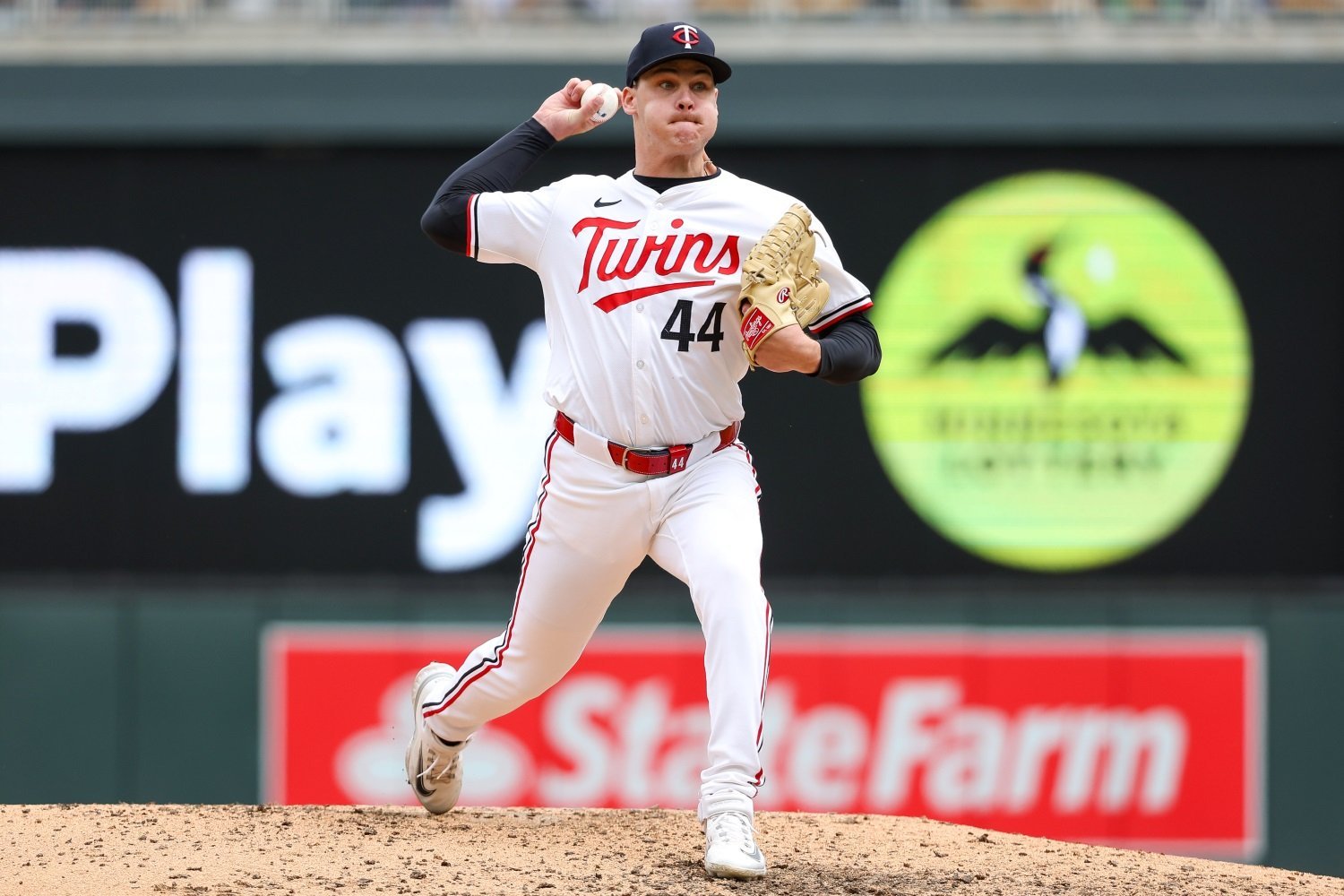 The Twins waved the white flag at the 2025 MLB trade deadline, stripping away veterans and leaving fans to slog through a frustrating second half. But a funny thing happens when the roster gets thinned out, because that’s when opportunity knocks. Some players stumbled with their extra runway, while others seized the chance to remind everyone why they’re part of Minnesota’s long-term picture. Three names, in particular, have used the final two months to build real momentum heading into 2026: Taj Bradley, Austin Martin, and Cole Sands. Taj Bradley: Electric but Inconsistent August-September 2025 Performance: The Twins spoke highly of Bradley when they acquired him from the Rays for Griffin Jax. The 24-year-old joined the organization with over 350 big-league innings, and it seemed natural that he could jump right in and be part of the team’s long-term rotation plan. Bradley has been precisely what you’d expect from a talented young arm with equal parts excitement and exasperation. His fastball has lived in the upper 90s, blowing by hitters when well-located, and his cutter has flashed wipeout potential (31.2 Whiff%). In some outings, he’s looked untouchable, piling up strikeouts and giving the Twins rotation a jolt of energy. In others, shaky command has cut his night short. That volatility is why his ERA looks pedestrian, but the raw stuff jumps off the screen. His first start was a disaster, as he allowed seven earned runs across five innings to a lowly White Sox lineup. However, he bounced back nicely and held the playoff-bound Padres lineup to one earned run with six strikeouts in his next appearance. In his last three starts, he has posted a 4.41 ERA (3.64 FIP) with 18 strikeouts and six walks across 16 1/3 innings. 2026 Role: Minnesota didn’t bring Bradley in to be a depth piece, and it's clear that he’s firmly in line for an Opening Day rotation spot. The front office is betting that another offseason of refinement will help him trim the walks and trust his full arsenal. If he takes even a small step forward in consistency, Bradley has the ceiling of a playoff-caliber starter. At the very least, he’ll be a big part of the team’s plans from Day 1. Austin Martin: Fitting the Team’s Future Style August–September 2025 Performance: Martin was (somewhat surprisingly) left off the Twins’ Opening Day roster, but there was still hope that the former top prospect could be an impact player at the big-league level. He likely would have been up earlier in the season, but a hamstring injury sidelined him for a large chunk of the season. Now that he's healthy, the Twins are seeing what he can mean to the lineup as the team transitions to a new style of play. Since the trade deadline, Minnesota’s coaching staff has made it clear that players can be more aggressive on the bases. Twins manager Rocco Baldelli has spoken openly about wanting his team to take the extra base, go from first to third, and force the defense to make the play behind the runner. There will inevitably be mistakes with this type of aggressive approach, but Martin’s skill set should thrive in this environment. Martin has been quietly but tremendously productive since the deadline. A .295/.397/.393 line with six steals tells the story of a player who knows his strengths. He controls the strike zone, makes plenty of contact, and forces pitchers to work. While he still lacks impact power, his on-base skills have played well, and he’s looked serviceable in left field. He’s not flashy, but he’s been reliable, which has value in a lineup full of inconsistency. 2026 Role: Martin is walking the fine line between future regular and bench piece. For now, the latter feels more likely. His on-base ability and speed give him a skill set that fits a fourth outfielder role, and the Twins could use someone who grinds out at-bats in the bottom third of the order. If he shows more defensive versatility next spring, his stock goes up. If not, his everyday gig depends on his ability to keep getting on base at an elite rate. If his OBP stays this high, there's no keeping him out of the starting lineup. Cole Sands: The Bullpen’s Only Hope August–September 2025 Performance: Sands was in a complicated spot this season after a tremendous 2024 campaign. The Twins likely thought he could be penciled into a middle-inning relief role, with a few late-inning opportunities mixed in for good measure. Instead, he struggled through different parts of the season and had a 4.11 ERA with a 36-to-11 strikeout-to-walk ratio in 46 innings through the trade deadline. On August 1, Sands woke up and was arguably the last man standing, after the team traded away Jhoan Duran, Jax, Danny Coulombe, and Louis Varland. Sands was the de facto closer, with Justin Topa being the lone other option for high-leverage situations. His performance hasn’t been perfect since the deadline, but the Twins have few options for critical innings in the stretch run. To be clear, Sands’ last two appearances were dreadful, as the Arizona lineup tagged him for six earned runs over two innings. Remove those appearances, though, and Sands had a 2.95 ERA (2.44 FIP) with 22 strikeouts and five walks over 18 1/3 innings since the trade deadline. Relievers often work in small sample sizes, and Sands must find a way to avoid the blowups he had against the Diamondbacks. 2026 Role: With nearly every spot open in next year’s bullpen, Sands has carved out a real lane for himself. He may not have the ceiling of some of the arms that left via trade, but he’s been closer to the 2024 version of himself over the last two months. At worst, he enters next season with the exact expectations as this past spring. At best, he’s a late-inning weapon in a bullpen that desperately needs one. The 2025 Twins won’t be remembered fondly, but the back half of this season hasn’t been completely wasted. Bradley showed flashes of a potential frontline arm, Martin proved he can contribute at the big-league level, and Sands reminded everyone he still belongs in the bullpen conversation. In a season defined by subtraction, these three gave Minnesota something to add back for 2026. Which player’s performance stands out the most? What will their roles be on the 2026 squad? Leave a comment and start the discussion.
- 27 comments
-
- 8
-

-
- taj bradley
- cole sands
- (and 1 more)
-
Image courtesy of © Matt Krohn-USA TODAY Sports The Twins waved the white flag at the deadline, stripping away veterans and leaving fans to slog through a frustrating second half. But a funny thing happens when the roster gets thinned out, because that’s when opportunity knocks. Some players stumbled with their extra runway, while others seized the chance to remind everyone why they’re part of Minnesota’s long-term picture. Three names, in particular, have used the final two months to build real momentum heading into 2026: Taj Bradley, Austin Martin, and Cole Sands. Taj Bradley: Electric but Inconsistent August–September 2025 Performance: The Twins spoke highly of Bradley when they acquired him from the Rays for Griffin Jax. The 24-year-old joined the organization with over 350 big-league innings, and it seemed natural that he could jump right in and be part of the team’s long-term rotation plan. Bradley has been precisely what you’d expect from a talented young arm with equal parts excitement and exasperation. His fastball has lived in the upper-90s, blowing by hitters when located, and his cutter has flashed wipeout potential (31.2 Whiff%). In some outings, he’s looked untouchable, piling up strikeouts and giving the Twins rotation a jolt of energy. In others, shaky command has cut those outings short. That volatility is why his ERA looks pedestrian, but the raw stuff jumps off the screen. His first start was a disaster as he allowed seven earned runs across five innings to a lowly White Sox lineup. However, he bounced back nicely and held the playoff-bound Padres lineup to one earned run with six strikeouts in his next appearance. In his last three starts, he has posted a 4.41 ERA (3.64 FIP) with 18 strikeouts and six walks across 16 1/3 innings. 2026 Role: Minnesota didn’t bring Bradley in to be a depth piece, and it's clear that he’s firmly in line for an Opening Day rotation spot. The front office is betting that another offseason of refinement will help him trim the walks and trust his full arsenal. If he takes even a small step forward in consistency, Bradley has the ceiling of a playoff-caliber starter. At the very least, he’ll be a big part of the team’s plans from Day 1. Austin Martin: Fitting the Team’s Future Style August–September 2025 Performance: Martin was somewhat surprisingly left off the Twins’ Opening Day roster, but there was still hope that the former top prospect could be an impact player at the big-league level. He likely would have been up earlier in the season, but a hamstring injury sidelined him for a large chunk of the season. Now healthy, the Twins are seeing what he can mean to the lineup as the team transitions to a new style of play. Since the trade deadline, Minnesota’s coaching staff has made it clear that players can be more aggressive on the bases. Twins manager Rocco Baldelli has spoken openly about wanting his team to take the extra base, go from first to third, and force the defense to make the play behind the runner. There will inevitably be mistakes with this type of aggressive approach, but Martin’s skill set should thrive in this environment. Martin has been quietly productive since the deadline. A .295/.397/.393 (.790) line with six steals tells the story of a player who knows his strengths. He controls the strike zone, makes plenty of contact, and forces pitchers to work. While he still lacks impact power, his on-base skills have played well, and he’s looked serviceable in left field. He’s not flashy, but he’s been reliable, which has value in a lineup full of inconsistency. 2026 Role: Martin is walking the fine line between future regular and bench piece. For now, the latter feels more likely. His on-base ability and speed give him a skill set that fits a fourth outfielder role, and the Twins could use someone who grinds out at-bats in the bottom third of the order. If he shows more defensive versatility this spring, his stock goes up. If not, he may have to hit even more to stay locked into a roster spot. Cole Sands: The Bullpen’s Only Hope August–September 2025 Performance: Sands was in a complicated spot this season after a tremendous 2024 campaign. The Twins likely thought he could be penciled into a middle-inning relief role with a few late-inning opportunities mixed in for good measure. Instead, he struggled through different parts of the season and had a 4.11 ERA with a 36-to-11 strikeout-to-walk ratio in 46 innings through the trade deadline. On August 1st, Sands woke up and was arguably the last man standing after the team traded away Jhoan Duran, Griffin Jax, Danny Coulombe, and Louis Varland. Sands was the de facto closer, with Justin Topa being the lone other option for high-leverage situations. His performance hasn’t been perfect since the deadline, but the Twins have few options for critical innings in the stretch run. To be clear, Sands’ last two appearances were dreadful as the Arizona lineup tagged him for six earned runs over two innings. Remove those appearances, and Sands had a 2.95 ERA (2.44 FIP) with 22 strikeouts and five walks over 18 1/3 innings since the trade deadline. Relievers often work in small sample sizes, and Sands must find a way to avoid the blowups he had against the Diamondbacks. 2026 Role: With nearly every spot open in next year’s bullpen, Sands has carved out a real lane for himself. He may not have the ceiling of some of the arms that left via trade, but he’s been closer to the 2024 version of himself over the last two months. At worst, he enters next season with the exact expectations as this past spring. At best, he’s a late-inning weapon in a bullpen that desperately needs one. The 2025 Twins won’t be remembered fondly, but the back half of this season hasn’t been completely wasted. Bradley showed flashes of a potential frontline arm, Martin proved he can contribute at the big-league level, and Sands reminded everyone he still belongs in the bullpen conversation. In a season defined by subtraction, these three gave Minnesota something to add back for 202 Which player’s performance stands out the most? What will their roles be on the 2026 squad? Leave a comment and start the discussion. View full article
-
Image courtesy of Ed Bailey, Wichita Wind Surge (photo of Hendry Mendez) Each week, the Twins’ farm system provides a glimpse into the organization’s future. From pitchers showing poise well beyond their years to hitters turning patience into production, the next wave of talent continues to shine across multiple levels. The Cedar Rapids Kernels won the Western Division playoff series this week on the backs of two outstanding performances. At Double-A, the Wichita Wind Surge fought for their playoff lives until the season’s final game. This week’s hot sheet features three players who shone when their teams were facing do-or-die scenarios. LHP Dasan Hill – Cedar Rapids Kernels How He Got Here: Hill was selected by the Twins in the second round of the 2024 MLB Draft, out of Grapevine High School in Texas. Though he's just 19 years old, Twins Daily currently ranks him as the club’s No. 7 overall prospect and its third-best pitching prospect, behind Mick Abel and Connor Prielipp. He made his pro debut this season at Low-A and produced a 2.77 ERA, with a 1.31 WHIP and a 30.6 K% in 52 innings. The Kernels were heading to the playoffs, so the Twins promoted him to High-A in mid-August for the stretch run. Hitting the Hot Button: Taking the ball against Beloit, Hill worked five strong innings, allowing just two runs on two hits. He walked two and struck out seven, flashing the kind of swing-and-miss stuff that made him such an intriguing draft pick. His ability to stay composed and pound the strike zone against older competition is one of the most encouraging aspects of his development so far. He’s faced older batters in over 94% of his plate appearances this season, and is over four years younger than the average age of the competition in the Midwest League. An argument can be made that he is the organization’s top pitching prospect heading into 2026. OF Hendry Mendez – Wichita Wind Surge How He Got Here: The Twins acquired Mendez in the Harrison Bader trade with Philadelphia, adding another young outfield bat to the system. He was originally signed by the Brewers out of the Dominican Republic, but was traded to the Phillies organization for Oliver Dunn. At just 21 years old, MLB.com ranks him as the organization’s No. 25 prospect. Prior to the trade, Mendez hit .290/.374/.434 with 24 extra-base hits in 85 games for the Phillies' Double-A affiliate. Hitting the Hot Button: Mendez reached base in bunches this past week, hitting .316 (6-for-19) while drawing eight walks across six games. He added a triple, a home run, and three RBIs, posting an eye-popping .536 on-base percentage. His patience has been a defining part of his game, especially for a player nearly three years younger than the competition in the Texas League. Since the trade, he’s hit .318/.456/.439, with six extra-base hits in 32 games. His patient approach could make him an important piece in the upper levels as he continues to mature. OF Misael Urbina – Cedar Rapids Kernels How He Got Here: Signed as an international free agent back in 2018, Urbina has worked his way up through the system and is still just 23 years old. Long known for his athleticism and raw tools, he's spent this year refining his approach and turning that talent into results. It’s his third consecutive year playing the entire season in Cedar Rapids, so some of the prospect shine has faded for the outfielder. Hitting the Hot Button: Urbina has been one of Cedar Rapids’ most consistent bats over the last two weeks, slashing .295/.367/.545 with four doubles, two triples, and a home run across 13 games. Just as impressive, he’s paired that production with a balanced 5-to-5 strikeout-to-walk ratio. After carrying a 24.7% strikeout rate last season, he has trimmed that number to 16.8% in 2025, a sign that his patience is paying off. He’ll likely get his first taste of the upper minors in 2026, with a chance to prove he can be part of the organization’s long-term plans. Hill’s maturity on the mound, Mendez’s ability to control the strike zone, and Urbina’s improved plate discipline showcase the variety of ways players can develop within the Twins system. Each of them stepped up in moments that carried a playoff-type atmosphere, giving the organization confidence that these young talents can handle the pressure when it matters most. Which performance was most impressive? Leave a comment and start the discussion. View full article
-
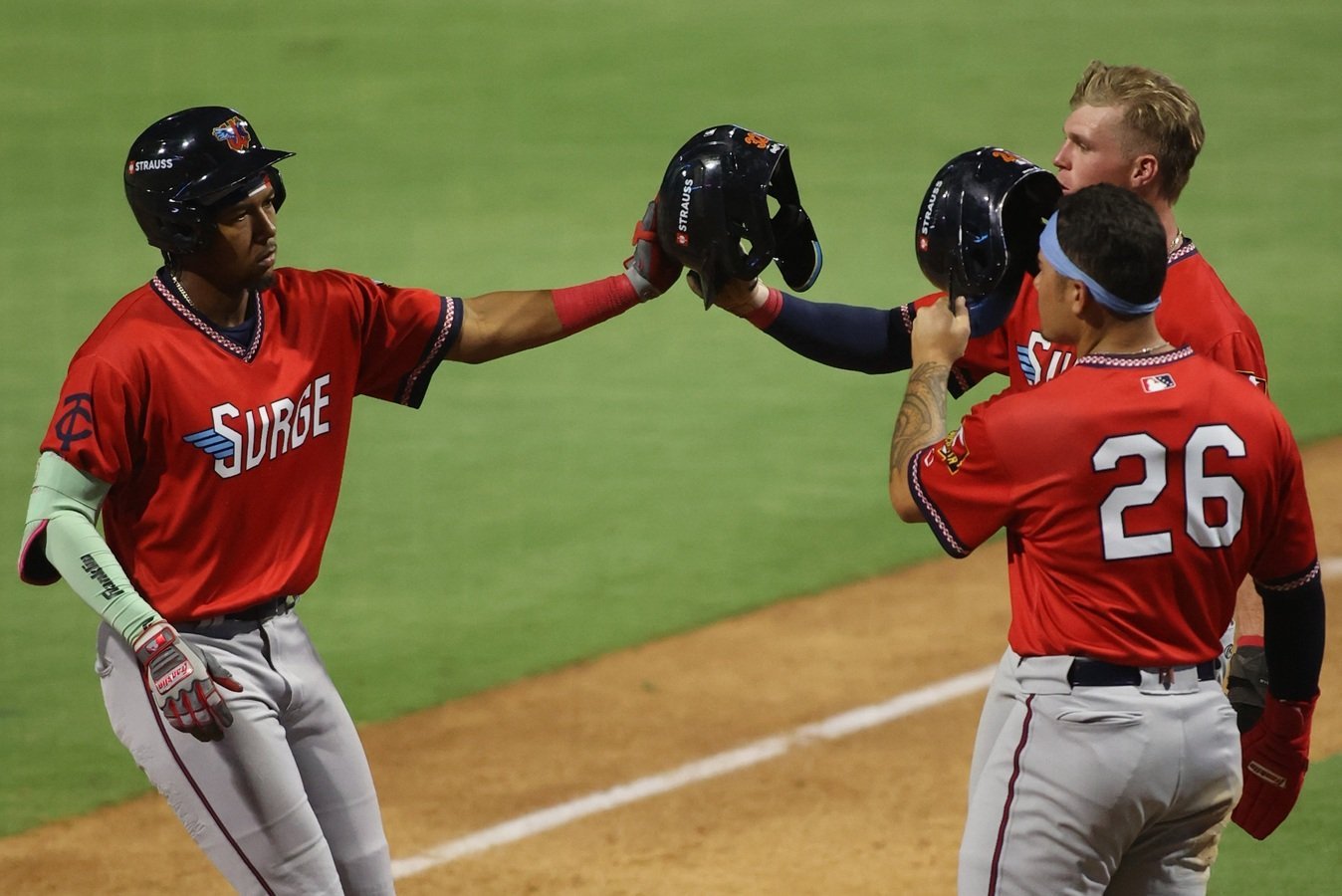 Each week, the Twins’ farm system provides a glimpse into the organization’s future. From pitchers showing poise well beyond their years to hitters turning patience into production, the next wave of talent continues to shine across multiple levels. The Cedar Rapids Kernels won the Western Division playoff series this week on the backs of two outstanding performances. At Double-A, the Wichita Wind Surge fought for their playoff lives until the season’s final game. This week’s hot sheet features three players who shone when their teams were facing do-or-die scenarios. LHP Dasan Hill – Cedar Rapids Kernels How He Got Here: Hill was selected by the Twins in the second round of the 2024 MLB Draft, out of Grapevine High School in Texas. Though he's just 19 years old, Twins Daily currently ranks him as the club’s No. 7 overall prospect and its third-best pitching prospect, behind Mick Abel and Connor Prielipp. He made his pro debut this season at Low-A and produced a 2.77 ERA, with a 1.31 WHIP and a 30.6 K% in 52 innings. The Kernels were heading to the playoffs, so the Twins promoted him to High-A in mid-August for the stretch run. Hitting the Hot Button: Taking the ball against Beloit, Hill worked five strong innings, allowing just two runs on two hits. He walked two and struck out seven, flashing the kind of swing-and-miss stuff that made him such an intriguing draft pick. His ability to stay composed and pound the strike zone against older competition is one of the most encouraging aspects of his development so far. He’s faced older batters in over 94% of his plate appearances this season, and is over four years younger than the average age of the competition in the Midwest League. An argument can be made that he is the organization’s top pitching prospect heading into 2026. OF Hendry Mendez – Wichita Wind Surge How He Got Here: The Twins acquired Mendez in the Harrison Bader trade with Philadelphia, adding another young outfield bat to the system. He was originally signed by the Brewers out of the Dominican Republic, but was traded to the Phillies organization for Oliver Dunn. At just 21 years old, MLB.com ranks him as the organization’s No. 25 prospect. Prior to the trade, Mendez hit .290/.374/.434 with 24 extra-base hits in 85 games for the Phillies' Double-A affiliate. Hitting the Hot Button: Mendez reached base in bunches this past week, hitting .316 (6-for-19) while drawing eight walks across six games. He added a triple, a home run, and three RBIs, posting an eye-popping .536 on-base percentage. His patience has been a defining part of his game, especially for a player nearly three years younger than the competition in the Texas League. Since the trade, he’s hit .318/.456/.439, with six extra-base hits in 32 games. His patient approach could make him an important piece in the upper levels as he continues to mature. OF Misael Urbina – Cedar Rapids Kernels How He Got Here: Signed as an international free agent back in 2018, Urbina has worked his way up through the system and is still just 23 years old. Long known for his athleticism and raw tools, he's spent this year refining his approach and turning that talent into results. It’s his third consecutive year playing the entire season in Cedar Rapids, so some of the prospect shine has faded for the outfielder. Hitting the Hot Button: Urbina has been one of Cedar Rapids’ most consistent bats over the last two weeks, slashing .295/.367/.545 with four doubles, two triples, and a home run across 13 games. Just as impressive, he’s paired that production with a balanced 5-to-5 strikeout-to-walk ratio. After carrying a 24.7% strikeout rate last season, he has trimmed that number to 16.8% in 2025, a sign that his patience is paying off. He’ll likely get his first taste of the upper minors in 2026, with a chance to prove he can be part of the organization’s long-term plans. Hill’s maturity on the mound, Mendez’s ability to control the strike zone, and Urbina’s improved plate discipline showcase the variety of ways players can develop within the Twins system. Each of them stepped up in moments that carried a playoff-type atmosphere, giving the organization confidence that these young talents can handle the pressure when it matters most. Which performance was most impressive? Leave a comment and start the discussion.
- 6 comments
-
- 5
-
-
- hendry mendez
- dasan hill
- (and 1 more)
-
Minnesota Twins FCL Minor League Pitcher of the Year- 2025
Cody Christie posted an article in Minor Leagues
 Pitching in the lower minors is all about adjustments. For some, it’s a first taste of professional baseball in the United States. For others, it’s a chance to show that they’re ready to move quickly through the system. The Florida Complex League gives the Twins’ youngest arms a proving ground, and this summer, a few pitchers stood out above the rest. Not every prospect thrives right away. Short outings and small workloads make it difficult to bounce back from a rough stretch, while others show enough polish to prove they’re ahead of the level. For the Twins, 2025 brought a mix of both, with a handful of arms making their presence felt in Fort Myers. Before we get to the top three finishers in the Twins Daily voting, here are a few pitchers who also received recognition from our minor-league team of writers. Honorable Mentions RHP Melvin Rodriguez: 11 G, 43 1/3 IP, 3.53 ERA, 1.25 WHIP, 17.5 K%, 12.0 BB% RHP Xander Hamilton: 7 G, 10 1/3 IP, 0.00 ERA, 0.39 WHIP, 31.4 K%, 5.7 BB% RHP Brent Francisco: 12 G, 17 1/3 IP, 2.08 ERA, 0.92 WHIP, 35.8 K%, 3.0 BB% RHP Xavier Kolhosser: 10 G, 17 2/3 IP, 2.55 ERA, 1.19 WHIP, 25.3 K%, 13.3 BB% 2 (Tie). RHP Will Armbruester 2025 Stats: 15 G, 31 IP, 2.61 ERA, 2.37 FIP, 1.10 WHIP, 22.8 K%, 1.6 BB% Armbruester’s story is a little different than most in the FCL. After pitching in college at New Mexico and Arizona State, he spent 2024 in the independent Frontier League before signing with Minnesota this April. The Twins shifted him to the bullpen, where his command immediately stood out with 28 strikeouts against only two walks. At 24, Armbruester was much older than most of his competition, but he handled the role with poise. A high BABIP (.337) inflated his ERA, but his ability to limit walks and strand runners gave the Twins reason to believe there’s more here. The organization has uncovered some hidden gems from the indy leagues in recent years, and Armbruester will look to join that list as he moves up the ladder. 2 (Tie). RHP Anderson Ramos 2025 Stats: 17 G, 28 1/3 IP, 3.81 ERA, 3.46 FIP, 1.13 WHIP, 31.1 K%, 13.9 BB% Ramos represents the opposite end of the spectrum, compared to Armbruester. He was a teenage signing out of the Dominican Republic who made his Stateside debut this summer. After some early struggles in the DSL last year, he came to the FCL as a 19-year-old and made a big jump, leading the team in strikeout rate among pitchers with a minimum of 18 innings pitched. Ramos piled up multiple strikeouts in 12 of his 19 outings and kept hitters to a .506 OPS. Control remains the biggest question mark, as his walk rate climbed by 2.4% compared to 2024. Still, his last 11 appearances showed real growth, with no extra-base hits allowed and 21 strikeouts in 61 plate appearances. He’s one of the younger arms to watch, as he likely moves into full-season ball next year. 1. RHP Joel Garcia – Twins FCL Pitcher of the Year 2025 Stats: 11 G, 43 IP, 3.35 ERA, 2.47 FIP, 1.21 WHIP, 28.8 K%, 6.8 BB% Garcia was the clear choice for our FCL Pitcher of the Year, appearing at the top of nearly every ballot from the Twins Daily minor-league writers. Signed out of Venezuela, this was his third season in the organization and his second year in the FCL. After a solid but limited sample in 2024, the Twins sent him back for a longer look, and he delivered. Used exclusively as a starter, Garcia got stronger as the summer went on. Opponents posted a .731 OPS against him in May, but he held them to just a .581 OPS over the next two months. Nearly 82% of his matchups came against younger hitters, but his mix of strike-throwing and strikeouts stood out regardless. By August, Minnesota promoted him to Low-A Fort Myers, where he’ll likely begin 2026. The Florida Complex League is just the first step, but performances here can be a glimpse into the Twins’ future. For Garcia, Ramos, and Armbruester, 2025 was a big step forward in their development, and a reminder that the next wave of pitching talent is already on its way. How would your ballot look for pitchers in the FCL? Leave a comment and join the discussion.
- 4 comments
-
- 4
-
-
- joel garcia
- anderson ramos
- (and 5 more)
-
Pitching in the lower minors is all about adjustments. For some, it’s a first taste of professional baseball in the United States. For others, it’s a chance to show that they’re ready to move quickly through the system. The Florida Complex League gives the Twins’ youngest arms a proving ground, and this summer, a few pitchers stood out above the rest. Not every prospect thrives right away. Short outings and small workloads make it difficult to bounce back from a rough stretch, while others show enough polish to prove they’re ahead of the level. For the Twins, 2025 brought a mix of both, with a handful of arms making their presence felt in Fort Myers. Before we get to the top three finishers in the Twins Daily voting, here are a few pitchers who also received recognition from our minor league team of writers. Honorable Mentions RHP Melvin Rodriguez: 11 G, 43 1/3 IP, 3.53 ERA, 1.25 WHIP, 17.5 K%, 12.0 BB% RHP Xander Hamilton: 7 G, 10 1/3 IP, 0.00 ERA, 0.39 WHIP, 31.4 K%, 5.7 BB% RHP Brent Francisco: 12 G, 17 1/3 IP, 2.08 ERA, 0.92 WHIP, 35.8 K%, 3.0 BB% RHP Xavier Kolhosser: 10 G, 17 2/3 IP, 2.55 ERA, 1.19 WHIP, 25.3 K%, 13.3 BB% 2 (Tie). RHP Will Armbruester 2025 Stats: 15 G, 31 IP, 2.61 ERA, 2.37 FIP, 1.10 WHIP, 22.8 K%, 1.6 BB% Armbruester’s story is a little different than most in the FCL. After pitching in college at New Mexico and Arizona State, he spent 2024 in the independent Frontier League before signing with Minnesota this April. The Twins shifted him to the bullpen, where his command immediately stood out with 28 strikeouts against only two walks. At 24, Armbruester was much older than most of his competition, but he handled the role with poise. A high BABIP (.337) inflated his ERA, but his ability to limit walks and strand runners gave the Twins reason to believe there’s more here. The organization has uncovered some hidden gems from the indy leagues in recent years, and Armbruester will look to join that list as he moves up the ladder. 2 (Tie). RHP Anderson Ramos 2025 Stats: 17 G, 28 1/3 IP, 3.81 ERA, 3.46 FIP, 1.13 WHIP, 31.1 K%, 13.9 BB% Ramos represents the opposite end of the spectrum compared to Armbruester. He was a teenage signing out of the Dominican Republic who made his stateside debut this summer. After some early struggles in the DSL last year, he came to the FCL as a 19-year-old and made a big jump, leading the team in strikeout rate among pitchers with a minimum of 18 IP. Ramos piled up multiple strikeouts in 12 of his 19 outings and kept hitters to a .506 OPS. Control remains the biggest question mark, as his walk rate climbed by 2.4% compared to 2024. Still, his last 11 appearances showed real growth with no extra-base hits allowed and 21 strikeouts in 61 plate appearances. He’s one of the younger arms to watch as he likely moves into full-season ball next year. 1. RHP Joel Garcia – Twins FCL Pitcher of the Year 2025 Stats: 11 G, 43 IP, 3.35 ERA, 2.47 FIP, 1.21 WHIP, 28.8 K%, 6.8 BB% Garcia was the clear choice for our FCL Pitcher of the Year, appearing at the top of nearly every ballot from the Twins Daily minor league writers. Signed out of Venezuela, this was his third season in the organization and his second year in the FCL. After a solid but limited sample in 2024, the Twins sent him back for a longer look, and he delivered. Used exclusively as a starter, Garcia got stronger as the summer went on. Opponents posted a .731 OPS against him in May, but he held them to just a .581 OPS over the next two months. Nearly 82% of his matchups came against younger hitters, but his mix of strike-throwing and strikeouts stood out regardless. By August, Minnesota promoted him to Low-A Fort Myers, where he’ll likely begin 2026. The Florida Complex League is just the first step, but performances here can be a glimpse into the Twins’ future. For Garcia, Ramos, and Armbruester, 2025 was a big step forward in their development, and a reminder that the next wave of pitching talent is already on its way. How would your ballot look for pitchers in the FCL? Leave a comment and join the discussion. View full article
-
The Florida Complex League has long served as a launching pad for the youngest players in the Twins organization. It’s often the first stop stateside for international signees and recent draft picks, providing a short-season proving ground where flashes of talent can help a player’s stock rise in a hurry. That said, not every prospect thrives here. With smaller sample sizes and limited opportunities, some players never get the chance to fully rebound from a slow start. Others show they’re simply a step ahead of the competition, forcing the organization to challenge them with a quick promotion. This summer, several Twins hitters stood out in Fort Myers. Before we get into the top four, here are a few names that also received votes from the Twins Daily minor league writers. Honorable Mentions OF Ricardo Paez: .242/.398/.295 (.693), 1 3B, 3 2B, 20 R, 10 RBI, 13 SB OF/1B Yandro Hernandez: .207/.368/.337 (.704), 2 HR, 6 2B, 16 R, 16 RBI, 7 SB IF Bryan Acuna : .254/.420/.365 (.785), 1 HR, 4 2B, 19 R, 8 RBI, 2 SB SS/CF Daiber De Los Santos: .167/.296/.333 (.629), 4 HR, 2 3B, 10 2B, 29 R, 17 RBI, 15 SB 4. OF Eduardo Beltre 2025 Stats: .206/.313/.370 (.683), 5 HR, 10 2B, 33 R, 32 RBI, 19 SB Beltre exploded onto the scene in 2024, when he hit 11 home runs with a 1.071 OPS in the Dominican Summer League and earned Twins Daily’s Short-Season Hitter of the Year award. His first stateside season came with growing pains, including a .550 OPS in May. But he adjusted quickly. Over his final 36 FCL games, Beltre hit .248/.321/.430 (.751) with five home runs and 13 extra-base hits before earning a promotion to Fort Myers. His 19 stolen bases led the roster, and it’s worth noting that he faced older pitchers in all but 13 plate appearances this season. Beltre didn’t quite replicate his monster 2024, but he showed important growth against tougher competition. 3. OF Jayson Bass 2025 Stats: .314/.419/.490 (.910), 1 HR, 4 2B, 12 RBI, 6 SB Bass returned to the FCL for a second season after posting a .710 OPS in 2024, and he wasted little time showing improvement. He reached base 12 times in his first 10 games before a June injury sidelined him for over a month. When he returned in July, he picked up right where he left off, hitting .286 with more walks (7) than strikeouts (6). By August, the Twins rewarded him with a promotion to Fort Myers. His season was limited to just 20 games, but his steady offensive profile made enough of an impression to draw multiple votes in this year’s race. 2. C Irvin Nunez 2025 Stats: .233/.408/.310 (.718), 1 HR, 4 2B, 25 R, 29 BB Nunez made his professional debut last year in the DSL, where he posted a .961 OPS and flashed intriguing power. This season, the 19-year-old shifted his focus behind the plate in Fort Myers, catching 75 more innings than any other player on the roster. That extra work showed, as his caught-stealing rate jumped from 10% in 2024 to 27% this season. Offensively, he started hot, putting up a .958 OPS in May. But as the innings piled up, his bat slowed, with just a .625 OPS over the final two months. Even so, Nunez continued to show strong plate discipline, drawing 29 walks to balance out 33 strikeouts. Catching is a demanding position, and his late-season fade might reflect fatigue more than a lack of offensive ability. 1. 2B Ramiro Dominguez – Twins FCL Hitter of the Year 2025 Stats: .248/.366/.414 (.780), 3 HR, 15 2B, 26 R, 24 RBI, 16 SB One of the youngest players in the entire league, Domínguez never faced a younger pitcher all season and was more than 1.5 years below the league-average age. That didn’t stop him from leading the Twins in doubles (15) and ranking second in steals (16-for-18). Even more impressive: he walked more times (20) than he struck out (18). Domínguez truly separated himself in June, hitting .286/.394/.554 (.948) with nine doubles and two home runs in 17 games. He reached base in all but two of those starts. Compared to 2024, he raised both his OBP and slugging percentage while cutting down on strikeouts, a sign of real growth at the plate. In big moments, he also showed poise by posting a .796 OPS with two outs and runners in scoring position. For a player still years away from Minnesota, this was a breakout campaign that firmly puts him on the prospect radar. The FCL is only the beginning of the journey, but strong performances here can serve as an early indicator of future success. For Domínguez and the rest of this year’s standouts, 2025 was a critical step forward in the Twins’ developmental pipeline and a reminder that the next wave of talent is already on its way. How would your ballot look for hitters in the FCL? Leave a comment and start the discussion View full article
-
Image courtesy of © Neville E. Guard-Imagn Images Byron Buxton has finally put together the season that Twins fans have been awaiting for over a decade. He’s healthy, he’s raking, and he’s turning in highlight-reel plays on a nightly basis. At his best, Buxton has always looked like an MVP, but in 2025, he’s actually putting up MVP numbers. That should be nothing but joy for Twins Territory, but there are a few reasons why his historic year feels more frustrating than it should. 1. A Painful Reminder of What Could Have Been Buxton’s .274/.336/.561 slash line, 32 home runs, and a 142 OPS+ entering mid-September are the type of stats Twins fans used to dream about. They’re also the type of numbers that make you wonder what the last eight years could have looked like, if health had ever cooperated. Remember 2017, when he looked like a Gold Glove superstar but never quite put it together at the plate? Or 2021, when his 171 OPS+ had him looking like the best player in baseball before injuries shut him down after just 61 games? Buxton joined Kirby Puckett as the second player in team history with 30 home runs and 20 steals in a season. He played in over 100 games for the second consecutive season, another first for his career. This season is the payoff for all those flashes, but it’s also a gut punch. We’re not just watching greatness. We’re watching the version of Buxton we’ve been missing out on all along. 2. A Wasted Performance on a 90-Loss Team Here’s the kicker: Buxton is finally having the year that puts him among baseball’s elite, and the Twins are stuck in the basement of the AL Central. He ranks among the top-10 in the AL in rWAR (10th), Offensive WAR (5th), SLG (4th), OPS (5th), Adj. OPS+ (5th), and Offensive Win% (3rd). He’s been one of the only reasons to tune in to watch the Twins this season, with a power-speed combination that makes him one of the game’s most exciting players. Put the numbers above on a playoff team, and Buxton is in every MVP conversation on national broadcasts. Instead, most of the baseball world has already moved on, and Buxton’s brilliance is happening in relative obscurity. This has happened before in Twins history. Brian Dozier accumulated 5.8 rWAR in 2016 on a Twins team that lost 103 games. Brad Radke was masterful in 1999 (6.5 rWAR) on a 97-loss team. It feels cruel, almost wasted, that the best season of his career is happening on a team barreling toward 90 losses. 3. An Uncertain Future Clouds the Joy The biggest question lingering over Buxton’s MVP-level year might be this: Will it ever matter? Joe Ryan and Pablo Lopez look like rotation anchors, but beyond this duo, the pitching staff is full of question marks. The bullpen carousel continues to spin after a trade deadline sell-off. On the offensive side, the young hitters the Twins have counted on, like Brooks Lee and Royce Lewis, haven’t taken that next step yet. The Minnesota farm system is one of baseball’s best, but there is no guarantee that the team’s top prospects will be able to perform at baseball’s highest level. Walker Jenkins, Emmanuel Rodriguez, and even Luke Keaschall can form the core of the next great Twins teams, but that might be multiple years away. Buxton will be in his mid-30s by that point, and there’s no guarantee that next season (or the one after that) will give him a team worthy of his talent. That cloud of uncertainty makes it hard to soak in what should be pure joy. Buxton is doing things this year that put him in the conversation with the best players in franchise history. But instead of being remembered as the year he carried the Twins into October, it’s shaping up to be remembered as the season that left us all wondering, “what if?” For Twins fans, that’s the most frustrating part of all. What’s been the most frustrating part of Buxton’s season? Leave a comment and start the discussion. View full article
-
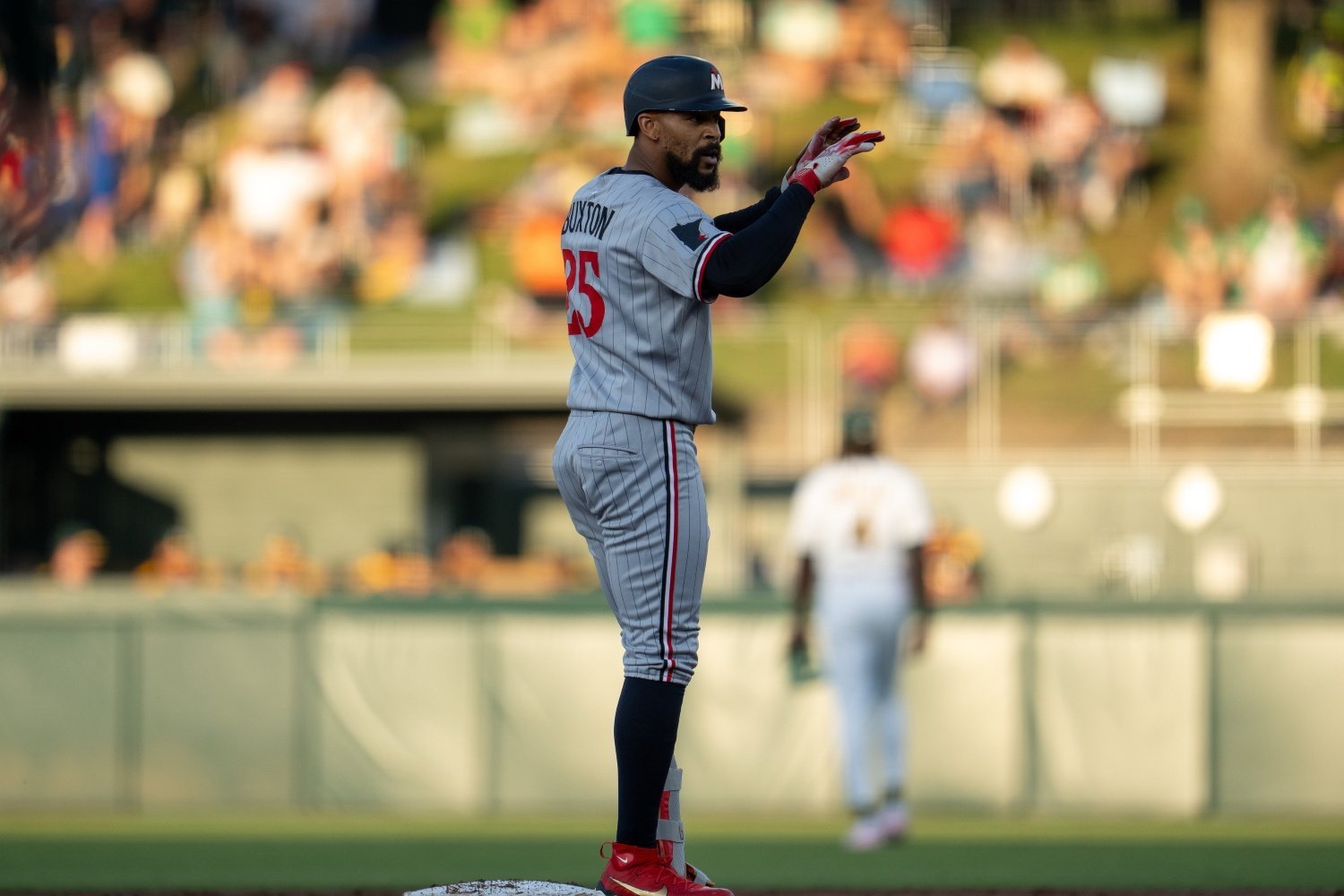 Byron Buxton has finally put together the season that Twins fans have been awaiting for over a decade. He’s healthy, he’s raking, and he’s turning in highlight-reel plays on a nightly basis. At his best, Buxton has always looked like an MVP, but in 2025, he’s actually putting up MVP numbers. That should be nothing but joy for Twins Territory, but there are a few reasons why his historic year feels more frustrating than it should. 1. A Painful Reminder of What Could Have Been Buxton’s .274/.336/.561 slash line, 32 home runs, and a 142 OPS+ entering mid-September are the type of stats Twins fans used to dream about. They’re also the type of numbers that make you wonder what the last eight years could have looked like, if health had ever cooperated. Remember 2017, when he looked like a Gold Glove superstar but never quite put it together at the plate? Or 2021, when his 171 OPS+ had him looking like the best player in baseball before injuries shut him down after just 61 games? Buxton joined Kirby Puckett as the second player in team history with 30 home runs and 20 steals in a season. He played in over 100 games for the second consecutive season, another first for his career. This season is the payoff for all those flashes, but it’s also a gut punch. We’re not just watching greatness. We’re watching the version of Buxton we’ve been missing out on all along. 2. A Wasted Performance on a 90-Loss Team Here’s the kicker: Buxton is finally having the year that puts him among baseball’s elite, and the Twins are stuck in the basement of the AL Central. He ranks among the top-10 in the AL in rWAR (10th), Offensive WAR (5th), SLG (4th), OPS (5th), Adj. OPS+ (5th), and Offensive Win% (3rd). He’s been one of the only reasons to tune in to watch the Twins this season, with a power-speed combination that makes him one of the game’s most exciting players. Put the numbers above on a playoff team, and Buxton is in every MVP conversation on national broadcasts. Instead, most of the baseball world has already moved on, and Buxton’s brilliance is happening in relative obscurity. This has happened before in Twins history. Brian Dozier accumulated 5.8 rWAR in 2016 on a Twins team that lost 103 games. Brad Radke was masterful in 1999 (6.5 rWAR) on a 97-loss team. It feels cruel, almost wasted, that the best season of his career is happening on a team barreling toward 90 losses. 3. An Uncertain Future Clouds the Joy The biggest question lingering over Buxton’s MVP-level year might be this: Will it ever matter? Joe Ryan and Pablo Lopez look like rotation anchors, but beyond this duo, the pitching staff is full of question marks. The bullpen carousel continues to spin after a trade deadline sell-off. On the offensive side, the young hitters the Twins have counted on, like Brooks Lee and Royce Lewis, haven’t taken that next step yet. The Minnesota farm system is one of baseball’s best, but there is no guarantee that the team’s top prospects will be able to perform at baseball’s highest level. Walker Jenkins, Emmanuel Rodriguez, and even Luke Keaschall can form the core of the next great Twins teams, but that might be multiple years away. Buxton will be in his mid-30s by that point, and there’s no guarantee that next season (or the one after that) will give him a team worthy of his talent. That cloud of uncertainty makes it hard to soak in what should be pure joy. Buxton is doing things this year that put him in the conversation with the best players in franchise history. But instead of being remembered as the year he carried the Twins into October, it’s shaping up to be remembered as the season that left us all wondering, “what if?” For Twins fans, that’s the most frustrating part of all. What’s been the most frustrating part of Buxton’s season? Leave a comment and start the discussion.
 -
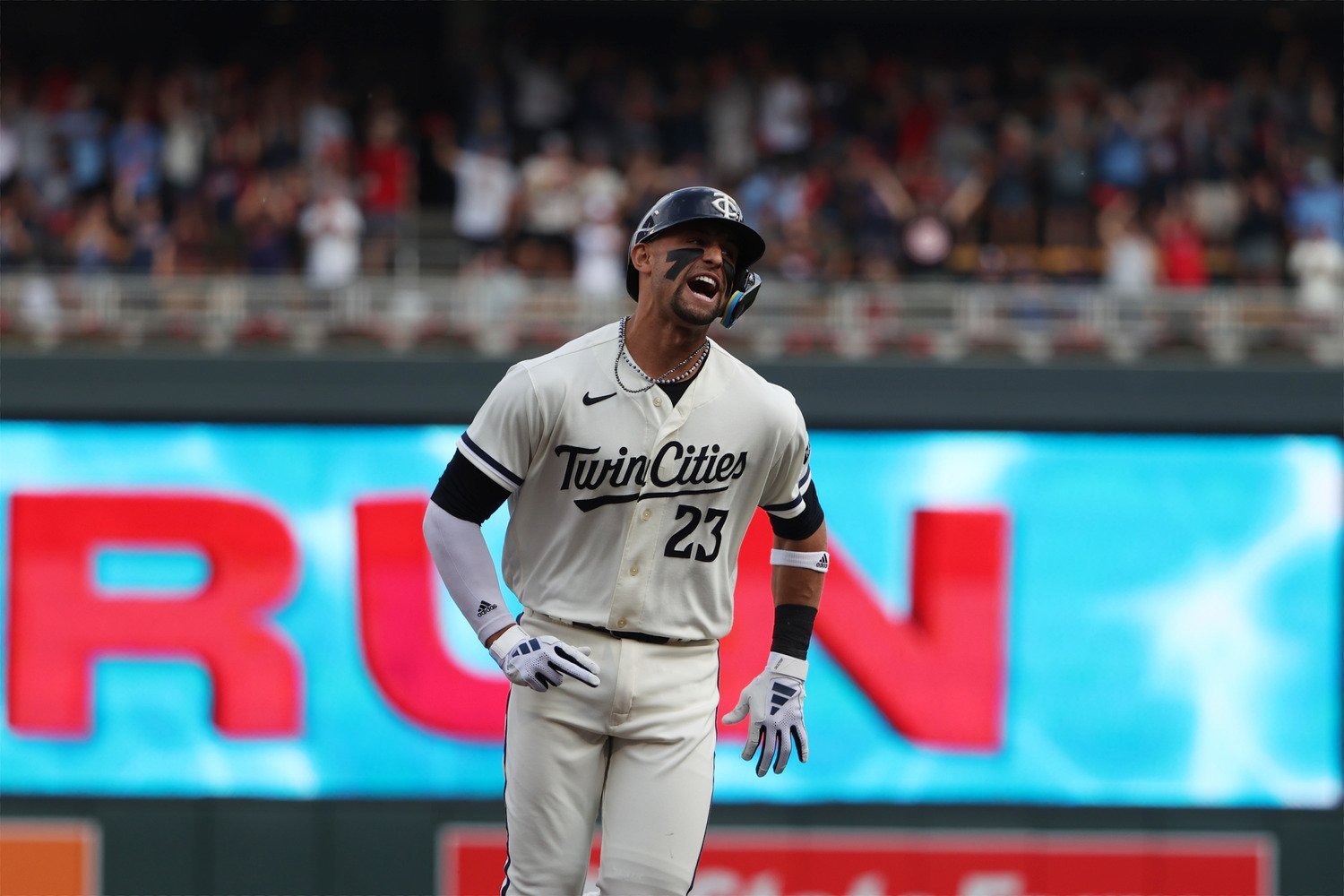 The Minnesota Twins have announced new fan engagement guidelines this week to ensure that Target Field remains a drama-free zone when it comes to home run balls. The decision comes in response to a viral incident in Miami, where a female Phillies fan berated a family after they secured a home run ball before eventually handing it over. The Twins, of course, are determined to avoid such chaos. “This isn’t Philadelphia. This is Minnesota,” said Senior VP of Fan Experience, Marlene Thorson. “If someone catches a home run ball here, they should immediately apologize, offer it to the nearest child, and then bake a hot dish for the other people in their section who didn’t get it.” More Balls Than Fans? The new “Home Run Ball Courtesy Protocol” (HRBCP) feels particularly timely. Attendance at Target Field has dipped to levels that make the 2020 pandemic season look crowded. With the team’s bullpen coughing up runs faster than State Fair cheese curds disappear, nearly every fan in attendance has a legitimate shot at snagging a ball by the seventh inning. “I came with my daughter and by the end of the game, we had three baseballs,” said Shoreview resident Paul Nelson. “Honestly, I was worried we’d have to buy another backpack just to haul them out. But the ushers made us hand two of them to a family from Duluth. It’s the rule now.” Minnesota Nice in Action The Twins are embracing their regional identity. Ushers have been retrained to intervene at the first sign of conflict by offering lukewarm Caribou Coffee, a soft handshake, and a passive-aggressive “Oh, you must really need that ball more than they do.” “I’ve worked here for 15 years,” said usher Darlene Peterson. “Back in the Joe Mauer days, fans would politely nod and let the ball roll under the seat to someone else. That’s the Minnesota way. Now we’ve had to put it in writing because, well, people watch too much Philadelphia baseball on TikTok.” The Front Office Spin While some might see the empty seats and nightly bullpen implosions as problems, the Twins are leaning into it as a marketing opportunity. “Where else can you come to a Major League game and guarantee you’ll leave with a souvenir ball?” said Twins President of Baseball Operations Derek Falvey. “We call it ‘Catch the Memories.’ We’d like to think it’s a perk of our current roster strategy.” And for fans who still feel uneasy about whether they’ll keep their prize, the team store has rolled out a new service: Home Run Ball Insurance. (Also, a nice way for the Pohlads to line their pockets.) For just $19.99, fans can purchase a laminated certificate guaranteeing that their ball will not be confiscated or guilt-tripped away by an usher. Premium packages even include a notarized letter confirming that, yes, your uncle’s buddy really did catch a Royce Lewis homer. One fan summed it up perfectly. “I bought a ticket for $8 and left with a game-used ball, a free t-shirt, and half a bag of popcorn someone offered me because they were leaving early,” said Minneapolis native Sara Lind. “If that’s not Minnesota Nice, I don’t know what is.”
 -
Image courtesy of © William Purnell-Imagn Images The Minnesota Twins are barreling toward their first 90-loss season under the current front office regime, and it’s fair to ask if a managerial change is on the horizon this winter. For an organization that has spent the better part of the past decade selling a vision of long-term competitiveness, the results on the field tell a different story. A Five-Year Slide This will be the fourth time in five years the Twins have missed the playoffs, posting a 383-408 record (.484) since 2021. The lone bright spot came in 2023, when Minnesota won the AL Central, knocked off the Toronto Blue Jays in the Wild Card round, and snapped a decades-long postseason drought without a series win. That feels like a lifetime ago now. In 2024, the club collapsed down the stretch and pinned the blame on the hitting coaches. In 2025, they collapsed out of the gate. Rocco Baldelli had his 2026 option picked up this summer, but with how this season has unraveled, it’s becoming harder to justify sticking with the status quo. Who Holds the Power? Despite the failures, don’t expect sweeping change at the very top. The Pohlads briefly explored selling the team before pulling it off the market, and they aren’t going to fire themselves. Derek Falvey, meanwhile, was just promoted to team president, with Jeremy Zoll elevated to GM. If ownership isn’t willing to cut ties with the front office, that leaves Baldelli as the logical choice for a pink slip. That’s not to say Baldelli is solely to blame. He’s dealt with shifting rosters, a midseason fire sale, and more than a few questionable roster constructions. Still, managers are often the easiest domino to push when an organization wants to signal change. The National Buzz ESPN’s Buster Olney noted that despite Baldelli’s option being picked up, the timing may no longer matter: “A lot has changed with the Twins since that decision was made: The team unloaded veterans and salary at the trade deadline, angering fans.” “Baldelli is concluding his seventh year with the team and could face the same reality that every manager does: If an organization wants to signal change — and the Twins might want to do that after a messy 2025 season — one of the cheapest ways to do that is to fire the manager. Sometime in the next few weeks, Minnesota’s ownership will make that choice.” Olney even floated a couple of familiar names as possible replacements: Derek Shelton, who was let go by Pittsburgh earlier this year, and James Rowson, currently with the Yankees. Both have ties to Minnesota, which could help with continuity but also risk doubling down on the same “groupthink” that has defined this front office era. Beyond Shuffling Deck Chairs The bigger question is whether firing Baldelli would actually solve anything. At times, it feels like the Twins are simply rearranging deck chairs while the ship continues to take on water. The front office has been reluctant to overhaul a roster that still leans too heavily on a failed core. Internal promotions have replaced outside perspectives, creating a bubble of sameness that hasn’t translated to success. Minnesota can’t just tinker around the edges again this offseason. If this is the front office that’s going to guide the franchise forward, they need to show fans an actual plan. That means rethinking how the roster is built, clarifying their vision for the future, and, yes, deciding if a new voice in the clubhouse is part of that plan. The Clock Is Ticking Baldelli has now managed the Twins for seven seasons, and while there were early highs, the recent lows have been tough to ignore. If the Pohlads and Falvey want to send a message, changing managers may be the quickest way. But unless the larger issues are addressed, it risks being little more than another cosmetic move. The Twins can’t keep running the same playbook and expecting different results. A course correction is overdue, and it has to start somewhere. Should the Twins move on from Baldelli? Leave a comment and start the discussion. View full article
-
The Minnesota Twins Must Decide If Rocco Baldelli Is the Fall Guy
Cody Christie posted an article in Twins
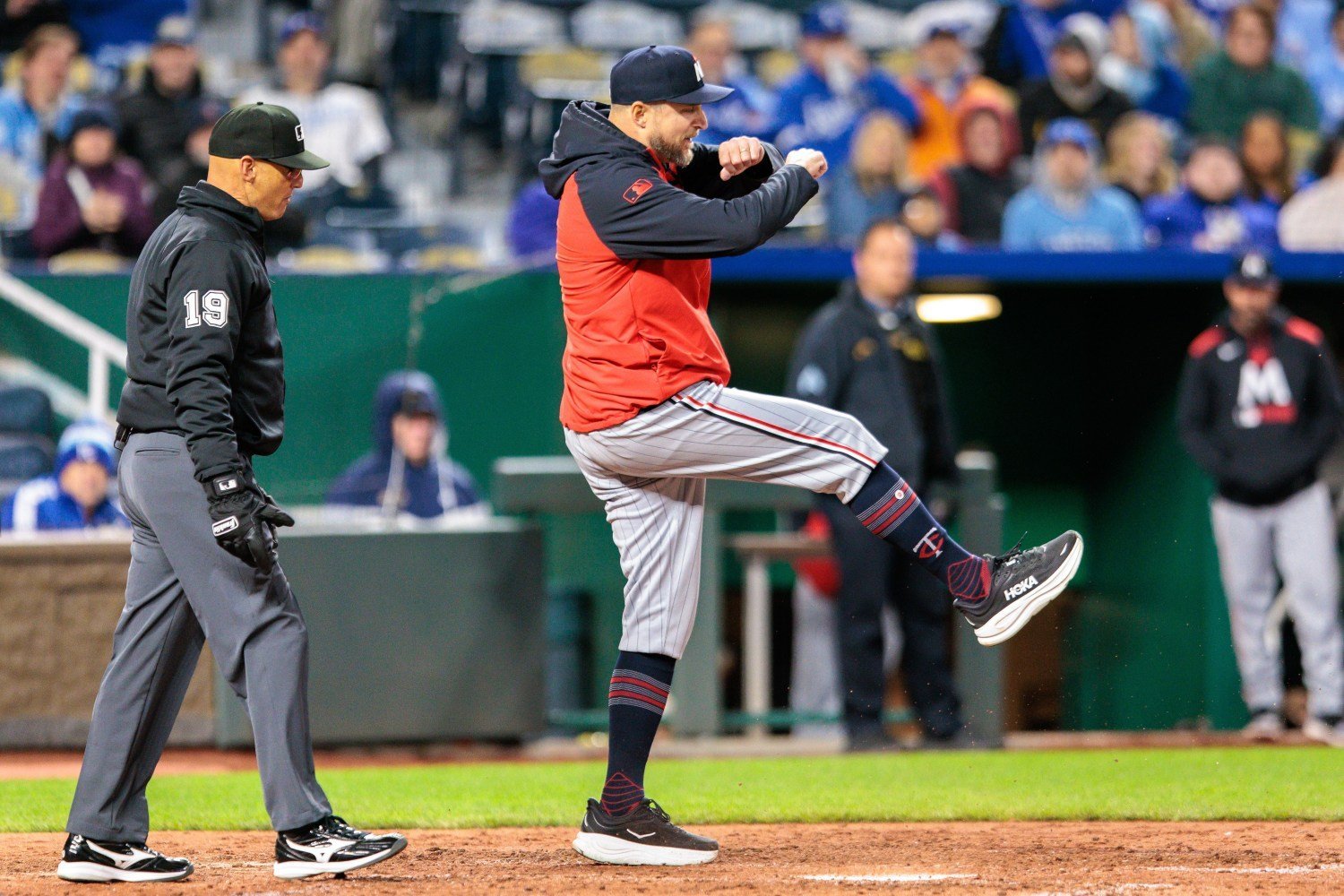 The Minnesota Twins are barreling toward their first 90-loss season under the current front office regime, and it’s fair to ask if a managerial change is on the horizon this winter. For an organization that has spent the better part of the past decade selling a vision of long-term competitiveness, the results on the field tell a different story. A Five-Year Slide This will be the fourth time in five years the Twins have missed the playoffs, posting a 383-408 record (.484) since 2021. The lone bright spot came in 2023, when Minnesota won the AL Central, knocked off the Toronto Blue Jays in the Wild Card round, and snapped a decades-long postseason drought without a series win. That feels like a lifetime ago now. In 2024, the club collapsed down the stretch and pinned the blame on the hitting coaches. In 2025, they collapsed out of the gate. Rocco Baldelli had his 2026 option picked up this summer, but with how this season has unraveled, it’s becoming harder to justify sticking with the status quo. Who Holds the Power? Despite the failures, don’t expect sweeping change at the very top. The Pohlads briefly explored selling the team before pulling it off the market, and they aren’t going to fire themselves. Derek Falvey, meanwhile, was just promoted to team president, with Jeremy Zoll elevated to GM. If ownership isn’t willing to cut ties with the front office, that leaves Baldelli as the logical choice for a pink slip. That’s not to say Baldelli is solely to blame. He’s dealt with shifting rosters, a midseason fire sale, and more than a few questionable roster constructions. Still, managers are often the easiest domino to push when an organization wants to signal change. The National Buzz ESPN’s Buster Olney noted that despite Baldelli’s option being picked up, the timing may no longer matter: “A lot has changed with the Twins since that decision was made: The team unloaded veterans and salary at the trade deadline, angering fans.” “Baldelli is concluding his seventh year with the team and could face the same reality that every manager does: If an organization wants to signal change — and the Twins might want to do that after a messy 2025 season — one of the cheapest ways to do that is to fire the manager. Sometime in the next few weeks, Minnesota’s ownership will make that choice.” Olney even floated a couple of familiar names as possible replacements: Derek Shelton, who was let go by Pittsburgh earlier this year, and James Rowson, currently with the Yankees. Both have ties to Minnesota, which could help with continuity but also risk doubling down on the same “groupthink” that has defined this front office era. Beyond Shuffling Deck Chairs The bigger question is whether firing Baldelli would actually solve anything. At times, it feels like the Twins are simply rearranging deck chairs while the ship continues to take on water. The front office has been reluctant to overhaul a roster that still leans too heavily on a failed core. Internal promotions have replaced outside perspectives, creating a bubble of sameness that hasn’t translated to success. Minnesota can’t just tinker around the edges again this offseason. If this is the front office that’s going to guide the franchise forward, they need to show fans an actual plan. That means rethinking how the roster is built, clarifying their vision for the future, and, yes, deciding if a new voice in the clubhouse is part of that plan. The Clock Is Ticking Baldelli has now managed the Twins for seven seasons, and while there were early highs, the recent lows have been tough to ignore. If the Pohlads and Falvey want to send a message, changing managers may be the quickest way. But unless the larger issues are addressed, it risks being little more than another cosmetic move. The Twins can’t keep running the same playbook and expecting different results. A course correction is overdue, and it has to start somewhere. Should the Twins move on from Baldelli? Leave a comment and start the discussion.
- 30 comments
-
- 7
-
-
- rocco baldelli
- james rowson
- (and 3 more)
-
Image courtesy of Thieres Rabelo Transactions The Twins selected the contract of RHP Cody Laweryson from the St. Paul Saints The St. Paul Saints activated LHP Aaron Rozek. SAINTS SENTINEL Columbus 3, St. Paul 4 Box Score St. Paul entered the night in the midst of a 12-game losing streak, but took an early 1-0 lead in the bottom of the second inning. Gabriel Gonzalez led off the inning with a double and was in danger of being stranded at second. However, Patrick Winkel singled on a solid line drive to left field to open the scoring in this one. Saints starter Mick Abel tossed three scoreless frames to start the game before running into trouble with two outs in the fourth. A lead off single put the tying runner on base but a fiy-out and a strikeout put Abel close to getting out of the jam. Unfortunately, he walked a batter after a seven pitch at-bat and the next batter tied it with a single. Things unraveled from there as Abel had a wild pitch and a missed catch error allowed two runs to score. Abel finished four innings and allowed three runs (one earned) on five hits with six strikeouts and a walk. In the bottom of the sixth, the Saints finally showed some life and top prospect Walker Jenkins got things started. The 20-year-old coaxed a walk on five pitches and later stole second base. Following a walk to Emmanuel Rodriguez, Payton Eeles singled to center and Jenkins trotted home to plate the tying run. After a pitching change, Jonah Bride walked and Patrick Winkel grounded out to first as the Saints took a 4-3 lead. Saint Paul’s bullpen was masterful as Christian MacLeod and Trent Baker combined for five shutout innings to end the game. MacLeod struck out seven in 3 2/3 innings, while Baker only allowed two hits for his third save. With the win, the Saints finally ended their 12-game losing streak. It was their first win since August 28th. WIND SURGE WISDOM Wichita 8, Corpus Christi 3 Box Score Entering play on Friday, the team trails Tulsa by one game with three to play, and the Surge own the tie-breaker. Ricky Castro took the mound for Wichita in what is quickly becoming must-win game territory. Wichita had taken an early lead in the second inning when Andrew Cossetti cracked a solo home run, his 14th of the year. In the bottom of the frame, Castro walked a batter and then allowed a two-run bomb to see the score flipped to 2-1. Wichita tied it in the top of the third after Kala’i Rosario hit his 30th double of the year. One batter later, he stole third base and came around to score on a fielding error. The back-and-forth scoring continued in the next inning as Castro allowed a pair of singles that saw Corpus Christi retake the lead 3-2. Overall, Castro went 3 2/3 innings by allowing three runs on four hits with six strikeouts and one walk. The Wind Surge were running out of outs before storming back in the top of the seventh inning. With two outs, Hendry Mendez homered to tie the game 3-3. Rosario followed with a walk and quickly stole second, his 32nd steal, and came around on a Ricardo Olivar single. Ben Ross singled to put runners on the corners and things got a little wild from there. Ross stole second and Olivar broke for home on the throw, which ended up in the outfield. Cossetti followed with an RBI single to cap the inning and push the Wind Surge up three. Wichita’s bullpen was nearly unhittable. Darren Bowen, Logan Whitaker, and Mike Paredes combined for 5 ⅓ scoreless innings. Paredes was particularly dominant by striking out five in two hitless frames. Unfortunately, Tulsa also won on Friday. The Wind Surge need to make up one game with two remaining to make the playoffs. KERNELS NUGGETS Cedar Rapids 7, Beloit 1 Box Score Cedar Rapids fell behind in the top of the first inning as starter Adrian Bohorquez ran into some early trouble. With two outs, he walked the bases loaded. In a do-or-die game, the Kernels made a pitching change and turned the ball over to Matt Gabbert. He allowed a run-scoring single, but struck out the final batter of the frame to end the threat. Peoria’s lead didn’t last long. Kyle DeBarge singled to open the home half of the first and quickly stole second base. Marek Houston’s speed caused a throwing error from Beloit’s shortstop to put two runners on base. With one out, Billy Amick tied the game at 1-1 with a seeing-eye single, but the scoring didn’t stop there. Back-to-back doubles from Danny De Andrade and Misael Urbina pushed the Kernels’ lead to 4-1. Urbina moved to third on a wild pitch and scored on Beloit’s second fielding error of the inning to cap a five-run frame. DeBarge set the tone on the offensive side of the ball early, but his defense in this game might have saved the Kernels. He started a key double play to end the second inning. Then in the fifth inning, he made a tremendous diving play on a ball that was smashed up the middle. Urbina had another huge hit in the bottom of the fifth inning. With two outs and runners on the corners, Urbina cracked his second double of the game and third in the postseason. Houston singled to start the frame and came around to score the club’s sixth run of the game. Eduardo Tait added an RBI single in the sixth frame as the Kernels continued to pile on runs. The Cedar Rapids bullpen was outstanding by tossing 8 1/3 shutout innings. Matt Gabbert and Chase Chaney combined for 6 1/3 shutout innings with four strikeouts. Brennen Oxford pitched a perfect eighth inning and Paulshawn Pasqualotto struck out the side in the ninth to slam the door. The Kernels head to the Midwest League Championship series that begins on Sunday. TWINS DAILY MINOR LEAGUE PLAYERS OF THE DAY Pitcher of the Day: Christian MacLeod, St. Paul Saints Hitter of the Day: Misael Urbina, Cedar Rapids Kernels PROSPECT SUMMARY Check out the Prospect Tracker for more. 1. Walker Jenkins (St. Paul): 0-for-3, 1 R, 1 BB, 2 K, 1 SB 3. Eduardo Tait (Cedar Rapids): 1-for-5, 1 RBI, 1 K 4. Emmanuel Rodriguez (St. Paul): 0-for-1, 2 R, 3 BB, 1 K 5. Mick Abel (St. Paul): 4 IP, 3 R (1 ER), 5 H, 6 K, 1 BB (65.8 strike%) 9. Gabriel Gonzalez (St. Paul): 1-for-4, 1 2B, 1 R, 1 K 11. Marek Houston (Cedar Rapids): 3-for-4, 2 R, 1 BB, 2 SB 16. Kyle DeBarge (Cedar Rapids): 1-for-5, 1 R, 1 K, 1 SB 18. Kyler Fedko (St. Paul): 0-for-4, 1 K SATURDAY’S PROBABLE STARTERS St. Paul vs. Columbus, 5:07 PM CT: LHP Connor Prielipp (0-2, 4.50 ERA) Wichita @ Corpus Christi, 7:05 PM CT: RHP Ryan Gallagher (4-1, 5.35 ERA) View full article
-
 Transactions The Twins selected the contract of RHP Cody Laweryson from the St. Paul Saints The St. Paul Saints activated LHP Aaron Rozek. SAINTS SENTINEL Columbus 3, St. Paul 4 Box Score St. Paul entered the night in the midst of a 12-game losing streak, but took an early 1-0 lead in the bottom of the second inning. Gabriel Gonzalez led off the inning with a double and was in danger of being stranded at second. However, Patrick Winkel singled on a solid line drive to left field to open the scoring in this one. Saints starter Mick Abel tossed three scoreless frames to start the game before running into trouble with two outs in the fourth. A lead off single put the tying runner on base but a fiy-out and a strikeout put Abel close to getting out of the jam. Unfortunately, he walked a batter after a seven pitch at-bat and the next batter tied it with a single. Things unraveled from there as Abel had a wild pitch and a missed catch error allowed two runs to score. Abel finished four innings and allowed three runs (one earned) on five hits with six strikeouts and a walk. In the bottom of the sixth, the Saints finally showed some life and top prospect Walker Jenkins got things started. The 20-year-old coaxed a walk on five pitches and later stole second base. Following a walk to Emmanuel Rodriguez, Payton Eeles singled to center and Jenkins trotted home to plate the tying run. After a pitching change, Jonah Bride walked and Patrick Winkel grounded out to first as the Saints took a 4-3 lead. Saint Paul’s bullpen was masterful as Christian MacLeod and Trent Baker combined for five shutout innings to end the game. MacLeod struck out seven in 3 2/3 innings, while Baker only allowed two hits for his third save. With the win, the Saints finally ended their 12-game losing streak. It was their first win since August 28th. WIND SURGE WISDOM Wichita 8, Corpus Christi 3 Box Score Entering play on Friday, the team trails Tulsa by one game with three to play, and the Surge own the tie-breaker. Ricky Castro took the mound for Wichita in what is quickly becoming must-win game territory. Wichita had taken an early lead in the second inning when Andrew Cossetti cracked a solo home run, his 14th of the year. In the bottom of the frame, Castro walked a batter and then allowed a two-run bomb to see the score flipped to 2-1. Wichita tied it in the top of the third after Kala’i Rosario hit his 30th double of the year. One batter later, he stole third base and came around to score on a fielding error. The back-and-forth scoring continued in the next inning as Castro allowed a pair of singles that saw Corpus Christi retake the lead 3-2. Overall, Castro went 3 2/3 innings by allowing three runs on four hits with six strikeouts and one walk. The Wind Surge were running out of outs before storming back in the top of the seventh inning. With two outs, Hendry Mendez homered to tie the game 3-3. Rosario followed with a walk and quickly stole second, his 32nd steal, and came around on a Ricardo Olivar single. Ben Ross singled to put runners on the corners and things got a little wild from there. Ross stole second and Olivar broke for home on the throw, which ended up in the outfield. Cossetti followed with an RBI single to cap the inning and push the Wind Surge up three. Wichita’s bullpen was nearly unhittable. Darren Bowen, Logan Whitaker, and Mike Paredes combined for 5 ⅓ scoreless innings. Paredes was particularly dominant by striking out five in two hitless frames. Unfortunately, Tulsa also won on Friday. The Wind Surge need to make up one game with two remaining to make the playoffs. KERNELS NUGGETS Cedar Rapids 7, Beloit 1 Box Score Cedar Rapids fell behind in the top of the first inning as starter Adrian Bohorquez ran into some early trouble. With two outs, he walked the bases loaded. In a do-or-die game, the Kernels made a pitching change and turned the ball over to Matt Gabbert. He allowed a run-scoring single, but struck out the final batter of the frame to end the threat. Peoria’s lead didn’t last long. Kyle DeBarge singled to open the home half of the first and quickly stole second base. Marek Houston’s speed caused a throwing error from Beloit’s shortstop to put two runners on base. With one out, Billy Amick tied the game at 1-1 with a seeing-eye single, but the scoring didn’t stop there. Back-to-back doubles from Danny De Andrade and Misael Urbina pushed the Kernels’ lead to 4-1. Urbina moved to third on a wild pitch and scored on Beloit’s second fielding error of the inning to cap a five-run frame. DeBarge set the tone on the offensive side of the ball early, but his defense in this game might have saved the Kernels. He started a key double play to end the second inning. Then in the fifth inning, he made a tremendous diving play on a ball that was smashed up the middle. Urbina had another huge hit in the bottom of the fifth inning. With two outs and runners on the corners, Urbina cracked his second double of the game and third in the postseason. Houston singled to start the frame and came around to score the club’s sixth run of the game. Eduardo Tait added an RBI single in the sixth frame as the Kernels continued to pile on runs. The Cedar Rapids bullpen was outstanding by tossing 8 1/3 shutout innings. Matt Gabbert and Chase Chaney combined for 6 1/3 shutout innings with four strikeouts. Brennen Oxford pitched a perfect eighth inning and Paulshawn Pasqualotto struck out the side in the ninth to slam the door. The Kernels head to the Midwest League Championship series that begins on Sunday. TWINS DAILY MINOR LEAGUE PLAYERS OF THE DAY Pitcher of the Day: Christian MacLeod, St. Paul Saints Hitter of the Day: Misael Urbina, Cedar Rapids Kernels PROSPECT SUMMARY Check out the Prospect Tracker for more. 1. Walker Jenkins (St. Paul): 0-for-3, 1 R, 1 BB, 2 K, 1 SB 3. Eduardo Tait (Cedar Rapids): 1-for-5, 1 RBI, 1 K 4. Emmanuel Rodriguez (St. Paul): 0-for-1, 2 R, 3 BB, 1 K 5. Mick Abel (St. Paul): 4 IP, 3 R (1 ER), 5 H, 6 K, 1 BB (65.8 strike%) 9. Gabriel Gonzalez (St. Paul): 1-for-4, 1 2B, 1 R, 1 K 11. Marek Houston (Cedar Rapids): 3-for-4, 2 R, 1 BB, 2 SB 16. Kyle DeBarge (Cedar Rapids): 1-for-5, 1 R, 1 K, 1 SB 18. Kyler Fedko (St. Paul): 0-for-4, 1 K SATURDAY’S PROBABLE STARTERS St. Paul vs. Columbus, 5:07 PM CT: LHP Connor Prielipp (0-2, 4.50 ERA) Wichita @ Corpus Christi, 7:05 PM CT: RHP Ryan Gallagher (4-1, 5.35 ERA)
- 17 comments
-
- 4
-
-

-
- mick abel
- walker jenkins
- (and 8 more)
-
It's Time: In 2026, Byron Buxton Needs to Move to Left Field
Cody Christie posted an article in Twins
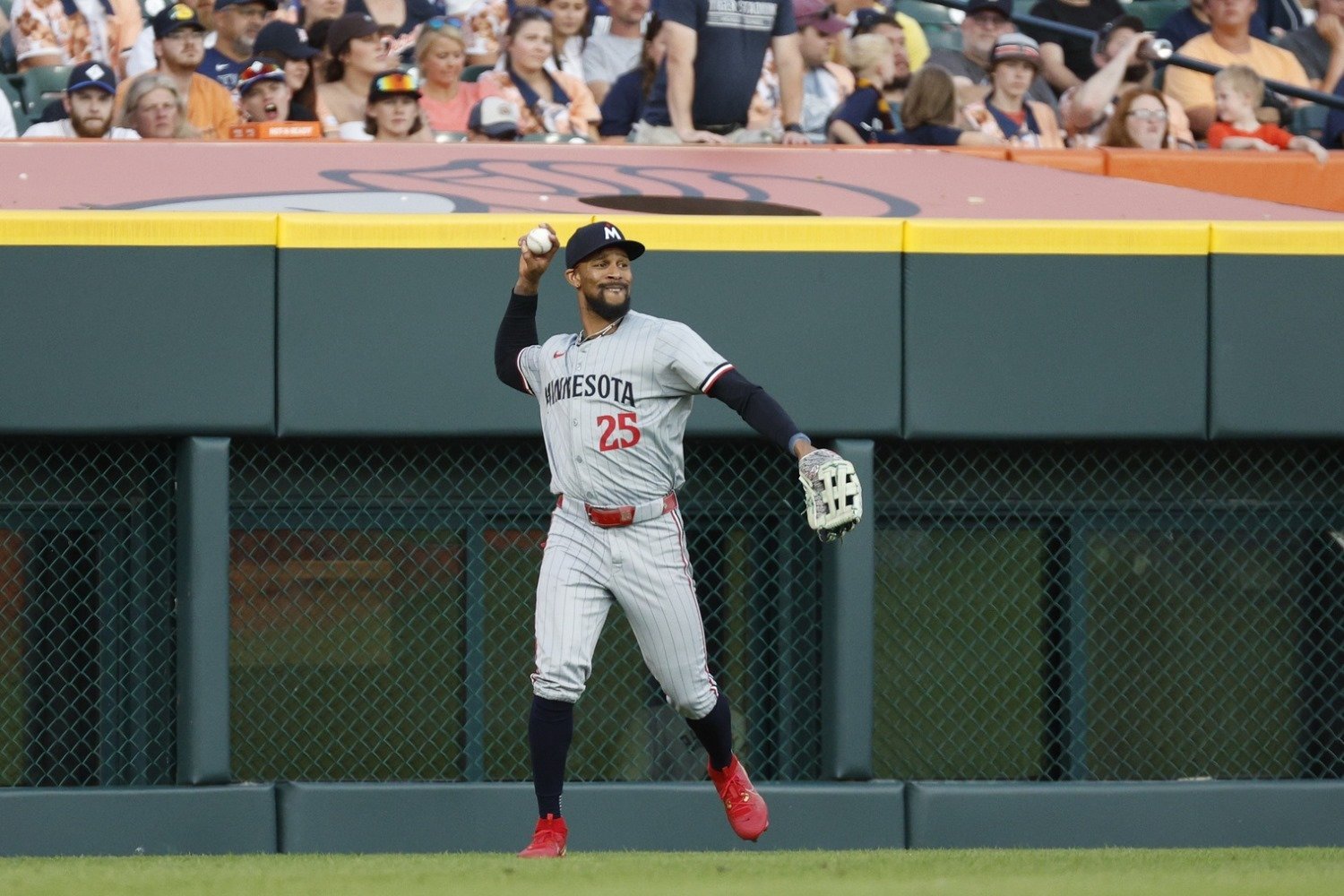 Byron Buxton is having one of the best offensive seasons of his career, but his defensive numbers may be starting to show some cracks. The metrics, paired with the organization’s looming prospect pipeline, have sparked an interesting question: Is it time for the Twins to consider moving Buxton to left field in 2026? Defensive Numbers Tell a Story Baseball Prospectus’s Deserved Runs Prevented (DRP) paints a clear month-to-month picture of Buxton’s defensive inconsistencies this season: March/April: -0.1 May: 1.4 June: -1.1 July: -2.4 August: -1.4 September: -0.9 Even early this season, there were signs of defensive decline from Buxton, but they've gotten much more pronounced as the year has progressed. SABR’s latest Defensive Index (SDI) had him at -1.9 through games played on August 10, with only four qualified American League center fielders faring worse. On top of that, Twins fans have seen it with their own eyes: balls falling in that he used to glide to with ease, or plays that once looked routine now appearing just out of reach. Age and the Twins’ Timeline Buxton turns 32 in December, and speed is often one of the first tools to fade as players move into their 30s. The Twins know this reality well. For Minnesota to maximize Buxton’s offensive value, especially during one of the most productive stretches of his career, it may soon be time to transition him out of center field. The other complicating factor? Walker Jenkins. Minnesota’s top prospect has been thriving at Triple-A as a 20-year-old, and seems poised to debut sometime next season. His short-term future is clearly in center field, and the Twins may not want to block him there. In the minors, he's played 443 innings in center field, and just 43 in right field this year. Emmanuel Rodriguez, another of the organization’s top prospects, has seen a lot of time in center and could be ready to impact the big-league roster next season. Injuries have impacted both top prospects, but obviously, Buxton has been no stranger to the injured list in his own right. Another factor the Twins must consider is Buxton’s long history of injuries. While he’s been healthier in recent seasons, his career has been defined as much by time on the injured list as by highlight-reel plays. A move to left field could help reduce the physical toll on his body, as corner spots typically require less ground to cover and fewer all-out sprints into the gaps or negotiations with the wall. Preserving Buxton’s health has always been a priority for the Twins, and a position change might be one way to keep his bat in the lineup more consistently while limiting the risk of those nagging injuries that have plagued him in the past. The Twins also acquired two center field-capable players at the trade deadline, in Alan Roden and James Outman. Roden’s time was truncated by a season-ending injury, but his defense was one of his calling cards prior to Minnesota acquiring him. Outman has looked rough in center for the Twins and isn’t a long-term answer at the position, but if the team wants to move Buxton to a corner for the full season, Outman could stop the gap in center until Jenkins or Rodriguez is ready to matriculate. History Repeats Itself The Twins have a long tradition of elite center fielders, and nearly all of them eventually shifted to a corner spot. Kirby Puckett made the move. Torii Hunter made the move. Even Denard Span spent time away from center late in his career. Buxton could be the next in that line, and it doesn’t have to be viewed as a demotion. It’s a natural progression that helps extend careers. At his peak, Buxton was the best defensive center fielder in baseball. Those skills may not be entirely gone, but the decline in the numbers suggests the Twins should be proactive. Shifting Buxton to left field would allow him to keep impacting games on both sides of the ball, just from a slightly different spot on the diamond. Should the Twins move Buxton to a corner outfield spot when Jenkins makes his debut? Leave a comment and start the discussion.
- 54 comments
-
- 9
-
-

-
- byron buxton
- walker jenkins
- (and 3 more)
-
Image courtesy of © Brian Bradshaw Sevald-USA TODAY Sports Byron Buxton is having one of the best offensive seasons of his career, but his defensive numbers may be starting to show some cracks. The metrics, paired with the organization’s looming prospect pipeline, have sparked an interesting question: Is it time for the Twins to consider moving Buxton to left field in 2026? Defensive Numbers Tell a Story Baseball Prospectus’s Deserved Runs Prevented (DRP) paints a clear month-to-month picture of Buxton’s defensive inconsistencies this season: March/April: -0.1 May: 1.4 June: -1.1 July: -2.4 August: -1.4 September: -0.9 Even early this season, there were signs of defensive decline from Buxton, but they've gotten much more pronounced as the year has progressed. SABR’s latest Defensive Index (SDI) had him at -1.9 through games played on August 10, with only four qualified American League center fielders faring worse. On top of that, Twins fans have seen it with their own eyes: balls falling in that he used to glide to with ease, or plays that once looked routine now appearing just out of reach. Age and the Twins’ Timeline Buxton turns 32 in December, and speed is often one of the first tools to fade as players move into their 30s. The Twins know this reality well. For Minnesota to maximize Buxton’s offensive value, especially during one of the most productive stretches of his career, it may soon be time to transition him out of center field. The other complicating factor? Walker Jenkins. Minnesota’s top prospect has been thriving at Triple-A as a 20-year-old, and seems poised to debut sometime next season. His short-term future is clearly in center field, and the Twins may not want to block him there. In the minors, he's played 443 innings in center field, and just 43 in right field this year. Emmanuel Rodriguez, another of the organization’s top prospects, has seen a lot of time in center and could be ready to impact the big-league roster next season. Injuries have impacted both top prospects, but obviously, Buxton has been no stranger to the injured list in his own right. Another factor the Twins must consider is Buxton’s long history of injuries. While he’s been healthier in recent seasons, his career has been defined as much by time on the injured list as by highlight-reel plays. A move to left field could help reduce the physical toll on his body, as corner spots typically require less ground to cover and fewer all-out sprints into the gaps or negotiations with the wall. Preserving Buxton’s health has always been a priority for the Twins, and a position change might be one way to keep his bat in the lineup more consistently while limiting the risk of those nagging injuries that have plagued him in the past. The Twins also acquired two center field-capable players at the trade deadline, in Alan Roden and James Outman. Roden’s time was truncated by a season-ending injury, but his defense was one of his calling cards prior to Minnesota acquiring him. Outman has looked rough in center for the Twins and isn’t a long-term answer at the position, but if the team wants to move Buxton to a corner for the full season, Outman could stop the gap in center until Jenkins or Rodriguez is ready to matriculate. History Repeats Itself The Twins have a long tradition of elite center fielders, and nearly all of them eventually shifted to a corner spot. Kirby Puckett made the move. Torii Hunter made the move. Even Denard Span spent time away from center late in his career. Buxton could be the next in that line, and it doesn’t have to be viewed as a demotion. It’s a natural progression that helps extend careers. At his peak, Buxton was the best defensive center fielder in baseball. Those skills may not be entirely gone, but the decline in the numbers suggests the Twins should be proactive. Shifting Buxton to left field would allow him to keep impacting games on both sides of the ball, just from a slightly different spot on the diamond. Should the Twins move Buxton to a corner outfield spot when Jenkins makes his debut? Leave a comment and start the discussion. View full article
-
Image courtesy of Jesse Johnson-Imagn Images The Minnesota Twins have announced new fan engagement guidelines this week to ensure that Target Field remains a drama-free zone when it comes to home run balls. The decision comes in response to a viral incident in Miami, where a female Phillies fan berated a family after they secured a home run ball before eventually handing it over. The Twins, of course, are determined to avoid such chaos. “This isn’t Philadelphia. This is Minnesota,” said Senior VP of Fan Experience, Marlene Thorson. “If someone catches a home run ball here, they should immediately apologize, offer it to the nearest child, and then bake a hot dish for the other people in their section who didn’t get it.” More Balls Than Fans? The new “Home Run Ball Courtesy Protocol” (HRBCP) feels particularly timely. Attendance at Target Field has dipped to levels that make the 2020 pandemic season look crowded. With the team’s bullpen coughing up runs faster than State Fair cheese curds disappear, nearly every fan in attendance has a legitimate shot at snagging a ball by the seventh inning. “I came with my daughter and by the end of the game, we had three baseballs,” said Shoreview resident Paul Nelson. “Honestly, I was worried we’d have to buy another backpack just to haul them out. But the ushers made us hand two of them to a family from Duluth. It’s the rule now.” Minnesota Nice in Action The Twins are embracing their regional identity. Ushers have been retrained to intervene at the first sign of conflict by offering lukewarm Caribou Coffee, a soft handshake, and a passive-aggressive “Oh, you must really need that ball more than they do.” “I’ve worked here for 15 years,” said usher Darlene Peterson. “Back in the Joe Mauer days, fans would politely nod and let the ball roll under the seat to someone else. That’s the Minnesota way. Now we’ve had to put it in writing because, well, people watch too much Philadelphia baseball on TikTok.” The Front Office Spin While some might see the empty seats and nightly bullpen implosions as problems, the Twins are leaning into it as a marketing opportunity. “Where else can you come to a Major League game and guarantee you’ll leave with a souvenir ball?” said Twins President of Baseball Operations Derek Falvey. “We call it ‘Catch the Memories.’ We’d like to think it’s a perk of our current roster strategy.” And for fans who still feel uneasy about whether they’ll keep their prize, the team store has rolled out a new service: Home Run Ball Insurance. (Also, a nice way for the Pohlads to line their pockets.) For just $19.99, fans can purchase a laminated certificate guaranteeing that their ball will not be confiscated or guilt-tripped away by an usher. Premium packages even include a notarized letter confirming that, yes, your uncle’s buddy really did catch a Royce Lewis homer. One fan summed it up perfectly. “I bought a ticket for $8 and left with a game-used ball, a free t-shirt, and half a bag of popcorn someone offered me because they were leaving early,” said Minneapolis native Sara Lind. “If that’s not Minnesota Nice, I don’t know what is.” View full article
-
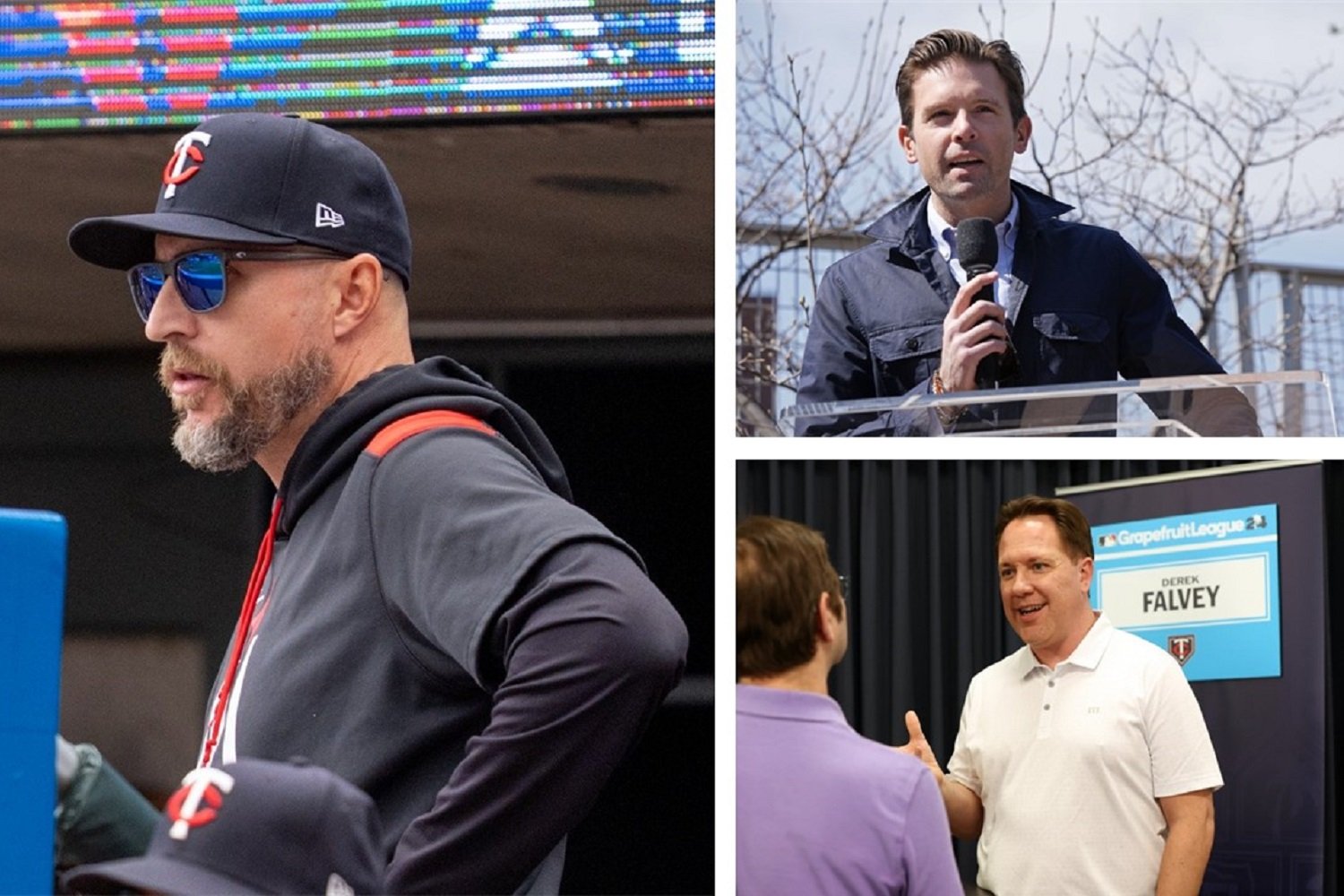 One of the most unique features at Twins Daily is our daily polling tool, which allows fans to weigh in on all aspects of the organization. Whether it’s the manager’s bullpen decisions, the front office’s trade deadline moves, or ownership’s long-term commitment to winning, every fan can share an opinion with a simple click. Over time, these votes start to tell a bigger story. The charts below reflect the fan base's sentiments in 2025 regarding Rocco Baldelli, Derek Falvey’s front office, and the ownership group led by the Pohlad family. Baldelli’s Approval Rating For most of the summer, fan sentiment toward Baldelli bounced around with the team’s performance. In April and May, disapproval ran high, with fans voicing frustration during a stretch when the Twins were hovering around .500. By June and July, however, Baldelli saw a modest boost, as disapproval votes climbed more slowly than the surge in frustration aimed at other parts of the organization. His approval, though, never spiked in the way managers hope. Interestingly, August saw a sharp rise in disapproval, peaking at nearly 3,000 votes, which coincided directly with the MLB trade deadline. As the other graphs below show, fans were angry after the team’s selloff, and they were pointing fingers at every part of the organization. Things have cooled slightly in September as fans assess the roster and realize there is little the manager can do with the current roster construction. Most options he has from a lineup and pitching standpoint are bad on any given day. The data paints Baldelli as a lightning rod for criticism, but not necessarily the top target. The Falvey-Led Front Office If Baldelli has absorbed his share of criticism, Falvey and the Twins’ front office have been right alongside him. Approval numbers for the front office barely climbed above a few hundred votes all year, with fans struggling to find optimism in roster construction or deadline moves. In July, I wrote about how the failures of the 2025 team are tied to the front office. Minnesota collapsed down the stretch last season and made minimal moves this winter. Instead, this team was built with the hope for internal bounce-backs and improved health. That kind of passive roster-building was always a gamble, and it landed the club squarely in a quagmire of mediocrity. Meanwhile, fan disapproval steadily rose, peaking in mid-August alongside Baldelli’s chart and corresponding with the trade deadline. Fans appear to be connecting the dots between the on-field struggles and the decision-makers at 1 Twins Way. By September, disapproval dropped, but approval never gained much momentum. The charts suggest the fan base feels directionless when it comes to the front office, perhaps signaling that patience is wearing thin. Ownership’s Approval (Or Lack Thereof) If Baldelli and Falvey are catching flak, ownership is receiving almost none of the benefit of the doubt. The Twins ownership group’s approval rating is barely visible on the chart, stuck at nearly zero votes at nearly every point in the season. The Pohlads announced the team was for sale roughly 12 months ago before reversing course later this year. Now, they are staying on as the primary owners and selling off two chunks of the team to minority ownership groups. Fan reaction to this decision was understandably poor, and attendance at Target Field has plummeted to record-low levels. Meanwhile, disapproval skyrocketed through the summer, peaking above 3,500 in August, the highest number across all three polls. By September, disapproval numbers dropped sharply, but approval failed to rise significantly. The lack of faith in ownership seems tied to larger frustrations about payroll, long-term competitiveness, and the perception that the front office is hamstrung from above. Real-Time Fan Barometer What makes these polls valuable is that they track the pulse of Twins Territory in real time. A hot streak, a losing skid, or a single press conference quote can dramatically swing sentiment. Taken together, the charts from 2025 show a fan base that is growing increasingly skeptical of all three levels of leadership: manager, front office, and ownership. While Baldelli takes plenty of criticism for in-game decisions, the loudest frustration is aimed at the higher rungs of the ladder, with ownership receiving the harshest marks of all. For Twins fans, the polls offer a daily outlet for their frustrations and hopes. For the organization, they provide a clear message: trust is running thin, and results will be the only way to turn the tide. How do you view these three groups as the season closes? Who is most responsible for the team missing the playoffs for the second consecutive year? Leave a comment and start the discussion.
- 52 comments
-
- 1
-
-
- rocco baldelli
- derek falvey
- (and 1 more)
-
Image courtesy of © Bruce Kluckhohn (Pohlad), Matt Blewett (Baldelli), Kim Klement Neitzel (Falvey)-Imagn Images One of the most unique features at Twins Daily is our daily polling tool, which allows fans to weigh in on all aspects of the organization. Whether it’s the manager’s bullpen decisions, the front office’s trade deadline moves, or ownership’s long-term commitment to winning, every fan can share an opinion with a simple click. Over time, these votes start to tell a bigger story. The charts below reflect the fan base's sentiments in 2025 regarding Rocco Baldelli, Derek Falvey’s front office, and the ownership group led by the Pohlad family. Baldelli’s Approval Rating For most of the summer, fan sentiment toward Baldelli bounced around with the team’s performance. In April and May, disapproval ran high, with fans voicing frustration during a stretch when the Twins were hovering around .500. By June and July, however, Baldelli saw a modest boost, as disapproval votes climbed more slowly than the surge in frustration aimed at other parts of the organization. His approval, though, never spiked in the way managers hope. Interestingly, August saw a sharp rise in disapproval, peaking at nearly 3,000 votes, which coincided directly with the MLB trade deadline. As the other graphs below show, fans were angry after the team’s selloff, and they were pointing fingers at every part of the organization. Things have cooled slightly in September as fans assess the roster and realize there is little the manager can do with the current roster construction. Most options he has from a lineup and pitching standpoint are bad on any given day. The data paints Baldelli as a lightning rod for criticism, but not necessarily the top target. The Falvey-Led Front Office If Baldelli has absorbed his share of criticism, Falvey and the Twins’ front office have been right alongside him. Approval numbers for the front office barely climbed above a few hundred votes all year, with fans struggling to find optimism in roster construction or deadline moves. In July, I wrote about how the failures of the 2025 team are tied to the front office. Minnesota collapsed down the stretch last season and made minimal moves this winter. Instead, this team was built with the hope for internal bounce-backs and improved health. That kind of passive roster-building was always a gamble, and it landed the club squarely in a quagmire of mediocrity. Meanwhile, fan disapproval steadily rose, peaking in mid-August alongside Baldelli’s chart and corresponding with the trade deadline. Fans appear to be connecting the dots between the on-field struggles and the decision-makers at 1 Twins Way. By September, disapproval dropped, but approval never gained much momentum. The charts suggest the fan base feels directionless when it comes to the front office, perhaps signaling that patience is wearing thin. Ownership’s Approval (Or Lack Thereof) If Baldelli and Falvey are catching flak, ownership is receiving almost none of the benefit of the doubt. The Twins ownership group’s approval rating is barely visible on the chart, stuck at nearly zero votes at nearly every point in the season. The Pohlads announced the team was for sale roughly 12 months ago before reversing course later this year. Now, they are staying on as the primary owners and selling off two chunks of the team to minority ownership groups. Fan reaction to this decision was understandably poor, and attendance at Target Field has plummeted to record-low levels. Meanwhile, disapproval skyrocketed through the summer, peaking above 3,500 in August, the highest number across all three polls. By September, disapproval numbers dropped sharply, but approval failed to rise significantly. The lack of faith in ownership seems tied to larger frustrations about payroll, long-term competitiveness, and the perception that the front office is hamstrung from above. Real-Time Fan Barometer What makes these polls valuable is that they track the pulse of Twins Territory in real time. A hot streak, a losing skid, or a single press conference quote can dramatically swing sentiment. Taken together, the charts from 2025 show a fan base that is growing increasingly skeptical of all three levels of leadership: manager, front office, and ownership. While Baldelli takes plenty of criticism for in-game decisions, the loudest frustration is aimed at the higher rungs of the ladder, with ownership receiving the harshest marks of all. For Twins fans, the polls offer a daily outlet for their frustrations and hopes. For the organization, they provide a clear message: trust is running thin, and results will be the only way to turn the tide. How do you view these three groups as the season closes? Who is most responsible for the team missing the playoffs for the second consecutive year? Leave a comment and start the discussion. View full article
- 52 replies
-
- 1
-

-
- rocco baldelli
- derek falvey
- (and 1 more)
-
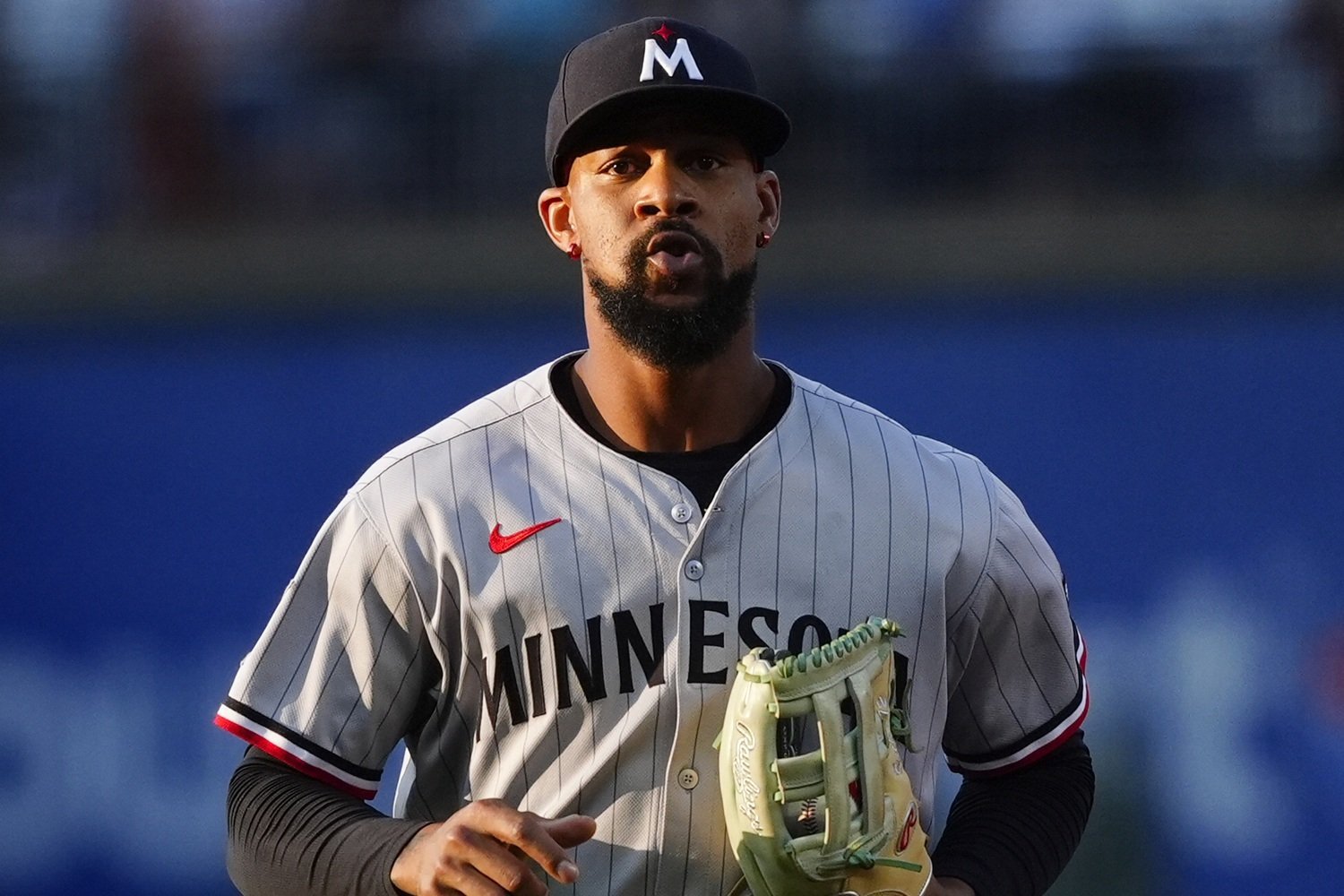 Byron Buxton has been through a lot in a Minnesota Twins uniform. He has battled injuries, endured three different roster teardowns, and watched the team move on from its cornerstone players. Now, as he approaches his age-32 season, he’s drawing a line in the sand: he doesn’t want to be part of another rebuild. “I Ain’t Treading Water” Speaking with the Pioneer Press, Buxton didn’t mince words about his expectations for the organization. “I ain’t treading water,” Buxton said. “I won’t do that. It’s all about winning for me. I ain’t a person who’s going to be walking on my toes or anything like that to satisfy anybody. I want to win.” That kind of honesty isn’t surprising for a player who’s never been shy about how much he wants to bring a championship to Minnesota. But his comments also highlight an important reality: the Twins can’t afford to go back into a long-term reset mode with their best player locked in through 2028. Buxton Isn’t Going Anywhere When Buxton signed his seven-year, $100-million extension ahead of the 2022 season, the deal came with a no-trade clause. That means the Twins can’t simply move him if the front office decides a reset is the best course of action. He’s made it clear he wants to be a Twin for life, and he’s dug in. This message puts even more pressure on Derek Falvey and Jeremy Zoll. If Buxton’s voice matters in the clubhouse (and it does), then pivoting to another rebuild risks creating a divide between leadership and the roster. Pointing Fingers, But Owning Responsibility Interestingly, Buxton didn’t just aim his frustration at the front office. He also held the players accountable. “We didn’t win very many games last month,” he admitted. “How many was it? Six, seven? Eleven? It’s not enough. We had a chance to control our destiny last year, and as a team, we just didn’t play well enough.” That combination of calling out the front office for not adding talent while also acknowledging the players’ own failures underscores Buxton’s leadership. The Twins' pitching staff didn’t live up to preseason expectations, and the offense has struggled since the team collapsed in the second half of 2024. He isn’t pointing fingers without looking in the mirror. The Sonny Gray Ripple Effect Buxton also addressed the recent comments from Joe Ryan, who said letting Sonny Gray walk in free agency was the “biggest mistake” the current front office has made. “I don’t know if it’s the biggest mistake, but I do know that I’ve been here for long enough, so I’ve seen a lot of things,” Buxton said. “If this is what you call a rebuild, this will be my third one since I’ve been here. So, if you want to talk about mistakes, I saw a lot of mistakes leading up to now.” It’s not hard to connect the dots. The Twins went from a playoff team in 2023 to a franchise in turmoil in 2025, and the lack of offseason additions since Gray’s departure has been glaring. The front office’s lack of moves is tied directly to the ownership’s directive to cut payroll by $30 million. However, the team had the pieces to compete in the AL Central over the last two seasons, and it has played out horribly. A Winter of Reckoning Buxton’s words should reverberate through the front office. The Twins can’t afford another quiet winter. Fans won’t tolerate it, and neither will their franchise cornerstone. “That’s what it’s going to take,” Buxton said, referring to trades and free-agent additions. “Not many teams in baseball don’t do something in the offseason anymore. Every team does something.” For an organization that traded away 11 players at this year’s deadline, there’s no shortage of holes to fill. If the Twins want to avoid losing their star’s trust—not to mention further alienating their fanbase—they’ll need to prove they’re serious about competing in 2026. Buxton’s message does create an odd and (perhaps) unsustainable dissonance, though. He's stated his intention to stay with the team, but he sounds just as unflinching about his commitment to winning every year as he is to being part of the Twins. There's no evidence at all that the team actually intends to go make the kinds of moves his remarks seem to demand. It's hard not to wonder whether, if the short-term direction becomes clear and it doesn't put the team on a path to the playoffs, Buxton would reconsider his stance and ask for a trade, after all. The next few months will define the direction of this organization. If Falvey and Zoll don’t take action, the Twins won’t just be treading water: they might be sinking. Do you agree with Buxton’s message? Leave a comment and start the discussion.
- 80 comments
-
- 8
-

-
-
-
- byron buxton
- joe ryan
- (and 1 more)
-
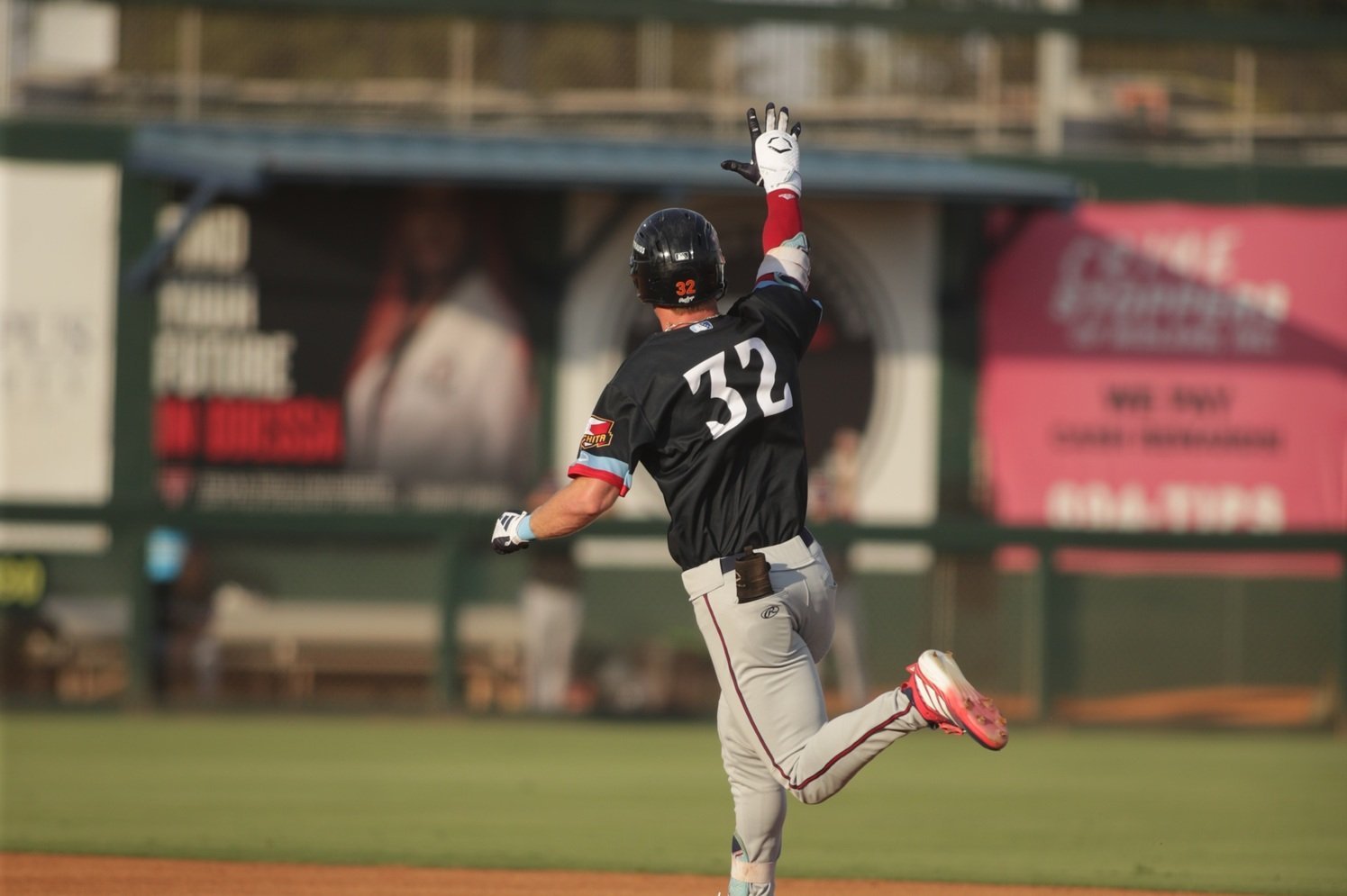 This past winter, a few national prospect outlets cast some doubt on Walker Jenkins. His hit tool was still praised, but questions about his power production and durability began to emerge. FanGraphs, led by prospect writer Eric Longenhagen, went further than most, ranking Jenkins as the 17th-best prospect in baseball, a notably lower ranking than other outlets. For some perspective, the three other major outlets (Baseball America, MLB.com, and Baseball Prospectus) had him ranked in the top five. Obviously, the difference between those rankings tiers is relatively small. It's not as though anyone took him out of their top-100 list. Still, his lower ranking by some outlets raised important questions: were they seeing something others weren’t, or was this simply a statistical outlier? And more importantly, could Jenkins prove them wrong in 2025? Early Questions, Familiar Concerns Jenkins’s drop was tied to two main issues. First, his power hadn’t fully translated to game action in his early professional career. Scouts had always projected above-average or plus raw power, but the results hadn’t matched the lofty expectations. Second, injuries had already become a recurring theme. An ankle injury delayed his 2025 debut, only adding more fuel to the narrative. For a player so young, it’s easy to see why evaluators might hedge their bets. FanGraphs wasn’t necessarily saying Jenkins wouldn’t be a star. They were saying the margin for error might be thinner than his hype suggested. Responding Between the Lines Once healthy, Jenkins quickly showed why the Twins have been so aggressive with his development. After shaking off some early rust in Double-A Wichita, he hit his way out of the Texas League, slashing .309/.426/.487 with a mature approach (14.6 BB%) and growing power. He was also the third-youngest player in the Texas League. Triple-A St. Paul presented another challenge, but the adjustment period was short-lived. Jenkins went 1-for-20 to start his Saints career, but now he finds himself riding a hitting streak, collecting four straight multi-hit games and belting his first Triple-A home run. His season line, after all that—.305/.427/.477, with nine home runs and 14 steals in 73 games—is exactly what the Twins hoped to see. It’s also why the team hasn’t been afraid to promote him up the organizational ladder aggressively. Putting His Path in Perspective MLB teams rarely push 20-year-old hitters to Triple-A. When they do, it’s typically because the organization believes they’re grooming a franchise cornerstone. Jenkins has batted .290 or higher with an OPS above .860 at every stop of the minors before reaching St. Paul. How rare is this path? He’s the first Twins hitting prospect to play a Triple-A game in his age-20 season in the last 25 years. Byron Buxton and Joe Mauer, two of the most hyped prospects in club history, spent their age-20 campaigns finishing at Double-A. Some players his age are still completing their college careers. Jenkins, meanwhile, is knocking on the door of Target Field. Did He Prove the Doubters Wrong? The truth is complicated. FanGraphs’s ranking wasn’t made in bad faith. It was an acknowledgment of risk factors that still exist. Jenkins has dealt with multiple injuries already, and while his power is starting to show, he hasn’t yet proven it against MLB-caliber arms. But if the question is whether he’s lived up to the challenge in 2025, the answer is an emphatic YES. The Twins continue to test him, and he continues to respond. The combination of elite on-base skills, gap power that’s beginning to evolve into more home runs, and the maturity of his approach at the plate suggests that he’s firmly tracking toward the star status many predicted on draft day. We have some hard data now, and his 90th-percentile exit velocity of 104.9 miles per hour in a small Triple-A sample is well clear of average for the level. He pulls the ball in the air at an average rate. The fundamentals of power are there. Prospect rankings are educated guesses, and Jenkins’s story is a reminder of both their value and their limitations. Outlier opinions, like FanGraphs’s, are useful because they force us to consider downside scenarios. But sometimes, the consensus is right, and a player really is as good as advertised. For now, Jenkins hasn’t just held his own in 2025. He’s excelled with every obstacle put in his way. And if his rapid rise continues, the Twins may not have to wait long to see if their prized outfielder can do the same in Minneapolis. Has Jenkins proven his doubters wrong this season? Leave a comment and start the discussion.
 -
Image courtesy of Ed Bailey, Wichita Wind Surge (photo of Walker Jenkins) This past winter, a few national prospect outlets cast some doubt on Walker Jenkins. His hit tool was still praised, but questions about his power production and durability began to emerge. FanGraphs, led by prospect writer Eric Longenhagen, went further than most, ranking Jenkins as the 17th-best prospect in baseball, a notably lower ranking than other outlets. For some perspective, the three other major outlets (Baseball America, MLB.com, and Baseball Prospectus) had him ranked in the top five. Obviously, the difference between those rankings tiers is relatively small. It's not as though anyone took him out of their top-100 list. Still, his lower ranking by some outlets raised important questions: were they seeing something others weren’t, or was this simply a statistical outlier? And more importantly, could Jenkins prove them wrong in 2025? Early Questions, Familiar Concerns Jenkins’s drop was tied to two main issues. First, his power hadn’t fully translated to game action in his early professional career. Scouts had always projected above-average or plus raw power, but the results hadn’t matched the lofty expectations. Second, injuries had already become a recurring theme. An ankle injury delayed his 2025 debut, only adding more fuel to the narrative. For a player so young, it’s easy to see why evaluators might hedge their bets. FanGraphs wasn’t necessarily saying Jenkins wouldn’t be a star. They were saying the margin for error might be thinner than his hype suggested. Responding Between the Lines Once healthy, Jenkins quickly showed why the Twins have been so aggressive with his development. After shaking off some early rust in Double-A Wichita, he hit his way out of the Texas League, slashing .309/.426/.487 with a mature approach (14.6 BB%) and growing power. He was also the third-youngest player in the Texas League. Triple-A St. Paul presented another challenge, but the adjustment period was short-lived. Jenkins went 1-for-20 to start his Saints career, but now he finds himself riding a hitting streak, collecting four straight multi-hit games and belting his first Triple-A home run. His season line, after all that—.305/.427/.477, with nine home runs and 14 steals in 73 games—is exactly what the Twins hoped to see. It’s also why the team hasn’t been afraid to promote him up the organizational ladder aggressively. Putting His Path in Perspective MLB teams rarely push 20-year-old hitters to Triple-A. When they do, it’s typically because the organization believes they’re grooming a franchise cornerstone. Jenkins has batted .290 or higher with an OPS above .860 at every stop of the minors before reaching St. Paul. How rare is this path? He’s the first Twins hitting prospect to play a Triple-A game in his age-20 season in the last 25 years. Byron Buxton and Joe Mauer, two of the most hyped prospects in club history, spent their age-20 campaigns finishing at Double-A. Some players his age are still completing their college careers. Jenkins, meanwhile, is knocking on the door of Target Field. Did He Prove the Doubters Wrong? The truth is complicated. FanGraphs’s ranking wasn’t made in bad faith. It was an acknowledgment of risk factors that still exist. Jenkins has dealt with multiple injuries already, and while his power is starting to show, he hasn’t yet proven it against MLB-caliber arms. But if the question is whether he’s lived up to the challenge in 2025, the answer is an emphatic YES. The Twins continue to test him, and he continues to respond. The combination of elite on-base skills, gap power that’s beginning to evolve into more home runs, and the maturity of his approach at the plate suggests that he’s firmly tracking toward the star status many predicted on draft day. We have some hard data now, and his 90th-percentile exit velocity of 104.9 miles per hour in a small Triple-A sample is well clear of average for the level. He pulls the ball in the air at an average rate. The fundamentals of power are there. Prospect rankings are educated guesses, and Jenkins’s story is a reminder of both their value and their limitations. Outlier opinions, like FanGraphs’s, are useful because they force us to consider downside scenarios. But sometimes, the consensus is right, and a player really is as good as advertised. For now, Jenkins hasn’t just held his own in 2025. He’s excelled with every obstacle put in his way. And if his rapid rise continues, the Twins may not have to wait long to see if their prized outfielder can do the same in Minneapolis. Has Jenkins proven his doubters wrong this season? Leave a comment and start the discussion. View full article
-
Image courtesy of © Ron Chenoy-Imagn Images Byron Buxton has been through a lot in a Minnesota Twins uniform. He has battled injuries, endured three different roster teardowns, and watched the team move on from its cornerstone players. Now, as he approaches his age-32 season, he’s drawing a line in the sand: he doesn’t want to be part of another rebuild. “I Ain’t Treading Water” Speaking with the Pioneer Press, Buxton didn’t mince words about his expectations for the organization. “I ain’t treading water,” Buxton said. “I won’t do that. It’s all about winning for me. I ain’t a person who’s going to be walking on my toes or anything like that to satisfy anybody. I want to win.” That kind of honesty isn’t surprising for a player who’s never been shy about how much he wants to bring a championship to Minnesota. But his comments also highlight an important reality: the Twins can’t afford to go back into a long-term reset mode with their best player locked in through 2028. Buxton Isn’t Going Anywhere When Buxton signed his seven-year, $100 million extension ahead of the 2022 season, the deal came with a no-trade clause. That means the Twins can’t simply move him if the front office decides a reset is the best course of action. He’s made it clear he wants to be a Twin for life, and he’s dug in. This message puts even more pressure on Derek Falvey and Jeremy Zoll. If Buxton’s voice matters in the clubhouse, and it does, then pivoting to another rebuild risks creating a divide between leadership and the roster. Pointing Fingers, But Owning Responsibility Interestingly, Buxton didn’t just aim his frustration at the front office. He also held the players accountable. “We didn’t win very many games last month,” he admitted. “How many was it? Six, seven? Eleven? It’s not enough. We had a chance to control our destiny last year, and as a team, we just didn’t play well enough.” That combination of calling out the front office for not adding talent while also acknowledging the players’ own failures underscores Buxton’s leadership. The Twins' pitching staff didn’t live up to preseason expectations, and the offense has struggled since the team collapsed in the second half of 2024. He isn’t pointing fingers without looking in the mirror. The Sonny Gray Ripple Effect Buxton also addressed the recent comments from Joe Ryan, who said letting Sonny Gray walk in free agency was the “biggest mistake” the current front office has made. “I don’t know if it’s the biggest mistake, but I do know that I’ve been here for long enough, so I’ve seen a lot of things,” Buxton said. “If this is what you call a rebuild, this will be my third one since I’ve been here. So, if you want to talk about mistakes, I saw a lot of mistakes leading up to now.” It’s not hard to connect the dots. The Twins went from a playoff team in 2023 to a franchise in turmoil in 2025, and the lack of offseason additions since Gray’s departure has been glaring. The front office’s lack of moves is tied directly to the ownership’s directive to cut payroll by $30 million. However, the team had the pieces to compete in the AL Central over the last two seasons, and it has played out horribly. A Winter of Reckoning Buxton’s words should reverberate through the front office. The Twins can’t afford another quiet winter. Fans won’t tolerate it, and neither will their franchise cornerstone. “That’s what it’s going to take,” Buxton said, referring to trades and free-agent additions. “Not many teams in baseball don’t do something in the offseason anymore. Every team does something.” For an organization that traded away 11 players at this year’s deadline, there’s no doubt holes to fill. If the Twins want to avoid losing their star’s trust, not to mention further alienating their fanbase, they’ll need to prove they’re serious about competing in 2026. Buxton’s message is simple: he’s here to win, and he’s not leaving. The Twins front office has a choice. They can either back up their words about building a contender or risk alienating the player who has been the face of the franchise for a decade. The next few months will define the direction of this organization. If Falvey and Zoll don’t take action, the Twins won’t just be treading water because they might be sinking. Do you agree with Buxton’s message? Leave a comment and start the discussion. View full article
-
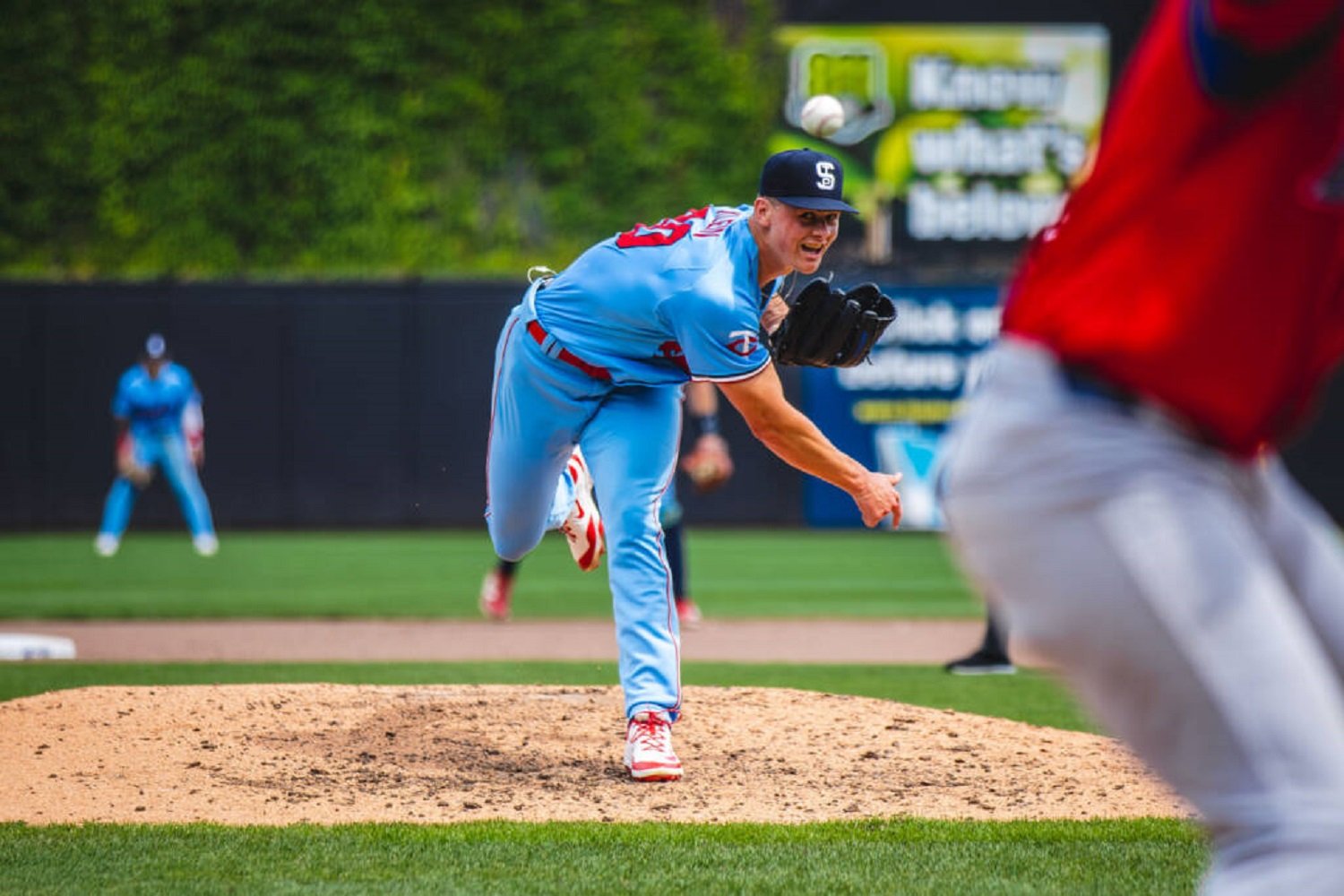 This week’s hot sheet highlights a slugging infielder, a rising right-handed starter, and a pitcher quietly carving up Triple-A lineups. This is a lost season for the Twins, but these three prospects could find themselves playing important roles in the years ahead. IF Billy Amick – Cedar Rapids Kernels How He Got Here: The Twins selected Amick in the second round (60th overall) of the 2024 MLB Draft out of the University of Tennessee. The 22-year-old has quickly emerged as one of the most advanced bats from that class, showing the ability to hit for both average and power while adjusting to professional pitching. Last season, he played 18 games at Low-A, where he posted a .763 OPS with nearly as many walks (12) as strikeouts (15). Those weren't eye-popping numbers, but the performance showcased his college experience. Hitting the Hot Button: Amick tore the cover off the ball this past week, hitting .480 (12-for-25) with four doubles, two home runs, and seven RBIs in seven games. He also showed strong plate discipline, drawing five walks and posting a 1.461 OPS. For the season, he has hit .316/.423/.464, with a 12.6% walk rate and a 26.1% strikeout rate in 58 games. Defensively, he has split time between both corner infield positions. Already one of the most dangerous hitters in the Cedar Rapids lineup, Amick’s ability to impact the game both with extra-base power and consistent contact has him climbing the organizational ladder quickly. RHP Jose Olivares – Cedar Rapids Kernels How He Got Here: Olivares, a 22-year-old right-hander from Venezuela, signed with the Twins as an international free agent in January 2021. Last season, he made 13 appearances (10 starts) with Fort Myers and posted a 3.33 ERA, with a 1.33 WHIP. After developing steadily through the lower levels, he’s now becoming a key arm in the Kernels’ rotation and flashing the swing-and-miss stuff that could carry him further. Hitting the Hot Button: In his latest start against Quad Cities, Olivares was dominant, allowing just one run on one hit over six innings. He walked two and recorded a career-high 10 strikeouts, showcasing the ability to both command his fastball and finish hitters with secondary pitches. During the 2025 campaign, he has a 4.38 ERA with a 1.36 WHIP, having pitched over 90 innings for the first time in his career. His outing capped a strong run of development, and he continues to position himself as one of the more intriguing under-the-radar arms in the system. John Klein – RHP, St. Paul Saints How He Got Here: Klein, 23, signed with the Twins as an undrafted free agent in 2022 and has steadily pitched his way into relevance in the upper minors. Last season, he spent the entire year at Cedar Rapids, posting a 4.57 ERA with a 1.40 WHIP. While he wasn’t a highly-touted addition at the time of his signing, his performance in the upper minors has forced evaluators to take notice. Hitting the Hot Button: Over his last four outings with the Saints, Klein has been excellent, posting a 2.65 ERA across 17 innings. During that stretch, he has recorded 26 strikeouts compared to just five walks, while holding opponents to a .523 OPS. Before his promotion, he pitched 80 2/3 innings at Double-A with a 3.12 ERA (3.21 FIP), 27.4% strikeout rate, 6.9% walk rate, and 65% strike rate. His consistency and ability to limit damage make him an increasingly valuable depth piece, and his recent performance suggests he could soon be on the radar for a big-league look. Amick’s middle-of-the-order presence, Olivares’ swing-and-miss upside, and Klein’s consistency at Triple-A highlight the different ways talent is developing in the Twins system. Performances like these underscore the depth across multiple levels and provide a glimpse of the impact players who could help the Twins in the near future. Which player’s performance stands out the most? Can Klein have a role with the 2026 Twins? Leave a comment and start the discussion.
- 12 comments
-
- 7
-
-
- john klein
- jose olivares
- (and 1 more)

