



Cody Schoenmann
-
Posts
768 -
Joined
-
Last visited
-
Days Won
1
Content Type
Profiles
News
Minnesota Twins Videos
2026 Minnesota Twins Top Prospects Ranking
2022 Minnesota Twins Draft Picks
Minnesota Twins Free Agent & Trade Rumors, Notes, & Tidbits
Guides & Resources
2023 Minnesota Twins Draft Picks
The Minnesota Twins Players Project
2024 Minnesota Twins Draft Picks
2025 Minnesota Twins Draft Pick Tracker
2026 Minnesota Twins Draft Tracker: Picks & Bonuses
Forums
Blogs
Events
Store
Downloads
Gallery
Everything posted by Cody Schoenmann
-
 The Twins let All-Star Reliever Jeff Hoffman get away. Could Scott Blewett be their chance of redemption? Image courtesy of Brad Rempel-USA TODAY Sports On Feb. 27, 2023, the Minnesota Twins signed pitcher Jeff Hoffman to a minor league contract. Deemed a reclamation project, the hard-tossing right-hander had just completed his seventh season in MLB (five with the Colorado Rockies and two with the Cincinnati Reds). He had yet to put together a stretch of sustained success as a starter or reliever, evidenced by accumulating only 0.9 Wins Above Replacement at FanGraphs (fWAR) over 348 1/3 innings pitched. Still, he was a veteran arm with an intriguing pitch mix primarily comprised of a four-seam fastball, slider, and splitter. Twins decision-makers elected to take a chance on him. Hoffman showed flashes of excellence during spring training with Minnesota, posting a 3.60 ERA, 2.41 FIP, and an astounding 42.1% strikeout rate over just five innings pitched as a reliever. The 30-year-old was in the mix to make the team's Opening Day bullpen. However, the Twins released him on Mar. 28, 2023, electing to round out their 'pen with younger relievers in Jorge Alcalá and Jovani Moran while adding Cole Sands as the de facto stretch reliever. Hoffman signed with the Philadelphia Phillies three days later, marking the beginning of a career renaissance. Now 31, the right-hander has quickly become one of baseball's best high-leverage set-up relievers, posting a combined 2.17 ERA, 2.41 FIP, and a resounding 141-to-33 strikeout-to-walk-ratio in two seasons with Philadelphia. He earned his first All-Star nod this season and has solidified himself as the best reliever on the team with the best record in the National League. Evidently, the Twins made a mistake. Yet, there was no way to know that a then-middling reliever brought in on a minor league contract as a reclamation project would blossom into one of baseball's most impactful high-leverage arms. While this outcome is unfortunate, the Twins bullpen has performed well during Hoffman's emergence in Philadelphia, ranking 20th in fWAR last season and seventh through 123 games this season. Jhoan Durán, Griffin Jax, Brock Stewart (when healthy), Alcalá, and Sands have developed into steady, high-leverage arms that any manager in MLB would love to have at their exposure. Still, having an emergent Hoffman in the back end of the bullpen with the five aforementioned arms would be a welcomed luxury - one the Twins must go without. However, the Twins may have stumbled upon an ultra-specific opportunity for redemption. Last Monday, Scott Blewett made his Twins debut against the Kansas City Royals. Making his first appearance in MLB since Sept. 19, 2021, the 28-year-old right-handed reliever excelled against his former team, causing Maikel Garcia to hit a groundball back to him for an easy out. He then struck out Kyle Isbel and got Michael Massey to fly out to centerfield in a 1-2-3 top of the ninth. The Twins decidedly won the contest with Kansas City 8-to-3, meaning Blewett's first appearance in nearly three years came in a low-leverage situation. Pitching against Kansas City, Blewett showcased a plus slider, splitter, and four-seam fastball. He heavily relied on his slider, throwing it nine times. He threw his splitter and four-seam fastball three times each. Interestingly, Blewett has an almost identical pitch mix to Hoffman. On his road to dominance in Philadelphia, Hoffman has relied on his slider, tossing it 43.8% of the time in the past two seasons. He has thrown his four-seam fastball a combined 36.5% of the time and his splitter 15% of the time during that stretch. Again, Hoffman has thrown 103 1/3 innings, while Blewett has thrown just one. Still, if one were to extrapolate Blewett's performance over the same stretch, there is reason to believe he would throw the same pitches a strikingly similar percentage of the time. When looking at Hoffman's pitches this season, they grade out in the following manner: Four-seam fastball: 119 Stuff+ Slider: 112 Stuff+ Splitter: 108 Stuff+ Hoffman possesses a cumulative 115 Stuff+ on all pitches and a 101 Location+, which assesses a pitcher's ability to put pitches in the right place. In Blewett's sole appearance, his pitches demonstrated high variance. His four-seam fastball had a 75 Stuff+. His splitter had a whopping 181 Stuff+, and his slider had a slightly above rating of 103 Stuff+. He manufactured a cumulative 113 Stuff+ (only two points below Hoffman) and 103 Location+ (two points above Hoffman). So, while his fastball graded much poorly than Hoffman's, Blewett could have a better splitter and a similarly effective slider. Again, it is vital to note that we are analyzing an inning pitched. Yet, there is no reason to believe Blewett's numbers would dramatically alter if he received more opportunities with Minnesota. It is on the basis of these traits that the Twins brought in Blewett and turned to him in the first place. Another striking similarity between Hoffman and Blewett is their frames. Hoffman stands at 6'5", 235 lbs. Blewett resides at 6'6", 245 lbs. Both pitchers utilize their height to net above-league-average extension, deceiving hitters with their mid-90s fastballs and offspeed and breaking pitches. Also, Blewett and Hoffman have very similar deliveries. Here is Hoffman throwing a 97 MPH four-seam fastball to Milwaukee Brewers' infielder Joey Ortiz on Jun. 5, 2024. jeff hoffman.mp4 Now, here is Blewett throwing a 95 MPH to Garcia in his Twins debut on Aug. 12, 2024. scott blewett.mp4 Hoffman holds the ball slightly lower pre-pitch than Blewett. However, Hoffman consistently releases the ball at six feet while Blewett releases the ball at six feet, two inches. The two relievers release the ball from relatively similar slots. The day after his Twins debut, he was designated for assignment to make room for Zebby Matthews on the 40-man roster. It was initially reported that Blewett accepted his outright assignment to Triple-A two days after he was designated for assignment on Aug. 15. However, his status with the organized quickly changed as it was reported he elected free agency on Aug. 16. Blewett entered the open market, likely trying to capitalize on his impressive debut with the Twins. This mode of operation for him and his representation was wise, as he was beginning to garner attention around different fanbases. Nevertheless, he returned to the Twins organization and was again assigned to Triple-A. Blewett could easily never make another appearance with the Twins, making this display of mental gymnastics a moot point. Considering his and Hoffman's similar frames, release points, and overall pitch quality, however, Blewett could provide the Twins a unique opportunity to redeem themselves for letting Hoffman go a little less than a year and a half ago. Still, if Blewett receives another opportunity with the Twins, they would gladly accept him being half the pitcher Hoffman has been since joining Philadelphia. Videos courtesy of Baseball Savant. View full article
 -
Veteran starting pitcher Anthony DeSclafani will likely never throw a pitch for the Minnesota Twins. However, the front office could change that by re-signing him this offseason. Would it be wise to do that? Image courtesy of © Kim Klement Neitzel-USA TODAY Sports On Jan. 29, the Minnesota Twins traded fan-favorite second baseman Jorge Polanco to the Seattle Mariners in exchange for starting pitcher Anthony DeSclafani, reliever Justin Topa, outfield prospect Gabriel Gonzalez, and pitching prospect Darren Bowen. Upon hearing news of the transactions, those who followed the Twins quickly released trade grades and put each of the four players acquired in a box, assessing which netted the most value for Minnesota. Consensus agreed that González (Keith Law of The Athletic's 96th-ranked prospect at the time) was the gem of the trade. Topa was most commonly deemed the second-most valuable player in the trade, considering he was expected to become a high-leverage arm out of the team's bullpen. Bowen took the third spot, as a high-variance, low-minors arm who could potentially blossom into an MLB-caliber pitcher under the Twins' pitching development tutelage. Then, there was DeSclafani. Many who analyzed the trade labeled the then-33-year-old starting pitcher as a mere throw-in acquisition, whose primary purpose was to cancel out some of Polanco's salary in the swap. To me, these assessments were narrow and sluggish. If DeSclafani could have avoided season-ending surgery to repair the flexor tendon in his right arm before his 2024 campaign began, he would have been the team's fifth starting pitcher behind incumbents Pablo López, Joe Ryan, Bailey Ober, and Chris Paddack. Had he maintained adequate health to this point of the season, there is a significant chance he would be the team's third-most trusted starting pitcher, behind López and Ober. Now, we are probably dabbling too far into hypotheticals. However, a starting pitcher slotted to begin the season as a team's fifth starter should be considered more than a "throw-in," particularly considering how injuries have quickly derailed the Twins' rotation. No player slated to take on a full-time role should be dismissed and passively deemed a meaningless acquisition. Despite Topa not yet appearing for the team this season, DeSclafani's absence has negatively affected the team more, and he should have at least been considered the second-most important acquisition in the trade. Nevertheless, the now-34-year-old hurler never threw a pitch in a Twins uniform, and he likely never will. He's in the final year of his current contract and is slated to hit free agency at season's end. That said, the organization could be incentivized to bring him back next season as a post-injury flier. In a piece written by Twins Daily's Eric Blonigen, he noted that roughly $30 million will come off the cash-strapped Twins payroll this fall. In turn, the team's projected 2025 payroll will be around $127.8 million to begin the offseason, with $34 million going toward the starting rotation and $3 million toward Randy Dobnak's contract. The team needs to make some other additions, and will have precious little to spend, since that projected payroll figure will already be virtually identical to their payroll for this season. However, the team could find creative ways to expel Christian Vázquez ($10 million), Paddack ($7.5 million), or other contract obligations, and relieve themselves of somewhere between $12-15 million. Doing so would leave the front office with some money to play with this offseason, meaning they could add a veteran or two on cheaper contracts, similar to what they did this past offseason. López, Ryan, and Ober are surefire bets to make the club's Opening Day starting rotation next season. However, moving Paddack would mean creating a space in the rotation, in addition to some in the budget. Young, promising arms like Simeon Woods Richardson, David Festa, Zebby Matthews, Andrew Morris, and post-hype Louie Varland are all viable candidates. However, the front office emphasizes veteran depth, especially early in the season, meaning they could pursue a cheap, veteran, back-of-the-rotation arm. If team decision-makers elect to venture down this path, DeSclafani could reenter the rotation mix. The sinker-tossing right-hander is making $12 million this season. However, the Twins are paying only $4 million, as the San Francisco Giants and Seattle Mariners are collectively covering the remaining $8 million. He'll only cost roughly that $4 million figure this winter, and maybe even less, after undergoing surgery just after Opening Day that carries a recovery timeline of roughly 13 months. The front office values what DeSclafani has to offer. Mixing this with their tendency to prioritize veteran depth and the limitations of their spending power, a reunion between the two parties would make sense. Retaining DeSclafani's services would allow the team to have Festa, Matthews, Varland, and Morris compete for the final rotation spot. Whoever falls short in the competition would function as young, cost-controlled rotation depth at Triple-A. The team has leaned on their surplus of depth in the high minors this season, and they would be wise to put themselves in a situation where they could do the same in 2025. View full article
-
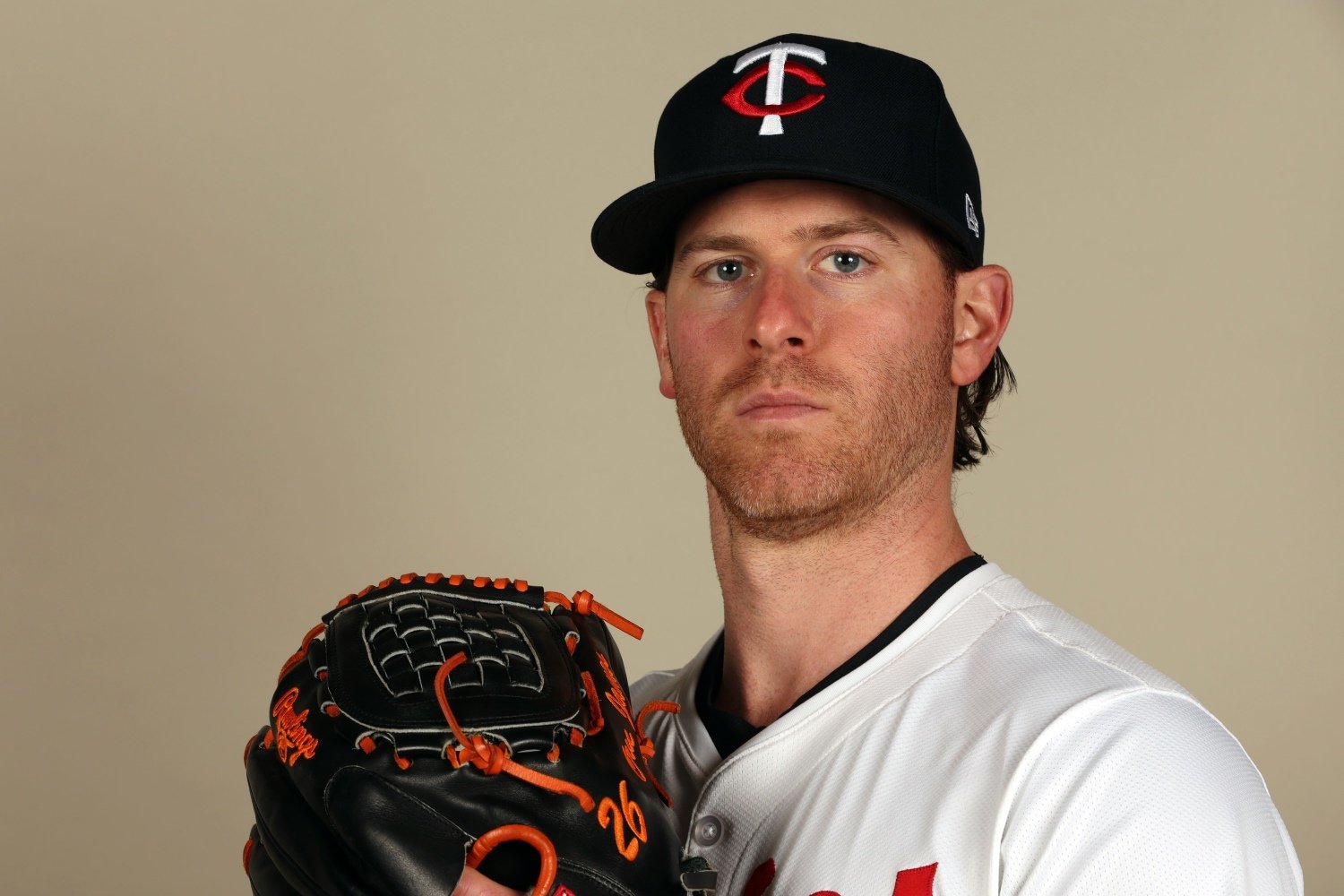 On Jan. 29, the Minnesota Twins traded fan-favorite second baseman Jorge Polanco to the Seattle Mariners in exchange for starting pitcher Anthony DeSclafani, reliever Justin Topa, outfield prospect Gabriel Gonzalez, and pitching prospect Darren Bowen. Upon hearing news of the transactions, those who followed the Twins quickly released trade grades and put each of the four players acquired in a box, assessing which netted the most value for Minnesota. Consensus agreed that González (Keith Law of The Athletic's 96th-ranked prospect at the time) was the gem of the trade. Topa was most commonly deemed the second-most valuable player in the trade, considering he was expected to become a high-leverage arm out of the team's bullpen. Bowen took the third spot, as a high-variance, low-minors arm who could potentially blossom into an MLB-caliber pitcher under the Twins' pitching development tutelage. Then, there was DeSclafani. Many who analyzed the trade labeled the then-33-year-old starting pitcher as a mere throw-in acquisition, whose primary purpose was to cancel out some of Polanco's salary in the swap. To me, these assessments were narrow and sluggish. If DeSclafani could have avoided season-ending surgery to repair the flexor tendon in his right arm before his 2024 campaign began, he would have been the team's fifth starting pitcher behind incumbents Pablo López, Joe Ryan, Bailey Ober, and Chris Paddack. Had he maintained adequate health to this point of the season, there is a significant chance he would be the team's third-most trusted starting pitcher, behind López and Ober. Now, we are probably dabbling too far into hypotheticals. However, a starting pitcher slotted to begin the season as a team's fifth starter should be considered more than a "throw-in," particularly considering how injuries have quickly derailed the Twins' rotation. No player slated to take on a full-time role should be dismissed and passively deemed a meaningless acquisition. Despite Topa not yet appearing for the team this season, DeSclafani's absence has negatively affected the team more, and he should have at least been considered the second-most important acquisition in the trade. Nevertheless, the now-34-year-old hurler never threw a pitch in a Twins uniform, and he likely never will. He's in the final year of his current contract and is slated to hit free agency at season's end. That said, the organization could be incentivized to bring him back next season as a post-injury flier. In a piece written by Twins Daily's Eric Blonigen, he noted that roughly $30 million will come off the cash-strapped Twins payroll this fall. In turn, the team's projected 2025 payroll will be around $127.8 million to begin the offseason, with $34 million going toward the starting rotation and $3 million toward Randy Dobnak's contract. The team needs to make some other additions, and will have precious little to spend, since that projected payroll figure will already be virtually identical to their payroll for this season. However, the team could find creative ways to expel Christian Vázquez ($10 million), Paddack ($7.5 million), or other contract obligations, and relieve themselves of somewhere between $12-15 million. Doing so would leave the front office with some money to play with this offseason, meaning they could add a veteran or two on cheaper contracts, similar to what they did this past offseason. López, Ryan, and Ober are surefire bets to make the club's Opening Day starting rotation next season. However, moving Paddack would mean creating a space in the rotation, in addition to some in the budget. Young, promising arms like Simeon Woods Richardson, David Festa, Zebby Matthews, Andrew Morris, and post-hype Louie Varland are all viable candidates. However, the front office emphasizes veteran depth, especially early in the season, meaning they could pursue a cheap, veteran, back-of-the-rotation arm. If team decision-makers elect to venture down this path, DeSclafani could reenter the rotation mix. The sinker-tossing right-hander is making $12 million this season. However, the Twins are paying only $4 million, as the San Francisco Giants and Seattle Mariners are collectively covering the remaining $8 million. He'll only cost roughly that $4 million figure this winter, and maybe even less, after undergoing surgery just after Opening Day that carries a recovery timeline of roughly 13 months. The front office values what DeSclafani has to offer. Mixing this with their tendency to prioritize veteran depth and the limitations of their spending power, a reunion between the two parties would make sense. Retaining DeSclafani's services would allow the team to have Festa, Matthews, Varland, and Morris compete for the final rotation spot. Whoever falls short in the competition would function as young, cost-controlled rotation depth at Triple-A. The team has leaned on their surplus of depth in the high minors this season, and they would be wise to put themselves in a situation where they could do the same in 2025.
 -
The Twins' star third baseman has struggled defensively at the hot corner this year. Should the Twins move him off the position over the winter? Image courtesy of © Stan Szeto-USA TODAY Sports According to Outs Above Average (OAA) at Baseball Savant, Royce Lewis currently grades out as average at third base. Owning a 0 OAA ranks him second on the team, to Kyle Farmer (1 OAA). Due to missing too many games, the Twins' star third baseman doesn't qualify for league-wide leaderboards. If he did, however, he would reside in the 19-21 range, alongside Enrique Hernández, Trey Lipscomb, and José Ramirez. Lewis is still an extraordinary athlete who shows it at times, but on a day-to-day basis, he doesn't make as many plays as an average fielder. Lewis is a fringe-average third baseman, according to most defensive metrics. However, the eye test tells a different story. Whether it be bobbling what should be routine groundballs, struggling to get a glove on balls in the "5.5-hole," or bouncing or sailing throws to first base while releasing from an awkward overhead arm angle, the former first-round pick looks uncomfortable at the hot corner. His inability to find his footing in the position could stem from often missing extended time due to various significant injuries. Still, his recent blunders have negatively affected to team's ability to get out of innings and protect leads. Rightfully, the team will give the star 25-year-old endless opportunities at third base for the rest of this season. Lewis, his agent Scott Boras, and Twins decision-makers agree that he is best suited at third base for the time being. Playing him in center field is no longer an option, and a transition to his natural position (shortstop) is out of the question, both because .Carlos Correa exists and because injuries have sapped Lewis's athleticism. Lewis will always factor into the designated hitter mix. Yet, there are positions other than third base he could be better suited to play next season and beyond, and with José Miranda and Brooks Lee becoming intriguing options at the position, the Twins could be incentivized to make the tough decision of moving Lewis. So, what positions could Lewis be more equipped to play? Let's take a look. Second Base The first position the Twins could justifiably move Lewis to is second base. The keystone is considered lower on the new defensive spectrum, as positioning and rules changes have made the position easier and less dangerous. However, if Lewis were to transition to the position, he would need to cover more ground and learn the nuances of turning double plays and tagging runners on throws down from the catcher. The organization's long-term outlook for the position is uncertain. Willi Castro will enter free agency after next season, and Edouard Julien has been unable to produce at the plate at the major-league level, despite vast defensive improvements. Austin Martin is best utilized as a versatile bench guy, rather than being stuck at one position, and infield prospect Luke Keaschall will spend significant time recovering from Tommy John surgery to begin next season. Lee makes sense as a long-term option, yet he would provide the most value as an above-average defensive third baseman. While moving Lewis to second base makes sense on the surface, the transition likely won't happen. The risk of injury is still higher at second base than third, due to a greater chance of colliding with runners and the need to make faster, twitchier movements more often. Keeping Lewis healthy and his bat in the lineup are the top priorities for the Twins, meaning it wouldn't make sense for the organization to place him at a position where he is more likely to sustain an injury. Left Field Lewis has played two innings in left field since being selected first overall by the Twins in the 2017 MLB Draft. His sole appearance at the position occurred in 2022, when the organization was testing him at various positions at Triple-A with the intention of deploying him in a utility role with the parent club. Unfortunately, he tore his right ACL while playing center field soon after. That said, it is fair to assume he would have appeared in left field at some point that year, if he hadn't sustained the season-ending injury. Max Kepler is expected to sign elsewhere this upcoming offseason, leaving an opening in the corner outfield spots. Upon Kepler's departure, Matt Wallner will likely become the full-time right fielder, leaving an opening in left field. Trevor Larnach will get the bulk of the opportunities at the position. Yet, he is better suited in a part-time role. The Twins could convert Lewis into a left fielder and have him patrol the position part-time alongside Larnach, Martin, and Castro. Lewis could switch between left field and DH duties, allowing the team to maximize flexibility while playing him at a position with little injury threat and low on the defensive spectrum. Nevertheless, Lewis and his representation appear squeamish about the idea of him playing in the outfield, likely making this idea implausible. With second base and left field seemingly functioning as nonstarters, what position could the Twins and Lewis realistically agree on? First Base The most intriguing (yet least discussed) possibility is turning Lewis into the team's primary first baseman next season. Admittedly, this idea feels far-fetched, but there is some merit behind the logic. Now, first base isn't a position where a manager can place anyone there and get by. First base is much more challenging than many perceive it to be, and those who excel at the position (hello, Carlos Santana) deserve more recognition than they often receive. With a little work, though, Lewis could be great at the spot. As noted, Lewis and his agency seemingly want him to stay in the dirt, while avoiding a position that puts him at greater risk of injury. Despite the rare collision, first base is one of the least injury-risky positions in the sport. The cold corner would provide the franchise cornerstone talent the opportunity to stay in the infield, while not needing to make exceptionally challenging plays at the hot corner or those long throws that seem to vex him. Although he would need to learn the nuances of the position and work on his ability to pick errant throws, there is no reason to believe he couldn't adequately develop those skills. Lewis's greatest strength at third base is his glovework. He has good hand-eye coordination, and it translates to picking the ball cleanly much of the time. Footwork, range, and throws are his weak points. Transitioning to first base would allow him to lean into that strength while not needing to stress about the rest. Turning into the primary first baseman would allow Lewis to lean into his bat, where most of his value resides. Lewis has the skillset and explosive in-game power necessary to produce like the top offensive AL first basemen, such as Josh Naylor, Vladimir Guerrero Jr., and Ryan O'Hearn. Santana's free agency this upcoming offseason leaves a sizable hole at first base. Miranda and Julien could ostensibly fill it. Alternatively, though, the organization could make a bold move and move Lewis to the offense-first position. Nevertheless, feeling confident about Lewis at any one position is nearly impossible. Each position will inevitably present a downside. He doesn't have the skillset necessary to stay at third base long-term; second base presents an increased injury risk; and plopping him at left field or first base would diminish his value. Still, what is most important is keeping him healthy and ensuring his bat stays in the lineup. While it's not appealing, the Twins could be highly incentivized to convert Lewis into a left fielder or first baseman while providing him more opportunities as a designated hitter. View full article
-
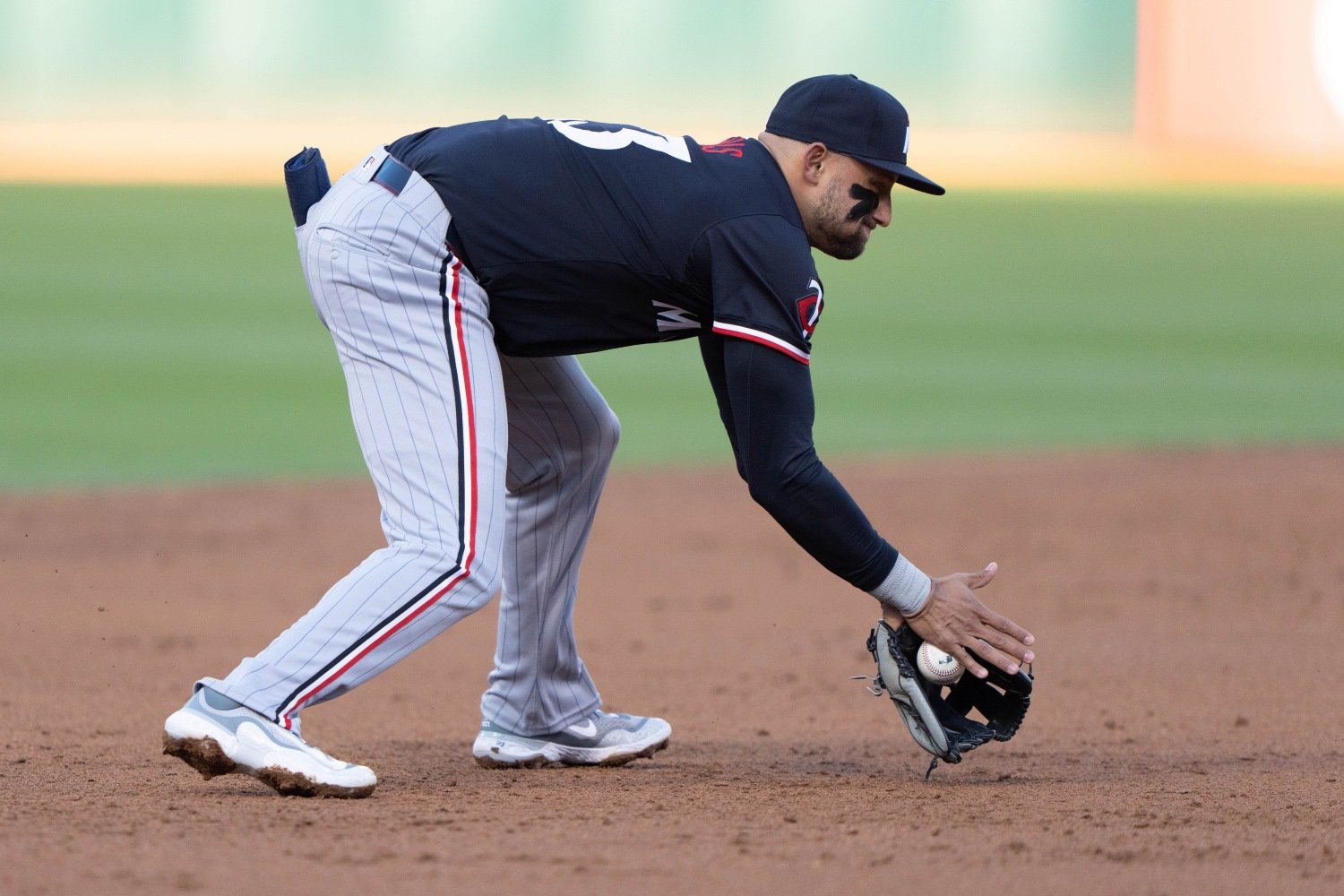 According to Outs Above Average (OAA) at Baseball Savant, Royce Lewis currently grades out as average at third base. Owning a 0 OAA ranks him second on the team, to Kyle Farmer (1 OAA). Due to missing too many games, the Twins' star third baseman doesn't qualify for league-wide leaderboards. If he did, however, he would reside in the 19-21 range, alongside Enrique Hernández, Trey Lipscomb, and José Ramirez. Lewis is still an extraordinary athlete who shows it at times, but on a day-to-day basis, he doesn't make as many plays as an average fielder. Lewis is a fringe-average third baseman, according to most defensive metrics. However, the eye test tells a different story. Whether it be bobbling what should be routine groundballs, struggling to get a glove on balls in the "5.5-hole," or bouncing or sailing throws to first base while releasing from an awkward overhead arm angle, the former first-round pick looks uncomfortable at the hot corner. His inability to find his footing in the position could stem from often missing extended time due to various significant injuries. Still, his recent blunders have negatively affected to team's ability to get out of innings and protect leads. Rightfully, the team will give the star 25-year-old endless opportunities at third base for the rest of this season. Lewis, his agent Scott Boras, and Twins decision-makers agree that he is best suited at third base for the time being. Playing him in center field is no longer an option, and a transition to his natural position (shortstop) is out of the question, both because .Carlos Correa exists and because injuries have sapped Lewis's athleticism. Lewis will always factor into the designated hitter mix. Yet, there are positions other than third base he could be better suited to play next season and beyond, and with José Miranda and Brooks Lee becoming intriguing options at the position, the Twins could be incentivized to make the tough decision of moving Lewis. So, what positions could Lewis be more equipped to play? Let's take a look. Second Base The first position the Twins could justifiably move Lewis to is second base. The keystone is considered lower on the new defensive spectrum, as positioning and rules changes have made the position easier and less dangerous. However, if Lewis were to transition to the position, he would need to cover more ground and learn the nuances of turning double plays and tagging runners on throws down from the catcher. The organization's long-term outlook for the position is uncertain. Willi Castro will enter free agency after next season, and Edouard Julien has been unable to produce at the plate at the major-league level, despite vast defensive improvements. Austin Martin is best utilized as a versatile bench guy, rather than being stuck at one position, and infield prospect Luke Keaschall will spend significant time recovering from Tommy John surgery to begin next season. Lee makes sense as a long-term option, yet he would provide the most value as an above-average defensive third baseman. While moving Lewis to second base makes sense on the surface, the transition likely won't happen. The risk of injury is still higher at second base than third, due to a greater chance of colliding with runners and the need to make faster, twitchier movements more often. Keeping Lewis healthy and his bat in the lineup are the top priorities for the Twins, meaning it wouldn't make sense for the organization to place him at a position where he is more likely to sustain an injury. Left Field Lewis has played two innings in left field since being selected first overall by the Twins in the 2017 MLB Draft. His sole appearance at the position occurred in 2022, when the organization was testing him at various positions at Triple-A with the intention of deploying him in a utility role with the parent club. Unfortunately, he tore his right ACL while playing center field soon after. That said, it is fair to assume he would have appeared in left field at some point that year, if he hadn't sustained the season-ending injury. Max Kepler is expected to sign elsewhere this upcoming offseason, leaving an opening in the corner outfield spots. Upon Kepler's departure, Matt Wallner will likely become the full-time right fielder, leaving an opening in left field. Trevor Larnach will get the bulk of the opportunities at the position. Yet, he is better suited in a part-time role. The Twins could convert Lewis into a left fielder and have him patrol the position part-time alongside Larnach, Martin, and Castro. Lewis could switch between left field and DH duties, allowing the team to maximize flexibility while playing him at a position with little injury threat and low on the defensive spectrum. Nevertheless, Lewis and his representation appear squeamish about the idea of him playing in the outfield, likely making this idea implausible. With second base and left field seemingly functioning as nonstarters, what position could the Twins and Lewis realistically agree on? First Base The most intriguing (yet least discussed) possibility is turning Lewis into the team's primary first baseman next season. Admittedly, this idea feels far-fetched, but there is some merit behind the logic. Now, first base isn't a position where a manager can place anyone there and get by. First base is much more challenging than many perceive it to be, and those who excel at the position (hello, Carlos Santana) deserve more recognition than they often receive. With a little work, though, Lewis could be great at the spot. As noted, Lewis and his agency seemingly want him to stay in the dirt, while avoiding a position that puts him at greater risk of injury. Despite the rare collision, first base is one of the least injury-risky positions in the sport. The cold corner would provide the franchise cornerstone talent the opportunity to stay in the infield, while not needing to make exceptionally challenging plays at the hot corner or those long throws that seem to vex him. Although he would need to learn the nuances of the position and work on his ability to pick errant throws, there is no reason to believe he couldn't adequately develop those skills. Lewis's greatest strength at third base is his glovework. He has good hand-eye coordination, and it translates to picking the ball cleanly much of the time. Footwork, range, and throws are his weak points. Transitioning to first base would allow him to lean into that strength while not needing to stress about the rest. Turning into the primary first baseman would allow Lewis to lean into his bat, where most of his value resides. Lewis has the skillset and explosive in-game power necessary to produce like the top offensive AL first basemen, such as Josh Naylor, Vladimir Guerrero Jr., and Ryan O'Hearn. Santana's free agency this upcoming offseason leaves a sizable hole at first base. Miranda and Julien could ostensibly fill it. Alternatively, though, the organization could make a bold move and move Lewis to the offense-first position. Nevertheless, feeling confident about Lewis at any one position is nearly impossible. Each position will inevitably present a downside. He doesn't have the skillset necessary to stay at third base long-term; second base presents an increased injury risk; and plopping him at left field or first base would diminish his value. Still, what is most important is keeping him healthy and ensuring his bat stays in the lineup. While it's not appealing, the Twins could be highly incentivized to convert Lewis into a left fielder or first baseman while providing him more opportunities as a designated hitter.
 -
Rookie infielder Brooks Lee has sufficed as a defensive replacement for Carlos Correa. However, he is undergoing substantial struggles at the plate. Should he get demoted to Triple-A once Kyle Farmer returns from the 10-day IL? Image courtesy of © Brian Bradshaw Sevald-USA TODAY Sports Twins infielder Brooks Lee jumped onto the scene earlier this season, slashing .364/.371/.576 with 12 hits, one double, and two home runs over 35 plate appearances to begin his career. The 23-year-old rookie's underlying metrics confirm his hot start at the plate, as he posted a 14.3% strikeout rate, .212 Isolated Power (ISO), and 163 wRC+ in that stretch. Lee performing this well while filling in for then-injured star third baseman Royce Lewis was vital to helping the team enter the All-Star break strong, still within striking distance of the AL Central-leading Cleveland Guardians. Lee's contributions were admirable, and there is still plenty of excitement about the consensus top-50 prospect's long-term potential. That said, he has fallen into an alarming lull at the plate, which could bode poorly for his short-term outlook on the team's 26-man roster. Since the Twins returned from the All-Star break on Jul. 20, Lee has hit .236/.306/.255, with 13 hits, one double, zero home runs, and a 60 wRC+ over 62 plate appearances. His ability to drive the ball and hit for power has suddenly diminished, evidenced by a .018 ISO. The switch-hitting infielder has struggled, particularly from the left side of the plate, posting a mere 75 wRC+ and a .272 wOBA over 78 plate appearances, compared to a 96 wRC+ and .303 wOBA over 32 plate appearances from the right side. Despite lacking the present ability to produce at a plus level at the plate, Lee has provided significant value, stepping in as roughly the full-time shortstop during Carlos Correa's extended absence from the lineup. He's acquitted himself nicely with the glove, especially in contrast to how shaky utility player Willi Castro was at the position. The rookie infielder once again stepped in at a position typically occupied by one of the team's leaders and best players, but this time, it was at the most demanding defensive position on the field. Lee's flexibility and contributions have helped the team whittle Cleveland's divisional lead down to just 3 1/2 games, and he deserves his flowers. Still, his struggles at the plate are concerning, and he could be well-suited for an approach and mechanics refinement at Triple-A. Earlier this week, the Twins didn't have enough organizational depth to consider demoting Lee to Triple-A. However, veteran utility infielder Kyle Farmer wrapping up his rehab assignment could theoretically permit the organization to demote their second-ranked prospect back to St. Paul. Admittedly, Farmer didn't perform well before landing on the 10-day IL in mid-July with a shoulder injury, posting a .189/.291/.265 with 25 hits, ten doubles, zero home runs, and a 64 wRC+ over 151 plate appearances. Farmer was the Twins' worst offensive player during the first half of the season. However, he provided defensive flexibility at second base, third base, and shortstop, plus the veteran leadership necessary to make it through a 162-game season. Swapping out the 33-year-old wily vet for the young and upcoming Lee would be disappointing. Yet, the transaction could occur without Lee getting demoted. Lee has been managing shoulder soreness lately, which led to him sitting out the final game of the Chicago White Sox series and the first game of the Chicago Cubs series on Aug. 6 and 7, respectively. Before the White Sox series ended, Lee had been playing exclusively shortstop. However, he has played exclusively second base since the announcement of his shoulder injury. According to Dan Hayes of The Athletic, the team has shifted him to the right side of the diamond to "reduce the potential for long throws." Assuming Farmer returns from his rehab assignment before the conclusion of the Cleveland series, the team could place Lee on the 10-day IL to rest his shoulder. If this is the course of action they take, Farmer could play the same role Lee did after the All-Star break, shifting between third base, second base, and shortstop. Although Farmer has a weaker arm and can't cover the same amount of ground as Lee, he would still be a functional infielder who could complement Castro, Lewis, José Miranda, and Austin Martin. If Lee isn't placed on the 10-day IL, Farmer could still take Martin's spot on the 26-man roster. Despite providing defensive flexibility, a contact-skilled bat, and an innate knack for scoring when getting on base, Martin has struggled to produce at the plate and could be better suited to play every day and get more plate appearances at Triple-A. As noted earlier, Farmer has struggled at the plate this season. Yet, in a recent piece by Twins Daily's Theo Tollefson, he noted that he is adjusting his swing, specifically by closing his front hip a bit longer, similar to what he did in 2021. The organization won't designate Farmer for assignment, meaning they will have to make a tough roster crunch, assuming injuries don't make his addition to the 26-man roster a moot point. Lee and Martin are the most expendable players on the roster, meaning the corresponding move will likely be demoting one of them to Triple-A. While Lee has more long-term upside, his role is redundant with what Farmer offers, meaning team decision-makers could elect to keep Martin instead. View full article
-
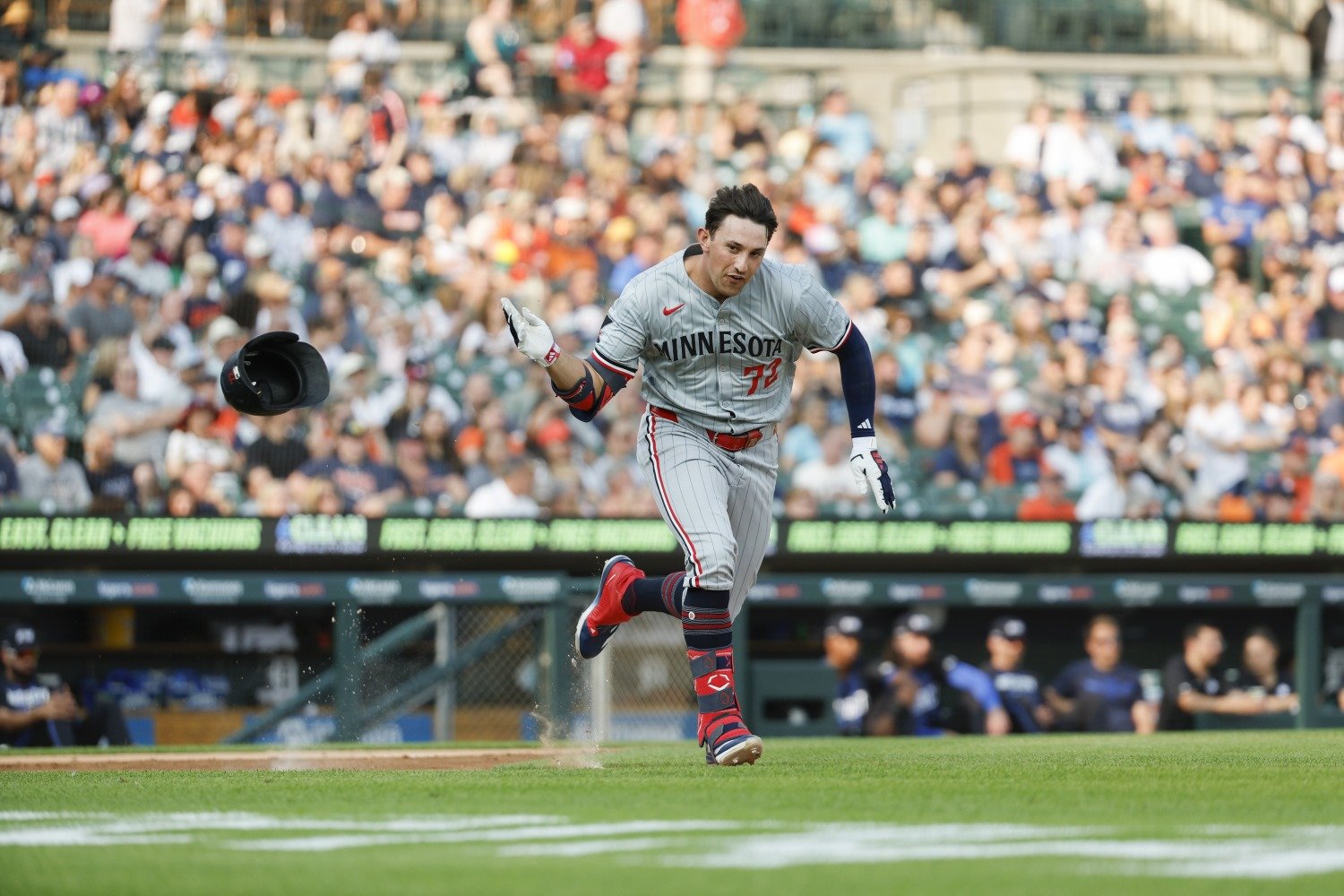 Twins infielder Brooks Lee jumped onto the scene earlier this season, slashing .364/.371/.576 with 12 hits, one double, and two home runs over 35 plate appearances to begin his career. The 23-year-old rookie's underlying metrics confirm his hot start at the plate, as he posted a 14.3% strikeout rate, .212 Isolated Power (ISO), and 163 wRC+ in that stretch. Lee performing this well while filling in for then-injured star third baseman Royce Lewis was vital to helping the team enter the All-Star break strong, still within striking distance of the AL Central-leading Cleveland Guardians. Lee's contributions were admirable, and there is still plenty of excitement about the consensus top-50 prospect's long-term potential. That said, he has fallen into an alarming lull at the plate, which could bode poorly for his short-term outlook on the team's 26-man roster. Since the Twins returned from the All-Star break on Jul. 20, Lee has hit .236/.306/.255, with 13 hits, one double, zero home runs, and a 60 wRC+ over 62 plate appearances. His ability to drive the ball and hit for power has suddenly diminished, evidenced by a .018 ISO. The switch-hitting infielder has struggled, particularly from the left side of the plate, posting a mere 75 wRC+ and a .272 wOBA over 78 plate appearances, compared to a 96 wRC+ and .303 wOBA over 32 plate appearances from the right side. Despite lacking the present ability to produce at a plus level at the plate, Lee has provided significant value, stepping in as roughly the full-time shortstop during Carlos Correa's extended absence from the lineup. He's acquitted himself nicely with the glove, especially in contrast to how shaky utility player Willi Castro was at the position. The rookie infielder once again stepped in at a position typically occupied by one of the team's leaders and best players, but this time, it was at the most demanding defensive position on the field. Lee's flexibility and contributions have helped the team whittle Cleveland's divisional lead down to just 3 1/2 games, and he deserves his flowers. Still, his struggles at the plate are concerning, and he could be well-suited for an approach and mechanics refinement at Triple-A. Earlier this week, the Twins didn't have enough organizational depth to consider demoting Lee to Triple-A. However, veteran utility infielder Kyle Farmer wrapping up his rehab assignment could theoretically permit the organization to demote their second-ranked prospect back to St. Paul. Admittedly, Farmer didn't perform well before landing on the 10-day IL in mid-July with a shoulder injury, posting a .189/.291/.265 with 25 hits, ten doubles, zero home runs, and a 64 wRC+ over 151 plate appearances. Farmer was the Twins' worst offensive player during the first half of the season. However, he provided defensive flexibility at second base, third base, and shortstop, plus the veteran leadership necessary to make it through a 162-game season. Swapping out the 33-year-old wily vet for the young and upcoming Lee would be disappointing. Yet, the transaction could occur without Lee getting demoted. Lee has been managing shoulder soreness lately, which led to him sitting out the final game of the Chicago White Sox series and the first game of the Chicago Cubs series on Aug. 6 and 7, respectively. Before the White Sox series ended, Lee had been playing exclusively shortstop. However, he has played exclusively second base since the announcement of his shoulder injury. According to Dan Hayes of The Athletic, the team has shifted him to the right side of the diamond to "reduce the potential for long throws." Assuming Farmer returns from his rehab assignment before the conclusion of the Cleveland series, the team could place Lee on the 10-day IL to rest his shoulder. If this is the course of action they take, Farmer could play the same role Lee did after the All-Star break, shifting between third base, second base, and shortstop. Although Farmer has a weaker arm and can't cover the same amount of ground as Lee, he would still be a functional infielder who could complement Castro, Lewis, José Miranda, and Austin Martin. If Lee isn't placed on the 10-day IL, Farmer could still take Martin's spot on the 26-man roster. Despite providing defensive flexibility, a contact-skilled bat, and an innate knack for scoring when getting on base, Martin has struggled to produce at the plate and could be better suited to play every day and get more plate appearances at Triple-A. As noted earlier, Farmer has struggled at the plate this season. Yet, in a recent piece by Twins Daily's Theo Tollefson, he noted that he is adjusting his swing, specifically by closing his front hip a bit longer, similar to what he did in 2021. The organization won't designate Farmer for assignment, meaning they will have to make a tough roster crunch, assuming injuries don't make his addition to the 26-man roster a moot point. Lee and Martin are the most expendable players on the roster, meaning the corresponding move will likely be demoting one of them to Triple-A. While Lee has more long-term upside, his role is redundant with what Farmer offers, meaning team decision-makers could elect to keep Martin instead.
- 60 comments
-
- 6
-

-

-
- brooks lee
- kyle farmer
- (and 1 more)
-
With a systematic but flexible approach to scouting and development, the Twins have had various former college starting pitchers emerge as promising pitching prospects over the last handful of seasons. Could Tanner Hall be the next to join the mix? Image courtesy of William Parmeter The Twins love to target college starting pitchers in the draft, add velocity to their four-seam fastball, and help them develop MLB-caliber second and third pitches. From Bailey Ober to more recent developmental success stories like David Festa and Zebby Matthews, President of Baseball Operations Derek Falvey has delivered the much-desired "pitching pipeline," a buzzword many have used in the past to criticize and demean the organization's ability to draft and develop home-grown arms. Andrew Morris, Jaylen Nowlin, and Christian MacLeod have continued the trend of former college pitchers performing well enough to quickly progress through the minor-league ranks and join the Double-A Wichita Wind Surge relatively early in their developmental cycles. While Morris, Nowlin, and MacLeod could become relevant depth options in the team's long-term rotation or bullpen plans, another former college arm residing in the low minors could be fairly close behind them. Tanner Hall, 22, was selected by Minnesota with the 114th pick of the 2023 MLB Draft, out of the University of Southern Mississippi. Hailing from Brian Dozier and Matt Wallner's alma mater, the steady righthander produced a 2.48 ERA there, while striking out 124 hitters over 112 innings pitched for the Golden Eagles over three seasons. Pitching in the heart of the Bible Belt, Hall was one of the most successful Division I pitchers in 2023. He earned consensus All-American status. Like most drafted college arms, Hall took the rest of the 2023 season off after being selected by the Twins. He has pitched exclusively at Single-A since making his professional baseball debut early this season, posting a 5.22 ERA and 1.51 WHIP over eight starts and six relief appearances for the Fort Myers Mighty Mussels. Although his numbers on the surface underwhelm, though, his underlying metrics tell a different story. Over 39 2/3 innings pitched, Hall has mustered a 3.86 FIP and 3.44 xFIP. Hall's inflated ERA is seemingly the result of poor luck on balls put in play, evidenced by opposing hitters generating a .375 BABIP against him. He has generated a 52% ground ball rate, with 52.8% of balls put in play against him being pulled by opposing hitters. The mix of Hall's high ground ball rate and ballooned opponent BABIP indicates that he is presumably falling victim to balls sneaking through the infield. These unfortunate results are likely the product of poor infield defense in the lower minors. Nevertheless, Hall has performed well when in control, netting an inspiring 52-to-18 strikeout-to-walk ratio and allowing just three home runs over 184 total batters faced. The key to him is his fascinating pitch mix. The soft-tossing right-hander utilizes a sinker, slider, and changeup to contest hitters of both handedness effectively. All of his pitches move laterally. Hall uses his sinker and slider as his primary modus operandi for attacking right-handed hitters. His slider, which moves away from same-handed batters, works as a great complement to his in-breaking sinker. This traditional "east-west" approach to combating same-handed hitters is in no way a new or unique approach for right-handed hurlers. However, Hall does possess a distinctive quirk that makes him stand out. Hall uses a Vulcan-style changeup grip, similar to Dodgers great closer Éric Gagné. Coined after the fictional extraterrestrial humanoids in Star Trek, his change possesses fascinating cut action, relative to his sinker. This peculiarity helps make his changeup (which rates as a 60 on FanGraphs's "20-to-80" scouting scale) especially effective against left-handed hitters. While Hall has an intriguing pitch mix, he has command concerns he needs to iron out before getting a promotion. However, his 9.8% walk rate is a promising development that indicates he may have already made sustainable adjustments. From the past in Ober, to the present in Festa, and looking to the near future in Matthews, the Twins have been able to draft college pitchers in mid-to-later rounds, increase the velocity on their primary hard pitches, improve their secondary pitches, and turn them into viable MLB-caliber prospects. Hall has demonstrated promising results at Single-A, and if he can improve his sinker velocity (presently hovering around 91-92 MPH) while solidifying his slider and truly formidable changeup, he could be next in the long line of former college pitchers to blossom under the organization's pitching development program. View full article
-
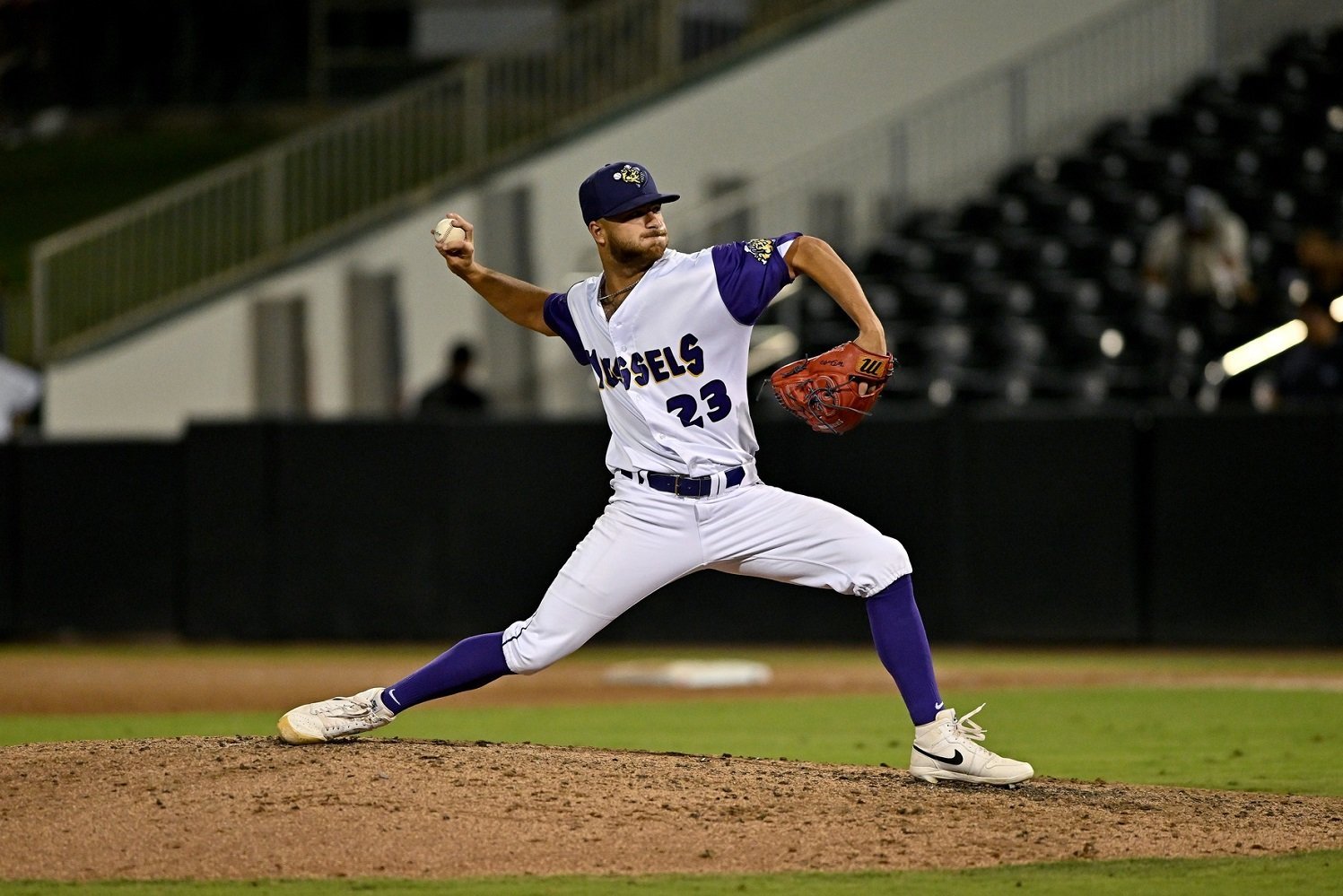 The Twins love to target college starting pitchers in the draft, add velocity to their four-seam fastball, and help them develop MLB-caliber second and third pitches. From Bailey Ober to more recent developmental success stories like David Festa and Zebby Matthews, President of Baseball Operations Derek Falvey has delivered the much-desired "pitching pipeline," a buzzword many have used in the past to criticize and demean the organization's ability to draft and develop home-grown arms. Andrew Morris, Jaylen Nowlin, and Christian MacLeod have continued the trend of former college pitchers performing well enough to quickly progress through the minor-league ranks and join the Double-A Wichita Wind Surge relatively early in their developmental cycles. While Morris, Nowlin, and MacLeod could become relevant depth options in the team's long-term rotation or bullpen plans, another former college arm residing in the low minors could be fairly close behind them. Tanner Hall, 22, was selected by Minnesota with the 114th pick of the 2023 MLB Draft, out of the University of Southern Mississippi. Hailing from Brian Dozier and Matt Wallner's alma mater, the steady righthander produced a 2.48 ERA there, while striking out 124 hitters over 112 innings pitched for the Golden Eagles over three seasons. Pitching in the heart of the Bible Belt, Hall was one of the most successful Division I pitchers in 2023. He earned consensus All-American status. Like most drafted college arms, Hall took the rest of the 2023 season off after being selected by the Twins. He has pitched exclusively at Single-A since making his professional baseball debut early this season, posting a 5.22 ERA and 1.51 WHIP over eight starts and six relief appearances for the Fort Myers Mighty Mussels. Although his numbers on the surface underwhelm, though, his underlying metrics tell a different story. Over 39 2/3 innings pitched, Hall has mustered a 3.86 FIP and 3.44 xFIP. Hall's inflated ERA is seemingly the result of poor luck on balls put in play, evidenced by opposing hitters generating a .375 BABIP against him. He has generated a 52% ground ball rate, with 52.8% of balls put in play against him being pulled by opposing hitters. The mix of Hall's high ground ball rate and ballooned opponent BABIP indicates that he is presumably falling victim to balls sneaking through the infield. These unfortunate results are likely the product of poor infield defense in the lower minors. Nevertheless, Hall has performed well when in control, netting an inspiring 52-to-18 strikeout-to-walk ratio and allowing just three home runs over 184 total batters faced. The key to him is his fascinating pitch mix. The soft-tossing right-hander utilizes a sinker, slider, and changeup to contest hitters of both handedness effectively. All of his pitches move laterally. Hall uses his sinker and slider as his primary modus operandi for attacking right-handed hitters. His slider, which moves away from same-handed batters, works as a great complement to his in-breaking sinker. This traditional "east-west" approach to combating same-handed hitters is in no way a new or unique approach for right-handed hurlers. However, Hall does possess a distinctive quirk that makes him stand out. Hall uses a Vulcan-style changeup grip, similar to Dodgers great closer Éric Gagné. Coined after the fictional extraterrestrial humanoids in Star Trek, his change possesses fascinating cut action, relative to his sinker. This peculiarity helps make his changeup (which rates as a 60 on FanGraphs's "20-to-80" scouting scale) especially effective against left-handed hitters. While Hall has an intriguing pitch mix, he has command concerns he needs to iron out before getting a promotion. However, his 9.8% walk rate is a promising development that indicates he may have already made sustainable adjustments. From the past in Ober, to the present in Festa, and looking to the near future in Matthews, the Twins have been able to draft college pitchers in mid-to-later rounds, increase the velocity on their primary hard pitches, improve their secondary pitches, and turn them into viable MLB-caliber prospects. Hall has demonstrated promising results at Single-A, and if he can improve his sinker velocity (presently hovering around 91-92 MPH) while solidifying his slider and truly formidable changeup, he could be next in the long line of former college pitchers to blossom under the organization's pitching development program.
 -
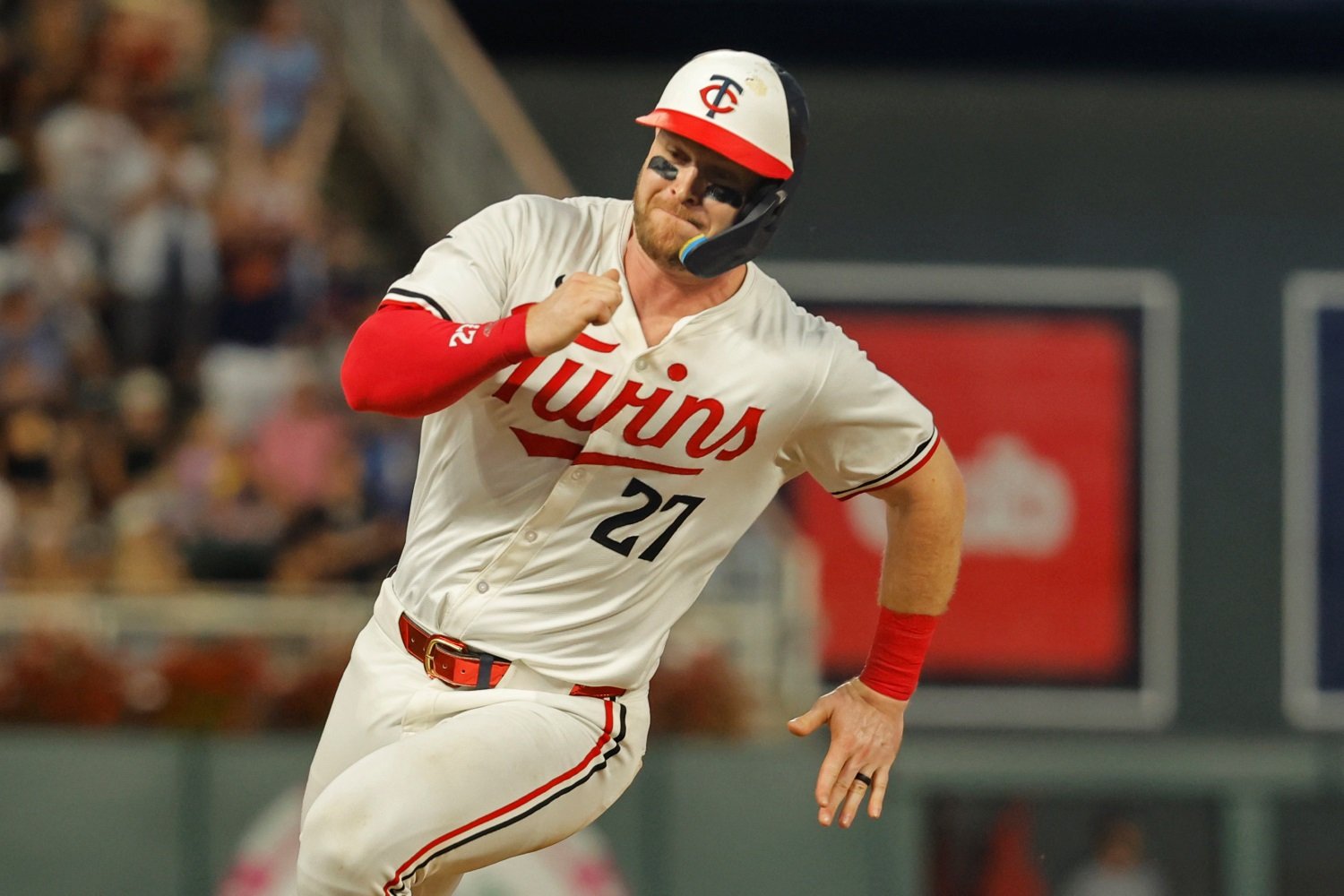 Last season, Twins catcher Ryan Jeffers broke out in a way those who follow the team had been waiting for, after witnessing flashes of above-average offensive prowess his previous three seasons in the league. He posted a .276/.369/.490 slash line, while hitting 14 home runs and 15 doubles over 335 plate appearances. It came out to a 138 wRC+. The UNC-Wilmington product excelled at putting the ball in play and hitting for power, while generating an honorable (particularly for a catcher) 9.9% walk rate. Offensively superb catchers are rare in baseball. Yet, it felt like the Twins had developed one. Unfortunately, the narrative has quickly shifted, and his struggles at the plate for the bulk of this season have left many to wonder if his performance last year was a mere anomaly. Jeffers began this season hot at the plate, hitting .295/.390/.557 with five home runs and eight doubles over his first 105 plate appearances. His walk rate had dipped to a modest 7.6%. However, he made up for his by striking out only 17.1% of the time and posting a superb .261 Isolated Power (ISO) over that stretch. He quickly inserted himself into All-Star consideration, and was discussed in the same vein as fellow AL catchers Adley Rutschman and Cal Raleigh. However, his production at the plate would plummet from those heights. The first signs of sustained negative regression occurred in mid-May, when he hit .164/.261/.393 with four home runs and two doubles over 69 plate appearances from May 10-31. His advanced metrics confirmed his struggles, as he posted an 85 wRC+ and an uninspiring 88.5 Exit Velocity (EV) in that timeframe. When he made contact, he often hit weak grounders to infielders. He also began striking out much more often, skyrocketing to a 34.8% strikeout rate for the span. Jeffers's struggles at the plate have remained. He has hit .192/.264/.320, with only four home runs and four doubles, over 141 plate appearances since the start of June. His strikeout rate returned to an inspiring 14.6%. However, his average EV has stayed at a too-modest 86.1 MPH, indicating that he continues to make weak contact, resulting in lazy flyouts or chopped groundouts. In these two-plus months, his wRC+ is an anemic 72. The average wRC+ for catchers presently sits at 94. Most catchers are selected for their defensive and receiving prowess, and players like the aforementioned Rutschman and Raleigh are the exception. However, to see Jeffers perform so poorly while also rating as a below-average defender at that defense-first spot raises significant alarm bells. While Jeffers's performance post-April has been rather bleak, there is reason to suspect he may be returning to his early-season form. He has been on a tear (of sorts) over the past two series against the New York Mets and Chicago White Sox. While facing New York on Jul. 29, he drove the ball to deep right field, which would have been a home run if it hadn't been for Mets outfielder Tyrone Taylor. Luckily for Jeffers, he was able to immediately avenge himself, drilling a long ball to deep left field in his next at-bat. He took his recent power surge at the plate with him from Queens to 1 Twins Way, hitting a home run off budding star lefty Garrett Crochet just two games later. The Twins' 27-year-old catcher hit .273/.357/.818 in those six games, with three hits, two of which were the previously mentioned home runs. His counting numbers would look even more inspiring if it weren't for Taylor's theatrics. In that stretch, he generated a 200 wRC+ and a slightly more encouraging average EV of 92.5. Now, it would be malpractice to make any genuine assessments or predictions off 14 plate appearances. However, he is demonstrating a knack for power, while consistently hitting the ball hard, a phenomenon that has been missing since earlier this Summer. Fellow catcher Christian Vázquez will keep getting half the playing time. Nevertheless, Jeffers reverting to his 2023 and early 2024 offensive form would be a welcome development for a team nearing seven straight games at home against the AL Central-leading Cleveland Guardians and AL Wild Card-contending Kansas City Royals. A reinvigorated Jeffers would also be an important player for the future of the franchise.
 -
Ryan Jeffers was exceptional at the plate the first month of the season. However, the Twins catcher has been a slightly below-average hitter since the calendar flipped to May. Should those following the team expect a late-season offensive resurgence, or more mediocrity? Let's take a look. Image courtesy of © Bruce Kluckhohn-USA TODAY Sports Last season, Twins catcher Ryan Jeffers broke out in a way those who follow the team had been waiting for, after witnessing flashes of above-average offensive prowess his previous three seasons in the league. He posted a .276/.369/.490 slash line, while hitting 14 home runs and 15 doubles over 335 plate appearances. It came out to a 138 wRC+. The UNC-Wilmington product excelled at putting the ball in play and hitting for power, while generating an honorable (particularly for a catcher) 9.9% walk rate. Offensively superb catchers are rare in baseball. Yet, it felt like the Twins had developed one. Unfortunately, the narrative has quickly shifted, and his struggles at the plate for the bulk of this season have left many to wonder if his performance last year was a mere anomaly. Jeffers began this season hot at the plate, hitting .295/.390/.557 with five home runs and eight doubles over his first 105 plate appearances. His walk rate had dipped to a modest 7.6%. However, he made up for his by striking out only 17.1% of the time and posting a superb .261 Isolated Power (ISO) over that stretch. He quickly inserted himself into All-Star consideration, and was discussed in the same vein as fellow AL catchers Adley Rutschman and Cal Raleigh. However, his production at the plate would plummet from those heights. The first signs of sustained negative regression occurred in mid-May, when he hit .164/.261/.393 with four home runs and two doubles over 69 plate appearances from May 10-31. His advanced metrics confirmed his struggles, as he posted an 85 wRC+ and an uninspiring 88.5 Exit Velocity (EV) in that timeframe. When he made contact, he often hit weak grounders to infielders. He also began striking out much more often, skyrocketing to a 34.8% strikeout rate for the span. Jeffers's struggles at the plate have remained. He has hit .192/.264/.320, with only four home runs and four doubles, over 141 plate appearances since the start of June. His strikeout rate returned to an inspiring 14.6%. However, his average EV has stayed at a too-modest 86.1 MPH, indicating that he continues to make weak contact, resulting in lazy flyouts or chopped groundouts. In these two-plus months, his wRC+ is an anemic 72. The average wRC+ for catchers presently sits at 94. Most catchers are selected for their defensive and receiving prowess, and players like the aforementioned Rutschman and Raleigh are the exception. However, to see Jeffers perform so poorly while also rating as a below-average defender at that defense-first spot raises significant alarm bells. While Jeffers's performance post-April has been rather bleak, there is reason to suspect he may be returning to his early-season form. He has been on a tear (of sorts) over the past two series against the New York Mets and Chicago White Sox. While facing New York on Jul. 29, he drove the ball to deep right field, which would have been a home run if it hadn't been for Mets outfielder Tyrone Taylor. Luckily for Jeffers, he was able to immediately avenge himself, drilling a long ball to deep left field in his next at-bat. He took his recent power surge at the plate with him from Queens to 1 Twins Way, hitting a home run off budding star lefty Garrett Crochet just two games later. The Twins' 27-year-old catcher hit .273/.357/.818 in those six games, with three hits, two of which were the previously mentioned home runs. His counting numbers would look even more inspiring if it weren't for Taylor's theatrics. In that stretch, he generated a 200 wRC+ and a slightly more encouraging average EV of 92.5. Now, it would be malpractice to make any genuine assessments or predictions off 14 plate appearances. However, he is demonstrating a knack for power, while consistently hitting the ball hard, a phenomenon that has been missing since earlier this Summer. Fellow catcher Christian Vázquez will keep getting half the playing time. Nevertheless, Jeffers reverting to his 2023 and early 2024 offensive form would be a welcome development for a team nearing seven straight games at home against the AL Central-leading Cleveland Guardians and AL Wild Card-contending Kansas City Royals. A reinvigorated Jeffers would also be an important player for the future of the franchise. View full article
-
Where does Trevor Richards fit in the Twins bullpen hierarchy? What does his stuff look like? Let's take a deep dive. Image courtesy of © Brian Bradshaw Sevald-USA TODAY Sports As the clock struck 5 PM Central time on July 30, Twins Territory erupted in cheers, as a last-minute tweet from ESPN insider Jeff Passan appeared on their phone: "The Minnesota Twins have acquired starting pitcher Jack Flaherty, per sources." The organization defied all odds and widespread perception, acquiring a starting pitcher who will surely help them as they contend for the AL Central with the vaunted Cleveland Guardians while fending off the surging Kansas City Royals. Personall--ah, wait--Oh, okay. Sorry, never mind. Matt just informed me that I can't just make stuff up because it's what I wish happened. He's also telling me it's not a healthy coping mechanism. Okay, let me restart. As the clock struck 5 PM central time on July 30, Twins Territory looked on somberly, as the only trade deadline acquisition the organization made was acquiring veteran right-handed reliever Trevor Richards from the retooling Toronto Blue Jays. The Twins sent infield prospect Jay Harry (who has a 91 wRC+ over 340 plate appearances at High-A) back to Toronto in the deal. Finances and lack of going "all-in" aside, the Twins acquired an arm who will play a consequential role in the team's ability to chase down the Guardians and fend off the Royals down the stretch. So, whom has the club acquired? And what role will he play as the regular season nears its triumphant conclusion? Let's take a look. Richards, 31, was not selected by an MLB team in the 2015 MLB Draft. After playing one season for the Gateway Grizzlies of the independent Frontier League, he signed with the Miami Marlins. He pitched in their minor-league system for two years before debuting as a starting pitcher in 2018. Richards bounced between Miami, the Tampa Bay Rays, and Milwaukee Brewers as a reliever before finding a long-term home with the Blue Jays in 2021. Here is how Richards has performed the past two and a half seasons north of the border: 2021 - .143/.213/.339 opponent slash line, 3.31 ERA, 4.61 FIP, 37-to-10 strikeout-to-walk ratio, 32 2/3 innings pitched 2022 - .238/.332/.396 opponent slash line, 5.34 ERA, 4.07 FIP, 82-to-35 strikeout-to-walk ratio, 64 innings pitched 2023 - .228/.318/.424, 4.95 ERA, 4.22 FIP, 105-to-35 strikeout-to-walk ratio, 72 ⅔ innings pitched Posting a combined 4.53 ERA over 169 1/3 innings pitched, Richards has been one of the top pen arms of an organization that made the postseason two out of the three seasons he was there. Here are the 31-year-old righty's career splits: Facing right-handed hitters: .249/.320/.438 opponent slash line, .324 opponent wOBA, 342-to-116 strikeout-to-walk ratio, 1,298 batters faced Facing left-handed hitters: .222/.313/.375 opponent slash line, .299 opponent wOBA, 256-to-121 strikeout-to-walk ratio, 1,044 batters faced Despite having shakier command when facing left-handed hitters, evidenced by five more walks over 254 fewer batters faced, Richards has performed better against lefties. His tendency to perform better against opposite-handed hitters has been especially glaring this season. He owns a .183/.272/.268 opponent slash line against left-handed hitters, netting a 16-to-9 strikeout-to-walk ratio and holding them to a .247 wOBA over 82 batters faced. In contrast, he has allowed a .210/.306/.410 opponent slash line to right-handed hitters, netting a 28-to-15 strikeout-to-walk ratio and holding them to a .313 wOBA over 122 batters faced. One of the two primary positions the Twins needed to acquire at the deadline was a reliever who pitched well against left-handed relievers. While a left-handed reliever would have been ideal, Richards fits the bill nevertheless. He will likely become the primary reliever against left-handed hitters, meaning Steven Okert and Caleb Thielbar will be demoted from their current roles. Richards's opponent slash lines are encouraging. However, his counting statistics tell a different story. Over his first 46 innings pitched, he netted a 2.54 ERA, 3.66 FIP, and a 45-to-16 strikeout-to-walk ratio over 178 batters faced. Despite sustaining a 4.16 xFIP, his start to the season was genuinely impressive, netting a 25.3% strikeout rate and leaving 71% of runners on base. Unfortunately, a flip switched, and the Drury University product's performance has significantly dipped as of late, netting a 19.89 ERA, 9.79 FIP, and a measly 4-to-8 strikeout-to-walk ratio over his last 6 1/3 innings pitched. His strikeout rate has plummeted to an uninspiring 10% while leaving just 41.7% of runners on base. He has also encountered a home run issue, generating a 16.7% home-run-to-fly-ball ratio and allowing two home runs in this stretch. Now, many factors could be playing in his sudden decrease in performance. The Blue Jays have gone from contending with postseason aspirations to begin the season to being effectively out of the race, holding a 0.5% chance of making the playoffs, according to FanGraphs. They underwent a firesale of sorts, sending off veterans Yimi García, Nate Pearson, Danny Jansen, Yusei Kikuchi, Isiah Kiner-Falefa, Kevin Kiermaier, and Richards before the deadline. The team's dwindling postseason chances could have played into his recent struggles. Yet, there is real cause for concern, particularly with the quality of his pitches. From Mar. 28 through July 4, Richards's fastball had a 5.4 Fastball runs above average at FanGraphs (wFA) over 38 appearances. Interestingly, his fastball had its most value in an appearance against the Twins on May 11, netting 0.8 wFA in one game. His changeup performed similarly well during the same stretch, manufacturing a 4.6 Changeup runs above average at FanGraphs (wCH). Like his fastball, his changeup performed its best against the Twins on May 11, netting 1.0 wCH in that appearance. It's impossible to know, but Richards performing so well against the Twins in that appearance could have played a role in the organization's interest in him. Nevertheless, the quality of his fastball and changeup have dropped over his past seven appearances, evidenced by a -5.7 wFA and -1.3 wCH in that stretch. As inferred, Richards is a two-pitch pitcher who uses only a fastball and changeup when facing either-handed hitters. His changeup is his superior pitch, evidenced by a .147 opponent batting average over 530 pitches thrown compared to a .238 opponent batting average on his fastball over 397 pitches thrown. His reverse splits are the byproduct of his changeup suddenly dropping out of the zone of opposite-handed hitters and often forcing them to produce uncompetitive swings. While his changeup is one of the more effective and competitive pitches in baseball, most of its positive results occur in moments with little weight. Of his 52 1/3 innings pitched, 33 have come in low-leverage situations. 22 1/3 innings have come in medium-leverage situations, and only 9 2/3 have come in high-leverage situations. Here is how Richards performs in each respective situation: Low-leverage: .182/.272/.281 opponent slash line, .253 opponent wOBA, 30-to-13 strikeout-to-walk ratio, 123 batters faced Medium-leverage: .167/.230/.444 opponent slash line, .328 opponent wOBA, 19-to-11 strikeout-to-walk ratio, 95 batters faced High-leverage: .324/.426/.622 opponent slash line, .433 opponent wOBA, 6-to-8 strikeout-to-walk ratio, 21 batters faced Richards performs exceptionally in low-leverage situations, below average in mid-leverage situations, and poorly in high-leverage situations. His tendency to struggle in medium-leverage situations and downright flounder in high-leverage situations doesn't bode well for a team competing to win the AL Central and hold off teams like the Royals, Boston Red Sox, and Seattle Mariners for the second Wild Card spot. That said, he still performs better than the team's other primary relievers used against left-handed hitters. Here is how Okert has performed in medium-leverage and high-leverage situations: Medium-leverage: .333/.438/.630 opponent slash line, .447 opponent wOBA, 6-to-3 strikeout-to-walk ratio, 33 batters faced High-leverage: .423/.483/.615 opponent slash line, .472 wOBA, 4-to-3 strikeout-to-walk ratio, 29 batters faced Here is how Thielbar has performed in medium-leverage and high-leverage situations: Medium-leverage: .269/.310/.269 opponent slash line, .261 wOBA, 6-to-2 strikeout-to-walk ratio, 29 batters faced High-leverage: .353/.500/.529 opponent slash line, .439 wOBA, 4-to-5 strikeout-to-walk ratio, 23 batters faced Richards will presumably slot into a medium-leverage role, usurping Okert and Thielbar. He also will likely fall fifth in line in the bullpen's hierarchy behind present high-leverage relievers Jhoan Durán, Griffin Jax, Jorge Alcalá, and Cole Sands. He could earn a more prominent role if he performs well at the beginning of August. However, with the team having no long-term investment in the veteran reliever and him not performing well the past month, expectations shouldn't be too high. Nevertheless, he is presumably a better option against left-handed hitters than Okert, Thielbar, and Kody Funderburk (once he returns from the 15-day IL) and should be considered an improvement on the margins. View full article
-
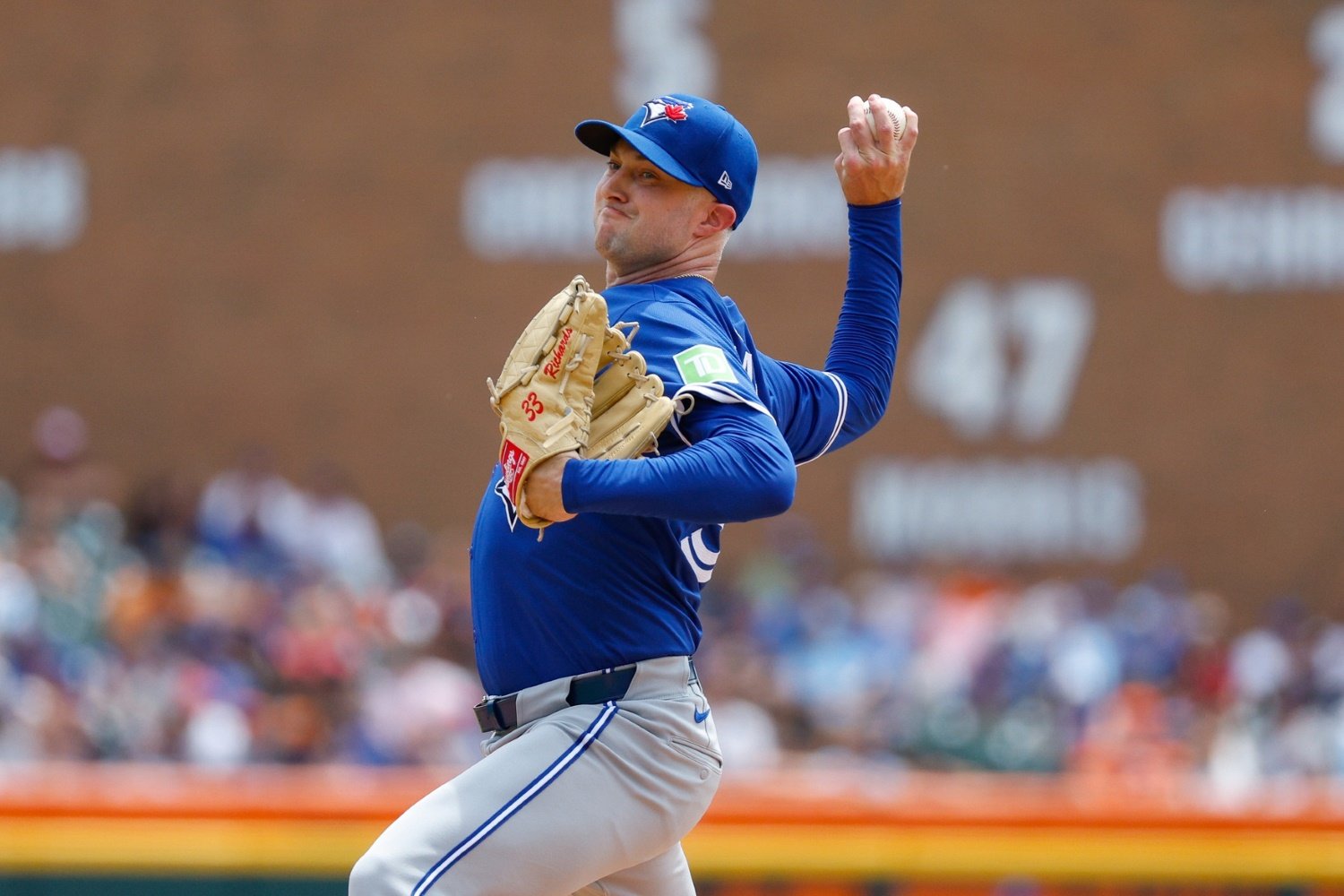 As the clock struck 5 PM Central time on July 30, Twins Territory erupted in cheers, as a last-minute tweet from ESPN insider Jeff Passan appeared on their phone: "The Minnesota Twins have acquired starting pitcher Jack Flaherty, per sources." The organization defied all odds and widespread perception, acquiring a starting pitcher who will surely help them as they contend for the AL Central with the vaunted Cleveland Guardians while fending off the surging Kansas City Royals. Personall--ah, wait--Oh, okay. Sorry, never mind. Matt just informed me that I can't just make stuff up because it's what I wish happened. He's also telling me it's not a healthy coping mechanism. Okay, let me restart. As the clock struck 5 PM central time on July 30, Twins Territory looked on somberly, as the only trade deadline acquisition the organization made was acquiring veteran right-handed reliever Trevor Richards from the retooling Toronto Blue Jays. The Twins sent infield prospect Jay Harry (who has a 91 wRC+ over 340 plate appearances at High-A) back to Toronto in the deal. Finances and lack of going "all-in" aside, the Twins acquired an arm who will play a consequential role in the team's ability to chase down the Guardians and fend off the Royals down the stretch. So, whom has the club acquired? And what role will he play as the regular season nears its triumphant conclusion? Let's take a look. Richards, 31, was not selected by an MLB team in the 2015 MLB Draft. After playing one season for the Gateway Grizzlies of the independent Frontier League, he signed with the Miami Marlins. He pitched in their minor-league system for two years before debuting as a starting pitcher in 2018. Richards bounced between Miami, the Tampa Bay Rays, and Milwaukee Brewers as a reliever before finding a long-term home with the Blue Jays in 2021. Here is how Richards has performed the past two and a half seasons north of the border: 2021 - .143/.213/.339 opponent slash line, 3.31 ERA, 4.61 FIP, 37-to-10 strikeout-to-walk ratio, 32 2/3 innings pitched 2022 - .238/.332/.396 opponent slash line, 5.34 ERA, 4.07 FIP, 82-to-35 strikeout-to-walk ratio, 64 innings pitched 2023 - .228/.318/.424, 4.95 ERA, 4.22 FIP, 105-to-35 strikeout-to-walk ratio, 72 ⅔ innings pitched Posting a combined 4.53 ERA over 169 1/3 innings pitched, Richards has been one of the top pen arms of an organization that made the postseason two out of the three seasons he was there. Here are the 31-year-old righty's career splits: Facing right-handed hitters: .249/.320/.438 opponent slash line, .324 opponent wOBA, 342-to-116 strikeout-to-walk ratio, 1,298 batters faced Facing left-handed hitters: .222/.313/.375 opponent slash line, .299 opponent wOBA, 256-to-121 strikeout-to-walk ratio, 1,044 batters faced Despite having shakier command when facing left-handed hitters, evidenced by five more walks over 254 fewer batters faced, Richards has performed better against lefties. His tendency to perform better against opposite-handed hitters has been especially glaring this season. He owns a .183/.272/.268 opponent slash line against left-handed hitters, netting a 16-to-9 strikeout-to-walk ratio and holding them to a .247 wOBA over 82 batters faced. In contrast, he has allowed a .210/.306/.410 opponent slash line to right-handed hitters, netting a 28-to-15 strikeout-to-walk ratio and holding them to a .313 wOBA over 122 batters faced. One of the two primary positions the Twins needed to acquire at the deadline was a reliever who pitched well against left-handed relievers. While a left-handed reliever would have been ideal, Richards fits the bill nevertheless. He will likely become the primary reliever against left-handed hitters, meaning Steven Okert and Caleb Thielbar will be demoted from their current roles. Richards's opponent slash lines are encouraging. However, his counting statistics tell a different story. Over his first 46 innings pitched, he netted a 2.54 ERA, 3.66 FIP, and a 45-to-16 strikeout-to-walk ratio over 178 batters faced. Despite sustaining a 4.16 xFIP, his start to the season was genuinely impressive, netting a 25.3% strikeout rate and leaving 71% of runners on base. Unfortunately, a flip switched, and the Drury University product's performance has significantly dipped as of late, netting a 19.89 ERA, 9.79 FIP, and a measly 4-to-8 strikeout-to-walk ratio over his last 6 1/3 innings pitched. His strikeout rate has plummeted to an uninspiring 10% while leaving just 41.7% of runners on base. He has also encountered a home run issue, generating a 16.7% home-run-to-fly-ball ratio and allowing two home runs in this stretch. Now, many factors could be playing in his sudden decrease in performance. The Blue Jays have gone from contending with postseason aspirations to begin the season to being effectively out of the race, holding a 0.5% chance of making the playoffs, according to FanGraphs. They underwent a firesale of sorts, sending off veterans Yimi García, Nate Pearson, Danny Jansen, Yusei Kikuchi, Isiah Kiner-Falefa, Kevin Kiermaier, and Richards before the deadline. The team's dwindling postseason chances could have played into his recent struggles. Yet, there is real cause for concern, particularly with the quality of his pitches. From Mar. 28 through July 4, Richards's fastball had a 5.4 Fastball runs above average at FanGraphs (wFA) over 38 appearances. Interestingly, his fastball had its most value in an appearance against the Twins on May 11, netting 0.8 wFA in one game. His changeup performed similarly well during the same stretch, manufacturing a 4.6 Changeup runs above average at FanGraphs (wCH). Like his fastball, his changeup performed its best against the Twins on May 11, netting 1.0 wCH in that appearance. It's impossible to know, but Richards performing so well against the Twins in that appearance could have played a role in the organization's interest in him. Nevertheless, the quality of his fastball and changeup have dropped over his past seven appearances, evidenced by a -5.7 wFA and -1.3 wCH in that stretch. As inferred, Richards is a two-pitch pitcher who uses only a fastball and changeup when facing either-handed hitters. His changeup is his superior pitch, evidenced by a .147 opponent batting average over 530 pitches thrown compared to a .238 opponent batting average on his fastball over 397 pitches thrown. His reverse splits are the byproduct of his changeup suddenly dropping out of the zone of opposite-handed hitters and often forcing them to produce uncompetitive swings. While his changeup is one of the more effective and competitive pitches in baseball, most of its positive results occur in moments with little weight. Of his 52 1/3 innings pitched, 33 have come in low-leverage situations. 22 1/3 innings have come in medium-leverage situations, and only 9 2/3 have come in high-leverage situations. Here is how Richards performs in each respective situation: Low-leverage: .182/.272/.281 opponent slash line, .253 opponent wOBA, 30-to-13 strikeout-to-walk ratio, 123 batters faced Medium-leverage: .167/.230/.444 opponent slash line, .328 opponent wOBA, 19-to-11 strikeout-to-walk ratio, 95 batters faced High-leverage: .324/.426/.622 opponent slash line, .433 opponent wOBA, 6-to-8 strikeout-to-walk ratio, 21 batters faced Richards performs exceptionally in low-leverage situations, below average in mid-leverage situations, and poorly in high-leverage situations. His tendency to struggle in medium-leverage situations and downright flounder in high-leverage situations doesn't bode well for a team competing to win the AL Central and hold off teams like the Royals, Boston Red Sox, and Seattle Mariners for the second Wild Card spot. That said, he still performs better than the team's other primary relievers used against left-handed hitters. Here is how Okert has performed in medium-leverage and high-leverage situations: Medium-leverage: .333/.438/.630 opponent slash line, .447 opponent wOBA, 6-to-3 strikeout-to-walk ratio, 33 batters faced High-leverage: .423/.483/.615 opponent slash line, .472 wOBA, 4-to-3 strikeout-to-walk ratio, 29 batters faced Here is how Thielbar has performed in medium-leverage and high-leverage situations: Medium-leverage: .269/.310/.269 opponent slash line, .261 wOBA, 6-to-2 strikeout-to-walk ratio, 29 batters faced High-leverage: .353/.500/.529 opponent slash line, .439 wOBA, 4-to-5 strikeout-to-walk ratio, 23 batters faced Richards will presumably slot into a medium-leverage role, usurping Okert and Thielbar. He also will likely fall fifth in line in the bullpen's hierarchy behind present high-leverage relievers Jhoan Durán, Griffin Jax, Jorge Alcalá, and Cole Sands. He could earn a more prominent role if he performs well at the beginning of August. However, with the team having no long-term investment in the veteran reliever and him not performing well the past month, expectations shouldn't be too high. Nevertheless, he is presumably a better option against left-handed hitters than Okert, Thielbar, and Kody Funderburk (once he returns from the 15-day IL) and should be considered an improvement on the margins.
 -
I'm not even suggesting a platoon. I just think Miranda could get more playing time at 1B against RHPs. Santana deserves the bulk of opportunities and will get them.
- 59 replies
-
- 2
-
-
-
- carlos santana
- alex kirilloff
- (and 2 more)
-
I've long been drawn to the idea of transitioning Wallner or Larnach (particularly Wallner) into a first baseman, but the front office doesn't seem interested in trying either of them there. Also, Kepler likely leaving in the offseason makes keeping Wallner and Larnach in the cOF even more important.
- 59 replies
-
- 1
-
-
- carlos santana
- alex kirilloff
- (and 2 more)
-
It will be interesting to see. The 1B market will be pretty robust this offseason, but the Twins will likely be operating with significant spending constraints again.
- 59 replies
-
- 2
-
-
- carlos santana
- alex kirilloff
- (and 2 more)
-
Vázquez is much more likely to play 1B than Jeffers. The last time Jeffers played 1B was for five innings at Triple-A in 2021.
-
Do The Twins Have Any Viable First Base Options Beyond Carlos Santana?
Cody Schoenmann posted an article in Twins
 Signed to a one-year, $5.25 million contract this February, veteran first baseman Carlos Santana has been the gem of the Twins' offseason acquisitions, sporting a .245/.329/.433 line with 78 hits, 18 doubles, 14 home runs and a 117 wRC+ over 359 plate appearances. Being one of the best-hitting first basemen in baseball and a steady switch-hitting cog in the middle of the Twins lineup has been his main source of value. However, he has also been one of the best defensive players at the position, netting 10 Outs Above Average at Baseball Savant (OAA), which places him first in the AL and second only behind Arizona Diamondbacks first baseman Christian Walker, who has 12. The sure-handed 38-year-old plays balls down the line and in-between first and second base exceptionally. He also possesses one of the best gloves in the game and a natural knack for scooping errant throws. Santana has been a silver lining free agent signing from an offseason where organization decision-makers essentially had both hands tied behind their back from a financial flexibility standpoint. He has become the team's everyday first baseman, hitting against both left and right-handed starting pitchers. However, that wasn't the team's initial plan. Santana was set to receive the bulk of opportunities. Yet, he was also supposed to split time with the left-handed hitting Alex Kirilloff. Santana is far superior from the right side of the plate, evidenced by his splits below: Versus RHP - .224/.324/.384, 272 plate appearances, 53 hits, 14 doubles, six home runs, 104 wRC+ Versus LHP - .307/.358/.580, 95 plate appearances, 27 hits, six doubles, six home runs, 162 wRC+ Santana has performed 62% better than the league average while hitting right-handed, and the club's initial plan was to maximize his exceptional performance from that side of the plate. However, Kirilloff's subpar performance at the plate and in the field (and eventual placement on the 10-day IL with a back injury) have led to him essentially being a nonfactor. The 26-year-old left-handed bat could theoretically return from the injured list sometime soon and reenter the lineup as Santana's platoon partner. But should the team actively pursue that option while contending with the Cleveland Guardians and Kansas City Royals for the AL Central crown and potential Wild Card seeding? It feels iffy. With Kirilloff possessing little to no present or future value for the Twins, does the organization have a backup plan for Santana at first base if he struggles significantly at the plate or sustains an injury that keeps him out for an extended period? Let's take a look. José Miranda At first glance, the most natural replacement for the one-time All-Star would be Miranda. The resurgent 26-year-old has demonstrated a respectable glove and understanding of first base and its nuances, posting a 1 OAA over 51 1/3 innings played at the position. Since Kirilloff was placed on the IL in mid-June, Miranda has been the only position player to patrol first base other than Santana, making five starts at the position over the past month. Miranda has spent most of his time playing third base due to Royce Lewis needing to miss extended time with various soft tissue injuries. However, with the expectation that he and Lewis will return from their respective injuries this Friday, he could be in line for more time at first base, particularly when the team faces right-handed starting pitchers. Miranda is Santana's most plausible back up option. Performing 50% better than average at the plate, Miranda has the bat skills and refined defensive acumen to play extended time at the position. Also, if Santana were to leave the Twins this offseason, Miranda could make sense as the team's long-term solution at the position. He would also work well in a platoon role, which takes us to our next candidate. Edouard Julien Julien has long existed in Twins fans' collective consciousness as a first base option, well in advance of his debut at the position last season against the Milwaukee Brewers on Aug. 22. However, sightings of the left-handed-hitting French Canadian playing the position have come few and far between, as he played only 17 1/3 innings at the position in the majors over 172 total career games. In theory, Julien would suffice as a platoon first baseman with Santana or Miranda. However, his production at the plate has regressed to the point where there is genuine concern over whether he will hit well enough to stay in the majors long term. Also, his glove and overall range at second base have improved so much that a significant amount of his value lies in his defensive acumen amid his struggles at the plate. Again, Julien makes sense as a first baseman, as he draws walks, (theoretically) hits for power, and has a high strikeout rate. However, he needs to show substantial improvements at the plate if he wants to be considered a viable MLB player, let alone an option at a spot where one's ability to contribute at the plate is a requirement, not a luxury. Julien has a brighter future than Kirilloff and is more likely to make an impact on the Twins down the stretch. Nevertheless, he would be a less-than-ideal option at first base, even if he is the team's third-best option, as long as Kirilloff's career with the Twins is in limbo. There's no obvious, long-term solution at first base for the organization right now. They can address that this winter, though. Right now, while they're stretched a little bit thin, Santana is a source of good feeling and good production, and Miranda is a solid secondary option. The rest will take care of itself, with time and the vagaries of the offseason.
- 59 comments
-
- 5
-
-
-
- carlos santana
- alex kirilloff
- (and 2 more)
-
Carlos Santana has proven to be the Twins' most useful offseason acquisition, starting nearly every game at first base while providing plus defense. However, the team lacks depth behind the 38-year-old switch-hitter. Do they have a viable backup option if the wily veteran were to miss extended time? Let's take a look. Image courtesy of © Matt Krohn-USA TODAY Sports Signed to a one-year, $5.25 million contract this February, veteran first baseman Carlos Santana has been the gem of the Twins' offseason acquisitions, sporting a .245/.329/.433 line with 78 hits, 18 doubles, 14 home runs and a 117 wRC+ over 359 plate appearances. Being one of the best-hitting first basemen in baseball and a steady switch-hitting cog in the middle of the Twins lineup has been his main source of value. However, he has also been one of the best defensive players at the position, netting 10 Outs Above Average at Baseball Savant (OAA), which places him first in the AL and second only behind Arizona Diamondbacks first baseman Christian Walker, who has 12. The sure-handed 38-year-old plays balls down the line and in-between first and second base exceptionally. He also possesses one of the best gloves in the game and a natural knack for scooping errant throws. Santana has been a silver lining free agent signing from an offseason where organization decision-makers essentially had both hands tied behind their back from a financial flexibility standpoint. He has become the team's everyday first baseman, hitting against both left and right-handed starting pitchers. However, that wasn't the team's initial plan. Santana was set to receive the bulk of opportunities. Yet, he was also supposed to split time with the left-handed hitting Alex Kirilloff. Santana is far superior from the right side of the plate, evidenced by his splits below: Versus RHP - .224/.324/.384, 272 plate appearances, 53 hits, 14 doubles, six home runs, 104 wRC+ Versus LHP - .307/.358/.580, 95 plate appearances, 27 hits, six doubles, six home runs, 162 wRC+ Santana has performed 62% better than the league average while hitting right-handed, and the club's initial plan was to maximize his exceptional performance from that side of the plate. However, Kirilloff's subpar performance at the plate and in the field (and eventual placement on the 10-day IL with a back injury) have led to him essentially being a nonfactor. The 26-year-old left-handed bat could theoretically return from the injured list sometime soon and reenter the lineup as Santana's platoon partner. But should the team actively pursue that option while contending with the Cleveland Guardians and Kansas City Royals for the AL Central crown and potential Wild Card seeding? It feels iffy. With Kirilloff possessing little to no present or future value for the Twins, does the organization have a backup plan for Santana at first base if he struggles significantly at the plate or sustains an injury that keeps him out for an extended period? Let's take a look. José Miranda At first glance, the most natural replacement for the one-time All-Star would be Miranda. The resurgent 26-year-old has demonstrated a respectable glove and understanding of first base and its nuances, posting a 1 OAA over 51 1/3 innings played at the position. Since Kirilloff was placed on the IL in mid-June, Miranda has been the only position player to patrol first base other than Santana, making five starts at the position over the past month. Miranda has spent most of his time playing third base due to Royce Lewis needing to miss extended time with various soft tissue injuries. However, with the expectation that he and Lewis will return from their respective injuries this Friday, he could be in line for more time at first base, particularly when the team faces right-handed starting pitchers. Miranda is Santana's most plausible back up option. Performing 50% better than average at the plate, Miranda has the bat skills and refined defensive acumen to play extended time at the position. Also, if Santana were to leave the Twins this offseason, Miranda could make sense as the team's long-term solution at the position. He would also work well in a platoon role, which takes us to our next candidate. Edouard Julien Julien has long existed in Twins fans' collective consciousness as a first base option, well in advance of his debut at the position last season against the Milwaukee Brewers on Aug. 22. However, sightings of the left-handed-hitting French Canadian playing the position have come few and far between, as he played only 17 1/3 innings at the position in the majors over 172 total career games. In theory, Julien would suffice as a platoon first baseman with Santana or Miranda. However, his production at the plate has regressed to the point where there is genuine concern over whether he will hit well enough to stay in the majors long term. Also, his glove and overall range at second base have improved so much that a significant amount of his value lies in his defensive acumen amid his struggles at the plate. Again, Julien makes sense as a first baseman, as he draws walks, (theoretically) hits for power, and has a high strikeout rate. However, he needs to show substantial improvements at the plate if he wants to be considered a viable MLB player, let alone an option at a spot where one's ability to contribute at the plate is a requirement, not a luxury. Julien has a brighter future than Kirilloff and is more likely to make an impact on the Twins down the stretch. Nevertheless, he would be a less-than-ideal option at first base, even if he is the team's third-best option, as long as Kirilloff's career with the Twins is in limbo. There's no obvious, long-term solution at first base for the organization right now. They can address that this winter, though. Right now, while they're stretched a little bit thin, Santana is a source of good feeling and good production, and Miranda is a solid secondary option. The rest will take care of itself, with time and the vagaries of the offseason. View full article
-
Jack Flaherty Is the Ideal Trade Deadline Acquisition For the Twins
Cody Schoenmann posted an article in Twins
 Recent reports--including one from Dan Hayes, The Athletic Twins beat reporter--suggest that a short-term starting pitching acquisition tops the team's trade deadline to-do list. Hayes immediately lists Toronto Blue Jays left-handed starting pitcher Yusei Kikuchi as a potential "rental" option Minnesota could target. Admittedly, Kikuchi is an ideal target. He would cost roughly $3.5 million the rest of the season (a price tag even the Pohlad family could stomach), while likely being a more viable postseason starter than Bailey Ober. However, the monumental attendance increase this past weekend at Target Field could push the team to acquire an even more expensive yet appealing trade candidate than Kikuchi, and Detroit Tigers starting pitcher Jack Flaherty would fit those criteria. Signed to a one-year, $14 million contract by the Tigers after spending time with the St. Louis Cardinals and Baltimore Orioles last season, the 28-year-old righty has pitched exceptionally well with Detroit, posting a 3.13 ERA, 2.96 FIP, and a 127-to-17 strikeout to walk ratio over 100 2/3 innings pitched and 392 batters faced. A driving force in his mid-career rejuvenation has been improving his command, collaborating with Chris Fetter (one of the best pitching coaches in MLB), and having the privilege of most of his starts coming in a pitcher-friendly ballpark. Flaherty has benefited from these favorable circumstances, turning his slider and knuckle curve into two of the best breaking pitches in baseball. He has also improved his four-seam fastball, evidenced by a 64-point drop in opponent batting average and a similarly inspiring 68-point decrease in opponent wOBA. Much of that is that he's throwing it for strikes more often, though it also helps that hitters have to respect the breaking stuff more than they did before this year. What makes the former first-round pick so enticing is that he meets the very specific criteria for the Twins' needs and what they can realistically pursue. He would instantly surpass the "Bailey Ober Threshold," becoming one of the team's three best starters for a hypothetical playoff scenario. He would cost roughly $4 million the rest of the season, while not possessing payroll ramifications beyond this season. Already facing the strong possibility of needing to shed payroll this upcoming season, Twins ownership will not allow the front office to acquire an arm with multiple years of control. Flaherty fits that mold to a tee. Admittedly, it is fun to speculate over hypothetical playoff scenarios. However, most of Flaherty's value resides in what he can offer the team now. Sitting four games behind the slumping Cleveland Guardians and tied with the presently surging Kansas City Royals, the Twins have reached a mid-season crossroads. López, Ryan, Ober, and Simeon Woods Richardson have done an admirable job guiding the Twins, who boast the 10th-best rotation in baseball, according to Wins Above Replacement at FanGraphs (fWAR). However, the uninspiring trio of Chris Paddack, Louie Varland, and David Festa have left much to be desired out of the team's fifth and final rotation slot. Flaherty would provide an instant boost to an already above-average rotation and be a driving force in creating what would be one of the most formidable and complete five-pitcher rotations in Twins history. Despite this being an intriguing proposition, significant drawbacks could spoil one's appetite for acquiring the divisional foe. The two teams have a recent track record of dealing with one another (Sawyer Gipson-Long for Michael Fulmer in 2022, most notably), but current Tigers President of Baseball Operations Scott Harris did not make that trade, meaning the two teams' present relationship is uncertain. Making an intradivisional trade is plausible, and the idea of paying an "in-division tax" is largely a fallacy. However, acquiring Flaherty would demand parting ways with significant prospect capital, meaning those who follow the Twins could run the risk of having to watch a prospect like Andrew Morris, Marco Raya, or Gabriel Gonzalez perform well in the same division as the Twins for seasons to come. While this proposition is scary on the surface, acquiring Flaherty is a risk Twins decision-makers should be willing to take.
 -
Inner-division trades are rare, especially when above-average starting pitching talent is involved. Do the Twins have any chance of acquiring this resurgent Detroit Tigers starter? In an article recently published by Dan Hayes of The Athletic, the Twins beat reporter noted, "Rumblings around the organization suggest the Twins are interested in acquiring a rental starting pitcher, something they've avoided doing in the past." Hayes immediately lists Toronto Blue Jays left-handed starting pitcher Yusei Kikuchi as a potential "rental" option Minnesota could target. Admittedly, Kikuchi is an ideal target. He would cost roughly $3-4 million the rest of the season (a price tag even the Pohlad family could stomach) while likely being a more viable third-postseason starter than Bailey Ober. However, the monumental attendance increase this past weekend at Target Field could be what pushes the team to acquire an even more expensive yet appealing trade candidate than Kikuchi, and Detroit Tigers starting pitcher Jack Flaherty would be the ideal fit. Signed to a one-year, $14 million contract by the Tigers after spending time with the St. Louis Cardinals and Baltimore Orioles last season, the 28-year-old righty has pitched exceptionally well with Detroit, posting a 3.13 ERA, 2.96 FIP, and a 127-to-17 strikeout to walk ratio over 100 2/3 innings pitched and 392 batters faced. A driving force in his mid-career rejuvenation has been improving his command, collaborating with Chris Fetter (one of the best pitching coaches in MLB), and having the privilege of most of his starts coming in a pitcher-friendly ballpark. Flaherty has benefitted from these favorable circumstances, turning his slider and knuckle curve into two of the best breaking pitches in baseball. He has also improved his four-seam fastball, evidenced by a 64-point drop in opponent batting average and a similarly inspiring 68-point decrease in opponent wOBA. What makes the former first-round pick so enticing is that he meets the hyperspecific requirements of what the Twins need and can realistically pursue. He would instantly surpass the "Bailey Ober Threshold," becoming one of the team's three best starters for a hypothetical playoff scenario. He would cost roughly $5-6 million the rest of the season (a price tag Twins ownership could realistically stomach) while not possessing payroll ramifications beyond this season. Already facing the strong possibility of needing to shed payroll this upcoming season, Twins ownership will not allow the front office to acquire an arm with multiple years of control. Flaherty fits that mold to a tee. Admittedly, it is fun to speculate over hypothetical playoff scenarios. However, most of Flaherty's value resides in what he can offer the team now. Sitting four games behind the slumping Cleveland Guardians and tied with the presently surging Kansas City Royals, the Twins have reached a mid-season crossroads. López, Ryan, Ober, and Simeon Woods Richardson have done an admirable job guiding the Twins toward possessing the tenth-best rotation in baseball, according to Wins Above Replacement at FanGraphs (fWAR). However, the uninspiring trio of Chris Paddack, Louie Varland, and David Festa have left much to be desired out of the team's fifth and final rotation slot. Flaherty would provide an instant boost to an already above-average rotation and be a driving force toward creating what could be one of the most formidable and complete five-pitcher rotations in recent Twins memory. Despite this being an intriguing proposition, significant drawbacks could spoil one's appetite for acquiring the divisional foe. Despite having a recent track record of dealing with one another (Sawyer Gipson-Long for Michael Fulmer in 2022), current Tigers President of Baseball Operations Scott Harris did not facilitate that trade, meaning the two team's present relationship is uncertain. Making an inner-division trade is plausible, and the idea of paying an "in-division tax" is largely a fallacy. However, acquiring "Flare" would demand parting ways with significant prospect capital, meaning those who follow the Twins could run the risk of having to watch a prospect like Andrew Morris, Marco Raya, or Gabriel Gonzalez perform well in the same division as the Twins for seasons to come. While this proposition is scary on the surface, acquiring Flaherty is a risk Twins decision-makers should be willing to make. View full article
-
Undergoing his second bout with plantar fasciitis in consecutive seasons, the Twins star shortstop could take on a limited role in the second half of the season. That could mean him being the designated hitter more often. Were that to happen, though, it would force some other changes to the team's lineup. Image courtesy of © John Hefti-USA TODAY Sports After being diagnosed with plantar fasciitis in his left foot on May 24, 2023, Carlos Correa played in 91 games, slashing .238/.317/.400, with 82 hits, 12 home runs, and a 98 wRC+ over 388 plate appearances. Those who follow the Twins admired Correa's efforts, as he played an integral role in winning the AL Central and ending their 18-game playoff losing streak and 19-year playoff series losing streak. However, the team's star veteran started all 91 remaining regular season games and six postseason games at shortstop, while (interestingly) never spending time at designated hitter. In theory, a player suffering from constant pain in their left foot would want to spend as little time as possible standing and needing to put weight on and shift their feet. Yet, that is not the path Correa and the Twins decision-makers deemed most suitable last season. However, with the 2024 All-Star being diagnosed with plantar fasciitis in his right foot last week, the team and Correa could elect to take a more conservative approach toward combating the same podiatric ailment. After all, last year's strategy didn't work especially well. Luckily, the Twins' present 26-man roster construction would perfectly aid this potential course of action. If Correa were to DH more often, manager Rocco Baldelli could construct his infield in the following fashion: First base - Carlos Santana Second base - Willi Castro Third base - José Miranda Shortstop - Brooks Lee Lee has impressed defensively in his 11 games in the majors, illustrating plus range and a strong arm at second base, third base, and shortstop. Having netted 146 1/3 innings over 17 starts at shortstop in Triple-A, the 2022 first-round pick is the best candidate to replicate Correa's mix of plus offensive and defensive production at the position highest on the defensive spectrum. If Lee were to shoulder the burden of Correa's absence from the field, Castro could remain the everyday second baseman, with Miranda patrolling third base until Royce Lewis returns from the 10-day IL. Having this be the primary infield construction would allow the Twins to keep the driving force of the team's recent offensive explosion in the lineup nearly every game, while keeping their best player fresh and off his feet (or, more importantly, right foot) as they chase the Cleveland Guardians for the AL Central crown. Turning a star player who is offensively and defensively productive when healthy into a designated hitter has come back to bite the Twins before (hello, Byron Buxton's 2023 campaign). Yet, venturing down this path with Correa likely wouldn't hinder the team's ability to produce at the plate as a collective. When the team converted Buxton into a full-time designated hitter, there was little to no certainty in his ability to produce at the plate. On the other hand, Correa has been one of the best hitters in MLB this season, ranking 15th in MLB with a 152 wRC+ over 317 plate appearances. His bat will be valuable, if he can maintain even a watery facsimile of what we saw from him in the first half. Correa transitioning into the primary designated hitter would also create lineup ramifications for non-infielders, though. Trevor Larnach (who has started 32 games as designated hitter) would be forced to play in the corner outfield more often, which could lead to a decrease in playing time, as defensively superior options Matt Wallner and Max Kepler are getting the bulk of playing time in left and right field, respectively. Also, Correa taking the bulk of opportunities at designated hitter would likely turn Ryan Jeffers into a pure backup catcher, as he is defensively inferior to Christian Vázquez and has undergone a substantial slump at the plate since late April. However, transitioning Larnach, Jeffers, and potentially Wallner and Kepler into more limited roles wouldn't necessarily be a negative development. It would just be a big set of changes for Baldelli to manage. Also, the Twins lineup is much better than the unit Buxton was expected to headline last season. At this point last season, the Twins ranked 19th in MLB with a 96 wRC+. In comparison, the team currently ranks fourth in MLB with a 113 wRC+. A team once relying on players the likes of Jeffers, Edouard Julien, Donovan Solano, and Alex Kirilloff has transformed into being able to trust their star players, Correa and Buxton; the resurgent Miranda; a first-time All-Star in Castro; and a hot rookie, in Lee. They can slide Correa from the top of the defensive spectrum to the bottom of it without losing much, unless and until Lewis and Miranda are both healthy at the same time again. By then, maybe this problem will have subsided a bit for Correa. The Twins have the infield depth and offensive firepower necessary to keep Correa off his feet and keep him fresh for a late-season postseason push. Team decision-makers should strongly consider benefitting from this advantageous position to avoid potentially making the 29-year-old veteran's second bout with plantar fasciitis worse and reverting his ability to produce at the plate back to his lackluster 2023 form. View full article
-
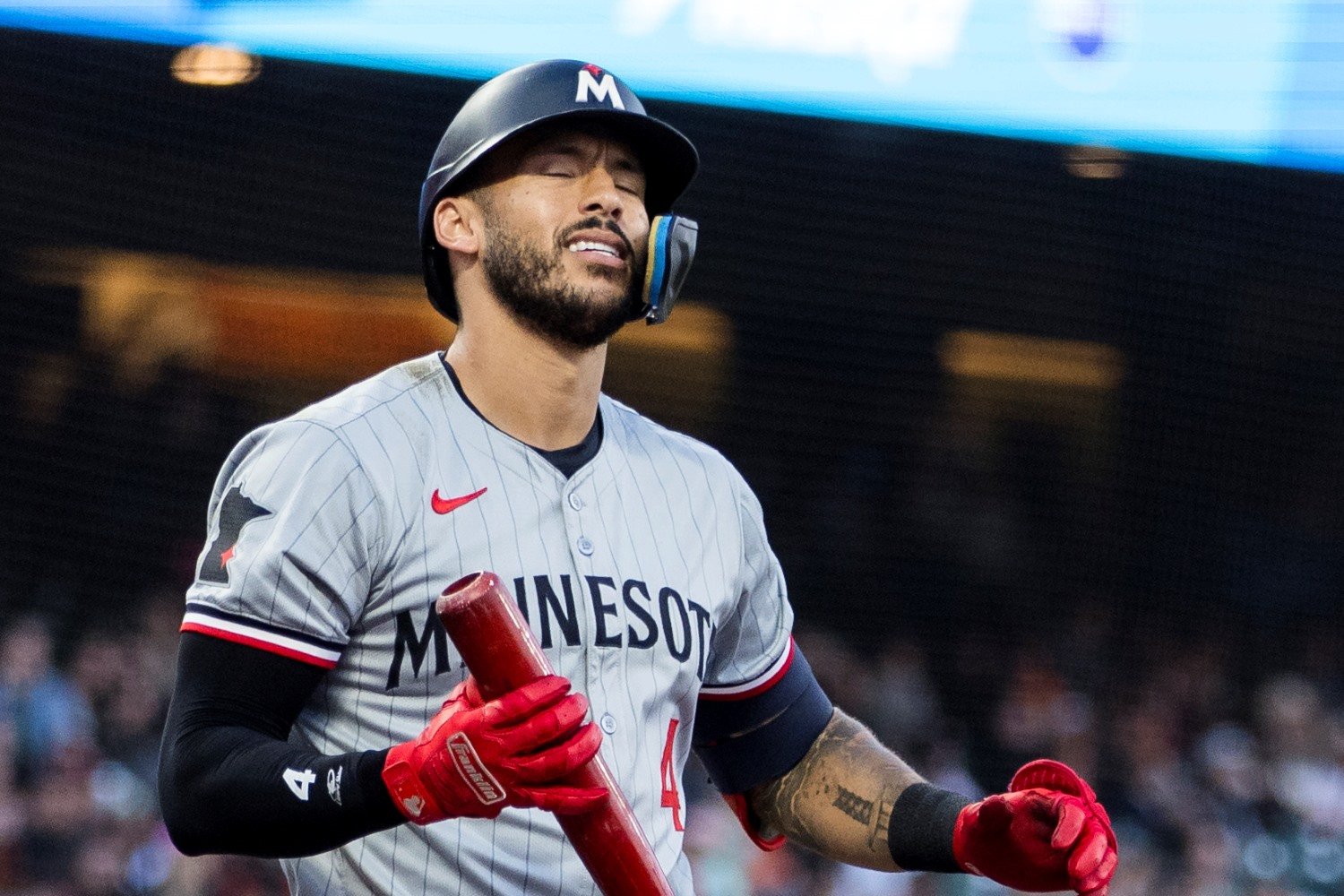 After being diagnosed with plantar fasciitis in his left foot on May 24, 2023, Carlos Correa played in 91 games, slashing .238/.317/.400, with 82 hits, 12 home runs, and a 98 wRC+ over 388 plate appearances. Those who follow the Twins admired Correa's efforts, as he played an integral role in winning the AL Central and ending their 18-game playoff losing streak and 19-year playoff series losing streak. However, the team's star veteran started all 91 remaining regular season games and six postseason games at shortstop, while (interestingly) never spending time at designated hitter. In theory, a player suffering from constant pain in their left foot would want to spend as little time as possible standing and needing to put weight on and shift their feet. Yet, that is not the path Correa and the Twins decision-makers deemed most suitable last season. However, with the 2024 All-Star being diagnosed with plantar fasciitis in his right foot last week, the team and Correa could elect to take a more conservative approach toward combating the same podiatric ailment. After all, last year's strategy didn't work especially well. Luckily, the Twins' present 26-man roster construction would perfectly aid this potential course of action. If Correa were to DH more often, manager Rocco Baldelli could construct his infield in the following fashion: First base - Carlos Santana Second base - Willi Castro Third base - José Miranda Shortstop - Brooks Lee Lee has impressed defensively in his 11 games in the majors, illustrating plus range and a strong arm at second base, third base, and shortstop. Having netted 146 1/3 innings over 17 starts at shortstop in Triple-A, the 2022 first-round pick is the best candidate to replicate Correa's mix of plus offensive and defensive production at the position highest on the defensive spectrum. If Lee were to shoulder the burden of Correa's absence from the field, Castro could remain the everyday second baseman, with Miranda patrolling third base until Royce Lewis returns from the 10-day IL. Having this be the primary infield construction would allow the Twins to keep the driving force of the team's recent offensive explosion in the lineup nearly every game, while keeping their best player fresh and off his feet (or, more importantly, right foot) as they chase the Cleveland Guardians for the AL Central crown. Turning a star player who is offensively and defensively productive when healthy into a designated hitter has come back to bite the Twins before (hello, Byron Buxton's 2023 campaign). Yet, venturing down this path with Correa likely wouldn't hinder the team's ability to produce at the plate as a collective. When the team converted Buxton into a full-time designated hitter, there was little to no certainty in his ability to produce at the plate. On the other hand, Correa has been one of the best hitters in MLB this season, ranking 15th in MLB with a 152 wRC+ over 317 plate appearances. His bat will be valuable, if he can maintain even a watery facsimile of what we saw from him in the first half. Correa transitioning into the primary designated hitter would also create lineup ramifications for non-infielders, though. Trevor Larnach (who has started 32 games as designated hitter) would be forced to play in the corner outfield more often, which could lead to a decrease in playing time, as defensively superior options Matt Wallner and Max Kepler are getting the bulk of playing time in left and right field, respectively. Also, Correa taking the bulk of opportunities at designated hitter would likely turn Ryan Jeffers into a pure backup catcher, as he is defensively inferior to Christian Vázquez and has undergone a substantial slump at the plate since late April. However, transitioning Larnach, Jeffers, and potentially Wallner and Kepler into more limited roles wouldn't necessarily be a negative development. It would just be a big set of changes for Baldelli to manage. Also, the Twins lineup is much better than the unit Buxton was expected to headline last season. At this point last season, the Twins ranked 19th in MLB with a 96 wRC+. In comparison, the team currently ranks fourth in MLB with a 113 wRC+. A team once relying on players the likes of Jeffers, Edouard Julien, Donovan Solano, and Alex Kirilloff has transformed into being able to trust their star players, Correa and Buxton; the resurgent Miranda; a first-time All-Star in Castro; and a hot rookie, in Lee. They can slide Correa from the top of the defensive spectrum to the bottom of it without losing much, unless and until Lewis and Miranda are both healthy at the same time again. By then, maybe this problem will have subsided a bit for Correa. The Twins have the infield depth and offensive firepower necessary to keep Correa off his feet and keep him fresh for a late-season postseason push. Team decision-makers should strongly consider benefitting from this advantageous position to avoid potentially making the 29-year-old veteran's second bout with plantar fasciitis worse and reverting his ability to produce at the plate back to his lackluster 2023 form.
 -
Trueblood deserves credit for that one lol
-
Maybe these two AL Wild Card leaders can help one another by trading from strengths to address a key shortcoming. Image courtesy of © Jesse Johnson-USA TODAY Sports Over 93 games played, Boston Red Sox second basemen have netted a 68 wRC+. This ranks them second-to-last in offensive production at the keystone position. Second-year player Enmanuel Valdez (85 wRC+ over 182 plate appearances) has spent the most time of any Red Sox player at the position, notching 385 1/3 innings over 51 games. However, the 25-year-old infielder has since been demoted to Triple-A Worcester. The team has also cycled through an olio of other options at second base. Here is how the pieces of that rough-hewn jigsaw puzzle have performed this season offensively: Vaughn Grissom (186 innings at 2B) - 1 wRC+ over 87 plate appearances David Hamilton (118 innings at 2B) - 100 wRC+ over 205 plate appearances Jamie Westbrook (58 innings at 2B) - 81 wRC+ over 30 plate appearances Pablo Reyes (39 innings at 2B) - 24 wRC+ over 64 plate appearances Boston has performed well above expectations this season, sitting only a game and a half back from the Twins for the second AL Wild Card and possessing a 41.4% chance of earning a playoff spot, according to FanGraphs. Much of the organization's newfound success can be attributed to a starting pitching renaissance (seventh-best staff ERA in MLB) cultivated by former Twins pitcher turned baseball executive Craig Breslow, pitching coach Andrew Bailey, and director pitching of pitching Justin Willard (Twins pitching coordinator from 2021-2023). Interestingly, the Twins have a serviceable second baseman waiting in the wings at Triple-A in Edouard Julien, and they also have a need for starting pitching help. Would it be wise for Twins decision-makers to send the left-handed hitter to Boston, in return for starting pitching help? Let's take a look. The Twins' offense has become a powerhouse, posting the highest batting average, slugging, wOBA, and wRC+ in baseball since Apr. 21. Having been the hottest lineup in MLB for well over two months has made a few fringy contributors expendable. Willi Castro, José Miranda, Brooks Lee, and the soon-to-return Royce Lewis have fixed themselves as irreplaceable members of the team's infield, making Julien less so. Julien struggled to produce offensively with the Twins in May (42 wRC+ over 81 plate appearances) and when he was first demoted to Triple-A St. Paul in early June. However, Julien has significantly improved in July, and looks more like the disciplined, power-hitting lefty who posted a 136 wRC+ over 408 plate appearances last season. His recent offensive resurgence is an encouraging sign that team decision-makers could use to their benefit come Jul. 30, particularly with the second base-needy Red Sox. Flush with starters and relievers who are performing well, Boston could use their abundance of arms to entice the Twins enough to acquire the intriguing left-handed hitting infielder. At first glance, starting pitchers Nick Pivetta and Kutter Crawford catch one's attention as appealing right-handed hurlers who could fortify Minnesota's rotation. However, they have become staples of the Sox's resurgent rotation, making it highly unlikely that Breslow and company part ways with them amid a playoff push, especially with the team directly in front of them in the Wild Card standings. However, there is a thought-provoking mock trade idea that could benefit both teams in the short and long term: Minnesota receives left-handed reliever Brennan Bernardino and infield prospect Cutter Coffey (FanGraphs's 25th-ranked Red Sox prospect) Boston receives infielder Edouard Julien Bernardino has been a cog in Boston's bullpen, notching a 1.69 ERA, 2.76 FIP, and 22.1% strikeout rate over 32 innings pitched. The 32-year-old southpaw has also given up zero home runs this season, while leaving 82.5% of runners on base. He would instantly become Minnesota's best left-handed reliever, permitting the team to downgrade Steven Okert to a lower-leverage role, demote Kody Funderburk to Triple-A St. Paul, and potentially part ways with the aged and fading Caleb Thielbar. Coffey, 20, is an appealing middle infielder who could offset Julien's departure from the Twins system. He has an above-average arm at short (he threw 94 MPH as a pitcher in high school), while possessing plus raw power that could translate into formidable in-game power as he gets more at-bats. The recent trend of injuries to core infield members Lewis, Miranda, and Correa dampens the prospect of trading Julien in the immediate future. However, none of their injuries should hold them out long-term, meaning a lack of infield depth hope could easily be a non-issue come Jul. 30. In this hypothetical scenario, the Red Sox would acquire a steady defensive second baseman who performed 36% better than average at the plate just last season. He has starting second baseman potential and, at minimum, could function as a platoon partner with the right-handed hitting Hamilton. In return, the Twins would receive a reliever who would instantly become the club's best left-handed option out of the 'pen and could be a driving force in helping the team hunt down Cleveland in the standings. Also, Coffey would be a welcomed addition to a minor-league system rich with talent in the low minors. This challenge trade could be mutually beneficial for two parties residing right next to each other in the AL Wild Card standings. View full article

